Getting dressed for an art show is a small creative job of its own. You want to look like you belong in the room without competing with what's on the walls. A downtown gallery opening, a slow daytime museum visit and a crowded art fair preview all ask for slightly different things, but the brief I give clients is always the same: look deliberate, stay comfortable on your feet, and let one detail carry your personality. The twenty outfits below run from strict tailoring to soft, textured pieces, and each comes with the shoes and accessories I'd put with it.

How Dressed Up Is a Gallery Opening, Really?
Most invitations to art events don't name a dress code, and that leaves people guessing. In my experience the setting tells you more than the invitation does. A small independent gallery on a weeknight sits close to smart casual: good jeans, a blazer and clean boots are fine. A museum preview or a ticketed gala leans dressier, and a large art fair is mostly about walking, so comfort comes first.
- Daytime visit: casual, practical shoes, a bag that doesn't swing.
- Weeknight opening at a commercial gallery: one level above what you'd wear to dinner with friends.
- Museum members' preview or benefit: cocktail level, but still something you can stand in for two hours.
- Art fair: dress for miles of walking and changing temperatures between halls.
If you can't decide, go slightly understated. In a room full of art, the plainer outfit with one strong detail rarely looks wrong.
Color is worth a thought as well. White walls and bright track lighting make strong solids look stronger, and they show every crease and lint mark on black. I lint-roll dark pieces just before walking in, and if the show is full of saturated work, I'd lean toward neutrals so you don't end up looking like part of the hang.
1. Black Turtleneck with Tailored Trousers Outfit

There's a reason this pairing turns up at nearly every opening. A fitted black turtleneck gives a clean line through the top half, and high-waisted trousers make the legs look longer. I like the trousers in cream, beige or charcoal so the contrast isn't as hard as black on black. Tuck the knit in fully; a fine-gauge turtleneck tucks flat, while a chunky one bunches at the waistband and ruins the line. Gold hoops, a slim leather belt and pointed ankle boots finish it, with a structured crossbody or a slim clutch. Wear it to evening openings or artist talks.
2. Long Wool Coat Over Neutral Base Outfit

Galleries are often kept cool to protect the work, and openings tend to spill out onto the sidewalk, so a long wool coat earns its place. Underneath I'd go with a cream cashmere sweater and taupe wide-leg trousers, with beige suede ankle boots to keep the tones close. The coat is the main piece: camel, charcoal or oatmeal, clean and unbelted, long enough to cover the trouser waist. Gold studs and tortoiseshell sunglasses are enough. Suede is the weak point if it rains, so give the boots a protector spray first.
3. Knit Dress with Leather Boots Outfit

Soft knit, hard boot. A fitted ribbed knit dress is comfortable for hours, and leather knee-high boots give it some edge. I'd add a slim belt at the natural waist; ribbed knits stretch as you wear them, and a belt stops the dress from slowly losing its shape through the evening. Silver hoops and sleek sunglasses keep it modern, and a structured leather handbag ties it together. Check the hem against the top of the boot: a small gap of skin or tight between them looks better than a dress that stops right on the boot line. It goes from afternoon gallery hopping to an evening reception.
4. Monochrome Gray Layered Outfit

Gray works especially well in white-walled spaces because it doesn't fight the art. I layer a light gray turtleneck under a charcoal vest or cropped jacket, then add tapered trousers in a middle shade. Using three depths of gray, rather than one, is what makes it look planned instead of accidental. Silver studs, a plain watch and pointed dark gray ankle boots continue the palette. Carry a tote a shade lighter or darker than the trousers. It suits contemporary galleries where the architecture is spare.
5. Relaxed Suit in Muted Tones Outfit

A relaxed suit in olive, sand or dusty blue is smart without the stiffness of formal tailoring. The blazer should sit softly on the shoulders; if the shoulder seam lands past your own shoulder by more than a finger's width, it starts to look borrowed rather than relaxed. Trousers sit high with a slightly wide leg. A white or tonal ribbed tank underneath keeps the focus on the suit. Flat leather sandals in summer or suede loafers in cooler months, plus one sculptural ring or a pair of resin bangles, give it an artistic note without much noise.
6. Midi Pleated Skirt with Turtleneck Top Outfit

A pleated midi with a fitted turtleneck is easy to wear and moves well as you walk between rooms. The pleats bring softness, and the slim top keeps the upper half neat. Blush, charcoal or burgundy for the skirt, black or cream on top. I'd go for knife pleats in a polyester blend if you're traveling to the event, because they hold their shape in a bag much better than pressed wool pleats. Ankle boots with a modest block heel, a structured top-handle bag and fine drop earrings finish it for an opening or a museum preview.
7. White Button-Down with Wide-Leg Pants Outfit

A crisp white shirt tucked into wide black trousers is the cleanest contrast you can wear to a show. I leave two buttons open and roll the sleeves once, just past the wrist, so it looks relaxed rather than office. Wide trousers swing as you walk, which looks good in long gallery halls, but they need hemming to just clear the floor in the shoes you'll wear. Black loafers or flat square-toe mules, a thin silver chain and a sturdy canvas or leather tote complete it.
8. Silk Slip Dress with Oversized Blazer Outfit

A silk slip dress in champagne, olive or navy gives a fluid line, and an oversized blazer on top adds structure. The pairing works because the blazer's boxy edges frame the softness of the slip. Slip dresses cut on the bias cling more than you'd expect when you sit, so I check the fit seated before recommending one. Strappy heeled sandals for an evening dinner, sleek pointed flats for a daytime fair, and a small shoulder bag. Choose one focal point, either a statement earring or a red lip, not both.
9. Black Blazer with Straight-Leg Jeans Outfit

A slightly oversized black blazer over a white tee and straight jeans almost never misses at a gallery. Fit is everything here: the jeans should end right at the ankle bone, and the tee should be clean and left out. If the tee is too long, it peeks below the blazer hem and looks untidy, so I aim for it to stop an inch or so above. Black leather ankle boots for a short visit or white sneakers if you're walking a lot, plus geometric earrings or a bold necklace. A sleek black bag and you're set for a Saturday afternoon of galleries followed by coffee.
10. All-Black Monochrome Art Gallery Outfit

All black works when the textures change. I'd pair leather trousers or coated denim with a sheer black blouse or a fine knit, then drape a black wool coat over the shoulders. Matte wool, shiny leather and the softness of the blouse keep the eye moving. Leather trousers get warm in a packed room, so if the opening is crowded, choose coated denim, which breathes a little better. Pointed black boots, a structured black bag and silver jewelry finish it for an evening event.
11. Champagne Silk Pants with White Top Outfit

Champagne silk trousers pick up gallery lighting and give off a soft glow. A plain white sleeveless top or fine knit tucked in keeps the matte against the shine. Silk trousers show creases and any drop of wine, so I'd save these for a daytime viewing rather than a crowded opening with a bar. Nude pointed flats or low mules keep the leg line long. A fine gold chain and a cream clutch fit the restrained mood, and it's a good choice for a daytime preview or an upscale art fair.
12. Tweed Jacket with Mini Skirt and Boots Outfit

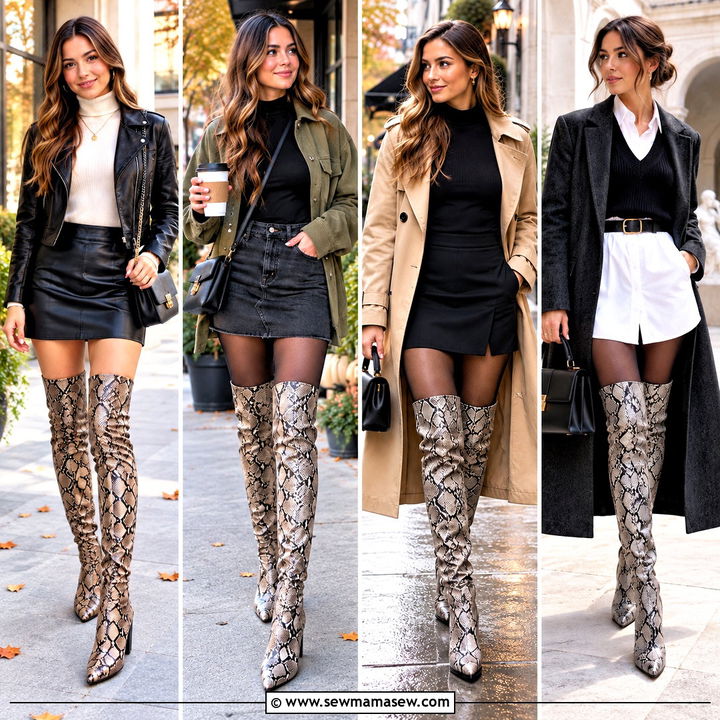
A tweed jacket, a mini skirt and knee-high boots have a slightly retro feel that suits older gallery buildings. The tweed brings texture and the short skirt keeps the proportions young. A black skirt is the safe choice; a matching tweed one turns it into a suit. Tweed jackets are usually cut short, so I'd keep the skirt high-waisted to avoid a gap at the middle. Black leather knee-highs with a block heel, a slim crossbody, quiet gold jewelry and round sunglasses finish it for fall openings and cooler evenings.
13. Floral Midi Dress with Ankle Boots Outfit

With a floral midi, the print decides whether it looks artistic or sweet. I look for painterly flowers, abstract botanicals or soft watercolor motifs, and I avoid tiny ditsy prints at an art show because they read young next to large canvases. Black leather ankle boots with a low heel add edge. A woven tote or simple leather shoulder bag and small gold earrings are all it needs. It's a good daytime outfit for gallery visits and sculpture garden openings when you'll be standing for a while.
14. Leather Jacket with Tailored Trousers Outfit

A sculptural or cut-out leather jacket gives this outfit its art-world feel, so everything else stays plain: a white or black fitted tee tucked into high-waisted black or gray trousers. Square-toe boots or sleek pointed flats keep the base clean. I'd add geometric accessories such as a sculptural cuff or an angular bag, but only one, since two strong shapes plus the jacket starts to look busy. Real leather softens and molds to you with wear, so a stiff new jacket will look better after a few outings.
15. Billowy Pants with Fitted Top Outfit

Wide, fluid trousers in silk or crepe make a lot of movement, and that's the whole point. I balance them with something close-fitting up top, a ribbed tank, a slim bodysuit or a fine knit tucked in, because volume on both halves swallows the frame. A bodysuit is the neatest option since it never untucks. Flat square-toe sandals or sleek sneakers keep attention on the trousers, with stacked resin bangles or one bold ring. Keep the bag small and structured. It's right for warm-weather openings in contemporary spaces.
16. Matching Knit Lounge Set with Sneakers Outfit

A matching knit lounge set can work for a casual daytime show if the knit has some weight to it. Thin jersey looks like pajamas; a denser rib or a heavier cotton knit holds its shape and reads as deliberate. Oat, charcoal or deep olive keep it grown-up. White or tonal sneakers handle hours of walking, and an oversized tote, a baseball cap and simple silver jewelry finish it. I'd wear this to an outdoor art fair or a big museum day, not an evening opening.
17. Statement Sculptural Midi Dress Outfit

A midi dress with an asymmetric hem, a draped neckline or a well-placed cutout is close to wearable art on its own, so I keep everything around it spare: one cuff, barely-there heeled sandals and a small clutch. A strong solid color helps it hold up next to large work, such as cobalt, emerald or deep fuchsia. Wear your hair up so the neckline stays clear. With cutouts, I always check where they land when you lift your arms to point at something or hold a glass. Good for big openings and gallery galas.
18. Denim Maxi Skirt with Tank Top Outfit

A denim maxi with a plain tank is casual but tidy, and it holds up well for a long day in a gallery district. I prefer dark or black denim with a front seam, which looks almost tailored. A rigid denim maxi needs a back or front slit to walk comfortably, so check that before you buy. Tuck in a white or black ribbed tank, then add a slim leather belt, flat sandals or white sneakers and a canvas tote. Thin gold bracelets and big sunglasses finish it.
19. Jumpsuit with Heels Art Opening Outfit

A tailored jumpsuit makes you fully dressed in one step. A wide leg in black, navy or a deep jewel tone looks right for an evening opening. If the cut allows, a slim belt at the waist gives it more shape. Heeled sandals or pointed pumps lengthen the leg, and statement earrings with a sleek clutch finish it. I always check the torso length before buying one; if it pulls at the shoulders when you sit, it's too short in the body. It sits right in the middle ground between smart and creative that most openings ask for.

20. Two-Piece Set with Blazer and Trousers Outfit

A matching blazer and trouser set in sage, dusty rose or warm sand reads modern and confident. The cut should be relaxed, with a tonal camisole or simple silk shell underneath. One color top to bottom makes a long line that looks good in photos, which matters at openings where people are always taking pictures. Pointed flats or low mules keep it walkable. Add one sculptural piece, a twisted metal cuff or resin earrings. If you buy a set, you can also split it later: the blazer over jeans and the trousers with a knit.
Two Hours on Polished Concrete
Gallery floors are hard, often concrete or stone, and openings involve a lot of standing still, which tires feet faster than walking does. A thin-soled flat can actually be worse than a low block heel with a cushioned insole. I'd test any shoe by standing in it at home for half an hour before the event.
Bags matter more than people expect too. Many museums ask visitors to check large bags and backpacks, so a crossbody or small shoulder bag saves time at the cloakroom. It also keeps a hand free for a glass and stops anything swinging near the work. Long fringe, wide sleeves and big totes all need a little care in tight rooms.
Coats and Changing Temperatures
Many galleries keep their rooms cool, while packed openings heat up fast. Dress in layers you can carry over one arm rather than a single heavy sweater you'll regret by the second room.
Letting the Art Stay the Loudest Thing in the Room
Dressing for an art show comes down to showing your own taste while respecting what's on the walls. These looks range from strict monochrome tailoring to fluid, soft shapes, and each one is complete from head to toe. If you take one habit from them, make it this: get the fabric and fit right first, then add a single personal detail. Sculptural dress or relaxed suit, the aim is to feel like yourself, slightly more considered. Then go in and look at the work.
Related posts: