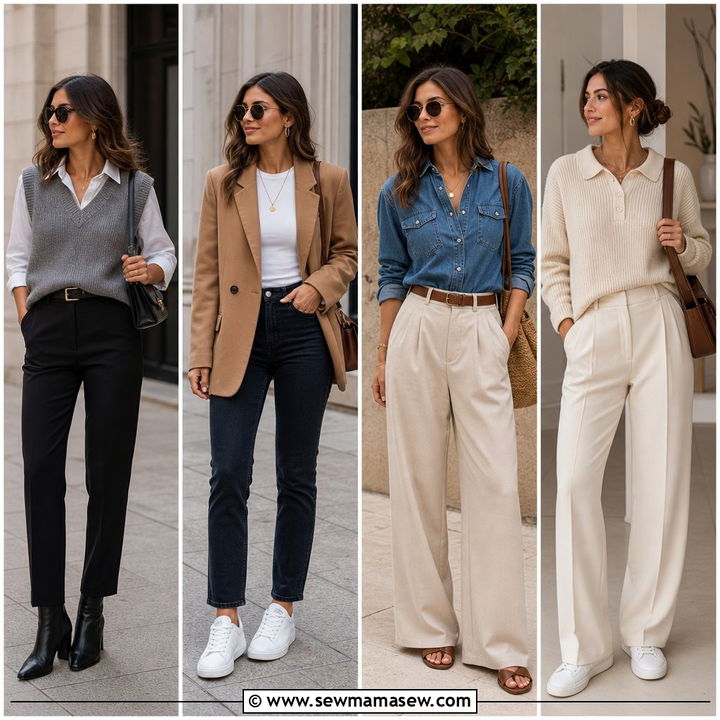
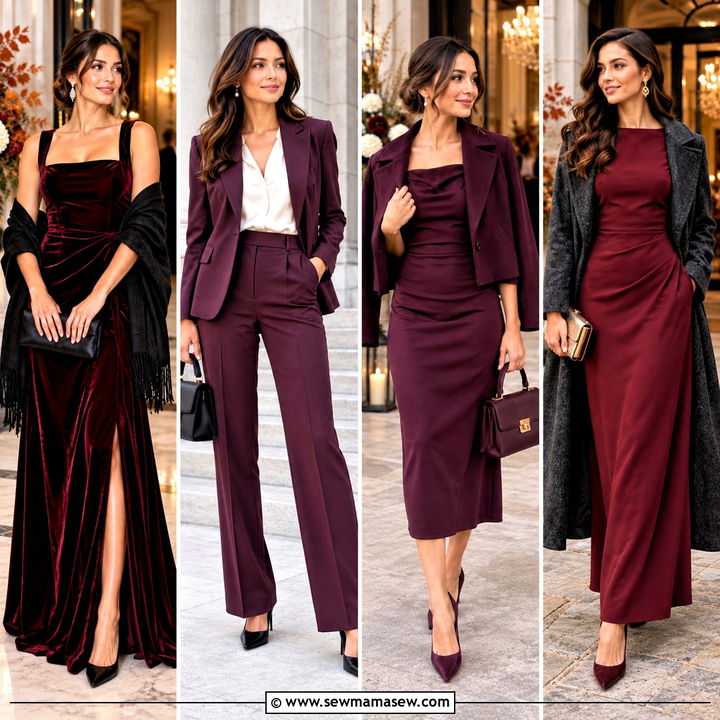
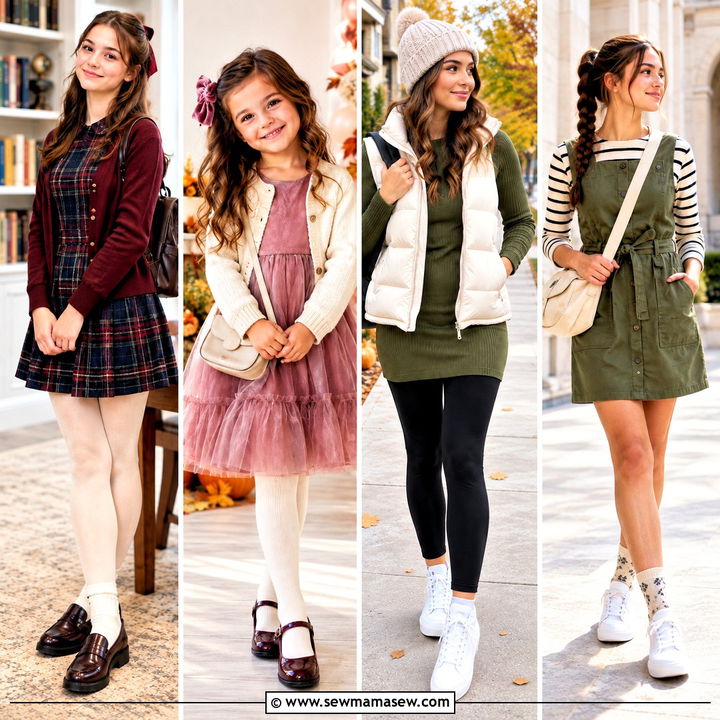
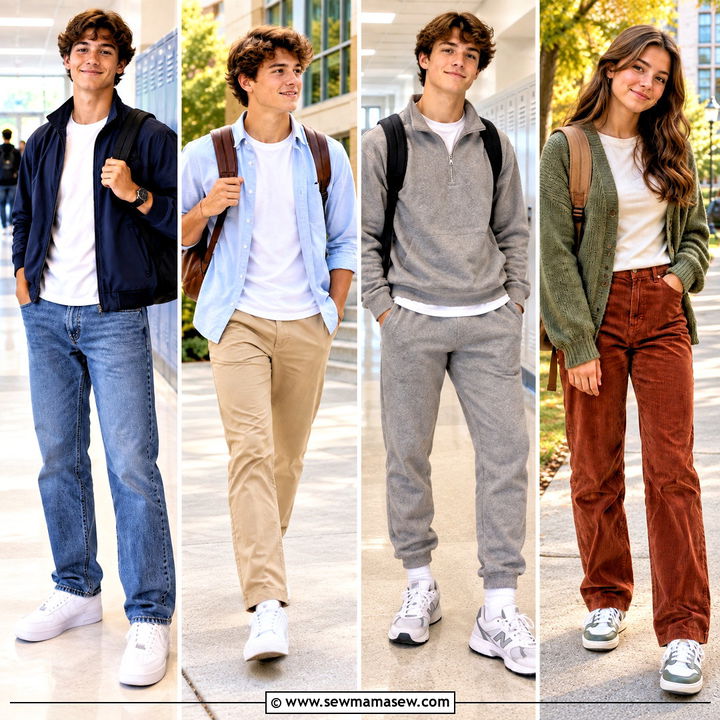
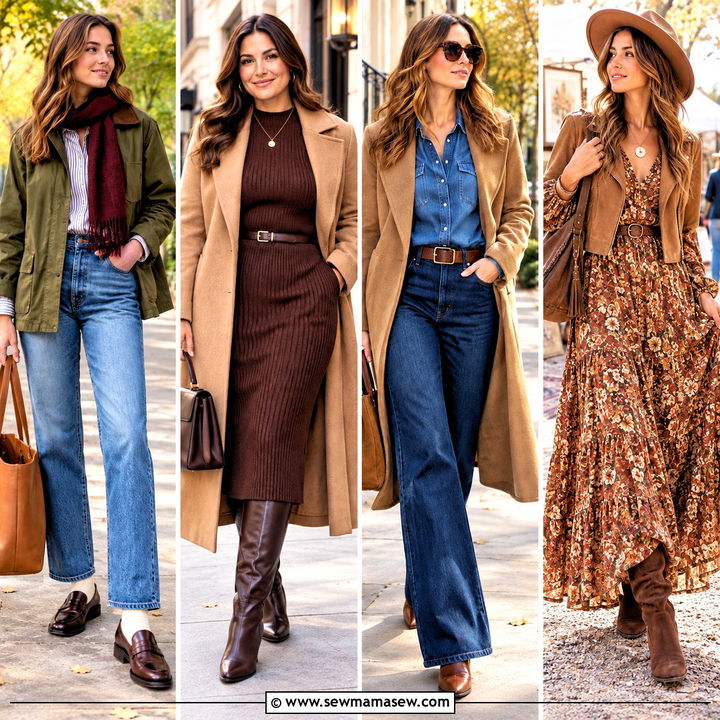
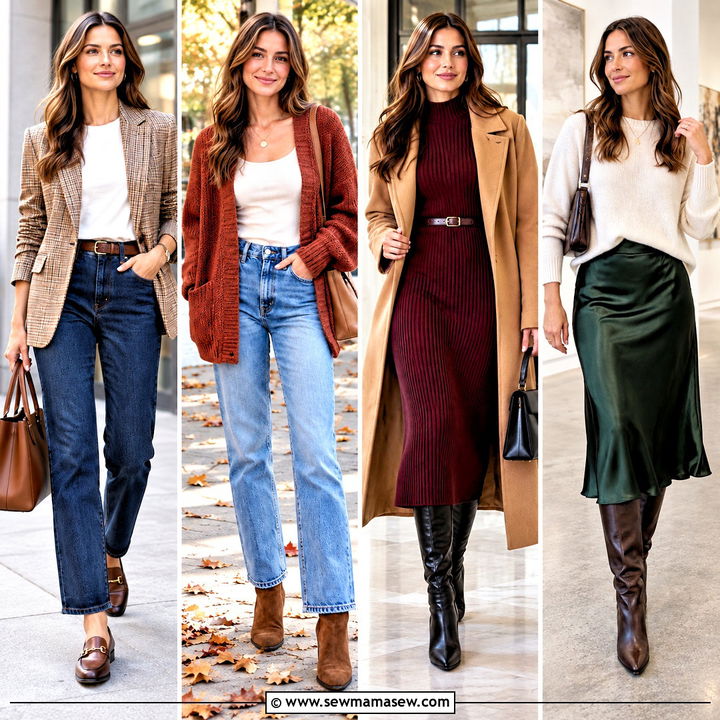
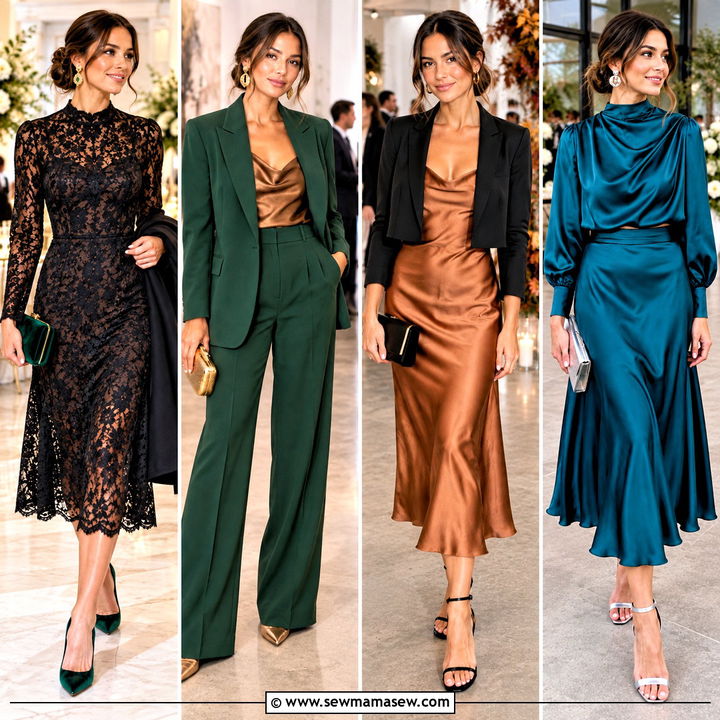
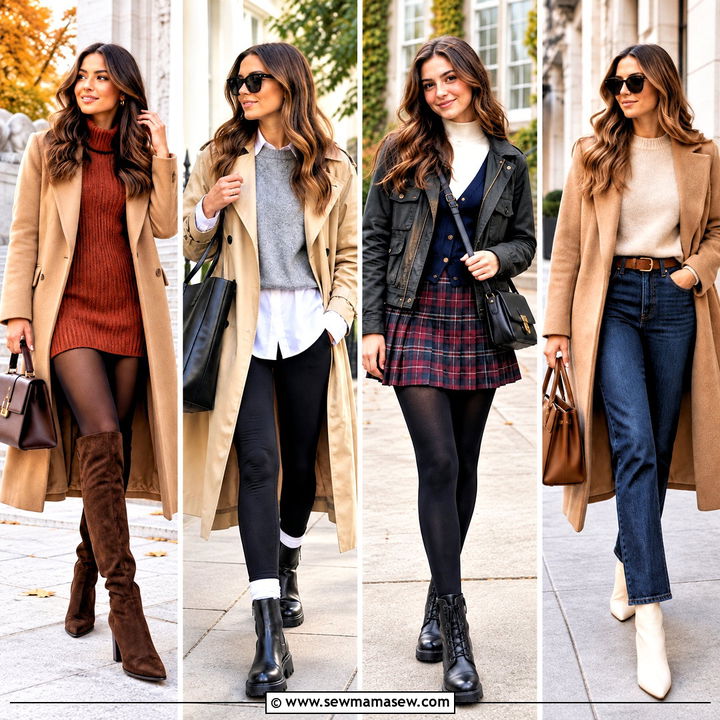
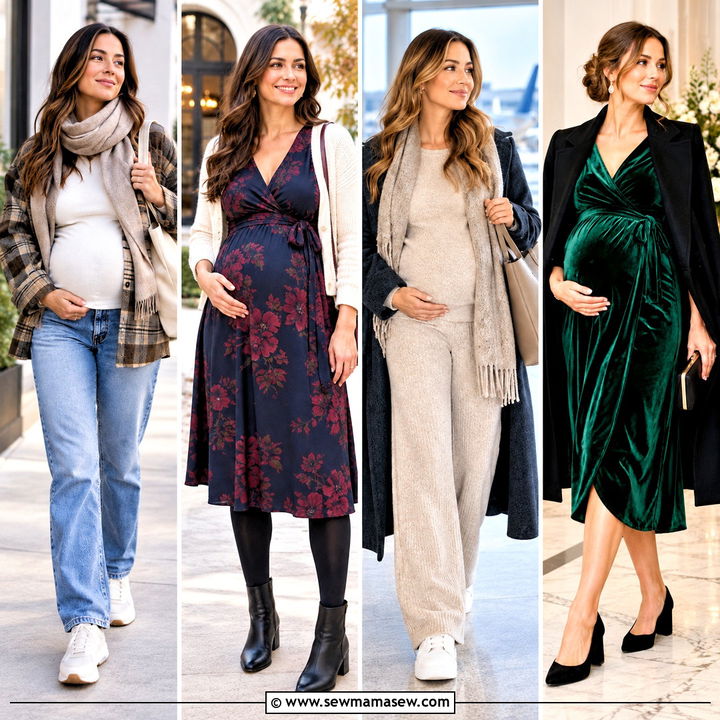
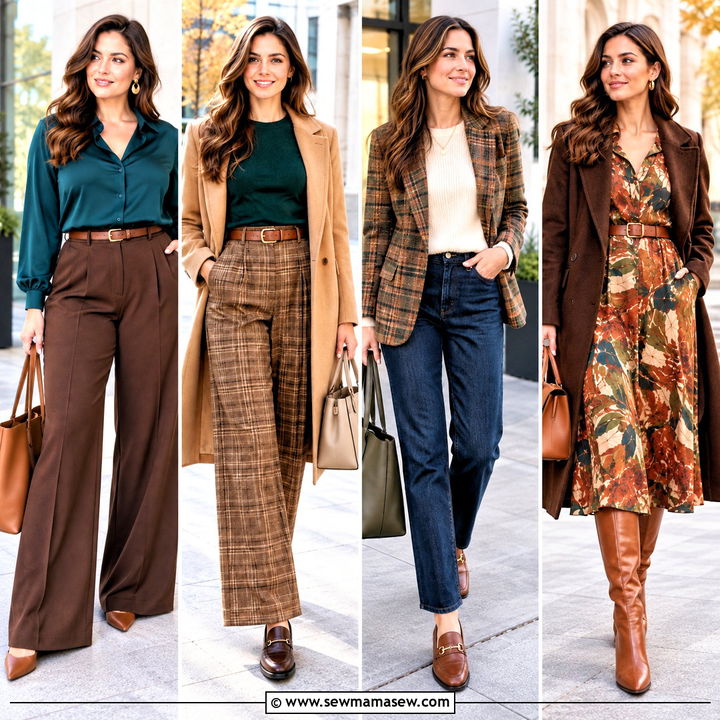
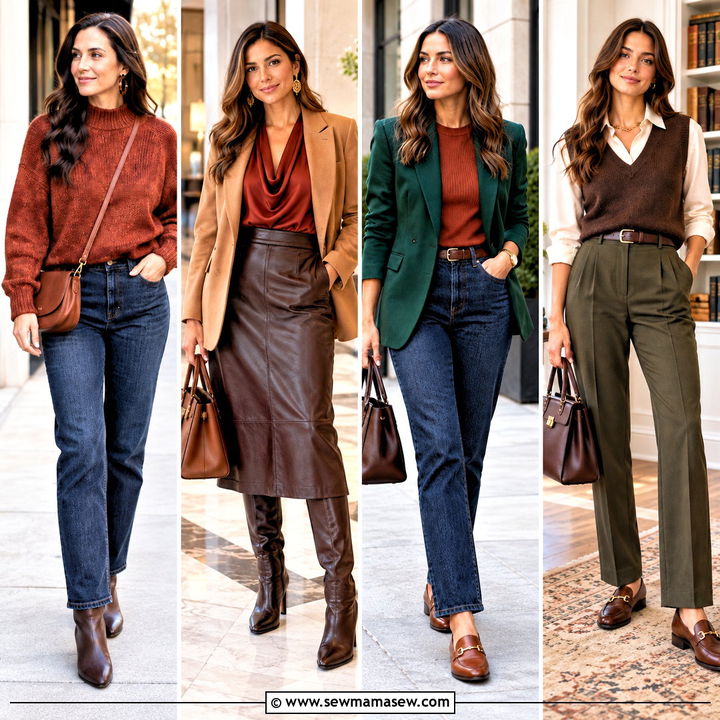
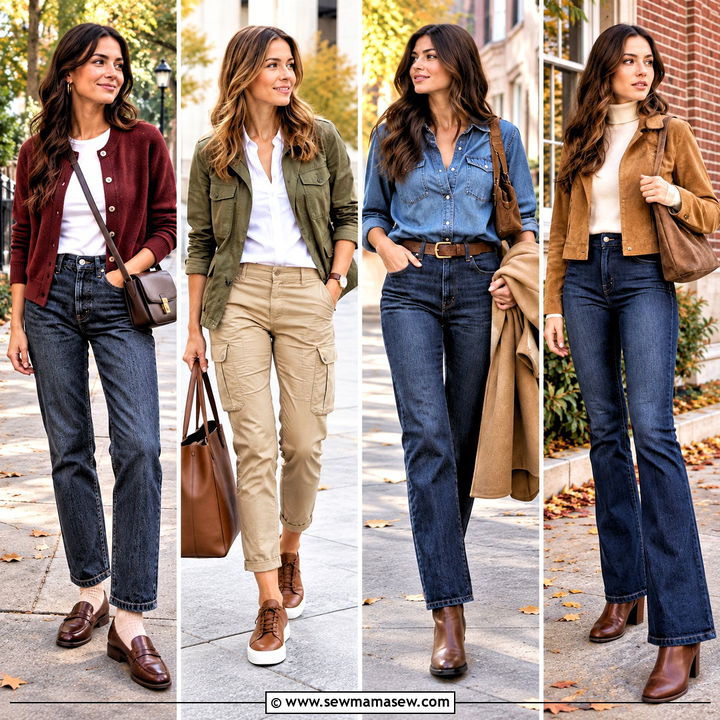
Most of the dressing questions I get in autumn aren't about color at all. They're about the line on the invitation: does smart casual mean a blazer, can velvet go to an afternoon wedding, are boots allowed at black tie? The outfits below run from a jeans-and-sweater weekend up to a column gown, and I've written each one with the detail that actually moves it up or down a level, usually fabric, hem length or the shoe. The palette stays in the season's deeper register of burgundy, chocolate, olive, navy and camel, because those shades read richer in low autumn light than the brights of summer do. Where a look needs adjusting for a warm September afternoon or a raw November evening, I say so.
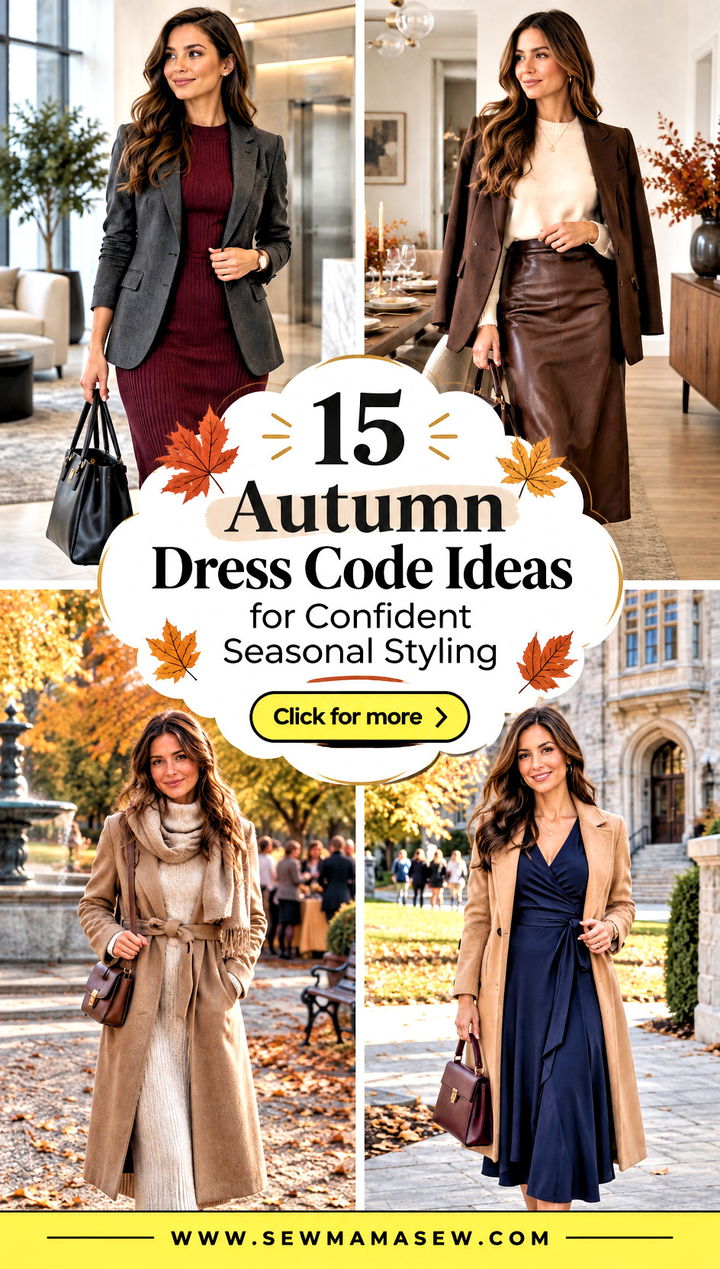
Fabric Tells the Dress Code Before the Cut Does
When someone shows me two outfits and asks which is more formal, I look at the fabric before the silhouette. A midi dress in cotton jersey and the same shape in silk satin are different dress codes, even though the outline is identical. Autumn makes this easier to read because the season brings out the heavier, richer textures that carry formality on their own.
- Casual: denim, cotton, chunky or loose knits, matte suede. Nothing with a sheen.
- Smart and business casual: fine-gauge merino, wool crepe, ponte, polished leather. Matte, but smooth and dense.
- Cocktail and semi-formal: velvet, satin, silk crepe, a little shine allowed.
- Formal and black tie: heavier satin, crepe that falls straight to the floor, velvet in long lengths.
Sheen is the quickest signal. Traditionally it belongs to evening, so a high-shine satin at a ten o'clock brunch can look like you came straight from the night before. If an invitation sits between two levels, I go with the fabric of the higher one and the cut of the lower, which tends to land right.
1. Casual Autumn Dress Code With Straight-Leg Jeans
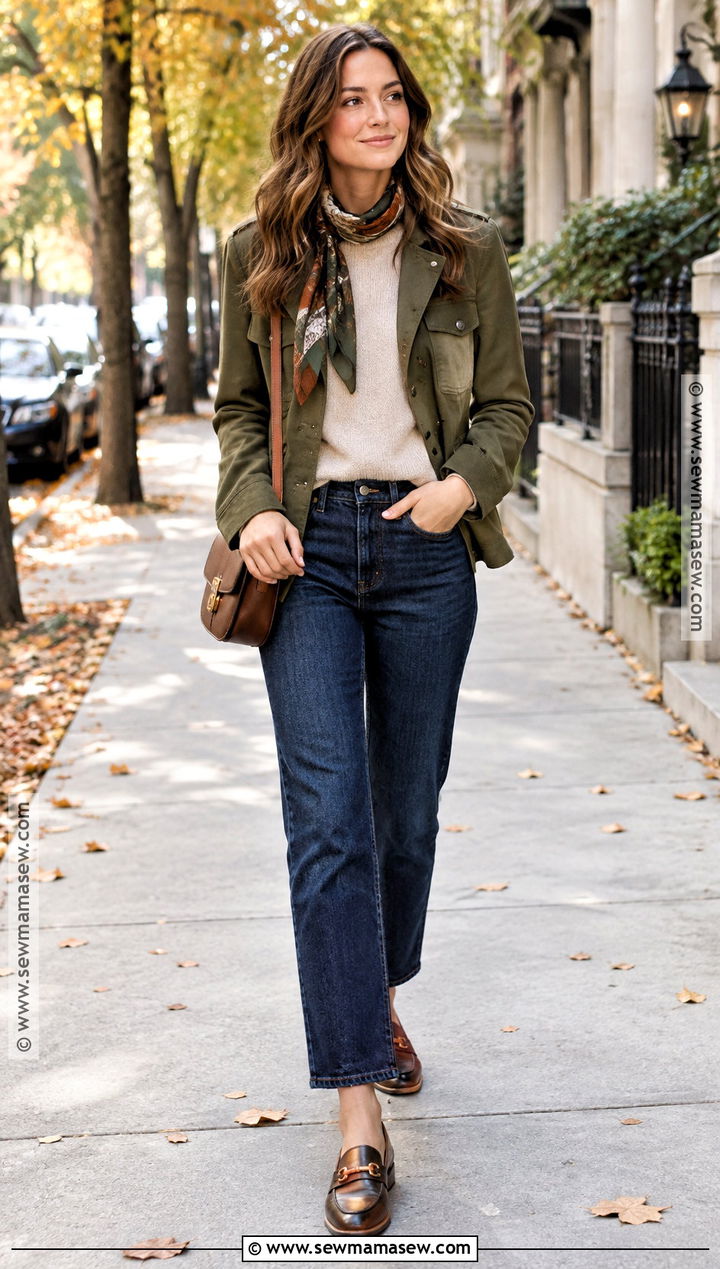
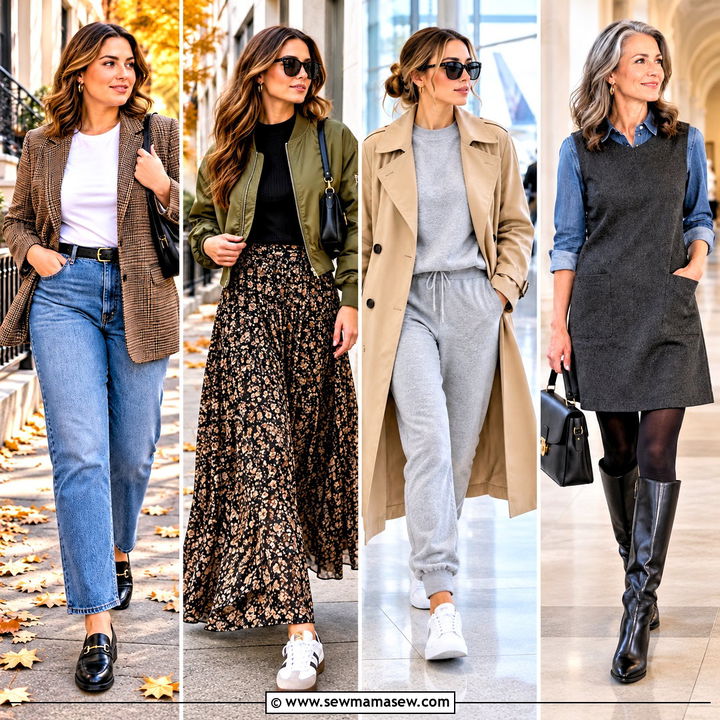
Casual still has a finish line. I'd start with dark-wash straight-leg jeans, because a dark, even wash looks deliberate in a way that faded denim doesn't, then add a lightweight crewneck in oatmeal or rust. A cropped utility jacket or a trench gives the outfit an edge to hold onto. Loafers keep it neat; clean sneakers relax it. The front tuck is where most people go wrong: tuck only the center few inches of the sweater into a mid- or high-rise waistband and let the sides fall, otherwise the knit bunches at the hip. A crossbody bag, small hoops and a thin scarf you can pull off indoors are all it needs for coffee, shopping or a day of sightseeing.
2. Smart Casual Autumn Dress Code With Blazer And Trousers
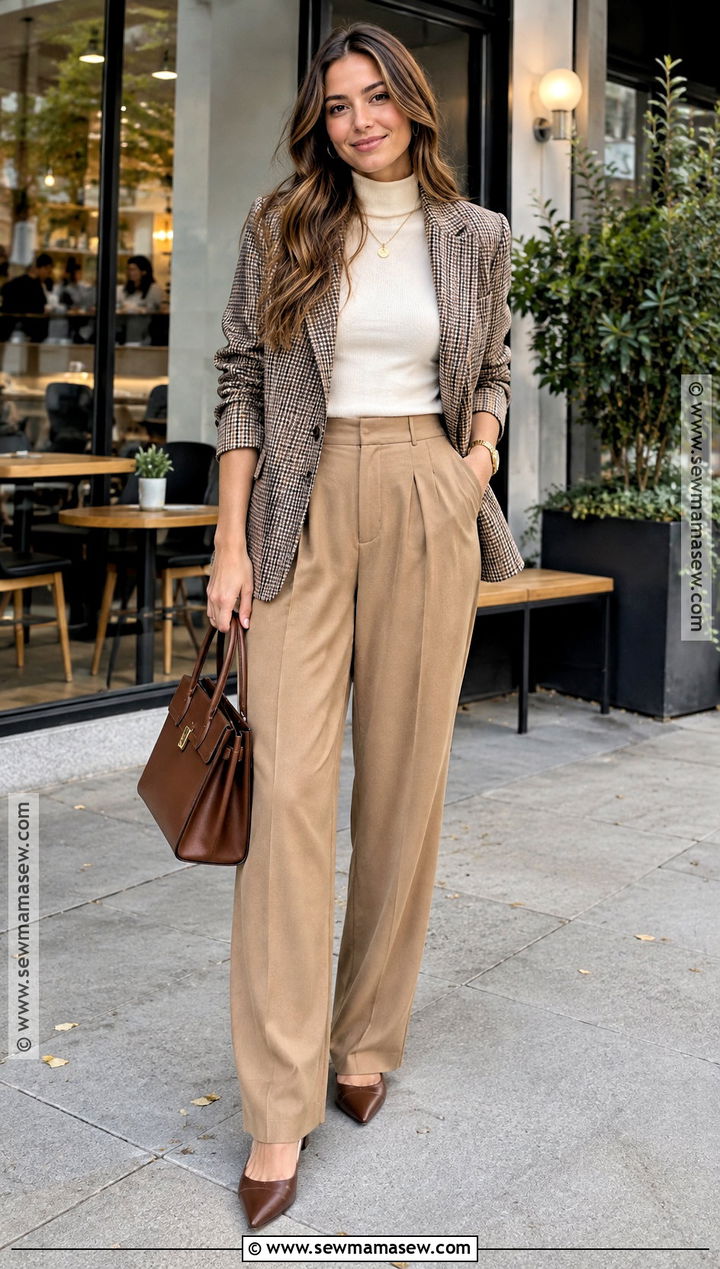
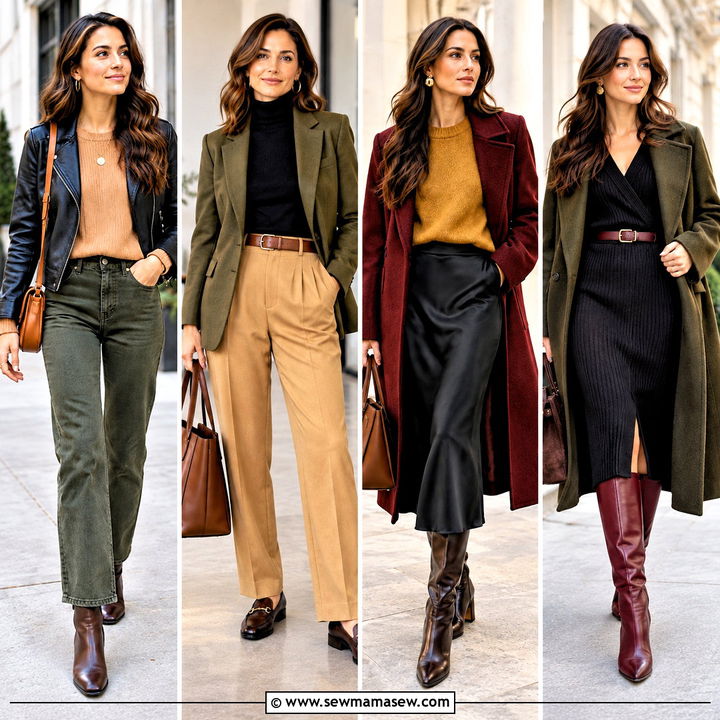
Smart casual is the code people overthink. My working rule is one relaxed piece and one tailored piece, never all of one or the other. Pleated trousers in camel or charcoal with a fine-gauge mock-neck and a softly structured blazer hits that balance, and the fine gauge matters: a chunky knit under a blazer pushes the shoulders out and the jacket won't button. Pointed flats, sleek ankle boots or a low block heel all work. Before anything else, I check the trouser hem in the shoes you'll actually wear; it should just kiss the top of the foot with a slight break. Lunches, workplace gatherings and gallery openings sit comfortably here.
3. Business Casual Autumn Dress Code With A Knit Dress
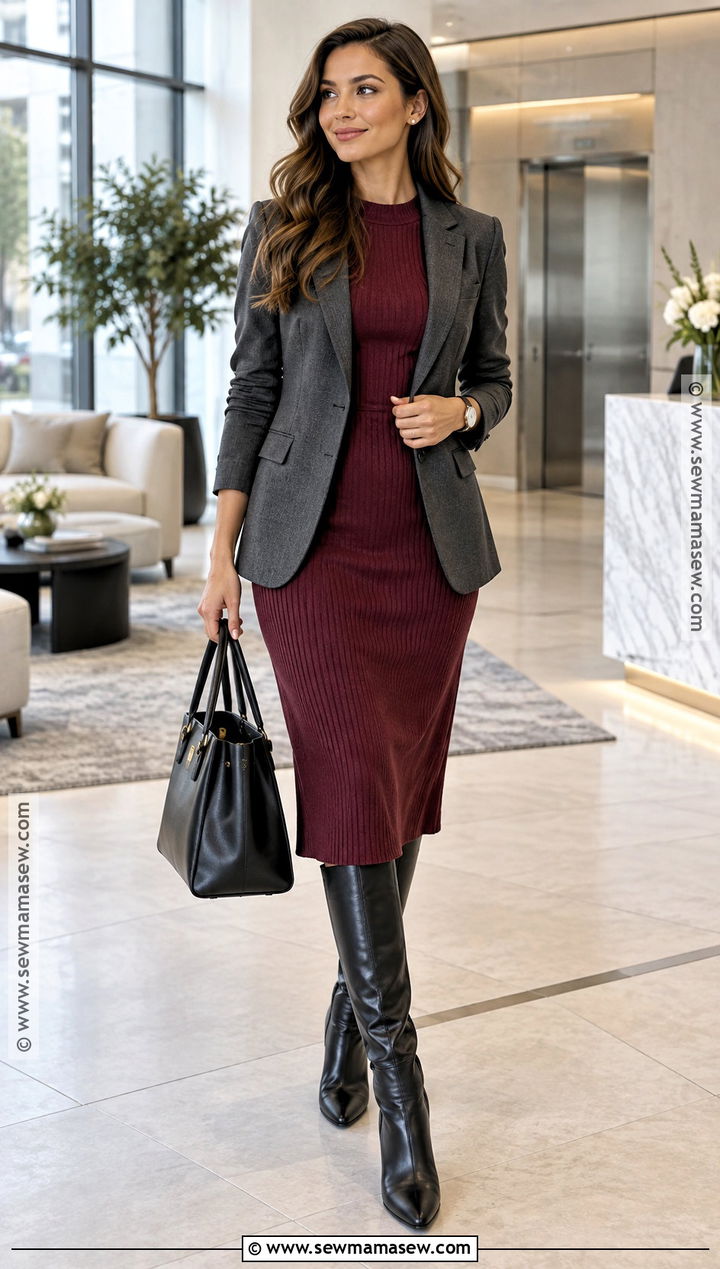
A knit dress can look as professional as a suit, but only if the knit has some weight to it. Thin jersey clings and shows every seam underneath; a dense, tightly knitted midi with long sleeves skims instead. I like deep navy, burgundy and dark olive here because they hide the slight sheen some knits pick up with wear. Layer a tailored blazer or a belted wool coat on top, then knee-high leather boots with a low heel, and make sure the boot shaft disappears under the hem when you sit, not just when you stand. A structured tote and a watch or slim pendant finish it for client meetings and presentation days.
4. Professional Autumn Dress Code With A Pantsuit
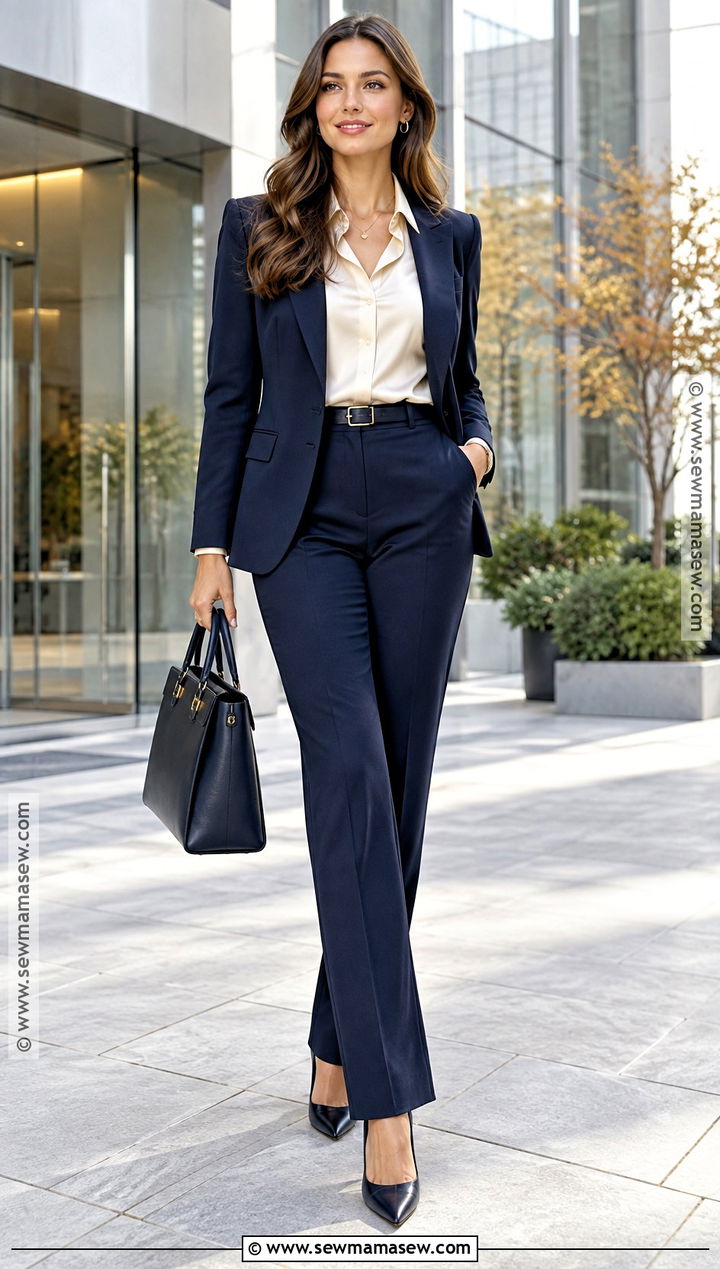
A pantsuit does most of the work for you, provided the shoulders fit. That's the one area a tailor can't really fix, so it's what I check first: the shoulder seam should sit at the edge of your shoulder bone, not past it. For autumn, charcoal, navy, espresso or a quiet check all read seasonal. Underneath, a silk blouse, a thin turtleneck or a plain shell, depending on how conservative the office is. Straight or gently wide trousers balance the jacket, and leather pumps, loafers or pointed ankle boots ground it. Skip anything distressed or stretchy-casual if it's an interview, conference or a leadership meeting where tailoring is the expectation.
5. Creative Office Autumn Dress Code With A Midi Skirt
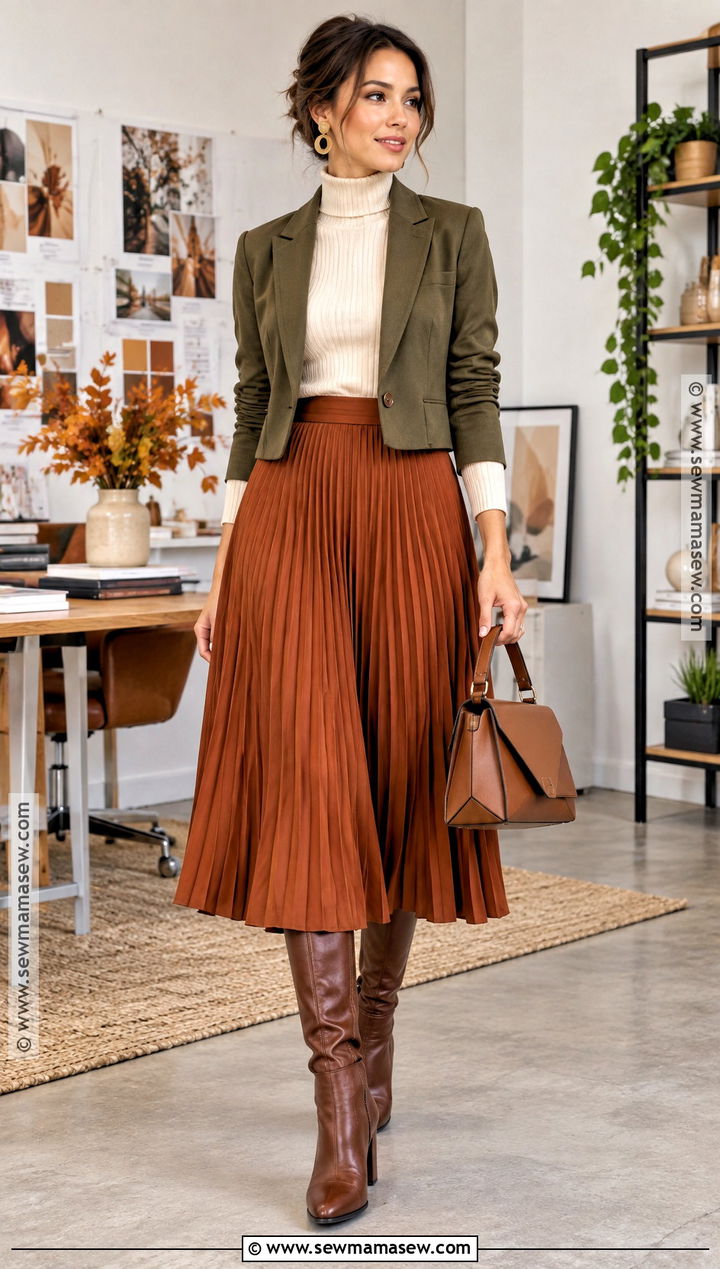
Creative offices give you more room, and the risk is using all of it at once. I'd let one piece carry the personality. A pleated or softly flared midi skirt in rust with a cream turtleneck, or olive against a burgundy knit, already says enough. Add a cropped blazer or a suede jacket that stops at the natural waist so the skirt's volume has somewhere to start. Knee-high boots look clean under a midi hem; loafers are the comfortable alternative, though they show more leg and can cut the line. Then choose a single expressive accessory, a sculptural earring or an unusual bag, rather than several that compete. It suits design studios, schools and media offices well.
6. Autumn Brunch Dress Code With A Sweater Dress
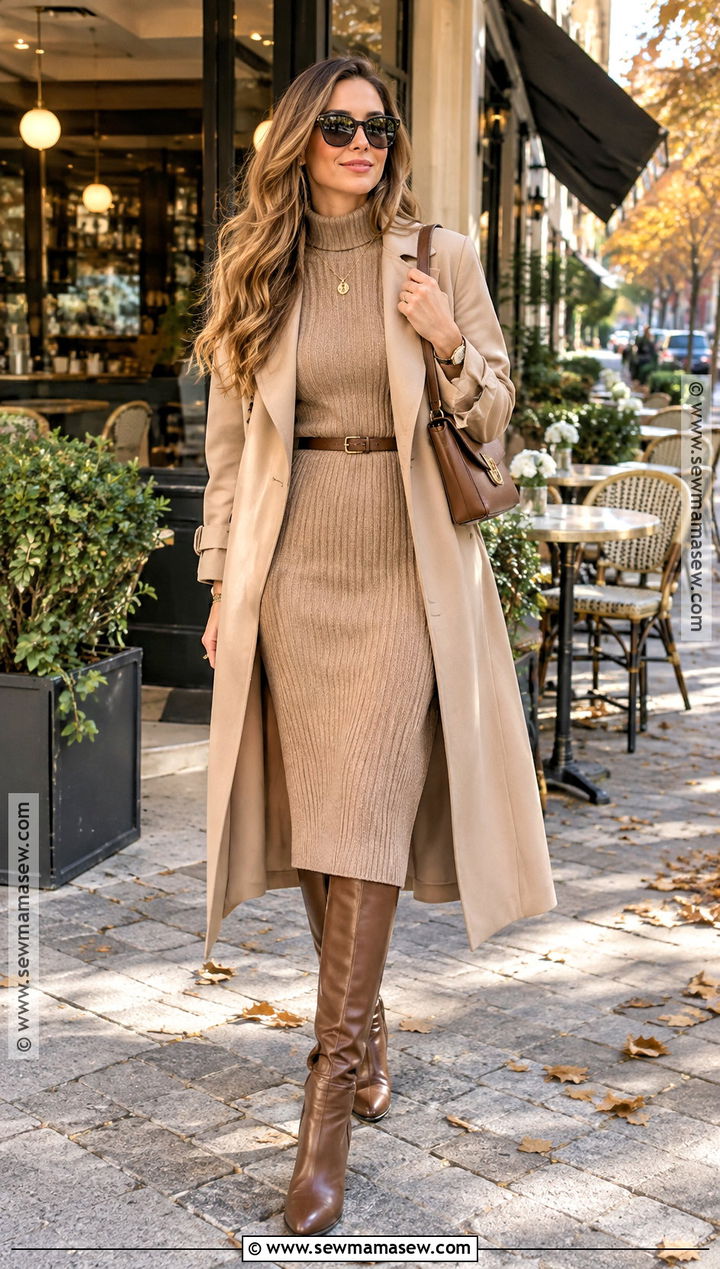
For a weekend brunch I reach for a sweater dress before anything else, and the shape decides the accessories. A ribbed midi in camel, berry or chocolate brown can take a slim leather belt to give it a waist; a relaxed, boxy one looks better left loose with sleeker boots so the whole thing doesn't turn shapeless. A long trench over the top keeps it from looking like loungewear. Ribbed knits do tend to bag at the seat after a few hours of sitting, so a dress with some wool content recovers better than pure cotton. A small shoulder bag and sunglasses finish it, and sheer tights once mornings turn properly cold.
7. Autumn Daytime Event Dress Code With A Floral Midi Dress
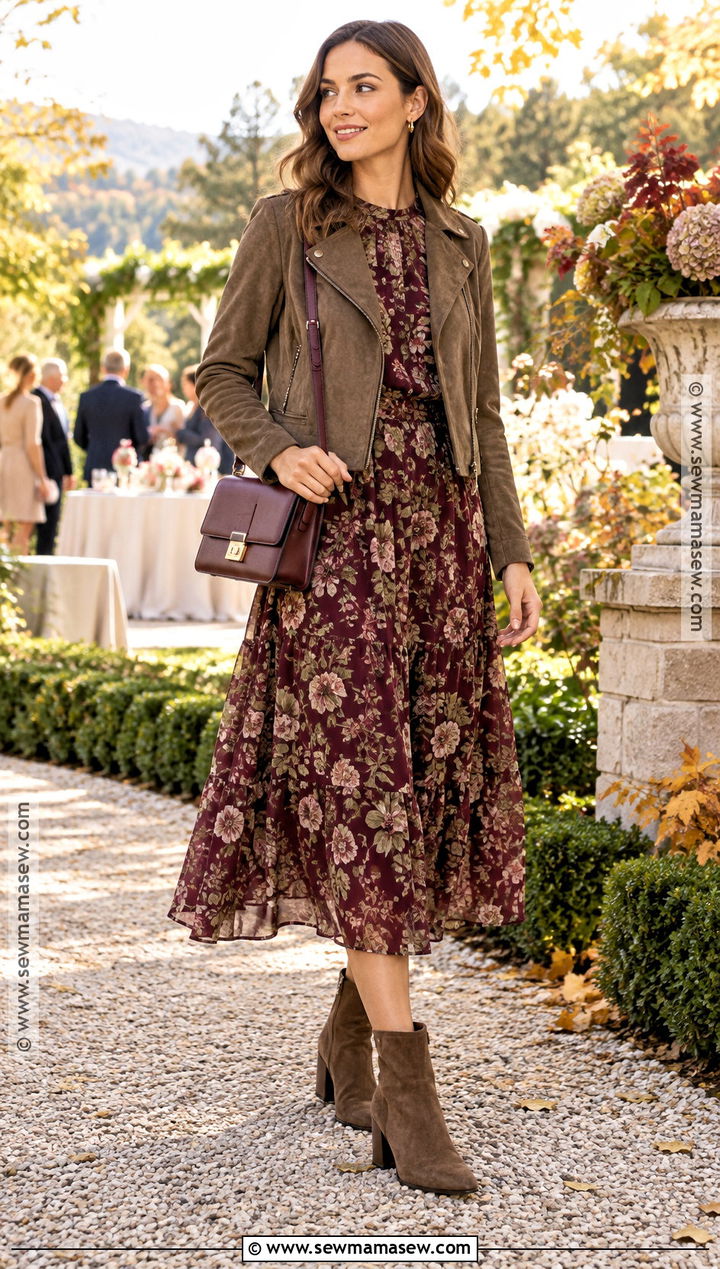
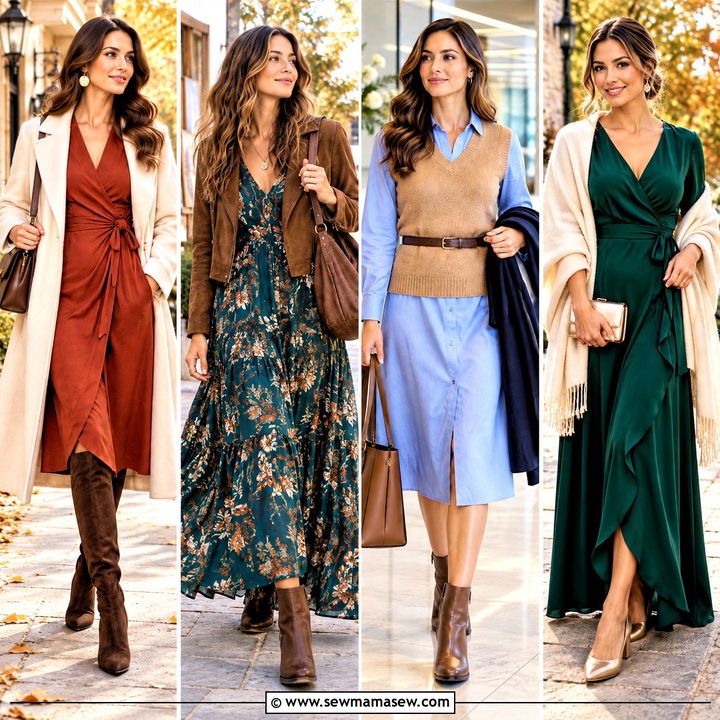
A dark floral midi is the most adaptable thing in this list. The print is what makes it autumn: burgundy, navy, rust or muted green grounds, not the white or pale pink backgrounds you'd wear in June. Long sleeves and a gently defined waist help through the day as temperatures swing. Suede ankle boots or closed block heels and a structured crossbody bag keep it event-ready, with a cropped jacket or trench on top. I keep accessories very plain because a busy print plus busy jewelry blurs in photos. It works for showers, luncheons and graduation parties. On a lawn, wear a wider heel and bring a wrap; evenings outdoors cool quickly once the sun drops.
8. Autumn Wedding Guest Dress Code With A Satin Midi Dress
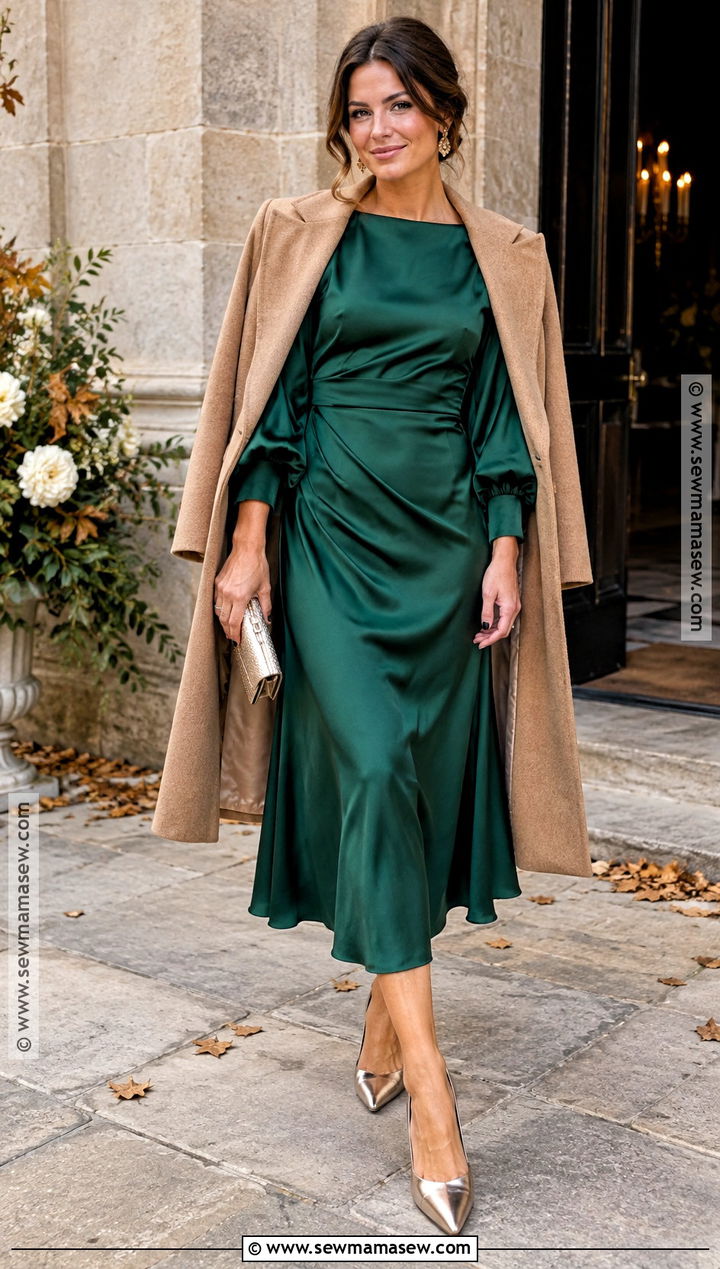
Satin gives an autumn wedding outfit its occasion without beading or sequins. Emerald, plum, navy or copper all sit well in the season; check the invitation's formality first, because a satin midi covers cocktail and most semi-formal weddings but looks underdressed at a true black-tie evening. The trade-off with satin is that it shows every crease and every line beneath it, so I always try the dress on with the actual undergarments and sit down in it before the day. A draped neckline or long sleeves make the shine feel less summery. Pointed pumps, a compact clutch, a tailored coat or matching wrap rather than a casual jacket, and no white or near-white shades that can photograph as bridal.
9. Autumn Cocktail Dress Code With A Velvet Dress
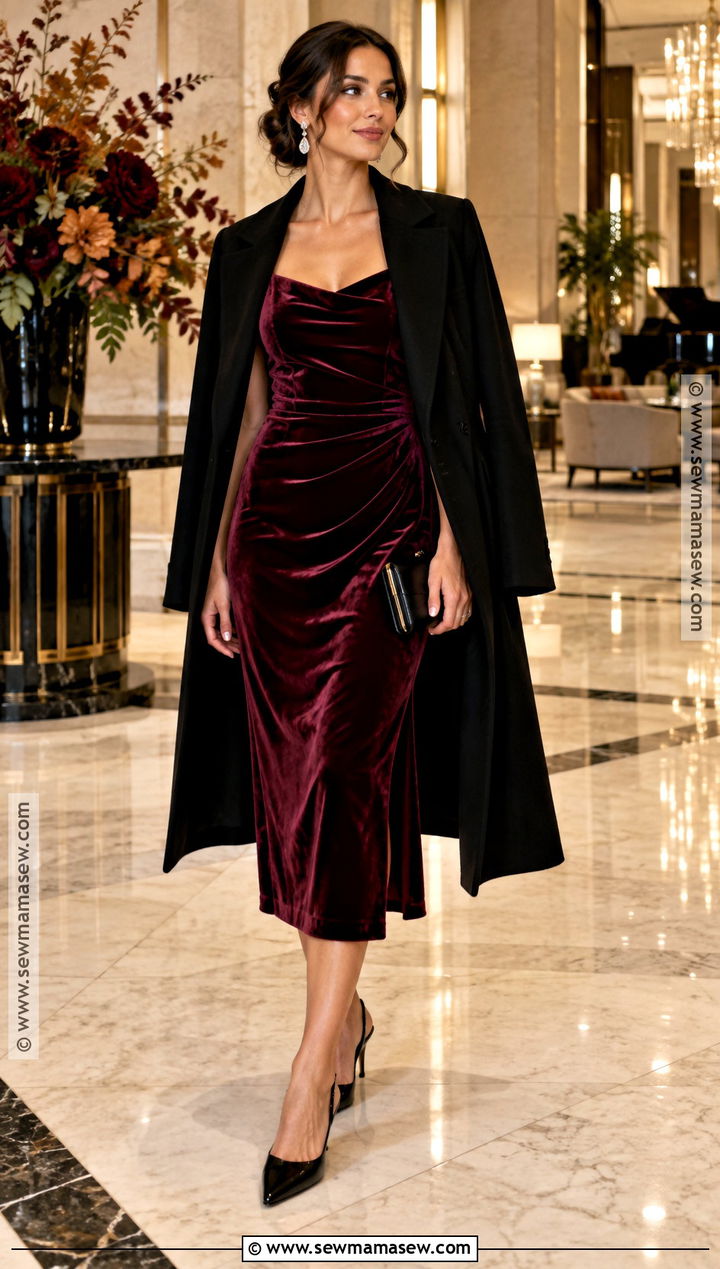
Velvet is the fabric I associate most with cold-weather cocktail parties, because the pile catches light softly and looks expensive even in a simple cut. Keep the silhouette clean, knee-length or midi, in black, burgundy, midnight blue or deep green. A wrap shape or square neckline gives it interest; anything more and velvet starts to look like a costume. One caution: velvet crushes where you sit and lean, so steam it from the inside rather than pressing it flat. Pointed heels or slingbacks, a structured clutch, one statement earring, and a tailored wool coat for arriving. If you wear hosiery, keep it sheer so the texture of the dress stays the point.
10. Autumn Semi-Formal Dress Code With A Tailored Jumpsuit
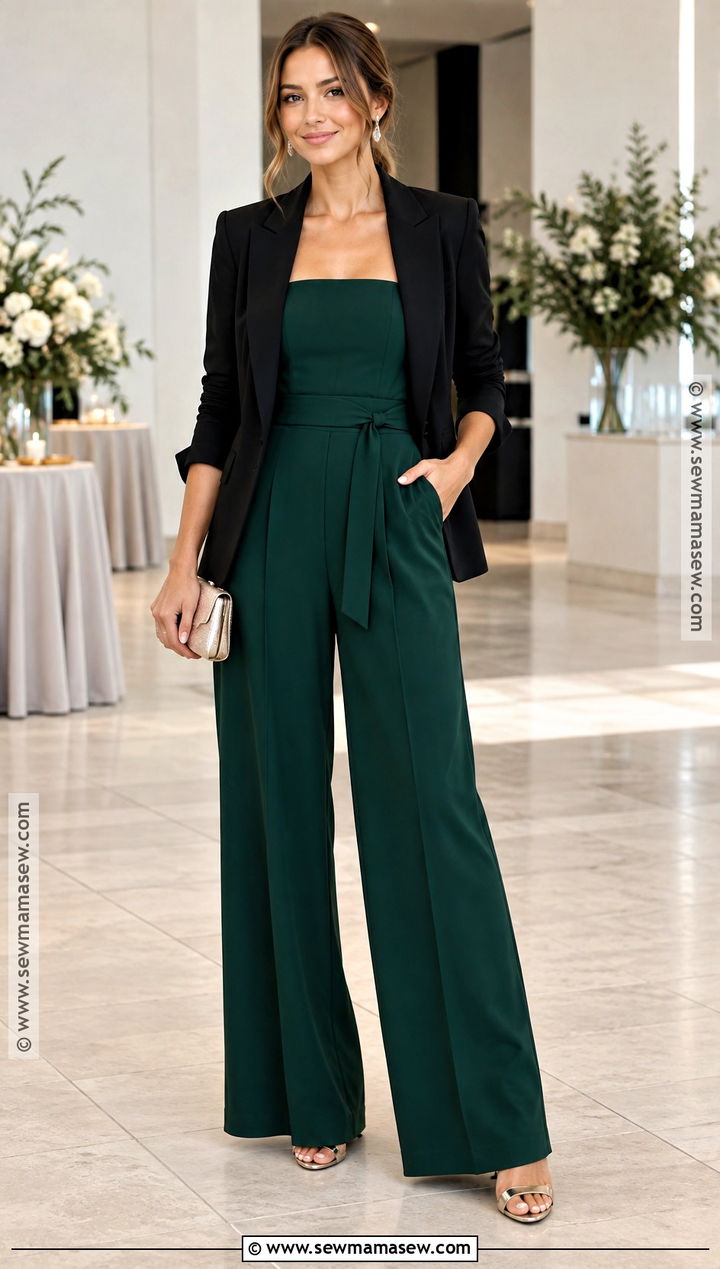
A tailored jumpsuit is my go-to for clients who don't want to wear a dress to an evening event. The fit has to work in two directions, which is why I check the body length before anything else: sit down in it, and if the crotch pulls or the shoulders drag, it's the wrong size regardless of how it looks standing. A defined waist, full-length legs and a structured or draped neckline make it read as eveningwear. Aubergine, forest green or espresso feel suitably autumn. Metallic heels or pointed pumps, a small clutch, and a fitted blazer if the crowd is conservative. Hem it with the exact shoes so the legs don't drag or bunch.
11. Autumn Formal Dress Code With A Long-Sleeve Gown
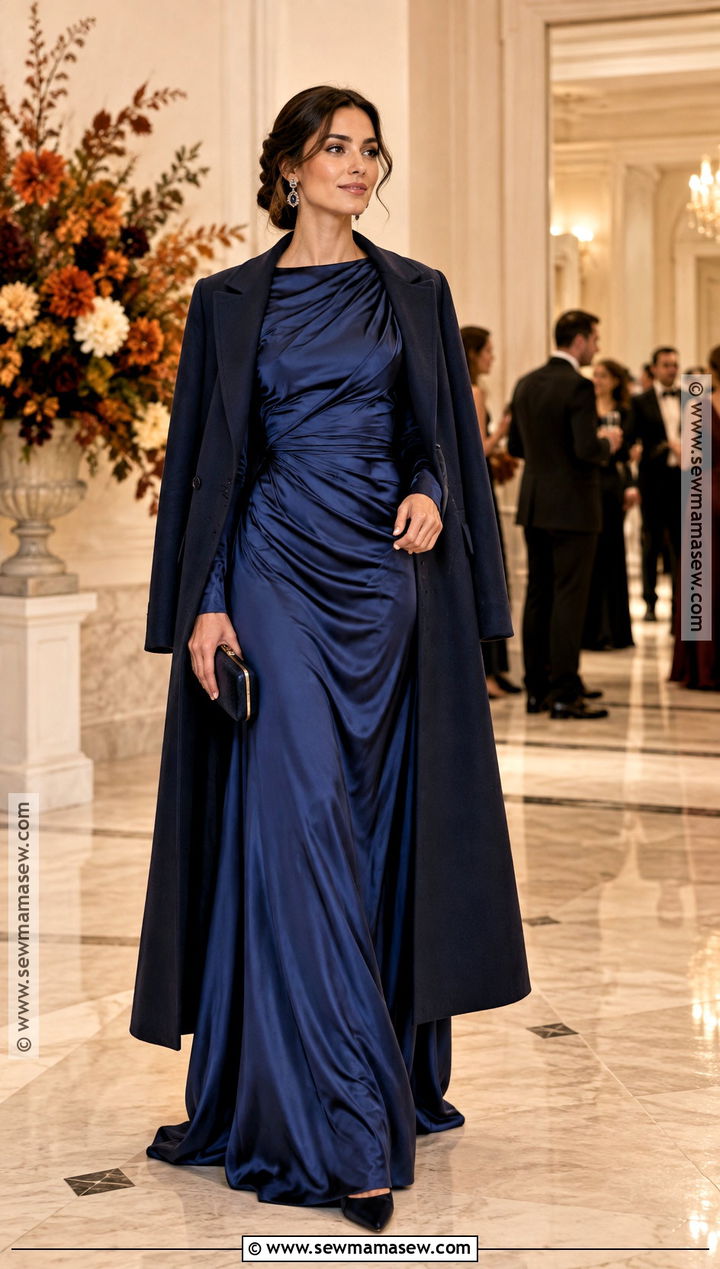
Formal autumn evenings are where you can finally go to the floor. A long-sleeve or high-neck gown in crepe, satin, chiffon or velvet suits the season, and jewel tones, midnight navy or black all hold up in candlelit rooms. What I care about most is whether you can sit through a long dinner and climb stairs in it; a gown that only looks right standing still is a long night. Closed-toe heels, a small evening bag and restrained jewelry are enough. Book alterations early, at least a few weeks out, so the hem can be set with your shoes and the bodice adjusted to stay put without tugging. Galas and formal weddings sit squarely here.
12. Autumn Black-Tie Dress Code With A Column Gown
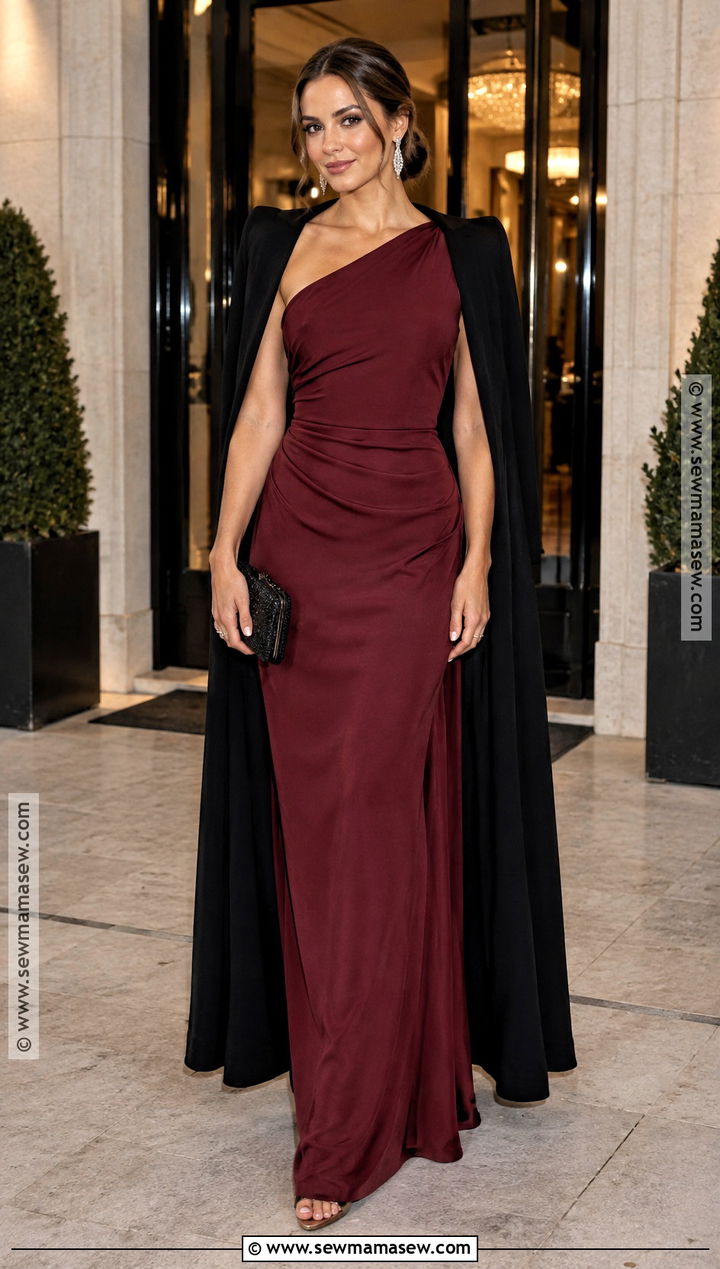
Black tie is the one code where under-dressing is the common mistake, not over-dressing. A floor-length column gown in black, burgundy, dark teal or sapphire is the simplest route, and the column shape relies on fabric quality because there's nothing else to hide behind. I look for heavier crepe or satin that falls straight without clinging, plus one refined detail like a cape sleeve or asymmetric neckline. Dressy heels, a compact clutch, elegant earrings, maybe a bracelet. For warmth, a long wool coat or a formal wrap rather than anything quilted. Leave everyday boots and the work handbag at home; at a highly formal wedding or benefit, those are what stand out.
13. Autumn Dinner Party Dress Code With A Leather Midi Skirt
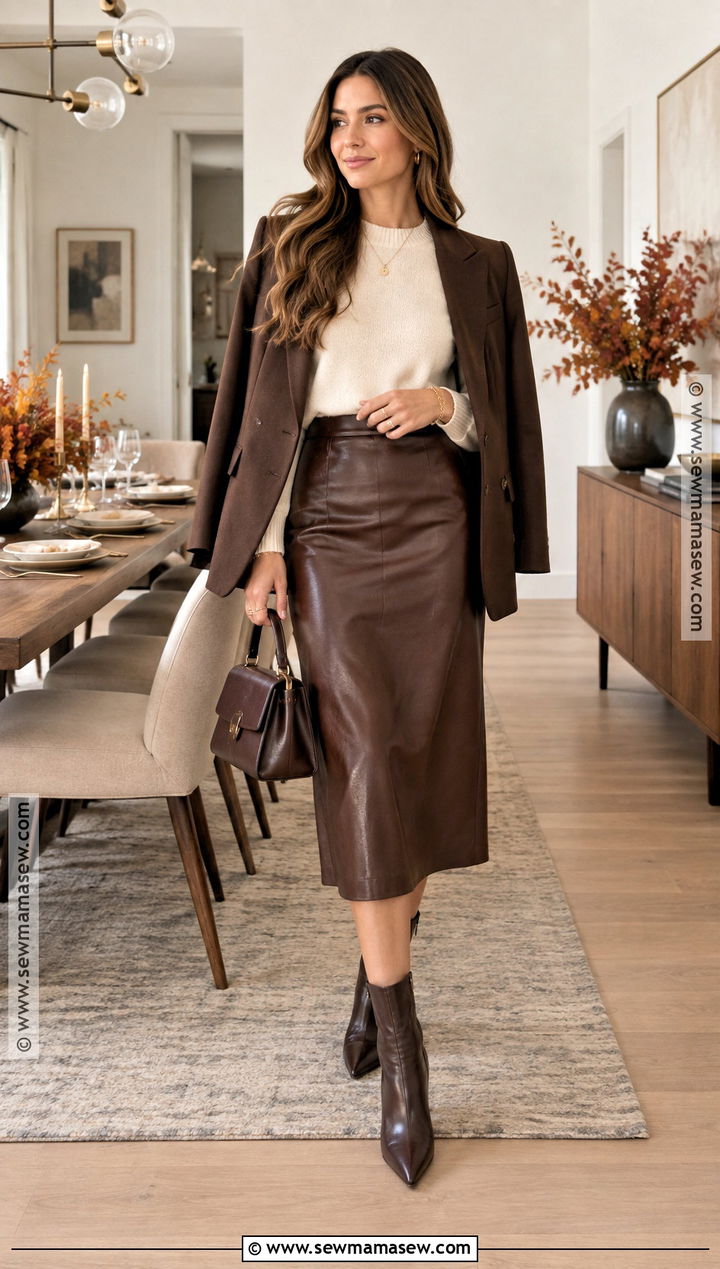
A leather or faux-leather midi skirt makes a dinner outfit feel deliberate with very little effort. The skill is in balancing its hard surface with something soft on top, a cashmere sweater or a draped blouse, so it doesn't tip into a biker look. A-line shapes are more forgiving than straight ones, which can crease badly across the lap after an hour of sitting. Black, burgundy, chocolate or dark olive are easy colors. Pointed ankle boots or slingbacks, a small top-handle bag, and a blazer if you want it sharper. If the skirt is shiny, keep everything else matte. Faux leather doesn't breathe, so in a warm room choose a thinner knit above it.
14. Autumn Outdoor Party Dress Code With A Knit Set
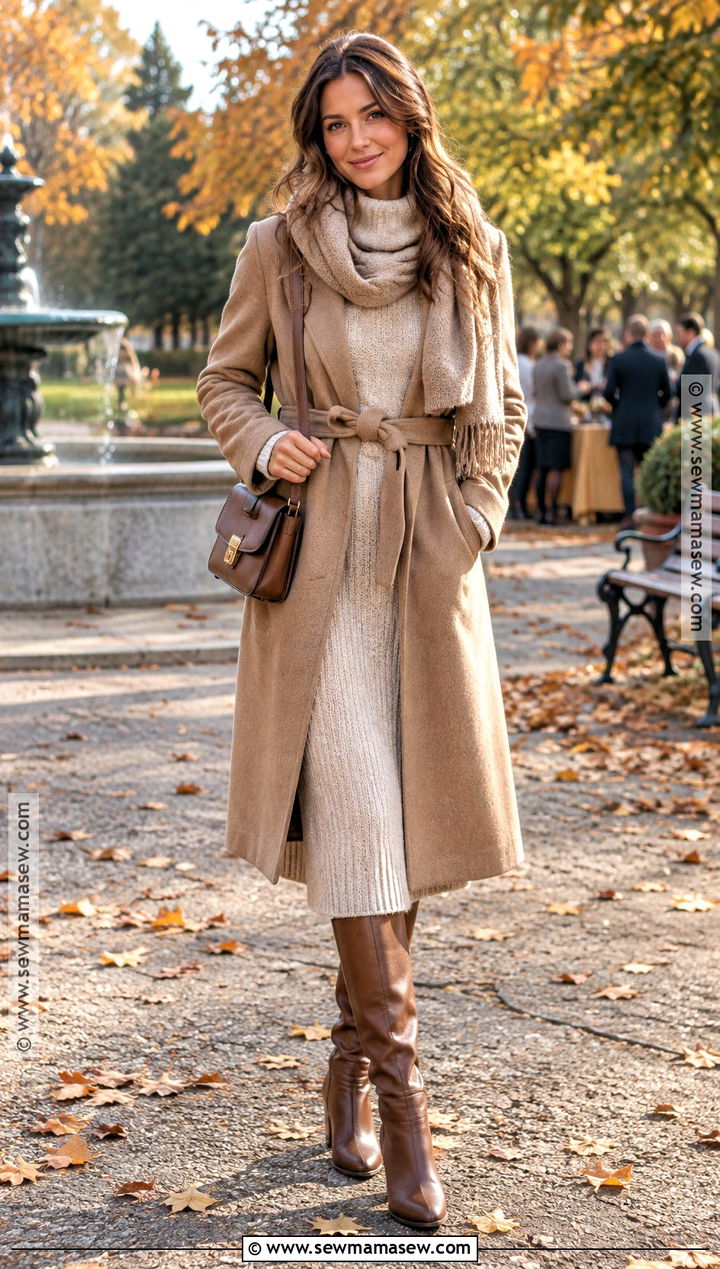
Outdoor autumn parties are really a layering problem dressed up as an outfit. A matching knit set, either a fitted sweater with a midi skirt or knit trousers with a coordinated top, looks put-together without effort, and neutrals like oatmeal, mocha or olive suit a garden or patio. Add a belted wool coat or a lined trench and knee-high boots with a stable, lugged sole, because grass and gravel will catch a narrow heel straight away. A crossbody keeps your hands free for a plate and a drink. Mixing two knit textures adds depth; adding a third color usually makes it busy. It suits harvest gatherings and community events well.
15. Autumn Graduation Dress Code With A Wrap Dress
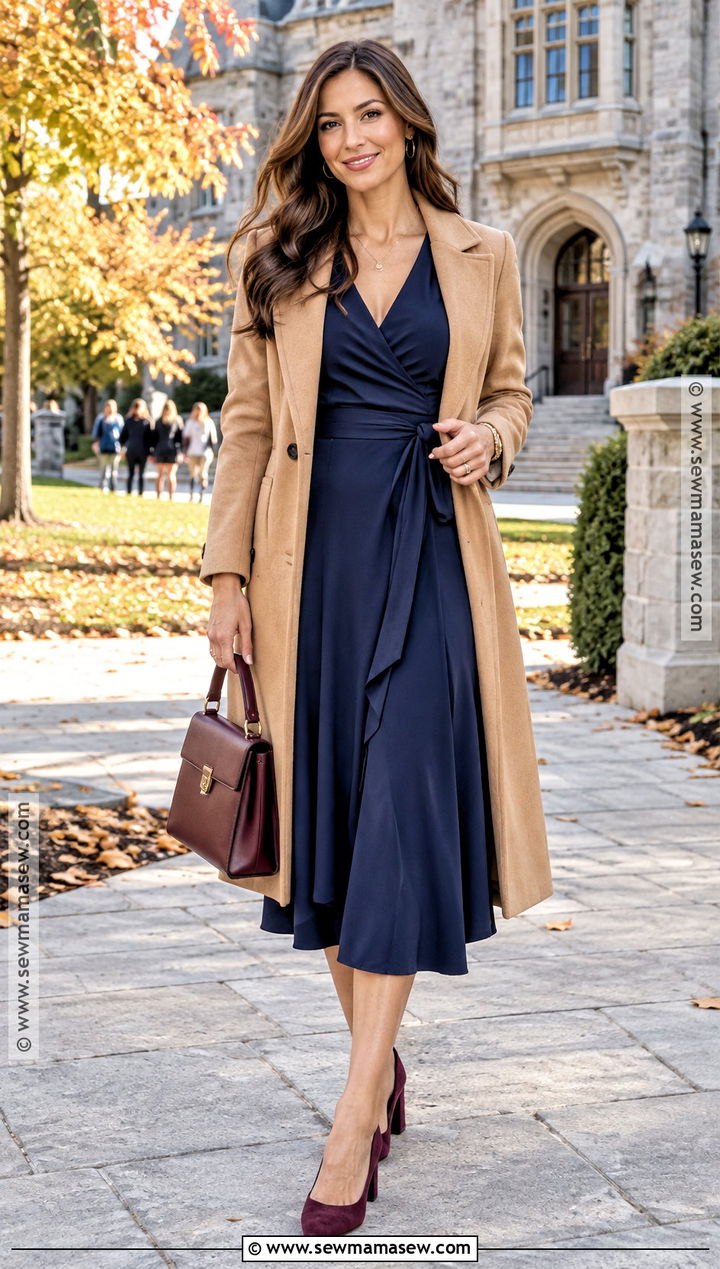
A wrap dress earns its place at a graduation because it moves well and adjusts to your body through a long day of sitting and standing. Choose knee-length or midi with long sleeves in navy, burgundy or a small seasonal print, and check the wrap's overlap in a mirror while seated, since a shallow wrap can gape open. A tailored coat you can shrug off indoors, plus block heels, refined flats or ankle boots for crossing campus. If you're wearing academic robes over it, skip puffed sleeves; they bunch under the gown. A jersey or crepe with some stretch resists wrinkles through travel, the ceremony and the family photos afterward.
Moving One Midi Dress Across Three Invitations
A dark, long-sleeved midi in crepe or a dense knit is the piece I'd buy first if someone had several autumn events and a small budget. Here's how I'd move the same dress through three codes without it looking like a repeat.
- Business casual: a tailored blazer on top, knee-high leather boots with a low heel, a structured tote and stud earrings. The boots and bag are what make it office wear.
- Daytime event: lose the blazer, add a cropped suede jacket or fitted cardigan, swap to block heels, and bring in one patterned scarf or a colored bag.
- Cocktail: pointed heels, sheer tights, a statement earring, a small clutch, and a long wool coat instead of any jacket. Pull the waist in with a slim belt if the dress is loose.
This only works if the dress is plain. A print or a decorative neckline locks it into one setting, so keep the dress quiet and let the accessories carry the change.
The Coat Problem at Formal Events
The outfit people plan for weeks often arrives under a puffer. At cocktail level and above, the coat is part of what everyone sees as you walk in, so I treat it as part of the outfit. A tailored wool coat that ends at or just below the dress hem looks finished; one that stops a few inches above a midi hem chops the line awkwardly. For a floor-length gown, a long coat or a wrap reads better than a cropped jacket.
If you don't own a formal coat and the venue has a coat check, a dark wool coat in a plain cut is a reasonable middle ground. Quilted, hooded or sporty outerwear is the one thing I'd steer clear of over velvet or satin, partly for looks and partly because the friction can rub and crush the fabric.
Read the Invitation First, Then Check the Forecast
Every outfit here starts from the same two questions: what level of formality is the host asking for, and what will the weather do between arriving and leaving? Answer the first and you know your fabric and hem length; answer the second and you know your coat and shoes. You don't need a separate wardrobe for each invitation. A tailored blazer, dark trousers, a midi dress, polished boots and a structured coat will cover most of the codes above with only the accessories changing. Treat these as starting formulas and adjust them to your own proportions, the venue and how cold you tend to run.
Related posts: