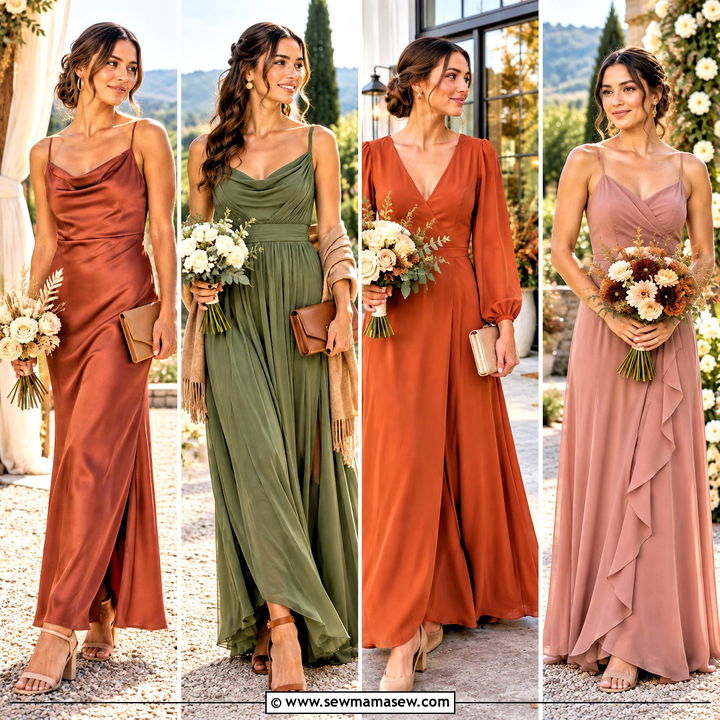
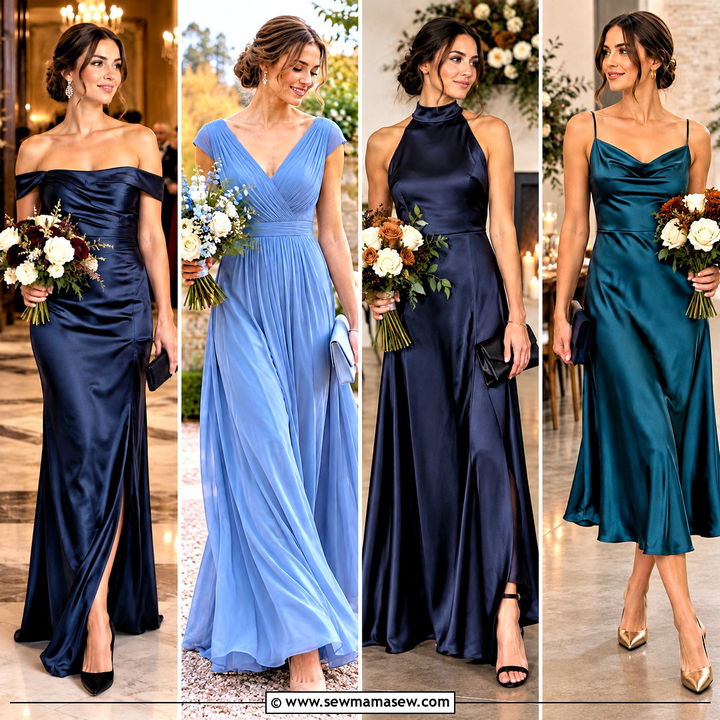
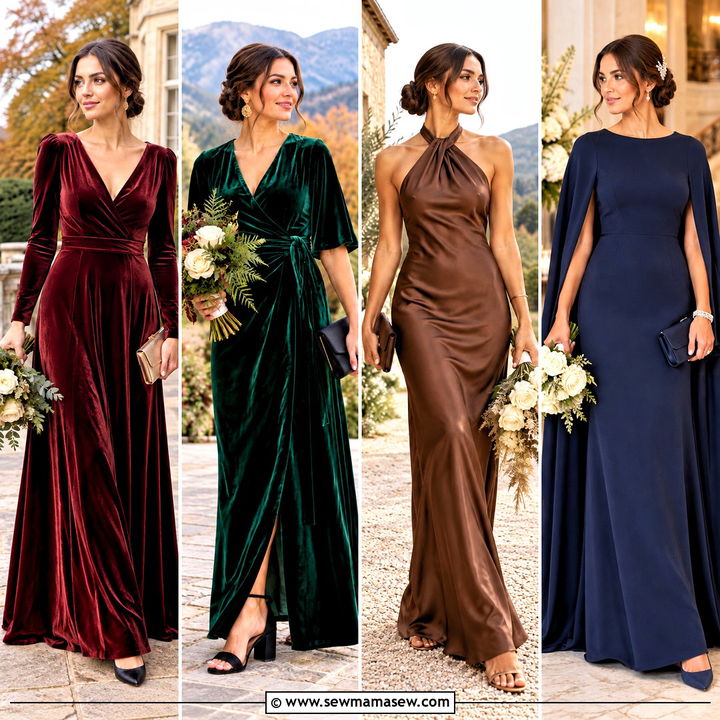
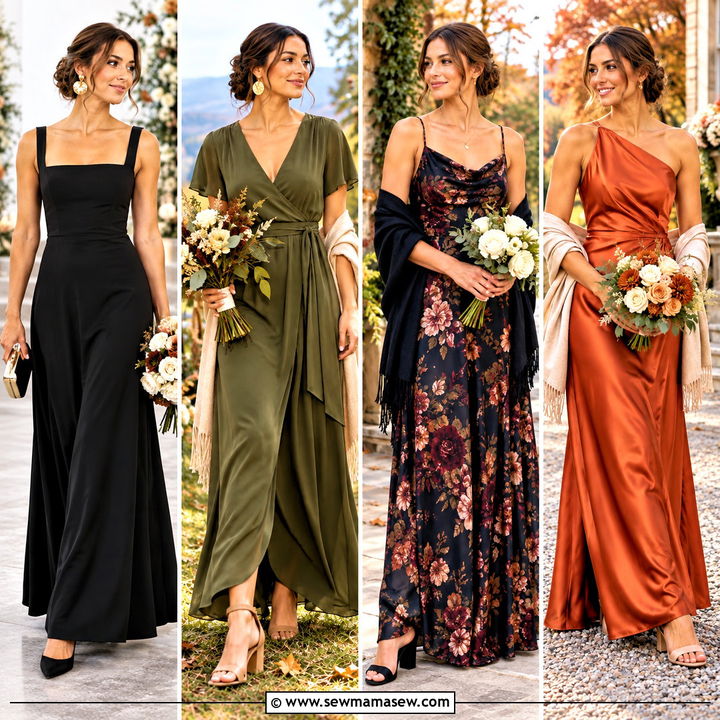
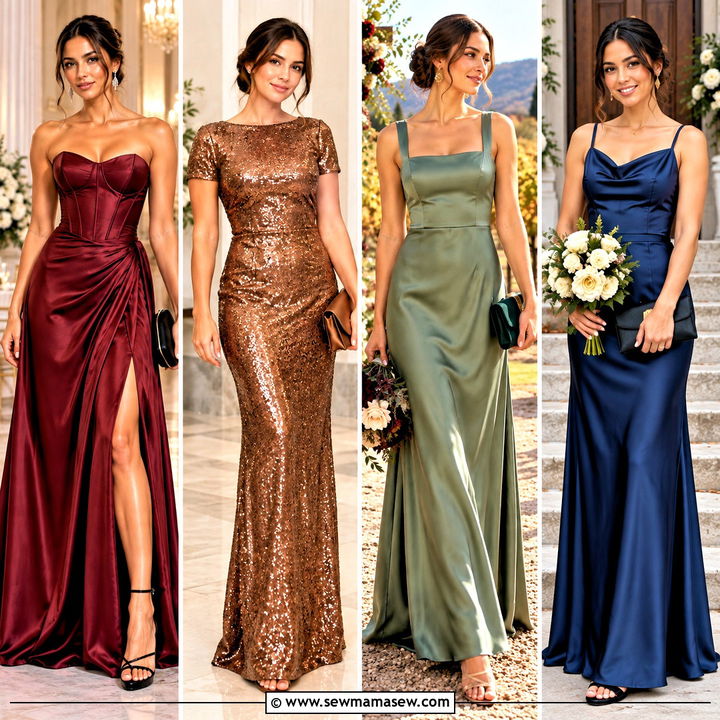
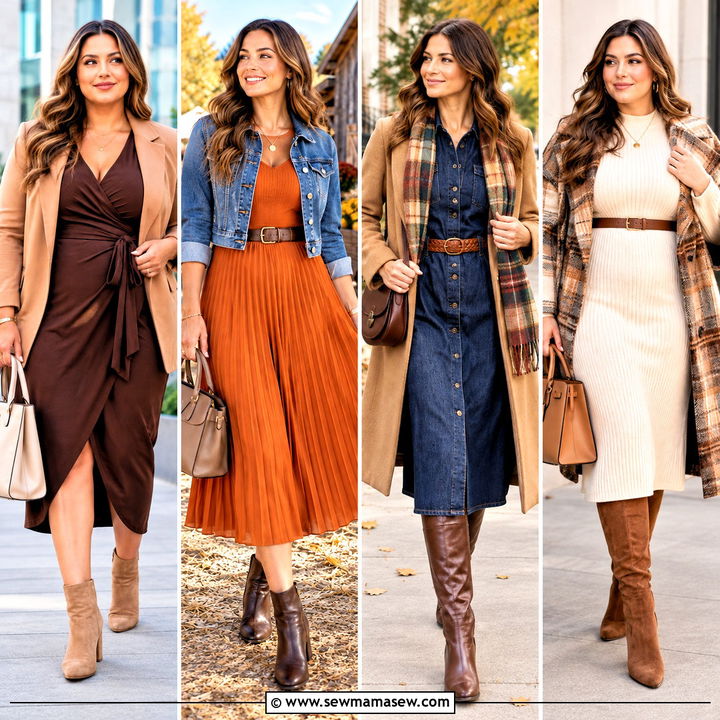
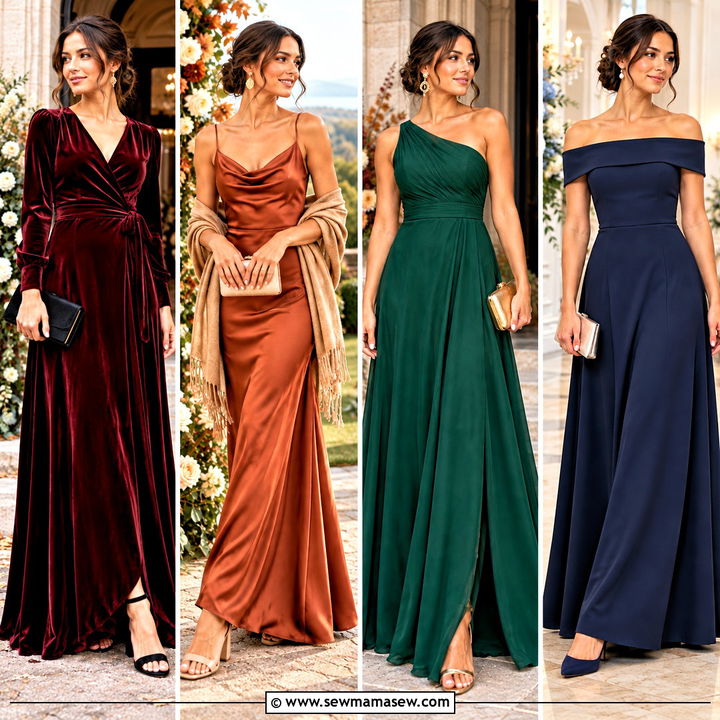
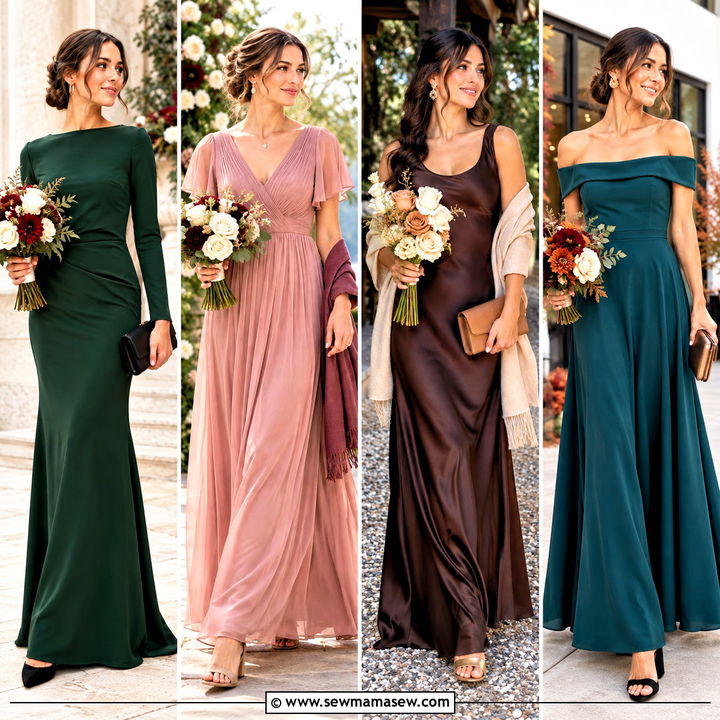
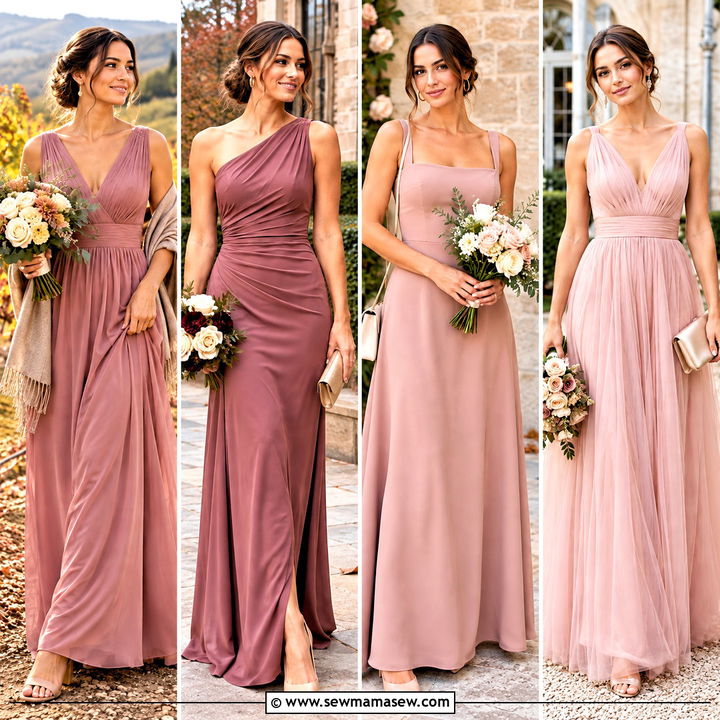
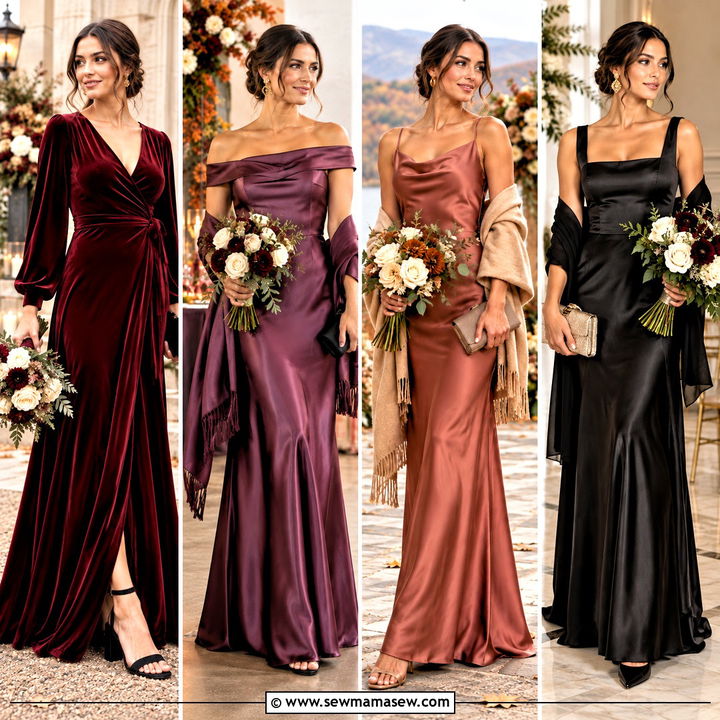
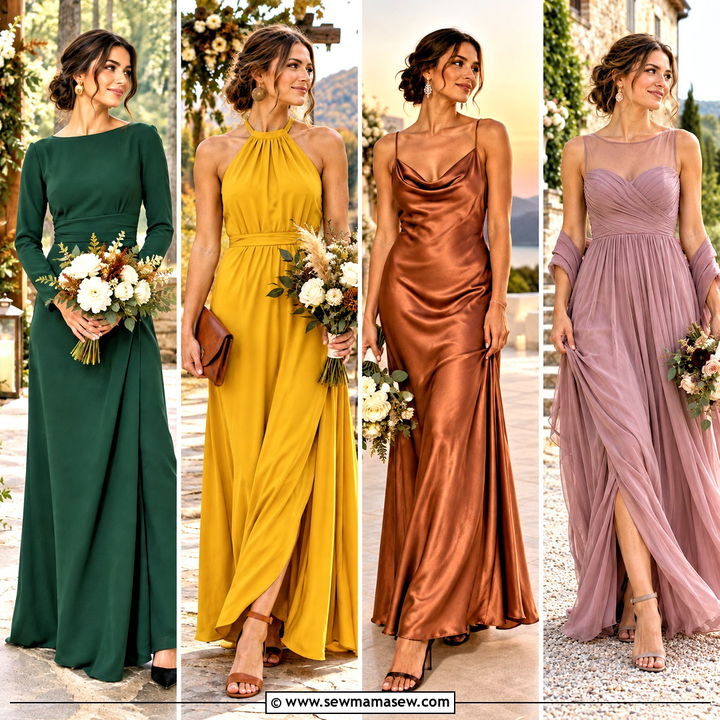
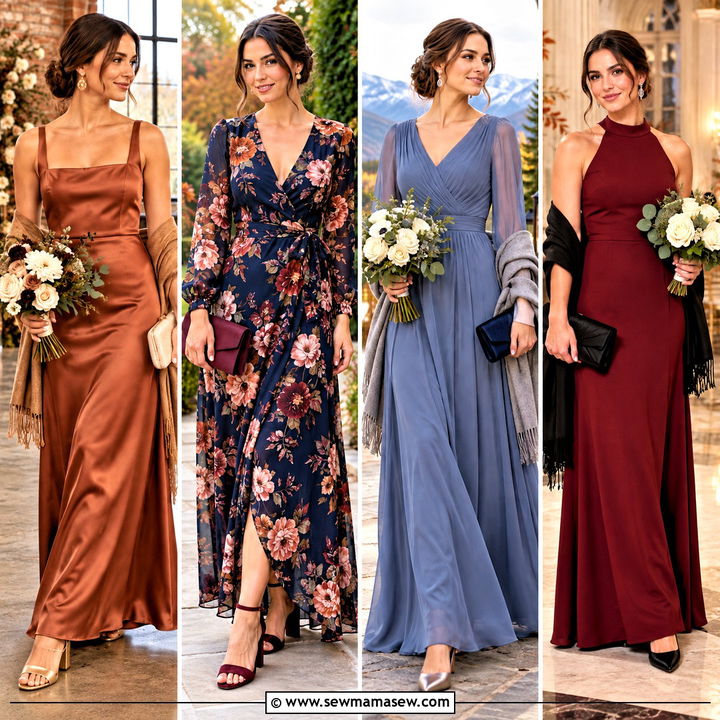
Fall bridal parties give you more to work with than any other season. The colors are deeper, the fabrics can be heavier, and nobody expects everyone in a pastel. The catch is that autumn weddings also bring cold ceremony sites, early sunsets and venues lit by candles and string lights, and all of that changes how a dress reads. Below are fifteen dresses I'd put in front of a bride planning a fall wedding, from burgundy velvet and rust satin to a black floral and a mixed palette. For each one I've noted the shoes, jewelry and bouquet I'd pair with it, plus where the color or fabric tends to cause trouble. Most of them also work with mixed necklines, so your bridesmaids don't all have to squeeze into the same cut.

Four Fall Fabrics Over a Long Wedding Day
A bridesmaid wears her dress for eight to twelve hours: getting ready, photos, ceremony, dinner, dancing. The fabric decides how she feels at hour ten far more than the color does, so I sort the options by how they behave before I talk about shades.
Velvet
Velvet is the warmest and the most forgiving visually, because the pile softens the line of the body. It is also heavy, it crushes when you sit, and the color changes depending on which way the light hits the nap. I keep it for cold venues and evening receptions, and I tell bridesmaids to hang it in a steamy bathroom the morning of the wedding.
Satin
Satin has the polish and the glow, but it shows everything: seams, bra lines, sweat marks and water spots. Matte or crepe-back satin is far more forgiving than high-shine. If a bridesmaid is nervous about her figure, a heavier satin with structure through the bodice does more for her than a thin, slippery one.
Crepe
Crepe is my quiet favorite. The textured weave resists wrinkles, holds a clean line, and doesn't bounce flash, so it photographs evenly under both daylight and candlelight. It isn't especially warm, so in late October it needs a sleeve or a wrap.
Chiffon
Chiffon is light and breathable and moves with every step, which makes it lovely for early fall and garden settings. It snags on bark, brambles and rough benches, and a full chiffon skirt will billow in wind. Lined chiffon is the only kind I'd consider, since an unlined layer can turn see-through against a sunset.
1. Burgundy Velvet Bridesmaid Dress
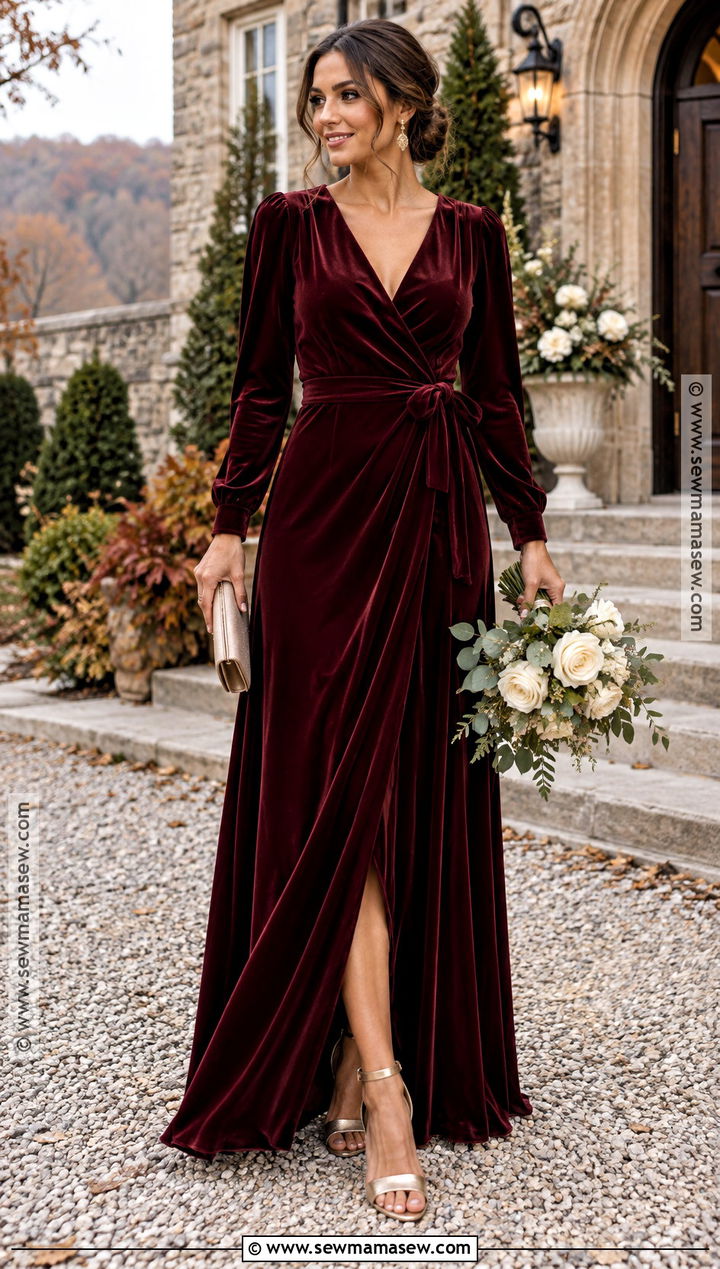
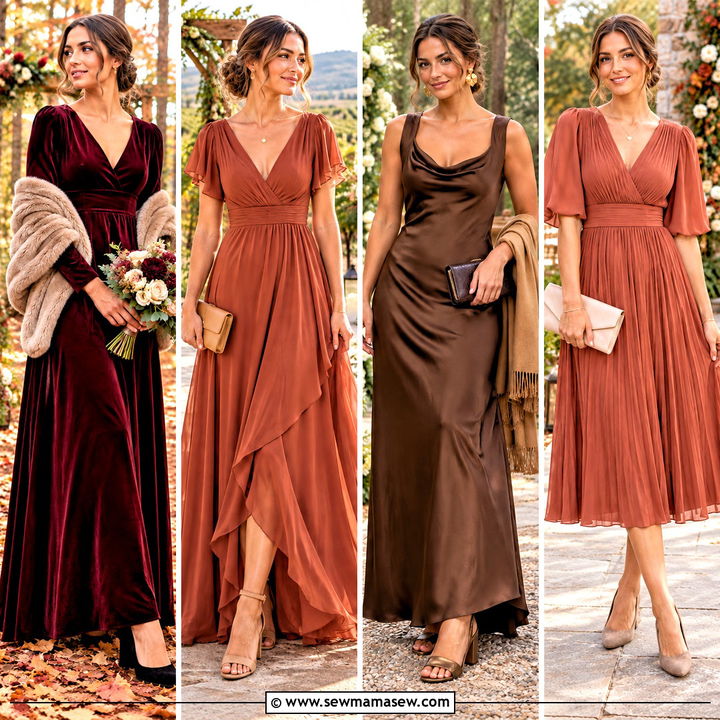
Burgundy velvet is the dress I suggest most for a late-autumn evening wedding, because it reads formal without any embellishment. A wrap, a V-neck or a soft drape all work; I'd let each bridesmaid choose, since velvet is unforgiving of a bodice that fights the body. Long sleeves suit a cold venue, while flutter sleeves are kinder in a heated ballroom where velvet gets warm fast. Gold drop earrings, a thin metallic bracelet and champagne heels keep it light, and a small taupe clutch stops the dark red from swallowing the outfit. Cream roses with muted greenery and a little berry or rust in the bouquet sit well against it. One thing I check early: velvet crushes when someone sits on it for a long dinner, so build in a steamer at the venue.
2. Rust Satin Bridesmaid Dress
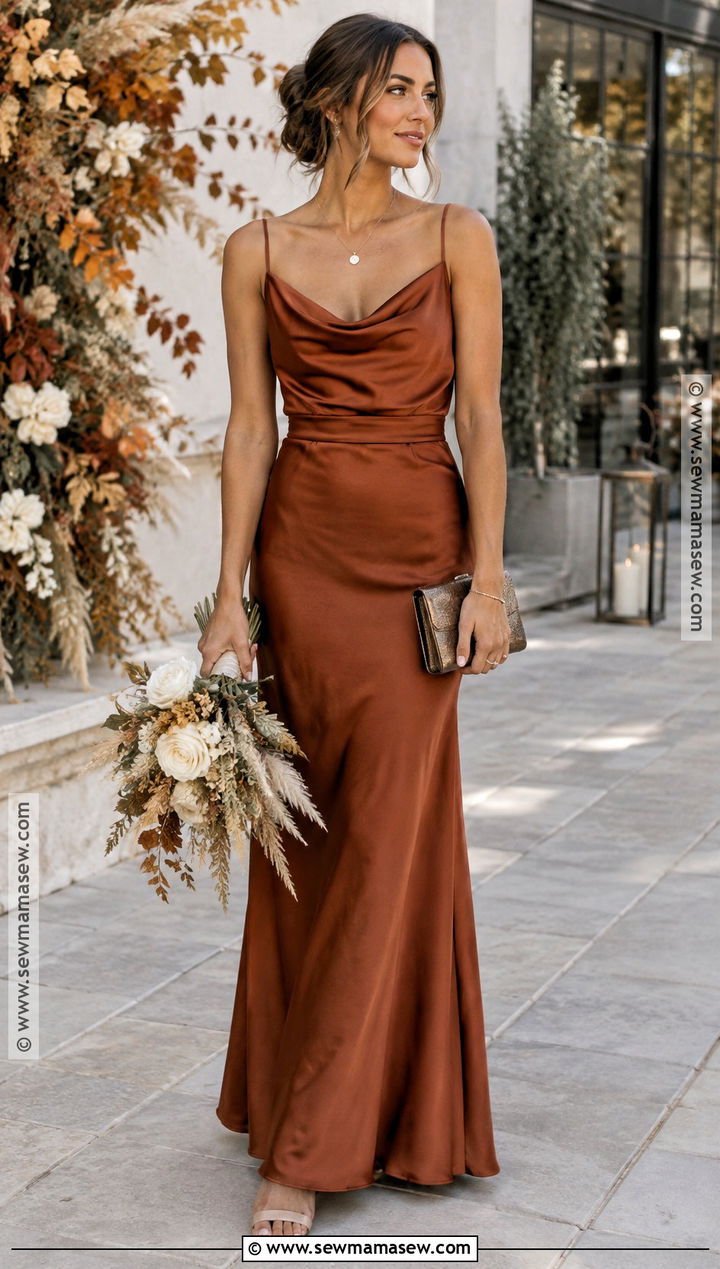
Rust satin has the warmth of turning leaves and a finish that photographs smoothly. A floor-length cowl-neck slip suits a modern wedding; an A-line gives more structure and covers more. I'd add brushed-gold earrings, a fine pendant and neutral block-heel sandals, with a bronze clutch rather than anything bright. For an outdoor ceremony, bring a camel or cinnamon wrap. Ivory flowers, dried grasses and deep green foliage finish the bouquet. Satin shifts color under different light, so I always hold swatches up at the actual venue, in daylight and again under the reception lighting, before anyone orders.
3. Forest Green Bridesmaid Dress
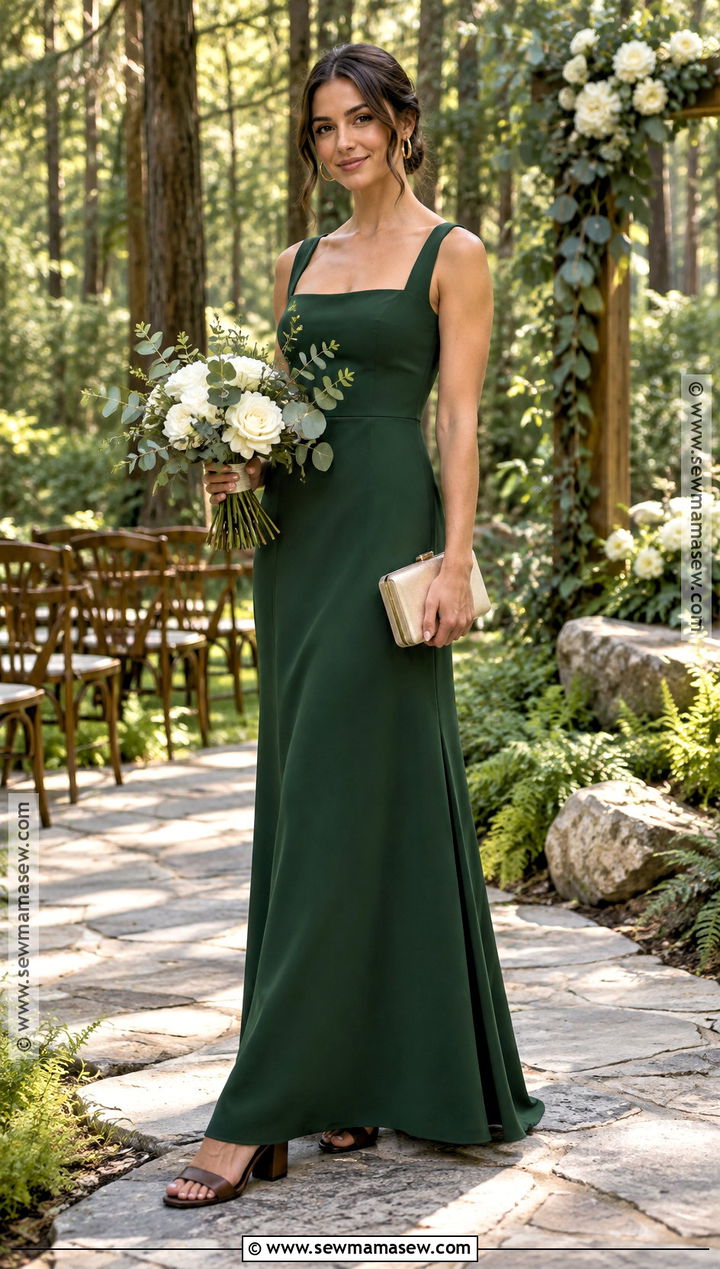
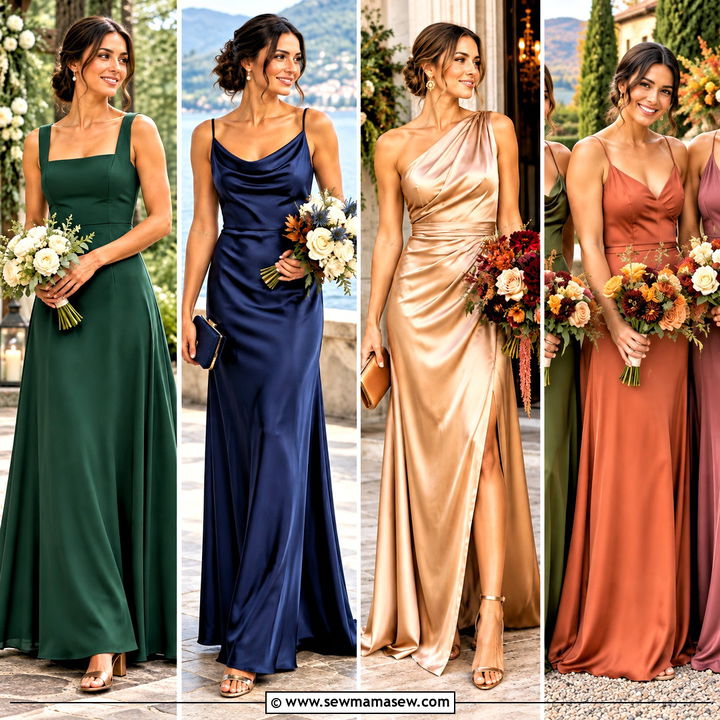
Forest green looks at home outdoors without tipping into costume. My pick is a crepe maxi with a square neckline, a fitted waist and a skirt that moves when she walks. Gold hoops and a structured champagne clutch warm it up. On grass or gravel, nude or dark brown block heels are the only heels I'd trust, since a stiletto sinks and wobbles through the processional. A matching green wrap or a tailored neutral shawl handles a cool ceremony. White blooms, eucalyptus and a touch of copper keep the bouquet balanced. Green is one of the easier colors to run across mixed cuts, wraps, one-shoulders and high necks alike, as long as every dress is in the same fabric.
4. Terracotta Chiffon Bridesmaid Dress
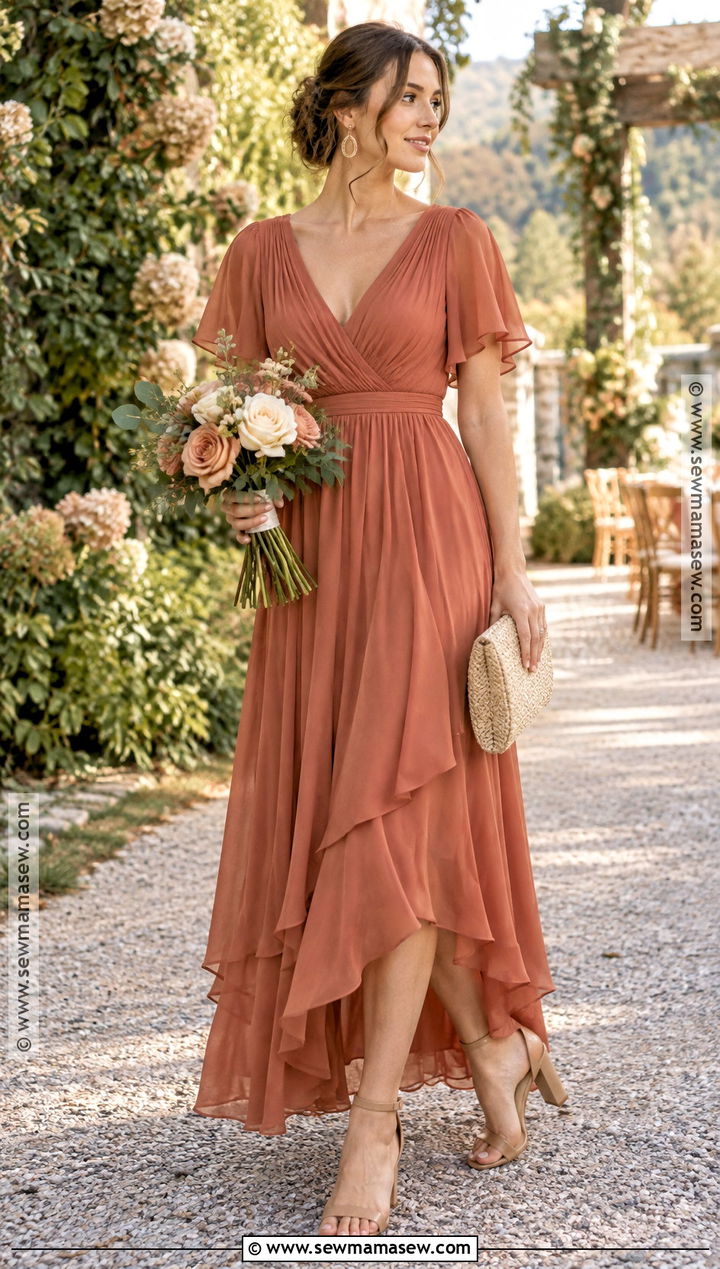
Chiffon is light and moves with every step, which makes terracotta chiffon a good fit for an early-fall garden or countryside ceremony. I look for an A-line with a defined waist, a layered skirt and flutter sleeves, which covers the upper arm and hips comfortably. Matte-gold earrings, a woven neutral clutch and tan block heels that won't sink into soft ground are what I'd pair with it. Pack a light cream wrap for when the evening cools. The bouquet can carry ivory, muted peach and olive leaves. The trade-off with chiffon is wind: on an exposed hillside a full layered skirt will billow, so I warn brides that the photographer may wait for gusts to pass. Offer several bodices in the same terracotta chiffon, from convertible straps to a modest scoop.
5. Chocolate Brown Satin Bridesmaid Dress
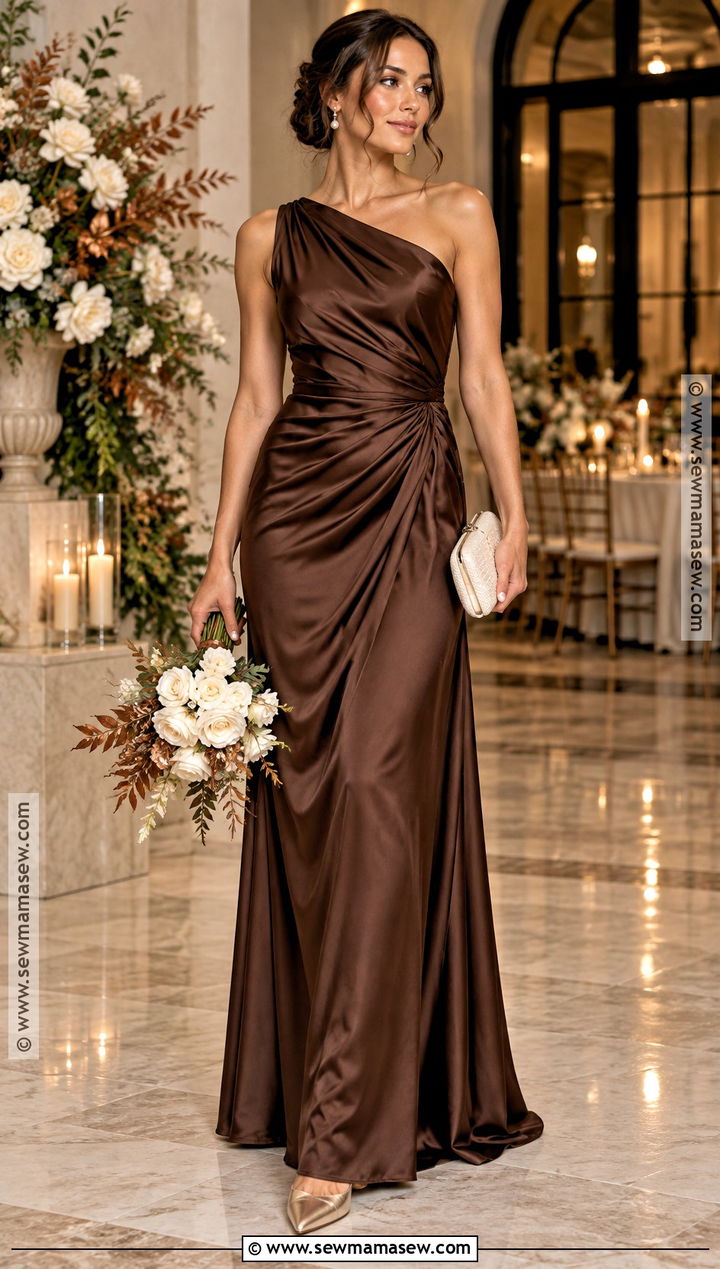
Chocolate brown satin is my answer when a bride wants the polish of black without black. A one-shoulder column gown is the sleek version, and a draped waist adds shape without demanding a close fit. Pearl or gold earrings, pointed champagne heels and a small cream clutch work here. Light accessories matter with a dark brown; without them the dress can read as a block of shadow in photos. Ivory roses, copper foliage and a hint of blush add contrast to the bouquet. If the venue is relaxed, I'd swap the column for a satin wrap maxi with block heels. Brown also gets along with ivory, taupe, bronze, forest green and muted orange decor.
6. Plum Crepe Bridesmaid Dress
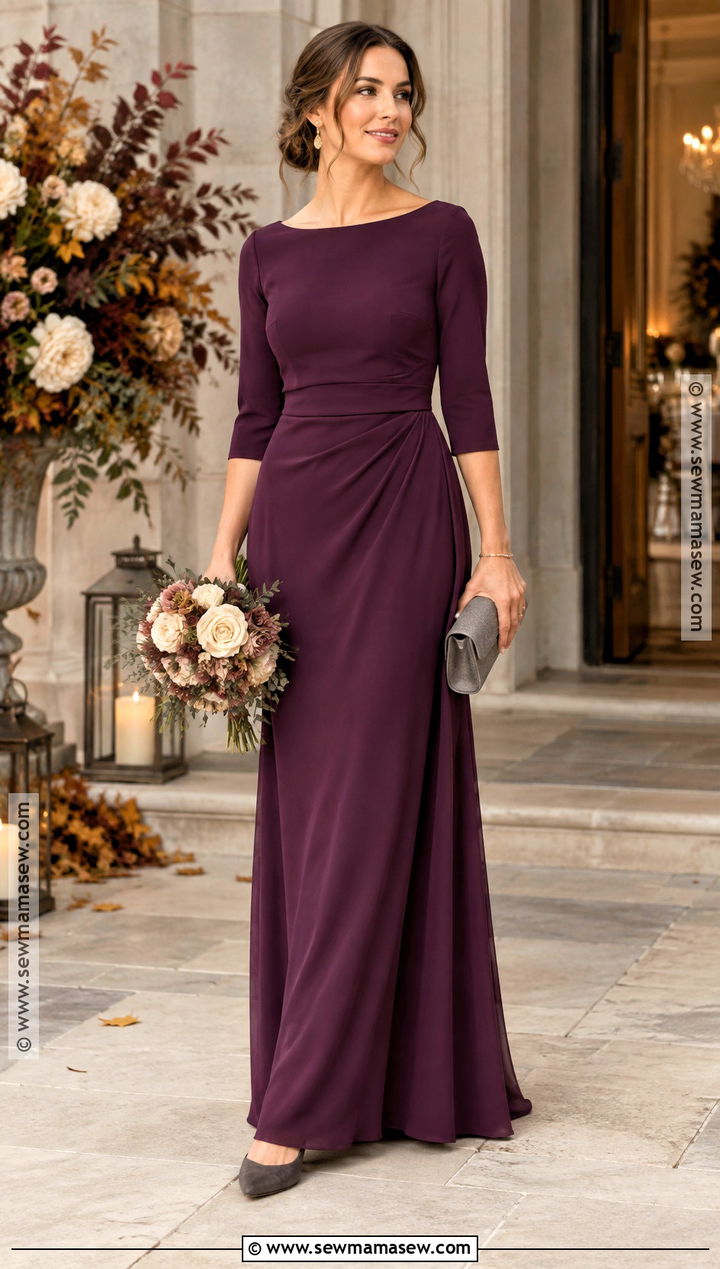
Plum is deep but softer than black or dark navy, and I like it on bridesmaids who find burgundy too warm for their coloring. A crepe dress with a bateau neckline, fitted waist and full-length skirt suits a formal ceremony. Three-quarter sleeves give coverage; a sleeveless version with a matching wrap is more flexible if the day swings between cold church and warm reception. Silver or soft-gold earrings, charcoal heels and a small gray clutch complete it. Cream flowers, eucalyptus and muted pink lighten the purple. Crepe has a quiet matte surface, so it holds up better than satin under bright daytime light. Mixed necklines work here only if the shade, fabric weight and floor length all stay the same.
7. Burnt Orange Bridesmaid Dress
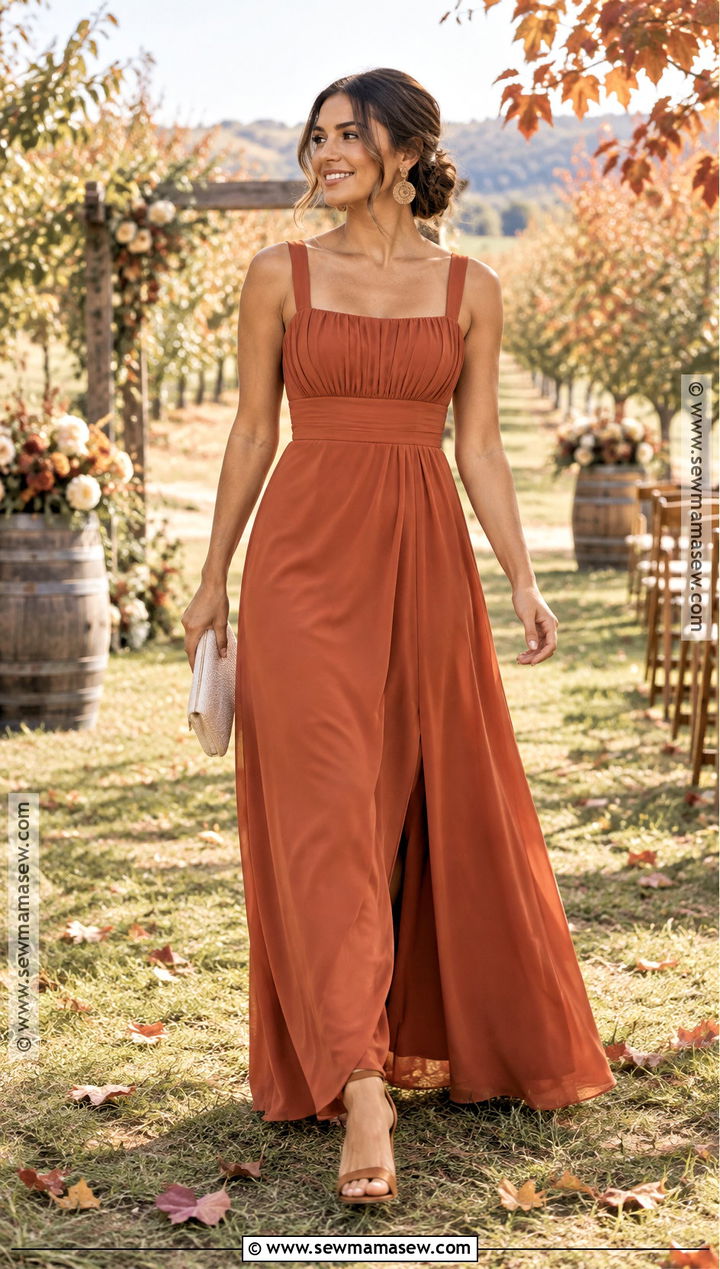
Burnt orange is bold, and in my experience it divides a bridal party more than any other color here. It's at its best at a barn, an orchard or an outdoor ceremony, in matte satin or a structured crepe rather than anything shiny. A gathered bodice with supportive straps and an A-line skirt suits most bodies and lets her move. Bronze earrings, a cream clutch and medium-brown block heels keep it grounded; add a taupe shawl once the sun goes down. White flowers, greenery and a few burgundy stems connect it to the wider palette. On some skin tones orange can pull sallow, so I'd have every bridesmaid hold the swatch to her face in natural light before committing.
8. Olive Green Satin Bridesmaid Dress
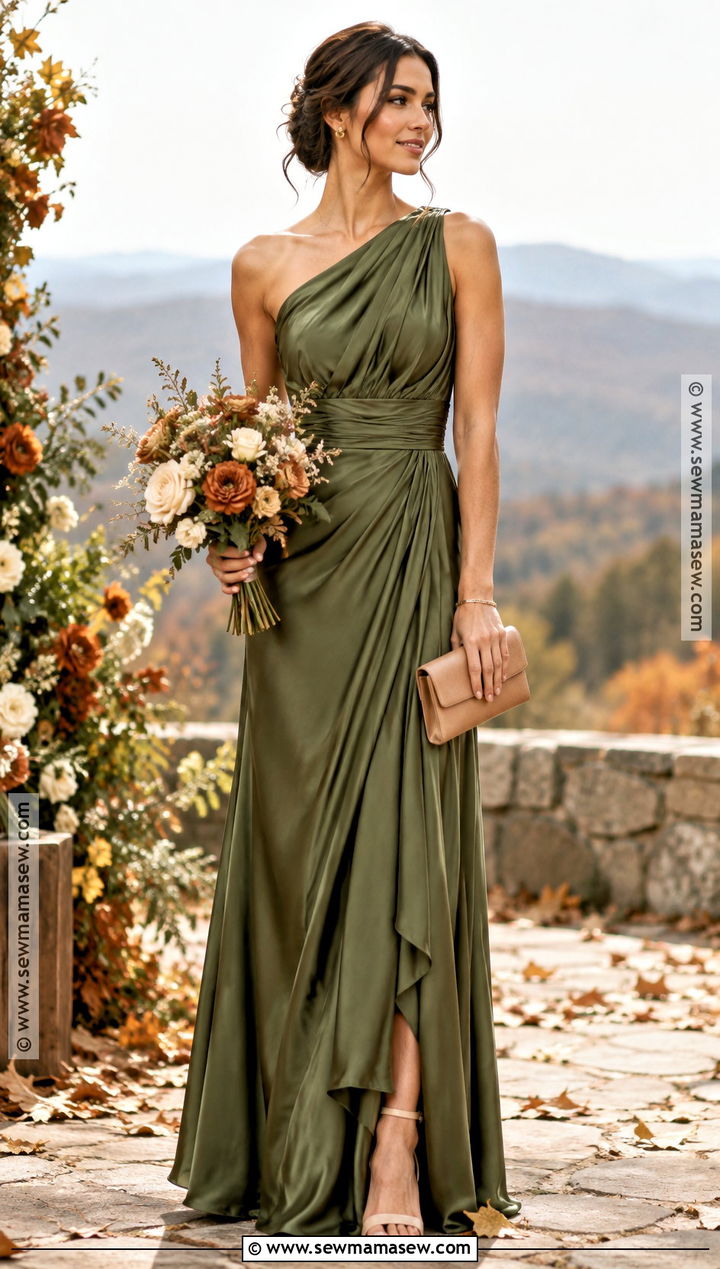
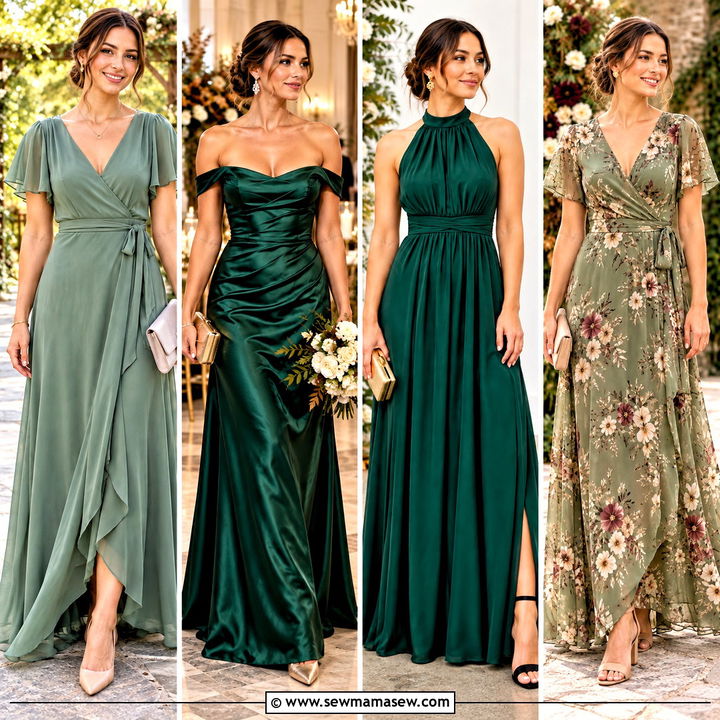
Olive green satin is earthy but still dressy, and it moves between a field ceremony and a modern indoor venue without looking out of place in either. A pleated one-shoulder gown with a soft A-line skirt is the version shown here. Gold studs, a slim bracelet and beige heels are all it needs, plus a small caramel clutch. Outdoors, a light taupe wrap matches dried grasses and neutral arrangements. Olive pairs well with ivory, copper, terracotta and dark wood. For a party with very different body shapes, I'd offer wrap, V-neck and high-neck bodices in the same olive satin so everyone can pick the support she needs. Satin shows every pulled seam, so fittings matter more here than with chiffon.
9. Navy Blue Long Sleeve Bridesmaid Dress
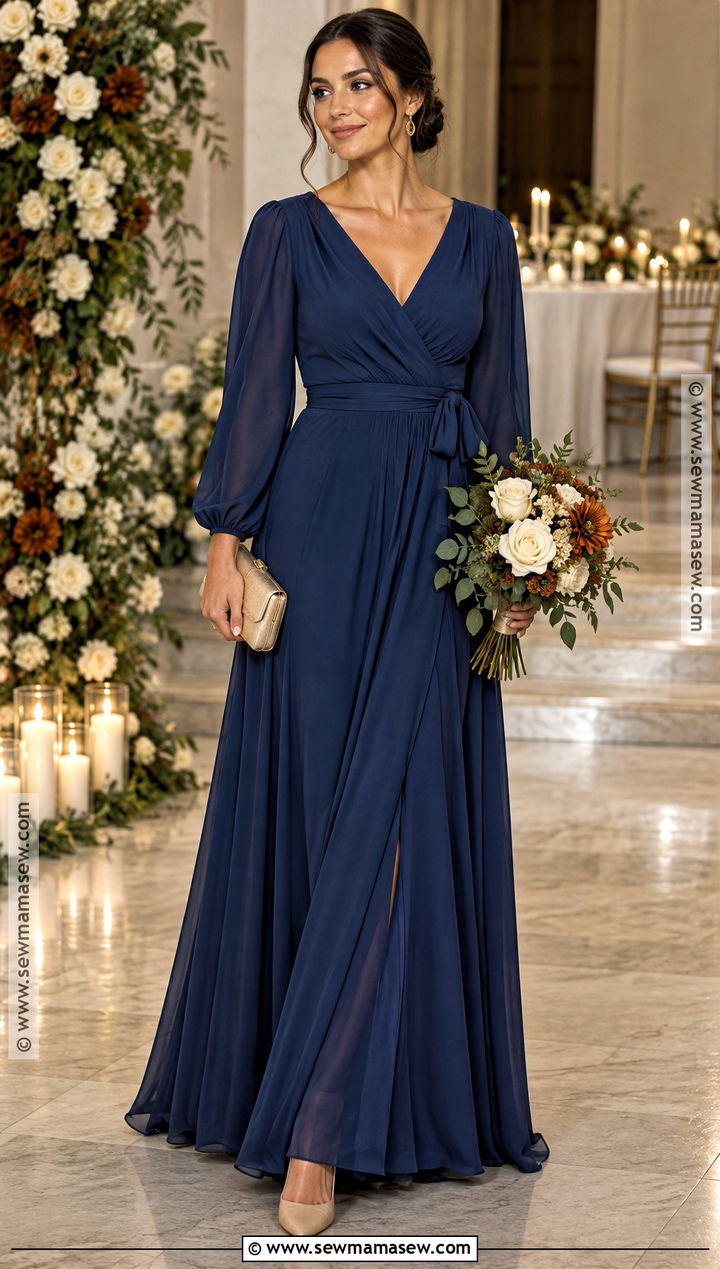
Navy is the safe classic, and with long sleeves it handles a formal evening dress code and a chilly church equally well. I'd choose a long-sleeve chiffon gown with a fitted waist and a flowing skirt. Gold earrings, a metallic clutch and navy or nude closed-toe heels finish it; a self-fabric belt marks the waist without cutting the dress in half visually. Rust and ivory flowers with greenery bring autumn into an otherwise cool color. Mixing V-necks, wrap fronts and high necks is fine as long as sleeves and hems match. One practical note: dark navy and black can look nearly identical in dim reception light, so I don't put navy dresses next to black suits unless the bride is happy with that.
10. Copper Satin Bridesmaid Dress
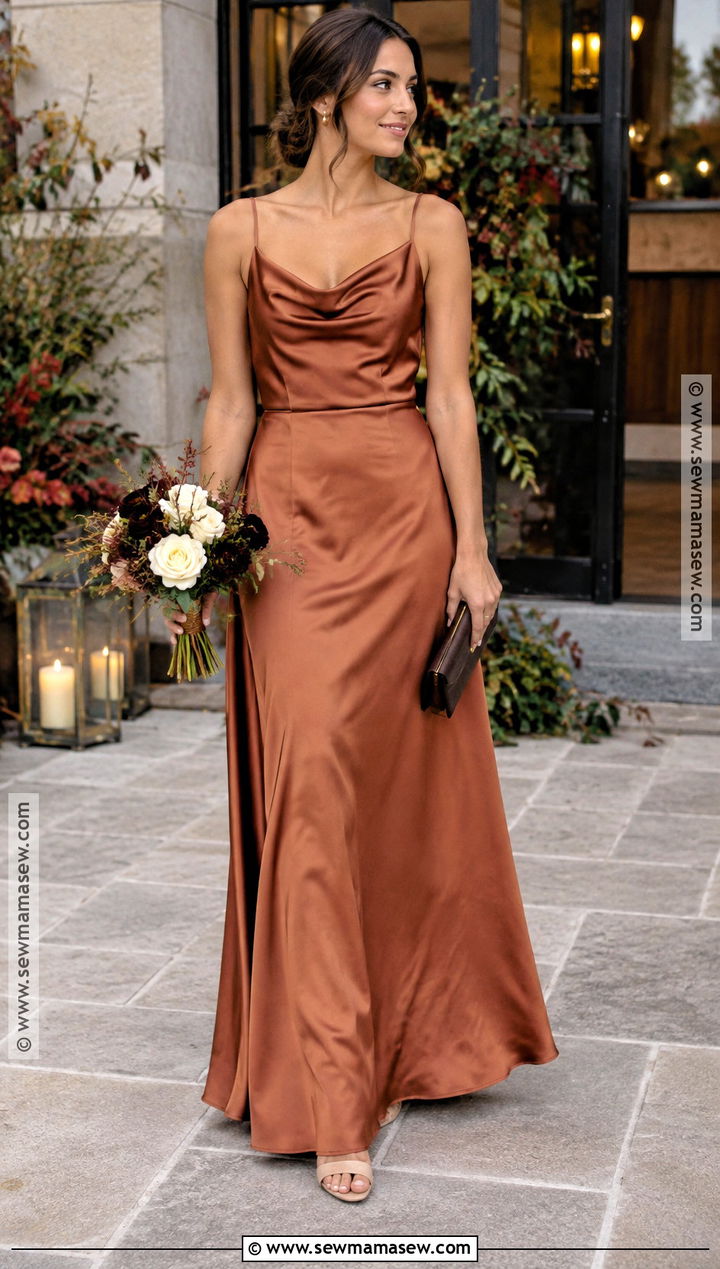
Copper satin throws off a warm glow, which is exactly why it needs a simple cut. A floor-length gown with a draped neckline, a defined waist and a softly flared skirt keeps the shine from looking like a costume. I keep the jewelry to gold studs and a slim bracelet, with beige sandals or pumps. A dark brown clutch grounds it. Cream roses, dusty greenery and burgundy add depth to the bouquet. Flutter sleeves or a matching wrap suit anyone who wants more coverage. Copper varies more between manufacturers than any color on this list, so order swatches together and lay them beside the flowers, linens and ceremony backdrop before choosing.
11. Dusty Rose Bridesmaid Dress
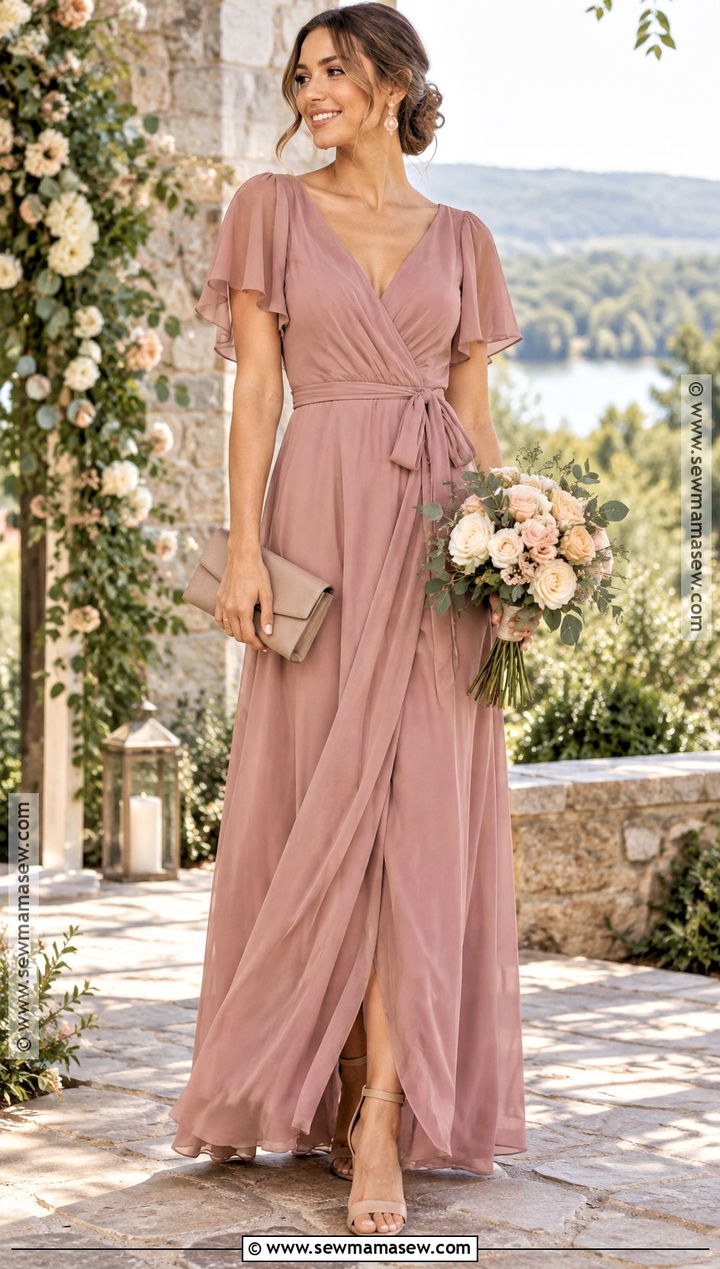
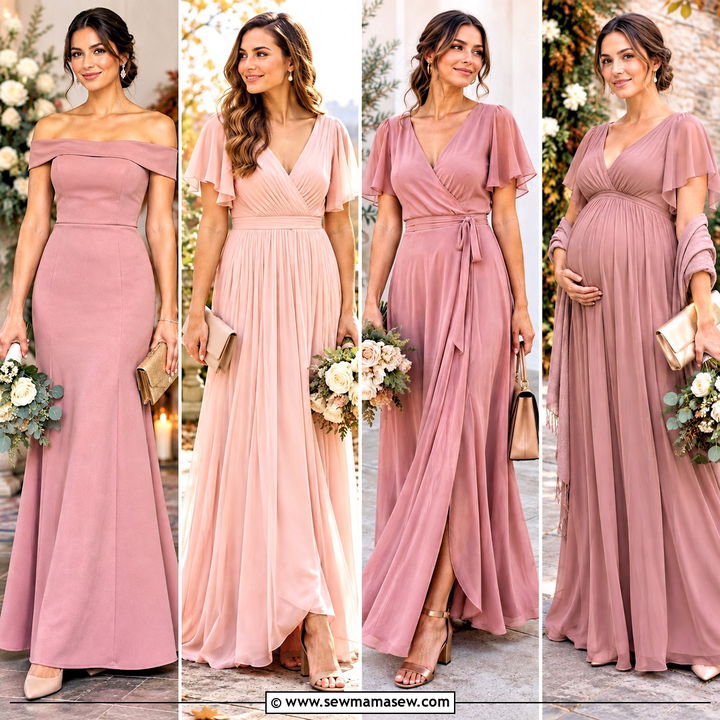
Not every couple wants dark jewel tones, and dusty rose gives a softer fall palette. A chiffon wrap dress with flutter sleeves and a flowing maxi skirt keeps it romantic without going too formal. Rose-gold earrings, nude block heels and a taupe clutch keep everything tonal. Ivory flowers, muted peach, eucalyptus and a few burgundy accents tie the pink back to the season, and a light gray or oatmeal wrap handles an outdoor ceremony. I reserve this one for early autumn and daylight weddings; under warm candlelight, dusty rose drifts toward beige and loses its color. For a larger party, mixing empire-waist, V-neck and one-shoulder gowns in the same fabric adds variety.
12. Black Floral Bridesmaid Dress
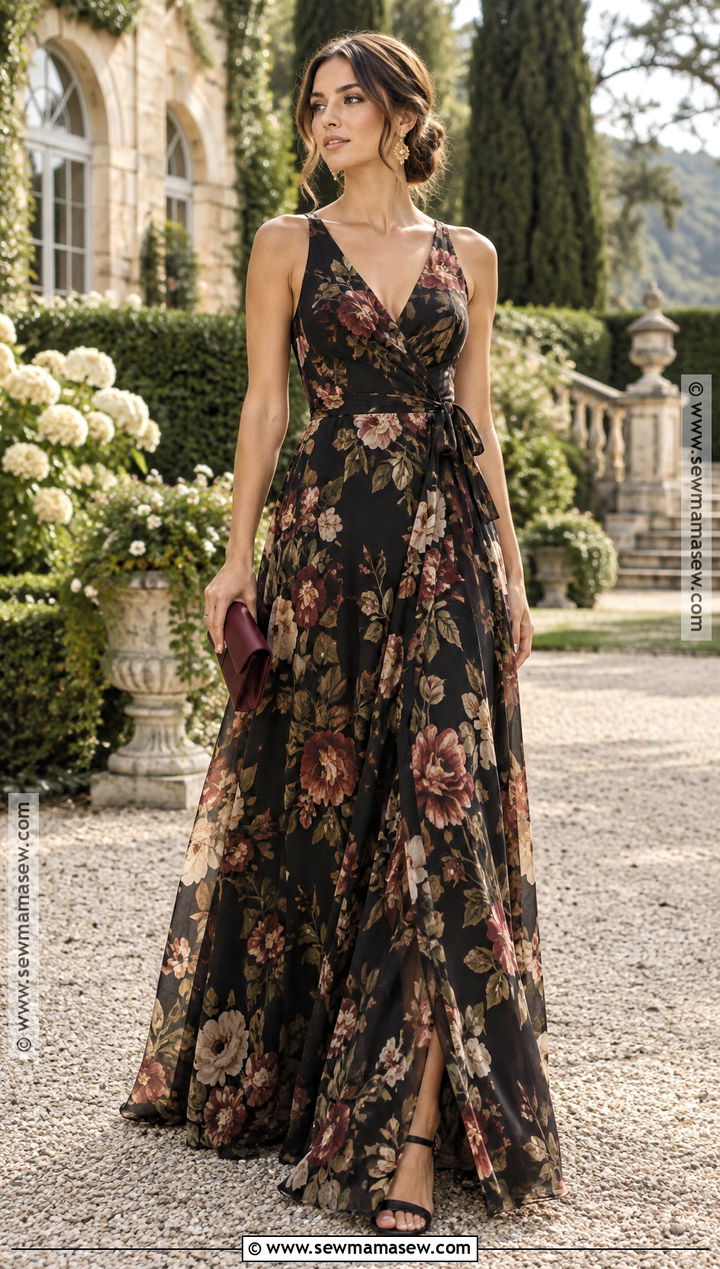
A black floral is the right call for a garden, estate or vintage-leaning wedding where solid black would feel too severe. I look for a floor-length print with muted burgundy, rust, cream or olive flowers on a dark ground; a bright print on black fights everything else in the room. A wrap bodice and a gently gathered skirt let the print hang without distortion. Black block heels, antique-gold earrings and a plain burgundy clutch are enough. Because the dress already carries several colors, I keep the bouquet to cream flowers, greenery and one accent shade. My favorite use is to dress the bridesmaids in solids and give the floral to the maid of honor alone.
13. Champagne Crepe Bridesmaid Dress
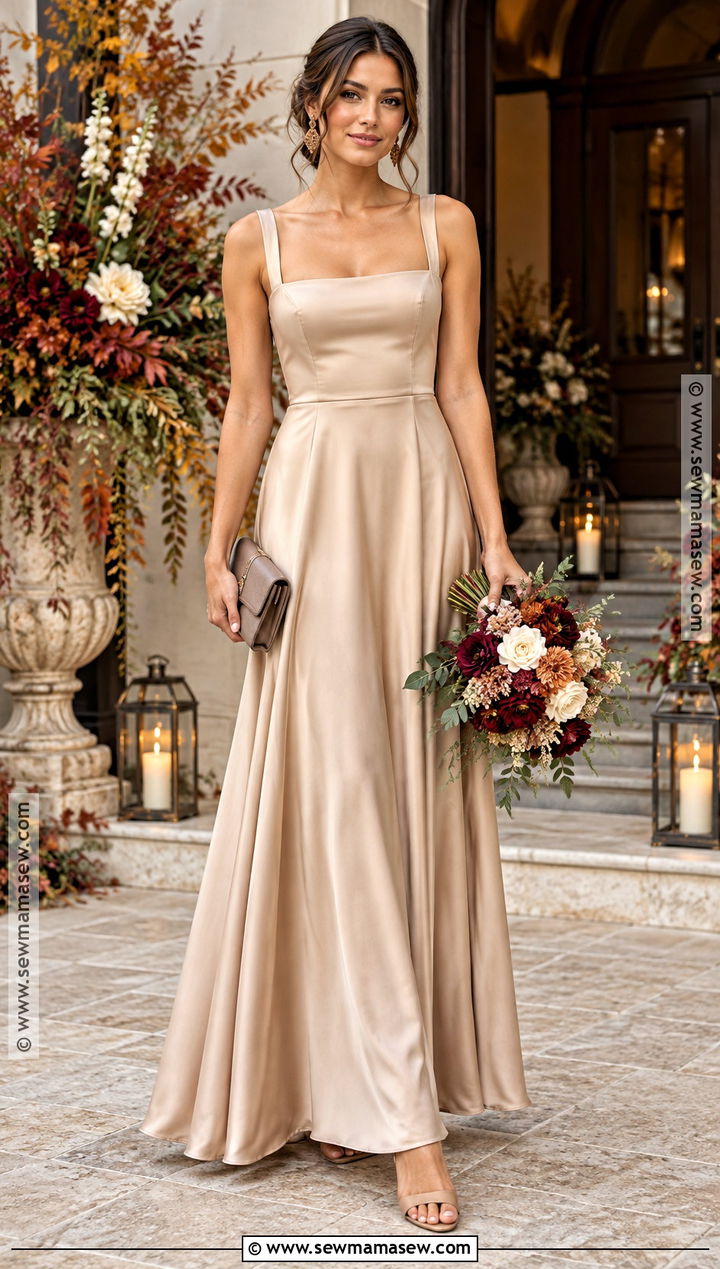
Champagne crepe is light and refined but still fits an autumn story when the bouquets carry the color. A full-length dress with a square neckline, a tailored bodice and a gently flared skirt is the cut I'd choose. The matte crepe matters: a pale neutral in shiny fabric can bounce flash and look washed out in photos. Bronze earrings, caramel heels and a small taupe clutch add warmth, and rust, burgundy, ivory and deep green blooms give it contrast. A mocha or soft brown wrap works for a cold evening. Champagne sits differently on every skin tone, so I often suggest a tonal party, light champagne through warm beige, with matching fabric and length to hold it together.
14. Emerald Green Velvet Bridesmaid Dress
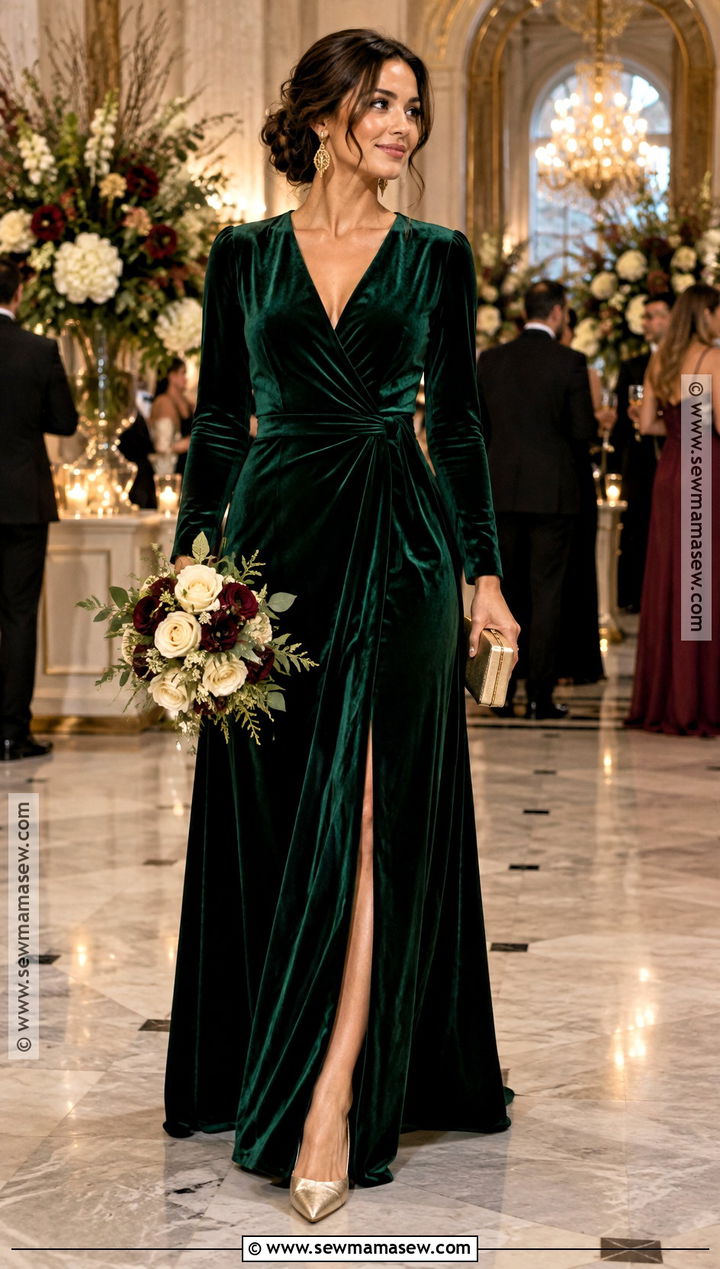
Emerald velvet is the most luxurious option here, and I'd only use it for a formal late-fall evening. A long-sleeve wrap maxi with a defined waist keeps everyone warm and comfortable. Delicate gold earrings, black or champagne pumps and a structured metallic clutch finish it. Cream bouquets with dark greenery and a little burgundy create real contrast. If the venue is already ornate, keep the neckline plain and let the velvet carry the outfit. Long-sleeve wraps, V-necks and off-the-shoulder cuts can share the same emerald. Velvet pile catches light differently depending on which way it was cut, and dye lots vary, so I always have the whole party order from the same collection at the same time.
15. Mixed Autumn Bridesmaid Dresses
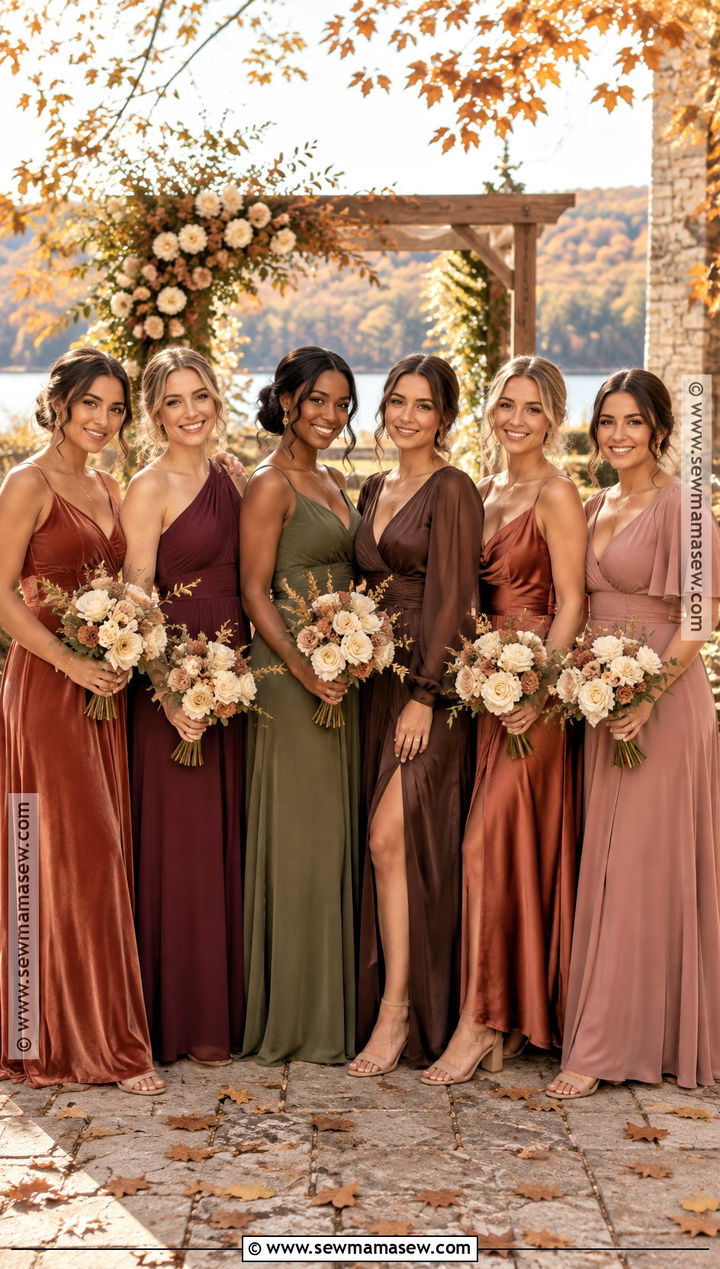
A mixed autumn bridal party is the hardest one to get right and the most rewarding when it works. Combine terracotta, rust, olive, burgundy, chocolate brown and muted rose in compatible fabrics such as crepe, chiffon and matte satin. I insist on one shared element, usually floor-length hems or the same fabric finish, so the variety looks planned. Let each bridesmaid pick a silhouette she's comfortable in, from a wrap to a sleeved A-line. Coordinated gold jewelry, neutral block heels and taupe or bronze clutches keep the accessories quiet. Before anyone orders, I line the colors up in standing order so two similar shades never end up side by side. Matching bouquets of cream flowers and greenery then connect the whole row.
A Realistic Ordering Timeline for Bridesmaid Dresses
Most made-to-order bridesmaid dresses take somewhere around two to four months to arrive, and alterations need a few more weeks after that. Timings vary by maker and season, so I work backward from the wedding date and plan to have every order placed roughly five to six months out. For a fall wedding, that means deciding over the summer.
- Order swatches of your top two or three colors and look at them at the venue at the time of day the ceremony happens.
- Collect every bridesmaid's measurements taken by someone else with a soft tape, and size by the size chart, not by the size she normally buys.
- Place all orders together so the dresses come from the same dye lot, which matters most with velvet, copper and burnt orange.
- Book a seamstress for the first fitting about six to eight weeks before the wedding, and have bridesmaids bring the exact shoes they'll wear so the hem is set to the right height.
- Collect finished dresses at least a week before the wedding and have each one tried on with shoes and undergarments one last time.
Bare Shoulders at a Cold Outdoor Ceremony
October ceremonies in an orchard or on a hillside can feel much colder than the forecast once the sun drops, and shivering shows in photos as hunched shoulders and red hands. I plan warmth into the look rather than leaving everyone to grab a mismatched cardigan.
Matching wraps or shawls in a neutral like camel, taupe or oatmeal are the simplest answer, and they can be the bridesmaid gift. Faux-fur stoles suit velvet and satin at a formal evening wedding but look out of place with chiffon in a field. For a long outdoor portrait session, slim thermal layers under a long-sleeve dress go unseen. I also keep a basket of hand warmers near the aisle and remind the party that their hands will be holding cold stems for the whole ceremony.
Swatches First, Silhouettes Second
Velvet suits a cold, formal evening, while chiffon and crepe move better at a mild daytime ceremony. Rust, burgundy, forest green, plum and brown read as classic fall; dusty rose, champagne, navy and the floral offer something less expected. Whatever you choose, look at swatches in daylight and indoor light, confirm the size range covers your whole party, and ask each bridesmaid what neckline and support she needs before you decide anything. Shared accessories, sensible shoes and matching bouquets will connect different silhouettes. The party that looks best in photos is the one where nobody is tugging at her dress.
Related posts: