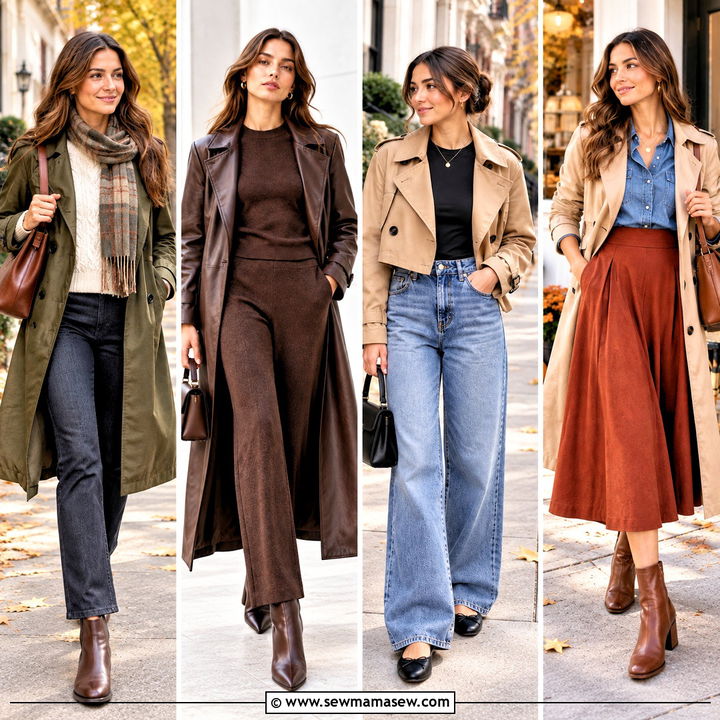
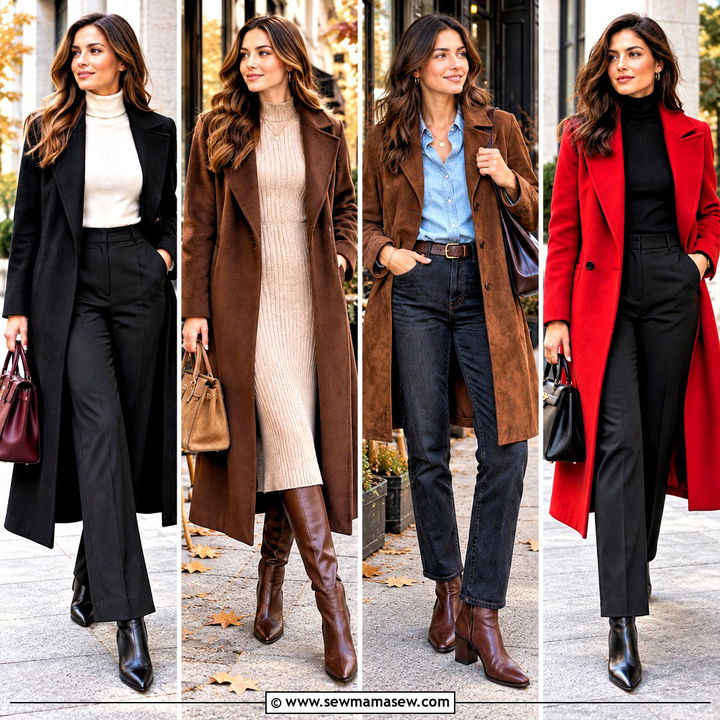
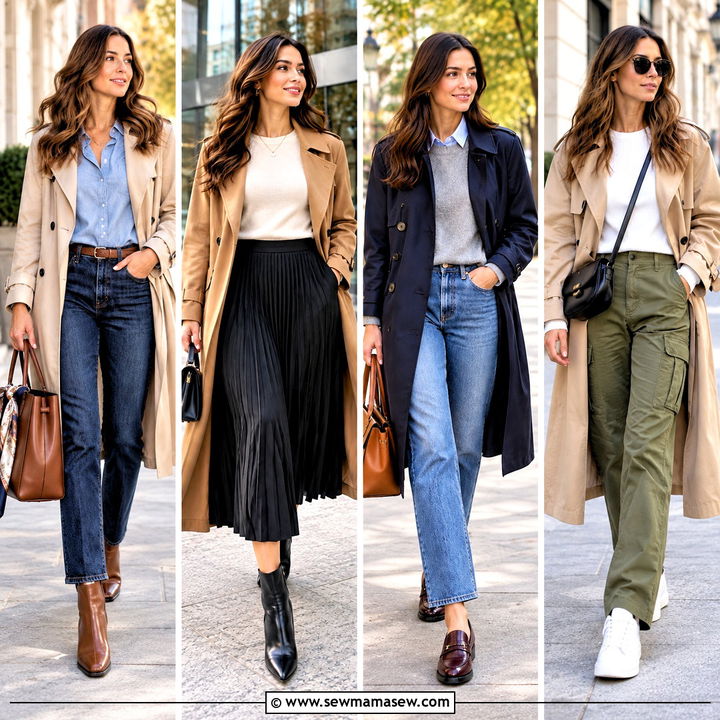
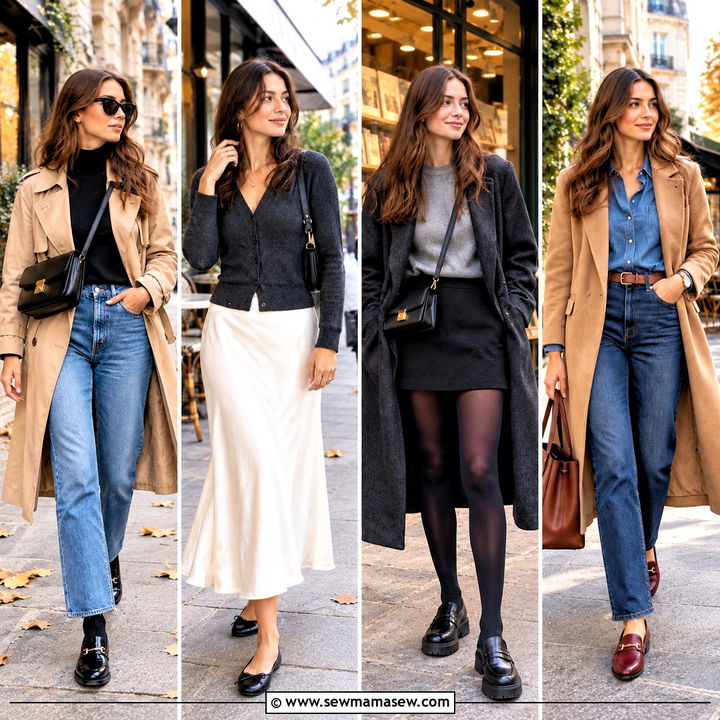
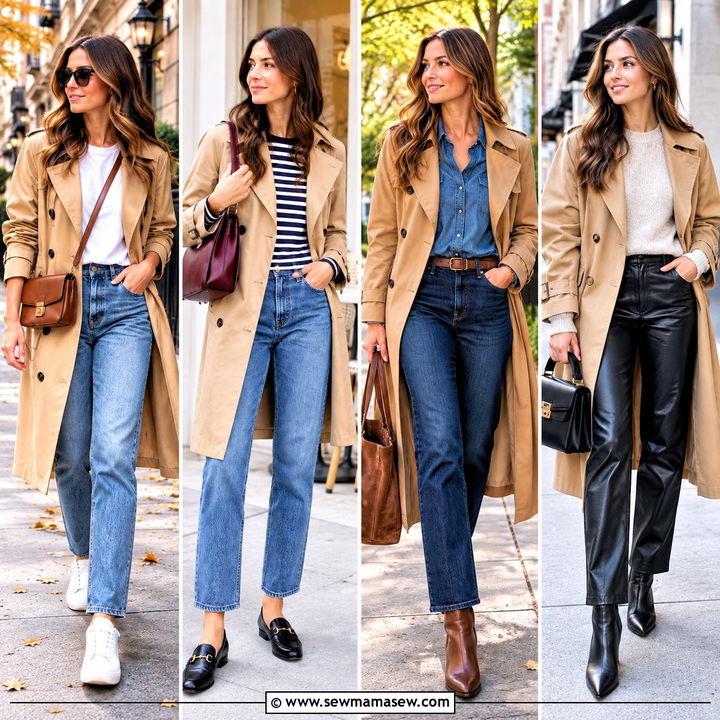
A trench is the coat I reach for most between the last warm week and the first real frost, because it handles drizzle, wind and a sweater underneath without the bulk of a wool coat. The outfits below run from weekend denim to office tailoring and a few dressier evenings. Beige is still the easiest starting point, but cropped, oversized, leather and colored versions each solve a different problem. What makes any of them work is the same thing every time: matching the coat's length and volume to what's underneath, then keeping the shoes practical enough to actually walk in. I've noted where a look suits shorter or taller frames, and most of these can be built from pieces already in your closet.

Where a Trench Should Sit on Your Frame
Before I look at color, I check four fit points, and they matter more than the brand or the price. Most trench coats that look wrong on someone are simply the wrong size in one of these places.
- Shoulders: the seam should sit at the edge of your shoulder bone, or slightly past it on a dropped-shoulder cut. If it sits inside, the coat will pull across your back the moment you put a sweater under it.
- Sleeves: with your arms relaxed, the cuff should reach the base of your thumb. Trench sleeves are meant to cover a sweater cuff, so err slightly long.
- Room underneath: try the coat on over the thickest knit you'll realistically wear with it. You should be able to cross your arms without the back seam straining.
- Length: knee length is the most adaptable. Below the knee looks great on taller frames, but if you're under about five foot four, a long trench can cut your legs in half unless you wear a slight heel or a shoe in the same tone as your trousers.
The belt is where people get stuck. You don't have to buckle it. Knotting it loosely at the front, tying it behind your back, or leaving it threaded and hanging open are all normal ways to wear a trench, and each gives a different shape. The belt should hit your natural waist, the narrowest part of your torso, not your hips.
1. Beige Trench Coat With Striped Tee And Jeans
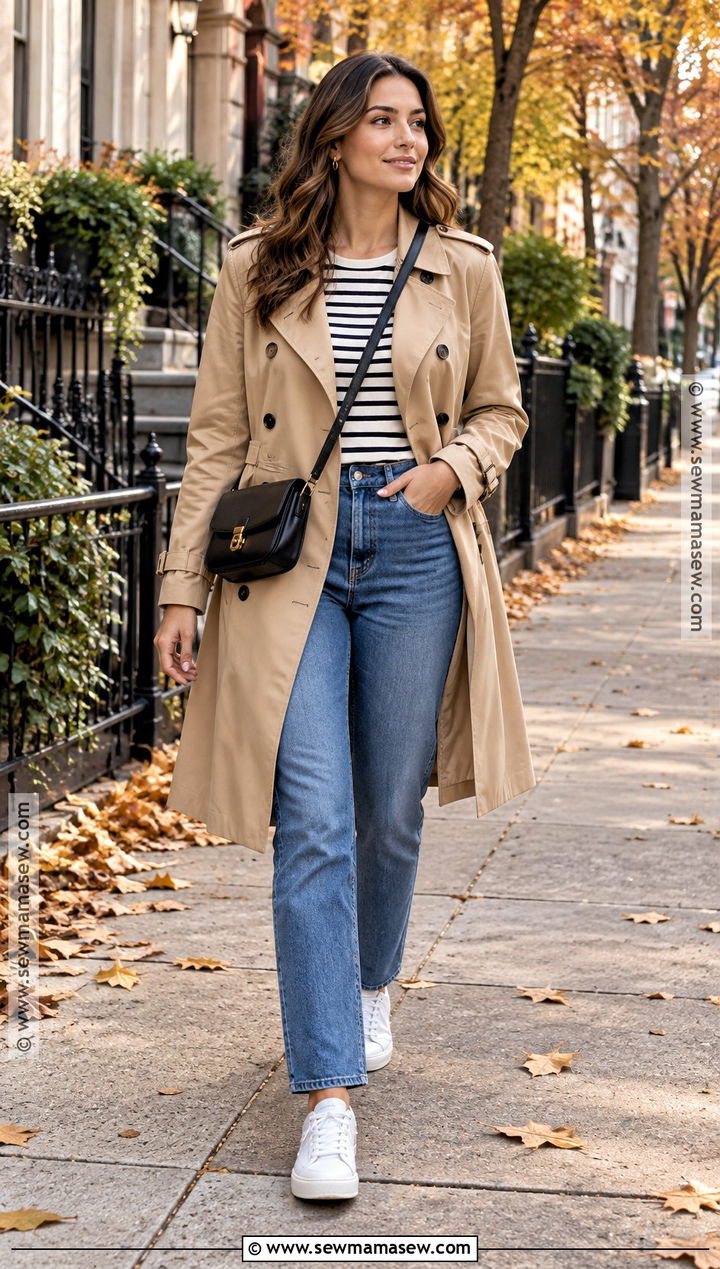
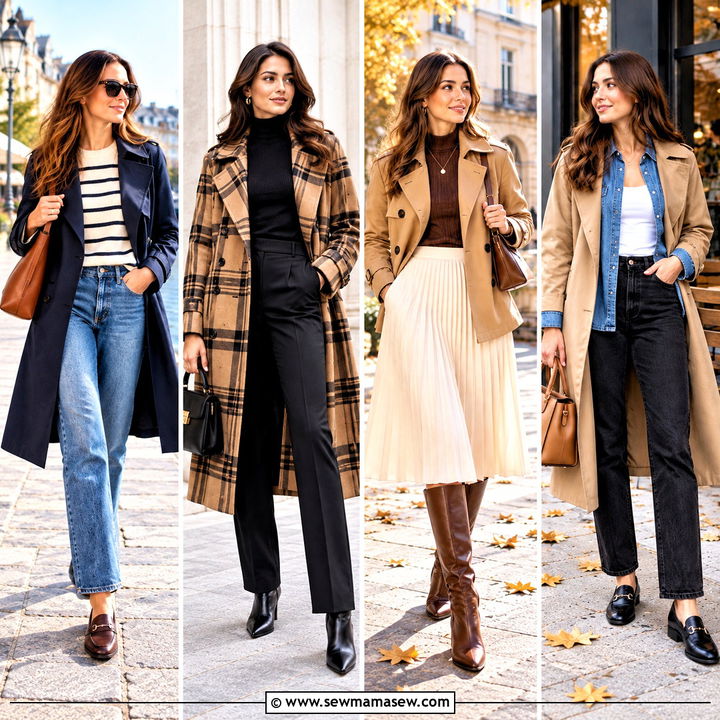
This is the combination I'd hand anyone buying their first trench. A striped crewneck in navy, black or deep red under a beige coat, with medium-wash straight-leg jeans, gives you contrast without any effort. Sneakers keep it casual; loafers sharpen it for lunch. If you're petite, a knee-length trench is the safer buy, since a long one can swallow you below the hip. When you leave it open, tie the belt loosely behind your back so it doesn't swing and catch on bag straps, which it will do on a busy street.
2. Oversized Trench Coat With White Tee And Wide-Leg Jeans
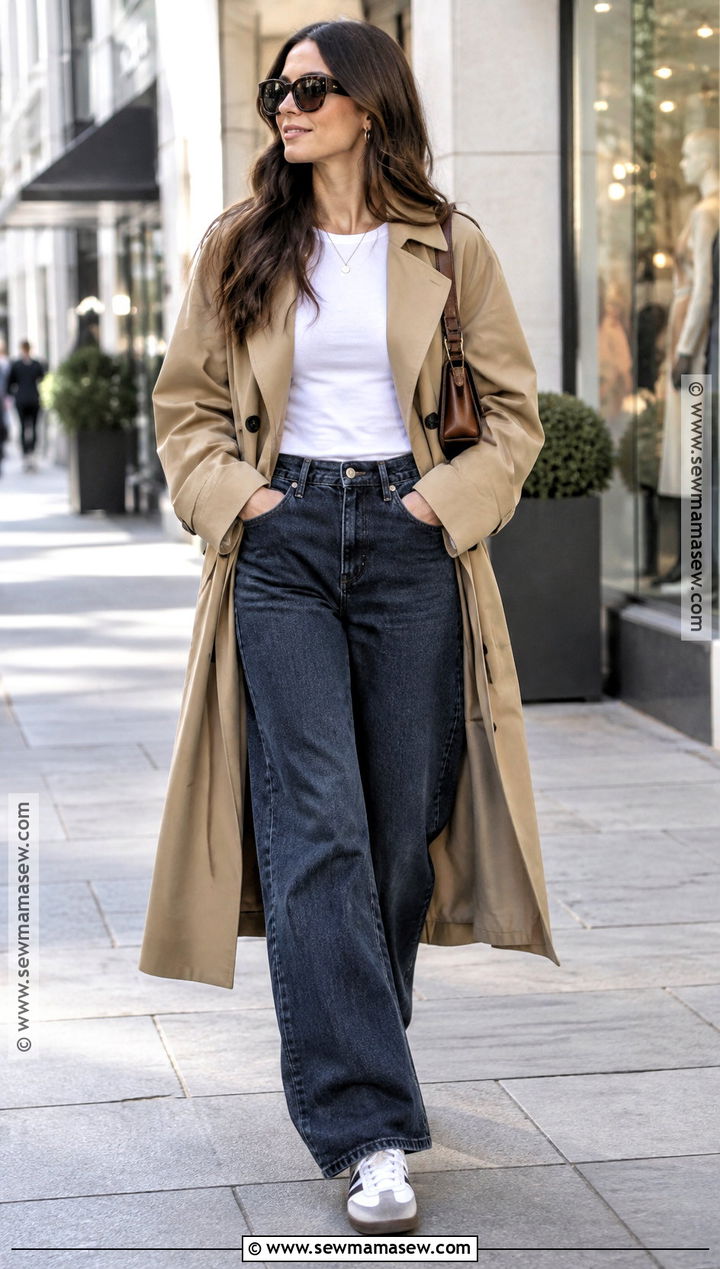
Oversized trenches only work when something underneath is close to the body. Here that's a fitted white tee, which keeps the tan coat and dark wide-leg jeans from turning into one big shape. Slim retro sneakers or pointed ankle boots both work, but chunky trainers add a third wide element and I'd avoid them. Roll the sleeves once so your wrists show; it's the quickest way to stop a big coat from looking borrowed. If the volume still feels like too much, do up a single middle button instead of belting, which pulls the front in without bunching the fabric at the waist.
3. Brown Trench Coat With Olive Sweater And Chelsea Boots
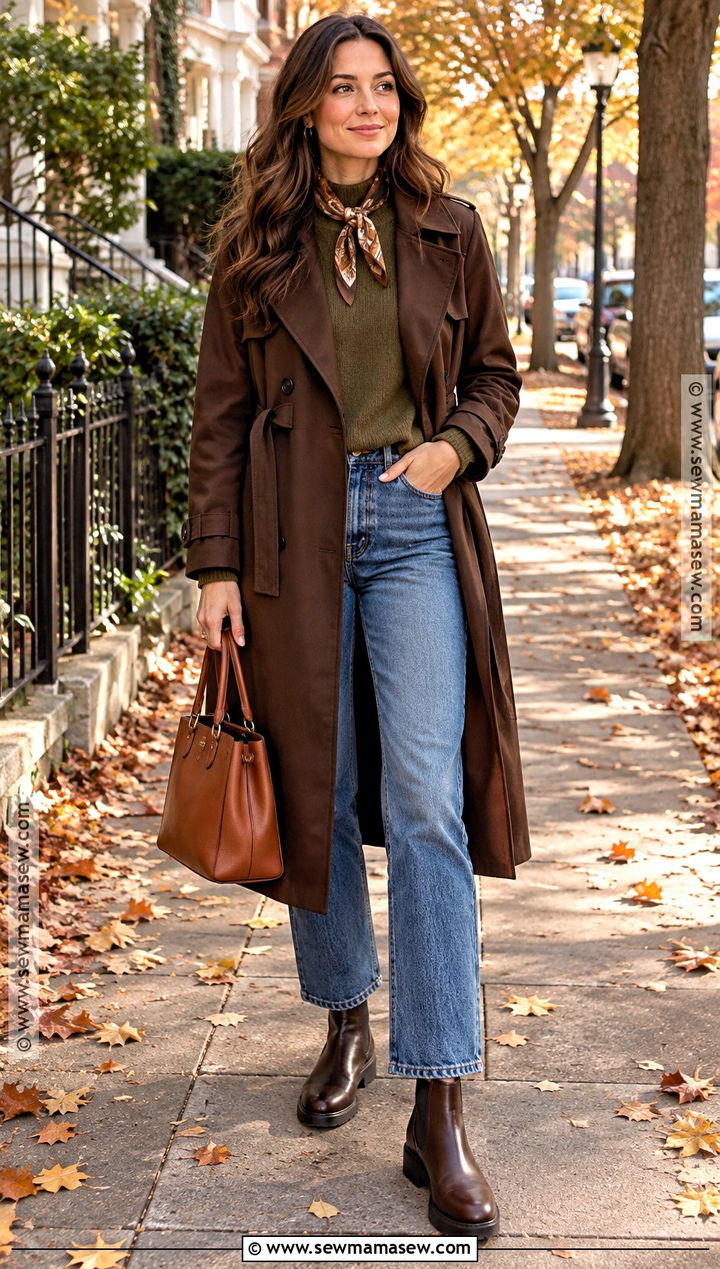
Brown trenches are underrated. A chocolate or chestnut coat over an olive crewneck and straight blue jeans reads warmer than beige, and dark brown Chelsea boots continue the color down to the ground. I keep the bag a shade lighter, cognac or taupe, so the whole thing doesn't go flat. Watch the sweater weight: a chunky knit under a fitted trench pulls across the back and strains the buttons, so save the heavy one for days you'll wear the coat open. A silk scarf in rust or cream is the only extra I'd add.
4. Black Trench Coat With Black Turtleneck And Trousers
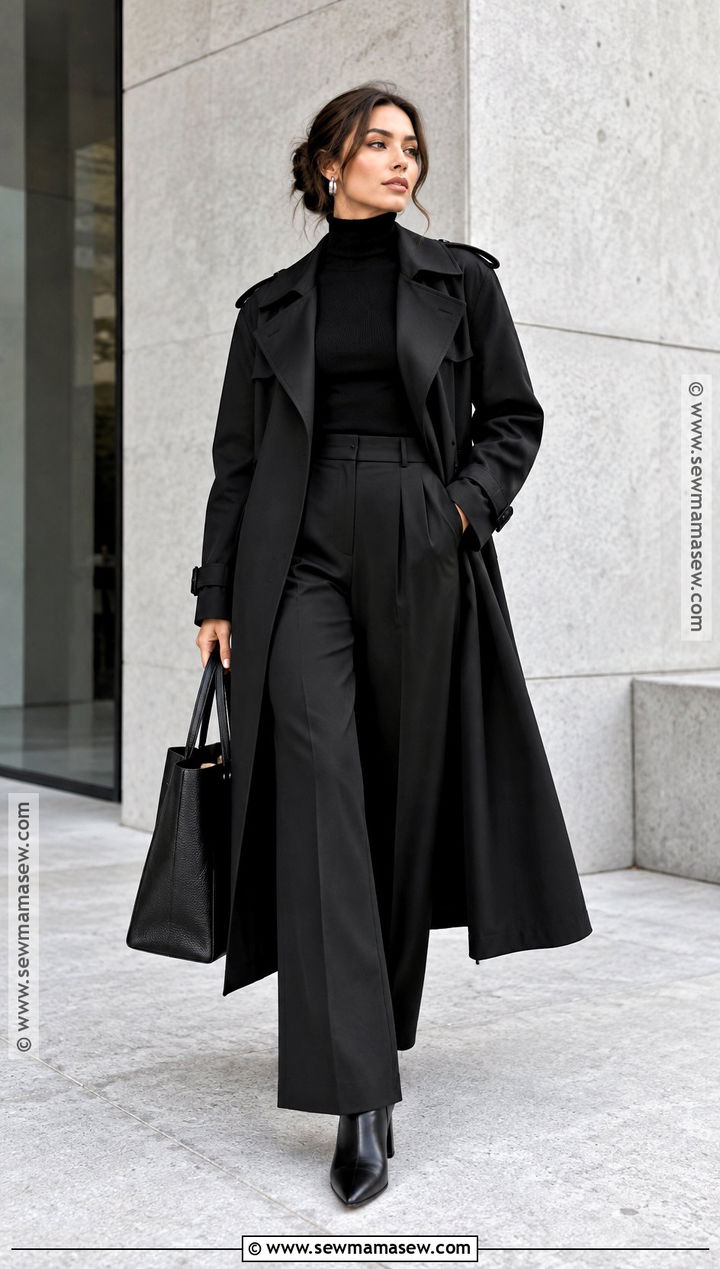
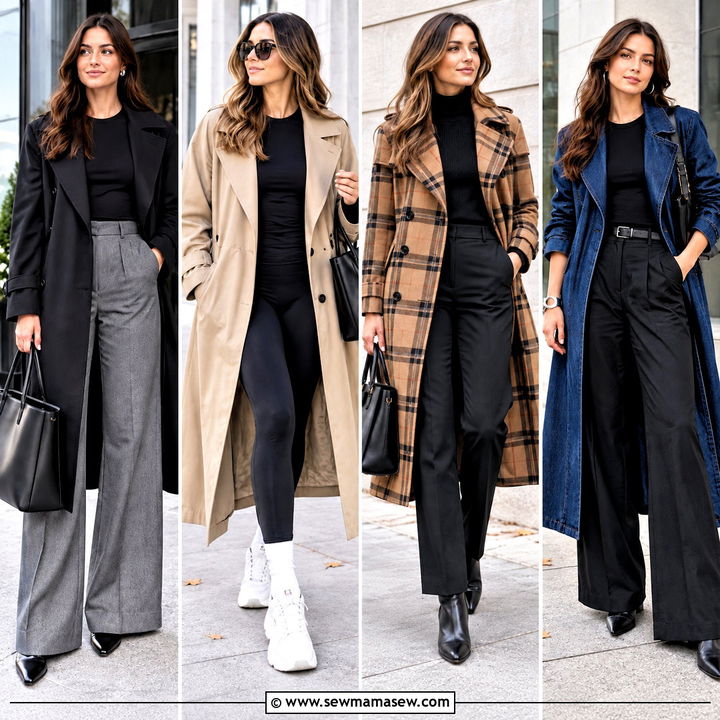
All black lives or dies on texture. With a long black trench, a fitted turtleneck and full-length tailored trousers, the risk is that everything blurs into one flat shape in photos and in person. So I break it up with materials rather than color: a ribbed knit, a pebbled leather tote, a polished belt buckle. Pointed ankle boots keep the line long, and the trousers should brush the top of the boot, not pool. Belt the coat if you want a waist; leave it open for a longer column. Silver jewelry reads crisp against black, though gold is fine too.
5. Cropped Trench Coat With Barrel Jeans And Loafers
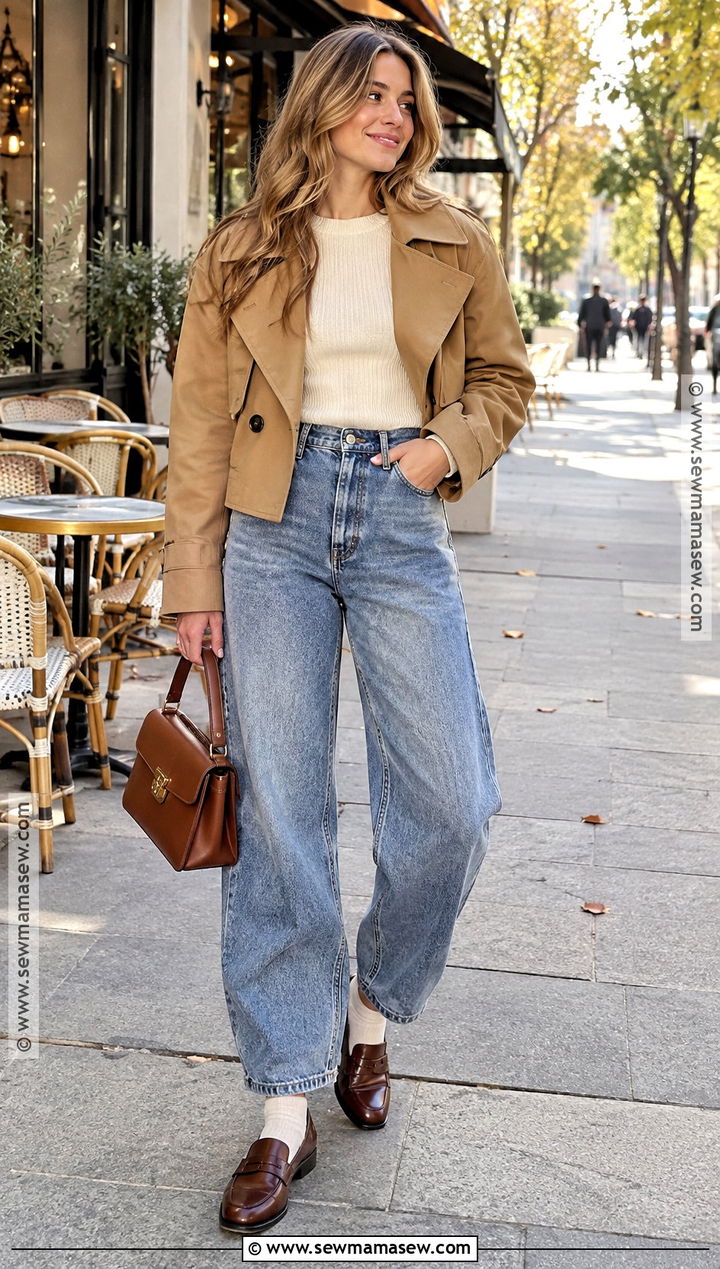
Cropped trenches are fussier than they look. The hem has to land at or just above the waistband; if it stops at the widest part of your hips, it draws a line straight across them. A boxy camel or stone version over a fitted knit and high-rise barrel jeans gives a curved, current shape, finished with loafers and visible crew socks. Barrel legs aren't for everyone, and relaxed straight jeans work just as well with the same coat. Because there's no coverage below the waist, this is a mild-weather look. On a cold, windy day you'll feel it.
6. Trench Coat With Sweater Dress And Knee-High Boots
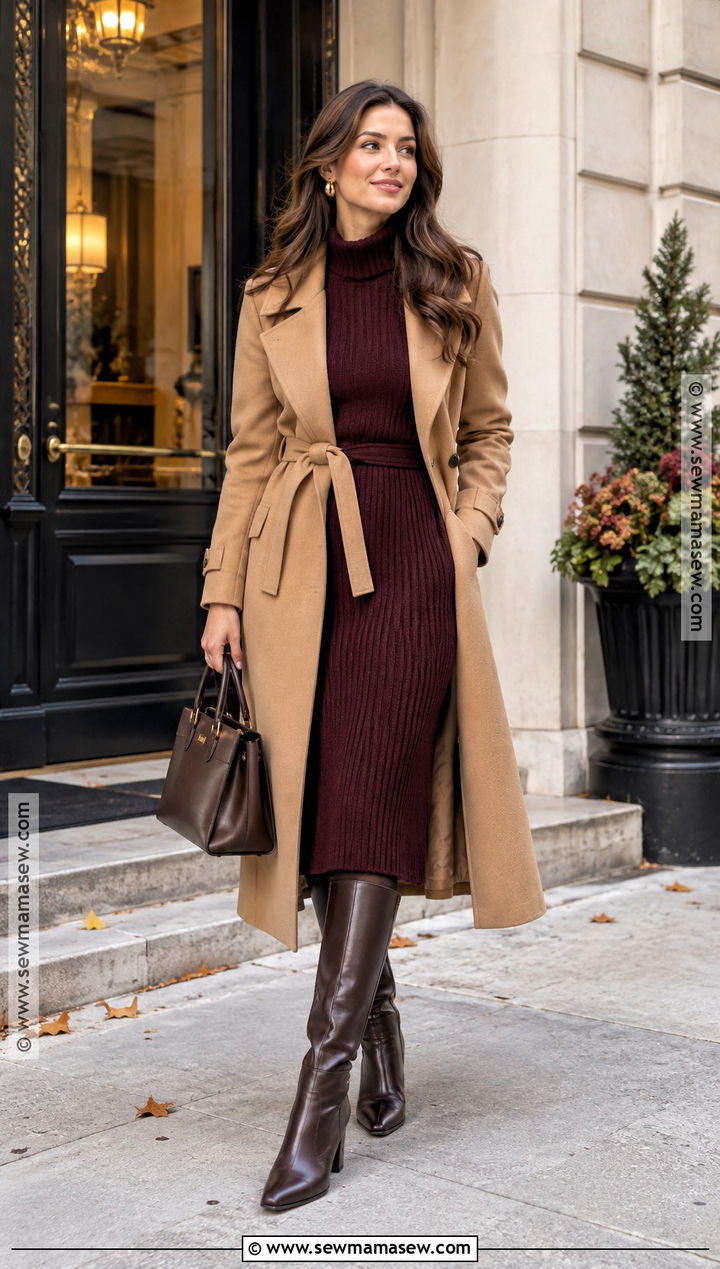
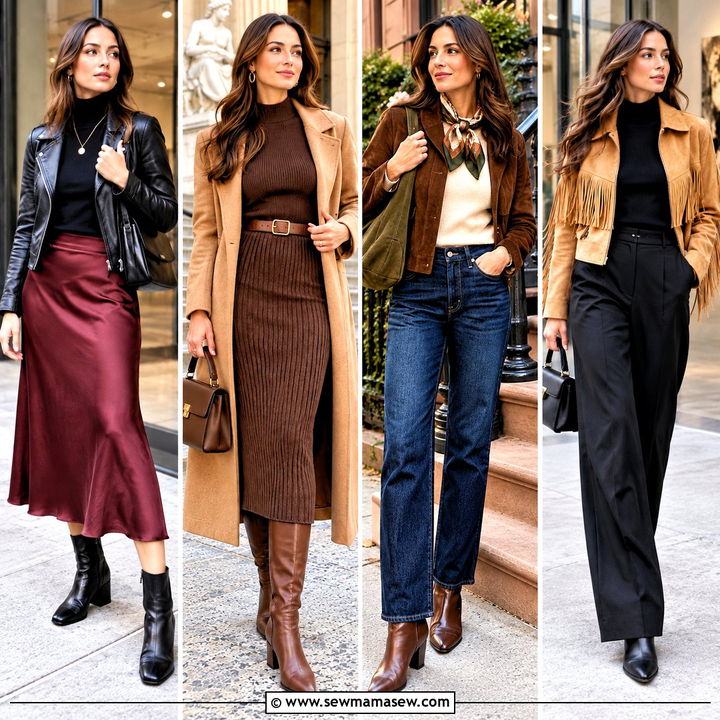
A ribbed midi sweater dress under a camel trench is one of my favorite ways to look dressed without trying. Cream, charcoal, burgundy and chocolate all sit well against camel. The dress should skim, not cling, because a too-tight knit shows every seam of what's underneath once the coat is on. Knee-high boots with a low block heel cover the gap between hem and shoe, which matters once the wind picks up. Either belt the trench or leave it open and put a slim belt on the dress itself. Opaque tights make this workable well into late autumn.
7. Trench Coat With Button-Down Shirt And Tailored Trousers
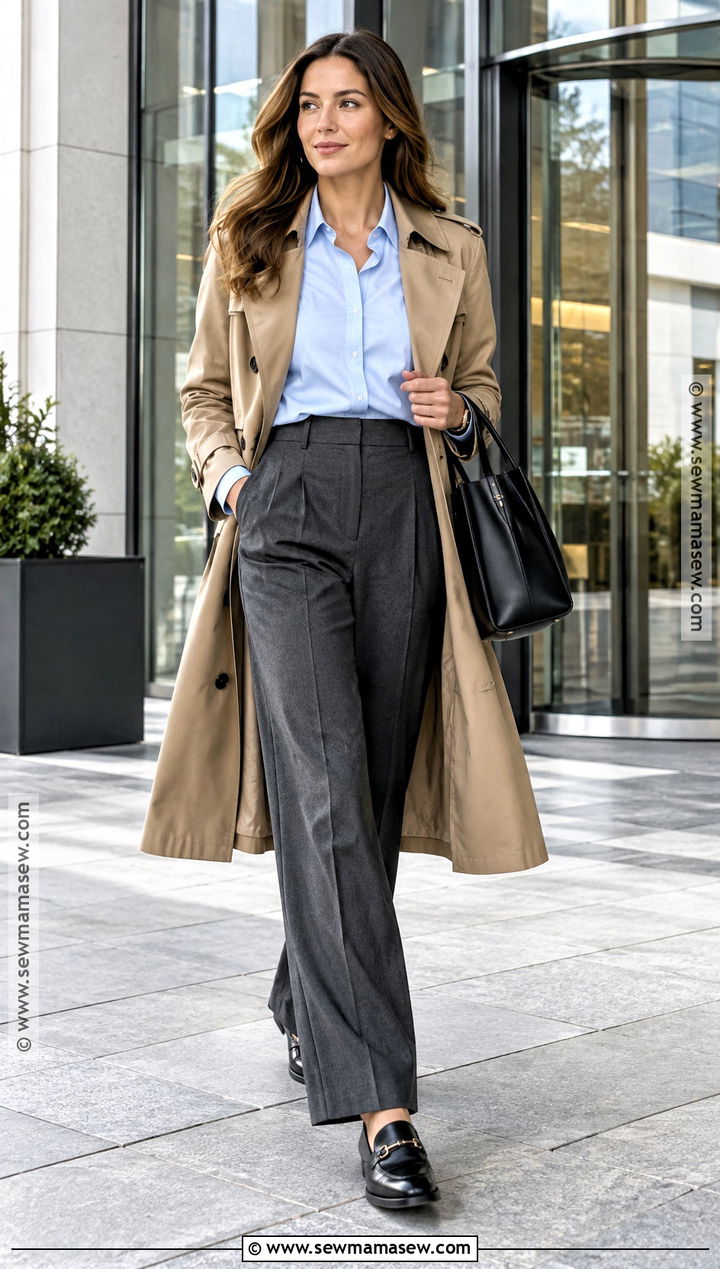
For work, a khaki trench over a pale blue or white button-down and charcoal, navy or espresso trousers is about as reliable as it gets. Straight or slightly wide trousers keep it from feeling stiff. I always check that the shirt collar sits outside the trench collar; tucked under, it creases and disappears. Loafers, low heels or sleek ankle boots all suit it, and a structured leather tote keeps the line clean. If the buckle feels too formal, knot the belt loosely instead. You can go from the commute to a meeting to drinks without changing a thing.
8. Leather Trench Coat With Turtleneck And Midi Skirt
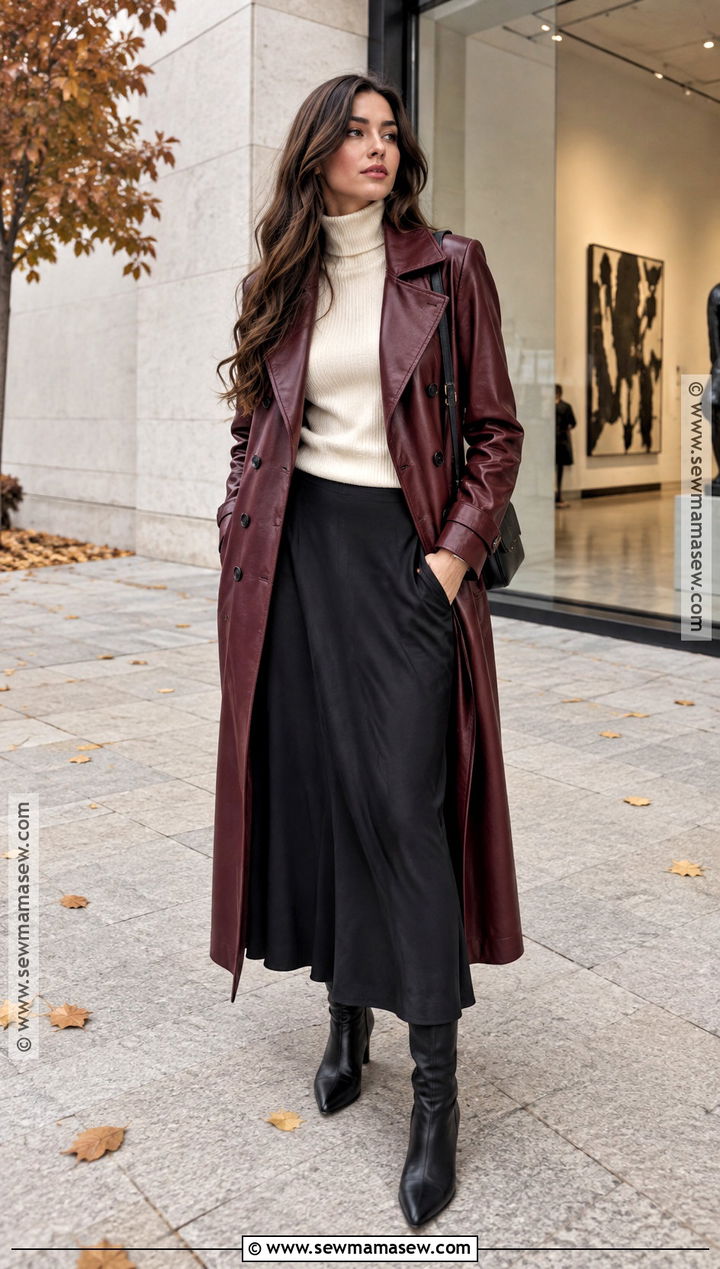
Leather changes the whole mood of a trench, so everything under it should be quiet. I'd pair a brown, burgundy or black leather trench with a lightweight turtleneck and a flowing midi skirt. Cream on top with a dark skirt gives contrast; matching dark shades go more dramatic. Pointed boots should disappear under the skirt hem so there's no awkward strip of leg. Skip heavy jewelry; the leather already has shine. Real leather is heavy and stiff when new and softens with wear, while faux leather is lighter but can crack along the elbows after a few seasons.
9. Olive Trench Coat With Cream Knit And White Jeans
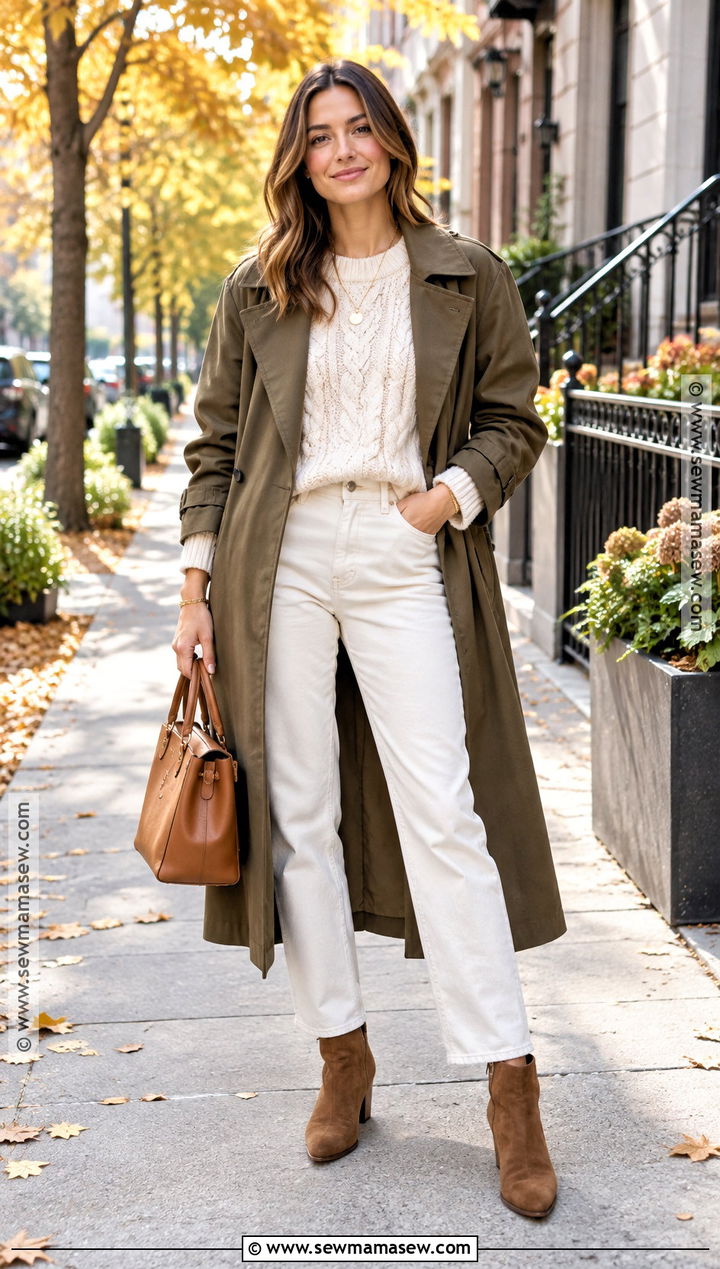
White jeans after Labor Day are fine; thin white jeans in October are not, because you'll be cold and they'll show everything. Look for a heavier, more substantial denim in ecru or off-white, then add a cream cable-knit and an olive trench. Off-white is kinder than bright white next to olive and cream. Brown suede ankle boots warm it up, but check the forecast first: suede darkens and spots in rain. A tan bag and gold jewelry finish it, and a light neutral scarf handles the cold mornings.
10. Navy Trench Coat With Shirt And Pleated Trousers
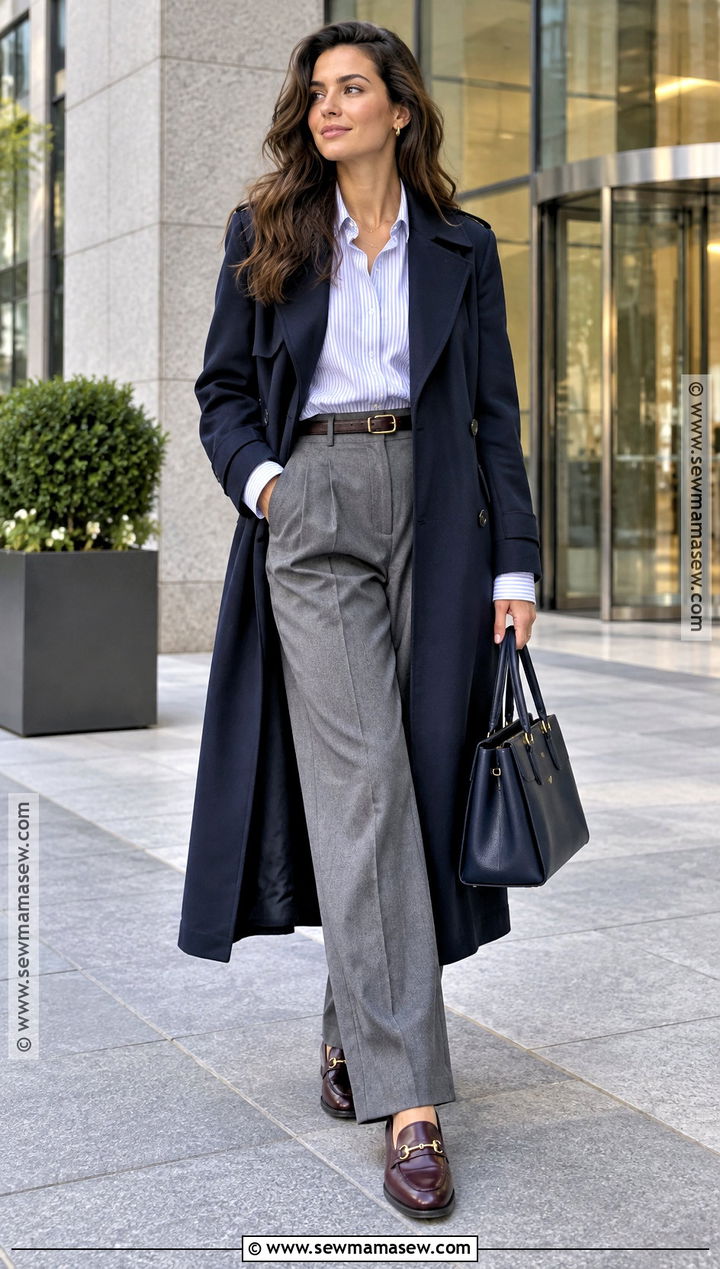
Navy is the trench color I suggest to people who find beige washes them out. Over a striped or solid button-down with high-rise pleated trousers in gray, camel or navy, it looks tailored without being stern. A slim knit tie is an option if you like an androgynous edge; an open collar is softer. The pleats need to lie flat when you stand, and if they pull open, the trousers are too small across the hips. Burgundy loafers or black lace-ups ground it, with a plain leather belt and a roomy work bag.
11. Trench Coat With Hoodie And Leggings
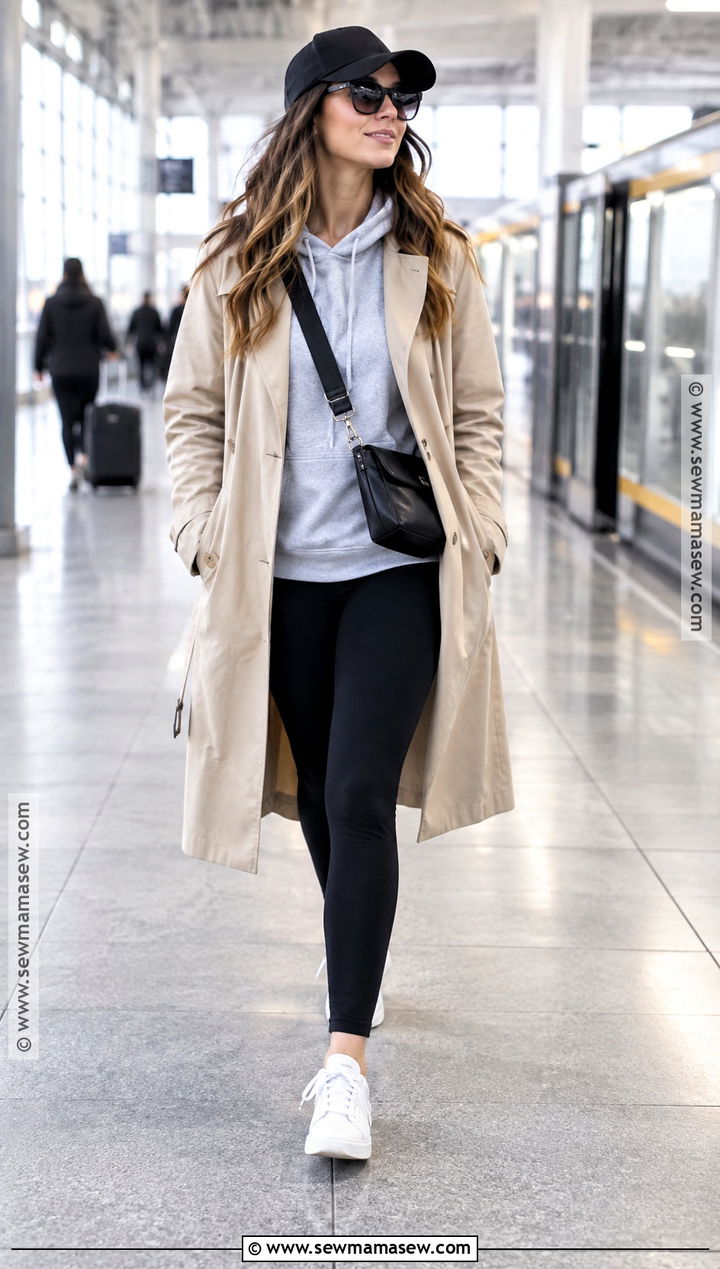
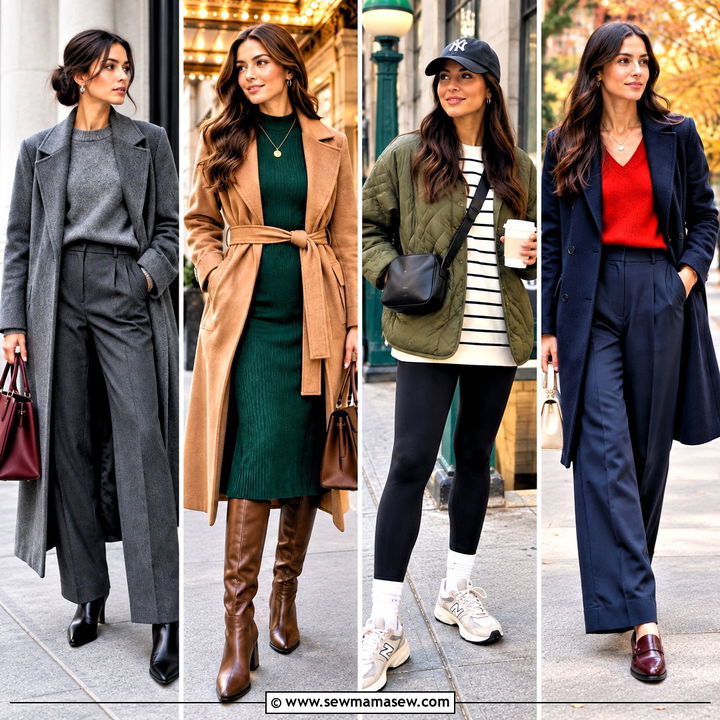
Yes, a trench over a hoodie works, and it's one of the most practical outfits on the list for travel and school runs. Use a relaxed beige or olive coat over a plain neutral hoodie and thick black leggings, with white sneakers and a crossbody. The thing that ruins it is a coat that's too narrow in the shoulders: the hood bunches up at the back of your neck and the trench rides up. Size up or choose a dropped-shoulder cut. Skip big graphics on the hoodie. A cap, crew socks and sunglasses make the athletic layer look intended.
12. Trench Coat With Satin Midi Skirt And Knit Sweater
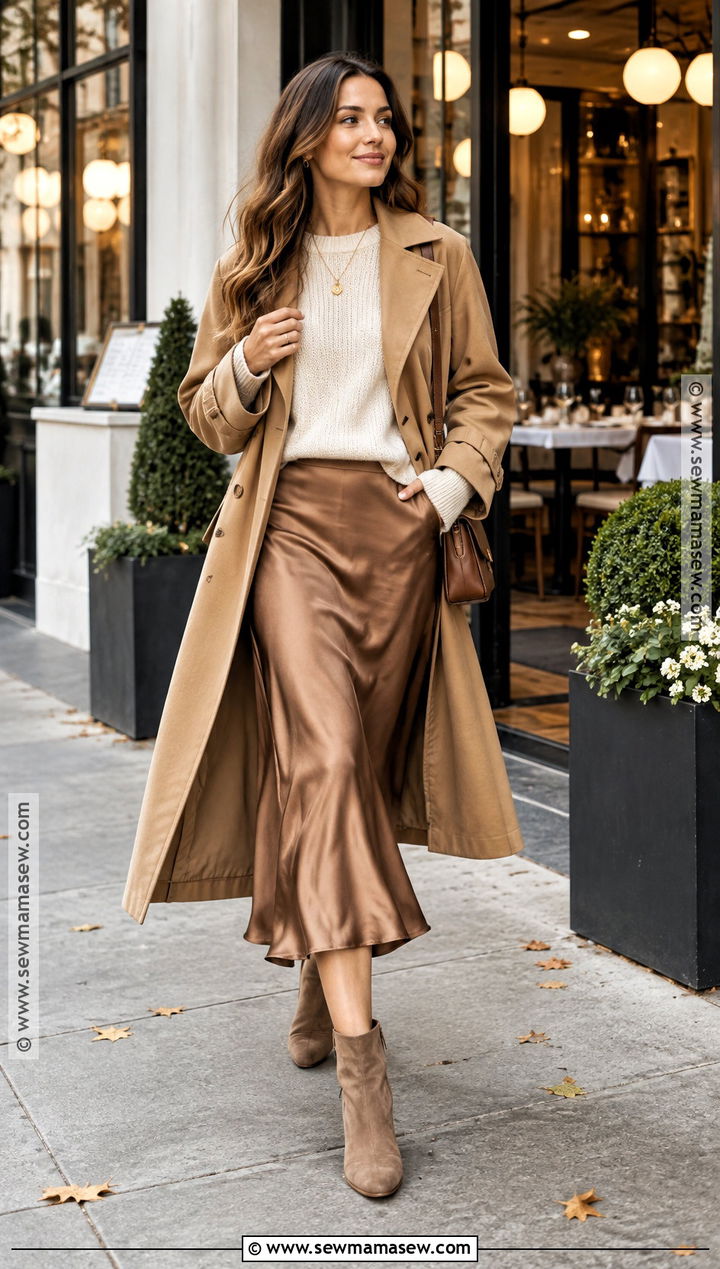
Satin against cotton gabardine is a contrast I like a lot: one shines and moves, the other is matte and holds its shape. Start with a champagne, bronze or dark green midi skirt, add a cream or gray crewneck with just the front tucked, then the camel trench over it all. Suede ankle boots or refined flats finish it. Satin is unforgiving over the hips and shows static and lines, so a bias cut with some ease, or a slip underneath, makes a real difference. It's dressy enough for a family dinner or an office party.
13. Plaid Trench Coat With Turtleneck And Knee-High Boots
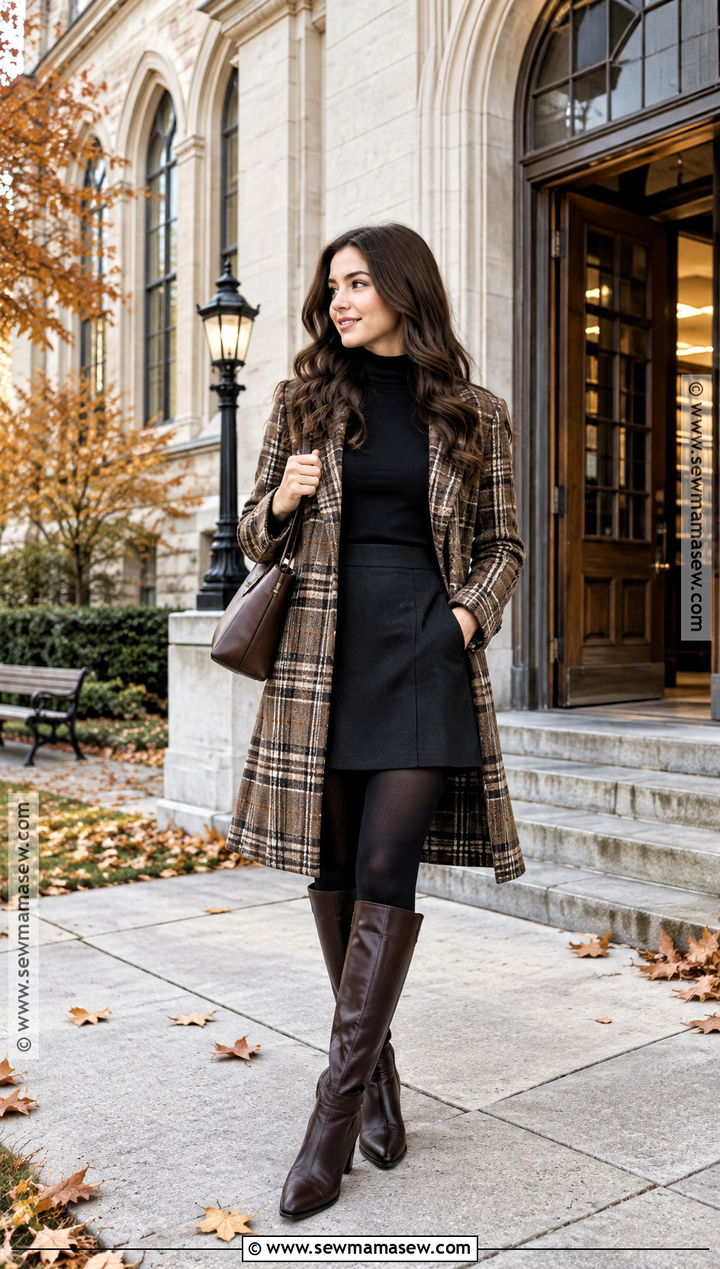
Plaid trenches are easier to wear than people expect, as long as the coat is the only pattern. Put a solid black, brown or cream turtleneck under it with a simple A-line skirt and opaque tights, then pull the boot color straight from the plaid. Small checks read almost as a texture from a few feet away; large checks are bolder and can look heavy on a petite frame, so scale matters. Tailored shorts over tights or slim trousers work if you don't wear skirts. Keep the bag solid and the jewelry minimal.
14. Trench Coat With Denim Shirt And Jeans
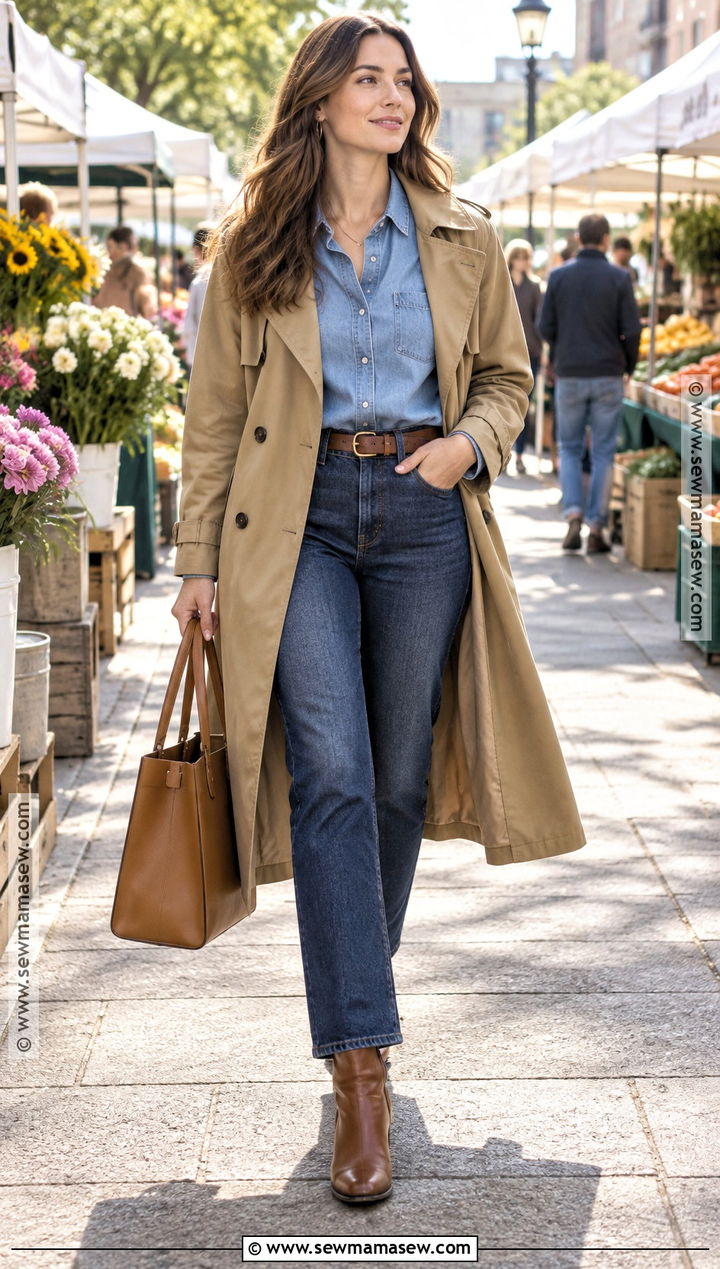
Double denim needs two clearly different washes, otherwise it looks like a uniform that didn't quite match. A light blue denim shirt with darker straight-leg jeans gives that separation, and a stone, camel or khaki trench softens the whole thing. Brown ankle boots and a leather belt in a similar brown tie it together. On milder days I'd open the shirt over a white tank; on colder ones, slip a thin turtleneck under it. Rolling the shirt cuffs over the trench sleeves is a small detail that makes it look styled rather than thrown on.
15. Burgundy Trench Coat With All-Black Outfit
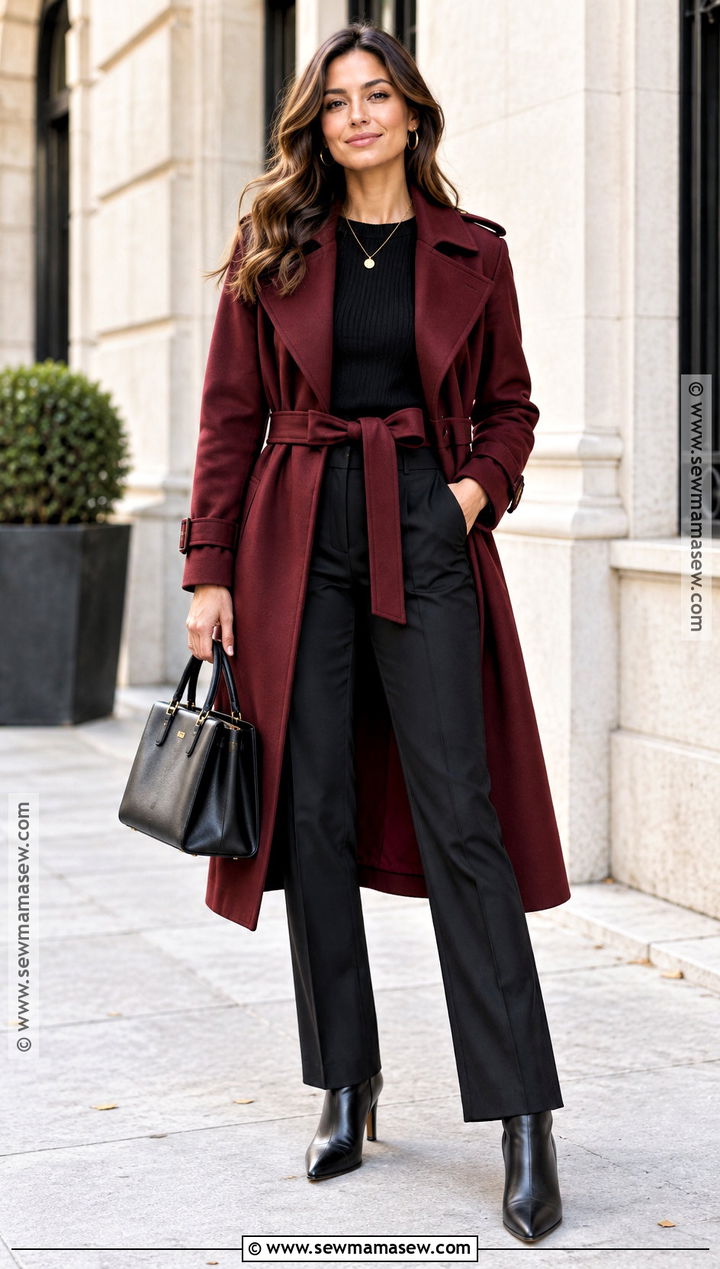
If beige isn't your color, burgundy is a forgiving alternative. Build a plain black base with a fine knit, straight trousers and pointed ankle boots, then let the burgundy coat do all the work. The black underneath means you don't need to coordinate anything else. Keep hardware and jewelry in one metal. One echo of the coat color, a scarf or a lip, is enough; two or three starts to look themed. Wear it open for a long column or belted for a defined waist. It's polished enough for a performance and plain enough for an ordinary Tuesday.
Gabardine in a Downpour and Other Care Questions
Most classic trenches are cotton gabardine, a tightly woven twill that sheds light rain and wind well. It's water-resistant, not waterproof. In a steady downpour it will eventually soak through at the shoulders, and the fabric darkens and stiffens slightly as it gets wet. That's normal, and it dries back to its usual color.
A few habits keep a trench looking good for years:
- Hang it to dry on a wide, shaped hanger, away from a radiator. Direct heat can shrink cotton unevenly and leave the shoulders puckered.
- Spot clean the collar and cuffs, where makeup and skin oils build up first. Many trenches are dry clean only because of the lining and interfacing, so read the label before you put one in a machine.
- Water-repellent finishes wear off over time. Once rain stops beading on the surface, a spray-on reproofer for cotton can restore some of it.
- Take the belt out before you clean or store the coat, or hang it on its own. A belt left dangling stretches its loops and gets lost easily.
Leather and faux leather trenches need different handling. Real leather should never go in a washer and needs a leather conditioner now and then so it doesn't dry out and crack. Faux leather can usually be wiped down with a damp cloth, but heat and folding wear it out, so hang it rather than stuffing it in a bag.
Which Trench to Buy First
If you're starting from nothing, I'd buy a mid-length beige or navy trench that fits over a sweater with room to spare, because that one coat covers most of the outfits above. After that, a second trench should do something the first can't: a cropped one for mild days, a leather one for evenings, or a color like olive or burgundy. Whatever you wear underneath, the rule is the same. Balance the coat's volume with something closer to the body, keep the shoes walkable, and dress for your actual weather rather than the picture.
Related posts: