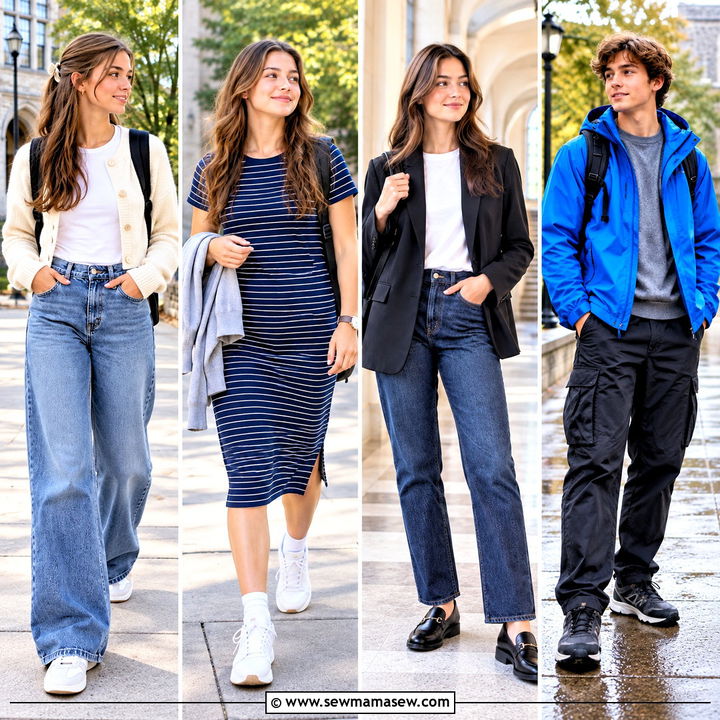
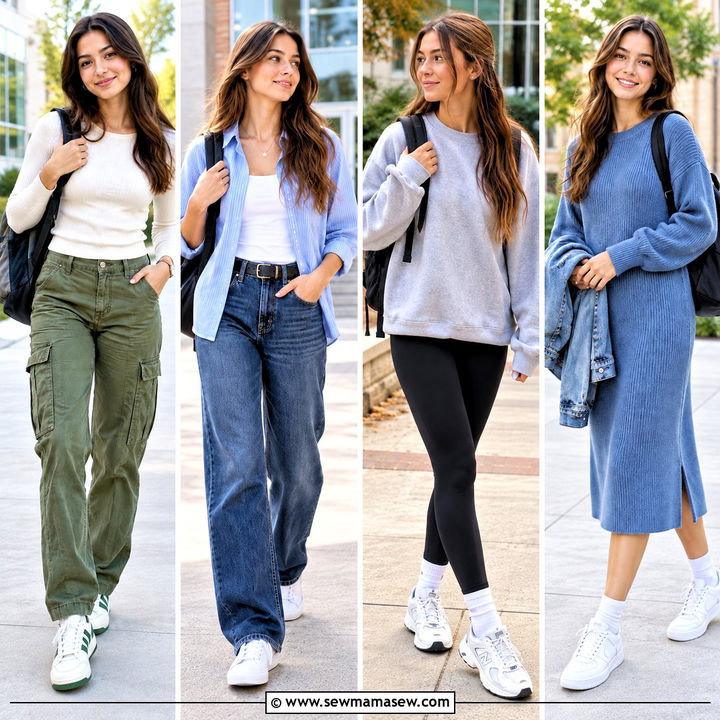
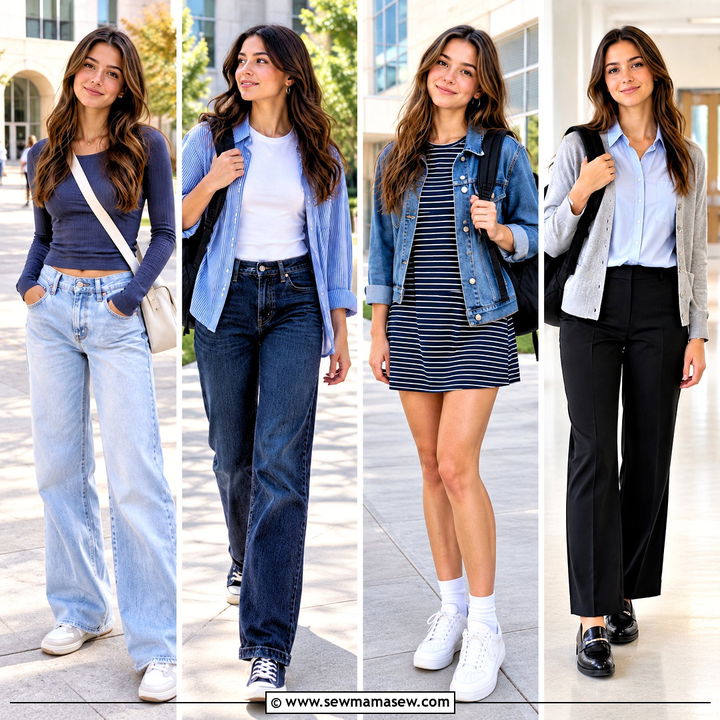
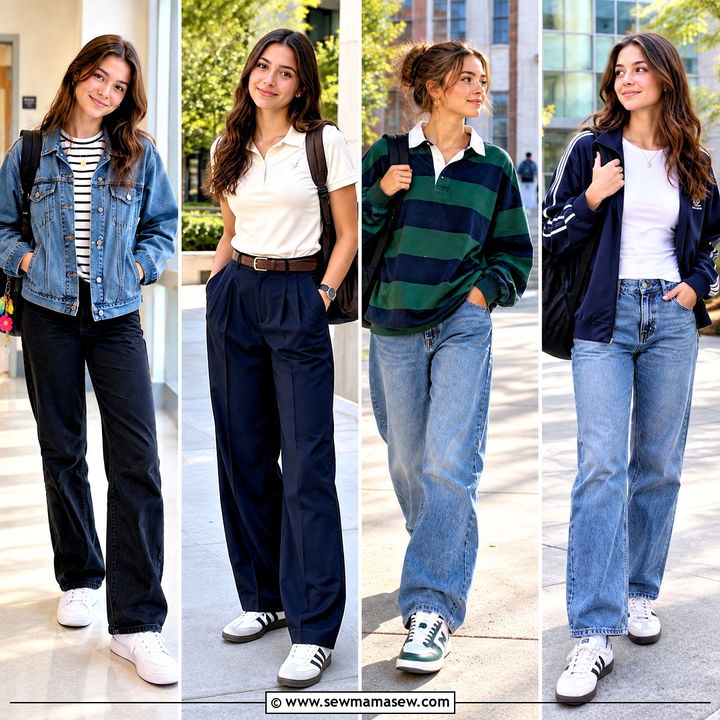
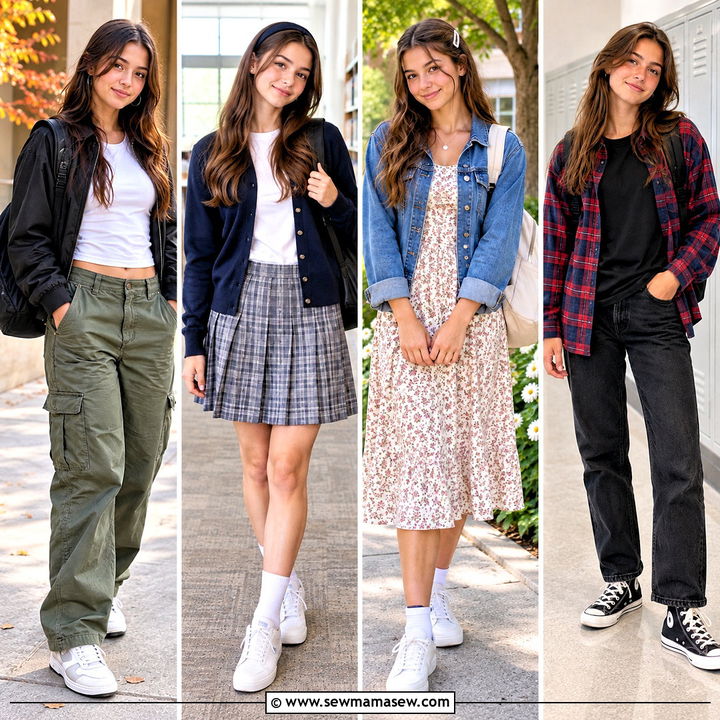
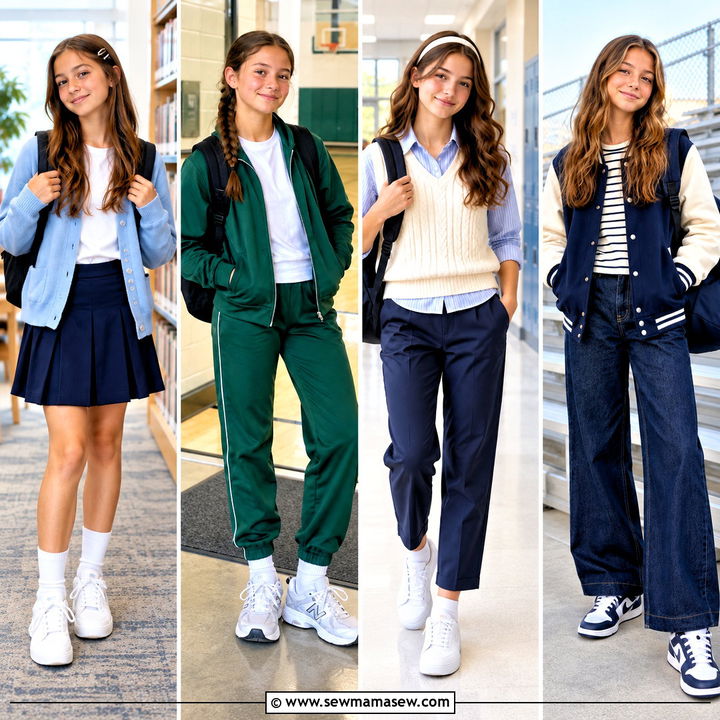
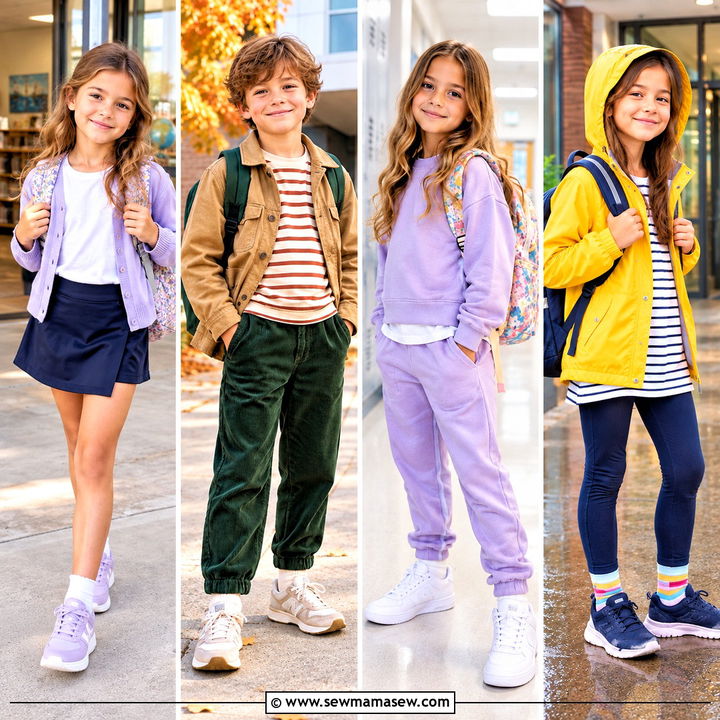
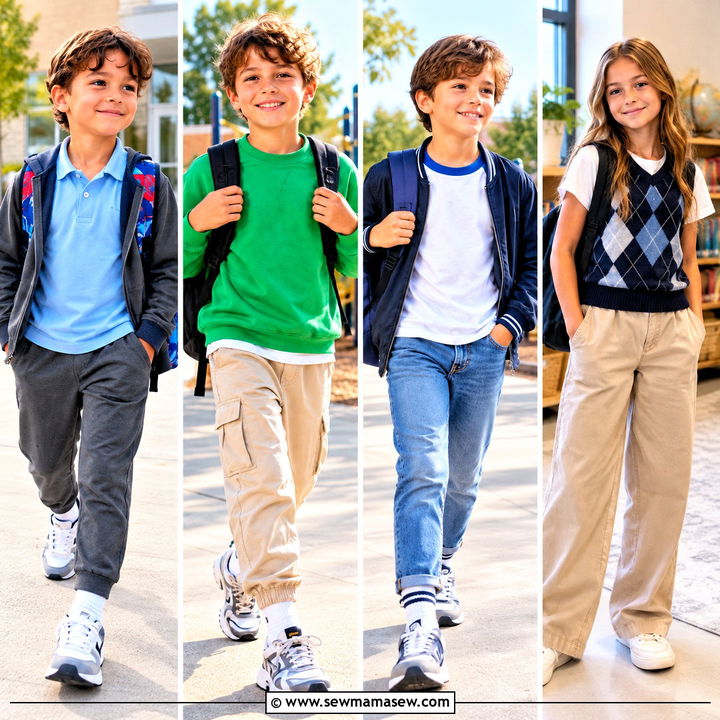
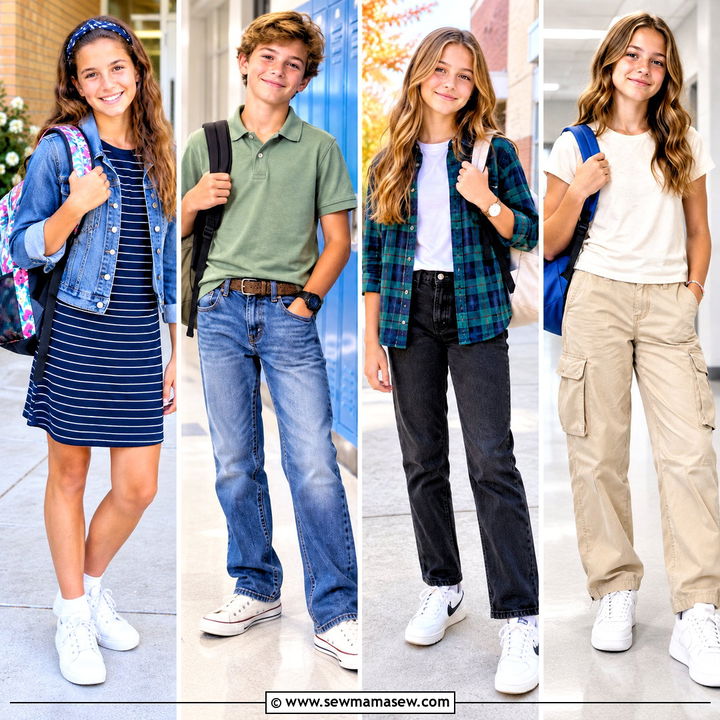
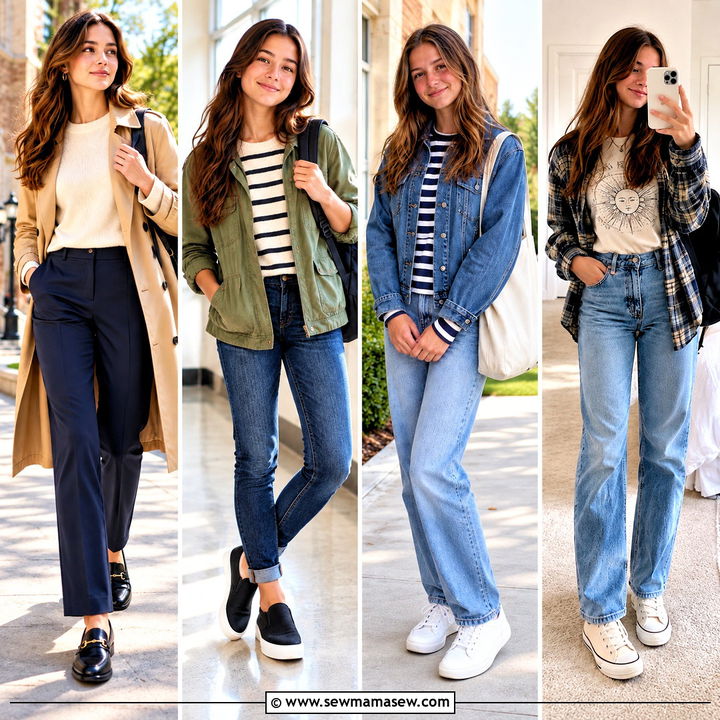
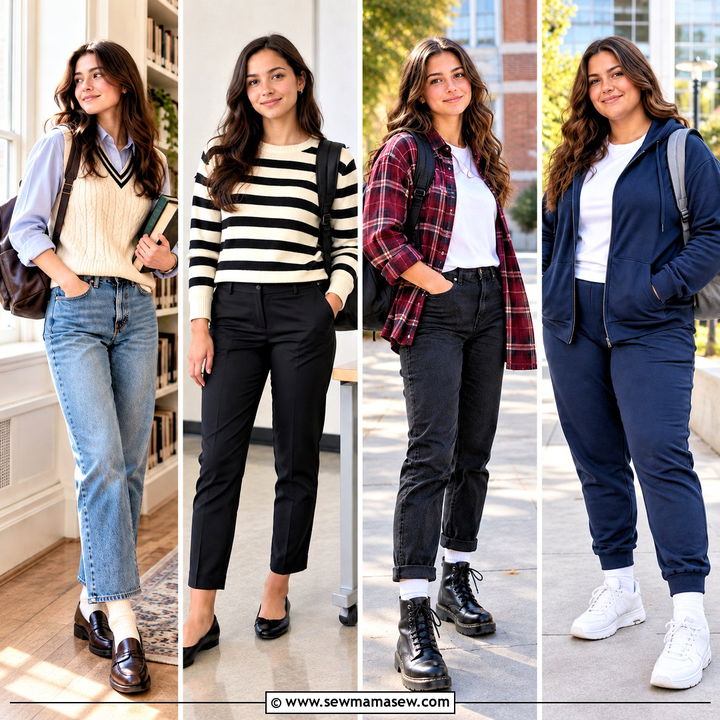
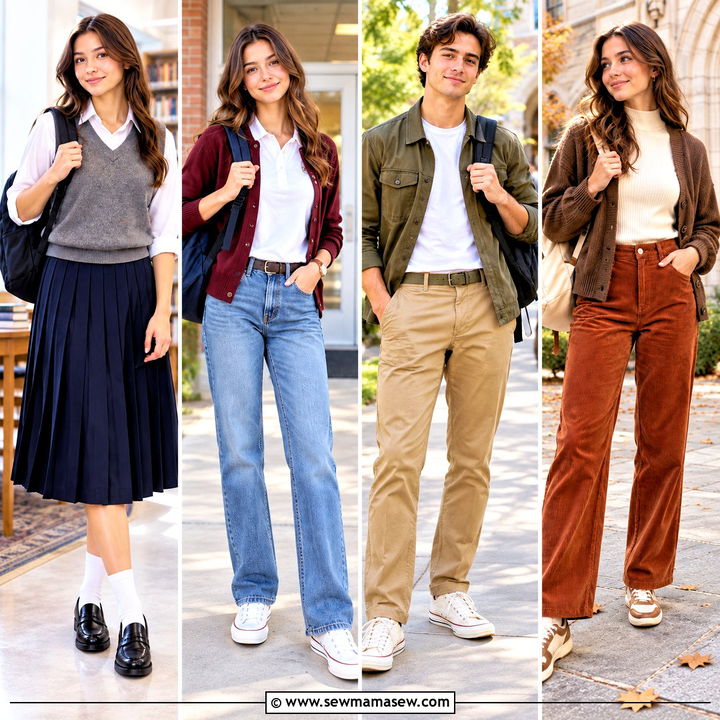
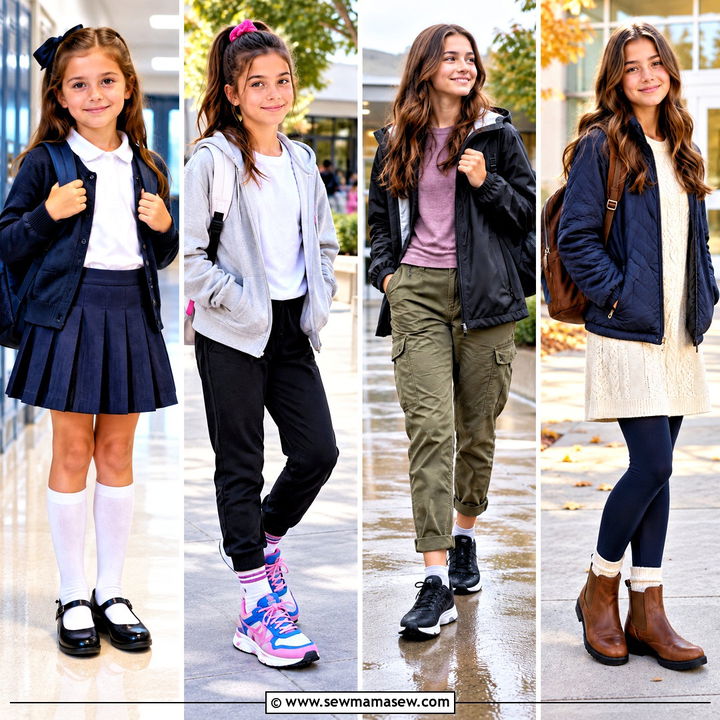
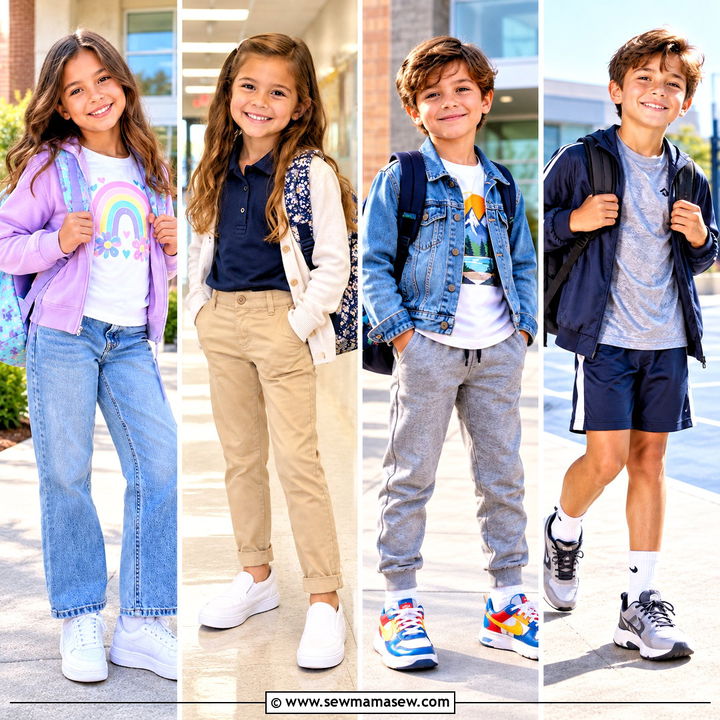
Most elementary closets don't fail because there are too few clothes. They fail because the pieces don't talk to each other, so a seven-year-old ends up in the one pair of joggers that matches the one shirt they'll wear. The outfits below are built as complete looks, each one tested against the things a school day actually throws at a child: carpet time, a sandbox, a sticky lunch table and a coat hook they have to reach themselves. Before you buy anything, I'd pull everything out of the drawers and have your child try it on, then read the school's dress code and think about what your mornings feel like in October rather than August. Washable fabric, a waistband they can manage, and shoes that stay on at a run matter more than any single print. And let your child pick some of it. Kids wear what they chose.
Sizing for a Growth Spurt Without Buying Clothes They Swim In
Elementary kids can grow noticeably between September and spring, so it's tempting to buy everything two sizes up. I don't. Pants that are too long get stepped on and fray at the heel, and an oversized hoodie sleeve ends up in the paint pot. One size up is usually the limit, and only for pieces that adjust.
- Buy pants with an adjustable inner waistband; the button tabs take in the waist now and let it out later.
- Choose joggers with cuffed ankles. A little extra length bunches at the cuff instead of dragging.
- Size tops and sweaters to fit now. A loose crew neck slips off the shoulder and a long sleeve gets pushed up and stretched out.
- Buy shoes to fit today with about a thumb's width at the toe. Shoes bought too big cause tripping and blisters.
Before you shop, measure inseam and waist on a pair that fits well right now. Brand sizing for kids varies a lot, and comparing those numbers with a size chart is more reliable than going by age labels.
1. Elementary School Graphic T-Shirt And Joggers Outfit
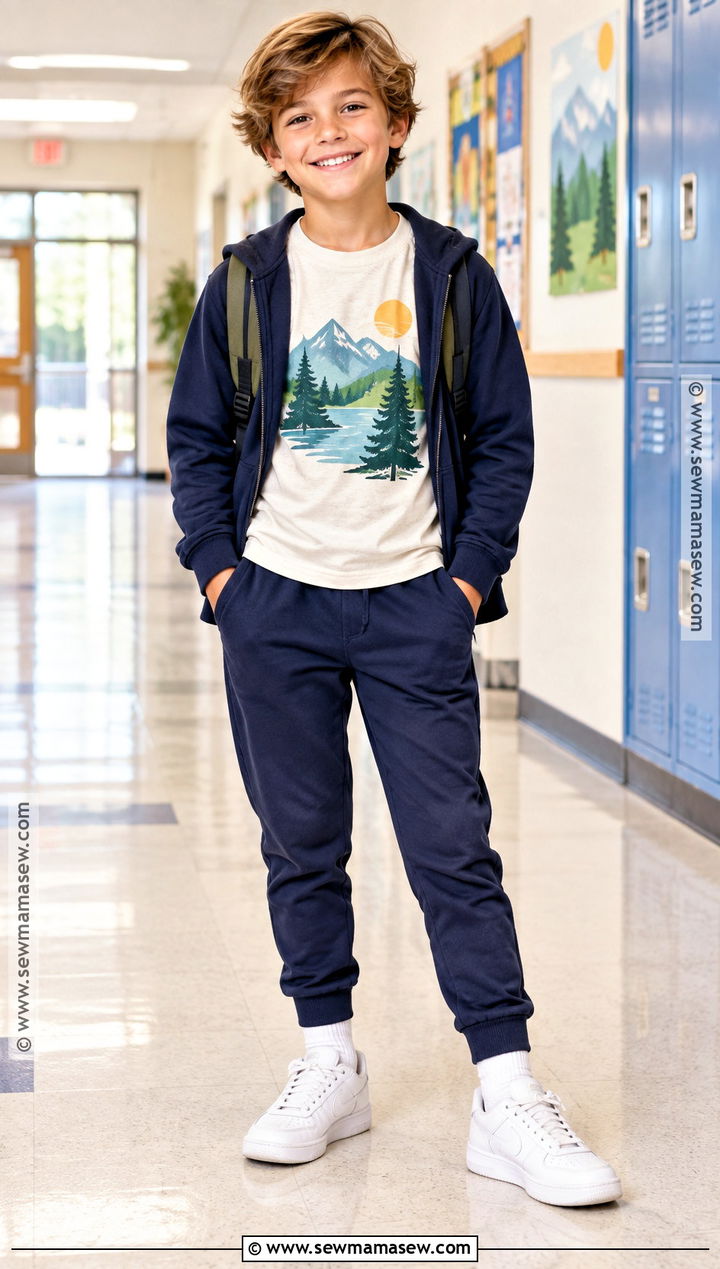
This is the outfit I'd buy three of before anything else. Pull-on joggers in cotton or a cotton blend give a child room to sit cross-legged and climb, and a soft graphic tee (animals, space, a sport they love) keeps them happy to put it on. Watch the cuffed ankle: joggers that are a touch long bunch neatly at the cuff, but ones that are too long get stepped on and wear through at the heel within weeks. Add cushioned crew socks, sneakers with hook-and-loop straps if laces are still a struggle, and a thin zip hoodie for chilly classrooms. Two neutral joggers and three tees will give you most of a week.
2. Elementary School Polo Shirt And Chino Shorts Outfit
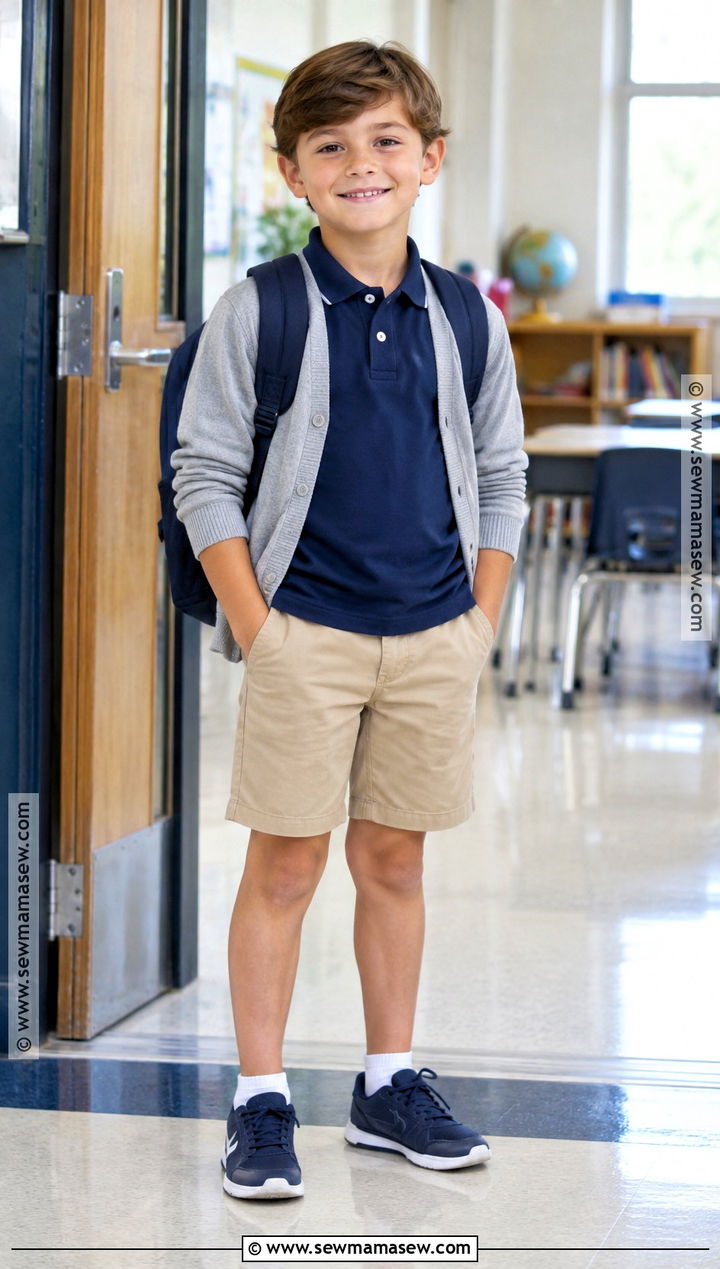
A polo with pull-on chino shorts is my answer for kids who need to look tidy for an assembly or a casual uniform but still hate stiff clothes. The collar is where polos go wrong. Cheaper ones use a rigid collar that curls up after a few washes and rubs the neck, so I squeeze the collar before buying and pass on anything that feels like cardboard. An elastic or adjustable waist on the shorts means a child handles bathroom trips alone. Navy, khaki, gray and olive shorts take any polo color. Have your child sit on the floor with knees up in the fitting room; if the shorts ride too high, go a length longer. Uniform schools can use this exact formula in their required colors.
3. Elementary School T-Shirt Dress And Sneakers Outfit
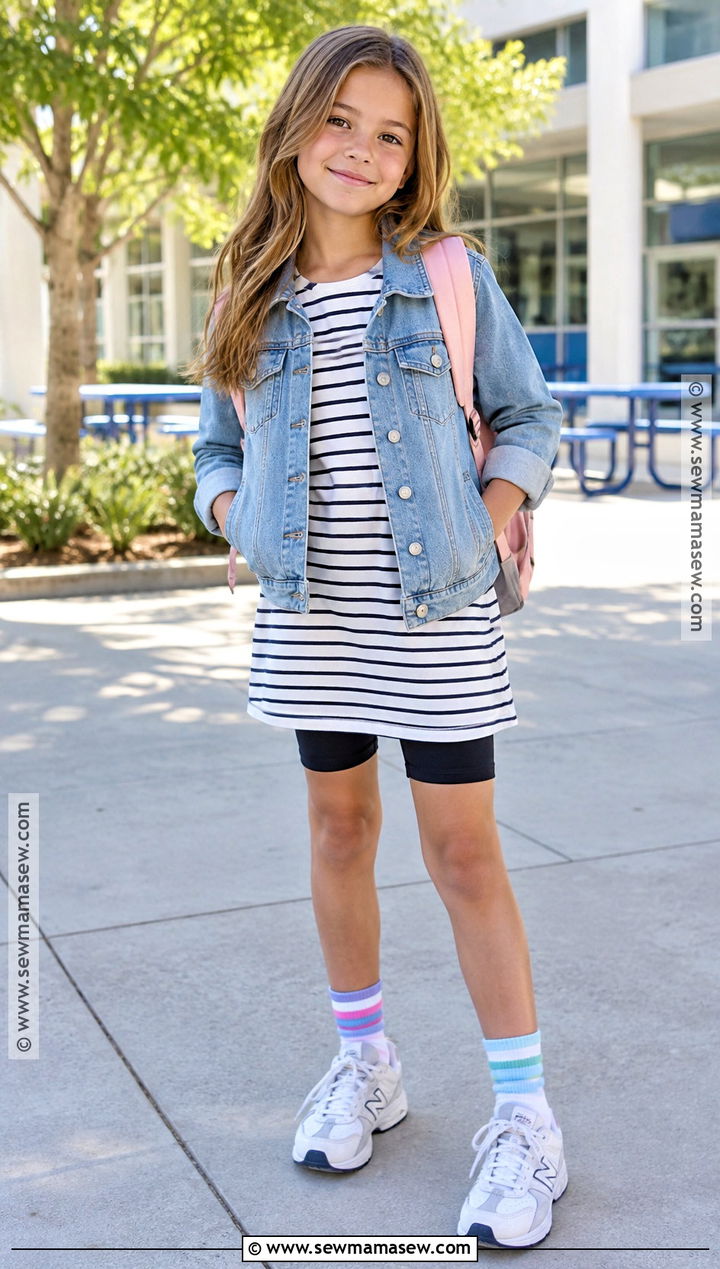
One garment, dressed in under a minute. That's why I like a T-shirt dress for kids who fight the morning routine. Go for washable cotton with a relaxed cut that sits at the knee or just below, and put fitted bike shorts underneath so cartwheels and floor time are no problem. Sneakers and soft crew socks keep it practical. On cool mornings a denim jacket or zip sweatshirt goes over the top. The details I avoid are tie belts, which come undone and drag, and plastic embellishments that snag on chair backs. A simple stripe or small print hides lunch better than a pale solid.
4. Elementary School Hoodie And Leggings Outfit
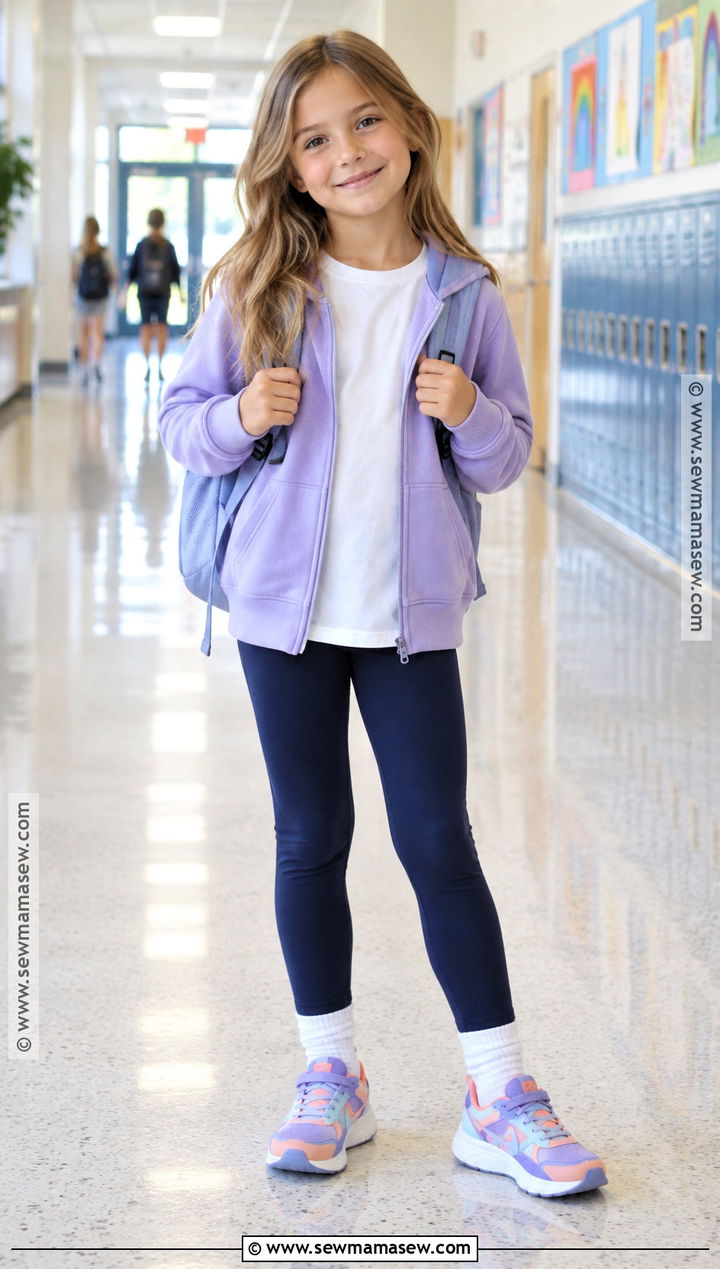
Bulk is the thing to check with a hoodie and leggings outfit. A heavy fleece hoodie won't fit under a winter coat, so I pick a midweight one, and a full zip rather than a pullover because a child can get it off at their desk without messing up their hair or getting stuck. The leggings have to be opaque. Hold them up to a window and stretch a section over your hand; if you can see skin, they'll be see-through when a child bends. A longer T-shirt under the hoodie keeps the proportions comfortable. Black, navy, charcoal and deep green leggings hide wear at the knee longest. Some schools want leggings under a longer top, so check that rule first.
5. Elementary School Denim Jacket And Pull-On Pants Outfit
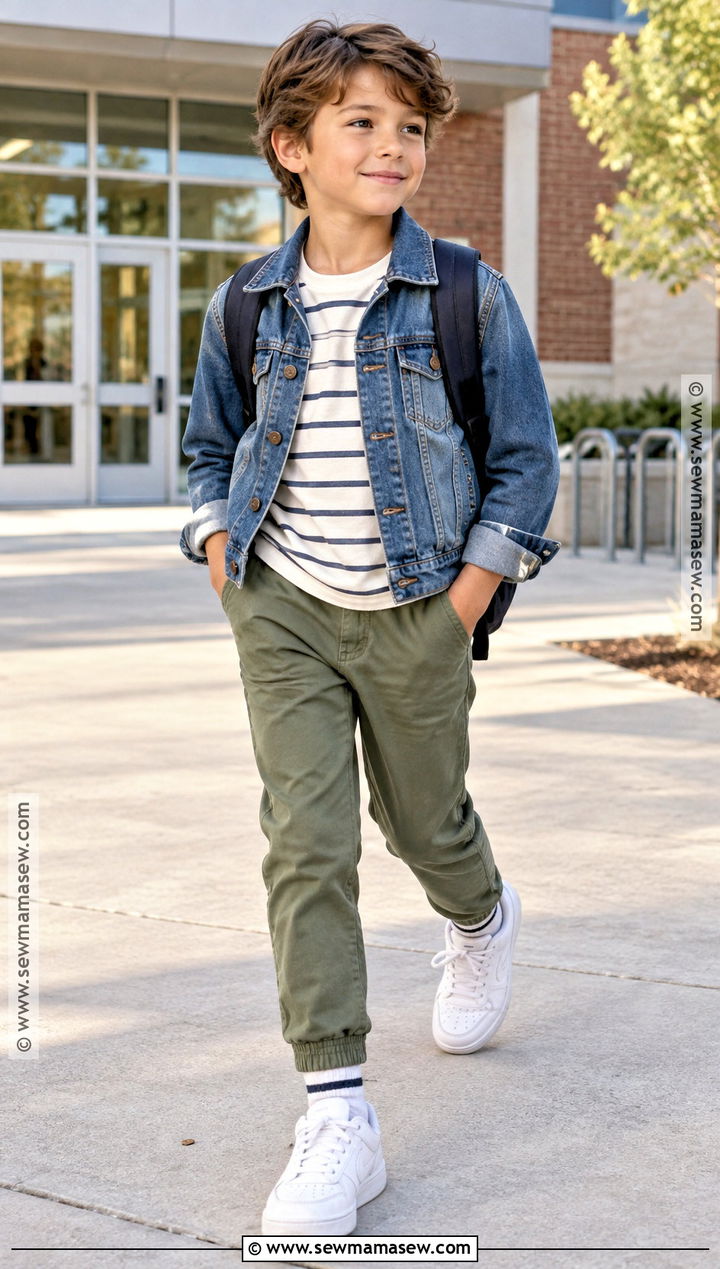
A denim jacket makes simple school clothes look put together, but kids' denim is often stiffer than adult denim, so I have a child raise both arms and hug themselves while wearing it. If the back pulls or the sleeves ride up past the wrist, it will spend the year in a cubby. Under it, a plain or striped tee and relaxed pull-on pants in twill or light canvas give structure without the stiffness of jeans. A medium wash sits well with tan, navy, olive or rust. Check that it still closes over the backpack straps. Early fall is when this earns its place: on in the cold drop-off line, off by afternoon recess.
6. Elementary School Polo And Uniform Pants Outfit
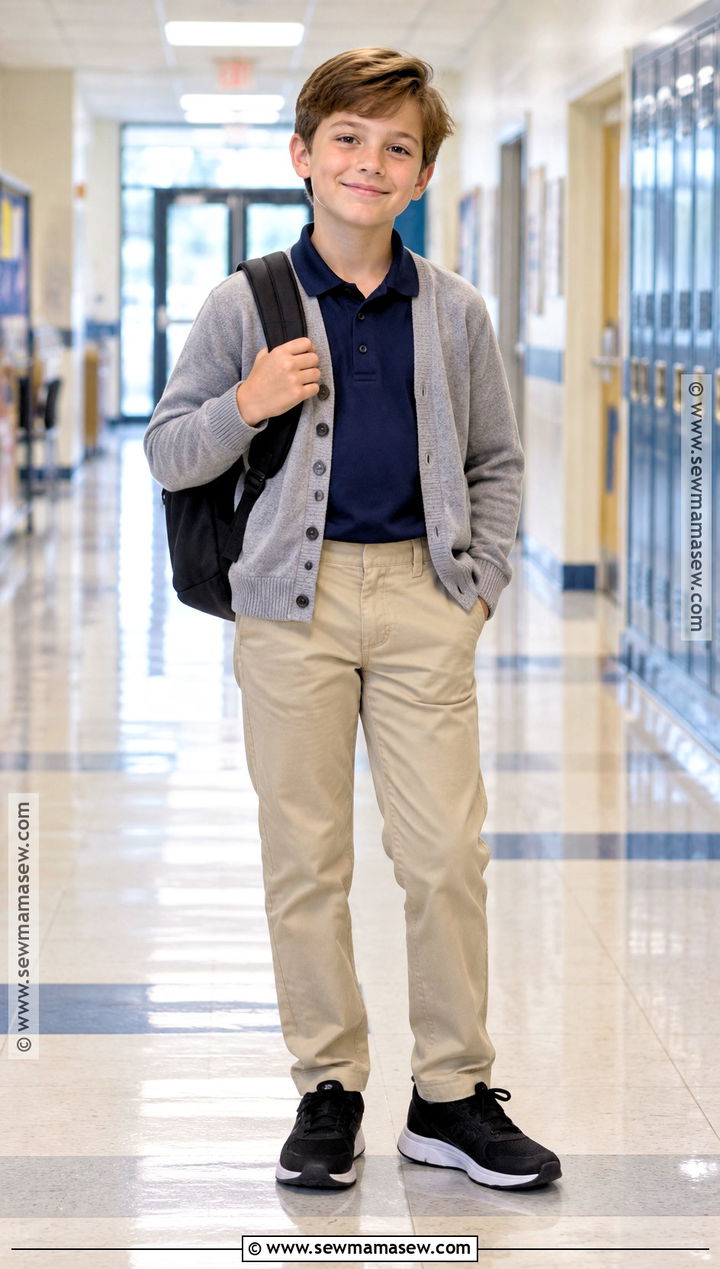
Uniform shopping goes wrong when parents buy everything in July and the handbook changes in August, so read this year's rules first: approved colors, whether a logo is required, collar shape and whether undershirts must be white. I look for uniform pants with an adjustable inner waistband, because kids grow in height before they grow around, and that tab lets the same pants fit longer. Children with sensory sensitivities usually do better with flat seams and printed rather than sewn tags. Add plain crew socks, approved shoes and a cardigan in a uniform color. Keep one complete set clean as a spare for spill days, label anything removable, and hold off on hemming or removing tags until the first week confirms the fit.
7. Elementary School Athletic Shirt And Track Pants Outfit
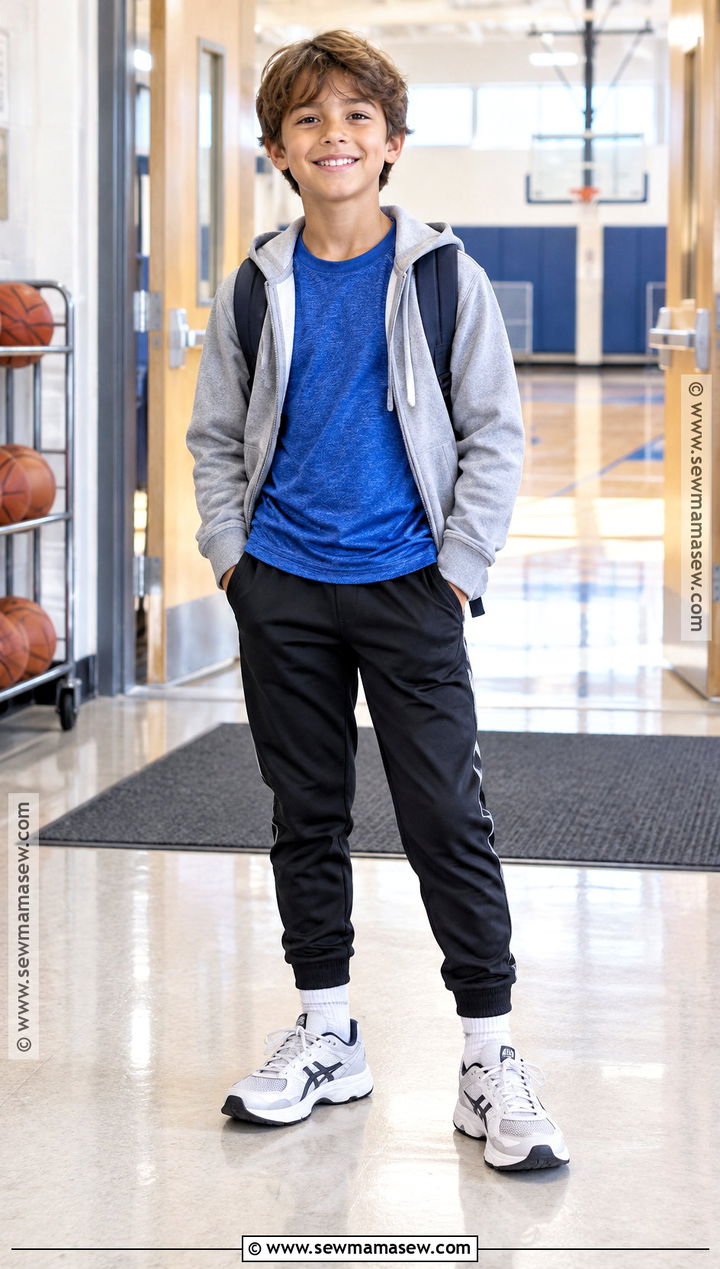
On PE days I want fabric that dries quickly, which is why I prefer a smooth polyester-blend athletic shirt to cotton for active schedules. Cotton soaks up sweat and stays damp through the next lesson. Pair it with tapered track pants or athletic joggers that sit securely when a child jumps, and check the gym's shoe rule, since many want non-marking soles. Trim or tie off long drawstrings; they catch on equipment and play structures. A light sweatshirt can live in the backpack. If your school changes for gym, a labeled drawstring bag with spare socks saves a lot of lost-property hunting.
8. Elementary School Flannel Shirt And Jeans Outfit
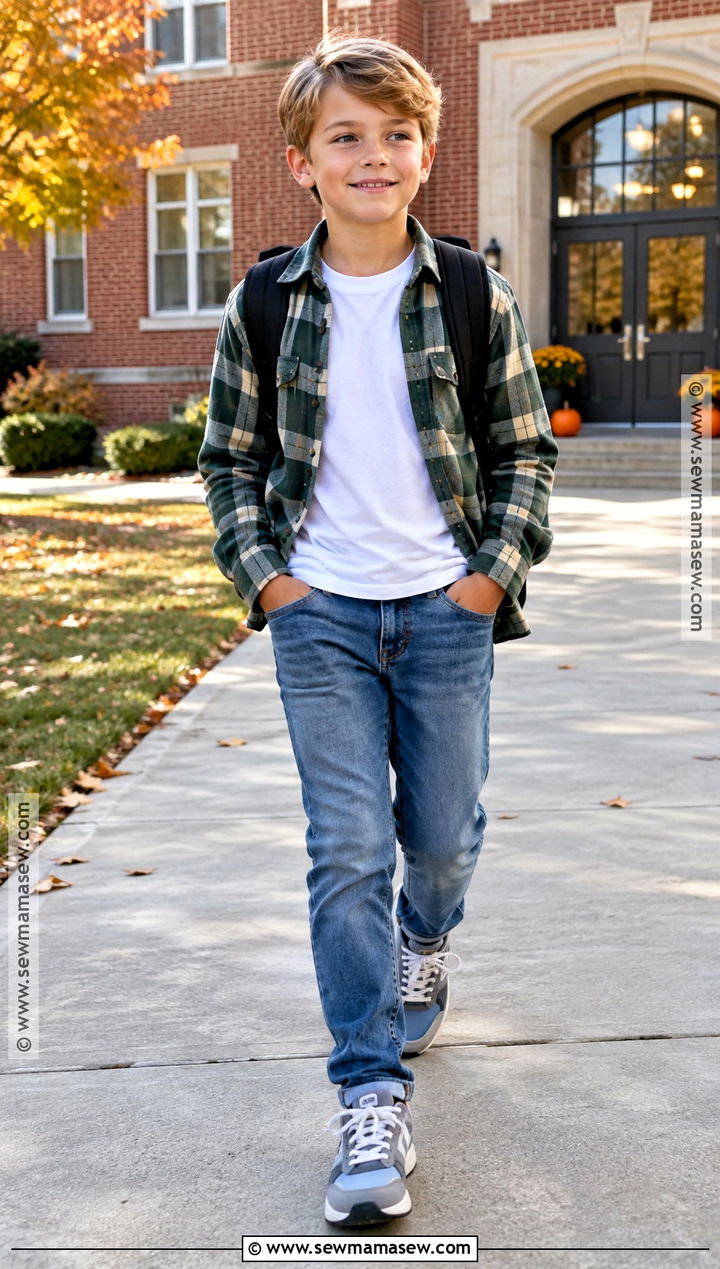
Flannel over a tee is one of the easiest layers for crisp mornings because a child can wear it buttoned, open, or tied around the waist by lunchtime. Brushed cotton flannel does pill at the elbows and cuffs, which is where kids rub it on desks, so I don't spend much on it. Pick a lightweight flannel rather than a heavy shirt jacket, which gets too warm indoors. Jeans with a little stretch, or pull-on denim for kids who can't manage a button yet, let them bend and sit comfortably. Blue, green, rust and burgundy plaids all go with medium-wash denim. I'd skip heavily distressed jeans; the rips catch knees and tear wider on the playground.
9. Elementary School Cardigan And Skort Outfit
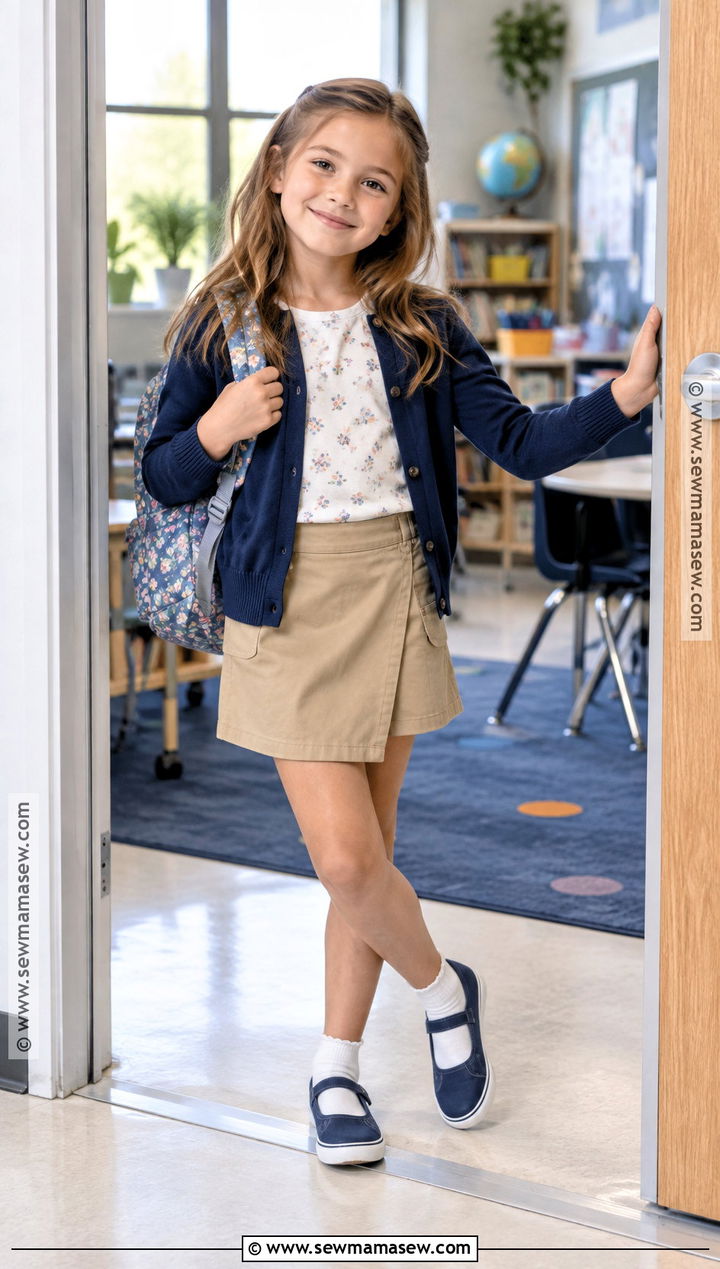
A skort solves the playground coverage question without asking a child to give up a skirt. The built-in shorts are the important part, so I check that they're stitched at the waist rather than loose, and that the elastic is wide enough not to dig in during long sitting. A crew-neck tee and a light button-front cardigan finish it neatly, with the cardigan loose enough at the shoulder to reach across a table. Supportive sneakers or Mary Jane sneakers keep it secure for running. This one also works for class parties and picture day. A navy, gray, cream or soft brown cardigan will go with dresses and pants too. Confirm the school's length rule before buying.
10. Elementary School Overalls And T-Shirt Outfit
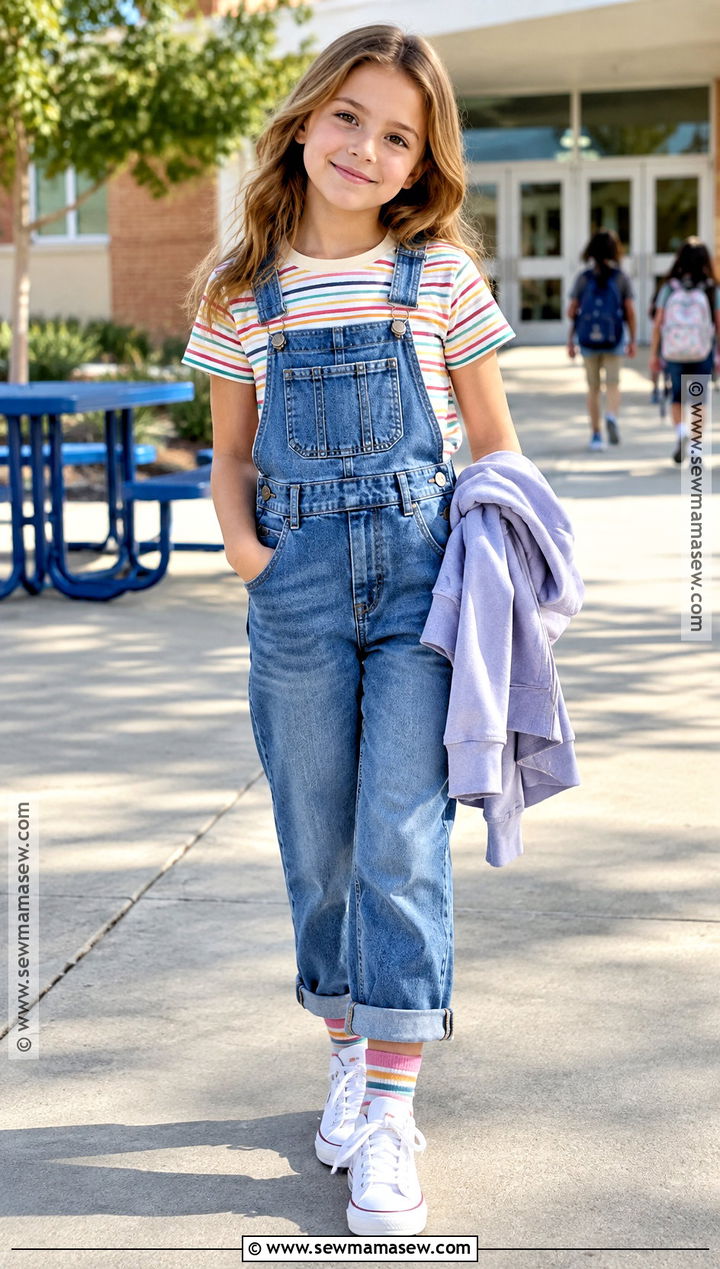
Overalls are tough, but only buy them if your child can work the fastenings alone. a child who can't undo a stiff metal clip will put off bathroom trips, so practice at home before the first school day. Look for adjustable straps, side buttons that open easily, and stretch denim or soft cotton with room through the hip. A striped or plain tee goes underneath, switched to long sleeves when it cools, with a zip hoodie on top. Shorten straps that slip off the shoulder and avoid very wide legs that catch on slides. Denim, olive, tan or navy overalls pair with almost any top in a small wardrobe.
11. Elementary School Sweater And Corduroy Pants Outfit
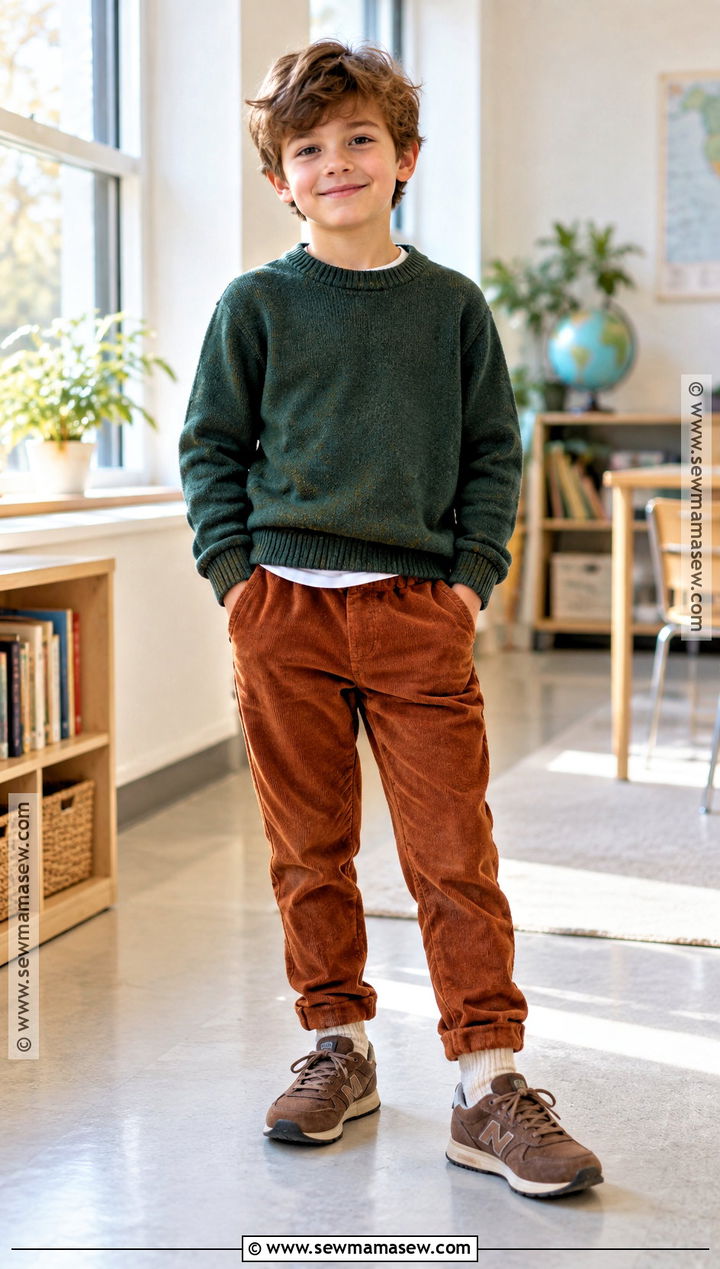
For colder weeks I reach for a fine-gauge cotton sweater over anything chunky. Thick knits fight with a coat and a backpack, and a child gets hot fast in a heated classroom. Put a short-sleeve tee underneath so the sweater can come off. Corduroy pants with a pull-on waist and a straight or relaxed leg are warm and hold up to kneeling. Fine-wale cord feels softer and bends more easily than wide-wale, which is stiffer and adds bulk. Do the scratch test before anything joins the rotation: have your child wear the sweater for ten minutes and ask about the neck and cuffs. Mustard, forest green, navy, brown and burgundy work together all season.
12. Elementary School Rain Jacket And Waterproof Shoes Outfit
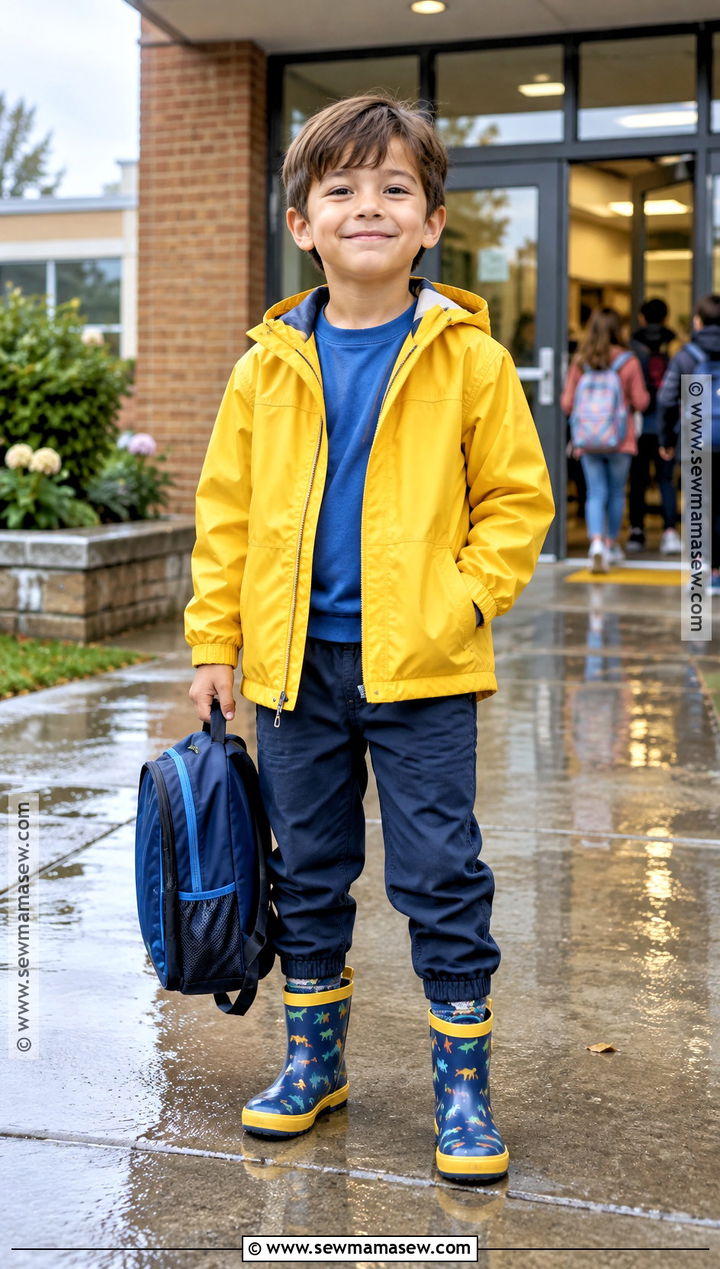
Rain outfits fail at the hem. Long pants wick water up from wet ground and a child sits in damp denim until lunch, so on wet days I choose quick-drying joggers or pull-on pants that end at the ankle. Under the jacket, a breathable long-sleeve tee or thin sweatshirt avoids that sweaty feeling once the coat comes off indoors. Choose a hooded raincoat with snaps or a smooth zip a child can do alone. Water-resistant sneakers or short rain boots with a grippy sole work best on slick paths, and a spare pair of socks in the backpack is worth more than any accessory. Bright jackets and reflective strips help on gray walks to the bus.
13. Elementary School Puffer Coat And Winter Pants Outfit
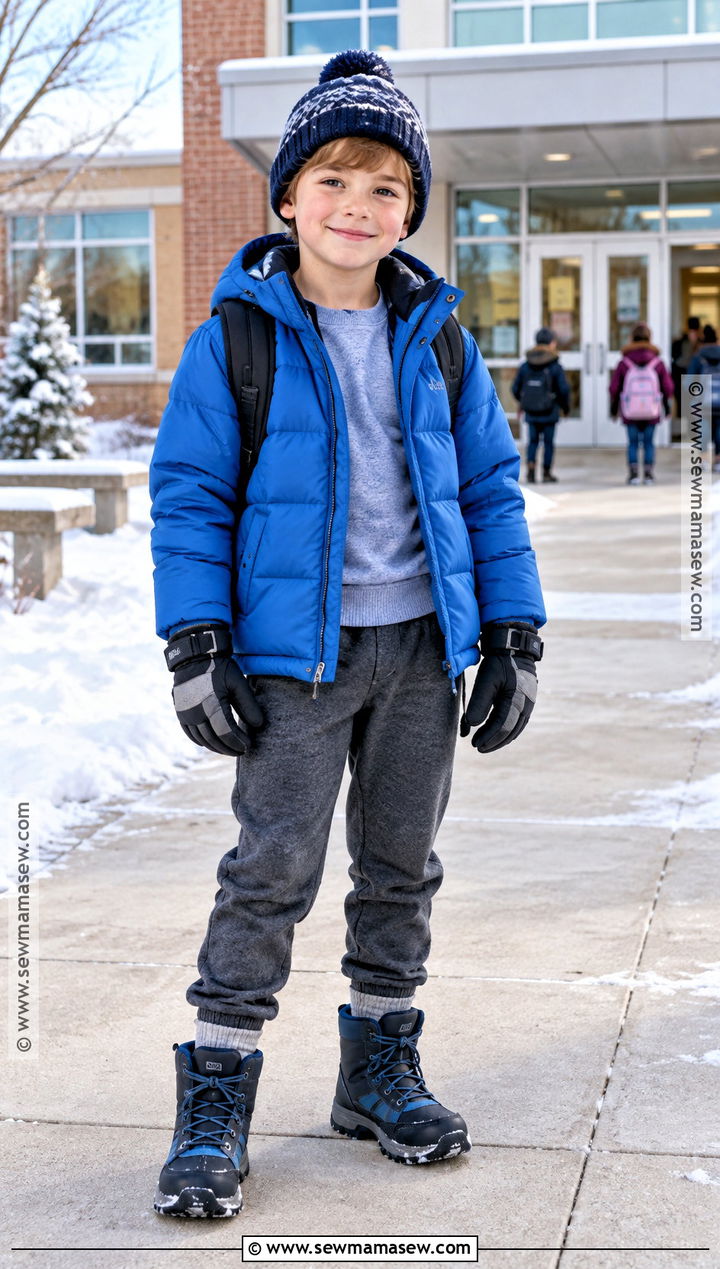
In real winter, the test I use is simple: can your child take everything off and put it back on without help? Start with a soft long-sleeve shirt and fleece-lined joggers or winter-weight pants. A lightweight puffer is warm without the stiff arms of an oversized coat, and I check that a child can zip it with gloves off and lift both arms over their head in it. Boots need real traction and closures they can manage. Label the hat and gloves; they are what goes missing. Many schools discourage long scarves for safety, so a neck gaiter can be easier. Where snow is common, send snow pants separately so they can be stored during class.
14. Elementary School Picture Day Outfit
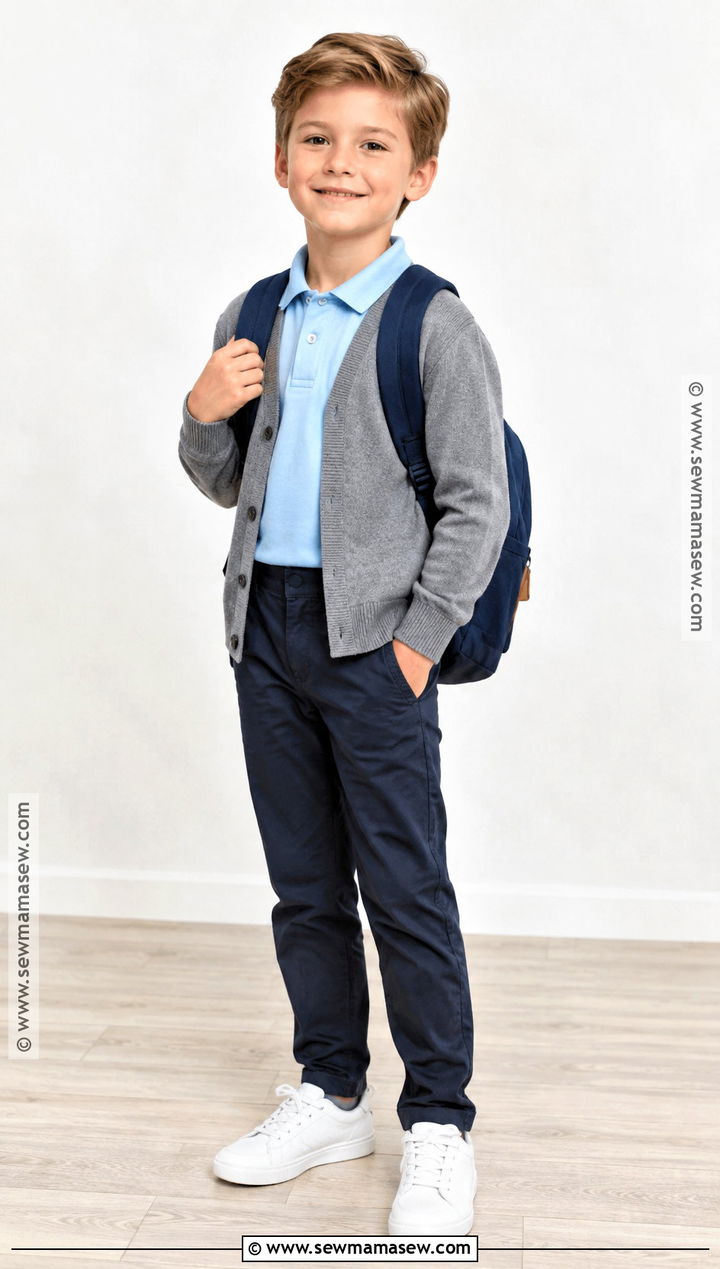
The best picture day outfit is one your child has already worn for a full day. New shoes rub by lunchtime and a stiff collar makes kids pull at their neck in the photo. A collared shirt with chinos, a simple dress over bike shorts with a cardigan, or a soft knit top with dark pull-on jeans all photograph cleanly. Solid colors and small patterns read best on camera; very fine stripes can shimmer in digital photos, and bright white can lose detail. Clean sneakers, loafers or secure flats keep the rest of the school day normal. Do a trial run a few days ahead to check the fit and closures.
15. Elementary School Spirit Shirt And Jeans Outfit
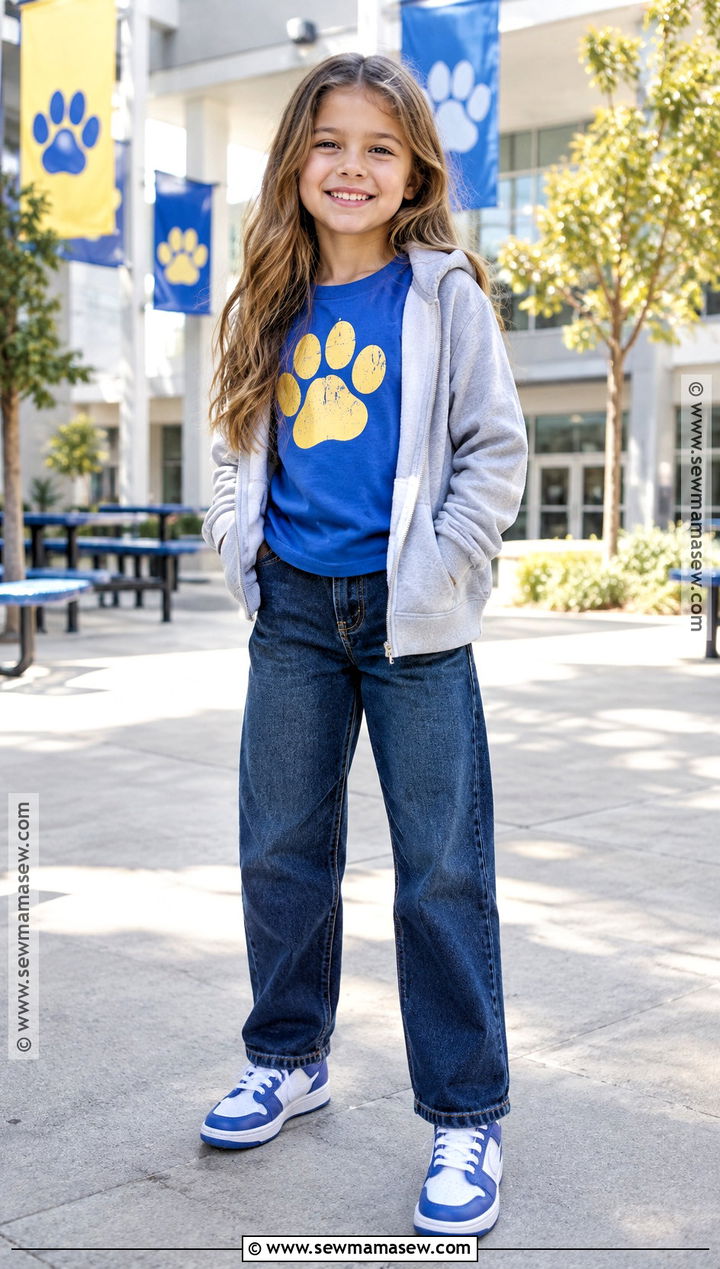
Spirit days are easy until you find out the shirt doesn't fit over the long-sleeve layer you planned. An approved school tee, polo or sweatshirt in the school colors goes with pull-on jeans or soft twill pants, and neutral sneakers stop the outfit from looking like a costume. For cool weather, try the spirit tee over a plain long-sleeve shirt before the morning itself, or swap in a school-color zip hoodie. Kids who prefer skirts can wear an approved skort. Keep accessories simple and secure. Spirit-day rules change from event to event, so read the school message to see whether they want official merchandise or just the colors.
Closures a Six-Year-Old Can Work Alone
Teachers can't help twenty children with buttons before recess, so I judge every piece on whether the child can manage it without an adult. Get them to practice at home with the real clothes. Here is what I look for at each age.
Kindergarten and first grade
Elastic waists, hook-and-loop shoes and big zipper pulls. Snaps are fine if they're plastic and loose enough; small metal snaps on jeans often defeat small fingers. Skip belts and back-button dresses entirely.
Second grade and up
Most kids can handle a regular jeans button and laces by now, but test the button on denim before you buy. New denim can be stiff, and the button hole on kids' jeans is often tight until a few washes loosen it. If your child takes a long time over it, stick with pull-on styles a little longer.
Grass, Marker and Ketchup on the Same Pair of Pants
School clothes get stained daily, so I choose colors and fabrics around how they will wash. Mid-tone colors and small prints hide the marks that a pale solid shows on the first day. Navy and heather gray are more forgiving than white or light khaki, which I only use for picture day or a uniform requirement.
Treat stains the same evening if you can. Grass and food are much easier before they dry and go through a hot dryer, which tends to set them. Cotton and cotton-blend knits handle frequent washing well; I'd turn graphic tees inside out so the print doesn't crack, and wash them on cold. Keep fussy items, such as anything dry clean only, out of the school rotation entirely.
Start With What Still Fits in the Drawer
A good elementary wardrobe is small and coordinated. Before you shop, sort what still fits, then fill the gaps using these outfits as a template, adjusted for your weather, your laundry day, any sensory needs and your school's rules. I'd prioritize washable fabrics, secure shoes, waistbands a child can handle, and layers that come off without help. A handful of pieces that mix well will cover ordinary lessons, PE, picture day, rain and the first cold snap. The real measure is whether your child can get dressed, move all day and come home without complaining about any of it.
Related posts: