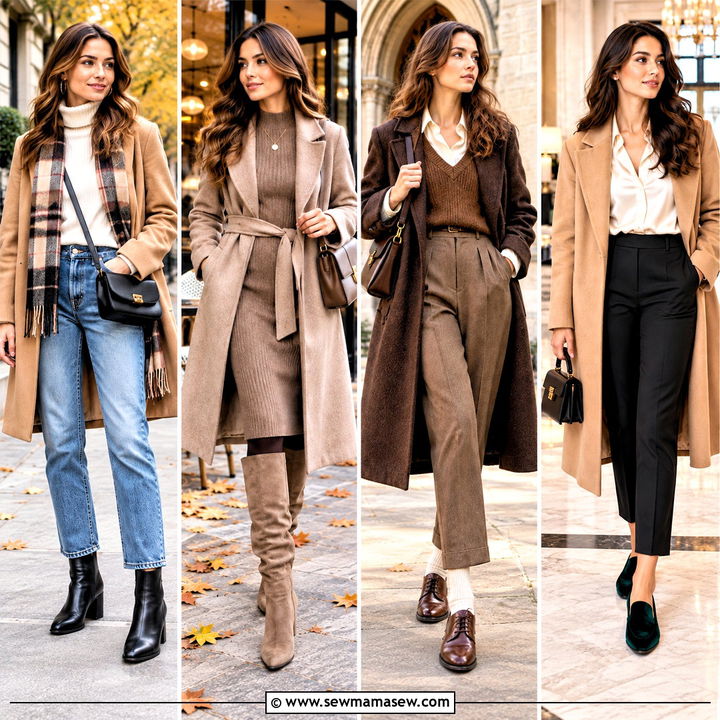
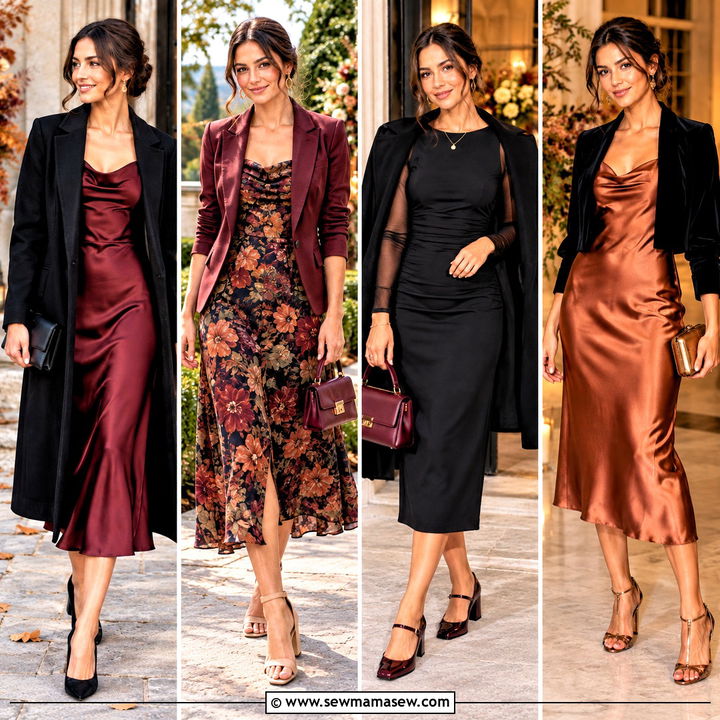
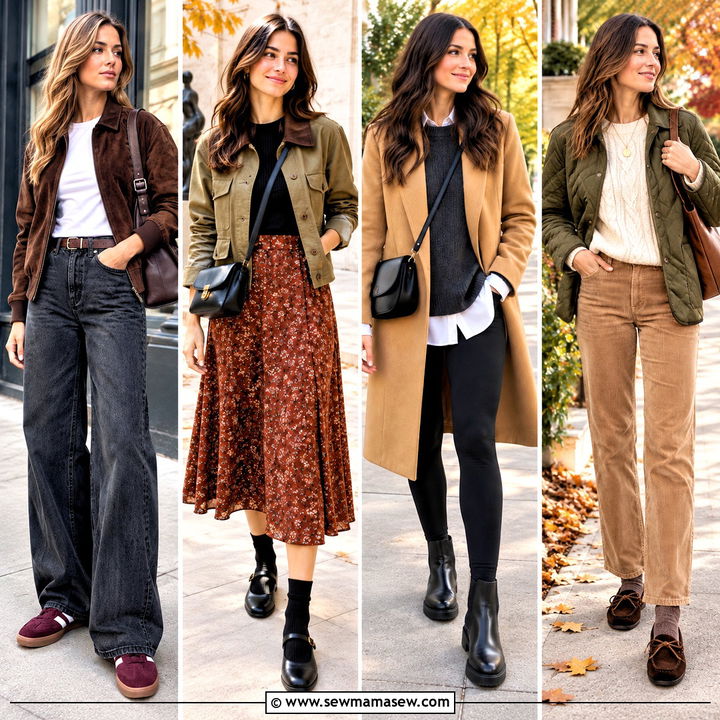
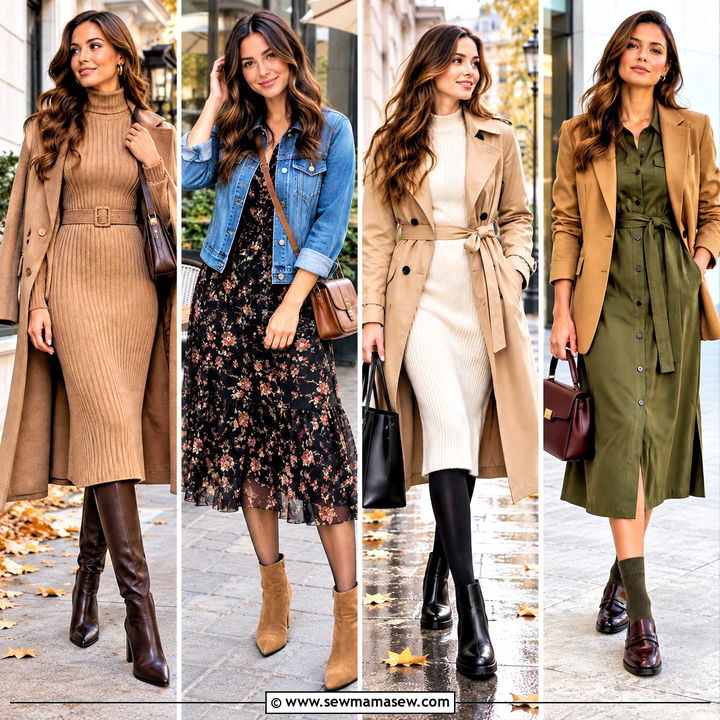
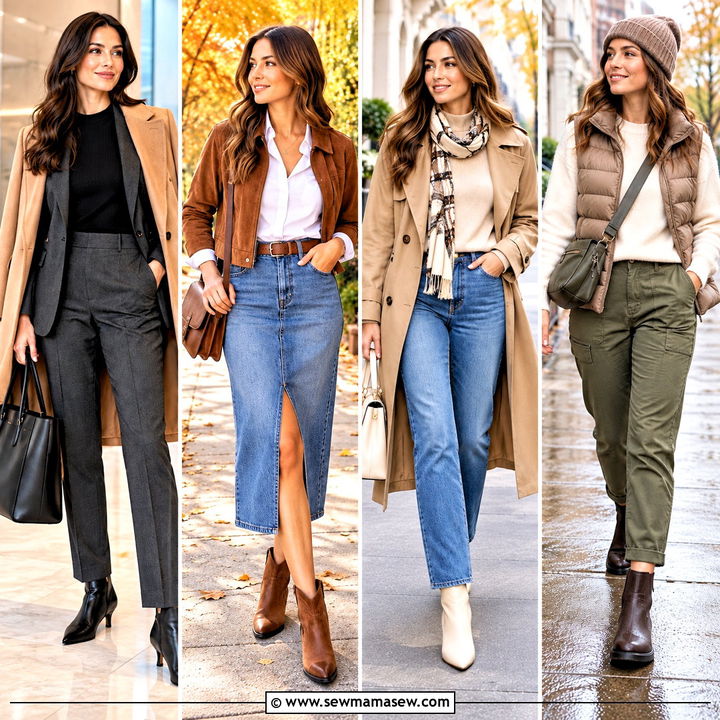
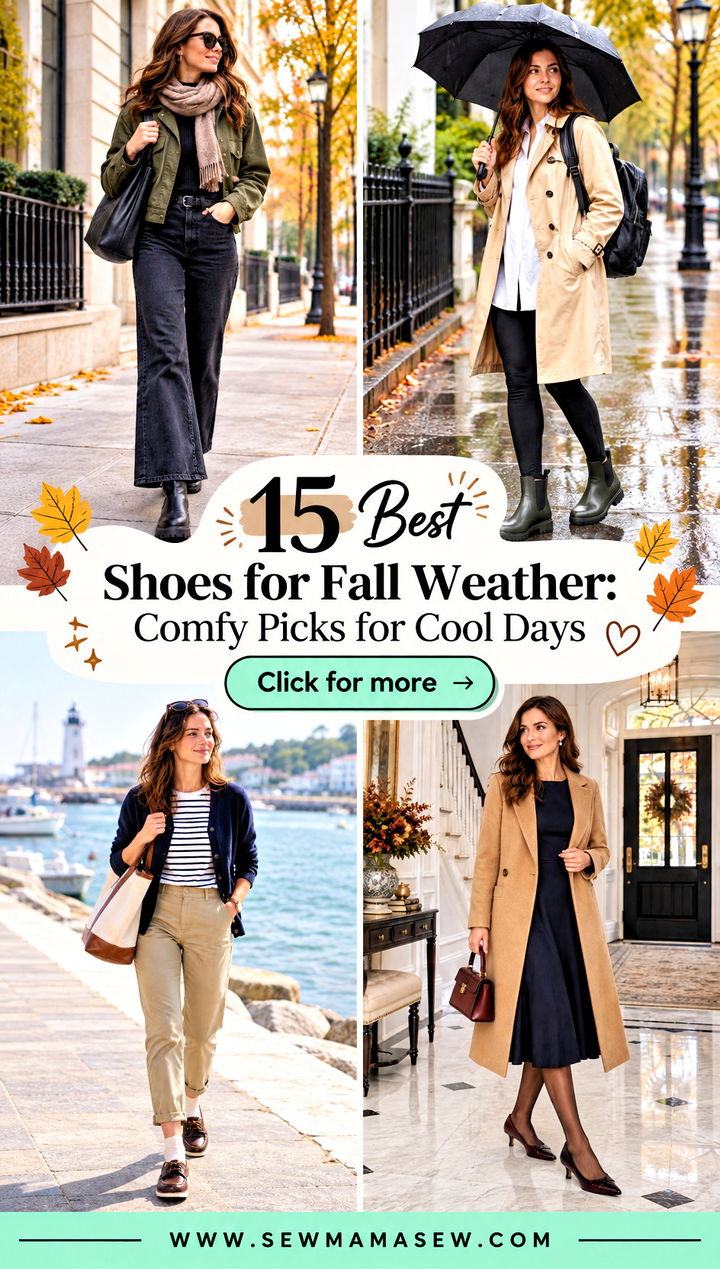
Fall weather rarely stays put. September can be sunny at lunch, October brings cold mornings and wet sidewalks, and by November the wind finds every gap around an ankle. The shoes that get you through all of that are rarely the prettiest pairs in the shop; they're the ones with the right sole, upper and fit. I've gathered fifteen pairs that handle cool days, from leather loafers and ankle boots to low sneakers, high-vamp flats and slouchy boots, and paired each with a full outfit. As you read, pay attention to material, tread and toe shape. Those three things decide whether a shoe works in your weather.
Waterproof Versus Water-Resistant on a Shoe Tag
These two words get used loosely, and the difference shows up at the first big puddle. Here's how I sort shoes before recommending them for wet weather.
- Waterproof usually means a sealed construction: a membrane lining, taped or sealed seams, or a fully rubber or molded upper. You can stand in a shallow puddle and stay dry, as long as water doesn't come over the top.
- Water-resistant means the outer material has been treated to shed light rain. It buys you a short walk in drizzle, not an hour on a soaked sidewalk.
- Untreated suede, canvas, satin and mesh have no protection at all and will soak through.
- Look at the tongue. A gusseted tongue, stitched to the sides of the shoe, keeps water from coming in through the laces. On a plain tongue, water seeps in quickly.
- The sole matters as much as the upper. Leather soles absorb water and get slippery; rubber doesn't.
Waterproof shoes don't breathe as well, so on a dry, mild day they can feel warm. That's why I'd keep one sealed pair for rain and wear the lighter shoes below the rest of the time.
1. Waterproof Ankle Boots With Straight-Leg Jeans
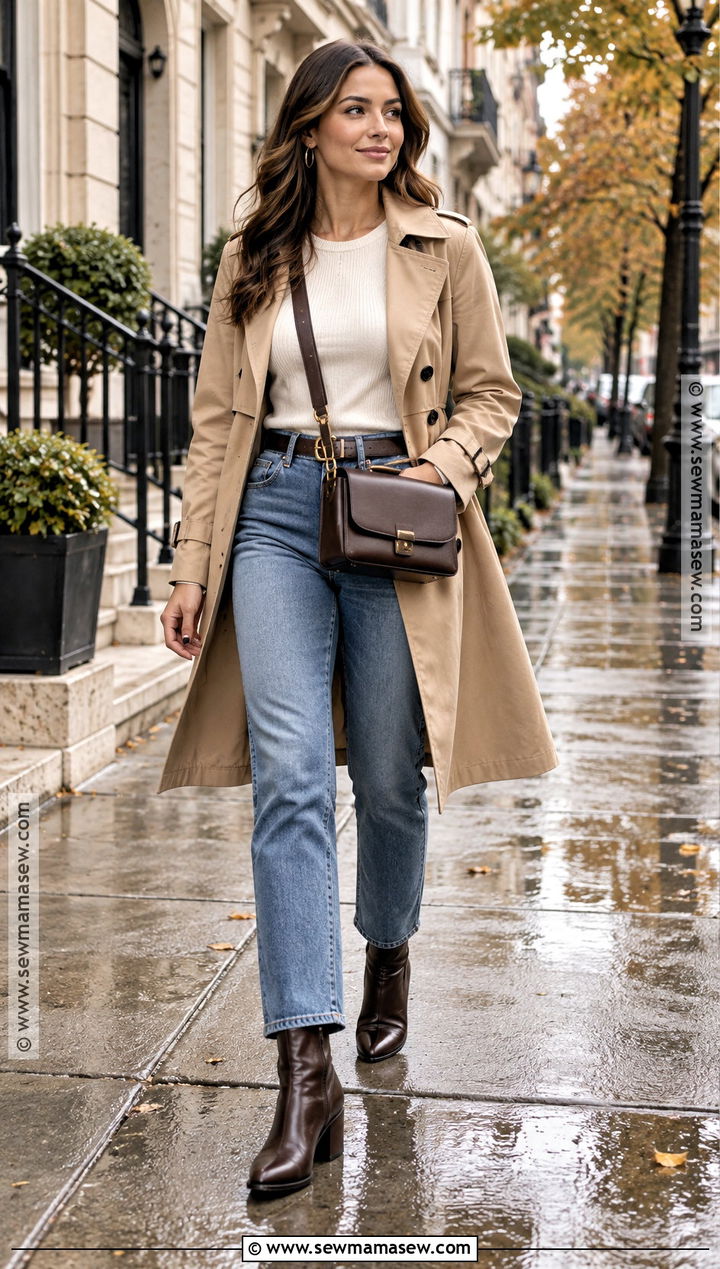
When rain and cold arrive on the same morning, a waterproof ankle boot is what I reach for. Look for leather or treated suede with sealed seams, a low block heel and a rubber sole that grips. The seams matter more than the leather itself, because water gets in through stitching long before it soaks through a hide. Straight-leg jeans should stop just above the boot or lightly skim the shaft. Add a fitted long-sleeve shirt and a belted trench, then a structured crossbody and small hoops. Black reads polished; chocolate or burgundy adds color. Leave a little toe room for socks, since cold feet in a tight boot get colder.
2. Leather Loafers With Tailored Trousers
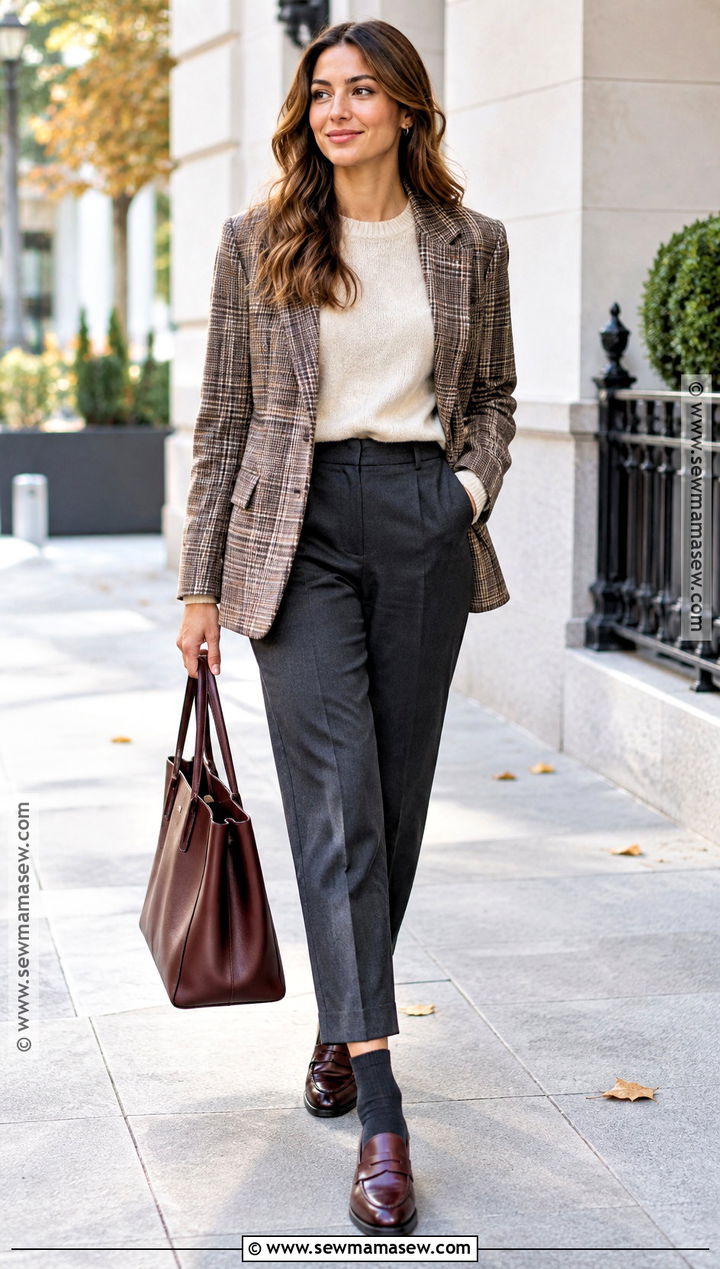
Loafers suit those mornings that start cold and turn mild by two o'clock. They cover more than a sandal and weigh far less than a boot. Black, brown or burgundy leather with tailored ankle-length trousers and a fine-knit crewneck is a combination I keep returning to. A relaxed blazer, leather tote and thin socks finish it. Structured loafers look professional; a softer moccasin shape is more casual. In rain, treated leather is fine, but suede and leather-soled loafers soak up water and slip. If you walk a lot, choose light cushioning and a flexible outsole.
3. Chelsea Boots With Wide-Leg Jeans
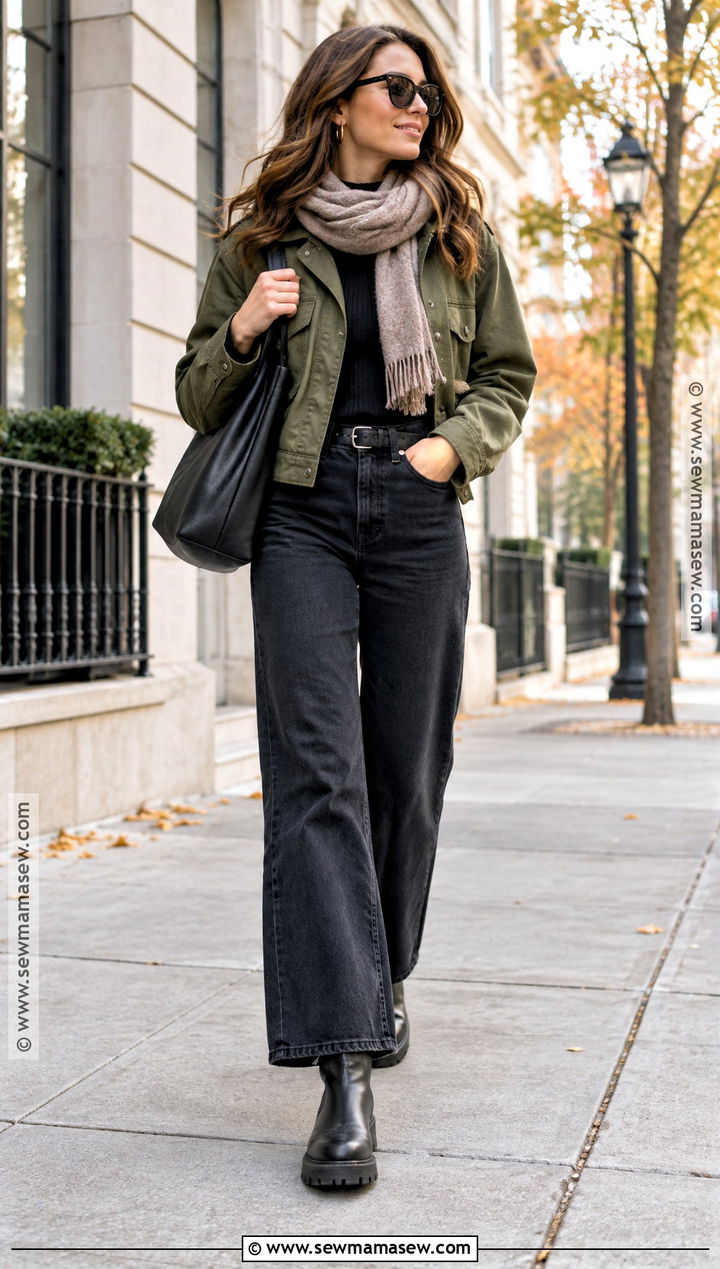
Chelsea boots and wide-leg jeans are a pairing I recommend for busy days. The elastic sides mean you can pull them on with a coffee in one hand, and the taller shaft keeps wind and light rain off your ankles. The jean hem should nearly cover the boot without touching the ground; if it drags, the back edge soaks up puddle water and frays. A tucked ribbed top shows the waist and a cropped utility jacket keeps the proportions right. Lug soles grip better on wet leaves than smooth ones. Black, espresso or taupe goes with almost any fall color.
4. Knee-High Boots With A Midi Skirt
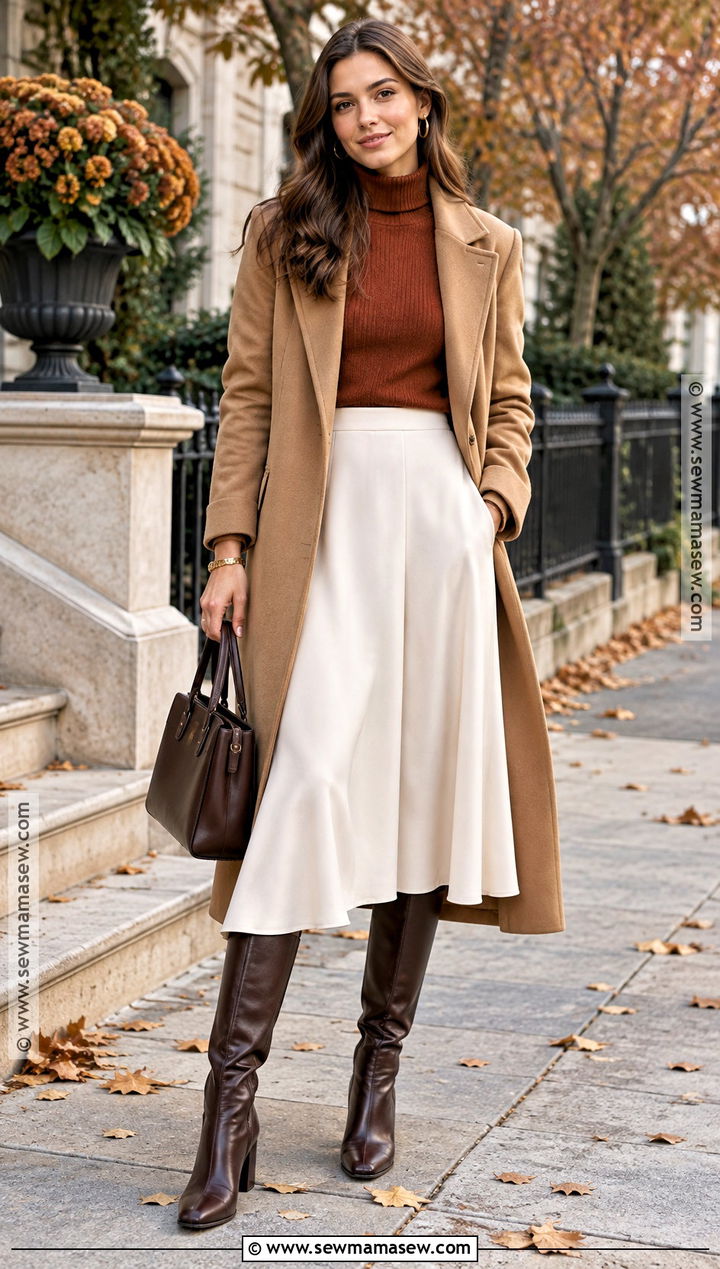
Knee-high boots let you keep wearing skirts once bare ankles feel cold. The trick is a flowing midi that overlaps the top of the shaft, so there's no gap of leg between boot and hem. Add a tucked mock-neck and a long wool-blend coat. A structured handbag and small gold earrings finish it. Flat riding styles are the better choice for walking days; a low block heel suits the office. Before buying, I check that the shaft has some give and that there's room for tights inside. Deep brown looks especially rich with cream, olive and camel.
5. Low-Profile Sneakers With Relaxed Trousers
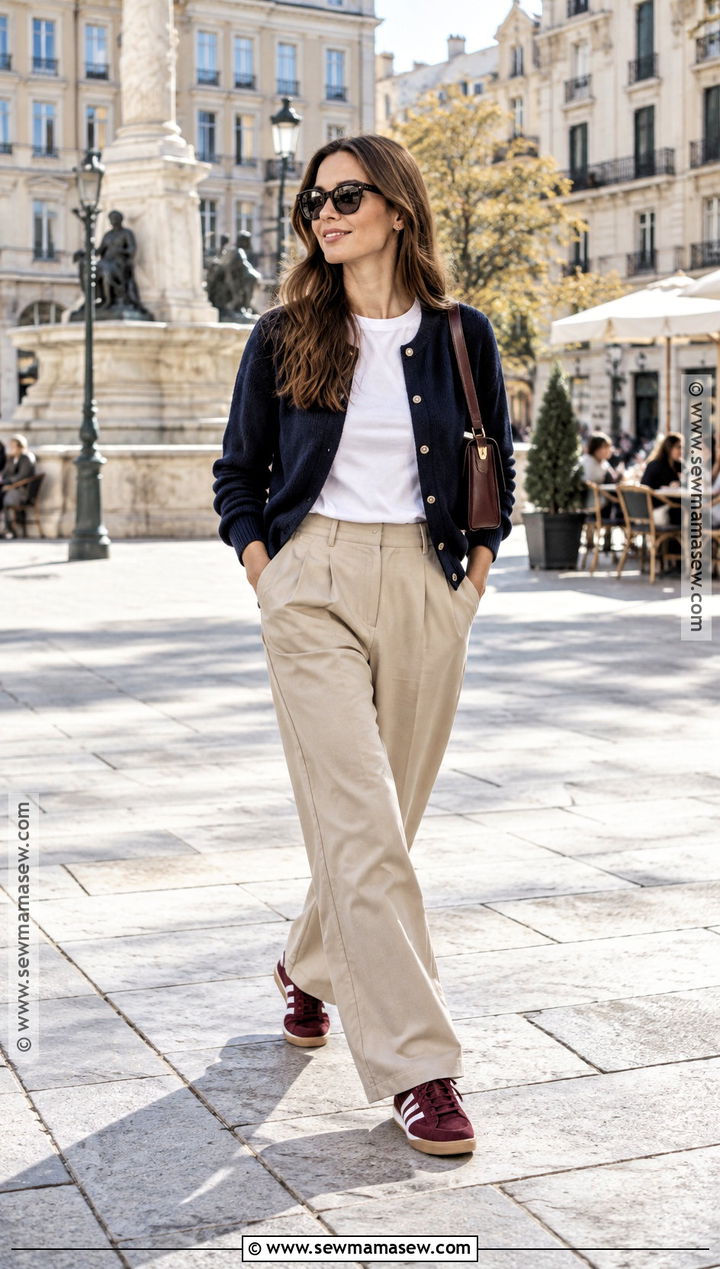
A slim sneaker keeps an outfit lighter than a chunky trainer, which matters with relaxed trousers that already have plenty of fabric. Suede or leather in navy, burgundy, olive, brown or cream pairs well with pleated trousers and a white tee. As it cools, add a button-front cardigan or a light bomber. A compact shoulder bag and sunglasses finish it. Colorful pairs are a quick way to make fall basics feel new, while tonal ones are easier to wear daily. Spray suede before the first outing and look for a textured rubber sole, since many slim sneakers have flat soles that slide on wet tile.
6. Mary Jane Flats With Cropped Jeans
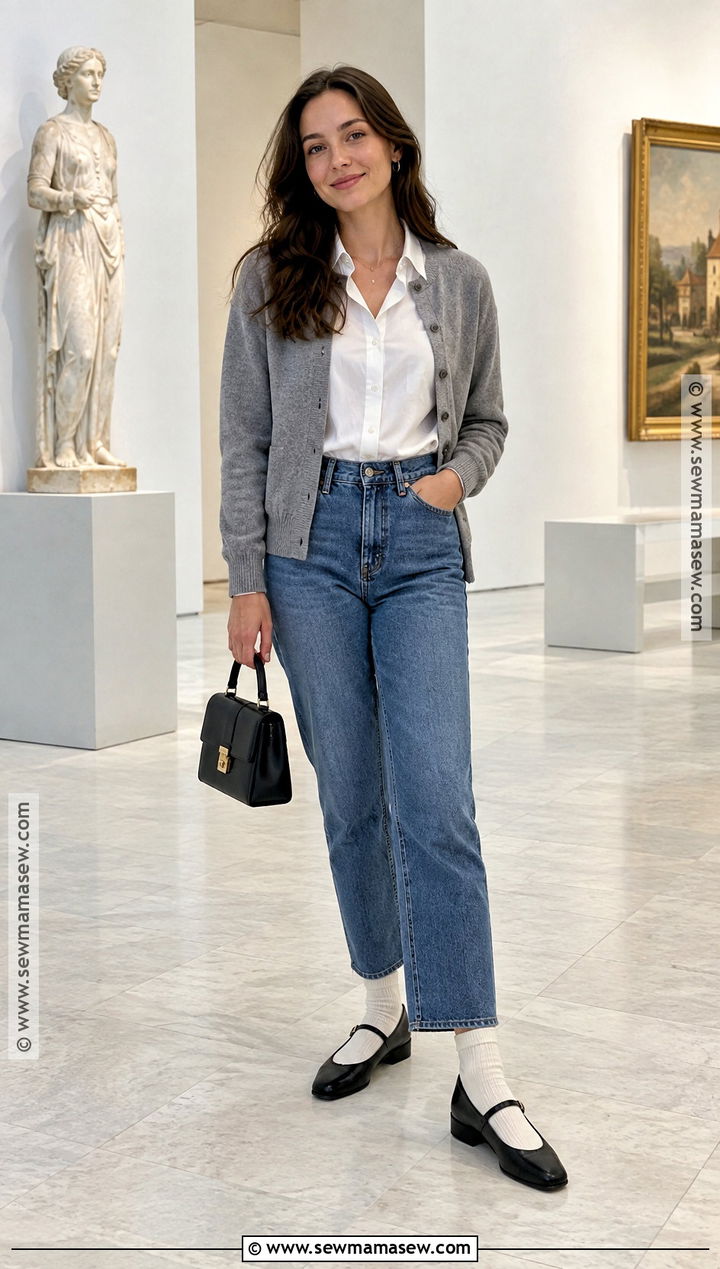
The strap on a Mary Jane is practical, not just pretty. It holds the shoe on your foot, so you're not gripping with your toes the way you do in a loose flat. Dark leather Mary Janes with cropped straight-leg jeans, a tucked cotton blouse and a soft cardigan make an easy weekday outfit. A small top-handle bag and delicate jewelry are enough. Square toes and high vamps look current; round toes are softer. Thin ribbed socks in cream, charcoal or burgundy help on chilly days. If the sidewalks might be damp, choose rubber soles over smooth leather.
7. Ballet Flats With A Blazer And Jeans
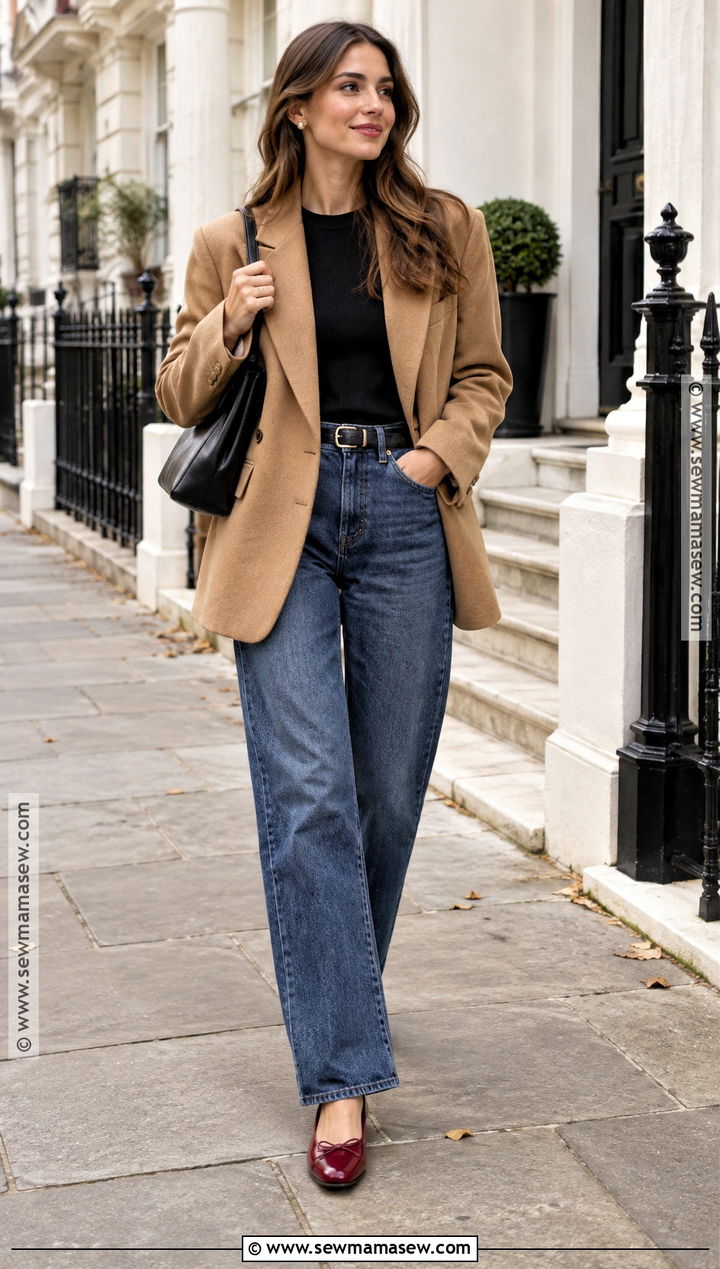
Ballet flats earn their place on mild days when boots feel heavy and sandals feel wrong. A high-vamp leather pair covers more of the foot, which keeps you warmer and holds the shoe on better. I wear them with full-length straight jeans, a fine-knit top and an oversized blazer; the jacket balances the small shoe and the long denim keeps ankles covered. A slim belt, medium shoulder bag and stud earrings finish the look. Deep red, chocolate or glossy black adds interest. High-vamp and square-toe shapes sit especially well under full-length trousers. Satin and mesh flats are for dry forecasts only.
8. Suede Clogs With Barrel-Leg Pants
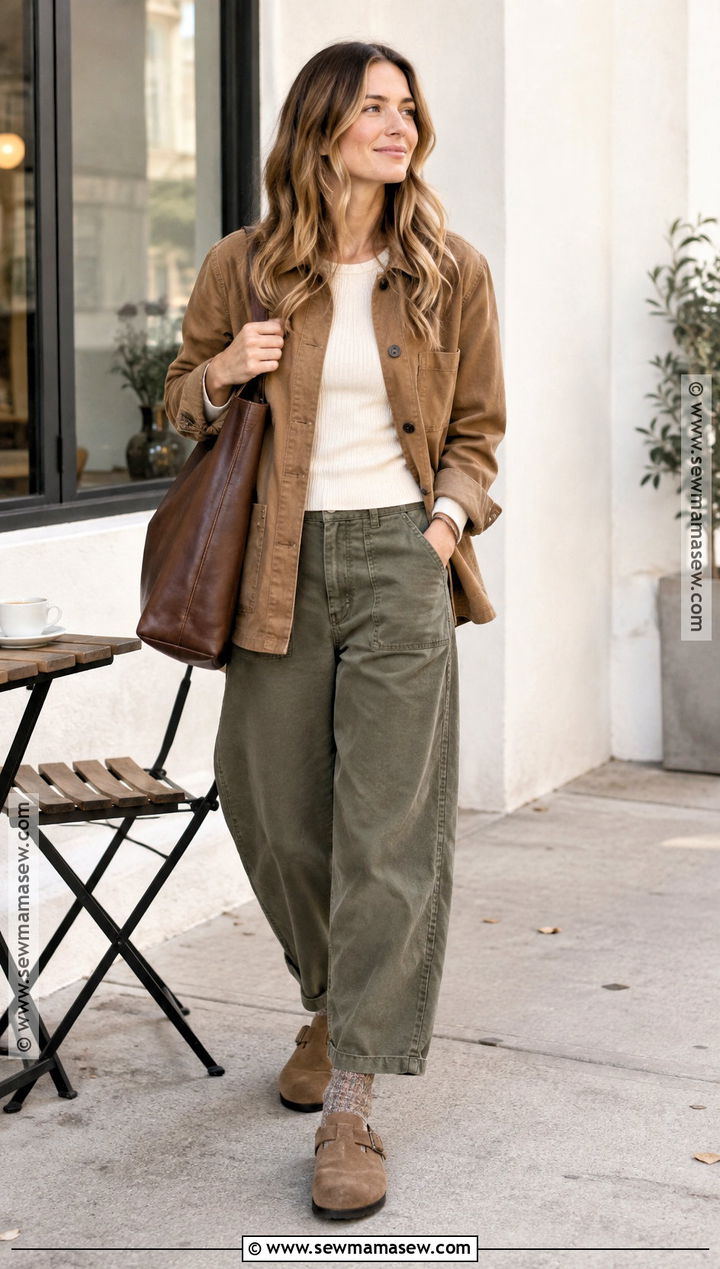
Suede clogs fit naturally into a relaxed fall closet. Ankle-length barrel-leg pants work because the narrower hem stops above the clog instead of swallowing it. Add a fitted thermal top and a chore jacket or textured overshirt. A slouchy leather tote and patterned socks that peek out finish it. A good footbed and sturdy outsole make clogs comfortable for errands and slow weekends, though the backless shape can slip on hills or stairs. Untreated suede marks easily, so spray it and skip heavy rain. Taupe, tobacco and dark brown go well with denim, corduroy and plain cotton.
9. Combat Boots With A Sweater Dress
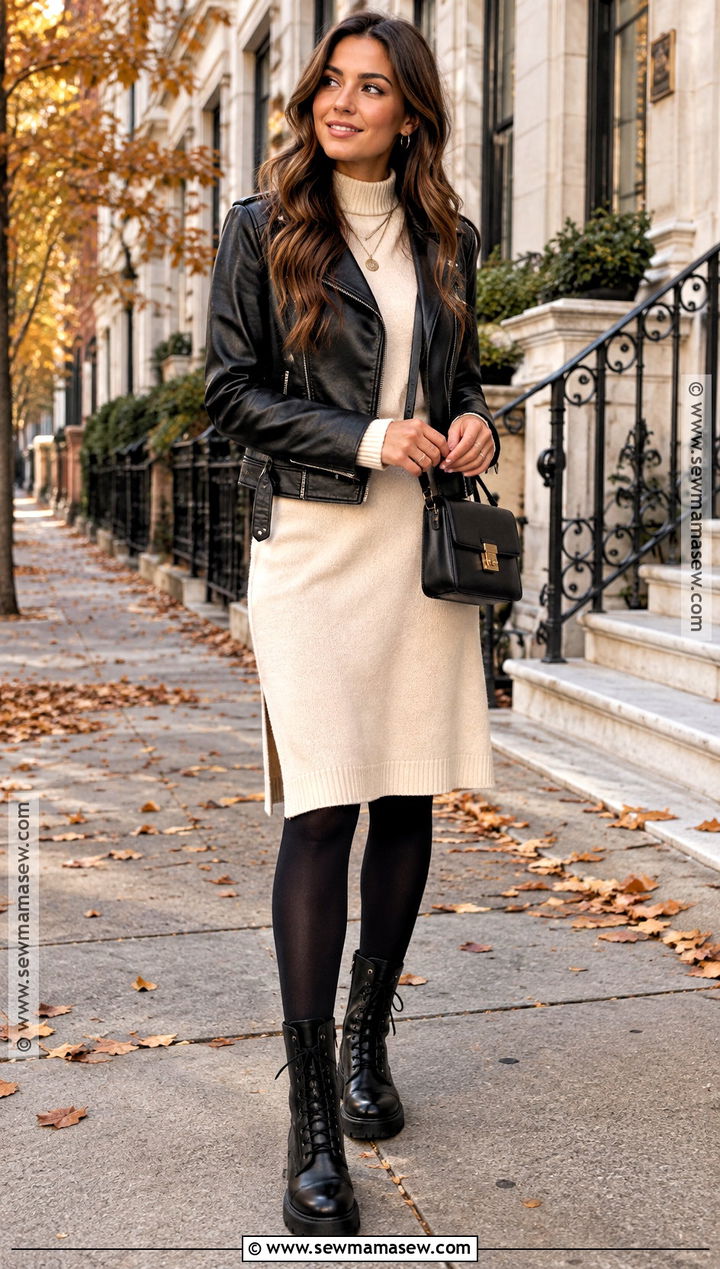
Combat boots make a soft sweater dress practical on a windy day. Choose a midi dress with room to move, opaque tights and lace-up boots with a moderate lug sole. A cropped leather or utility jacket adds structure without hiding the dress. Finish with a crossbody and minimal silver jewelry. Black boots contrast sharply with cream, gray or muted green; brown softens it. Before a long day out, check that the ankle collar is padded and flex the sole in your hand. A stiff lug sole that won't bend will rub your heel raw.
10. Rain Boots With Leggings And A Trench Coat
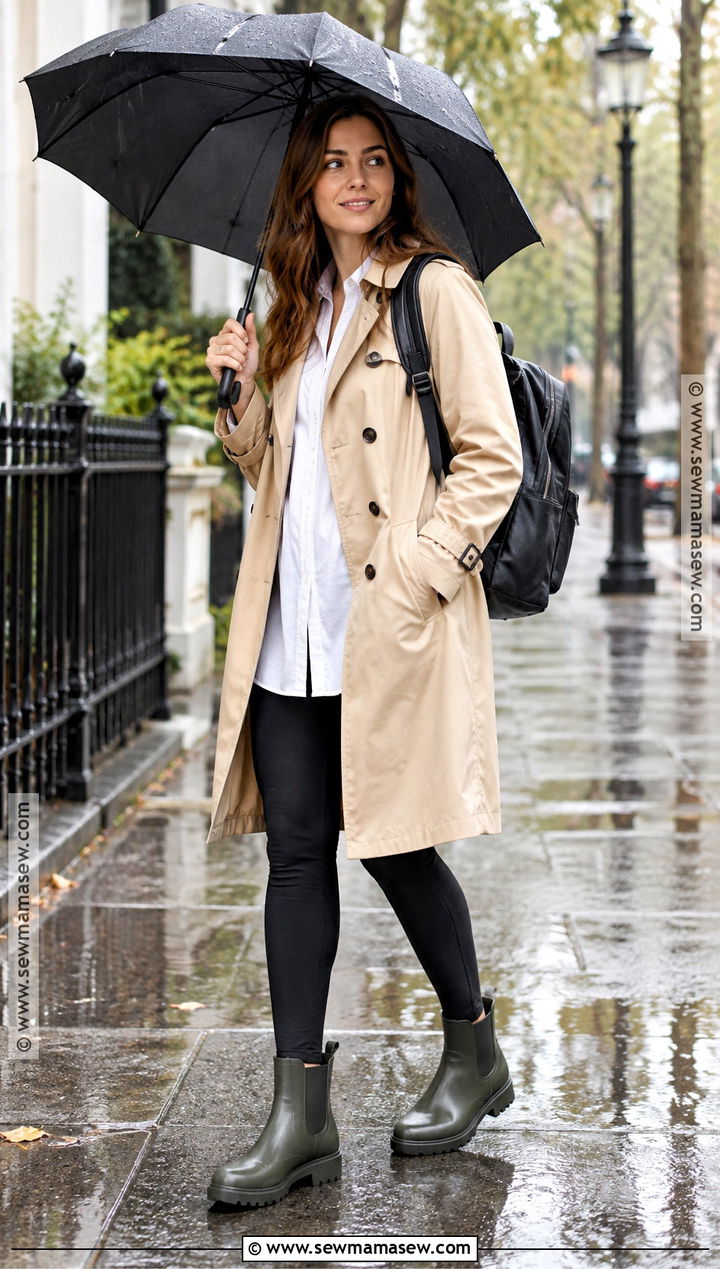
For steady rain, you need a shoe built for puddles, not one that merely looks autumnal. Ankle-height rain boots with thick black leggings, a long cotton shirt and a trench coat are what I wear on true downpour days. Rubber doesn't breathe, so wear cushioned moisture-wicking socks, or your feet end up damp from the inside. A water-resistant backpack or zip-top tote and a compact umbrella cover the rest. Look for deep tread, a supportive insole and an opening that doesn't press on the ankle. Matte black is quiet; forest green, navy or burgundy brightens a gray day.
11. Cowboy Boots With A Denim Midi Skirt
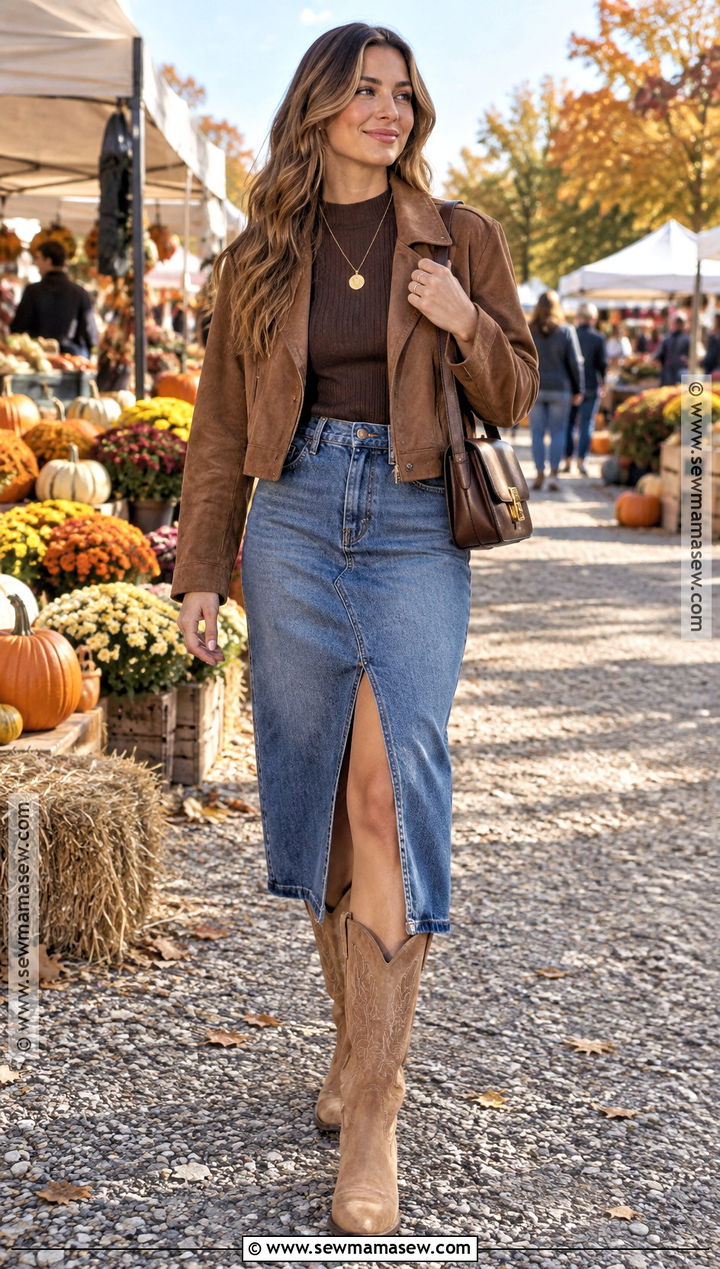
Cowboy boots add personality and cover more than flats or sneakers. Mid-calf Western boots with a front-slit denim midi skirt and a fitted knit top make a balanced everyday outfit; the slit lets the boots show and gives you room to walk. A suede-look jacket or oversized cardigan goes on top, with a structured shoulder bag and a simple pendant. Brown, tan or distressed black are easy to wear, and subtle stitching is enough detail. Western boots often have a narrow toe and smooth leather soles, so check for a roomy toe box and a stable heel, and keep untreated suede out of the rain.
12. Oxford Shoes With Pleated Trousers
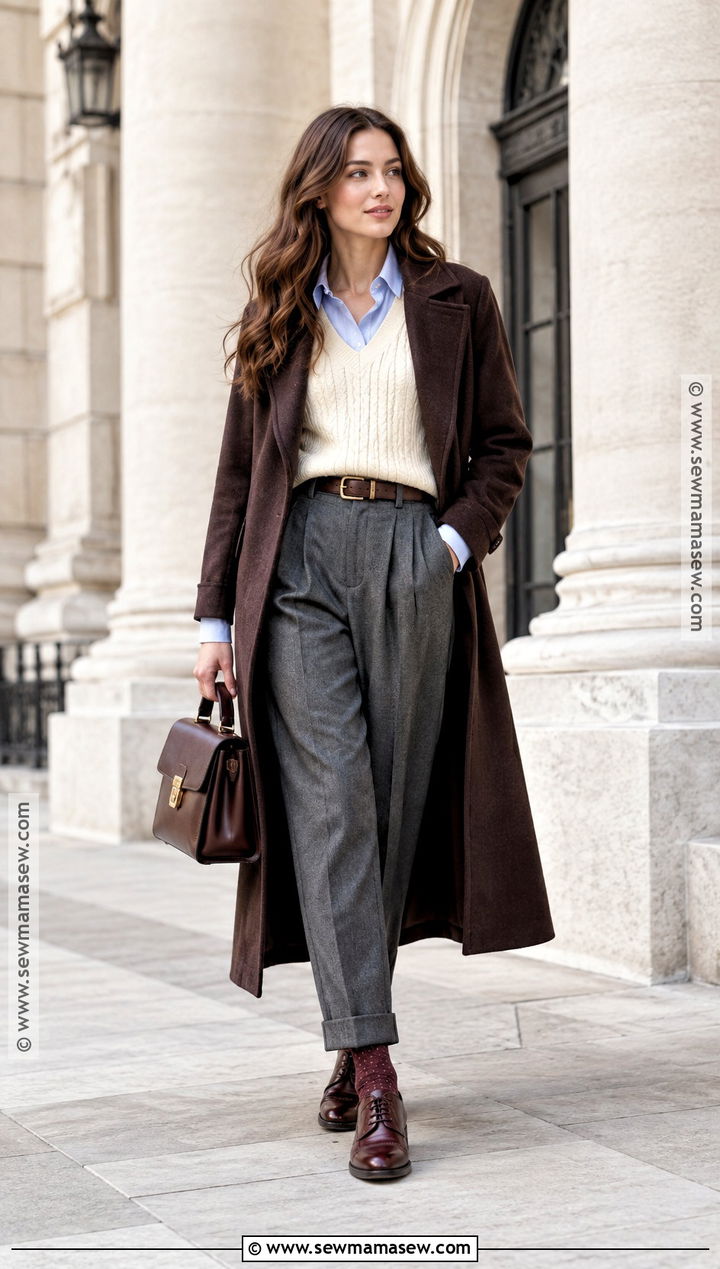
Oxfords give a smart, grounded look without the weight of a boot. Polished leather with pleated trousers, a tucked button-down and a sweater vest is the classic version. On colder days, add a long tailored coat and patterned socks. A structured satchel and small earrings keep the accessories simple. Black goes with almost everything, but oxblood and dark brown feel more seasonal. Stiff leather takes a few weeks to soften, so I look for flexible soles, a soft lining and a comfortable heel counter, and break them in on short outings first. A slightly lugged outsole is steadier on damp pavement.
13. Boat Shoes With Chinos And A Cardigan
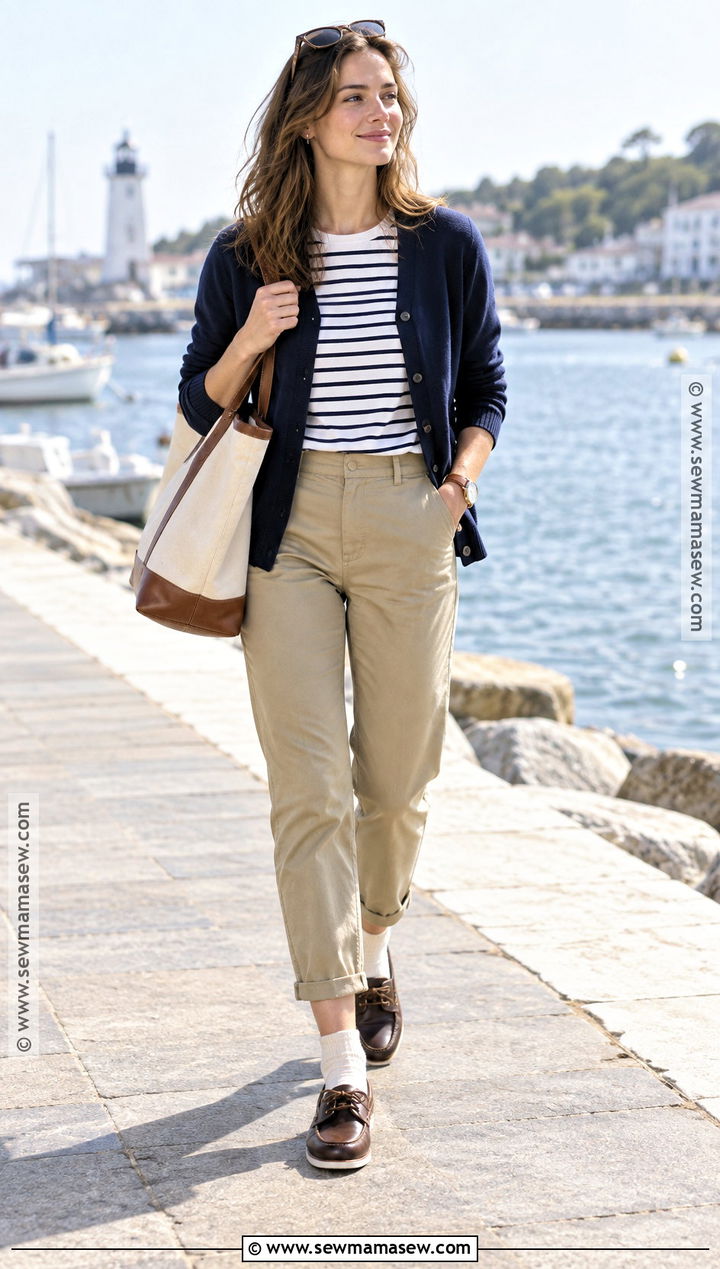
Boat shoes fill the warm early-fall gap when sandals feel out of season and boots feel too soon. Dark brown or oxblood leather with cropped chinos, a striped cotton shirt and a soft cardigan looks neat without trying. A canvas-and-leather tote, slim watch and light socks finish it. They're a fresh alternative to loafers on mild days. The original design has a siped rubber sole meant for wet decks, which does help on damp sidewalks, but look for a pair with a supportive insole too, since traditional boat shoes are very flat inside. Treated leather handles a passing shower, not a full day of rain.
14. Kitten-Heel Pumps With A Midi Dress
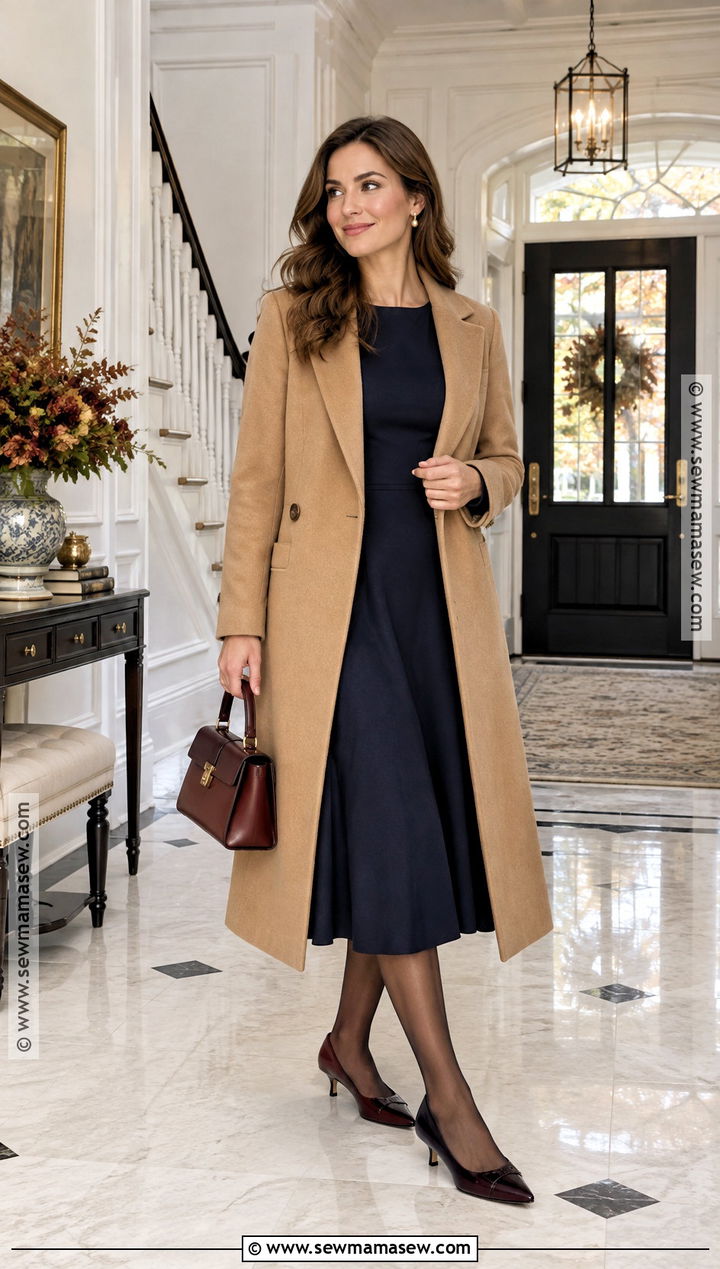
Kitten-heel pumps give you some height for dressier days without the wobble of a tall heel. Pointed or almond toes with a long-sleeve midi dress and a tailored coat look polished. Add sheer tights when it cools and carry a structured clutch or compact bag. Burgundy, dark brown, navy or textured black suit the season's colors. I'd save slingbacks for dry, mild days; a closed back keeps your heel warm and stops the shoe slipping off. A padded insole and a wider heel base make a real difference to how long you can stand in them.
15. Trail Sneakers With Cargo Pants
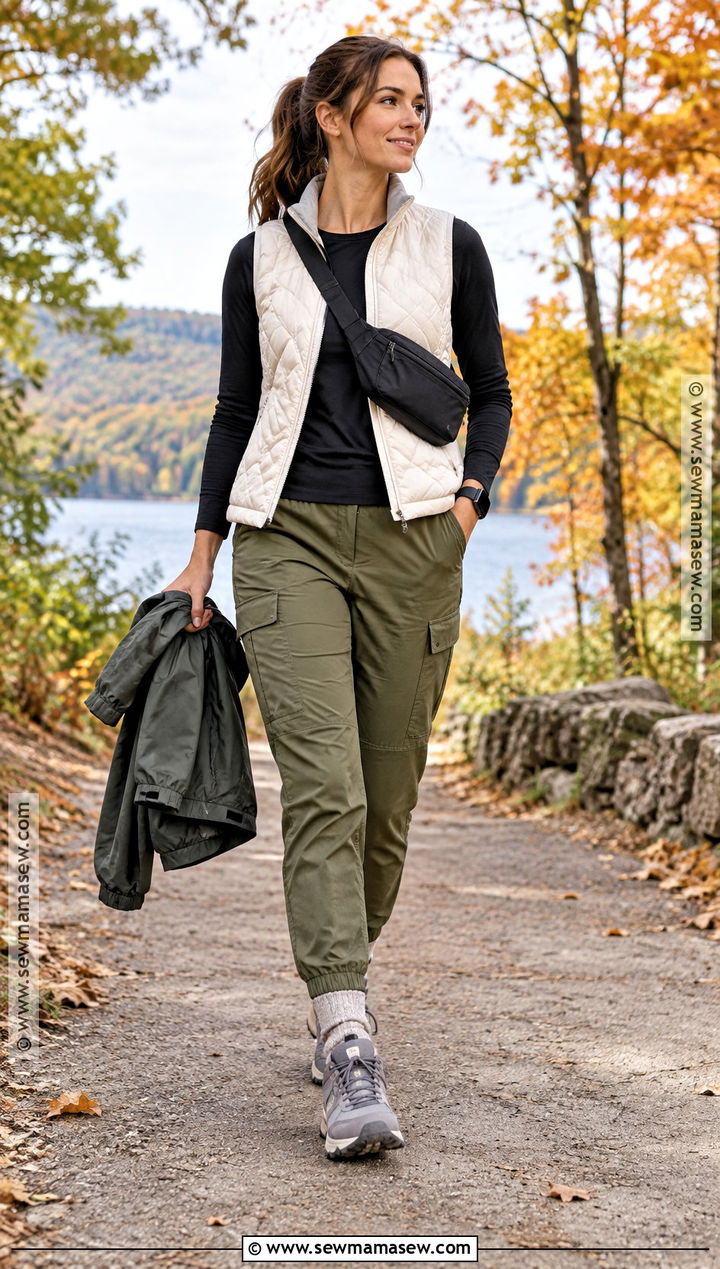
Long walks in parks or on trips need more grip than a fashion sneaker has. Lightweight trail sneakers with tapered cargo pants, a breathable long-sleeve base layer and a quilted vest handle cool, changeable days. Add a packable waterproof jacket, a belt bag and wool-blend socks, which stay warm even when damp. Look for a lugged rubber outsole, a stable heel and a water-resistant upper. Gray, beige or black blends with everyday clothes. Keep the pants tapered so they sit above the shoe and don't drag through mud. This outfit moves easily from a trail to errands to a long drive.
Drying Soaked Shoes So They Last Another Season
Even good fall shoes get caught out. How you dry them that evening decides whether they come back looking the same or cracked and stiff.
- Take out the insoles and loosen the laces so air can reach the inside.
- Stuff the shoes loosely with plain paper towels or newspaper and swap it out once it's damp. It pulls moisture out and helps the toe keep its shape.
- Let them dry at room temperature. A radiator, heater or hair dryer dries leather too fast and it can crack or shrink.
- Once leather is dry, rub in a little conditioner to put back the oils the water took out.
- For suede, wait until it's fully dry, then brush the nap with a suede brush to lift it again.
- White salt lines from winter sidewalks can usually be wiped off with a cloth dampened in water mixed with a little white vinegar, then left to dry.
If you wear the same pair daily, rotate it with a second one when you can. A full day off lets the inside dry out completely, which helps the lining and keeps odor down.
A Rotation Built Around Your Own Forecast
A fall shoe rotation works best when each pair has a job. Waterproof ankle boots and rain boots handle wet days; loafers, Oxfords and flats cover mild ones. Sneakers and clogs are for relaxed days, and knee-high, combat or cowboy boots add coverage as it gets colder. Think about how much rain you get, how far you walk, what your workplace expects and which pants you wear most. Then look at the sole, the upper and the toe room before the color. Get those right and these pairs will see you from early September through the coldest weeks.
Related posts: