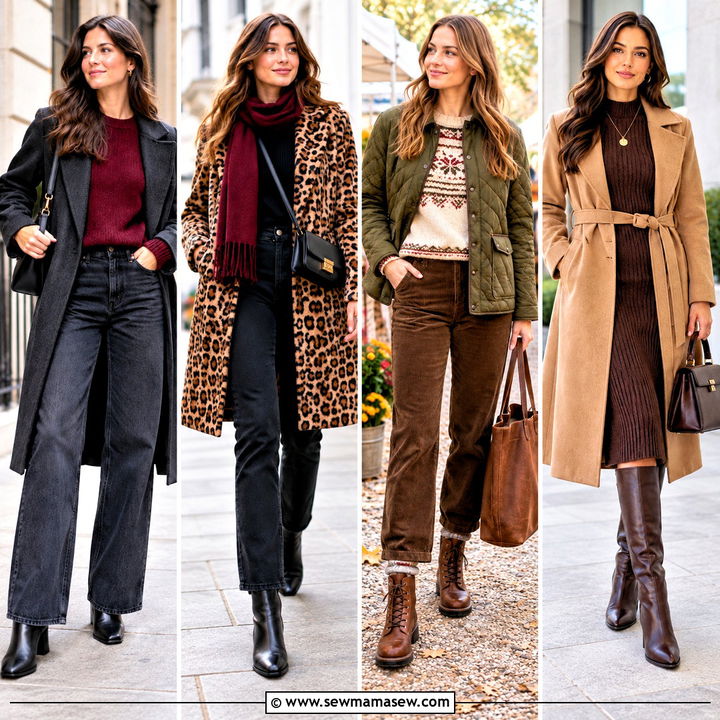
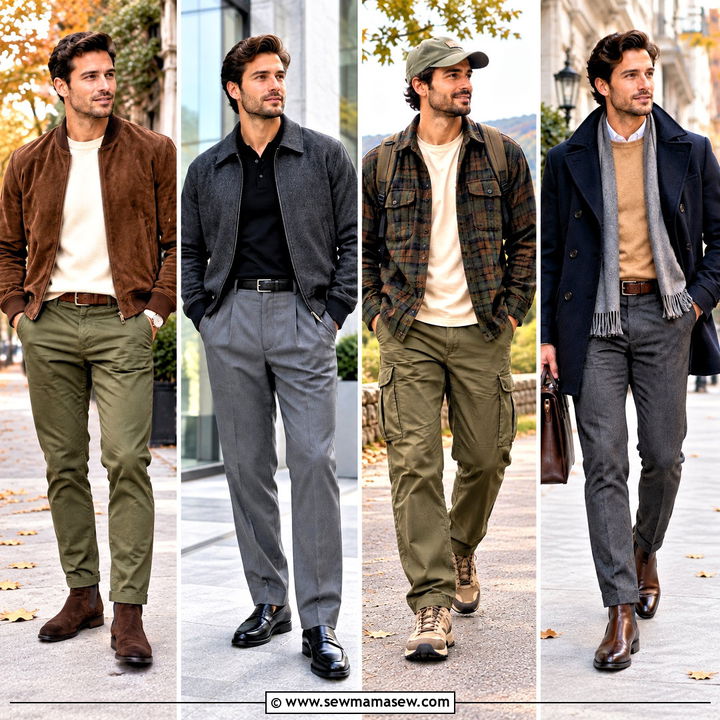
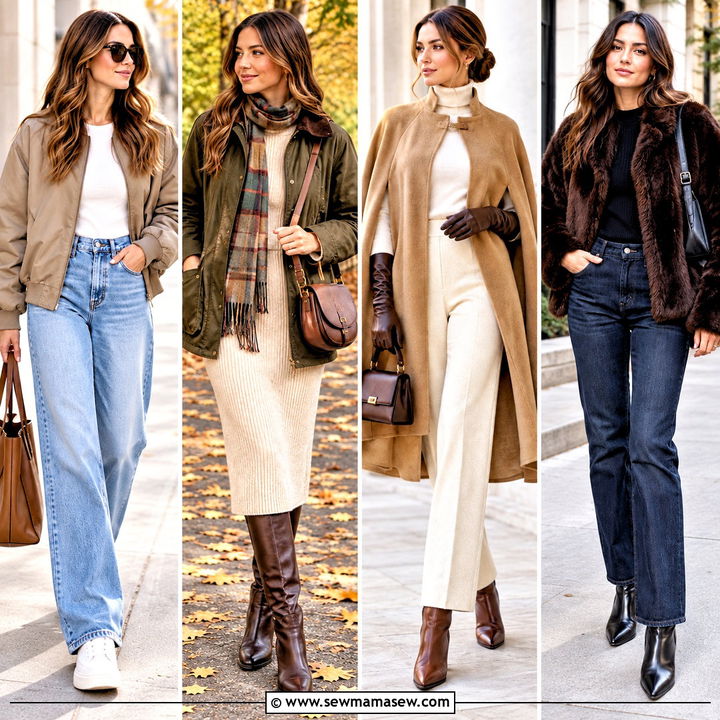
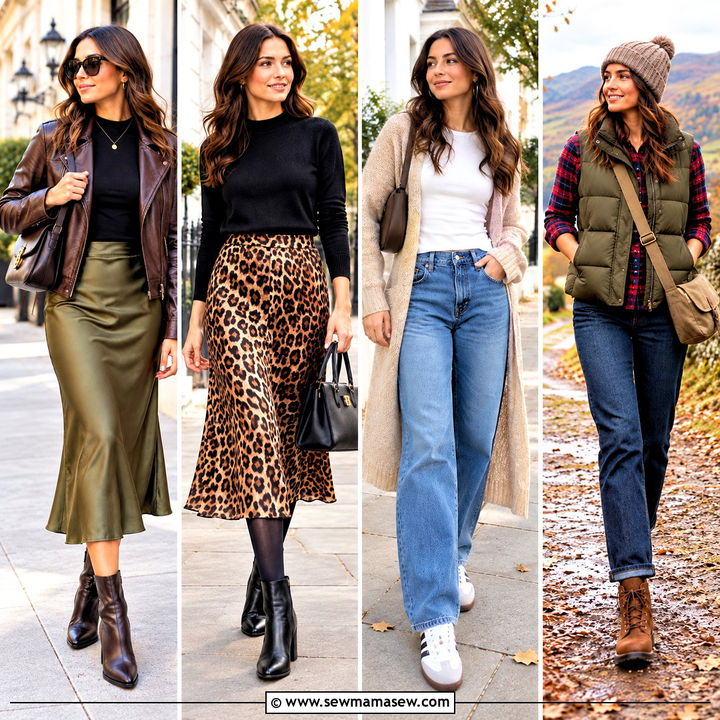
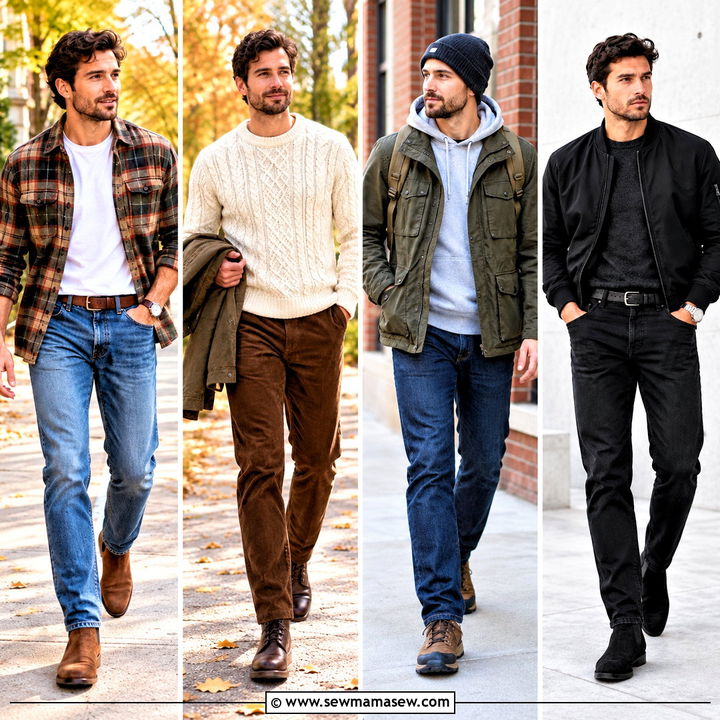
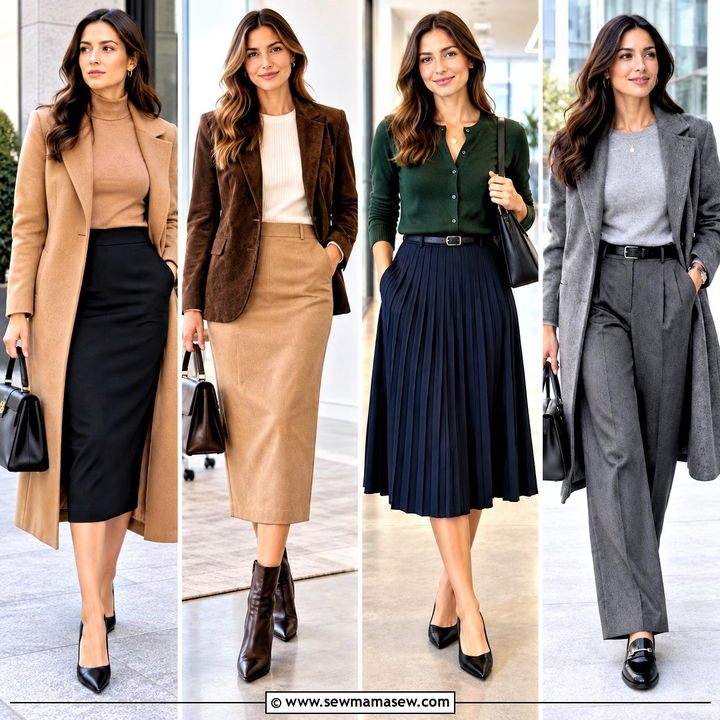
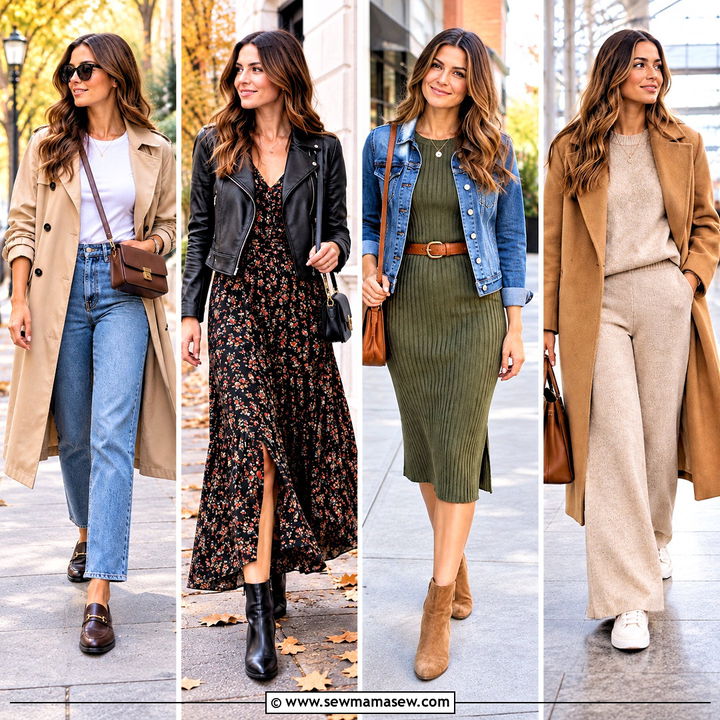
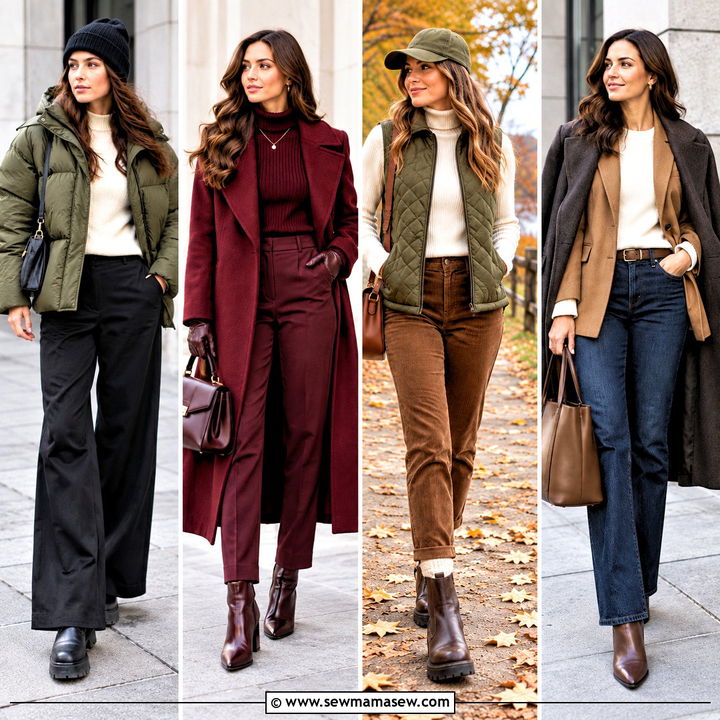
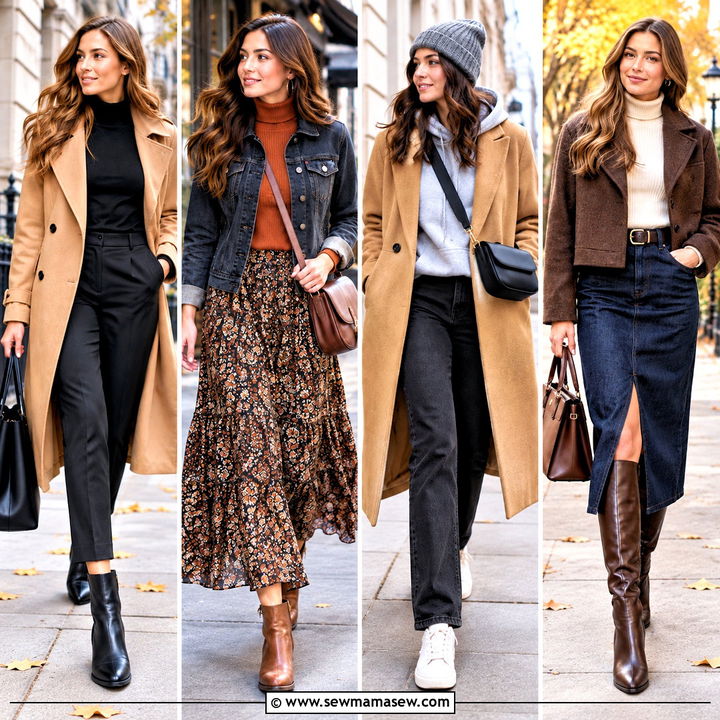
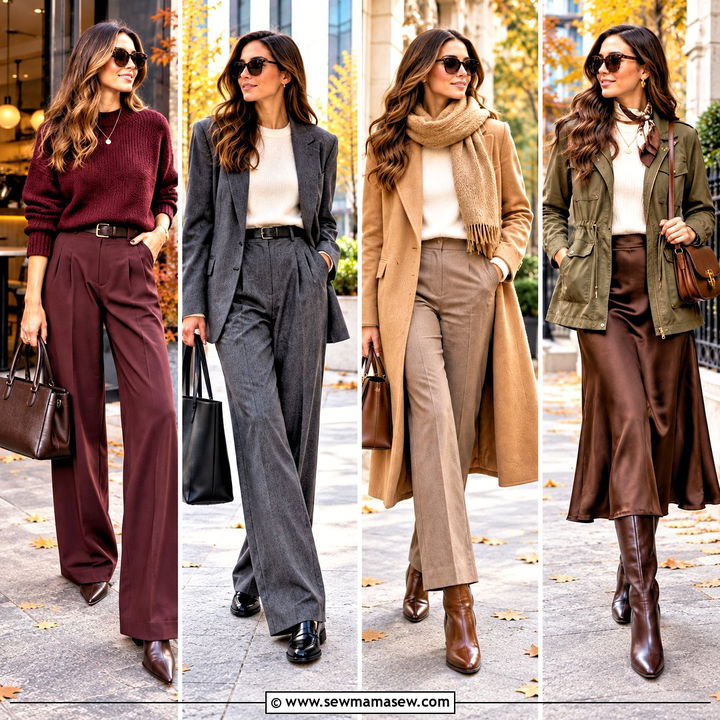
Outerwear did most of the talking this fall. Barn jackets and chore coats brought workwear into everyday closets, suede, leather and faux fur added texture, and funnel necks, cropped lengths and nipped waists made familiar shapes look new. Trenches, denim jackets and bombers came back looser and roomier. What I like about the season is how wearable it was: almost every one of these jackets goes over jeans, trousers, a skirt or a knit you already own. For each one I've noted how it should fit, what goes underneath without bulk, and the shoe that balances it.
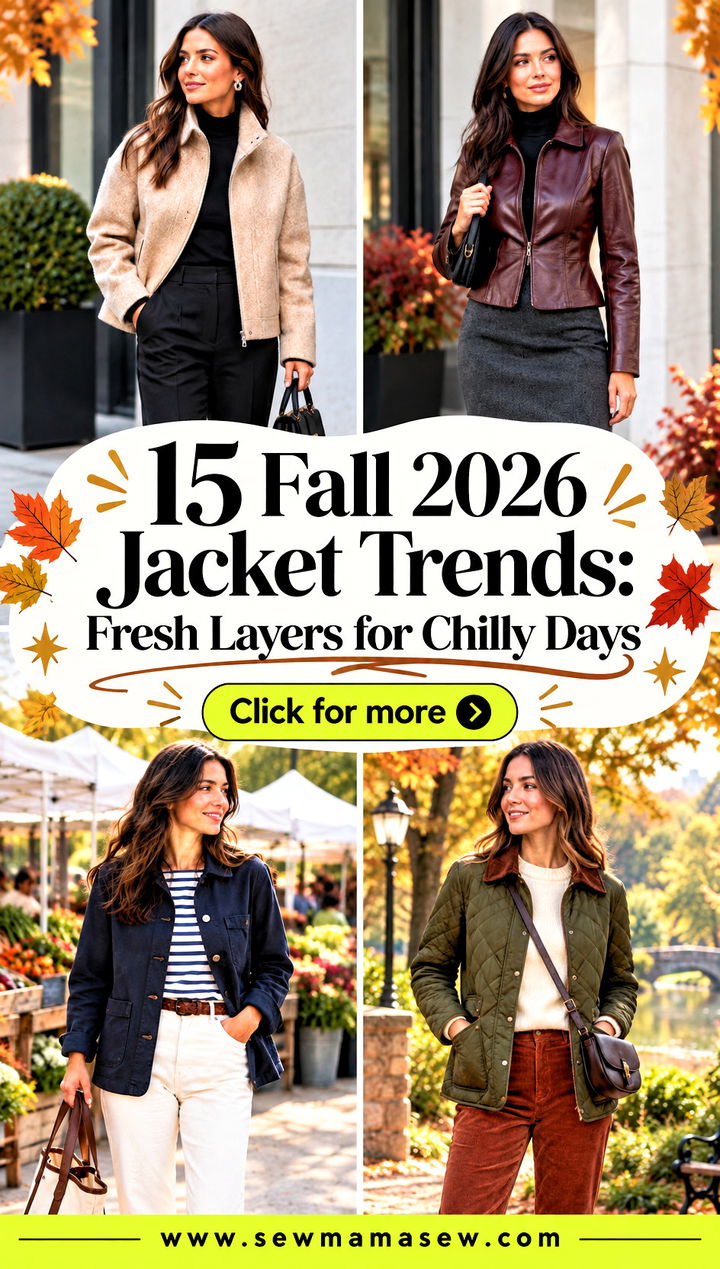
Chore Coat to Shearling, Sorted by Warmth
These fifteen jackets cover a wide range of weather, and the most common mistake I see is buying the right style for the wrong temperature. Here's roughly how I'd group them, from lightest to warmest. Your own comfort will vary with wind, humidity and how much you walk.
- Mild days, roughly the 60s Fahrenheit: denim jacket, chore jacket, cropped trench, collarless jacket. Unlined cotton or light wool, best over a tee or thin knit.
- Cool days, the 50s: barn jacket, suede, leather bomber, fitted or moto leather, tweed, plaid wool. These block wind and take a sweater underneath if the fit allows.
- Cold days, the 40s and below: quilted jacket, shearling, faux fur. Padding or pile traps air, so they handle real cold without a heavy coat.
Wind matters as much as the number. A leather or waxed cotton jacket blocks it well; a loose knit layer or open-weave tweed lets it straight through. If your mornings are windy, choose a jacket that zips or buttons to the neck, or the funnel neck, which was made for exactly that.
1. Barn Jacket With Straight-Leg Jeans
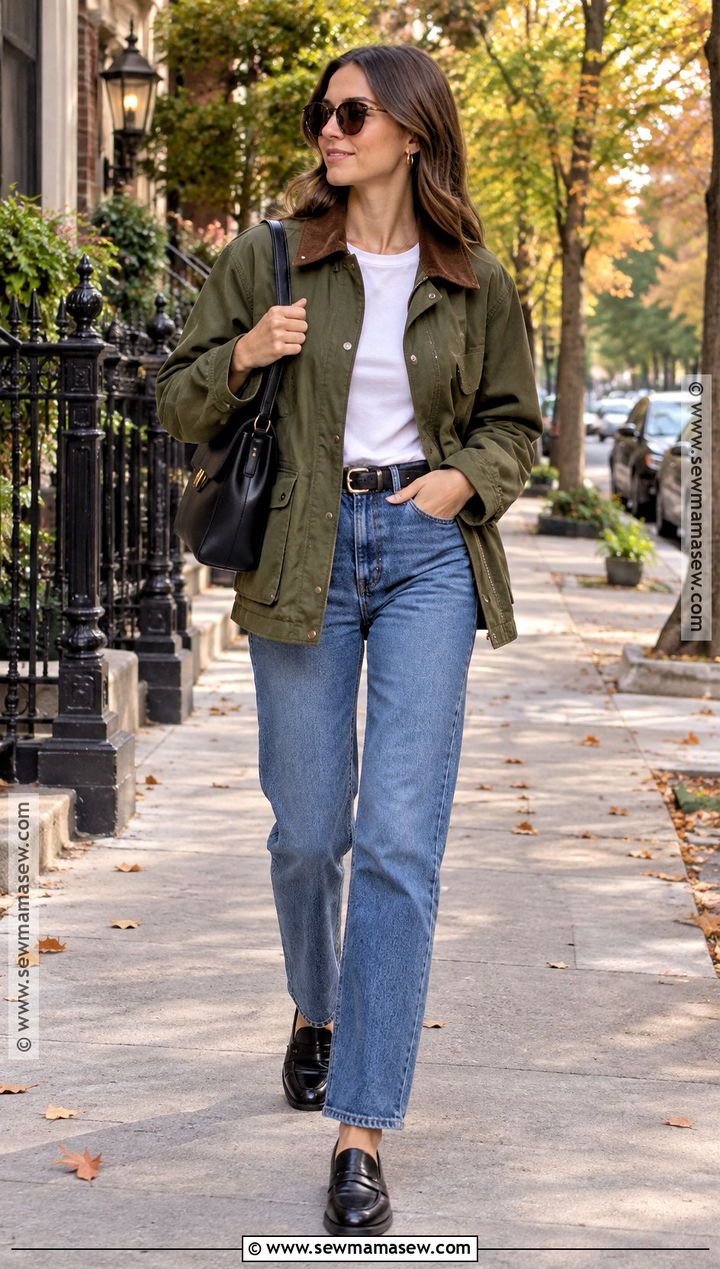
The barn jacket was the jacket of the season, and the corduroy collar is what separates it from a plain canvas work jacket. I'd wear olive, tan or chocolate over a white crewneck tee or light sweater, with medium-wash straight jeans to balance the boxy cut. Black loafers polish it; retro sneakers make it a weekend outfit. A leather belt and structured bag add some shape to all that sturdy cotton. Waxed versions shrug off drizzle, but they need rewaxing now and then and can mark lighter sweaters, so I keep them over darker knits. On cold mornings, a plaid scarf or fine cardigan fits underneath easily.
2. Funnel-Neck Jacket With Black Pants
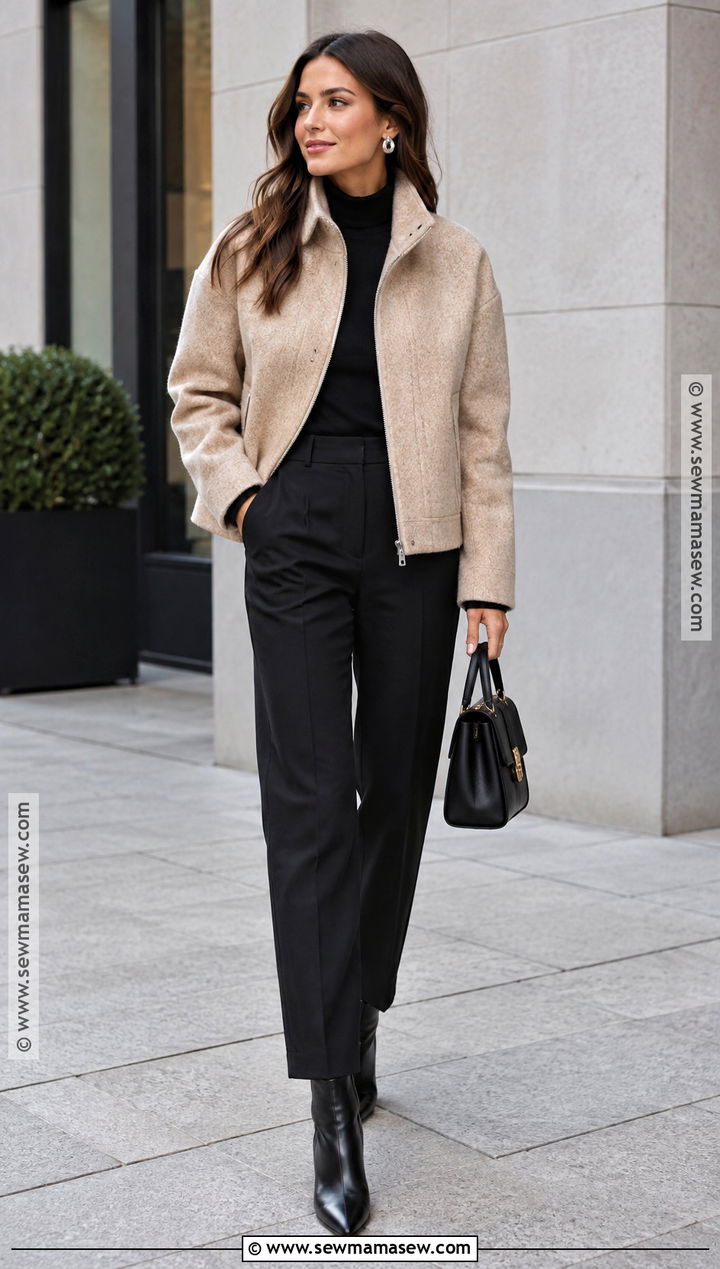
A funnel neck replaces the collar with a raised band that stands up around the throat, and it frames the face in a cleaner way than lapels. I'd choose cropped or hip-length in beige, khaki, navy or black, over a fitted long-sleeve top and high-rise black trousers. Straight or slightly tapered pants contrast with the jacket's volume. If you have a short neck or a fuller face, try it on first; a tall funnel can crowd the chin, and wearing it partly unzipped so the collar folds open slightly helps. Pointed ankle boots, sleek loafers or flats all work, with a small top-handle bag and silver earrings.
3. Suede Jacket With Wide-Leg Jeans
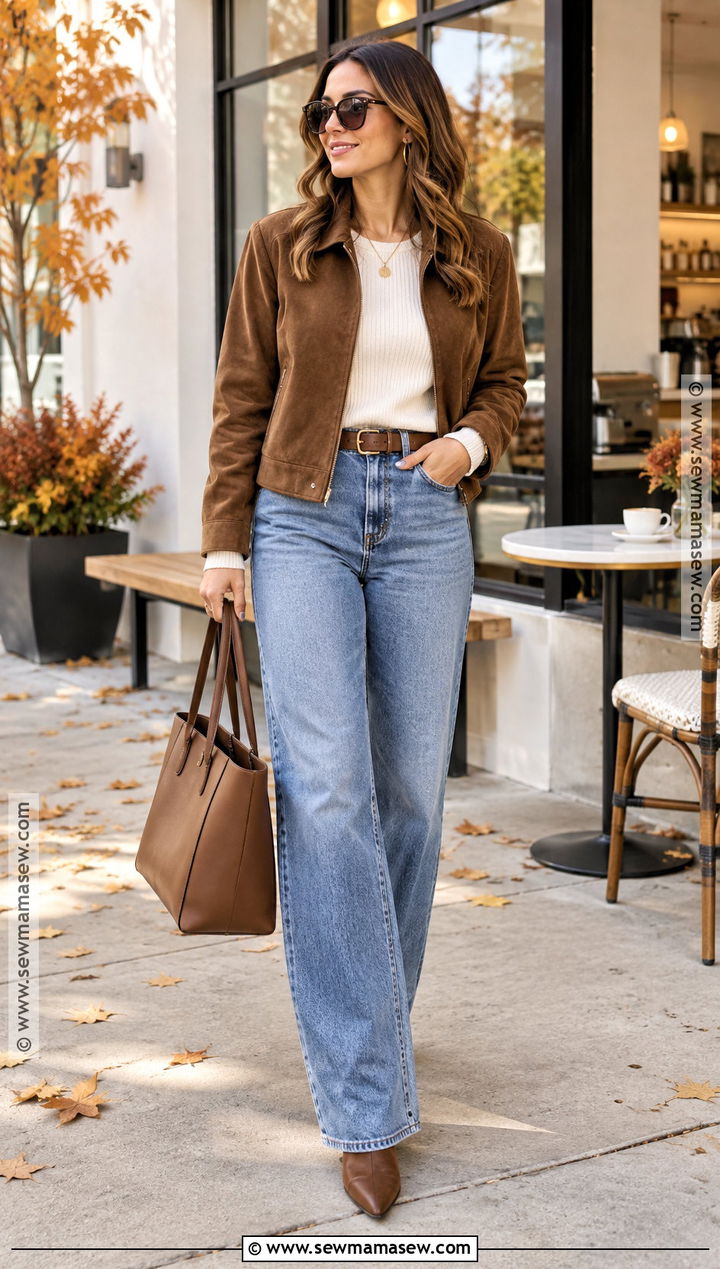
Suede adds warmth and depth to jeans, and the relaxed cut this fall is easier to wear than the fitted suede jackets of the past. I'd look at camel, tobacco, dark brown or deep burgundy, layered over a cream ribbed knit or a light blue button-down. High-rise wide-leg jeans give a long line under the shorter jacket. Pointed boots keep the wide denim from looking heavy, and a brown belt ties the earthy colors together. Real suede does need care: it spots in rain and marks easily, so if your days involve buses and wet sidewalks, faux suede gives you the look with far less worry. Keep the other fabrics smooth.
4. Leather Bomber Jacket With Midi Skirt
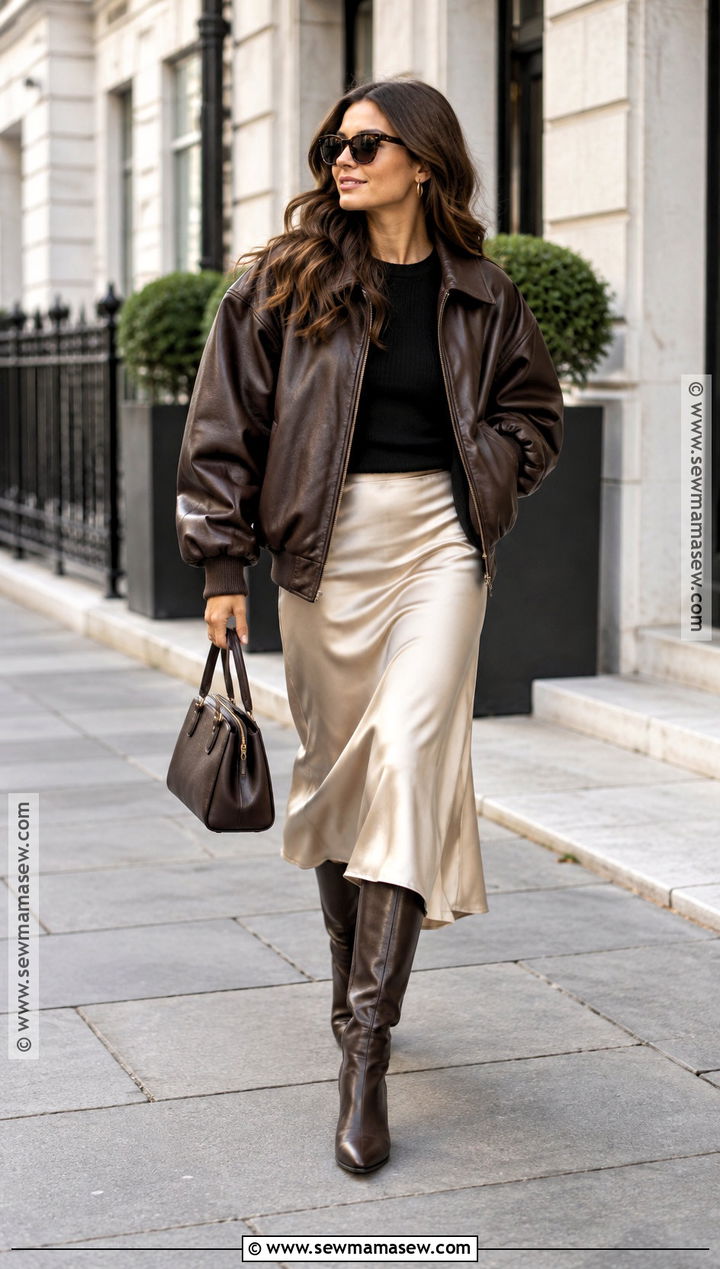
A leather bomber looks more grown-up over a skirt than over jeans. I'd go oversized in black or dark brown with ribbed cuffs and a rounded shape, then a slim knit top and a satin, pleated or light wool midi. The stiff leather against fluid fabric is what makes it look planned. Because the bomber's ribbed hem gathers at the hip, keep the layer under it close to the body, or the outfit gets wide. Knee-high boots continue the line under the skirt; loafers with socks make it preppy. A structured handbag suits it better than a backpack, and it handles a creative office or a weekend dinner.
5. Cropped Trench Jacket With Dark Denim
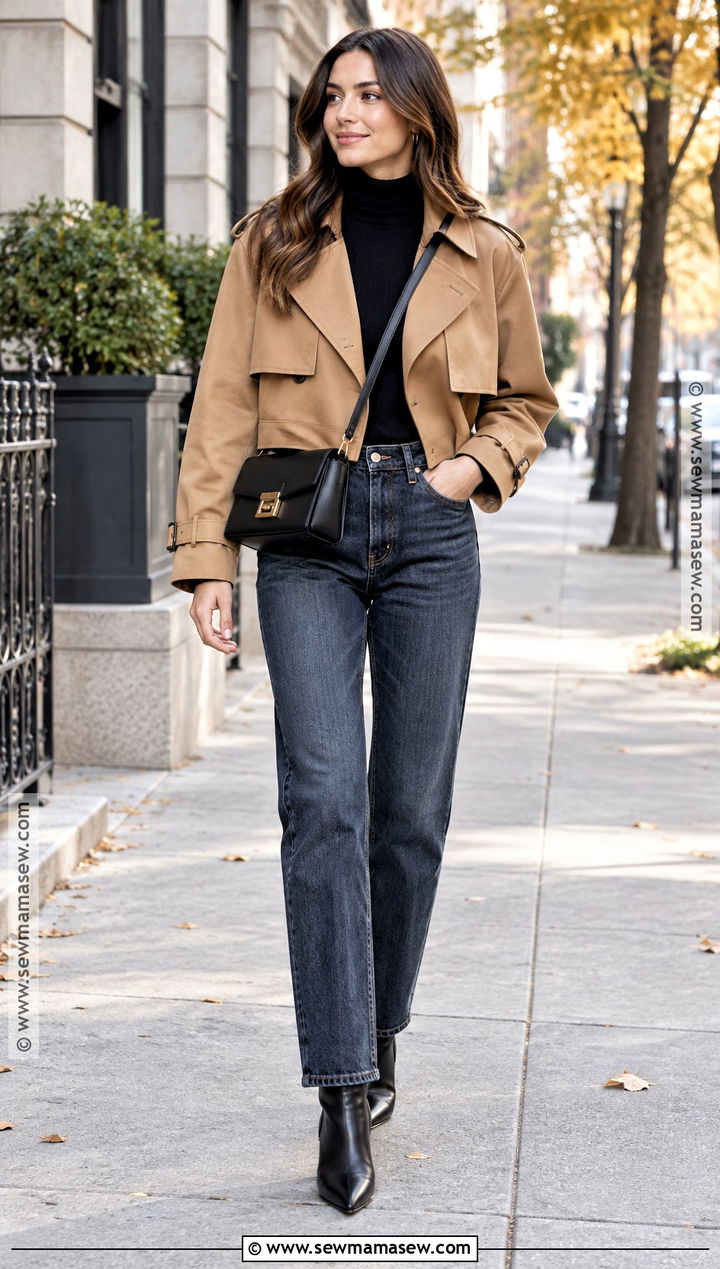
The cropped trench keeps all the classic details, storm flaps, cuff straps, double-breasted buttons and a belt, on a hip-length body. I'd style stone, camel or khaki over a fitted black turtleneck with dark straight jeans, pointed black ankle boots and a structured crossbody. Petite women do especially well here, because the shorter hem shows more leg. Taller women can try roomier, boxier cuts. The one thing to watch is where the crop lands: it should end at or just above the hip bone, since a hem cutting through the widest part of the hip widens it. Wear it open over layers or belt it loosely.
6. Collarless Jacket With Tailored Trousers
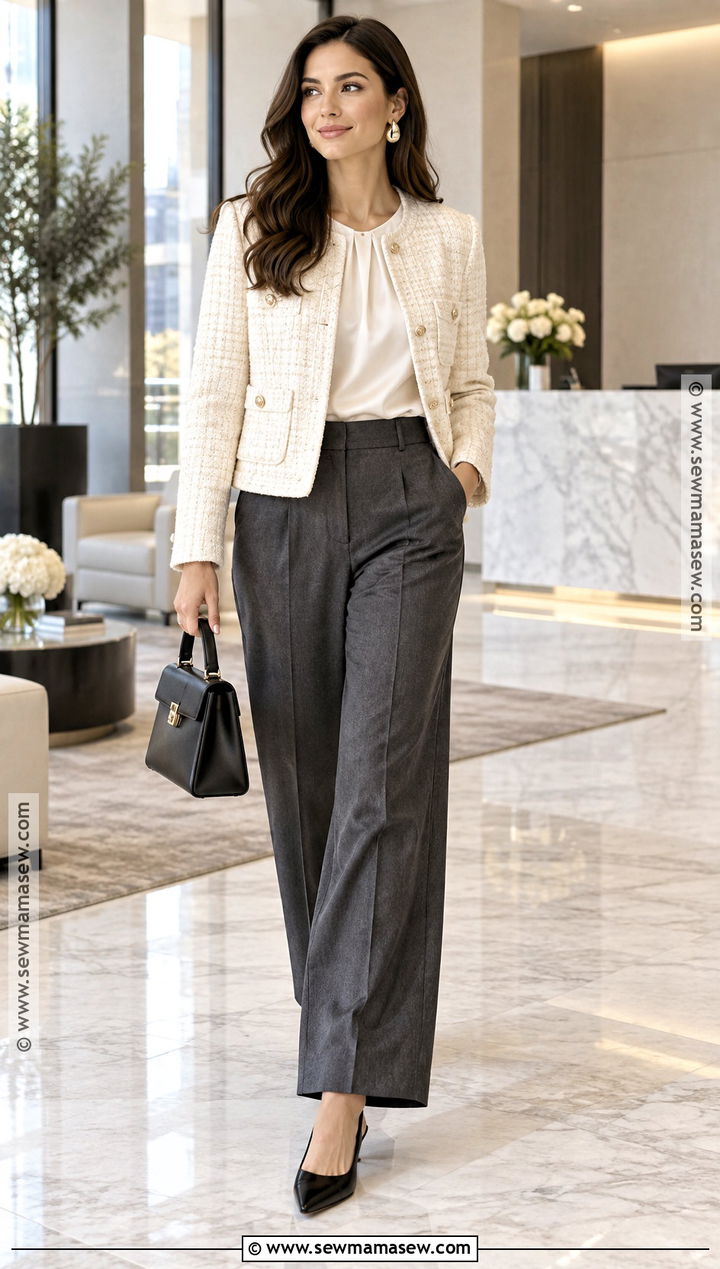
A collarless jacket in wool, tweed or brushed cotton can stand in for a blazer and still look professional. Cream, gray, navy or black all work over a silky blouse, a fine turtleneck or a fitted crewneck. Tailored trousers, straight or softly wide, carry the clean line down. Slingbacks for the office, loafers for everyday. Because there's no collar or lapel to distract, fit shows more: I always check that the shoulder seam sits on the shoulder bone and that the sleeve stops at the wrist bone. A cropped hem marks the waist; a longer cut gives a relaxed line. Sculptural earrings fill the open neckline nicely.
7. Fitted Leather Jacket With Column Skirt
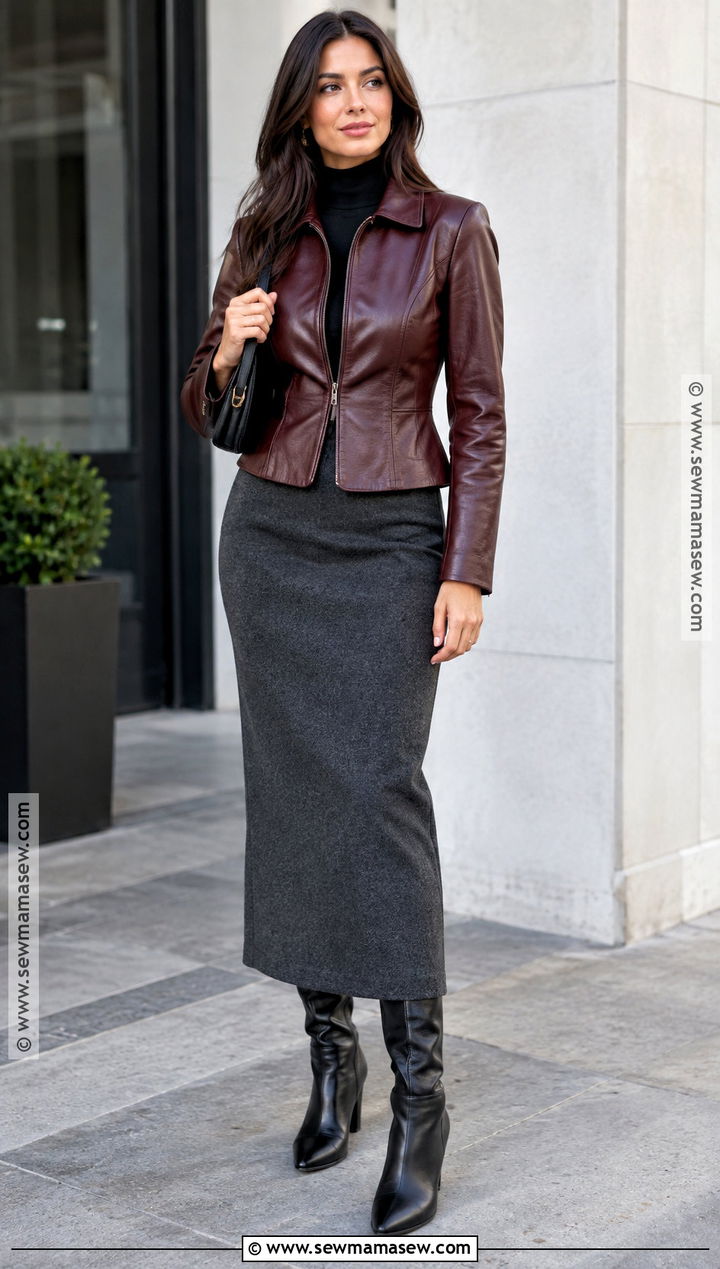
After years of oversized outerwear, the fitted leather jacket came back with real shape. I'd choose a zip-front style with curved seams that follow the waist, then a fitted mock-neck and a straight column skirt in denim, knit or wool. Knee-high boots finish the line. A slim shoulder bag suits the close fit better than a big tote. Black is sharp; oxblood or chocolate feels softer and more seasonal. Fitted leather leaves no room for a chunky sweater, so on cold days a thin thermal goes underneath. When trying it on, reach forward and cross your arms; if the back pulls tight, size up, since leather won't stretch much there.
8. Chore Jacket With White Jeans
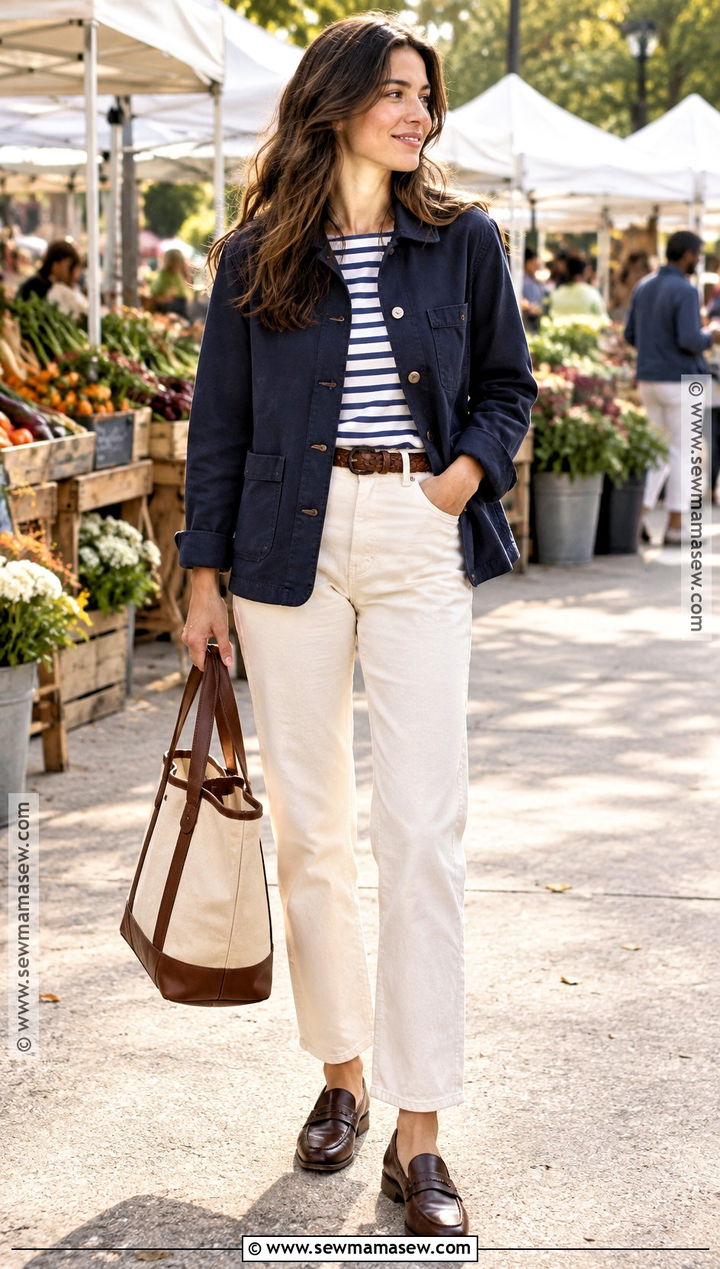
A chore jacket has big patch pockets, a boxy cut and usually sturdy cotton twill. I like it in navy, faded brown or olive with ecru or white straight jeans, which keep a workwear jacket from looking heavy in early fall. A striped cotton shirt or light gray sweater goes underneath. Dark brown loafers, suede clogs or low sneakers finish it, and a woven belt and roomy tote suit the practical feel. Roll the sleeves once to show the shirt cuffs. White jeans in fall do pick up mud at the hem, so I keep them for drier days and city sidewalks.
9. Quilted Jacket With Corduroy Pants
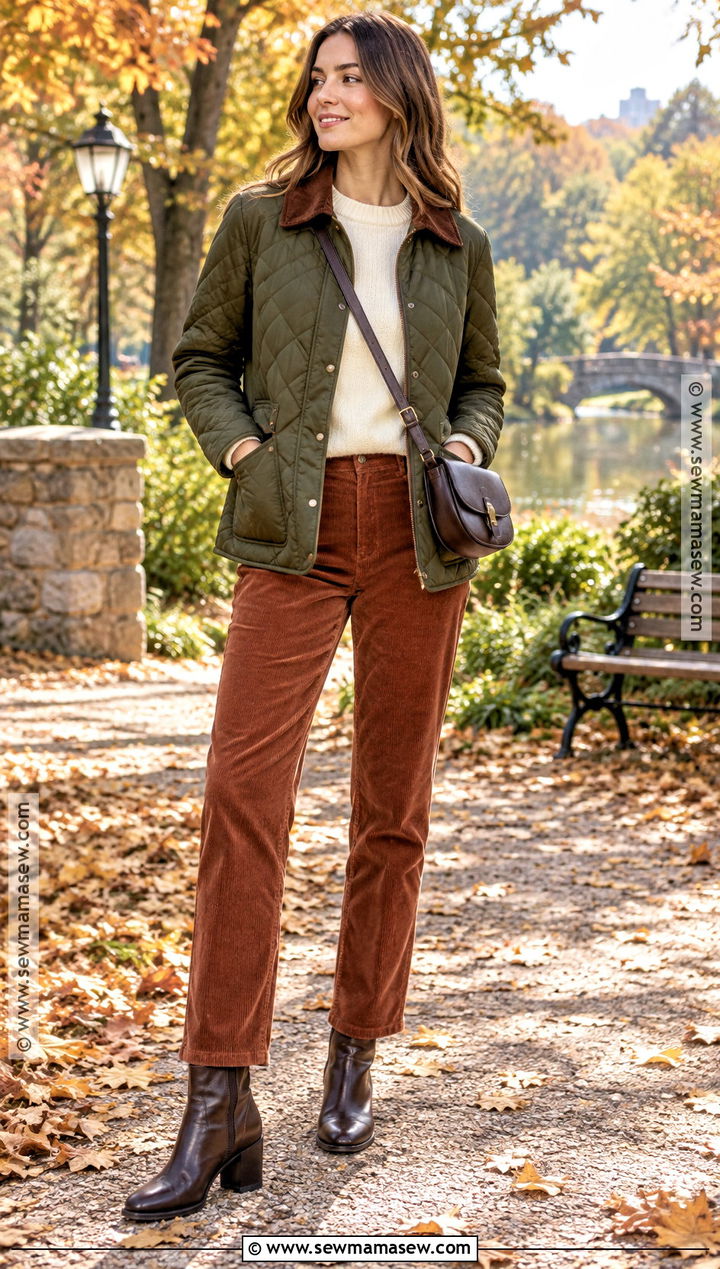
Quilted jackets are the warmest of the light layers, because the stitched padding traps air without the weight of a wool coat. I'd pick diamond stitching in olive, navy, cream or rust, ideally with a contrasting corduroy collar. Wear it over a soft crewneck with relaxed straight-leg corduroys in chocolate, tan or burgundy; the cord ribs and the quilting echo each other. Leather ankle boots or retro sneakers both suit it. If the jacket is roomy, tuck the sweater into high-rise pants to keep a waist. It's a lot of texture in one outfit, and keeping the colors earthy is what stops it looking busy.
10. Oversized Moto Jacket With Knit Dress
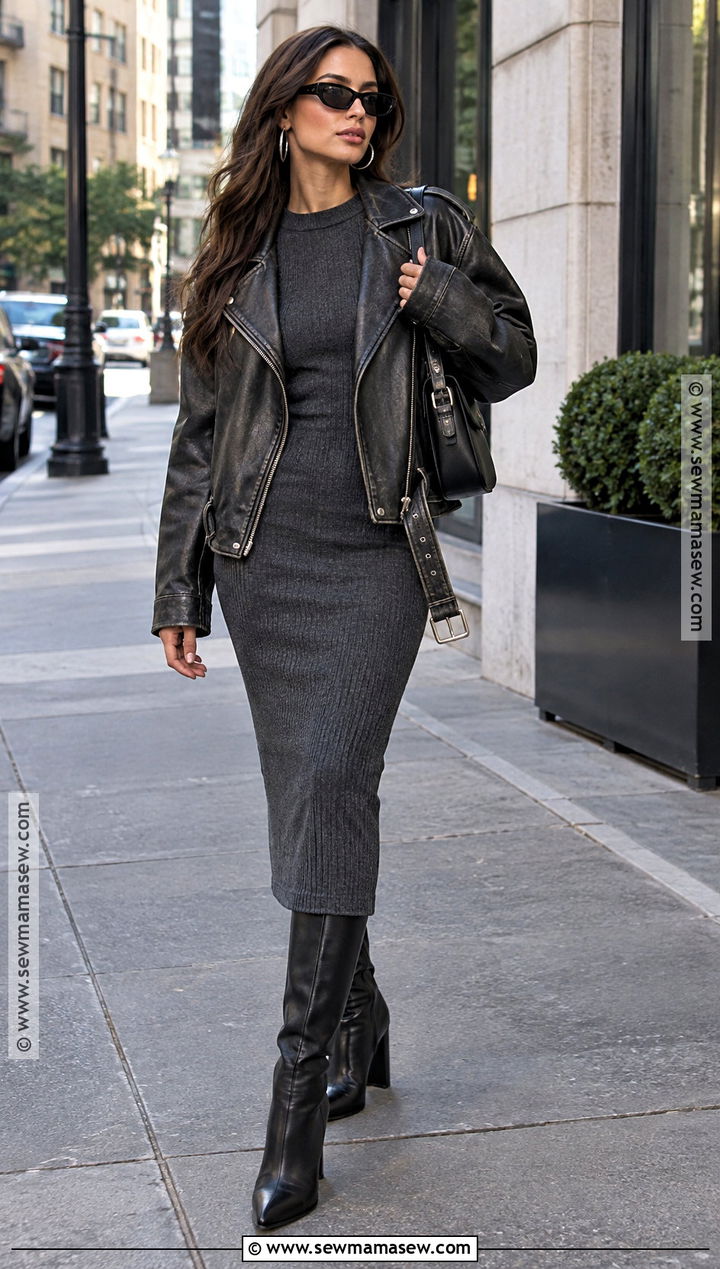
An oversized moto over a fitted knit dress is a contrast between hard and soft. I'd choose black, espresso or a worn brown with heavy zips and a dropped shoulder, then a ribbed midi dress in gray, cream, burgundy or black. The long, narrow dress balances the jacket's width. Knee boots with a sturdy heel suit a midi; if the dress runs to the ankle, sleek ankle boots work better. A small shoulder bag keeps it from being all big pieces. Ribbed knit dresses can pill where the jacket's zips rub, so keep the jacket zipped up or the zips pulled clear when you sit. Silver hoops and narrow sunglasses are enough.
11. Tweed Jacket With Relaxed Jeans
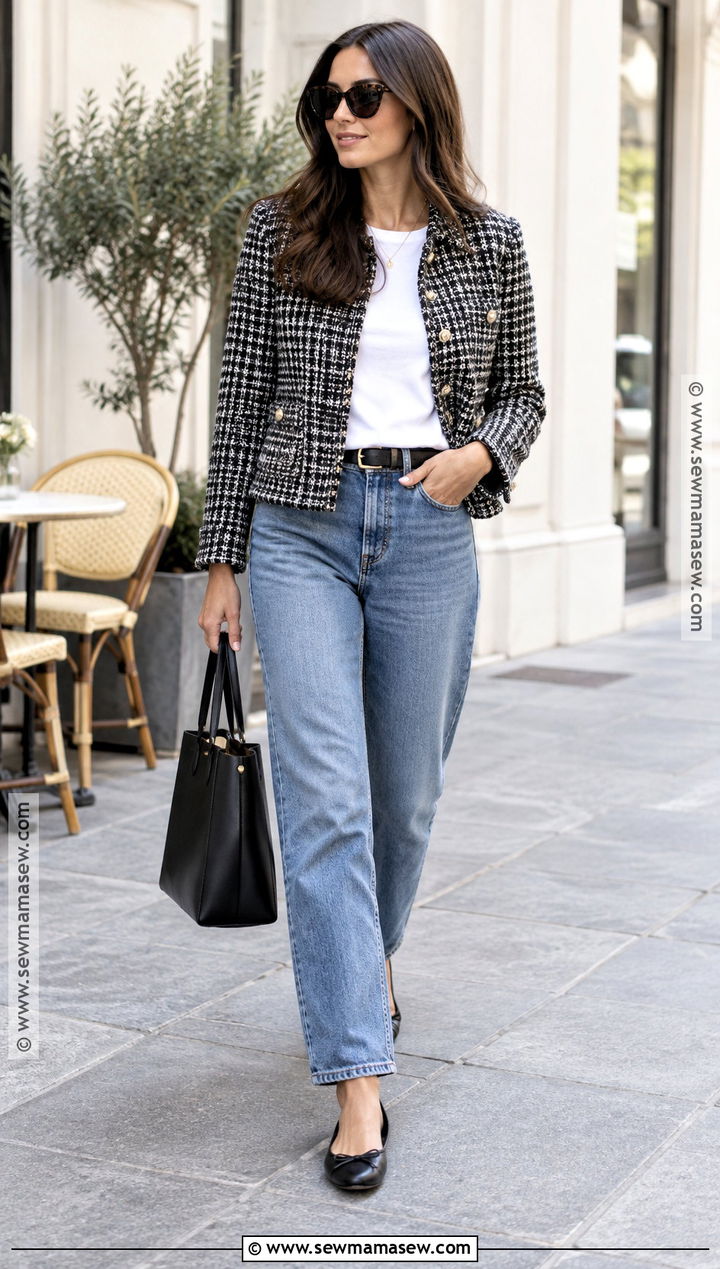
Tweed is easier to wear casually than its reputation suggests. I'd put a slightly boxy tweed jacket over a plain white tee and relaxed blue jeans; the plain base takes the formality out of it. Cropped straight jeans show off loafers, ballet flats or low slingbacks. A quilted shoulder bag gives a classic feel, a plain leather tote a more current one. Black and white, camel, navy or a quiet multicolor all work. Loose-woven tweed snags on rings and bag clasps, so I'd check the weave before buying if you wear a lot of jewelry. Decorative buttons are enough sparkle; skip anything more than small earrings.
12. Denim Jacket With Maxi Skirt
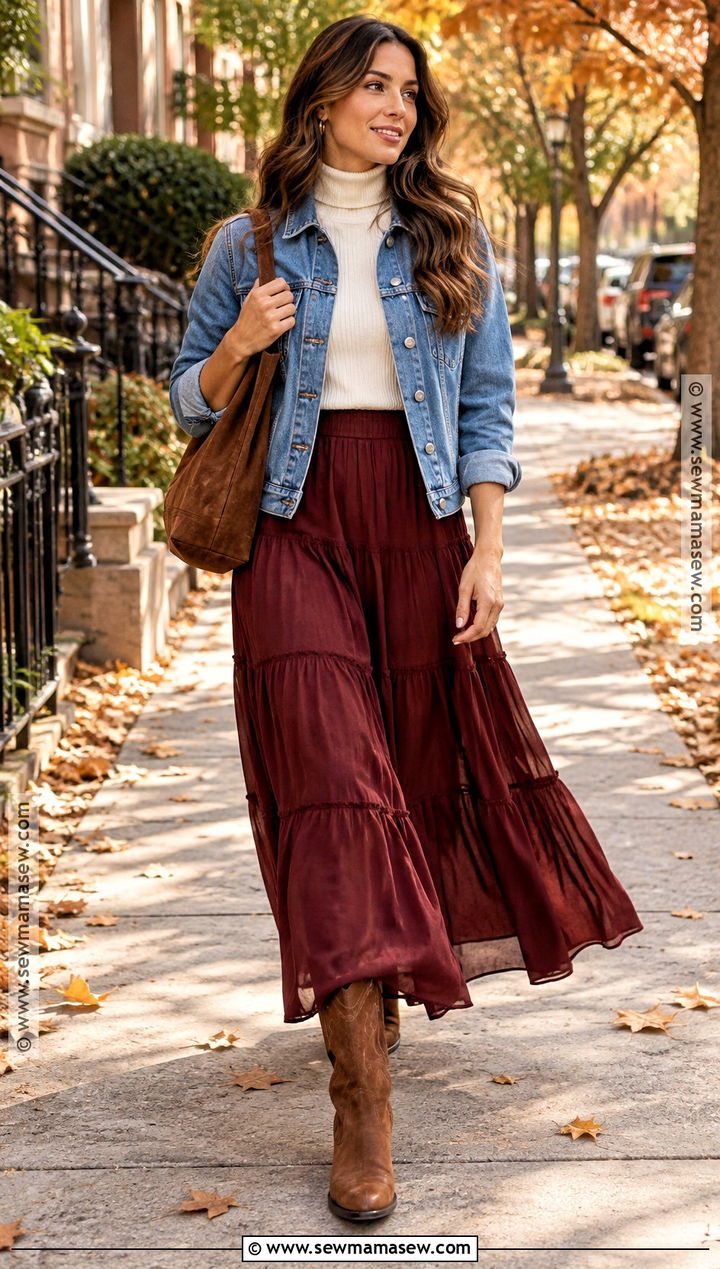
The roomier denim jacket this season goes well with long skirts, which the tight cropped ones never did. I'd choose a relaxed, hip-length cut in medium or dark blue over a light turtleneck or crewneck, with a flowing printed or solid maxi. Western boots look seasonal; streamlined sneakers are better for walking. A suede shoulder bag adds texture. With a full skirt, leave the jacket open so there's a vertical line down the middle. With a high-waisted skirt, a cropped jacket that ends at the waistband marks the narrowest point. Check the sleeve length too: roomy denim jackets often run long, and rolling the cuff once looks better than letting it cover your hand.
13. Plaid Jacket With Black Jeans
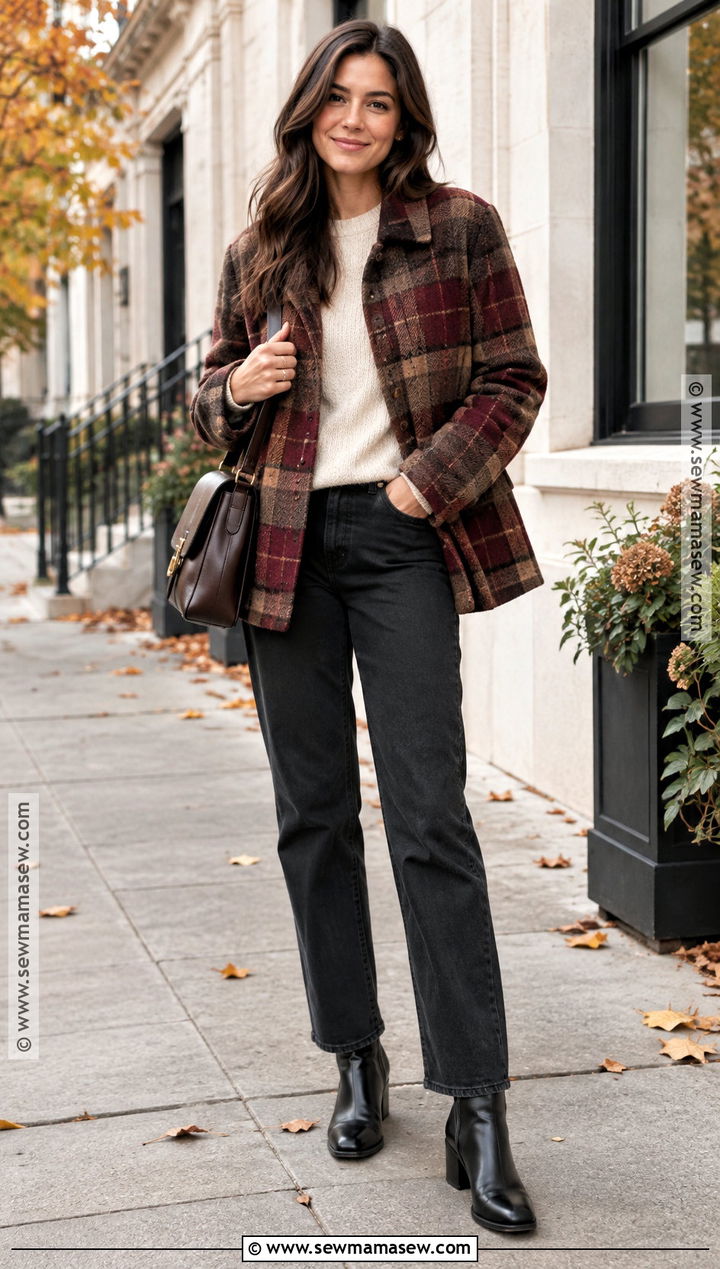
Plaid jackets suit fall naturally, and this season they were relaxed and plainly styled. I'd choose a checked wool, brushed cotton or shirt-style jacket in brown, charcoal, burgundy or forest green over a plain cream knit, which gives the pattern room. Black straight jeans go with nearly every plaid palette. Black ankle boots and a structured satchel make it polished; leather sneakers and a cap make it casual. Keep other patterns away, scarves especially. Shirt-style plaid jackets, sometimes called shackets, are usually cut straight and a bit long, so they work over jeans better than over wide trousers.
14. Shearling Jacket With Flared Pants
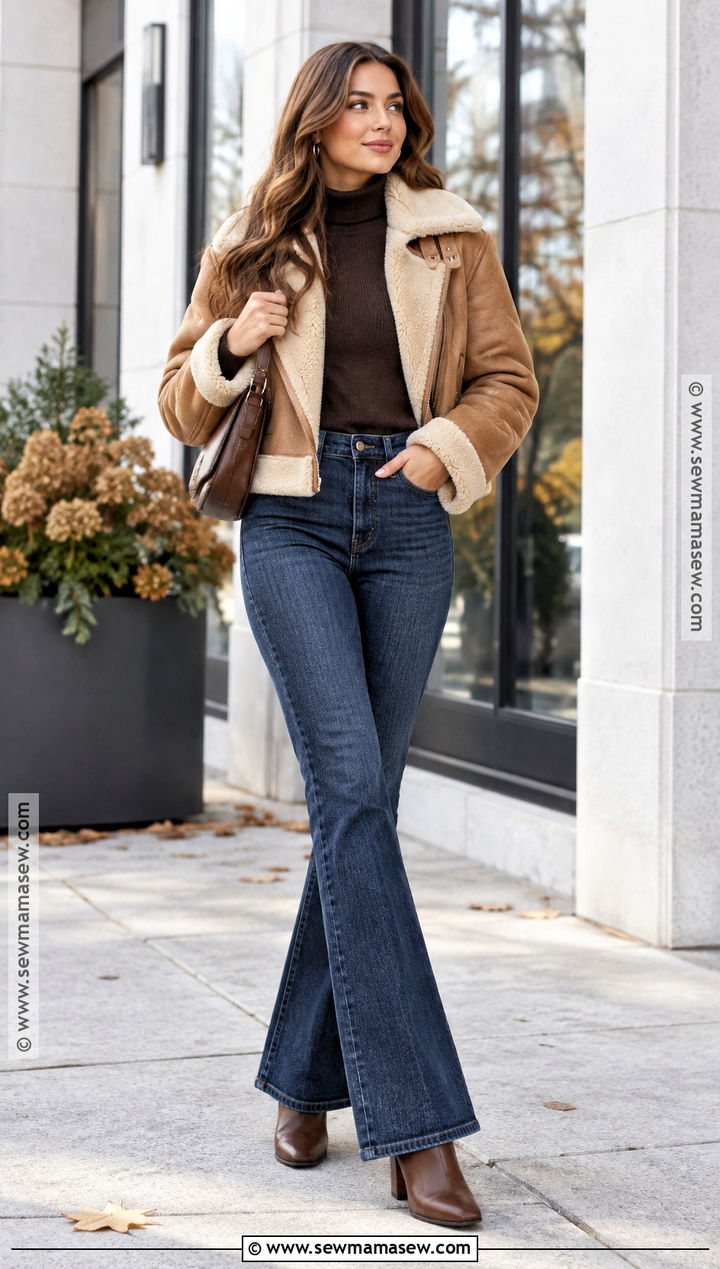
A shearling jacket brings warmth, texture and a 1970s feel. I'd look for a cropped aviator in tan, dark brown or black with cream trim at the collar and cuffs. Pair it with a fitted turtleneck and high-rise flares or dark flared jeans: the close top keeps the plush lining from adding bulk, and the flared hem balances the wide shoulders. Heeled ankle boots sit neatly under the flare and lengthen the leg. Real shearling is very warm, which is great in late fall but too much on a mild day or indoors for long; a jacket with shearling trim only, or faux shearling, gives you a lighter option.
15. Faux-Fur Jacket With Monochrome Basics
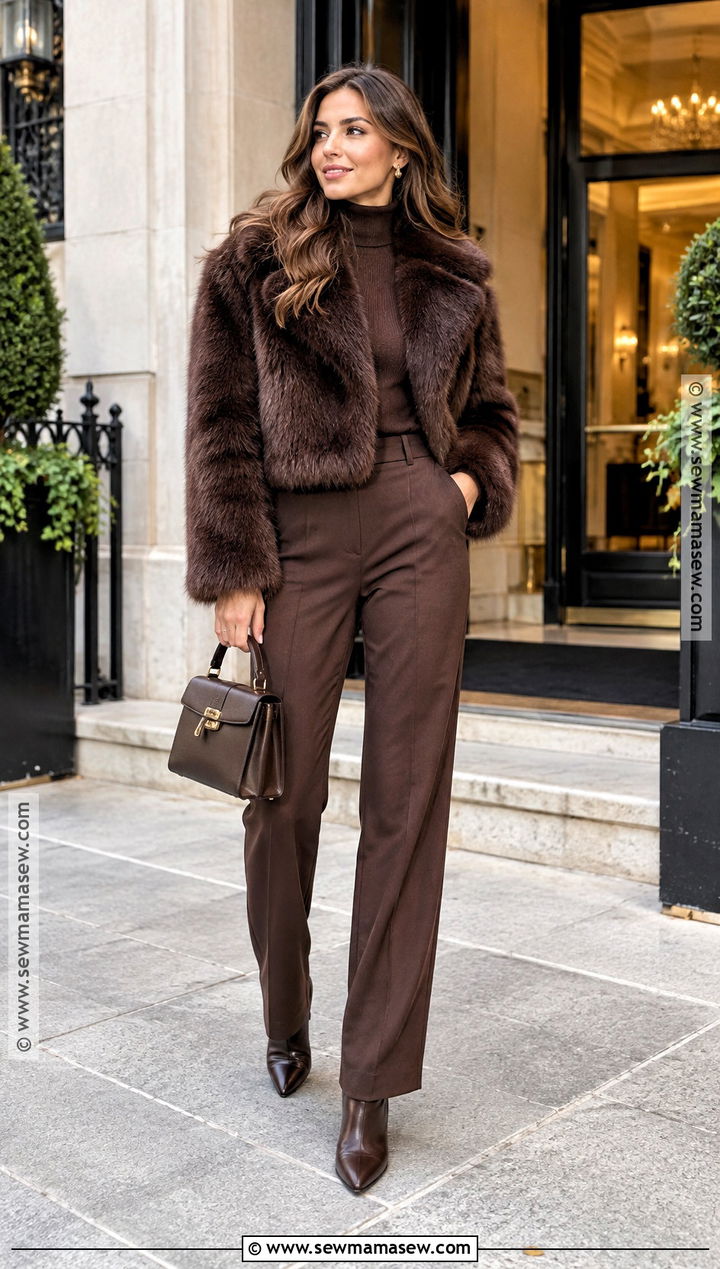
A faux-fur jacket is loud enough that everything else should match quietly. I'd choose cropped or hip-length in chocolate, cream, charcoal or deep olive, over a tonal turtleneck and matching straight pants. Ankle boots in the same family make one long column. A compact structured bag and plain earrings finish it. Pile length changes the mood: a short, dense pile looks right in daylight, while a long, shaggy one feels like evening. Faux fur adds bulk at the shoulders and arms, so check that it closes without pulling and that you can lift your arms comfortably. Plain layers underneath keep it wearable.
Fitting a Jacket Over the Sweater You'll Really Wear
Most jackets get tried on over a T-shirt in a fitting room and then worn over a sweater for months. That gap causes most of the fit problems I see. Bring the thickest knit you plan to wear, or wear it to the store, and run through these checks.
- Close it fully. Buttons shouldn't pull into an X across the chest, and a zip shouldn't strain at the bust or stomach.
- Reach forward as if driving. If the back seam tightens across your shoulder blades, the jacket is too small, especially in leather, which barely gives.
- Check the shoulder seam. It should sit at the edge of your shoulder on fitted styles, or drop a little on oversized ones by design, not because the jacket is simply too big.
- Look at the sleeve with your arm bent. It should still cover your wrist bone, so a sweater cuff doesn't stick out halfway up your forearm.
- Sit down. Hip-length and longer jackets can bunch or ride up; cropped ones shouldn't flash your back when you lean forward.
Sleeves and waists are easy for a tailor to adjust. Shoulders are not, so if the shoulders fit and the rest is a little off, it's usually worth buying and altering. If the shoulders are wrong, keep looking.
If You Buy Only One Jacket This Fall
If I had to pick one, I'd start with the barn jacket or the cropped trench, because they go with the most of what you already own and handle the widest temperature range. The quilted and chore jackets are easy next steps for casual days. Fitted leather, suede, tweed and faux fur are the pieces to add once you know what you'll reach for. Whatever you choose, fit it over the thickest layer you'll wear, keep the outfit under it simple, and pick shoes you can walk in. Good materials and plain shapes will keep these jackets useful well past this season.
Related posts: