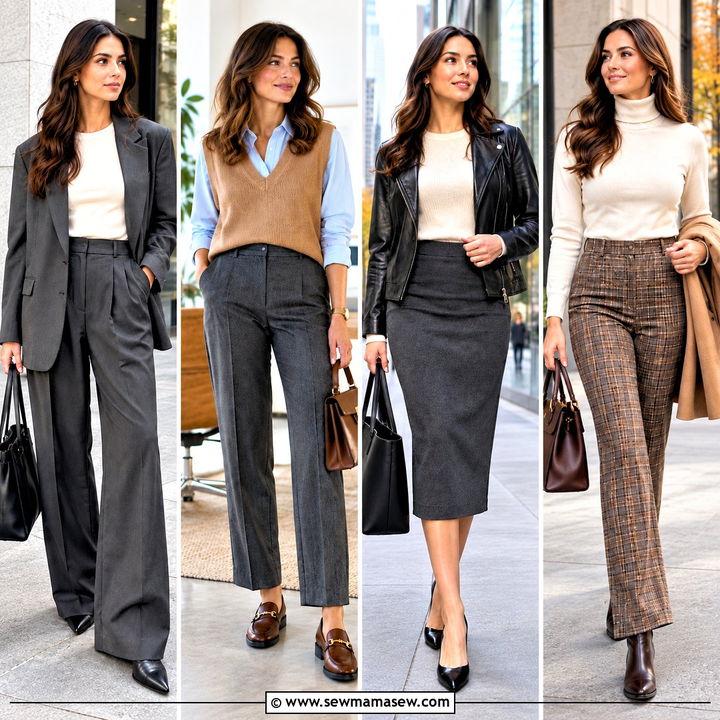
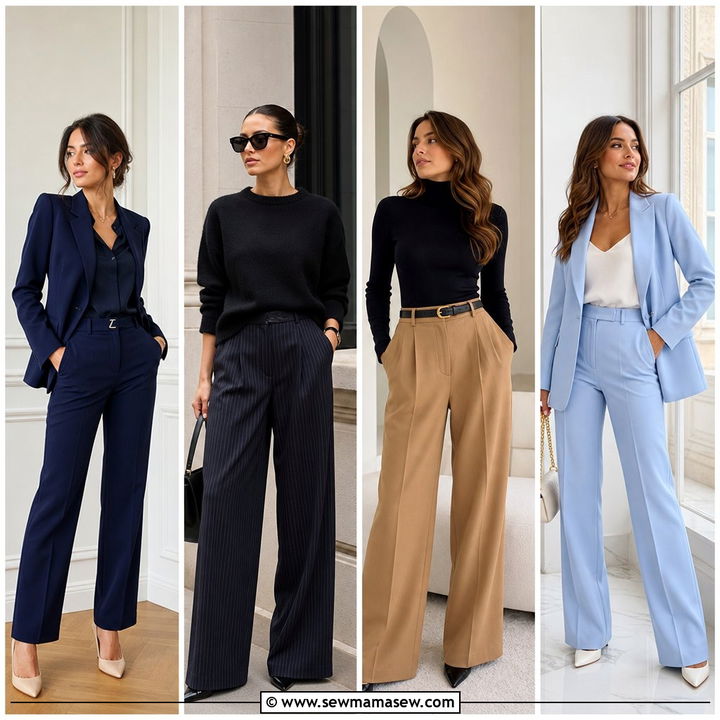
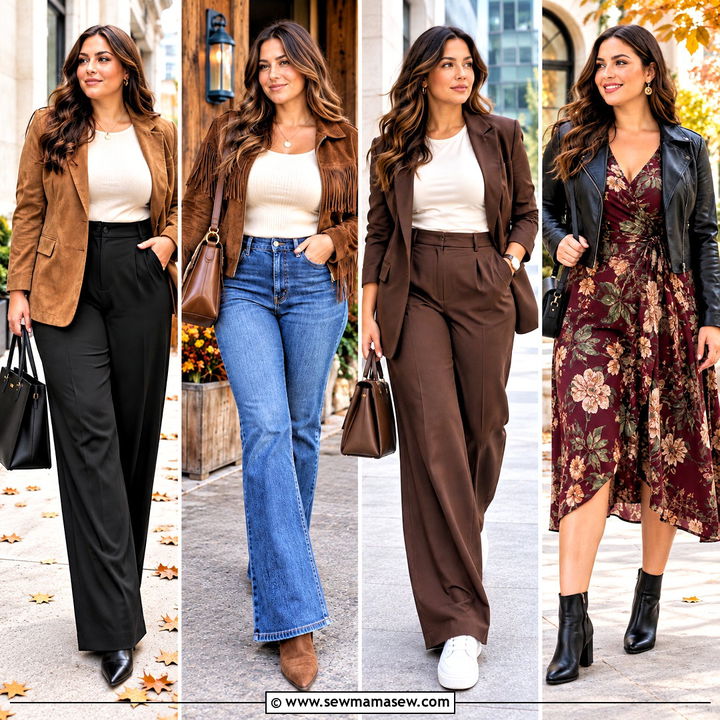
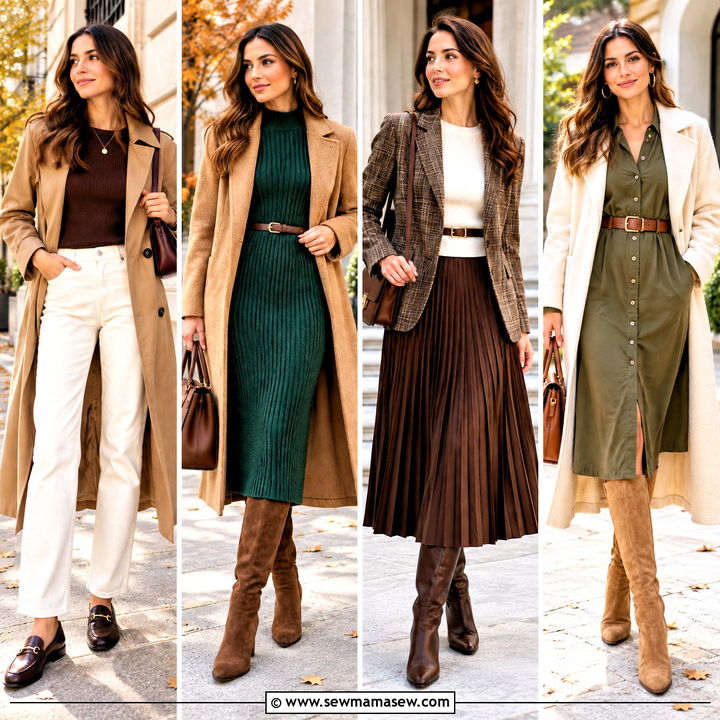
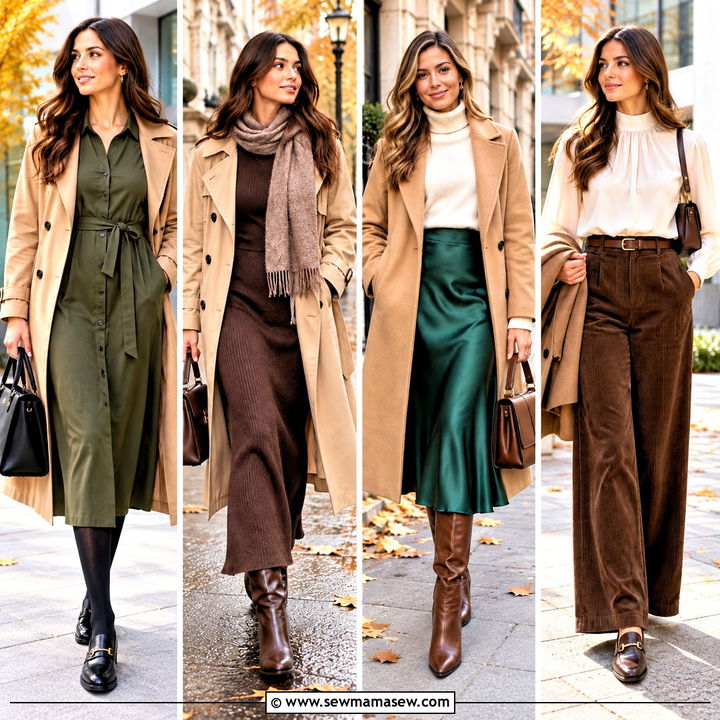
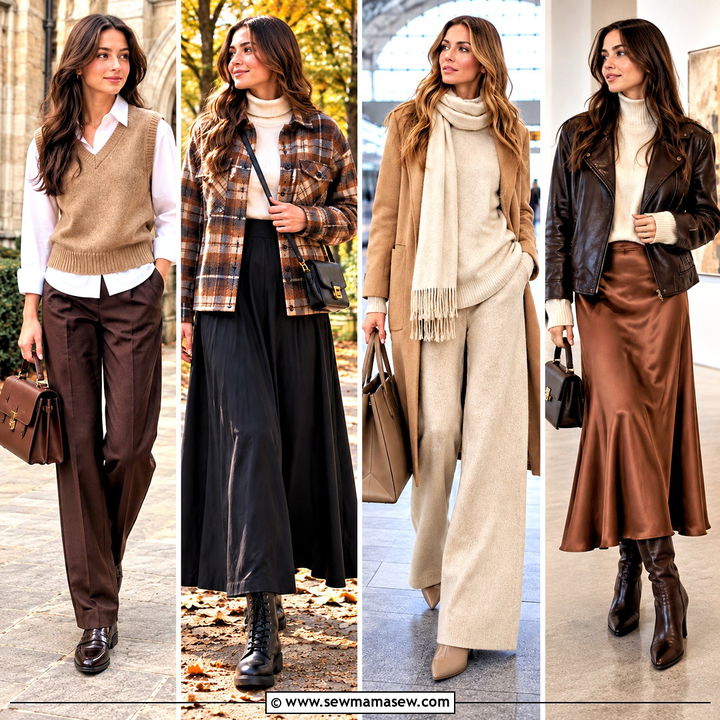
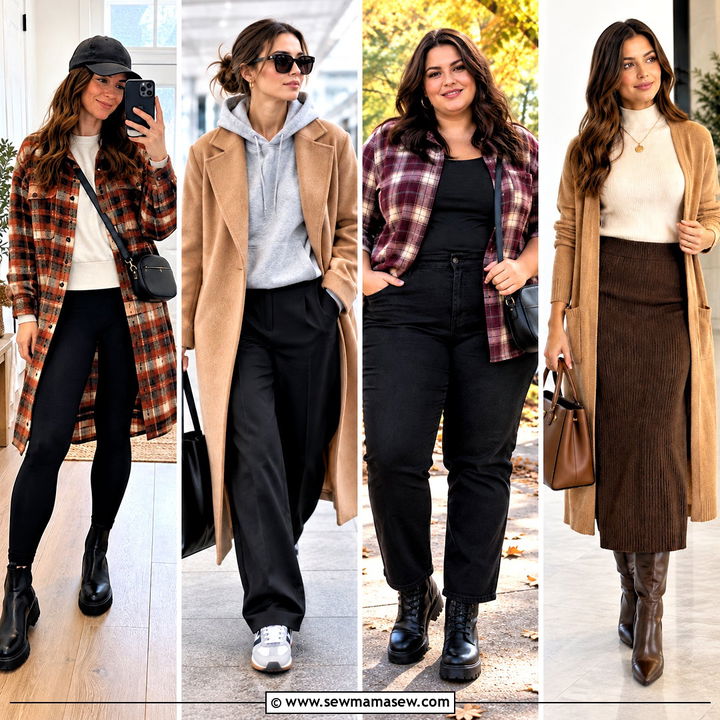
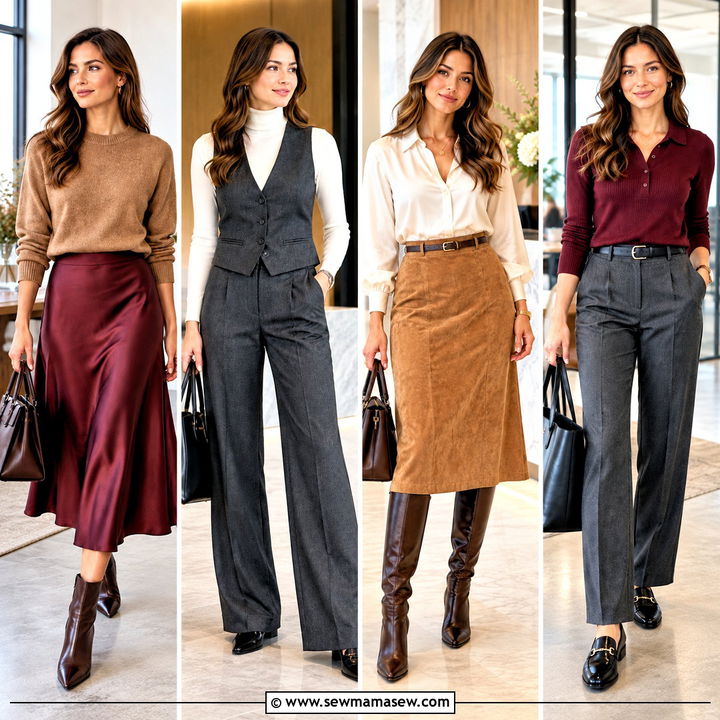
Most women who struggle with formal office clothes don't lack pieces; they lack combinations. When I edit a work wardrobe, I build it around complete outfits rather than single items, so getting dressed on a busy morning means picking one formula and walking out the door. The fall versions below lean on structured tailoring, fine knits, deeper seasonal colors and shoes you can stand in through a long day. Wide-leg trousers, crisp shirts, midi dresses and structured bags show up often, because they're what the season's tailoring is built around. Adjust each look to your own dress code, body shape, commute and climate: breathable layers where autumn stays mild, wool coats and tights where it doesn't. Fit and repeatability matter more than anything else here. Every outfit is meant for meetings, presentations, interviews or simply a polished ordinary Tuesday.
How Formal Is Your Office, Really?
The word formal means different things in different workplaces, and dressing a level above or below your office is the most common mistake I see. Before you shop, work out which of these your workplace expects day to day.
- Business formal: matching suits in dark colors, closed-toe pumps or loafers, hosiery in many offices, and very little pattern. Typical in law, finance and senior client meetings. The navy, charcoal, pinstripe and three-piece suits below belong here.
- Business professional: tailored separates are fine, as are dresses with a jacket and some color. The camel blazer, olive suit, plaid trousers and sheath dress sit comfortably at this level.
- Business casual with formal days: knits, midi skirts and dresses most of the week, with a suit kept for presentations and interviews. The pleated midi, satin skirt and belted dress work here.
If you're unsure, look at what senior women in your office wear on an ordinary day, not at the dress code document. For an interview, I'd dress one step more formal than the company's everyday standard.
1. Navy Pantsuit With Silk Blouse
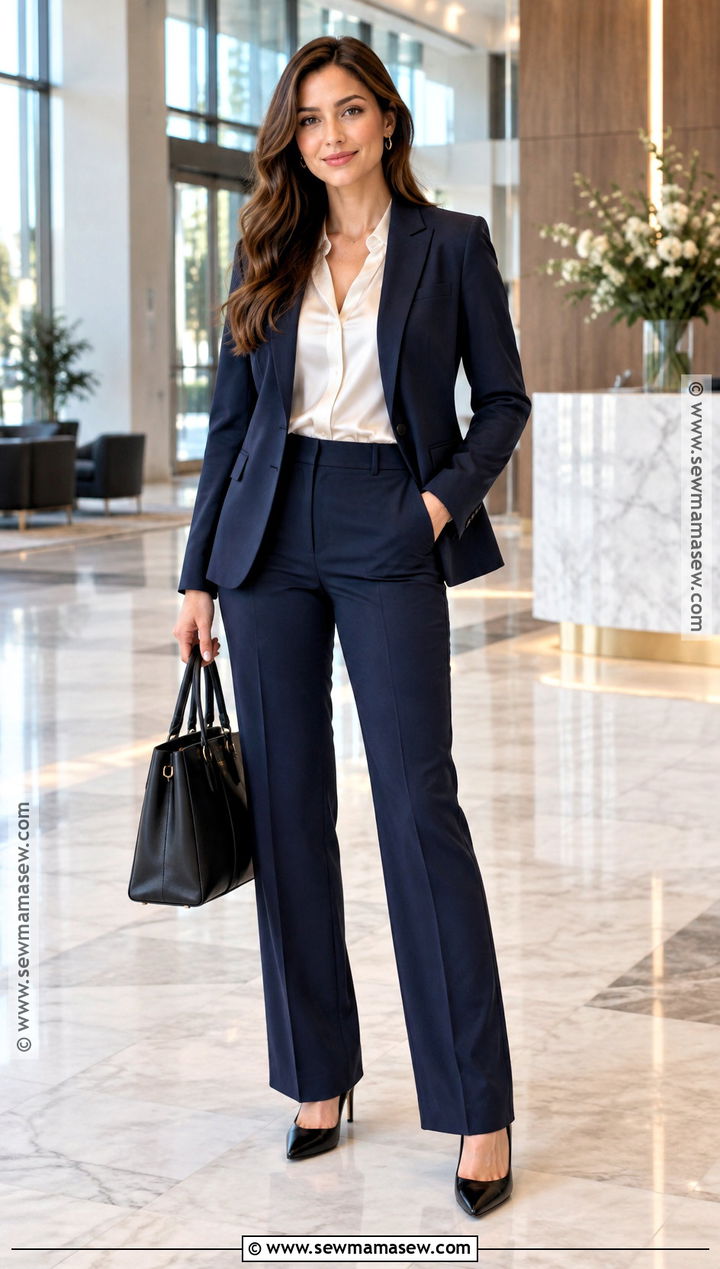
Navy carries the same authority as black tailoring but looks softer against most complexions, which is why it's my first suggestion for someone buying one good suit. A single-breasted blazer with straight or gently wide trousers in the same cloth is the most adaptable version. Under it, an ivory, pale blue or champagne silk blouse with a modest neckline brightens the face. Pointed black pumps, a structured leather tote and simple jewelry finish the outfit, with a camel coat over the top on cold mornings. Trouser length is where I spend the most time: petite women usually look best in an ankle-length hem, while taller women can let it fall to nearly cover the shoe. Have sleeves and hems altered; it's the difference between a bought suit and your suit.
2. Charcoal Skirt Suit With Turtleneck
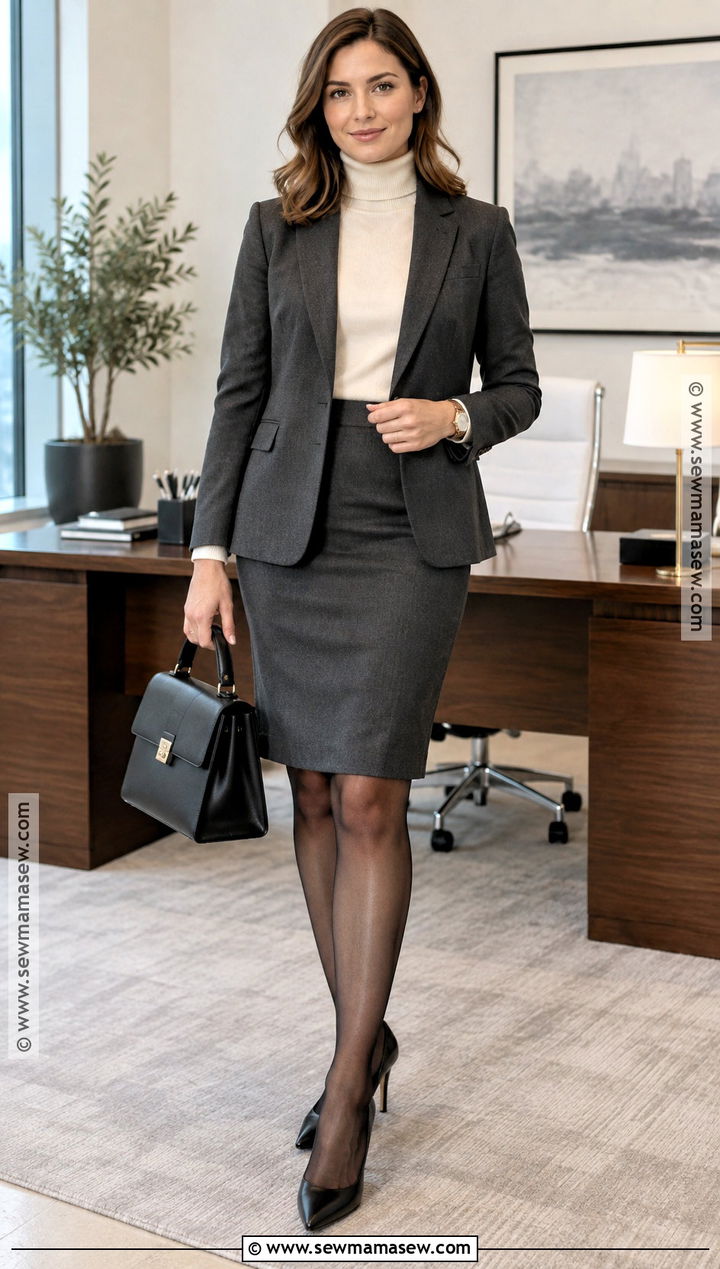
A charcoal skirt suit with a fine turtleneck is the most cold-proof formal outfit I know. Merino is the yarn to look for in the turtleneck, because it's thin enough to sit under a fitted jacket without making the shoulders tight. Pair a fitted or softly tailored blazer with a matching knee-length pencil skirt, then add sheer black tights, pointed leather pumps and a top-handle bag. If a pencil skirt feels restrictive when you sit or climb stairs, a straight or slight A-line cut gives the same formality with more room. A narrow belt is optional. Small studs and a classic watch are all it needs, and it suits leadership meetings and offices where traditional business attire is still expected.
3. Camel Blazer With Wide-Leg Trousers
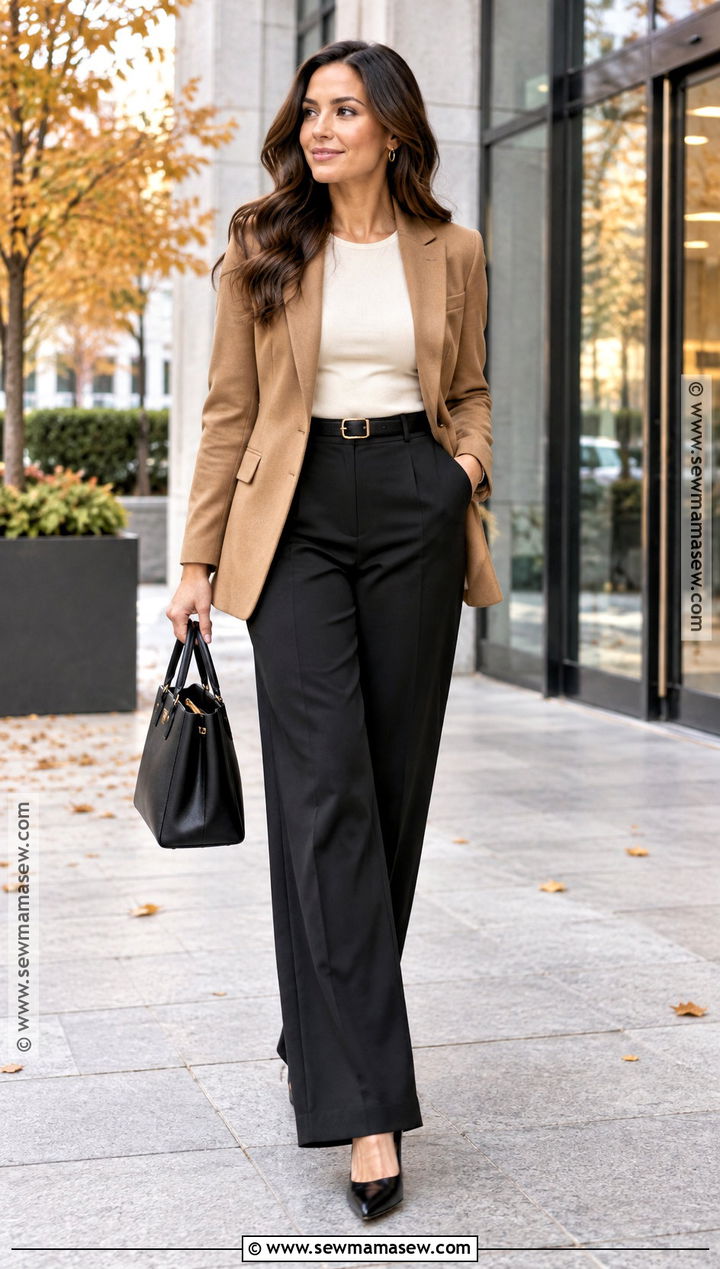
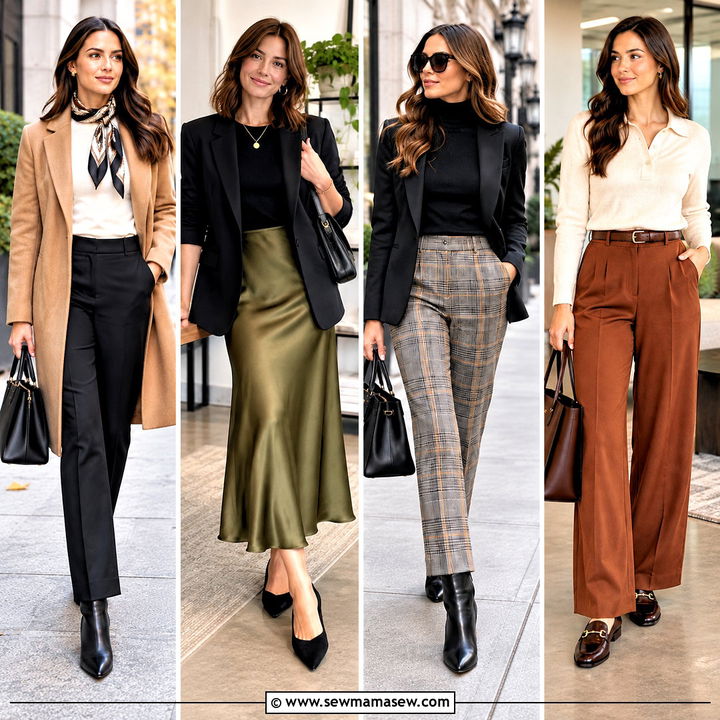
Camel warms up a dark fall wardrobe instantly. I pair a tailored camel blazer with high-waisted black wide-leg trousers and a fitted ivory shell or crisp button-down. The trousers carry the volume, so the blazer needs to follow your shoulders and waist; an oversized jacket on top of a wide leg turns the whole outfit into one shapeless block. Pointed pumps or polished block heels and a structured black bag repeat the darker trouser color, and a slim leather belt marks the waist. The fall of a wide leg creates a long vertical line that flatters most body types. A thin thermal camisole under the shell adds warmth without bulk on cold commutes.
4. Burgundy Sheath Dress With Black Blazer
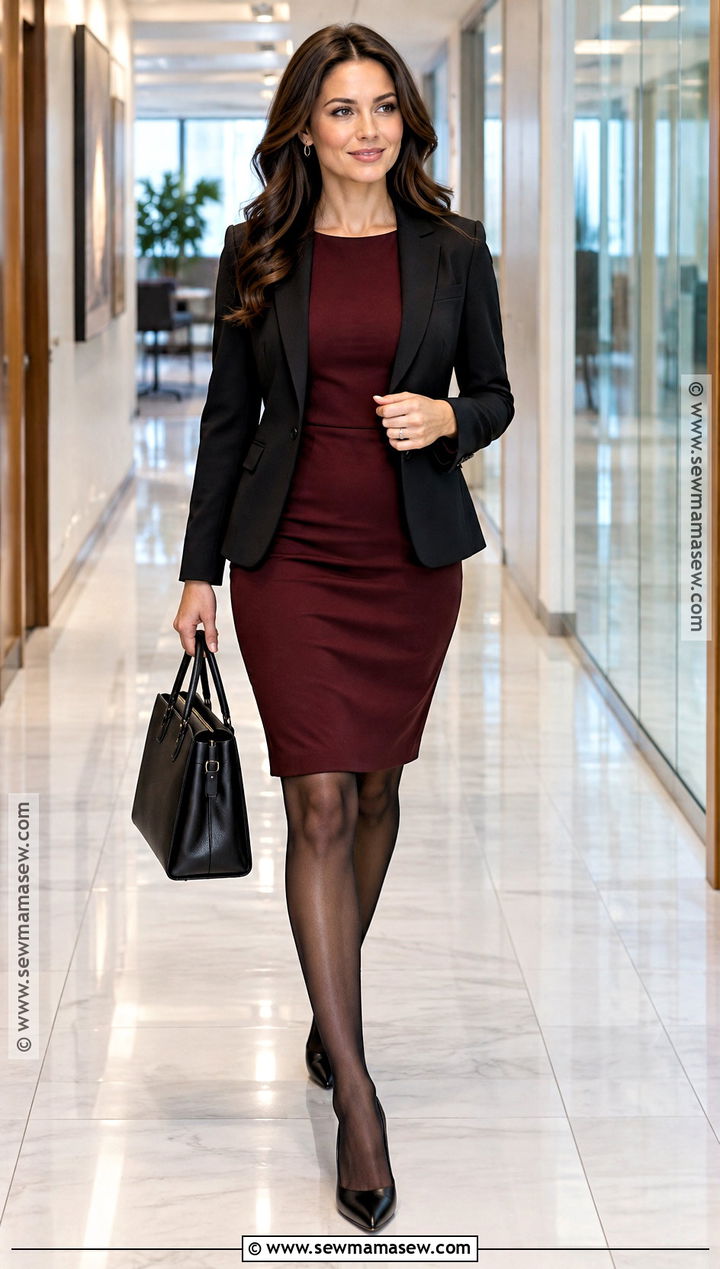
On the mornings you have ten minutes, a sheath dress does most of the work. I look for burgundy in a knee-length or midi cut with a defined waist, a fabric heavy enough not to cling, and enough stretch to sit comfortably at a conference table. Strategic seaming or light ruching flatters a range of figures far better than a plain tube. A fitted black blazer sharpens the line, and black pumps, a structured satchel and understated earrings keep it professional. If your office runs cold, add sheer tights and a light wool coat. Skip embellishment; the color is enough. Burgundy reads as seasonal while staying sober enough for interviews and client meetings.
5. Gray Pinstripe Suit With Loafers
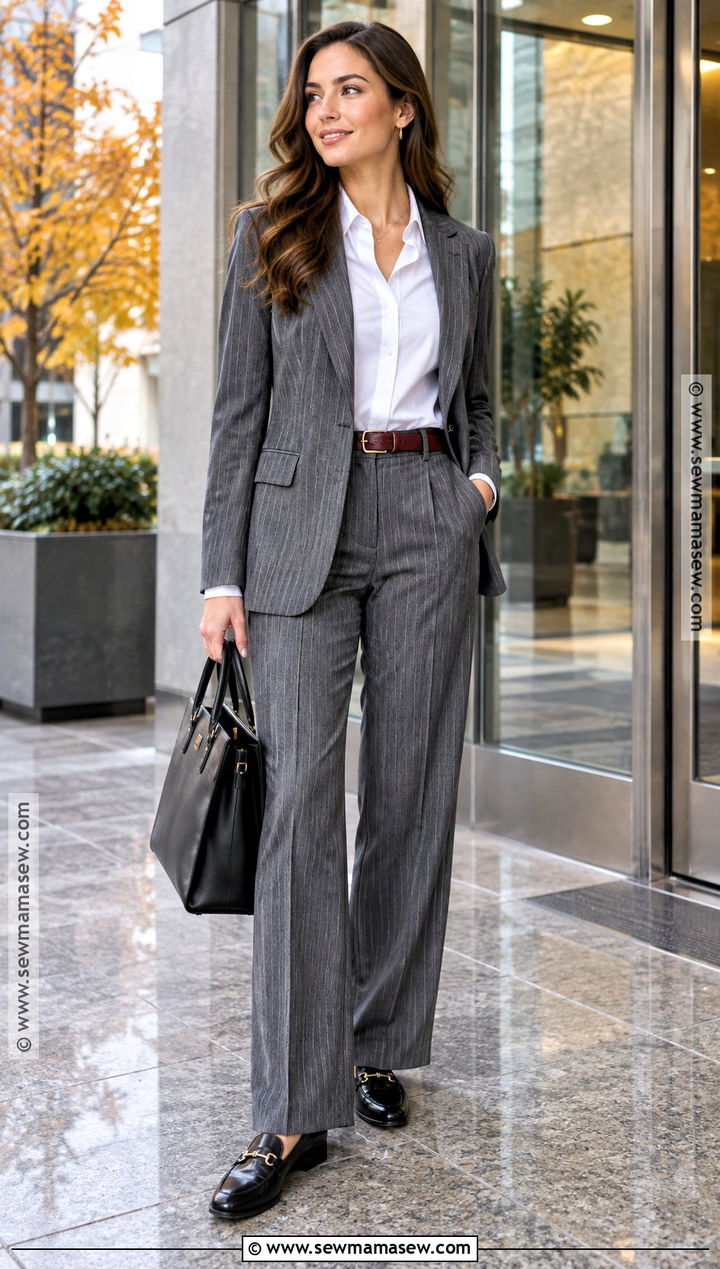
Pinstripes add pattern without noise, provided the stripes are fine and low-contrast. A gray single-breasted suit with straight-leg trousers and a crisp white shirt is the base, with a burgundy or navy belt bringing in a little fall color. Sleek black loafers, a briefcase-style tote and minimal jewelry finish it. I suggest loafers here on purpose: they're far easier to walk in than pumps and are accepted in most formal offices now. Check that the trouser hem meets the shoe with a slight break rather than pooling. If the jacket feels boxy, a tailor can take in the side seams for more waist. It's the suit I'd pack for travel days and long meetings that move between floors.
6. Chocolate Brown Pantsuit With Cream Knit
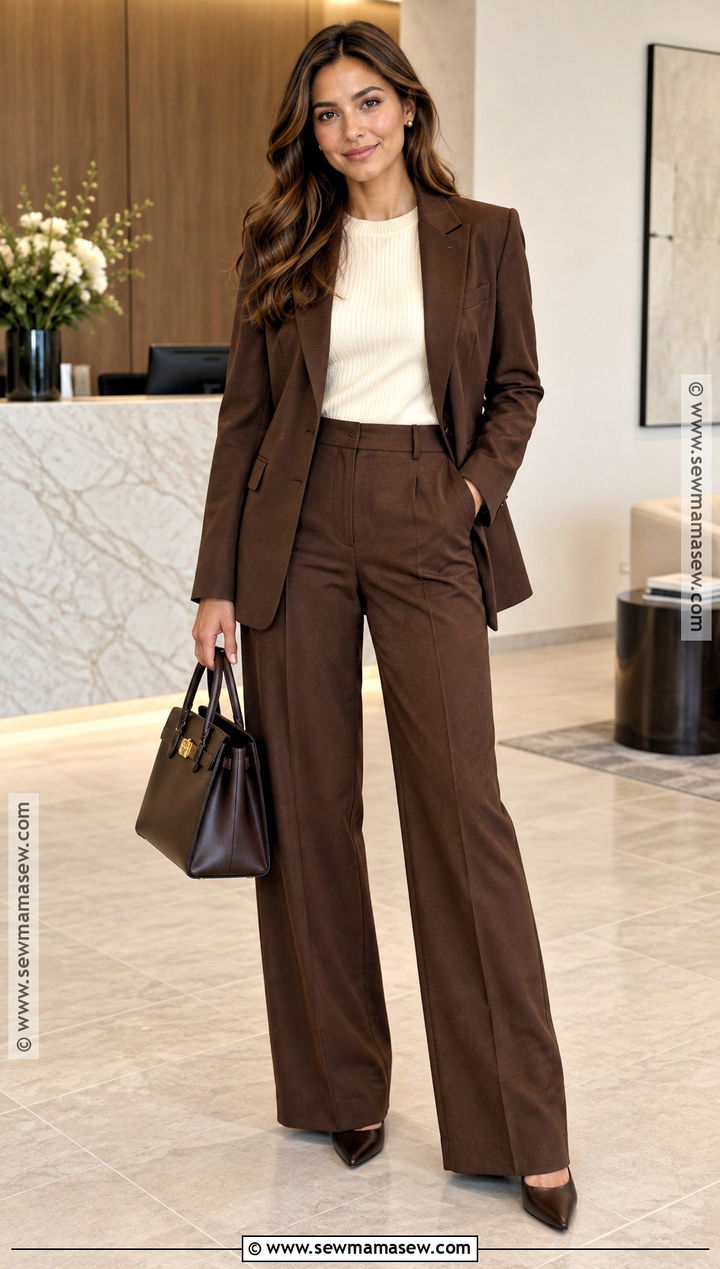
Brown tailoring has come back into offices, and chocolate is the most wearable shade of it. A matching blazer and trousers over a fitted cream crewneck or fine mock neck keeps it approachable while still formal. Dark brown pointed pumps continue the color line; black shoes also work if you repeat black in the bag or belt. An espresso, taupe or deep burgundy structured bag and small gold earrings suit it. Choose wide-leg trousers for a modern feel or straight-leg for a traditional corporate look. One buying warning I always give: brown dyes vary a lot between batches and fabrics, so buy the jacket and trousers as a set, or the two halves won't quite match in daylight.
7. Black Blazer With Pleated Midi Skirt
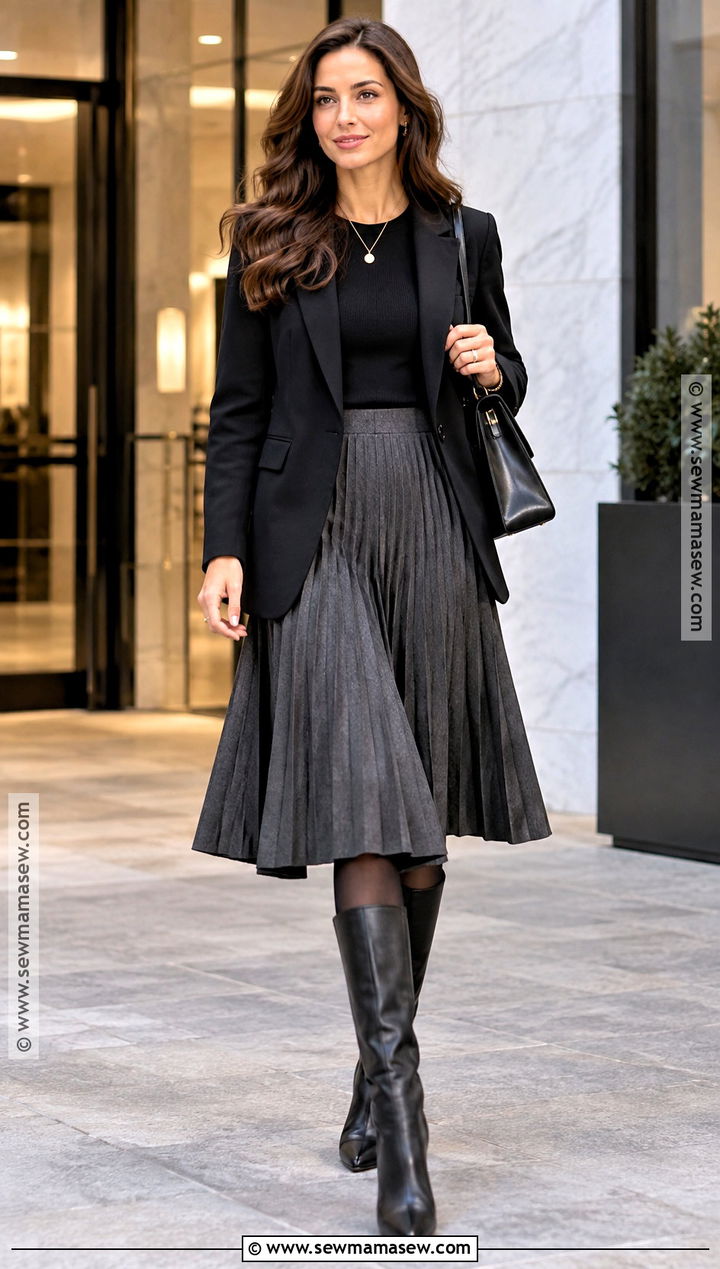
A pleated midi skirt looks formal when everything around it is sharp. I choose charcoal, deep navy or a muted plaid, with fine pleats that fall flat from the waist; deep box pleats add volume at the hip that tailoring can't hide. A tucked black blouse and a fitted black blazer of hip length balance the longer skirt. Knee-high leather boots that disappear under the hem keep your legs warm on a cold commute, and pointed pumps suit a traditional office. Add a structured shoulder bag, a simple pendant and opaque tights when it's cold. It gives you the polish of a suit with more freedom to move than trousers.
8. Olive Pantsuit With Ivory Blouse
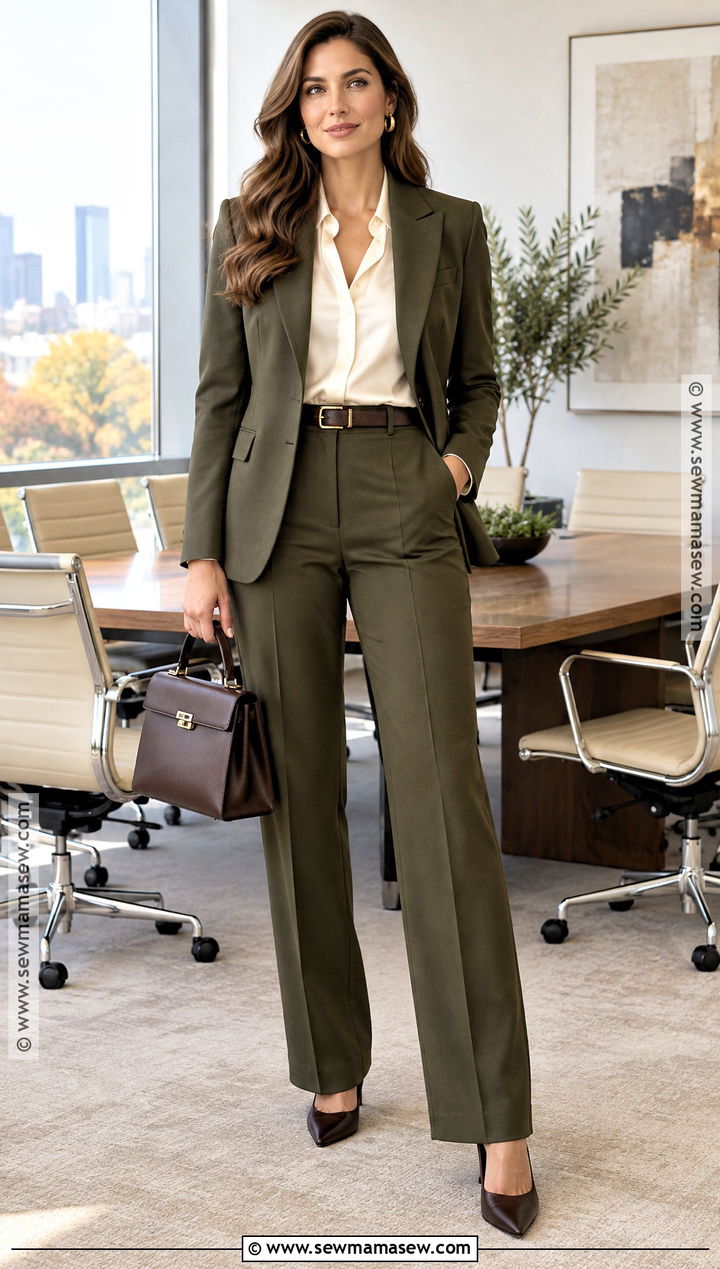
Deep olive is a quiet way to wear color in a formal office. I'd stick to a dark, muted shade; bright green looks casual in tailoring. An ivory blouse keeps the color near your face light, which matters because olive can make some skin tones look sallow on its own. Dark brown pumps, a matching belt and a structured top-handle bag look cohesive, and small gold jewelry suits olive especially well. Straight or softly flared trousers keep the line balanced, and a longer blazer gives more coverage. If you'd like waist definition, pick a jacket with gentle shaping instead of buckling a thick belt over the top. It's distinctive enough to be remembered and conservative enough for client-facing days.
9. Navy Blazer With Plaid Trousers
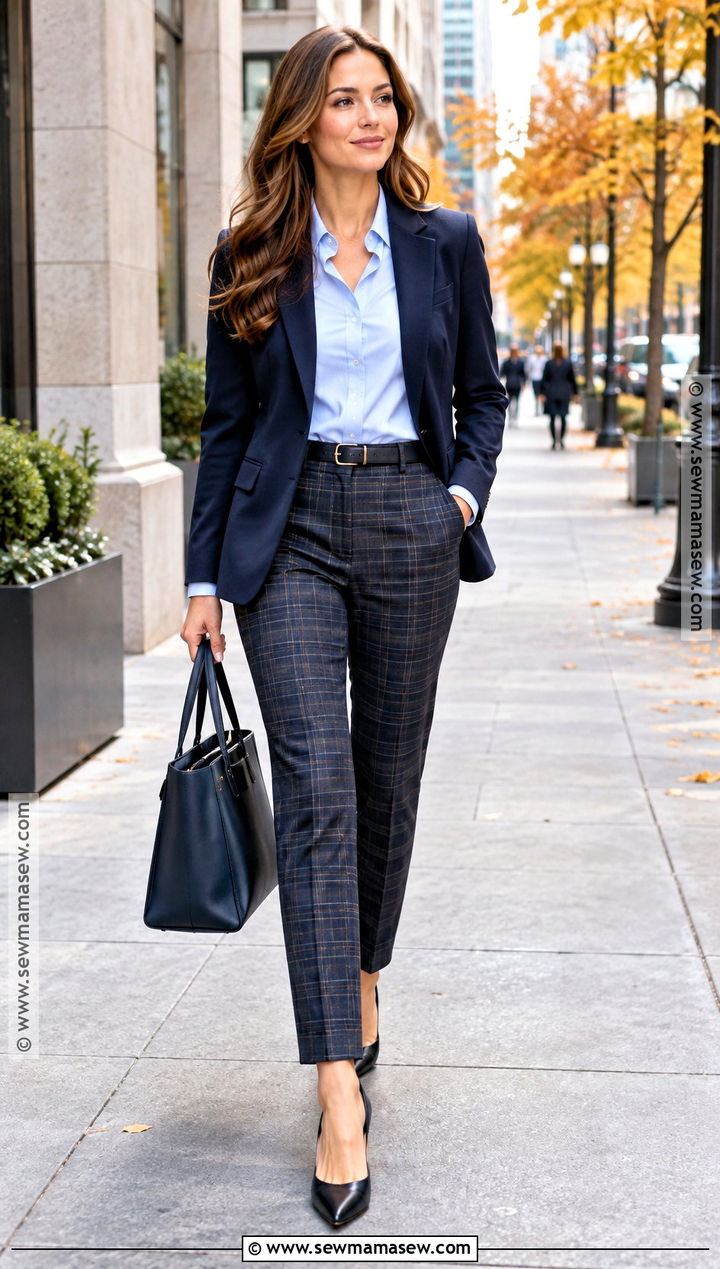
Plaid trousers under a solid blazer give you pattern without the full drama of a plaid suit. I look for a tailored pair with navy, charcoal, camel or burgundy lines and put a solid navy blazer over it, with a pale blue button-down or ivory knit shell underneath. Before I buy patterned trousers, I check the seams and pockets: on well-made pairs the checks line up across them, and on cheap ones they jump. High-rise trousers in a straight or gentle bootcut keep the leg clean. Navy or black pointed pumps, a smooth leather belt and a structured tote finish it. I reach for this when a matching suit would feel predictable but the dress code is still formal.
10. Belted Midi Dress With Knee-High Boots
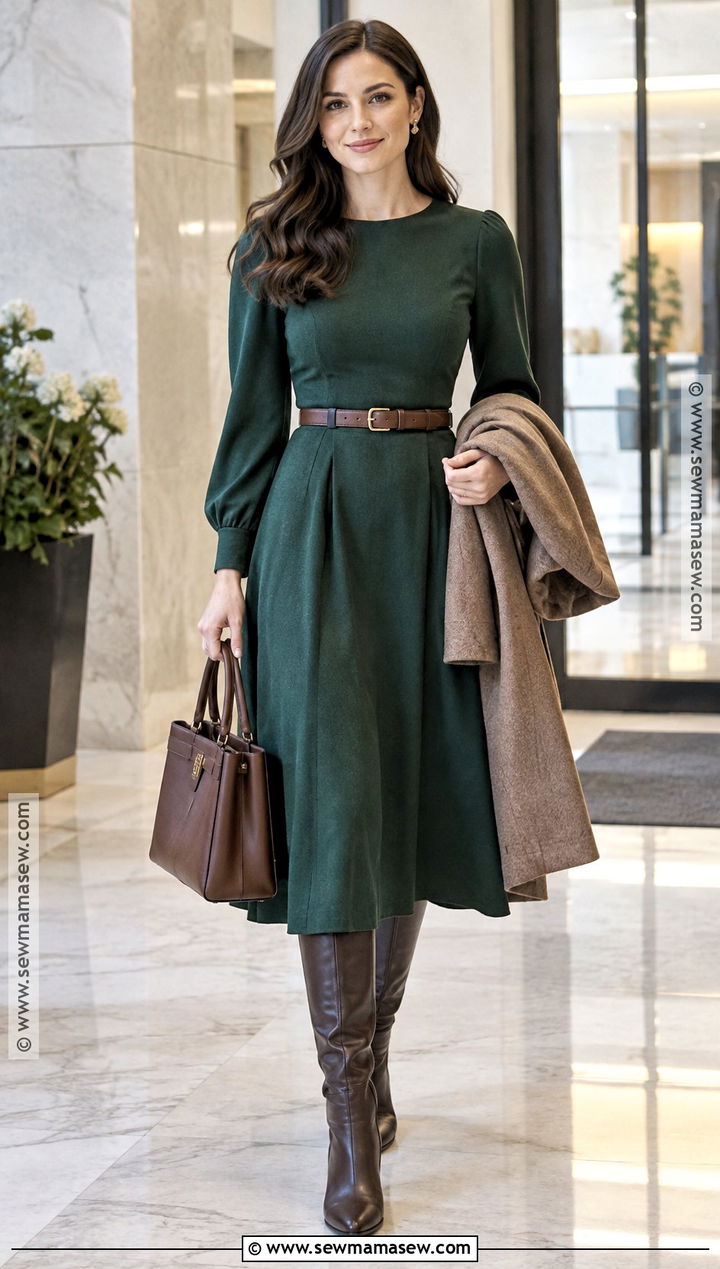
A long-sleeve midi dress can be as professional as a suit if it holds its shape. Fabric decides that more than style: ponte, crepe and compact knits stay smooth all day, while thin jersey clings and creases at the hip by lunchtime. Navy, forest green, burgundy and chocolate all suit the season. Choose a modest neckline and a hem below the knee, then define the waist with a matching leather belt. Sleek knee-high boots with a pointed or almond toe should slide under the hem without bunching at the ankle. A tailored wool coat goes over the top for the commute, and a structured handbag keeps it formal. It's one of the easiest outfits on this list to repeat each week.
11. Tweed Blazer With Pencil Skirt
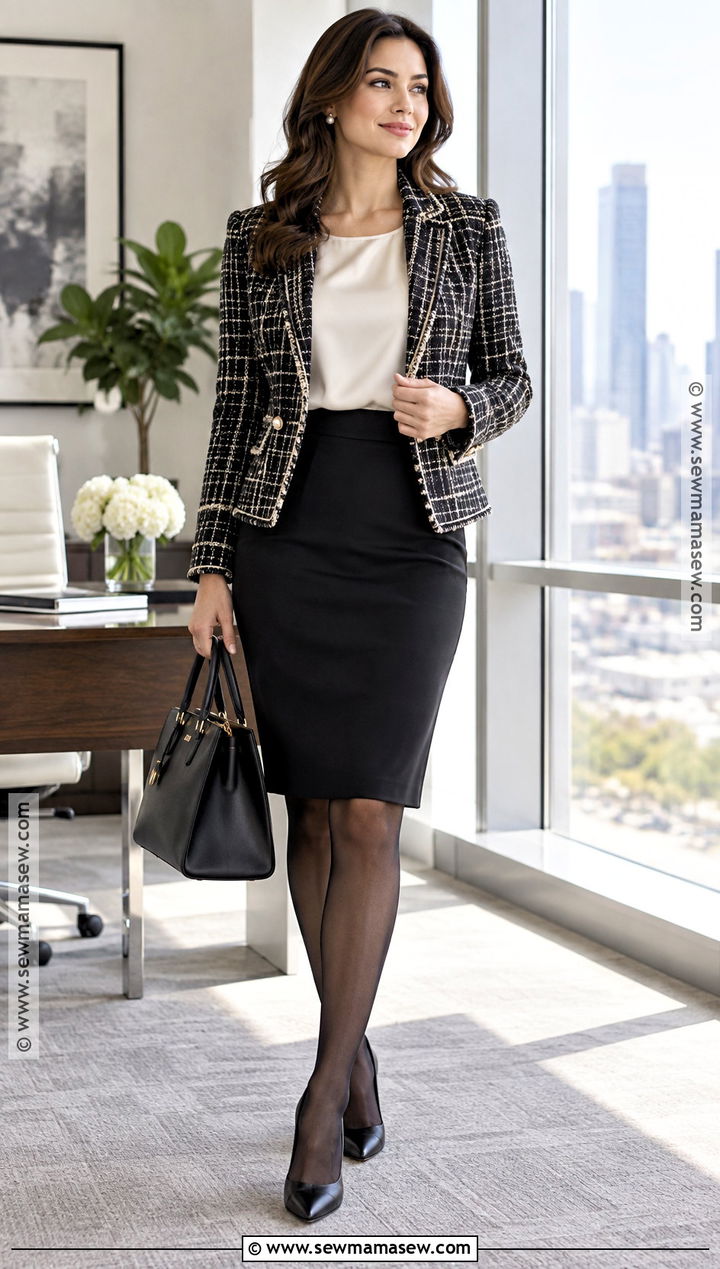
Tweed brings texture to a familiar blazer and skirt, and it's one of the warmest jacket fabrics you can wear indoors. I'd choose a refined tweed in black, cream, gray or navy with minimal metallic trim, since heavy gold buttons quickly look costume-like at work. Pick a solid pencil skirt that repeats one color from the weave, plus a simple silk shell so the top half doesn't get heavy. Leather pumps, sheer tights and a structured bag finish it. Keep the skirt around the knee and make sure it has a back vent, or you'll be taking tiny steps all day. A streamlined A-line works if a pencil cut doesn't suit you. Small pearl or metal studs are enough next to the texture.
12. Cream Monochrome Pantsuit
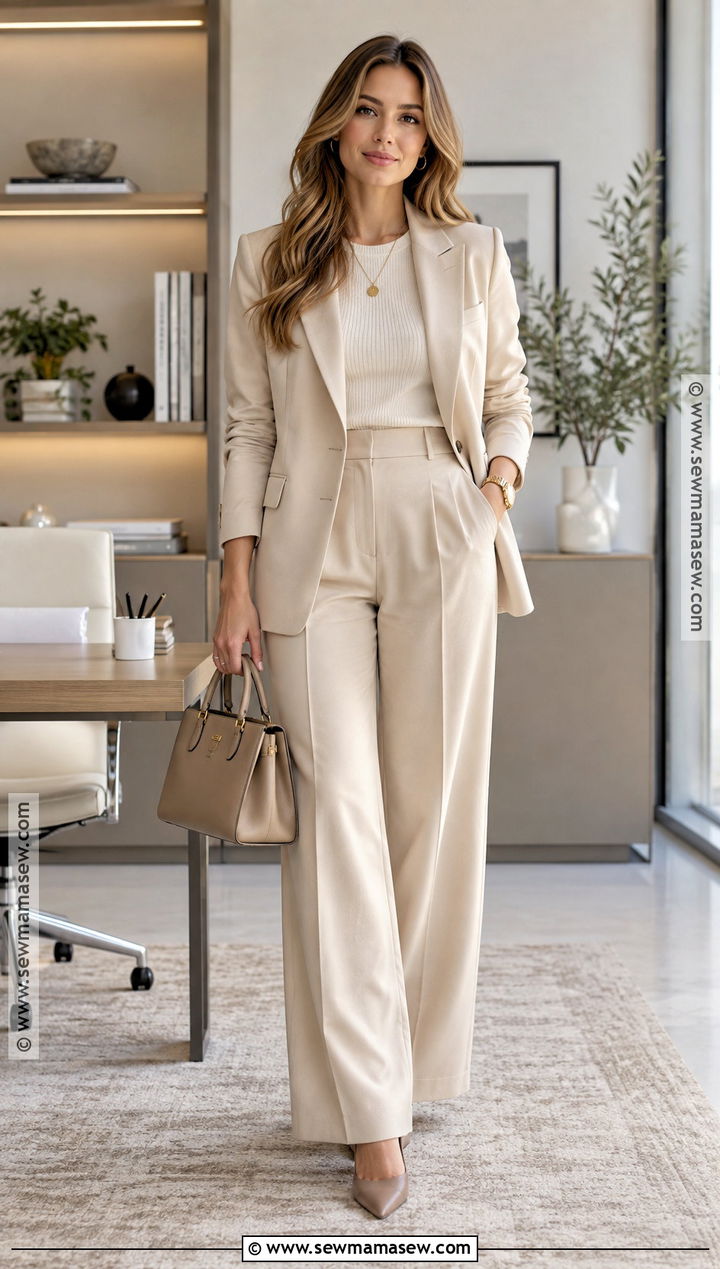
A cream pantsuit is the brightest thing you can wear to a fall office, and it stands out precisely because everyone else is in charcoal. I go for cream, oatmeal or soft beige in a medium-weight fabric, which drapes better and shows less underneath than a light one. A tonal knit shell in a slightly different shade adds depth. Taupe pumps, a tan structured bag and understated gold jewelry keep the palette soft. Skin-toned undergarments matter more here than with any other outfit on this list, because pale tailoring shows every line. A long camel or light gray coat adds warmth, and if your commute involves coffee on a train, carry the jacket and put it on when you arrive.
13. Longline Blazer With Slim Trousers
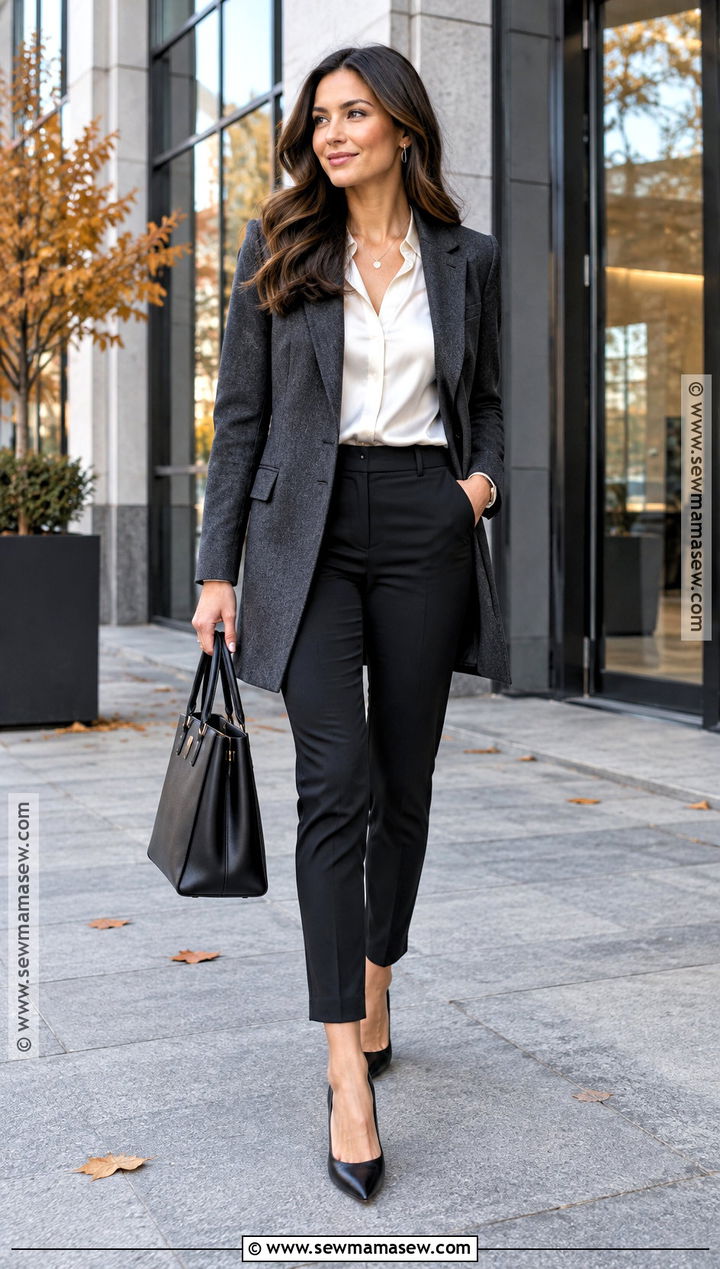
A longline blazer looks formal rather than borrowed when the trousers underneath are slim. I choose one that falls below the hip in charcoal, navy or black, with slim ankle-length trousers and a fitted silk blouse or fine turtleneck so nothing bunches beneath it. Pointed pumps or low block heels lengthen the leg, and a medium structured tote suits the scale. Longer jackets over narrower trousers have become a common update to standard suiting. The one fit check I never skip is the shoulder seam: even on a relaxed cut, it should end at your shoulder bone, or the jacket looks a size too big. It gives good coverage and a strong vertical line that suits many ages and sizes.
14. Double-Breasted Blazer With Satin Midi Skirt
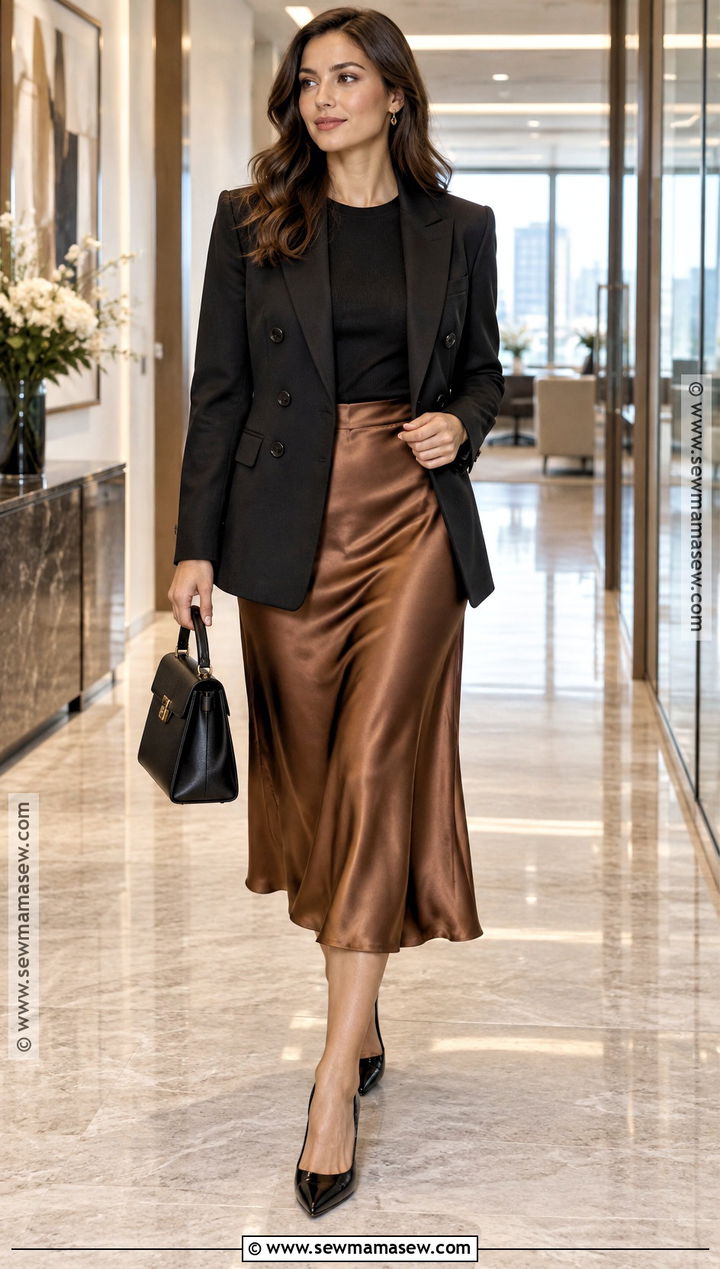
Satin and tailoring is a contrast that works at the office if the satin is substantial. A bias-cut midi in black, bronze, navy or deep burgundy drapes well over the hips, and a fitted knit top keeps the sheen from looking like evening wear. A double-breasted blazer in a matching neutral adds structure. Pointed pumps, a polished leather bag and simple earrings complete it. Satin shows every crease and some are see-through in bright light, so I check it near a window and sit in it before buying. A light slip underneath helps the drape and stops static clinging to tights. Button the blazer for important meetings and wear it open at your desk.
15. Three-Piece Suit With Vest And Trousers
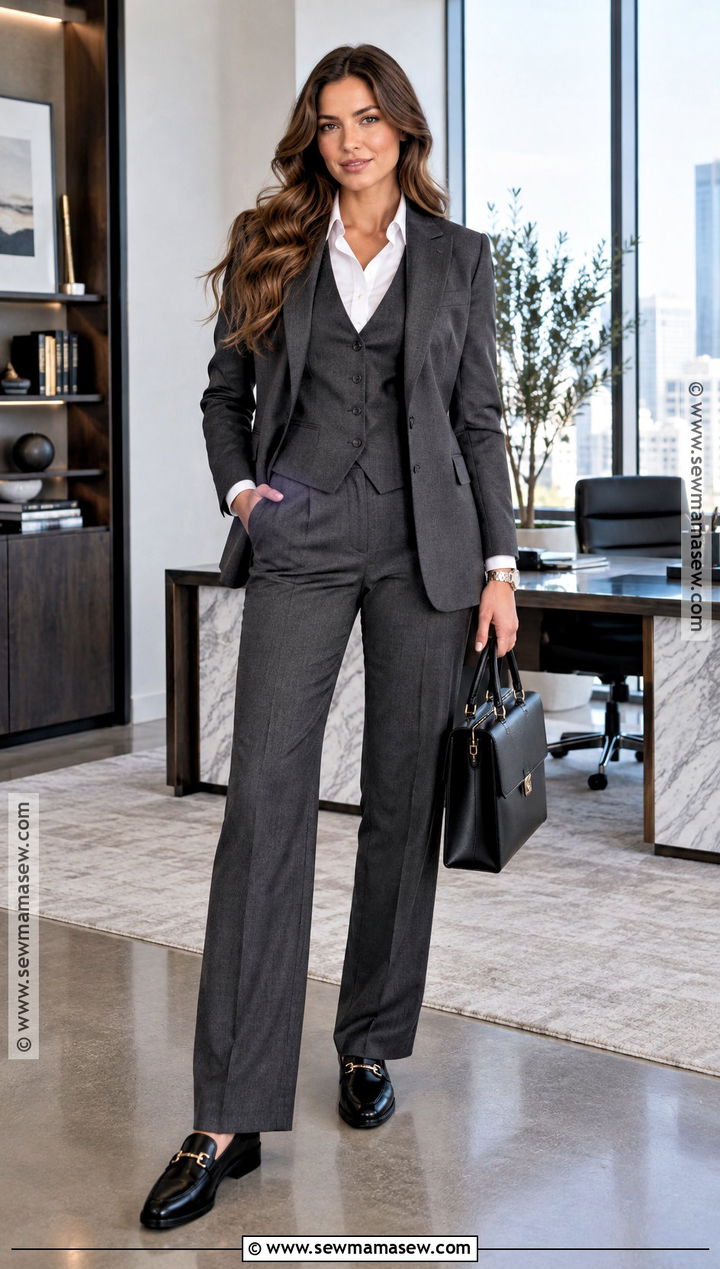
A three-piece suit gives you two outfits in one day: full suit for the meeting, vest and trousers once the office warms up. I choose charcoal, navy or dark brown, with a crisp cotton shirt in a clean collar underneath. The shirt should fit close enough not to bunch under the vest, and the vest must be long enough to meet the waistband, because a strip of shirt showing between them looks careless. Leather pumps or refined loafers, a structured briefcase and a classic watch finish it. Take the blazer off when the room heats up and the buttoned vest still looks polished. It suits interviews, executive presentations, business travel and conservative workplaces.
Alterations Worth Paying For, and the Ones to Skip
Almost nothing off the rack fits a woman perfectly in both the shoulders and the hips, so I treat a tailor as part of the budget for any work suit. Some fixes are simple and cheap; others are hard enough that you should walk away from the garment.
Easy and worth it
- Trouser hems, done with the shoes you'll actually wear most.
- Jacket sleeves, shortened so a little shirt cuff shows.
- Taking in the waist of a jacket, skirt or trousers.
- Adjusting a skirt length by an inch or two, if there's no complicated pleating or lining.
Hard, so buy for these
- Shoulders. If the seam doesn't sit at your shoulder bone, choose another size or cut.
- Jacket length, which throws off pocket and button placement.
- Letting out anything with a narrow seam allowance.
Once your suits fit, look after them between wears. Brush wool after a long day, hang jackets on shaped hangers, give each suit a day off so the fibers recover, and steam out creases instead of sending it to the cleaner every week, since frequent dry cleaning wears the cloth out faster.
Seven Colors, a Good Tailor and Shoes You Can Stand In
A formal fall work wardrobe needs structure, and it also needs to survive a real working day. Start with a suit or two, a tailored dress, a refined skirt, a few fine knits and some crisp blouses in colors that talk to each other. Navy, charcoal, camel, burgundy, olive, cream and chocolate mix easily, so you can repeat pieces without every outfit looking the same. Spend on tailoring before trends: shoulder placement, sleeve length, waist fit and trouser hems are what people notice. Closed-toe shoes you can walk in, simple jewelry and a structured bag finish nearly every look. From there, adjust each formula to your body, your office, your climate and your budget.
Related posts: