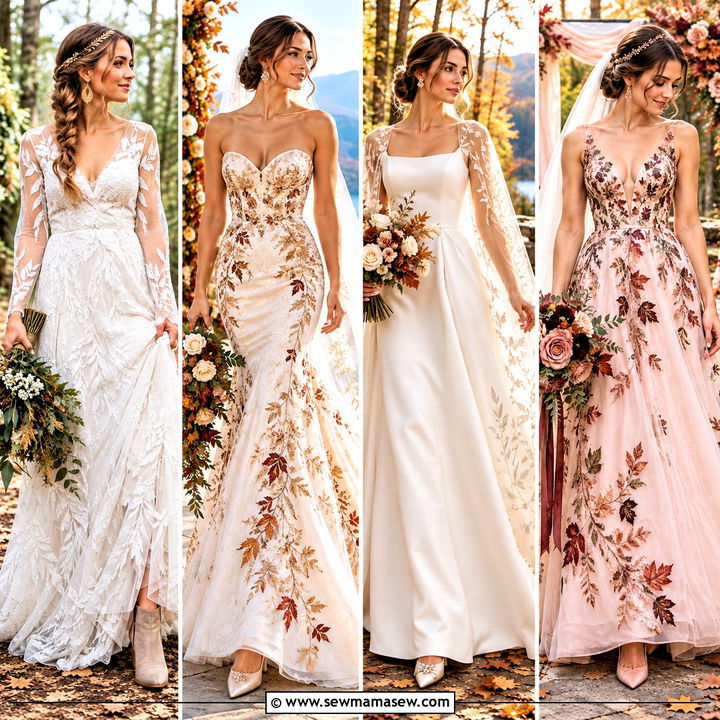
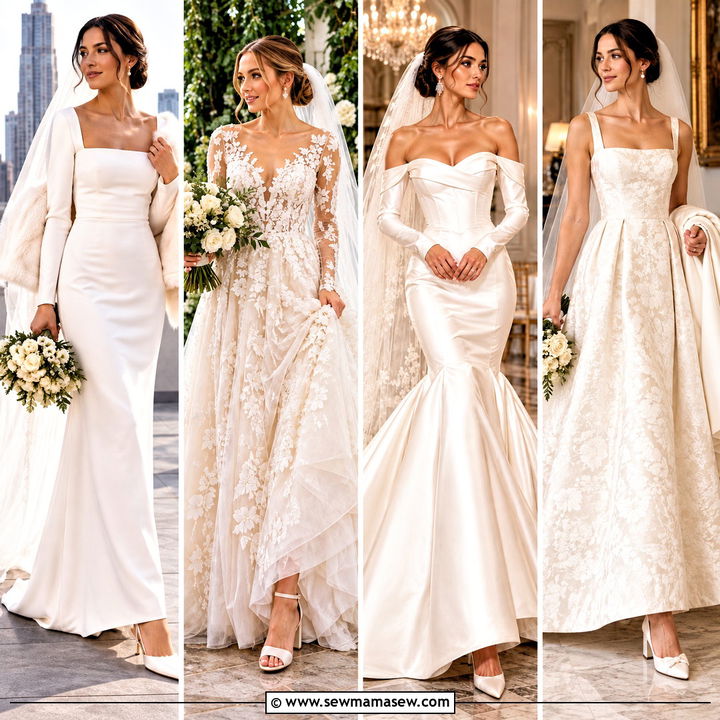
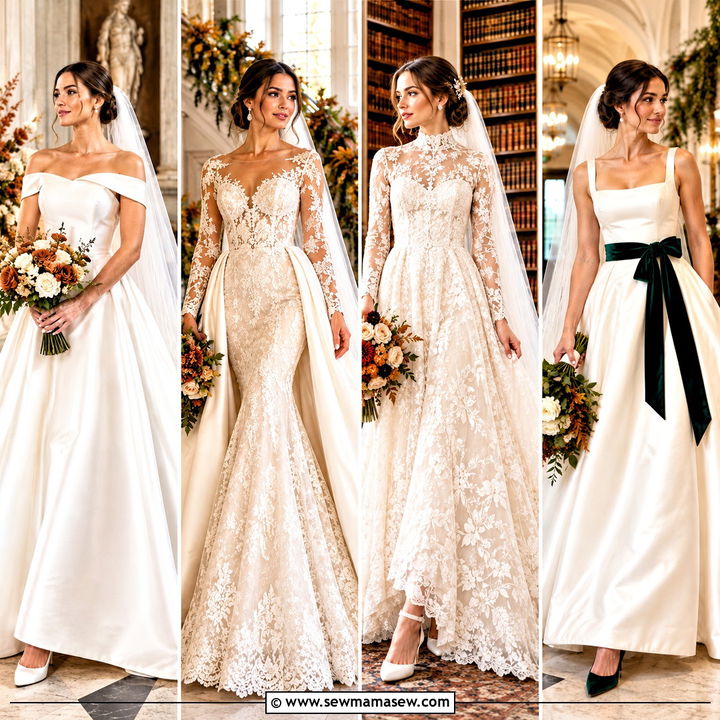
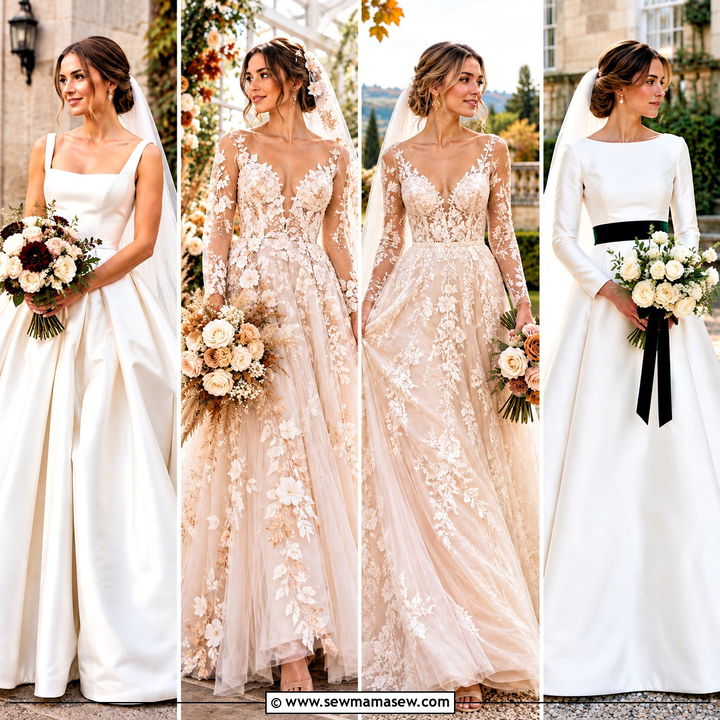
Lace is the fabric I reach for most often when a bride tells me her date falls in October or November. It gives a gown surface interest that reads well in low autumn light, and it can cover the arms and shoulders without adding the weight of a heavier fabric. What changes from gown to gown is the silhouette, how dense the lace is, and what sits underneath it. Below are fifteen directions I'd actually put in front of a fall bride, with notes on how each one moves, photographs and copes with a cold ceremony and a warm dance floor in the same day.

Telling Chantilly, Alençon and Guipure Apart at the Fitting
Shop labels often just say lace, but the type changes how a gown hangs, how warm it feels and how it survives a long outdoor day. When I'm working with a fall bride, I handle the fabric before I look at the silhouette, because two dresses with the same cut can behave completely differently.
Chantilly
Fine and flat, with flowers outlined in thin thread on a sheer net. It drapes softly and suits sleeves and overlays, but it offers almost no warmth and snags easily. I keep it for indoor or sheltered ceremonies.
Alençon
The motifs are outlined with a raised cord, so the pattern sits up off the surface and catches light. It has more body than Chantilly and holds a crisp edge along scalloped hems and necklines. It's the lace I see most on structured fall gowns.
Guipure
Guipure has no net background at all; heavy motifs are joined by small bars. It's thick, almost sculptural, and it holds its shape in wind. The trade-off is weight and stiffness, so it suits a modern sheath or a short dress better than yards of skirt.
A quick test I use: hold the sleeve up to a window. If you can see your fingers clearly through the ground, the lace will look delicate but feel cool outdoors, and you'll want a wrap or coat in the plan.
1. Long Sleeve Lace A-Line Wedding Dress
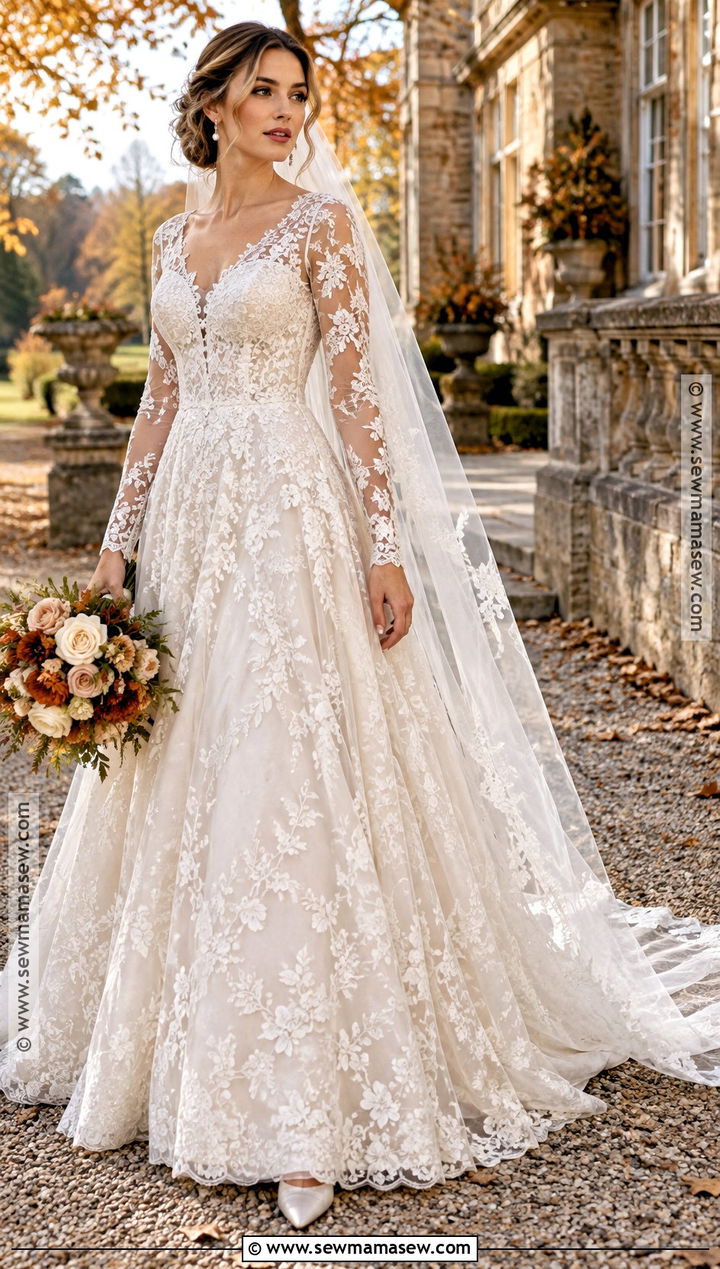
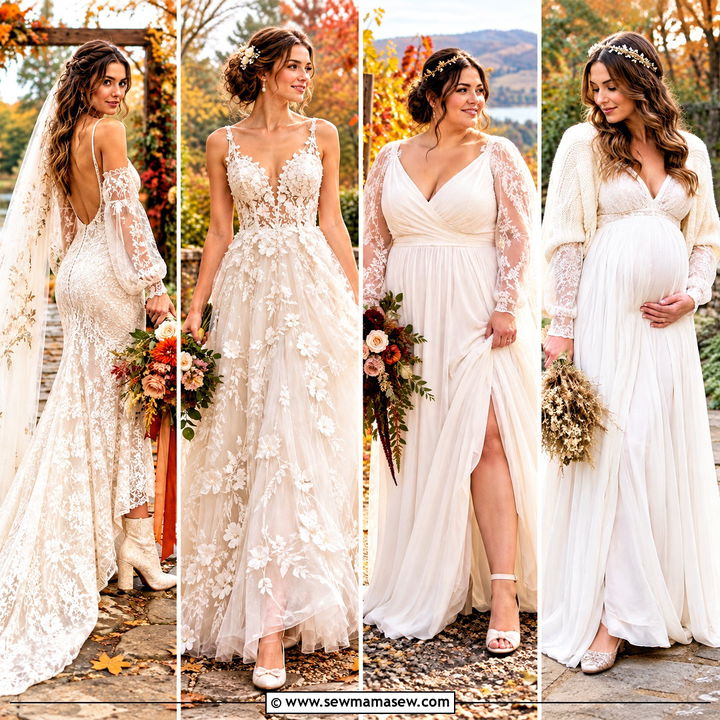
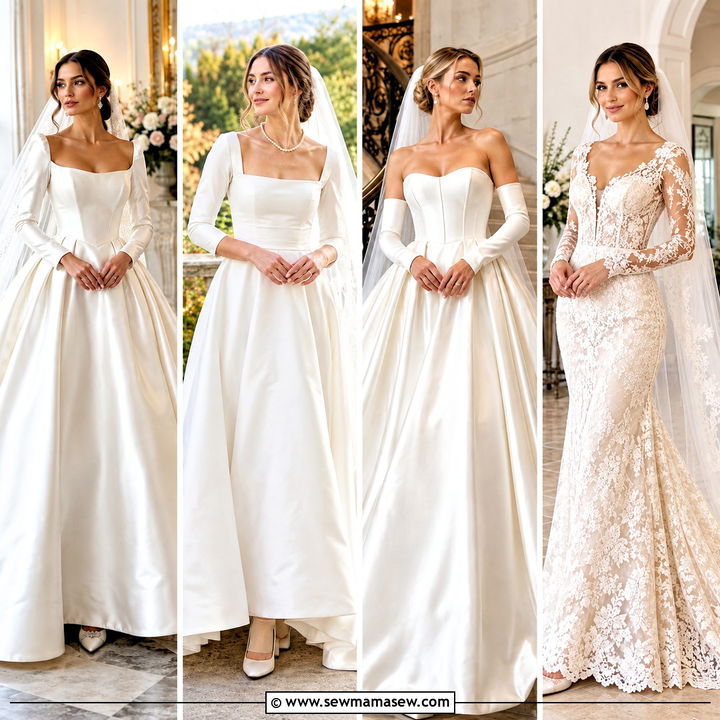
If a bride walks in unsure of what she wants, this is usually the first gown I pull. The A-line skirt skims the hips and gives room to walk across grass, and the fitted bodice keeps the waist defined. I look for floral lace laid over an ivory lining, because over a bare nude lining the pattern can flatten in photos. Illusion sleeves with covered buttons give coverage, but be honest with yourself: they add almost no warmth. Pointed ivory pumps, pearl drops and a fingertip veil edged in matching lace finish it, and a loose low bun keeps the sleeve line visible from behind. It suits estate and garden venues where the setting is already doing a lot.
2. High Neck Lace Wedding Dress
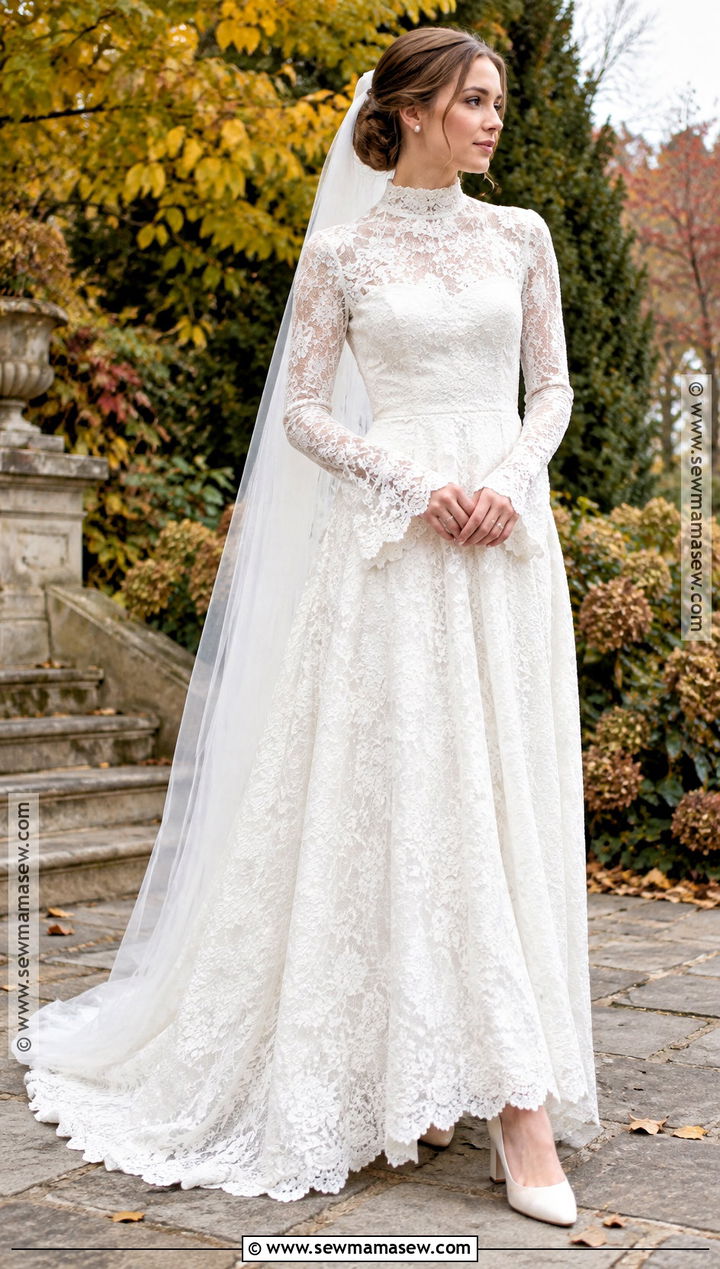
A high neck frames the face so completely that I almost always tell brides to skip the necklace. Balance the closed top with a fitted bodice and a skirt that has some flow, or the whole gown can start to look stiff. Scalloped cuffs, covered buttons down the back and a softly layered train mean the dress still has detail when you're facing the officiant. I'd pair it with small pearl studs, a quiet hair comb and closed-toe block heels, which stay steady on uneven ground. A chignon shows off the neckline best. One caution: if your neck is short or you dislike anything near your throat, try this on early, because some women feel boxed in by it within an hour.
3. Off The Shoulder Lace Ball Gown Wedding Dress
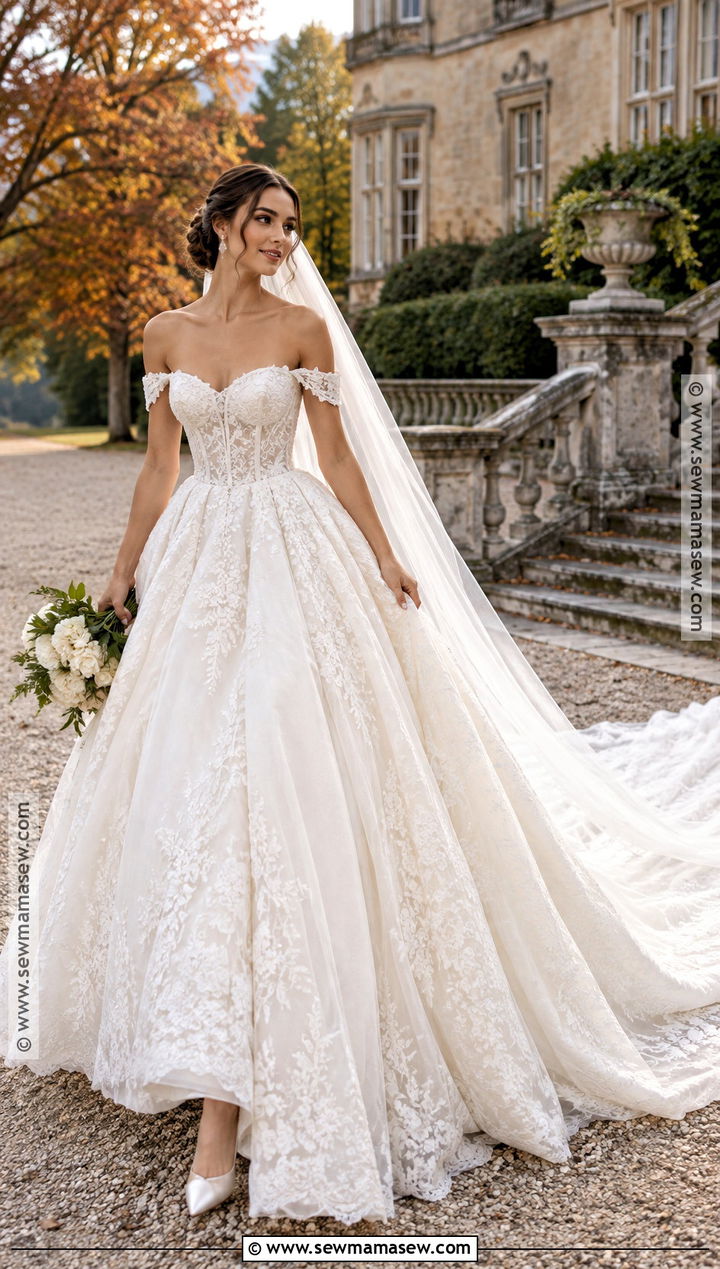
This is the gown for a formal evening reception or a ballroom. The structured bodice carries a full skirt, and lace sleeves or folded lace straps keep the open neckline from feeling bare. I steer fall brides toward ivory or natural white rather than optic white, which can look blue against autumn foliage. A long, lightly scalloped train shows its edge best on a clean indoor floor; outdoors it picks up leaves fast. Add a plain cathedral veil, crystal studs and satin pumps, and wear your hair in a smooth low twist. With that much skirt volume, keep the bouquet compact so your silhouette doesn't turn into one wide shape in the wide shots.
4. Boho Lace Wedding Dress With Bell Sleeves
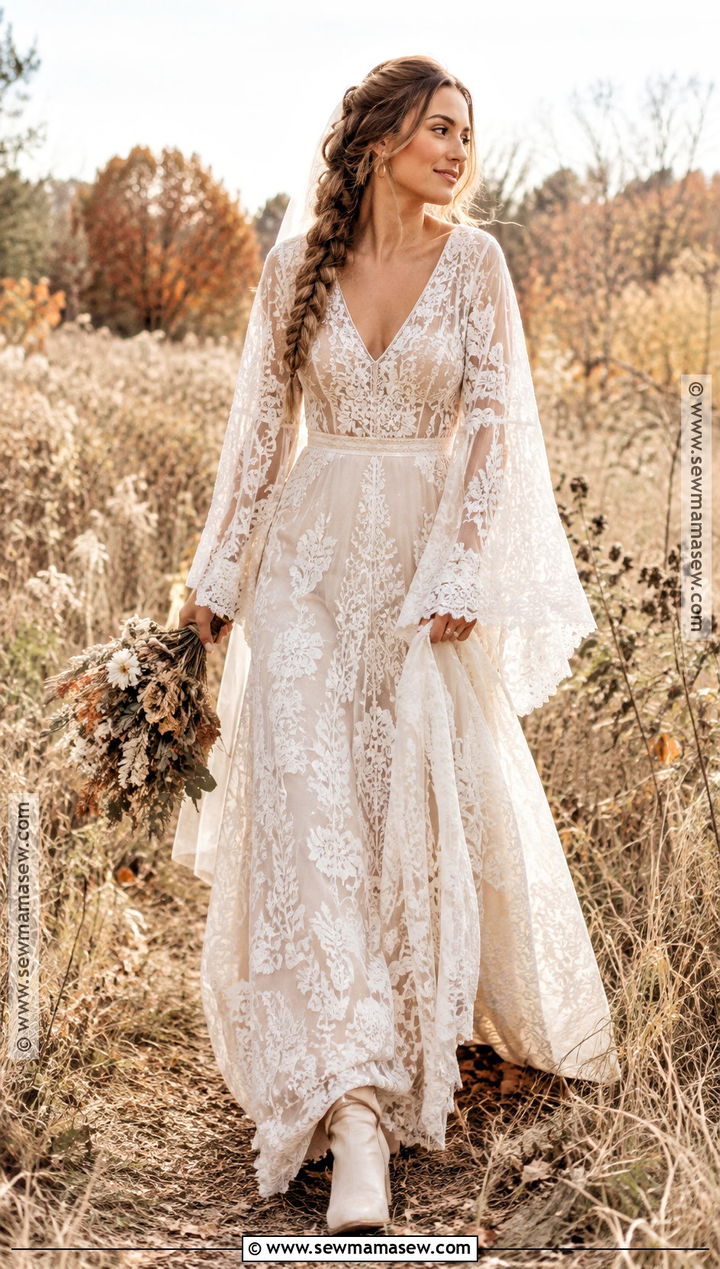
Bell sleeves move every time you lift your arms, which is exactly why brides love them and exactly why I check them at the fitting. They can drag through food at the reception and catch on bouquet stems. For a barn, woodland or meadow setting, I'd choose an A-line or column cut with botanical lace and a lightly defined waist, plus a lined bodice so it still looks like a finished bridal gown. Ivory ankle boots handle gravel and soft grass far better than a slim heel. Small gold earrings, a loose braid with the veil tucked below it, and a dried floral bouquet are all it needs. Anything more and the sleeves lose their role.
5. Vintage Chantilly Lace Wedding Dress
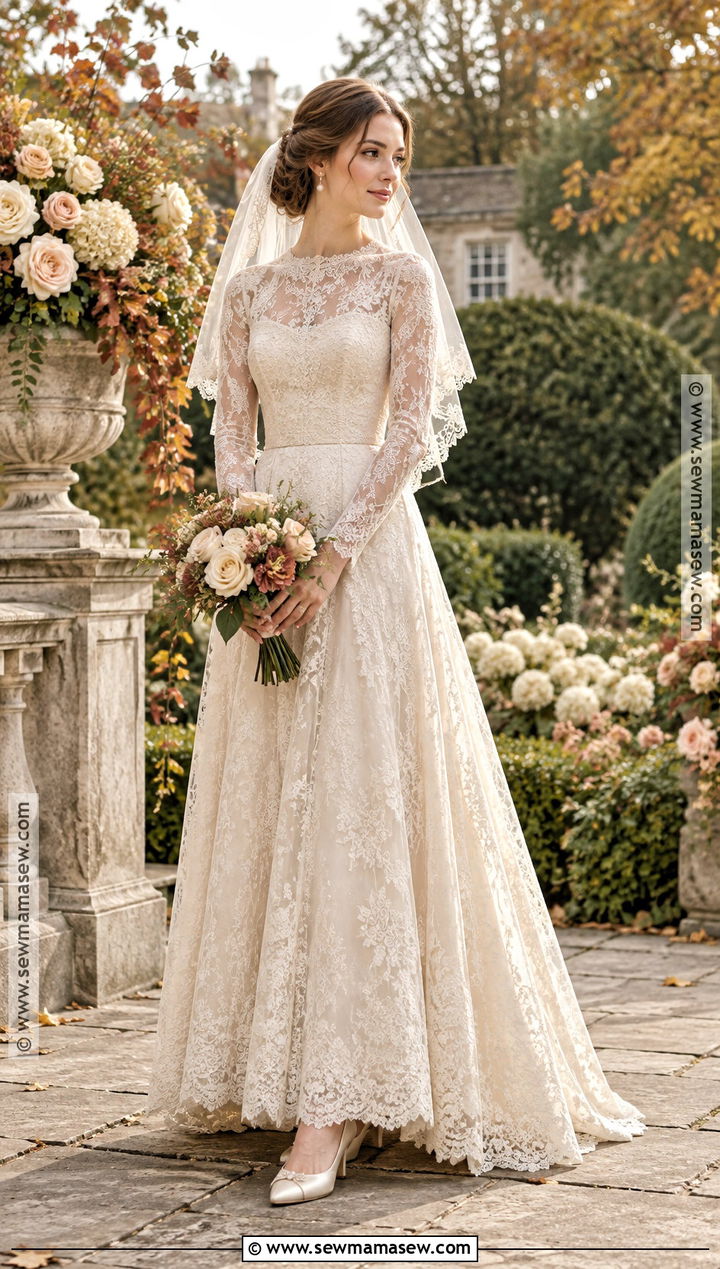
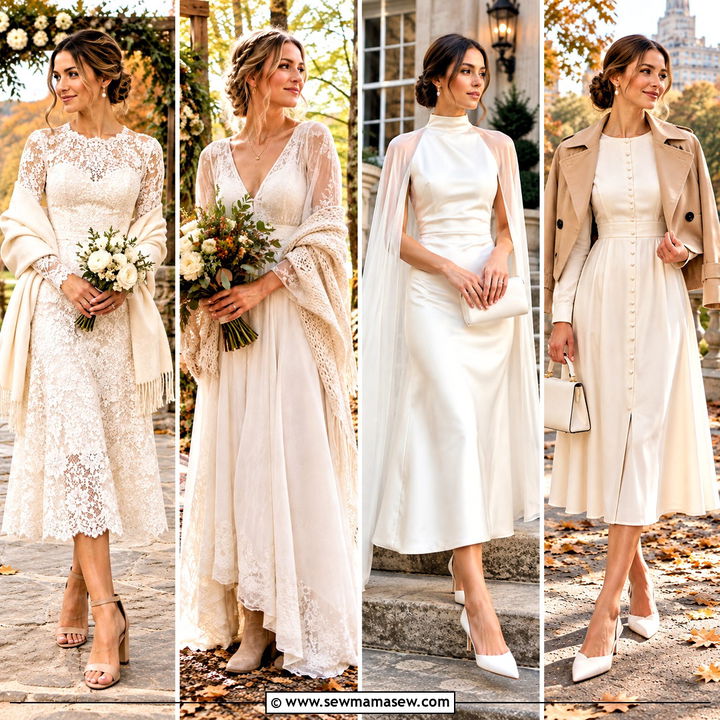
Chantilly is one of the finest laces you can wear: a delicate net ground with flowers outlined in thin thread. It needs a smooth lining underneath so the pattern reads, and it suits a small dinner or a candlelit room more than a windy hilltop. I like it with a fitted waist, long sleeves and a softly flared skirt, finished at the neck with a bateau or scoop line. Low satin heels, pearl earrings and a short lace-edged veil keep things in proportion. Soft waves pinned to one side give a hint of the past without looking like costume. Treat it gently, because the fine net snags on rings, beaded bags and rough bark.
6. Mermaid Lace Wedding Dress With Long Train
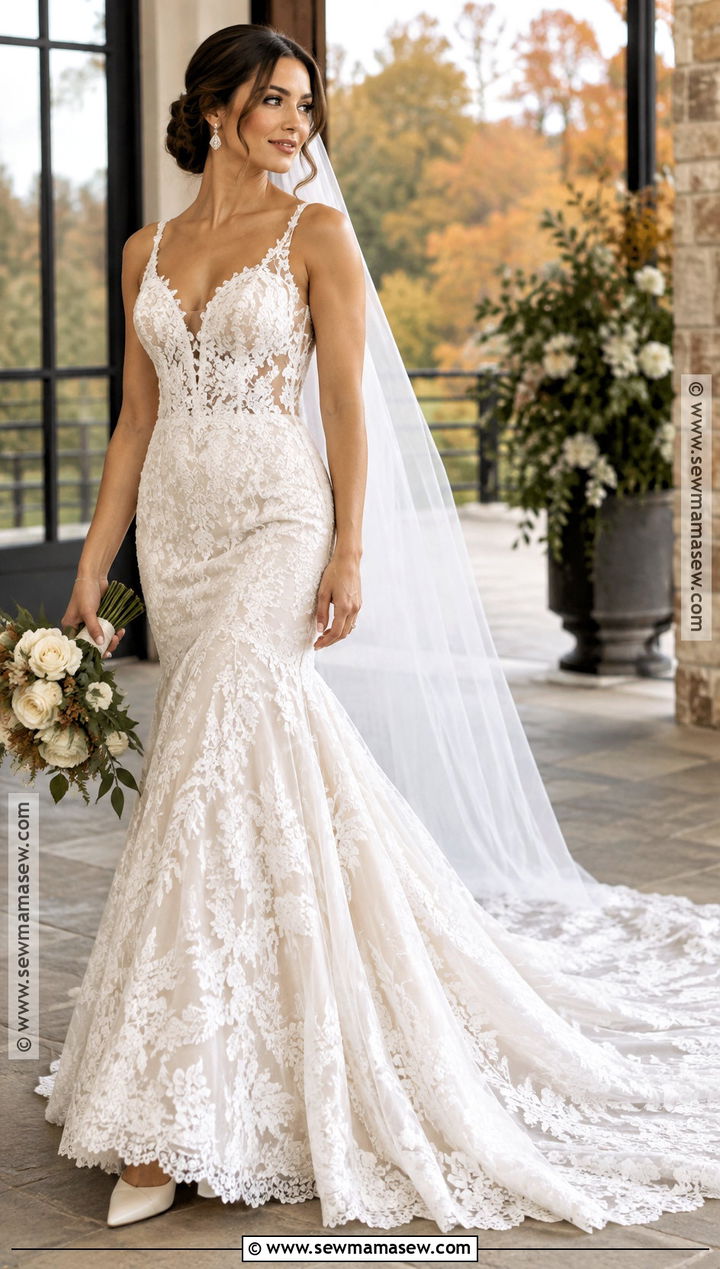
Before I let a bride commit to a mermaid gown, I make her sit in it, climb a step and do a slow dance turn. The cut follows the body to the knee and then flares, so where that flare starts decides whether you can move at all. A supportive bodice matters more here than in any other silhouette. When the appliqués get denser toward the hem, the long scalloped train becomes the focus, so I keep the veil plain. Sleek pointed pumps, drop earrings and a narrow bracelet are enough. For cold portraits, a clean ivory wrap over the shoulders comes off without disturbing the fitted line.
7. Floral Lace Wedding Dress With 3D Appliqués
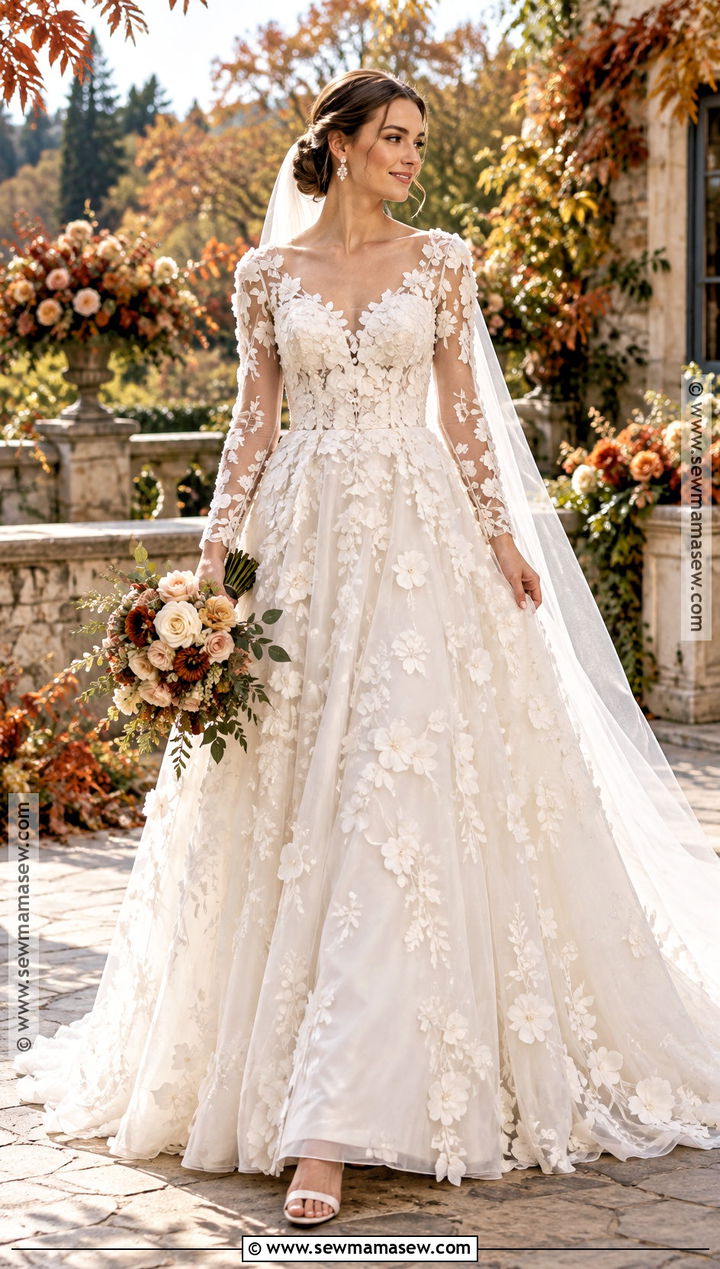
Raised flowers look wonderful up close, and they also add real weight, so placement matters. The versions I like best scatter petals across the bodice and sleeves and let them thin out into plain tulle by the hem, which keeps the skirt light enough to move. An A-line base supports the dimensional work in almost any venue. Simple ivory heels, small crystal earrings and a plain chapel veil keep the gown in charge, and a smooth bun avoids putting flowers in your hair as well as on your dress. A bouquet of white blooms with rust accents and eucalyptus ties it to the season. Ask the fitter how the appliqués will hold up when you sit, since crushed petals rarely spring back fully.
8. Square Neck Lace Wedding Dress With Basque Waist
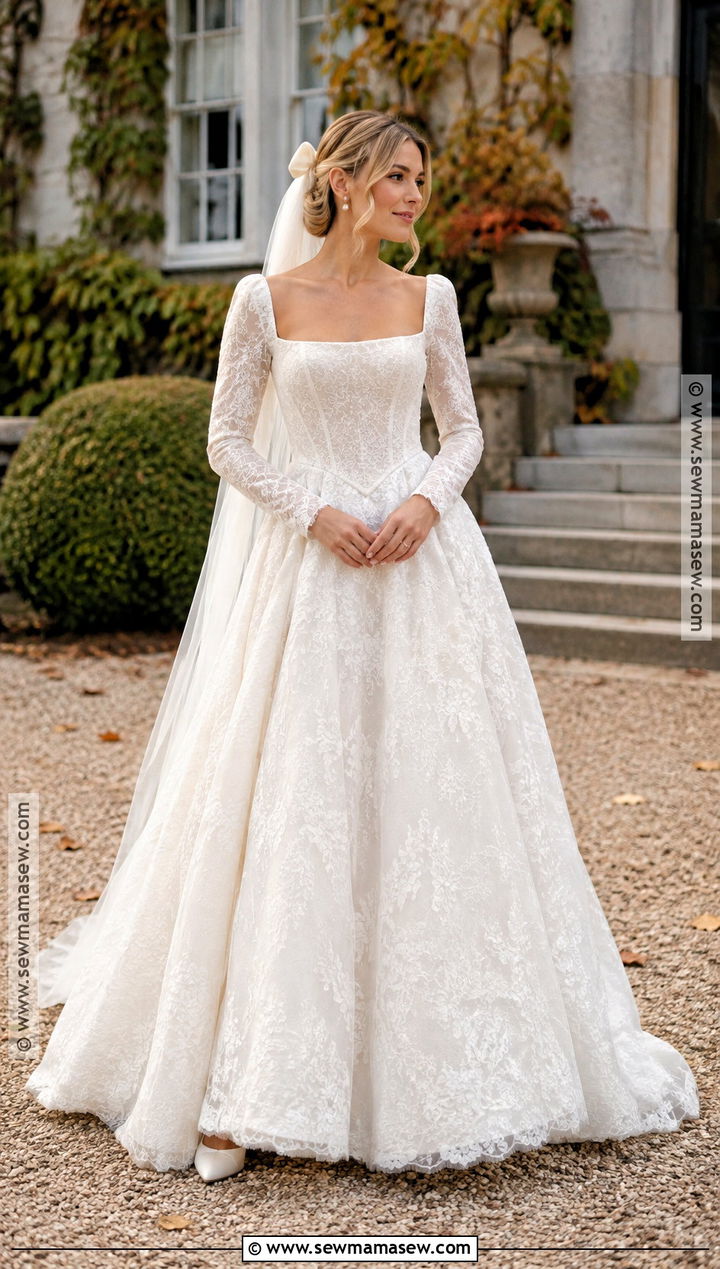
A square neck shows the collarbone, and the pointed basque waist draws the eye down so the torso looks longer before the skirt opens. It photographs crisply because firm lace appliqués over a structured bodice hold a clean outline. Long fitted sleeves make it sensible for a cold day. I'd finish it with pearl studs, a narrow ivory velvet bow in the hair and closed-toe pumps, with the veil placed under a low bun so nothing covers the neckline. The point of that waist can dig in when you sit for dinner, so test it seated at your fitting. If it bites after five minutes, it'll bite for five hours.
9. Lace And Satin Wedding Dress
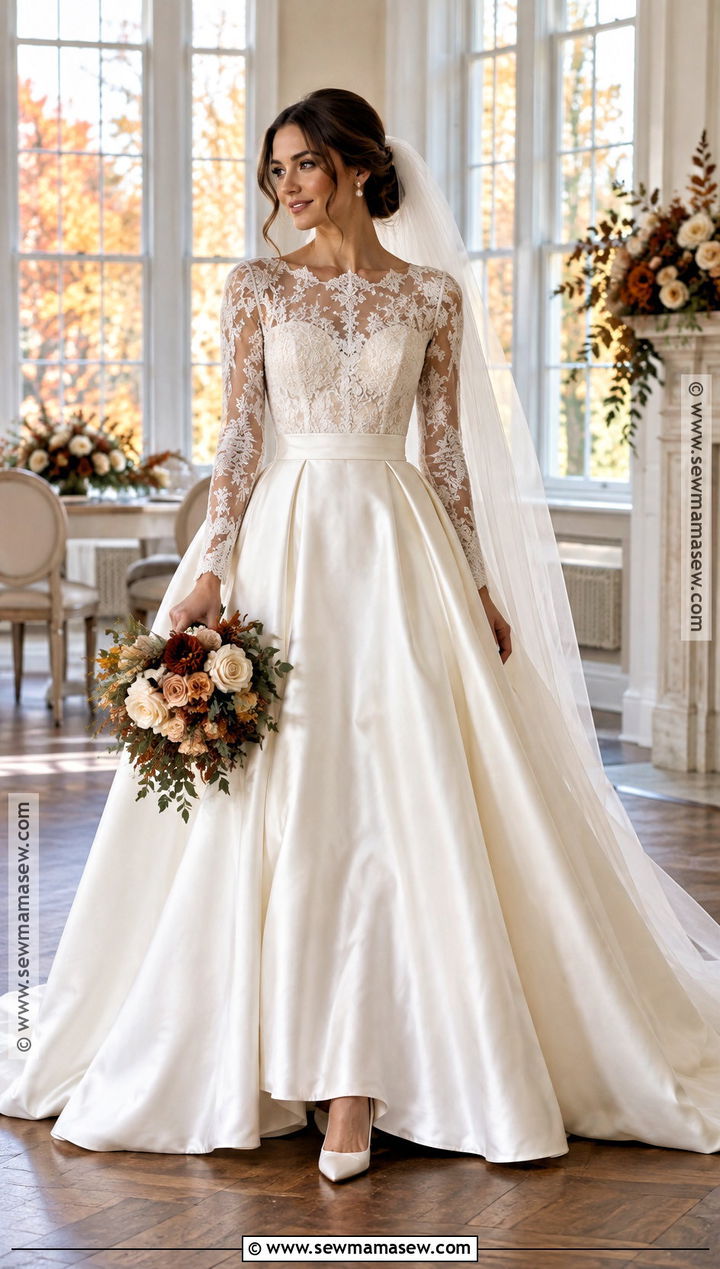
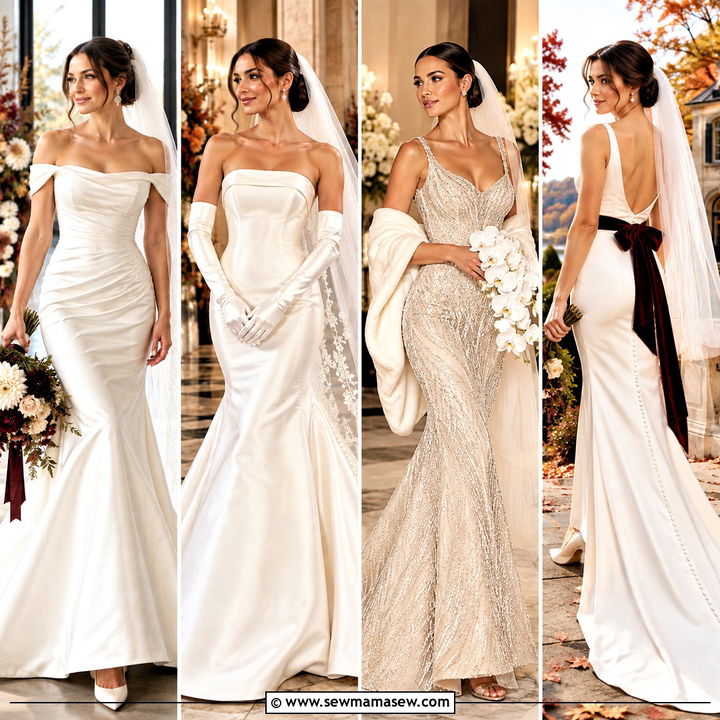
For a bride who loves lace but doesn't want to be covered in it, this split works well. A long-sleeved lace bodice sits over a clean satin skirt, either A-line or full, and the contrast lets each fabric show what it does best. A satin waistband marks the change neatly. Satin also has enough body to hold a skirt shape in cool, damp air, where lighter tulle can droop. I'd style it with satin heels, pearl earrings and a medium tulle veil, with hair gathered in a neat bun and a structured bouquet. Satin creases when you sit, so expect some lines by the reception and don't panic about them.
10. Lace Wedding Dress With Bridal Cape
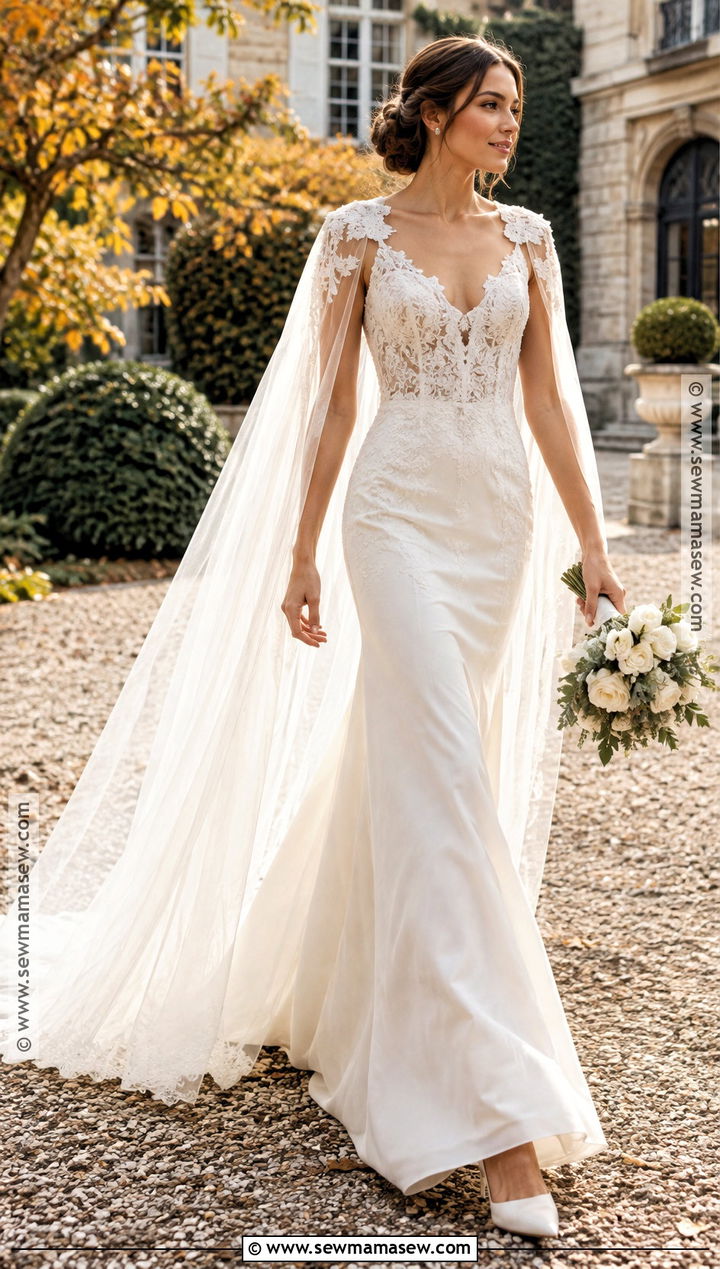
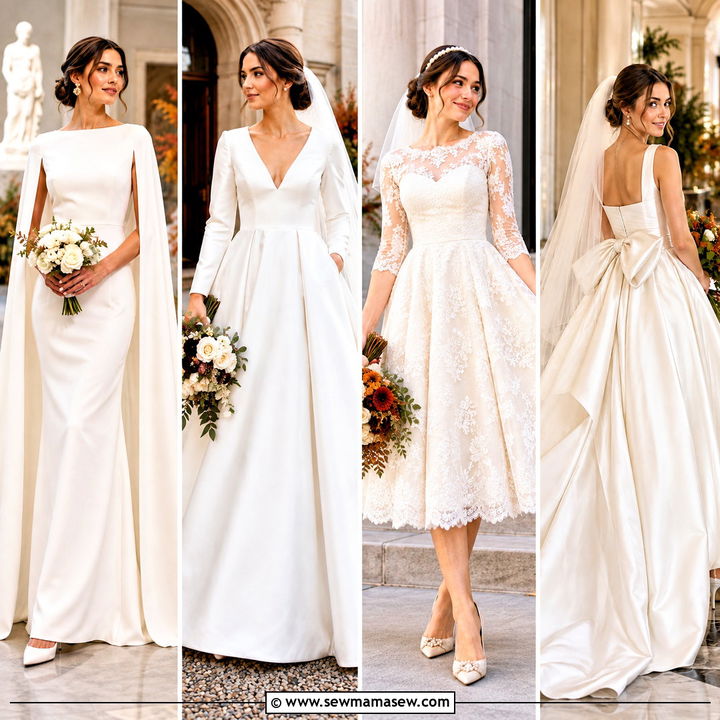
When a bride is nervous about the forecast, I suggest a cape early in the process. Start with a streamlined A-line, sheath or fitted gown that lies smooth underneath, then add a lightweight tulle cape with lace at the shoulders and hem; a bulky one swallows the dress. It can stand in for a veil at the ceremony and come off for the reception. A low bun stops the tulle from snagging in your hair, and a necklace usually just tangles with it, so I'd skip one. Pointed pumps and studs are plenty. Tulle won't keep you warm on a properly cold day, so plan a coat for the walk between buildings as well.
11. Lace Wedding Dress With Detachable Sleeves
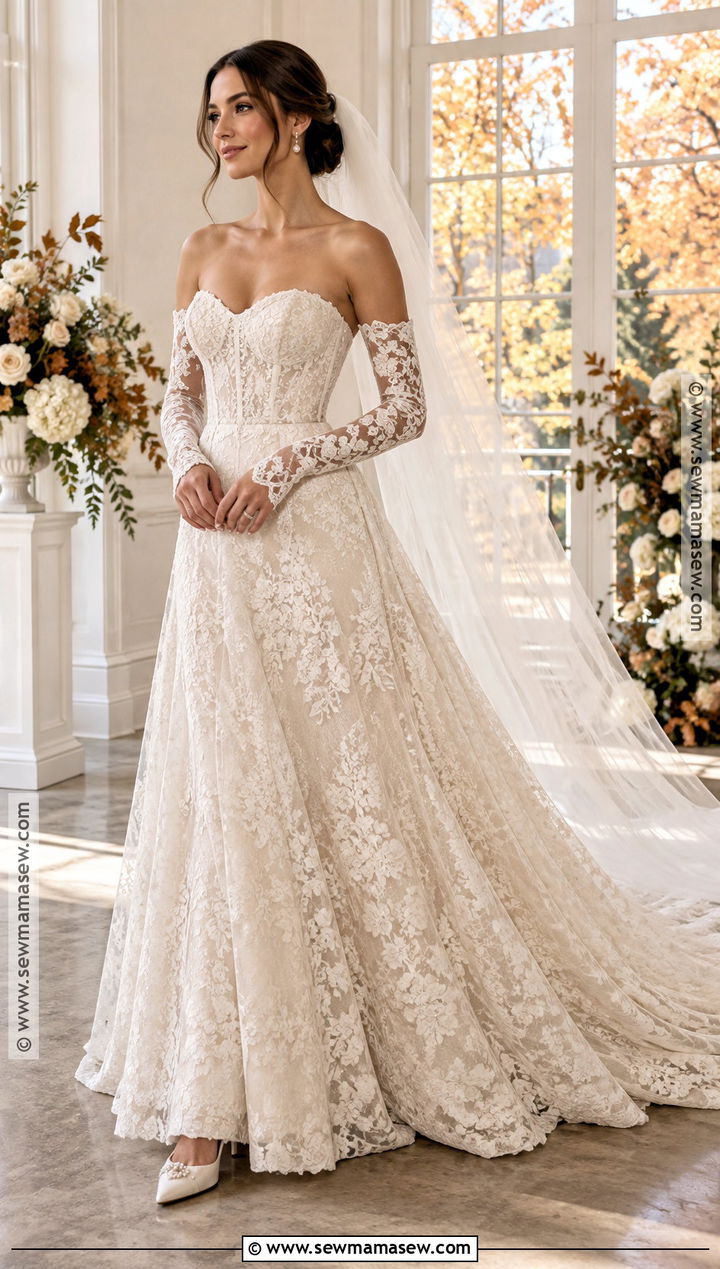
Detachable sleeves give you a covered ceremony gown and a lighter reception gown without a second dress. The sleeves go on over a strapless or sleeveless bodice for the vows, then come off after photos. At the fitting, I check that the attachment points lie flat and that the lace on the sleeve matches the bodice lace at the upper arm, because a mismatch there shows in every close-up. For the ceremony, I'd use a long plain veil, pearl drops and classic ivory heels; for the reception, lose the veil and add a sparkling comb. Strapless bodices need proper internal structure, so you aren't hitching it up all evening once the sleeves are gone.
12. Tea Length Lace Wedding Dress
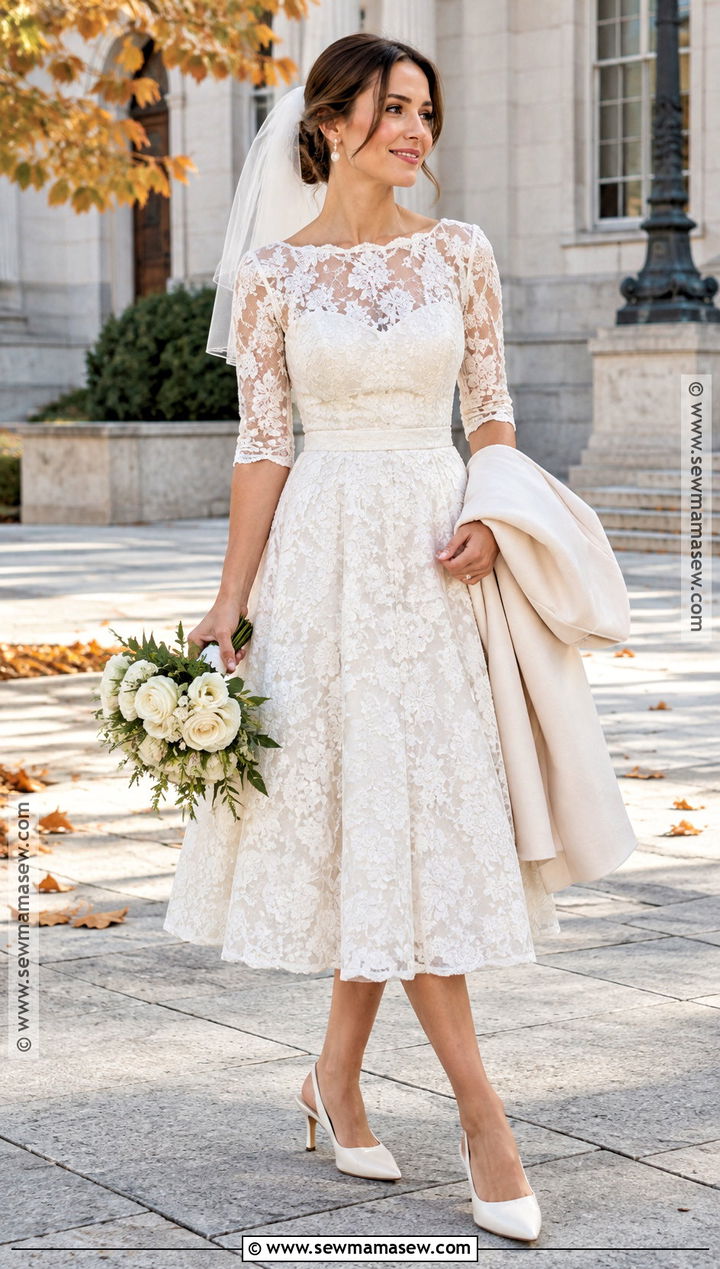
A tea-length hem falls somewhere between knee and ankle, which puts your shoes on full display, so I choose them alongside the dress rather than after it. A fitted lace bodice with elbow sleeves and a softly flared skirt keeps the proportions balanced. Ivory slingbacks, pearl earrings and a short veil suit its classic feel. On a cold day, a tailored bridal coat or cropped satin jacket covers you for outdoor photos without hiding the hemline. A smooth updo keeps it tidy. It's my usual suggestion for a courthouse ceremony or a small venue where a train would just get stepped on, though very petite brides should check that the hem doesn't land at the widest part of the calf.
13. Plus Size Lace A-Line Wedding Dress
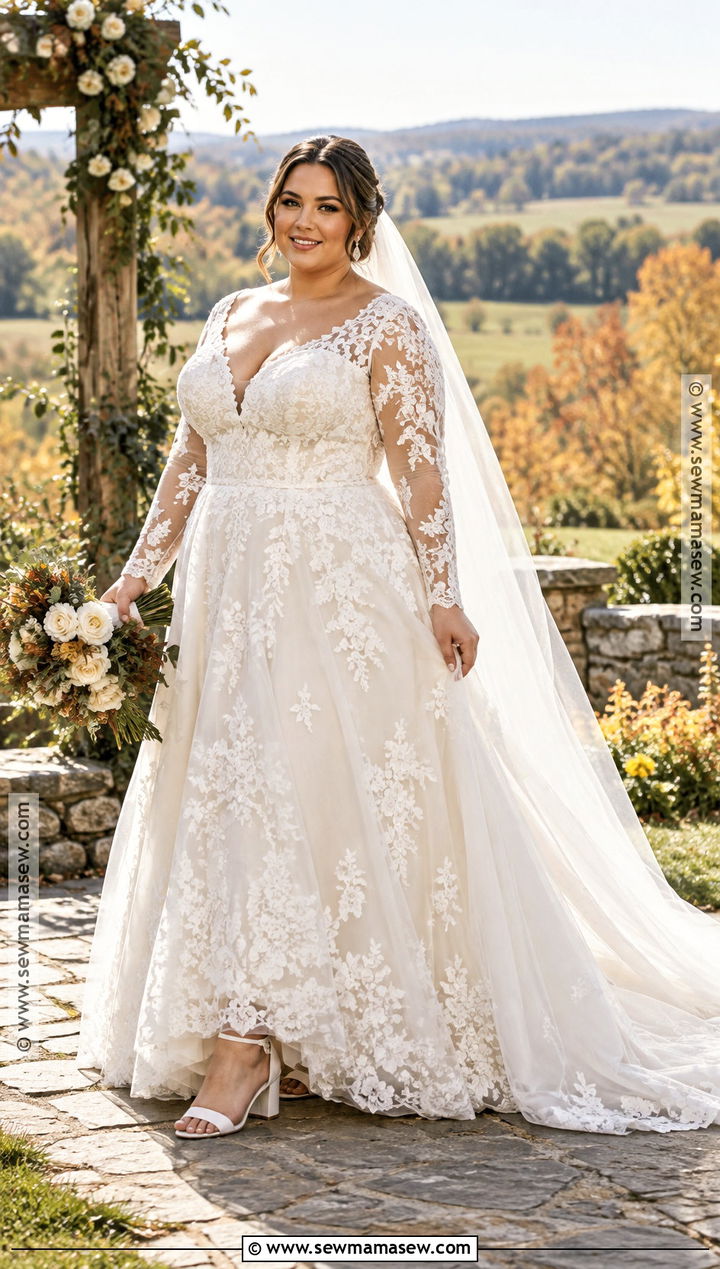
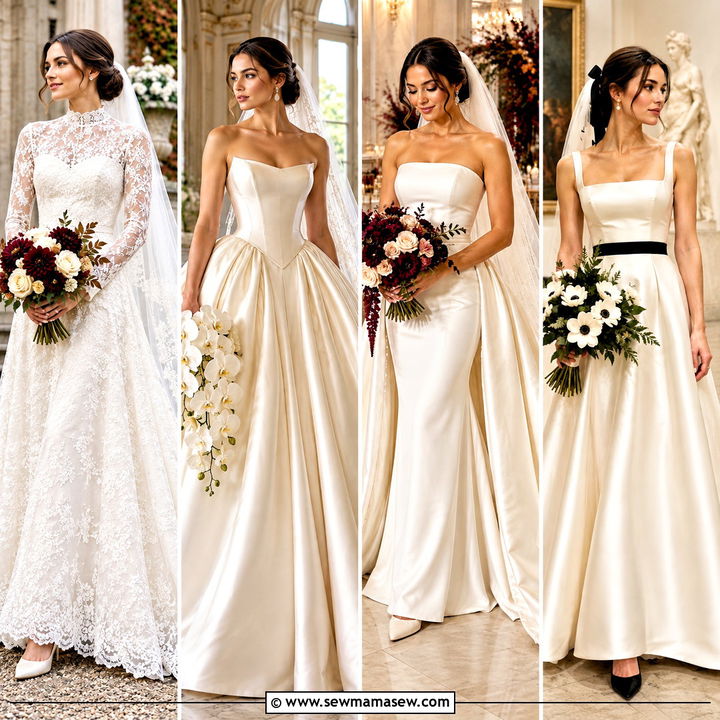
For plus-size brides, I care most about what's inside the bodice. Boning, adjustable lacing and well-placed seams do the supporting work; stretch alone gives way over a long day. A natural or slightly raised waist can open into a soft skirt that doesn't grip the hips. Put the lace where you want attention, whether that's the neckline, the waist or the sleeves, and keep the rest calmer. Supportive block heels, drop earrings and a veil long enough to fall past the widest point of the skirt finish it. Soft waves or a secure updo both suit it. Find a bridal tailor who fits the gown to your body and ignores the number on the tag.
14. Modern Sheath Lace Wedding Dress
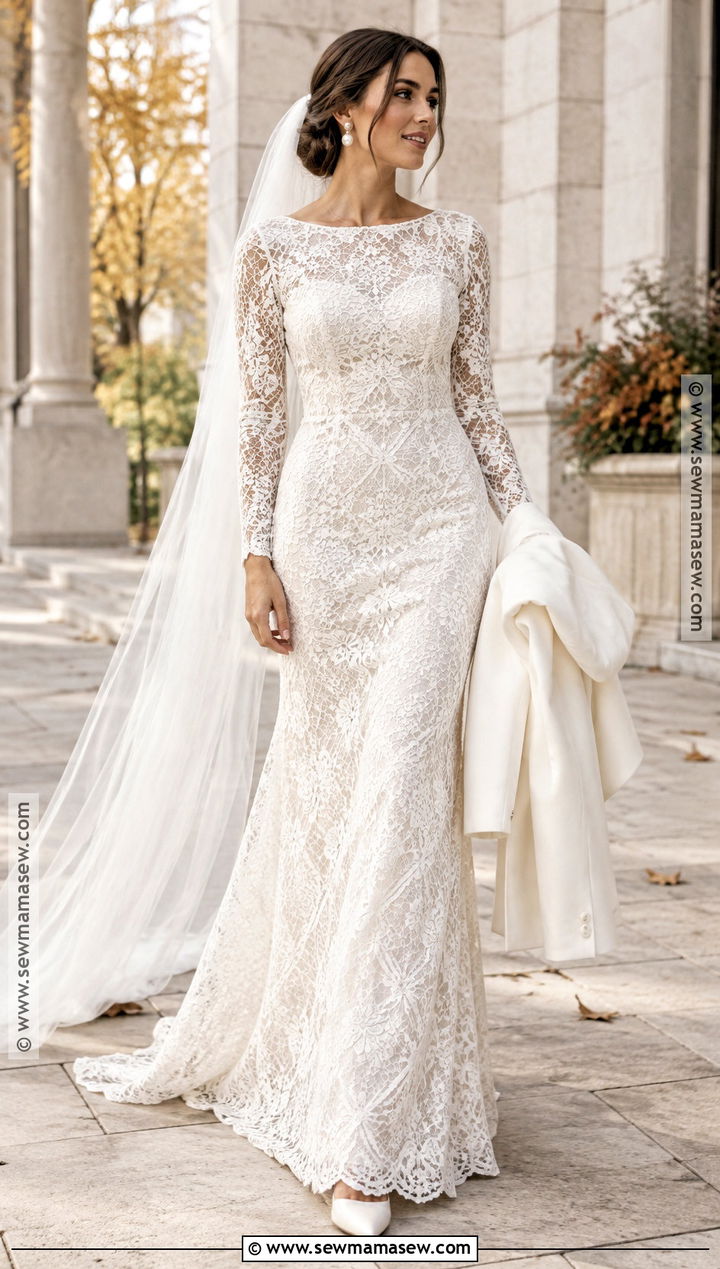
A sheath sits close to the body without the knee flare of a mermaid, so it reads modern and suits a smaller room or a minimal venue. This is where I'd try geometric or large-scale floral lace instead of a traditional pattern. A bateau neck, a low back or long narrow sleeves add interest without breaking the simple line. Minimal ivory pumps, sculptural pearl earrings and a sheer unedged veil match its restraint, and straight hair tucked behind the ears or a polished bun works. A tailored ivory blazer keeps you warm in the car and for outdoor photos. Be aware that a narrow sheath limits stride, so walk the aisle length in it first.
15. Champagne Lace Wedding Dress
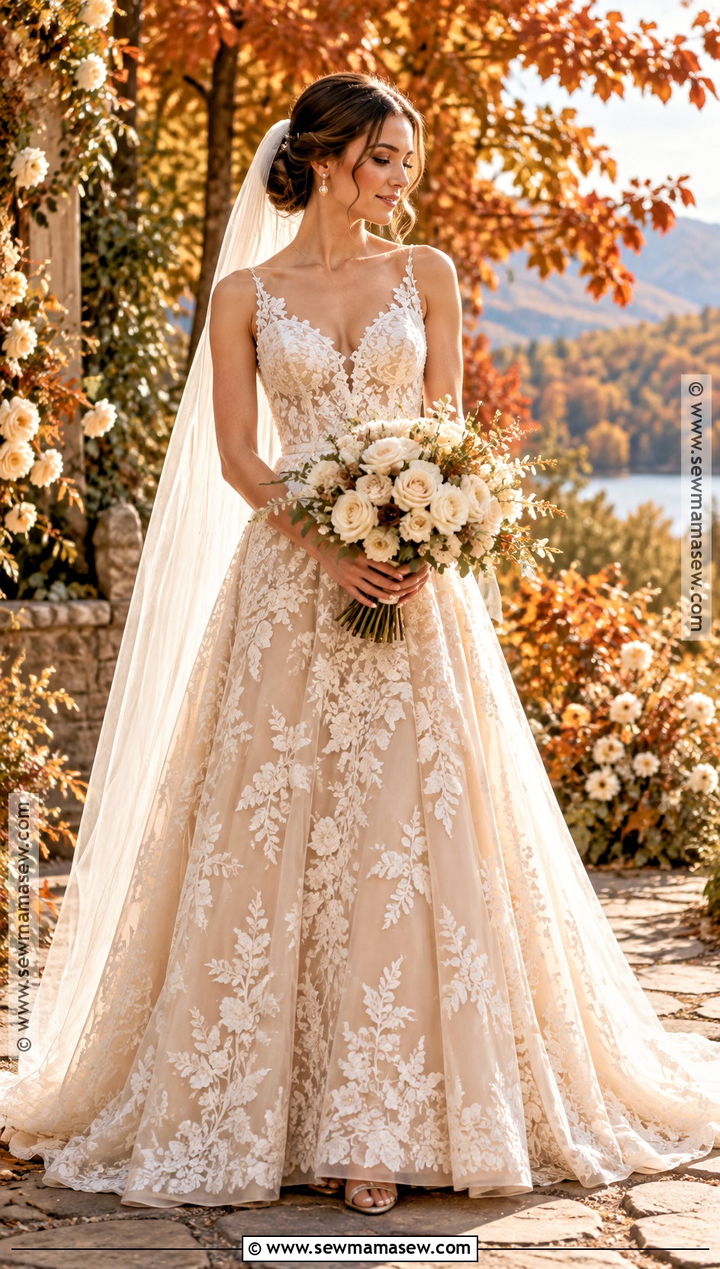
Putting a champagne lining under white or ivory lace warms the whole gown, and it suits golden autumn scenery better than a bright white base. The tinted layer also makes floral motifs easier to see. The silhouette is up to you; this works on an A-line, a fitted cut or a ball gown. I'd add champagne-toned heels, gold and pearl earrings, a plain ivory veil and a low textured bun. A bouquet of cream flowers, copper foliage and muted peach links it to the season. Always look at champagne shades by a window and under indoor bulbs, because they can turn pink under warm light or grey on a dull day.
Why Hemming a Lace Gown Takes Longer Than You Think
With a plain satin skirt, a tailor can usually shorten the hem by cutting and re-stitching. Lace is different. Many gowns finish in a scalloped border, and cutting straight across it destroys the edge. Instead, the border is usually unpicked by hand, the skirt layers are shortened underneath, and the lace is stitched back in place at the new length. Appliqués that cross a seam may need to be lifted and moved one by one.
That's slow, careful handwork, so I tell brides to plan for more fittings and a higher alteration cost than they'd expect for a satin dress. Costs vary widely, so ask for a written quote at the first fitting.
- Bring the exact shoes you'll wear to every fitting. Even a small change in heel height moves the hem.
- If you're switching from heels to flats for dancing, set the hem for the lower pair or add a bustle so the front doesn't catch.
- Ask how sleeves will be taken in. Lace sleeves are often adjusted at the underarm seam so the pattern on top stays intact.
- Allow time after the final fitting for small fixes. Lace can shift slightly once the full weight of the skirt hangs from it.
Keeping Warm Under Sheer Sleeves
Lace looks wintry, but most bridal lace is open enough that wind goes straight through it. For an outdoor fall ceremony, I build warmth in layers that don't show. A thin nude thermal layer under the bodice disappears beneath a lined gown. A faux fur stole, a cropped satin jacket or a wool bridal coat covers the shoulders for portraits and comes off in seconds. Keep a pair of flat, closed shoes nearby for walking between spots, and have someone hold a light wrap off camera. What I'd avoid is a chunky cardigan pulled over fine lace; the knit drags on the sleeve and flattens the pattern in every photo it touches.
Where I'd Begin With a Lace Gown This Autumn
Lace adapts to almost any silhouette, which is why it has lasted so long in fall bridal. Sleeves, high necks, capes and detachable pieces handle the coverage question, while tea-length, mermaid and sheath cuts give you options beyond the classic ball gown. My advice is to decide on the venue surface and the coldest point of your day first, then let those two facts narrow the shape. Keep accessories quieter than the lace. And at every fitting, sit, walk and lift your arms, because the gown that lets you do all three is the one you'll be glad you chose.
Related posts: