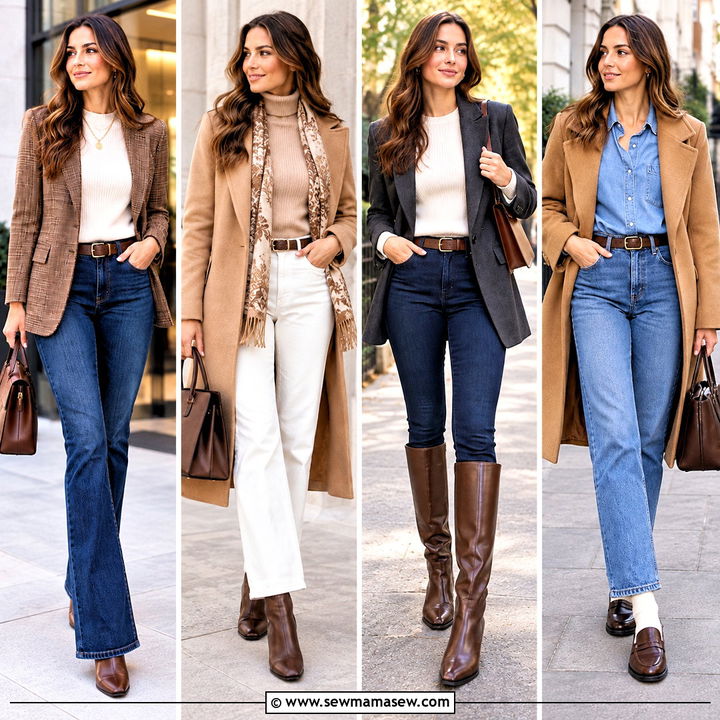
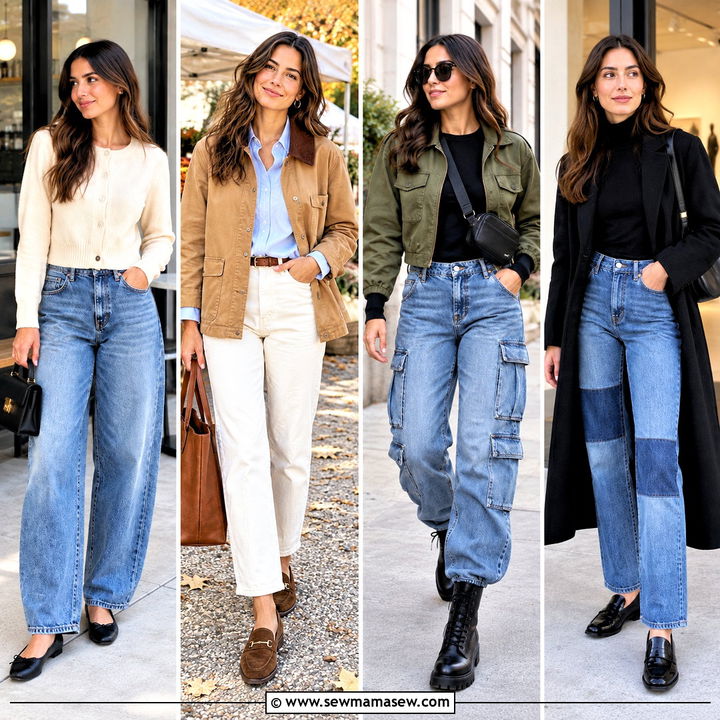
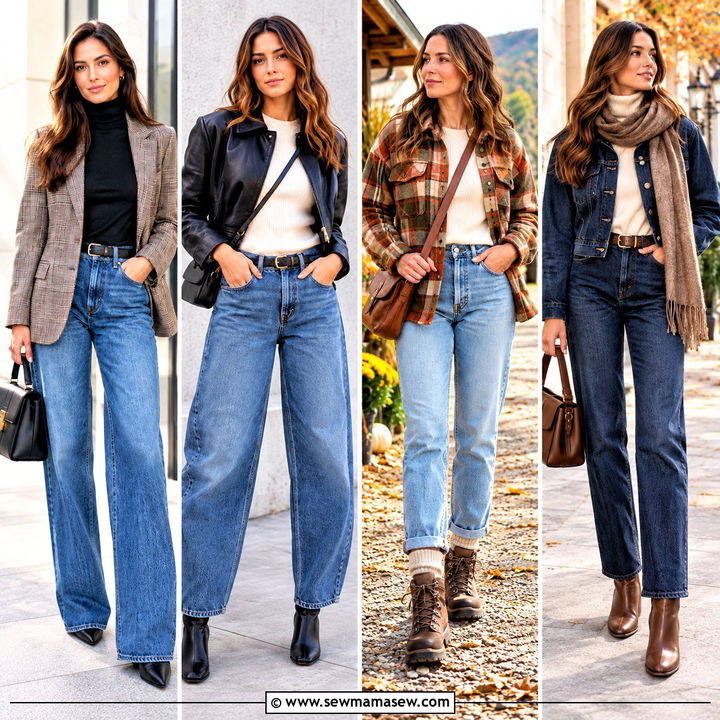
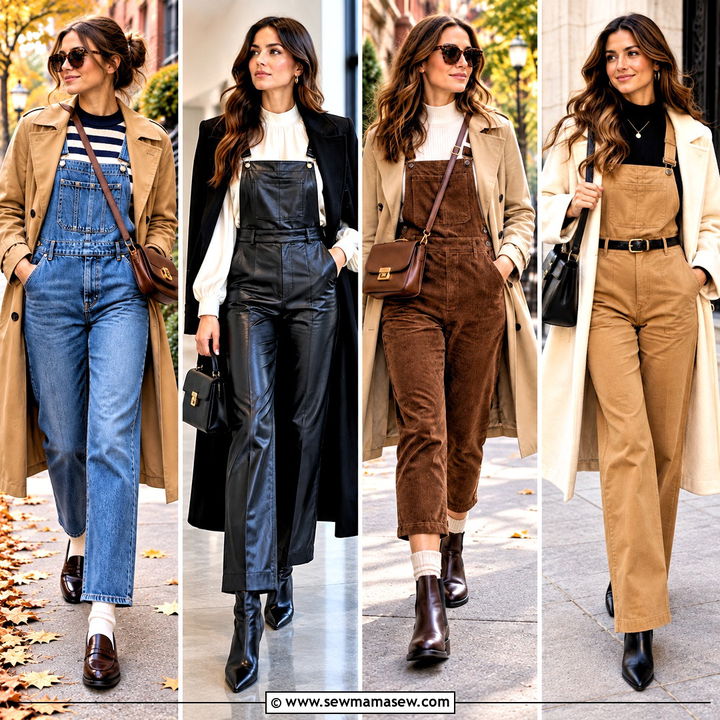
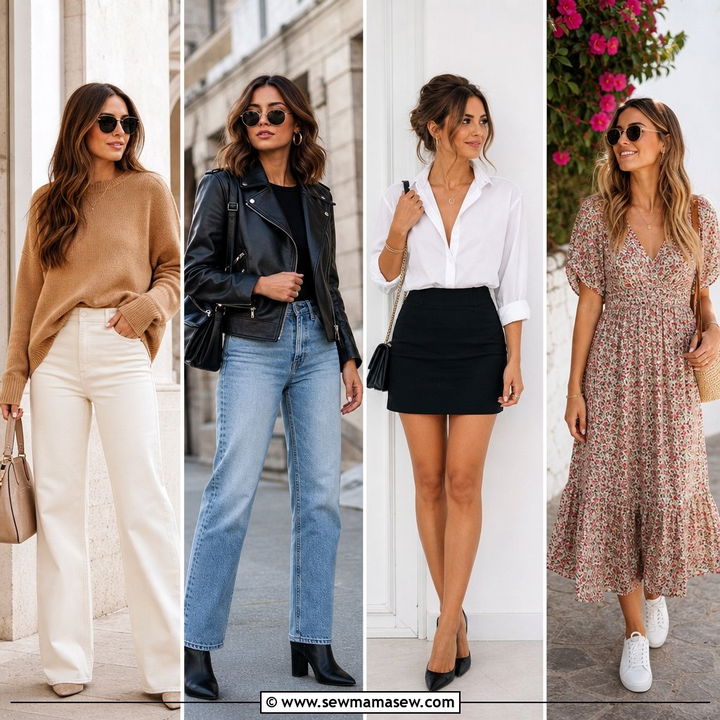
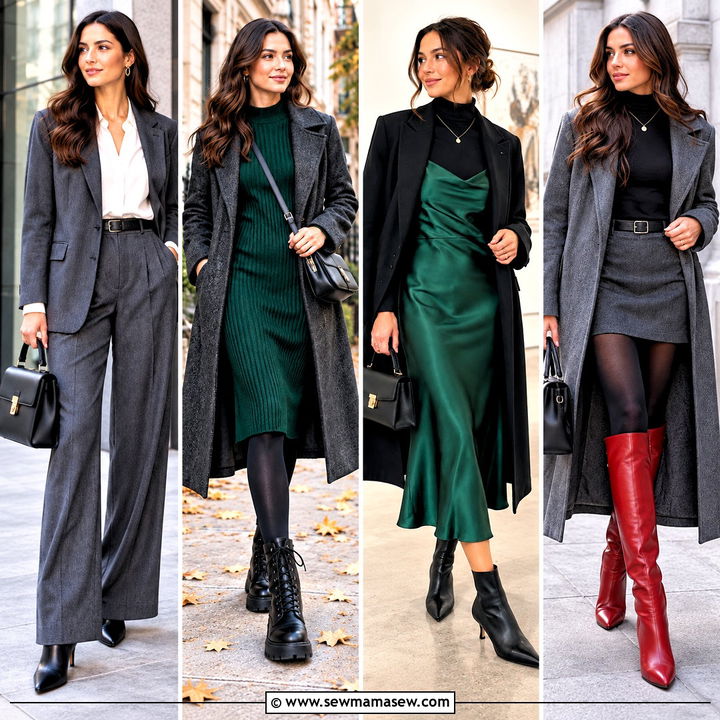
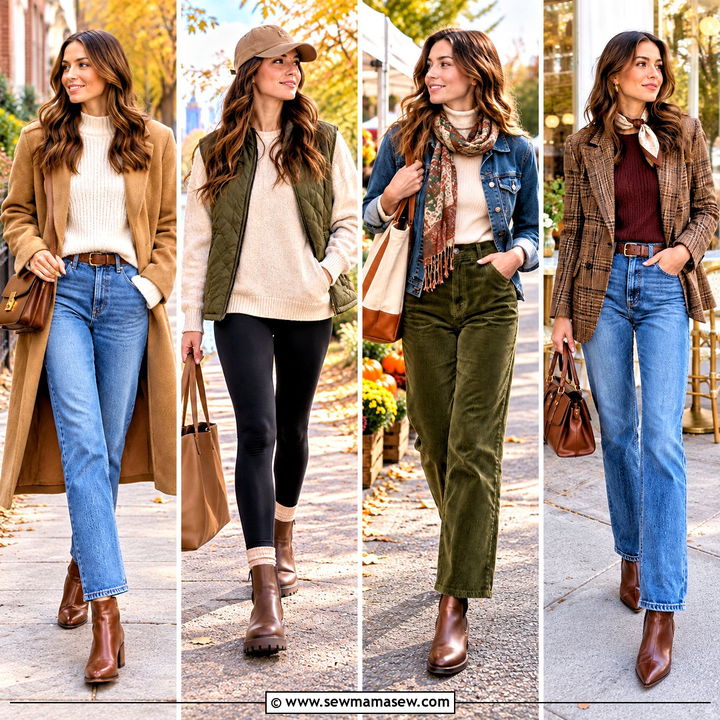
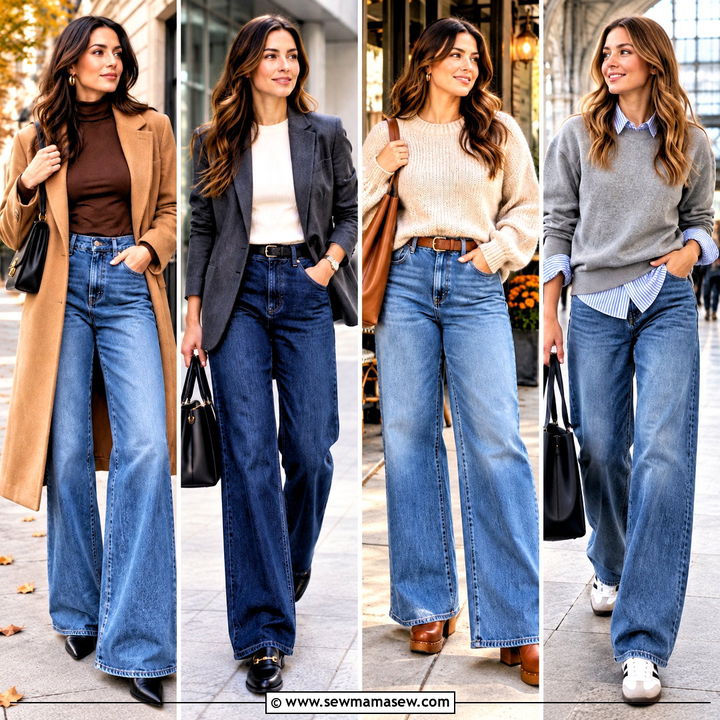
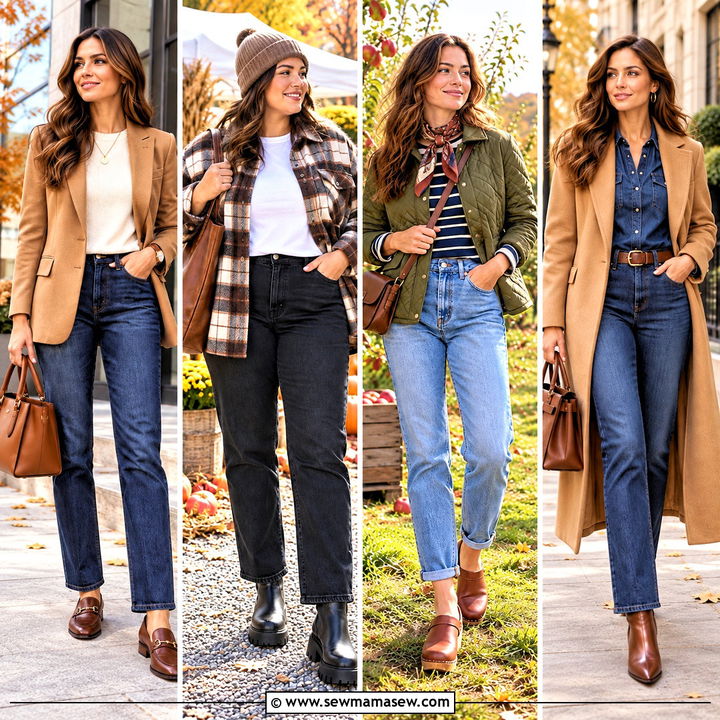
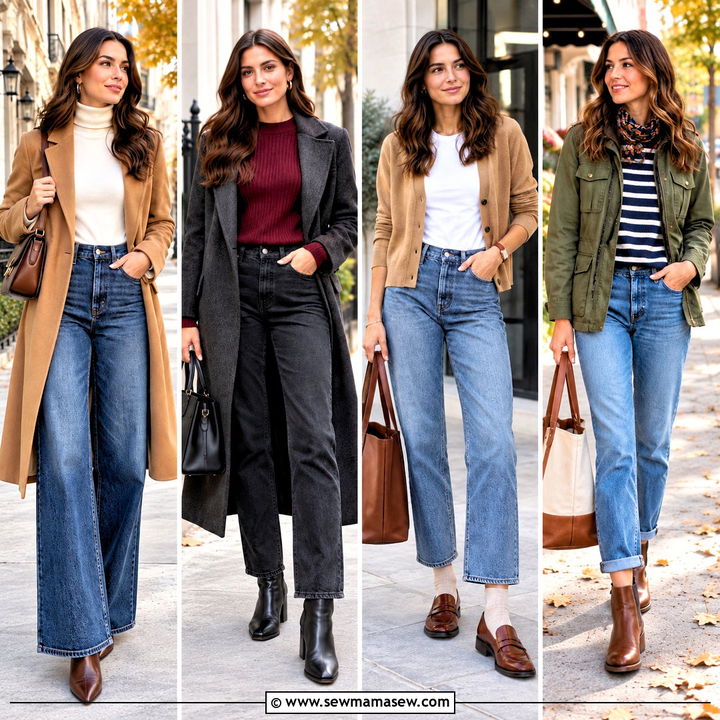
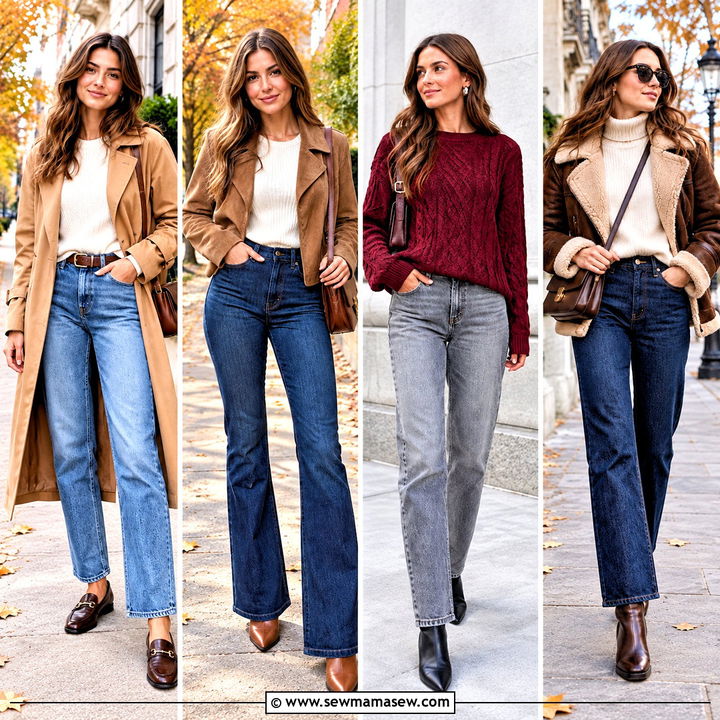
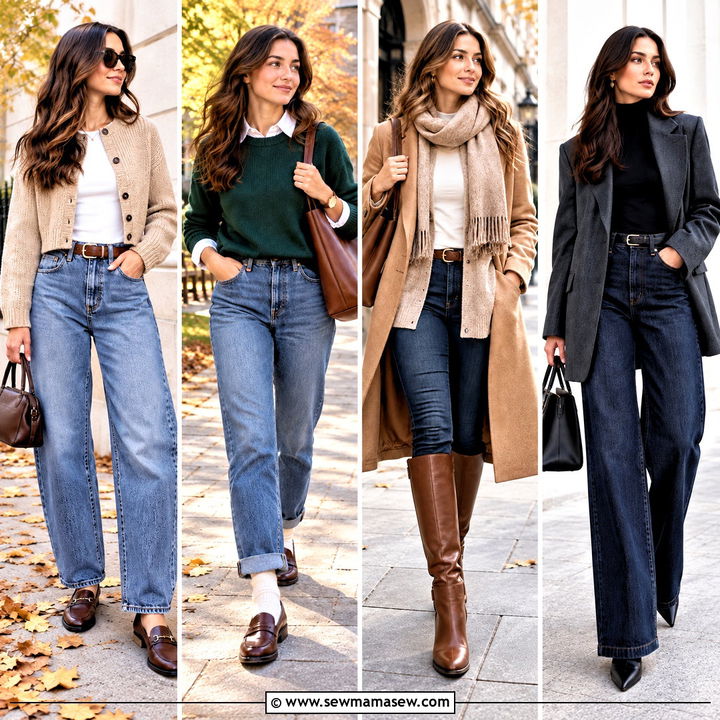
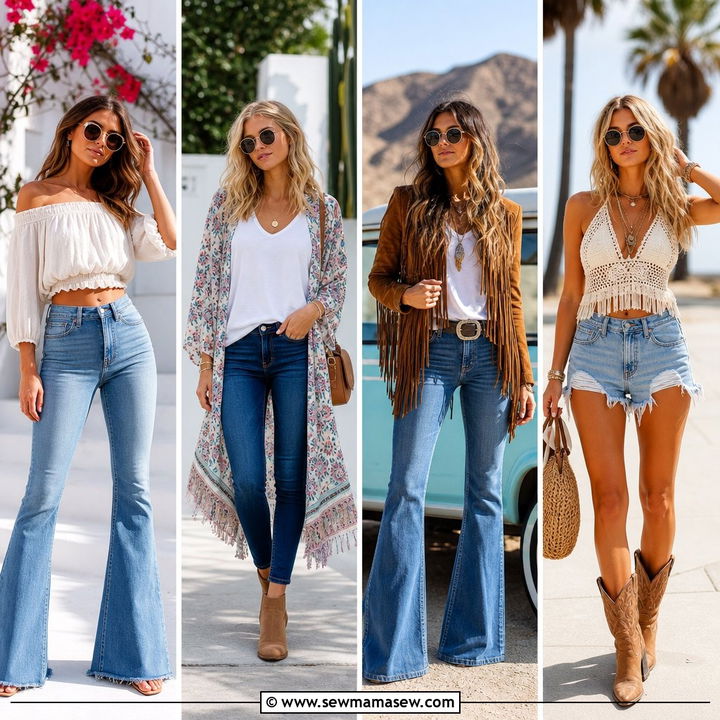
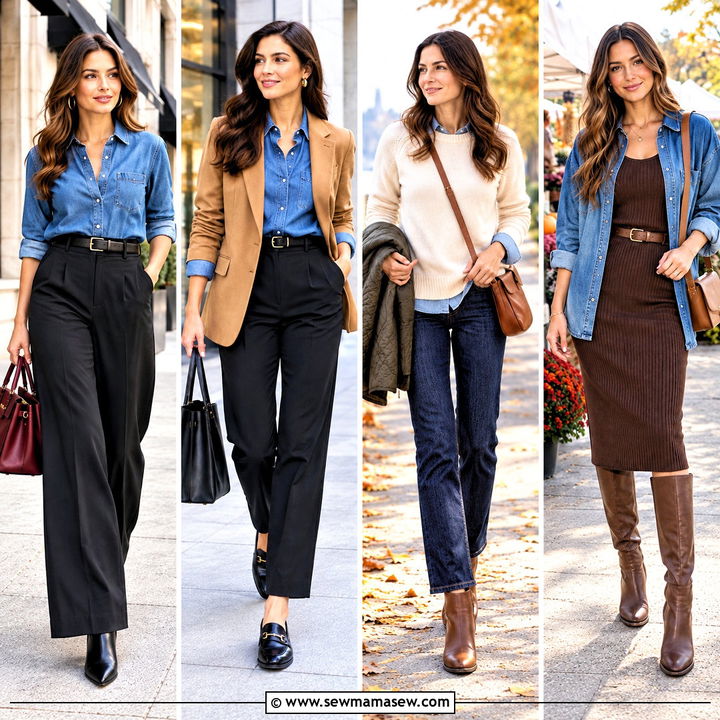
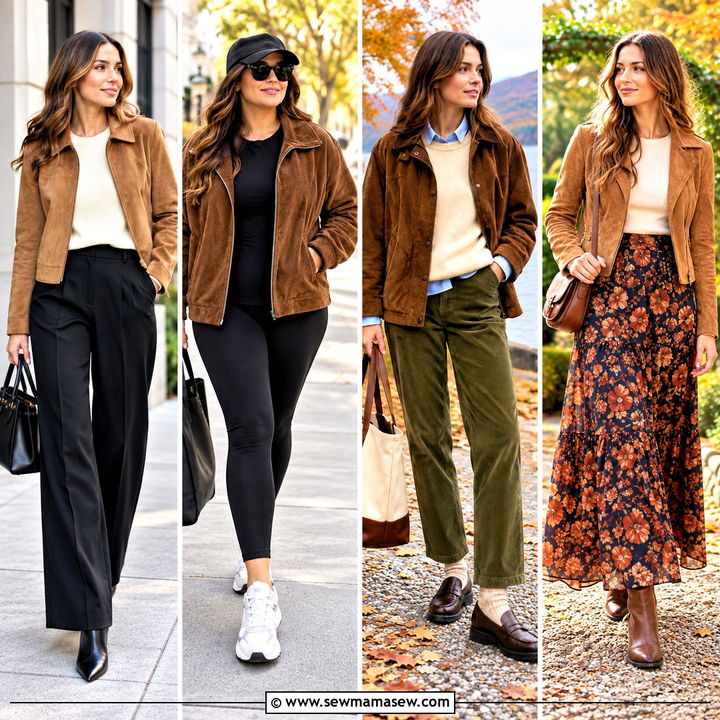
Jeans and boots are the outfit most people already own the pieces for, and the part that usually goes wrong is where the two meet. I spend most of my styling time on the ankle and the hem, and proportion matters more there than any trend. Straight, bootcut, relaxed and dark-wash jeans are all around this fall, and so are pointed-toe, Western, Chelsea and knee-high boots. The rule I fall back on is simple: slim jeans go inside tall boots, wider hems go over a slim boot. Add a sweater, jacket or coat in a fall color and you have something for errands, a casual office, travel or a slow weekend. Fifteen pairings follow, each with notes on the hem and the shoe.
Which Boot Goes With Which Jean Leg
Before you try any of the fifteen outfits, it helps to know the pairing logic I use. Most problems come from putting the wrong leg over, or into, the wrong shaft.
- Skinny and slim: tuck into knee-high or riding boots, or let them end neatly at an ankle boot.
- Straight leg: rests on top of an ankle boot or Chelsea. Tuck it into a tall boot only if the leg is narrow enough not to bunch.
- Bootcut and flare: always over the boot. The flare is cut to clear a shaft, so ankle boots, Westerns and platforms all sit comfortably underneath.
- Wide leg and baggy: over a slim heeled ankle boot, or over a chunky combat boot if the denim is heavy. Never tucked.
- Cropped and barrel: the boot shaft should meet the hem or slip just under it, with no visible gap.
If you only buy one pair of boots this fall, a fitted black or brown ankle boot with a low heel covers more of this list than anything else.
1. Straight Leg Jeans, Crewneck Sweater, and Ankle Boots
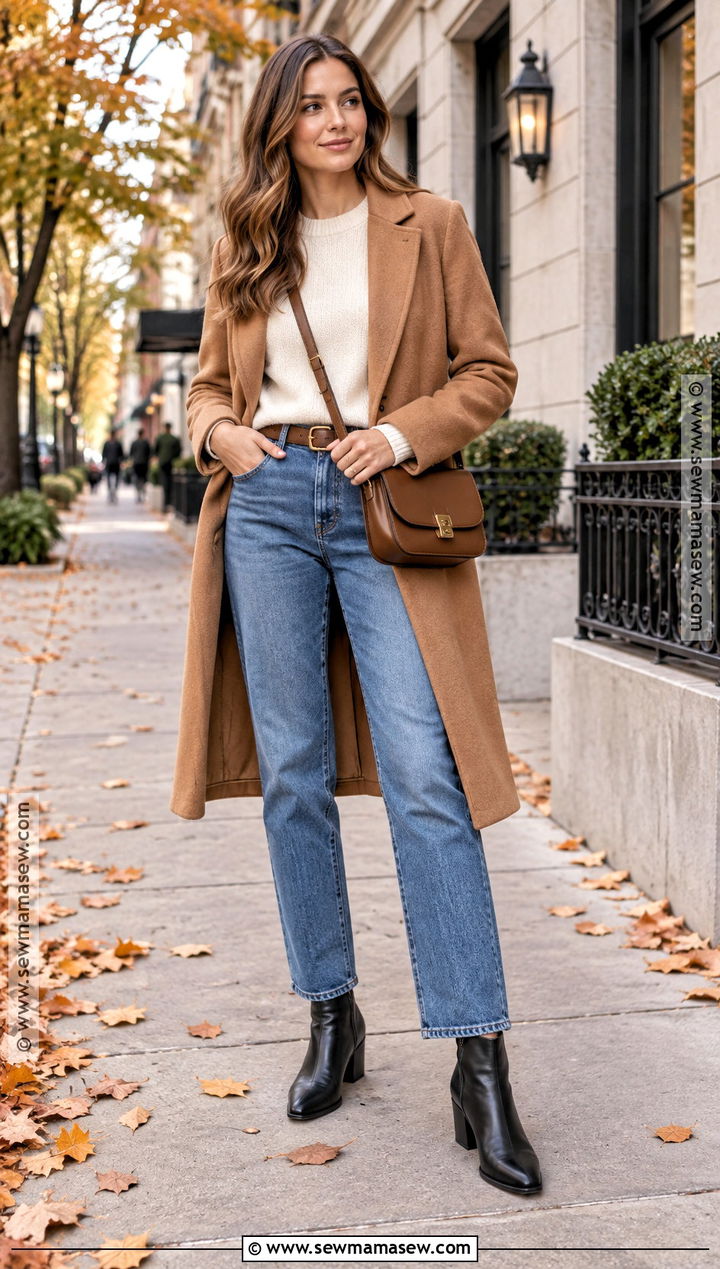
I start almost every jeans-and-boots wardrobe here. Medium or dark straight-leg denim should just skim the top of a fitted black ankle boot; if it stacks up in folds, take it to a tailor, because half an inch makes a real difference. A cream crewneck brightens the denim, and a French tuck at the front shows your waist without committing to a full tuck. Add a brown leather belt, a structured crossbody and small gold earrings. On cold mornings, a camel wool coat goes over the lot. It's simple enough to adjust to nearly any build.
2. Dark Wash Jeans, Blazer, and Pointed Toe Boots
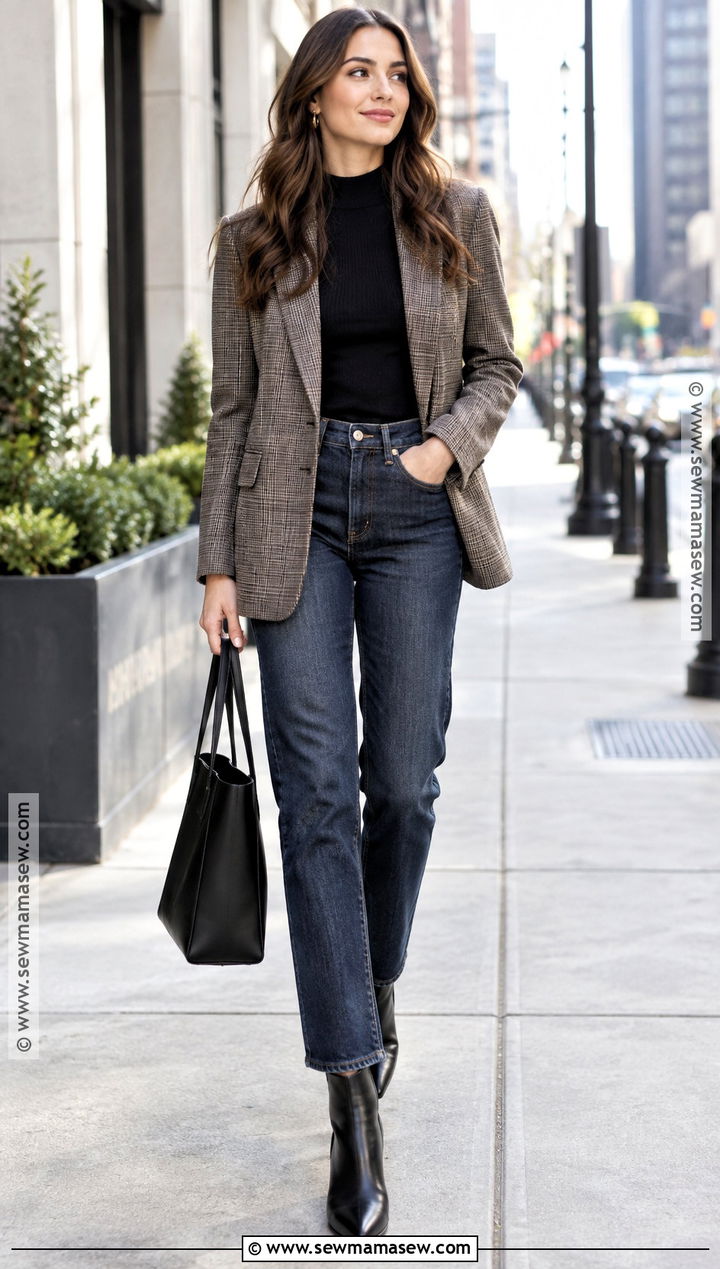
For a casual office or a nicer lunch, I'd move to dark-wash straight or slim jeans with a fitted knit and a soft blazer. Navy, chocolate or a quiet plaid all sit well against deep indigo. The boot does the dressing up: a pointed-toe ankle boot with a low or medium heel, because the narrow toe continues the line of the jean. Keep the denim full length so the hem nearly meets the boot. A strip of bare ankle between them is the one thing that makes this look unfinished. If you'll be on your feet all day, I'd choose a block heel over a slim one. A structured tote and a simple watch finish it.
3. Wide Leg Jeans, Turtleneck, and Heeled Boots
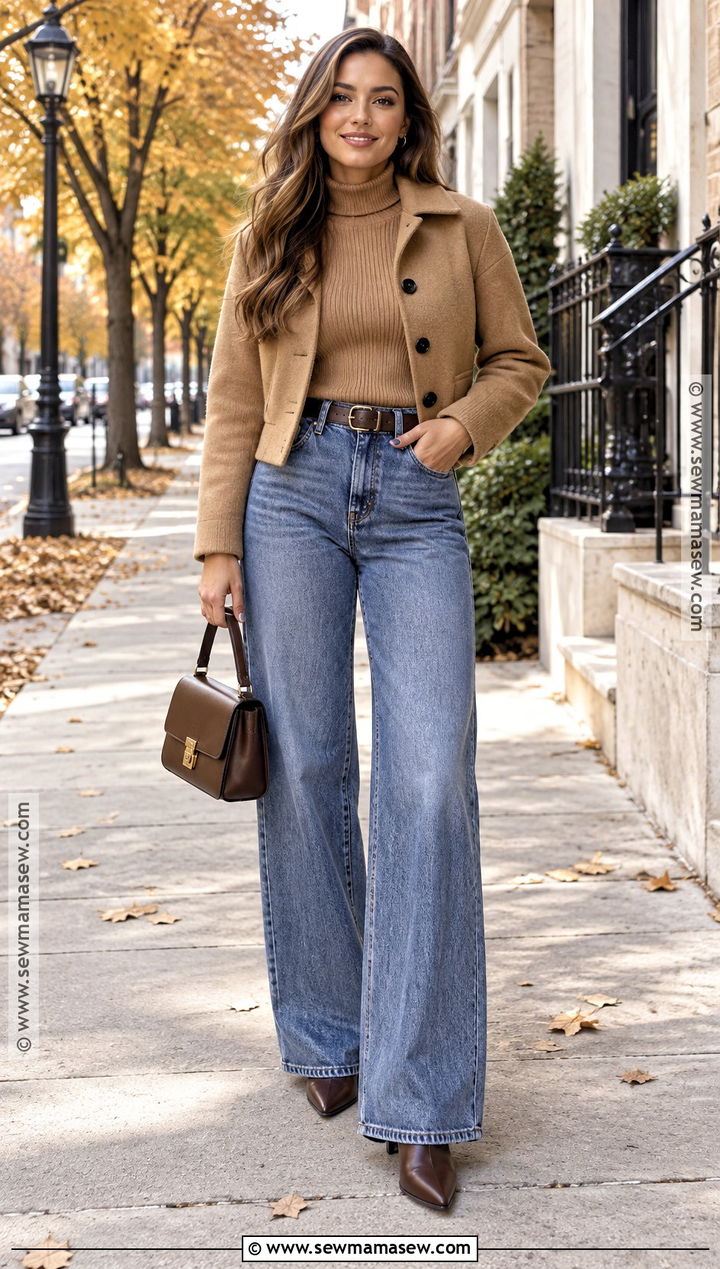
Wide-leg jeans need a boot with a heel. Without one the hem drags, soaks up rain and gets chewed at the back. I'd go high-rise with a fitted ribbed turtleneck on top to balance the volume, and a streamlined heeled boot with a pointed or almond toe so only the tip peeks out. Hem the jeans while wearing the boots you'll pair them with, so they sit close to the floor without touching it. A cropped jacket or short wool blazer keeps the waist visible. If you're petite, a moderate leg width and a visible pointed toe stop you from disappearing in fabric; taller women can carry a fuller leg.
4. Bootcut Jeans, Suede Jacket, and Cowboy Boots
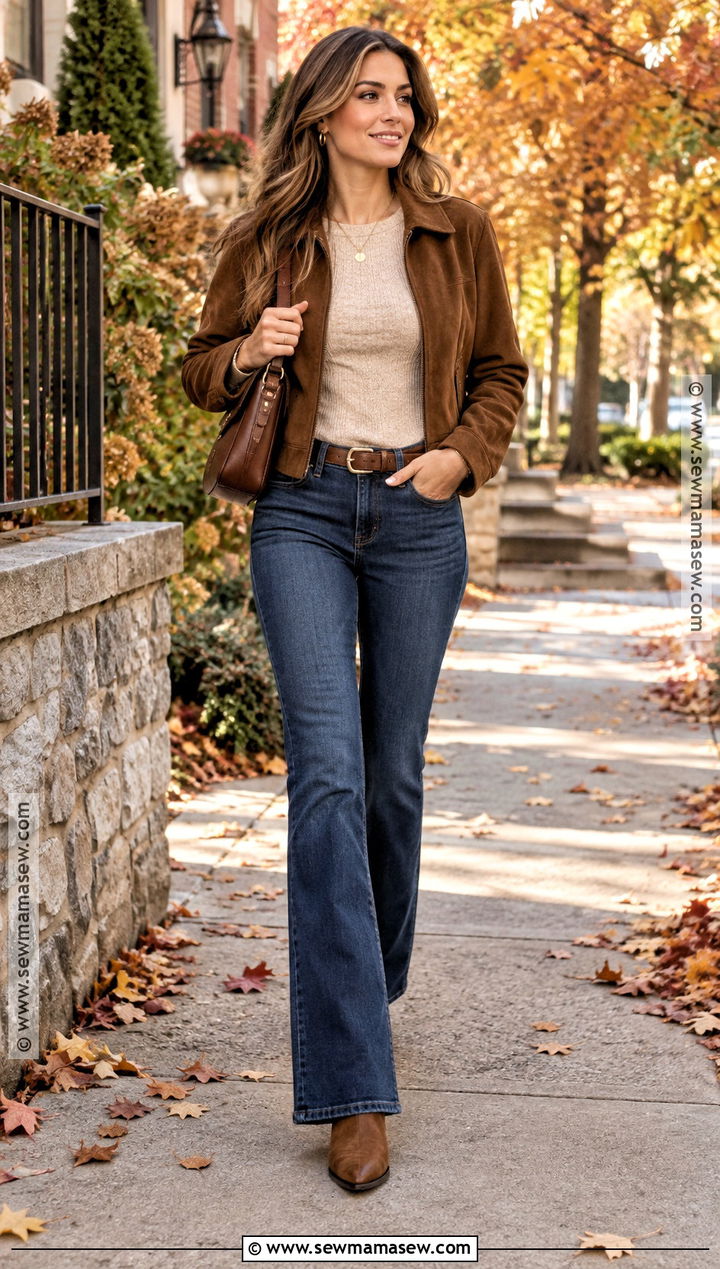
Bootcut jeans and Western boots were made for each other, since the slight flare at the hem exists to slide over a boot shaft. I'd choose full-length classic blue or deep indigo, a white or oatmeal fitted knit, and a cropped brown suede jacket for texture. With cowboy boots, look for a pointed toe and moderate heel and keep the tooling restrained; heavy stitching and bright leather tip the outfit toward costume. A leather shoulder bag and a plain belt are enough. Good leather Western boots take some wearing to soften across the instep, so don't judge the fit on day one. This is my choice for a weekend market or an outdoor get-together.
5. Skinny Jeans, Oversized Cardigan, and Knee High Boots
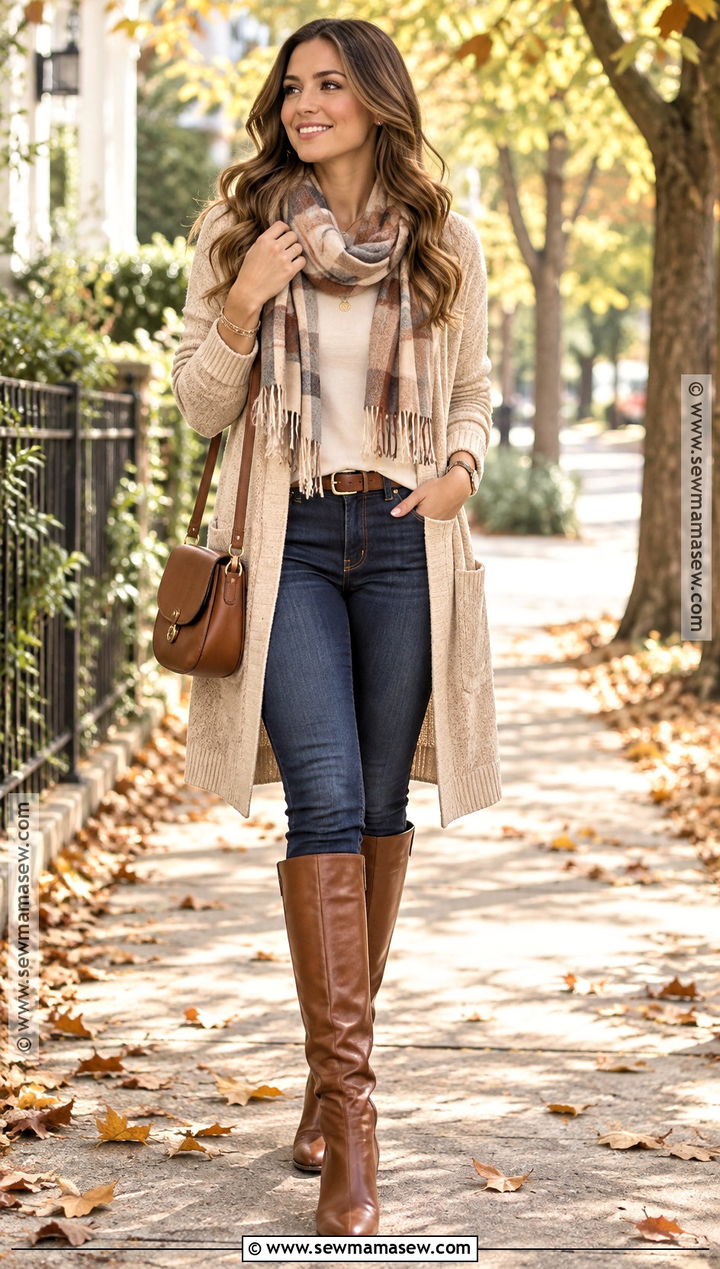
Skinny jeans still do one job better than any other cut: disappearing into a knee-high boot. Pick black or deep-blue denim with some stretch, tucked into leather or suede boots in black, cognac or chocolate. The thing I check is the calf. If the boot is already snug before the jeans go in, the denim will bunch and the zipper will strain. A long oversized cardigan softens the slim lower half, with a fitted tee or fine knit underneath. A light scarf and a crossbody bag are all it needs for school runs, a casual workplace or a day of sightseeing.
6. Black Jeans, Trench Coat, and Chelsea Boots
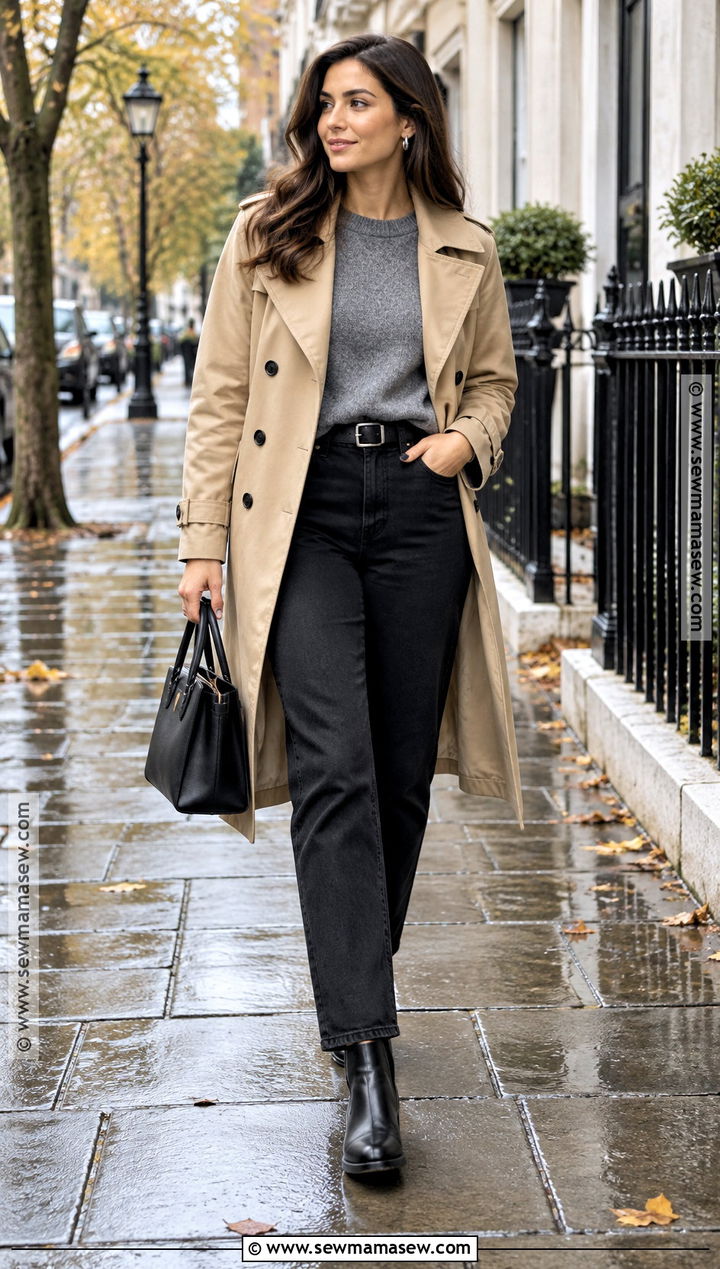
On a cool, cloudy morning I'd reach for black straight-leg jeans, a fine-knit gray or burgundy sweater and black leather Chelsea boots. The elastic side panels are why Chelseas are so practical: they slip on fast and hug the ankle, so a straight hem rests neatly on top. A slim sole looks classic, while a lug sole grips better and feels more casual. A beige or olive trench adds contrast and keeps drizzle off. Keep the hem right at the top of the boot so it doesn't pool. A black structured bag and silver earrings round it out, and you probably own most of it already.
7. Cropped Jeans, Striped Knit, and Sock Boots
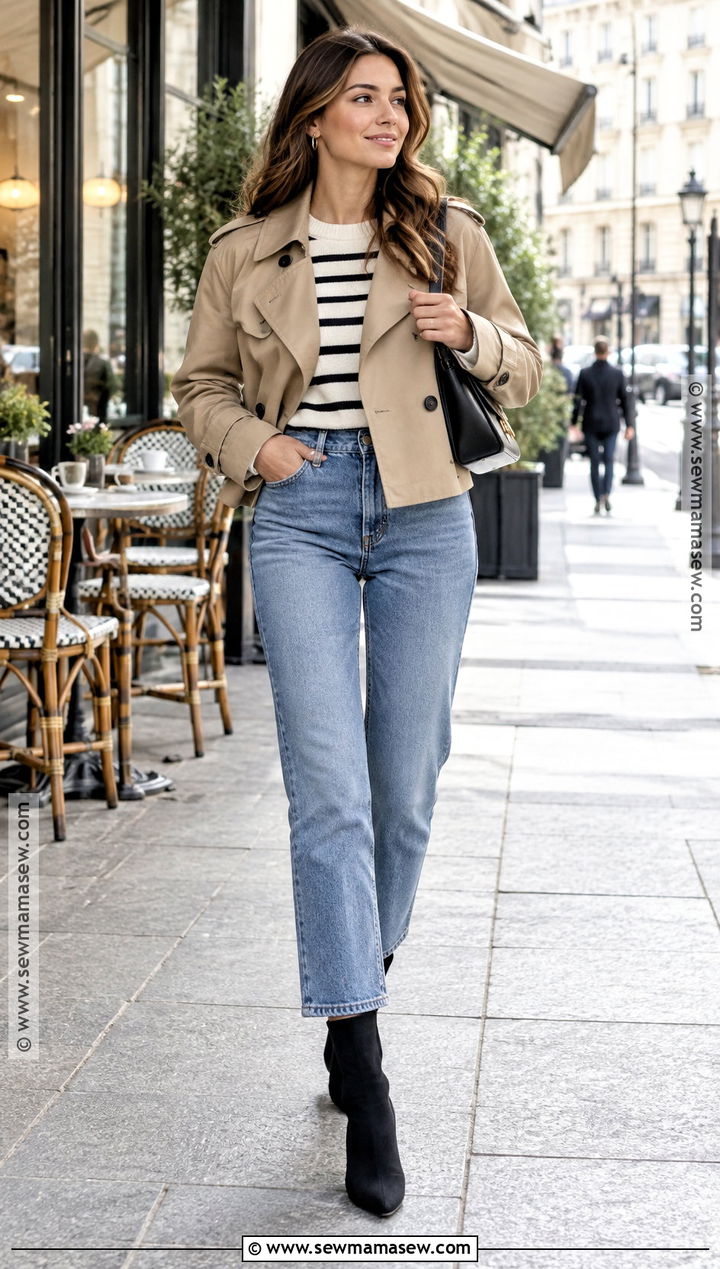
Cropped jeans with boots live or die on the gap. I'd choose a sleek sock boot with a narrow shaft that rises just under the hem, so there's no slice of skin or sock between them. A wide opening fights the crop, so I avoid those. Add a cream-and-black or navy striped knit, and a short trench or fitted wool coat that stops above the hip so the cropped proportion stays visible. Thin socks hidden inside the boot add warmth. The stretch upper on a sock boot can loosen at the ankle with wear, so buy them snug rather than roomy.
8. Baggy Jeans, Leather Jacket, and Combat Boots
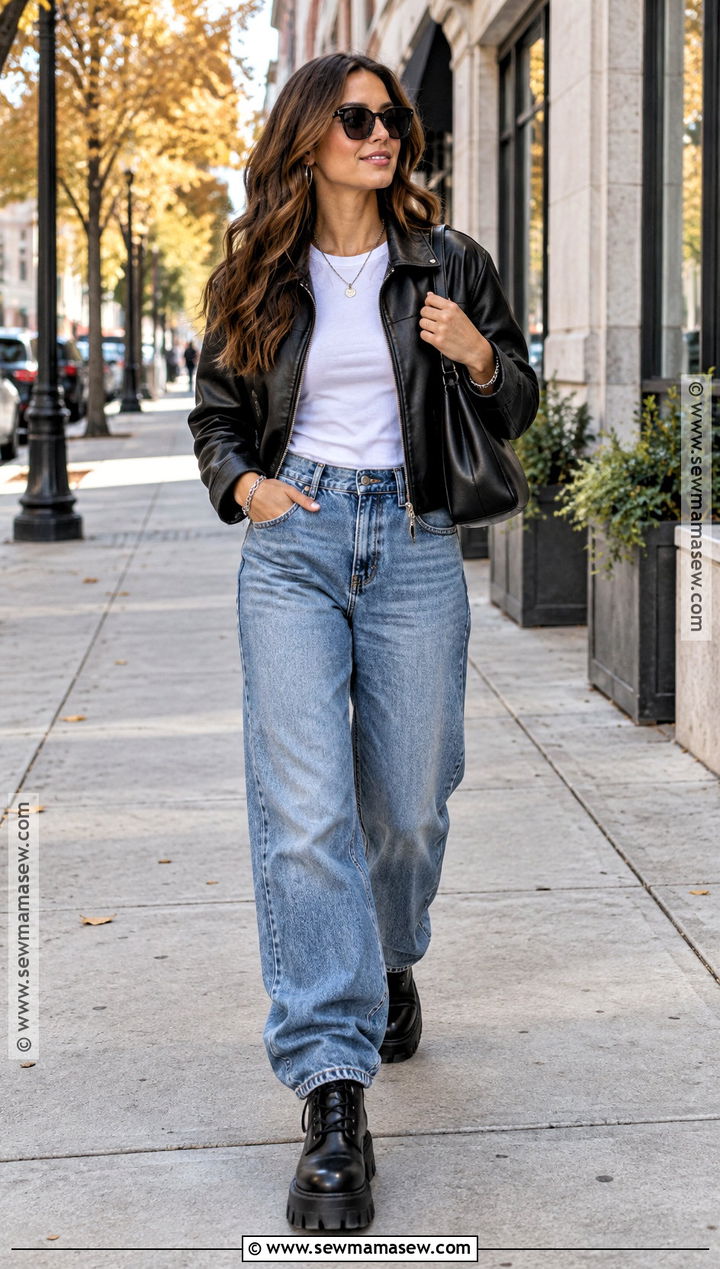
Baggy jeans need weight at the bottom, which is why combat boots suit them better than a slim ankle boot. Find a pair that sits securely at the waist and has a loose leg without collapsing into a heap over your feet. Keep the top fitted: a crewneck tee or light knit, then a cropped leather jacket that ends at the waistband. Let the jeans fall over the boot tops, or make one small cuff if they're long. Lace-up leather combat boots usually need a few wears before they soften at the ankle crease, so don't debut them on a long walking day. Faux leather is fine for the jacket if real leather feels too heavy.
9. White Jeans, Camel Coat, and Brown Boots
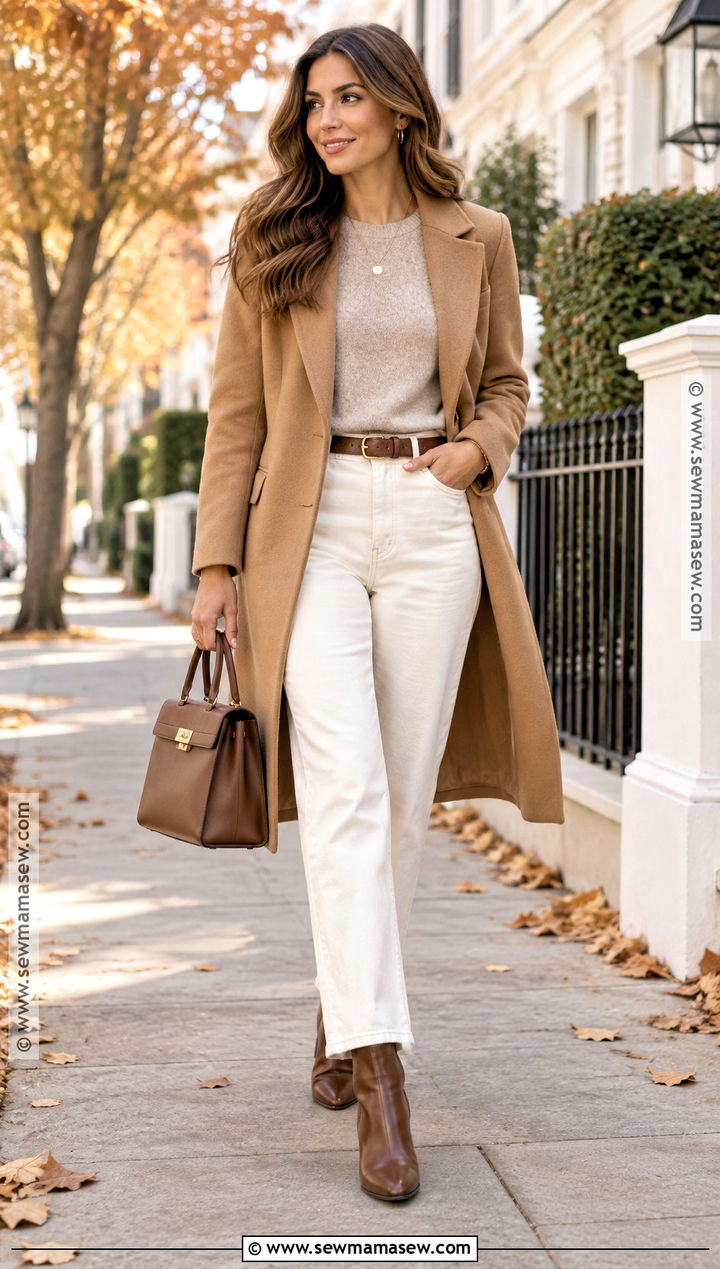
White jeans in fall come down to the boot. Brown leather ankle boots anchor a light pair in a way black can't quite match, because the contrast stays warm instead of harsh. Start with cream or soft-white straight-leg denim in a thicker weight with little or no distressing, then a taupe or chocolate sweater and a camel coat. A brown belt and structured bag repeat the boot color, and that repetition is what makes the outfit look planned. New or unsealed dark leather can rub dye onto pale denim when it's damp, so wipe the inside of the shaft with a damp cloth and check before wearing them together.
10. Gray Jeans, Shacket, and Lug Sole Boots
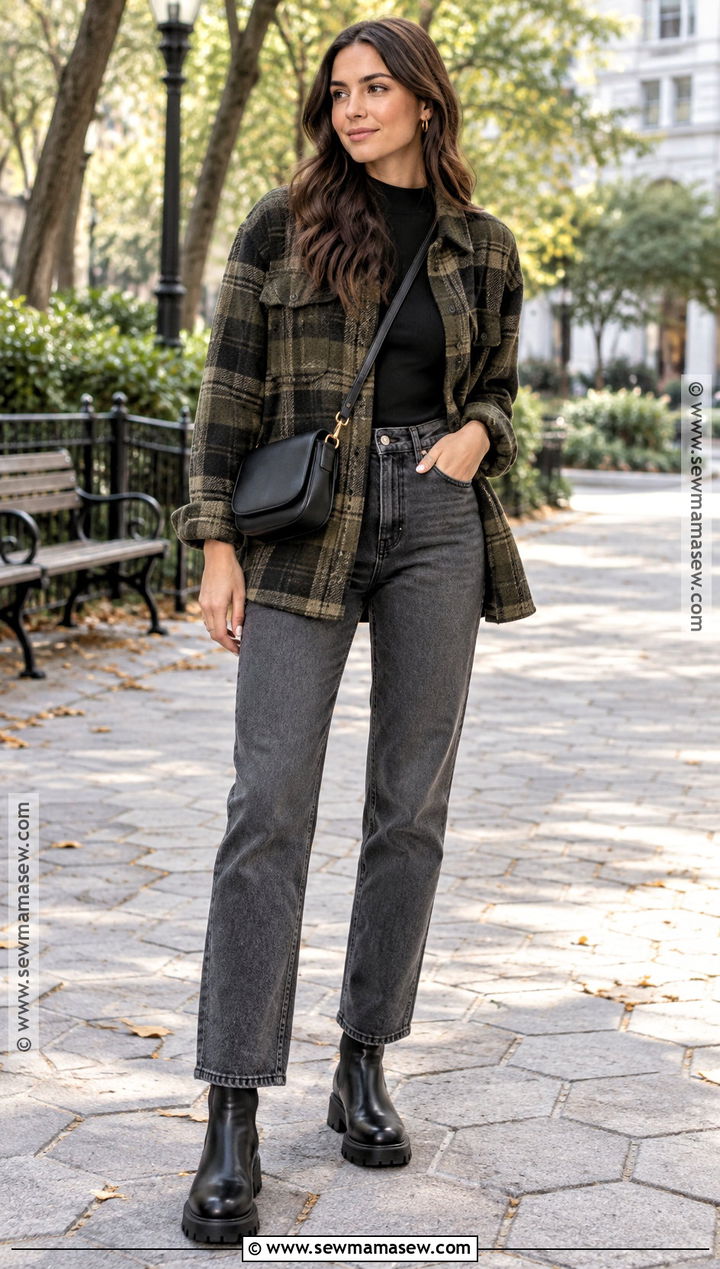
Gray denim is what I suggest to anyone who finds black jeans too stark. Wear charcoal or faded-gray straight jeans with a black fitted top, then an oversized plaid or solid shacket in olive, rust or camel. Black lug-sole ankle boots give the outfit weight and handle wet sidewalks and long walks. With straight jeans, rest the hem on top of the boot; a slightly wider leg can drop over the opening. Roll the shacket sleeves once so all that fabric doesn't swamp you. A casual tote and small earrings are plenty.
11. Flare Jeans, Knit Vest, and Platform Boots
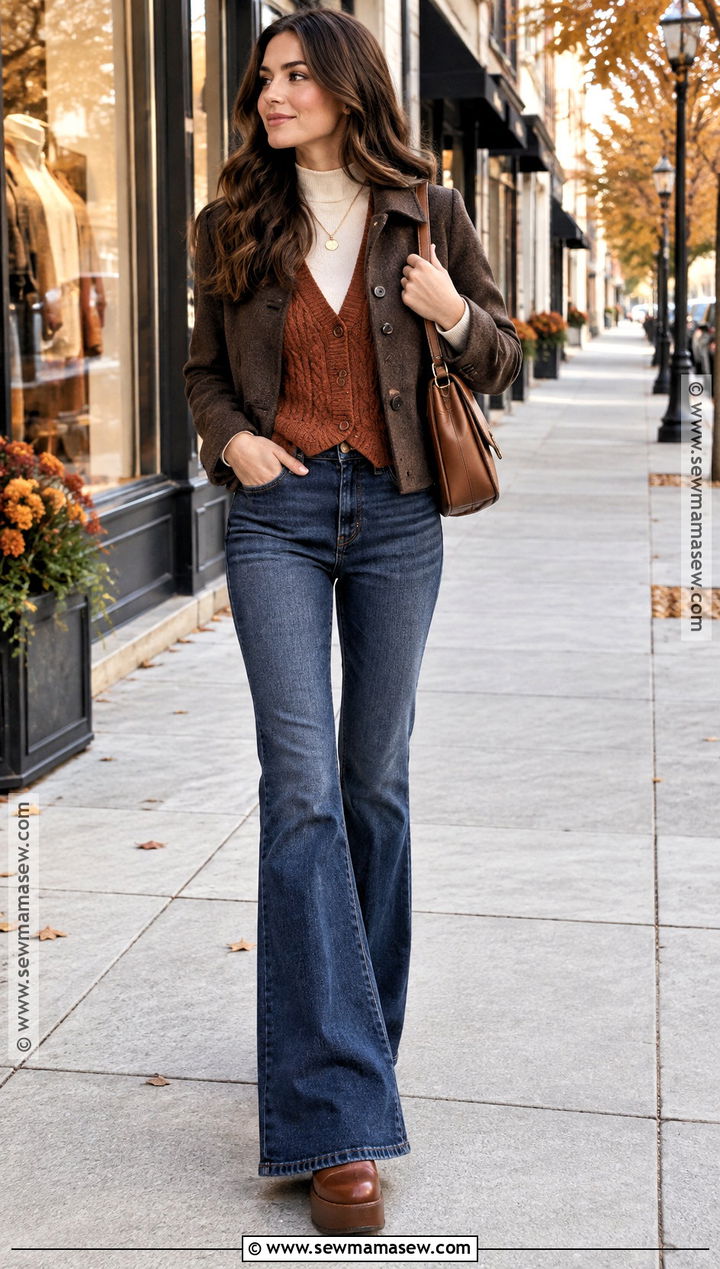
Flares and platforms work as a team. The platform adds height, so the fuller hem can nearly cover the boot without scraping the ground. I'd go high-rise and have the length measured in the boots themselves. A fitted long-sleeve top under a knit vest adds texture; a cropped vest marks the waist, a longer one reads more relaxed. Brown, black or burgundy platforms all suit, and a chunkier boot balances the width of a flare better than a dainty one. Platforms can feel stiff because the sole barely flexes, so I'd test them on stairs before committing. Keep the colors simple and the accessories few, and the retro shape looks current.
12. Barrel Jeans, Bomber Jacket, and Ankle Boots
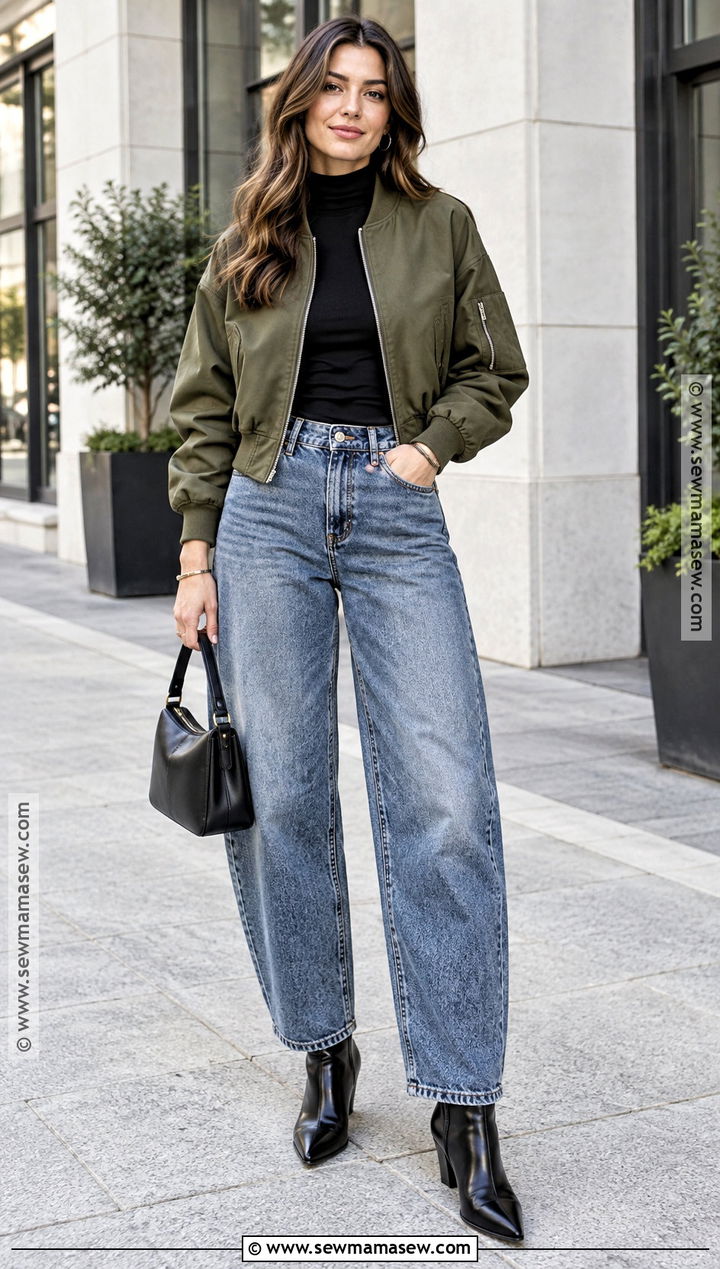
Barrel jeans already bring the volume, so everything around them should be streamlined. I'd pick a gently curved leg over an extreme one, then a fitted mock-neck top and a waist-length bomber. Sleek ankle boots with a narrow shaft and a pointed or almond toe lengthen the leg below the curve, while a chunky boot only adds bulk at the bottom. Black boots look sharp with gray or blue barrels; brown softens ecru. Most barrel cuts are slightly cropped, so the boot shaft should meet the hem or slip beneath it. A compact bag keeps the shape clean.
13. Ripped Jeans, Plaid Shirt, and Work Boots
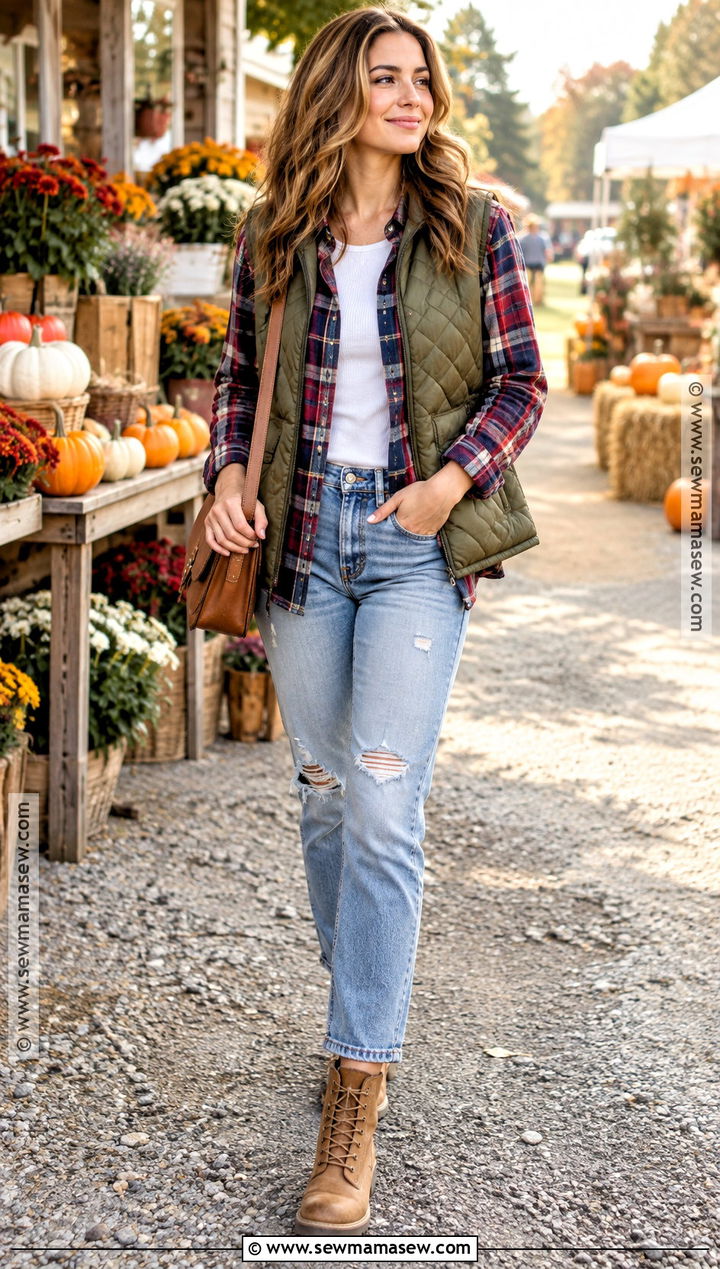
For a weekend outdoors, this is the most practical outfit here, as long as the rips stay small. Big knee openings let cold air straight in, so keep the distressing light on straight or slim jeans. A plaid button-down goes over a fitted white tee or thermal, and tan or brown lace-up boots ground classic blue denim. Add a quilted vest when it turns colder, plus a canvas or leather crossbody. Cuff once if needed, but thick rolls pile bulk on top of the boot. Work boots with a deep tread hold up on a muddy pumpkin patch or wet orchard grass far better than a fashion sole.
14. Blue Jeans, Peacoat, and Riding Boots
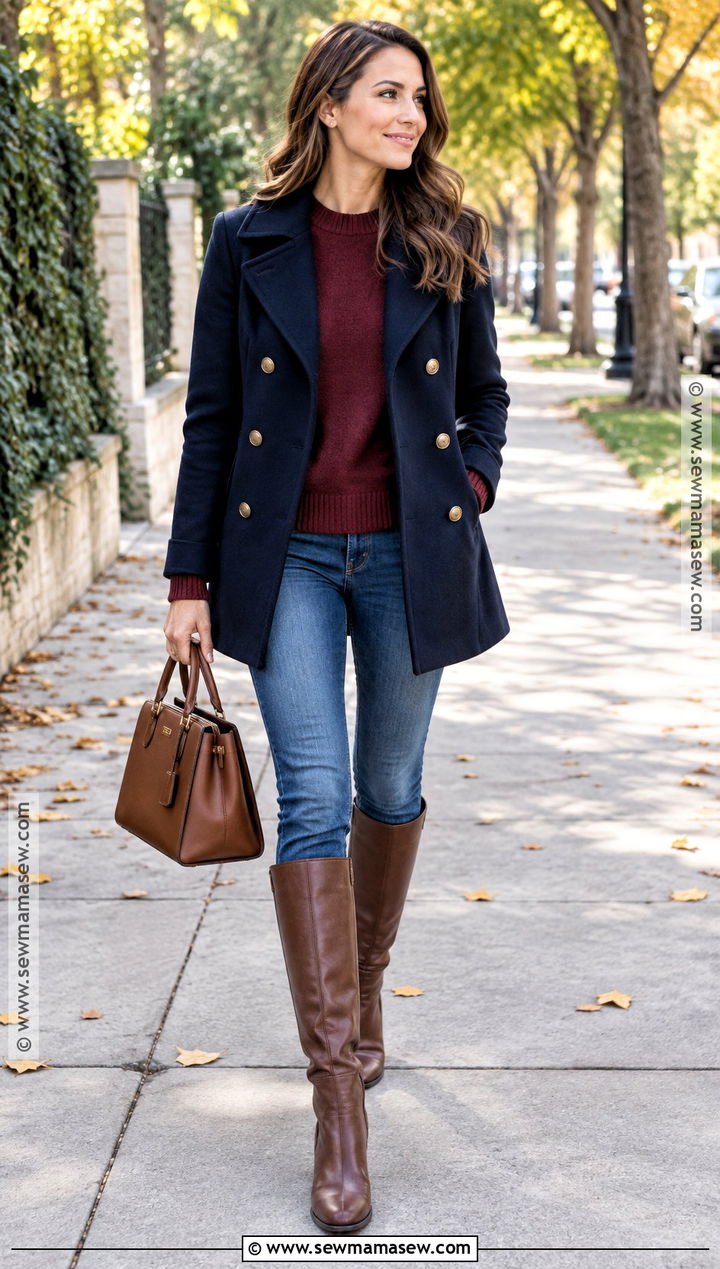
Riding boots are the classic tall boot for good reason: a straight shaft, a low heel and a clean line that suits nearly every age. Slim or skinny jeans should tuck in without wrinkling at the knee. I'd add a lightweight turtleneck in cream, burgundy or forest green, then a structured peacoat, whose length balances the tall boot. Black looks sharper; brown leather is softer and more traditional. Calf fit is the real issue with riding boots, so measure your calf over jeans and look at wide-calf or stretch-panel styles if standard shafts gap or pinch. A top-handle bag and stud earrings finish it, and it will still look right years from now.
15. Straight Jeans, Puffer Vest, and Hiking Boots
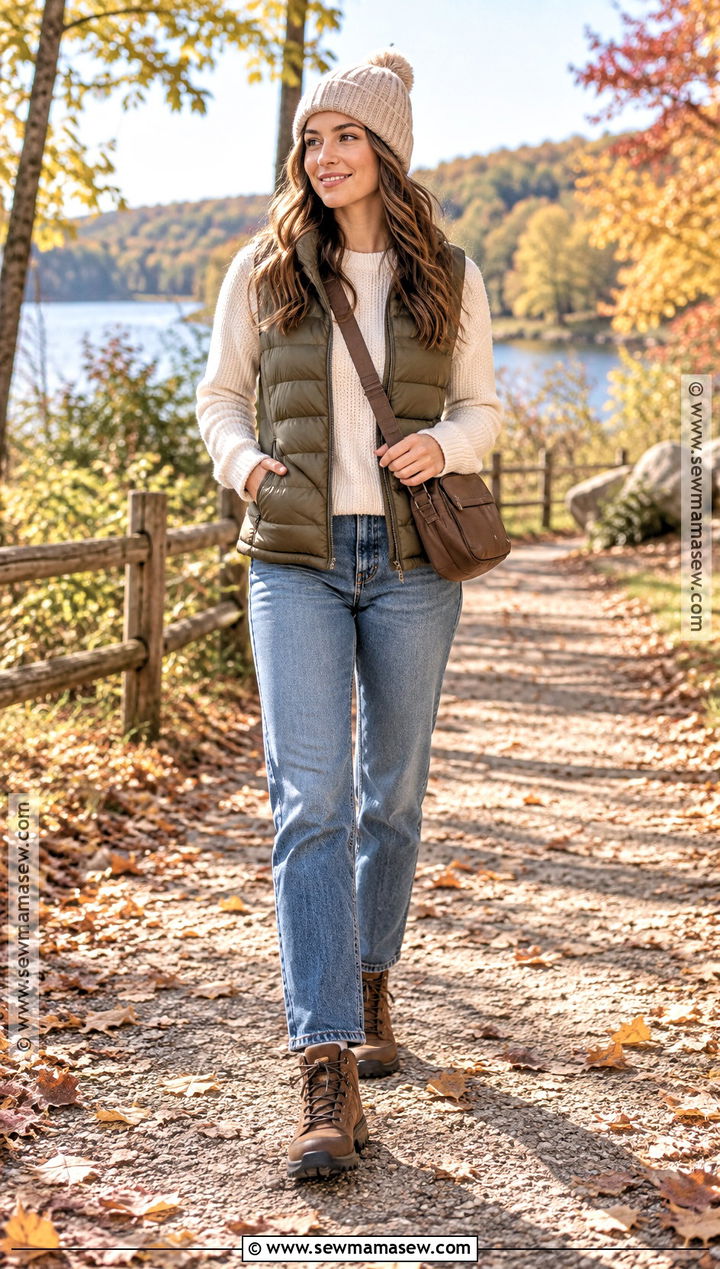
For active days, I'd pair straight-leg jeans with a thermal top, a lightweight sweater and hiking-style boots. The jeans need enough room at the calf to fall over the boot opening without catching on the laces or tongue. A quilted puffer vest keeps your core warm while your arms move freely, which helps when a cold morning turns into a mild afternoon. Olive with cream knitwear and blue denim is the easy color choice. Wool socks earn their place here: they cushion, stay warm even when damp and stop the boot rubbing your heel. If you're mostly in town, choose a sleeker boot over a fully technical one, and add a beanie and a hands-free crossbody on cold days.
Tucking Jeans Into Tall Boots Without Bunching
Slim jeans tucked into tall boots should look smooth from ankle to knee. When they don't, it's usually the method rather than the jeans. Here's how I do it.
- Pull a thin knee-high sock on over the jeans. Pinch the extra fabric at the ankle, fold it flat around the back of your leg, and roll the sock over it to hold it.
- Zip or pull the boot on slowly, keeping one hand on the folded denim so it doesn't twist.
- Stand and walk a few steps, then smooth any ripples up toward the knee before they set.
- If the fold still shows as a lump, that jean is too wide for that boot. Wear it over an ankle boot instead.
Wet Leaves, Cobblestones and the Sole Under You
Fall is hard on boots in ways outfit photos never show. Smooth leather soles look sleek but turn slippery on wet leaves and polished floors; a cobbler can add a thin rubber half-sole for grip without changing the look. Lug soles shed mud and hold on wet pavement, which is why I steer anyone who walks a lot toward them.
Uppers need attention too. Smooth leather does well with a regular conditioner and a waterproofing cream, while suede should get a protector spray before its first outing and a brush once it dries after rain. Stuff wet boots with newspaper and let them dry away from the radiator, since direct heat cracks leather. When you can, give a pair a day off between wears so the lining dries out fully.
Let the Hem Decide Which Boot You Wear
Start with the jeans you already wear most, then let their hem shape decide the boot. Slim denim goes inside tall boots; straight, wide, bootcut and flare jeans sit more smoothly over a fitted shaft. After that, sweaters, blazers, shackets, leather jackets and structured coats change the mood without a new wardrobe. If one detail gets your attention this season, make it hem length, because a good tailor visit does more than most new purchases. Adjust each pairing to your weather, your colors and how far you actually walk in a day, and even the simplest jeans and boots will look finished.
Related posts: