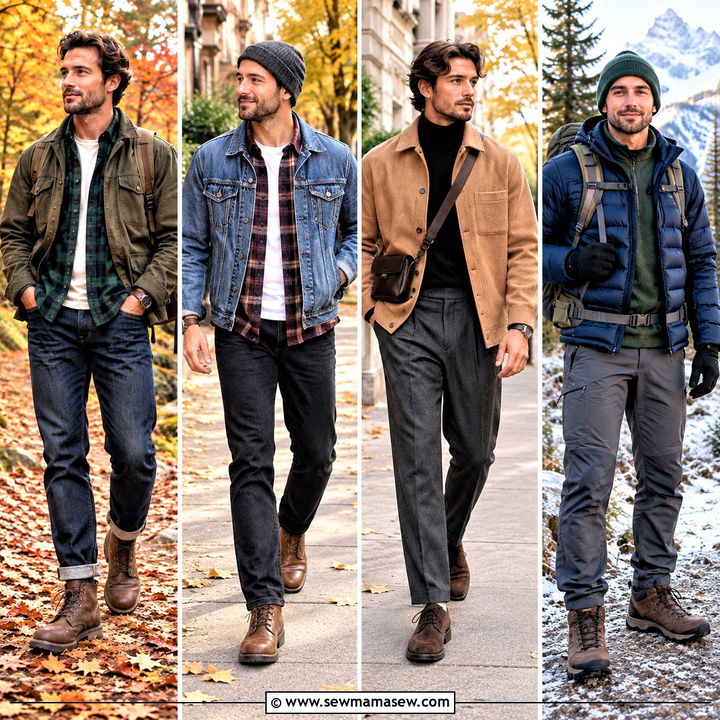
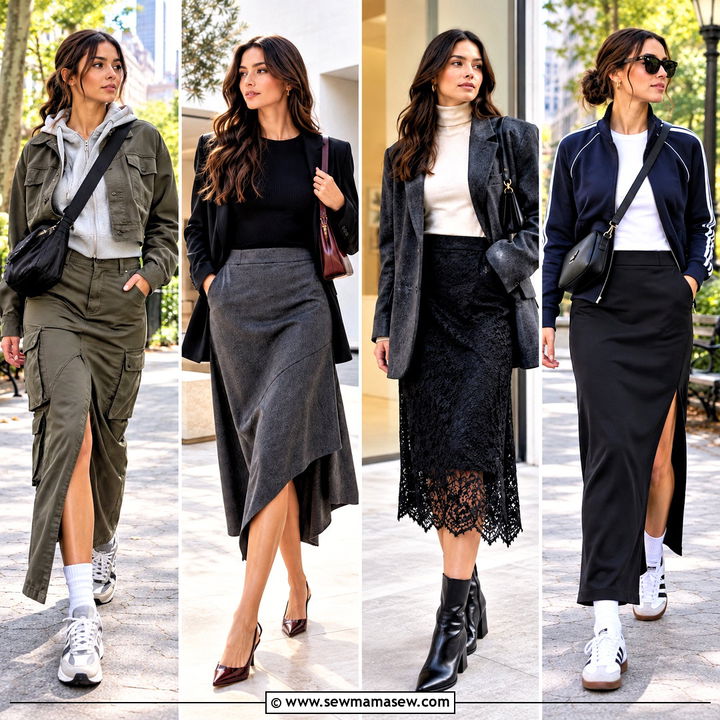
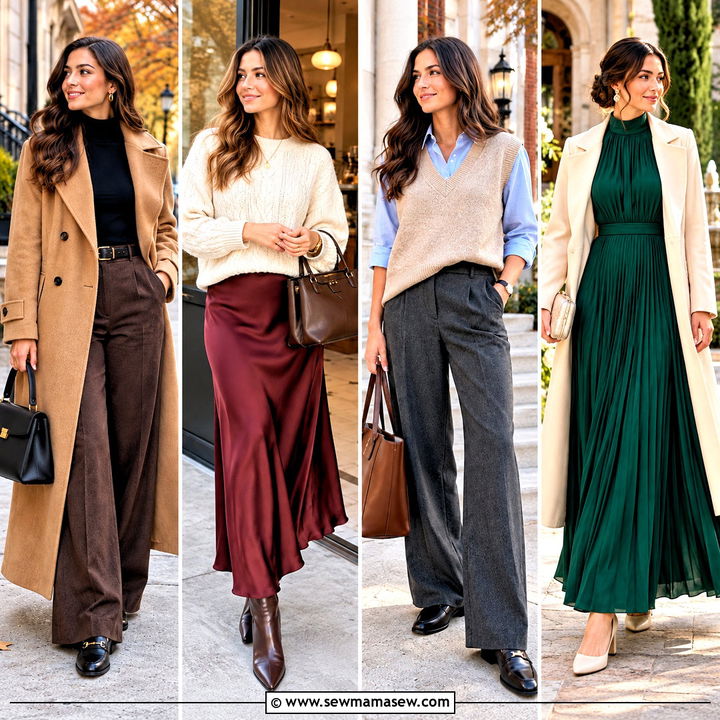
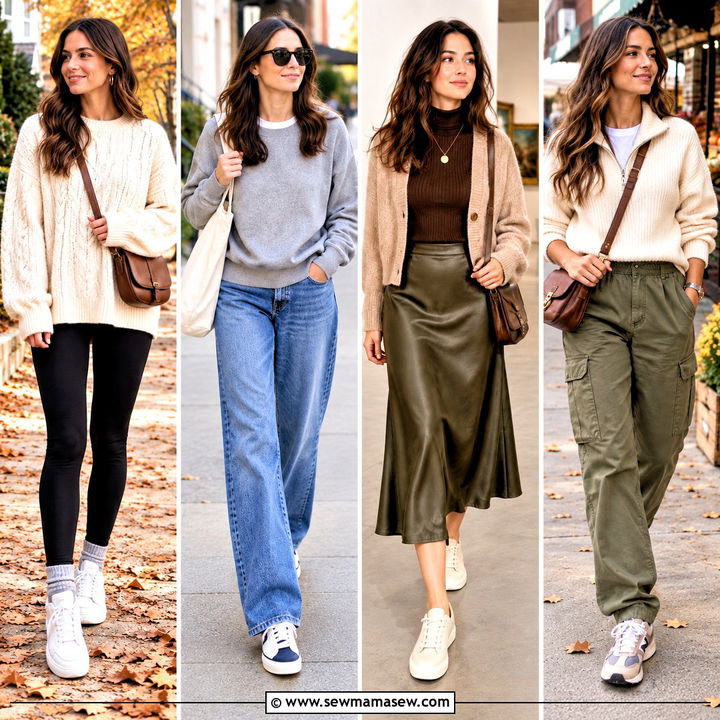
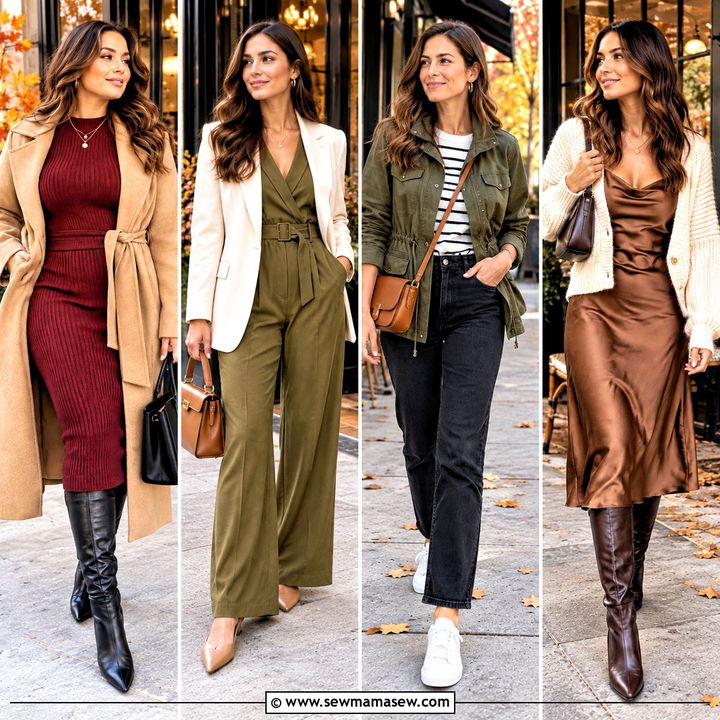
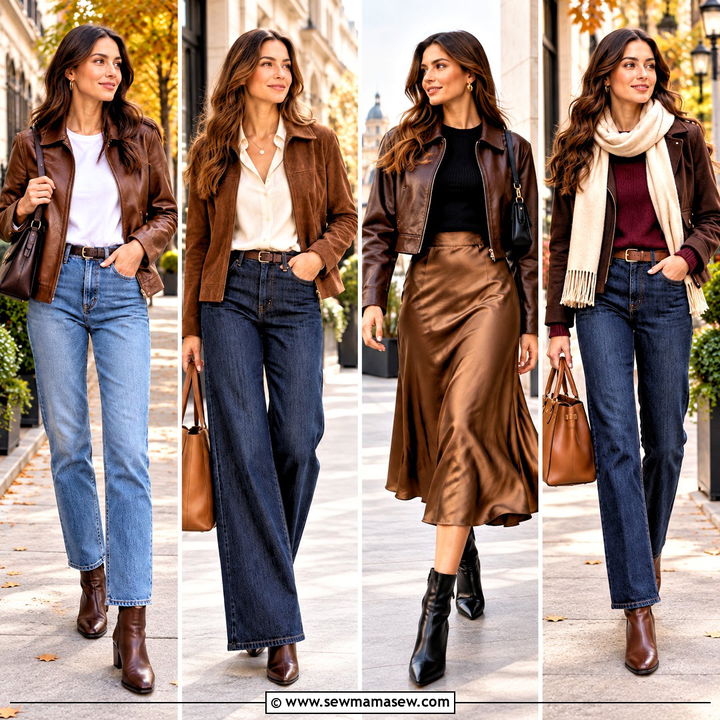
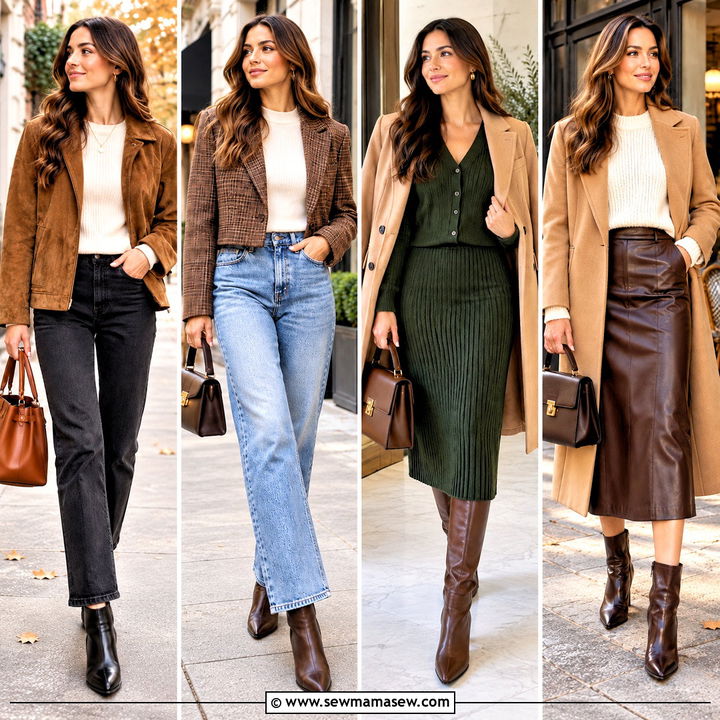
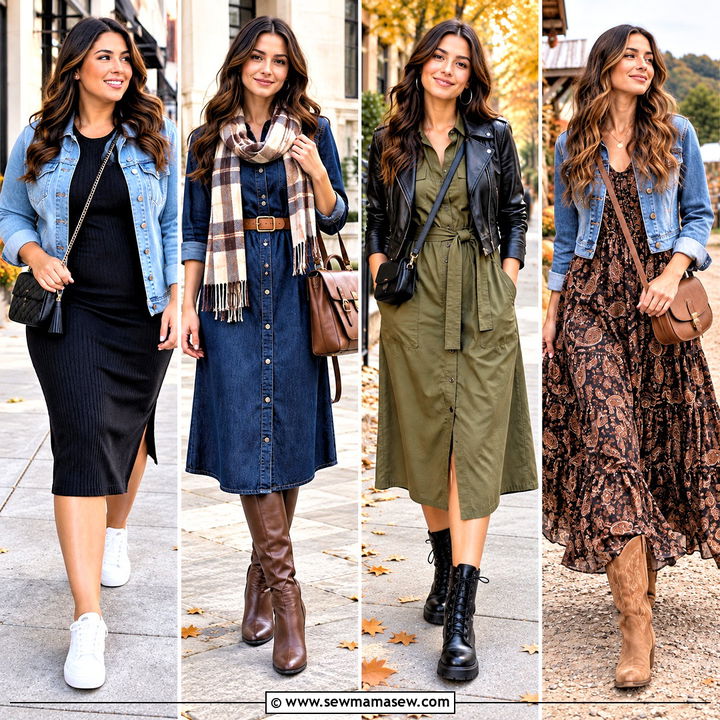
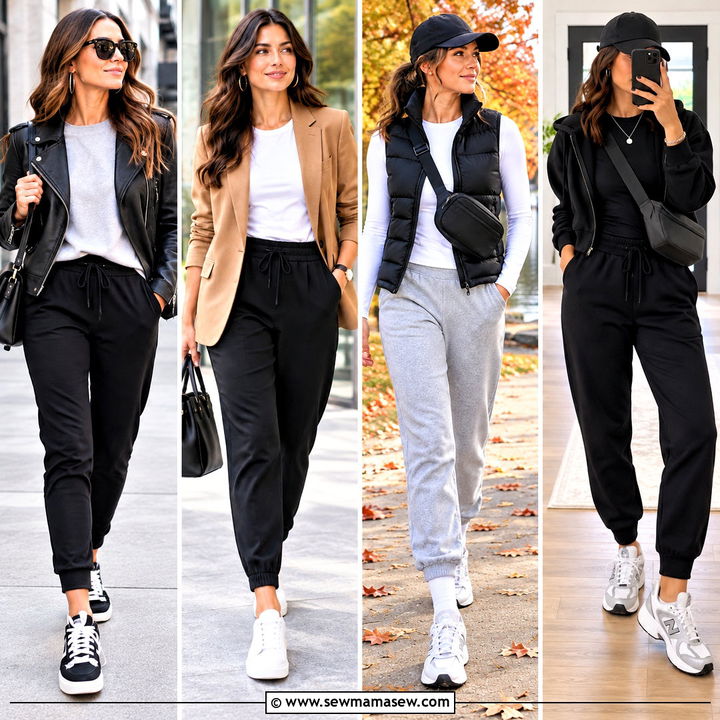
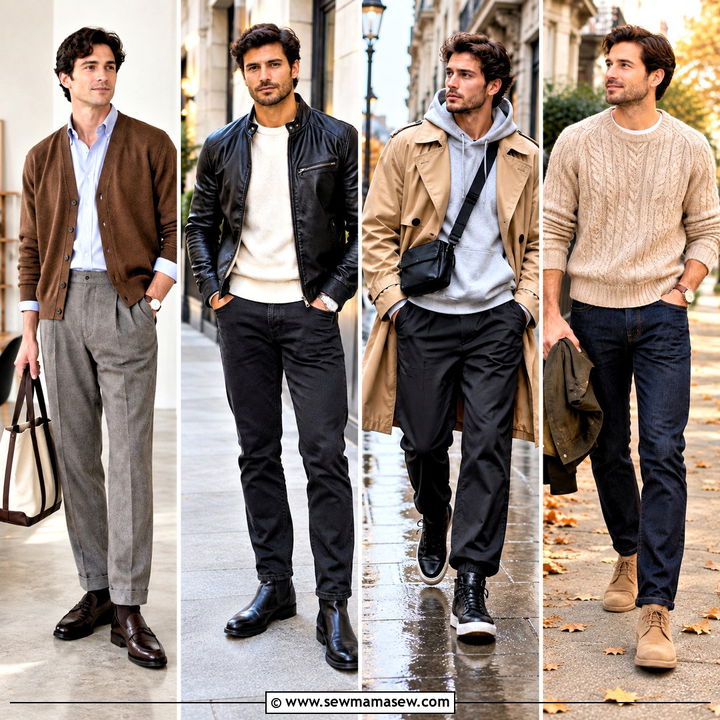
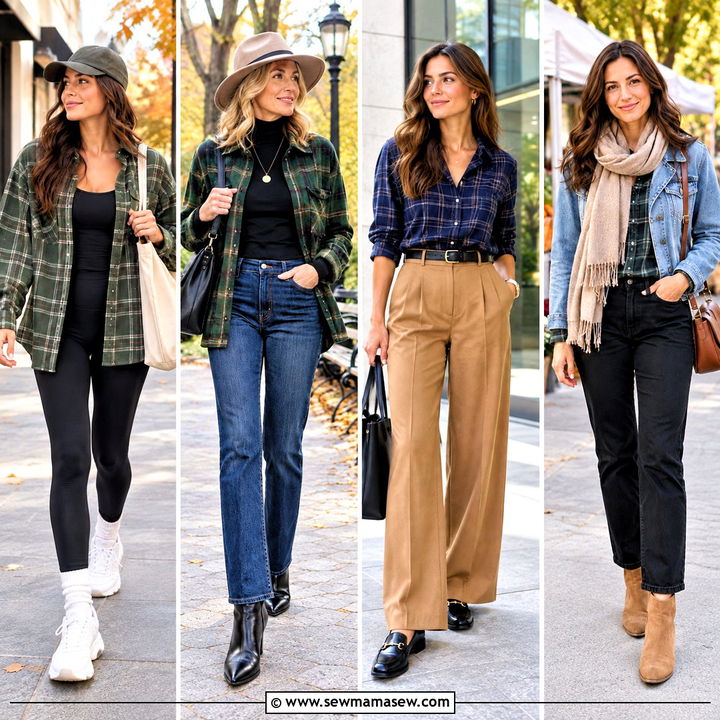
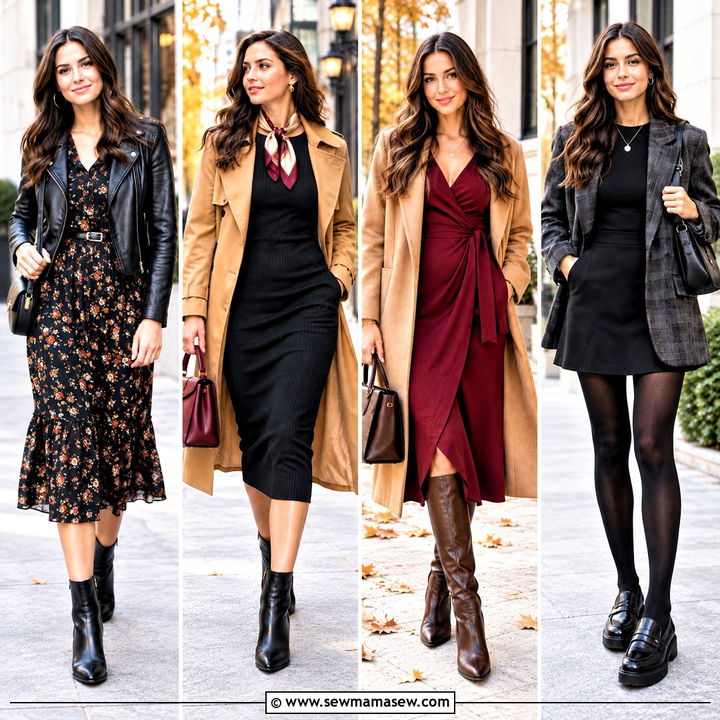
A shacket is the piece I reach for when a fall morning starts cold and the afternoon doesn't. It's heavier than a shirt and lighter than a jacket, so it handles that awkward middle of the season better than almost anything else in a closet. Plaid is the version most people already own, but corduroy, denim, quilted, sherpa, wool-blend and faux suede each behave differently on the body. The rule I work by is simple: if the shacket is roomy, keep everything under it close to the body, and if it's cut neat, you can afford a looser trouser or skirt. The fifteen outfits below are built on that balance.
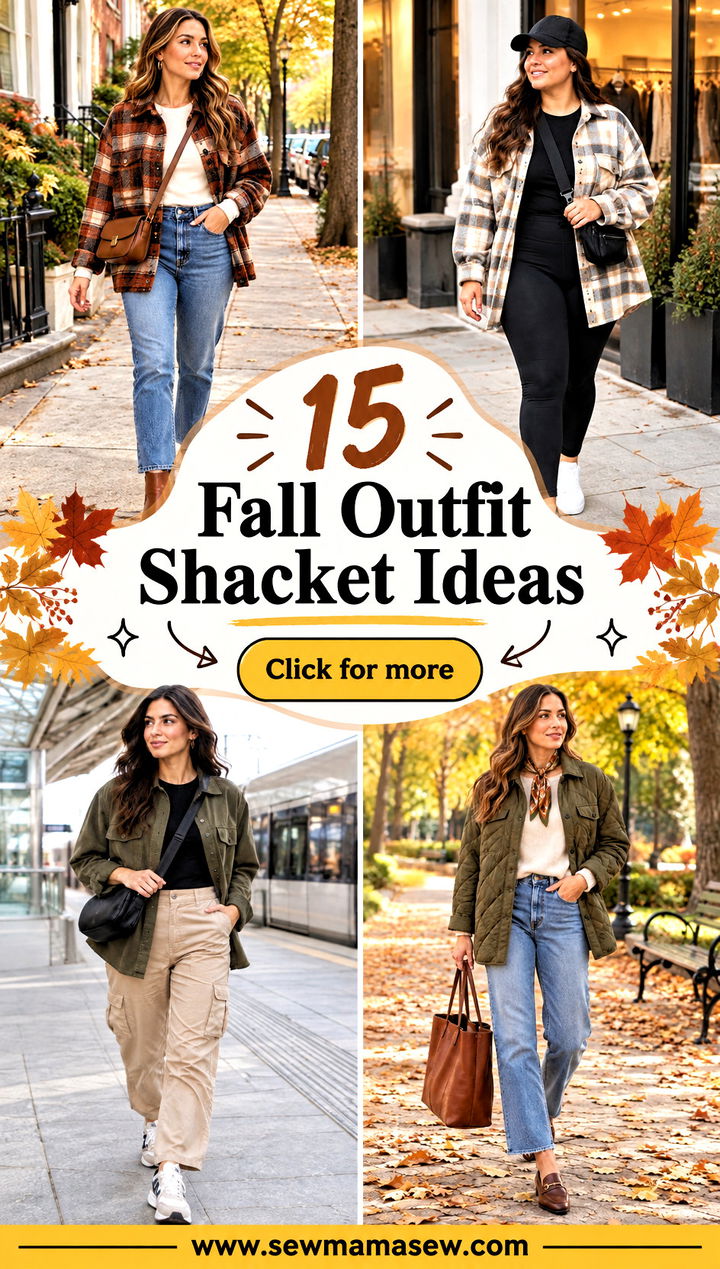
Where a Shacket Should End on Your Body
Length is the first thing I check on any shacket, before color or fabric, because it decides which bottoms the piece can go with. The same jacket can look sharp on one person and sloppy on another purely because of where the hem lands.
- Petite frames: aim for the hip bone to the top of the thigh. Anything longer cuts the leg in half, and a dropped shoulder seam only makes that worse.
- Tall frames: mid-thigh lengths look intentional on you, and a longline shacket over a midi dress is one of the few layering tricks that really suits a long torso.
- Curvy hips: a hem that stops at the widest point of the hip draws a line straight across it. Go a little shorter or a little longer than that point, and wear it open.
- Short-waisted: cropped shackets can make the torso look even shorter. Pick one that ends just below a high-rise waistband instead.
Then check the sleeves. A shacket sleeve should cover the wrist bone with your arms relaxed, with enough room to push it up to the forearm. If you have to roll it three times, the jacket was cut for someone taller, and the extra fabric will sit in a lump at the elbow all day.
1. Plaid Shacket With Straight-Leg Jeans
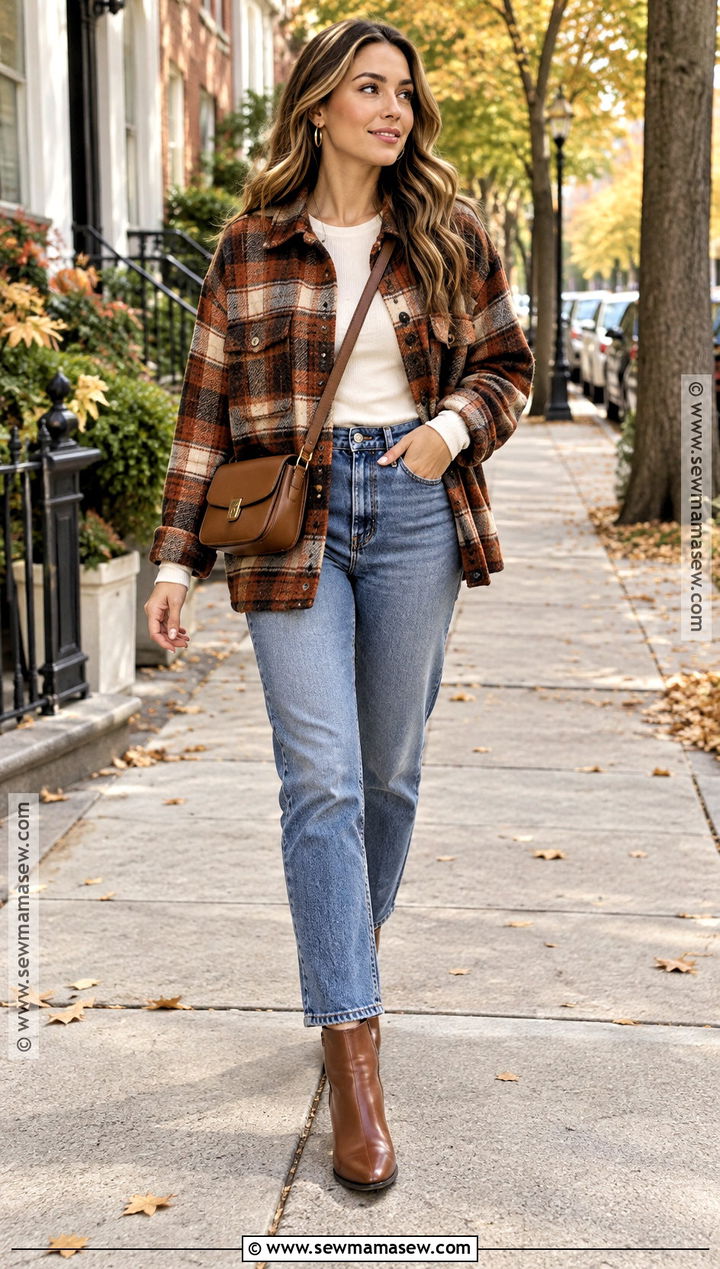
This is the outfit I'd build first for anyone new to shackets, because it's very hard to get wrong. A fitted white or cream long-sleeve top keeps the base quiet, medium-wash straight-leg jeans give the legs a clean column, and the plaid layer goes over the top in brown, rust, navy or forest green. Wear it open most days and fasten just the middle two buttons when the wind picks up. Brown leather ankle boots pick up the warm tones in the check without adding weight, and a structured crossbody, small gold hoops and a plain leather belt finish it. If you're petite, the length is the thing I'd check first: a shacket that stops at the upper thigh reads as a jacket, while one that hits mid-thigh starts to swallow a small frame.
2. Oversized Shacket With Black Leggings
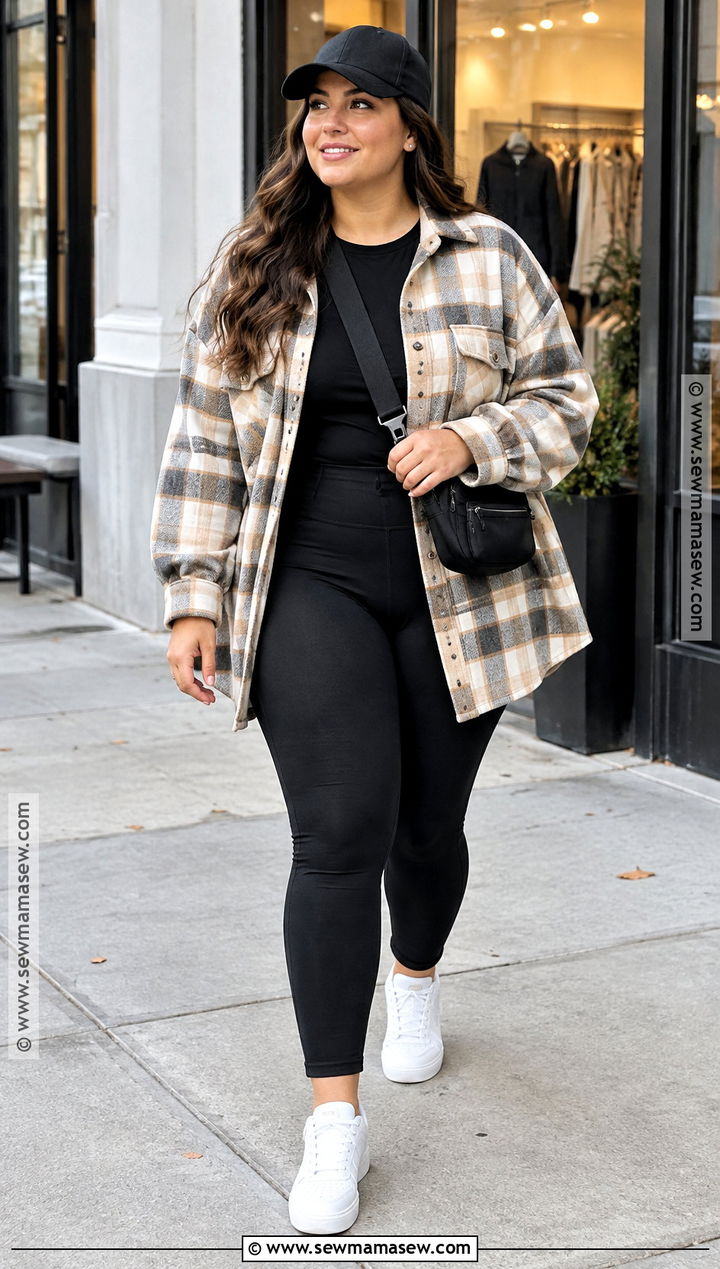
The risk with leggings and a big shacket is looking like you rolled out of bed, and the fix is all in the base. A fitted black crewneck and high-waisted black leggings give the oversized layer something narrow to hang from, and the single dark column underneath makes the legs look longer. Thin leggings ruin this, though. I always do the bend test in daylight, because cheaper pairs go shiny or see-through at the knee. White leather sneakers or lug-sole ankle boots both work, and a nylon crossbody, cap and small studs keep it practical for errands and school runs. Crew socks and a light scarf that repeats one color from the shacket add warmth without bulk.
3. Cream Shacket With Wide-Leg Pants
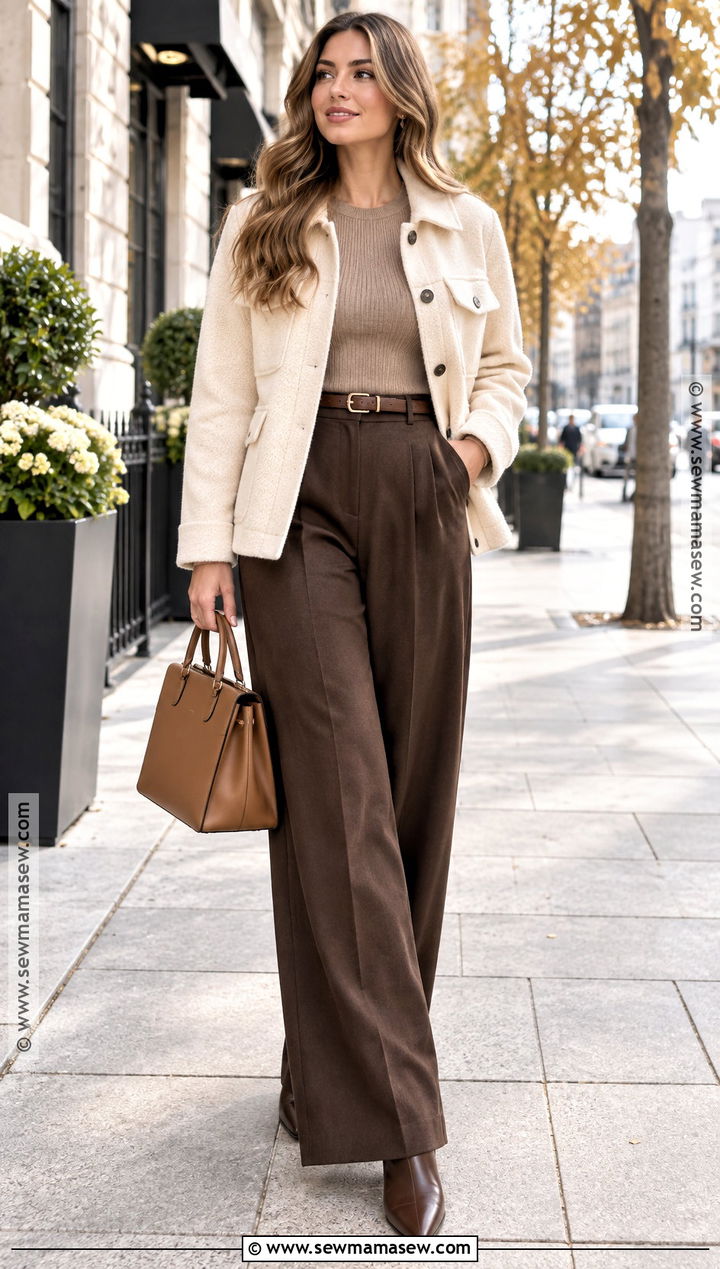
Tonal neutrals make a shacket look far more considered than it is. I'd start with a fitted beige or ivory knit, then add high-waisted wide-leg trousers in chocolate brown and a cream wool-blend shacket left open, so the dark trouser runs as one unbroken stripe down the middle of the body. Pointed ankle boots give a little lift under the wide hem, and a structured tan bag stops the soft layers from looking slouchy. Hem length matters more here than anywhere else in the list: the trouser should just graze the top of the shoe, because a wide leg that drags picks up dirt and frays at the back within a week. A slim belt and small earrings are all the jewelry it needs for a casual office or a lunch in town.
4. Corduroy Shacket With Dark-Wash Jeans
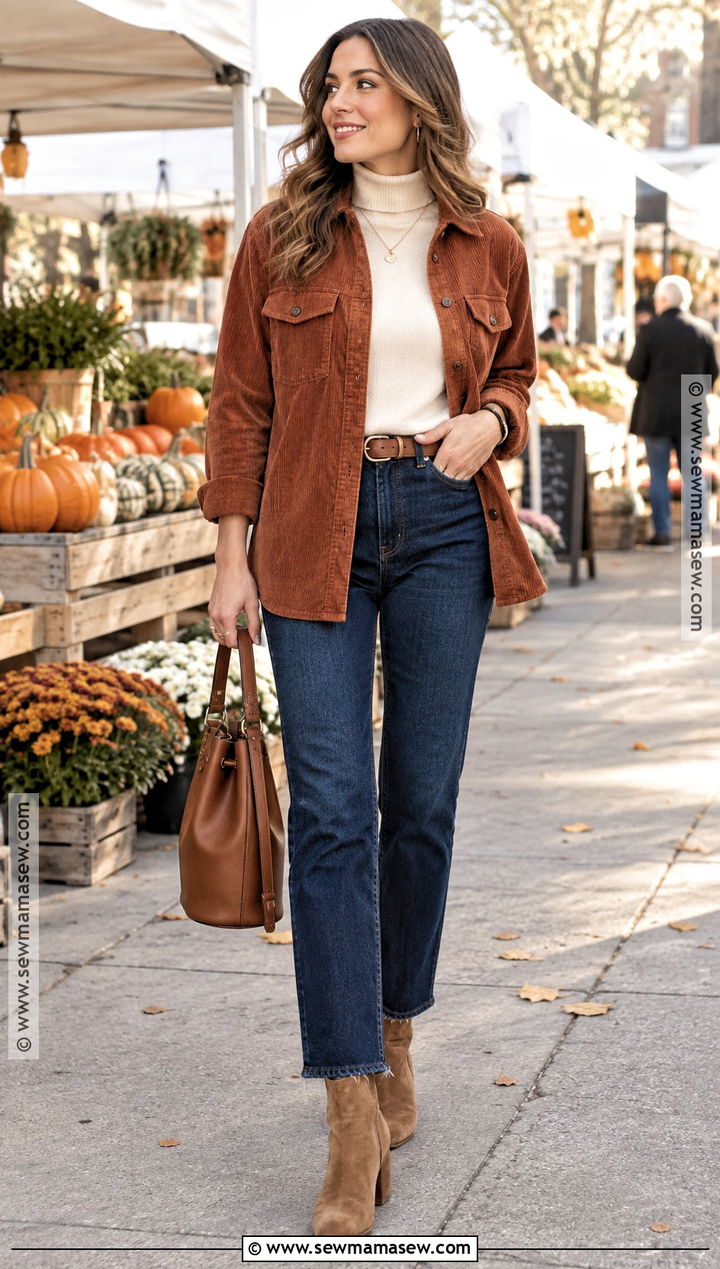
Corduroy gives you texture without asking you to wear a pattern. A rust, camel, olive or chocolate cord shacket over a thin cream turtleneck, with dark-wash straight or slim jeans, lets the warm color stand out against the indigo. Tan suede ankle boots with a block heel and a brown leather belt tie the lower half together. One thing worth knowing about cord: the wale flattens and goes shiny at the elbows and cuffs with heavy wear, so I fold the sleeves back once, which shows a strip of the lighter knit and keeps the worn edge out of sight. A bucket bag, simple gold jewelry and, on colder days, a cream or muted plaid wool scarf are all it needs.
5. Denim Shacket With Black Midi Dress
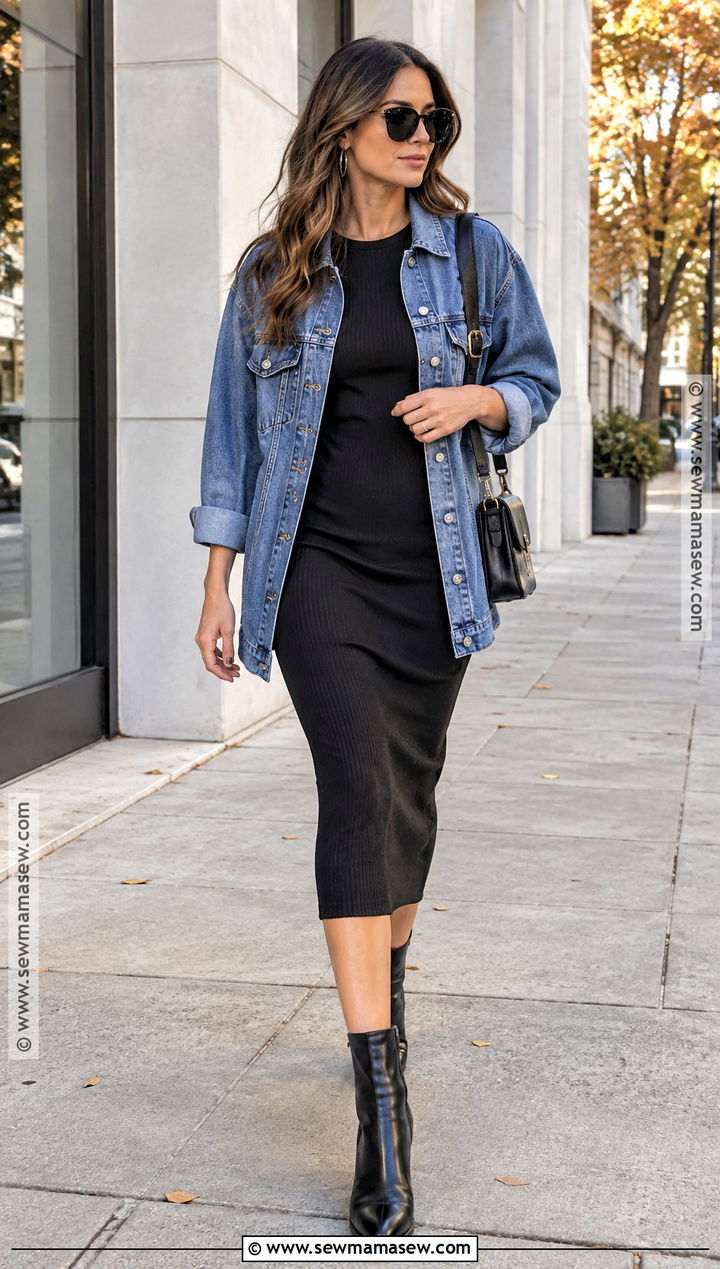
Not ready to put your dresses away? A medium-wash denim shacket over a fitted black ribbed midi dress is how I keep them in rotation into October. The length of the shacket is what makes or breaks this. Stop it at the hip or upper thigh and you still see the shape of the dress; let it fall to mid-thigh and the whole thing turns into a rectangle. Black ankle boots keep the look in one color family, and white sneakers make it more casual. If you want the waist back, wear the shacket open and run a narrow belt over the dress only. Sheer black tights take it well into the cooler weeks.
6. Black Shacket With Monochrome Basics
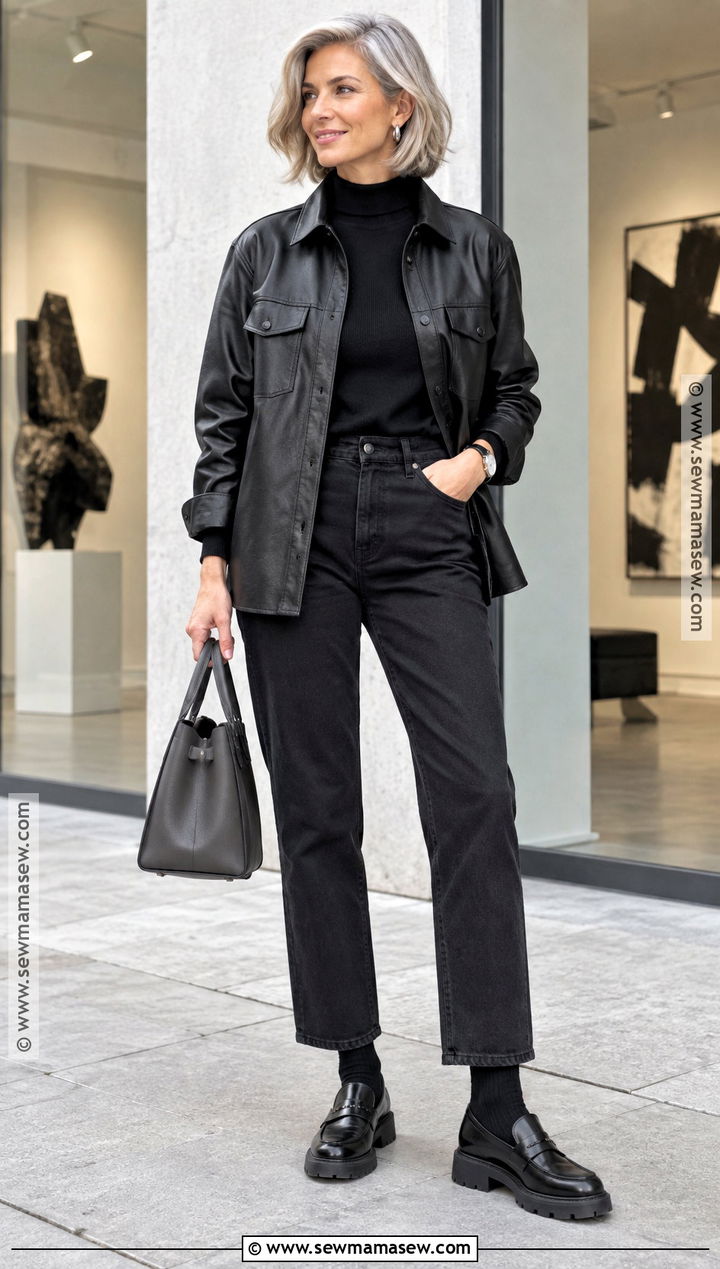
All black only looks flat when every piece has the same surface. Here a matte mock-neck knit, black straight-leg denim and a faux-leather or brushed wool shacket each catch light differently, so you can actually see where one ends and the next begins. Daytime, I'd wear chunky black loafers with ribbed socks; for evening, pointed ankle boots sharpen it. A charcoal or deep burgundy bag adds one quiet note of color. Watch the proportions if your shacket is long: keep the jeans fitted through the hip, or the whole outfit loses its outline. A plain watch and silver earrings carry it from a casual office to a gallery opening.
7. Sherpa Shacket With Joggers
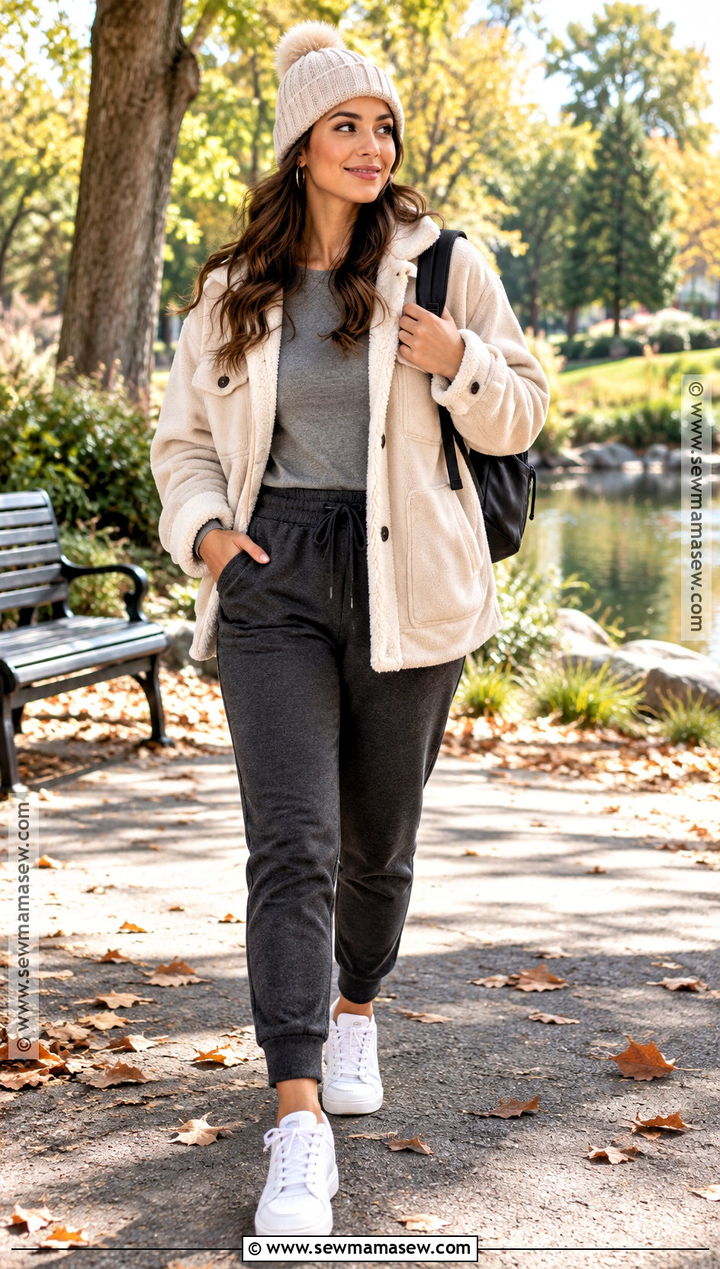
Sherpa is warm, but it adds real volume, so I build this one from the shoulders down. Start with a fitted long-sleeve tee in white, oatmeal or soft gray and tapered knit joggers in black or charcoal with a flat waistband and no big logos. The camel, cream or brown sherpa shacket goes on top, and this is where I'd be strict about fit: the shoulder seam should sit on your shoulder, not halfway down the arm, or the pile makes you look a size bigger all over. Leather sneakers are fine for dry days and lace-up boots for wet ones. A small backpack, beanie and simple hoops make it road-trip and sideline ready, and the neat base keeps it from looking like loungewear.
8. Cropped Shacket With High-Waisted Jeans
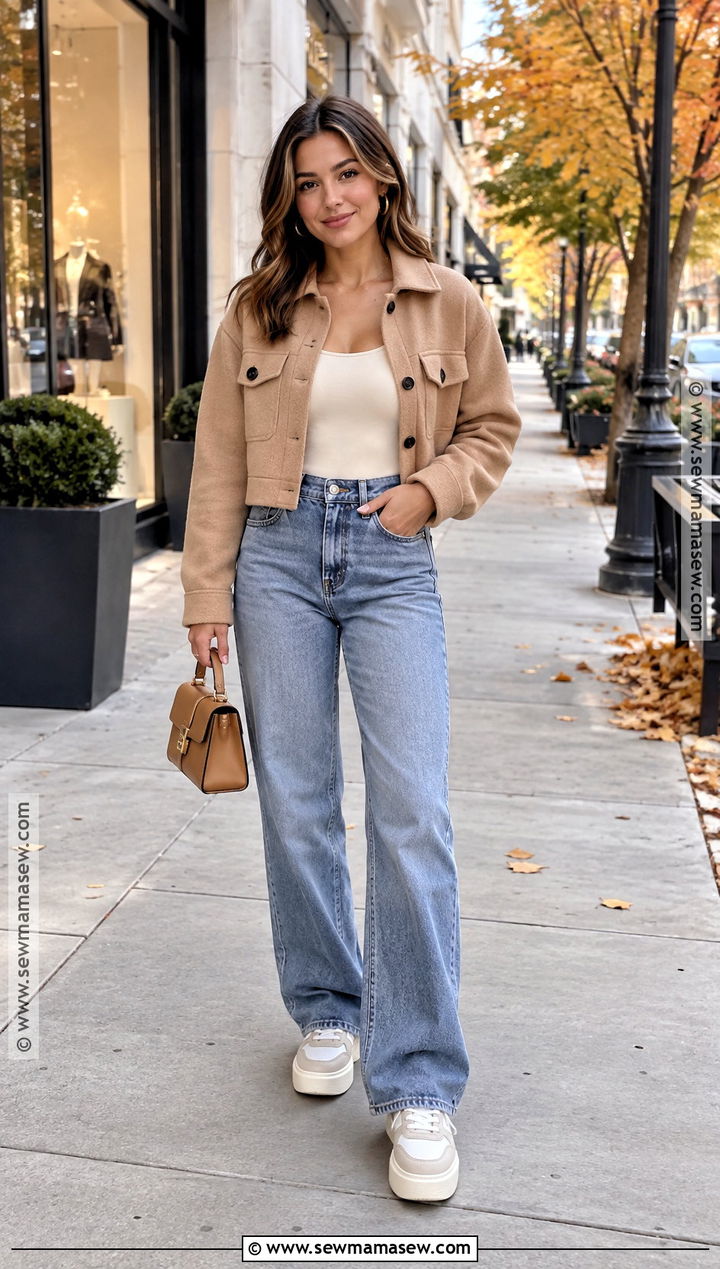
A cropped shacket works only if it meets the jeans. I pair it with a fitted bodysuit or ribbed top and high-waisted straight or relaxed jeans, and I check that the jacket hem lands right at the top of the waistband, because that line is what makes the legs look long. A gap of bare midriff or a hem that stops two inches above the waist both shorten the torso in an unflattering way. Camel, cream, olive or a soft plaid all suit the shape. Platform sneakers, loafers or heeled ankle boots depend on the day, and a small top-handle bag with medium hoops gives the shorter silhouette some structure. Not a fan of cropped? Pick one that ends just below the waistband and you get most of the same effect.
9. Belted Shacket With Knit Dress
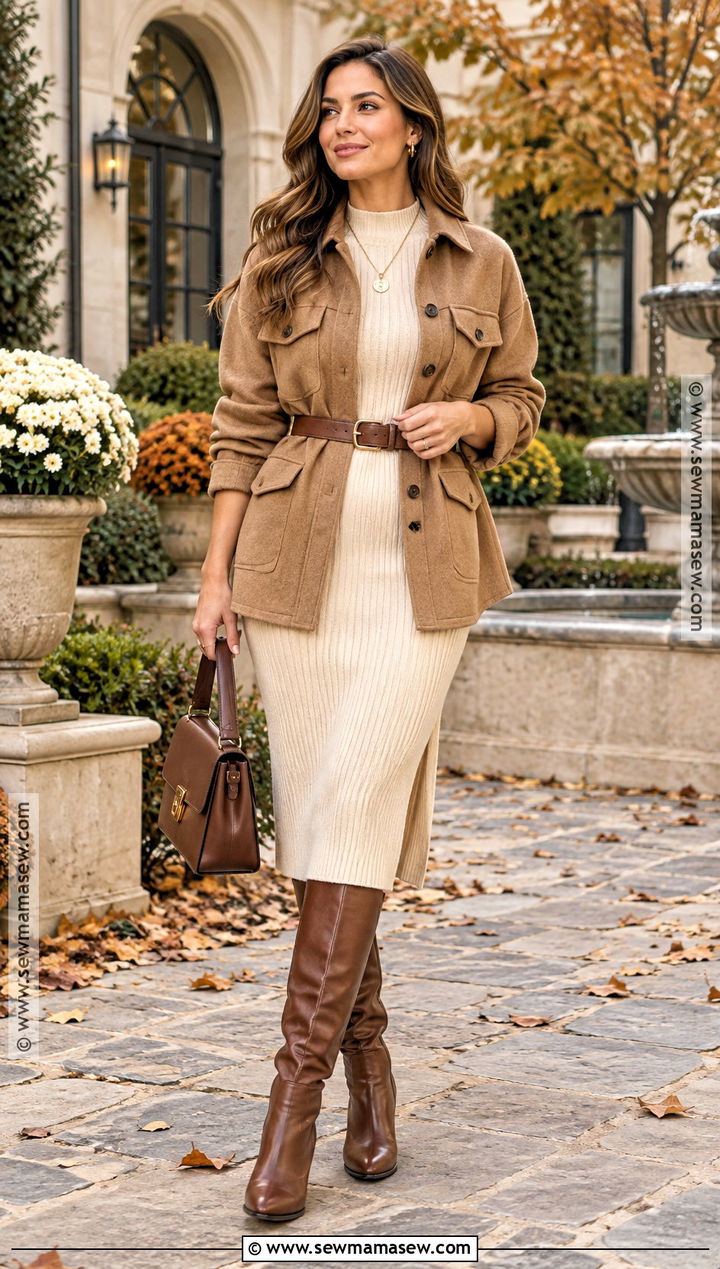
Belting a shacket is my fix for one that feels boxy. Over a fitted ribbed knit midi dress, button the camel, gray or cream shacket halfway and close a medium-width leather belt at the natural waist. For a softer version, leave the shacket open and belt only the dress underneath. The fabric weight decides whether this works. A thick wool shacket bunches into a ridge under the belt, so I only do it with lighter weaves. Knee-high leather boots meet the dress hem and keep the leg covered, and a structured shoulder bag, pendant and small earrings finish it. Move the belt up an inch or two if you're short-waisted; it gives you more leg.
10. Olive Shacket With Cargo Pants
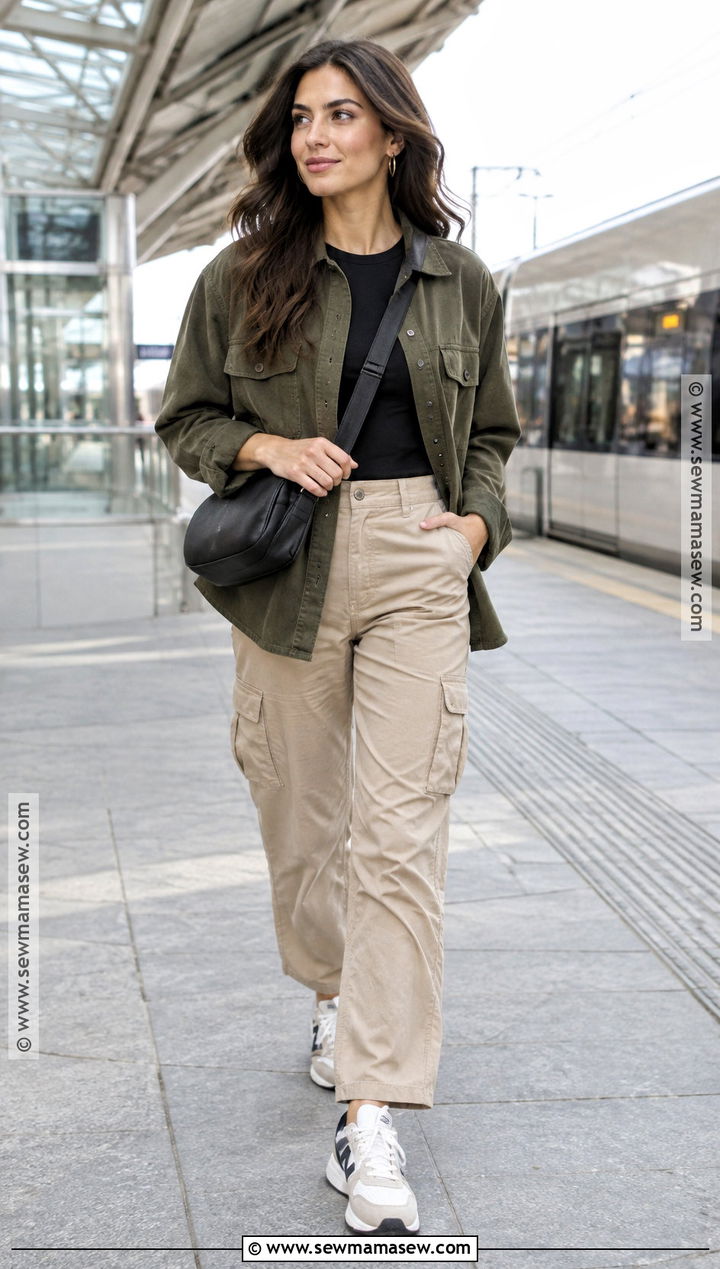
Two utility pieces together can tip into a uniform fast, so I keep the colors apart on purpose. A fitted black or cream crewneck, straight-leg cargo pants in beige, black or stone, and an olive shacket with plain pockets and very little hardware give you the look without the costume. Matching olive top and bottom is the version I'd avoid. Retro sneakers or sturdy lace-up boots keep it grounded, a compact crossbody carries the essentials, and gold hoops with a sleek ponytail add some polish against all that canvas. If your cargos are wide or have big bellows pockets, go for a shorter, cleaner shacket so the hips don't carry too much bulk. It's my pick for sightseeing days and mild weekends outdoors.
11. Camel Shacket With Turtleneck And Midi Skirt
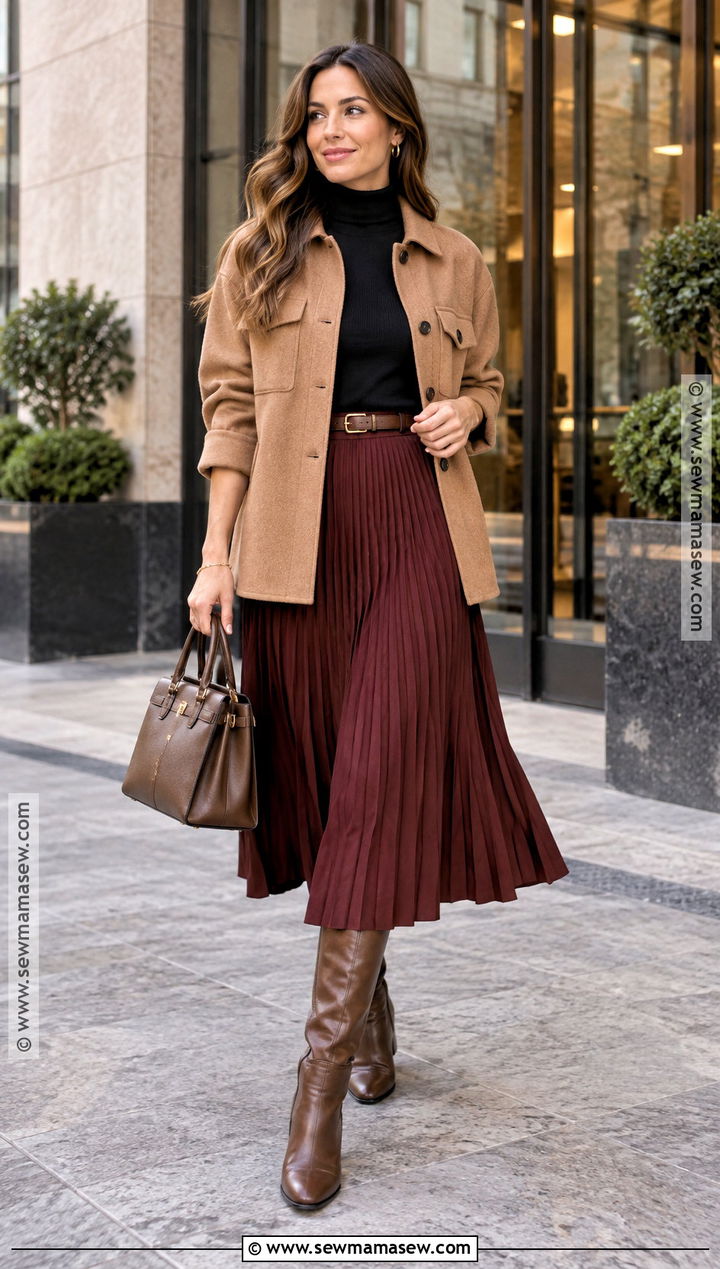
A camel shacket bridges the gap between a slim turtleneck and a skirt that moves. I'd use a cream or black fine-knit turtleneck with a satin, pleated or softly structured midi in chocolate, olive, burgundy or black, then a hip-length camel shacket worn open. Hip length is deliberate. Anything longer covers the top of the skirt and cuts off its movement when you walk. Knee-high boots should disappear under the hem, so I check that there's no gap of bare leg when you sit. A slim belt helps if the skirt needs more waist, and small hoops with a fine bracelet keep it clean enough for the office or an afternoon party.
12. Quilted Shacket With Sweater And Jeans
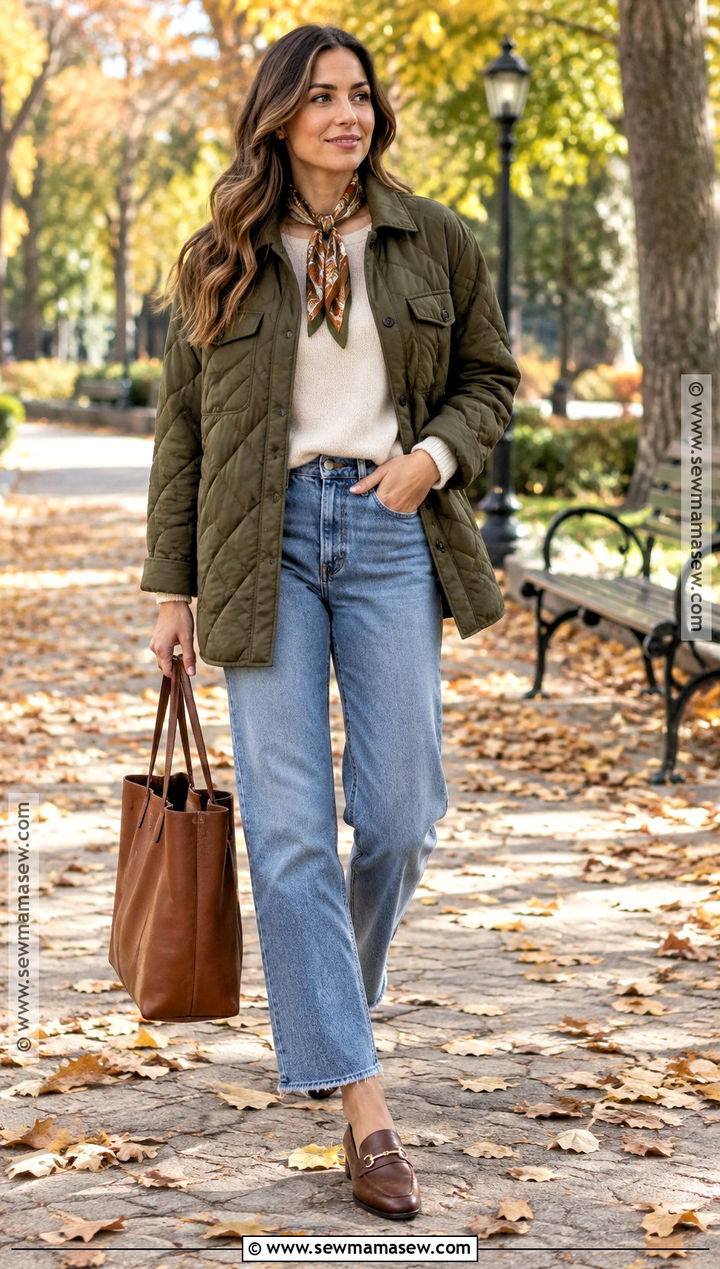
Quilted shackets are lighter than they look, which makes them good over a knit on a crisp day. The catch is the armhole. Before buying, I'd try one on over the sweater you actually plan to wear, because quilting has almost no give and a tight sleeve pulls the stitched channels out of line. A fine cream, gray or striped crewneck works best with relaxed straight-leg jeans in a medium or dark wash and an olive, navy or tan shacket. Brown loafers give it a classic finish, while lug-sole boots handle wet pavements. A leather tote and patterned scarf complete it for commutes, weekend trips and long walks. Leave the chunky cable knit for another day; it bunches under quilting.
13. Burgundy Shacket With Ecru Jeans
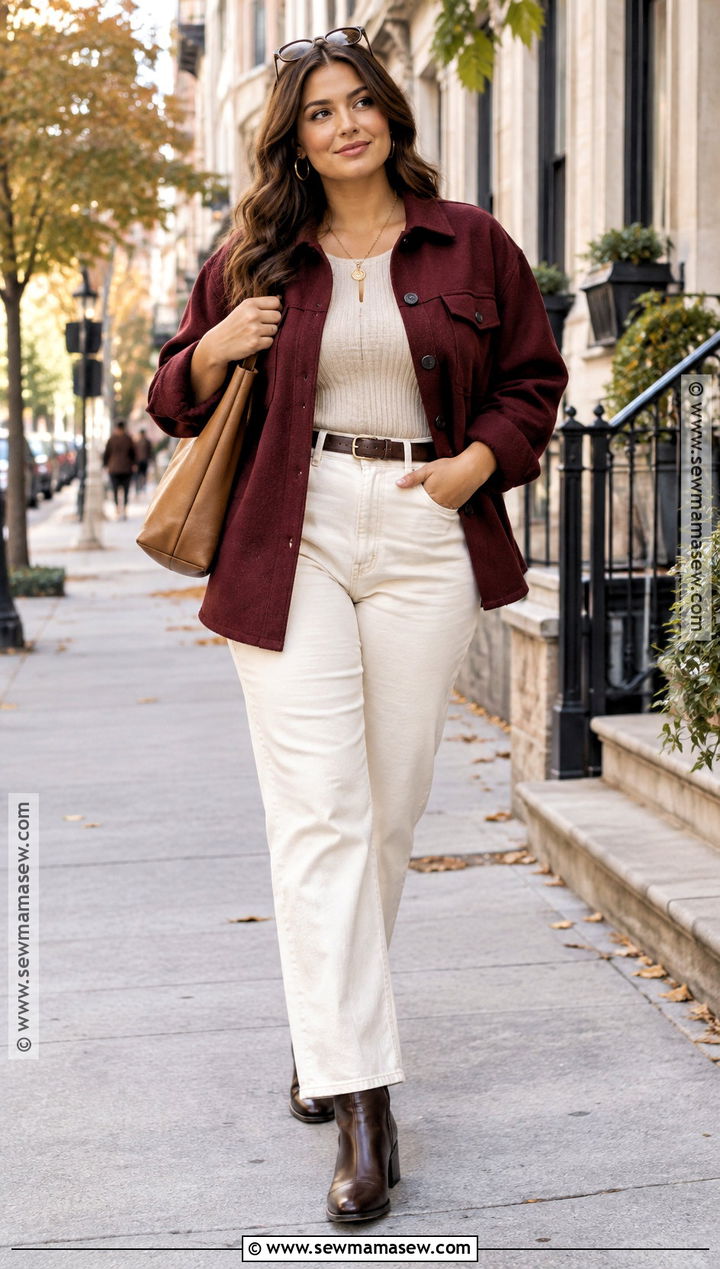
Burgundy and ecru is the combination I suggest when someone is tired of dark fall palettes. A fitted oatmeal or soft-gray knit, high-waisted ecru straight-leg jeans and a burgundy shacket let the deep red do the talking. Chocolate ankle boots sit well against burgundy, and a matching belt connects the lower half. Pale denim needs a heavier weight, in my experience, because thin ecru jeans show pocket bags and seams right through the fabric. A tan shoulder bag and gold jewelry keep the warmth going, and a longer shacket covers the hip if you prefer. You can wear it to a casual workplace and straight on to dinner without swapping a thing.
14. Brown Suede Shacket With Maxi Skirt
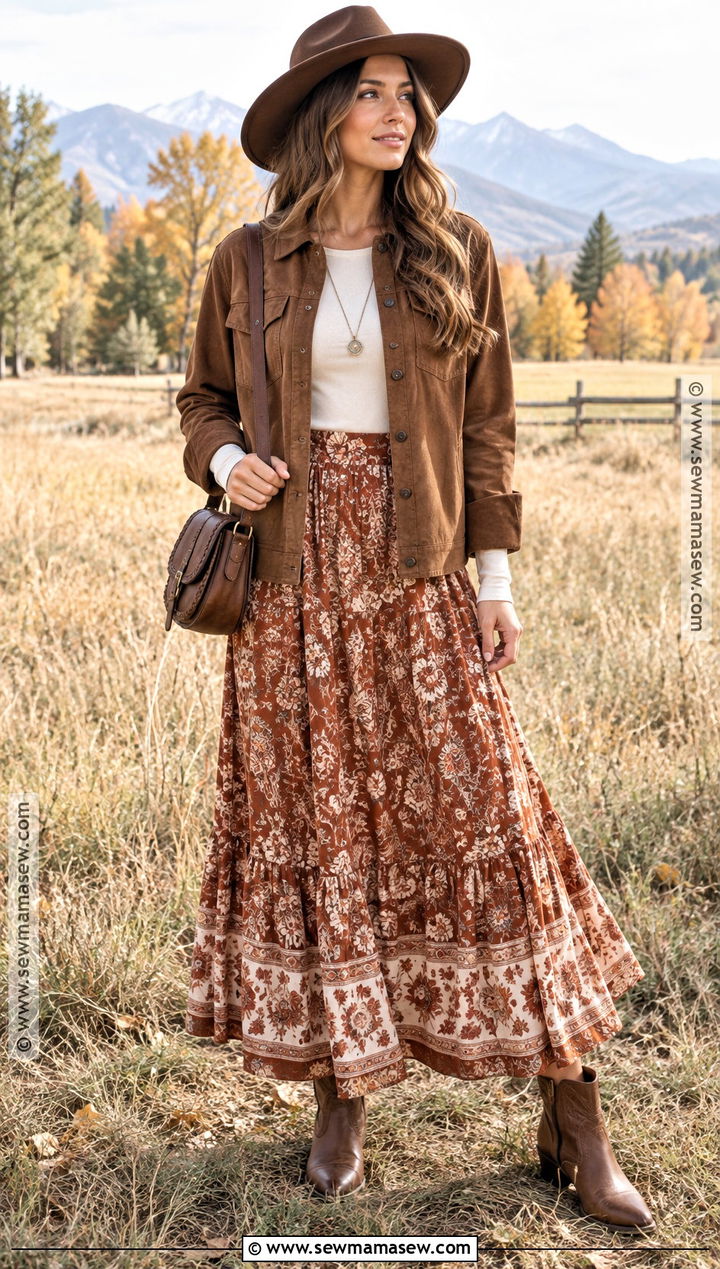
Faux suede and a maxi skirt is a soft, slightly bohemian pairing, and the trick is keeping it from tipping into fancy dress. Start with a fitted ivory long-sleeve top, add a printed or solid maxi in cream, rust, chocolate or muted green, and wear the brown suede shacket open so the skirt stays visible. Western-style ankle boots or plain brown knee-highs both suit it; I'd pick one Western detail, not three, so it doesn't look themed. A crossbody, pendant and felt hat finish it if hats are your thing. Stand in the shoes before you hem the skirt so it clears the ground. Faux suede usually handles drizzle better than real suede, which helps at fall festivals and family photo sessions.
15. Neutral Shacket With Tailored Work Pants
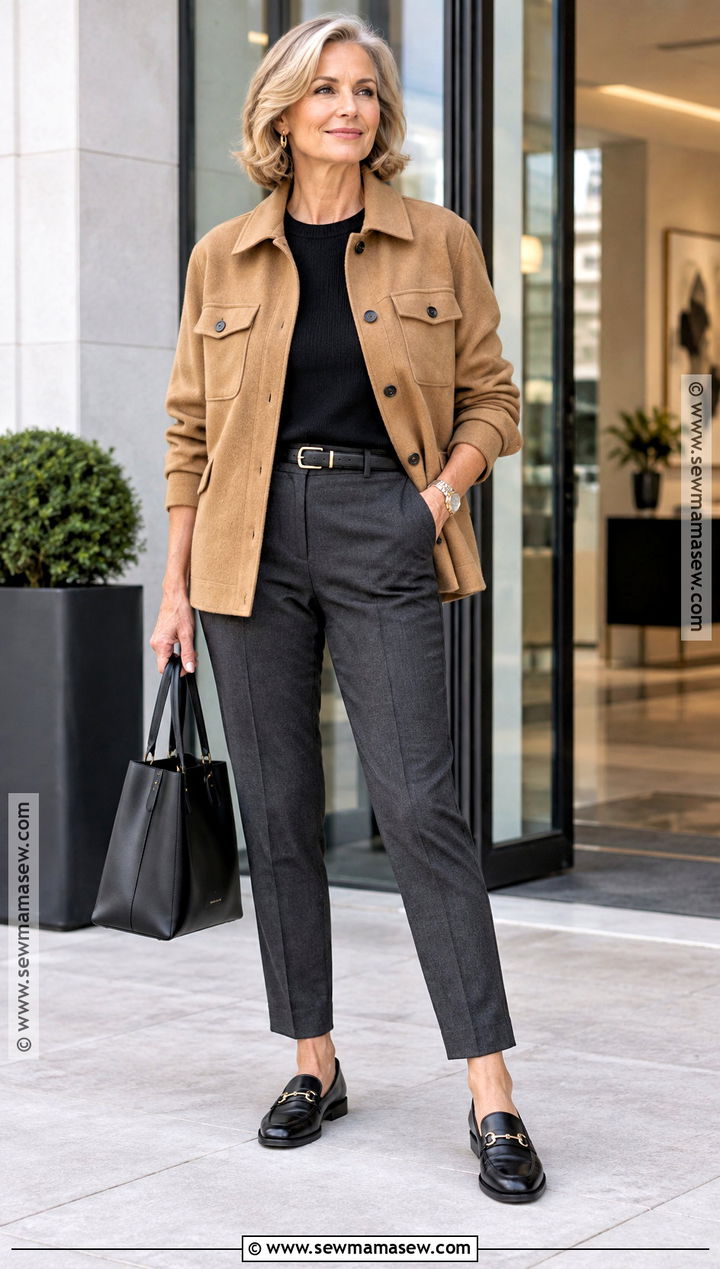
Can a shacket pass at work? A structured one can, if everything around it is tailored. I'd pair a fine-knit black, ivory or navy top with ankle-length tailored trousers and a cream, camel, charcoal or quiet herringbone shacket with a clean collar and flat chest pockets. Bulky flap pockets are the detail that makes it look like weekend wear, so I check those first. Wear it open for a long vertical line, or button it and add a slim belt. Leather loafers, pointed flats or low block-heel boots and a structured tote keep it professional. For a conservative office, I'd skip distressed fabrics and big buffalo checks altogether.
Layering for a 45-Degree Morning That Turns Warm
The reason a shacket earns its place is that you can take it off at lunch and carry it without fuss. That only works if what's underneath can stand on its own. I plan the base layer as the real outfit and treat the shacket as the removable part.
- Start with a fitted top you'd happily wear alone in the afternoon: a fine knit, a long-sleeve tee or a bodysuit.
- On a truly cold start, add a thin layer under that, like a silk or merino camisole. It adds warmth without changing how the shacket fits.
- Pick a shacket weight that matches the coldest hour, not the average. A quilted or wool-blend one for raw mornings, denim or cotton plaid for mild ones.
- Keep the scarf light. A big blanket scarf under a shacket fills the collar and pushes the lapels forward.
Washing Cord, Sherpa and Wool-Blend Shackets
Shackets get worn hard, and most of them are ruined in the wash rather than by wear. Every fabric in this list has its own weak spot, so read the label first and then treat each one by type.
Corduroy should go in inside out on a cool, gentle cycle, which protects the pile from rubbing against the drum. Hang it to dry; a hot dryer flattens the ridges. Sherpa mats when it's tumbled hot, so wash it cold, skip fabric softener, and once it's dry, brush the pile lightly with a soft brush to lift it. Wool blends rarely need a full wash. I air them out after wear, spot clean marks, and only send them for cleaning a couple of times a season, because every wash shrinks wool fibers a little. Cotton plaid and denim are the easy ones: cold water, inside out, and a line dry keep the color from fading at the seams.
Faux suede marks easily, but a soft brush handles most scuffs. Store every shacket on a wide hanger so the shoulders keep their shape over the summer.
One Layer, Fifteen Ways to Wear It
Across all fifteen, the outfits that work come down to proportion more than color. Pair an oversized shacket with a fitted base, meet a cropped one with a high waist, and let a neat, structured one carry looser trousers or skirts. Neutrals give you the most combinations, while burgundy, olive, rust, plaid and textured fabrics bring the season in. Shoes and bags are what move a shacket from errands to the office. If you're buying one this fall, pick the fabric for your weather, try it on over your thickest sweater, and start with the pieces you already wear most.
Related posts: