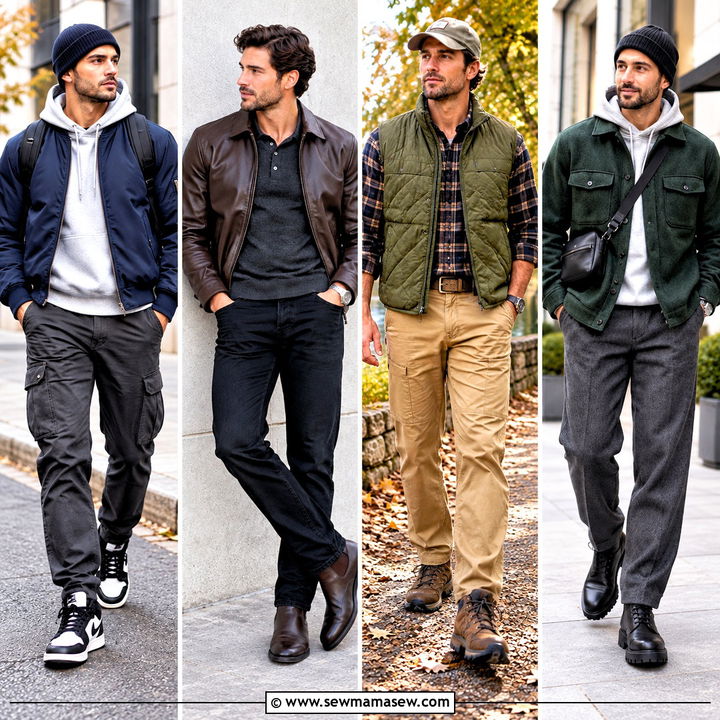
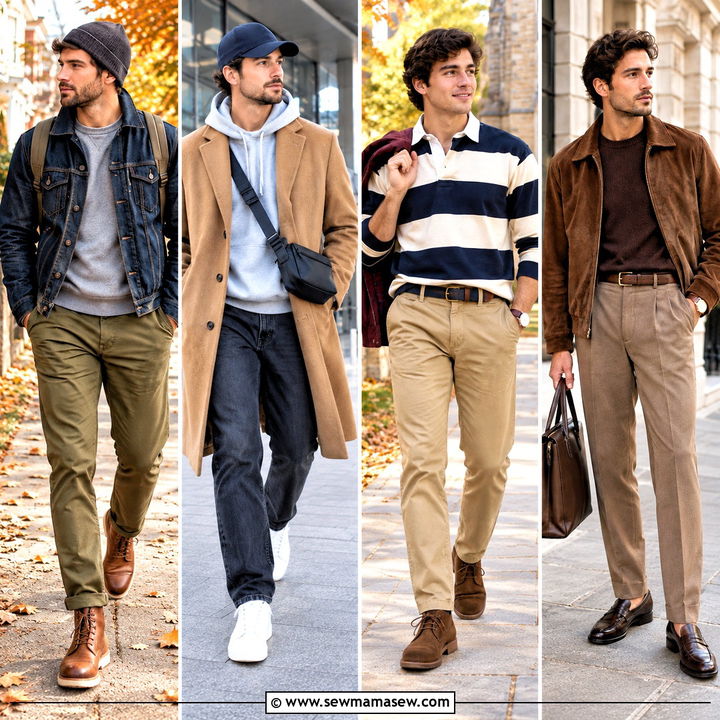
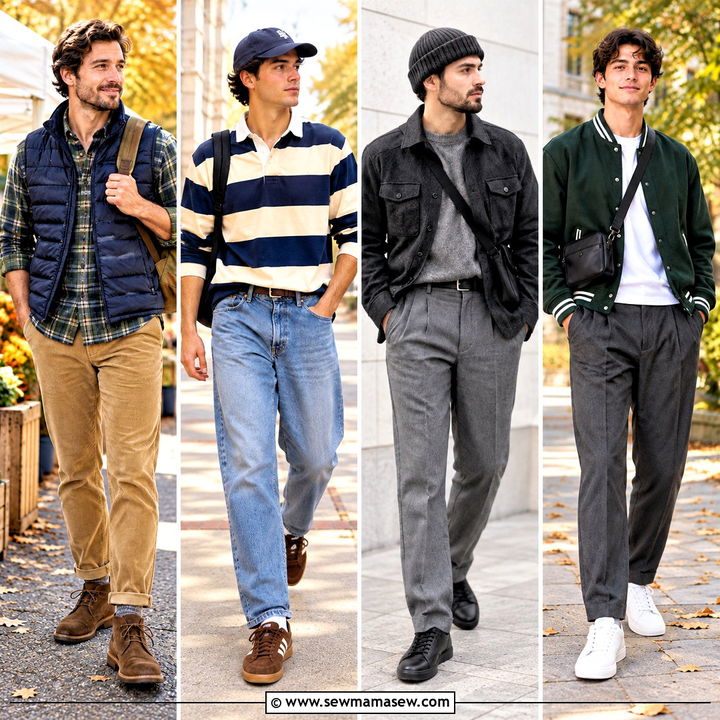
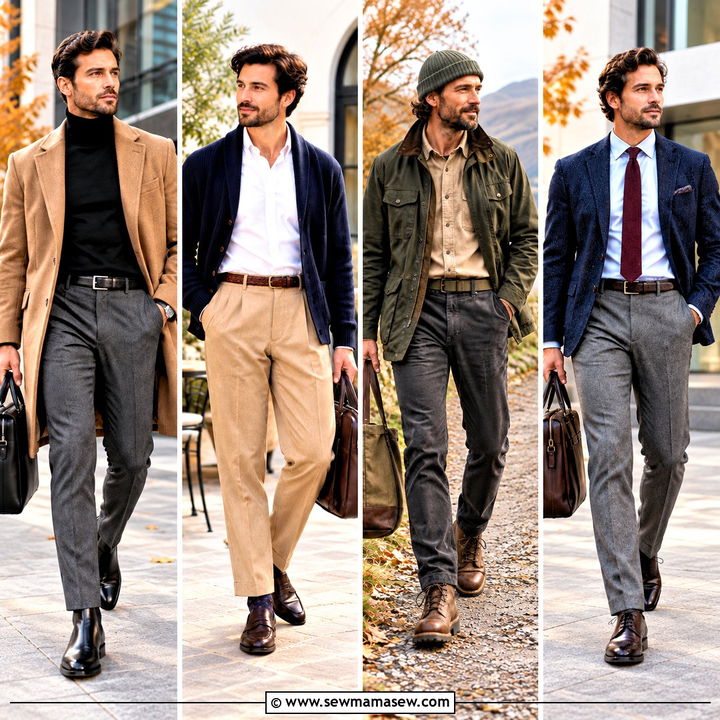
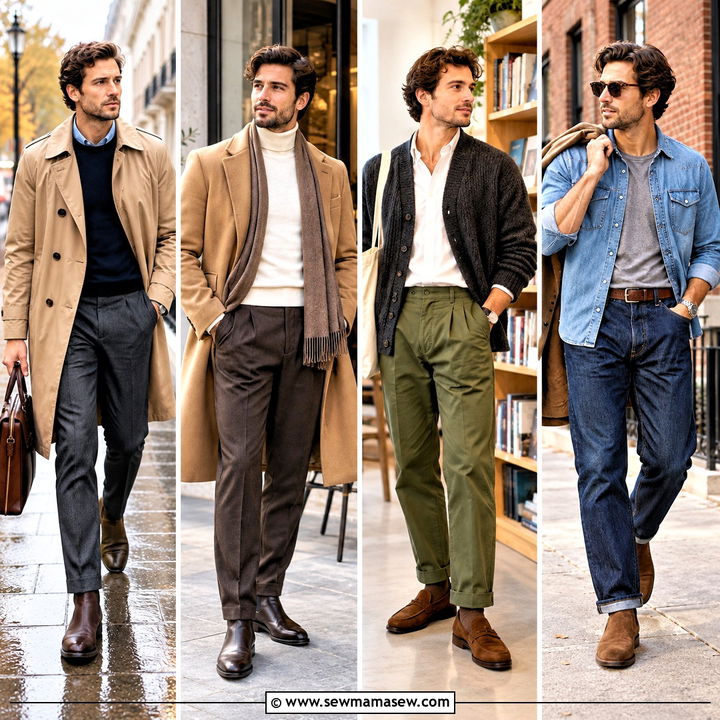
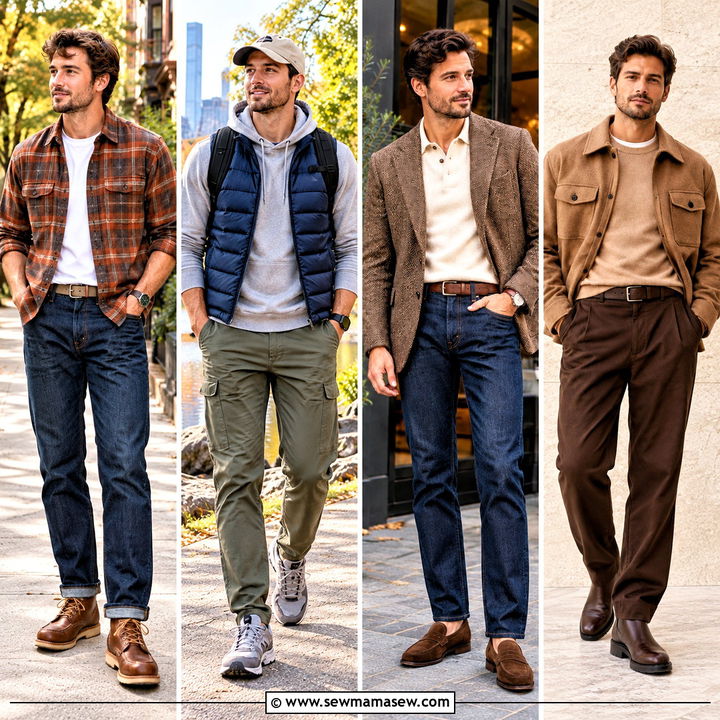
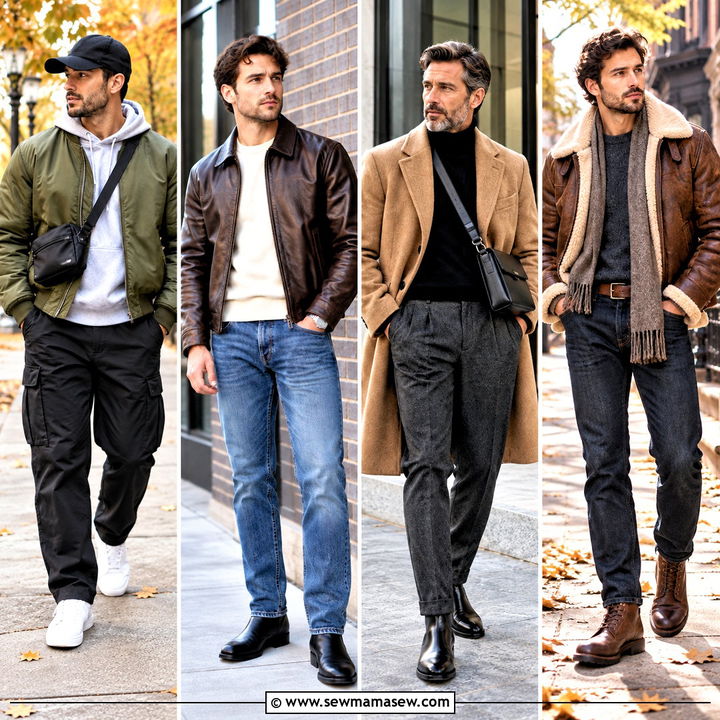
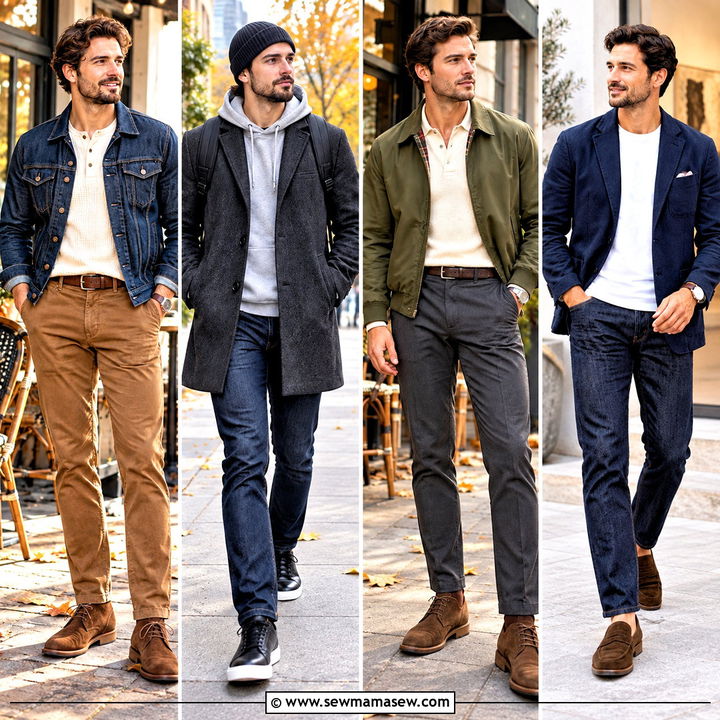
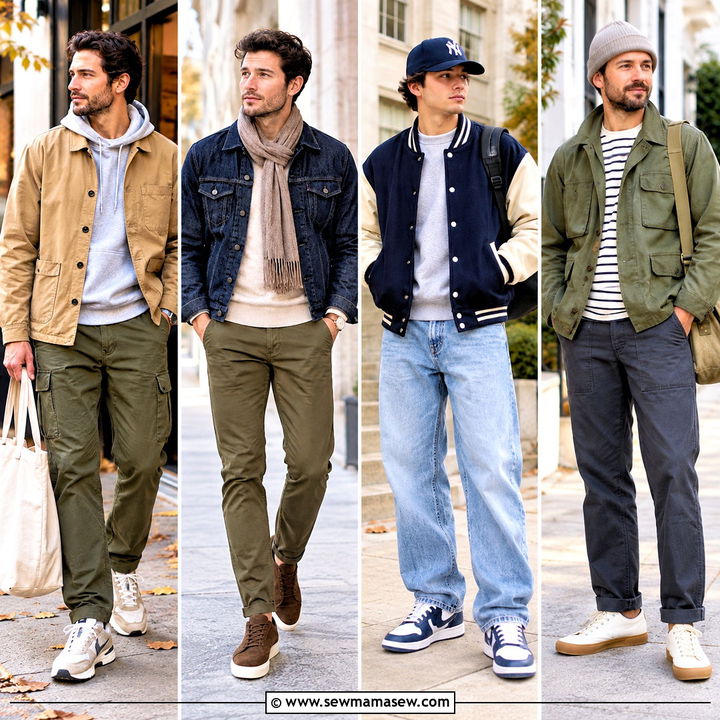
Men's fall shoes in 2026 leaned smarter without giving up comfort. Leather boots, loafers, Derbies, retro sneakers and outdoor shoes all found a place, and classic tailoring came back into everyday dressing. When I put these looks together for men, the shoe almost always sets the tone, and the fabrics follow: wool, suede, corduroy, denim and flannel all sit well next to a substantial shoe. Brown, burgundy, olive, navy and black make an easy palette to work within. Below are fifteen complete outfits for work, weekends, travel and wet weather, each with the fit and care details that decide whether a pair actually gets worn.
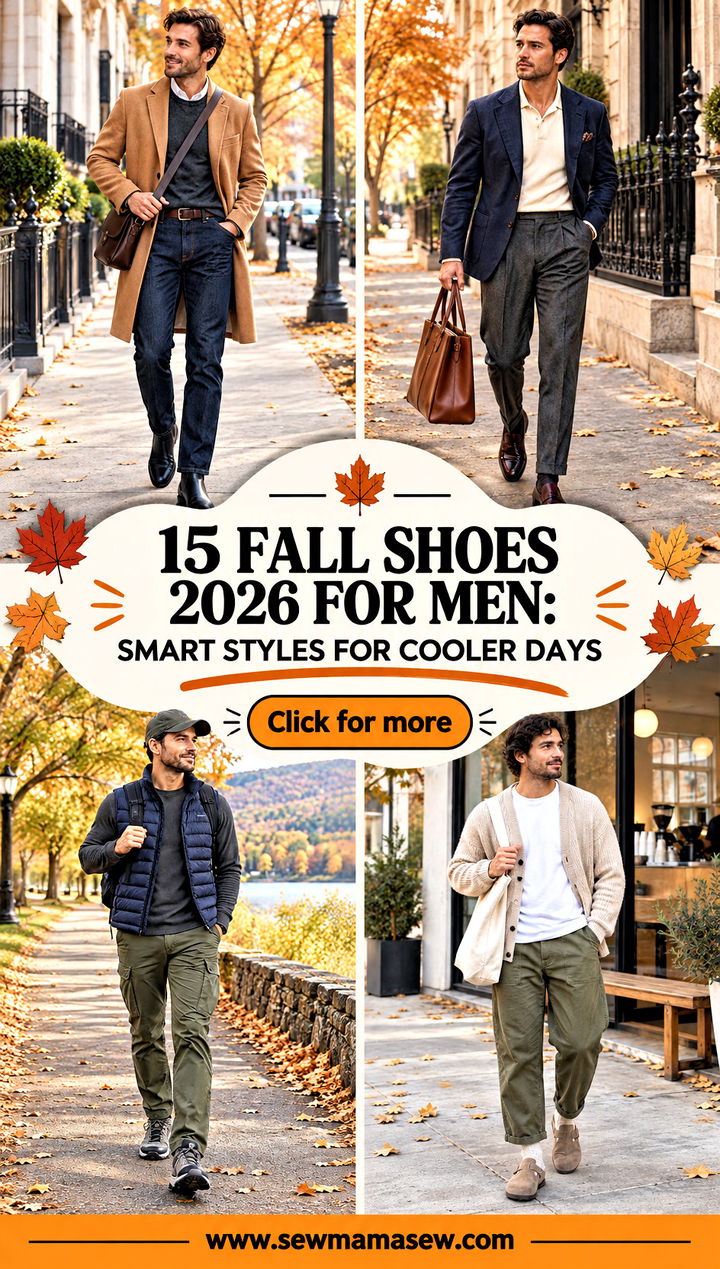
What Holds a Good Boot or Shoe Together
Two shoes can look nearly identical on a shelf and last very different lengths of time. Most of that comes down to how the sole is attached, and it's worth checking before you spend real money.
- Goodyear welt. A strip of leather is stitched to the upper and the sole is stitched to that strip. You'll usually see a row of stitching around the edge. These shoes can be resoled many times, so a good pair can last for years.
- Blake stitch. The sole is stitched straight through to the inside of the shoe. It's sleeker and lighter, common on loafers and dress shoes, and can be resoled by a cobbler with the right machine.
- Cemented. The sole is glued on. Most sneakers and many fashion boots are made this way. They're often lighter and flexible from day one, but once the sole wears through, they're usually done.
None of these is wrong. A cemented sneaker is fine for a casual pair you'll replace. For the boots and Derbies you'll wear three days a week, I'd lean toward a welted or stitched shoe and expect a stiffer break-in period.
1. Chelsea Boots With Dark Jeans and Wool Coat
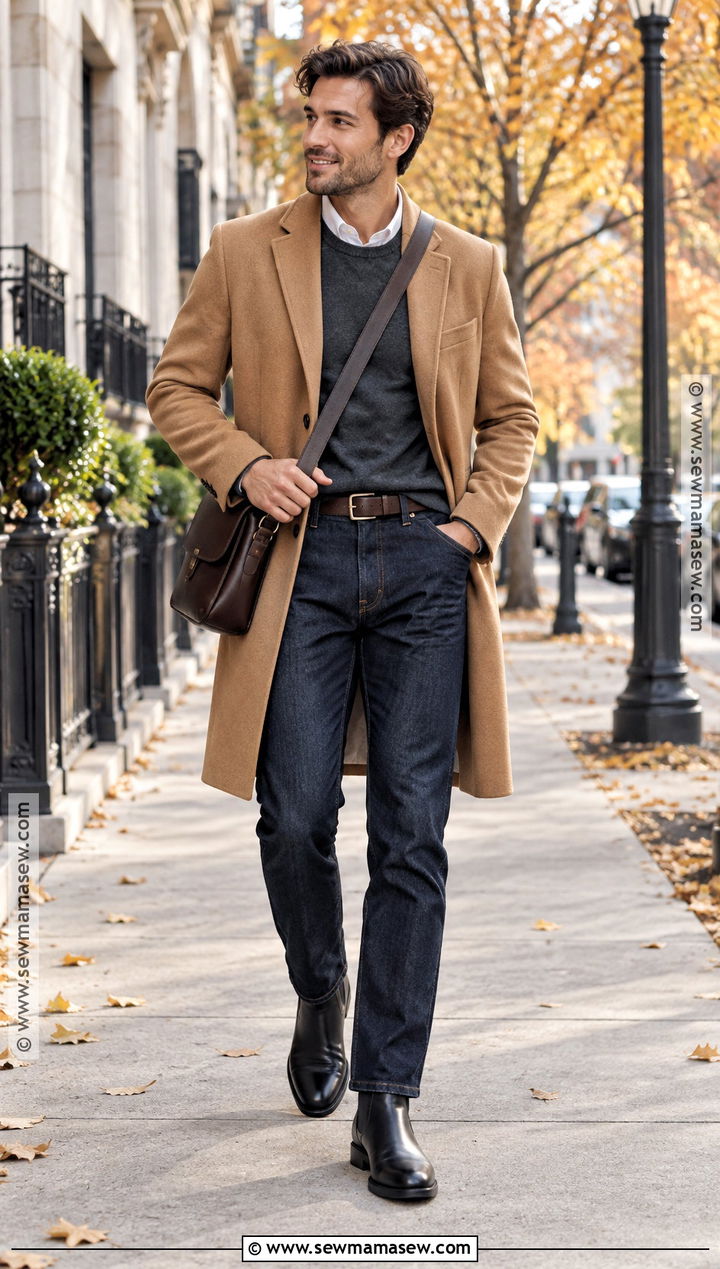
Chelsea boots are the pair I'd recommend to a man who wants one boot for both the office and the weekend. Smooth black or dark brown leather with a rounded or slightly almond toe. Slim-straight dark indigo jeans should rest just above the ankle so they sit on the boot without stacking. A charcoal merino crewneck over a white Oxford shirt, collar out, and a camel or dark gray wool coat give it structure. Match the belt to the boots. If you live somewhere wet, pick a rubber outsole and treated leather over suede, which spots and darkens in rain.
2. Suede Chukka Boots With Chinos and Overshirt
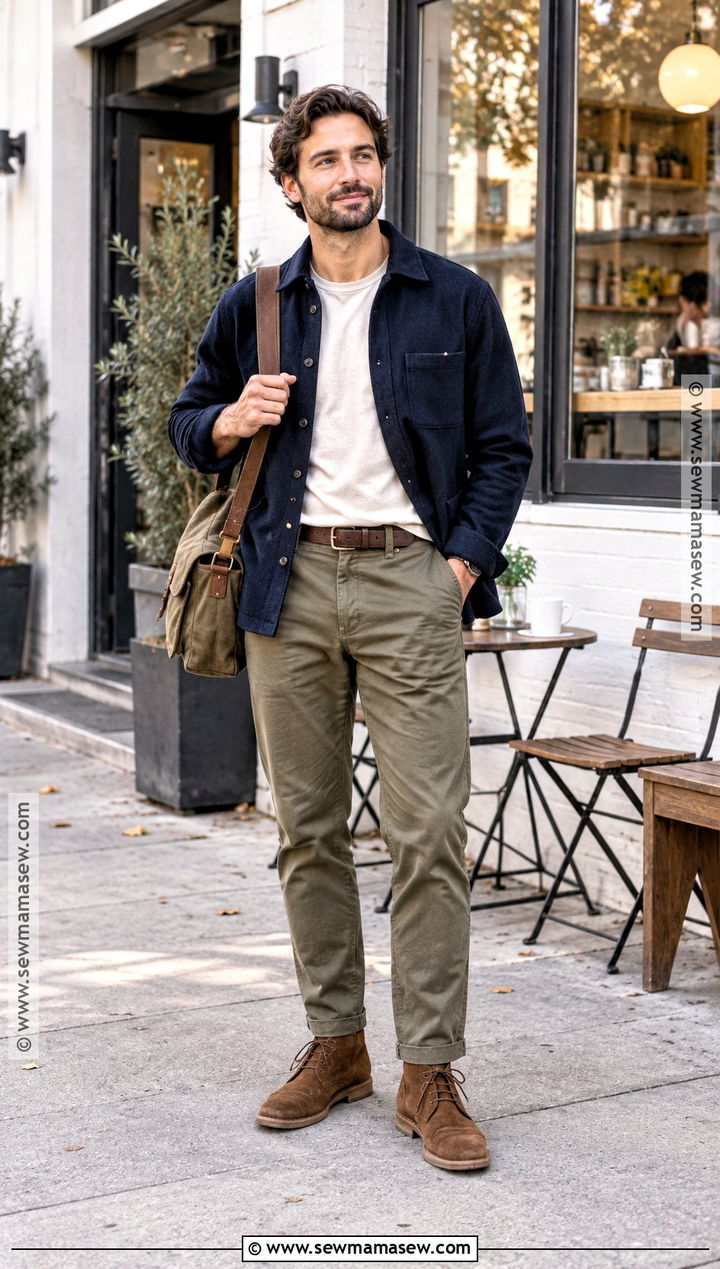
Suede chukkas are a softer, more casual alternative to a leather boot. Tobacco, taupe and chocolate are the easiest colors to pair. I put them with tapered olive chinos, a heavyweight cream tee and a navy wool overshirt or brushed cotton shirt jacket, which gives contrast without making it formal. Crop or cuff the chinos so they don't bunch over the low boot shaft; a chukka disappears under too much fabric. Ribbed socks in brown or forest green fill the gap. Spray the suede with a protector before the first wear, because untreated chukkas mark quickly in rain.
3. Penny Loafers With Pleated Trousers and Knit Polo
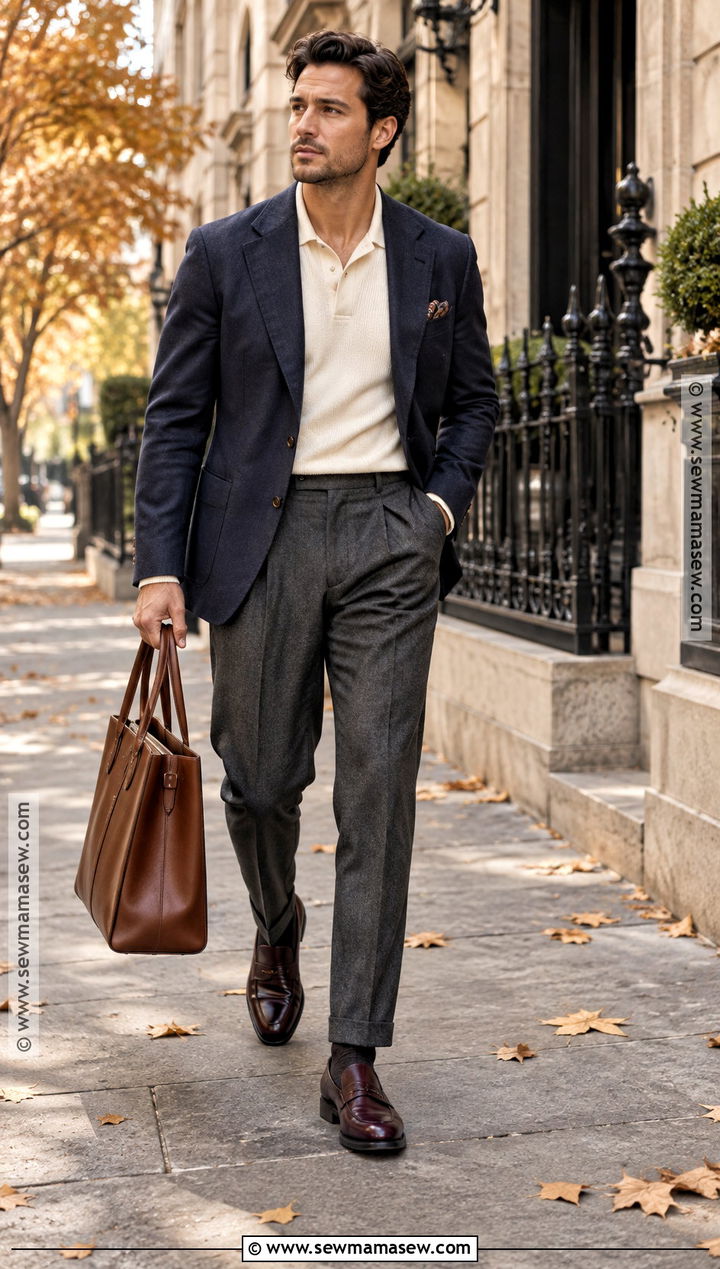
Loafers in cold weather work as long as the clothes around them have some weight. I'd choose dark burgundy or brown penny loafers with a sturdier sole, plus medium-weight socks in charcoal, navy or rust. Pleated wool trousers with a relaxed taper should meet the shoe cleanly, with little or no break. A long-sleeve knit polo in cream or deep green is a smart alternative to a dress shirt, and a navy single-breasted blazer or short wool jacket goes on top. A thin leather sole slips on wet pavement, so for damp sidewalks I'd ask a cobbler to add a rubber half-sole or choose a pair with one already.
4. Lug Sole Loafers With Straight Jeans and Bomber Jacket
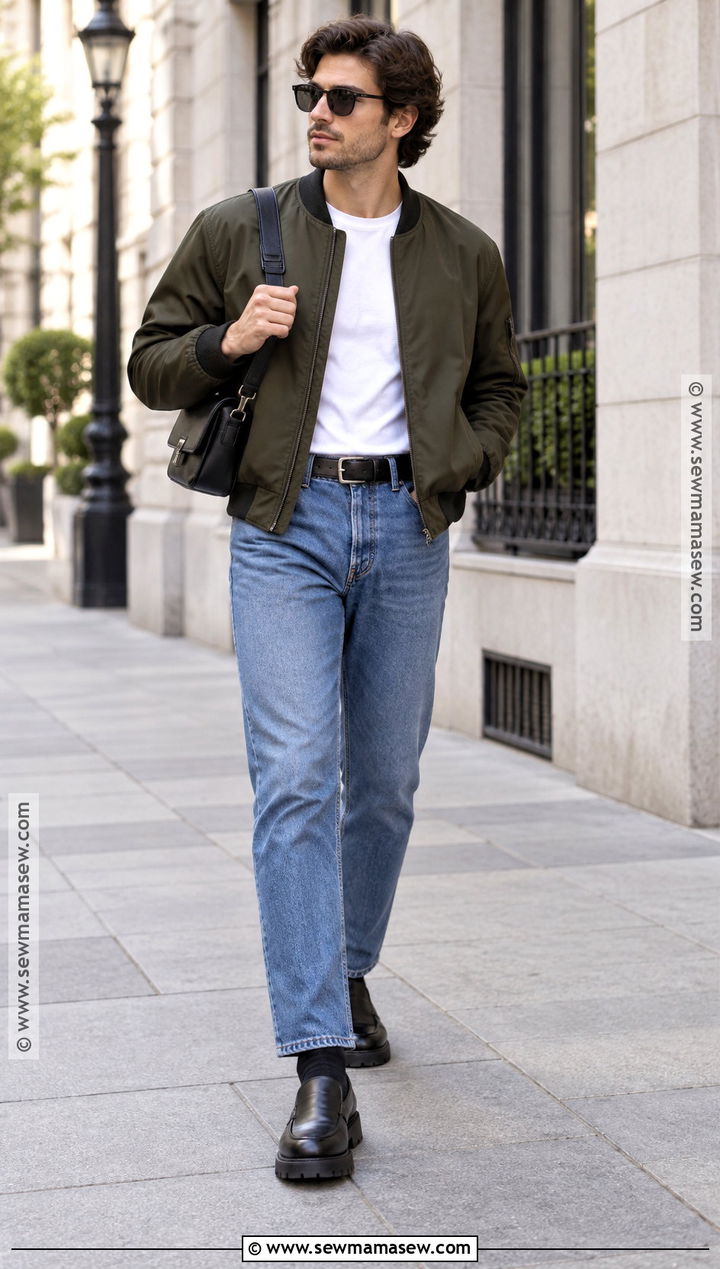
Lug-sole loafers bring a lot of visual weight, so I look for a streamlined upper to keep them from looking clumsy. Black or dark brown, with straight-leg blue jeans that just touch the top of the shoe. Skinny jeans are the mistake here; they make the foot look oversized. A tucked white heavyweight tee and a dark olive bomber balance classic and modern, and a gray mock neck takes over on colder days. Black socks and a matching belt tie it together. Deep lugs grip well on wet leaves but can feel stiff at first, so give them a few shorter outings.
5. Leather Derby Shoes With Tailored Trousers and Topcoat
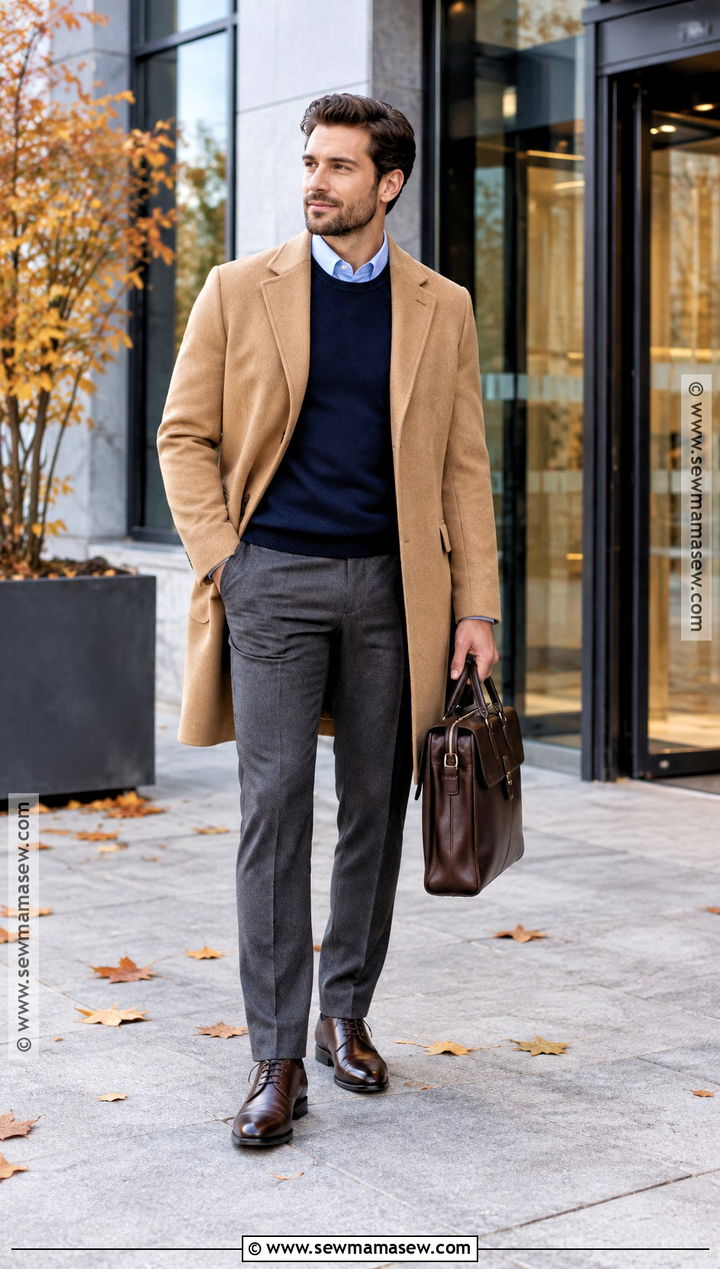
Derbies are my default suggestion for a business-casual commute. The open lacing, where the eyelet tabs sit on top of the vamp, makes them a touch less formal than Oxfords and easier on a high instep. Dark brown leather with charcoal tailored trousers, a pale blue shirt, a fine navy sweater and a clean camel topcoat. Match the belt to the shoes. Sit down in your socks before you leave: navy or charcoal socks should still cover the shin with no bare skin showing. A rubber sole grips wet pavement far better than smooth leather. Burgundy Derbies are a richer seasonal swap for brown.
6. Brogue Boots With Corduroy Pants and Field Jacket
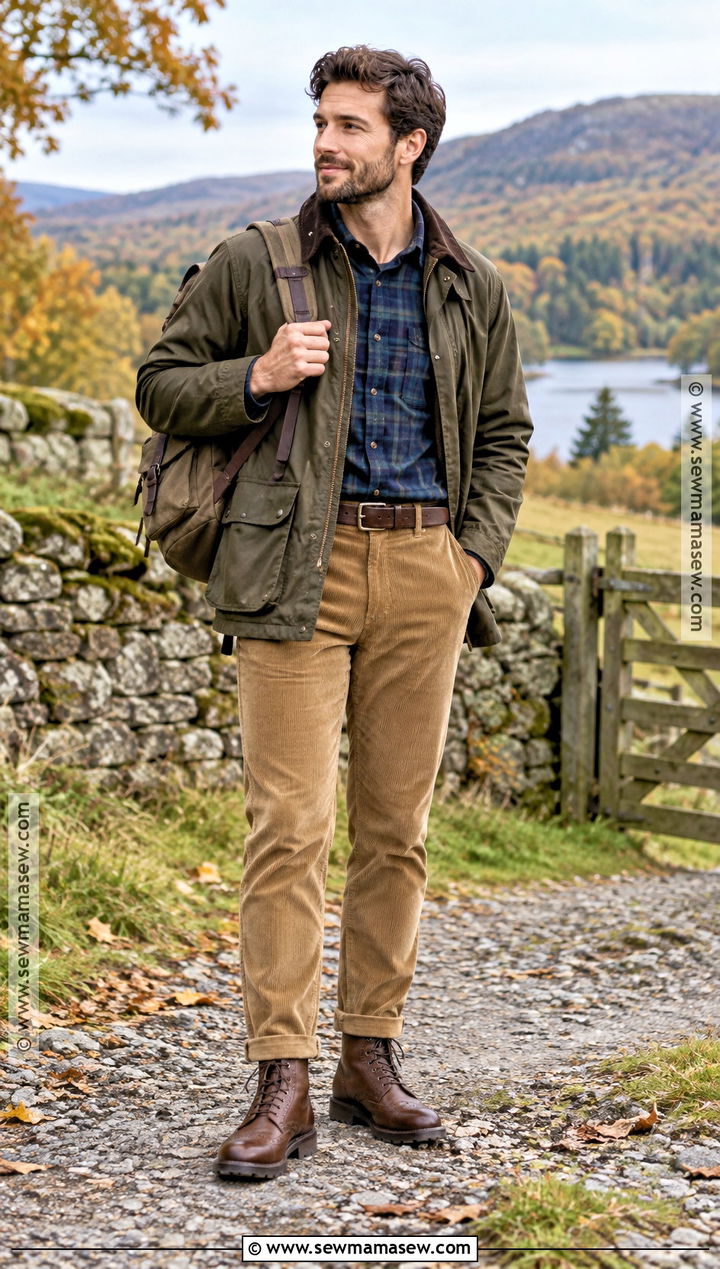
Brogue boots suit rugged textures because the perforated detailing already has a country feel. I choose medium-brown leather with a rubber sole, then straight-cut cords in tan, olive or navy, a brushed flannel shirt and a waxed field jacket for wind and drizzle. Cream boot socks showing just above the shaft add a bit of contrast. If the cords are too long, roll them once; heavy cuffing on thick fabric gets bulky fast. A brown belt and canvas backpack finish it. Waxed jackets need re-proofing now and then to keep shedding rain, which is worth knowing before you rely on one.
7. Retro Sneakers With Relaxed Jeans and Harrington Jacket
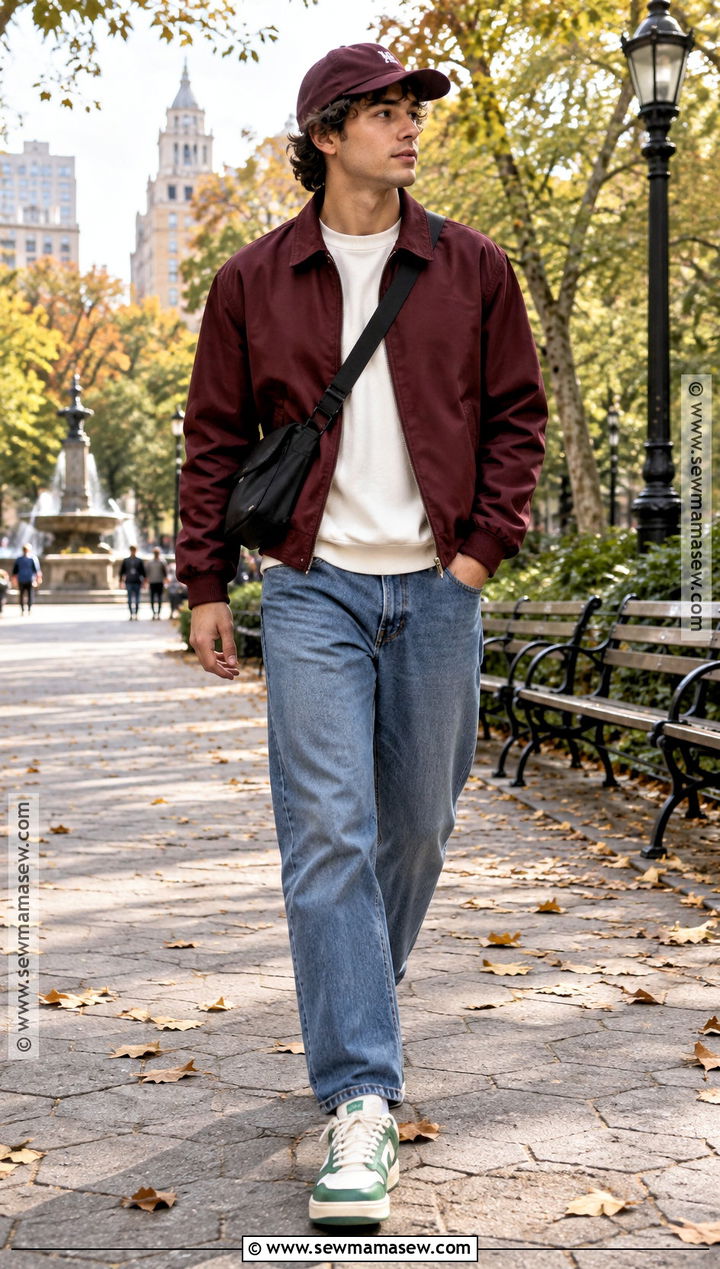
Retro sneakers give a fall outfit some sporty energy without the bulk of a running shoe. Low-profile pairs in cream, brown, navy, green or muted yellow work with relaxed straight jeans in a medium wash, leaving a small break at the ankle. A white crewneck sweatshirt and a burgundy or dark green Harrington jacket add color. Keep to one distinctive color accent, since three bright pieces fight. Neutral crew socks, a cap and a nylon crossbody finish it. I don't mind these sneakers looking a little lived-in; spotless ones can look out of place with washed denim.
8. Minimal Leather Sneakers With Wool Trousers and Crewneck
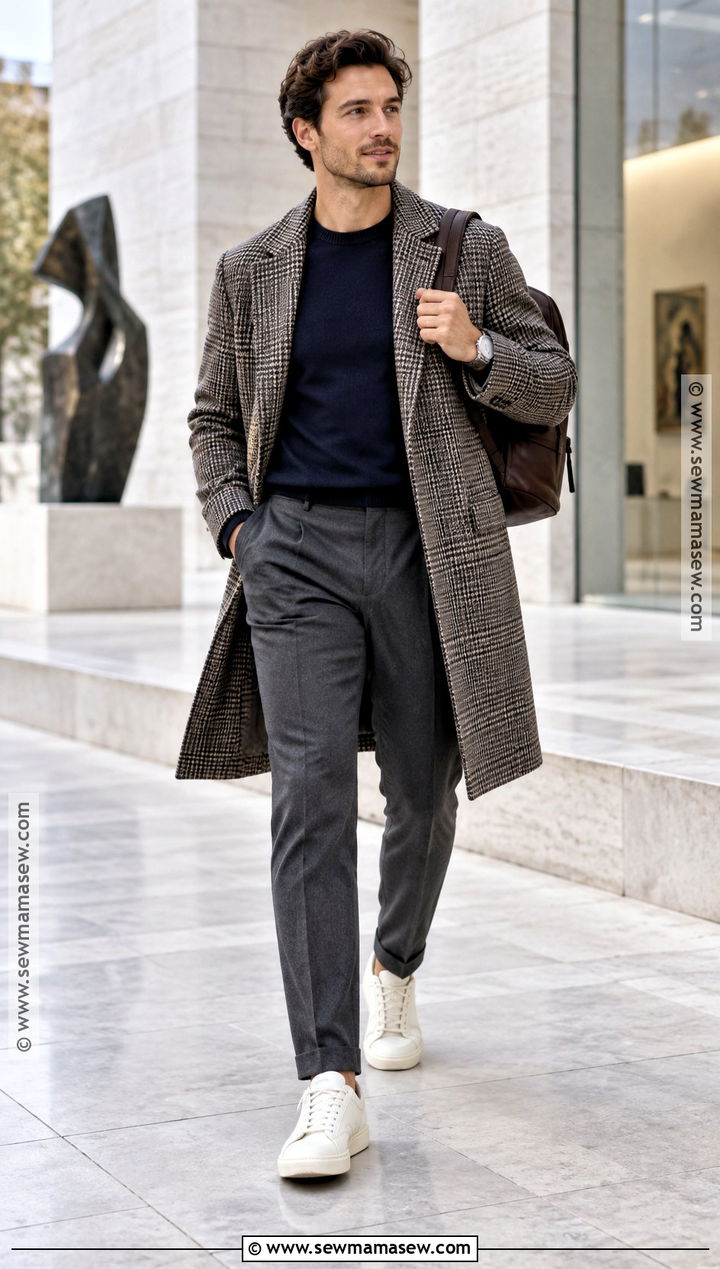
Minimal leather sneakers are how I make tailoring feel relaxed. White, off-white or dark brown low-tops with little branding and a slim profile go with charcoal wool trousers cut straight or gently tapered. Tuck in a black or navy crewneck and add a lightweight checked overcoat for pattern. The trouser should stop close to the shoe with no pooling, or the outfit loses its neatness. White leather shows dirt quickly, so wipe it down after wear, and choose weather-treated leather if you'll wear them through rainy weeks. This is a good fit for modern offices and travel days.
9. Trail Sneakers With Cargo Pants and Puffer Vest
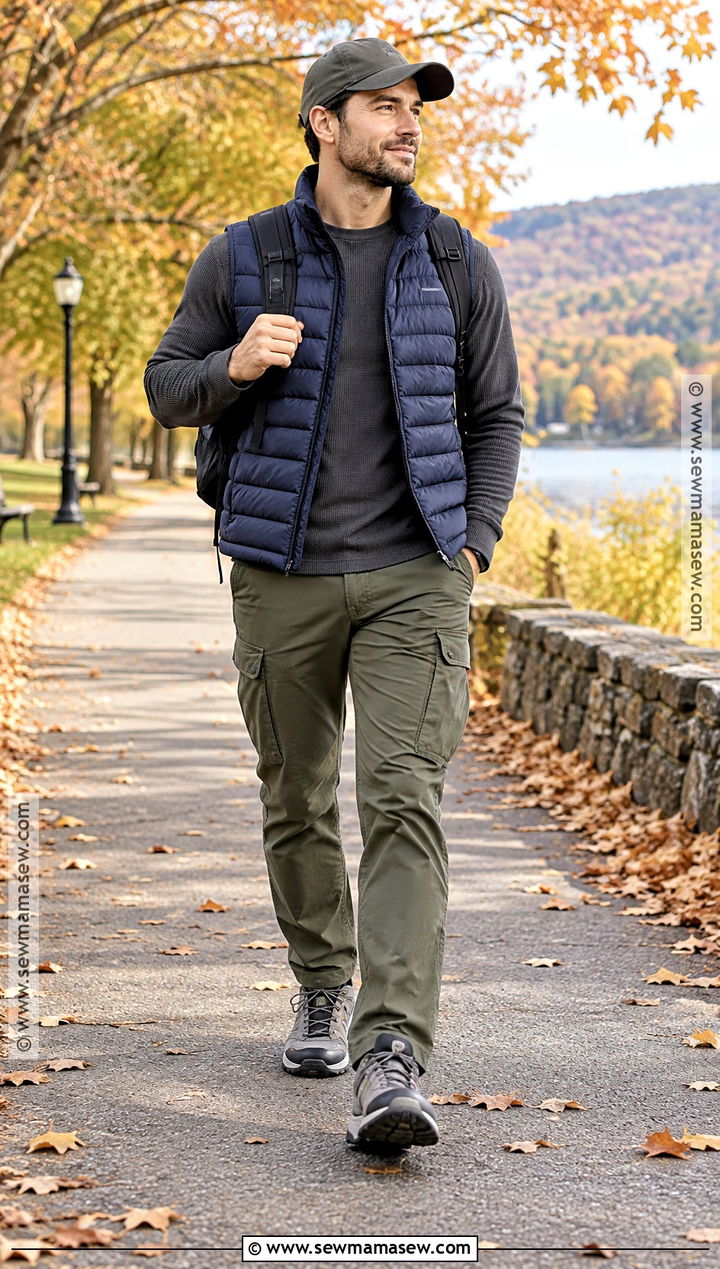
Trail sneakers earn their place in fall because wet leaves and uneven paths are where ordinary sneakers slip. Look for a grippy, deeply lugged outsole and a weather-resistant upper in gray, olive, brown or black. Tapered technical cargo pants leave room to move; a heavyweight long-sleeve tee or thermal henley and a navy or forest-green puffer vest go on top. Keep the colors muted so the technical details don't look like a hiking costume in town. Crew socks, a water-resistant backpack and a packable shell for sudden rain round it out for day trips and park walks.
10. Moc Toe Boots With Raw Denim and Flannel Shirt
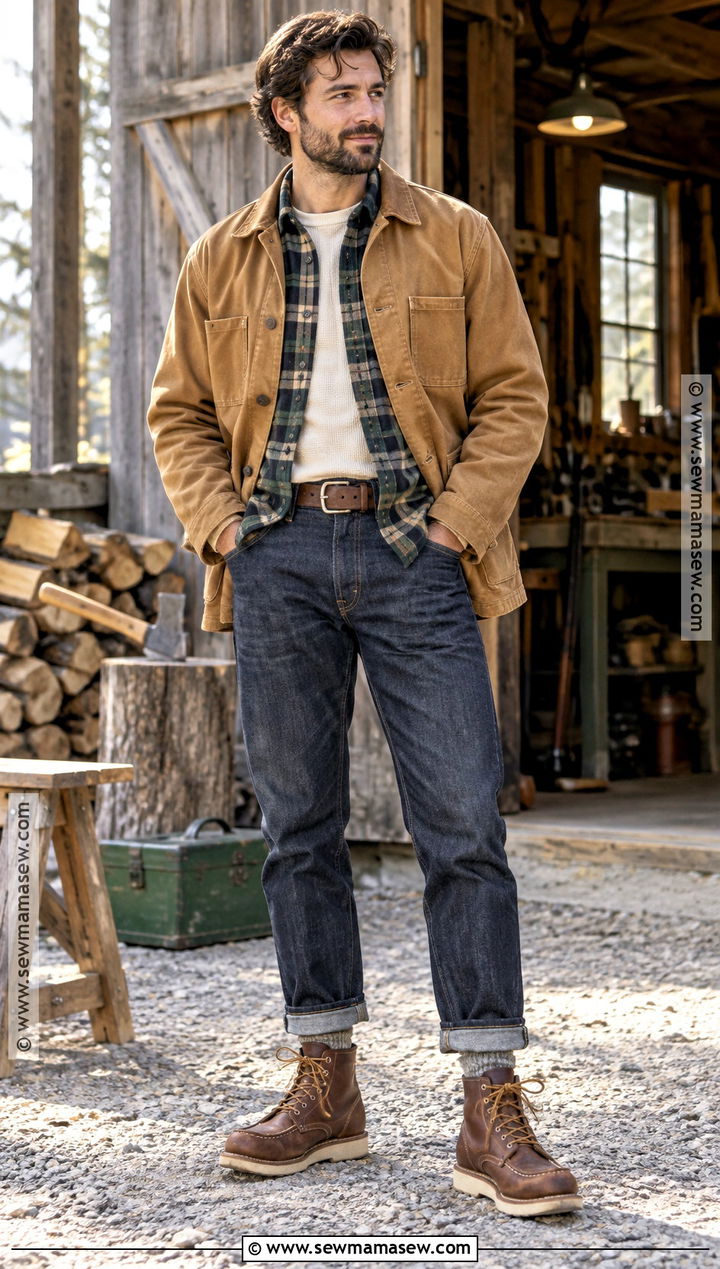
Moc-toe boots come from workwear, so I dress them that way. Brown leather with visible moccasin stitching and a supportive sole, paired with straight raw denim roomy enough through the leg to balance the boot. A cream thermal, a plaid flannel in red, green or navy and a tan or olive canvas chore coat finish it. Cuff the jeans once and keep the fold narrow. Raw denim stiffens and creases to the wearer over time, and it can bleed indigo onto light boot leather early on, so be aware with tan boots. Condition the leather regularly to keep it from drying and cracking.
11. Combat Boots With Black Jeans and Leather Jacket
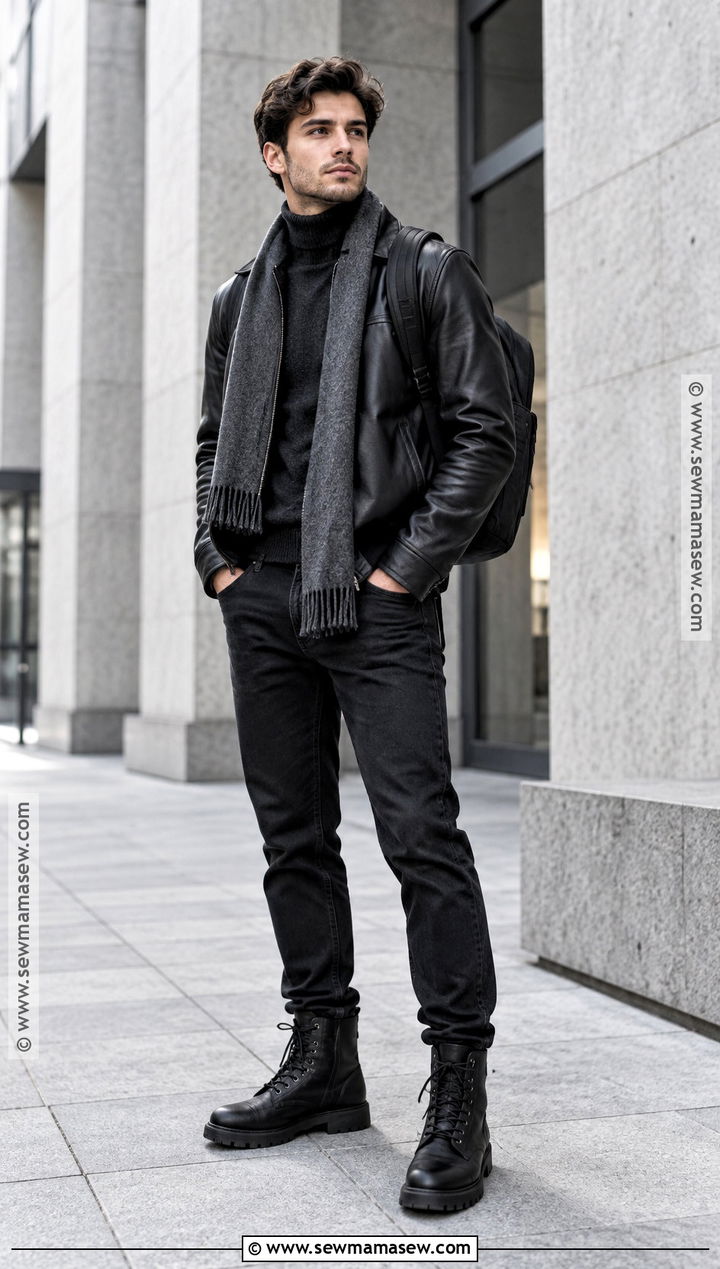
Combat boots in an all-black outfit can look sharp rather than theatrical if the boots are streamlined. I pick black leather with minimal hardware and a moderate sole, then straight black jeans, a charcoal tee or thin black turtleneck and a plain leather jacket. All-black only works when the textures differ; smooth leather next to washed denim and soft knit keeps it from looking flat. A dark gray wool scarf softens the palette on cold nights. Keep chains and extra buckles out of it so the boots stay the focus.
12. Hiking Boots With Utility Pants and Fleece Jacket
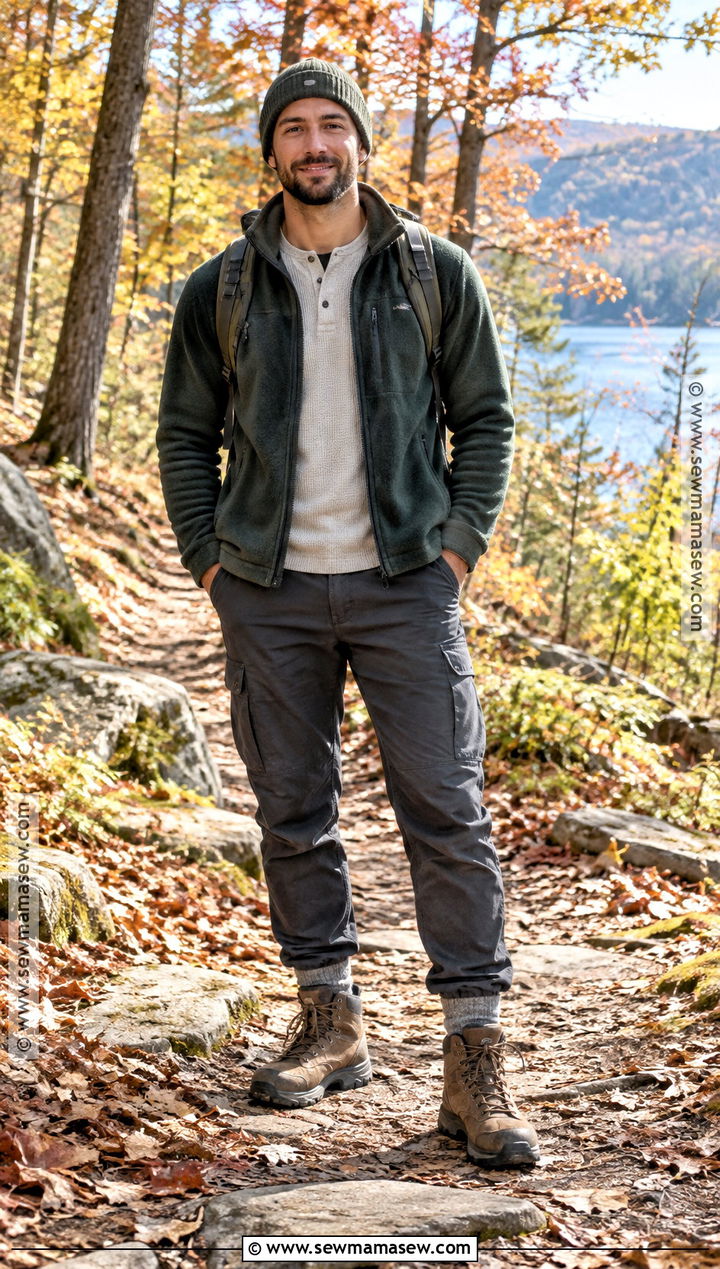
Hiking boots are worth wearing in fall for one reason above all: support and grip on damp ground. Brown, taupe or dark green with a padded ankle and a water-resistant finish. Straight utility pants in olive or charcoal need a leg opening wide enough to sit over the boot collar. A waffle-knit henley breathes, a zip fleece adds warmth and a light rain shell goes over both. Thick wool-blend socks matter as much as the boot, since they cushion and wick sweat. Most hiking boots need several shorter walks to soften before a long day, so don't debut a new pair on a big trail.
13. Western Boots With Bootcut Jeans and Denim Jacket
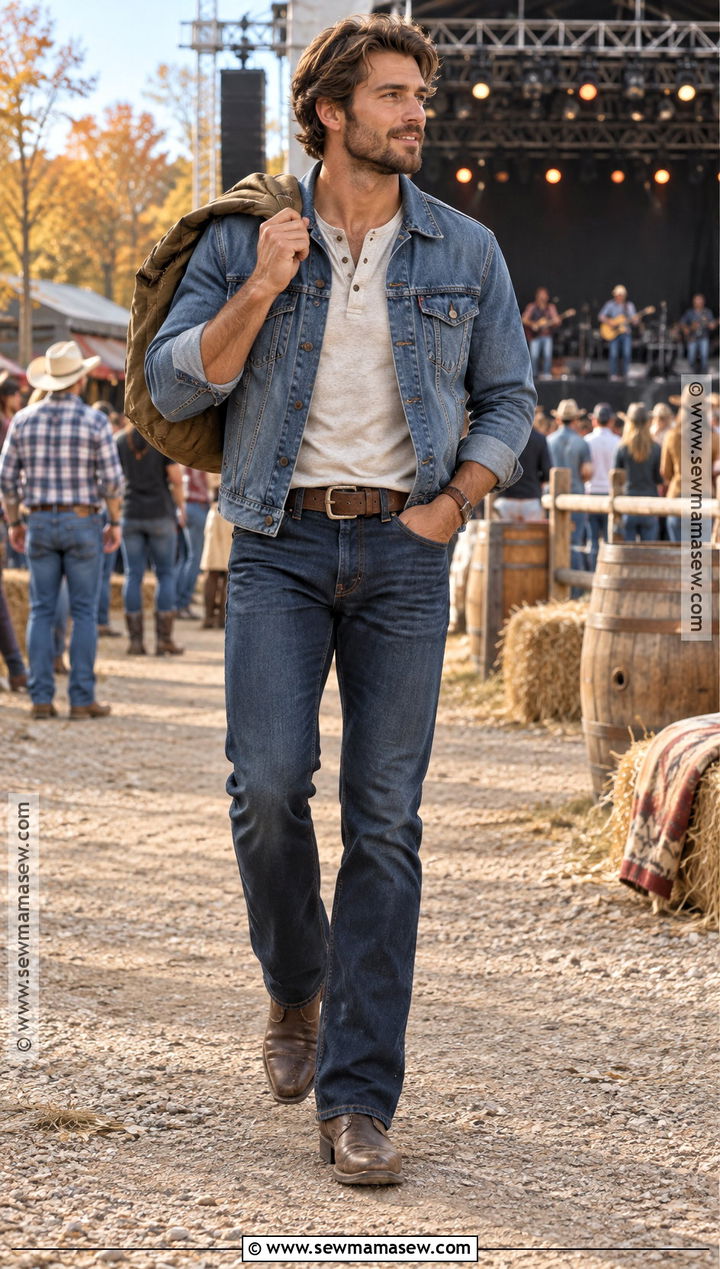
Western boots look most wearable on men when the rest stays plain. Dark brown or black leather with restrained stitching and a gently pointed toe, worn under dark bootcut jeans that cover most of the shaft without dragging. A white or oatmeal henley and a medium-wash denim jacket make a double-denim outfit; keeping the two washes clearly different is what makes it look intentional. A brown belt with a modest buckle links to the boots. Skip heavily distressed denim and oversized buckles. The jean hem should just clear the ground at the heel, or it will fray from being stepped on.
14. Clogs With Wide Leg Pants and Cardigan
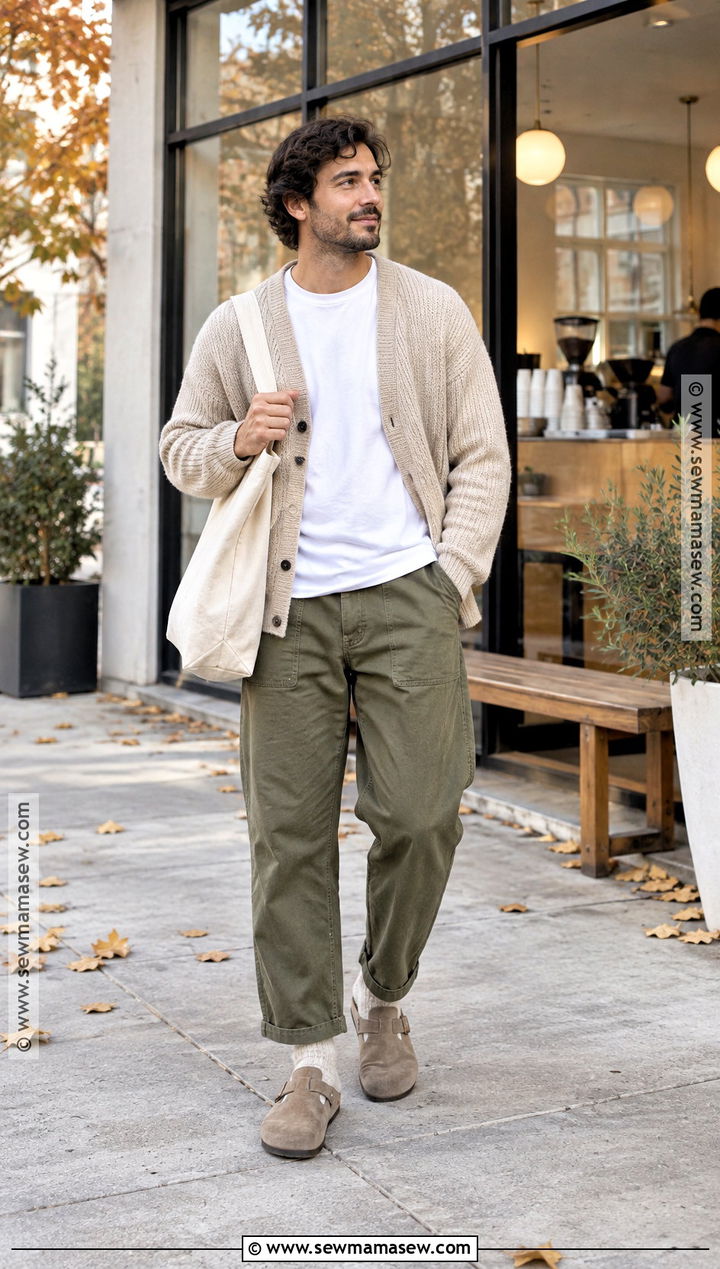
Clogs bridge indoor comfort and casual outdoor dressing. I'd choose closed-toe leather or suede in taupe, brown or black, ideally with a cork footbed that molds to the foot over time. Wide-leg fatigue pants or relaxed chinos should fall cleanly without covering the whole shoe. A heavyweight white tee and a textured cardigan in oatmeal, navy or forest green go on top, with ribbed wool socks for warmth. The clog already has a loose, rounded shape, so I keep the cardigan shorter and the pants structured; loose everywhere starts to look sloppy.
15. Monk Strap Shoes With Navy Suit and Turtleneck
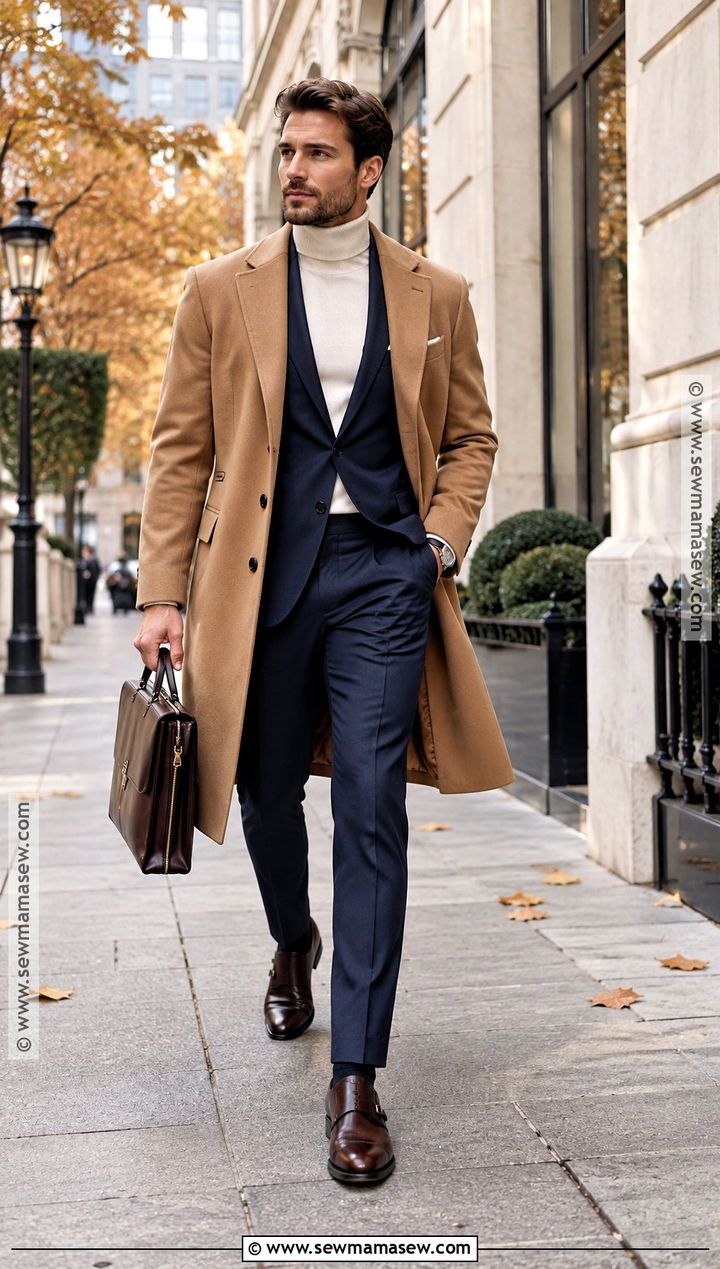
Monk straps add a buckle where you'd expect laces, which gives formal clothes a bit of character. Single monks are subtle; double monks more noticeable. I wear dark brown leather with a well-fitted navy suit and a thin charcoal or cream turtleneck instead of a shirt and tie. A camel or gray overcoat, dark brown socks and a matching belt finish it. Keep the trouser hem short enough that the buckle shows. Buckles can loosen as leather stretches, so check the strap fit after the first few wears. Polished leather suits professional settings; suede monks make a softer smart-casual version.
Socks Under Fall Shoes, From Dress to Trail
Socks get ignored, but they change both comfort and how an outfit reads. Here's how I'd match them to the shoes above.
- Derbies, monk straps and dress loafers: thin wool or cotton socks long enough to cover the shin when you sit. Match them to the trousers, not the shoes, for a longer leg line.
- Chukkas, Chelsea and brogue boots: medium-weight wool or wool-blend socks. A ribbed sock in brown, green or burgundy can show slightly with cropped chinos.
- Moc-toe, hiking and combat boots: thick cushioned wool-blend socks that sit above the boot collar so the leather doesn't rub your shin. Try boots on wearing these, since they take up real space.
- Sneakers and clogs: crew socks in a neutral, or a single color pulled from your jacket. Ribbed wool helps open-back clogs feel warmer.
Wool is worth paying for in fall. It stays warm when damp and handles odor better than cotton, which holds moisture against the foot once it gets wet.
Where a Man's Fall Shoe Rotation Should Begin
Men's fall shoes this year went well beyond a basic boot and a pair of sneakers. Chelsea boots, loafers, Derbies, retro trainers, clogs and outdoor shoes each serve a different kind of week. The principle I keep returning to is balance: substantial shoes with straight or relaxed pants, slimmer shoes with tailored trousers and cleaner layers. Suede, wool, corduroy, flannel and raw denim add depth without fuss. I'd start with the shoe that matches your most common day, make sure it handles your weather, and build the rest of the rotation around it one pair at a time.
Related posts: