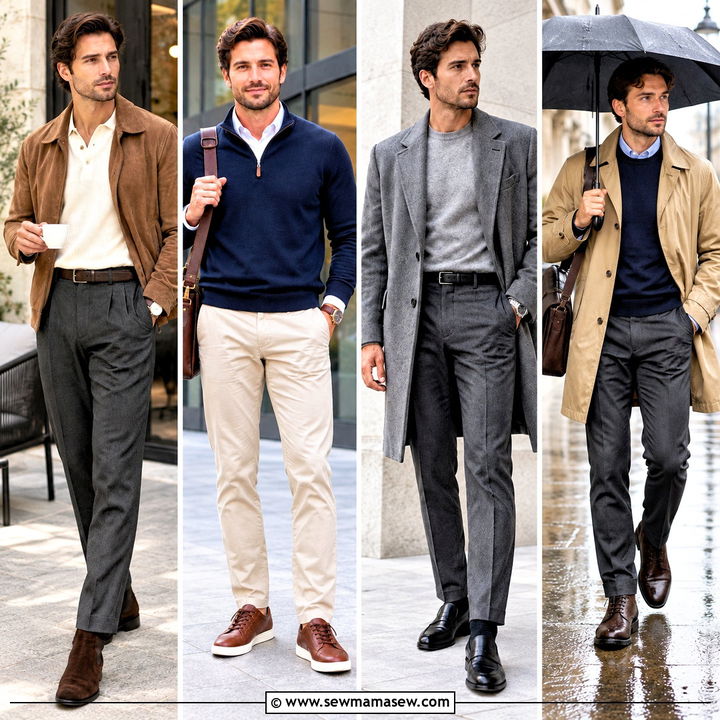
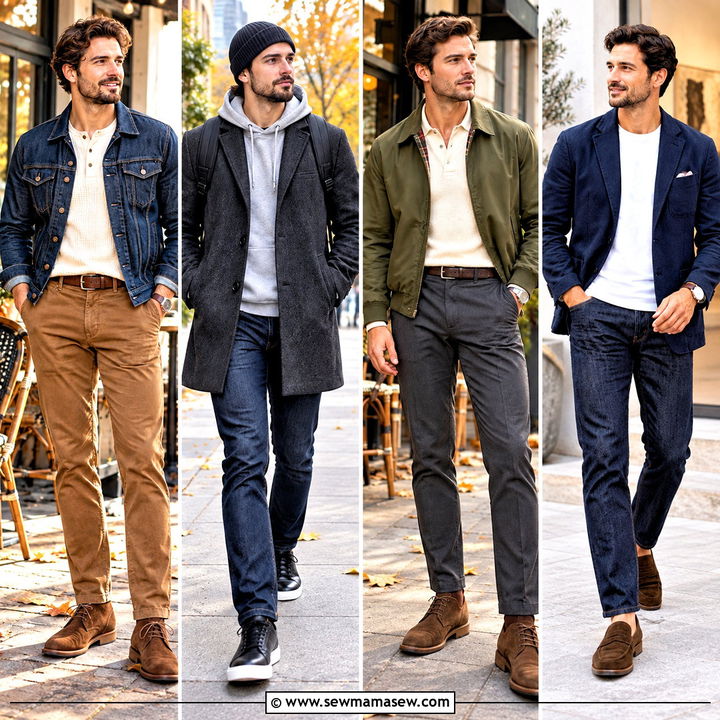
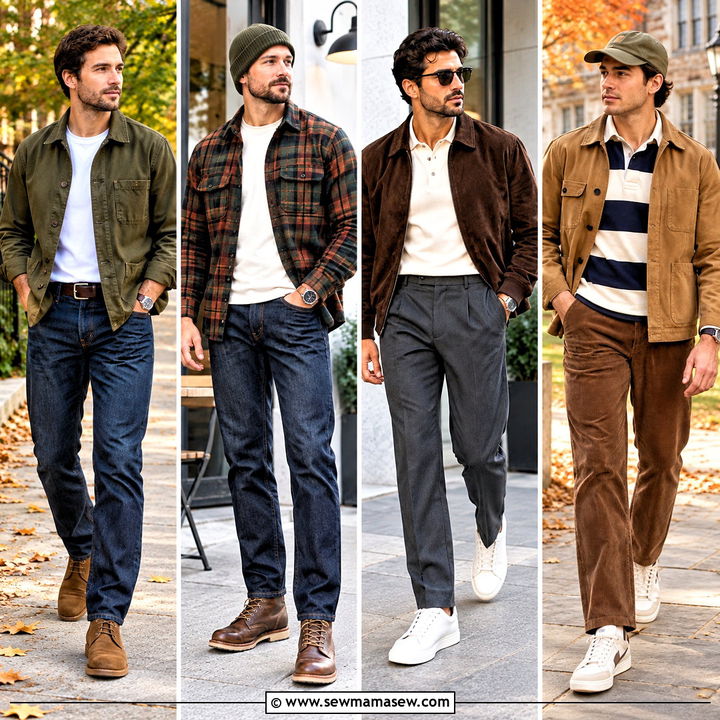
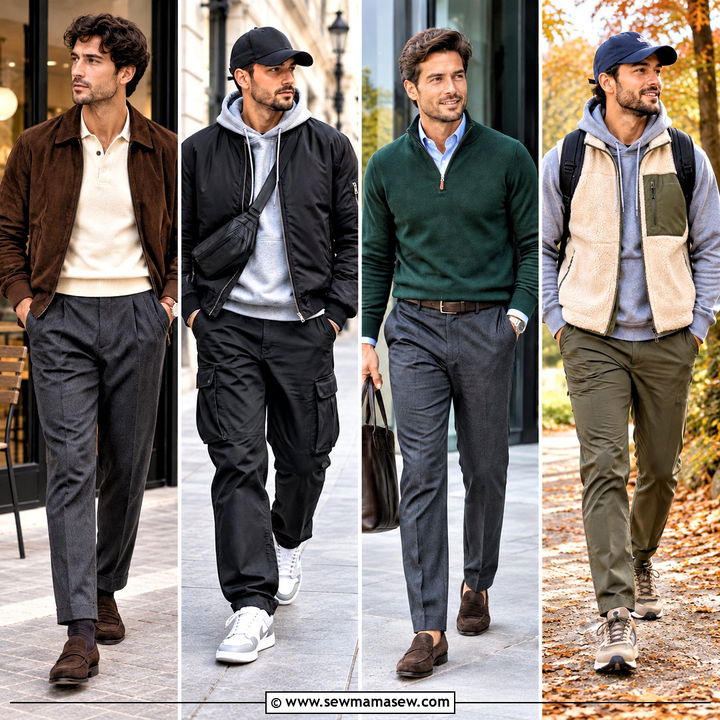
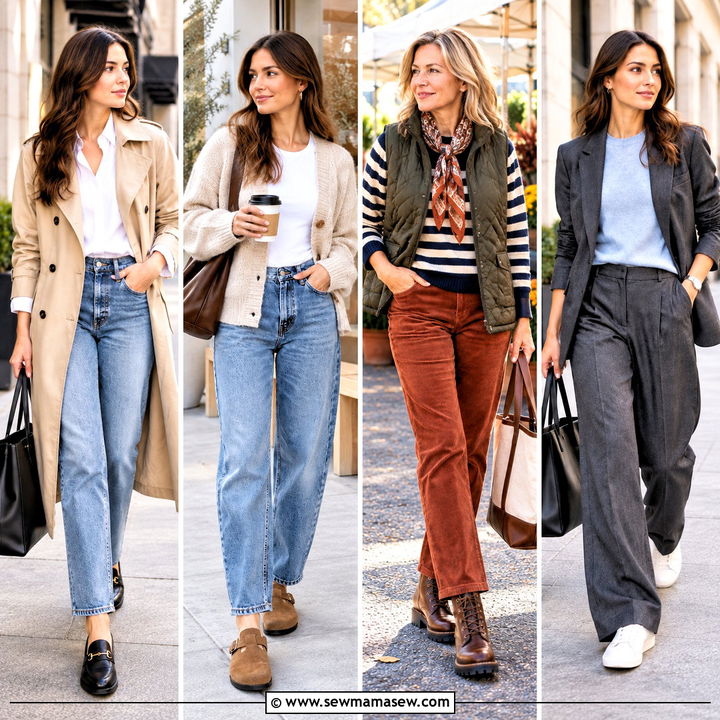
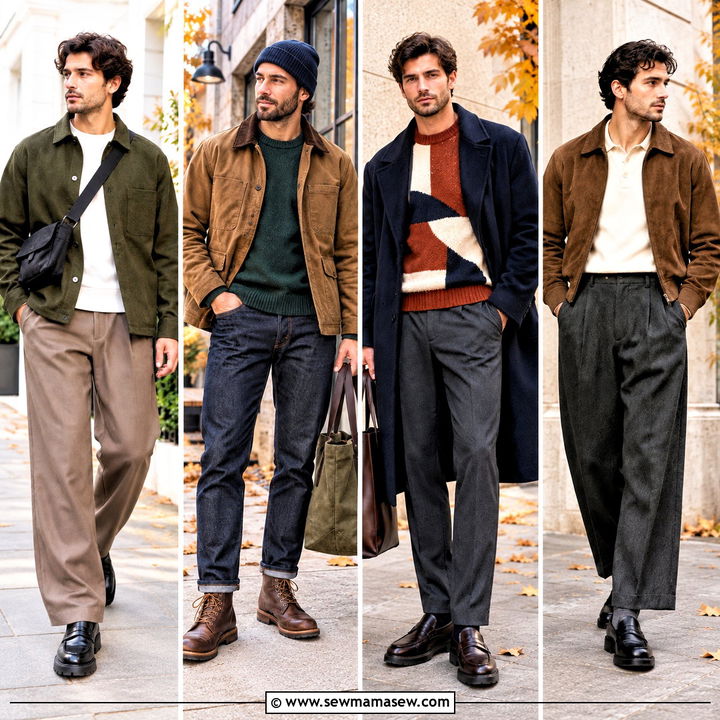
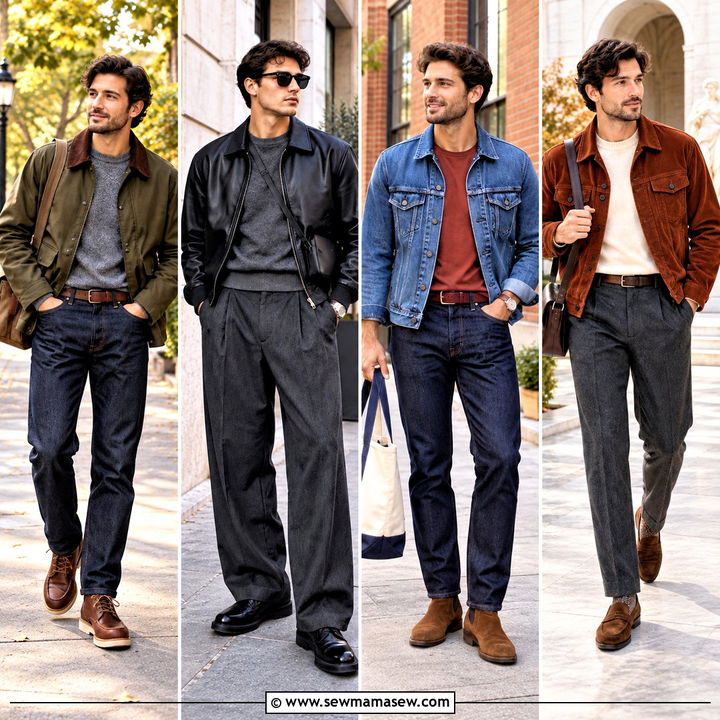
Most men don't need a new fall wardrobe. They need a handful of reliable combinations and a better sense of how texture and proportion work together. That's the angle I take with every outfit below: suede, corduroy, wool and denim doing the heavy lifting, with trousers and boots chosen so the whole thing hangs right. Several looks lean smarter than usual, with a blazer, wool trousers and even a corduroy suit, because cooler weather is when tailoring feels most natural. Keep layers you can take off, pick pants with a comfortable shape, and match your shoes to the ground you'll actually be walking on.
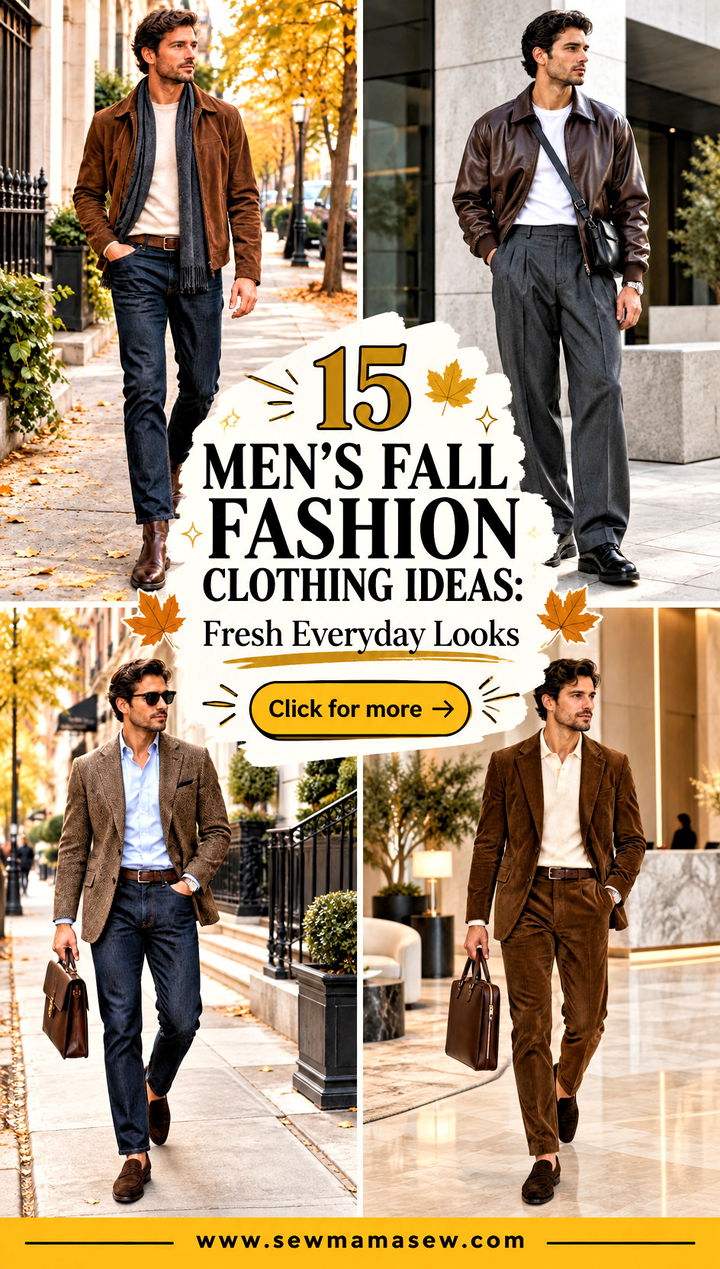
How Long Your Trousers Should Be Over Boots and Loafers
Fall outfits rely on boots and loafers, and both expose a bad trouser length straight away. It's the most common fault I fix on otherwise good outfits, and a tailor can shorten most trousers for not much money.
- Chelsea and lace-up boots: the hem should just touch the top of the boot with a slight break. Too long and it bunches on the shaft; too short and the boot looks like it's poking out.
- Loafers: a shorter hem with little or no break, so the top of the shoe and a bit of sock show. Long trousers over loafers swallow the shoe.
- Wide-leg and pleated trousers: keep them longer, covering most of the shoe, so the fabric falls in one clean line.
- Jeans: a single cuff is fine with boots, but keep it narrow. A thick rolled cuff cuts your leg off and makes you look shorter.
Rise matters too. Higher-rise trousers sit at the natural waist and let a sweater or polo tuck neatly, which is why several of these looks use them. Low-rise pants under a short jacket leave a gap of shirt showing whenever you sit or reach.
1. Men's Suede Jacket With Dark Jeans
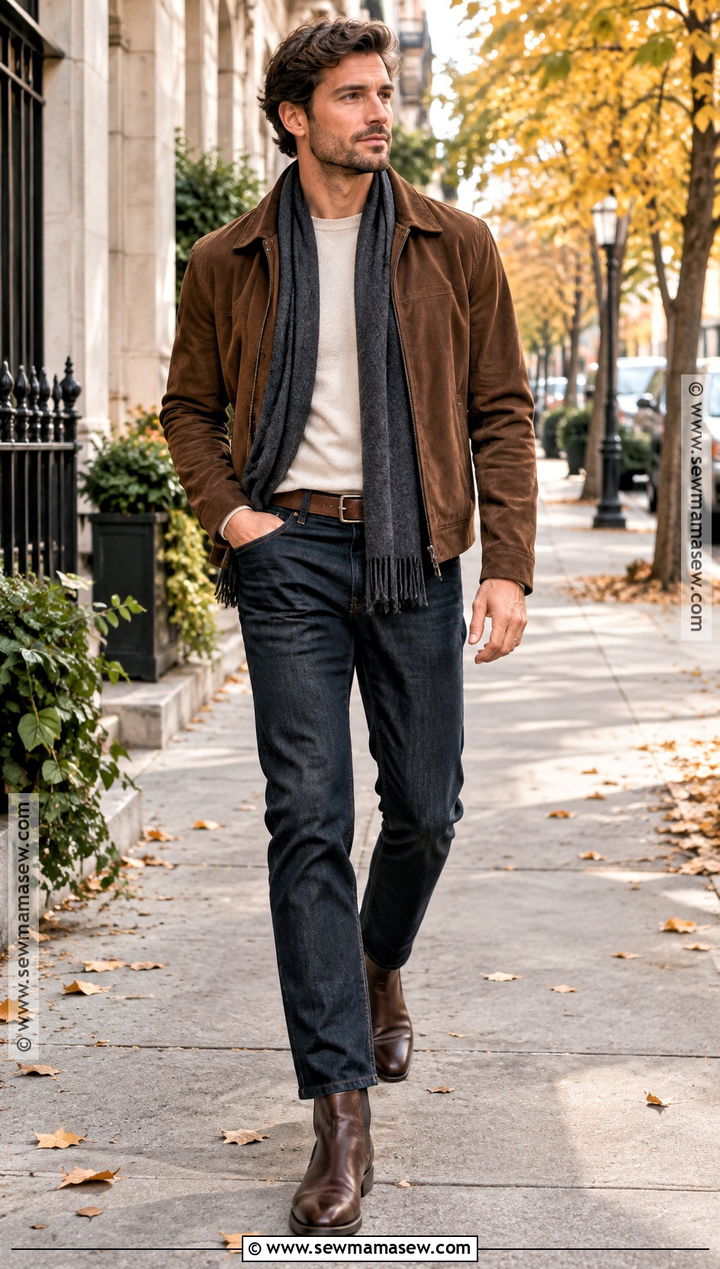
Brown suede is the quickest way I know to make jeans and a tee look considered. Over a cream heavyweight T-shirt on mild days, or a light merino sweater when it's colder, with clean straight-leg dark jeans, brown suede Chelsea boots and a dark leather belt. A charcoal, camel or oatmeal scarf covers the chillier mornings. Suede jackets don't stretch the way leather does, so I'd buy one that already moves well across the back rather than hoping it loosens. The jacket should sit neatly over the base layer with no pulling at the buttons. Lunch, a casual office or an afternoon in town all suit it.
2. Men's Barn Jacket With Chinos
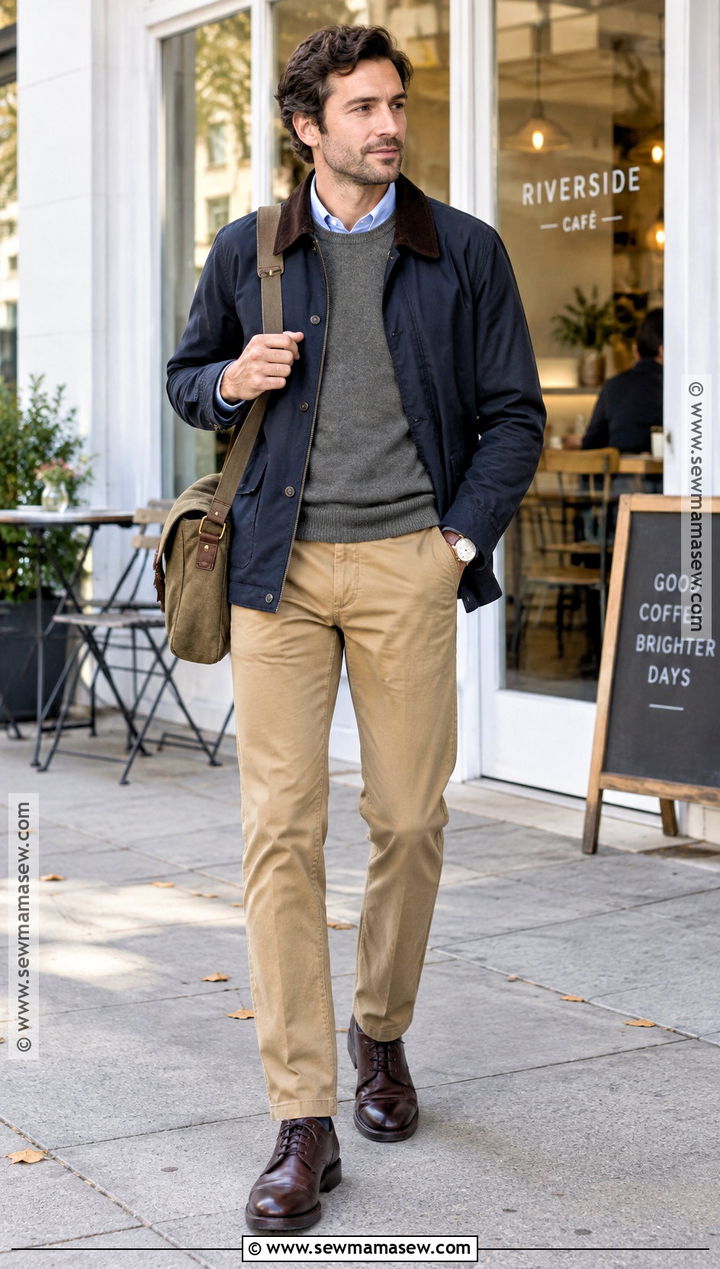
The barn jacket is cut roomy on purpose, which makes it one of the easiest coats to layer. Olive, navy or dark brown over a blue Oxford and a fine-gauge crewneck, then straight or gently tapered tan chinos and dark brown derbies. On wet days, swap the derbies for water-resistant lace-up boots. A canvas messenger and a plain watch match its working character. I always tuck the sweater hem inside the jacket line; if it hangs below, the proportions go off and you look shorter. Every piece works on its own too, so you can peel layers off as the afternoon warms up.
3. Men's Leather Bomber With Wide-Leg Trousers
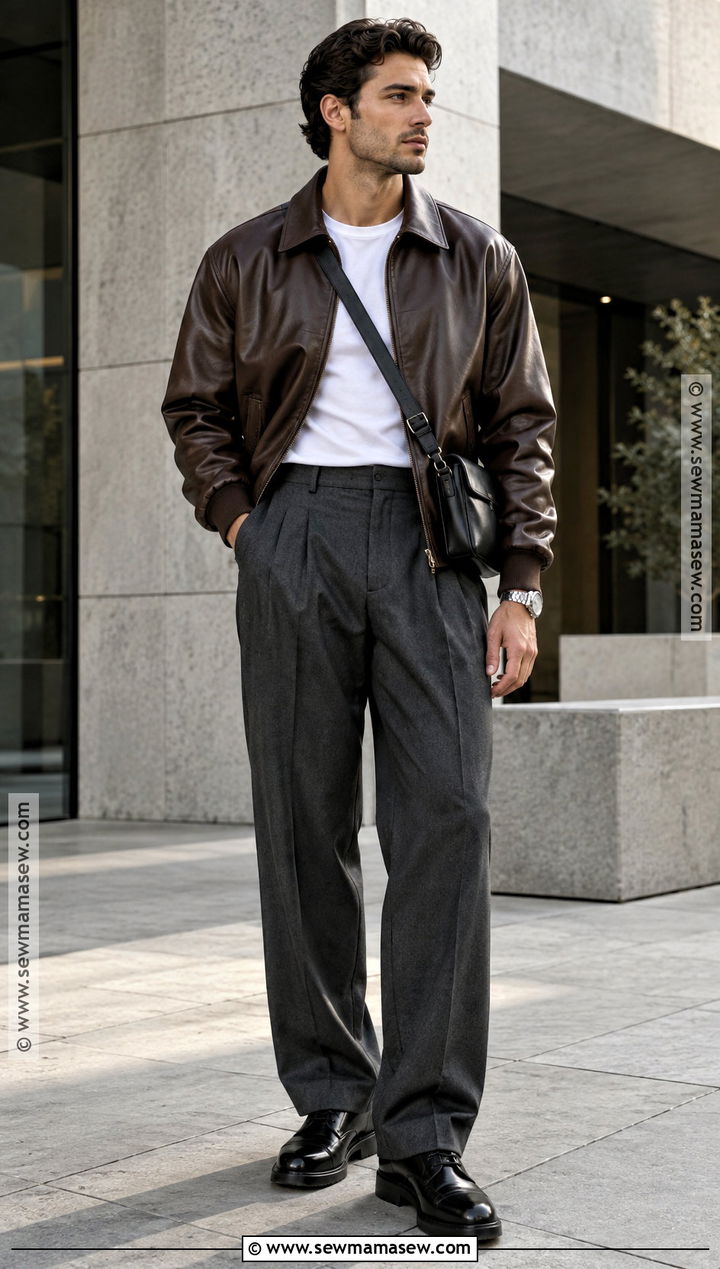
A leather bomber with wide-leg trousers is the most current-looking outfit here, and it works because of the contrast in shape. A black, espresso or aged brown bomber with little hardware, its waistband snug at the hip, goes over a white tee or a fitted mock-neck. Pleated wide-leg trousers in charcoal, taupe or navy give the bottom half volume to balance the short jacket. The proportion only works if the bomber stays short. A longer leather jacket over wide trousers can look like you're wearing your dad's clothes. Leather sneakers, derbies or low boots all work; keep the trouser hem long enough to cover most of the shoe.
4. Men's Chore Coat With Relaxed Pants
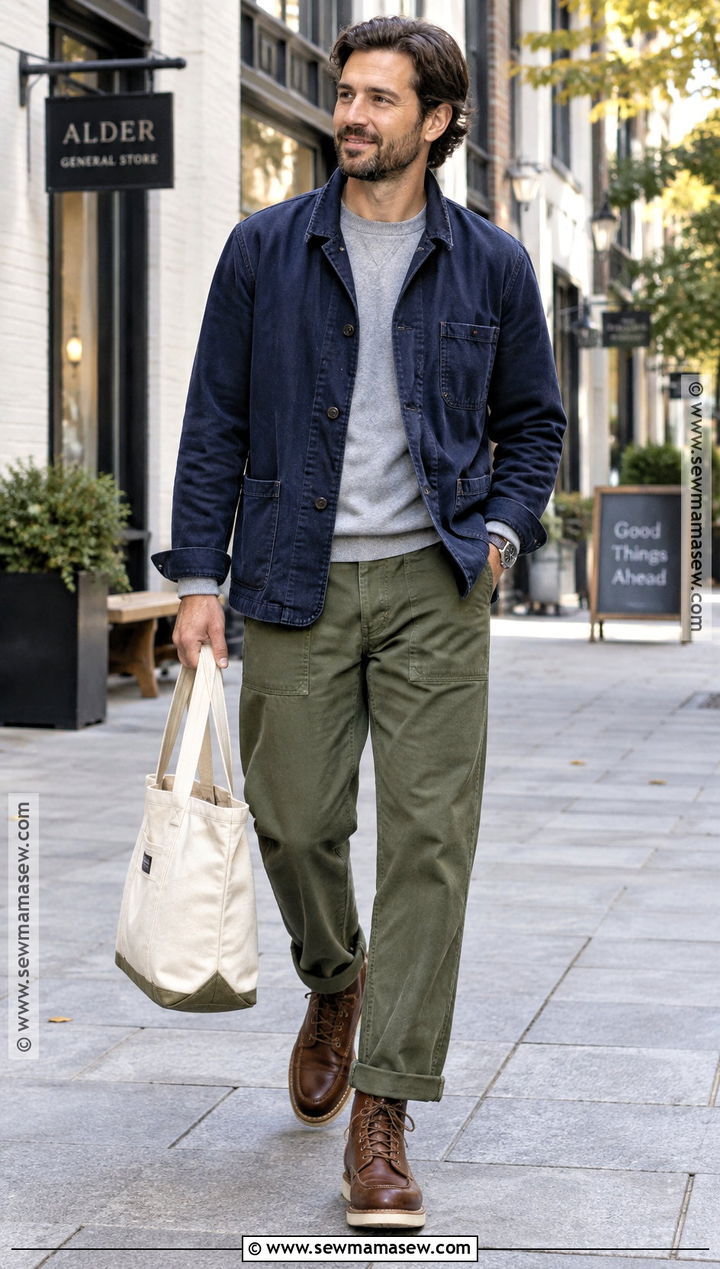
Chore coats are my answer for guys who want one jacket for every weekday. Navy, faded black or tobacco cotton gives you room for layers without winter bulk. Go over a striped long-sleeve shirt or a heather-gray sweatshirt, then olive fatigue pants, relaxed chinos or straight dark denim. Suede sneakers keep it light; moc-toe boots push it rugged. The jacket should end at the upper thigh, and the trousers should break once over the shoe instead of pooling. Unwashed cotton canvas starts stiff and softens with wear, so expect it to feel boxy for the first few weeks. Add a tote or backpack and it covers errands, travel and campus.
5. Men's Cardigan With Pleated Trousers
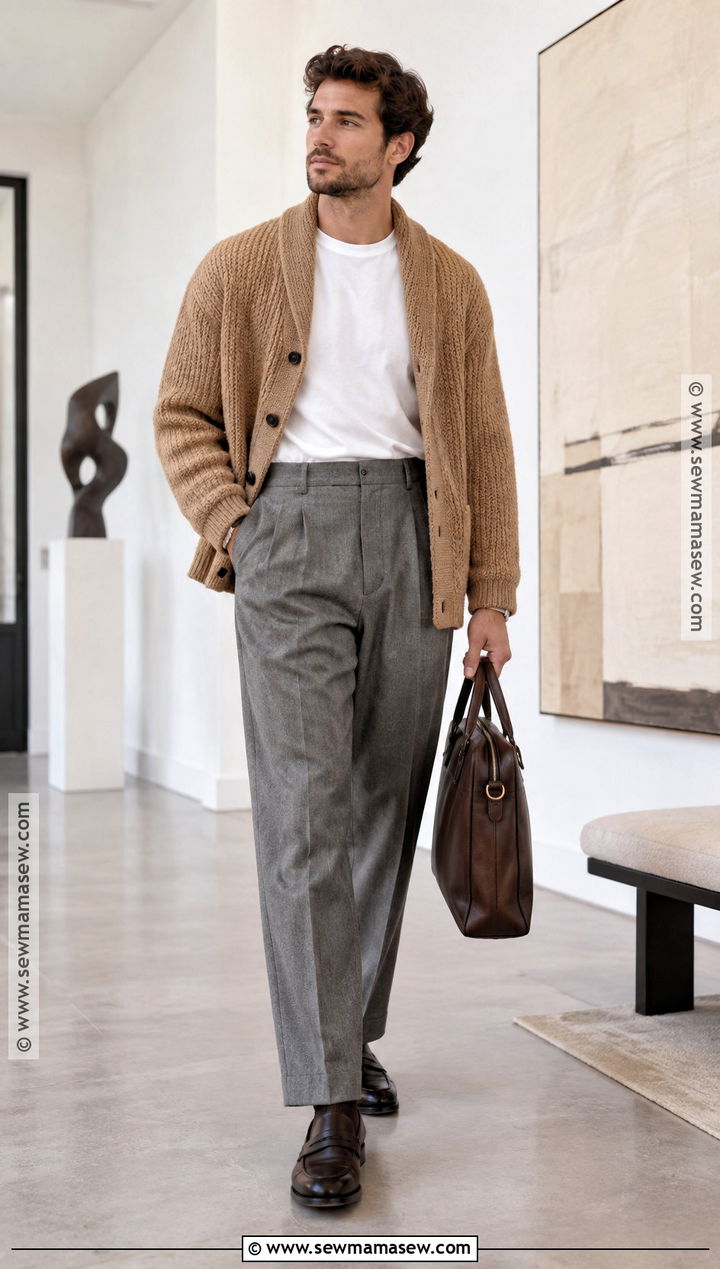
Cardigans look grown up once you treat them like a jacket instead of loungewear. A heavy one in charcoal, camel, forest green or navy over a white crewneck, knitted polo or button-down, with high-rise pleated trousers in gray or brown underneath. Loafers with matching socks suit mild days; suede boots take over when it drops. The weight of the knit is the deciding factor for me. A thick cardigan holds its shape and hangs straight, while a thin one stretches at the pockets and sags within a season. Leave a button or two open at the bottom and add a structured leather bag if you carry one.
6. Men's Flannel Shirt With Raw Denim
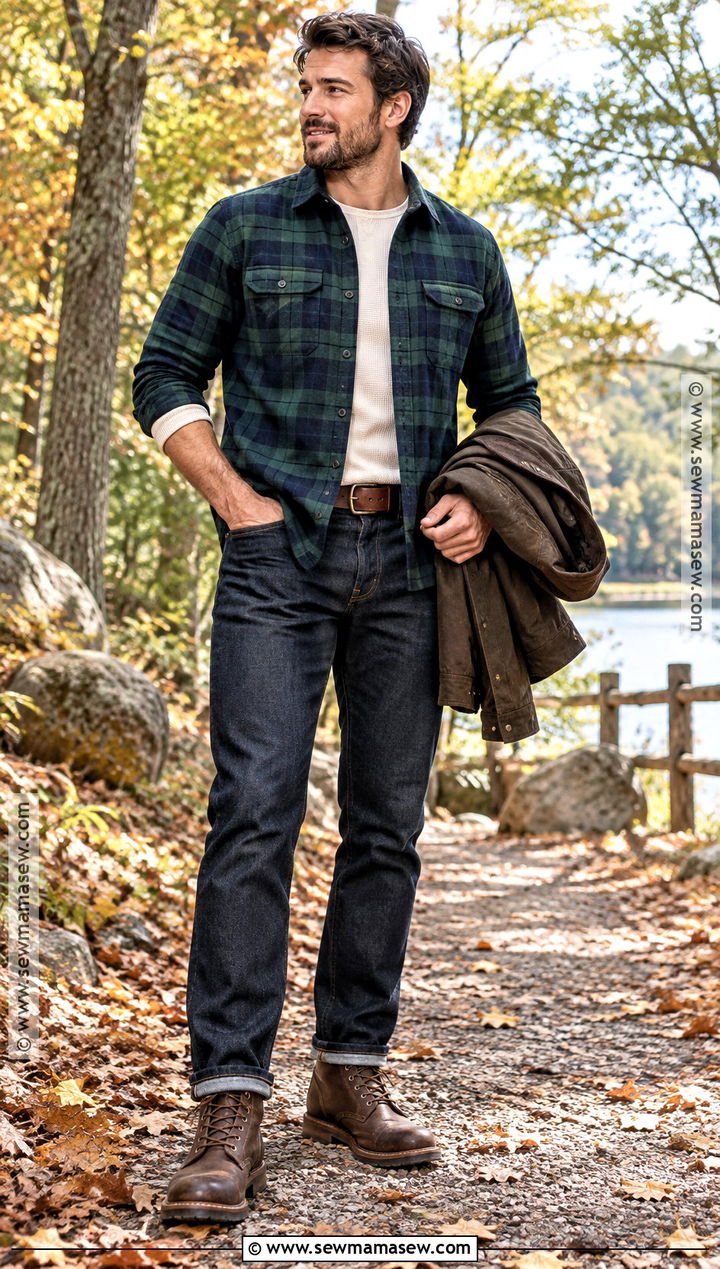
Flannel, dark denim and leather boots probably cover more fall Saturdays than any other combination. I'd choose a brushed flannel in a restrained plaid with forest green, navy, rust or burgundy, over a solid thermal so you get warmth without stacking two thick shirts. Raw or dark indigo jeans form the base. Raw denim is stiff at first and fades where your body creases it, so wash it rarely if you want those marks to develop. Brown service boots with a matching belt finish it, plus a waxed canvas jacket for wind or drizzle. Roll the flannel cuffs once to show the thermal. One pattern per outfit is enough.
7. Men's Turtleneck With Wool Trousers
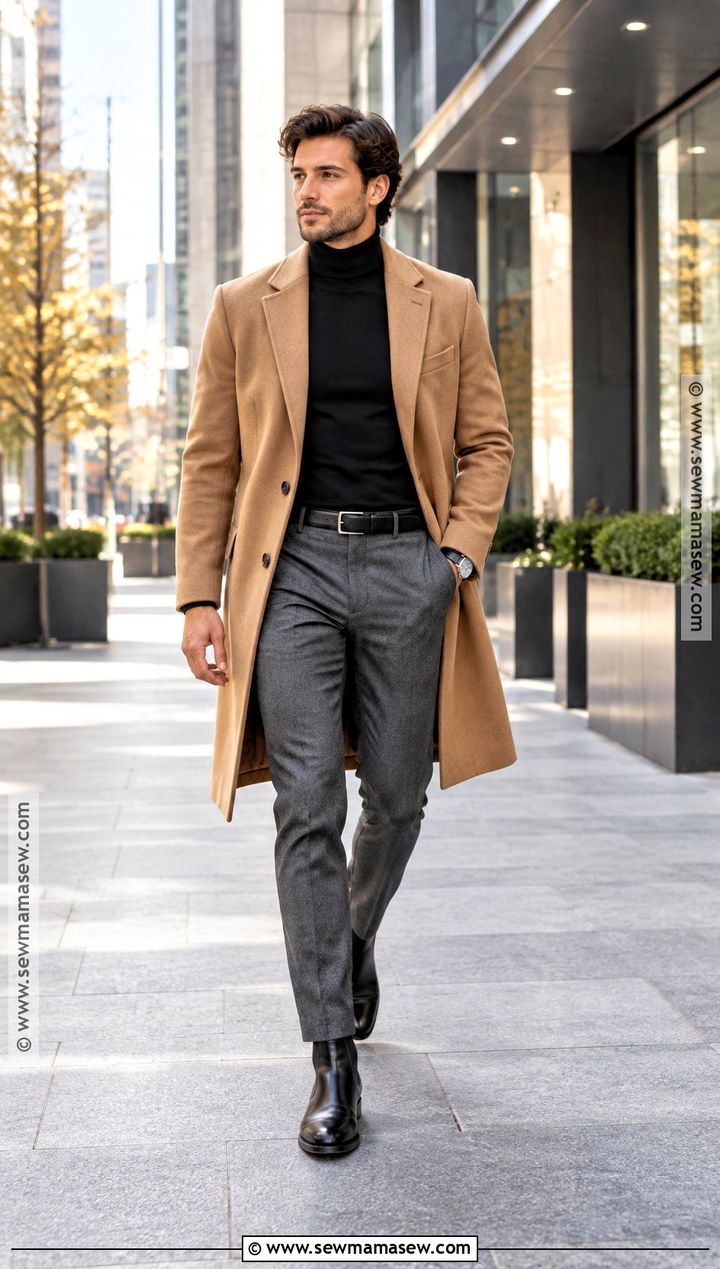
A fine-knit turtleneck is the fall stand-in for a shirt and tie when you want to look polished without the stiffness. Black, charcoal, chocolate or cream, with the collar folded once and sitting evenly. Pair it with tailored wool trousers in gray, navy or a subtle check, straight or slightly wide. Add a single-breasted blazer for work, or a long wool overcoat outside. Chelsea boots, loafers or plain derbies all suit it, with a slim belt and a simple watch. I'd steer men with a short neck toward a mock neck instead. A full roll collar can make the head look like it's sitting straight on the shoulders.
8. Men's Double Denim Fall Outfit
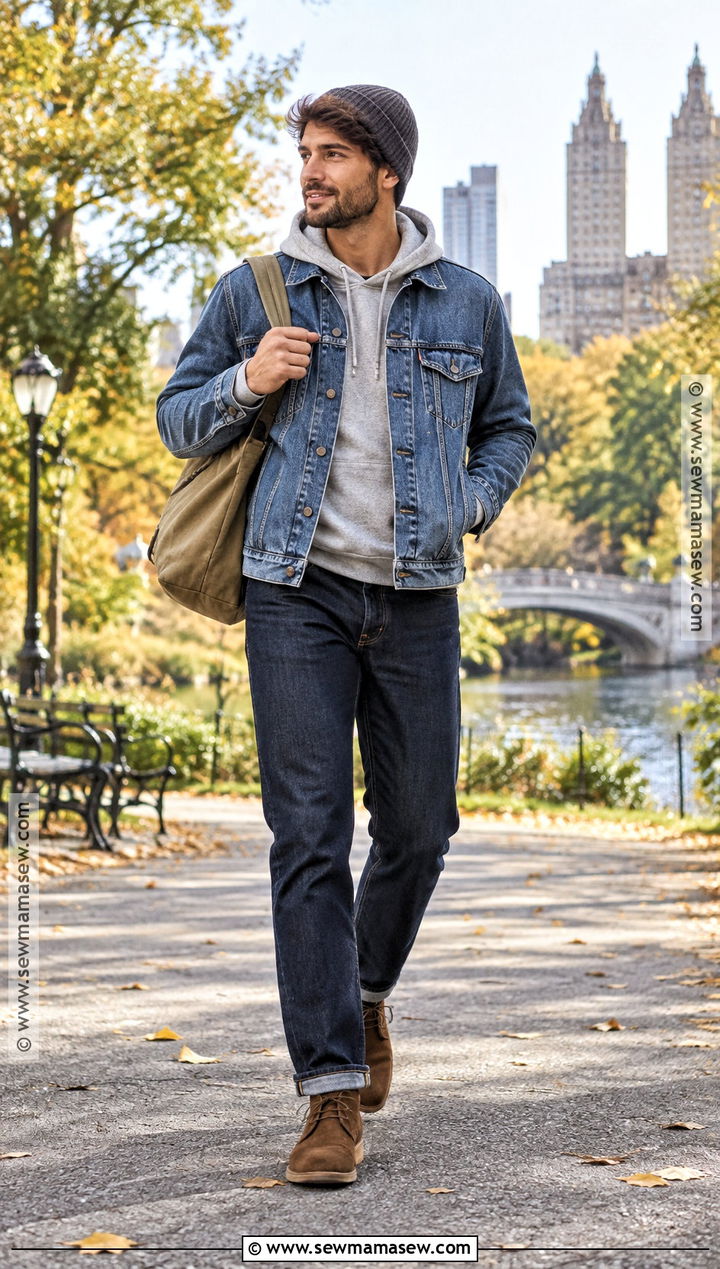
Double denim is easiest when the two washes are clearly apart. A medium-wash jacket over a gray hoodie or heavyweight white tee, then dark indigo jeans in a straight, comfortable leg. If you prefer matching shades, separate them with a brown leather belt so they don't read as a jumpsuit. Suede desert boots, retro sneakers or lace-up boots finish it, with a knit beanie for cold days. My firm rule: never distressed denim on both pieces. Rips and fading on top and bottom fight each other and look careless. This one handles travel, coffee runs and concerts without fuss.
9. Men's Rugby Shirt With Corduroy Pants
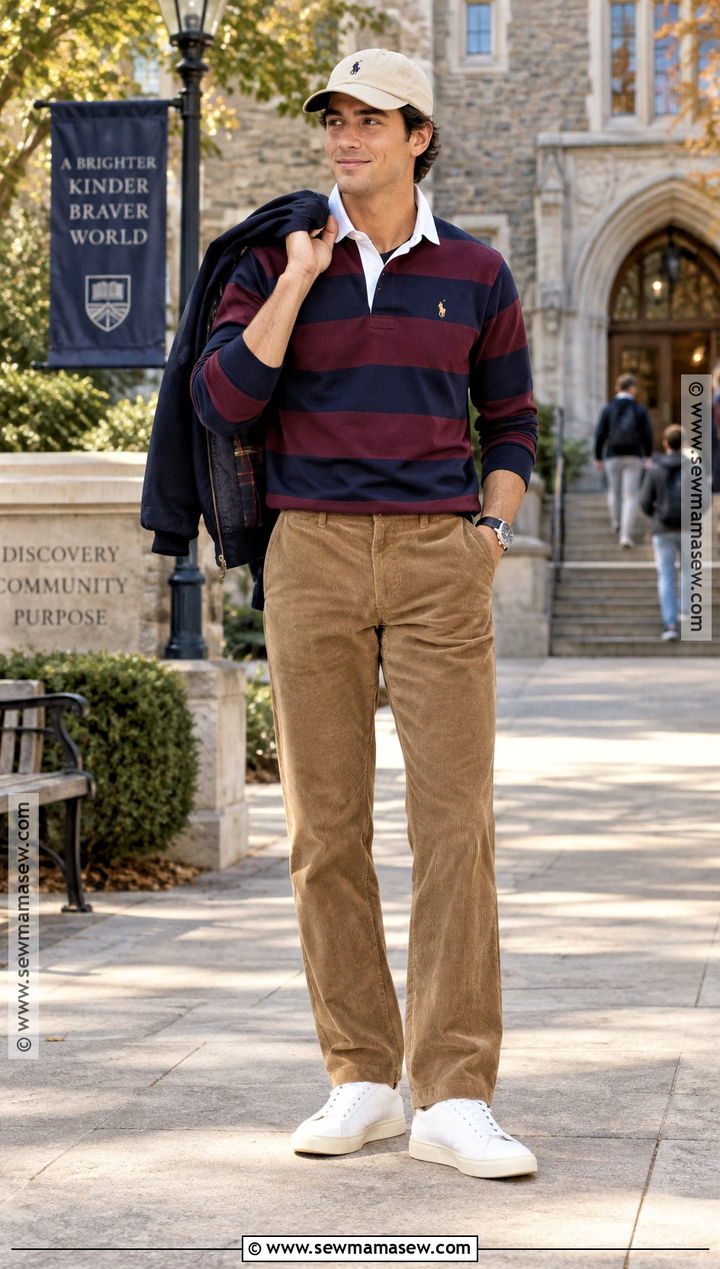
Rugby shirts bring a bit of color and an old-campus feel, and they're tougher than they look. Choose one in thick cotton with a firm contrast collar, in burgundy, forest green, navy or mustard stripes. Straight brown or tan cords add a second texture without competing with the stripes. White leather sneakers keep it casual; dark loafers move it up a notch. A navy Harrington or light wool coat covers cooler days. One caution I give: mustard stripes next to tan cords can blend into one beige mass, so pair a mustard rugby with darker brown cords instead. A plain cap and watch are plenty.
10. Men's Cable-Knit Sweater With Khaki Pants
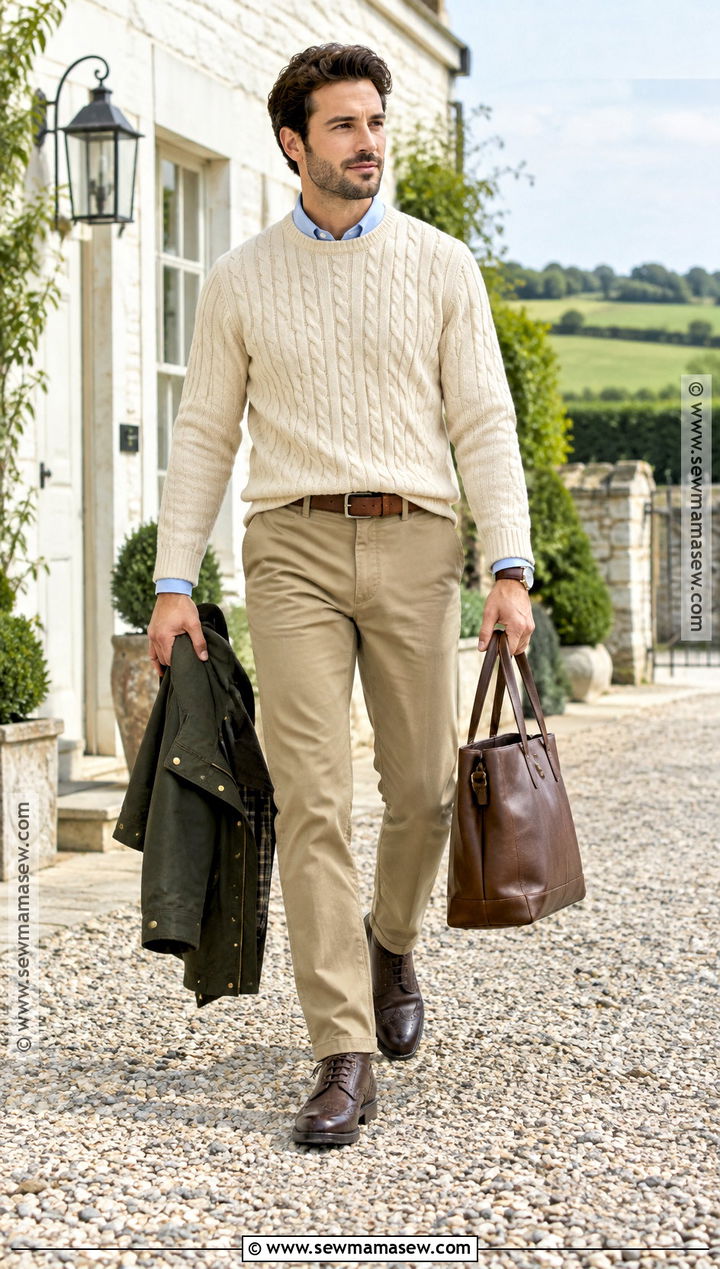
Thick cable-knit is fall in one garment, and cream is the classic, though oatmeal, dark green, rust and navy work just as well. Wear it over an Oxford with only the collar points showing. The knit is bulky, so it needs straight khakis or relaxed cotton trousers underneath; narrow pants make the top half look enormous. Dark brown loafers, brogue boots or clean leather sneakers suit it. Cable stitches stretch if you hang the sweater, so I always fold heavy knits on a shelf. On windy or damp days, a waxed jacket goes over the top and still lets the texture show at the collar and hem.
11. Men's Overcoat With Hoodie And Sneakers
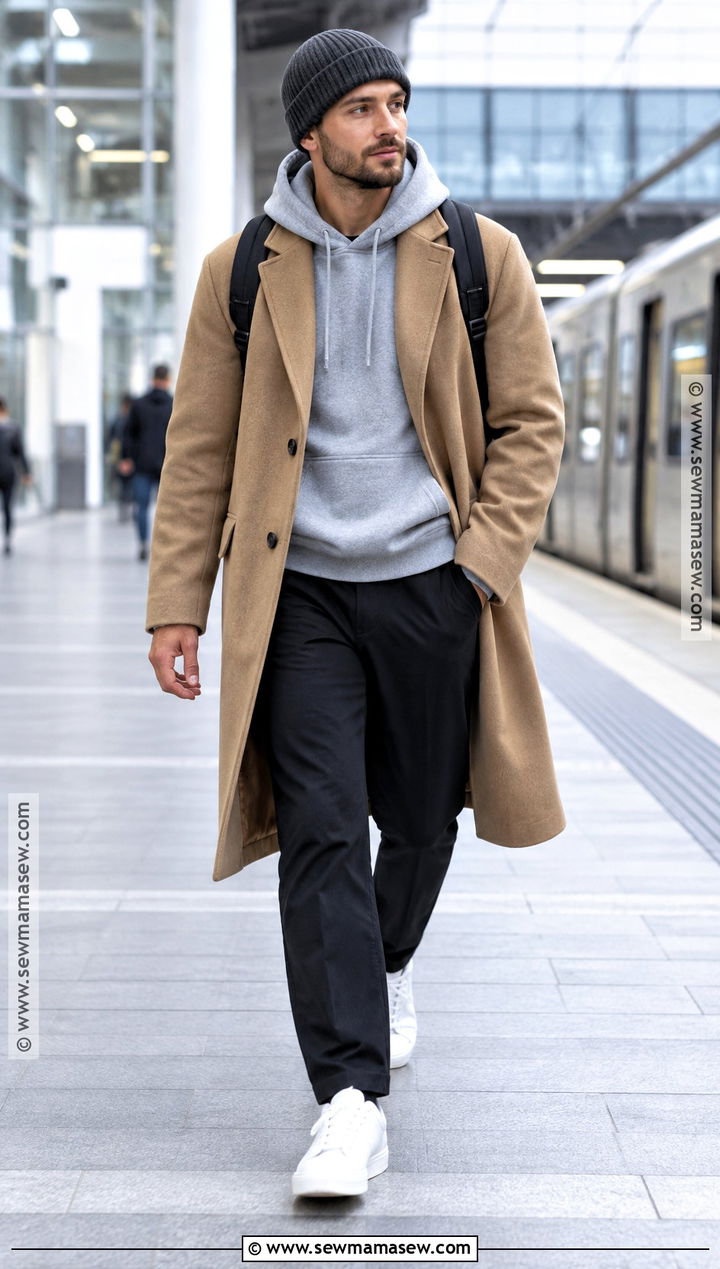
A wool overcoat over a hoodie looks deliberate when every piece is plain. A gray, camel, navy or black coat that reaches around the knee, a solid hoodie in cream, charcoal or heather gray with no big graphic, then straight jeans or relaxed wool-blend pants and clean leather sneakers or understated runners. The hoodie should fit under the coat without bunching at the shoulders, which usually means a thinner, closer-fitting hoodie rather than a heavy oversized one. Knee-length coats also need the trousers to stay fairly straight; very baggy pants under a long coat lose your shape entirely. Great for commutes and flights.
12. Men's Field Jacket With Cargo Pants
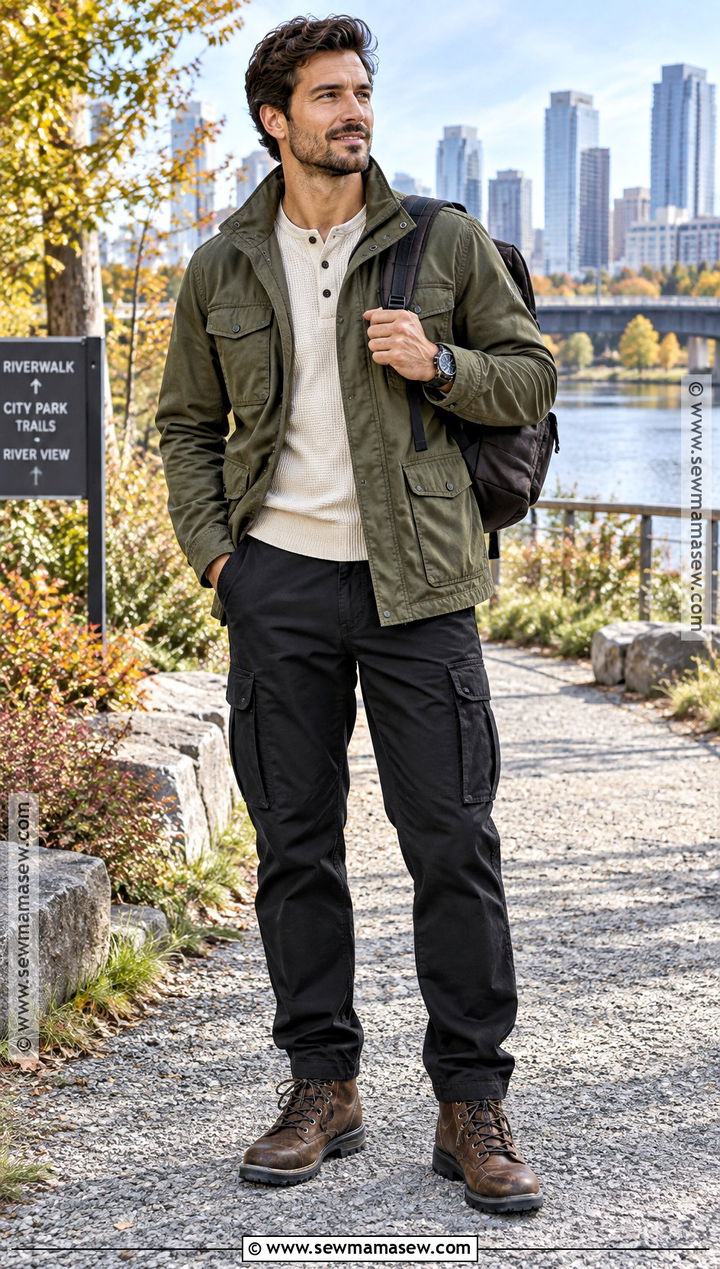
Field jacket plus cargos can tip into costume fast, so I control it with color and cut. Olive, charcoal or dark navy jacket with clean pockets, over a fitted henley, waffle-knit or light crewneck. Cargos should be straight or gently tapered, with flat pockets and no dangling straps. Most important, wear a different neutral on the bottom, such as stone, black or dark brown, so jacket and trousers don't match like a uniform. Leather hiking-style boots suit the rugged mood; retro sneakers lighten it. Add a sturdy watch and a simple backpack for sightseeing or a weekend away.
13. Men's Blazer With Jeans And Loafers
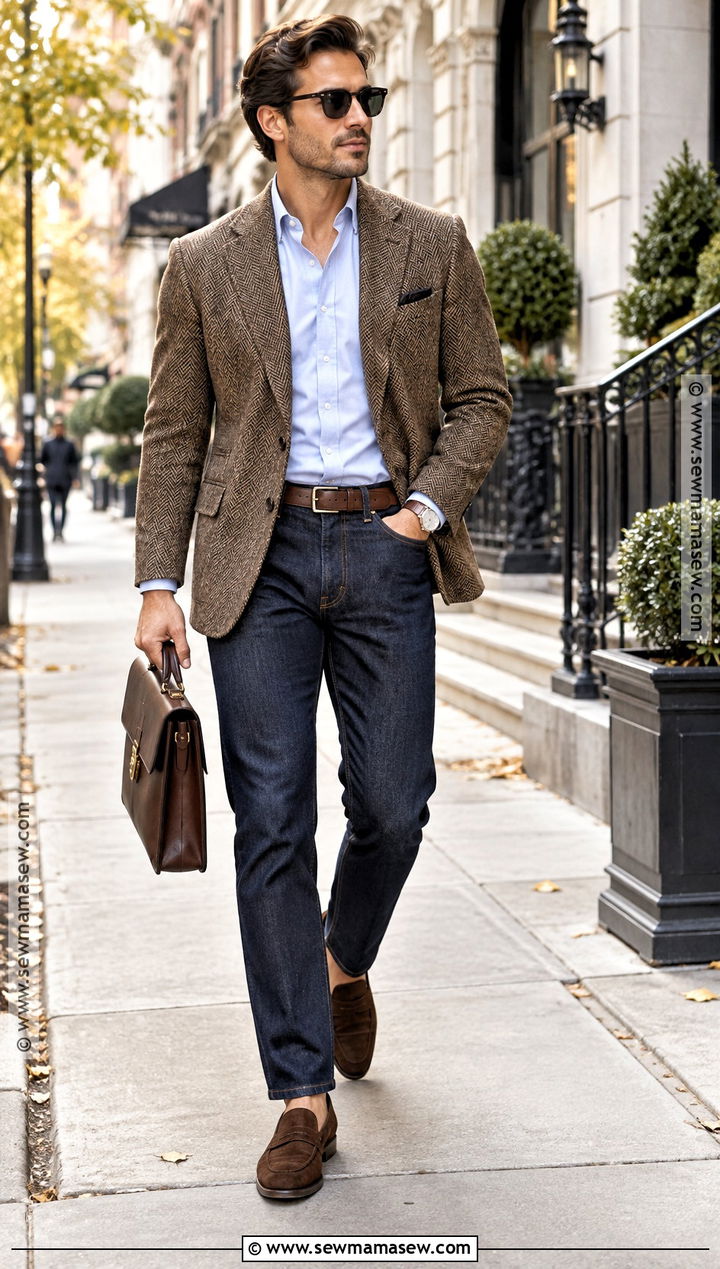
A textured blazer over jeans covers all those in-between dress codes. I'd pick an unstructured one in brown herringbone, gray wool, navy flannel or soft cord, with little or no shoulder padding, so it looks right with denim instead of like half a suit. Under it, a pale blue Oxford, knitted polo or fine crewneck, then dark straight jeans and brown penny loafers, suede derbies or Chelsea boots. Match the belt to the shoes. The shoulder seam should end where your shoulder does; if there's a dent below it, the jacket is too big. Save the pocket square for nights that call for it.
14. Men's Puffer Vest With Knit Sweater
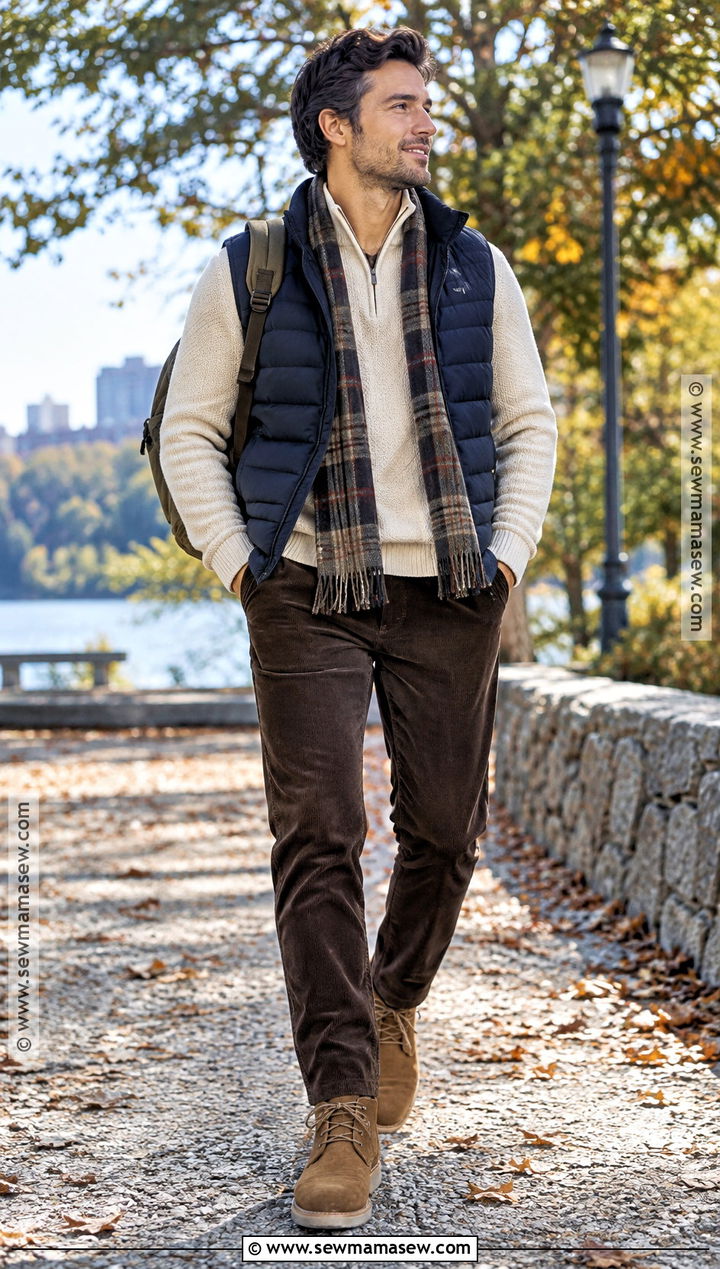
A light puffer vest gives you core warmth and leaves your arms free. Choose a matte finish in navy, olive, black or deep brown; shiny vests look sporty in a way that fights the knitwear. Layer it over a solid crewneck or quarter-zip in cream, gray or burgundy, then straight dark jeans or cords, and suede chukkas, trail sneakers or work boots. A plaid scarf adds pattern if you want it. Before buying, I zip the vest fully over the sweater. If it pulls across the chest, the insulation compresses and you lose warmth along with the shape. Early fall mornings are where it shines.
15. Men's Corduroy Suit With Knit Polo
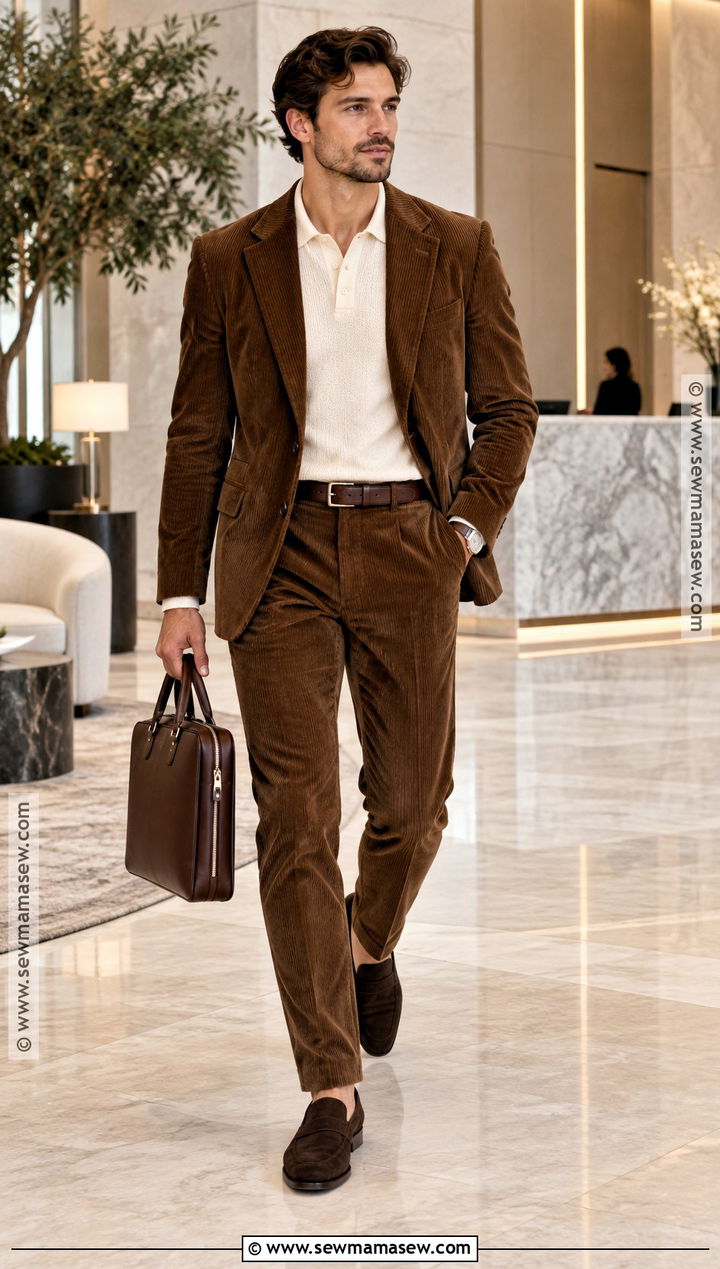
A corduroy suit is softer and more relaxed than wool, which makes it far easier to wear than most men expect. Chocolate, tobacco, dark olive or navy with medium-width ribs, worn with a cream, black or rust knit polo instead of a dress shirt. Brown suede loafers or slim leather boots match the texture, with a belt to suit. The best part is that the pieces split up: jacket over dark jeans, trousers with a plain crewneck. Cord crushes at the elbows and behind the knees with sitting, so I hang it after each wear and steam out the creases rather than pressing it flat with an iron.
Why Wool Knits Pill and Lose Shape, and What Helps
Half of this list depends on knitwear: merino crewnecks, a cable-knit, a cardigan, a turtleneck. Treat them well and they last for years. Treat them like T-shirts and they look tired by November.
Pilling is friction, not a fault
Little balls form where the fabric rubs, usually under the arms, at the cuffs and where a bag strap sits. Shorter fibers pill more, so softer, cheaper wools often pill sooner. A fabric comb or sweater shaver removes them; pulling them off by hand stretches the knit.
Washing and storing
- Wear a knit two or three times before washing; airing it overnight is often enough.
- Hand wash or use a cold wool cycle with wool detergent, then dry flat on a towel. Heat and agitation shrink wool fast.
- Fold sweaters and cardigans. Hangers stretch the shoulders into points, especially on heavy cable-knits.
- Store clean knits in a closed drawer or box over summer, since moths go for wool with body oils left in it.
Turtlenecks need one extra bit of care: don't stretch the collar over your head roughly every morning. Fold it down first and pull it on gently, and it keeps its shape much longer.
Build Out From a Blazer and One Good Pair of Boots
Everything above comes back to the same few habits: mix textures, keep proportions balanced, and choose layers you can take off. If you're starting with a thin closet, I'd add a textured blazer and one pair of brown leather or suede boots first, because they pair with nearly every outfit in this list. Navy, gray and brown keep things easy to mix, and burgundy, rust and olive bring the season in. Fit beats price every time. Adjust fabrics and colors to your climate and frame, and treat these combinations as formulas you can repeat with whatever you already own.
Related posts: