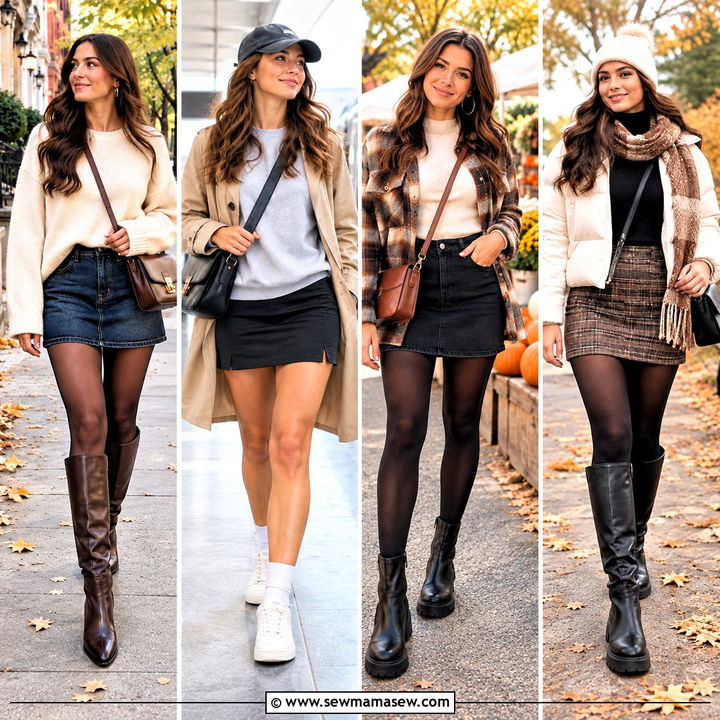
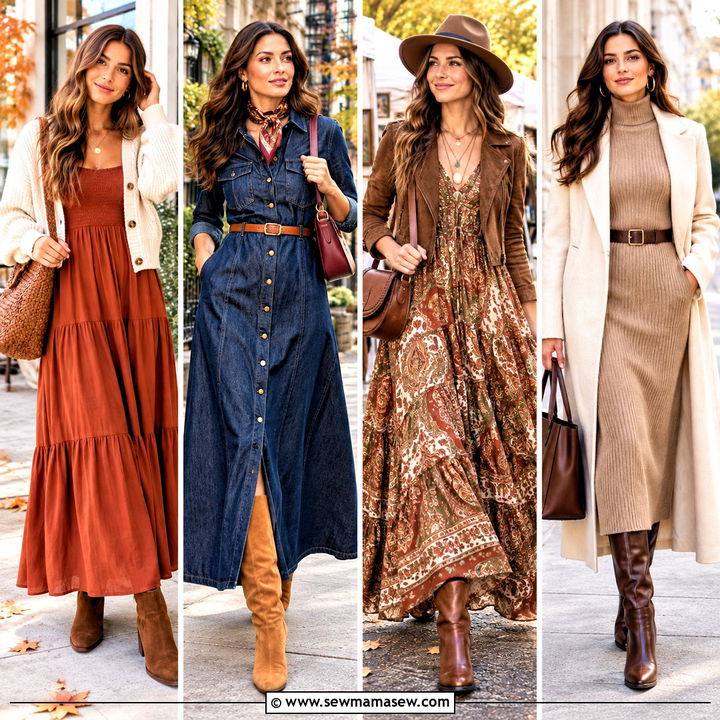
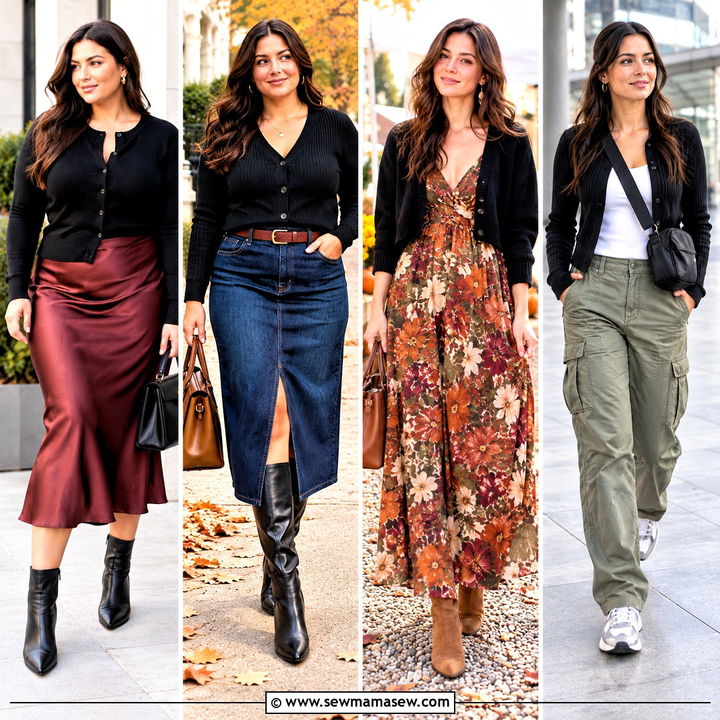
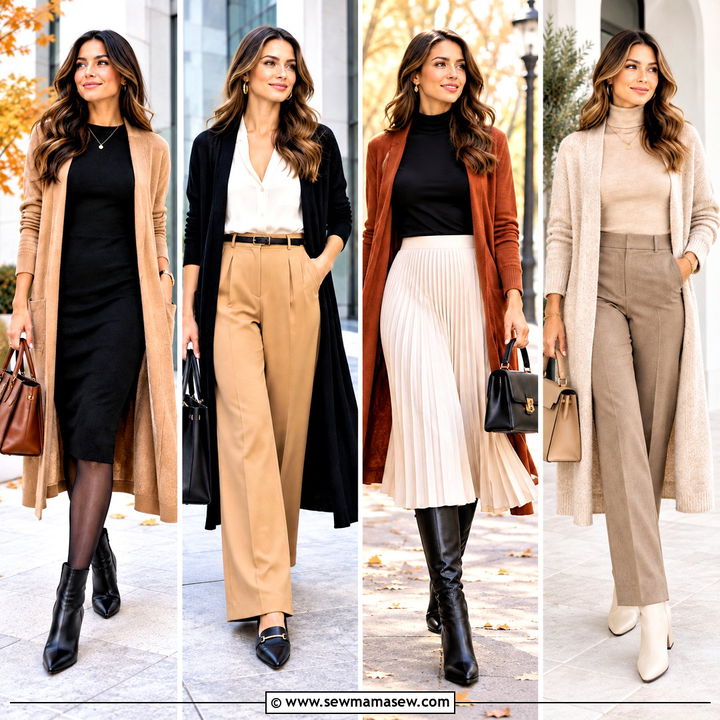
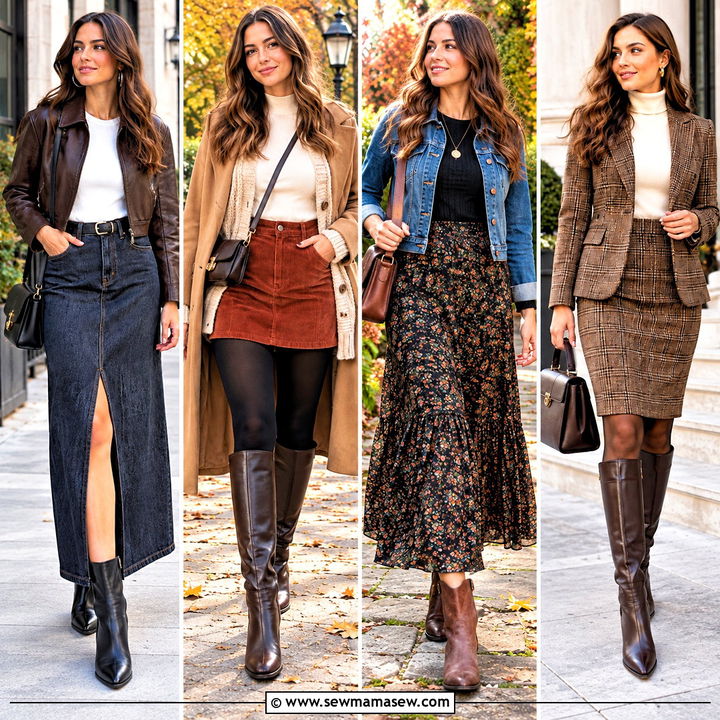
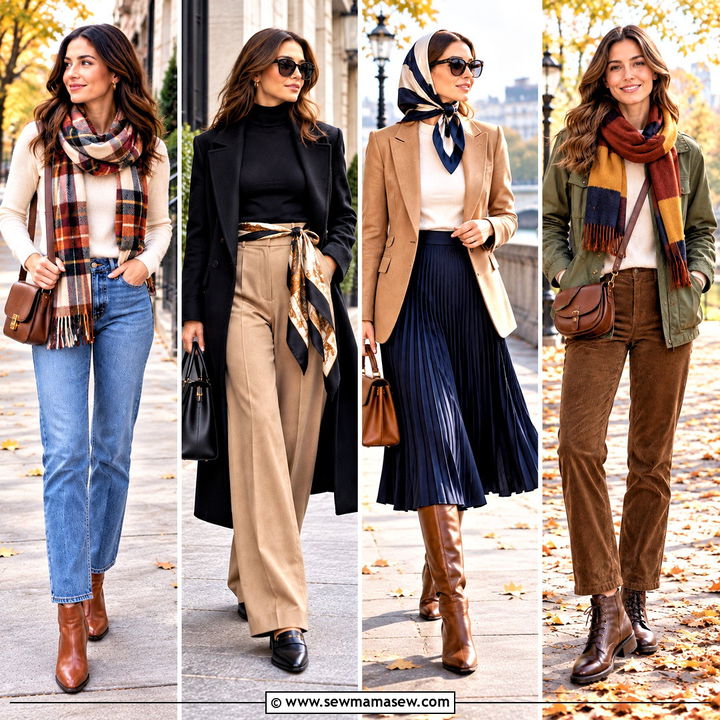
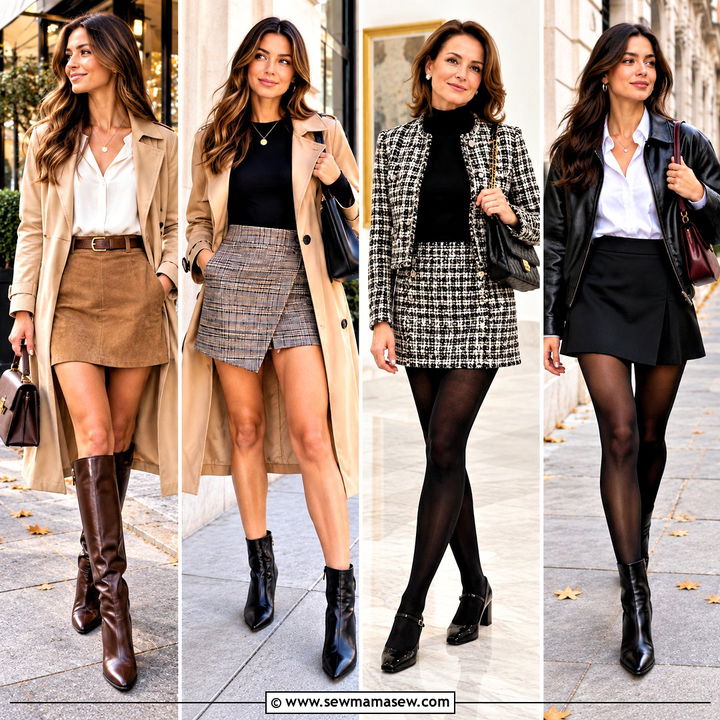
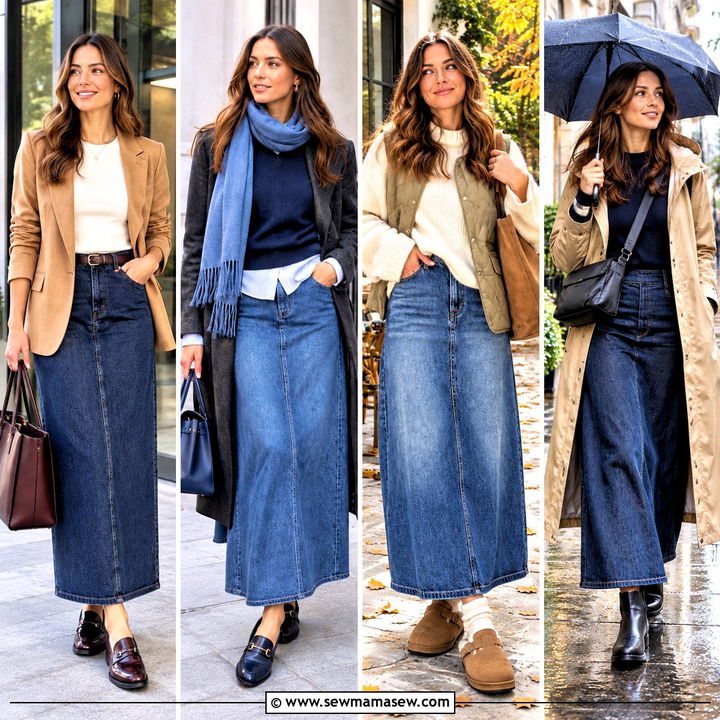
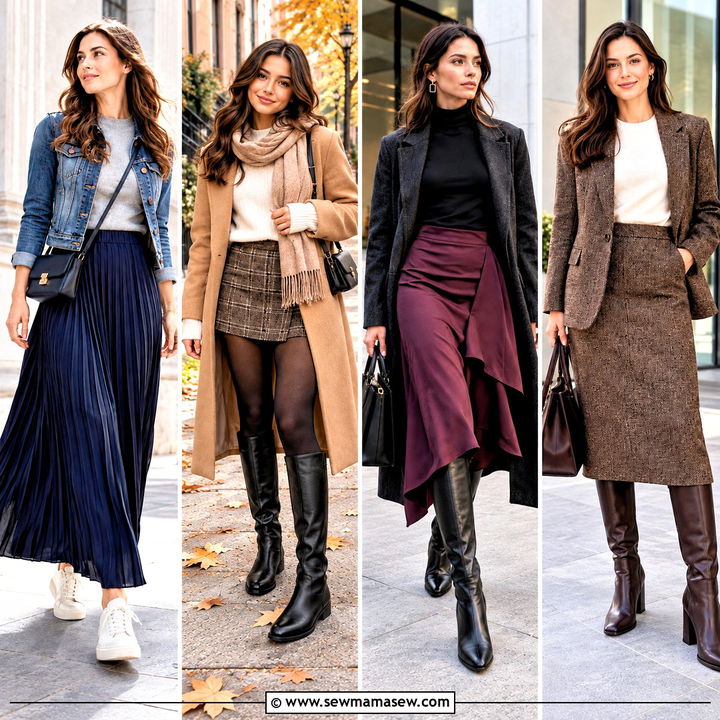
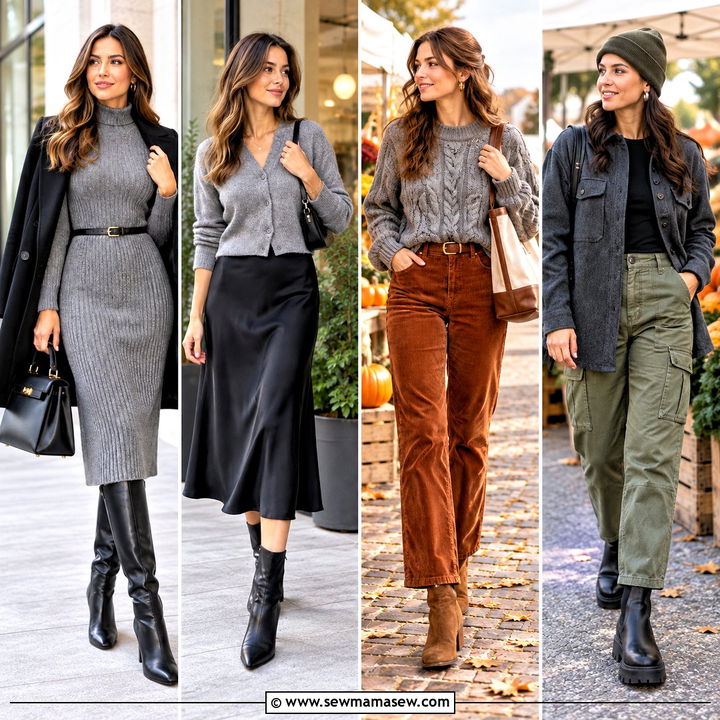
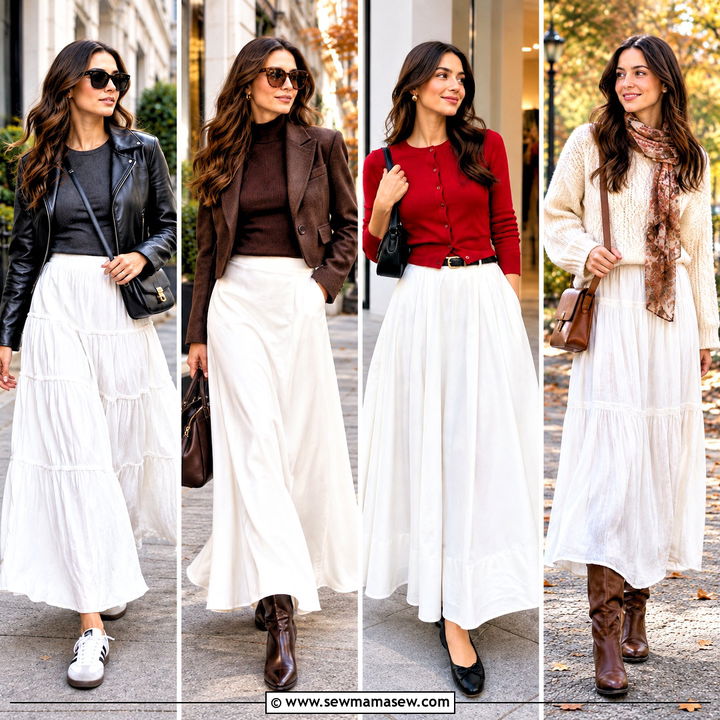
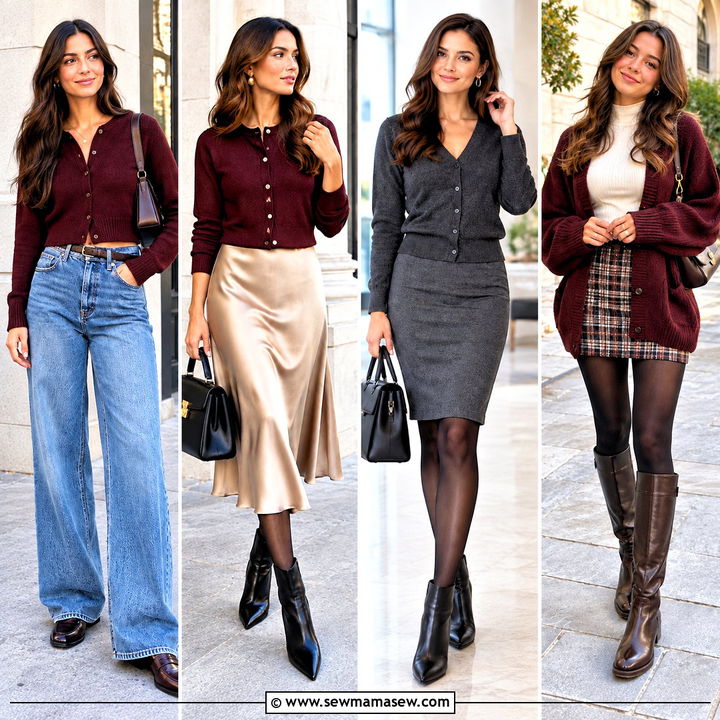
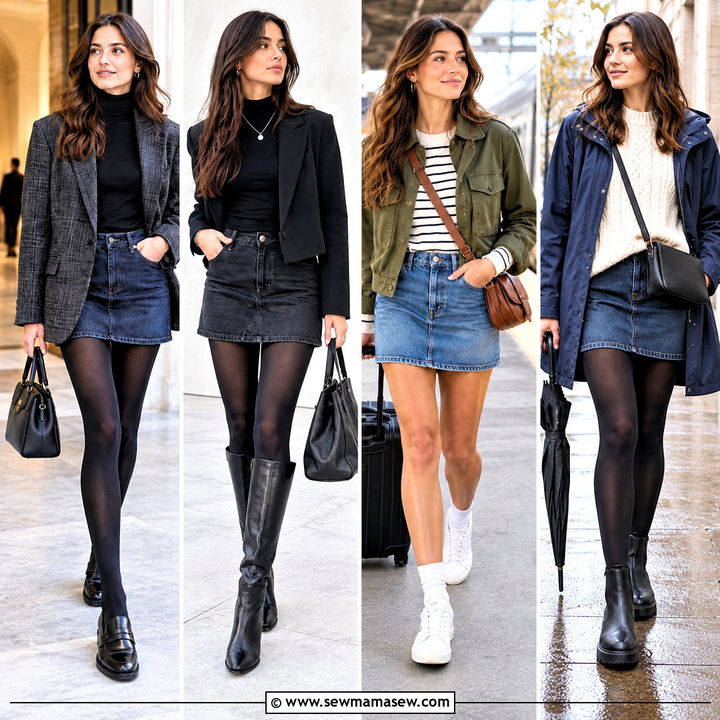
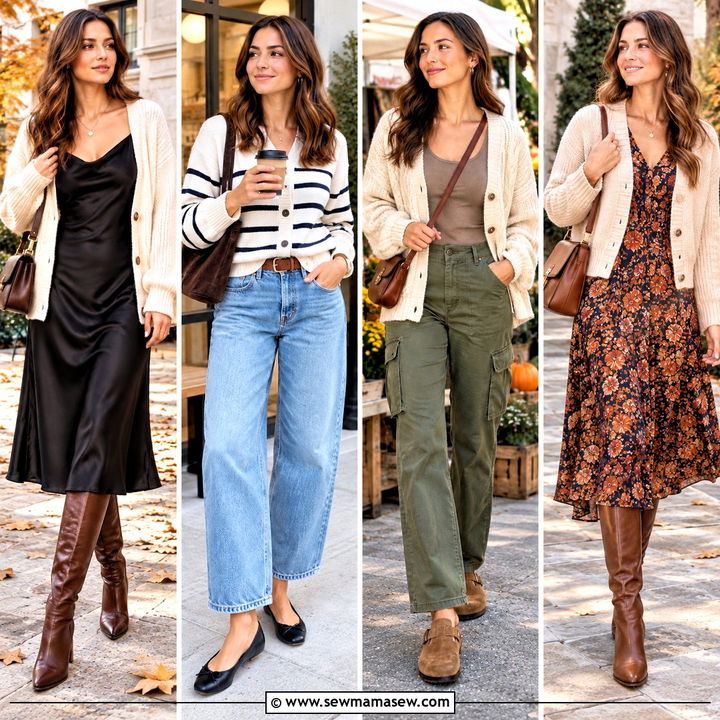
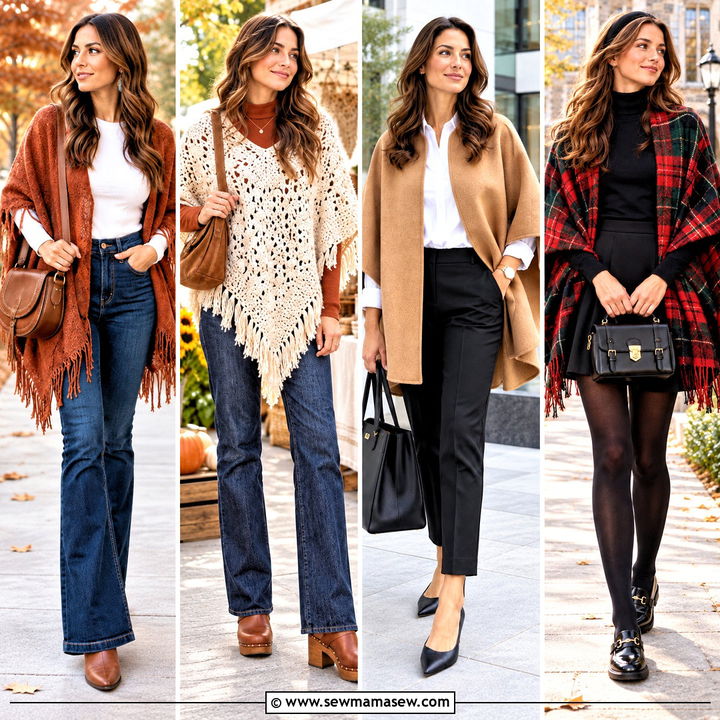
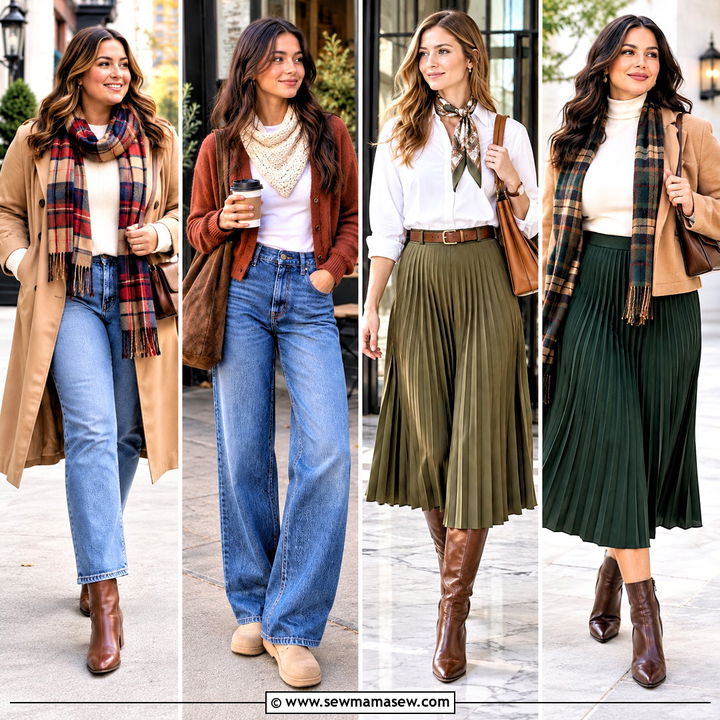
Most slip dresses get packed away in September, and I think that's a waste. Treated as a base layer instead of a summer dress, a slip works under sweaters, over turtlenecks and inside a long coat well into the cold months. The trick is contrast: something fluid next to something with structure or texture, so the satin looks deliberate rather than underdressed. A midi or maxi length gives you the most room to layer, and opaque tights with a fitted base layer underneath solve most of the warmth and coverage questions people ask me. The fifteen outfits below run from a sweatshirt on a Saturday to velvet for a dinner, so pick the ones that suit your weather.

The Slip Dress Worth Layering All Season
Not every slip dress takes layers well. Before I style one for fall, I check the dress itself, because a few details decide whether it looks good under a sweater or turns into a crumpled mess by noon.
- Cut. A bias-cut slip, where the fabric runs diagonally, drapes and moves over the body. A straight-cut one hangs flatter and clings less at the hip, which some people prefer.
- Fabric weight. Thin, shiny polyester satin shows every seam of whatever is underneath. A heavier satin, a matte crepe or a viscose blend hides layers far better.
- Length. Midi and maxi lengths are the easiest for fall. They meet tall boots and leave room for a sweater to sit over the top without showing too much leg.
- Straps. Adjustable straps let you raise the neckline over a turtleneck or shirt so the layers line up.
- Room through the hips. If you're layering tights, a slip and sometimes jeans underneath, a dress that's snug on bare skin will pull once the layers go in.
Silk is softer and breathes better than polyester, but it shows water marks and underarm sweat, so for daily layering I usually steer people toward a sturdy blend.
1. Black Slip Dress With Oversized Blazer And Loafers
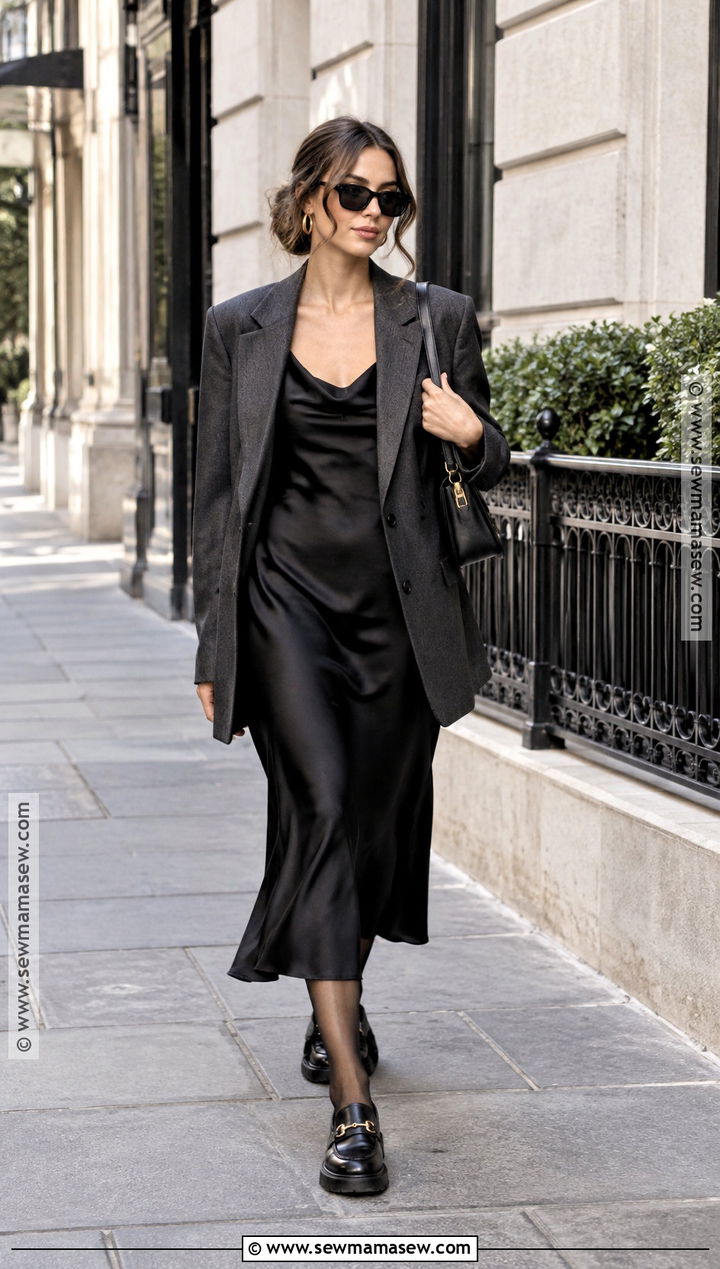
An oversized blazer is the quickest way to make a black slip office-ready. I look for a midi dress with adjustable straps so the neckline can be raised to sit modestly under the jacket. Charcoal, camel or a quiet check all work, because the tailoring is there to contrast with the fluid fabric. Loafers, sheer black tights and a structured bag keep it grounded. Oversized has limits, though. On a petite frame I'd choose a blazer that stops at the upper thigh, and for curvier figures a single-breasted style worn open draws a long line down the center.
2. Satin Slip Dress With Chunky Sweater And Ankle Boots
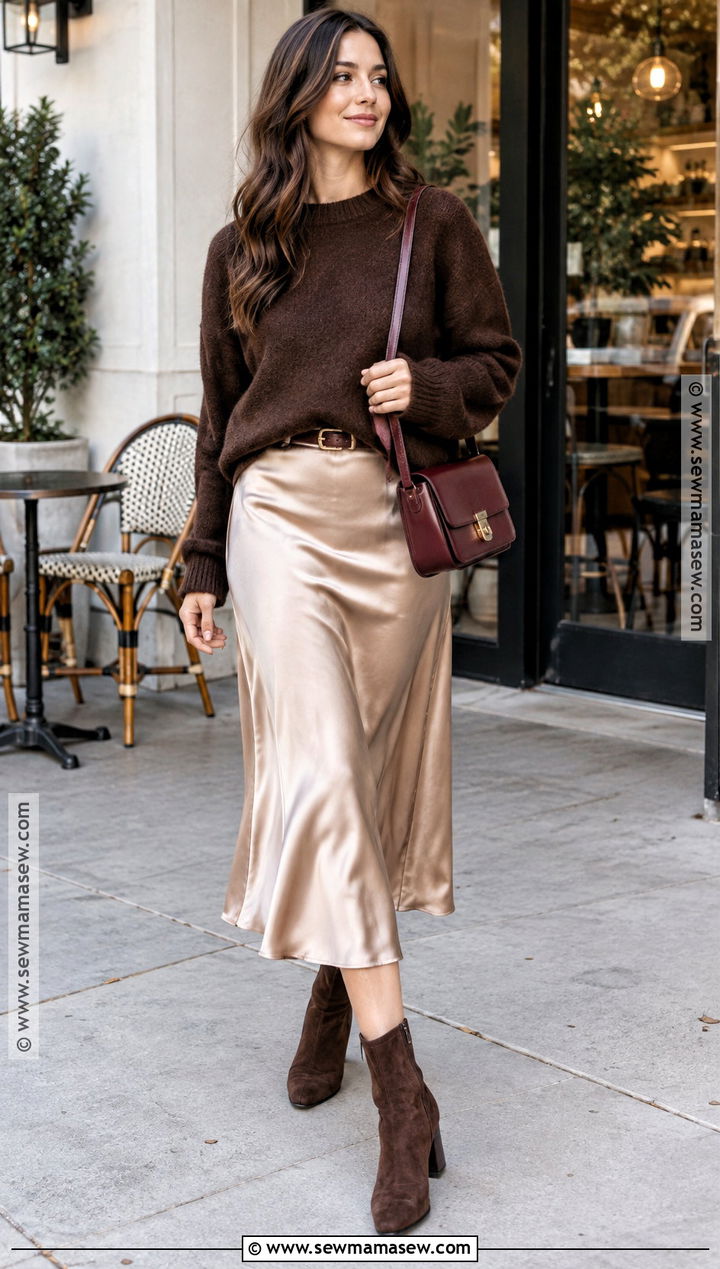
A chunky sweater pulled over a satin slip turns the dress into a skirt, and the drape of the satin underneath still moves when you walk. Go slightly oversized in a crewneck or mock neck. The part people get wrong is the waist: if the sweater just hangs, it hides your shape, so I put a slim belt over the dress and let the sweater blouse over it. A hair elastic twisted around a small knot of sweater hem inside does the same job. Suede or leather ankle boots add weight. Burgundy, olive, chocolate and champagne all look right for the season.
3. Slip Dress With Turtleneck And Knee-High Boots
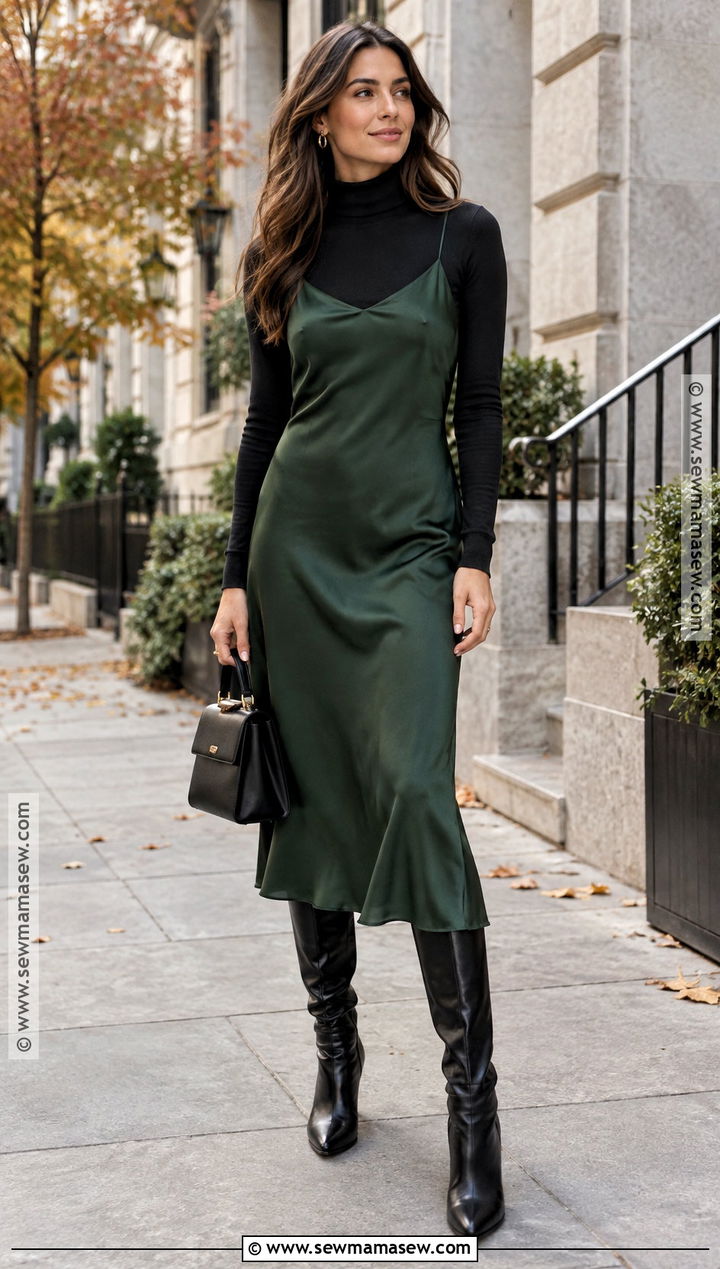
For coverage, a fitted turtleneck under a midi slip is my go-to. It has to be thin and smooth, because a thick knit or chunky seams show through satin as ridges, especially around the armholes and waist. Black under bronze, forest green, plum or a print gives the clearest contrast. Knee-high boots make it look like a cold-weather outfit and cover most of the leg. I'd pick sleek leather boots for a dressier day and slouchy suede for weekends. A top-handle bag and small earrings are all it needs.
4. Slip Dress With Leather Jacket And Combat Boots
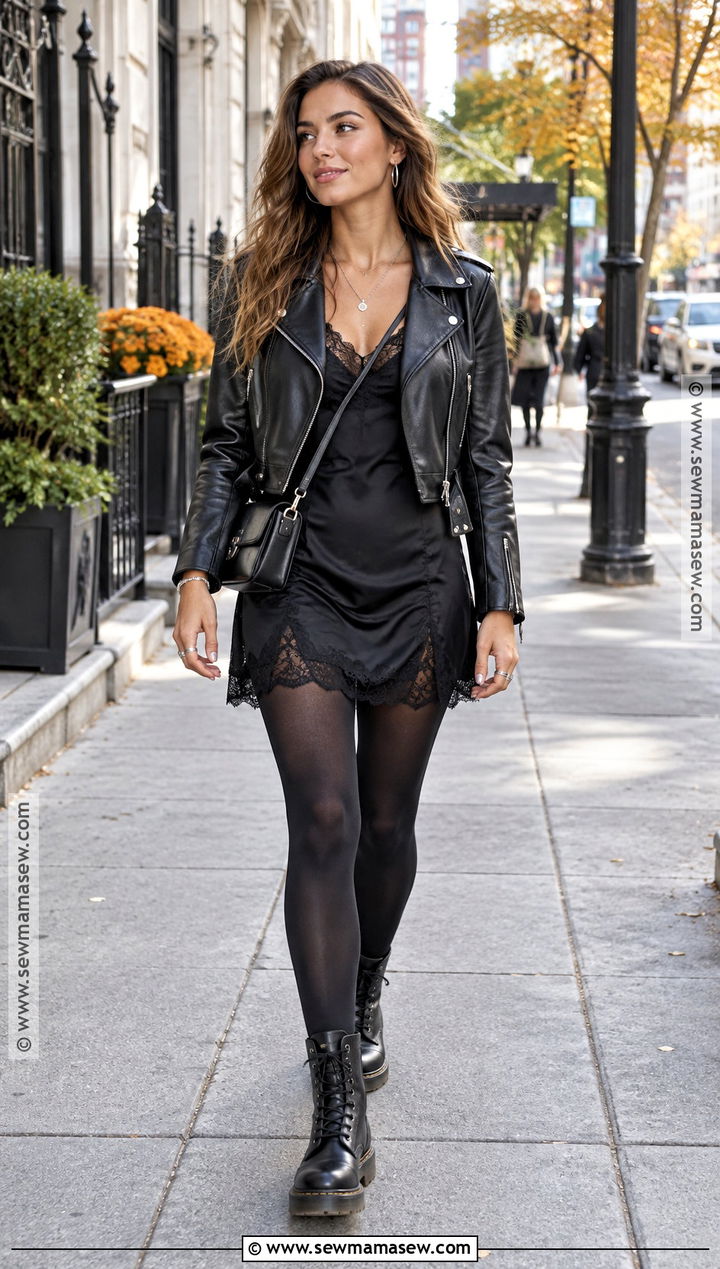
Here's the slip with some attitude. A cropped leather jacket over a lace-trimmed or plain dress, with combat boots, gives the softness a hard edge to lean against. Keep the jacket short, ending near your natural waist, or it cuts the dress awkwardly at the hip. Black is the easiest dress color, though deep red, pewter, navy and dark florals hold up too. Opaque tights matter here for warmth and because combat boots look odd with bare legs in fall. If a traditional biker jacket feels bulky with its lapels and zips, a collarless leather style is lighter.
5. Slip Dress With Denim Jacket And Sneakers
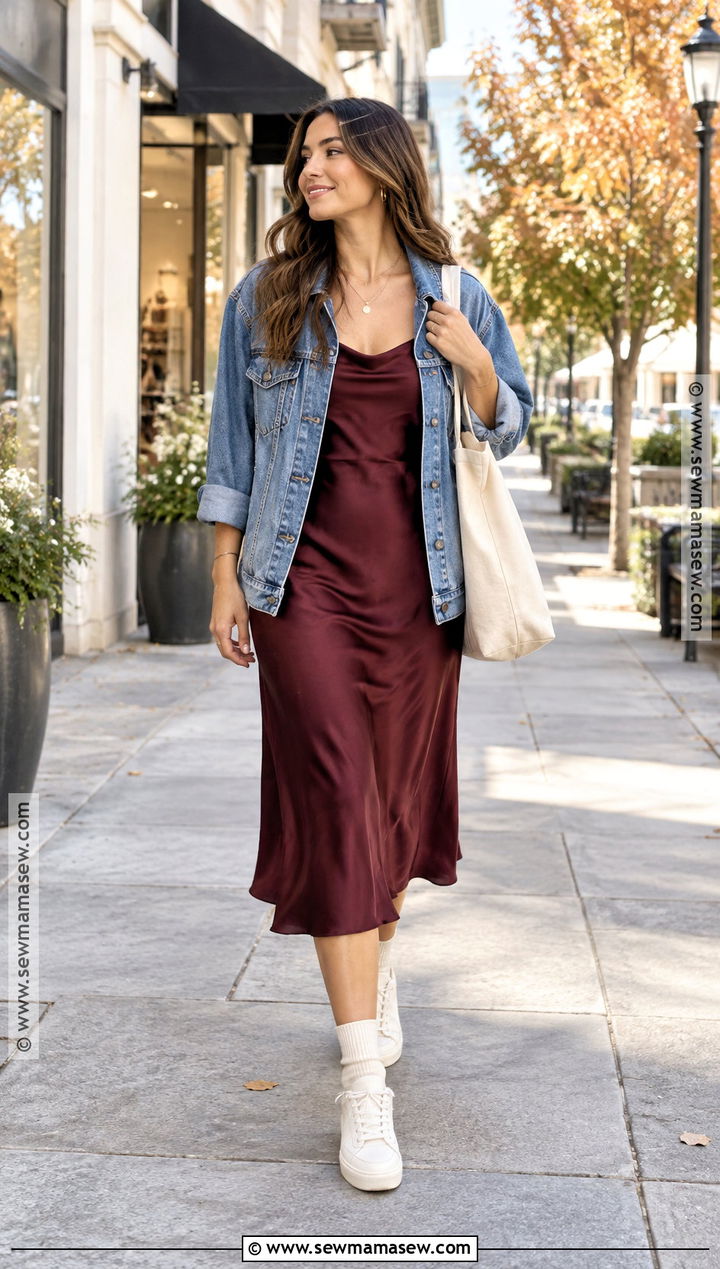
On mild days, a denim jacket and clean sneakers are all a slip dress needs. Check the hip room before you commit: a slip that's snug through the hips rides up when you sit and pulls when you walk in sneakers with a longer stride. Mid-wash denim is casual, dark denim a little sharper. White or cream retro sneakers with ribbed socks keep it light. Roll the jacket cuffs so the top half doesn't look boxy. When mornings are cool, a fitted long-sleeve tee under the dress handles the chill.
6. Slip Dress With Trench Coat And Pointed-Toe Pumps
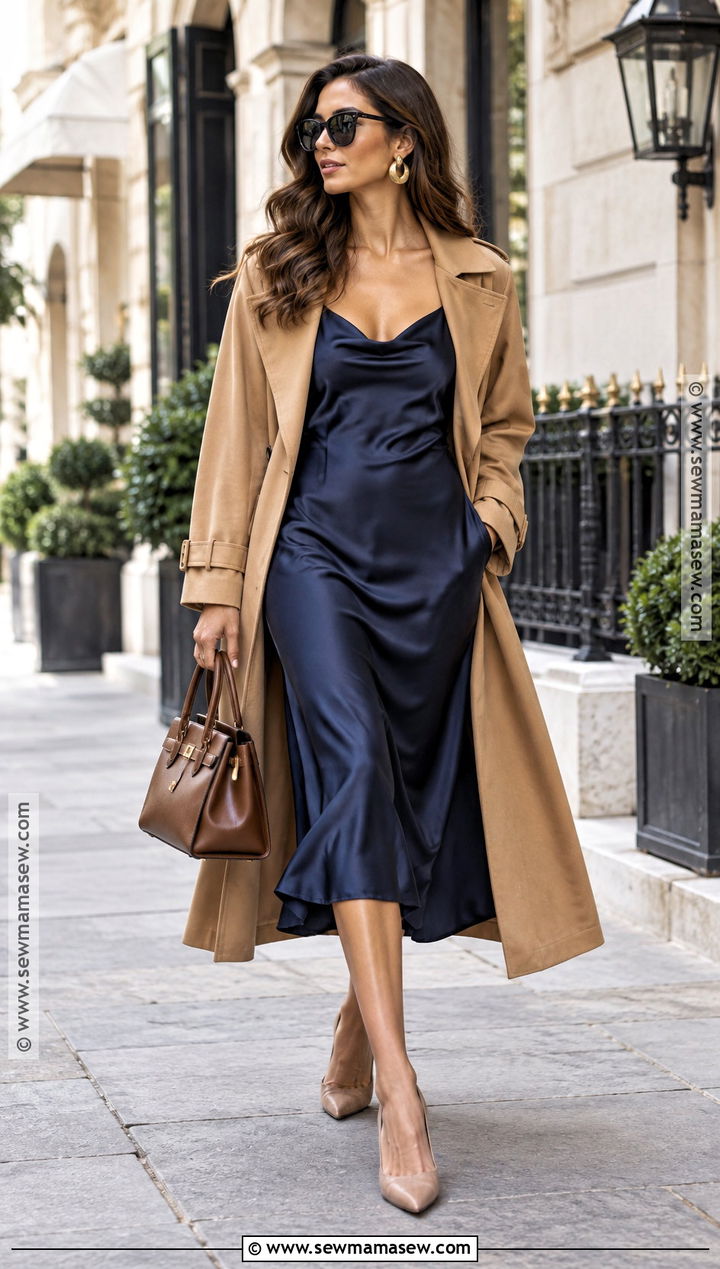
A trench coat gives a slip dress a clean, grown-up finish. Wear a black, navy or deep brown midi under a camel trench, open so the dress shows. The proportion I aim for is a coat hem that lands close to the dress hem; a short trench over a long slip chops the figure in two. Pointed pumps or slingbacks lengthen the line enough for dinners and business events, and pointed flats do nearly the same job if heels hurt. One good piece of jewelry is plenty. On colder evenings, add sheer tights and a thin cashmere wrap.
7. Slip Dress With Cardigan And Ballet Flats

A cardigan makes a slip dress feel friendly and easy for daytime. Start with black, taupe, burgundy or a small autumn print. A fitted, waist-length cardigan defines the waist; a longer one worn open flows with the dress. Ballet flats or Mary Jane flats keep things soft without getting dressy. If you want more shape, button the cardigan at the center or add a narrow belt over it. One rule I always follow: if the dress has detail, like lace or a print, the cardigan stays plain, and vice versa.
8. Slip Dress With Button-Down Shirt And Loafers
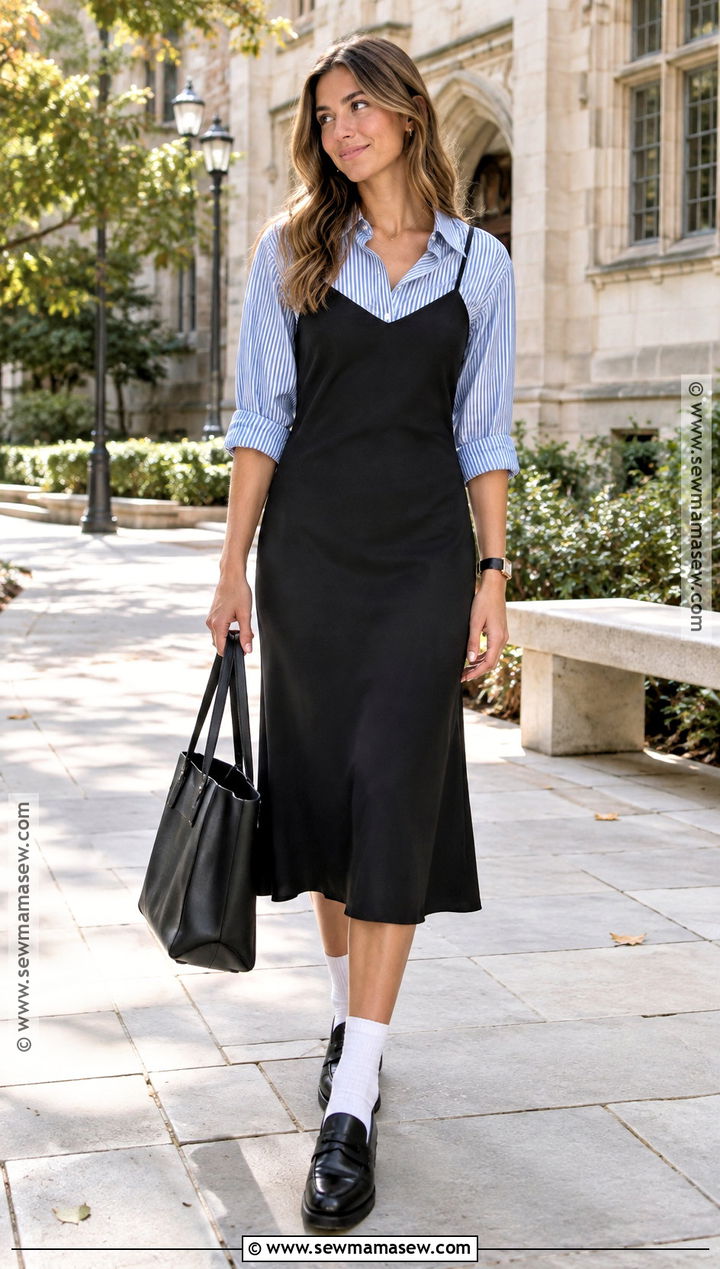
A crisp shirt under a satin slip looks unexpected and quite practical. Choose a fitted white, striped or pale blue shirt, collar neat, sleeves rolled. A simple scoop or straight neckline works best because it lets the collar and placket show. The shirt has to be soft and fairly thin; stiff poplin with chest pockets creates lumps under the satin. Loafers, crew socks and a tote give it a preppy finish. For more flexible coverage, wear an oversized shirt open on top instead and knot it loosely at the waist.
9. Slip Dress With Long Wool Coat And Tall Boots
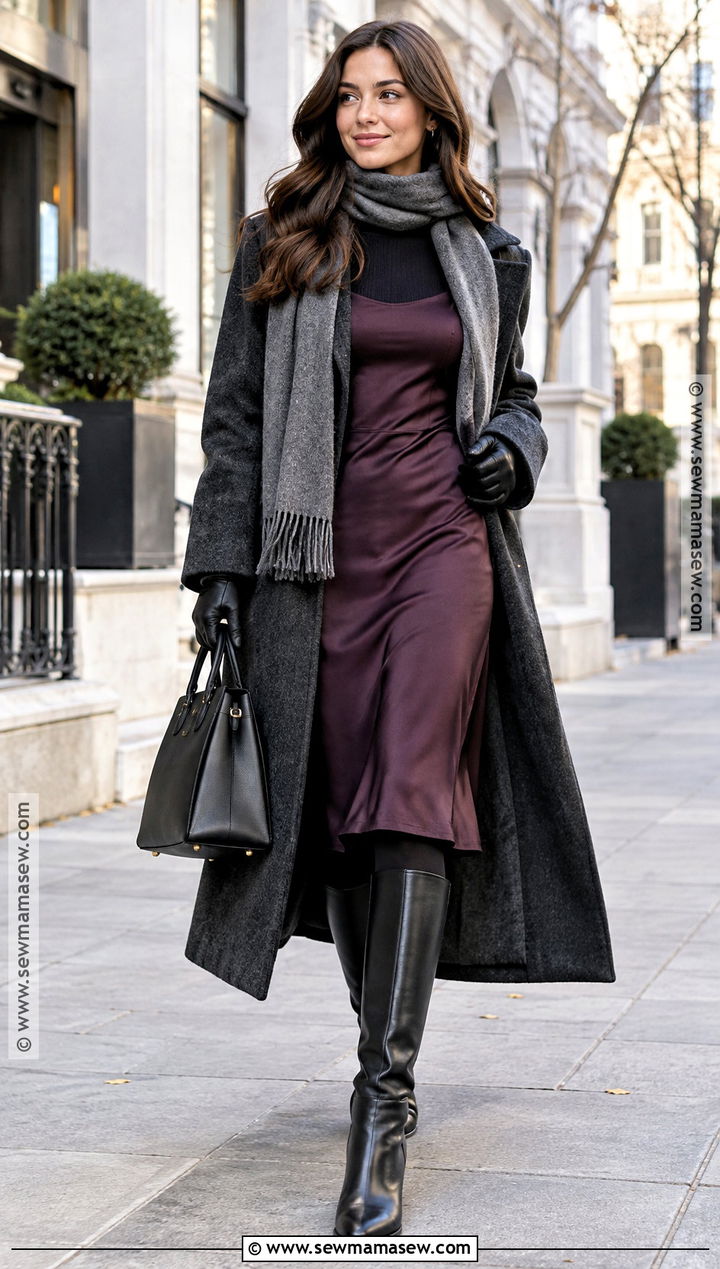
Cold weather is where layering really earns its keep. I build from the skin out: a fitted thermal top, the slip, opaque tights, tall boots, then a long wool coat. Choose a dress that falls below the knee so it meets the boots with no awkward gap. If the dress is thin, a smooth full slip or thermal shorts underneath trap a lot of warmth without showing. Keep the coat a little longer than the dress so nothing peeks out at the hem, and add a cashmere scarf and leather gloves. Camel, charcoal, navy or deep brown wool all suit.
10. Slip Dress With Sweatshirt And Retro Sneakers

A roomy sweatshirt pulled over a slip is the most relaxed version on this list, and it reads like a sweatshirt with a satin skirt. Stick to a plain one or a small graphic. A cropped sweatshirt defines the waist on its own; a longer one can be gathered underneath with an elastic. Retro sneakers, crew socks, a nylon bag and a cap make it sporty. I tie the colors together by repeating one shade between the shoes, bag and top. It moves easily, so it's good for travel, and a denim or utility jacket handles wind.
11. Slip Dress With Tailored Vest And Heeled Boots
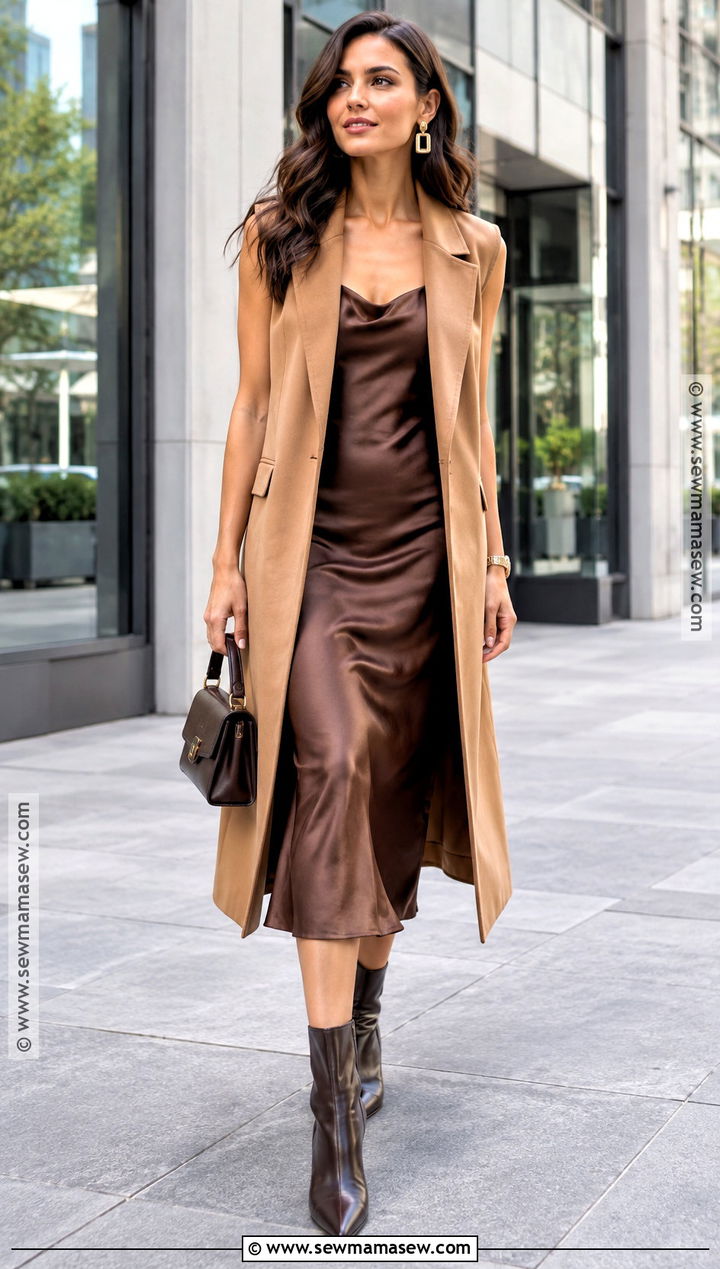
A tailored vest gives a slip sharp lines without hiding its shape. A longline vest worn open makes one long vertical stripe; a fitted vest with one or two buttons done pulls in the waist. Black, espresso, gray and camel all sit well with jewel tones or neutral satin. If you have a fuller bust, look for a vest with a lower first button so it doesn't pull across the chest. Petite wearers should go shorter. Pointed heeled boots and a small structured bag complete it, and a fine knit under the dress adds coverage if you need it.
12. Floral Slip Dress With Suede Jacket And Western Boots
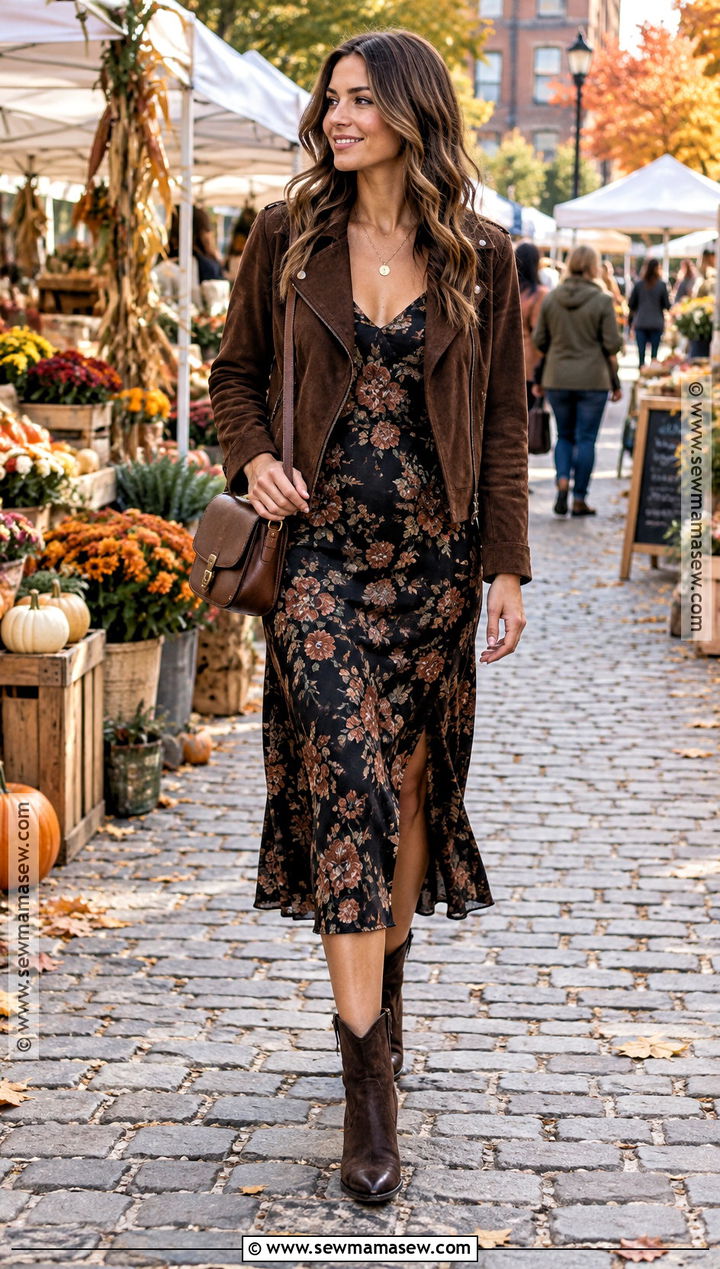
A dark floral slip is the romantic version, and the dark ground is what keeps it from looking like June. Look for black, navy, rust or olive behind the flowers. A tan or chocolate suede jacket and Western ankle boots make it casual. I choose boots with a moderate heel and a slim toe; a very pointed or very chunky Western boot overpowers a light dress. Suede is the one to watch in bad weather, since rain darkens and spots it, so treat the jacket with a protector spray before the season. Brown or black tights matched to the boots finish it.
13. Velvet Slip Dress With Blazer And Mary Janes
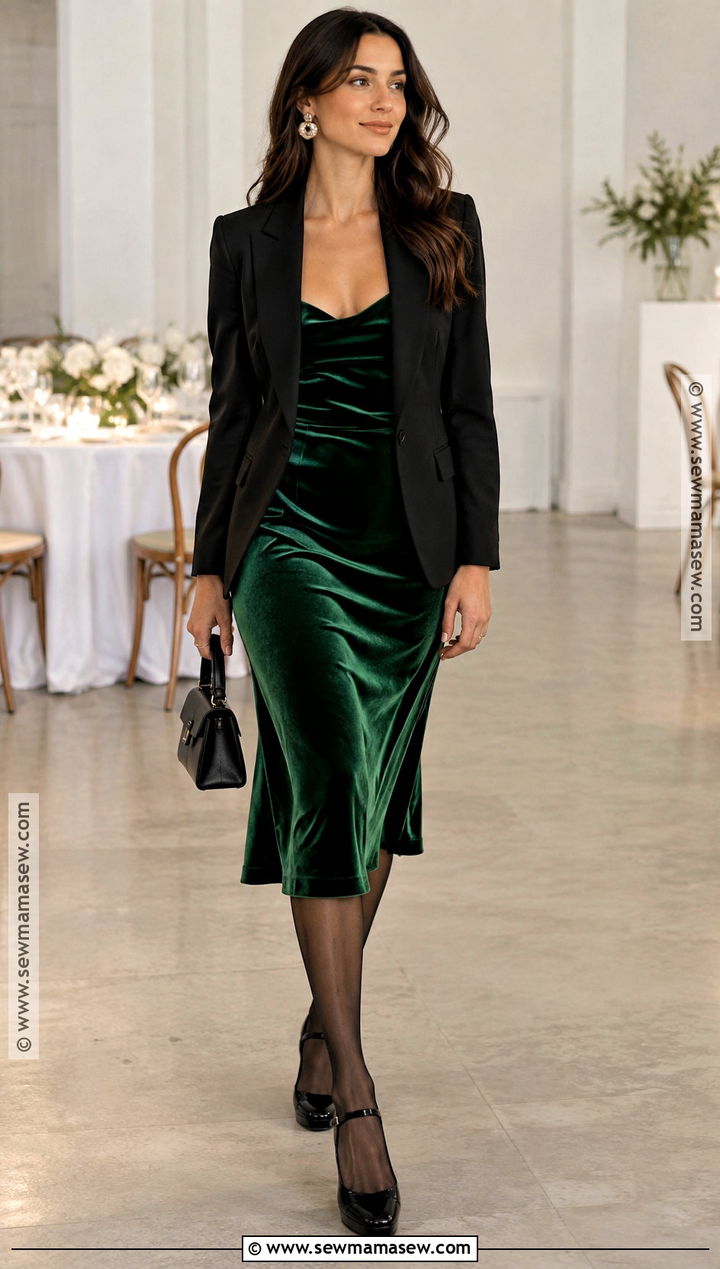
Velvet slips feel richer than satin and catch light differently, darker in the folds and brighter on the high points. Try black, emerald, navy, burgundy or deep purple with a smooth fitted blazer in a neutral. Since velvet already has texture, I keep everything else plain. Mary Jane heels or flats are steadier than narrow pumps for a long evening. A bias-cut velvet follows the body without clinging the way a straight-cut one can, and a square neck gives more coverage at the chest. Velvet crushes when you sit for hours, so steam it rather than ironing.
14. Slip Dress Over Jeans With Ankle Boots
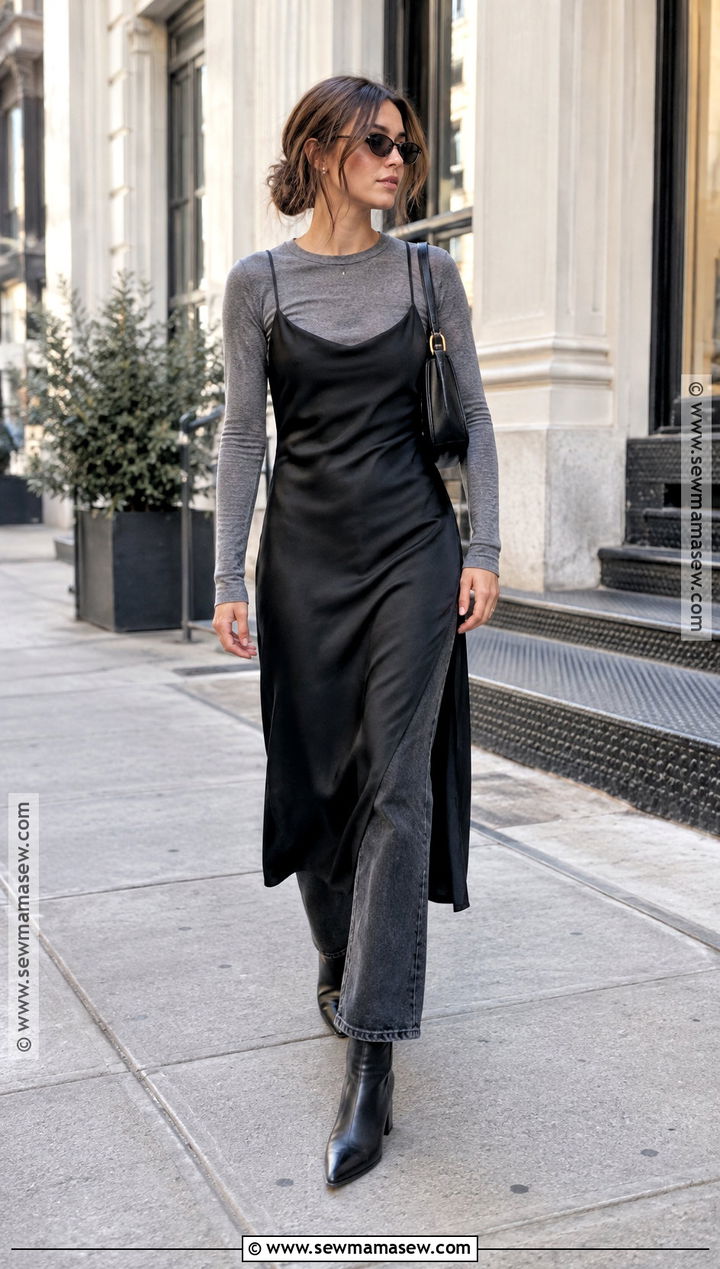
Wearing a slip over jeans divides opinion, but done carefully it's a smart answer for cool, changeable days. The jeans must be slim or straight and lightweight; heavy denim adds bulk at the hips under the dress. A knee-length or midi slip with side slits lets you walk and shows the denim on purpose. Add pointed ankle boots, a fitted long-sleeve top and a small bag. Keep the colors simple so the layers stay readable, for example a black dress over dark jeans with black boots, and bring color in through the top. Adjustable straps help you raise the neckline over the base layer.
15. Monochrome Slip Dress With Matching Fall Layers
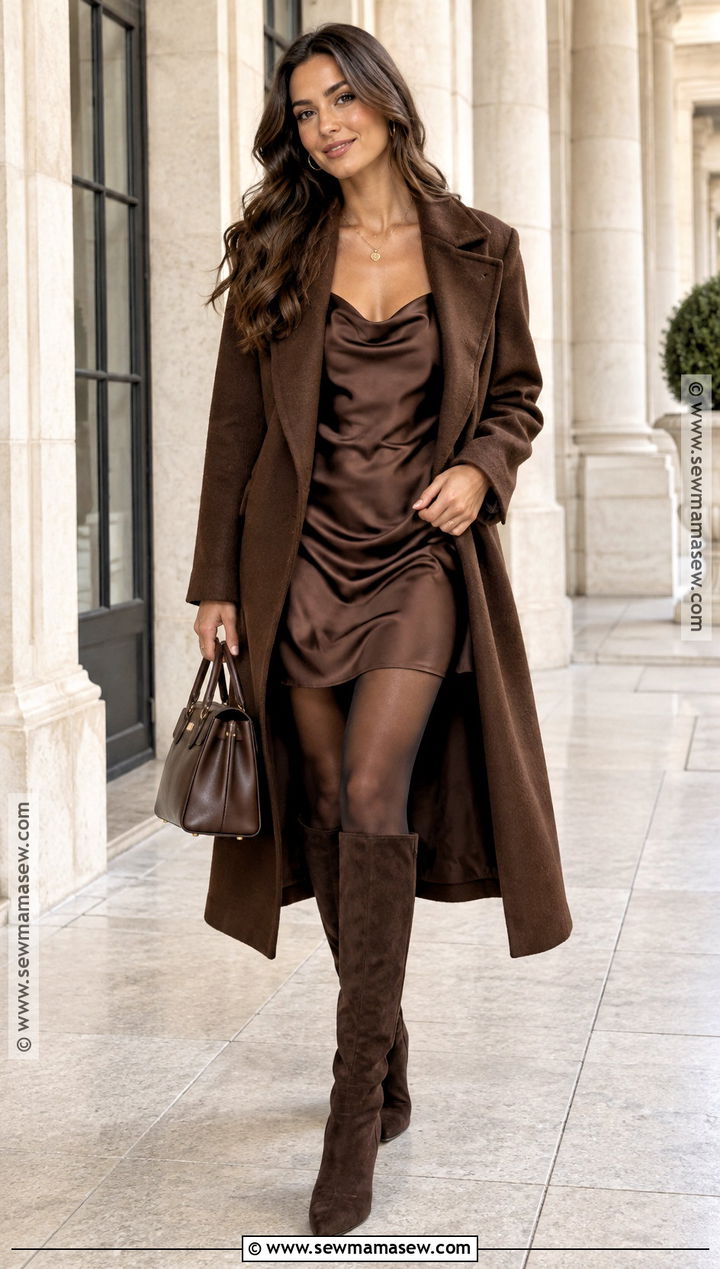
Dressing a slip in one color family is the easiest way to make several layers look planned. Start with a chocolate, charcoal, cream, navy or burgundy dress and add a cardigan, blazer or coat a shade lighter or darker. Matching tights and shoes continue the line down the leg, which is why tonal dressing suits petite figures so well. Texture keeps it from going flat: satin, wool, suede and smooth leather each reflect light differently even in the same shade. Pick jewelry that suits the color's undertone, gold for warm browns and silver for cooler grays.
Tights, Static and Cling Under Satin
The complaint I hear most about fall slip dresses isn't the cold. It's the dress sticking to tights and riding up as you walk. Dry indoor air and synthetic fabrics rubbing together build static, and satin is the worst for it.
What actually stops it
- An anti-static spray on the inside of the dress and the outside of the tights works for most of a day.
- A smooth half or full slip between the dress and the tights gives the satin something slippery to move against.
- Rubbing a little unscented lotion on your legs before the tights go on lowers the charge.
- Cotton or wool blend tights cling less than pure nylon, and they're warmer too.
How heavy to go on tights
Tights are sold by denier, a measure of yarn thickness. Around 15 to 20 denier is sheer and looks dressy with pumps or loafers. Somewhere near 40 is semi-opaque and suits most daytime fall outfits. From about 60 upward the tights are fully opaque and much warmer, which is what I'd pair with combat boots, chunky knits and tall boots. Matching the tights to your shoes makes the leg look longer, and matching them to the dress makes the whole outfit look taller still.
A Summer Dress That Doesn't Need to Go Into Storage
Once you think of a slip dress as a layer, it works through most of the fall. Sweaters, turtlenecks, blazers, coats, tights and boots handle warmth, and each changes the mood. Balance does the rest: fluid satin with tailoring, velvet with plain accessories, a romantic print with practical boots. Adjust hems, heel heights and layer lengths to your body and your weather. I'd begin with the combinations you can make from what's already hanging in your closet, and add pieces only when you find a real gap.
Related posts: