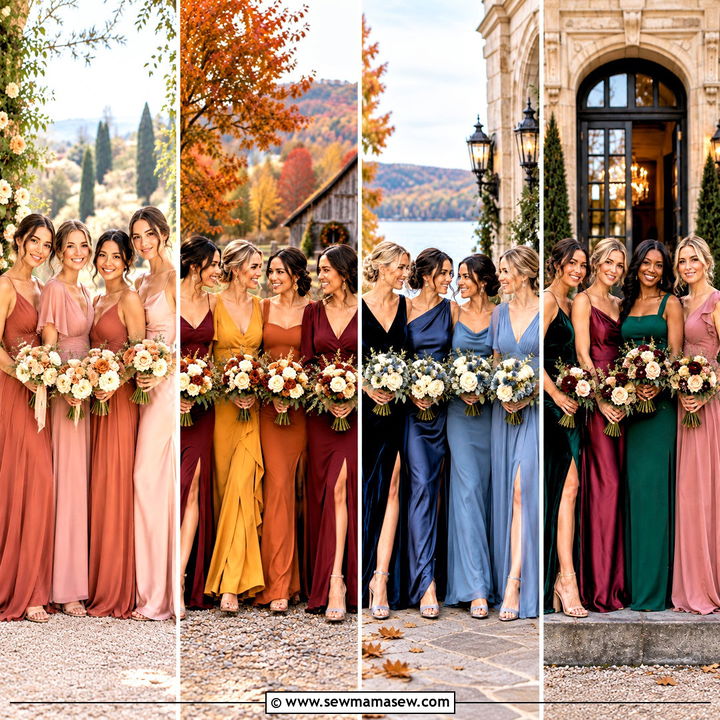
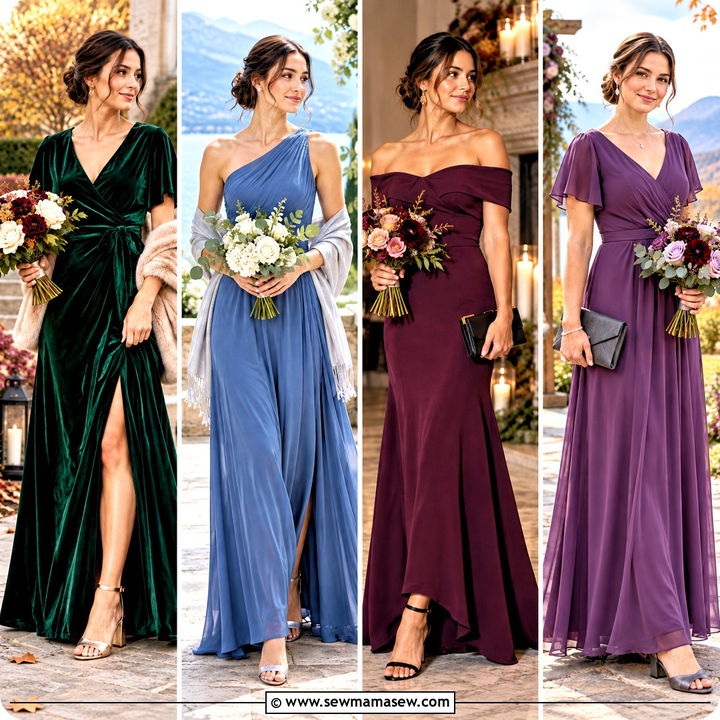
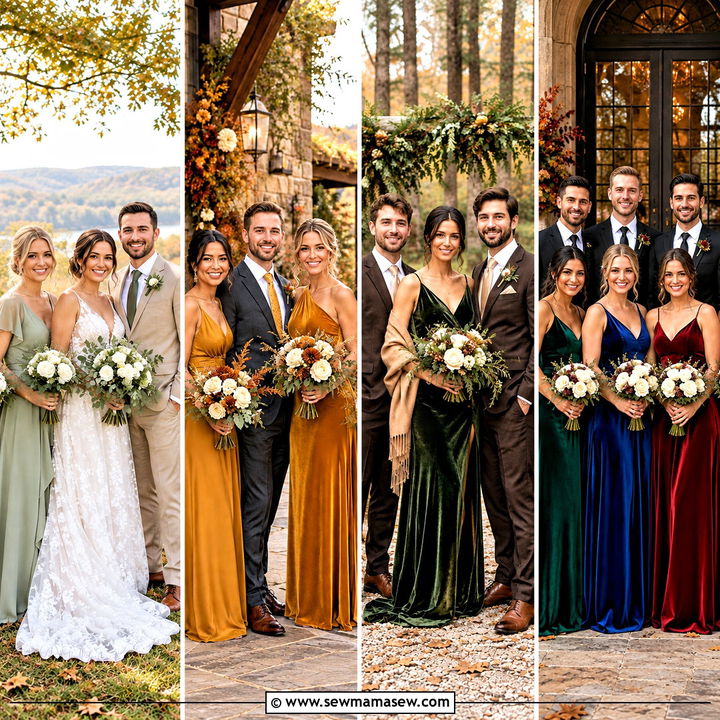
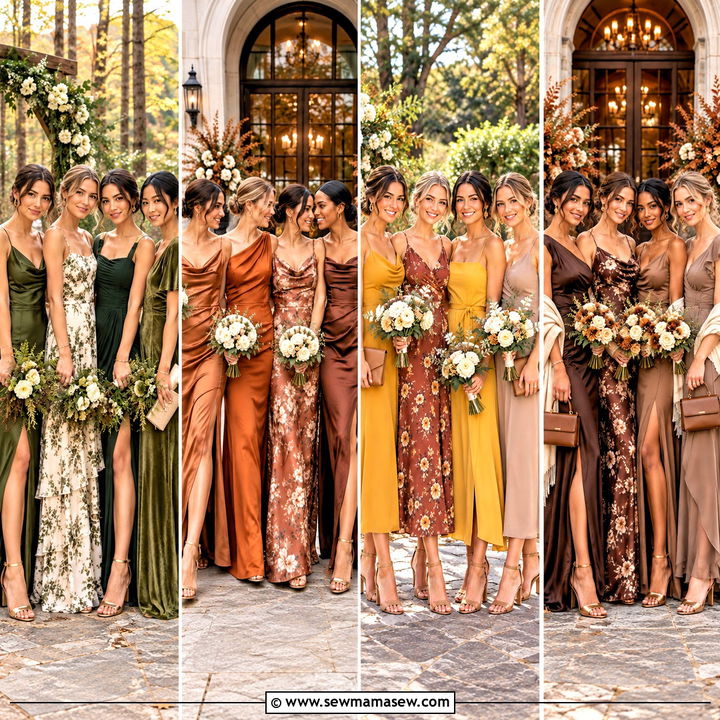
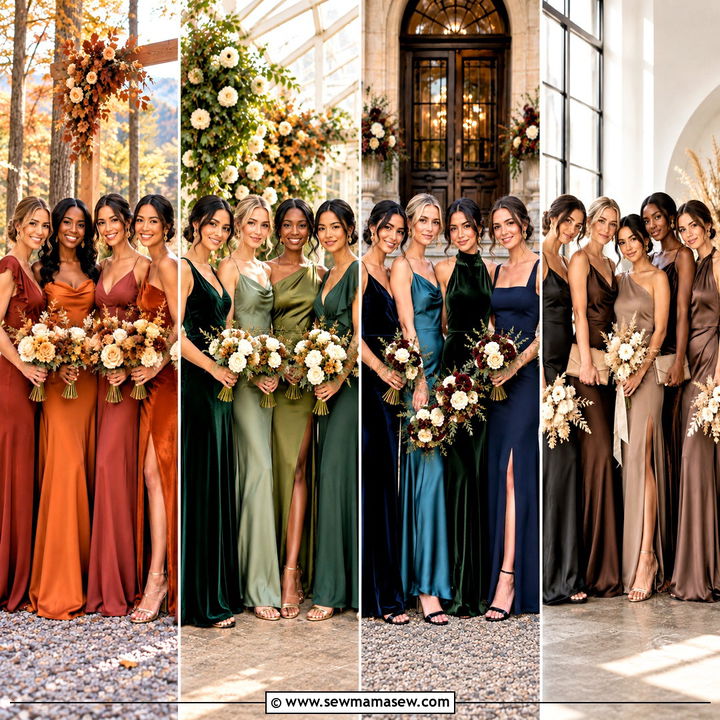
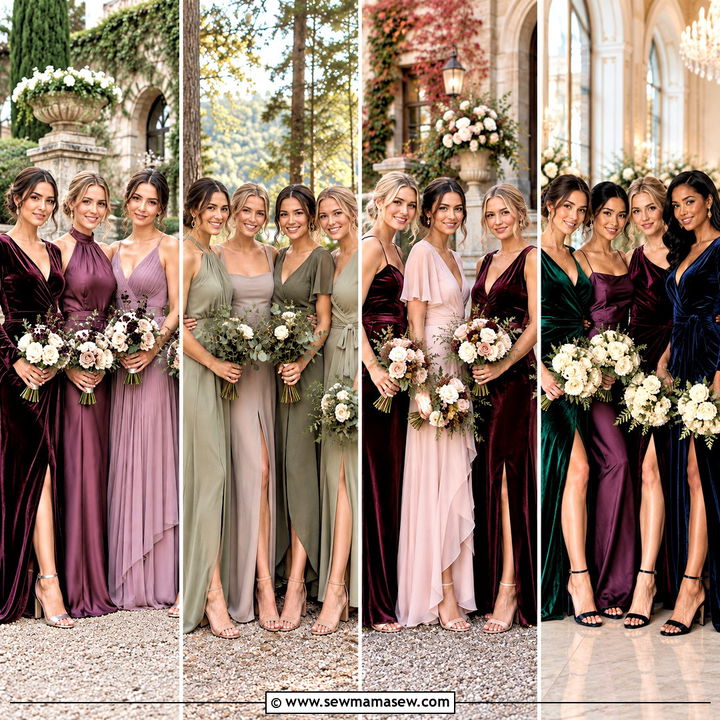
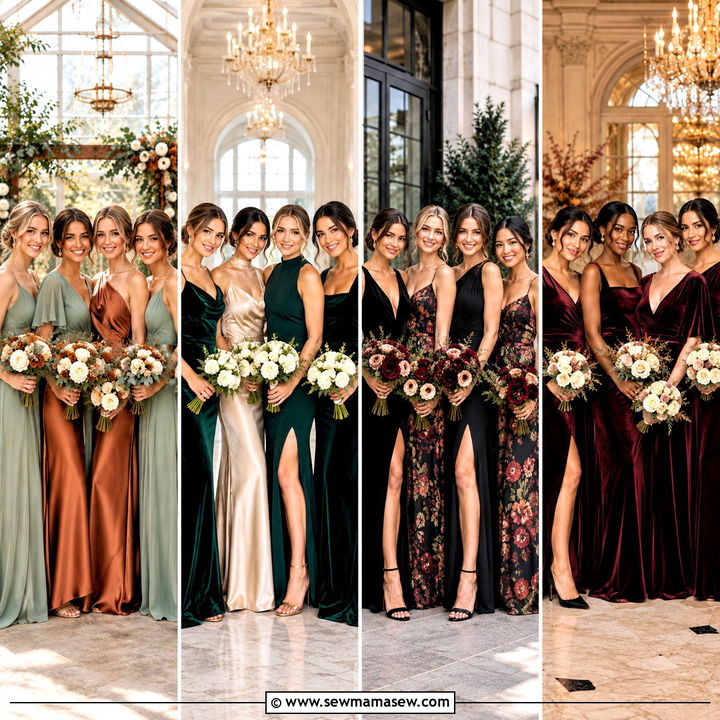
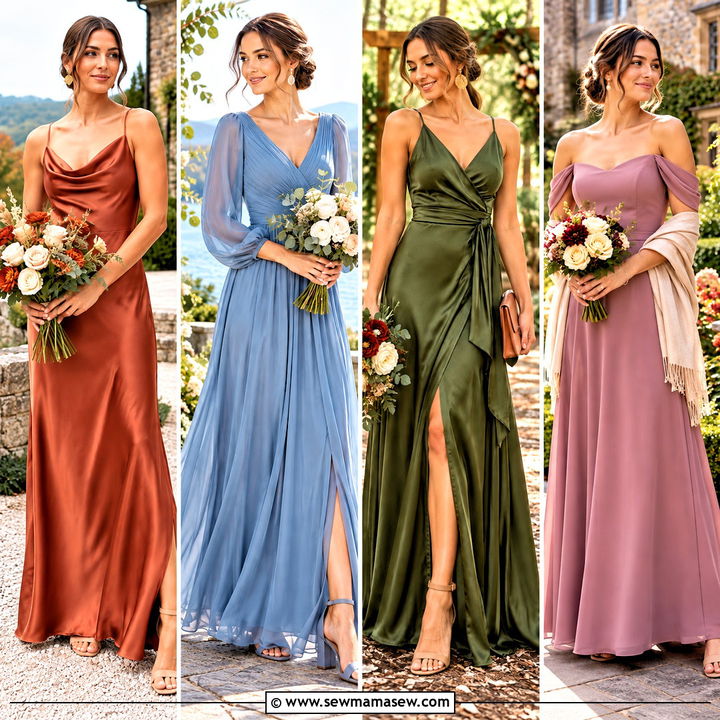
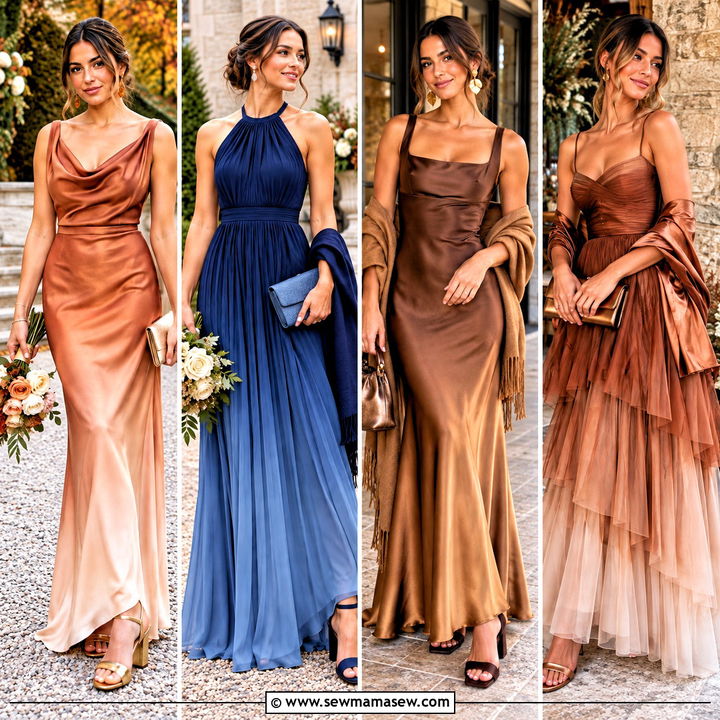
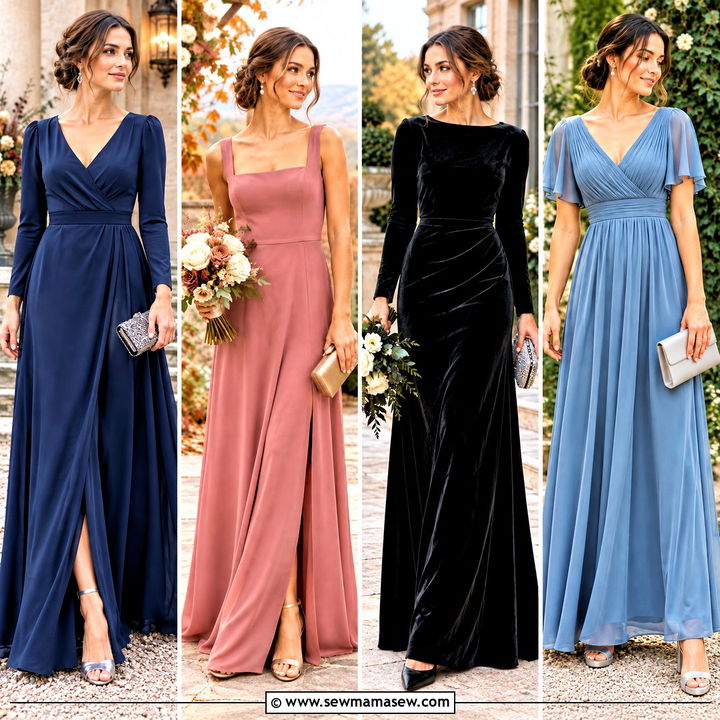
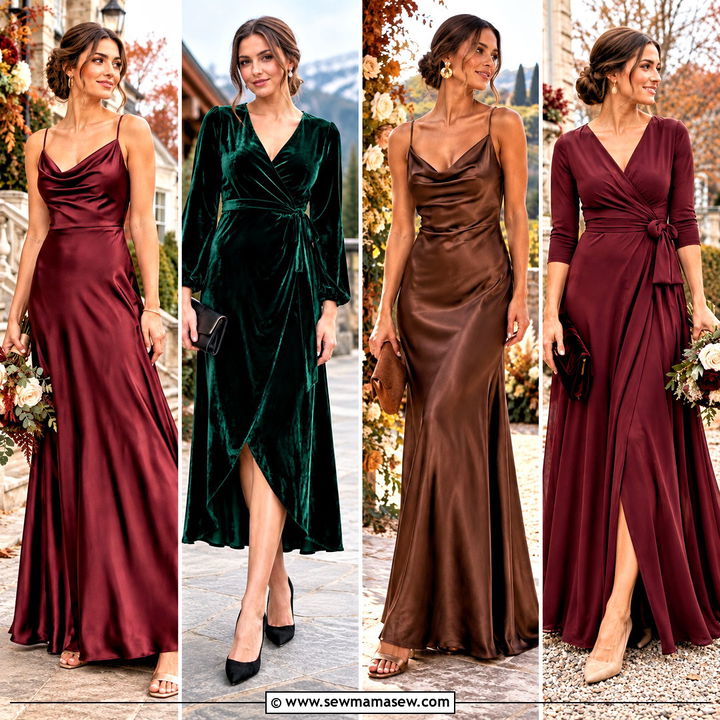
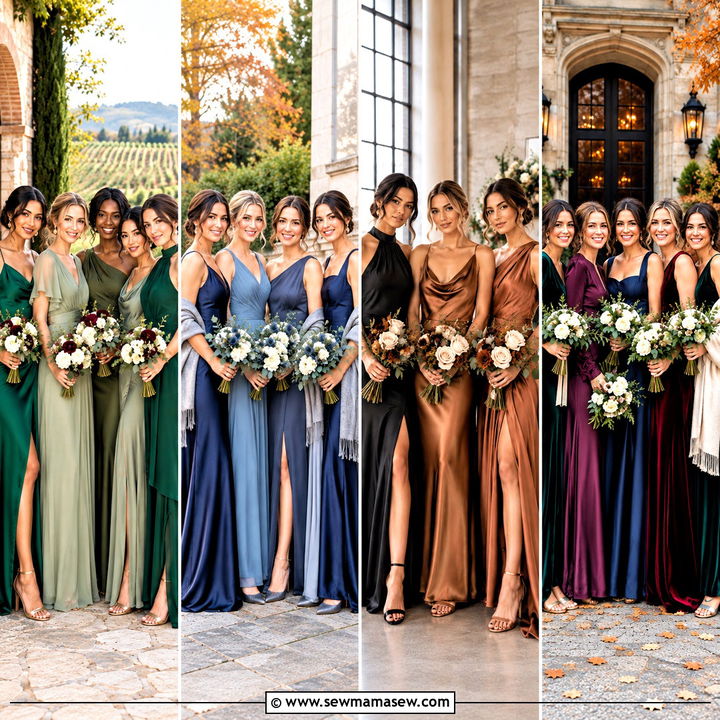
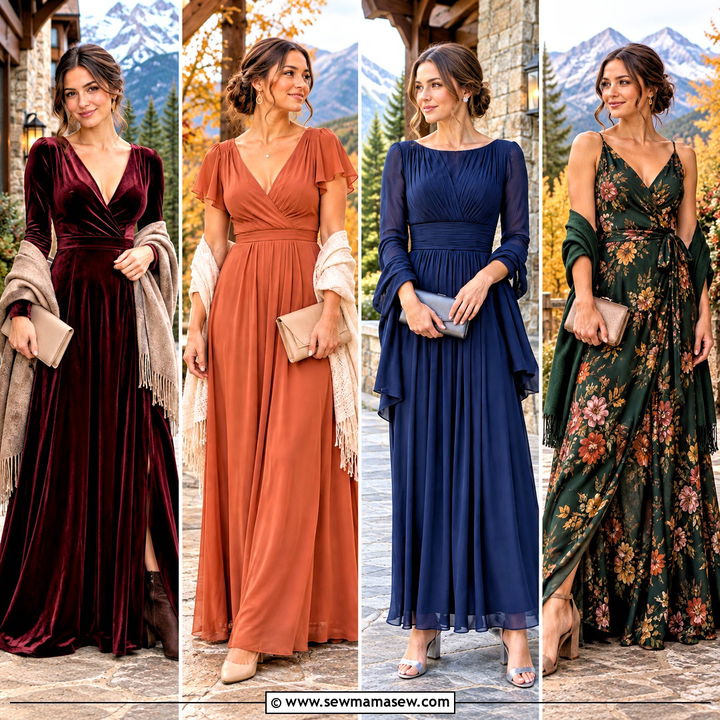
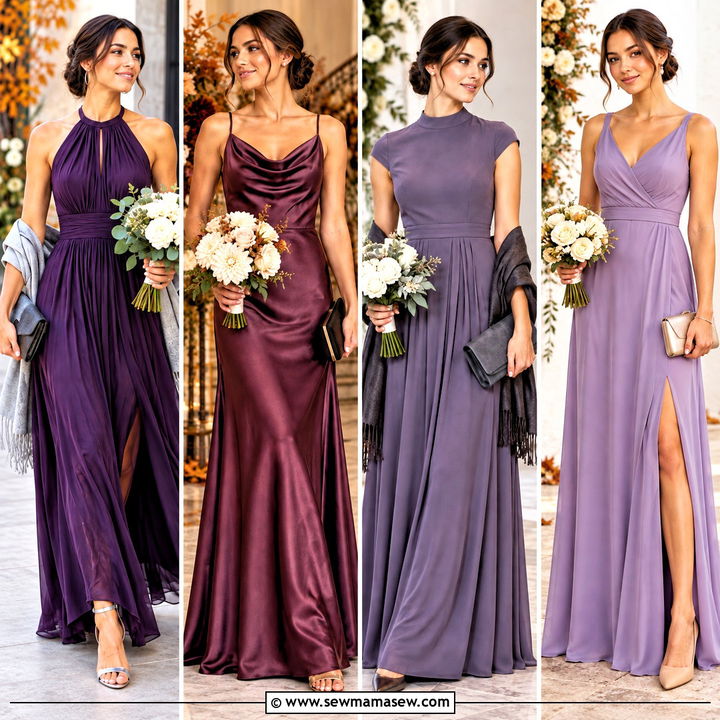
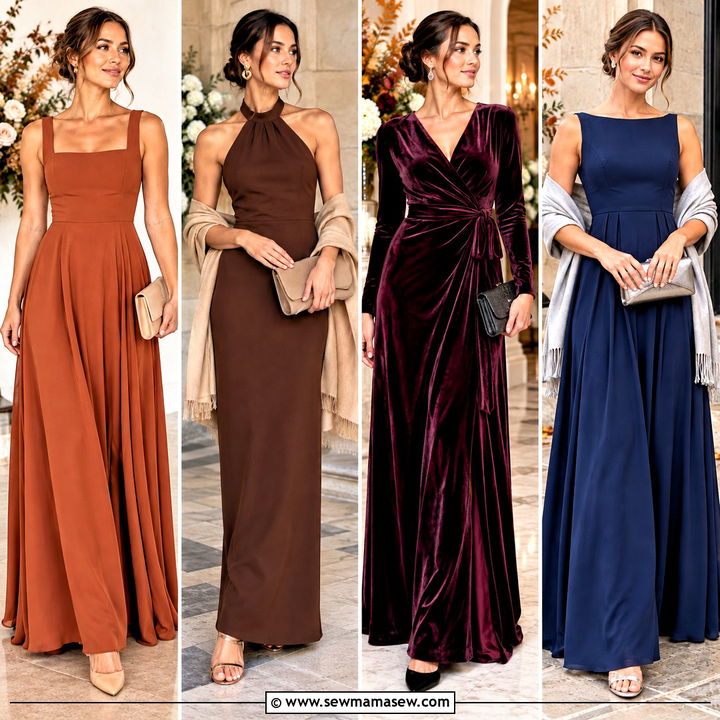
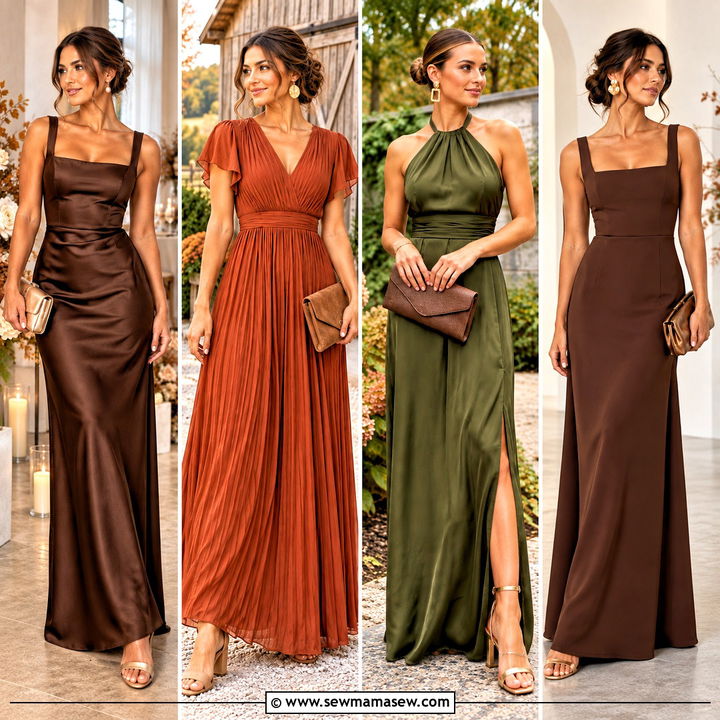
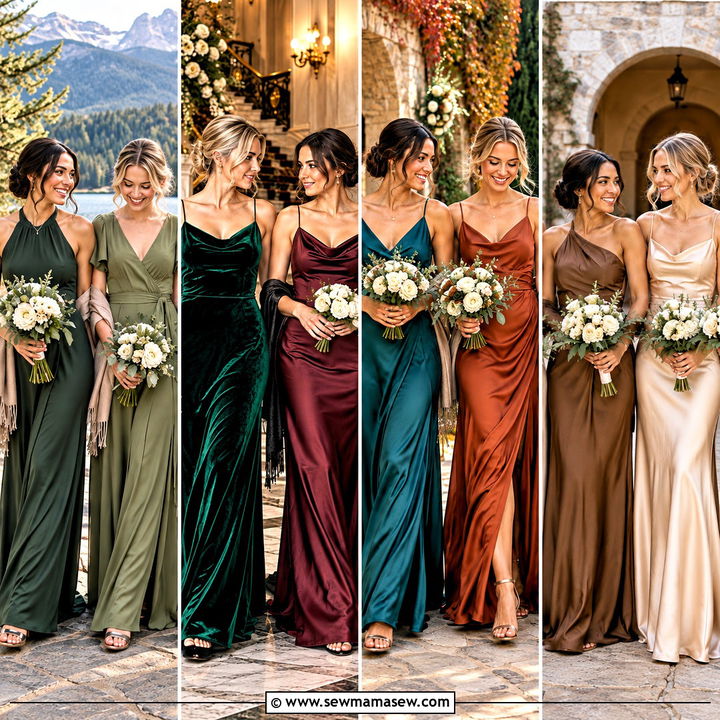
A mismatched bridal party looks planned or chaotic depending on one thing: whether something stays the same. Before I talk colors with a bride, I ask her to pick that constant. It might be a color family, a fabric, a hem length or a level of formality, and the more things vary, the firmer that one rule has to be. Burgundy, terracotta, forest green, plum, copper and caramel all sit naturally in an autumn setting, and chiffon, crepe, satin and velvet give different amounts of warmth and texture. Tonal palettes and deliberate fabric mixes let each bridesmaid wear a shape she likes without the group falling apart. Below are twenty combinations I'd use, with the rule that holds each one together.

Sorting Shades by Depth Before Picking Colors
Most mixed palettes that look off have a depth problem, not a color problem. One shade is much lighter or darker than the others and it jumps out of the group. I check this before anything else.
- Collect photos or swatches of every color you're considering.
- Take a phone photo of them together and switch it to black and white.
- Look at the grays. Colors meant to blend should be close in gray; a deliberate contrast, like burgundy with blush, should show a clear gap.
- If one swatch stands out alone, swap it for a deeper or lighter version of the same color, or add a second dress in that depth so it isn't the only one.
This takes two minutes and it explains why jewel tones mix so easily: emerald, plum, navy and burgundy are nearly the same gray. It also shows why a single pale dress in a dark group always looks like a mistake.
1. Burgundy And Blush Bridesmaid Dresses
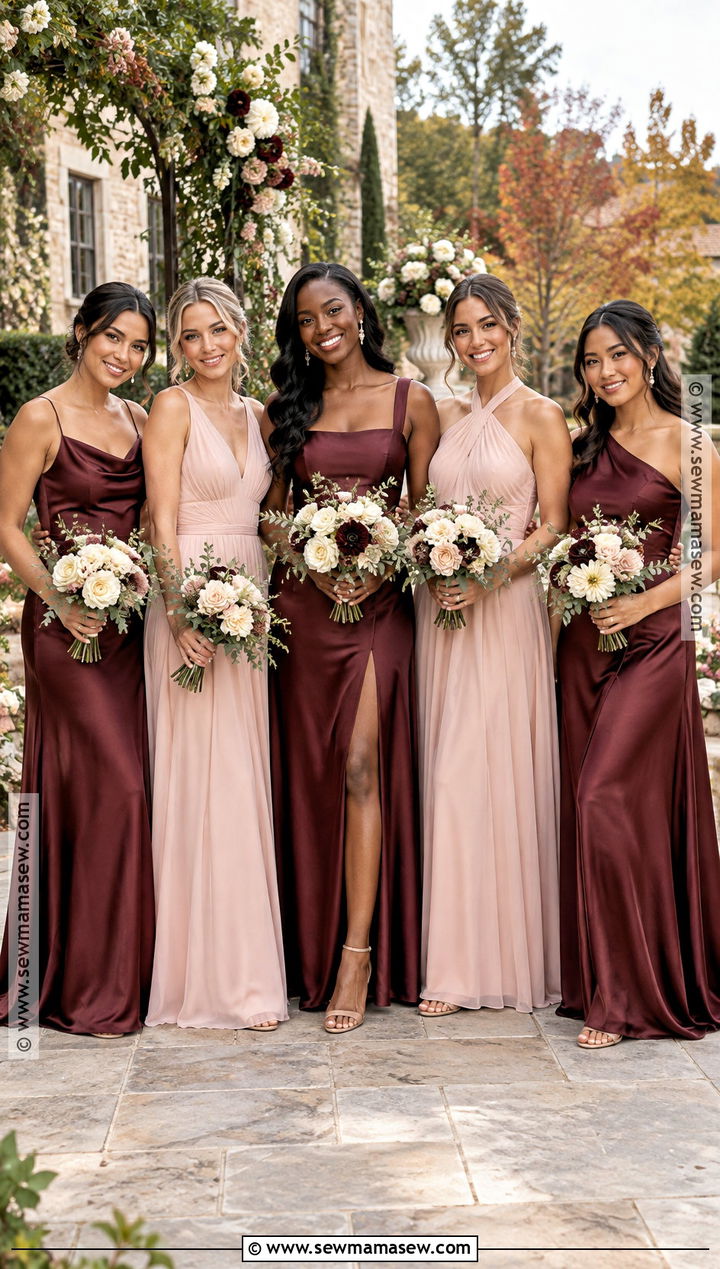
Burgundy and blush is a strong contrast, which is exactly why the hem rule matters here. Burgundy satin in cowl, one-shoulder or halter cuts sits beside blush chiffon with flutter sleeves or wrap bodices, and every dress goes to the floor. Nude, champagne or soft gold shoes suit both colors. Gold earrings and cream bouquets with eucalyptus and a few burgundy flowers link the group. When I line this party up, I alternate dark and light; a block of burgundy at one end makes the photo tilt. It works well for early and mid fall at gardens and barns.
2. Terracotta And Rust Bridesmaid Dresses
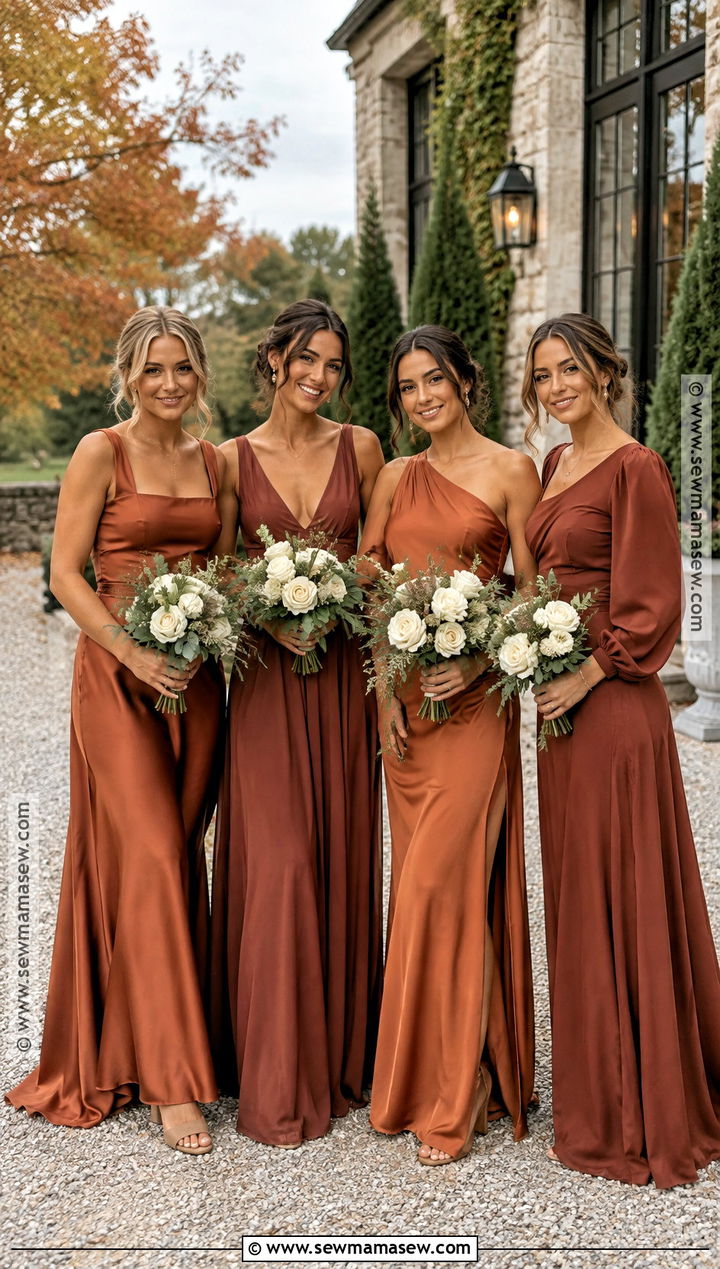
Terracotta and rust are close cousins, so the mix comes from texture as much as color. I'd put the lighter terracotta in matte crepe and the deeper rust in satin, then place shiny next to matte in the line rather than grouping like with like. Square neck, V-neck, off-shoulder and sleeved cuts are all fine as long as every hem reaches the floor. Tan block heels cope with outdoor ground; gold drops add a little finish. Cream blooms, dried grasses and deep green foliage keep the bouquets earthy. The result is warm and still formal enough for an evening reception.
3. Sage And Olive Bridesmaid Dresses
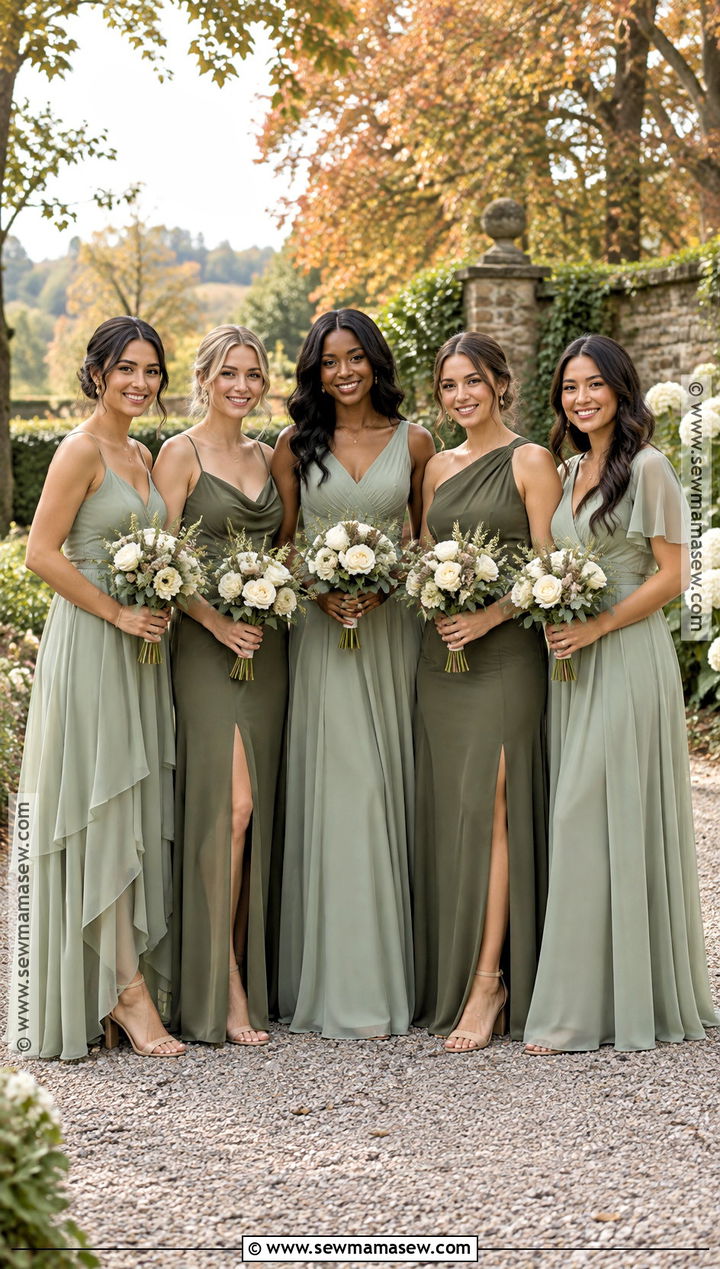
Sage and olive make a garden palette that photographs well in daylight. Light sage chiffon keeps it airy and olive crepe or matte satin gives it enough depth for autumn. Wrap, scoop, halter and flutter-sleeve shapes let each woman choose what she's comfortable in. Taupe sandals, nude pumps or tan block heels keep the shoes neutral, and fine gold jewelry warms the greens. In a big group, I'd keep the numbers of each shade roughly equal. Too many olives and the sage dresses look faded beside them in group portraits.
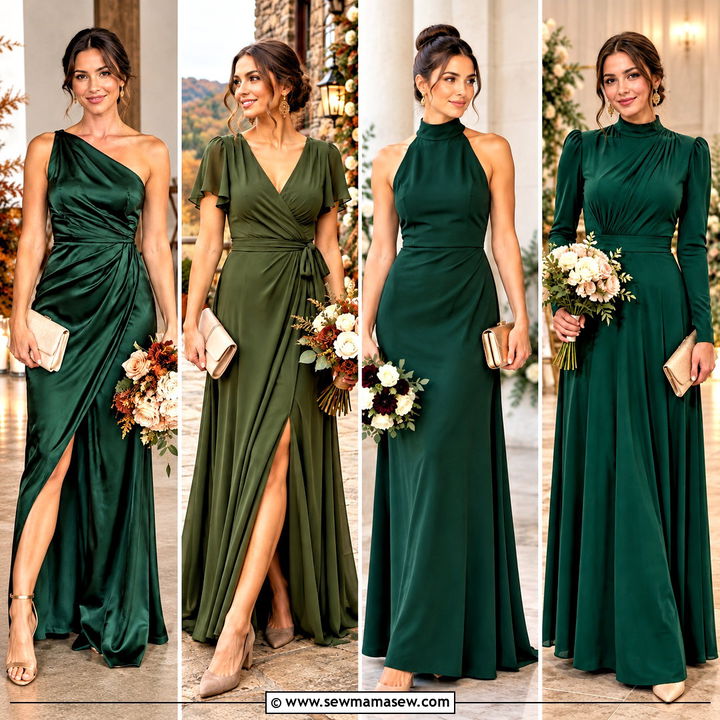
4. Forest Green And Champagne Bridesmaid Dresses
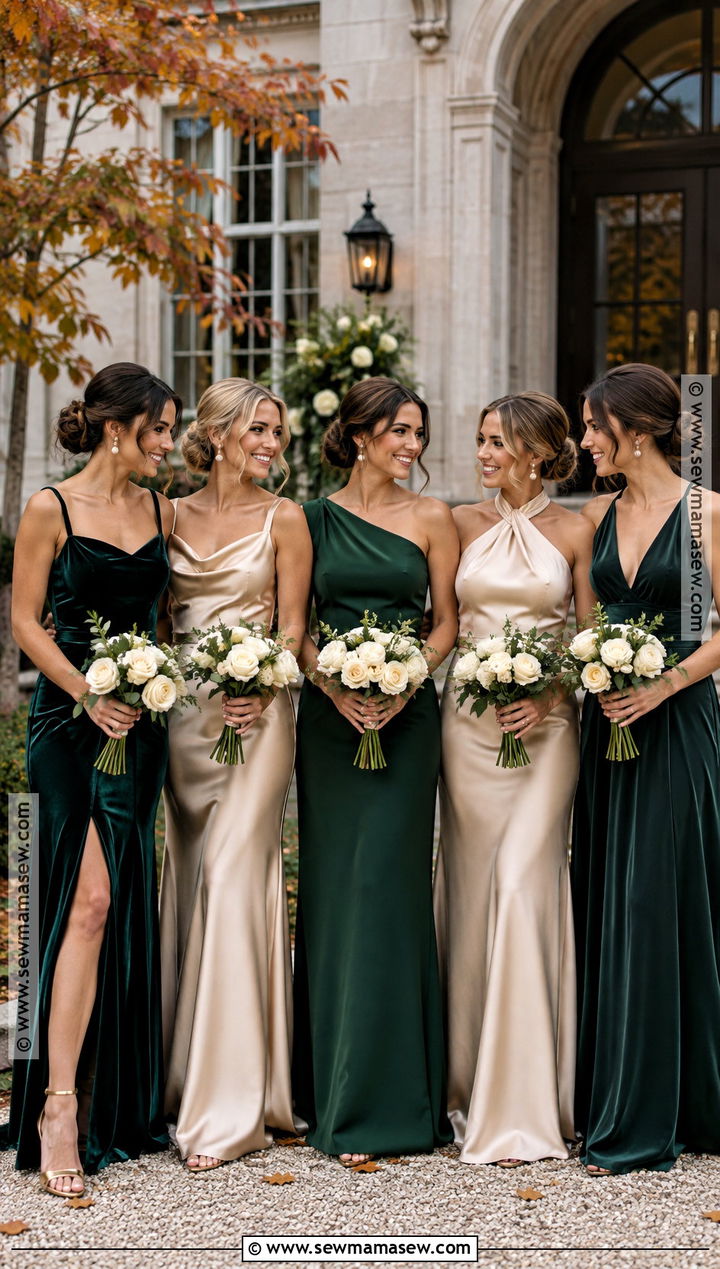
Forest green with champagne is a formal pairing where one color clearly leads. I'd put most bridesmaids in green satin or velvet and use champagne as spaced highlights, or give the champagne gown to the maid of honor so she stands out without looking separate. Column, A-line and wrap shapes in clean lines suit it. Gold heels, pearls and neutral clutches keep it polished. Champagne changes a lot under artificial light and can drift toward the bride's ivory, so I'd approve that swatch at the venue. It suits ballrooms and estates.
5. Plum And Dusty Mauve Bridesmaid Dresses
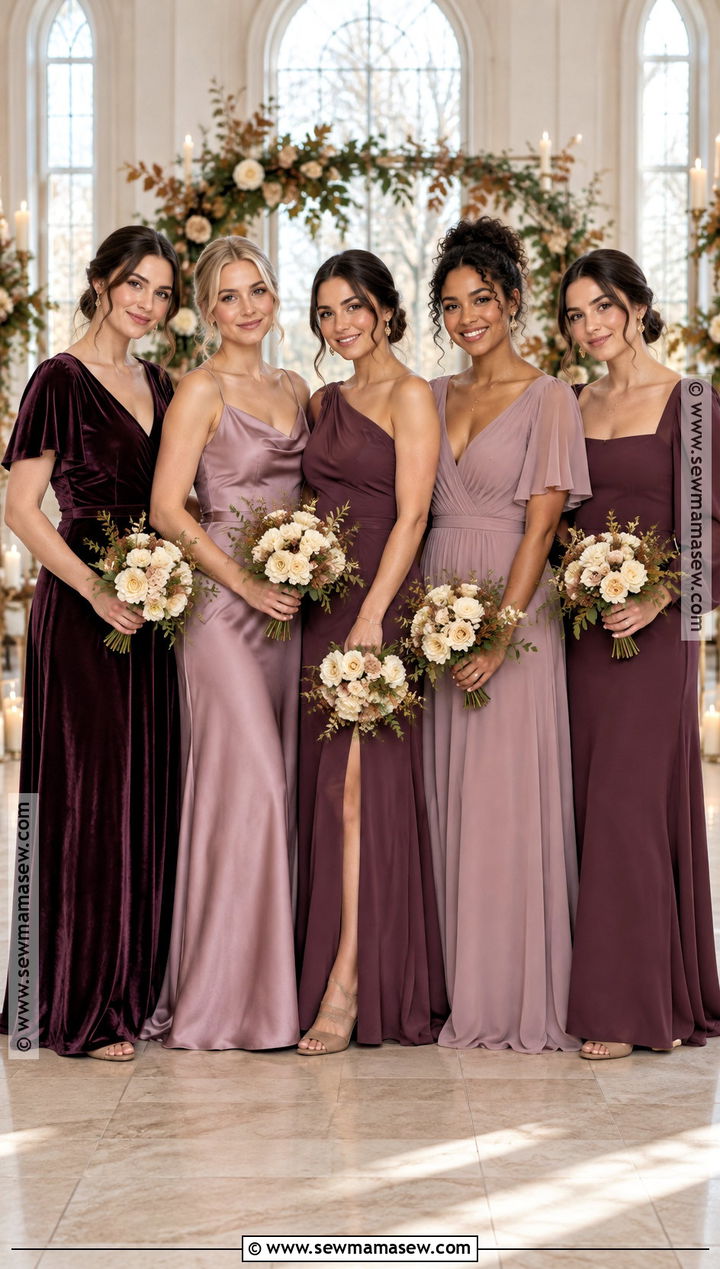
Plum and dusty mauve give a gradient from deep to soft, which I like for late fall. Plum in velvet or satin carries the rich end; mauve in crepe or chiffon is the light end. Long sleeves are welcome in this palette when the weather turns cold. Taupe heels and quiet gold jewelry flatter both purples. For formal portraits, line them up from light to dark; for candid shots, alternating looks more natural. The palette is romantic without leaning on bright color, and purple-based tones flatter a wide range of skin tones.
6. Burnt Orange And Mustard Bridesmaid Dresses
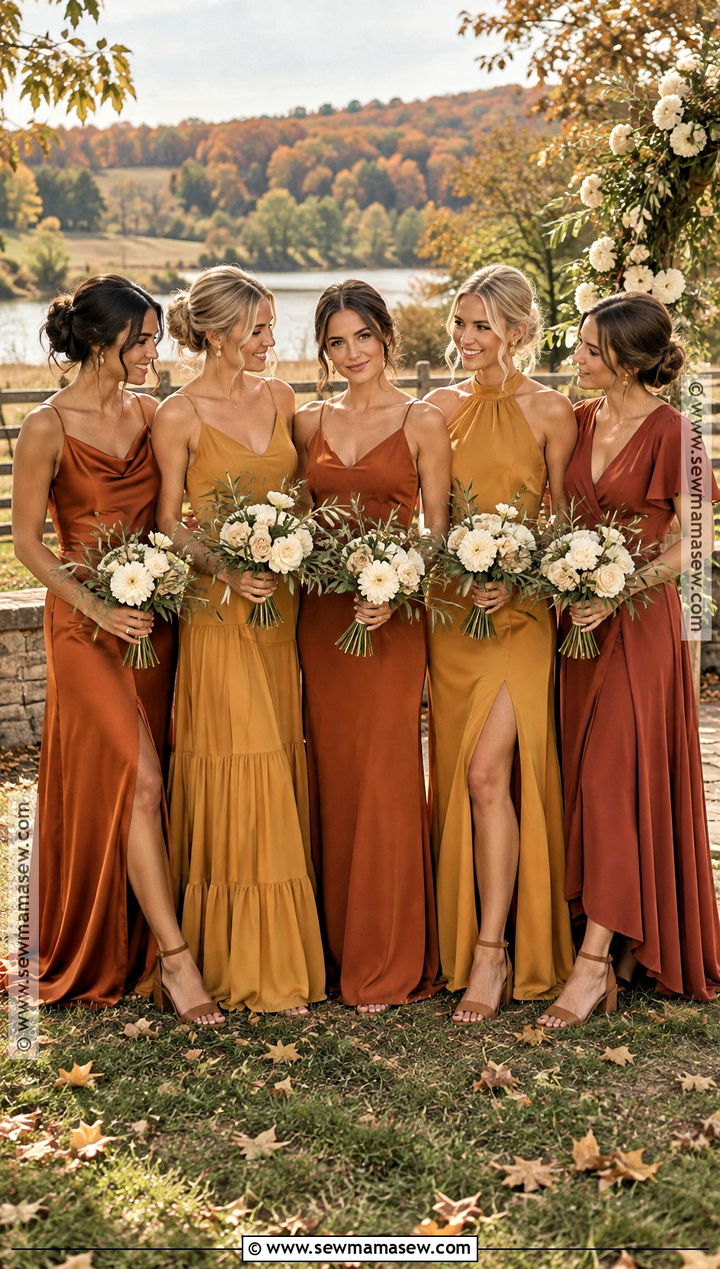
Burnt orange with mustard is cheerful, and it needs a ratio. Yellow pulls the eye, so I'd use fewer mustard dresses than orange ones, something like two mustard for every three burnt orange. Burnt orange satin slips give richness and mustard in chiffon or crepe keeps the group from going dark. Brown or nude block heels are practical on grass and gravel. Keep every hem ankle or floor length; mixing a midi with a maxi in strong colors looks unfinished. If complexions vary a lot, offer a couple of warm shades so no one is stuck in a mustard that makes her look tired.
7. Copper And Caramel Bridesmaid Dresses
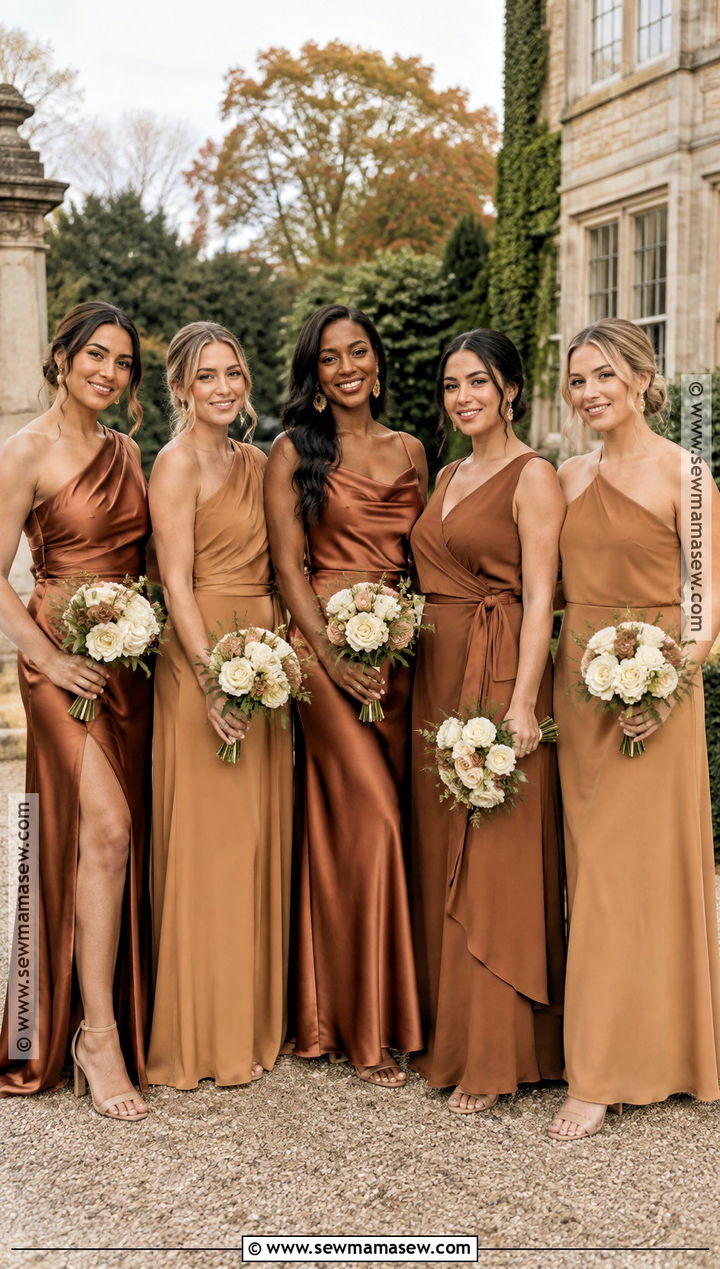
Copper and caramel share warm undertones, so they connect without trying. I'd dress some bridesmaids in copper satin with draped or one-shoulder necklines and others in caramel crepe wraps and A-lines. The satin and crepe contrast does the work. Tan heels and brushed gold earrings keep the effect tonal. The bouquets need to be pale, cream with eucalyptus, or the whole party blends into wooden barn walls and dried grasses. Copper satin also brightens a lot in direct sun, so check the swatch outdoors. It suits estates, lofts and woodland venues.
8. Burgundy And Forest Green Bridesmaid Dresses
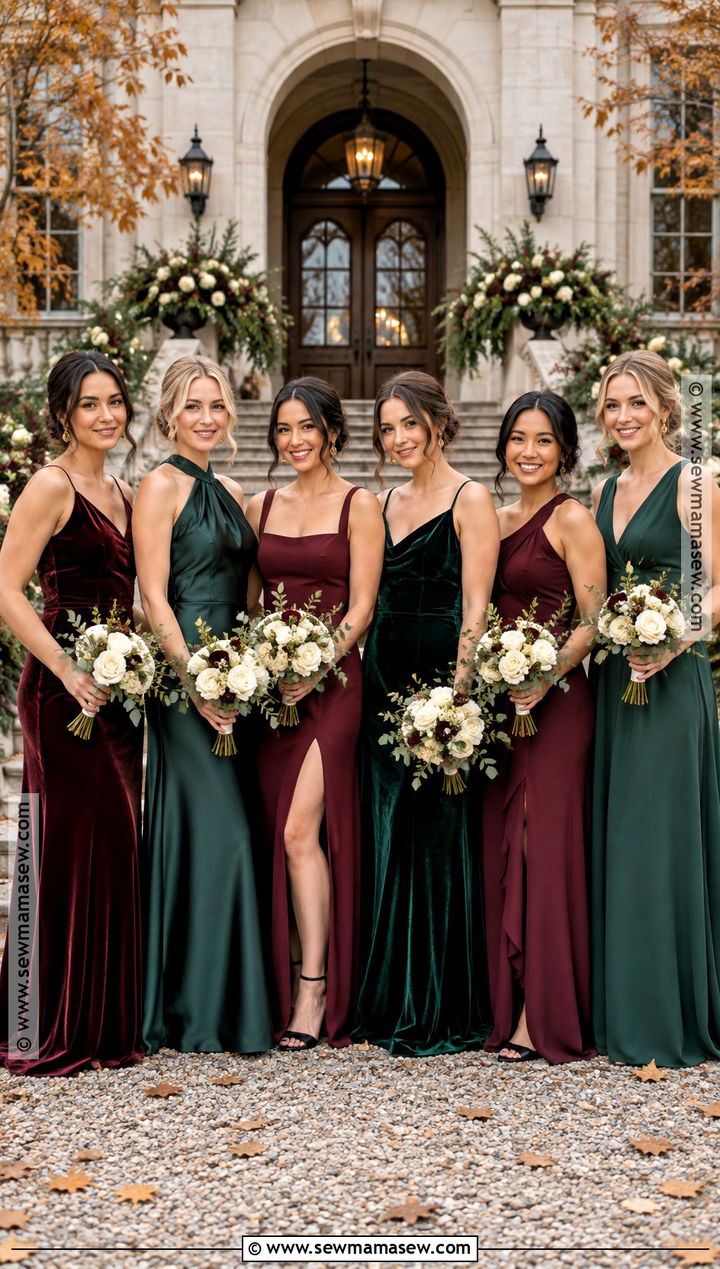
Burgundy and forest green is the classic late October pairing. I aim for equal numbers and alternate them in every line-up. Burgundy can come in satin cowls or velvet wraps; green in halters, square necks or long sleeves. Matching fabric weight is my main check here, because a heavy velvet beside a thin satin looks like two different weddings. Black or dark neutral heels work with both, or soft gold for an indoor evening. Bouquets need lots of cream so they show against two dark colors, and matching gold earrings give one shared finish.
9. Dusty Rose And Terracotta Bridesmaid Dresses
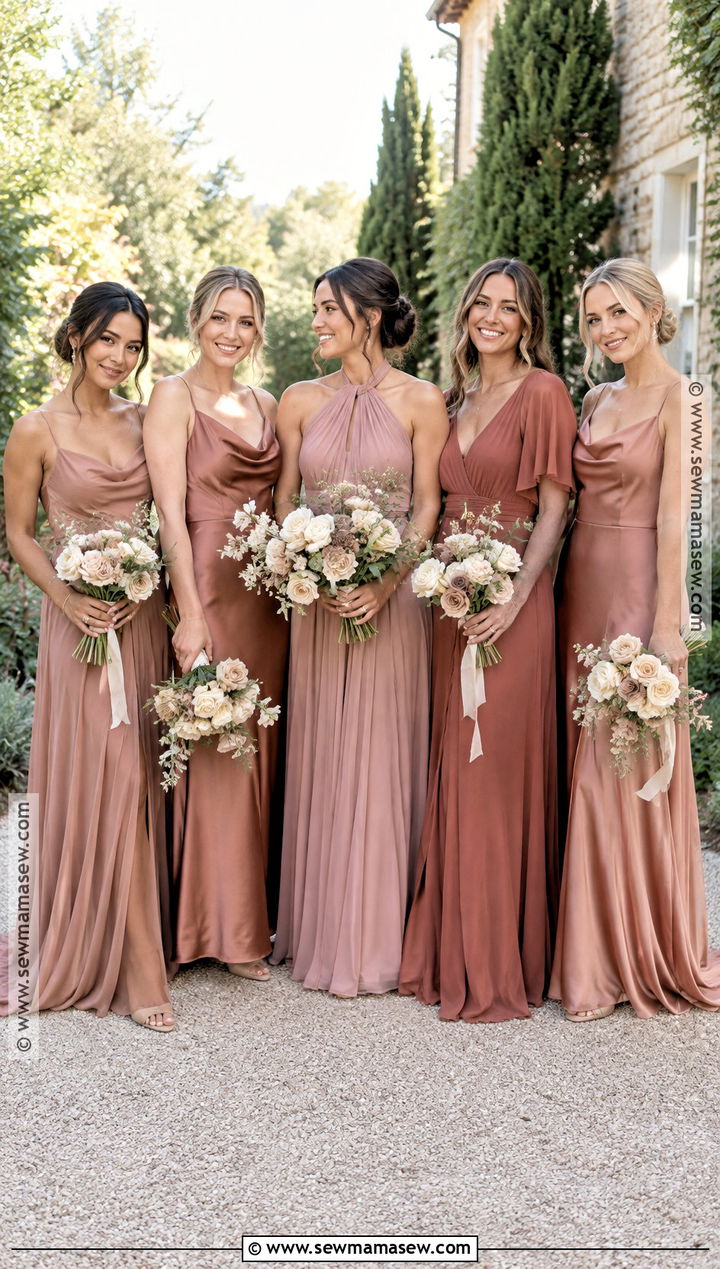
Dusty rose softens terracotta into something warm and romantic, ideal for early fall when the landscape is still light. Dusty rose chiffon with pleated skirts sits well beside smoother terracotta satin or crepe. Both colors are warm, which is why the different fabrics look deliberate. V-neck, square, halter and flutter-sleeve bodices are all fine on a floor-length rule. Nude shoes and small gold or pearl earrings finish it. Put enough pale flowers in the bouquets to stand out against terracotta, and spread similar necklines along the line so they don't cluster.
10. Navy And Rust Bridesmaid Dresses
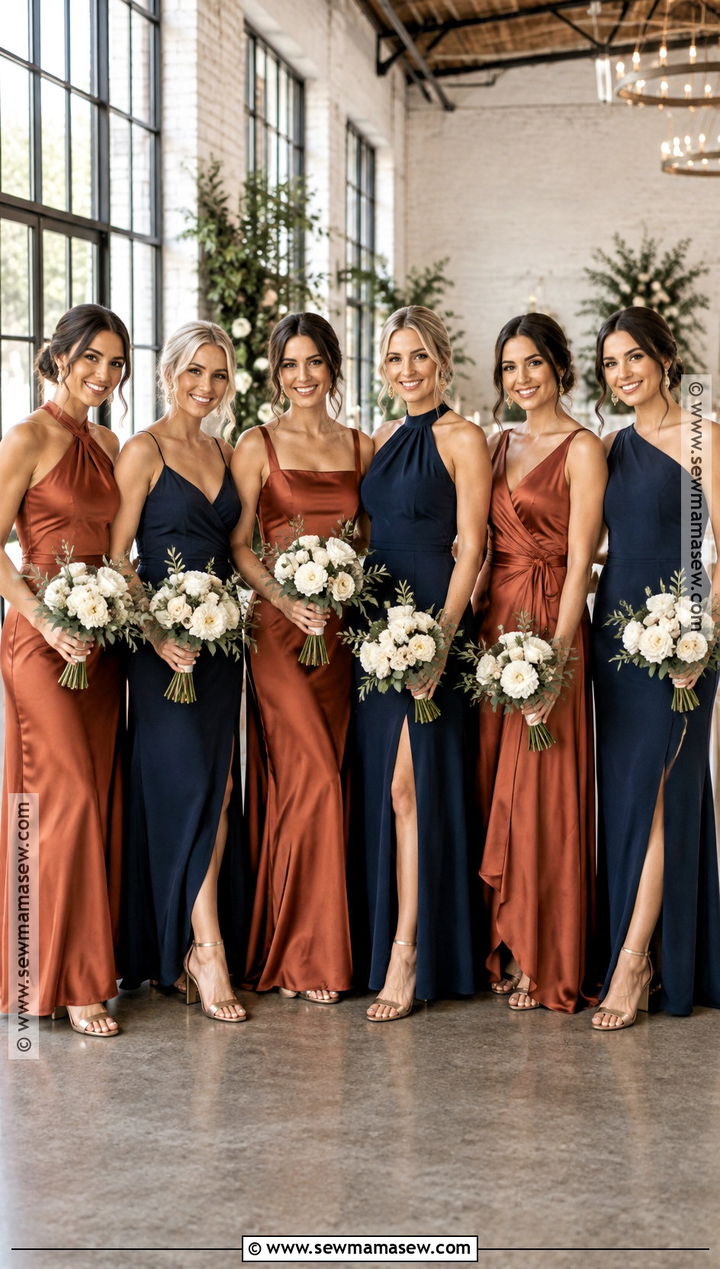
Navy with rust is the palette I suggest to couples who want fall color without an all-warm party. Navy crepe anchors the group and rust satin adds warmth and movement. In a larger party, I'd repeat each color at least twice so neither looks like a one-off. Simple floor-length designs keep the contrast clean. Nude, bronze or navy shoes and brushed gold earrings tie both colors in. The bouquets should lean cream and eucalyptus with small rust touches; adding blue flowers tends to muddy it. Industrial venues, formal barns and waterfronts suit it.
11. Chocolate Brown And Taupe Bridesmaid Dresses
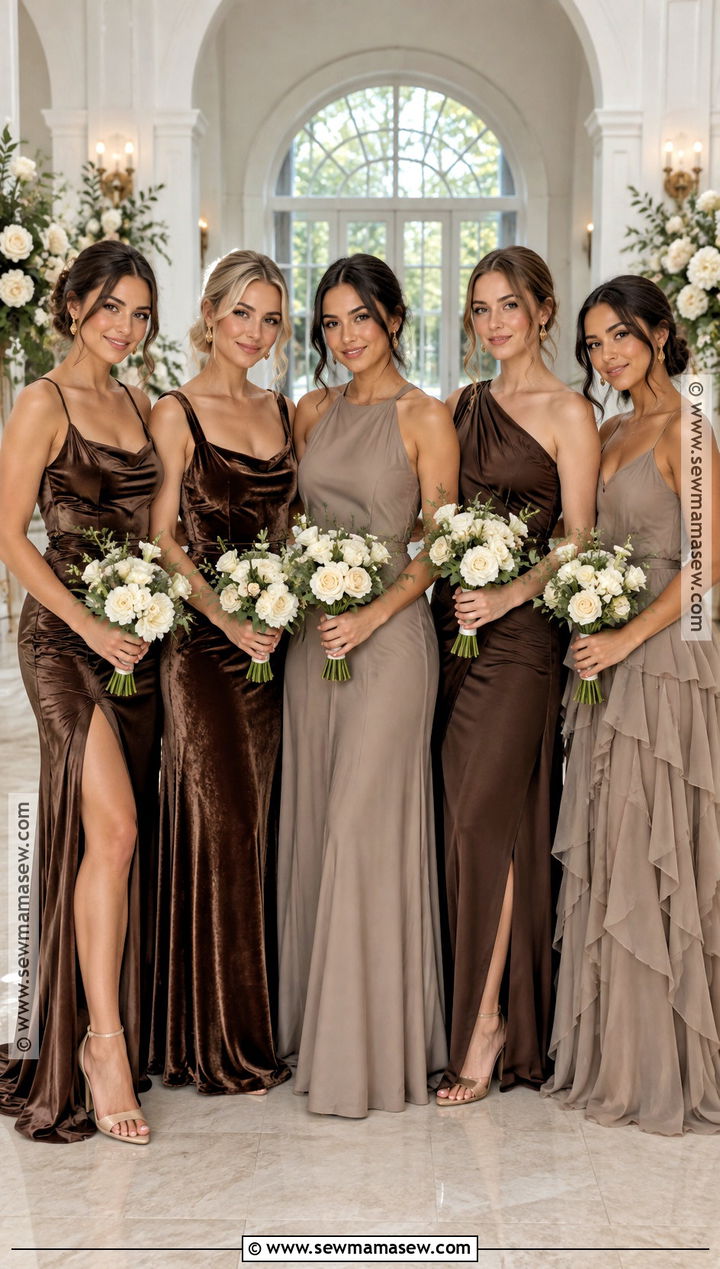
Chocolate and taupe make a modern neutral palette, and it's the trickiest mix in this list. Several dark chocolate satin gowns, then taupe crepe, mushroom chiffon and mocha velvet, layer into a tonal group. Neutrals live or die by undertone: a cool gray taupe beside an orange brown looks like a mistake, not a choice. I'd keep every shade warm and check them all side by side. Shoes can follow each gown, nude or espresso, but jewelry stays the same, simple gold hoops or drops. Ivory bouquets supply the contrast this palette badly needs.
12. Emerald Plum And Sapphire Bridesmaid Dresses
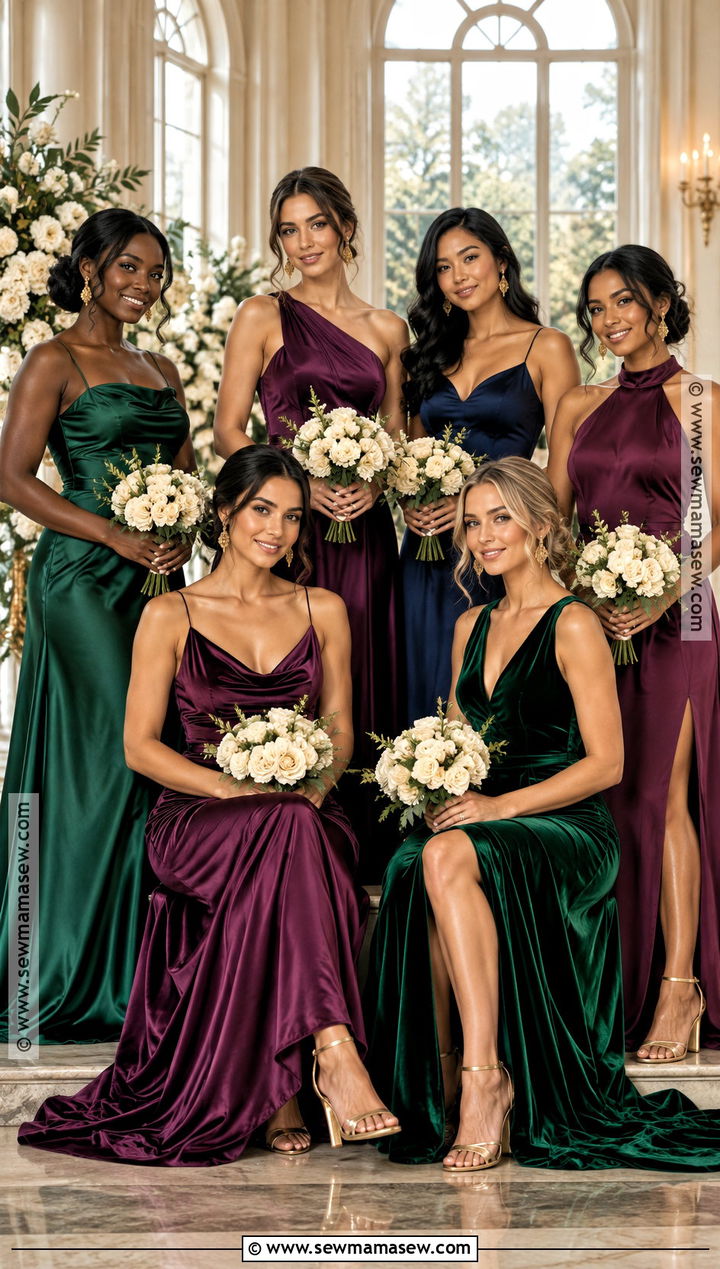
Emerald, plum and sapphire is a full jewel-tone set for a formal fall evening. Either split the colors evenly or let emerald lead with plum and sapphire as accents. Satin, velvet and structured crepe all work, but I repeat each fabric at least twice so no single gown looks like it came from a different order. One-shoulder, halter, wrap and long-sleeve cuts give each woman her own shape. Gold heels and earrings warm all three colors. Keep bouquets light, mostly ivory, and alternate the shades in photos rather than standing them in color blocks.
13. Burgundy Velvet And Satin Bridesmaid Dresses
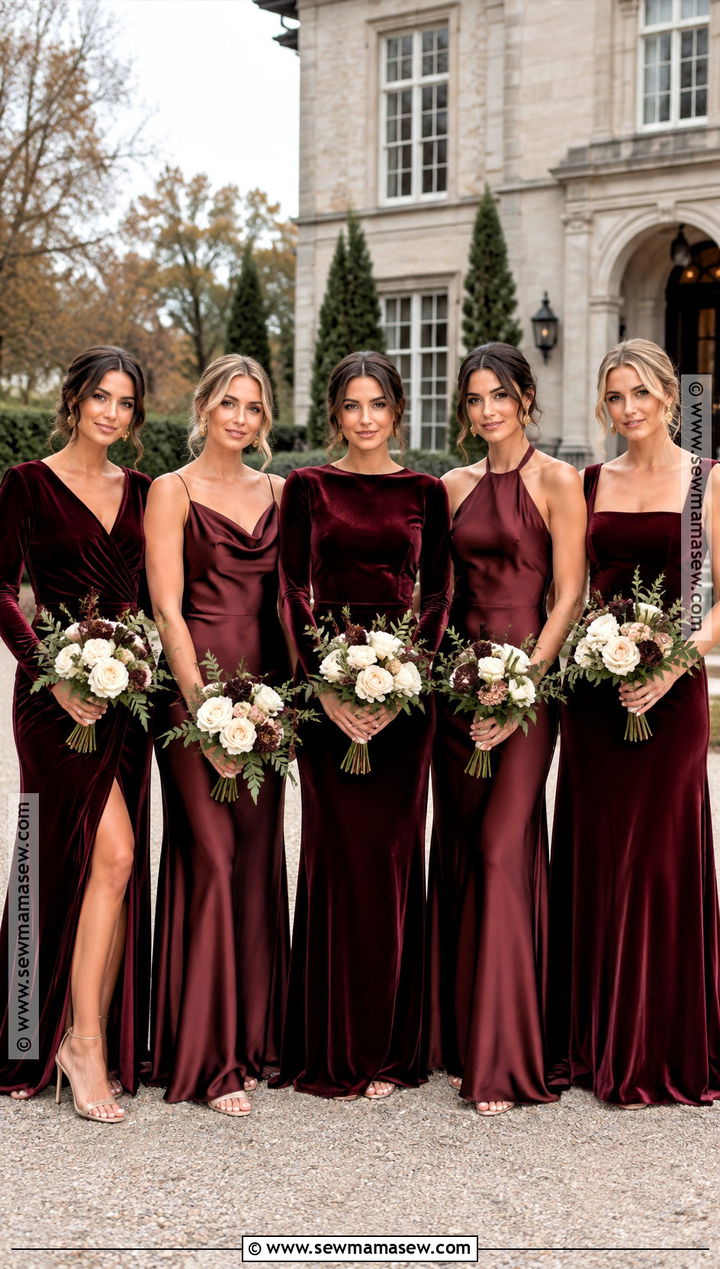
One burgundy in two fabrics is the gentlest way to mismatch. Velvet gowns with long sleeves, wraps or square necks bring texture and cover; satin cowls, halters and one-shoulders add shine. The risk is the dye. Burgundy velvet and burgundy satin from different makers rarely match, and one may lean red while the other leans purple, so I compare swatches before anyone orders. Same hem, same gold or black shoes. Cream bouquets with dark greenery read clearly. Alternate velvet and satin in portraits and the group looks rich from every angle.
14. Mismatched Burgundy Bridesmaid Dresses
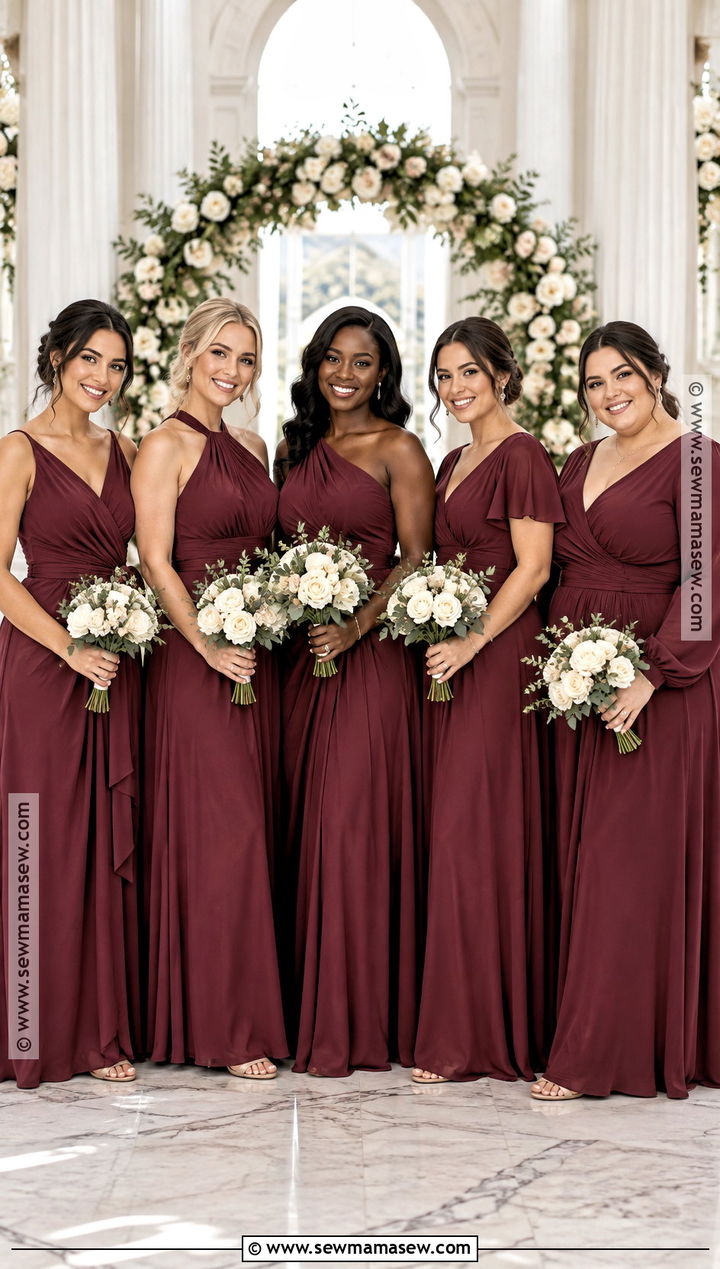
Mixing only the silhouette is the simplest mismatched plan to manage. One approved color and fabric, then a menu of shapes: wrap, halter, square neck, one shoulder, flutter sleeve, long sleeve. Each bridesmaid can choose for her own support, coverage and height. I always set up a shared list of the chosen dresses before anyone orders, because left alone, half the group often lands on the same V-neck and the mix disappears. Gold earrings, neutral heels and ivory and eucalyptus bouquets keep everyone connected.
15. Floral And Solid Fall Bridesmaid Dresses
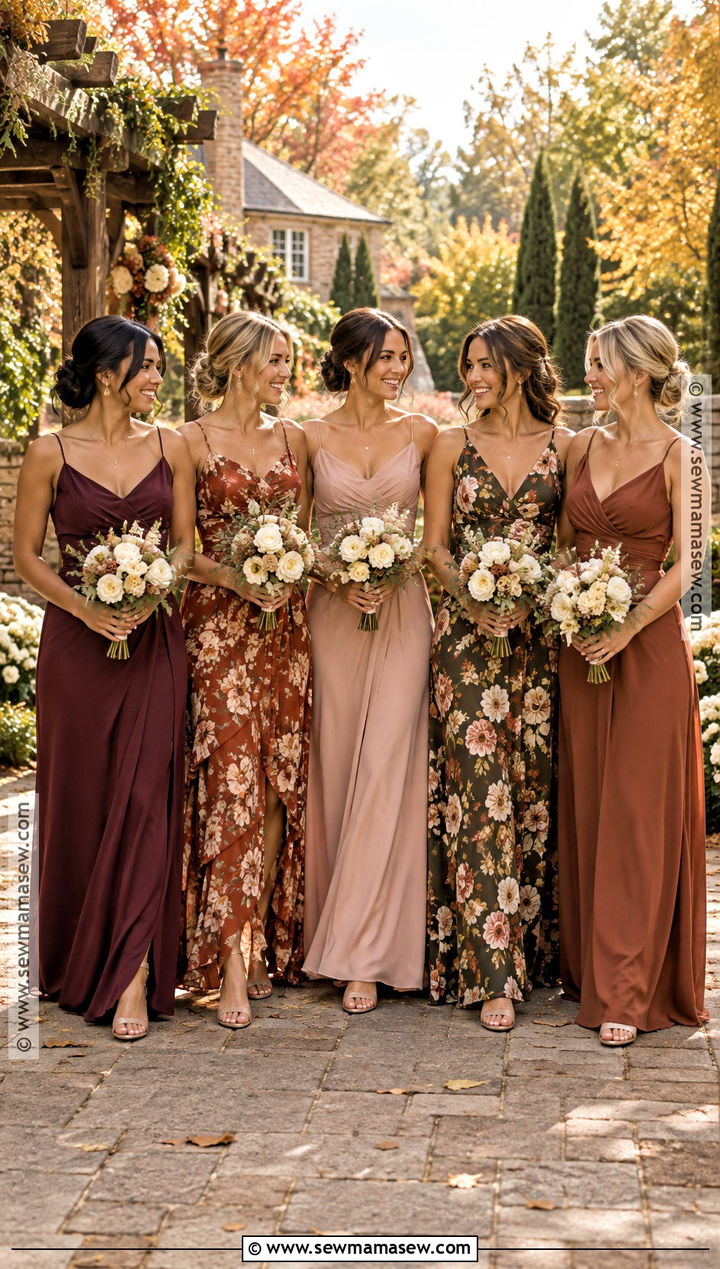
A floral gown in a mismatched party works when every solid dress is pulled from its print. I'd pick one or two floor-length florals with burgundy, rust, blush or olive on a muted ground, then dress the others in those colors. Formality has to match: a cotton day floral beside evening satin looks wrong, so look for florals in chiffon or crepe. Neutral heels and simple gold let the pattern lead. Bouquets should stay restrained, mostly cream and green. Place the florals at balanced points, near each end or with two solids between them. It suits garden and countryside weddings.
16. Black Rust And Champagne Bridesmaid Dresses
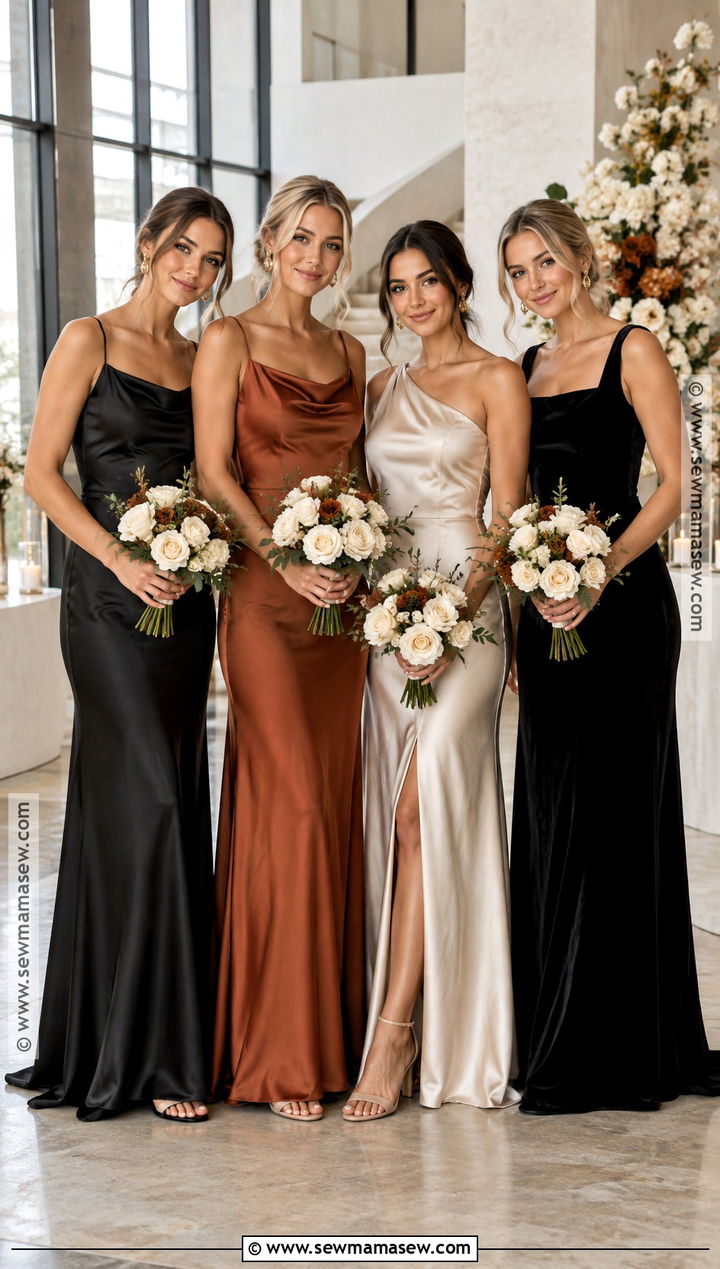
Black, rust and champagne is a fashion-forward fall mix with strong contrast. Black is the base, rust adds warmth and champagne gives highlights. I'd assign colors in a set ratio, perhaps half black, a third rust and the rest champagne, because if bridesmaids pick freely, black usually wins and the palette goes heavy. Sleek floor-length satin and crepe keep it sophisticated, with a little velvet in colder months. Black heels for black gowns, nude or metallic for the others, and the same delicate gold jewelry on everyone. Ivory and eucalyptus bouquets with a touch of rust connect it.
17. Gold Bronze And Champagne Bridesmaid Dresses
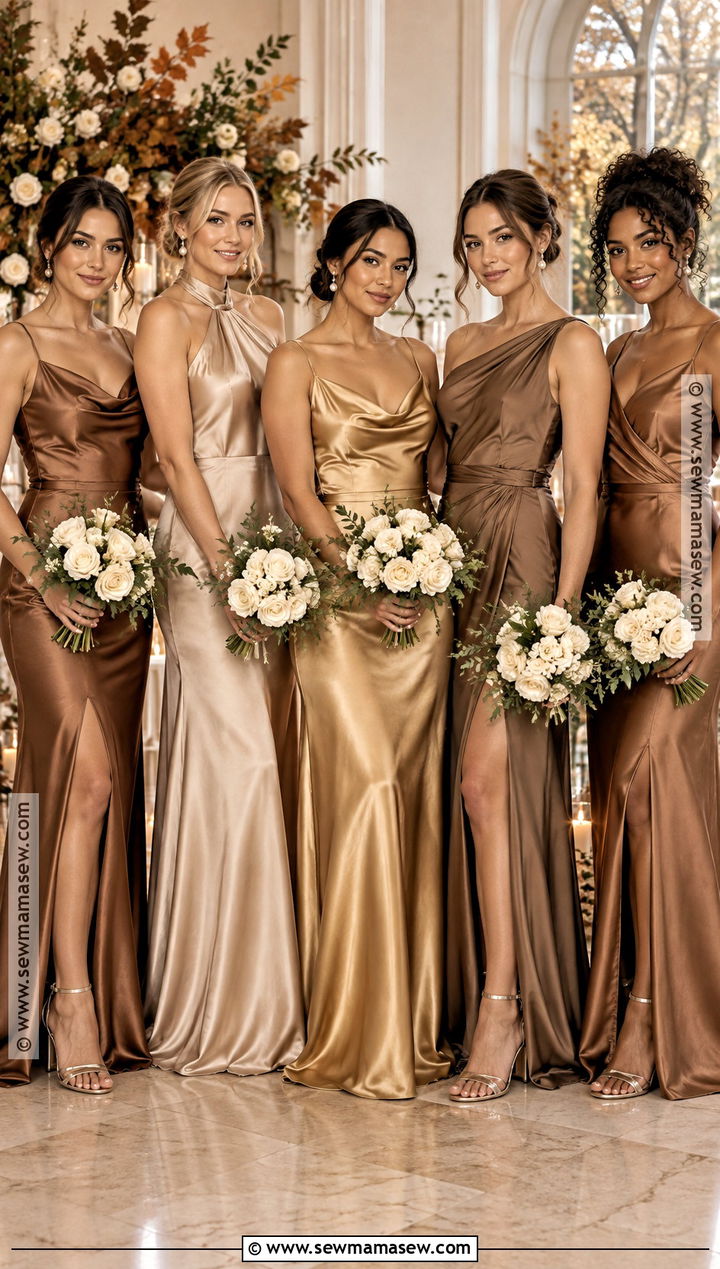
Gold, bronze and champagne is the glamorous option, and the fabric choice matters more than the shade. I avoid high-shine sequins and look for softer metallic satins that read rich in daylight rather than costume-like. Champagne is the lightest step, then muted gold, then bronze. Cowl, wrap, halter and one-shoulder cuts at one length work. Neutral or metallic shoes and small pearls finish them. Metallics change dramatically between window light and evening bulbs, so I'd see them at the venue's hour if possible. Green-heavy bouquets give the pale gowns contrast.
18. Sage Lavender And Dusty Rose Bridesmaid Dresses
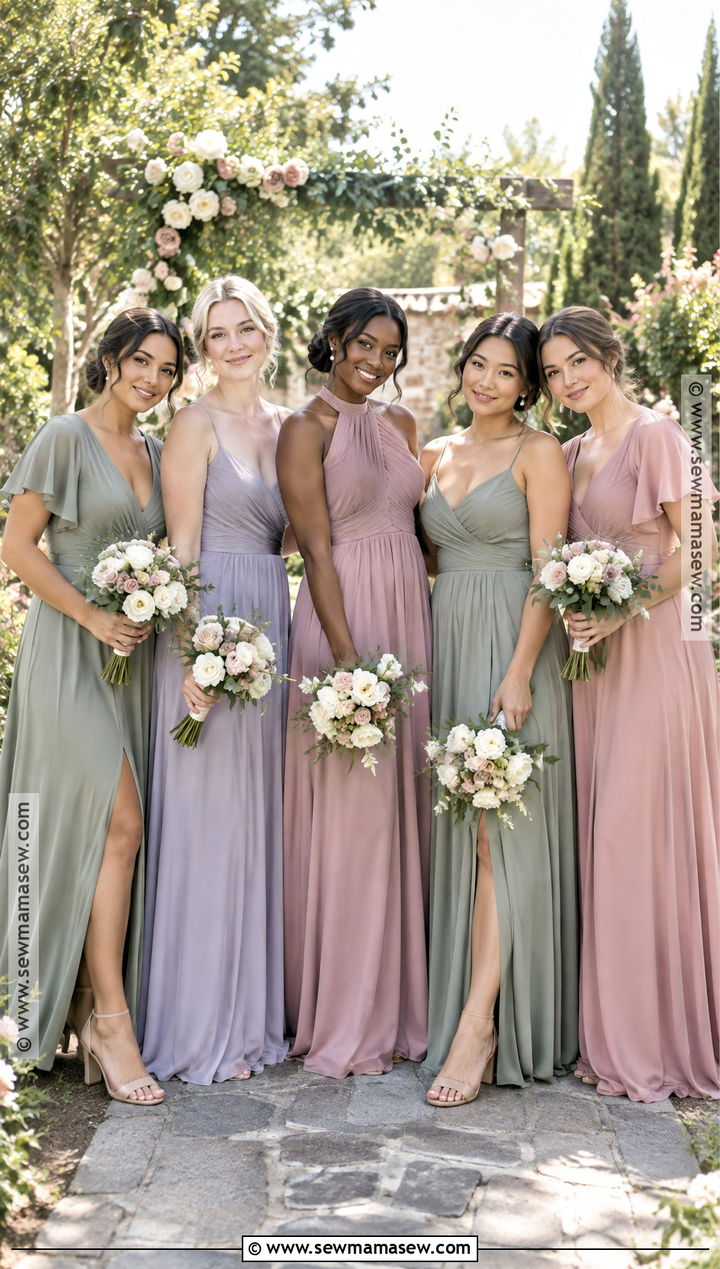
Sage, lavender and dusty rose is the soft fall palette, best in September when gardens are still green. I'd keep all three in one airy fabric, chiffon or matte crepe, so the finish is consistent. Wrap, flutter-sleeve, halter and pleated A-line shapes at one length all fit. The trap is pastel: bright mint, lilac or baby pink makes it look like spring, so every shade should be dusty and grayed. Nude shoes, pearl earrings and ivory bouquets with greenery complete it. Alternate the colors evenly in photos.
19. Cinnamon Clay And Sand Bridesmaid Dresses
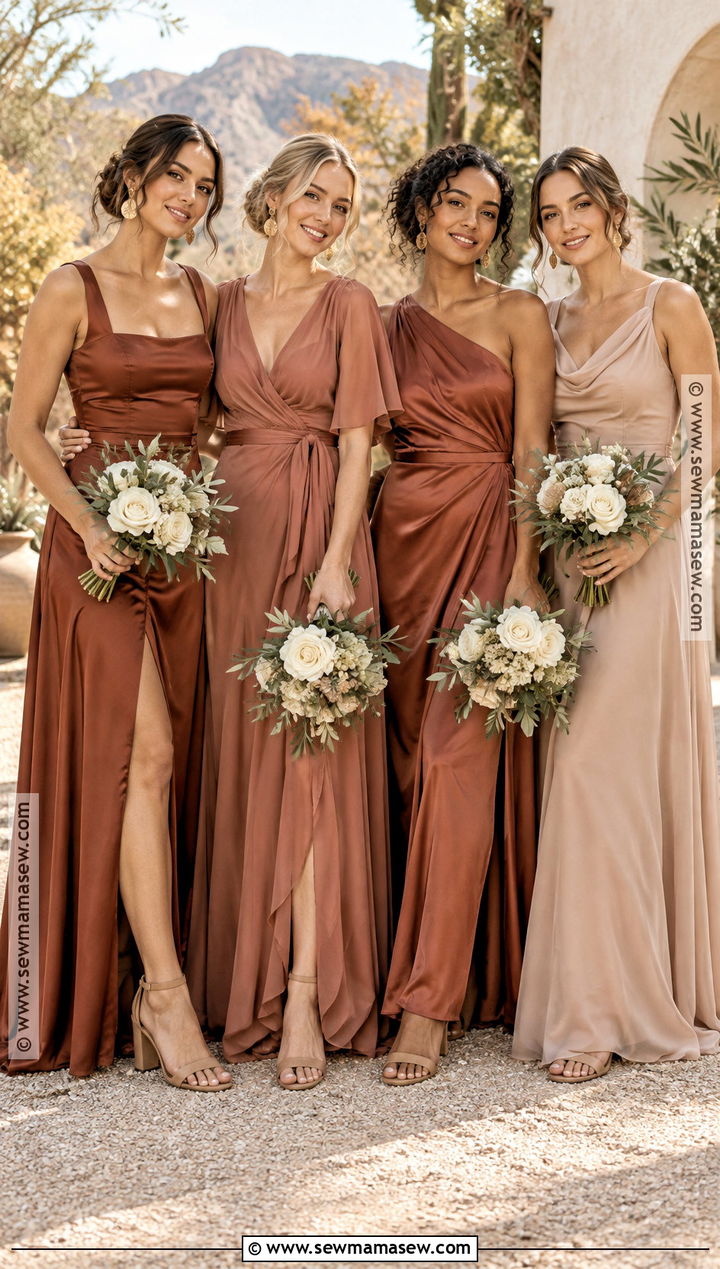
Cinnamon, clay and sand make a warm desert palette that sits beautifully against fall landscapes. I'd assign a fabric per shade: cinnamon satin for depth, clay crepe for the middle, sand chiffon for light. From across a field these three can blur together, and the change in texture is what keeps them distinct. Square neck, one shoulder, wrap and draped column shapes give variety at ankle or floor length. Tan shoes blend into the palette; hammered gold earrings and ivory bouquets with olive leaves finish it. Arrange them light to dark or in a repeated sequence.
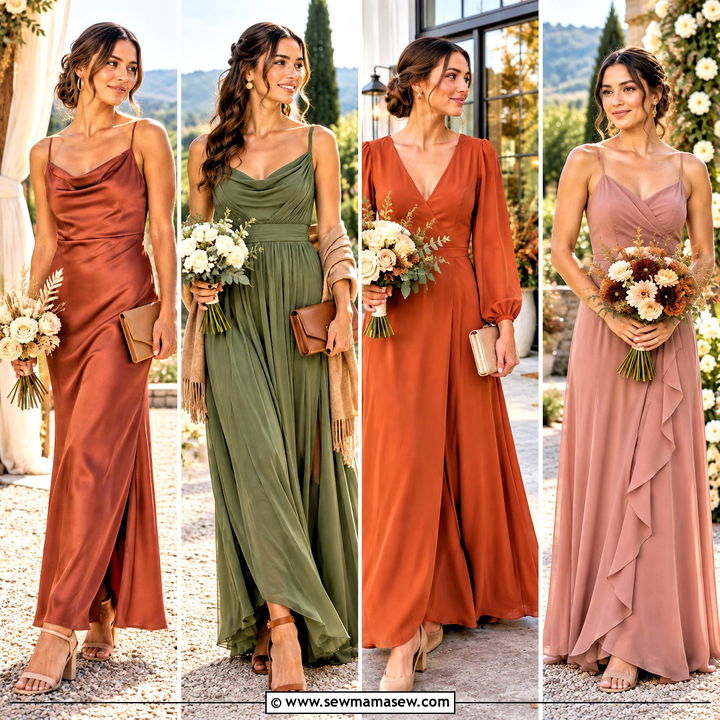
20. Rust Olive Burgundy And Caramel Bridesmaid Dresses
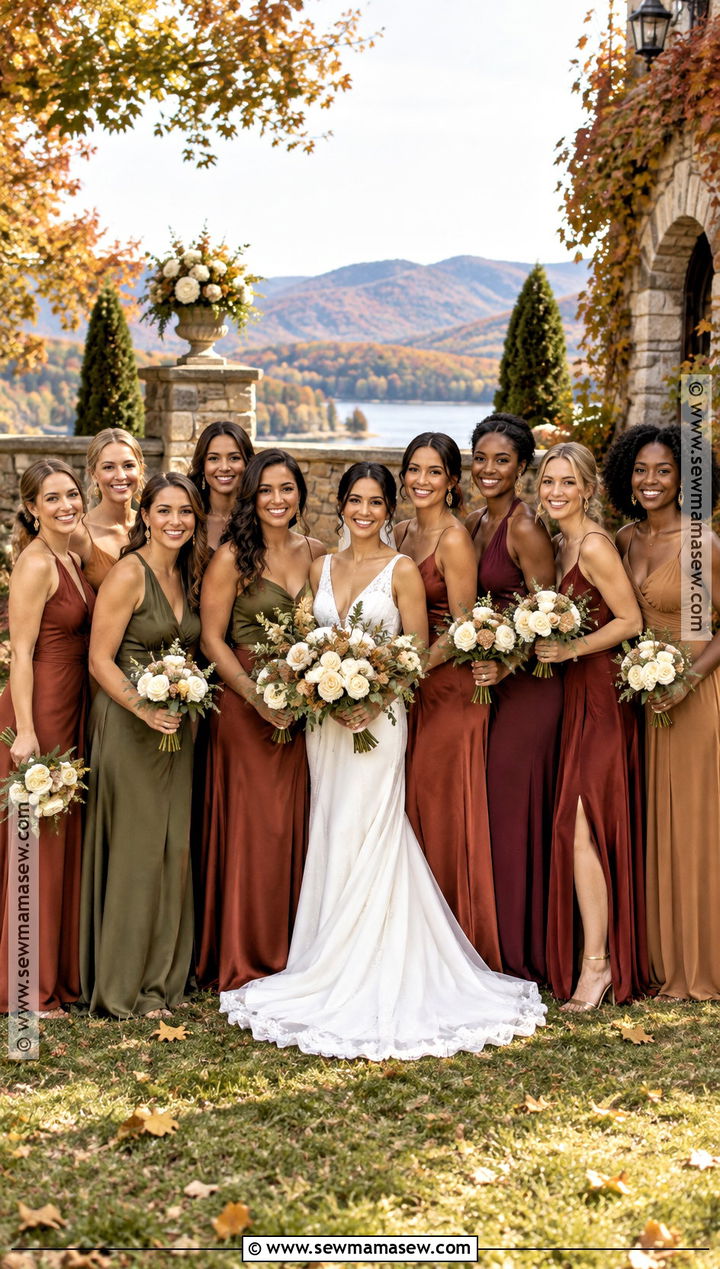
Rust, olive, burgundy and caramel is a full autumn spread for a larger party. With four colors, the rules tighten: at least two bridesmaids per shade, one fabric such as matte satin or crepe, and every hem on the floor. Within those limits, necklines, sleeves and skirts are free. Tan or muted gold shoes work across all four, with matching gold earrings. Keep bouquets pale so they show against every gown. Before ordering, I lay out photos of the chosen dresses in ceremony order; uneven color spacing jumps out immediately that way.
Counting Out Colors for Four, Six or Eight Bridesmaids
The number of bridesmaids changes how many colors a palette can carry. These are the splits I fall back on:
- Four bridesmaids: two colors, two of each, or one color in two fabrics. Three colors among four people usually leaves one looking odd.
- Five bridesmaids: two colors split three and two, or a single color with the maid of honor in a contrast shade.
- Six bridesmaids: three colors, two of each, alternated down the line.
- Eight or more: up to four colors, at least two per color, with the darkest shades spread out rather than grouped.
Bringing Groomsmen and Junior Bridesmaids Into the Palette
A mismatched party looks more planned when the rest of the wedding party draws from the same colors. I'd keep the groomsmen in one suit color, then pick ties or pocket squares from the bridesmaid palette, either all the same or matched to the bridesmaid each groomsman walks with. Junior bridesmaids and flower girls can wear the lightest shade in the set, in a simpler cut and a shorter length suited to their age. Mothers of the couple usually look best in a neutral or a deeper shade near the palette rather than an exact match, so they read as family, not as extra bridesmaids.
Mixed Colors, One Clear Rule
The mismatched parties that look best give each bridesmaid real choice inside a clear frame. Set the color palette, the fabric plan, the length and the formality first. Then offer enough approved options that everyone can find a shape that supports her and suits her style. Burgundy, rust, olive, plum, caramel and forest green blend well with softer shades, and coordinated shoes, jewelry, bouquets and wraps pull the outfits together. Check swatches and keep a shared list of chosen dresses before anyone orders. Do that, and a mix of colors and cuts looks intentional and still feels personal to every woman wearing one.
Related posts: