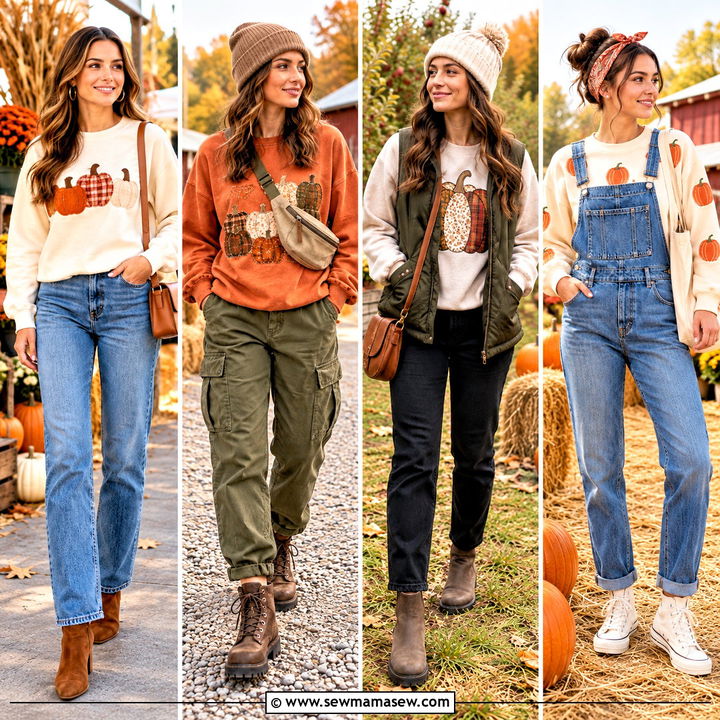
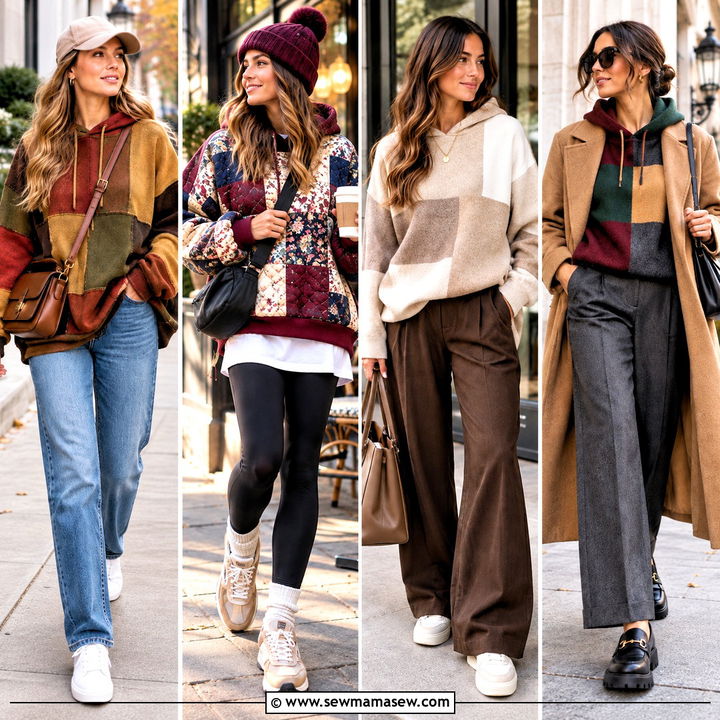
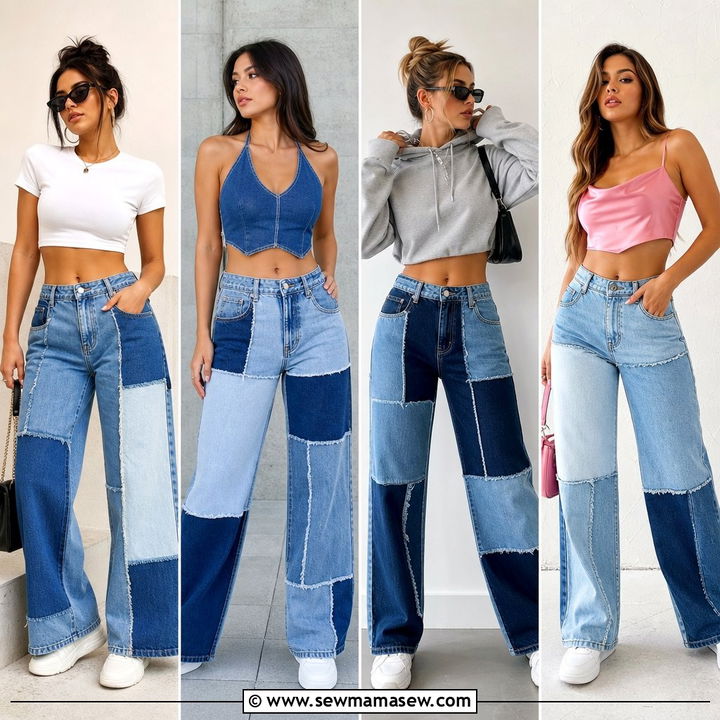
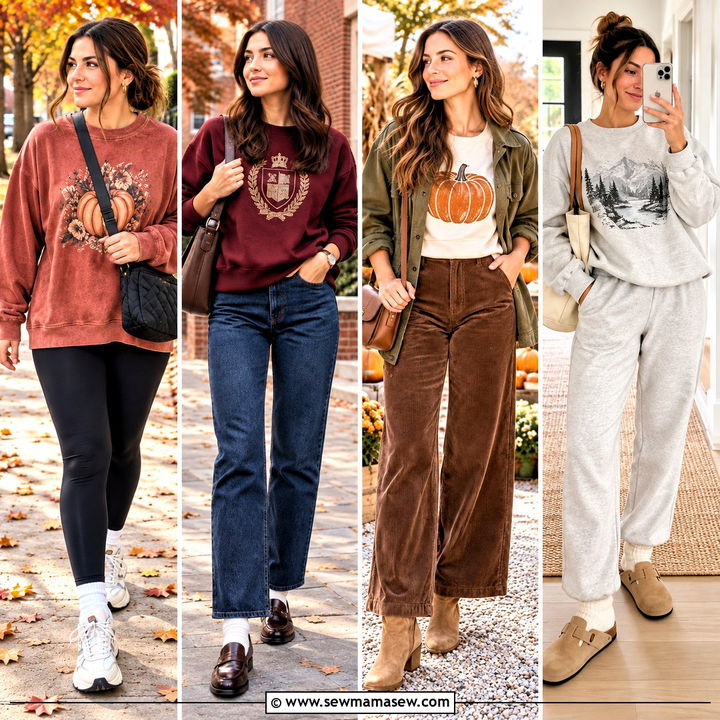
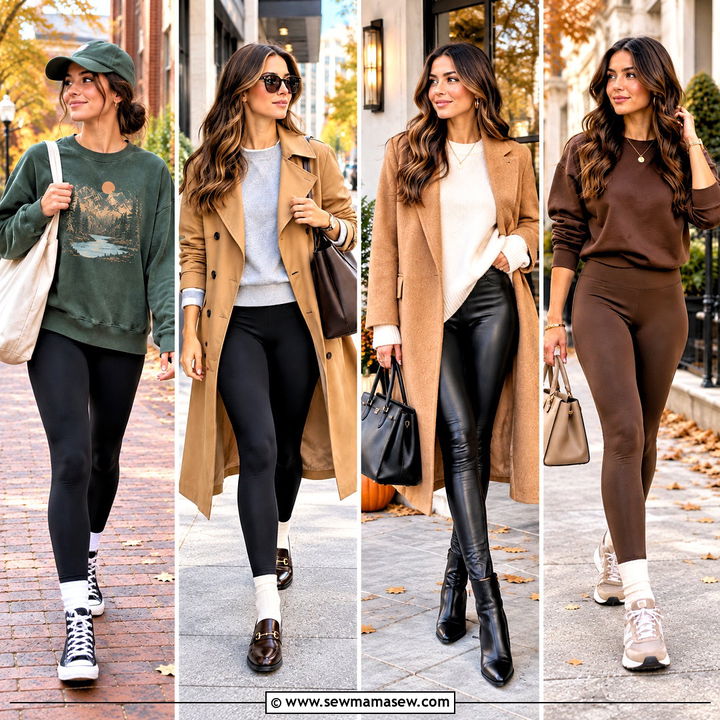
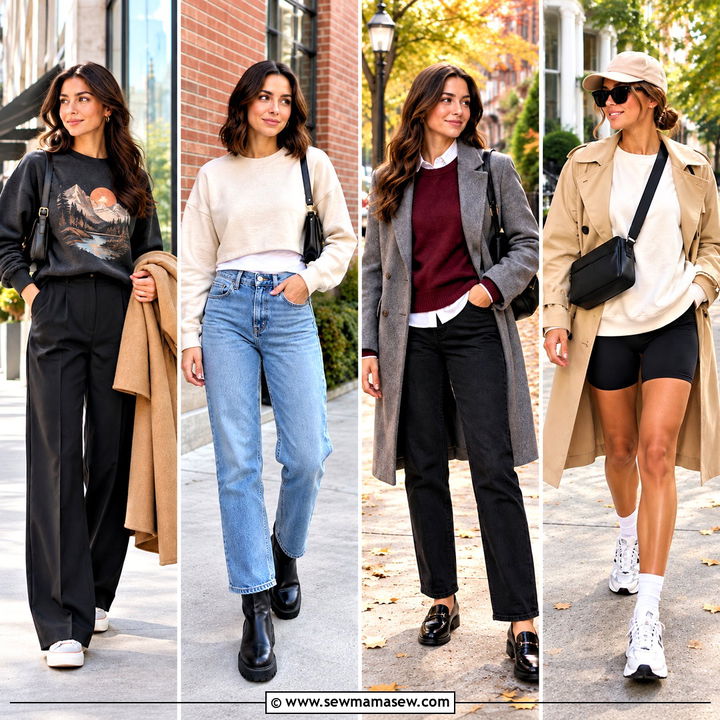
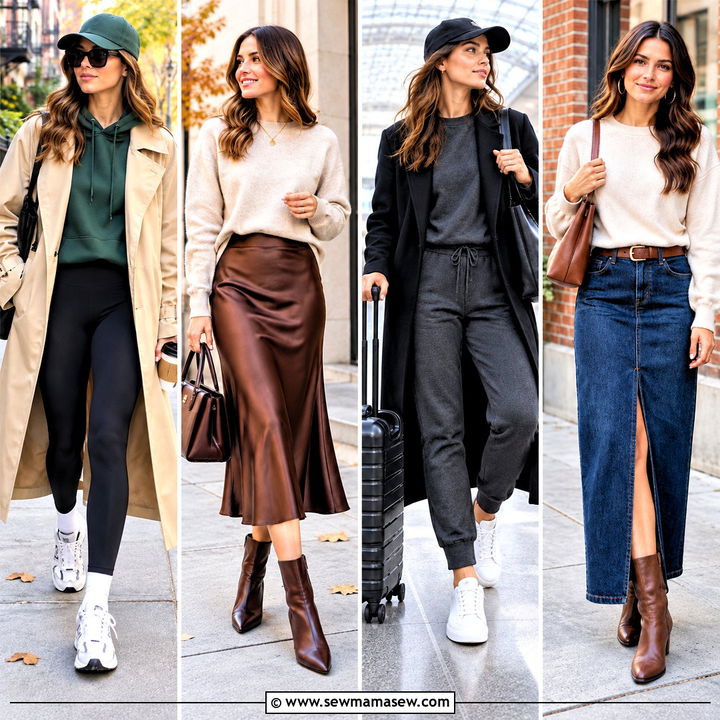
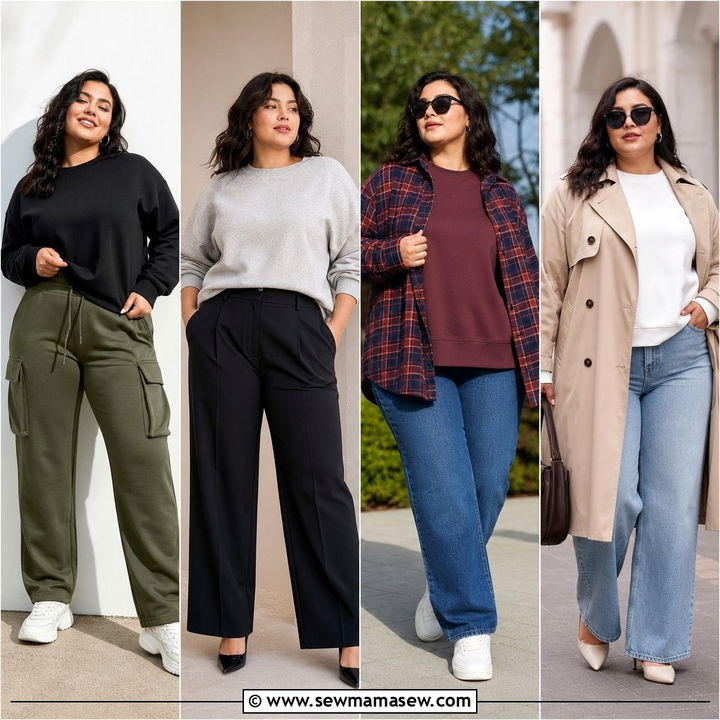
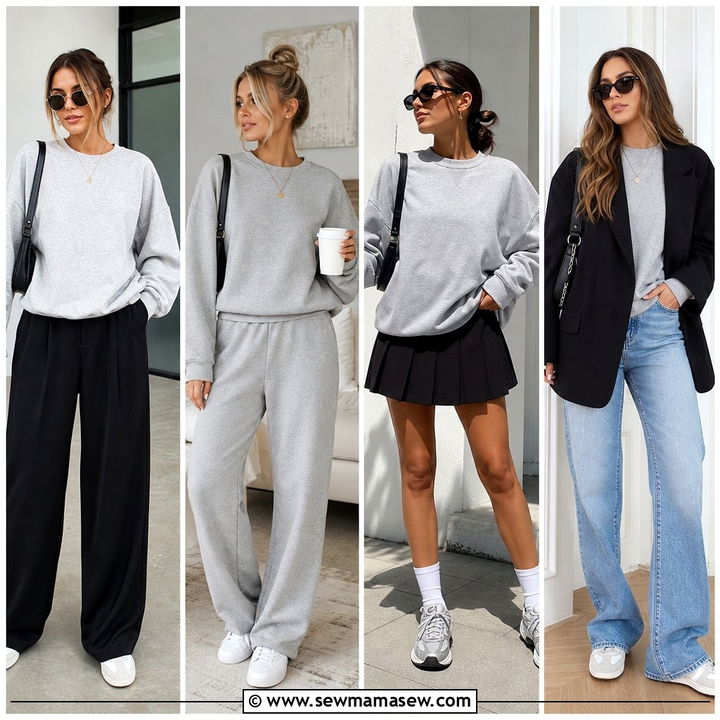
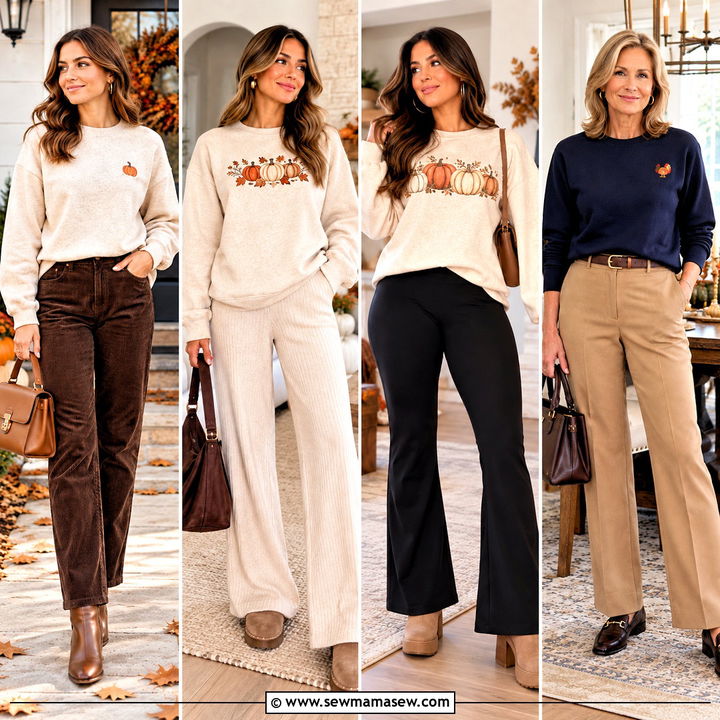
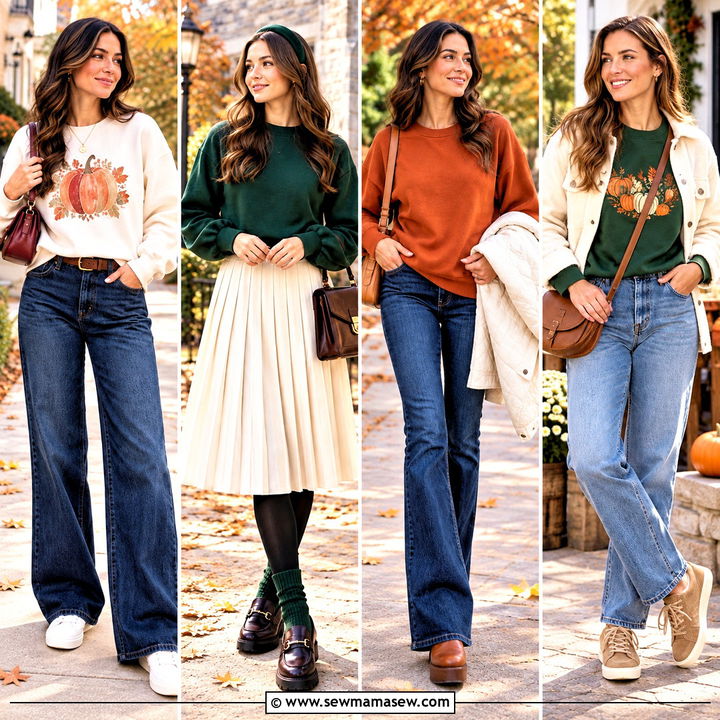
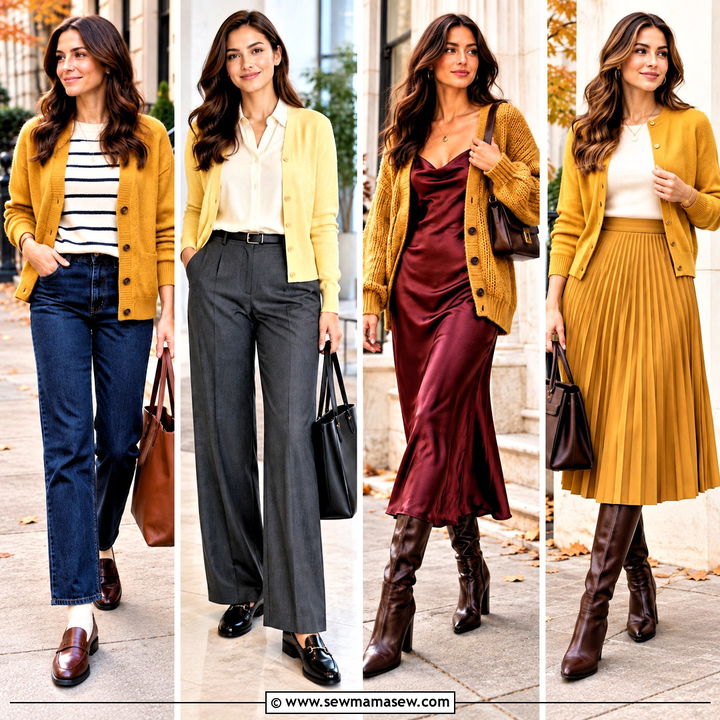
Quilt blocks on a crewneck turn the plainest piece in a closet into the one people ask about. Pieced panels, patched sleeves and appliqué squares have moved from craft tables onto everyday sweatshirts, and they suit fall because the colors already lean rust, mustard and forest green. The trick is what you put around them. I've laid out twenty full outfits below, for weekends, errands, campus, casual offices and time outdoors, and each one gives the sweatshirt a clear job. Change the weight or fit of any single piece to suit your body and your weather; the formulas still hold.

Pieced, Appliquéd or Just Printed
Three very different things get sold as patchwork, and they wear differently. Before I recommend a sweatshirt, I turn it inside out.
- Pieced: the panels are sewn edge to edge, so you see seam allowances on the inside where each block meets the next. This is the real thing. It drapes with some weight and the seams add structure.
- Appliquéd: shapes are stitched on top of a whole sweatshirt. Inside you'll see a ring of stitching around each patch. It's warmer in those spots and stiffer, and the edges are where wear shows first.
- Printed: the inside is plain. It's the lightest and cheapest, and the print can fade or crack along fold lines after many washes.
None of them is wrong, but they suit different outfits. Printed versions layer best under blazers and coats because they're flat. Pieced and appliquéd sweatshirts have more body, so give them room: a straight or wide bottom and an open outer layer.
Whatever the type, check the inside seams on knit fabric. They should be serged or overlocked so the raw edges are wrapped. Plain straight-stitched seams with cut edges on fleece will start to fray and pull apart after a few washes.
1. Patchwork Sweatshirt With Straight-Leg Jeans
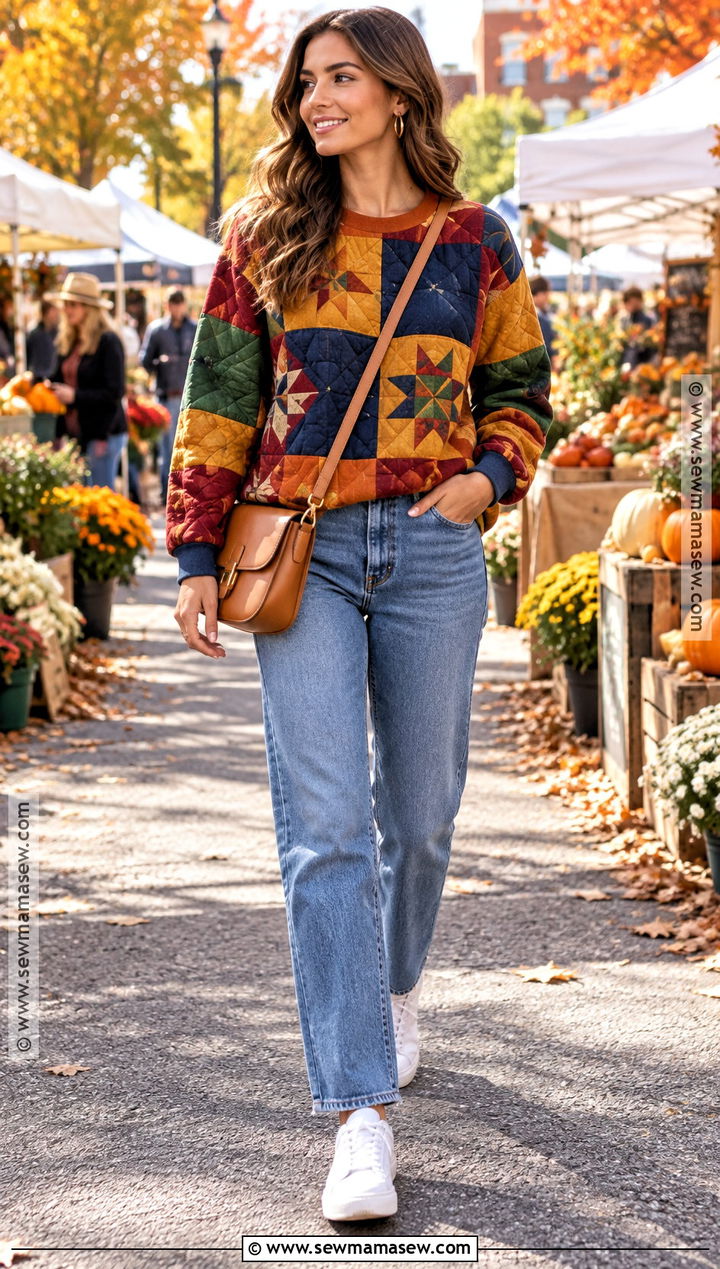
Start here if you're unsure. A slightly oversized crewneck with rust, navy, mustard or forest green blocks over straight-leg jeans is hard to get wrong, because the straight leg gives the roomy top something firm to sit on. A small front tuck, just a few inches of hem pushed into the waistband at center front, marks your waist without losing the slouch. White sneakers, a tan structured crossbody, small gold hoops. When it's colder, a beige trench left open still shows the blocks. Cuff the jeans once if they pool, so there's a little air between hem and shoe.
2. Patchwork Sweatshirt With Black Leggings
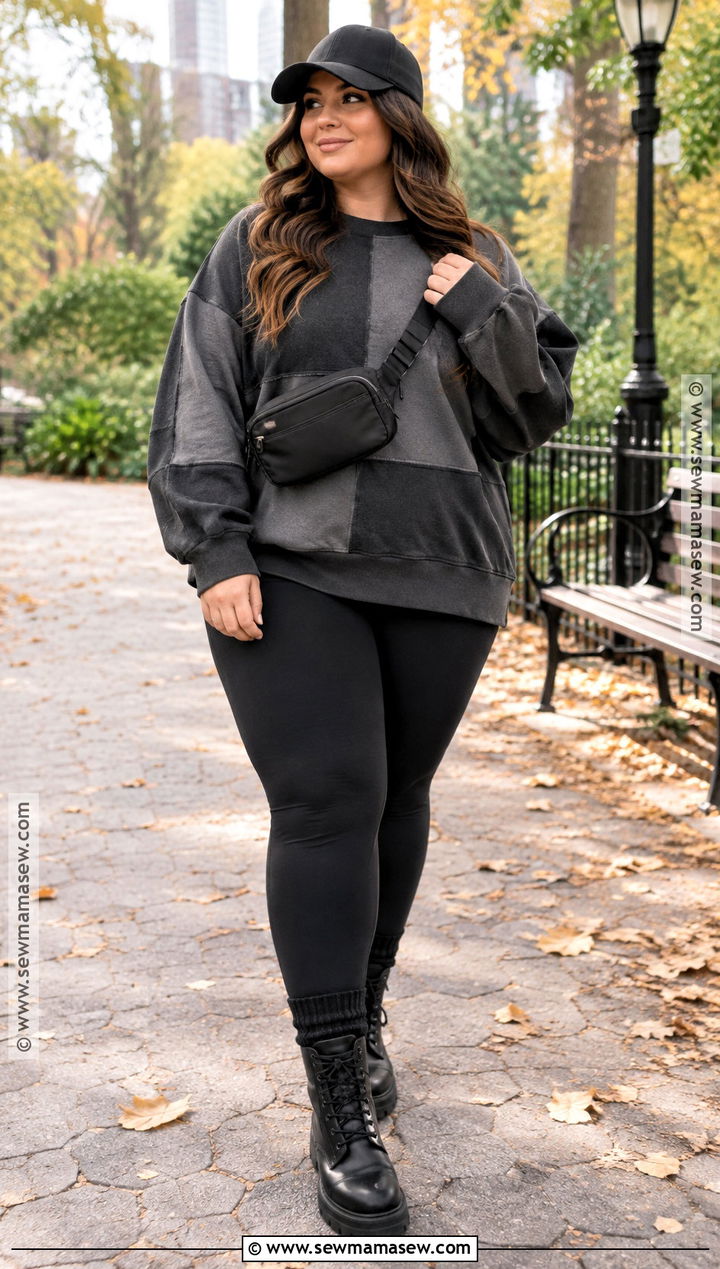
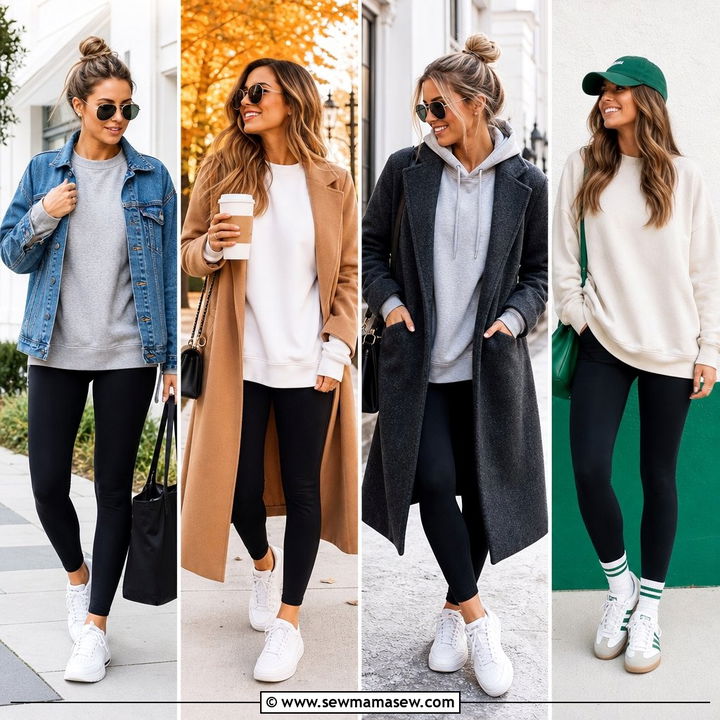
Leggings ask for length on top, so I pick a sweatshirt that covers the hips or has a dropped back hem. A gray, charcoal or faded black base with a few colored panels keeps it from feeling loud on a school run. Black lace-up combat boots and thick ribbed socks give the slim leg a heavier finish at the ground, which balances the bulk above. A belt bag across the body, a cap. If the sleeves are wide, push them up to the forearm. Wide cuffs hanging over the hands make the whole outline look a size bigger than it is.
3. Patchwork Sweatshirt With Corduroy Pants
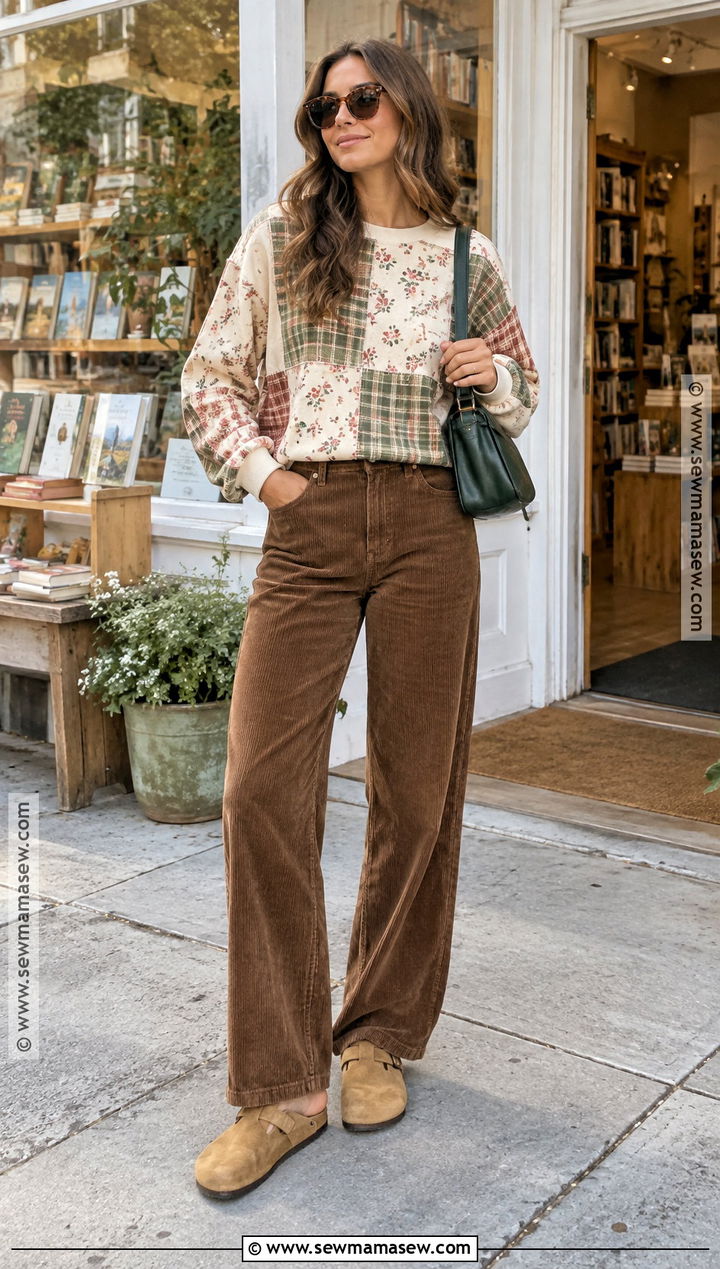
Fleece, quilting and corduroy are all soft, matte textures, and I like how they stack without any of them shining. A cream crewneck with muted floral, plaid and geometric pieces goes over high-rise brown cords in a straight or slightly wide cut. Pull your pant color from the darkest patch and everything else starts to look planned. Suede clogs are fine for a short outing; I'd switch to low ankle boots if you're walking an art fair all afternoon. A dark green shoulder bag and tortoiseshell sunglasses, and that's it. With three textures already in play, jewelry adds nothing.
4. Patchwork Sweatshirt With A Midi Skirt
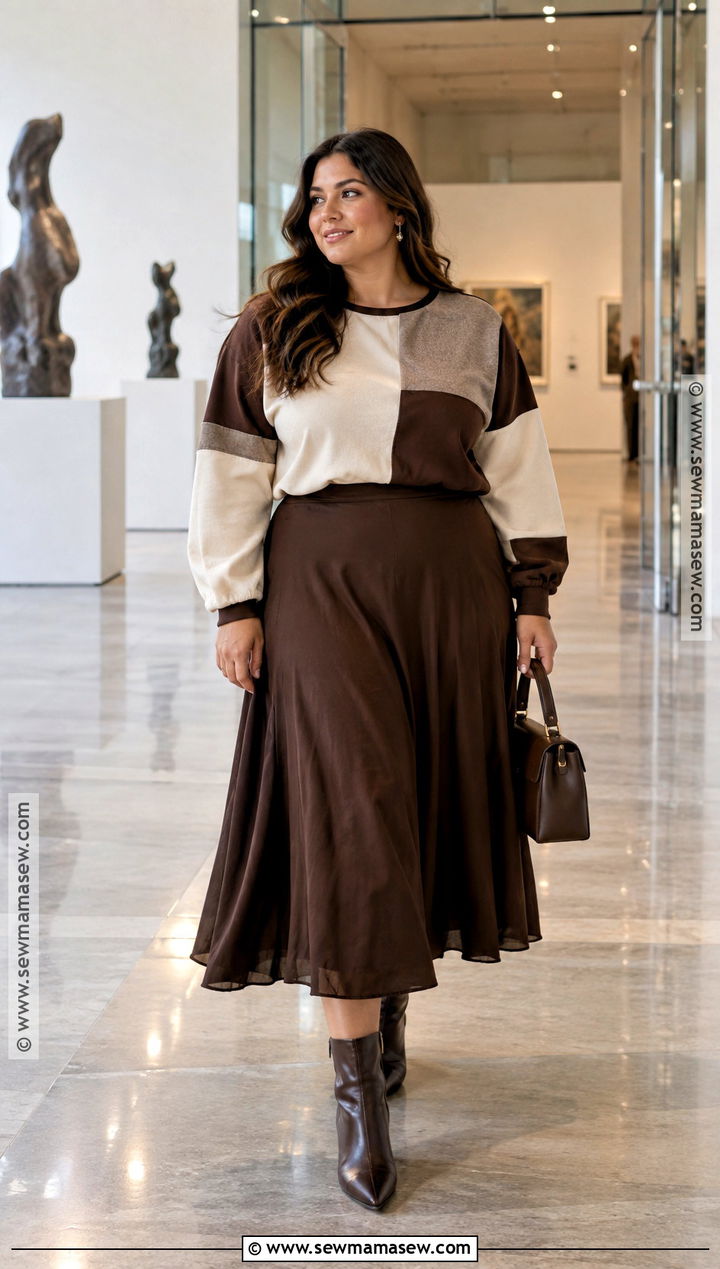
The sweatshirt needs to stop at the waist for this to work. A long crewneck over a midi hides the waistband and you lose the proportion entirely. Go cropped, or fold the hem under and secure it with a thin belt. Keep the skirt solid: satin, cotton poplin or soft jersey in chocolate, olive, black or deep burgundy. Satin gives the strongest contrast with fleece, and jersey is the most forgiving if you'll be sitting a lot. Pointed ankle boots lengthen the leg under a midi better than round toes do. A small structured bag and delicate earrings are enough for a museum or a casual office.
5. Patchwork Sweatshirt Over A Collared Shirt
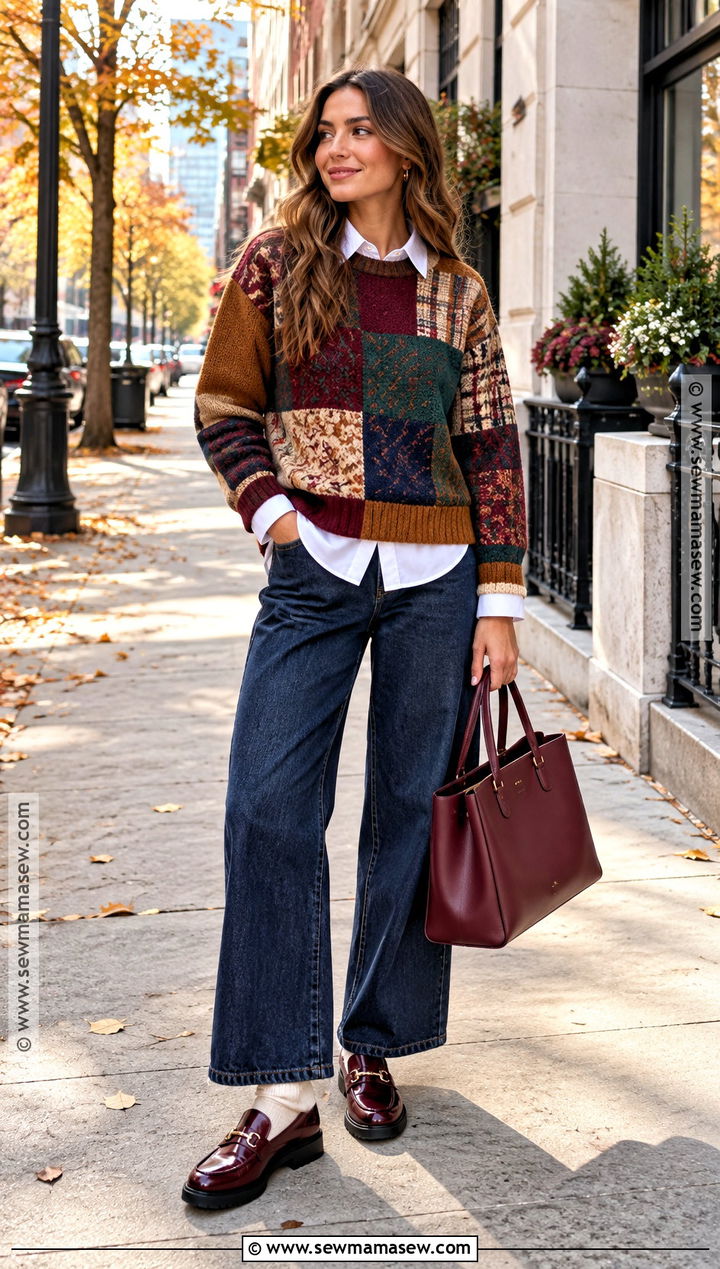
A shirt collar showing at the neck is the fastest way I know to make a sweatshirt look dressed. Wear a roomy patchwork crewneck over a crisp white or pale blue button-down and let the collar, cuffs and curved shirttail peek out. The shirt has to be thin, though; a heavy oxford bunches under fleece and the collar won't lie flat. Dark wide-leg jeans balance the double layer up top. Burgundy loafers with matching socks, a structured leather tote. If the sweatshirt carries several bold colors, repeat one of them in your shoes or bag so the mix looks chosen.
6. Patchwork Sweatshirt With Black Trousers
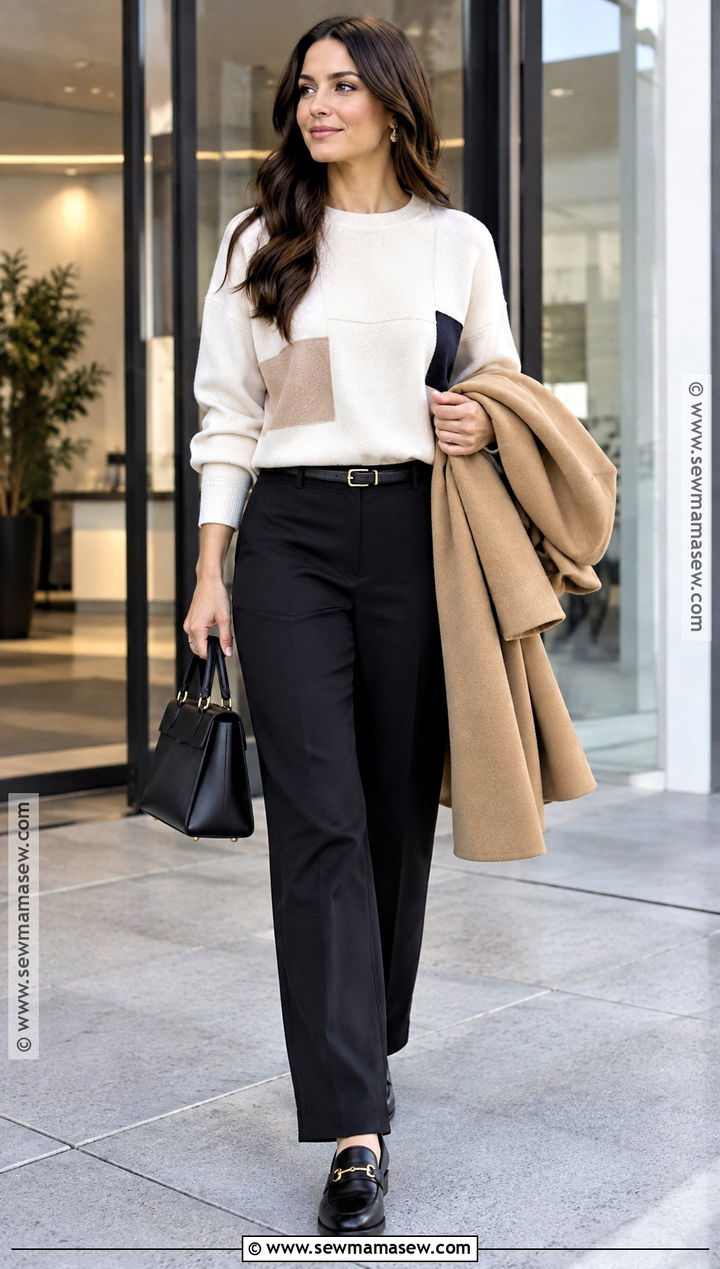
Can patchwork go to a casual office? Yes, if it's the only relaxed thing you're wearing. I'd choose a sweatshirt with small quilted panels rather than an all-over pattern, sized true rather than oversized, with neat stitching and a smooth neckline. Distressed patches and sleeves that cover your knuckles belong to the weekend. High-waisted black trousers with a straight or gently tapered leg, leather loafers, a black belt and a top-handle bag do the rest. Studs and a slim watch. On cold commutes a camel wool coat goes over it, and the patchwork at the neckline still shows.
7. Patchwork Sweatshirt With A Denim Midi Skirt
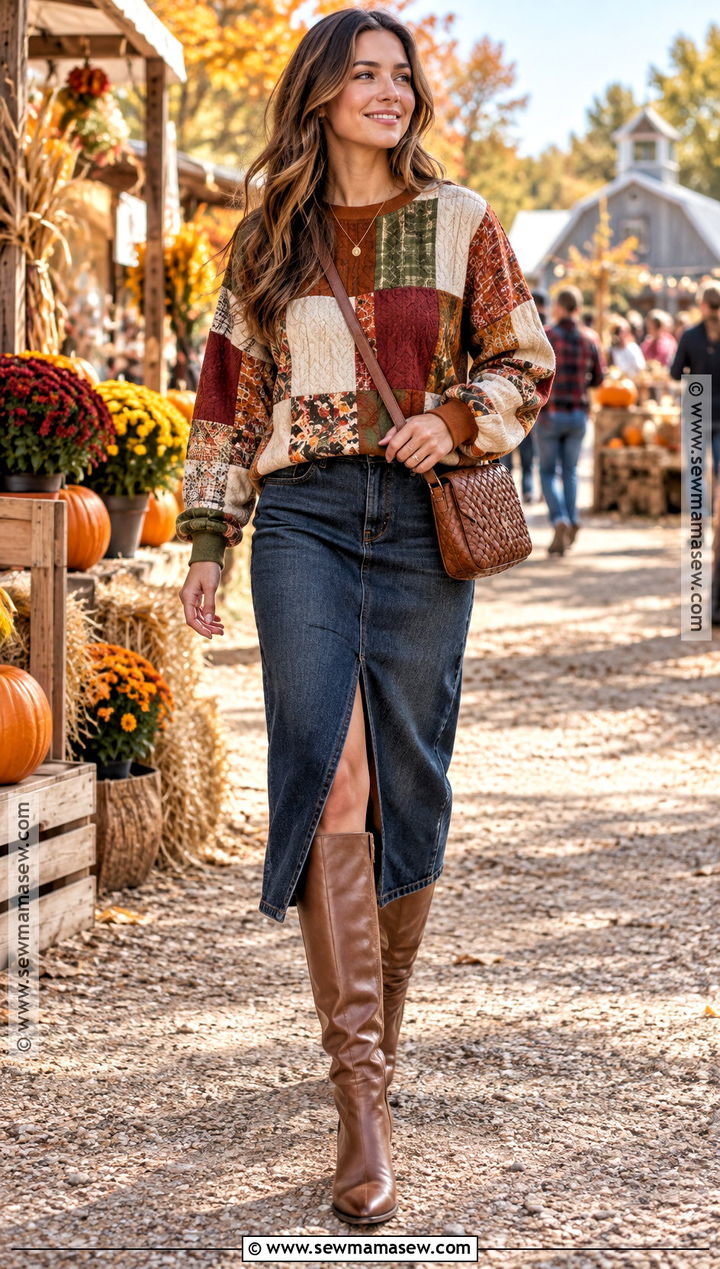
Denim and quilting have the same honest, worn-in feel, so they rarely clash. A relaxed patchwork crewneck over a dark-wash denim midi skirt is the version I'd wear to a pumpkin patch. Make sure the skirt has a front or back slit; denim doesn't give, and a straight midi without one turns a walk into a shuffle. Tuck a little of the sweatshirt in, or go cropped, so you can see where the skirt starts. Brown knee-high boots that disappear under the hem make one long line. A woven crossbody adds texture quietly, and a thin long-sleeve tee underneath helps on colder days.
8. Patchwork Sweatshirt With Relaxed Joggers
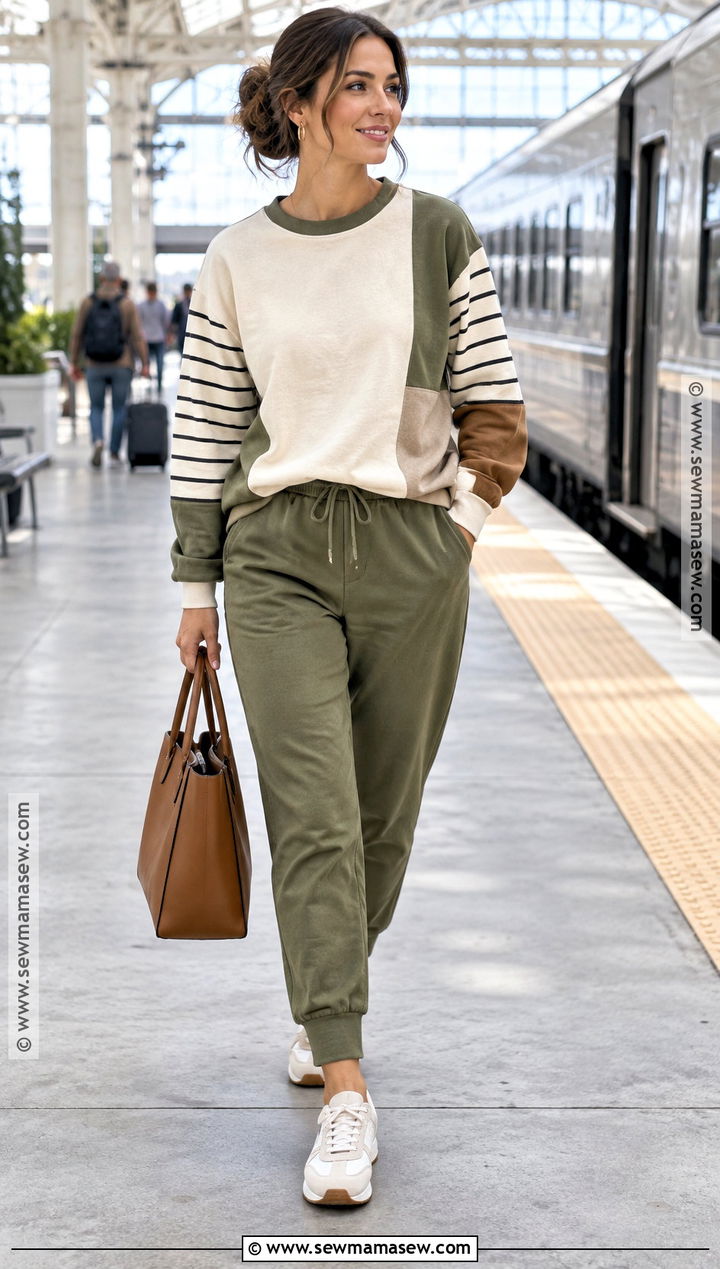
Sweatshirt and joggers look like a plan rather than pajamas when the joggers pick up a patch color. If the sleeves carry striped, plaid or quilted panels in navy, olive, burgundy or heather gray, choose one of those as a solid jogger. A smooth waistband and tapered ankle look tidier than a very baggy cut. Then do one thing that clearly isn't loungewear: a structured tote does it, and so do retro sneakers. Hoops and a neat low bun help too. If you need a layer, a light long coat keeps it grown-up where a second sporty jacket would tip it back into gym clothes.
9. Patchwork Sweatshirt With Cargo Pants
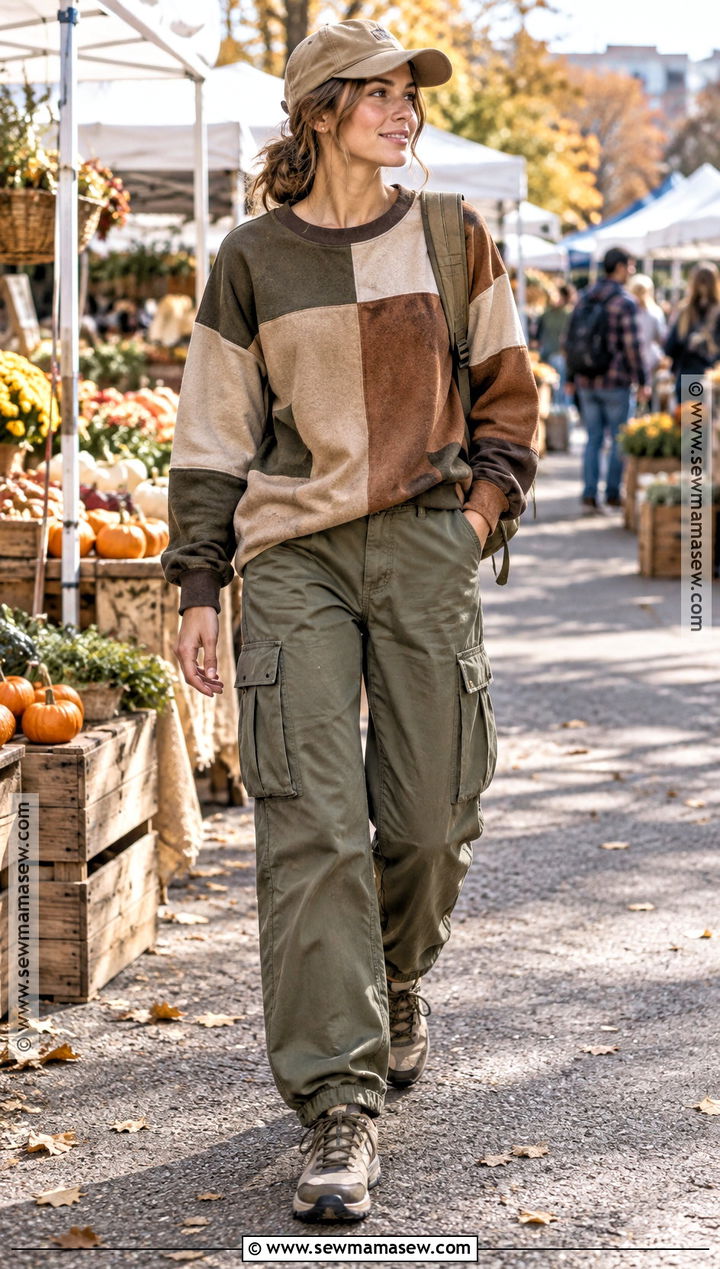
Cargos and patchwork both come from practical clothing, and that's why I think they suit each other. Choose olive, tan or black cargos with a relaxed leg and flat pockets; big bellows pockets plus a roomy sweatshirt add width in too many places at once. A plaid or geometric patchwork top in earth tones, slightly cropped or front-tucked, keeps the waist readable. Trail-style sneakers, a compact backpack, a canvas cap, all in the same neutral family. When it's cold, a fitted thermal tee under the sweatshirt adds warmth without the bulk of another jacket.
10. Patchwork Sweatshirt Over A Maxi Dress
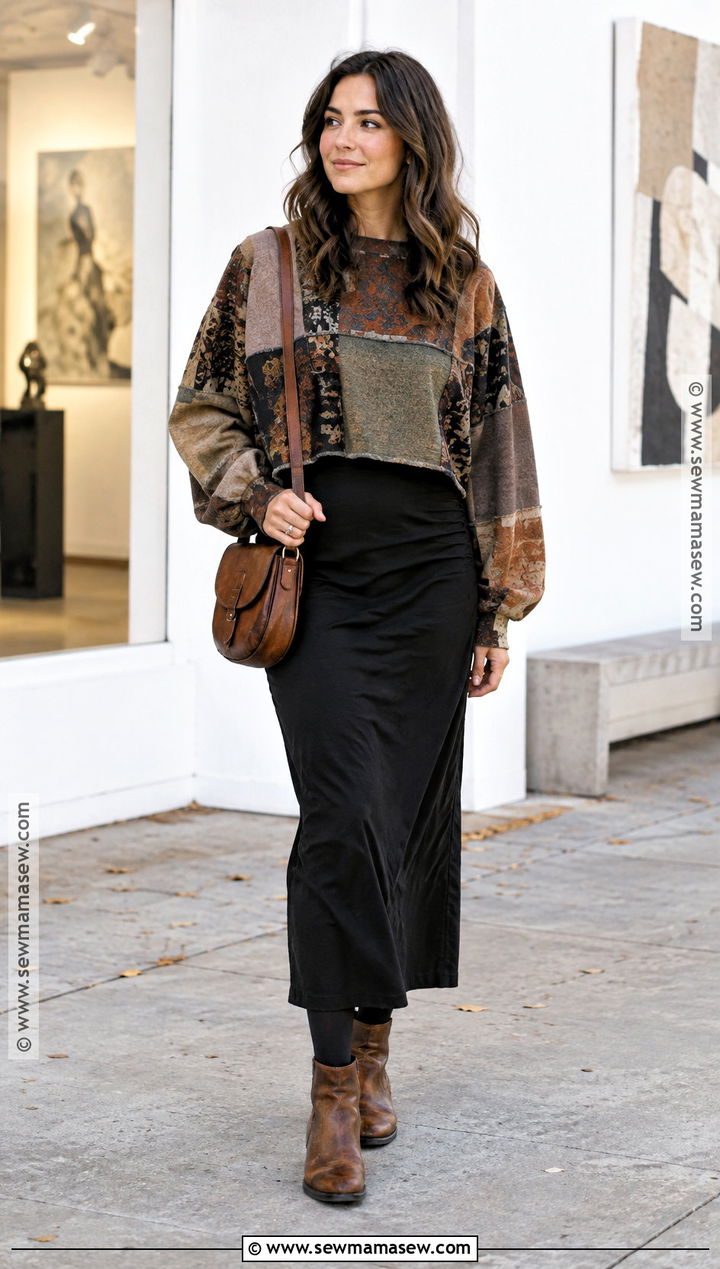
A summer maxi dress gets a second season when you pull a patchwork sweatshirt over it. I'd use a fitted cotton or jersey dress here; anything with a gathered bodice or ruffles bunches under the fleece. A cropped crewneck, or a regular one with the hem folded inward, makes it look like a top and a skirt. Flat ankle boots and a saddle bag finish it. With a printed dress, choose patches that repeat one or two of its colors. A solid dress lets you go brighter. Add opaque tights when the evenings turn, and you've used what you already own.
11. Patchwork Sweatshirt With Faux Leather Pants
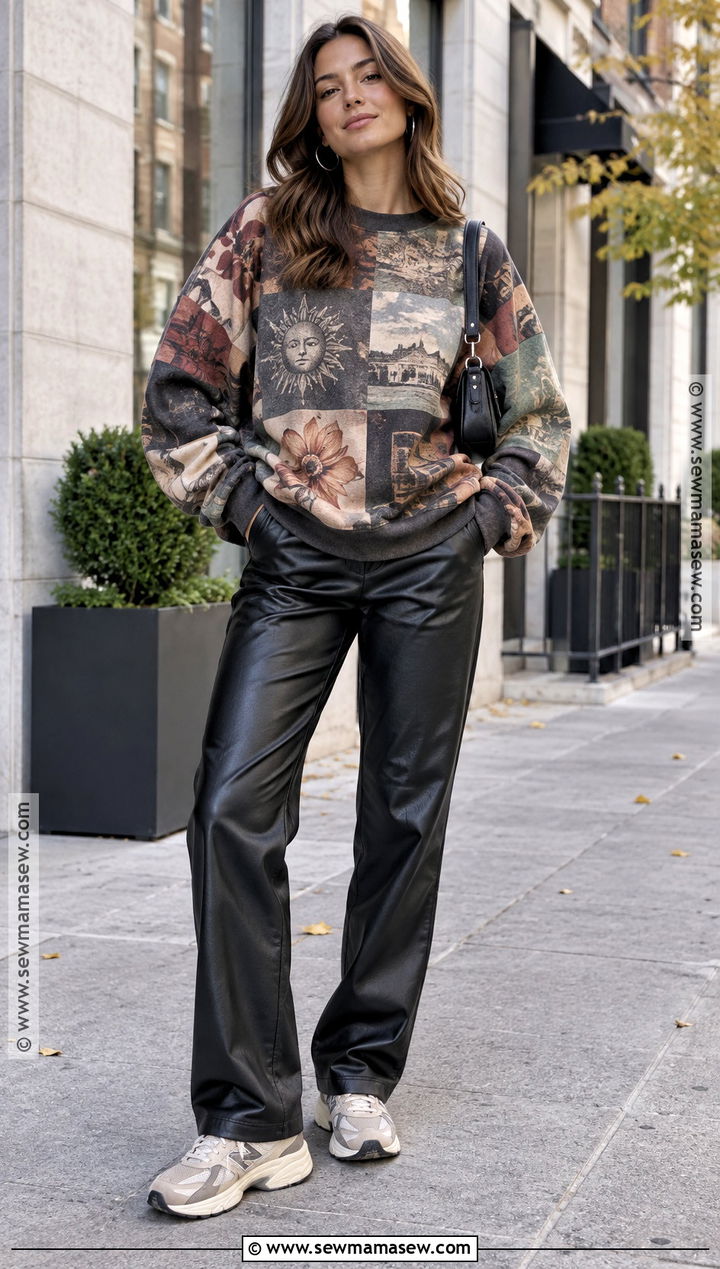
Soft fleece with smooth faux leather is a contrast I use for evenings out. An oversized sweatshirt in washed neutrals, deep red or a vintage-style print sits well over straight-leg faux leather pants in black or dark brown. I steer people away from the skinny versions: coated fabric doesn't stretch like denim, so tight pairs crease hard at the knee and get hot. Chunky sneakers for every day, low ankle boots for a sharper finish. A simple shoulder bag and silver hoops. Roll the sleeves once to show your wrists, which lightens a fairly heavy outline.
12. Patchwork Sweatshirt With Flare Jeans
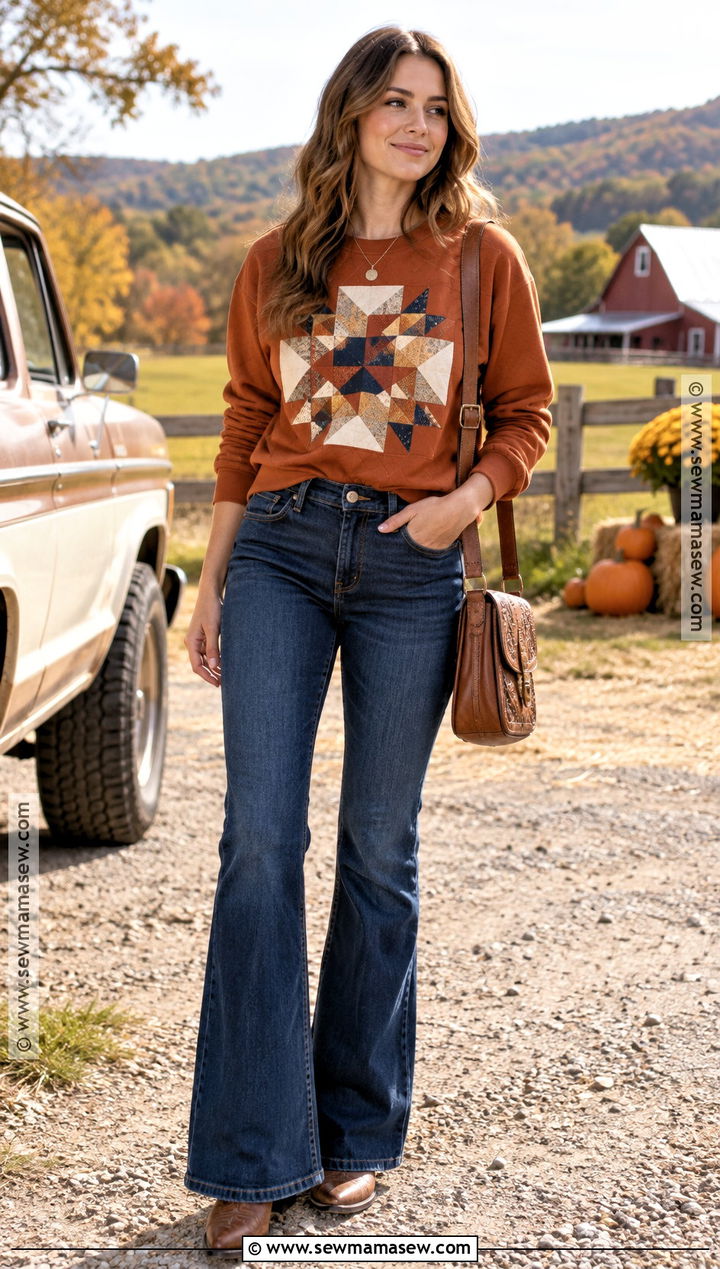
Flares want a neater top. If the sweatshirt is huge, you end up wide at both ends with nothing in between. So I go with a fitted or moderately relaxed crewneck in harvest colors, faded florals or classic quilt shapes, over high-rise dark flares. The rise defines the waist, and the flare balances the hips, which is why this cut suits so many figures. With western ankle boots, the hem should cover most of the shaft; if you can see the whole boot, the jeans are too short for a flare. A tooled leather crossbody and a small pendant, then stop.
13. Patchwork Sweatshirt With A Quilted Vest
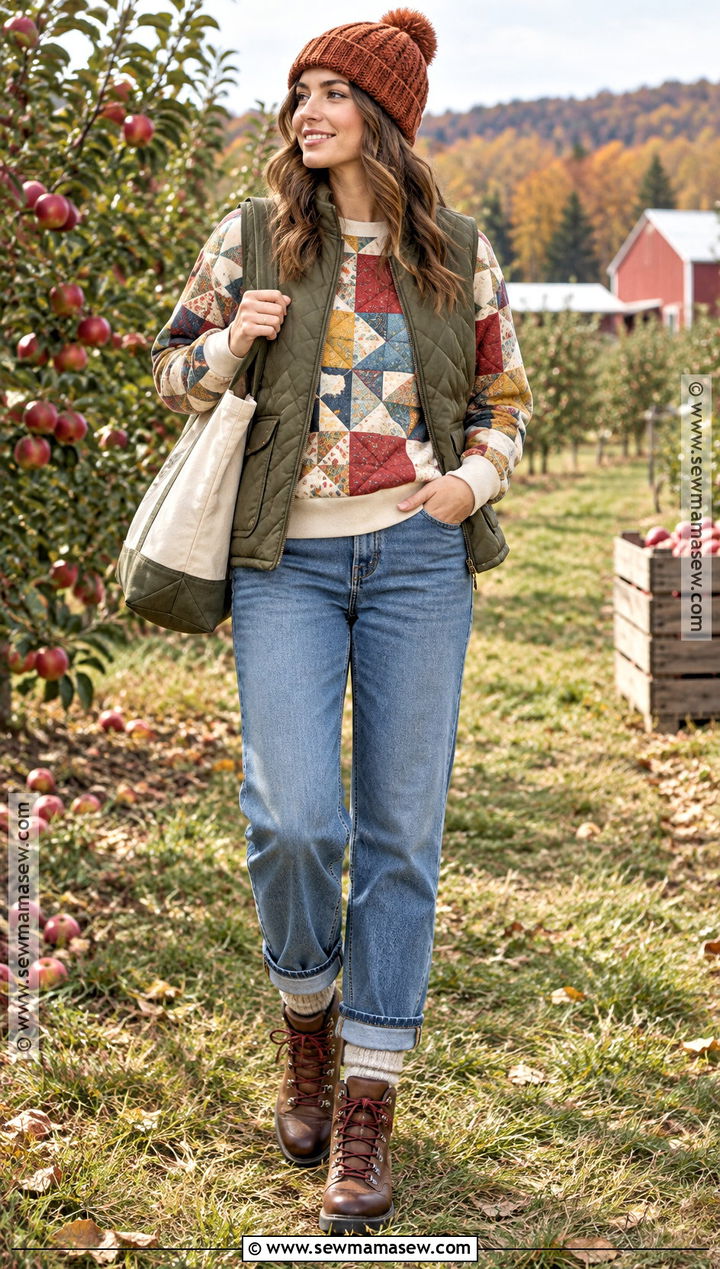
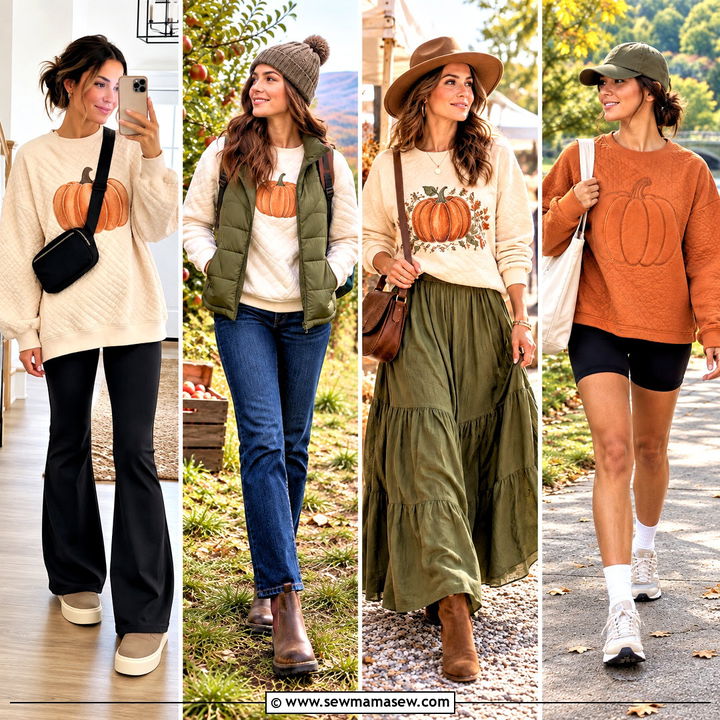
A plain quilted vest over a patchwork sweatshirt is the layer I'd add for a day that keeps changing its mind. Navy, olive, cream or brown, lightly padded. A puffy one fights the sweatshirt for attention. Wear it open if the patchwork is on the front. If the blocks are mostly on the sleeves, you can close it and those sleeves become the frame. Relaxed straight-leg jeans, leather hiking boots, thick crew socks and a canvas tote make it orchard-ready. A beanie goes on when the afternoon cools.
14. Patchwork Sweatshirt With A Trench Coat
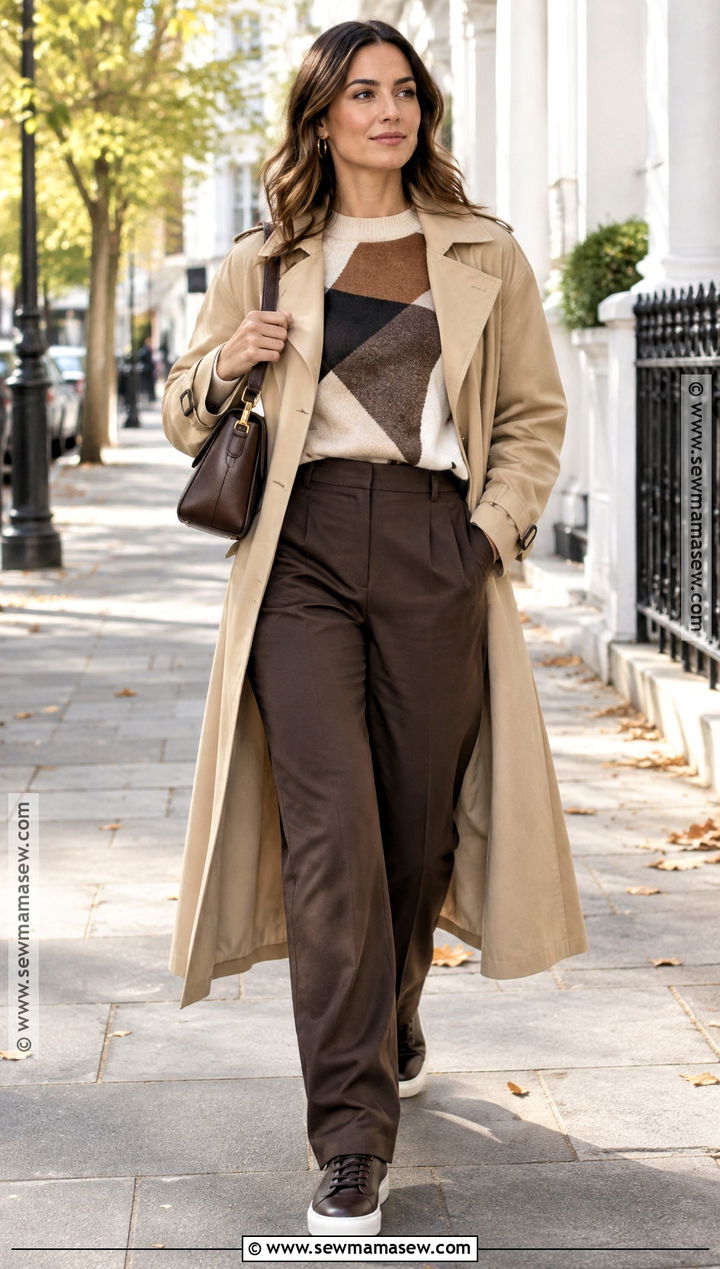
A trench is a quiet frame around something busy. I choose a medium-weight sweatshirt with quilting across the chest or sleeves and put a beige, stone or olive trench over it, open. Tailored straight-leg trousers in black, navy or chocolate and sleek leather sneakers keep it neat enough for a workday. Push the trench sleeves up a little so the patchwork cuffs show. Check the fit with both on: if the sweatshirt is very oversized, the excess folds up under the coat's back belt and you'll feel it every time you sit.
15. Patchwork Sweatshirt With A Puffer Vest And Leggings
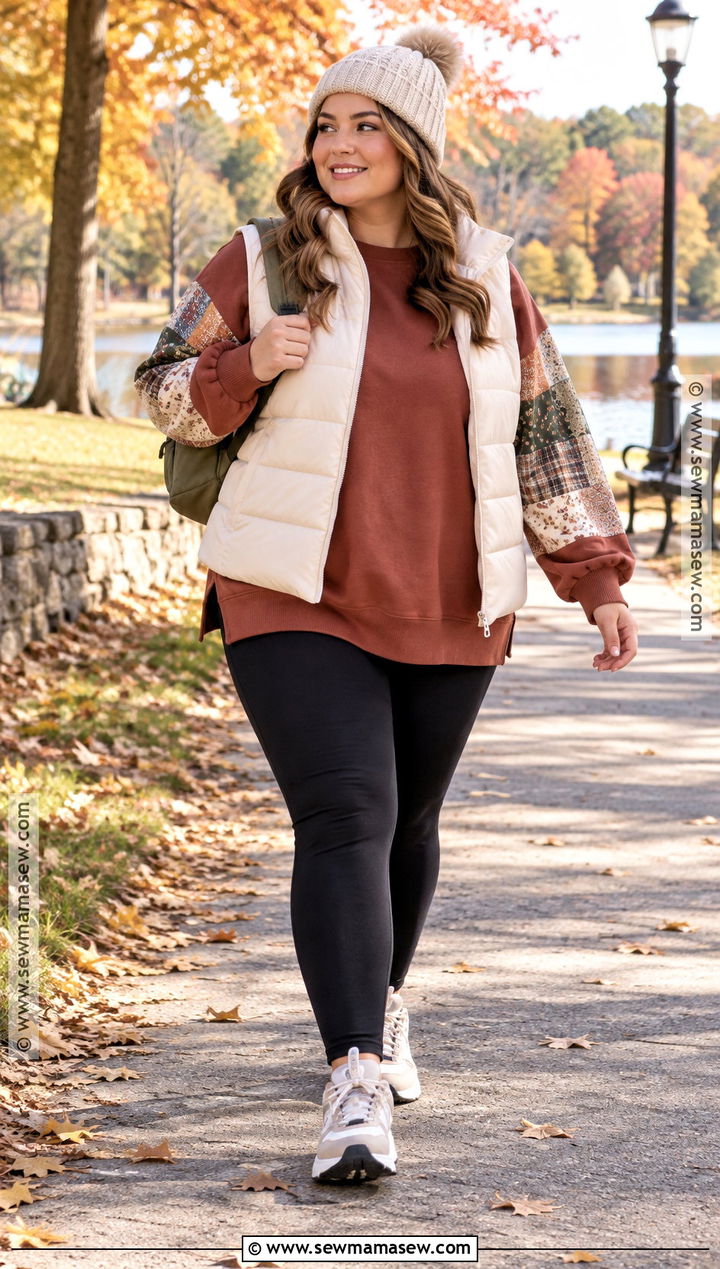
For a long, active day, cover your hips and keep your core warm. A longer patchwork sweatshirt with blocks on the sleeves or lower front stays visible under a slim puffer vest in cream, olive or charcoal. Black or dark brown leggings, weather-resistant sneakers for damp grass, thick socks. A knit beanie and a small backpack. I'd choose a vest with thin, flat channels; the very puffy ones add a lot of volume on top of fleece, and it's the vest, not the sweatshirt, that ends up dominating the outline.
16. Patchwork Sweatshirt With Denim Overalls
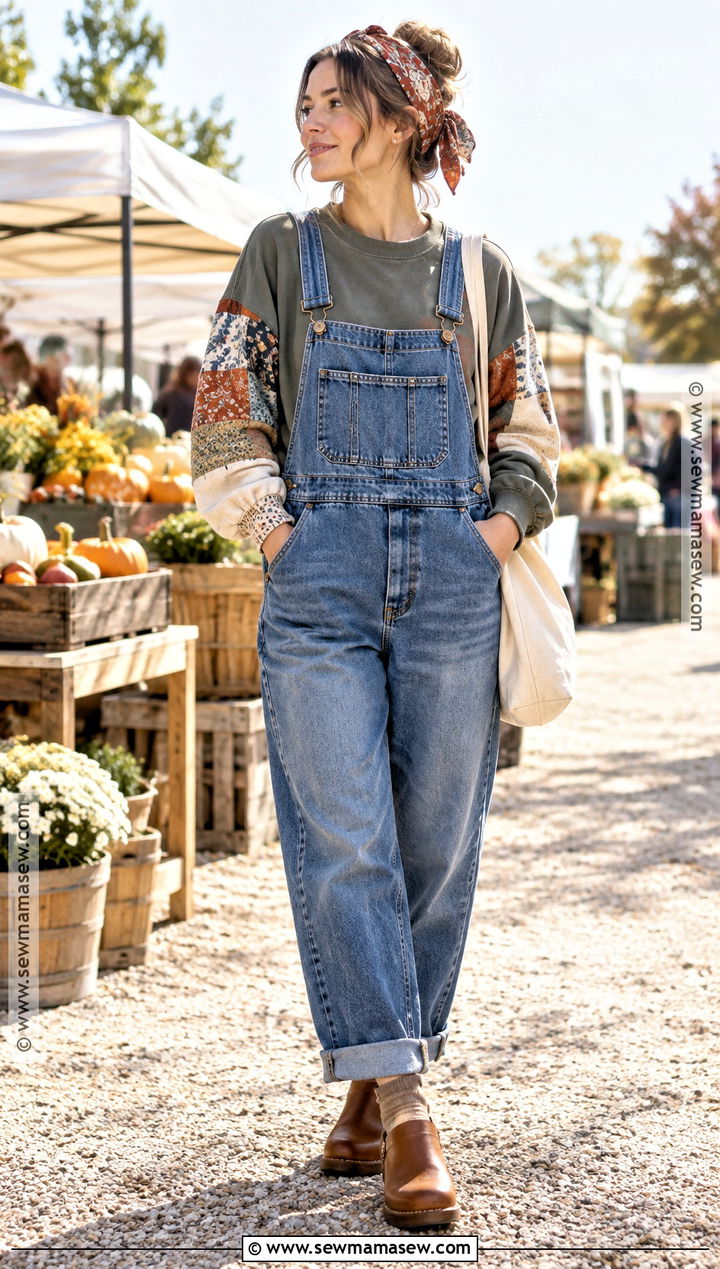
Overalls need room inside for fleece, so I'd size them with the sweatshirt on. Too snug and the bib pulls forward and the side buttons gape. A crewneck with patchwork sleeves suits this best, because the bib covers the chest anyway. Roll the hems once or twice and add clogs, canvas sneakers or ankle boots. A small bandana in one patch color, tied at the hair or the bag strap, ties things together. Any more themed accessories and it starts to look like a costume. Shorten the straps until the bib sits flat against you.
17. Patchwork Sweatshirt With A Plaid Skirt
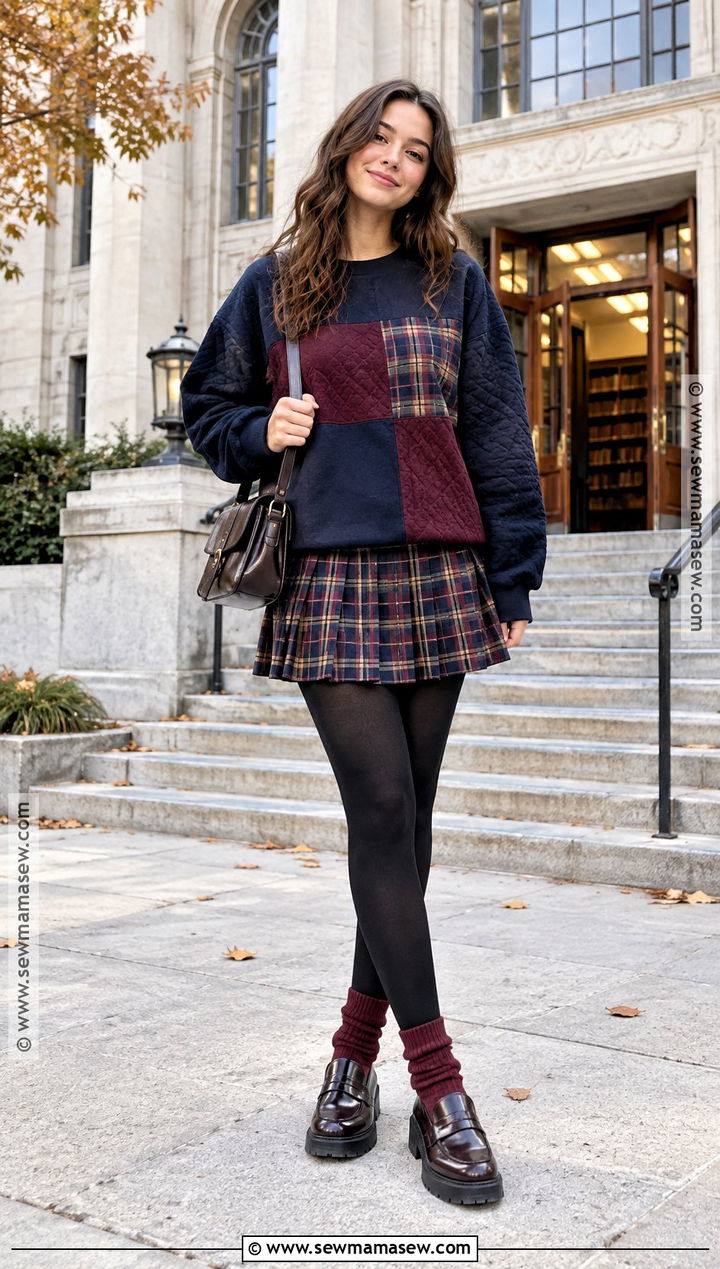
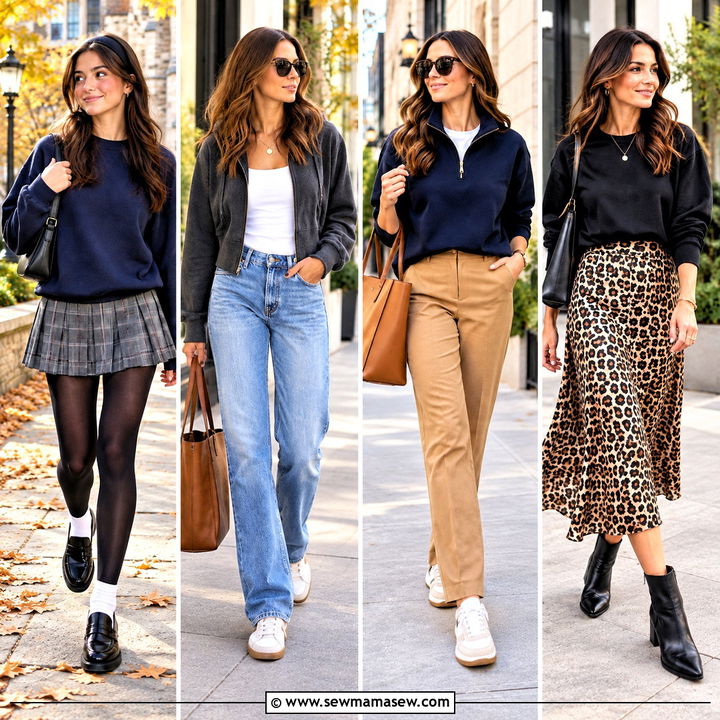
Mixing patchwork with plaid works when they share colors. A navy sweatshirt with burgundy blocks and a navy-and-burgundy plaid skirt is the kind of match I mean. Choose an A-line or pleated skirt around the knee, and a sweatshirt with a ribbed waistband that stops at the skirt's waist so the pleats aren't flattened. Opaque black tights, chunky loafers, ribbed socks and a small leather satchel give it a schoolish feel without becoming a uniform. Leave out printed scarves or bags. A long solid coat over everything calms the two patterns down when you're outside.
18. Patchwork Sweatshirt With Cream Jeans
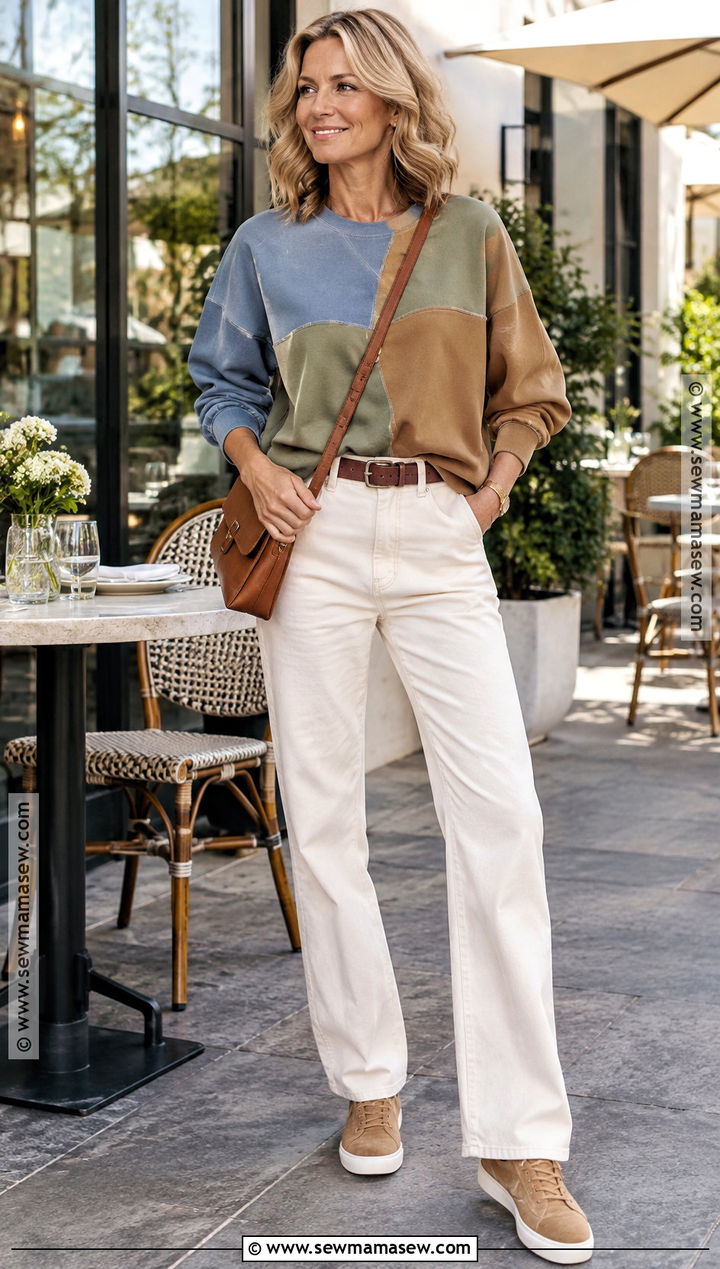
Cream jeans brighten fall, but they show everything, so I check two things before I recommend them: weight and lining. A heavier denim holds its shape and doesn't cling, and smooth underwear close to your skin tone is non-negotiable with pale fabric. Above them, a patchwork sweatshirt in caramel, sage, rust or dusty blue. Tan suede sneakers or light brown ankle boots bridge the cream to the darker blocks, and a cognac belt and bag give the middle definition. I'd save this one for the dry, early part of fall; cream hems pick up every puddle.
19. Patchwork Sweatshirt With Tailored Shorts And Tights
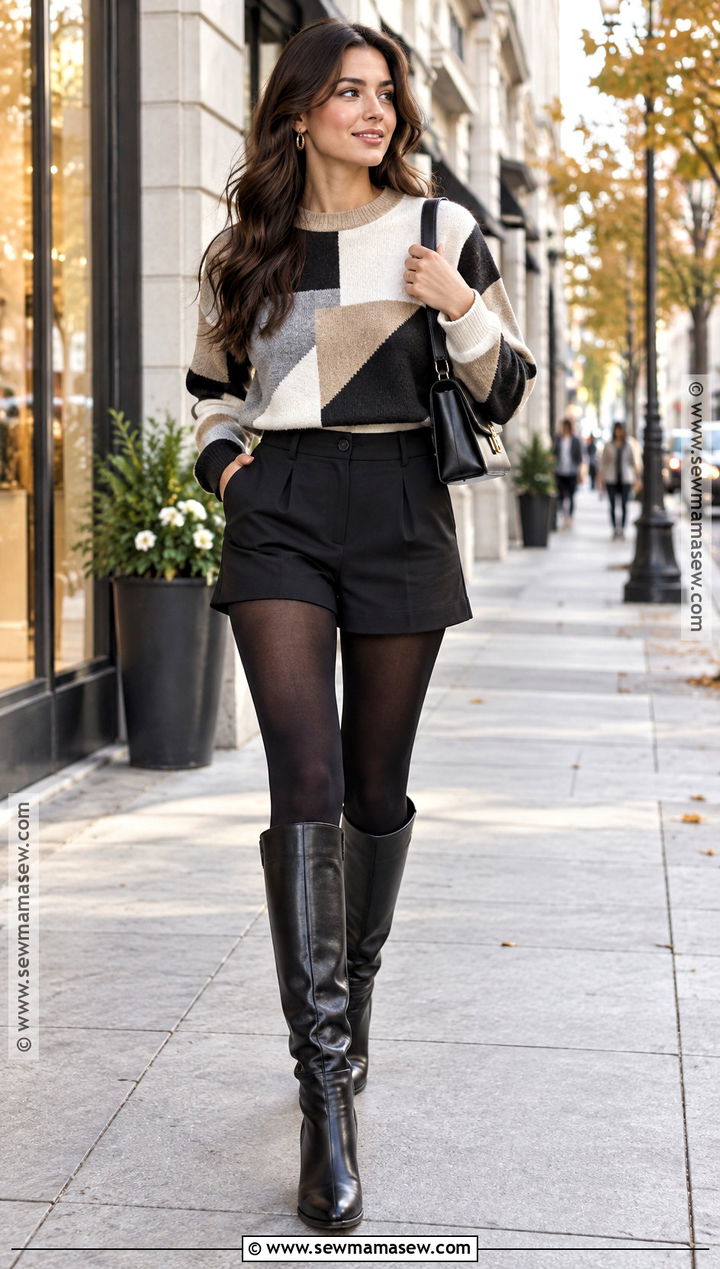
Shorts in fall rely on the tights. Opaque ones under high-waisted black, charcoal or brown tailored shorts with a loose leg, then knee-high boots so there's only a short stretch of tights showing. The sweatshirt should be cropped to meet the waistband. If yours is oversized, tuck the front in and let the back fall. Keep the patchwork itself fairly flat; heavily appliquéd or padded blocks pile up with all the other layers. A structured shoulder bag and small earrings, and a long wool coat on top once the air gets sharp.
20. Patchwork Sweatshirt With Matching Sweatpants
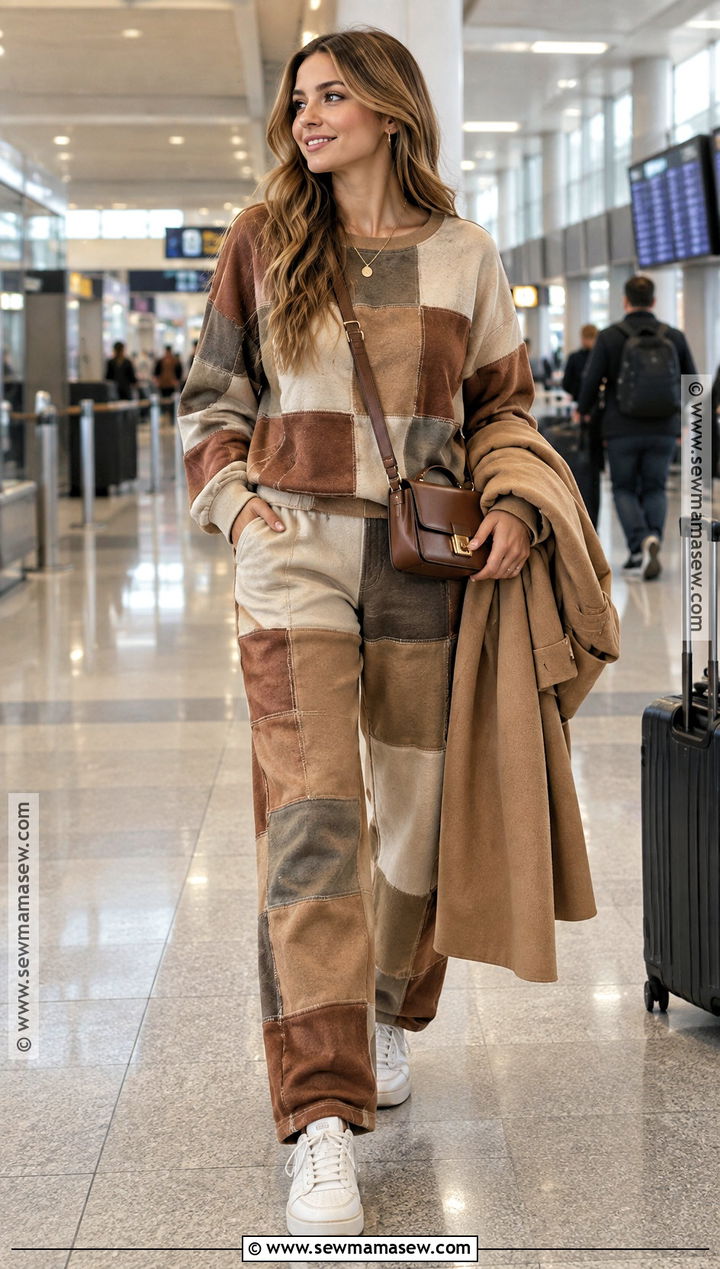
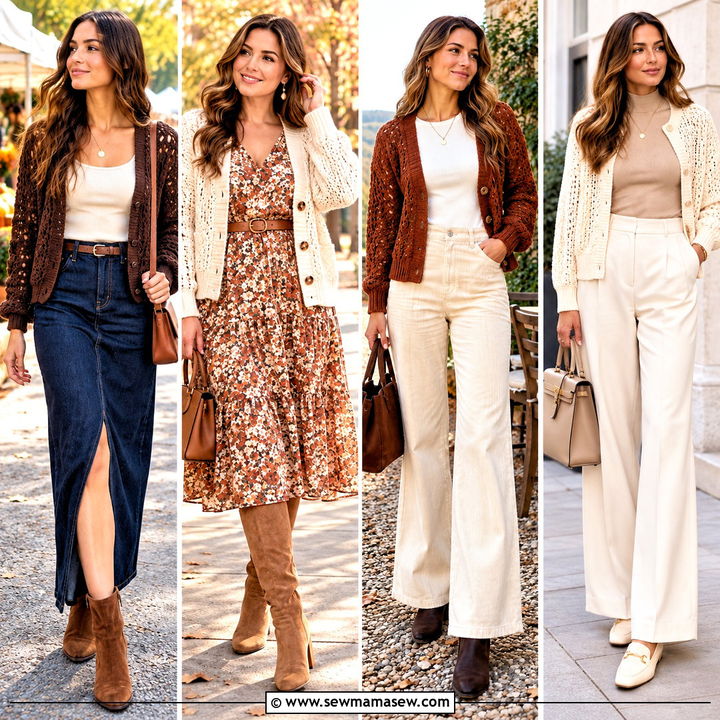
A matching set is comfortable, but two equally busy halves can look like a pattern sample. I balance it by putting the heavier patchwork on one piece and only small accents on the other. Look for pieces that share quilt blocks, colors or fabric panels rather than repeating one exact print. A cropped sweatshirt goes with high-rise straight sweatpants; a longer crewneck suits a tapered jogger. Clean sneakers, a structured crossbody and a long solid coat break up the print. And once you own the set, you have two pieces to wear separately all season.
Adding Your Own Blocks to a Plain Sweatshirt
If you have a solid crewneck and a few fabric scraps, you can make the patchwork version yourself in an afternoon. Appliqué is the easiest route, and it works on any sweatshirt you already like the fit of.
- Prewash the cotton scraps and the sweatshirt first. Woven cotton can shrink a little in its first wash, and if it does that after it's sewn down, the patch puckers.
- Back each patch with a paper-backed fusible web and press it on. It stops the edges from fraying and holds the patch still while you sew.
- Put a tear-away or cut-away stabilizer inside the sweatshirt behind the patch. Fleece stretches as you stitch; without stabilizer, the stitching will ripple.
- Use a ballpoint or stretch needle and a narrow zigzag around the edge. A straight stitch on knit snaps when the fabric stretches over your shoulders or elbows.
- Start with the sleeves or a single block on the chest before covering the whole front, so you can judge how much pattern you actually want to wear.
Placement is where I'd slow down. Try the sweatshirt on and mark patches with pins while you look in a mirror; blocks laid flat on a table often land too low or too far toward the side seam once it's on your body.
One limit to know: heavy fabrics such as thick corduroy or wool coating make stiff patches that don't move with fleece. Quilting cotton, flannel and lightweight denim are the friendliest scraps for a sweatshirt.
Giving a Quilt-Block Crewneck a Clear Shape
Every outfit above follows one rule: the sweatshirt brings the color and texture, and the bottom decides the shape. Straight jeans, trousers, skirts, leggings, a dress or a matching sweatpant each take it somewhere different, and the shoes and coat should go in that same direction rather than adding a new idea. If you're thrifting, look for a solid crewneck with good fleece and add your own blocks; vintage quilt pieces and simple appliqué panels make a sweatshirt nobody else will have. Quiet neutrals or bold mixed prints, the same balance applies.
Related posts: