Autumn in Germany asks a lot of a suitcase. Mornings start cool, afternoons can feel mild, rain arrives without much warning, and you'll walk far more than you expect, over cobblestones, up station stairs and along river paths. When I plan a fall trip there, I pack thin layers I can peel off indoors, one serious outer layer, and shoes I've already worn for a full day at home. A tight color palette does the rest, so every jacket works with every bottom. Berlin in September and Munich in late October are almost different trips, so treat the outfits below as a menu you adjust to your month and forecast.

September, October and November Are Three Different Trips
Germany's fall changes fast, and the month you travel matters more than the city. These are typical patterns for the big cities; mountain areas and the Black Forest run cooler, and any given week can surprise you.
September
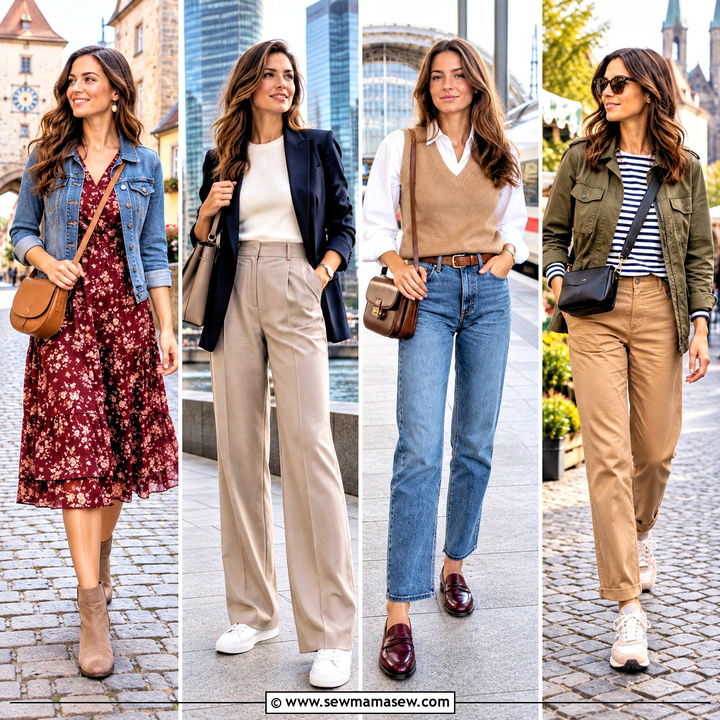
Afternoons are often still mild, in the high 60s Fahrenheit (around 18 to 20°C) on good days, with cool mornings. A trench or denim jacket over a tee and a thin knit is usually enough. This is the month where sneakers and a shirt dress make sense.
October
Daytime highs usually drop into the mid-50s Fahrenheit (low teens Celsius), and gray, damp days become more common. I switch to a wool-blend coat, a closed waterproof boot and a merino layer, and I stop counting on bare ankles.
November
Expect highs in the 40s Fahrenheit (single digits Celsius), early darkness and wind. A long puffer, a thermal base, gloves and a hat are no longer optional, especially for river cruises, markets or castle walks where you're outside for hours.
- Most shops close on Sundays, so buy any forgotten tights or gloves by Saturday.
- Pack one waterproof layer in every month; rain is spread through the season.
- Light fades early by November, so plan outdoor sightseeing for the morning.
1. Germany Fall Airport Outfit
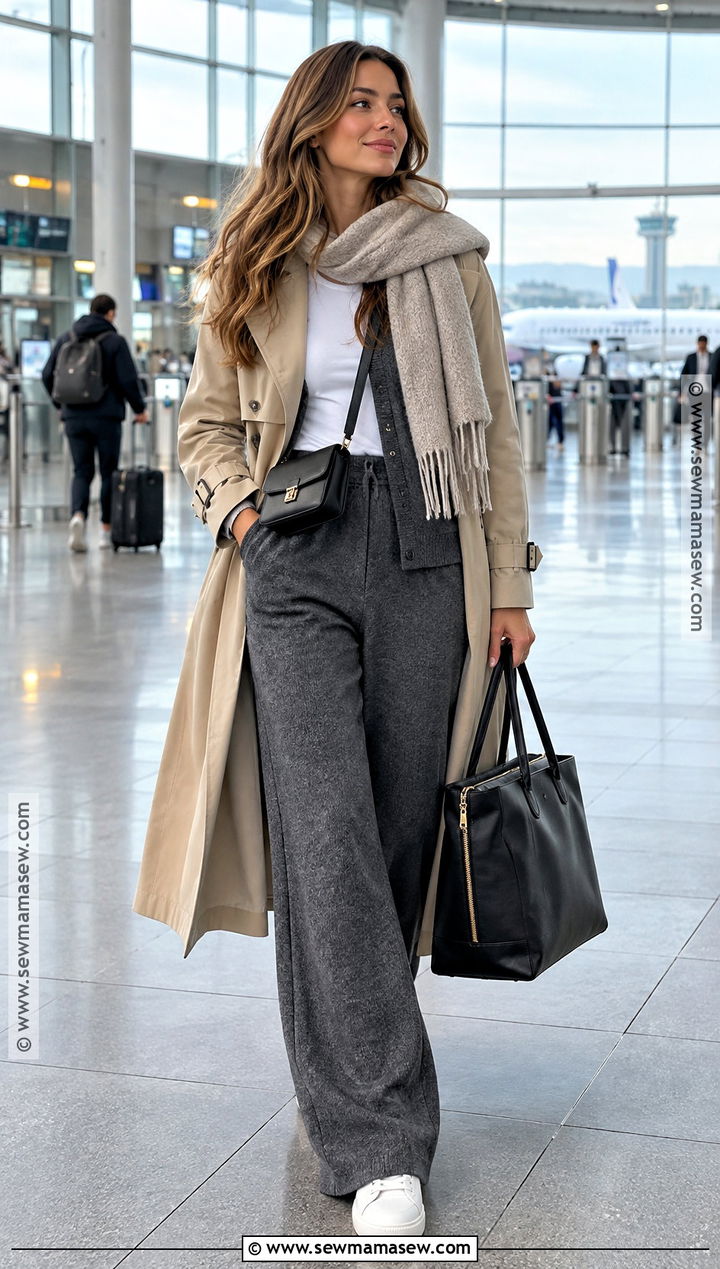
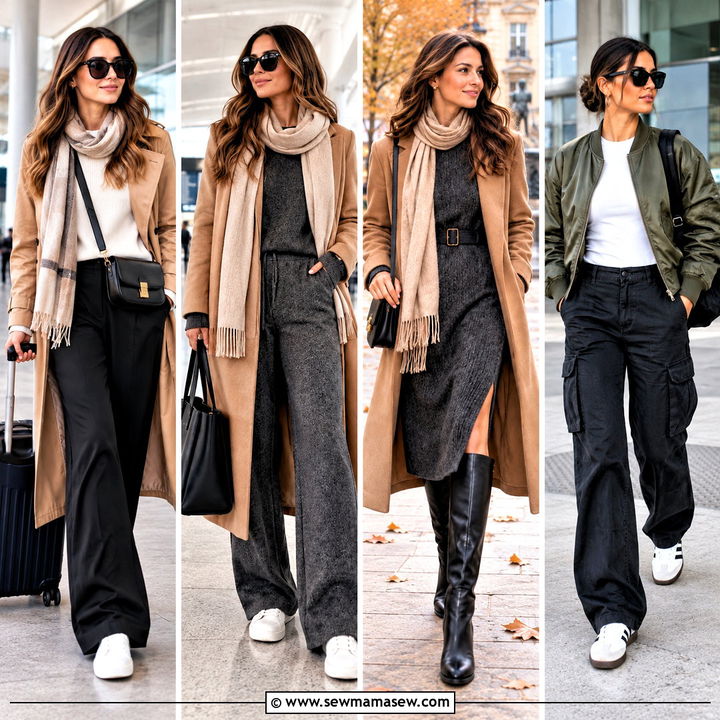
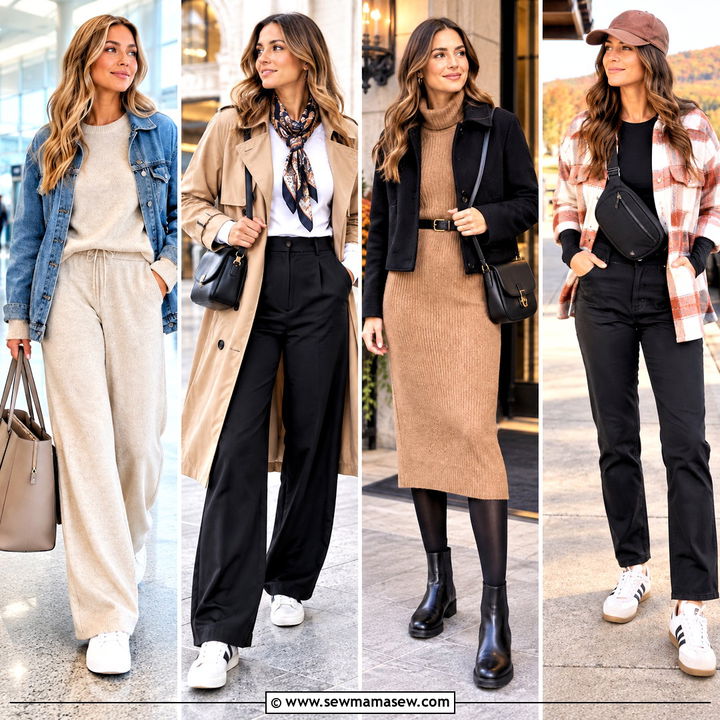
For the flight, I want something that feels like pajamas in the seat and looks like clothes at passport control. A knit set does that: straight or wide-leg knit pants with a matching crewneck in charcoal, navy or taupe, and a fitted cotton tee underneath for when the cabin runs warm. Supportive neutral sneakers make the dash between gates and onto the train easy. The lightweight trench folds into the overhead bin, a zip-top tote holds documents, and a small crossbody keeps your phone on you. Compression socks and a large scarf that doubles as a blanket are the two things I never fly without.
2. Germany Fall Trench Coat Outfit
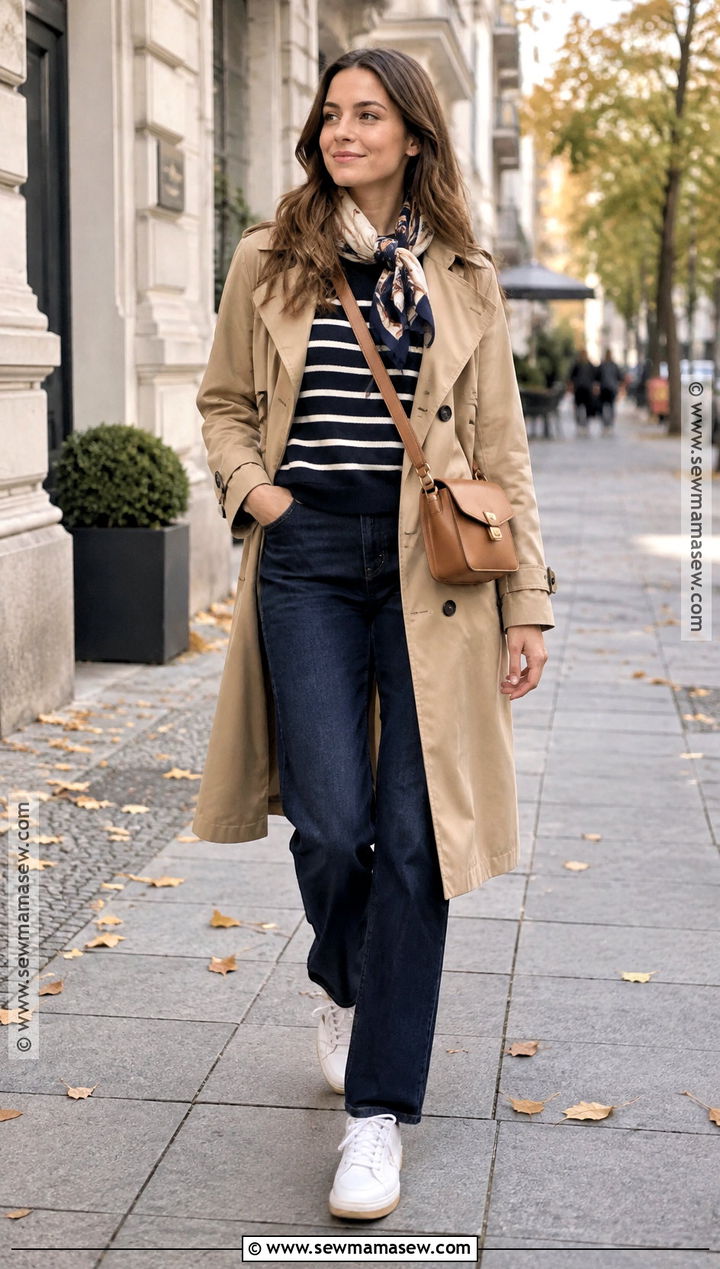
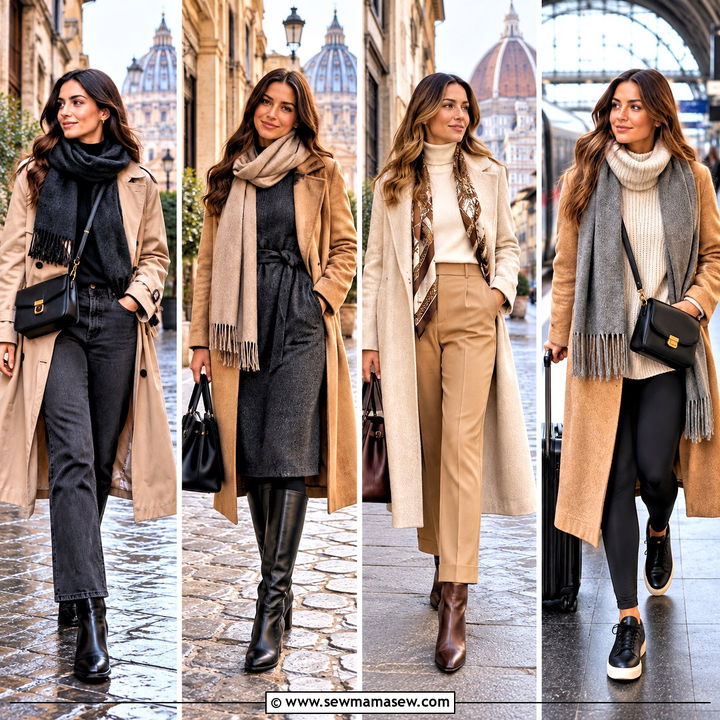
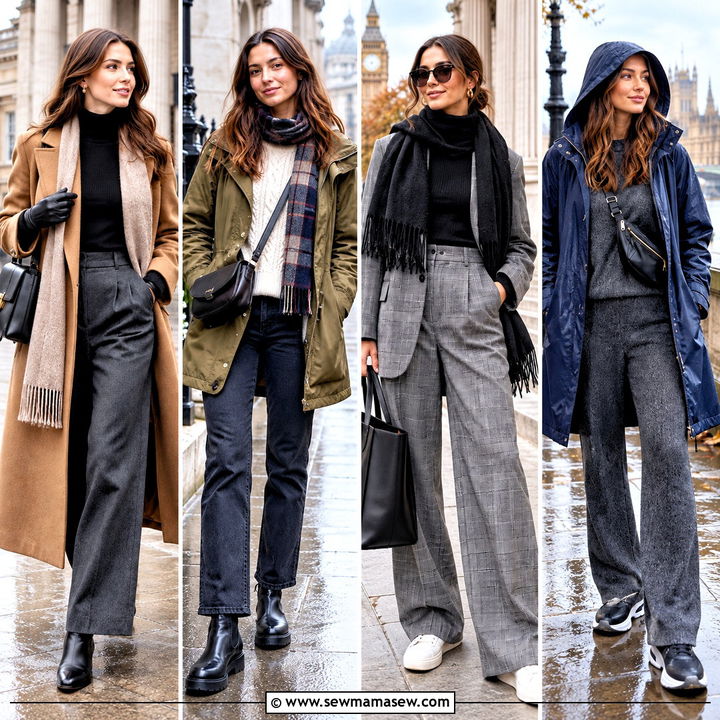
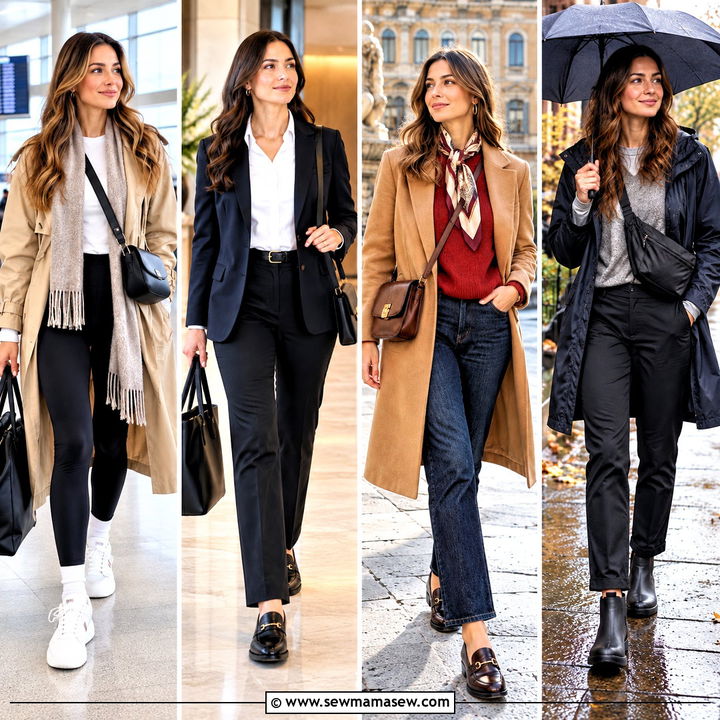
A trench is the most useful coat you can bring for early fall in a German city, because it cuts wind and light drizzle without trapping heat when you duck into a shop. Beige or olive over a thin striped sweater and dark straight-leg jeans looks put together without being formal. Pick water-resistant leather sneakers or low walking shoes with real grip; smooth soles slide on damp cobbles. A zippered crossbody leaves your hands free for photos, and a compact umbrella lives in the bag. On warmer afternoons, wear the trench open or lose the sweater. Those same neutrals turn up again later in the trip with skirts and dresses.
3. Germany Fall Blazer And Trousers Outfit
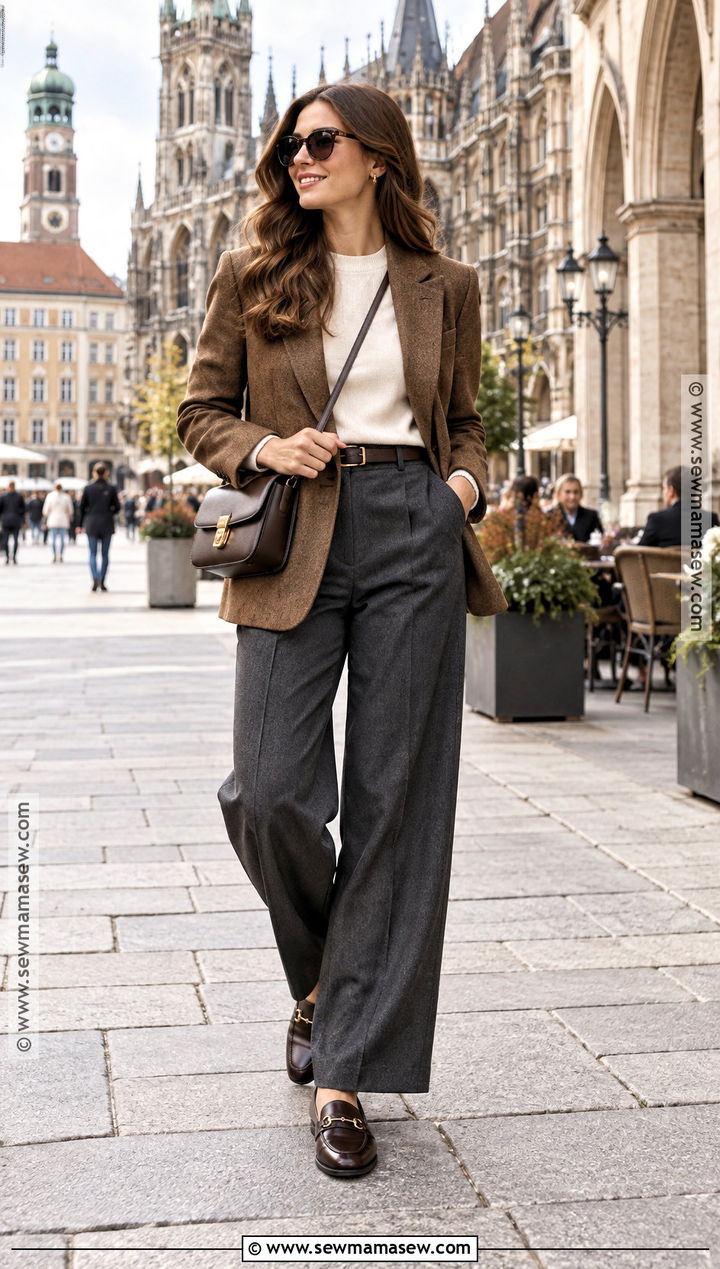
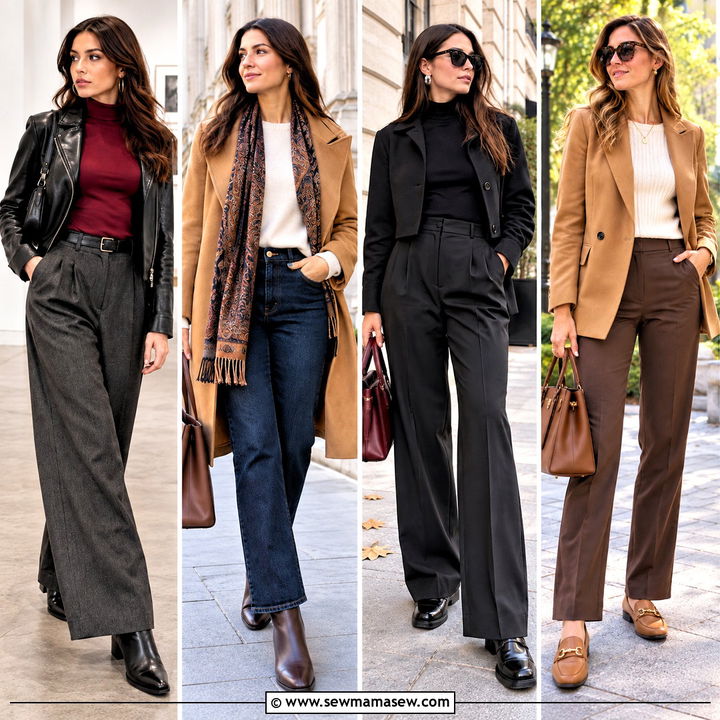
Relaxed tailored trousers, a fine-knit sweater and a structured blazer give you a day in Munich, Frankfurt or Düsseldorf that can end in a nice restaurant. I stick to gray, chocolate, navy and camel because they mix with everything else in the bag. Look for trousers with a bit of stretch or an elastic back waist; you'll be grateful on long train rides and longer lunches. Leather sneakers carry the day, and loafers only come out when the forecast is dry. A slim belt, a structured crossbody and a folded rain shell in the tote cover the rest.
4. Germany Fall Raincoat Outfit
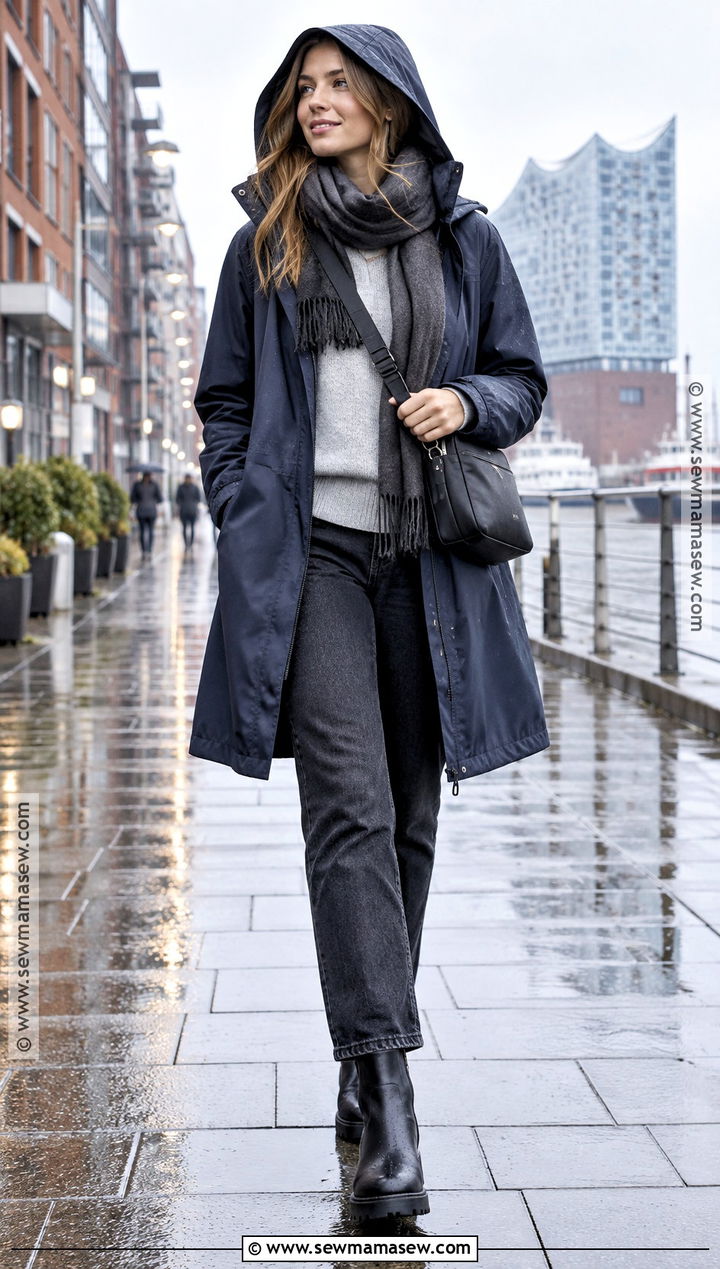
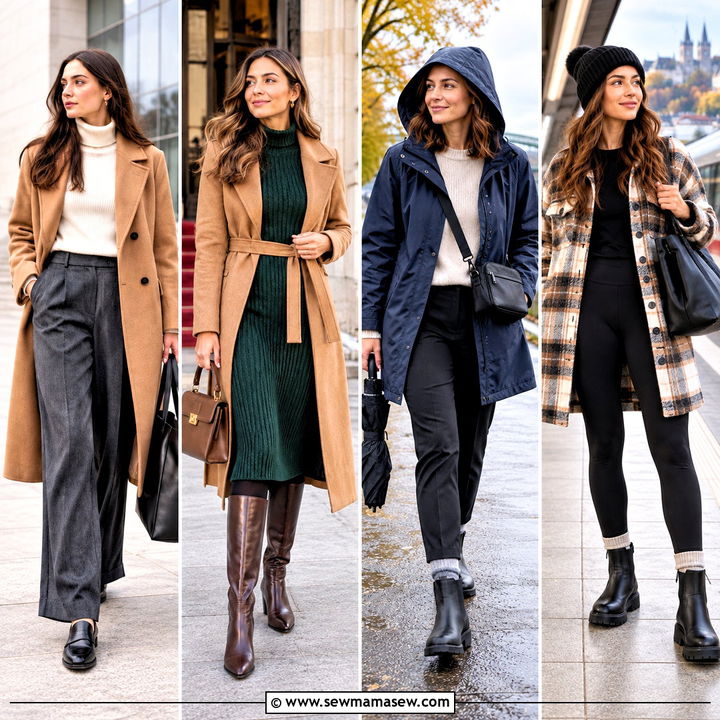
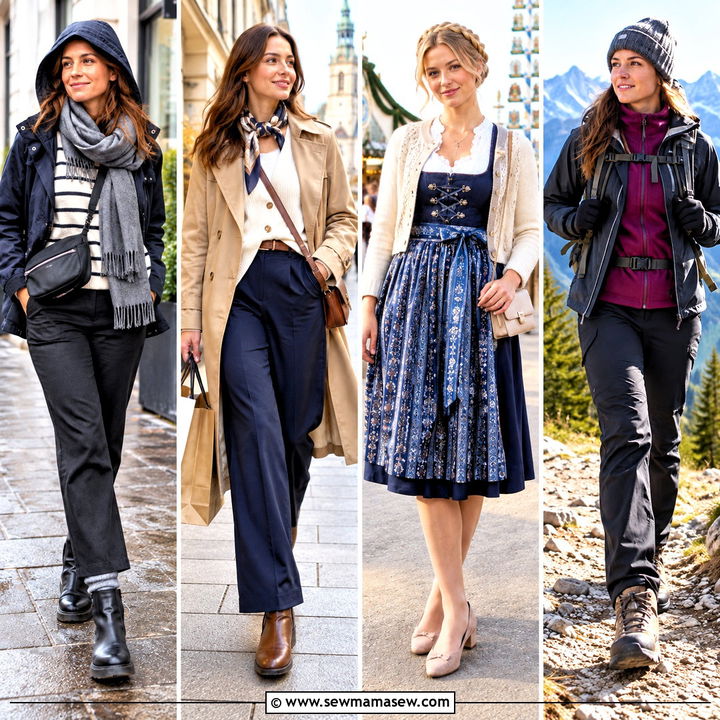
Hamburg and the north get more gray, wet and windy days, so here the raincoat leads. A hooded waterproof coat that reaches the upper thigh keeps your jeans drier than a waist-length jacket, while still letting you climb stairs. Under it, a soft merino sweater is my pick, because merino stays comfortable when you go from wet street to heated café and doesn't hold odor after a day of wear. Dark denim hides splashes, and ankle boots with a textured sole keep you steady on wet pavement. Swap an open tote for a water-resistant crossbody with zips, add a light scarf and thin gloves, and keep the colors related so the rain gear looks chosen rather than emergency.
5. Germany Fall Denim Jacket Outfit
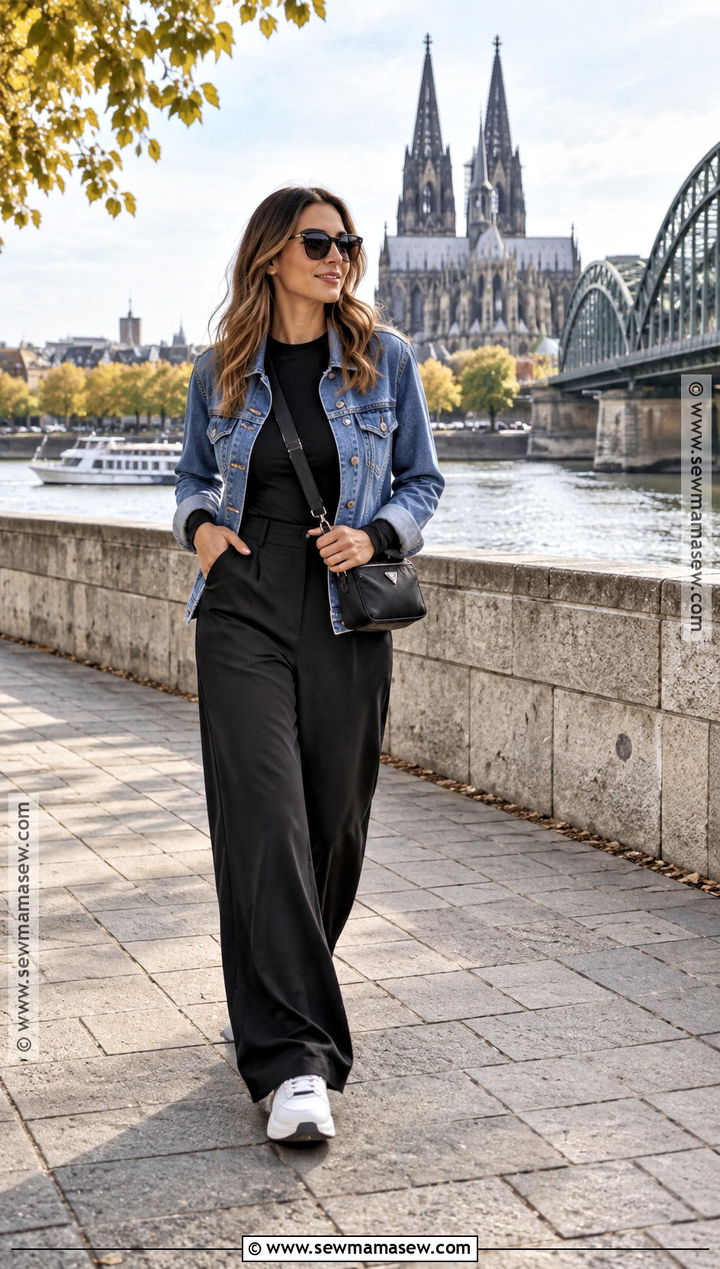
A denim jacket only earns its suitcase space in September. Over a fitted long-sleeve top with black wide-leg trousers and cushioned sneakers, it gives the relaxed trousers some structure for a long walking day. Buy it a touch roomy so a thin sweater fits underneath once the evenings cool. The honest drawback: denim soaks up rain and takes ages to dry, so I always pair it with a packable waterproof shell in the backpack. A nylon crossbody, small hoops and sunglasses finish it.
6. Germany Fall Cardigan And Jeans Outfit
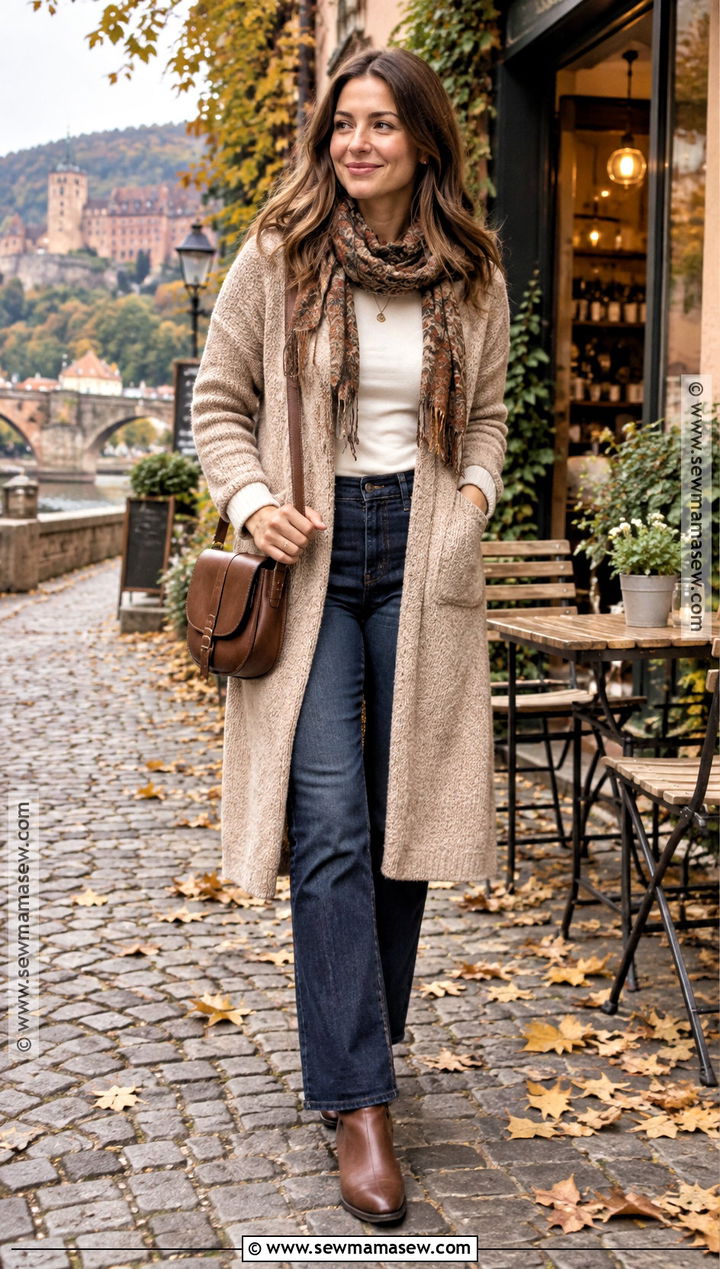
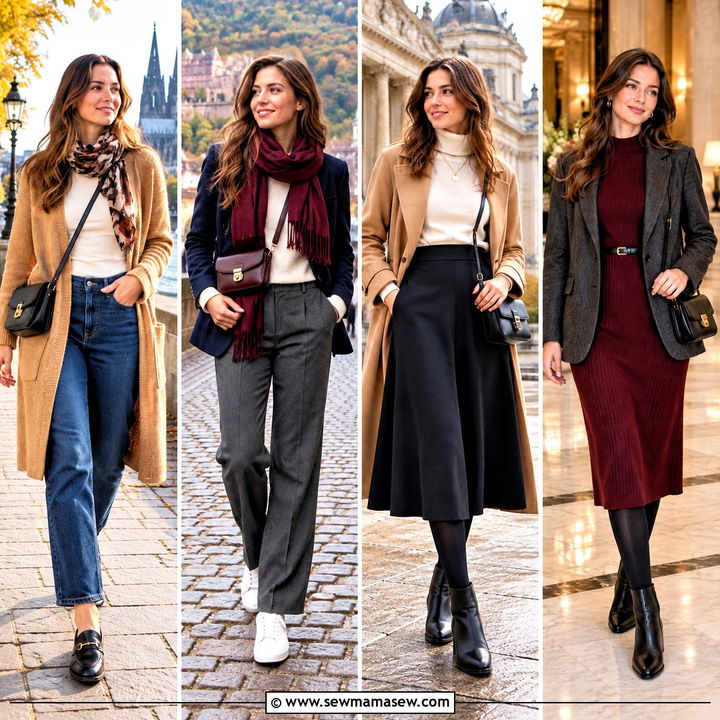
This is the outfit for a slow morning in Heidelberg or Nuremberg that ends at a café table. A long cardigan over a fitted crewneck with straight dark jeans keeps you warm without the bulk of a coat. I'd choose the cardigan in oatmeal, burgundy, forest green or soft gray, and keep the knit fine enough to slide under a trench or raincoat without the sleeves bunching. Leather sneakers for sightseeing days, low ankle boots on colder ones. A patterned scarf and studs are enough; the cardigan rewears with nearly every top you pack.
7. Germany Fall Castle Outfit
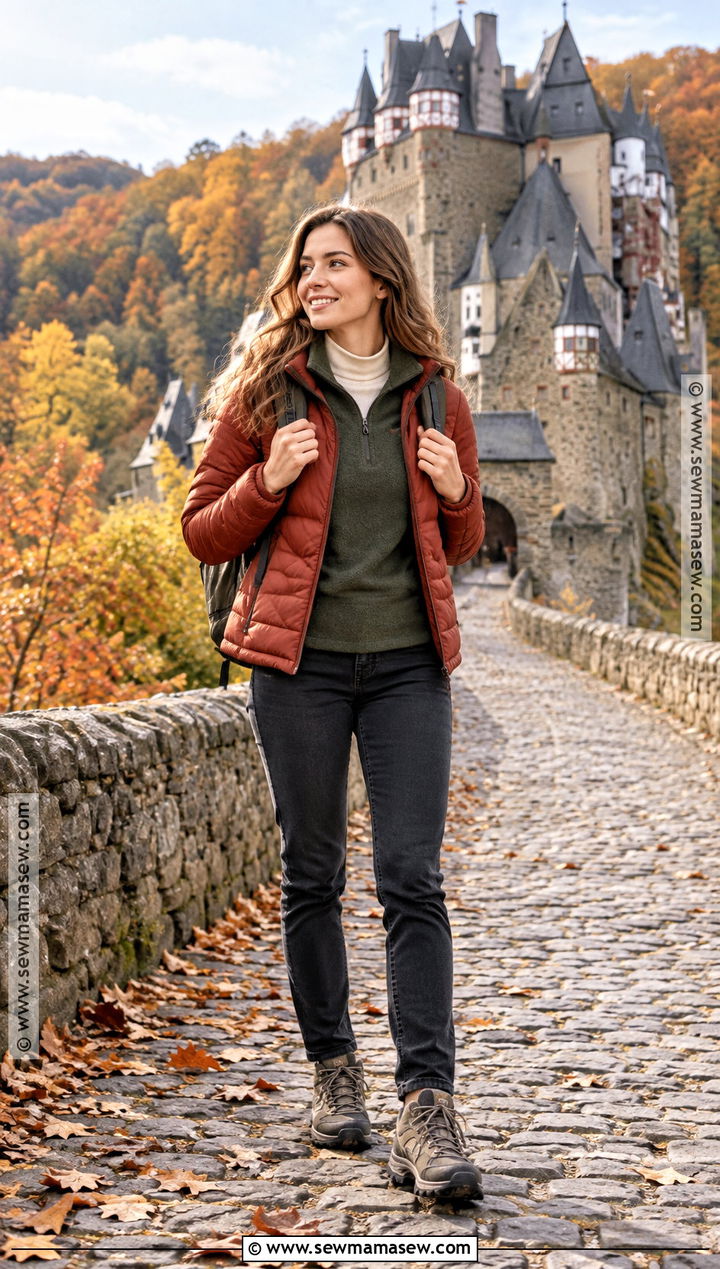
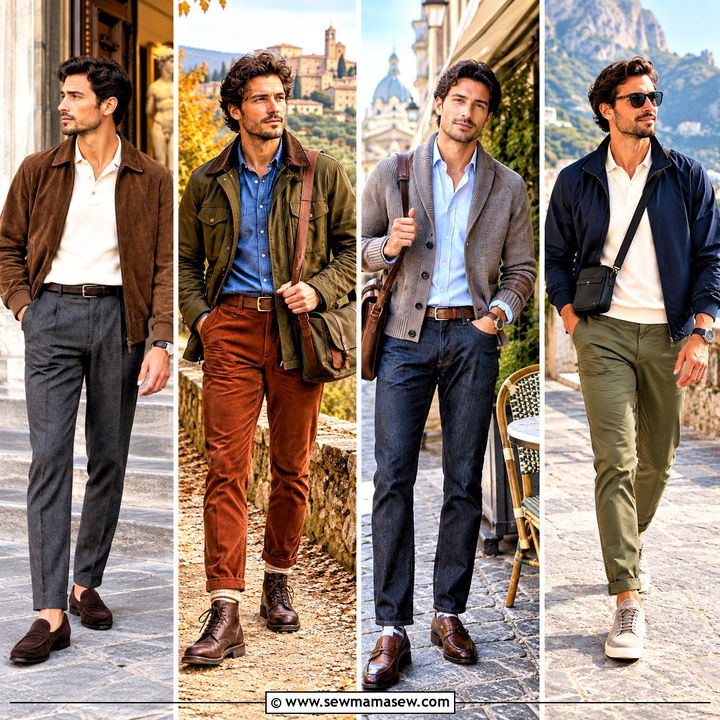
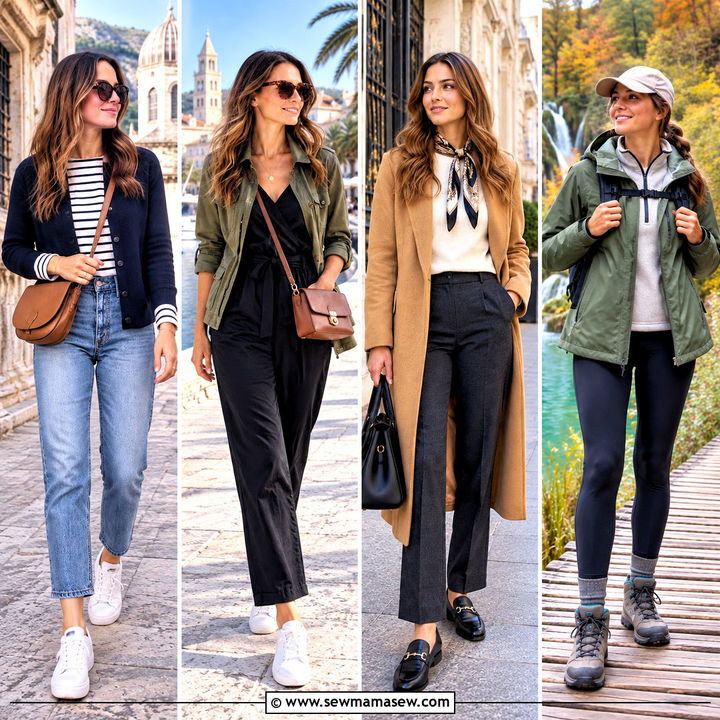
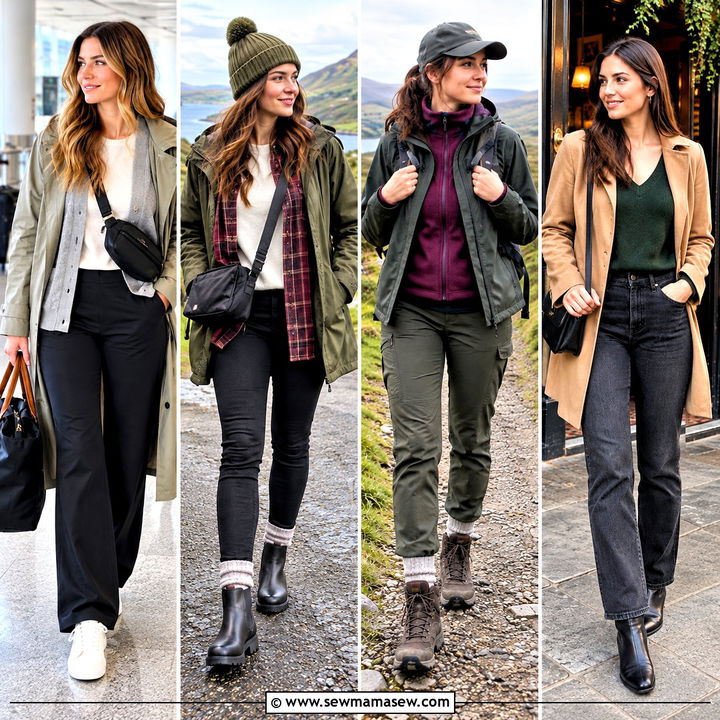
Castles are usually up a hill, and getting to them means gravel paths, steep stairs and exposed viewpoints where the wind picks up. I dress for the walk, not the photo. A breathable long-sleeve base, a quarter-zip fleece or light wool sweater, and flexible dark jeans or travel pants come first. A quilted jacket adds warmth without the weight of a winter coat. Water-resistant hiking sneakers or ankle boots with a lugged sole handle damp gravel far better than city flats. Olive, cream, rust and chocolate look right against stone walls, and a small backpack holds the layer you'll inevitably take off on the climb.
8. Germany Fall Rhine Valley Outfit
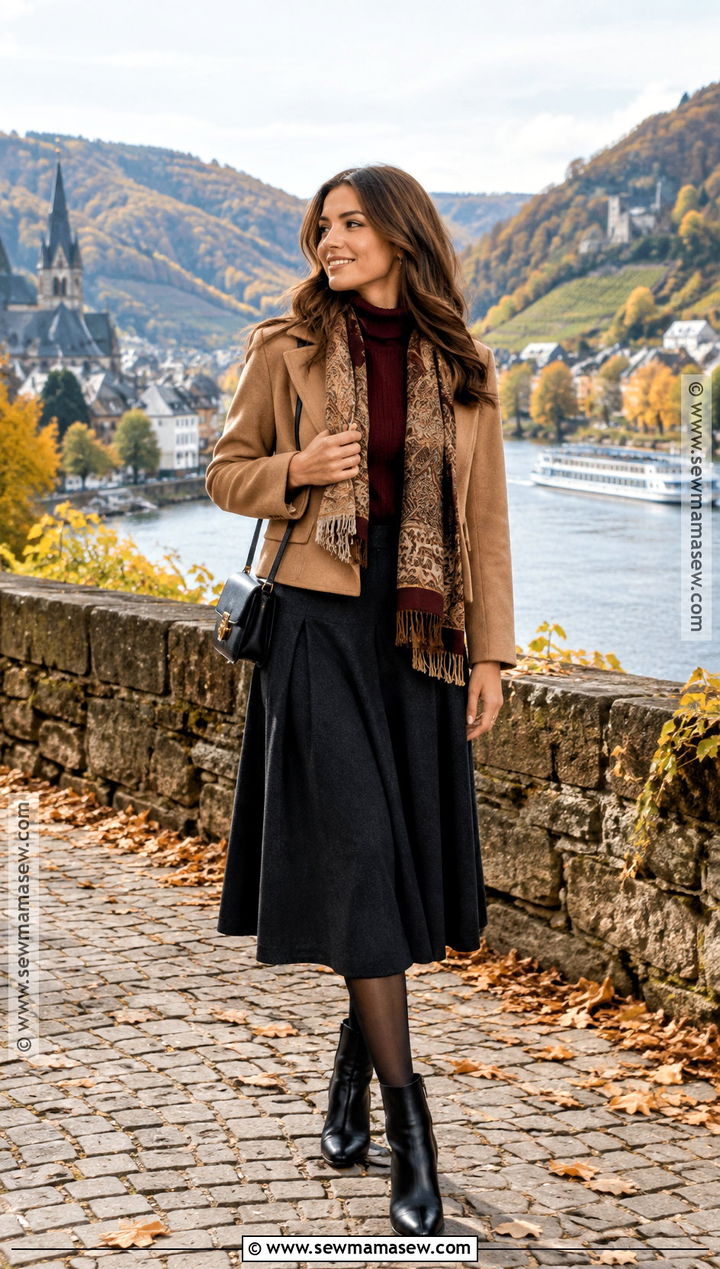
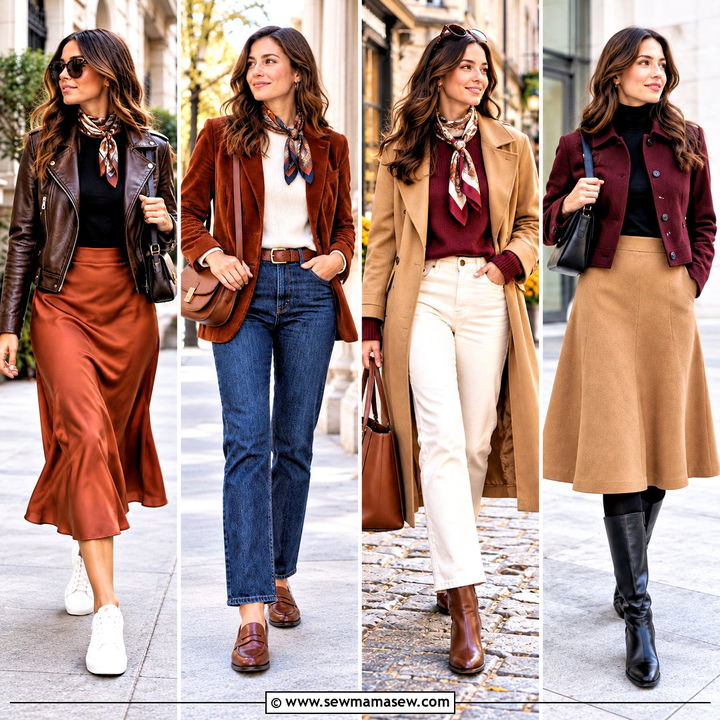
A day on the Rhine mixes boat decks, station transfers and village lanes, and the river breeze is cooler than the town. I like a fitted mock-neck sweater with an A-line midi skirt in a heavier knit, denim or washable satin. Semi-opaque tights, low ankle boots with nonslip soles and a cropped utility jacket or short wool-blend coat keep the proportions balanced and the wind out. Midi skirts can lift on an open deck, which is why I avoid anything too light. A secure crossbody stays close on the boat, and a small scarf adds color. If rain is forecast, swap the skirt for straight trousers.
9. Germany Fall Black Forest Outfit
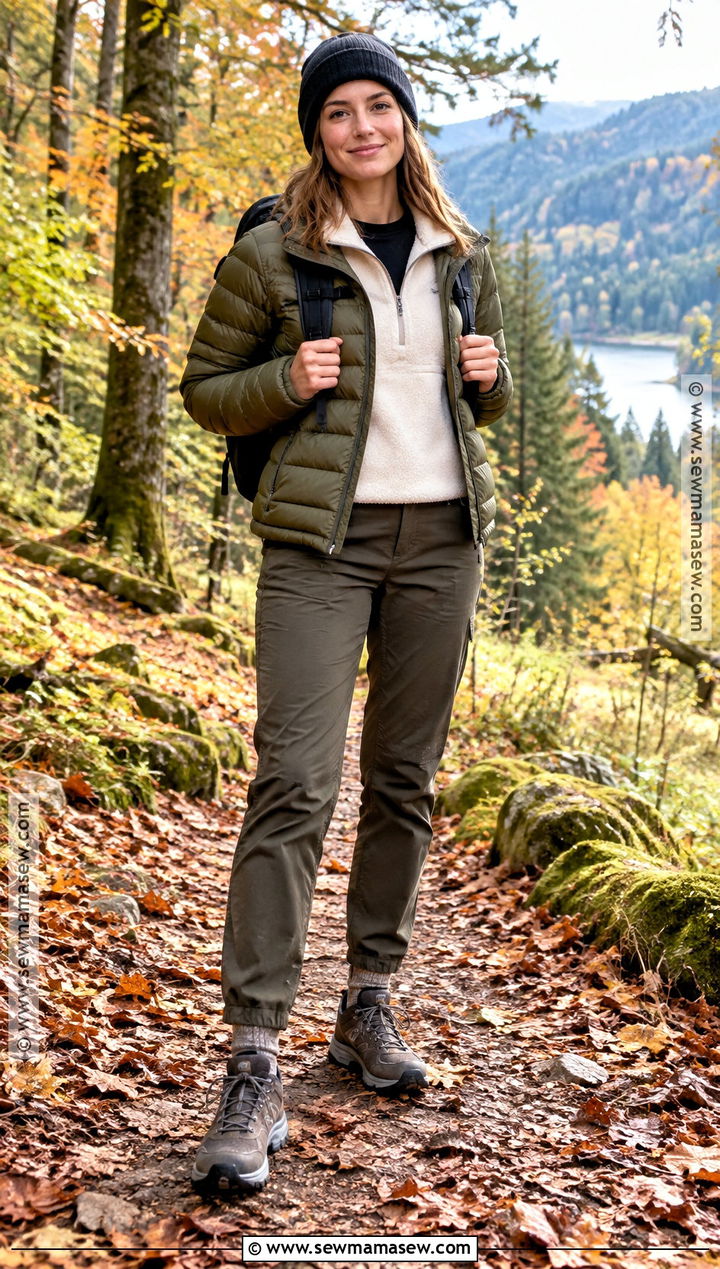
The Black Forest is trail clothing, not city clothing, and I'd treat it that way. A moisture-wicking long-sleeve top goes under a light fleece, with a packable puffer or waterproof shell on top depending on the forecast. Straight hiking pants or thick, opaque leggings with zip pockets give you stretch for climbs. Waterproof trail shoes or hiking boots must be broken in before you leave home; a forest trail is the worst place to find a rubbing heel. Wool-blend socks, a beanie and thin gloves for later in the season, plus a slim backpack with water and a rain cover. Black, olive, tan and cream look good among the trees.
10. Germany Fall Train Travel Outfit
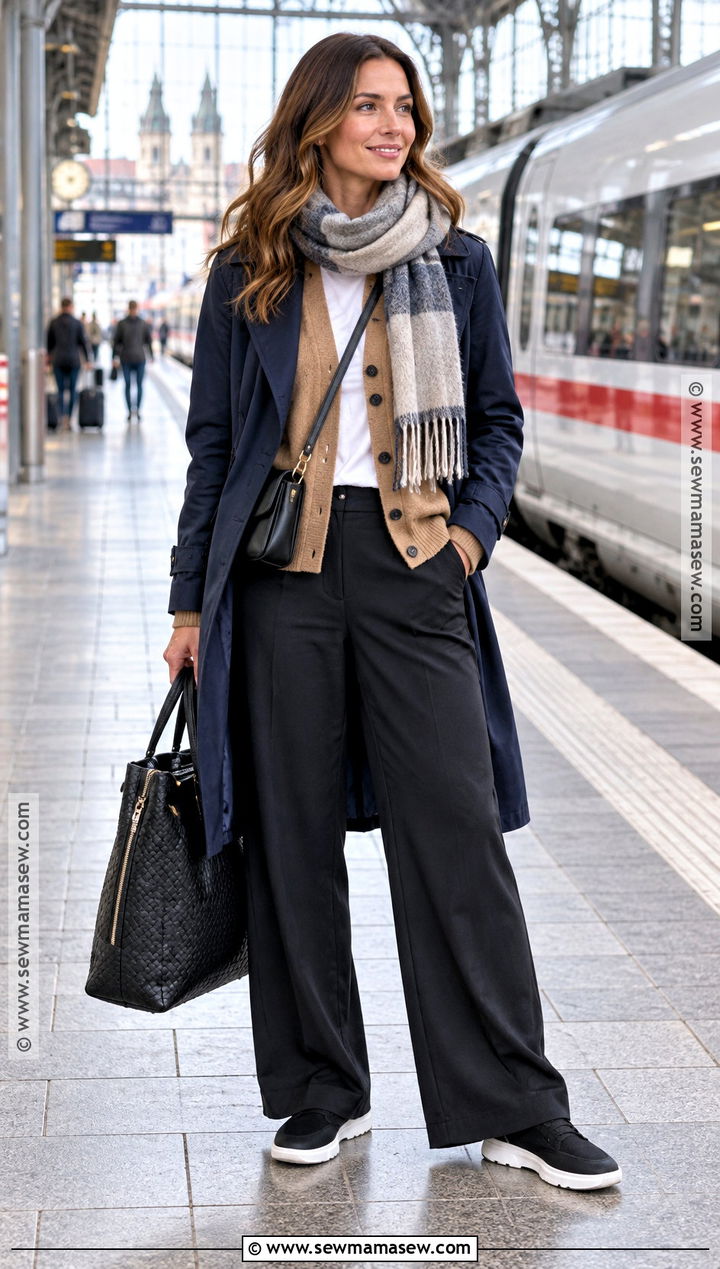
German travel days involve more standing than people expect: long platforms, connections and waits before you finally sit. Pull-on wide-leg trousers, a breathable tee and a soft button-front cardigan handle both. A light trench or packable quilted jacket comes off easily once you're in your seat. Cushioned slip-on sneakers beat thin flats for platform walking. Wear a slim crossbody under the outer layer and keep snacks and chargers in a zip-top tote. I check every fabric for creasing before packing; after three hours seated, wrinkle-resistant trousers still look neat when you step off for sightseeing.
11. Germany Fall Museum Outfit
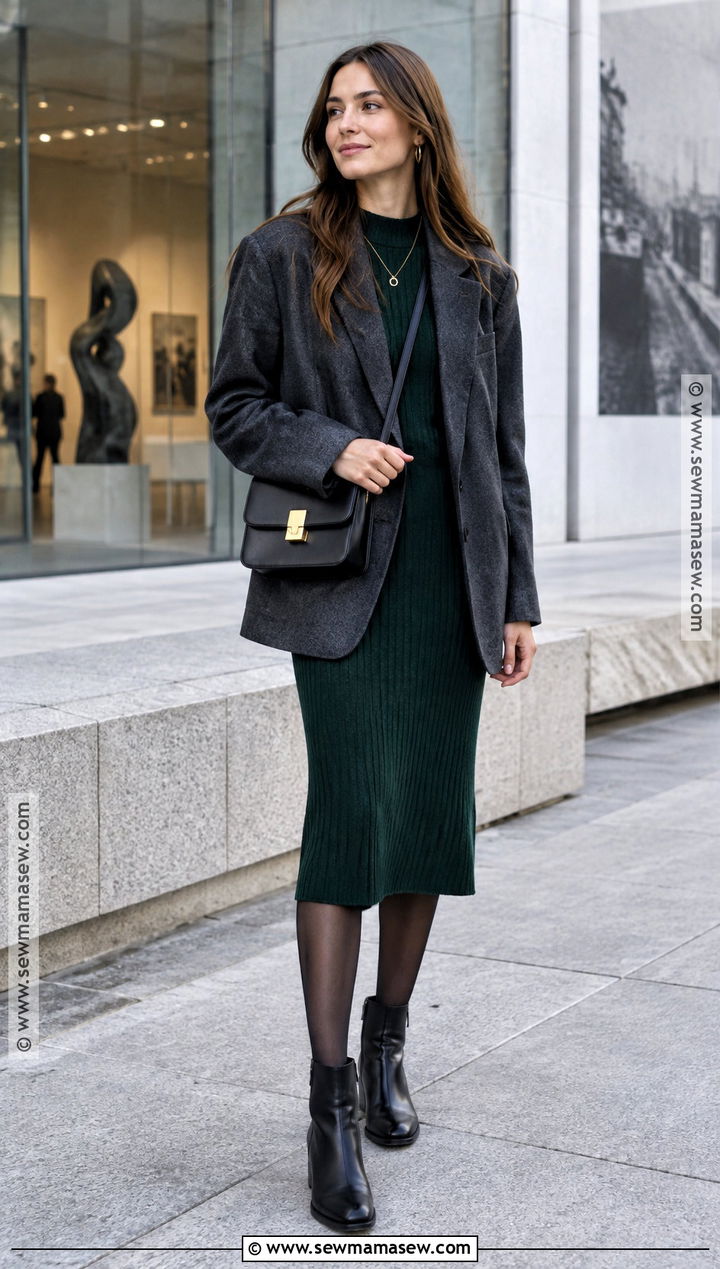
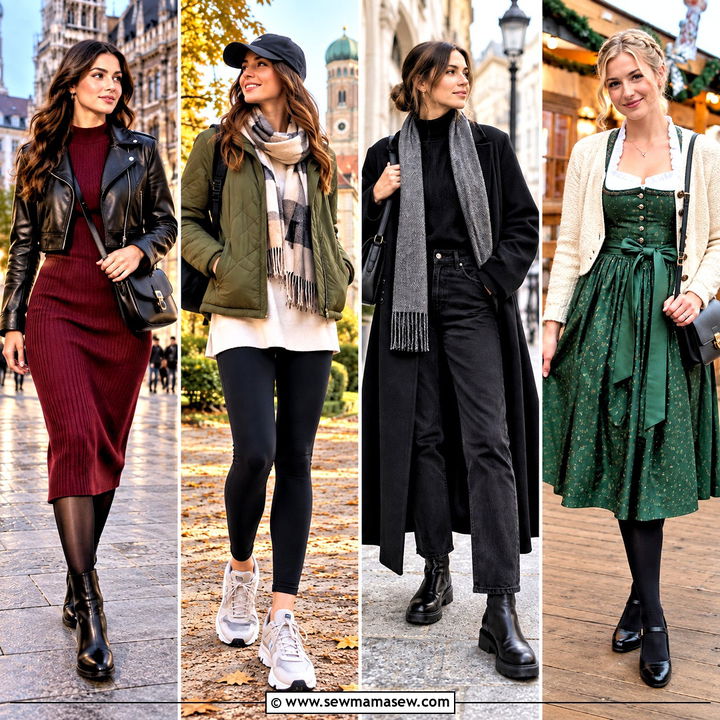
Museums swing between cold entrance halls and warm galleries, so I build this one to adjust indoors. A ribbed knit midi dress that skims rather than clings leaves room for tights or a thin thermal later in the season. Over it, an oversized blazer in charcoal, brown check or deep navy adds shape without restricting your arms. Hours of standing on hard gallery floors are why I'd pick flat or block-heel ankle boots over anything taller. Keep the bag small, because many museums ask you to check larger bags. A trench over the blazer handles rain, and the outfit is fine for a concert or dinner afterward.
12. Germany Fall Cafe Outfit
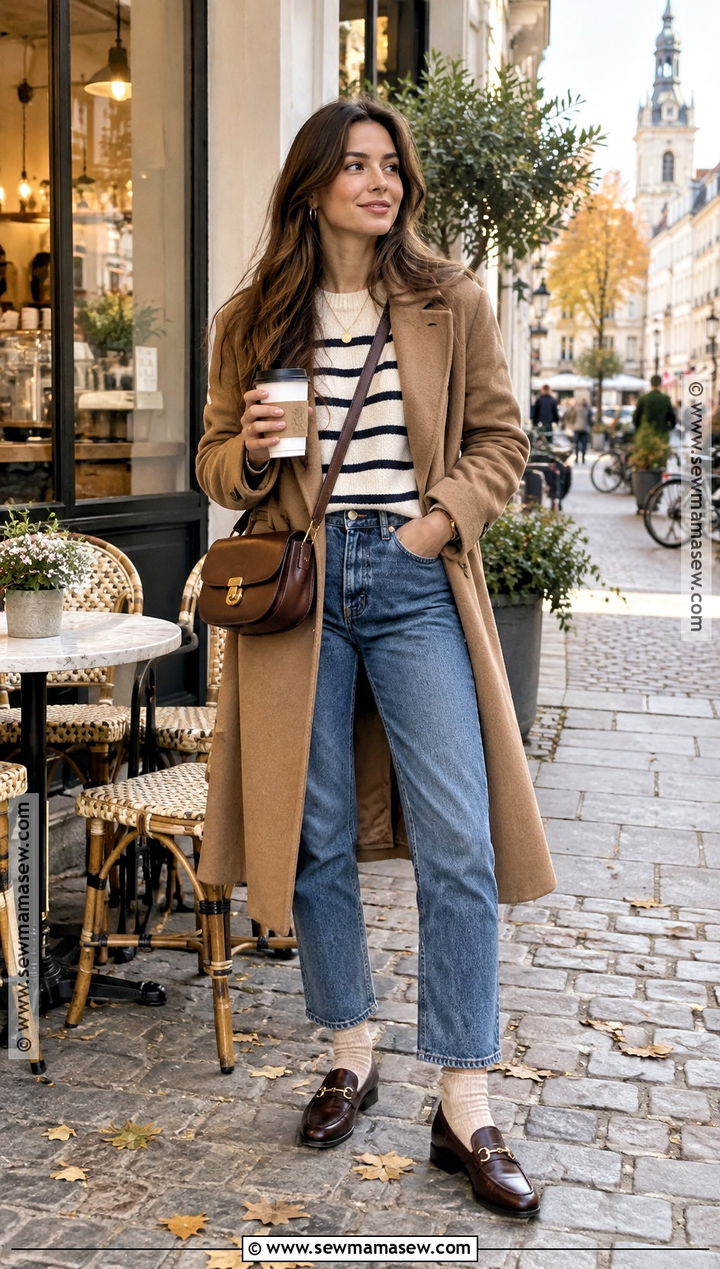
For a slow day of neighborhood wandering and coffee stops, a striped knit with cropped straight-leg jeans and loafers is easy to like. A camel wool-blend coat or relaxed trench goes over it. Two cautions from experience: leather-soled loafers are slippery on wet stone, so choose rubber soles or switch to water-resistant ankle boots; and bare ankles feel cold from October on, so add socks that coordinate or wear full-length jeans. A leather crossbody, gold-tone jewelry and a soft scarf finish it, and the stripes rework with trousers and skirts all week.
13. Germany Early Fall Shirt Dress Outfit
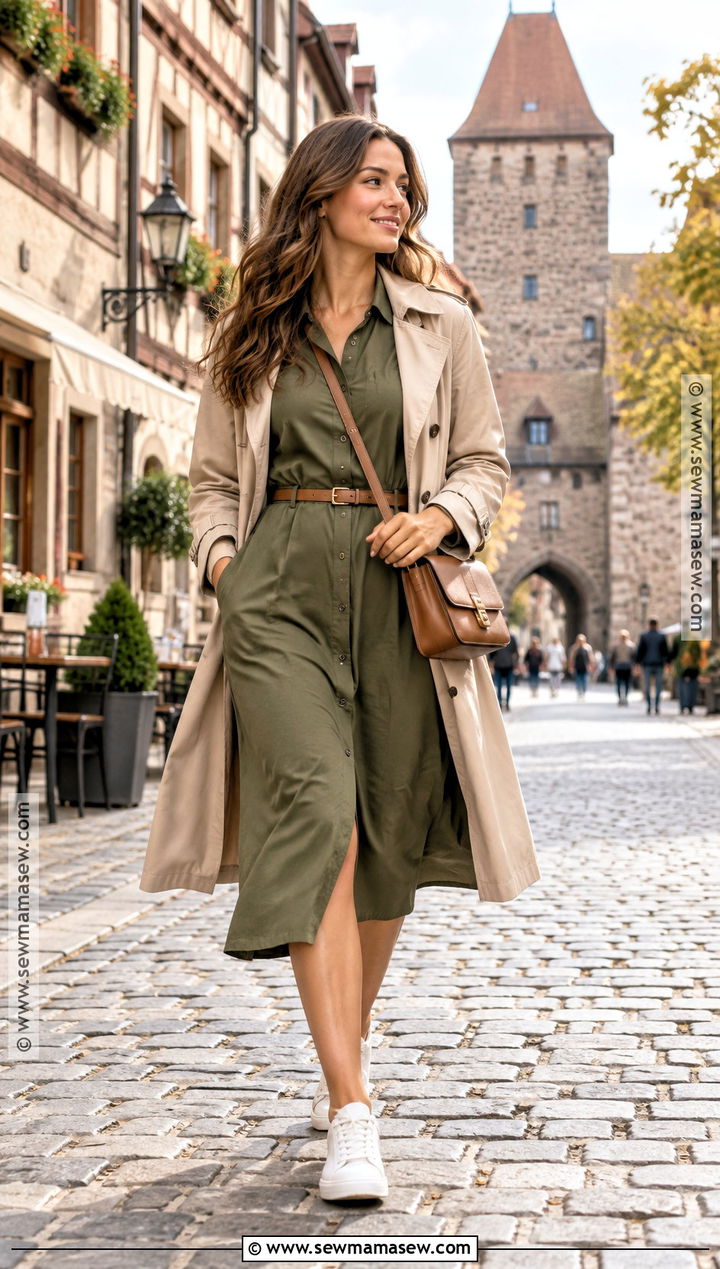
A long-sleeve shirt dress is one of the most packable pieces I know, because it's a whole outfit in one item. A midi in navy, olive, chocolate or a quiet print, belted at the waist, goes with leather sneakers and a trench for warm September days. When the evening cools, add a fine-knit cardigan, sheer tights and low ankle boots. Roll the sleeves while it's mild and button them at the wrist later. A structured crossbody keeps it neat on trams and busy streets, and it's an easy anchor for a carry-on-only wardrobe.
14. Germany October Turtleneck Outfit
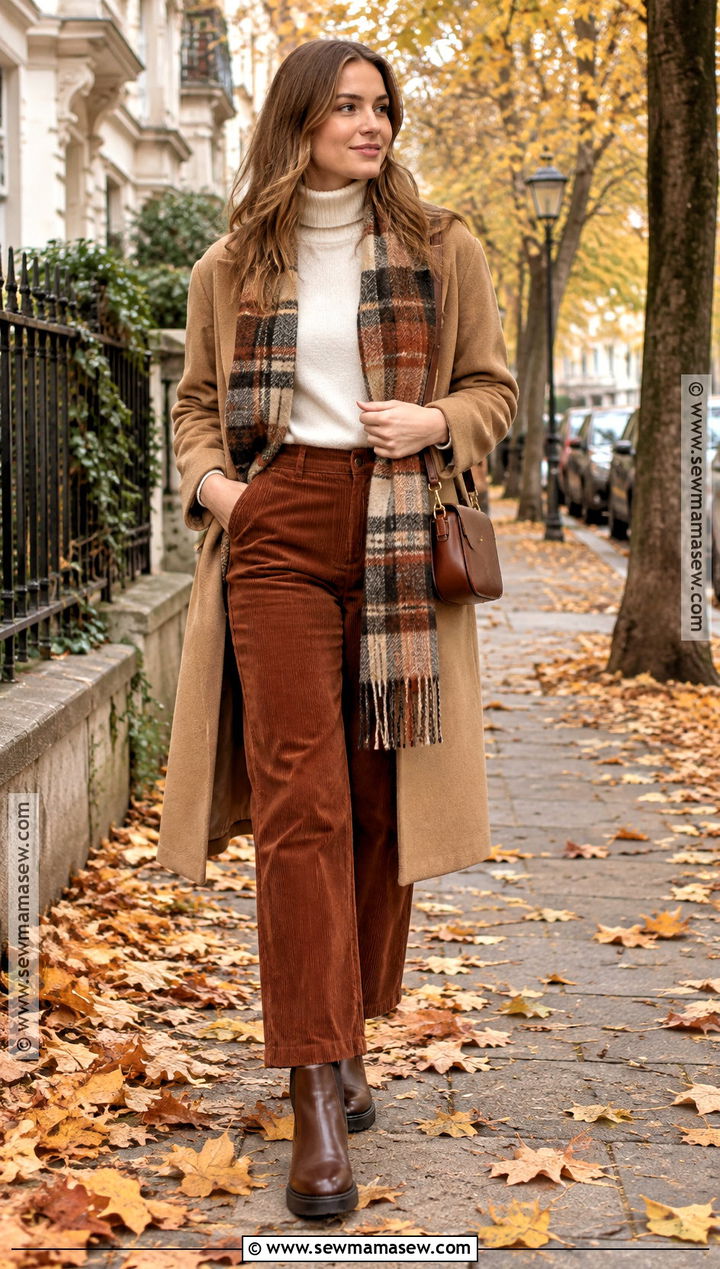
October is when I start packing corduroy and a proper coat. A close-fitting turtleneck, straight or slightly wide corduroy trousers and a midweight wool-blend coat cover most days, with room under the trousers for a thermal if a cold snap arrives. Camel, burgundy, dark green and espresso are warm without being hard to mix. Waterproof Chelsea boots and wool-blend socks keep you comfortable on long city walks. Buy the coat with a little ease across the back, since you'll want a cardigan under it some days. A plaid scarf and a zip-top crossbody finish it for markets, old towns and dinner.
15. Germany November Puffer Outfit
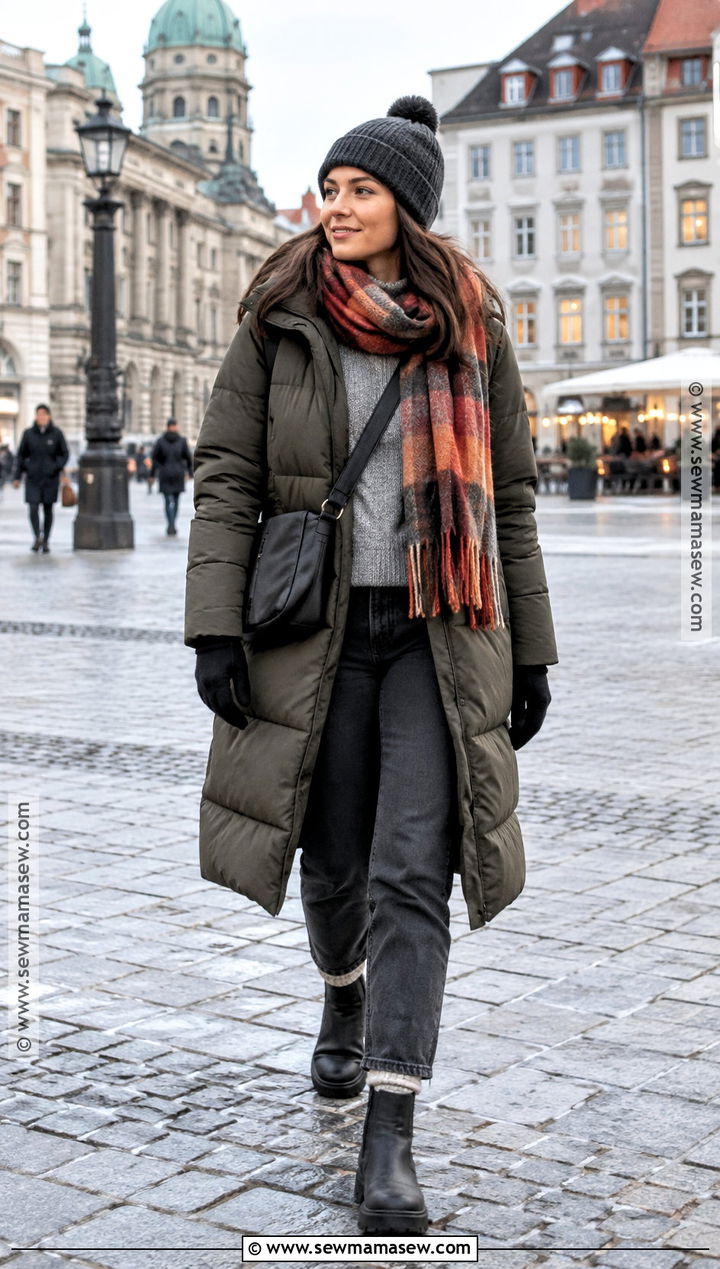
By November, the days are short and outdoor sightseeing feels cold by midafternoon. I layer a thin thermal top under a fine merino sweater instead of one thick knit, because two thin layers trap more warmth and let you strip down indoors. Dark jeans or lined travel pants go under a knee-length packable puffer, which covers more of you than a hip-length jacket. Waterproof ankle boots, warm socks, a beanie and touchscreen gloves finish the practical side. A bright scarf near the face helps in photos against gray skies, and a water-resistant bag keeps things dry.
16. Germany Fall Leather Jacket Outfit
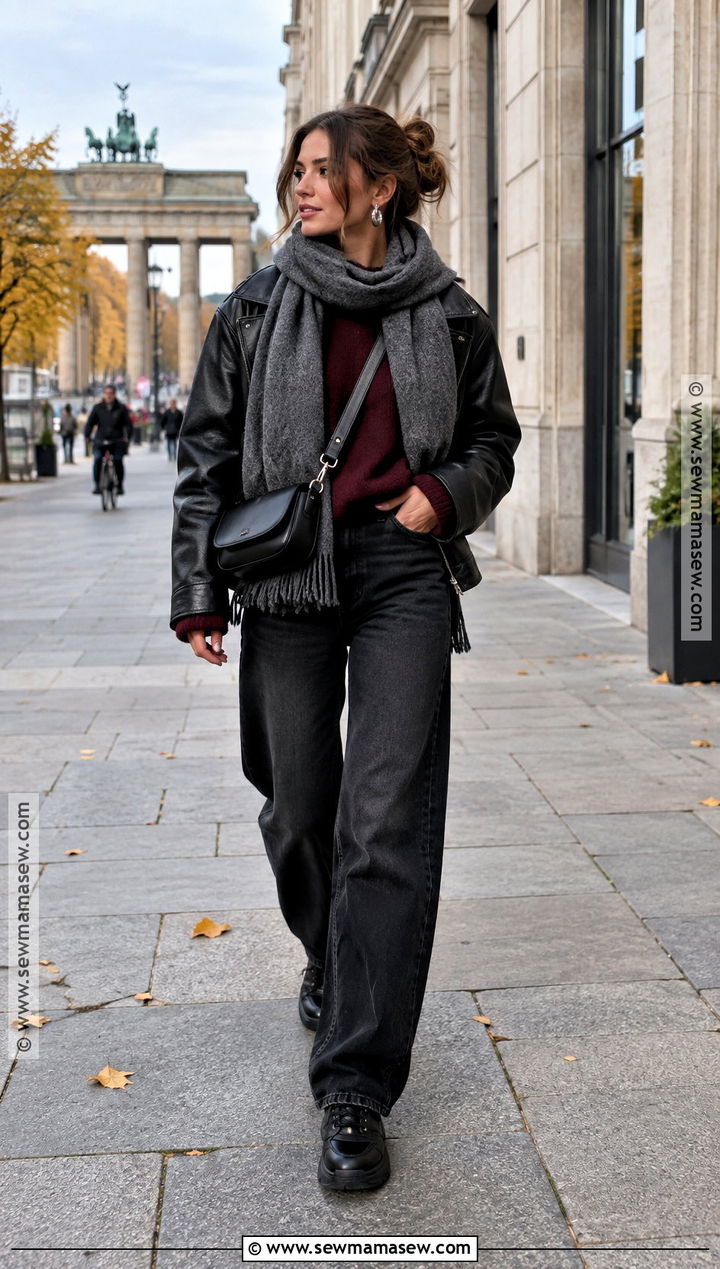
Berlin suits a bit more edge, and a leather or good faux-leather jacket gives you that. Wear it over a soft crewneck with relaxed black jeans or tailored cargos. I size the jacket with a sweater on, since a tight cropped fit won't layer once it gets cold. Chunky leather sneakers or flat lace-up boots carry the stronger lines and long walking days. Leather isn't a rain layer; it spots and stiffens when soaked, so a thin waterproof shell rides along on wet days. Small silver earrings and a gray or burgundy scarf finish it, and the jacket later goes over a knit dress or button-down.
17. Germany Fall Business Travel Outfit
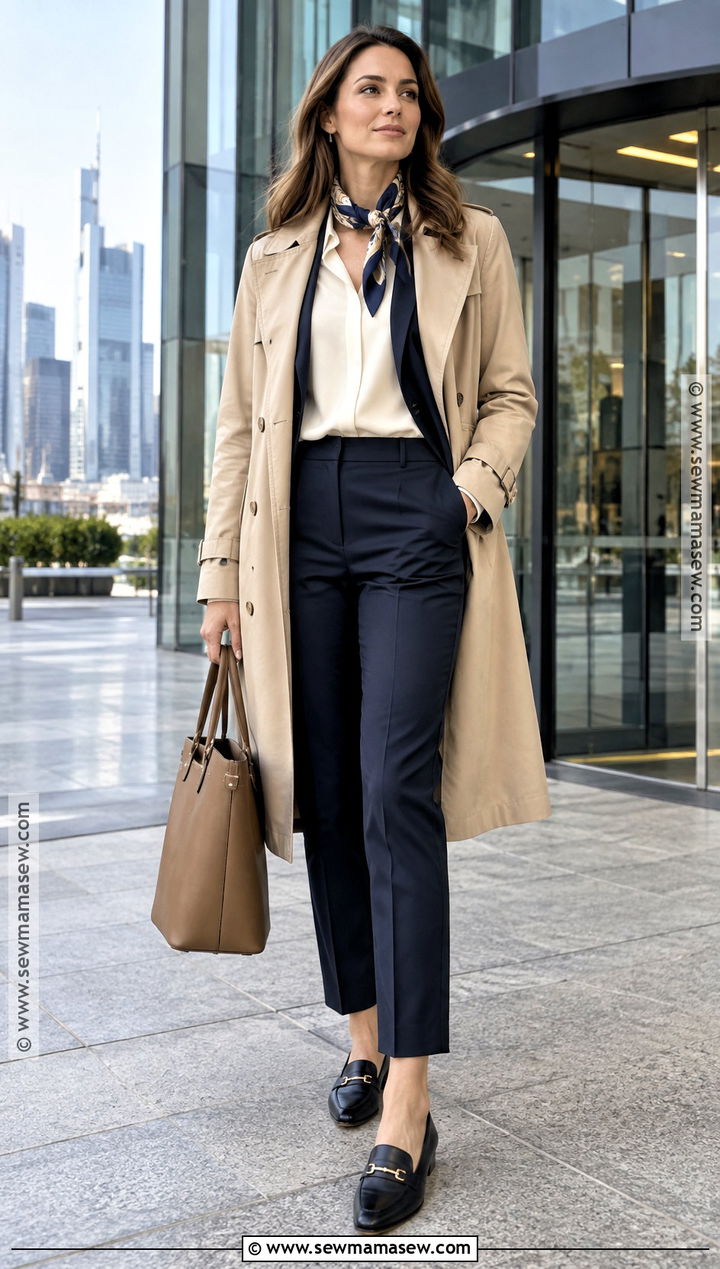
Business travel means looking professional at the meeting and surviving the commute to it. Ankle-length tailored trousers, a washable silk-look blouse and a soft knit blazer pack small and recover from the suitcase quickly. I keep it tonal: navy with blue, charcoal with ivory, chocolate with beige. Pointed loafers with cushioned insoles look sharper than sneakers and are far kinder than heels on stone streets. A water-resistant trench and a tote that zips closed protect your laptop. After meetings, drop the blazer and swap to sneakers for an evening walk.
18. Germany Fall Dinner Outfit
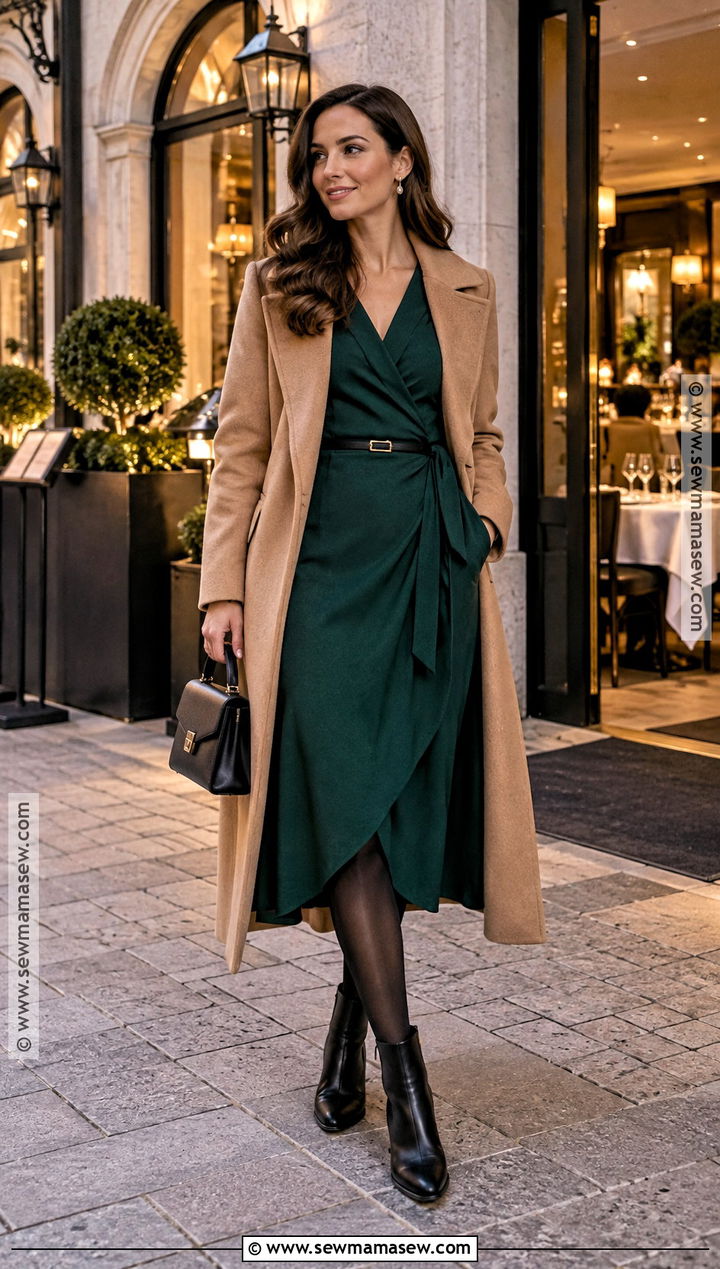
One dressier outfit is all most trips need, and I'd make it a long-sleeve wrap or softly tailored midi dress. Emerald, burgundy, navy and plum look seasonal and still sit well under neutral outerwear. Semi-opaque tights and sleek ankle boots with a low block heel make the walk back to the hotel comfortable on cobbles; a slim stiletto heel catches in the gaps between stones. Bring a long wool-blend coat that fully covers the hem on October and November evenings, plus a compact bag and delicate earrings. If you don't wear dresses, a draped blouse with wide-leg trousers works with the same coat and boots.
19. Germany Fall Oktoberfest Outfit
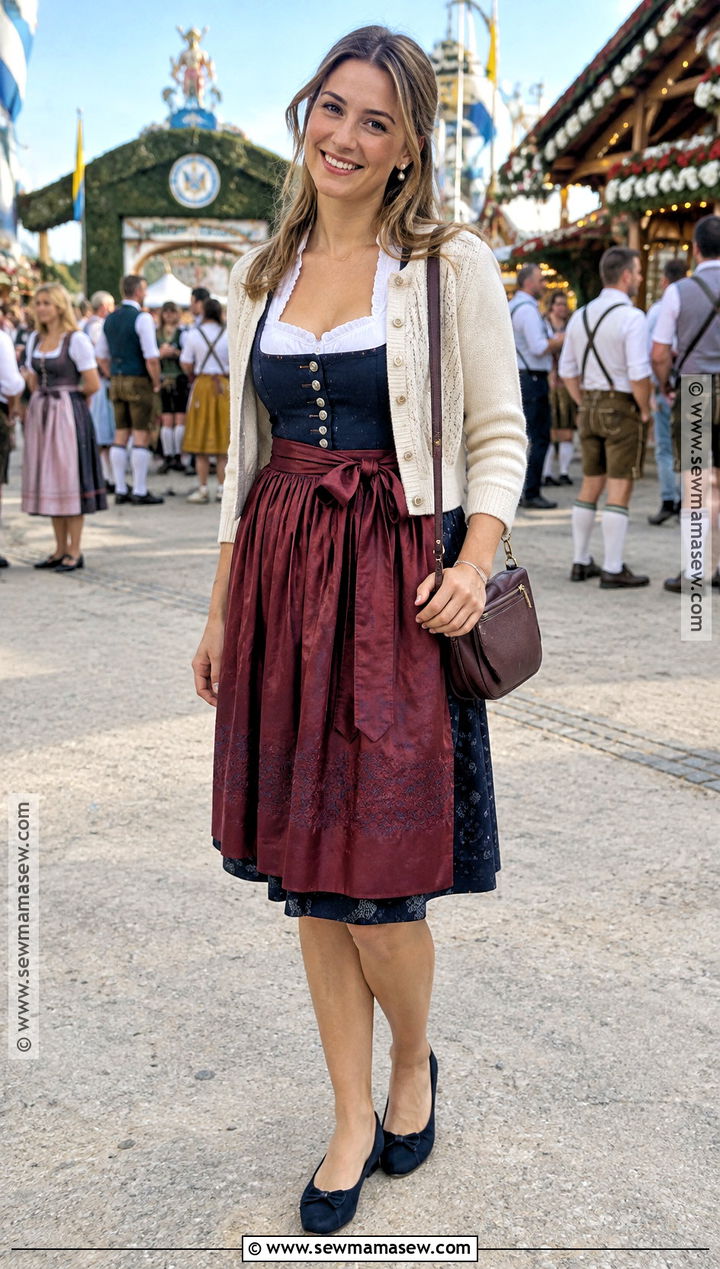
If you'd like to wear traditional dress at Oktoberfest, a knee-length or midi dirndl with its blouse and apron is festive and fine to wear, as long as you treat it as clothing, not costume. Choose a blouse neckline you won't be adjusting all day and a dress you can sit and climb benches in. Closed-toe flats or a low block heel beat anything higher, because the grounds are crowded and floors get wet. Mornings and nights are cool, so a fitted cardigan or cropped wool jacket comes along, with a zipped crossbody in the crowds. I also suggest close-fitting shorts underneath. Plain trousers and a sweater are a perfectly normal alternative.
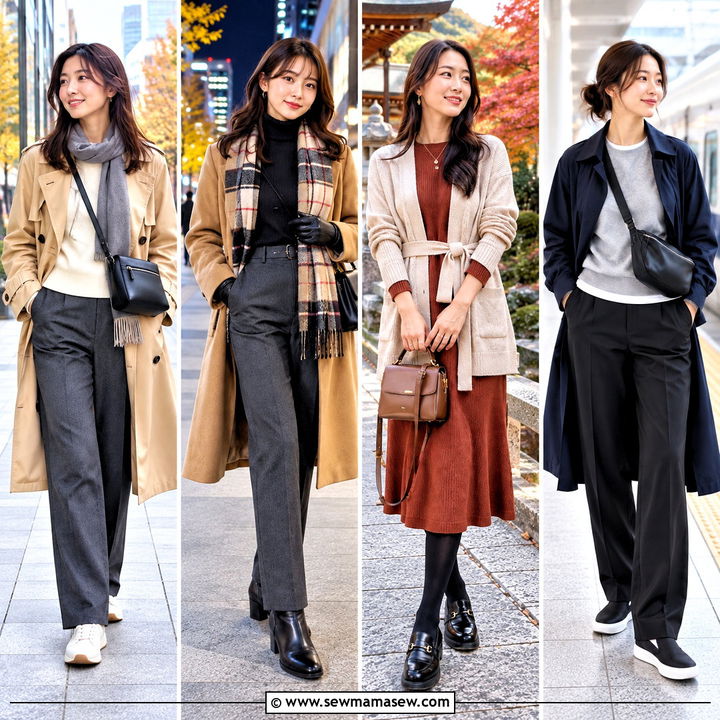
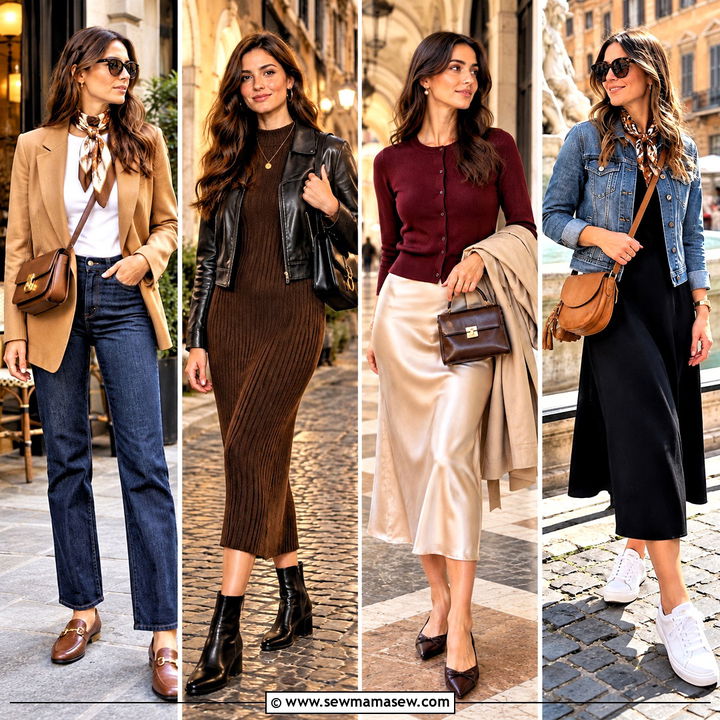
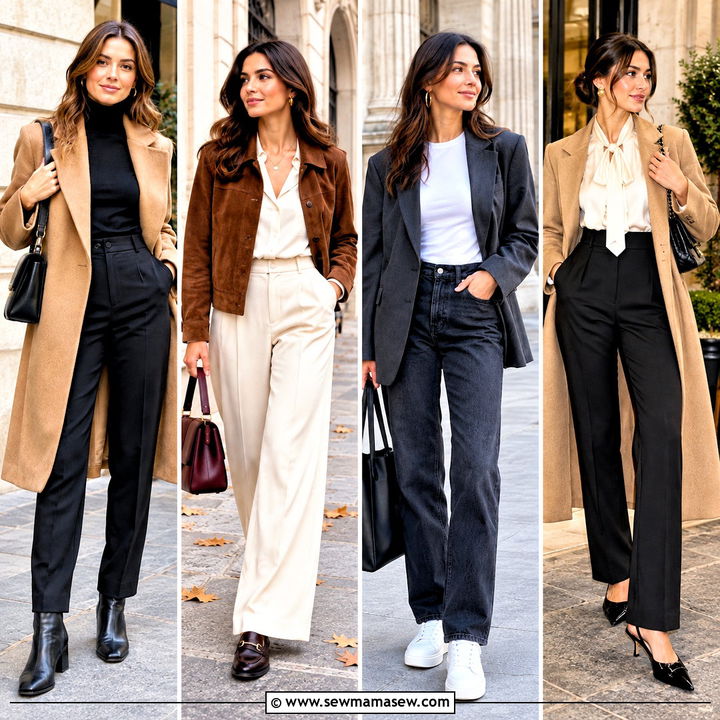
20. Germany Fall Carry-On Capsule Outfit
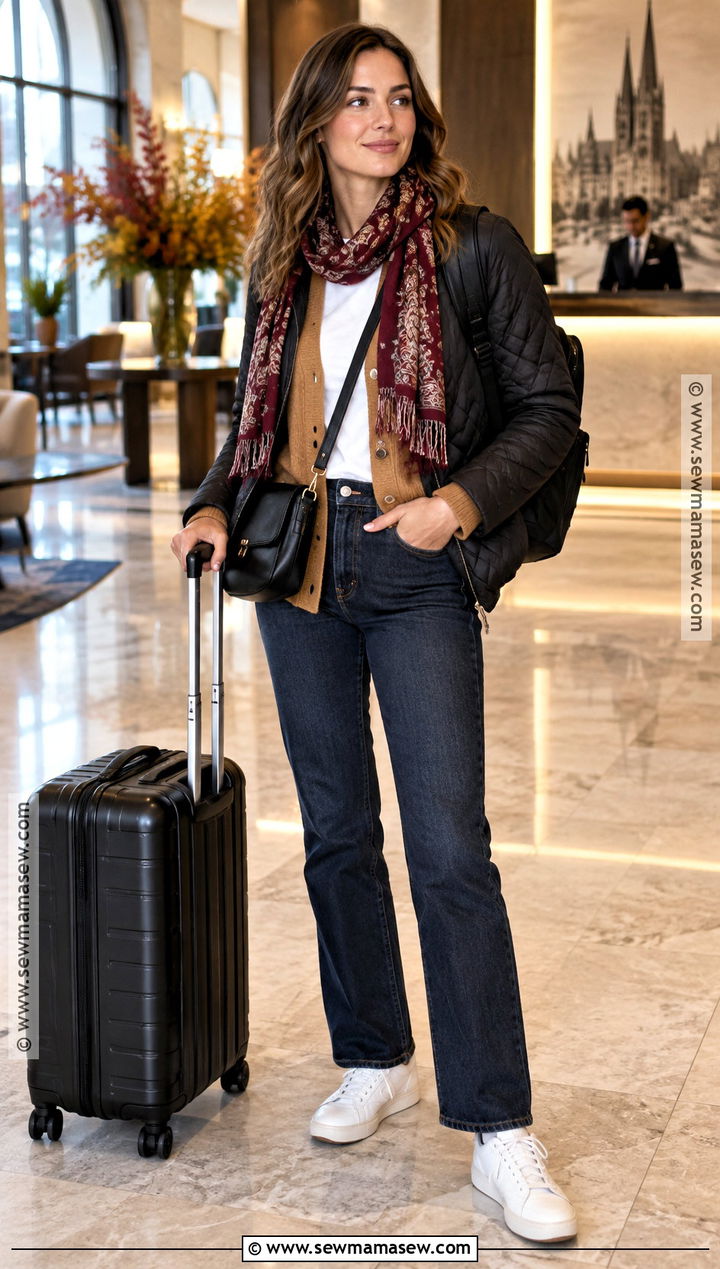
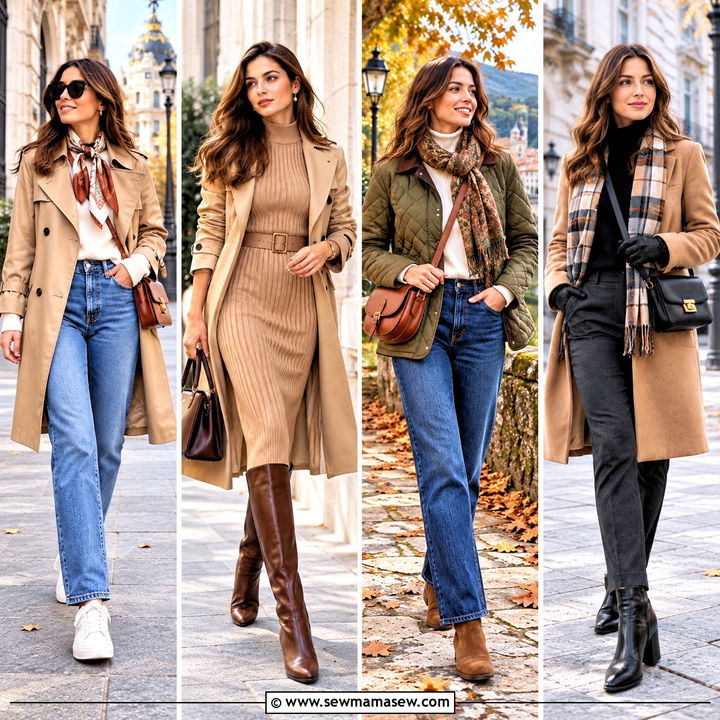
The carry-on outfit is the test of whether the whole wardrobe works. A white or black crewneck under a neutral cardigan, dark straight-leg jeans and water-resistant leather sneakers, topped with a trench or quilted jacket depending on the month. My rule is that every visible piece must work with at least two other things in the bag. Pick three or four colors, such as black, cream, camel and burgundy, and one printed scarf that ties them together. A secure crossbody and a small backpack replace multiple handbags, leaving room for rain gear, warmer accessories and anything you bring home.
Cobblestones Punish the Wrong Sole
Old town centers are paved with uneven stone, and that changes what counts as a good travel shoe. Thin, flat soles let you feel every edge, and by the second day the balls of your feet ache. Smooth leather soles slip when the stone is wet. Slim heels drop into the gaps. What works is a cushioned sole with some thickness and a rubber tread.
I pack two pairs at most: a supportive leather or water-resistant sneaker for dry days and a waterproof ankle boot with grip for rain and cold. Wear the bulkier pair on the plane. Both must have been worn for a full day at home before the trip, because the combination of new shoes and hours on stone is how blisters happen.
- Check the tread by pressing your thumb into it; shallow, flat patterns are the ones that slide.
- Add a cushioned insole to loafers if they're your dressier pair.
- Waterproof spray on suede and leather before you leave helps with light rain, not soakings.
- Wool-blend socks dry faster than cotton and stay warm when damp.
Pack for the Month, Not the Country
Everything here comes down to comfortable layers, a short color palette, outerwear that handles rain and shoes made for real walking. Build from breathable tops and versatile bottoms, then change the jacket, tights or thermal layer for your month and region. Early September usually means a trench and sneakers; November tends to need a puffer, boots and warm accessories. Rather than packing a separate outfit for every day, I'd rewear dark jeans, tailored trousers, cardigans and waterproof shoes in new combinations. Check the forecast a few days out, break in every pair of shoes, and keep your bag zipped.
Related posts: