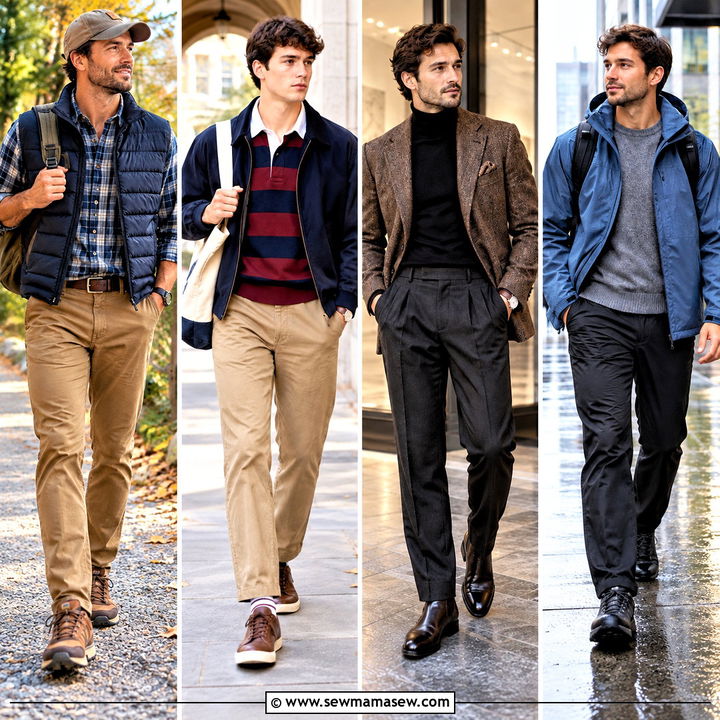
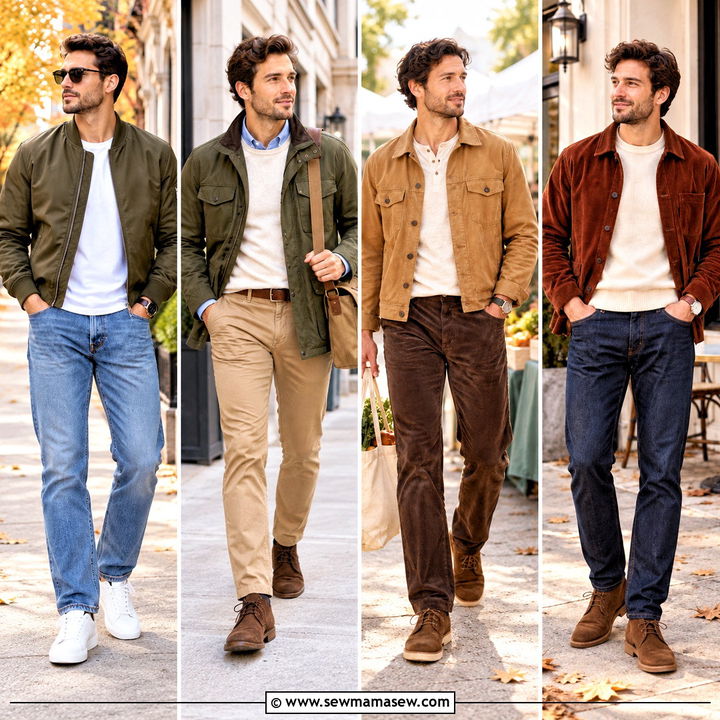
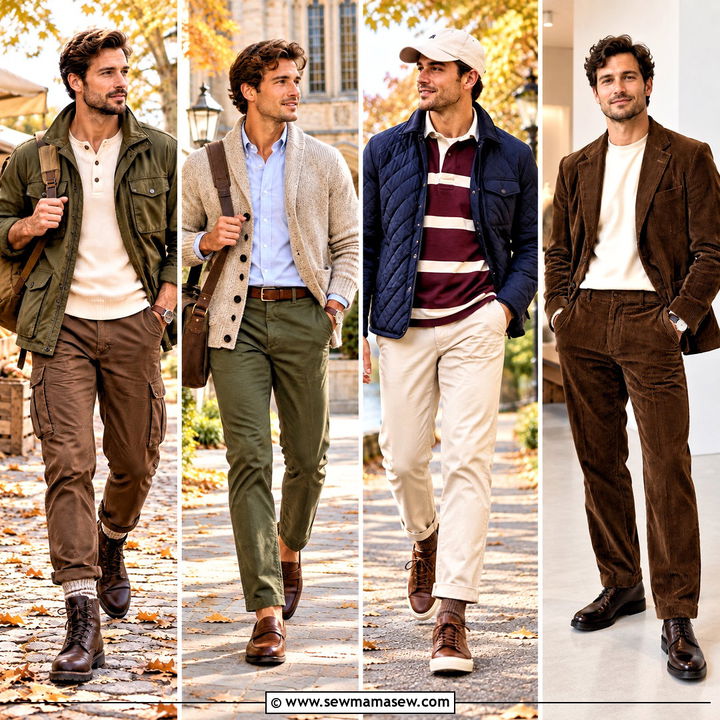
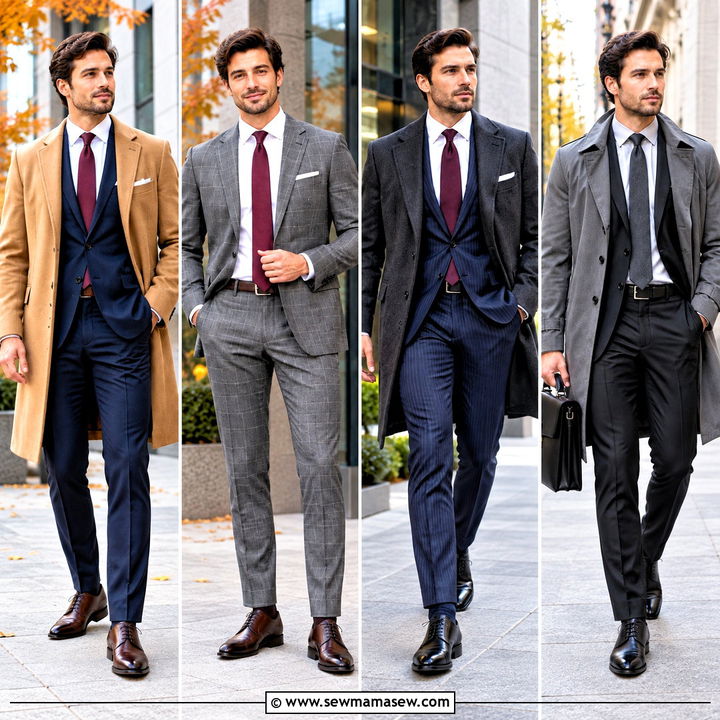
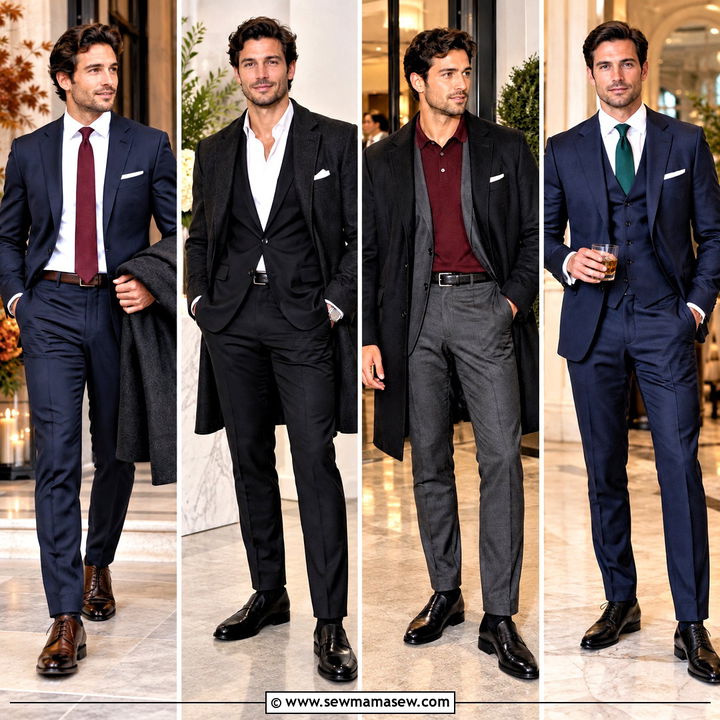
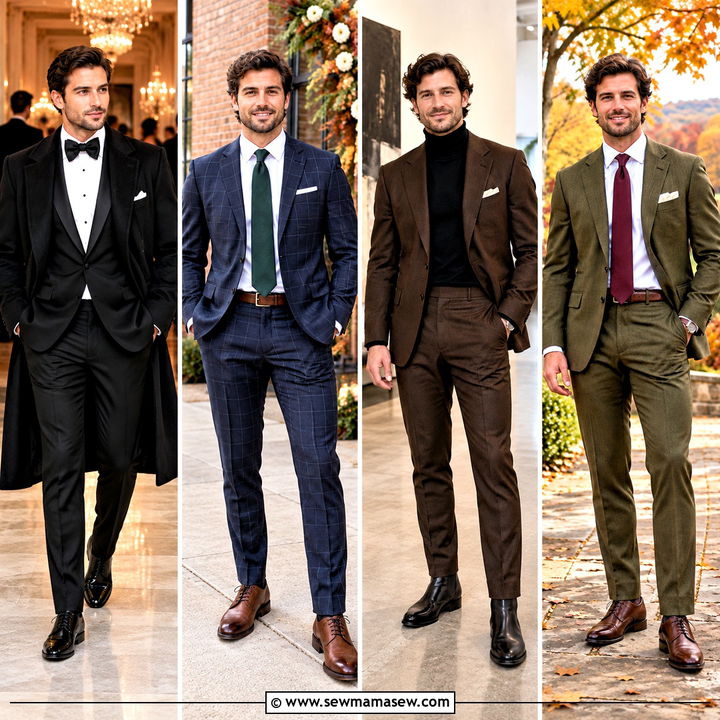
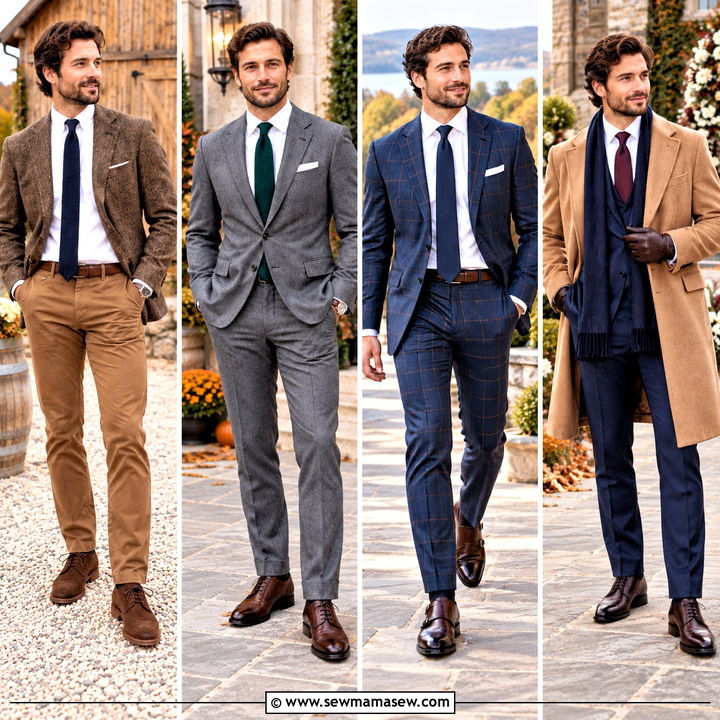
Fall is the hardest season to buy a jacket for. A morning can start cold, turn mild by lunch and end in a downpour, and the coat that was right at eight is wrong by two. I work through outerwear with clients by asking where they'll actually wear it, how much they layer underneath and how often it rains where they live, before we ever talk about style. Below are twenty men's fall jackets, from light layers to weather-ready shells and smarter coats for work. Each one is shown as a full outfit with what to wear under it, the shoes and the accessories. I've also noted which builds and climates each one suits, and where it falls short.
Wear Your Thickest Sweater to the Fitting Room
Most jackets that go unworn were bought over a T-shirt and then never fit over anything else. When I shop for outerwear with a client, he wears the bulkiest layer he'd realistically put under it, and we run through a few quick checks.
- Reach forward as if grabbing a steering wheel. The back shouldn't strain and the cuffs shouldn't pull more than an inch above the wrist.
- Zip or button it fully. Lapels, snaps and zips should lie flat, not ripple or gape.
- Look at the shoulder seam. It should end where your shoulder does. A seam that drops over the arm only suits jackets designed to be loose, like chore and barn jackets.
- Raise your arms overhead. A short jacket that lifts above your belt will leave your back cold every time you reach for something.
- Sit down. Longer coats like peacoats and parkas need to open at the hip without bunching.
Sleeves are the one thing an alterations tailor can shorten cheaply on most jackets. Shoulders and chest almost never can be fixed, so get those right first and treat the rest as adjustable.
1. Harrington Jacket With Chinos
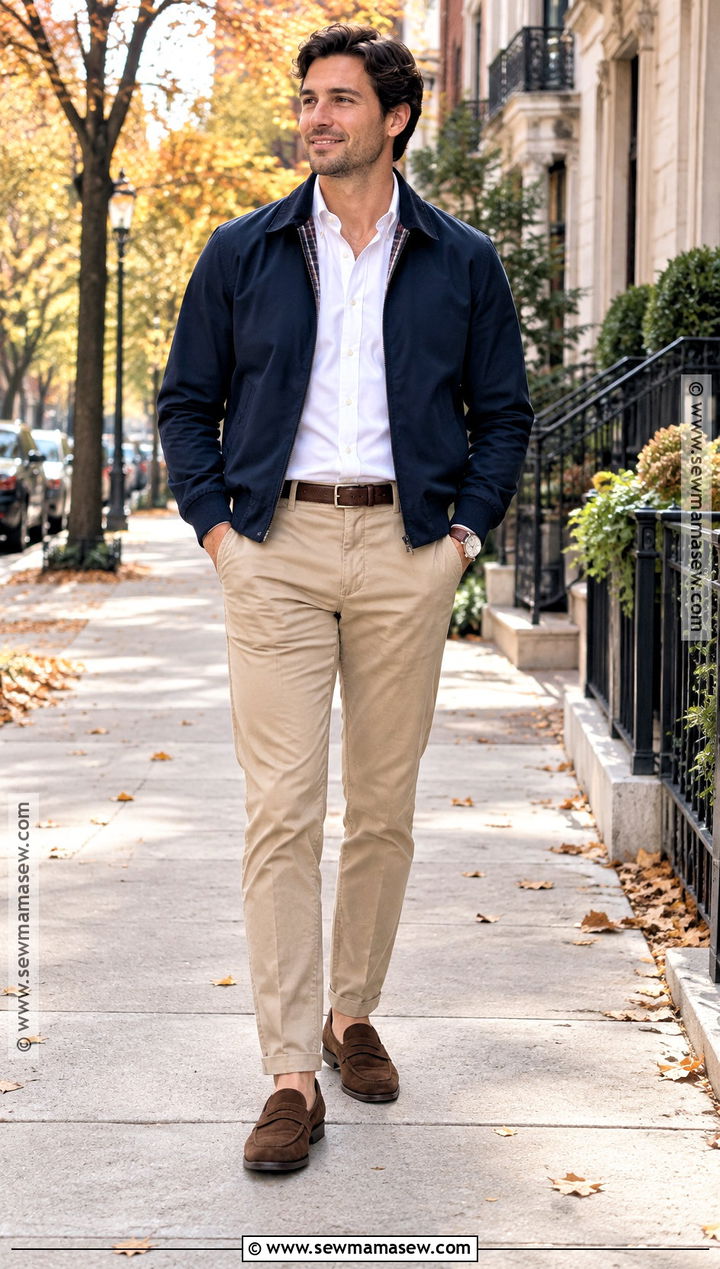
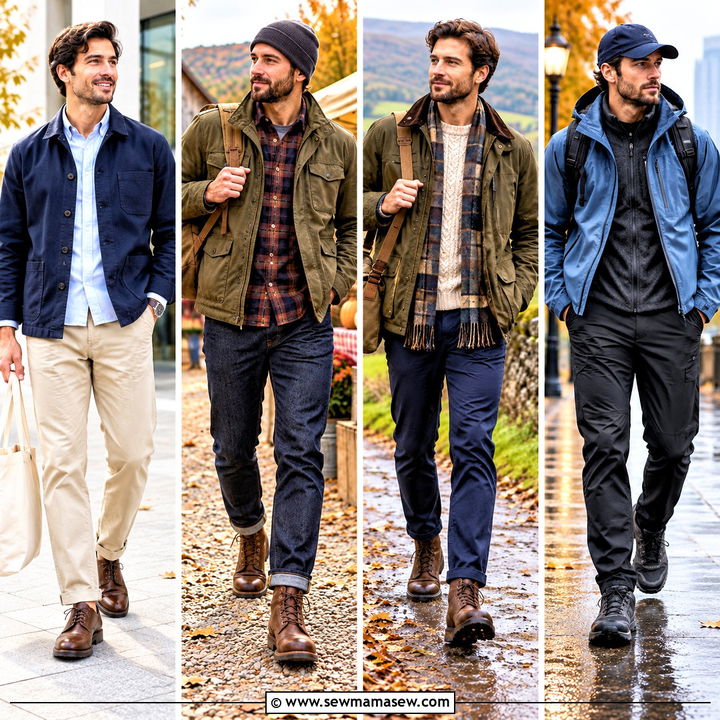
A Harrington looks clean without ever feeling dressed up, which is why I suggest it to men who find a blazer too much. Navy, tan or dark green, lightly fitted, with room for something thin underneath. Over a white Oxford or a fine-gauge crewneck, with straight khaki chinos. Brown suede loafers polish it; white leather sneakers relax it. The short, waist-length cut is a gift for shorter men because it shows more leg. If you're tall or broad, size for the shoulders and chest first; the elastic hem will still sit at the waist, but a tight back will pull every time you reach forward.
2. Bomber Jacket With Black Jeans
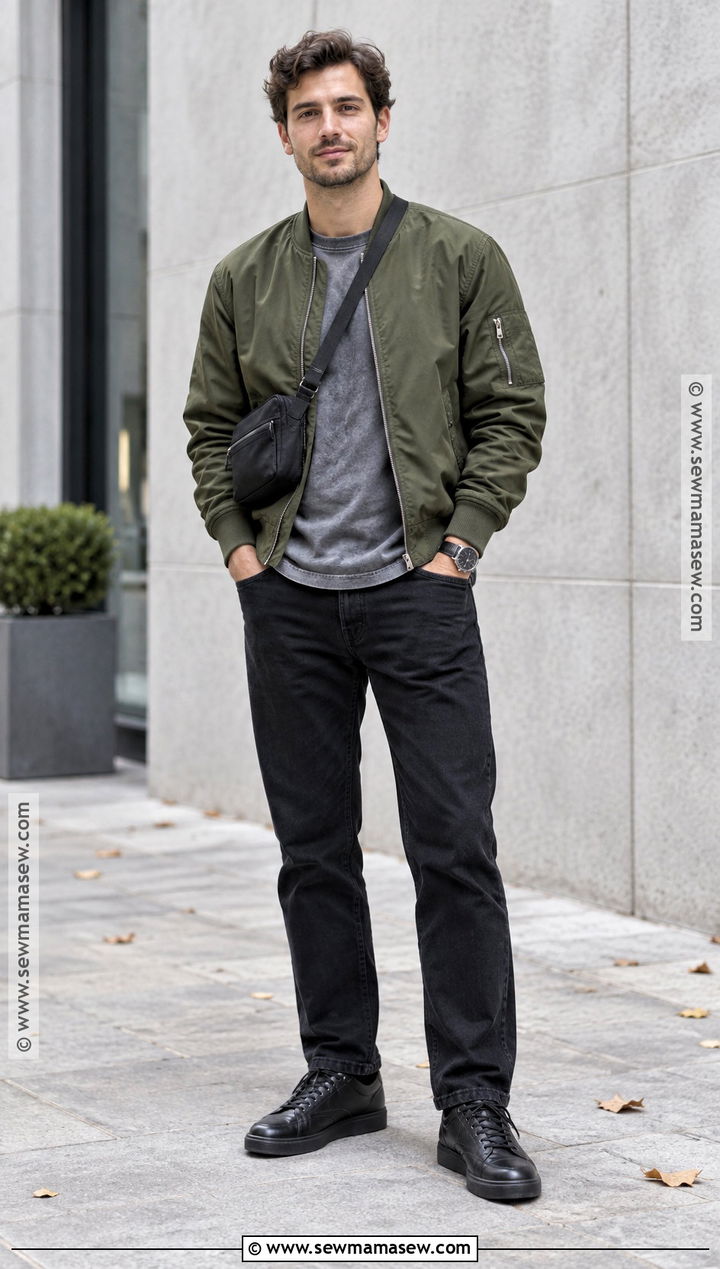
The bomber is the most streetwear-leaning jacket here. Olive or black, in a medium-weight nylon or cotton that's warm on a crisp day without any puff. I put it over a heavyweight gray tee or a fitted sweatshirt, with black straight jeans and leather sneakers or lace-up boots. Because that ribbed hem pulls in at the waist, long shirts hanging below it look untidy, so keep the layers under it short. For men carrying weight in the middle, I'd skip padded versions and look for a bomber with a looser rib, so it doesn't grip right at the widest point.
3. Denim Jacket With Corduroy Pants
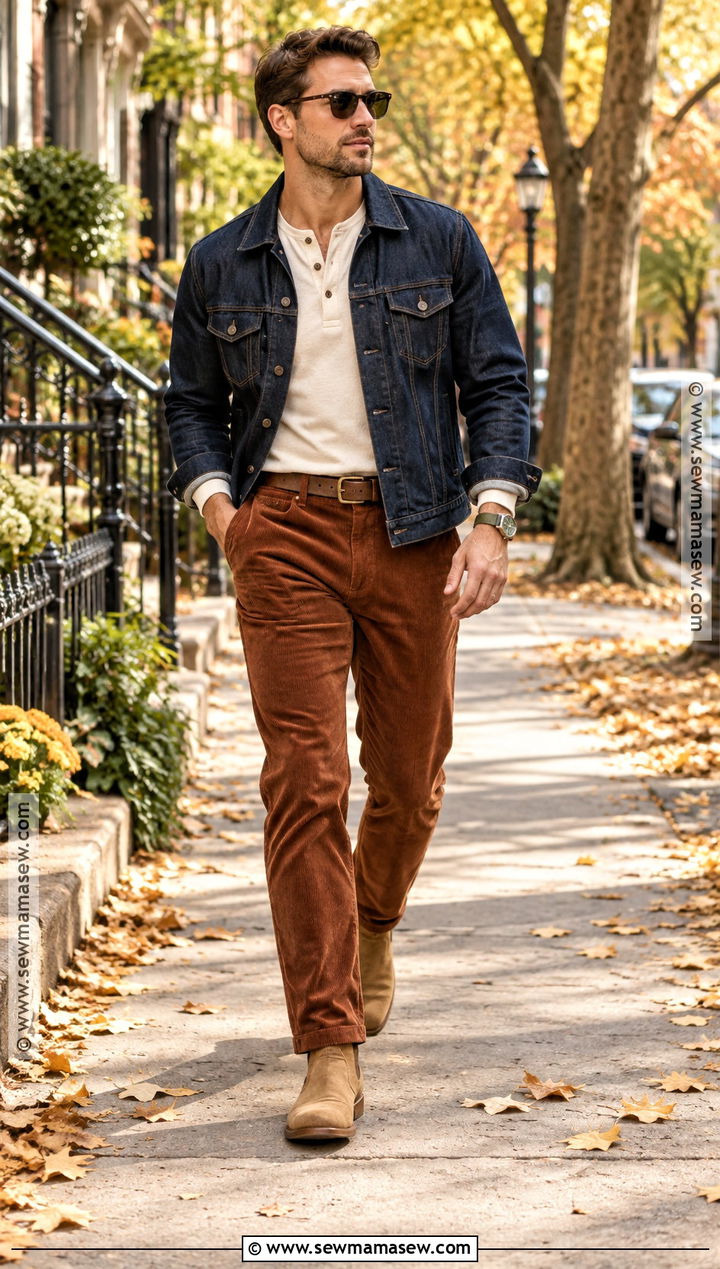
Early fall is when a denim jacket earns its keep. Choose a medium or dark-wash trucker that's clearly a different shade from your pants. Underneath, a cream henley, a thermal or a thin knit. Brown, olive or rust cord pants solve the double-denim problem and add texture at the same time. Tan suede boots and a leather belt complete it. Rigid denim jackets fit close, and many men just size up when the shoulders feel tight, which makes the body and sleeves too long. If you're muscular, I'd look for stretch denim or a cut labeled relaxed rather than jumping a size.
4. Leather Jacket With Dark Denim
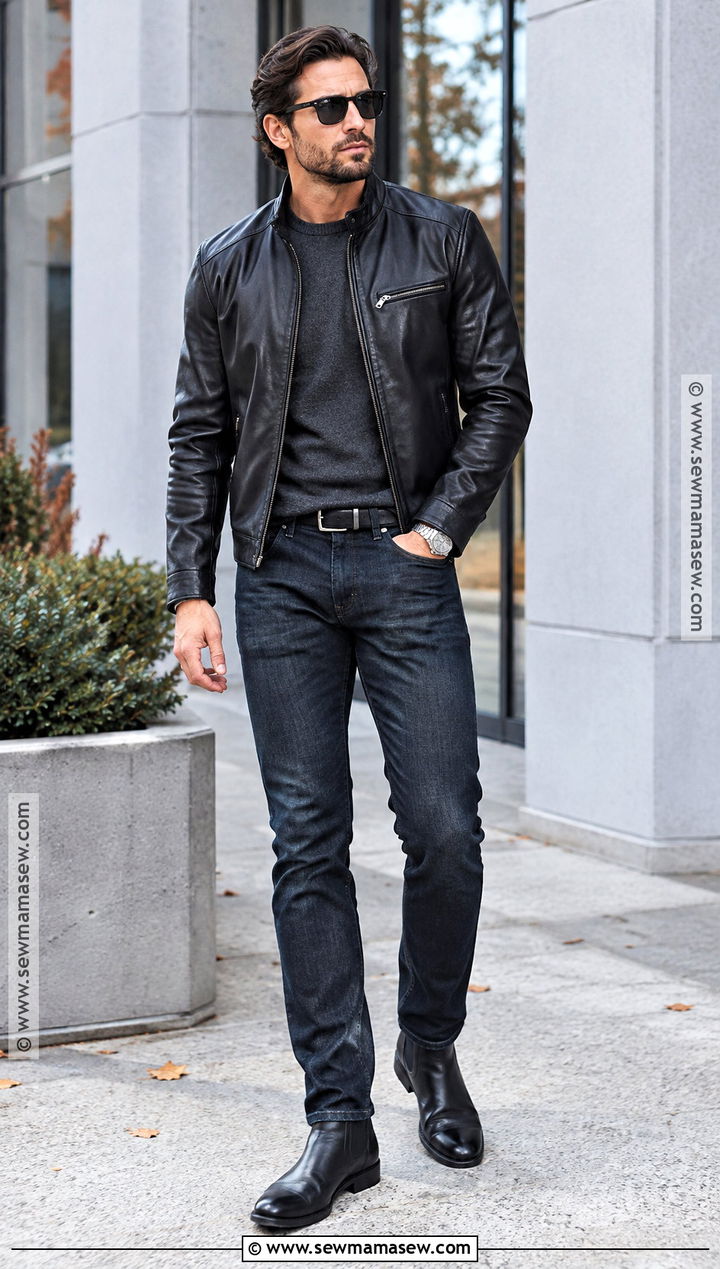
One plain leather jacket can carry an entire fall wardrobe if you choose the simplest version. A café racer or a minimal biker in black or dark brown, with a charcoal crewneck, dark indigo jeans and boots in the same color as the jacket. The tonal look puts the attention on the leather grain. Add a plain belt, a metal watch and dark sunglasses. When I fit these, I zip the jacket and have the client hug himself; if the chest pulls or the back rides up, it's too small. Real leather is stiff at first and molds to you over months, while good faux leather costs less but won't age the same way. Skip extra zips and patches if you want it to go with everything.
5. Suede Jacket With Tailored Trousers
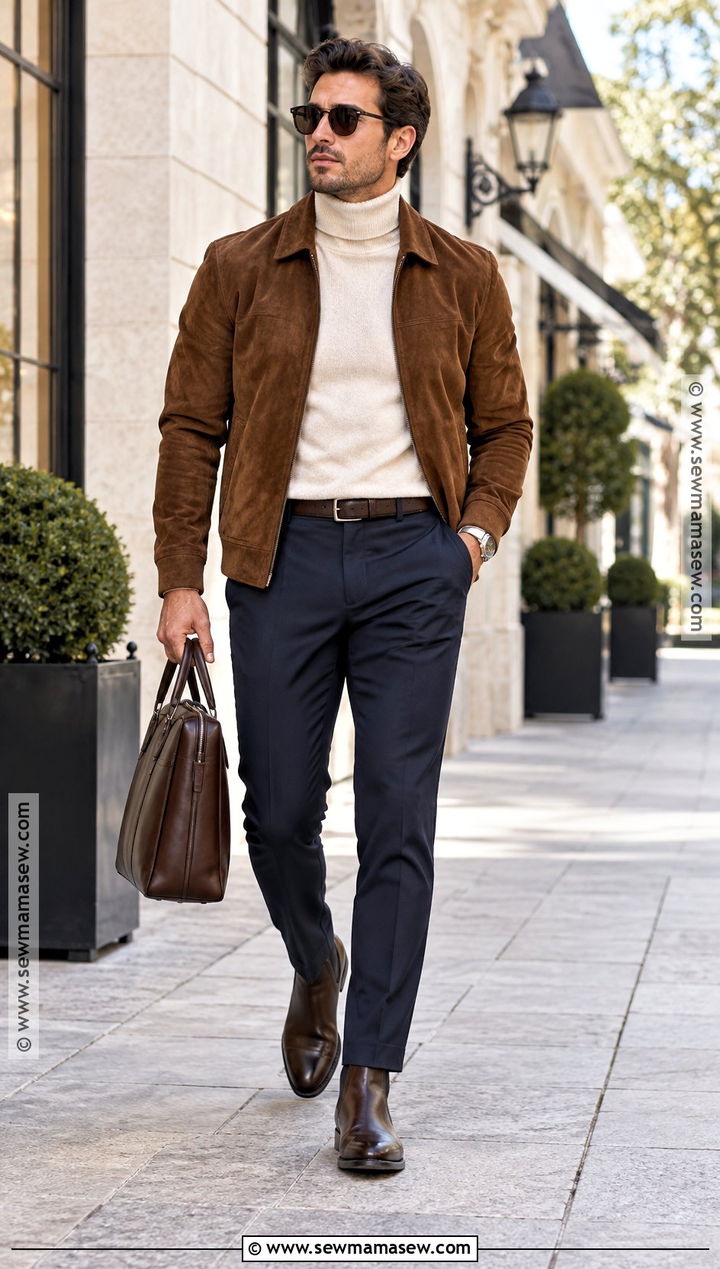
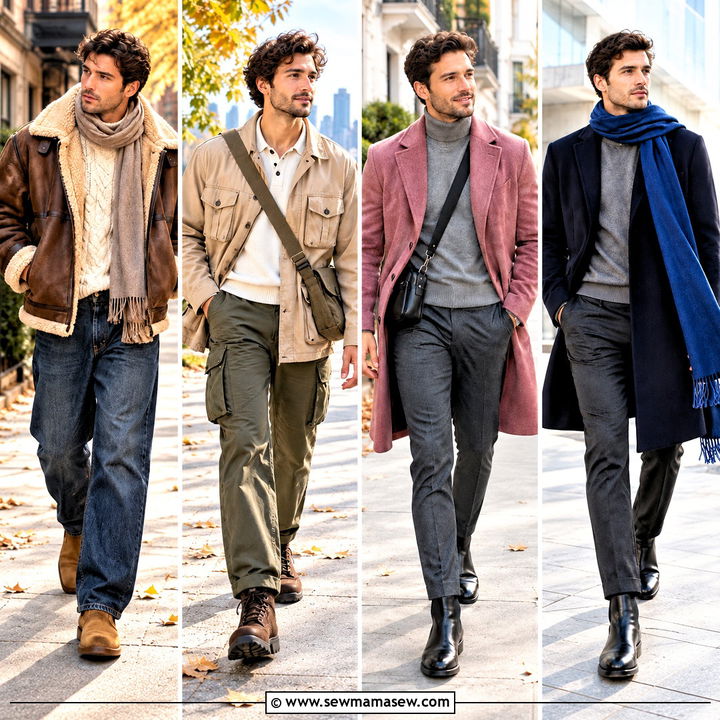
Suede is the jacket I'd pick for a dressier weekend or a creative office. Tobacco, chocolate or taupe over a cream turtleneck or light merino, with navy trousers in a straight or slightly tapered leg. Dark brown loafers or Chelsea boots, and a structured leather bag. Keep the rest smooth and plain so the suede's nap is the only texture. It does need care: spray it with a suede protector before you wear it, keep it away from rain and brush it gently once it's dry if it gets spotted. If that sounds like too much upkeep, a brushed microfiber jacket gives a similar soft look and survives a wet day.
6. Barn Jacket With Straight-Leg Jeans
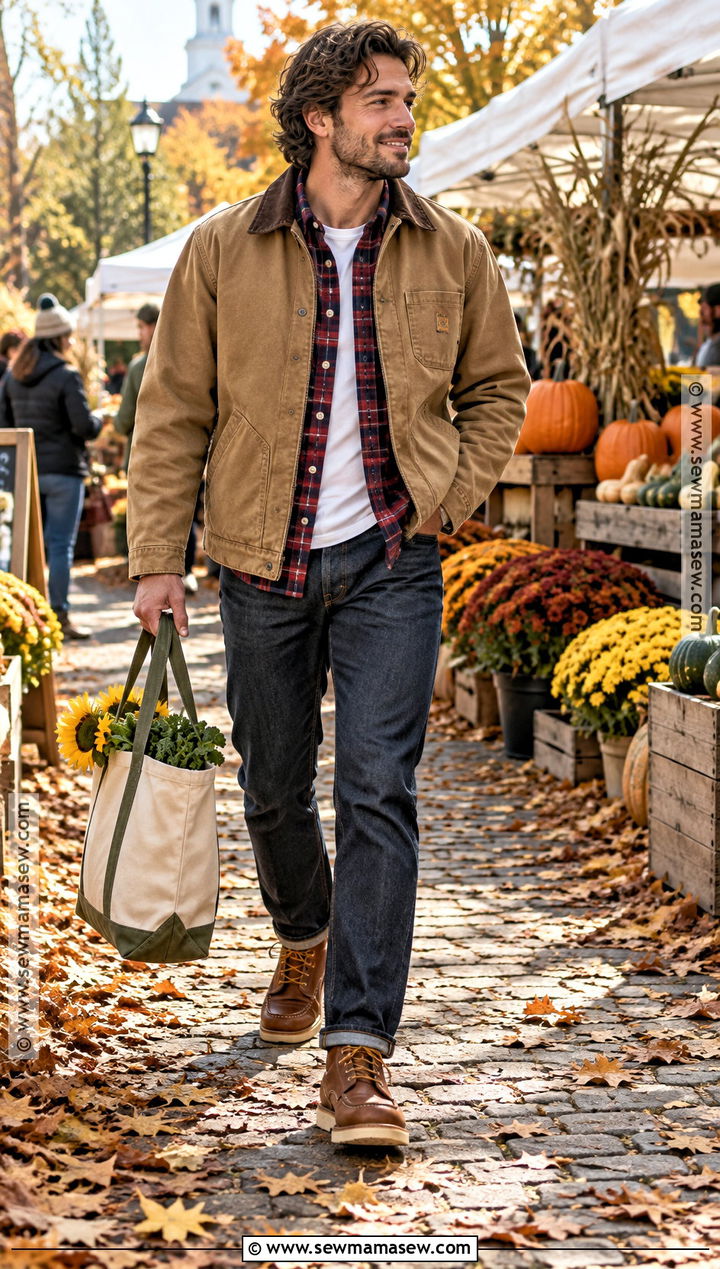
Barn jackets come from farm work, yet they look just as natural on a city sidewalk. Pick tan, olive or brown cotton with big patch pockets and a cord collar. I layer it over a plaid flannel and a white tee, which gives you two warmth settings. Dark straight jeans and brown moc-toe boots keep the classic outdoor feel; add thick socks and a canvas tote or leather backpack. The hem should cover your belt and stop well above mid-thigh. Most barn jackets are boxy, so pair them with jeans that are clean and moderately fitted. Very skinny pants under a boxy jacket make the top half look oversized.
7. Field Jacket With Cargo Pants
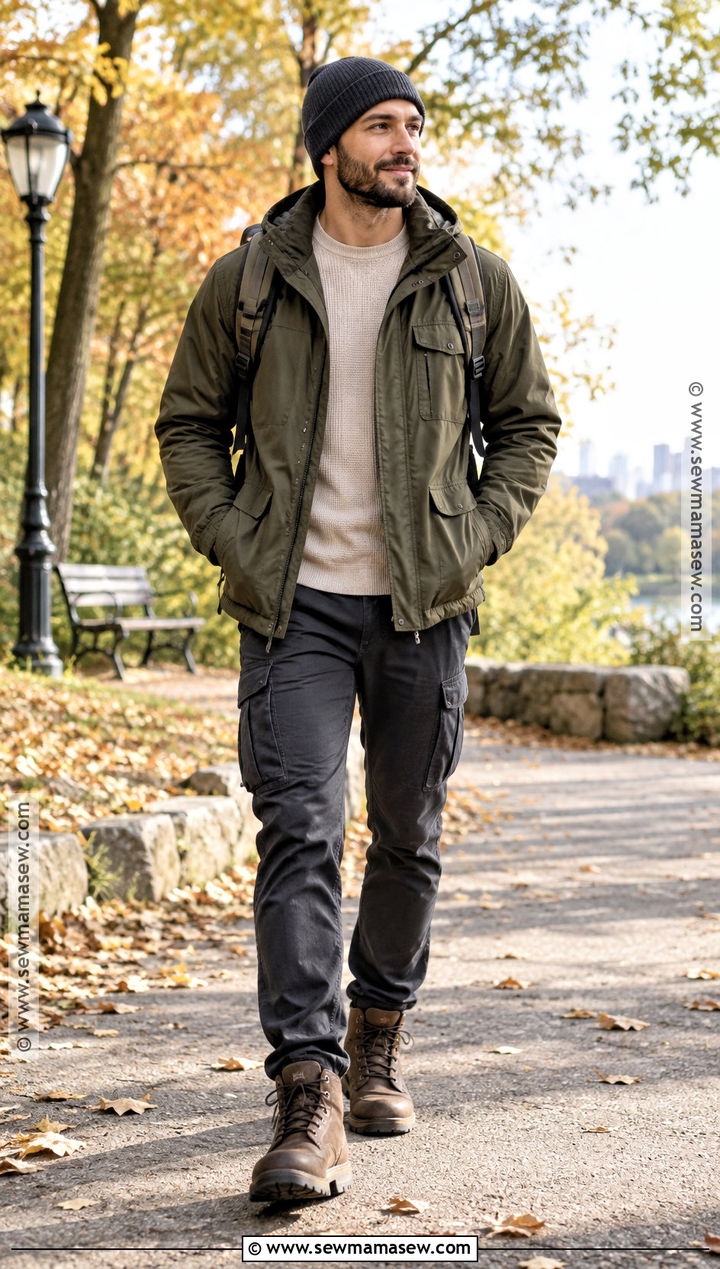
Olive field jackets are practical enough that you barely need a bag; the pockets hold everything. I put a fitted black or oatmeal thermal under it, then tapered cargos in charcoal, tan or navy, and low hiking sneakers or leather boots depending on the weather. A beanie and a backpack finish it for errands and travel. The thing I watch for is olive on olive: the same green jacket and pants look like a uniform. Use a contrasting neutral on the legs, and don't add more visible utility details than the jacket already has. For broader builds, a cargo pant with a drawstring or adjustable waist sits better than a stiff waistband.
8. Waxed Canvas Jacket With Work Boots
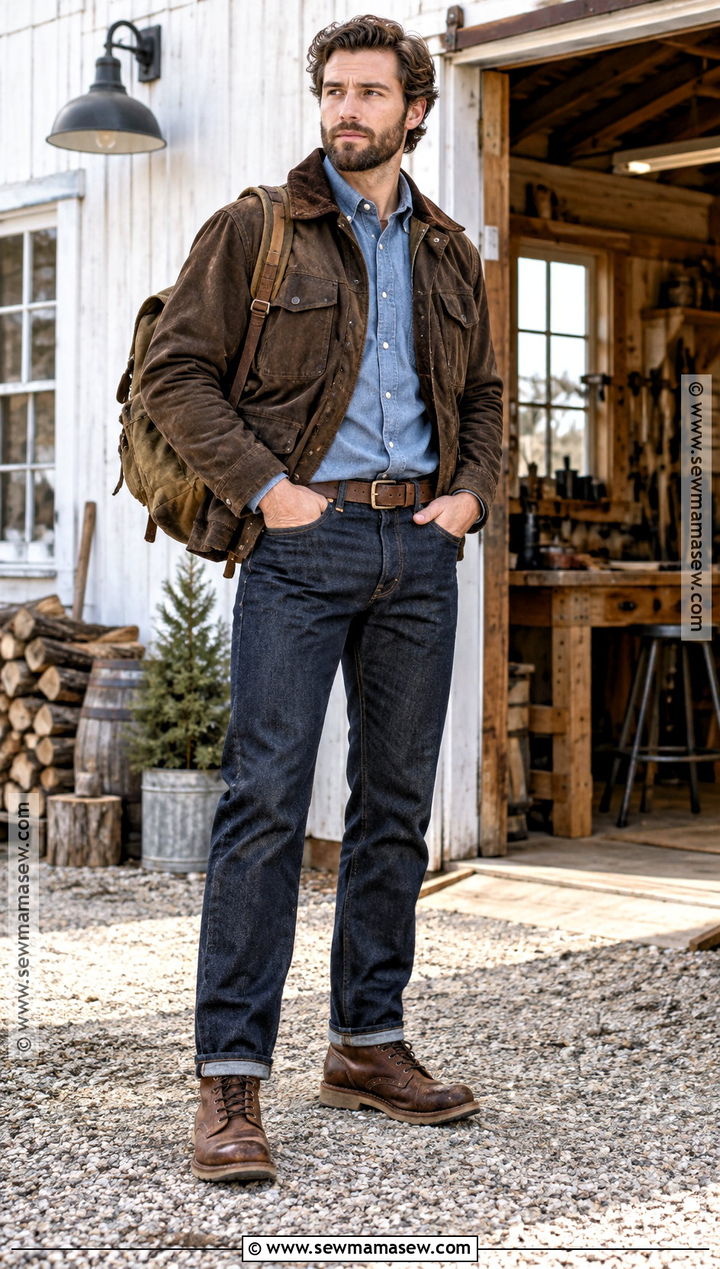
Waxed canvas shrugs off drizzle and wind, and it gets better looking the more you wear it. Dark brown, tobacco or forest green all go with basics. Wear it over a chambray shirt or a heavy henley, with raw indigo jeans in a straight fit. Brown work boots, a matching belt and a canvas backpack complete it. Leave the jeans uncuffed or turn up one neat cuff to show the boots. New wax feels stiff and slightly tacky, so I'd size with a little room in the arms rather than buy snug and hope it loosens. A plain version with clean pockets and minimal hardware is the one you'll wear beyond the weekend.
9. Chore Jacket With Pleated Pants
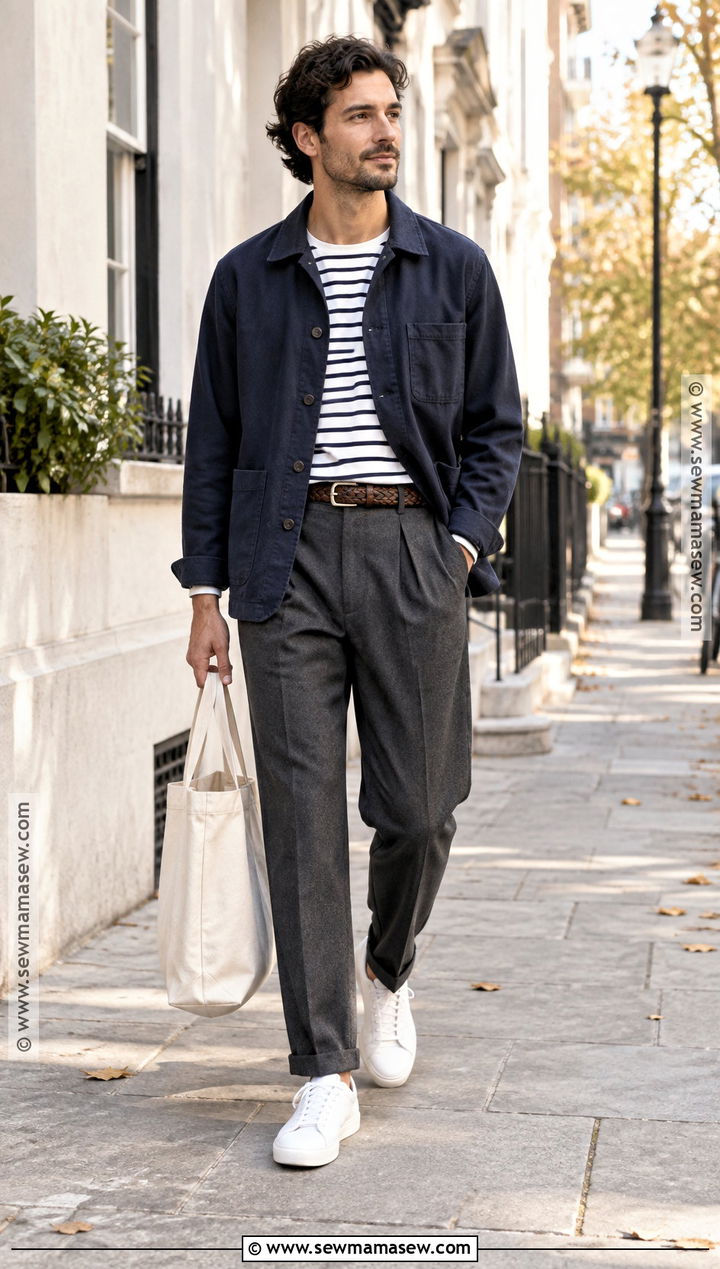
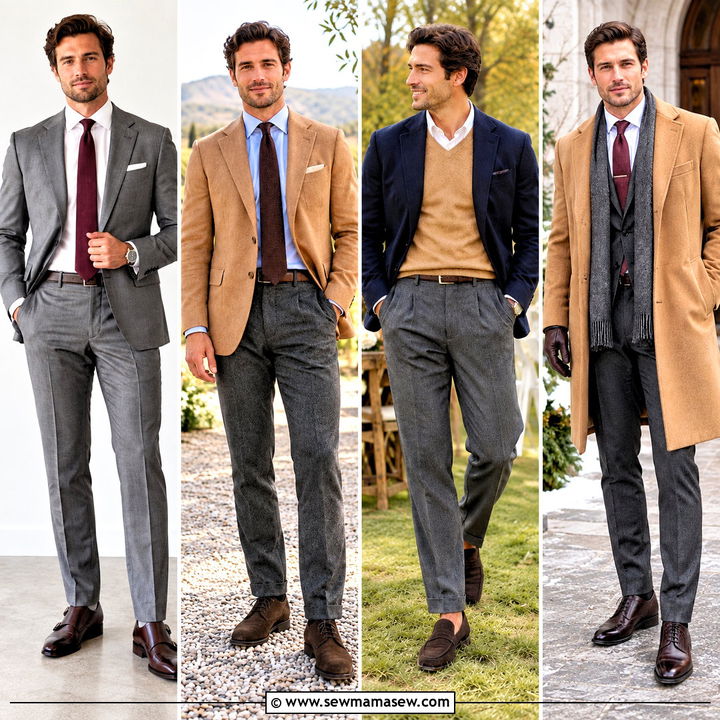
A chore jacket is the easiest layer here to dress up or down, because it's just a flat, unstructured canvas shirt with pockets. Navy, faded blue, olive or brown over a striped long-sleeve tee. Charcoal pleated trousers give a smart contrast between workwear and relaxed tailoring. White leather sneakers keep it current; dark loafers sharpen it. A woven belt and a simple tote add enough detail. I look for a chore jacket that ends at the hips and lies flat across the shoulders. Its loose, straight cut is especially kind to larger frames. Worn open, it draws a long vertical line down the center of the outfit.
10. Coach Jacket With Joggers
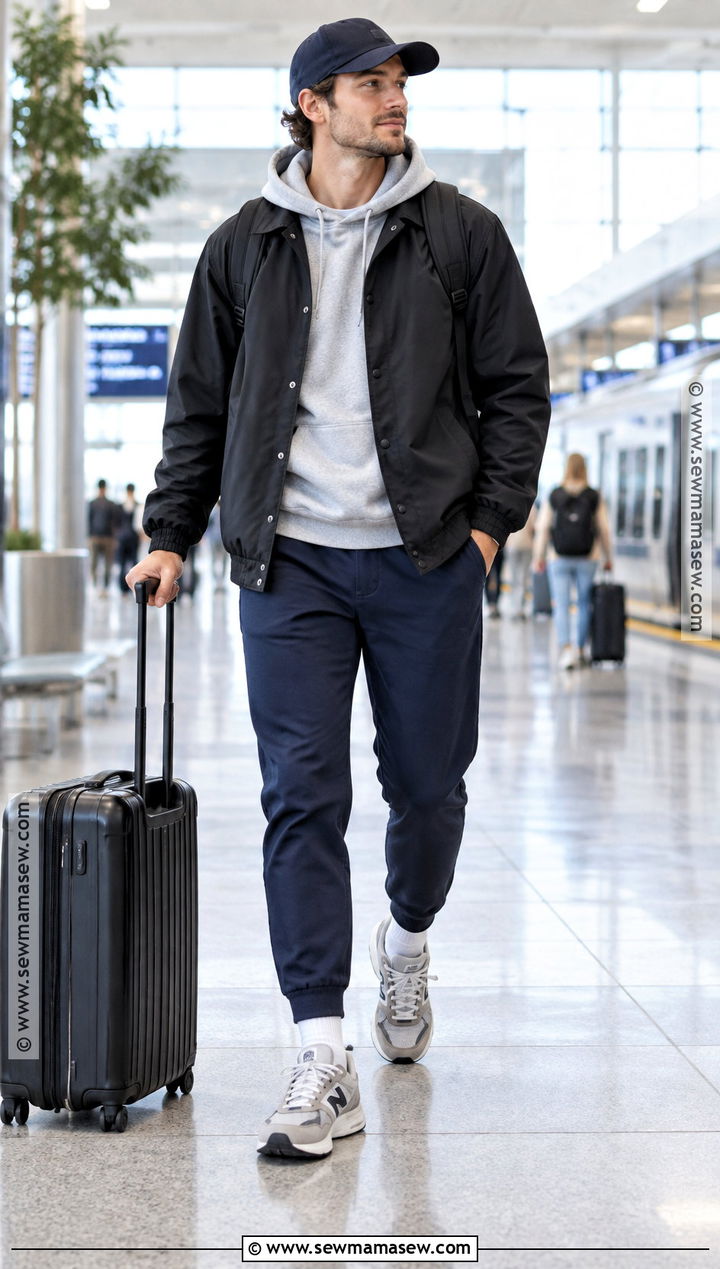
Coach jackets are thin, snap-front nylon shells, which makes them perfect over a hoodie on a cool day that isn't actually cold. Black, navy or dark green over a gray or cream hoodie. Tapered joggers should sit near the hoodie color without matching it. Retro runners, crew socks and a cap complete it. My rule with joggers outside the gym: no big logos and a fabric with some weight, so they hang rather than cling. The jacket has to cover the hoodie hem, and the sleeves need room for the hoodie underneath. A water-resistant finish on the nylon is worth checking for, since it'll see drizzle.
11. Quilted Jacket With Dark Chinos
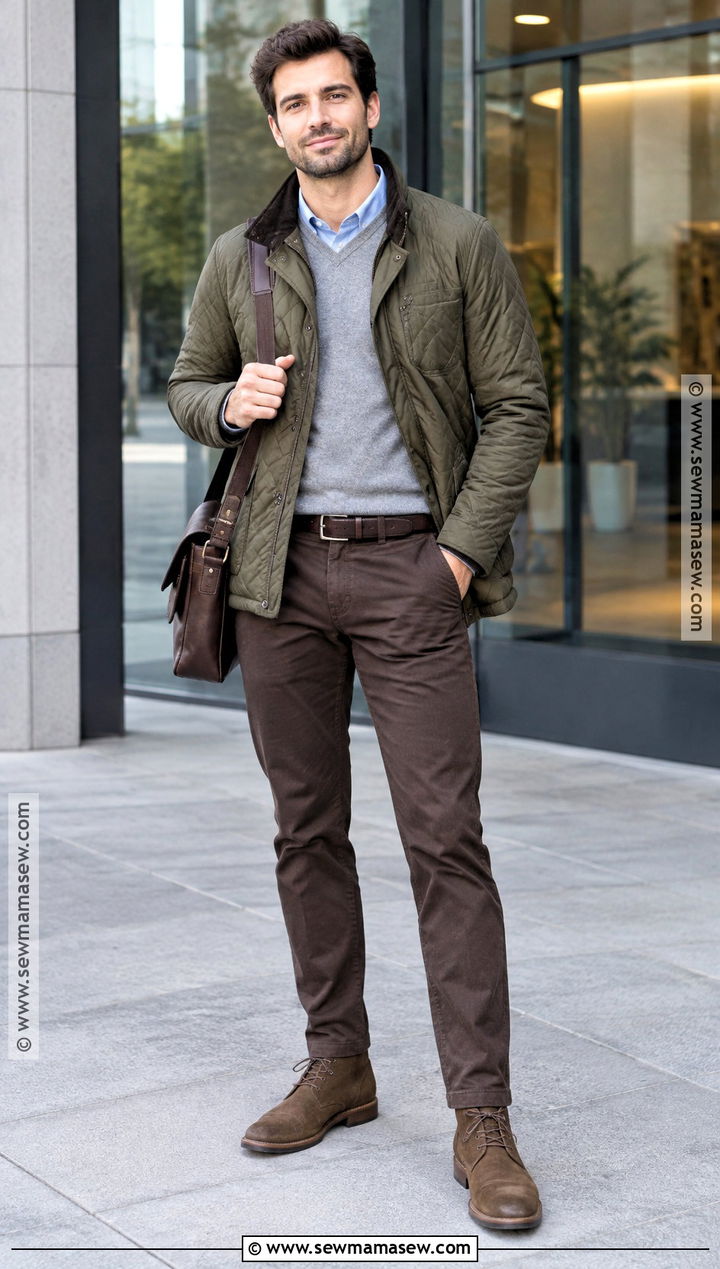
A quilted jacket is my answer for men who run warm, because it adds heat without the bulk of a coat. Choose a collarless or stand-collar style in navy, olive or black. I wear it over a light blue Oxford and a thin gray sweater, with the shirt collar showing. Dark brown or charcoal chinos and suede desert boots finish it. Small diamond quilting reads neater for smart-casual; wide channels or big diamonds look more outdoorsy. Button it over everything you'll wear underneath before you buy. If the snaps or zip strain, the stitched channels pull into ridges. It goes straight from commute to dinner.
12. Lightweight Puffer Jacket With Jeans
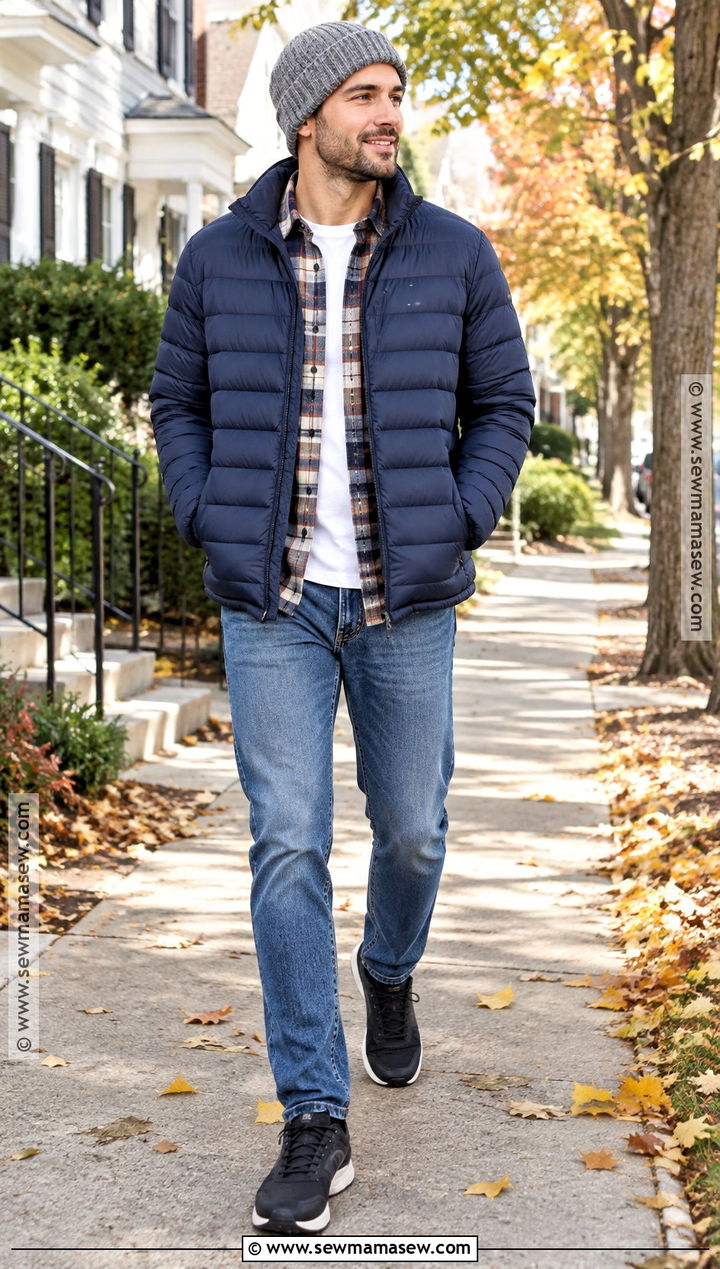
A light puffer packs into its own pocket or a bag, so it handles a cold morning and then disappears for a warm afternoon. Black, navy or deep burgundy over a flannel and a cotton tee, with medium-wash straight jeans. Waterproof sneakers or lug boots and a knit beanie complete it. I always steer men to a matte shell over a shiny one; it sits with casual clothes far better. Narrow baffles and moderate fill keep it slim enough to wear under a rain shell later. Long-torsoed guys should look for a slightly longer hem so it doesn't ride up when they reach; shorter men look best at the waist.
13. Fleece Jacket With Hiking Pants
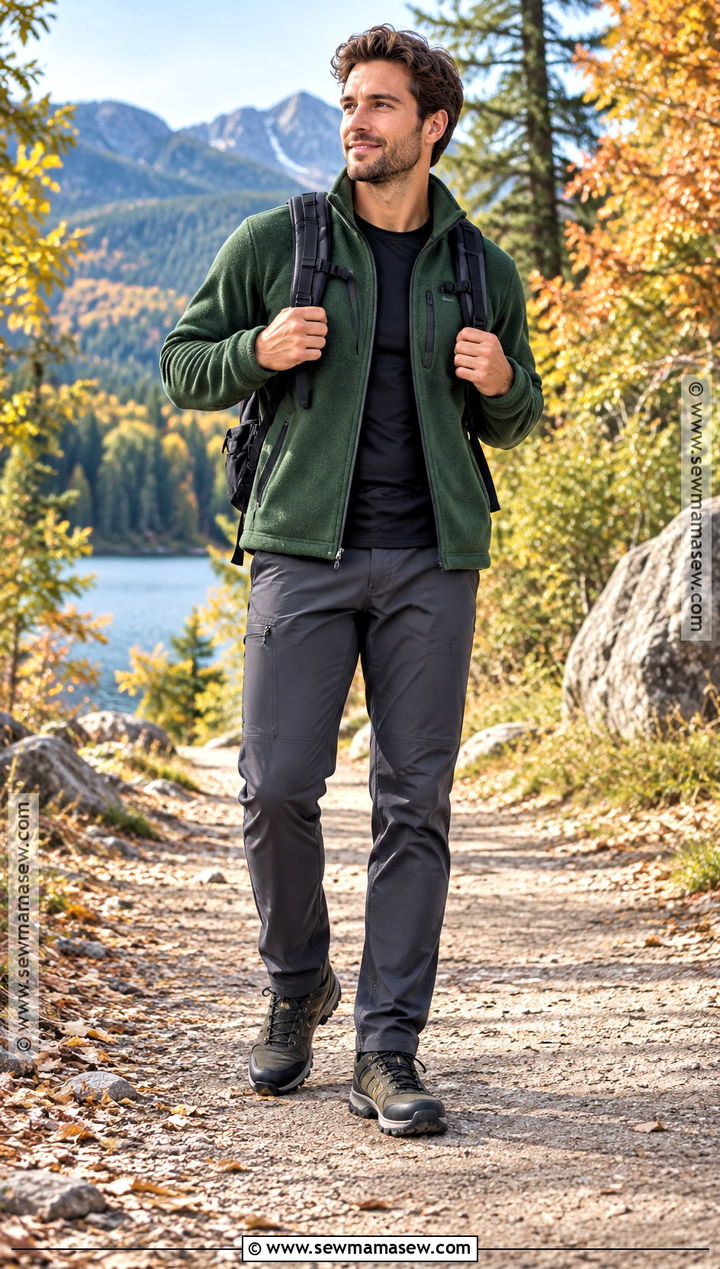
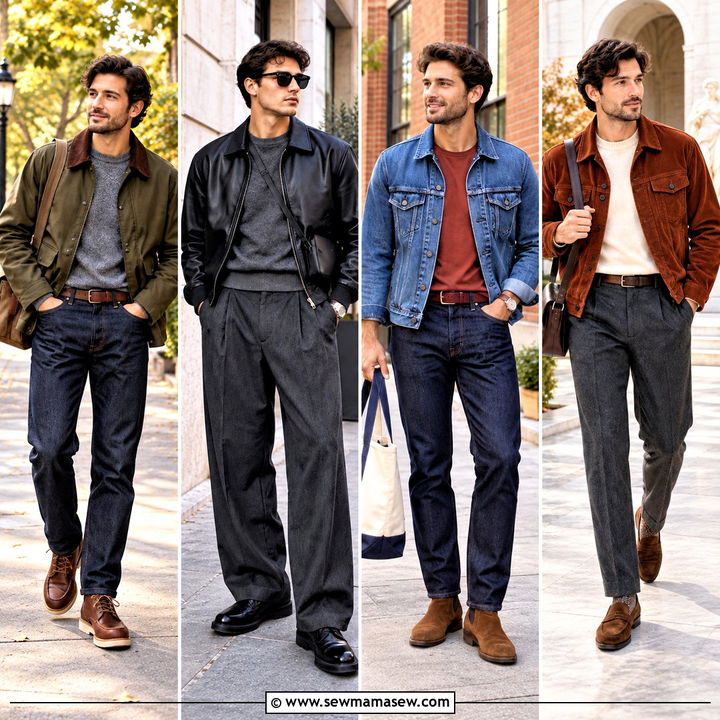
For hikes and cold Saturday errands, fleece gives warmth without restricting your arms. A full-zip in brown, cream, forest green or charcoal, over a moisture-wicking long sleeve, with tapered hiking pants in black or dark gray. Trail sneakers or light hiking boots and a small backpack round it out. Plain fleece pills where your backpack straps rub, so if you'll use it outdoors a lot, I'd look for one with reinforced shoulder panels. For a city version, swap the technical pants for dark jeans and plain sneakers. High-pile fleece looks relaxed and textured; smooth microfleece looks cleaner and layers better. Either way, check the shoulder seam sits on your shoulder.
14. Softshell Jacket With Performance Pants
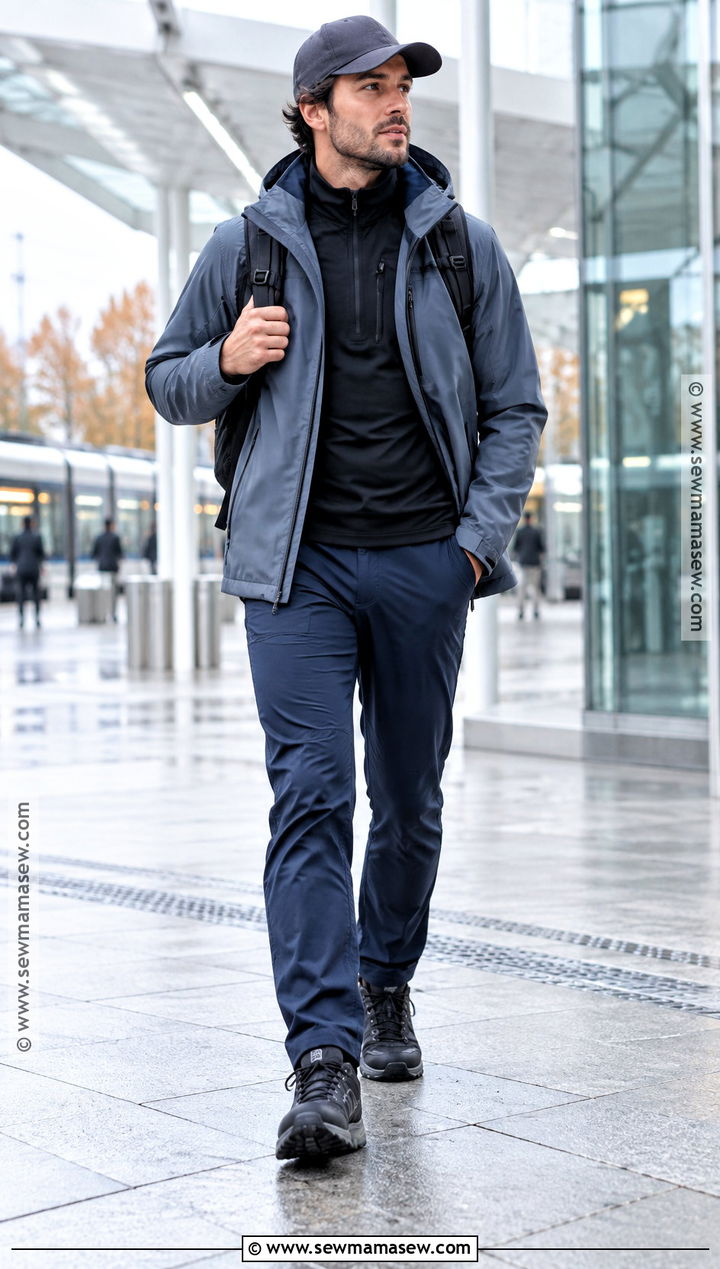
Wind can make a 50-degree day feel ten degrees colder, and a softshell is built for exactly that. Go streamlined: black, navy or slate with no large logos. Pair it with a quarter-zip performance top and tapered travel pants. Waterproof walking shoes, a technical backpack and a plain cap finish it. It's my go-to recommendation for sightseeing trips. Choose pants with a flat front and discreet pockets so you look like a traveler, not someone on a trail. If you need more warmth, layer a thin fleece under a correctly sized softshell; sizing up to fit more underneath ruins the trim shape that makes it look neat.
15. Rain Jacket With Casual Basics
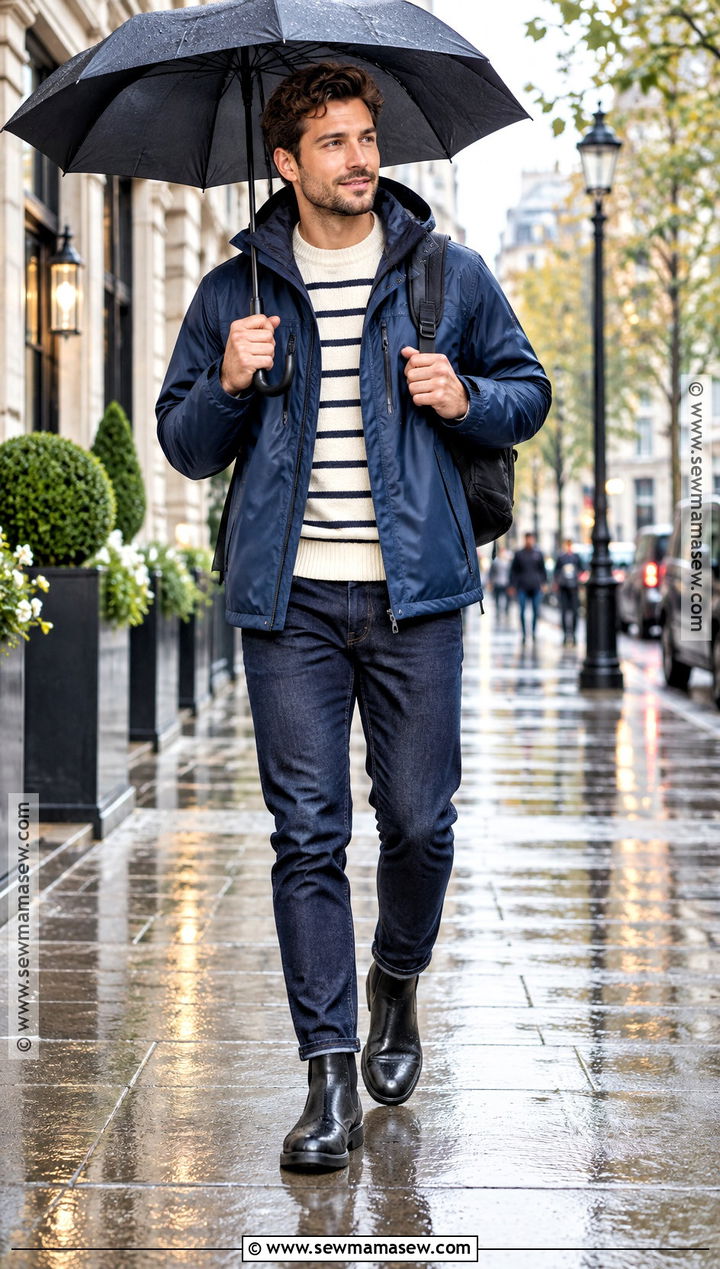
Rain doesn't have to mean giving up on a decent outfit. A waterproof jacket in navy, olive or stone, or a brighter shade that helps drivers see you on dark evenings. Underneath, a striped sweater or a plain sweatshirt and dark tapered jeans. Waterproof Chelsea boots or water-resistant sneakers complete it, plus a compact umbrella and a water-resistant backpack. Make sure the jacket covers your sweater hem, and test the hood in the store; turn your head and see whether it moves with you or blocks your view. Pit zips or a breathable lining matter on mild rainy days, when a sealed shell gets clammy fast. If the jacket is bright, keep everything else neutral.
16. Anorak Jacket With Utility Pants
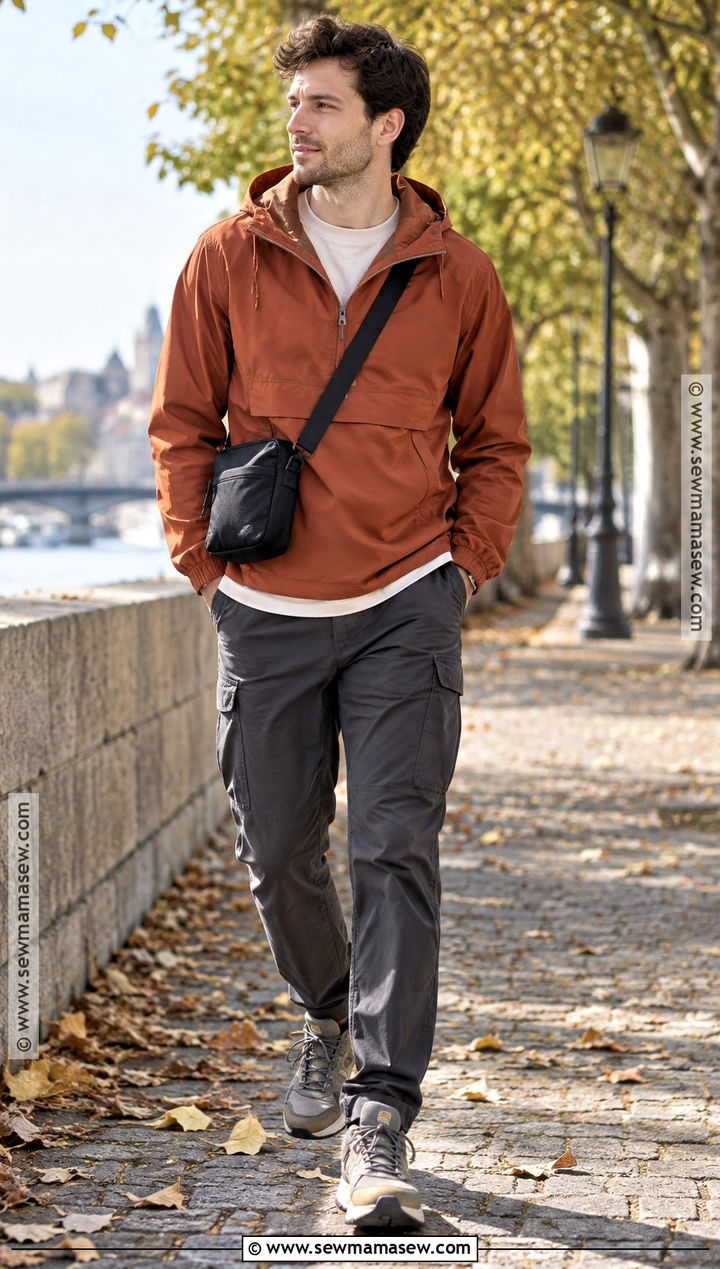
An anorak is a pullover shell, and it's the most relaxed jacket on this list. Rust, navy, olive or color-blocked neutrals, over a long-sleeve tee or thin crewneck sweatshirt, with tapered utility pants in charcoal or khaki. Trail-style sneakers keep it comfortable without looking technical. Since you can't just open it to reach an inside pocket, bring a crossbody or small backpack. Use the hem drawcord to stop it billowing at the waist. Broad-shouldered men should look for raglan sleeves or stretch panels, because pulling a tight pullover over your head is a fit test you'll fail every morning. Keep the pants slim to balance the loose top.
17. Sherpa Denim Jacket With Black Pants
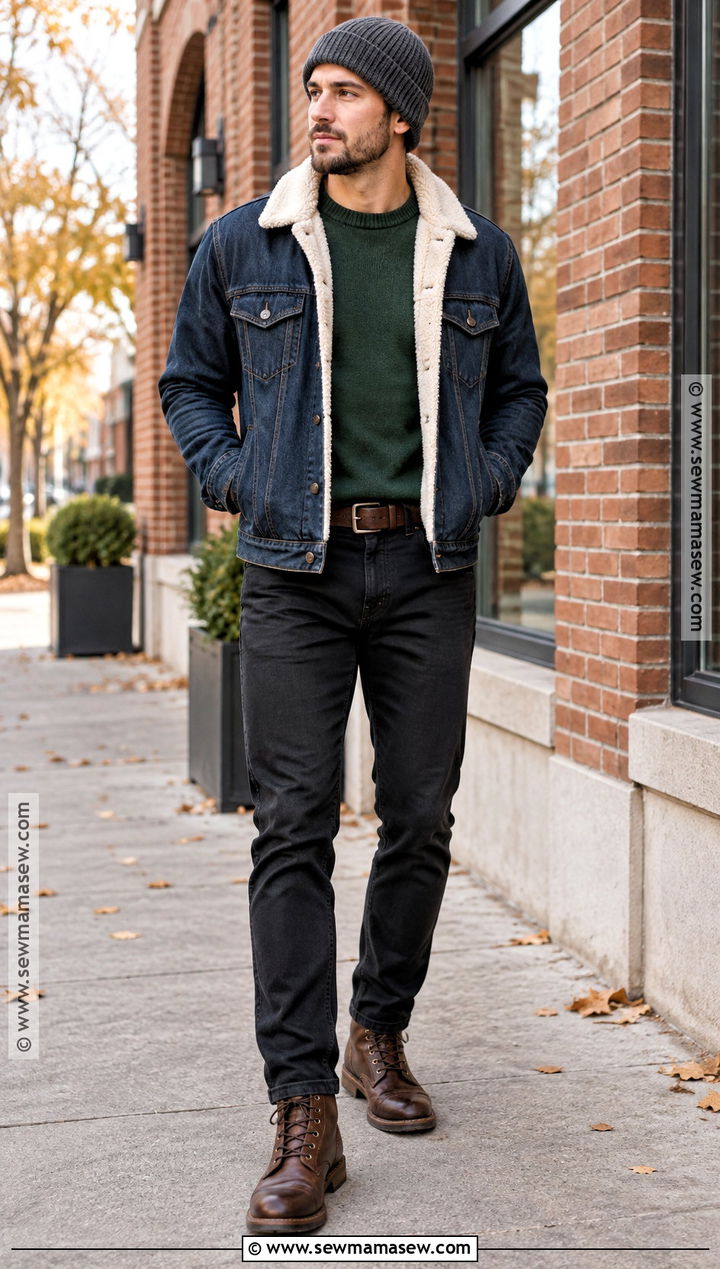
When late fall gets cold, a sherpa-lined denim jacket gives you a lot more warmth in a shape you already know. Dark blue, washed black or brown cord-trimmed denim over a burgundy or forest green crewneck, with straight black jeans or heavy cotton pants. Lace-up leather boots and a sturdy belt finish it, and a knit cap adds warmth without bulk. The sherpa lining takes up room, so I fit this with the sweater on and check that the arms bend without the cuffs riding halfway up. Skip very thick sweaters unless the jacket is cut relaxed. Black pants give the outfit a clean edge that makes the fleecy collar stand out.
18. Wool Shirt Jacket With Trousers
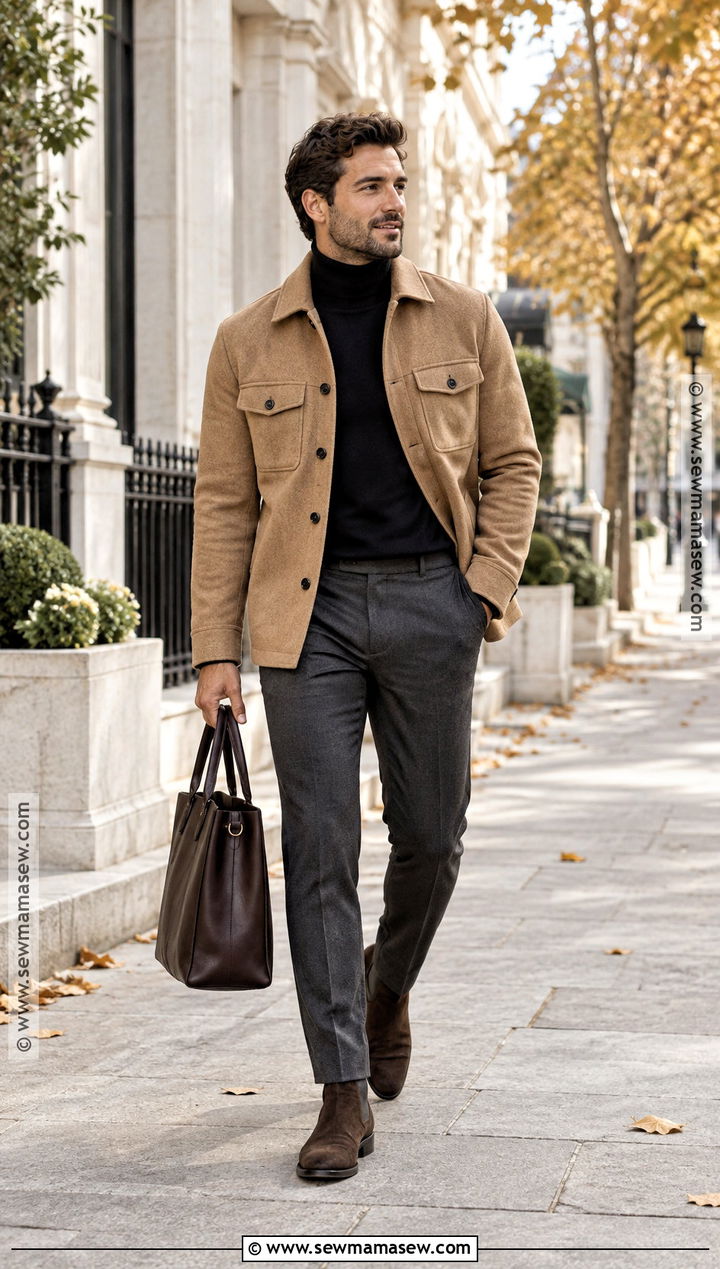
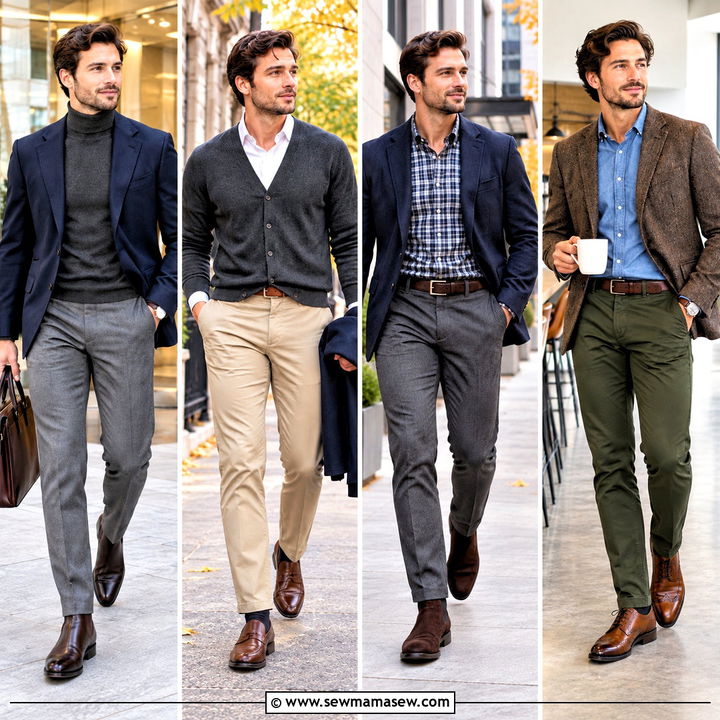
A wool shirt jacket sits between an overshirt and a real coat, and I find it's the piece men wear most once they own one. Solid charcoal, camel or navy is the most flexible; a restrained plaid adds interest. Layer it over a fitted turtleneck or heavy tee, with straight wool-blend trousers. Leather sneakers keep it casual; Chelsea boots refine it. The hem should land around the lower hip, never so long it reads as a coat. Open on mild afternoons, buttoned over a scarf when it's cold. Brushed wool blends breathe well enough that you won't overheat indoors, which pure synthetic shirt jackets often do.
19. Peacoat With Sweater And Jeans
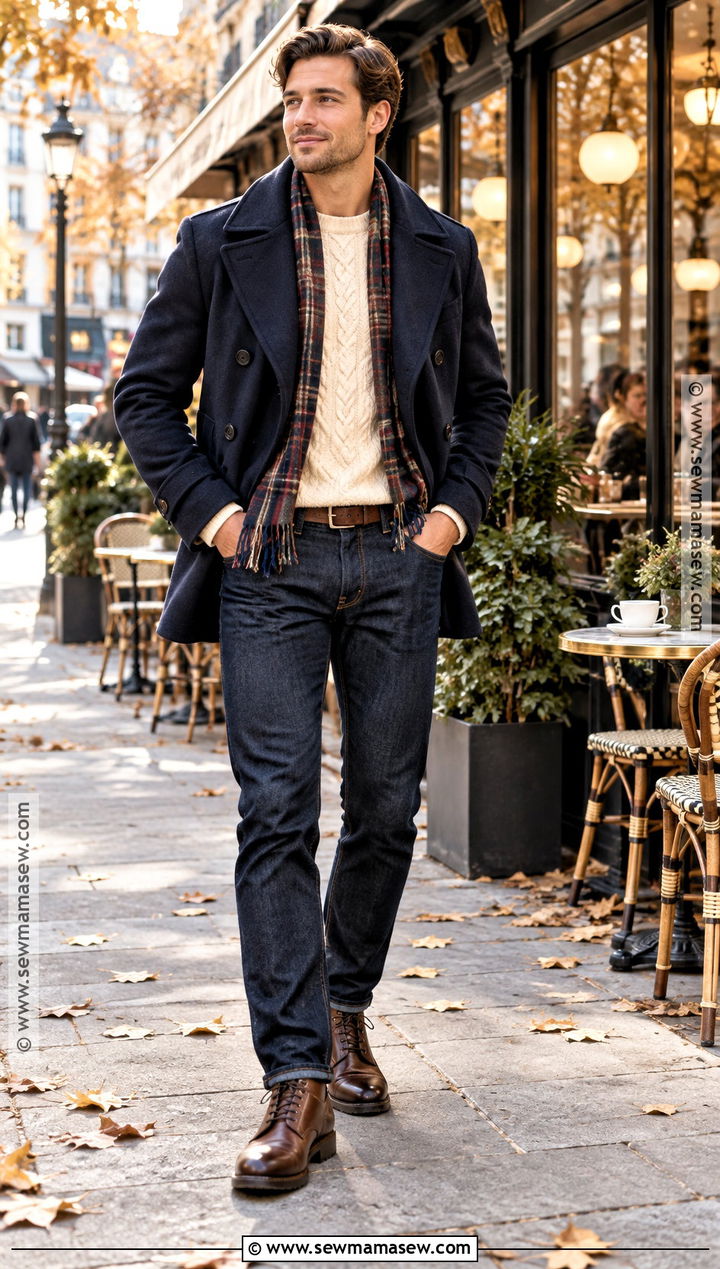
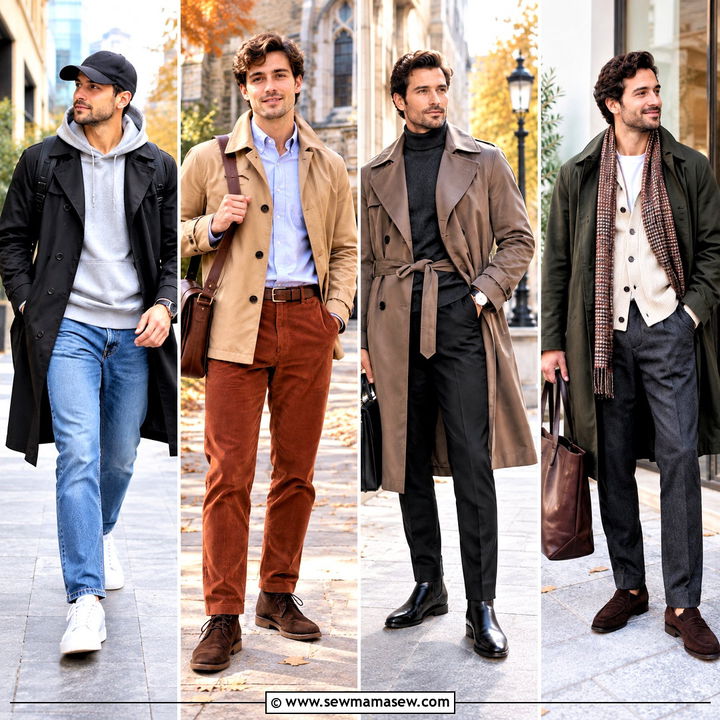
A peacoat is the smartest outer layer here, and it still works with jeans. Navy, charcoal or black, ending at the upper thigh, over a cream cable knit or fine merino, with dark indigo jeans. Brown or black leather boots, and a patterned scarf if you want some color. The double-breasted front already adds structure, so I keep everything under it plain. Fit the coat with your thickest sweater on and make sure it buttons without the lapels gaping. Shorter men should skip long or very oversized versions, which swamp the frame. Thick melton wool is warm and wind-resistant, which is why this coat has lasted so long.
20. Lightweight Parka With Layered Basics
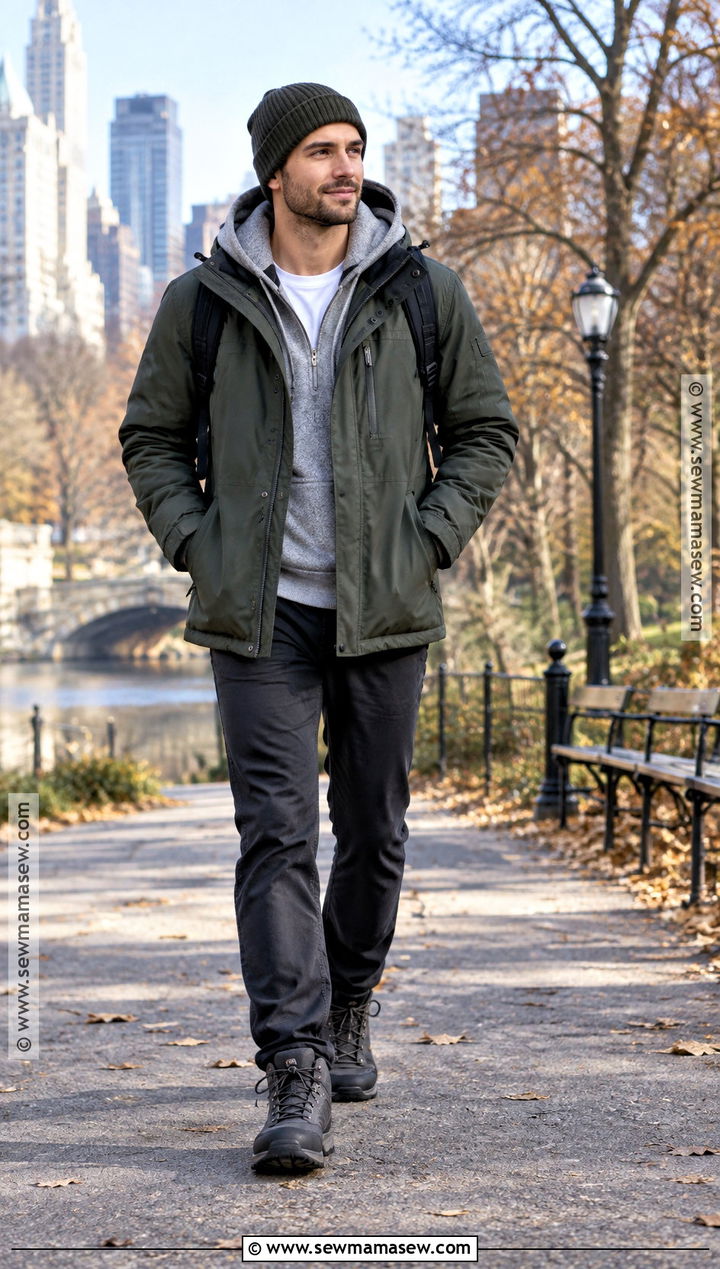
By late fall, cold wind and frequent rain call for more coverage, and a light parka gives you that without committing to a winter coat. Dark green, navy, gray or black, over a hoodie and cotton tee, with dark straight pants or sturdy jeans. Waterproof lace-up boots, a ribbed beanie and a weather-resistant backpack complete it. I'd pick a parka that reaches mid-thigh with an adjustable waist cord, so it holds a shape rather than hanging like a tent. A removable hood is useful on dry days. Keep the inner layers slim; a parka over a chunky sweater and a thick hoodie gets awkward fast.
Which Jacket for 65, 50 and 38 Degrees
Twenty jackets is a lot to sort through, so here's roughly how I'd match them to the temperature on your phone. Wind, sun and how warm you run all shift these, so treat them as starting points.
- Mild mornings, high 50s into the 60s: Harrington, denim, chore, coach, or a wool shirt jacket over a tee or thin knit.
- Cool days, roughly 45 to 55: quilted jacket, field jacket, barn jacket, suede or leather over a sweater, or a softshell if it's windy.
- Cold, damp days in the high 30s and low 40s: sherpa denim, waxed canvas over a flannel, a peacoat over a heavy knit, or the parka.
- Rain at any temperature: the rain jacket, the anorak, waxed canvas, or a parka with a hood. Keep suede and untreated leather at home.
Layering to Cover the Gaps
You don't need a separate jacket for every few degrees. A thin quilted vest or a light fleece under a shell stretches it down by ten degrees or so, and both come off easily once the afternoon warms. I'd rather a client owned three jackets and two good mid-layers than six jackets that each cover one narrow band of weather.
If You Could Only Own Two of These
The right fall jacket depends on your weather, your daily routine and what's already in your closet. Harrington, denim, chore and coach jackets cover mild days; quilted jackets, puffers, peacoats and parkas take over as it gets colder. Neutrals go with everything, though olive, rust, burgundy and camel add color without being hard to wear. If you could only own two, I'd usually suggest one light layer for September and October and one warmer, weather-resistant piece for November. Fit them with the layers you'll actually wear underneath, check you can reach forward comfortably, and choose a length that suits your height. Then build the rest of the outfit around them.
Related posts: