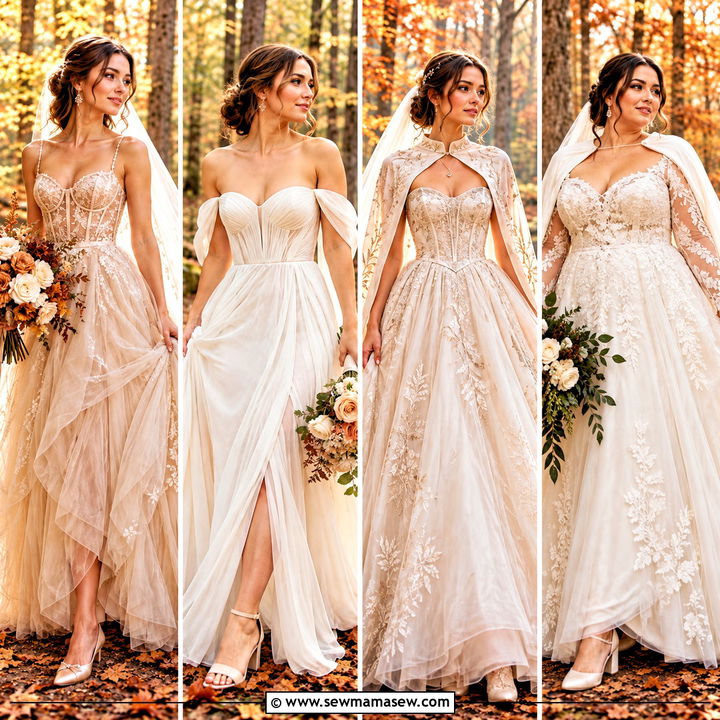
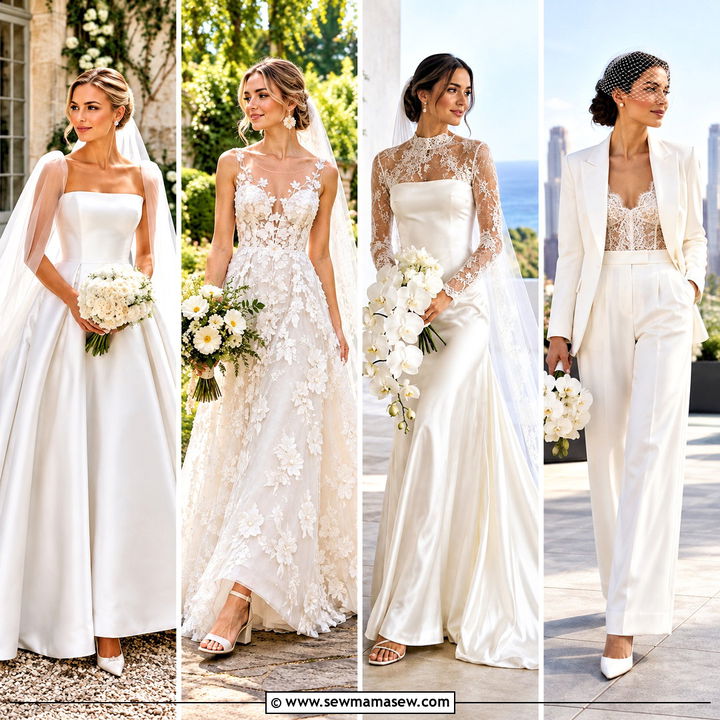
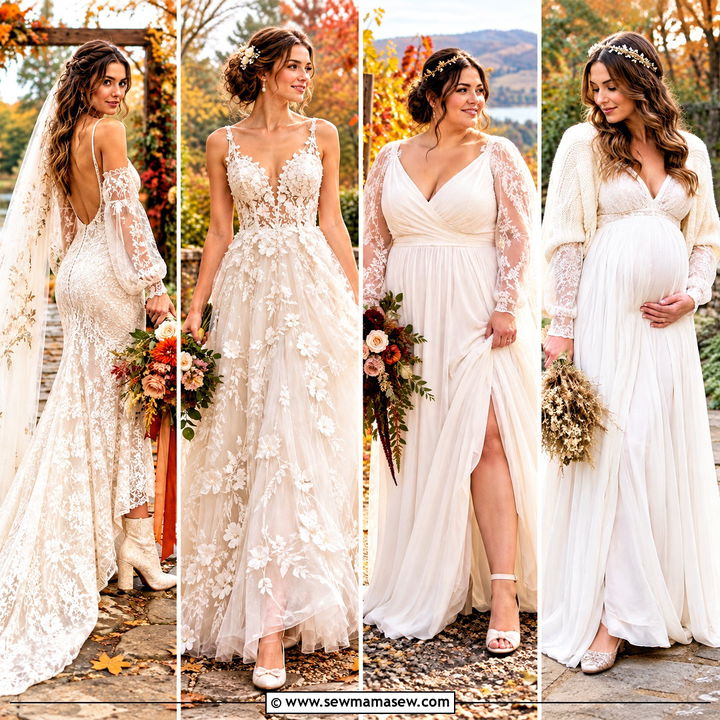
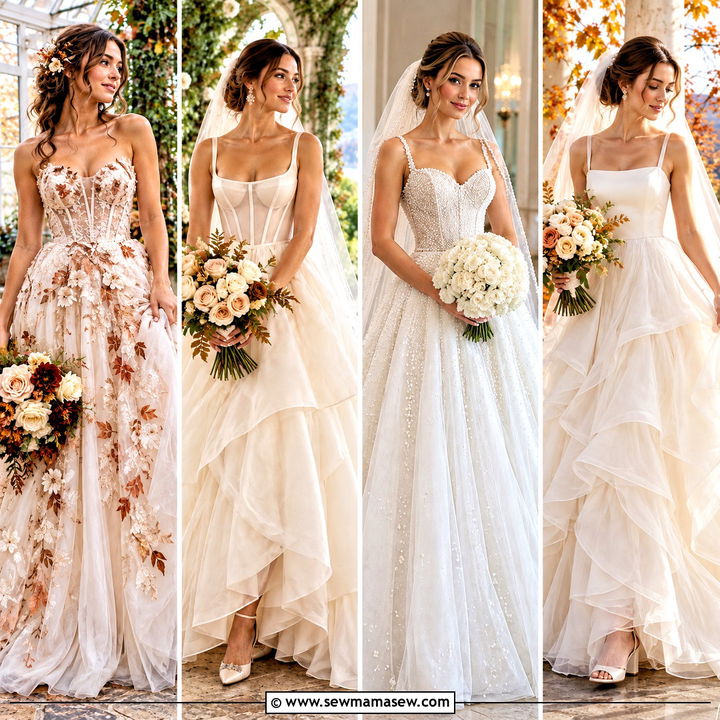
September is a generous month for a wedding dress. A daytime ceremony can still be warm enough for chiffon, and by the time the speeches start you may want sleeves or a cape. When I work with a September bride, the first conversation is about the venue and the hour, not the silhouette, because a lawn at three in the afternoon and a ballroom at seven call for different fabrics. Lightweight satin, chiffon, soft lace and structured mikado all have a place, and removable pieces such as capes, overskirts and toppers let one dress handle both ends of the day. The twenty dresses below run from ball gowns to a bridal mini, with notes on what each one asks of you in fittings and on the day.

Working Back From a September Date
The most common problem I see with autumn brides isn't the dress itself, it's the calendar. Many bridal gowns are made to order after you choose them, and production times vary a lot by designer, so it's worth asking each boutique for their current estimate before you fall for anything. Alterations then need time on top of that.
- Spring before the wedding: shop, compare silhouettes and order, leaving room for production delays.
- Early summer: confirm the delivery date and book your seamstress, who may fill up for September and October.
- Two to three months out: first fitting, with your actual shoes and undergarments.
- Final weeks: last fitting, practice the bustle and any detachable pieces with the person helping you.
If you're shopping late, look at sample sales, off-the-rack gowns or simpler styles like a crepe sheath or slip dress, which need less structural alteration. A blazer or cape can then add the seasonal layer.
1. September Wedding Dress With Long Lace Sleeves
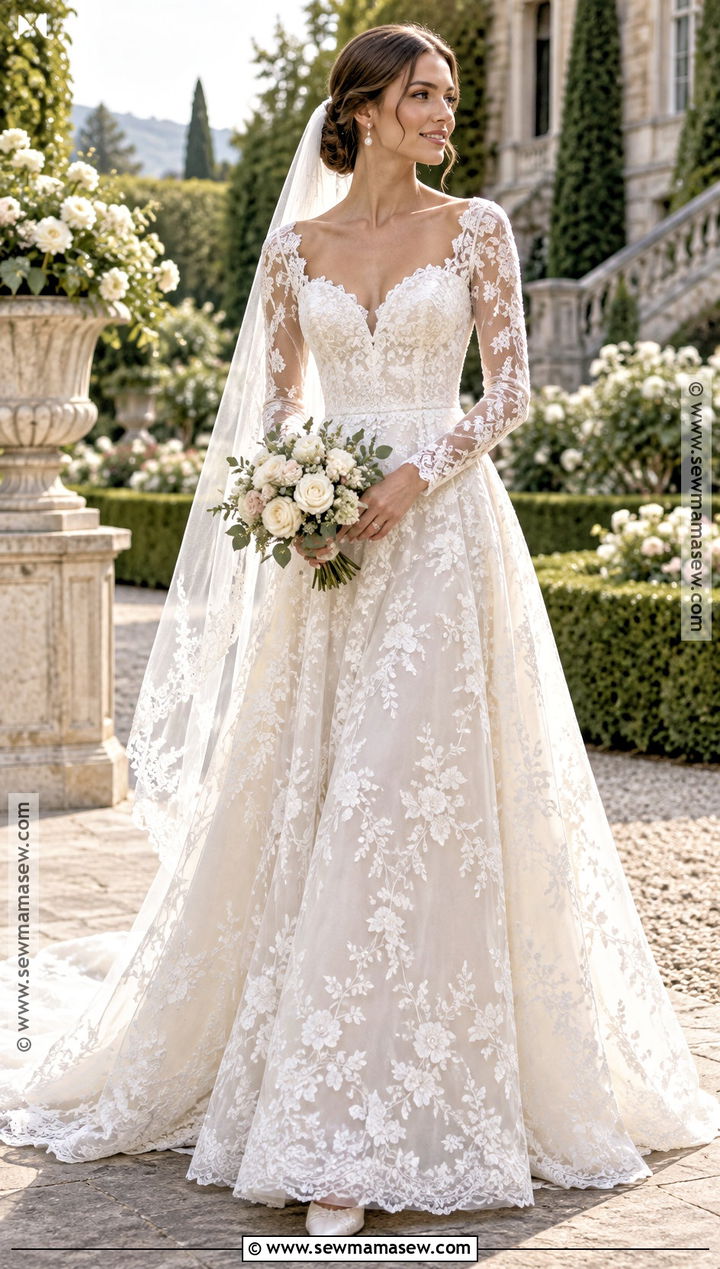
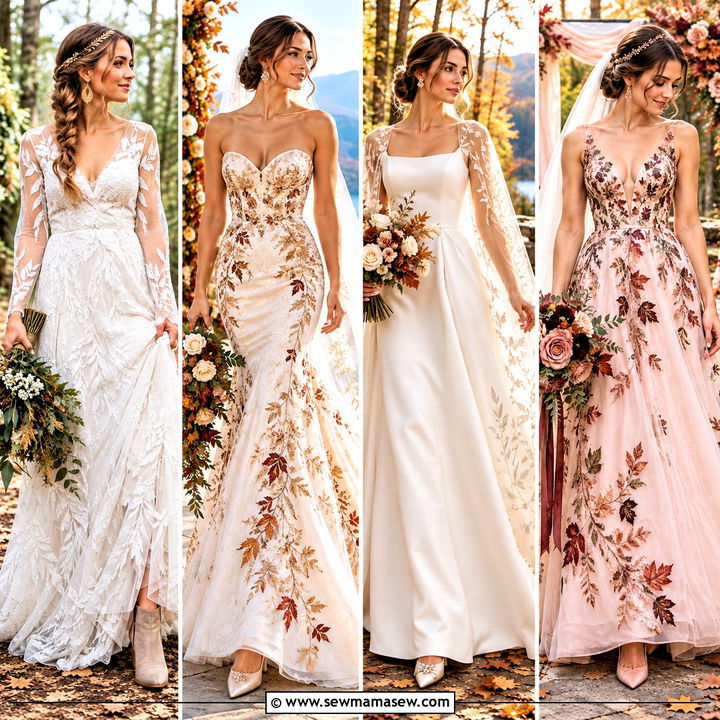
Long lace sleeves on an A-line gown give coverage without the weight of a winter dress, as long as the lace is light and sits over a soft lining rather than a heavy one. In fittings, I always have the bride hug someone and lift a glass; lace sleeves cut too close pull at the armhole and restrict both. A defined waist and full skirt suit most figures. Pointed ivory pumps, pearl drops and a fingertip veil with a narrow lace edge keep it classic, and a low chignon leaves the sleeves and neckline on show. Outdoors, a chapel train is far easier to manage than a cathedral length on grass.
2. September Wedding Dress With a Bridal Cape
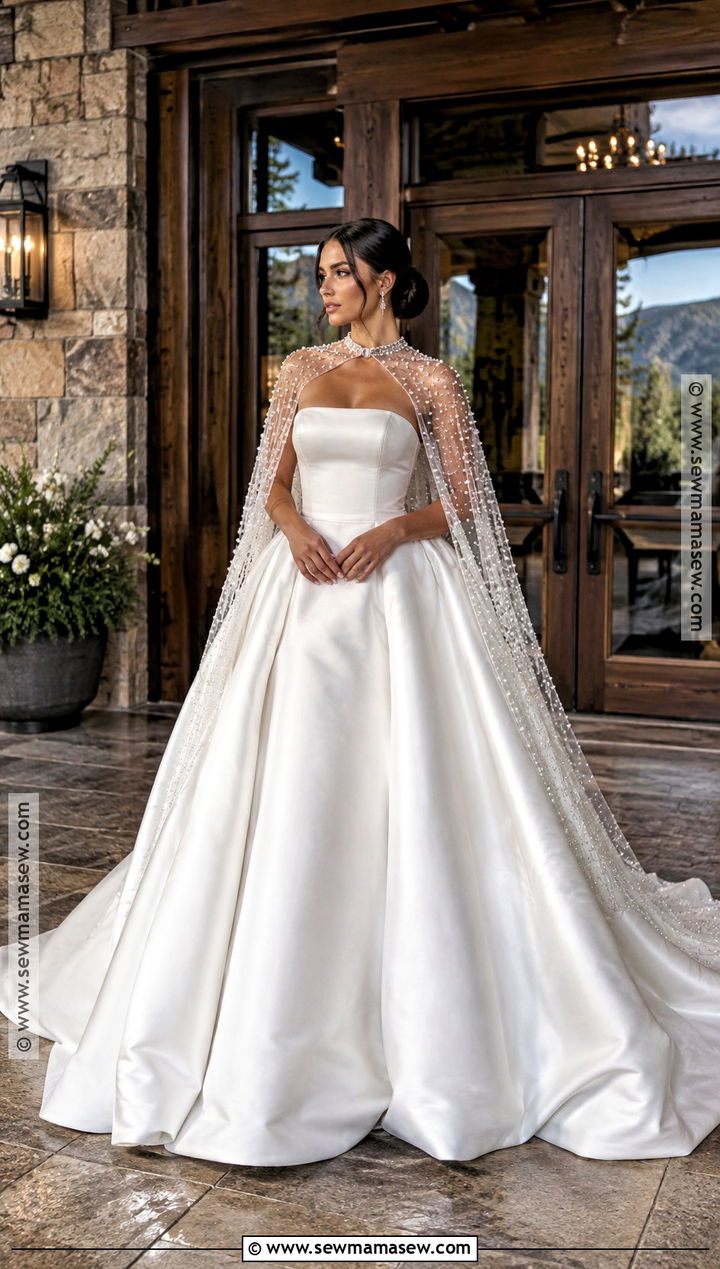
A cape is one of the most practical things a September bride can wear, because it answers the cool-evening question without hiding the dress. Over a clean satin ball gown with a fitted bodice, a sheer chapel-length cape with light embroidery or scattered pearls gives the aisle walk real presence, even without a veil. Take it off before the reception and the plain neckline becomes a second look. I'd keep the cape light; a heavily beaded one drags the shoulders back and pulls at the neckline after an hour. Satin pumps, small crystal earrings and a sleek low bun finish it.
3. September Wedding Dress With a Minimalist Crepe Gown
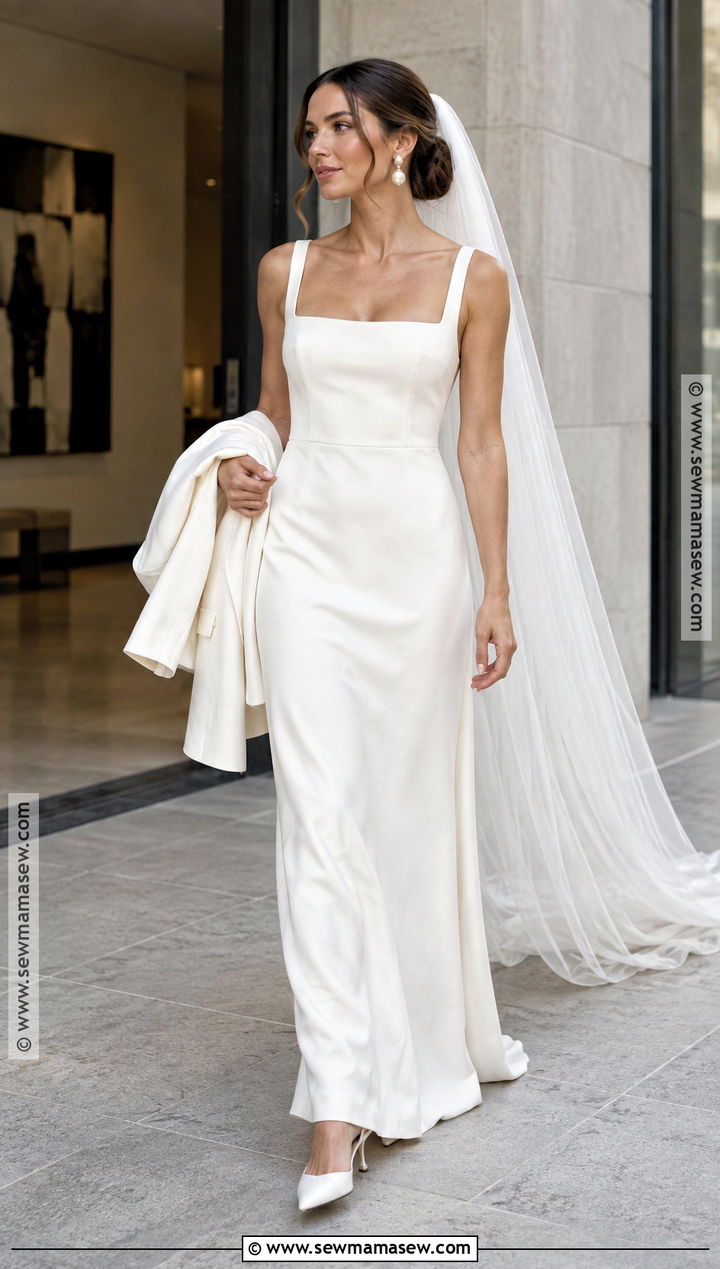
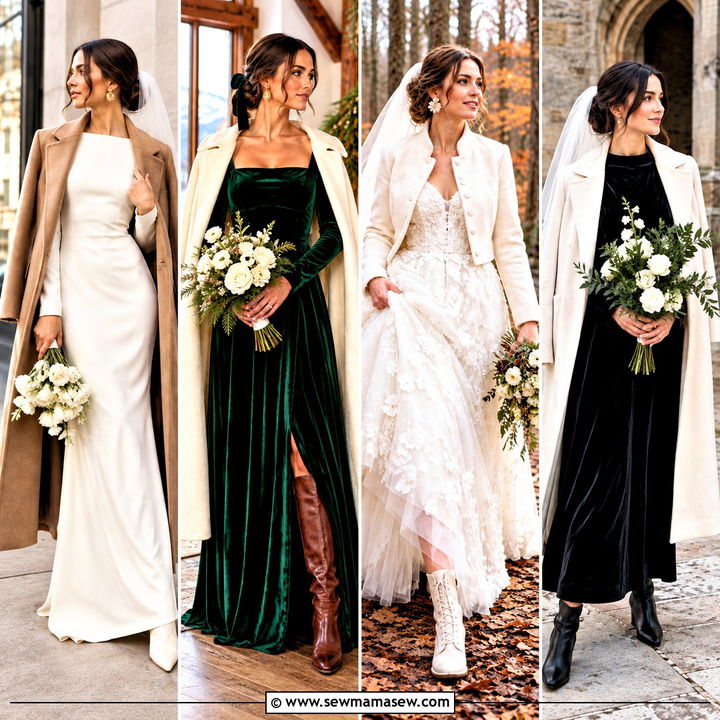
A crepe column gown has nowhere to hide a poor fit, which is exactly why I love it and why I warn brides about it. Crepe skims the body, so a waist seam a centimeter off or a back that gapes shows in every photo. Budget for careful alterations. A square neckline, subtle seaming and a low back or row of covered buttons give it bridal detail without embellishment. Slingback heels, sculptural pearl earrings and a long, plain cathedral veil add contrast. If the evening cools, a cropped ivory blazer cut to follow the dress is cleaner than a shawl. It suits city venues, galleries and rooftops especially well.
4. September Wedding Dress With an Off-the-Shoulder Neckline
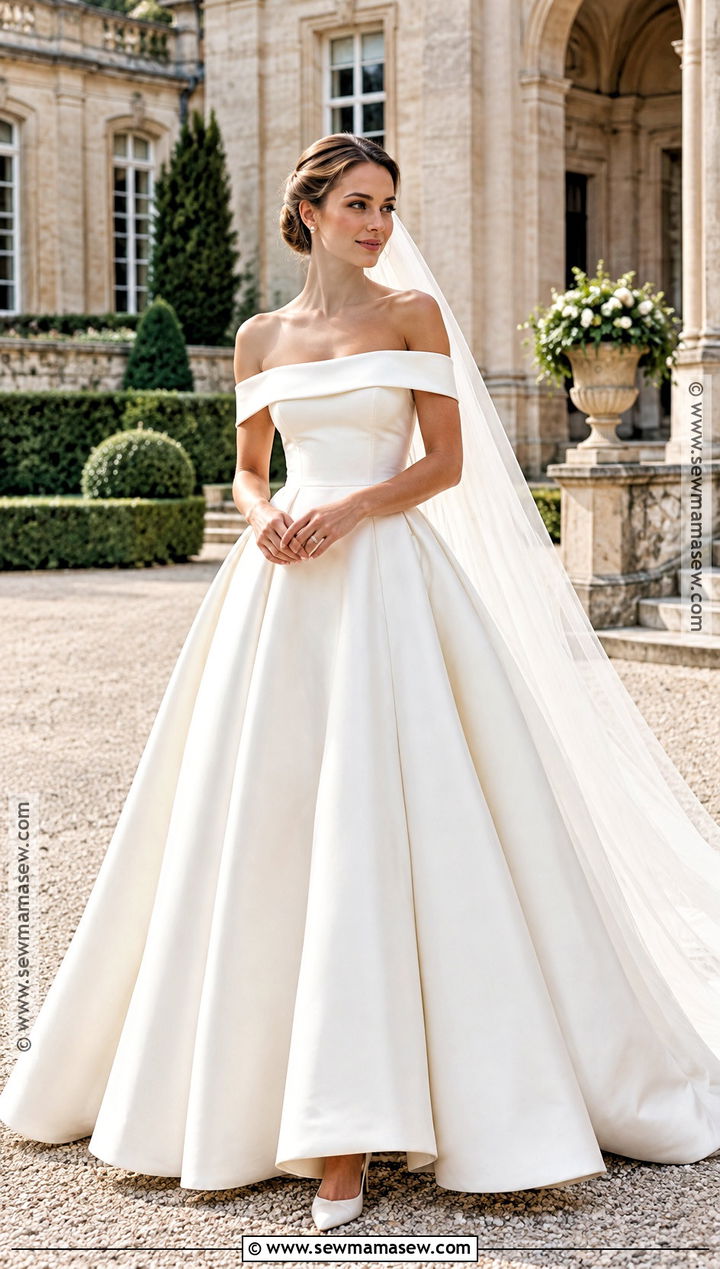
Mikado is a heavier silk-blend fabric with a crisp hand, and it holds the folded off-the-shoulder neckline in place better than softer satins. That weight also makes it comfortable on a mild September evening. The catch with this neckline is movement: if the band is too tight, you can't lift your arms to dance, and if it's too loose it slips. I ask for hidden support in the bodice and test with arms raised at every fitting. Pearl studs, pointed heels and a long plain veil keep the focus on the collarbone. Sweep the hair back so the shoulders stay clear.
5. September Wedding Dress With Floral Appliqués
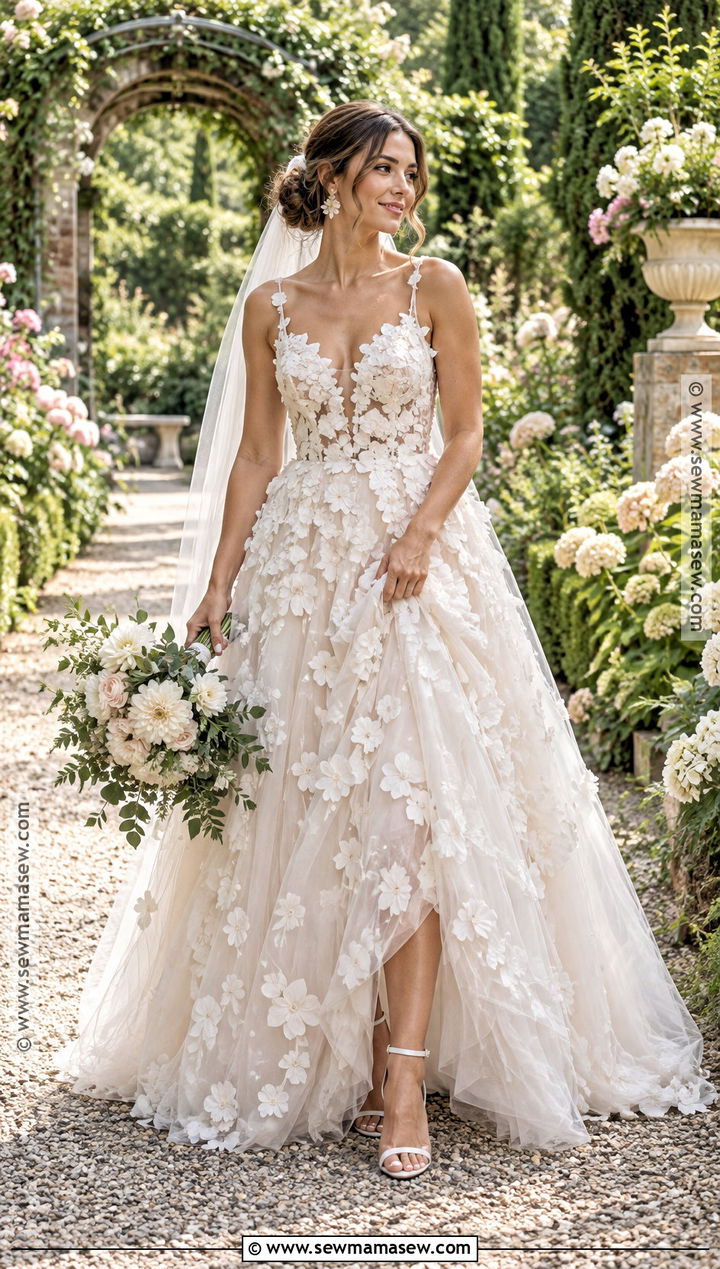
Three-dimensional appliqués are lovely on tulle, and they work best when they're dense at the bodice and thin out down the skirt, so the eye moves upward. A lined bodice with thin straps or small cap sleeves keeps the gown feeling light. I'd warn anyone choosing this style for a vineyard or woodland: raised flowers catch on branches, rough benches and lace on a partner's jacket, so ask your seamstress to tack down any loose petals before the day. Delicate ankle-strap heels and a plain tulle veil let the appliqués lead. Keep the bouquet small, or the two start to compete.
6. September Wedding Dress With Boho Lace Sleeves
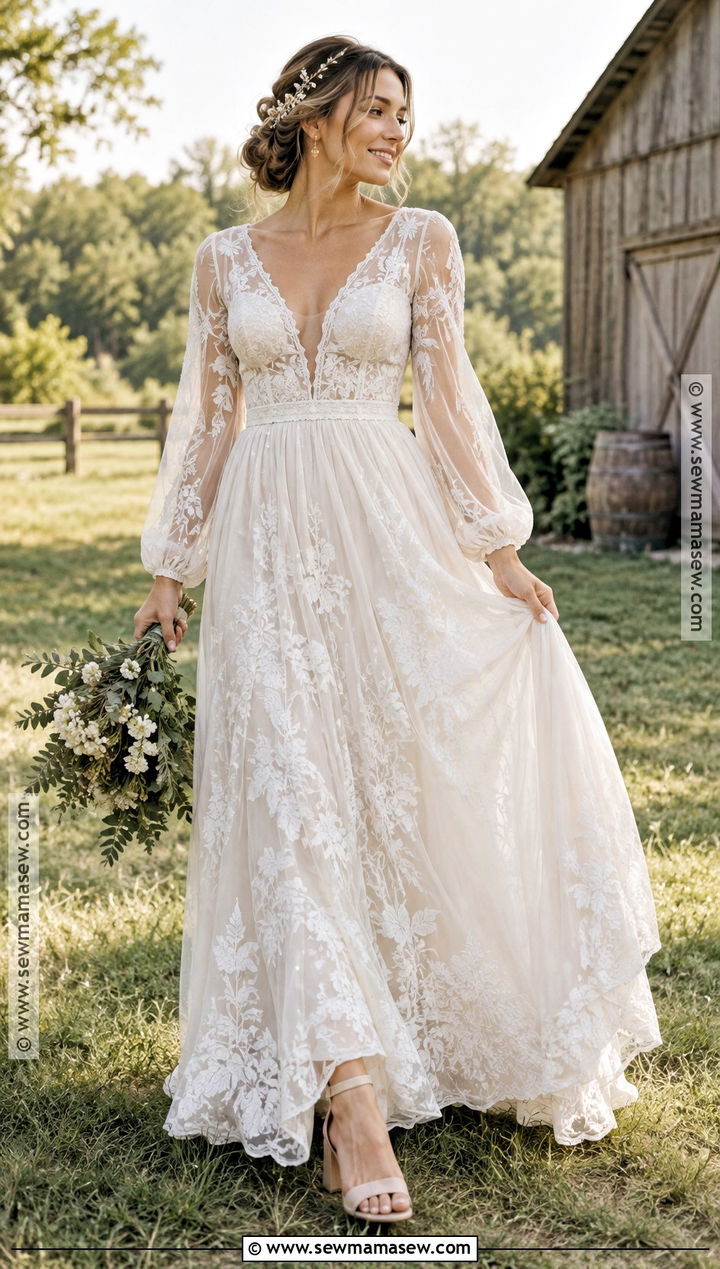
A boho lace gown with sheer bishop sleeves suits relaxed venues, but I'd think hard about the lining. Full lining gives more coverage and a more formal look; partial lining, with sheer lace at the legs or back, reads more casual and can look different under flash than it does in the mirror. Ask to see photos of the dress taken with a flash. Gathered cuffs add vintage character, and ivory block-heel sandals manage barn floors and fields. Loose waves or a soft braided updo match the movement. A cropped shawl adds warmth later. Keep accessories small, or they fight the lace.
7. September Wedding Dress With a Tea-Length Skirt
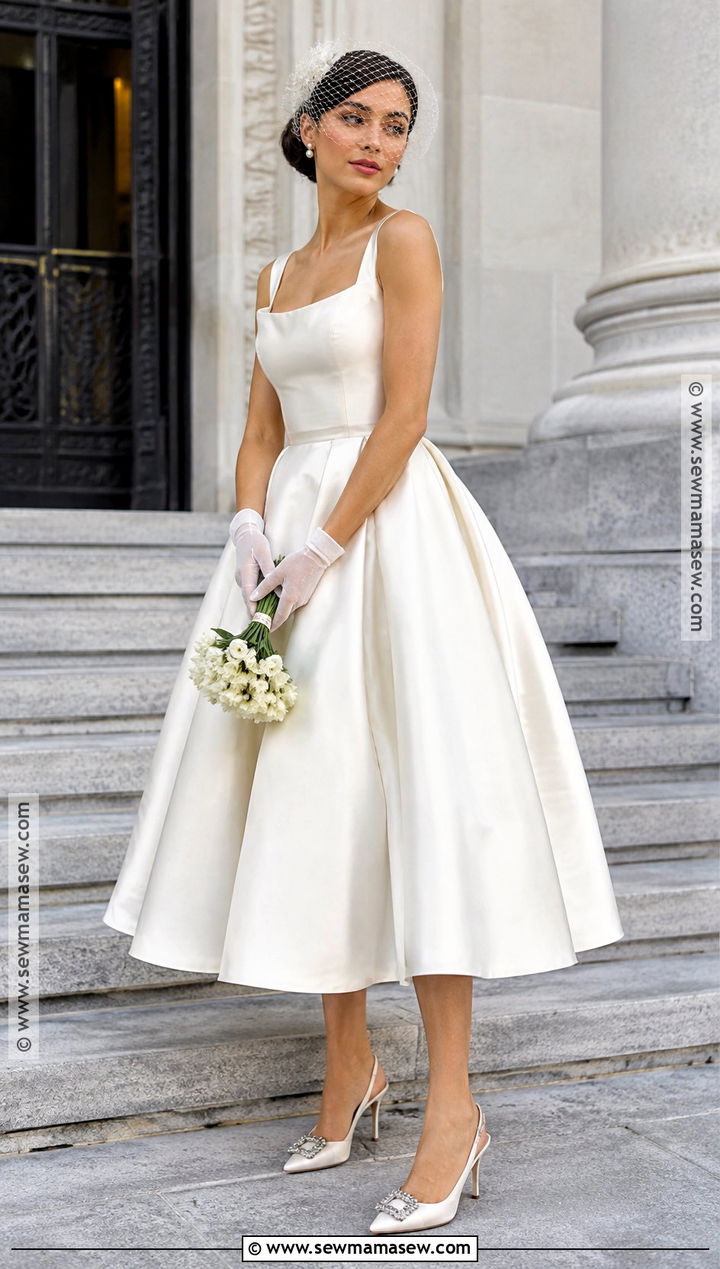
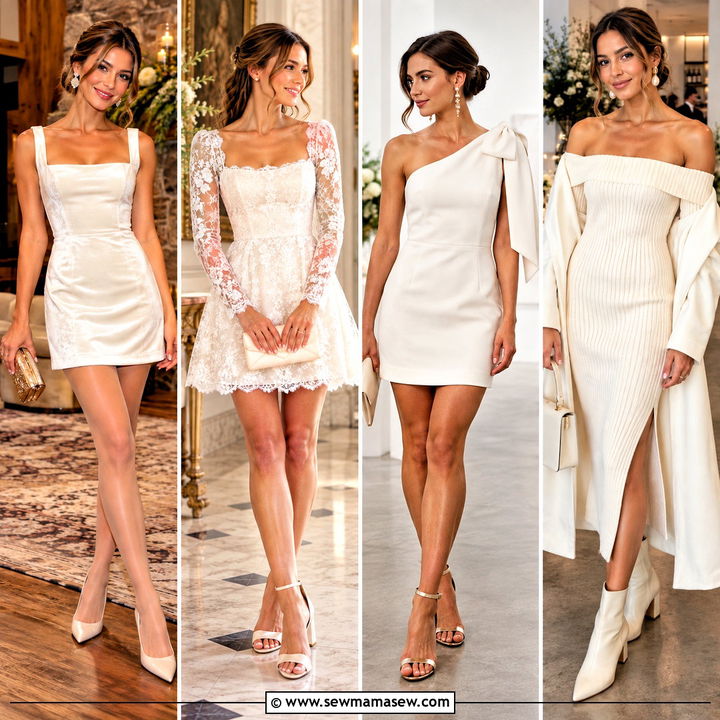
A tea-length dress, ending somewhere between the knee and ankle, is the most practical bridal length I know. There's no hem to step on during courthouse steps or garden paths, and it moves easily at a restaurant reception. Structured satin or mikado holds the skirt's shape. Because your shoes are on show, they become part of the outfit, so pointed pumps or slingbacks deserve the same care as the veil. Short gloves and a birdcage veil push it retro; a shoulder-length veil keeps it modern. Always bring the exact wedding shoes to the hemming appointment, since a half-inch of heel changes where the hem should fall.
8. September Wedding Dress With a Square Neckline
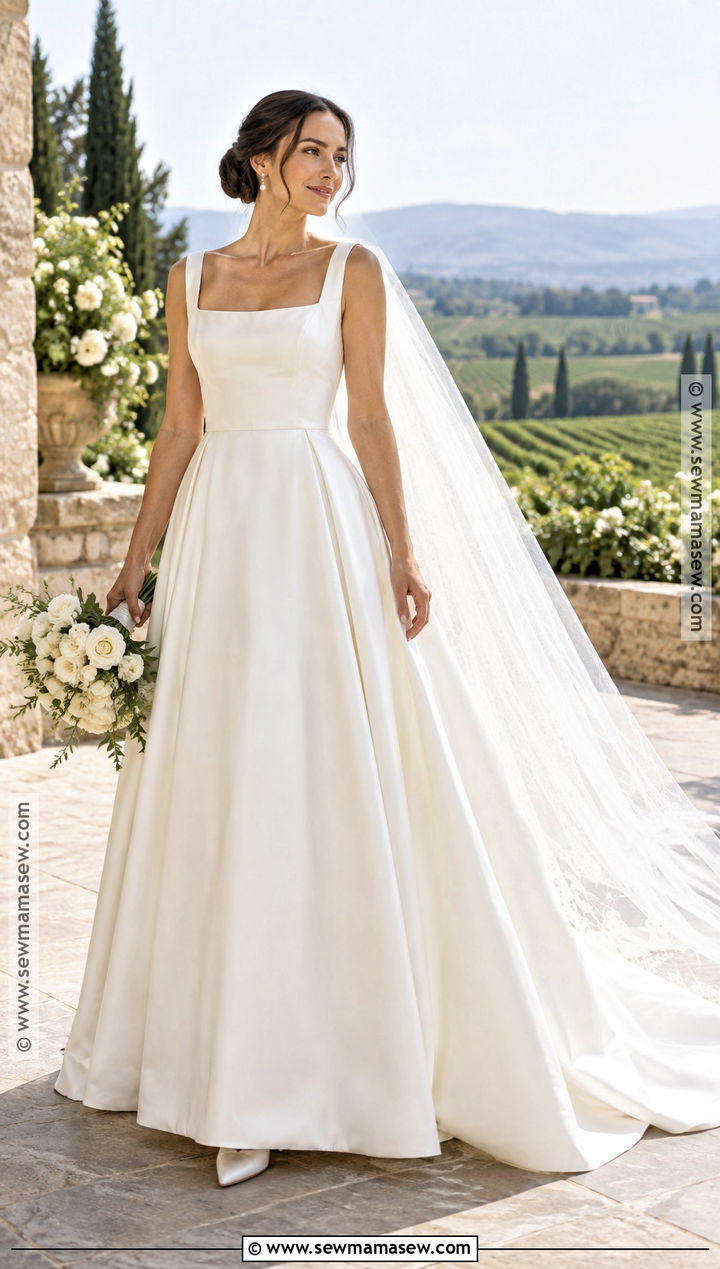
A square neckline with wide straps is one of the most comfortable bodices to wear all day, because the straps share the work and you're not tugging anything up. In satin A-line form it suits almost any September venue. Fluid satin looks relaxed; mikado makes it more formal. Subtle boning shapes the waist without the stiffness of a full corset. Pearl and crystal earrings, closed-toe heels and a sheer cathedral veil keep it balanced, and a low bun keeps the neckline clear. After sunset, add a wrap in a smooth fabric; textured knits catch against satin and leave pulls.
9. September Wedding Dress With a Corset Bodice
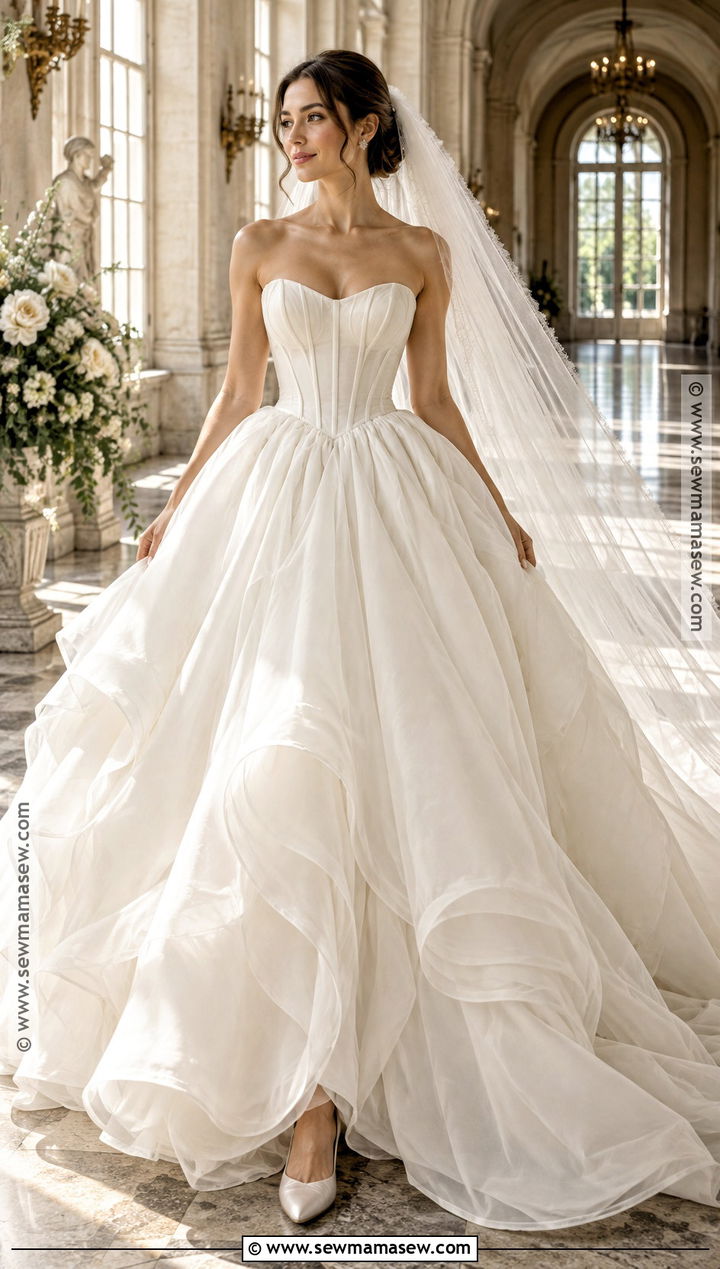
Corset bodices are back in bridal, and a good one feels more supportive than restrictive. A badly fitted one digs in by the time dinner is served. In fittings I have the bride sit, walk and raise both arms, and I check that the boning doesn't press into the ribs when she's seated. A gently curved neckline and a full tulle or organza skirt suit grand venues. Crystal studs, satin pumps and a long veil with a raw edge keep it clean. A polished updo stops hair catching on lacing or hooks. Bring a detachable wrap or short cape, since September evenings can cool quickly outdoors.
10. September Wedding Dress With a High Lace Neckline
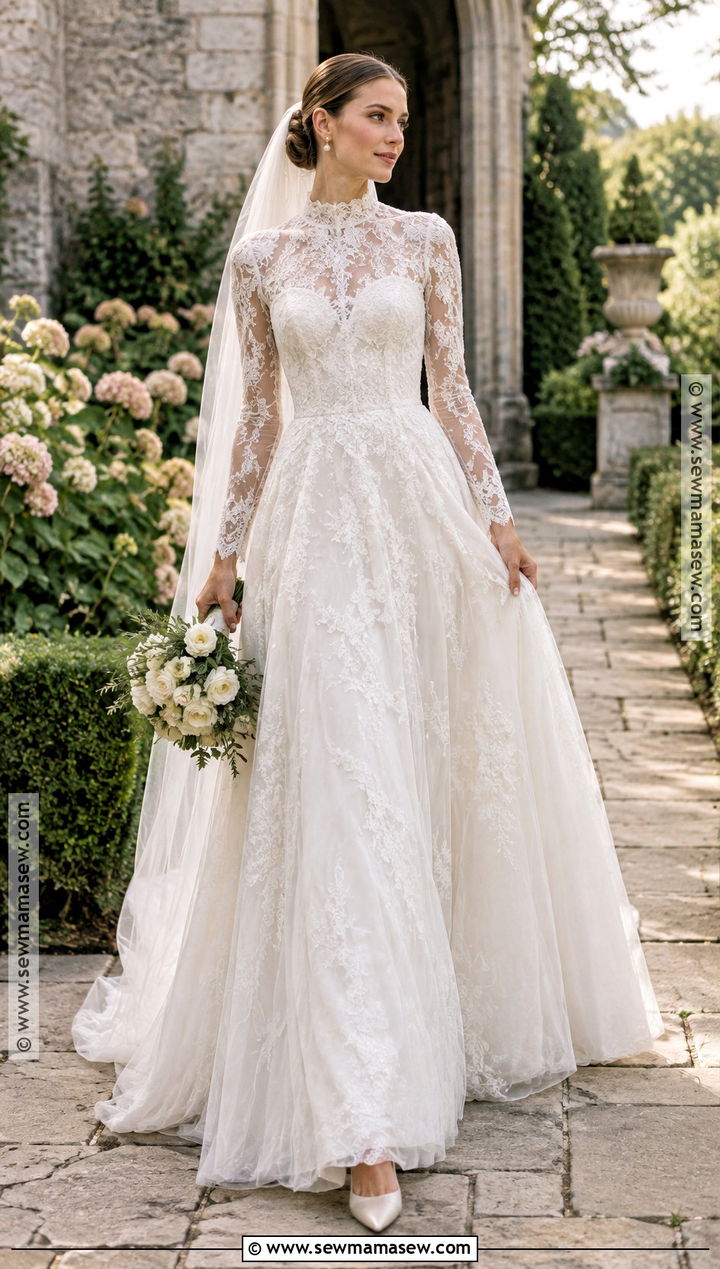
A high lace neckline looks composed and suits a September ceremony as the air starts to cool. Because the neckline is already detailed, I skip a necklace entirely and keep earrings to pearl studs. Run your finger around the inside of the collar during fittings; scratchy lace at the neck is the first thing a bride notices after a few hours, and a soft lining or a scalloped edge fixes it. A fitted lace bodice works with an A-line or sheath skirt, and sheer sleeves add coverage while keeping it light. Covered buttons down the back finish it. Wear the hair up so the collar shows.
11. September Wedding Dress With a Satin Slip Gown
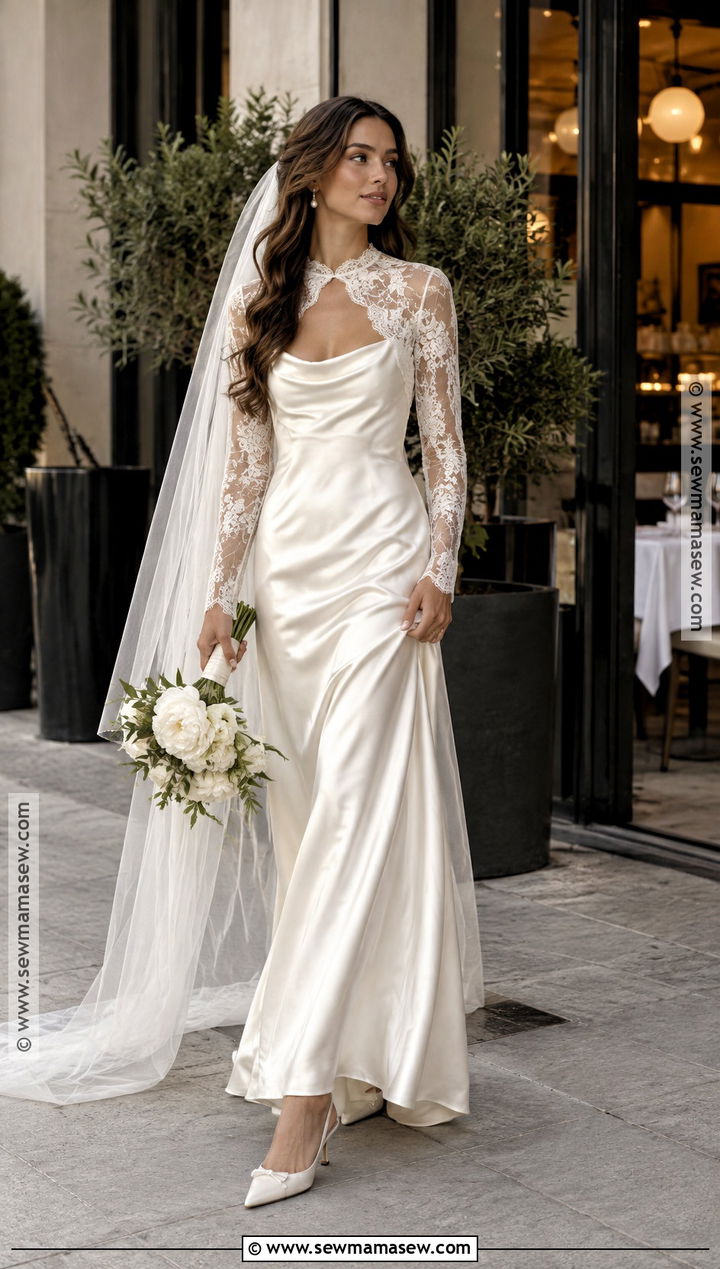
A bias-cut satin slip dress follows the body closely, and it shows everything underneath, so undergarments are the first fitting decision, not the last. Smooth, no-seam pieces in a nude tone matched to your skin are essential. I'd also look at the satin outdoors before committing: bright daylight shows every crease and seam that the boutique lighting hides. A cowl or clean V-neck keeps it minimal. Low slingbacks, pearl drops and a long sheer veil suit city, coastal and restaurant weddings. For coverage and warmth, a lace topper or tailored ivory blazer goes over it later in the evening.
12. September Wedding Dress With a Detachable Overskirt
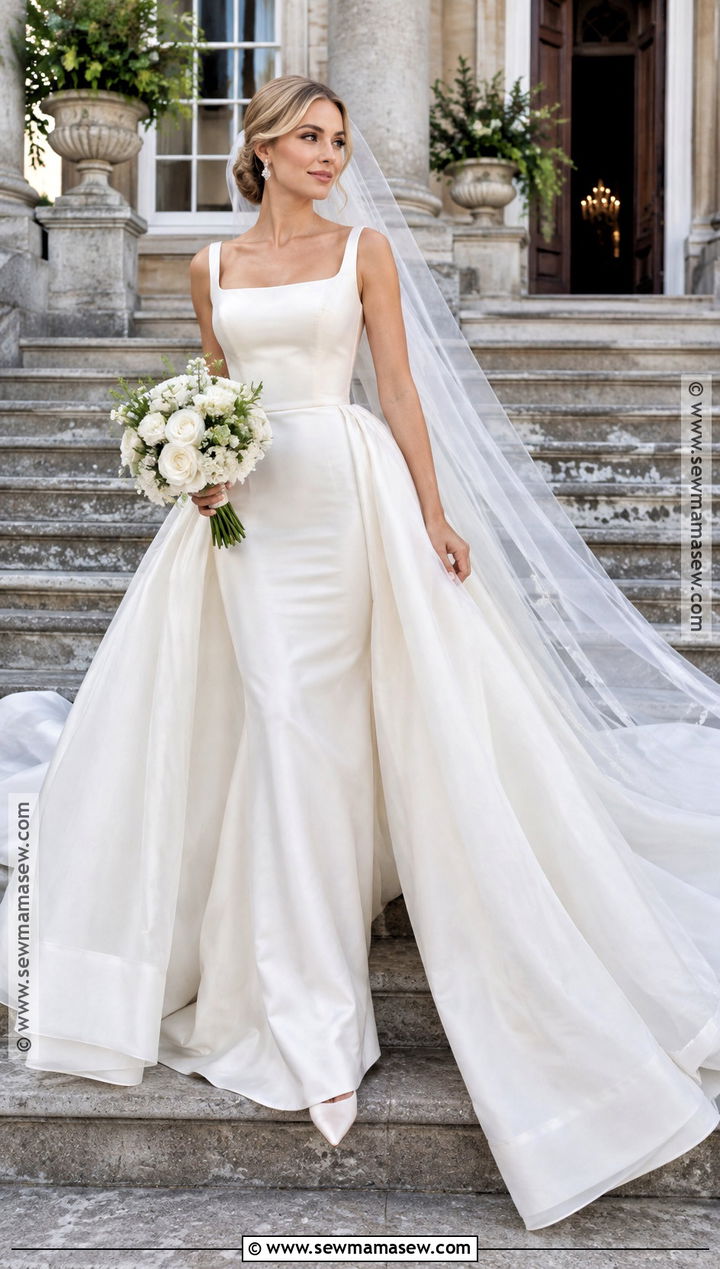
A detachable overskirt gives you two dresses without a full change. A fitted column or fit-and-flare in crepe, lace or satin sits underneath, and a full organza or mikado overskirt adds ceremony volume. I always rehearse the removal with whoever will help on the day. The fastening should lie flat, stay put while walking and come off in a minute or two; some take longer than brides expect. A sleek half-up style works for both versions. Crystal earrings, pointed heels and a chapel veil complete it. This suits a formal ceremony followed by a lively reception.
13. September Wedding Dress With an Empire Waist
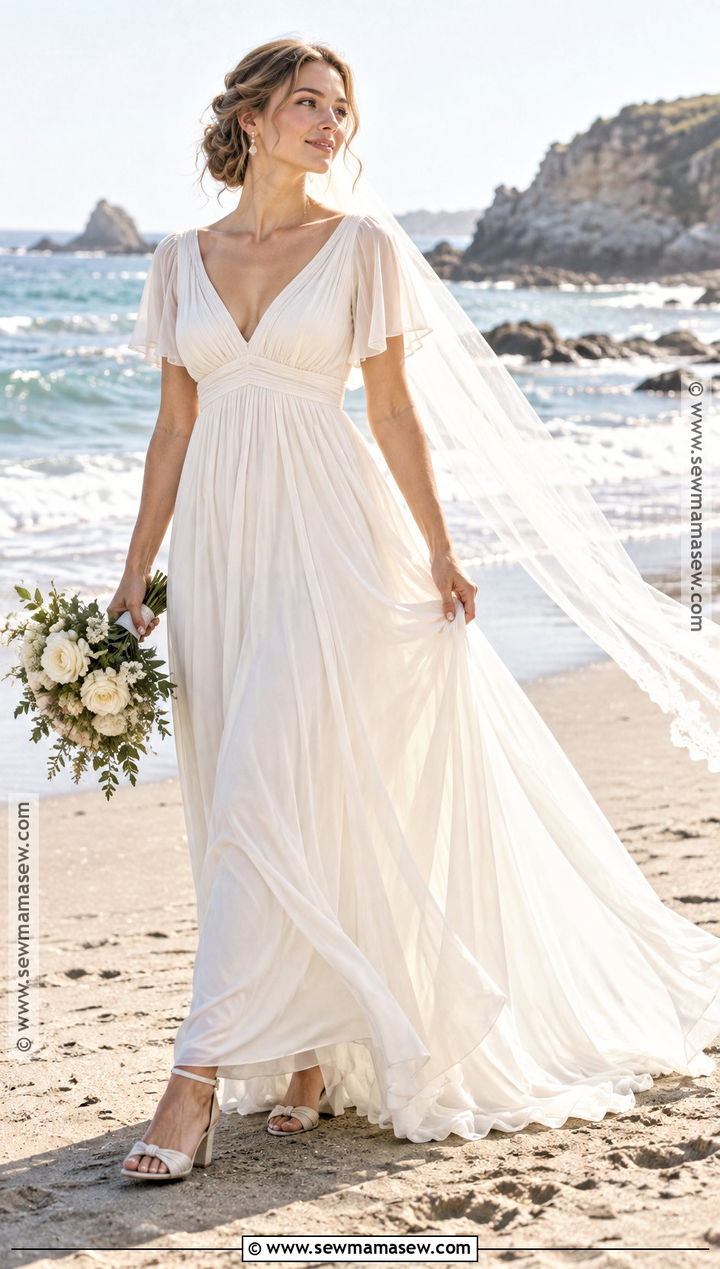
An empire waist sits just below the bust and lets chiffon fall freely, which feels cool and easy during a warm September afternoon. It's kind to brides who don't want anything snug at the natural waist. The trade-off is wind. Chiffon lifts in a breeze, so a properly weighted lining and a modest train make it far more manageable on a beach or open lawn. A V-neck or flutter sleeves keep the movement soft. Low block heels sink less into sand and grass than stilettos. A fine-knit ivory wrap handles the temperature drop at sunset.
14. September Wedding Dress With a Wrap Bodice
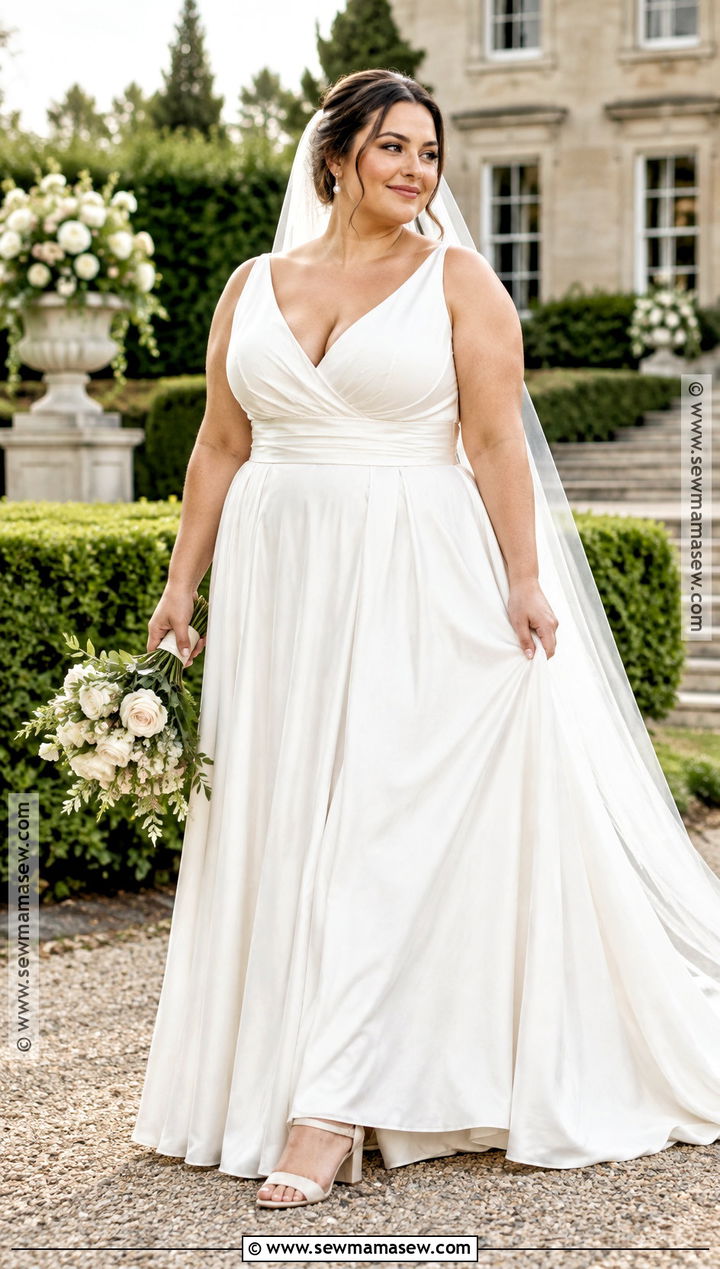
A wrap bodice looks soft, but the structure underneath does the real work. Without internal support, the crossover gapes when you lean forward. I'd look for crepe, satin or chiffon with a built-in cup or boning behind the V, and an illusion mesh or modesty panel if you want the neckline higher. A wide waistband defines shape and the A-line skirt gives room to move. Medium block heels, pearl earrings and a fingertip veil keep it understated. With good tailoring, this cut works across a wide range of sizes, from straight to plus.
15. September Wedding Dress With a Petite Fit-and-Flare Shape
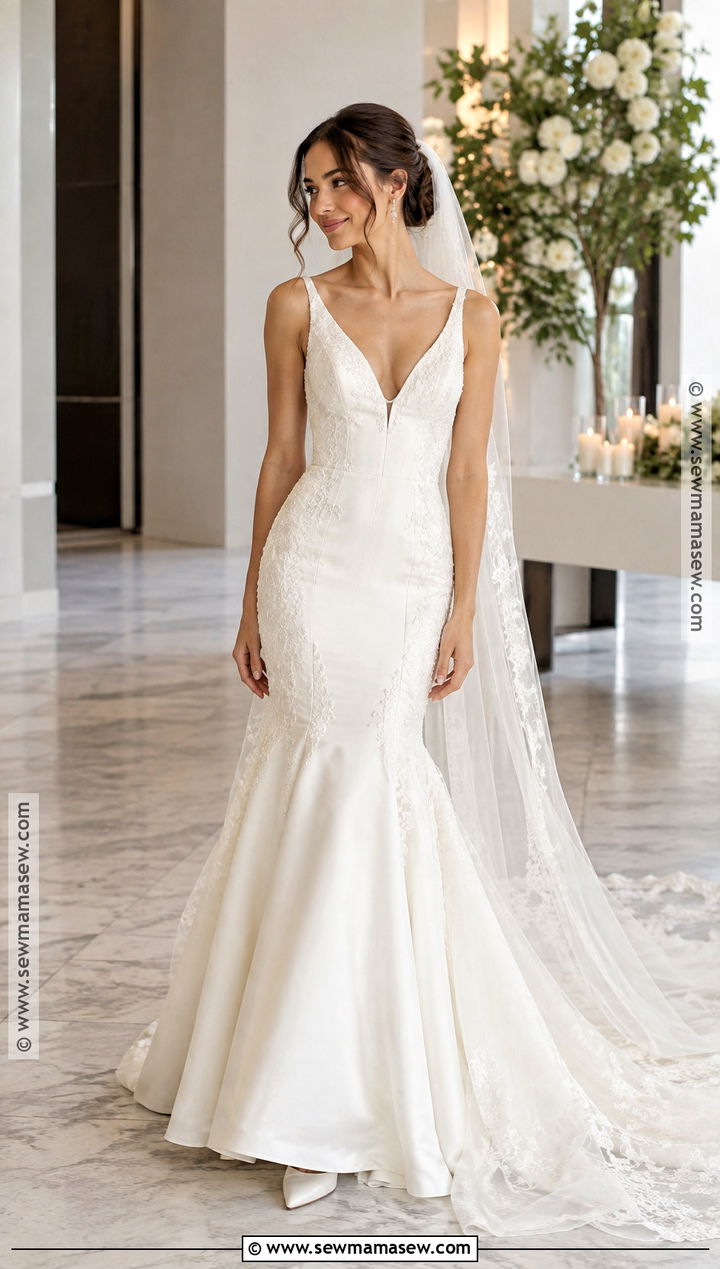
For a petite bride, where a fit-and-flare skirt starts to flare makes all the difference. A flare that begins around mid-thigh keeps the leg line long; one that starts below the knee can cut height visually. Vertical seams, a V-neck and lace placed thoughtfully all help. Ask the boutique whether the gown can be ordered in petite proportions so the waist and neckline land in the right place before alterations even begin. Pointed-toe heels, small drop earrings, a narrow chapel veil and a compact bouquet keep the scale right. Multiple heavy layers are the thing I'd steer petite brides away from.
16. September Wedding Dress With a Bridal Blazer
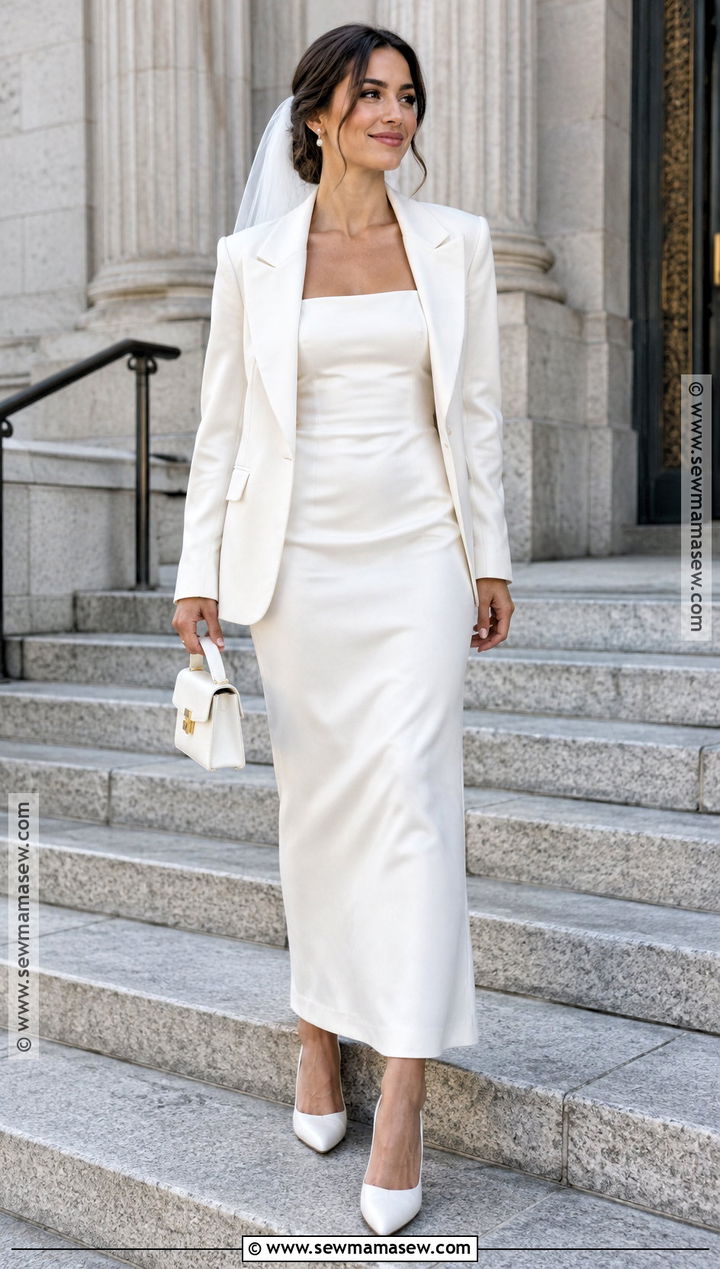
A tailored ivory blazer over a sleek midi or ankle-length crepe dress is a confident courthouse look, and practical for September mornings. The blazer adds warmth and ceremony; take it off for photos or dinner to show the dress. Single-breasted with clean lapels and a little waist shaping keeps it bridal rather than office. The detail I check is the ivory: different fabrics come in different whites, and a cream blazer next to a stark ivory dress can look mismatched in photos, so try them together in daylight. Pointed pumps, pearl earrings and a structured mini bag complete it.
17. September Wedding Dress for a Barn Wedding
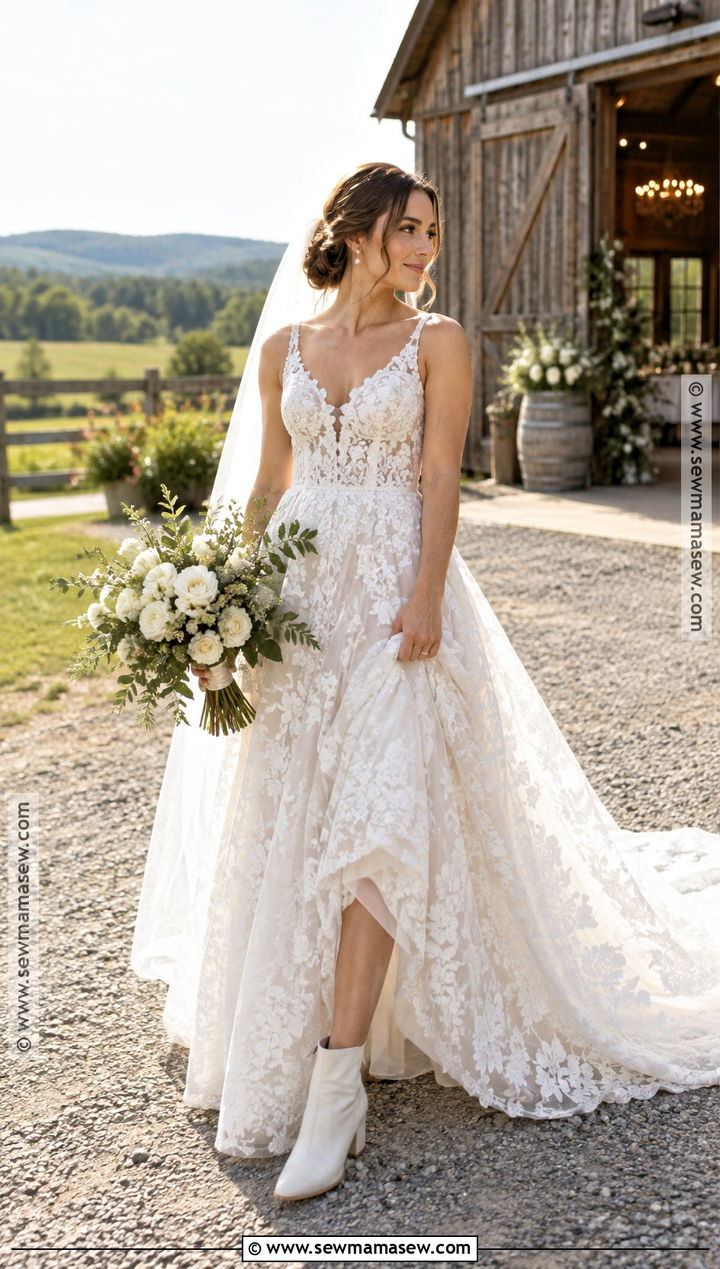
A soft lace A-line suits a barn without forcing a rustic theme. I'd keep the train to a sweep or short chapel length; barn floors and gravel paths are rough on hems, and a long train comes back grey. Ask for a bustle that one person can secure in a couple of minutes. Ivory ankle boots or sturdy block heels handle uneven ground. A low textured bun, small pearls and a plain fingertip veil keep it polished. For the evening chill, a cropped ivory cardigan or tailored jacket works. Choose one or two rustic details rather than stacking them, or the look starts to read like a costume.
18. September Wedding Dress for a Garden Wedding
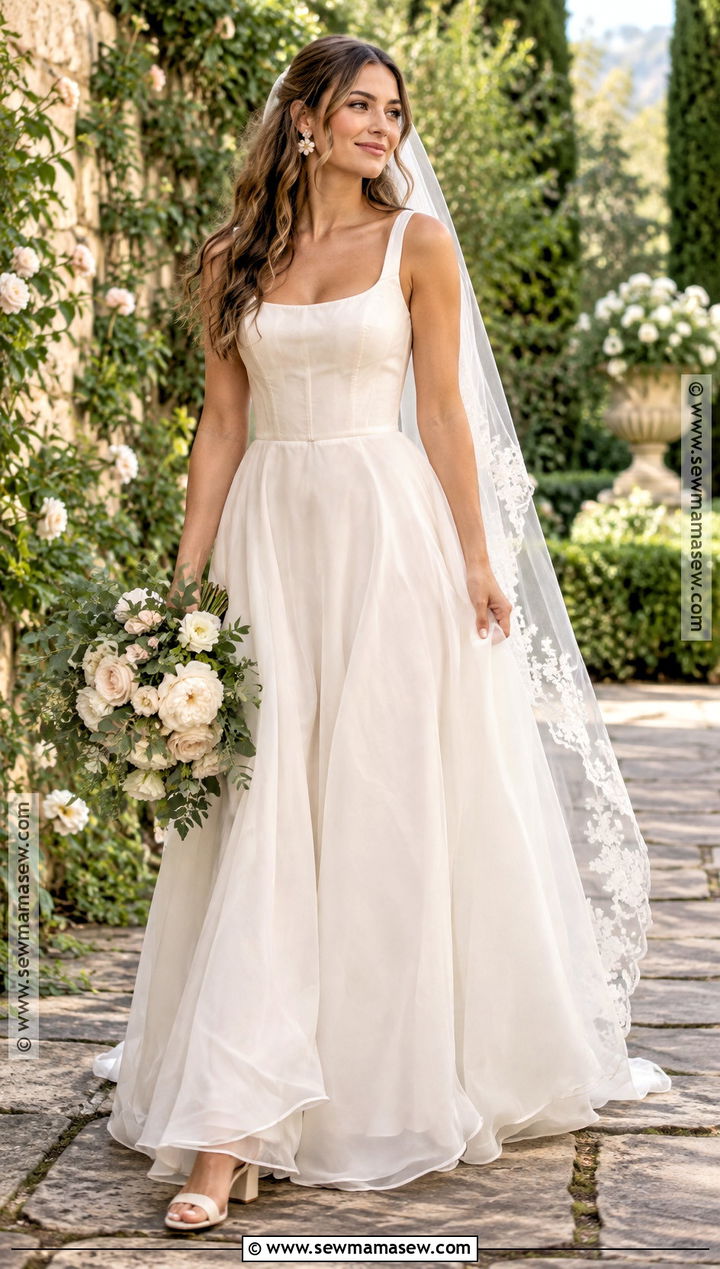
Organza is light and crisp, and it holds an A-line shape outdoors without the weight of satin. Wide straps or soft off-the-shoulder draping suit a garden ceremony. The ground is my main concern here: lawns, gravel and terraces swallow thin heels, so block-heel sandals or heel protectors are worth it. Choose a train that bustles easily before you walk to dinner. Floral drop earrings and a fingertip veil with a few appliqués near the edge tie into the setting. A light wrap after sunset keeps you warm without covering the gown.
19. September Wedding Dress for a Black-Tie Wedding
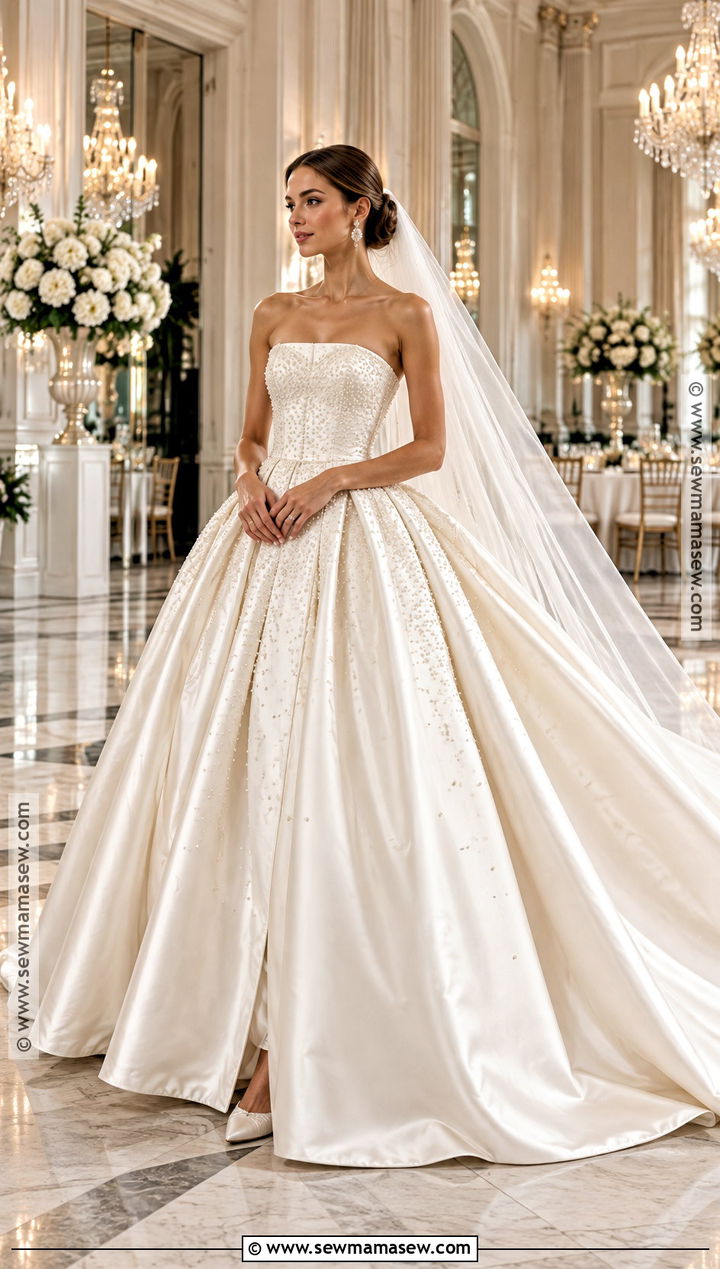
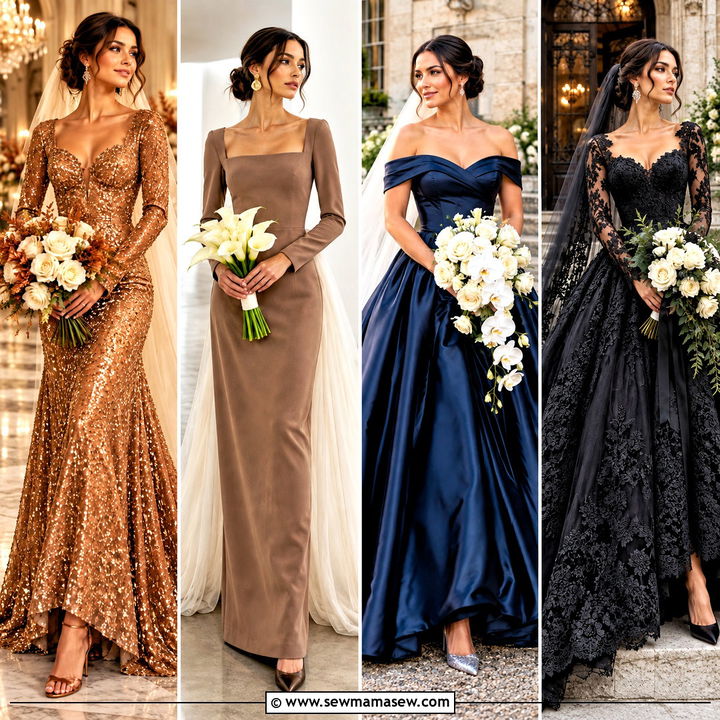
Black tie calls for a gown with real presence: a beaded column or a structured satin ball gown. The common mistake I see is stacking drama, with a beaded bodice, statement earrings, a cathedral veil and a cascading bouquet all fighting for attention. Pick one or two to lead. Pearl beading or a softly shimmering bodice with satin pumps and a long veil is plenty. For an outdoor ceremony, a floor-length cape in lightweight satin or sheer embroidery adds warmth and formality. A sleek bun or smooth waves keep it polished for ballrooms, museums and grand hotels.
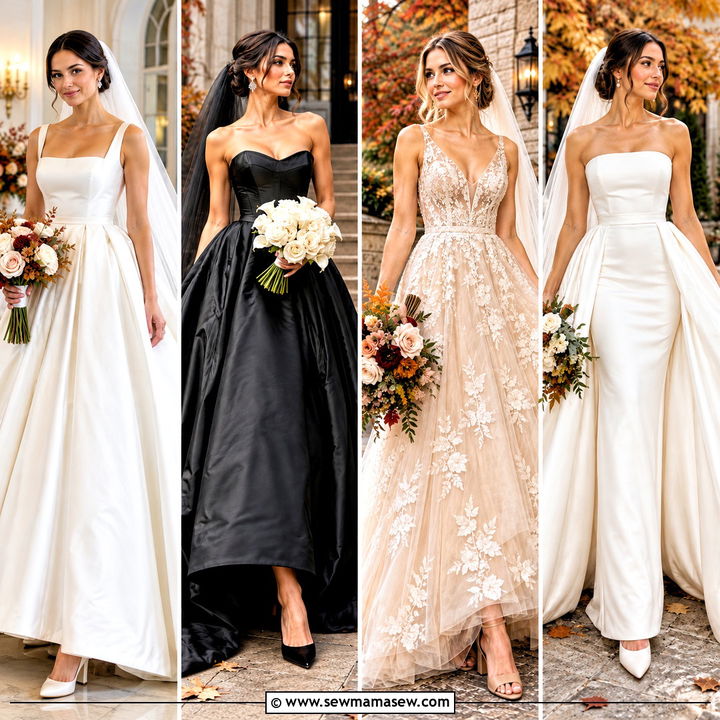
20. September Wedding Dress With a Bridal Mini
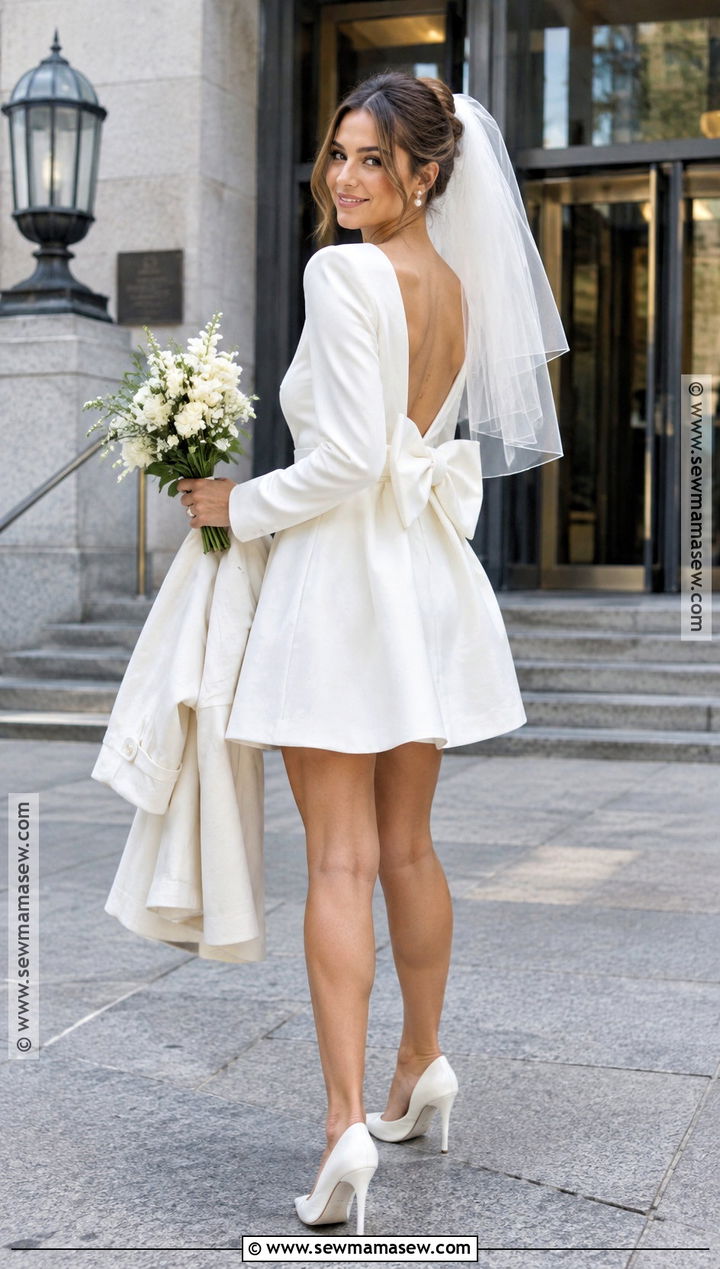
A bridal mini is a good choice for a courthouse ceremony, an intimate dinner or a reception change. A structured A-line or fitted shift with long sleeves, appliqués or a bow reads clearly as bridal. Sit down in it during the fitting; a mini that rides up when seated becomes something you adjust all night. Sheer tights add coverage on a cool evening, and a cropped coat or ivory blazer adds a layer. With so much leg showing, the shoes carry the look, so choose them alongside the dress rather than as an afterthought.
Satin, Lace and Chiffon in Early-Fall Weather
September weather can include a warm sun, a sudden shower and a cool breeze in one afternoon, and each bridal fabric reacts differently. Knowing this is what helps me match a dress to a venue.
- Satin: shows water spots and creases, and reflects strong light. Keep a lint-free cloth handy and avoid sitting too long before photos.
- Lace: forgives creasing but snags on rough wood, jewelry and Velcro. Check bouquet wraps and boutonniere pins.
- Chiffon and organza: light and cool, but they lift in wind. A weighted lining or a little extra hem weight keeps them down outdoors.
- Mikado and crepe: hold their shape in heat and humidity, and handle a cool evening better than light silks.
For an outdoor ceremony, I always plan a rain option with the venue and keep a clear umbrella in the car, since a clear one doesn't cast colored light on the dress in photos. A spare pair of flat shoes, safety pins and a small stain pen should travel with whoever is carrying the emergency kit.
Test the Dress Like You'll Wear It on the Day
A September wedding dress has to suit your taste, the venue and a day that can start warm and end cool. Lace and chiffon handle a hot afternoon; satin, crepe, mikado and layers like capes and blazers carry you into the evening. Think of the gown, shoes, veil, hair and outer layer as one outfit. Most of all, walk, sit, hug and dance in the dress before the final alterations are finished. A dress that looks right on the stand but pinches by the toasts will be the thing you remember most, so fix comfort while there's still time.
Related posts: