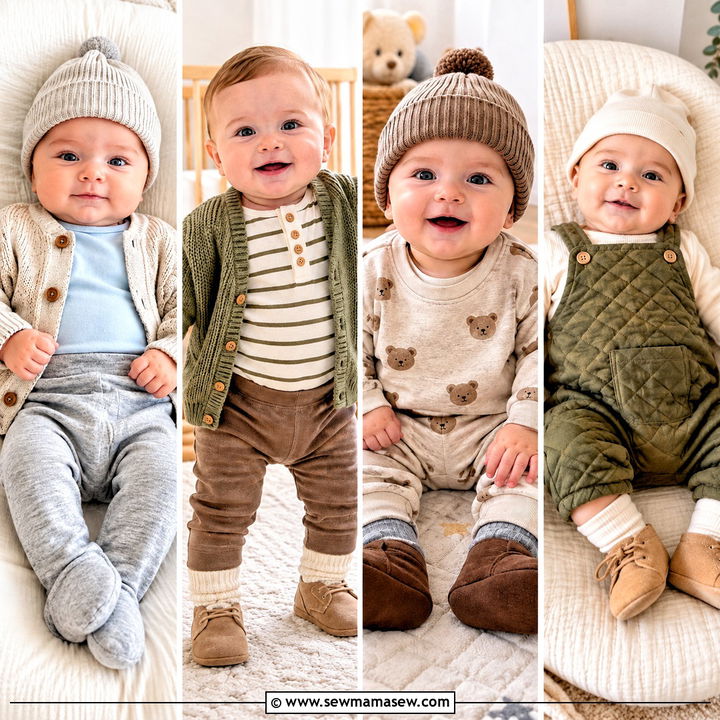
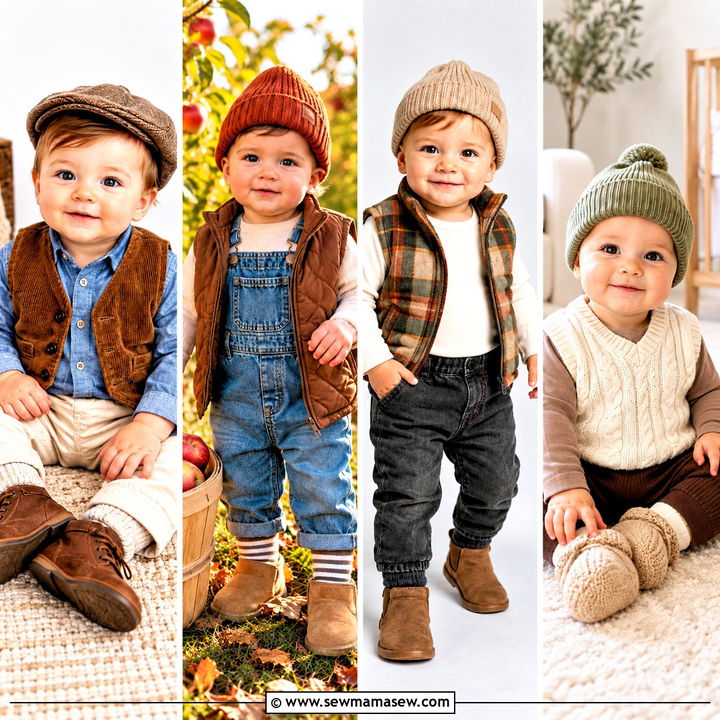
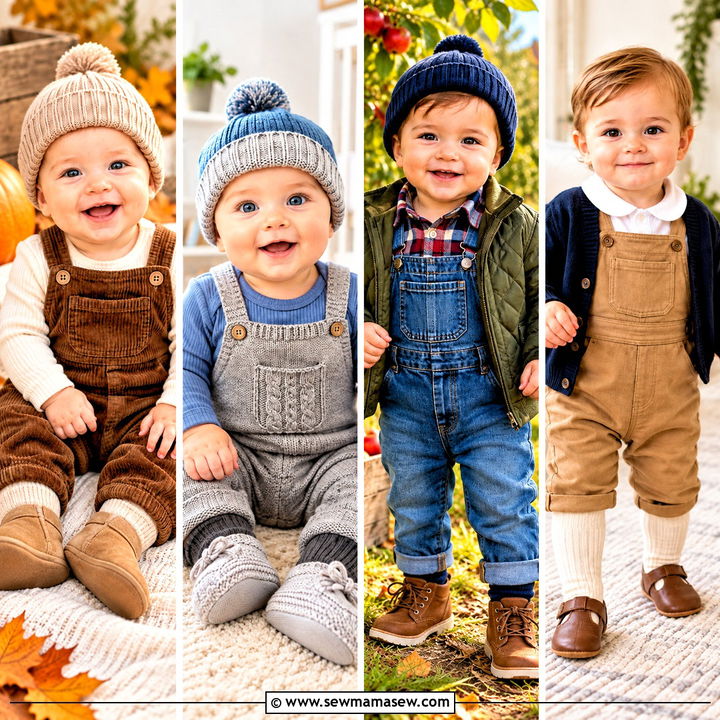
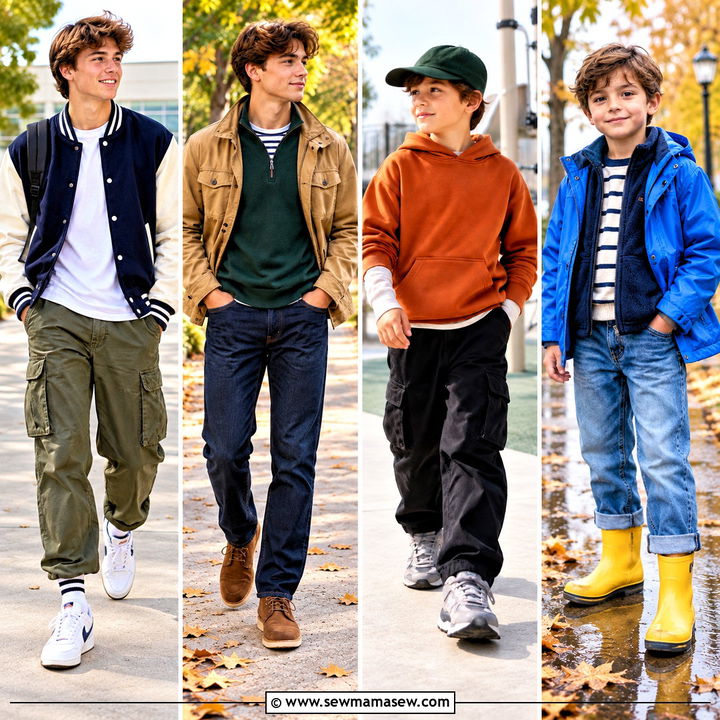
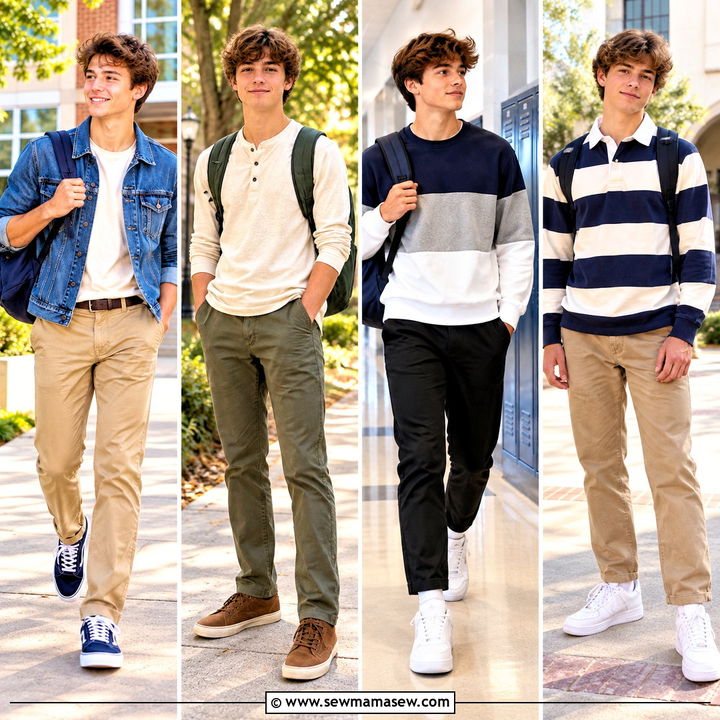
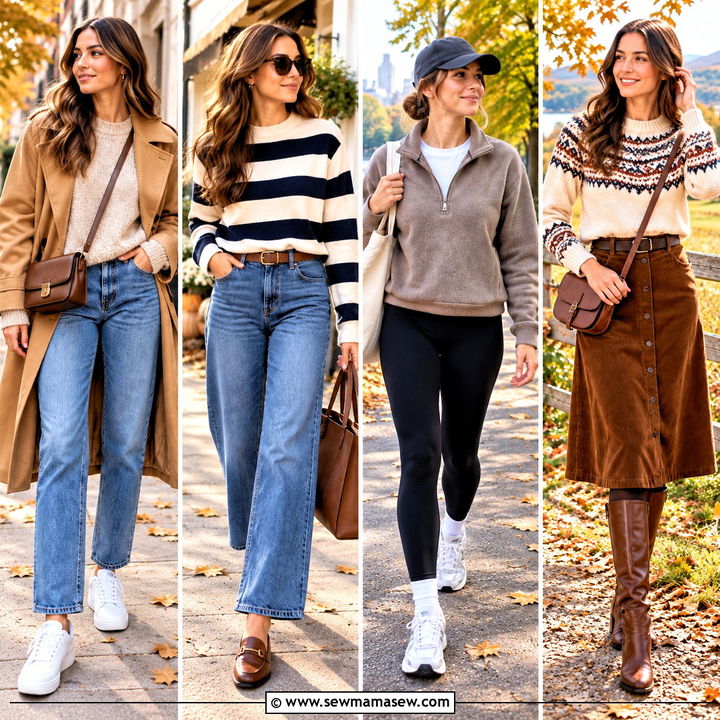
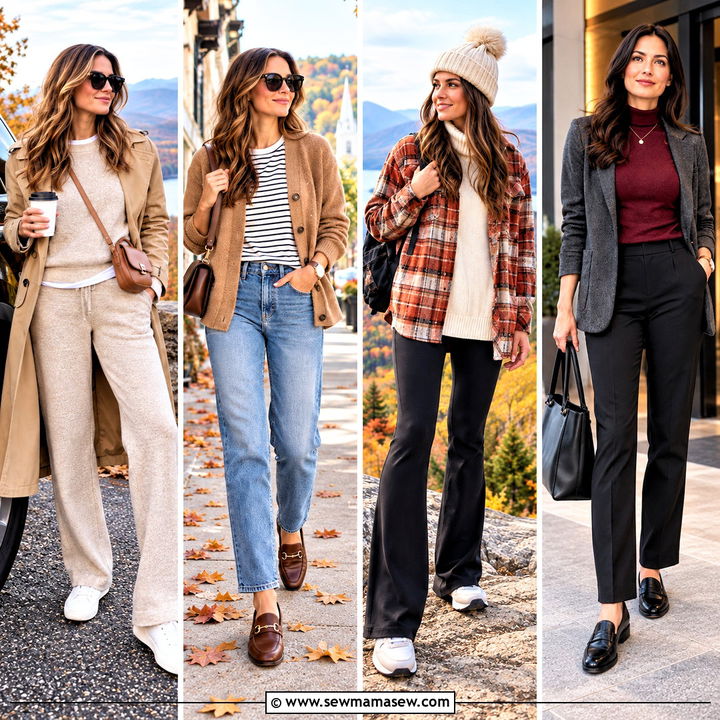
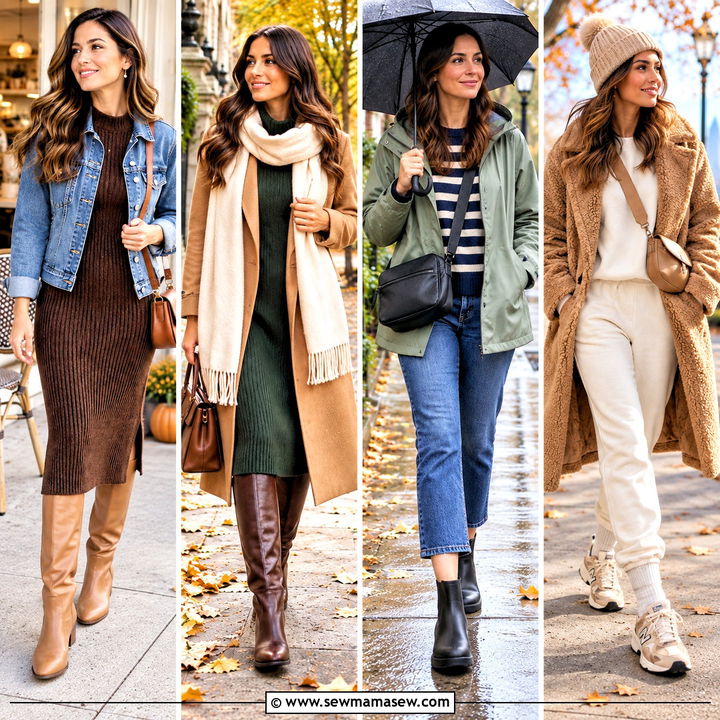
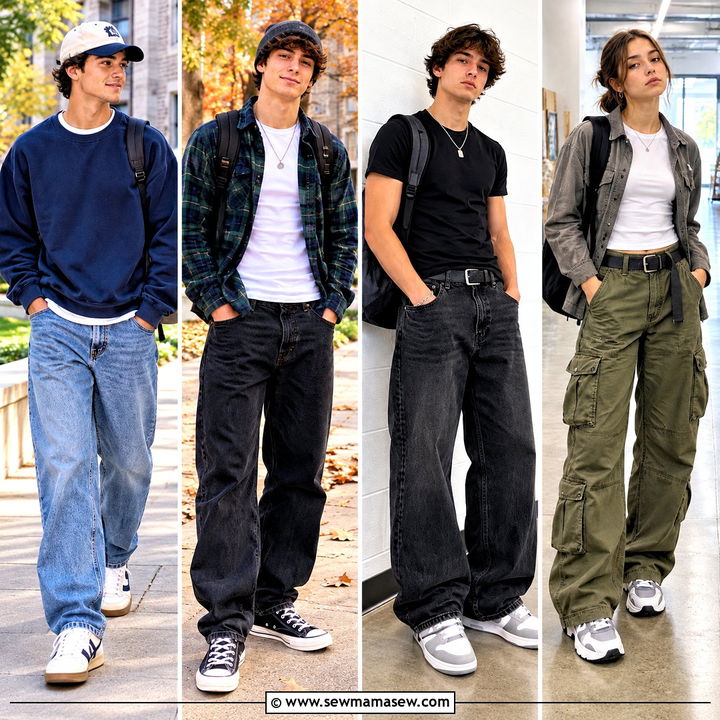
Fall is the trickiest season to dress a boy for, because the cold drop-off and the warm pickup can feel like two different months. I plan every fall outfit around one removable layer: a flannel, a vest, a cardigan or a light jacket that can come off and go into a backpack without a fight. Underneath, I stick to fabrics that wash hard and move well, like flannel, corduroy, stretch denim, fleece and thin knits. Keeping colors earthy (rust, olive, camel, navy) means most tops below work with most bottoms, so a small drawer stretches a long way. Adjust the layer count to your weather and to how warm your own child runs, because some kids overheat in a sweatshirt that leaves their brother shivering.
Buying for a Growth Spurt Without the Tripping
Most parents buy fall clothes a size up so they last until spring. I agree with that, but only for certain pieces. Where the extra size sits decides whether he can still run in it.
Where extra room is fine
Jackets, vests, cardigans and overshirts can go a size up easily. A slightly long sleeve on an outer layer just gets rolled once, and the extra width helps with layering. Elastic-waist pants and anything with adjustable buttonhole elastic inside the waistband can also be bought big, since you tighten the waist and turn up the hem.
Where it causes problems
- Pant hems that sit on the shoe get stepped on and fray within weeks. One cuff is fine; two cuffs of rolled denim feel bulky and fall down.
- Shoes and boots bought too big make kids trip and slide at the heel. I'd allow about a thumb's width at the toe, no more.
- Base layers and thermals need to fit close to stay warm. A baggy thermal traps cold air instead of warm.
My quick test in the fitting room is a squat, a big reach forward and a short run. If the waistband gapes, the sleeves cover his hands or the hem catches his heel, it's the wrong size for now.
1. Plaid Flannel Shirt With Jeans And Boots
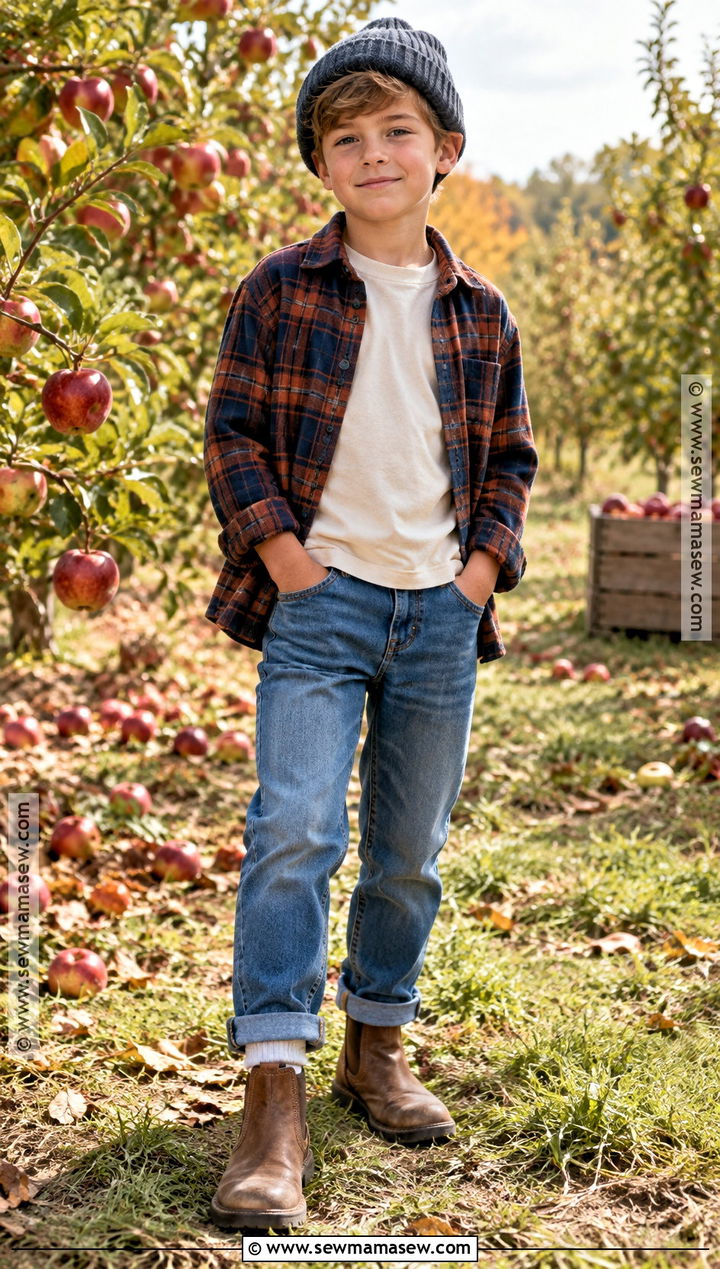
Brushed cotton flannel is the first shirt I reach for in October, because it gets softer with every wash instead of stiffer. Put it over a cream or heather-gray tee so it can come off at recess and still leave him dressed. Straight or relaxed stretch jeans give room to climb, and brown ankle boots or sturdy high-tops cover most days. Roll the sleeves on a warm afternoon, or wear it open like a light jacket. I stick to plaids built from navy, rust, green or burgundy, which read seasonal without looking like a costume. One warning from the laundry room: cheaper flannel loses length in a hot dryer, so I buy with a little extra in the sleeve. Add crew socks and a beanie on the cold mornings and he can go from school to apple picking unchanged.
2. Knit Sweater With Corduroy Pants And Sneakers
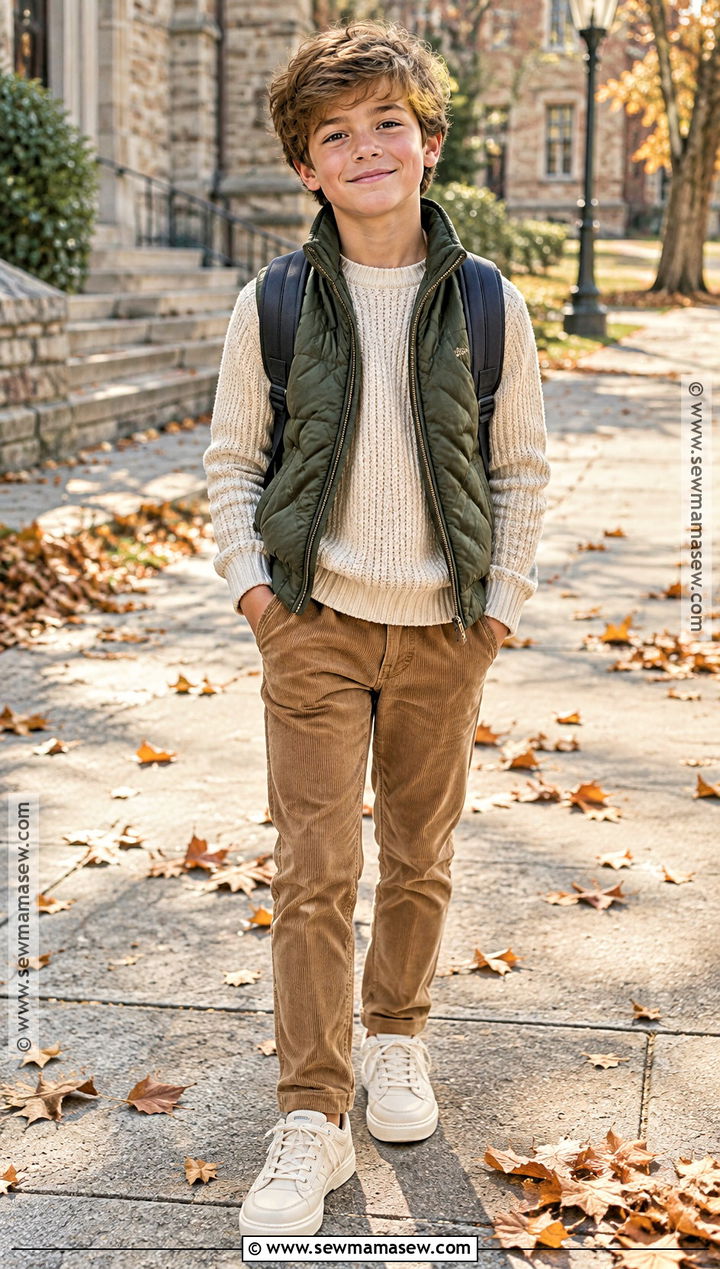
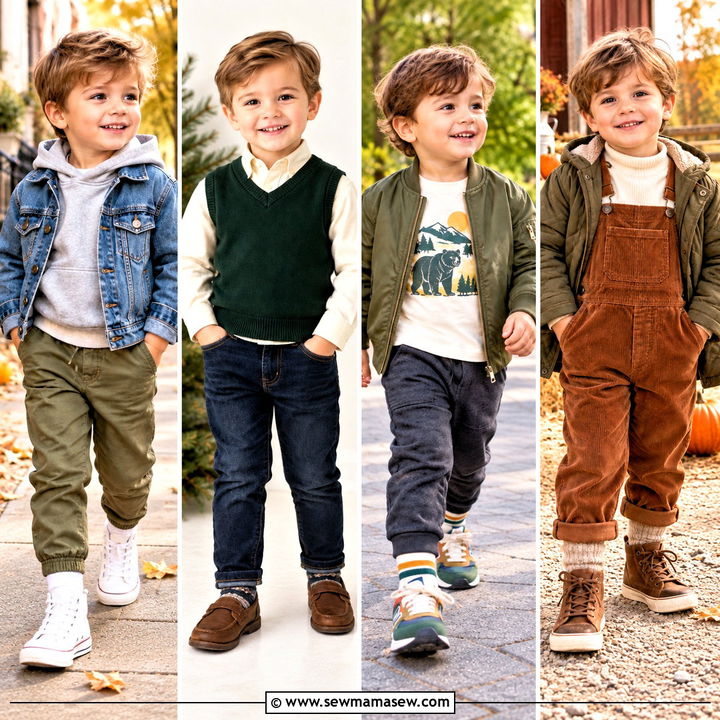
Corduroy with a knit sweater is the pairing I trust for crisp mornings, as long as the cords are fine-wale. Wide-wale looks bulky on a small frame and the ridges wear bald at the knees quickly. I go for a relaxed crewneck in oatmeal or mustard and cords with an elastic or adjustable waist, then add white or tan sneakers so the heavier fabrics don't look stiff. Every sweater gets a cotton undershirt beneath it, since classrooms run warm and the knit will be off by mid-morning. A navy quilted vest is the extra for truly cold days, and a plain canvas backpack is all the accessory it needs. It's tidy enough for picture day and still fine on the climbing frame.
3. Denim Jacket With Hoodie And Joggers
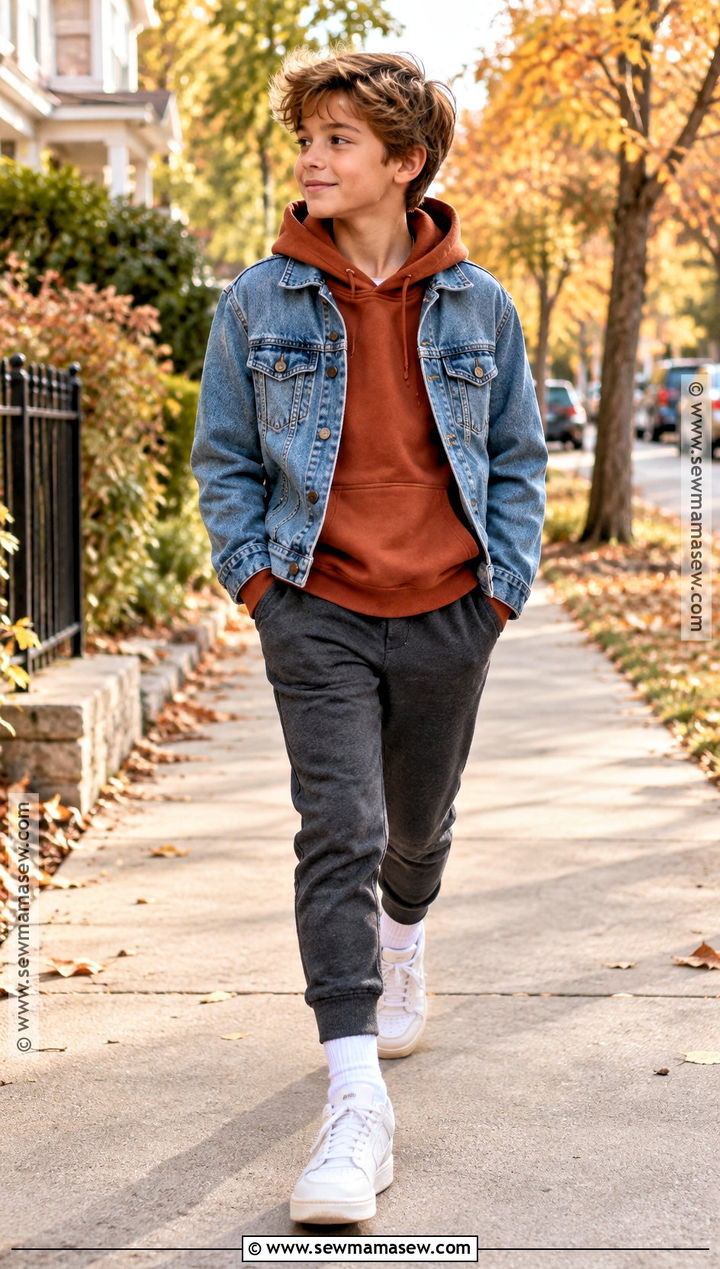
For days that start cold and end warm, I like a denim jacket over a hoodie. The hoodie has to be a lightweight cotton one in gray, rust or muted green, because a thick fleece hoodie fills the denim sleeves and he won't be able to bend his elbows. Check the jacket across the shoulders by having him reach both arms forward; if the back seam strains, size up. Dark joggers balance the structured jacket, and clean athletic sneakers with crew socks finish it. When the afternoon warms up, the jacket gets carried or tied around the waist and the hoodie still looks complete on its own.
4. Henley Shirt With Chinos And Desert Boots
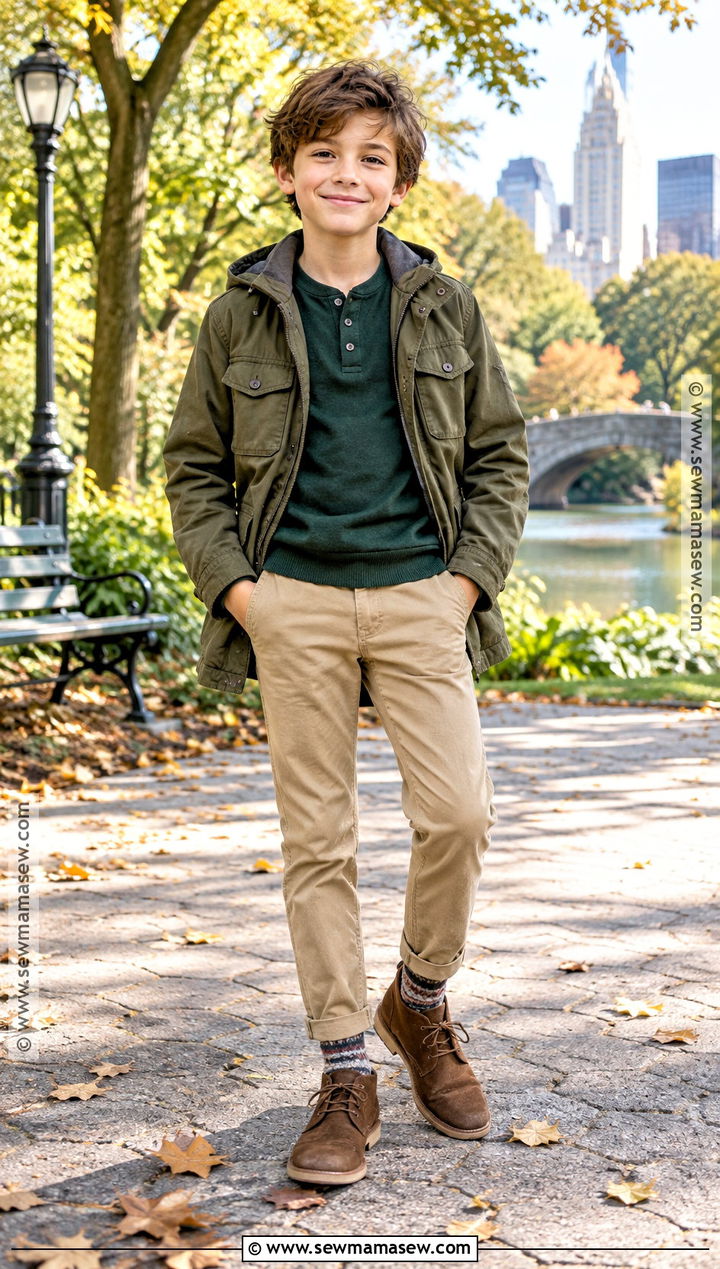
A long-sleeve henley is my upgrade from a plain tee when a family dinner or school event needs a little more effort. Cotton in cream, forest green or burnt orange pairs well with tan or olive stretch chinos. Desert boots look tidy, but I always bend the sole in my hand before buying for an active boy; a stiff sole makes running awkward and he'll ask for sneakers by lunch. A light utility jacket goes on top when it cools down. Older boys can handle a simple belt, while younger ones are better in pull-on chinos with a hidden adjustable waist. Patterned socks are the one playful touch I'd allow here.
5. Puffer Vest With Sweatshirt And Cargo Pants
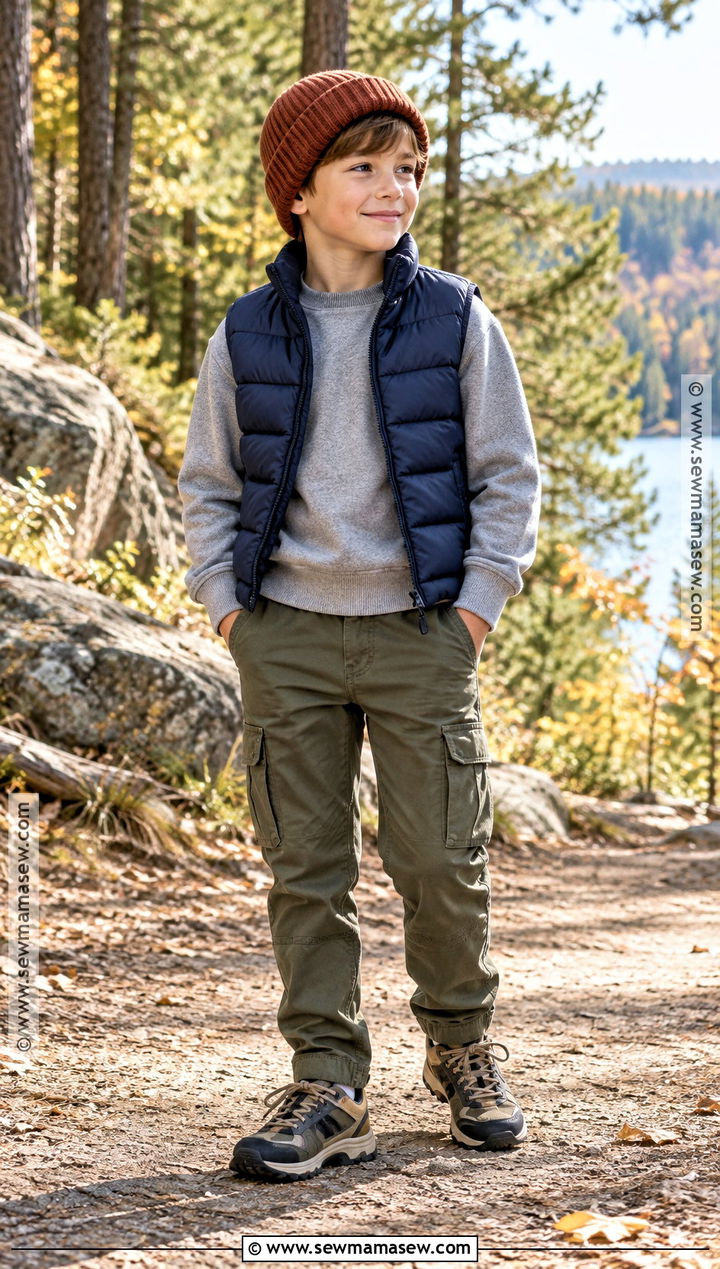
A puffer vest keeps the core warm and leaves the arms completely free, which is why it's the layer I recommend most for kids who play hard. Under it, a plain crewneck sweatshirt in cream, gray or rust; over it, navy, olive or camel. Pick cargo pants with stretch, because stiff, oversized utility pants restrict climbing and drag at the hem. Trail-style sneakers or casual high-tops give enough support for outdoor time. My color rule is one neutral, one earthy shade and one darker accent, and it holds for most of the list. Tuck a ribbed beanie into the backpack for when the wind picks up.
6. Striped Sweater With Dark Jeans And Loafers
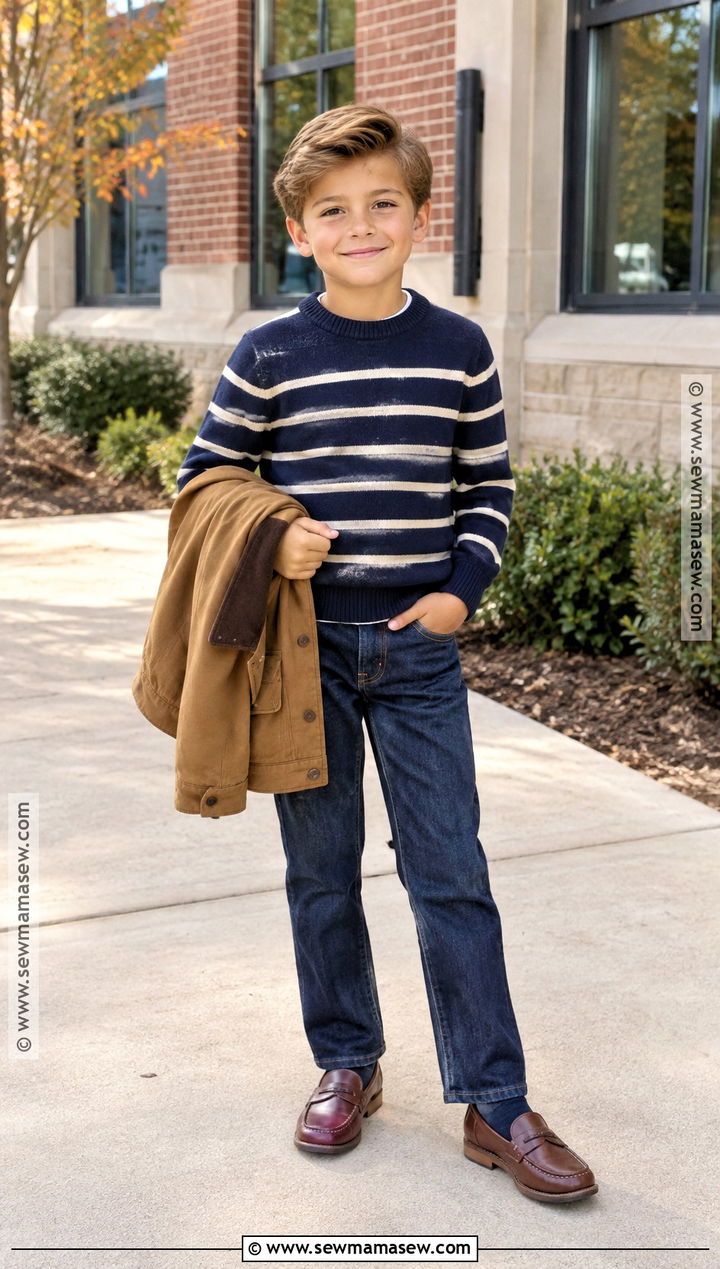
Stripes give a preppy look with almost no styling effort. A navy-and-cream or rust-and-tan sweater over dark stretch jeans is the version I see photograph best. Size the sweater slightly relaxed so a soft undershirt fits beneath it without the stripes stretching into wavy lines across the chest. Brown loafers or slip-on sneakers take it to school photos and family events; white sneakers make it casual. A navy barn jacket or camel coat goes on top when it's cold. I match socks to the jeans rather than the shoes, so the leg reads as one long line and the stripes stay the focus.
7. Sherpa Jacket With Thermal Shirt And Jeans
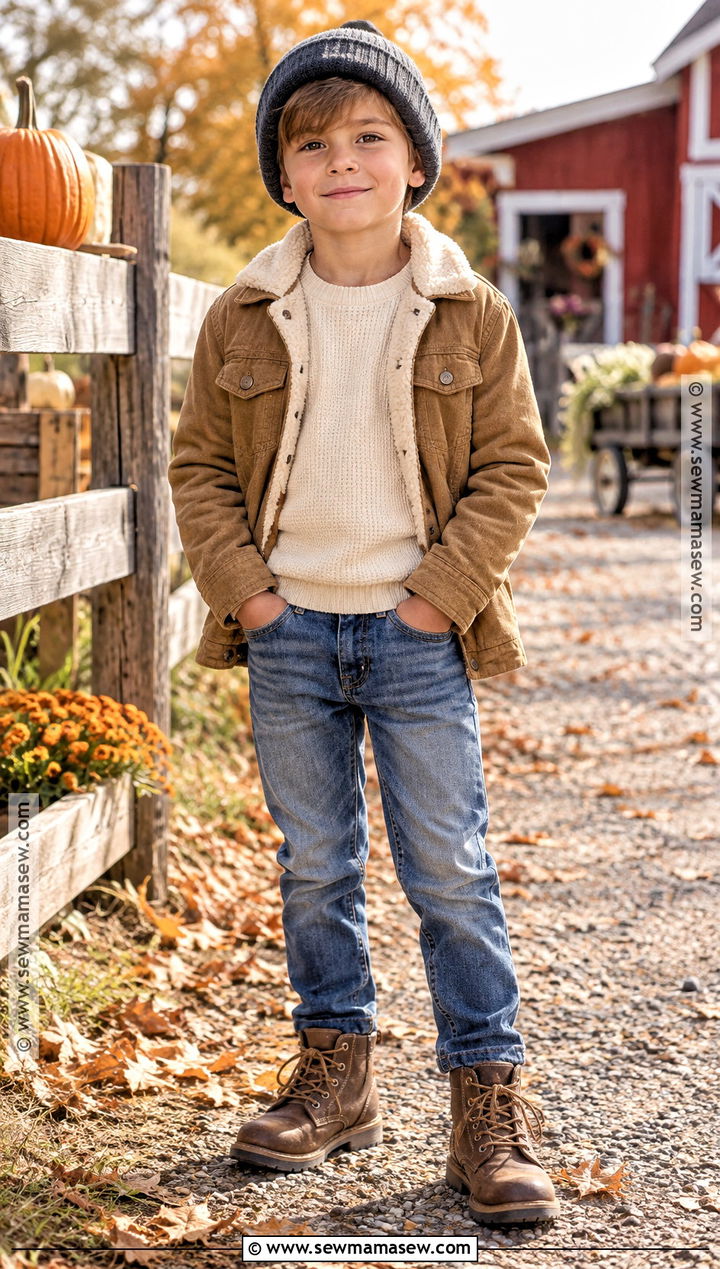
A sherpa jacket over a waffle-knit thermal is about as warm as a boy gets without a full winter coat. The thermal in cream, rust or muted blue goes with medium-wash jeans, and the jacket in tan or brown should fit loosely enough to layer. Before buying, I run a finger around the collar and cuffs, because that's where cheaper sherpa feels scratchy and where a sensitive child will complain first. Lace-up boots suit outdoor walks; high-tops with thick crew socks work if boots feel heavy to him. A charcoal or navy beanie keeps the colors grounded. I'd save this one for farm visits and cold markets, since it's too warm for a heated classroom.
8. Quarter-Zip Pullover With Khaki Pants And Sneakers
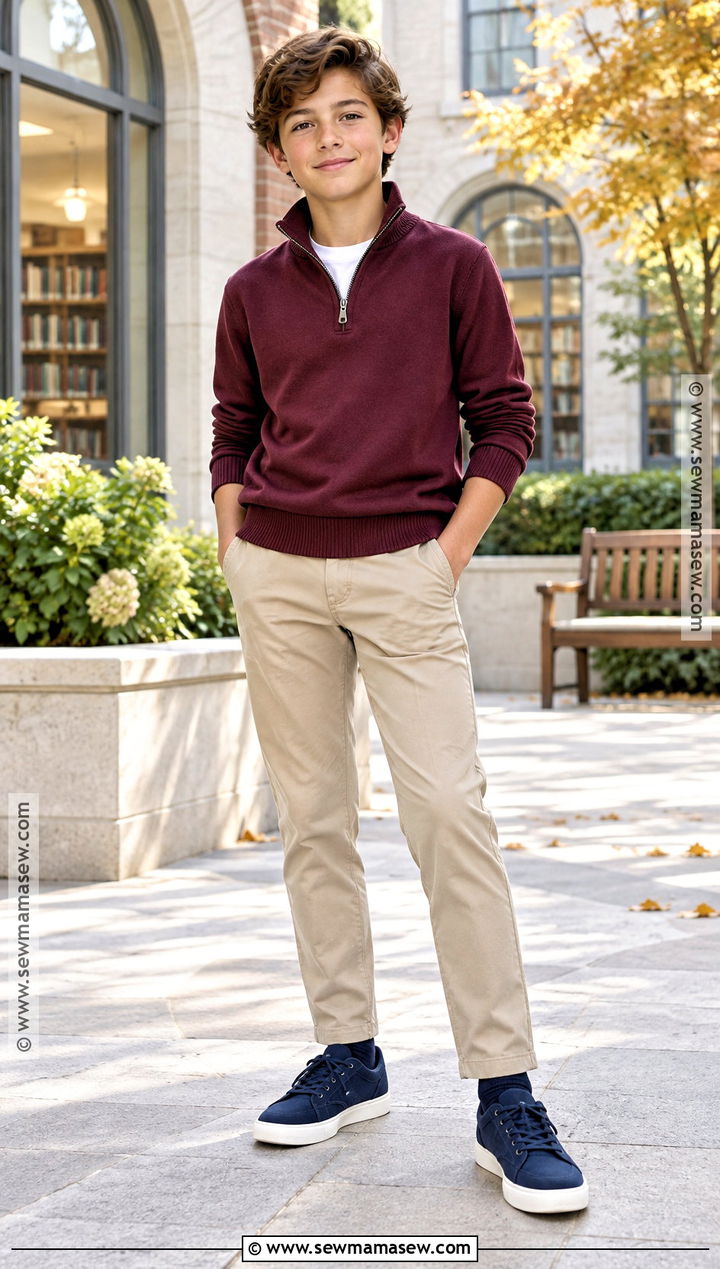
Boys who hate pulling tight necklines over their heads usually accept a quarter-zip, because the zipper opens the neck wide. A soft fleece or cotton-knit pullover in navy or burgundy over a white or light-blue tee, with the collar left partly open, looks sporty but put together. Khaki stretch pants keep it smart enough for days when jeans feel too casual. Finish with white, navy or brown sneakers and socks in a coordinating color. If it's colder, a lightweight rain jacket or quilted coat fits over the top without much bulk. One thing I check on fleece versions is the zipper pull; a chunky pull is easier for small fingers.
9. Graphic Sweatshirt With Joggers And High-Top Sneakers
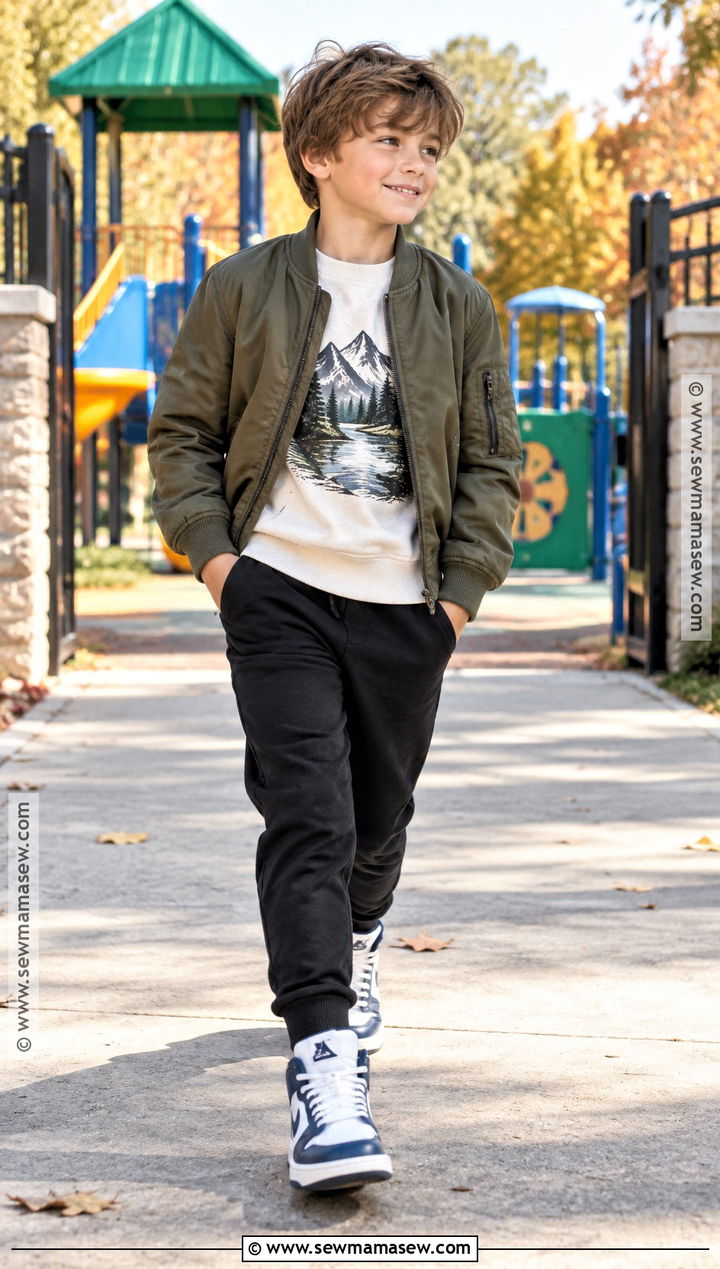
Busy days call for a graphic sweatshirt and joggers, and the only rule I give parents is one clear graphic, age-appropriate, about something he actually likes: animals, vehicles, a sport, a hobby. Keep the joggers solid in black, navy or gray so the design stays the focus. High-top sneakers add enough structure that it doesn't read as pajamas. A light bomber can go on top while still showing the front of the sweatshirt. Relaxed is fine, but overly long sleeves and loose hems catch on playground equipment, so I avoid anything more than one size up. A cap or canvas backpack is plenty of extra.
10. Sweater Vest With Oxford Shirt And Chinos
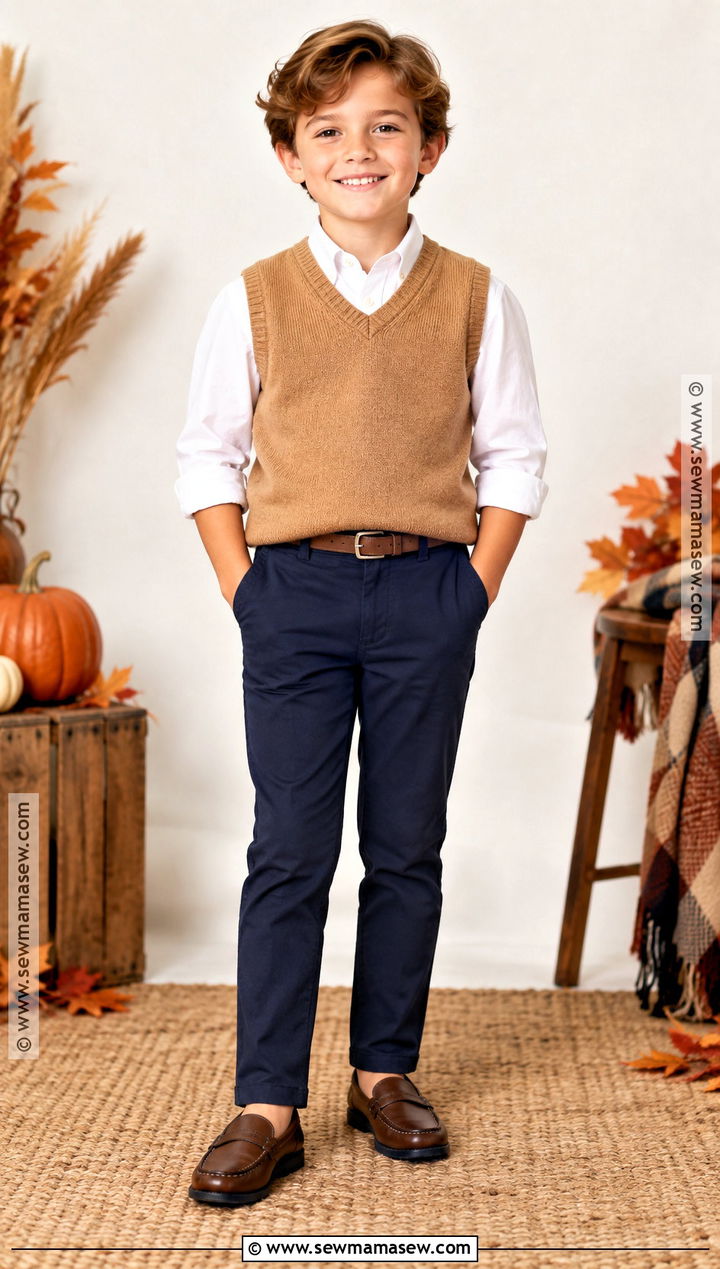
Picture day and family meals are when I bring out a sweater vest over an Oxford shirt. Navy, camel or forest green for the vest, tan or dark navy chinos underneath, and brown loafers or lace-ups. Untucked looks relaxed; tucked with a simple belt suits older boys better. The fit detail I check first is the armholes. A vest with tight arm openings pulls the shirt sleeves up and chafes under the arm, and a child will fidget all through the photos. A stretchy neckline helps too. A wool-blend coat handles the walk outside, and the whole look stays comfortable enough for a long lunch.
11. Utility Jacket With Hoodie And Black Jeans
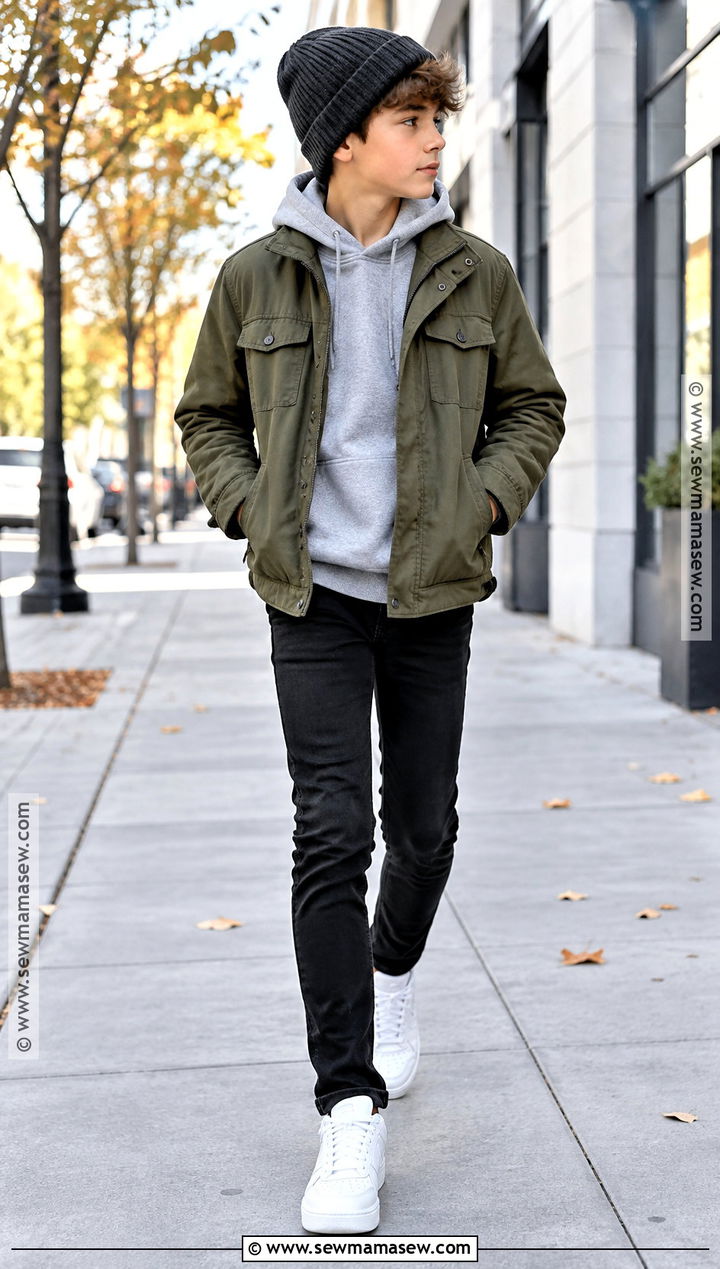
An olive utility jacket over a gray or rust hoodie is an everyday combination I come back to all season. Pull the hood out so it lies flat over the jacket collar, otherwise it bunches against the neck. Black stretch jeans give contrast and a cleaner line. White sneakers look crisp; brown boots are better when the ground is wet. I look for snaps or a smooth zipper he can manage alone, since a jacket a child can't fasten himself tends to get left open in the cold. Leave enough room across the shoulders for throwing a ball. It's right for mild to moderately cool days, not real cold.
12. Rugby Shirt With Straight Jeans And Sneakers
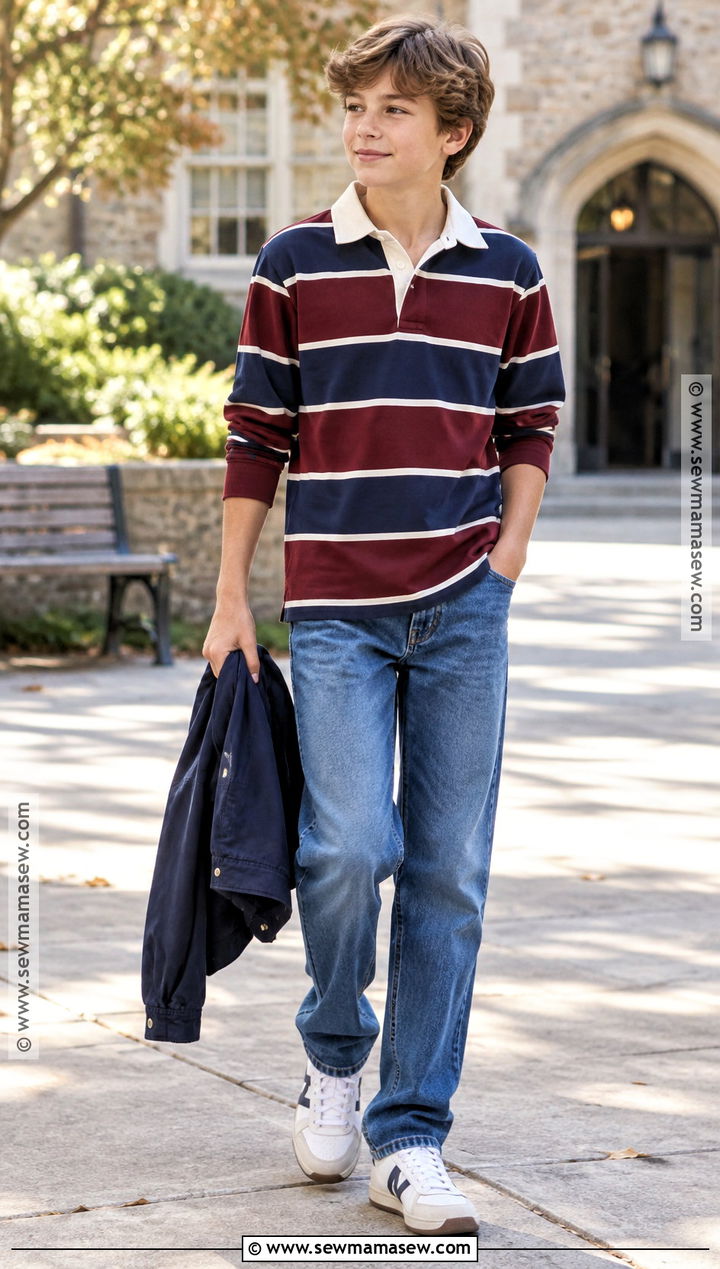
A rugby shirt is busy enough on its own, so I keep everything else plain: straight-leg stretch jeans with an adjustable waist and retro sneakers in white, navy or tan. Choose soft cotton in navy, burgundy or green stripes. The thick rugby collar can rub, which is why I put a plain undershirt beneath it for kids with sensitive skin. A light canvas jacket takes care of cool mornings. Skip any other pattern, including busy socks. It's a cheerful, slightly preppy outfit that holds up through school days, library visits and weekend games.
13. Monochrome Brown Outfit With Suede Boots
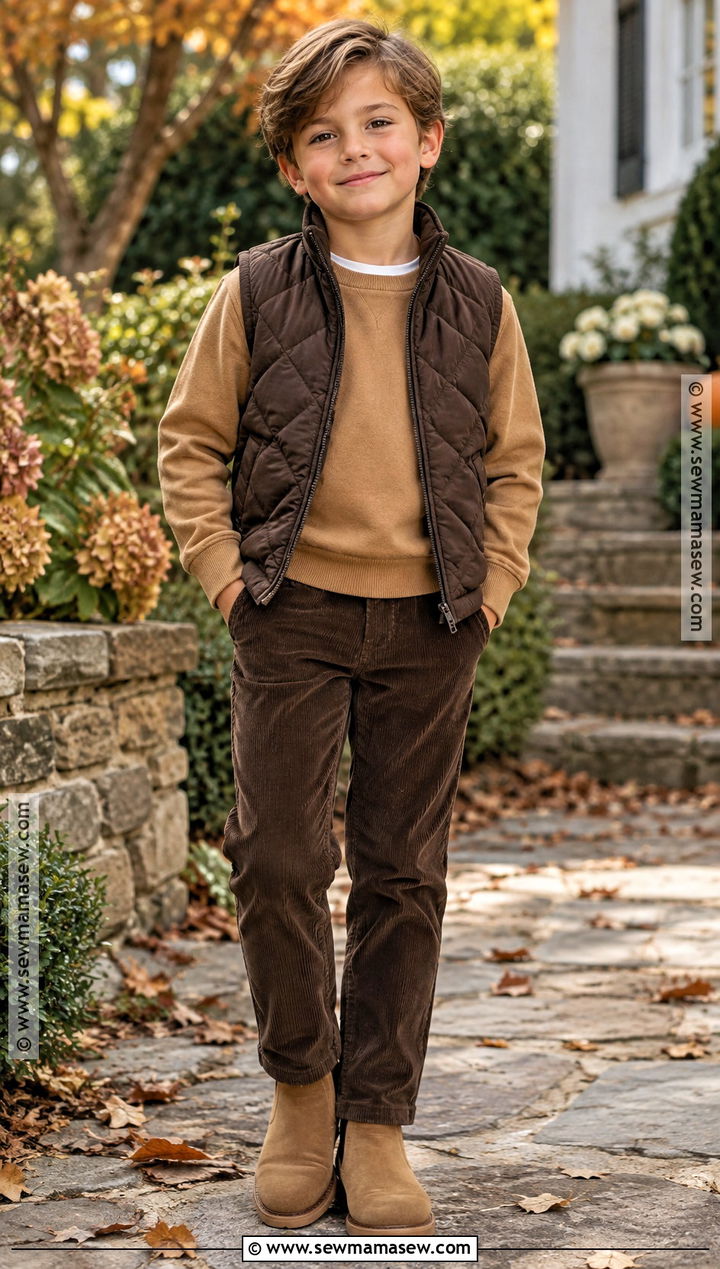
A monochrome brown outfit looks thought-through but is really just three shades of one color. I start with a camel or oatmeal sweatshirt, add chocolate twill pants or soft corduroys, and finish with tan suede-look boots. The trick is contrast in depth, not a perfect match: pale top, dark pants, medium boots. A cream tee showing at the neckline and hem breaks up the brown. A dark brown quilted vest adds warmth, and rust or green socks give one small accent. If the boots are real suede, treat them with a water repellent first, as suede darkens and stains in wet leaves.
14. Bomber Jacket With T-Shirt And Cargo Joggers
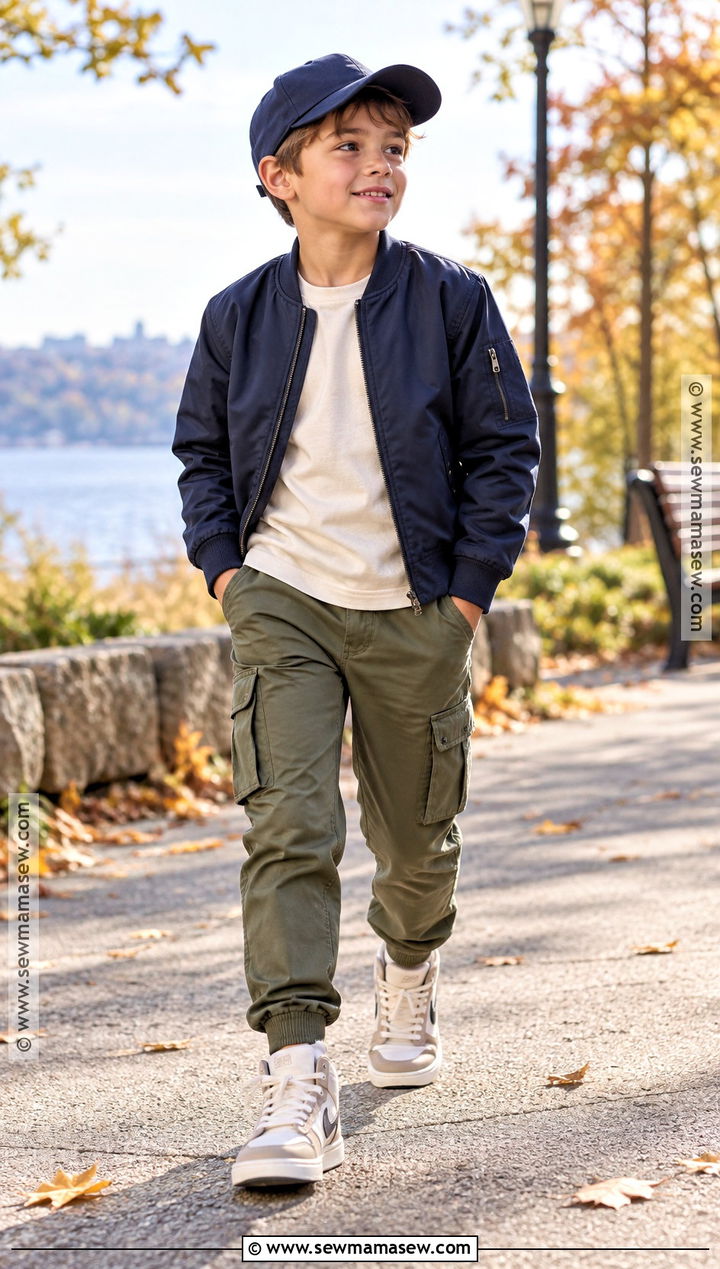
Bomber jackets suit active boys because the ribbed cuffs and hem keep the jacket from riding up when they run. A lightweight one in navy, olive or rust over a simple long-sleeve tee, with cargo joggers below, covers a full school day. On the joggers I look for secure pockets that won't spill everything on the bus, a soft waistband and tapered cuffs. Low-profile sneakers or neutral high-tops finish it. When it gets colder, swap the tee for a thin sweatshirt instead of piling on bulky layers. Baseball cap on sunny days, knit beanie when it's chilly.
15. Cardigan With T-Shirt And Relaxed Jeans
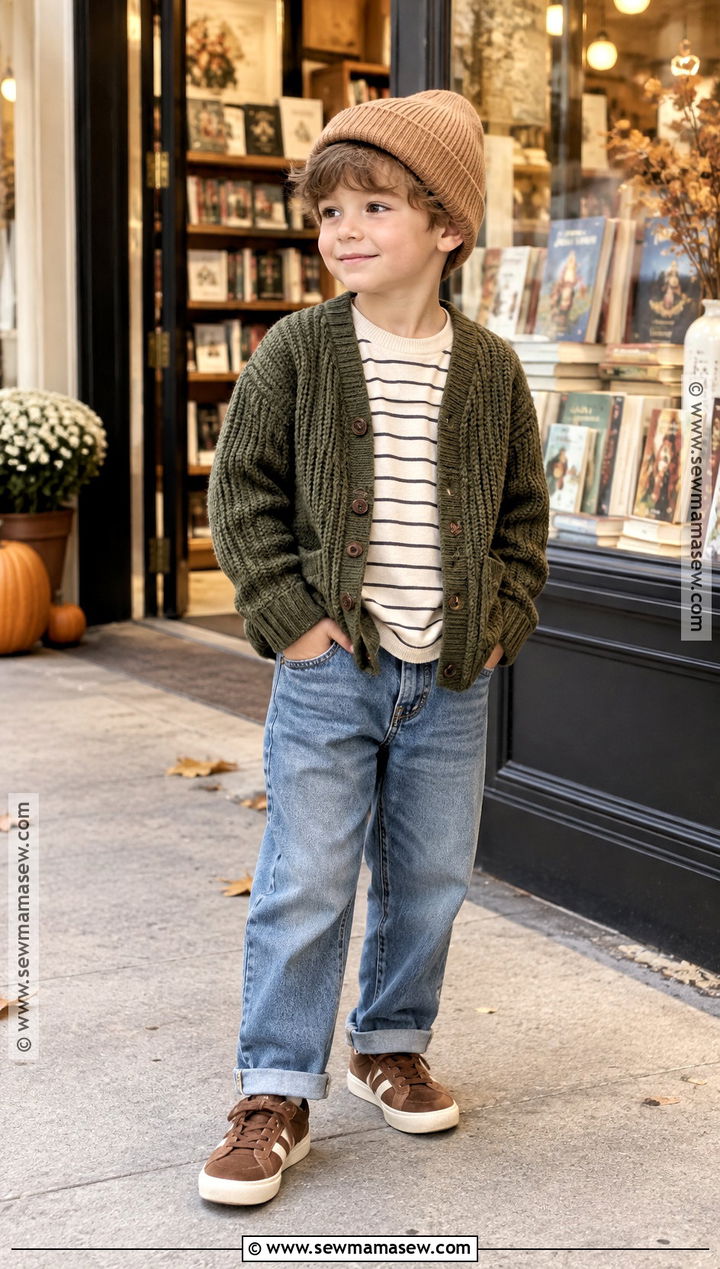
The cardigan is the most adjustable layer on this list: buttoned, open or off, without anything going over his head. I prefer a chunky cotton cardigan in camel, olive or navy because cotton doesn't itch the way some wool blends do on young skin. Over a plain cream or striped tee with relaxed stretch jeans, it covers school, family visits and café lunches. Check the buttons. Heavy decorative ones drag the front open and can come loose, so plain flat buttons, sewn on firmly, are what I want. Brown sneakers or casual boots work below, and the sleeves can be pushed up when the afternoon warms.
16. Denim Shirt With Chinos And White Sneakers
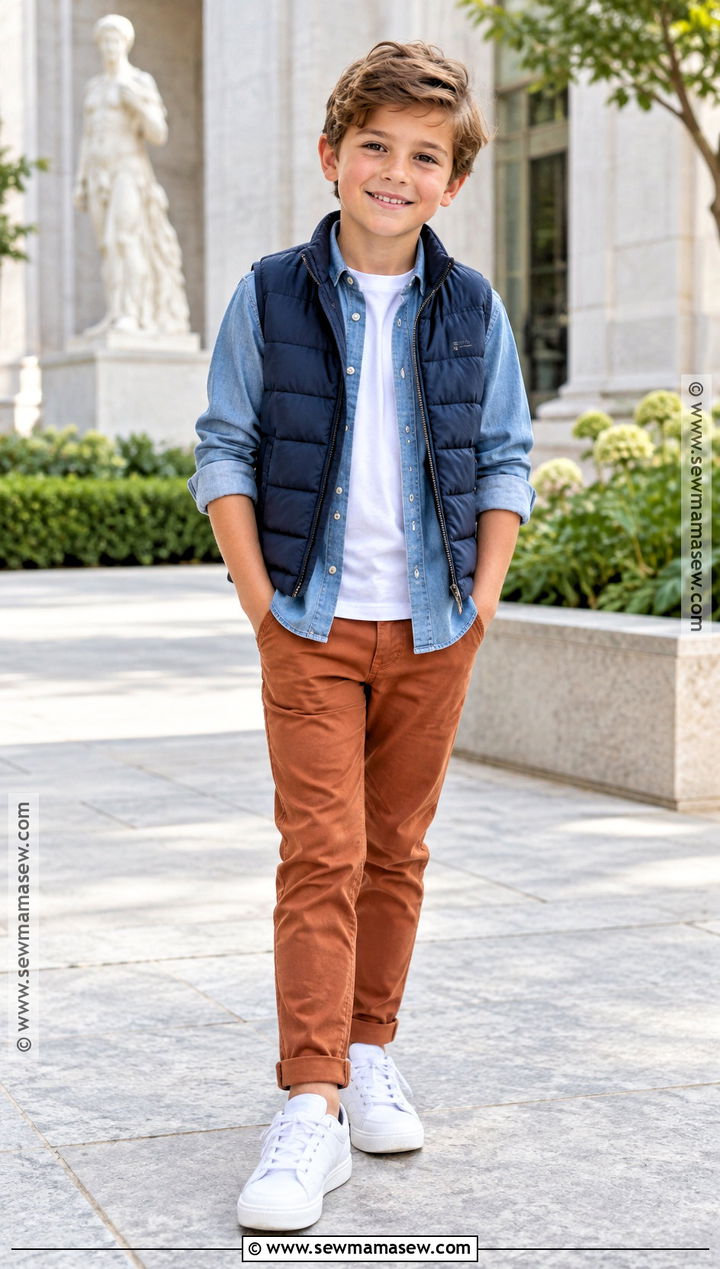
A soft chambray or lightweight denim shirt, buttoned over a tee, sits in between a sweatshirt and a dress shirt. To avoid head-to-toe denim, I pair it with rust, olive or khaki chinos rather than jeans. White sneakers lighten the darker fall colors and still handle running around. Chambray softens quickly with washing, which makes it a good first collared shirt for boys who usually refuse anything with buttons. Roll the sleeves neatly when it's warm, add a quilted vest when it's not, and choose chinos with an adjustable waist so they fit well across a growth spurt.
17. Fleece Pullover With Hiking Pants And Trail Sneakers
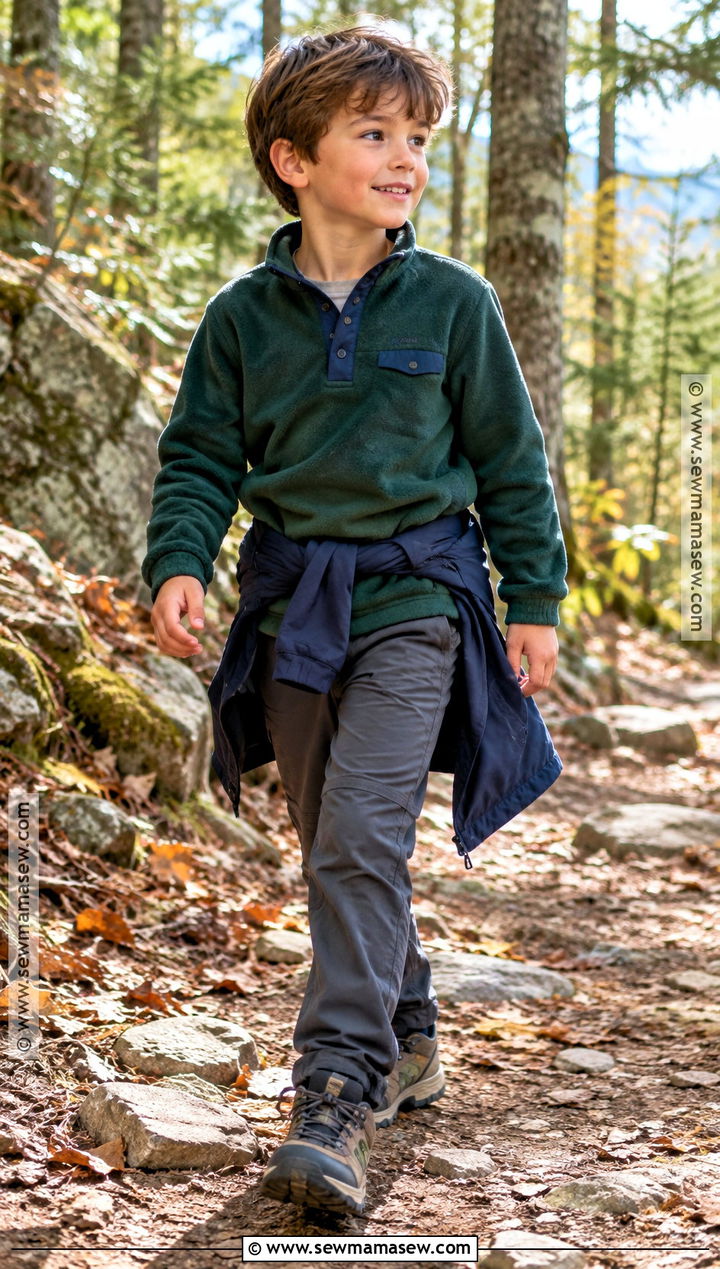
For trails and field trips, I dress boys more like little hikers than little models. A moisture-wicking long-sleeve base, a half-snap fleece in navy or forest green, stretch hiking pants that dry faster than denim, and supportive trail sneakers with cushioned socks. Fleece is light and warm, but it does pill where backpack straps rub, so don't buy the nicest one for hiking days. Pack a thin waterproof jacket for sudden rain and a knit cap for chilly starts. Avoid pants with dangling straps or loose cargo flaps, which snag on branches and climbing gear.
18. Plaid Overshirt With T-Shirt And Corduroy Pants
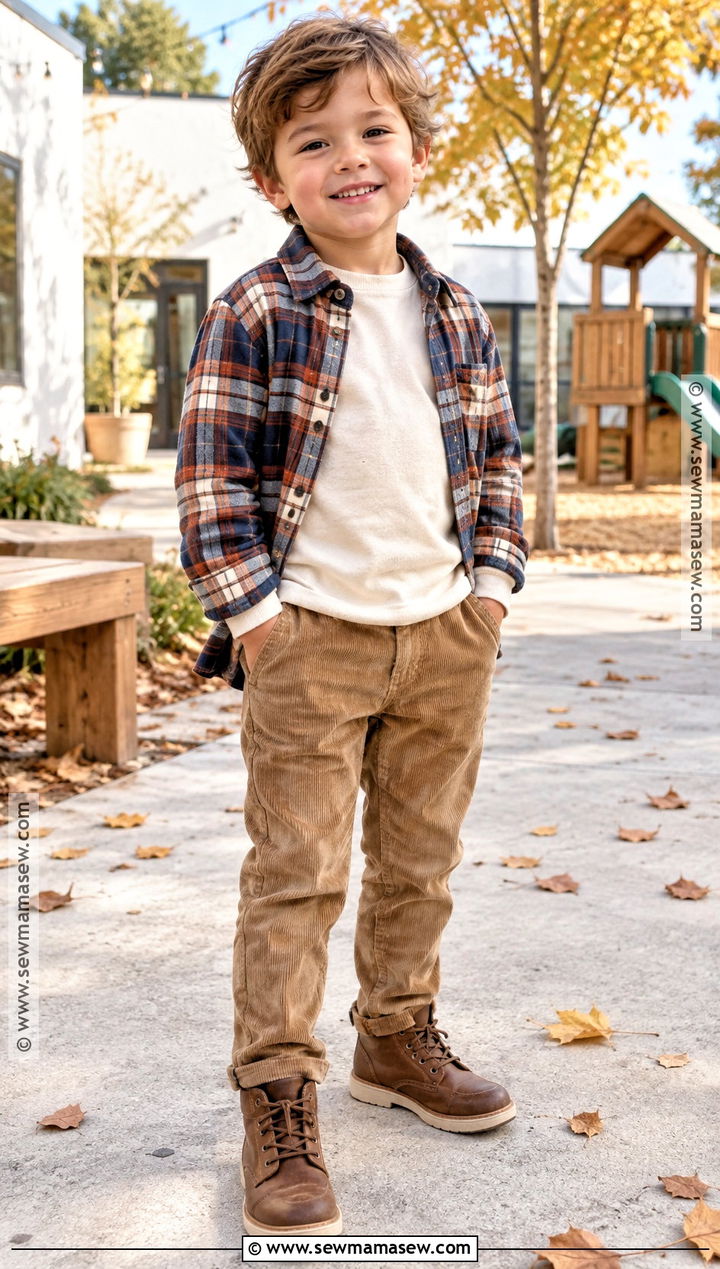
An overshirt worn open over a solid long-sleeve tee is about the easiest fall outfit to put together. Medium-weight plaid looks right with fine-wale cords in tan, olive or rust. My one rule is that the plaid should contain a color that appears in the pants, which ties the look together without anything matching exactly. Cream sneakers, brown boots or slip-ons all work. Check the sleeves have room for the tee underneath; brushed fabric with roomy arms layers best. When the day warms up, the overshirt comes off and folds small into a backpack.
19. Cable-Knit Sweater With Trousers And Lace-Up Shoes
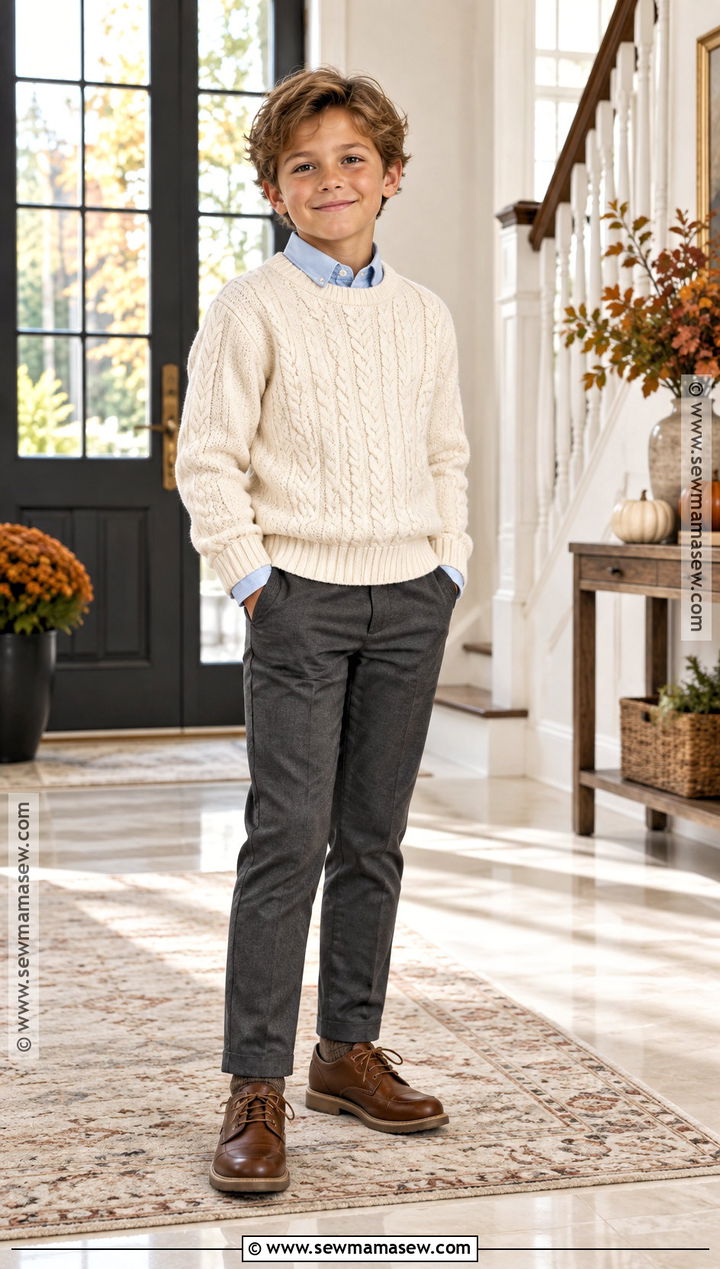
A cable-knit sweater over a collared shirt is my choice for school concerts and formal family meals. Cream, navy or deep green with charcoal or navy stretch trousers looks polished, and brown lace-ups or flexible loafers with ribbed socks complete it. Letting the shirt hem show slightly below the sweater softens it. The thing I watch is weight: cable knits are dense, and indoor venues are often heated, so a heavy one leaves a boy flushed and uncomfortable through a long performance. Go mid-weight and put the warmth in a wool-blend coat or quilted jacket that comes off at the door.
20. Varsity Jacket With Hoodie And Jeans
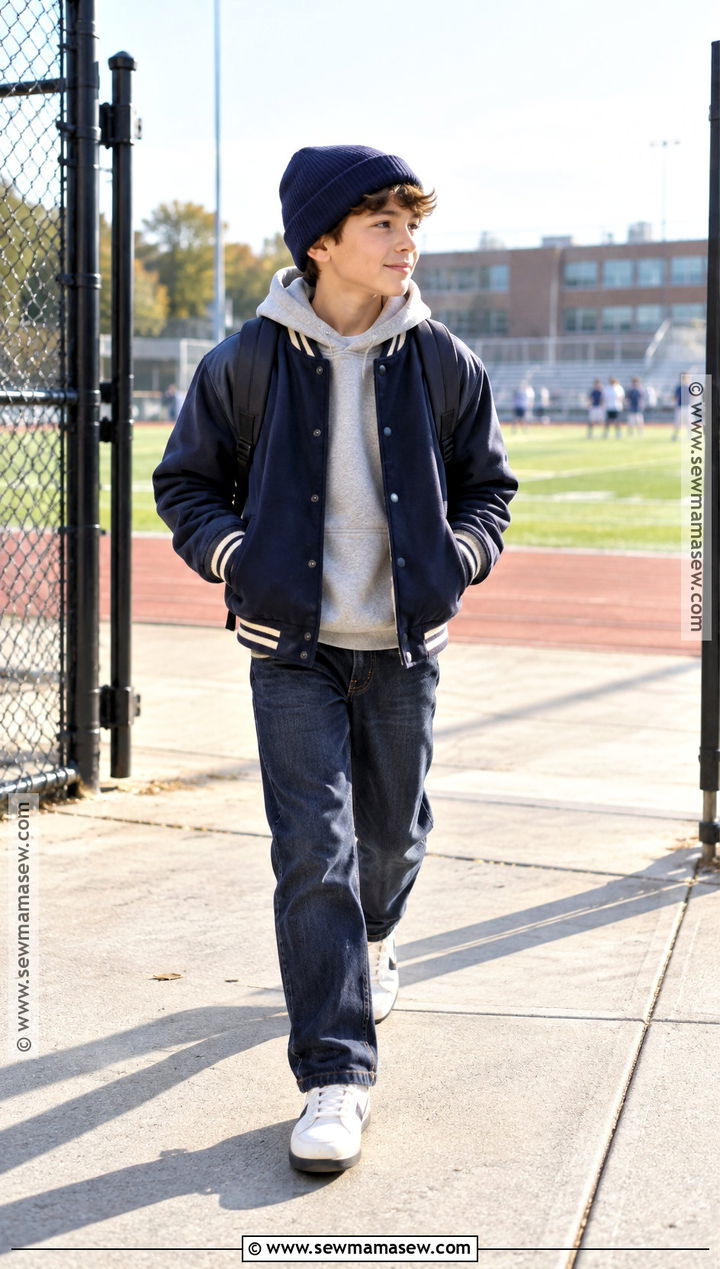
A varsity jacket makes basic pieces look styled with no extra effort. I layer it over a solid hoodie in cream, gray or a color pulled from the jacket trim, with relaxed straight jeans in a dark or medium wash. Retro sneakers or clean high-tops keep the athletic theme and are easy to walk in. Too many patches and logos make it look busy, so pick a jacket with simple trim. Lightweight works for early fall; a quilted lining earns its keep later. A plain beanie and compact backpack are all it needs, and it suits older toddlers through school-age boys.
21. Turtleneck With Overalls And Boots
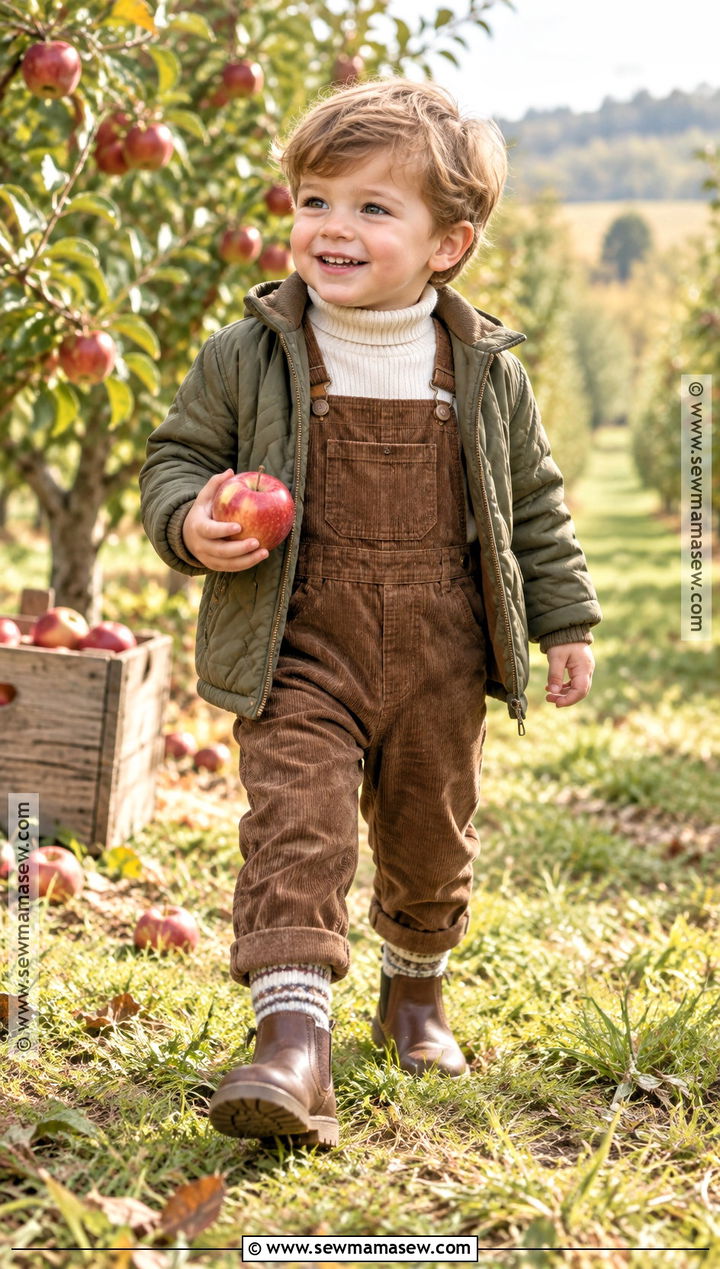
Overalls are my favorite fall piece for preschoolers, mostly because there's no waistband to slip down during play. Brown, olive or classic denim over a soft ribbed turtleneck in cream or mustard looks sweet without trying. Choose a turtleneck with real stretch in the neck; a tight one is often the reason a toddler refuses the whole outfit. Brown ankle boots or high-tops, cuffs rolled once to show the socks. A quilted jacket goes on top in the cold, with thin layers underneath. Adjustable straps mean the same pair often lasts a whole year of growing.
22. Color-Block Sweatshirt With Chinos And Trainers
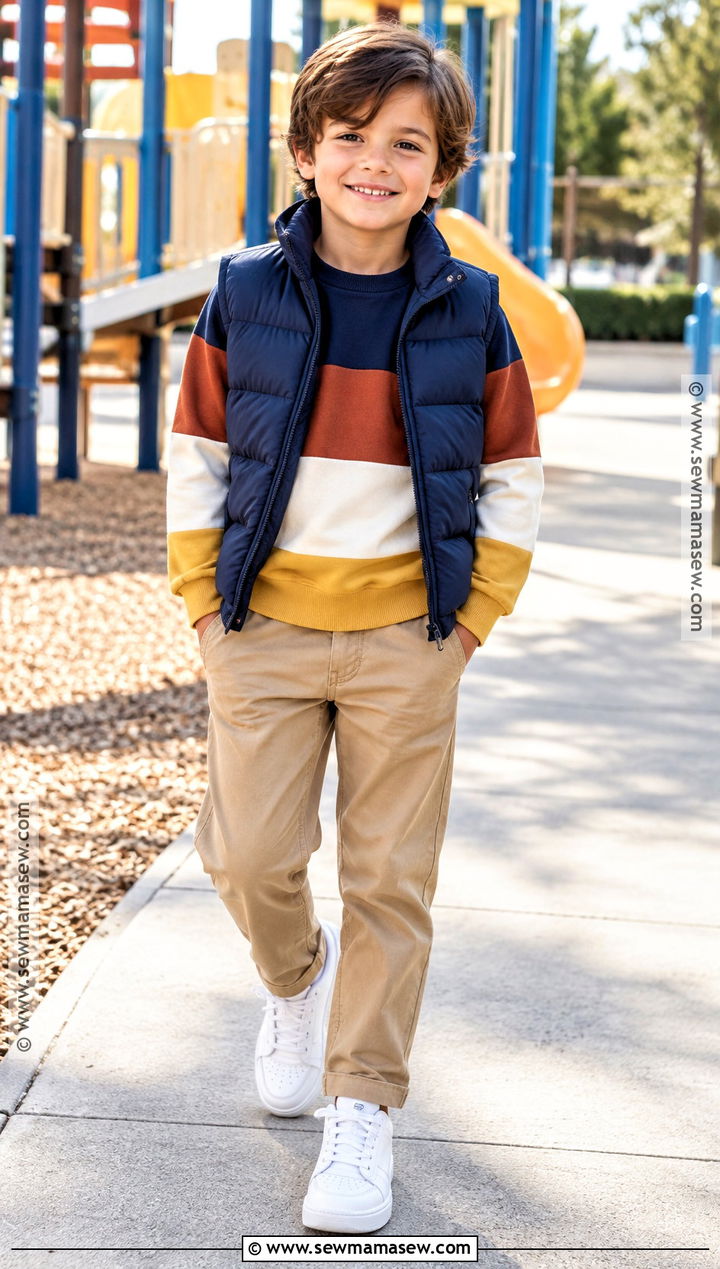
A color-block sweatshirt does the work of a pattern without being busy. I pick blocks of navy, rust and cream, then keep the chinos solid in tan or dark navy so the top is the focus. Trainers can match one of the blocks or stay white or gray. A thin cotton tee underneath gives another layer without bulk, and a light puffer vest is enough on colder mornings. The shapes are clean, so it looks current on older boys who've outgrown cartoon prints, and it holds up through school, travel days and playground visits.
23. Peacoat With Sweater And Dark Jeans
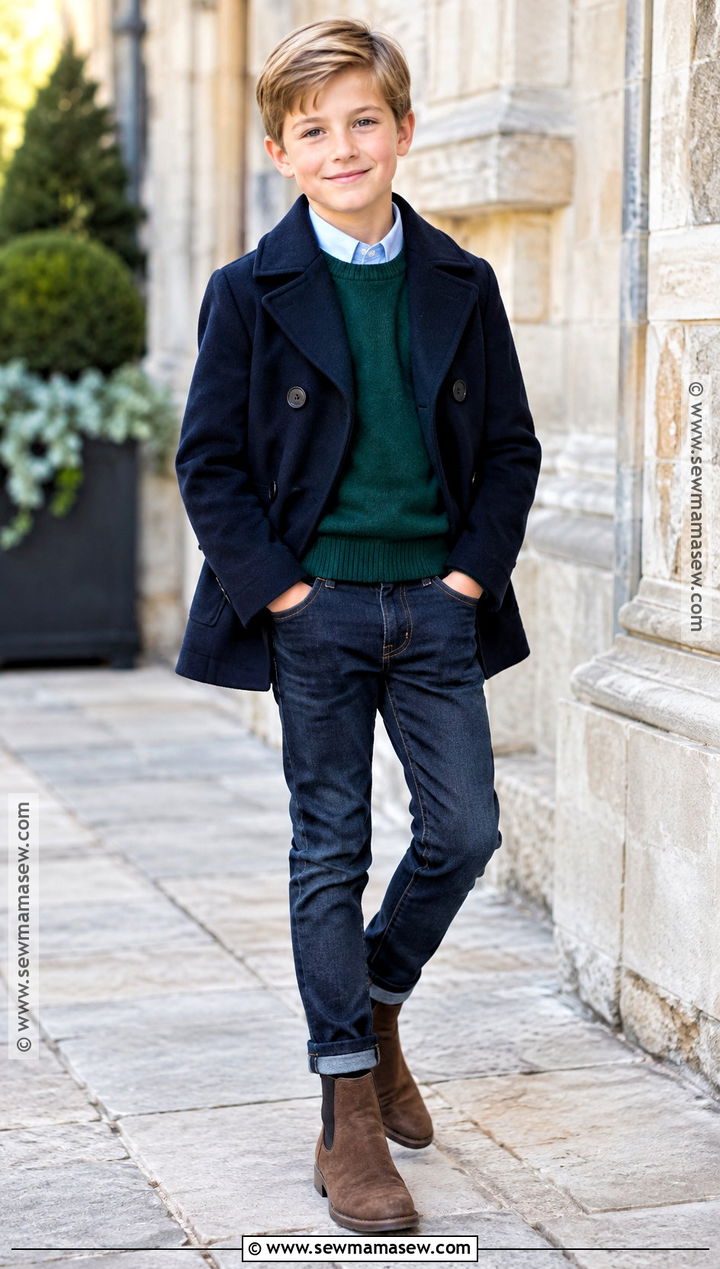
For a smarter cold-weather look, a navy or charcoal peacoat goes over a soft crewneck, with a white or pale blue collared shirt underneath for a little detail. Dark stretch jeans stop it looking too formal and still let him move. Brown ankle boots or flexible lace-ups finish it. A peacoat's double-breasted front is fiddly for small hands, so I show younger kids how to do the inside button first. Scarves suit older boys only, kept short, secure and supervised. A lined coat is worth it for late fall, and the look photographs well for portraits, presentations and theater outings.
24. Rain Jacket With Sweatshirt And Waterproof Boots
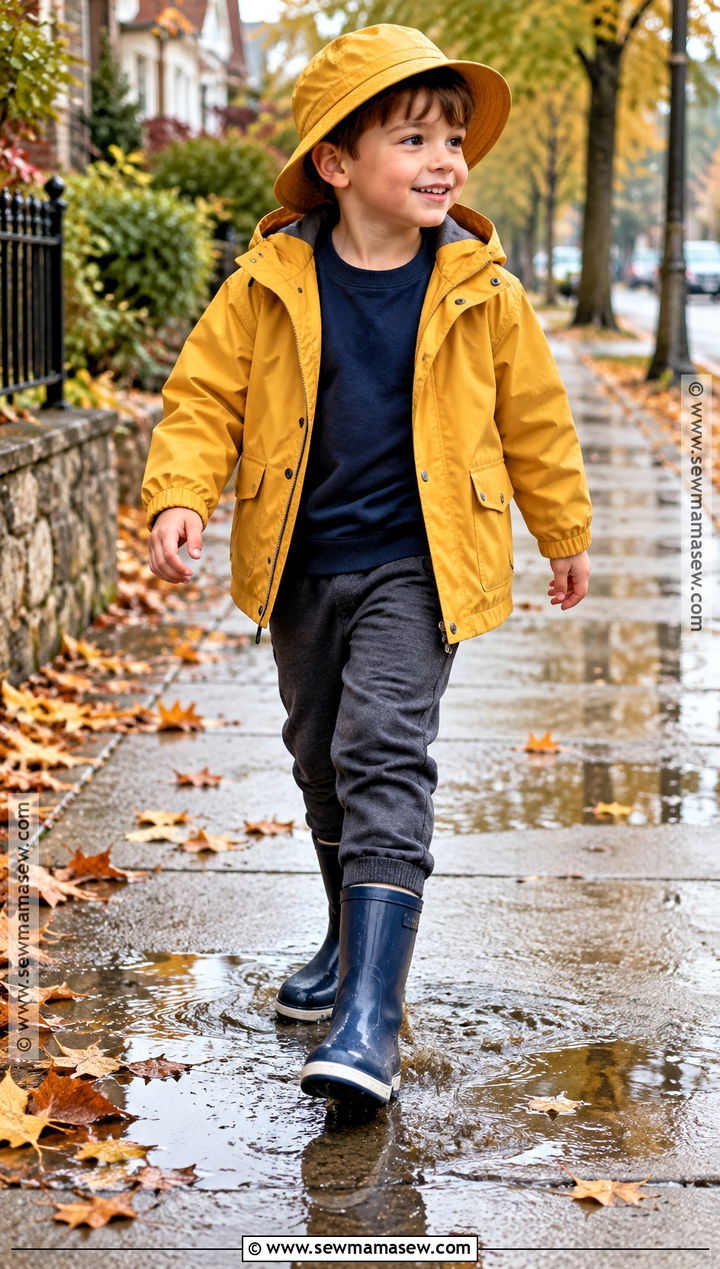
Rain doesn't need to mean a dull outfit. A sweatshirt in rust or forest green, black or charcoal joggers with tapered cuffs that won't drag through puddles, and a bright rain jacket that also makes him easy to spot outdoors. Waterproof boots need room for a thick sock but shouldn't slip at the heel; I have kids walk and jump in them before buying, because rubber boots that flop off make for a miserable walk. A brimmed waterproof hat covers wetter days, and I always put a spare pair of socks in the backpack for school or longer outings.
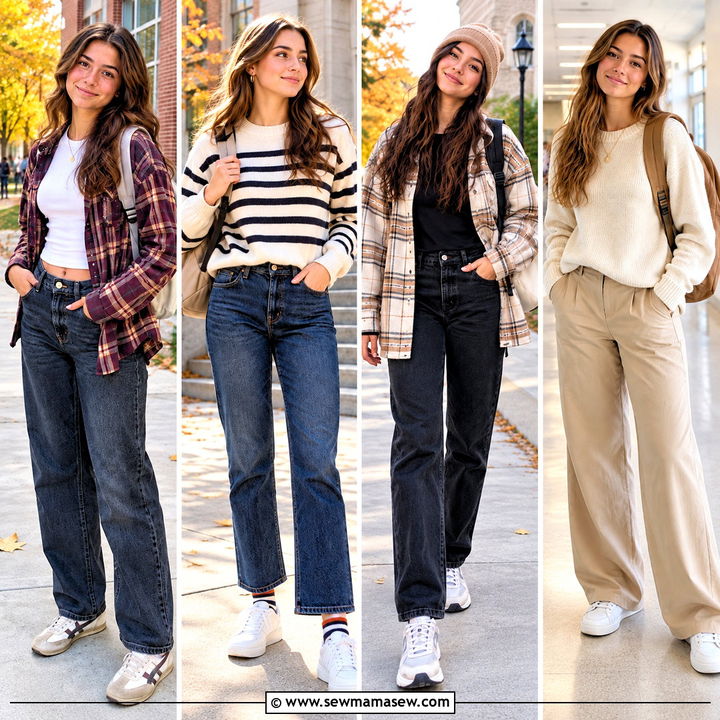
25. Shacket With Thermal Top And Twill Pants
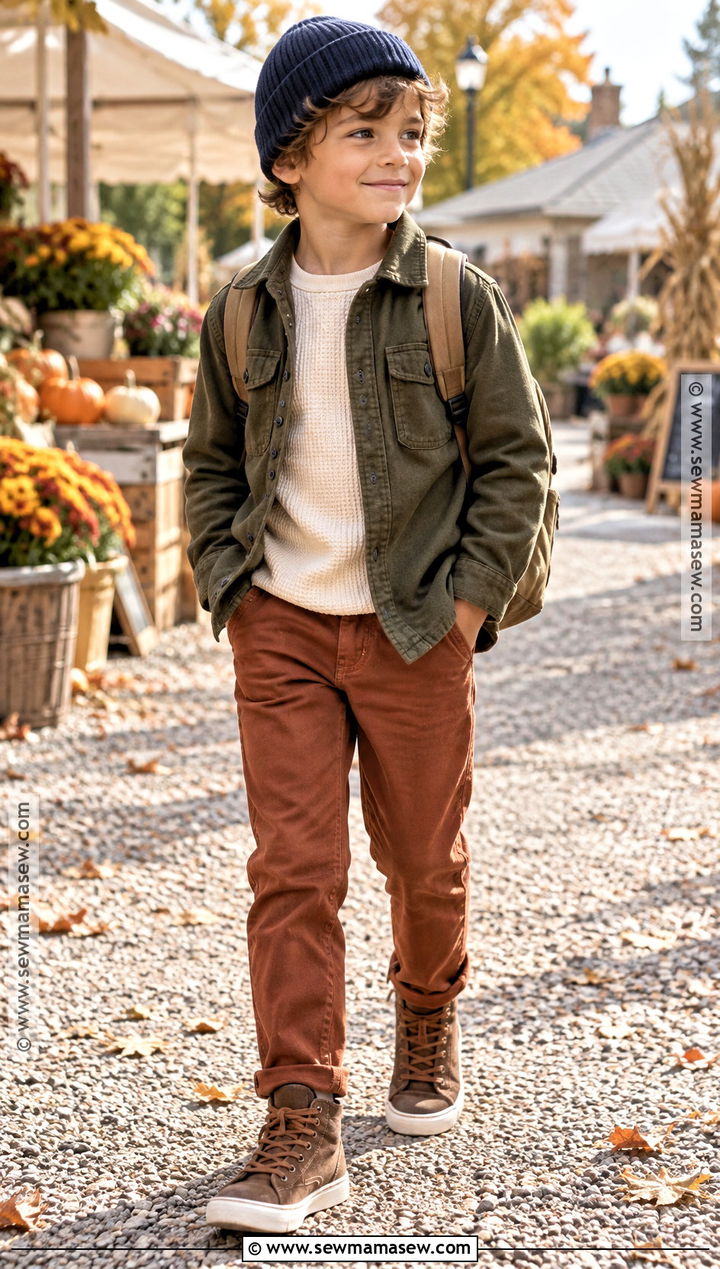
A shacket, part shirt and part light jacket, is the layer I lean on most once early fall turns cool. A plaid, olive or camel one over a cream or gray thermal, with straight twill pants in rust or dark green, makes a nice change from jeans. Brown casual boots or neutral high-tops complete it. Open on mild afternoons, buttoned as it cools. Watch the hem length: a shacket that falls past the hips gets in the way when a small boy runs or sits on the floor. A ribbed beanie and canvas backpack are the only extras.
When He Refuses to Put It On
Many boys resist fall clothes for reasons that have nothing to do with style. The usual culprits are a scratchy tag, a tight neck, a stiff waistband or a seam that sits in the wrong spot. I've found that once those are fixed, the arguments over clothes mostly stop.
- Cut out tags or buy printed-label clothing. Turning the shirt inside out to check for rough seams takes a few seconds.
- For tight necklines, quarter-zips, henleys with buttons and cardigans are easier than crewnecks.
- Wash new jeans and corduroys a couple of times before the first wear. They soften noticeably.
- Offer two outfits, not the whole drawer. A small choice still feels like his decision.
Knees, Grass Stains and the Washing Machine
Fall clothes for active boys mostly wear out at the knees and cuffs. Jeans with a bit of stretch hold up longer at the knee than rigid denim, and some kids' brands sell reinforced knees, which I'd look for if your son lives on the floor.
Corduroy keeps its pile longer if you wash it inside out and skip high heat in the dryer. Fleece pills from friction, so wash it inside out with similar fabrics and avoid washing it with towels. Flannel shrinks in hot water, so cold washes help it keep its length. For grass and mud, let the mud dry, brush it off, then pretreat the stain before washing. Hot water can set grass stains, so I stick to cool water until it's gone.
What I'd Keep in His Fall Drawer
A good fall wardrobe for a boy is mostly comfortable basics, a few removable layers and colors that mix. Flannels, soft sweaters, stretch jeans, joggers, chinos, vests and light jackets make dozens of combinations without a big closet. I put my budget into washable fabrics, adjustable waistbands, smooth seams and shoes that suit how active he really is. Keep one layer handy for cold mornings and warm afternoons, and test every outfit with a squat and a reach before it leaves the house. If he can move in it, he'll wear it. From there, adjust colors, texture and warmth to his age, his personality and your local weather.
Related posts: