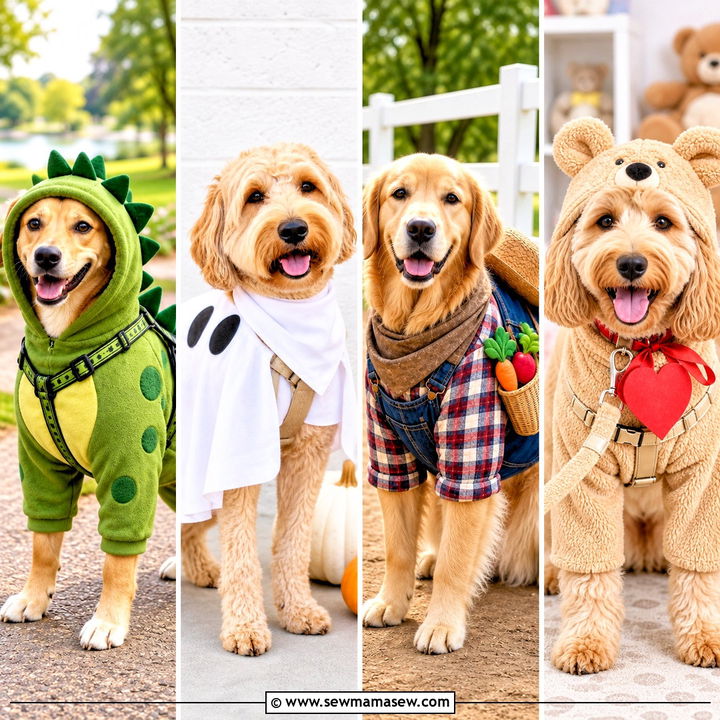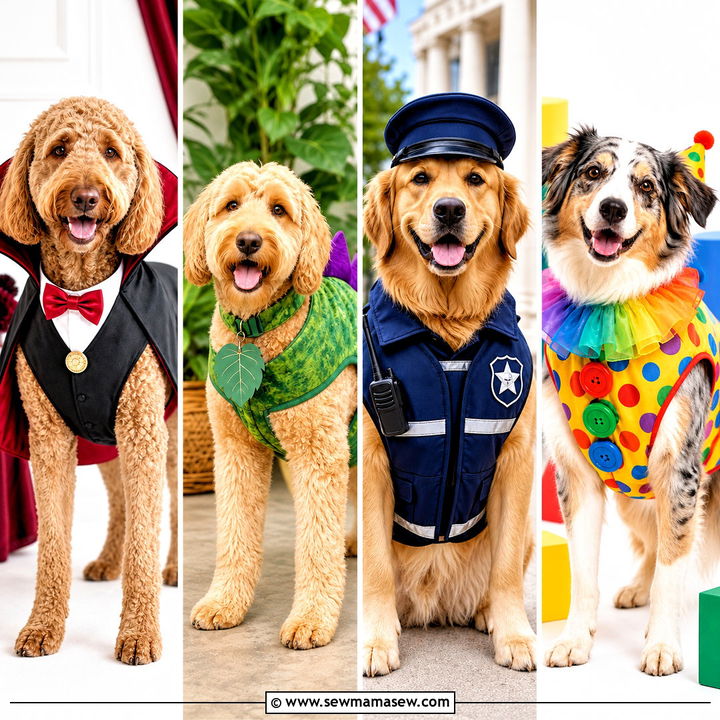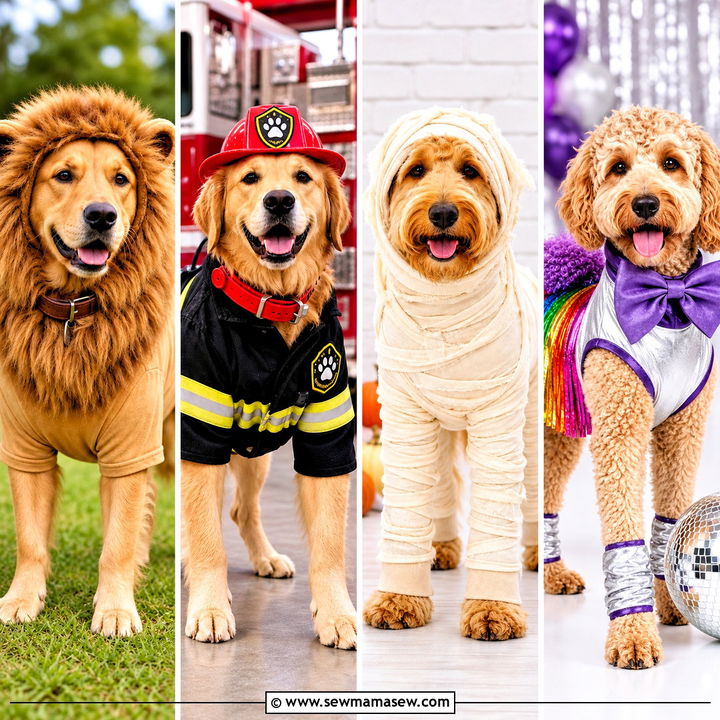
Cat costumes are a different kind of sewing project. The wearer can't tell you it pinches, so every piece has to be light, soft, quick to remove and impossible to chew. The ideas below cover spooky classics, animals, food puns and little uniforms, and nearly all of them are built on one of three bases: a soft vest, a short cape or a loose collar. Every one leaves the face, ears, whiskers, tail and paws free. There's no face paint and nothing on the feet, and no cords or small parts either. I'd plan each one as a few minutes of supervised photos, not an evening outfit, and take it off the moment your cat looks unhappy.
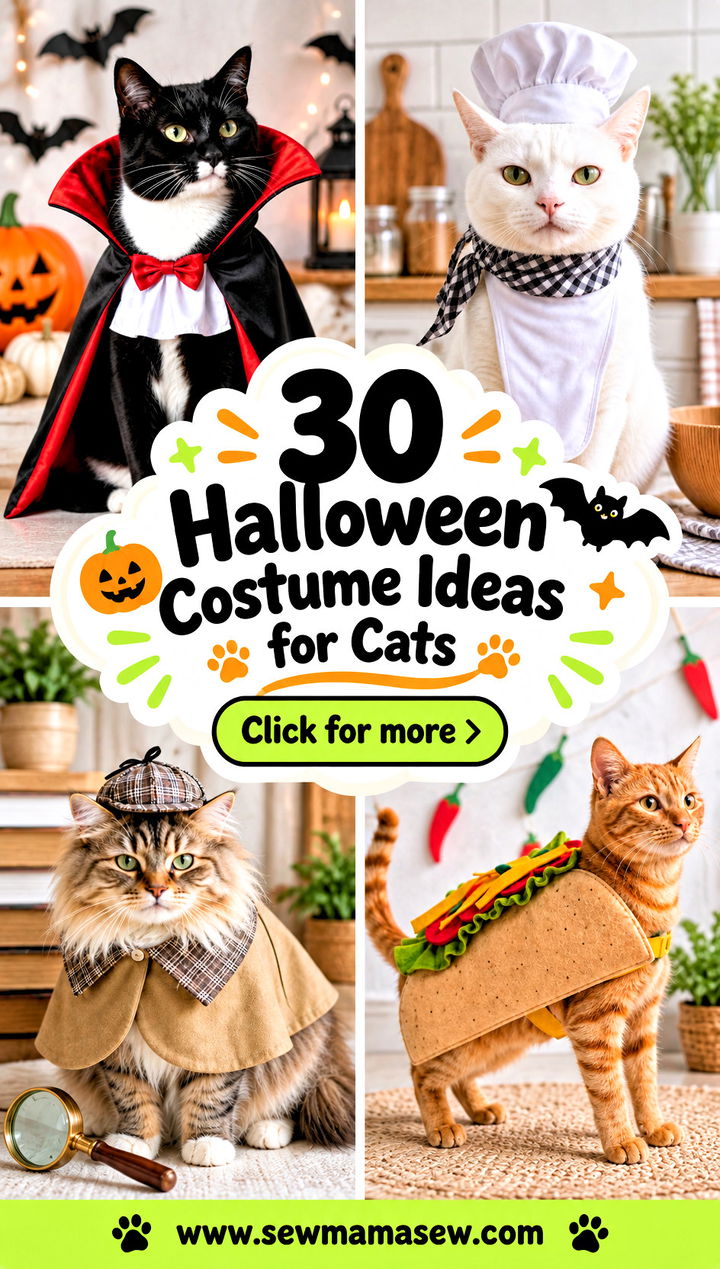
Sewing a Small Vest a Cat Will Tolerate
Most of these costumes start from the same simple vest, so it's worth making one that fits. A shop-bought pet vest works too, but sewing your own lets you control the fabric and the closure, which are the two things cats object to most.
Measuring
Take three measurements with a soft tape: around the neck where a collar sits, around the chest just behind the front legs, and along the back from the base of the neck to the start of the tail. Add a little ease to the neck and chest. You should be able to slide two fingers under any part of the finished vest.
Fabric and closures
- Fleece and cotton jersey are soft, light and don't fray, so you can leave the edges raw.
- Avoid stiff craft felt for the base; save it for decorations stitched on top.
- Hook-and-loop tape under the chest is easy to undo, but its ripping noise startles some cats, so open it slowly or use a soft snap.
- Stitch decorations on rather than gluing; dried glue edges are rough and tempting to chew.
Make a quick test version from an old T-shirt first. It takes very little time and shows you where the fit pulls before you cut the good fabric.
1. Pumpkin Cat Costume
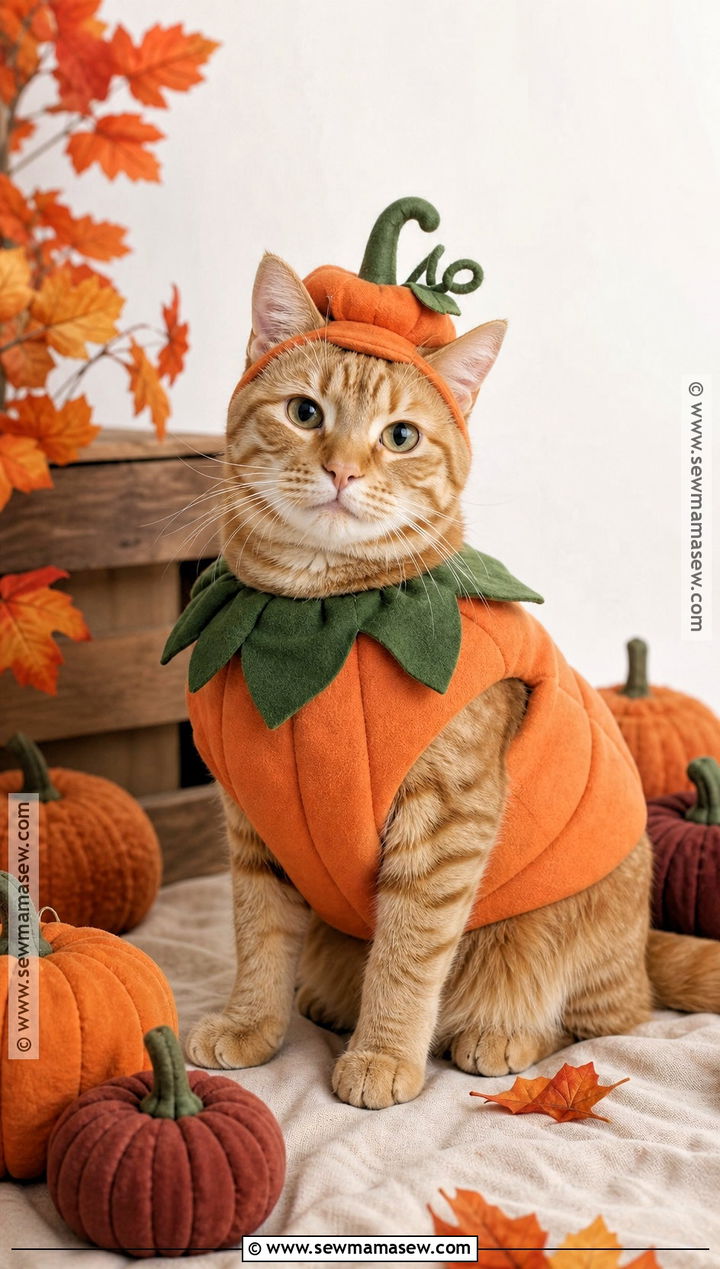
A pumpkin is the friendliest place to start, because it's just an orange vest with a few curved lines. Cut it from soft fleece rather than stiff craft felt, which holds its creases and rubs at the armpits. Stitch the felt section lines flat with a running stitch; glued strips peel at the edges and become something to chew. A small green felt collar reads as leaves, and the stem headband is optional and only for cats that already tolerate things on their heads. It suits orange, cream, black and tuxedo coats alike. Keep real candles well away from the photo setup.
2. Black Bat Cat Costume
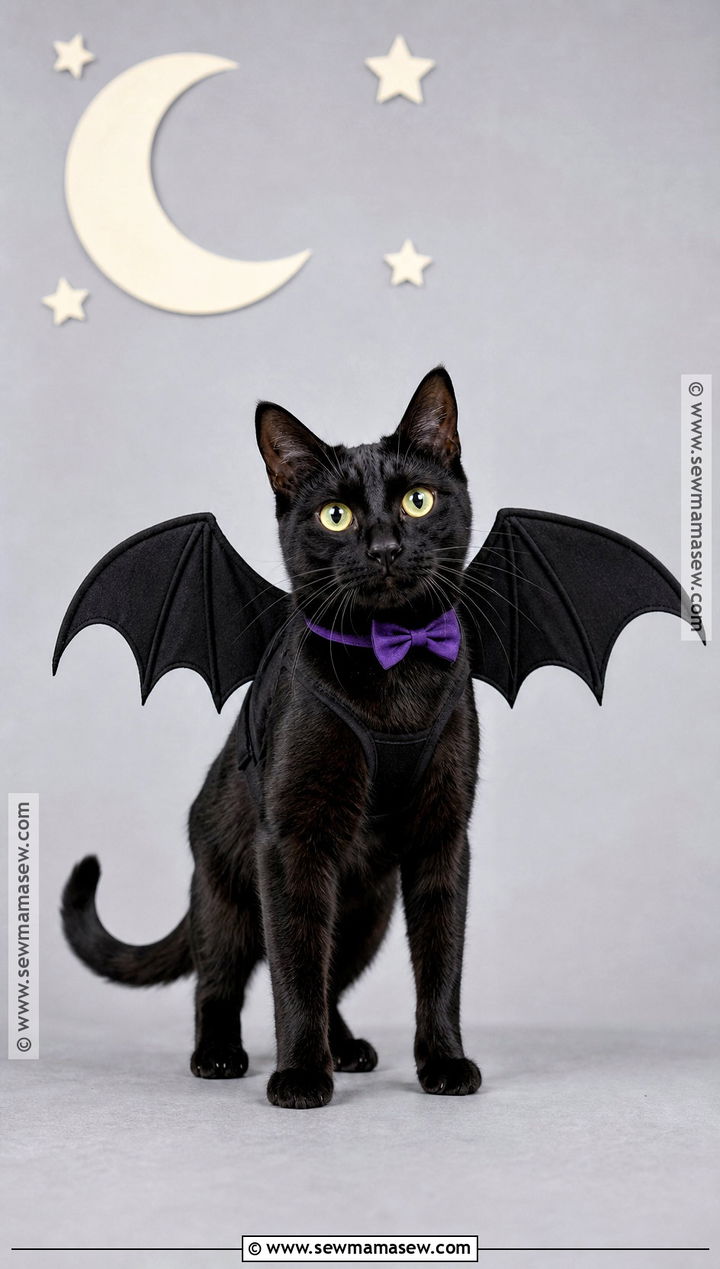
Bat wings on a soft chest harness make a dramatic picture with very little on the body. I cut the wings from two layers of felt stitched together, which gives them shape without wire; wire bends and can poke once it shifts. Keep the span narrow enough that the tips stay above the shoulders and well clear of the tail, or your cat will spin trying to find what's touching it. A small purple bow collar adds color. Shoot against a white or pale gray background so the black wings show. Stay with your cat the whole time.
3. Lion Mane Cat Costume
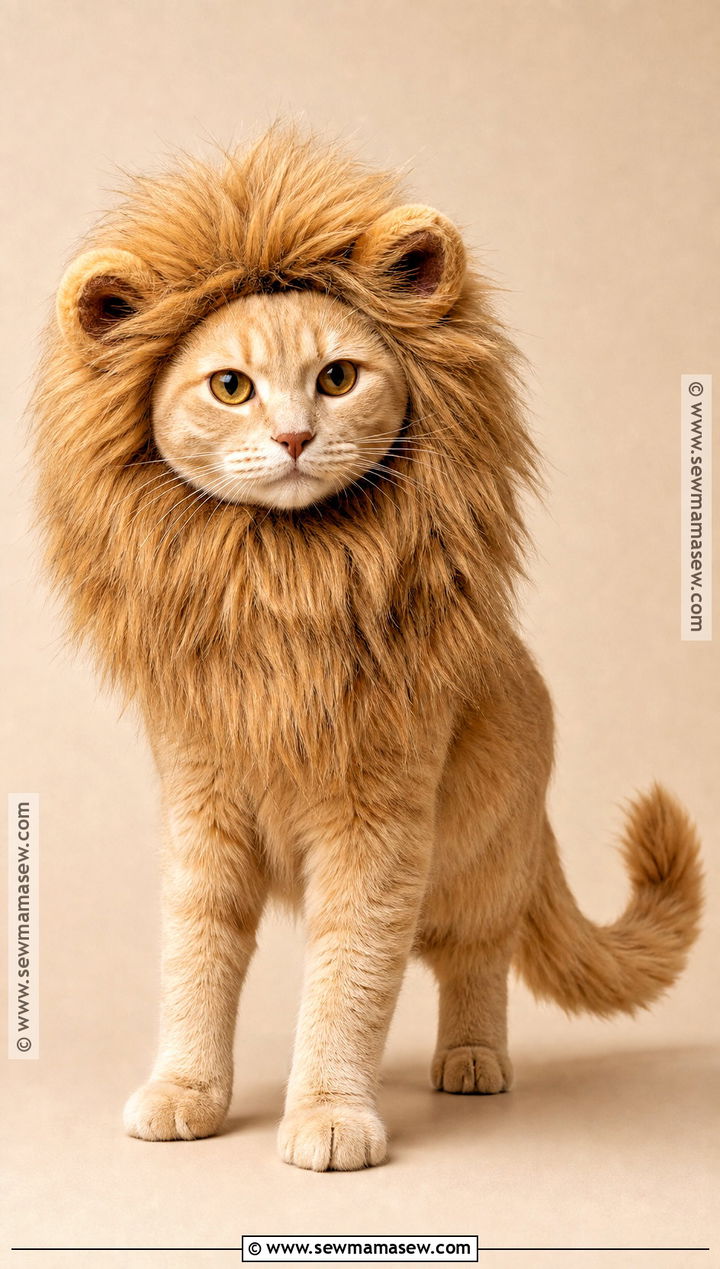
The mane is the costume; your cat's own body does the rest. Choose a soft faux fur in golden brown or rust and make it as a loose ring that sits on the shoulders, with the face opening cut generously so it never touches the whiskers. Faux fur sheds at the cut edges, so I run a quick zigzag around them before attaching the band. This one only suits calm cats that already accept a collar. Take your photos fast on a cream background and slip the mane off before the grooming starts.
4. Bumblebee Cat Costume
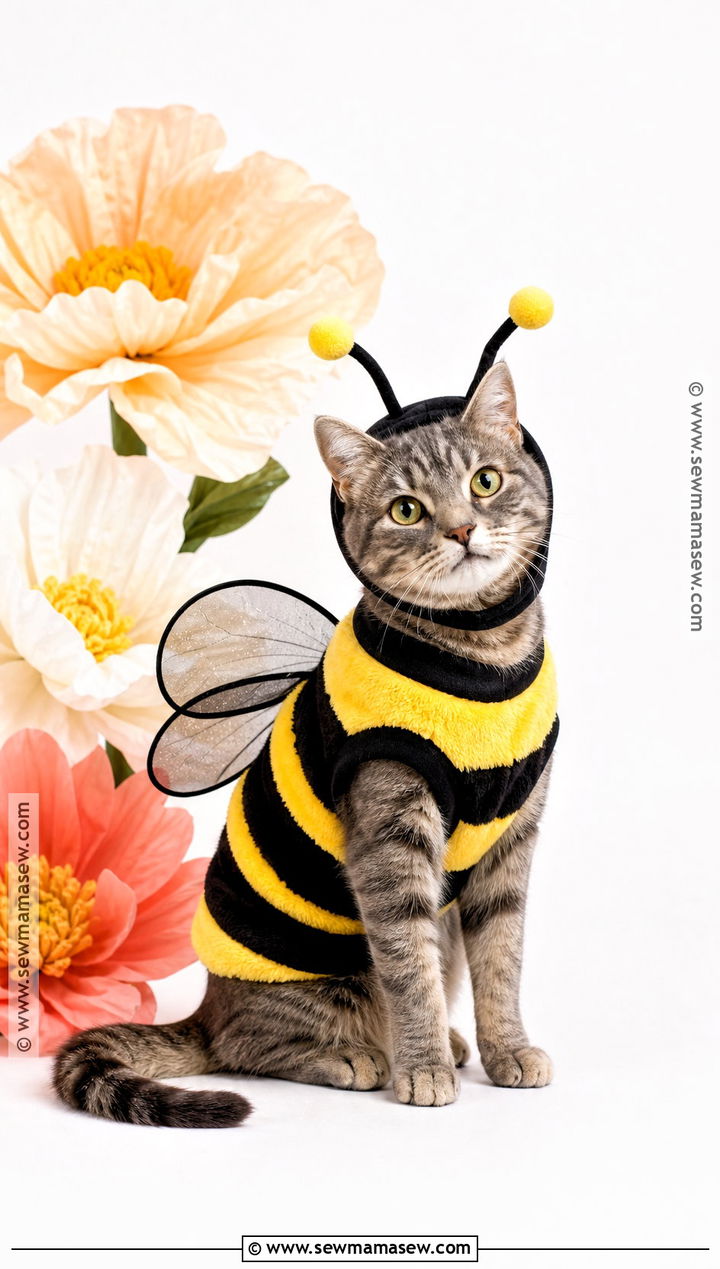
Stripes do the explaining, so all you need is a soft yellow-and-black striped vest with a secure chest closure. Two short fabric wings stitched to the back finish the bee. Keep them small, about the width of the shoulder blades, and wire-free. Antennae are the piece most cats reject; try them for a second, and if your cat shakes its head, leave them off. The vest and wings are enough. Paper flowers make a cheerful set, placed where paws can't reach them.
5. Butterfly Cat Costume
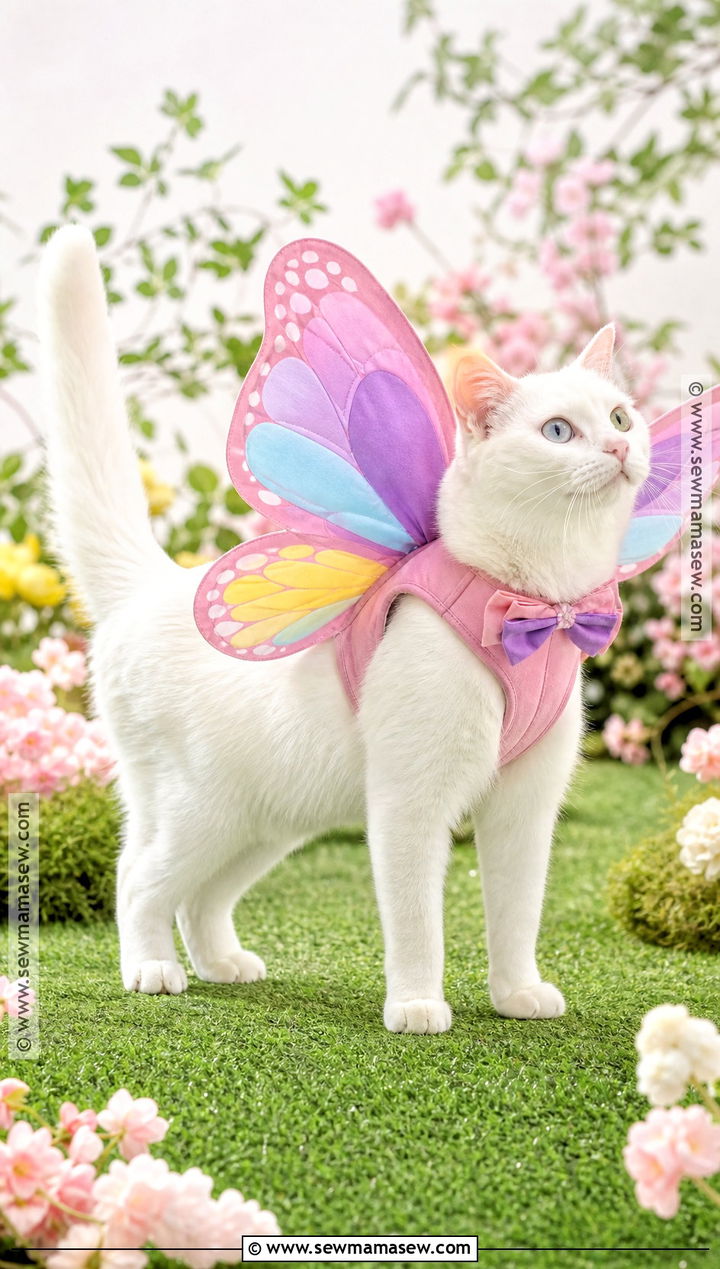
A narrow harness carries the whole butterfly, so very little fabric touches your cat. Cut the wings as a matching pair from one folded piece so they're truly symmetrical, then stitch them flat to the back of the harness. If they flap when the cat walks, tack them down at the lower corners. Printed spots and a contrast border help the shape show in photos. A small bow collar replaces a headpiece. A garden backdrop with artificial flowers works, kept at a distance. Keep it indoors and short.
6. Shark Cat Costume
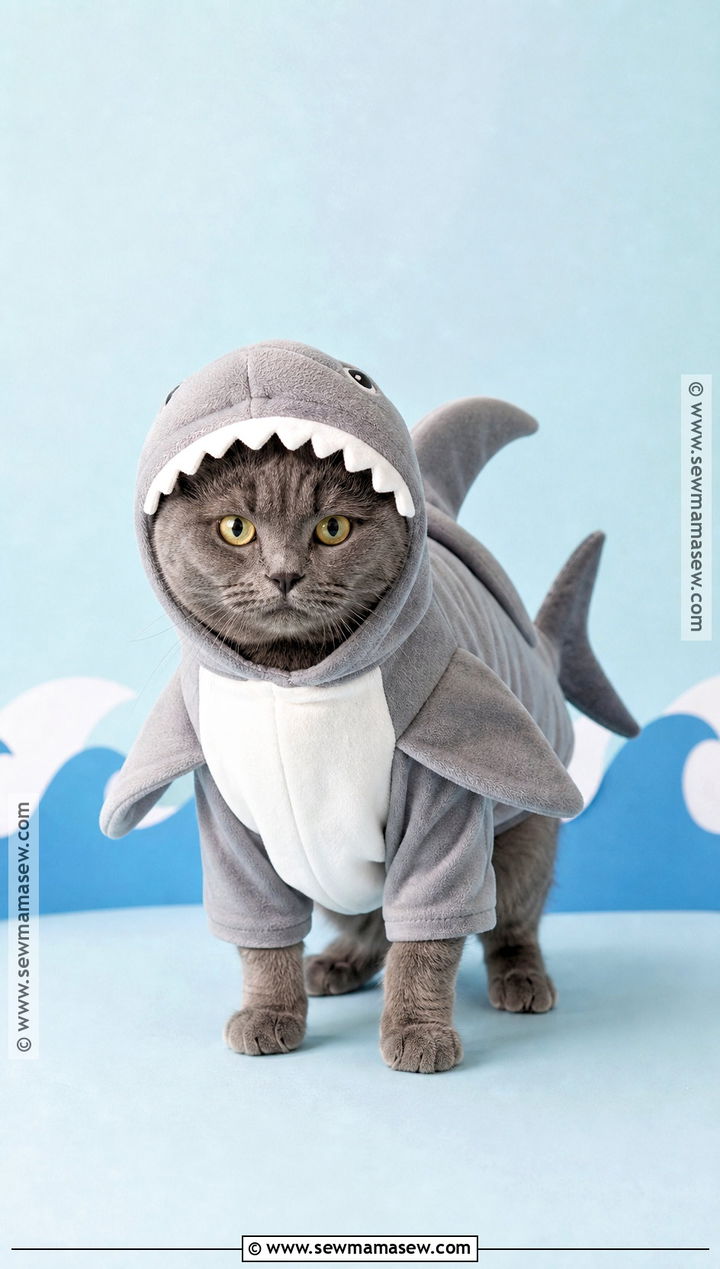
A gray vest with a dorsal fin and a white felt belly reads as a shark at a glance. The fin should be soft and floppy; a stuffed or stiffened fin rocks with every step, which unsettles most cats. The hood with felt teeth is the cute part, but only if it sits behind the ears and leaves the whole face clear. If your cat won't take a hood, skip it. A pale blue background with flat paper waves sets the scene without clutter. Grab a few frames while your cat is sitting or standing still.
7. Dinosaur Cat Costume
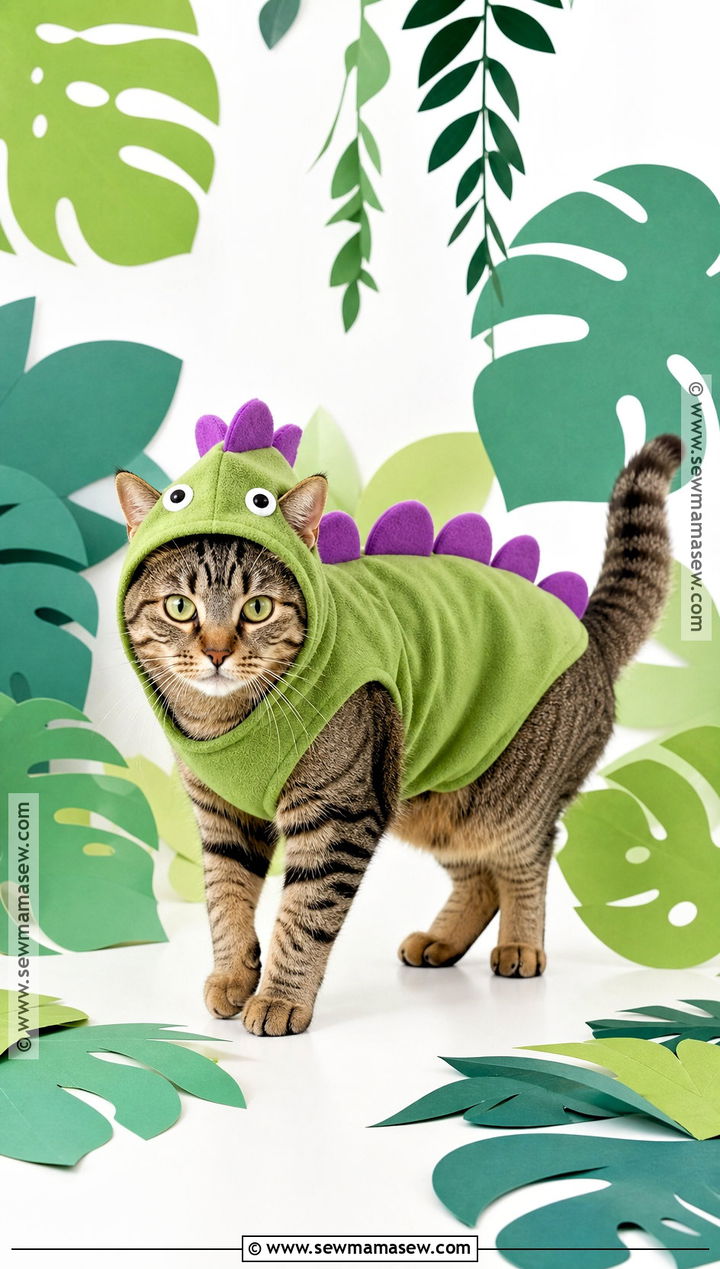
Rounded spikes down the back turn a green vest or cape into a dinosaur. I cut the plates as double-layered felt triangles, sew them into the seam along the spine, and round the points so they bend instead of poking. Make sure the cape stops before the tail. A hood with tiny fabric eyes is optional and must stay clear of the ears. Green with teal or purple photographs clearly on neutral backgrounds. Large paper leaves out of reach complete the set.
8. Dragon Cat Costume
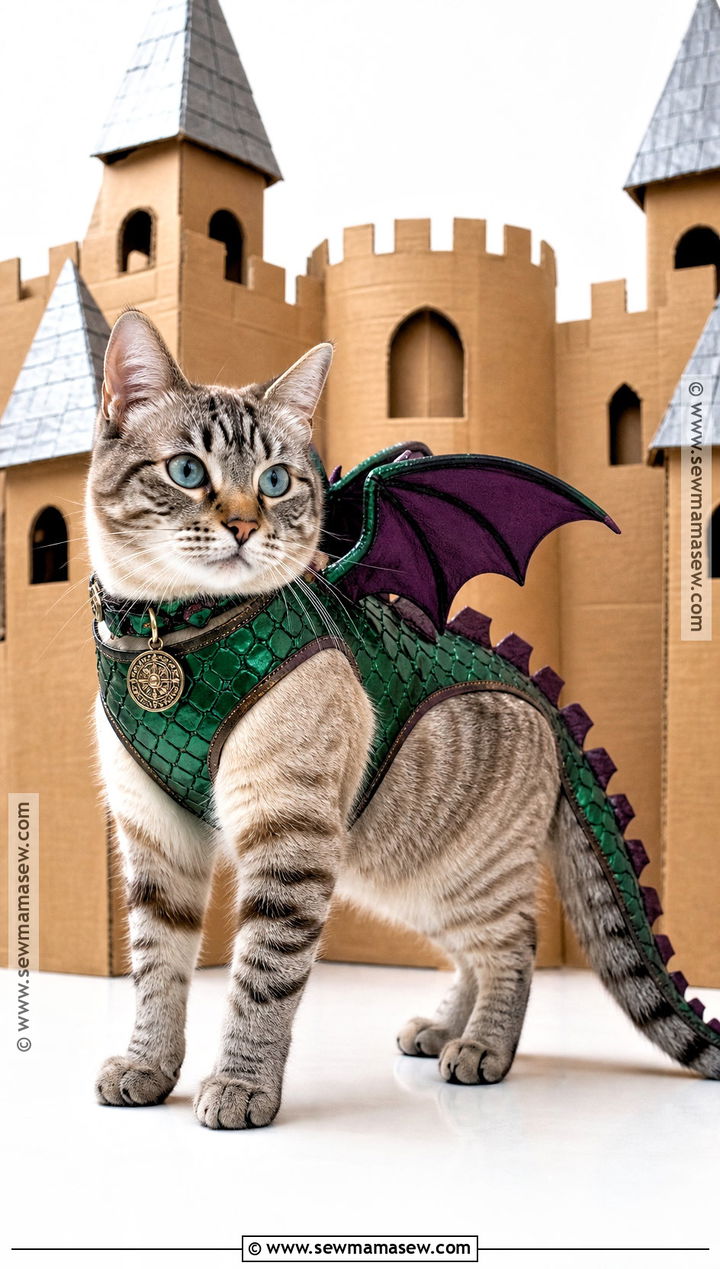
This one layers color and texture, with compact fabric wings, rounded felt scales down the spine and a small fabric medallion on the collar. Use a soft purple, red or emerald harness as the base. The scales look best when they overlap slightly, sewn in a row so each covers the top of the one below, and they should stop before the tail. Avoid glitter fabric; it flakes and ends up in fur, and cats groom it off. A cardboard castle backdrop keeps the mood friendly.
9. Spider Cat Costume
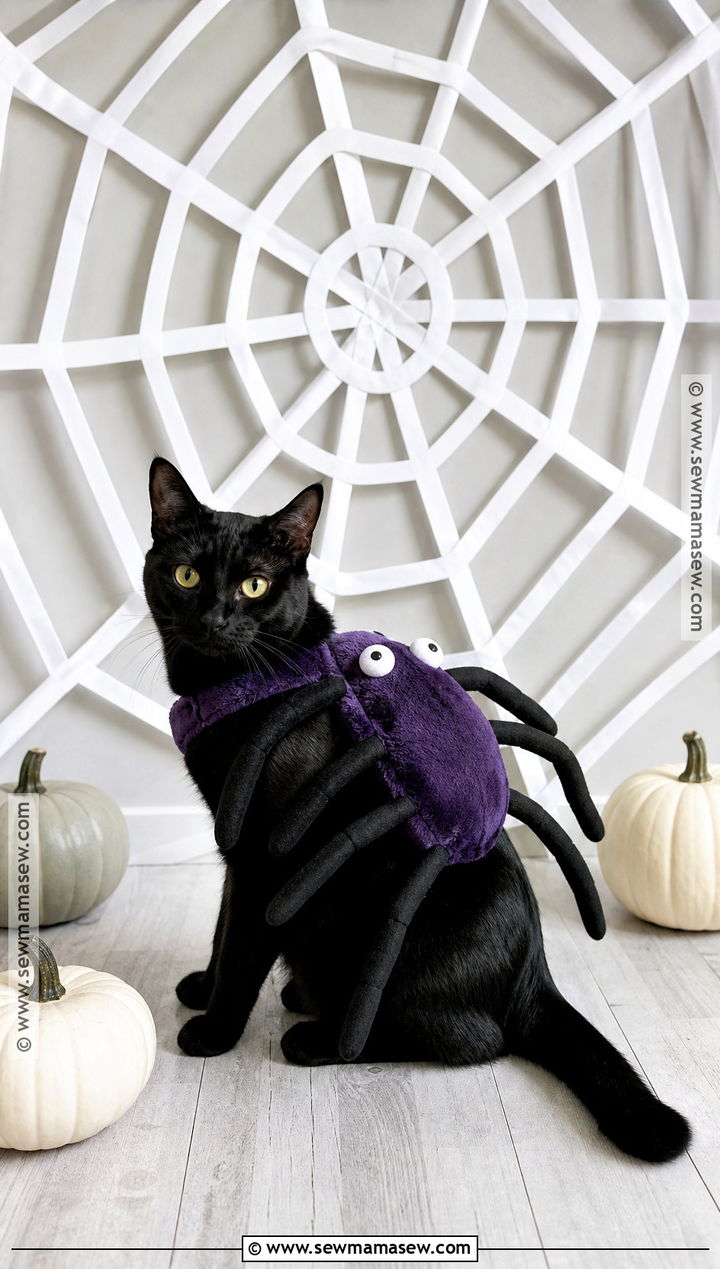
Eight legs make the joke, but they're also the part to get right. Attach four short, lightly stuffed fabric legs to each side of a black or deep purple harness, and keep them short enough to sit above the floor. Long or stiff legs catch on furniture and can startle your cat. Rounded legs are softer than pointed ones. Two felt eyes on the harness add character while the head stays bare. Pose your cat in front of a big paper web on a white backdrop, away from any real string.
10. Ladybug Cat Costume
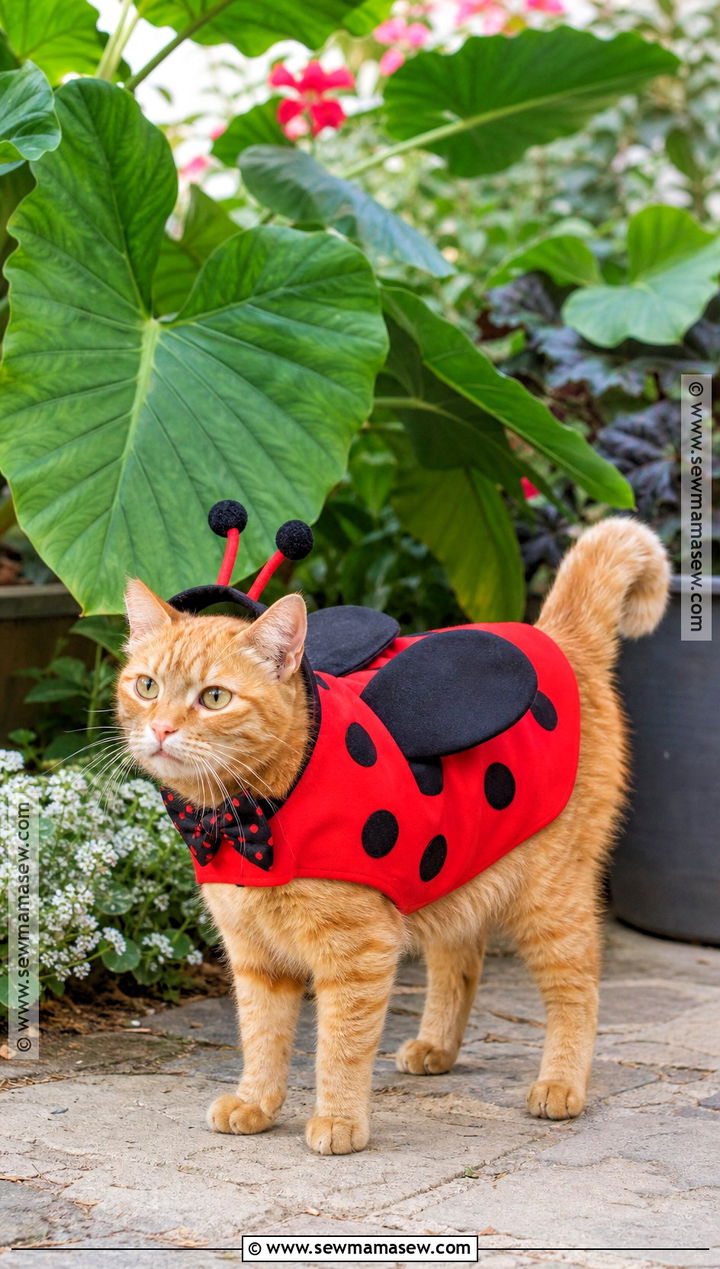
A red shell with black spots is easy to sew: one oval of red fleece on a lightly padded vest, with flat felt dots stitched on, plus two small wings close to the body. Fusible web keeps dots in place on cotton, but it peels on fleece, so stitch them. A soft black bow collar finishes it neatly. Antennae can go on for a few seconds if your cat accepts them. A green or white set with large leaves out of reach makes the red stand out.
11. White Ghost Cat Costume
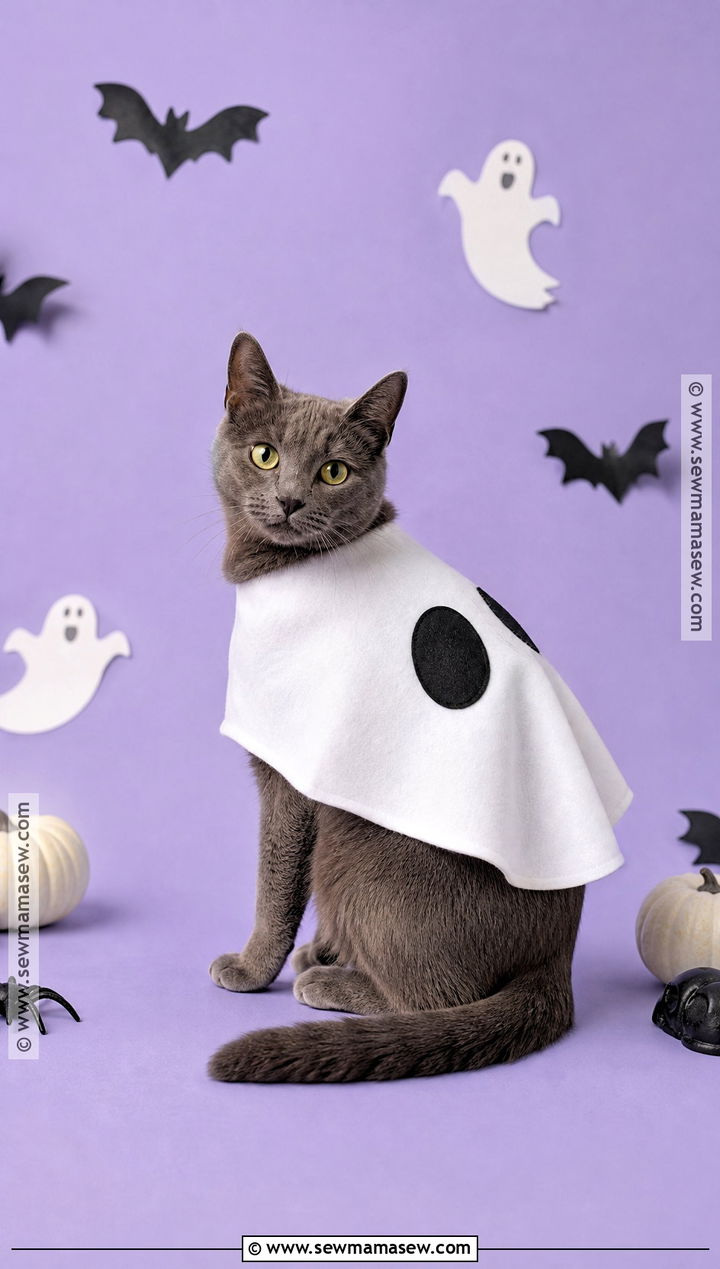
Never put a sheet over a cat's head. A short white cape that ties loosely at the chest gives you the ghost while the whole face, ears and tail stay free. Two black felt ovals on the back of the cape suggest the ghost's face. Hem it short so the edge can't slide under the paws. It suits any coat color, and a pale lavender or light gray backdrop makes the white pop. This is one of the simplest pieces here to make.
12. Classic Witch Cat Costume
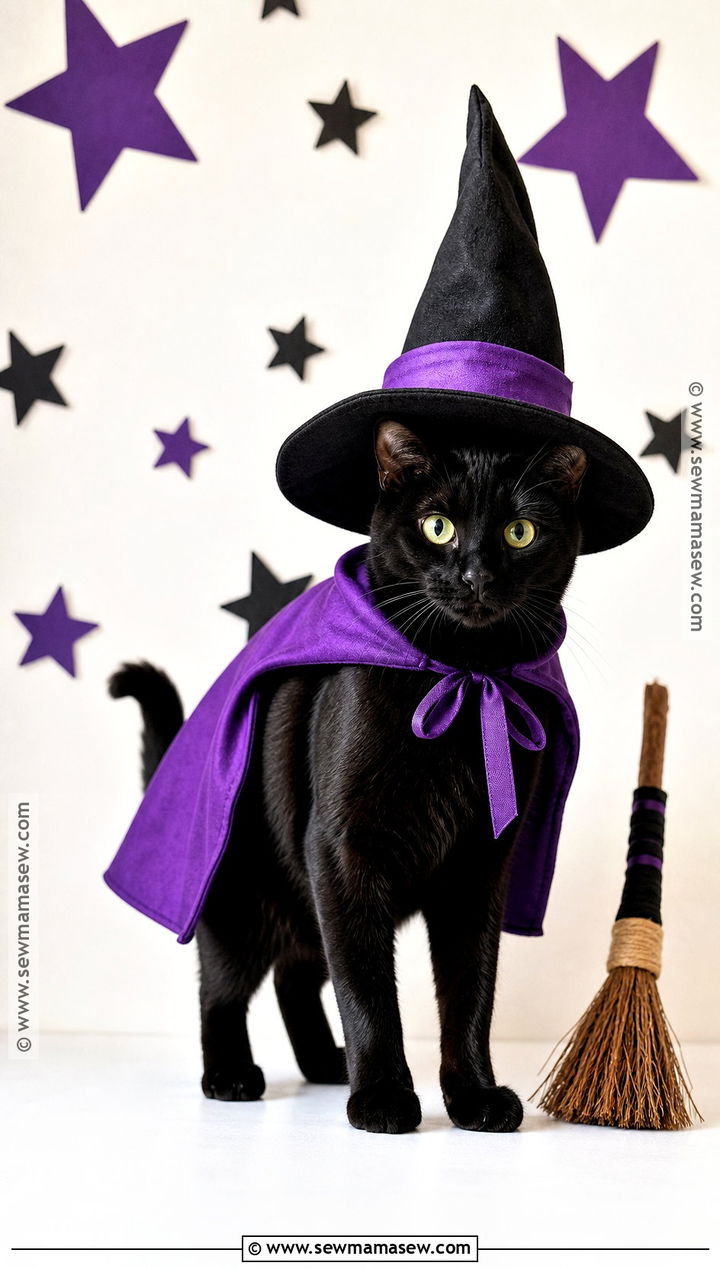
The witch is a tiny pointed hat and a purple cape. Close the cape with a small strip of hook-and-loop tape, which pulls apart if it snags, rather than a button or tie. Make the hat from soft felt, unstiffened, so it squashes if your cat rubs against something, and use it only if your cat stays calm. A flat purple hatband looks tidy without bells or feathers. A small plush broom can sit next to your cat as a photo prop. A clean background with paper stars keeps it cheerful.
13. Blue Wizard Cat Costume
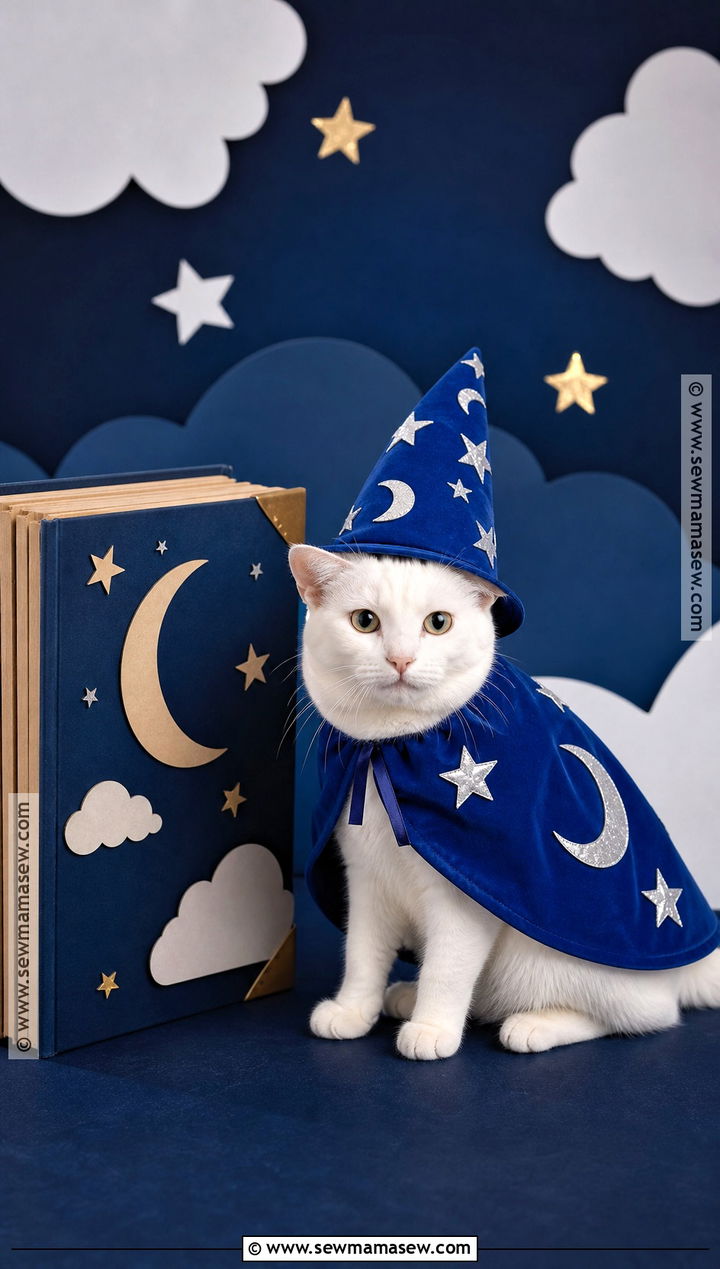
Rich blue fabric scattered with silver felt stars and moons makes a wizard's cape. Cut it short so it ends above the tail and leaves the front legs free. I stitch every star, rather than gluing, and keep each one bigger than a coin, since anything smaller can be swallowed if it comes loose. A flexible cone hat is for tolerant cats only and must never slide over the eyes. A cardboard book nearby works as a supervised prop. Navy and white make a good backdrop.
14. Red Vampire Cat Costume
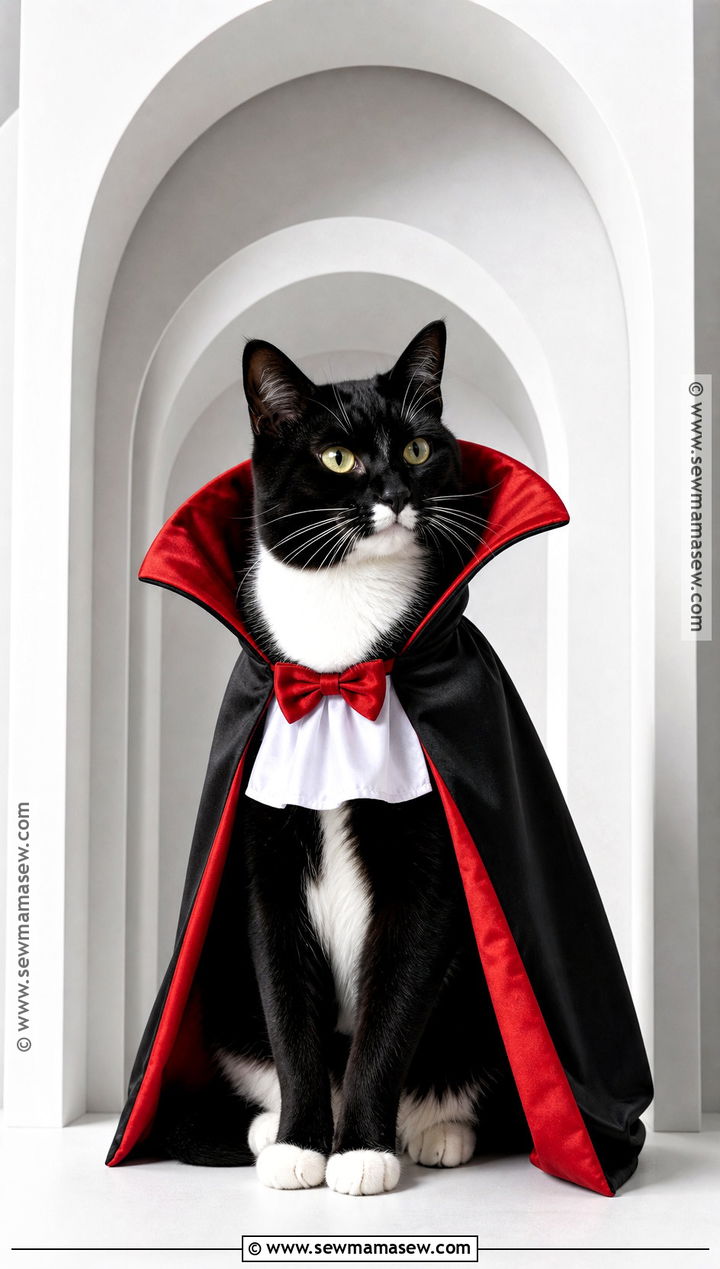
A short black cape with a red lining is the whole vampire. Keep the collar low and soft; a tall stiff collar looks dramatic on people but presses on a cat's neck and ears. A white fabric bib with a small red bow suggests a formal shirt. Leave out fake teeth and anything near the mouth. Bright gray with paper arches gives a classy, unscary portrait. The lining is the place to show off: a satin lining flips nicely when the cape moves.
15. Skeleton Cat Costume
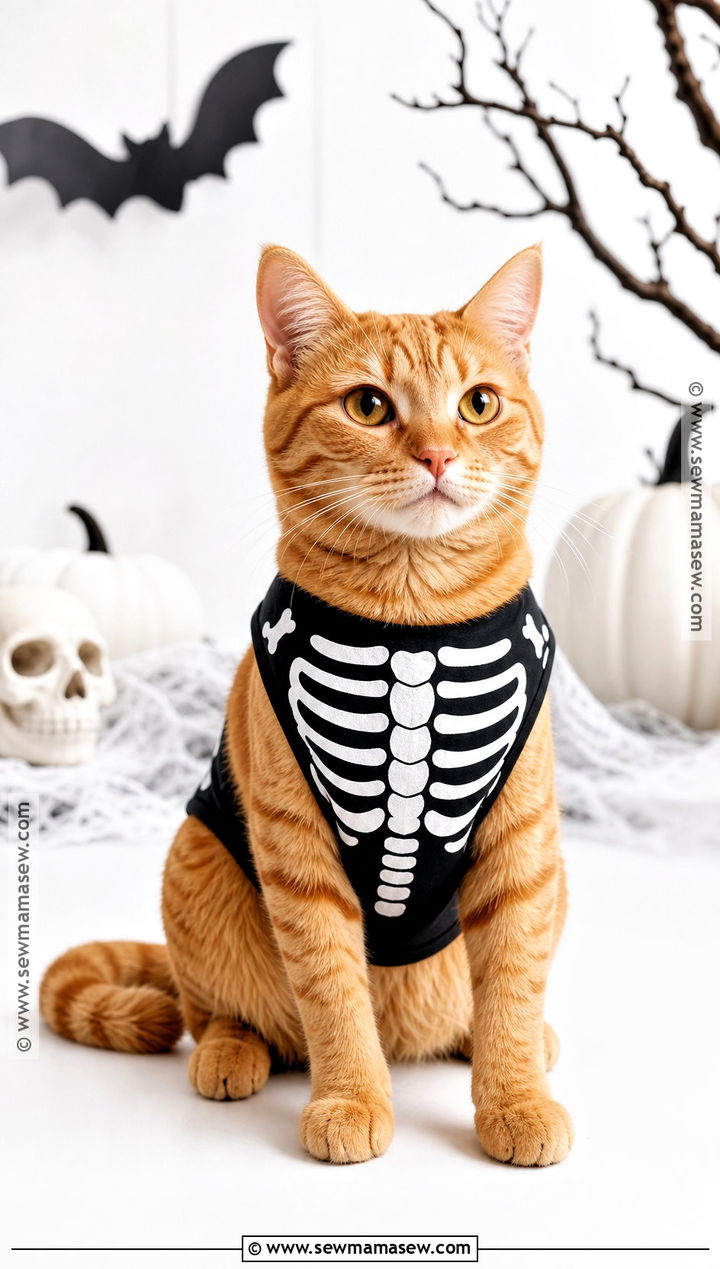
White fabric bones on a black vest make a skeleton without any paint on the fur. I cut the spine and ribs from white felt and stitch them flat, with a spine down the center and three or four curved ribs per side; more than that looks busy at this scale. Keep the vest to the back and chest. Avoid glow sticks, which can leak if bitten, and any loose plastic. A white background with medium contrast lets the black and white show clearly.
16. Pirate Cat Costume
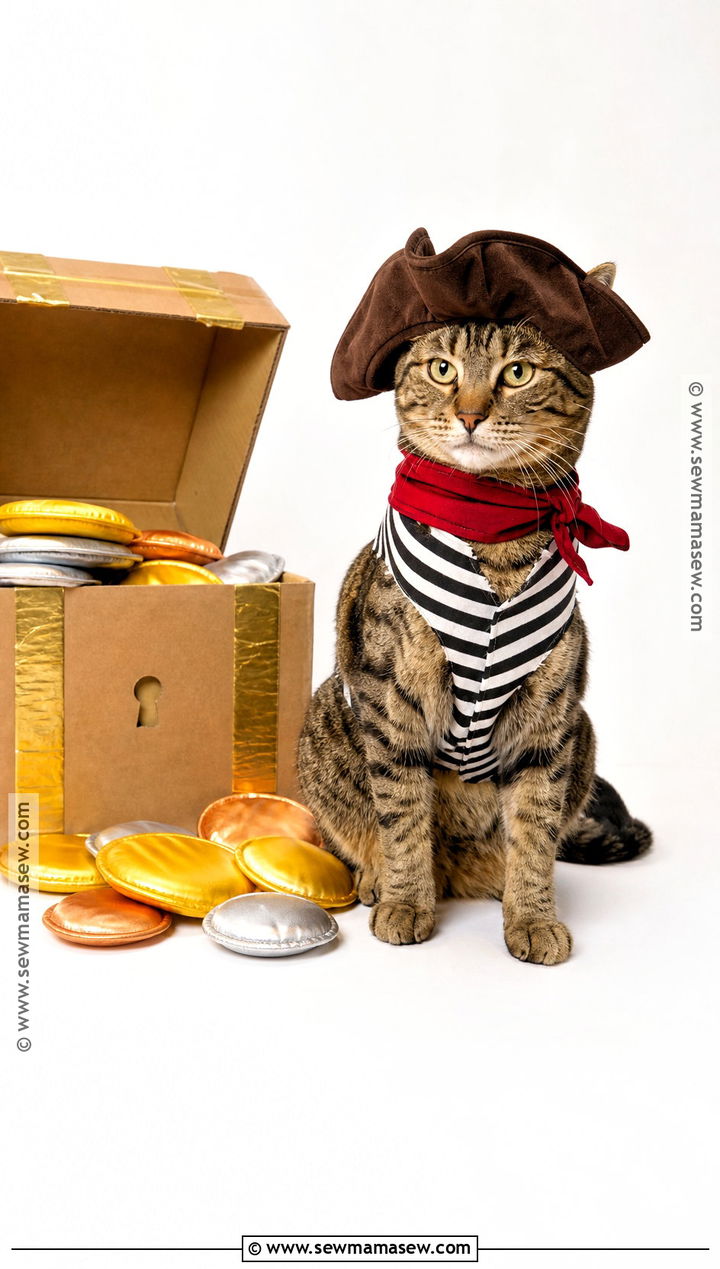
Skip the sleeves. A striped chest panel on a light vest gives the pirate shirt look without trapping the legs. Add a loose red bandana collar that can't tighten, and a soft mini tricorn for a quick photo if it stays clear of the eyes and ears. Eye patches and hooks are a no. A cardboard treasure chest and large fabric coins can sit in the background, too big to chew. Keep props still and supervise the session.
17. Astronaut Cat Costume
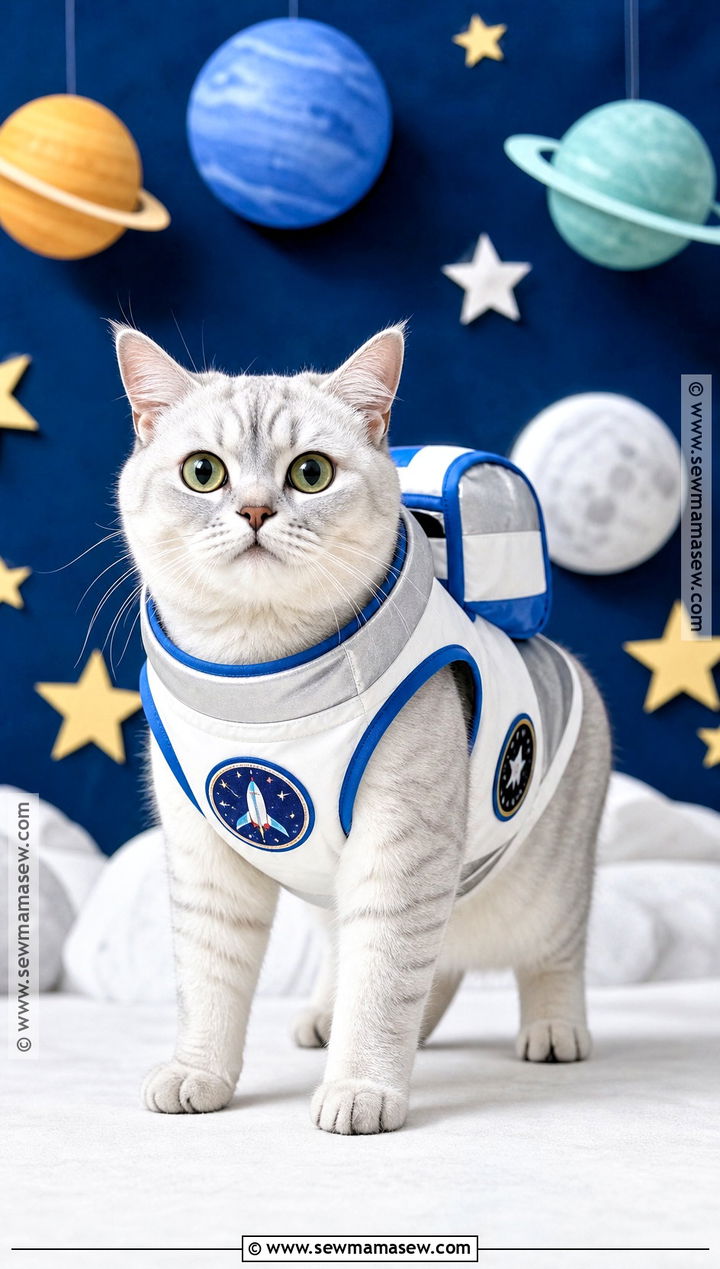
A silver and white vest turns a cat into a small astronaut. Choose a soft matte metallic fabric; crinkly foil-look fabrics rustle with every move, and many cats hate the noise. Add blue trim, flat patches and a small backpack shape stitched firmly to the upper back. Skip the helmet entirely, since it would cover ears and whiskers. A padded white collar suggests a space-suit neckline, as long as it sits loose. Paper planets on a bright background complete the set.
18. Cowboy Cat Costume
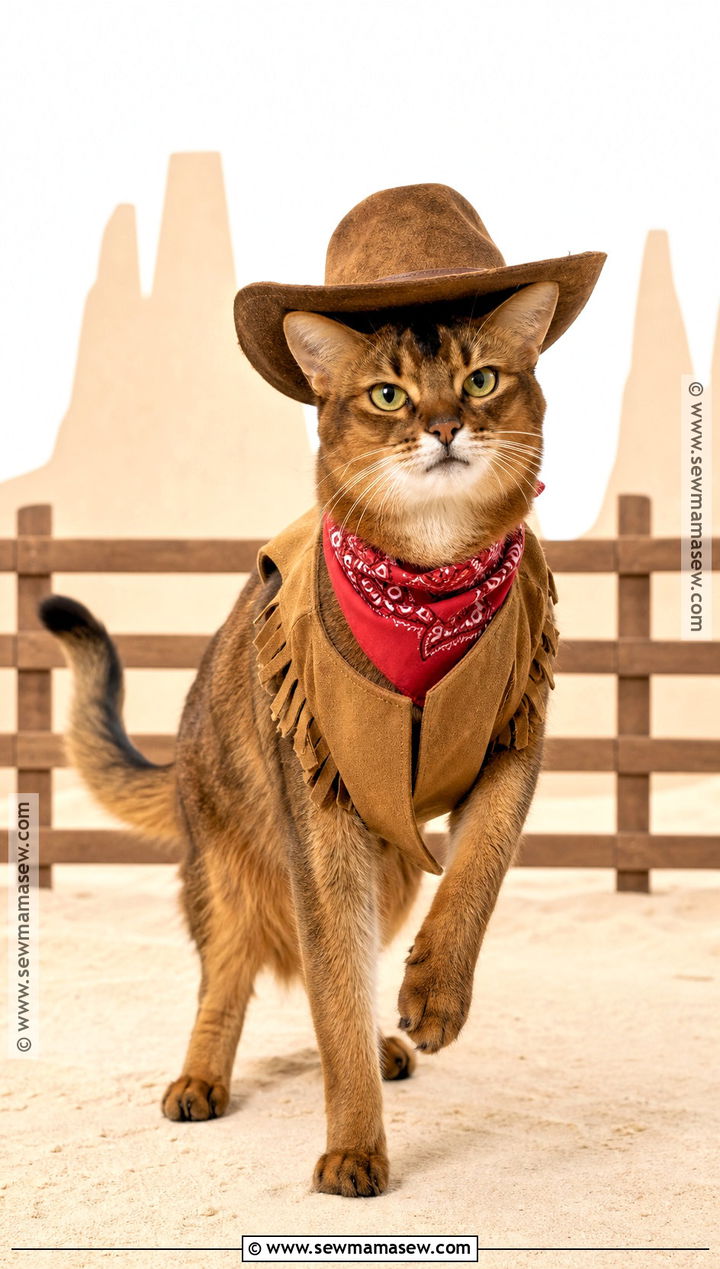
A soft brown vest and a patterned neckerchief make an easy cowboy. Use a pet vest pattern with open front legs and a closure under the chest. Fringe is tempting, but long fringe is irresistible to chew, so I cut it short, about a finger width, and stitch it flat across the back. A small red bandana collar adds color, and a light hat is optional for patient cats. A cardboard fence makes a fun set. It works on long-haired and short-haired cats, though long coats can bury the fringe.
19. Chef Cat Costume
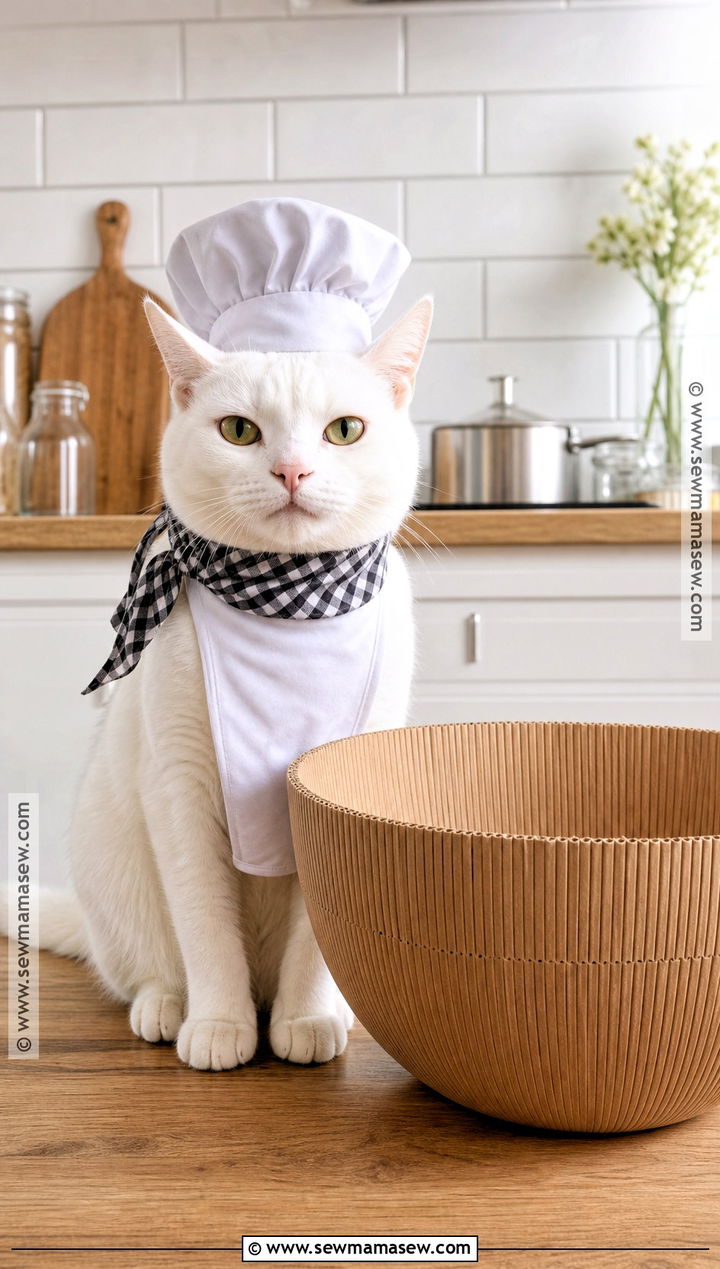
A white bib, a short checkered scarf and a soft chef hat give you the chef. The bib should sit across the upper chest without restricting the shoulders, and the scarf should be too short to trail. Make the hat from a loose fabric puff on a wide band. Keep real food, utensils and cookware away from your pet. A plush spoon or cardboard mixing bowl works as a background prop. A bright, uncluttered kitchen setting suits it.
20. Firefighter Cat Costume
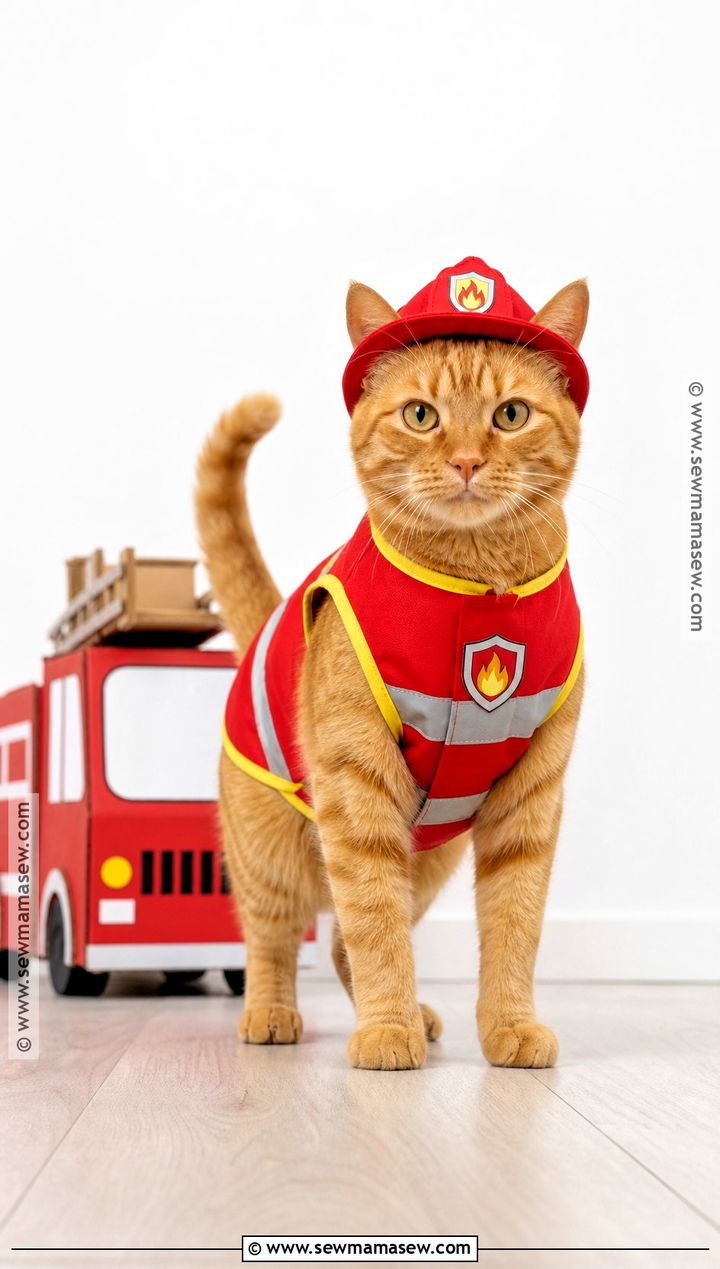
A bright red vest with matte silver ribbon stripes reads as a firefighter's jacket without any reflective plastic or stiff tape. Stitch the ribbon down along both edges so it lies flat. A felt badge on the upper back and a soft black or yellow collar finish it. A fabric helmet can go on briefly if it stays above the eyes. Leave out boots and tools. A cardboard fire truck in the background adds the theme without making the costume heavier.
21. Doctor Cat Costume
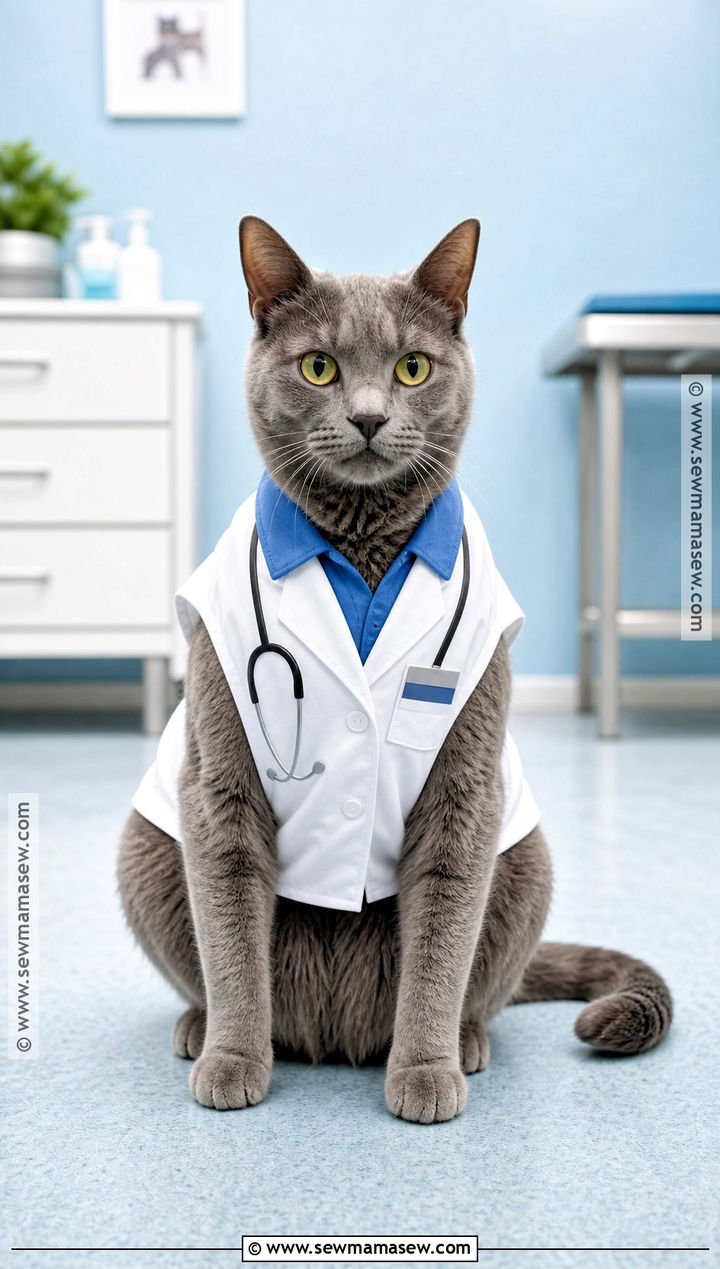
Use a sleeveless pet vest, not a doll outfit, which rarely fits a cat's shape and usually binds at the shoulders. White fabric makes the coat, with a blue collar, a fabric name badge and a stethoscope drawn or printed on rather than hung around the neck. A small blue cap is optional. Keep pills, bottles and small plastic pieces out of the set. Pale blue paper panels make a clinic background. It's neat, simple and suits a calm indoor portrait.
22. Detective Cat Costume
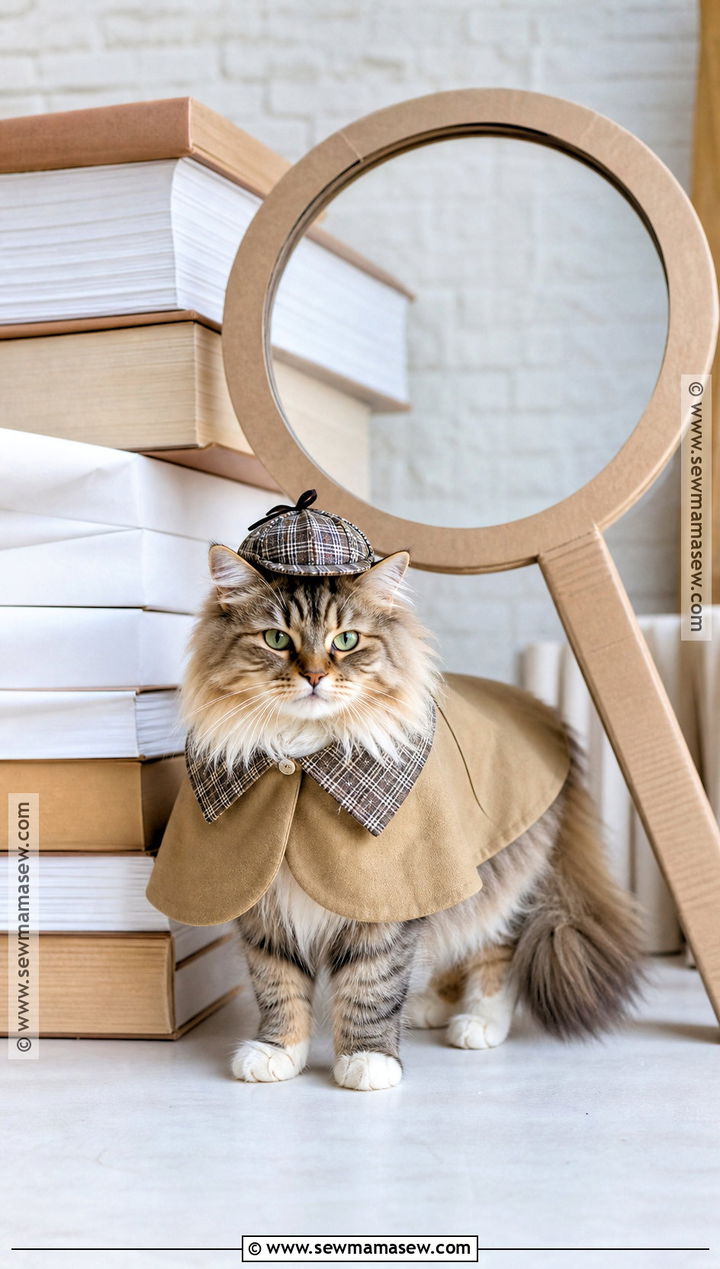
A short tan cape and a plaid collar give you a detective without any tight clothing. The cape rests on the shoulders and ends well above the tail. Cut the collar on the bias if you can; plaid cut that way drapes softly around the neck instead of sticking out. A checked cap is optional for willing cats. Use a large cardboard magnifying glass as background decoration, not near the paws. Paper books arranged behind your cat make a study set.
23. Sailor Cat Costume
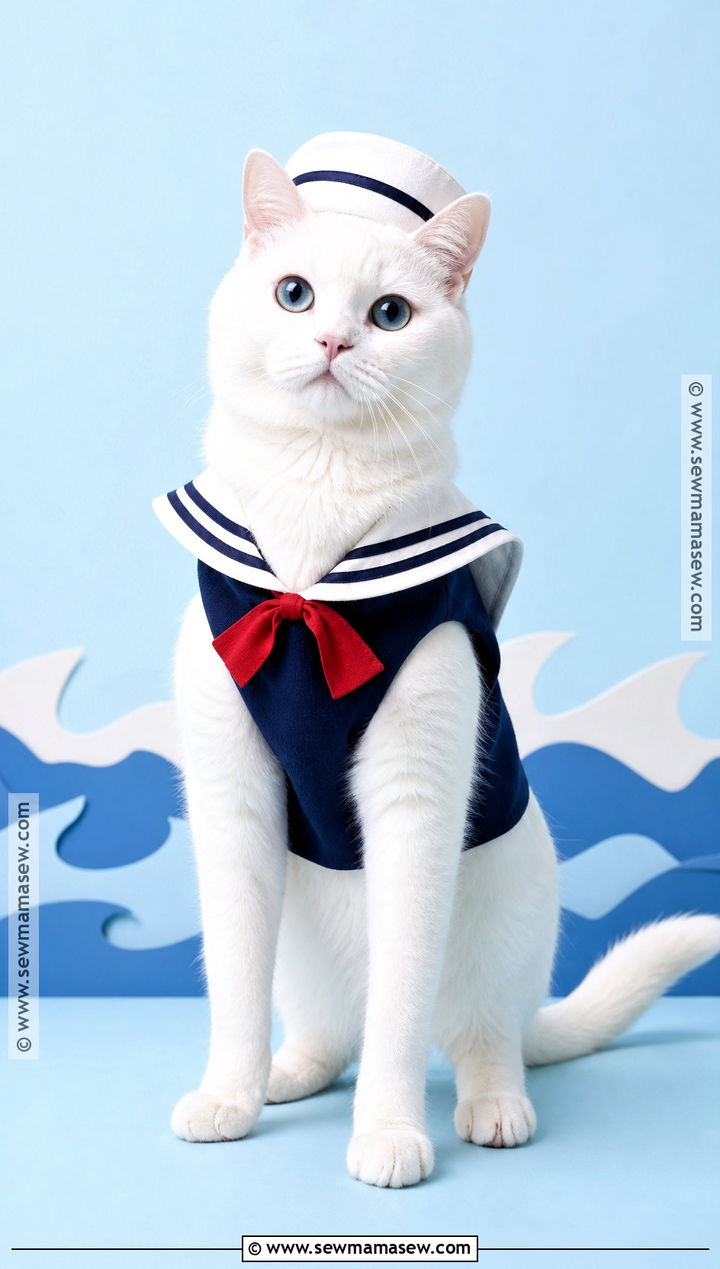
The wide white sailor collar is what makes this costume, so spend your time on it. Cut it as a square flap that lies across the upper back, and stitch flat white stripes along its edge before attaching it to a soft navy vest. A small red bow at the chest adds the third color. A sailor cap stays optional. Avoid metal buttons and cords. A pale blue backdrop with paper waves suits it, and a sitting pose shows the collar best.
24. Pink Ballerina Cat Costume
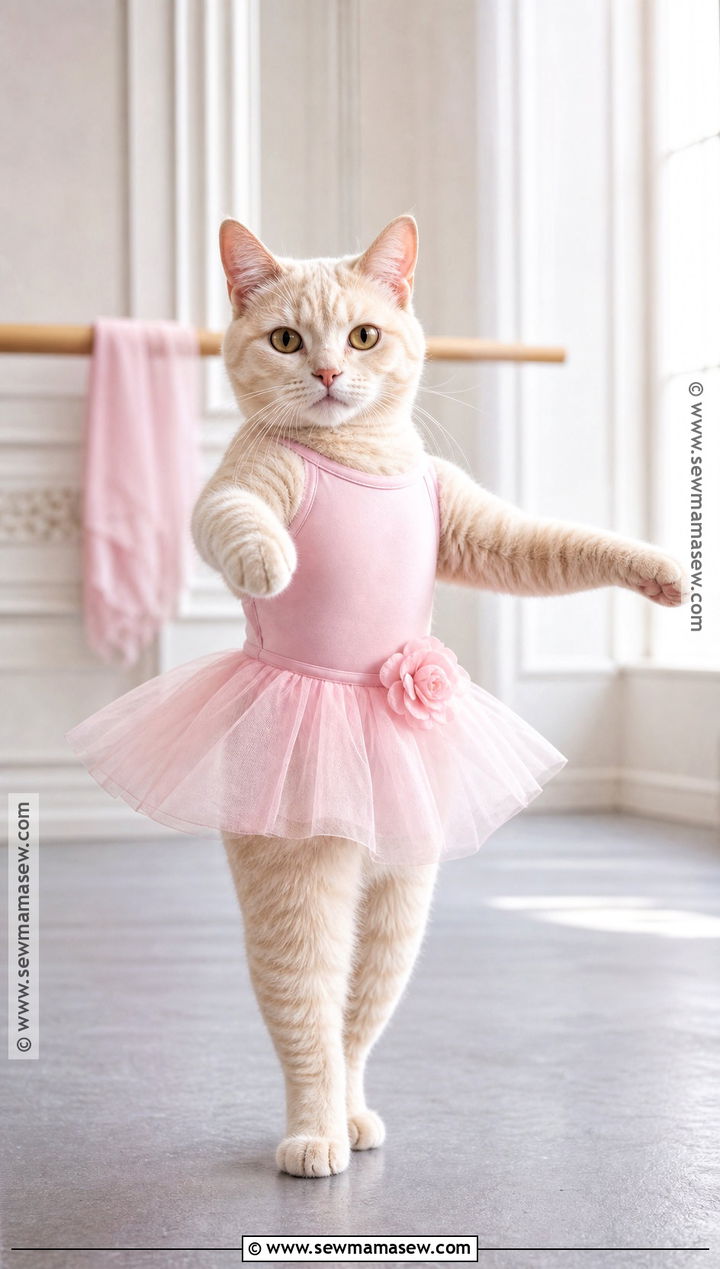
One layer of soft tulle is plenty for a ballerina. More layers make the skirt stiff and scratchy, and tulle edges can be rough, so I bind the waist with a strip of soft knit. Keep the skirt above the hind legs and off the floor. A smooth pink chest panel stands in for the leotard, and a small fabric flower on the harness replaces any headpiece. Leave out jewelry and tight headbands. A blush-and-white background suits the colors.
25. Superhero Cat Costume
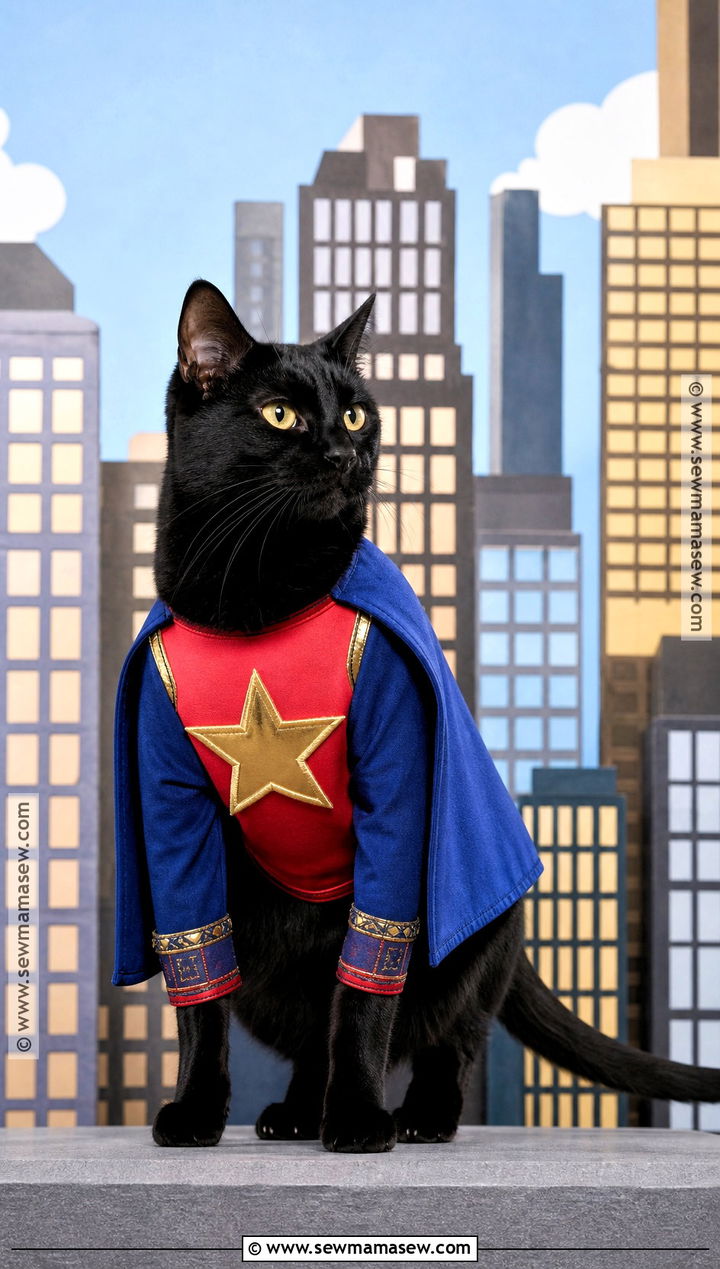
An original superhero means you can pick any colors you like. Make a short cape in blue, red, purple or green that releases easily and ends at the hips, plus a contrast chest panel with a felt star or lightning bolt. Skip masks; they block vision and press on the whiskers. If you want cuffs, print or appliqué them on the vest rather than wrapping the legs. Place your cat on a stable low platform against a city backdrop.
26. Royal King Cat Costume
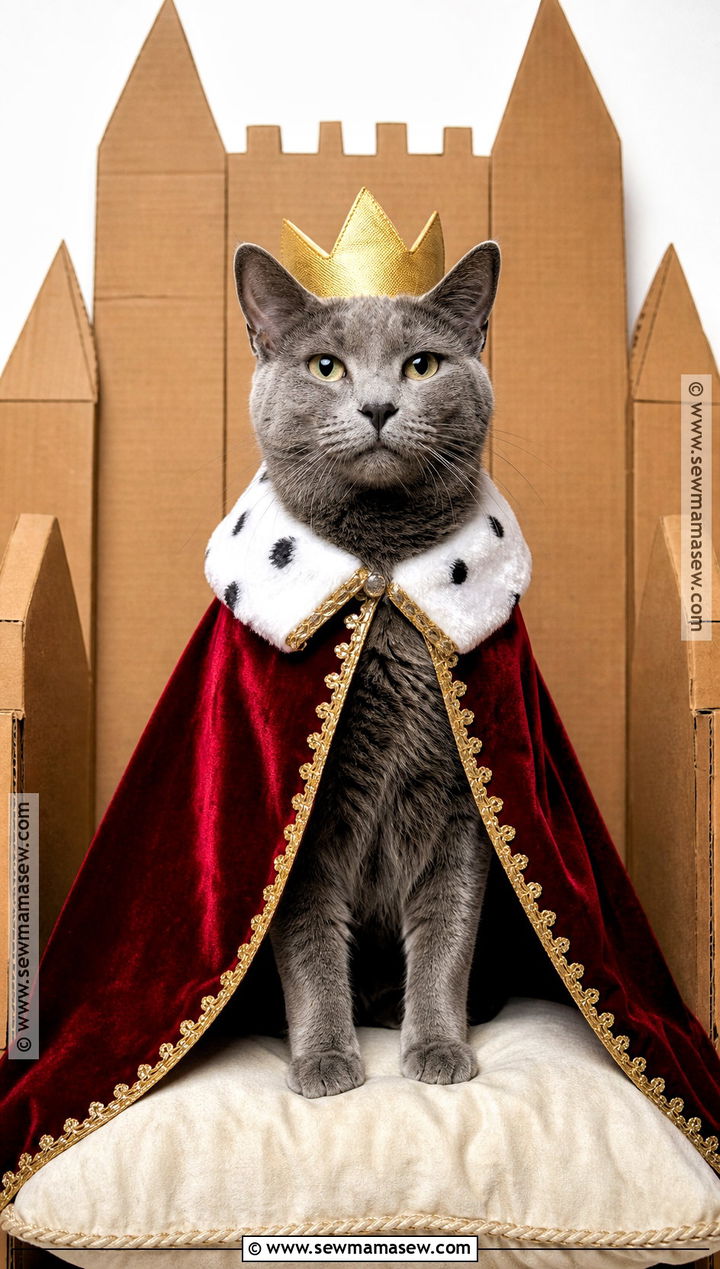
Deep red velvet-look fabric with gold trim gives the king his grandeur, though real velvet is heavy for a cat, so I'd use a lightweight velour. Fasten the short cape across the chest, away from the throat. A soft white collar with black felt spots is the classic ermine detail. A fabric crown can go on briefly if your cat is relaxed. Avoid plastic jewels and beads, which are easy to chew off. A stable cushion and a cardboard throne make a good set.
27. Avocado Cat Costume
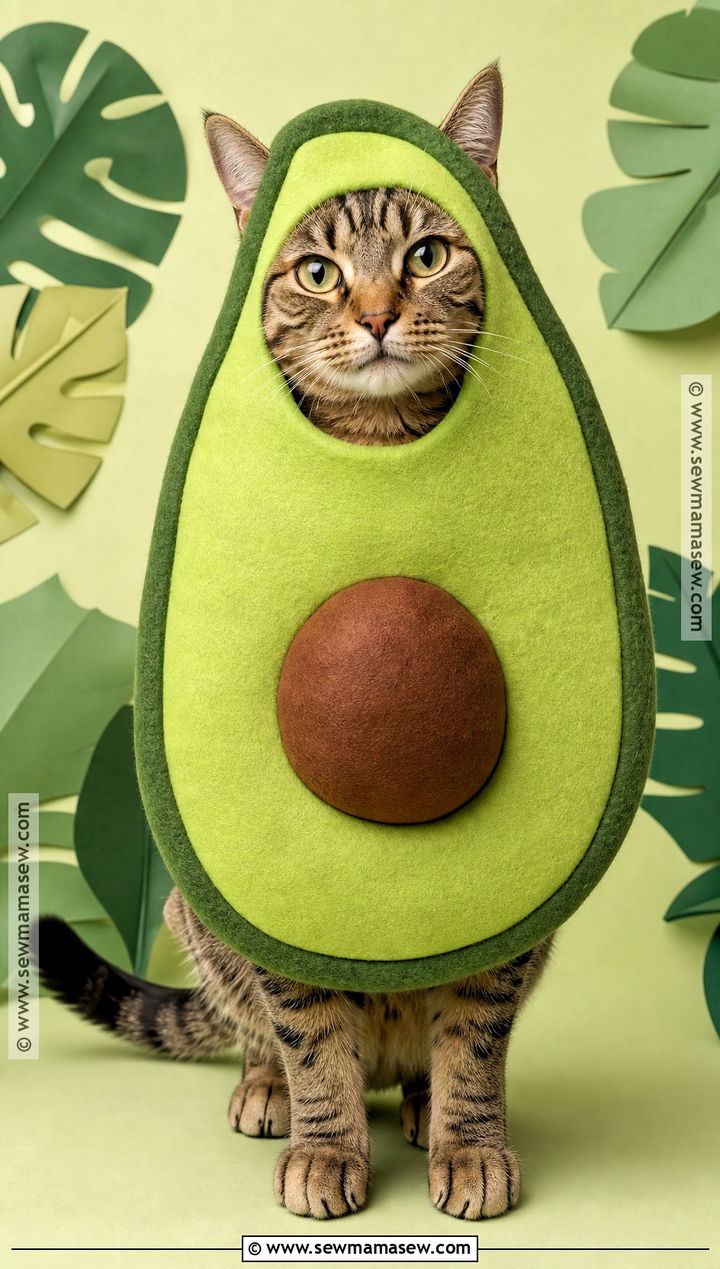
The avocado is a single felt shape that frames the face, which makes it one of the funniest photos here. Cut it from soft green felt with a face opening that is loose at the neck and well clear of the ears and whiskers. Add a brown felt circle low on the front for the pit. Measure around your cat's neck and add a generous margin before cutting; a tight opening is the most common mistake. The piece rests on the chest only. A pale green background with leaf shapes suits it.
28. Taco Cat Costume
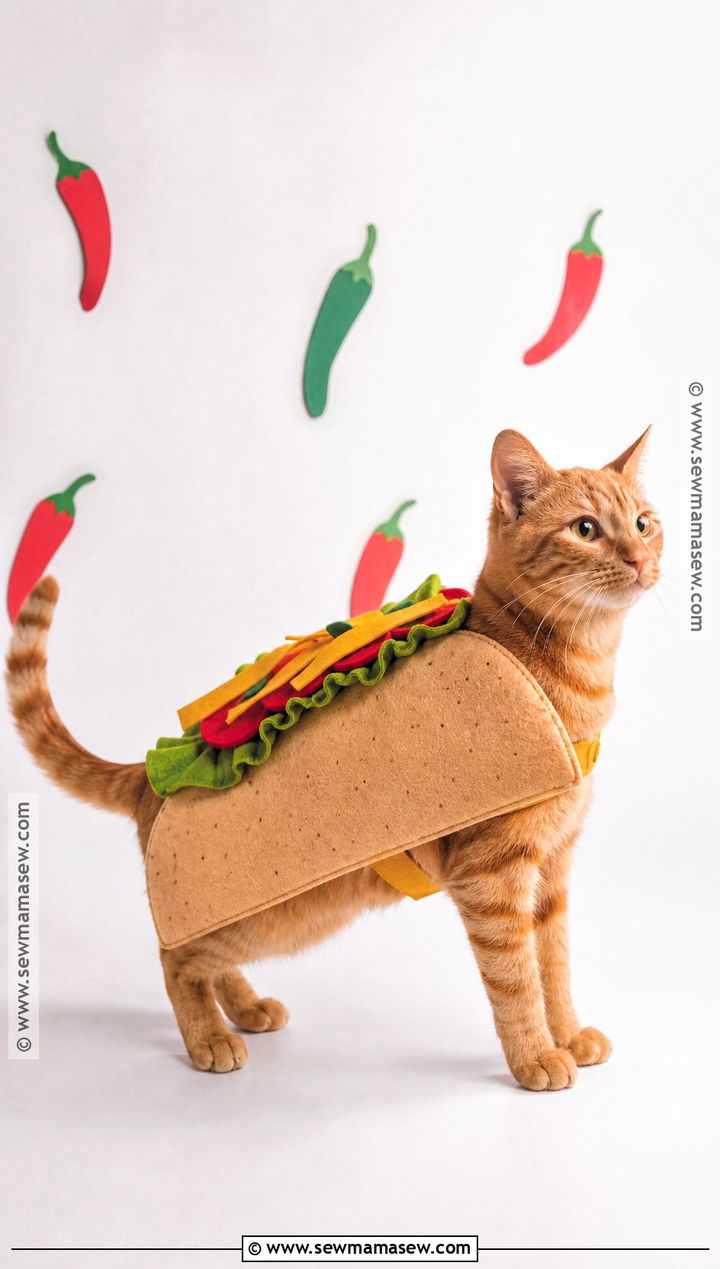
Taco cat is a pun everyone gets. Two tan felt panels sit along the sides, joined by a soft back harness, with strips of green, yellow and red fabric for lettuce, cheese and tomato. Stitch every topping flat and keep it short, because loose strips become a toy. The cat's head, legs and tail stay completely clear. A side view shows the full taco shape, and a slight angle keeps the face in shot. Paper peppers on a plain background complete it.
29. Sushi Cat Costume
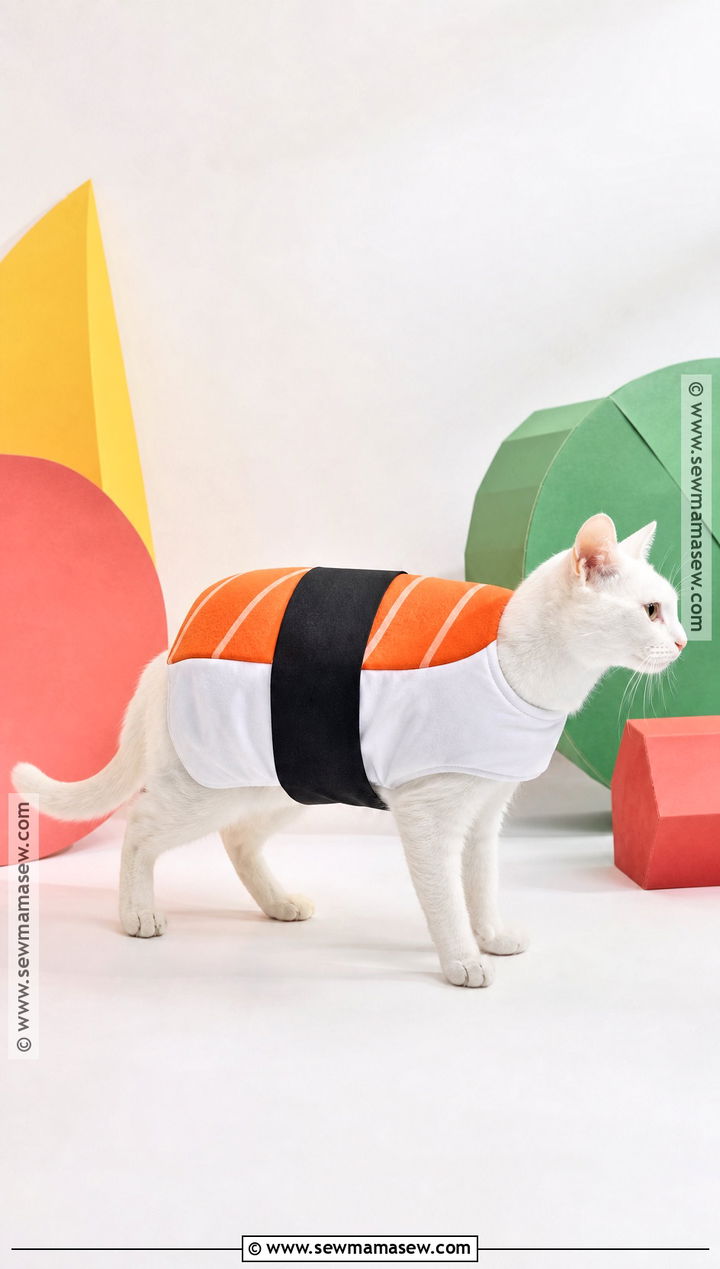
A white vest makes the rice, a soft orange back panel makes the fish and a wide black band around the middle makes the seaweed. Sew the band onto the costume itself so it never tightens around your cat's stomach. Keep the whole thing light and check the seams for loose threads, which cats love to pull. Real food, chopsticks and small garnish props stay off the set. A clean background with big paper shapes looks neat. Shoot from slightly above and to the side to show every layer.
30. Sunflower Cat Costume
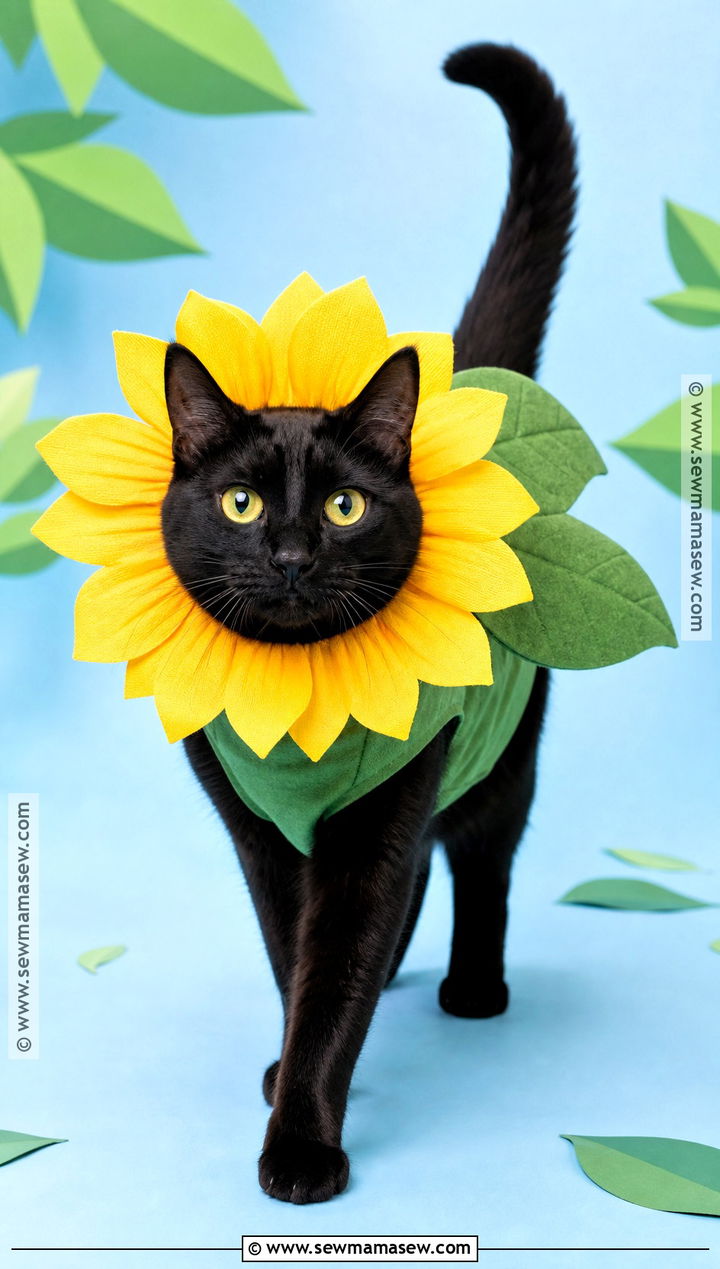
Petals around the face make a sunflower, and this is the one costume where the face is framed, so fit matters. Use a breakaway collar as the base and sew wide, soft fabric petals onto it, keeping them short enough to stay clear of the eyes, nose and whiskers. Fleece petals hold their shape without stiffening. A small green vest or leaf panel finishes the flower. A white or pale blue background with paper leaves suits it, and it makes a cheerful change from spooky looks.
Reading Your Cat in the First Few Minutes
Many cats freeze, flop over or walk backward the first time something sits on their back. That doesn't always mean distress, but it does mean the costume needs a slower introduction. Leave the vest near their bed for a day so it smells familiar, then put it on for a few seconds with a treat and take it off again. Build up from there.
During the photo session, watch for the signs that it's time to stop: ears flattened sideways or back, a tail that lashes or thumps, wide pupils, crouching low, hiding, or frantic licking at the fabric. Any of those means off it comes, with no second attempt that day.
- Have the camera ready and the set arranged before the costume goes on.
- Use a wand toy or a treat held above the lens to get your cat looking up.
- Keep the costume on for a few minutes at most, then remove it and reward.
- Never leave a costumed cat alone, even for a moment.
Keep the Photos Short and the Treats Close
A good cat costume puts your cat's comfort first and the idea second. A light cape, a soft vest, small wings or a felt collar can carry a whole theme without overwhelming your pet. Measure carefully, choose flexible materials, and keep the eyes, ears, whiskers, tail and paws clear. Introduce each piece slowly with treats or praise. Never force it, and take it off as soon as your cat seems uncomfortable. A few minutes of supervised photos is plenty, and your cat's personality will always be the best part of the picture.
Related posts: