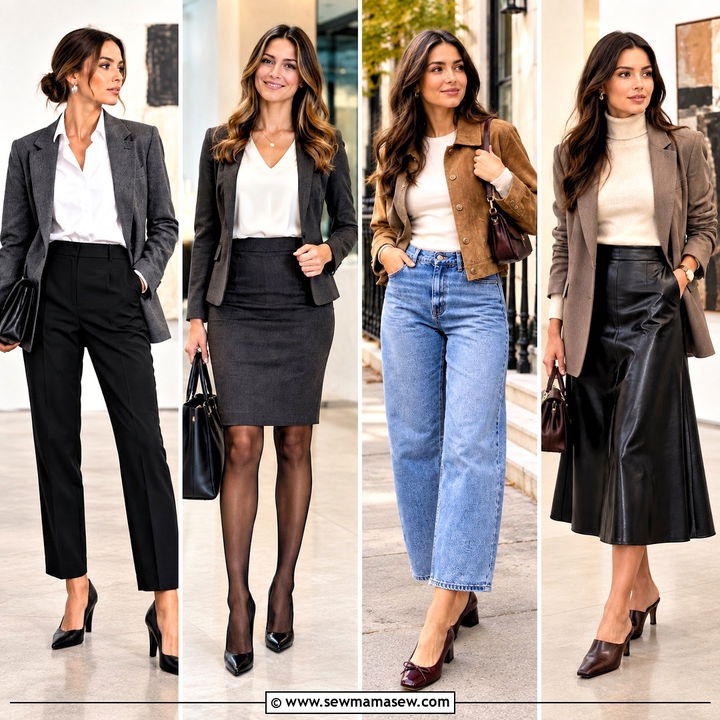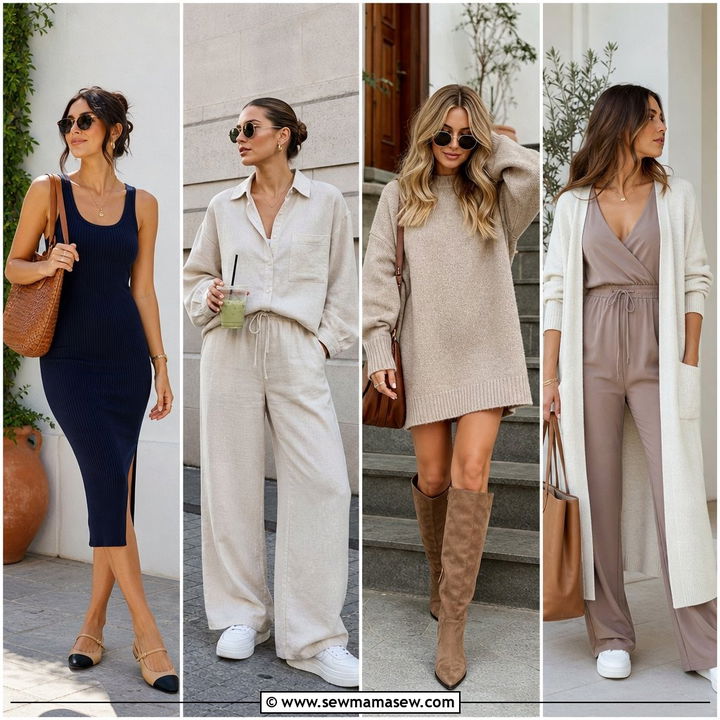
The work outfits that get worn are the ones you can put on at seven in the morning without a mirror debate. That's what I aim for when I plan an office wardrobe with someone: complete looks, top to shoes, that hold up through a commute, eight hours of sitting and a meeting you didn't expect. The 30 below range from a corporate office to business casual and creative workplaces. For each one I've noted the detail that makes it work and the situations where I'd leave it at home.

Business Formal, Business Casual and the Gray Area Between
Before planning anyone's work wardrobe, I ask what their office actually looks like on an ordinary Tuesday, not what the handbook says. Written dress codes are often vague, and the real standard is what the most senior people wear on a normal day. Match them, or sit slightly below them, and you'll rarely get it wrong.
Business formal
A matched suit or a tailored dress with a jacket, closed-toe shoes and conservative colors. Of the outfits below, the neutral suit, the tweed jacket, the belted wool dress and the camel coat over black trousers sit comfortably here.
Business casual
Separates instead of suits, knitwear, midi skirts and, in many offices, dark jeans on some days. Most of this list falls here. A blazer kept on the back of your chair lets you move up a level when a client walks in.
Creative and relaxed offices
Slip skirts, cropped blazers, culottes, vests worn as tops and boxy shapes live here. They read as personal style in a design studio and can read as underdressed in a law firm. If you're new somewhere, wear the safer version for the first couple of weeks and watch what others wear.
1. Oversized Blazer with Wide-Leg Trousers

An oversized blazer over wide-leg trousers is comfortable, but two loose pieces together can swallow you. The fix is one close-fitting layer in the middle: a slim knit or a tucked button-up that shows where your waist is. I check the blazer sleeve first; on an oversized cut it should still stop at the wrist bone, or the whole outfit looks borrowed. Camel, charcoal or cream in one tone keeps it calm, and burgundy is a good autumn change. Chunky loafers or pointed flats, a leather belt and a structured tote finish it.
2. Monochrome Knit Set with Structured Coat

A matching knit skirt and sweater in one color gives you a single unbroken line, which reads more put-together than mixed separates. Ribbed knit is honest, though: it shows what's underneath and seats out at the back of the skirt after a few wears if the yarn is thin. I steer people toward a dense rib or a knit with some wool in it. For cold days, a longline tailored coat over the set should be longer than the skirt or exactly the same length, never a few inches shorter. Heeled ankle boots for meeting days, pointed flats for the rest.
3. Belted Midi Wool Dress with Tall Leather Boots

A belted wool midi dress is the outfit I suggest for mornings with no time. The belt sets the waist, the wool keeps you warm, and tall leather boots underneath cover the gap between hem and shoe so no bare leg shows in winter. The detail I always check is where the boot top lands: it should disappear under the hem when you stand and only show when you walk. Charcoal, navy or forest green go with nearly anything. Add a fitted turtleneck underneath in deep cold, or sheer tights, and keep the bag and earrings small.
4. Tailored Blazer with Straight-Leg Jeans

Denim at work goes wrong when everything else is casual too. A tailored blazer in black, beige or navy over dark straight-leg jeans solves that, because the jacket carries the formality. The jeans need to be the darkest wash you own with no fading or distressing, and hemmed so they don't pool. Tuck in a silk blouse or a fine knit. Pointed flats or low block heels keep it comfortable; kitten heels make it presentation-ready. In a strictly formal office, I'd keep this for Fridays only.
5. Button-Down Shirt with Wide-Leg Trousers

A button-down tucked into high-waisted wide-leg trousers stays cool in summer because nothing touches the leg. Cotton poplin stays crisp but creases at the elbows and lap; a silky blend creases less but can feel warm. A full tuck looks more formal, a half-tuck more relaxed. The trousers should be crepe or a linen blend that swings when you walk. Loafers or block heels, a leather belt and a tote large enough for your laptop. One snag: white poplin can be see-through, so check it in daylight.
6. Knit Top with Midi Skirt

A fitted knit top with a midi skirt is softer than trousers and just as easy to move in. I'd pair a ribbed or cashmere-blend knit with an A-line or pleated midi, tucked so the waist stays visible. The skirt length to check is mid-calf; if it hits the widest part of the calf, the leg can look heavier, so go slightly shorter or longer. Pointed mules or slingbacks keep it neat, and a slim belt helps the tuck stay put. A pendant necklace and a watch are enough.
7. Silk Blouse with Ankle Pants

Silk makes plain ankle pants look considered, and it's one of the better fabrics for offices where the heating and air conditioning fight each other, since it's light but not cold. Ankle pants should end right at or just above the ankle bone; any longer and they look like trousers that shrank. I tuck the blouse and pick shoes that show the top of the foot, such as pointed flats or a low block heel. Blush, ivory and dove gray read well on video calls. Silk water-spots, so keep a napkin handy at lunch.
8. Pencil Skirt with Turtleneck Sweater

A midi pencil skirt with a slim turtleneck is about as clean as office dressing gets. The fabric matters more than the cut: ponte and wool blends hold their shape after sitting, while thin stretch fabrics bag at the seat by afternoon. I always ask clients to sit and stand a few times in a pencil skirt before buying. A fine-gauge turtleneck in black, cream or burgundy tucks in without a ridge at the waistband. Knee-high boots in winter, pointed pumps the rest of the year, and a thin belt over the tuck.
9. Cropped Blazer with High-Waisted Trousers

Cropped blazers depend entirely on where they stop. The hem should land at or just above the waistband of high-waisted trousers, so there's no gap of top showing between them. A cropped jacket over low-rise trousers cuts the body in half. A fine houndstooth or pinstripe gives the short jacket some interest without a loud print. Underneath, a silk camisole or fitted shell. Pointed heels or loafers and a small shoulder bag. I'd wear this in a creative office or to a networking event more than to a formal meeting.
10. Satin Camisole Layered Under Oversized Blazer

A satin camisole under an oversized blazer pairs a soft fabric with a sharp one, and it looks deliberate. The practical issue is coverage: satin camisoles often have thin straps and a low neckline, so I check that the blazer covers everything you'd want covered when you lean over a desk. Champagne, ivory or blush under black, camel or charcoal. Tailored or wide-leg trousers, pointed heels or flats, and a couple of gold necklaces. If your office runs cold, this is a jacket-on-all-day outfit.
11. Pleated Trousers with Cashmere Sweater

Pleated trousers add a little ease at the front of the hip, which is why they're comfortable through long days of sitting. The pleats should lie closed when you stand; if they spread open, the trousers are too tight at the hip. With a cashmere sweater, I do a front tuck so the pleats still show and add a slim belt. Navy trousers with a cream sweater, or charcoal with dove gray, keep it quiet. Cashmere pills at the elbows and sides; a sweater comb after a few wears keeps it looking new.
12. Shift Dress with Pointed Flats

A shift dress hangs straight from the shoulder, so it needs no waist and suits days you'd rather not think about fit. It does depend on the shoulders fitting exactly; if they're too wide, the whole dress looks like a sack. Wool crepe, ponte or a structured cotton blend hold the shape. Solid colors or a small check or stripe keep it office-ready. Pointed ballet flats make it comfortable for long days, and a long pendant draws a line down the front so the shape doesn't look boxy.
13. Wide-Leg Trousers with Fitted Knit Top

Wide-leg trousers with a fitted knit top is a proportion trick: loose below, close above. If both pieces are loose, you lose your shape; if both are tight, it looks like gym clothes. A fine-gauge knit tucked into a high waist, with a thin belt, gives the trousers somewhere to start. The trousers should be fluid enough to swing, not stiff. Pointed mules or slingbacks and a sleek tote. In summer, switch to lighter fabrics; in winter, put a tailored coat on top.
14. Neutral Toned Suit with Silk Shell

A suit in sand, mushroom, or dove gray feels softer than black but keeps the same authority. I'd swap the stiff shirt for a silk shell, which relaxes the look and doesn't fight the collar. A single-breasted jacket with straight or slim trousers fits most offices. The thing to watch with pale suits is undertone: some beiges turn sallow next to certain skin tones, so hold the fabric to your face in daylight before you buy. Pointed pumps or loafers and a simple chain finish it.
15. Midi Slip Skirt with Slim Turtleneck

A silky midi slip skirt with a slim turtleneck works in the office because the knit covers and anchors what would otherwise feel like evening wear. The skirt clings to tights and to static, so a slip underneath or a quick anti-static spray saves the day. Champagne, olive or deep navy all suit. Tuck the turtleneck fully and add a slim belt. Ankle boots in cold weather, pointed heels when it's milder. In a conservative office, I'd go for the darker shades only.
16. Trench Coat Over Tailored Trousers

A trench over tailored trousers is my default for rainy commute days because the coat does the work outside and the trousers look right once it comes off. A double-breasted trench in beige, khaki or stone suits most people. Check the coat length against your height: on shorter frames, a trench that ends below the knee can overwhelm, so knee length or a little above is safer. Straight-leg trousers with a light knit or silk blouse, and loafers, flats or a low block heel. Tie the belt or leave it open.
17. Coordinating Two-Piece Set with Heels

A matching two-piece set removes a decision from your morning, which is why it has settled into modern workwear so firmly. Cropped jacket with skirt, or blazer with trousers, both work. The thing I check is that both pieces still work alone, because a set you can only wear together gets worn half as often. Pastels, soft neutrals or a fine plaid. Pointed heels in cooler months, block-heel sandals in summer. Keep accessories small so the set stays the focus.
18. Dark-Wash Jeans with Crisp White Button-Down

Dark-wash straight-leg jeans and a crisp white button-down is the denim outfit I trust most for work, as long as your dress code allows jeans. The shirt carries the polish, so it needs to be pressed and fit well across the shoulders. Roll the sleeves once or twice, tuck fully or at the front, and add a leather belt. Pointed flats or a low block heel and a structured tote. A watch and small studs are all the jewelry it needs.
19. Wrap Dress with Block Heels

A wrap dress adjusts to the body through the tie, which is why it fits so many shapes. For work, I'd skip thin jersey, which clings, and pick a heavier jersey, crepe or a light wool blend. The neckline is the thing to check: lean forward in it before you buy, and if it opens, a small stitch at the crossover fixes it. Knee length or midi, in navy, burgundy, forest green or a small geometric print. Block-heel pumps or heeled ankle boots, a pendant and a structured bag.


20. Wide-Leg Culottes with Structured Blazer

Culottes look polished when the shoe is right. A cropped wide leg cuts the leg at mid-calf, so I pair them with pointed flats or mules that show the top of the foot; an ankle strap shortens the leg further. A fitted or slightly oversized blazer balances the width below, with a knit or silk shell underneath. Crepe or a light wool blend drapes better than stiff cotton. Camel with cream or navy with gray, or soft pastels in one tone. A slim belt and a structured tote.
21. Camel Coat with Black Trousers and Boots

A camel coat over black trousers is one of the easiest winter outfits I know. The contrast is strong without any effort, and both pieces go with nearly everything. Underneath, a black turtleneck or crew-neck cashmere keeps the base simple. The coat length I like best on most people is just below the knee; it covers a suit jacket and still clears the boot. Low block-heel or pointed ankle boots, a scarf, and a black or dark brown leather bag. Camel shows dirt at the cuffs, so brush it after a wet commute.
22. Velvet Blazer with Dress Pants

A velvet blazer adds texture for cooler months without looking like party wear, as long as everything else is matte. Navy, emerald or burgundy velvet with slim or straight dress pants in a flat wool, plus a silk shell or fine knit in a toning shade. Pointed pumps or sleek ankle boots. Velvet crushes when you sit on it and marks where your bag strap rubs, so hang it up as soon as you get to your desk and steam rather than iron it. I'd wear this for presentations and evening networking.
23. Linen Blazer with Matching Wide-Leg Trousers

A linen-blend suit in sand, ivory or soft olive is the most comfortable summer office outfit I know. Linen breathes better than synthetic suiting, and a blend creases less than pure linen. The trousers should skim the floor in the shoes you'll wear. A plain tank or shell underneath. Flat leather sandals or open-toe block heels if your office allows them; check first, because many formal offices still don't. A woven tote and small gold jewelry. Expect some creases by the afternoon; that's the fabric.
24. Tweed Jacket with Straight-Leg Trousers

Tweed is a heavy, textured weave, so I keep the rest of the outfit smooth. A jacket in a small check, herringbone or flecked weave in muted tones over straight-leg trousers and a silk blouse or thin knit. Tweed can feel scratchy at the neck and wrists, which is why a soft layer underneath matters. Pointed flats or low block heels, pearl or gold studs and a top-handle bag. This suits traditional offices and client-facing roles. Watch for snags from velcro and rough straps; tweed pulls easily.


25. Flowy Maxi Dress with Tailored Cardigan

A flowy maxi dress can work in the office, but the layering decides whether it reads as work or holiday. I look for a modest cut with long or elbow-length sleeves, or I add a tailored cardigan that ends at the hip or waist so the dress doesn't swallow you. Solid colors, small florals or abstract prints. Hem length matters for practical reasons: a maxi that drags catches on chair wheels and stairs, so it should clear the floor in your shoes. Ballet flats or low block heels, a slim belt and a structured tote. Best in creative or casual offices.
26. High-Waisted Trousers with Boxy Blazer

A boxy blazer has straight sides and wide shoulders, so it needs a high-waisted trouser to show where your waist is. I'd choose one that ends at the hip bone or a little above, never at mid-seat, where the boxy shape adds width. Solid neutral or subtle plaid, with trousers in the same or a toning color and a fitted top or bodysuit underneath so nothing bunches. Chunky loafers, pointed flats or, if your office permits, clean sneakers. A structured shoulder bag.
27. Soft Blouse with A-Line Midi Skirt

An A-line midi skirt with a soft blouse is the outfit I suggest for people who find trousers restrictive. The A-line shape flares from the waist and skims the hips, and a midi length is easy to sit in at a low desk. A skirt in cotton blend, crepe or wool, with a blouse in silk, chiffon or light cotton. Chiffon is sheer, so it needs a camisole underneath for work. Tuck fully or at the front, add a thin belt, and choose pointed flats, low heels or ankle boots. Pearl studs are enough.
28. Chic Shirtdress with Loafers

A shirtdress gives you the structure of a shirt collar with no separate pieces to coordinate. Crisp cotton, light linen or a cotton blend with some body. The self-tie belt that comes with most shirtdresses is often flimsy; swapping in a leather belt immediately makes it look more expensive. I always check the button placket at the bust when you sit, because that's where shirtdresses gape. Loafers, rolled sleeves, a structured tote and a watch, and it covers a full day plus dinner.
29. Chinos and Cashmere Sweater Duo

Chinos sit between dress trousers and jeans, which makes them very useful for business-casual offices. Pairing slim or straight-leg chinos in navy, khaki or charcoal with a tucked crew-neck or V-neck cashmere in a toning shade is an easy formula. Look for chinos with a pressed crease or a smooth twill; very soft, washed-out chinos look like weekend wear. Leather loafers, suede drivers or ballet flats, a braided leather belt and a simple tote. Suede doesn't like rain, so check the forecast.


30. Structured Vest with Tailored Pants

A tailored vest worn as a top is a good option for warm offices where a blazer feels like too much. It needs to fit close at the chest and end at the waistband; a loose vest gapes at the armholes. Wear it buttoned on its own, or over a thin blouse or fine turtleneck. With matching trousers it looks like a three-piece suit without the jacket; with contrasting pants you get a more eclectic feel. Pointed heels or loafers and a shoulder bag. In formal offices, I'd keep a jacket nearby.
Repeating Outfits So Nobody Notices
Nobody needs 30 outfits. What I build with clients is a small set of pieces that combine into far more looks than they'd guess, and the trick is choosing a color base first.
Pick one dark neutral, such as navy, charcoal or black, and one light neutral, such as cream or camel. Every trouser, skirt and jacket should be in one of those. Then all your tops, knits and blouses can be any color that goes with both, and everything mixes.
- Two jackets: one blazer that closes properly and one softer layer, such as a cardigan or unstructured jacket.
- Three bottoms: wide-leg trousers, straight trousers and a midi skirt.
- One dress that works alone and under the blazer.
- Five or six tops, mixing knits and woven blouses so you have options for warm and cold days.
- Two pairs of shoes you can walk in: one flat, one with a low heel.
People notice a distinctive piece, not a plain one. A bright printed blouse worn every Monday gets remembered; a navy trouser worn three times a week doesn't. Put the variety in tops and accessories, and keep the repeated pieces quiet. Rotating shoes also lets leather dry out between wears, which makes them last noticeably longer.
Getting Dressed for Work Without the Morning Debate
A small set of complete outfits you trust beats a closet full of single pieces you're not sure how to wear. Across these 30 looks, the same pattern repeats: one structured piece, one softer one, a color palette you don't have to think about, and shoes you can walk to the station in. Pick the three or four silhouettes you feel most like yourself in, build those properly, and only then add the trend pieces. Comfort and polish are not opposites at work; they come from fit and fabric.
Related posts: