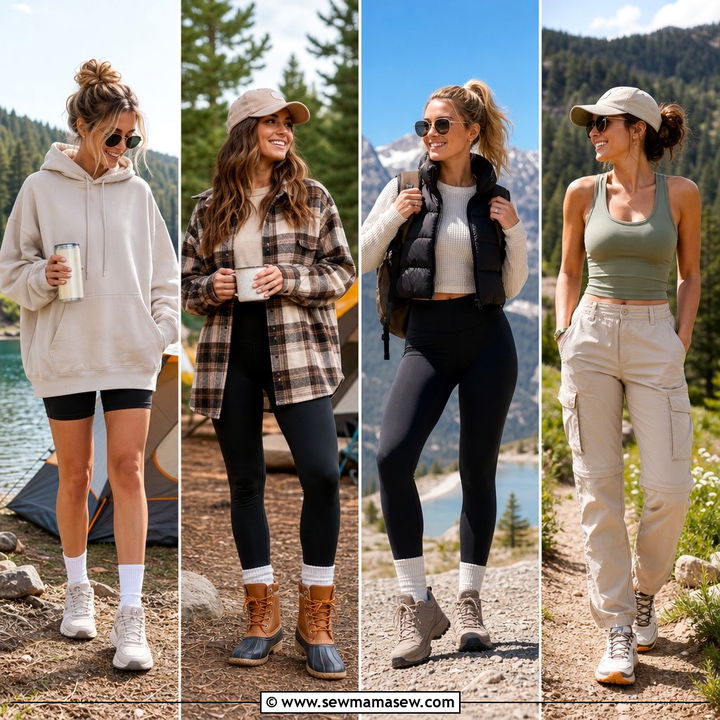
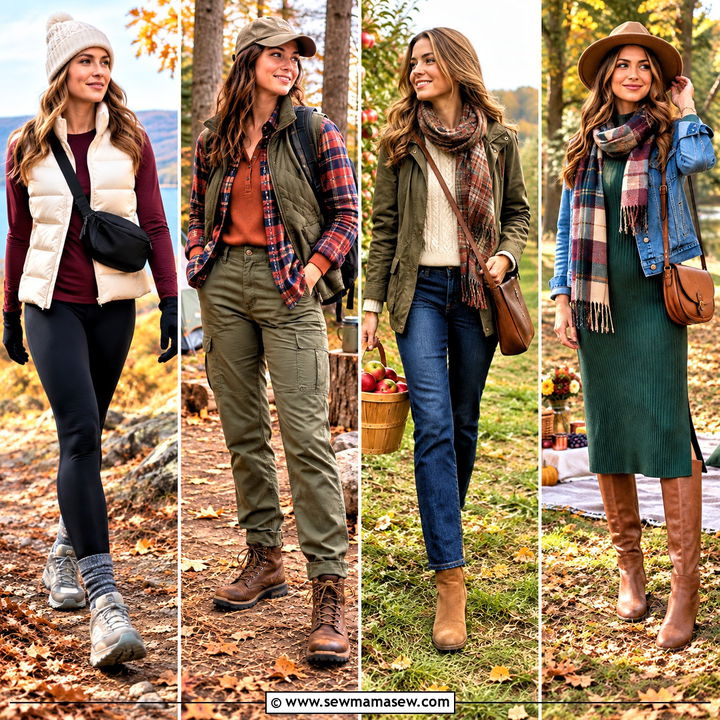
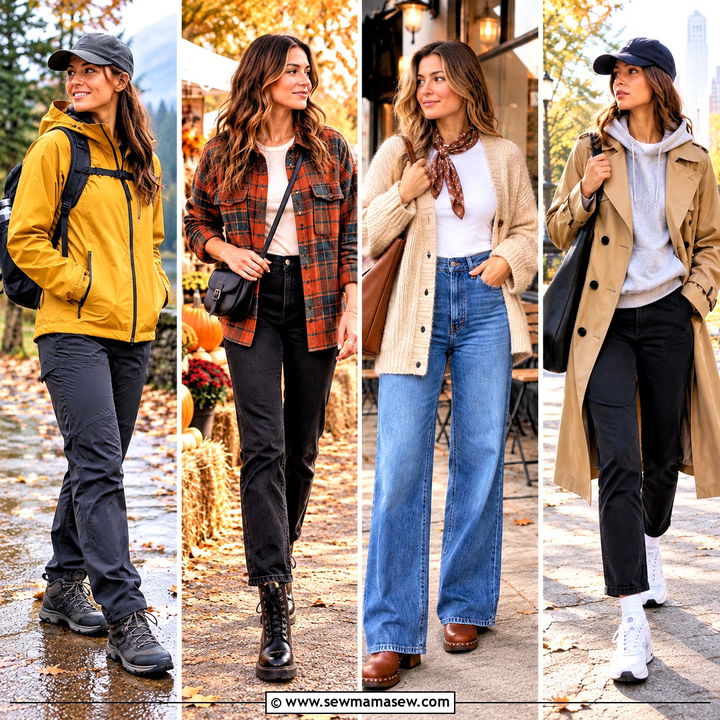
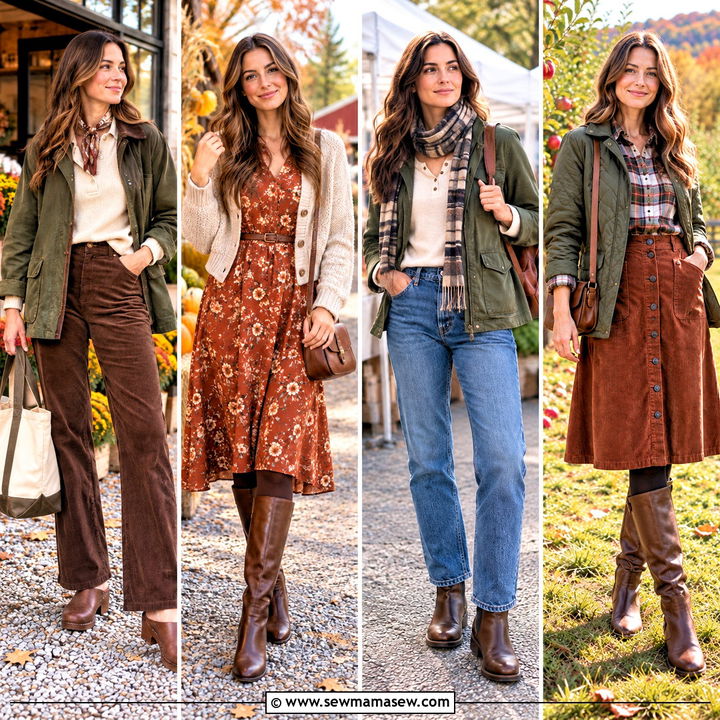
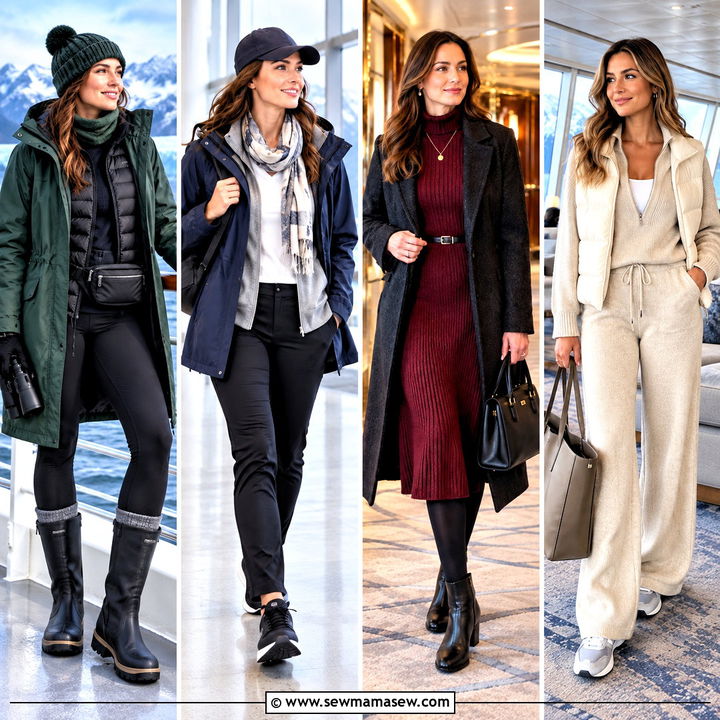
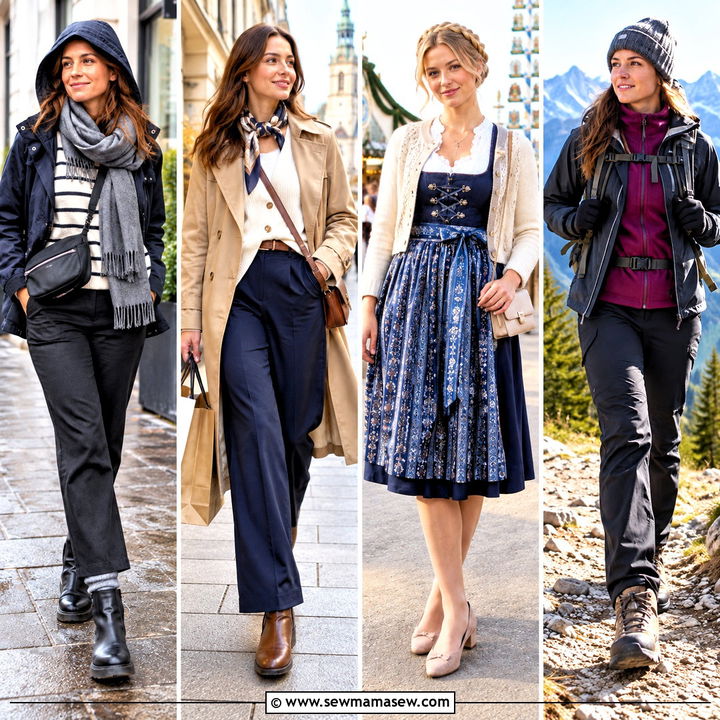
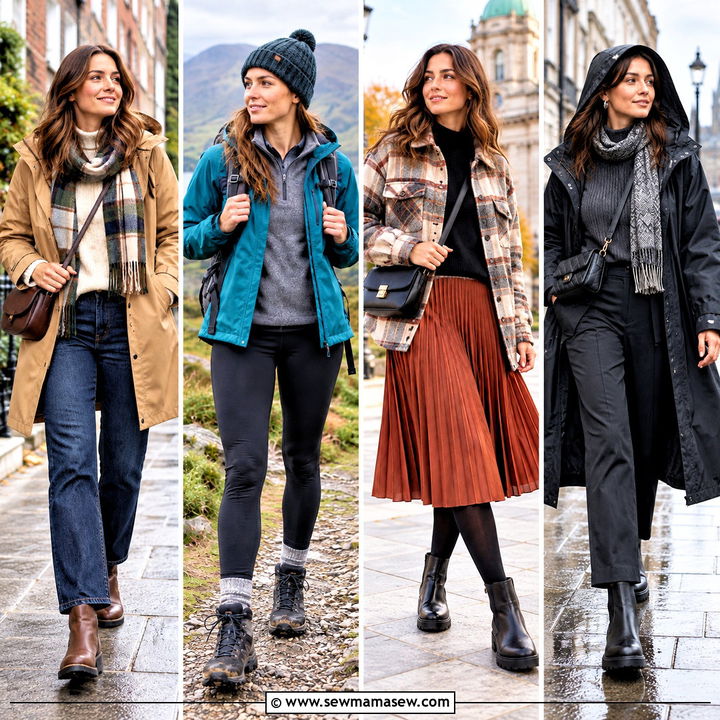
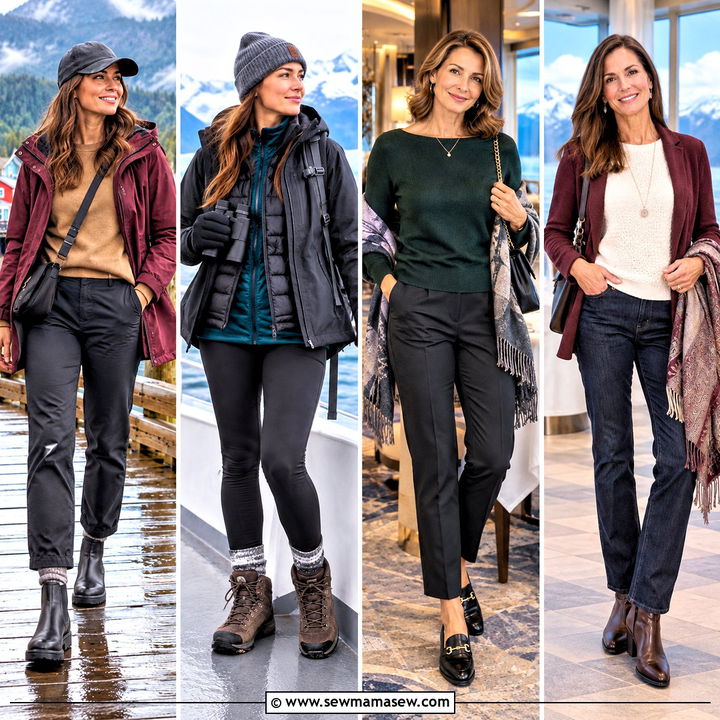
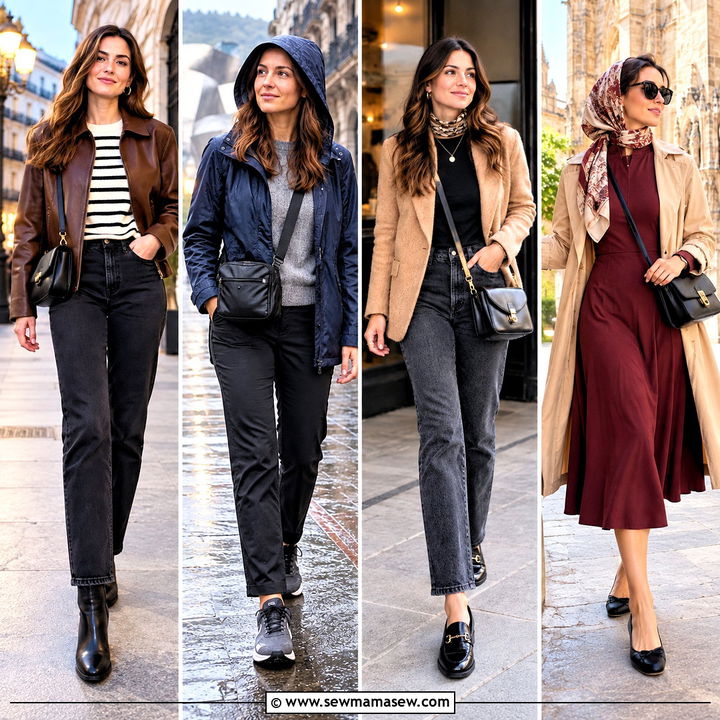
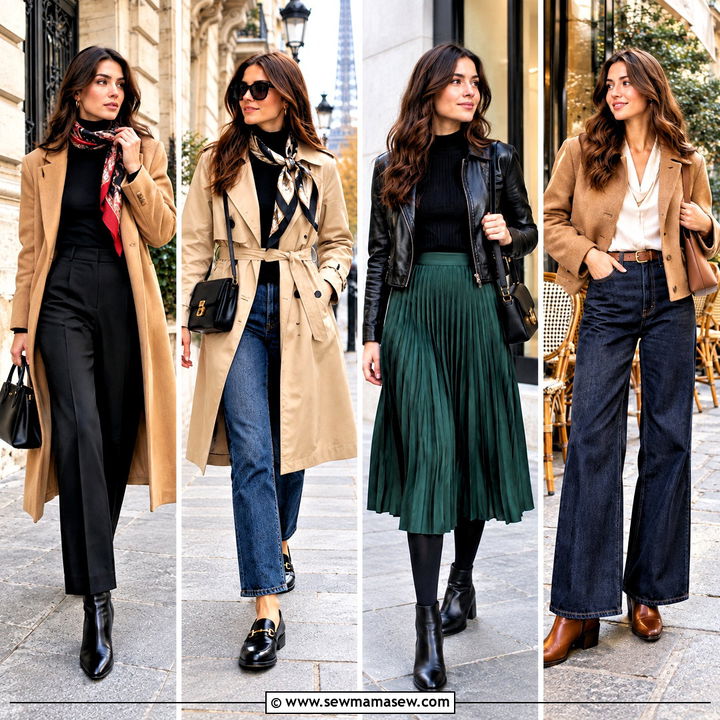
October in Alaska is the month that catches packers out. You can get cold sunshine at breakfast, sideways rain by lunch and the first snow after dark, sometimes all in the same town. When I plan a wardrobe for this trip, I stop thinking in outfits and start thinking in layers: a base that moves sweat away from the skin, a fleece or wool middle that holds warmth, and a shell that keeps wind and water off both. Everything below is built that way, so the pieces trade between looks and the suitcase stays manageable. Plan to peel layers off indoors, because Alaskan buildings run warm, and add them back the moment you step outside for a tour, a trail or an aurora night.

Anchorage, Fairbanks and the Coast Feel Like Three Different Octobers
The first thing I ask anyone packing for Alaska is where exactly they'll be, because the state doesn't have one October. Southcentral around Anchorage usually sits somewhere around freezing at night and in the 30s to 40s Fahrenheit by day, with a fair amount of rain and the first snow often arriving late in the month. The Interior around Fairbanks is drier but noticeably colder, and by the end of October daytime highs can struggle to get much above freezing while nights drop well below it. The Southeast coast is milder and very wet.
That changes what the suitcase needs. For the coast, I spend the budget on a genuinely waterproof shell and quick-drying pants, and a light puffer is enough insulation. For the Interior, a hip-length insulated parka, insulated boots and mittens stop being optional. A trip that covers both needs both, which is exactly why the layering approach matters: the same base and fleece go under either outer layer.
Shorter days change the plan too
Daylight shrinks quickly through October, by several minutes each day. That means more of your sightseeing happens in low light and cold mornings, and more of your photos get taken at dusk. Brighter outer layers and hats help in both cases, and a headlamp in the daypack is worth its tiny weight.
1. Alaska October Puffer Jacket And Leggings Outfit
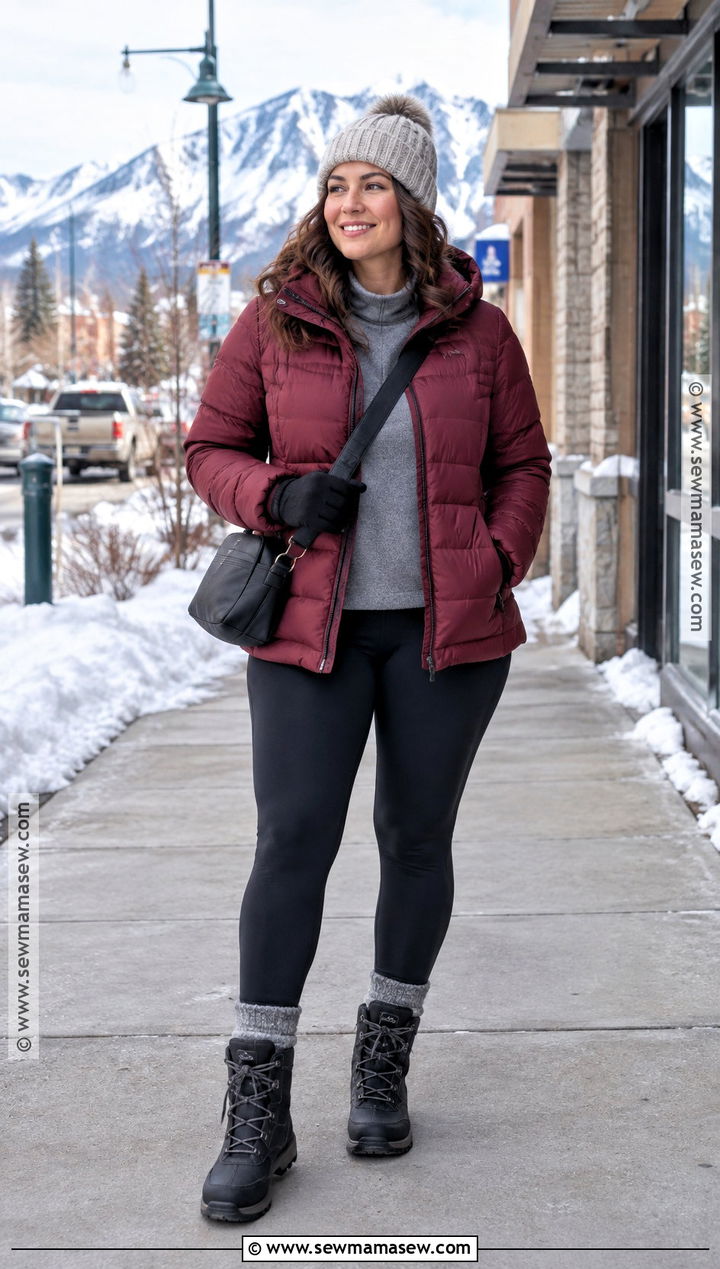
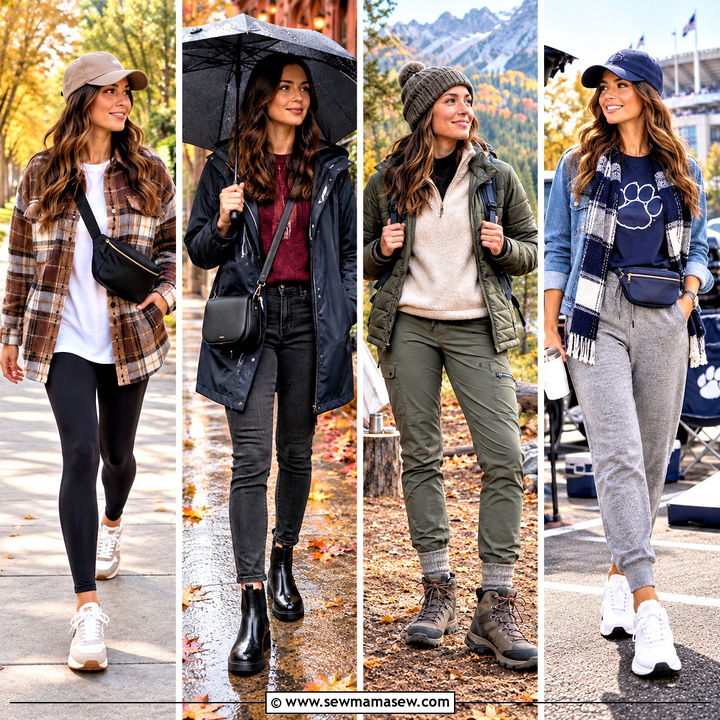
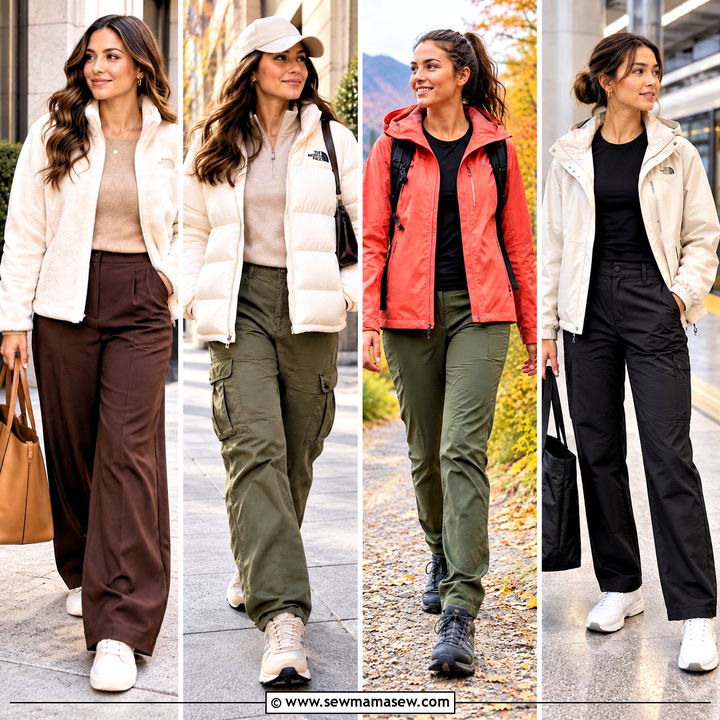
This is the outfit I'd wear on the first day, when you're still learning how the weather behaves. A wicking long-sleeve top goes under a lightweight puffer, and fleece-lined leggings stand in for snow pants you don't need yet. Check the jacket length before you buy: a puffer that ends at the hip keeps the small of your back covered when you bend to lace boots, and a cropped one doesn't. Waterproof lace-ups with wool socks handle wet or lightly snowy sidewalks. Wear the crossbody under the jacket so the strap doesn't compress the down at the shoulder. The one weakness is rain. Most puffers shed a drizzle and soak through in a steady downpour, so a shell rides in the daypack.
2. Alaska October Rain Jacket And Hiking Pants Outfit
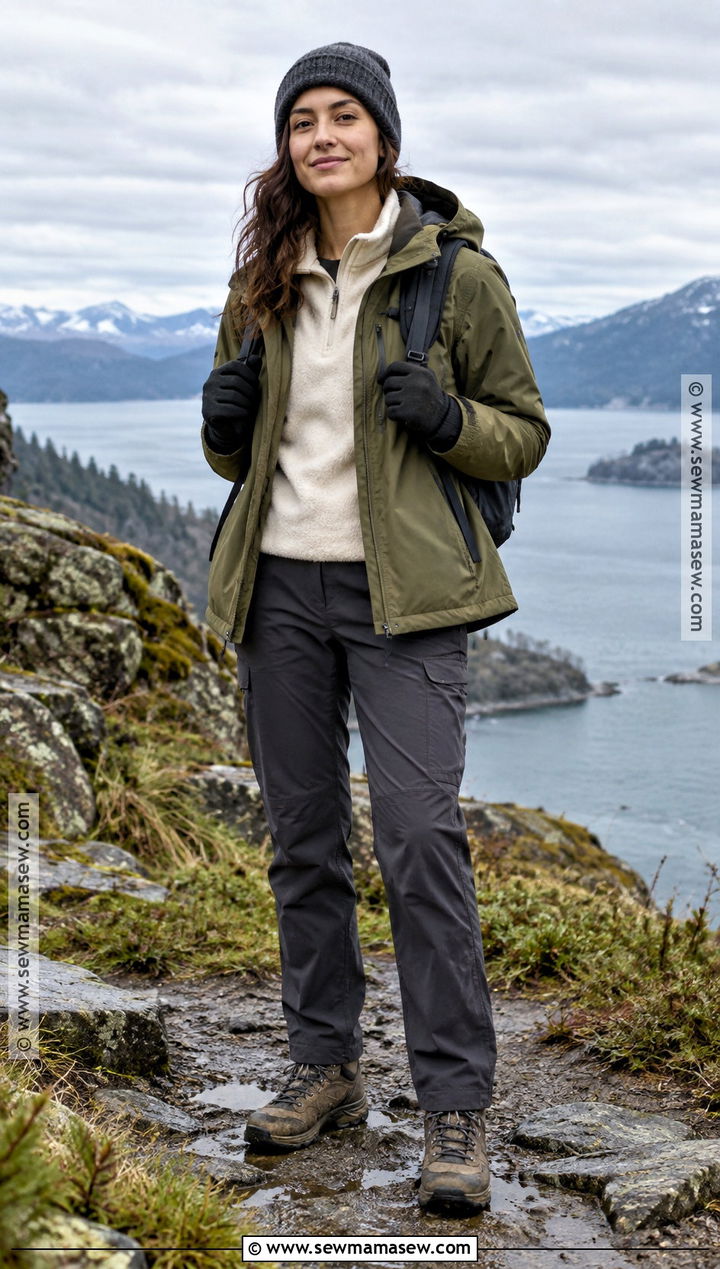
If I could pack only one outer layer for coastal Alaska, it would be a hooded waterproof jacket. Under it, a merino base and a light fleece quarter-zip give you two adjustable levels of warmth. Quick-drying hiking pants matter more than they look: cotton jeans that get wet at the hem stay wet and cold for the rest of the day, while synthetic pants dry on you in an hour or so. Supportive waterproof boots, cushioned wool-blend socks and a close beanie finish it. A small backpack holds gloves, a neck gaiter and a spare warm layer. Forest green, charcoal and rust keep it from reading like a gear catalog, so you can walk into a café from the trail without changing.
3. Alaska October Fleece Jacket And Jeans Outfit
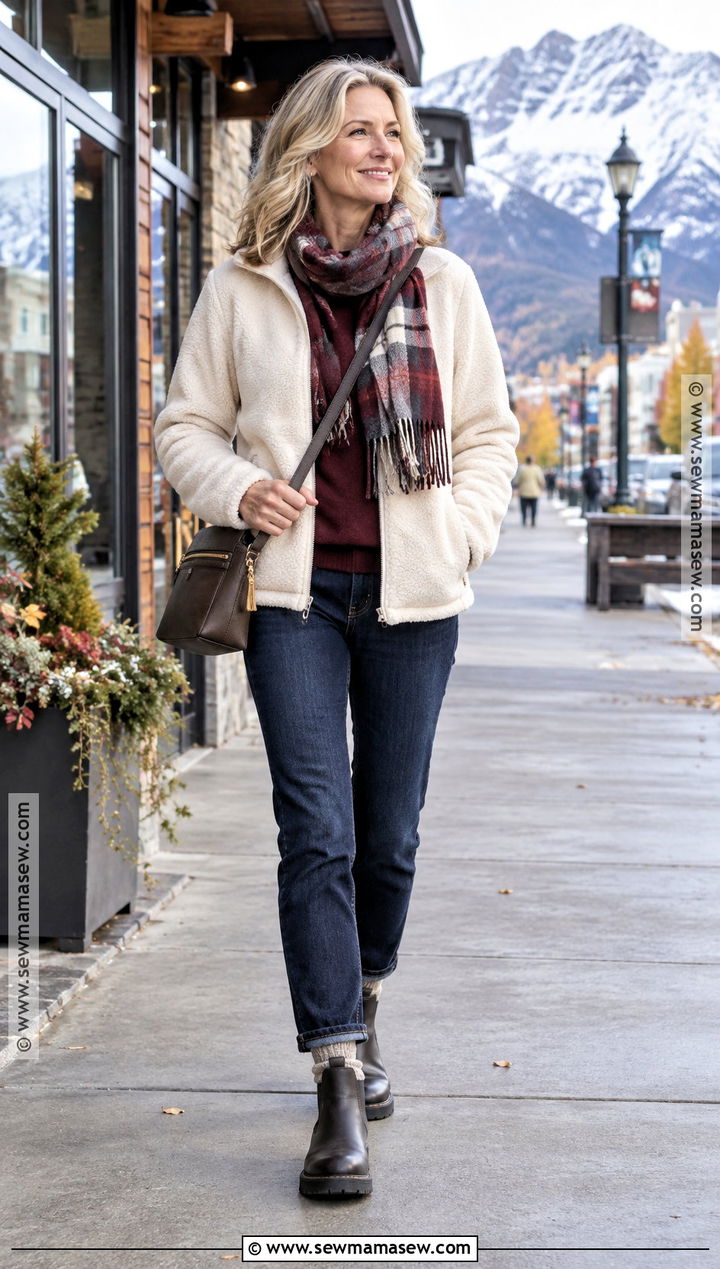
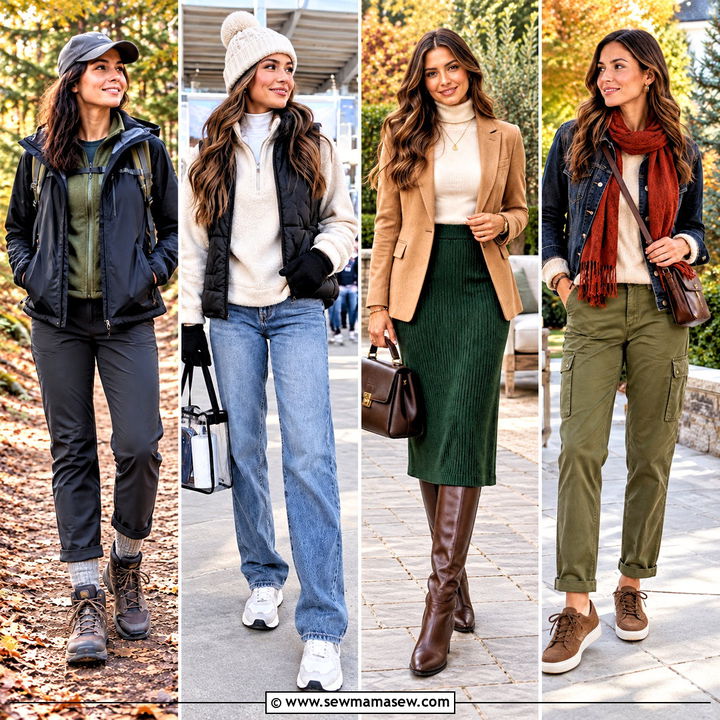
For a town day with lots of indoor stops, fleece over a fitted thermal top is easy to manage because you can unzip it at every museum door. Dark straight-leg jeans give the outfit some shape, and on colder days a thin thermal layer underneath makes denim far more bearable. The trade-off with fleece is that wind cuts straight through it and rain soaks it, so it's a middle layer pretending to be a jacket. I always pair it with a packable rain shell for that reason. Waterproof Chelsea boots, thick socks and a soft scarf round it out. A cream, burgundy or deep teal fleece lifts the denim nicely in photos.
4. Alaska October Northern Lights Outfit
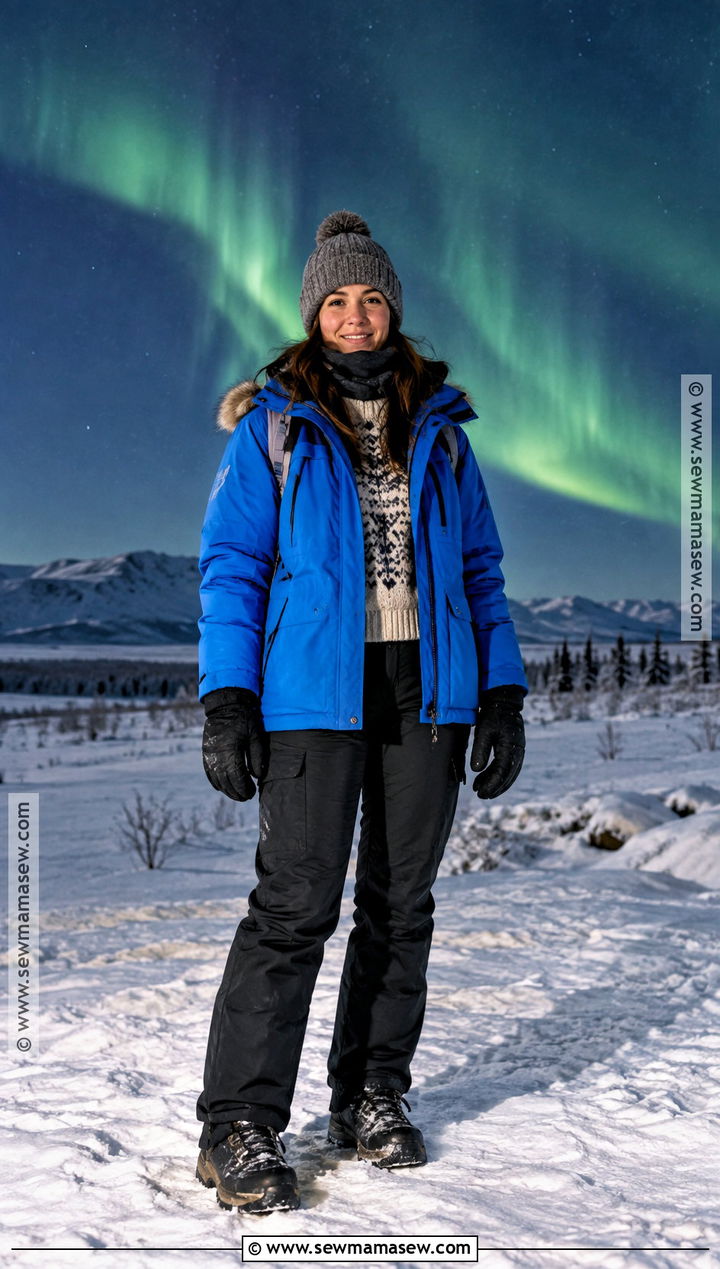
Aurora viewing is the coldest thing most visitors do in October, because you're standing still, at night, often for hours. Dress for that, not for the drive there. Merino thermal top and leggings go first, then fleece-lined pants, a thick wool sweater and an insulated parka long enough to cover the hips. Size the winter boots with your warmest socks on; a boot that squeezes the foot cuts circulation and your toes go cold faster than in a looser pair. Mittens beat gloves here because the fingers share heat, and hand warmers belong in a pocket you can reach without unzipping. Leave a little room in every layer, since trapped air is what actually insulates. A bright hat or parka also helps the camera find you against a dark sky.
5. Alaska October Glacier Tour Outfit
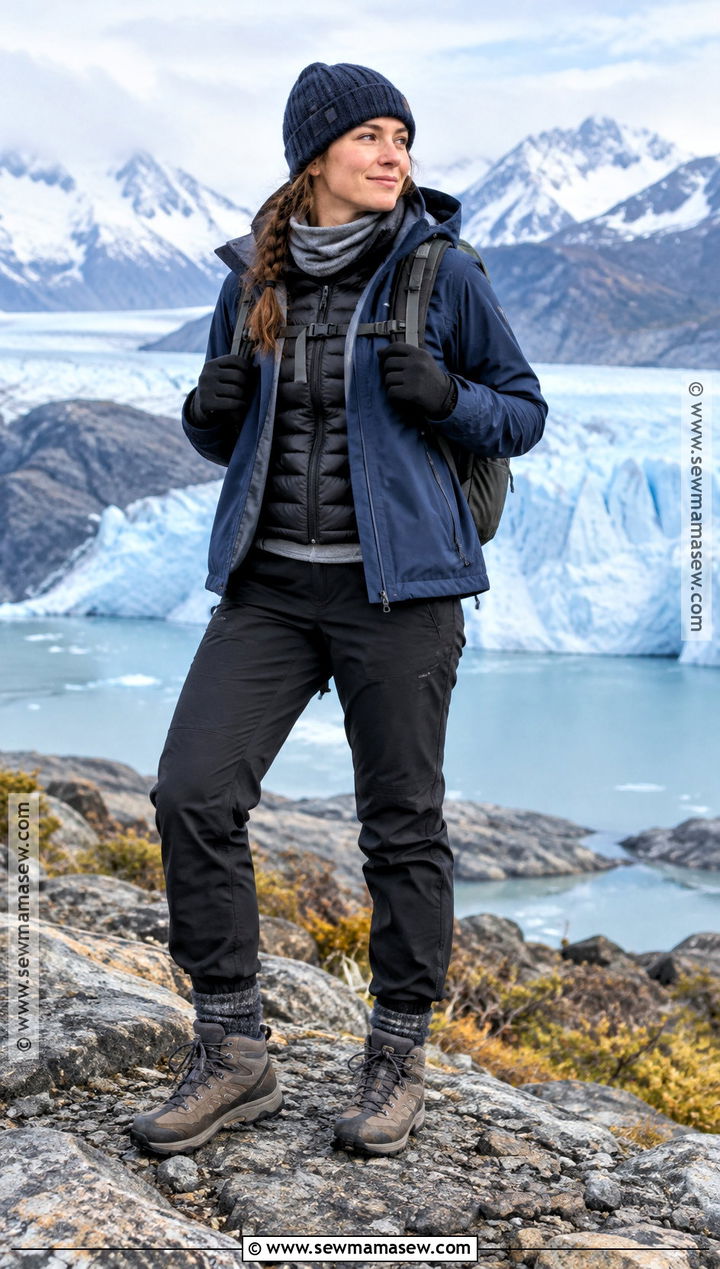
Glacier air feels colder than the thermometer says, mostly because of wind coming off the ice and the moisture that rides on it. My order here is a fitted synthetic or merino base, a fleece pullover, a packable down jacket, then a waterproof, wind-resistant shell with an adjustable hood over everything. That shell is doing the real work: down loses most of its loft once it gets damp, so it needs protecting. Water-resistant hiking pants over thermal leggings move better than stiff denim on uneven ground, and light gaiters keep spray off the lower leg. Pull the neck gaiter up when the wind picks up, and stash spare socks and an extra layer in the backpack for the boat or bus ride back.
6. Alaska October Flannel And Puffer Vest Outfit
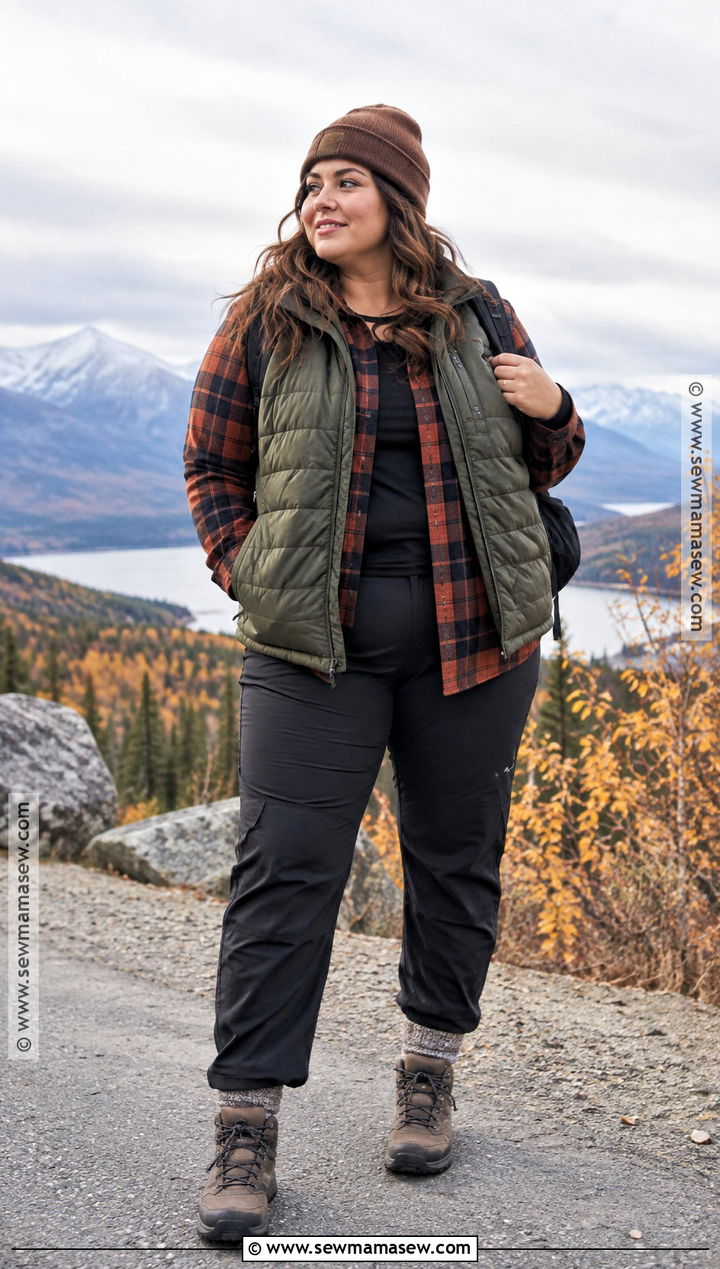
On a milder afternoon, a flannel shirt and a puffer vest are plenty. I put a thin thermal crewneck under the flannel and make sure the vest's hem sits a little lower than the shirt, which keeps a breeze from finding the gap at your waist. Black weather-resistant pants or dark straight-leg jeans work, with waterproof ankle boots and cushioned socks underneath. A vest is my pick for driving and shopping days because your arms move freely and your core stays warm. Keep a hooded rain jacket folded in the daypack. Rust, olive or navy plaid looks right against October birch and spruce without trying too hard.
7. Alaska October Sweater Dress And Boots Outfit
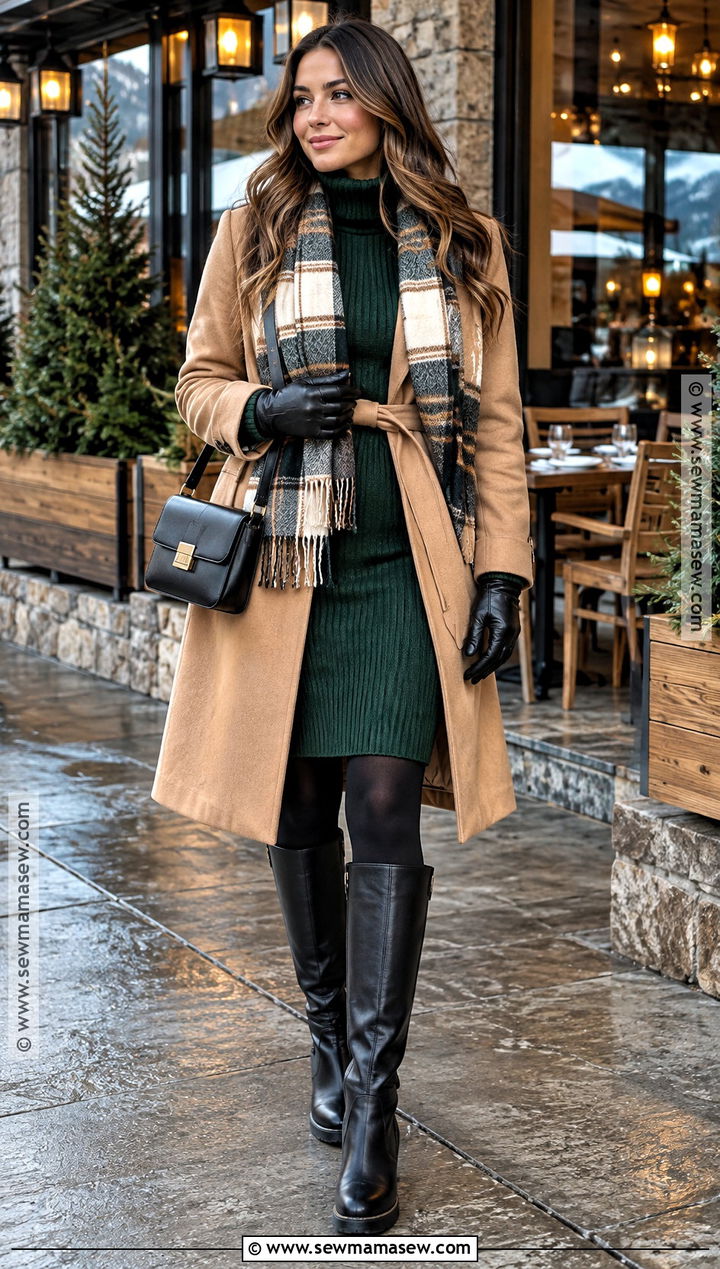
A sweater dress earns its place in the suitcase for one or two dinners, as long as you treat the legs seriously. Pick a knee-length ribbed dress in wool or a wool blend, and wear thermal tights or fleece-lined leggings under it. Grip matters more than heel height on wet or icy pavement, so I'd choose knee-high waterproof boots or ankle boots with a lugged sole over anything delicate. A tailored wool coat gives the cleanest line on top, with a large scarf and leather gloves. If rain is forecast, swap the wool coat for a sleek waterproof parka; wool sheds a light shower but grows heavy and smells of wet sheep in a real one. Deep green, burgundy, camel and charcoal all play well with neutral accessories.
8. Alaska October Scenic Train Outfit
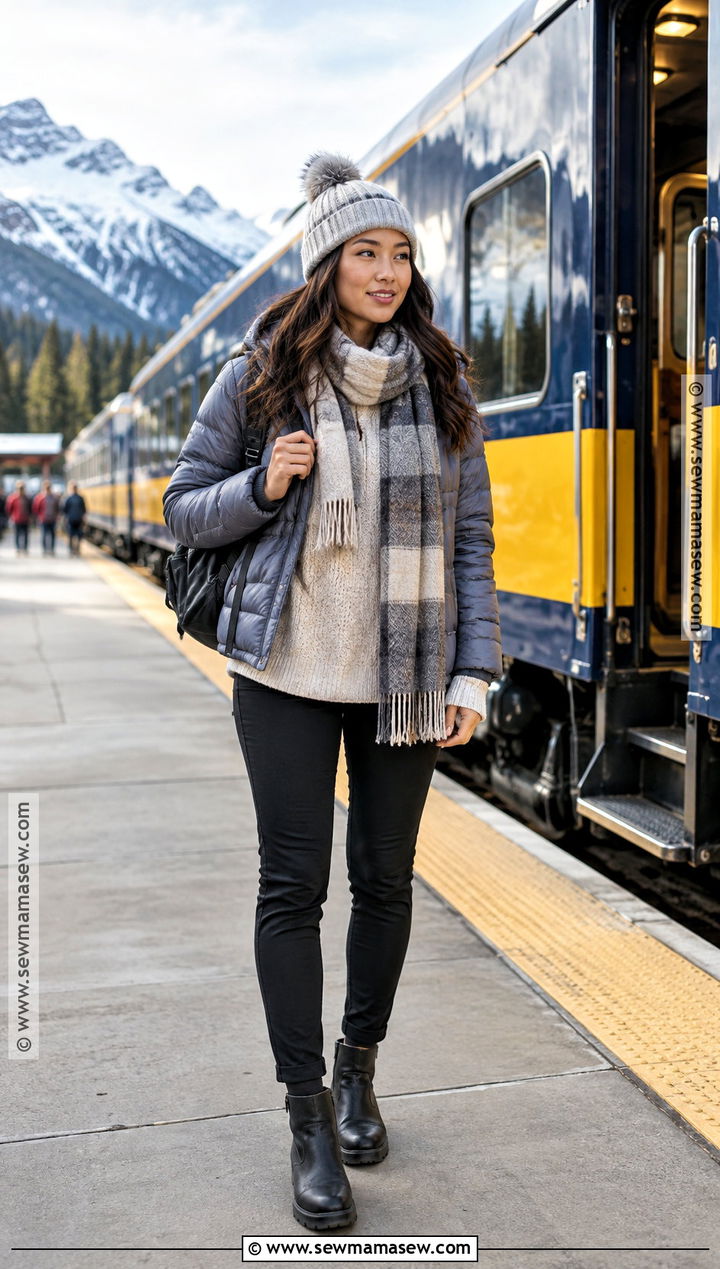
On a scenic train you spend hours sitting, so I avoid anything with a stiff waistband or a tight armhole. An oversized knit over a soft long-sleeve base, with stretchy straight-leg pants or ponte leggings, stays comfortable from the first hour to the last and still looks tidy in window-seat photos. Water-resistant sneakers or flat ankle boots with supportive insoles handle station platforms. The packable puffer comes out when you step onto an open viewing car, where the wind is stronger than you'd expect. A blanket scarf doubles as a wrap inside. Oatmeal, black, camel and gray mean every piece here rewears with the rest of the trip.
9. Alaska October Wildlife Viewing Outfit
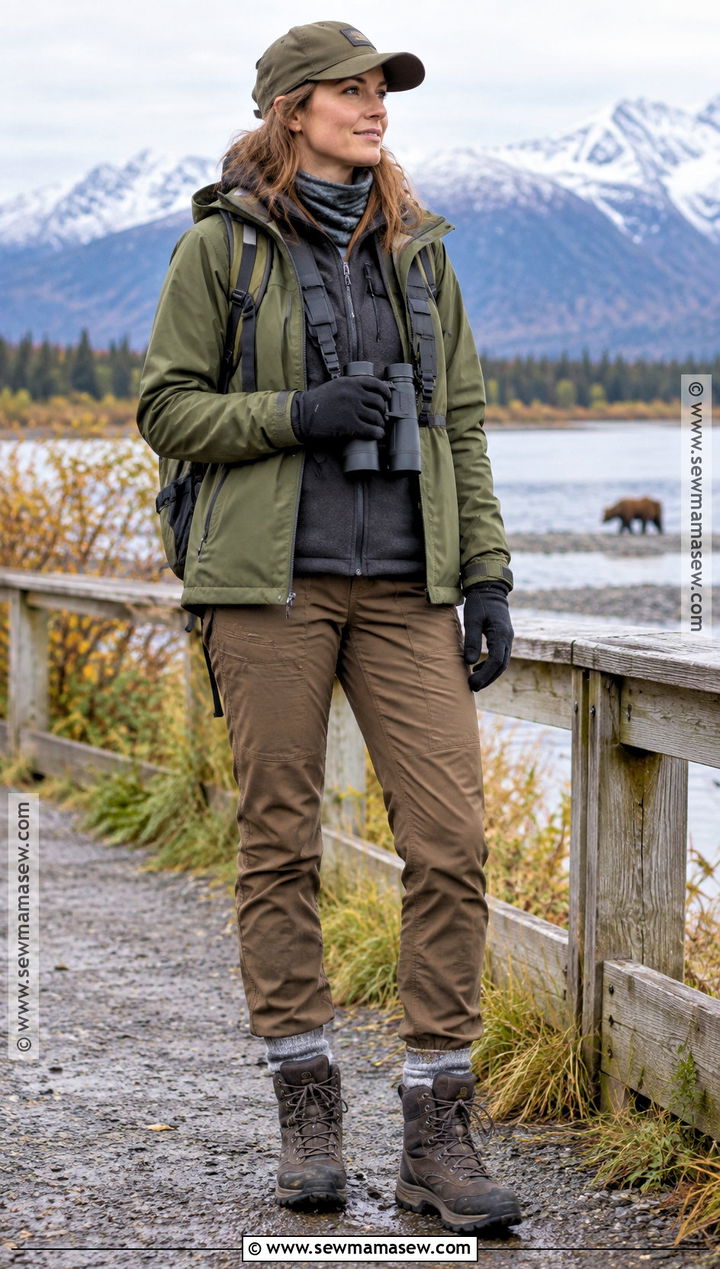
Wildlife viewing is mostly waiting, and some outerwear is surprisingly loud. Crinkly nylon shells rustle every time you lift your arms, which is worth thinking about if you're with a guide who wants quiet. I prefer a matte waterproof jacket over a zip-front fleece and a breathable thermal shirt. Quick-drying hiking pants over thin thermal leggings keep you warm while standing still. Waterproof boots with real traction matter on damp paths, and wool socks cushion long periods on your feet. Olive, brown and charcoal sit quietly against the landscape. Carry binoculars in a harness rather than around your neck, and leave the long fringed scarf in the room; anything that flaps in the wind becomes a distraction.
10. Alaska October Road Trip Outfit
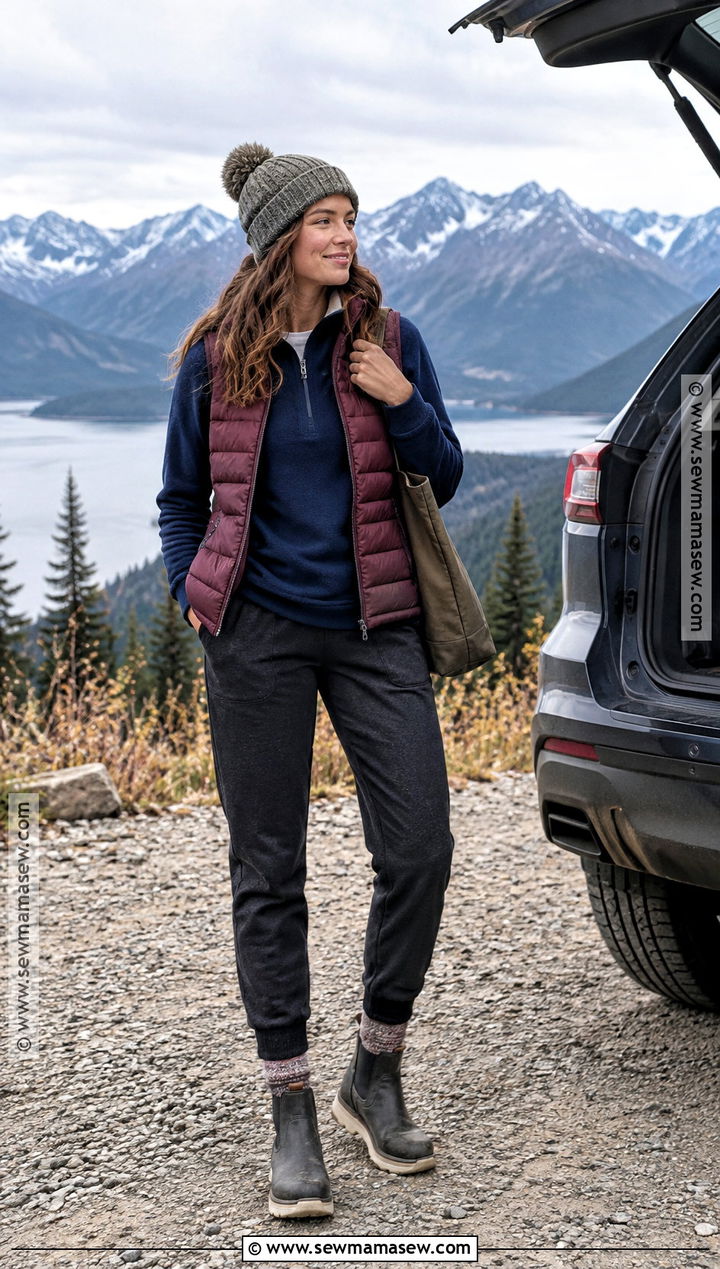
Road trips in Alaska are long, and the car will be warm while the pullouts are not. I dress for the seat first: a cotton-free long-sleeve top, a relaxed hoodie or half-zip fleece that comes off once the heater kicks in, and stretchy tapered joggers that don't dig in after hours of driving. A quilted vest keeps the core warm without restricting your arms on the wheel. Waterproof slip-on boots are the right call because you'll be getting in and out constantly for views. The mistake I see most is packing the waterproof coat, gloves and heavy layer at the bottom of the trunk. Keep them on the back seat, within reach.
11. Alaska October Anchorage City Outfit
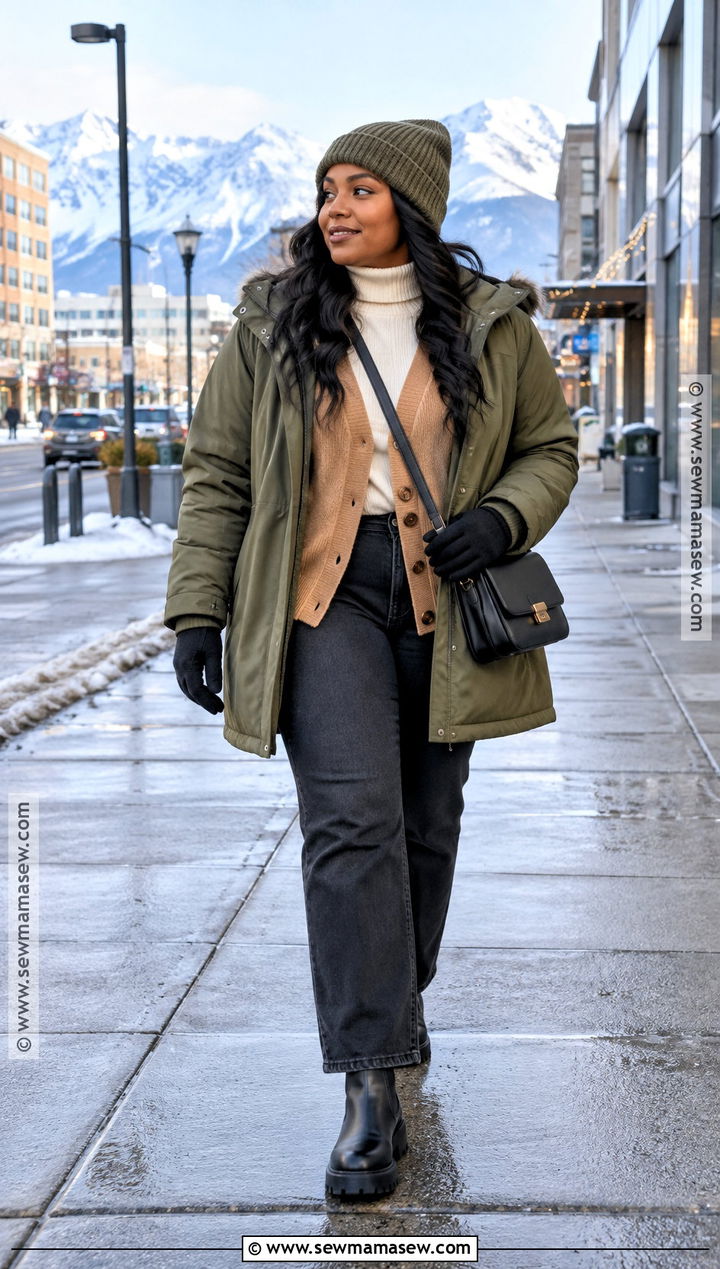
Anchorage days tend to mix outdoor walking with museums, shops and a sit-down meal, so I build this one to look put together without the parka. A fine-knit turtleneck covers the neck, a wool-blend cardigan comes off indoors, and dark straight-leg jeans keep it simple. Over it goes a waterproof mid-length parka, which covers the seat when you sit on a damp bench. Lug-sole Chelsea boots grip wet pavement and look more at home in town than hiking shoes. Gloves that fold into a pocket, a ribbed beanie and a structured crossbody finish it. Keeping the palette to black, camel, cream and olive means any top in the bag works with any bottom.
12. Alaska October Fairbanks Cold Weather Outfit
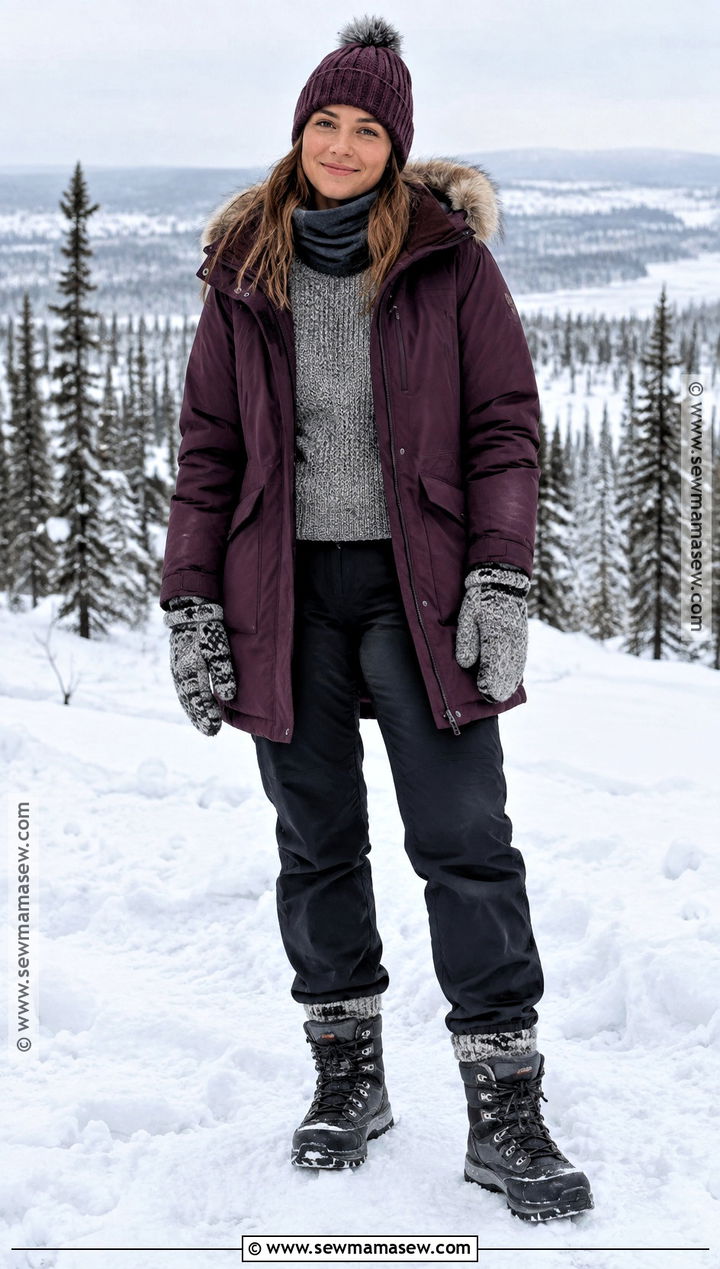
Interior Alaska runs much colder than the coast, and by late October mornings and evenings around Fairbanks can feel like full winter. Dress accordingly. Matching merino or synthetic thermal top and bottom go first, then fleece-lined pants and a substantial fleece or wool sweater. The hooded parka should cover the hips and still close easily over every layer; if it pulls across the back when you reach forward, it's too small for this job. Waterproof insulated boots with wool socks, a thick beanie, a neck gaiter and insulated mittens finish it. Keep a lighter shirt underneath so you can strip down to something presentable in overheated cafés.
13. Alaska October Airport Travel Outfit
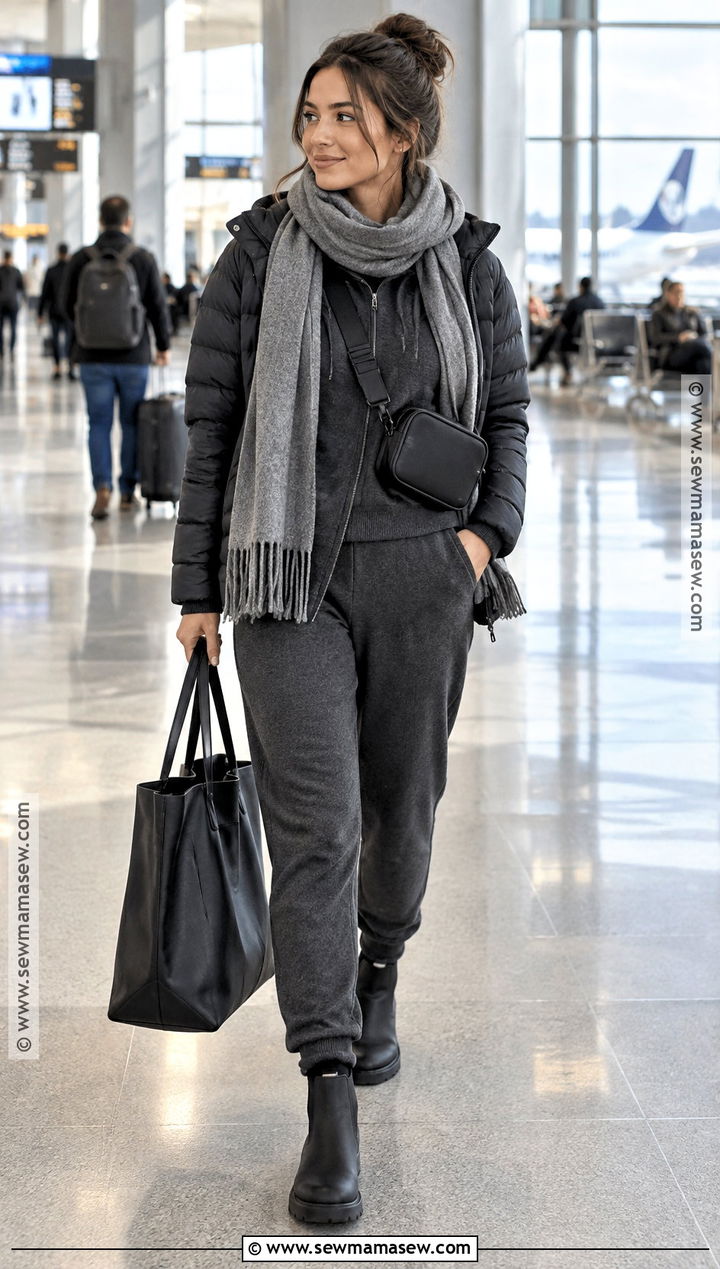
Travel day is about the temperature swing between a heated terminal and a cold curb. I wear a breathable long-sleeve shirt with matching knit pants or polished joggers in a medium weight, plus a zip-front hoodie or cardigan that comes off quickly at security. Wear or carry the packable puffer; it's the bulkiest thing you own for this trip and it shouldn't eat suitcase space. Supportive waterproof sneakers or slip-on ankle boots save time in the screening line. Put the beanie and gloves in your tote, not the checked bag, so you have them the moment you walk out. A single color, black, navy, taupe or charcoal, makes soft travel clothes look intentional.
14. Alaska October Early Snow Outfit
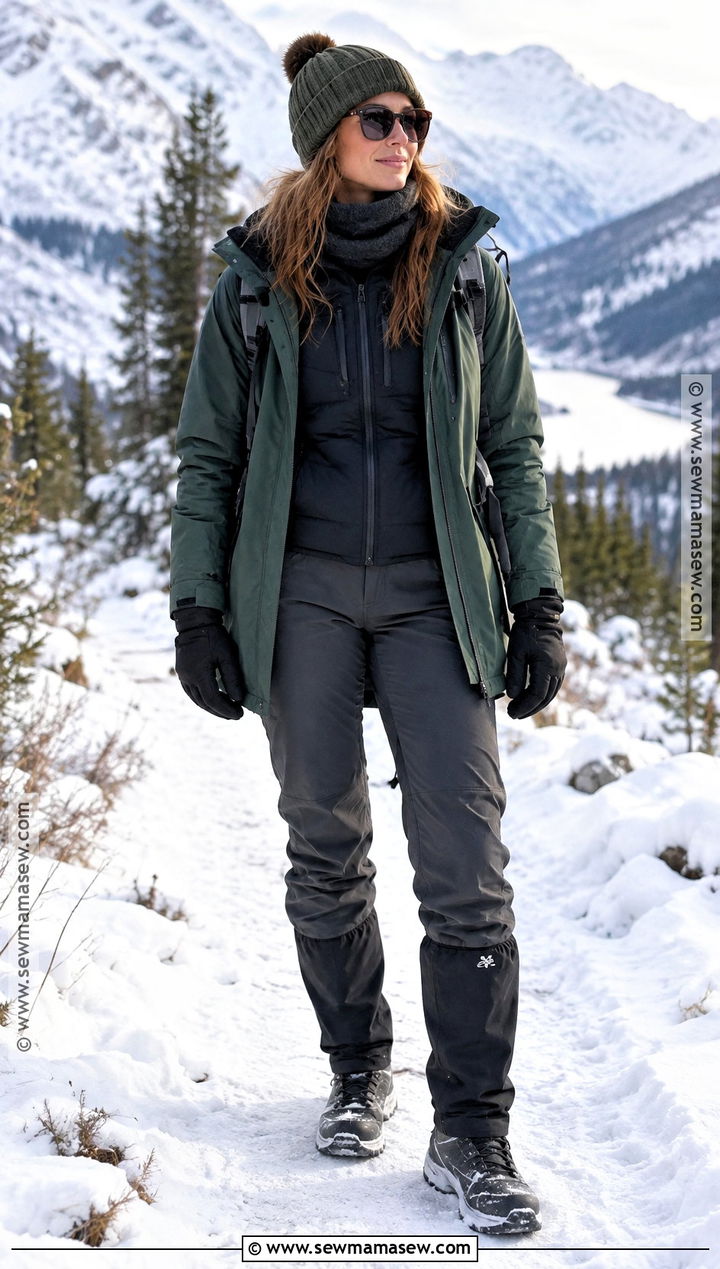
Fresh snow is mostly a footwear problem. Wet snow works its way in around the ankle and melts against your sock, so I'd add gaiters or choose a boot with a higher shaft and a snug collar. Start with a thermal mock-neck top and fleece-lined leggings, then soft-shell or water-resistant snow pants if you'll be out for a while. A fitted fleece goes under an insulated waterproof parka. Pick a beanie without a pom so the hood still fits over it, and waterproof gloves rather than knit ones that soak through when you brush off a bench. A blue, red or plum parka shows up well against white scenery. Pack sunglasses too; snow glare is real even on a cold, bright day.
15. Alaska October Casual Dinner Outfit
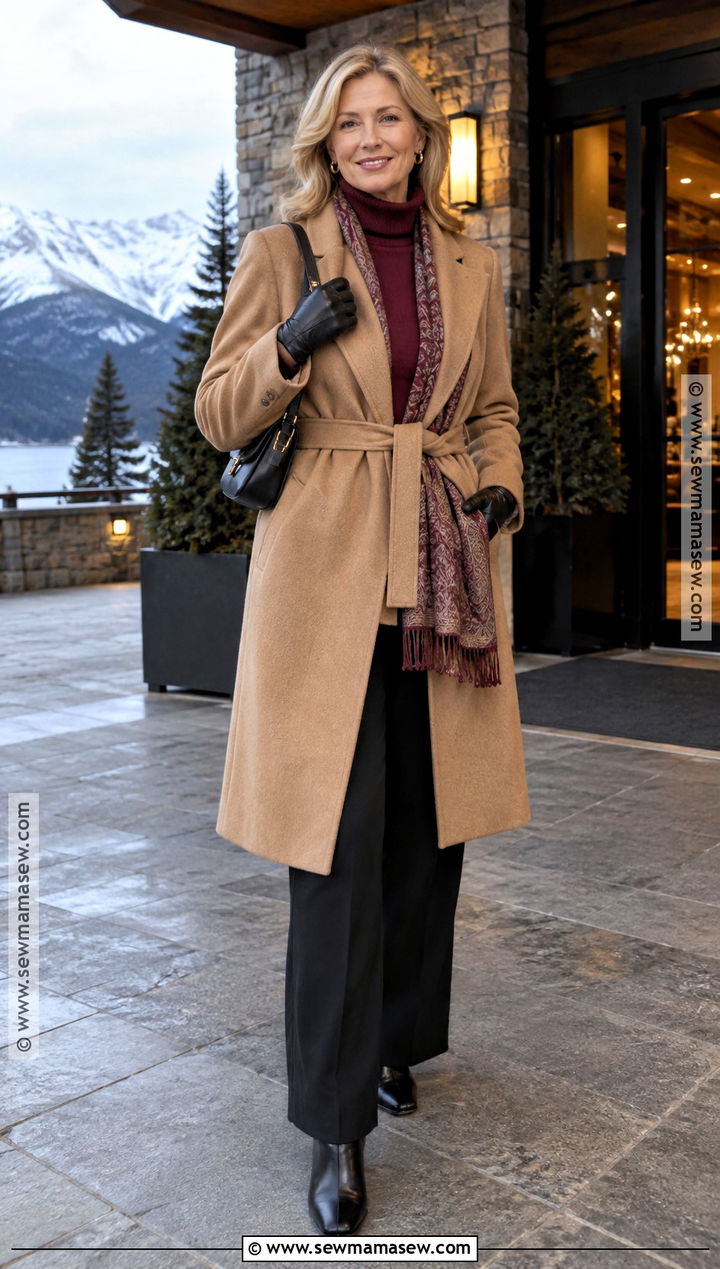
Dinner in Alaska is rarely formal, so I aim for warm and tidy rather than dressy. A soft turtleneck with tailored ponte pants or dark wide-leg trousers in a substantial fabric does it. Thin trousers let the cold through on the walk from the car, which is why I avoid them. Waterproof ankle boots with a block heel or a flat lug sole depend on how icy the walk will be. A belted wool coat gives the best shape, but a clean-lined raincoat is the better choice in wet weather. A thin thermal camisole under the sweater is my quiet fix if you run cold. Chocolate brown, burgundy and forest green feel right for October without looking fussy.
Getting All Fifteen Looks Into One Checked Bag
You don't need fifteen outfits' worth of clothes to wear these fifteen ideas. When I build an Alaska capsule, the list usually looks like this, and the outfits above are just different combinations of it:
- Two thermal base sets in merino or synthetic, since one can air out while you wear the other
- One fleece and one warm sweater as the middle layer
- A packable puffer for insulation and a waterproof shell for rain and wind
- An insulated hip-length parka only if the Interior or aurora nights are on the plan
- Quick-drying hiking pants, dark jeans and one pair of fleece-lined leggings
- Waterproof hiking boots plus one tidier waterproof ankle boot
- Four or five pairs of wool socks, a beanie, a neck gaiter, gloves and mittens
- One dinner piece: the sweater dress or a turtleneck with ponte trousers
Wear the bulkiest items on the plane: the parka or puffer and the heavier boots. Roll the base layers and socks into the boots inside the bag. Down jackets squash into their own pocket or a stuff sack, so they take far less room than they appear to.
Why I Leave Cotton at Home for This Trip
Cotton feels comfortable at home, but once it's damp from rain or sweat it holds water against your skin and stops keeping you warm. That's why every base layer here is merino or synthetic. Merino stays warm when slightly damp and resists odor for a few wears, which helps on a trip with limited laundry. It's softer and less durable than synthetic, and it can pill under backpack straps, so I keep a synthetic set for hiking days.
Jeans are the exception I allow, for town and dinner days only. On a wet trail or a long boat tour, a pair of quick-drying pants is the kinder choice for your legs.
Three Layers, Fifteen Days of Alaskan Weather
Every outfit in this list comes back to the same idea: a breathable base, an insulating middle and a weatherproof outer shell, rather than one enormous coat or a suitcase of heavy sweaters. Get that system right and the accessories do the fine-tuning. Waterproof boots, wool socks, gloves and a warm hat make more difference on a rainy walk or an early snow than any single jacket. Pack pieces that mix, then adjust for where you're going and how cold you usually run. A town afternoon in Anchorage and a night waiting for the aurora outside Fairbanks are very different days, and your bag should be ready for both.
Related posts: