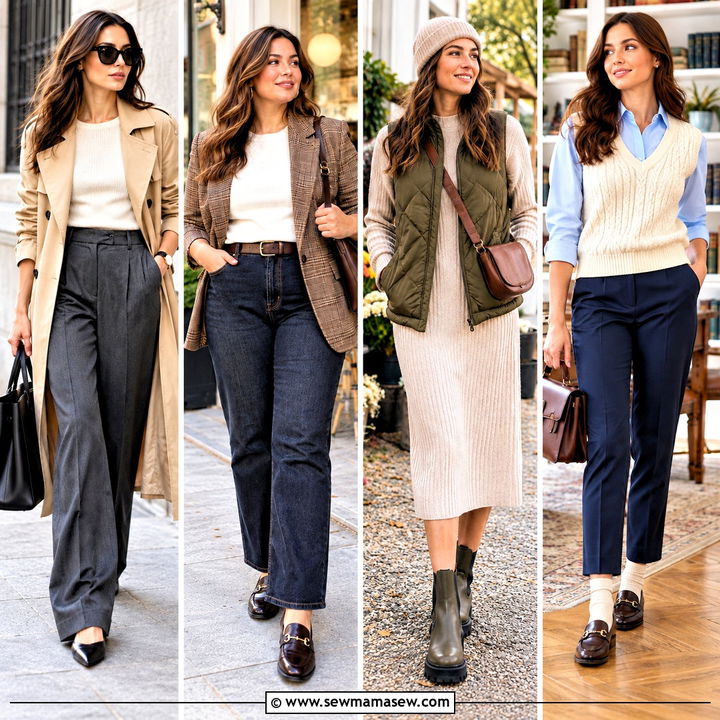
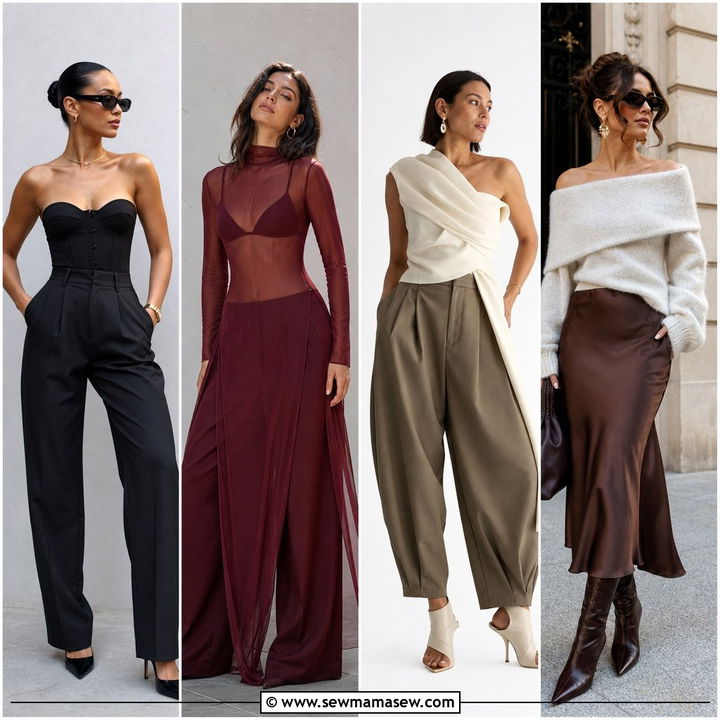
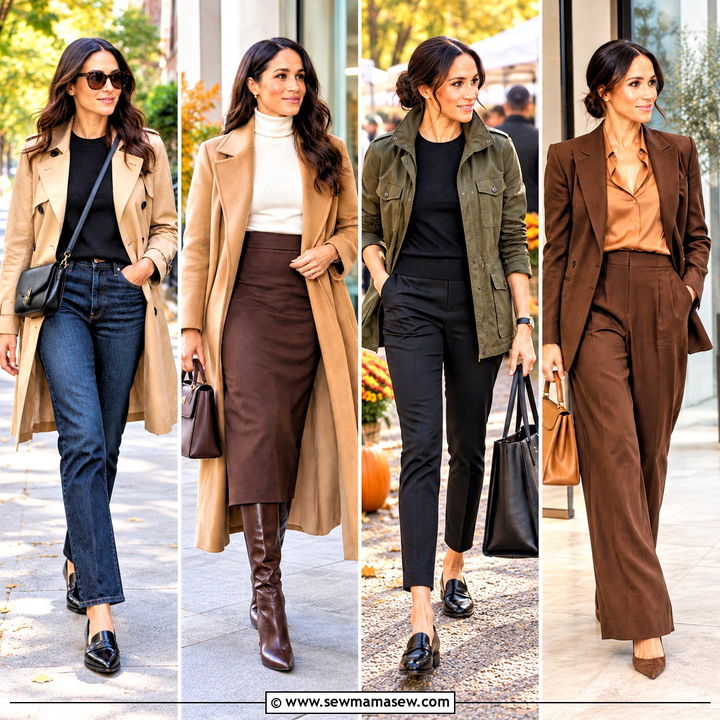
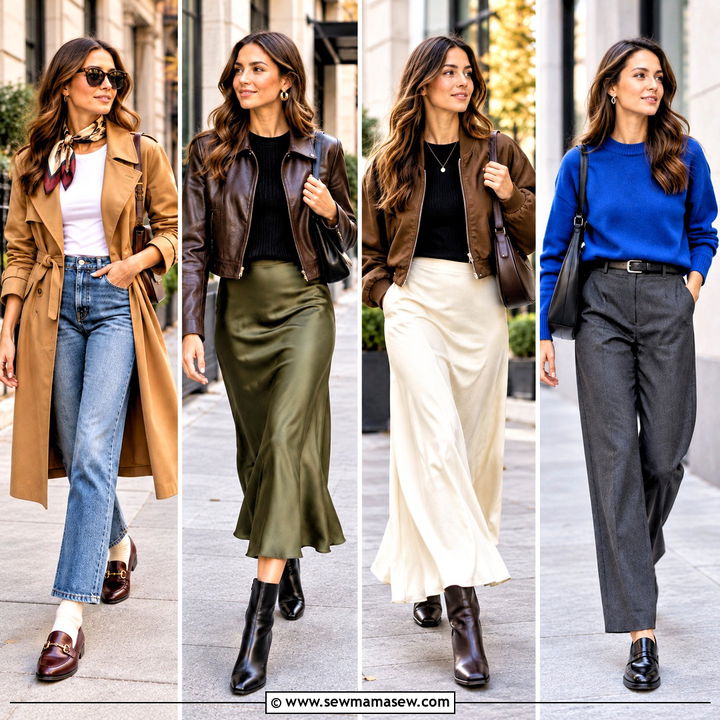
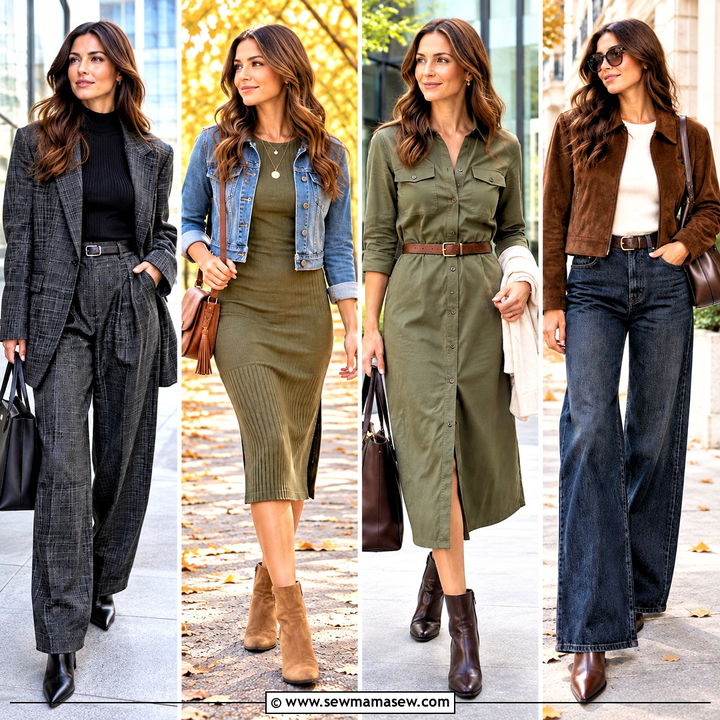
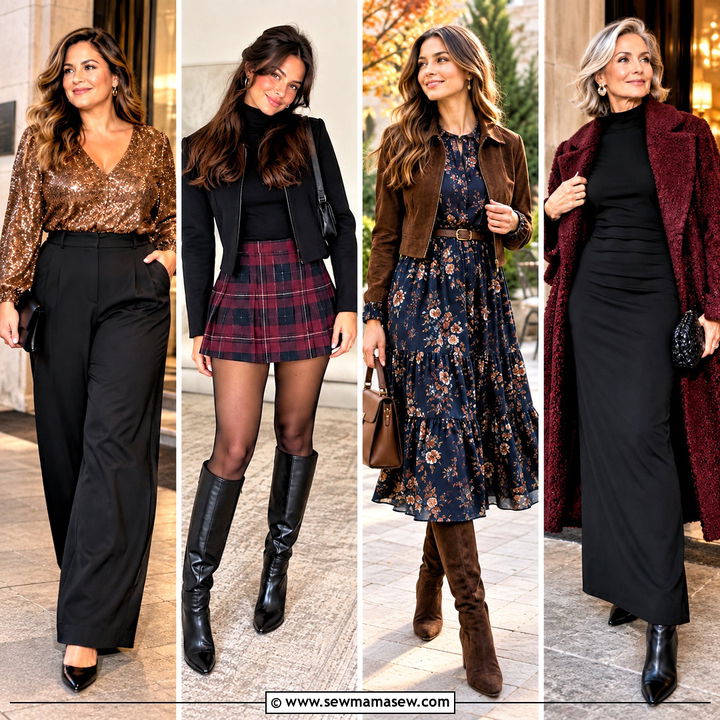
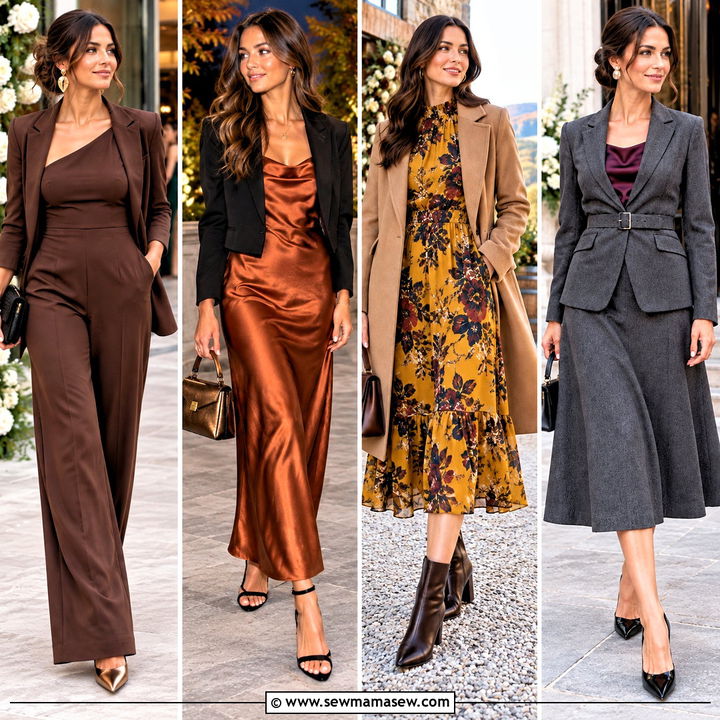
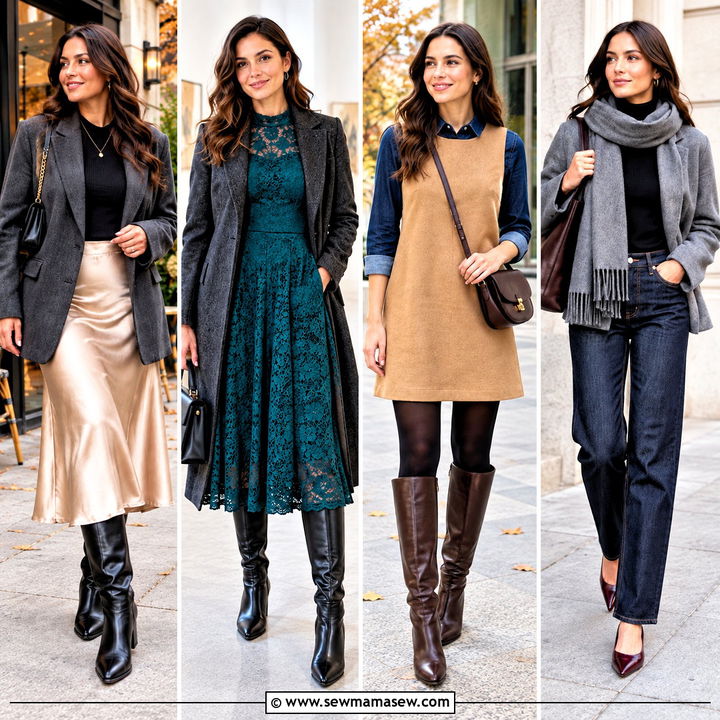
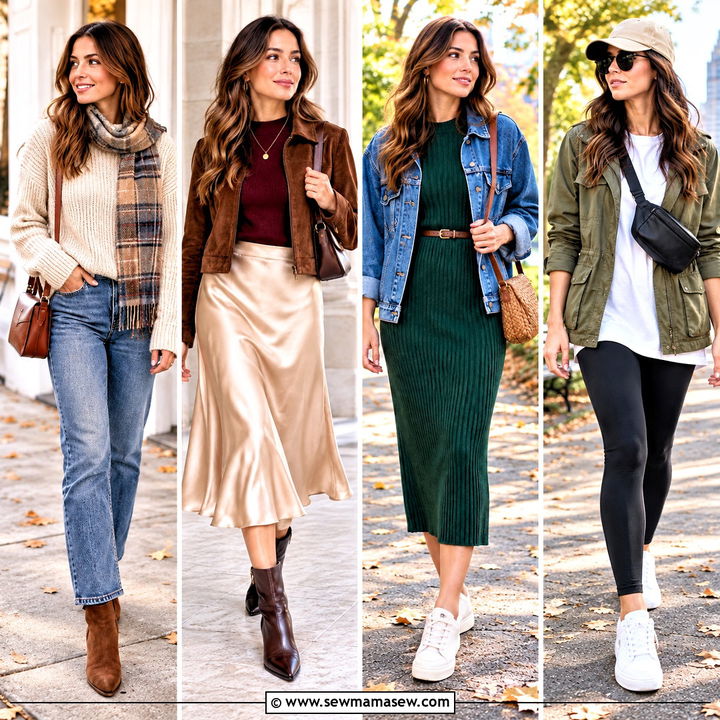
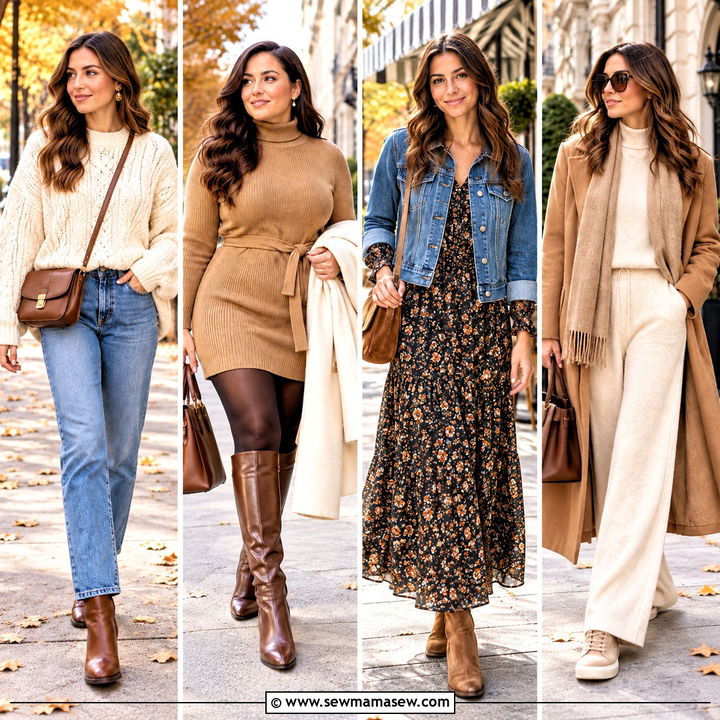
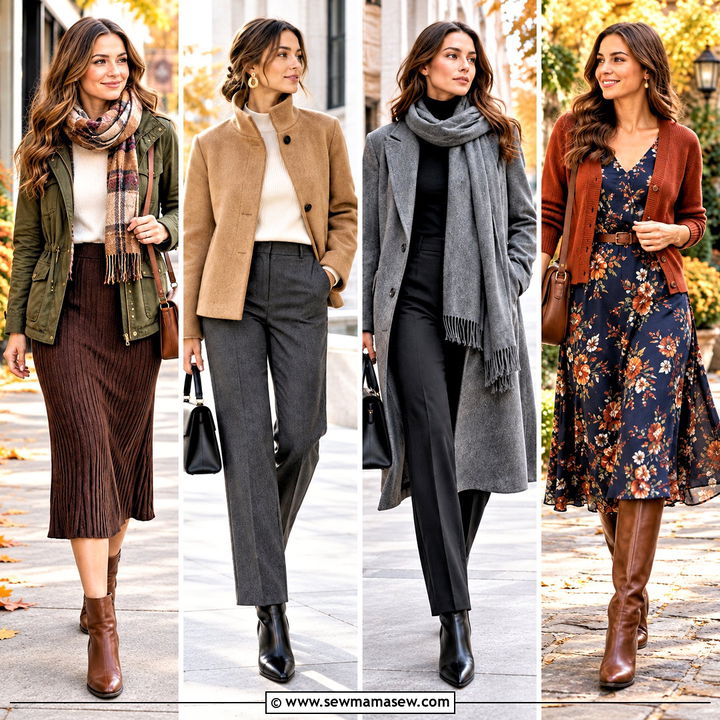
Autumn is the season I get asked about ankle boots more than any other shoe, and the question is rarely about the boot itself. It's about what goes above it: where the jeans should stop, whether a midi skirt looks odd, what happens with tights. So the fifteen pairings below are full outfits, built from the floor up. You'll see sleek leather booties, soft suede, chunky combat and lug soles, a couple of Western shapes and one pair that's genuinely meant for rain. For each one I've noted the hem, heel and shaft details that make it work, and how to shift the rise, length or layers if your height or shape needs something different.
Trying On Ankle Boots in the Afternoon, With Real Socks
Most of the ankle boot complaints I hear come down to a fitting done at the wrong time with the wrong socks. Feet swell over the day, so a pair that feels snug at ten in the morning can pinch by five. I try boots on in the afternoon and bring the socks or tights I'll actually wear with them, because a thick wool sock can take up half a size.
- Walk on a hard floor, not only the carpet. Heel slip of a few millimeters is normal in new leather and settles as the sole flexes; slip you can see is too much.
- Press the shaft at the ankle bone. If it digs in while you stand still, it will rub raw on a walking day.
- Check the toe box with your weight on it. Pointed boots should taper after the ball of the foot, not across it.
- Look at the opening. A shaft that gapes wide shows sock and lets rain in; one that grips too tightly will leave marks over tights.
Once they're home, I wear new leather boots indoors for a few evenings before any long day out. Stiff combat and Western styles in particular need that time, and you can still return them if something rubs.
1. Black Ankle Boots With Straight-Leg Jeans
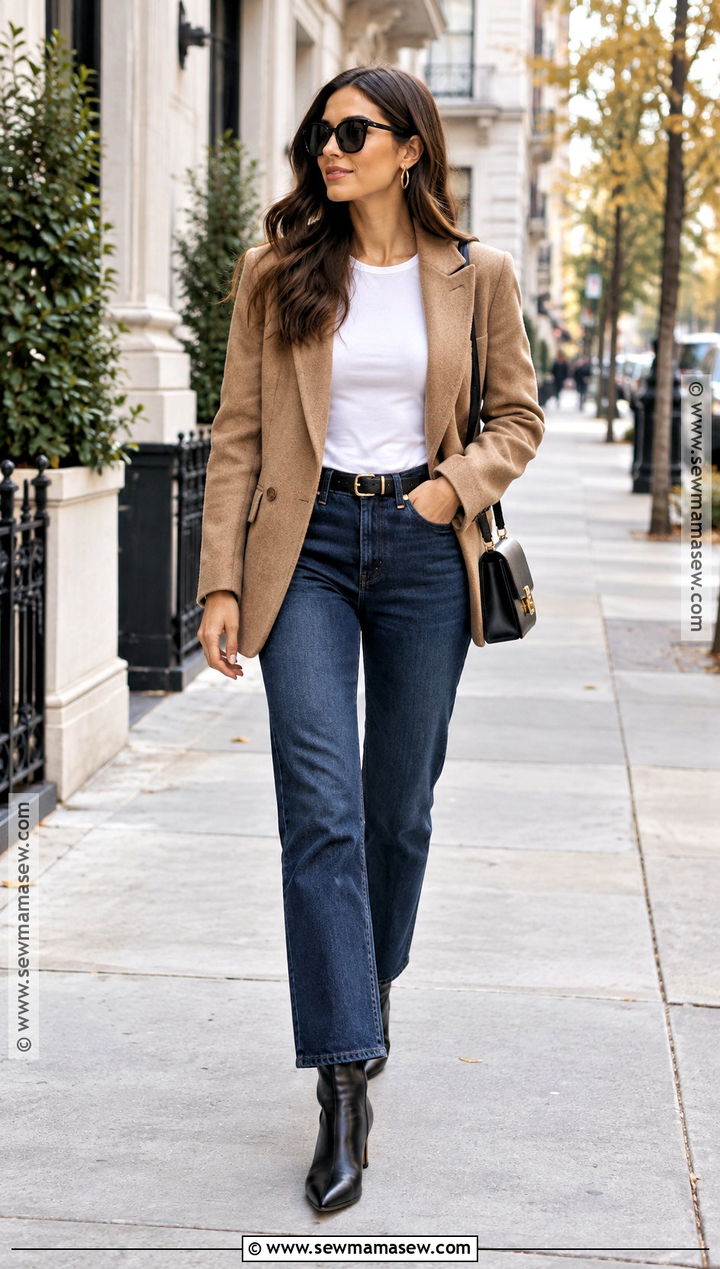
If I could only keep one pairing, it would be this one. Black leather boots with dark straight-leg jeans, a fitted white tee, a camel blazer and a slim black belt cover a surprising number of days, and a structured crossbody with small gold earrings keeps it from looking like a uniform. The detail I check first is the hem: it should stop just above the boot or barely brush the shaft, never pool on top of it. A low block heel carries you through a full day on foot, and a pointed toe adds a little visual length. Swap the tee for a thin turtleneck when it turns cold. Petite women usually do best with ankle-length jeans; taller women can wear a longer cut as long as it doesn't bunch.
2. Brown Suede Ankle Boots With Wide-Leg Jeans
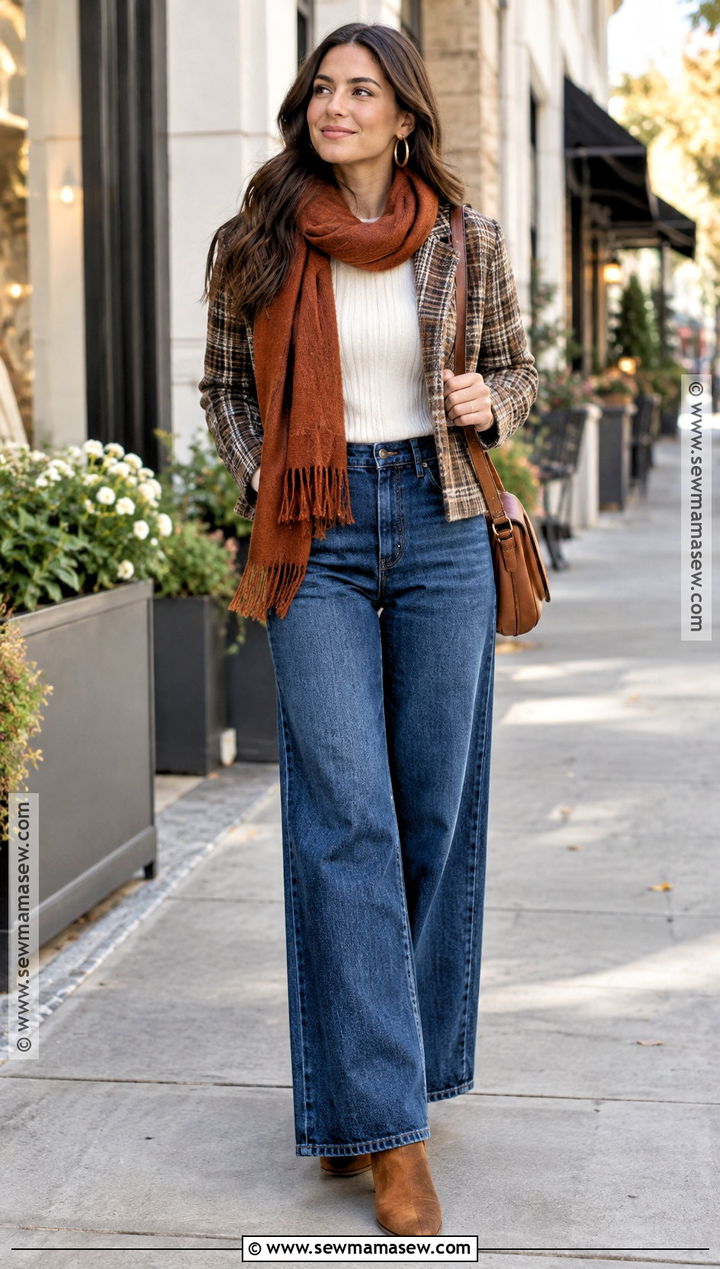
Wide-leg jeans are the trickiest denim to wear with ankle boots, and the fix is heel height. A stacked heel on brown suede lifts the hem off the ground so it hangs straight instead of dragging, and the boot toe peeks out rather than disappearing. Choose a high rise that falls close to the floor, then keep the top slim with a ribbed sweater and a cropped plaid jacket that marks the waist. A brown shoulder bag, small hoops and a cream or rust scarf finish it. Untreated suede marks easily in rain, so either spray the pair before the first wear or keep this outfit for dry weekends and long lunches.
3. Chelsea Ankle Boots With Leggings
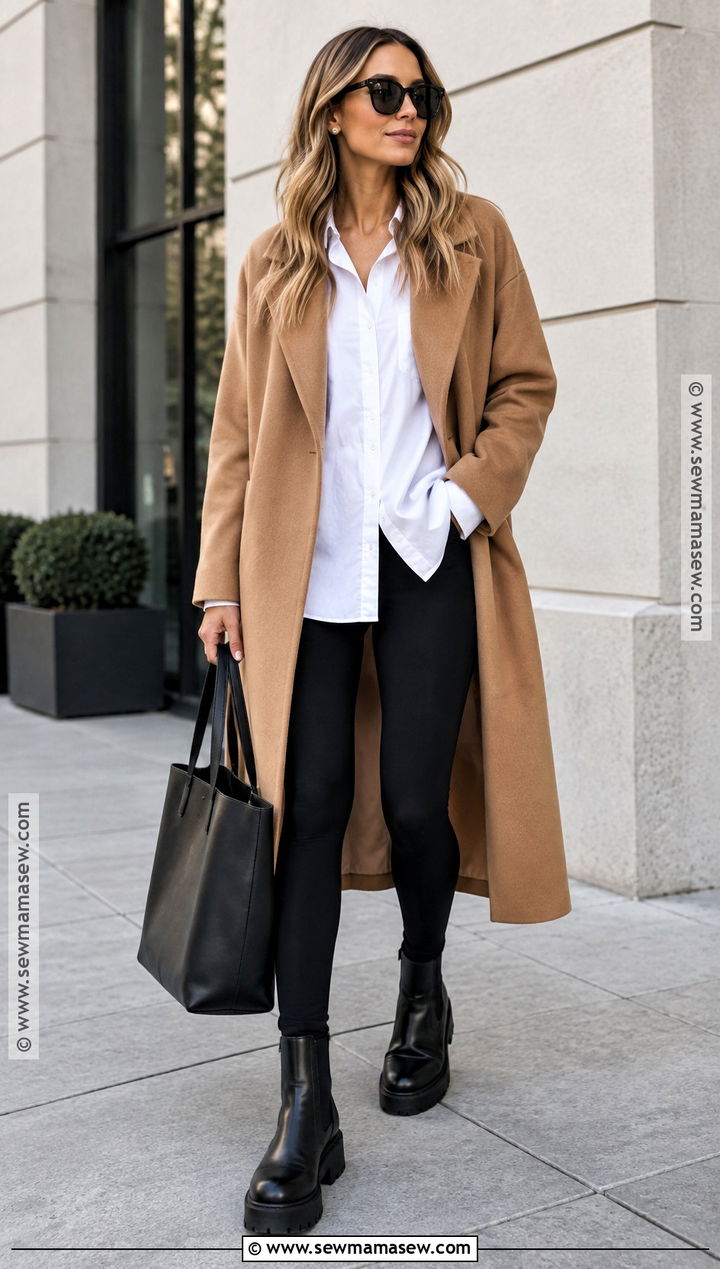
This is my answer for the days when comfort wins. Opaque, thick leggings, an oversized white button-down long enough to cover the hips, and a long camel coat or wool cardigan on top. Black leather Chelsea boots keep it from sliding into gym clothes, and a lug sole earns its place on wet leaves and damp pavement. When leggings and boots are the same black, the leg reads as one long line, which is the whole trick. Add a roomy tote and small studs. If you like more shape, belt the coat instead of wearing it open. One thing I watch for: thin leggings go shiny and sheer at the knee, which undoes the polish quickly.
4. Heeled Ankle Boots With Sweater Dress
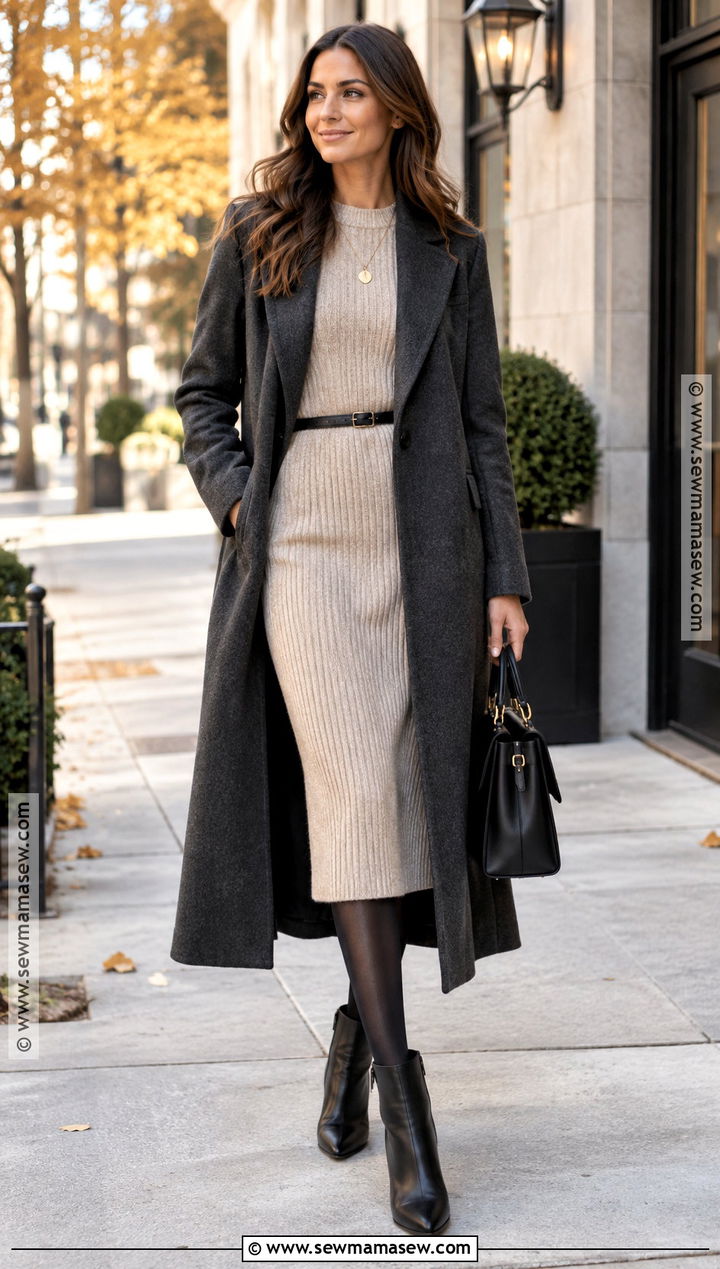
The sweater dress lives or dies on where its hem meets the boot. I want it either several inches above the shaft or well below it; a hem that stops right at the ankle cuts the leg at its widest-looking point. A ribbed midi in oatmeal, charcoal or deep brown pairs well with black or chocolate leather on a stable block heel. Add semi-opaque tights when it gets colder, then a long tailored coat, a structured bag and a fine pendant. A narrow belt gives more waist if you want it. An almond or pointed toe balances all that soft knit, where a round toe can make the whole outfit look heavy.
5. Combat Ankle Boots With Floral Midi Dress
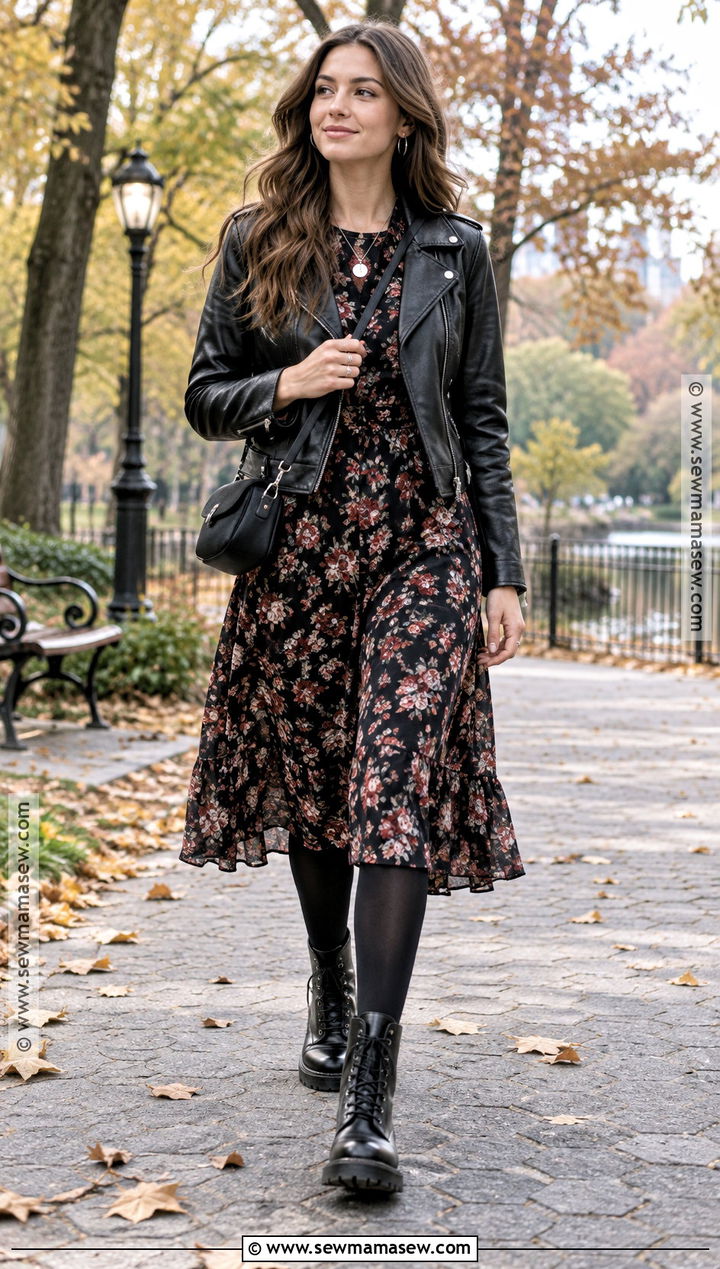
Combat boots are what make a floral midi dress usable once the weather turns. I look for a dark-ground print, long sleeves and a skirt with enough swing to move over a chunky boot without catching. A cropped leather or denim jacket stops the dress from swallowing your frame, and black tights add warmth without competing with the flowers. Finish with a small crossbody and plain silver. Slim combat boots read lighter; a deeper lug sole gives more contrast and much better grip on gravel or grass. Expect real breaking-in time with stiff leather combat boots, so wear them around the house for a few evenings first.
6. Pointed Ankle Boots With Tailored Trousers
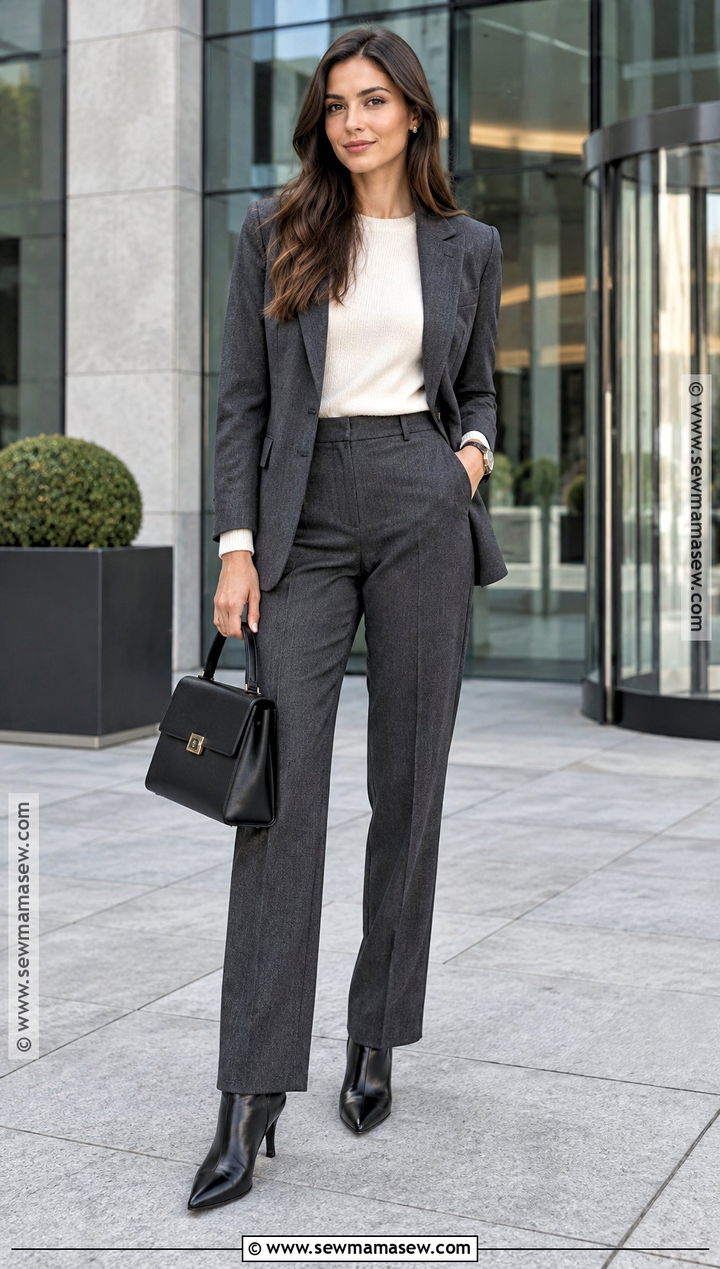
A pointed ankle boot can stand in for a pump under tailored trousers, and on a commute it's far kinder to your feet. Slim or straight trousers in black, navy or charcoal sit well with a fine-knit sweater tucked at the waist, a matching blazer for the office or a long wool coat for the weekend. The trouser hem should almost touch the boot, showing only a sliver of shaft when you stand. A top-handle bag and a plain watch or small earrings keep it quiet. Kitten heels give a little lift; a wider heel feels steadier. Matching boot and trouser color is the easiest way I know to add height for petite clients.
7. Burgundy Ankle Boots With Pleated Midi Skirt
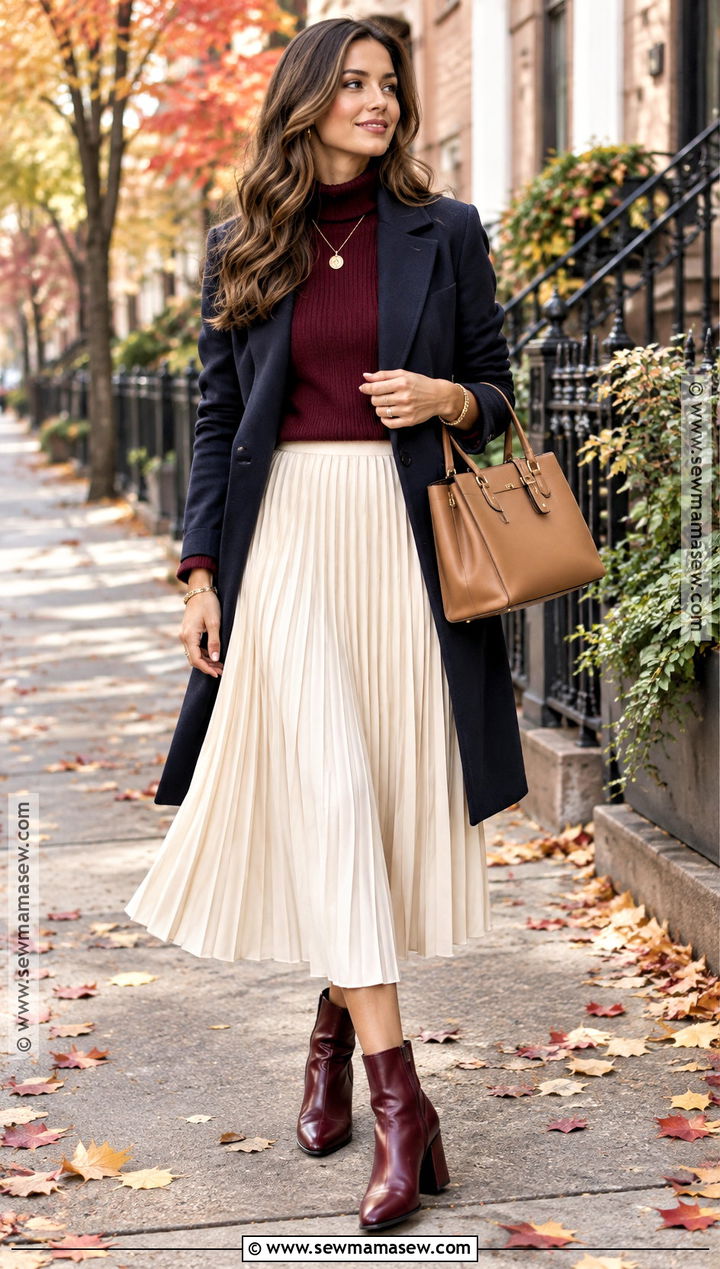
Burgundy is the boot color I suggest to people who say they only own black and brown. Here it sits under a cream pleated midi skirt with a fitted burgundy sweater and a navy coat, so the color appears twice and ties the top to the bottom. Add a tan bag and warm gold jewelry. Shaft fit matters with pleats: a narrow, close shaft lets the skirt swing over it, while a wide one catches the folds, especially over tights. A block heel keeps the long skirt from feeling bottom-heavy. If the matching sweater feels like too much, swap in gray and let the boots carry the color alone.
8. Western Ankle Boots With Denim Skirt
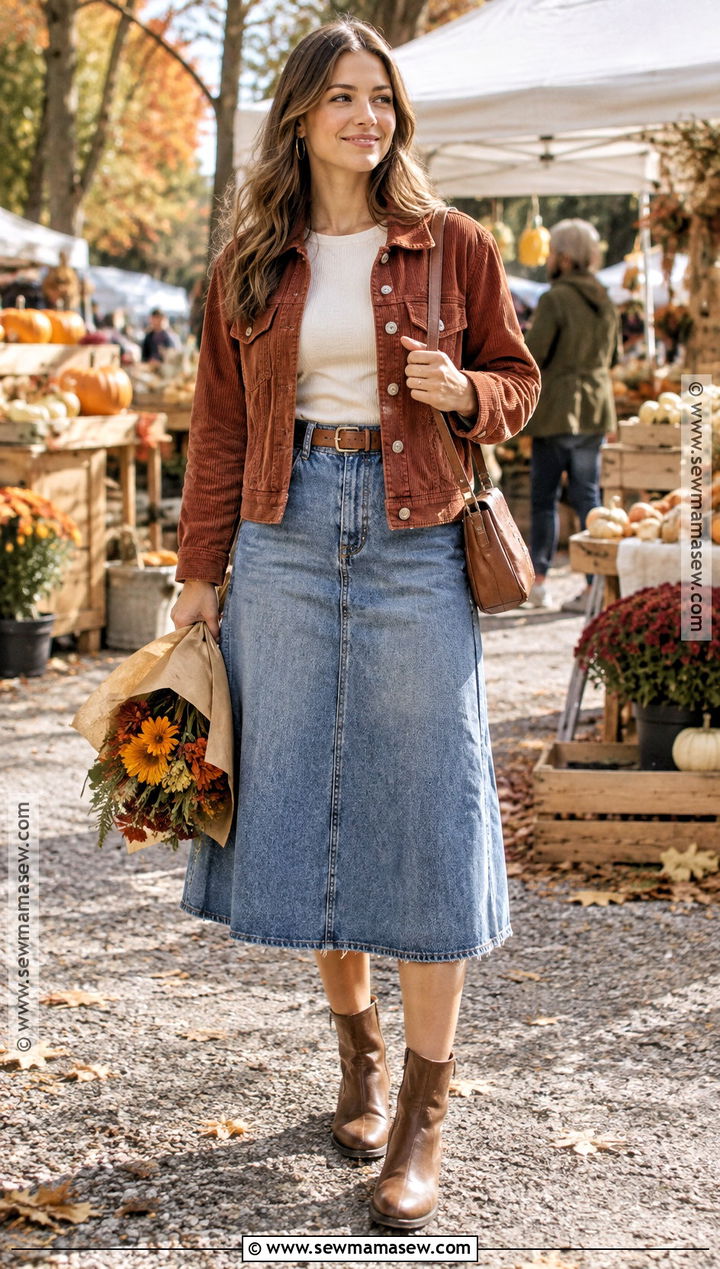
Western boots are easier to wear than people expect, provided the pair isn't too decorated. I steer toward plain tan, dark brown or black with minimal stitching, then pair them with an A-line denim midi, a tucked ribbed top and a suede or corduroy jacket. A leather belt with a simple buckle quietly echoes the boots. Add a structured shoulder bag and small hoops. Leave a little gap between hem and boot, or fill it with neutral tights when it's cold. A front slit helps with walking and shows off the boot. Note that Western shafts tend to be wider and stiffer than a fashion bootie, so try them on with the skirt you plan to wear.
9. Kitten-Heel Ankle Boots With Slip Dress
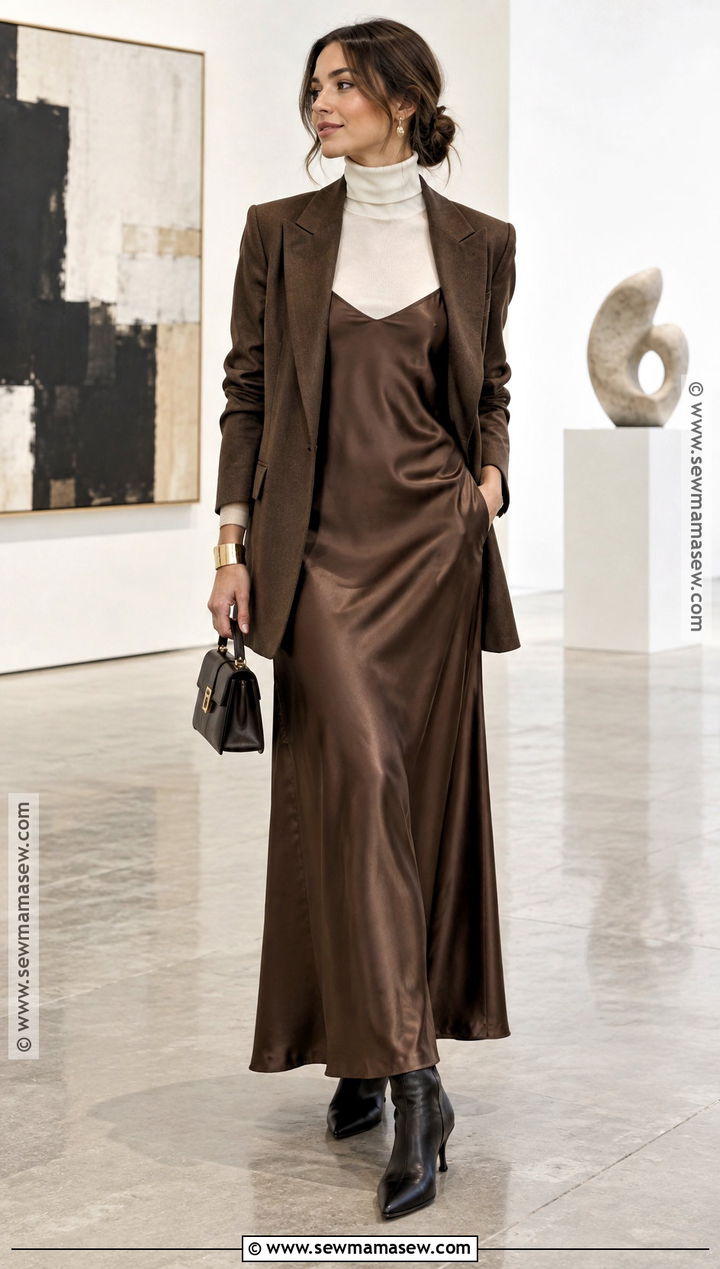
Kitten-heel boots are how I carry a summer slip dress into October. A midi or maxi slip in chocolate, forest green, navy or black goes over a thin fitted turtleneck, with a long blazer or light wool coat on top. Pointed boots should vanish under the hem, which gives the illusion of a taller boot without any bulk at the calf. A compact bag, small earrings and a cuff are enough. Stay tonal for a calm, polished result, or put cream knitwear under a dark dress for contrast. The low heel is the reason this works at events where you'll stand for hours; a stiletto bootie on the same dress would not last the evening.
10. Lug-Sole Ankle Boots With Cargo Pants
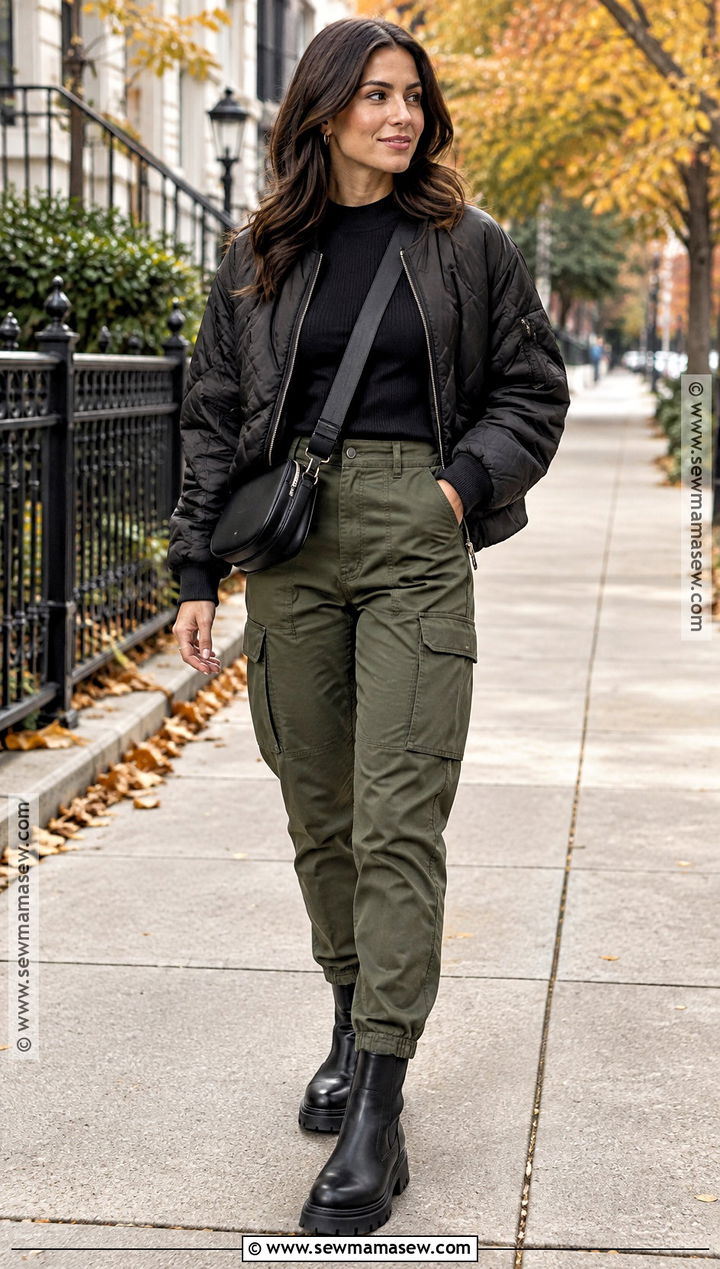
Lug soles and cargo pants make the most practical outfit on this list, but the pants need to cooperate. I look for tapered legs or cuffs that cinch, so the fabric stops just above the boot instead of stacking on the shaft. A fitted long-sleeve top balances the roomier trousers, with an oversized bomber or quilted jacket over it, plus a hands-free crossbody and small earrings. Black boots look sharp with charcoal or olive; brown softens beige and khaki. Very tall platforms can overwhelm a small frame, so choose a moderate sole and a shaft that hugs the ankle. Lug soles are also heavier than they look, which you notice by the end of a long day.
11. Cognac Ankle Boots With Corduroy Pants
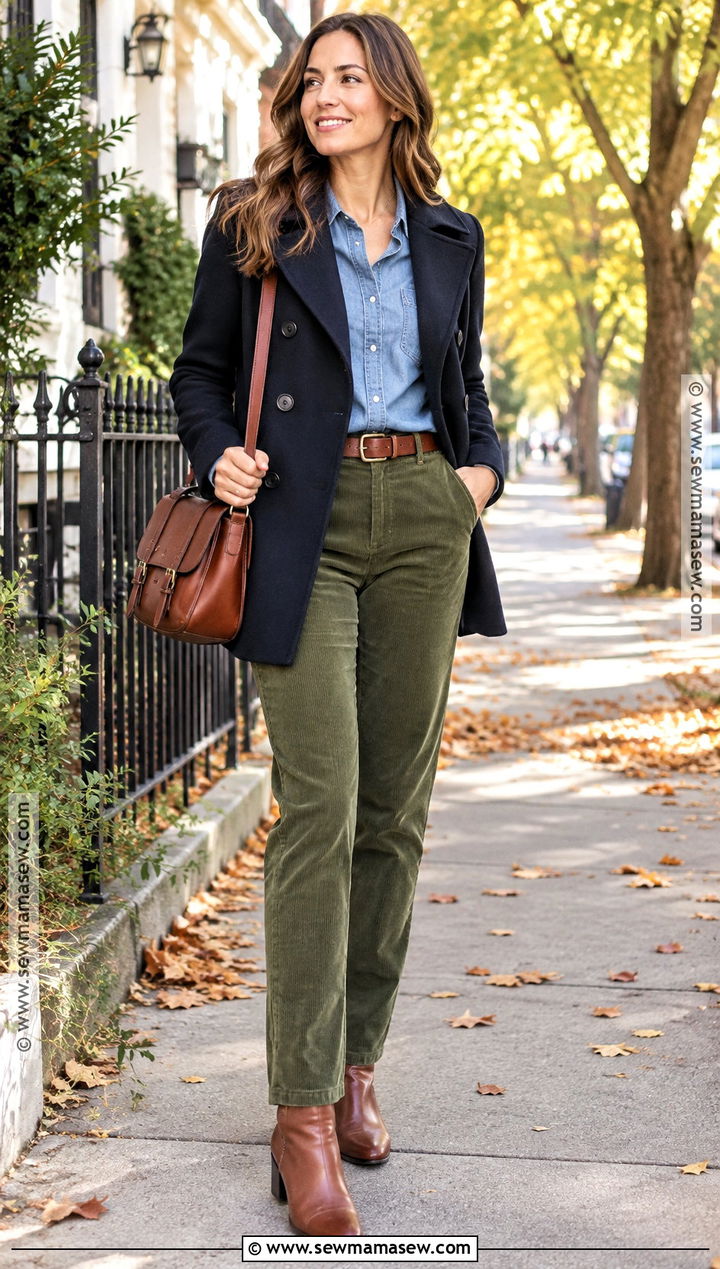
Corduroy and cognac leather share the same warm, slightly worn look, which is why they belong together. Straight-leg cords in cream, olive, rust or chocolate pair with a chambray shirt or light crewneck, and a navy peacoat cools the whole palette down. A cognac belt, structured satchel and simple studs finish it. Cropped cords can stop above the boot; full-length ones should fall cleanly over it. I keep the toe rounded or almond here, since a sharp point feels too dressy for corduroy. Fine wale looks neater and drapes better over a boot than chunky wide wale, which adds bulk at the ankle.
12. Cream Ankle Boots With Monochrome Knitwear
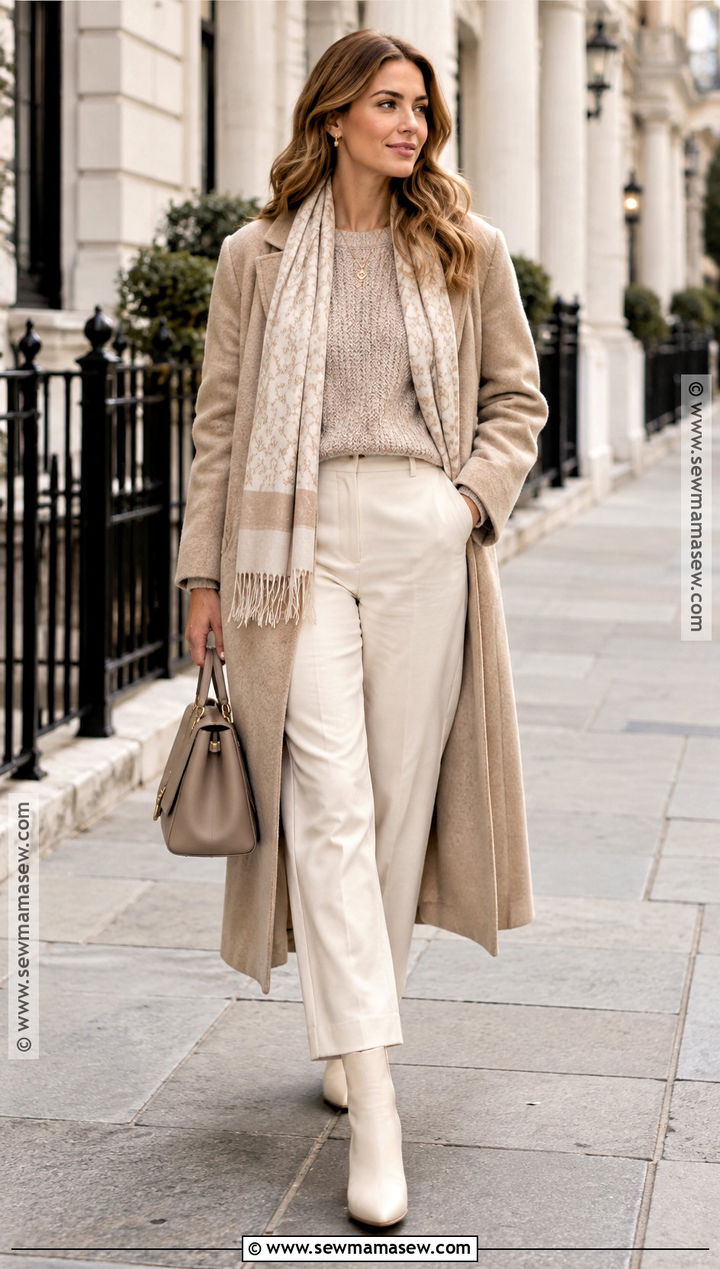
Cream boots surprise people in autumn, but they lighten all the dark colors the season brings. Build a tonal outfit with ivory straight-leg pants, an oatmeal sweater and a long beige coat, and vary the texture so the neutrals don't flatten into one block. Smooth leather looks more refined and wipes clean; suede is softer but shows every splash. A taupe bag, a light patterned scarf and small gold pieces are enough. Let the pants fall over the boot opening or end just above it, depending on the cut. I'll be honest: pale boots need upkeep. Treat them before the first wear and keep this outfit for dry days, or choose washable knitwear and a weather-resistant pair.
13. Sock Ankle Boots With Cropped Flare Jeans
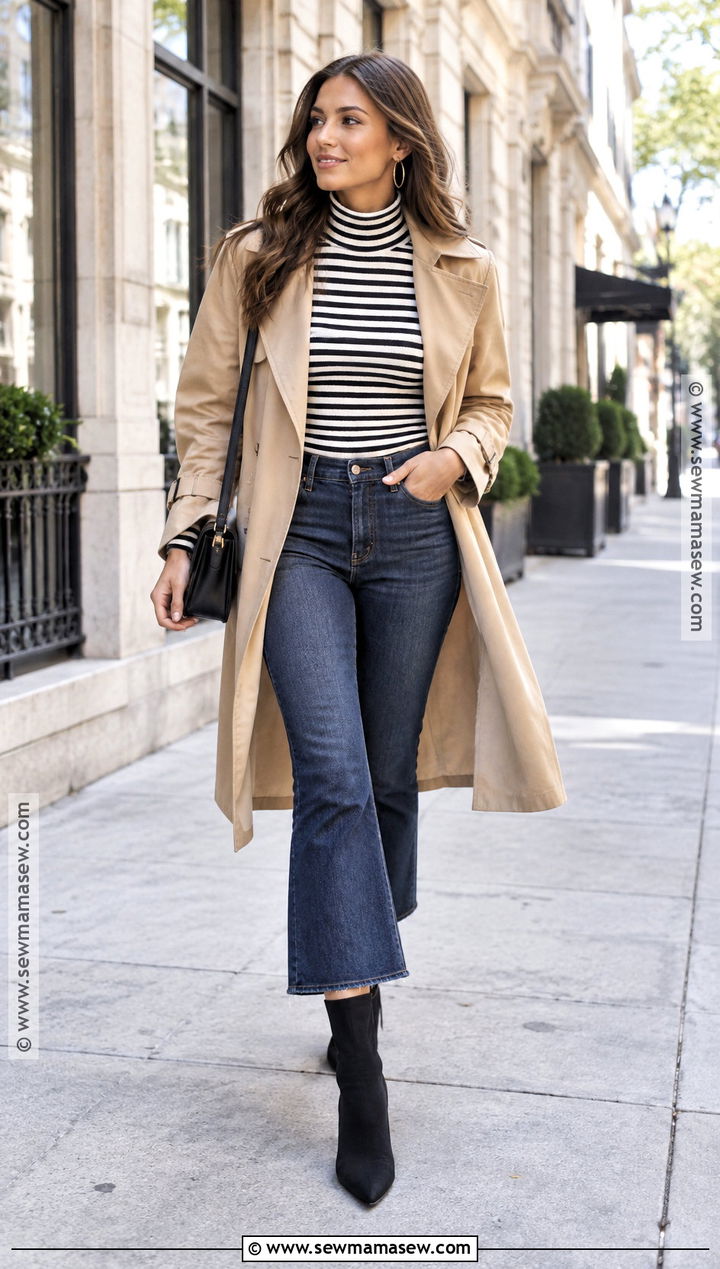
Cropped flares and ankle boots often leave an awkward gap, and a fitted sock boot is how I close it. The narrow shaft slips under the flare instead of pushing it out. Start with high-rise denim that ends just above the ankle, add a tucked striped knit or a fitted turtleneck and a trench that doesn't compete with the hem. Black is the classic base; chocolate or burgundy feels softer. A small shoulder bag and simple hoops are plenty. A pointed toe and modest heel carry the leg line past the flare. Shorter women should pick a subtle flare and keep the boot close to the denim color. Stretch sock boots can sag at the ankle over time, so I prefer a firmer knit or leather.
14. Square-Toe Ankle Boots With Satin Skirt
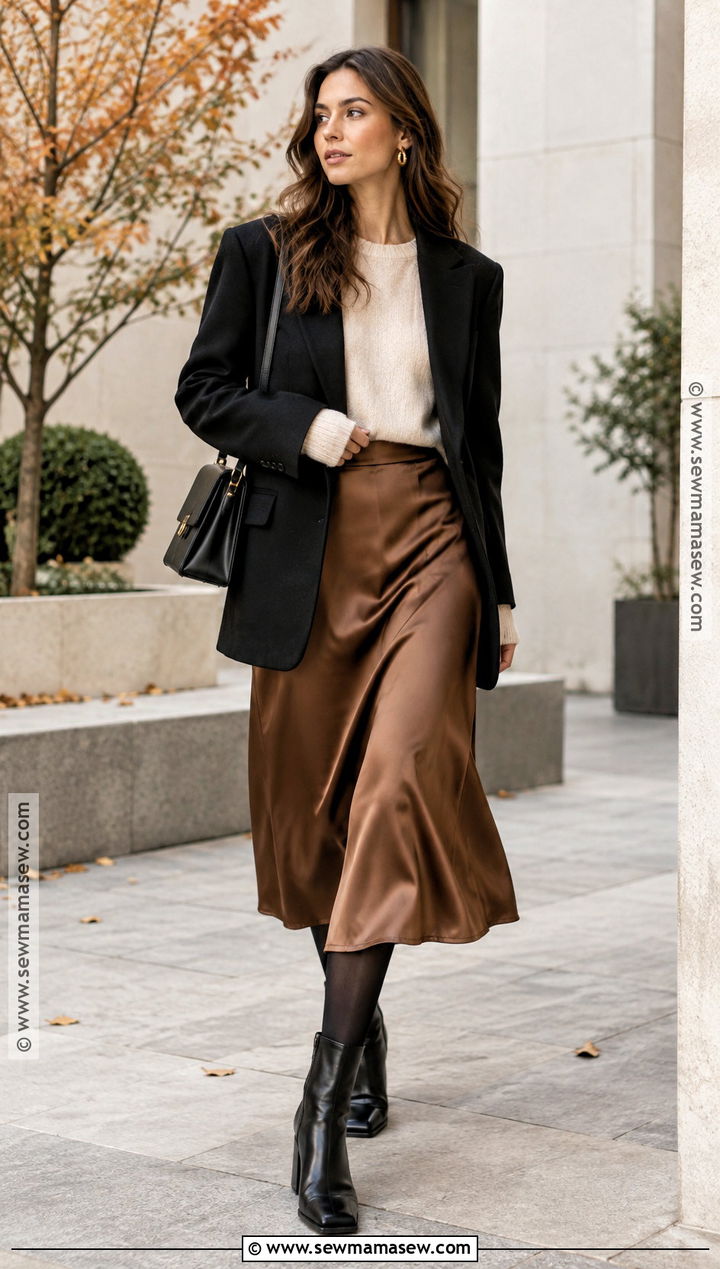
A square toe gives a satin midi skirt something solid to push against. Black leather boots work with deep green, bronze or burgundy satin and a relaxed cashmere sweater with just the front tucked into the waistband. An oversized blazer or a cropped wool jacket changes the proportions, so pick whichever suits your height. Carry a structured clutch or shoulder bag, with plain metal jewelry. The skirt should cover most of the shaft and leave the square toe showing. Satin clings to tights through static on dry days, which ruins the movement, so I keep smooth tights and a slip in mind. A low block heel and a long coat close to the skirt hem finish it.
15. Waterproof Ankle Boots With Trench Coat
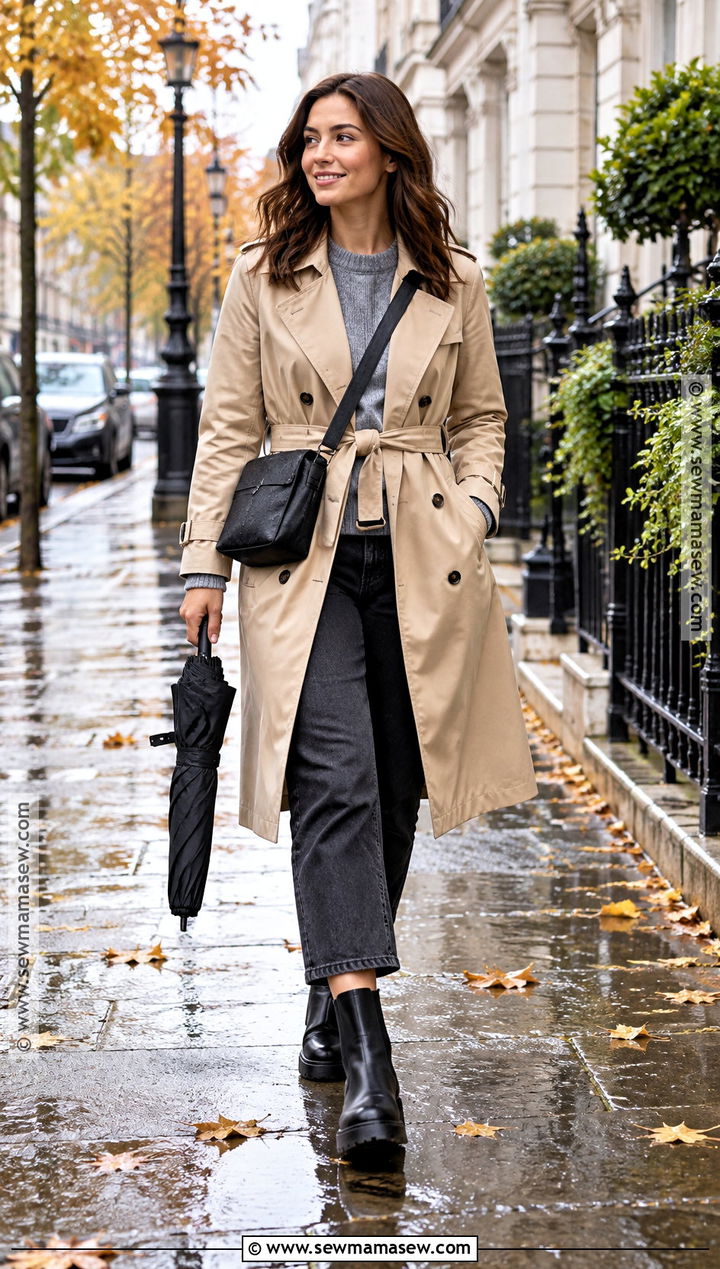
For actual rain I'd skip suede entirely and reach for waterproof leather or a rubber-finished boot. Pair it with dark straight-leg jeans, a light sweater and a belted trench. Cropped jeans keep hems out of puddles, and a fitted shaft stops water running in at the ankle. A water-resistant crossbody and a compact umbrella in a matching neutral are worth the extra thought. Textured rubber soles grip slick pavement far better than smooth leather ones. Black goes with nearly any trench; dark brown or olive softens a beige coat. Wear socks that stay below the boot opening and you have a commuting outfit that survives the whole season.
Salt Lines, Leaf Mud and Wet Suede After a Rainy Week
Autumn is hard on boots. Wet leaves stain, mud dries pale on dark leather, and by late in the season road salt leaves white tidemarks. A little care each week is far easier than trying to rescue a pair in spring.
Smooth leather
Wipe mud off while it's still damp, then let the boots dry slowly at room temperature, never on a radiator, which cracks the leather. For salt marks I use a cloth dampened with a mix of water and a little white vinegar, then condition once dry. A wax or cream polish every few weeks keeps water beading instead of soaking in.
Suede and nubuck
Spray with a protector before the first wear and again every few weeks. If suede gets soaked, stuff it with paper so it holds its shape, let it dry fully, then brush the nap back up with a suede brush. Rubbing it while wet flattens and darkens the surface for good. Light suede, like the cream pair above, is the least forgiving, so I save it for dry forecasts.
Between wears
Rotate pairs when you can, because leather needs a day to release moisture from your feet. Cedar shoe trees absorb that dampness and stop the ankle creasing into a permanent fold. Resoling a good leather boot is usually worth it; replacing a cheap one every year usually isn't.
Two Pairs Will Carry Most of These Outfits
If you're starting from scratch, I'd buy one sleek black leather pair with a low block heel and one brown suede or cognac pair, then add a waterproof boot once you see how often you're caught in rain. Those two or three cover nearly everything above. Before leaving the house, check two things in the mirror: that trouser hems aren't dragging and that skirt lengths don't stop right at the shaft. Wide legs want a little heel; dresses want tights and a boot that sits cleanly under the hem. Start with the pieces already in your closet, and let the boots do the work of making them feel like autumn.
Related posts: