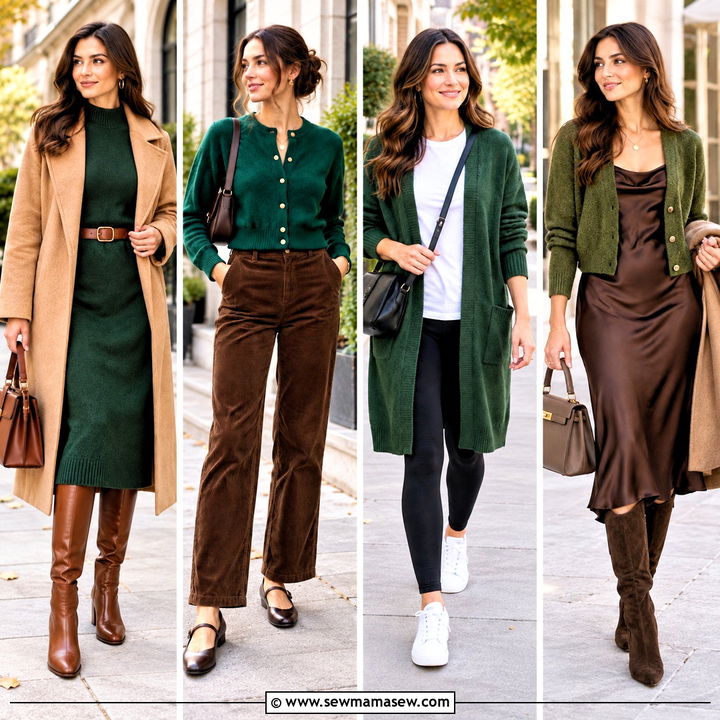
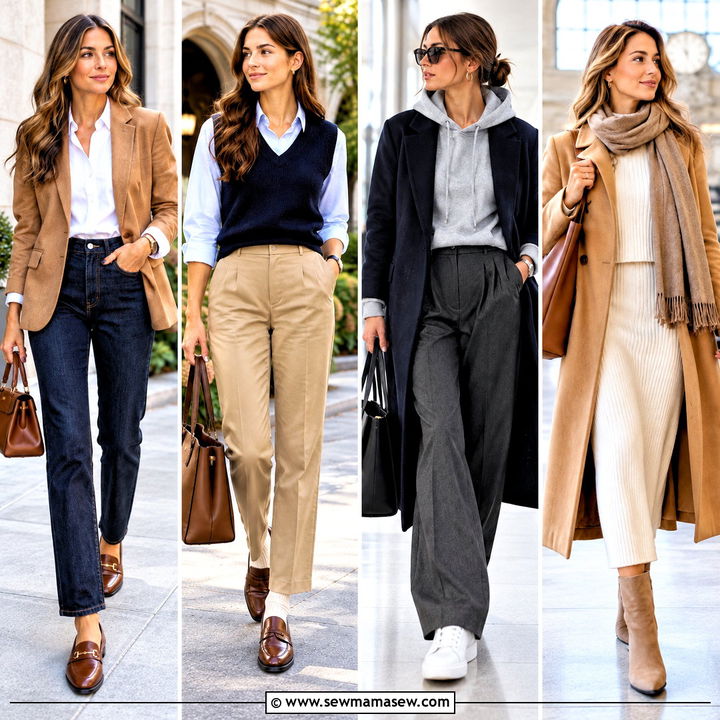
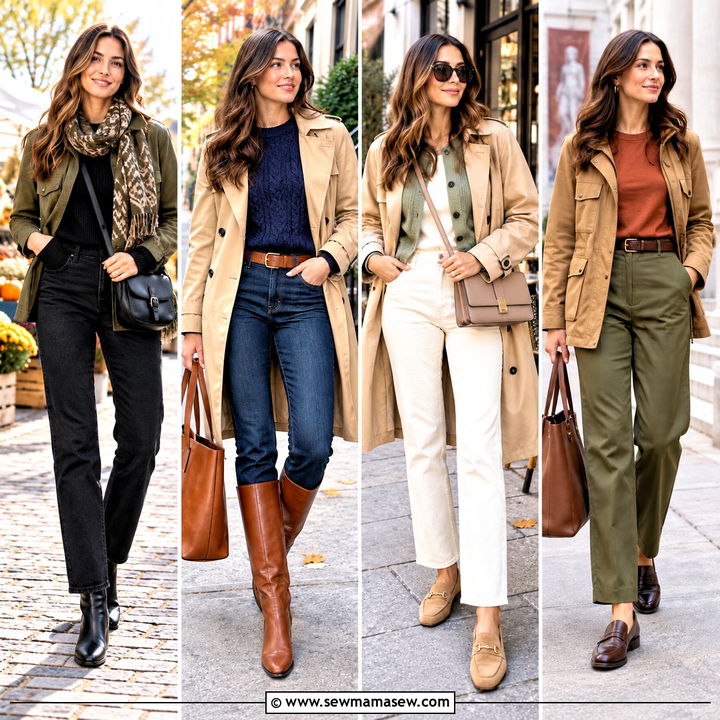
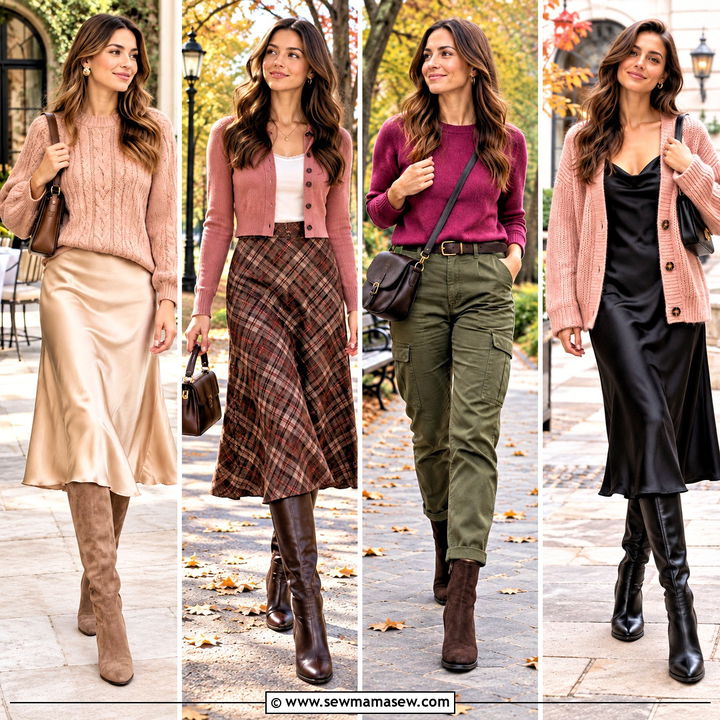
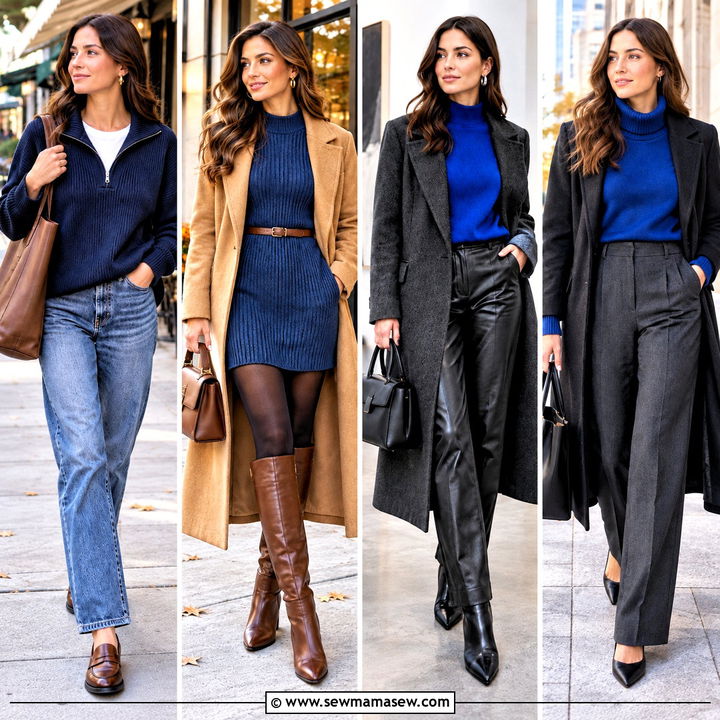
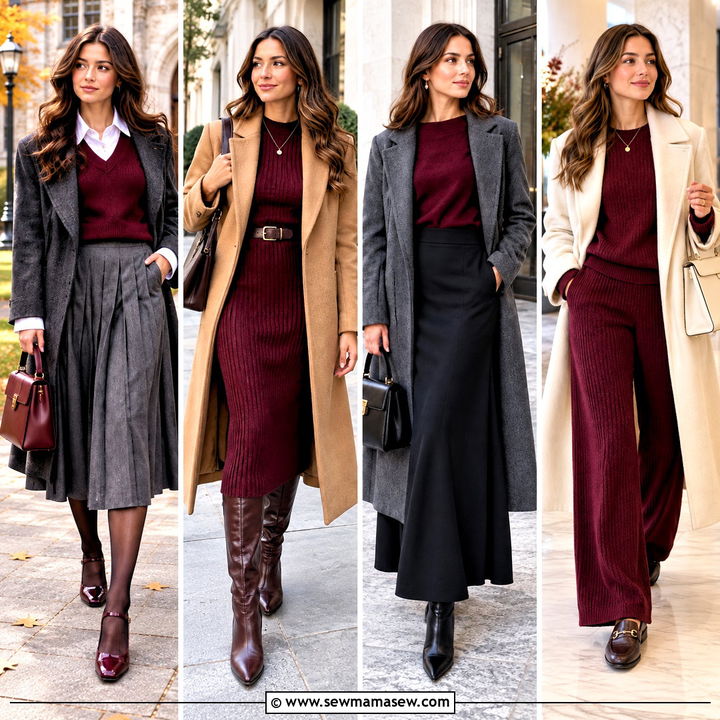
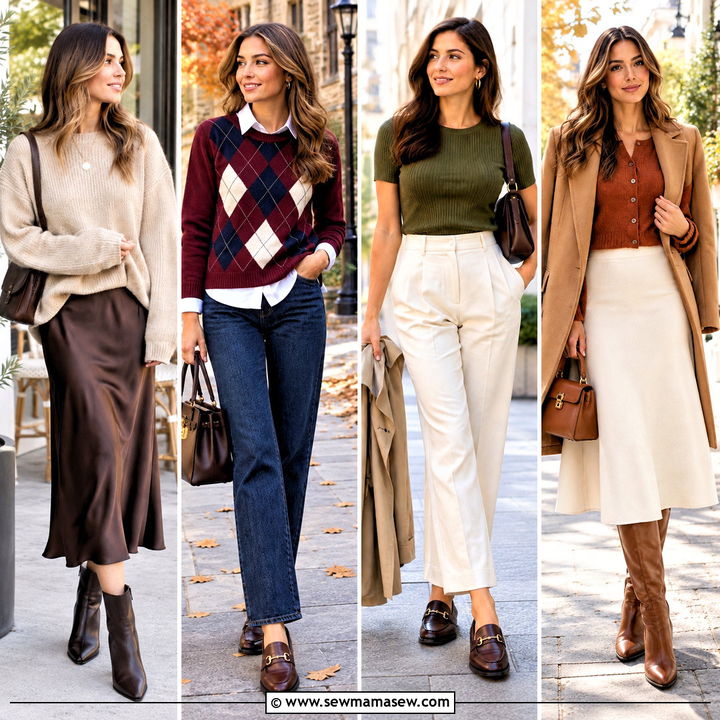
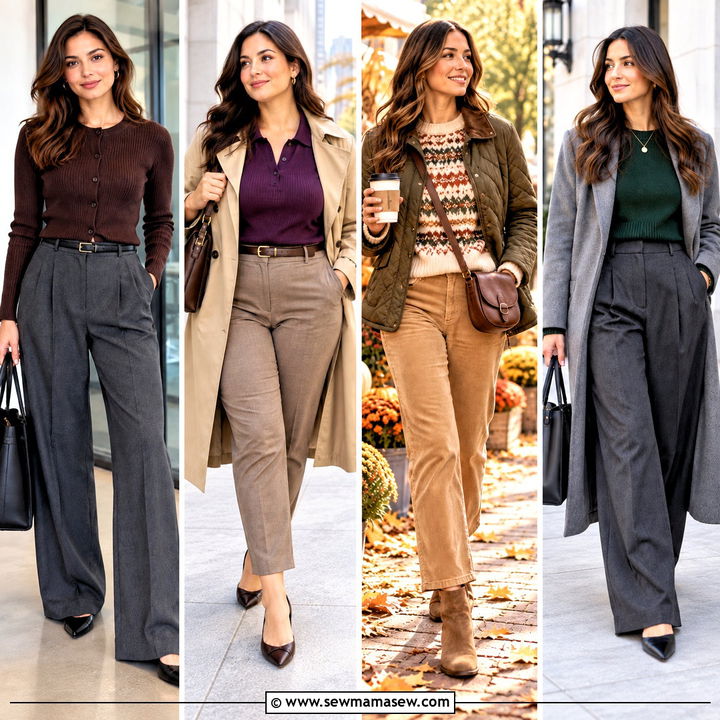
Green is the knitwear color I see people hesitate over most, and it's usually because they bought the wrong green once and decided the whole family wasn't for them. It is a big family. Moss, olive, sage, forest and emerald all behave differently next to skin and next to other clothes, and the cut of the knit matters as much as the shade: a knitted polo, a cable cardigan and a ribbed dress each need a different partner. Below are fifteen complete outfits that put green sweaters, vests, cardigans and sets with the autumn pieces most closets already hold, from denim and tailored trousers to midi skirts, boots and loafers. Some lean earthy with camel and chocolate; others sharpen the green against black, cream or charcoal. For each one I've noted what I check first and where it tends to go wrong.

Sage, Olive, Forest or Emerald Next to Your Face
A sweater sits right under your chin, so its color affects your face more than trousers or boots ever will. Before recommending a green, I hold a few shades up near the face in daylight and watch what happens to the skin. The wrong green makes the skin look sallow or greyish; the right one makes it look clearer without you having to do anything.
- Olive and moss carry yellow, so they tend to flatter warm and olive skin tones and can drain very fair, cool skin.
- Sage is greyed and soft. It suits people with muted, low-contrast coloring and can look washed out on someone with very dark hair and pale skin.
- Forest green is the most forgiving of the five. Deep and fairly balanced, it suits most people, which is why I suggest it to anyone unsure.
- Emerald is clear and bright. It loves high contrast, such as dark hair with fair skin, or deep skin tones, and overwhelms soft, light coloring.
If you love a shade that doesn't suit you, keep it away from the face. Wear it as a cardigan open over a cream or white top, or as trousers, and you get the color without the effect on your skin.
1. Olive Green Knitwear With Straight-Leg Jeans
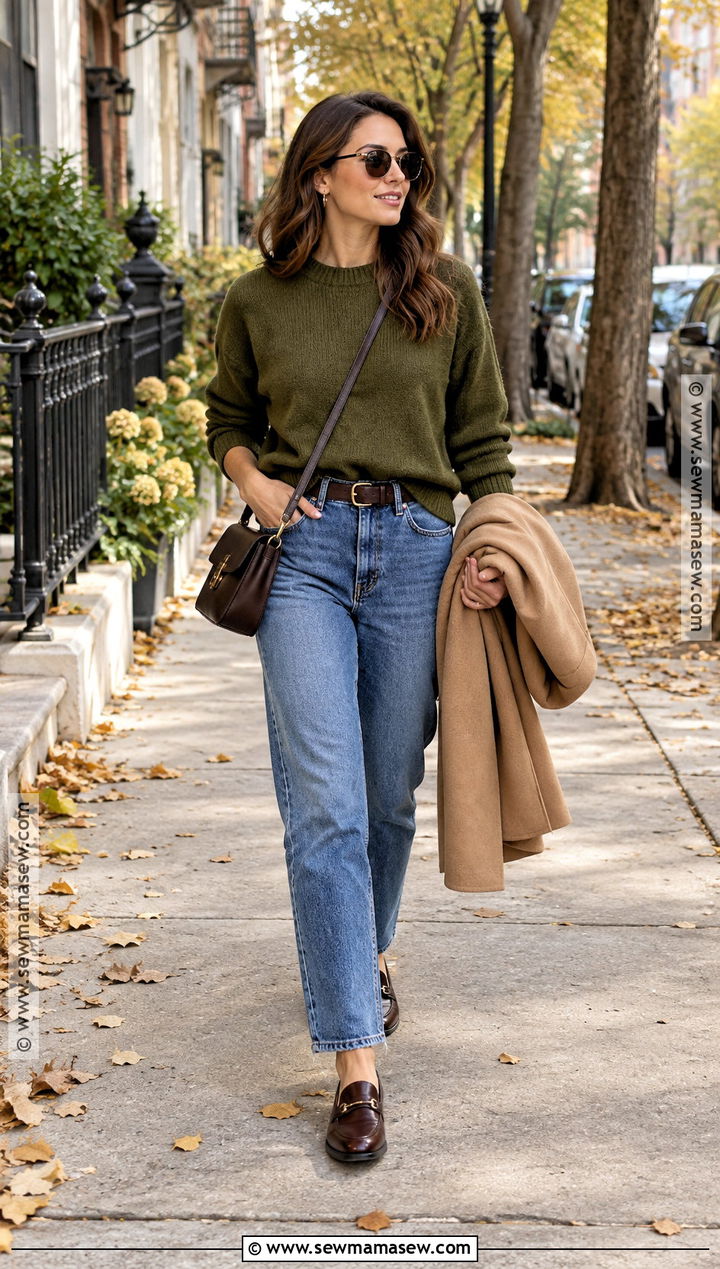
This is the outfit I'd build first, because olive behaves almost like a neutral. An olive crewneck with straight-leg jeans covers most weekdays, and the wash sets the tone: medium for relaxed, dark indigo for a little smarter. The French tuck is worth practicing. Pull only the centre front into the waistband so the hem sits just past the hipbone; tuck too far to the side and the knit bunches. Leave it out entirely if you'd rather have more coverage at the middle. Chocolate loafers with a matching belt, a structured crossbody, small gold hoops. With an oversized sweater, keep the jean leg straight rather than wide, or the whole outline turns boxy. On colder days a camel wool coat goes over the top, with a cream, rust or muted plaid scarf.
2. Sage Green Cardigan With Cream Trousers
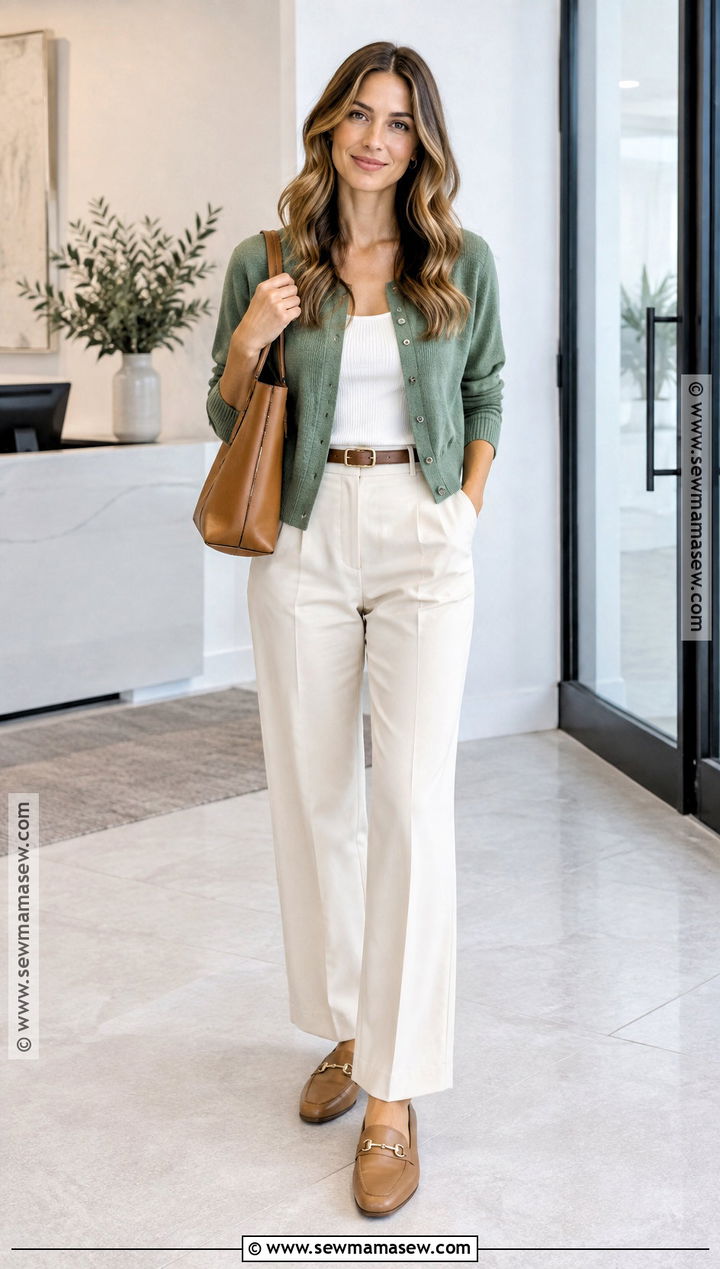
Sage and cream is a pale combination, and pale shades show every flaw in fit, so I look at the trousers before the cardigan. They need weight. Thin cream fabric shows pocket bags and underwear lines, so I steer people toward lined twill or brushed cotton, or toward light taupe, which hides more. A fitted sage cardigan can be buttoned and worn as a top, or left partly open over a white ribbed tank, with high-waisted trousers in a straight or gently wide leg. Tan loafers, a cognac bag and a slim brown belt give the soft palette some depth. It's tidy enough for an office and still comfortable on a travel day.
3. Forest Green Turtleneck With Satin Midi Skirt
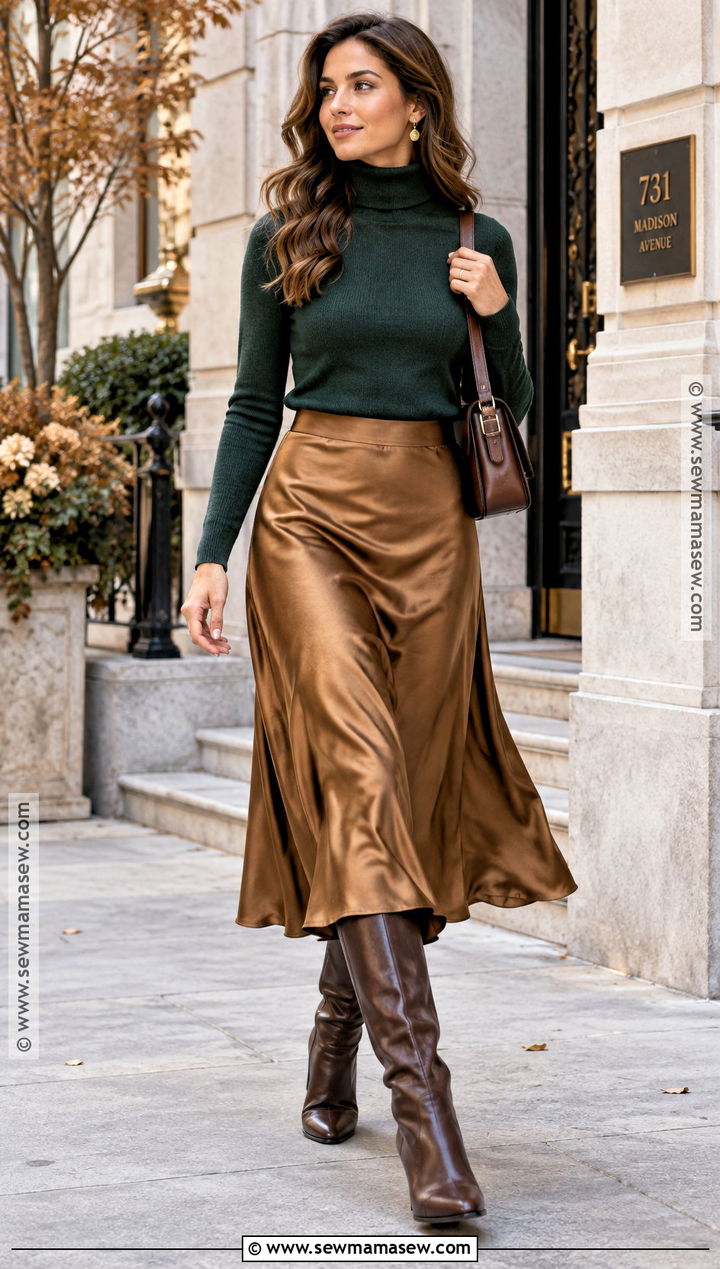
Wool and satin is one of my favorite texture pairings because each makes the other look richer. A forest turtleneck above a satin midi in champagne, bronze, chocolate or black works, and the darker the skirt, the calmer the result. Gauge decides the tuck. A fine-gauge knit tucks fully and lies flat under the waistband; a chunky one should only be front-tucked, or it pushes the satin out at the hip. Satin also clings to tights through static, so a slip or an anti-static spray is worth having. Knee-high leather boots disappear under the hem, a structured shoulder bag stops everything looking too soft, and a tailored charcoal coat finishes it without pulling attention from the green.
4. Emerald Green Knitwear With Black Wide-Leg Pants
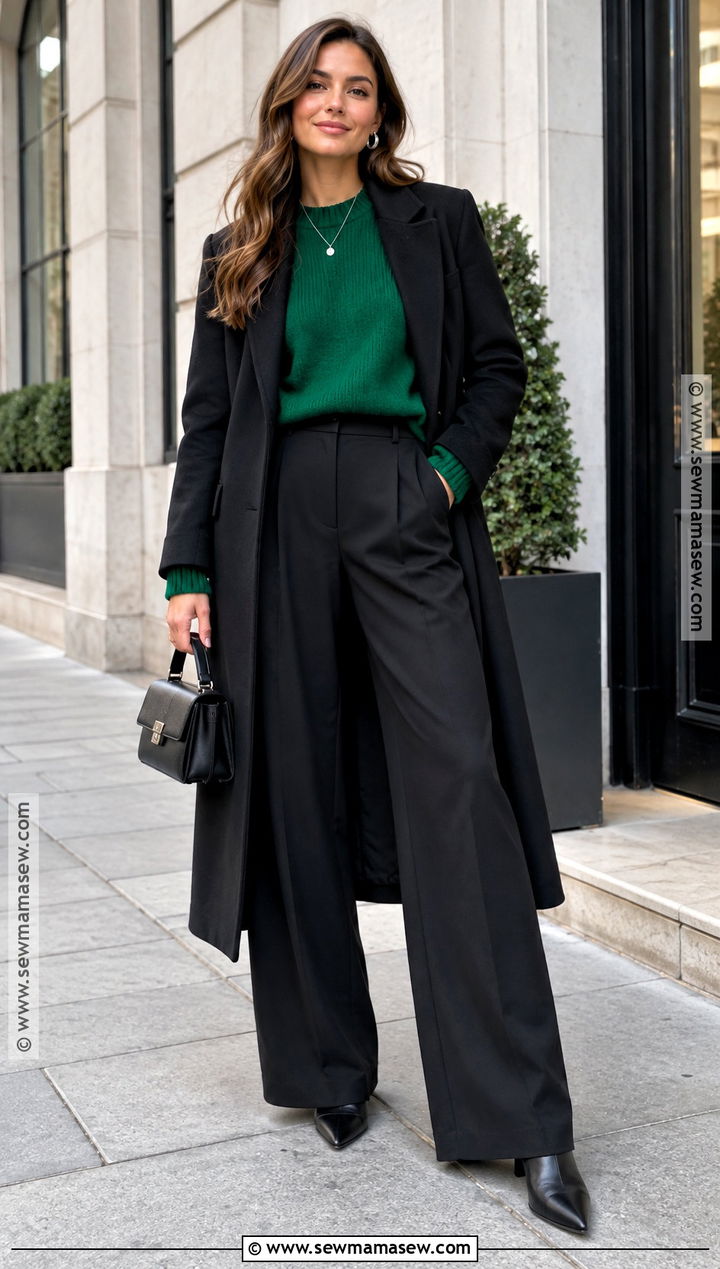
Emerald is the loud one, and black is what makes it wearable. Against black wide-leg trousers the color reads deliberate rather than festive. My first check is length: the sweater should either meet the waistband or be partly tucked, because emerald hanging loose to mid-hip shortens the leg. Pointed black ankle boots carry the trouser line down; a compact black bag keeps the rest quiet. Silver gives a crisp, cool edge, gold a warmer one. A long black coat or a blazer makes it office-ready. Because neckline, sweater length and trouser rise can all be swapped independently, I find this one adapts to most body shapes.
5. Moss Green Cable Knit With Brown Corduroy Pants
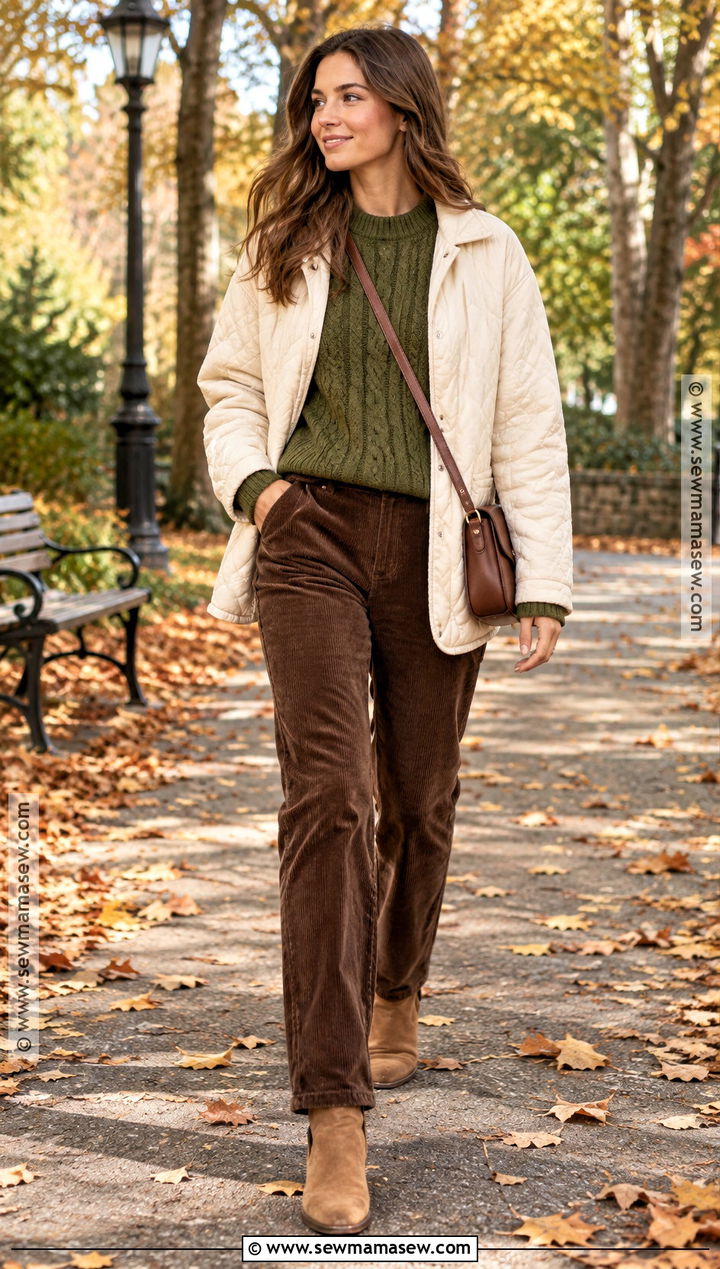
Two bulky textures in one outfit is the risk here. Cable-knit wool and corduroy both add depth, which is the appeal, but they also add width. I solve it with a front tuck or a slightly shorter sweater so the waist shows. The pairing itself is sound: moss green over chocolate-brown cords in a straight, bootcut or relaxed leg, with a fitted cotton tee underneath for a comfortable neckline and an extra layer to strip down to. Tan suede ankle boots, a brown crossbody and brass or gold hardware. A cream quilted jacket lifts the palette and keeps the outdoorsy feel.
6. Green Knit Polo With Dark-Wash Jeans
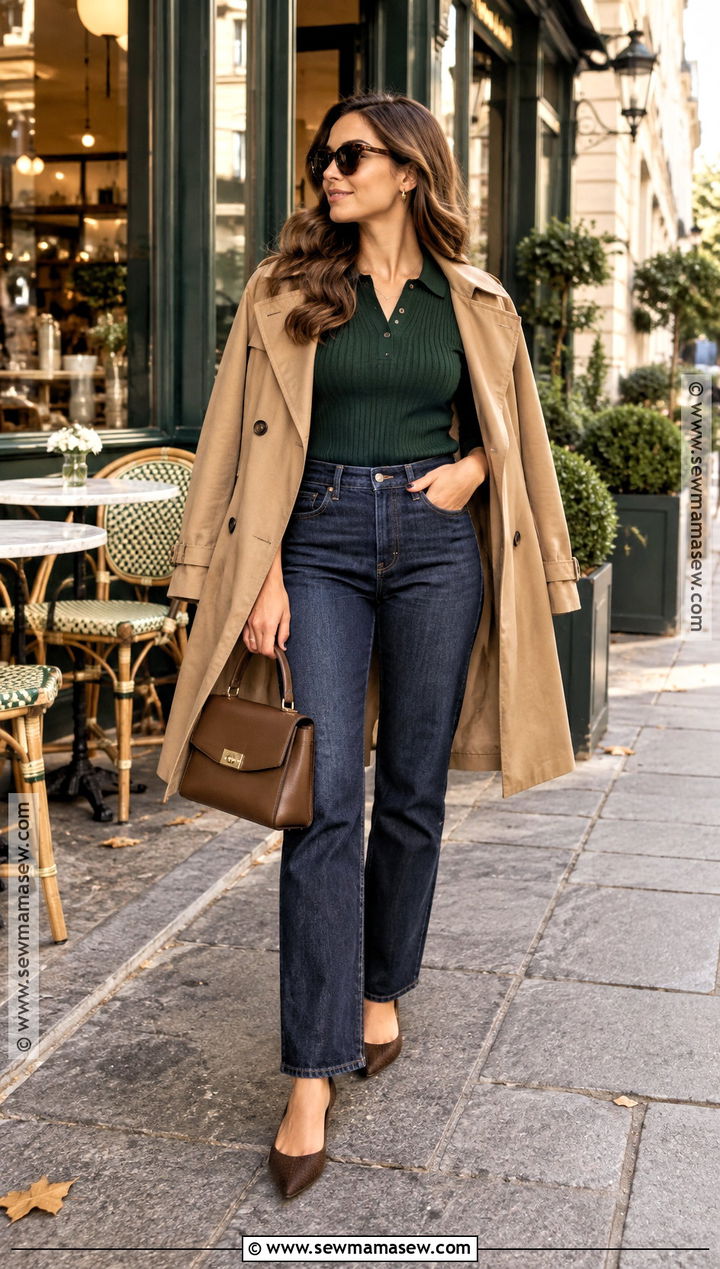
A knit polo does what a crewneck can't: the collar frames the face and adds structure, so it passes for smart casual without trying. Olive, fern or forest with dark-wash jeans in a straight or slightly flared leg. I check where the hem lands before anything else. If it ends at the hip, leave it out; if it's longer, tuck it into high-rise denim. Pointed brown flats keep it low-key and heeled ankle boots dress it up. A medium top-handle bag and a simple watch. When it gets cold, a camel trench or chocolate suede jacket still lets the collar show at the neck.
7. Green Chunky Cardigan With Black Slip Skirt
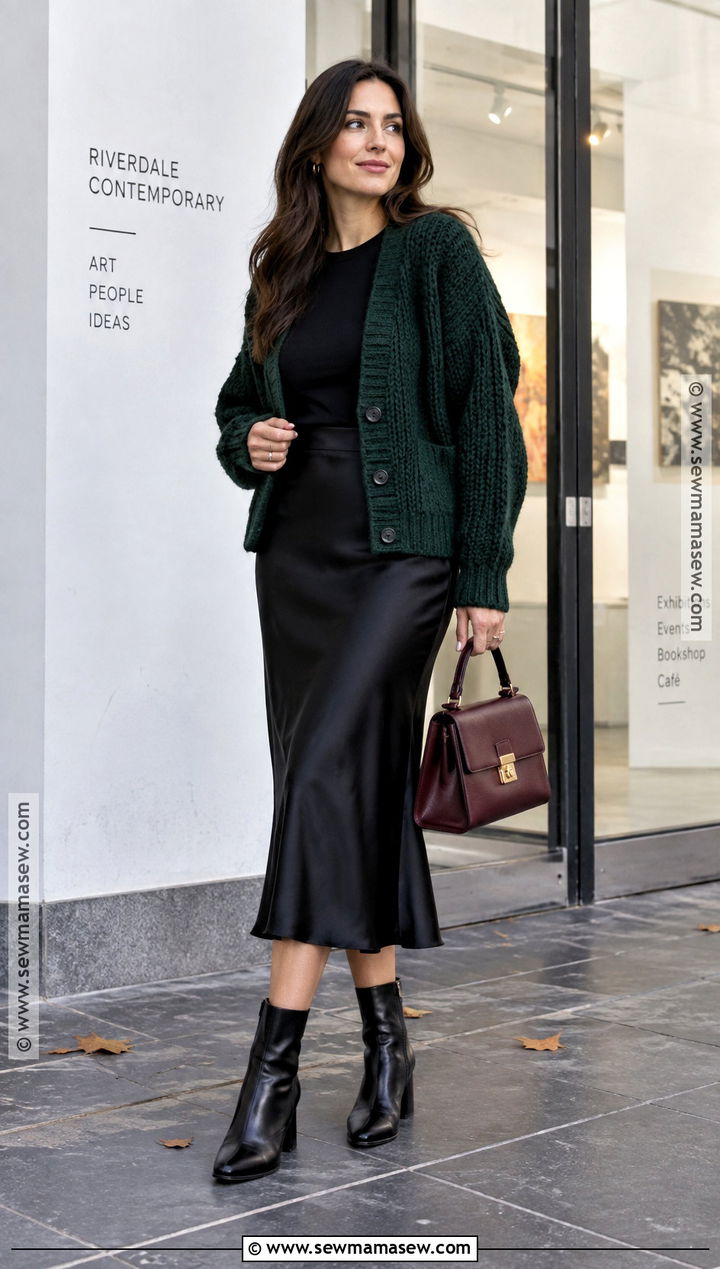
Chunky cardigans are heavy, and that weight pulls the shoulders forward and drags open buttons down. Over a black slip skirt it's worth fighting for, because the soft knit takes the edge off something sleek. Choose forest, bottle or dark olive and wear it over a fitted black tank or a thin crewneck. I button only the middle two and tuck one side near the waistband, which gives shape and keeps the relaxed character. Black ankle boots and sheer black tights make it fit for cooler weather, and a burgundy or dark brown structured bag adds a second autumn color. For more coverage, swap the slip for an A-line satin midi.
8. Green Sweater Vest With White Shirt And Trousers
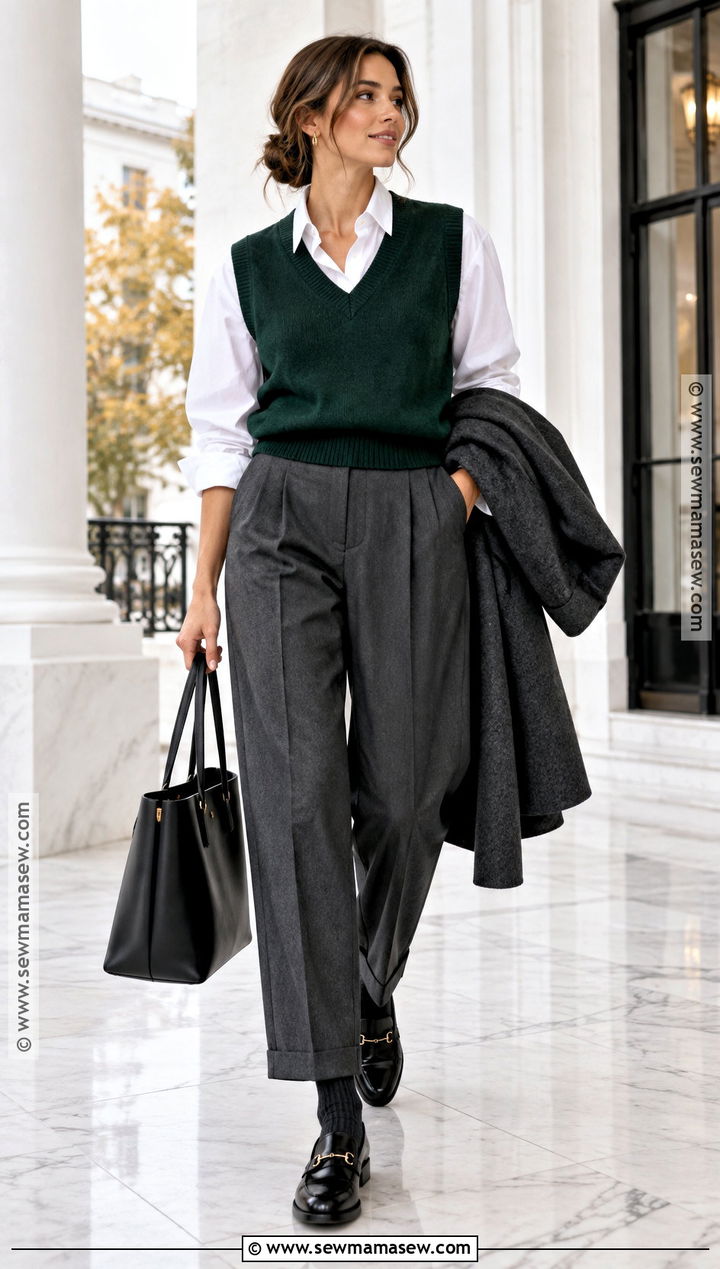
The sweater vest has an academic feel, and the shirt underneath is where it either looks crisp or stiff. I go a size up in the white button-down so the sleeves have room, then roll the cuffs twice. Forest, olive or moss over charcoal pleated trousers is the color pairing I'd pick. A cropped vest with high-rise trousers shows off the waist; a hip-length vest with side slits and straight trousers gives a longer line. Black loafers, ribbed socks and a structured leather tote. Add a charcoal wool coat as it cools, and keep jewelry to studs and a watch.
9. Green Knit Dress With Knee-High Boots
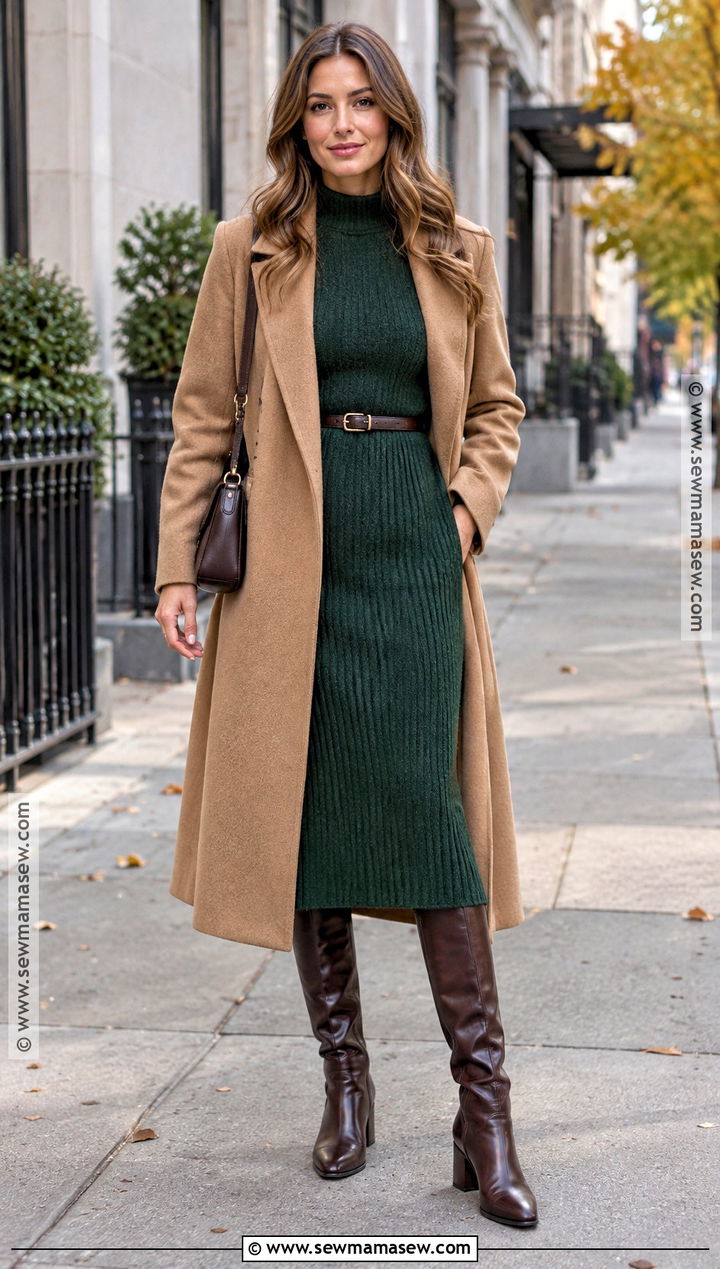
A knit dress is one piece, which is the appeal, but knit clings, so fabric weight is everything. I look for a midi in forest or olive with enough body to skim rather than hug; a ribbed column gives a clean line, a belted sweater dress gives a waist. Thin knit dresses show every seam underneath, so smoothing shorts or opaque tights help. Chocolate knee-high boots and a matching shoulder bag keep it tonal; black boots and a black coat add contrast. If you layer a long camel coat, let a few inches of green show below the hem rather than letting the coat cover it. Medium hoops and a pendant that sits above the neckline.
10. Green Striped Knitwear With Ecru Jeans
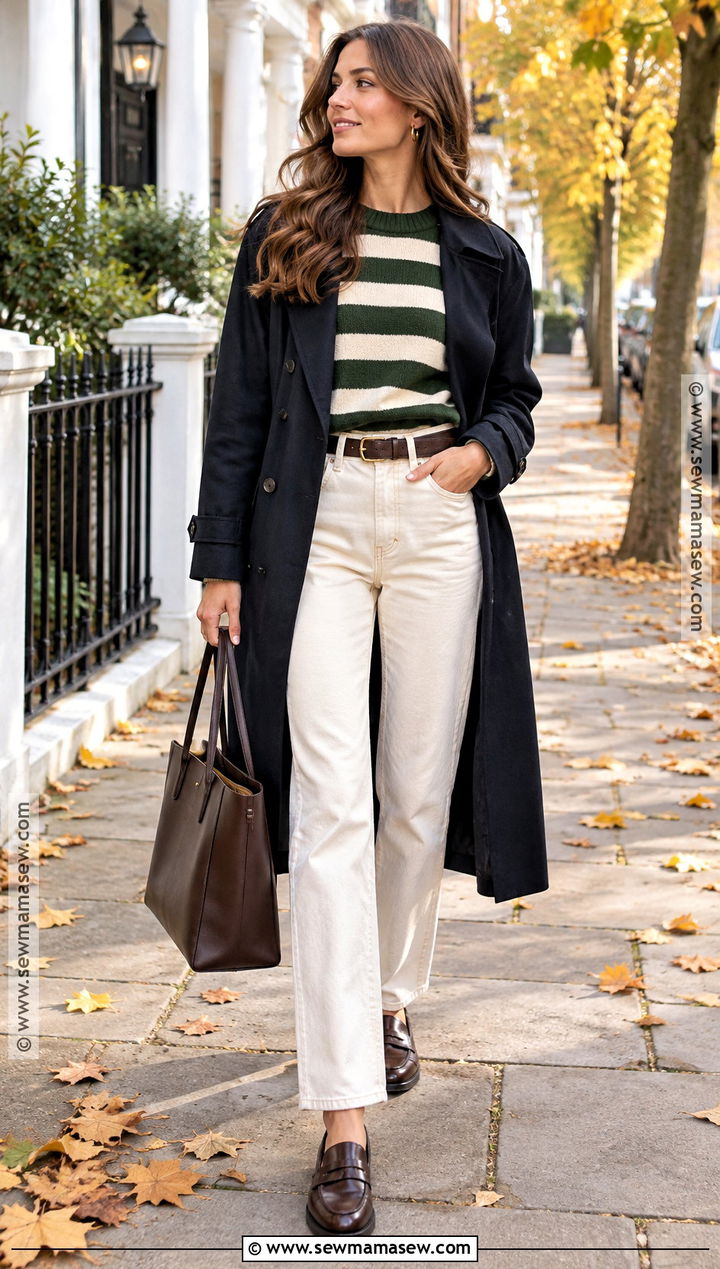
Stripes are graphic, so I keep everything else plain. Forest and cream, olive and white or moss and navy all work with ecru straight-leg jeans, which keep early autumn looking light without tipping into summer. Stripe width is the part to get right. Narrow stripes and a shorter sweater suit petite frames; taller people can carry broad bands and longer cuts. With a loose knit, push the sleeves up slightly and front-tuck to show the waistband. Dark brown loafers, a matching belt, a structured tote. A navy trench or brown barn jacket when needed, and almost no jewelry.
11. Green Quarter-Zip Knit With Leggings
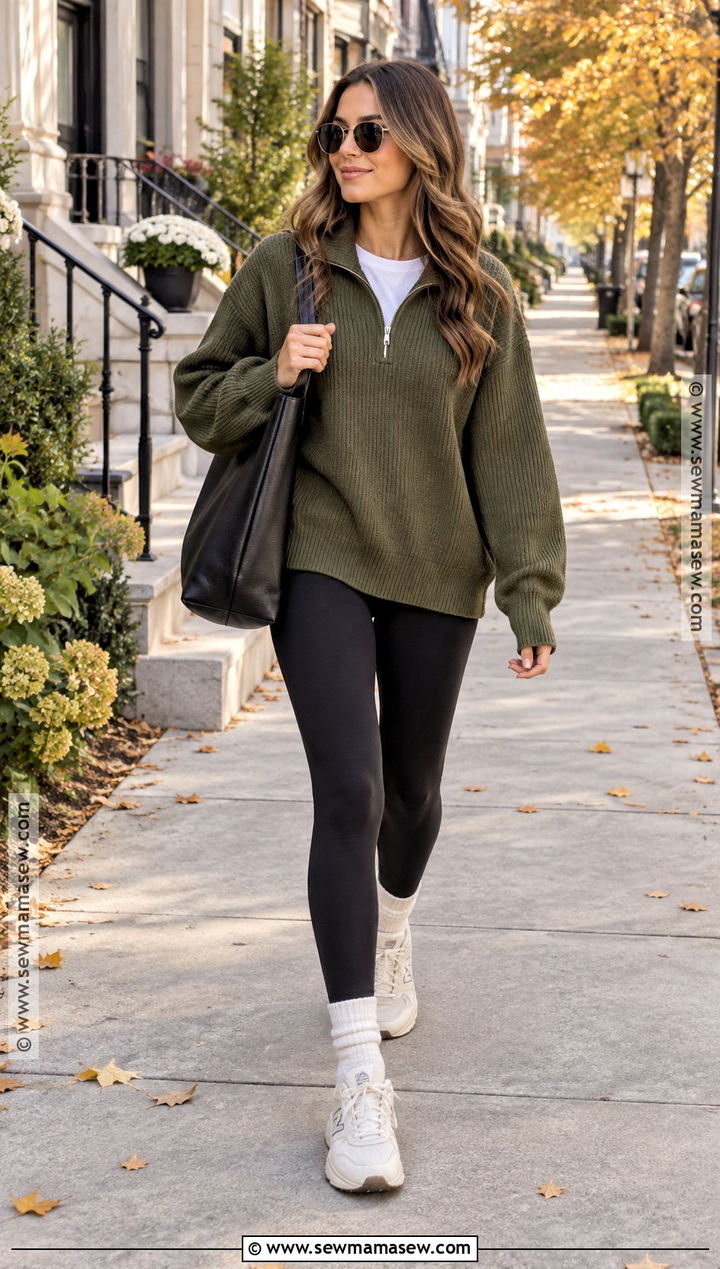
I'll be honest, this is a weekend errands outfit and doesn't pretend otherwise. An oversized green quarter-zip over thick black leggings, and the leggings must be opaque, because cheaper pairs go sheer when you bend. A long knit below the hip gives more coverage; a shorter one with flared leggings balances better. A white tee showing at the collar and hem breaks up the dark palette. Retro sneakers, ribbed socks, a roomy nylon or canvas tote, maybe a black cap. A lightweight quilted vest adds warmth without bulking up the arms. The rich green and matched accessories are what keep it from looking thrown on.
12. Green Cardigan With Plaid Midi Skirt
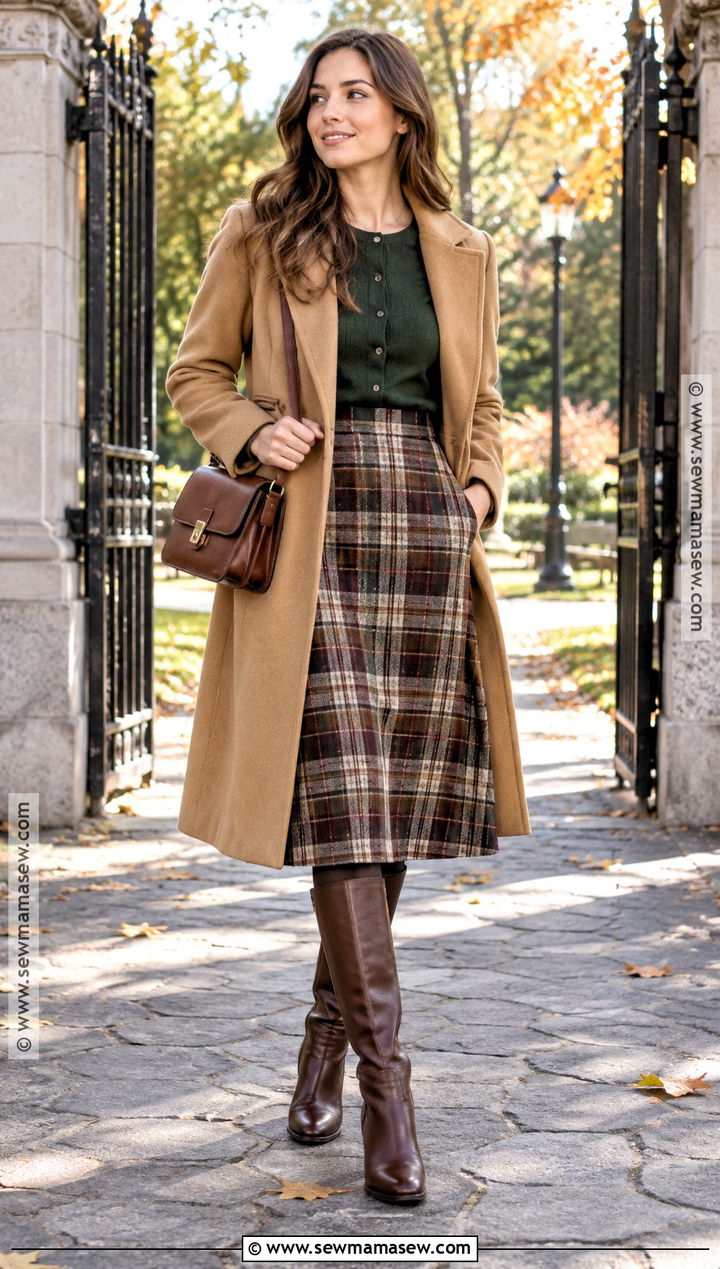
Green and plaid share the same autumn colors, which is why they sit together so easily. The rule I follow: one pattern leads. An ornate or heavily cabled cardigan against a busy check fights, so keep the knit plain if the plaid is loud. A fitted olive or forest cardigan, buttoned and tucked into a midi with cream, brown, burgundy or charcoal checks, or open over a camisole for something softer. An A-line skirt moves easily when you walk; a bias cut is sleeker but shows more of what's underneath. Knee-high brown boots, a structured satchel, then a camel coat and opaque tights on colder days.
13. Green Knit Set With A Trench Coat
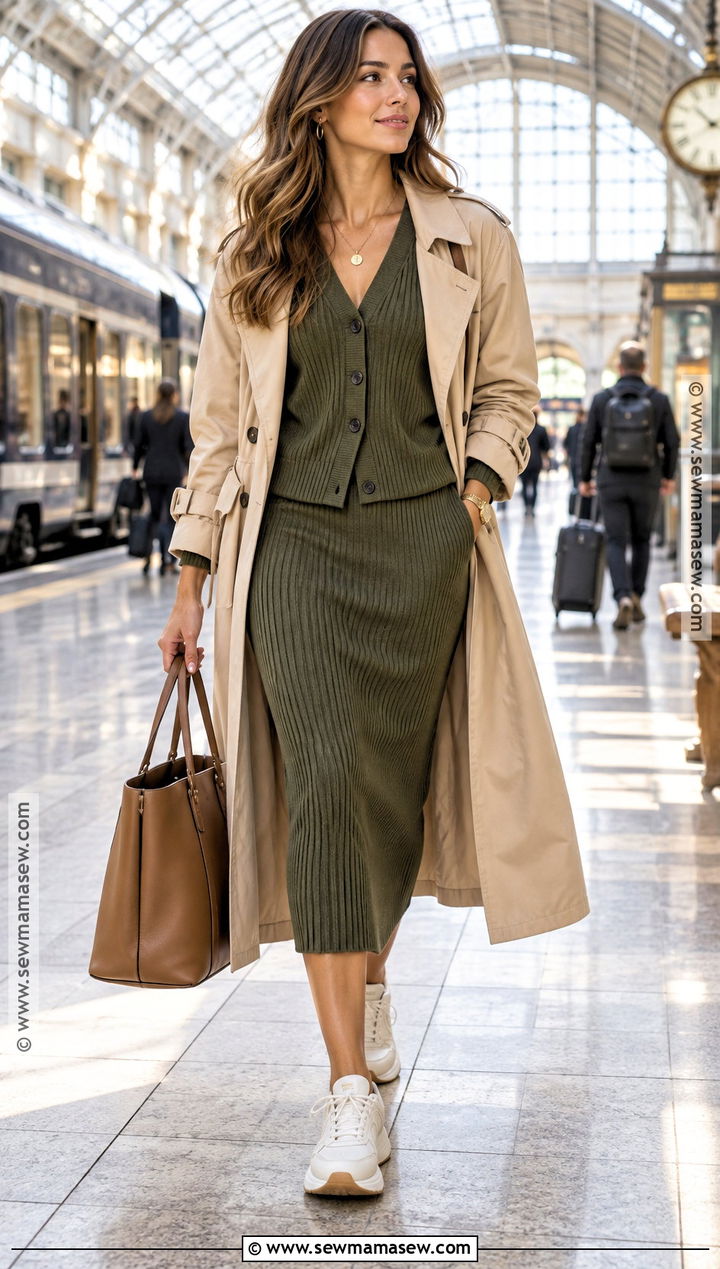
Matching knit sets make dressing simple, and they're also unforgiving. Thin knit shows lines underneath, so I insist on medium weight and smooth, flat base layers. A ribbed cardigan with a matching midi skirt, or a relaxed top with straight knitted trousers, in olive, sage or deep moss. A stone or beige trench left open keeps the column of green visible. Cream sneakers for daytime, brown loafers to sharpen it, a tan tote and quiet gold jewelry. If you can't find an exact match, two close greens worn together often look better than a set, because the slight difference adds depth.
14. Oversized Green Sweater With Leather Pants
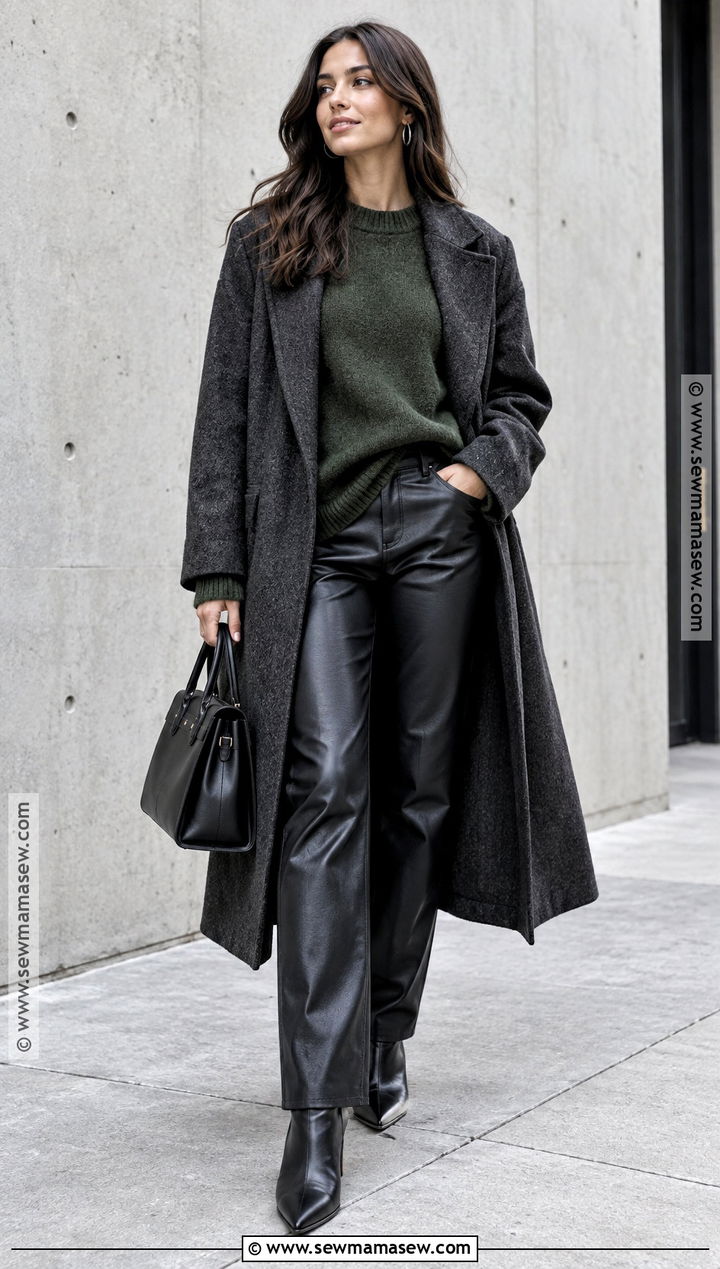
Soft against sleek is the whole idea: a forest, emerald or dark moss knit that ends at the upper hip, over straight-leg black leather or leather-look trousers. I steer people away from skin-tight leather here. A straight leg balances the volume of the sweater and is far more comfortable to sit in, and real leather softens and moulds to you after a few wears. Black lug-sole boots give it an edge, pointed ankle boots refine it. A structured black bag, silver hoops, a long charcoal coat. If the sweater looks shapeless, tuck a small section at the front and push the sleeves to the forearm to show the wrists.
15. Tonal Green Knitwear With Olive Cargo Pants
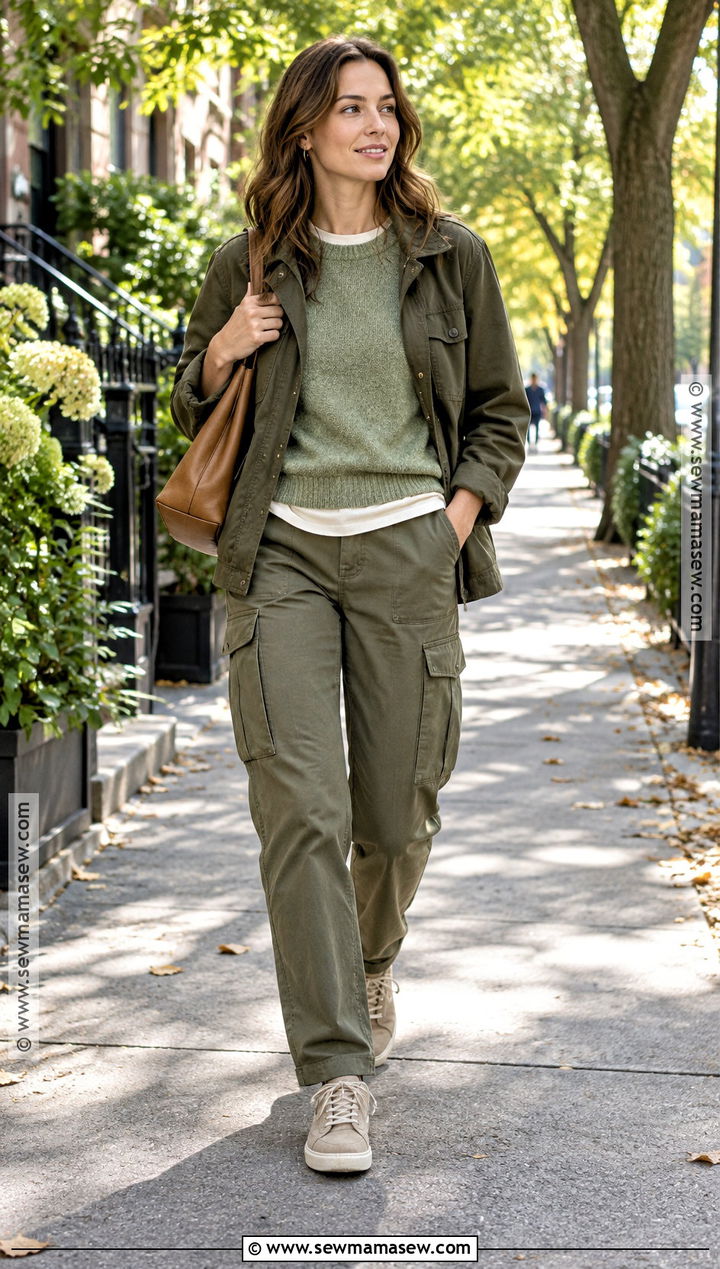
Tonal green only works if the shades are clearly different in depth. Sage or moss on top and noticeably deeper olive cargo trousers below keeps each piece readable; two mid-greens of similar depth just look like a mismatch. Cargo pockets add width at the thigh, so I pick a pair with flat, streamlined pockets. Beige suede sneakers or brown ankle boots, and a dark green utility jacket when it's cold. A cream tee at the neck and a tan leather bag break up all that green. It's practical for travel, sightseeing and long active days.
Gauge and Fiber Decide How a Green Knit Wears
Two sweaters in the same shade can behave completely differently. Gauge is how fine the knit is: fine gauge lies flat, tucks neatly and layers under a blazer, while chunky gauge is warm but adds bulk and needs a slim partner. I check gauge before I think about the outfit.
Fiber decides how it lasts. Wool and merino are warm, resist odor and recover their shape well. Cashmere is softer and warmer for its weight but pills easily in its first months. Cotton knits breathe but stretch and sag, especially in heavy cardigans. Acrylic is cheap and holds color, though it pills fast and doesn't breathe, so it can feel clammy indoors. Blends with a little nylon tend to wear longer than pure fibers at friction points like the underarms.
Pills, Stretch and Storage Through the Season
Pilling shows up where the knit rubs: under the arms, at the sides where a bag strap sits, at the cuffs. It's normal and isn't a sign of a bad sweater, though it does happen faster on soft, loosely spun yarn. A fabric shaver or a sweater comb removes it in a few minutes.
- Fold knitwear rather than hanging it. Hangers stretch the shoulders out of shape, and heavy cardigans are the worst for it.
- Hand wash or use the wool cycle in cool water, then press water out in a towel and dry flat. Wringing and tumble drying felt and shrink wool.
- Turn deep greens inside out to wash; dark dyes fade at the surface where the fabric rubs.
- Air a sweater between wears instead of washing it every time. Wool rarely needs it.
- Store clean knits in a breathable bag at the end of the season, because moths go for wool with traces of skin oil on it.
One Olive Sweater Is Enough to Begin
If I were starting from nothing, I'd buy one olive sweater and wear it with the denim, cream trousers, black pants and brown boots you already have before buying anything else green. Then move along the scale: sage when you want something soft, forest for a classic look, emerald for contrast. Watch proportion as much as color. Chunky knits want slim bottoms, fitted knits can take wider trousers or a fuller skirt. Look after the knits and the same pieces will take you from mild September through to the cold end of the season.
Related posts: