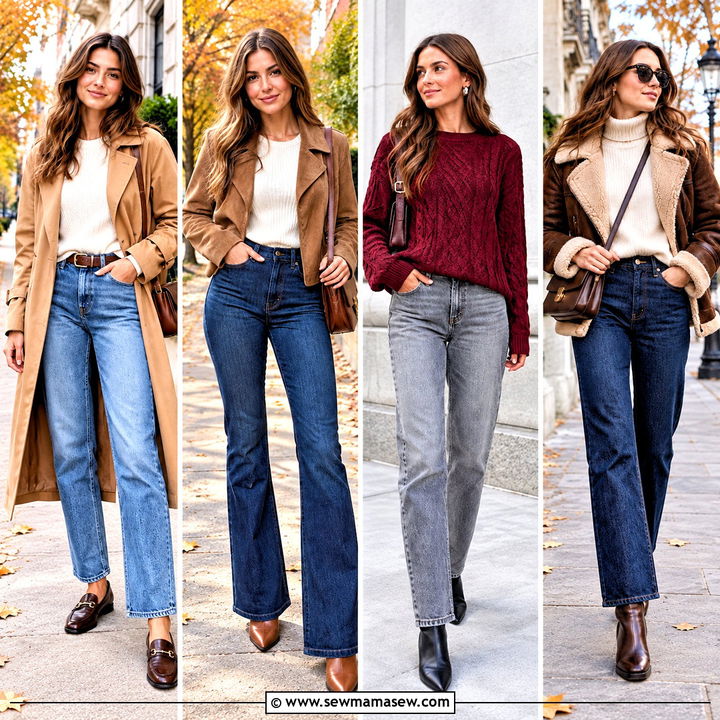
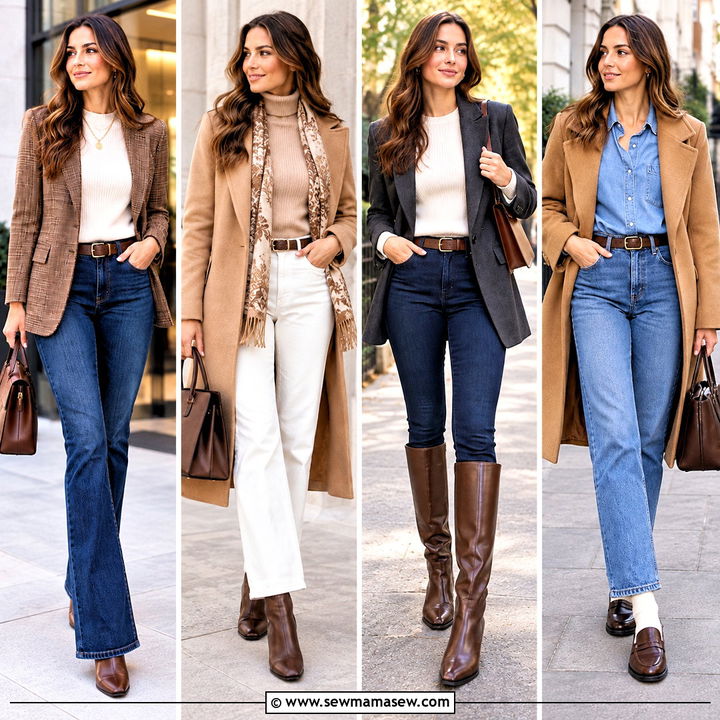
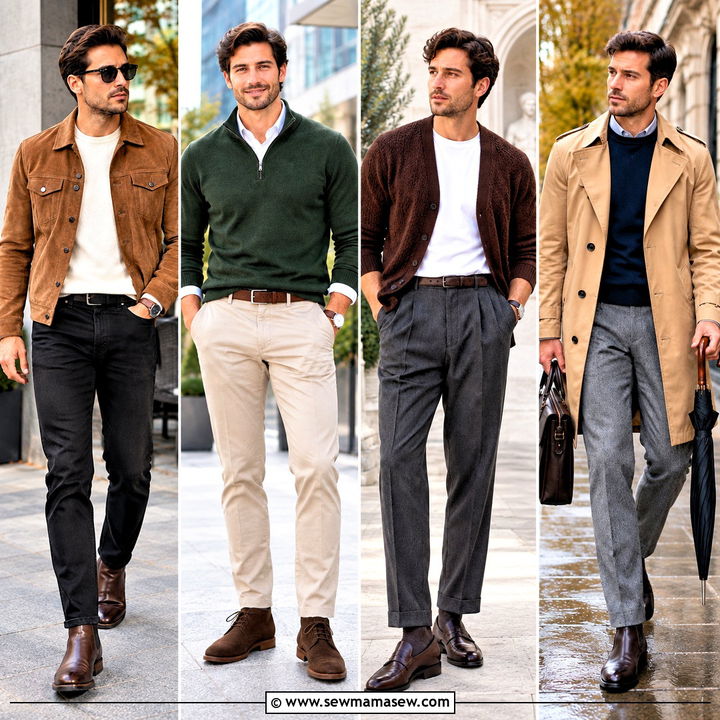
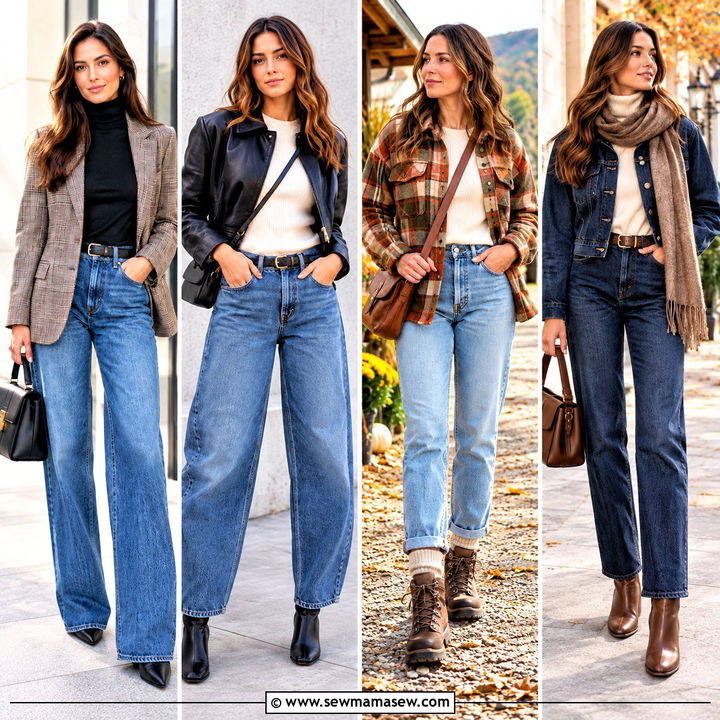
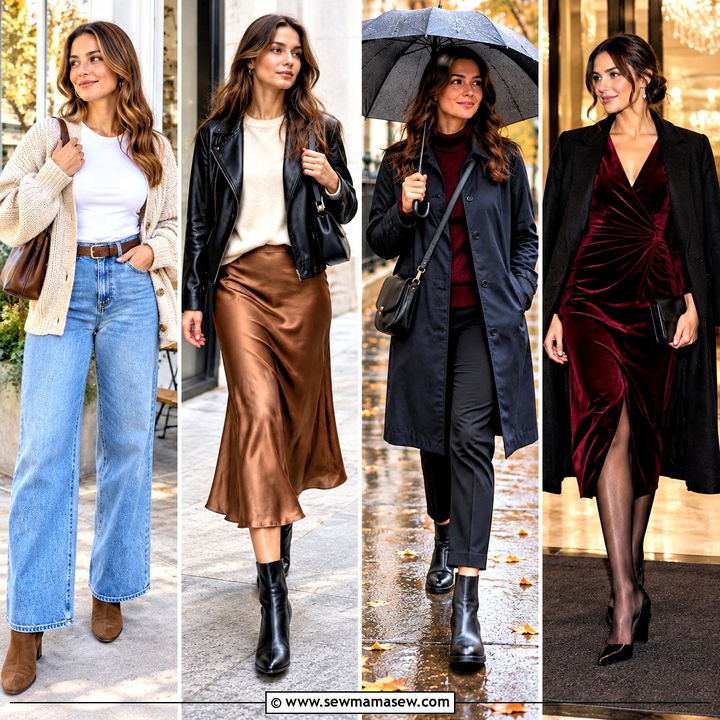
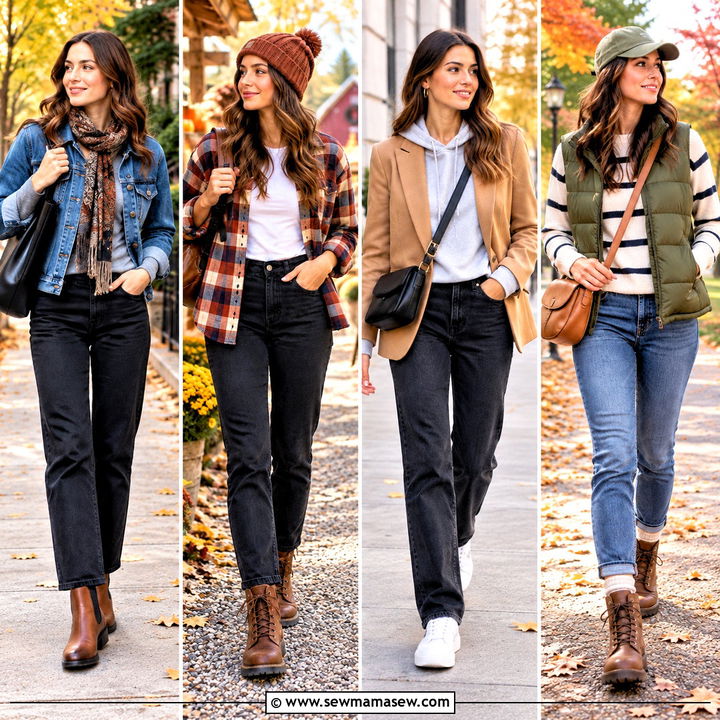
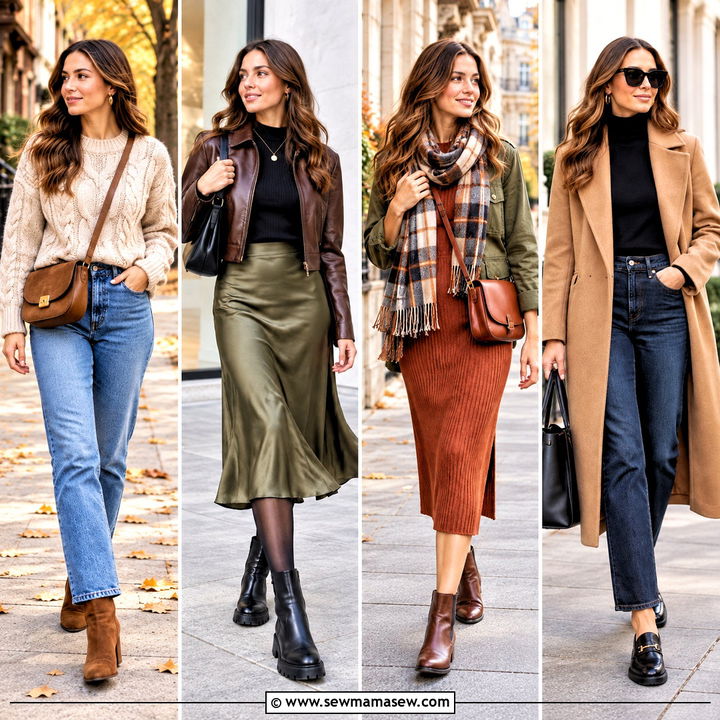
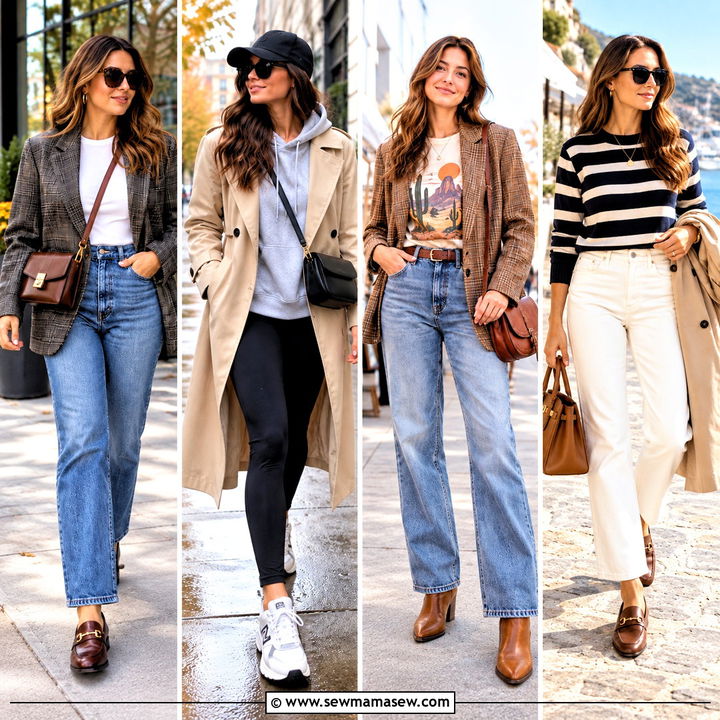
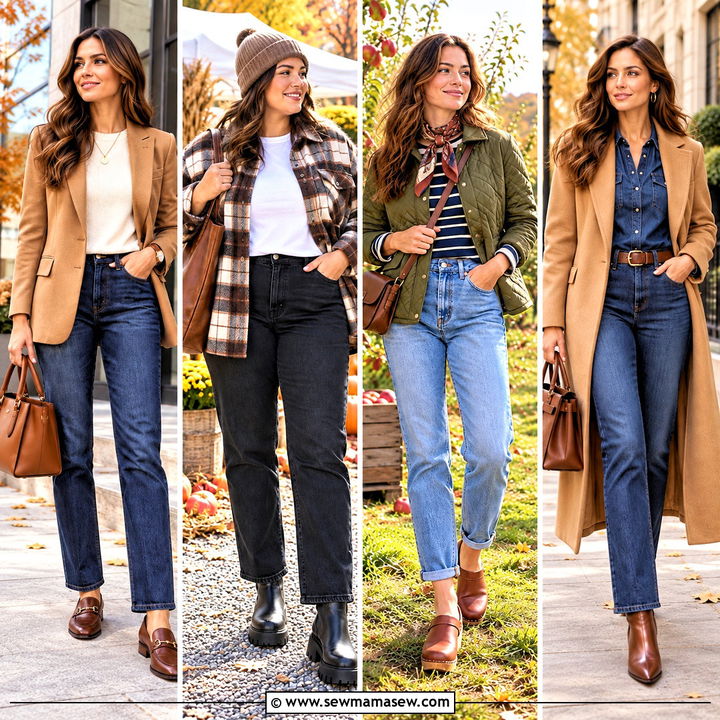
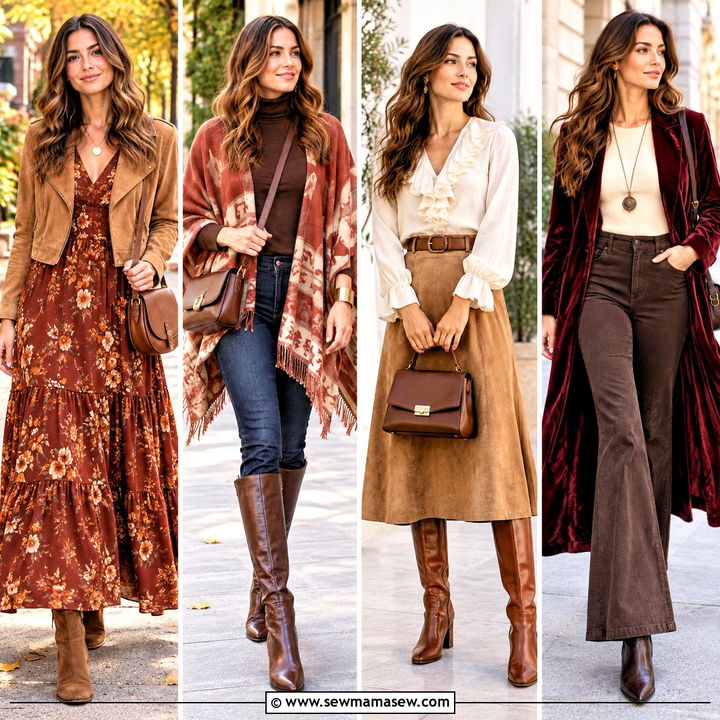
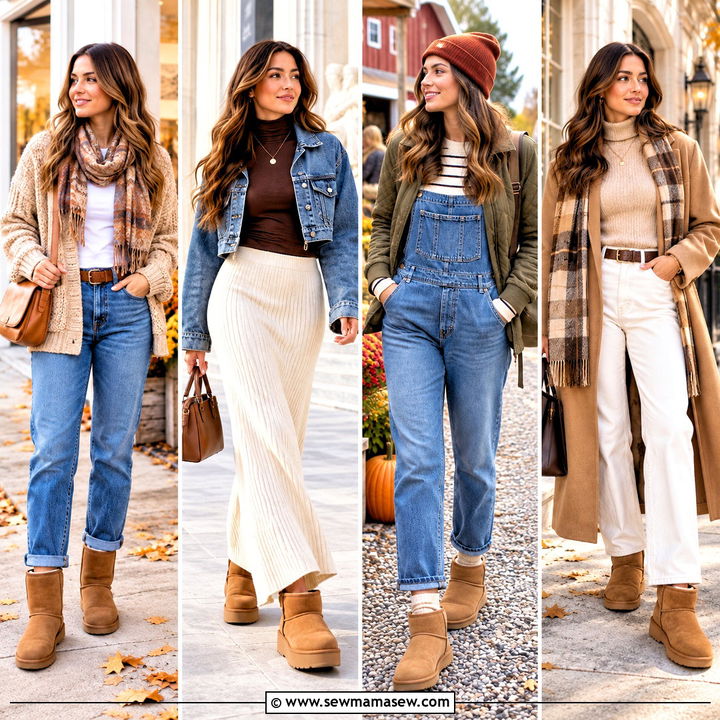
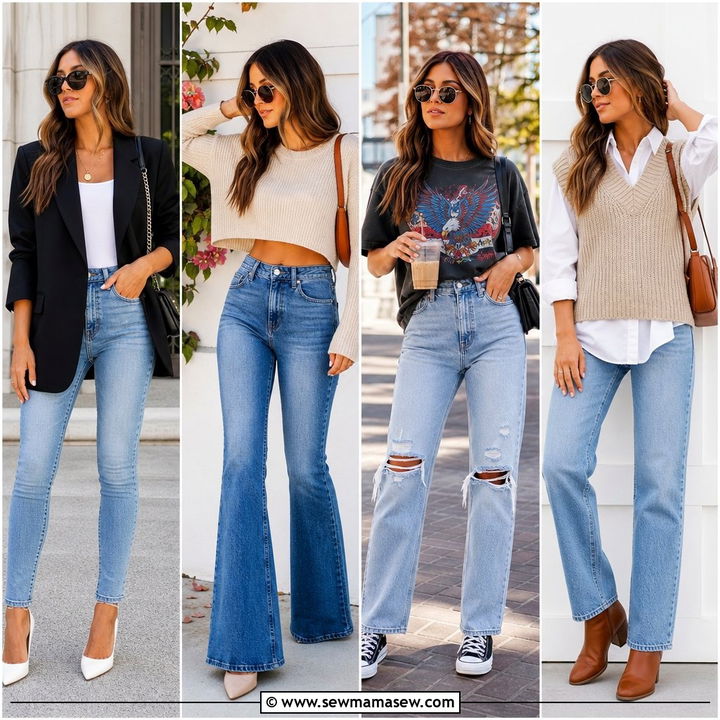
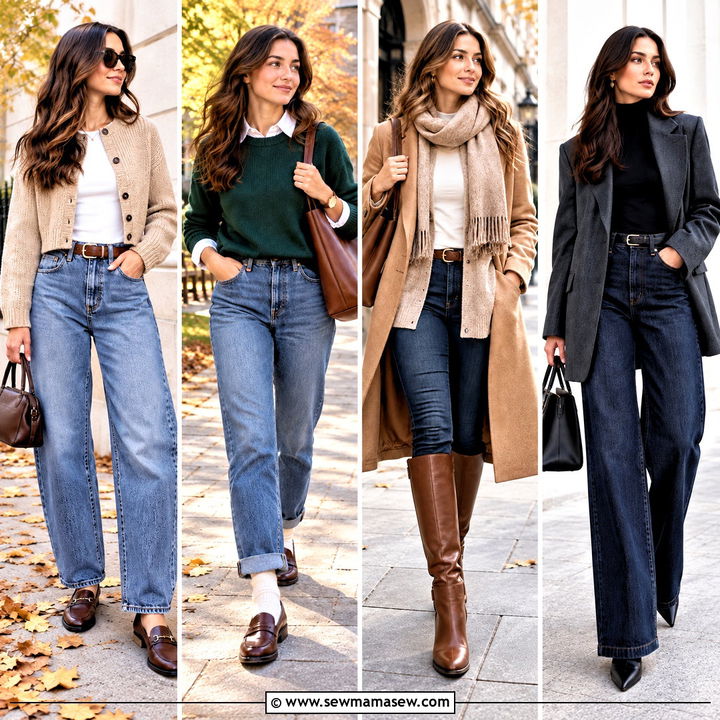
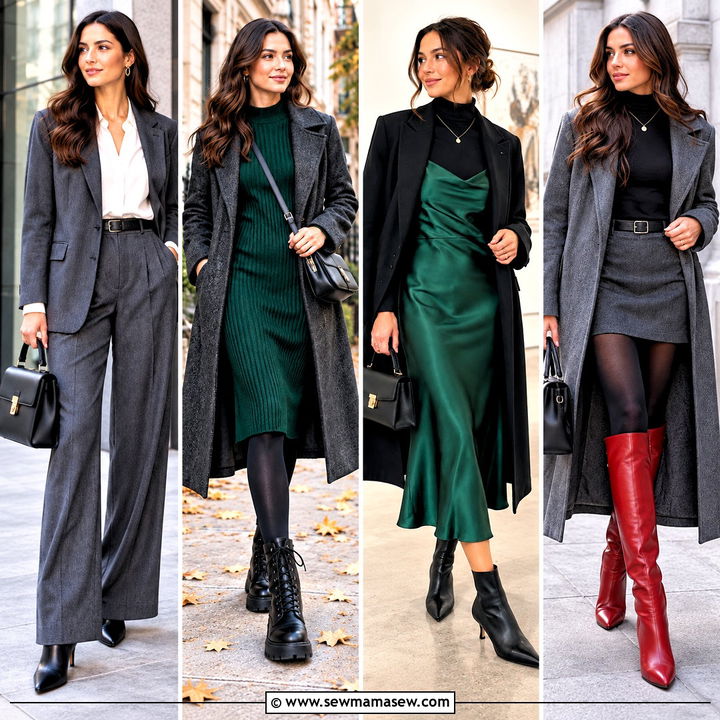
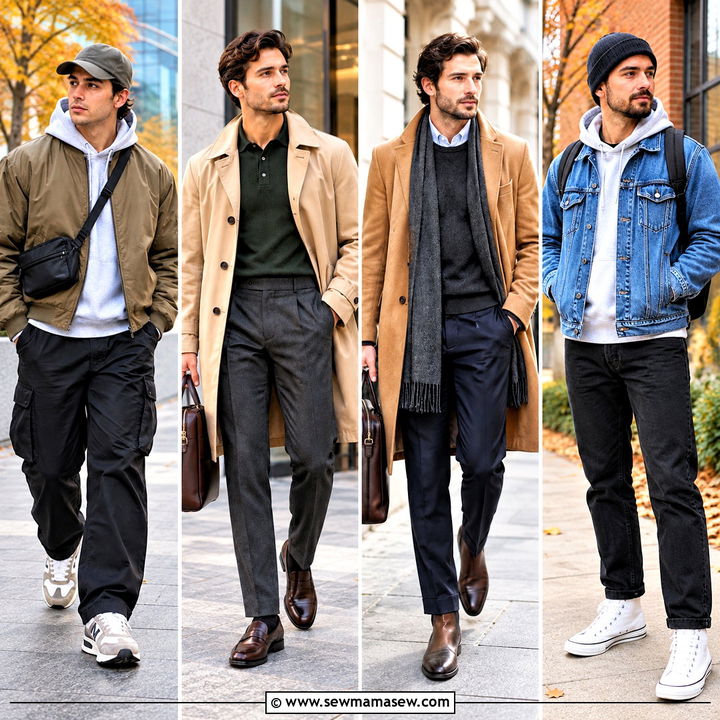
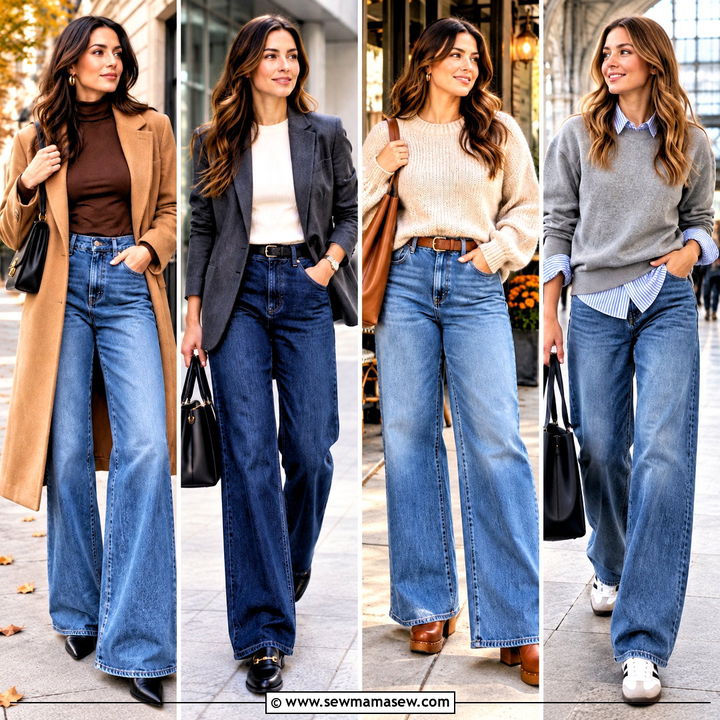
Autumn is when jeans start doing most of the work in a wardrobe, and it's also when the wrong pair gets exposed. A cut that looked fine with sandals suddenly fights with boots, coats and thicker knits. This year the shapes worth knowing are wide-leg, barrel, bootcut, relaxed and plain dark wash, and they sit comfortably next to burgundy, chocolate brown, leopard, suede and sharper tailoring. You don't need a new closet for any of the fifteen looks below. In most cases one decent coat, shoes you can walk in and a bit of layering will refresh the denim you already own. I've noted where each outfit tends to go wrong and who should adjust it, so treat them as starting points you can rebuild with your own pieces.
Fit the Denim Before You Style It
Every outfit below falls apart if the jeans don't fit at the waist and seat, so that's where I start before I think about a single sweater. Sit down in the fitting room. If the back of the waistband gapes away from your spine when you bend, no belt will fix it properly, and a tucked knit will show the gap. Look for a waistband that stays flat against your back.
Then check the fabric. Rigid, 100 percent cotton denim feels stiff at first but molds to you and holds its shape all day. Denim with a little stretch, usually one or two percent elastane, is comfortable right away but can relax by an inch or so after a few hours of wear. With stretch jeans, I go for the snug size, because they will loosen.
- Rise: a high rise sits at or just below the navel and makes tucking easy; a mid rise suits shorter torsos that feel cut in half by a high waist.
- Seat: the back pockets should sit on the curve of your bottom, not below it. Pockets that land low make the seat look flat.
- Length: always judge it in the shoes you plan to wear most with that pair, since the same jeans look right with boots and wrong with loafers.
1. Wide-Leg Jeans With A Fitted Sweater
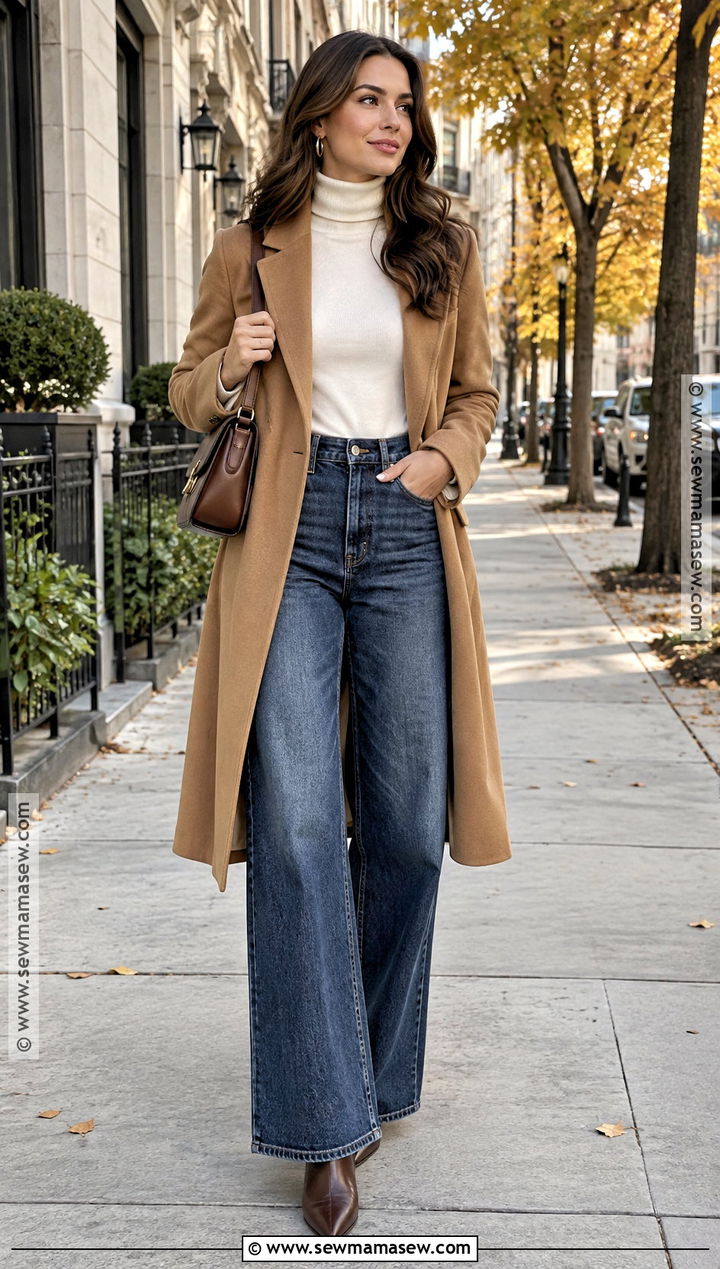
When I style wide-leg jeans, I fix the top half before anything else, because the fabric below is generous and needs something close to the body to push against. A high-rise, dark-wash pair with a fine-ribbed turtleneck in cream, burgundy or chocolate brown is the easy version. Tuck the knit fully so the waistband shows; a half-tuck gets lost in all that denim. Pointed ankle boots should vanish under the hem, which means the jeans need to be hemmed with the boots on, not barefoot. On a cold morning, a tailored wool coat goes over the top and the line stays clean. If you're petite, a slightly narrower leg and a heeled boot keep the jeans from swallowing you. Add a structured shoulder bag and small gold earrings and it holds up at the office as well as on errands.
2. Straight-Leg Jeans With A Trench Coat
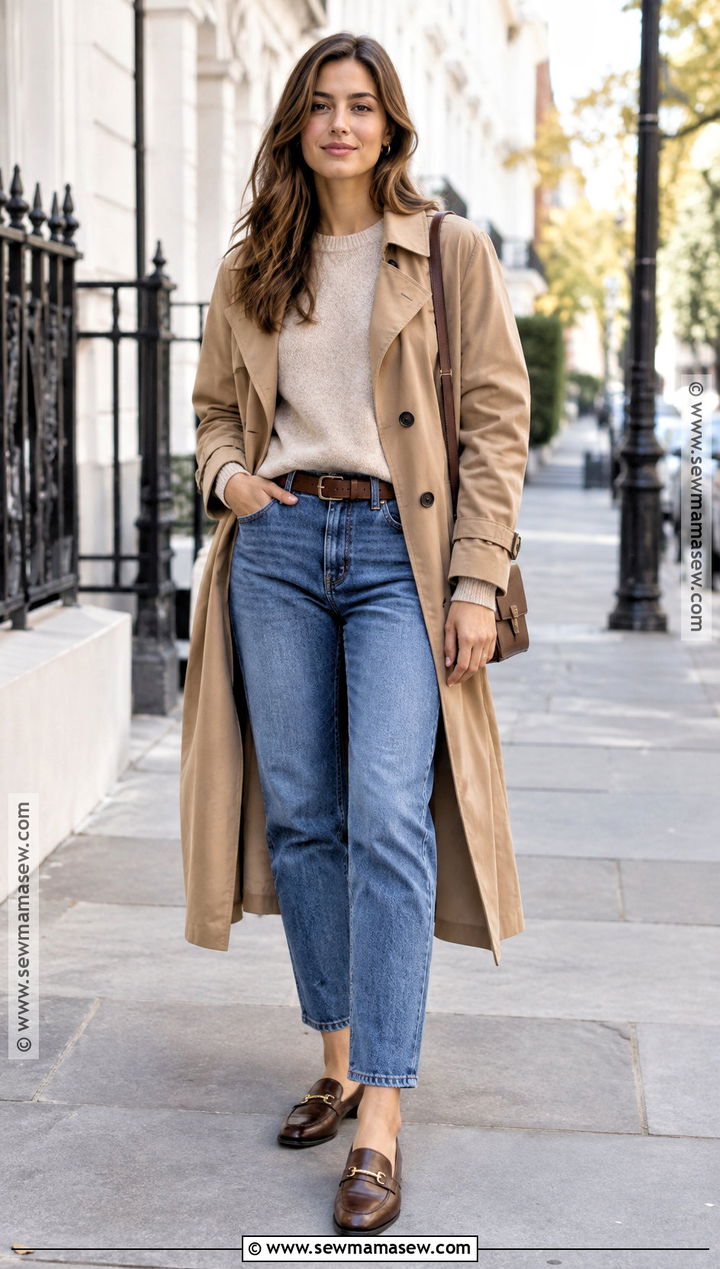
This is my answer for the autumn day that can't decide what it wants to be. Straight-leg jeans in a medium wash, ending near the ankle bone, go under an oatmeal, navy or gray crewneck, and a camel or khaki trench goes over everything. A trench is cotton gabardine, so it cuts wind and light drizzle without the weight of wool, which is why it earns its place in September and October. Leather loafers, a crossbody and a slim belt in the same leather as the shoes finish it. Swap the loafers for white sneakers if you'll be walking a lot. I usually leave the trench open for the long vertical line and only knot the belt when the wind picks up; buckling it neatly at the waist looks stiff with denim.
3. Barrel Jeans With A Cropped Cardigan
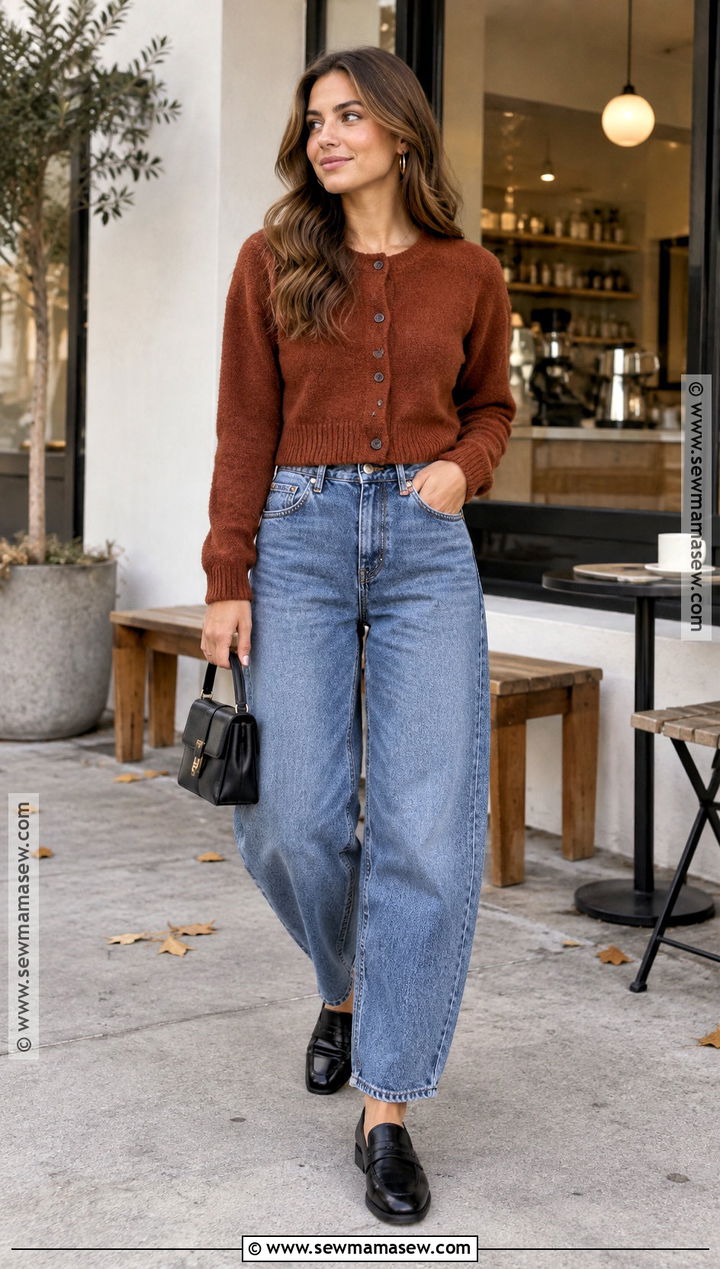
Barrel jeans have a curve through the knee that tapers back in at the ankle, and that shape is the whole point, so the top has to stay short and close. A cropped cardigan that finishes right at the waistband is the best partner I've found. Button it and wear it as a top, or leave it open over a fitted tank if you want more coverage. Dark blue or washed black barrels sit well with a rust, olive or cream knit. Keep the shoes slim, like sleek loafers or flat low-profile sneakers; chunky soles make the curve look heavier than it is. One honest warning: on shorter legs an exaggerated barrel can read as baggy rather than shaped. Look for a soft curve first, and save the dramatic versions for when you're sure you like the silhouette.
4. Bootcut Jeans With A Suede Jacket
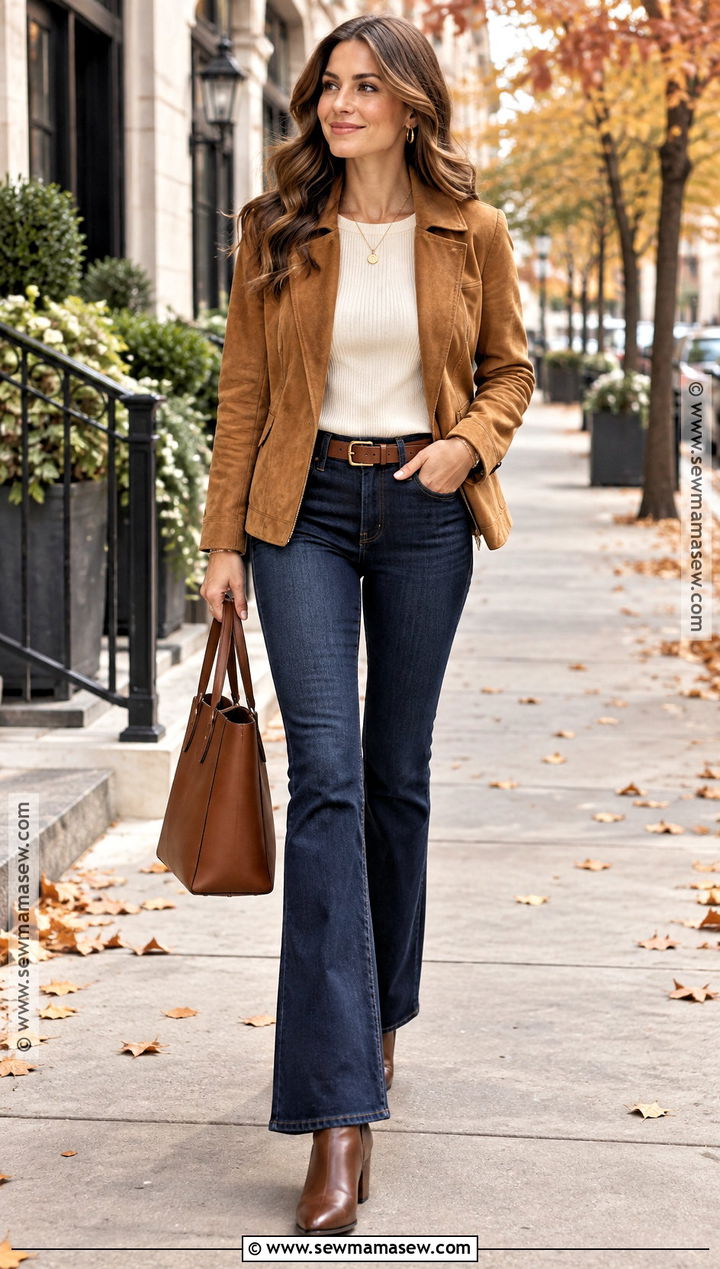
Suede and bootcut denim belong together; the slight flare of the jeans and the soft nap of the jacket share the same relaxed 1970s ancestry. I pick dark indigo with a clean, unfrayed hem and keep the top simple: a white tee, a ribbed knit or a crisp button-down. The jacket should end at the hip. Anything longer hides the flare, which is the reason you chose bootcut in the first place. Heeled ankle boots let the hem fall in a straight line over the foot. Add a leather belt, a structured tote and a fine pendant. Real suede doesn't love rain and darkens when it gets wet, so if your autumn is damp, a washable faux suede is the more sensible buy. Kept this plain, the look nods to Western dressing without sliding into costume.
5. Dark-Wash Jeans With A Blazer
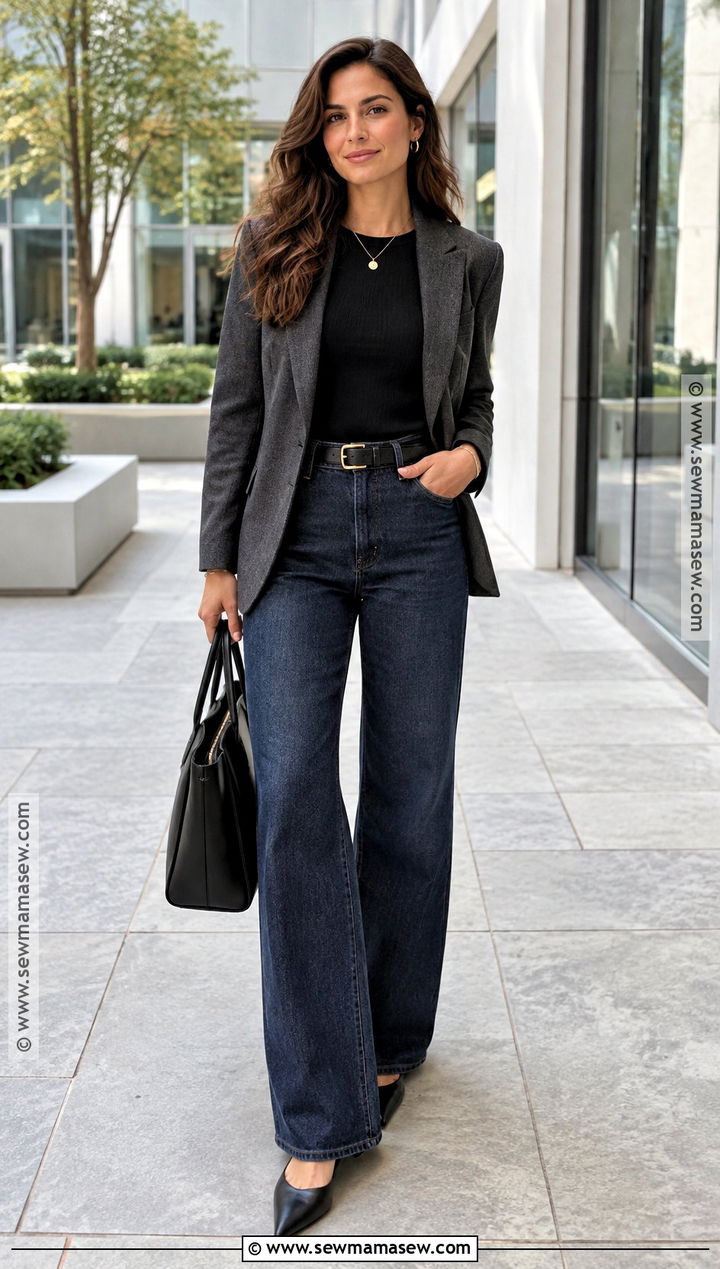
Dark denim with no fading and no rips is the closest jeans get to trousers, and that's why it passes in most business-casual offices. I build it like a suit: dark straight or wide-leg jeans, a tucked blouse or smooth crewneck, then a black, charcoal, navy or check blazer on top. The blazer is where people usually go wrong. Its shoulder seam should sit on your shoulder bone, and the hem should land around the hip so it doesn't cut the jeans in half. A blazer that nips in gently at the waist gives the most shape; an oversized one works too, but then the top underneath has to stay sleek. Finish with pointed flats, polished loafers or a low block-heel boot and a structured leather bag, and keep the jewelry quiet.
6. Baggy Jeans With A Leather Jacket
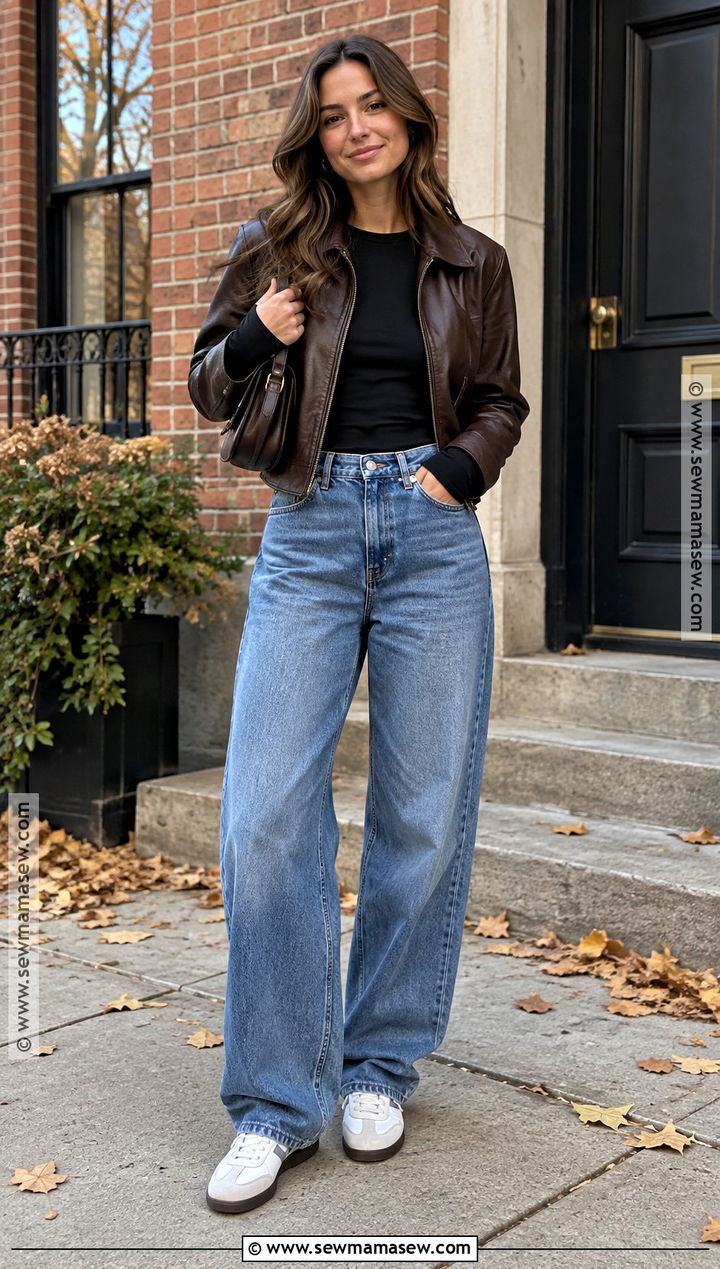
Baggy jeans need one fitted piece to tell people the volume is deliberate. With these, that's a close long-sleeve tee or a thin turtleneck, and the leather jacket on top should be cropped or hip length so your waist doesn't disappear. Check the hem before you buy: baggy pairs that drag on the pavement fray at the back within a few weeks, and wet hems wick water up the leg. If yours are a touch long, a small roll fixes it. Retro sneakers, sturdy ankle boots or loafers with a visible sock all suit the shape, and a small shoulder bag keeps the proportions from tipping into oversized everywhere. Black leather can look severe next to faded denim, so I often reach for deep brown or burgundy instead.
7. Black Jeans With A Burgundy Sweater
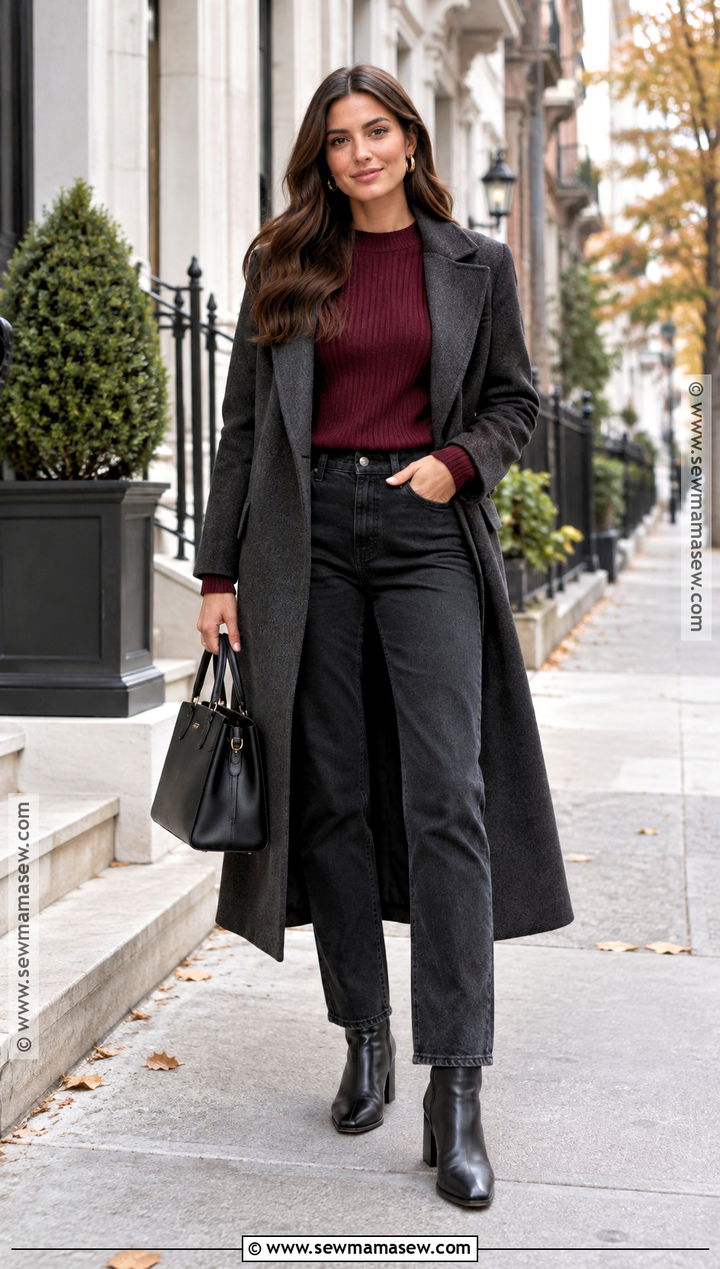
Burgundy is the easiest autumn color to wear with black denim. It's dark enough not to fight the jeans, and it puts some warmth near the face that black alone doesn't. Choose the black pair in whatever leg you find comfortable, straight, slim or gently flared, and add a burgundy crewneck, mock-neck or V-neck. Black ankle boots carry the line down through the leg, and a charcoal coat adds a layer without pulling attention away from the color. I like a sweater with some ribbing or a cable here, because flat jersey in burgundy can look a little like a uniform. One thing to know: black jeans fade to charcoal faster than blue ones go light, so wash them inside out in cold water if you want the contrast to last.
8. Cropped Jeans With Loafers And A Cardigan
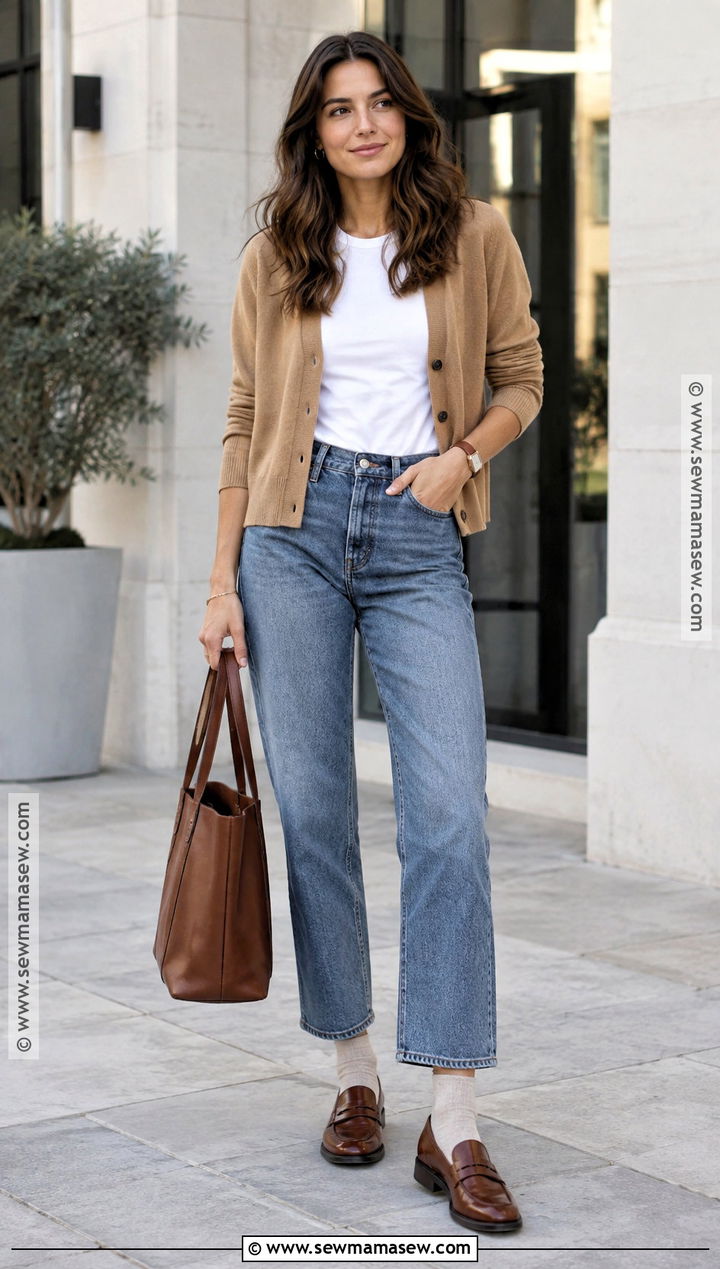
Cropped jeans and loafers are an early-autumn outfit, for the weeks when it's still sunny at lunch and boots feel premature. The crop should end just above the ankle bone; a few inches higher and it starts to look like the jeans shrank. Wear a fitted tee or shell under a relaxed cardigan in camel, gray, red or navy, then leather loafers with fine socks. If you want more waist, button the cardigan and tuck just its front edge into the waistband. Shorter legs do best showing only a narrow strip of ankle, and a shoe close to your skin tone or the denim color stretches the line further. A roomy tote makes it work for the office, campus or a day of errands.
9. Flared Jeans With A Denim Shirt
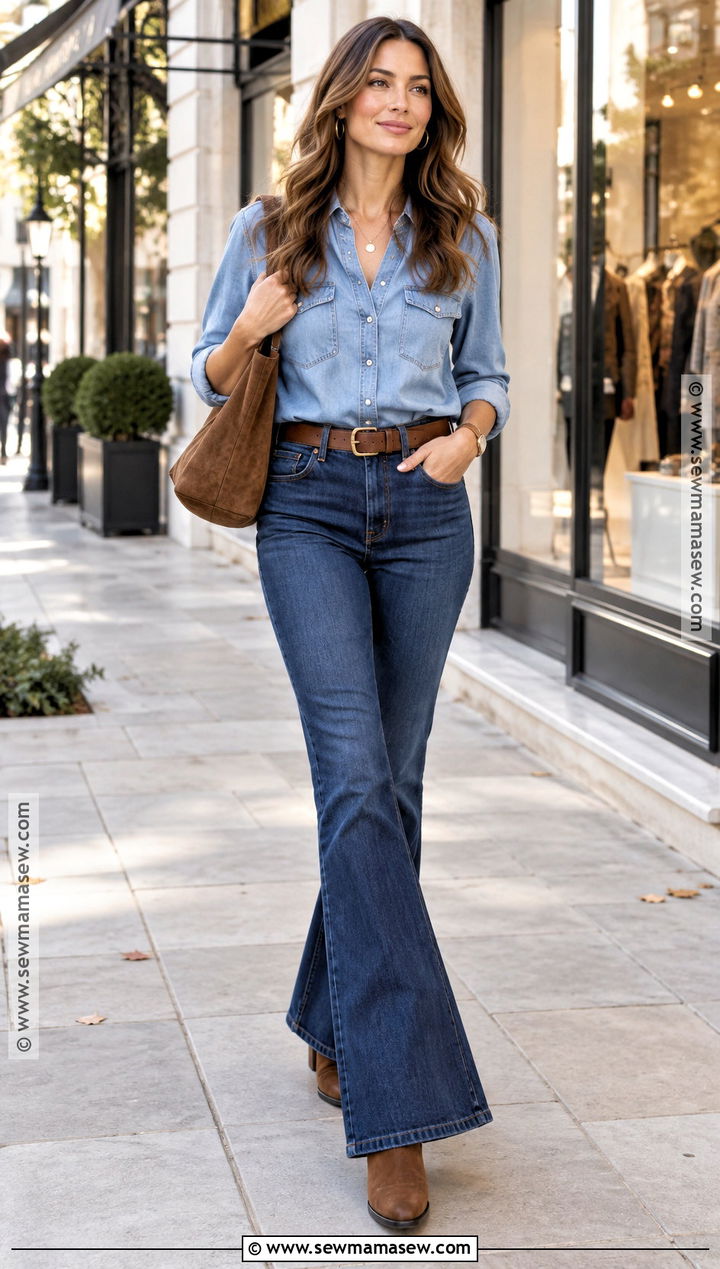
Denim on denim only looks intentional when the two washes are clearly different, at least two shades apart. Dark flared jeans with a light chambray shirt is the safest pairing; leave one or two buttons open over a simple tank. Tuck the shirt in and put a brown leather belt between the two pieces, because that strip of leather is what separates them visually. Flares need a heeled boot so the hem hangs straight and stops just above the floor; in flats they puddle and get wet. Finish with a suede shoulder bag and very little jewelry. When the temperature drops, a camel coat over the top works well. If the tucked shirt feels too neat, roll the sleeves and let the fit stay a little loose; the retro feel survives because the accessories are clean.
10. Gray Jeans With A Plaid Blazer
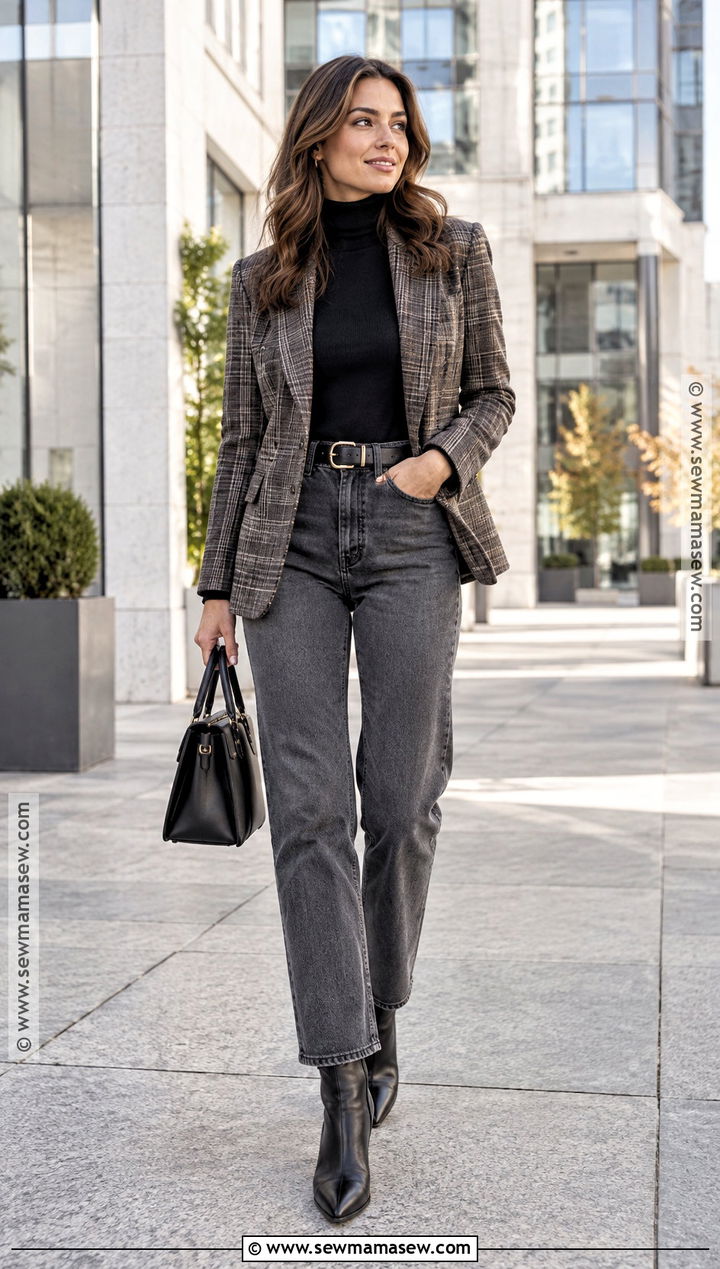
Gray jeans are the pair I suggest to people who find black denim too harsh against their skin. Charcoal, smoky gray or a faded graphite all work under a plaid blazer, as long as the plaid contains some gray to connect the two. Under it, a white tee, black turtleneck or fine burgundy knit, depending on how polished you want to be. Loafers or pointed ankle boots, a top-handle bag and a black belt finish the outfit. Plaid jackets can tip into formal quickly, so I push the sleeves up a little and choose jeans with a lived-in, softer finish rather than a stiff, crisp one. It's a good outfit for a creative office or a museum afternoon.
11. Ecru Jeans With A Chocolate Brown Coat
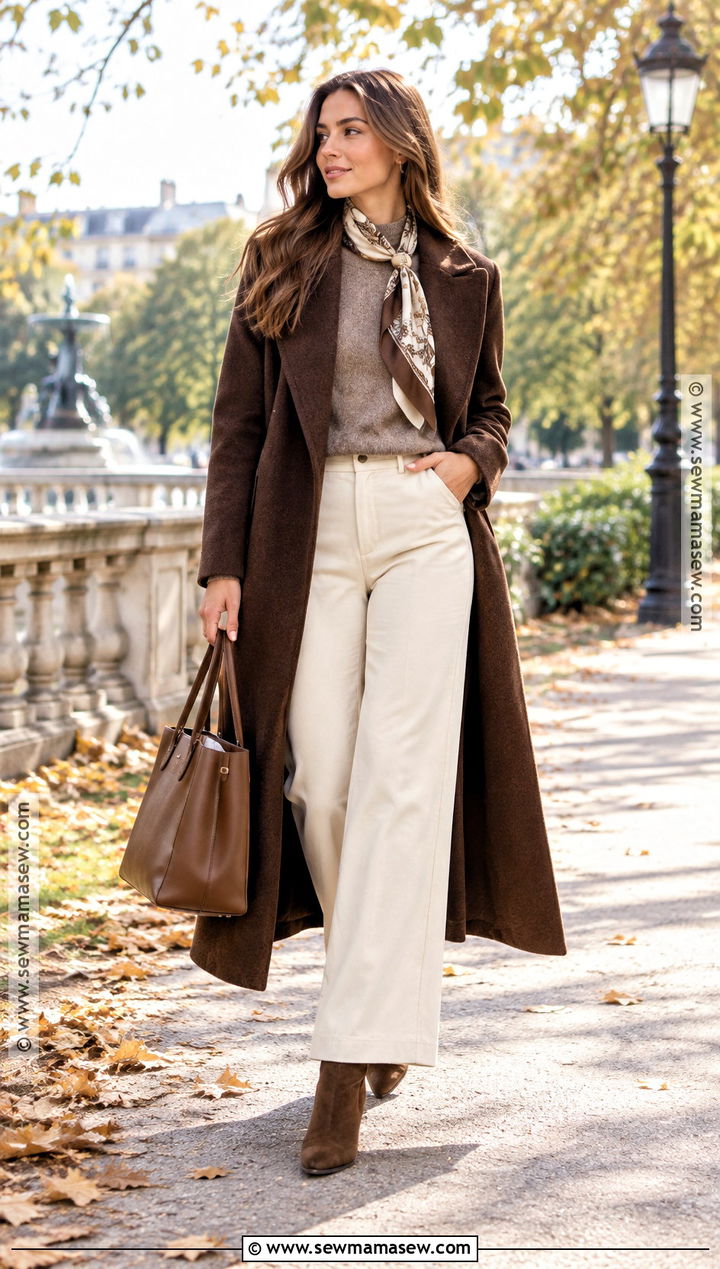
Ecru jeans don't have to go into storage when summer ends. Off-white denim reads seasonal once it sits next to deeper colors: a taupe knit, a long chocolate brown coat and brown suede ankle boots, with a tote in the same brown. A patterned scarf adds interest if the neutrals feel flat. The fabric matters more with pale jeans than with dark ones. Thin, stretchy ecru shows every seam, pocket bag and dimple, so I look for a heavier denim with a smooth front and a comfortable rise. A long coat also frames the body in a clean vertical line, which helps. I'd wear this to brunch or on a casual workday, but I'd leave it at home on a rainy commute, when the hems will collect road spray.
12. Skinny Jeans With Knee-High Boots
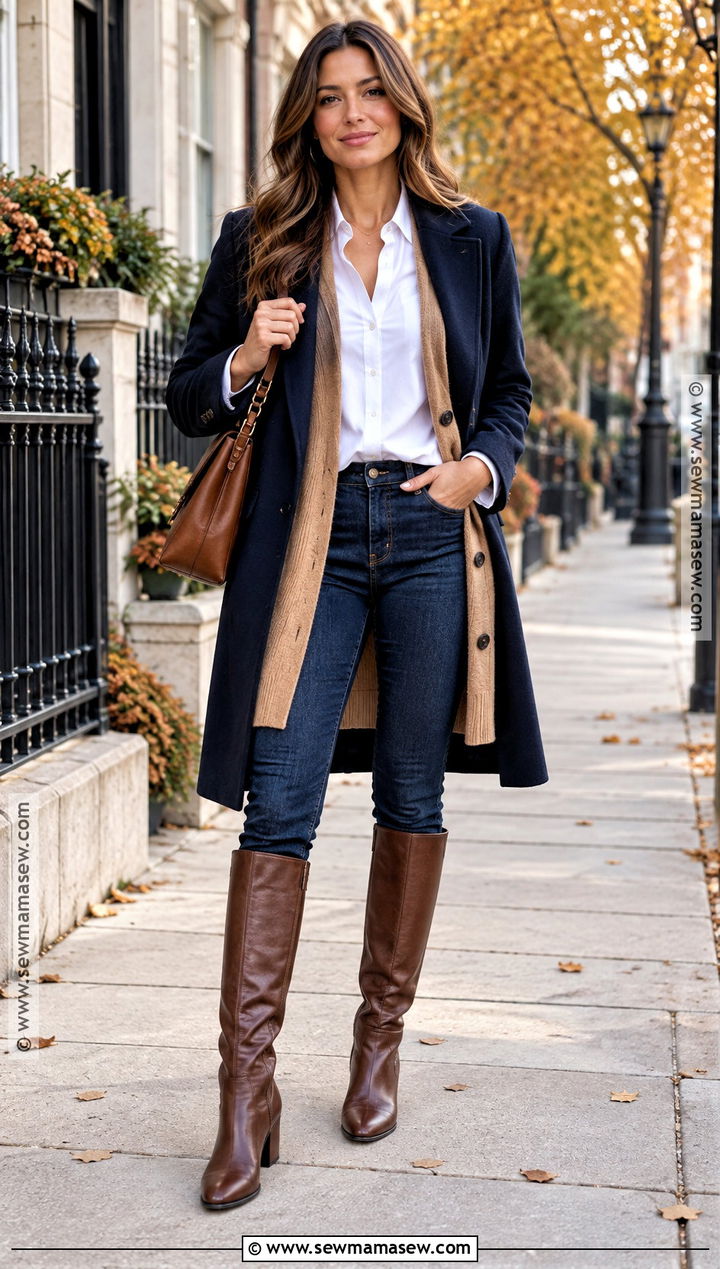
Skinny jeans still have one job they do better than any other cut: they tuck into tall boots without bunching at the knee. That's the reason to keep a pair. Wear dark indigo or black skinnies inside knee-high leather boots in black or deep brown, and add volume on top with an oversized button-down, a long cardigan or a relaxed sweater. A tailored coat that ends just above or below the knee brings it up to date. Too many fitted pieces together can look dated, so I always pair the close legs with something loose above the waist. Before buying the boots, try them on wearing the jeans; a narrow boot shaft can feel fine with bare legs and pinch over denim. With a medium shoulder bag and simple earrings, it handles wet pavements and chilly outdoor plans well.
13. Relaxed Jeans With A Leopard Print Coat
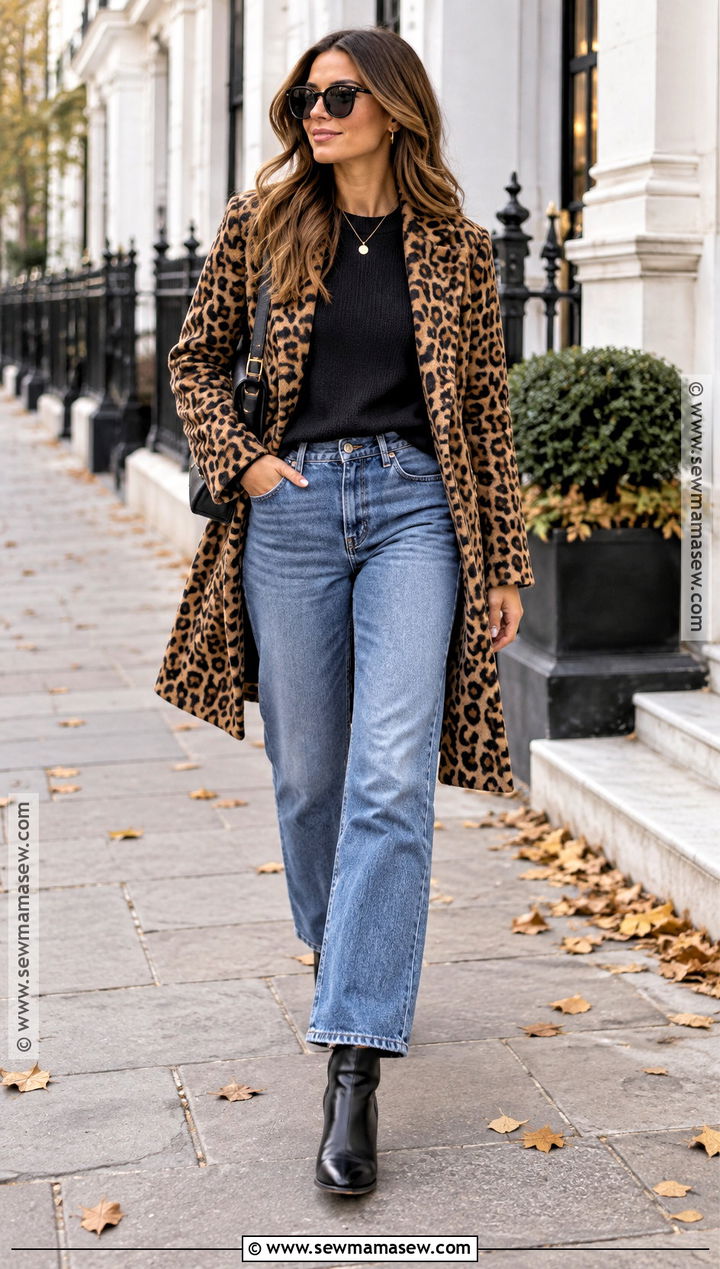
Leopard is everywhere this autumn, and a printed coat over relaxed jeans is the easiest way to wear it without committing your whole outfit. Keep everything under the coat plain: a black knit, medium-wash relaxed jeans and black ankle boots or loafers. Carry a black or dark brown bag and skip most of the jewelry, because the print is already doing the talking. If a full coat feels like too much, try a short leopard jacket, or use the print on a scarf or a belt instead. I check one thing on any leopard piece before I recommend it: a print with brown and black spots on a camel ground mixes with denim far more easily than one on a gray or bright background. It's a good choice for weekend lunches and concerts.
14. Cuffed Jeans With A Utility Jacket
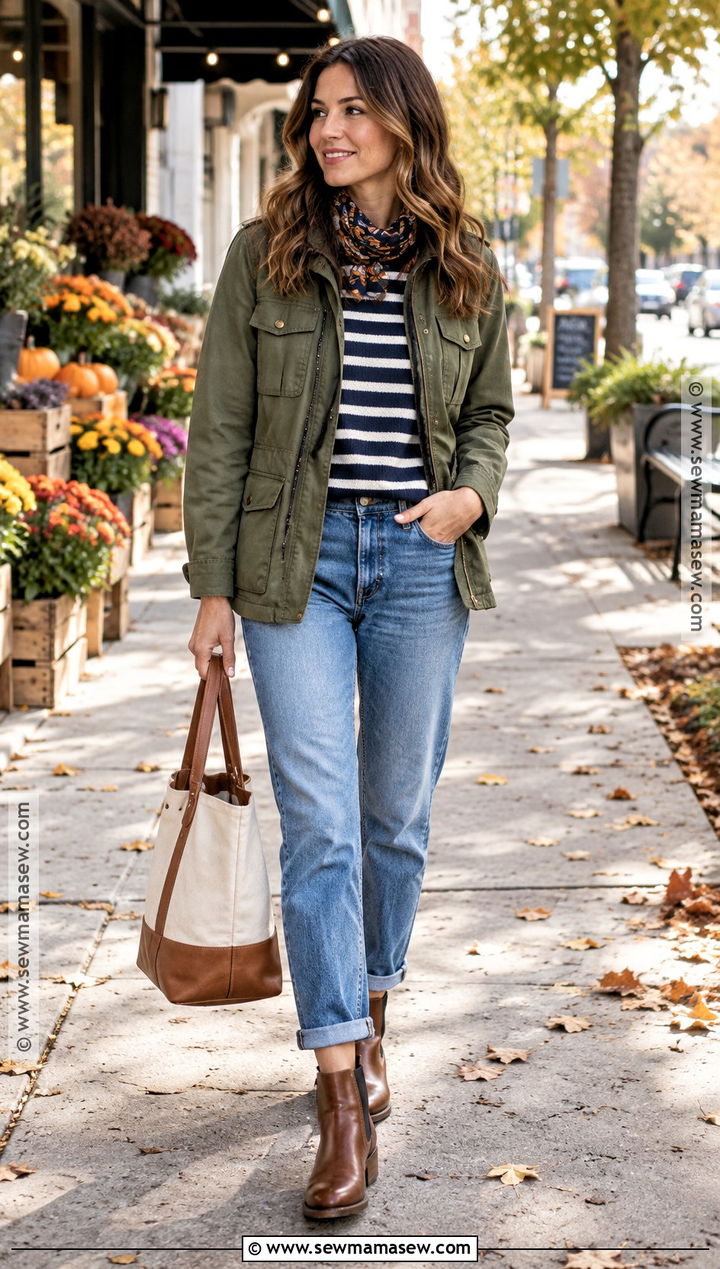
A deliberate cuff is the difference between jeans that look styled and jeans that look too long. With straight-leg denim, I make one wide fold of around two inches and press it so it holds its shape through the day; skinny rolls that slip down look careless. Add a striped tee or a light crewneck, then an olive, khaki or tan utility jacket for the pockets and a bit of warmth. Brown Chelsea boots, retro sneakers or sturdy loafers all work, because the cuff shows the shoe off. A canvas-and-leather tote suits the casual mood, and a patterned neck scarf brings color up near your face. It's the outfit I'd pick for a market, a school run or a long walk, and every layer comes off easily as the afternoon warms.
15. White Jeans With A Camel Sweater
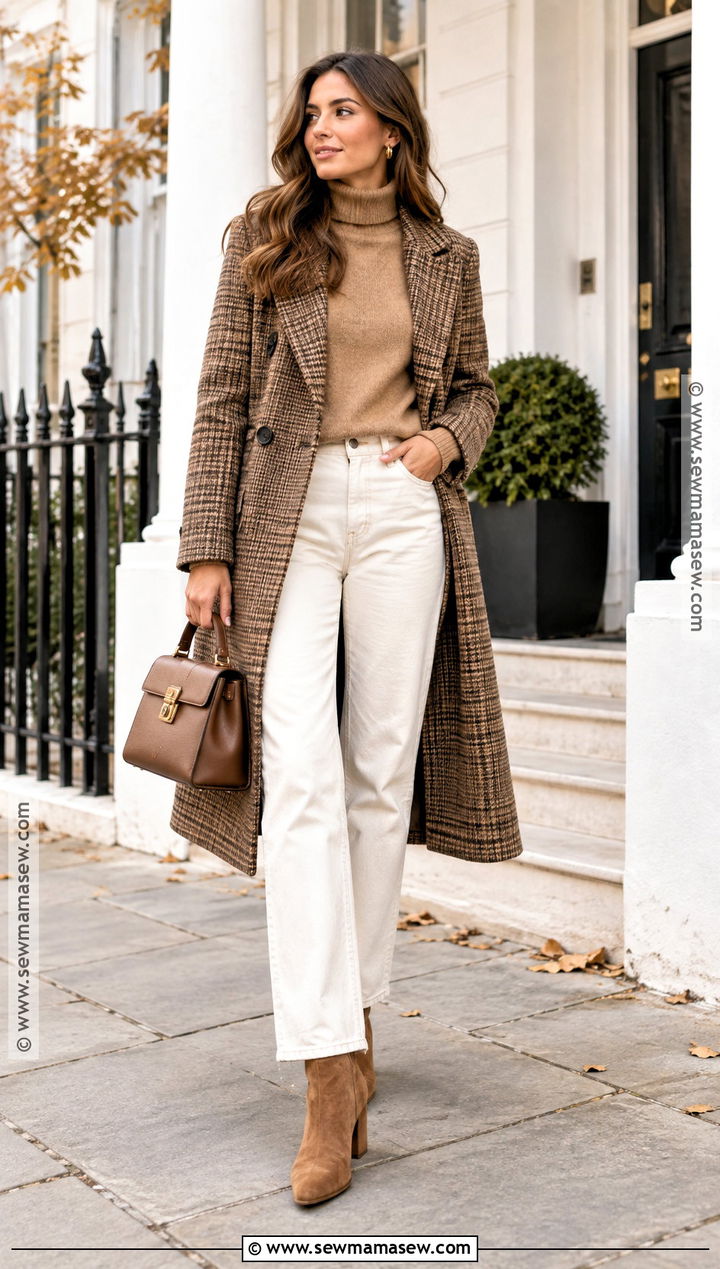
White jeans in autumn work when the shade is off-white rather than bright optic white, which can look like a holdover from July. Straight or wide-leg pairs in a soft ivory go well with a camel crewneck or turtleneck, tan suede boots, a checked wool coat, a brown leather bag and gold earrings. If the sweater is oversized, a small front tuck shows the waistband and gives you some shape. The texture mix of denim, knit, leather and wool is what keeps a pale outfit from looking flat. Be realistic about the weather, though. Pale hems and tan suede both mark easily in rain, so on wet days I'd change the boots for something water-resistant or save this look for a dry forecast.
Matching Each Autumn Shoe to the Right Hem
Most of the trouble I see with autumn jeans is a hem fighting the shoe. Summer jeans were cut for sandals and sneakers, and the same length either drags or bunches once boots come out. Here's how I match them:
- Ankle boots under wide-leg or flare: the hem should cover most of the boot and stop about half an inch above the floor while you stand in them.
- Loafers and flats: cropped or straight hems that end at or just above the ankle bone, so the shoe and a bit of sock or skin show.
- Knee-high boots: skinny or very slim jeans only. Anything wider bunches inside the shaft and pulls at the knee.
- Chelsea boots with straight legs: a cuff or a hem that just kisses the top of the boot. Long straight hems stack in folds and look sloppy.
- Chunky sneakers: a slightly shorter hem than you'd wear with boots, since thick soles push long denim into a crumple.
If you only own one pair of a cut and wear it with different shoes, hem it for the shoe you'll wear most and cuff it for the rest. A tailor can also keep the original hem when shortening jeans, which preserves the worn edge.
Why Jeans Bag Out by Afternoon and What Helps
If your jeans feel perfect at eight in the morning and saggy at the knees by three, that's the fabric, not you. Stretch denim relies on elastane fibers to spring back, and heat is what wears that spring out. A hot tumble dryer is the usual culprit.
I wash jeans less often than people expect, maybe every five to ten wears unless they're stained, and always inside out in cold water. Then they go on a hanger to dry. That keeps dark washes dark for longer and protects the stretch. If a pair has relaxed during the day, a short wash usually pulls it back in. Rigid cotton jeans are different: they shrink a little with each hot wash, so if you bought them to fit snugly, cold water protects the size you paid for.
Two Good Pairs of Jeans Cover Most of This List
Denim covers casual, polished and practical days in autumn, as long as the proportions balance. Wide-leg, barrel, bootcut, straight, relaxed, flared and skinny jeans all earn a place, but you don't need every one of them. Start with the cut that fits you well and suits your week, then build the season around it with knits, a trench, a blazer, a leather or suede jacket, loafers and boots. Burgundy, camel, chocolate brown, olive and charcoal will make jeans you've owned for years feel new again. Take these outfits as formulas, not rules, and adjust the layers and shoes to your own body, climate and taste.
Related posts: