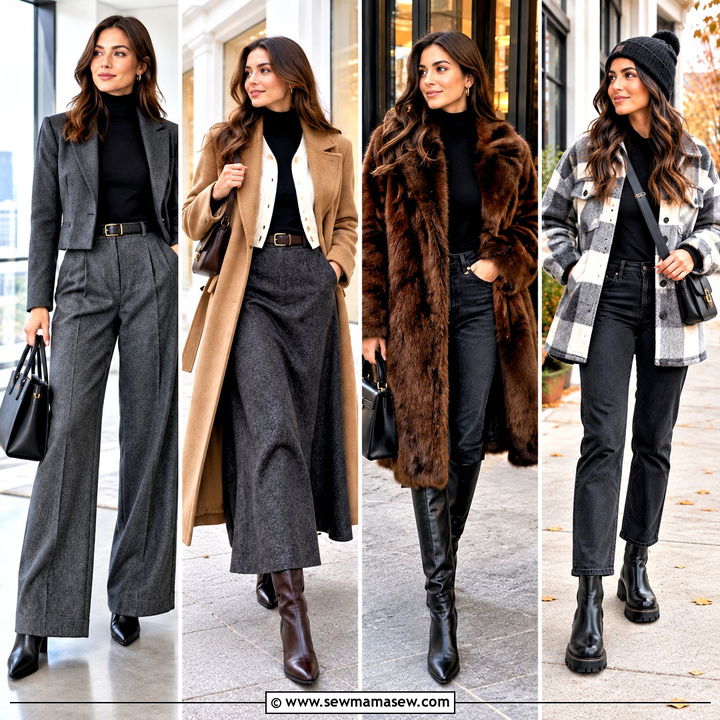
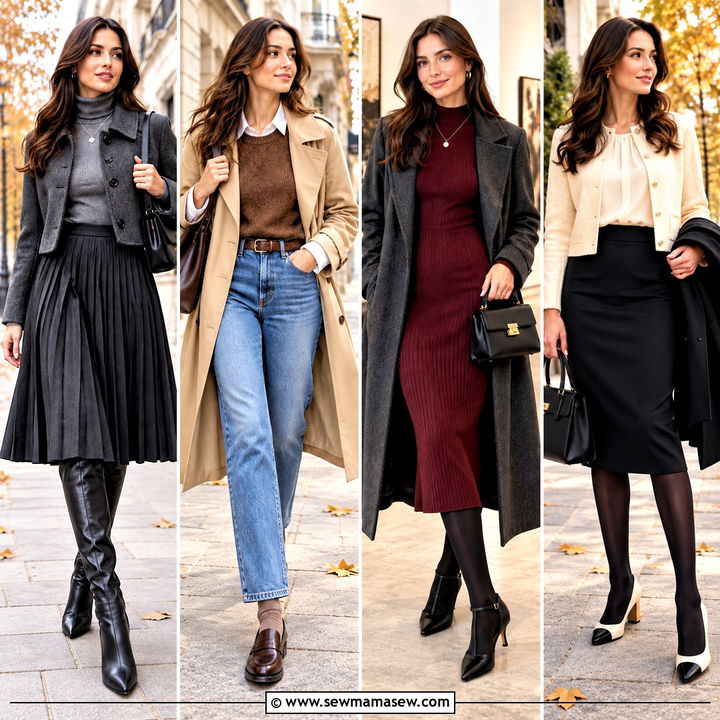
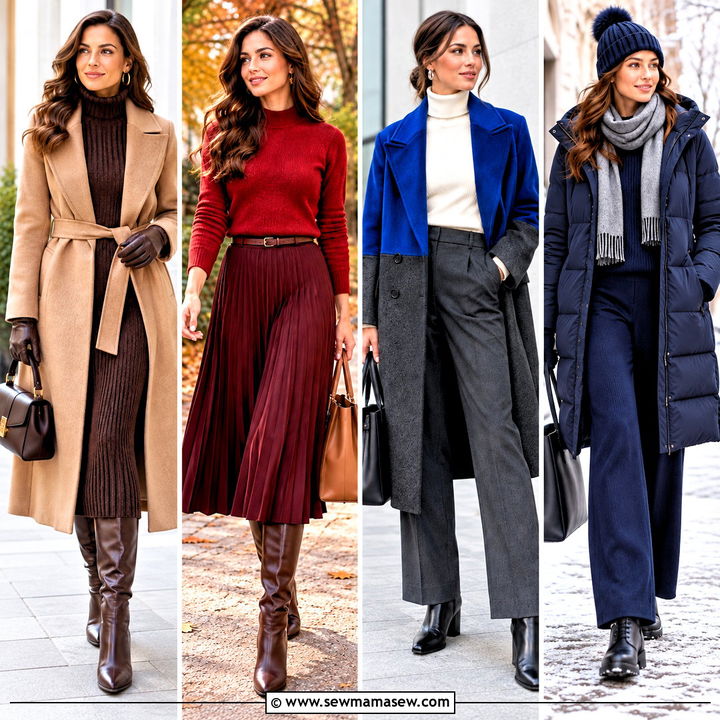
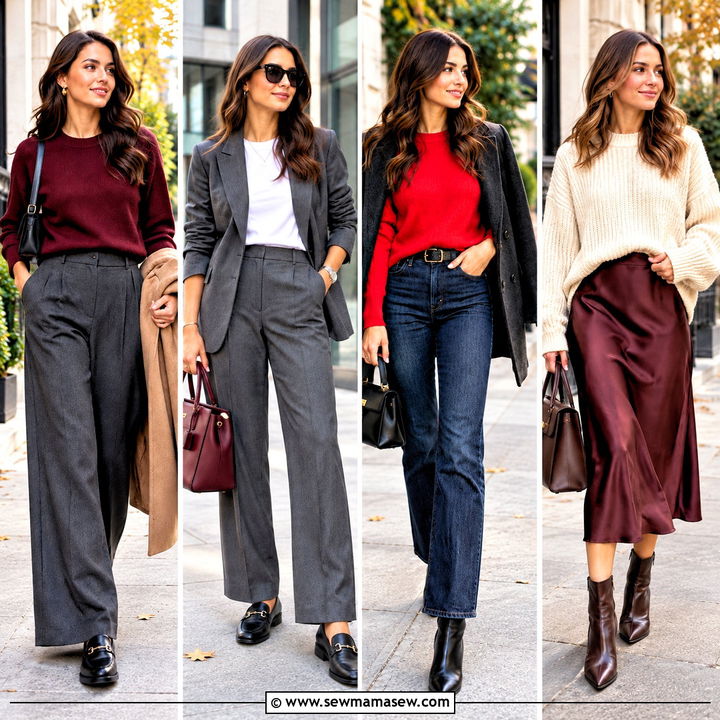
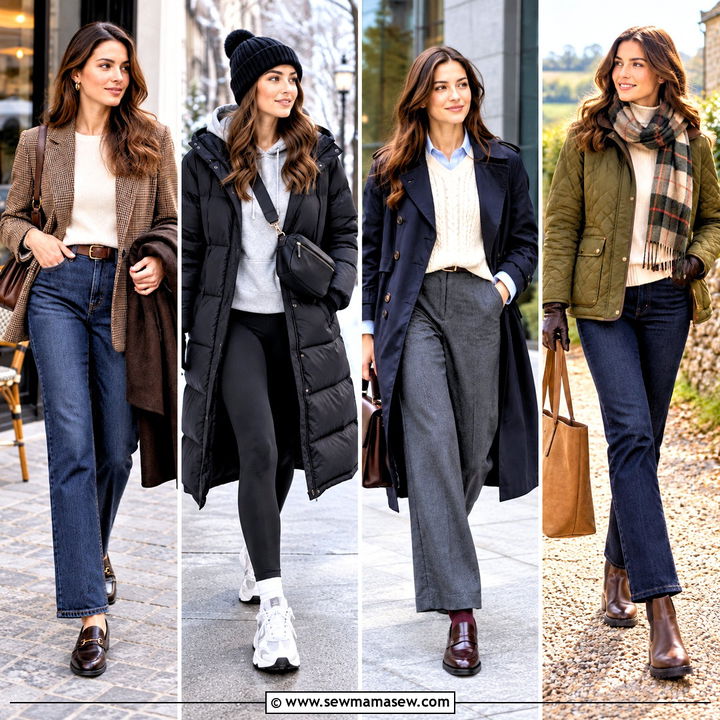
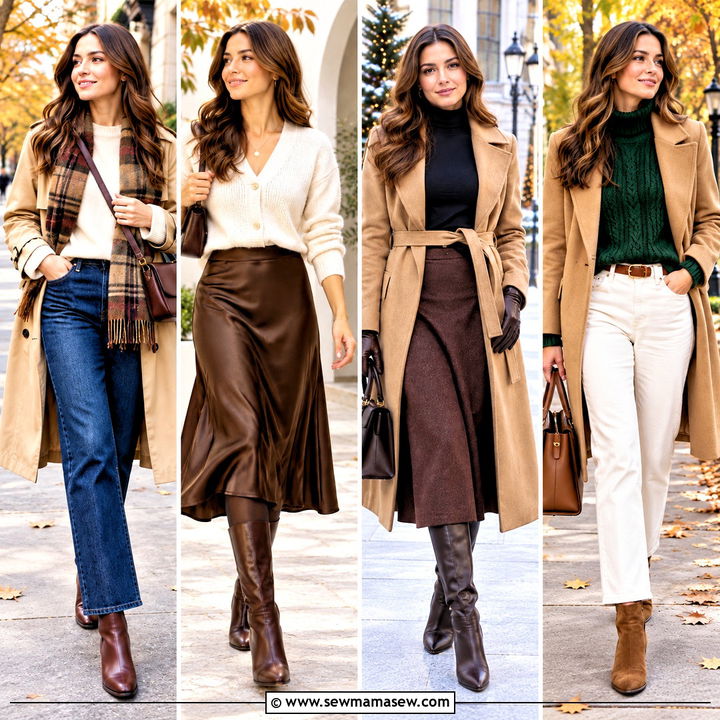
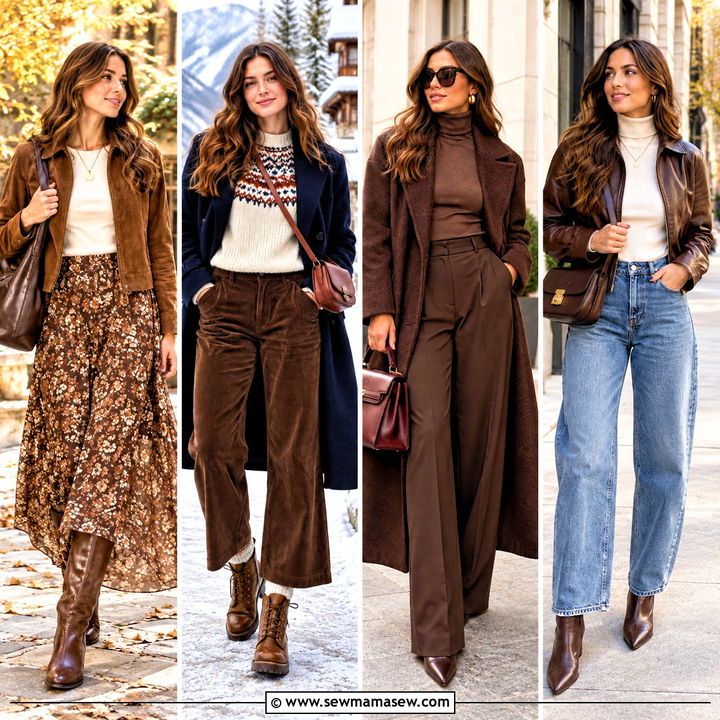
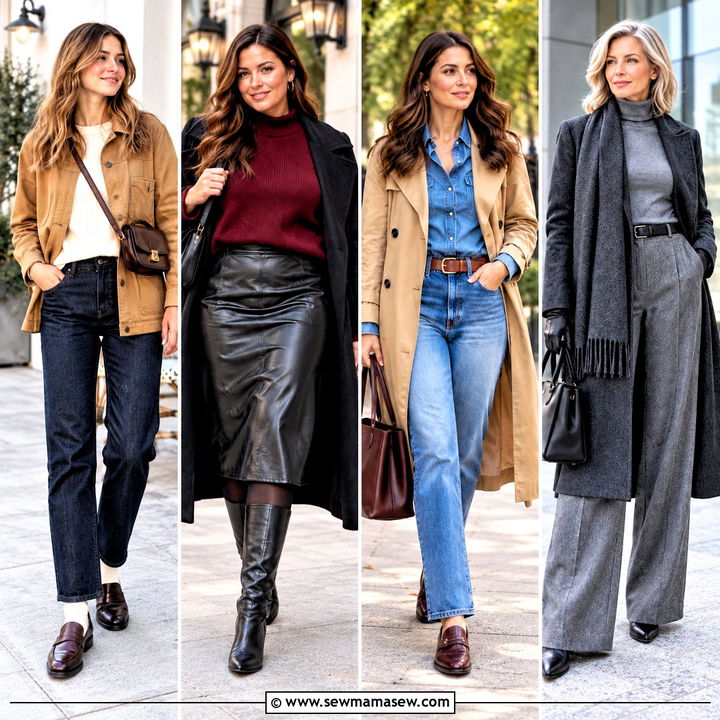
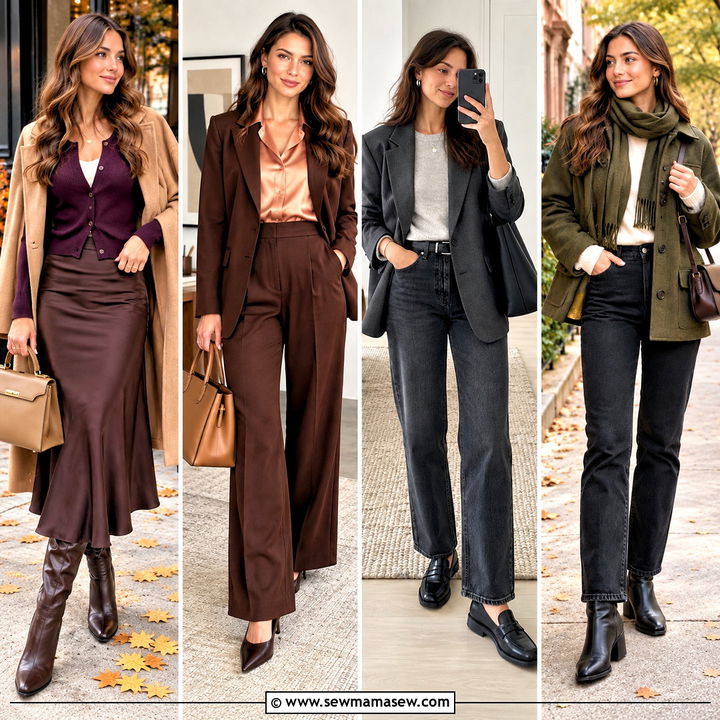
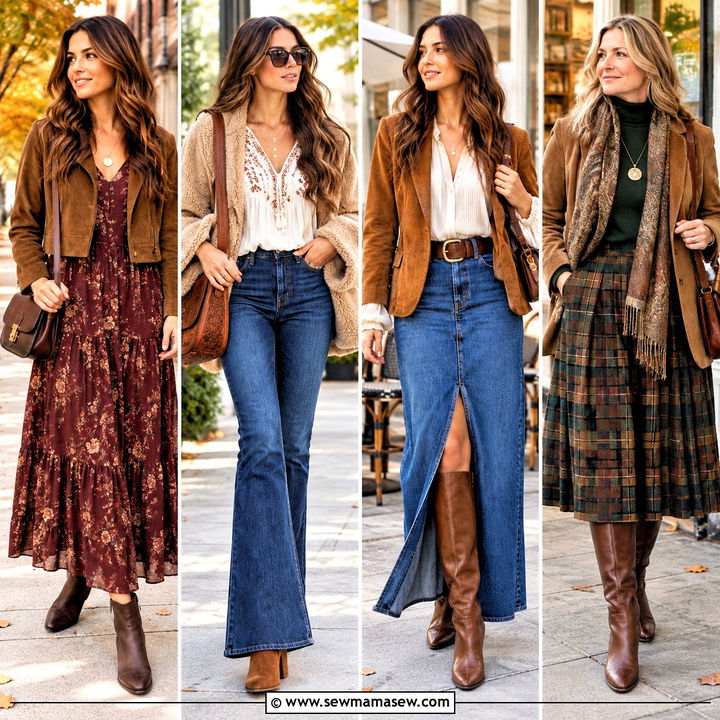
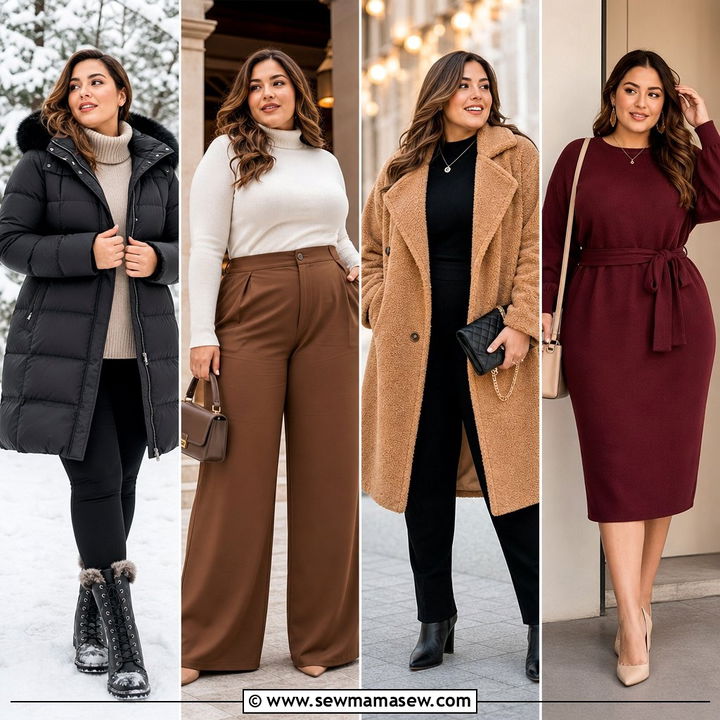
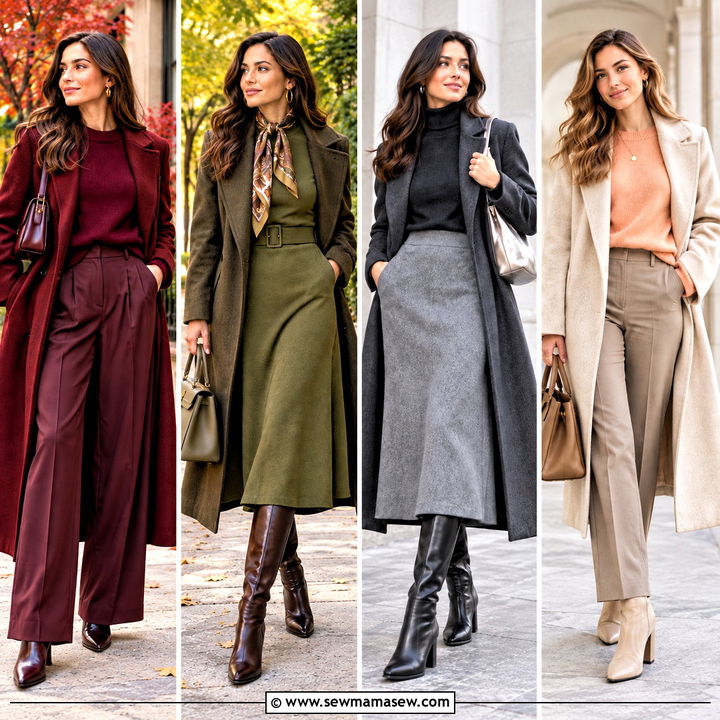
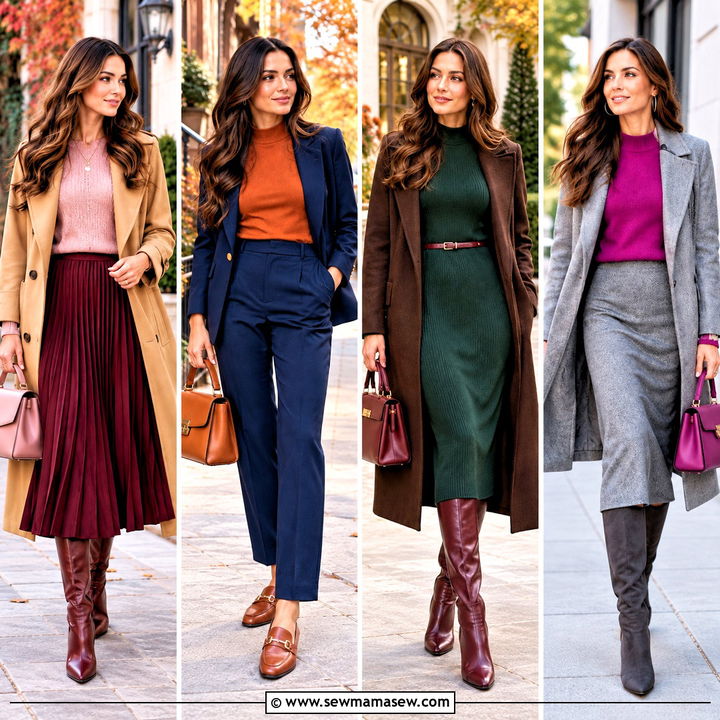
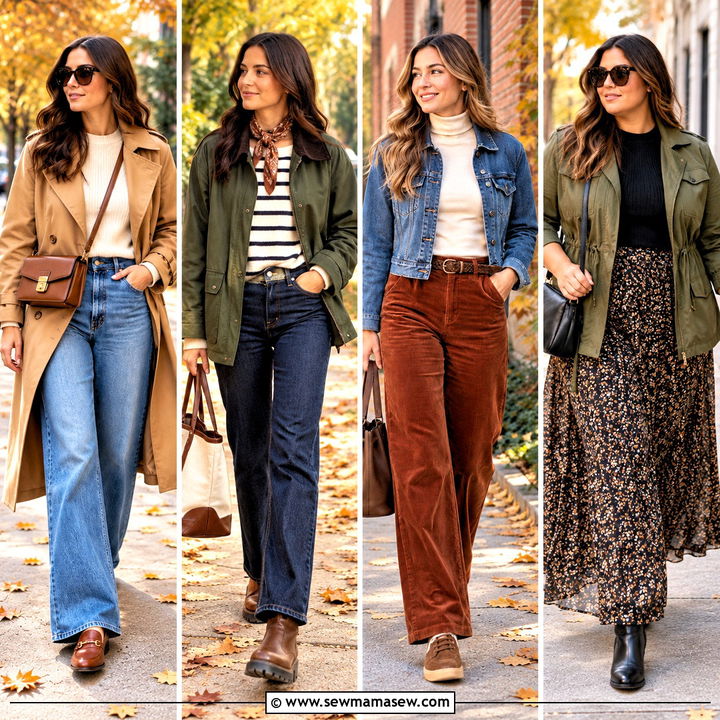
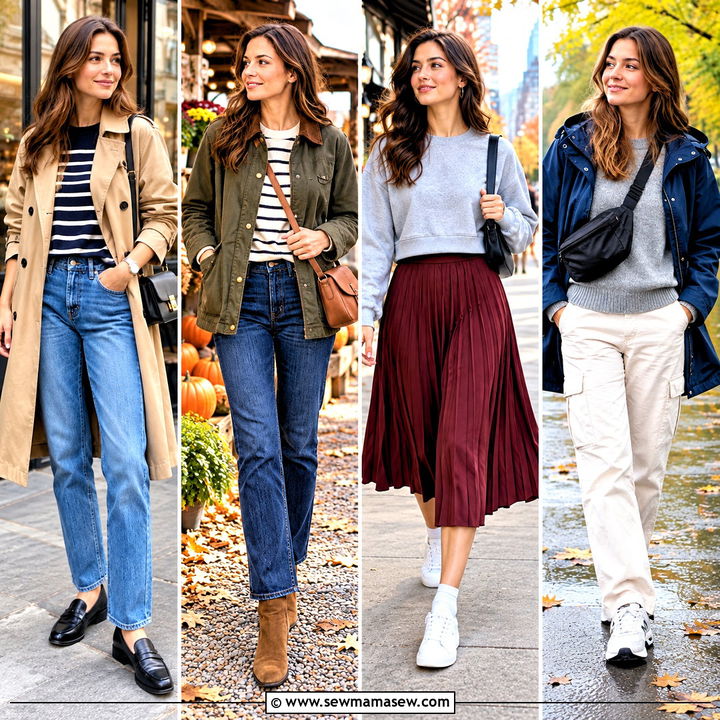
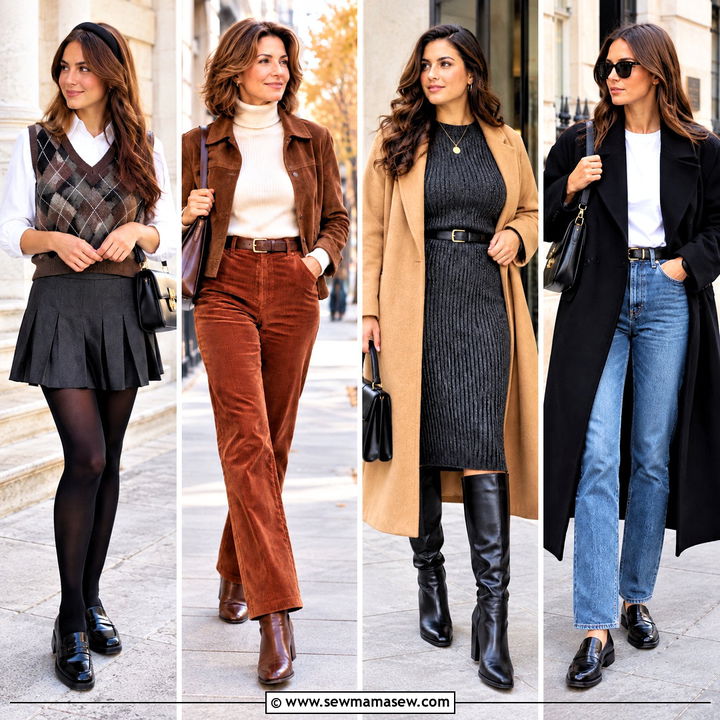
Cold-weather dressing goes wrong in two predictable ways: you either look put together and shiver, or stay warm and feel like a sleeping bag. Most of the work I do with clients in autumn sits between those two. The looks below lean on layering you can actually feel, checks and tailoring, textured fabrics and outerwear that earns its space on the coat hook. None of them asks you to replace what you own. A fitted base under a roomy coat, or a tall boot that disappears under a skirt hem, does more for a familiar sweater than a new purchase usually does. I've written each one with notes on who it suits and where it tends to fall apart, so you can adapt it to your height, your climate and the kind of day you're dressing for.

Thermals That Stay Invisible Under Fitted Knits
Most of the outfits below rely on a slim layer under something tailored, and that's where cold-weather dressing usually breaks down. A bulky thermal shows through a fine turtleneck and pushes a blazer sleeve tight at the elbow. When I build a winter wardrobe with someone, I sort out the hidden layer first.
- Pick thin merino or a fine synthetic base layer over waffle thermals. Waffle texture shadows through knits and adds width at the waist.
- Match the neckline to what goes on top. A scoop base layer under a crewneck sweater is fine; under a V-neck, it peeks out.
- Choose skin-tone or the same shade as the outer layer, never white under dark knits.
- For wide trousers, a pair of thin thermal leggings is enough. Under slim jeans, try them on together first, because some denim simply won't fit over an extra layer.
- Wear the base layer on the try-on. A coat that fits perfectly over a T-shirt in the shop can feel tight by December.
The result is warmth you can't see, which lets you keep the sharper silhouettes on colder days instead of retreating to a puffer every morning.
1. Funnel Neck Coat With Wide Leg Trousers
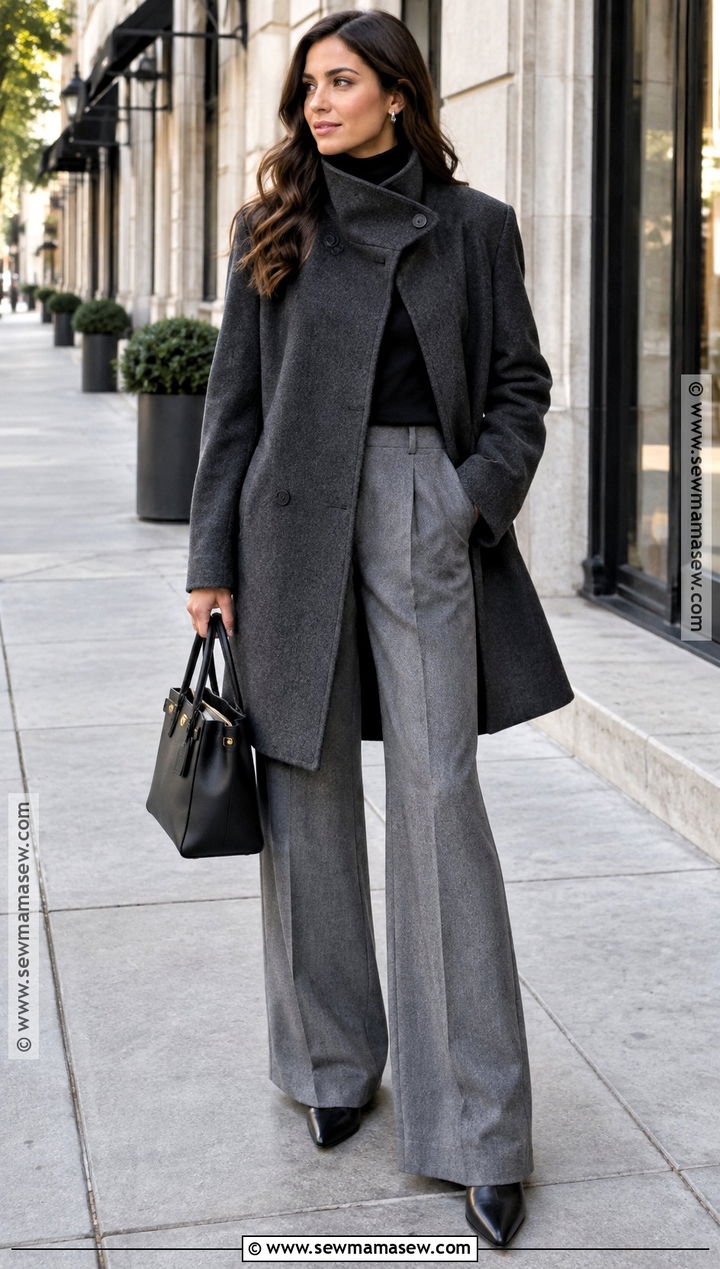
A funnel neck does the job of a scarf, which is why I reach for it on windy commutes when I don't want a knot of wool at my throat. Size it with a thin turtleneck on: if the collar presses the knit flat against your neck, the coat is too snug for real winter. High-waisted wide-leg trousers balance the strong upper half, and they work best when the hem grazes the top of a pointed ankle boot so the line runs unbroken to the floor. On petite frames, a coat that stops at the knee looks intentional where a calf-length one swallows you. Thin thermal leggings fit under wide trousers with no visible ridge, and a structured shoulder bag keeps the whole thing office-appropriate.
2. Plaid Barn Jacket With Straight Leg Jeans
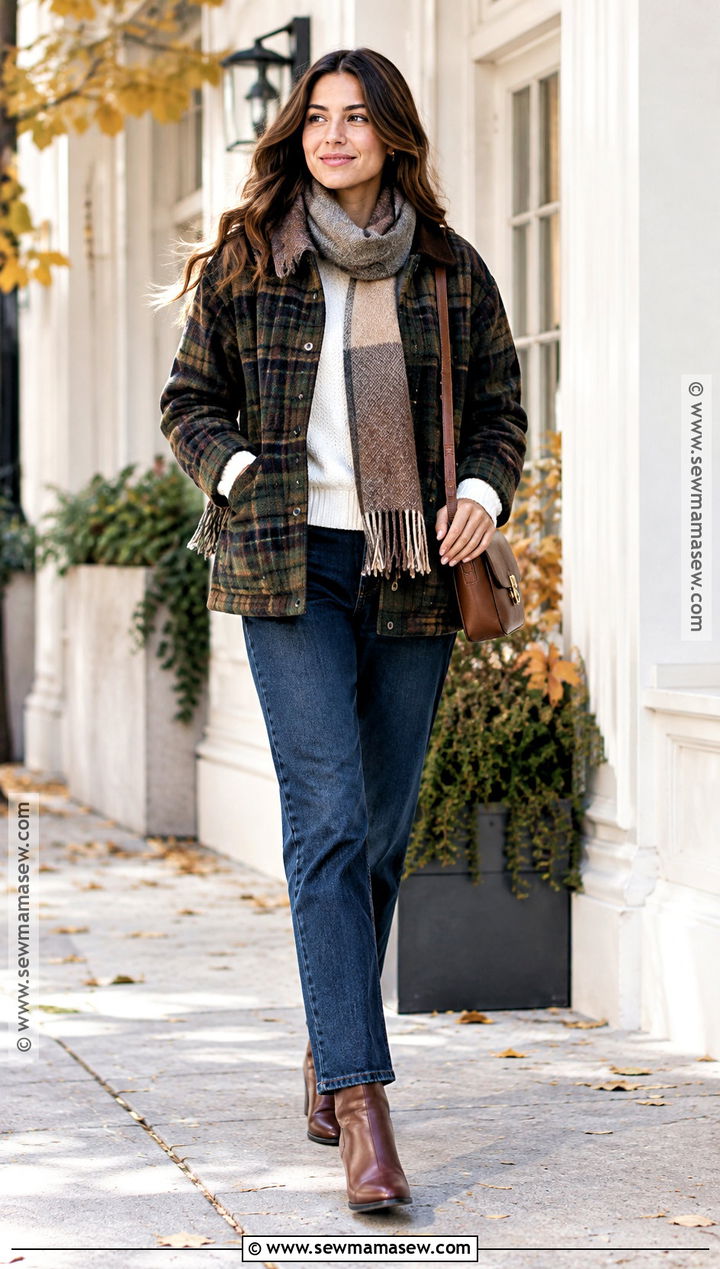
This is my answer for crisp mornings when you want to look like you tried, but only a little. A barn jacket with a corduroy collar over a cream crewneck and dark straight-leg jeans gives you three textures and no fuss. The detail I check first is where the jacket ends: around the upper hip suits most people, while a longer, boxier cut can make a shorter torso disappear. Loafers with visible socks are fine on dry days. Once the pavement stays wet, switch to weather-resistant ankle boots, because leather loafer soles get slick fast. A wool scarf in a color pulled from the plaid ties it together, and a crossbody bag keeps your hands free for coffee.
3. Suede Jacket With Matching Wide Leg Pants
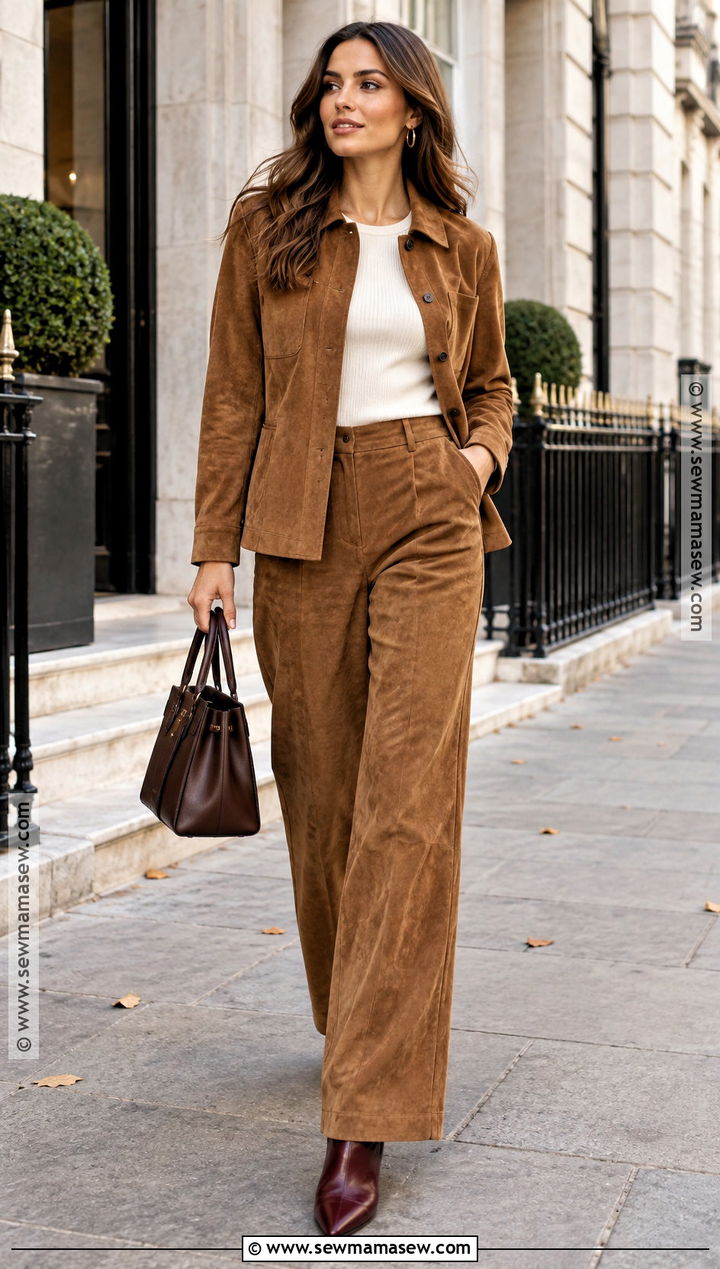
Tonal suede reads expensive because the nap catches light evenly across jacket and trousers. Chocolate, caramel or rust all work; an ivory knit underneath keeps the set from looking heavy. Be honest about your weather before you commit, though. Real suede darkens and stiffens when it gets soaked, so I keep a suede set for dry days and treat it with a protector spray before its first wear. If that sounds like too much upkeep, a suede-look jacket over fluid trousers in a close shade gives you the same tonal effect with far less risk. Pointed burgundy or dark brown boots under the hem lengthen the leg.
4. Oversized Blazer With Turtleneck And Jeans
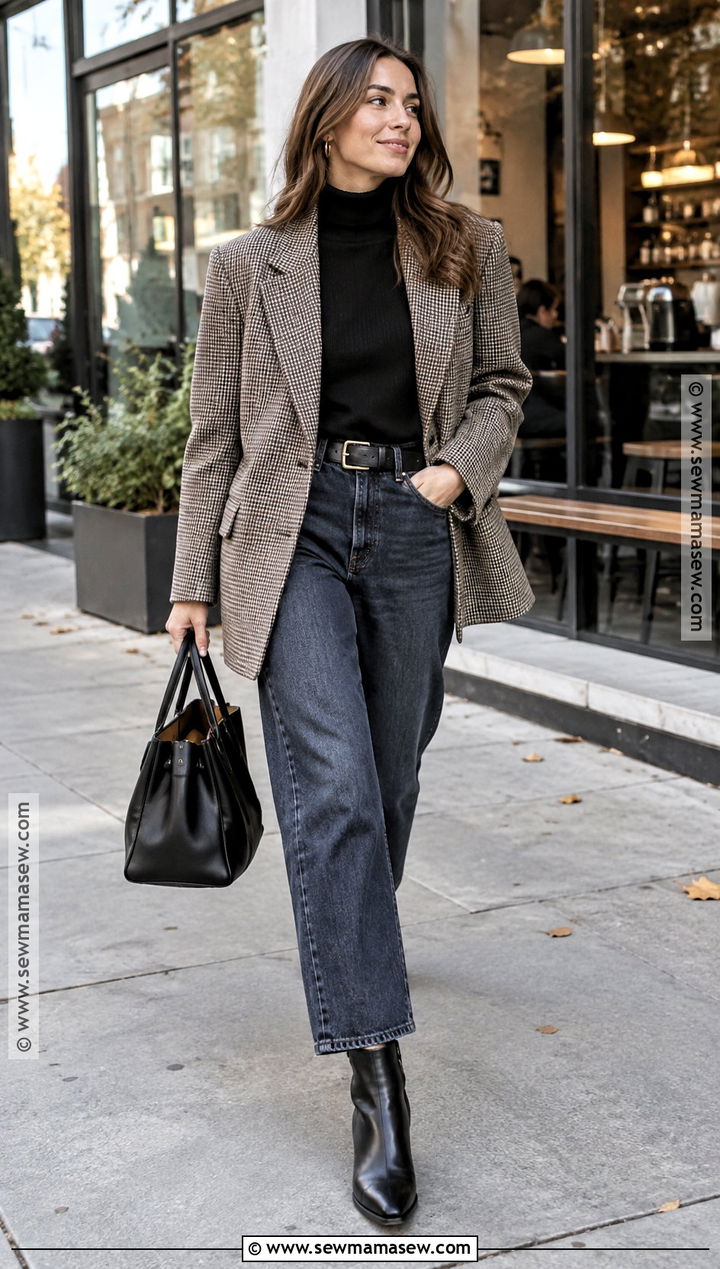
An oversized blazer over a fine turtleneck and relaxed jeans is the smart-casual formula I suggest most often, because almost everyone owns two of the three pieces already. The blazer needs a close base layer; a chunky sweater underneath turns oversized into borrowed. Push the sleeves up an inch so the knit cuff shows, which makes the layering look deliberate. Curvier figures usually do better in a blazer with a little shaping through the waist, while tall frames can carry a longer, looser cut that would drown someone shorter. Finish with sleek ankle boots and a leather belt that matches them.
5. Leather Jacket With Satin Midi Skirt
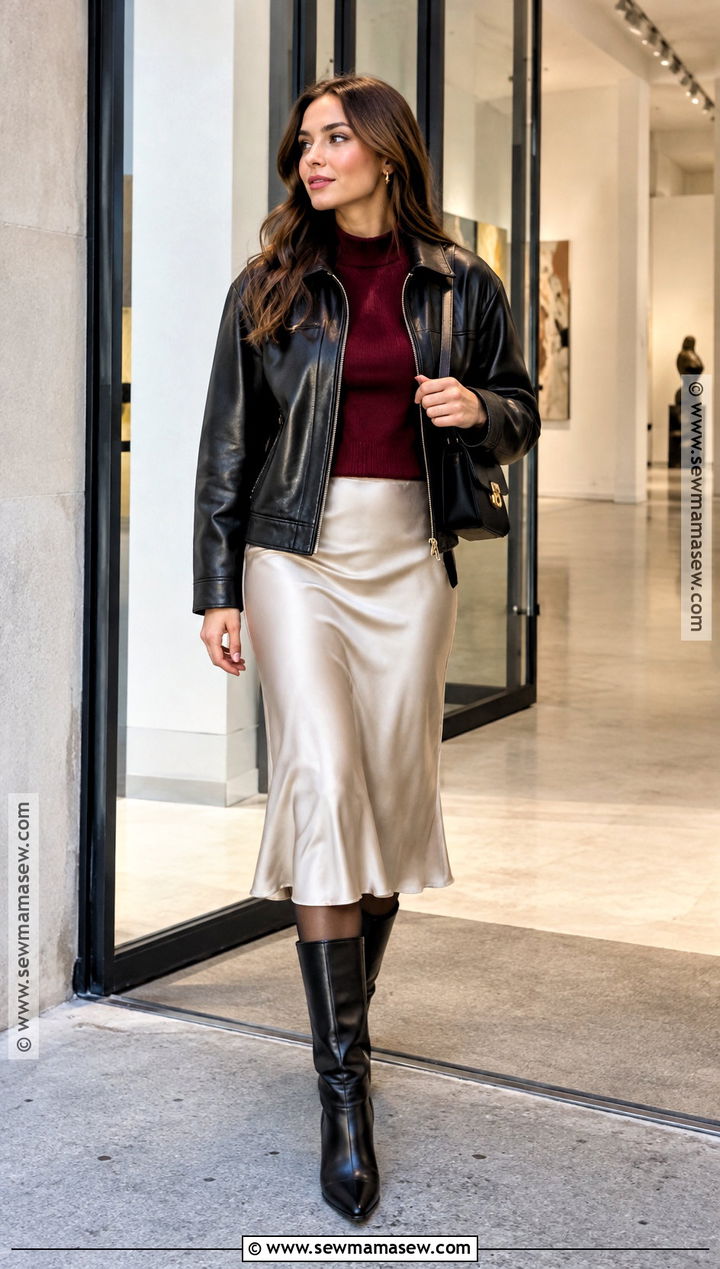
Leather and satin work together because one holds its shape and the other moves. Choose a bias-cut satin skirt; bias cutting lets the fabric drape over the hip instead of pulling across it, but it also shows every ridge underneath, so wear smooth tights or a slip. A slightly boxy leather jacket squares the shoulders and stops the outfit from looking like evening wear in daylight. Knee-high boots are warmest. If the skirt sits low on the calf, I'd switch to sleek ankle boots so there isn't a bulky overlap where boot shaft meets hem. Keep the top plain: a ribbed knit or long-sleeve tee in black, cream or burgundy.
6. Winter White Sweater With Cream Trousers
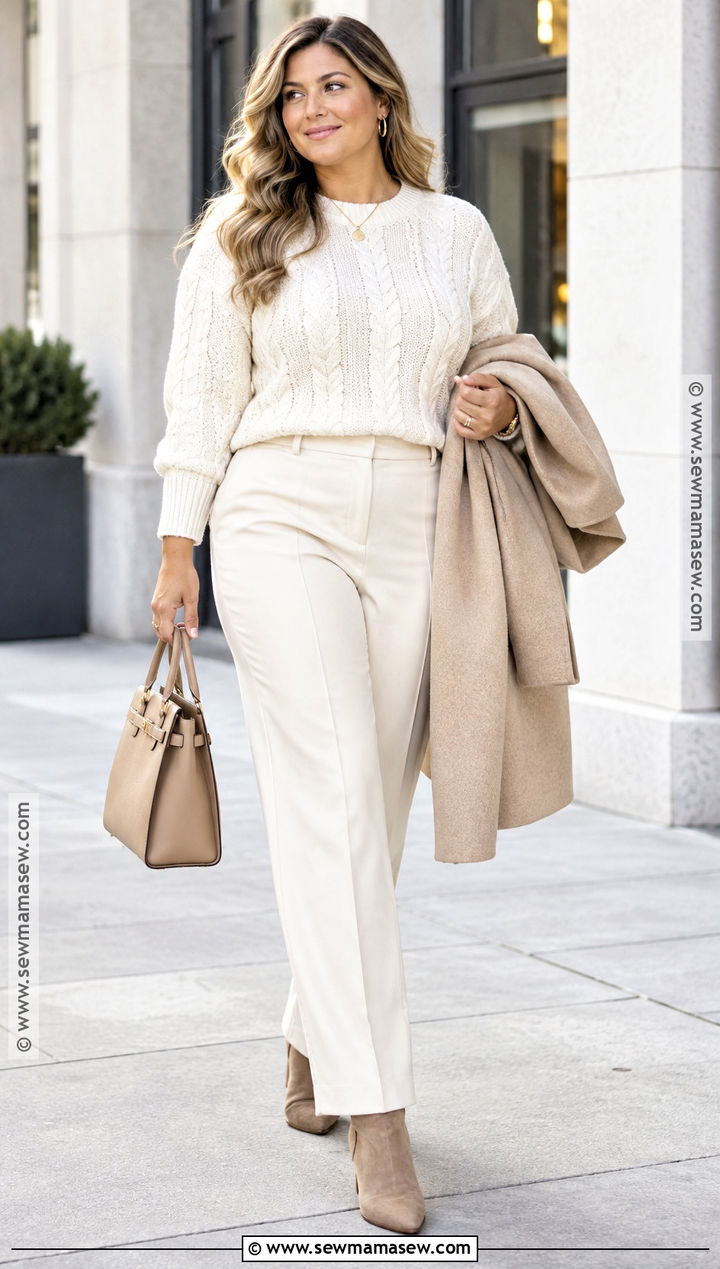
Winter white looks brighter than black in a gray month, but it only works when the textures differ. An ivory cable knit with cream tailored trousers in wool or ponte gives the eye something to follow; two flat fabrics in the same shade look like a uniform. Do a half-tuck at the front so the sweater meets the waistband instead of sitting on the hip, which keeps a chunky knit from adding width. Taupe boots and a beige bag hold the palette. My practical advice: buy off-white rather than optical white, and look for washable knits. Pure white shows every coffee splash, and dry cleaning cream wool trousers after each wear adds up fast.
7. Argyle Sweater With Midi Skirt And Loafers
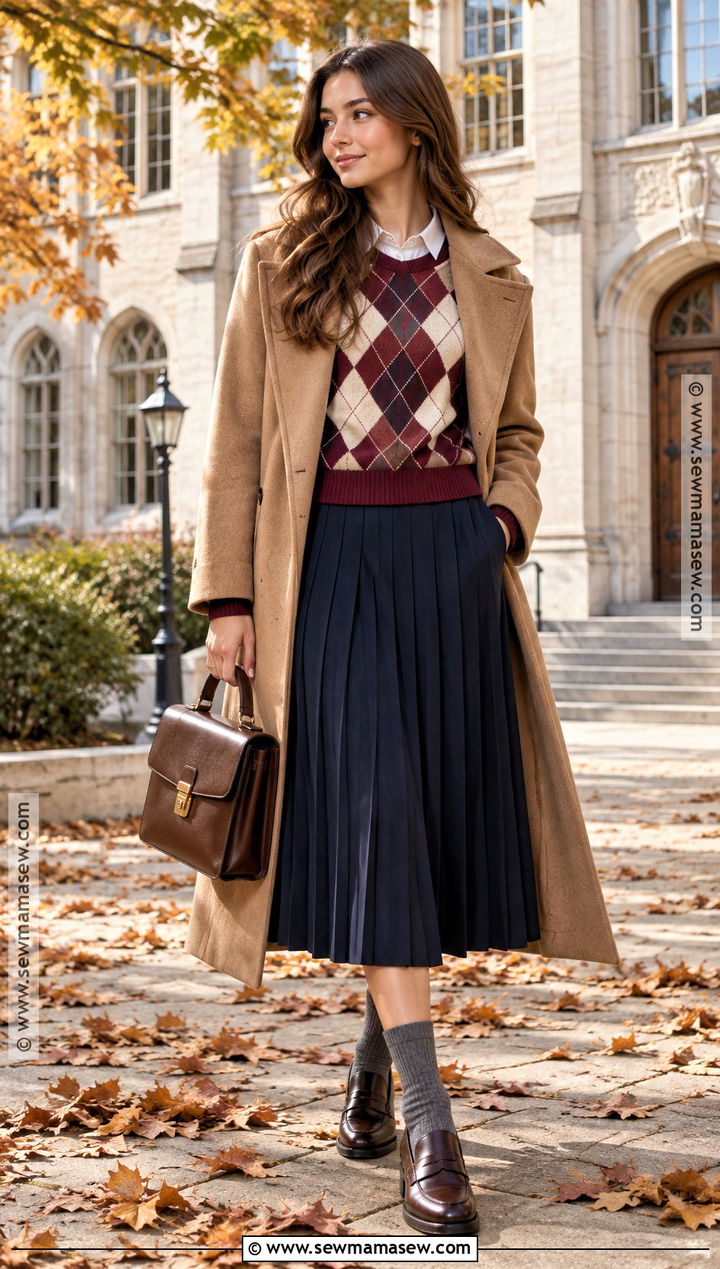
Argyle can tip into costume if everything around it is also patterned, so I let the sweater be the only print. A slightly relaxed knit over an A-line or softly pleated midi skirt in navy, chocolate or olive keeps the proportions easy: fitted enough to tuck, loose enough to move. Loafers and ribbed socks carry it through early autumn. When temperatures drop, swap in opaque tights and ankle boots. A collared shirt under the knit adds warmth at the neck and a little prep, though it also adds bulk at the waist if you tuck both layers, so a narrow belt over an untucked sweater is often cleaner.
8. Knit Dress With Knee High Boots
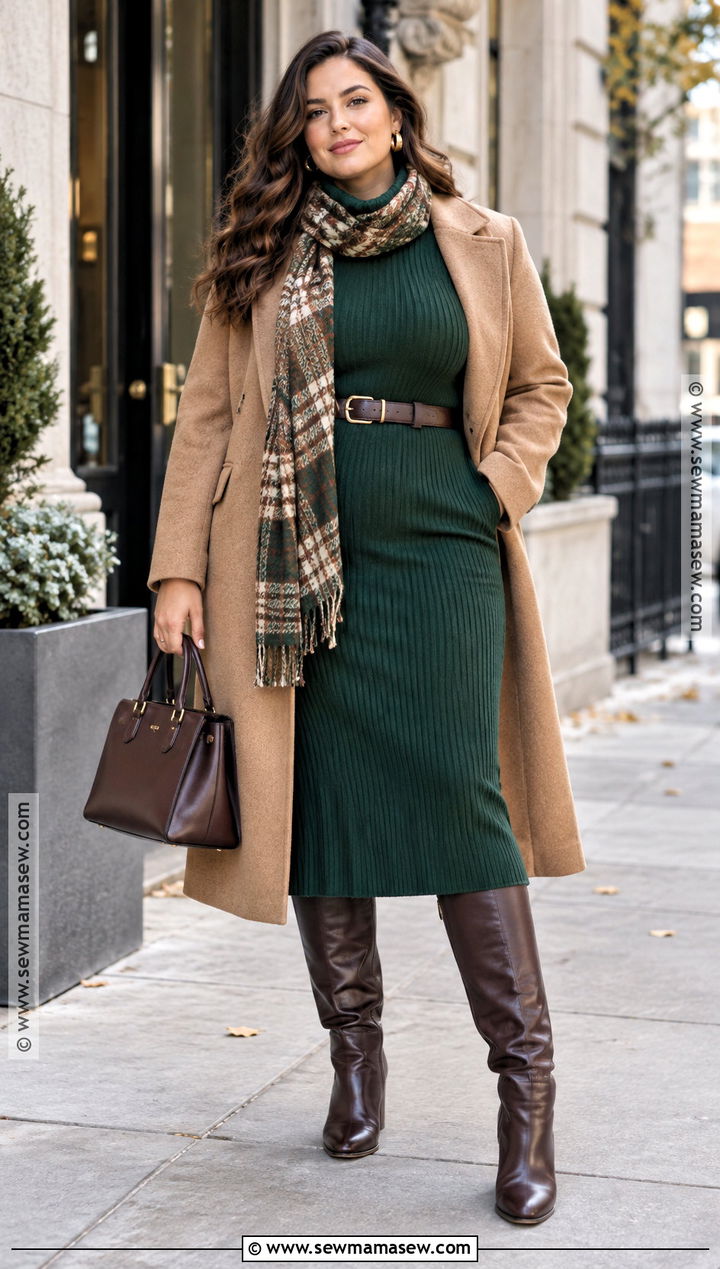
A knit dress is one decision instead of three, which is why I recommend it for the mornings you don't want to think. A ribbed midi with a defined waist suits most shapes; if yours is straight, a leather belt adds the shape. The boot matters more than people expect. Knee-high boots whose tops vanish under the hem give you continuous warmth and a long line, while a gap of bare tights between boot and hem breaks the leg in two. Knit dresses build static against tights in dry heated rooms, so a slip underneath helps. Add a tailored wool coat and a patterned scarf for personality.
9. Duster Coat With Sweater And Tailored Pants
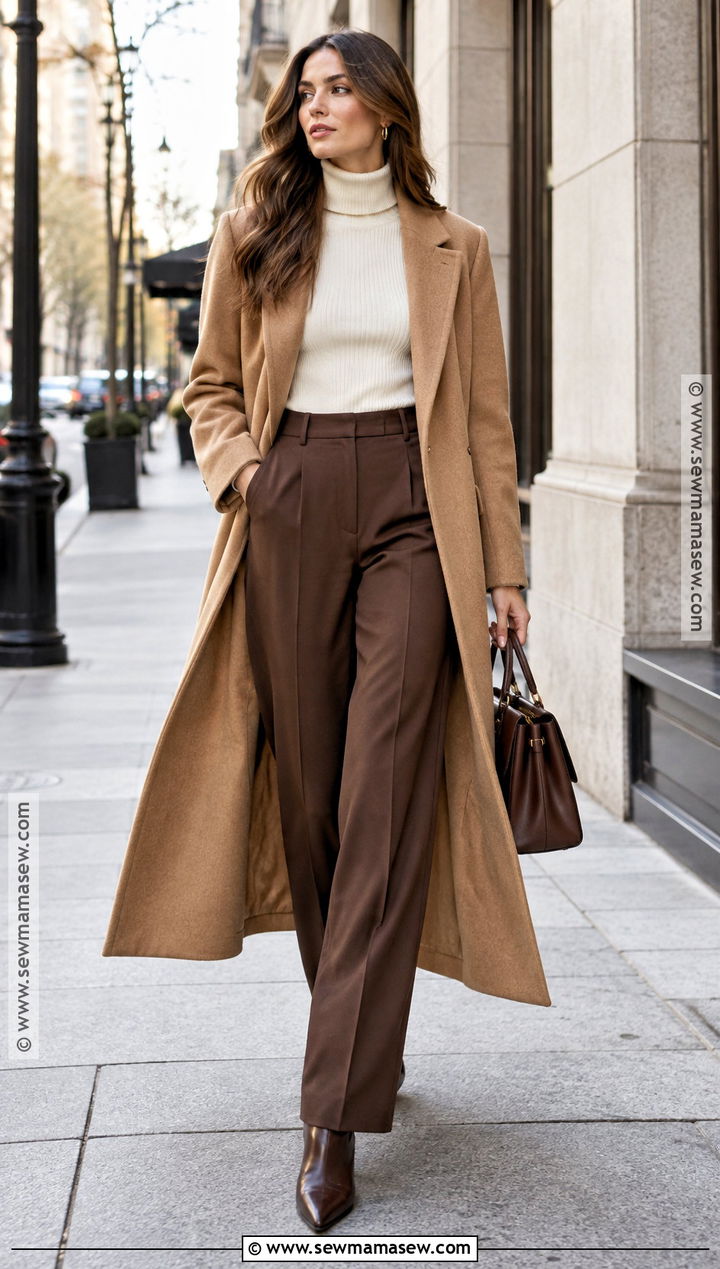
A duster coat moves when you walk, and that movement is what makes a plain turtleneck and straight-leg trousers look finished. Check the length standing still and on stairs: it should swing freely but never catch under your heel. Camel, charcoal, deep green or burgundy all work. Petite women look best in a calf-length duster with inner layers close in color, because the coat then frames one long column instead of cutting across it. With this much fabric, I keep accessories to a watch, earrings and a slim belt.
10. Puffer Jacket With Leggings And Snow Boots
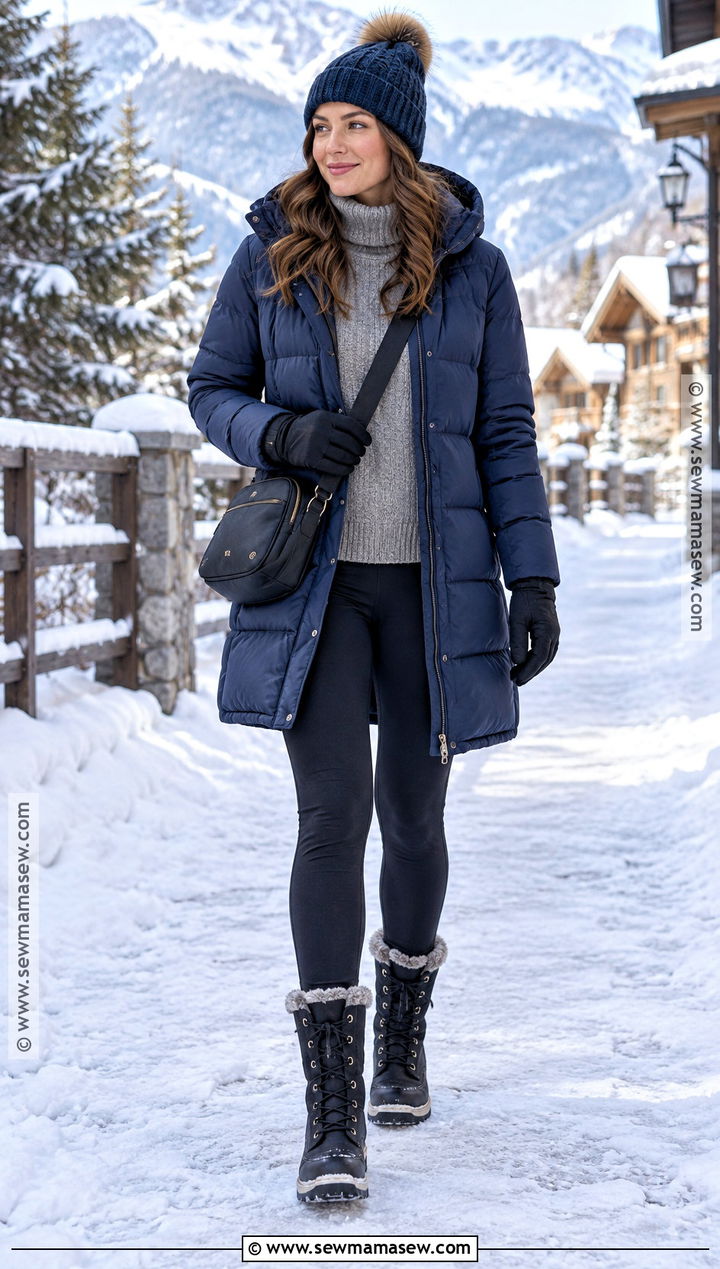
Not every day needs to look polished. Some days need to keep you warm through school pickup, a dog walk and a grocery run. Fleece-lined leggings or thick ponte pants under a long merino sweater give coverage over the hip and stay comfortable in the car. Choose your puffer length by wind, not looks: a knee-length one keeps the thighs warm in a way a hip-length one never will. Snow boots should have a grippy sole and a waterproof lower; fashion boots with smooth soles are what people slip in on icy steps. Keeping jacket, pants and boots in one color family makes the whole thing look tidier than it is.
11. Sweater Vest With Button Down Shirt And Trousers
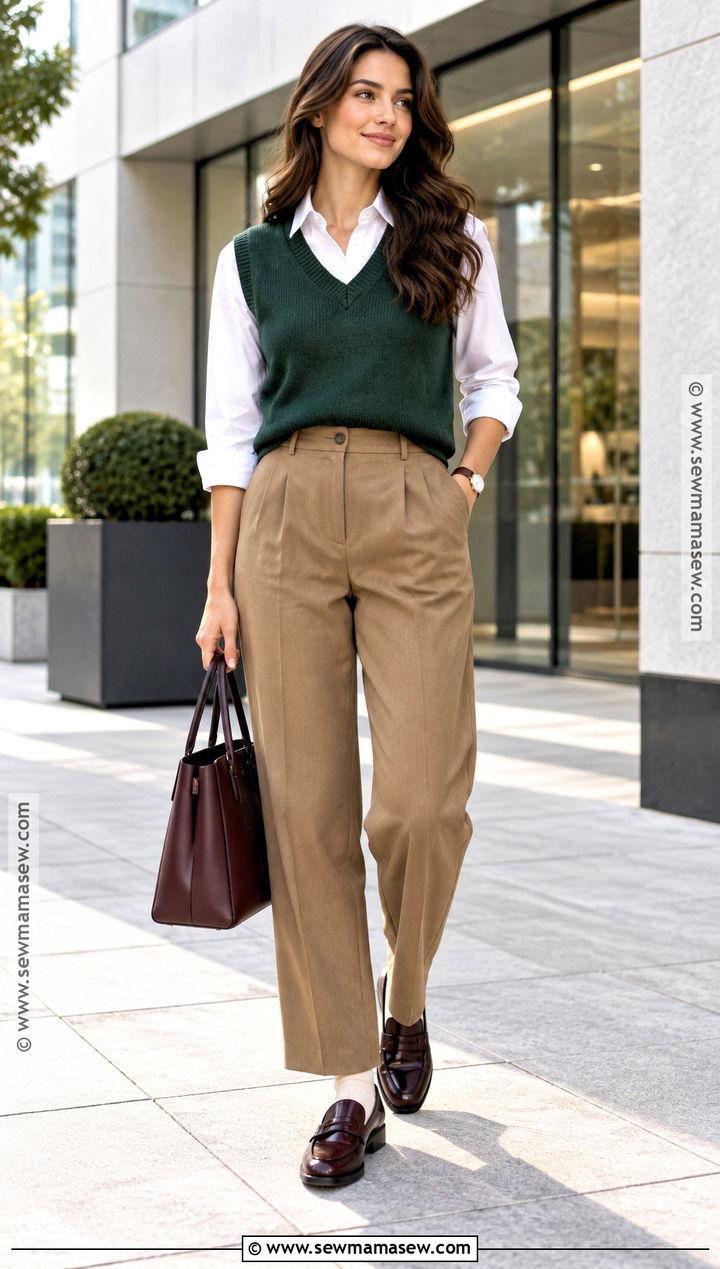
A sweater vest gives you a warm core without bulk in the arms, which matters under a fitted coat. Go for a V-neck in burgundy, forest green, oatmeal or a quiet heritage pattern over a white or pale blue button-down, with high-waisted tailored trousers. Whether you tuck changes the mood more than any accessory: shirt tails out read relaxed, everything tucked reads sharp. If you have a fuller bust, I'd pick a softer, drapier vest and leave the top button open, because a stiff knit and a closed collar crowd the neckline. Loafers in early autumn, heeled boots once it's properly cold.
12. Denim Shirt With Maxi Skirt And Boots
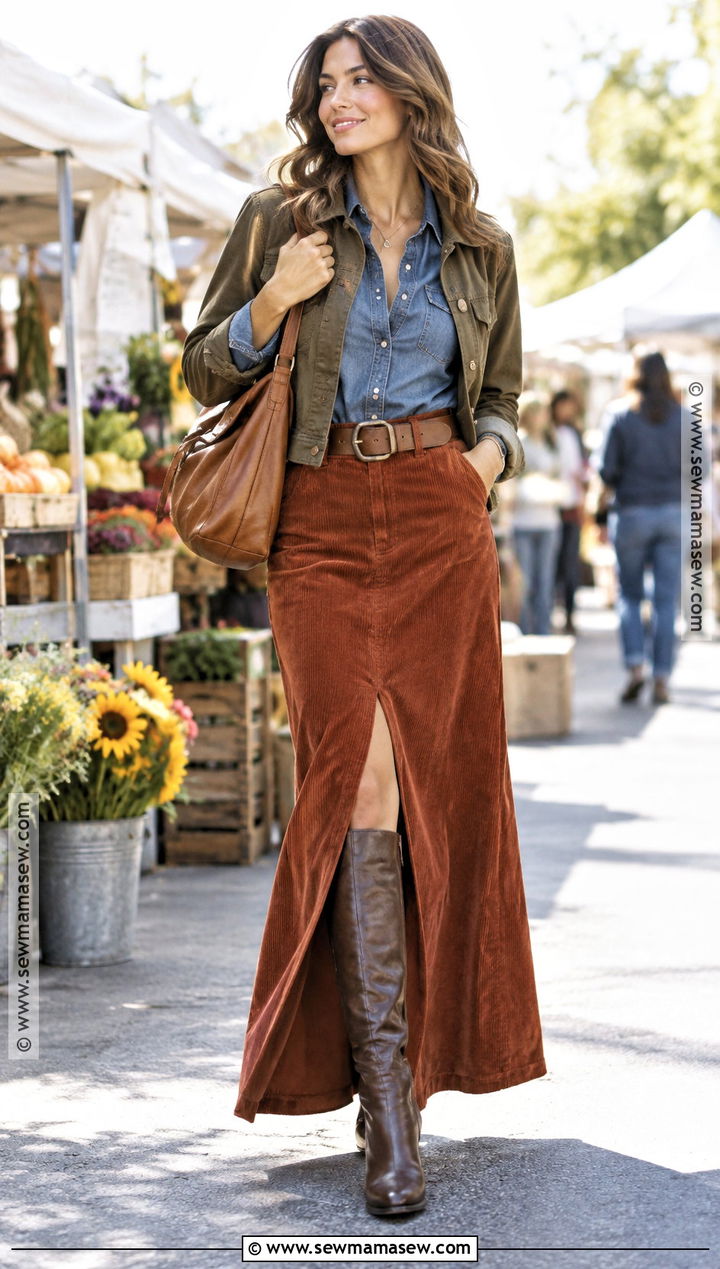
A denim shirt makes a maxi skirt casual in a way a blouse can't. Wear it open over a fitted long-sleeve top, tucked, or knotted at the waist, with a skirt in corduroy, wool blend or a firm cotton. Weight matters here; a thin maxi skirt wraps around your legs in the wind and clings to tights. A front or side slit lets you walk normally and shows a flash of knee-high boot. Shorter frames do better with an ankle-length skirt and a small heel so the hem doesn't puddle. A wide leather belt defines the waist under all that fabric, and a slouchy bag keeps it relaxed.
13. Monochrome Burgundy Suit With Pointed Boots
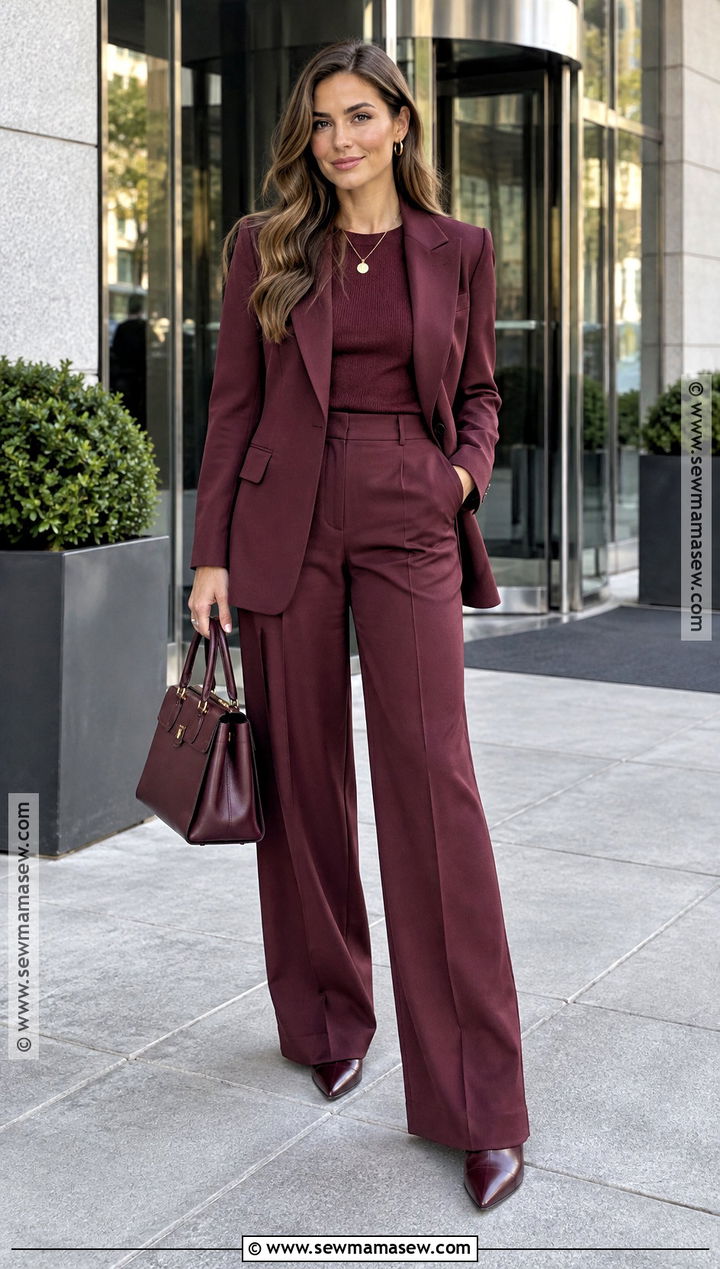
Burgundy tailoring softens a suit without making it less serious, and it flatters far more skin tones than people assume. Wear the blazer and matching straight or wide-leg trousers with a fine knit in the same family, or a soft pink for a little contrast near the face. Pointed boots carry the trouser line down, and an oxblood or chocolate bag keeps the palette closed. Leave the blazer open if a buttoned suit feels too formal. The real value is that the pieces split up later: the blazer over jeans, the trousers with a cream knit. Check that the fabric shades match before you buy separates, since burgundy varies a lot between dye lots.
14. Chunky Cardigan With Slip Dress And Boots
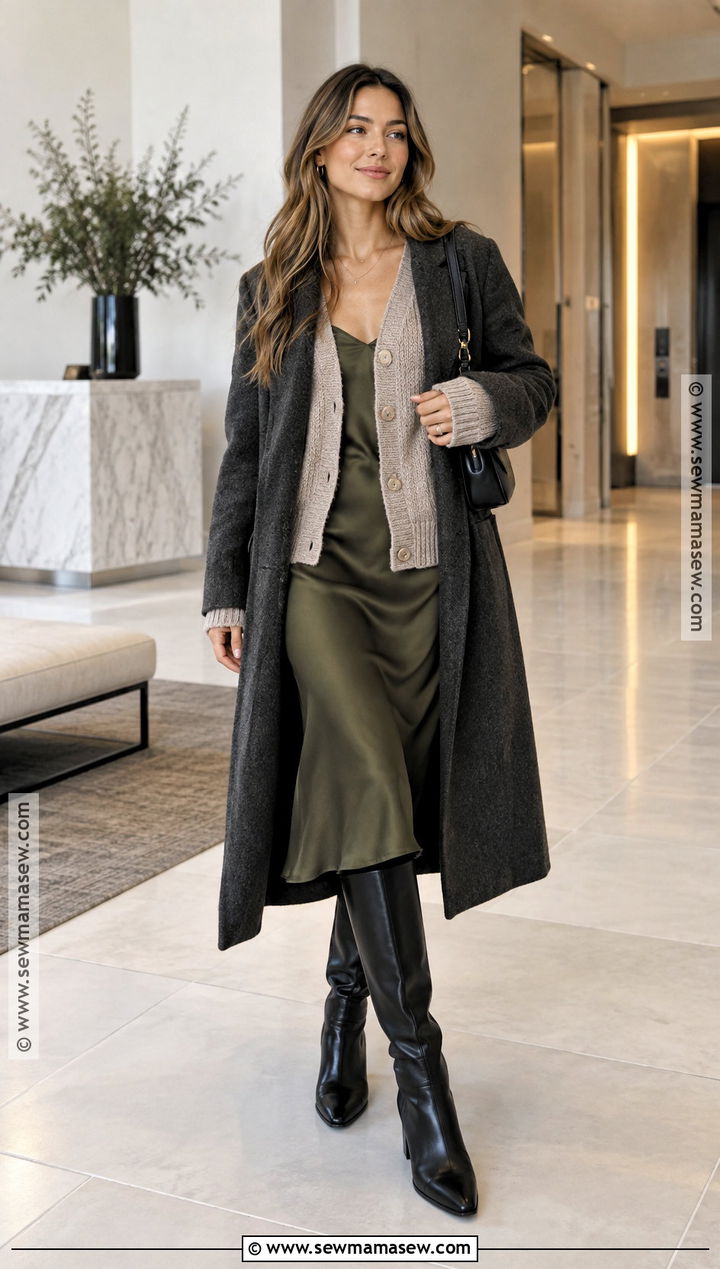
Your summer slip dress can work all winter if you treat it as the middle layer. Put a chunky cardigan over it that ends at the waist or upper hip; a long cardigan over a midi dress gives you two hemlines fighting each other. Opaque tights and tall leather boots handle the warmth below. Slip dresses cling to tights, so I look for a slightly heavier satin or add a half slip. In properly cold weather, a fitted turtleneck under the dress fills the neckline and keeps the shoulders warm. A long wool coat over everything and a small shoulder bag finish it.
15. Wool Coat With Hoodie And Relaxed Jeans
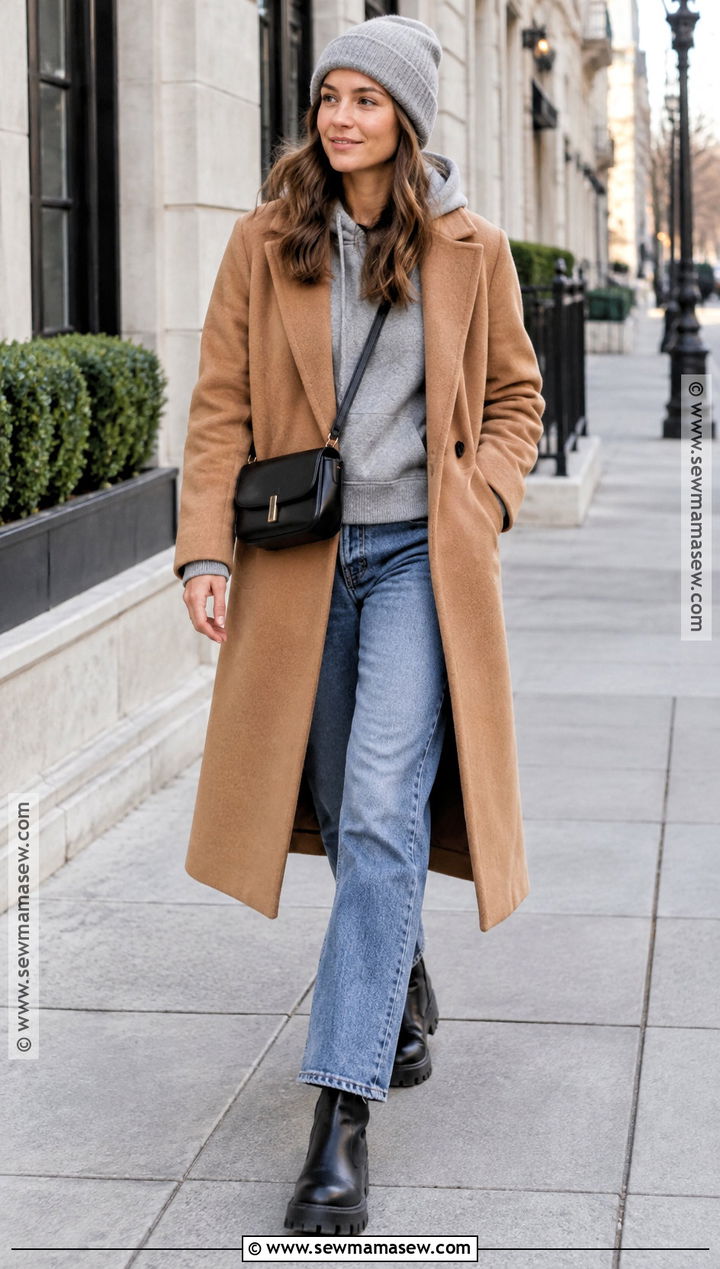
A hoodie under a tailored wool coat looks deliberate when the hoodie is plain and fitted, and sloppy when it's oversized with a big graphic. The hood should lie flat over the coat collar rather than bunching at the back of your neck, so try the two together before you rely on the combination. Camel, charcoal or herringbone coats suit it best. Relaxed straight-leg jeans and clean leather sneakers work on dry days; swap to lug-sole ankle boots when it's wet. Keep the hoodie and jeans in muted neutrals so the coat carries the outfit, then add a beanie or cap.
Rotating Two Coats Across All Fifteen Looks
Look back over the list and you'll notice the coat changes the feel of an outfit more than anything else. You don't need fifteen coats. Two well-chosen ones will carry nearly every look here.
The tailored one
A wool coat that falls somewhere between the knee and mid-calf, in camel, charcoal or navy, works over the trousers, the suit, the knit dress and even the hoodie. I check three things when fitting one: you can cross your arms without the back seam pulling, the shoulders sit at your shoulder bone rather than past it, and the sleeves cover your wrist bone with a sweater on. Wool with some cashmere drapes softer but pills sooner at the cuffs and under the arms, so a higher wool content usually lasts longer.
The weather one
A puffer or a water-resistant parka covers the days the tailored coat can't. Wool keeps you warm when it's damp, but a heavy downpour will soak it through and leave it smelling of wet sheep. If you live somewhere with wet winters, this is the coat you'll wear most, so spend more on it. If your winters are dry and mild, a lighter quilted jacket may be all you need.
Swap a leather or barn jacket in for the shoulder seasons, and that's the whole outerwear rotation behind this list.
Your Coat Decides Half of This List
Most of these looks share the same handful of pieces: a good coat, a fine knit, straight trousers or jeans and boots that handle your weather. Start with two or three that match how you actually spend your days, then adjust lengths and colors to your frame. Warm base layers and the right shoes make even the polished outfits workable in real winter. You don't need every trend of the season. One updated piece next to the favorites you already wear does more than a full new wardrobe.
Related posts: