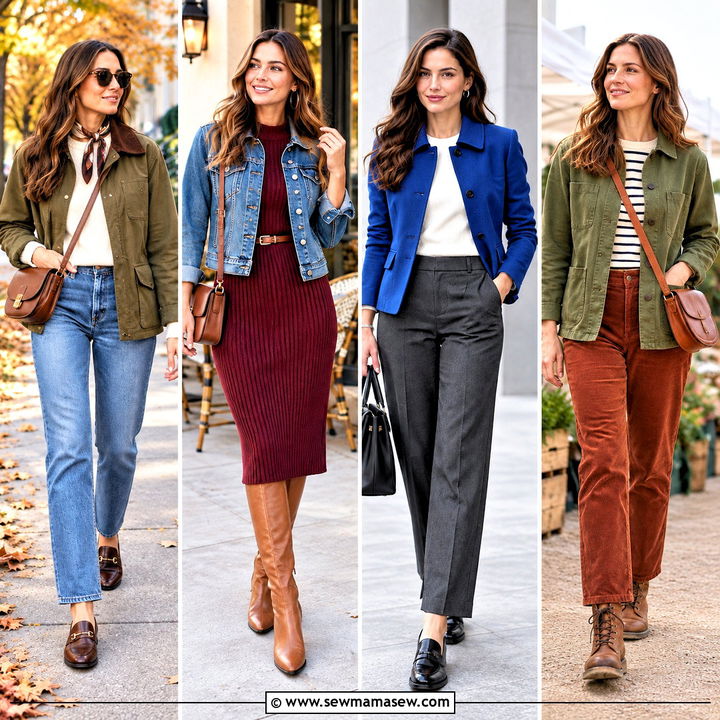
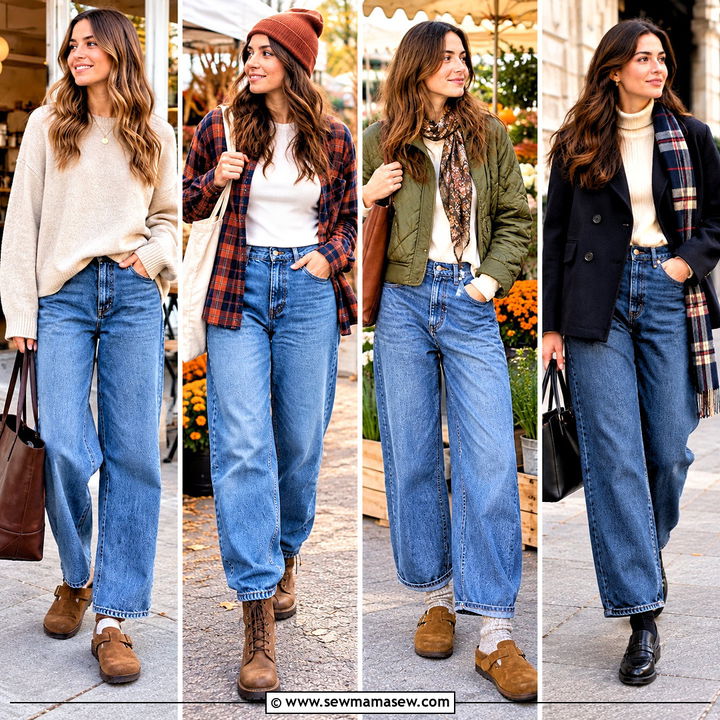
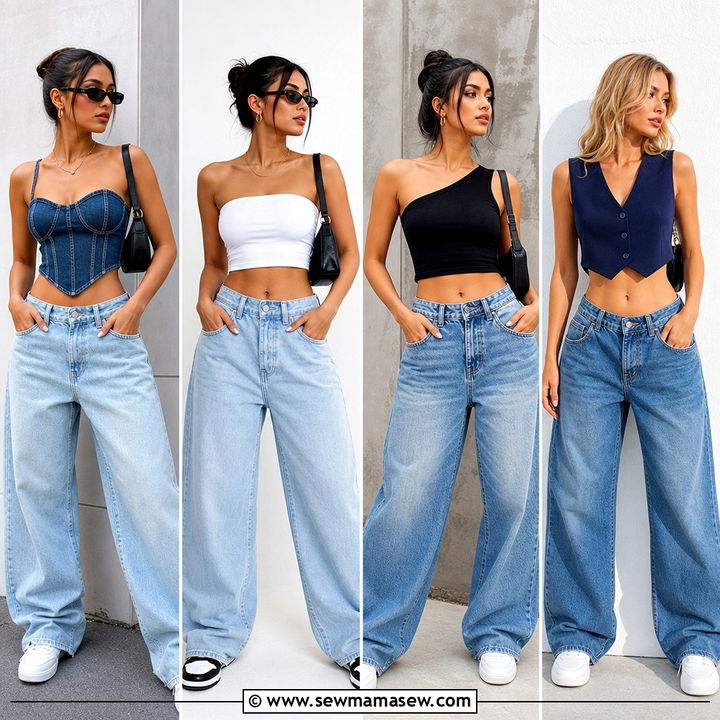
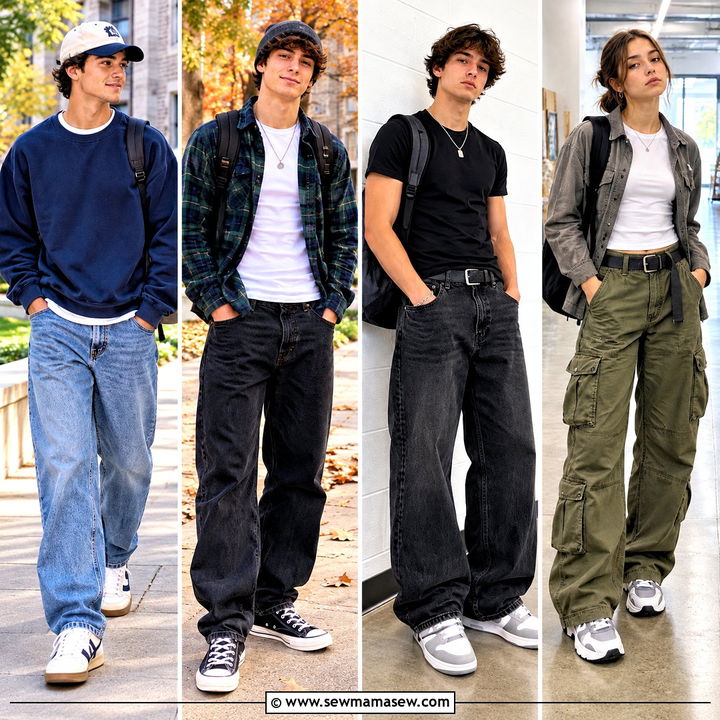
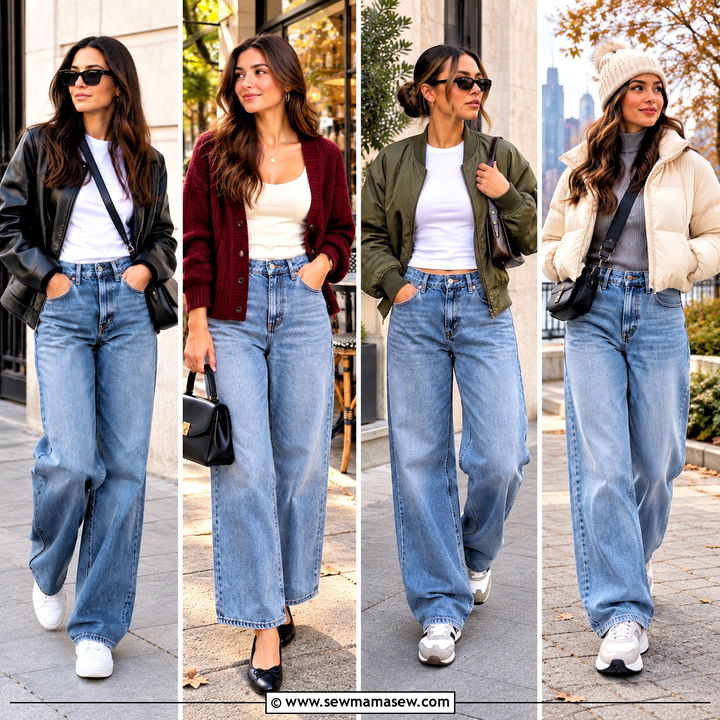
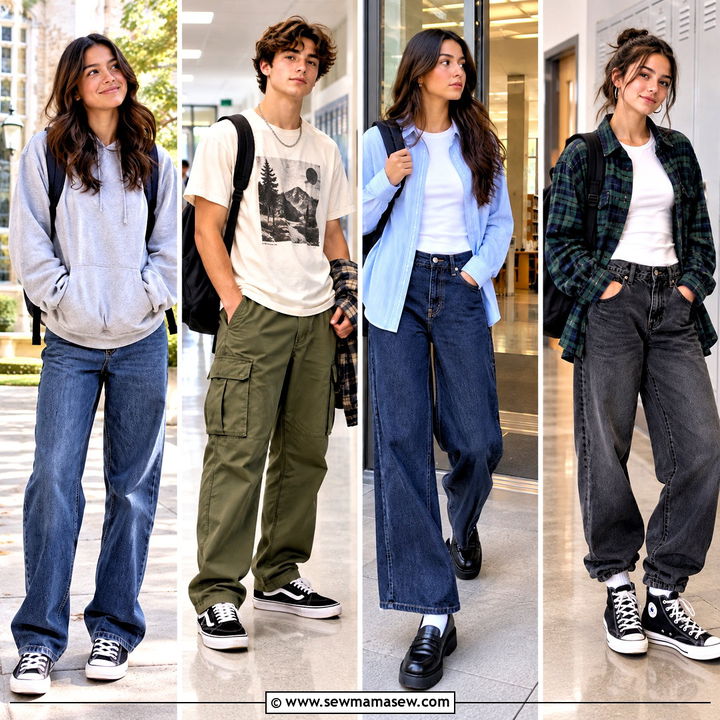
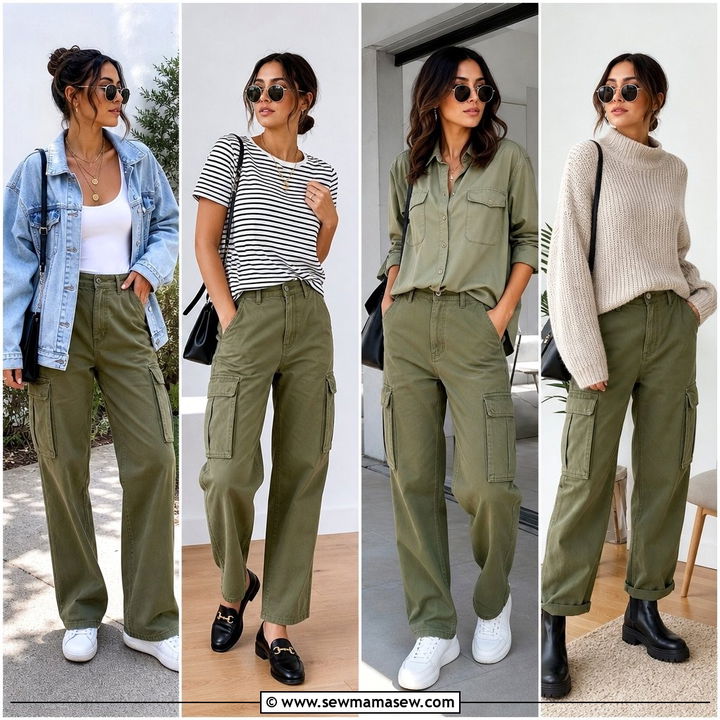
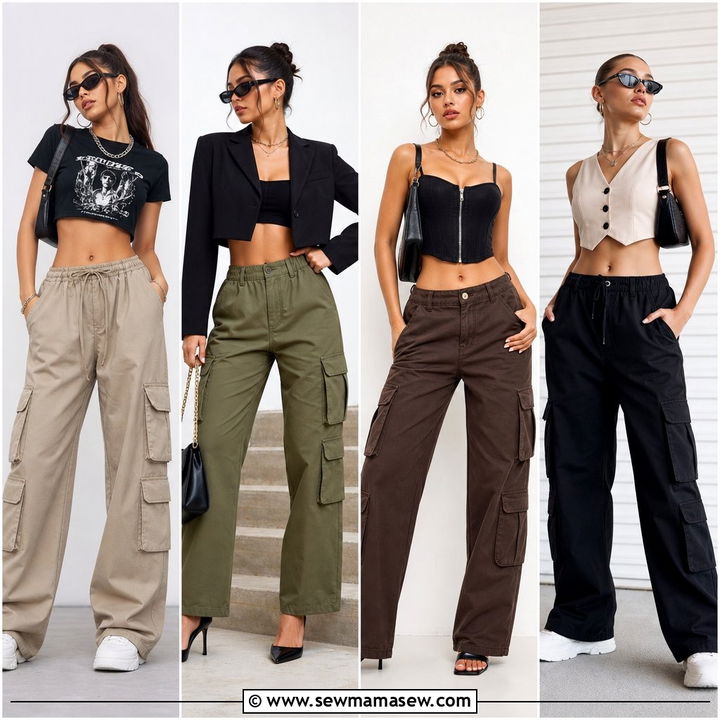
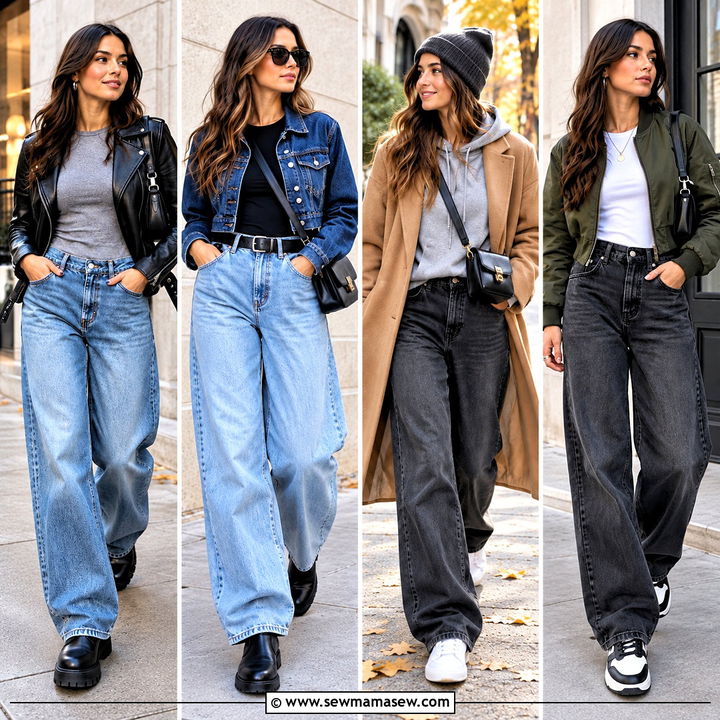
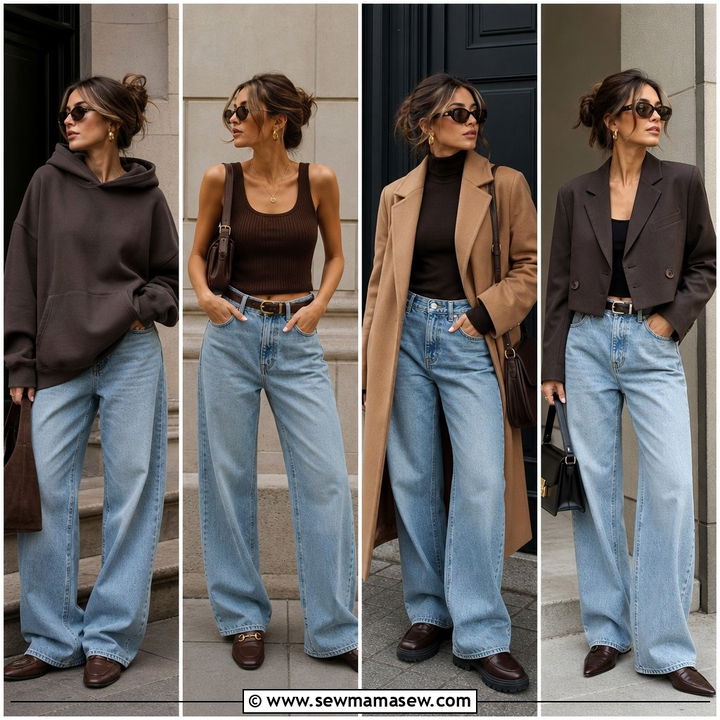
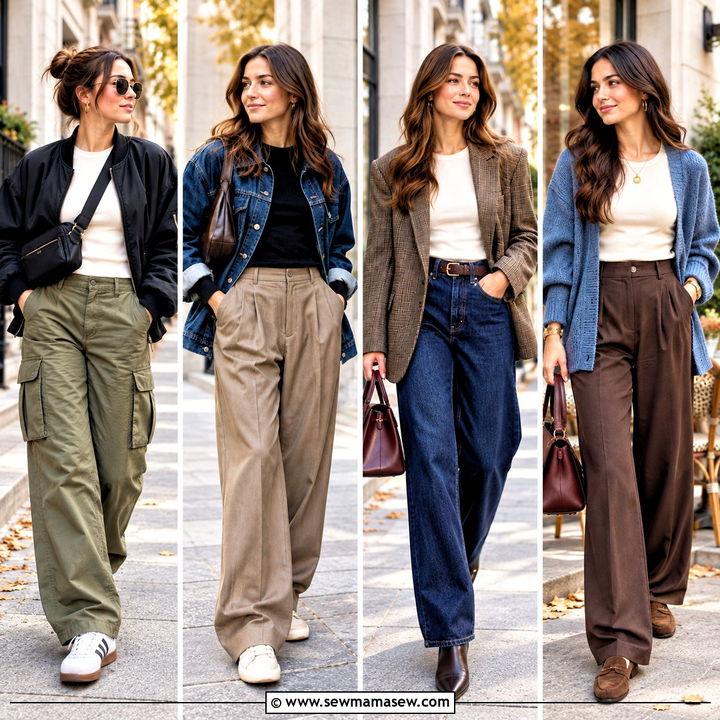
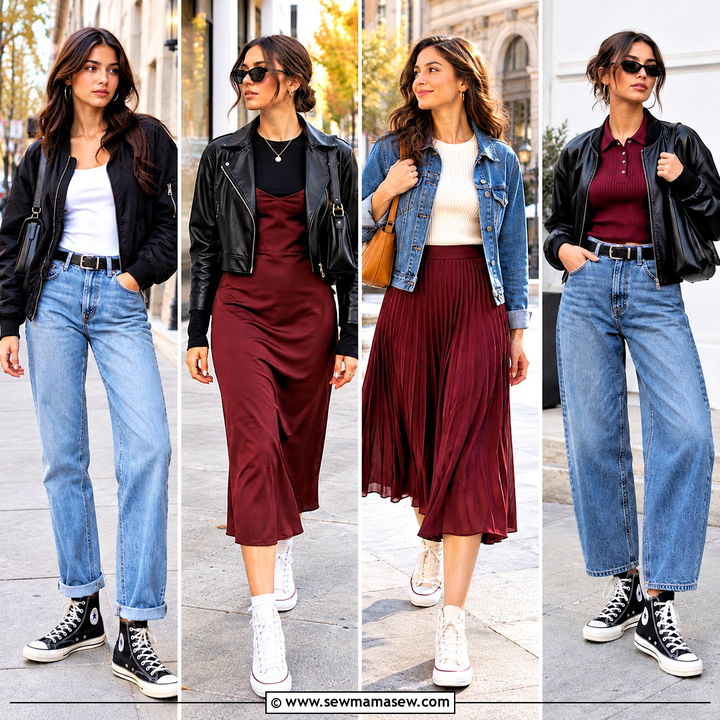
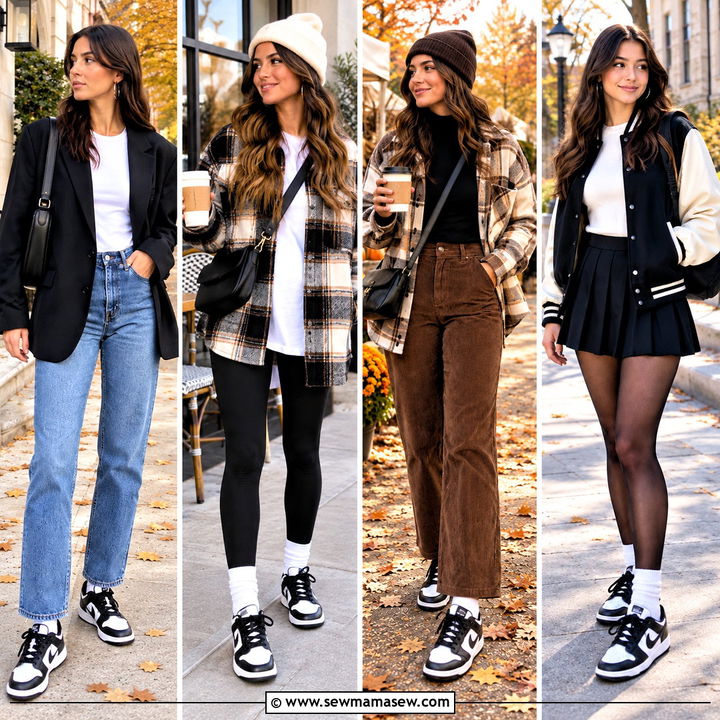
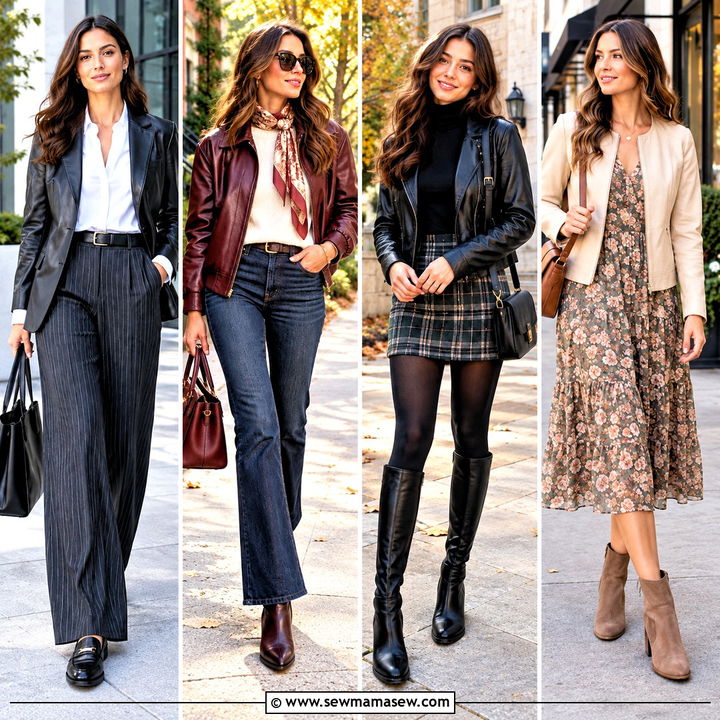
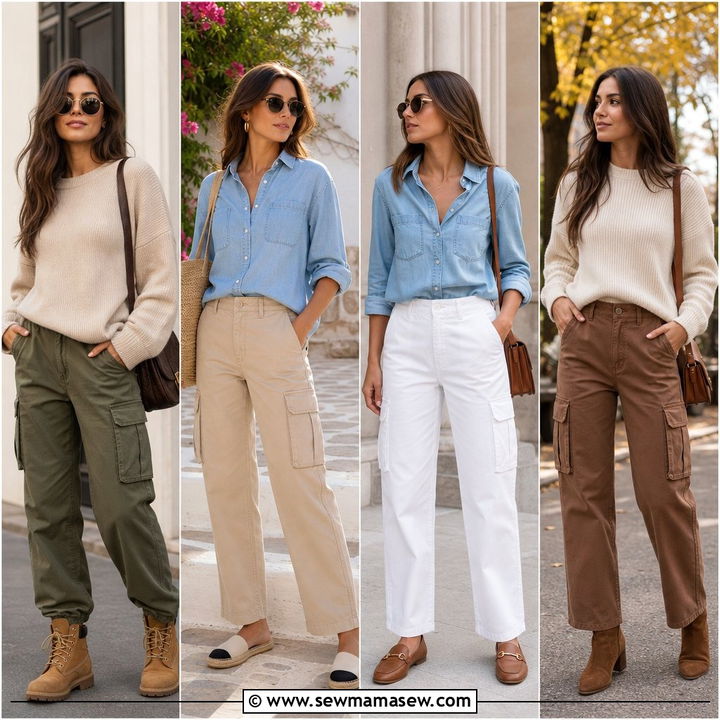
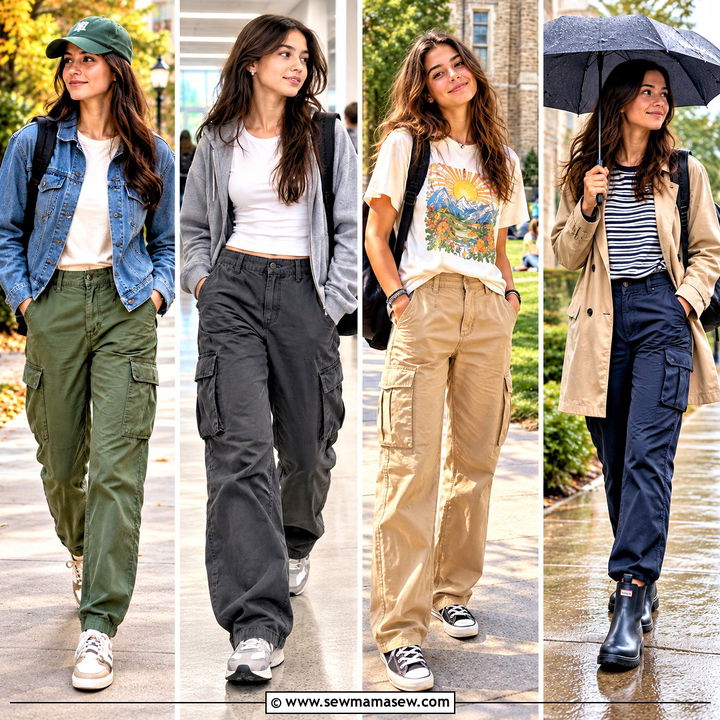
Baggy pants are the easiest thing in my fall rotation to wear and the easiest to get wrong. The pants themselves rarely fail. What fails is everything around them: a top that adds more volume, a hem that drags, a shoe too dainty to hold up a wide leg. When I style them, I keep one rule in mind. If the leg is loose, something above it needs a shape. Below are fifteen combinations I'd actually put together, from denim and cargo to satin and faux leather, in the browns, olives, navies and burgundies that make the cut feel seasonal rather than like leftover summer linen.
Setting the Hem Before You Style Anything
Most of the trouble I see with baggy pants starts at the floor. A wide leg that drags picks up grit, frays at the back, and makes you look shorter than you are. So before thinking about sweaters or coats, I decide which shoe the pants will be worn with most and set the hem to that shoe.
- With sneakers and flats, the back of the hem should sit about half an inch above the floor, with the front just resting on the shoe.
- With heeled boots or pumps, hem the pants with the heel on, so the fabric hides most of the shoe and leaves only the toe showing.
- Very wide legs look best with no break at all. A fold of fabric on the top of the foot reads sloppy on a wide cut.
- If you switch between flats and heels, hem for your lowest heel and keep the higher shoes for straighter cuts.
Fabric changes the answer a little. Denim and twill hold a crisp hem and can be cuffed once. Satin and faux leather can't, because a cuff in a slippery or stiff fabric always looks like a mistake. Corduroy and wool blends sit somewhere in between and look better hemmed properly than rolled.
1. Baggy Jeans With Fitted Turtleneck And Trench Coat
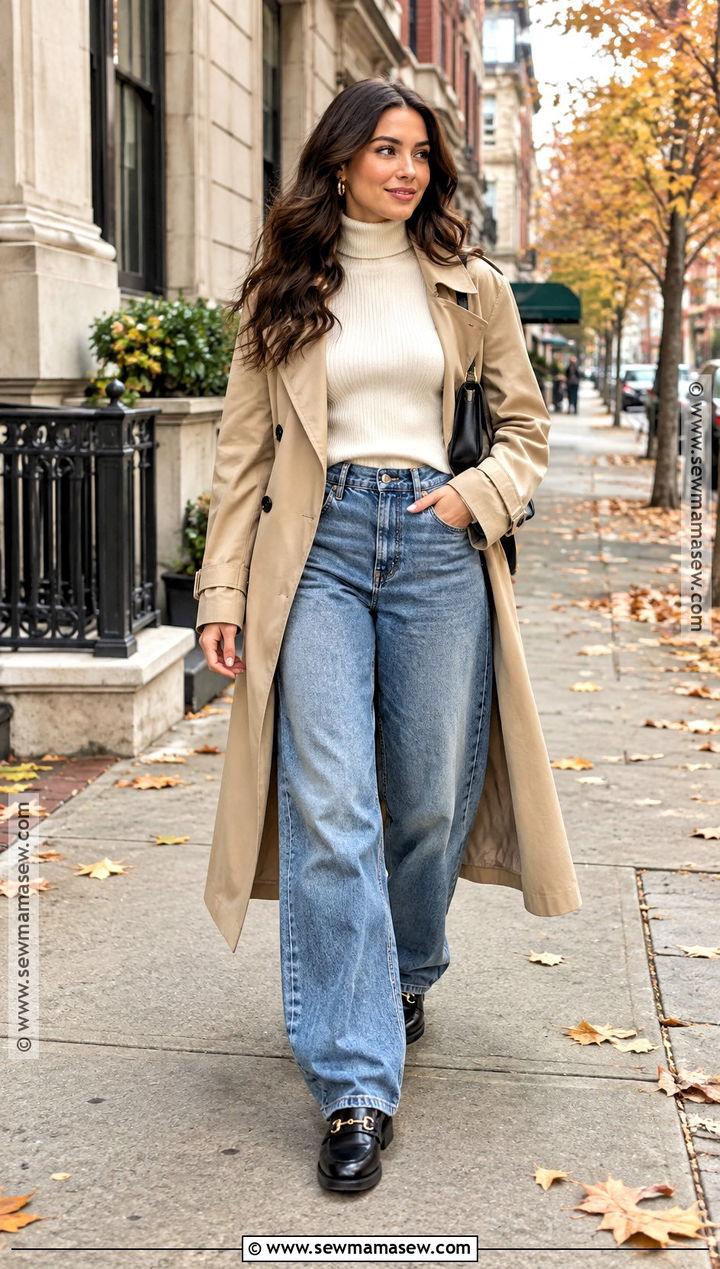
This is the one I'd build first if you're new to the cut. Medium-wash baggy jeans, a fitted black or cream turtleneck, and a beige trench do the balancing for you: the turtleneck shows where your body actually is, and the trench adds a long vertical line over the wide leg. A mid or high rise gives the tuck somewhere to land. For shoes, loafers or slim ankle boots read neater than sneakers, though clean white sneakers are fine for errands. Hem length is where I see this go wrong. If you're petite, have the jeans shortened so they just brush the top of the shoe; if you're tall, a slight puddle looks deliberate. Belt the trench loosely rather than cinching it, or the waist ends up pulled in two directions.
2. Black Baggy Pants With Sweater And Loafers
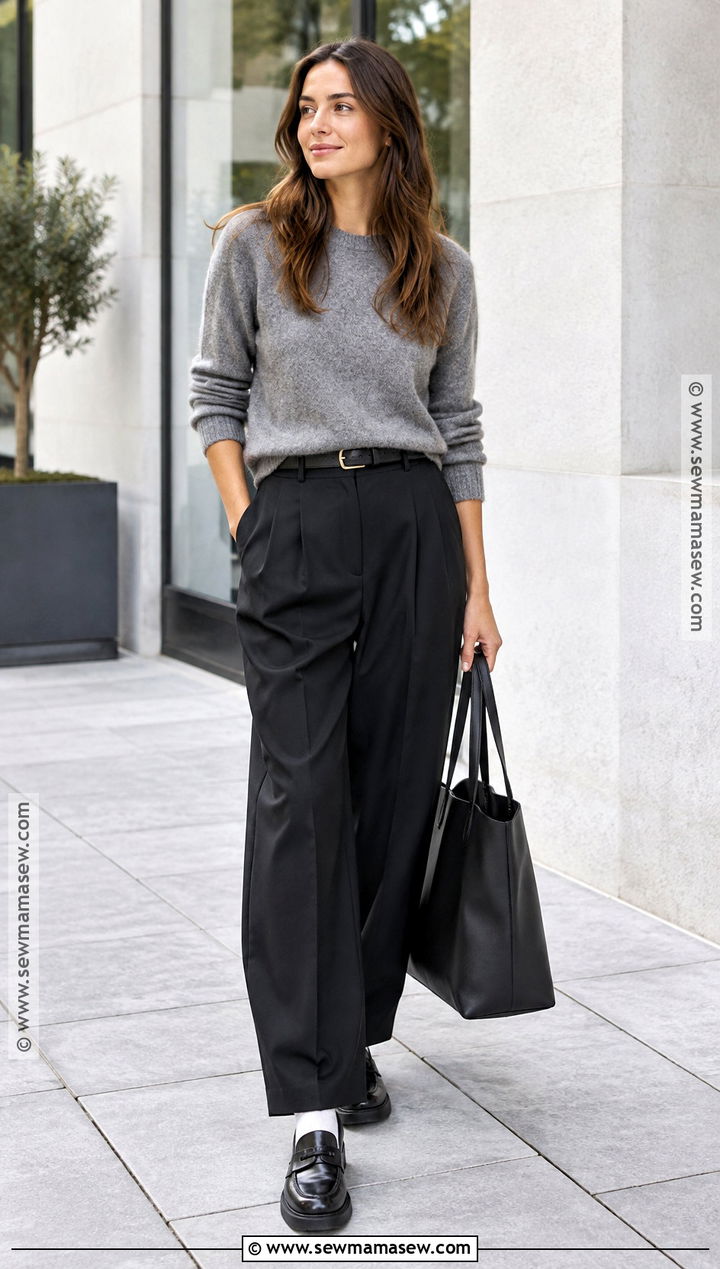
When someone tells me they want comfort without looking like they gave up, I hand them black baggy pants in a soft twill and a crewneck that skims the body. Heather gray, camel, burgundy and oatmeal all sit well against black, so pick whichever flatters your face. A full tuck into a high waistband is the cleanest option; a small front tuck works if the sweater is thick. Black loafers with a flash of white sock give it a slightly preppy edge. The detail I check is sweater length. With very wide pants, a knit that stops at the waist keeps your legs looking long, while one that ends mid-hip cuts you in half.
3. Baggy Cargo Pants With Bomber Jacket And Sneakers
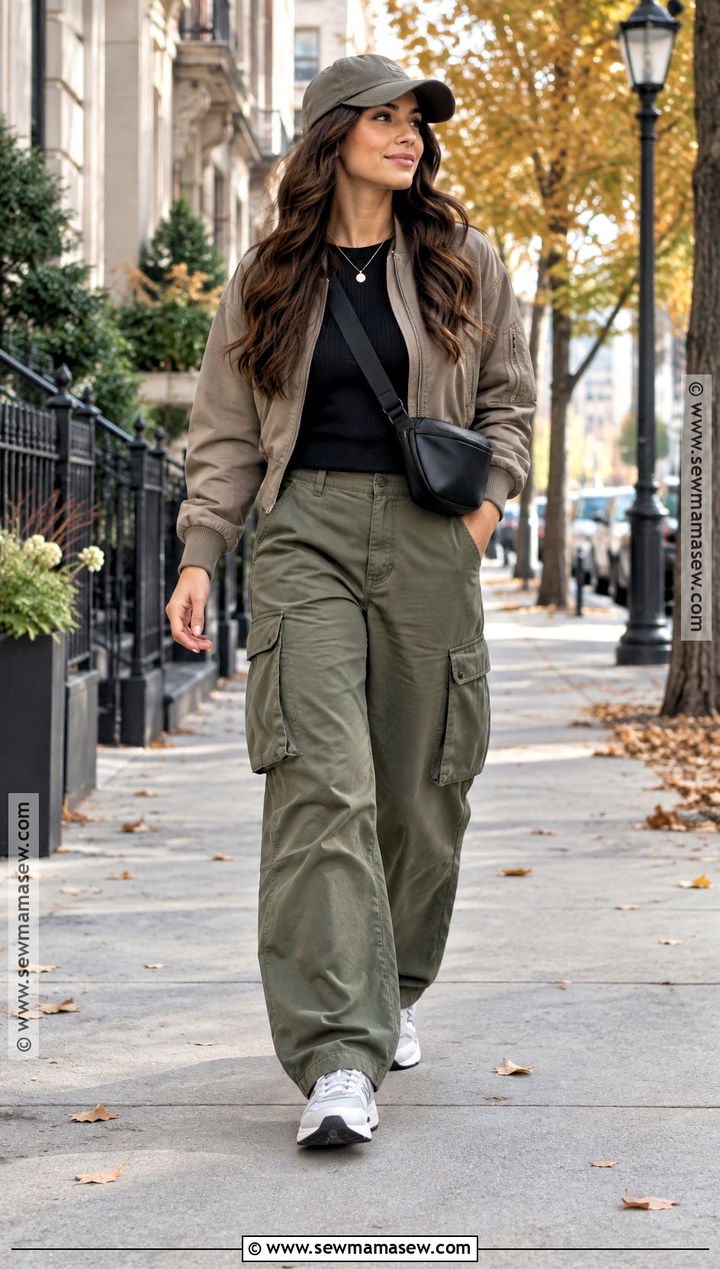
Cargo pants carry a lot of hardware, so I keep everything else quiet. Olive, khaki or charcoal cargos with a ribbed tank or fitted long-sleeve shirt, then a cropped bomber that stops right at the waistband. The short jacket is the whole trick here: it shows the waist and stops the pockets from becoming the widest point of the outfit. Retro sneakers, a crossbody and small hoops finish it. Before buying, I'd look at how the pockets sit when you stand. Flat, stitched-down pockets add far less bulk at the thigh than bellowed ones. A drawstring or elastic cuff is worth having if the pants run long, because you can pull the hem up off wet pavement.
4. Gray Baggy Trousers With Blazer And Ankle Boots
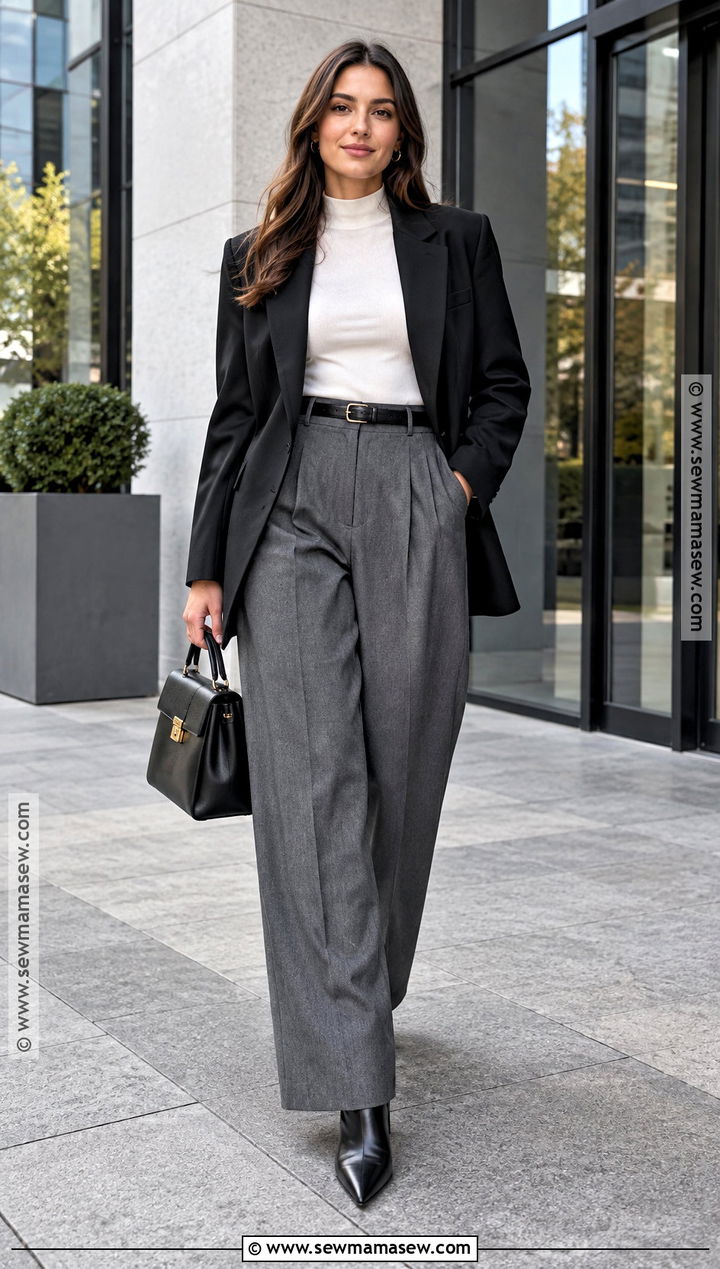
Wide trousers and tailoring get along better than people expect. I look for charcoal or mid-gray trousers with a proper waistband and soft front pleats, since pleats let the fabric fall straight from the hip instead of clinging. Underneath, a fitted white tee, fine mock-neck or tucked button-down; over it, a black, navy or matching gray blazer. Pointed ankle boots hidden under the hem add height and keep the line unbroken. If you're on the shorter side, the trouser should almost reach the floor in the boot you'll wear most, without folding over it. Bring those boots to the tailor. I've seen too many good trousers hemmed in sneakers and then worn with heels. It works for presentations, gallery visits and any office where a full suit would feel like too much.
5. Brown Baggy Pants With Cream Knit And Clogs
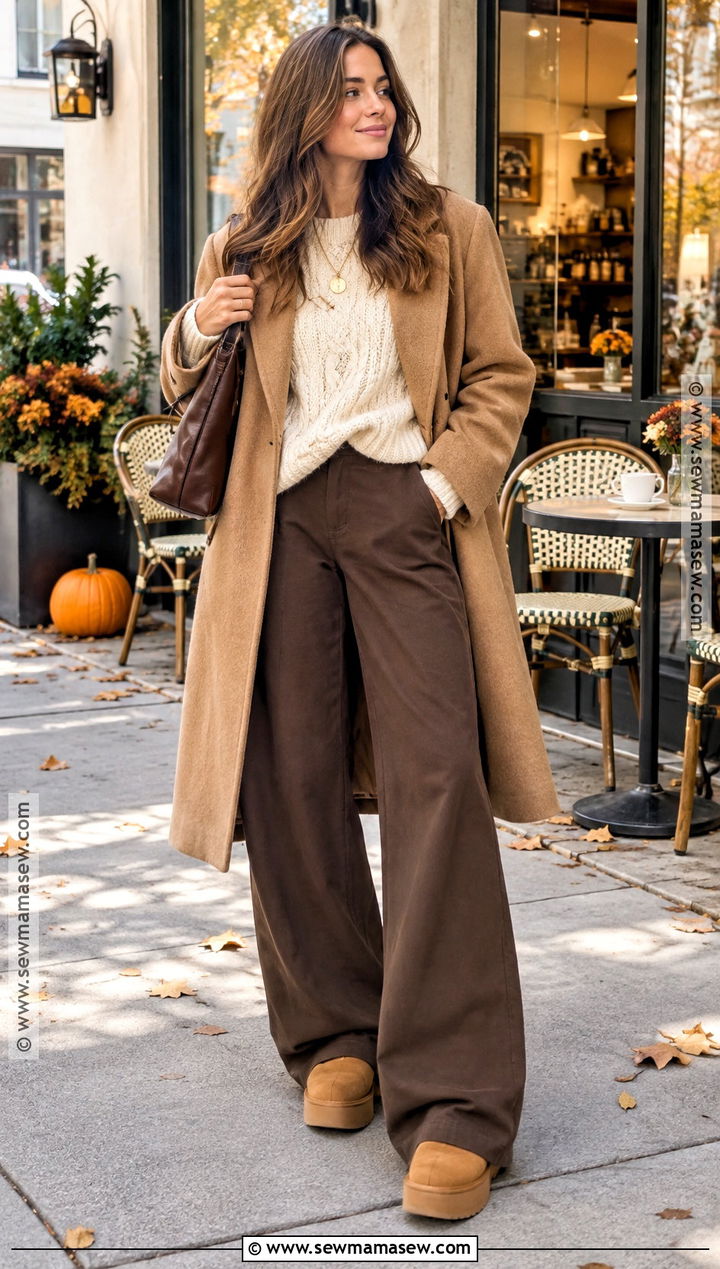
Chocolate or espresso baggy pants with a cream cable knit is about as autumnal as a pairing gets. The decision is sweater length: a shorter knit sits right at a high rise, while a longer one can be half-tucked so the waistband still shows. Suede clogs or platform mules keep the browns going and lift a full-length hem off the ground. Add a tan shoulder bag, a pendant and a light scarf. Texture does the work here, so I pair smooth trousers with a chunky knit and suede rather than three flat fabrics. One caution: a big cable sweater under a fitted coat will strain the shoulders. If you're adding the camel wool coat, size it to fit over the knit.
6. Baggy Corduroy Pants With Denim Jacket And Boots
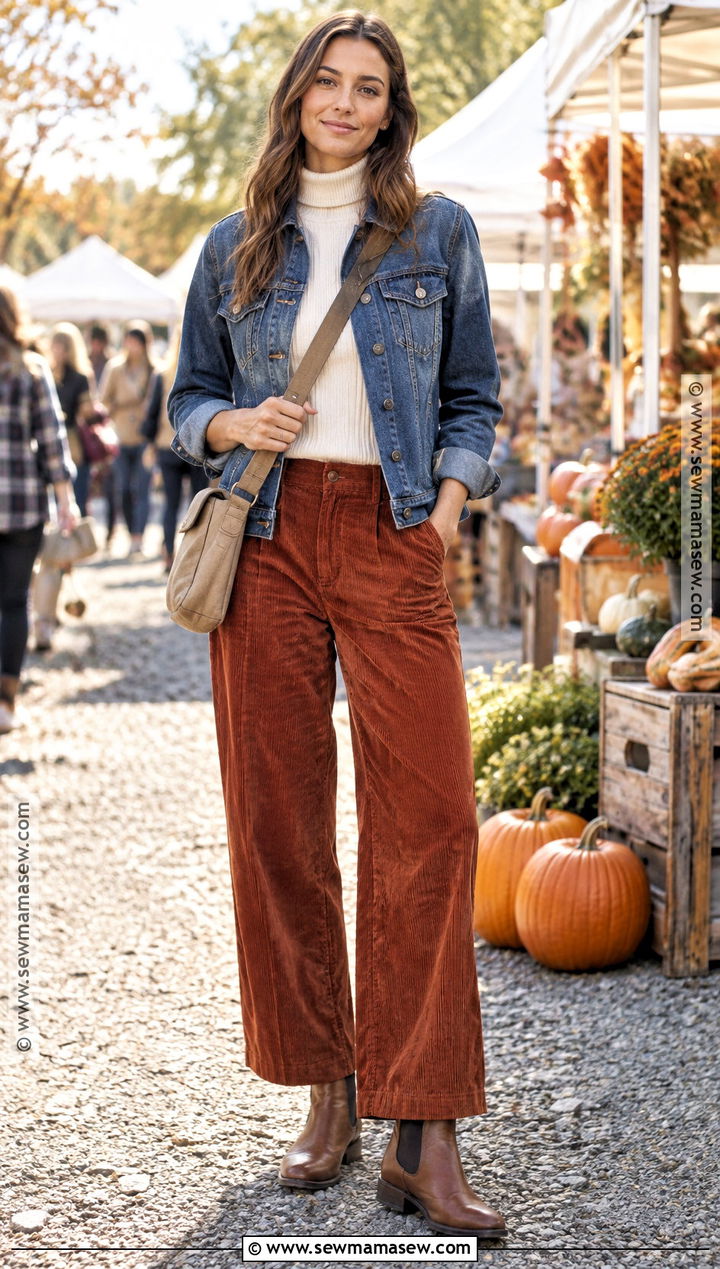
Corduroy is one of my favorite fabrics for loose pants because the ridges give a plain outfit texture with no extra effort. Rust, forest green, camel or dark brown corduroy works with a fitted cotton tee or a thin turtleneck, and a medium-wash denim jacket on top gives a lighter fabric against the heavier pants. Chelsea boots or lace-ups add weight under the wide leg, which corduroy needs because it hangs heavier than twill. Fine-wale reads smoother and dressier; wide-wale looks more vintage and adds visible bulk at the hip. Know that corduroy wears shiny at the knees and inner thighs over time, so turn it inside out to wash. If both the pants and the jacket are roomy, tuck the tee so the waistband shows.
7. Baggy Leather Pants With Turtleneck And Heels
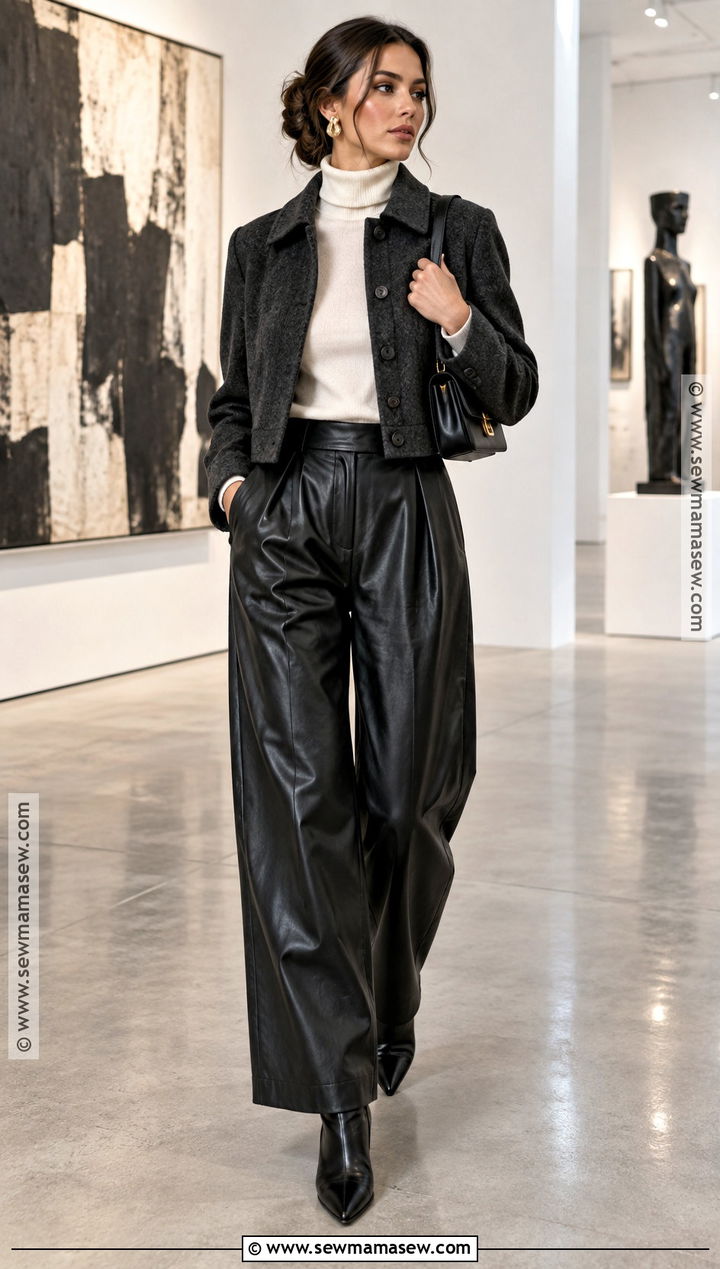
Faux leather turns baggy pants into a dinner outfit without making them any less comfortable. I'd choose black or deep burgundy in a fluid wide-leg cut, then add a fitted turtleneck in black, ivory or soft gray so the top half stays clean. Pointed pumps or heeled ankle boots keep the heavier fabric from pooling. A cropped wool jacket or slim blazer is the extra layer I reach for. Matte finishes are easier in daylight; a slight sheen dresses it up for evening. Before buying, sit down in the pants. Cheaper faux leather creases hard at the hip and knee and doesn't breathe, so a soft lining and a smooth, flat waistband make a real difference over a long evening.
8. Plaid Baggy Pants With Cardigan And Loafers
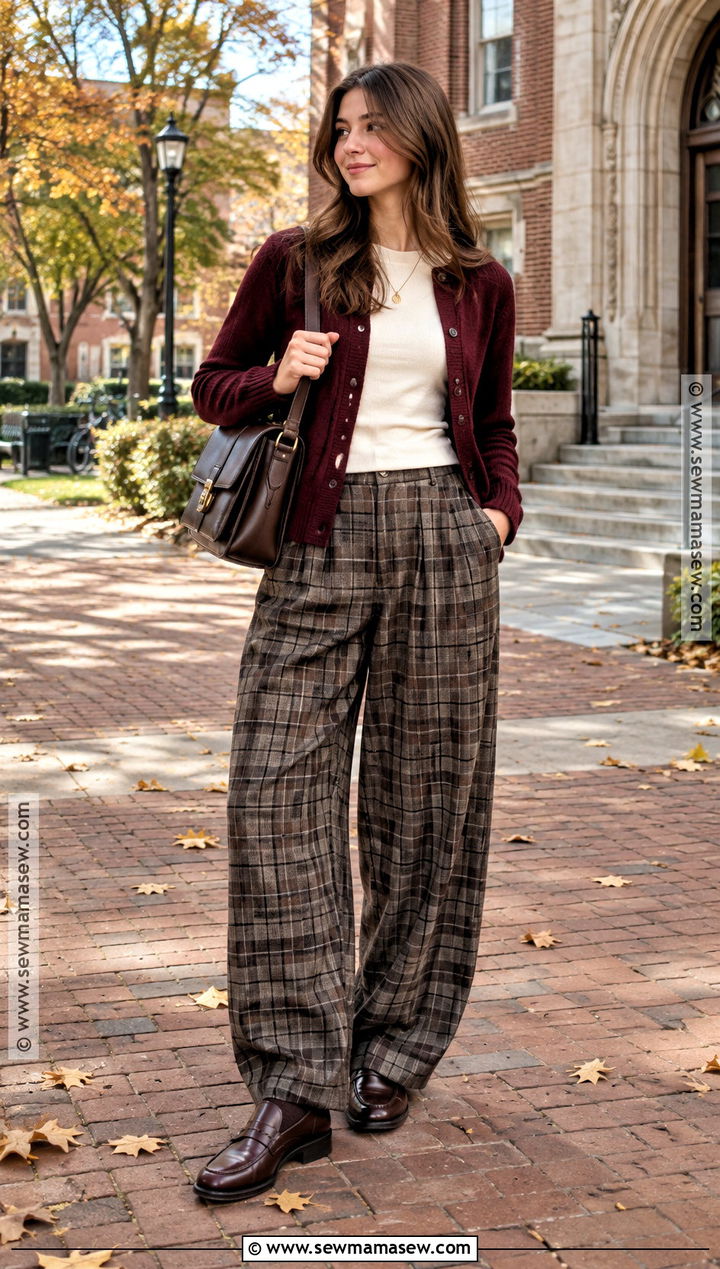
Plaid already does a lot, so I treat it as the only pattern in the outfit. Choose baggy plaid pants in brown, gray, navy or muted green, then pull one color from the check for your top. A fitted tee under a buttoned cardigan gives a neat, compact shape over the loose leg; leave a few buttons open if you want it softer. Loafers and socks in a shade from the plaid suit its preppy character, and a structured satchel finishes it. With a large-scale check, I steer people toward a higher rise and pressed front pleats, which give the eye a vertical line through all those horizontals. If the plaid has lots of colors, keep the knitwear solid and plain or it starts to look like a costume.
9. Olive Baggy Pants With Quilted Jacket And Sneakers
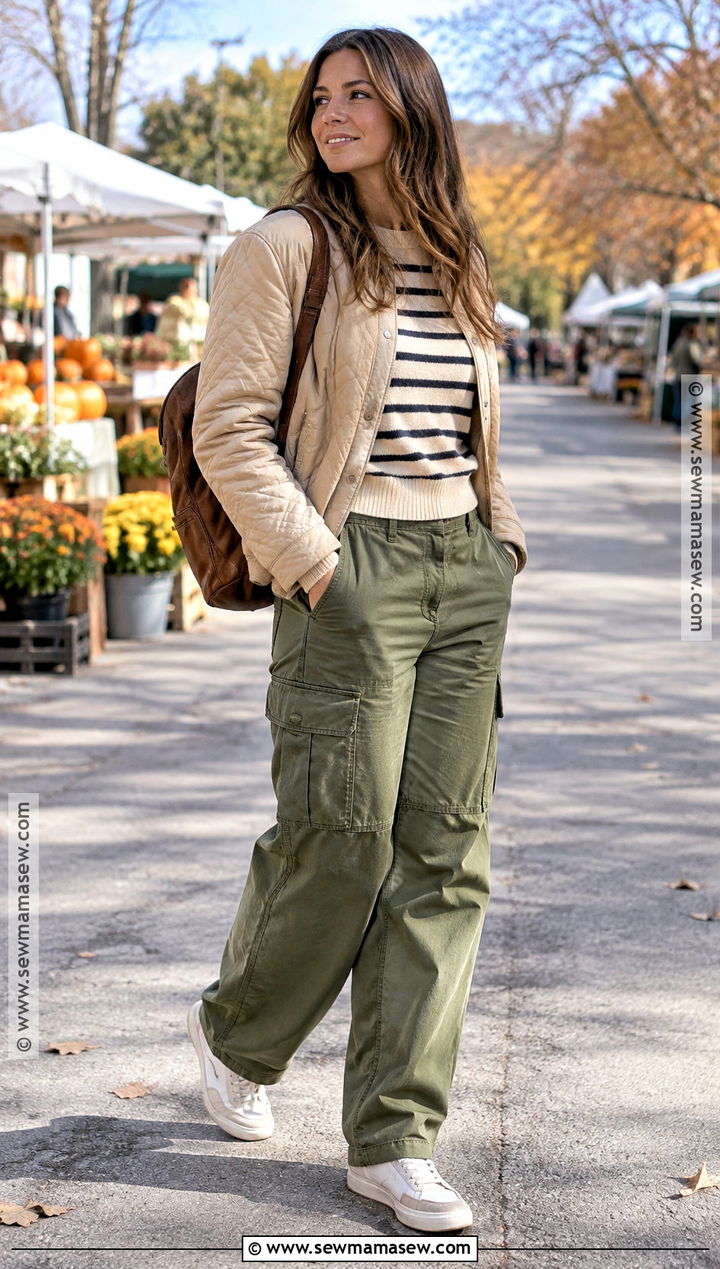
Olive baggy pants in cotton twill are what I'd wear for a full day on foot, walking a city or wandering an outdoor market. Pair them with a white long-sleeve tee, a striped knit or a mock-neck, then add a cream, navy or brown quilted jacket. Quilting gives warmth without the stiffness of a heavy coat, and it stops short enough to show the waist. Low-profile sneakers keep the wide leg from looking too rugged. If the hem is long, one neat cuff is fine in twill; a tapered baggy cut avoids the problem entirely. A nylon crossbody or leather backpack keeps your hands free.
10. White Baggy Pants With Camel Coat And Flats
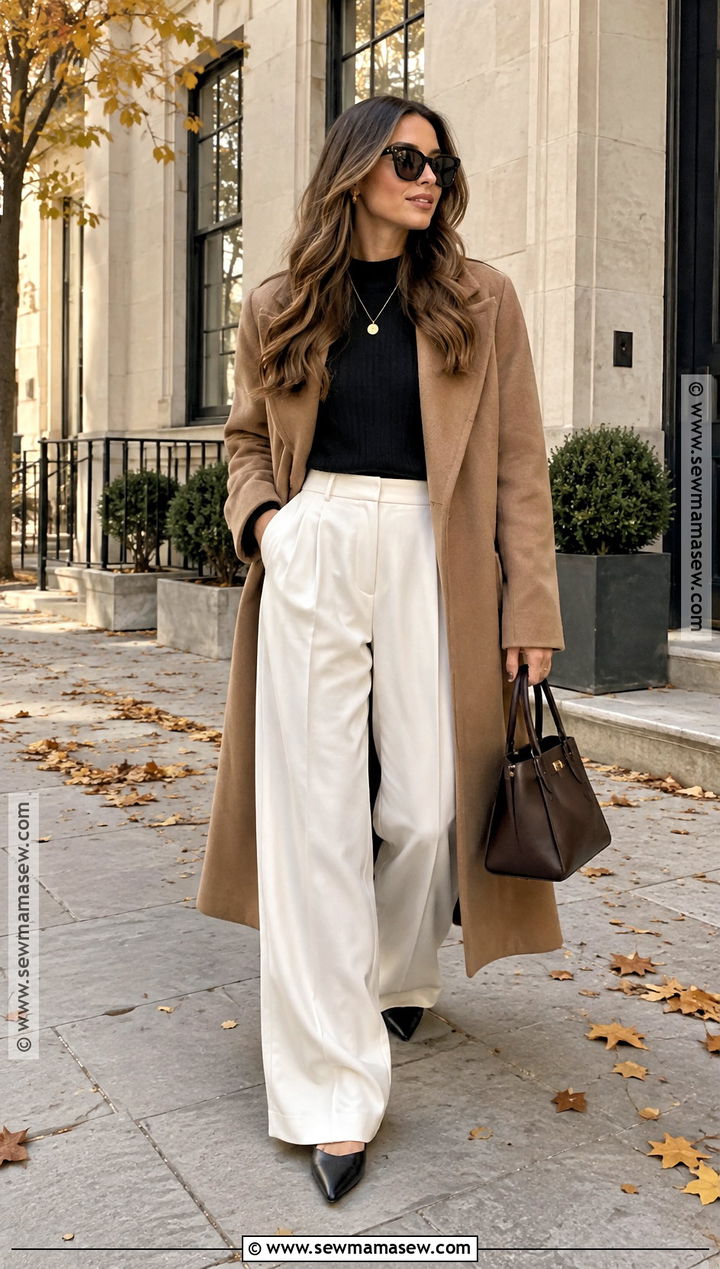
White pants don't have to go into storage in September. The fall version is ecru, ivory or winter white in heavier denim, twill or a wool blend, which reads warmer than crisp summer white. With a black fitted sweater and a long camel coat, the contrast is sharp and the coat ties it to the season. Black flats or loafers echo the sweater, and a chocolate bag softens all that contrast. I'm honest with people about the maintenance: pale fabric shows every crease and every splash, so I only recommend this if your fabric is substantial and your commute is dry. Nude-toned underwear matters more here than with any other color, because thin white shows everything.
11. Navy Baggy Pants With Striped Sweater And Sneakers
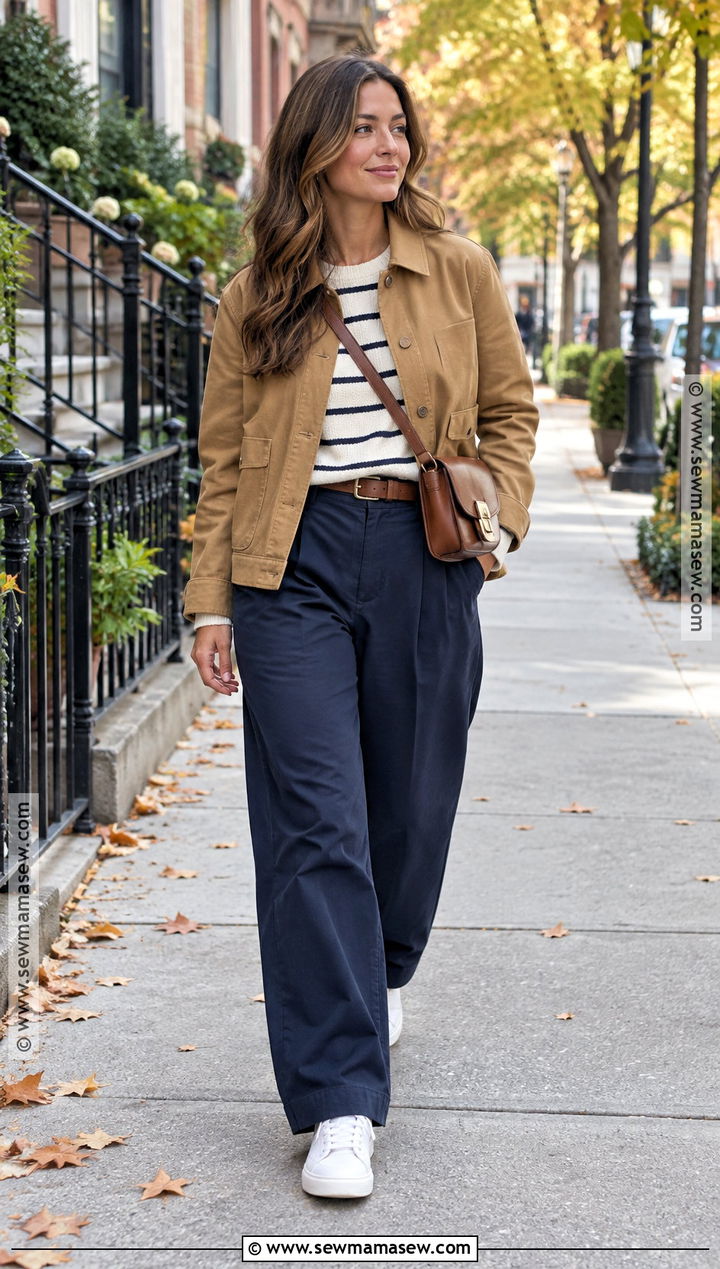
A striped sweater moves into fall once the colors deepen around it. Navy baggy pants with a cream sweater striped in navy, black or burgundy, half-tucked at the front so the waistband shows. Leather sneakers in white, brown or burgundy keep it casual. On colder days I add a tan barn jacket or a cropped peacoat; a long coat would hide the stripes and the tuck. A brown belt and matching crossbody warm up the navy. If the sweater is oversized, push the sleeves up to the forearm. Showing a wrist is the quickest way to make a big knit look intentional over wide pants.
12. Burgundy Baggy Pants With Gray Sweater And Boots
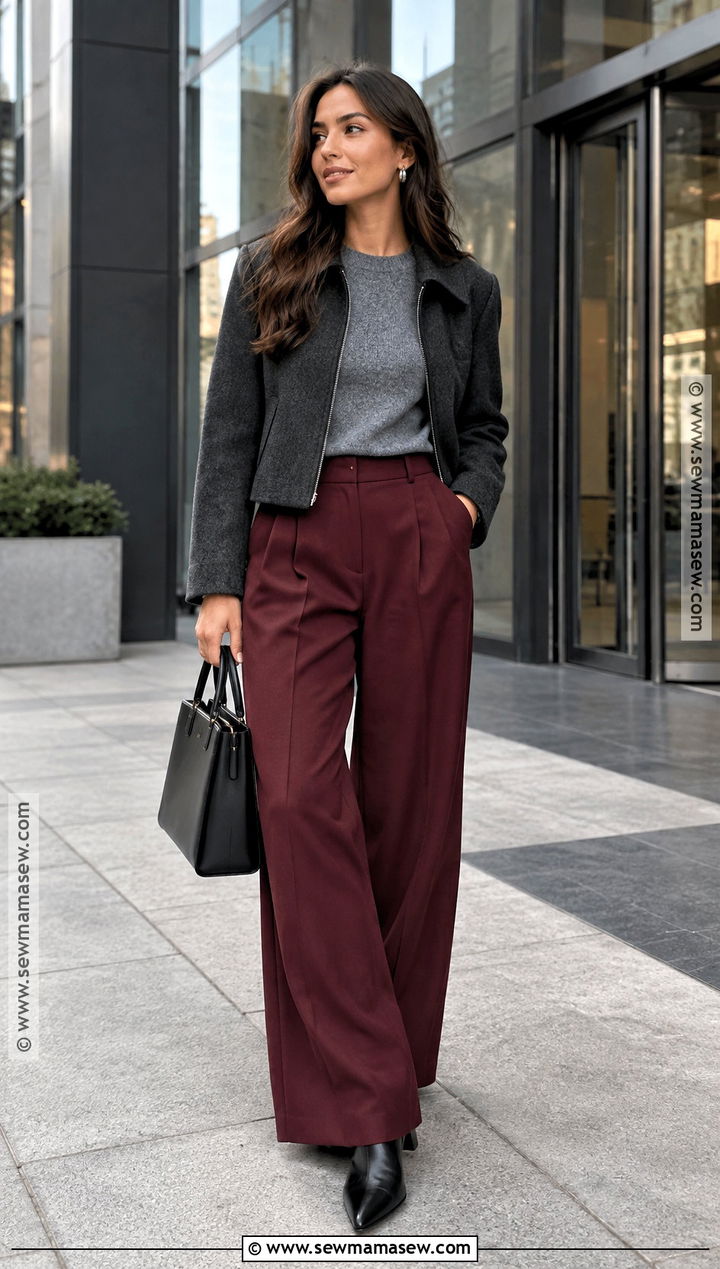
Burgundy trousers are the colored pant I'd suggest to someone who usually wears only black, because they pair as easily as a neutral. A soft gray sweater keeps the red cool and grown up; cream makes it warmer. Black pointed boots streamline the leg, while chocolate boots give a softer contrast. If the pants are dramatically wide, the sweater should follow your shape without pulling across the bust. A cropped charcoal jacket adds a layer and still leaves the waistband visible. Burgundy does fade with frequent washing, so wash it cold and inside out, or have it dry cleaned if it's a wool blend.
13. Baggy Sweatpants With Wool Coat And Sneakers
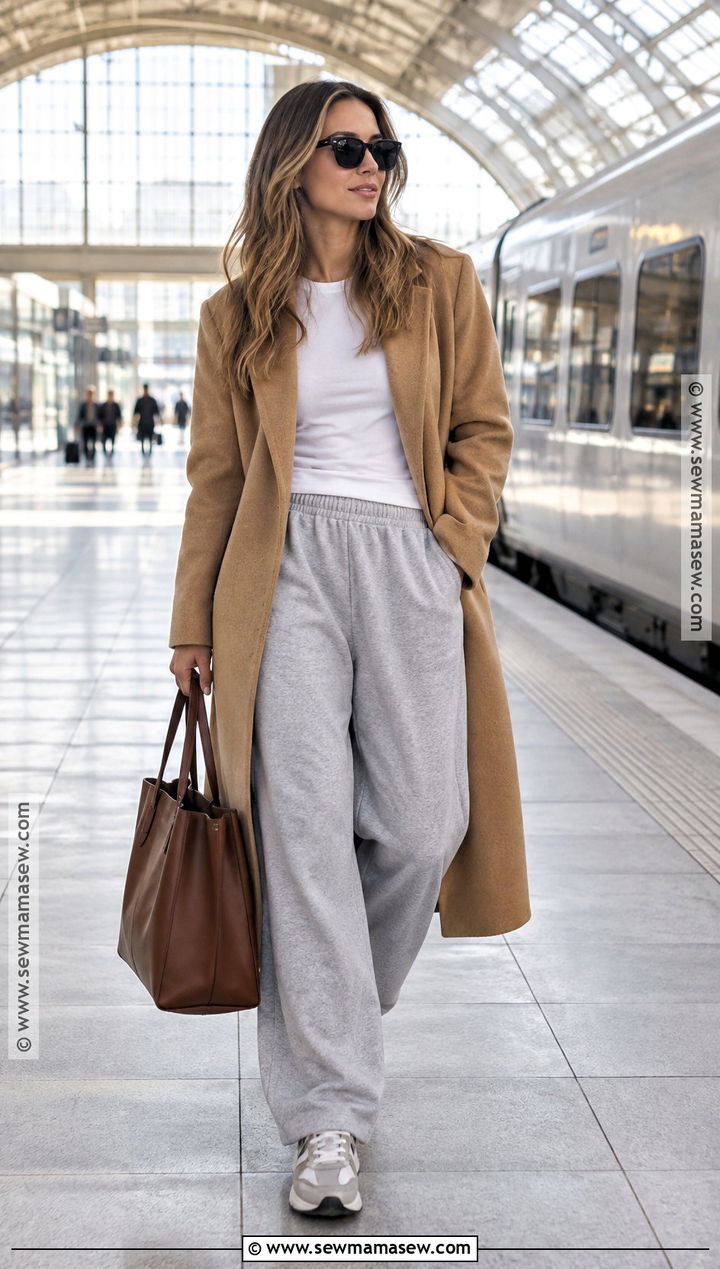
Sweatpants under a wool coat works when every piece has a clear job. The sweats should be plain: heather gray, navy or black, a clean waistband and no large logos. Add a fitted long-sleeve tee or matching sweatshirt, then a tailored wool coat that does the polishing. Sleek retro sneakers keep it refined; chunky gym trainers pull it straight back to the gym. A leather tote and small earrings finish it. I check length while you stand in the actual sneakers. The sweats should skim the shoe without dragging, since a frayed, grubby hem gives the whole idea away. It's my go-to suggestion for flights and long drives.
14. Low-Rise Baggy Jeans With Rugby Shirt And Trainers
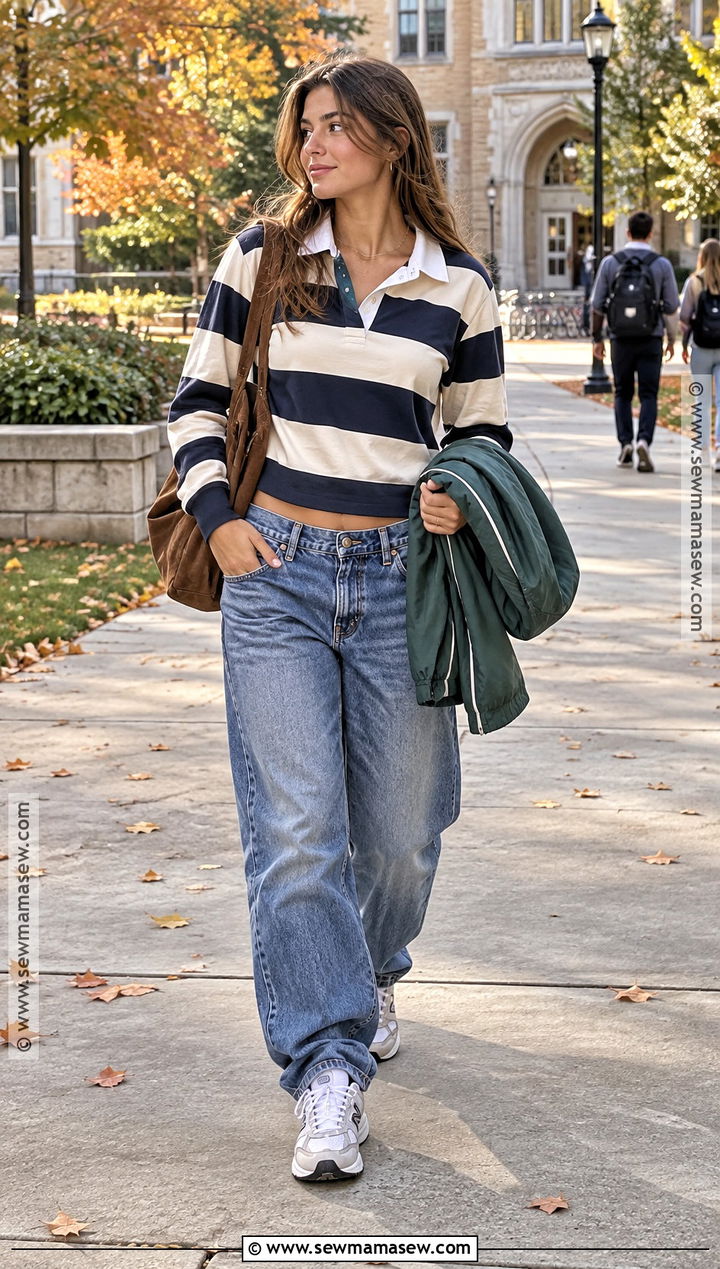
Rugby shirts bring a sporty, slightly nostalgic feel to loose denim. Wear low or mid-rise baggy jeans with a striped rugby top in navy, green, red, cream or brown, either loose or with a small tuck at one hip. Retro trainers and crew socks keep the athletic mood, and a suede shoulder bag or compact backpack keeps it practical. A light windbreaker adds warmth without covering the collar. I'll be direct about low-rise: it suits a long torso and fights a short one. If it isn't comfortable on you, wear the same outfit with a higher waist. The proportions and the stripes carry the look, not the rise.
15. Satin Baggy Pants With Knit Top And Ballet Flats
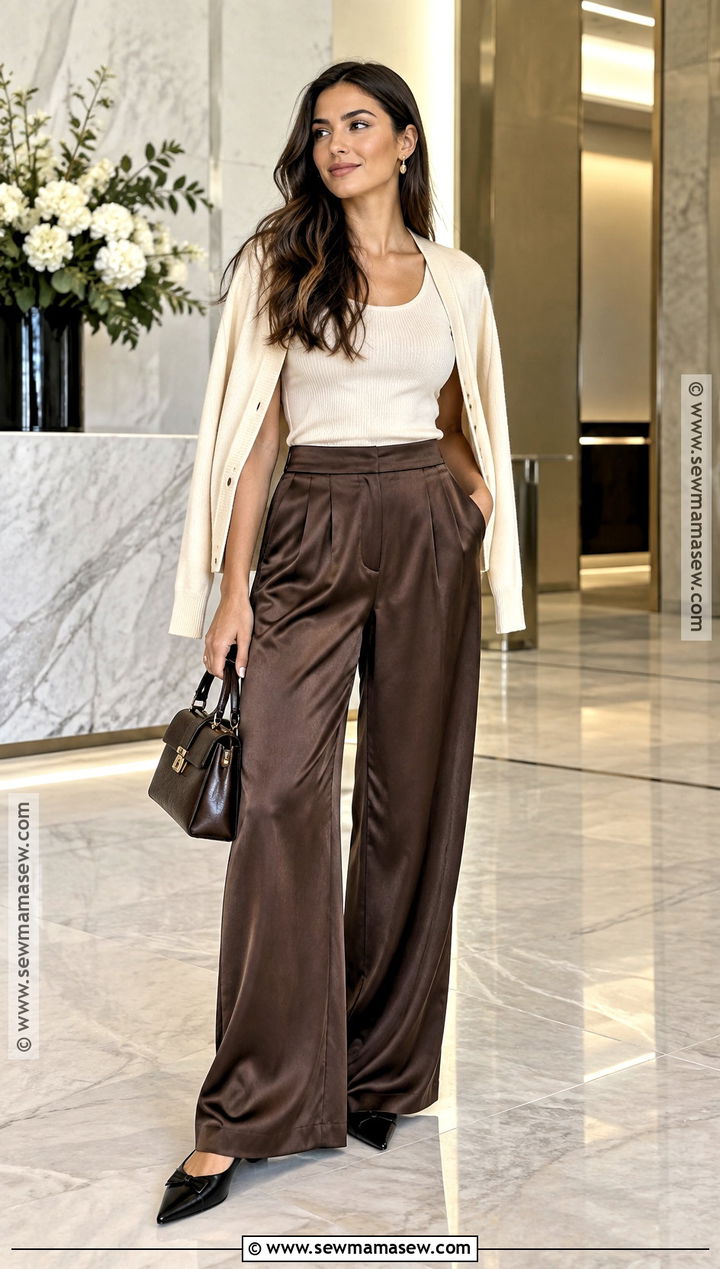
Satin is the dressiest pant here, and it moves more than any other fabric on this list. Espresso, navy, olive, black or muted plum satin trousers with a fitted ribbed knit give you sheen against matte, which is exactly the contrast you want. Throw a cardigan over the shoulders for warmth so the pants stay the focus. Pointed ballet flats, low slingbacks or kitten-heel boots suit the fluid leg. Weight is the thing I check first. Thin satin clings to the thigh and shows every seam underneath, while a heavier satin drapes straight and swings when you walk. A tonal palette, like plum with a plum knit, lengthens the whole outfit.
Wide Legs on a Petite, Tall or Curvy Frame
People often tell me baggy pants aren't for their body. In my experience it's almost always the specific pair, not the cut. A few adjustments fix most of the complaints I hear.
If you're petite
Keep the rise high and the top short, so your legs start at your natural waist. Choose fabrics that fall straight, like twill or satin, over stiff ones that stand away from the leg. One color from waist to shoe, black pants with black boots for example, adds visible length.
If you're tall
Regular inseams often land at the ankle on you, and a baggy leg that ends there looks like you've outgrown it. Look for tall or long lengths, or buy pants with deep hems you can let down. You also have room for longer tops and long coats that would swamp a shorter frame.
If you're curvy
Buy for the hip and have the waist taken in. A waistband that gapes at the back is the most common fit issue, and it's a quick fix for a tailor. Soft pleats and drapey fabrics skim the hip, while heavy cargo pockets and stiff denim add width exactly where you may not want it. A wrap top or fitted knit tucked in shows your waist and balances the volume below.
Volume Below, Shape Above
Every outfit on this list follows the same idea: let the pants be loose and give the top half some definition, whether that's a tuck, a cropped jacket or a fitted knit. After that, it comes down to hem length and the shoe you'll wear most. Start with the pair that suits your week, denim for weekends or tailored trousers for work, and get the hem right before you buy anything to go with them. Size, height and body shape aren't reasons to skip baggy pants. Adjust the rise and inseam until it feels right, and the cut will carry you from workdays to weekends all season.
Related posts: