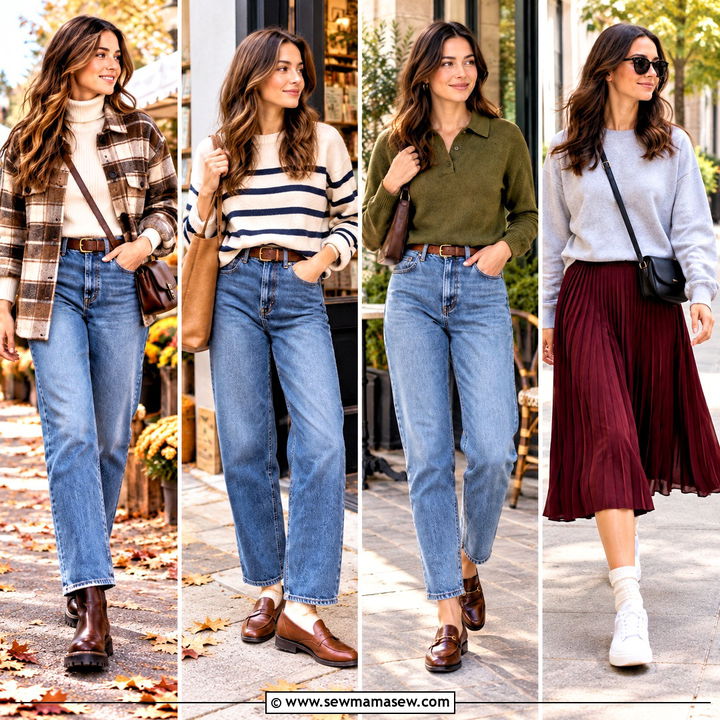
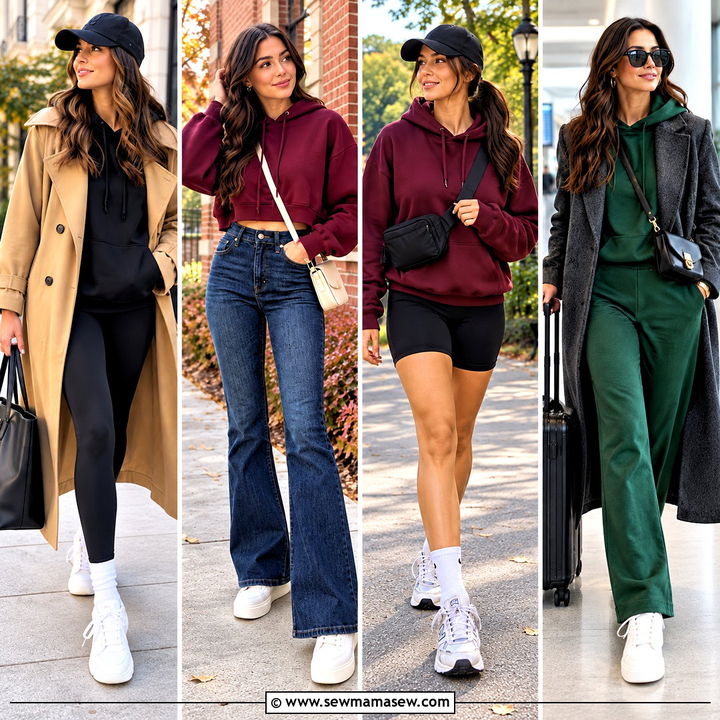
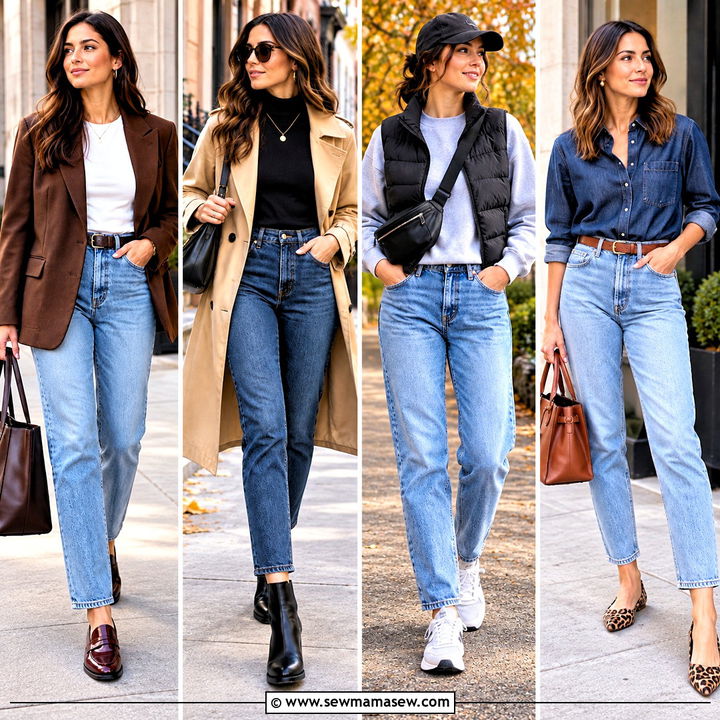
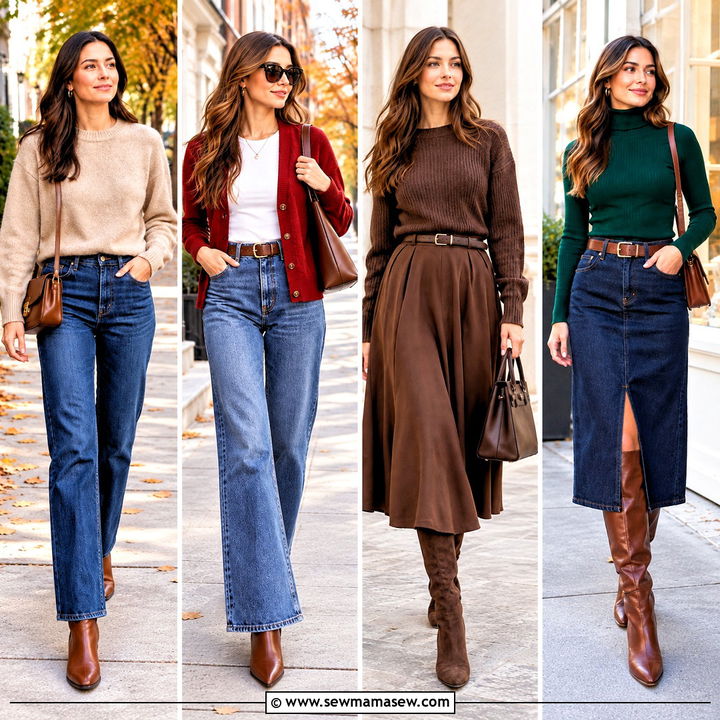
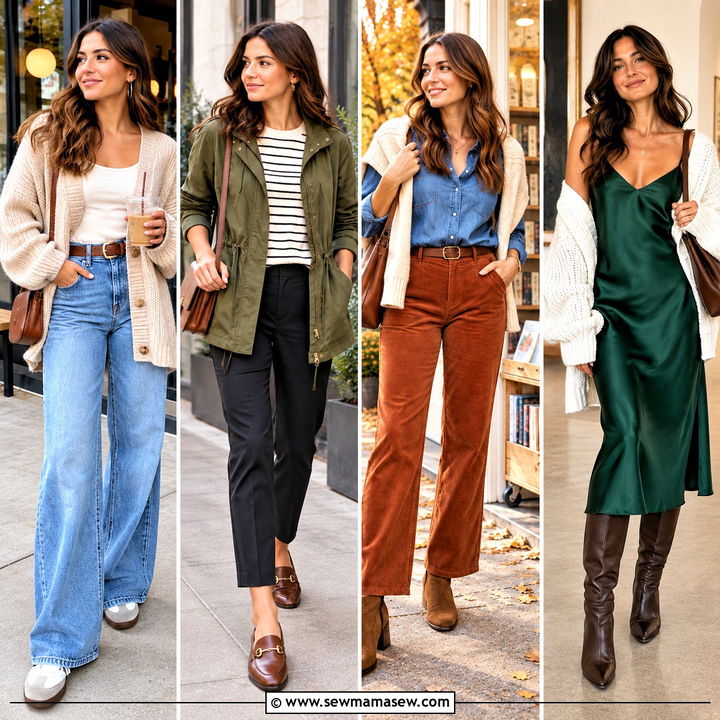
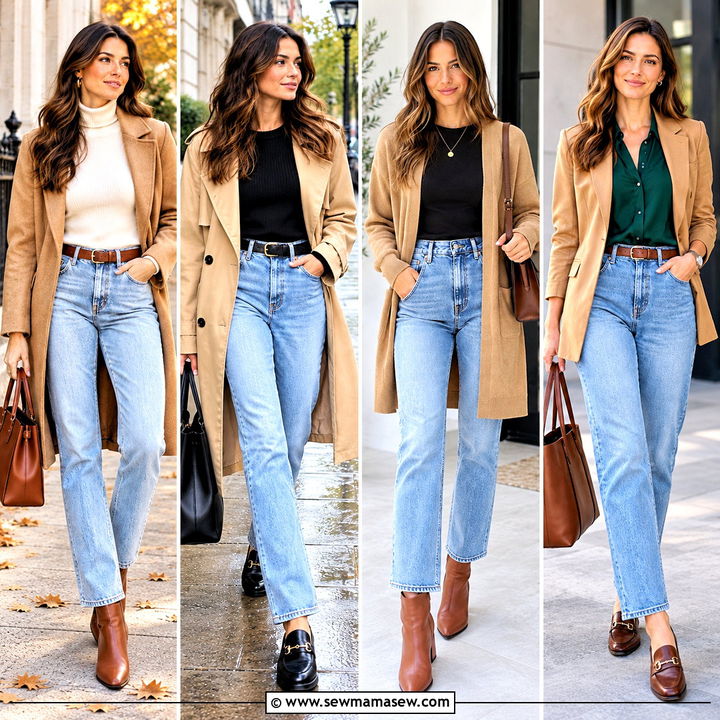
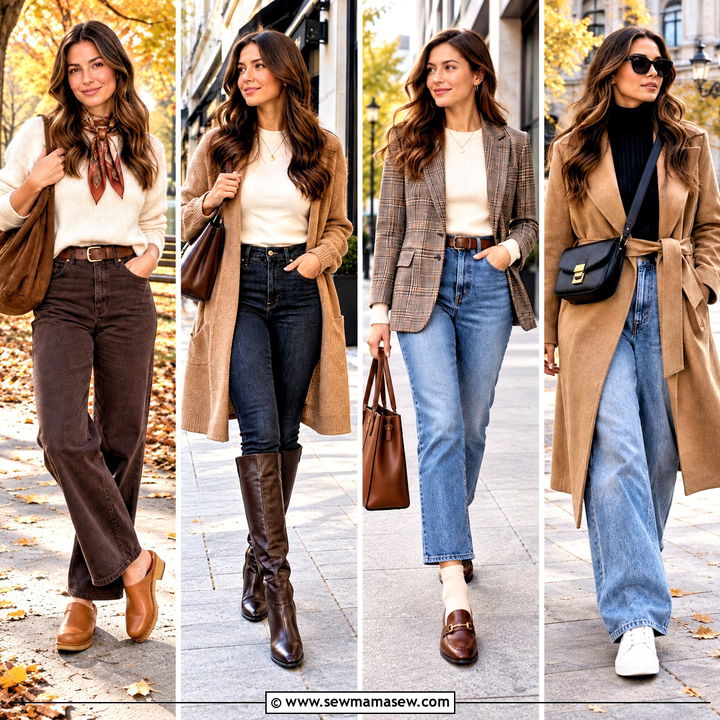
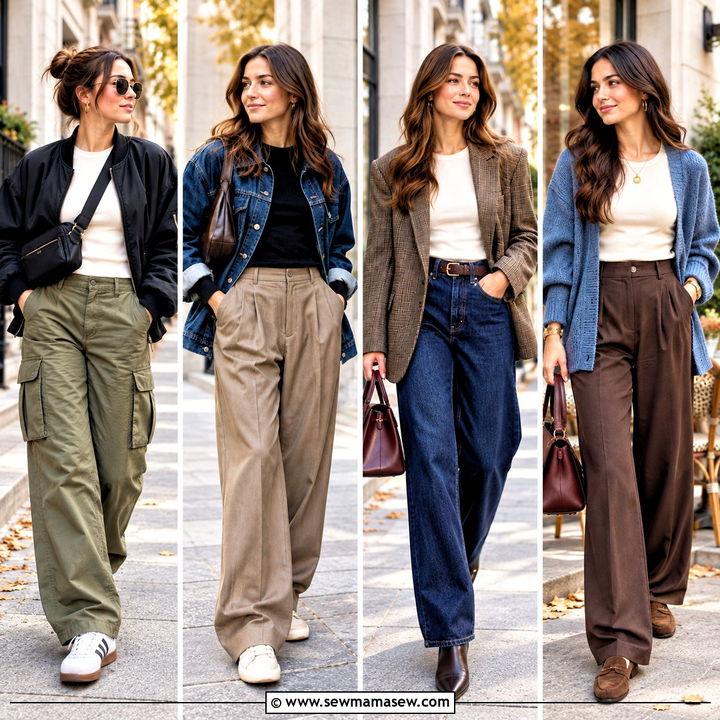
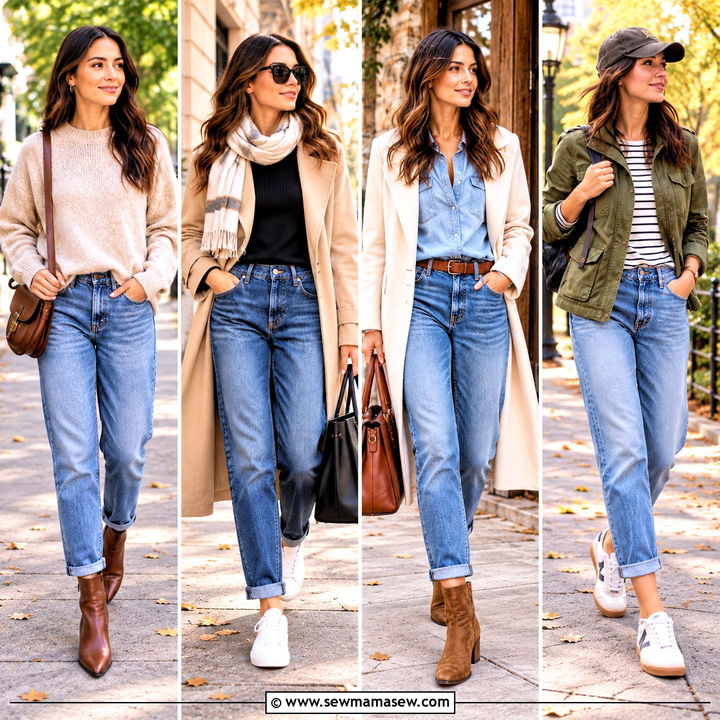
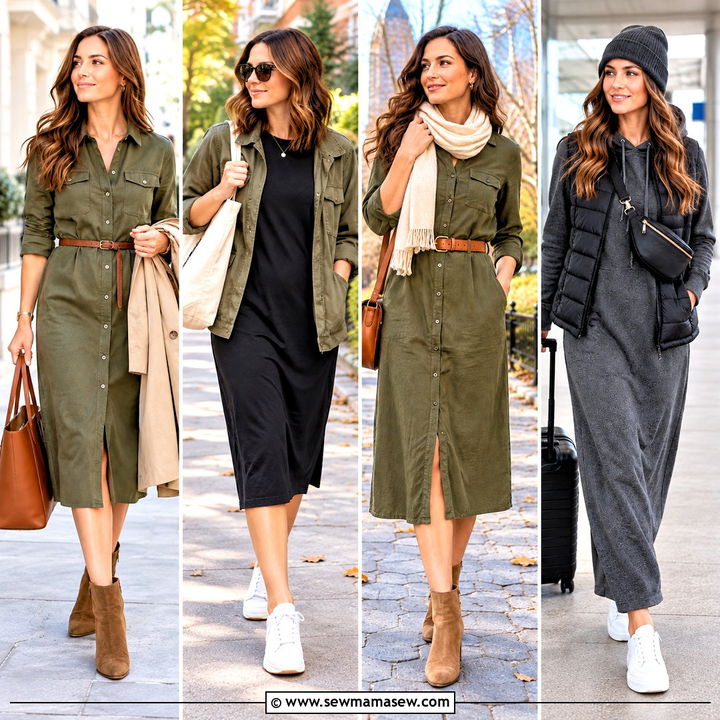
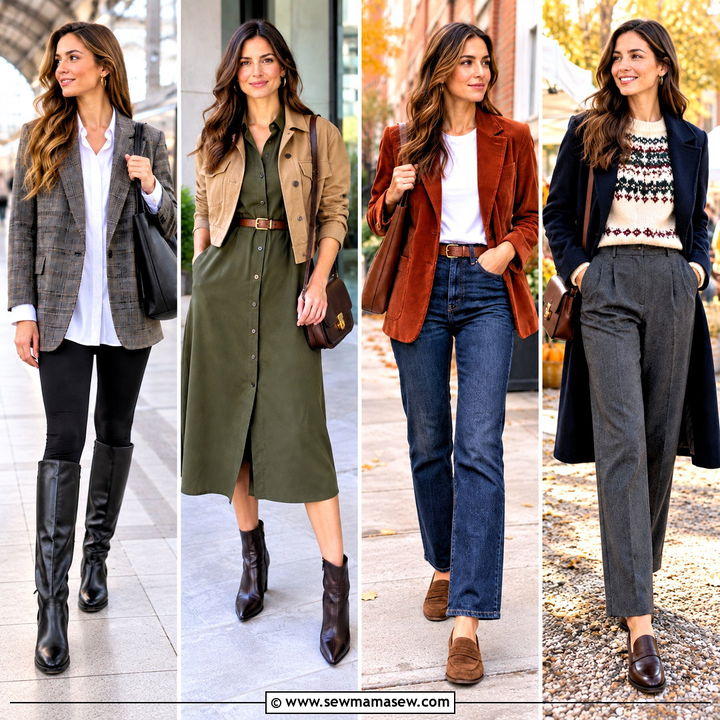
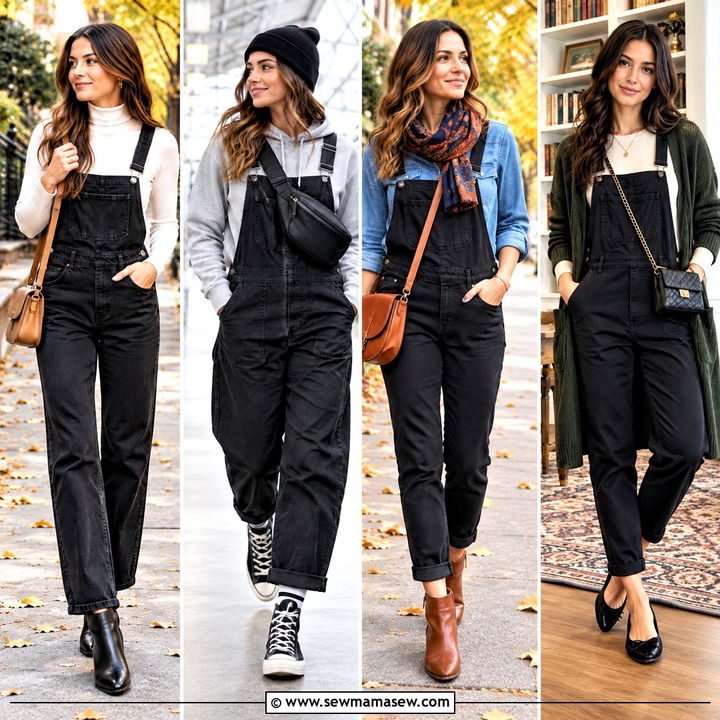
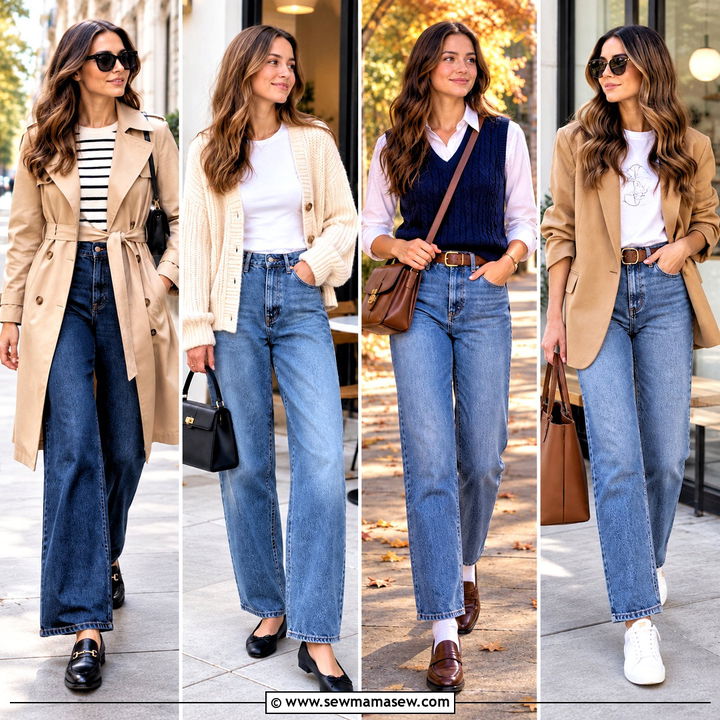
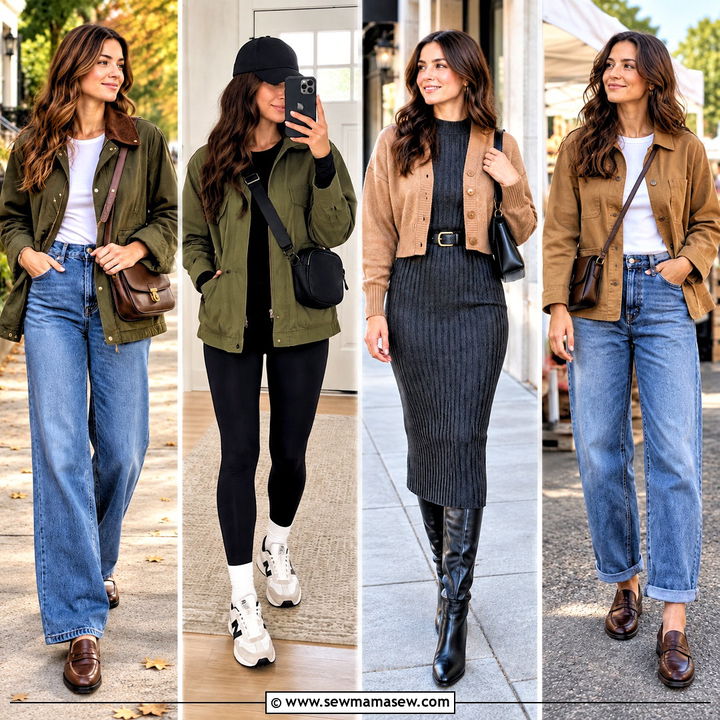
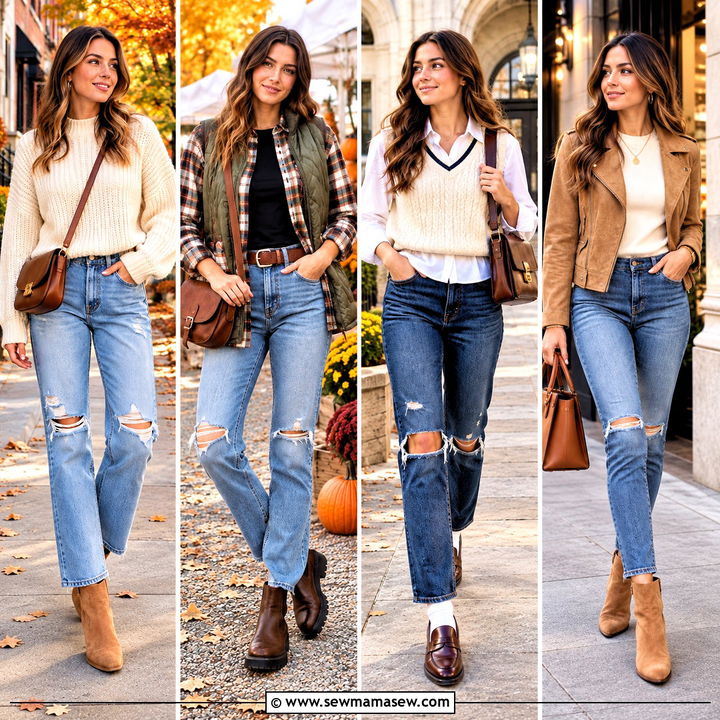
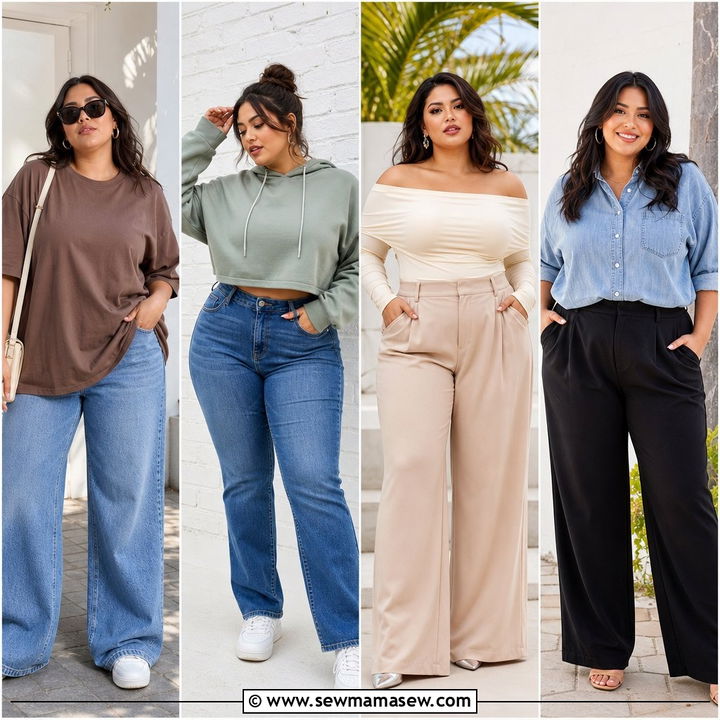
A coverall is one of the hardest-working things you can own in fall, and also one of the easiest to get wrong. Worn plainly, it can look like you came straight from a garage. What changes that is contrast: a soft knit at the neckline, a tailored coat on top, sleek boots or a refined bag. Streamlined utility shapes, simple accessories and layers that cope with a cold morning and a warm afternoon are what make this piece work right now. You can also shape the fit yourself by rolling the sleeves, belting the waist or letting a fitted base layer show at the collar. Below are fifteen ways I'd wear one, in denim, corduroy, olive twill and black, with notes on fit for petite and plus-size frames.

Torso Length Decides Whether a Coverall Fits
With separates, you can buy a top in one size and pants in another. A coverall joins them, and the measurement that causes most fitting trouble is the distance from shoulder to crotch. Too short and it pulls at the shoulders and rides up uncomfortably; too long and it sags at the seat and bunches at the waist.
When I help someone try one on, I run the same checks every time:
- Raise both arms overhead. If the crotch seam lifts noticeably, the torso is too short.
- Sit on a low chair and bend to tie a shoe. Nothing should pull across the back or dig in at the hip.
- Look at the shoulder seam. It should land at the edge of your shoulder, not halfway down the arm.
- Check the legs with the shoes you'll wear most, then decide on cuffing or hemming.
- Try it with your thickest planned base layer, such as a turtleneck, not a thin tee.
Also think honestly about the restroom. A one-piece means undoing most of it every time, which is fine at home and less fun at an outdoor festival with a long portable-toilet line. Coveralls with a long front zip are quicker to manage than ones with a short placket and buttons.
1. Olive Coverall With Striped Turtleneck And Chelsea Boots
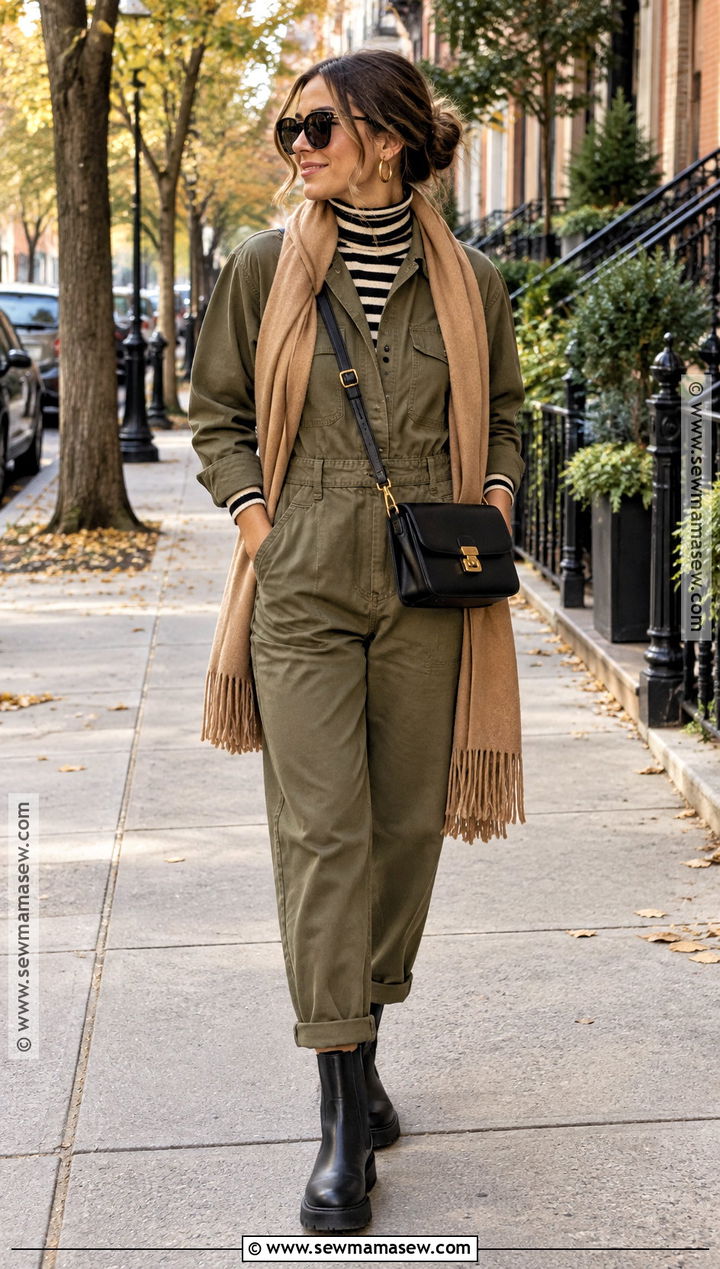
Olive sits right inside the fall palette, so I treat it almost like a neutral. A slim black-and-cream striped turtleneck goes underneath, with the zip open far enough to show the stripes at the throat. That close-fitting base keeps the roomy coverall from looking bulky, and one or two sleeve rolls repeat the stripe at the wrist. Black leather Chelsea boots work best with a tapered or cuffed leg; a wide hem swallows them. A structured black crossbody, small gold hoops and tortoiseshell sunglasses finish it, with a camel wool scarf for cooler afternoons. I'd wear this for errands, lunch or a day of sightseeing.
2. Denim Coverall With Cream Sweater And White Sneakers
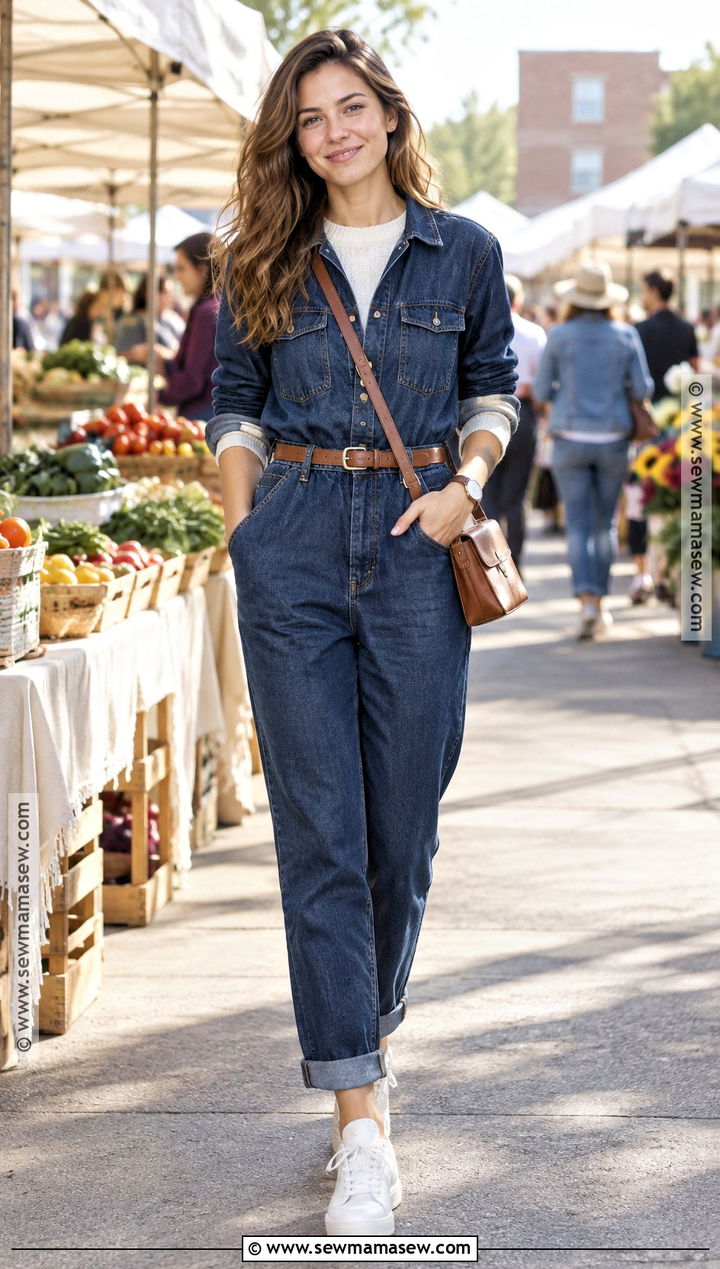
Denim is the friendliest place to start if you've never worn a coverall. Pick a medium or dark wash with enough room to slip a light cream crewneck underneath, and open the top buttons so the knit brightens your face. Cuff the legs above white leather sneakers. Uncuffed denim pooling over sneakers is what makes this look sloppy on most people, especially shorter ones. A cognac crossbody and a plain leather watch add warmth, and a narrow brown belt helps if the waist hangs loose. Rigid denim softens after several wears and washes, so expect the first few outings to feel stiff through the seat. It needs very little decoration. Let the pockets and seams be the detail.
3. Black Coverall With Turtleneck And Loafers
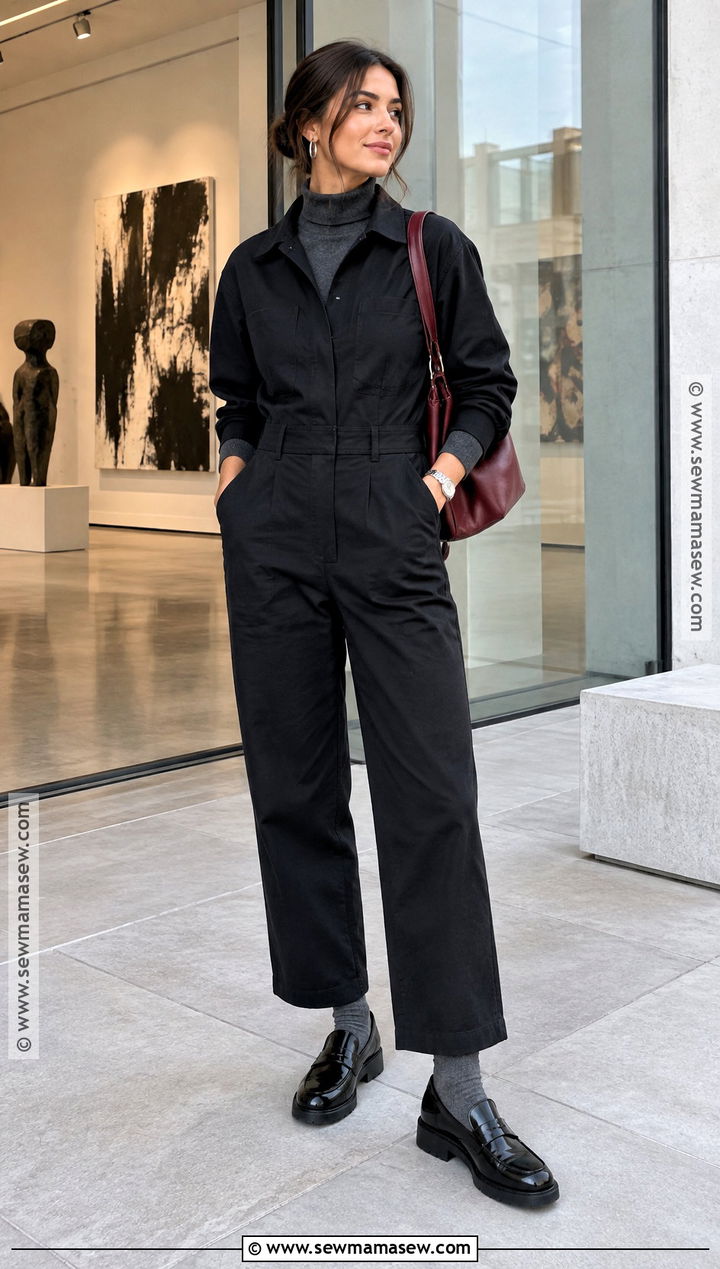
Black is the coverall I'd send to a creative office. Look for a structured fabric with a straight leg and a defined or belted waist, then add a thin charcoal turtleneck for tonal depth, black leather loafers and gray socks that show at the ankle. A burgundy shoulder bag is the single fall color. Silver hoops and a classic watch suit metal zips or snaps. Full-length sleeves look sleekest; pushed up, it relaxes. Big patch pockets on the chest and thighs add bulk exactly where you don't want it, so for a polished version I choose one with flat or minimal pockets. Black also fades unevenly at the seams, so keep it out of hot dryers.
4. Khaki Coverall With Trench Coat And Ankle Boots
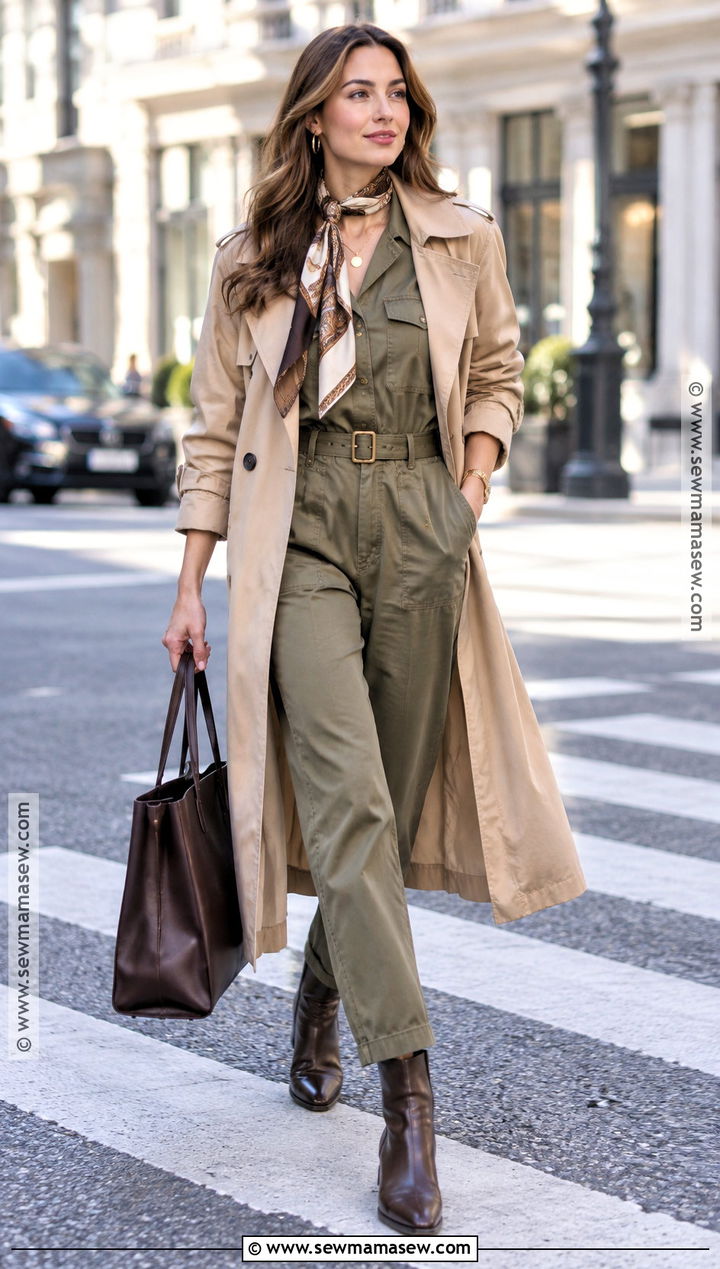
A khaki coverall under a trench is my answer to a day that might rain. I'd pick the coverall a shade deeper than the coat so the two neutrals don't merge into one beige block. Wear the trench open to show the utility details, or tie it when the wind picks up. Chocolate ankle boots anchor the pale colors and cope with wet sidewalks. A dark brown tote, a printed silk scarf and understated gold finish it. Two belts compete at the waist, so fasten the coverall belt and knot the trench belt behind you. It suits commuting, shopping, travel and a relaxed office.
5. Rust Corduroy Coverall With Mock-Neck Top And Clogs
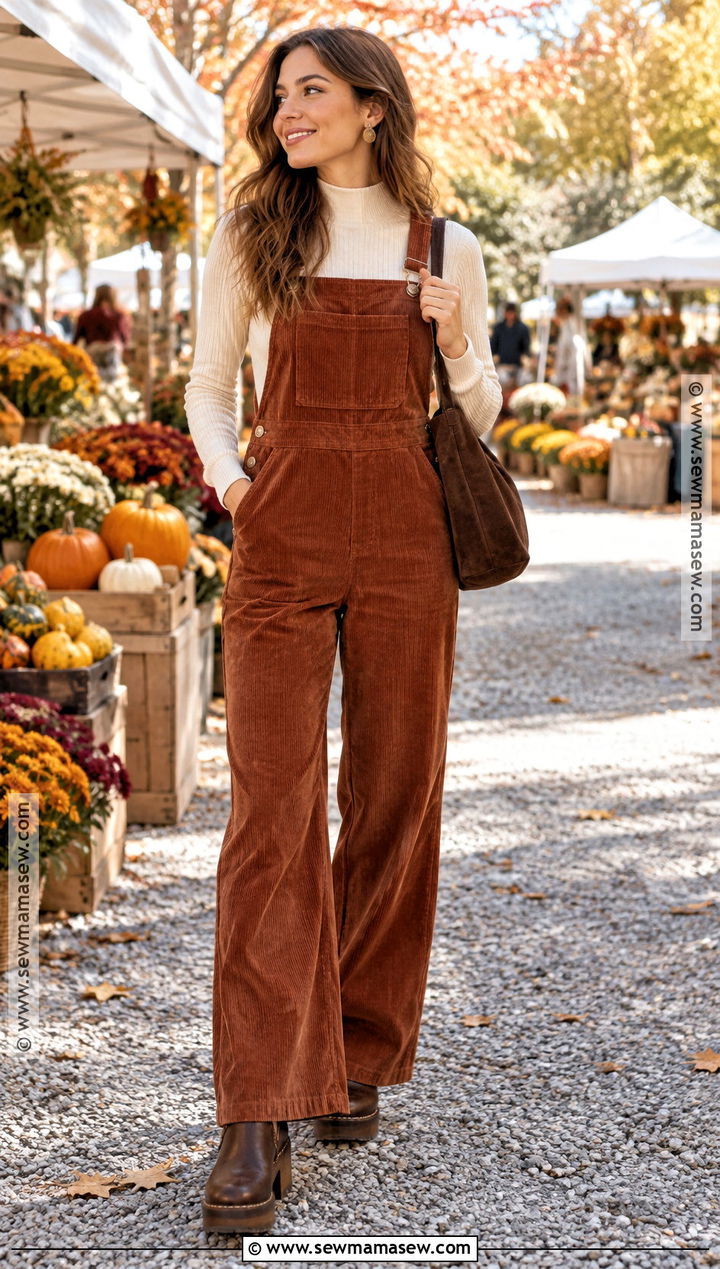
Rust corduroy is the coziest coverall here. Under it, a fitted ivory mock-neck gives a smooth surface against the ridged fabric and lifts the warm color near your face. Straight or slightly wide legs suit dark brown platform clogs, which add height and fit the vintage feel. A small chestnut suede bag and brass earrings keep everything warm-toned. Corduroy is already busy, so I keep accessories quiet. Thick cord sleeves can feel stiff over a base layer; roll them just below the elbow. One care note: corduroy crushes and goes shiny if you iron the face, so turn it inside out and steam it instead. Markets and weekend plans suit it.
6. Navy Coverall With Breton Shirt And White Sneakers
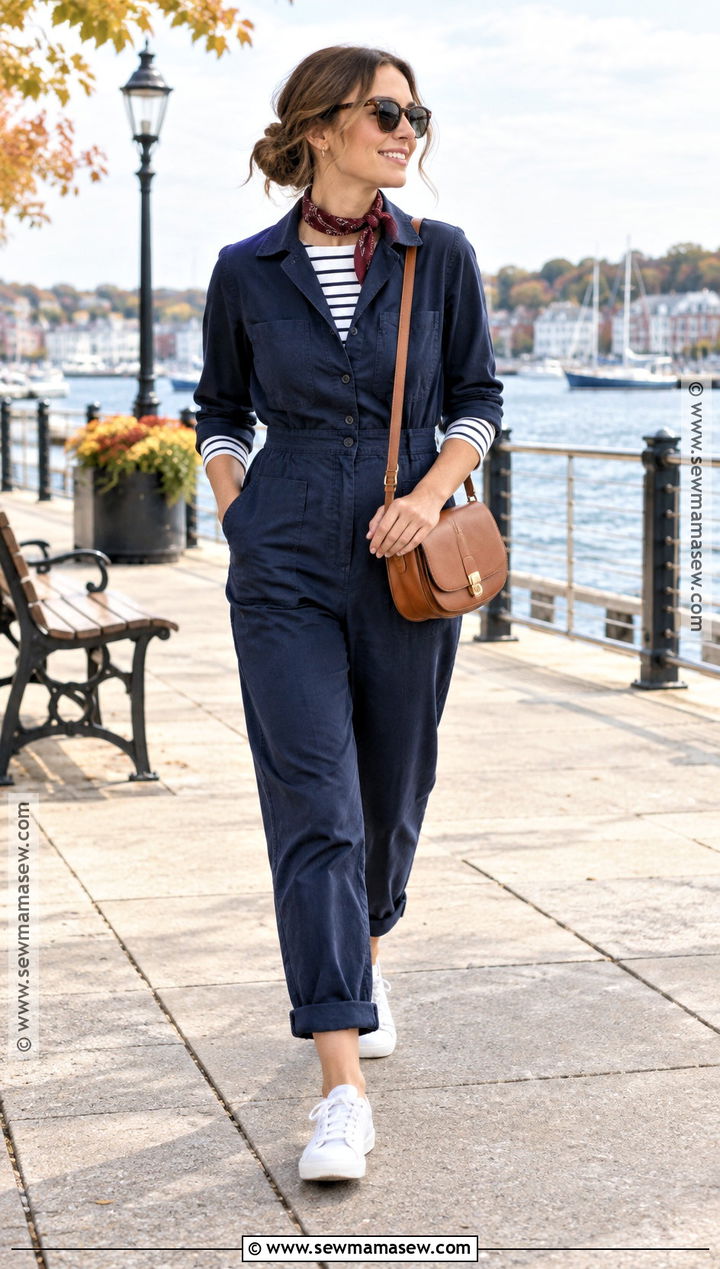
Navy is practical but it can look polished too. Wear the coverall partly unzipped over a fitted Breton shirt with narrow white stripes, so the graphic pattern adds interest while the palette stays simple. Low-profile white sneakers keep it fresh in early fall, with the legs cuffed to show a bit of ankle. A tan leather backpack or crossbody warms up navy and white, which otherwise reads a little nautical for October. Add a red neck scarf or burgundy cap for one accent if you like. When the weather turns, brown boots and a camel coat take this straight into late fall.
7. Brown Coverall With Plaid Shacket And Hiking Boots
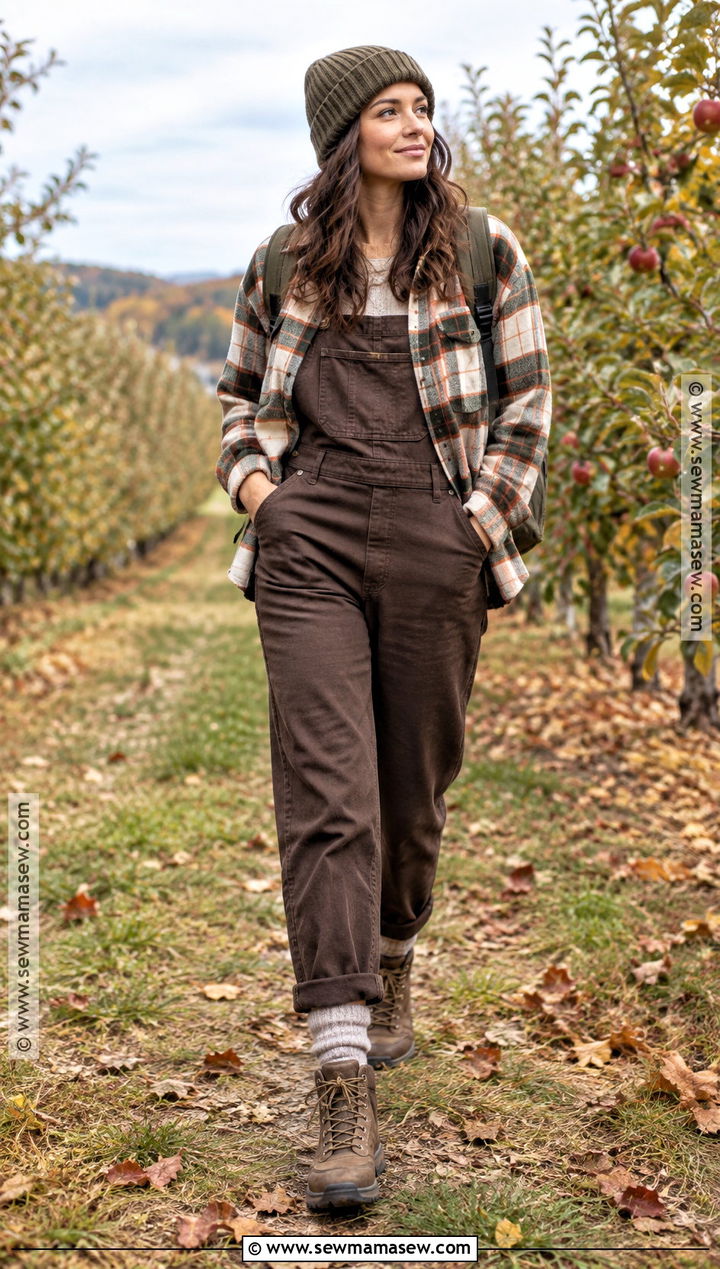
Breezy weekends outdoors are where a coverall earns its keep. Start with a dark brown cotton twill coverall, then add a cream, rust and forest-green plaid shacket, open or tied at the waist when it warms up. Lace-up hiking boots with thick socks suit the workwear character and grip on muddy paths. A canvas backpack, ribbed beanie and minimal jewelry keep it functional. Two roomy layers can easily drown a frame, so I'd choose a shacket that stops at the hip rather than one that hits mid-thigh. Orchards, nature walks and outdoor festivals suit it.
8. Cream Coverall With Brown Suede Boots And Knit Scarf
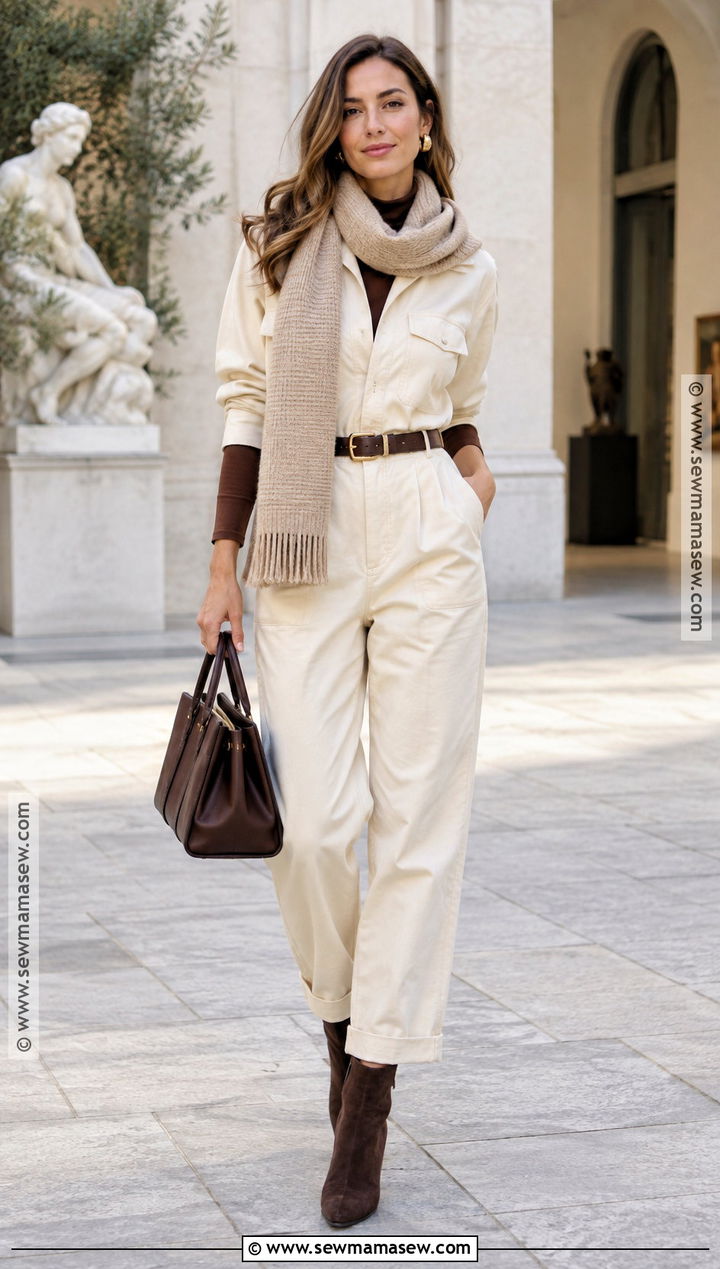
Cream is the brave choice, and it repays the effort. Chocolate suede ankle boots, a matching belt and a structured leather bag ground the pale fabric, and an oatmeal or taupe knit scarf adds warmth without breaking the tonal calm. A thin cocoa long-sleeve tee underneath, if the neckline allows, links the light coverall to the dark accessories. Fabric matters most here: thin linen looks like summer and wrinkles hard, while a heavier twill, denim or brushed cotton holds its shape in fall. Cream also shows every crease and every pocket outline, so fit is non-negotiable. Spot-clean marks quickly before they set. Brunch and gallery visits suit it.
9. Belted Coverall With Blazer And Heeled Boots
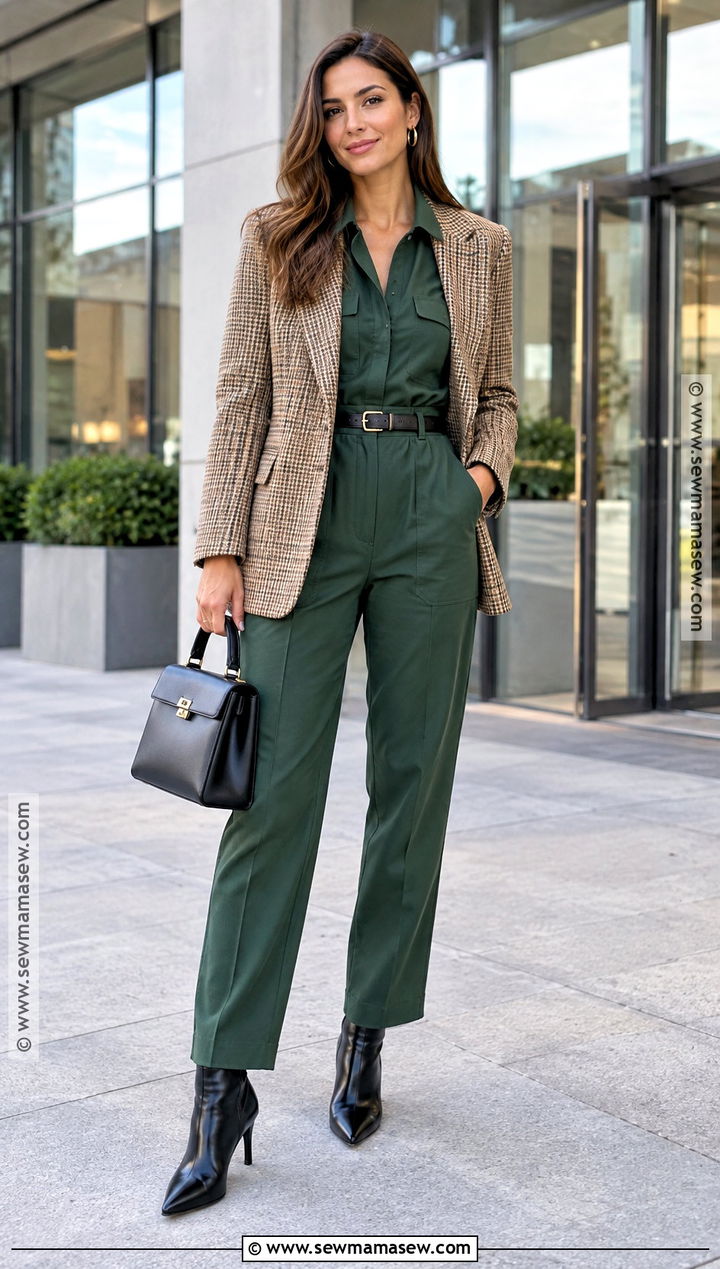
A blazer turns a coverall into creative-office wear. Start with a fitted black, charcoal or deep green coverall with a defined waist, then layer a camel or checked blazer over it. The blazer should skim; if it pulls across the coverall's chest pockets or bunches the sleeves, size up the blazer or switch to a softer, unstructured one. Pointed heeled ankle boots lengthen the leg, especially with a cropped or tapered hem. A top-handle bag, small hoops and a simple pendant finish it. Smooth the coverall collar flat under the lapels. Swapping the fabric tie for a slim leather belt makes the whole thing look more tailored, and that contrast of utility and tailoring is the point.
10. Short-Sleeve Coverall With Long-Sleeve Tee And High-Tops
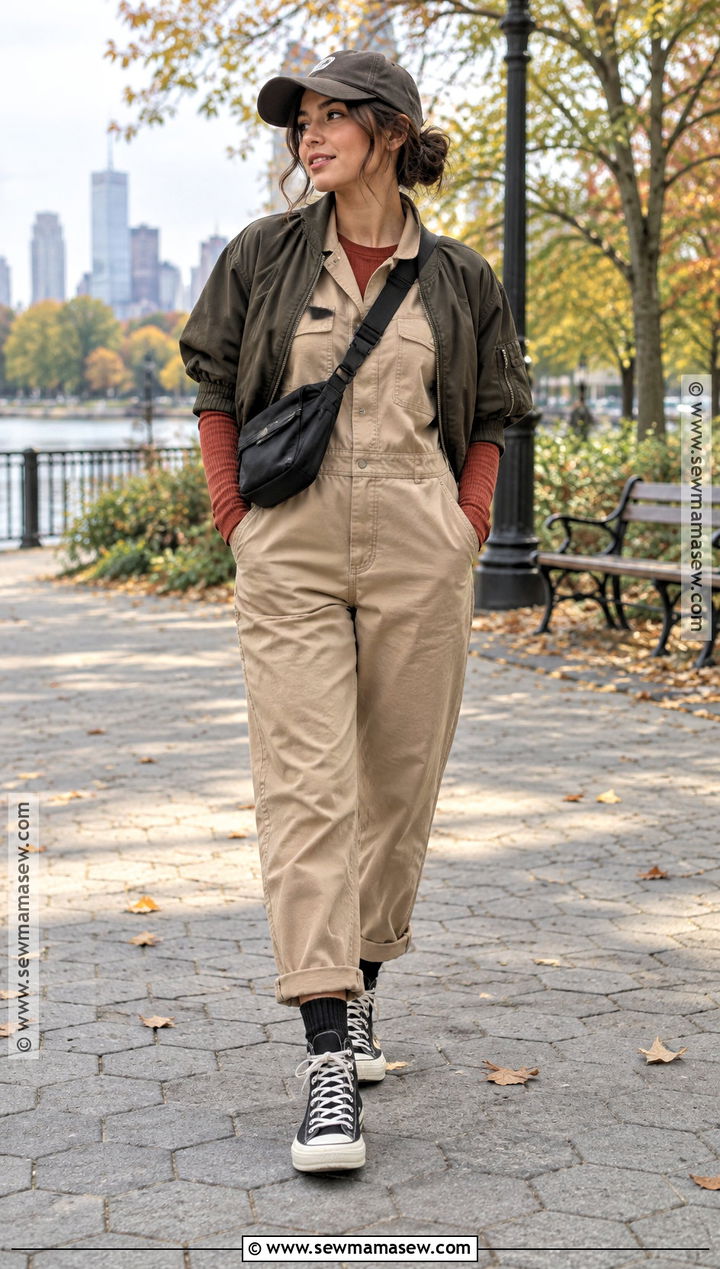
Don't retire a short-sleeve coverall in September. Put a fitted long-sleeve crewneck tee under it and it handles mild fall days. Striped, rust, mustard or plain cream all shift the mood. High-top canvas sneakers with ribbed socks keep it young and casual, along with a small nylon crossbody and a light cap. Roll the hems once so they sit above the sneakers instead of bunching. Make sure the tee sleeves are long enough to reach your wrist bone, since a sleeve that stops short under a short-sleeve coverall looks like a mistake. A cropped bomber is the right extra layer later in the day because it keeps the waist visible.
11. Wide-Leg Coverall With Cardigan And Leather Clogs
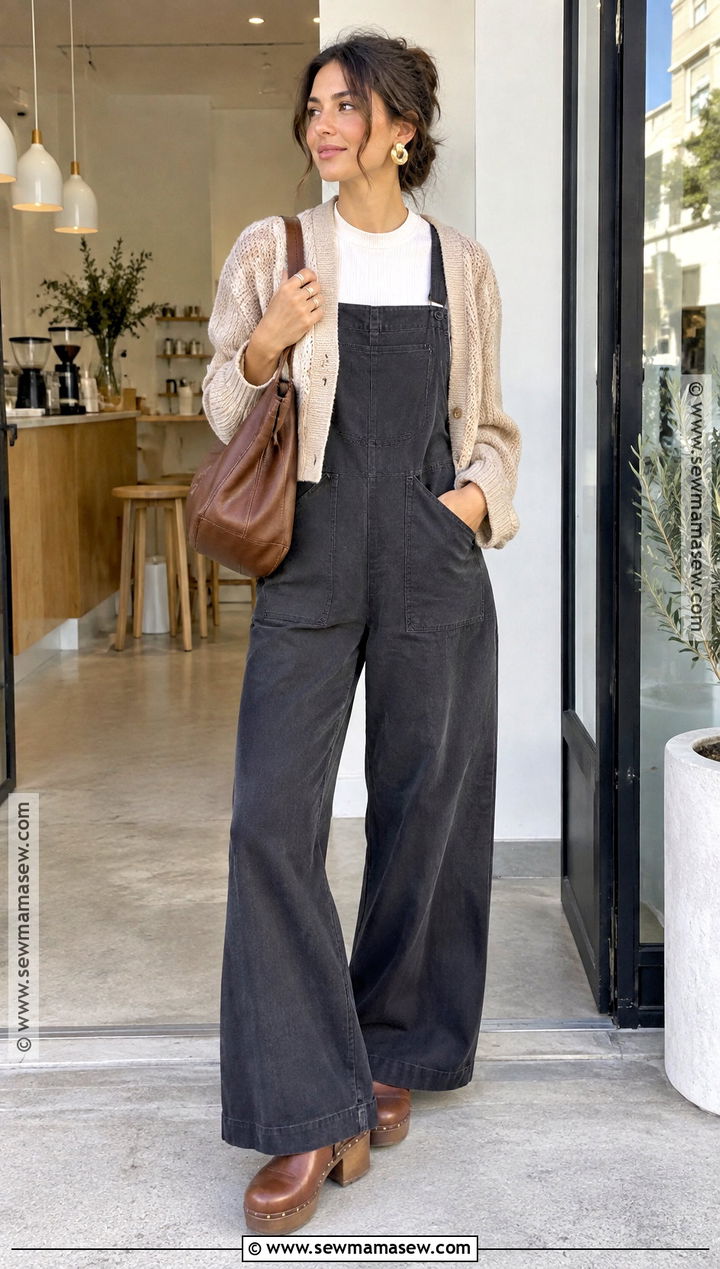
Wide-leg coveralls drape beautifully, and soft layers suit that drape. Choose charcoal, faded blue or muted green over a fitted ribbed tee, then add a cropped chunky cardigan worn open. A long cardigan over wide legs is too much volume top and bottom, while a cropped one shows the waist and gives the outfit shape. Leather clogs or platform mules have enough weight to sit under wide hems. A slouchy shoulder bag, sculptural earrings and a few stacked rings finish it. If the legs are long, hem them for the shoes you'll wear most; big cuffs on a wide leg look heavy. Coffee runs and studio days suit it.
12. Cropped Coverall With Leather Jacket And Combat Boots
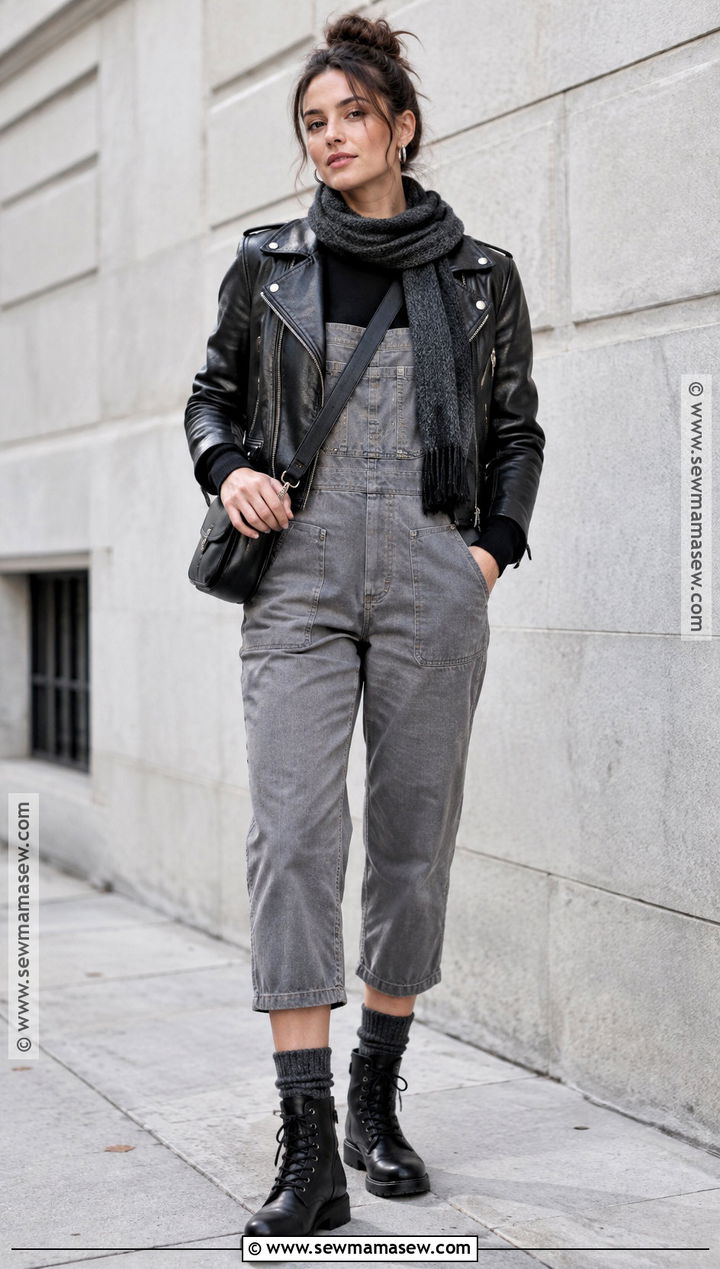
A cropped coverall is really a way to show off your boots. Pick gray, burgundy or faded black ending just above the ankle, with a fitted black long-sleeve top underneath and a cropped leather or faux-leather moto jacket. Black combat boots continue the strong lines, and ribbed socks fill the gap between boot and hem. A compact crossbody with little hardware and silver earrings keep it clean, and a charcoal knit scarf softens it. A long jacket fights the shortened leg, so keep the outer layer at the waist. I'd wear this to concerts, city walks and casual dinners.
13. Plus-Size Coverall With Fitted Knit And Platform Sneakers
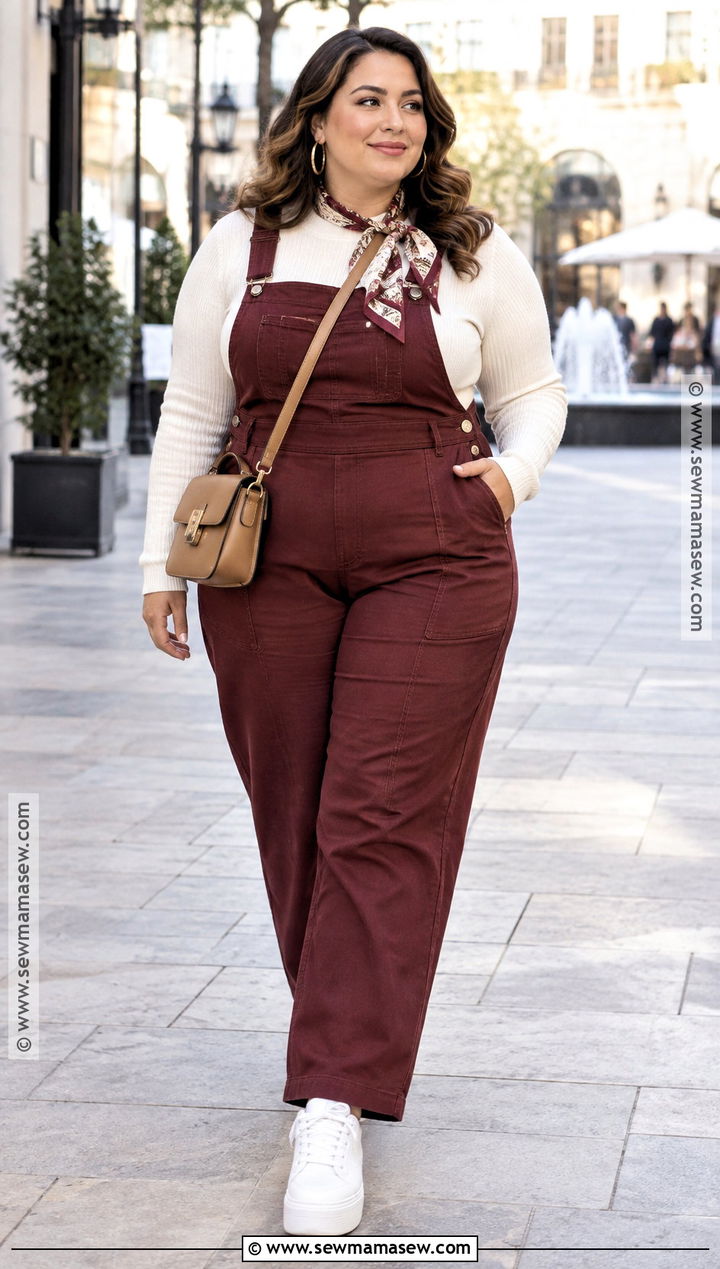
A coverall that fits shouldn't hide your shape. For plus-size frames, I look for adjustable waist tabs, some stretch through the hips and real room across the shoulders, since one-pieces pull at the shoulder seam when the torso is too short. A fitted rib knit in cream, burgundy or black-and-white stripe goes underneath. Open the neckline to create a longer vertical line and show the contrast layer. Platform sneakers balance the one-piece shape and are comfortable for walking. A medium crossbody that sits above the widest part of the hip, bold hoops or a bright scarf, and sleeves rolled to show the wrist add definition. Buy the size you can sit and bend in, not a size up for an oversized look.
14. Petite Coverall With Cropped Jacket And Pointed Boots
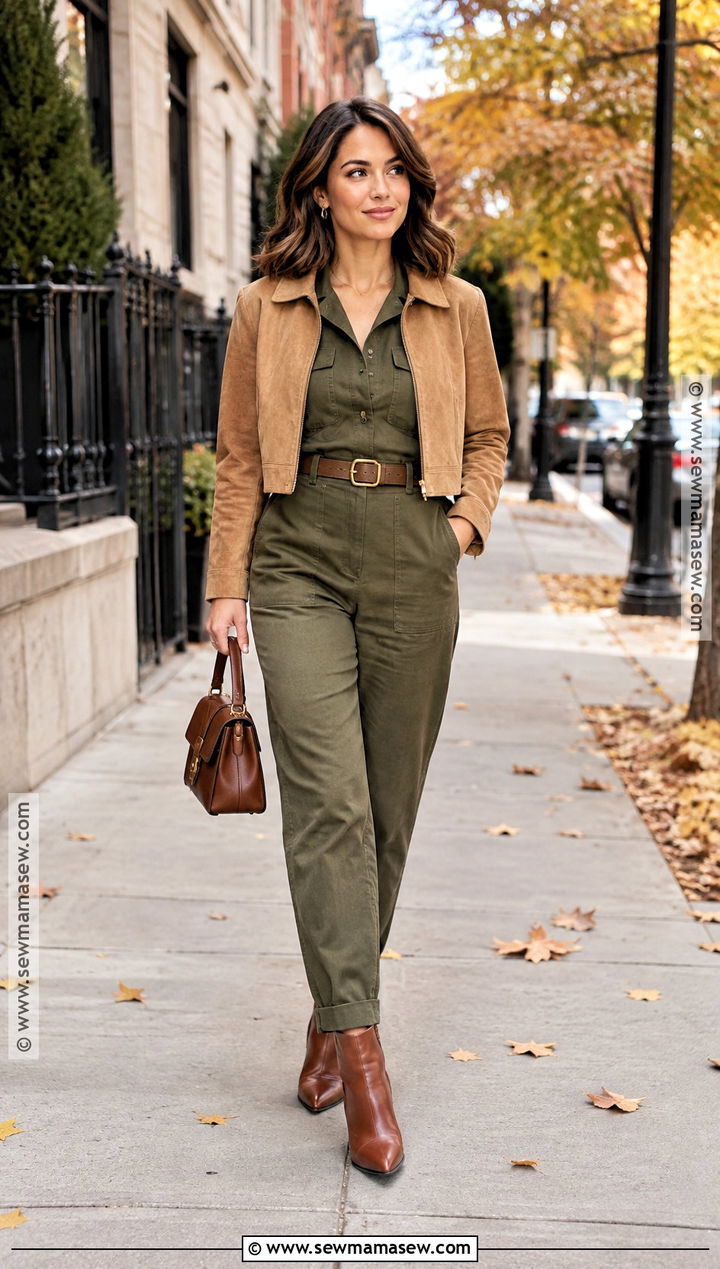
Petite styling is mostly about controlling length and volume. Pick a coverall with a shorter torso, a clearly placed waist and tapered or straight legs that end near the ankle. One dark color, olive or navy or black, keeps the line unbroken. A cropped denim or suede jacket should end close to the natural waist. Pointed ankle boots extend the leg without needing a tall heel. Smaller bags and finer jewelry keep the scale right. Rolled sleeves are fine, but thick cuffs at the ankle chop the leg. Hemming is worth it here; a tailor can also shorten the torso on many styles, which off-the-rack petite sizing doesn't always get right.
15. Workwear Coverall With Wool Coat And Retro Sneakers
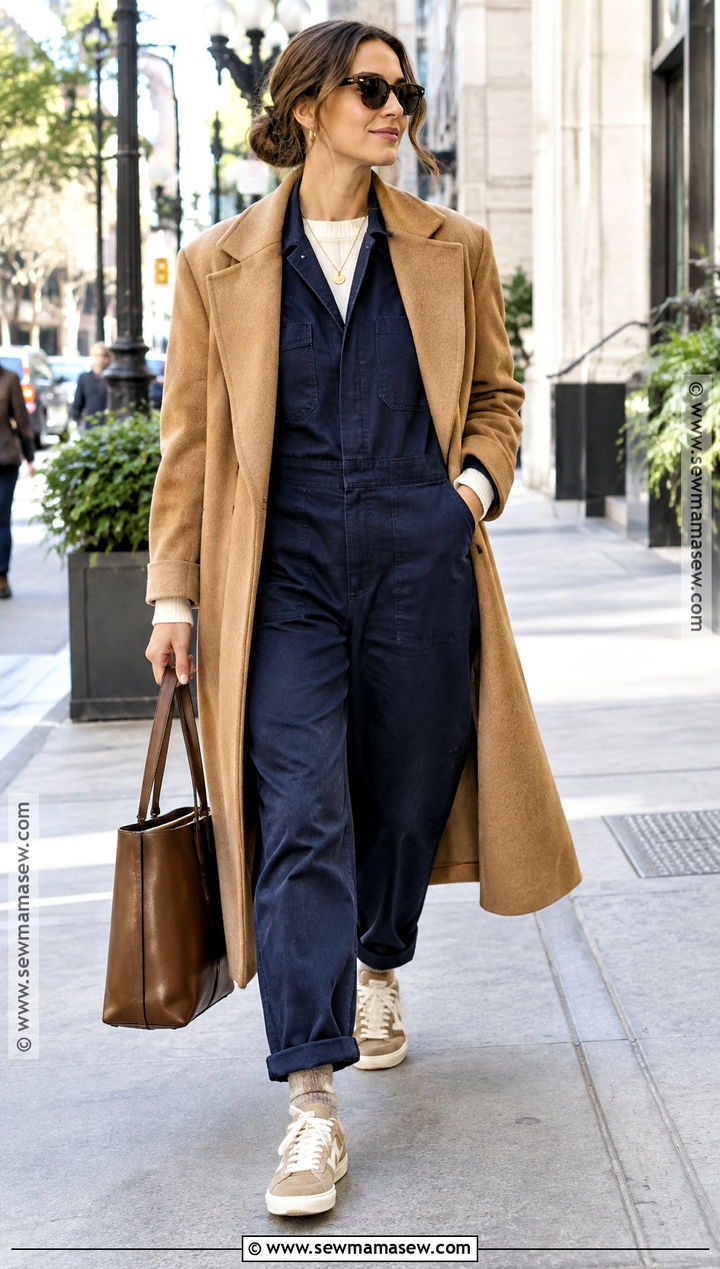
Late fall is when I put a long wool coat over a workwear coverall. Olive, navy or dark denim pairs with camel, charcoal or deep burgundy outerwear. The coat needs enough shoulder room to go over the coverall without binding, so try it on with the coverall underneath, not a thin tee. Retro leather or suede sneakers keep the outfit grounded, and a structured tote adds polish. A thin merino crewneck underneath and wool socks that match the coat add warmth, with the coverall unzipped at the neck to show the knit. Rugged workwear, tailored coat and sporty shoes give real contrast. A neutral coverall can also carry a bright coat if you want the outer layer to lead.
Caring for Twill, Denim and Cord Through the Season
Coveralls get worn hard, and most of the fabrics in this list need a little attention to look good past October.
Washing
Wash denim and dark twill inside out in cold water to slow fading along the seams and pocket edges. Zip or button the coverall closed first so the hardware doesn't snag other clothes. Cotton coveralls can shrink in length with a hot dryer, which is a real problem for a garment that depends on torso length, so air-dry or use low heat.
Corduroy and cream
Corduroy should be washed inside out and smoothed by hand while damp so the ridges don't crush. Cream coveralls need quick spot treatment on coffee or mud before the stain sets, and they show yellowing at the collar if put away dirty. A clean collar on a cream coverall matters more than any accessory you add.
For storage, hang coveralls by the shoulders on a wide hanger. Folding them in a drawer leaves creases across the waist that take a full steam to remove.
One Coverall, Many Fall Layers
The outfits above all depend on a coverall that fits across the shoulders, waist and hips, and especially through the torso. From there, fitted knits, cropped jackets, tailored coats and soft cardigans set the proportions, and shoes decide the mood: sneakers for casual days, loafers for polish, boots for cold and wet. Earthy shades coordinate easily, but black, navy, cream and denim earn their place too. Start with the version that suits the life you actually lead, and one coverall can carry you from September into the first frost.
Related posts: