Fall is the one season when a bride can bring real color into the gown without it feeling like a theme. An ombre skirt does it gradually, starting bridal at the bodice and deepening toward the hem in shades borrowed from leaves, evening skies, woodland greens and warm metallics. Below are fifteen gradients I'd actually style, each with shoes, jewelry, veil and bouquet so you can picture the whole look rather than the dress on a hanger. A soft champagne hem barely reads as color; a fade into black is a statement. Both can still look romantic. The work is in matching the gradient, the fabric and the silhouette to your venue and to you.

How the Color Fade Gets Into the Fabric
Not every ombre gown is made the same way, and the method decides how soft the transition looks up close. When I'm helping a bride shop, this is the first thing I ask the consultant.
- Dip-dyeing lowers the fabric into dye in stages, so the color climbs gradually. It gives the softest, most organic blend, but every piece is slightly different.
- Printed gradients are applied to the surface, which keeps the color precise and repeatable. Look at the inside of the skirt: prints often show a paler reverse.
- Layered tulle in graduated shades stacks sheer colored layers, so the eye mixes them. It's the most forgiving method and the easiest to adjust.
- Colored lace or appliqué builds the effect from embellishment, leaving the base fabric ivory. The fade is more patterned than smooth.
Ask for a fabric swatch from the darkest part of the skirt if the shop allows it. Hold it next to your skin and your bouquet colors in daylight before you order.
1. Ivory To Rust Ombre Wedding Dress
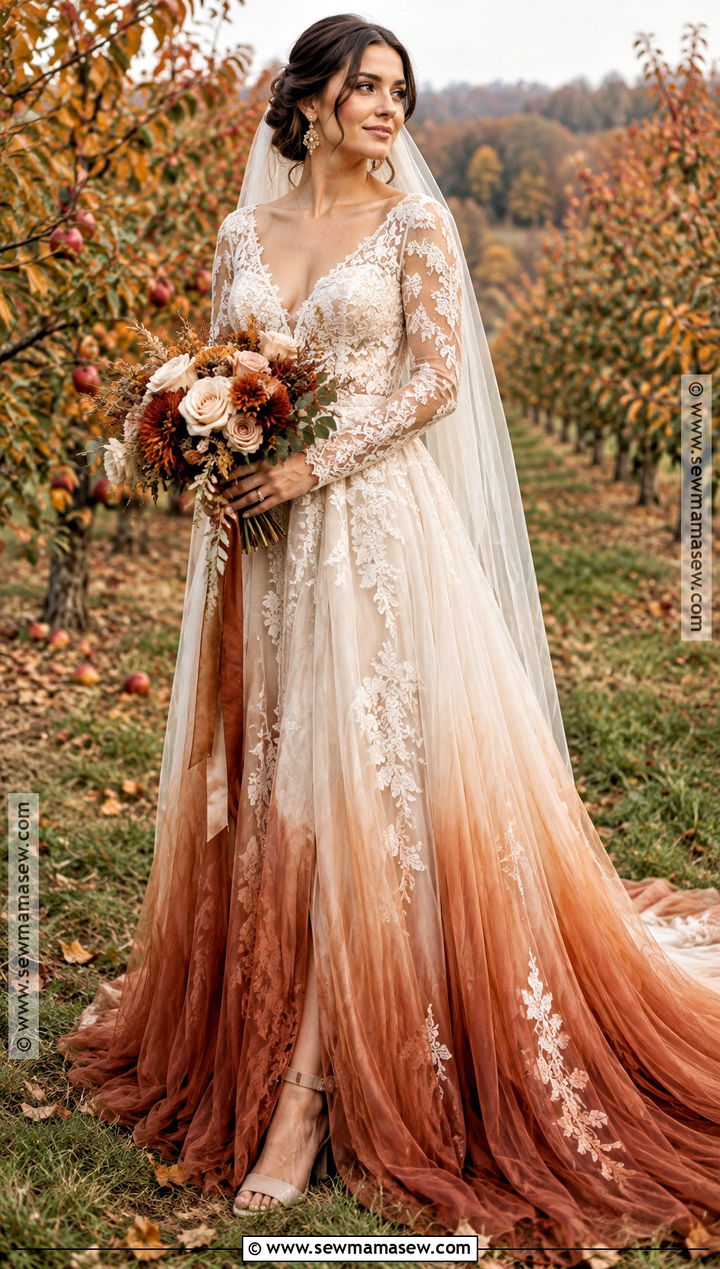
Ivory into rust is the gradient I suggest most to brides who want autumn in the dress but nothing that looks costumey. Chiffon or layered tulle carries it well, starting ivory at the waist and warming to copper near the hem. A fitted lace bodice with long illusion sleeves keeps you comfortable at a cool outdoor ceremony. For shoes, I go with neutral block heels, because stilettos sink into grass within minutes. Antique gold earrings and a fine hair vine are enough. A bouquet of cream roses, rust chrysanthemums and dried grasses repeats the fade, and a plain ivory veil keeps out of the skirt's way. Barns, orchards and woodland settings suit it best.
2. Champagne To Burgundy Ombre Wedding Dress
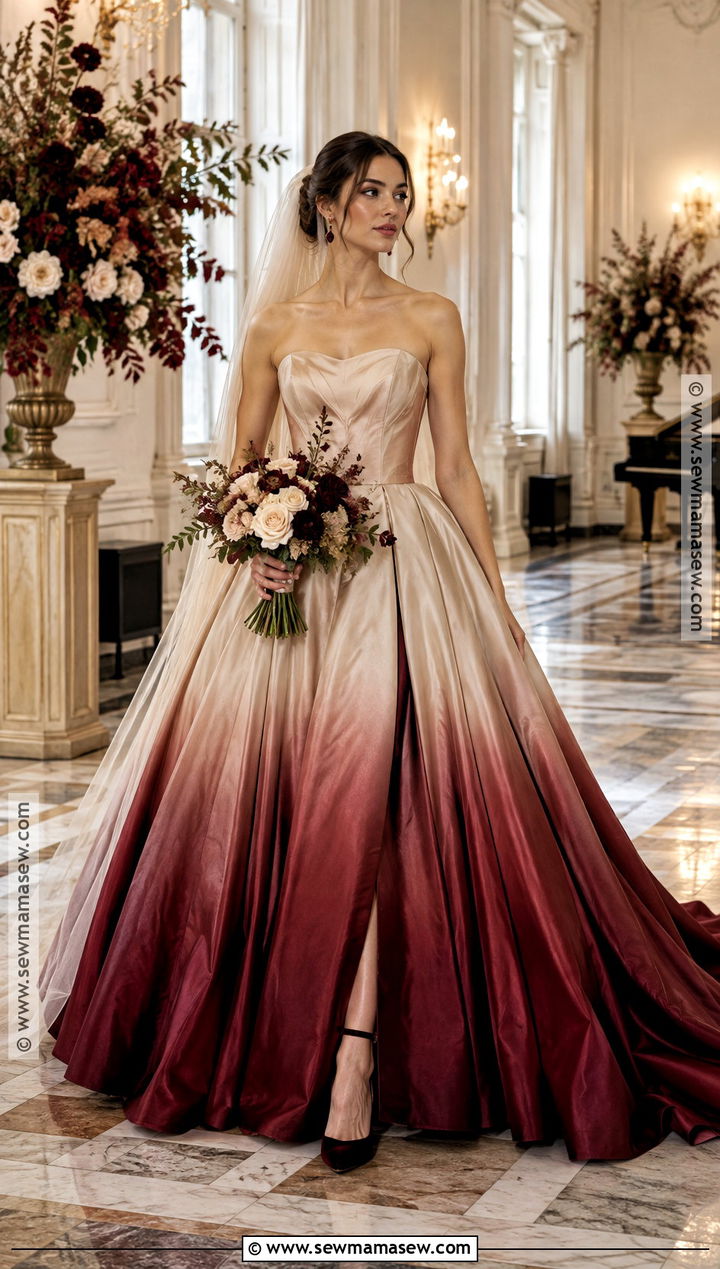
Champagne fading to burgundy belongs at a formal celebration. The pale bodice keeps color soft near your face, while the skirt passes through dusty rose and cranberry on the way to a burgundy hem. I'd choose structured satin or organza here: both hold the volume of a ball gown and give the color a crisp, deliberate edge instead of a hazy one. Burgundy velvet pumps, garnet drops and a champagne cathedral veil complete it. A low chignon leaves the neckline and earrings visible. Ivory garden roses with burgundy dahlias and trailing greenery finish the bouquet. In candlelit ballrooms and old estates, that dark lower half catches the eye from the back row.
3. Ivory To Burnt Orange Ombre Wedding Dress
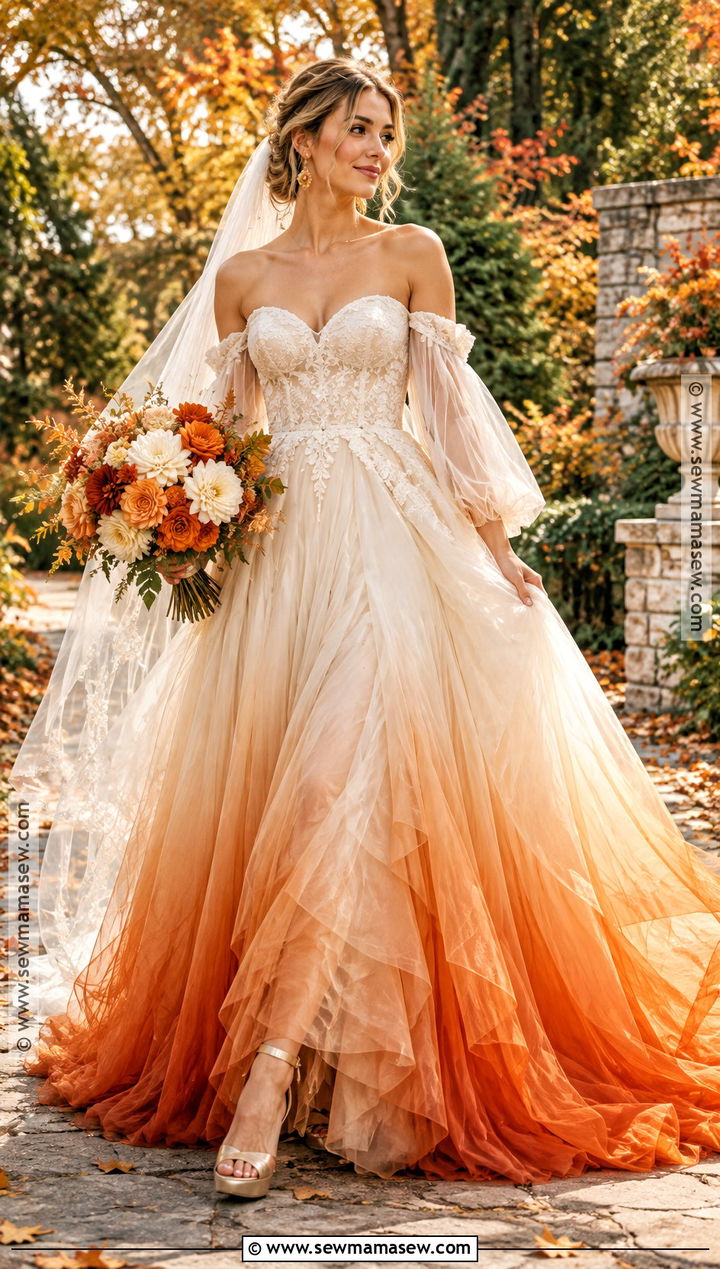
Burnt orange is the cheeriest gradient on this list, and it's best for early or mid-fall when the trees outside are still bright. Airy tulle keeps the color from looking heavy as it builds toward the floor. A sweetheart neckline with detachable off-shoulder sleeves gives you two looks in one day, sleeves for the ceremony and bare shoulders for dancing. Nude or pale gold heels let the hem stay the focus. Citrine earrings and a thin gold bracelet add warmth. Carry ivory ranunculus, orange roses and eucalyptus, and use a fingertip veil with a narrow satin edge to balance all that color. Orange is hard on some skin tones near the face, which is why it belongs at the hem.
4. Cream To Forest Green Ombre Wedding Dress
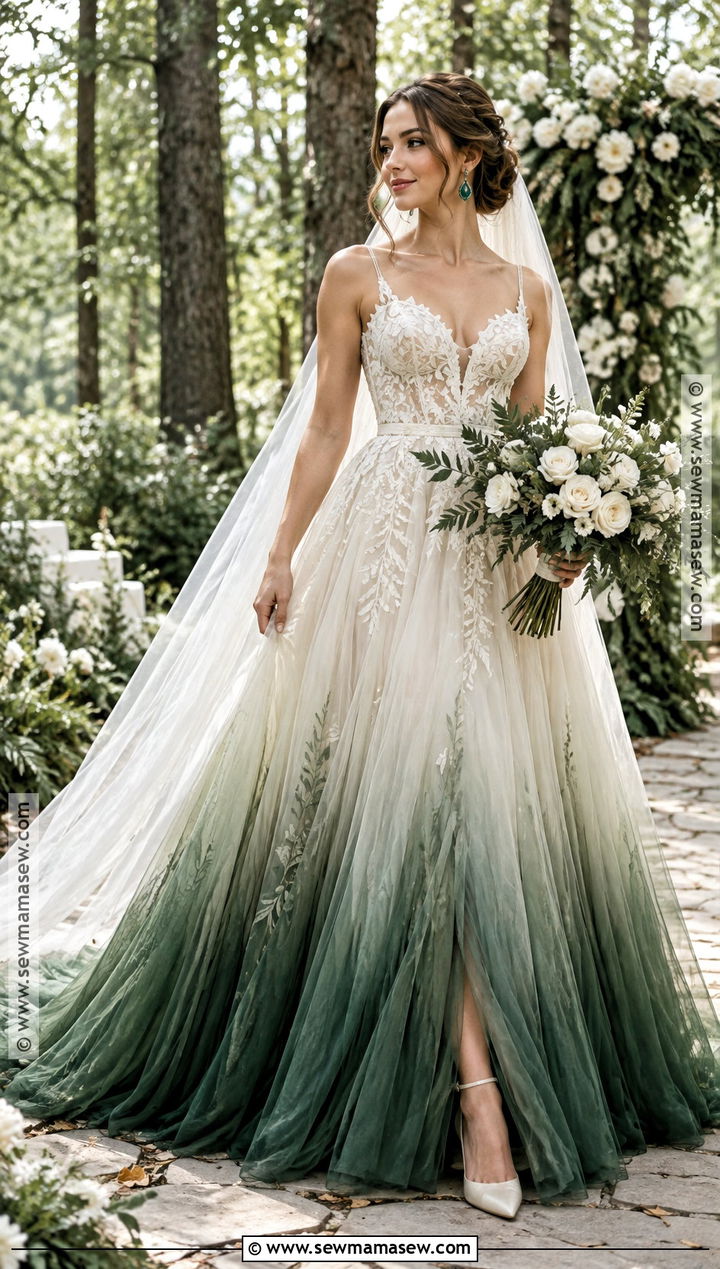
Cream fading to forest green is quieter than it sounds, and it suits brides who want something a little unconventional. Keep the shape simple: an A-line with a fitted cream bodice and a skirt moving through sage and moss to deep green. Matte chiffon looks soft and woodsy; silk organza gives more structure and movement. Emerald studs, cream ankle-strap heels and a cathedral veil set under a loose braided updo finish it. White anemones, ferns and green hellebores keep the bouquet in the same family. I'd keep every other color out. Green already carries the look, and adding gold or blush on top starts to fight it.
5. Blush To Plum Ombre Wedding Dress
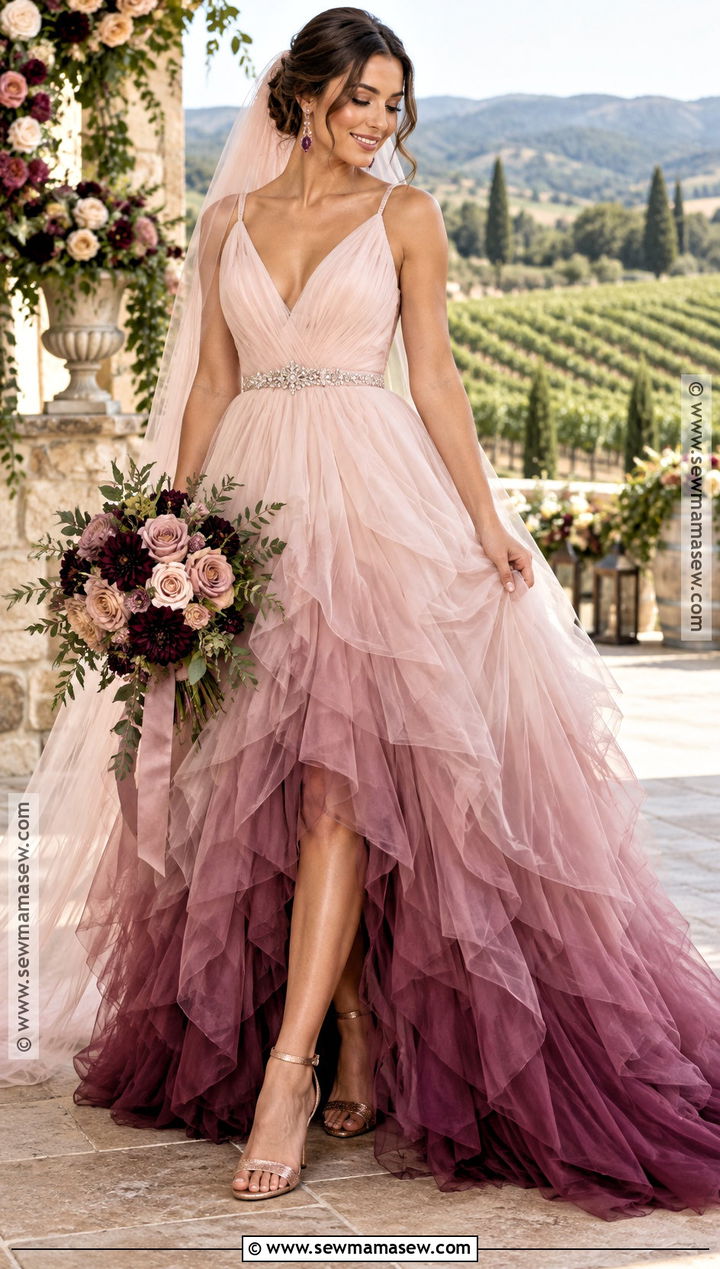
Blush into plum has enough depth for an evening ceremony while still reading soft. A layered tulle gown with a V-neck and defined waist lets the fade stay light, passing through mauve and dusty lavender before the deepest plum. Rose-gold heels, amethyst earrings and a slim crystal belt suit it. Choose a blush veil rather than bright white. Next to tinted fabric, pure white can look gray or blue by comparison, and a blush veil melts into the bodice instead. Mauve roses, cream lisianthus and plum dahlias make the bouquet. Vineyards and indoor receptions with brass details or deep linens are where it looks most at home.
6. Ivory To Black Ombre Wedding Dress
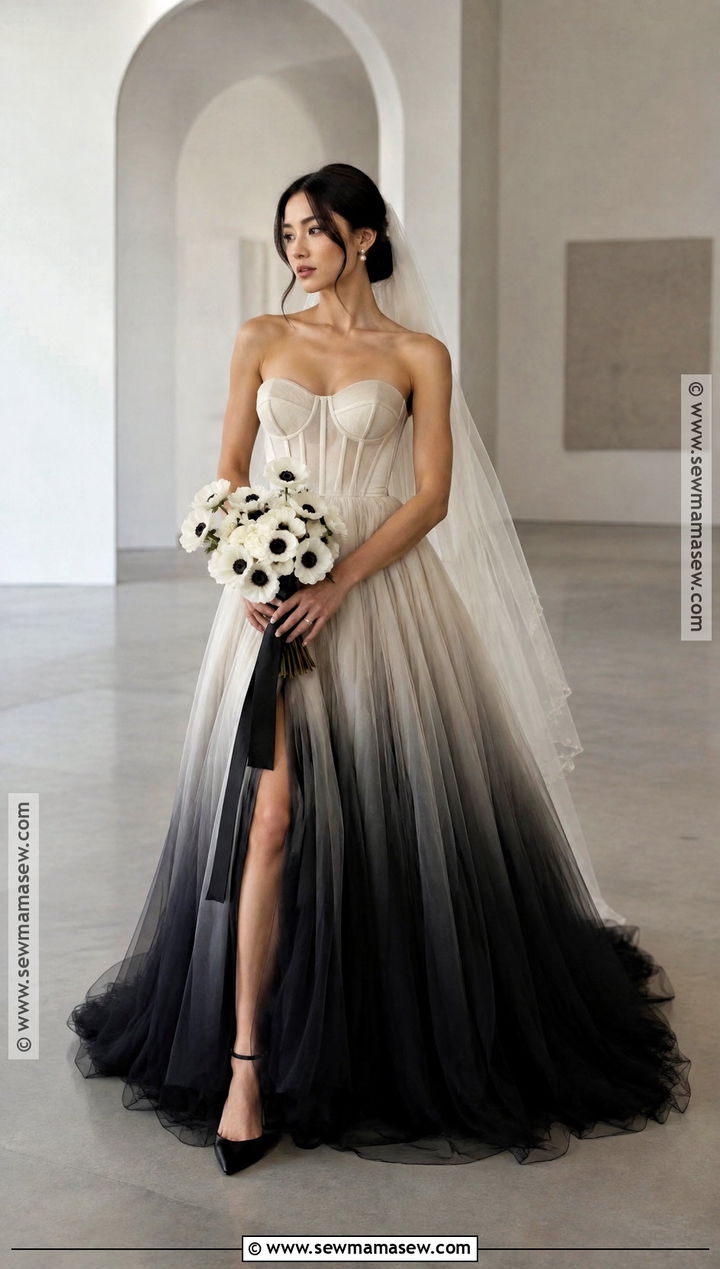
Ivory to black is for the bride who wants a modern, bold look and isn't worried about tradition. To keep it bridal, the bodice should stay fully ivory, with the fade moving through gray before the tulle turns black at the hem. Black floral appliqués scattered through the transition help it look designed rather than dipped. A structured corset top and long skirt hold the shape. Black pointed heels, pearl earrings and a black velvet ribbon in a low ponytail tie it together, while a plain ivory veil softens everything. In photos, black absorbs light and loses detail, so ask your photographer to expose for the bodice and check that the appliqués still show.
7. Gold To Espresso Ombre Wedding Dress
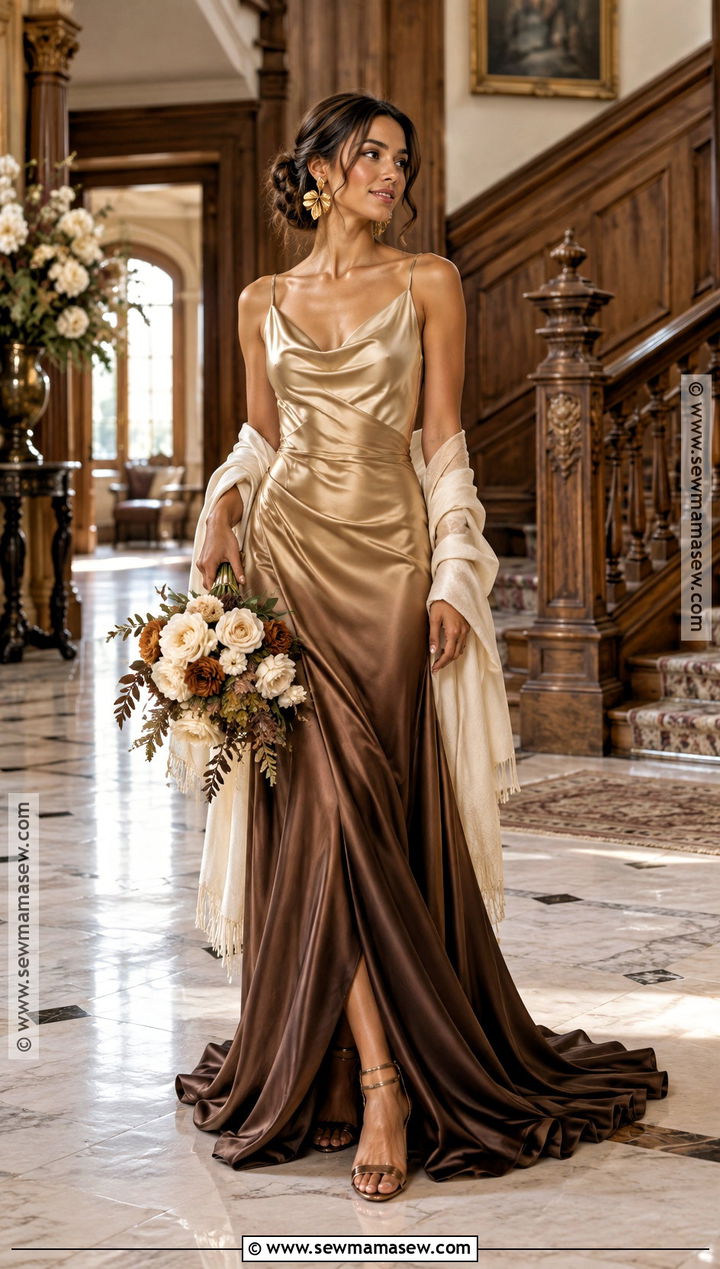
Golden champagne moving to espresso is a rich neutral, and I like it on brides who find white too stark. A sleeveless satin gown with a softly draped neckline and fluid skirt shows the shift from pale gold through bronze to deep brown. Bronze heels and sculptural gold earrings carry the warm tone, and a warm ivory wrap helps for outdoor photos. A sleek bun or a waved bob suits the clean lines. Cream roses, chocolate cosmos and dried seed pods make a bouquet that looks almost sculpted. With this many warm tones already in the skirt, I keep accessories tonal. Wood and brass in the venue will pick up the color without any help.
8. White To Dusty Blue Ombre Wedding Dress
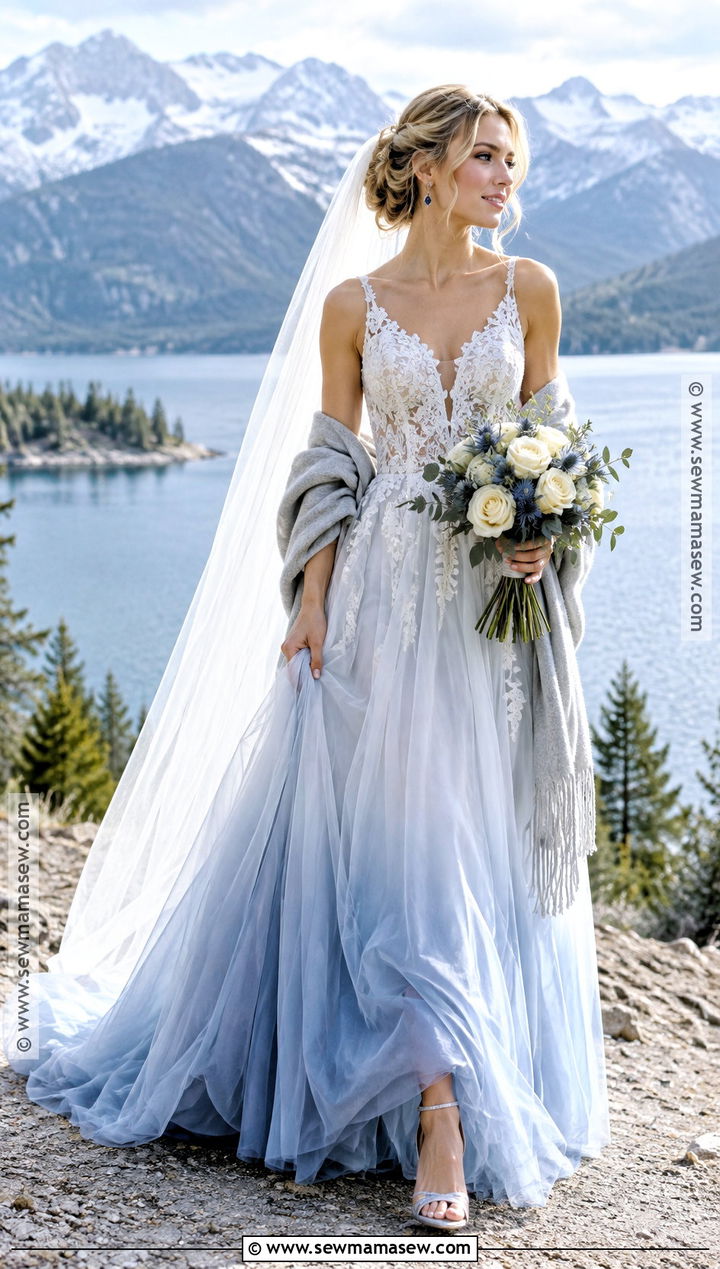
White into dusty blue looks like a cool fall sky, and it's one of the gentlest gradients to wear. A crisp white bodice with lace straps or sheer sleeves leads into misty blue and a slate edge. Chiffon or watercolor-dyed tulle gives the smoothest blend; stiffer fabrics can show a visible band. Silver heels, sapphire studs and a white chapel-length veil keep the cool palette. A pale gray cashmere wrap handles cold air between ceremony and reception and comes off for indoor photos. White roses, blue thistle and dusty miller connect the shades without matching too neatly. Lakes, coast and mountain settings flatter this one most.
9. Ivory To Cranberry Lace Ombre Wedding Dress
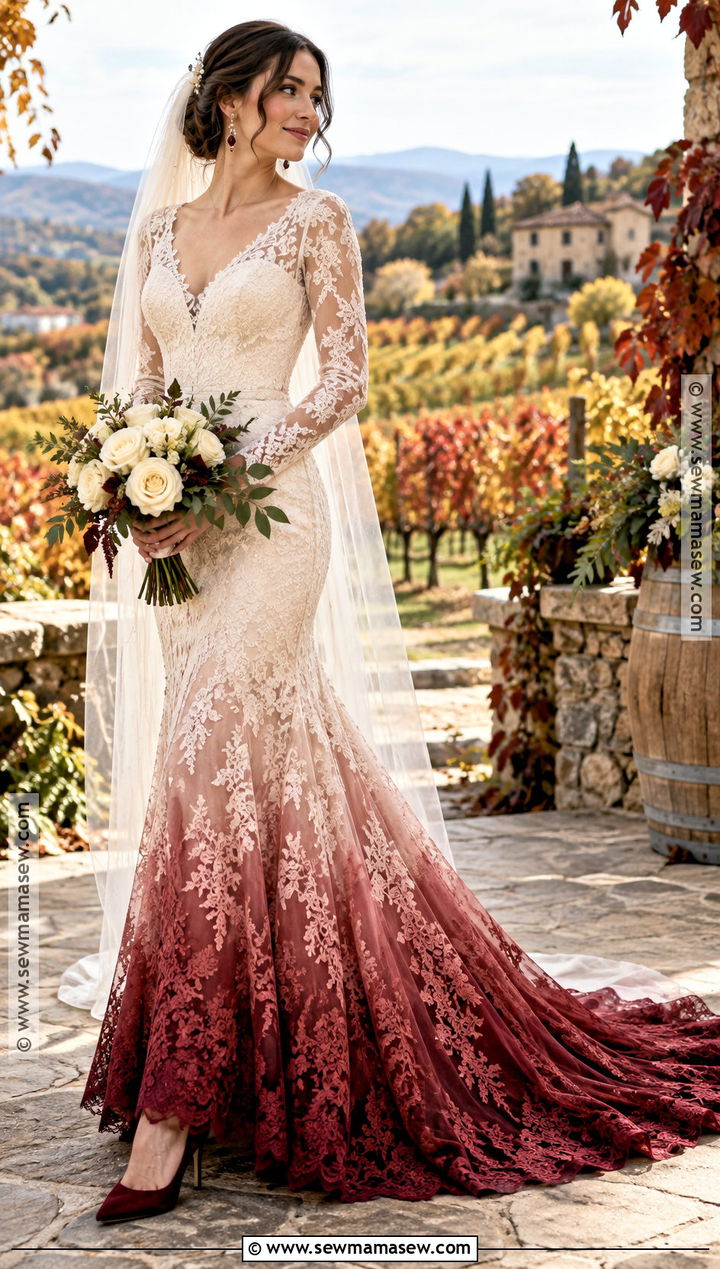
Cranberry warms an ivory lace dress without the brightness of true red. A fit-and-flare shape keeps the lace ivory through the bodice and upper skirt, then lets the floral pattern deepen through dusty rose and berry to cranberry at the train. Long lace sleeves add coverage and connect the detailed top to the colored hem. Here the train takes the darkest color, which is clever, because the train is also the part that collects dust and leaves. Cranberry suede heels, pearl-and-garnet earrings and an ivory comb veil finish it, along with a bouquet of cream roses and berry dahlias. A soft berry lip with neutral eyes keeps the face balanced.
10. Peach To Terracotta Ombre Wedding Dress
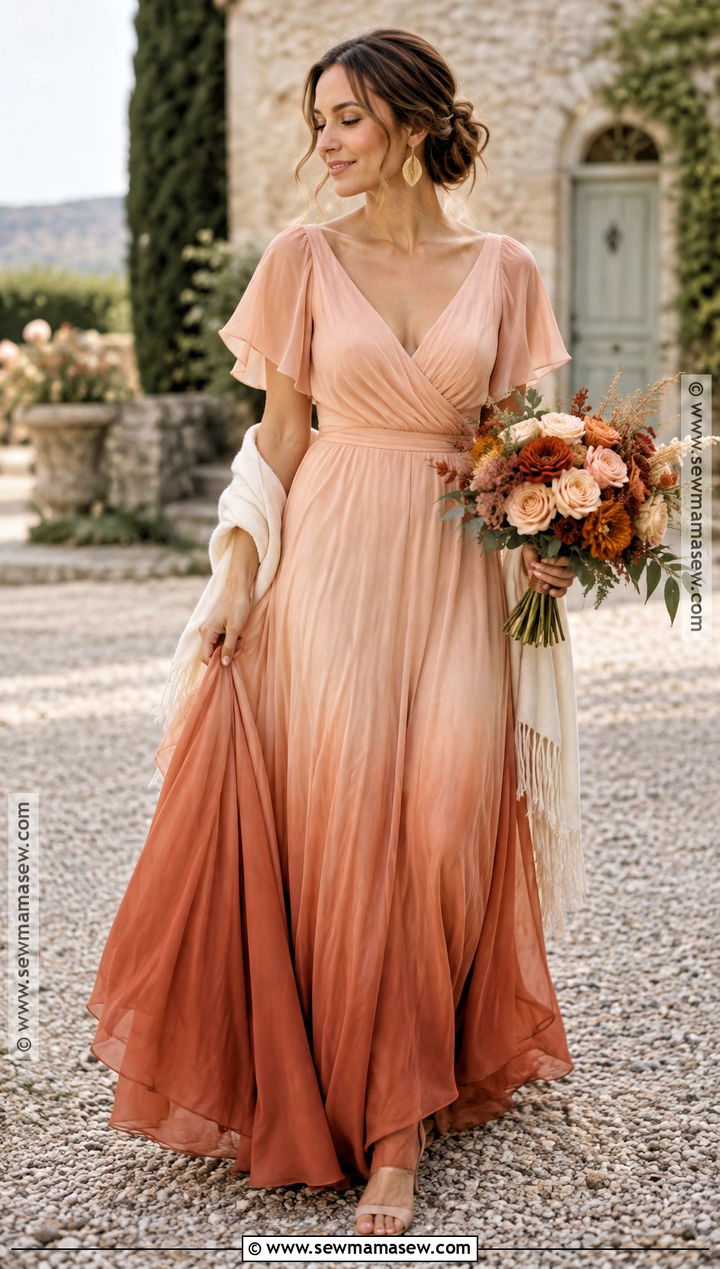
Peach into terracotta is earthy and warm, and it suits outdoor weddings where the setting already has texture. Flowing chiffon keeps it light: a wrap bodice, flutter sleeves and an A-line skirt moving from pale peach at the neck through apricot and clay to a terracotta hem. Nude leather heels, brushed-gold earrings and a dried-flower hair comb fit the mood. A cream shawl adds warmth without hiding the fade. Peach roses, ivory ranunculus and rust mums complete the bouquet. Chiffon in wind lifts and swirls, which looks wonderful in photos but can wrap around your legs mid-aisle, so walk in the dress outside at your final fitting.
11. Silver To Charcoal Ombre Wedding Dress
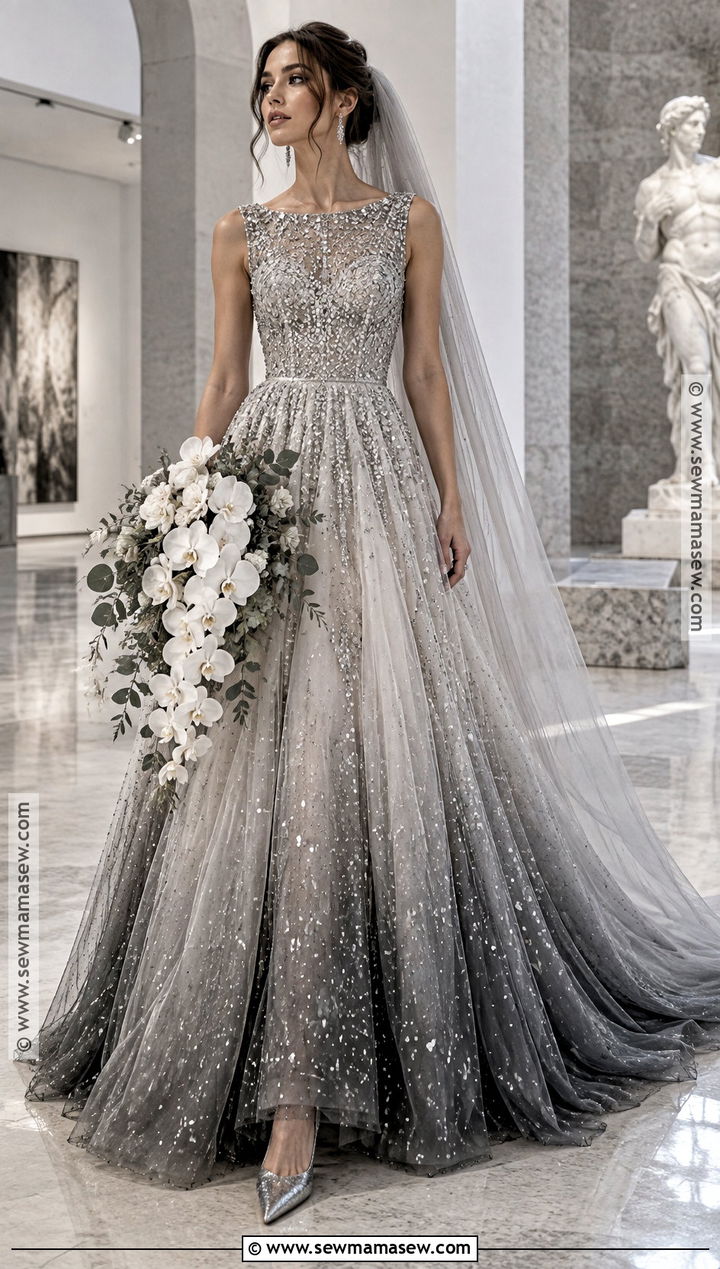
Silver into charcoal is a cool alternative to all the warm autumn shades. Shimmering tulle or lightly beaded fabric starts pale at the bodice and darkens toward the floor. I balance that modern fade with a classic shape: bateau neckline, defined waist, full A-line skirt. Silver pointed pumps, crystal drops and a delicate bracelet suit it, and a pale gray veil with a little sparkle won't hide the tone. White orchids, ivory roses and blue-gray greenery give a cool bouquet. Beading is heavy, so if the skirt carries a lot of it, expect the dress to weigh noticeably more by the hem. Wear it for a full hour at a fitting.
12. Cream To Mustard Gold Ombre Wedding Dress
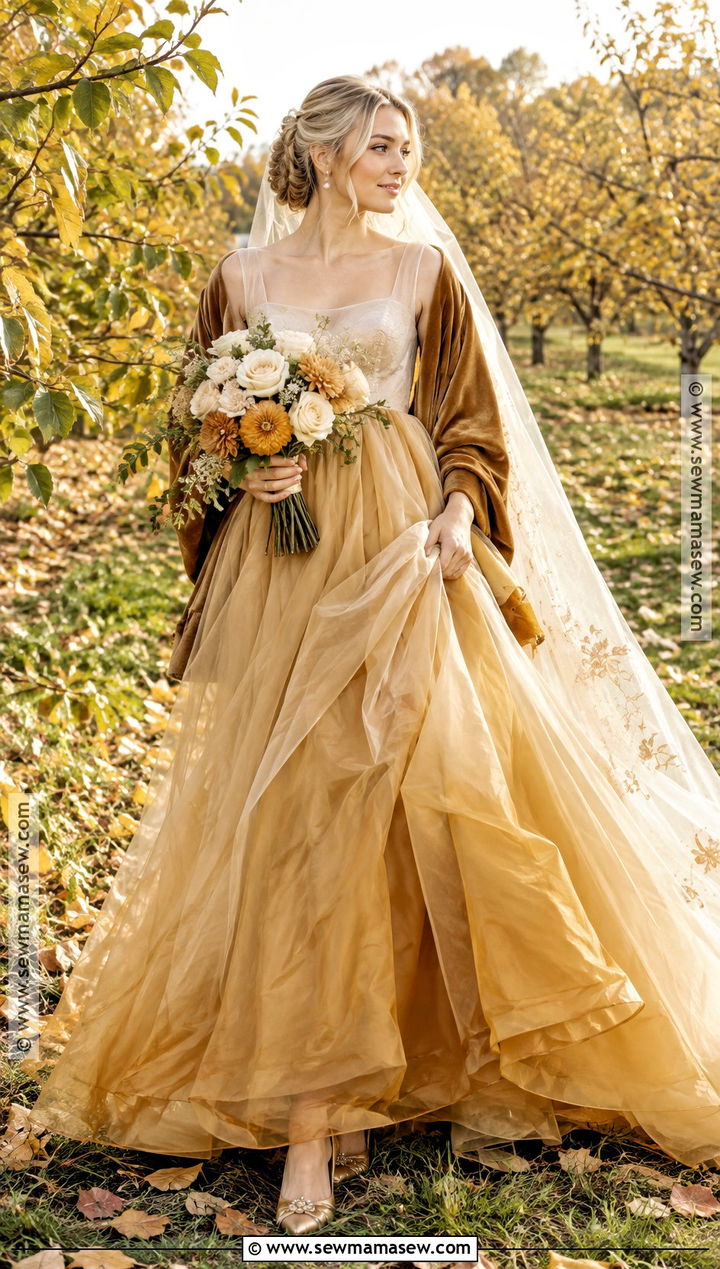
Cream into mustard gold sounds risky, but kept muted it looks like sunlight on leaves. The trick is the end color: it should finish as soft honey or old gold, never bright yellow, which can tint nearby skin in photos. A soft organza gown with a square neckline, fitted waist and full skirt holds the color well. Antique gold heels, pearl studs and an embroidered cream veil complete it. Bring a camel velvet wrap for cold outdoor moments. Ivory roses, golden chrysanthemums and wispy grasses carry the palette into the bouquet. Restored barns and bright rooms with plenty of natural wood show it at its best.
13. Ivory To Copper Sequin Ombre Wedding Dress
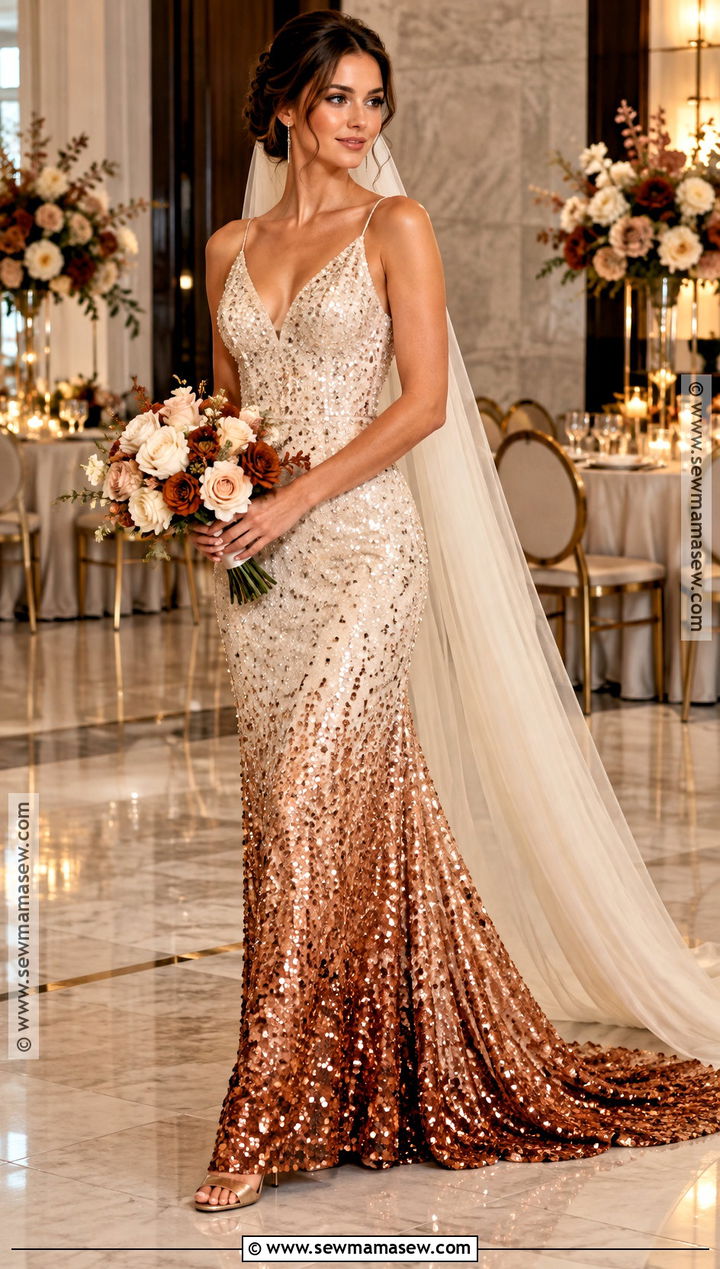
Sparkle without glare is the goal for an ivory-to-copper sequin gown. Choose a fitted sheath or soft mermaid with only sparse ivory beading at the neckline, growing denser and more copper toward the skirt and train. Simple champagne heels, slim gold hoops and a plain ivory veil leave the sequins as the main detail. A side-parted wave or a sleek low bun keeps the look polished. Carry a compact bouquet of cream roses, rust ranunculus and bronze foliage. Sequins catch every light source, including flash, so this gown suits evening receptions. On a mermaid, check you can climb stairs and sit at dinner before you commit.
14. Sage To Emerald Ombre Wedding Dress
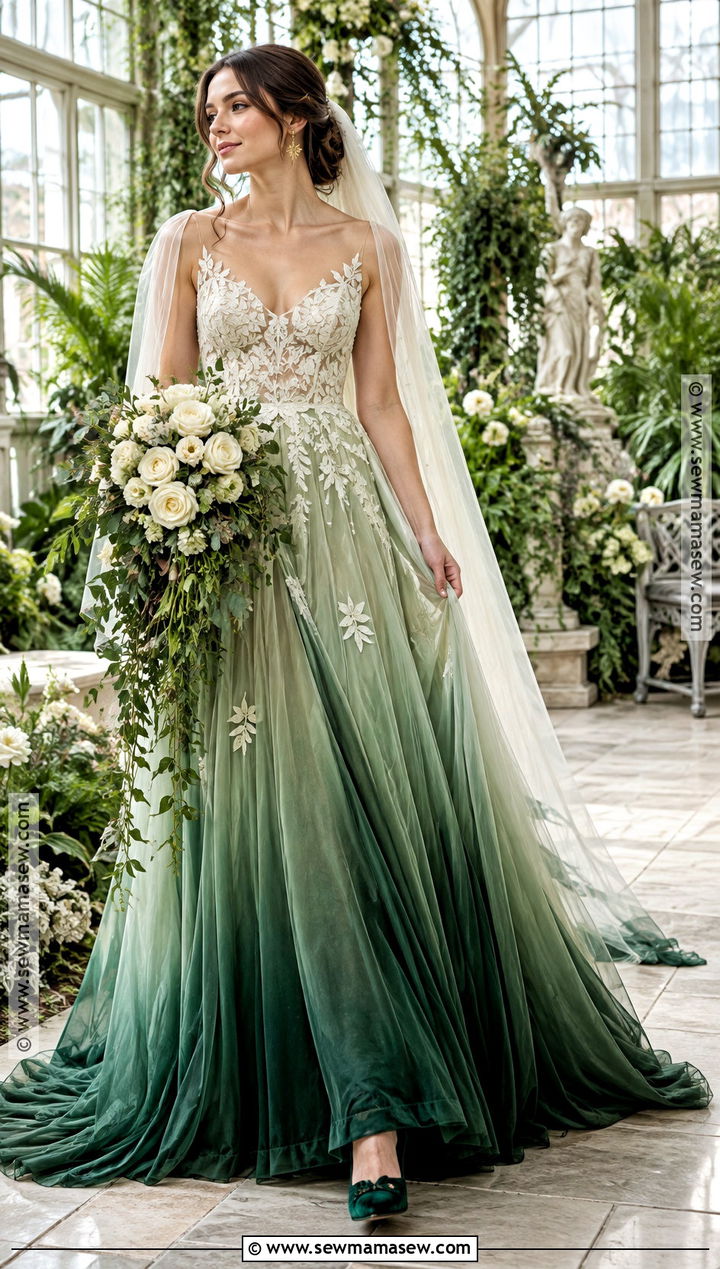
Sage to emerald takes the ombre idea in a botanical direction. To keep it bridal, look for a pale sage bodice with fine ivory embroidery, then a skirt that deepens steadily to green. An empire waist or A-line keeps the dark lower half from feeling heavy. Emerald velvet heels, gold leaf earrings and an ivory cape veil add contrast and a layer of warmth. White roses, green hydrangeas and trailing eucalyptus make the bouquet. A softly twisted updo shows off the neckline and earrings. Sage is a muted color that can look flat under fluorescent light, so it's best in conservatories and greenhouses with daylight.
15. Sunset Ombre Wedding Dress
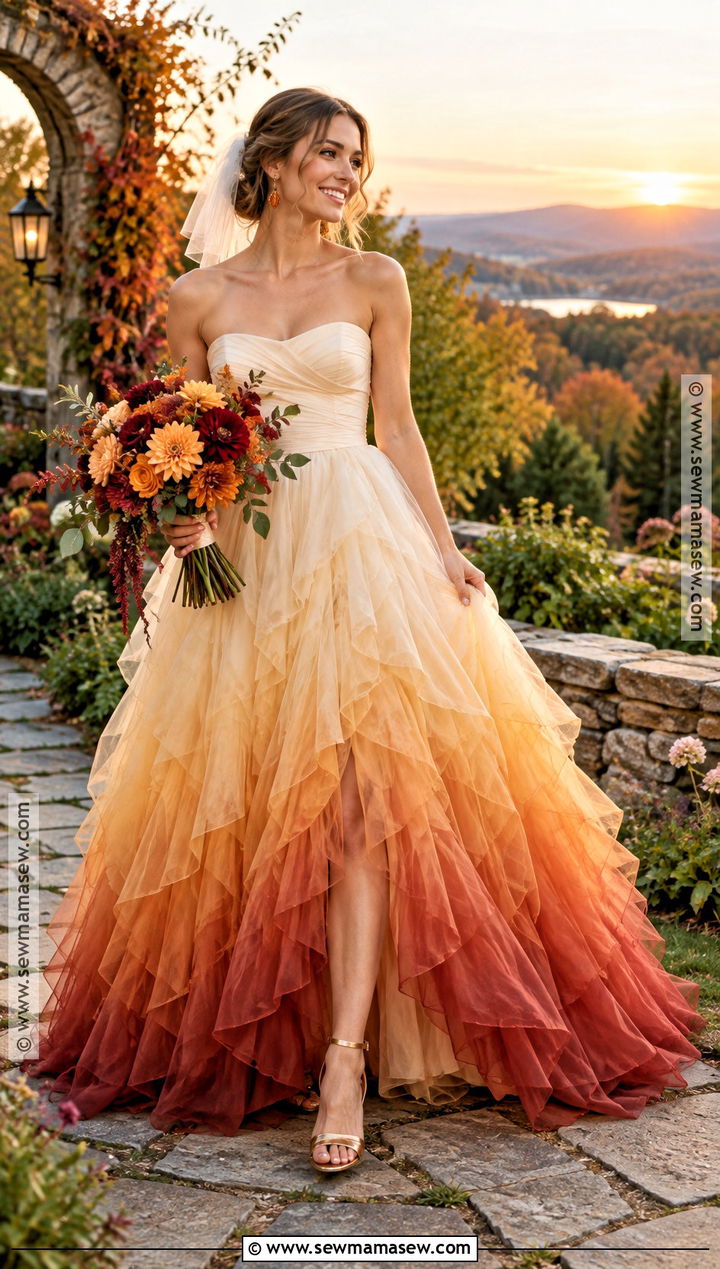
A sunset gradient puts several autumn colors into one skirt, and that makes it the most joyful dress here. Ivory or pale peach at the bodice blends through golden yellow and burnt orange to a muted red at the hem. Layered tulle is really the only fabric that keeps that many colors soft, since each layer veils the one beneath it. A simple strapless or scoop bodice lets the skirt do the talking. Gold sandals, small amber earrings and a short ivory veil are all you need. Cream roses, orange ranunculus, red dahlias and golden foliage follow the progression. Time the ceremony close to sunset in an orchard or garden and the setting repeats the dress.
Alterations Change Where the Color Lands
This is the part brides rarely hear about until the first fitting. On a regular gown, the seamstress shortens the hem. On an ombre gown, cutting the hem cuts off the darkest color, so the fade can end in the middle shade instead of the deep one you fell for.
Ordering the right length
Give the shop your height in the exact shoes you'll wear and ask whether the gown can be ordered closer to your length. On layered tulle, a good seamstress can often take the length out at the waist seam instead, keeping the dark hem intact. Dyed and printed fabrics are less flexible, so ask before you order, not after.
Bustles, rain and dye
A bustle folds the train up for dancing, which flips the darkest fabric to the outside or hides it underneath. Ask to see the bustle at your final fitting. And keep pale satin shoes away from a deeply dyed hem on a wet day, since damp dark fabric can rub color onto light surfaces. A dark hem does hide grass and mud far better than ivory, which is one real advantage at outdoor fall weddings.
Let the Venue Light Pick Your Gradient
The ombre gowns I'd choose are the ones where the color adds to the bride rather than wearing her. Rust, terracotta, cranberry and gold say autumn straight away, while forest green, dusty blue, charcoal and black are the less expected routes. Before deciding, look at the dress beside your venue, your flowers and your wedding party's colors, ideally in daylight. Remember the fabric changes the fade: tulle blurs it, satin and organza sharpen it. Then keep the accessories in the gown's own family instead of adding new colors. A gradient that feels like you and suits the room will look right in every photo.
Related posts: