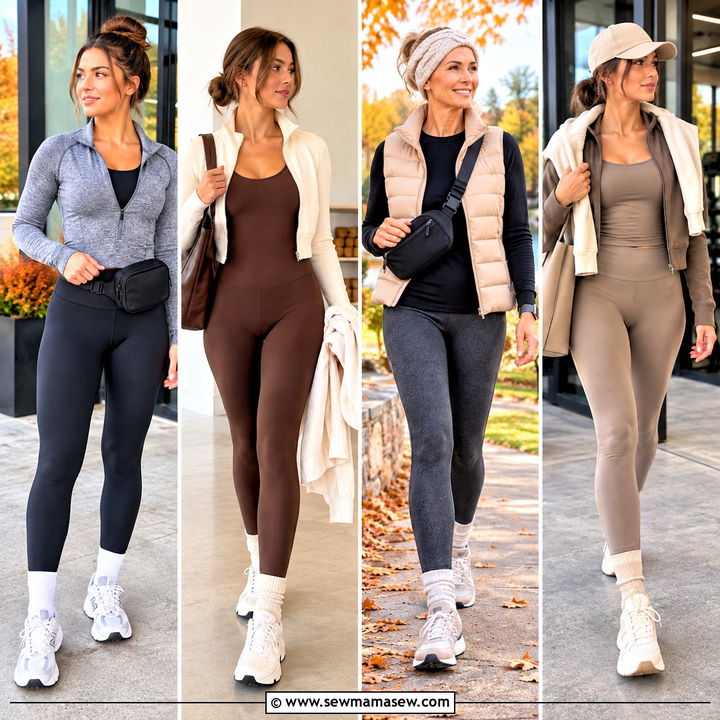
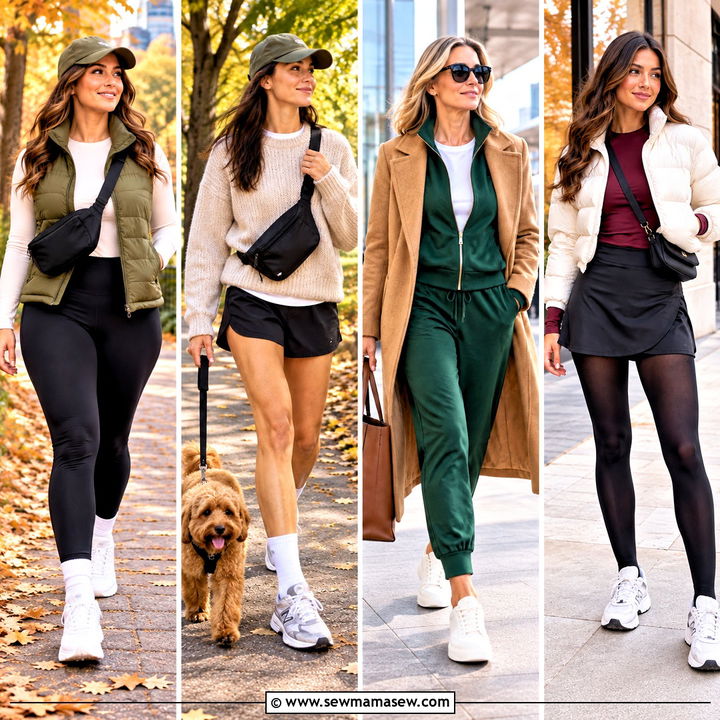
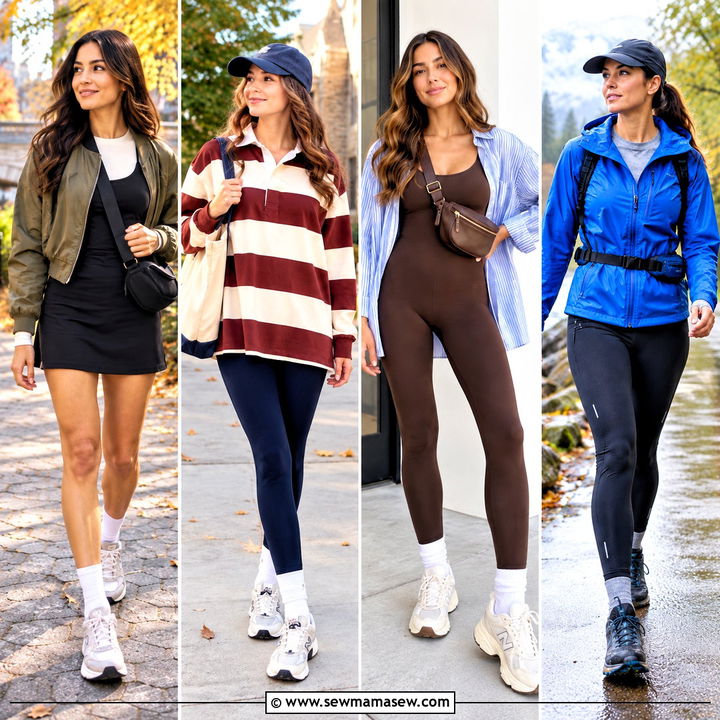
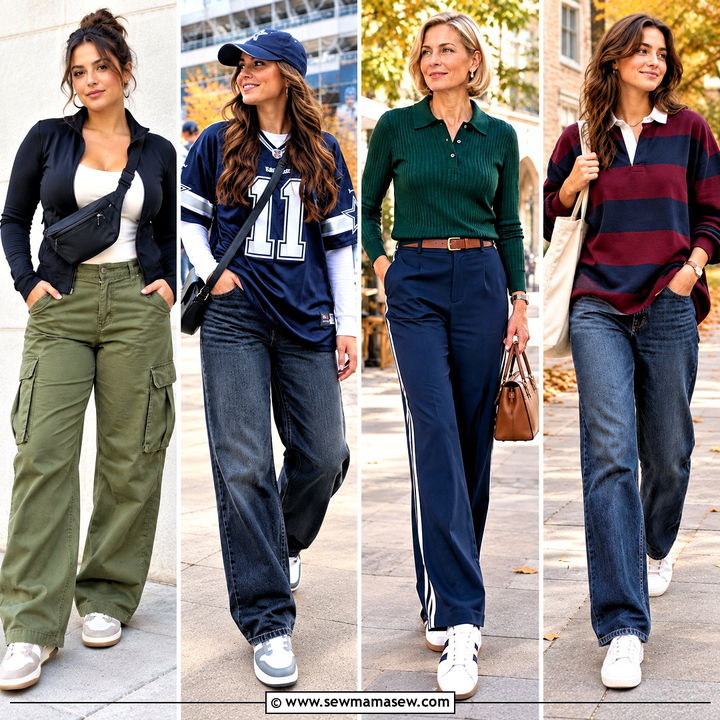
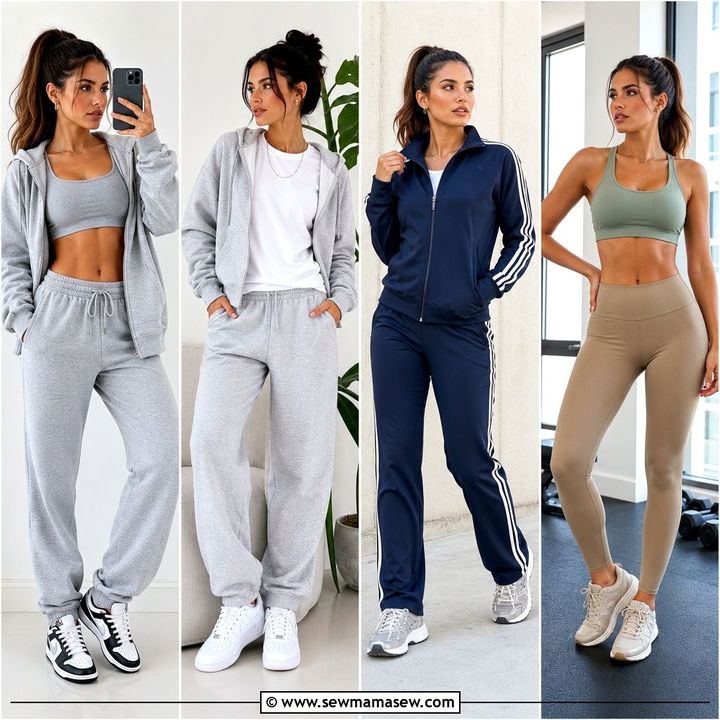
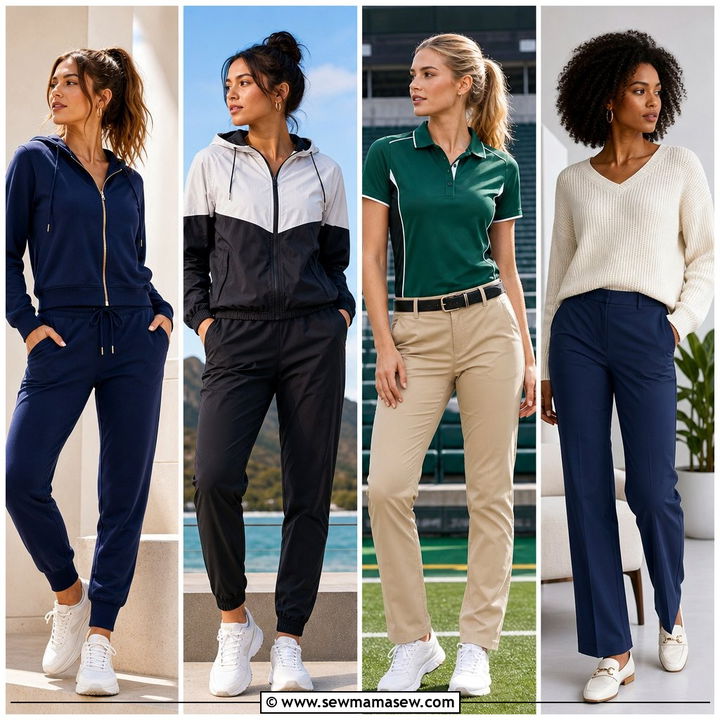
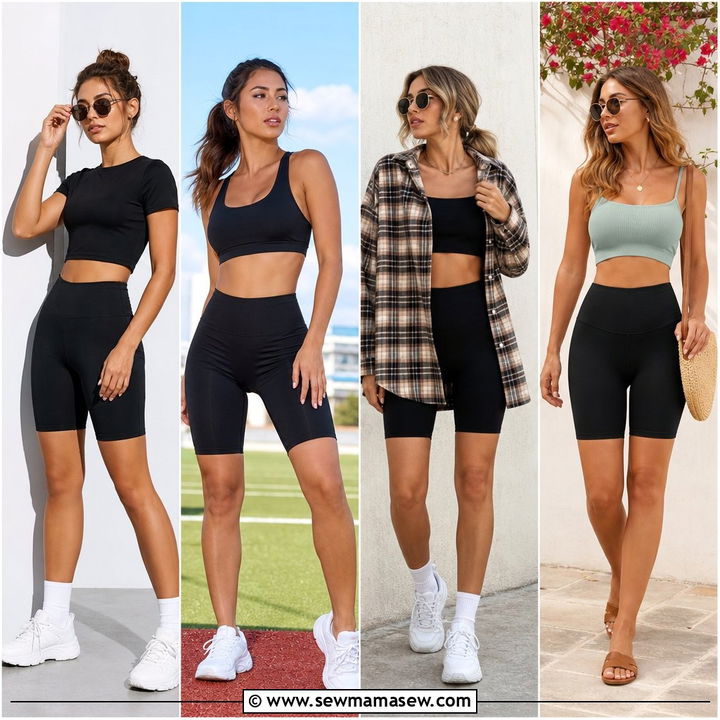
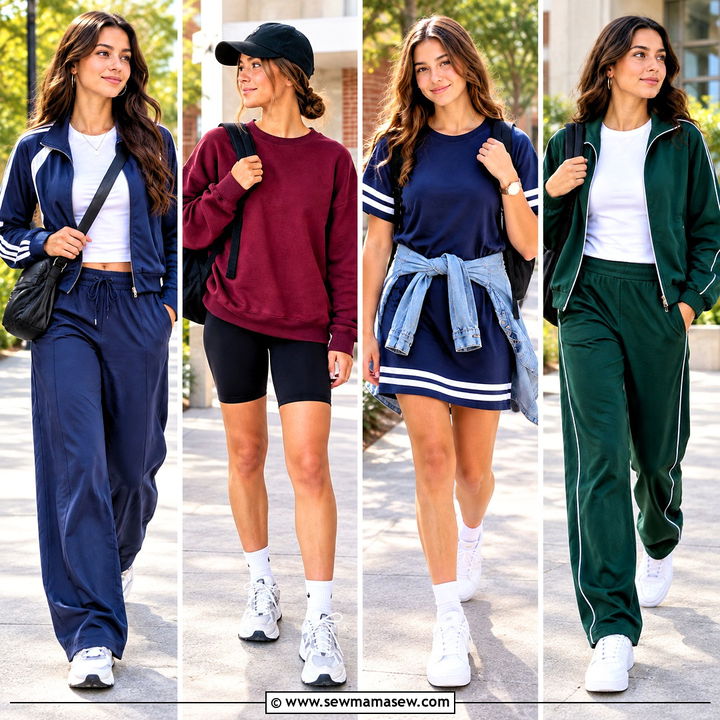
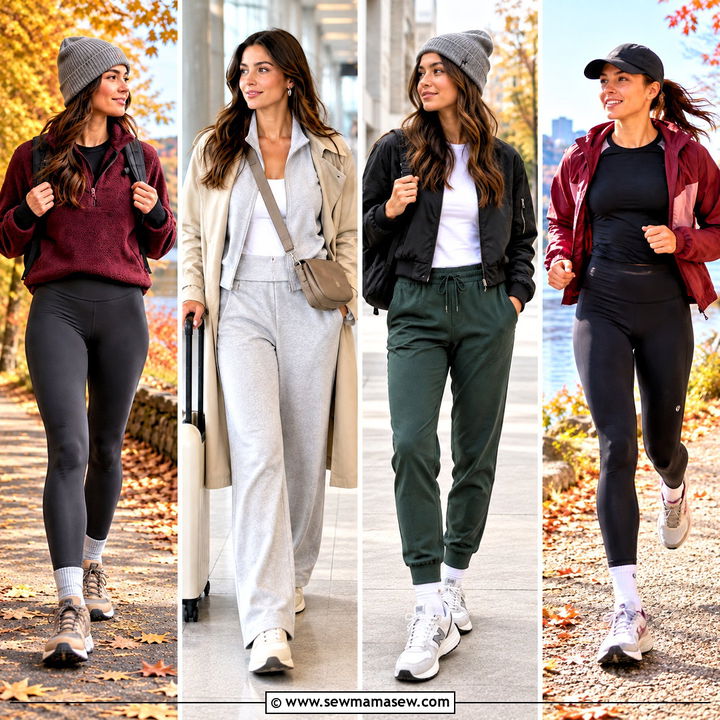
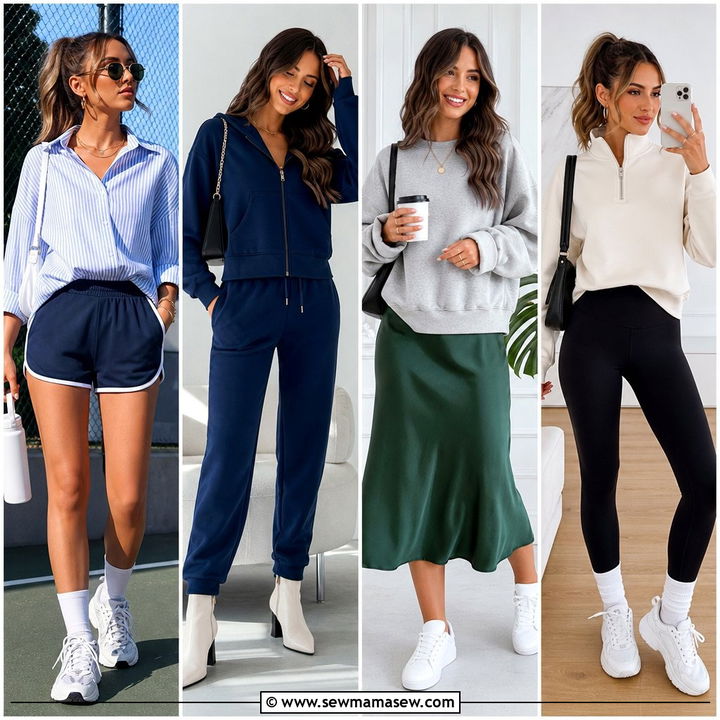
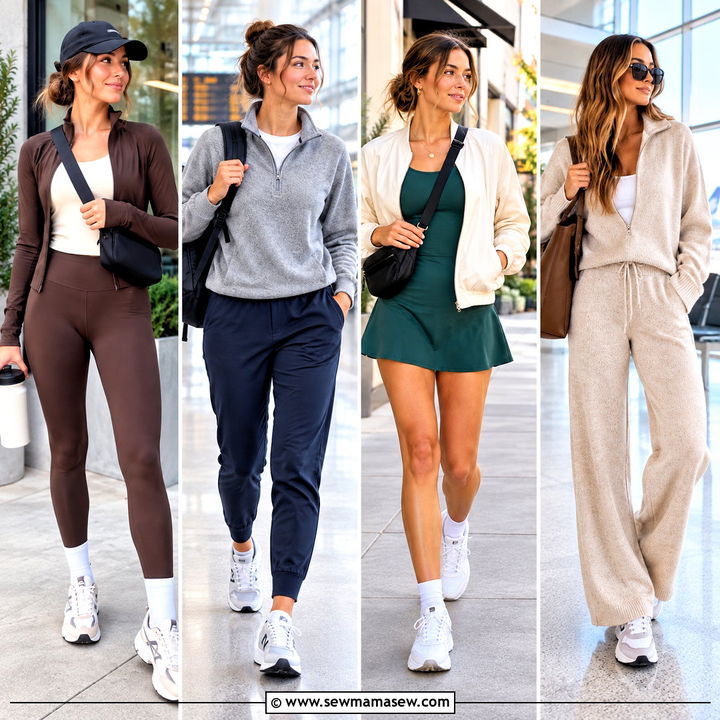
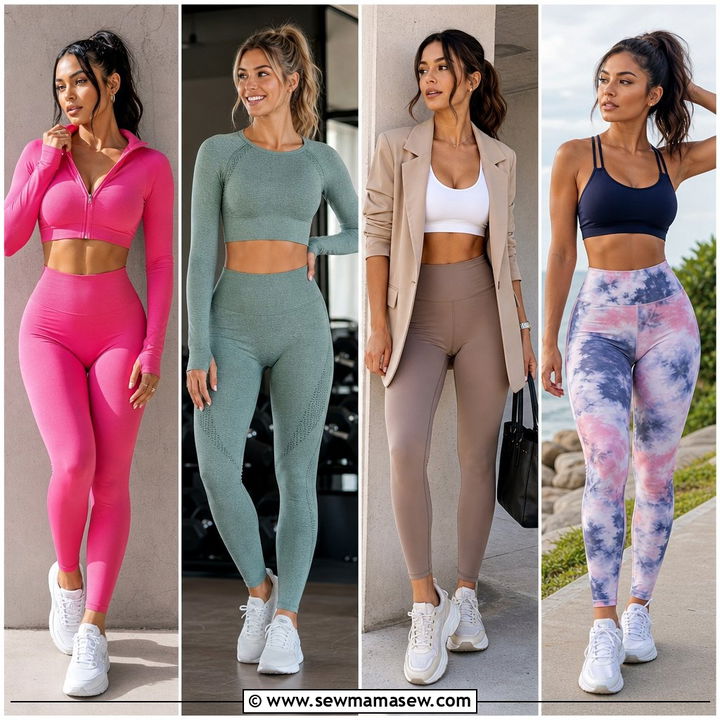
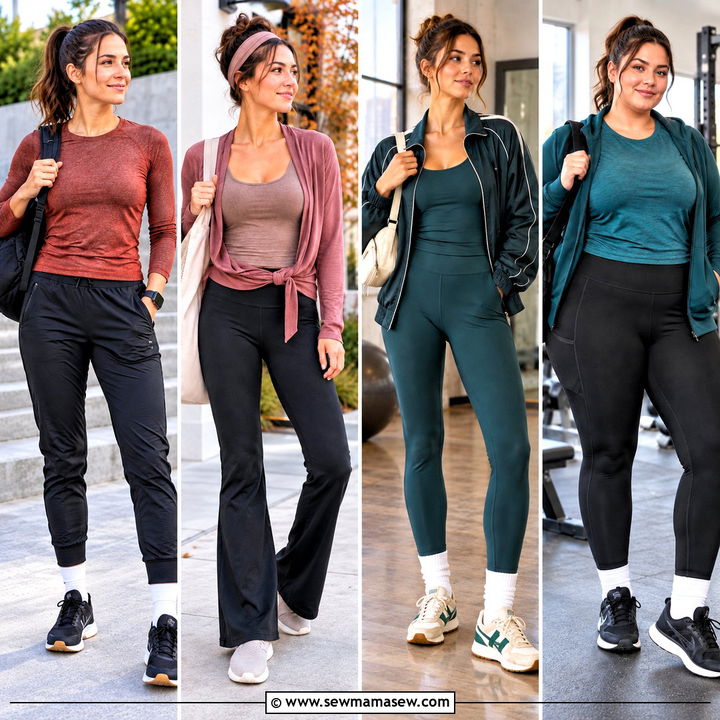
Fall is the easiest season to exercise outside and the hardest to dress for. A cold start, a warm middle and a windy finish can all happen in one workout, so I build every active look around layers you can peel off and carry. The base is a fabric that moves sweat away from your skin; light insulation or a wind shell goes on top only when the weather asks for it. Reflective details, zip pockets and accessories that don't bounce make the time outside safer and simpler. Running, hiking, cycling, yoga or a long walk around the neighborhood each get an outfit below. Treat them as formulas and adjust the warmth and coverage to your activity, your forecast and how warm you run.
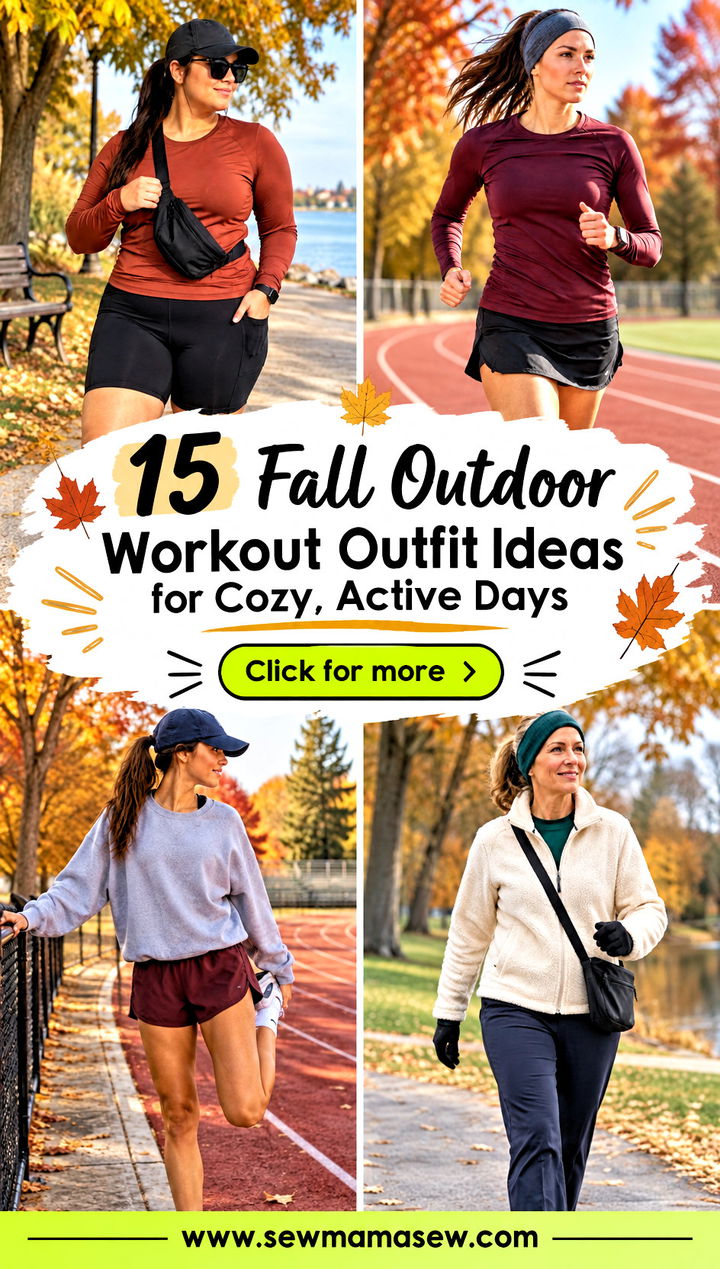
Dress for Mile Two, Not the Front Door
The most common mistake I see is dressing for how cold it feels while standing still. Your body produces a lot of heat once you're moving, and many runners use a simple rule: dress as if it's about 15 to 20 degrees warmer than the thermometer says. If you're slightly chilly for the first five minutes, you've probably got it right.
That rule shifts with the activity. A brisk walk or yoga session makes far less heat than a run, so add a layer back. A long hike with stops needs a layer you can put on at the top of a climb, when sweat starts to cool you quickly.
- Around 60 degrees and up: shorts or a skort, a short-sleeve or tank top, and a light layer for the warm-up only.
- Low to mid 50s: a long-sleeve base, full leggings or joggers, and a vest or light jacket you can tie on.
- 40s: a long-sleeve base with a fleece or half-zip on top, full-length bottoms, and thin gloves and a headband.
- Wind or rain at any temperature: add a shell. A breathable top with no wind protection feels much colder than the number suggests.
Treat those numbers as a starting point. Some people run hot and some run cold, and humidity and sun change how it feels. Note what worked after each session and you'll have your own chart within a few weeks.
1. Lightweight Running Jacket And Black Leggings
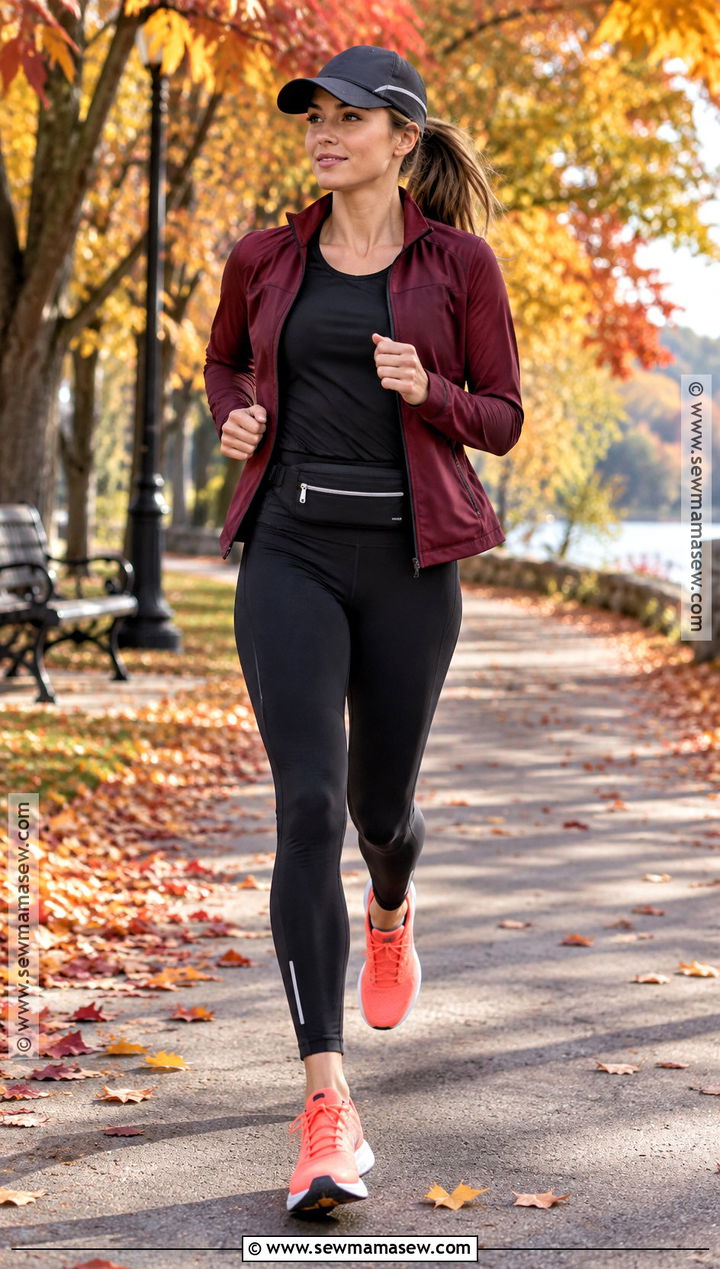
For cool morning miles, I start with a fitted moisture-wicking tank or short-sleeve top, then a breathable zip-front running jacket in burgundy, forest green or muted blue. High-rise black leggings stay put and go with any shoe color. The jacket's pockets are what I check first: they should zip and sit close to the body, because a phone in an open pocket swings with every stride and gets annoying within a mile. A reflective cap and a slim running belt add almost no bulk. If you heat up fast, pick a packable jacket that ties around your waist or folds into its own pocket. It suits road runs, track work and brisk power walks.
2. Long Sleeve Workout Top And Bike Shorts
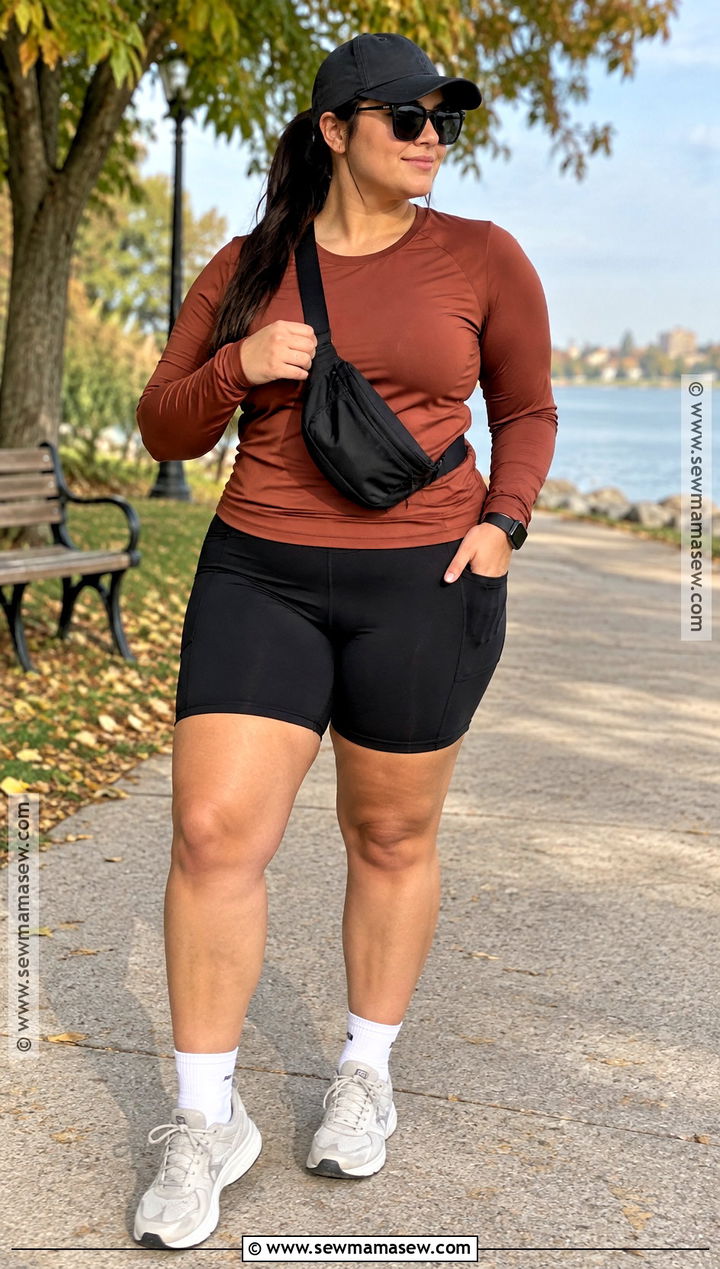
Early fall afternoons can feel like summer with a cool breeze, and a long-sleeve top with bike shorts handles exactly that. A thin top with thumbholes covers your arms and hands for the warm-up without the heat of a sweatshirt. High-rise bike shorts with a wide waistband won't roll down during sprints, and side pockets hold a phone more securely than a back pocket. Crew socks and cushioned trainers keep your ankles out of the cool air. Add a cap, a small crossbody pouch and sunglasses. Rust, olive, cocoa and cream make the simplest pieces look seasonal. It's my pick for hill repeats, park circuits and in-between weather.
3. Fleece Vest And Tapered Joggers
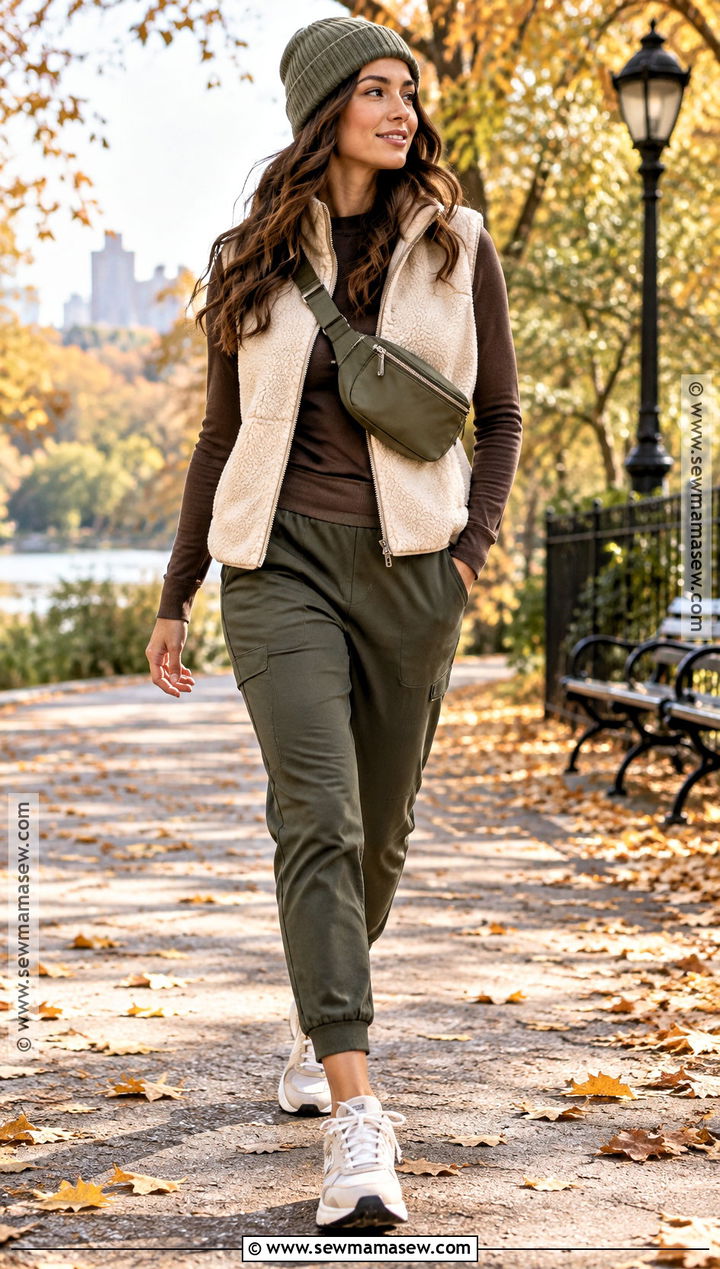
A fleece vest over a fitted long-sleeve base is ideal for walking and mobility work, because it warms your core and leaves your arms completely free. The base should be close-fitting so the vest slides on without bunching at the armholes. That freedom matters for stretching, band work and Nordic walking. Choose tapered joggers in a stretchy, quick-drying fabric, not cotton lounge fleece, which soaks up sweat and stays heavy. The tapered ankle keeps fabric out of your way. Supportive walking sneakers, a light beanie and a compact belt bag finish it. A cream vest over a chocolate top with deep olive joggers looks polished enough for errands afterward.
4. Half Zip Pullover And Flared Leggings
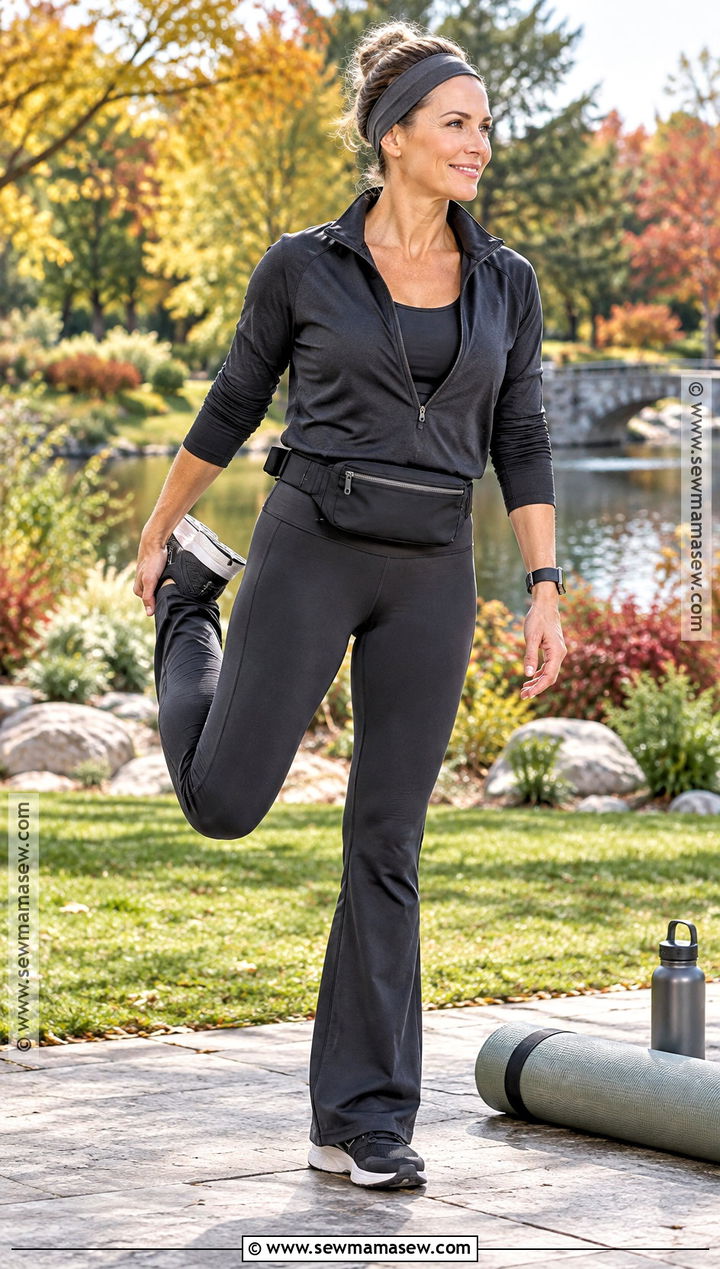
For low-impact movement on pavement, a half-zip pullover over a fitted sports tank with high-rise flared leggings is comfortable and flattering. Leave the zip partway open when you need air. The flare gives a long line, but the hem is where I'd look first: it should clear the ground and not cover your shoes, or it will catch under your heel and fray. Sleek trainers suit the shape better than chunky soles. A soft headband, a simple watch and a waist bag keep your hands free. Monochrome charcoal, navy or espresso keeps it cohesive. Save it for paved paths and outdoor stretching, since flares collect mud on a trail.
5. Windbreaker And Compression Running Tights
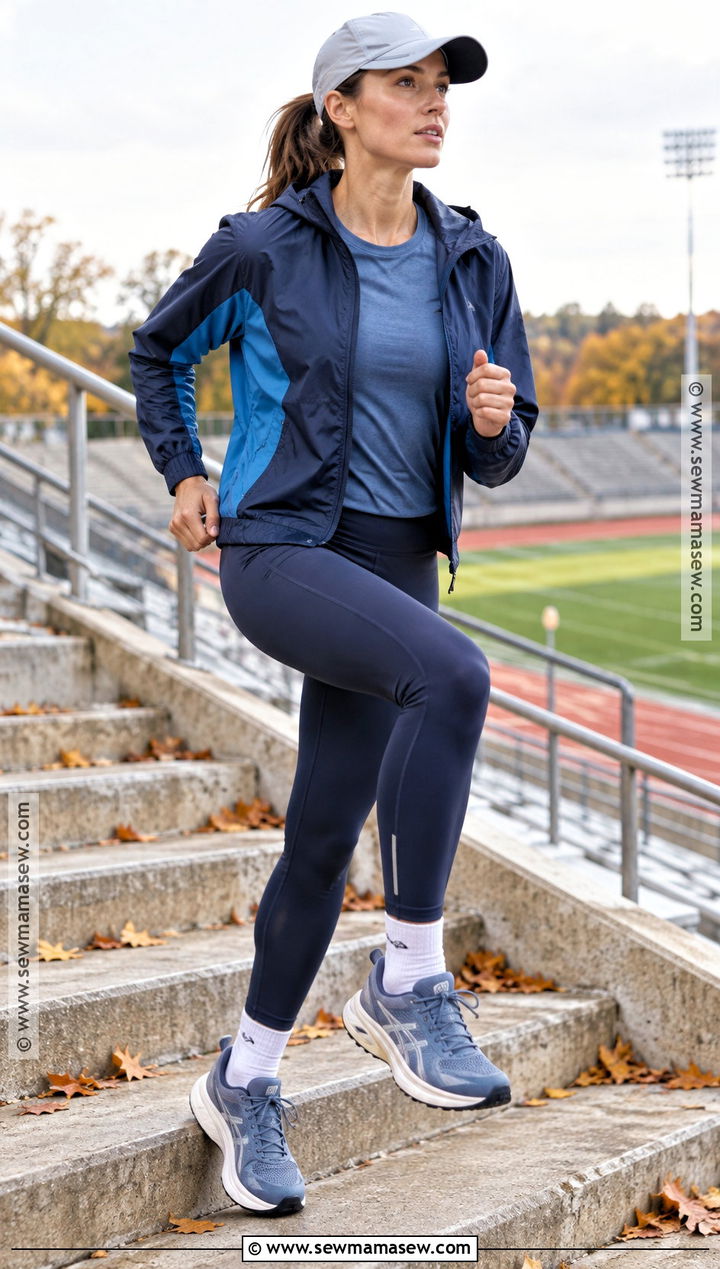
Wind cuts through a breathable running top faster than cold does, so on a gusty day the windbreaker matters more than any insulation. Wear it over a moisture-wicking short-sleeve top with supportive compression tights. Look for vent panels or a two-way zip, which let heat out during faster efforts without taking the jacket off. Tights with flat seams and a secure waistband stop chafing and constant adjusting. Trail-style sneakers, performance socks and a light cap handle changing conditions, and reflective trim helps around sunrise and sunset. A color-blocked windbreaker with navy tights looks sporty. It's good for intervals, stadium stairs, cycling warm-ups and outdoor boot camps.
6. Merino Base Layer And Hiking Pants
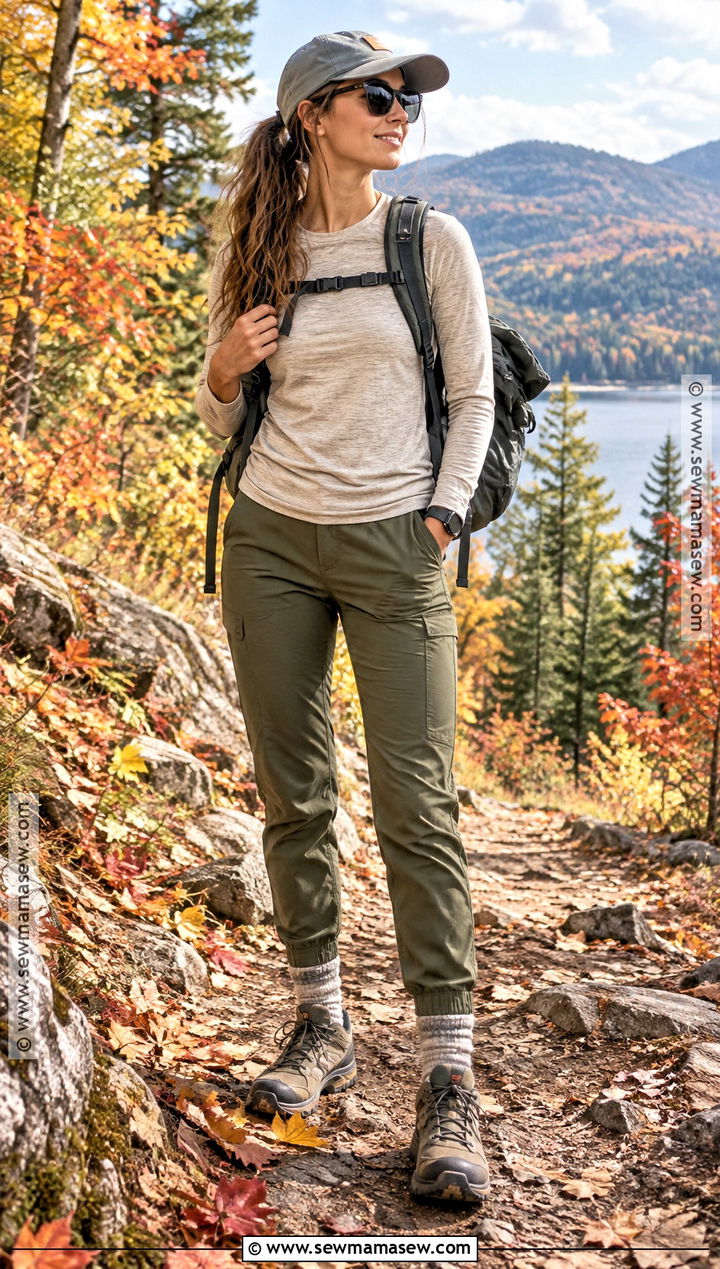
Trails covered in crunchy leaves hide roots and rocks, so this outfit balances movement with protection. I start with a light merino or synthetic long-sleeve base, then stretch hiking pants with articulated knees, which are shaped to bend and don't pull when you step up onto a rock. Straight or gently tapered legs shield you from brush and still give a full stride. Trail shoes with proper traction, cushioned hiking socks and a small daypack with a spare shell come next. A brimmed cap and sport sunglasses help with the light flickering through trees. An oatmeal top with slate, brown or moss pants looks warm. Adjust the weight of each layer to the route, the temperature, the forecast and how hard you'll push.
7. Lightweight Hoodie And Full Length Leggings
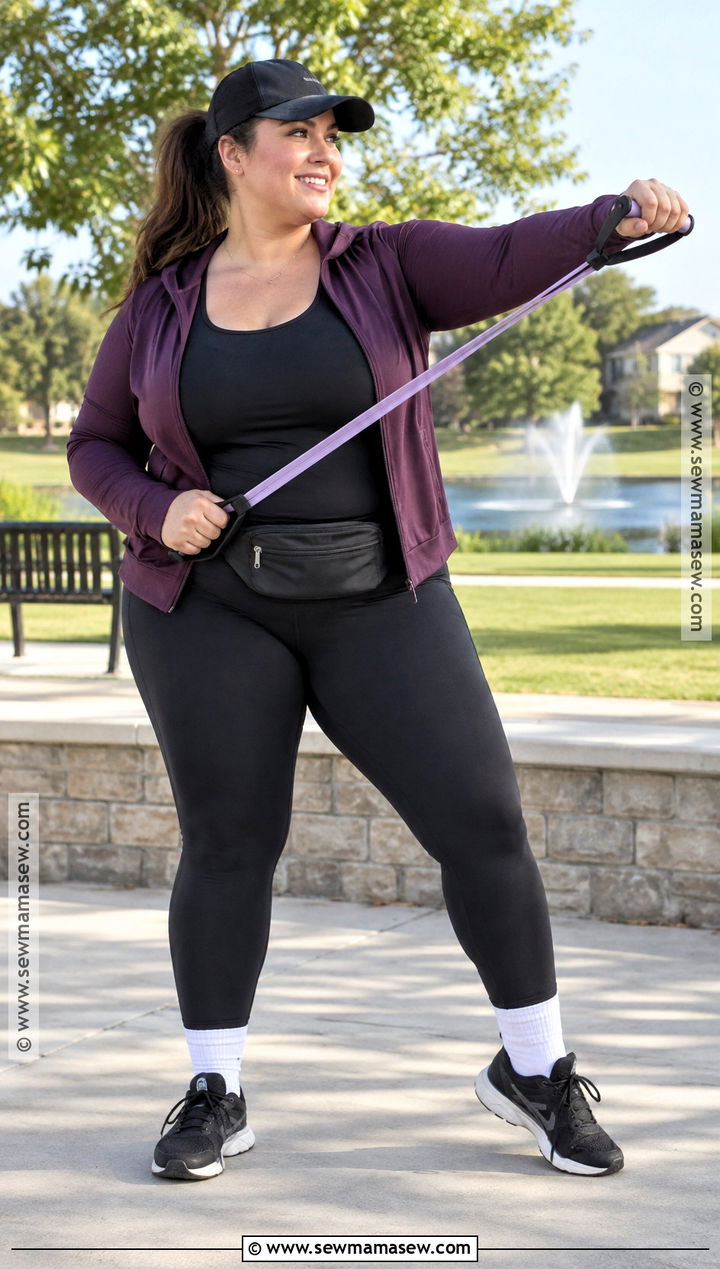
Some workouts start cold and finish in bright sun, and a light performance hoodie over a fitted tank covers both. Choose full-length leggings that stay put through lunges, squats and quick changes of direction. A slightly relaxed hoodie lets air move, and side slits or a cropped hem stop fabric from bunching at the hips during squats. I'd skip a cotton hoodie here; it holds sweat and feels clammy the moment you stop. Cross-training sneakers, crew socks and a ponytail cap finish it. Plum, deep teal or cinnamon add color, grounded by black leggings. It suits playground circuits, strength sessions and easy jogs. Tie the hoodie at your waist once you warm up.
8. Puffer Vest And Trail Leggings
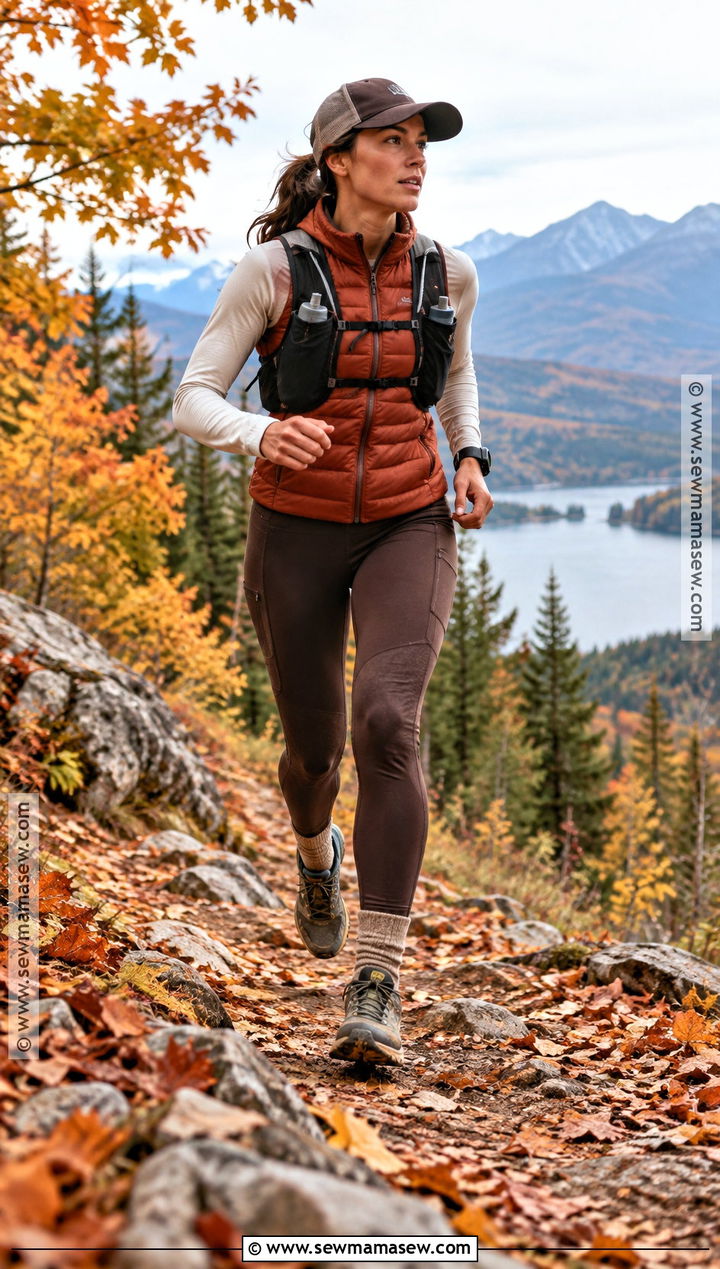
A slim puffer vest warms your chest and back without restricting your shoulders, which is what you want on a cool trail run. Layer it over a breathable long-sleeve shirt with durable trail leggings. If the route has rocks, branches or thick brush, look for reinforced panels or a heavier knit, because thin studio leggings snag and tear outside. Trail-running shoes with real grip handle wet leaves and loose ground. Wool-blend socks, a brimmed cap and a small hydration vest or pack finish it. Keep the vest slim; a thick insulated one traps too much heat on climbs. A rust vest, cream top and dark brown leggings make a classic fall palette for trail runs, fast hikes and hilly walks.
9. Matching Workout Set And Zip Jacket
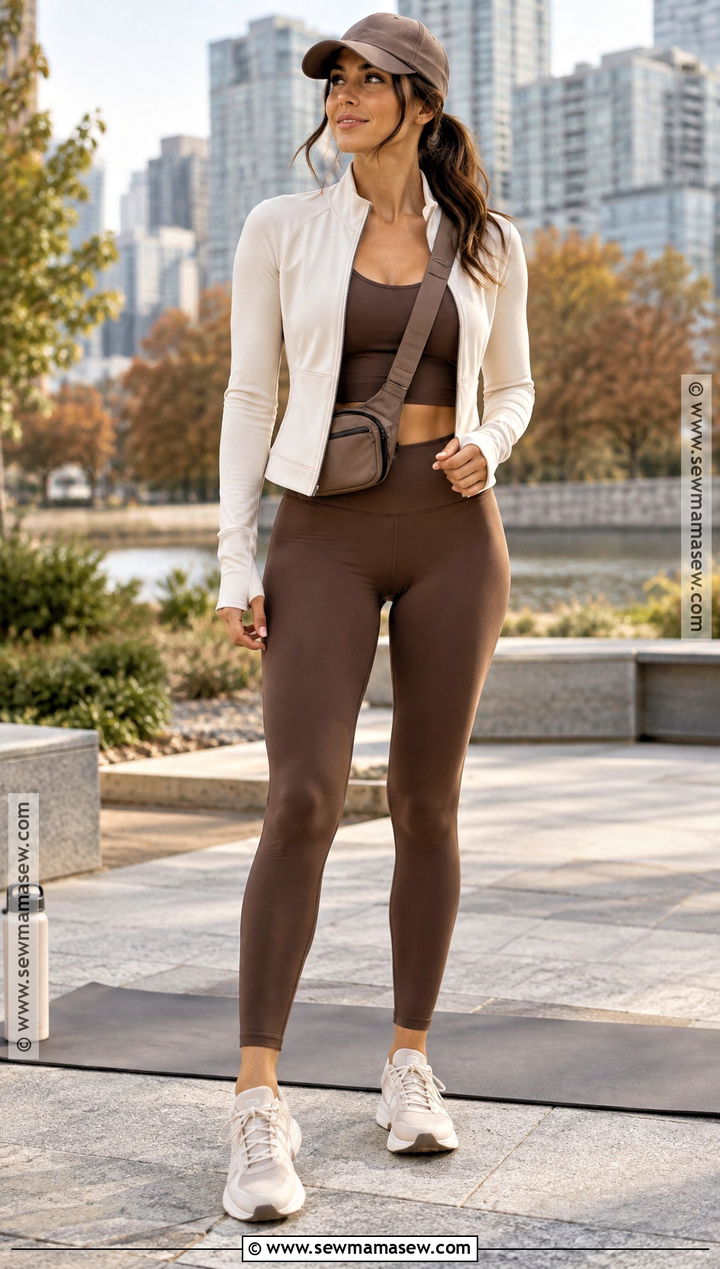
A matching set is the easiest way to look put together when you'd rather think about the workout. High-rise leggings and a supportive longline sports top in one muted shade like espresso, berry, navy or olive do the work, with a fitted zip jacket in a neutral for coverage. Before buying the jacket, raise your arms overhead; if the hem lifts above your waistband or the shoulders pull, it'll ride up all session. White or tonal trainers keep it fresh, and a cap and belt bag add function. Want more coverage? Swap the bra top for a full-length performance tank. It suits outdoor Pilates, walking groups, light jogs and park strength sessions, and works for errands afterward.
10. Rain Shell And Water Resistant Joggers
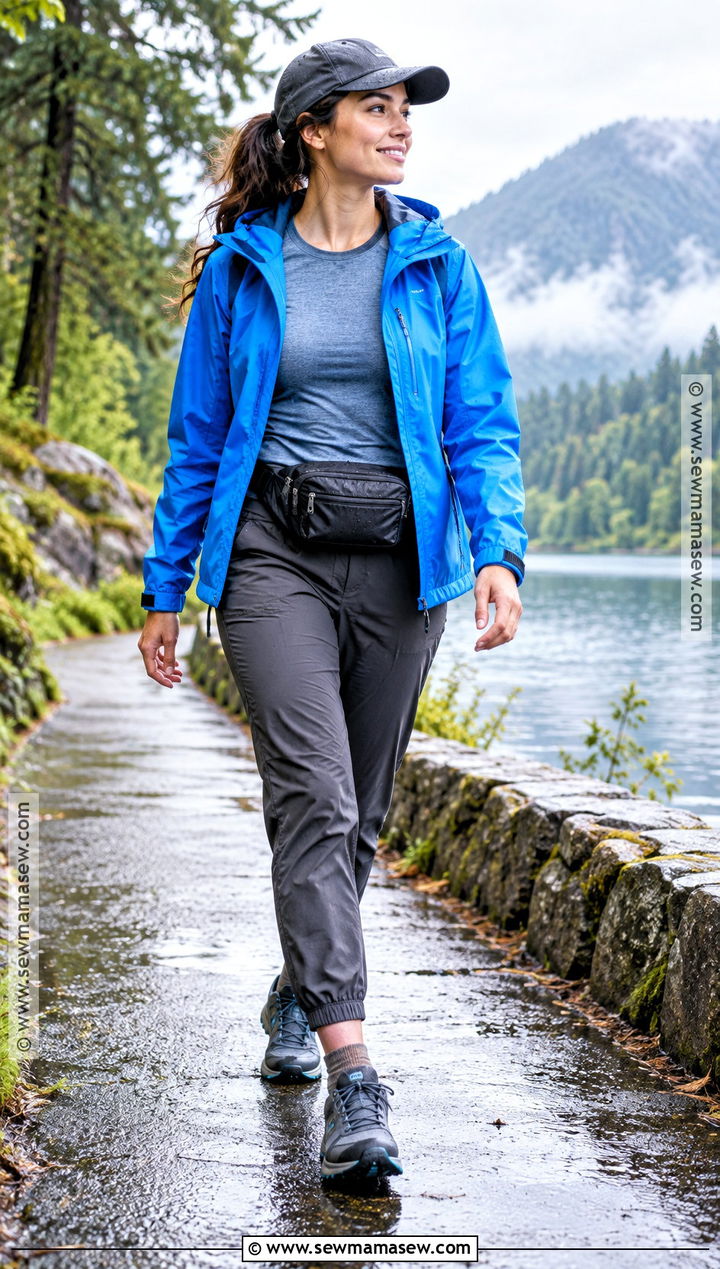
Rain doesn't have to cancel a workout if the shell is right. Wear a light rain jacket over a moisture-wicking base, then flexible water-resistant joggers. An adjustable hood keeps water off your face, and pit zips or a front zip stop you from steaming up inside. Tapered joggers matter more in rain than any other day, because wet fabric flaps around the ankles and gets heavy. Water-resistant trail shoes, quick-dry socks and a brimmed cap under the hood finish it. Keep essentials in a waterproof waist pack. Bright red, blue or yellow outerwear helps drivers see you on gray days. Water-resistant and waterproof are different levels of protection, so check the label against the forecast before you head out.
11. Thermal Running Top And Workout Skort
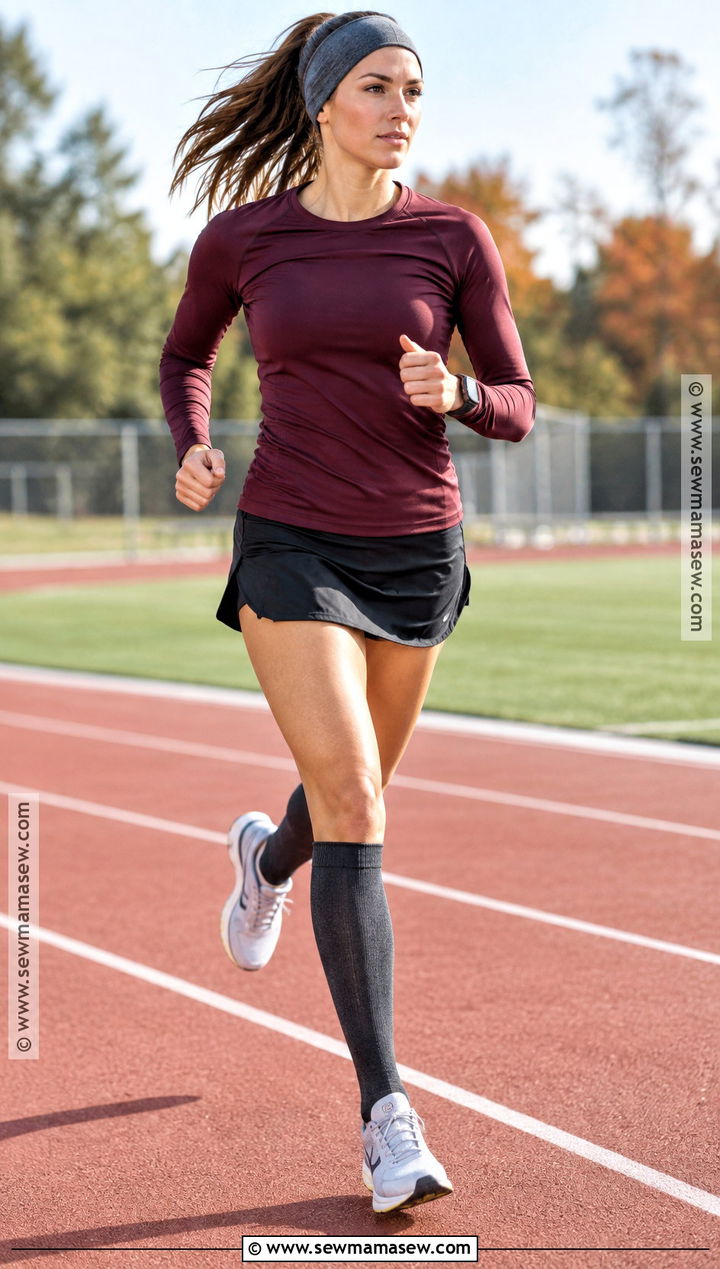
A skort still earns its place in early fall when you pair it with warmer layers. I'd choose a lined performance skort with built-in shorts, which give coverage during strides, step-ups and dynamic stretches, and pair it with a fitted thermal running top. Knee-high compression or tall performance socks add warmth to the lower legs. Light running shoes keep it balanced, and a slim headband protects your ears on cool mornings. Pick a skort with pockets that actually close. Burgundy, black and charcoal look autumnal without weight. It's for mild days of tennis drills, running, walking or cardio; once it's cold or windy, full-length tights are the honest choice.
12. Quarter Zip Pullover And Cargo Workout Pants
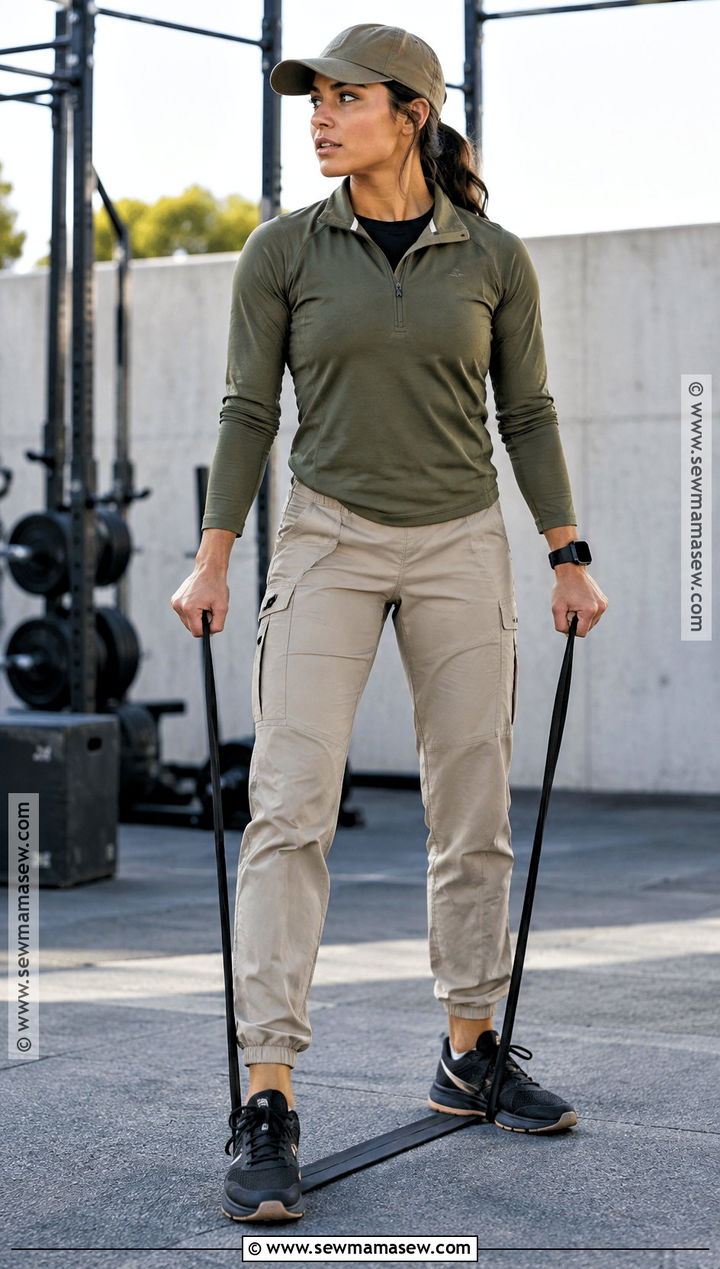
For outdoor strength sessions, a quarter-zip and stretchy cargo pants give you pockets and range of motion. Choose a light technical pullover close enough to the body that it won't catch on a bench or kettlebell handle. The cargos should have flat pockets, not bulky ones; anything loaded into a big side pocket swings during lunges. Elastic cuffs keep hems under control through box steps and agility drills. Cross-training shoes give a stable, flat base for lifting, and a cap and fitness watch complete it. Wear a fitted tee underneath so the pullover can come off when the work gets hard. Olive, black and stone look modern. Best for park circuits, band work and bodyweight training on cool, dry days.
13. Longline Sports Top And Open Running Jacket
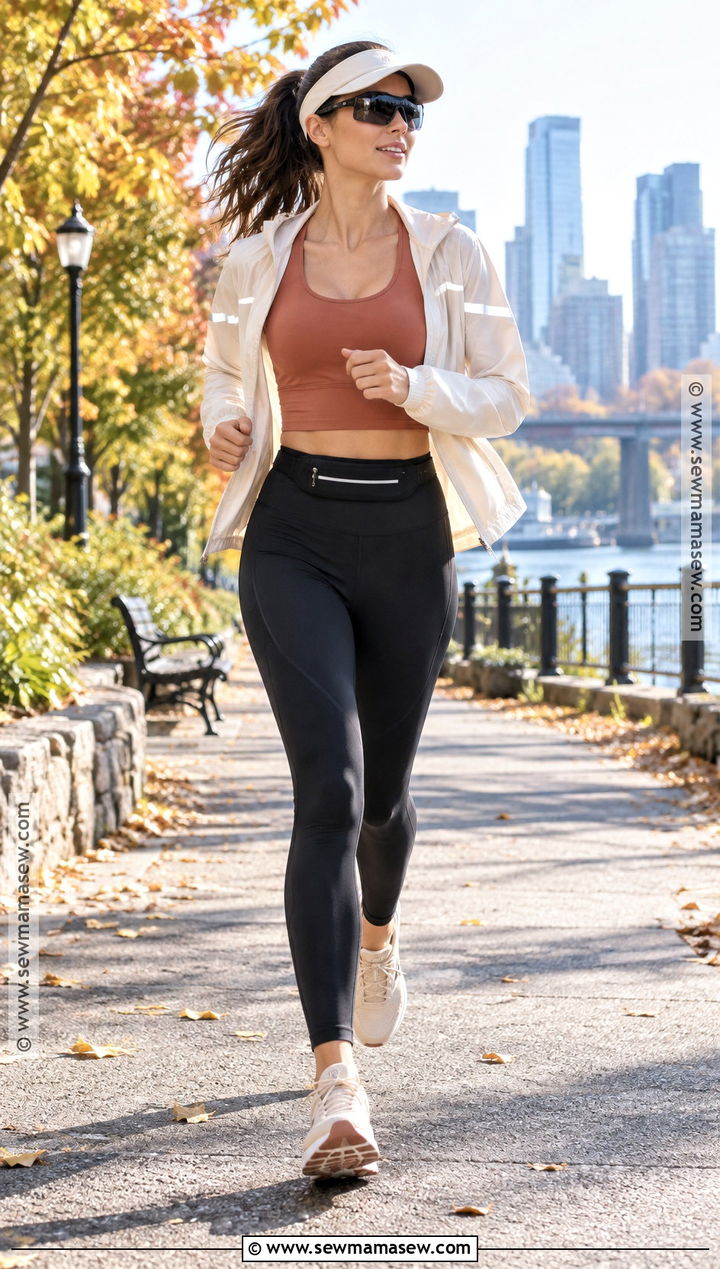
If you hate feeling zipped in, an open running jacket is the answer. Start with a supportive longline sports top and high-rise leggings, then an unzipped jacket that gives light coverage with lots of airflow. Match the top's support to your activity; a low-support yoga top won't do for a run, however good it looks. Choose a jacket with secure pockets and reflective details. Running shoes with a bit of color brighten a neutral outfit, and a visor, sports sunglasses and a slim phone belt finish it. A clay top, black leggings and a cream jacket look clean. It suits moderate runs, cardio and walking intervals. Zip it for the warm-up, then open or remove it as you heat up.
14. Oversized Sweatshirt And Running Shorts
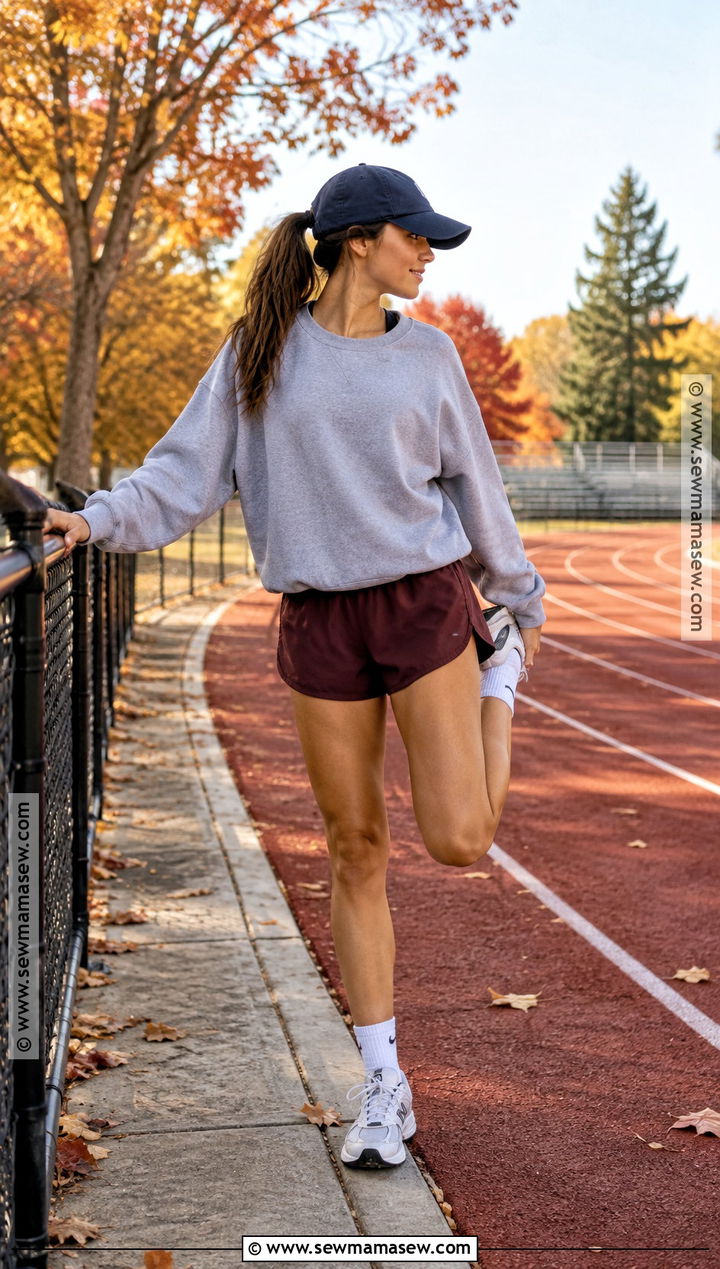
An oversized sweatshirt over running shorts is comfortable for a warmer fall afternoon, as long as there's a fitted moisture-wicking tank underneath so the sweatshirt can come off once you're moving. Running shorts with built-in briefs or compression liners give coverage and stop chafing. Watch the sweatshirt length: if it hangs past the top of your thighs, it interferes with your stride and swings when you run. Cushioned running shoes, crew socks and a cap complete it. Heather gray, navy or collegiate green look sharp with black or burgundy shorts. It's for the walk to the track, an easy run or a warm-up before drills; tie the sweatshirt on securely once you pick up pace.
15. Fleece Jacket And Straight Leg Workout Pants
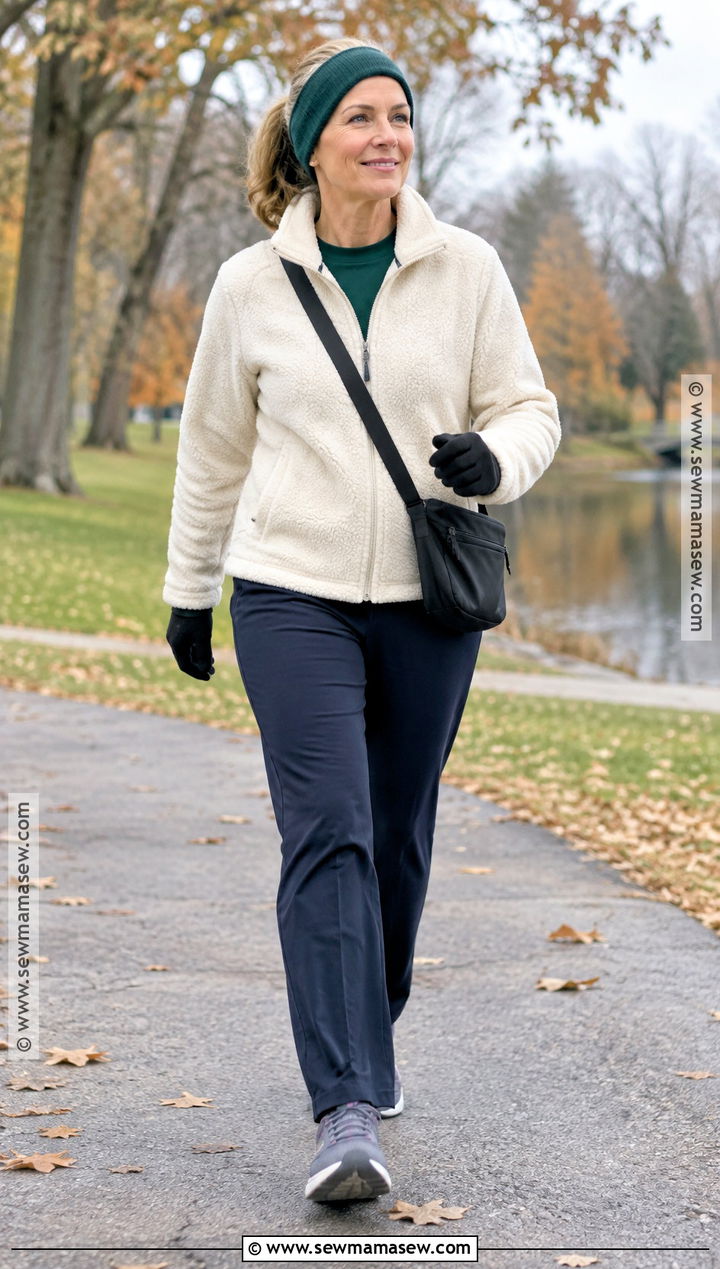
Late-fall mornings need more warmth, but a winter coat is far too much once you're moving. I'd layer a breathable fleece jacket over a fitted performance tee with straight-leg pants in a stretchy technical fabric. The hem should sit above the ground so it doesn't wick puddle water or catch under your heel. Walking shoes or low-profile trainers keep a clean line and support steady movement. A knit headband, light gloves and a compact crossbody let you shed accessories as you warm up. Cream fleece with dark navy pants looks crisp; rust or forest green adds depth. Fleece breathes but lets strong wind straight through, so carry a light shell on exposed routes. It's good for power walks, mobility work and gentle sessions.
Being Seen When the Days Get Shorter
Fall brings darker mornings and evenings, and the earth tones that look so good in daylight make you hard to spot from a car at dusk. Reflective trim helps most where it moves. Strips on your ankles, wrists or shoes catch headlights as they swing, and the motion reads as a person faster than a patch on your back does. If you exercise before sunrise or after sunset, add a bright or reflective layer over your fall colors, or wear a clip-on light or headlamp.
Washing Performance Fabric So It Keeps Working
Technical fabrics need slightly different care. Skip fabric softener, which coats the fibers and makes them worse at moving sweat. Wash in cool or warm water, turn leggings inside out to protect the outer surface, and air-dry or tumble on low, because high heat breaks down stretch fibers over time. Merino can usually go in a gentle cycle, but lay it flat to dry. If a synthetic top starts to hold odor, wash it soon after each session instead of letting it sit damp in a gym bag.
Fewer Pieces, More Combinations
You don't need a separate outfit for every fall workout. Start with a breathable base and add warmth or weather protection only where the day calls for it. Choose bottoms built for your activity, shoes made for the surface and accessories you can pull off and stash. Color makes practical gear feel like yours, whether that's deep earth tones, calm neutrals or bright shades drivers can see. Then adjust each look for your weather, your pace and how warm or cold you naturally run. A handful of tops, a couple of jackets, two or three bottoms and the right shoes can be mixed into comfortable outfits from September through November.
Related posts: