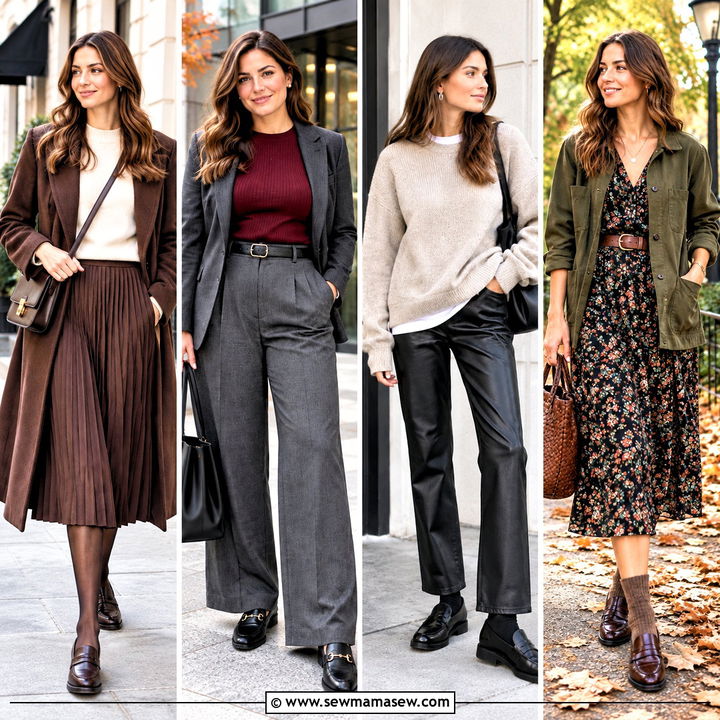
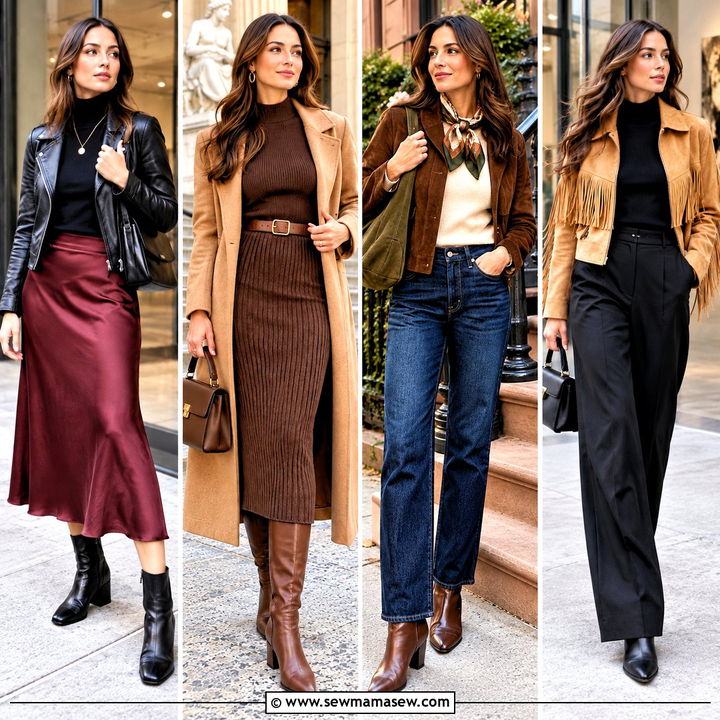
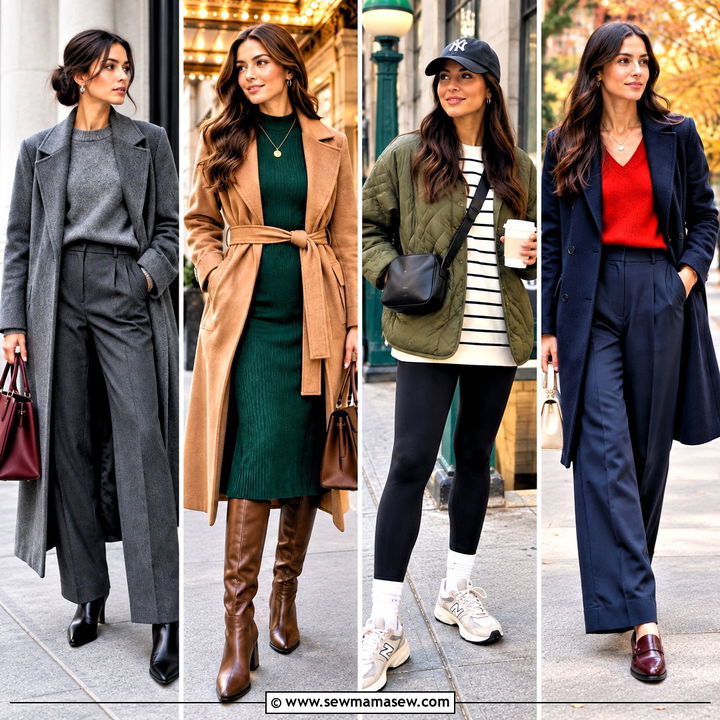
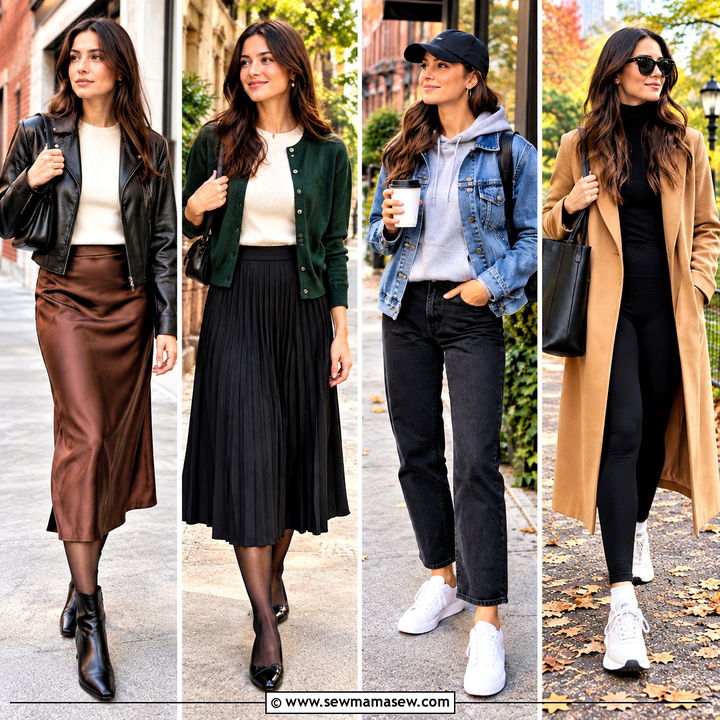
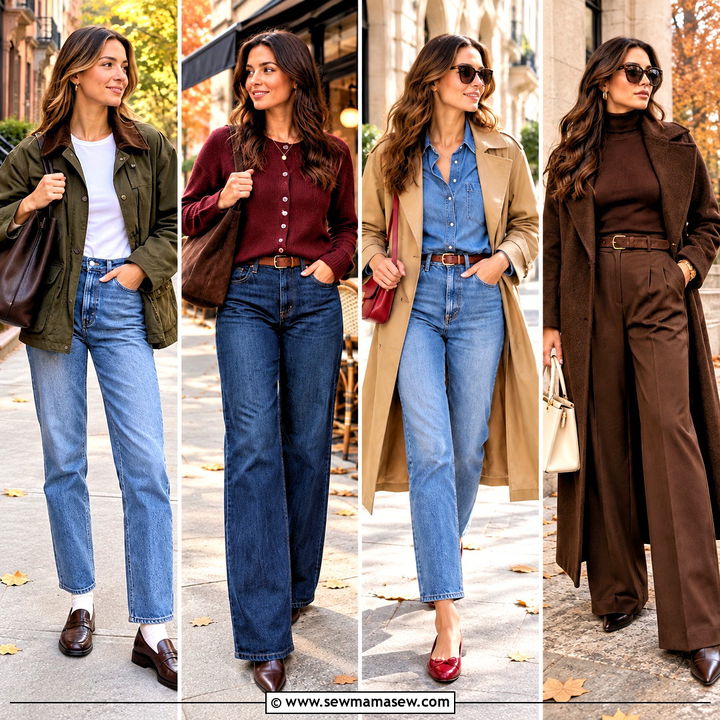
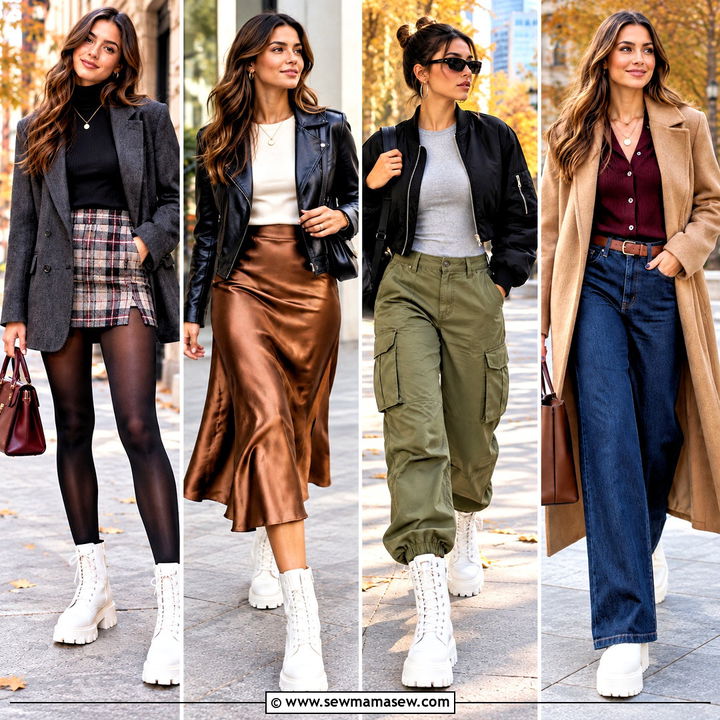
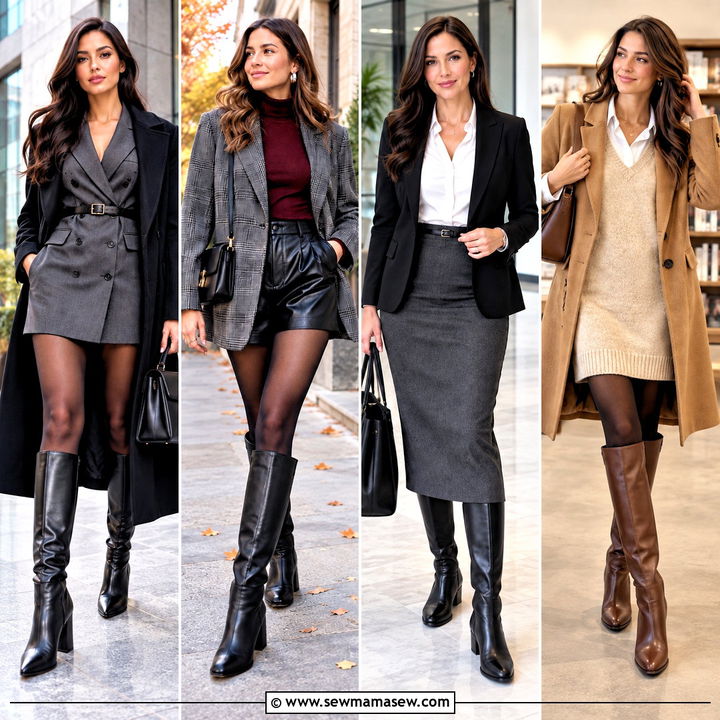
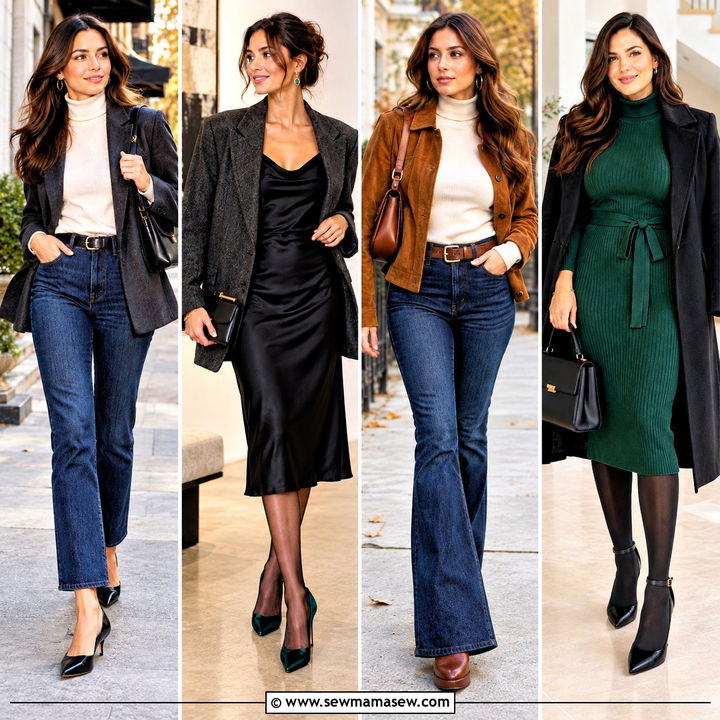
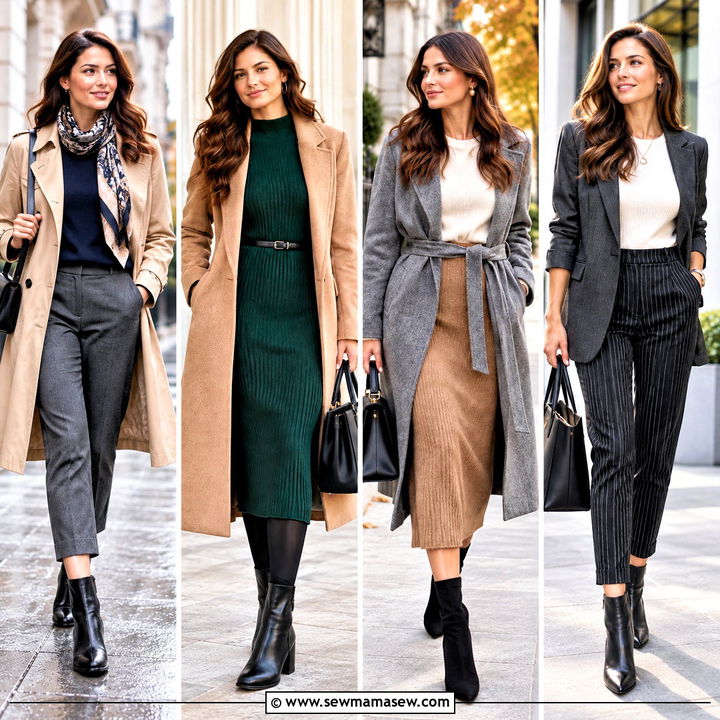
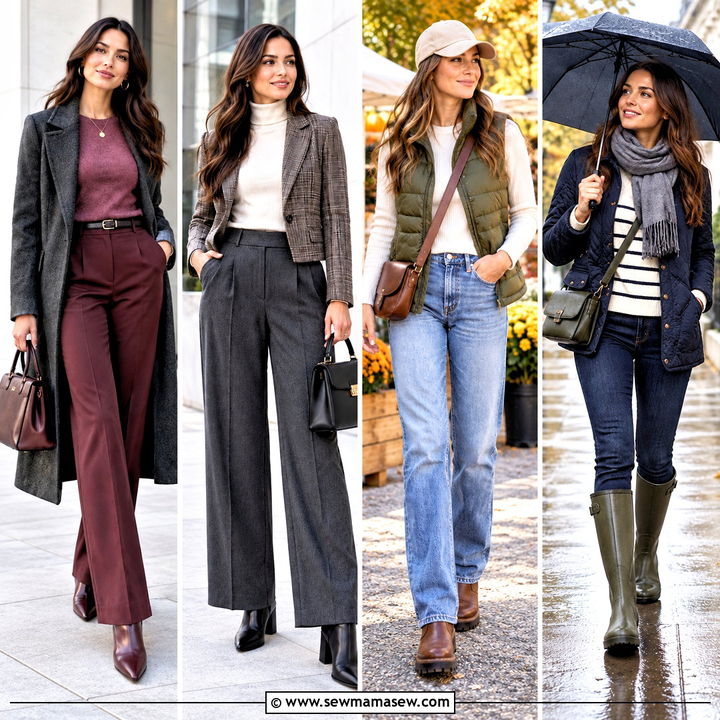
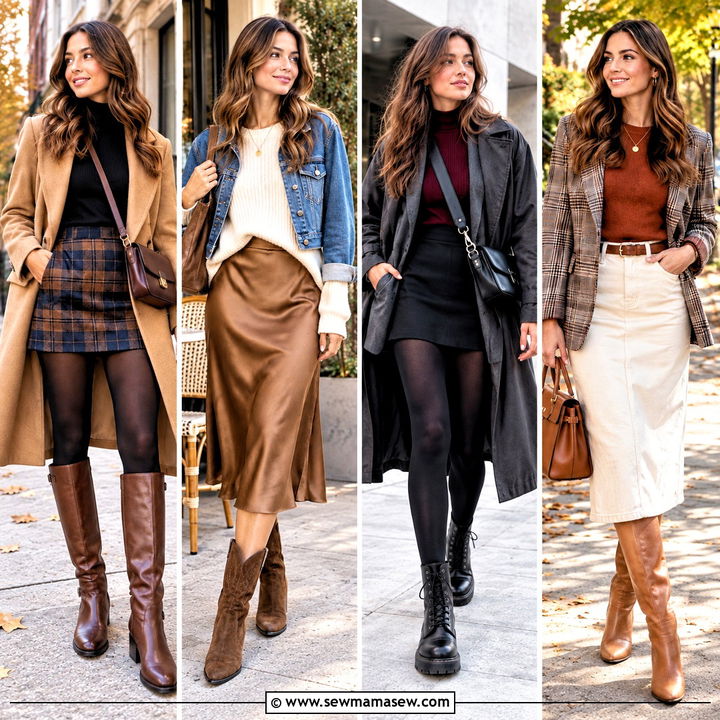
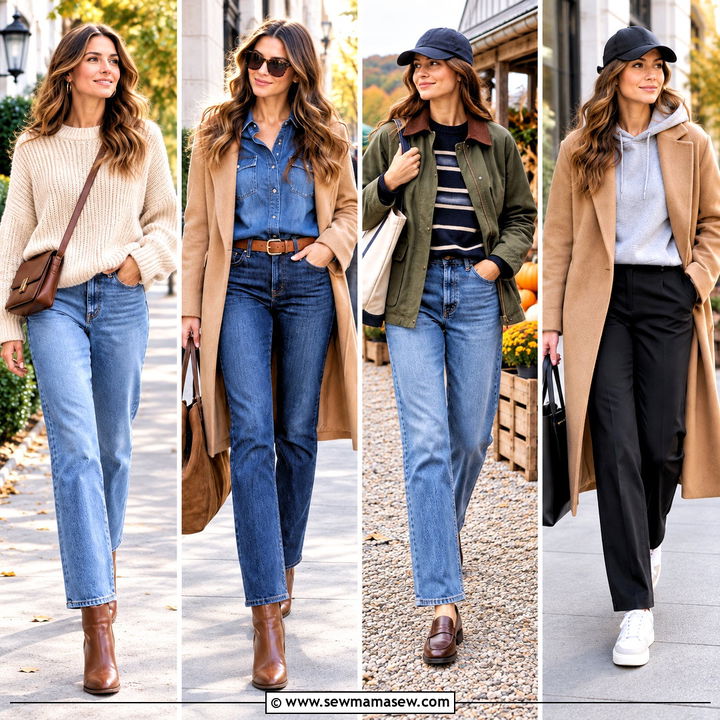
Boots decide how a fall outfit looks more than any other single piece, and they also decide how your feet feel at four in the afternoon. This year's shapes are wide-ranging: riding boots, Western styles, moto boots, sleek ankle boots and a lot of rich suede. I build every look below from the boot up, because the shaft height and toe shape tell you what hem, what trouser width and what coat length will work. You can shift heel heights and lengths to suit your body, your commute and your local weather. Denim, dresses or office trousers, there's a boot pairing here that will carry you through a full day on city pavement.

Fitting a Tall Boot Shaft to Your Calf
Shoe size is only half of a tall boot. The shaft has to suit your calf, and that's the part people skip online. A shaft that gaps looks sloppy and lets cold air in; one that's tight will crease, rub and eventually refuse to zip over tights.
- Measure your calf at its widest point, sitting down, wearing the tights or jeans you'll wear with the boots. Brands list shaft circumference differently, so compare your number to each style's listing rather than assuming a size.
- Aim for about a finger's width of room inside the shaft. Enough to slide one finger in, not your whole hand.
- Check where the top lands. A knee-high boot should stop an inch or two below the bend of your knee, otherwise it digs in when you sit or climb stairs.
- Try boots on later in the day, when feet are slightly larger, and in the socks you plan to wear.
If your calves are slim and every shaft gaps, look for styles with a back zip, buckle or lacing. If they're fuller, wide-calf ranges and stretch panels are made for you. Neither is a fitting problem, just a sign you need a different cut.
1. Sweater Dress With Knee-High Boots
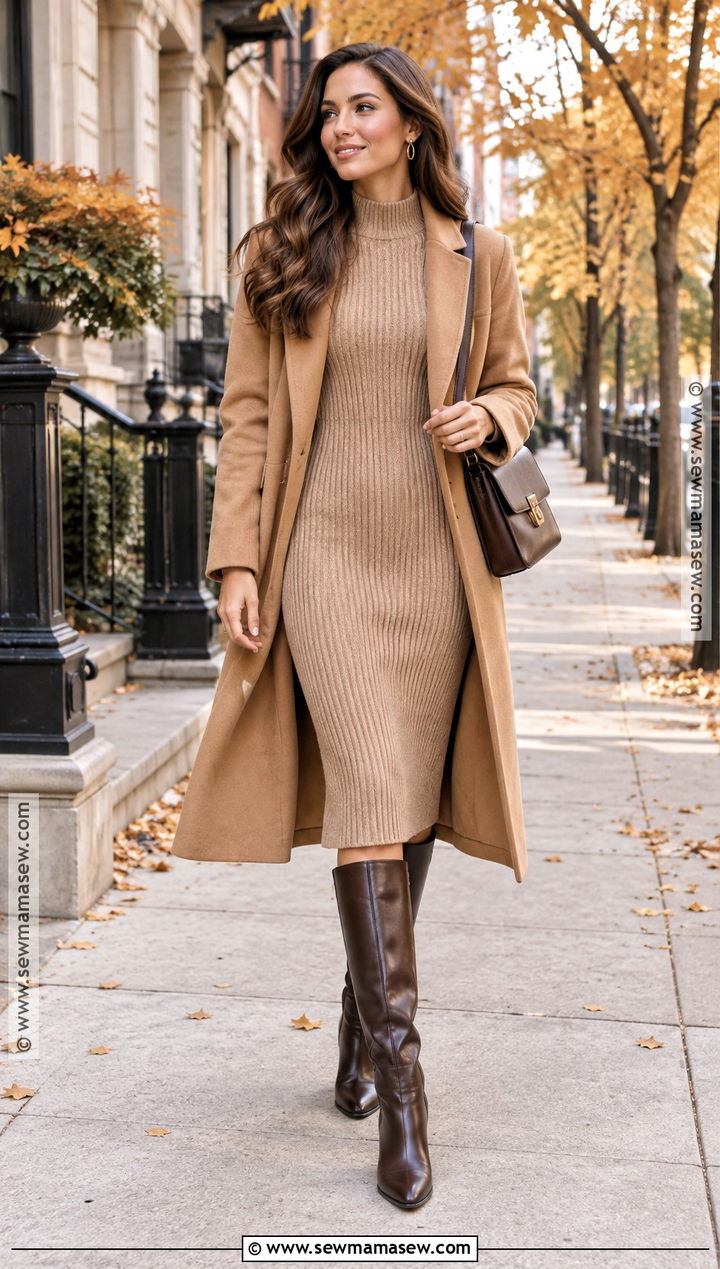
A ribbed sweater dress with knee-high boots is the outfit I recommend to anyone who wants to look put together in two minutes. Go for a midi in camel, charcoal, burgundy or deep olive; a shaped waist gives definition and a straight cut gives room through the middle. Smooth leather riding boots suit daytime, block heels dress it up. Let the hem overlap the boot top by an inch or two so there's no strip of leg breaking the line. Ribbed knit clings to tights, so I add a slip or choose tights with a smooth finish to stop the dress riding up as you walk. A structured shoulder bag, plain gold earrings and a long wool coat finish it.
2. Straight-Leg Jeans With Ankle Boots
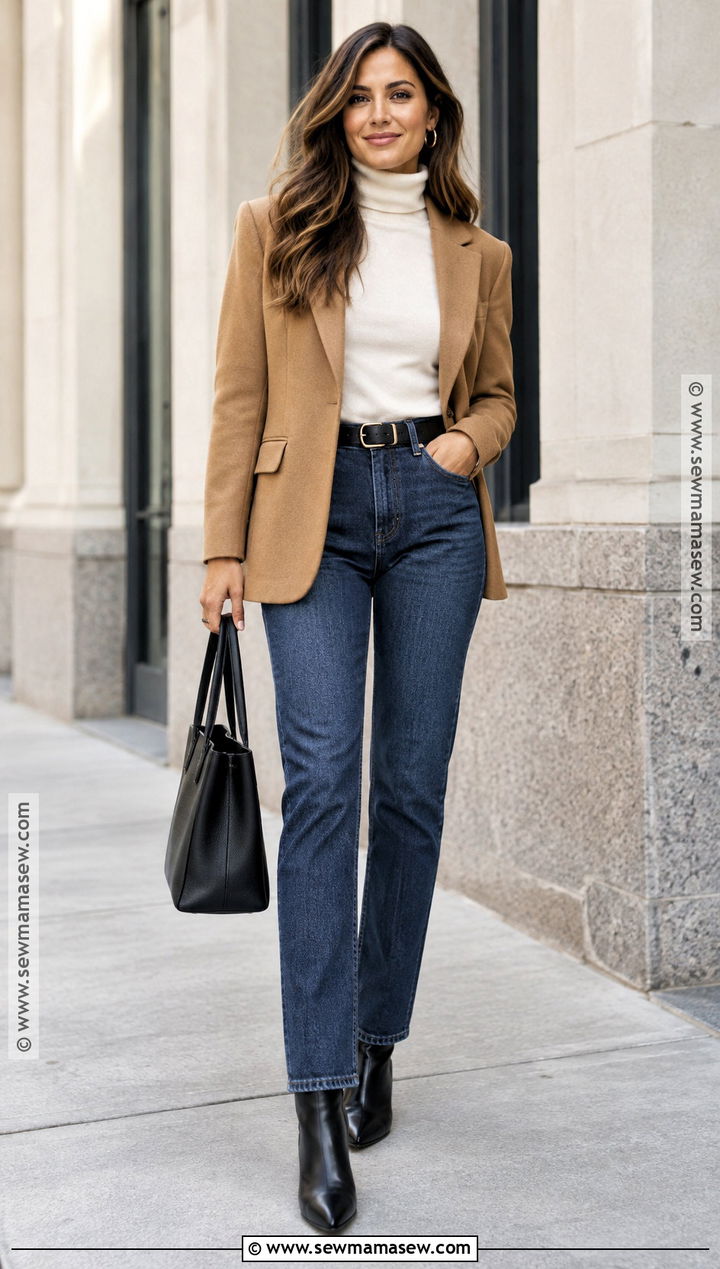
Straight-leg jeans and ankle boots are my default for good reason: almost nothing goes wrong. High-rise denim in a medium or dark wash goes with a fitted knit or thin turtleneck. Where the jeans meet the boot is the whole game. They should skim the boot opening, not stack in folds on top of it, which usually means a hem that just touches the vamp when you stand. Pointed or almond toes lengthen the leg, more so when boots and denim are close in tone. Add a tailored blazer for work. For a warmer palette, blue denim, chocolate boots and a cream blazer; for the simplest version, black on black.
3. Midi Skirt With Riding Boots
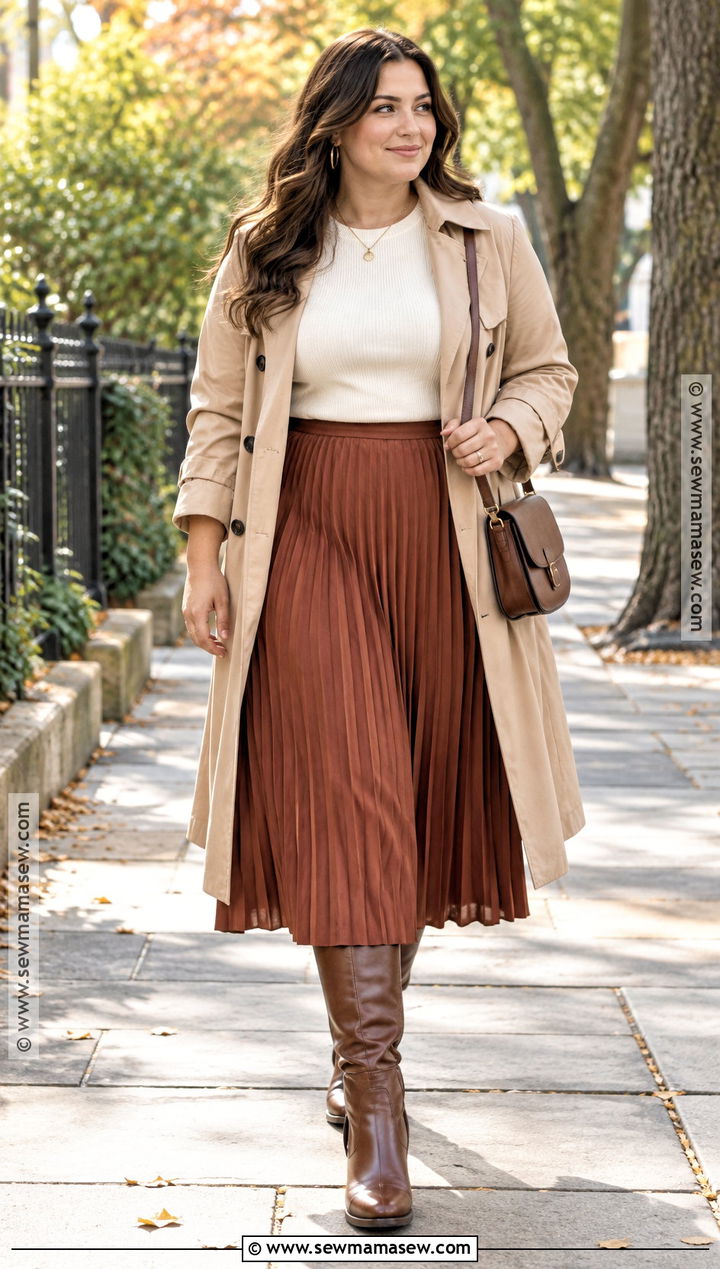
On a cool morning I like a midi skirt, a sweater and flat riding boots, because I can walk all day in it. The skirt, pleated, satin or softly structured, should fall below the knee and still leave some boot visible. Fitted crewnecks balance a full skirt; relaxed knits suit a straighter one. A full or front tuck shows the waist. Flat riding boots handle commuting and cobbles without complaint, and a leather sole will get slippery on wet stone, so I'd add a rubber half sole if you walk a lot. A crossbody and a trench in beige, navy or olive complete it. Thin thermal tights add warmth without changing the shape.
4. Leggings With Chunky Chelsea Boots
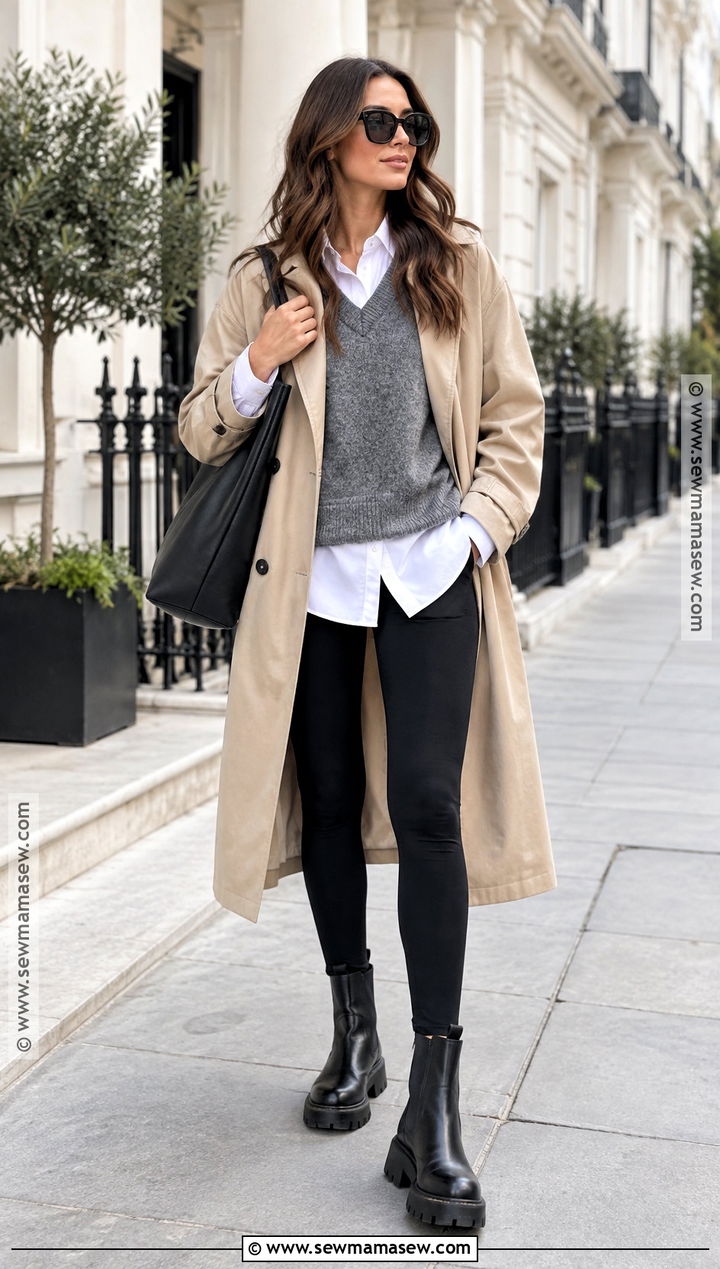
Leggings and chunky Chelsea boots are what I wear on a day of errands. Thick, fully opaque leggings first; the cheap thin pairs go see-through when you bend. An oversized button-down with a crewneck or sweater vest over it, collar and hem showing, makes it look deliberate. The lug sole is the reason for the boot: it grips wet sidewalks and gives a slim base some weight. Keep the colors tight, black leggings, black boots, white shirt, gray or camel knit, and add a quilted jacket or relaxed trench. Elastic gussets on Chelsea boots stretch over time, so buy them snug rather than roomy. Petite? Shorten the top layer slightly so it doesn't swamp you.
5. Floral Midi Dress With Western Boots
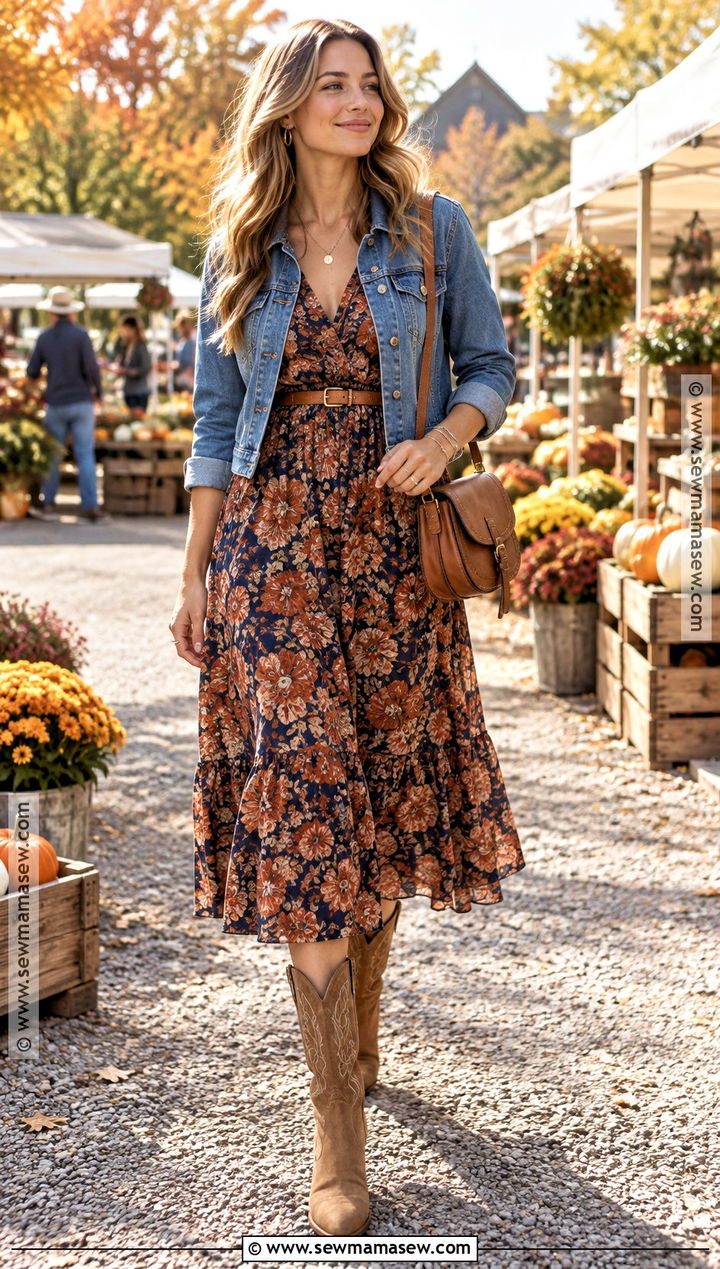
Western boots pull a floral midi dress into fall faster than anything else. Look for an autumn print with rust, navy, cream, brown or muted green, and choose tan or chocolate suede boots so nothing clashes. Most Western boots have a wider shaft than a riding boot, which actually works in your favor with a midi, because the hem can sit just above the shaft and the boot reads as a feature. A cropped denim jacket marks the waist; leather adds more edge. A slim belt shapes a loose dress. Finish with a saddle bag and metal jewelry that picks up the boot hardware. Add a long cardigan and tights once early fall turns cold.
6. Mini Skirt With Tall Boots
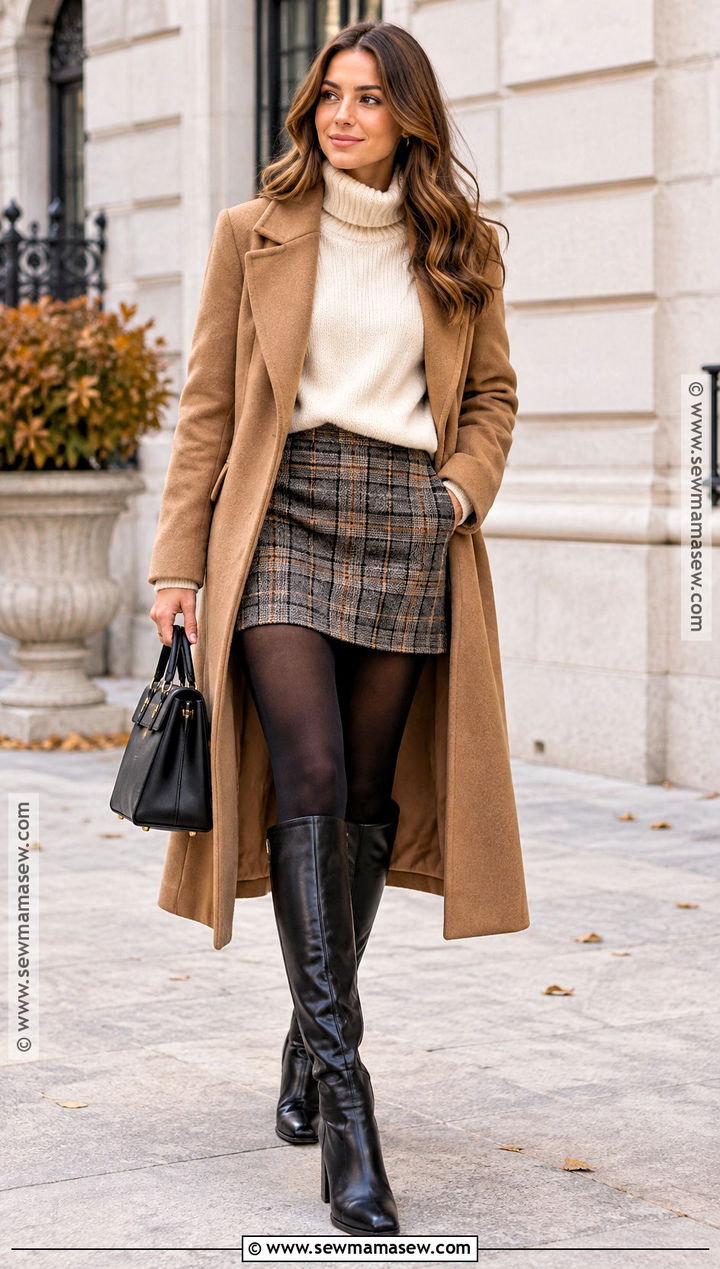
A mini skirt with tall boots feels balanced once the top half covers up. I pair an A-line, plaid, denim or faux-leather mini with a relaxed turtleneck, then knee-high boots with a low block heel. Opaque tights in black, brown or charcoal pull it together and keep you warm. The gap between boot top and skirt hem is what you're managing here; a few inches of tights reads as styled, a large gap of bare leg in October reads as cold. A long wool coat adds length and polish. If you want more coverage, pick a skirt that ends just a few inches above the knee. Tailored shorts with thick tights work the same way.
7. Wide-Leg Trousers With Pointed-Toe Boots
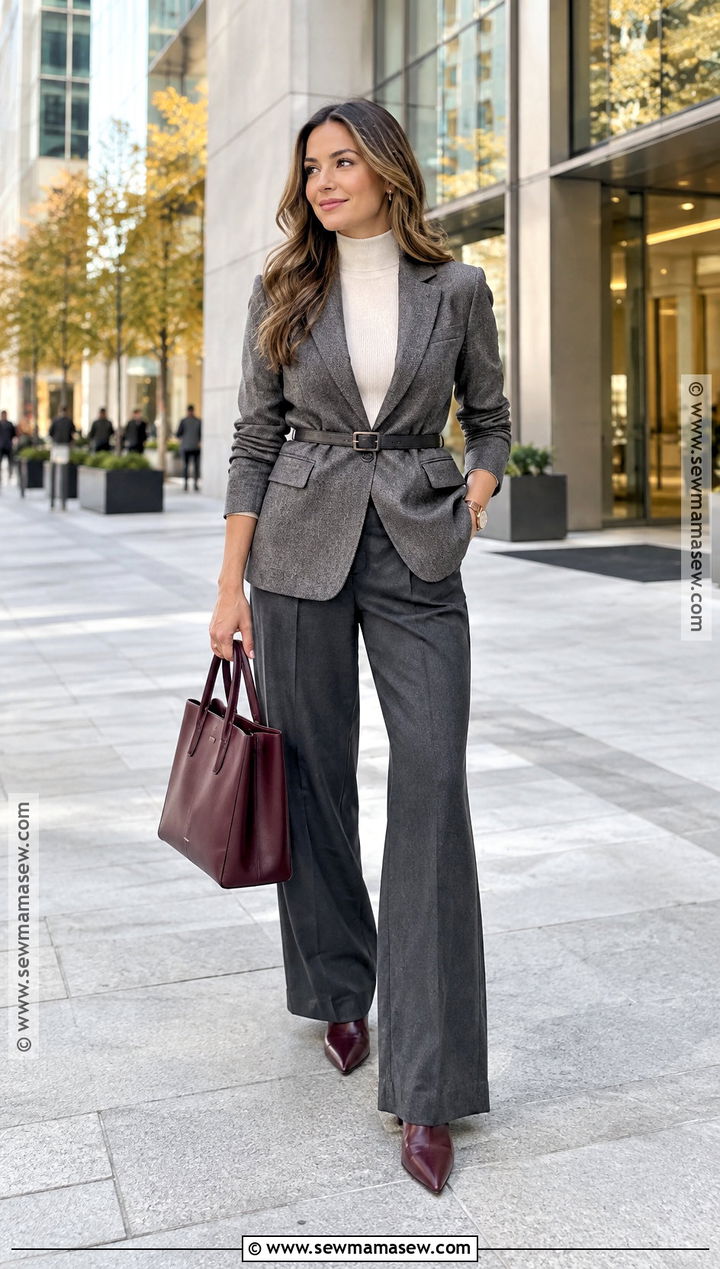
Wide-leg trousers with pointed-toe ankle boots is the most polished pairing on this list. The trouser should cover the boot shaft completely and leave only the pointed toe visible, which is why I tell people to buy the boots before hemming the trousers. A heel that's too low for the length means the hem drags and frays within weeks. A fitted mock-neck balances the volume and a belted blazer adds waist definition. For the office, charcoal trousers, black boots and a cream top; burgundy or dark brown boots give a subtle update. Add a structured work bag, a simple watch and a light coat, and it goes from desk to dinner.
8. Denim Skirt With Suede Boots
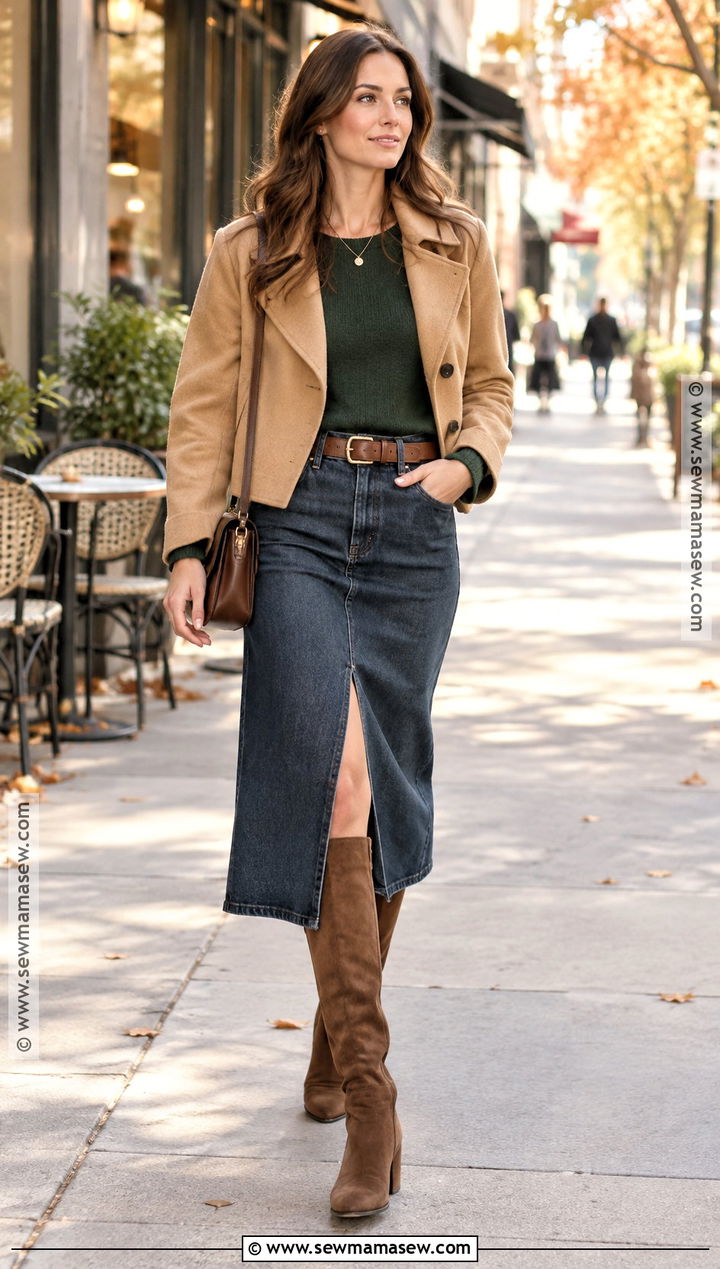
Suede softens denim. A midi denim skirt with a front slit, so you can actually stride, goes with a fine knit in cream, rust, forest green or burgundy, tucked in. Knee-high suede boots slip under the hem with no gap. I'd choose a block heel or flat sole based on how far you'll walk; suede on a thin stiletto in a city is a short-lived pairing. A leather belt adds contrast and a suede or structured crossbody finishes it. Before the first wear, spray the boots with a suede protector, because the toe and the inside ankle are where they rub and stain first. A cropped jacket or wool coat goes on top when it's cold.
9. Leather Jacket With Moto Boots
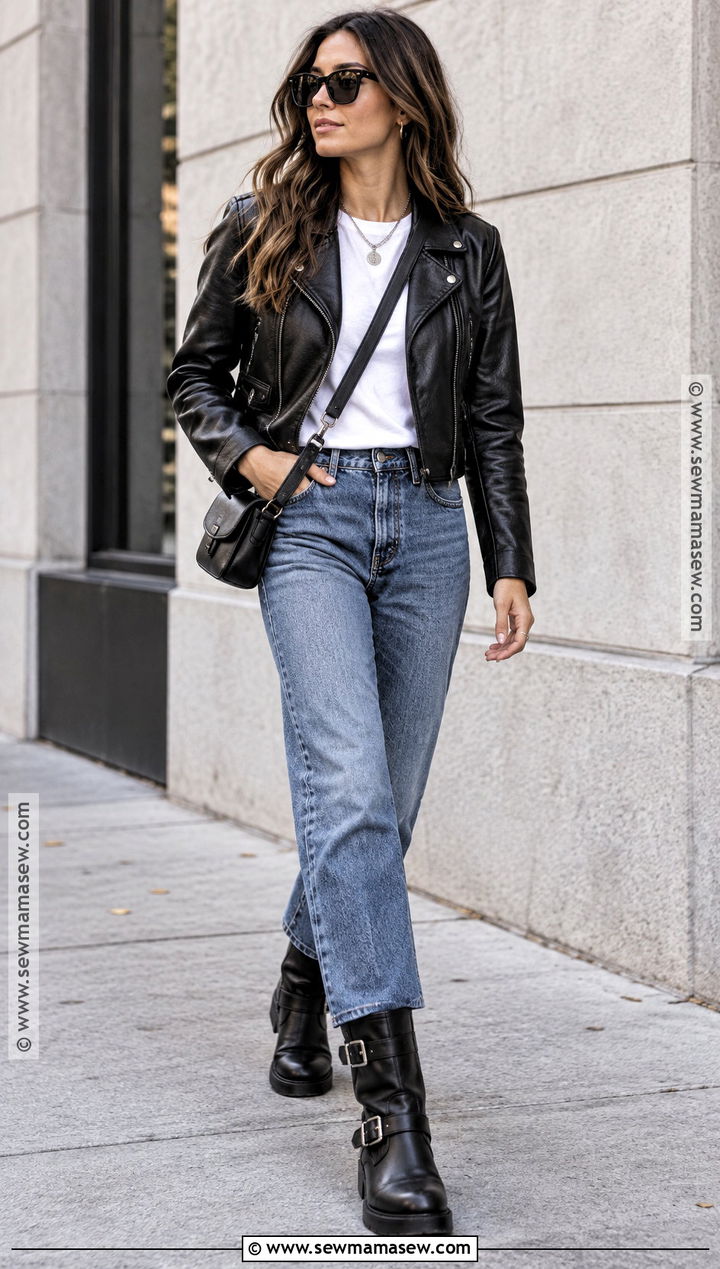
Moto boots need jeans with some weight to them. Straight or slightly loose denim balances the buckles and thick sole, where skinny jeans make the boot look clumpy. Underneath the leather jacket, a white T-shirt, striped knit or fitted long-sleeve. Black boots are classic; distressed brown feels softer and worn in. I usually skip cuffing here because full-length denim over a substantial boot looks cleaner, unless the hem is already narrow. Add a crossbody and silver-toned jewelry. To cut bulk, wear a cropped jacket or leave it open so the lighter layer creates a vertical stripe. Moto boots are heavy, so if you've never worn a pair, try a half day first.
10. Trench Coat With Heeled Ankle Boots
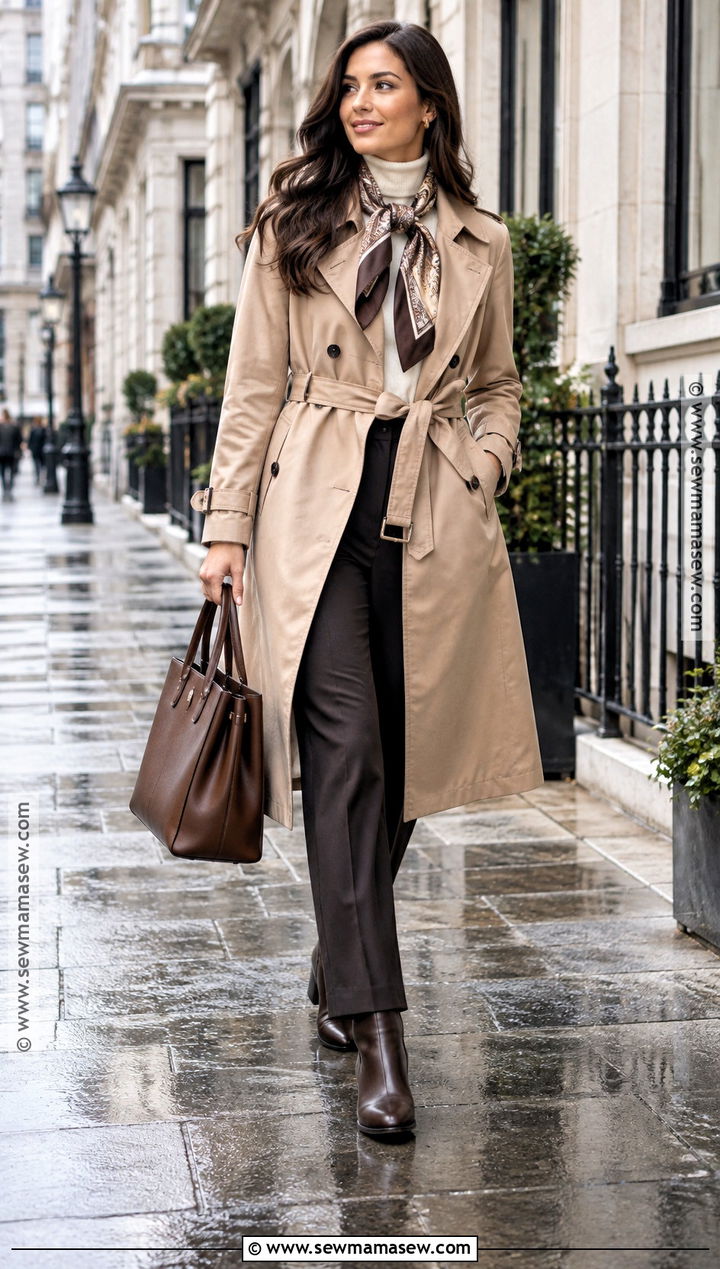
When the forecast can't make up its mind, I reach for a trench and heeled ankle boots. The coat goes over a thin turtleneck with straight trousers or dark jeans. A slim block heel gives you height and still walks well, unlike a narrow stiletto that catches in pavement cracks and grates. The shaft should hug the ankle so the trouser falls cleanly over it. Beige trench, chocolate boots and an ivory knit is a reliable mix; navy trench with burgundy boots is my favorite alternative. Add a structured tote and a patterned scarf. When it warms up, wear the coat open or knot the belt behind you so the line stays long.
11. Cardigan And Jeans With Cowboy Boots
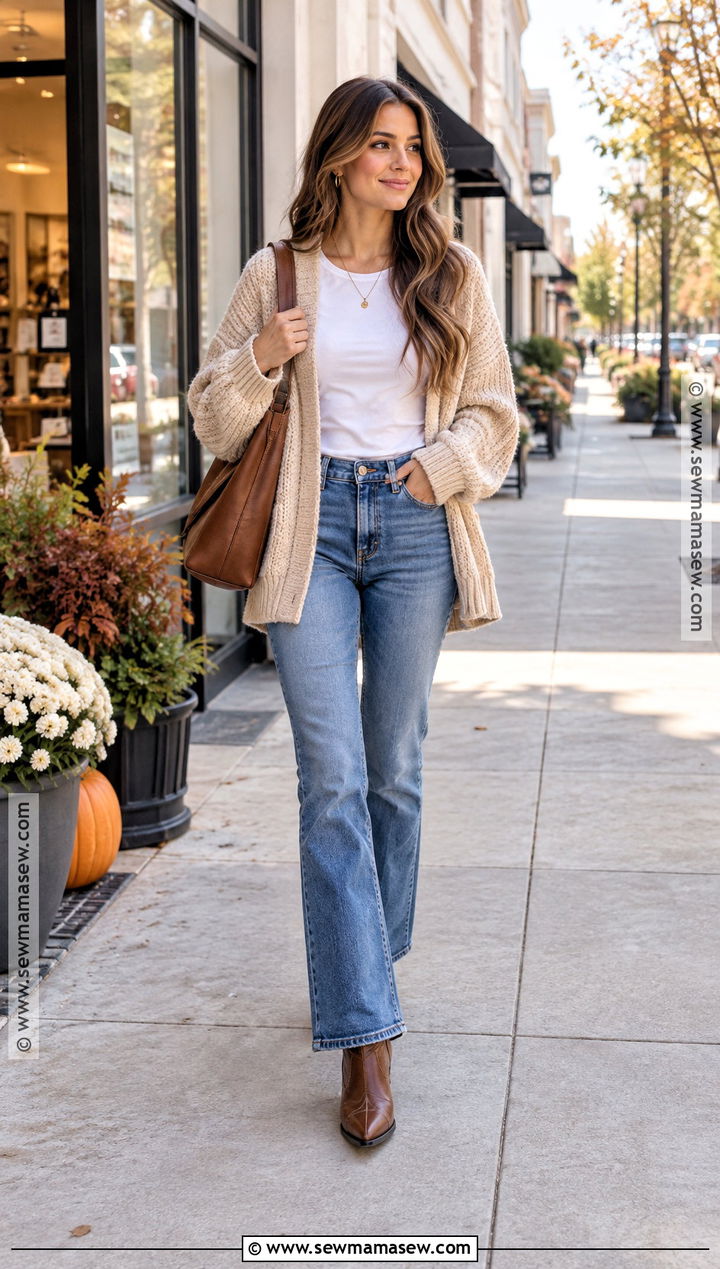
Cowboy boots, a chunky cardigan and relaxed jeans look Western without tipping into costume, as long as the denim is right. Straight-leg or bootcut jeans should fall over ankle-height boots, covering most of the shaft. With taller boots, tuck in slim jeans or wear cropped denim to show off the stitching. A fitted tank or T-shirt under an oatmeal, rust or deep red cardigan, a leather shoulder bag and small earrings are all it needs. A Western belt is optional; if the boots have heavy stitching, I leave it off. Cowboy boots have a slanted heel and no laces, so make sure your heel doesn't slip when you walk, since it will blister fast.
12. Blazer And Shorts With Tall Boots
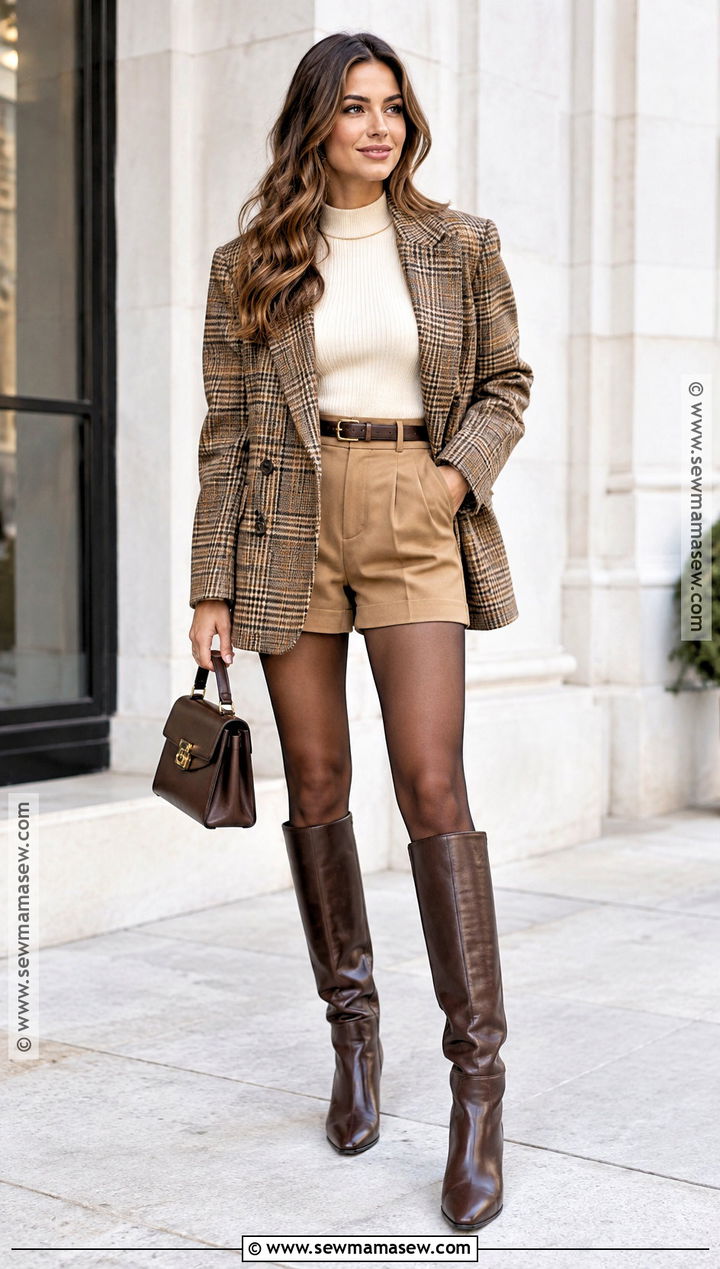
Shorts and a blazer in fall work because tall boots cover most of the leg. Choose high-rise shorts in wool, tweed or structured cotton with a fine knit or fitted bodysuit. Knee-high boots plus sheer or opaque tights make it practical for cooler days, and a slightly oversized blazer gives contrast against the short hem. Keep the palette to two or three colors, such as camel, cream and chocolate. Wool shorts hold their shape far better than cotton after a day of sitting, which is worth knowing if you commute. A compact top-handle bag adds structure. For more coverage, longer tailored shorts with flat riding boots.
13. Monochrome Outfit With Sock Boots
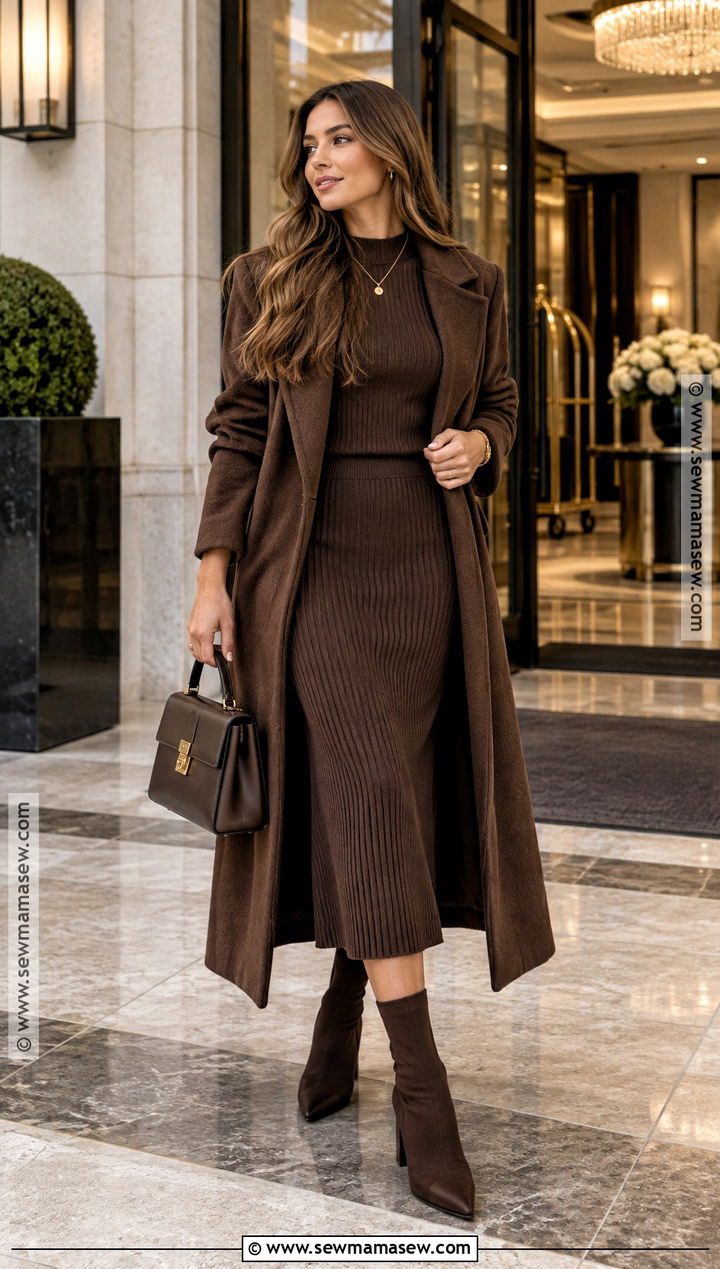
Sock boots are the easiest way to make a monochrome outfit look tall. Pick one color, black, chocolate, charcoal or soft cream, and run it from top to boot: a fitted knit, a midi skirt or tailored trousers, close-fitting ankle boots in the same shade. Because the stretch shaft hugs the ankle, it slips under hems without a gap. What keeps one color from going flat is texture: ribbed knit, smooth leather, brushed wool. A matching coat makes it even sharper. Sock boots stretch to fit, but cheaper stretch uppers bag at the ankle after a season, so check the elastic recovers when you pull it. If one shade feels too much, use neighboring tones instead of sharp contrast.
14. Oversized Sweater With Over-The-Knee Boots
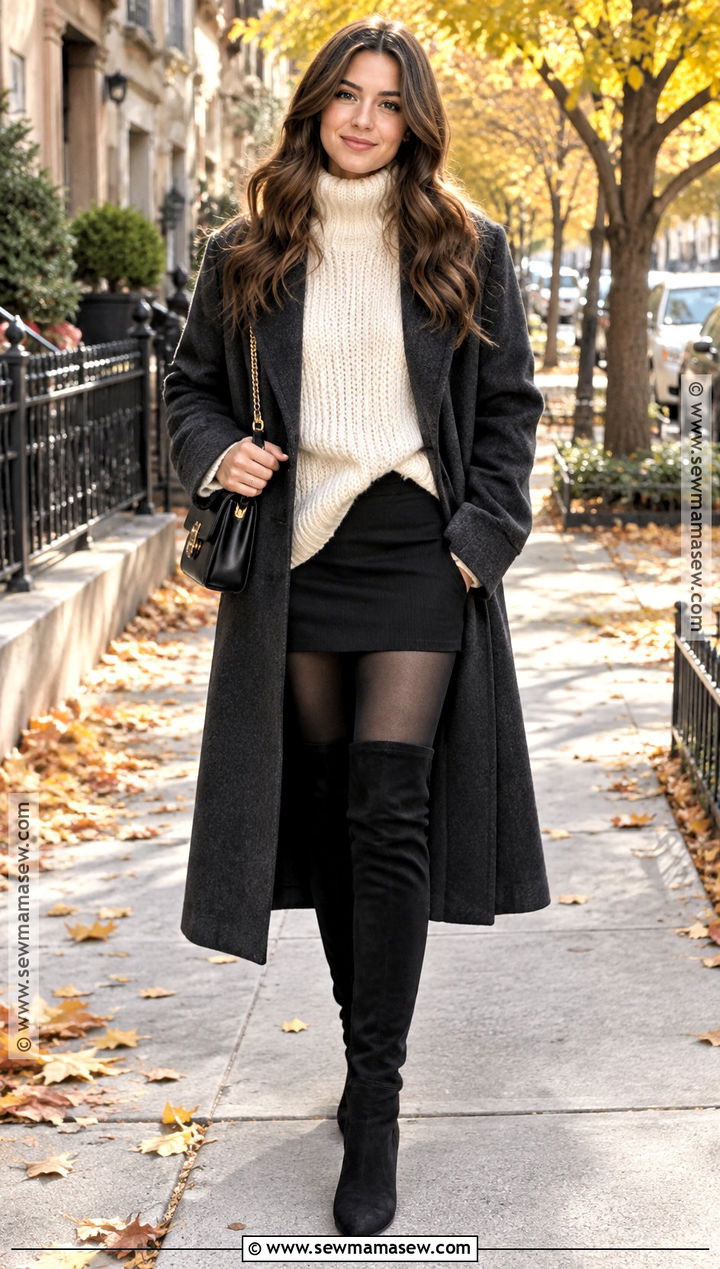
Over-the-knee boots and an oversized sweater make a big impression, and I always style them with a hem underneath. Wear the sweater over a knit mini dress, fitted skirt or tailored shorts rather than as a dress. Flat or low heels keep it wearable for a day out. Black suede with dark tights is the sleek option; taupe or brown against cream knit is softer. The coat should end below the sweater hem so the layers read in order. The most common complaint with this boot is slipping. Look for adjustable ties, stretch panels or a shaft cut for your calf and thigh, and grippy silicone-backed tights help a lot too.
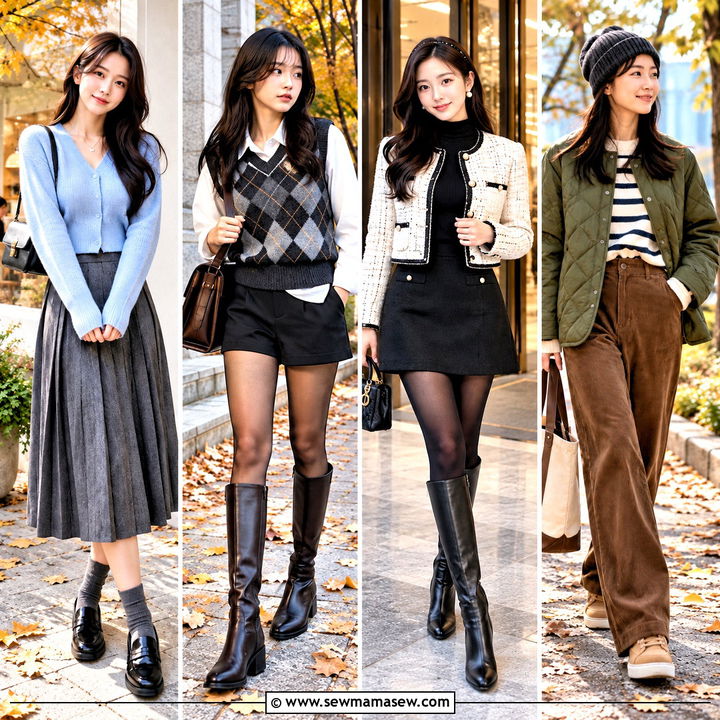
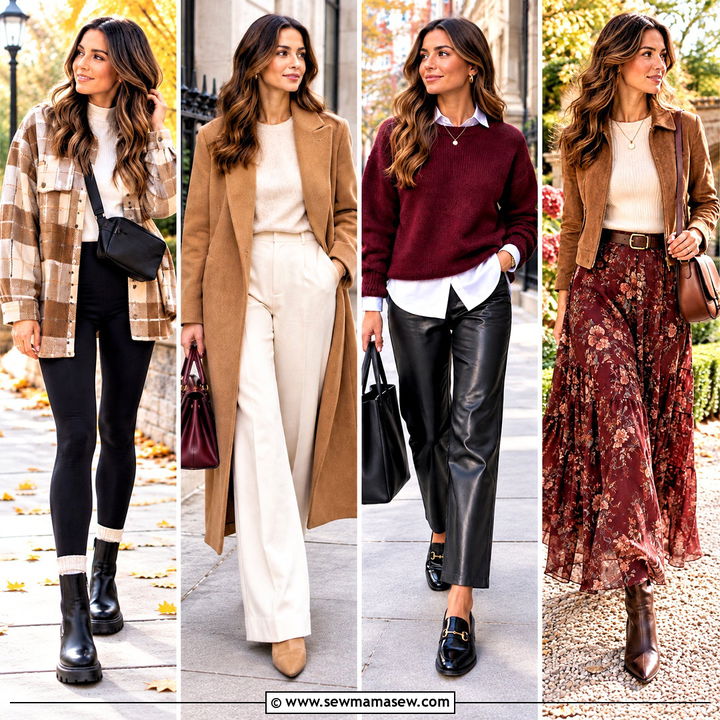
15. Utility Jacket With Lace-Up Boots
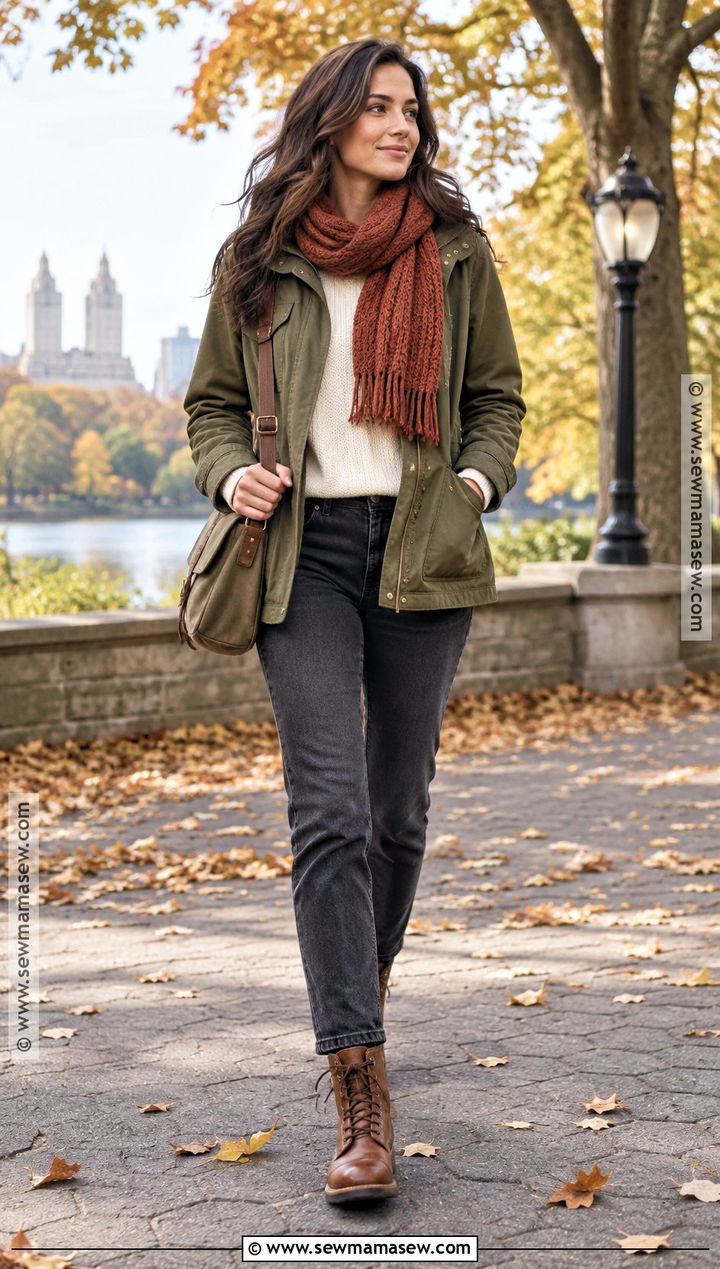
A utility jacket and lace-up boots is the outfit I'd wear for a long walking day or a trip with uncertain weather. Straight jeans, cargo pants or thick black leggings, a soft crewneck, and an olive, tan or navy utility jacket with a lightly defined waist. Leather lace-ups give traction and ankle support. Keep the trouser hem narrow enough to tuck in cleanly, or cropped just above the boot; a wide hem bunched over laces looks sloppy. A canvas tote or crossbody fits the mood. Lace-ups let you adjust the fit through the day as your feet swell, which is a real advantage over pull-ons. Add a cream or rust knit scarf when it's colder.
New Boots Need a Week Indoors First
Never debut a new pair on a full city day. Leather softens and shapes to your foot with wear, and the first few hours are when blisters happen. Here's the routine I follow with every new pair.
- Wear them around the house for an hour or two at a time over several days, with the socks or tights you'll actually use.
- Flex the ankle and toe area by hand if the leather feels stiff, and walk up and down stairs, since that's where heel slip shows up.
- Put a blister plaster on the back of the heel before the first outdoor wear, not after it starts hurting.
- Do a short errand before a long day. If anything still rubs after a week, a cobbler can stretch a specific spot.
Soles That Cope With Wet Pavement
City walking is mostly a sole question. Smooth leather soles look sleek but slide on wet stone, painted crossings and subway stairs. Rubber lug soles grip and cushion but add visual weight, which is why I pair them with straight or wider trousers. A thin rubber half sole added by a cobbler gives a leather-soled boot real grip without changing how it looks.
Heels matter too. Block heels spread your weight and won't sink into grates, while stilettos wear down fast on concrete. Replace heel tips as soon as you hear a click or see metal, because walking on a worn tip damages the heel itself. Suede wants a protector spray before the wet months; smooth leather does better with a regular conditioner so it doesn't crack along the flex line.
A Single Neutral Pair Covers Most of These
Most of these outfits use pieces you already own; the boot is what changes them. The rule underneath them all is proportion: sleek ankle boots with tailored trousers, riding, Western and over-the-knee styles with skirts and dresses, and moto, Chelsea and lace-up boots giving casual denim and leggings some weight. You really don't need every shape. Get one comfortable neutral pair that fits well, wear it for a season, and then add a second pair in a silhouette or color that feels like you. Adjust layers, heels and bags for your climate and how much walking your days involve.
Related posts: