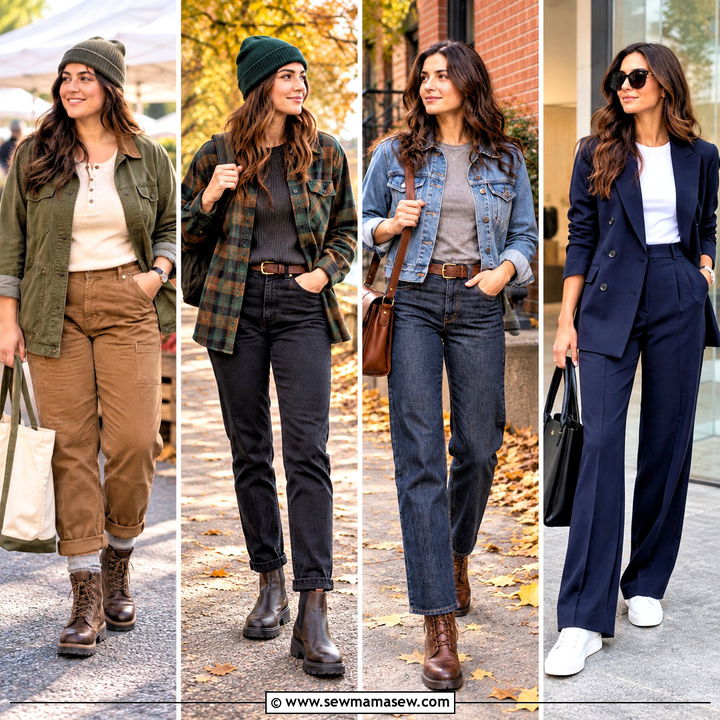
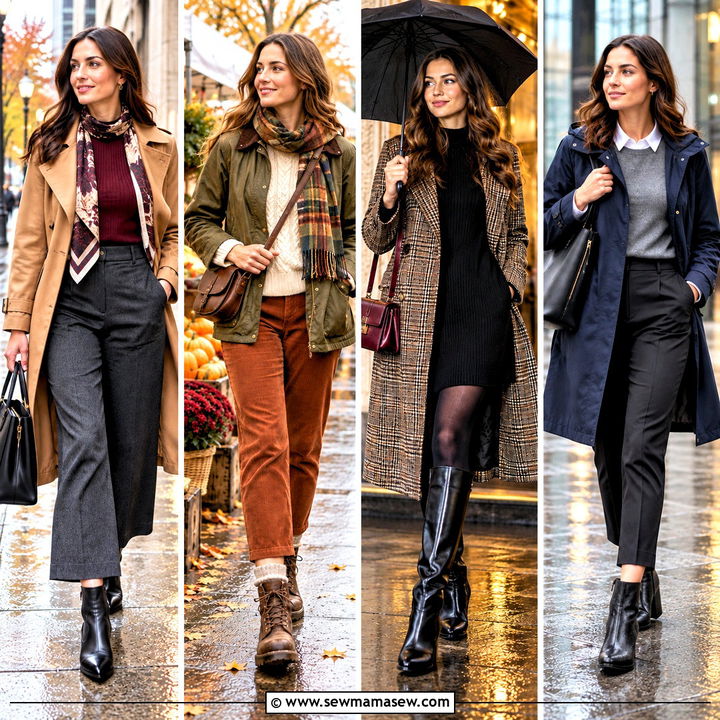
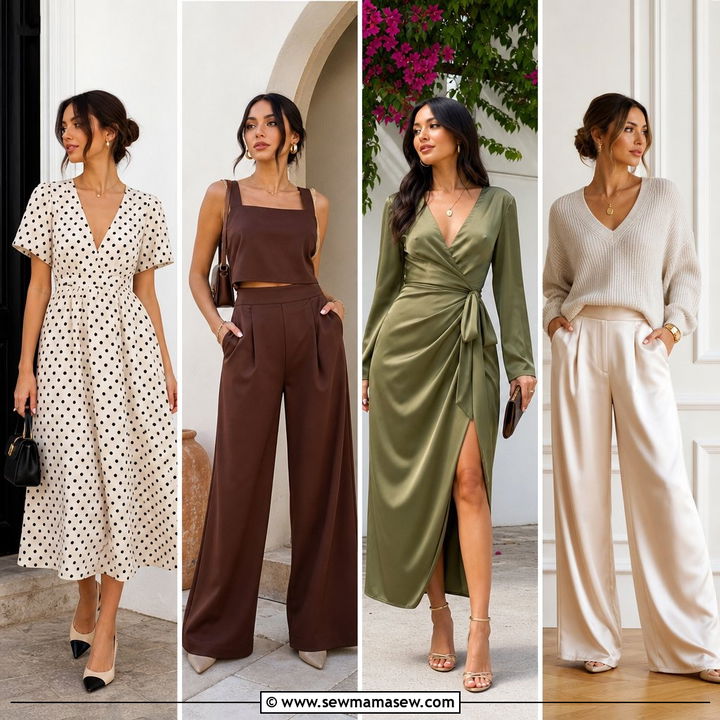
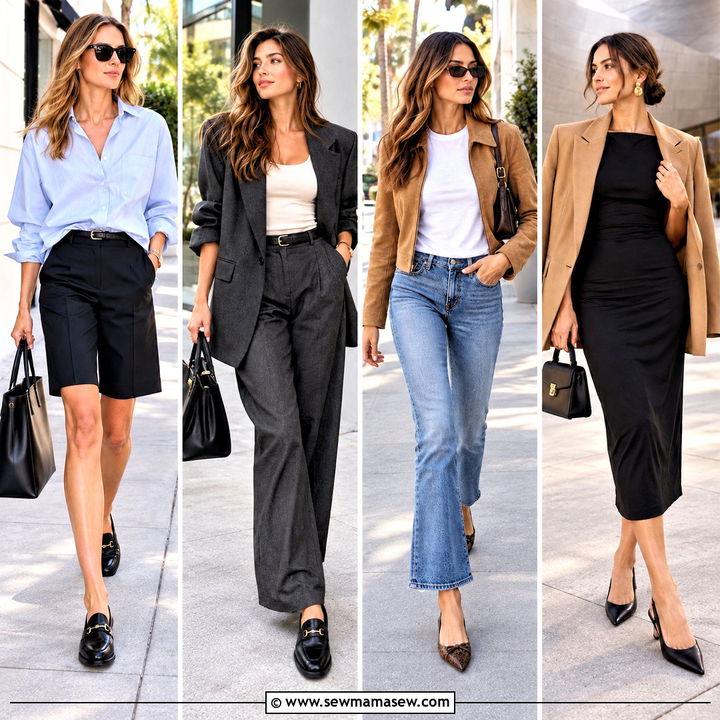
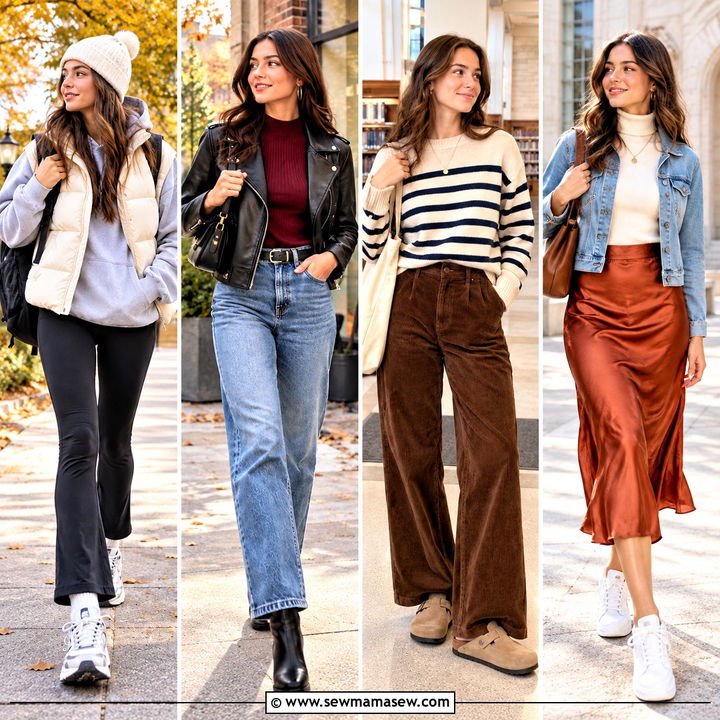
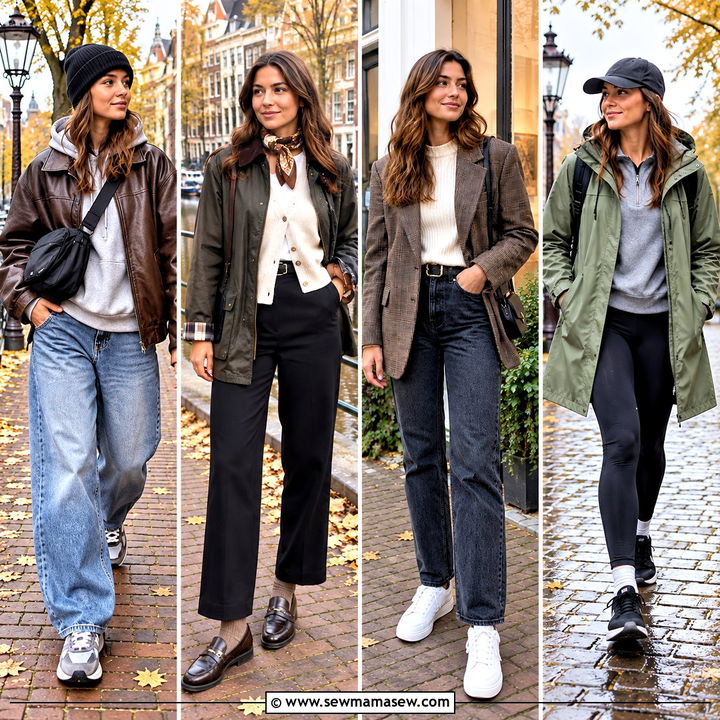
Masculine dressing is the most practical way I know to build a fall wardrobe, because every piece is designed around structure and repeat wear. Tailored jackets, workwear, straight denim and sturdy shoes all mix with each other, and none of them depend on a trend to make sense. The outfits below run from sharp tailoring to rugged weekend layers. Each can be adjusted for your body, your climate and your workplace: straighter, firmer shapes give the classic menswear effect, while looser proportions read softer and more androgynous. In my experience, the details are what make separates look deliberate rather than borrowed, so I've noted the belt, watch, bag or sock that finishes each one.
Shopping the Men's Section Without a Bad Fit
Many of the pieces in these outfits come from the men's section, and that's often where the best blazers, chore coats and overcoats are. Men's cuts are drafted differently, though, so I check a few things before buying.
Shoulders Decide the Size
Buy jackets and coats to fit your shoulders, even if the body is roomy. Sleeves and hems are routine alterations for a tailor; shoulders are difficult and expensive to change. Men's jackets have no bust shaping, so if you have a fuller chest, try the jacket buttoned and look for pulling across the front. If it pulls, go up a size and have the sleeves shortened.
Trousers Need Hip Room
Men's trousers are usually sized by waist and inseam and are cut with less room through the hip and seat. If they fit your hips, they may gape at the back of the waist. A tailor can take in that gap fairly easily. Going the other way, letting out a tight seat, is rarely possible.
- Many women find they wear about one size down in men's tops, but always try on, since brands vary.
- Sleeves should end around the wrist bone. Men's sleeves often run long on women, which is a simple fix.
- Check the rise. A higher rise sits better on a defined waist than a low men's jean.
1. Oversized Blazer With Straight-Leg Jeans
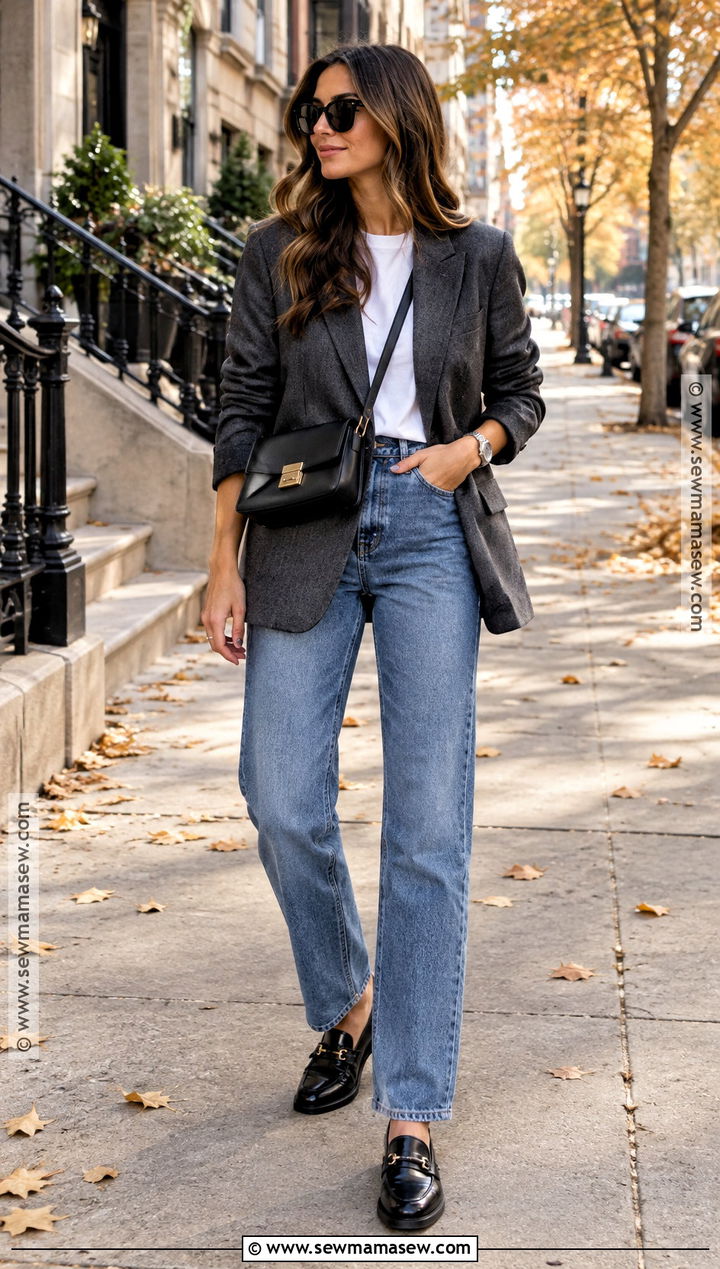
The blazer here needs a strong shoulder and a hem a bit longer than a fitted women's cut. That longer length is what gives the menswear feel. I'd choose charcoal, navy or brown and wear it over a plain crewneck tee or a fitted mock-neck. Medium-wash straight jeans keep the leg clean. Loafers, white leather sneakers or lace-up boots all work, depending on the day. If you're petite, keep the blazer at the upper thigh so your legs don't disappear under it. Cuff the sleeves once to show the layer underneath, add a structured crossbody and a plain watch, and it's done.
2. Leather Jacket With Black Trousers
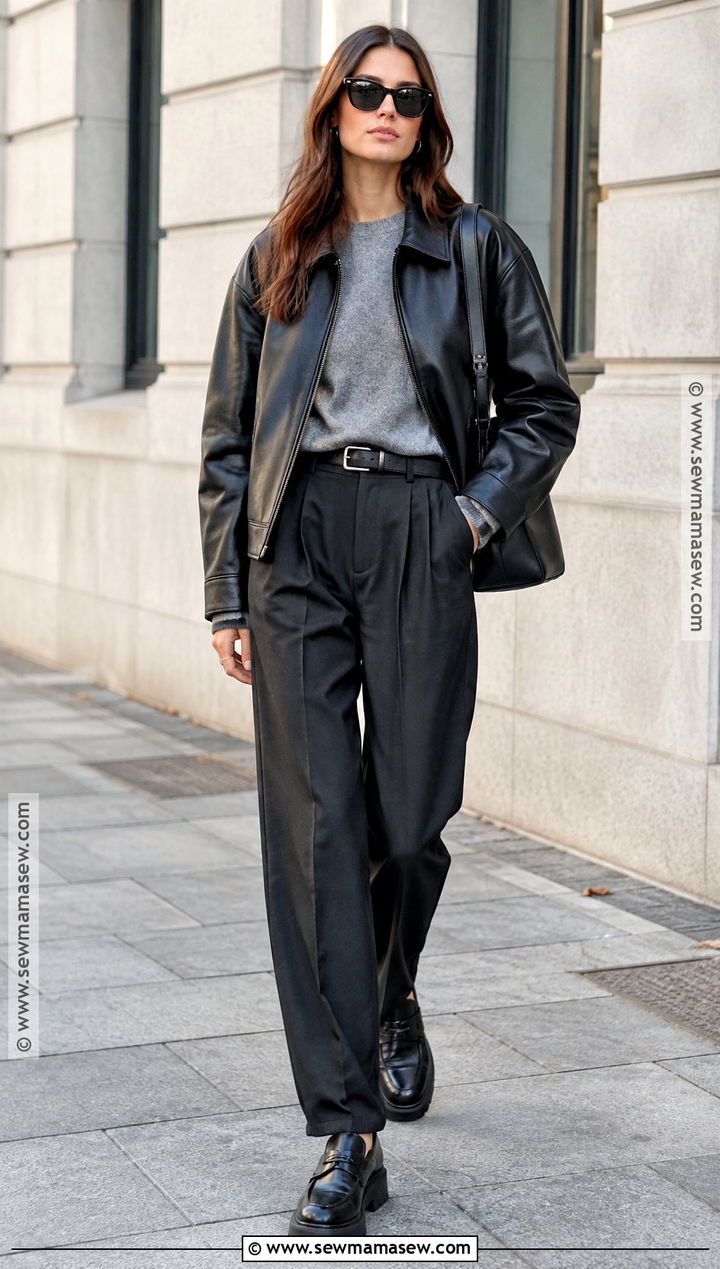
A leather jacket over tailored black trousers is a better combination than leather with jeans, in my view, because the pressed trouser keeps the jacket from looking too casual. Choose a boxy bomber, moto or plain zip style rather than a tight cropped one. A white tee, ribbed tank or thin gray sweater goes underneath. Pleated trousers in a straight or wide leg add that easy menswear drape and balance the stiff leather. Chunky loafers or polished combat boots ground it, and a black belt with simple hardware links top and bottom. Faux leather works too, though cheaper versions crack at the elbows over time.
3. Barn Jacket With Carpenter Pants
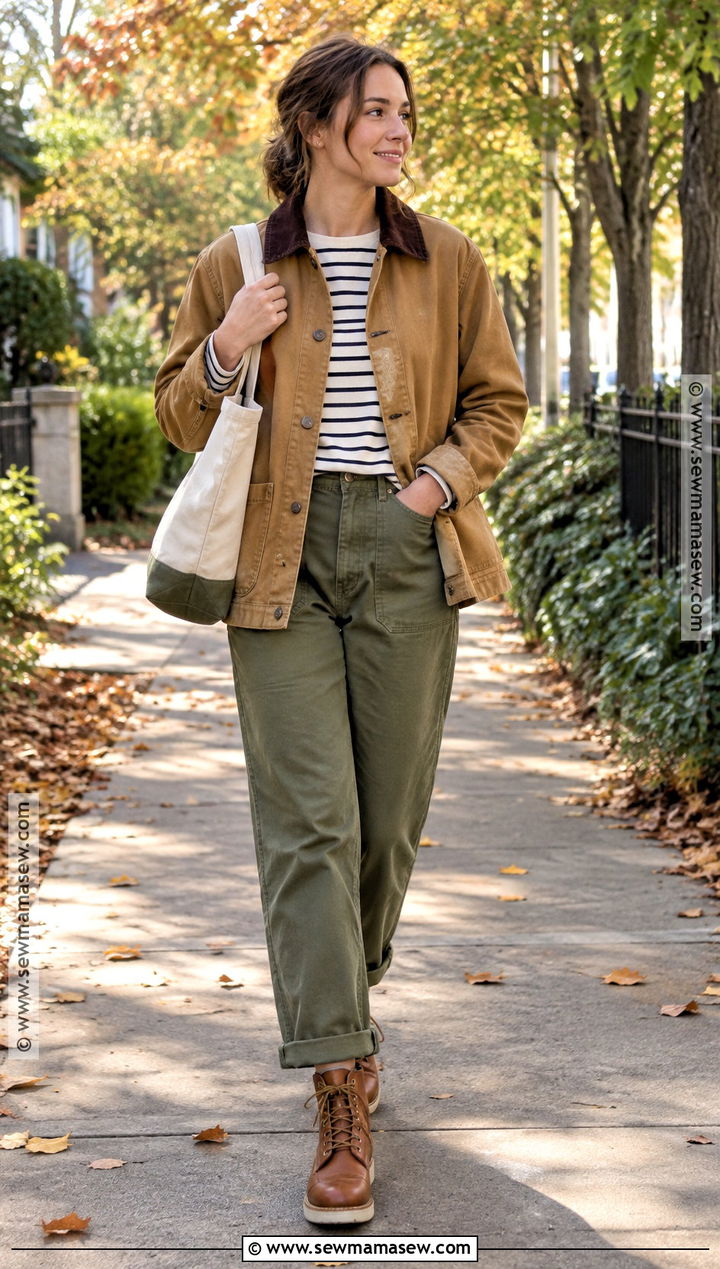
Barn jackets with a cord collar are built for weekends, and they get softer and better the more you wear them. Brown, olive, navy and tan all suit it. Over a striped long-sleeve or a heavyweight white tee, add carpenter pants in cream, dark green, faded black or tobacco. Keep the leg straight rather than huge; heavy canvas in a very wide cut looks like it's wearing you. Work boots make it rugged, retro sneakers make it lighter. If you're shorter, roll the hem once so the loose fabric doesn't pool over the boot. A canvas tote or small crossbody handles errands.
4. Trench Coat With Button-Down Shirt And Chinos
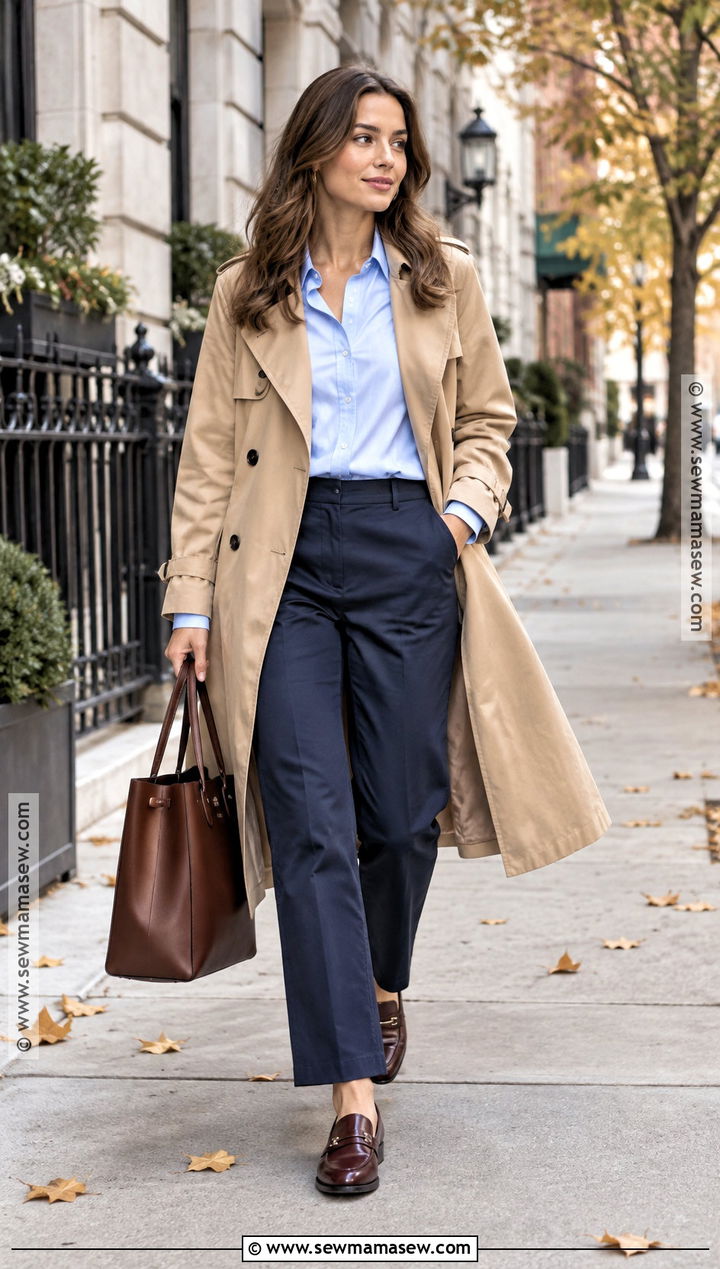
A trench over a button-down and chinos is about as classic as menswear gets. I like a crisp white or pale blue shirt with the collar open and straight chinos in navy, khaki, olive or chocolate. A beige trench goes with all of them; black or dark green is the more modern choice. Derbies, loafers or clean low sneakers finish it. When it turns cold, slip a fine crewneck between shirt and coat and pull the shirt collar out over the knit. Tie the trench belt loosely behind your back, which keeps a long clean line and avoids bunching fabric at the waist. A briefcase-style tote fits the mood.
5. Plaid Shacket With Dark-Wash Jeans
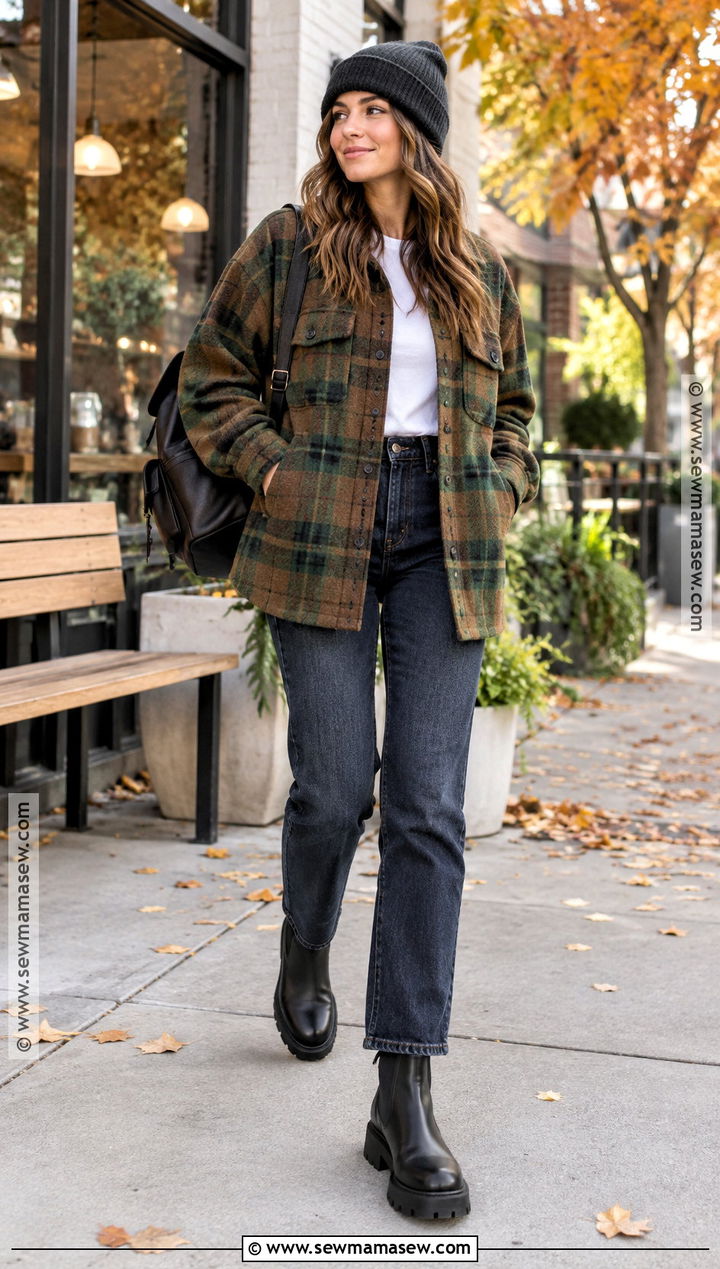
A plaid shacket does the job of a light coat on days that are cool but not cold. Choose a boxy flannel or wool-blend version in brown, forest green, navy or muted burgundy and wear it open over a solid crewneck tee with dark straight or relaxed jeans, or black denim if you want a quieter palette. Lug-sole Chelsea boots or lace-ups give it weight. The fit check I always do: the shoulder seam can drop a little, but if it lands halfway to your elbow, the shacket is simply too big and the sleeves will cover your hands. A beanie and leather backpack suit campus or travel days.
6. Sweater Vest With Oxford Shirt And Pleated Trousers
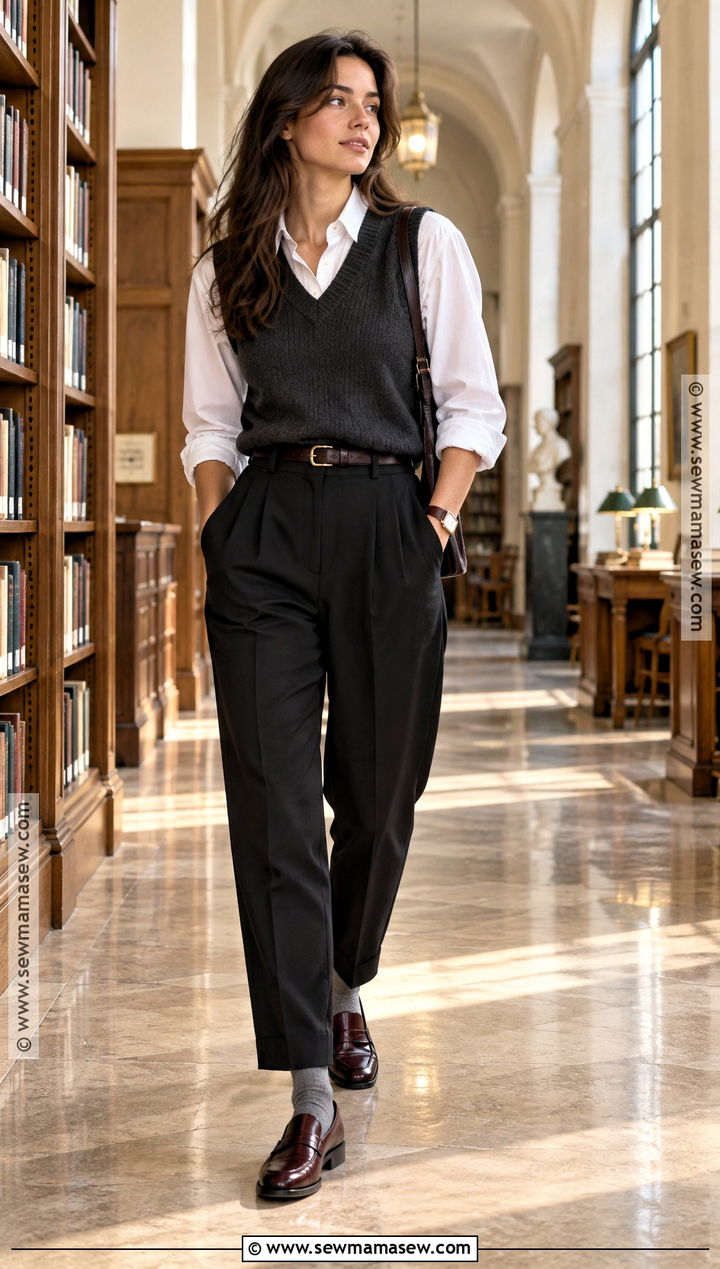
Preppy menswear works best when one piece is loose and the rest stay neat. Here the loose piece is a boxy sweater vest in charcoal, camel, navy or deep green over a white or striped Oxford, with a little shirt hem showing at the hip. High-rise pleated trousers in a straight or gently wide leg keep it comfortable. Penny loafers with visible crew socks are the classic choice; leather sneakers are more casual. If a V-neck vest feels stiff, try a crewneck. What I avoid is a big vest over very wide trousers, which turns the whole outfit into one block from shoulder to shoe.
7. Bomber Jacket With Hoodie And Cargo Pants
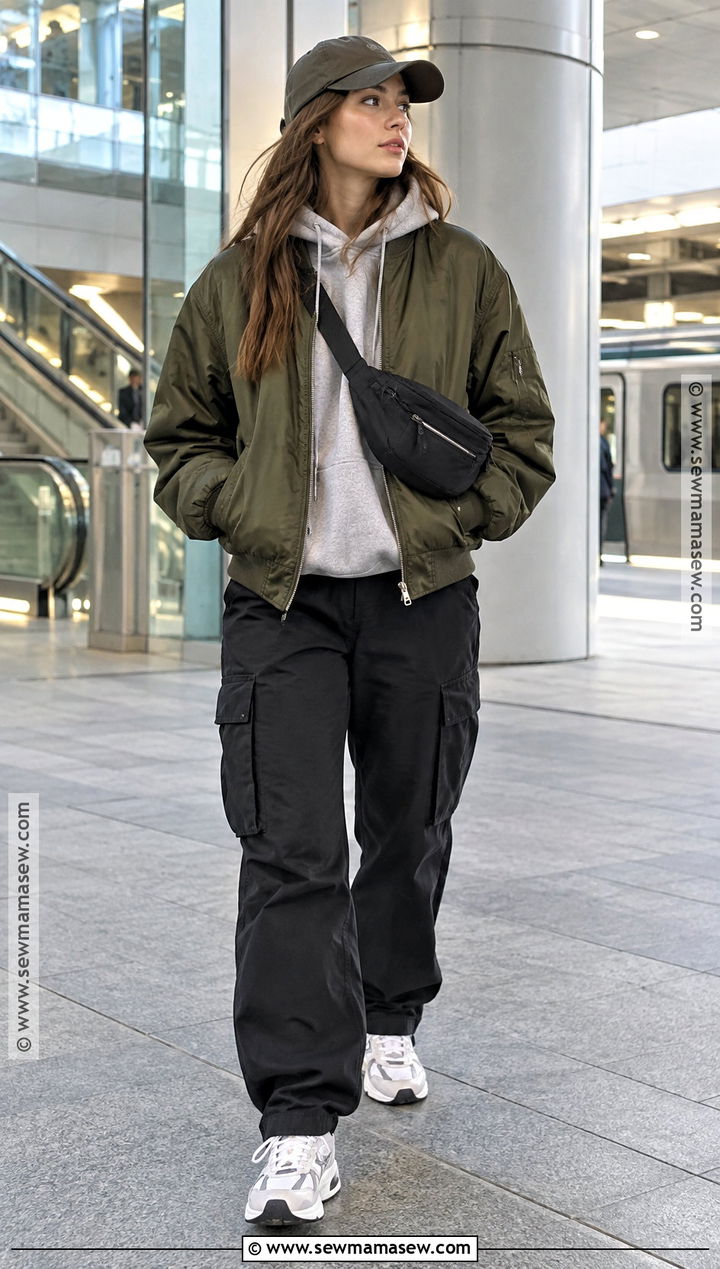
Layering a hoodie under a bomber only works if the hoodie is thinner than the jacket. A thick hoodie jams up the sleeves and pushes the bomber's collar up around your ears. I'd start with a slim hoodie in gray, cream, black or navy and add a slightly oversized bomber in nylon, leather or wool, depending on the weather. Relaxed cargo pants with flat pockets keep the hips clean. Retro trainers or hiking-style sneakers finish it. To lengthen the line, match the hoodie and pants in similar dark tones and let the bomber be the contrast. A cap and nylon crossbody keep it sporty.
8. Pinstripe Suit With Crew-Neck T-Shirt
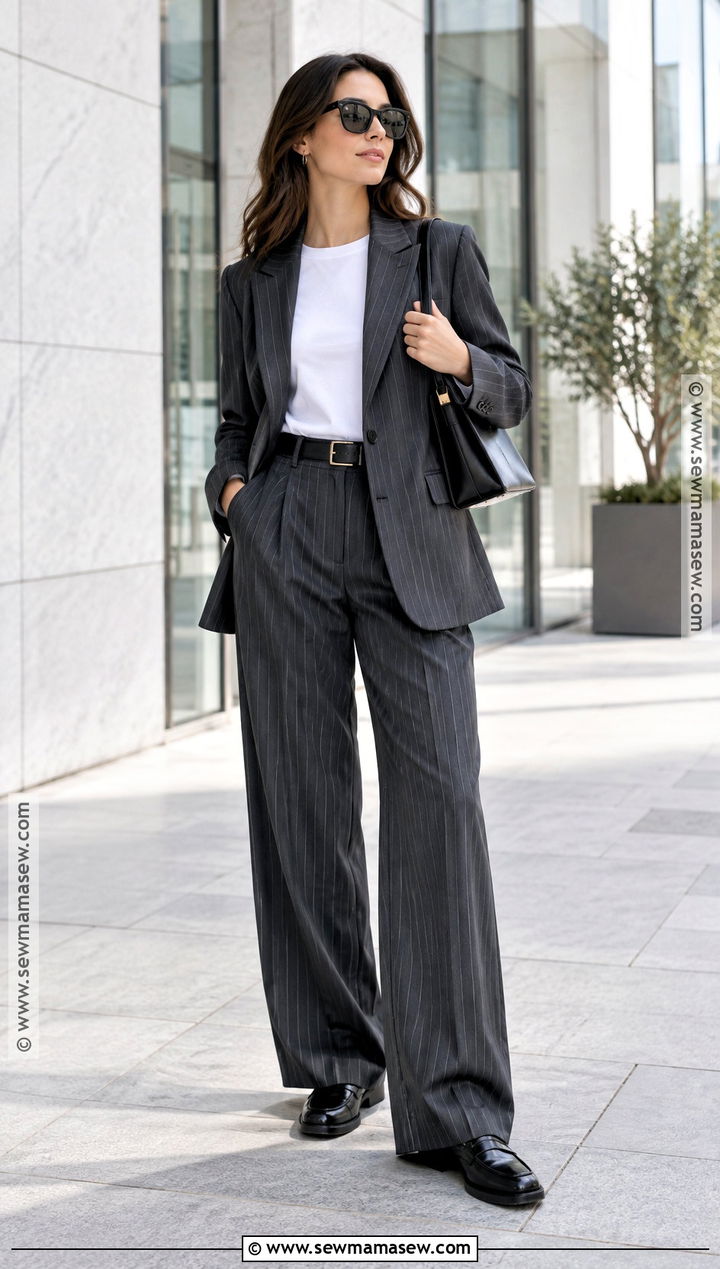
Swapping the dress shirt for a crewneck tee is what makes a pinstripe suit wearable outside an office. Choose a relaxed single-breasted jacket with matching straight or wide trousers in charcoal, navy or black, and put a crisp white tee underneath. Even a loose suit needs to fit cleanly across the shoulders; that is the one place I won't compromise, because shoulders are the hardest alteration to make. Leather sneakers keep it casual, and loafers or derbies make it right for a creative workplace. If the full suit feels like too much, wear the pinstripe jacket with plain trousers instead.
9. Denim Jacket With Corduroy Pants
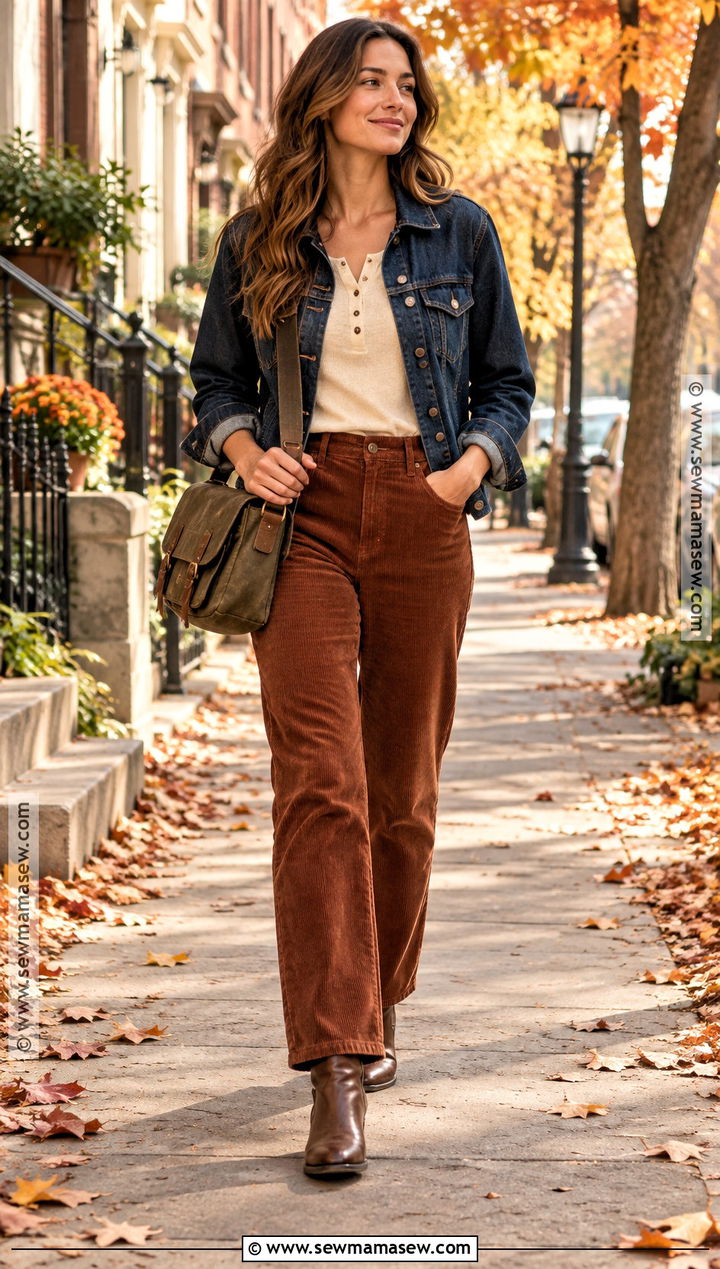
Denim and corduroy look good together precisely because they're different. One is flat and firm, the other soft and ridged. I put a medium or dark denim jacket over a cream henley, plain tee or light turtleneck, then add cord pants in rust, olive, chocolate, camel or deep navy. Straight or relaxed tapered cuts keep it tidy. Don't match the jacket and pants in tone, or the textures blur together. Brown leather boots give it an outdoor feel, and canvas sneakers work on mild days. A leather or heavy canvas backpack completes it. Wide-wale cord adds bulk, so finer wales are kinder on the hips.
10. Chore Coat With Turtleneck And Jeans
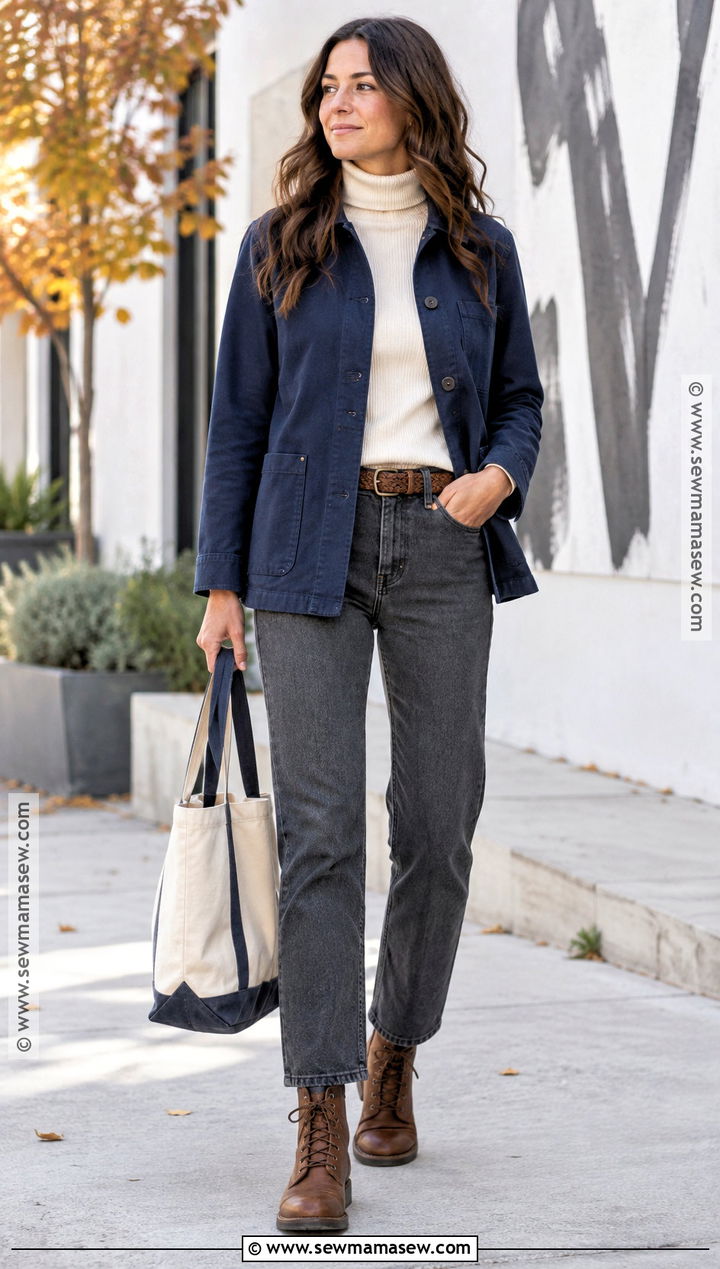
Chore coats are flat-fronted, boxy and full of pockets, which is why they suit nearly every body type: nothing clings. Navy canvas, olive twill, brown cord and faded black denim are all good choices. Underneath, a light turtleneck in cream, gray, burgundy or black, with straight jeans in blue, charcoal or off-white chosen to contrast the coat. Lace-up leather boots or suede sneakers finish it. Leave the coat open on mild days so the knit shows, and add a thin thermal underneath when it gets colder. New canvas is stiff; it softens noticeably after a few weeks of wear and a wash or two.
11. Rugby Shirt With Wide-Leg Trousers
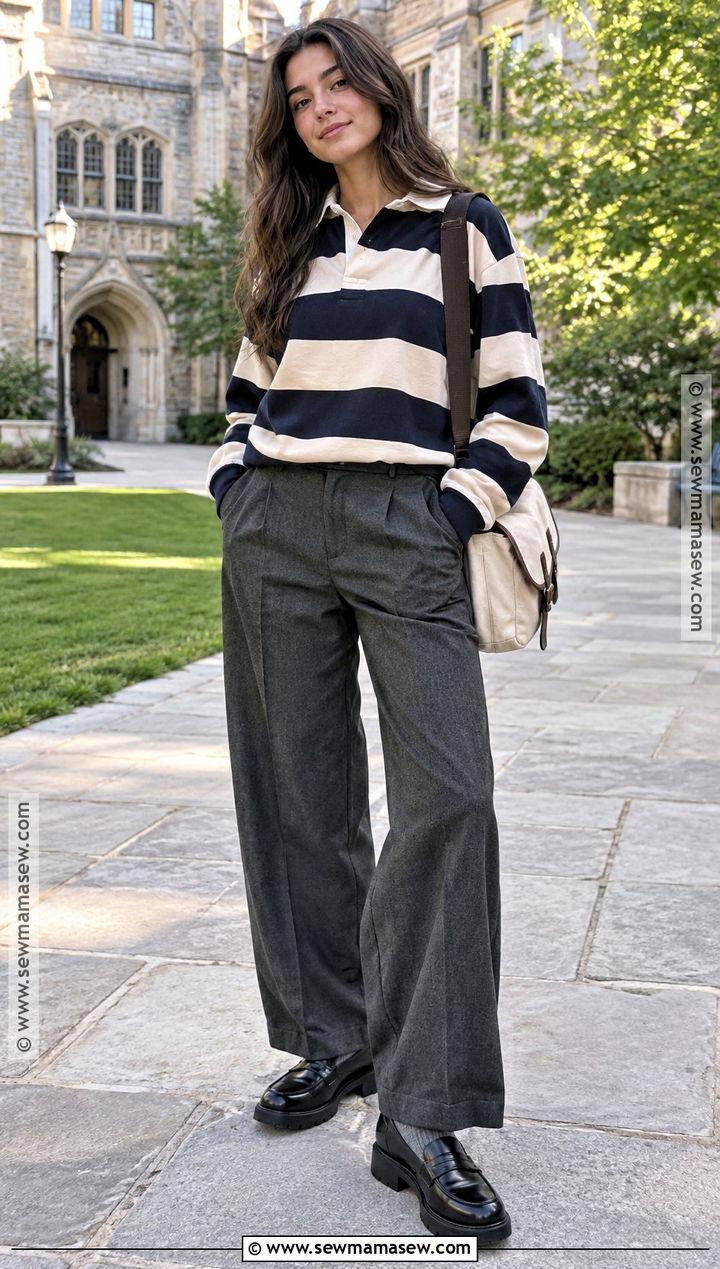
A rugby shirt is heavier than a polo and has that firm collar, so it holds its shape when tucked. I loosely tuck the front into wide-leg tailored trousers in charcoal, tan or black, which defines the waist without making it look fitted. Navy and cream, green and white, or burgundy and blue stripes all work. Chunky loafers and ribbed socks are my pick; retro sneakers are sportier. Check that the trouser hem nearly reaches the top of the shoe without dragging, since wide legs that scrape the ground fray at the back. Add a bomber when it cools and a canvas messenger for the collegiate feel.
12. Wool Overcoat With Knit Sweater And Loafers
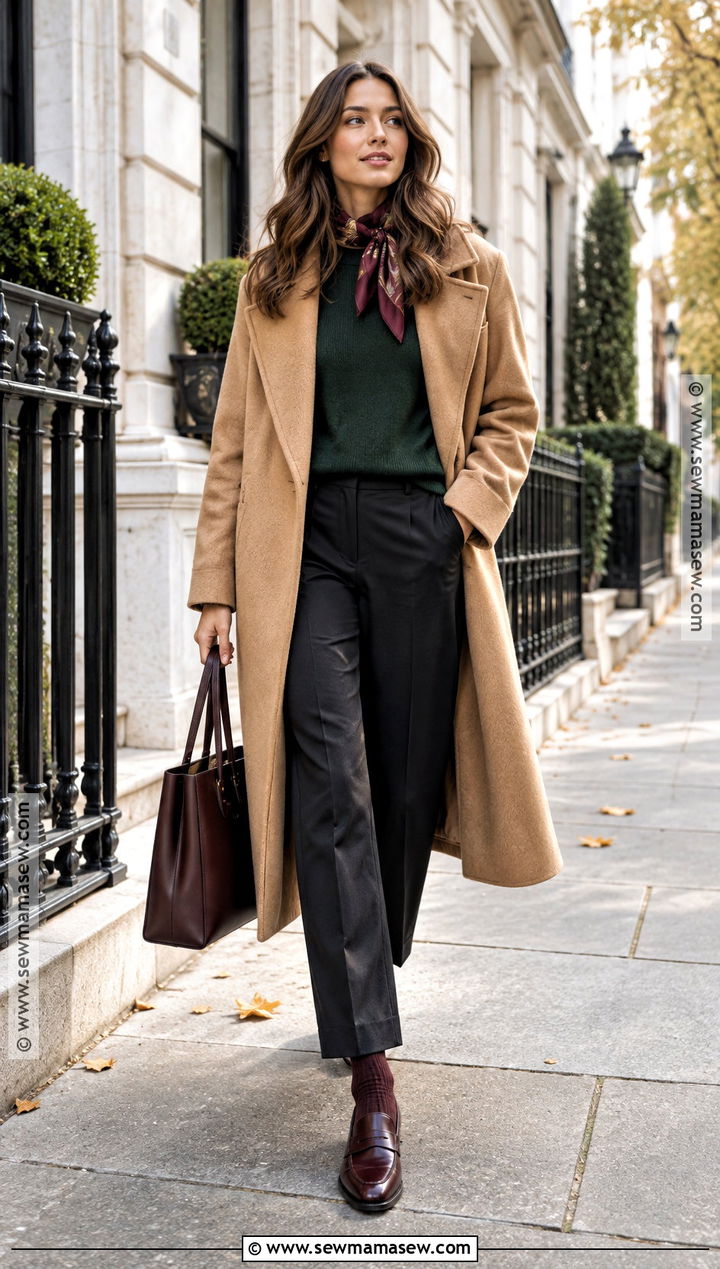
A long wool overcoat is the piece that makes everything under it look more serious. Camel, charcoal, navy and herringbone are the safe choices. I size it with a sweater on, since an overcoat that's snug over a knit pulls across the back when you reach forward. A crewneck in cream, gray or dark green gives warmth without crowding the lapels. Straight black trousers or dark jeans set the formality. Leather loafers with ribbed socks look refined, and sleek ankle boots take over in the cold. Keep sweater and trousers close in tone so the coat stands out against one long base.
13. Flannel Shirt With Utility Vest And Work Pants
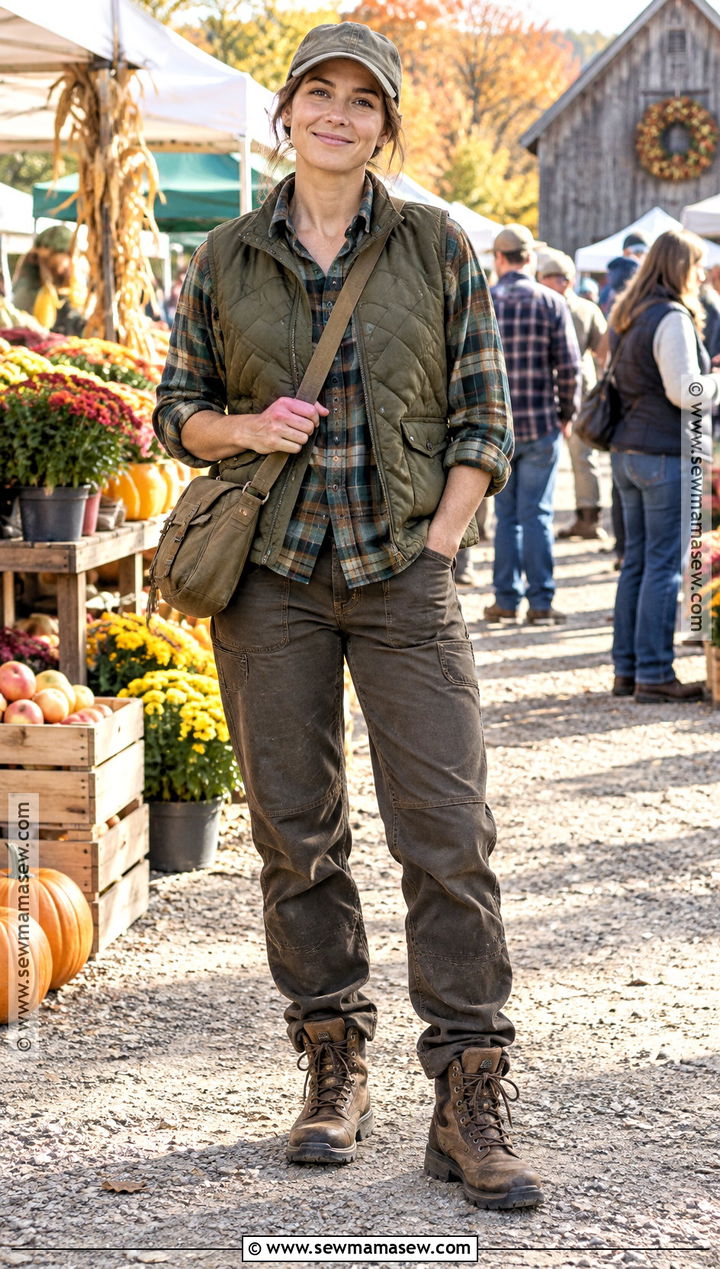
Flannel under a utility vest is a rugged combination, and the fastest way to ruin it is too many pockets. Start with a plaid shirt in muted brown, green, navy or rust, then add a quilted or canvas vest in a solid neutral that ends near the hip. Relaxed work pants or dark cargo trousers go below. If the vest is covered in pockets and flaps, choose pants with a clean front, or the outfit starts looking like fishing gear. Sturdy lace-up boots and thick crew socks finish it, with a canvas cap and field bag as options. Easy to strip down as the afternoon warms up.
14. Mock-Neck Sweater With Tailored Trousers
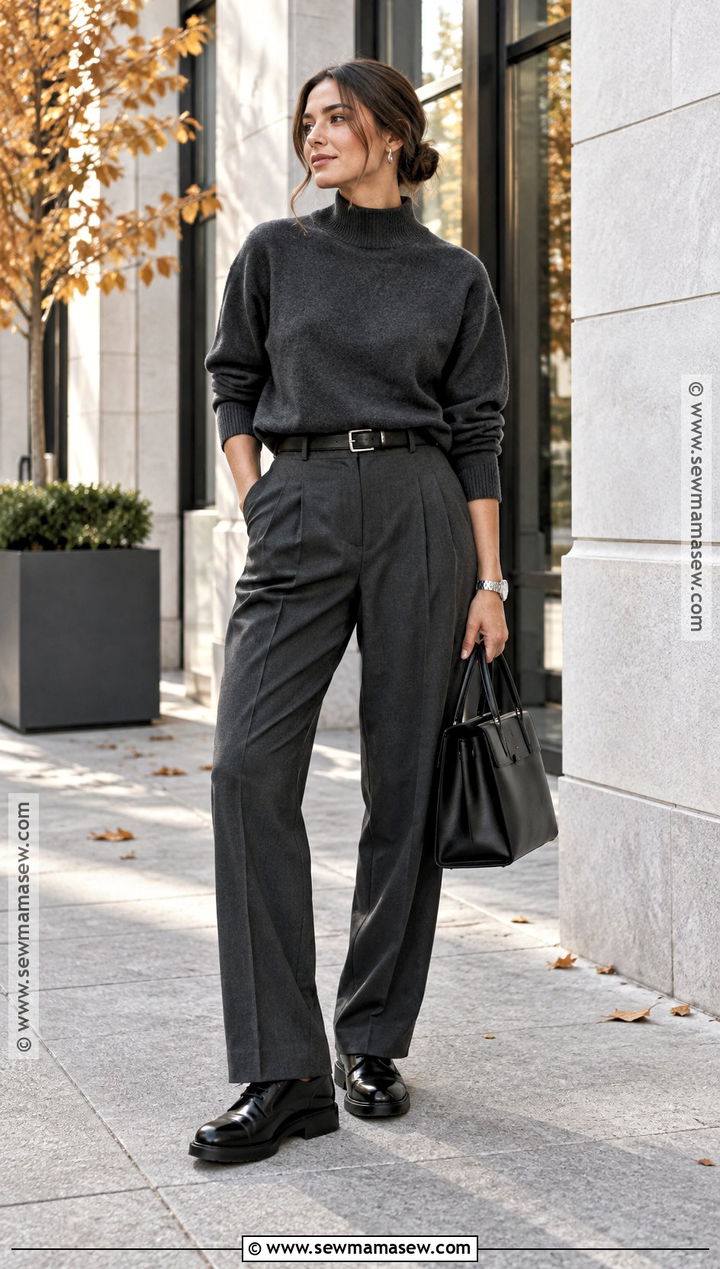
This is the cleanest outfit on the list, and it relies on fit more than anything. A medium-weight mock-neck sweater in black, charcoal, navy, oatmeal or chocolate goes with pleated tailored trousers in a straight or slightly tapered leg. The mock neck sits close to the jaw, which frames the face neatly but can feel tight if you have a short neck; a slightly looser collar fixes that. A dark leather belt adds definition, and derbies or polished loafers keep the line. For a tonal version, mix charcoal, soft gray and black. Add a short wool jacket or a minimal trench when it cools.
15. Puffer Vest With Sweatshirt And Relaxed Jeans
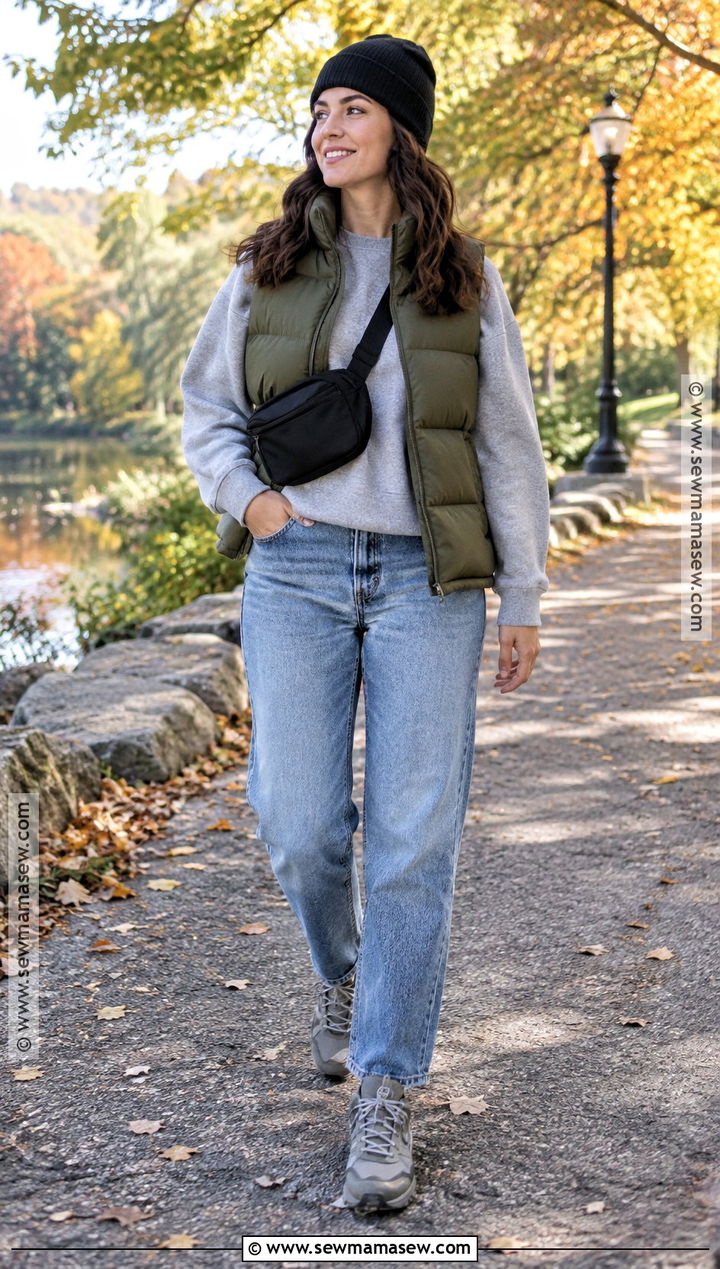
For crisp days, a puffer vest gives core warmth while leaving the arms free, which is handy for commuting and errands. I layer a matte black, olive, navy or brown vest over a heavyweight crewneck sweatshirt in gray or cream, with burgundy or cobalt for a bit of color. Relaxed straight jeans in medium blue, faded black or deep indigo keep it casual. Choose moderate padding; a very puffy vest makes the upper body look twice as wide as the legs. Let the sweatshirt hem show below the vest. Trail sneakers, high-tops or weatherproof boots and a ribbed beanie finish it.
Canvas, Corduroy and Wool Get Better With Wear
Workwear and tailoring fabrics are tougher than most fast-fashion pieces, but they each want slightly different care. Looking after them properly is what lets this kind of wardrobe last for years.
- Cotton canvas and duck: stiff when new. Wear it hard and wash it cold; it softens and shapes to you over a few weeks. Avoid high dryer heat, which can shrink it.
- Corduroy: wash inside out so the ridges don't flatten or pill, and skip ironing the outside, which crushes the pile.
- Wool coats and blazers: brush them after wear and air them on a broad hanger instead of washing. Dry clean only when they're actually dirty.
- Leather jackets: let them dry naturally if they get wet, away from heat, and condition them once a season.
- Flannel shirts: cold wash and low tumble or line dry, since brushed cotton pills faster under high heat.
One more thing I tell everyone: rotate your jackets. Hanging a coat for a day between wears lets the fabric recover, and the shoulders keep their shape far longer.
Structure First, Then Make It Yours
Masculine fall dressing works because comfort and structure support each other. A blazer sharpens relaxed denim, and workwear jackets, tailored trousers and solid boots make casual outfits look purposeful. You don't need to replace your wardrobe. I'd start with two or three neutral pieces that fit well across the shoulders, then add texture through corduroy, wool, leather, flannel or canvas. Rolled cuffs, visible socks and a practical bag change the result more than you'd expect. Treat these as formulas you can adjust, and keep the combinations that fit your proportions and your daily routine.
Related posts: