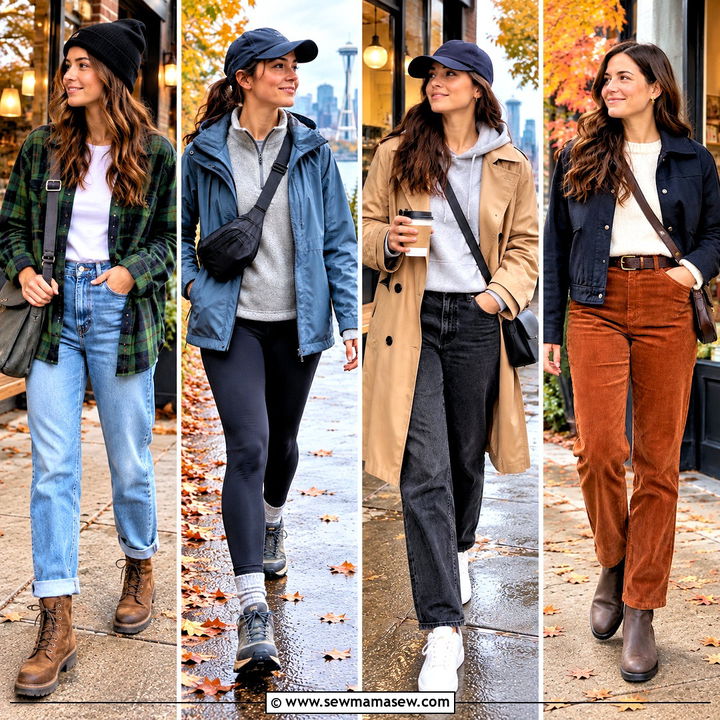
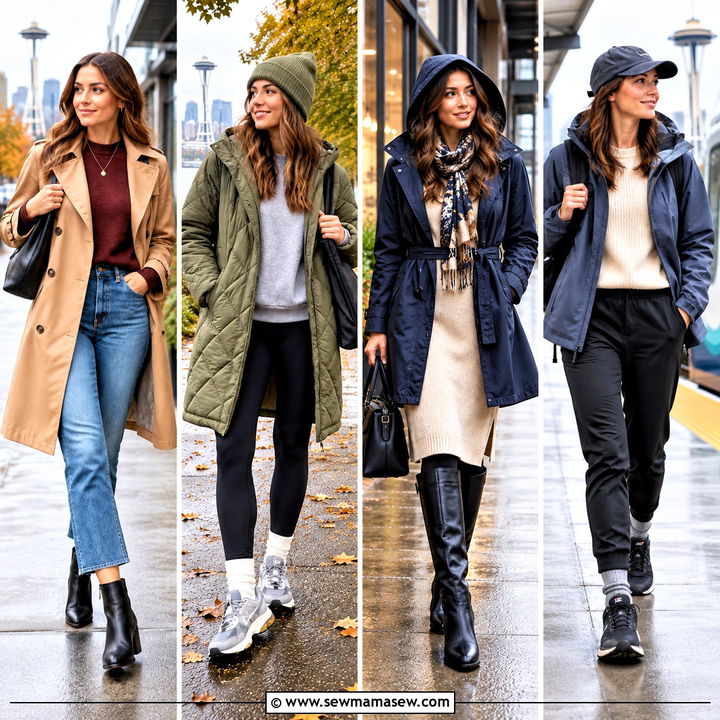
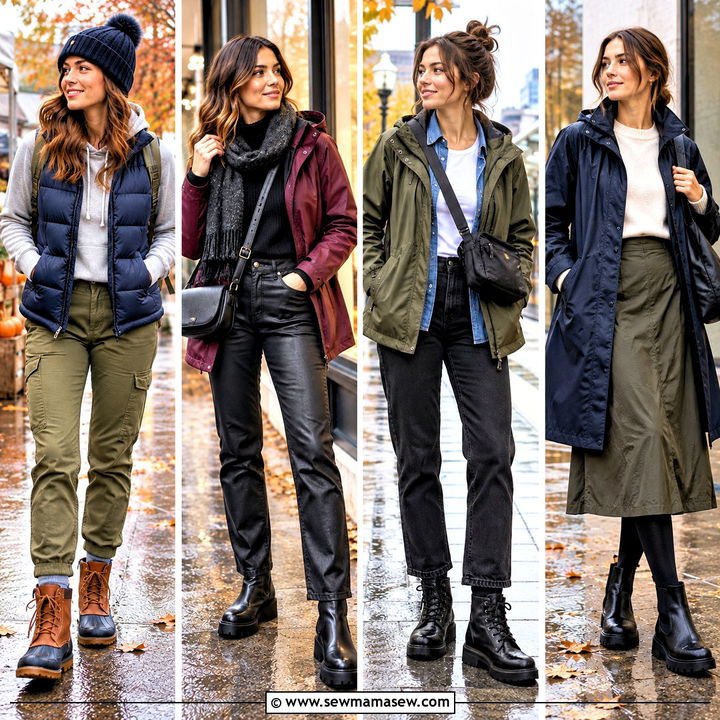
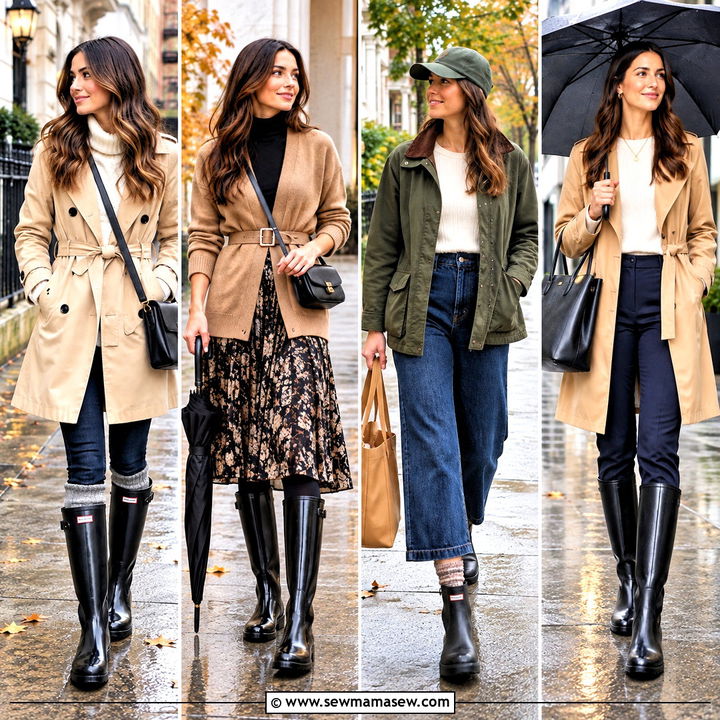
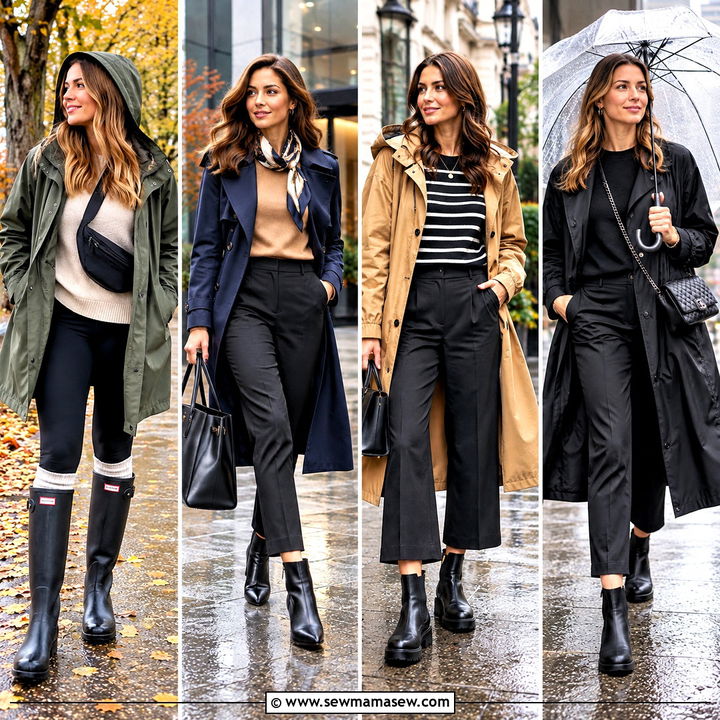
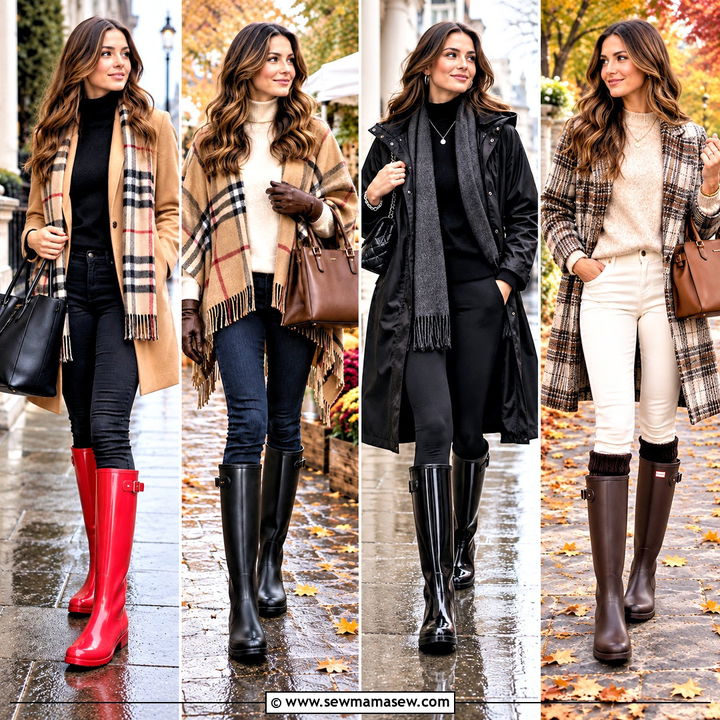
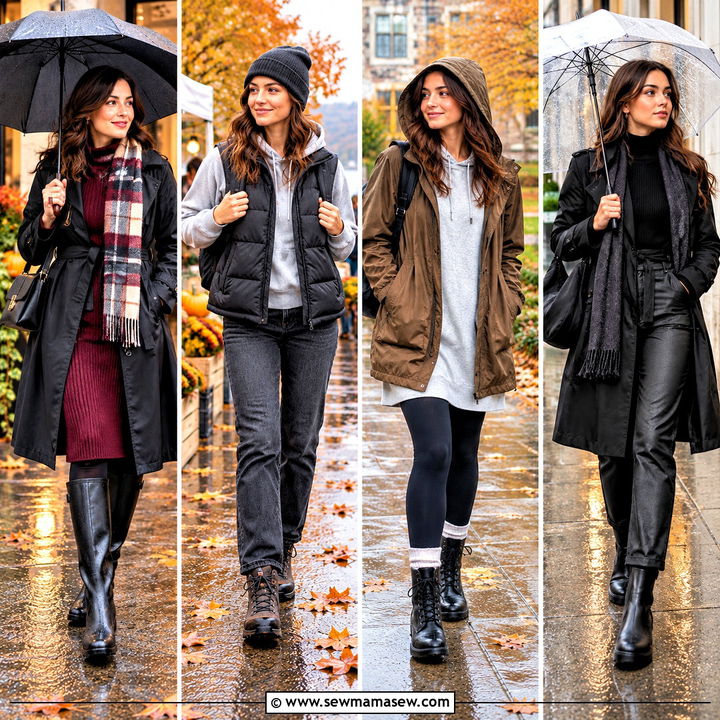
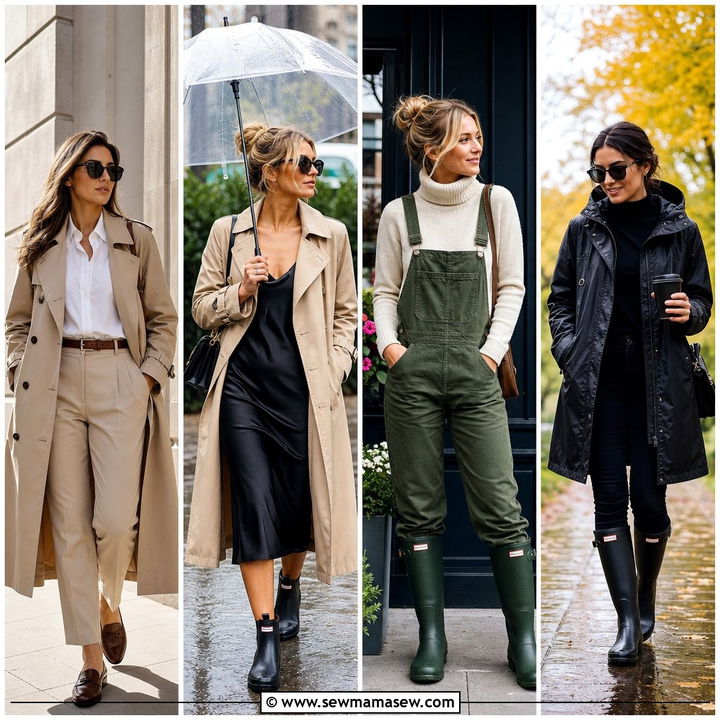
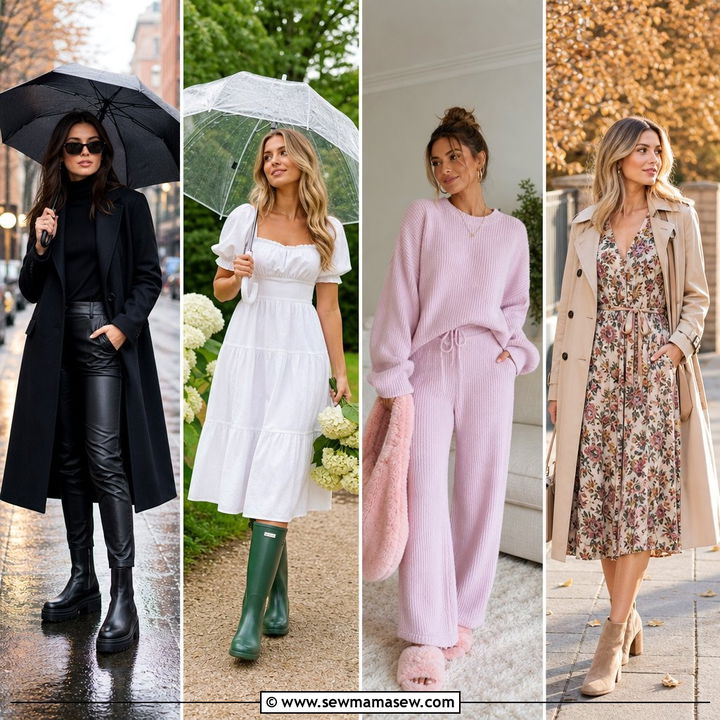
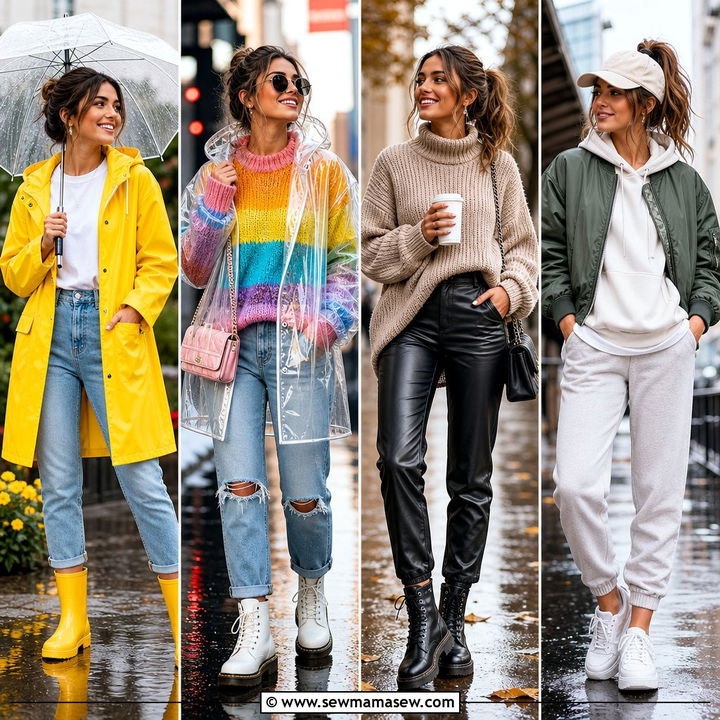
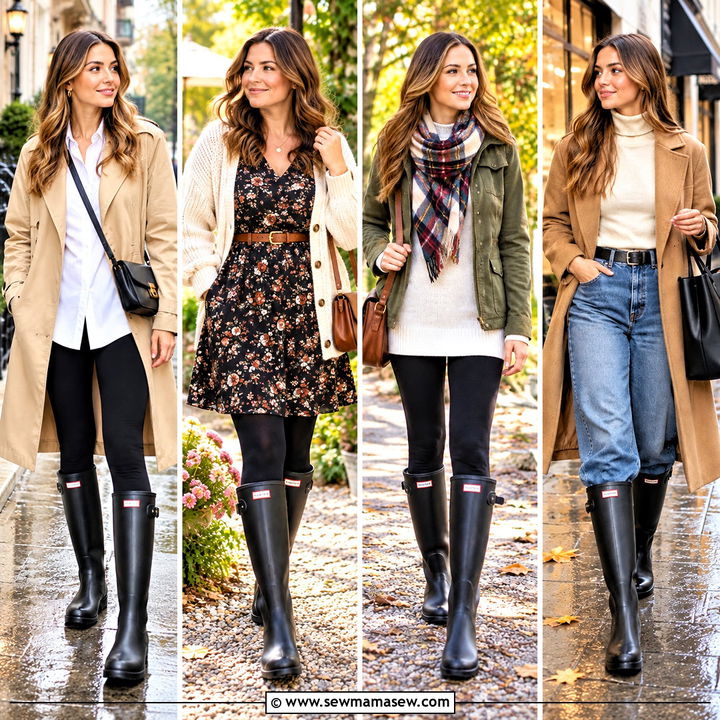
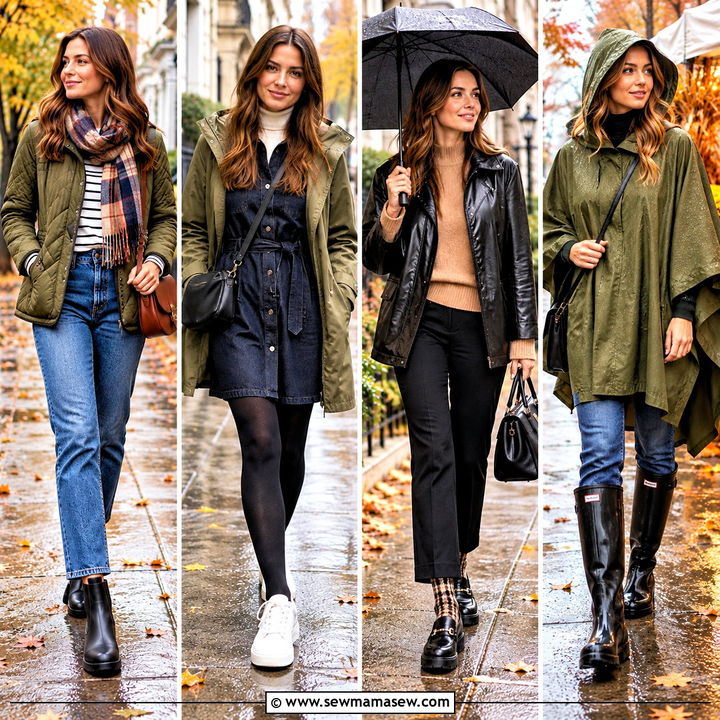
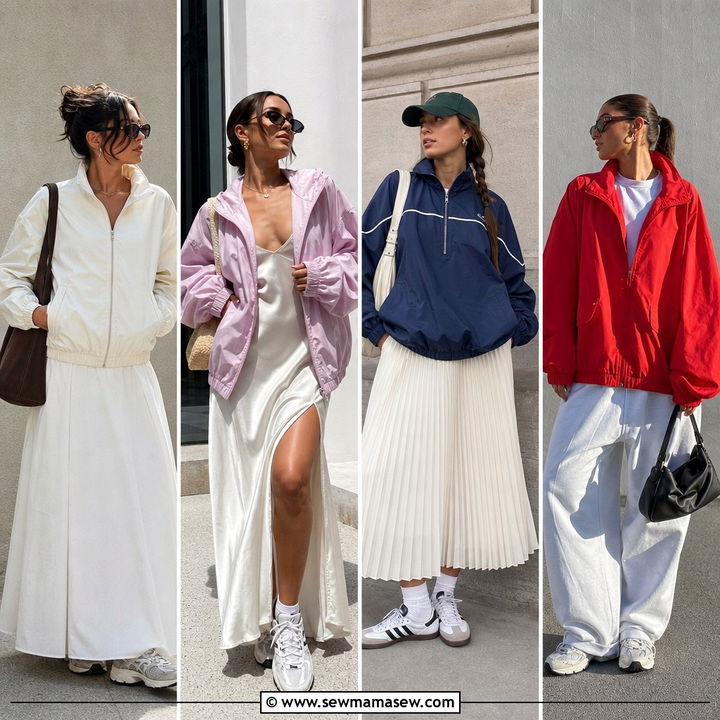
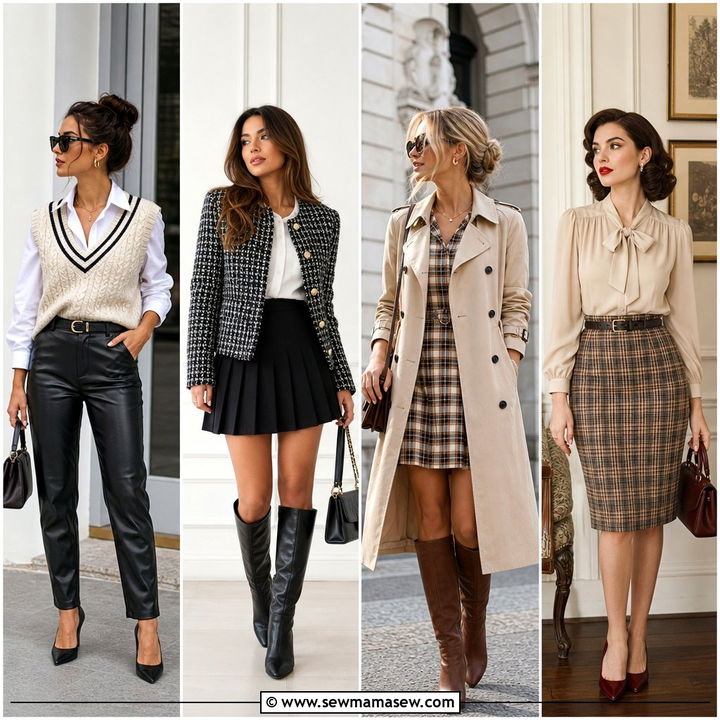
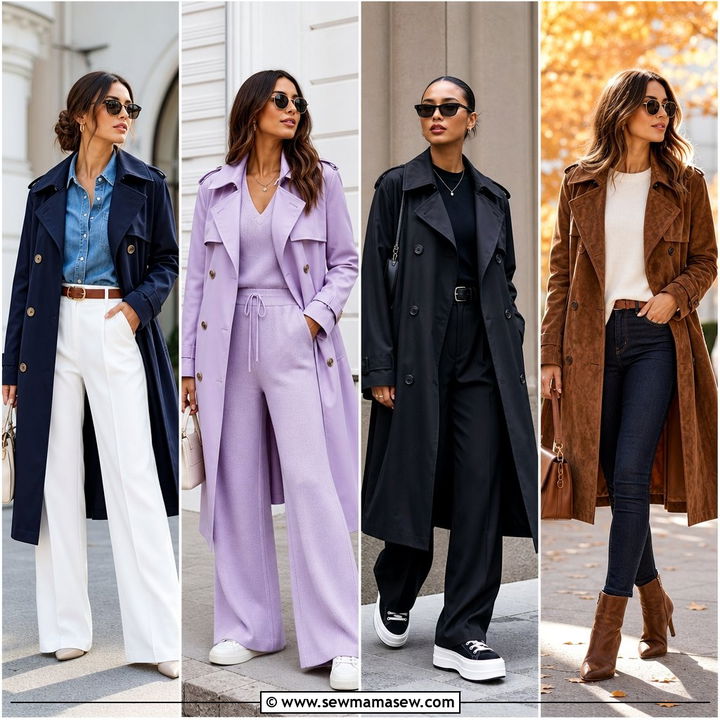
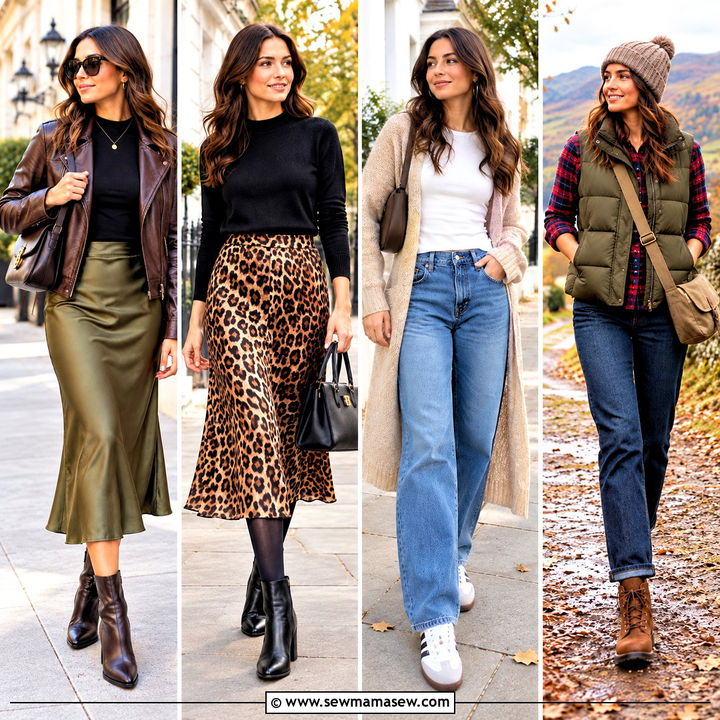
Fall in the Pacific Northwest rarely brings one dramatic storm. It's a cool, gray morning, a mild afternoon, drizzle that comes and goes, and then twenty minutes of sun you didn't dress for. Daytime temperatures in Seattle tend to sit somewhere around the 50s to the mid 60s through the early part of the season, which is why I build every outfit here as three layers instead of one heavy coat: a breathable base, a warm middle and a hooded outer layer that sheds water. The fifteen looks below run from barn jackets and jeans to sweater dresses with rain boots, and I've noted in each one where rain actually causes trouble, because that's where most outfits fail here.
Water-Resistant Versus Waterproof, and When Each One Is Enough
Labels on rain gear are confusing, and buying the wrong level is the most common mistake I see from people new to this climate. Here's how I sort it.
- Water-resistant (trench coats, waxed cotton, many puffers and softshells): tightly woven or treated fabric that beads light rain for a while. Fine for drizzle and short walks between car, café and office. In a steady rain it wets out, usually at the shoulders and cuffs first.
- Waterproof: a membrane or coating behind the outer fabric, with taped seams. This is the level you want for long walks, hikes, ferry decks or a whole day outside. Untaped seams leak even when the fabric is waterproof, so I look for the tape inside the jacket.
- Breathable: how well sweat vapor escapes. A cheap waterproof jacket can leave you as damp from the inside as rain would. Pit zips or a mesh lining help a lot if you walk fast or climb hills.
My rule of thumb: if you'll be outside for more than about half an hour in the rain, go waterproof. For a city day of short hops, water-resistant is usually enough and looks more polished. Many locals skip the umbrella and rely on a good hood, partly because wind turns umbrellas inside out and partly because the rain is often a fine drizzle that a hood handles easily.
1. Pacific Northwest Rain Jacket Outfit With Jeans
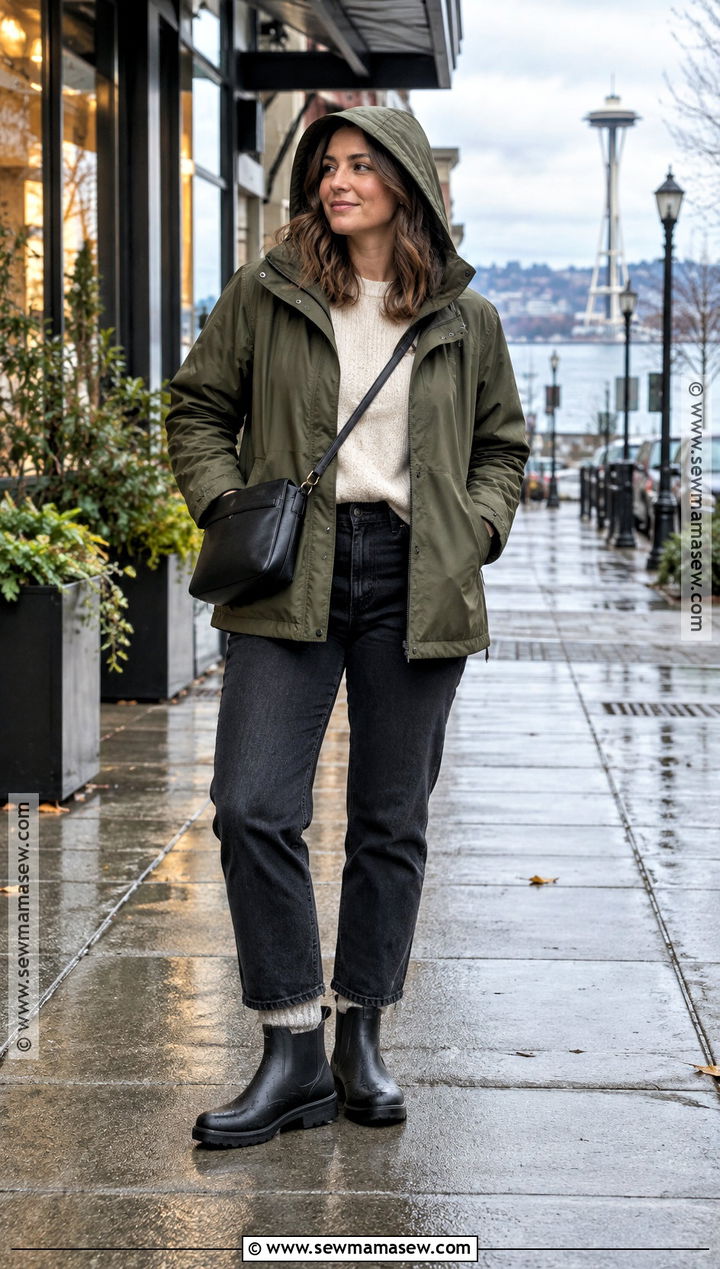
If I could only pack one combination for a rainy fall week, it would be this one. A light rain jacket goes over a fine-knit sweater and dark straight-leg jeans, and the dark wash matters, since it hides drizzle spots and passing-car splashes that show instantly on pale denim. I look for a jacket with a roomy, adjustable hood and enough room in the shoulders for the sweater, because a shell that fits snugly over a tee will pull across the back once you layer. Olive, navy and muted blue sit naturally against the region's evergreen and wet-stone colors. Waterproof Chelsea boots give grip without looking like trail gear. Add wool-blend socks, a crossbody and simple silver earrings, and if the afternoon warms up, drop the sweater and wear the jacket over a cotton tee.
2. Pacific Northwest Trench Coat Outfit With Dark Denim
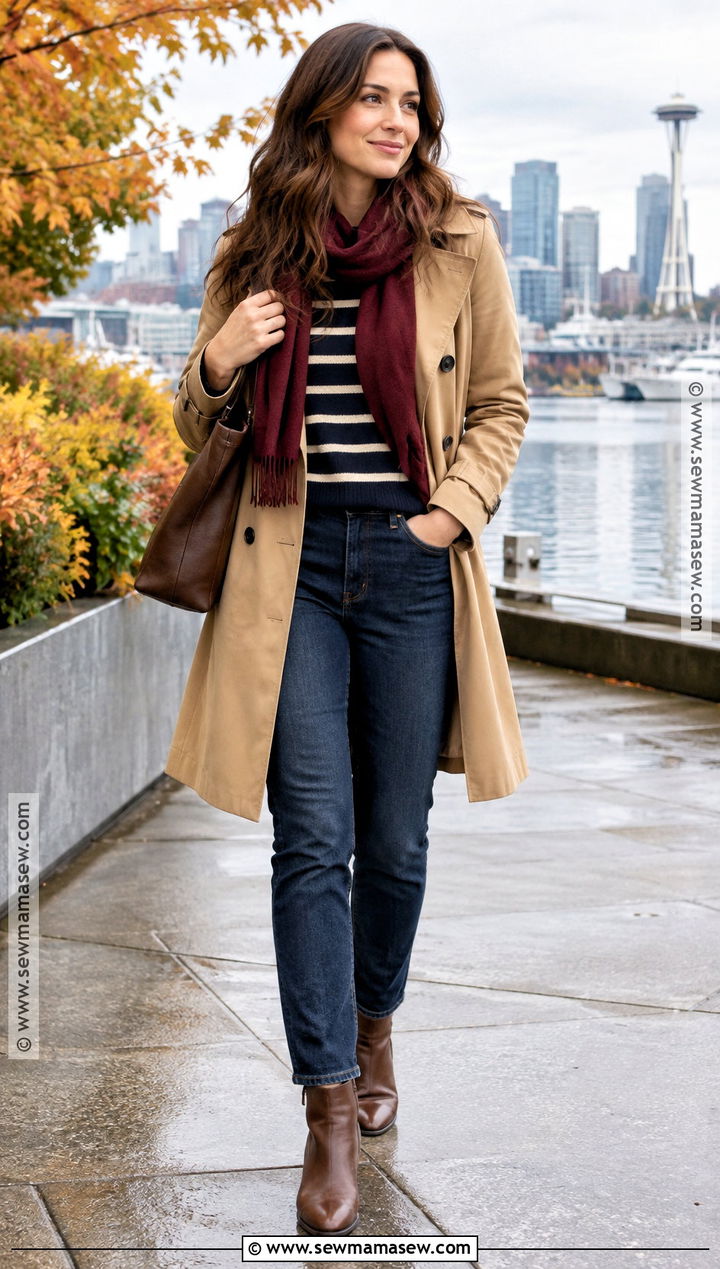
On a light-drizzle day, I'd rather wear a trench than a technical shell. Most trenches are water-resistant, not waterproof, so they handle a passing shower but soak through at the shoulders in a steady rain. Layered over a striped crewneck and dark straight or slim jeans, it looks polished without trying. Belting the waist gives you shape; leaving it open draws a long vertical line, which I suggest for shorter frames. Black or deep brown waterproof ankle boots and a shoulder bag that closes fully keep things dry, and a compact scarf earns its place on a windy ferry deck or a waterfront walk. Camel and navy are the easiest trench colors to wear from a workday into dinner.
3. Pacific Northwest Barn Jacket Outfit With Wide-Leg Jeans
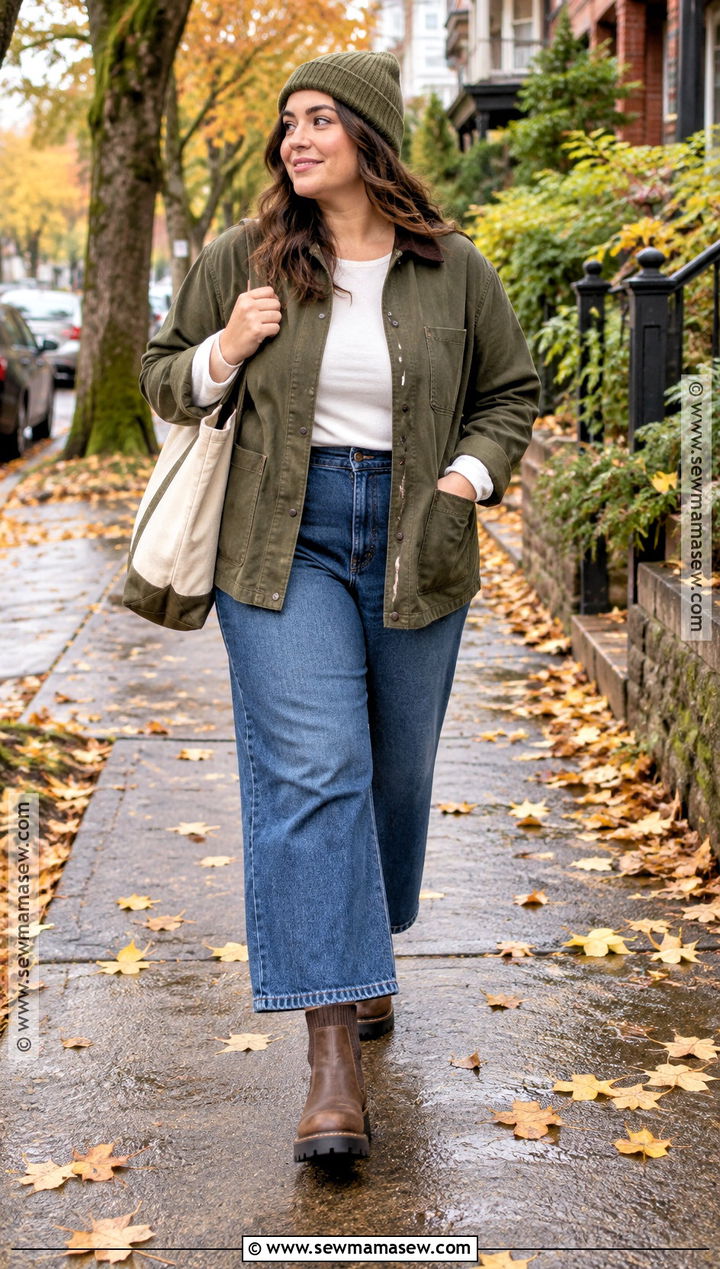
Barn jackets are practical in exactly the way this region needs: roomy pockets, sturdy cotton canvas and a cut that fits a layer underneath. I wear an olive or chocolate one over a white long-sleeve tee with high-rise wide-leg jeans. The hem is the part I check first. Wide-leg jeans that touch the ground act like a wick on wet sidewalks, and by lunchtime the bottom few inches are soaked, so I hem them to clear the pavement in the shoes you'll wear most. Leather sneakers are fine on a dry day; lug-sole boots are safer when showers are forecast. Add a canvas tote, small hoops and a light beanie. On a petite frame, a cropped barn jacket keeps the proportions right, while a hip-length cut balances fuller denim on taller or curvier figures.
4. Pacific Northwest Puffer Vest Outfit With Leggings
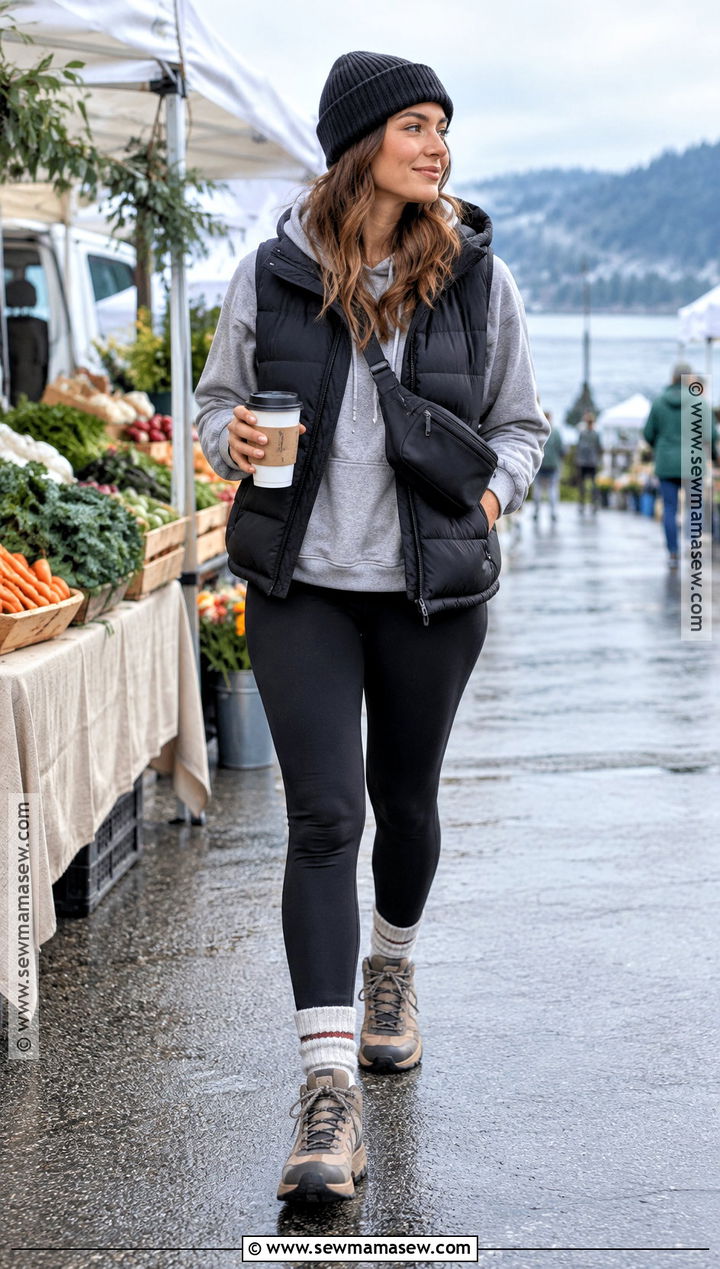
A cold morning that turns mild by noon is the classic case for a puffer vest. It keeps your core warm while your arms stay free and cool. I start with a fitted long-sleeve base or a light hoodie, then add a streamlined vest in black or forest green over thick, fully opaque leggings. Thin leggings go sheer when you bend and chill quickly when damp, so I'd choose a heavier weight. Waterproof hiking-style sneakers handle wet park paths, and a belt bag worn across the chest leaves your hands free for coffee or an umbrella. Wool socks and a ribbed beanie add warmth with almost no bulk. An adjustable hem cord lets you cinch the vest if you want more shape at the hip.
5. Pacific Northwest Flannel Shirt Outfit With Cargo Pants
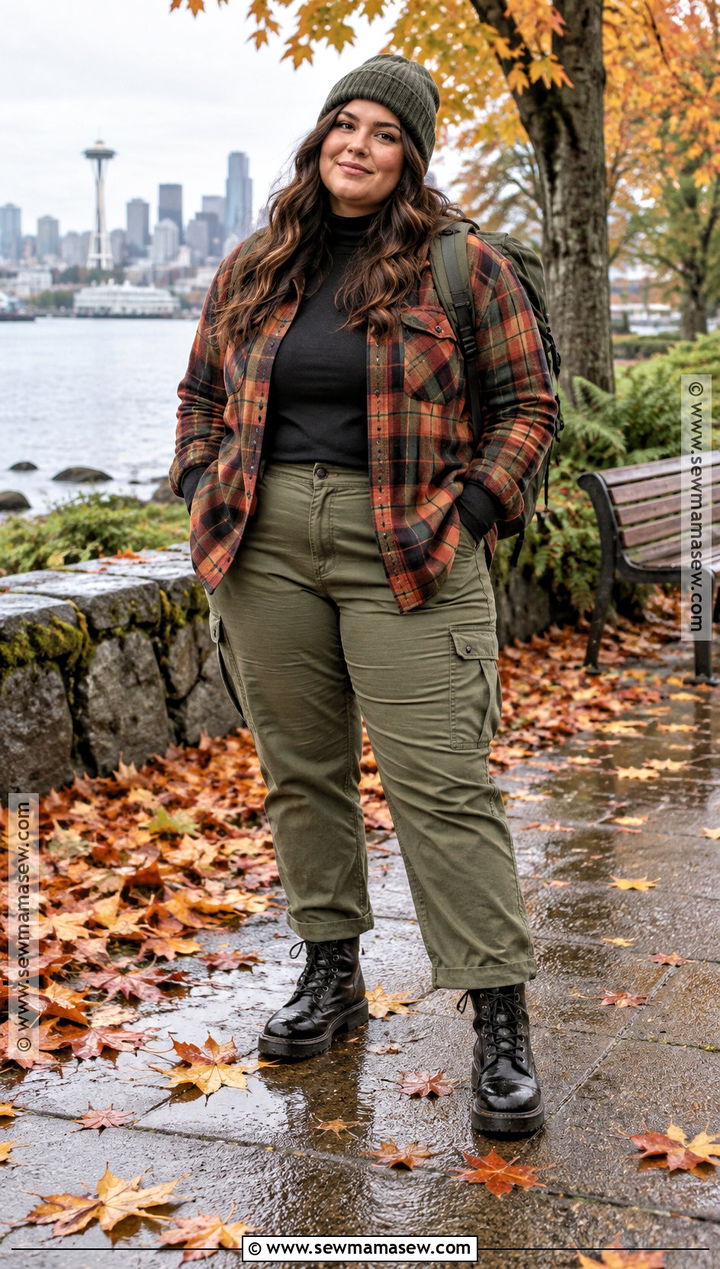
Flannel, cargo pants and boots is the outfit people picture when they think of this region, and it holds up because every piece is practical. I layer a fitted black or cream turtleneck under an oversized plaid flannel worn open, then add straight-leg cargo pants in olive or charcoal. Cotton flannel is warm but absorbent and slow to dry, which is why I keep a packable hooded shell in my bag to throw over it when the rain picks up. Black waterproof combat boots give traction and balance the looser shapes. Roll the flannel sleeves once or twice so the cuffs don't swallow your hands. For more definition, choose high-rise cargos and tuck the base layer in.
6. Pacific Northwest Sweater Dress Outfit With Rain Boots
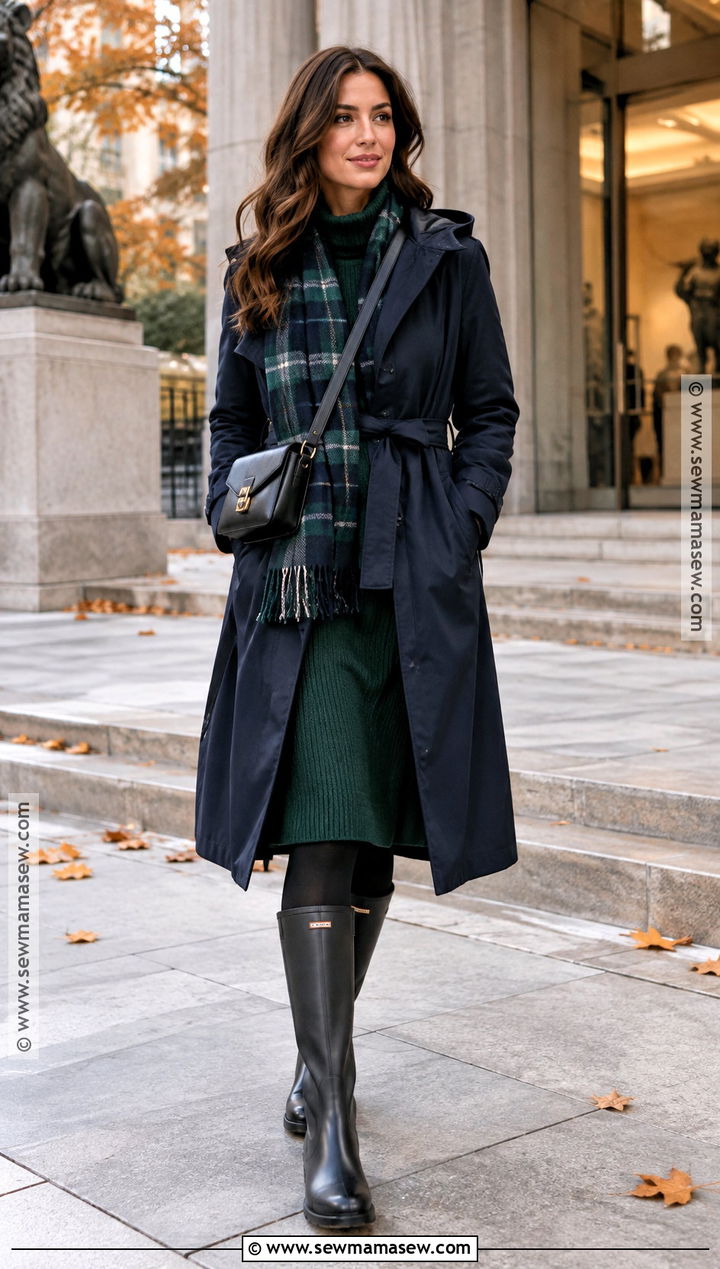
A sweater dress works on a damp day as long as everything around it is waterproof. I choose a knee-length or midi knit in burgundy or deep green, add opaque tights and sleek rain boots rather than bulky outdoor ones, then cover the whole thing with a hooded trench or belted raincoat. My caution is on length: if the dress hangs below the coat, that strip of wool gets wet and stays wet, so the coat should be at least as long as the dress. Knit dresses also stretch at the seat when damp. A straight cut moves easily and suits most shapes, and a narrow belt under the coat adds waist definition if you want it. It's a good office or museum outfit for light rain.
7. Pacific Northwest Cardigan Outfit With A Midi Skirt
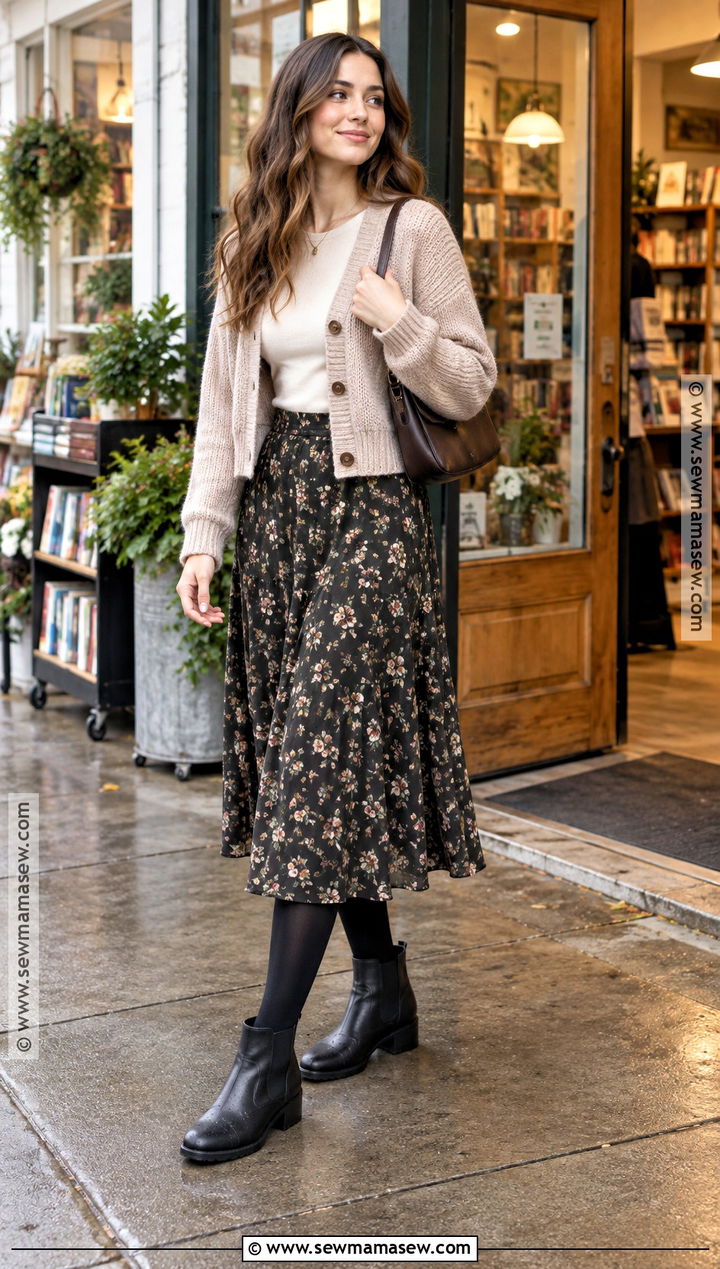
Gray days need some softness, and a cardigan with a midi skirt brings it. I wear a fitted crewneck under a chunky cardigan with a midi skirt in a dark floral or a solid earth tone. The skirt should end above the ankle so the hem stays off wet pavement; below that it collects spray from every puddle you step past. Waterproof ankle boots with a low block heel give stability on slick sidewalks, and opaque tights take over once the temperature drops. A cropped cardigan marks the waist, while a long open one draws a vertical line. Keep a hooded raincoat on hand for showers. It suits a creative office, a slow brunch or an afternoon in a bookstore.
8. Pacific Northwest Fleece Outfit With Straight-Leg Jeans
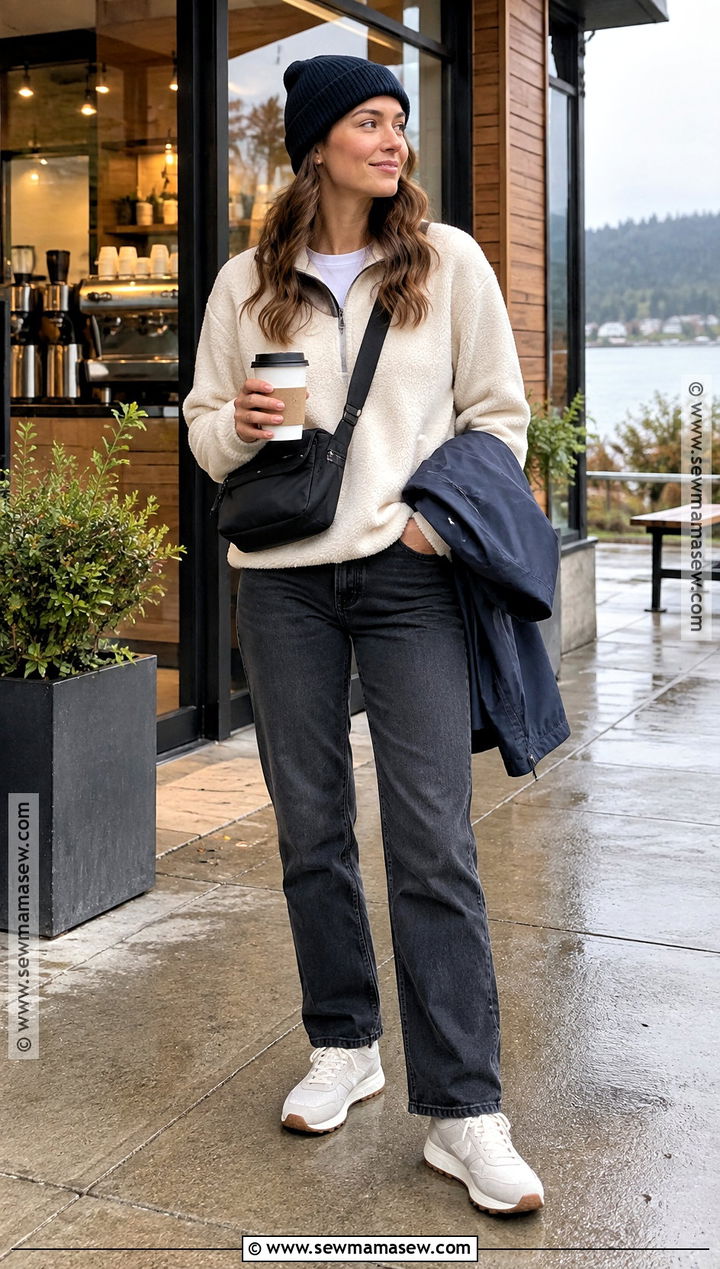
A half-zip fleece is warm, dries fast and asks almost nothing of the rest of the outfit. I layer one over a thin cotton or merino tee and leave the collar partly unzipped so I don't overheat walking uphill. Straight-leg jeans in medium or dark blue and waterproof leather sneakers finish it. Fleece has no water resistance at all, so on wet days a slim rain shell goes over the top, and that shell should pack small enough to vanish into a tote when the sky clears. Cream, rust or a color-blocked fleece keeps the look from going flat. A cap or beanie and a crossbody bag are all it needs. A slightly cropped fleece sits nicely over high-rise jeans.
9. Pacific Northwest Puffer Jacket Outfit With Knit Pants
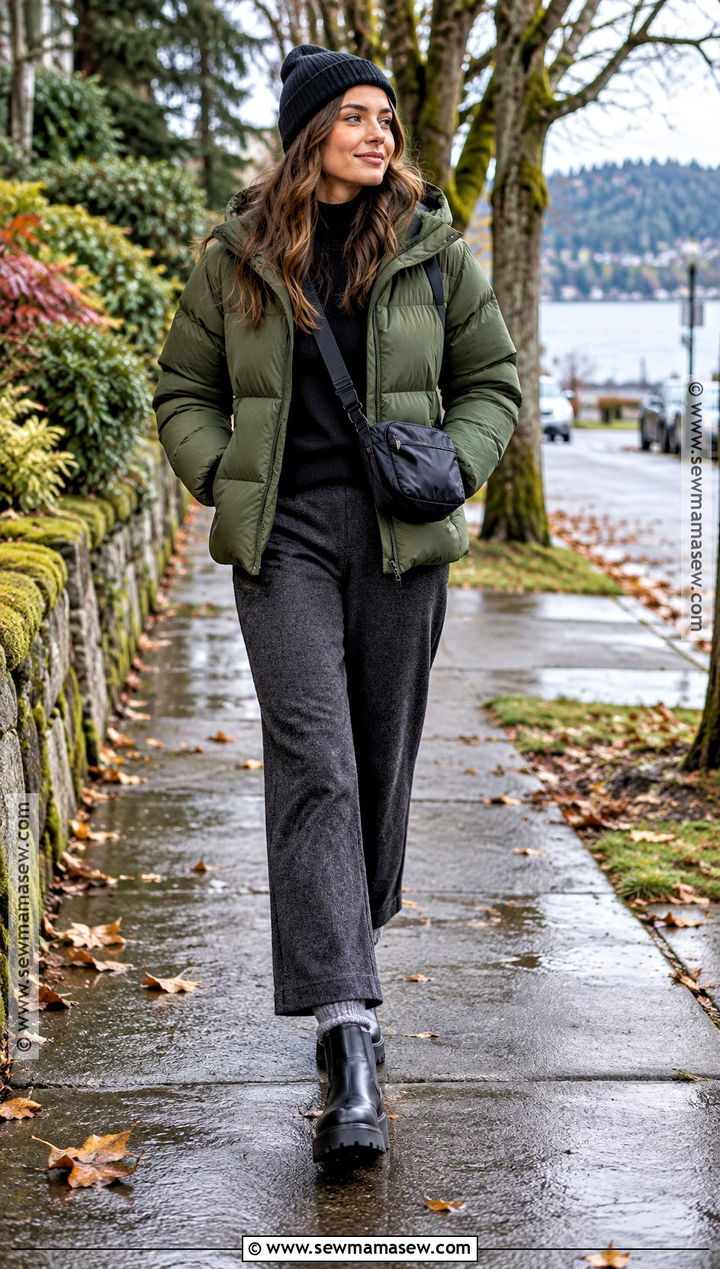
Later in the season, cold rain calls for real insulation. I wear a light hooded puffer over a fitted mock-neck with straight-leg knit pants. The pants need a structured waistband and a substantial fabric, or they read as pajamas next to the jacket. Waterproof lug-sole boots protect your feet and give a solid base to all that softness, and thick socks add warmth no one sees. One thing to know about down: most standard puffers have a water-repellent finish but aren't waterproof, and soaked down loses much of its loft, so in a downpour I'd pick a synthetic fill or put a shell on top. Black, cream and moss green make an easy palette. It's a dependable choice for travel days and long walks.
10. Pacific Northwest Blazer Outfit With Tailored Trousers
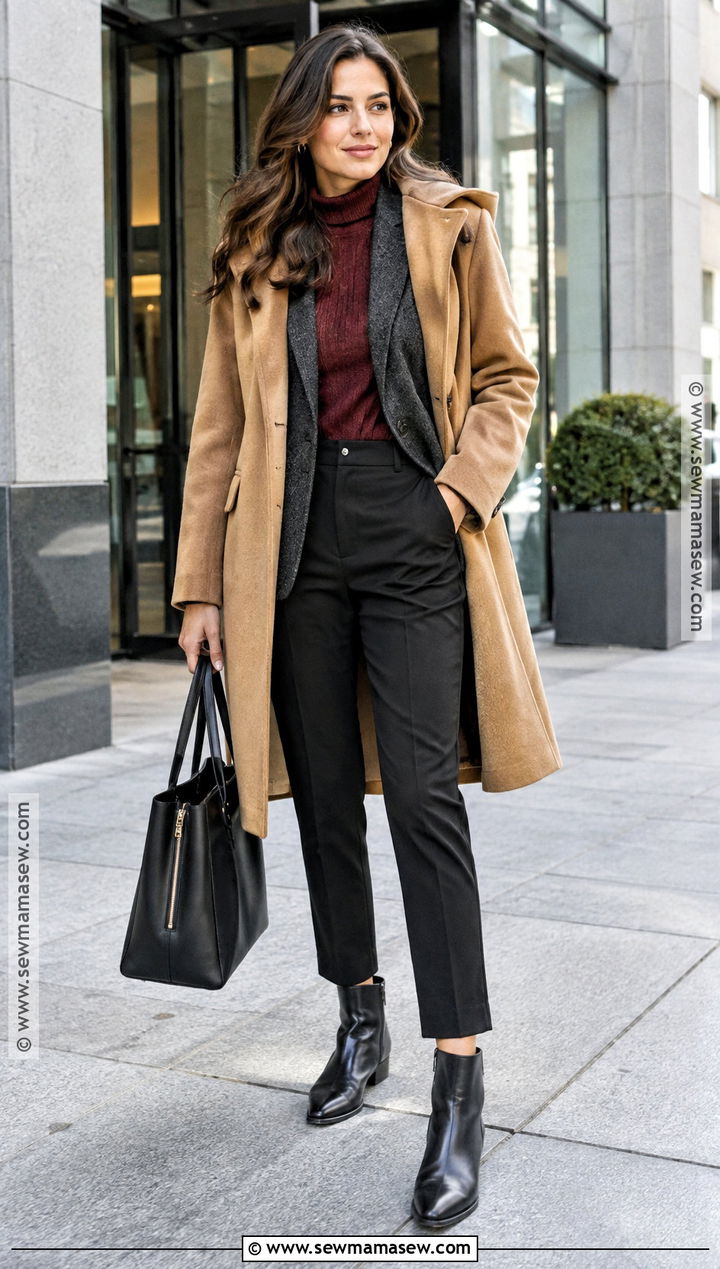
For the office, the trick is to keep the polished layers dry until you arrive. I put a wool-blend blazer over a fine turtleneck with ankle-length tailored trousers in charcoal or camel. Ankle length isn't only a style call; full-length trousers drag in puddles and stay damp at the hem all day. Waterproof loafers handle a mild day, and sleek weather-resistant ankle boots are better if rain is forecast. A belted trench or minimal hooded raincoat goes over everything for the commute, and I choose a structured tote with a zipper so a laptop and papers stay dry. If a classic blazer feels stiff, a knit or softly tailored version with stretch is easier to wear. Tucking the turtleneck in gives a clean line on petite, tall and curvy frames alike.
11. Pacific Northwest Denim Jacket Outfit With Black Jeans
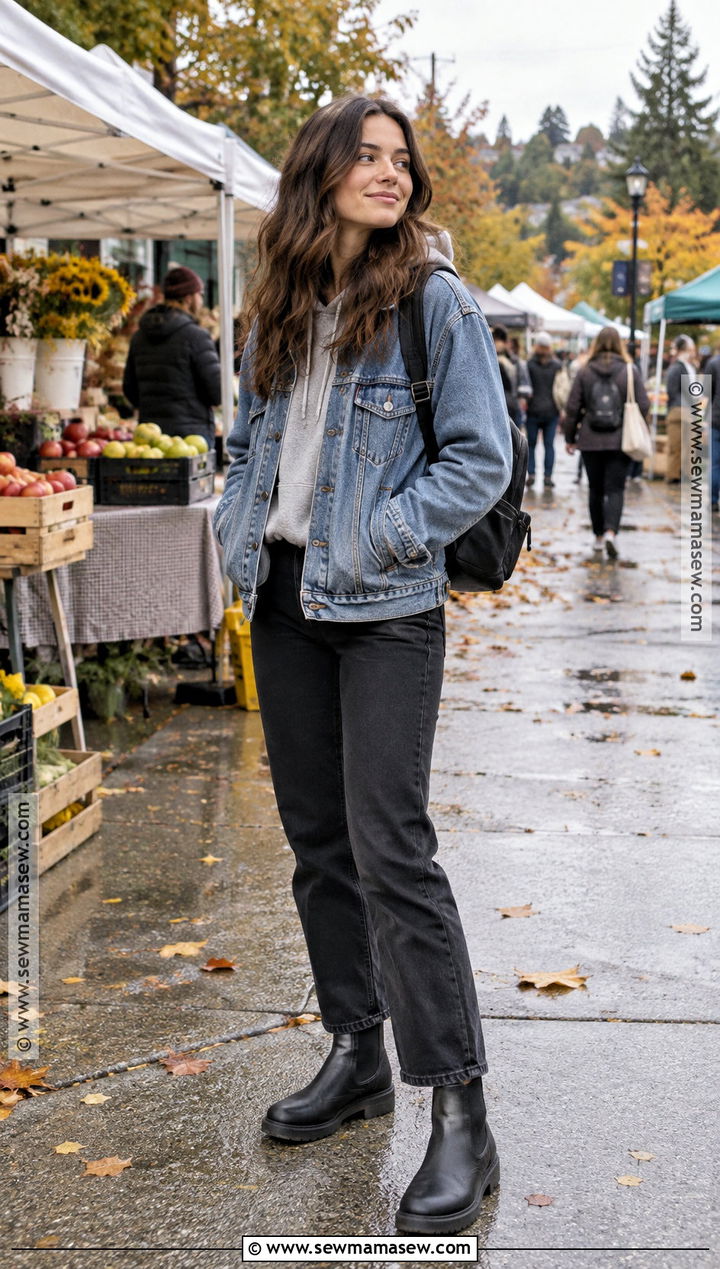
Early fall mornings are cool and the afternoons are comfortable, so a denim jacket over a light hoodie covers both. I pair a medium or dark denim jacket with a gray or cream hoodie and black straight-leg jeans. The hoodie has to be thin; a thick sweatshirt hood bunches behind a denim collar and pushes the jacket off your shoulders. Waterproof Chelsea boots or leather sneakers treated with a water repellent handle the damp. Denim soaks up rain and gets heavy, so if showers look likely, I swap the jacket for a water-resistant shell or carry a packable one. Cuffing the jeans once keeps the hems off wet ground. It's an easy outfit for road trips and markets.
12. Pacific Northwest Shacket Outfit With Corduroy Pants
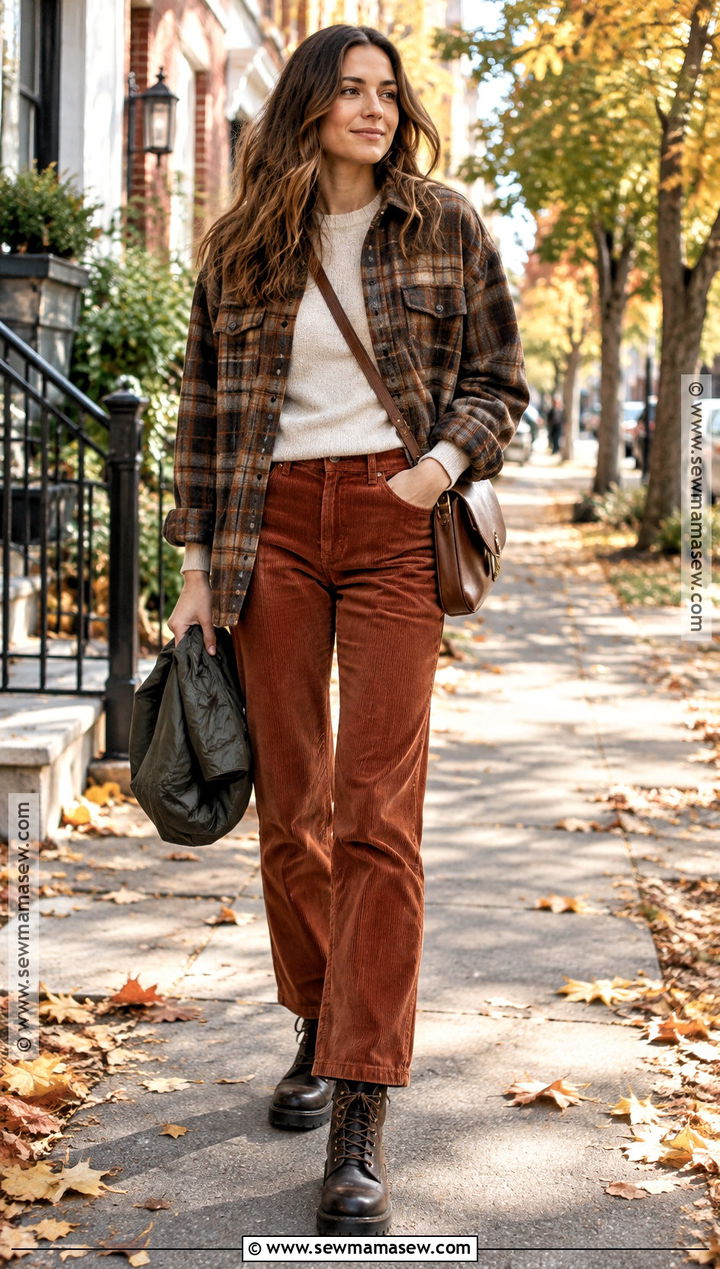
The shacket gives you a shirt's ease with enough weight for crisp air. I layer a plaid, brushed cotton or wool-blend shacket over a slim merino crewneck and add straight-leg corduroys in rust or olive. Wool-blend shackets shed a light mist far better than brushed cotton, which darkens and soaks through quickly, so if yours is cotton, a compact hooded shell should come along. Weather-resistant lace-up boots grip wet leaves, which are slicker on a sidewalk than most people expect. A leather crossbody and studs keep it clean. I like a shacket that ends near the upper thigh. Petite wearers may prefer a cropped cut, and a boxy style with dropped shoulders gives more room for layers.
13. Pacific Northwest Waxed Jacket Outfit With Blue Jeans
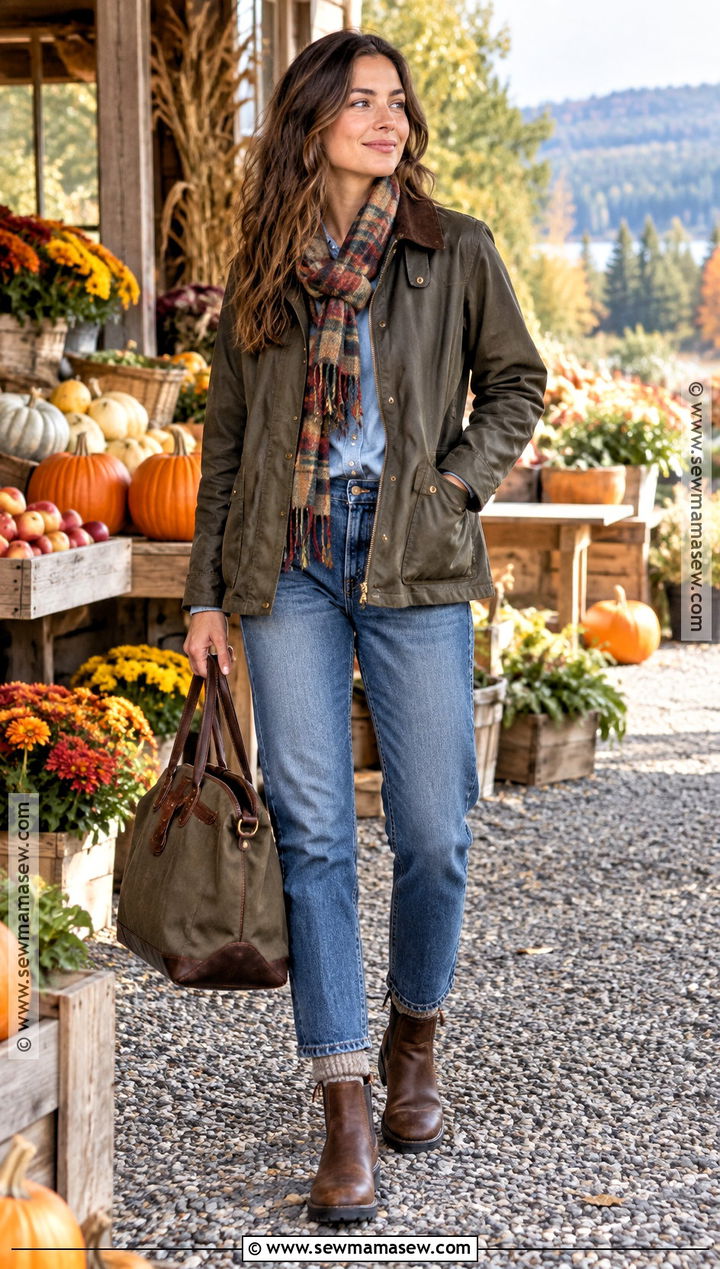
Waxed cotton is one of the few heritage fabrics that genuinely earns its reputation in drizzle. I wear the jacket over a chambray shirt or a light crewneck with classic blue straight-leg jeans, brown waterproof ankle boots, wool socks and a leather or coated-canvas bag. The wax sheds water, but it also traps heat, so I keep the layers underneath light for anything more active than a stroll. Olive and dark brown wax jackets crease and patina with wear, and that worn look is part of the appeal. A patterned scarf adds color and comes off when it warms up. Look for a hood or a tall corduroy collar you can turn up when the drizzle turns sideways.
14. Pacific Northwest Hiking Outfit With A Rain Shell
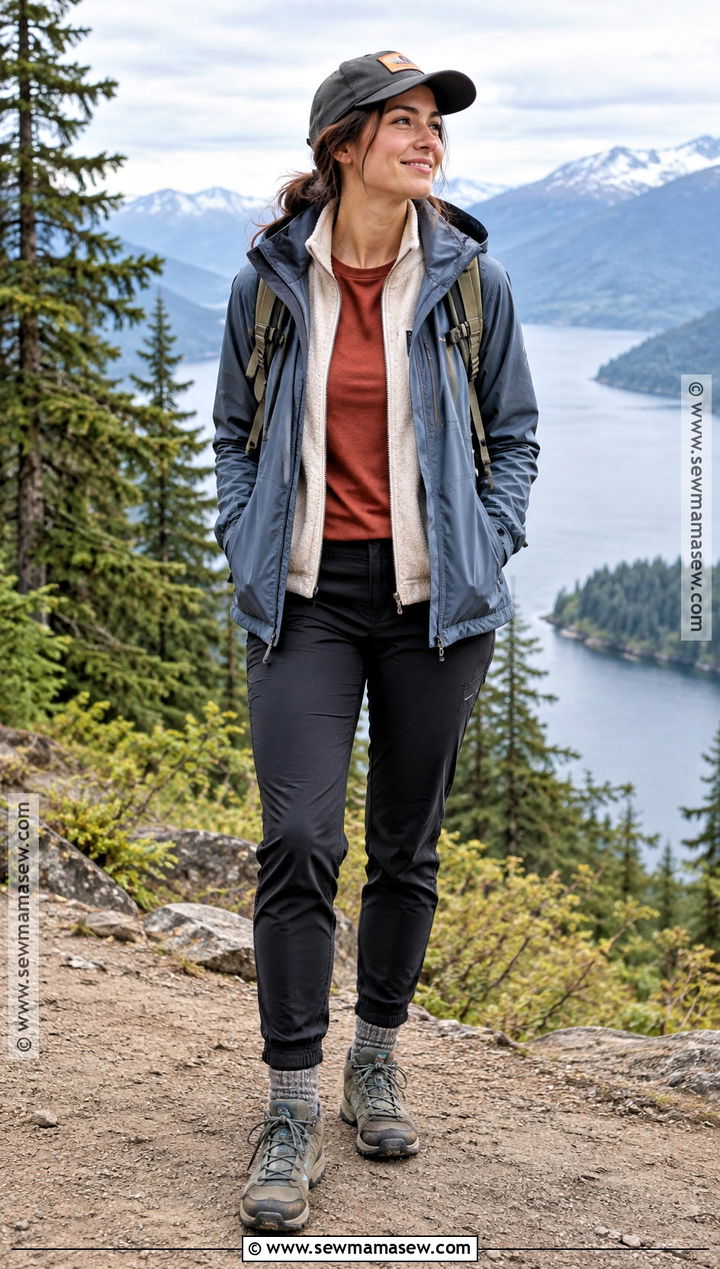
On a forest trail, the outfit has to manage sweat from the inside as much as rain from the outside. I start with a moisture-wicking long-sleeve top and add a light fleece, then water-resistant hiking pants and waterproof trail shoes with wool-blend socks. A breathable hooded rain shell goes on last; it blocks wind and rain but adds little warmth, so the fleece does that job. Cotton is the one fabric I keep off a trail entirely, because once it's wet from rain or sweat it stays cold for the rest of the hike. Conditions near the coast can change within an hour, which is why each layer should come on and off easily. A small water-resistant daypack and a brimmed cap under the hood keep rain off your face. Rust, moss and slate blue look good in photos and are easy to spot among the trees.
15. Pacific Northwest Parka Outfit With Trousers
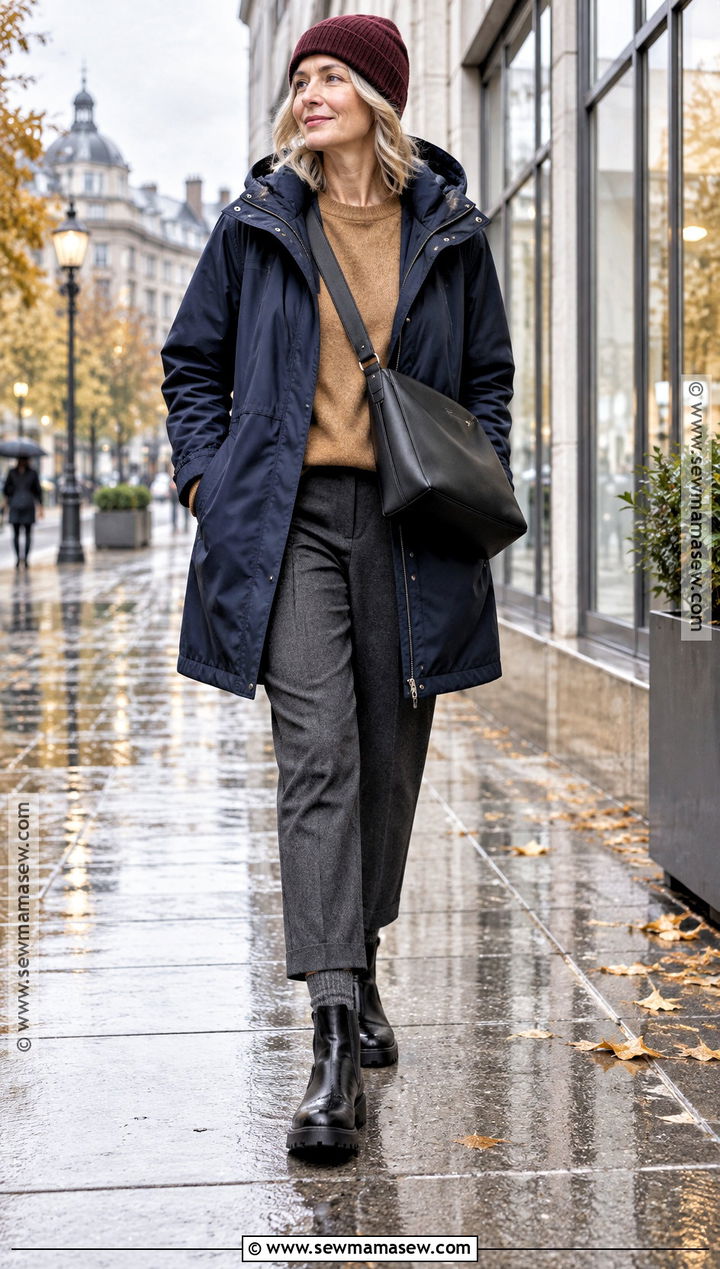
Late fall brings wind and drizzle that last for days, and that's when I reach for a long waterproof parka. It goes over a soft crewneck with relaxed ankle-length trousers in ponte or a technical woven, both of which dry much faster than heavy cotton twill. Waterproof lug-sole boots give traction and visually anchor the longer coat. A roomy crossbody, wool socks and a ribbed beanie finish it. A parka with an adjustable waist cord gives definition, while a straight cut leaves room for thick knits. Navy with camel and olive with black are combinations I return to. I check the hood before buying: a good one has a brim and stays put when you turn your head.
A Week in Seattle or Portland From One Carry-On
If you're visiting rather than living here, the outfits above pack down to a small capsule. This is roughly what I'd put in a carry-on for a fall week, with every piece working with at least three others.
- One waterproof hooded jacket, worn on the plane.
- One warm middle layer: a fleece or a light puffer vest.
- Two sweaters in fine merino or a wool blend, one neutral and one color.
- Three base layers: two long-sleeve tees and one turtleneck.
- Two pairs of dark jeans or one jeans plus one pair of ankle-length trousers.
- Waterproof ankle boots worn on the plane, plus one pair of sneakers with a treated upper.
- Wool socks, a beanie, a scarf, and a crossbody bag that zips.
I leave suede shoes and pale, full-length pants at home for a trip like this. Both show water marks quickly, and neither dries well in a hotel room overnight.
Keeping Rain Gear Working Past the First Season
Rain jackets don't usually fail because the membrane wears out. They fail because the outer face stops beading water, soaks through and feels like a leak. That water-repellent finish wears down with dirt, body oils and abrasion from bag straps. Washing the jacket in a technical wash rather than regular detergent, then a low tumble dry if the care label allows it, often brings the beading back. When it doesn't, a spray-on or wash-in repellent restores it.
Waxed cotton needs re-waxing once it starts to look dry and pale at the elbows and shoulders, which for regular wearers tends to be every season or two. Never machine wash it, since hot water strips the wax. Leather boots last longer if you let them dry slowly at room temperature, away from a heater, and condition them once they're dry. Wool sweaters that get caught in the rain should dry flat, never hung, or the wet weight stretches the shoulders out of shape.
Three Layers and a Hood Get You Through the Season
Every outfit here follows the same logic, and once you see it you can build your own: a breathable base, a warm middle layer you can take off, and a hooded outer layer that's always within reach. Dark denim, earthy colors and boots with real grip make it easy to mix the pieces all season. The details that matter most in this climate are small ones, like hems that clear the pavement, soles that grip wet leaves and a coat roomy enough for the sweater you'll actually wear under it. Adjust each formula to your body and your daily routine, and gray, drizzly days stop being something you dress around.
Related posts: