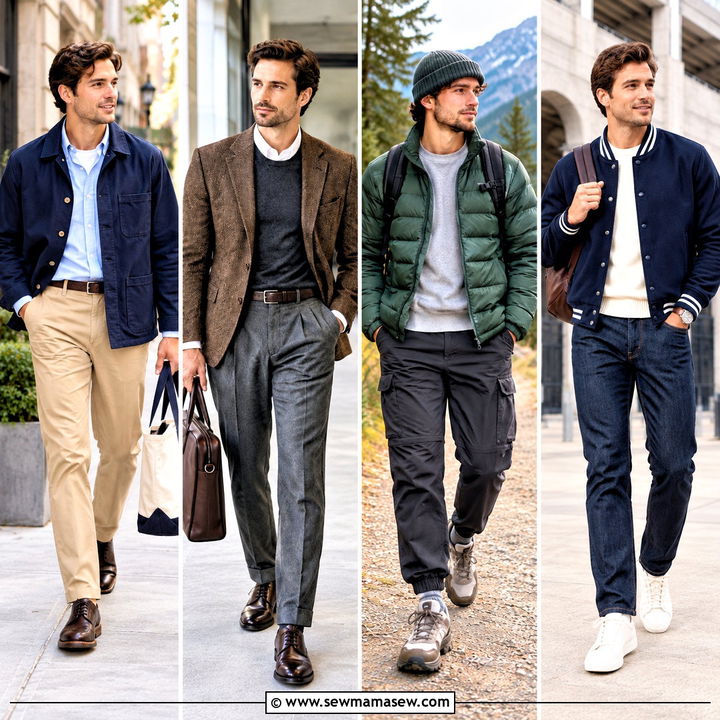
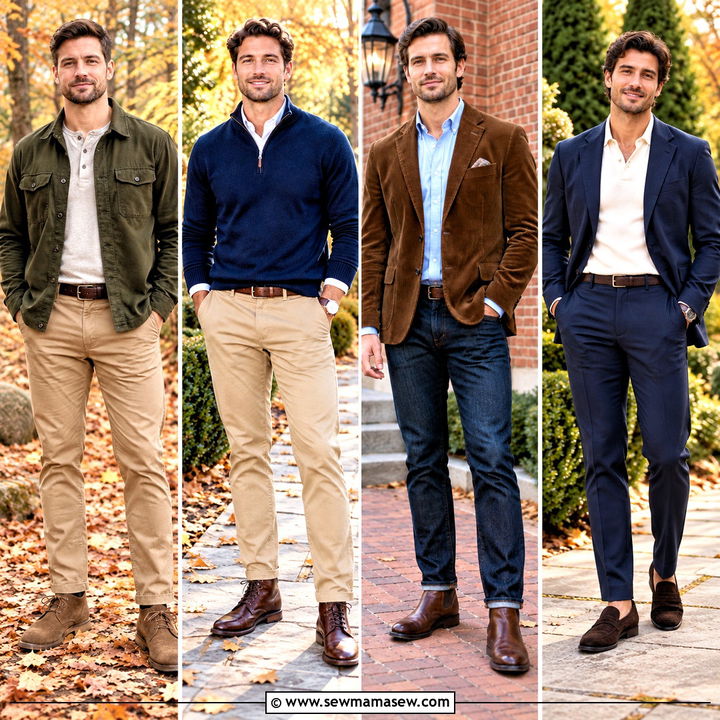
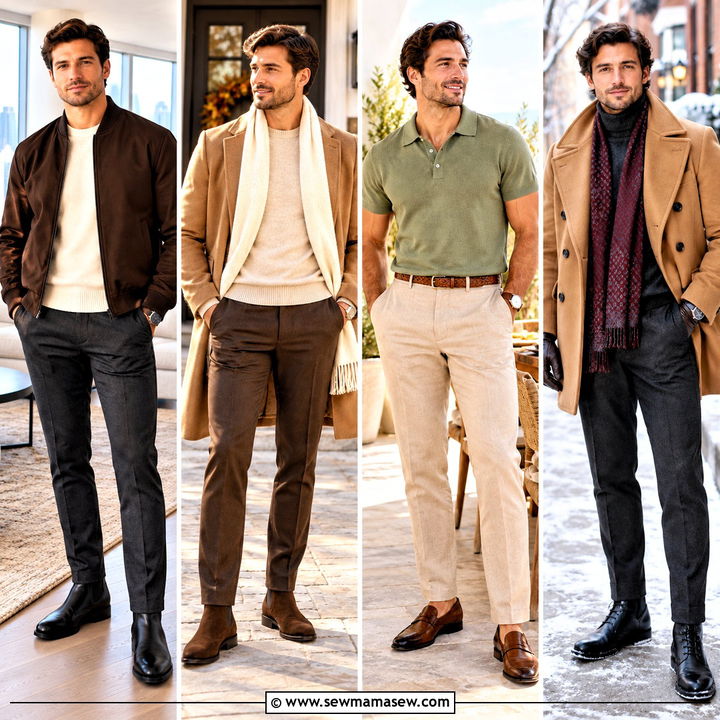
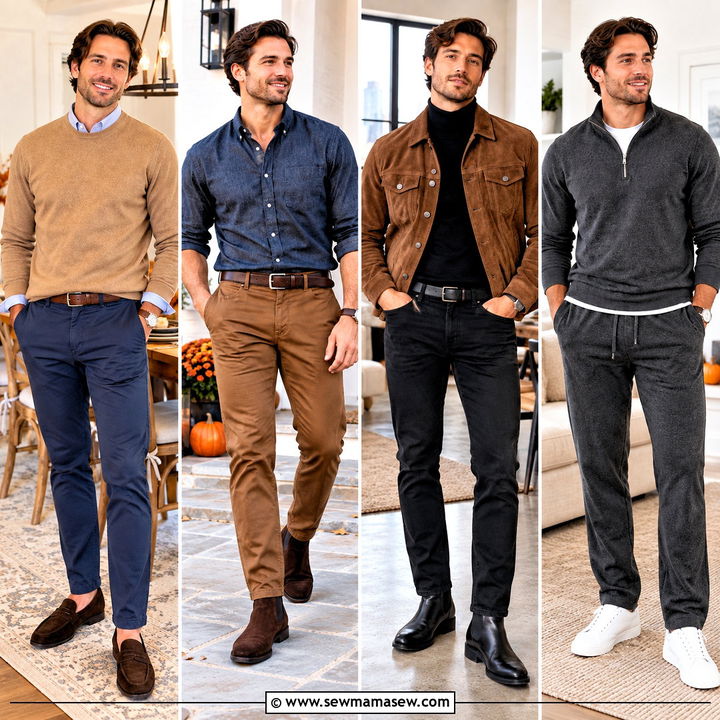
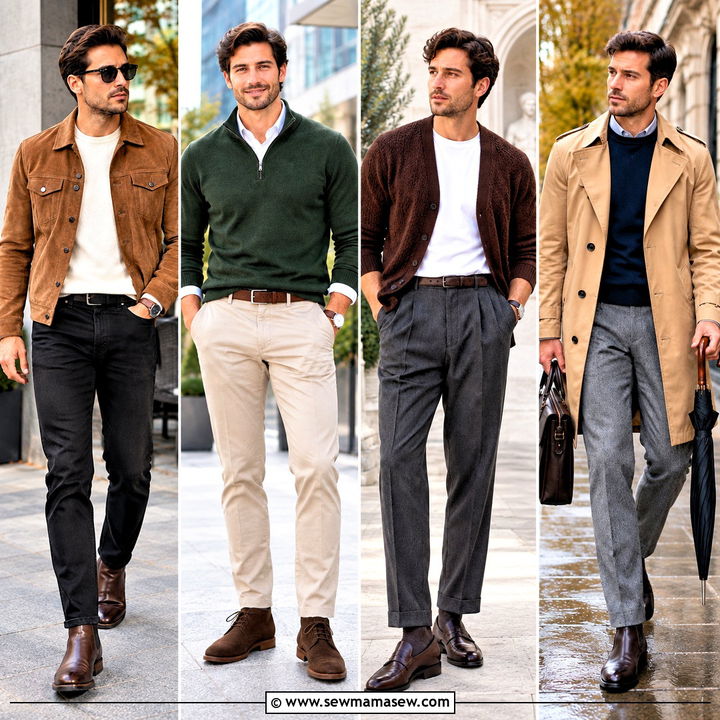
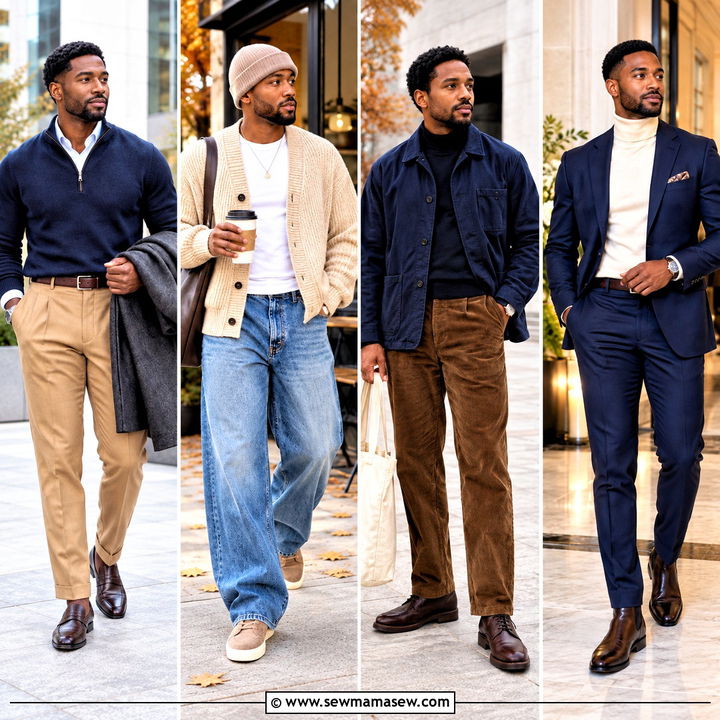
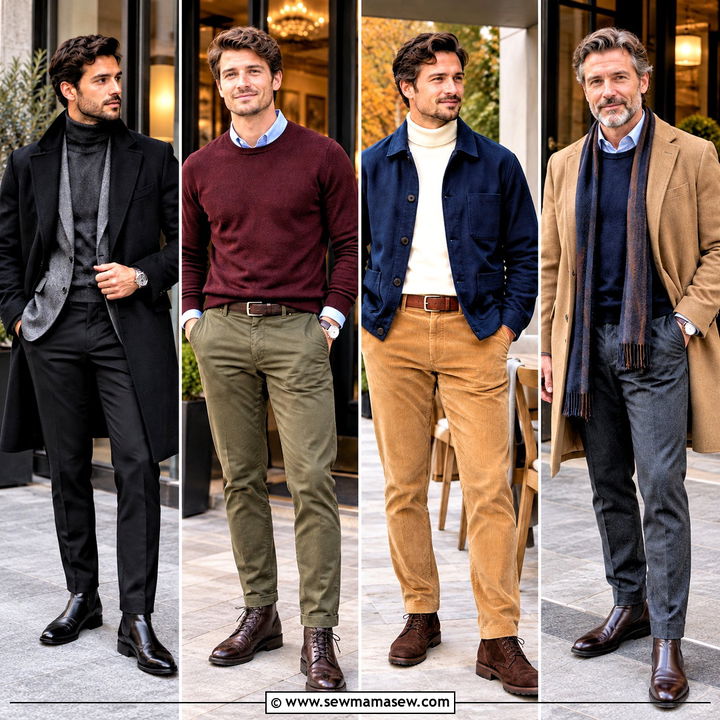
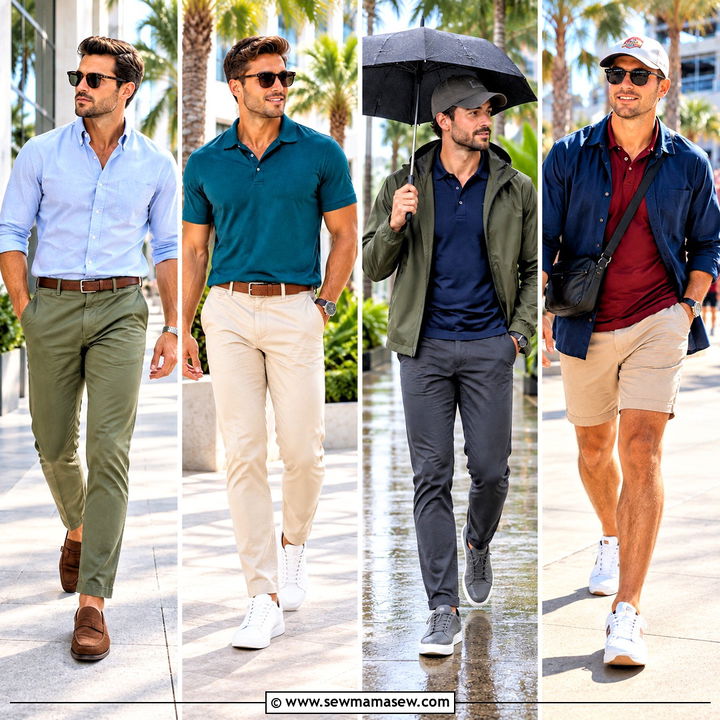
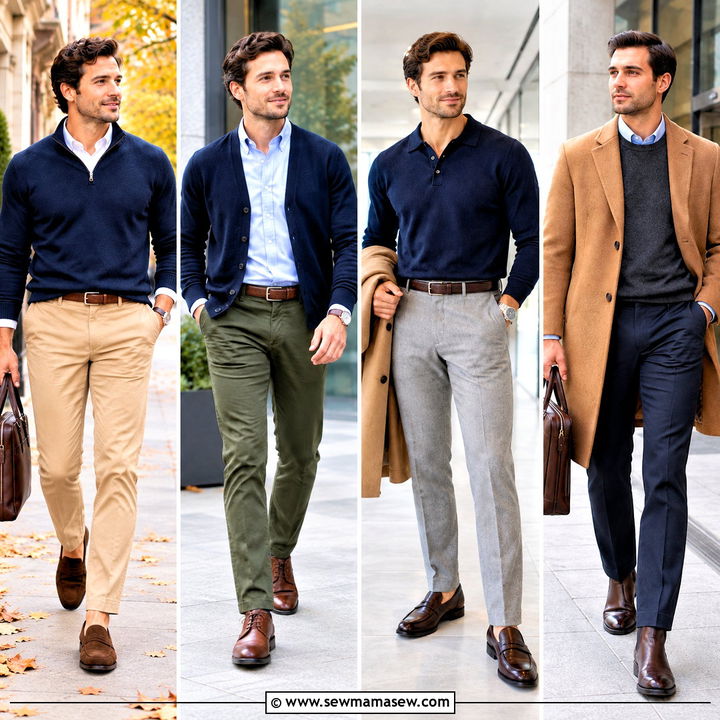
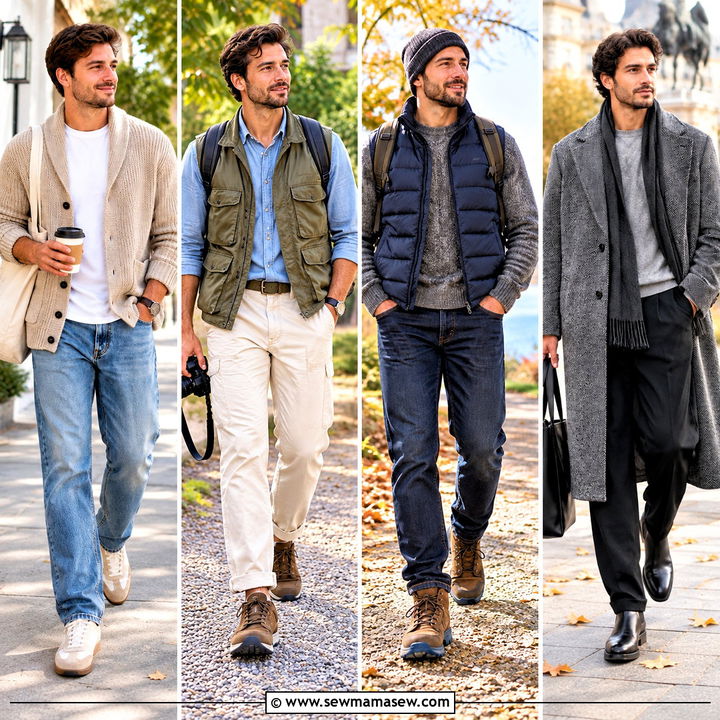
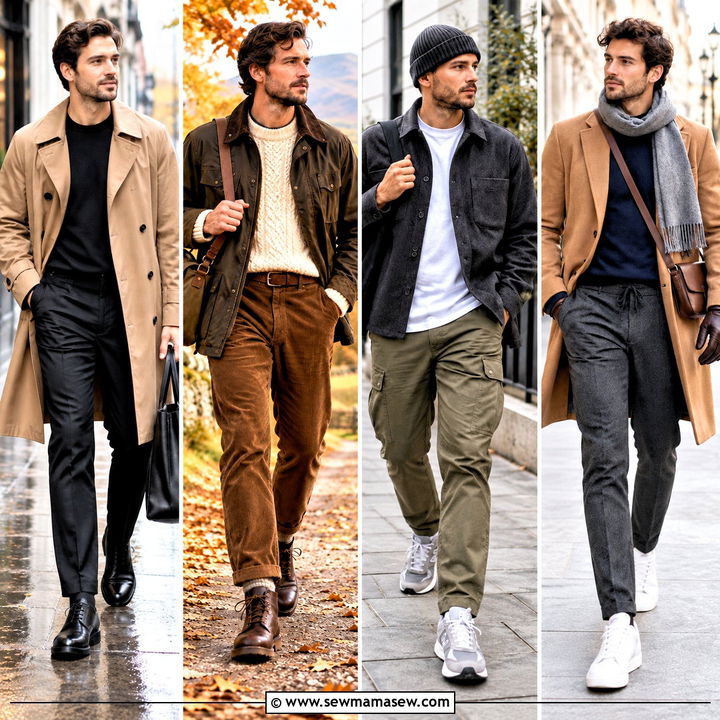
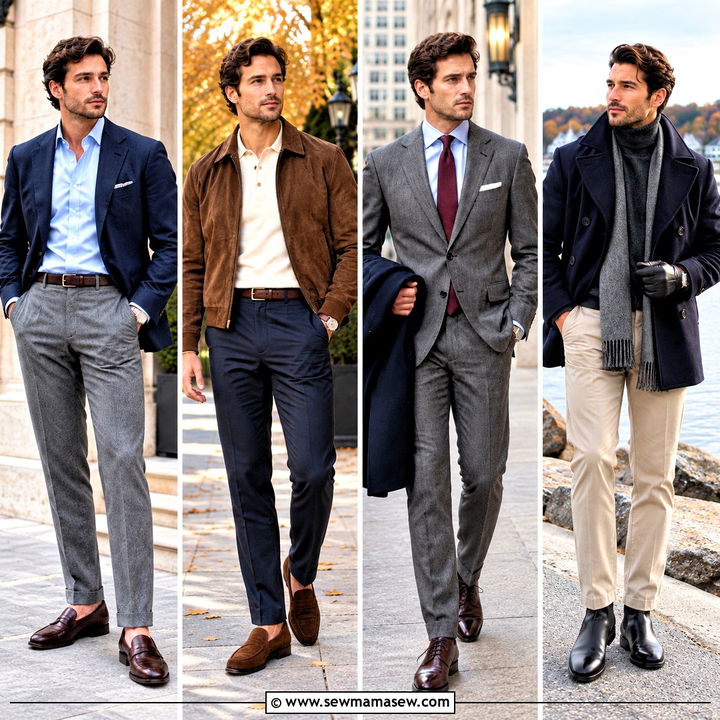
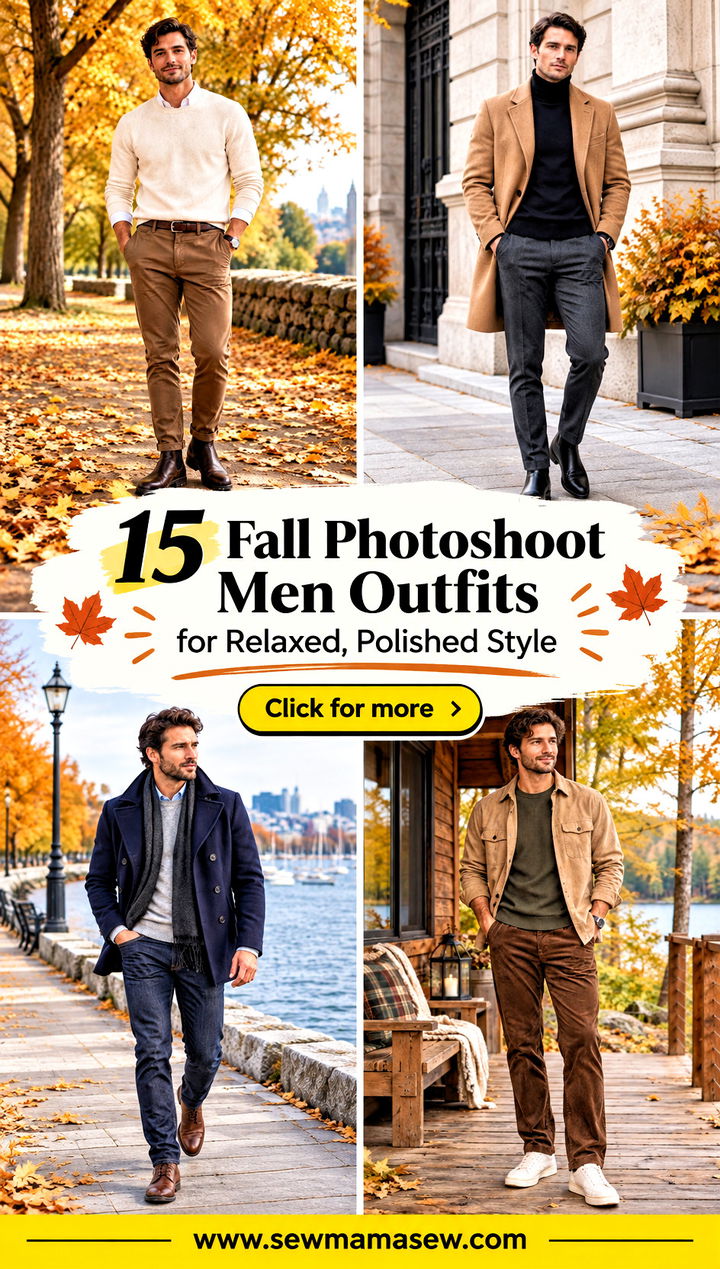
Most men I dress for a fall shoot want to look like themselves, just sharper. Fall helps: the colors are warm, the light is soft and the clothes have texture, so a portrait can look polished without looking staged. The outfits that work best mix practical layers with colors that sit well against turning leaves, trails, city streets or a barn wall. Think cream knits, olive overshirts, dark denim, a tailored coat and brown leather on the feet. Fit matters more on camera than in a mirror, because a lens exaggerates both bulk and tightness. Below are fifteen outfits, from family-portrait casual to branding-photo sharp, that I'd put a man in without hesitation.
Where a Lens Catches Bad Fit on Men
Before I think about colors, I check four spots, because these are where a camera picks up fit problems that you might not notice in a mirror.
- Shoulders. On a jacket or coat, the seam should end at the edge of the shoulder. A dropped seam on a tailored piece looks borrowed; a tight one pulls the sleeves up when you gesture.
- Sleeves. A shirt cuff should reach the wrist bone, and a jacket sleeve should stop a little shorter so a sliver of cuff shows. Sleeves that cover the knuckles make the hands look small.
- Collar. When you turn your head, a shirt collar shouldn't gape away from the neck or squeeze it into a fold. Both show in close-ups.
- Trouser hem. For tapered or slim pants, a small break or no break looks cleanest over boots and sneakers. Extra fabric piling at the ankle reads as sloppy in full-length frames.
Most of these are cheap fixes. A tailor can shorten sleeves and hems in a few days, and that's often worth more than buying something new for the shoot. Try everything on while sitting too, since a lot of men's portraits are seated and jackets bunch differently on a bench.
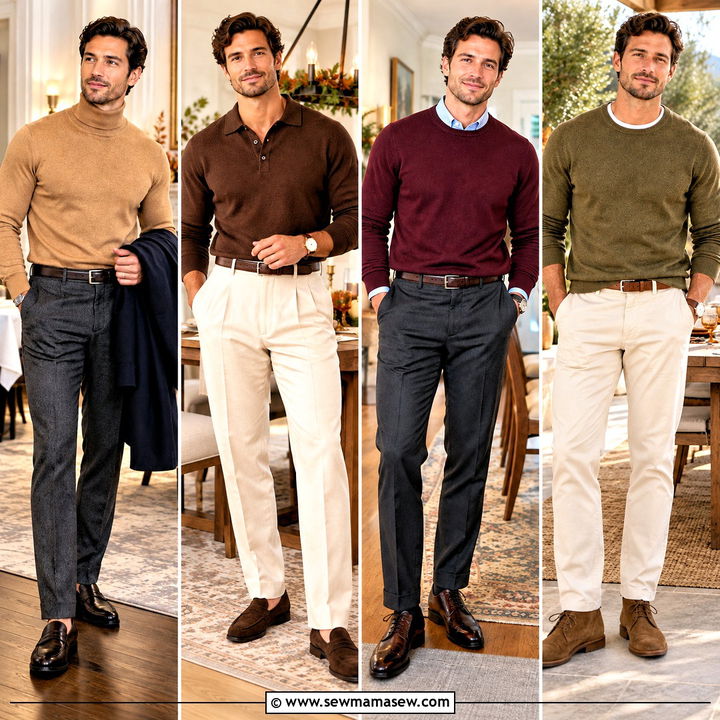
1. Cream Sweater With Brown Chinos
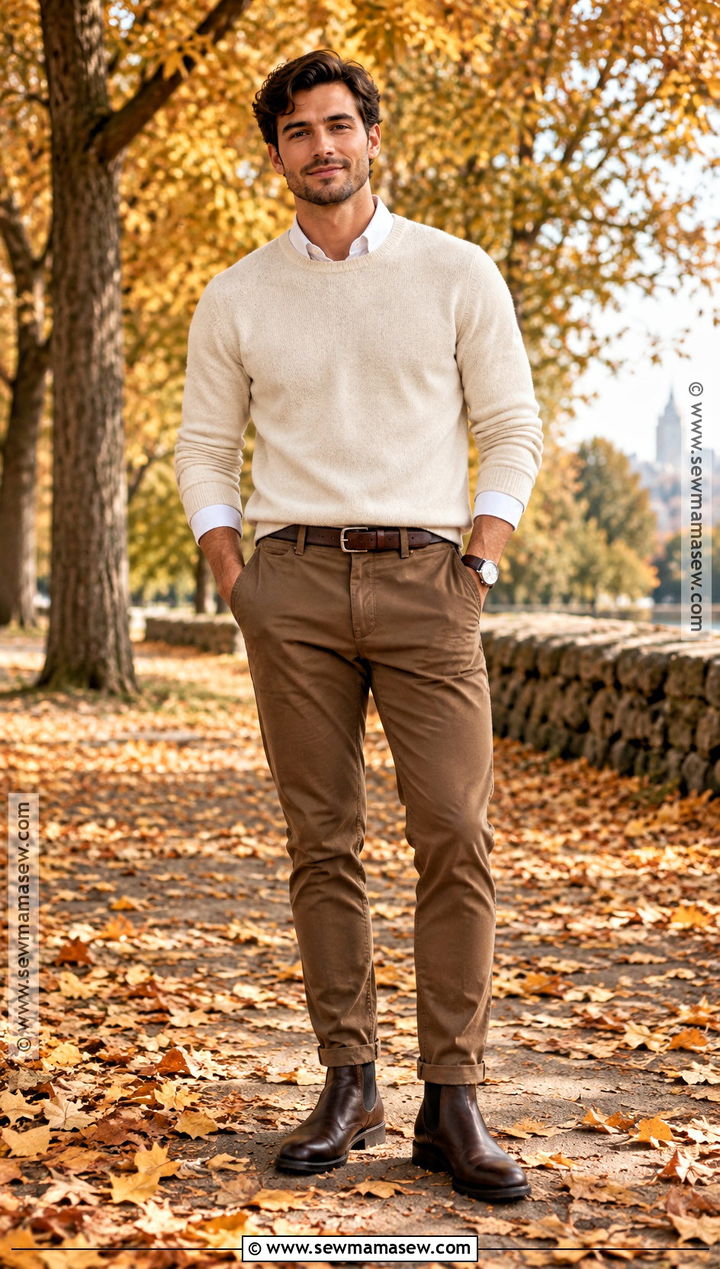
Cream knit and brown chinos look naturally warm against orange leaves. I pick a medium-weight crewneck with firm ribbing at the collar, cuffs and hem, because that ribbing gives the upper body a frame; a loose, stretched hem makes the sweater look tired in pictures. Straight or gently tapered chinos balance it. Dark brown Chelsea boots finish it, with a leather watch or woven belt if you want one small detail. For warmth, a white Oxford underneath with the collar showing adds a clean line at the neck. Leave the sweater untucked for a relaxed look, or give it a slight front tuck if you're tall and want a bit of shape.
2. Flannel Shirt With Dark Jeans
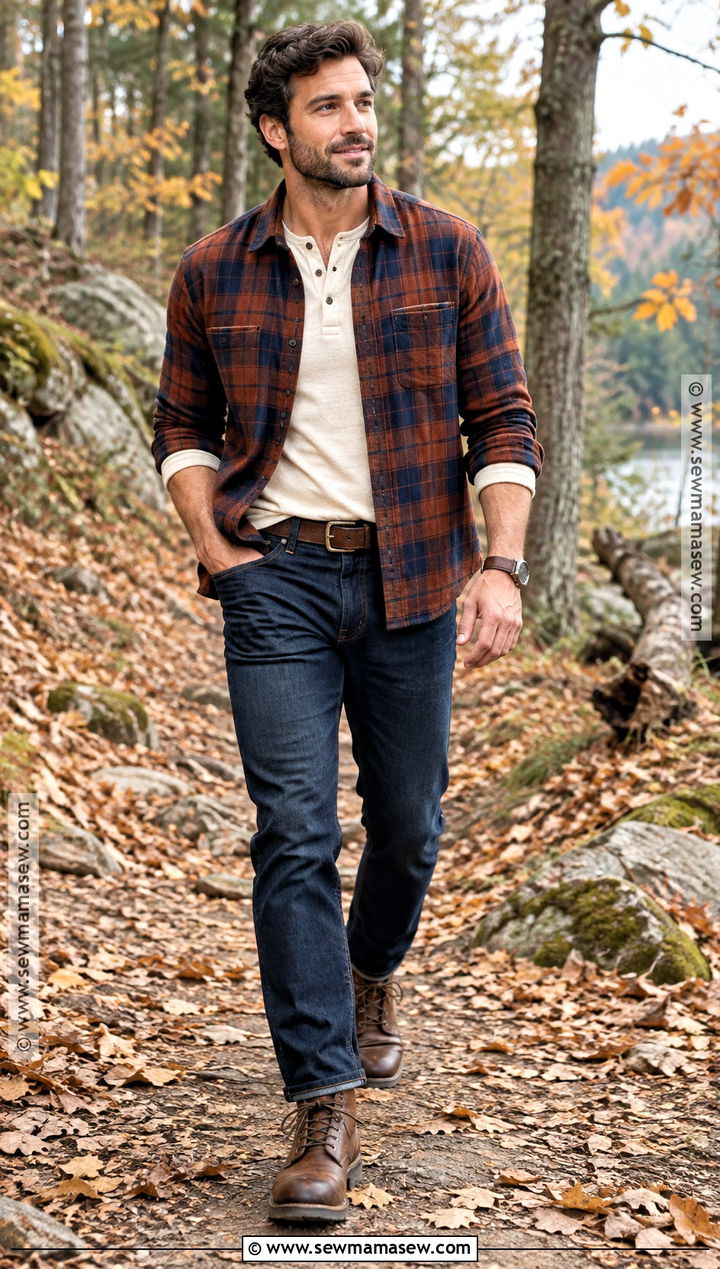
Flannel and dark jeans is the easiest outdoor outfit there is, but the plaid needs editing. I look for rust, navy, forest green or muted brown, and I avoid a tiny high-contrast check, which can shimmer on camera. Wear the flannel open over a charcoal or cream henley for visible layers. Dark indigo straight-leg jeans photograph cleaner than heavily faded denim, which can look washed out in soft light. Brown lace-up boots and a matching belt finish it, and a single sleeve roll keeps it relaxed. One pattern is enough. Add a patterned scarf or a printed tee and the picture starts to fight itself.
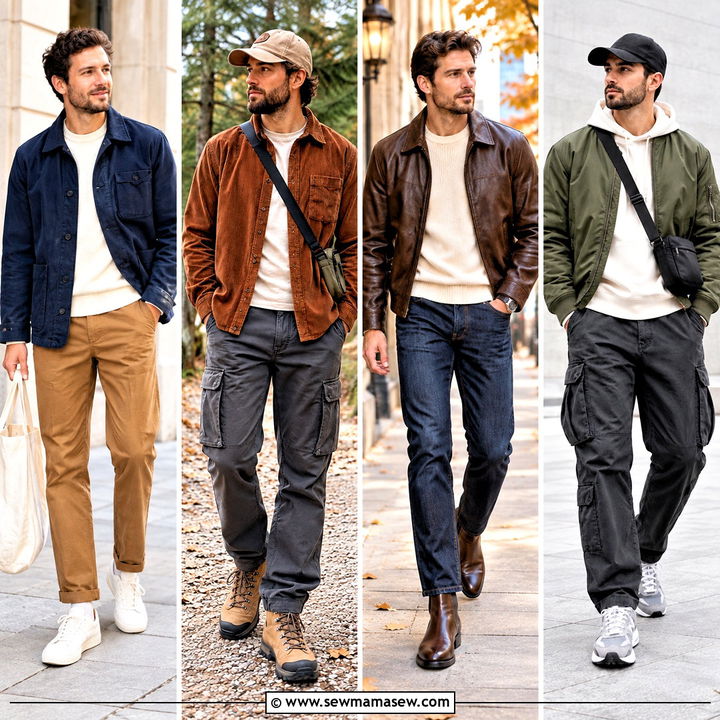
3. Olive Overshirt With Black Jeans
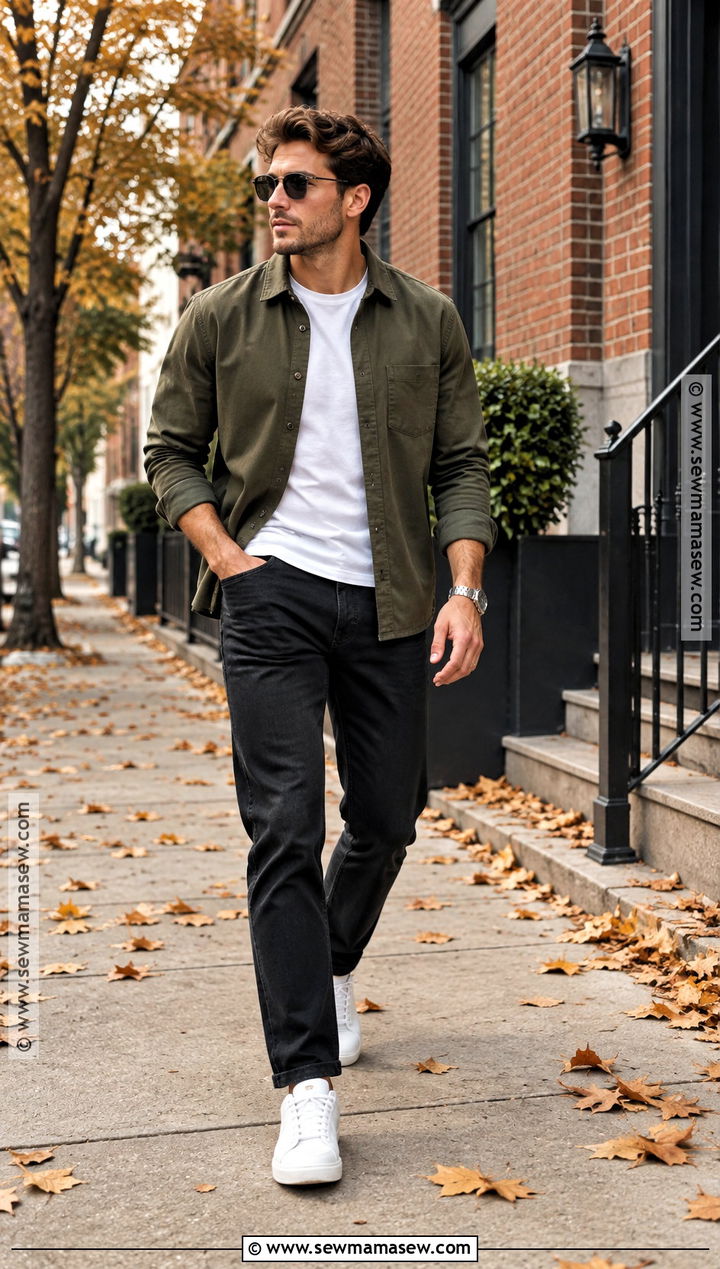
An olive overshirt sits somewhere between workwear and streetwear, which is why it's so useful. Over a fitted white or oatmeal T-shirt, it puts clean contrast right under the face. Black straight-leg jeans make the olive look richer. For early fall, white leather sneakers keep it fresh; for a rustic setting, dark brown boots. I check the overshirt's length first: it should cover the belt but stop above mid-seat, or it starts reading as a coat. Wear it open for a long vertical line or button the middle for more structure. A silver watch and plain sunglasses finish it, and it works as well against brick and coffee shop fronts as it does in the woods.
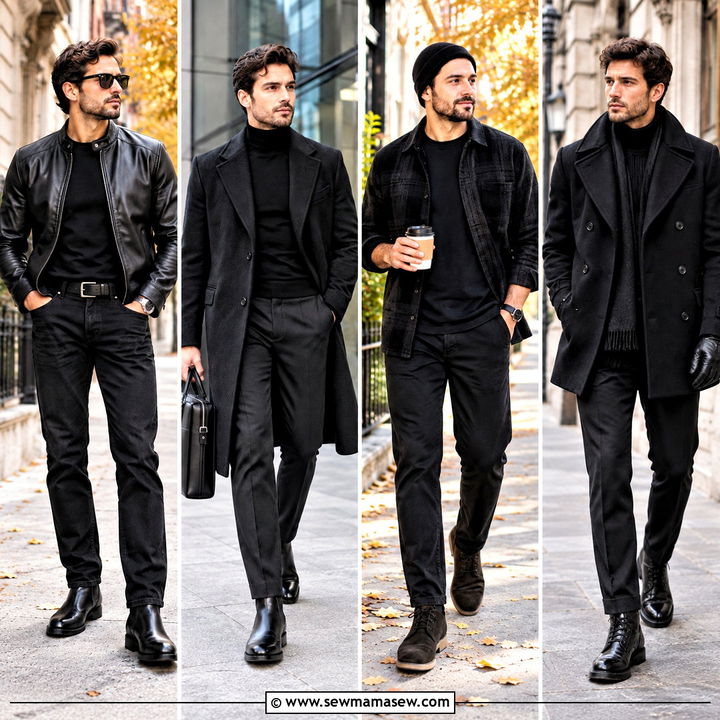
4. Camel Coat With Black Turtleneck
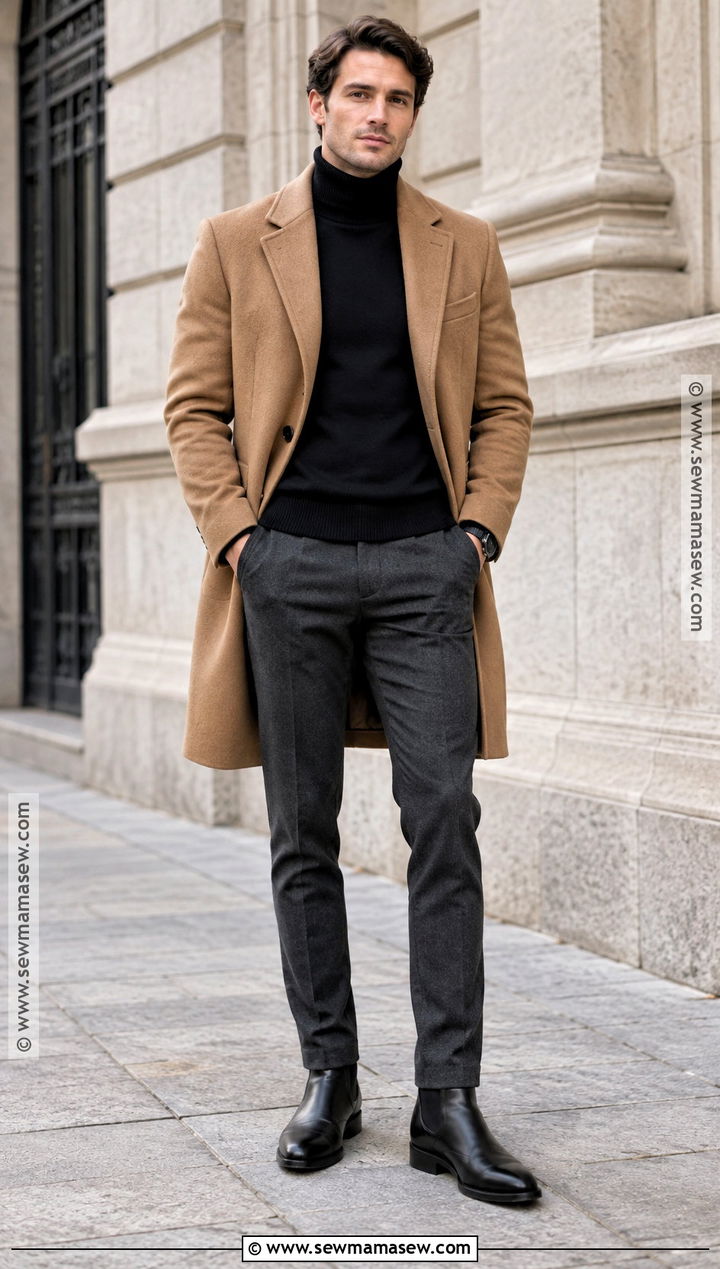
A camel coat over a slim black turtleneck is the most refined outfit on this list, and it lives or dies on the shoulder. The seam should sit right at the edge of your shoulder bone. Too wide and it droops in every frame; too narrow and the sleeves pull when you move your arms. Mid-thigh to just above the knee is the length I like. Charcoal trousers soften the black-and-camel contrast, and black Chelsea boots or sleek loafers finish it depending on the ground. A dark watch and a simple belt are all the extras it needs. Open the coat for walking shots and button it for a sharp standing portrait. City streets and architecture suit it best.
5. Brown Leather Jacket With Black Jeans
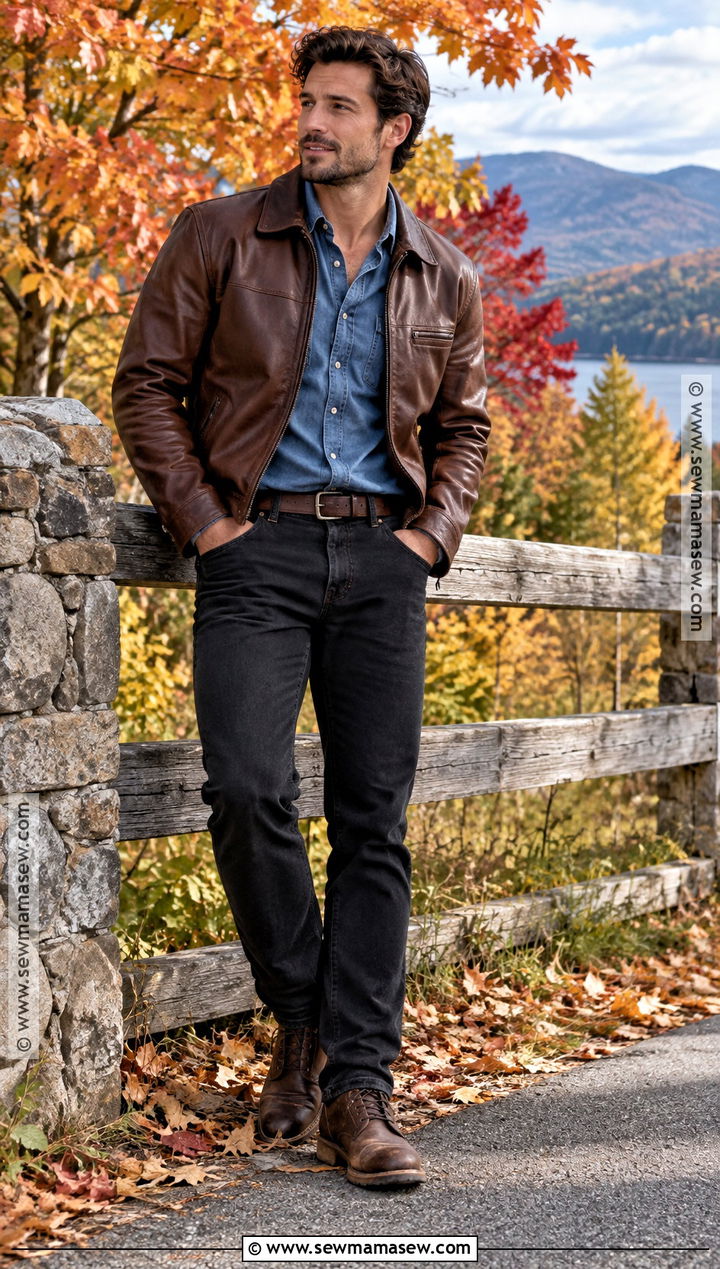
A brown leather jacket brings character without much styling. Over a faded denim shirt or soft chambray, you get two textures that sit well together. Black jeans stop the outfit from going all brown and give a slim lower half. Dark tan service boots and a leather belt finish the rugged look. Leather loosens and creases at the elbows and front with wear, and in close-up that wear actually helps; a brand-new stiff jacket can look like a costume. Make sure you can lift your arms without the hem riding above the belt. Leave the top shirt button open. Fences, alleys and country roads all suit it.
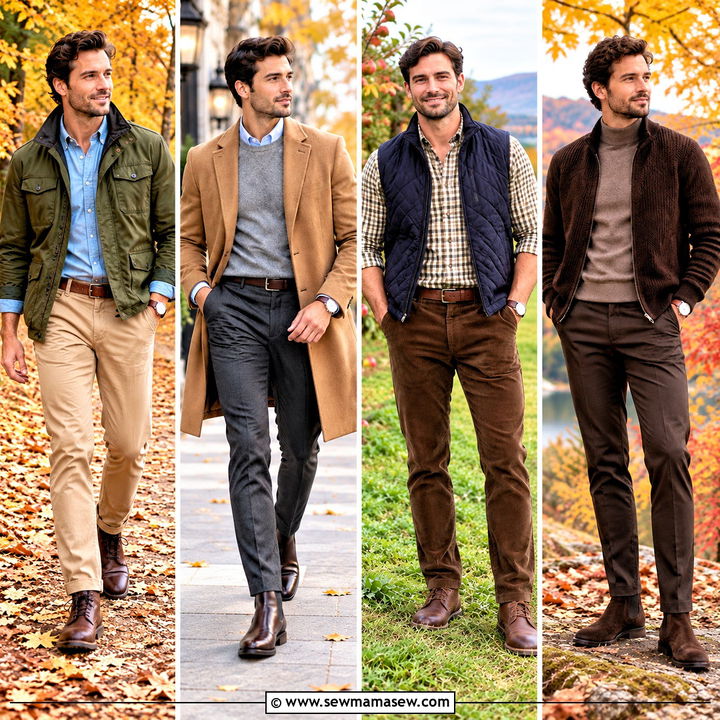
6. Corduroy Jacket With Khaki Pants
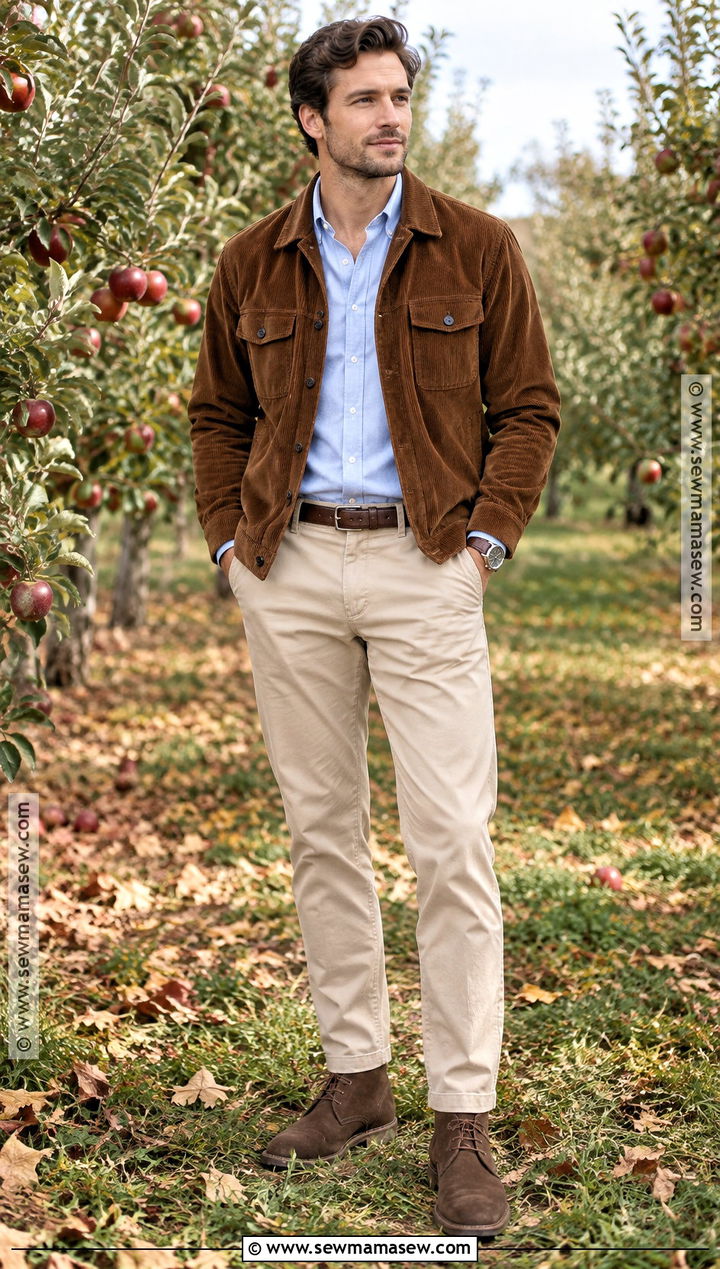
Corduroy is made for fall portraits because its ridges catch side light and add depth. A rust or tobacco cord jacket over a light blue Oxford gives a cool, fresh color right at the face. Khaki or stone pants keep it earthy without matching the jacket, which would look too planned. Brown suede chukkas add another texture and are polished enough for family photos. A dark brown belt and a leather-strap watch finish it. The hem detail I always check: the pants should end with a slight break or none at all over the chukkas, because fabric pooling on a short boot looks sloppy in full-length shots. Orchards, parks and farm settings suit it.
7. Navy Peacoat With Gray Sweater
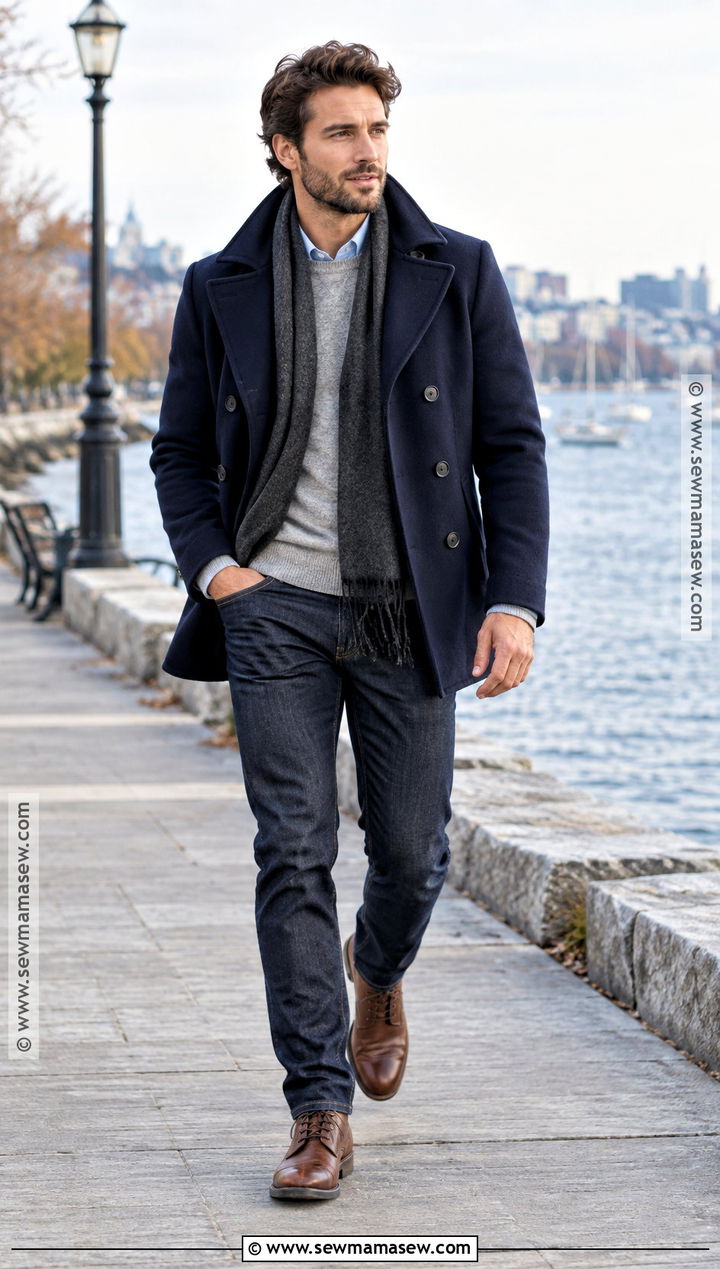
A navy peacoat is for the end of fall, when the leaves are mostly down and you need real warmth. I put a light gray crewneck under it so the outfit doesn't turn into one dark mass, and a pale blue shirt collar can peek out at the neck. Dark indigo jeans with a clean finish and medium-brown leather boots finish it. Peacoats are built from heavy melton wool, so they hold their shape well but add bulk; a thin knit underneath keeps the chest from looking padded. Leave it open for walking and close it for formal poses. A charcoal scarf helps on a cold waterfront.
8. Burgundy Sweater With Charcoal Trousers
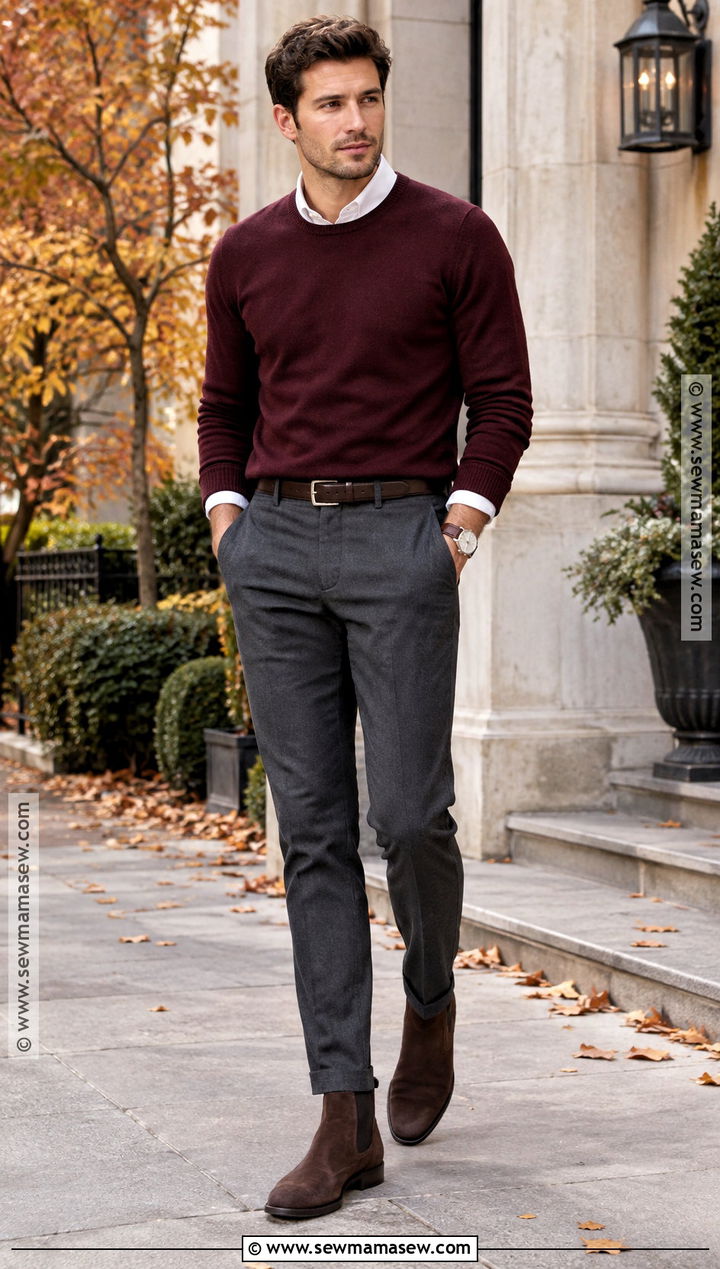
Burgundy is my favorite color to put a man in for fall photos. It stands out from red and orange foliage, and it adds color to the face without the harshness of bright red, which suits most skin tones. A fine-knit crewneck over a crisp white or pale gray shirt, charcoal trousers below. Dark brown derbies make it dressier; suede Chelsea boots suit grass and trails. Let a quarter inch of shirt cuff show under the sweater sleeve; it looks deliberate. I like this for professional portraits, engagement sessions and family photos where everyone else wears neutrals.
9. Denim Jacket With Gray Hoodie
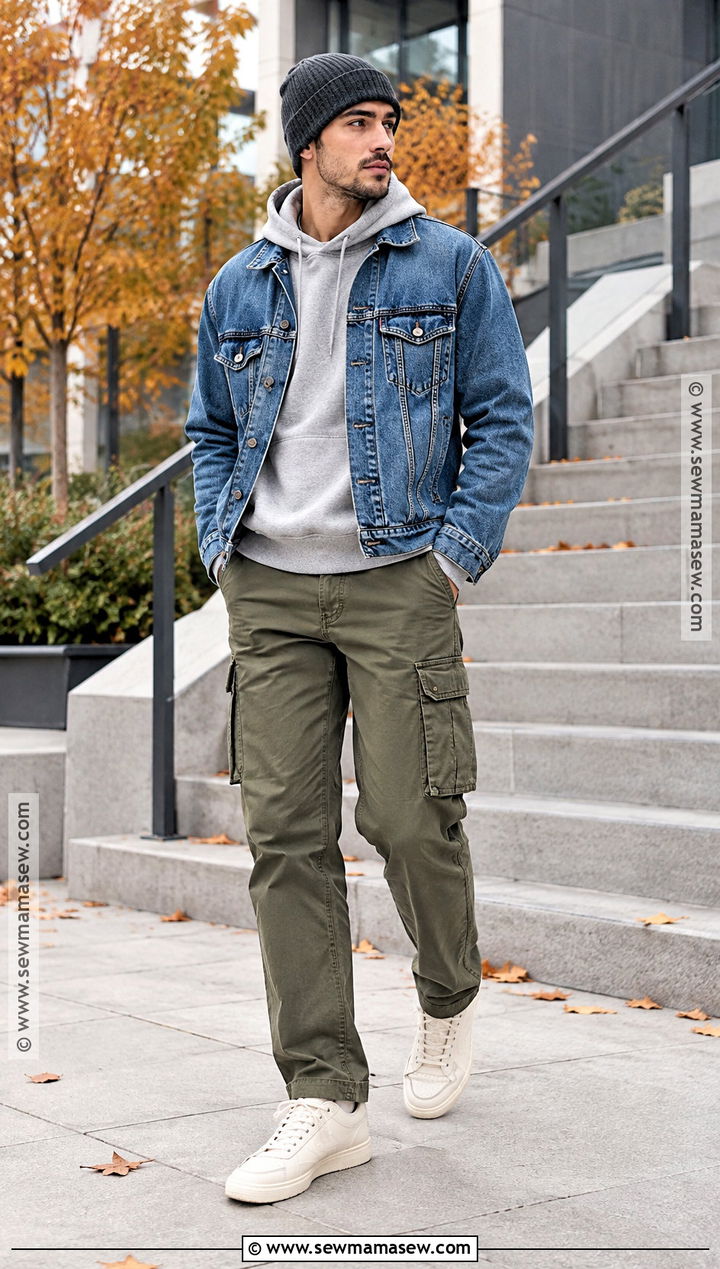
Denim over a gray hoodie is the youngest look here, and it works for candid, high-movement shoots. The hood frames the shoulders and the jacket adds structure for full-length frames. Olive cargo pants in a straight or relaxed fit, plus white or off-white sneakers to keep it bright. The hoodie matters more than you'd think: no big graphics, no uneven drawstrings, and a thin enough knit that the denim jacket still closes. A beanie in gray or olive is fine when it's cold. Skate parks, painted walls and outdoor stairs suit it. It's the wrong pick for a formal family portrait.
10. Quilted Vest With Plaid Shirt
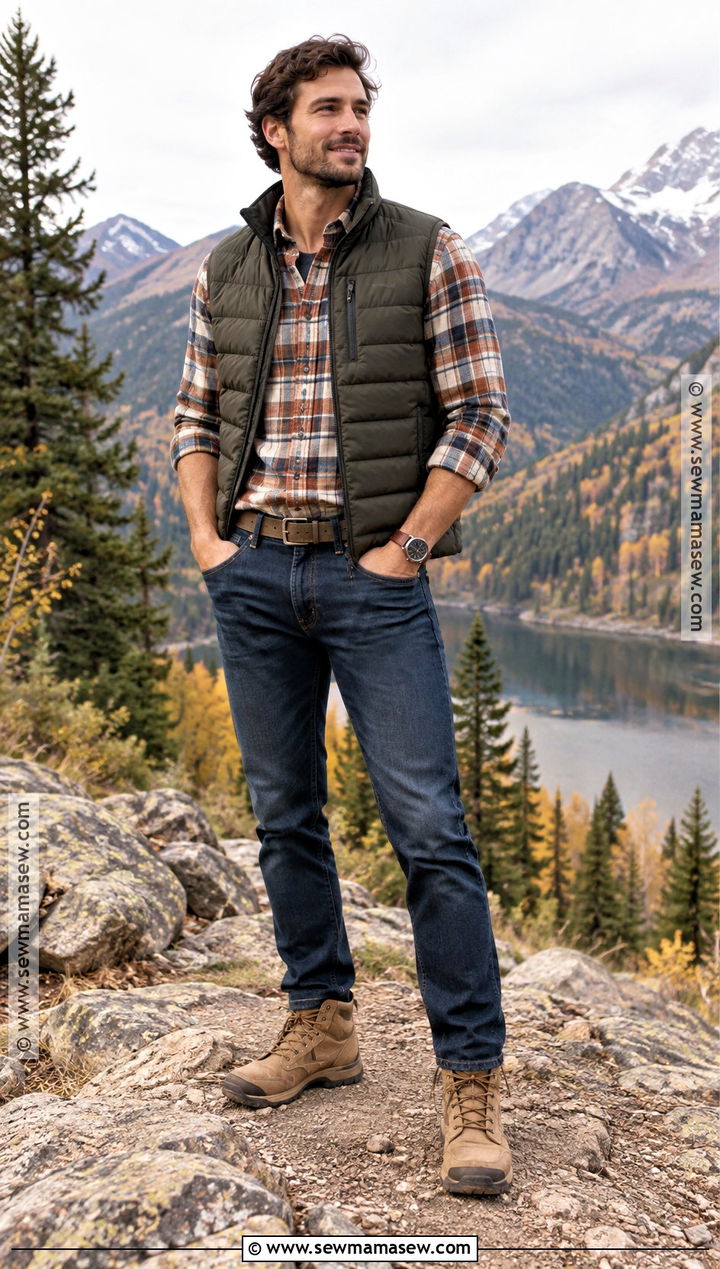
A quilted vest adds warmth while leaving the shirt pattern on show. I'd go navy, olive or dark brown over a small-scale plaid shirt in cream, rust and blue, then dark-wash jeans underneath. Tan hiking-style boots with minimal detailing keep it outdoorsy without looking like trail gear. The vest needs to zip comfortably over the shirt and still define the torso. A tight vest puckers along the quilting lines, and a loose one boxes out the middle. Keep the shirt untucked only if its hem is short and straight. Trails, bridges and overlooks suit it well.
11. Tweed Blazer With Black Turtleneck
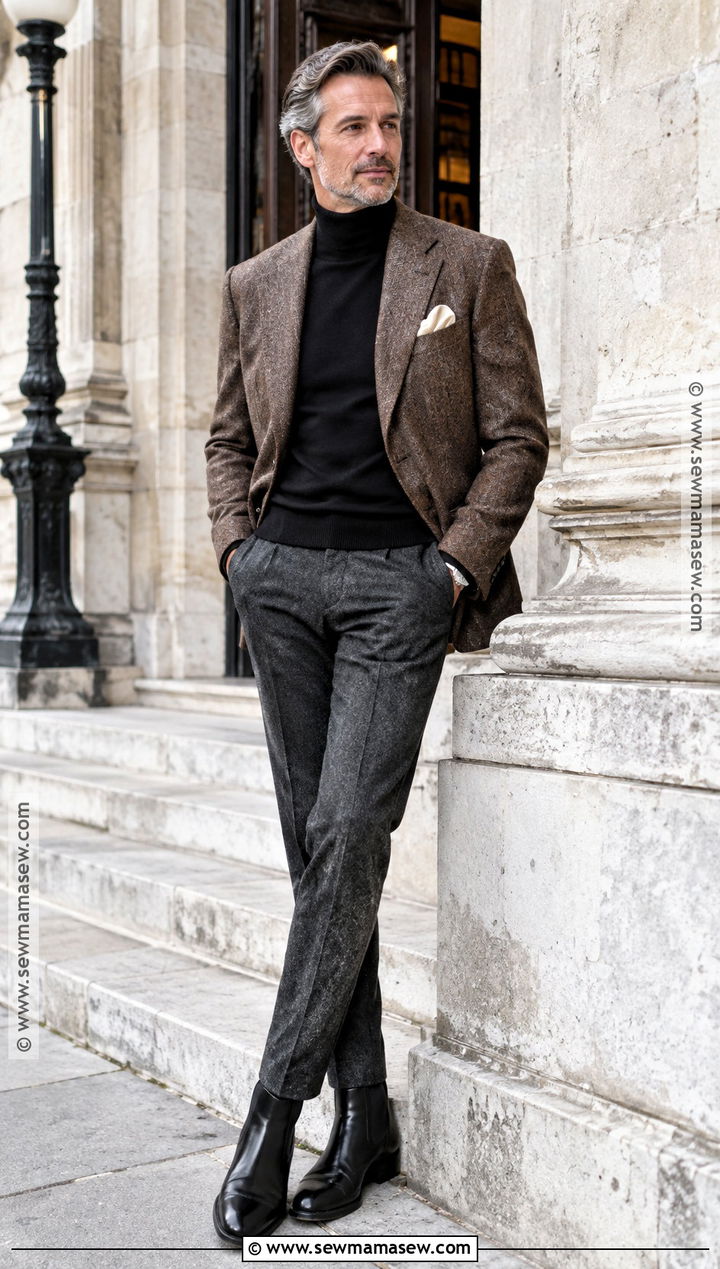
Tweed has more visible texture than almost any other fabric, which is why it photographs so well. A brown or gray tweed blazer over a smooth black turtleneck keeps the jacket as the focus. Dark gray wool trousers add a little dimension compared to all black. Polished black Chelsea boots and a matching belt finish it. A pocket square is optional; if you use one, keep it solid cream or muted burgundy. I button the blazer and check for an X-shaped pull across the front. If it's there, the jacket is too tight to wear closed. Libraries, stone walls and historic streets suit it, as do business profiles that need a seasonal touch.
12. Tan Shacket With Corduroy Pants
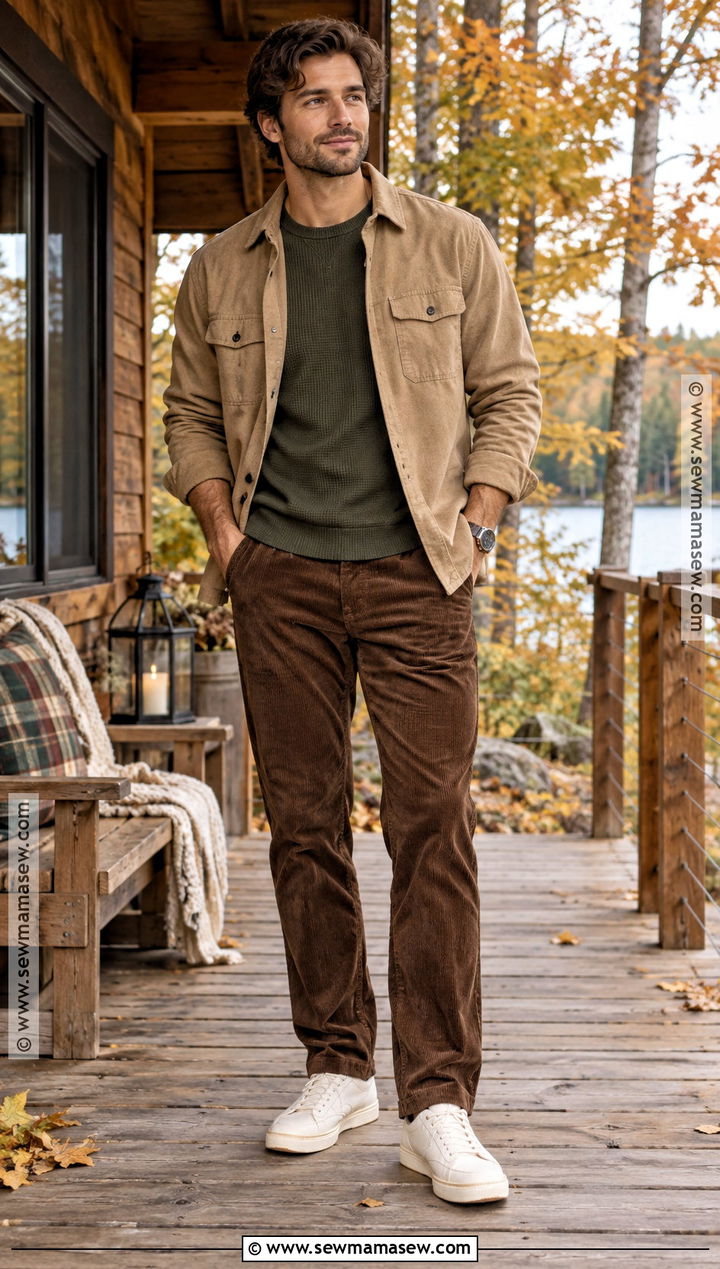
A shacket gives you a shirt's ease with a light jacket's structure. A tan one over a dark green thermal or waffle knit puts two textures together, and chocolate corduroy pants keep the palette earthy. Cream sneakers make it fresh; brown work boots push it rugged. Leave the shacket open so every layer reads in full-length frames. If the cords are relaxed, keep the top layers closer to the body so the proportions don't balloon. Cabins, trails, back yards and porches suit it, and it never looks like a costume there.
13. All Black Fall Outfit
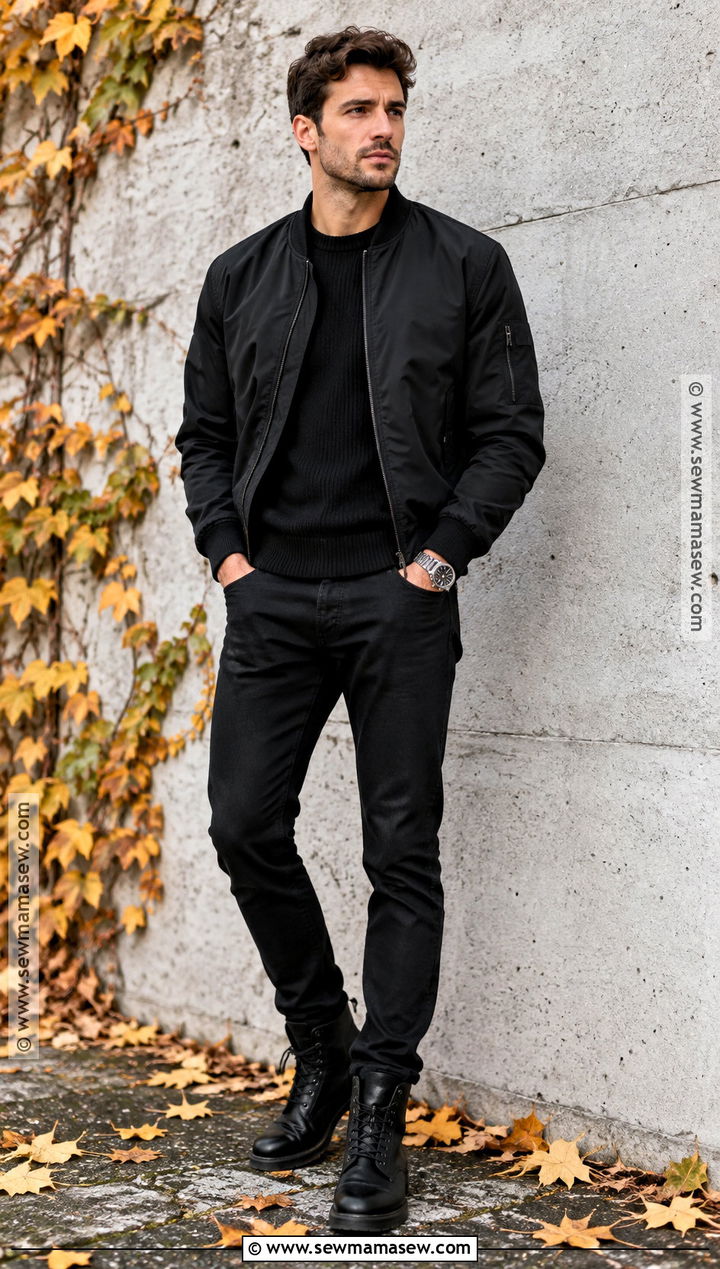
All black can look sharp in fall portraits, but only if the textures differ. A black ribbed sweater under a matte bomber gives clear separation between layers. Straight black jeans without rips and smooth combat or Chelsea boots finish it, with a silver watch as the one point of contrast. Black absorbs light, so detail disappears against dark backgrounds; I put this outfit against pale stone, gold leaves or concrete. Black garments also fade at different rates, and a slightly faded pair of jeans under a deeper jacket actually helps the camera separate them. It's a modern look for music or creative profiles, shot in daylight.
14. Varsity Jacket With Tailored Pants
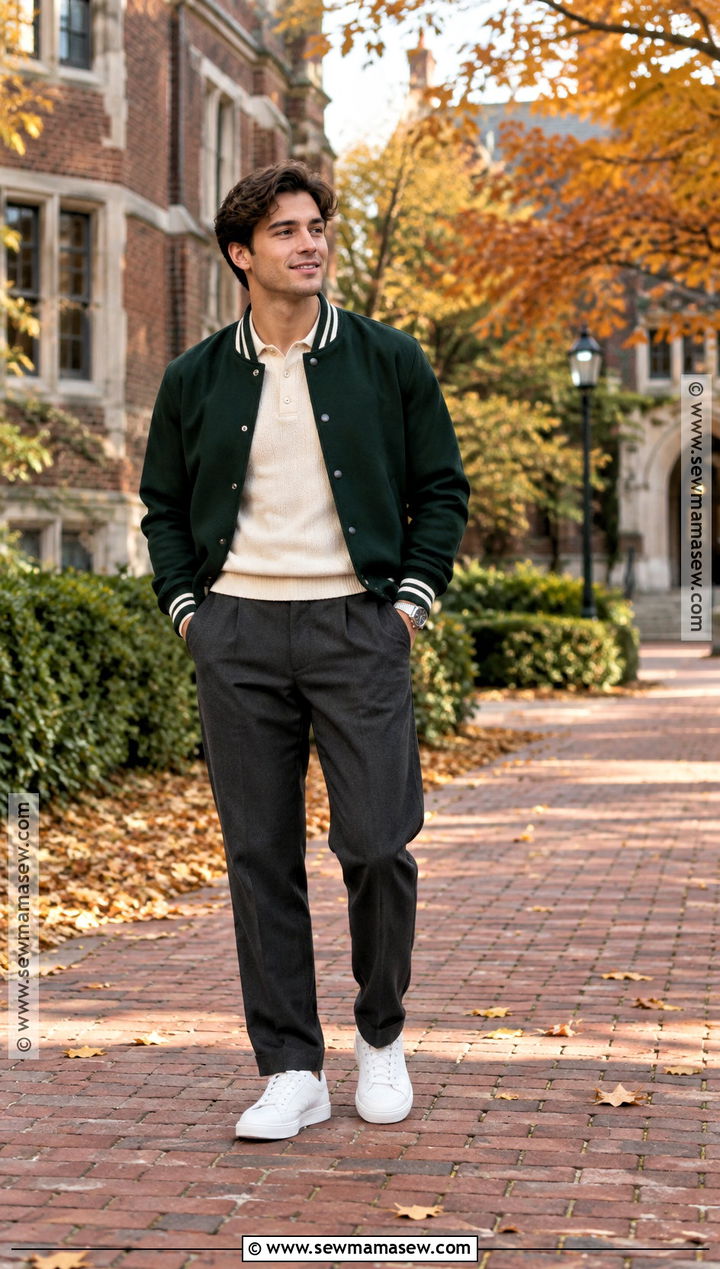
A varsity jacket can look grown-up if everything around it is quietly tailored. Choose navy, forest green or burgundy with minimal lettering, and wear it over a cream knit polo or fine-gauge crewneck. Relaxed charcoal trousers add contrast and a current shape. White leather sneakers keep it casual; dark loafers make it dressier. The trousers should still show the shoe, so skip very wide legs, and skip jackets covered in patches. A simple chain or watch adds personality. Campus paths, brick steps and city sidewalks under fall trees suit it.
15. Tan Suit With Cream Sweater
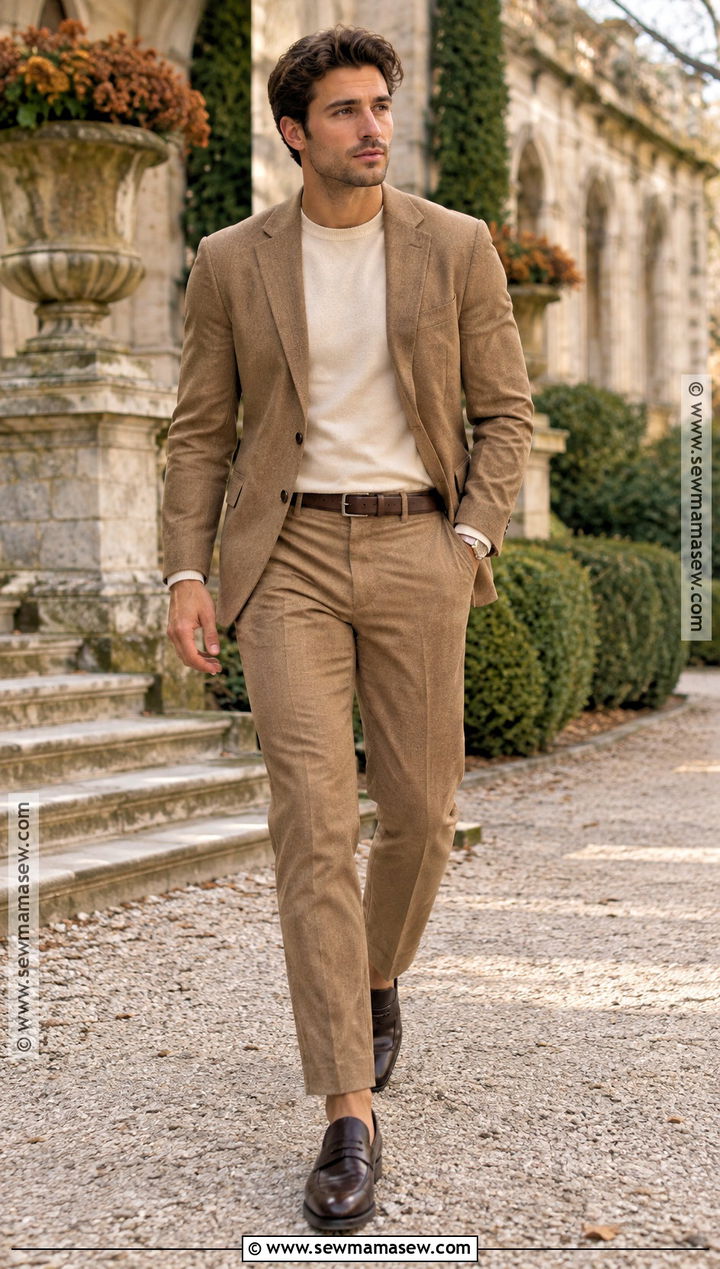
Swapping the dress shirt for a fine cream sweater under a tan or medium-brown suit is one of the easiest ways to make tailoring feel right outdoors. The knit softens the suit so it doesn't read as office wear in a field or garden. The suit should fit naturally through the shoulders, with straight or lightly tapered trousers. Dark brown loafers, brogues or Chelsea boots, plus a matching belt. I skip the tie and pocket square unless the shoot calls for formal styling. Unbutton the jacket when you sit, and use a few walking frames so the fabric's movement shows. Historic buildings, hotel entrances and gardens all suit it.
Empty Pockets, a Fresh Trim and Other Small Fixes
Details that are invisible in daily life show up clearly in a sharp portrait. I run through these with every man I style for a fall session.
Pockets and bulk
Take out the phone, wallet and keys and hand them to someone. A phone in a front trouser pocket makes a hard rectangle in every standing frame, and a wallet in a coat pocket pulls the front off balance. If you want your hands in your pockets for a pose, that's fine; just keep the pockets empty.
Haircut and beard timing
Get the haircut about a week before, not the day before. A fresh cut can look stark at the neckline and around the ears, and a few days lets it settle. Trim a beard a day or two ahead, and clean up the neckline so it's sharp where the collar meets the jaw.
Shoes and knits
Brush suede and polish leather the night before, and bring a soft cloth for mud. Run a sweater shaver over any knit that's pilled at the underarms or sides, because pills catch the light in close-ups. Finally, steam shirts and chinos on the day. Cotton creases fast in a car, and a creased lap stands out in seated shots.
Start With the Location, Then Dress the Man in It
The setting, the weather and the mood you want should decide which of these outfits you wear. Flannel, denim, shackets and boots belong in casual places; coats, blazers, fine knits and tailored trousers suit refined ones. Get the fit right, choose pieces with texture and keep the palette to a few colors. Leave the big logos, loud patterns and anything you can't move in at home. Most of all, wear something that still feels like you. Men who are comfortable stand straighter and smile more naturally, and that shows up in every frame long after the leaves are gone.
Related posts: