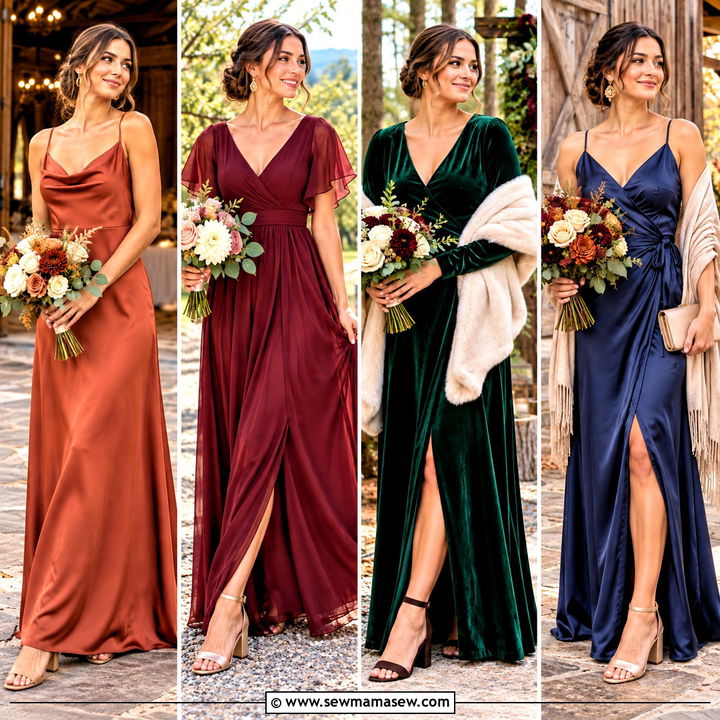
Sunflowers are a tricky flower to dress a bridal party around. The petals are a saturated, warm yellow and the centers are almost black, so the dresses either have to stand back and let that contrast do the work or carry part of it themselves. When I plan a sunflower party, I start with the bouquet and choose the dress color second, not the other way round. Below are fifteen colors and cuts I'd actually put next to those flowers, from sunflower yellow satin to burgundy chiffon, forest green velvet and chocolate brown. Floor-length gowns suit a formal evening, while a midi works for a barn or garden. I've included the shoes, jewelry and wraps for each, because a fall party rarely gets through the evening without a layer.

Matching Dress Weight to a Fall Wedding Date
Fall covers a lot of weather. An early September ceremony can be as warm as midsummer, while a November reception in a barn can need coats between the photos and the doors. I pick the fabric by the date first and the color second, because a bridesmaid who is overheating or shivering never looks relaxed in pictures.
- Early fall, still warm: chiffon and georgette. They breathe, they move, and two layers are enough to stay opaque.
- Mid October: crepe and matte satin. They have more body, hold a shape in a breeze and carry a little warmth.
- Late fall or an evening in an unheated venue: velvet or long-sleeve crepe, plus a coordinated wrap or faux fur stole for outdoor portraits.
- Any outdoor ceremony on grass: a block heel or a low wedge. A stiletto sinks within a few steps.
If the date is uncertain or the venue is half outside, I lean toward a mid-weight crepe and plan for wraps. It's easier to add a layer than to cool down in velvet.
1. Sunflower Yellow Satin Bridesmaid Dress
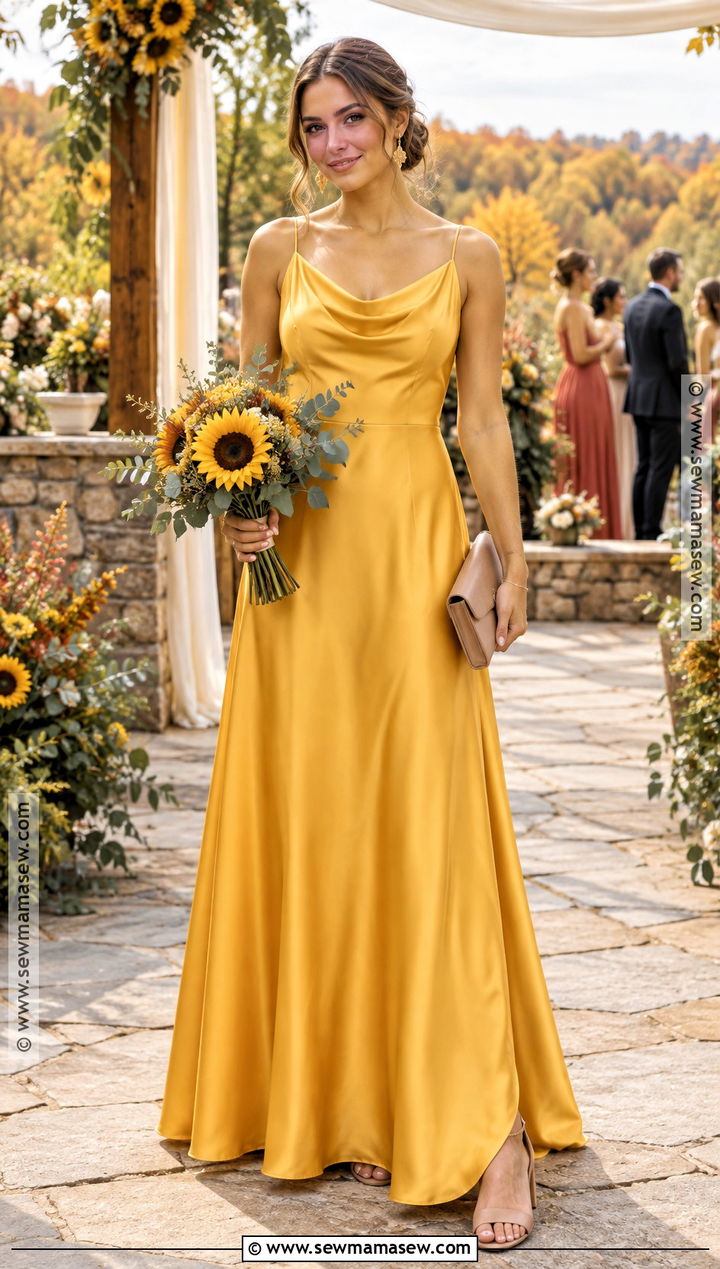
Putting the bridesmaids in the same yellow as the flowers is the boldest option on this list, and it only works if the fabric is matte. Shiny satin in a bright yellow throws light back at the camera and the bouquets get lost against it. A floor-length A-line with a soft cowl and adjustable straps forgives a lot of different figures. Most collections that carry this shade offer several necklines in the same satin, so I keep the color fixed and let each woman pick her bodice. Nude block heels, small gold earrings and a structured tan clutch keep the rest quiet. Ask the florist to add eucalyptus and cream roses so the sunflowers have some separation from the dress. The bride should be in clean ivory or white here; anything with a yellow cast will start to blend in.
2. Burgundy Chiffon Bridesmaid Dress
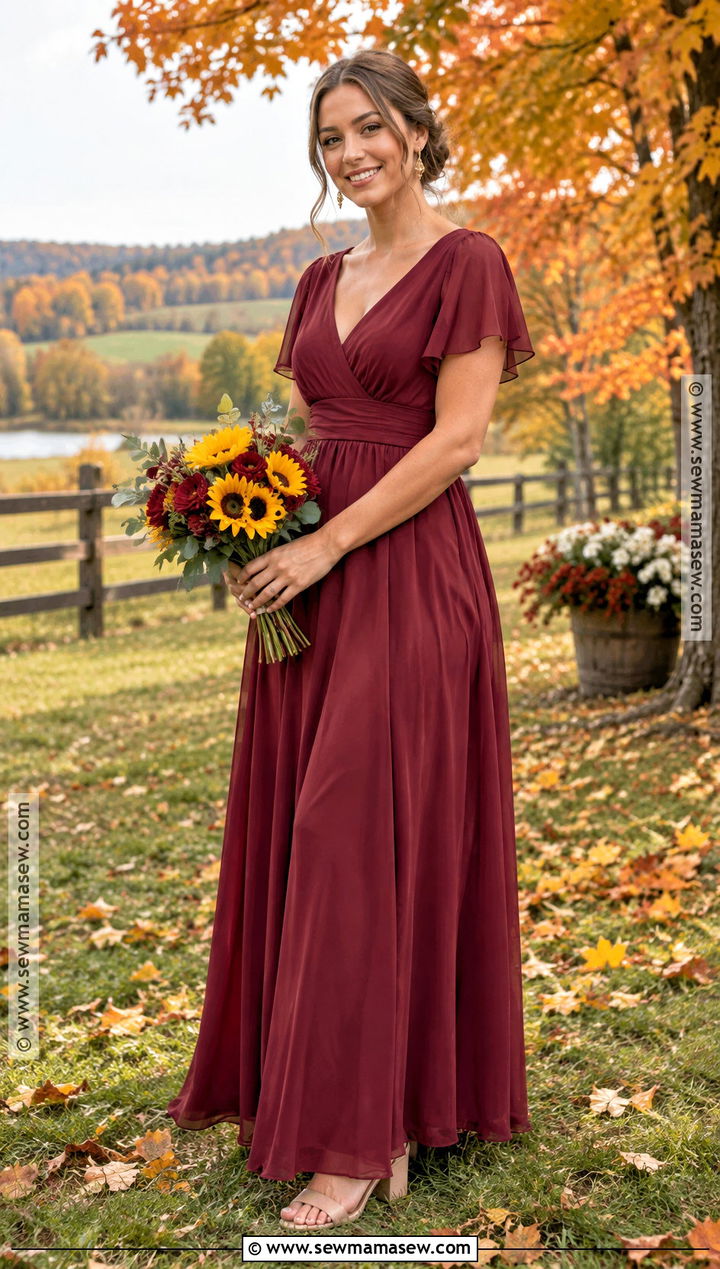
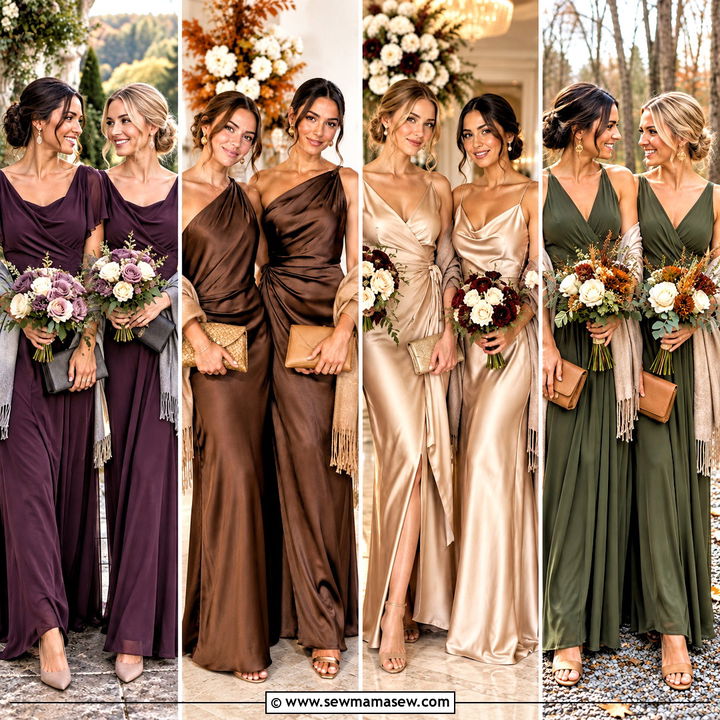
Burgundy is the color I reach for when a bride wants the sunflowers to look brighter than they are. The dark wine pushes yellow forward in photos. I like it in chiffon with flutter sleeves, a V-neck and an empire or natural waist, because two or three layers of chiffon move well across grass and gravel without the weight of satin. Champagne block heels, small gold drops and a neutral wrap finish it. Keep the bouquets mostly yellow and green; a burgundy ribbon is enough of a tie-in. It reads right from late September through November. If you let the bodices vary, hold the fabric and the floor-length hem fixed so the line still looks deliberate.
3. Forest Green Velvet Bridesmaid Dress
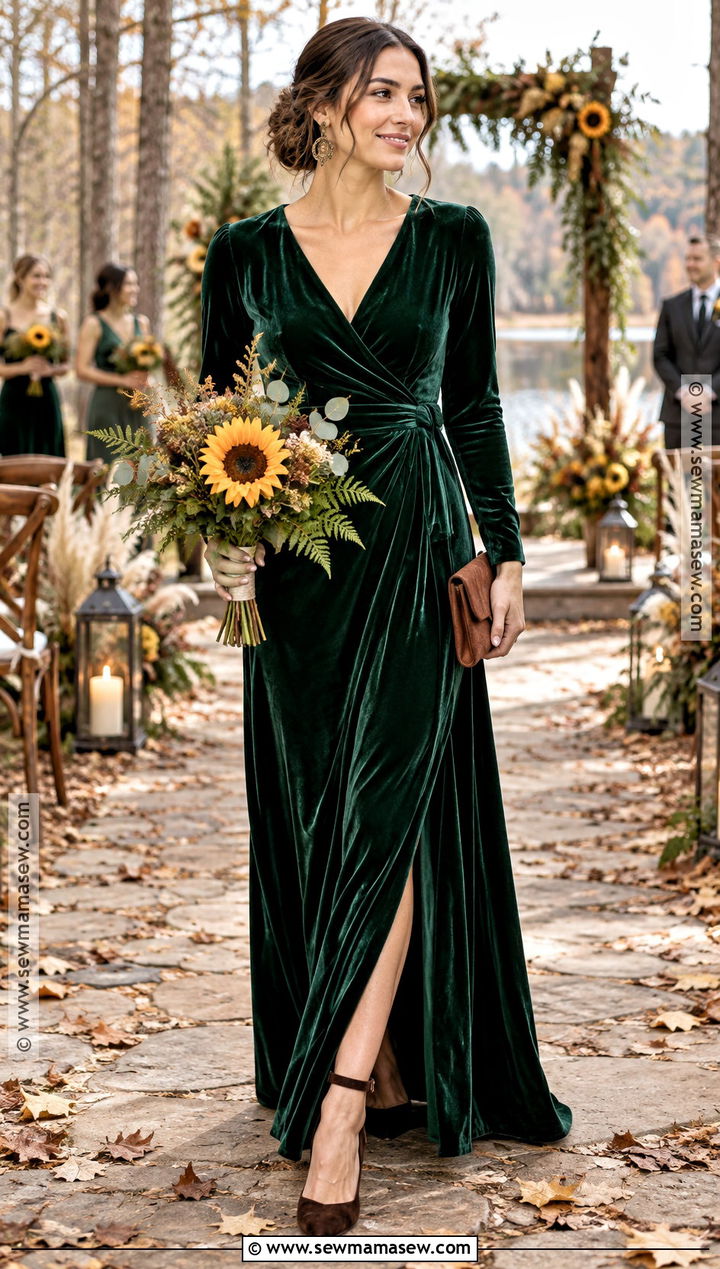
Velvet is the one I save for a late October or November date. It is genuinely warm, which is great at a cold reception and miserable at a two o'clock outdoor ceremony in early fall. A long-sleeve wrap in stretch velvet gives a better fit across different body shapes than a fixed bodice, and the stretch makes sitting through dinner easier. Dark brown or black closed-toe heels, antique gold earrings and a small suede clutch sit well with the pile. Mix ferns and eucalyptus into the sunflowers so the green dress and green foliage talk to each other. Always order swatches first. Green velvet changes a lot between daylight, warm indoor bulbs and flash, because the pile catches light differently depending on the angle.
4. Burnt Orange One-Shoulder Bridesmaid Dress
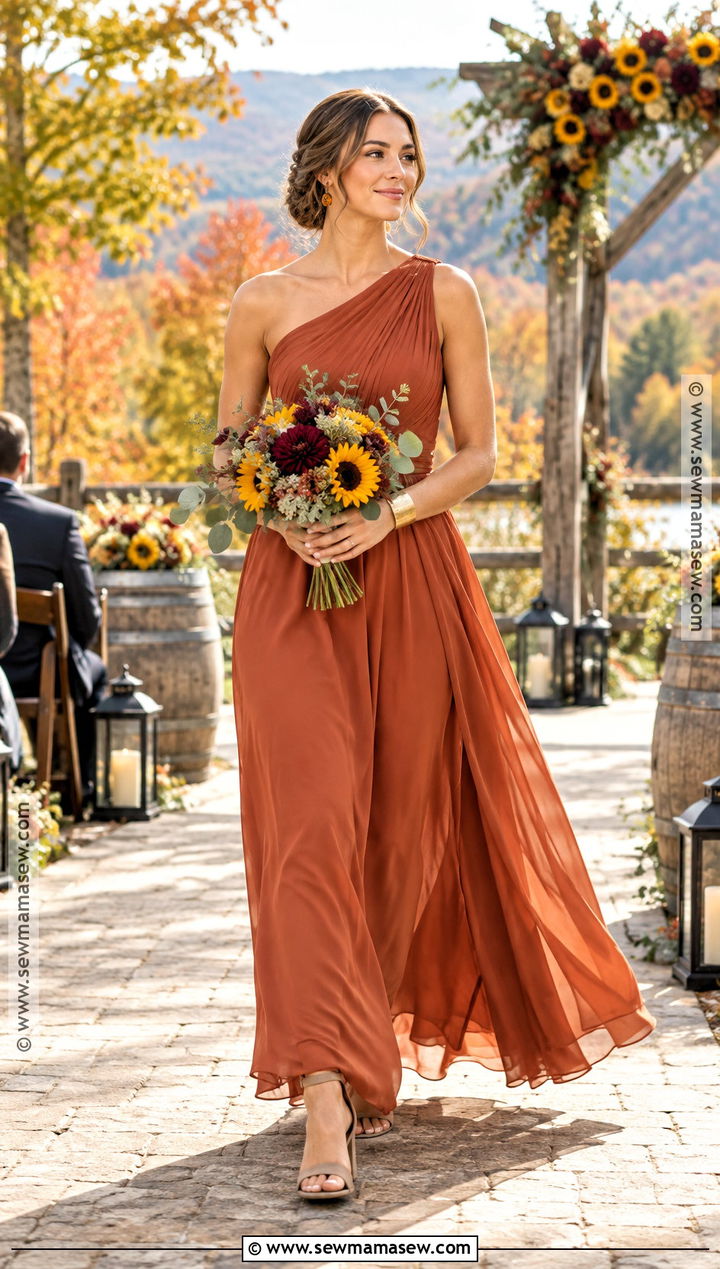
Burnt orange picks up the turning leaves and still lets the yellow petals stay the brightest thing in the frame. A one-shoulder cut in chiffon or crepe looks modern, but I look closely at the bodice: one strap carries the whole dress, so it needs a supportive inner structure and soft pleating at the waist, not a skin-tight fit. Taupe heels, brushed gold cuffs and small amber earrings are plenty. Burgundy accents and seeded eucalyptus give the bouquets some depth. Spice shades like cinnamon and brick sit in the same family if you want to widen the palette. For bridesmaids who don't want a single strap, keep burnt orange as the shared color and offer sleeved and wide-strap versions.
5. Navy Blue Off-the-Shoulder Bridesmaid Dress
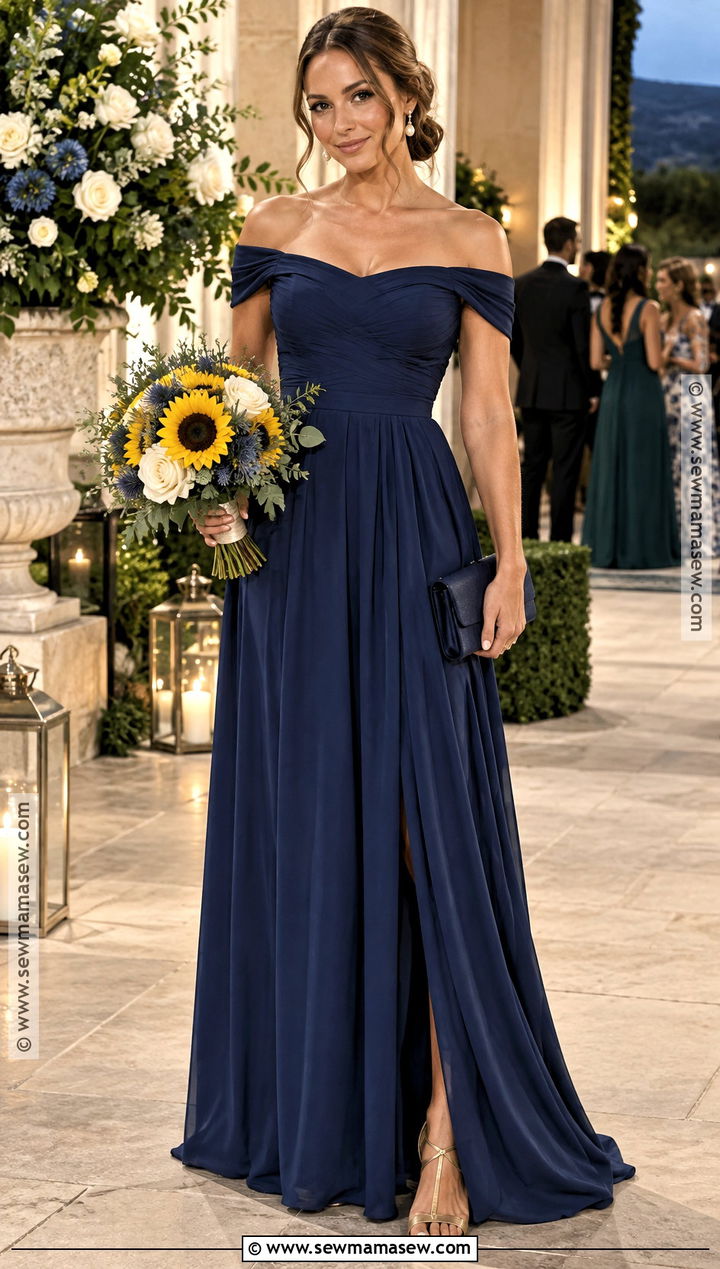
Navy gives yellow the cleanest contrast of any color here, and at an evening wedding it reads almost formal. An off-the-shoulder gown with a fitted bodice and light ruching at the waist needs good grip at the top edge, so I have everyone do a quick arm-raise test in the fitting room. Chiffon moves more; satin suits a polished ballroom. Metallic gold heels, pearl drops and a small navy clutch keep it classic. Blue thistle in the bouquet links the flowers to the dress. Bring a matching navy wrap for after sunset. Navy is also one of the easiest bridesmaid colors to wear again, which guests notice and appreciate. If necklines differ, repeat the same hem and jewelry.
6. Terracotta Flutter-Sleeve Bridesmaid Dress
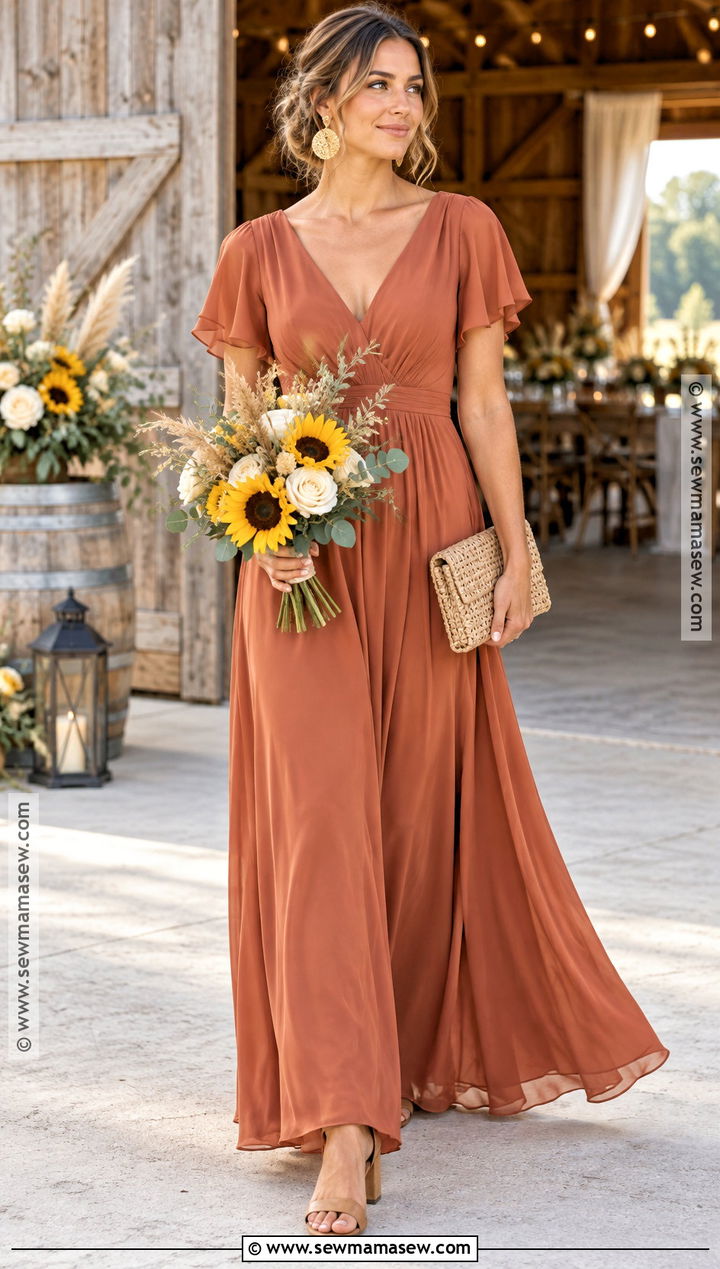
Terracotta suits a rustic venue, and it's softer on most skin tones than a true orange. I like it in floor-length chiffon with flutter sleeves, a V-neck and light pleating at the waist; the sleeves give arm coverage without trapping heat on a warm early fall afternoon. Tan block-heel sandals, hammered gold earrings and a woven clutch keep the finish natural. Dried grasses and cream roses in the bouquet stop the whole party reading too orange. The shade varies a lot between brands, from muted clay to strong rust, so approve one swatch before anyone orders. On grass, a wide heel is the only kind that won't sink. A cropped taupe wrap covers the shoulders later without hiding the dress.
7. Chocolate Brown Satin Bridesmaid Dress
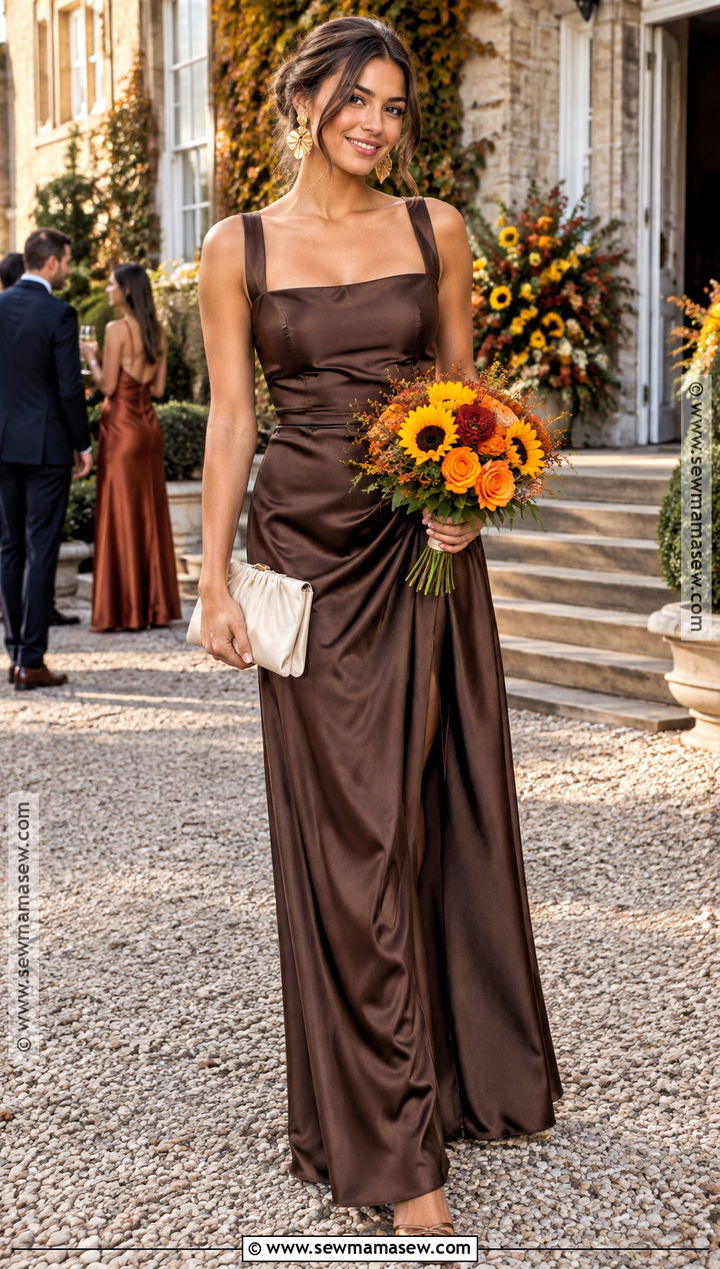
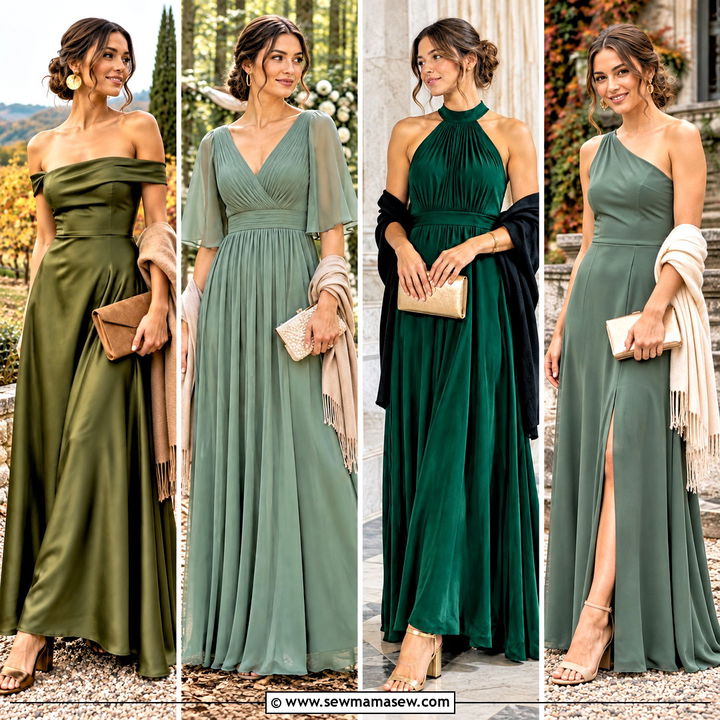
Brown is underrated next to sunflowers. It's the same family as the flower centers, so it makes the petals look lit up. A floor-length satin with a square neckline, wide straps and a lightly draped skirt has structure but still lets you sit and dance. Go for espresso or cocoa; a flat brown that leans black just looks dark in photos. Bronze is a natural partner if you want to add a metallic note. Bronze heels, sculptural gold earrings and a cream clutch lift it. Orange roses and small ivory blooms in the bouquet show up well against the dark fabric. Brown is also my favorite base for a mixed-fabric party, since velvet, crepe and satin in the same tonal family add depth instead of looking accidental.
8. Mustard Yellow Long-Sleeve Bridesmaid Dress
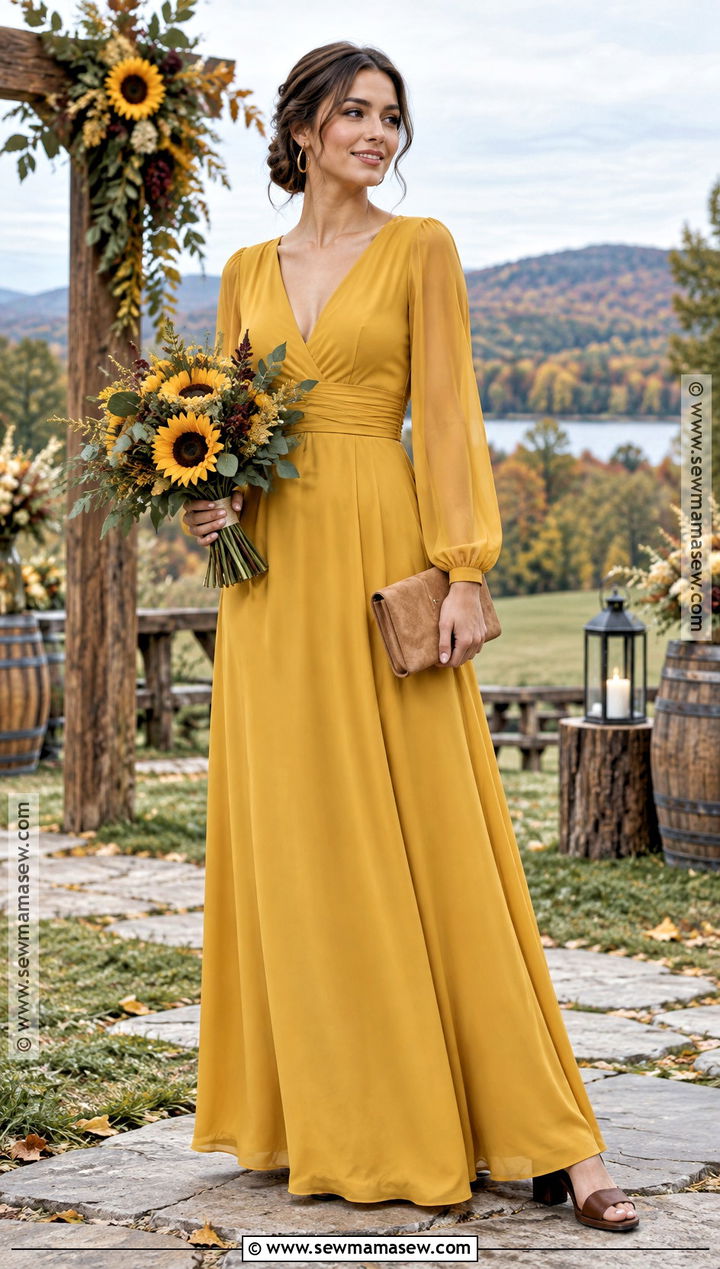
If full sunflower yellow feels like too much, mustard keeps the gold without fighting the petals. I'd pick a muted golden mustard that sits a shade darker than the flowers rather than matching them. A floor-length crepe with sheer long sleeves, a modest V-neck and a defined waist is a good cool-weather choice, and crepe hangs without clinging. Dark brown block heels, small bronze hoops and a camel clutch suit it. Pack the bouquets with deep greenery so the yellow petals don't disappear against the dress. Mustard is the one shade here I'd test on every bridesmaid, by a window, because it can make fair or olive skin look sallow. Offering two or three necklines in the same color helps everyone feel comfortable.
9. Olive Green Satin Bridesmaid Dress
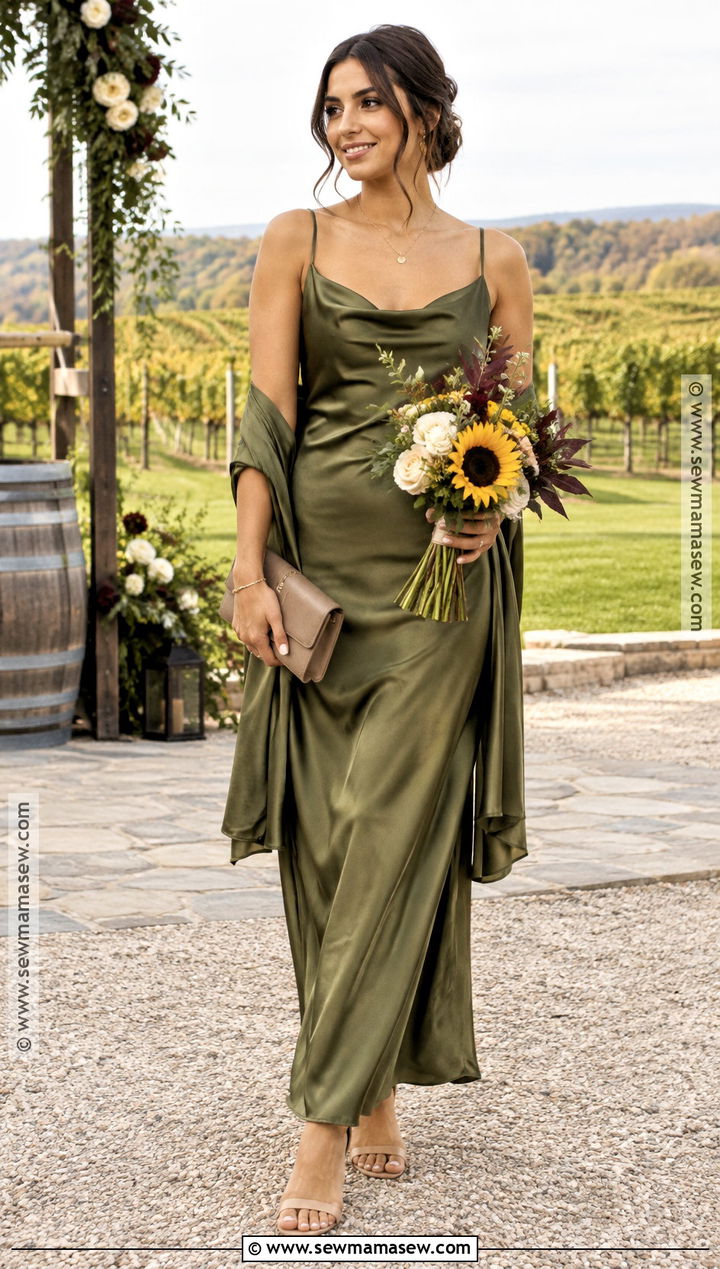
Olive ties the party to the stems and leaves rather than the petals, which is a quieter way to follow the theme. A satin slip with a draped neckline and adjustable straps is the simplest version; for more coverage, add a matching satin wrap or short draped sleeves. Bias-cut slips show every line underneath, so I always remind bridesmaids to bring the exact underwear they plan to wear to the fitting. Nude or bronze heels and minimal gold jewelry are enough. Burgundy foliage in the bouquet gives warm contrast. Olive holds its own outdoors without disappearing into grass. Order every dress from the same brand and color collection, because fabrics labeled olive can look yellow, gray or brown side by side.
10. Plum Wrap Bridesmaid Dress
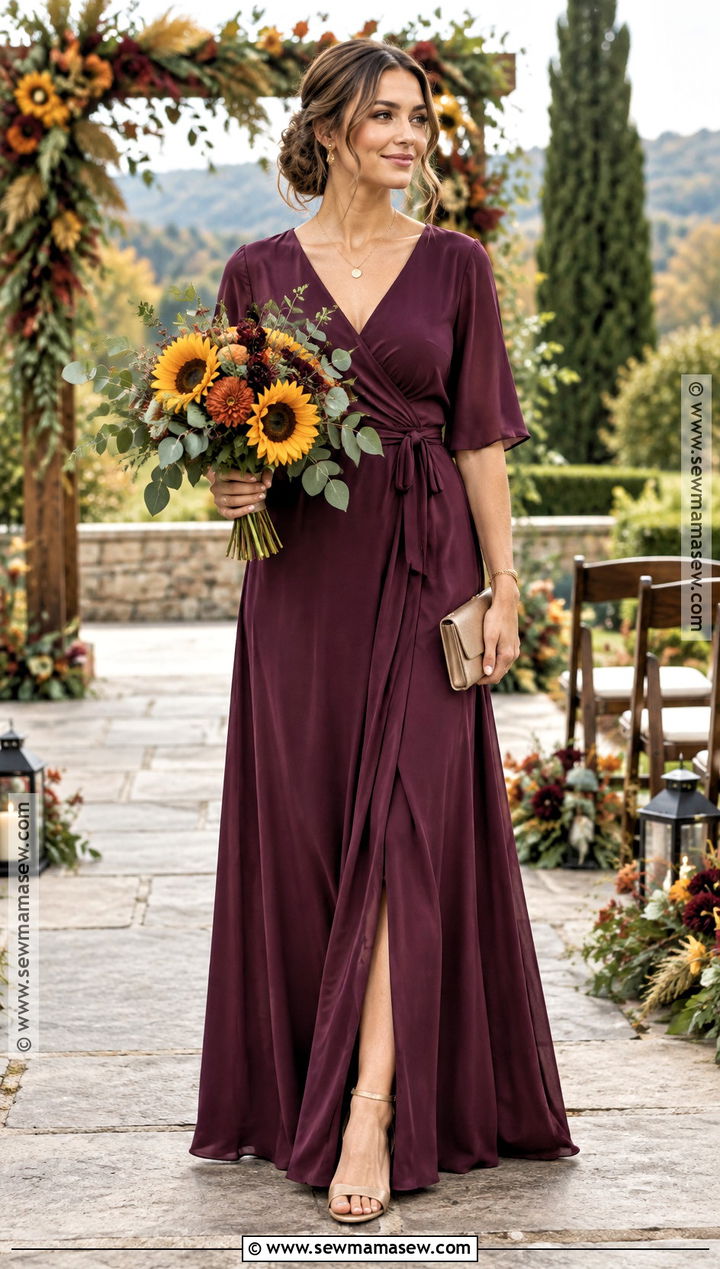
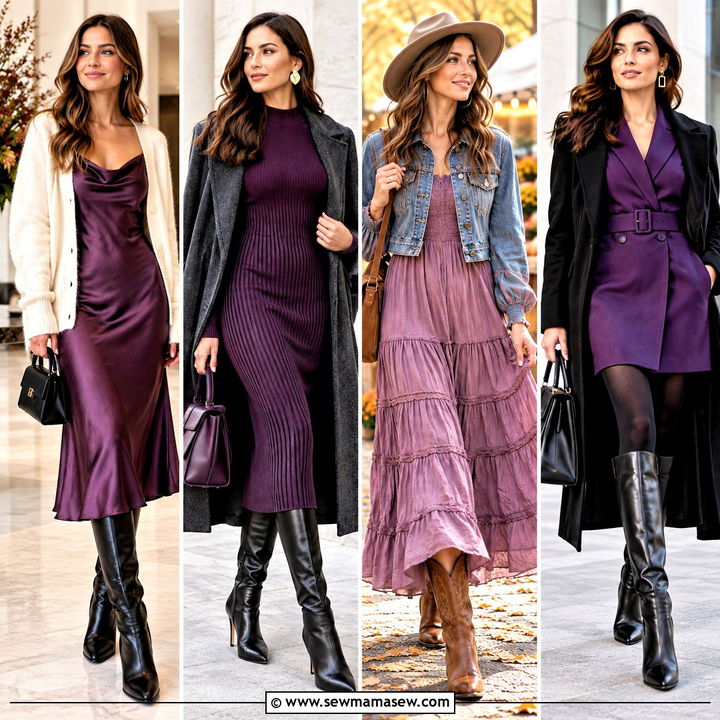
Plum and yellow sit opposite each other on the color wheel, so this pairing makes sunflowers look the most vivid of anything here. A wrap gown with elbow-length sleeves and a surplice neckline adjusts to a lot of body shapes, but wrap necklines gape when you lean, so I check that each one sits securely or add a small snap. Chiffon or stretch crepe give the skirt movement. Champagne heels, delicate gold jewelry and a small neutral clutch finish it. Dark berries and muted orange flowers in the bouquet connect the purple with the rest of the fall palette. Plum is formal enough for a ballroom and still at home in a barn. If silhouettes vary, approve one plum shade and one fabric family.
11. Rust Pleated Bridesmaid Dress
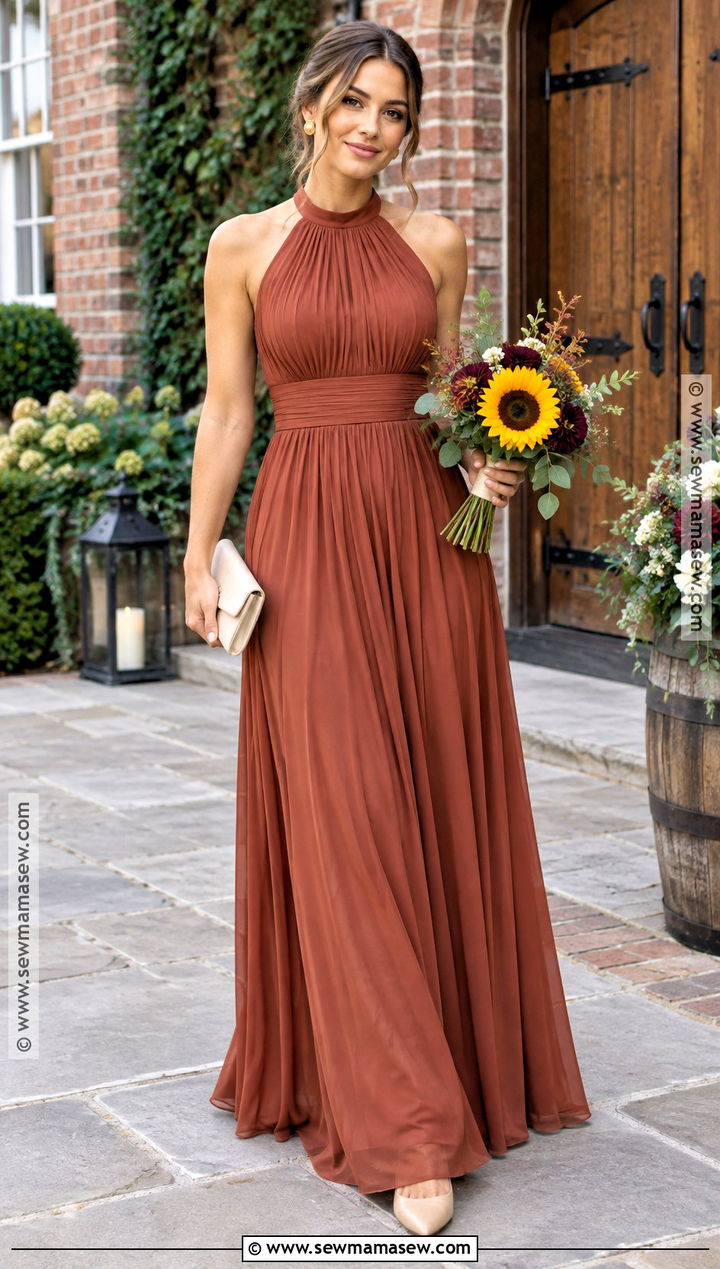
Rust is deeper and browner than orange, which makes it an easy match for sunflowers and foliage. Pleated floor-length gowns give the party clean vertical lines, but the pleats need a soft fabric like chiffon or georgette to fall properly; in stiffer fabric they flare out and look boxy. A halter neck shows off the shoulders and gives almost no bust support, so I'd offer a wide-strap version for anyone who needs it. Nude closed-toe heels, gold studs and a cream clutch keep it balanced. Dark green and burgundy in the bouquet separate the flowers from the dress. Coordinated camel or rust shawls look planned in photos and keep everyone warm once the sun goes down.
12. Dusty Blue Chiffon Bridesmaid Dress
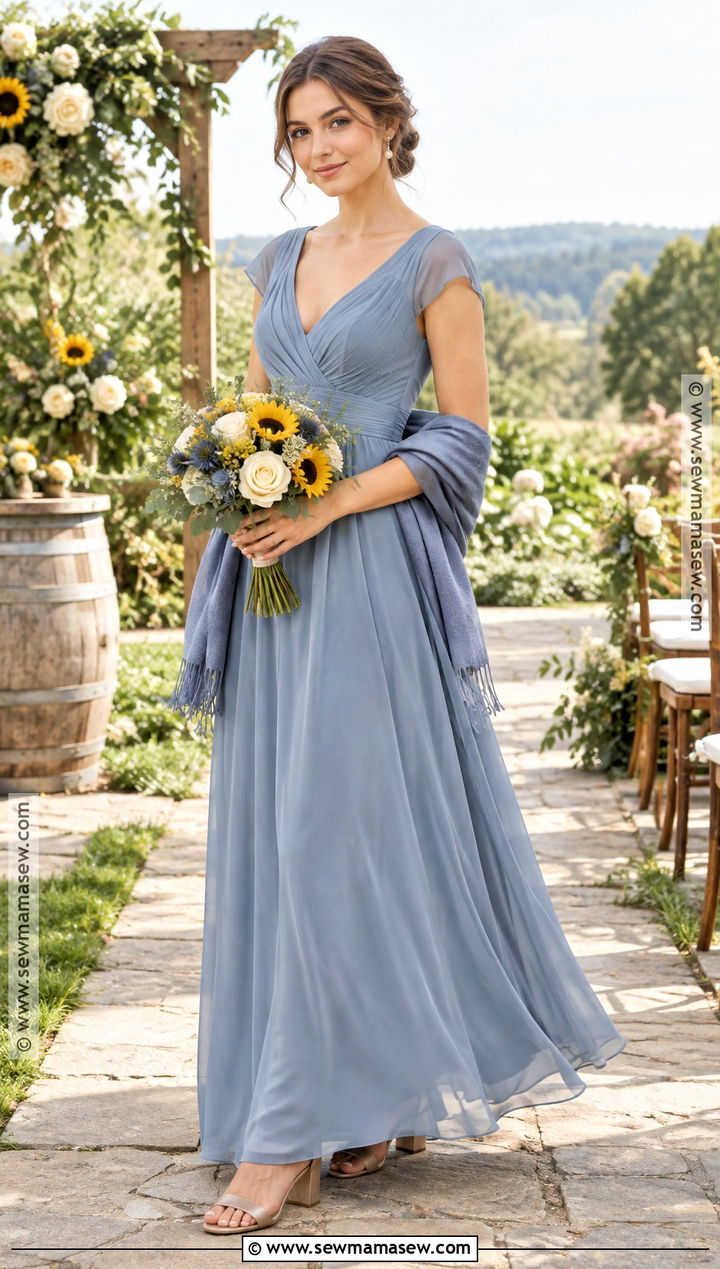
Dusty blue is the one cool color I'd put in a sunflower party, and only for an early fall date when the weather is still mild. It softens the bold yellow and brown of the flowers. Cap sleeves, a V-neck and a gathered A-line skirt in chiffon keep it light. The danger is that it tips into spring, so pair it with deeper fall accents rather than pastels: rust foliage and blue thistle in the bouquet, and a slate blue wrap. Silver or champagne block heels and pearl earrings work. If the silhouettes vary, repeat one shoe color, one bouquet recipe and one jewelry finish across the whole party so the photos still hold together.
13. Copper Satin Cowl-Neck Bridesmaid Dress
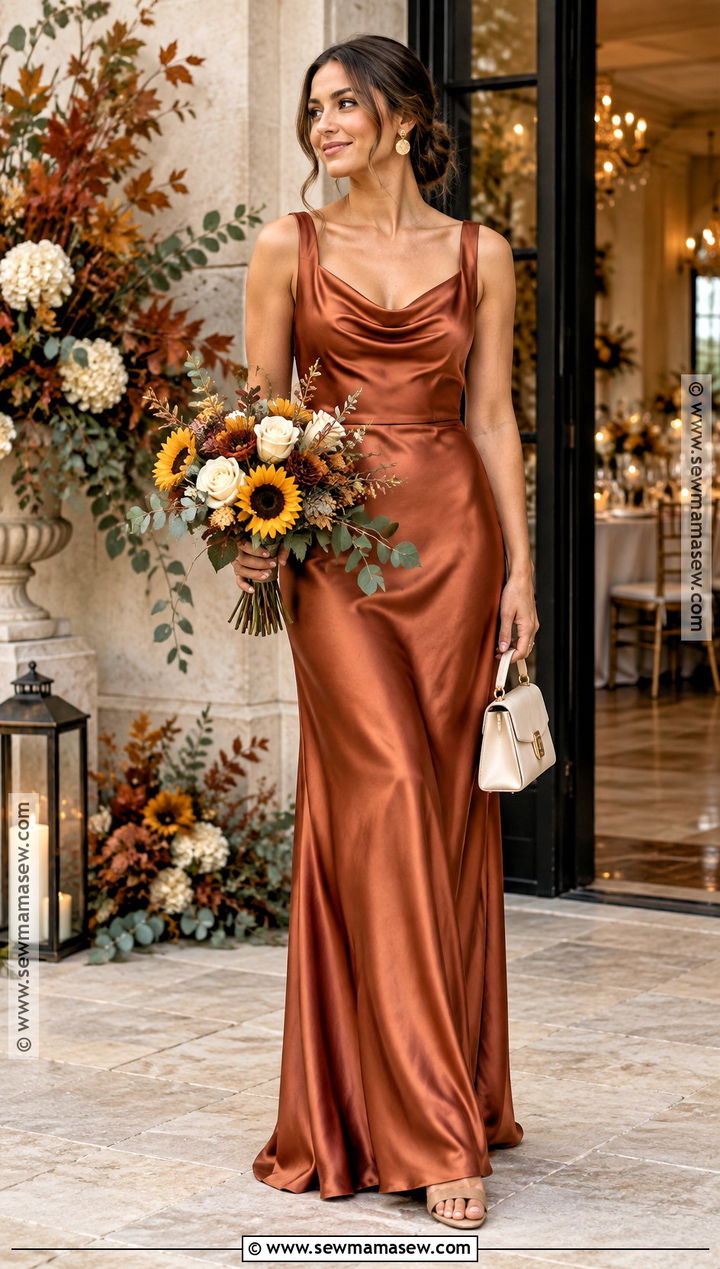
Copper catches late-afternoon light in a way that flatters the gold in sunflower petals. A cowl-neck with wide straps and a fluid floor-length skirt looks dressy without being stiff. I'd steer people to a matte or softly lustrous satin, because high-shine copper turns patchy under flash and every crease shows. Dark nude heels, brushed gold earrings and a small cream bag are enough. Ivory roses and rust-colored leaves keep the bouquet warm but layered. Copper can lean orange, pink or brown depending on the dye lot, so hold a full-size swatch beside the actual flowers before ordering. For different body types, keep the satin and offer a square neck or a wrap bodice alongside the cowl.
14. Sage Green Empire-Waist Bridesmaid Dress
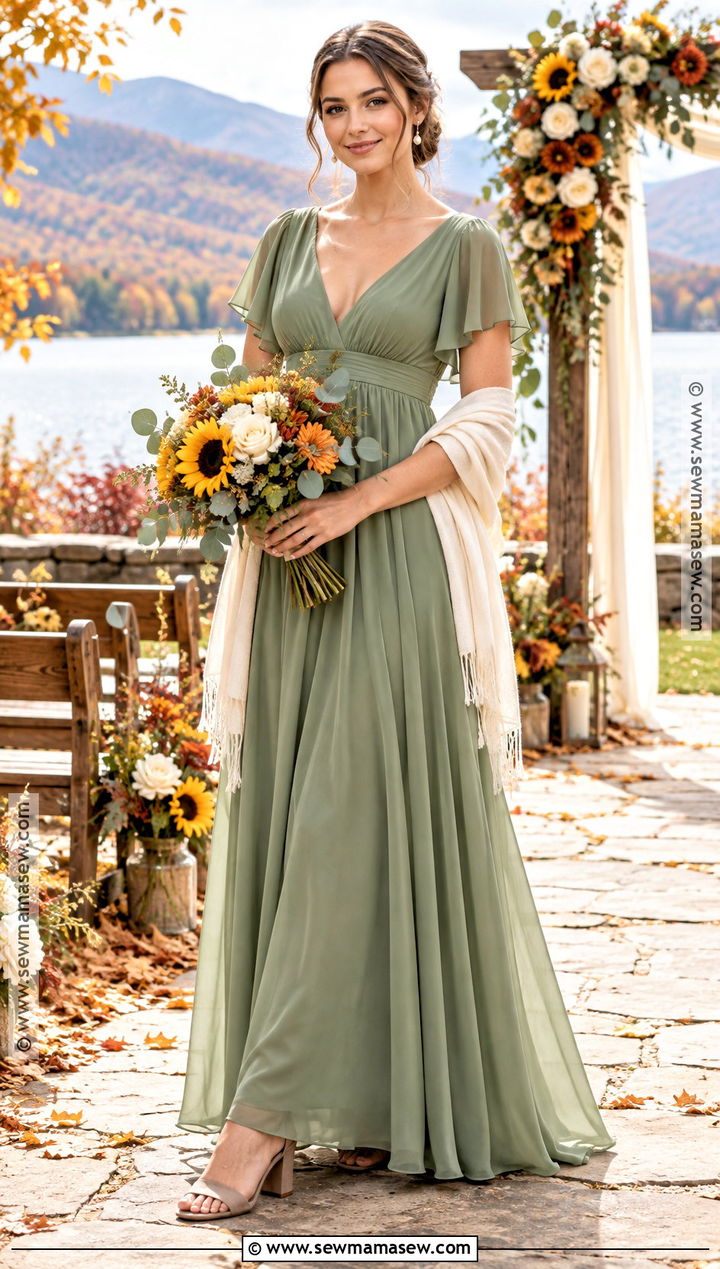
Sage lets the sunflowers be the brightest color in the room. An empire-waist chiffon with a V-neck and short flutter sleeves is one of the most comfortable cuts I can offer a bridal party; the raised seam skims the middle and the skirt moves freely through a long ceremony and reception. Taupe block heels, pearl drops and a cream wrap suit it. Eucalyptus and a few rust accents keep the bouquet autumnal. For a late-season date, pick a medium sage rather than a pale one, which can look washed out against bare trees. Check the fabric in sunlight and indoors before ordering, because sage moves between green, gray and blue more than almost any other shade.
15. Mismatched Fall Bridesmaid Dresses
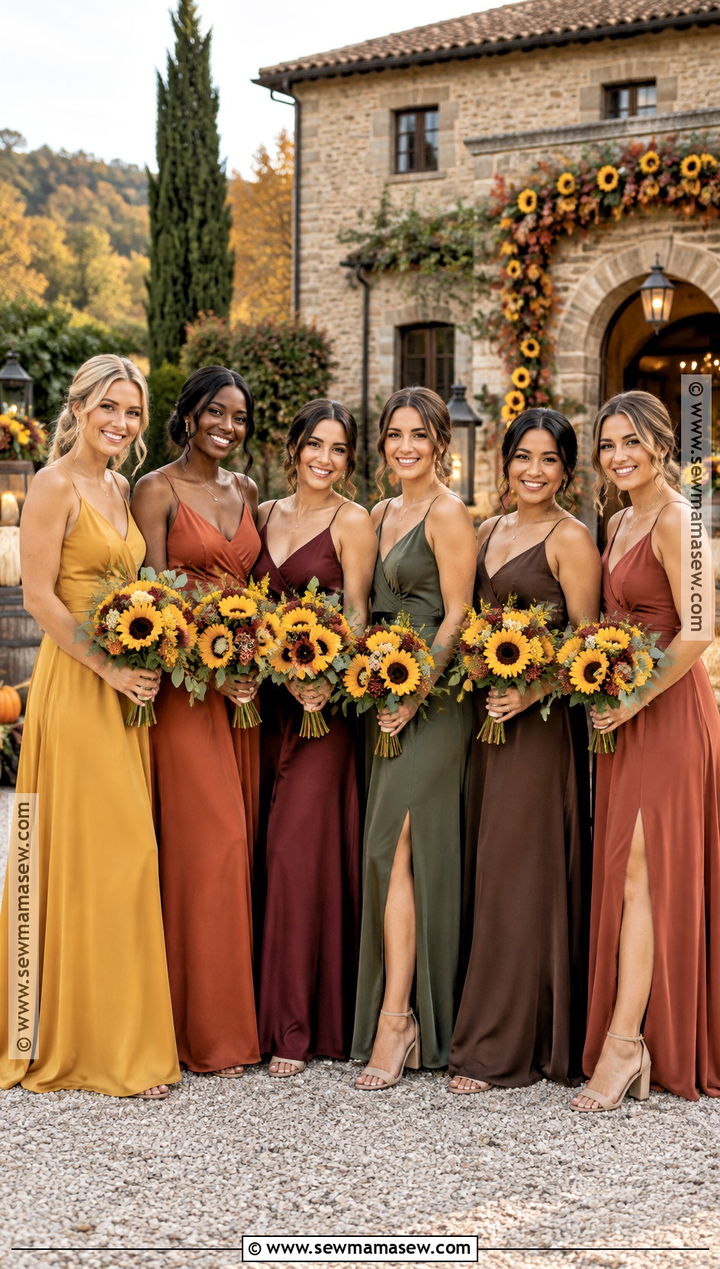
A mismatched party can carry the whole range of a sunflower arrangement: yellow, rust, terracotta, burgundy, olive and chocolate brown. What makes it look planned rather than random is controlling three things. Keep one fabric family, keep the colors at a similar depth, and keep every hem the same length. Chiffon gives a softer, rustic result and matte satin a more formal one. Within that, each bridesmaid can choose the neckline and support she prefers. Neutral block heels, simple gold jewelry and matching bouquets of sunflowers and greenery tie it together. Before the wedding, line everyone up in the order they'll stand and check that the colors move from light to dark without two similar shades side by side.
Why Sunflowers Change How a Color Photographs
Sunflowers are large and dense, so in group photos the bouquets take up a lot of the frame right at waist height. That changes how the dresses read. A pale dress behind a big yellow bouquet tends to look washed out, while a deep color makes the flowers look almost glowing. When a bride is torn between two shades, I ask the florist for a single sunflower stem and hold it against each swatch outside, in shade, because that is how most portraits are shot.
Satin Versus Chiffon on Camera
Satin reflects light, so it shows creases, seams and any pulling across the hips more than chiffon. Steam satin gowns on the morning of the wedding, not the night before, and have bridesmaids stand rather than sit in them until the portraits are done. Chiffon forgives wrinkles but can look flat in dull light, which is why I like it in the deeper colors on this list.
Planning for Mixed Skin Tones
Yellow, mustard and olive are the shades most likely to flatter one bridesmaid and drain another. If the party has a wide range of complexions, I either move those colors to the bouquet and ribbon or choose a deeper shade like burgundy, rust or brown that sits well on almost everyone. Testing each person beside a window for a minute settles the question faster than any color chart.
Letting the Bouquet Decide the Color
Every color here works with sunflowers; the difference is how much you want the dresses to compete with the bouquet. Yellow and mustard join in, while burgundy, forest green, navy, rust and brown give the flowers something to stand against. Sage and dusty blue lighten things for an early fall date. Whichever you pick, get swatches and look at them beside the real flowers, outside and indoors. Think about the venue, the likely temperature and the ground underfoot before you commit to a cut. Repeat the accessories, vary the necklines, and the party will look coordinated while every bridesmaid stays comfortable through the last dance.
Related posts: