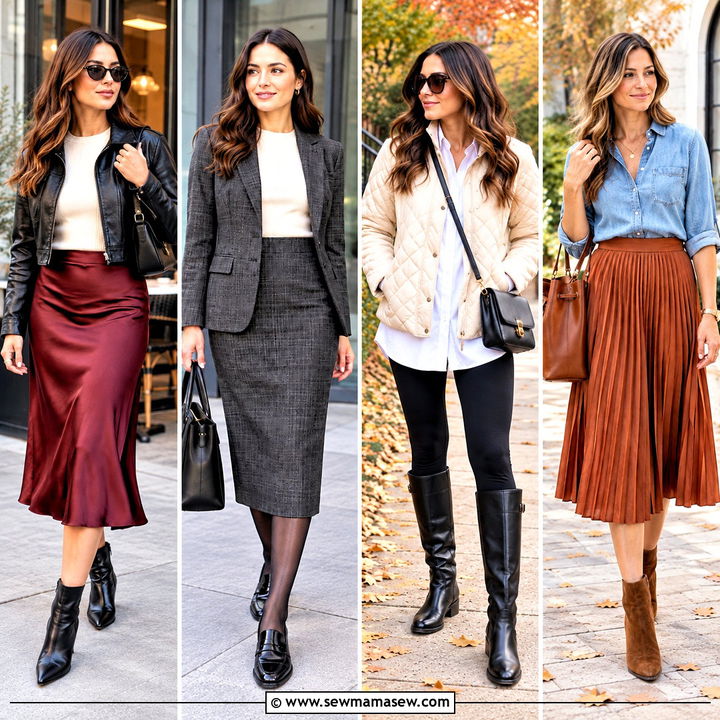
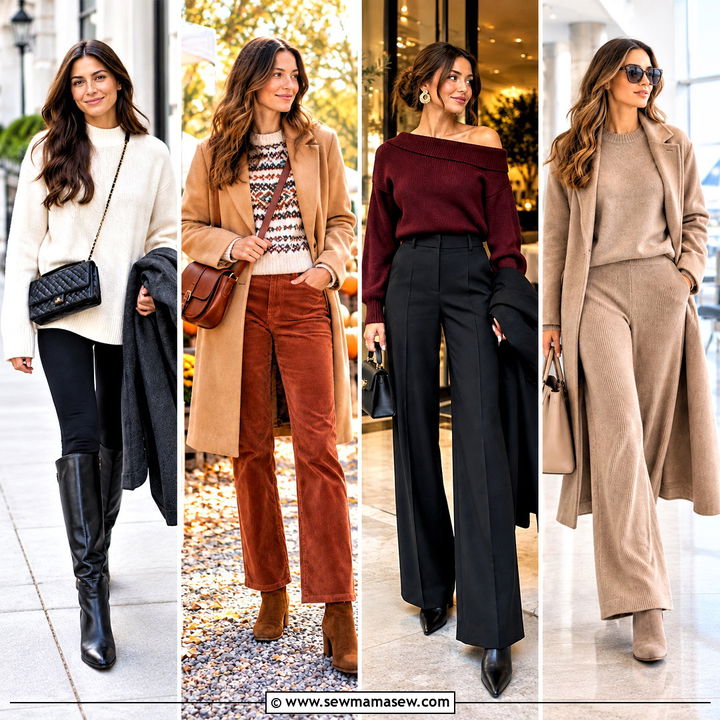
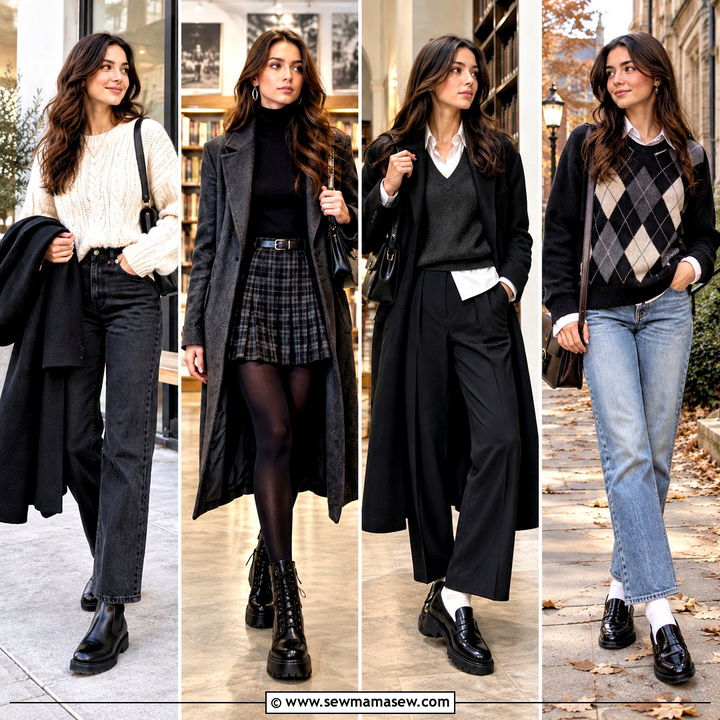
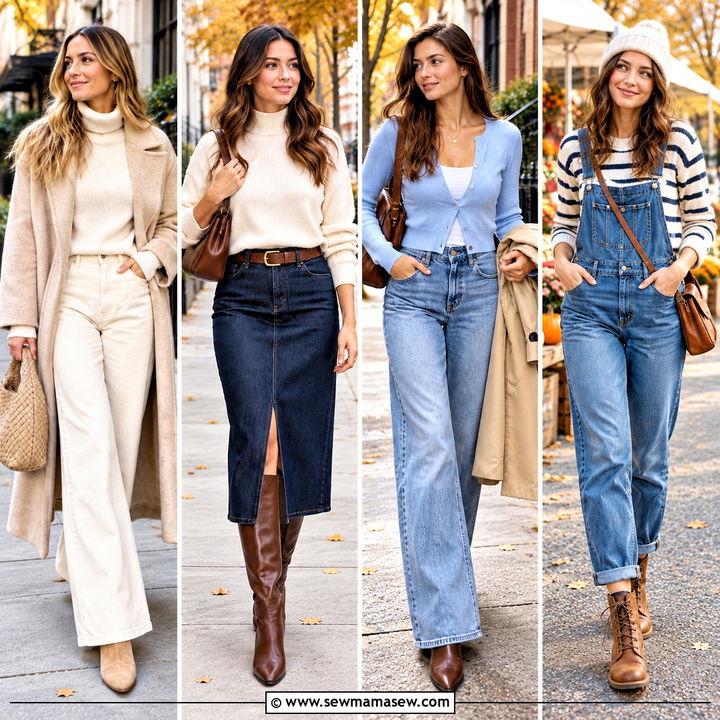
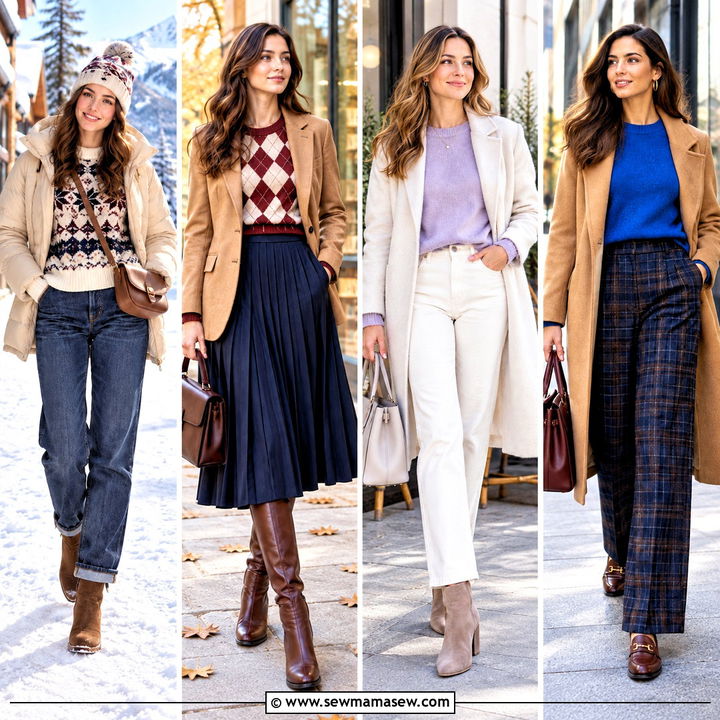
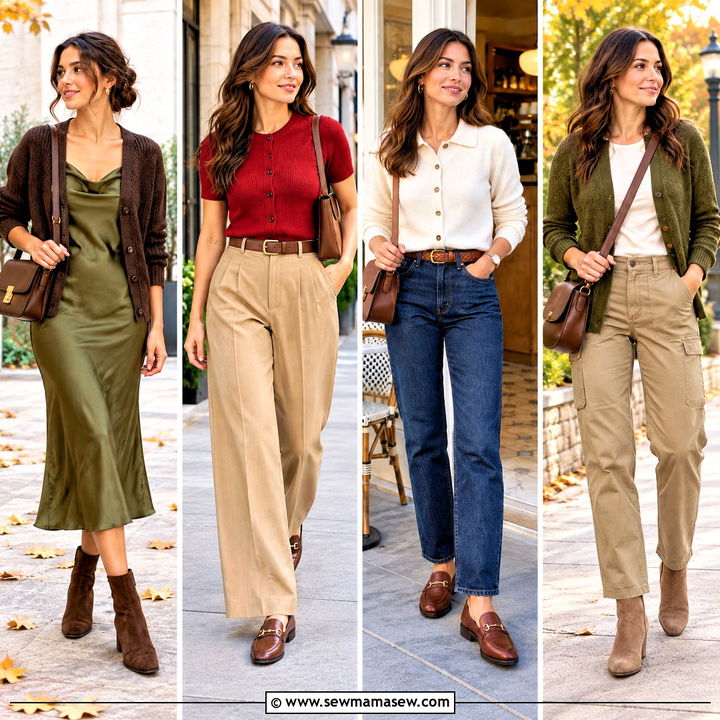
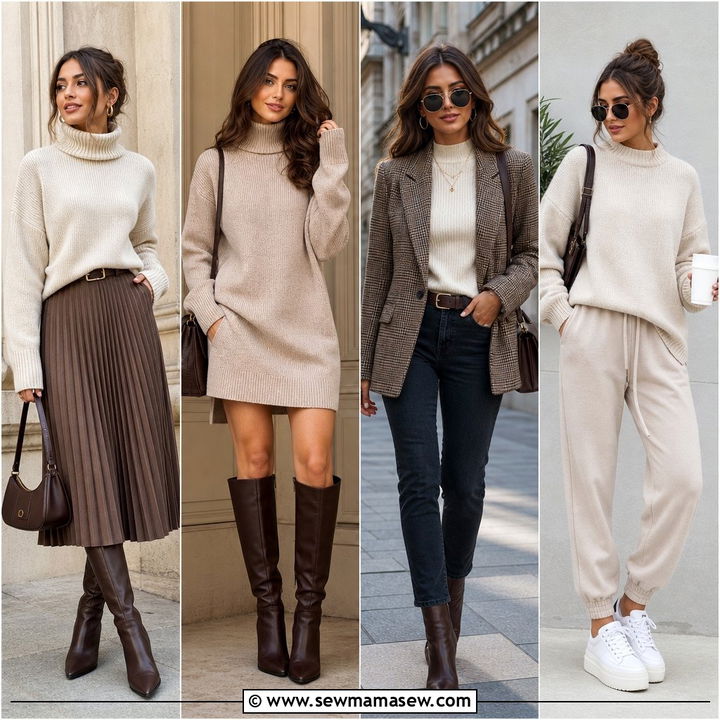
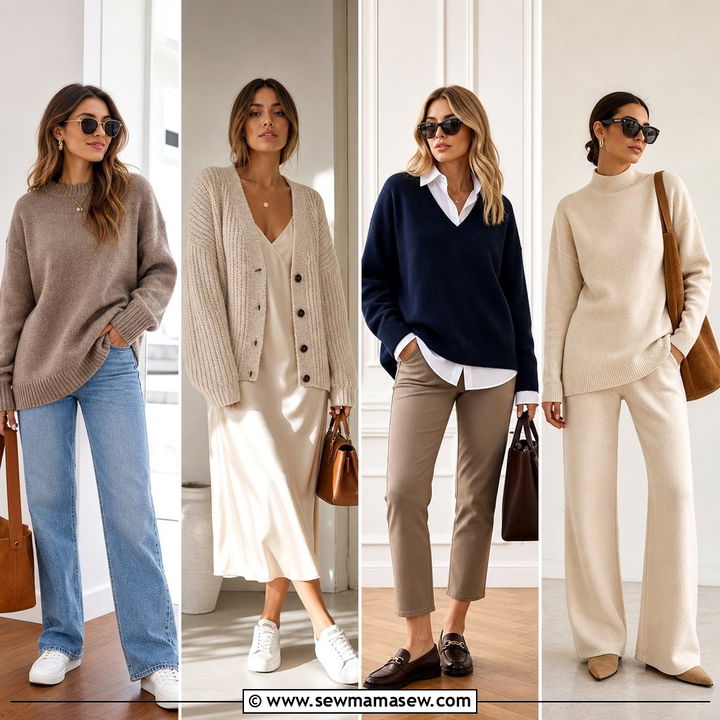
Fall mornings start cold and afternoons warm up fast, which is exactly why a sweater does more work in October than any other piece I put on a client. Below are fifteen ways I build outfits around knitwear, paired with jeans, skirts, trousers, dresses and the boots, loafers and sneakers that suit each one. In early fall I reach for cotton and fine merino; once the frost starts, I move to wool blends and chunkier textures. The thing I watch most closely is proportion, because a sweater that is too long or too thick for what sits under it is what makes an outfit look bulky instead of warm.

Reading the Knit Label Before You Buy
Before I look at color or shape, I turn the sweater inside out and read the fiber tag. It tells me more about how the knit will feel in January than the price or the hanger appeal does.
- Cotton breathes and suits September, but it holds moisture and loses warmth once it gets damp, and heavy cotton knits can stretch out at the cuffs.
- Merino is fine, soft and warm for its weight, so it layers under a blazer without bulk. It's the knit I suggest for office outfits.
- Lambswool and other wool blends trap more air and are the right call for real cold, though they can feel scratchy at the neck for sensitive skin.
- Cashmere is very warm and very soft, but cheaper versions are often spun from short fibers that pill quickly.
- Acrylic-heavy blends feel soft in the store and usually pill fast at the underarms and sides.
Gauge tells you how the sweater will layer
Gauge is how tightly the yarn is knit. A fine gauge looks smooth and slides under a coat or over a shirt; a chunky gauge adds texture and warmth but also adds width at the arms and torso. My rule is simple: chunky knits go under roomy coats or none at all, fine knits go under anything fitted. I also stretch a small section of the hem between my fingers. If it springs back, the knit will keep its shape. If it stays loose, it will bag out by midseason.
1. Chunky Sweater With Straight-Leg Jeans
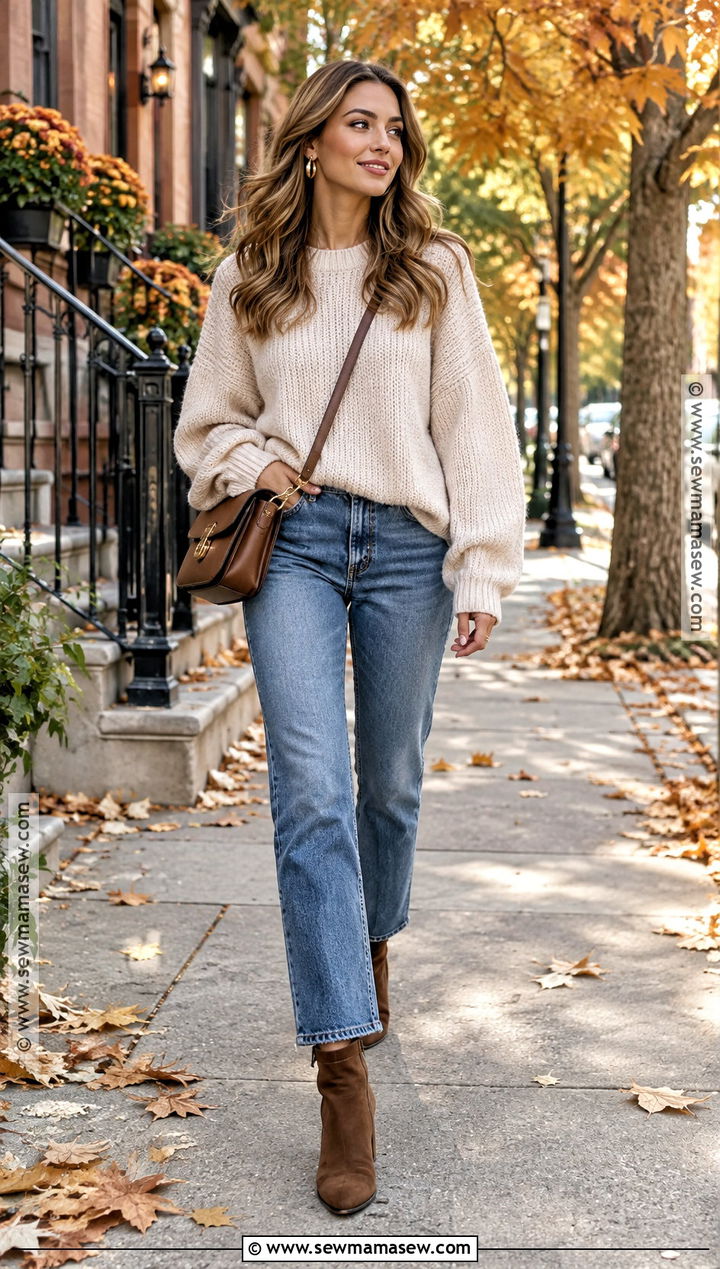
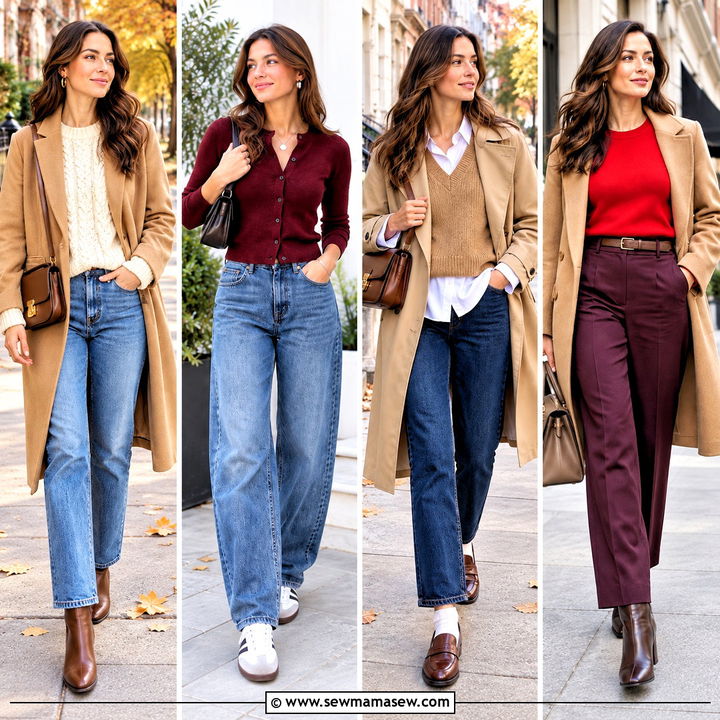
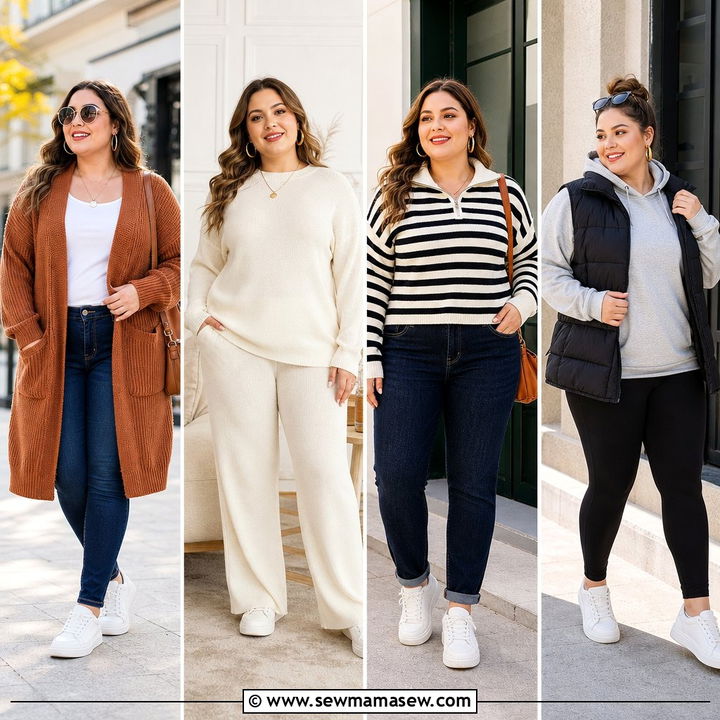
This is the pairing I suggest first to anyone rebuilding a fall wardrobe, because it asks almost nothing of you. I like a slightly oversized crewneck in oatmeal, camel, rust or forest green over medium-wash jeans that sit at the natural waist. A small front tuck shows where your waist is without flattening the relaxed shape of the knit. The thing I check is where the hem lands: if you're petite, a sweater that stops near the waistband keeps your legs from looking shortened, while taller women can carry a longer hem easily. Brown ankle boots, a structured crossbody and simple gold earrings finish it, and a wool coat goes over the top once the temperature drops. Skip a thick layer underneath; chunky knits already add enough bulk.
2. Striped Sweater With Wide-Leg Jeans
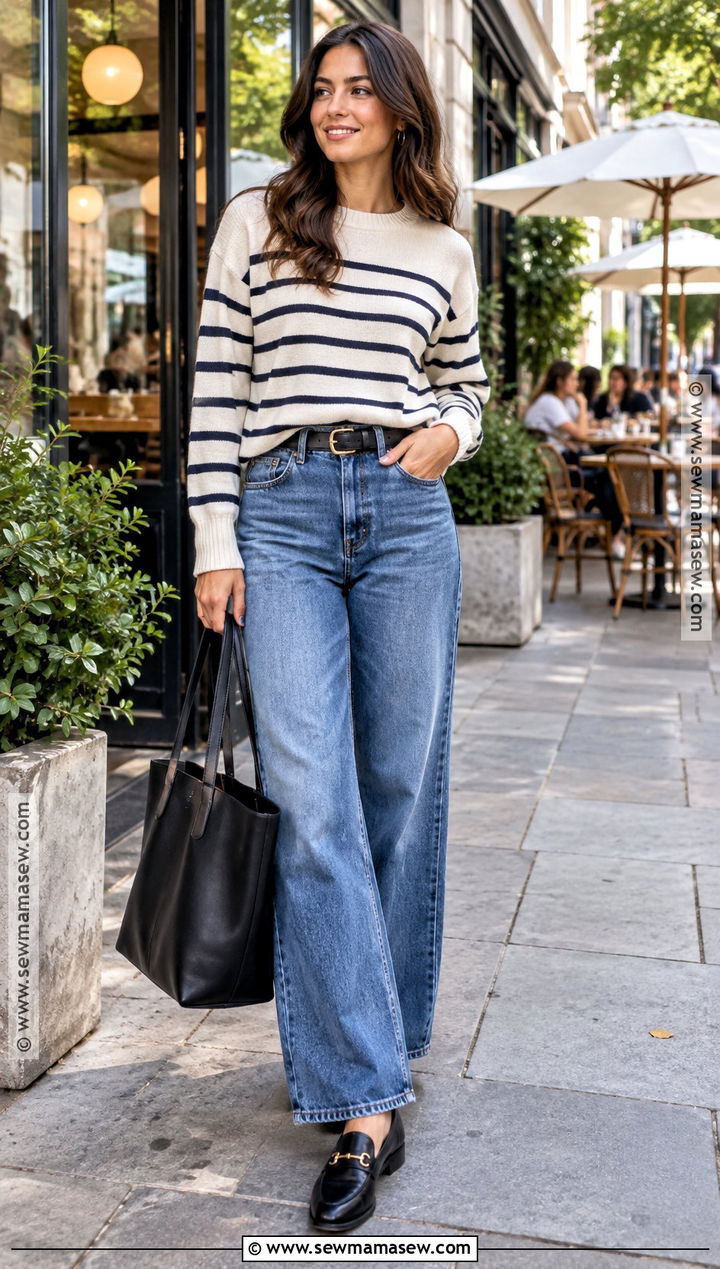
Stripes are easier to wear than most people expect, because the pattern does the styling for you. I'd pick a relaxed sweater striped in cream and navy, or burgundy and brown, and wear it with high-waisted wide-leg jeans. The hem of the denim should nearly cover the shoe without touching the ground, since a dragging hem frays and collects grit within a week. Loafers keep it polished; white sneakers make it a Saturday outfit. On a smaller frame I go for narrower stripes and a moderate wide leg, because wide stripes plus a very full leg can swallow you. A light trench covers those unpredictable early-fall afternoons.
3. V-Neck Sweater With Tailored Trousers
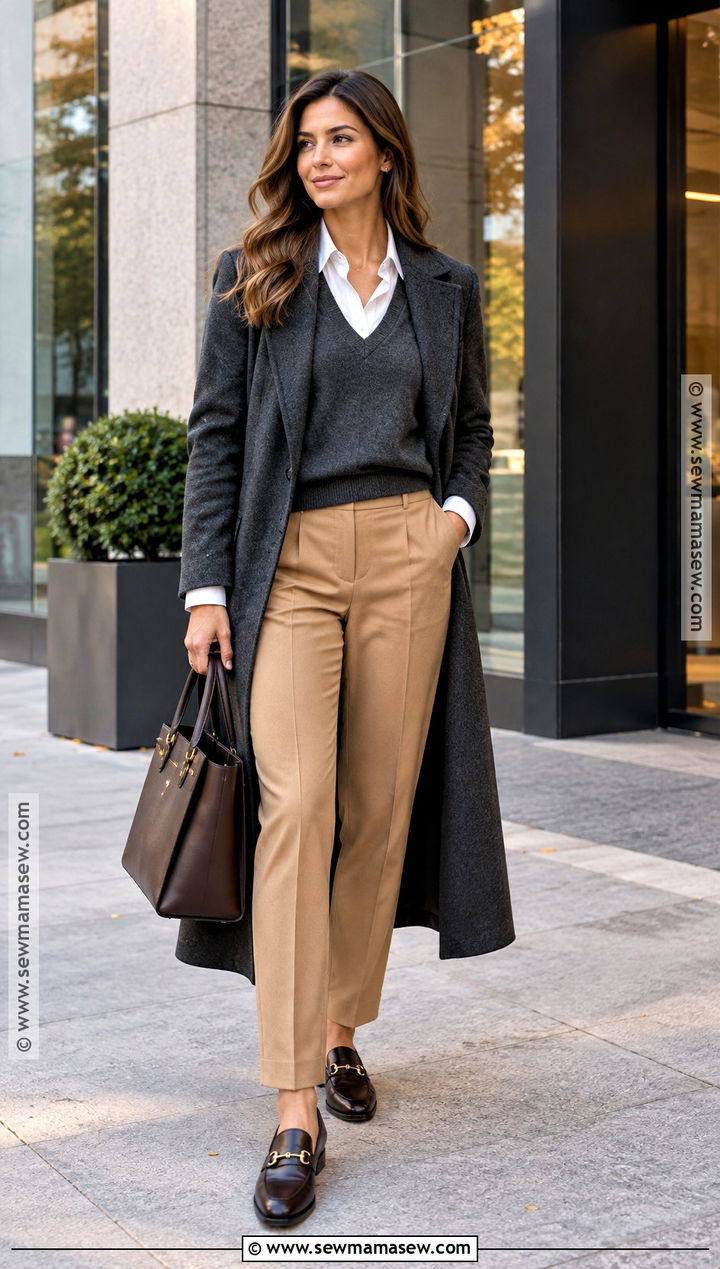
For the office, I layer a fine-gauge V-neck over a crisp white button-down and let the collar and cuffs show. Tailored straight-leg or softly pleated trousers in charcoal, chocolate, navy or camel keep it grown-up. Fine gauge matters here: a thick knit over a woven shirt bunches at the armpits and pulls the collar out of place. If you have a fuller bust, I'd choose a moderate V rather than a deep one, and you'll notice the vertical line lengthens the upper body. Loafers, a structured bag and a long wool coat for the commute are all it needs.
4. Cardigan With Satin Midi Skirt
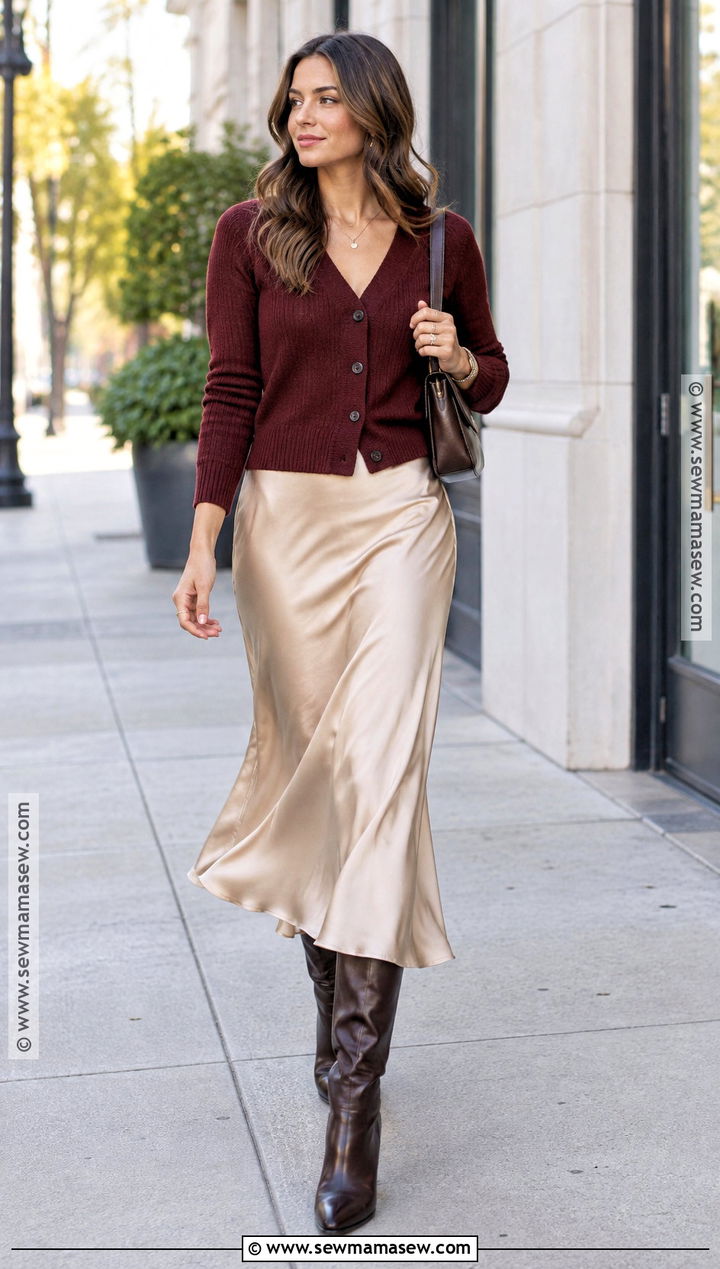
Soft knit against fluid satin is a contrast I love, but it only works if the cardigan is short enough. A waist-length cardigan, buttoned and worn as a top or open over a fitted cotton tee, keeps the midi skirt in charge of the silhouette. Cream with olive, burgundy with champagne and chocolate with copper are the pairings I keep coming back to. Satin shows every bump and seam, so if it clings at the hips I steer people toward a bias-cut skirt, which falls away from the body instead of gripping it. Knee-high boots fill the space under the hem and keep your legs warm.
5. Quarter-Zip Sweater With Dark-Wash Jeans
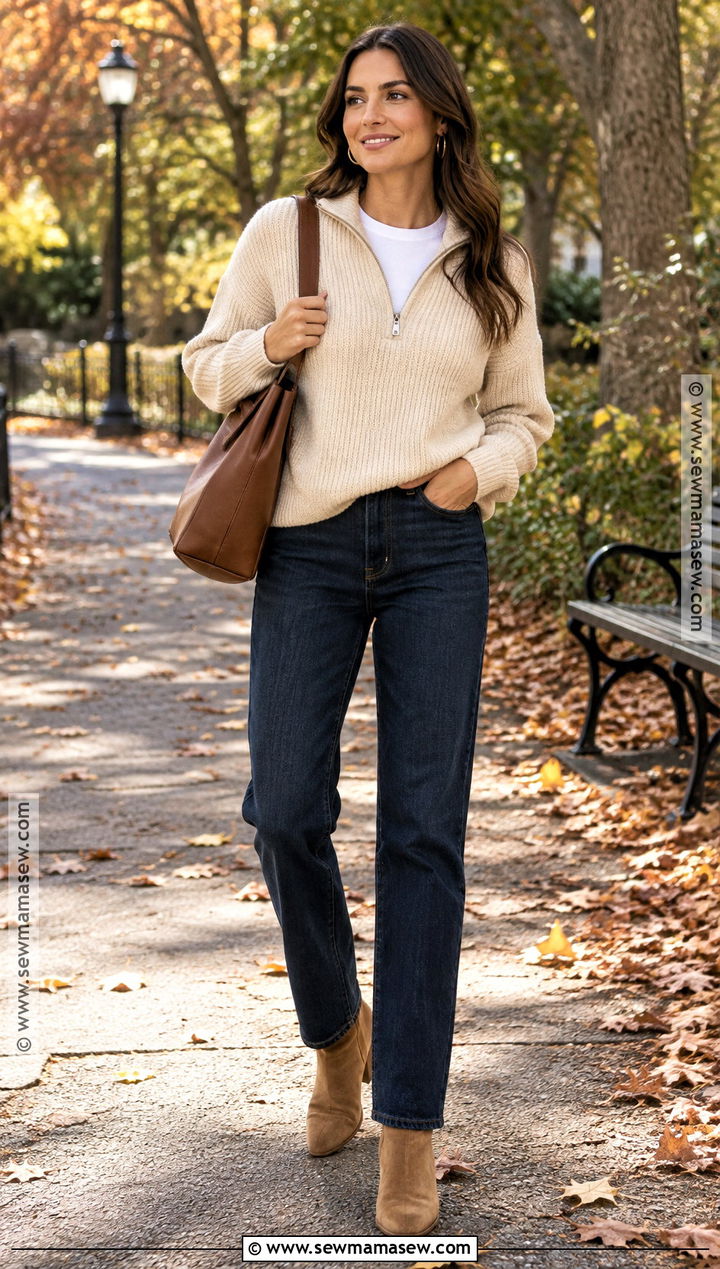
A quarter-zip sits halfway between sportswear and a classic knit, and that is its strength. I wear a cream, navy, gray or burgundy one with straight or relaxed dark-wash jeans and let a white T-shirt show at the open neckline. The zip is a practical detail as much as a style one: open it to frame your face indoors, close it on a windy walk. Suede ankle boots make it feel seasonal, and sleek sneakers dress it down. I look for a ribbed hem that sits neatly on the hip, because a loose, flared hem on a quarter-zip reads more gym than weekend.
6. Cable-Knit Sweater With Denim Midi Skirt
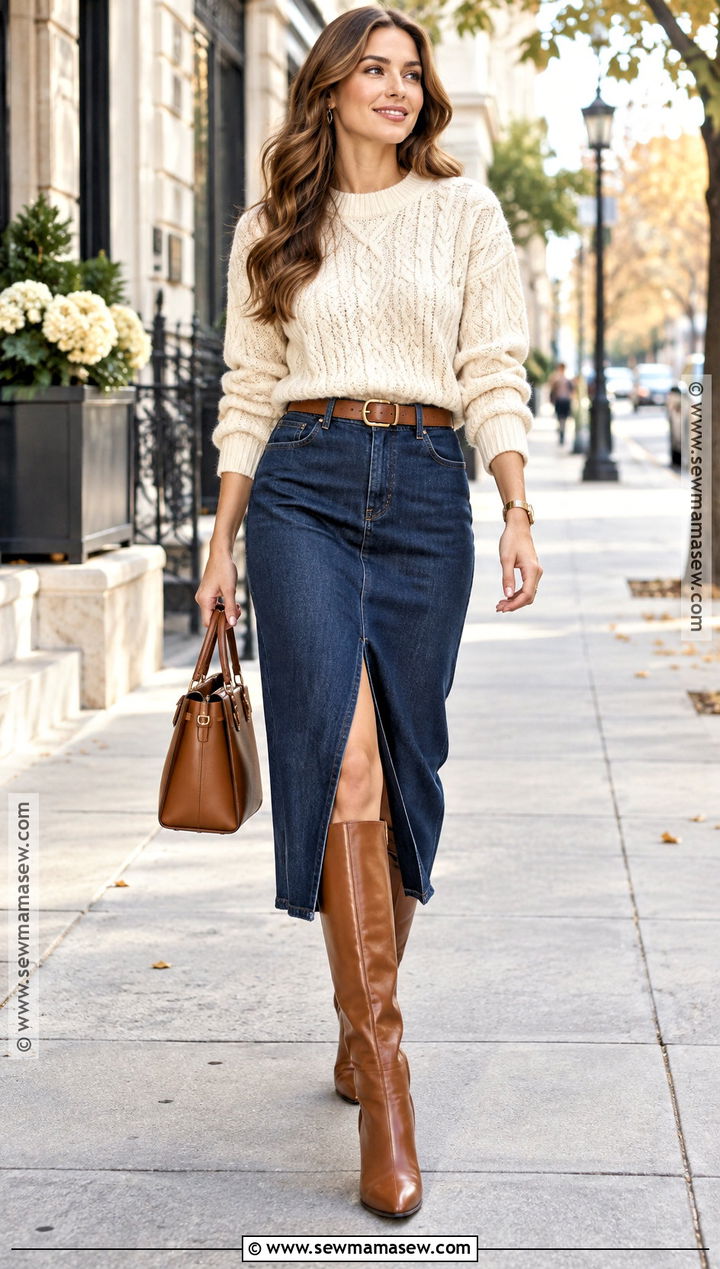
A denim midi skirt gives a cable-knit a fresher setting than the usual jeans. Make sure the skirt has a front or side slit; without one, a stiff denim midi shortens your stride and you end up walking like you're in a pencil skirt. Tuck a fitted cable-knit fully into the waistband, or give a relaxed one a small front tuck. Cream, heather gray and rust knits sit well against dark or medium denim. Knee-high leather or suede boots fill the gap under the hem, and opaque tights take over when it turns properly cold. Keep the coat cropped or tailored so the skirt length stays visible.
7. Turtleneck Sweater With Faux Leather Pants
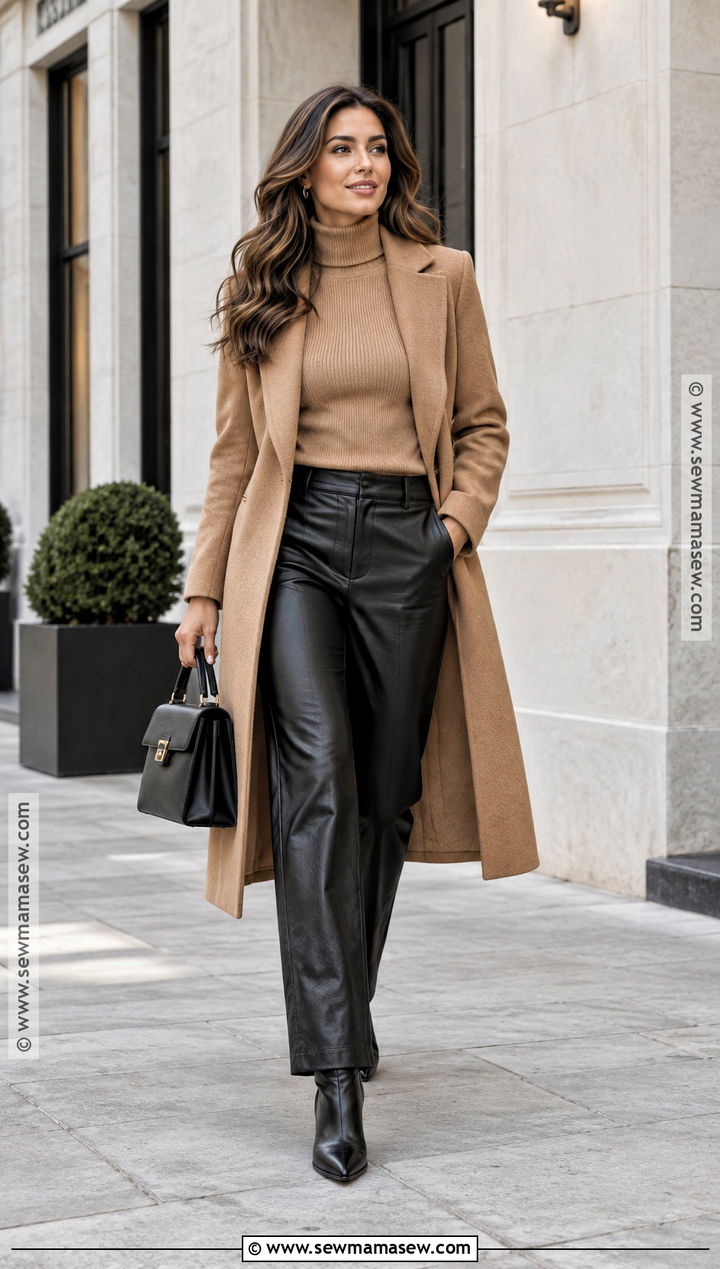
Smooth knit against faux leather is my favorite texture contrast for evenings out. I start with a fitted or semi-fitted turtleneck in camel, burgundy, cream or charcoal, then straight-leg faux leather pants with a comfortable waistband and real room through the hips. Faux leather has almost no give, so I always have clients sit down in the fitting room before deciding; tight pants crease hard across the lap. Pointed ankle boots lengthen the leg, lug soles relax it. If shine isn't for you, coated denim or a matte finish gives a similar effect, and a long tailored coat ties the whole thing together. Jewelry can stay minimal here.
8. Sweater Vest With Button-Down And Pleated Skirt
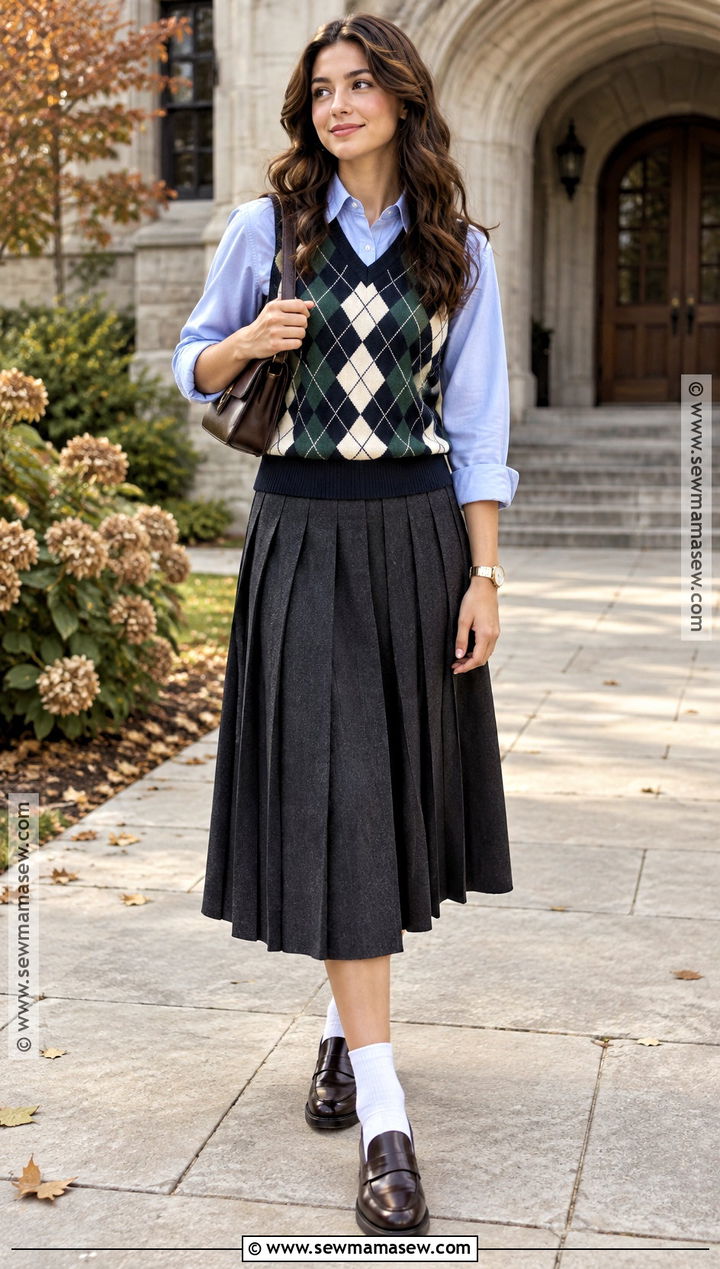
Preppy layers make sense the moment the air turns crisp. I put an argyle or plain sweater vest over a white or pale blue button-down and add a pleated midi skirt, and the pattern feels current as long as everything around it stays simple and structured. Loafers with socks handle mild days; knee-high boots take over when it gets colder. You can leave the shirt hem peeking out for a relaxed look or tuck both layers for a clearer waist. If pleats add volume where you don't want it, I'd look for a skirt with a flat yoke where the pleating starts below the hip.
9. Off-Shoulder Sweater With Black Jeans
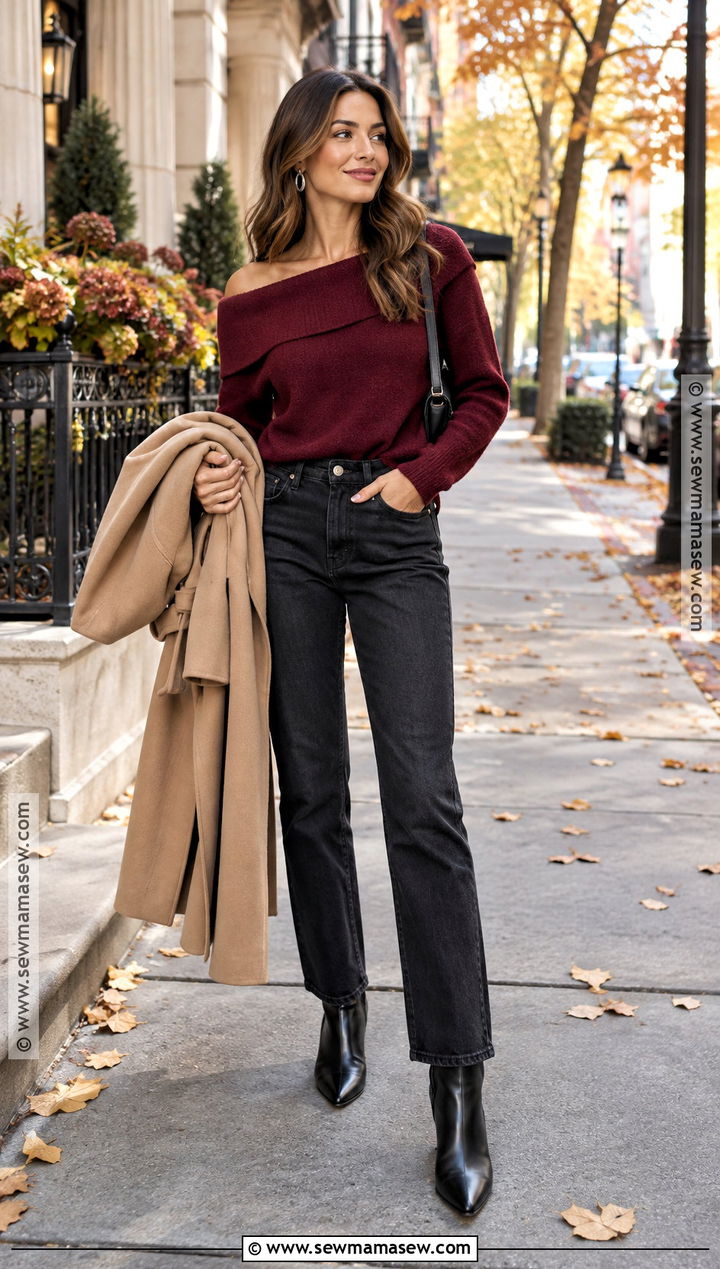
An off-shoulder sweater is softer than a crewneck, but the neckline needs to stay put or you'll spend the day hitching it up. I look for a folded, banded neckline with some structure rather than a loose wide scoop. High-rise black straight-leg jeans give it contrast. Ballet flats suit early fall, and heeled ankle boots give more coverage later in the season. If you'd like less skin, wear it slightly asymmetric over one shoulder or add a fitted camisole underneath. Keep the rest plain so the neckline does the talking, and pick a belted coat you can slip off indoors.
10. Fair Isle Sweater With Corduroy Pants
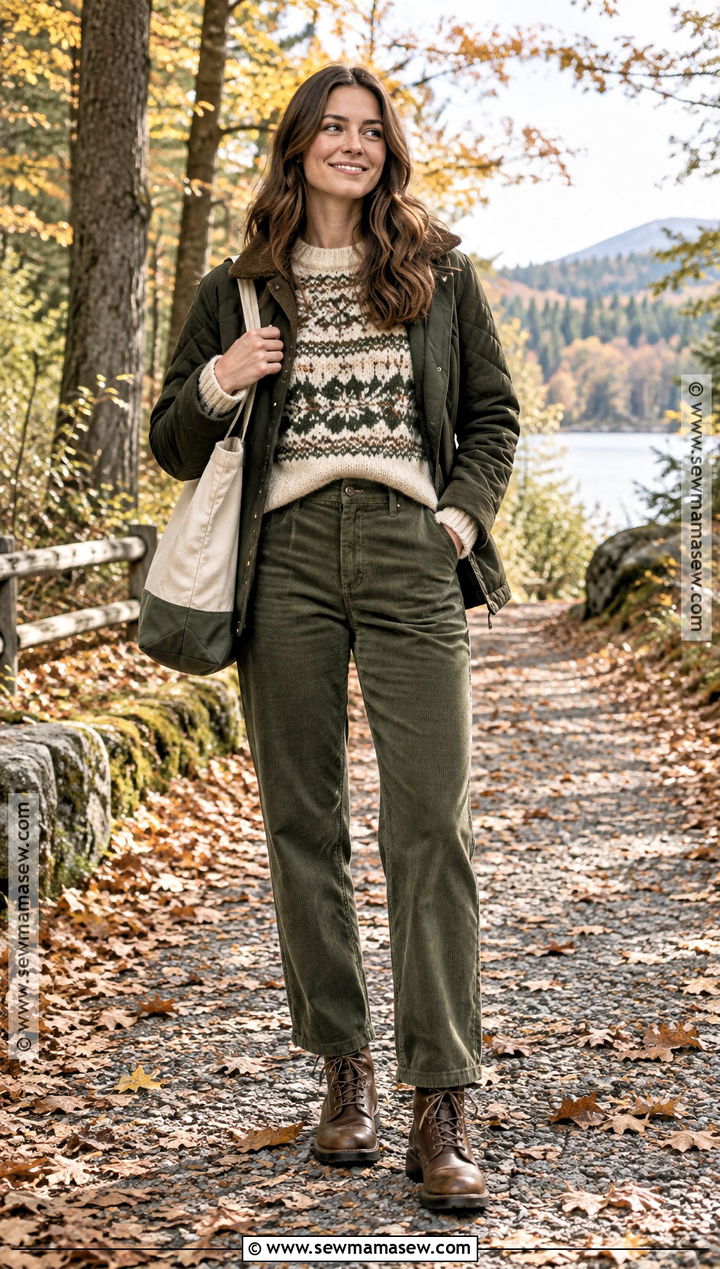
Fair Isle and corduroy are about as seasonal as clothing gets. I ground a patterned knit in cream, brown, green, navy or muted red with straight-leg cords in chocolate, tan, olive or burgundy, picking the cord color from one of the yarns in the sweater so the two pieces look like they belong together. Both fabrics carry a lot of texture, which means accessories should be solid and simple. Lace-up ankle boots give it an outdoorsy feel; loafers make it fine for indoors. A quilted jacket and beanie cover the cold days. With high-rise cords, a slightly cropped knit avoids the bunching you get when tucking a thick sweater.
11. Oversized Sweater With Leggings And Sneakers
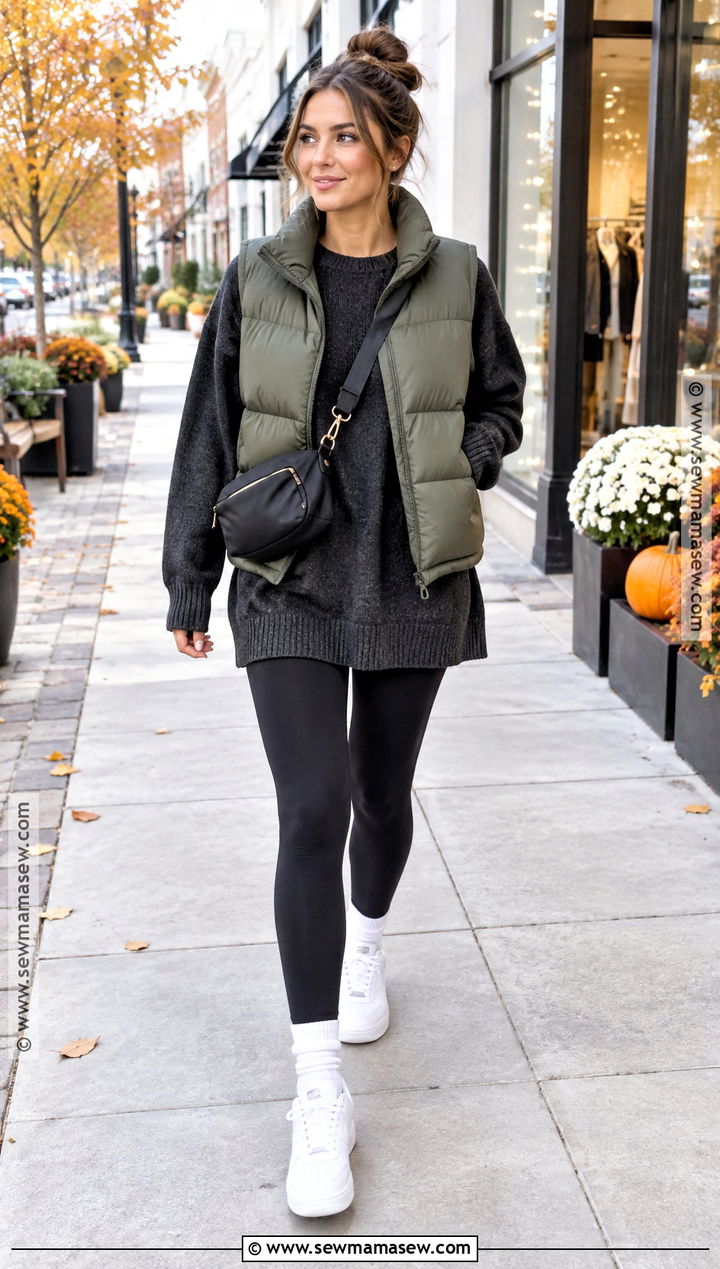
Some days just need comfort from breakfast to bedtime. I pair a long oversized sweater with thick, opaque leggings and supportive sneakers, and the length is the one thing I'm strict about: it should cover the hip but stop well above mid-thigh, or your legs start to look short. Thin leggings show every seam and go shiny at the knee, so I'd spend more on a thick pair. Black is easiest, though deep brown, charcoal and navy are softer. A sweater with side slits and a defined shoulder seam keeps it from looking sloppy. Add a light puffer vest and crew socks for errands, travel days and school runs.
12. Monochrome Sweater With Matching Trousers
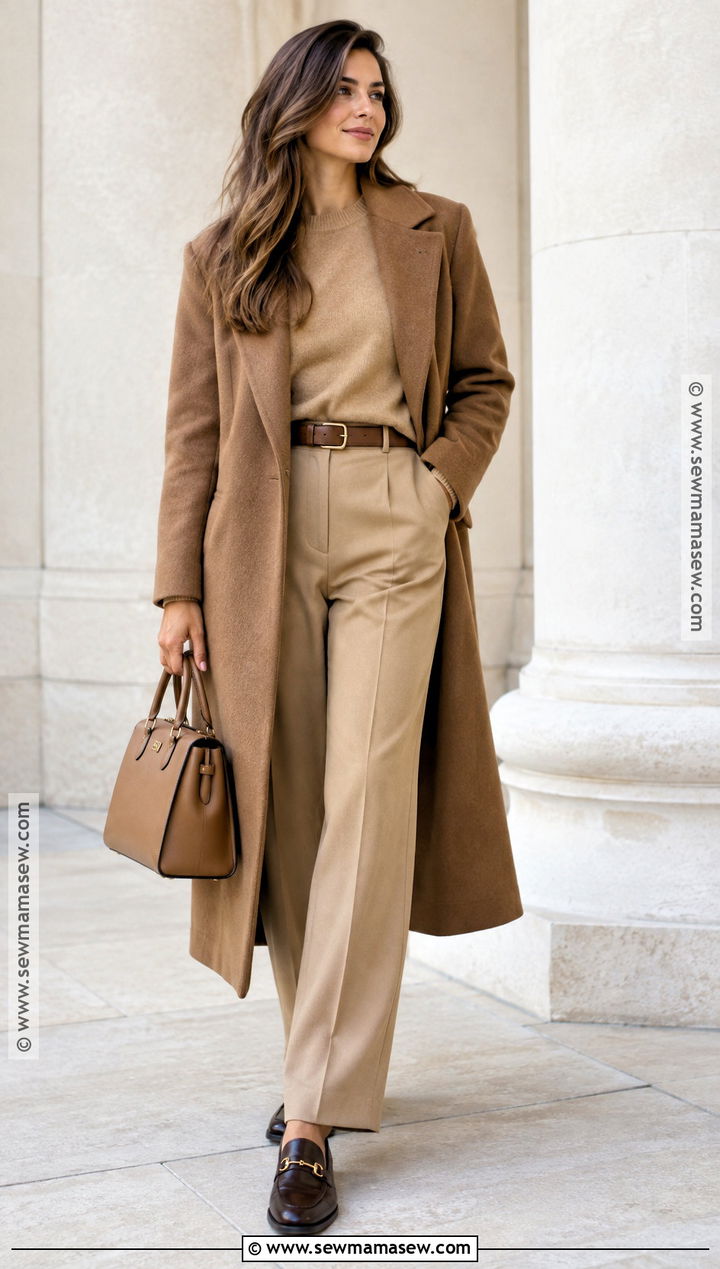
A tonal outfit looks expensive even when every piece is soft. Choose one color family, such as cream, camel, chocolate, gray, burgundy or olive, and pair a fine-knit sweater with matching or slightly darker tailored trousers. What stops it from looking flat is variation: a ribbed knit against smooth wool, or a sweater half a shade lighter than the trouser. A belt in a nearby tone defines the waist quietly. For curvier shapes, I want the sweater to skim rather than cling and the trousers to fall straight from the hip. If an all-light look isn't practical for your days, keep the sweater and trousers tonal and switch to a darker coat and shoes.
13. Cropped Cardigan With High-Waisted Jeans
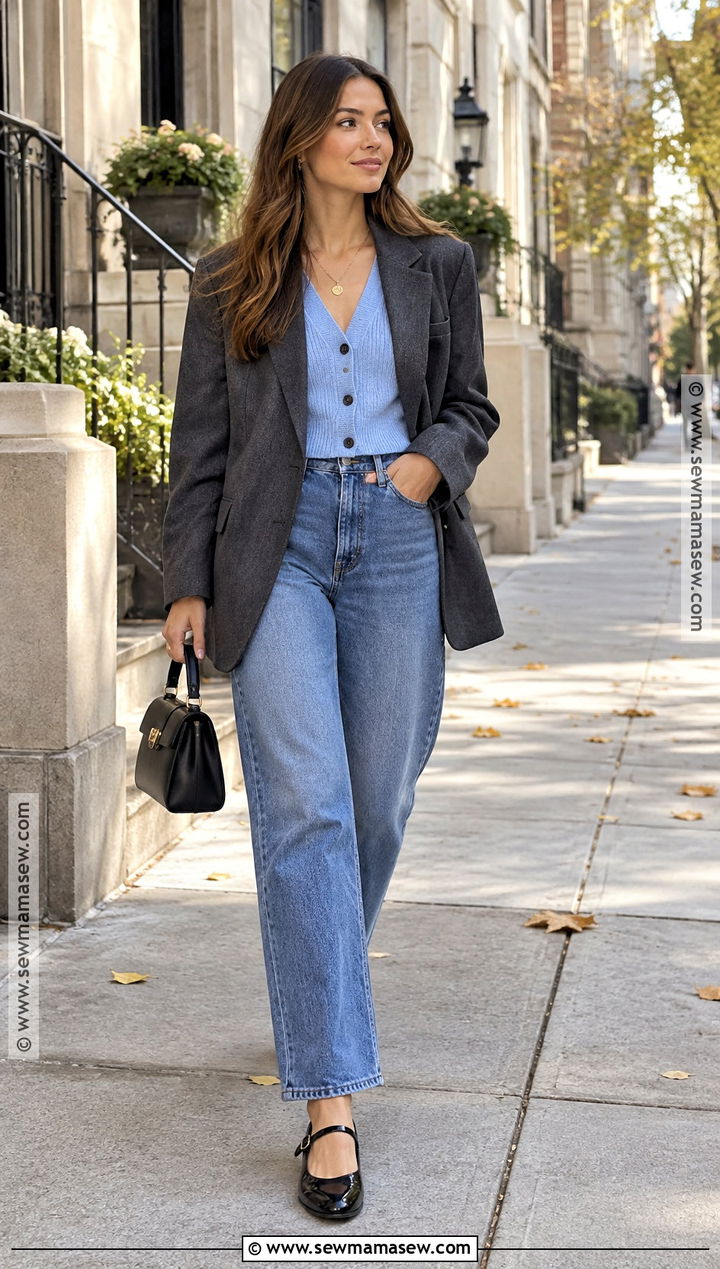
A cropped cardigan and high-waisted jeans meet at the narrowest part of the torso, which is why this pairing flatters so many people. I button the cardigan as a top and add a fitted tank underneath if it gapes. Straight, relaxed or a subtle barrel leg all work; it comes down to the shape you prefer. If you have a longer torso, a cardigan that ends high above the waistband can leave a stripe of skin when you lift your arms, so choose one that reaches the jeans or tuck a camisole beneath. Mary Janes or loafers suit it, and an oversized blazer or trench adds structure when evenings cool.
14. Sweater Dress With Knee-High Boots
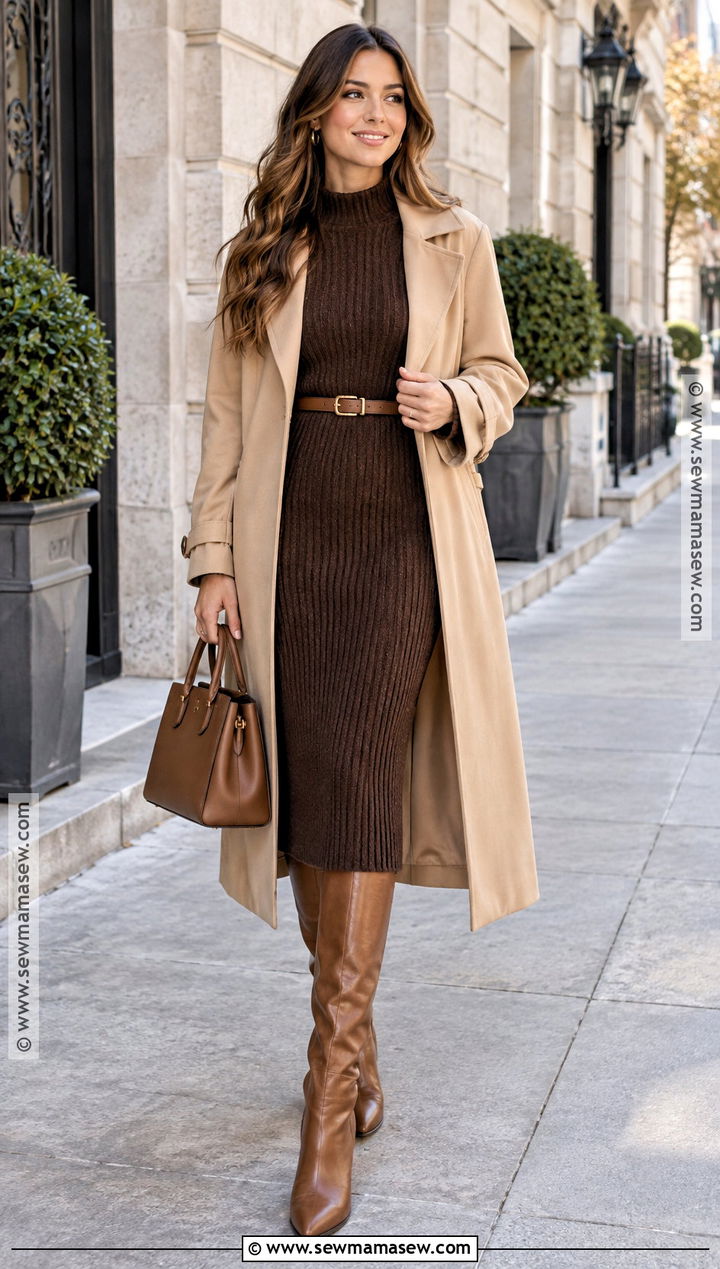
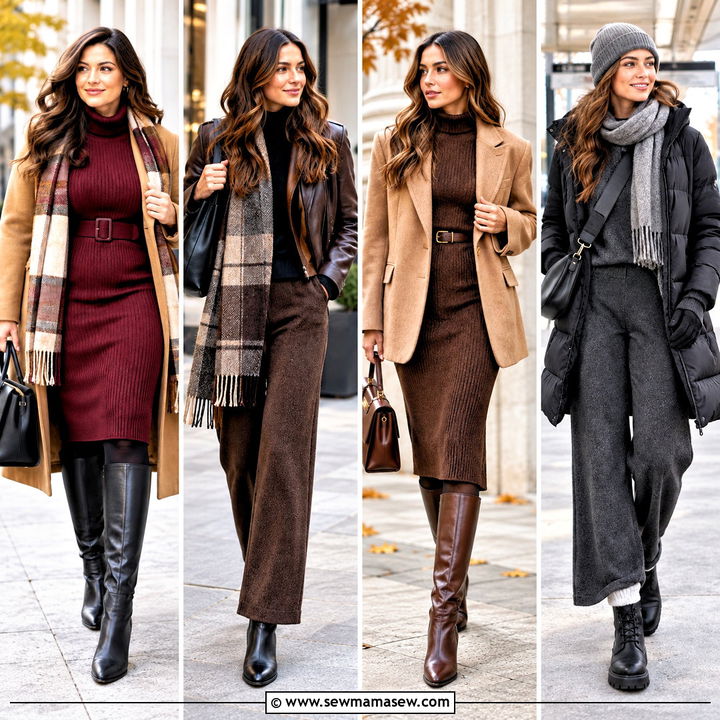
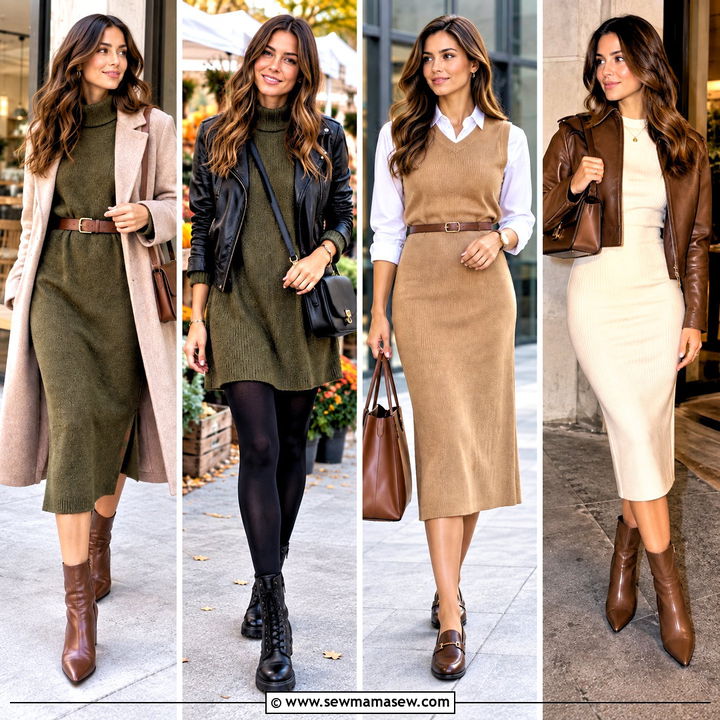
A sweater dress is a complete outfit in one piece, which is why I recommend it for rushed mornings. Look for a ribbed or smooth knit that follows the body without gripping it. A midi hem with knee-high boots is warm and easy; a shorter dress needs opaque tights to balance it. Lighter knit dresses tend to cling at the hip and seat, so I'd choose a heavier fabric or a gentle A-line, and wear a slip underneath so the knit glides rather than sticks to tights. Petite women usually look best with a hem just above or below the knee. Belt it for shape or leave it as a relaxed column under a long trench.
15. Red Sweater With Neutral Midi Skirt
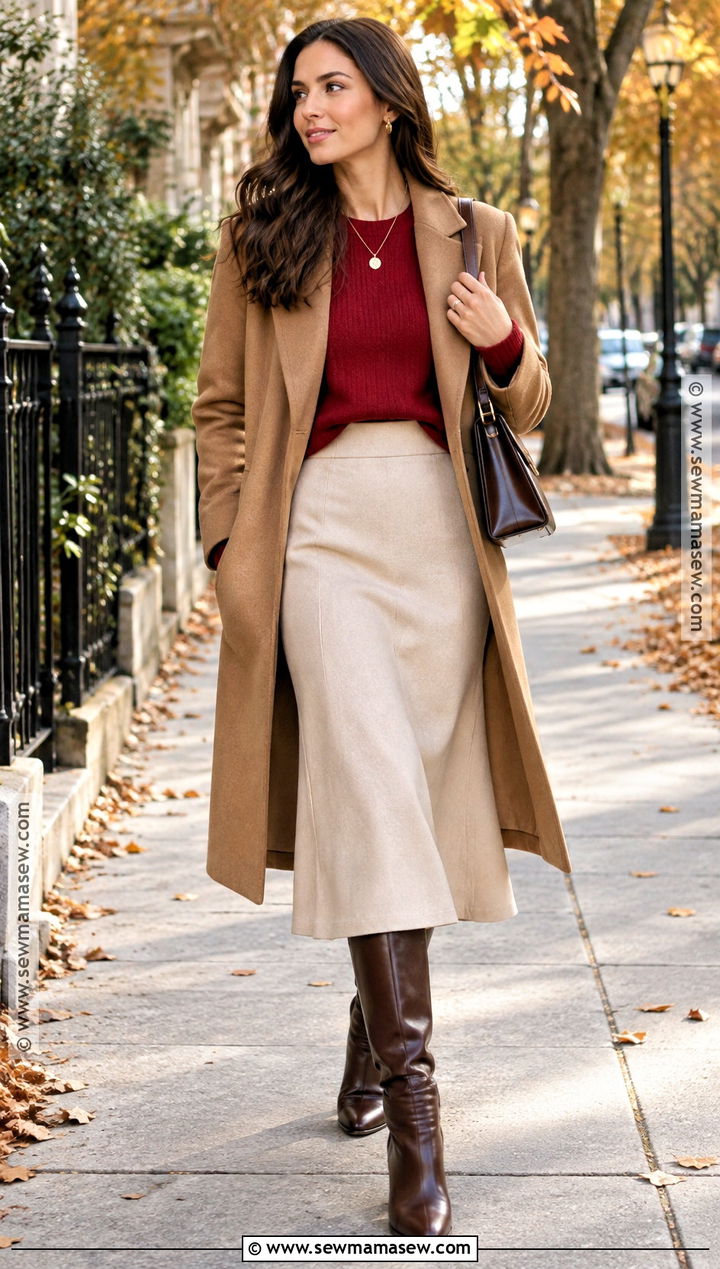
A red sweater is the quickest way I know to wake up a closet full of fall neutrals. The shade matters more than people think: cool cherry and cranberry suit some complexions, warm brick and tomato suit others, so hold each against your face in daylight before buying. Pair it with a beige, gray, brown or black midi skirt so the knit stays the focus. A fluid skirt moves as you walk; wool or ponte gives more structure. If the red feels loud, a camel coat over the top calms it down. I balance an oversized knit with a straighter skirt and a fitted knit with a fuller one.
Why Sweaters Pill and How I Slow It Down
Pilling happens wherever fibers rub: under the arms, along the sides where a bag strap sits, and at the cuffs. Short, loosely spun fibers break free and twist into little balls. You can't stop it completely on any knit, but you can slow it a lot.
- Wash less. Most wool sweaters only need a wash after several wears; airing them overnight on a chair freshens them.
- When you do wash, turn the sweater inside out, use cold water and a wool detergent, and choose the hand-wash or wool cycle.
- Never wring a knit. Roll it in a towel to press the water out, then dry it flat, reshaping the shoulders and hem while it's damp.
- Fold sweaters instead of hanging them. A hanger stretches the shoulders into points within a few weeks.
- Remove pills with a fabric comb or a battery shaver held flat, working gently. Pulling them off by hand drags more fiber out.
Between seasons, I store clean sweaters folded in a breathable cotton bag, with cedar blocks if moths are a worry in your home. Moths go for the body oils and food traces on worn knits, so putting a sweater away dirty is the fastest way to find holes next fall.
A Sweater for Every Kind of Fall Day
Every outfit here starts with a single knit, and the variety comes from what you pair it with: denim, tailored trousers, satin, leggings or tall boots. I'd begin with the two or three combinations that already match your week, then try richer colors and new proportions once those feel easy. You don't need a new wardrobe for this season. A different shoe, one good coat or a simple front tuck changes clothes you already own. Prioritize fabrics that keep you warm, outerwear you trust and shapes you can move in, and cold mornings stop being a dressing problem.
Related posts: