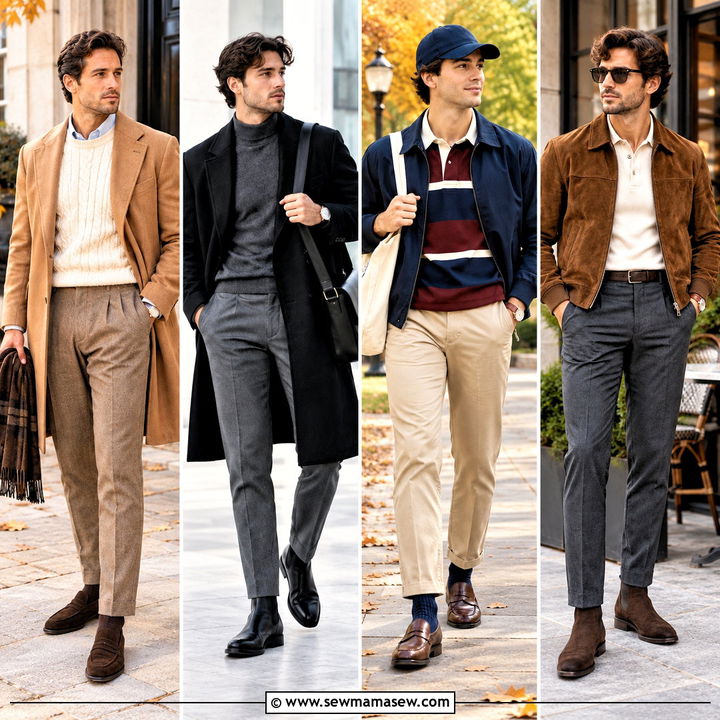
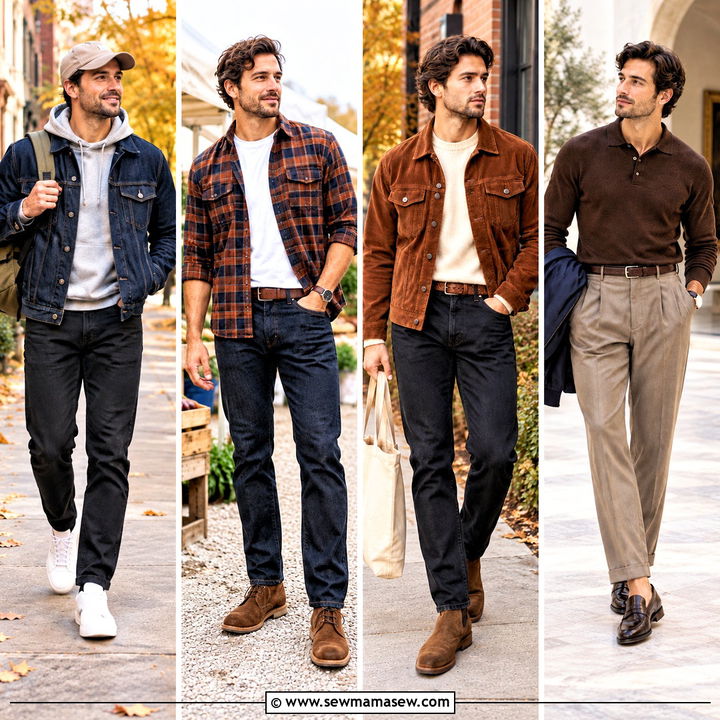
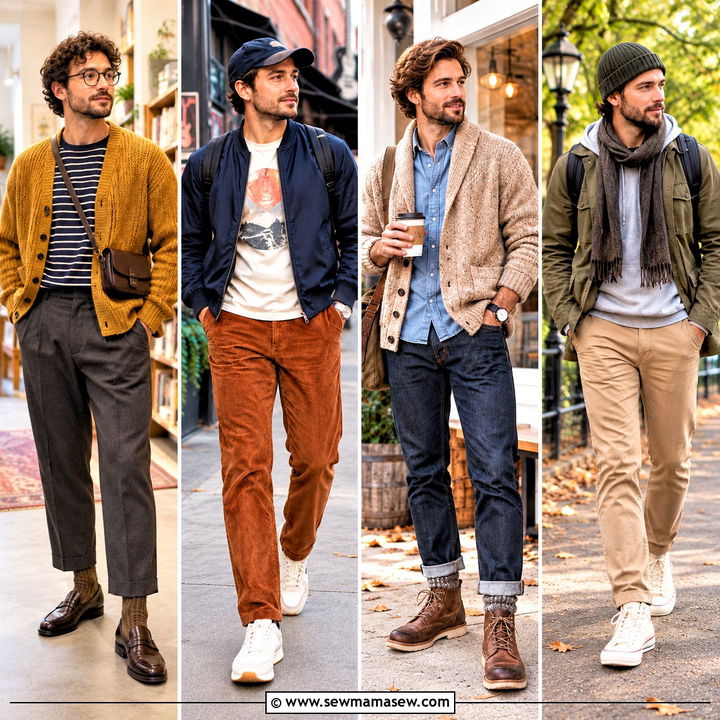
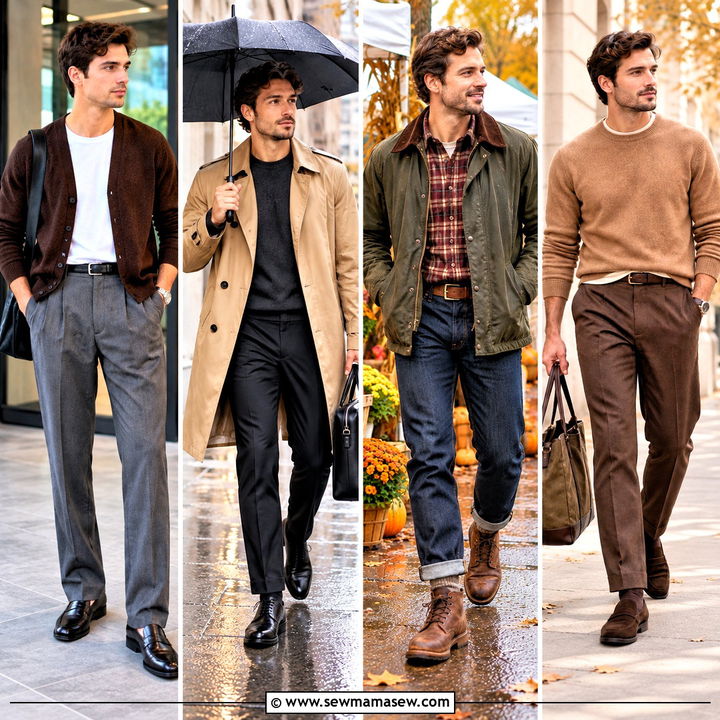
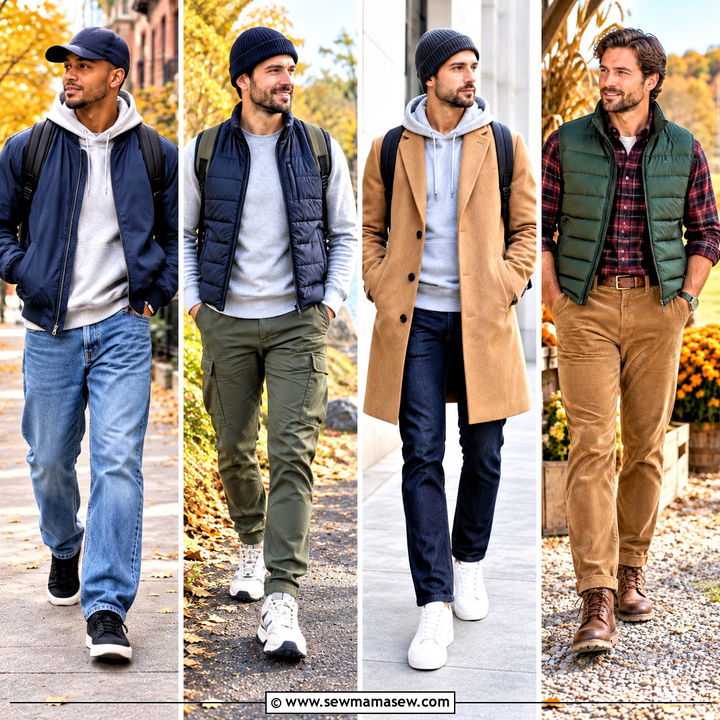
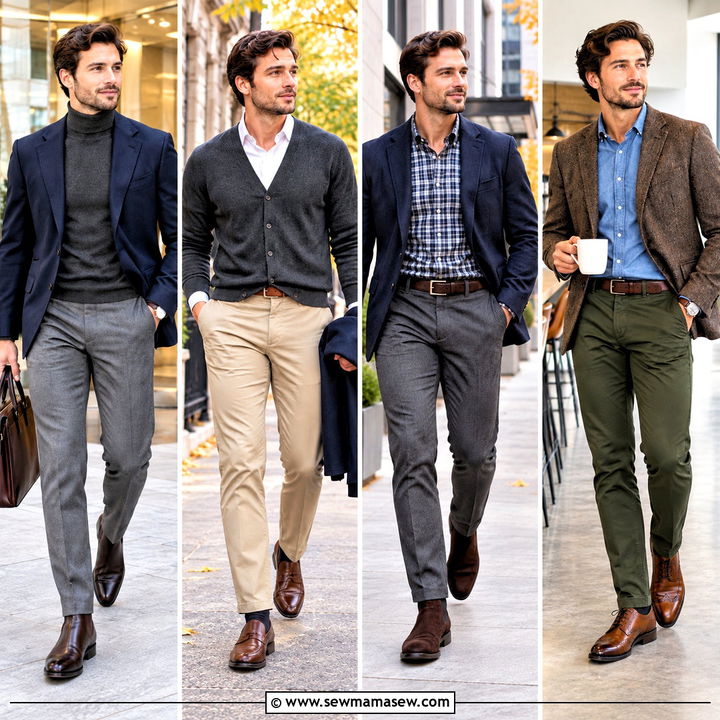
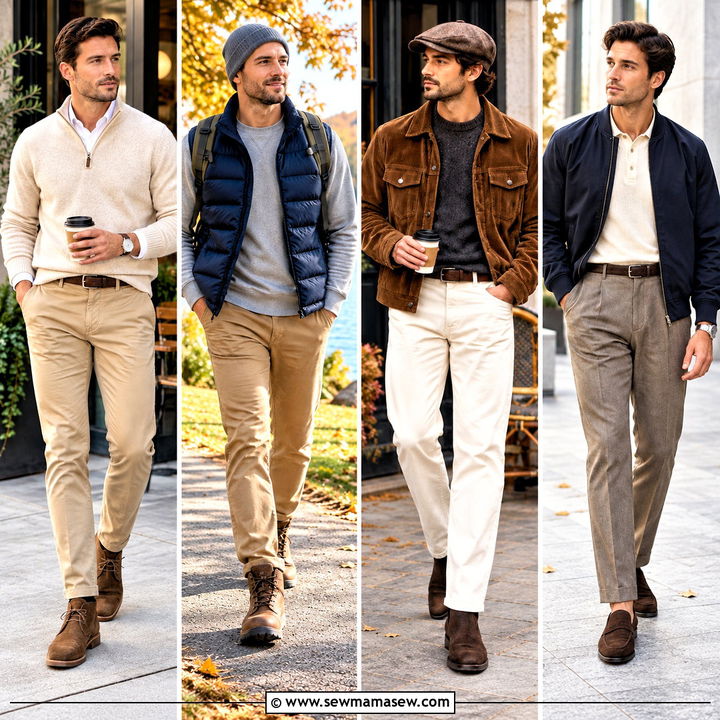
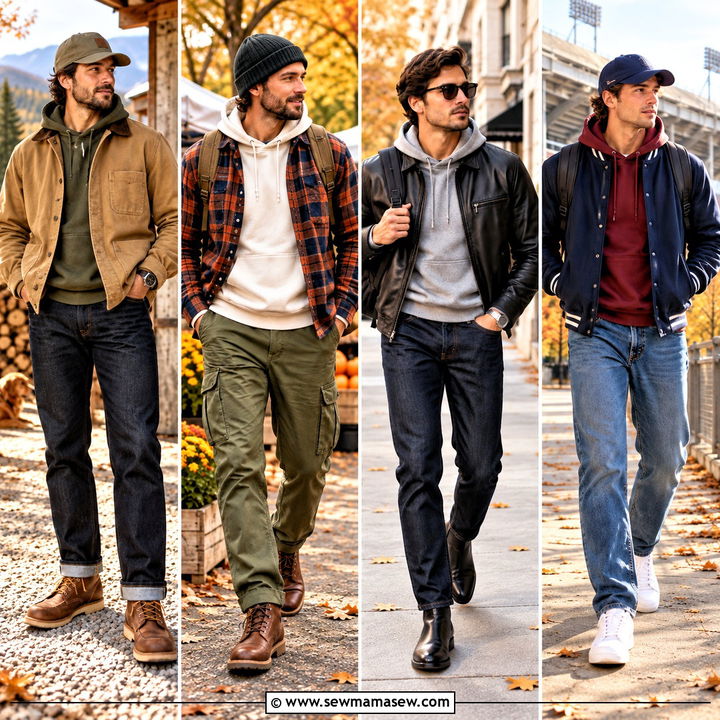
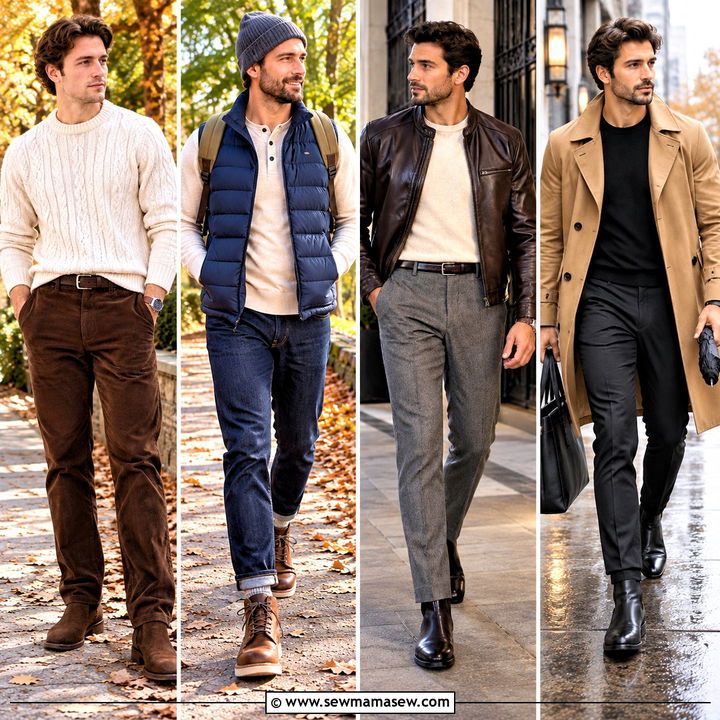
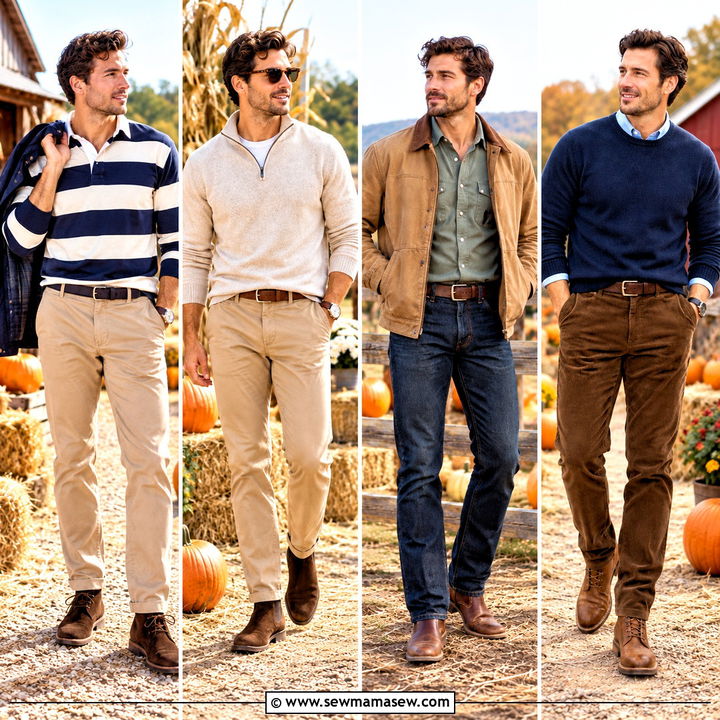
Most men already own the raw material for a good fall wardrobe. Jeans, chinos, a few knits and one decent pair of boots go a long way once the weather turns, because autumn fabrics like flannel, twill and suede were made to be worn together. When I put a casual fall outfit together, I think in three parts: a base that sits against the skin, one jacket or knit that gives the outfit its shape, and shoes heavy enough to match what's on top. Olive, brown, navy, charcoal and cream mix with almost anything, and a single burgundy or rust piece is usually all the seasonal color an outfit needs. The fifteen combinations below cover weekends, relaxed offices, travel days and errands, and each one is a formula you can copy with pieces you probably have.
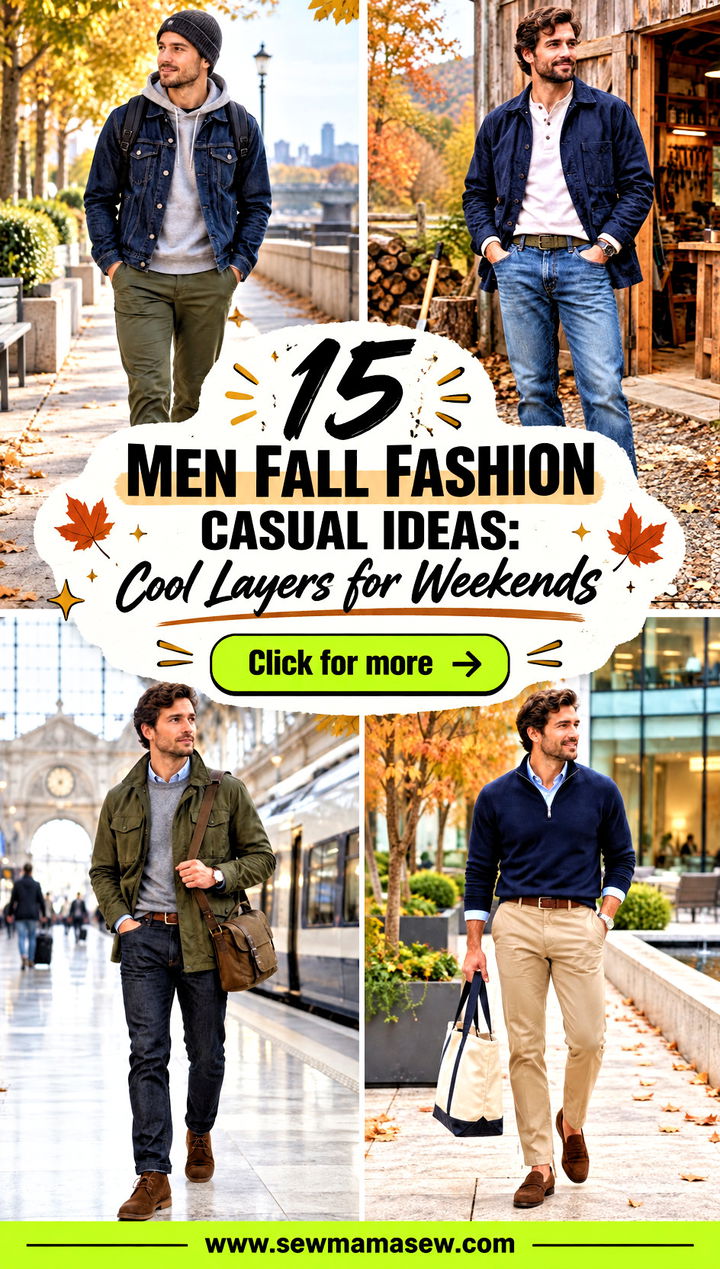
Stacking Shirt, Knit and Jacket Without the Bulk
Almost every outfit below is a layered one, and the layering is where most men lose the shape. The order I follow is simple: thinnest against the skin, thickest on the outside, and each layer a little roomier than the one beneath it. A fitted tee, then a shirt or sweater with a bit more ease, then a jacket cut to go over both. If you reverse that and put a fitted jacket over a chunky knit, the sleeves bunch at the elbow and the jacket won't close.
Hems matter as much as thickness. I like the layers to get shorter as they go in, or at least never longer, so the jacket covers the sweater and the sweater covers the shirt. The one exception is a deliberate shirt tail showing under a knit, which works on long torsos and looks messy on short ones.
- Try every jacket on over the heaviest thing you plan to wear under it, not over a tee.
- Keep the middle layer fine: a merino crew or a light flannel adds warmth without inches.
- Vary texture between layers, smooth next to rough, so they don't blur into one block.
- Check the collar stack in a mirror; three collars fighting at the neck is the giveaway of too many layers.
1. Men’s Flannel Shirt With Dark Jeans And Boots
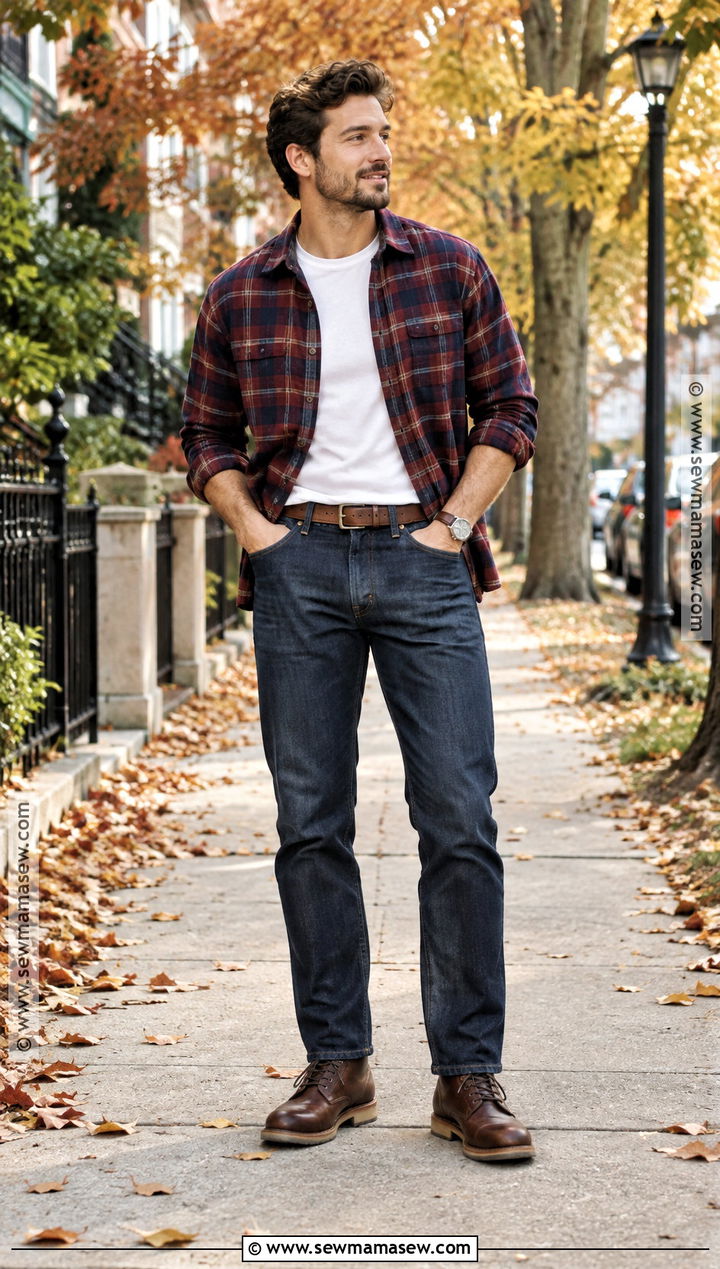
Flannel, dark denim and leather boots is the outfit I recommend to men who say they don't know where to start. Pick a flannel with a muted check in olive, burgundy, navy or brown; loud red-and-black buffalo plaid reads as a costume very quickly. Worn open over a heavyweight white or charcoal tee, it handles a mild afternoon, and buttoned up it covers a cold morning. Straight or slim-straight jeans keep the shape honest. I always check shirt length first: the hem should cover the waistband when you raise your arms, and no lower than the middle of the seat. Brown lace-up boots, a belt in a similar brown, a plain watch and two loose sleeve rolls finish it.
2. Men’s Overshirt With Chinos And Sneakers
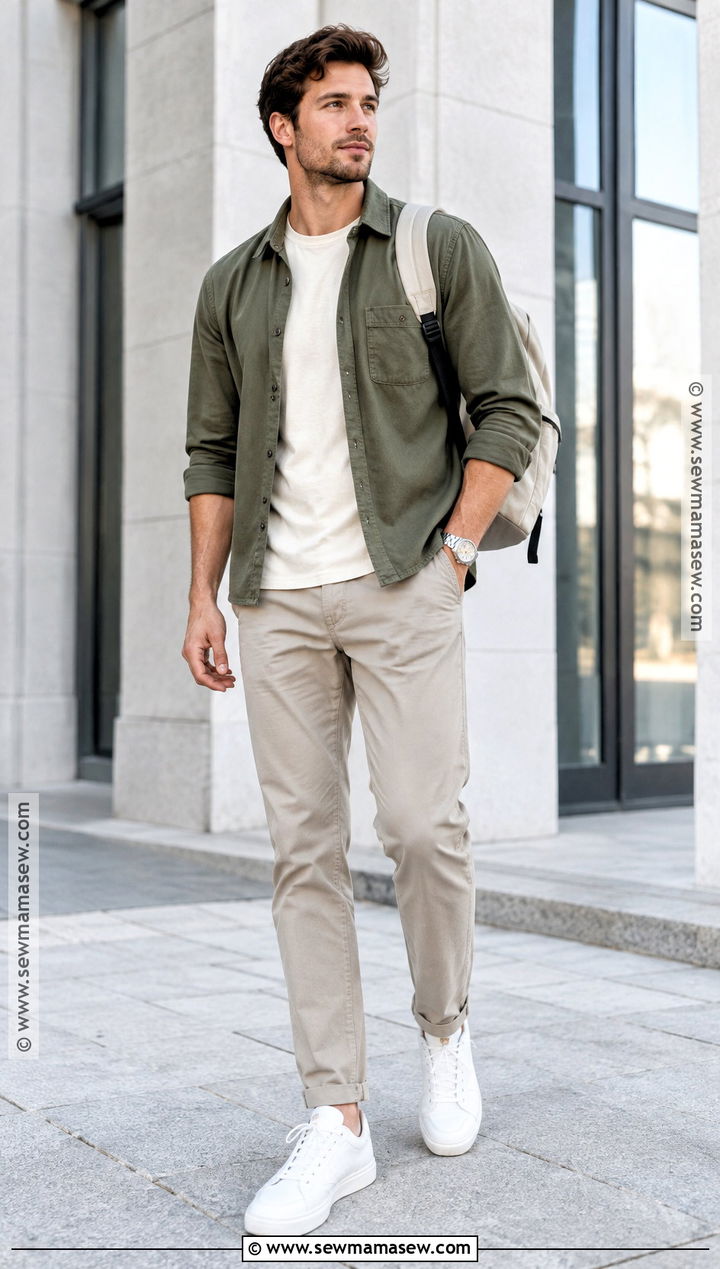
An overshirt is the easiest way to give a T-shirt and chinos some structure without putting on a real jacket. I start with a cream, white or heather-gray crewneck, then add an olive, camel, navy or charcoal overshirt in brushed cotton, twill or a light wool. Tan or stone chinos lighten the lower half against the darker layer, and white leather or neutral suede sneakers keep it easy. The overshirt is the piece men usually size wrong. It should have room across the back to reach forward, yet stop around the hip bone; once it hangs past the seat it starts to look borrowed. On a broader build, wear it open so the tee makes a clean vertical stripe down the middle. A canvas backpack and a simple watch handle commuting or campus days.
3. Men’s Crewneck Sweater With Jeans And Chelsea Boots
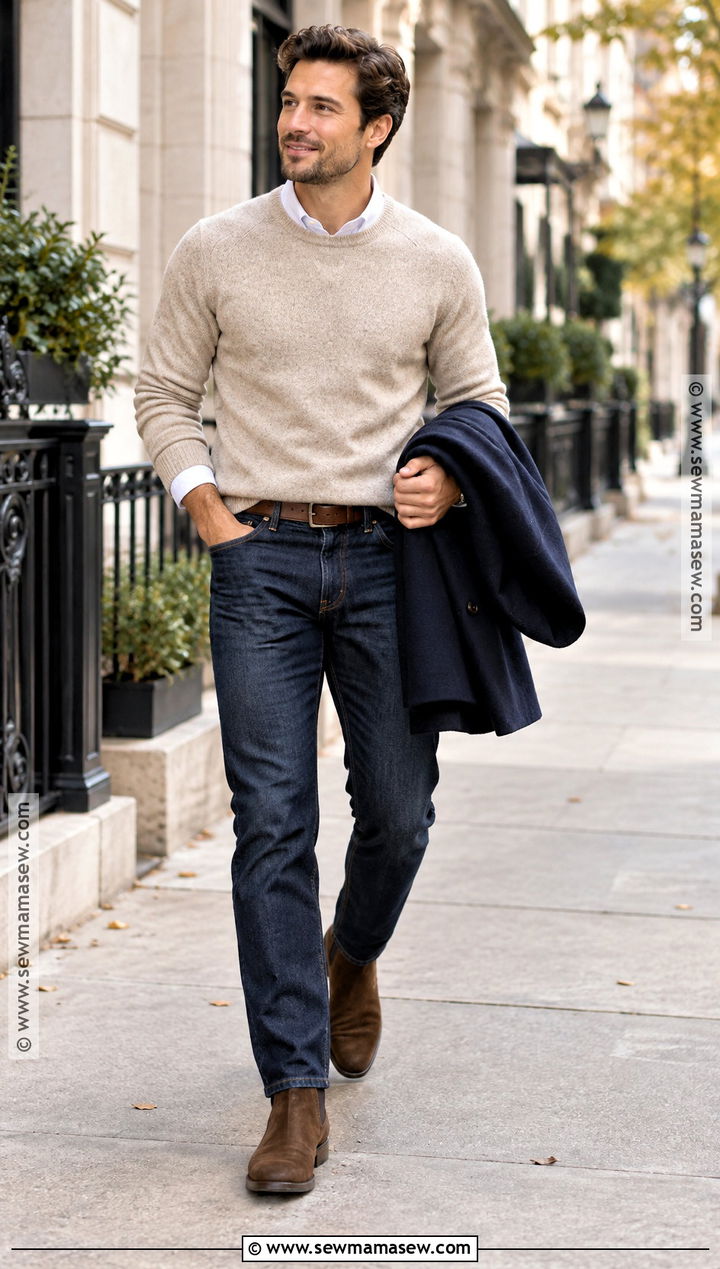
On cool mornings I layer a crewneck sweater over a shirt and let the collar do the polishing. Oatmeal, forest green, navy, rust or mid-gray all work. A white Oxford underneath makes it smart enough for a casual office, while a plain tee relaxes it for coffee and shopping. Dark straight jeans should break once, lightly, over brown or black Chelsea boots, and the belt should be close to the boot color. Watch the balance: a roomy sweater needs a cleaner jean, or the whole outline turns soft. Men with long torsos can let a little shirt hem show below the knit, which visually breaks up the length. When the temperature really drops, a lightweight wool topcoat goes over everything without crowding the sweater.
4. Men’s Bomber Jacket With T-Shirt And Black Jeans
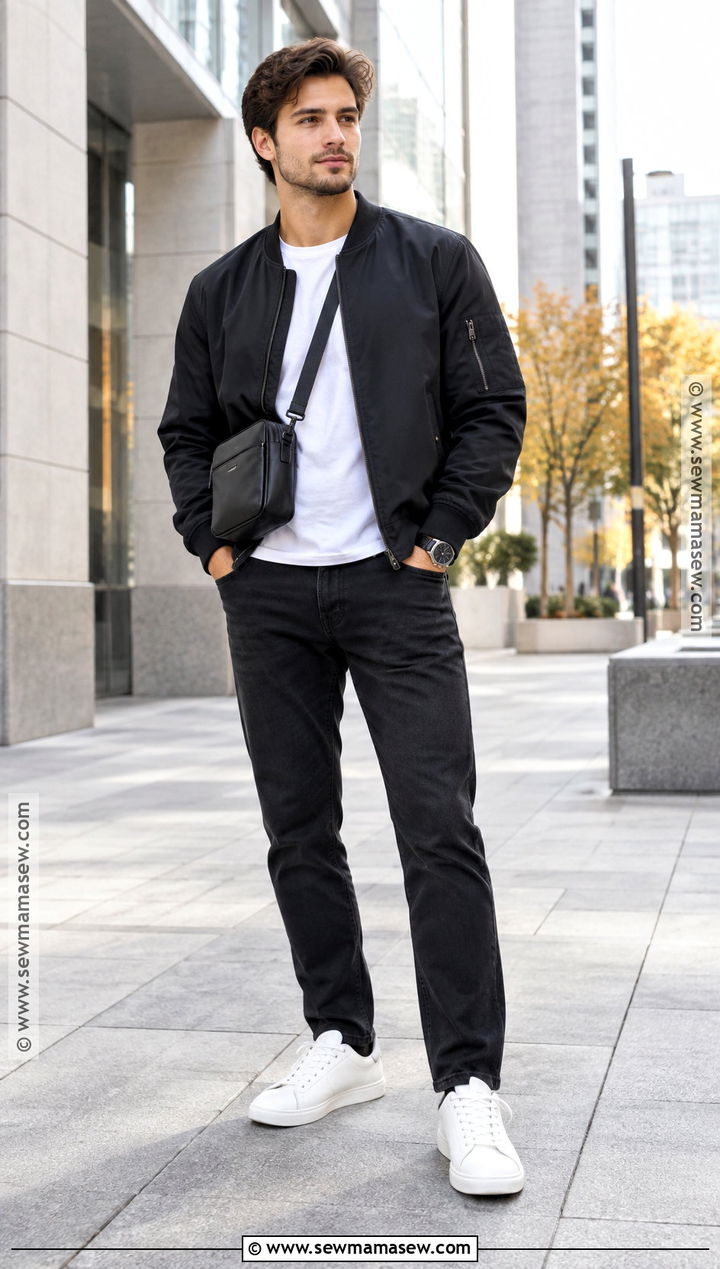
A bomber gives a clean outline with almost no effort, which is why I lean on it for men who want to look put together without thinking about it. A white tee underneath, fitted or relaxed depending on your build, then a black, olive, navy or brown bomber and straight black jeans. White sneakers add contrast; black leather sneakers make the whole thing quieter and longer. The rib waistband is the detail to check in the mirror. It should land at the top of the hips, because a band that sits lower pinches in around the widest point of the seat. If you carry weight through the middle, look for a softer, looser rib and a straighter body. On colder days, swap the tee for a crewneck sweatshirt and keep everything else.
5. Men’s Denim Jacket With Hoodie And Chinos
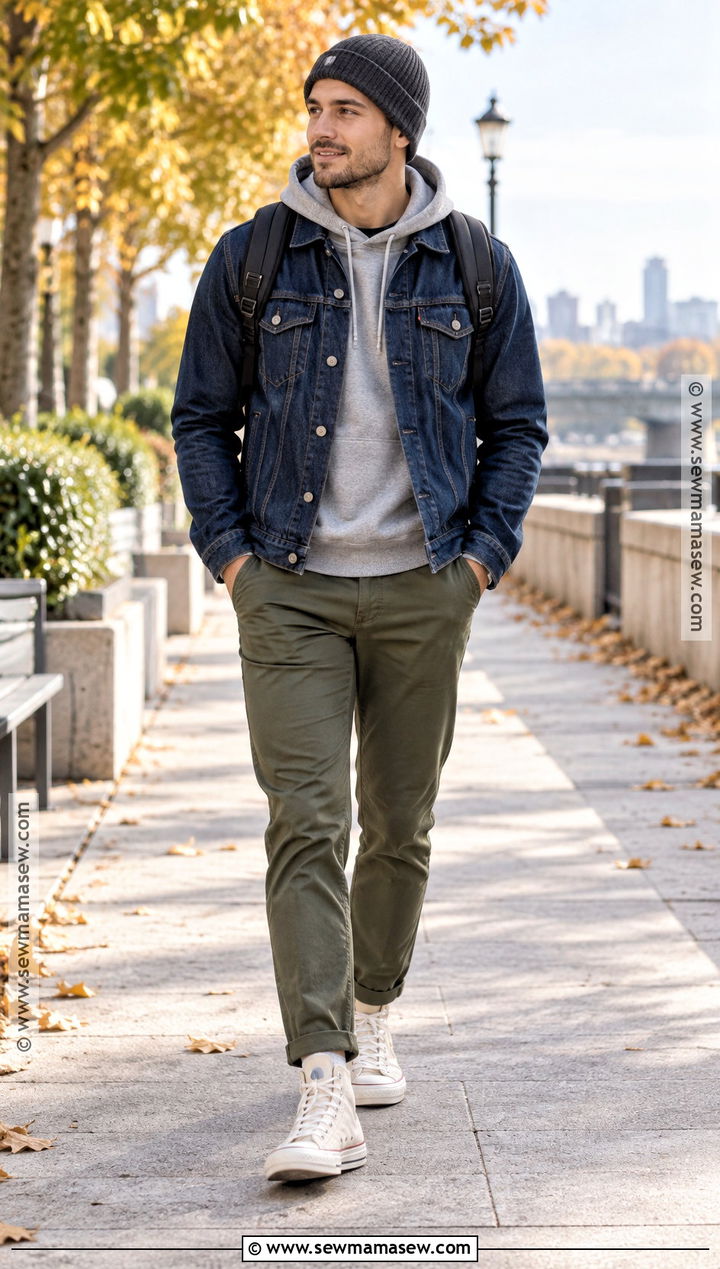
Hoodie under a denim jacket is a classic for good reason, but it only works when the two layers look clearly different. I'd pair a gray, cream or muted green hoodie with dark indigo or black denim, then add tapered khaki, olive or charcoal chinos so you aren't wearing three shades of blue. The hoodie's fabric weight matters more than people expect. A thick fleece hoodie bunches inside the jacket sleeves and pushes the shoulders up, so I go for a midweight one that sits close. Retro sneakers or canvas high-tops, a backpack and a beanie on cold days keep the mood casual. Leave the jacket open; the hoodie becomes the center stripe. If you prefer a roomier fit, relax the chinos and the jacket, but keep the hoodie trim.
6. Men’s Chore Coat With Henley And Work Boots
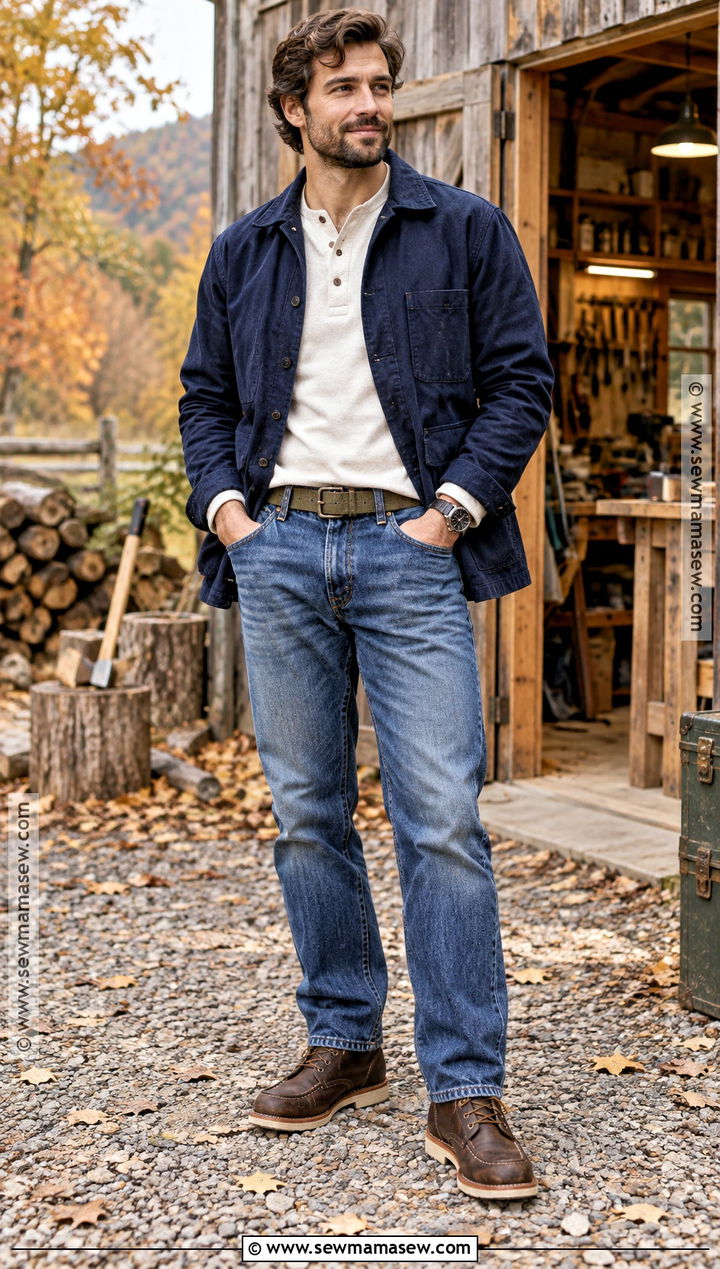
A chore coat is workwear that happens to look good on weekends. Navy canvas, brown duck, olive twill or faded black are the shades I reach for, and the stiffer the cloth, the better it gets with wear, since duck and canvas soften and fade at the elbows and pocket edges over a season or two. Underneath, a cream or heather-gray Henley with two buttons open, straight blue jeans and dark brown moc-toe or plain-toe boots. A canvas belt and a sturdy watch suit it. The coat should end around the hips and leave room for a sweater underneath in November. Taller men can carry a longer cut; shorter men usually look better in a cropped one. If your jeans are long, a single cuff with a small break over the boot keeps it tidy.
7. Men’s Cardigan With T-Shirt And Relaxed Trousers
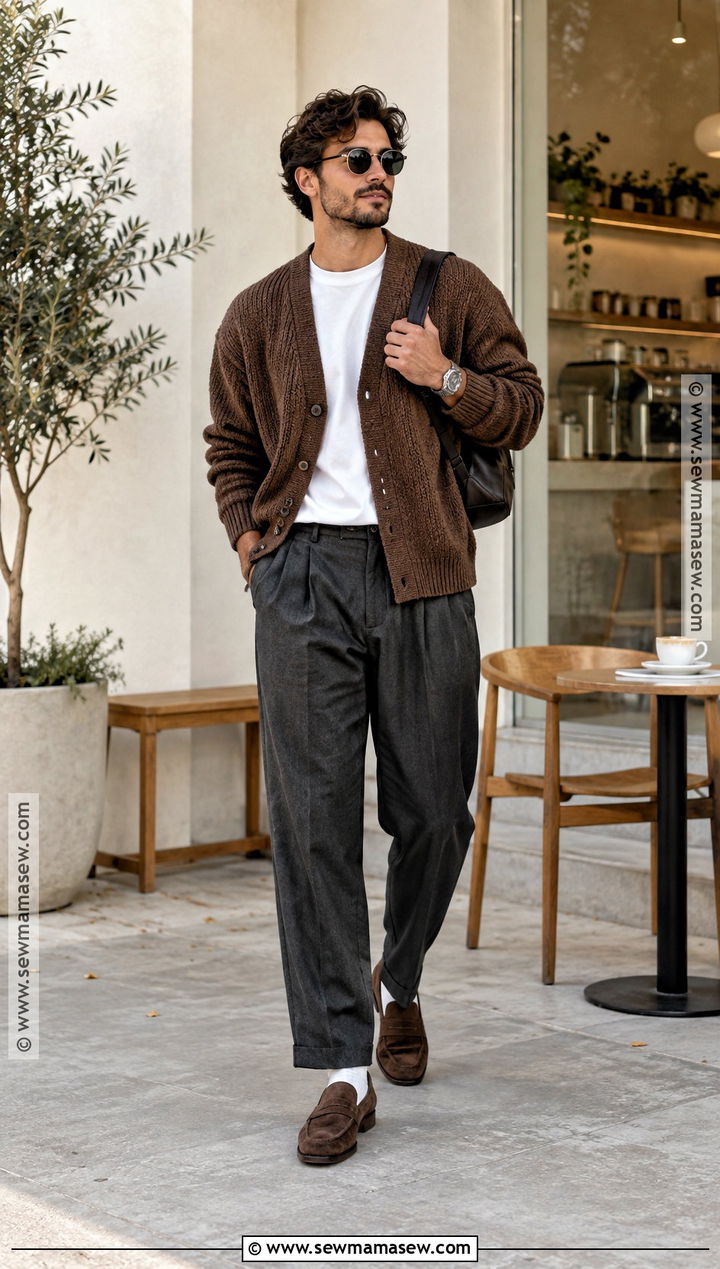
Cardigans get written off as something a grandfather wears, but a textured one over a heavy tee looks completely current. Start with a white, black or cream tee, then a cardigan in charcoal, brown, oatmeal or deep green with the top buttons undone. Relaxed pleated trousers in gray, navy or taupe drape better than chinos and give the outfit more character. Suede sneakers, loafers or casual derbies all suit it, and white socks look clean with a cropped trouser. Fit is where cardigans go wrong. Too tight and the buttons pull into little horizontal creases across the stomach; too loose and the shoulder seam drops toward the elbow. A shorter cardigan marks the waist, and a longer, straighter one is kinder to broader frames. A small shoulder bag fits the look.
8. Men’s Field Jacket With Oxford Shirt And Jeans
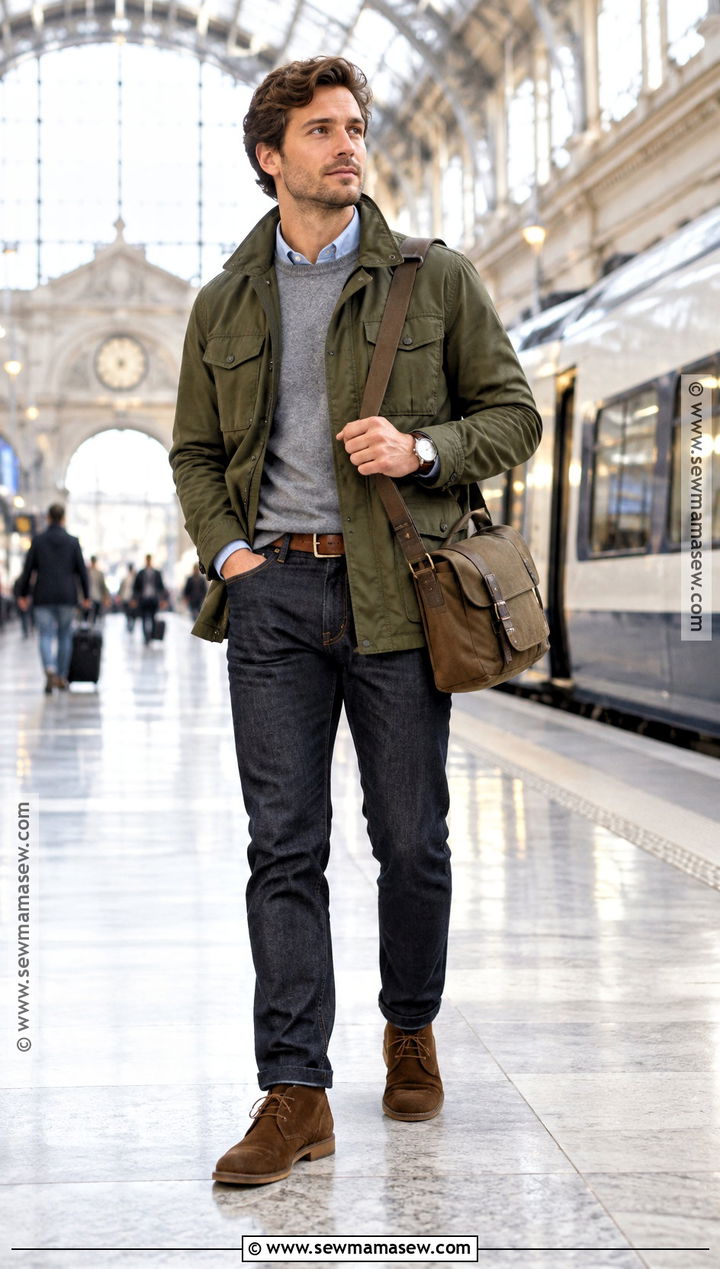
This is my answer when someone wants smart but not stiff. An olive or navy field jacket goes over a light blue or white Oxford, the shirt open at one or two buttons and the jacket unzipped. Dark straight jeans and brown suede chukkas ground it, with a leather belt, a classic watch and a canvas messenger bag. The four front pockets already give the jacket plenty of visual detail, so I keep accessories plain. For extra warmth, slip a thin gray crewneck between shirt and jacket; a thick one will make the jacket pull across the chest. I like to see a sliver of each layer at the collar and cuffs, which is what makes a layered outfit look intentional rather than piled on. It suits a casual office, a flight or a Saturday.
9. Men’s Quarter-Zip Sweater With Chinos And Loafers
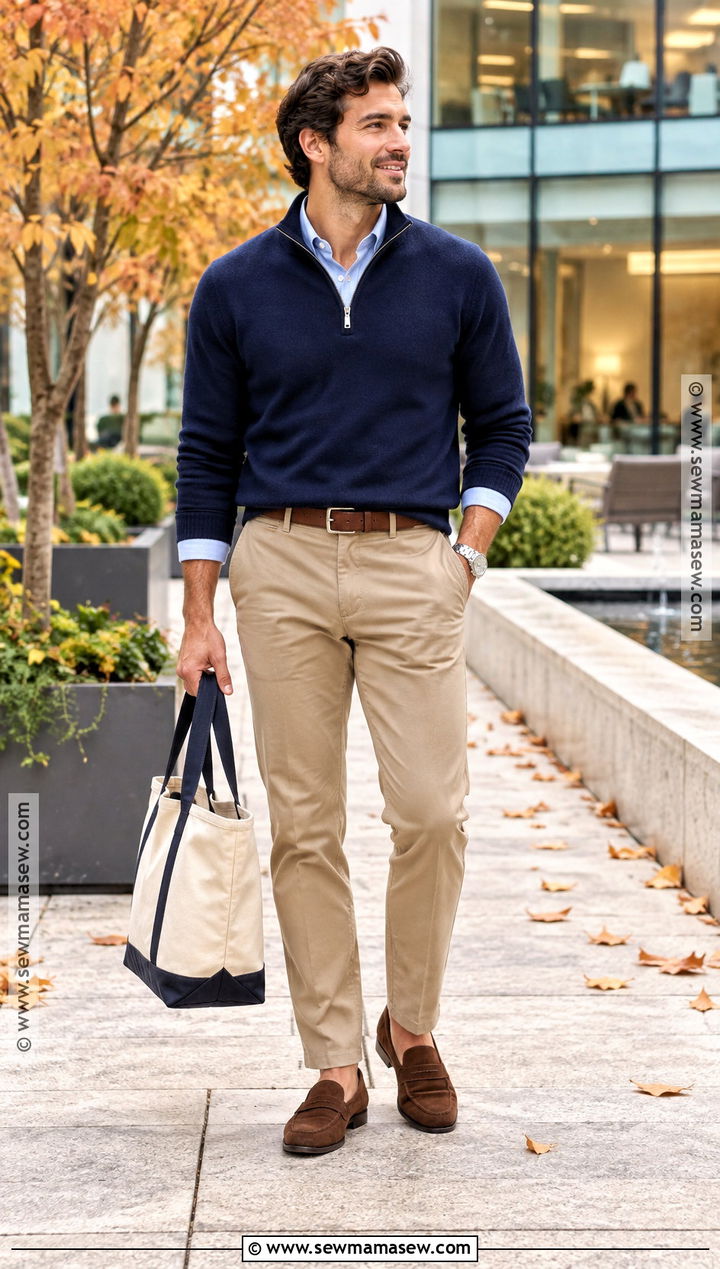
A quarter-zip sits halfway between sporty and smart, and it's the knit I suggest to men who find cardigans fussy. Look for a fine or medium gauge in navy, camel, charcoal or forest green; a chunky quarter-zip loses the clean line around the collar. Over a white tee it's relaxed, over a pale blue button-down it's office-ready. Tan, stone or dark olive chinos and brown suede loafers finish the smart version, leather sneakers the casual one, with a plain belt and a structured canvas tote. I unzip it partway so the base layer shows at the throat. The hem should rest near the hips without rolling up into a ridge, and if the trousers are relaxed, a sweater with a defined shoulder seam keeps the top from looking slumped.
10. Men’s Suede Jacket With Knit Polo And Trousers
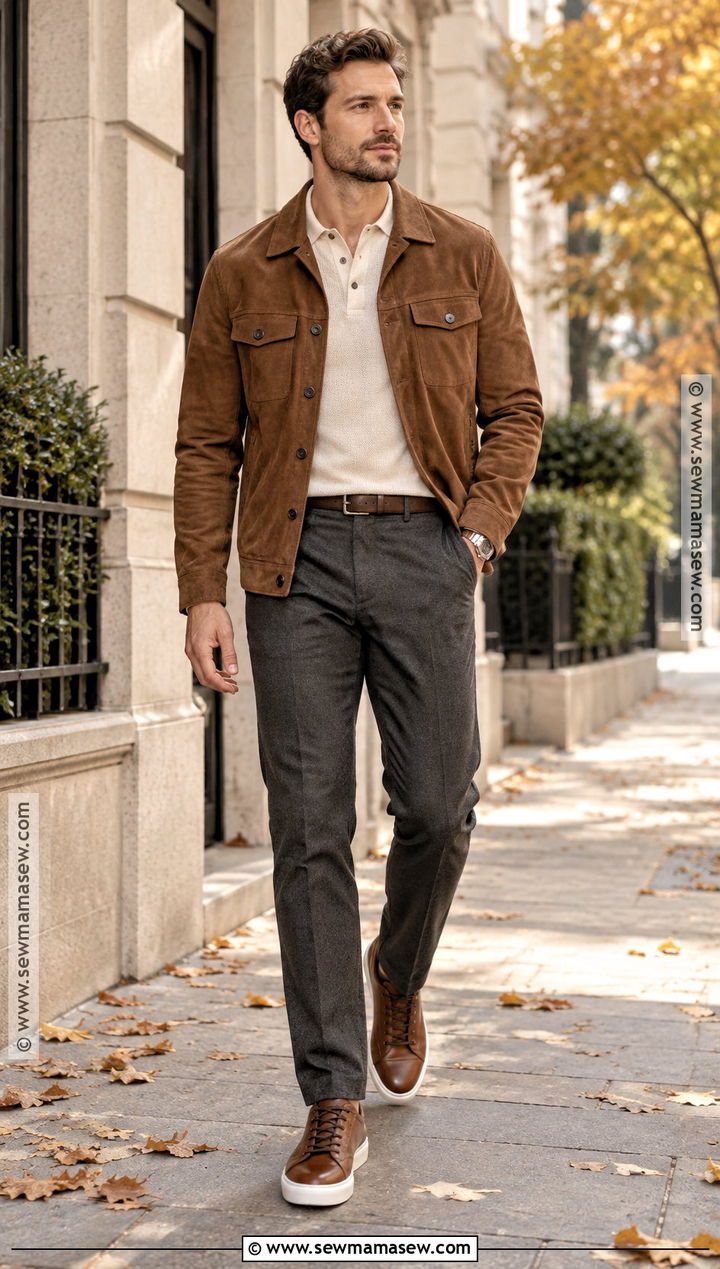
Suede adds texture faster than any other fall fabric, so I let it be the only interesting thing in the outfit. A trucker, Harrington or bomber in tobacco, chocolate or dark tan goes over a cream, burgundy or navy knit polo, collar sitting flat over the jacket's neckline. Charcoal or dark navy trousers keep it grounded. Brown leather sneakers, suede loafers or Chelsea boots all work, with a matching belt and a metal watch. Skip patterns; they fight the nap of the suede. Before wearing it out, I always treat a new suede jacket with a protector spray, because rain leaves dark spots that don't always brush out. I reach for this one when jeans feel too casual and a blazer feels like too much, and I want the jacket ending at the hips.
11. Men’s Puffer Vest With Sweatshirt And Jeans
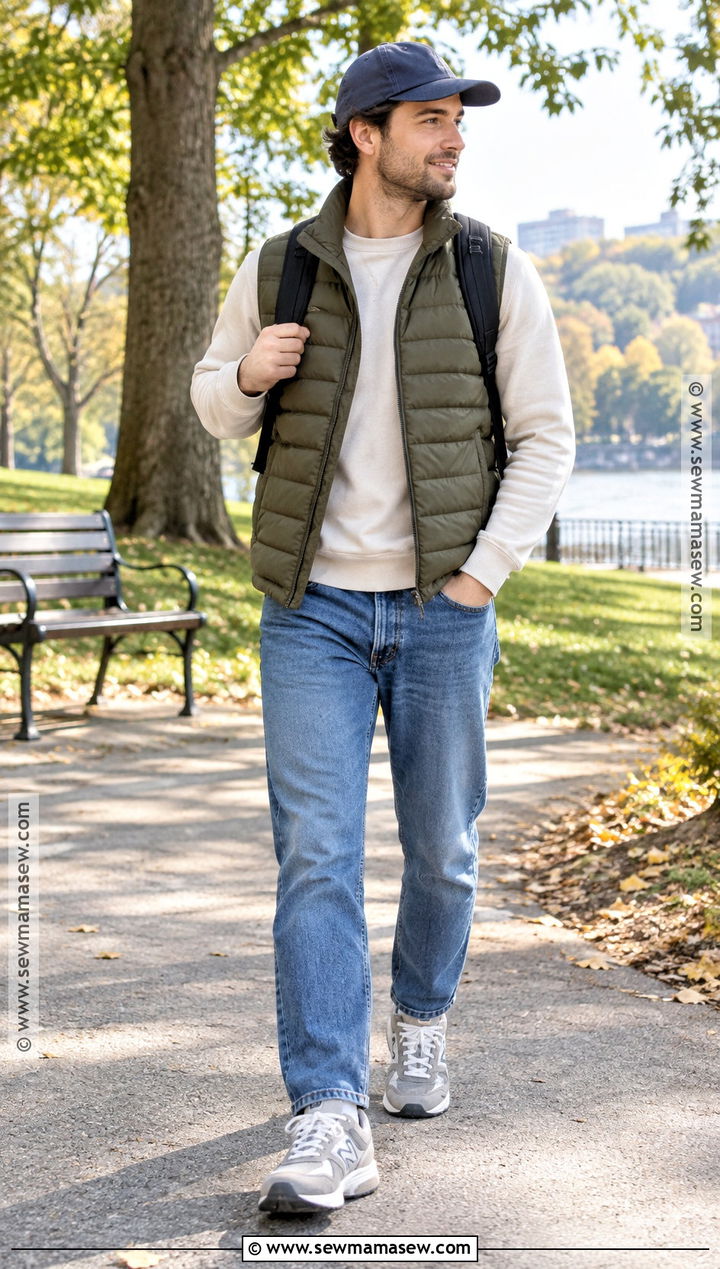
Early fall mornings are cold and afternoons warm up, which is the exact problem a light puffer vest solves. I layer a black, navy, olive or rust vest over a cream or gray crewneck sweatshirt, then add straight medium-wash jeans and retro runners or trail-style sneakers in neutral colors. A cap and a small backpack make it good for walking, travel and errands. Bulk is the risk. A heavy sweatshirt under a thick vest turns the torso into a box, so if the sweatshirt is substantial, keep the vest thin. It should zip without pulling across the chest. Vertical or narrow quilting and a matte finish look calmer on longer or broader bodies than wide shiny baffles. Leave the sweatshirt untucked, showing an inch below the vest at most.
12. Men’s Leather Jacket With Turtleneck And Dark Denim
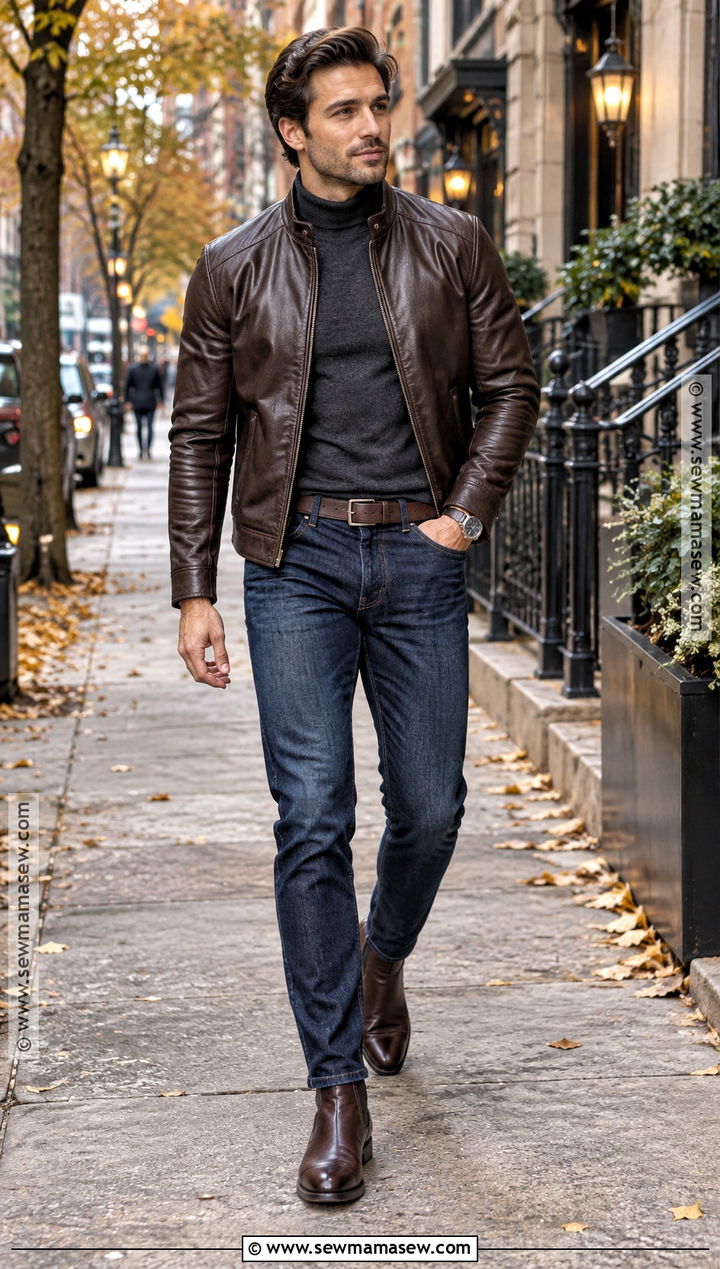
Leather jacket over a turtleneck is the sharpest outfit on this list that still counts as casual. Keep the jacket simple: a café racer, a bomber or a shirt-style cut in black or dark brown, without extra zips and buckles. The turtleneck should be lightweight merino or cotton in charcoal, cream or deep burgundy, because a chunky roll neck crowds the jacket collar and makes the neck look short. Black or indigo straight jeans with little or no distressing, then Chelsea boots for a sleek line or lace-ups for something rougher. A matching belt and plain watch are enough. If a full turtleneck feels like it's choking you, a mock neck gives the same look with half the fabric. I wear this for cool evenings and city plans.
13. Men’s Varsity Jacket With Hoodie And Cargo Pants
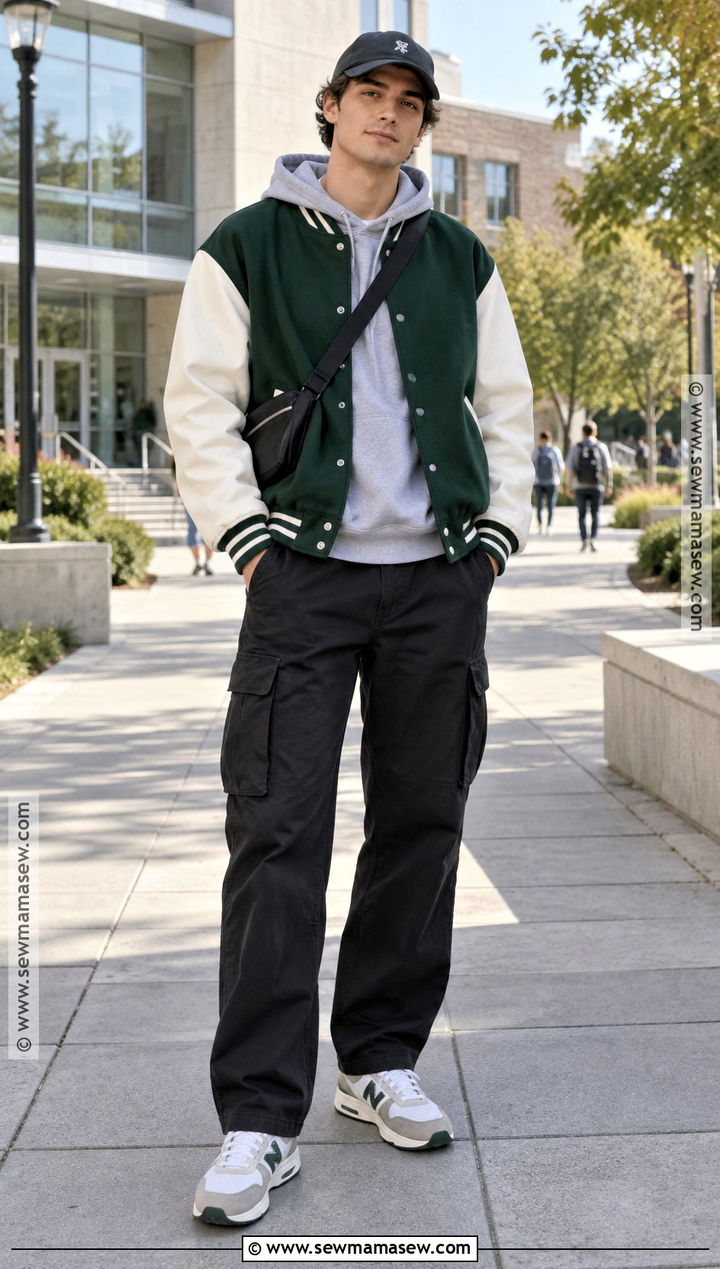
Varsity jackets look adult only when the logos and colors are kept quiet. I steer men toward solid or two-tone versions in navy, forest green, brown or black, with small lettering or none. Underneath, a plain gray or cream hoodie, the hood lifted out and lying neatly over the collar. Straight cargo pants in olive, black or stone add utility without bagginess, and clean low-tops or retro basketball shoes in a limited palette finish it. A crossbody bag fits the streetwear feel. My one rule here: relax either the jacket or the pants, never both. Head-to-toe oversized swallows anyone under average height, so shorter men do better with cropped outerwear and a tapered cargo.
14. Men’s Corduroy Shirt Jacket With Trousers And Sneakers
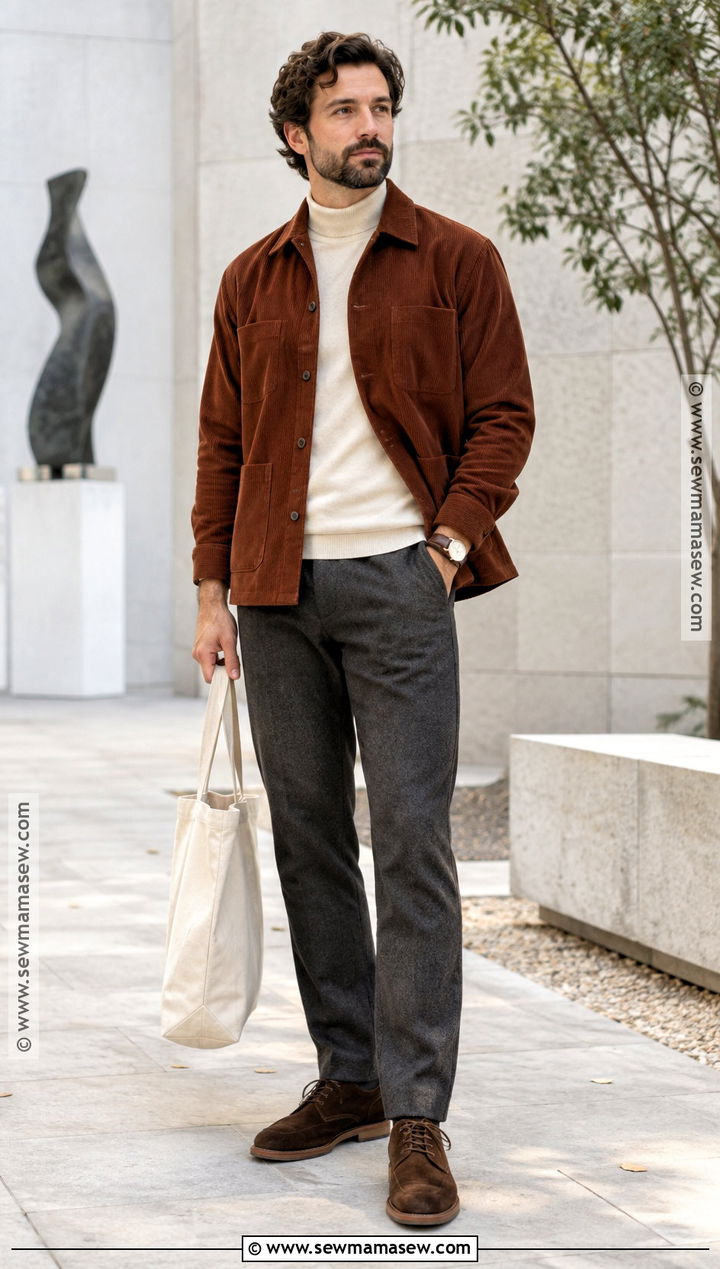
Corduroy brings fall texture without the weight of a coat. A rust, tan, olive, navy or chocolate cord shirt jacket goes over a plain cream tee or a light mock neck, with charcoal, black or dark brown trousers in a straight, comfortable cut. Minimal leather sneakers keep it easy; suede derbies make it smarter. A brown leather watch strap ties the accessories back to the jacket. The wale changes the whole character. Fine-wale cord looks neat and almost dressy, while wide-wale has a heavier workwear feel and shows wear on the elbows sooner, since the ridges flatten where the fabric rubs. Smooth, lightly structured trousers balance all that texture on top, and the result is comfortable enough for daily wear and tidy enough for a relaxed workplace.
15. Men’s Raincoat With Sweatshirt And Dark Chinos
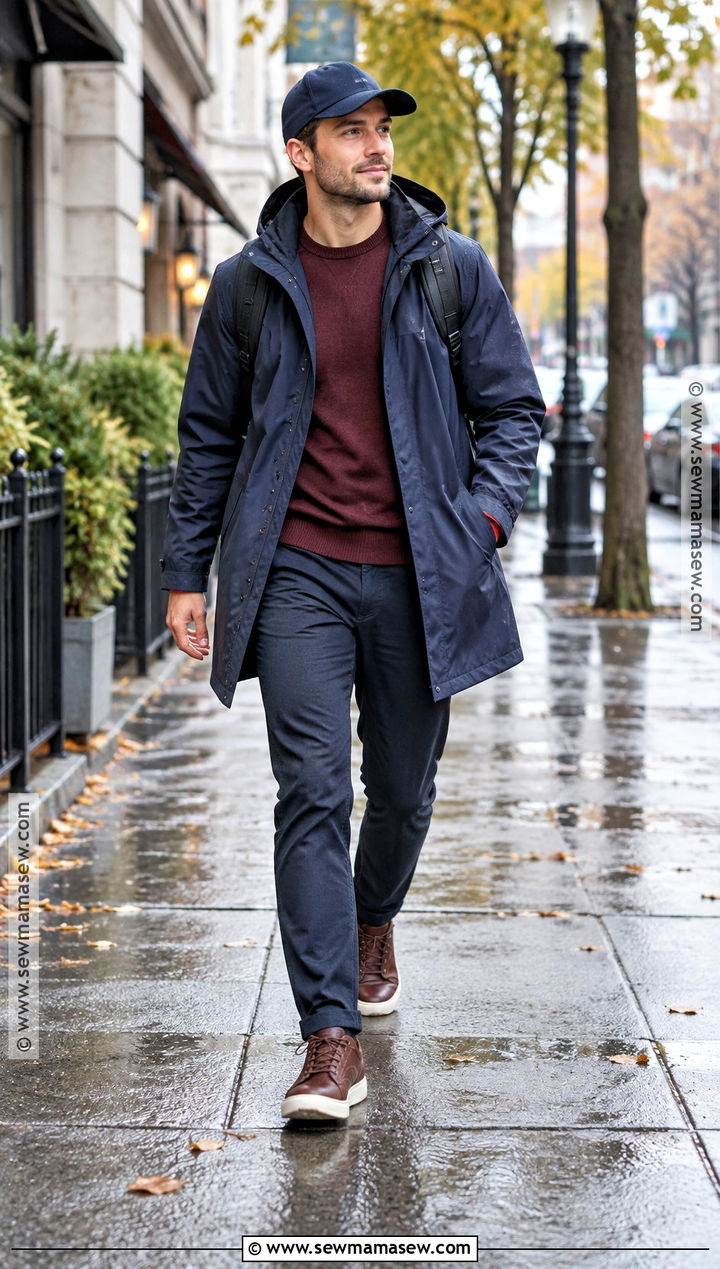
Fall weather changes by the hour in a lot of places, so I build at least one outfit around a lightweight raincoat. Mid-thigh or knee length in navy, olive, stone or charcoal, over a plain crewneck sweatshirt in gray, burgundy or cream, with dark chinos. Water-resistant leather sneakers or rubber-soled boots depending on the forecast, and a compact backpack or weatherproof tote. When I fit a raincoat, I try it on over the thickest layer I plan to wear under it, because a coat that fits over a tee will strain at the shoulders over a sweatshirt. The shoulder seam should still sit at the edge of your shoulder. Let the sweatshirt cuffs peek out slightly past the coat sleeves, and add a simple cap when it's drizzling.
How Denim, Duck Canvas, Cord and Suede Age Through a Season
The jackets in this list are made from very different cloths, and they don't wear the same way. Knowing how each one ages helps you decide which to buy first and how to look after it.
Denim and duck canvas
Both start stiff and soften with wear. Raw or dark denim fades at the creases you make, so it ends up shaped to you. I wash denim jackets rarely, inside out and in cold water, and hang them to dry, because a hot dryer shrinks cotton and sets fading in odd places. Duck canvas chore coats are tougher still; brush off mud once it dries rather than scrubbing it wet.
Corduroy and flannel
Cord flattens at the elbows and cuffs first. Washing it inside out and skipping high heat keeps the ridges standing longer. Brushed flannel pills where a backpack strap or seatbelt rubs, and a fabric shaver tidies that up in a minute.
Suede and leather
Suede is the one to protect before it gets wet. A protector spray, a suede brush to lift the nap after wear, and a rule of leaving it at home on proper rain days will keep it going for years. Smooth leather is far more forgiving: wipe off water, let it dry away from a radiator, and condition it once or twice a season so it doesn't crack at the elbows.
Three Layers, One Good Pair of Boots
None of these outfits needs a new wardrobe. A handful of dependable layers turns the same jeans, chinos, tees and trousers into fifteen different looks. Flannel, overshirts, knitwear, chore coats and light jackets do the warming and add depth, boots bring weight, and clean sneakers or loafers keep things lighter. If I had to give one piece of advice, it's to check fit, fabric weight and color balance before you worry about trends. Dress for the weather where you live and the week you actually have, save the combinations that suit your routine, and rebuild them from what's already hanging in your closet.
Related posts: