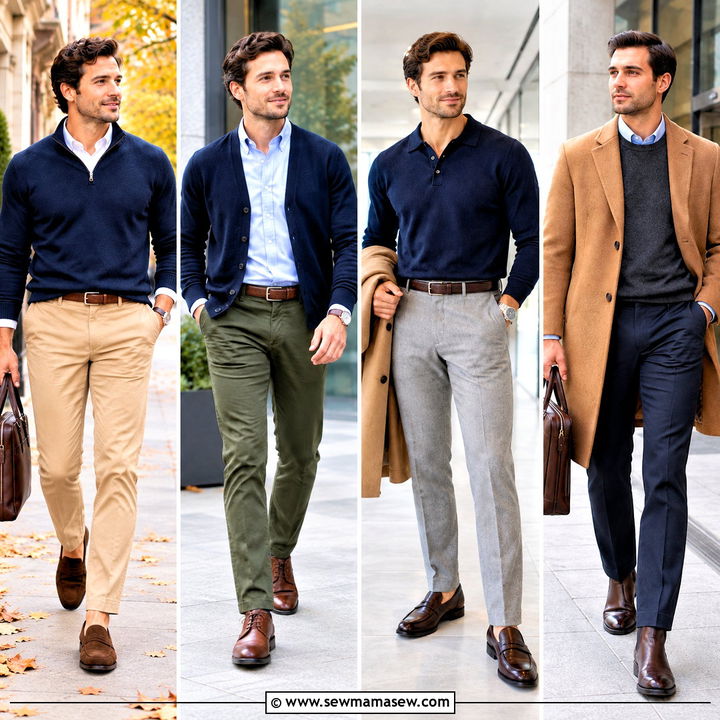
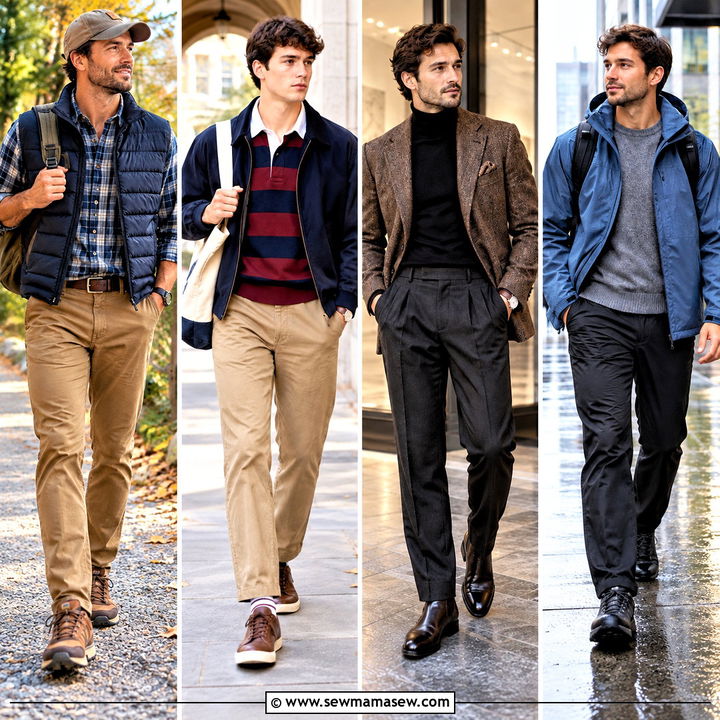
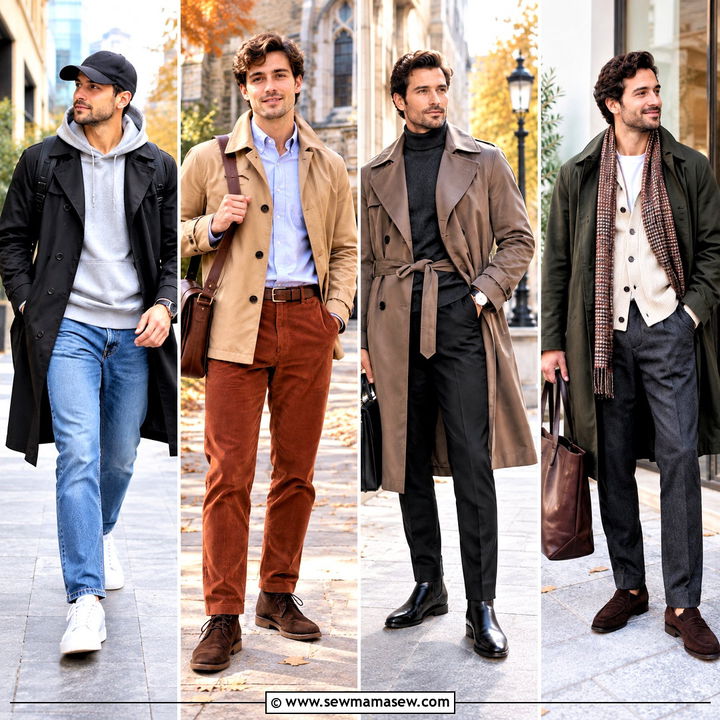
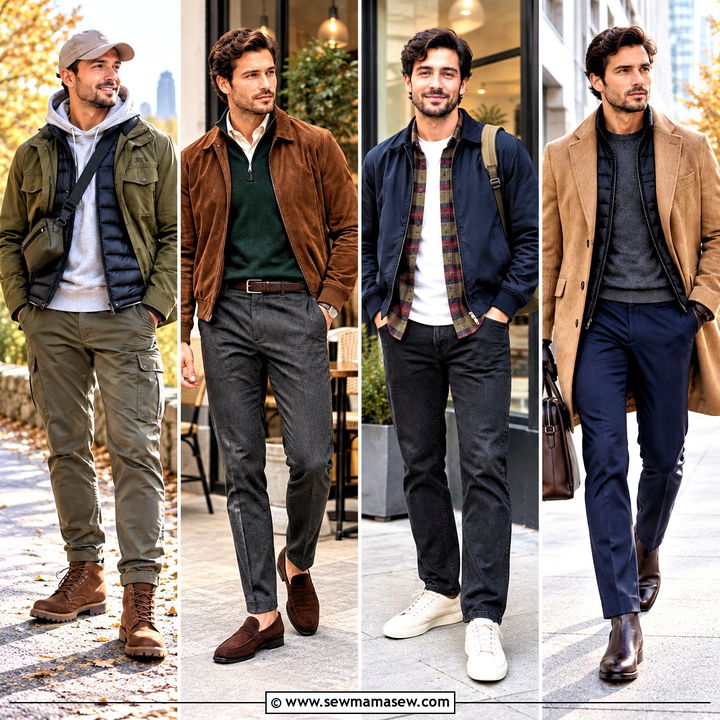
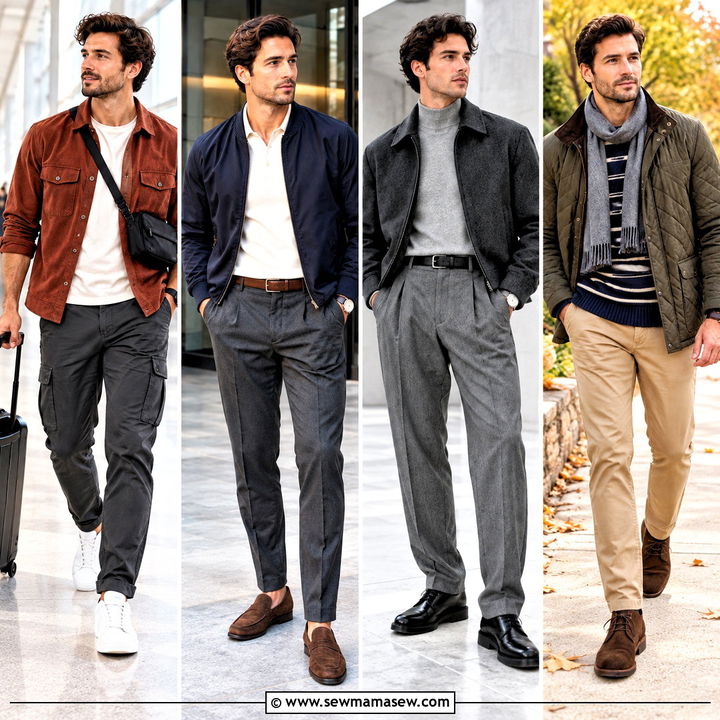
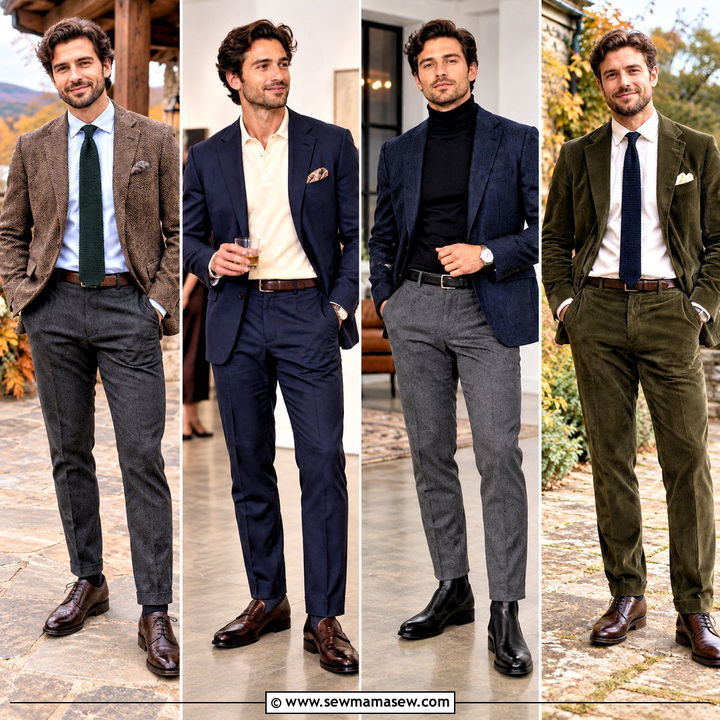
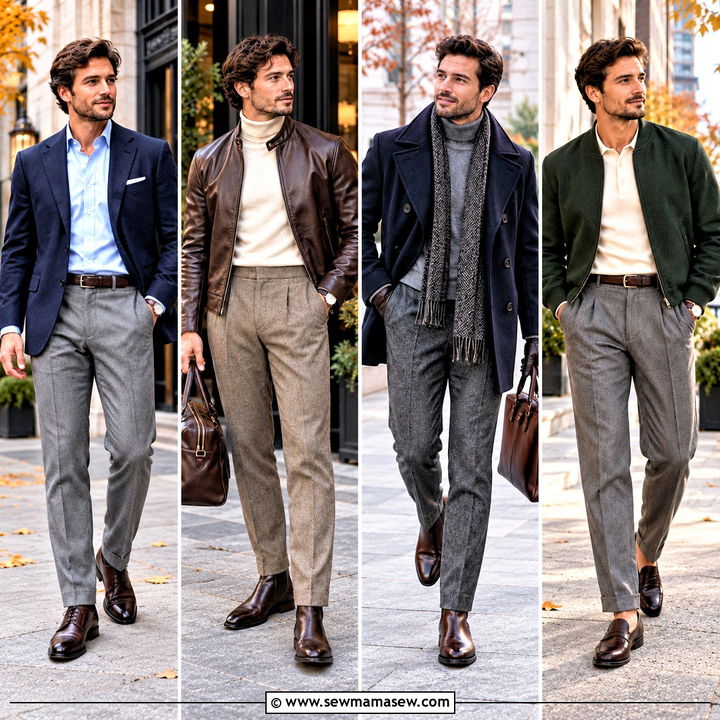
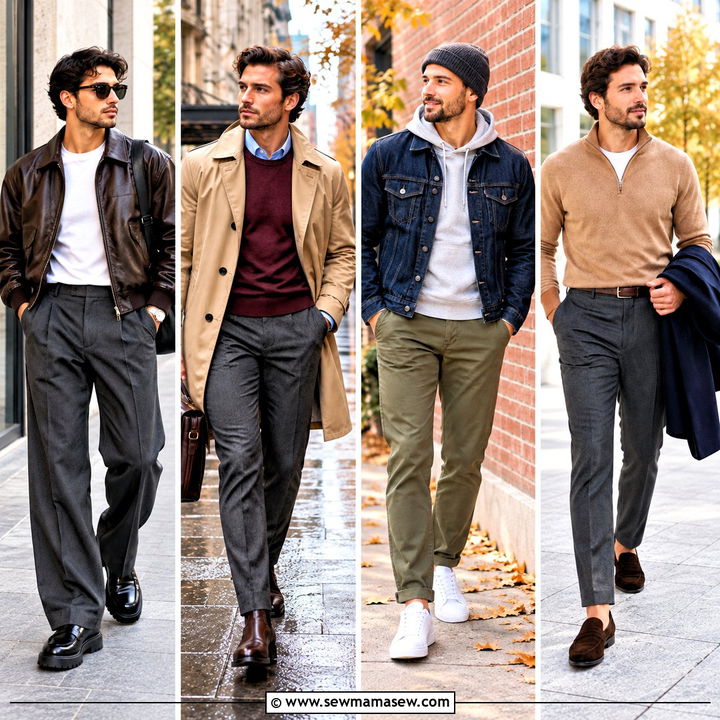
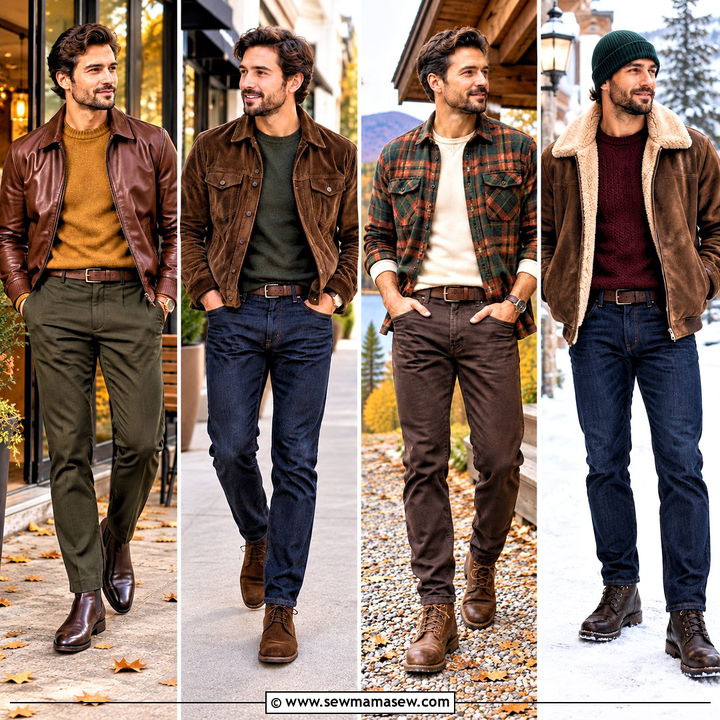
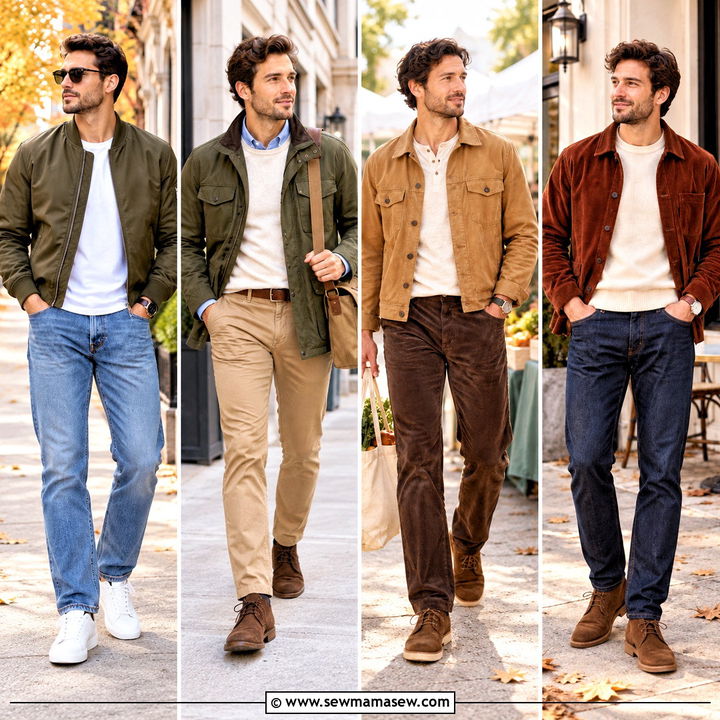
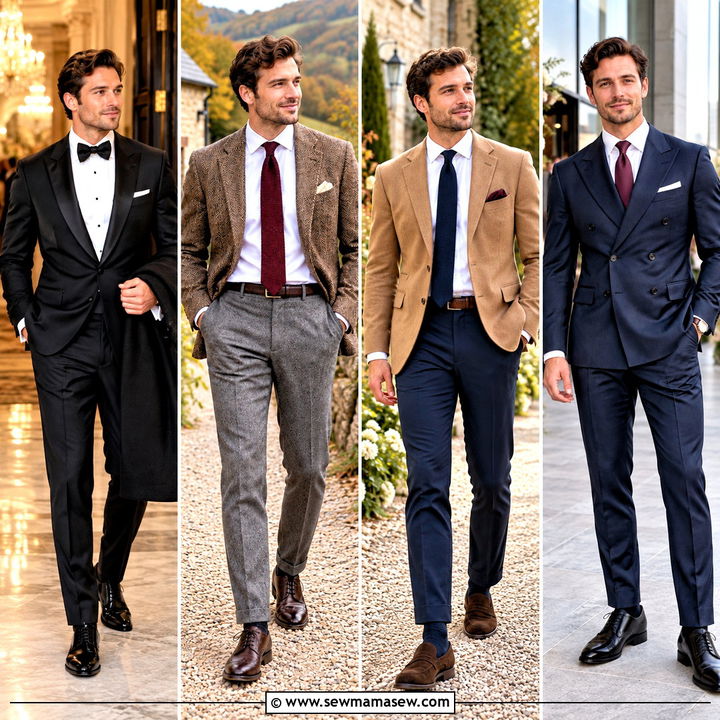
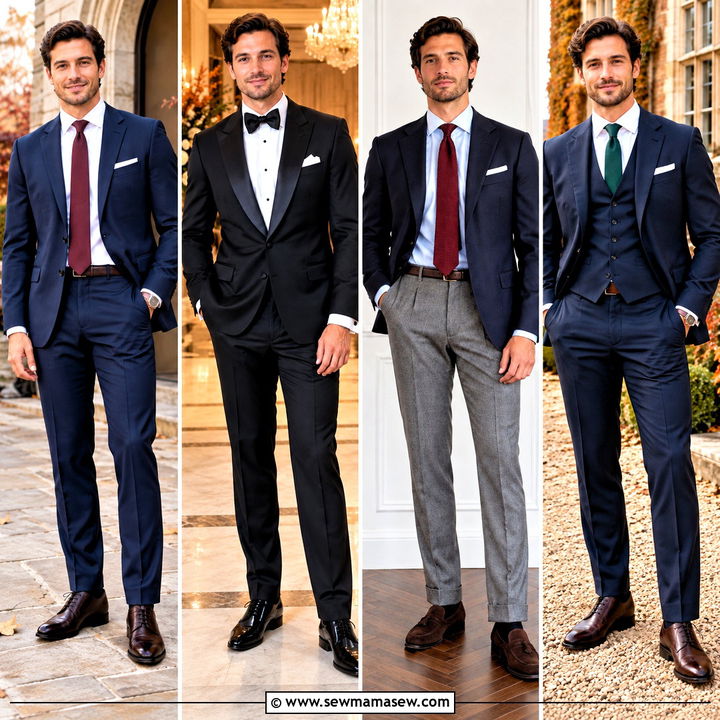
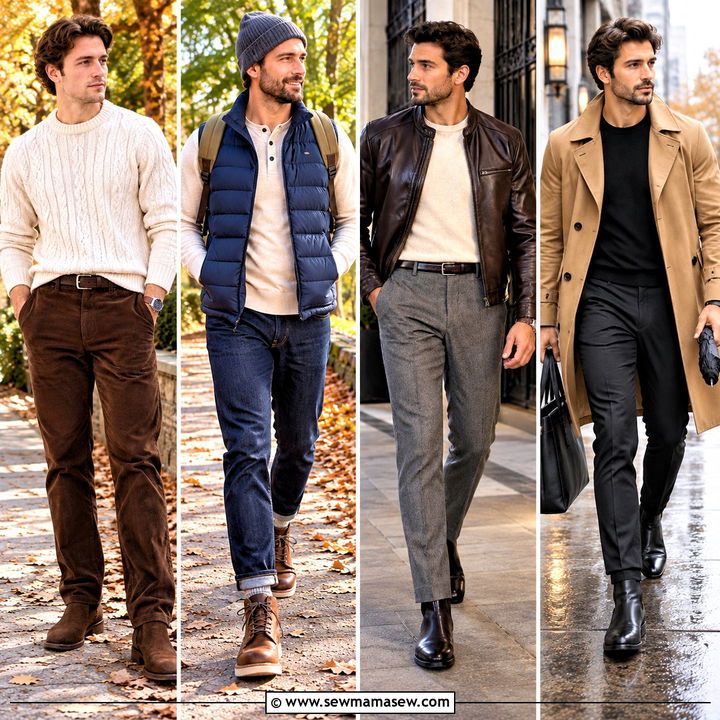
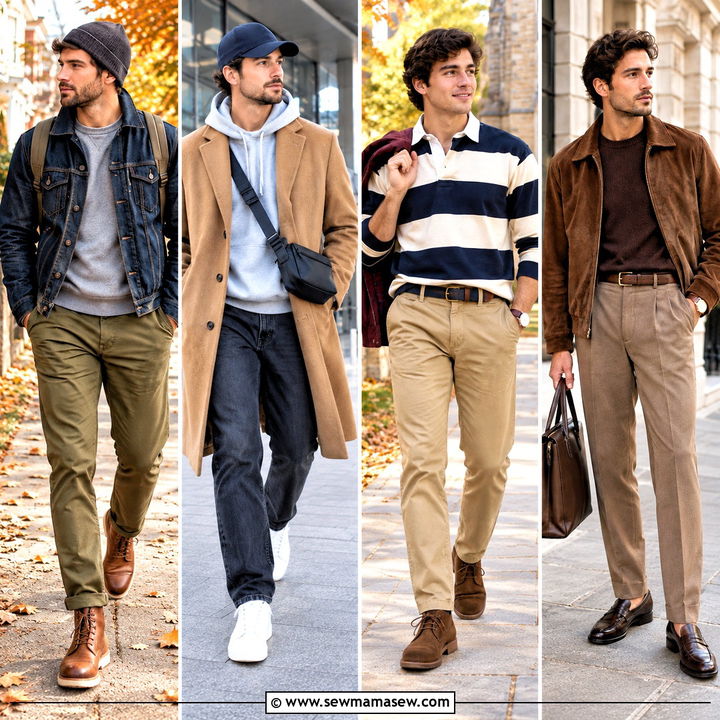
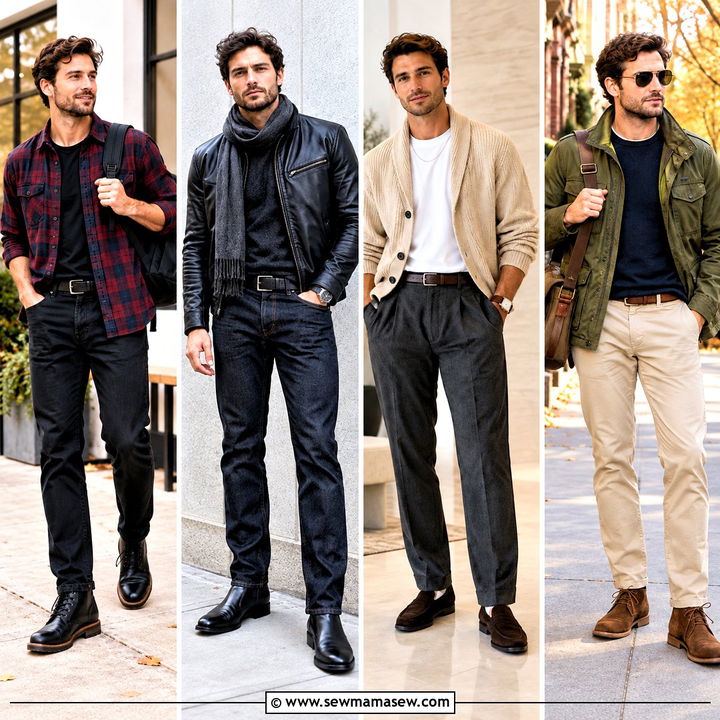
Business casual is the dress code men ask me about most, because nobody defines it the same way twice. Fall actually makes it easier. Textured wool, merino and suede add depth to plain office pieces, and the season's browns, navies and greens are naturally less severe than a black suit. The outfits I build for work almost always rest on the same few pieces: tailored trousers, a fine merino knit, an Oxford shirt, a soft blazer, and leather or suede shoes that are actually polished. Fit matters more than any single item, and every look here can be pushed up or down for your office just by changing the shoes, the jacket or the shirt. The fifteen below run from conservative to relaxed.
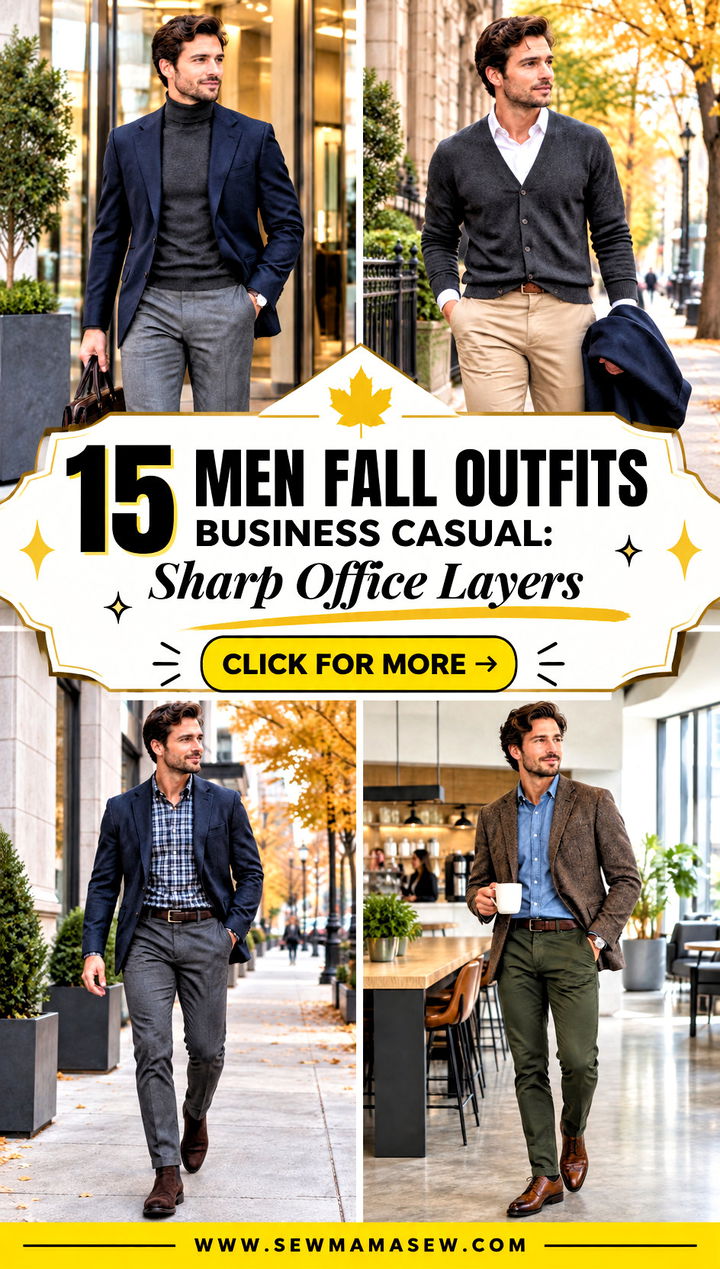
Where Your Office Sits on the Formality Ladder
Before picking an outfit, I find it useful to place a workplace on a simple ladder. The outfits below are spread across it, and knowing your rung saves you from turning up in a denim shirt on the day the regional director visits.
- Traditional business casual: tailored trousers, collared shirts, a blazer or sport coat most days, leather shoes. Outfits 1, 2, 4 and 15 sit comfortably here.
- Standard office: jackets optional, knitwear and chinos welcome, loafers or boots fine. Most of the sweater and cardigan looks belong on this rung.
- Relaxed or creative: overshirts, turtlenecks, dark jeans and clean leather sneakers are all normal. The denim shirt, flannel and jean looks live here.
When in doubt, I dress one rung above what you see around you for the first few weeks. It's easier to take off a blazer than to explain why you don't have one. Shoes are the quickest dial: the same trousers and knit read a whole step smarter with polished derbies than with sneakers.
1. Navy Blazer With Oxford Shirt And Gray Trousers
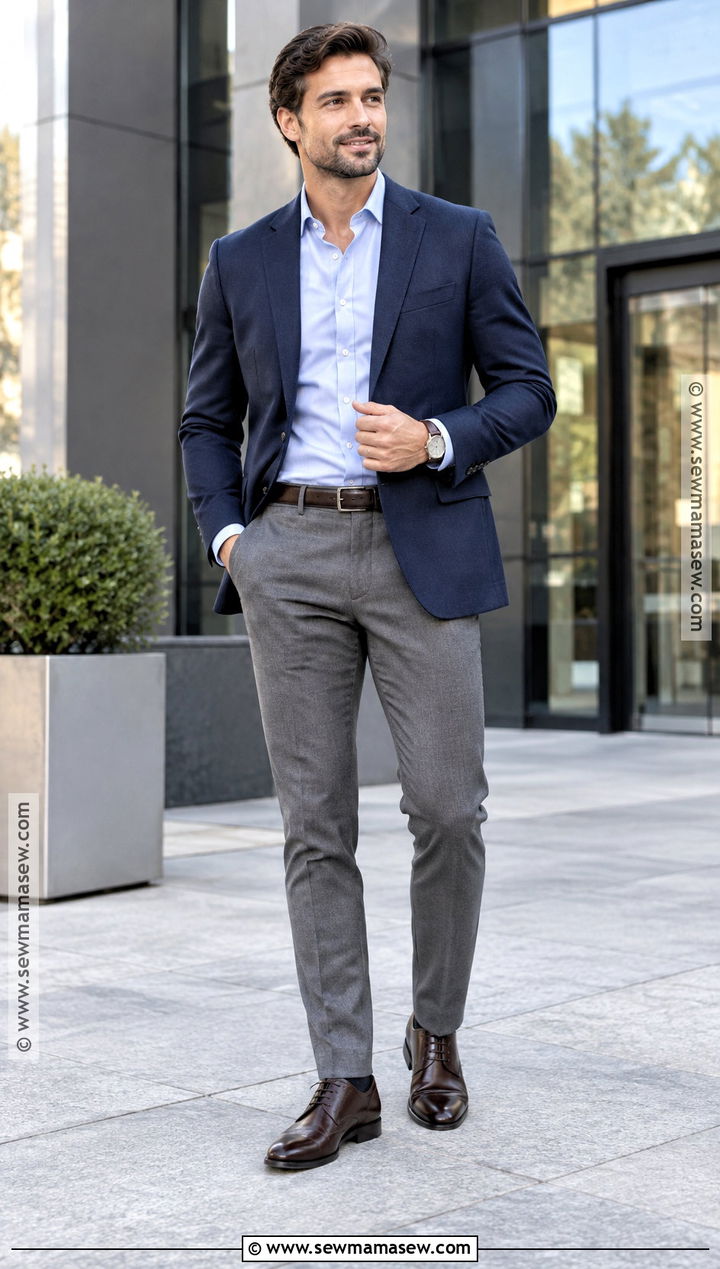
If I could give a man only one work outfit, this would be it: navy blazer, pale blue Oxford, mid-gray trousers. An unstructured wool-blend blazer, meaning one with little or no shoulder padding, moves with you and feels less like a uniform. Mid-gray is softer than black and sits better with the blue above. Tuck the shirt, wear a dark brown belt with matching derbies and a leather-strap watch, and you're done. The detail I check is the shirt cuff: about a quarter to half an inch should show past the blazer sleeve. Leave the top button open unless your office expects a tie, and on cold days add a charcoal overcoat long enough to cover the blazer hem. It holds up in presentations, client meetings and ordinary Tuesdays.
2. Merino Crewneck Sweater With Chinos And Loafers
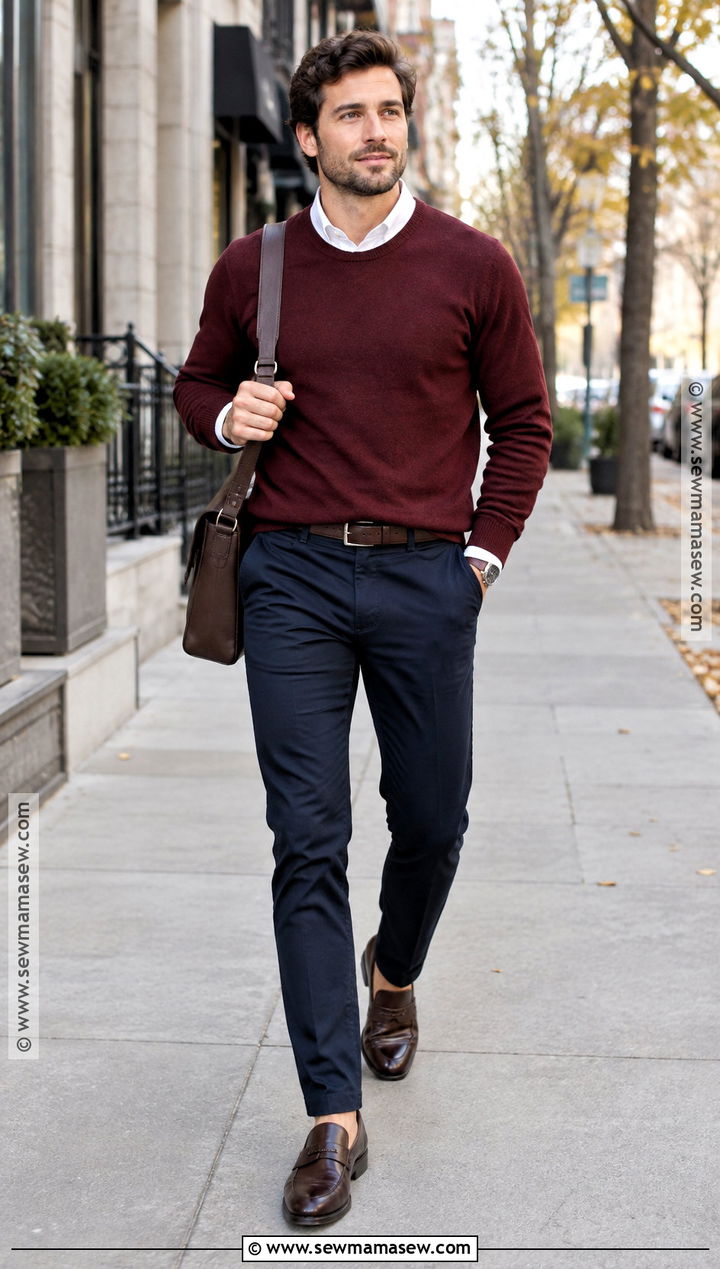
Fine-gauge merino is the warmest thing you can wear that adds almost no bulk, which is why I put it under so many work outfits. A burgundy or forest green crewneck over a white button-down, collar out and a thin line of cuff showing, then tapered navy chinos and dark brown penny loafers. A leather belt matching the loafers and a slim messenger bag or tote keep it tidy. The sweater color carries the autumn mood while navy keeps it serious. Watch the shirt underneath: a heavy Oxford with a loose body creases and ripples under a fitted knit, so I pair merino with a slimmer, lighter shirt. Comfortable for the commute, smart enough for nearly any office.
3. Quarter-Zip Sweater With Dress Shirt And Wool Trousers
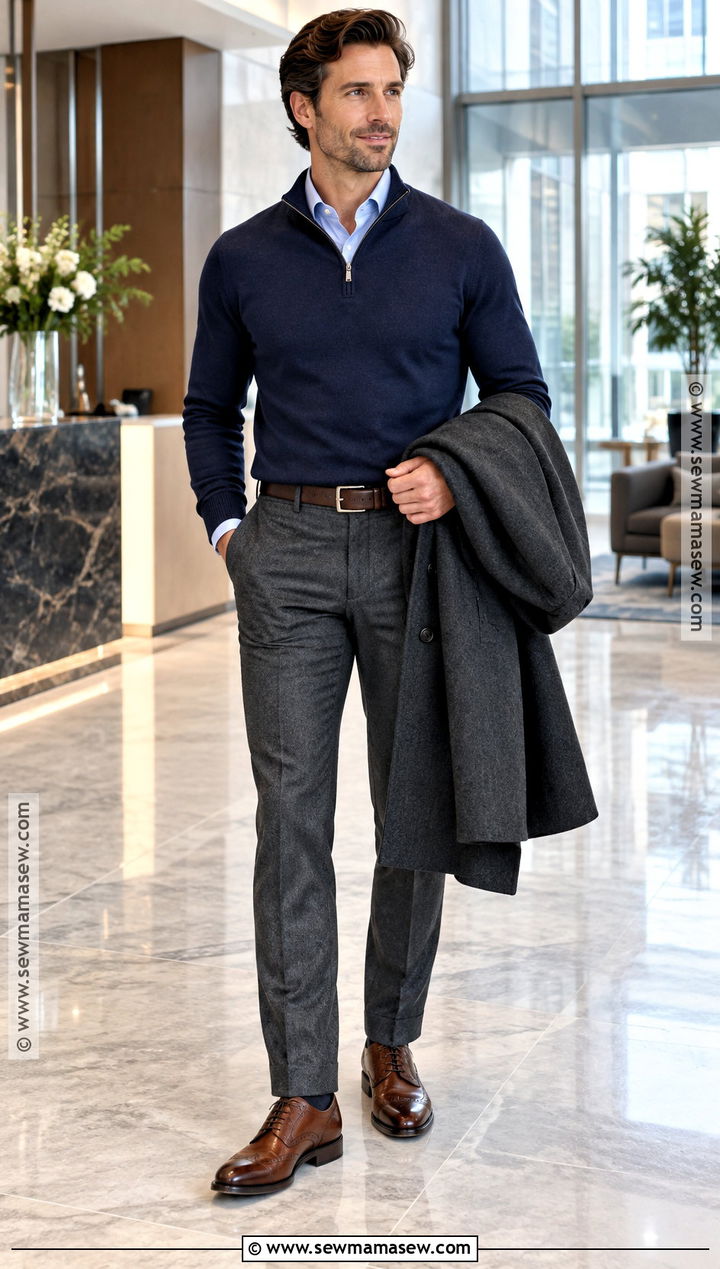
On days without meetings, a quarter-zip does the job of a blazer with less formality. Over a white or light blue dress shirt, I'd use a navy, charcoal or camel fine-knit quarter-zip, unzipped enough that the collar lies flat instead of getting crushed against your neck. Charcoal flat-front wool trousers with a clean break and brown leather brogues finish it, with the belt matching the shoes. Skip athletic quarter-zips. Big logos and shiny performance fabric make it look like you came from the gym, and that sheen also shows every wrinkle under office lighting. A structured wool topcoat covers the commute. It's an easy outfit for hybrid offices, internal meetings and networking evenings.
4. Brown Sport Coat With Blue Shirt And Navy Chinos
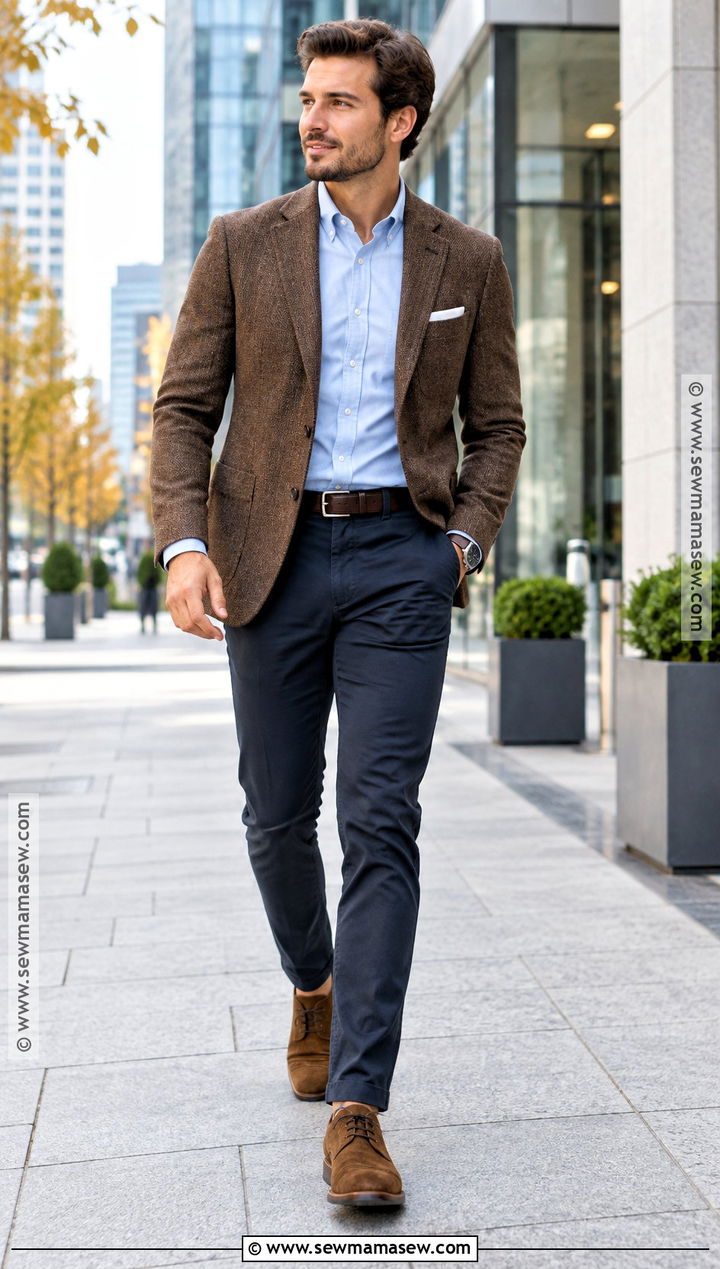
Brown tailoring looks right once the leaves turn, and a textured sport coat is the friendliest way in. Herringbone, hopsack or a quiet check all hide minor creases better than smooth worsted, which is useful if you sit in the jacket all day. Wear it over a light blue button-down with navy chinos, so the brown has something to play against instead of swallowing the outfit. Medium-brown suede derbies, a matching belt and a classic watch follow. If you add a white pocket square, a plain straight fold keeps it from looking like a wedding. The jacket should hug the shoulder without dimpling at the sleeve head. On colder days, a thin merino vest underneath adds warmth without changing the colors.
5. Turtleneck With Blazer And Tailored Trousers
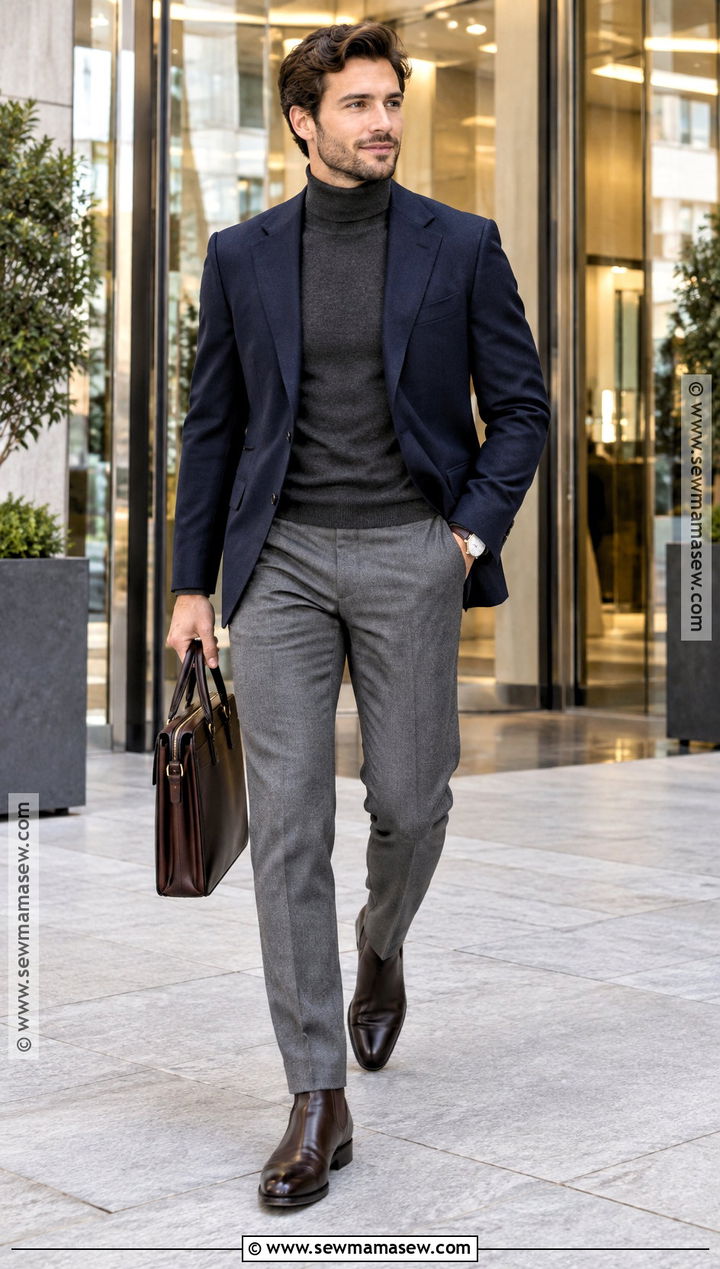
Swapping the collared shirt for a fine-knit turtleneck makes a blazer look sleek and slightly modern. Black, charcoal or cream under navy or mid-gray tailoring, with trousers in charcoal, taupe or deep brown depending on the jacket. Black loafers are the minimalist finish; dark brown Chelsea boots feel more seasonal. Thickness is everything. A turtleneck that's too heavy bunches inside the sleeves and stands up behind the jacket collar, so I only use thin merino or a merino blend here. A watch and a structured leather briefcase are plenty. I'd keep this for creative or modern offices; in a conservative one, check that a collarless knit is acceptable before wearing it every week.
6. Cardigan With Button-Down Shirt And Khaki Chinos
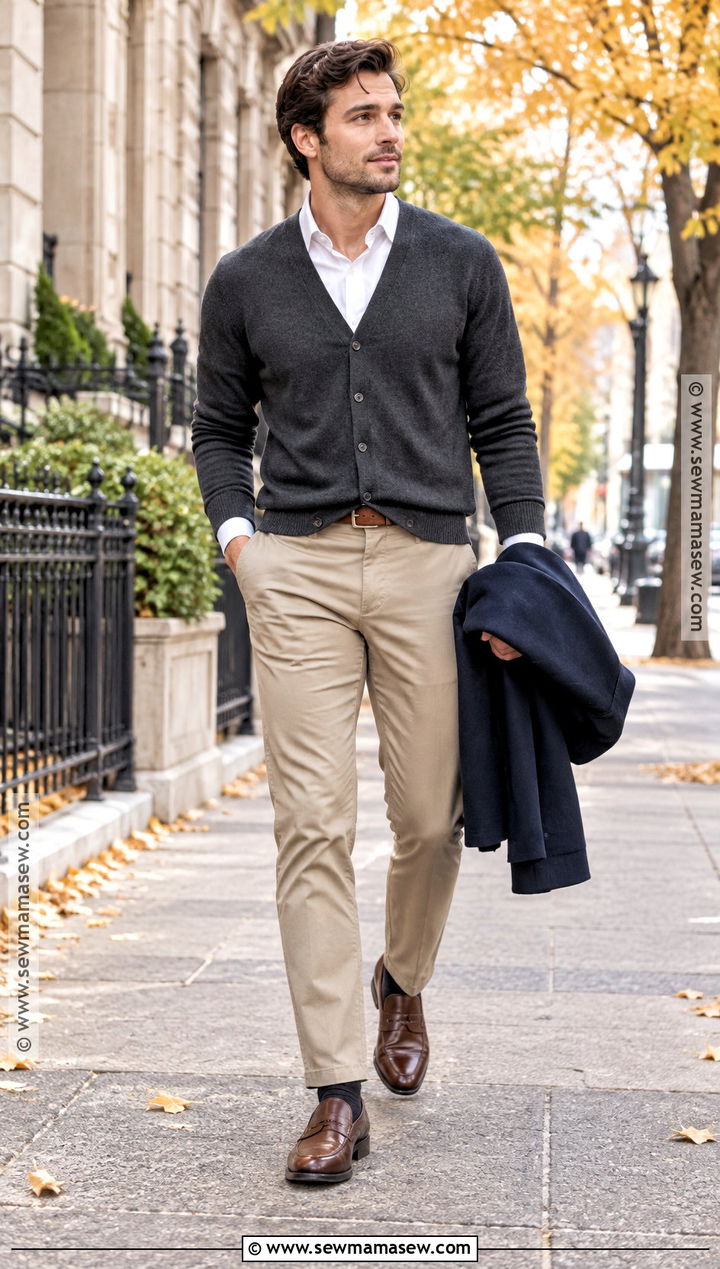
Cardigans can look sloppy at work, or they can look sharper than a blazer. The difference is a trim shape and fine yarn. Charcoal, navy or deep olive over a white Oxford, with tailored khaki chinos for a warm contrast and brown loafers, a matching belt and dark socks. I button it most of the way and leave the top and bottom buttons open so it hangs straight rather than pulling. Chunky yarn, oversized patch pockets or a loose body tip it into weekend loungewear. For outerwear, a navy mac or lightweight trench goes over it neatly. It's a comfortable everyday choice for desk days and offices that are relaxed but still clearly professional.
7. Knit Polo With Pleated Trousers And Derby Shoes
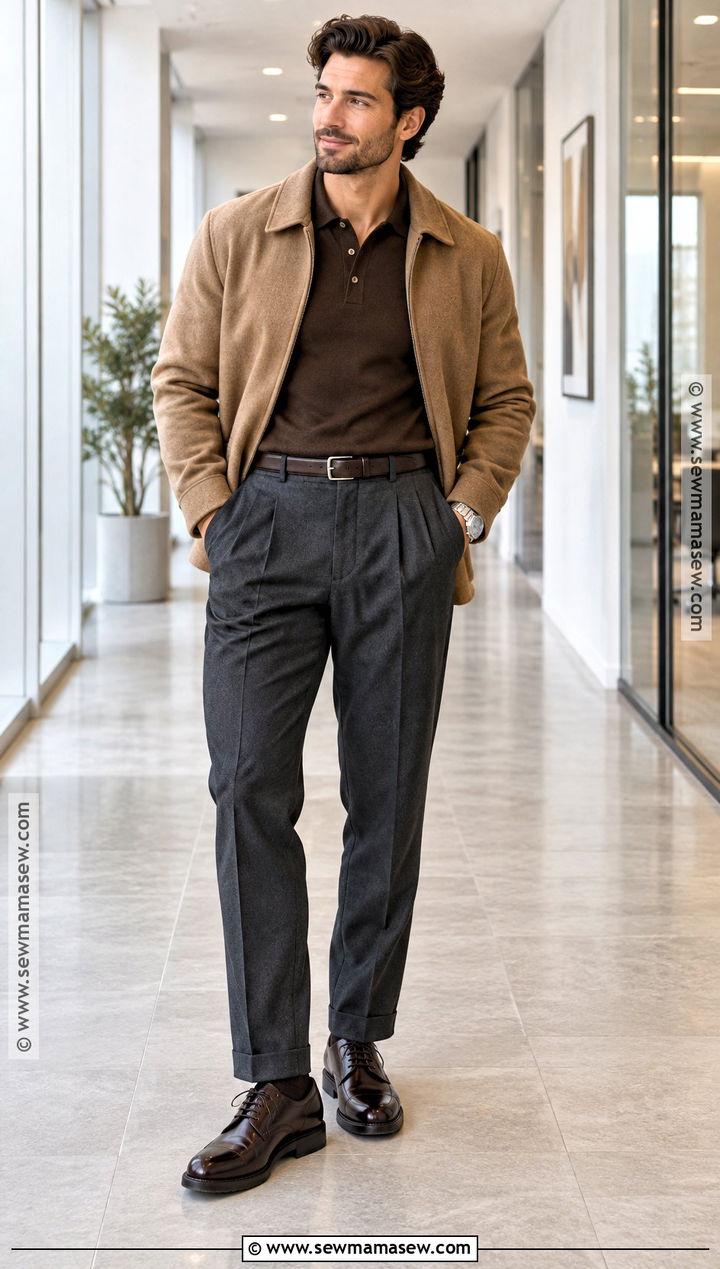
Early fall is awkward for work clothes: short sleeves are done but a sweater is too warm. A long-sleeve knit polo solves it, giving you a collar and the comfort of a knit. Chocolate, navy, rust or muted green with mid- or high-rise pleated trousers in charcoal or stone. Pleats are the reason the rise matters; on a low-rise trouser they splay open across the front, while at the natural waist they fall straight. Tuck the polo cleanly and wear a belt unless the trousers have side adjusters. Dark brown derbies for a traditional office, minimal leather sneakers for a relaxed one. The polo should fit close through the shoulders and chest without the buttons gaping, and a light suede or wool jacket covers the commute.
8. Sweater Vest With Oxford Shirt And Corduroy Trousers
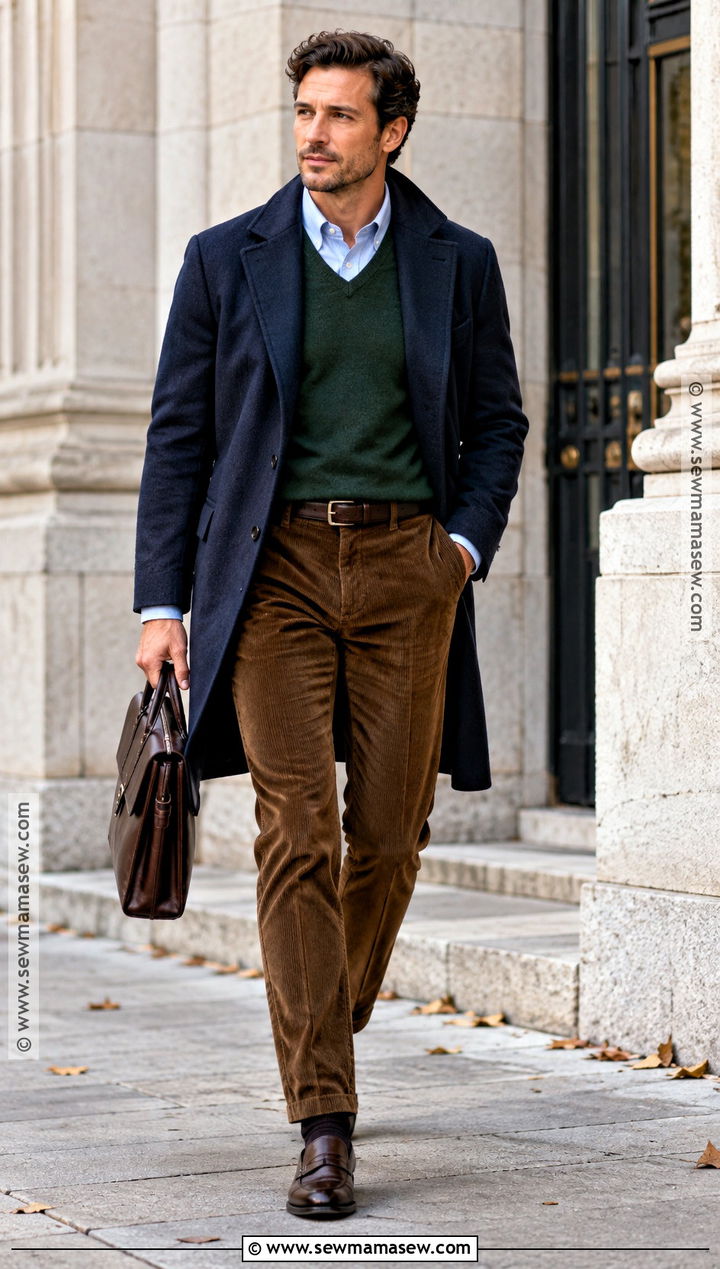
A sweater vest over an Oxford is pure autumn texture, and the risk is looking like a student. I keep it professional by tailoring everything else. A navy, brown or dark green vest over a crisp white or pale blue Oxford, then fine-wale corduroy trousers in tan, tobacco or deep olive, cut slim and straight rather than wide. Fine-wale cord has narrow ridges and reads almost like flannel from a distance; wide-wale looks rugged and is harder to wear to work. Dark brown loafers and a matching belt. Cuffs buttoned, hem tucked, and only one pattern in the outfit, either a quiet stripe in the shirt or a texture in the vest. A navy wool coat or field coat goes over it outdoors.
9. Flannel Shirt With Chinos And Chelsea Boots
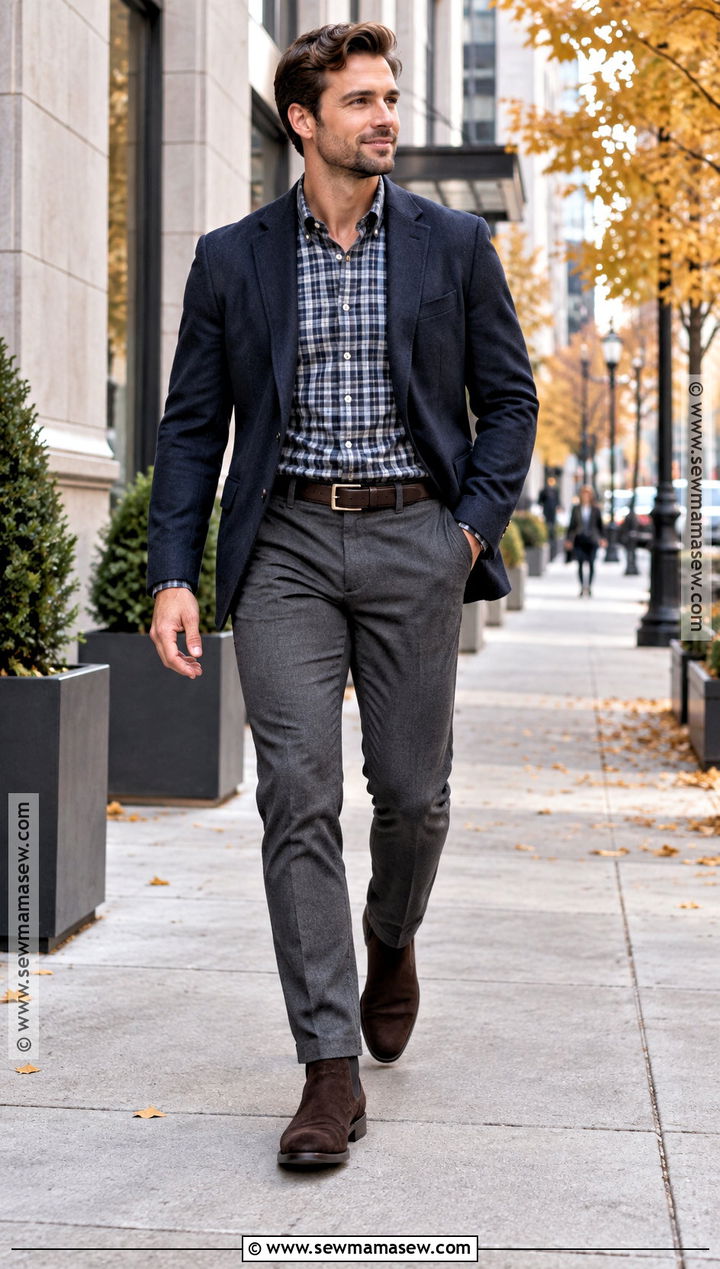
Yes, flannel can go to the office, but only a particular kind. I look for a brushed cotton shirt in a small navy, gray or brown check, with a proper collar and fitted cuffs, nothing like the big outdoor plaids or chest pockets with flaps. Tuck it into tailored charcoal or navy chinos with a smooth leather belt. Dark brown suede Chelsea boots sharpen it and handle damp sidewalks, although suede should get a protector spray first or rain will spot it. If your workplace leans formal, add a solid navy blazer or a structured overshirt. It feels seasonal without sliding into weekend territory.
10. Olive Overshirt With Turtleneck And Gray Trousers
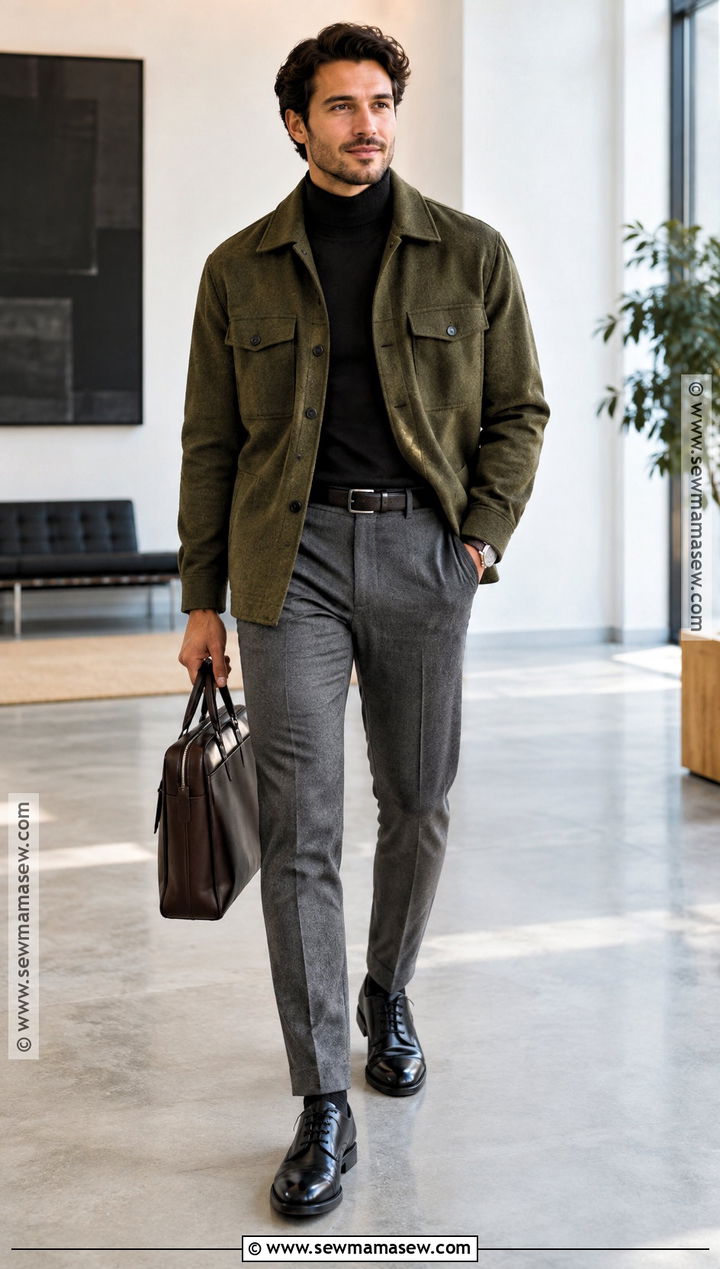
In contemporary offices, an olive overshirt can stand in for a blazer if the shape is clean and the pockets are kept to a minimum. Worn open over a black, cream or charcoal fine-knit turtleneck, with tailored gray trousers to sharpen the relaxed layer on top. Black derbies or dark brown Chelsea boots, and a belt in the same family as the shoes. I always pick brushed cotton, a wool blend or fine twill for this; heavy canvas belongs on a work site. The hem should stop around the hips and the shoulder seams should land at your shoulder bone. It's a good choice for hybrid days that split between the desk and off-site appointments.
11. Chambray Shirt With Blazer And Dark Chinos
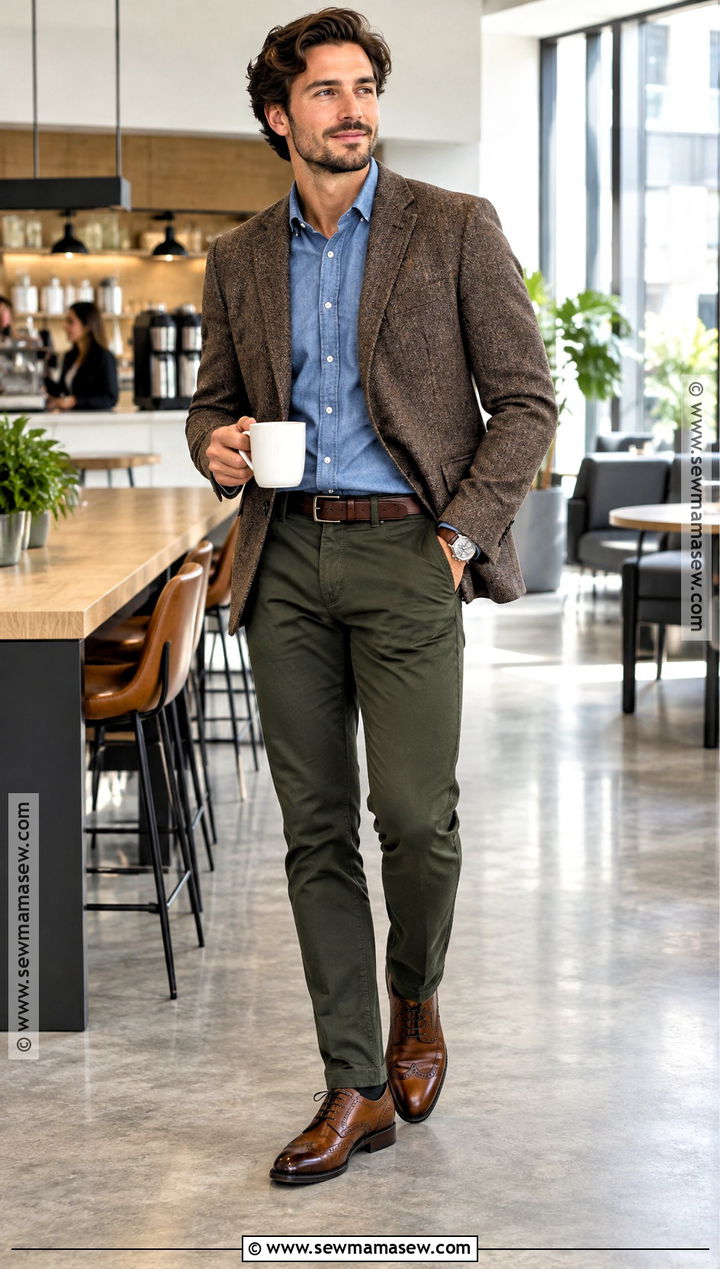
Chambray looks like denim but is lighter and woven differently, which gives a button-down a relaxed texture without losing its shape. I'd pick a medium-blue chambray with a clean collar and no distressing, under a navy, charcoal or brown unstructured blazer, with dark olive or charcoal chinos. Brown brogues and a matching belt make it office-ready. Shirt tucked, top button open. Because it already reads as denim, faded jeans or casual sneakers push it too far for most offices. A pocket square is optional and should stay quiet. I like this for casual Fridays and team lunches, in places where a dress shirt feels stiff but a jacket is still appreciated.
12. Mock-Neck Sweater With Wool Pants And Chelsea Boots
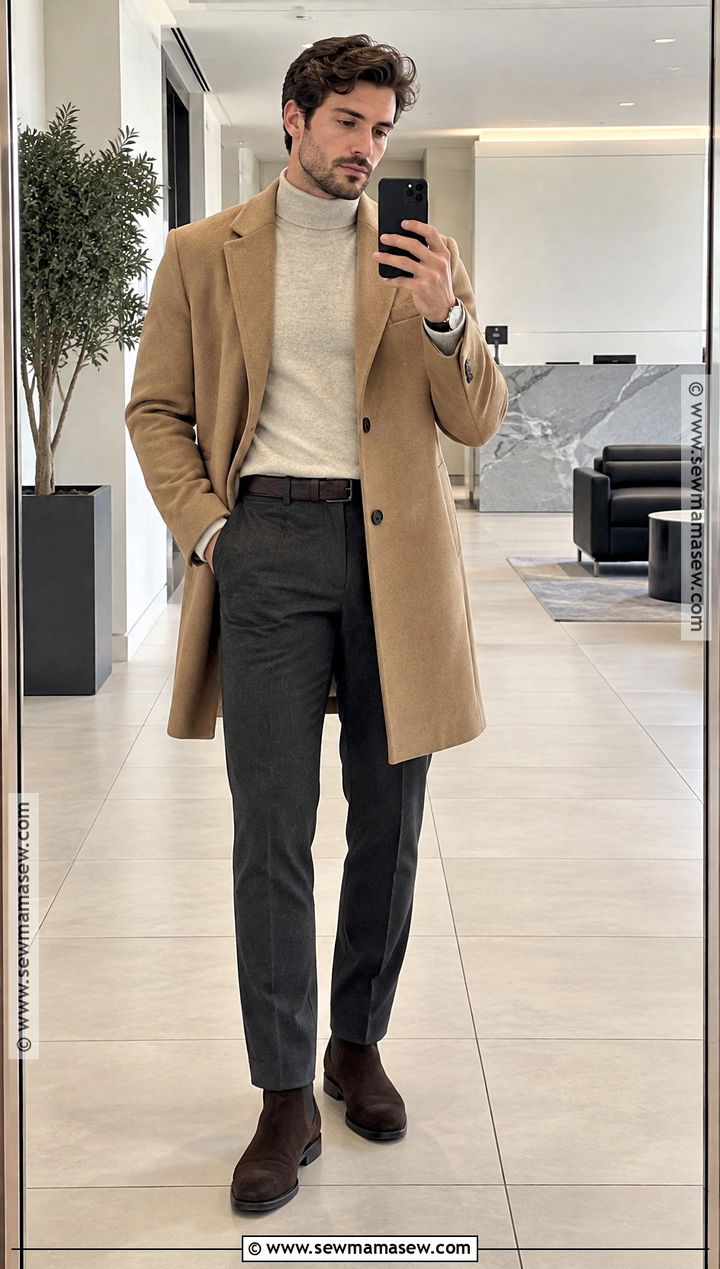
A mock neck gives you the clean line of a turtleneck without fabric piling up under your chin, which suits men with shorter necks better. Fine-knit black, oatmeal, navy or dark green, with tailored charcoal or mid-gray wool trousers. Black leather or dark brown suede Chelsea boots depending on the sweater, a coordinating belt, a slim watch and a structured work bag. Over it, a single-breasted wool coat in camel, navy or charcoal. I check the sweater length here: it should end near the waistband, because extra length rides up and bunches when the coat goes on. It looks considered with very little work, which makes it handy for presentations, creative offices and dinners with colleagues.
13. Denim Shirt With Knit Blazer And Chinos
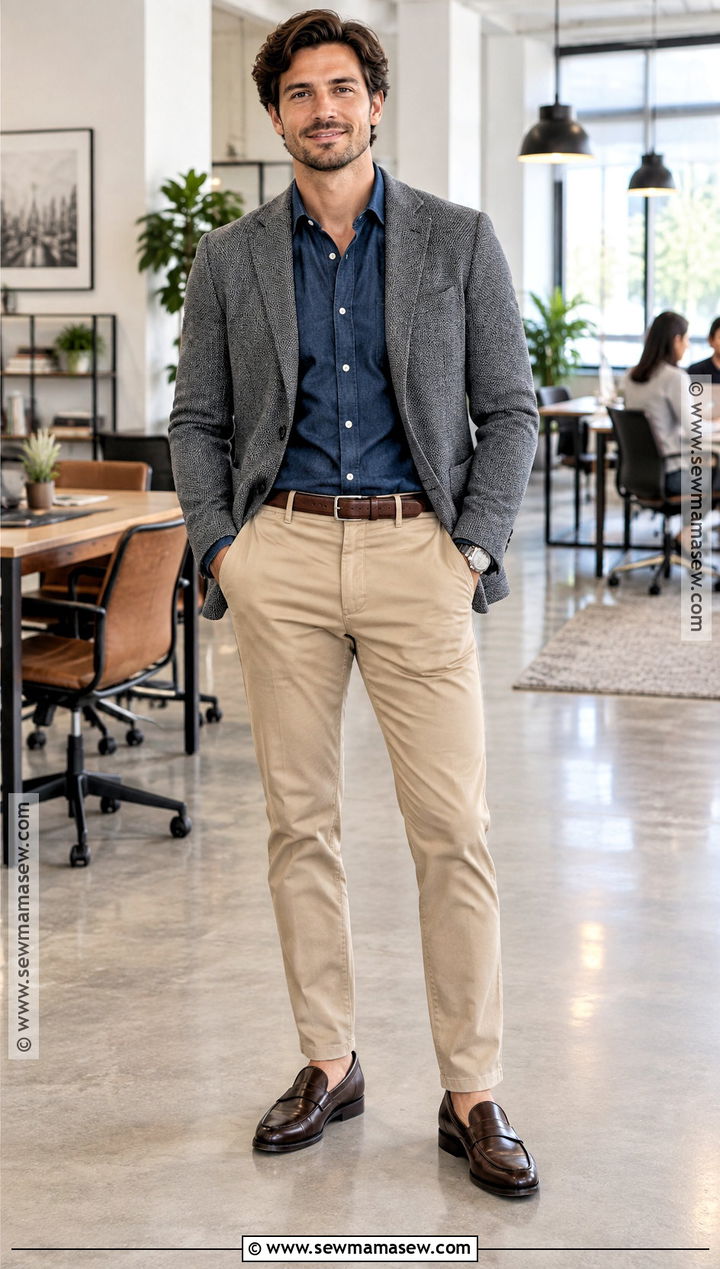
A denim shirt goes to work only when everything around it is tailored. I choose plain dark indigo with no fading, no Western yokes and no contrast stitching, since those details pull it straight back to weekend wear. A soft gray or navy knit blazer over it, then tan, stone or olive chinos and dark brown leather loafers, which look less rugged than boots. A matching belt and a simple watch. Knit blazers are forgiving to wear but easy to stretch out; hang them on a wide shaped hanger, never a wire one, or the shoulders lose their shape. Keep the shirt tucked and the blazer close at the shoulder, and save this one for relaxed offices, Fridays and informal team events.
14. Dark Jeans With Oxford Shirt And Sport Coat
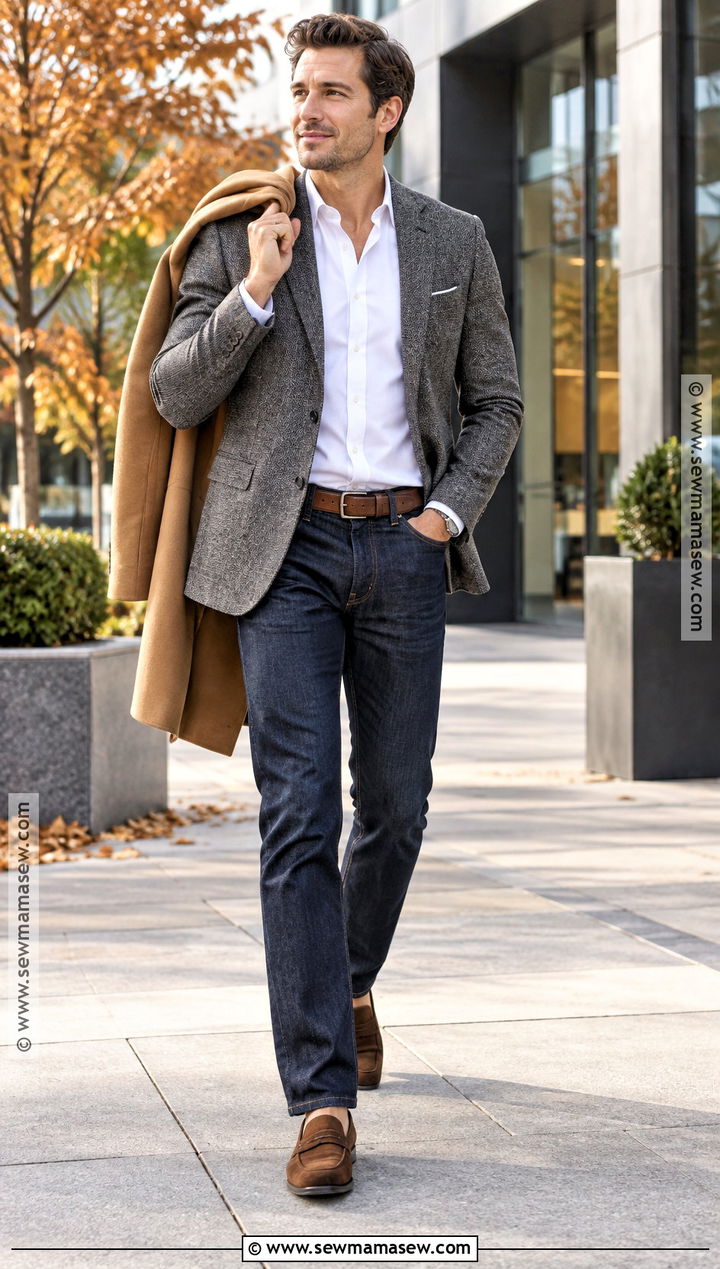
Where jeans are allowed, dark indigo denim can hold up a perfectly smart fall outfit. Straight or gently tapered, an even wash, clean hems, no distressing. A white or pale blue Oxford and a textured gray, navy or brown sport coat go on top, with brown suede loafers or leather derbies to lift the jeans and a matching belt. The jacket length matters more with jeans than with trousers. It should cover your seat, or the denim starts to dominate. I have jeans hemmed so they only just touch the shoe, because fabric stacked at the ankle looks careless next to tailoring. A camel topcoat covers cold mornings. Good for Fridays and modern offices; I'd skip it in a conservative corporate setting.
15. Trench Coat With Sweater And Tailored Trousers
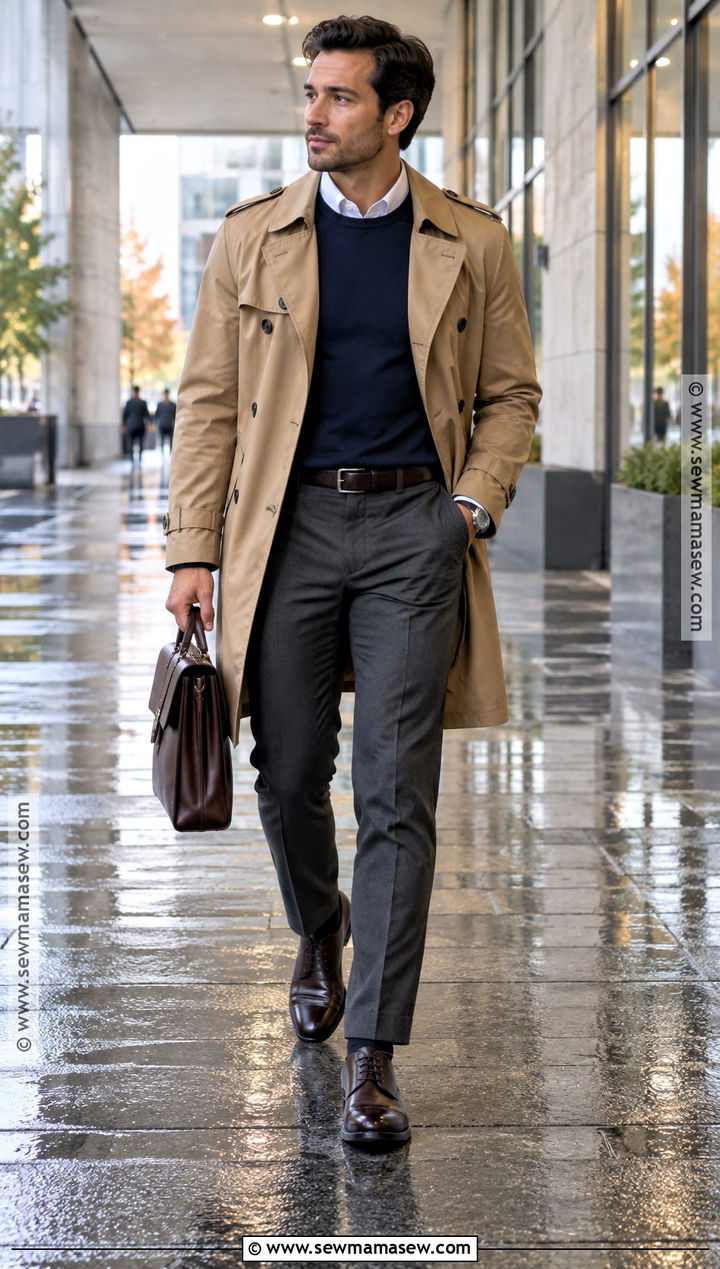
A trench is the one coat that makes an office outfit look finished from the moment you walk in, and it keeps rain off the wool underneath. I build this around a fine-gauge navy or burgundy crewneck over a white collared shirt, with charcoal tailored trousers and dark brown derbies. The tan, stone or navy trench goes over all of it, so I try it on over the sweater to make sure the sleeves don't strain. Around knee length, with a plain design rather than a pile of straps and big buckles. A leather briefcase, matching belt and simple watch. Take the coat off indoors and the outfit beneath stands on its own, which is what you want on rainy commutes and travel days.
Small Alterations That Do More Than a New Blazer
Most men's work clothes look average because they're bought off the rack and worn exactly as they came. A tailor can fix the details that make tailoring look like yours, and the common jobs are usually inexpensive, although prices vary a lot by area.
Trouser hems
For business casual I like a slight break, where the front of the hem just kisses the top of the shoe. A full break with fabric folding over the laces looks sloppy, and very cropped trousers can read as too fashion-led for a conservative office.
Jacket sleeves
Shortening sleeves is the alteration that changes a jacket most for the effort. The sleeve should end around the wrist bone so a little shirt cuff shows. What a tailor can't really fix is the shoulder, so buy for the shoulder and alter everything else.
Shirt and knit fit
Taking in the sides of a loose shirt stops it from ballooning over the belt when tucked. Knitwear is harder to alter, so I buy sweaters that fit at the shoulder and body from the start and simply check the length against the trouser waistband.
A Work Week Built From Navy, Gray and Brown
A solid fall work wardrobe is mostly a matter of pieces that combine many ways. Blazers, merino knits, Oxford shirts, chinos, wool trousers and properly polished shoes cover almost every outfit above. I'd start with navy, gray, brown and tan, then add autumn color through burgundy, olive, rust or forest green. Get the fit sorted, pay attention to fabric weight and read your office honestly. Dark jeans and overshirts belong in relaxed workplaces; tailored trousers and sport coats are the safer bet in conservative ones. Dress so you're comfortable from a cold morning walk to a warm afternoon meeting.
Related posts: