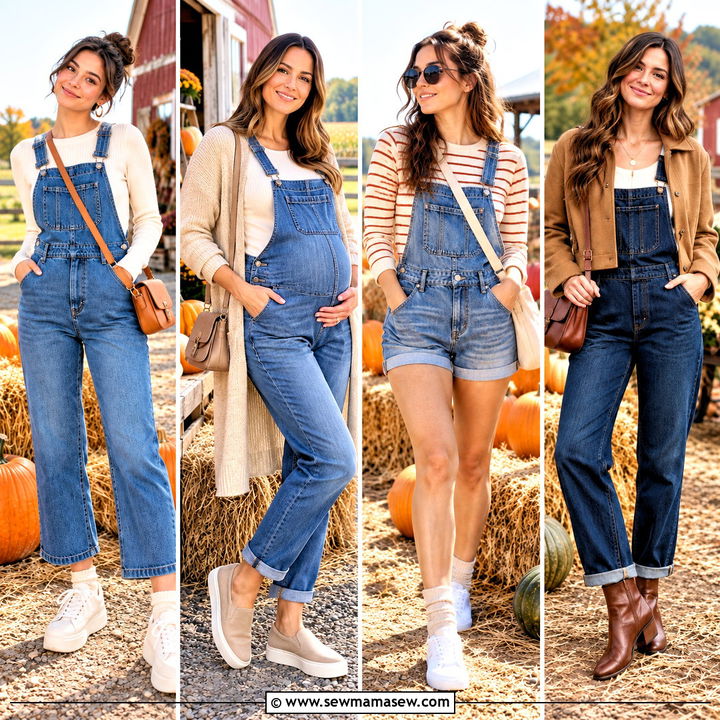
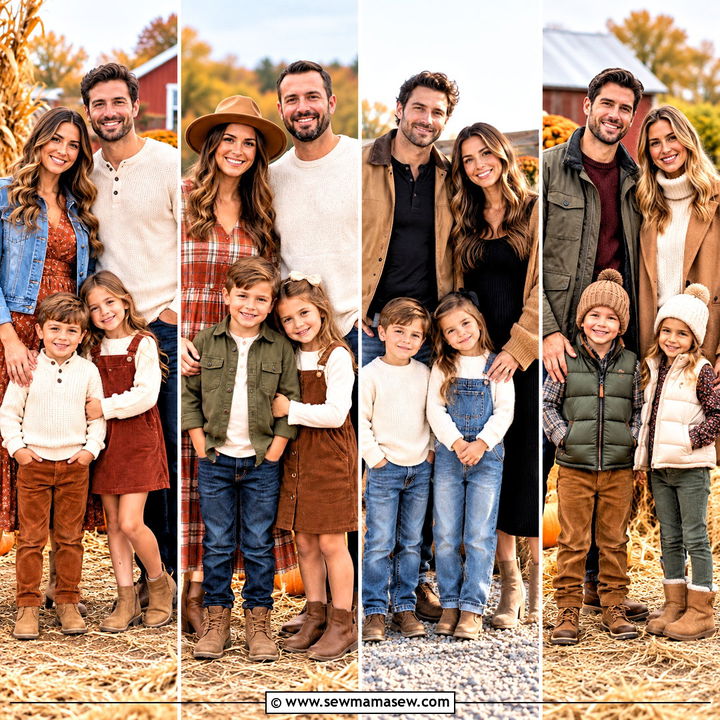
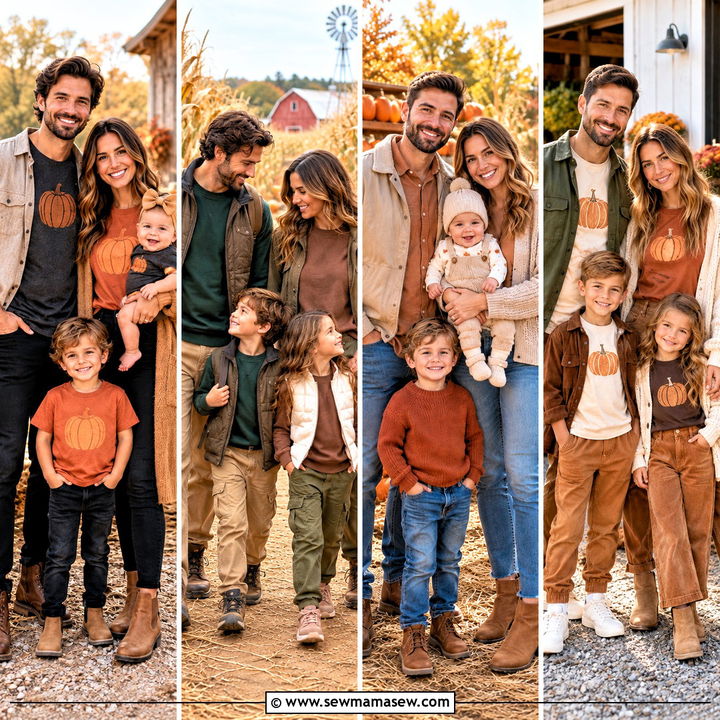
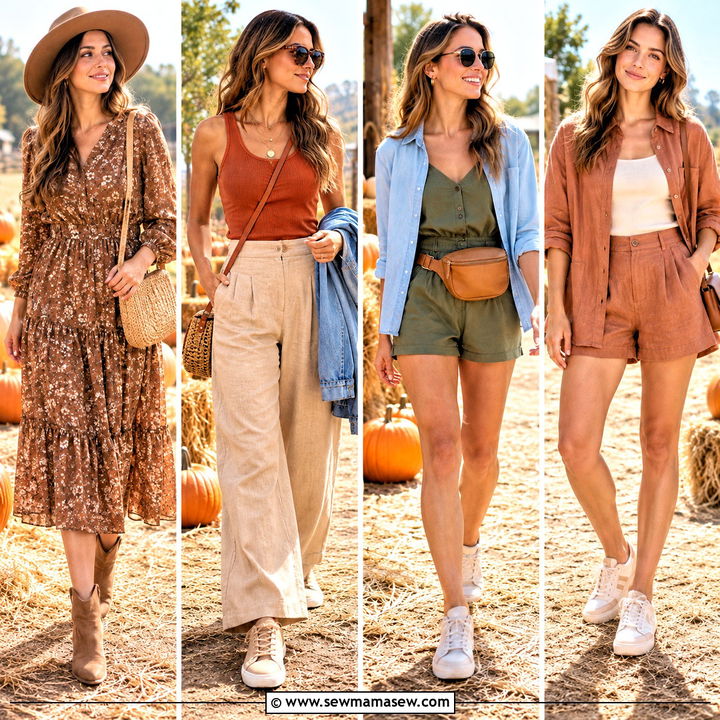
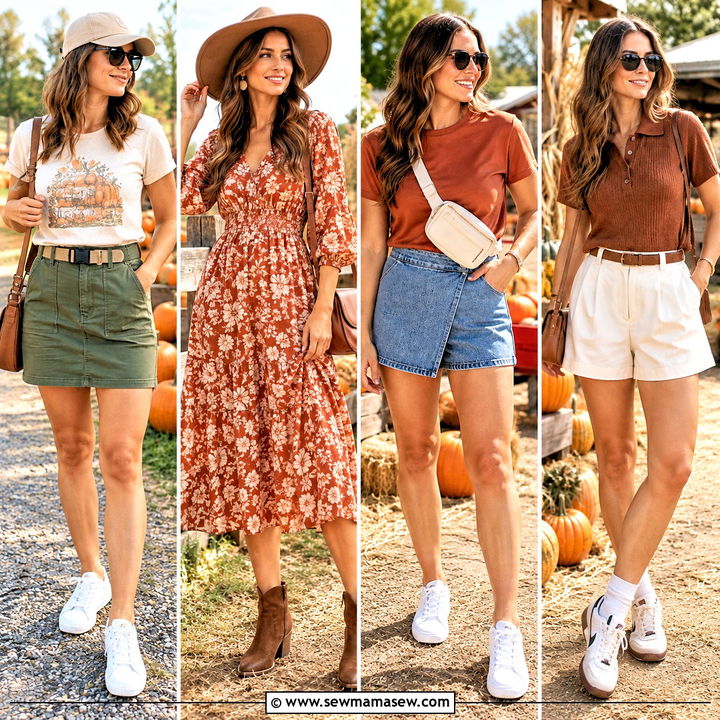
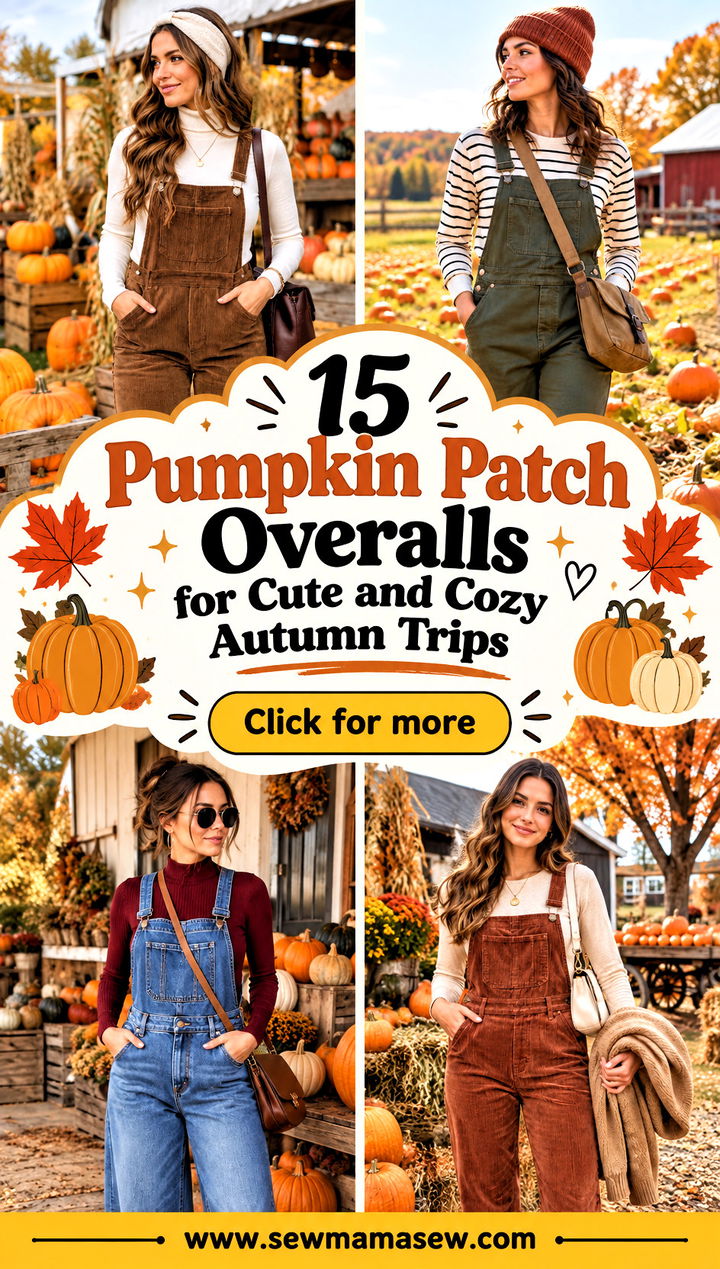
Overalls might be the most sensible thing you can wear to a pumpkin patch. They don't slide down when you crouch, the bib keeps your top clean when you hug a dusty pumpkin, and the pockets hold a phone without a bag. They also come in far more than blue denim now: corduroy, canvas, cotton twill, cropped, wide, short and dress versions. What changes from one outfit to the next is what goes underneath and on top, from fitted knits and flannel to cardigans and barn jackets, plus shoes that cope with grass and gravel. Below are fifteen ways I'd put them together, with notes on fit and fabric for each.
Overall Fit Starts at the Straps
Overalls are easy to wear and surprisingly easy to get wrong. I check four things in the fitting room, and they matter more at a farm, where you'll be bending, kneeling and climbing all day.
- Strap length: adjust the straps so the bib sits at or just below the bust line. Too long and the bib sags forward when you lean over; too short and the crotch pulls up.
- Rise and torso length: squat in them. If the seam digs in, the torso is too short for you, which is common on tall women. On petite frames, a long torso means extra fabric gathering at the hips.
- Side openings: buttons or a zip at the waist make restroom trips far easier, and farm restrooms are rarely roomy.
- Leg room: you should be able to pinch an inch or so of fabric at the thigh. Overalls that fit like skinny jeans fight you every time you bend.
Stretch denim and soft twill forgive a less exact fit. Rigid denim, canvas and heavy corduroy hold their shape better and look crisper in photos, but they need the sizing to be closer to right. If you're between sizes in a rigid fabric, I'd usually take the larger one and shorten the straps.
1. Denim Overalls With A Cream Sweater
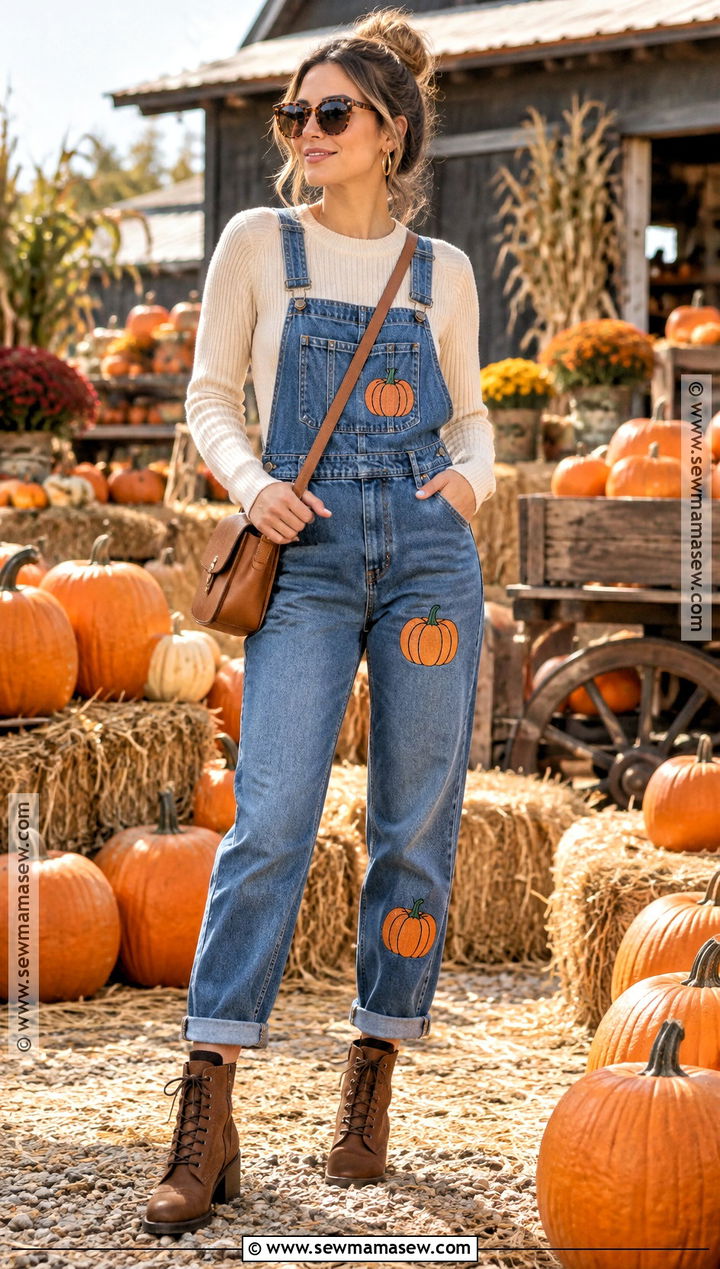
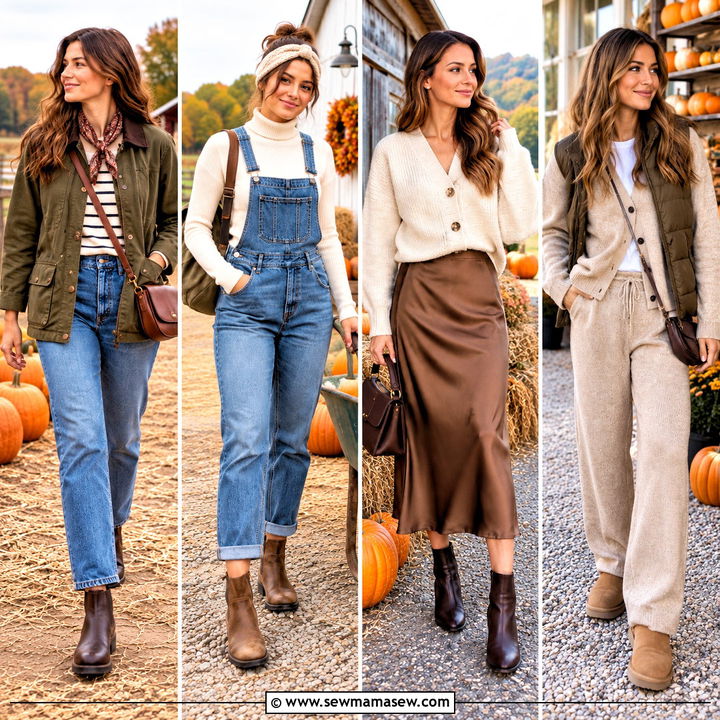
Blue denim and a cream sweater is the version I'd start with if you've never worn overalls. Go for a relaxed straight leg so you can sit on a bale and bend without the bib pulling down. The sweater should be fitted and fairly thin, like a ribbed knit; a chunky one bunches under the bib and makes the front look lumpy. Brown lace-up ankle boots give you stable footing. A tan crossbody and small gold hoops, with tortoiseshell sunglasses if the sun comes out. Blue, cream and brown together sit comfortably beside orange pumpkins without trying too hard.
2. Brown Corduroy Overalls With A White Turtleneck
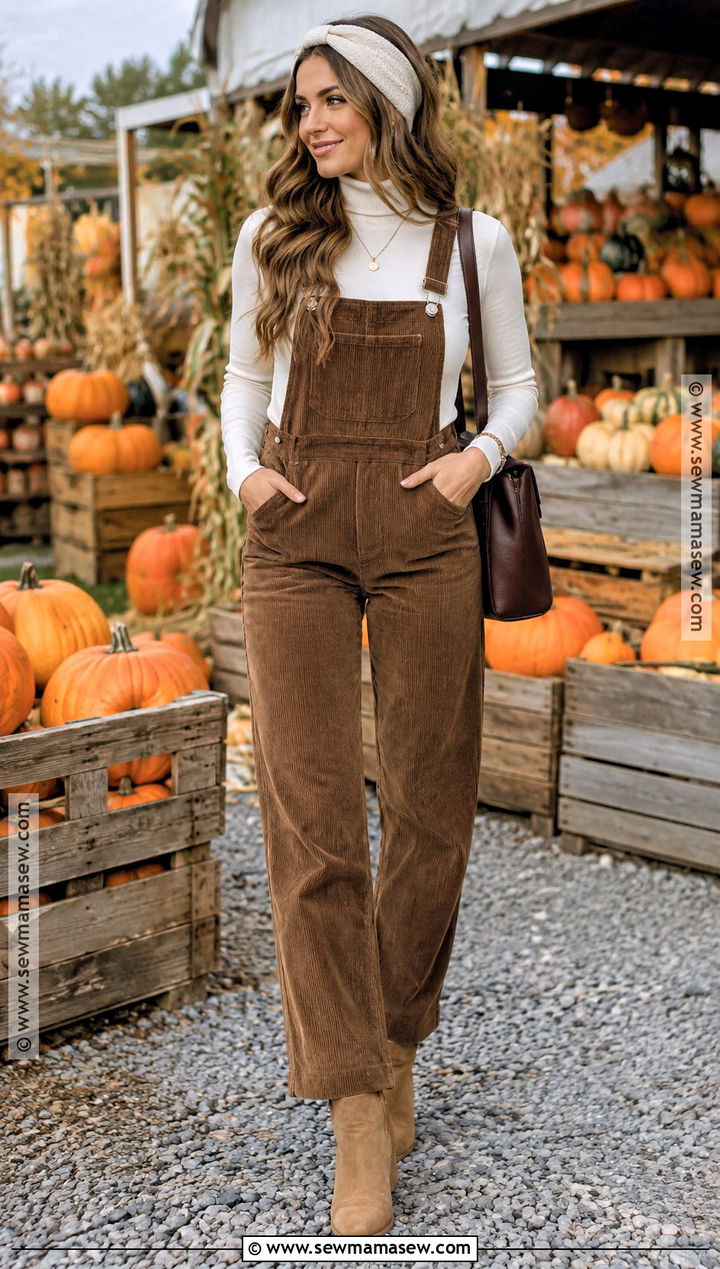
Brown corduroy is warm in a way denim isn't, which makes it my choice for a properly cold afternoon. Chocolate or chestnut over a fitted white turtleneck gives a crisp contrast at the neck. Straight or slightly tapered legs keep the bulk down; corduroy is thicker than denim, so a very wide leg can feel heavy. I'd only wear tan suede ankle boots on a dry day, and switch to flat lug soles if the field is muddy. A dark brown shoulder bag, gold jewelry and a cream knit headband. The wale does flatten at the knees with wear, so expect a little shine there over time.
3. Black Overalls With A Rust Sweater
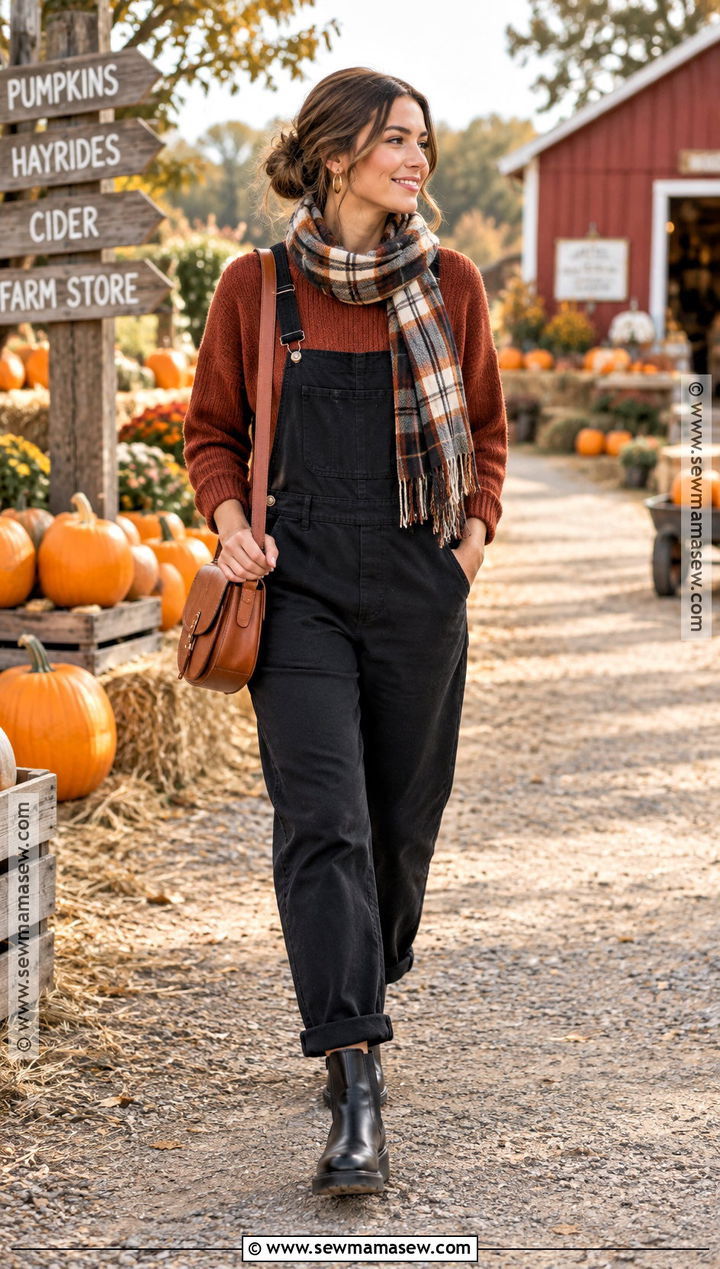
Black overalls suit someone who doesn't feel like herself in light denim. With a rust sweater on top, the black reads modern and the rust brings the warmth. I pick a relaxed leg with little or no distressing; rips catch on vines and stubble at a farm. A thin rust crewneck works for a mild day, a thicker knit for a cold one, but check that the bib still lies flat over it. Black combat boots or sturdy Chelsea boots handle dirt paths. A cognac crossbody softens the dark base. Gold hoops and a loosely tied plaid scarf. One thing to know: black shows dust and hay more than mid-blue does.
4. Olive Overalls With A Striped Long Sleeve Shirt
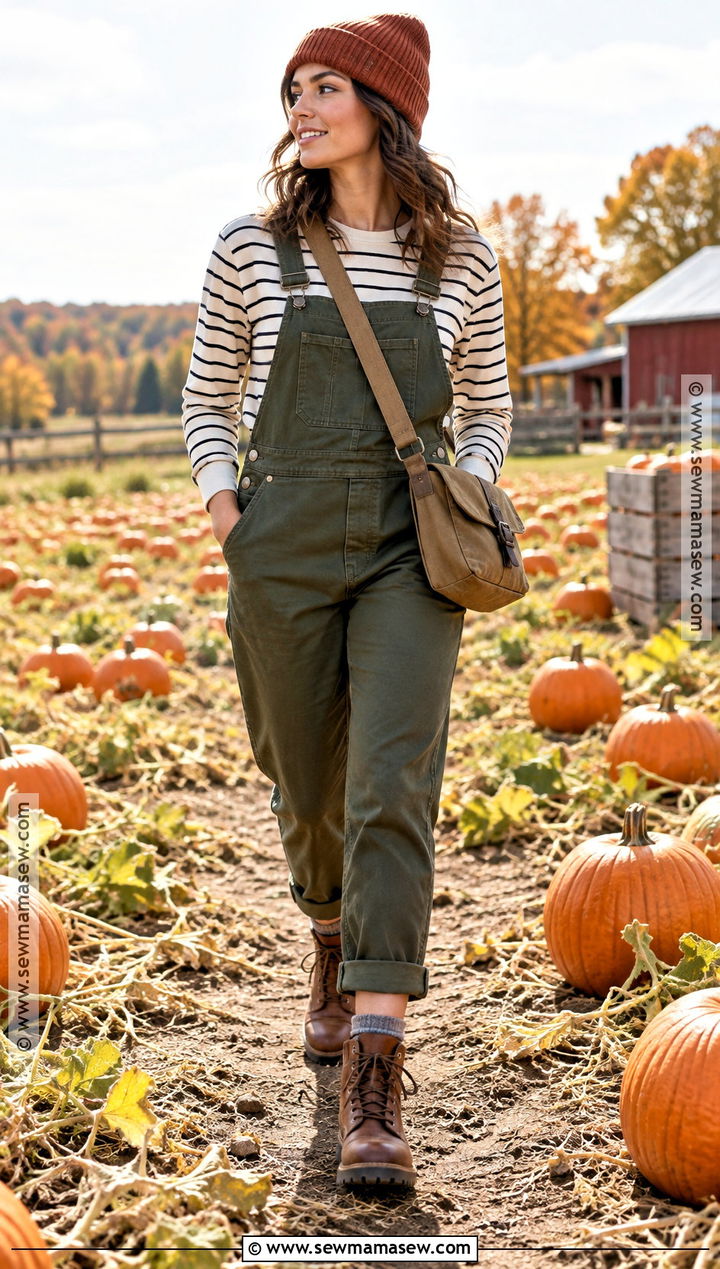
Olive overalls sit into the landscape rather than against it. Over a cream-and-black striped long-sleeve, the stripe gives you pattern without adding anything bulky. I cuff the hems once to show brown hiking-style boots, which give real support on gravel and packed soil, and roll the sleeves if the day warms. A camel canvas crossbody fits the utility feel. A rust beanie for a cold morning or a cap for a sunny one. Olive can look drab next to sallow skin, so the cream in the stripe matters: it puts a lighter color right under your face.
5. Light Wash Overalls With A Plaid Flannel Shirt
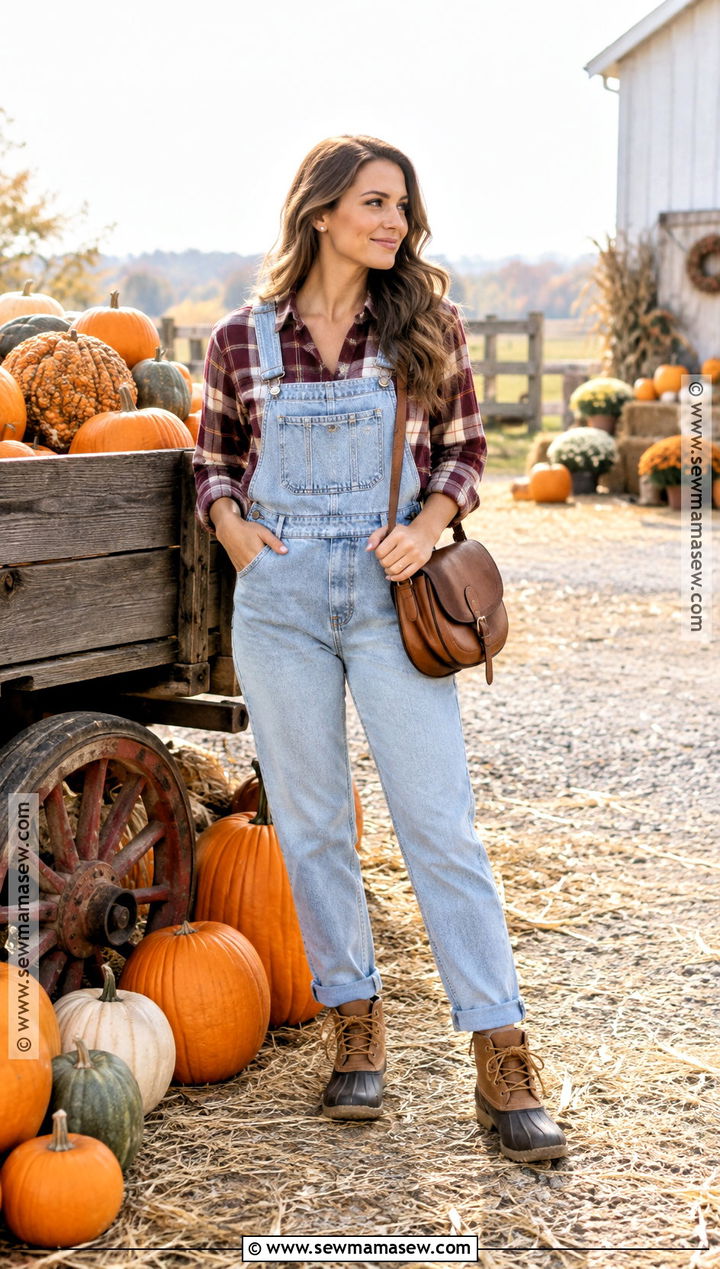
Light-wash overalls with a flannel underneath is the traditional farm look, and it's comfortable for a mild day. Burgundy, cream, navy or rust plaid all work. Buttoned under the bib it's classic; for more flexibility I'd put a fitted white tee underneath and leave the flannel open so you can take it off. White leather sneakers are fine when the ground is dry, but after rain I'd wear brown duck boots, because the rubber lower part wipes clean. A cognac saddle bag and small studs. Cuffed or slightly cropped legs let the shoes show and keep the hems out of the dirt.
6. Wide Leg Overalls With A Fitted Knit Top
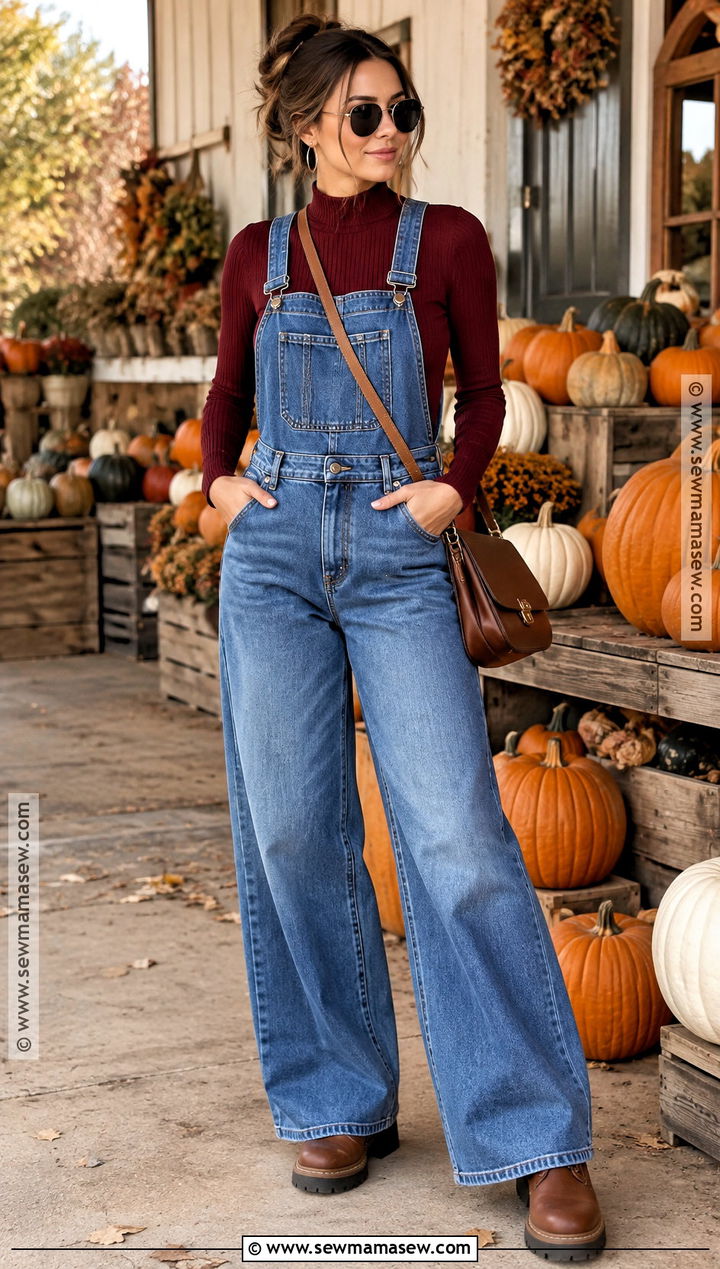
Wide-leg overalls look relaxed but can easily tip into shapeless, so the top has to do the tidying. A slim mock-neck in burgundy, mustard or dark green keeps your upper body defined against all that fabric below. Platform sneakers or chunky flat boots add height and support; I'd never try a narrow heel in a field. The hem check is important with this cut: wide legs that touch the ground act like a broom for mud and straw, so they should stop just above the shoe. A small structured crossbody, hoops and sunglasses. It moves well for candid photos.
7. Short Overalls With A Chunky Cardigan
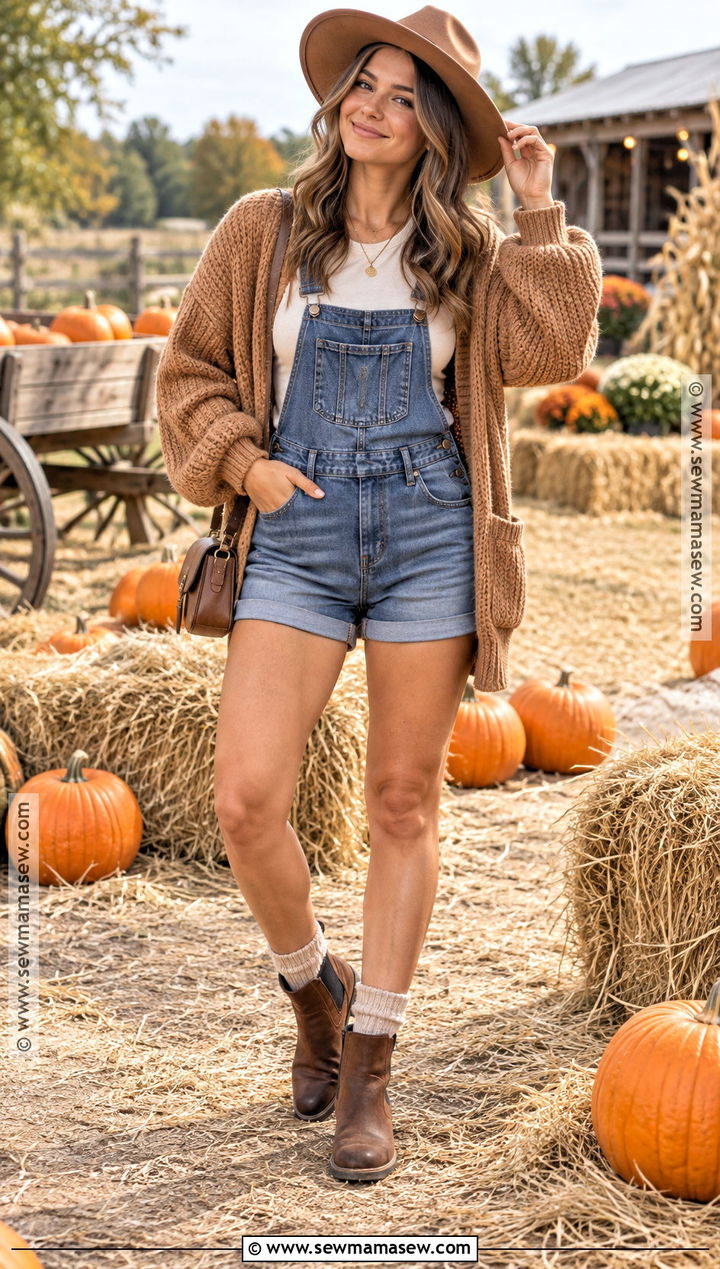
Short overalls are an early-fall choice, for the warm afternoons when long pants feel like too much. Medium-wash denim over a fitted cream tee, with a chunky camel or rust cardigan for the cooler moments. The long cardigan balances the short hem, so the outfit reads as autumn rather than summer. I'd wear brown ankle boots with socks, not sandals; stems, stubble and gravel are hard on bare toes. Bare legs get scratched by hay too, which is worth knowing before you sit for photos. A small backpack or crossbody, a felt hat and fine layered necklaces if you want detail.
8. Overall Dress With A Cable Knit Sweater
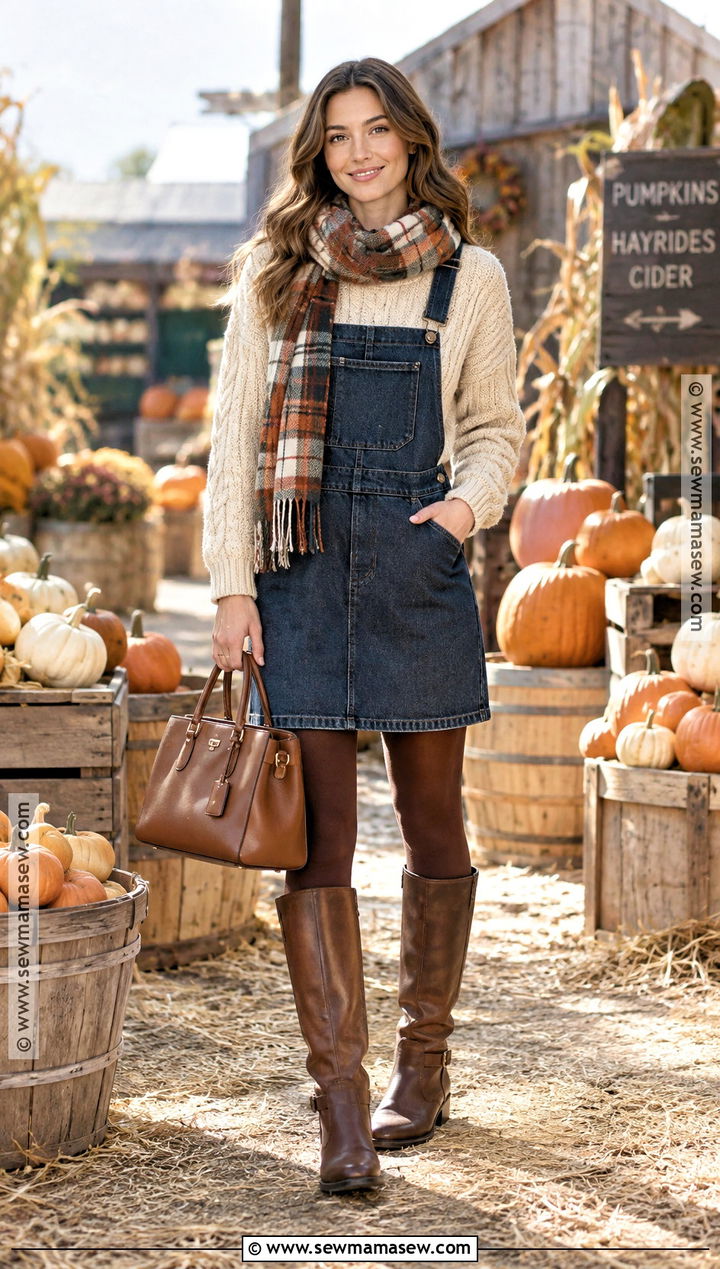
An overall dress keeps the practical bib and pockets while giving you a skirt. A knee-length dark denim style over a fitted oatmeal cable-knit is warm and full of texture. When it's cold, opaque brown or black tights with flat knee-highs or sturdy ankle boots. The cable knit is thick, so I keep jewelry off the neckline entirely; the knit and bib already fill that space. A structured cognac bag adds a firm shape next to all the soft fabric. A plaid scarf if you need more warmth. It suits posed photos by the pumpkin stacks and is easy to sit in on a wagon.
9. Cream Overalls With A Burgundy Turtleneck
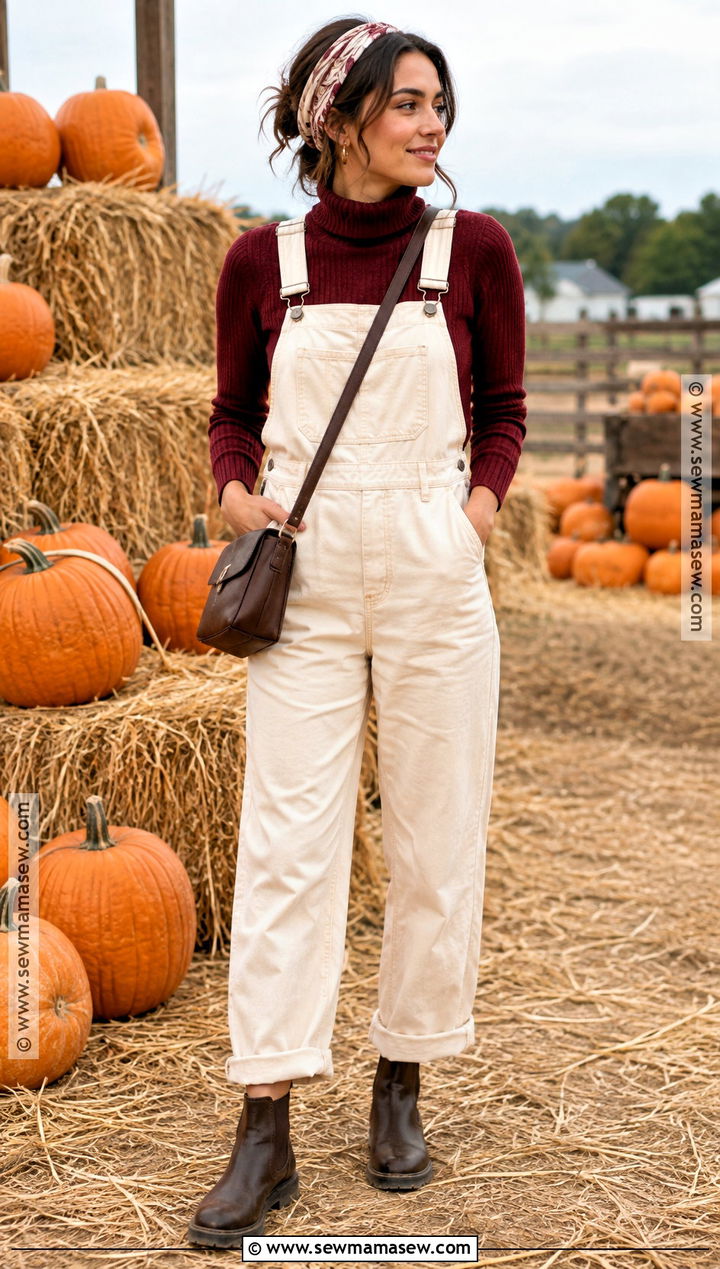
Cream overalls are lovely in photos and a risk at a farm, so I only suggest them for a dry day. Pick canvas or heavy denim, which survive brushing and washing far better than thin cotton. A fitted burgundy turtleneck gives strong contrast without leaning on orange. Dark brown Chelsea boots ground the pale color and are easier to clean than light shoes. A chocolate crossbody, small gold earrings, and a headband that repeats the cream and burgundy. Sit on your jacket rather than straight on a hay bale; dry hay leaves yellow marks on pale fabric.
10. Dark Denim Overalls With A Barn Jacket
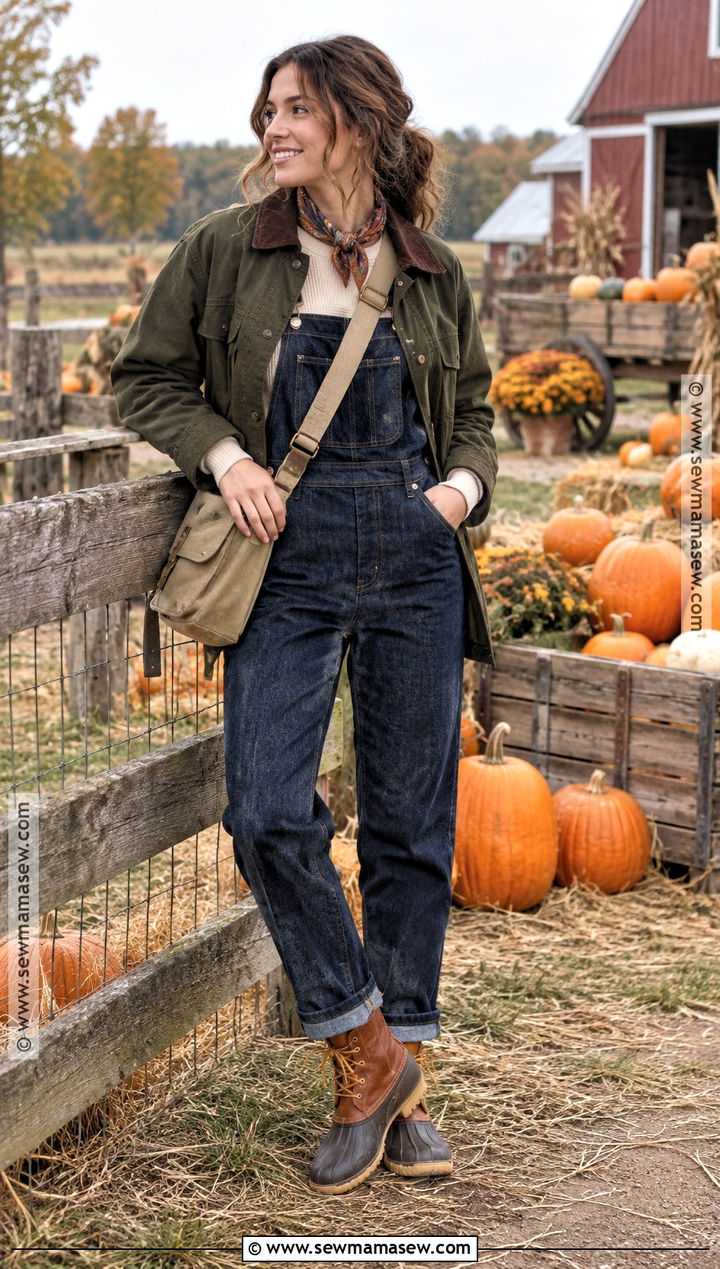
A barn jacket over dark denim overalls is the outfit I trust on a cold, windy day. Start with a fitted cream thermal, then straight-leg indigo overalls, then an olive, tan or brown jacket. Size the jacket so it closes over the bib with room to lift your arms; a tight one rides up at the back as you bend. Brown duck boots or waterproof lace-ups keep your feet dry in damp grass. A canvas crossbody and a patterned neck scarf for color at the face. The layers come off one at a time, which is what makes it good for a long visit.
11. Rust Overalls With A Neutral Long Sleeve Top
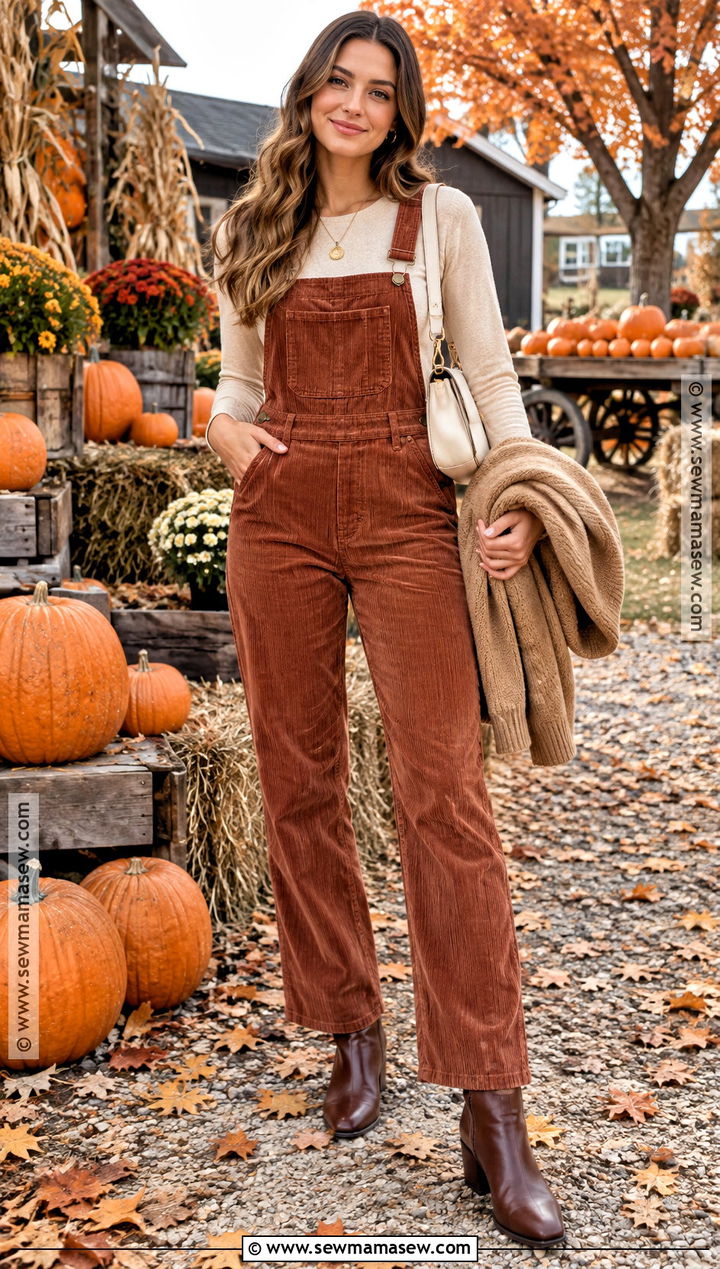
Rust overalls look bold on the hanger, but they're easier to wear than you'd think because rust pairs with almost every neutral. Keep the top fitted and quiet, in oatmeal, ivory or soft beige, so the overalls stay the focus. Corduroy gives the warmest result; rust canvas suits warmer weather. Chocolate clogs with closed backs are fine on dry paths, but backless clogs slip off on uneven ground, so choose low ankle boots if you'll be walking far. A cream shoulder bag and plain gold jewelry. Carry a camel cardigan or quilted jacket for later. With pumpkins and turning leaves around you, the tonal effect looks deliberate.
12. Relaxed Overalls With A Hooded Sweatshirt
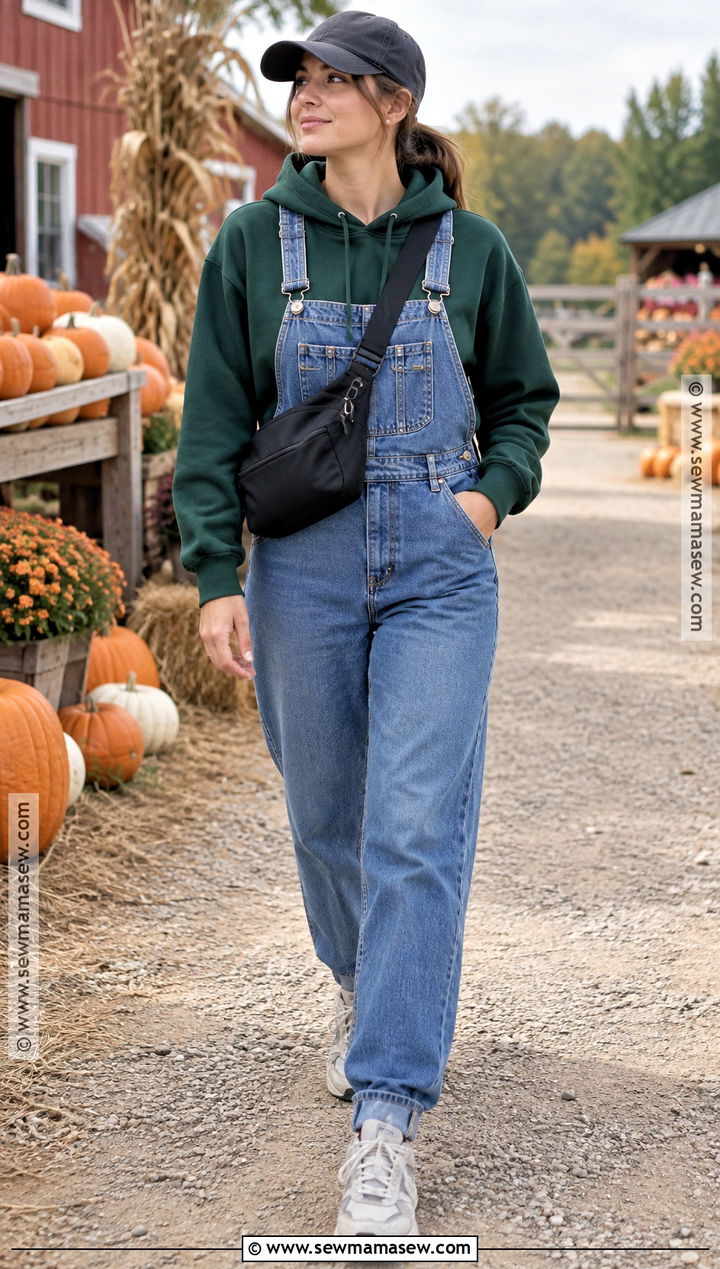
Loose overalls and a hoodie is the comfortable choice for anyone chasing kids around a farm. Heather gray, cream, forest green or burgundy all go with blue denim. Pull the hood out over the straps so it lies flat instead of bunching up behind your neck. A medium-weight hoodie sits better under the bib than a thick fleece one. White sneakers are fine when it's dry; trail sneakers grip better on damp or rough ground. A nylon crossbody or belt bag, a cap and simple studs. Nothing here restricts movement, which matters when you're lifting a child onto a hay wagon.
13. Patchwork Overalls With A Solid Turtleneck
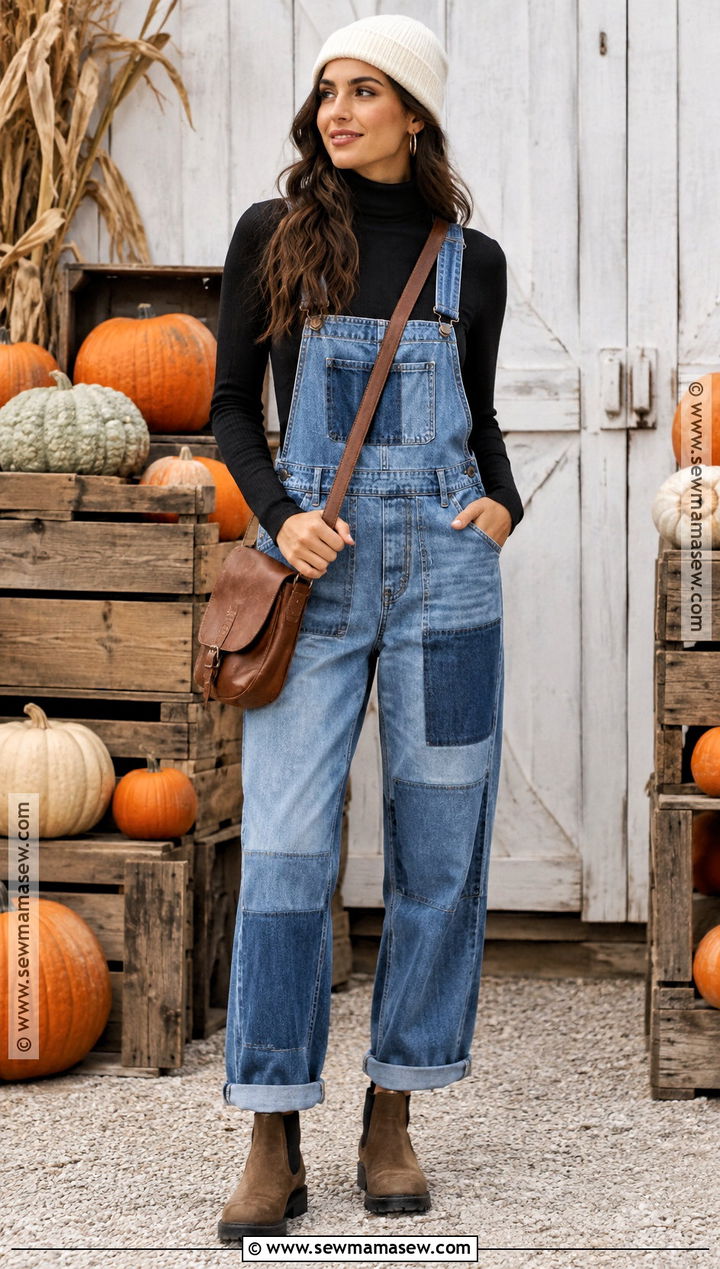
Patchwork overalls need everything else to stay quiet. I look for panels in different blue washes rather than a jumble of prints, which can look busy in photos. A solid black, cream or brown turtleneck lets the patchwork be the one detail people notice. Plain leather Chelsea boots and a small crossbody in the same color as the boots tie the outfit together. Hoops and a simple beanie are enough. If the patches are stitched on top rather than pieced in, check that the edges are secure before a day of crouching; a loose corner catches easily.
14. Cropped Overalls With A Quilted Jacket
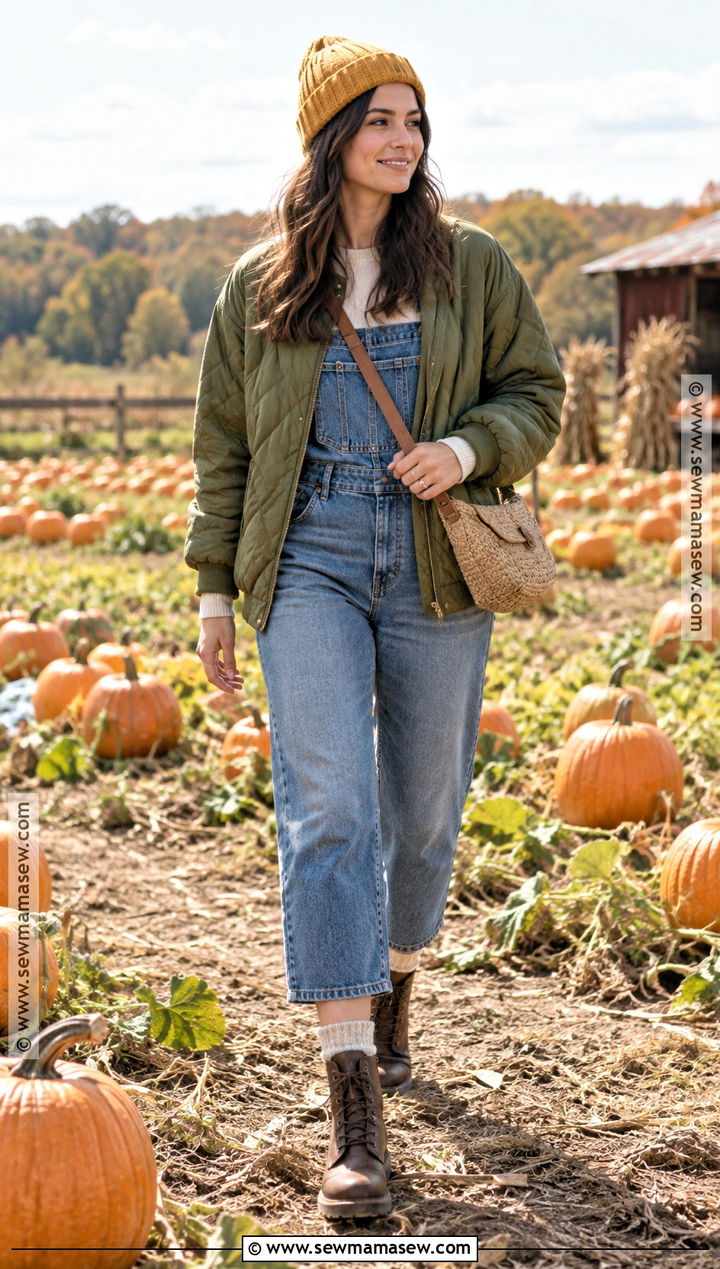
Cropped overalls have a practical advantage at a farm: the hem stops above the ankle, so it never drags through mud. Straight-leg denim that ends just above the ankle, with a fitted brown or cream long-sleeve, keeps the shape neat. An olive quilted jacket adds warmth without much bulk and packs small when the afternoon warms. Ribbed socks and dark brown lace-up boots fill the gap at the ankle and keep stubble off your skin. A woven crossbody for texture, a rust or mustard beanie for a bit of color. It handles a forecast that changes through the day.
15. Plus Size Overalls With A Plaid Shacket
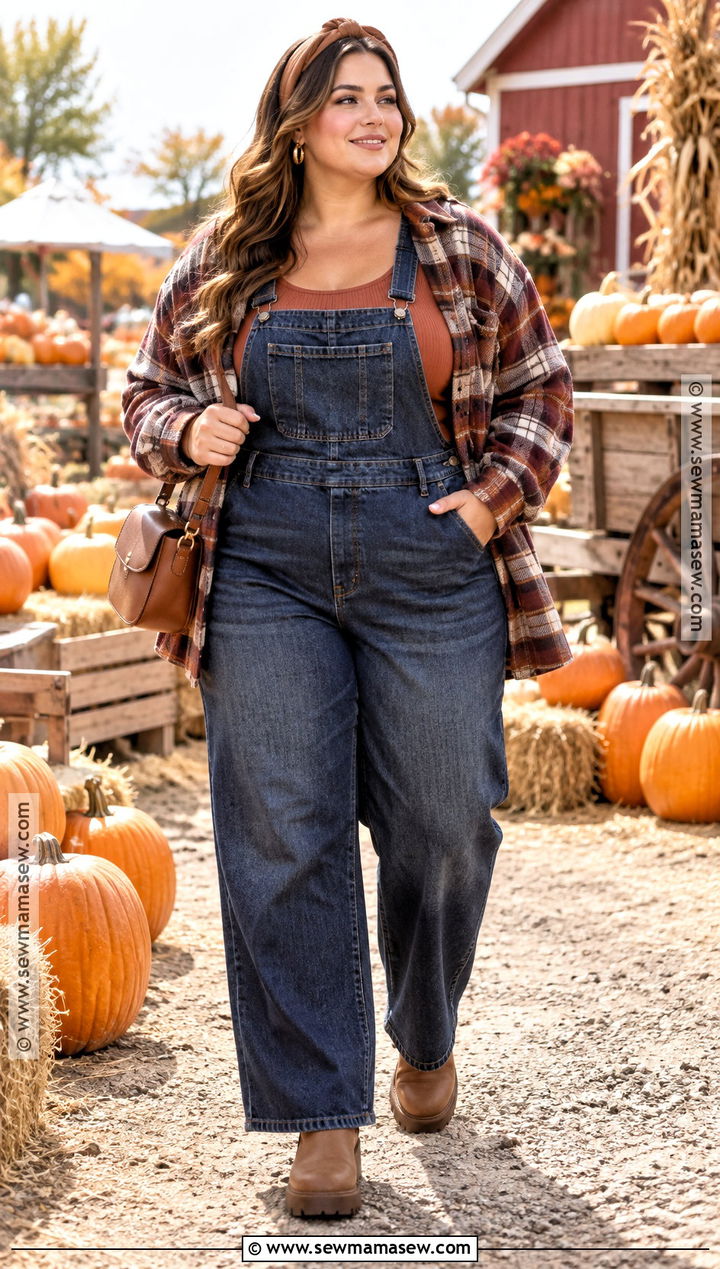
With plus-size overalls, fit through the bib, hips and thighs decides everything. They should sit smoothly without pulling across the front or riding up when you sit. Dark-wash stretch denim with adjustable straps and a relaxed straight or wide leg is where I'd start, and side buttons at the waist make getting in and out much easier. A fitted rust or cream ribbed top underneath, with an open plaid shacket in brown, burgundy and tan over it, creates long vertical lines and lets you cool down quickly. Cushioned lug-sole ankle boots, a medium crossbody at the hip, gold earrings and a simple headband.
Getting Mud and Hay Out After the Visit
Overalls come home dirty; that's what they're for. The trick is not to make the stains worse on the way to the wash.
Let mud dry completely, then brush it off outdoors with a stiff clothes brush before anything gets wet. Rubbing wet mud just pushes it deeper into the weave. Pick out hay and burrs by hand, especially from corduroy, where they lodge between the ridges.
Washing by Fabric
- Denim: inside out, cold water, with like colors. It keeps the indigo from fading unevenly at the knees.
- Corduroy: inside out on a gentle cycle, and skip the hot dryer. Heat and friction flatten the pile. Shake it out and hang it, then brush the wale in one direction once dry.
- Cream canvas: treat grass and soil marks before washing, and check the stain is gone before drying, because heat sets it.
- Hardware: fasten the buckles and buttons before washing so metal doesn't knock around the drum or snag other clothes.
If your overalls have leather patches or tabs, avoid soaking them; a damp cloth on the leather and a careful wash on the rest works better.
Same Bib and Straps, Fifteen Different Days
A single pair of overalls can carry a whole season if you change what goes around it. Denim takes a sweater or flannel easily; corduroy, canvas and colored pairs add more texture and warmth. Keep the layer under the bib fitted, put a barn jacket, cardigan or shacket on top when it's cold, and wear shoes that grip. Adjust for the temperature and the ground you expect, and get the strap length right before you leave the house. If you can sit, crouch and walk in them for a few hours without tugging at anything, you've found the right pair.
Related posts: