Few eras suit crisp weather as well as the 1950s. The decade dressed around a defined waist: full skirts, slim pencil shapes, close-fitting knits and coats cut to sit over all of it. When I style these looks for everyday life, I treat the period as a set of proportions to borrow rather than a costume to rebuild. Every outfit below keeps one recognizable 1950s shape and pairs it with shoes you can walk in and layers that make sense in October. Genuine vintage, reproduction labels and plain modern pieces with the right cut all work. Heel height, skirt length and how much you layer should follow your body, your climate and the day you actually have planned.
Buying Real 1950s Clothes Versus Reproductions
Original pieces from the decade are lovely to wear, but they come with quirks. Sizing ran much smaller than the numbers on modern labels, so I ignore the tag completely and shop by measurements: bust, waist, hip and, for skirts, the length from waistband to hem. Ask for flat measurements when you buy online and compare them against a garment you already own that fits well.
Before buying, I check a short list of things that are hard to fix:
- Underarm areas on dresses and blouses, where old perspiration stains and weakened fabric tend to sit.
- Moth holes in wool, which are easiest to spot by holding the garment up to a window.
- Side zippers, common in the period, which should run smoothly; a stiff metal zip often needs replacing.
- Seam allowances inside the waist, because a generous allowance means a dress can be let out.
Reproduction labels solve most of this. They use modern sizing, often add a little stretch, and can be washed more easily. For everyday fall wear I usually suggest a mix: a reproduction dress or skirt for the shape, with a genuine vintage brooch, scarf or handbag carrying the age.
1. 1950s Fall Swing Dress Outfit
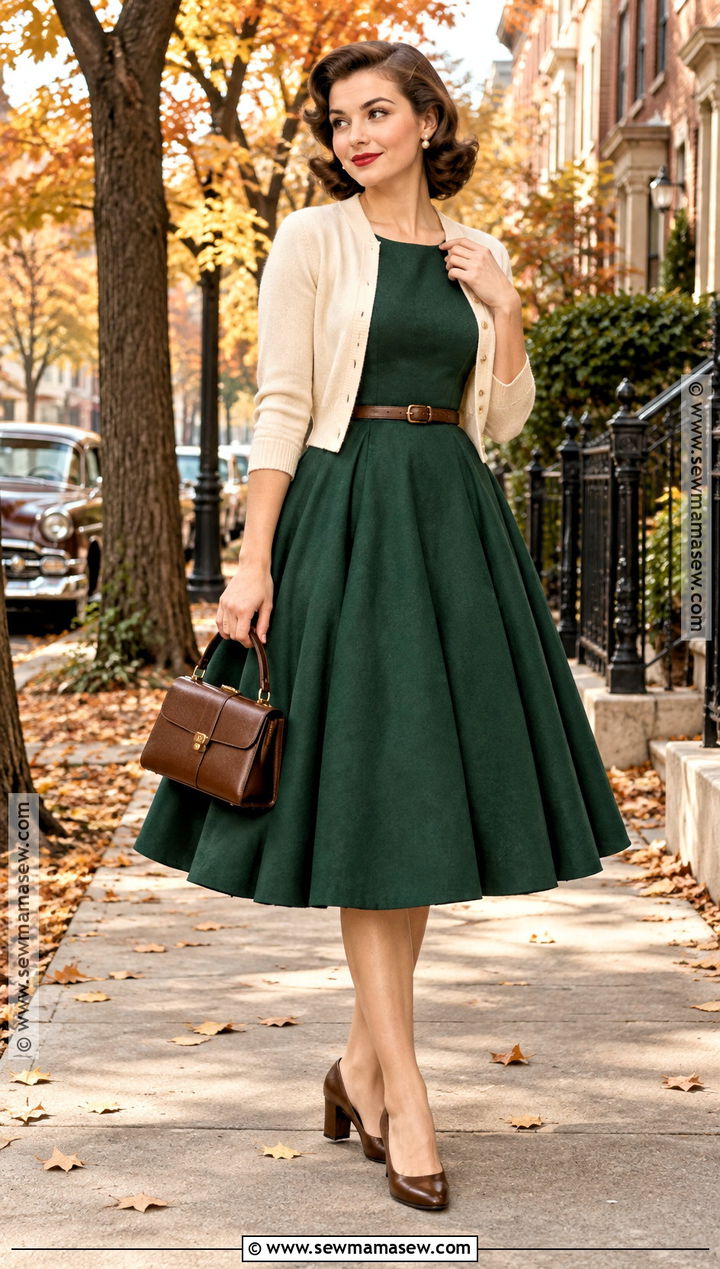
The swing dress is the shape most people picture first, and the fabric decides whether it reads as daywear or as a party dress. I look for cotton sateen, light wool or a firm twill, because a soft jersey collapses and loses the bell of the skirt. Keep the hem at the knee or a little below, in forest green, rust or a small autumn floral. A slim belt marks the waist; anything wider than about an inch starts to fight a cropped cardigan, which is the warm layer I'd add here since it stops at the waist and leaves the skirt free. Block-heel pumps, a top-handle bag and pearl studs finish it. A soft petticoat adds volume, but for errands I leave it at home and let the skirt hang naturally.
2. 1950s Fall Pencil Skirt Outfit
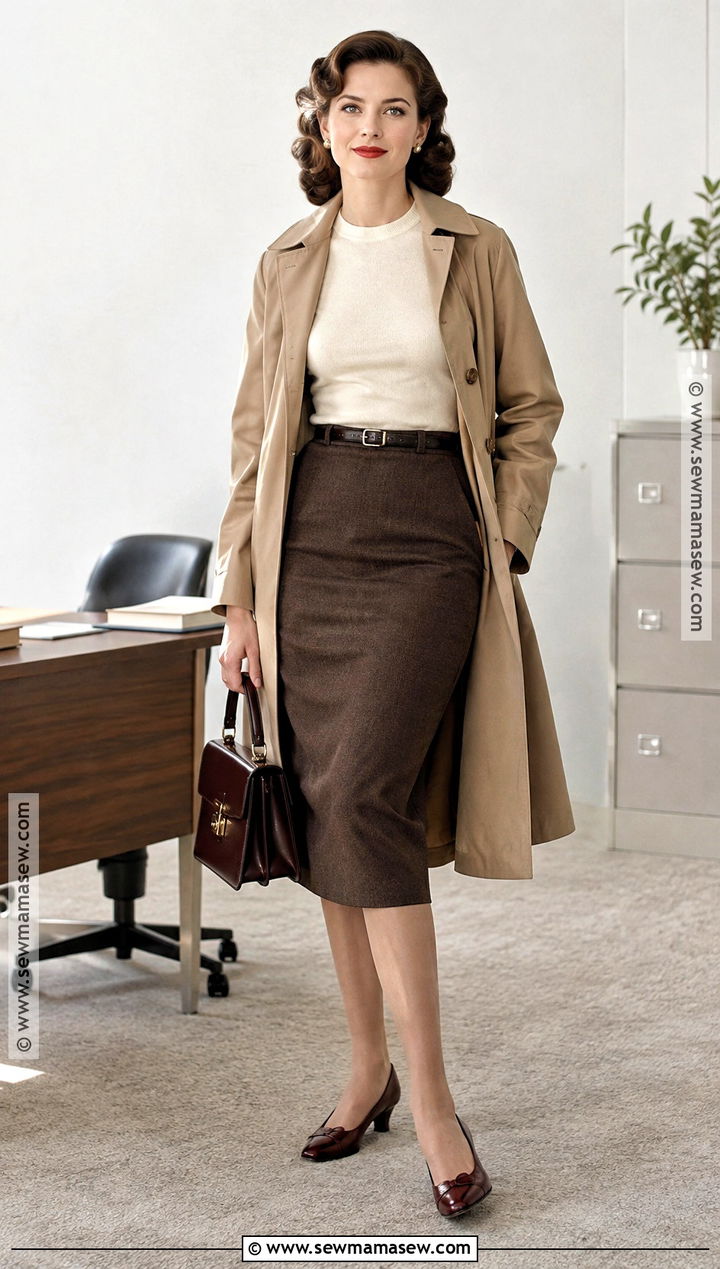
A high-waisted pencil skirt with a fitted short-sleeve sweater gives you the decade's slimmer silhouette, and it is the easiest of these looks to wear to an ordinary office. Wool, tweed, corduroy and ponte all hold the line in charcoal, chocolate or deep olive. The fit check I always do is to sit down and climb a stair in it: if the skirt pulls across the thighs, it needs a back vent or a little stretch. Tuck the sweater fully, add a narrow belt, and wear low pumps or loafers with sheer stockings. A light trench and a boxy bag cover the outer layer, and one small brooch is enough period detail.
3. 1950s Fall Shirtwaist Dress Outfit
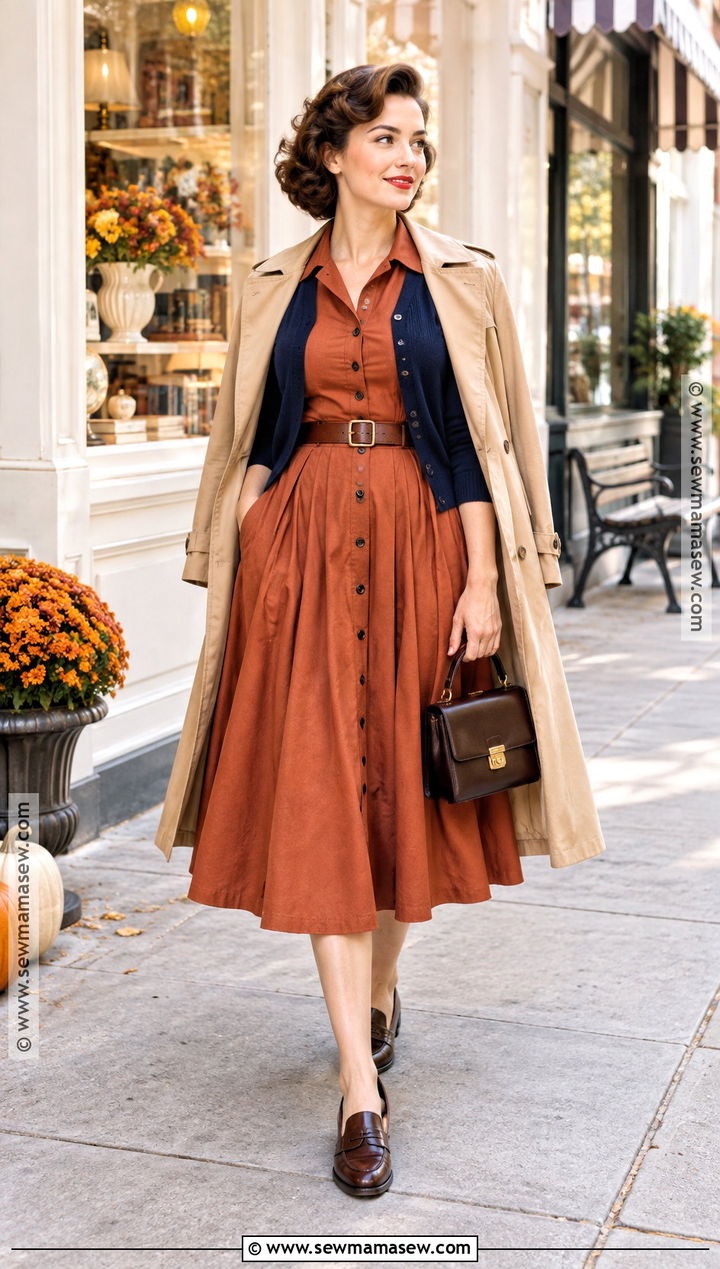
The shirtwaist is my answer for anyone who wants a 1950s dress that feels like a normal weekday piece. It is a collared, button-front dress with a defined waist, and in the decade it was standard daytime wear. For fall I want brushed cotton, light wool or a heavier cotton blend in plaid, brown, navy or a muted red. Check the button stance across the bust before anything else; gaping between buttons is the most common fit problem with this style, and a hidden snap or a size up with the waist taken in fixes it. Add a sturdy belt, a fitted cardigan and a classic trench. Loafers keep it casual, rounded pumps dress it up, and opaque tights matched to the shoes lengthen the leg on colder days.
4. 1950s Fall Tweed Skirt Outfit
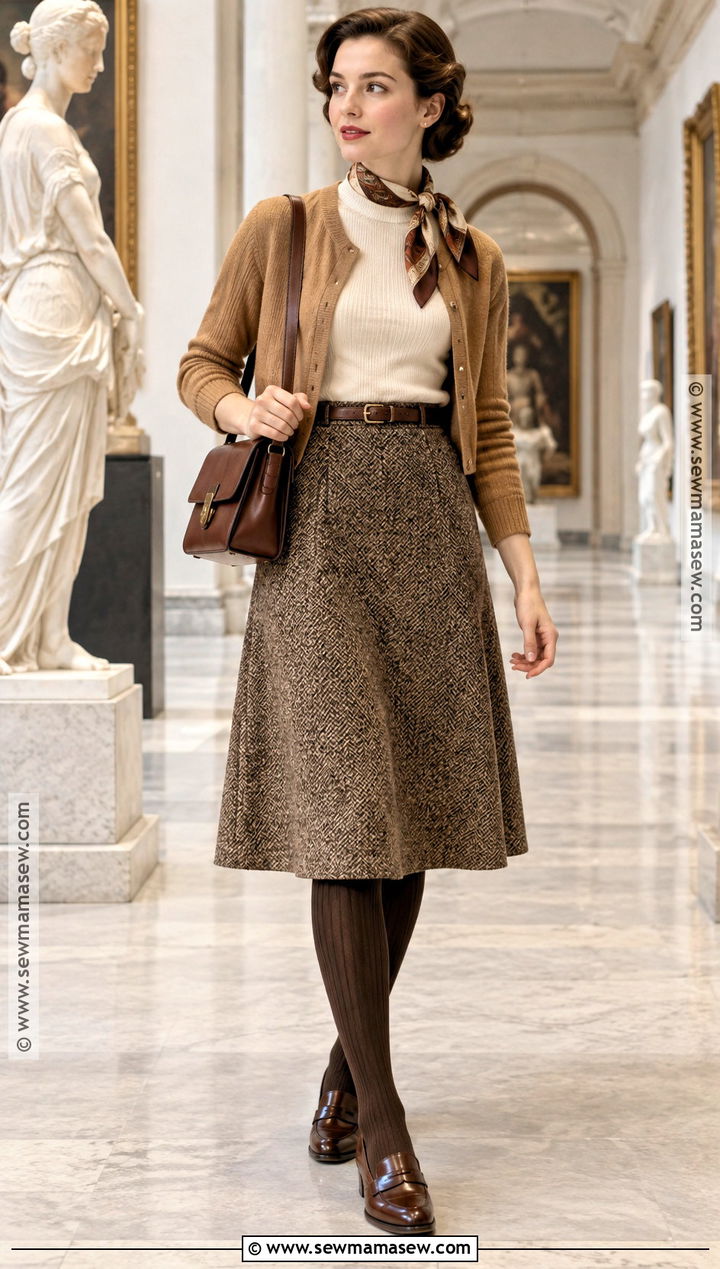
Tweed carries this outfit. Start with a high-waisted A-line or gently flared skirt in brown herringbone, gray check or an earthy plaid, and pair it with a cream mock-neck sweater thin enough to tuck without a ridge at the waistband. A cropped jacket or fitted wool cardigan balances the skirt's width. Brown loafers, ribbed tights, a leather satchel and a silk neck scarf finish it. Coarse tweed can feel bulky at the hip and scratchy at the knee, so I steer people toward a finer weave with a smooth lining. It is a good outfit for a full day out because nothing in it restricts walking.
5. 1950s Fall Sweater And Full Skirt Outfit
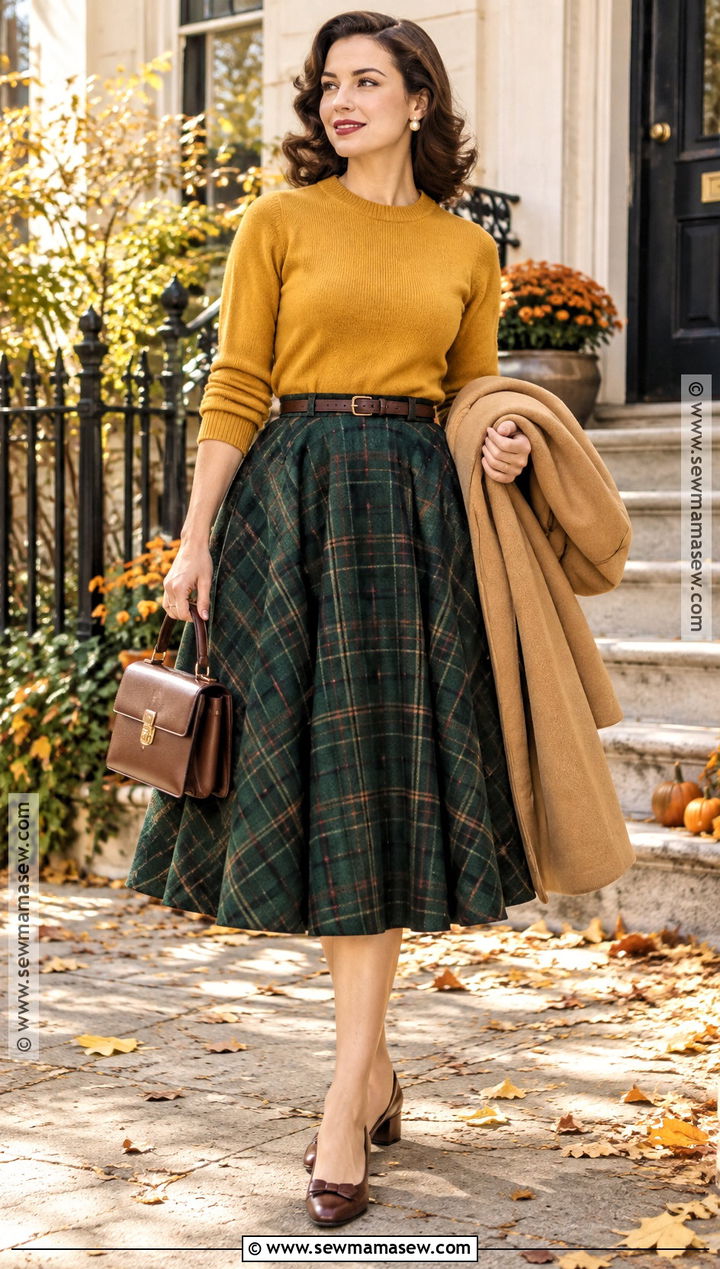
A fitted crewneck over a full, high-waisted skirt is the softest look in this list and the one I'd hand to someone who has never worn vintage. Mustard, berry, teal or cream all sit well against a solid or plaid skirt that falls below the knee. Bulk at the waist is what usually spoils it: a thick sweater tucked into a gathered skirt adds inches right where the outfit needs definition. Use a fine-gauge knit or a cropped one that ends at the waistband, then add a cinch belt. Ballet flats or saddle shoes, a structured bag, pearl studs and a beret complete it. When it turns cold, a swing coat goes over the top without crushing the skirt.
6. 1950s Fall Swing Coat Outfit
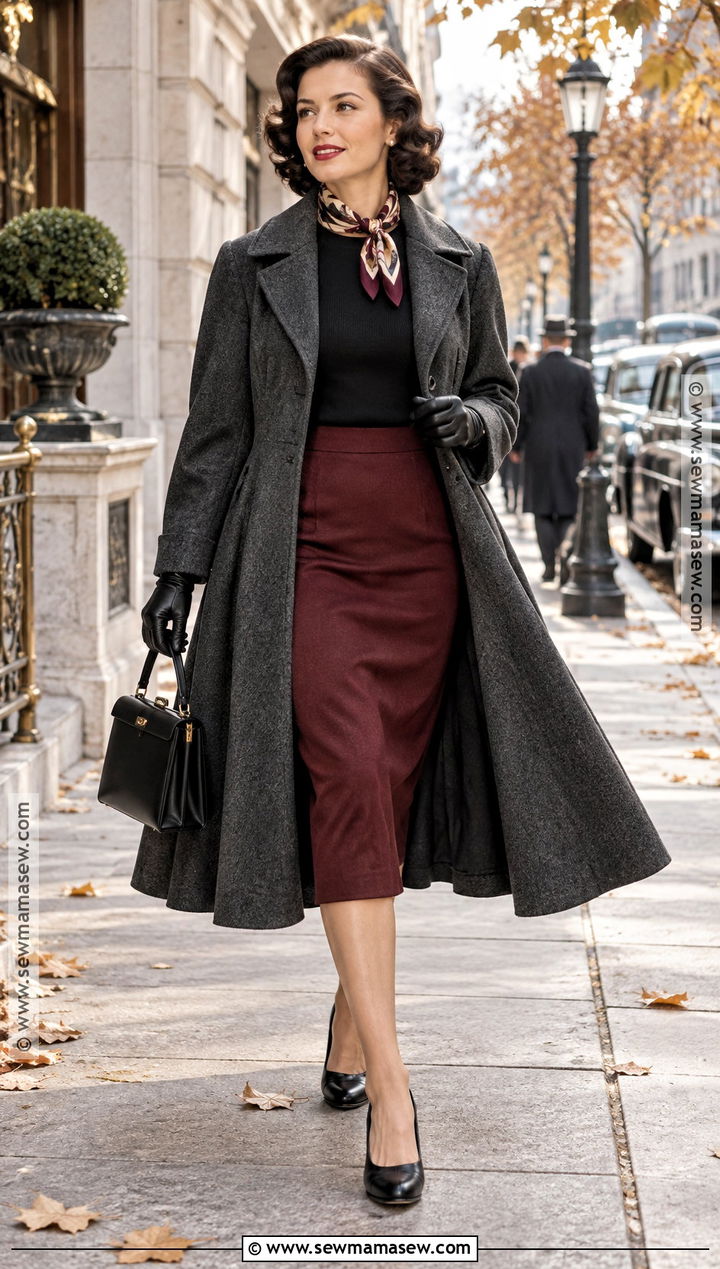
A swing coat is cut with room through the back and hem, which is exactly why it works over full skirts and fitted dresses alike. Darker solids such as camel, charcoal, navy or deep red wool look the most authentic for fall. I like bracelet-length sleeves because they leave space for leather gloves to show. Underneath, a fitted black sweater and a knee-length pencil skirt make the coat's volume look deliberate rather than oversized. Low pumps, a structured bag and a small scarf at the neck are plenty. Length matters more than most people expect: on a petite frame a hem just above the knee keeps the coat from swallowing you, while a tall wearer can carry mid-calf.
7. 1950s Fall Jumper Dress Outfit
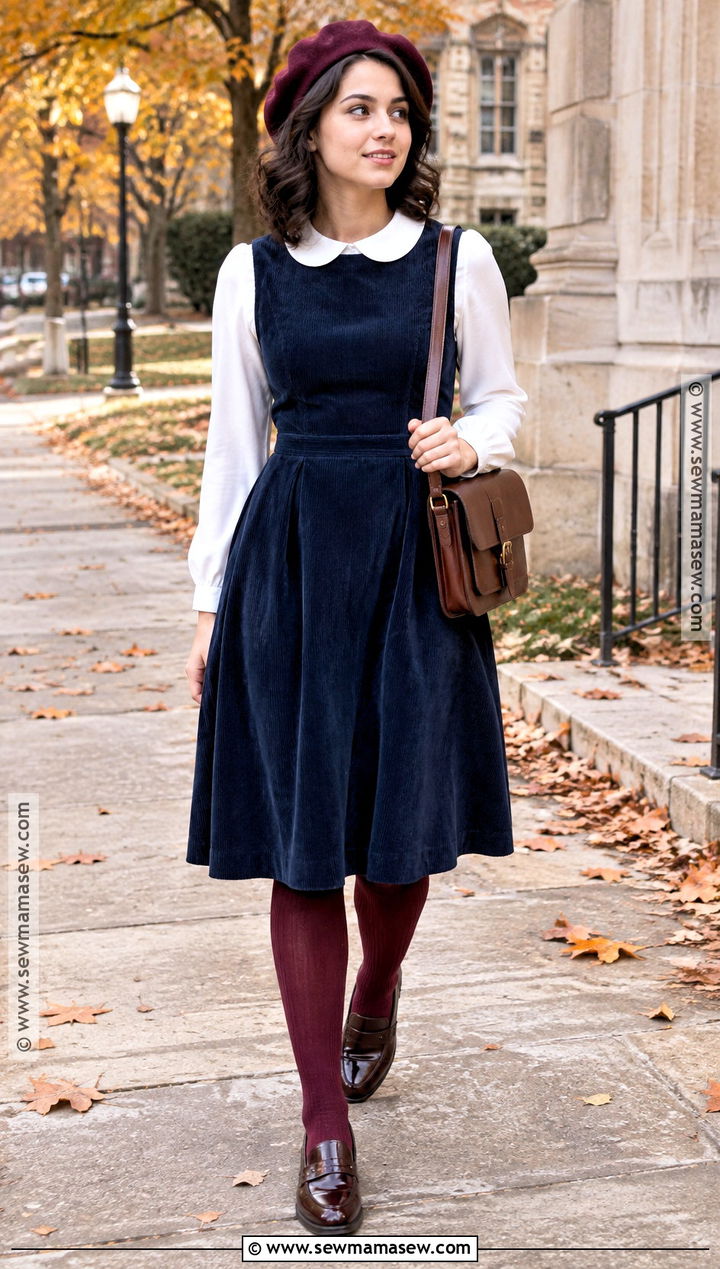
A sleeveless jumper dress over a blouse is practical and a little schoolgirl in feel, so I keep the palette grown-up. Wool or corduroy with a fitted waist and a full or gently flared skirt gives the right shape. Wear it over a crisp white blouse with a pointed or rounded collar; pintucks or a small bow at the neck add detail without needing jewelry. The blouse needs to be slim through the body, because a loose shirt bunches under the bodice and shows through. Loafers or polished lace-ups, ribbed tights and a compact satchel finish it. Navy, camel and burgundy keep it from looking juvenile.
8. 1950s Fall Plaid Dress Outfit
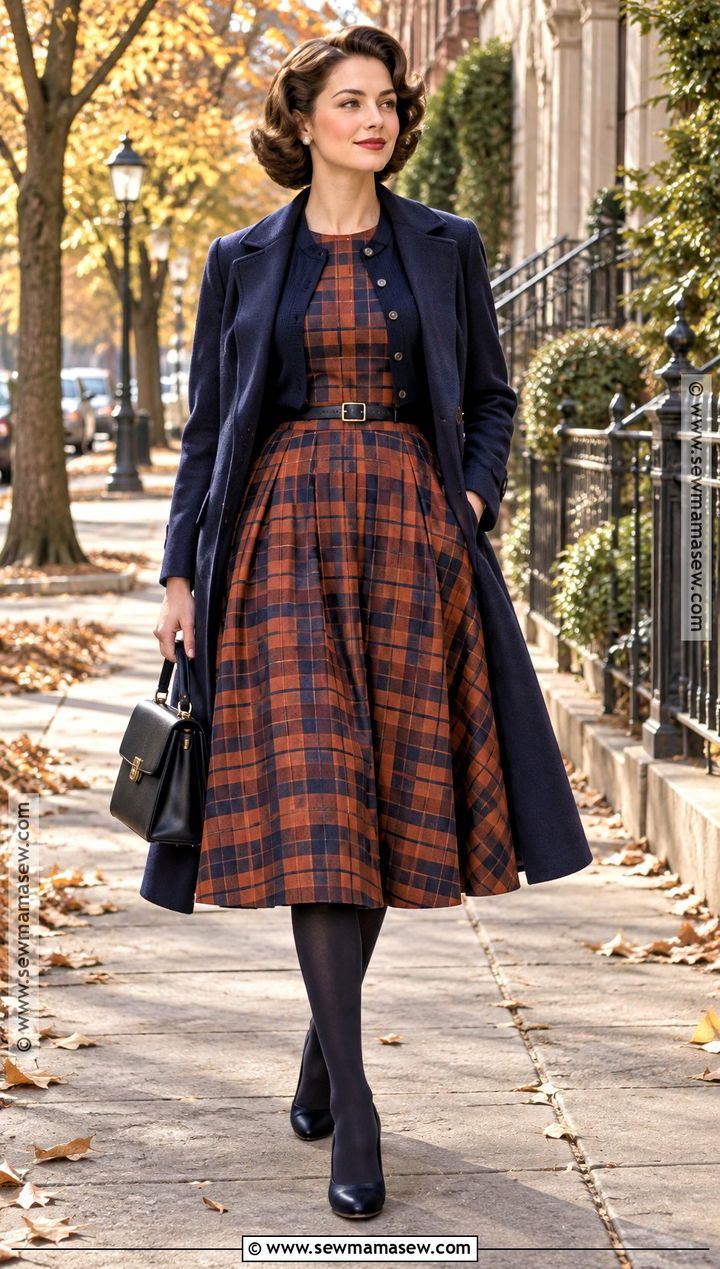
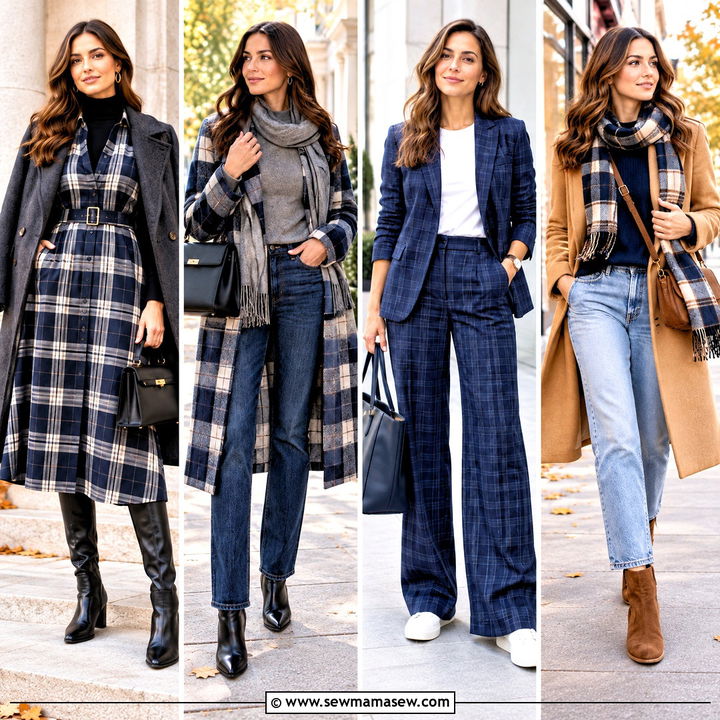
Plaid already feels like autumn, so a fitted 1950s-style dress in tartan, windowpane or a subtle check needs very little help. Rust, brown, dark green and navy are the colorways I reach for first. A defined waist, modest neckline and softly flared skirt suit most figures. I pick the cardigan by pulling one color straight out of the plaid; a solid in that shade frames the print instead of competing with it. Dark tights, rounded pumps and a small top-handle bag come next. Hold back on accessories, because a busy print plus a brooch, a scarf and statement earrings tips into clutter fast. Pearl studs are enough, and a trench or fitted wool coat covers colder days.
9. 1950s Fall Capri Pants Outfit
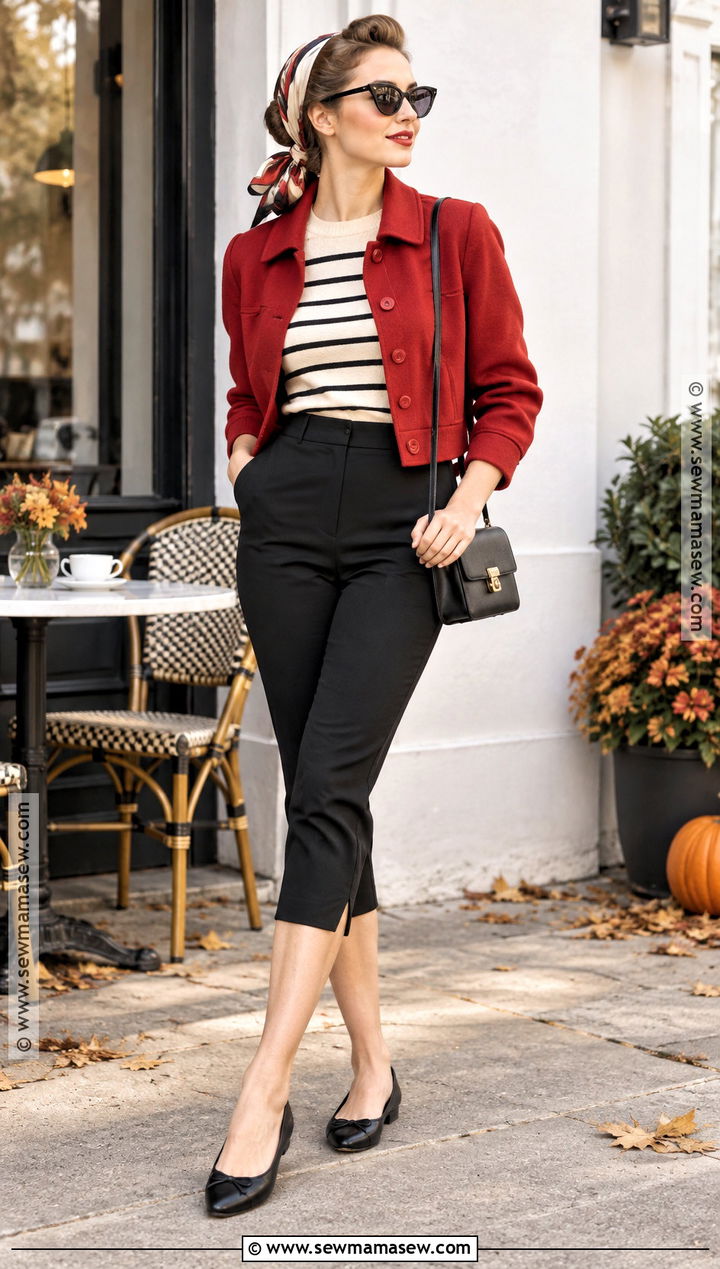
Not every vintage fall look needs a skirt. High-rise capri pants are the casual side of the decade and suit mild autumn afternoons. I look for a slim leg that ends between calf and ankle in black, navy or a small check, with a flat front so a belt sits cleanly. A fitted striped knit or a button-front cardigan goes on top. Ballet flats or loafers keep the ankle visible, which is the point of the cropped length. Cat-eye sunglasses, a silk hair scarf and a small crossbody bag add the period cues. Any jacket should stop at the natural waist; a longer one hides the high rise and the proportion disappears.
10. 1950s Fall Skirt Suit Outfit
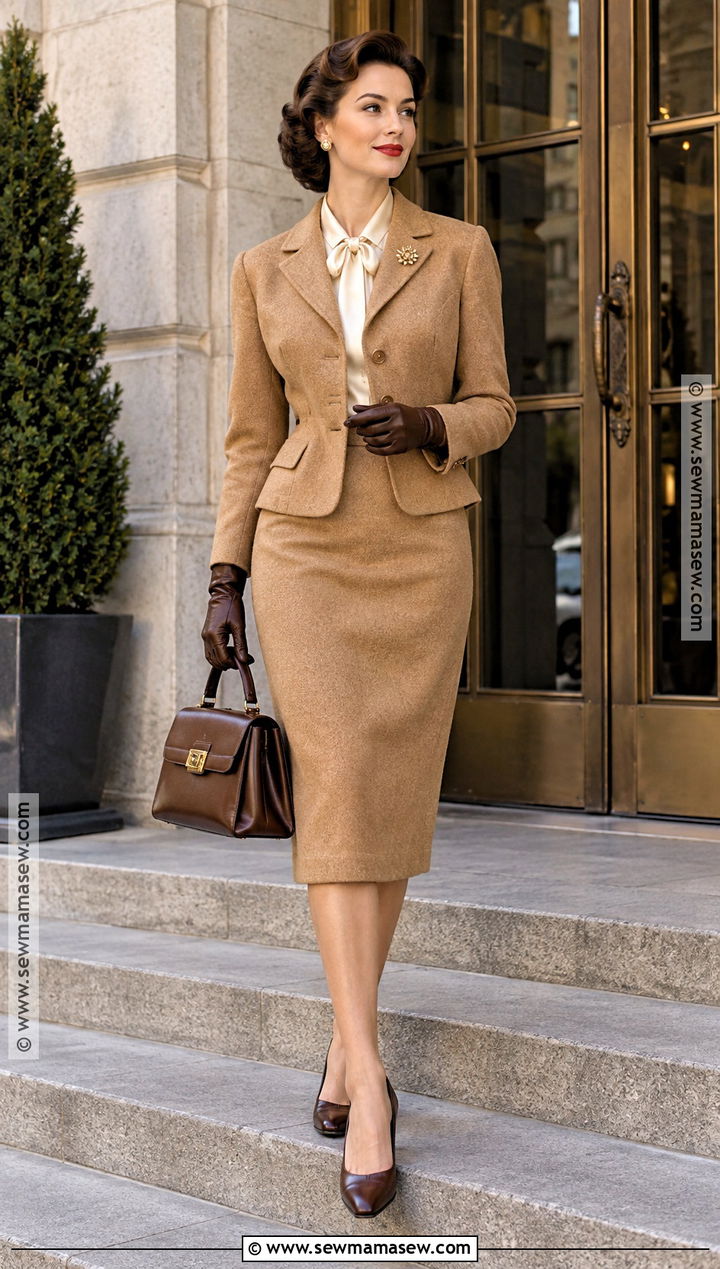
A skirt suit is the most polished outfit here, and fit through the jacket decides everything. Look for a jacket shaped at the waist, paired with a matching pencil or gently flared skirt in wool, bouclé or fine tweed. Under it, a silk shell or a crisp blouse with a modest neckline. Camel, navy, charcoal and muted checks feel right for the season. Button the jacket and raise your arms: if it pulls into an X across the front or lifts at the hem, it is too tight, and no amount of styling hides that. Low leather pumps, gloves, a structured bag and a brooch on the lapel finish it. A skirt vent and some stretch in the cloth make it easier to wear all day.
11. 1950s Fall Cardigan Set Outfit
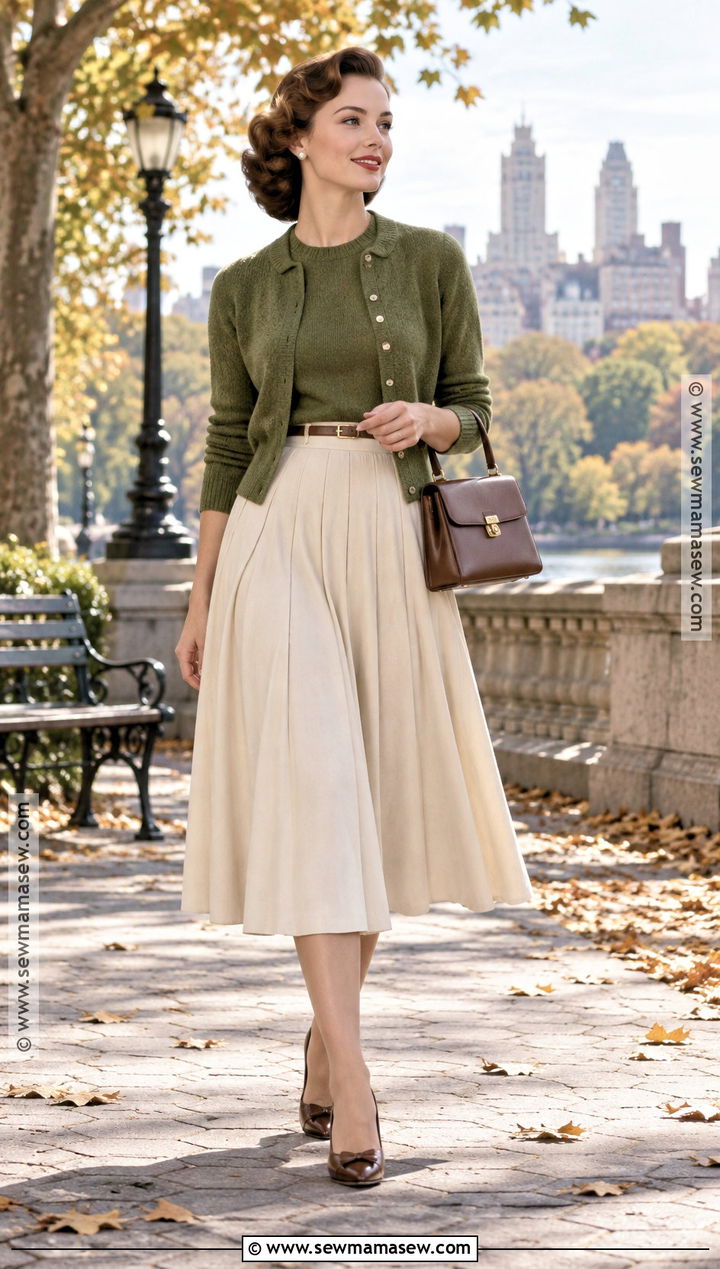
The twinset, a matching cardigan over a short-sleeve knit, is one of the most useful things you can own from this era. Cream, dusty rose, moss green or burgundy pair easily with a high-waisted pleated skirt in wool or a medium-weight cotton blend. Tuck in the shell, fasten only the top button of the cardigan and add a narrow belt if you want a sharper waist. Loafers or kitten heels, sheer stockings and pearl studs finish it. Fine wool and cotton knits pill at the underarm and wherever a bag strap rubs, so I wear a crossbody on the opposite shoulder and run a fabric shaver over the set every few wears. Worn closed or draped over the shoulders, it adapts to most ages and dress codes.
12. 1950s Fall Trench Coat Outfit
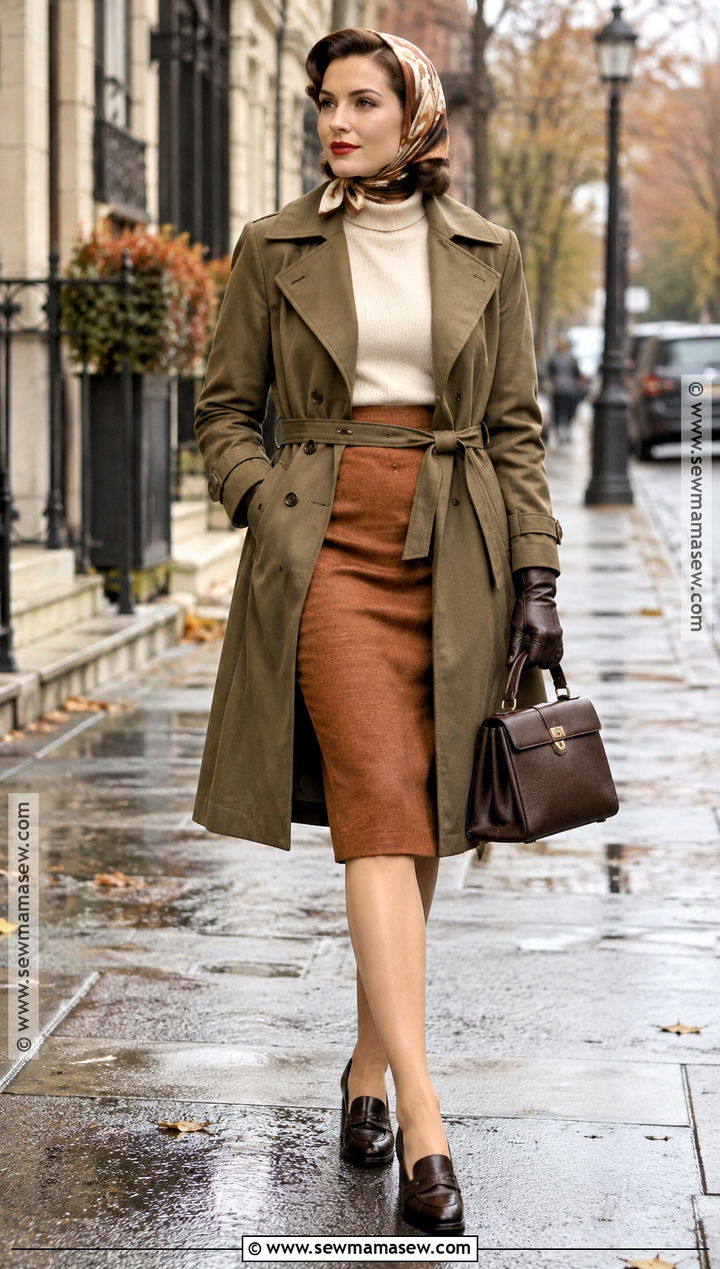
On rainy mornings the trench does the real work. Choose a belted khaki, olive or navy one that lands around the knee; raincoats were sold as everyday autumn wear in the 1950s, so this layer is practical and fitting for the period. A fitted turtleneck with a full or pencil skirt goes underneath. Wet pavement is where most retro outfits fail, and delicate leather-soled pumps slip and stain, so I switch to water-resistant loafers or low-heeled ankle boots. A silk head scarf keeps hair in place in wind. Tie the belt at your natural waist instead of buckling it, which gives the shaped line and leaves room to move.
13. 1950s Fall Corduroy Skirt Outfit
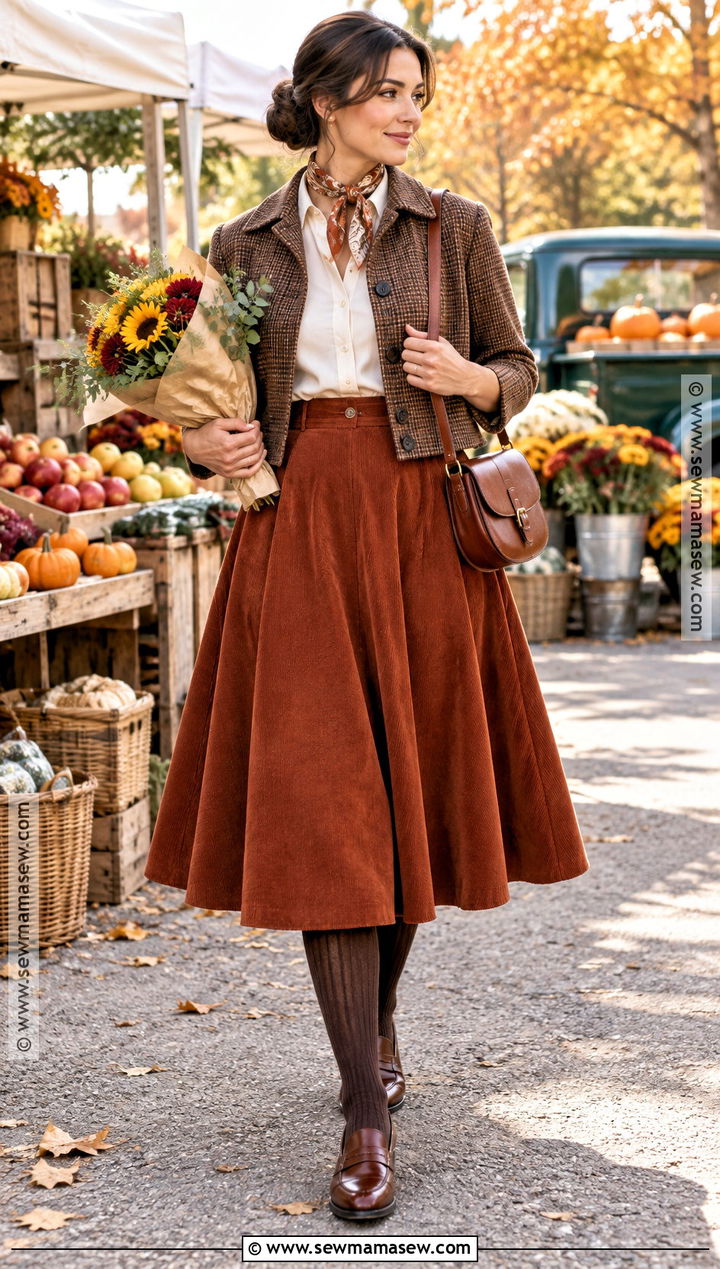
Corduroy gives warmth without the formality of wool, which makes it my pick for a relaxed weekend. A high-waisted skirt below the knee in rust, olive, chocolate or golden brown works best in a full or softly pleated cut. Wale size changes the mood: fine-wale corduroy drapes smoothly and looks neater, while wide wale feels sporty and adds visible bulk at the hip. Pair it with a fitted cream blouse or a light sweater and a checked cropped jacket. Brown loafers, ribbed tights and a saddle bag finish it. Corduroy crushes where you sit, so brush the pile upright after wearing and hang the skirt rather than folding it.
14. 1950s Fall Wiggle Dress Outfit
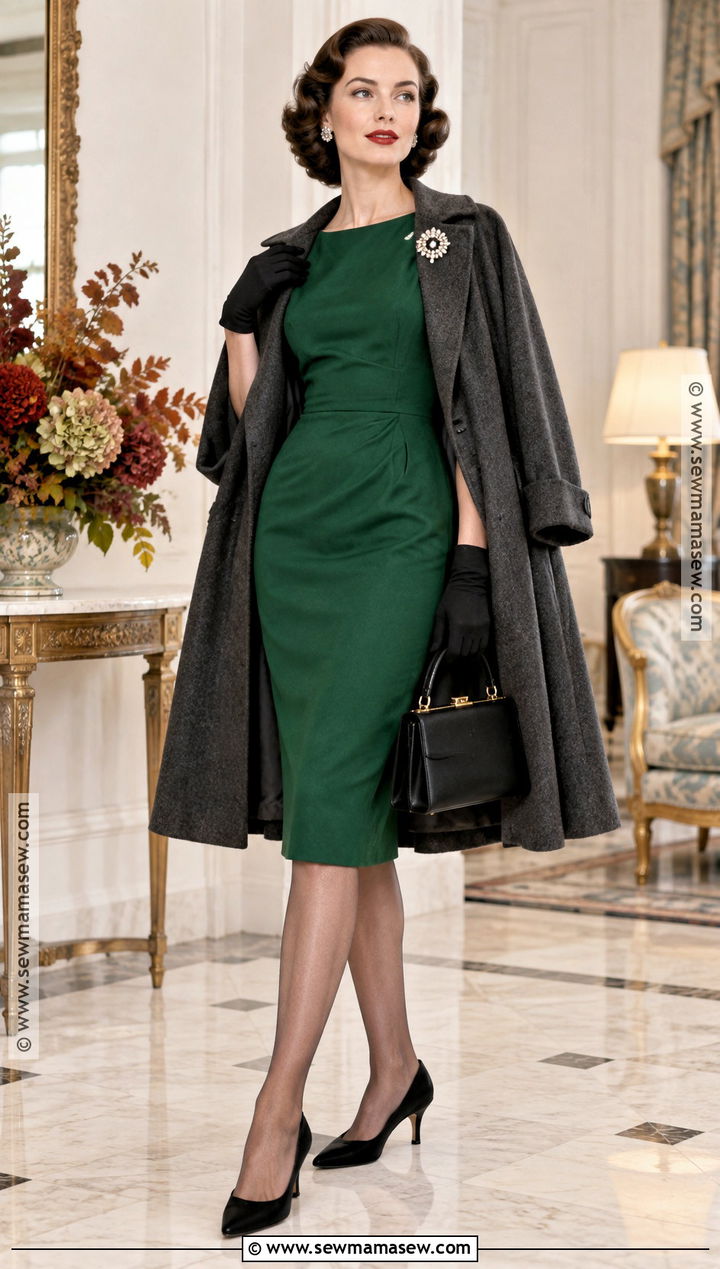
The wiggle dress is the dressiest shape in this list and the least forgiving. It needs a substantial fabric that skims the body; thin stretch fabric shows every line underneath. Deep red, navy, emerald and black all suit fall. A modest neckline, a defined waist, a knee-length hem and a back vent long enough to climb a step are what I check for. A roomy swing coat over it is the classic pairing, because the coat's width balances the narrow dress. Kitten heels, sheer stockings, a frame bag and one brooch complete it. Shapewear is optional; good tailoring does more. If you'll be standing for hours, pointed flats keep the same clean line.
15. 1950s Fall Rockabilly Outfit
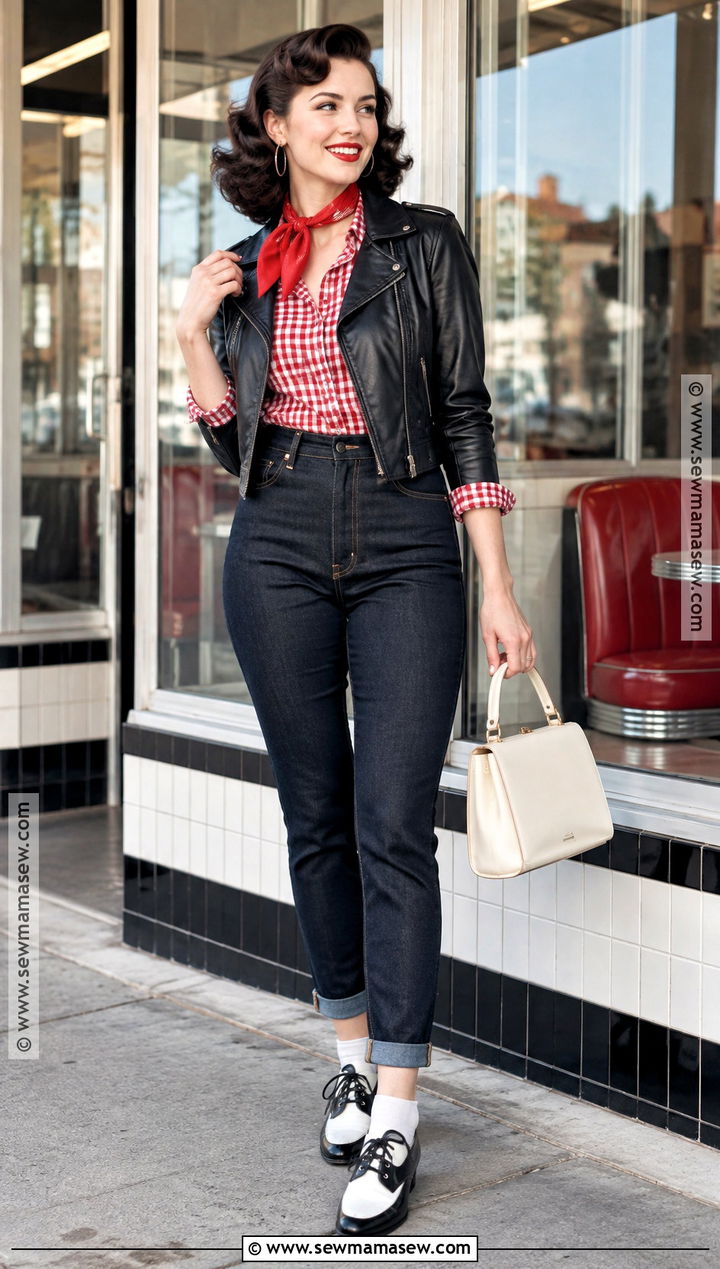
Rockabilly is the bolder, more casual side of the decade, and it reads as costume faster than anything else here. Start with dark high-waisted jeans or slim black capris and a fitted gingham blouse, tucked in with the sleeves rolled. A cropped leather or denim jacket goes on top, short enough to keep the waist in view. Loafers or saddle shoes keep it wearable. A red neck scarf and small hoops give the attitude. My rule is two or three colors at most, usually black, cream and red, and only one hair accessory. Swap the trousers for a circle skirt if you want a softer version.
Building the Waist the Decade Was Known For
Nearly every look above depends on a visible waist, and that rarely comes from the dress alone. It comes from where the waistband sits and how the pieces meet. A 1950s high rise sits at the narrowest point of the torso, usually just above the navel, not at the hip like most modern jeans. If your skirt slides down to the hip, the whole period proportion flattens out.
Belts and Tucks
A narrow belt under an inch wide suits pencil skirts and shirtwaists. A wider cinch belt suits full skirts, where the skirt's volume can take it. Tuck knits fully and smooth the fabric toward the back so the front stays flat. If a sweater won't tuck without a ridge, it is too thick for this style; switch to a finer gauge or a cropped length.
If Your Torso Is Short or Your Middle Is Fuller
A short-waisted figure can find a high waist cuts the torso off. I drop the belt half an inch and match it to the top rather than the skirt, which visually lengthens the bodice. For a fuller middle, skip the contrast belt and let a tonal one, or a seamed waist on the dress itself, do the shaping. A swing coat or an open cardigan worn over the top also keeps the silhouette without drawing a hard line.
Wearing the 1950s on an Ordinary Fall Day
The 1950s pieces that last in a modern closet are the ones that rely on proportion rather than nostalgia. Full skirts move well, pencil shapes look polished and a good coat carries the whole season. You don't need a fully authentic wardrobe to wear any of these outfits. Start with one shape that suits you, add shoes and a bag in a matching color, and pick fabrics with enough weight for the weather. Then adjust honestly: a lower heel, a softer waistband or a longer coat is what turns a retro outfit into one you'll wear from morning to evening.
Related posts: