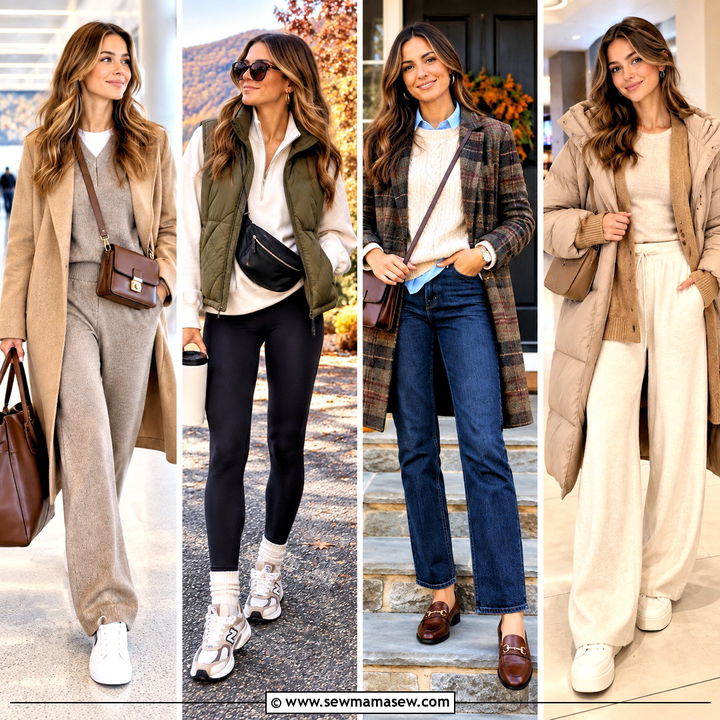
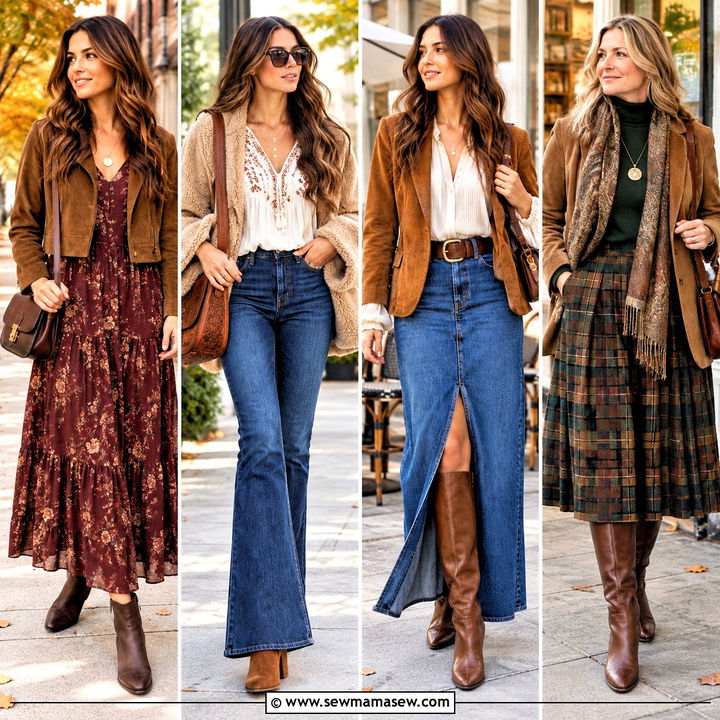
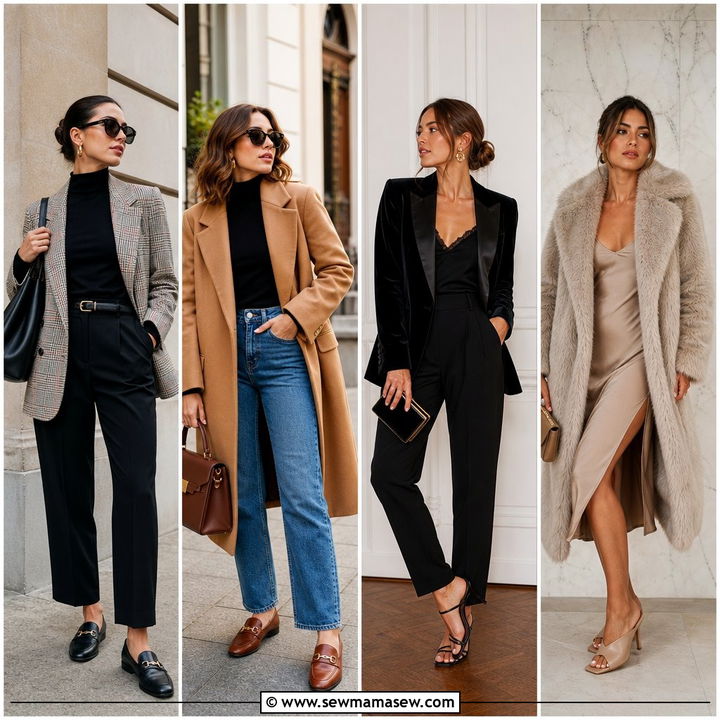
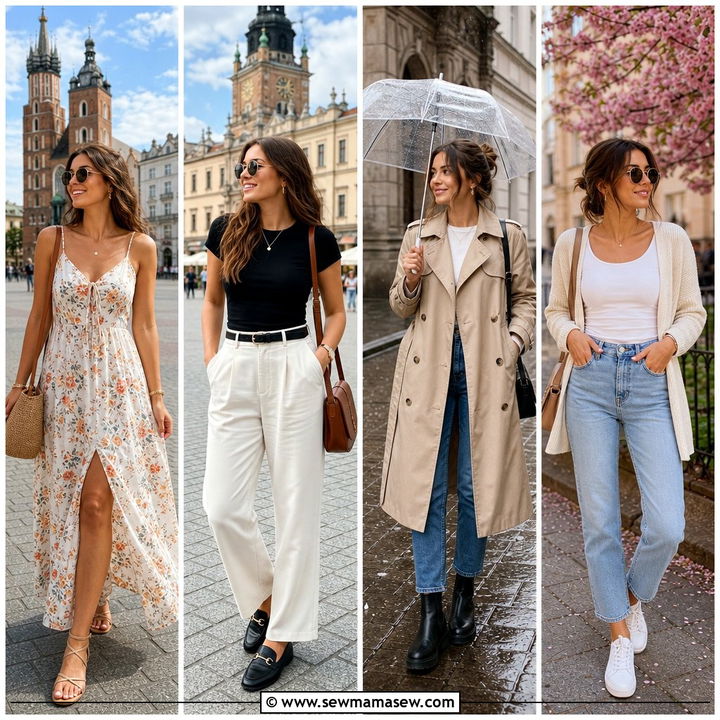
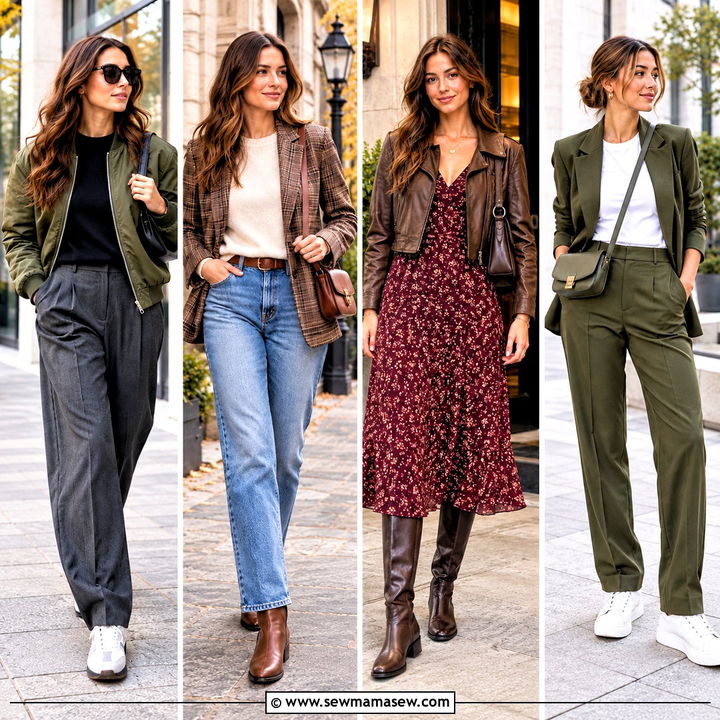
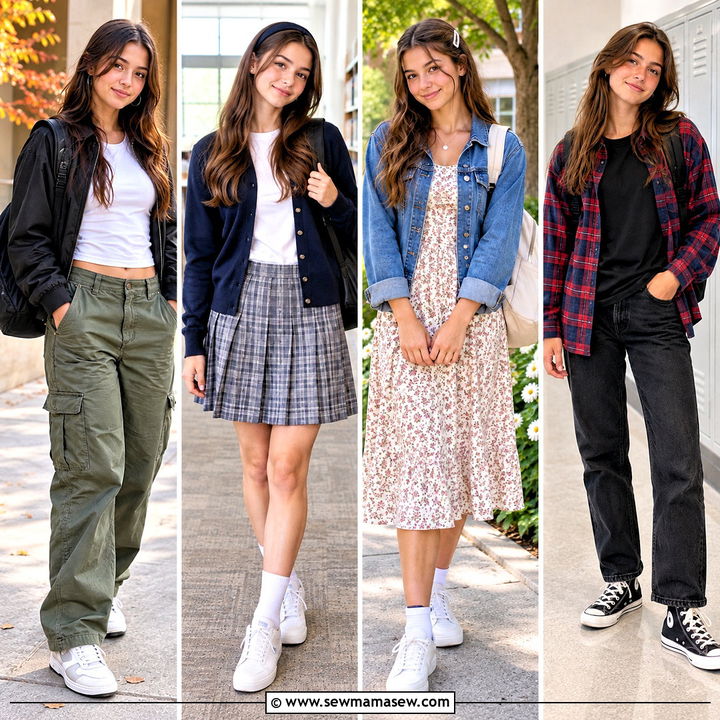
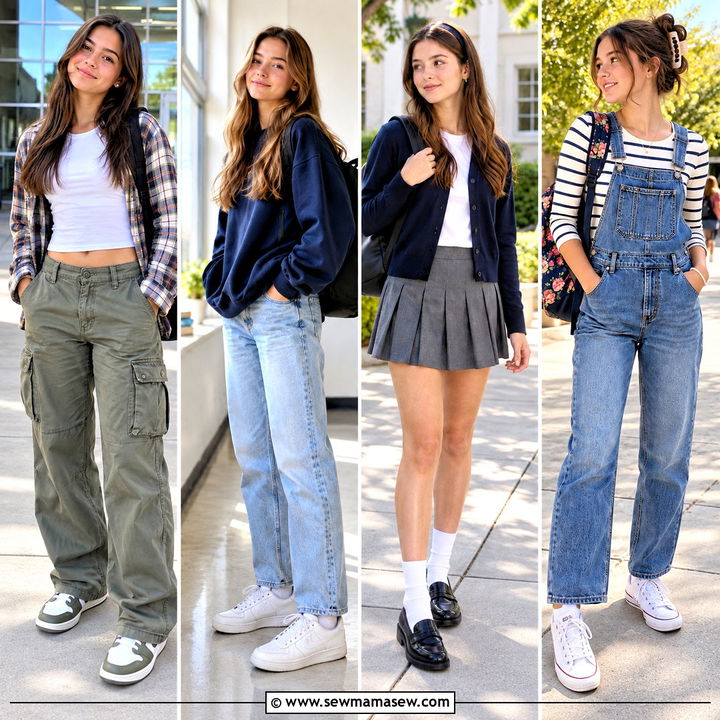
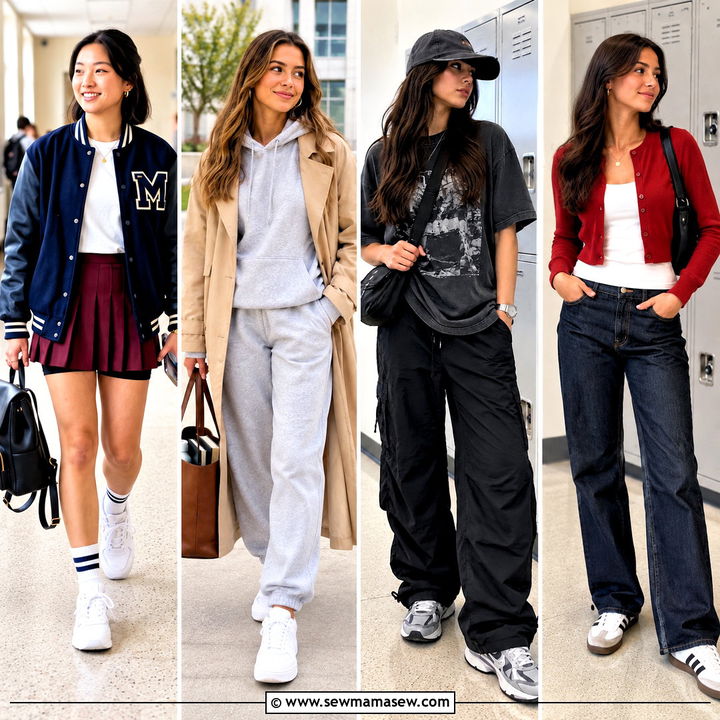
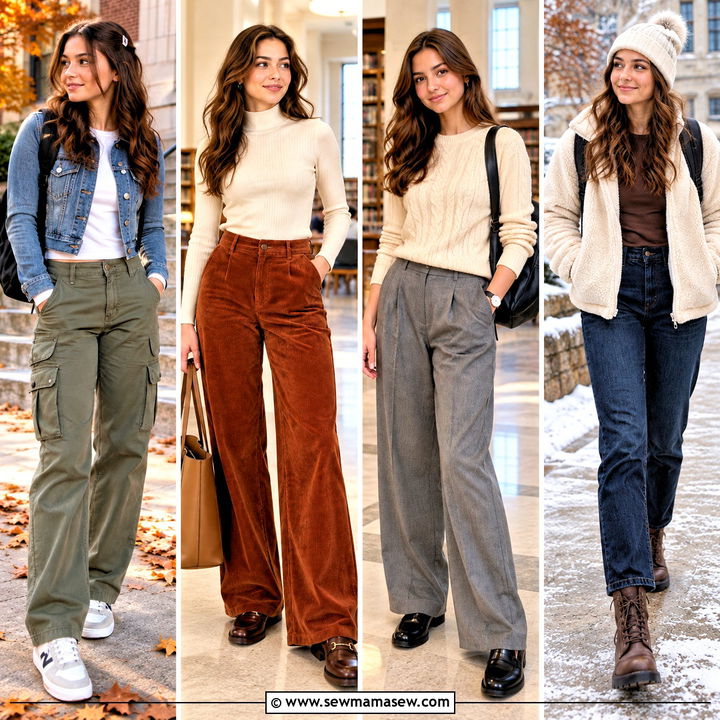
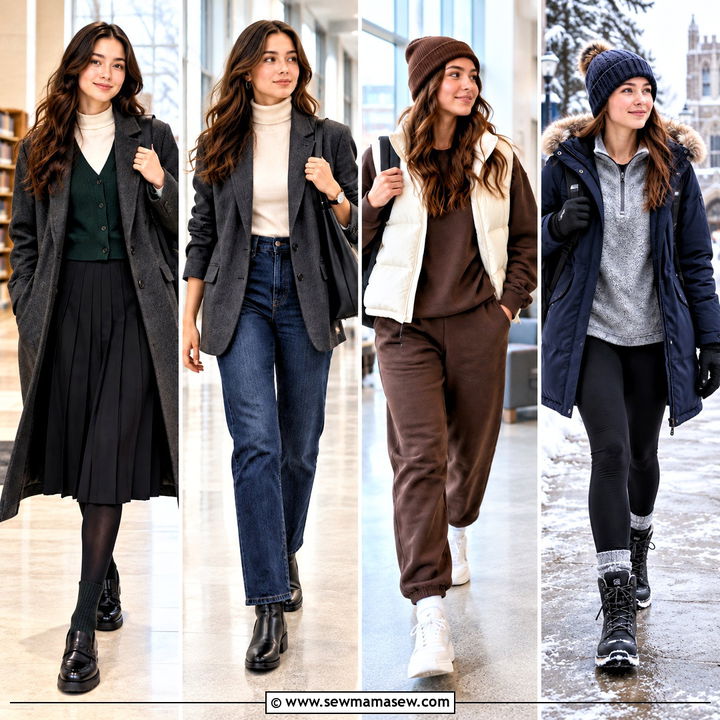
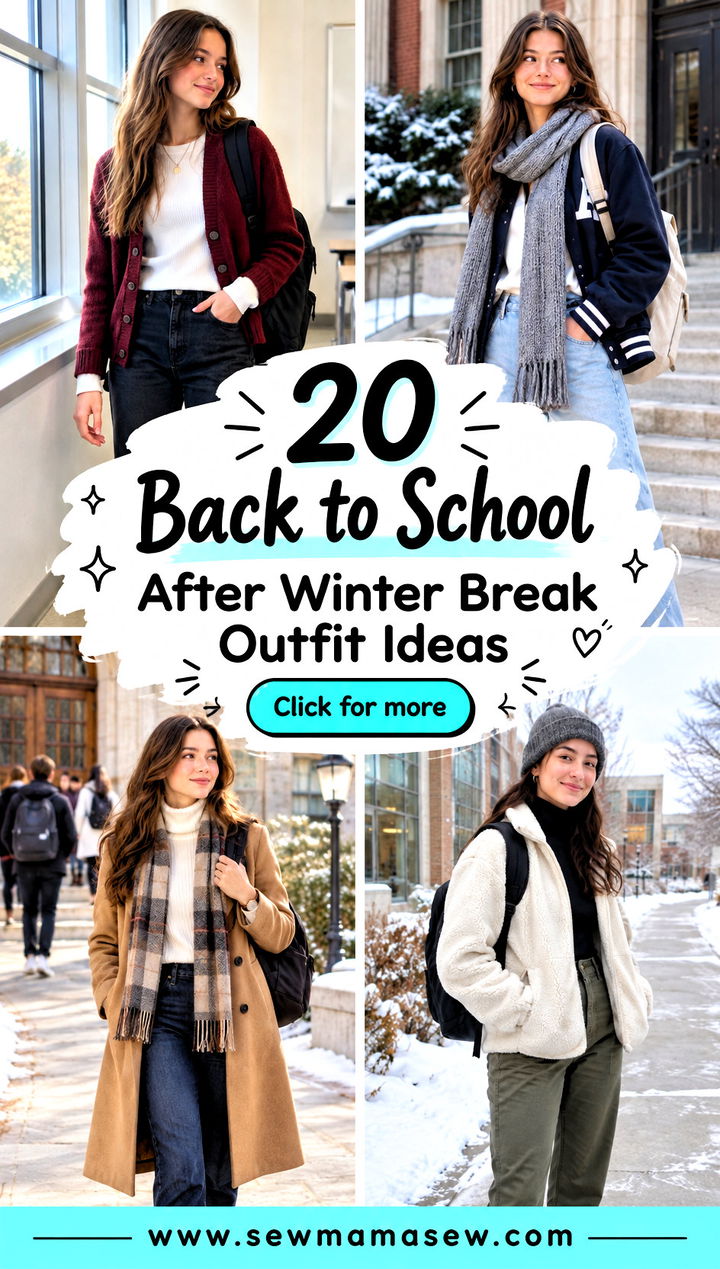
Going back to class in January means dressing for two climates at once: a freezing walk or bus stop, then six hours in a heated building. When I plan winter school outfits, that gap shapes everything, so most of the ideas below are built in layers you can peel off. You'll find relaxed denim, preppy pieces, sporty layers and a few dressier looks, all adjustable for colder or milder weather and for your school's dress code. Most use basics you probably own already. Add thermals if your winters are harsh; go lighter if your school runs warm inside.
The Base Layer Matters More Than the Sweater
Most of the warmth in a winter school outfit comes from what's against your skin, not from the thickest sweater. I think of it in three parts: a thin base, a middle layer you're happy to be seen in, and a coat that comes off at the door.
- Base: merino wool or a synthetic thermal. Both keep you warm even if you sweat on the walk. Cotton tees soak up sweat and stay damp, which is why you feel chilled sitting in class after a brisk walk.
- Middle: the sweater, cardigan or hoodie from the outfit. Pick something you can wear all day in a warm room.
- Outer: the puffer, wool coat or sherpa. It only needs to work for the commute.
This also solves the overheated classroom problem. A thin thermal under a medium sweater is warmer outdoors than one chunky knit, and much easier to live in at a desk next to a radiator.
1. Oversized Sweater And Straight Leg Jeans Outfit
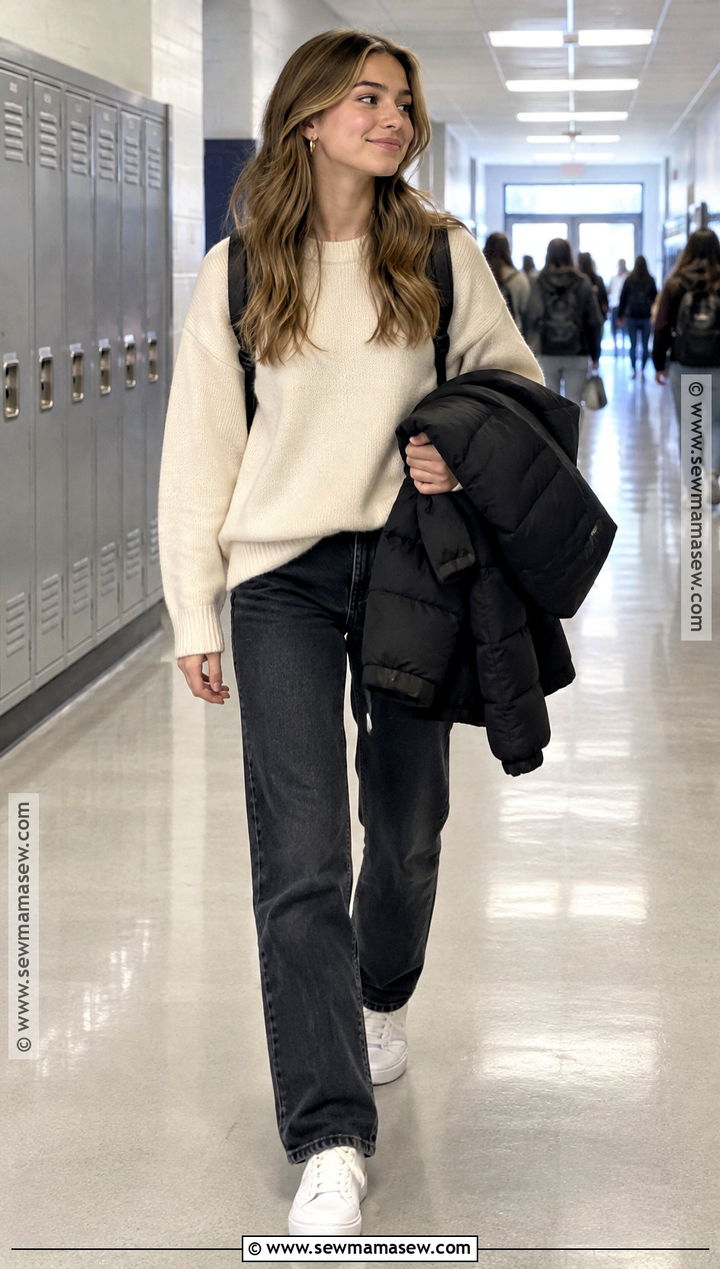
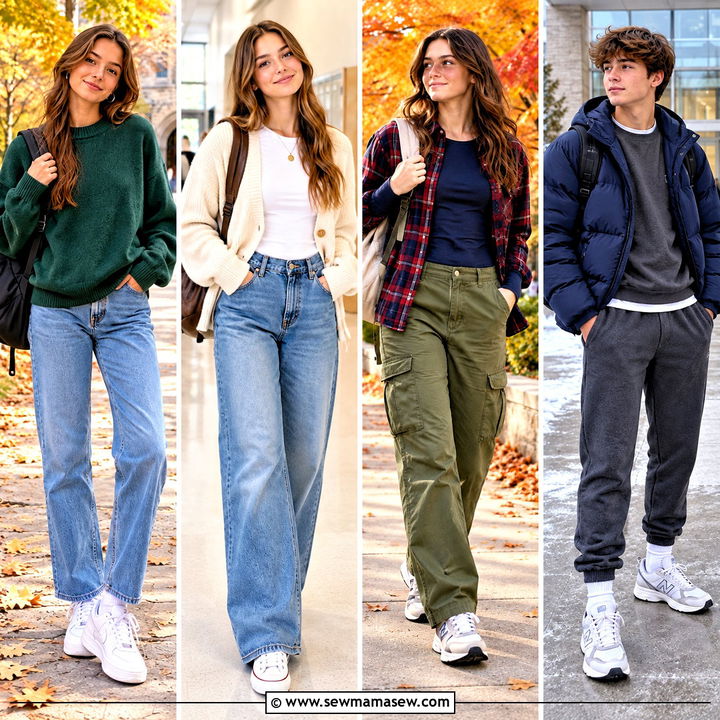
For the first morning back, I'd reach for an oversized crewneck and straight-leg jeans. It's comfortable without looking like you slept in it. Gray, cream, navy or burgundy all work. The sweater should be loose, not huge; I check that the shoulder seam drops no more than a couple of inches past the shoulder, or the sleeves bunch under a coat. A small front tuck shows the waist. White sneakers work on dry days, and flat ankle boots with a textured sole handle slush. A thin thermal underneath does the warming so the sweater can stay light.
2. Puffer Jacket And Wide Leg Jeans Outfit
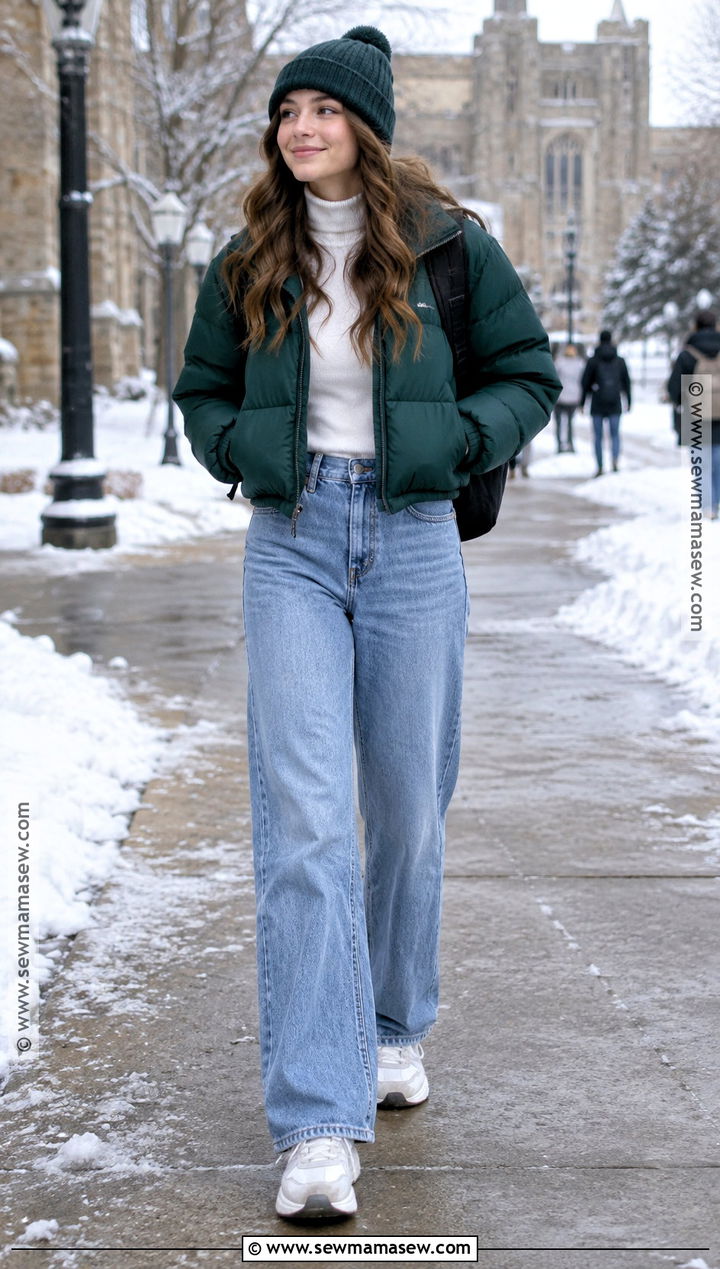
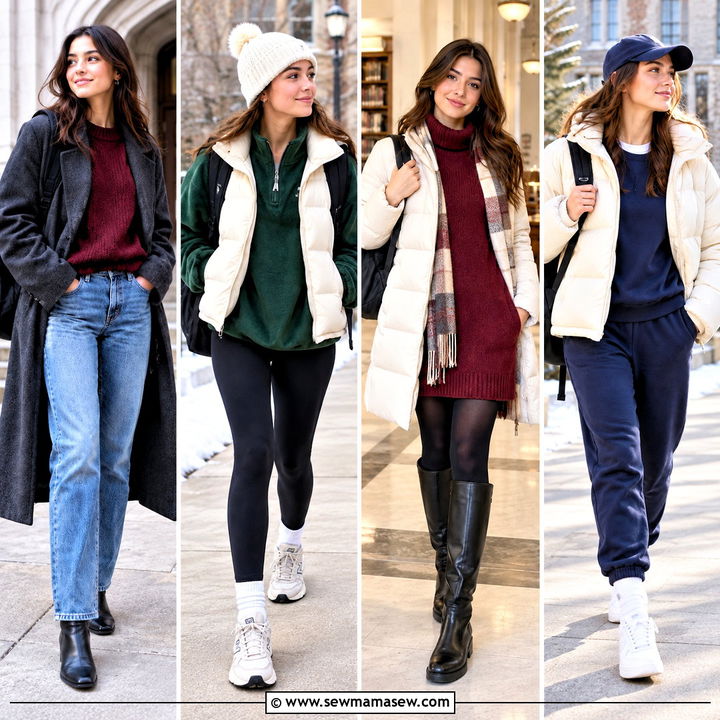
A puffer is usually the warmest thing a student owns, so I plan the outfit around it rather than treating it as an afterthought. Under a big puffer, keep the top fitted, like a long-sleeve tee or thin turtleneck, so the layers don't fight. High-waisted wide-leg jeans should fall over chunky sneakers or lace-up boots. A cropped puffer shows the waist; a longer one covers the hips and thighs on a freezing commute, which I'd pick in a truly cold climate. Black, white, blue and gray is a safe palette. A red or green jacket is a cheerful exception.
3. Sweater Vest And Button Down Shirt Outfit
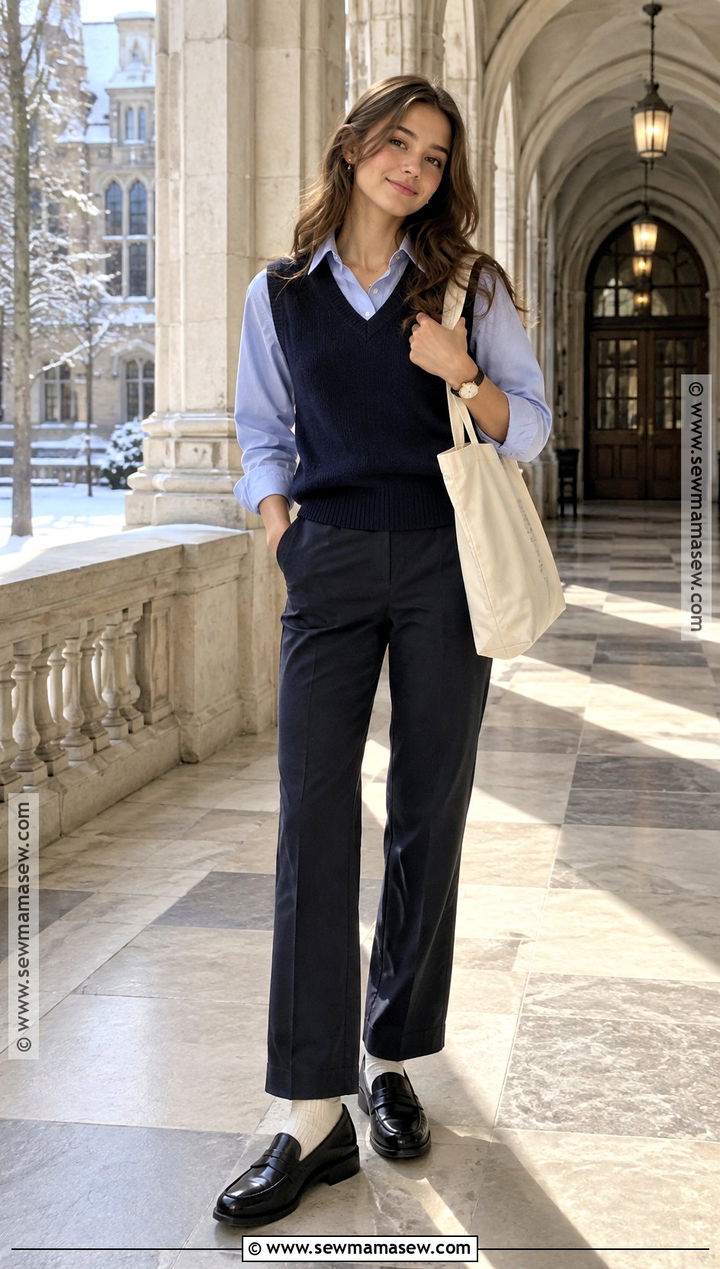
A sweater vest over a button-down looks polished without being stiff, and in winter it has a practical bonus: it keeps your core warm while your arms stay free. A white or pale blue shirt under a relaxed navy, brown, gray or forest vest, with straight trousers or dark jeans. Loafers and crew socks are classic, though I'd choose sneakers on days with a lot of walking. Roll the cuffs once. On very cold days, I add a thermal camisole under the shirt, then a wool-blend coat, which beats stacking another sweater.
4. Hoodie And Cargo Pants School Outfit
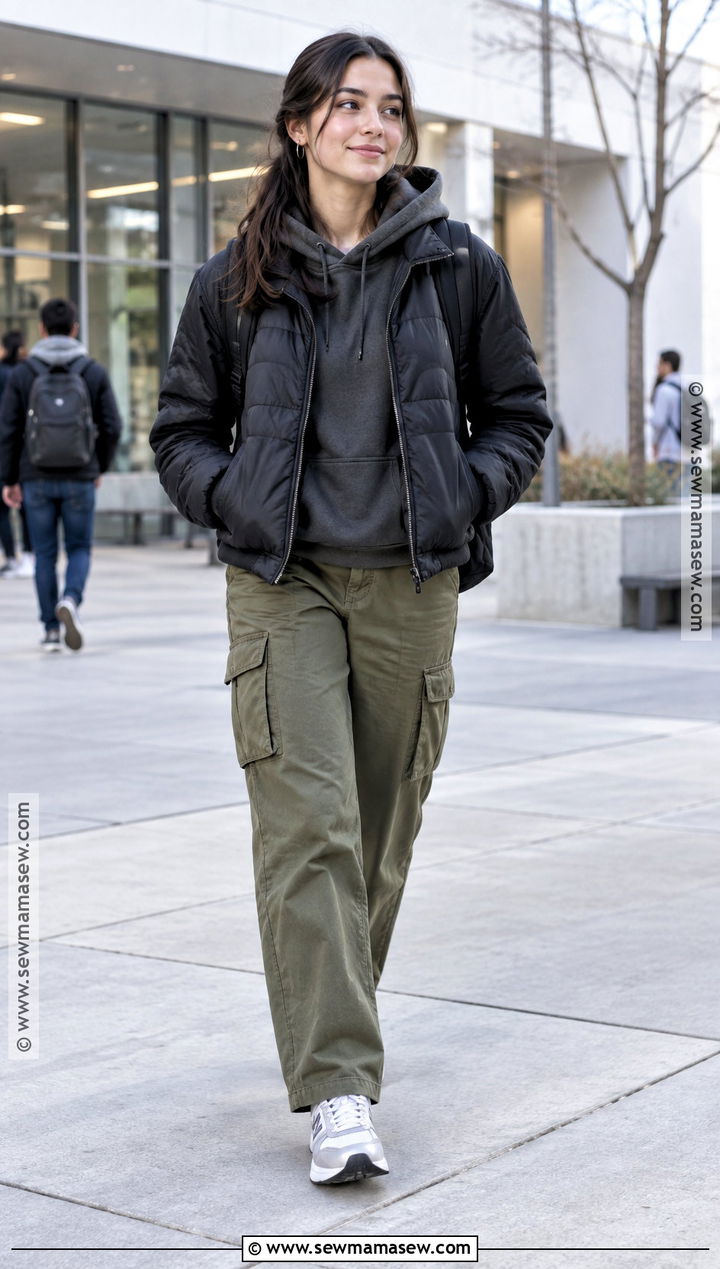
An early first morning back calls for a hoodie with cargo pants, and the cargos keep it looking like a real outfit. I'd choose a clean, solid hoodie that's roomy but not drowning you, with straight or relaxed cargos in black, olive, tan or charcoal. Keeping both pieces in related colors is what stops it from looking messy. Retro sneakers and fitted socks finish it. A quilted jacket or short puffer goes over the top. Check that the hoodie isn't so long it covers the cargo pockets; that detail is half the point of the pants.
5. Cardigan And Black Jeans Outfit
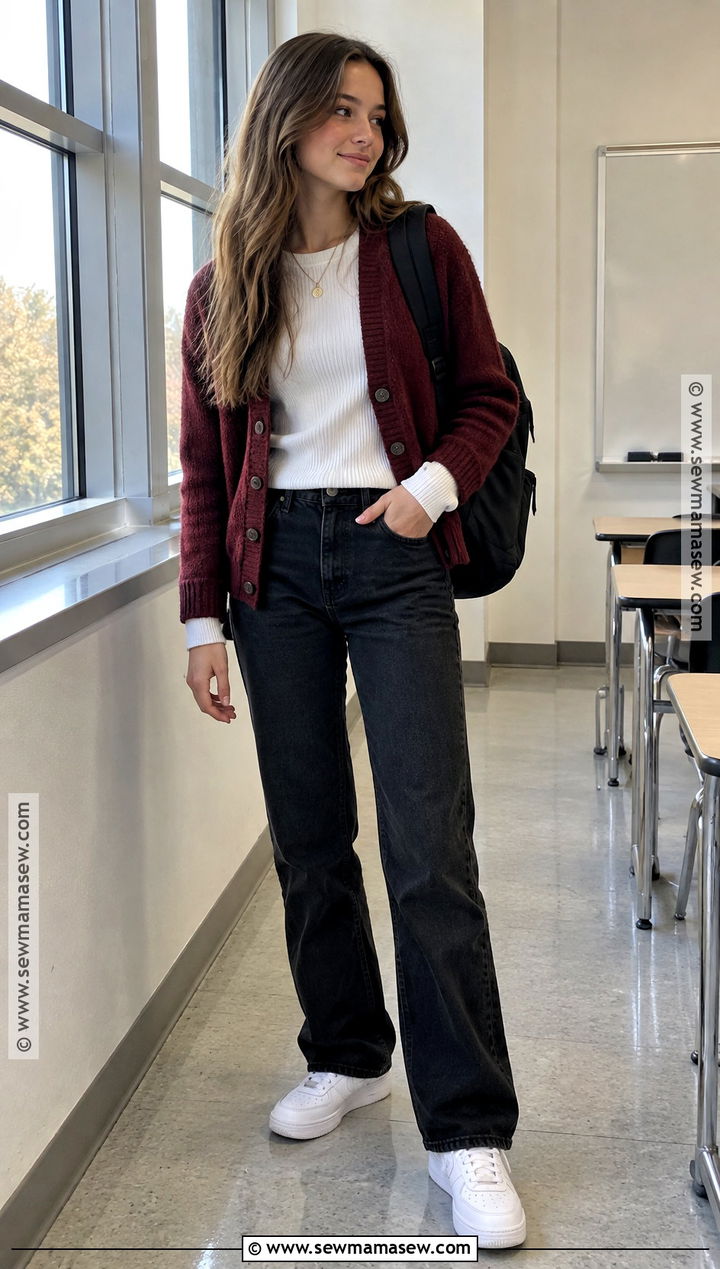
Black jeans and a cardigan is about the least stressful outfit I can suggest after two weeks off. A fitted tee or ribbed long-sleeve goes under a medium-weight cardigan, crewneck, V-neck or collared, depending on how dressed up you feel. Black jeans go with almost any cardigan color, and burgundy, soft blue, cream or heather gray bring some winter color in. White sneakers, loafers or flat ankle boots all work. In a warm classroom, wear it open. A good cardigan is the most flexible winter layer, which is why I'd spend a little more on one that won't stretch out.
6. Turtleneck And Plaid Pants Outfit
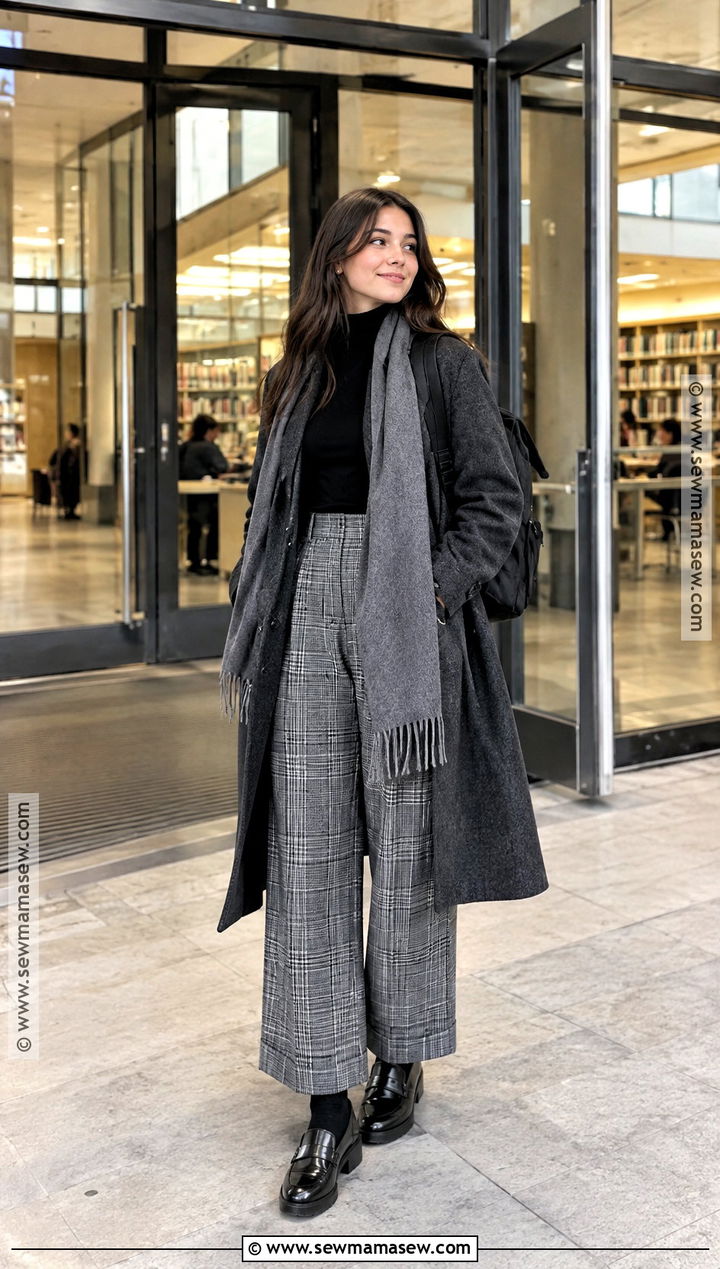
Plaid trousers add pattern to a winter outfit without loud colors. I'd pick a straight or slightly wide leg in gray, brown, navy or black, and balance it with a plain fitted turtleneck so only one piece is busy. Black loafers and visible crew socks look preppy; sneakers relax it. A thin thermal under the turtleneck adds a lot of warmth for very little bulk. For the commute, a long wool-blend coat or insulated jacket goes over the top. Keep jewelry small. Most plaid trousers are brushed or flannel-weight, which makes them warmer than jeans, a real plus in January.
7. Knit Dress And Knee High Boots Outfit
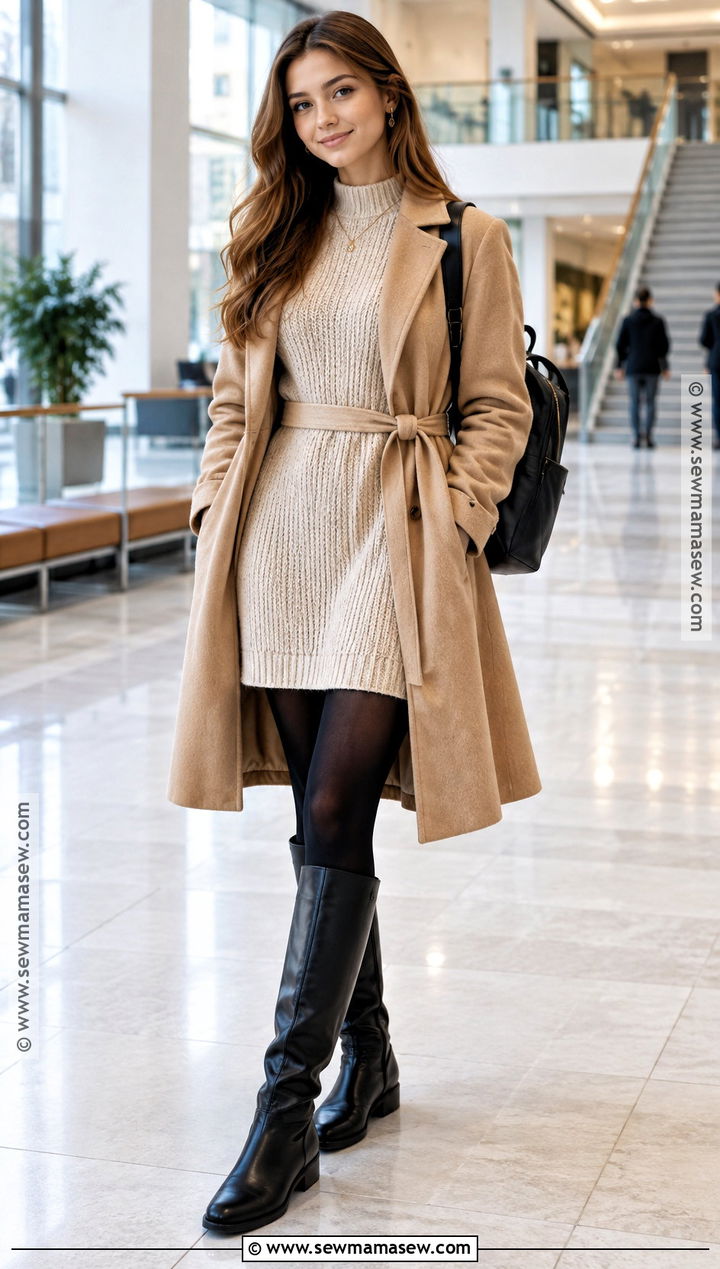
A sweater dress is the easiest way I know to look put-together in winter, because it's one piece. Choose knee-length or midi with a relaxed shape. The parts that keep it warm are underneath and below it: opaque fleece-lined tights, plus flat or low-heeled knee-high boots. Outdoors, a belted coat gives shape, and a long puffer covers more in harsh weather. If the knit is thin or clings, a fitted thermal or slip underneath helps it hang smoothly. Small studs and a simple backpack keep the focus on the dress.
8. Denim Jacket And Joggers Outfit
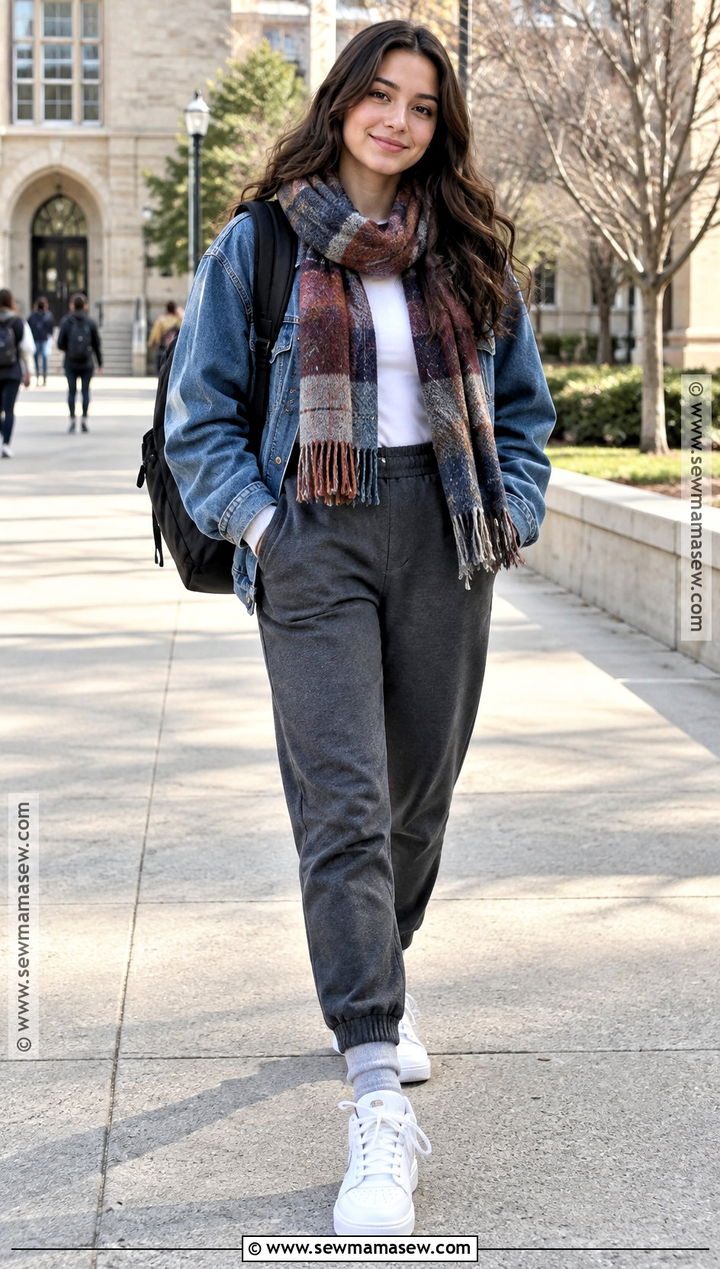
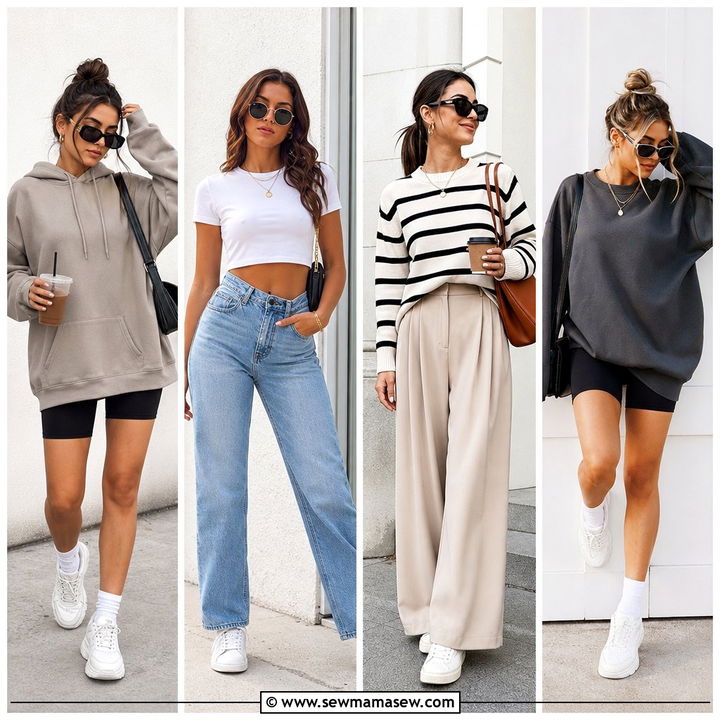
On a mild January day, a denim jacket over joggers is enough. Start with a fitted long-sleeve tee and tapered joggers in charcoal, black or navy, then a slightly oversized denim jacket. Denim doesn't insulate much, so in colder places I'd slip a thin hoodie or thermal between the tee and jacket. A scarf adds color and warmth. Smooth-faced joggers with a defined waistband keep this away from pajama territory; brushed fleece with a drawstring hanging out looks more like loungewear. Clean sneakers finish it.
9. Quarter Zip Sweater And Leggings Outfit
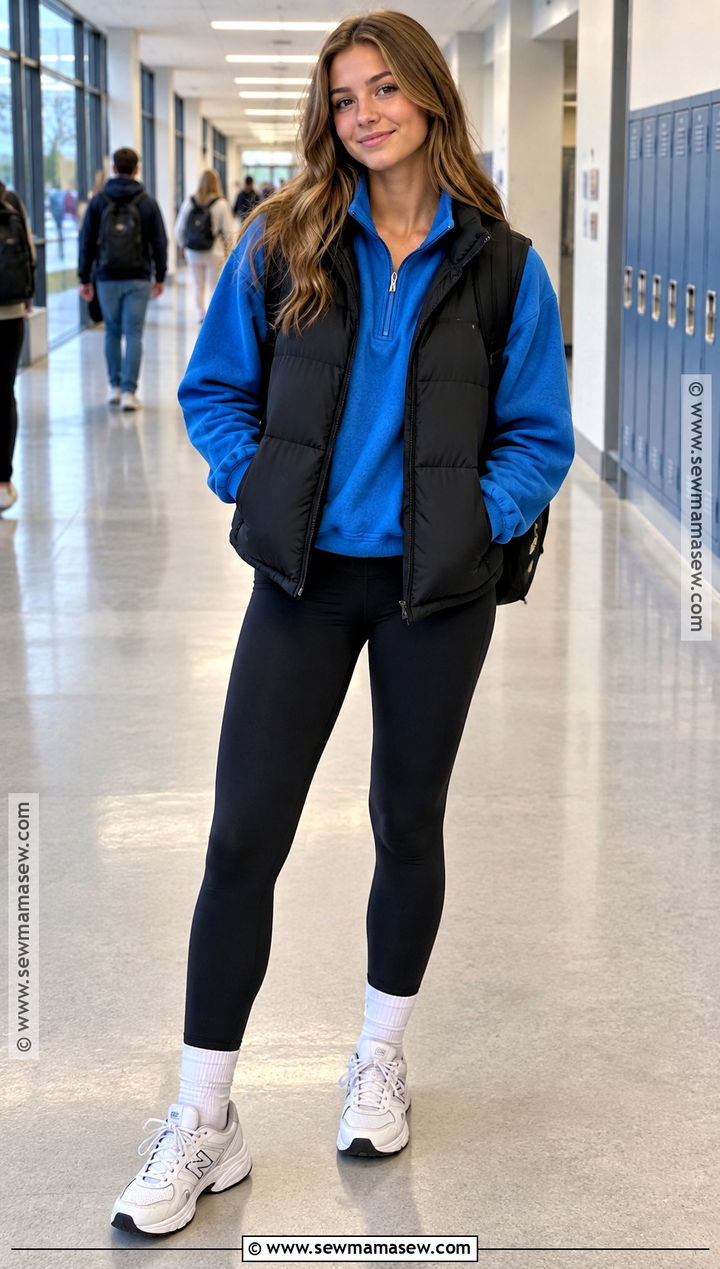
A quarter-zip with leggings is about as comfortable as school clothes get. The sweater should reach the upper hip or a little lower, and the leggings need to be thick enough that they stay opaque when you bend. A fitted base layer underneath stops cold air coming in at the zipped neckline. Supportive sneakers and high crew socks give it an athletic feel. A puffer vest keeps the arms free; a full puffer handles real cold. Neutrals look clean, but a bright blue, red or green sweater lifts a gray January week.
10. Varsity Jacket And Mom Jeans Outfit
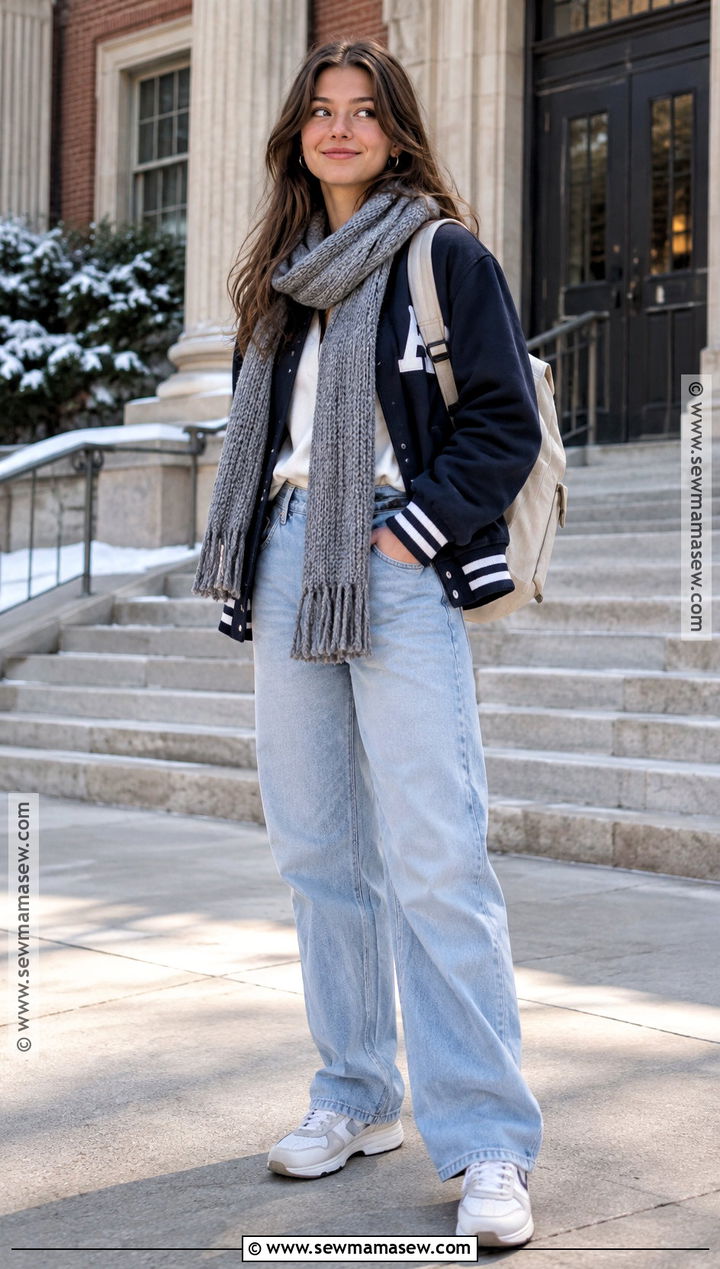
A varsity jacket brings instant energy to a plain outfit, so I keep everything else simple. Wear it over a fitted tee, light sweatshirt or thermal, with high-waisted mom jeans that taper neatly at the ankle. Classic sneakers in white, black or a jacket color finish it. Most varsity jackets have a wool body and aren't warm enough alone for a freezing morning, so layer a hoodie underneath and add a scarf and knit hat. Skip extra graphics; the jacket's patches are already the focus.
11. Long Coat And Dark Wash Jeans Outfit
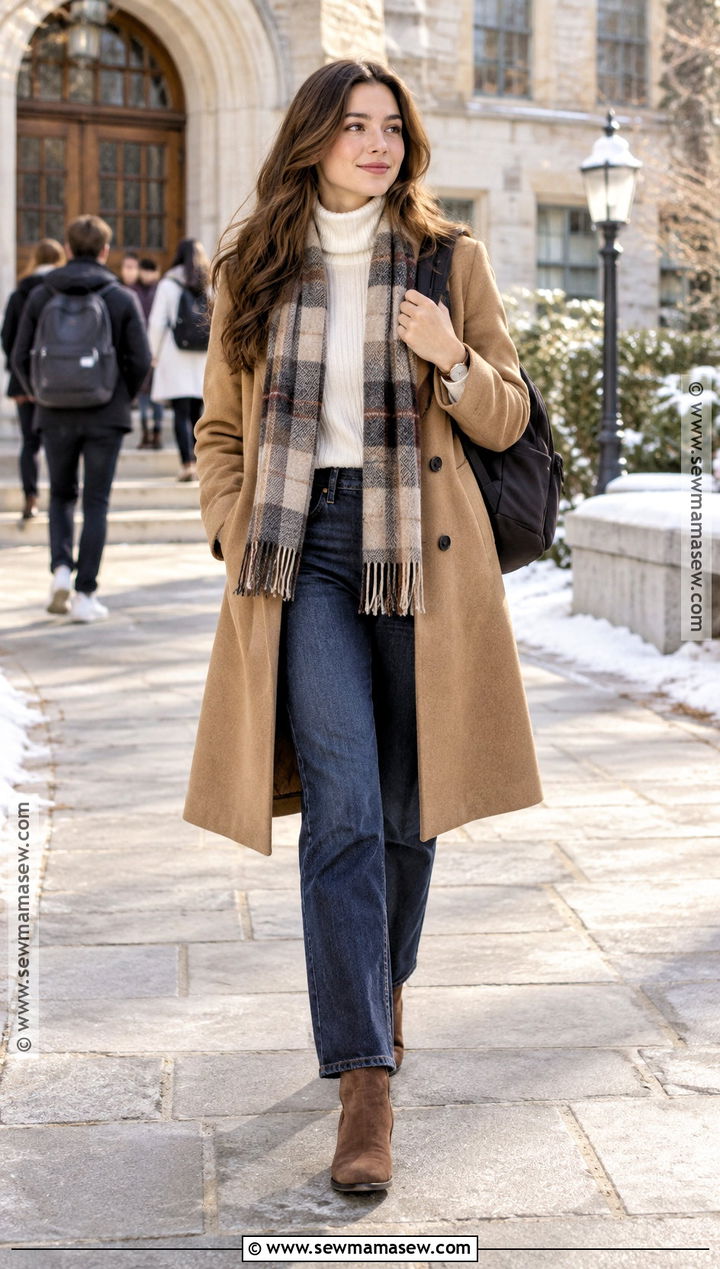
A long coat is the single piece that most changes how school basics look. A fitted crewneck or ribbed turtleneck, dark straight-leg jeans and a knee-length coat in camel, charcoal, navy or black make an outfit that looks much more grown-up than the parts suggest. Flat ankle boots or clean sneakers both work. I'd pick a scarf that goes with the sweater but doesn't match it exactly. Length depends on height: on petite students I keep the coat around the knee so it doesn't swamp the frame, while taller students can go longer and stay warmer.
12. Flannel Shirt And Corduroy Pants Outfit
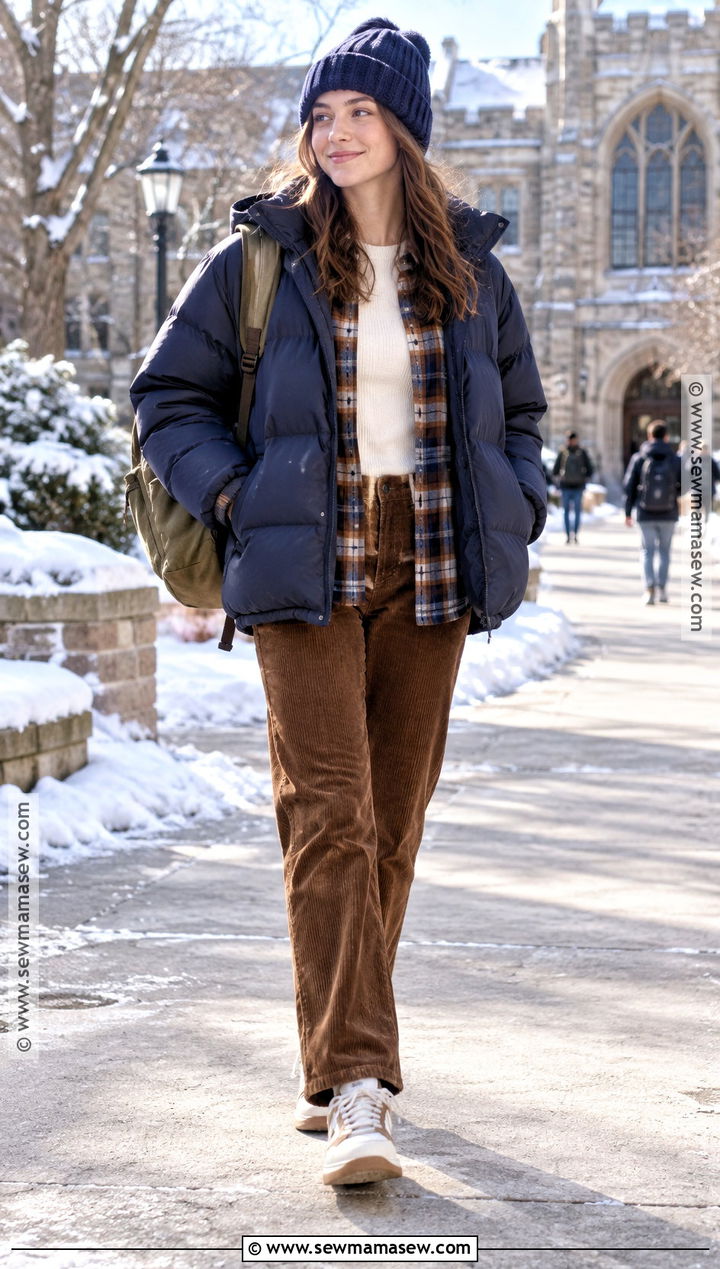
Flannel and corduroy suit January because both fabrics are brushed and warmer than they look. A fitted tee or thermal goes under an open or half-buttoned plaid flannel, with straight-leg cords in brown, cream, olive, navy or rust. I keep one of the two neutral so the textures work instead of competing. Leather sneakers on dry days, lace-up boots in slush. A canvas jacket suits mild weather, and a puffer suits snow. One fabric note: corduroy wears smooth at the inner thigh and knees, so wash it inside out to keep the wale looking full.
13. Crewneck Sweatshirt And Pleated Skirt Outfit
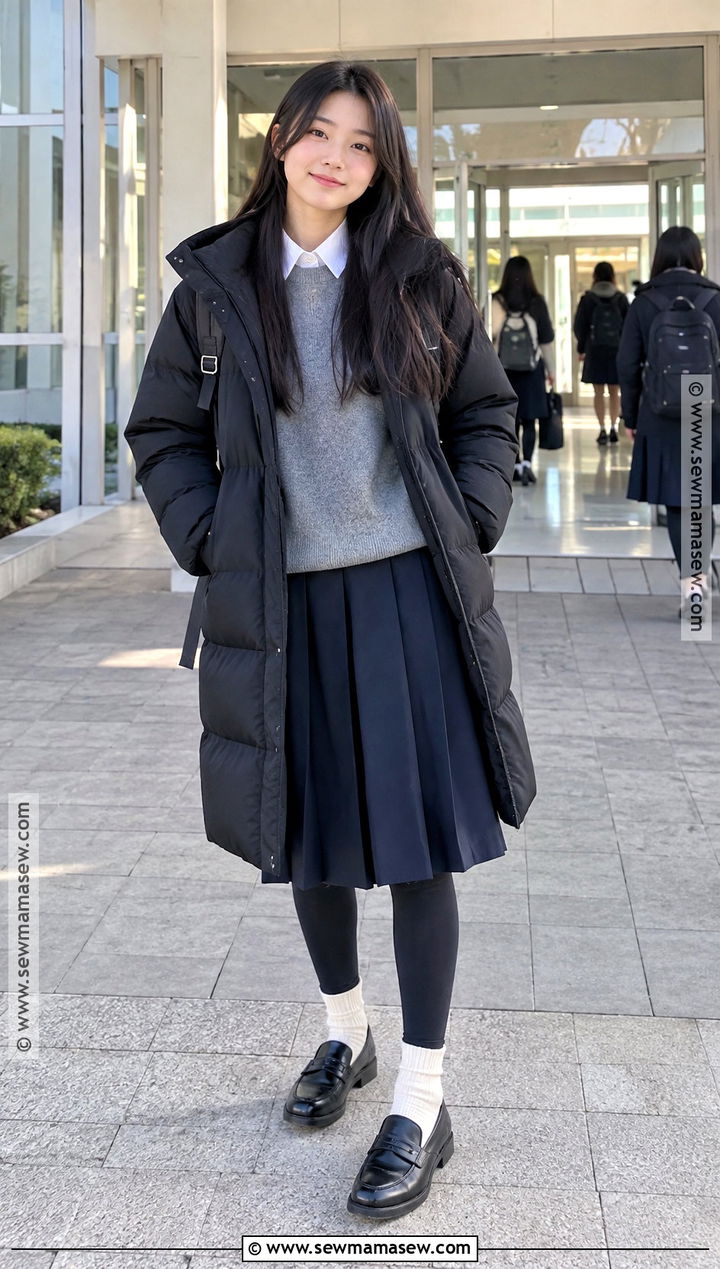
A crewneck sweatshirt with a pleated skirt mixes sporty and preppy in a way I like for winter. The sweatshirt should fit neatly at the shoulders and stop near the waistband; a long one hides the pleats. Choose a knee-length or midi skirt that meets your school's rules. Fleece-lined tights do the real warming, and loafers or flat boots keep it practical, with crew socks if you like the layered look. A long puffer or wool-blend coat goes on top. For a presentation day, slip a white collared shirt under the sweatshirt.
14. Sherpa Jacket And Straight Leg Pants Outfit
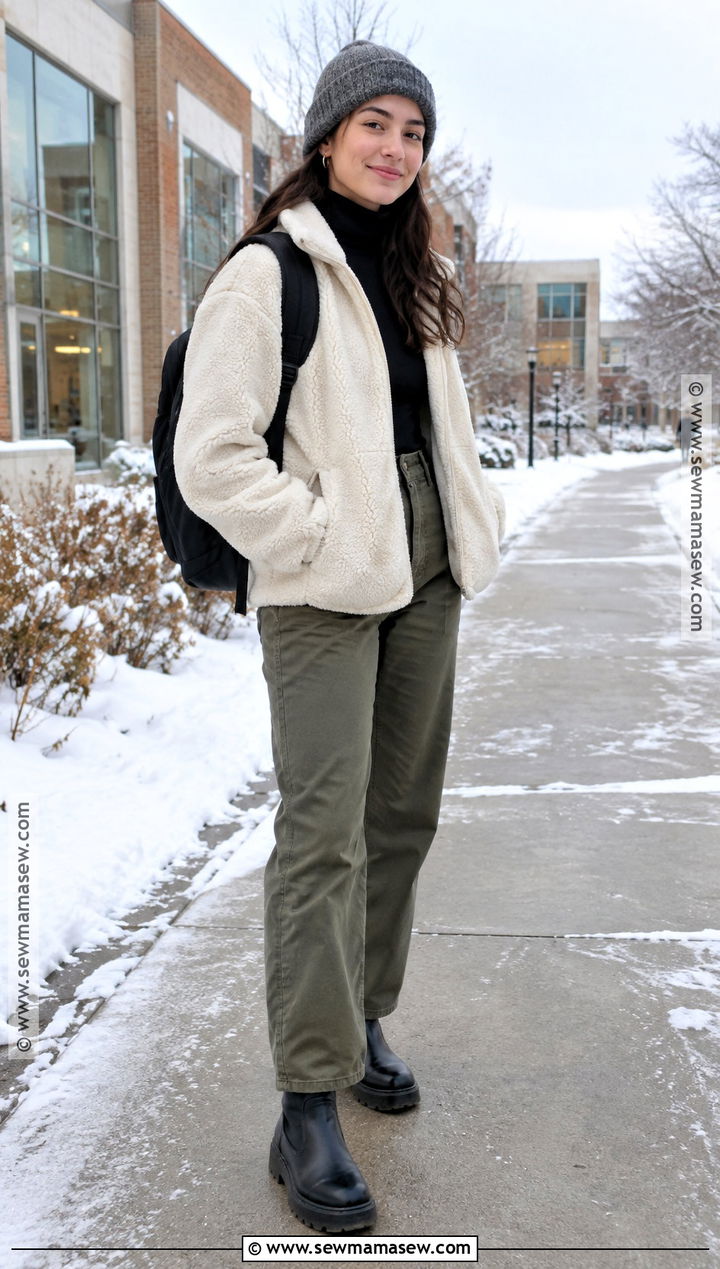
A sherpa jacket feels great on a cold morning, but it's bulky, so what goes underneath has to be thin. I'd wear a fitted ribbed top or slim mock-neck, with straight pants in black, brown, olive or beige. Dark sneakers or lug-sole boots suit wet sidewalks. Sherpa fleece mats and pills where a backpack strap rubs, so I'd brush it gently now and then, and wash it cold and hang it dry. Wear it open indoors. A knit beanie finishes it, and a roomy backpack beats a crossbody for books.
15. Graphic Sweatshirt And Baggy Jeans Outfit
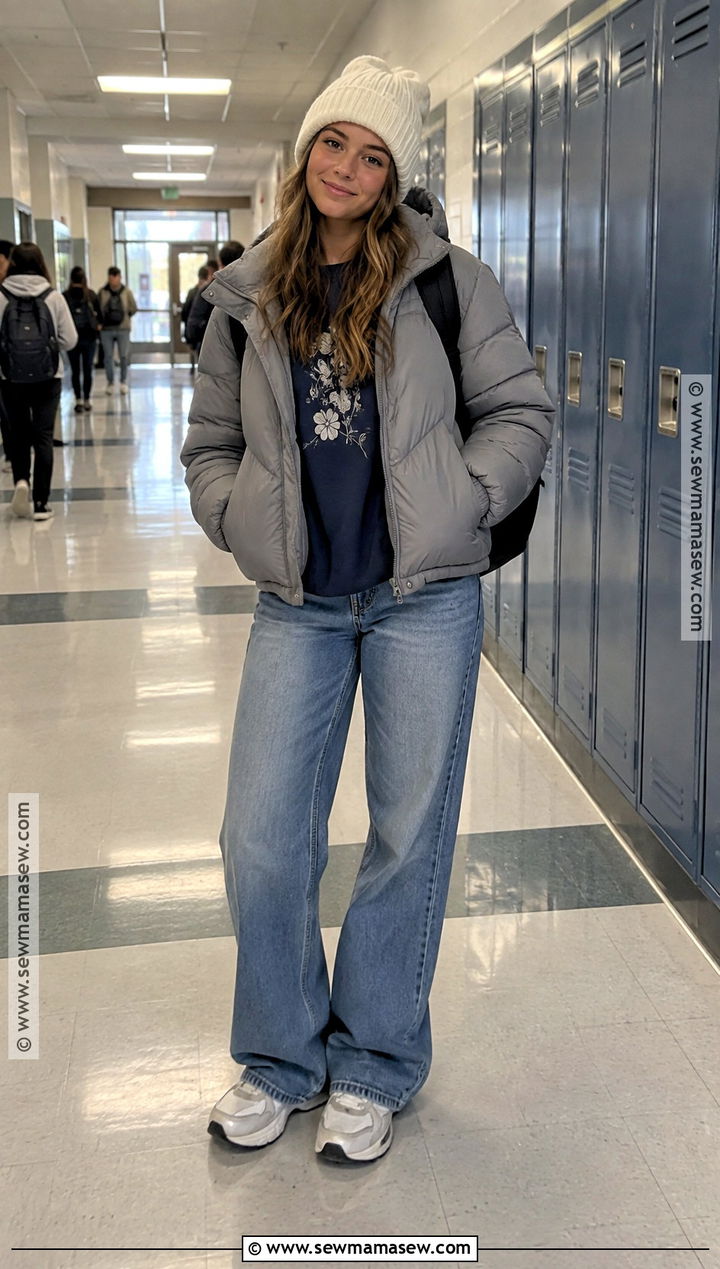
A favorite graphic sweatshirt makes the first week back feel personal. Pair it with baggy jeans that are relaxed but hemmed so they don't drag through slush, because wet hems wick water up the leg all day. A fitted thermal underneath means the sweatshirt can come off in a hot room. Chunky or skate-style sneakers balance the wide jeans. A short puffer keeps the graphic partly visible. If the sweatshirt is colorful, keep everything else neutral, and check the print follows school rules.
16. Striped Sweater And Black Trousers Outfit
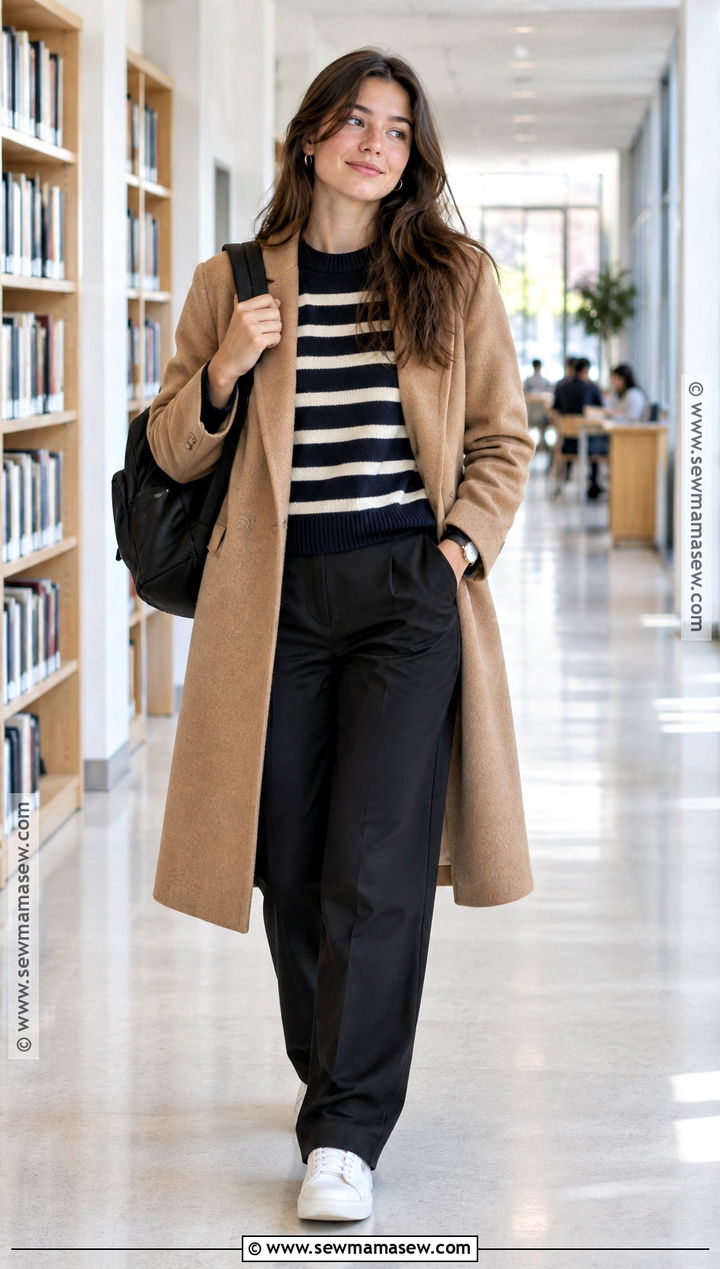
A striped sweater freshens a winter rotation without any effort. Navy and cream, black and white, or brown and beige stripes on a crewneck knit, with straight or wide black trousers. Loafers lean preppy; white sneakers relax it. A thin thermal underneath keeps you warm without bulking up the knit. Over it, a black puffer or camel coat both look right. I'd watch where the stripes hit: wide horizontal stripes ending exactly at the widest part of the hip draw the eye there, so a sweater that ends a little higher or lower usually looks better.
17. Shacket And Flare Leggings Outfit
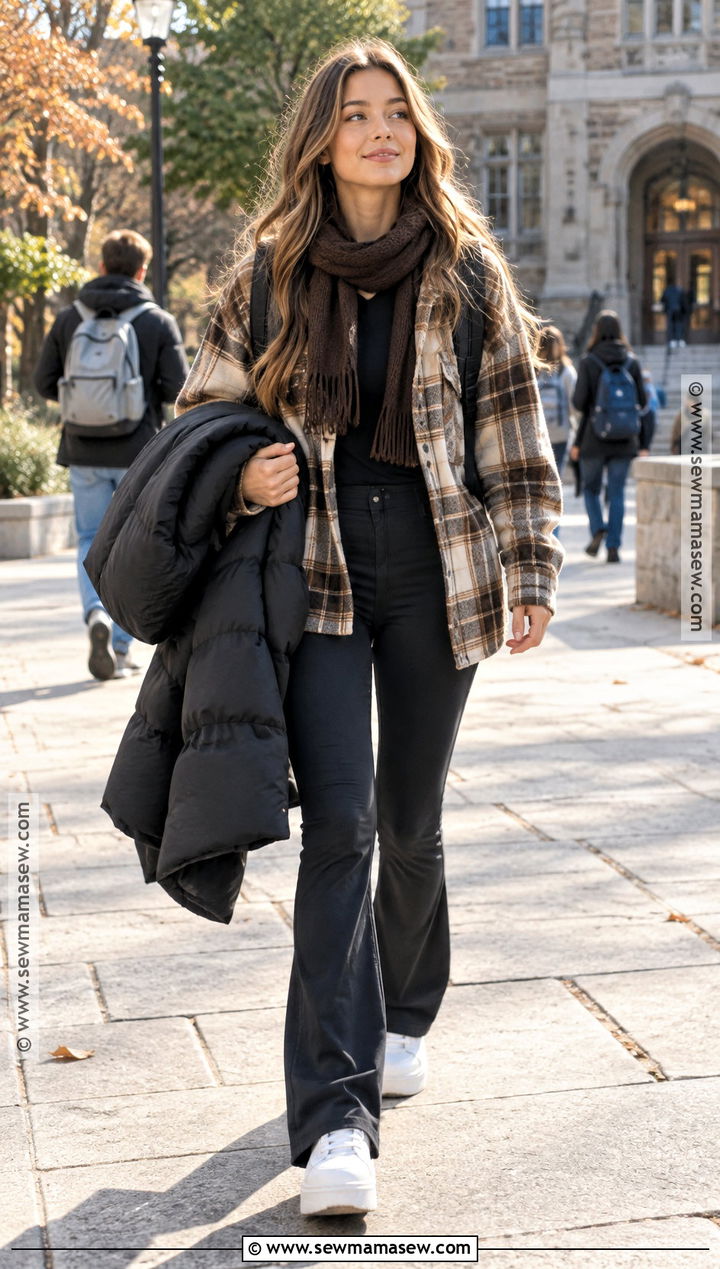
A shacket sits between a shirt and a jacket, which makes it a useful indoor layer in winter. Wear it over a fitted long-sleeve top with thick flare leggings. Wool-look, subtle plaid, denim or corduroy all suit it. Flared hems need the right shoe: platform sneakers or chunky trainers keep the flare from scraping the floor. In real cold, put a long puffer over everything and treat the shacket as what you wear in class. A knit scarf and a slim backpack finish the look.
18. Monochrome Sweater And Trousers Outfit
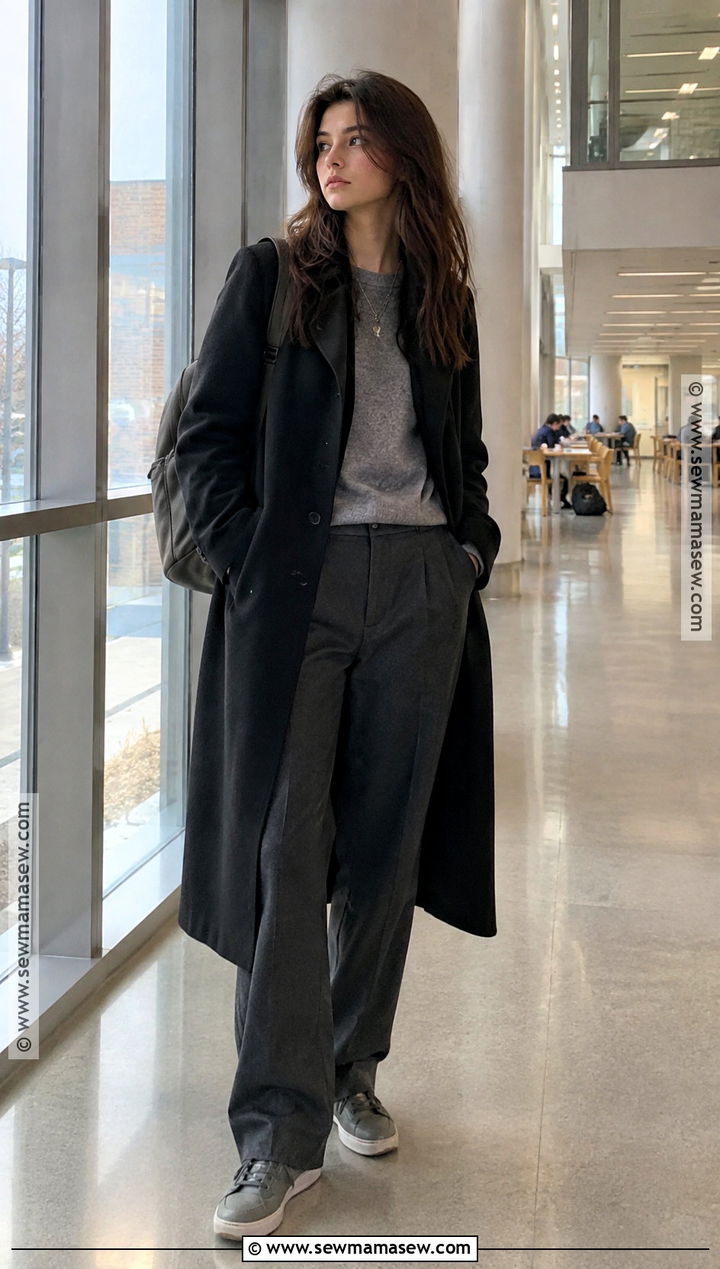
Wearing one color family is my quickest trick for making winter basics look planned. Try cream with beige, gray with charcoal, or navy with dark blue. Slight differences in shade and texture keep it from looking flat. Straight or relaxed tailored trousers with a comfortable waistband handle long periods of sitting. Shoes in a nearby neutral keep the line going. A contrasting coat frames the outfit; a tonal puffer keeps it unbroken. Darker tones hide slush splashes, which matters in winter. Pale neutrals look fresh but show every salt mark.
19. Puffer Vest And Long Sleeve Shirt Outfit
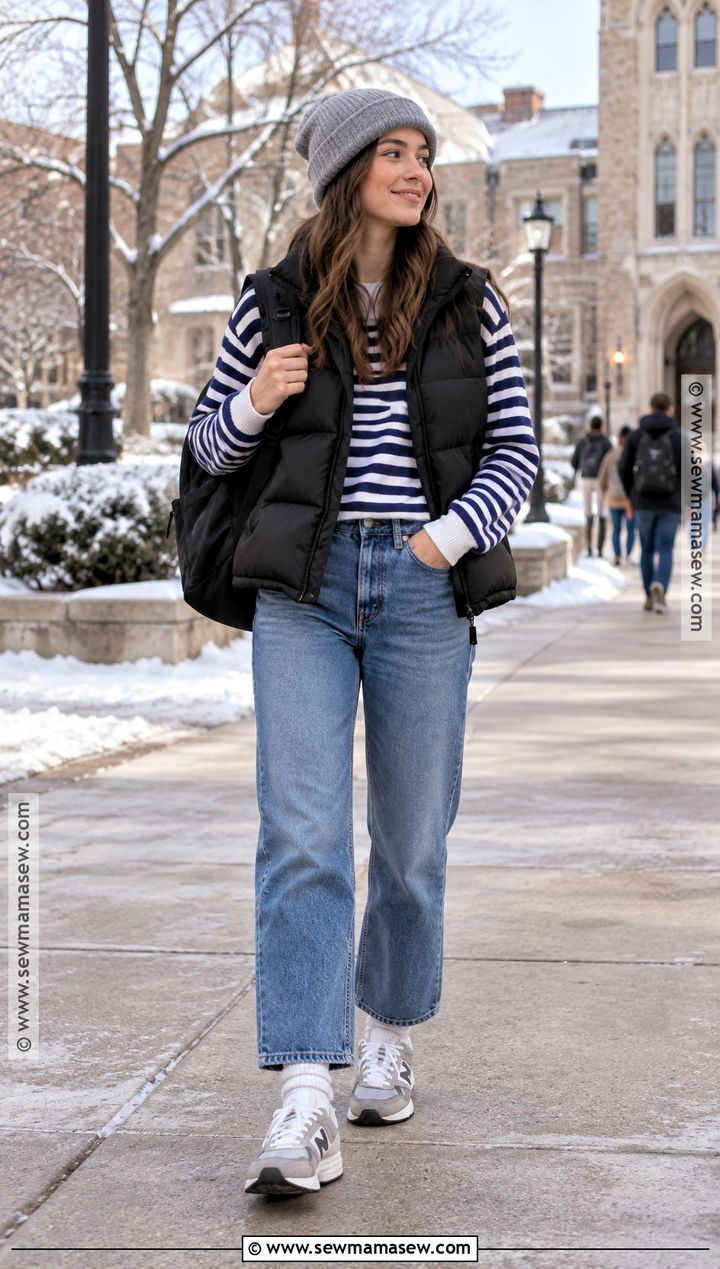
A puffer vest gives core warmth without the weight of a full jacket indoors, and I like it for students in drafty buildings. Wear it over a fitted long-sleeve, striped top or thin sweatshirt, with straight jeans or utility pants. Retro sneakers and thick socks keep walking comfortable. Length matters more than people think: a vest that ends around the hip sits under backpack straps cleanly, while a longer one rides up and bunches. On snowy commutes, add a heavier coat over the vest and take it off once inside.
20. Mock Neck Top And Midi Skirt Outfit
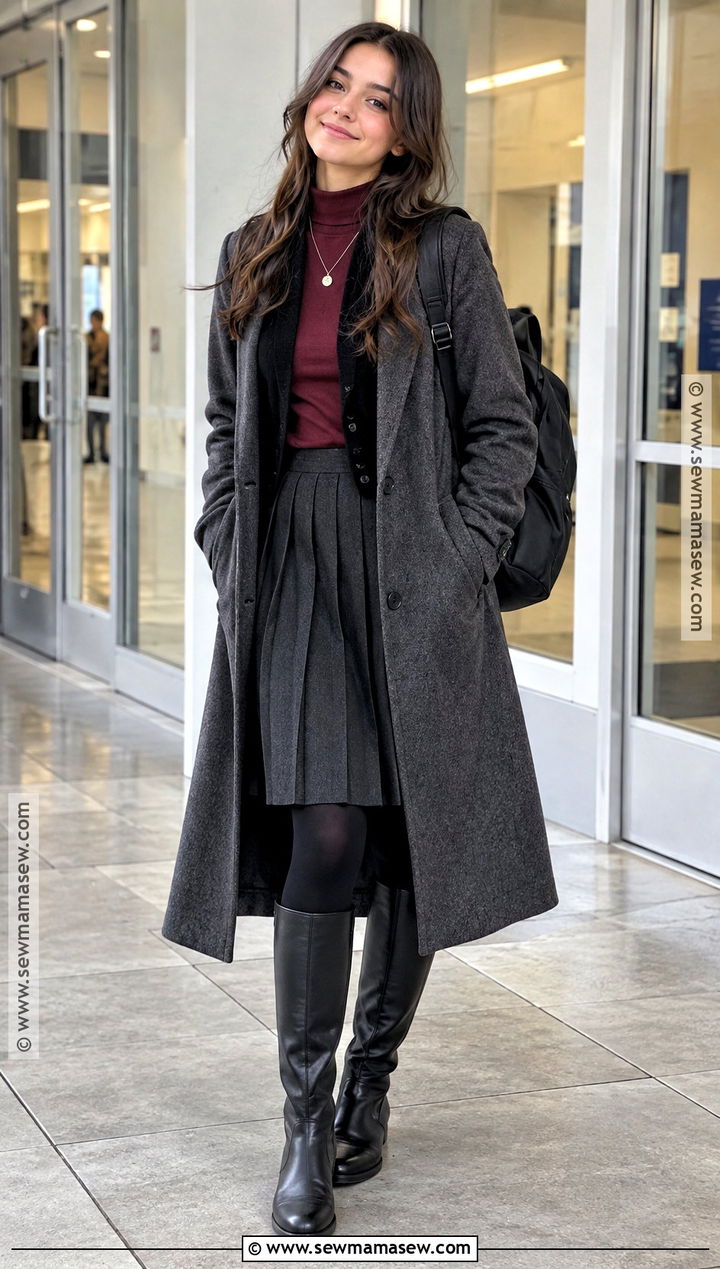
A fitted mock-neck with a midi skirt is the dressiest outfit here, and it's still easy to wear for a full school day. Knit, corduroy, denim or softly pleated skirts all have enough weight for winter. Opaque tights or fleece-lined leggings go underneath, and flat knee-high or ankle boots protect better than light shoes. A cropped cardigan or structured jacket works indoors, a long coat outside. If the skirt is plain, a belt can define the waist. I'd save this one for presentations or club meetings, when you want to look a bit more dressed up.
Road Salt, Slush and What They Do to School Shoes
Winter is hard on shoes. Road salt leaves white tide marks on leather and suede, and if you leave them they can dry the leather out and crack it. Slush soaks canvas sneakers in minutes.
After a salty walk
I wipe leather boots the same day with a damp cloth, or a little water mixed with a splash of white vinegar for stubborn marks, then let them dry at room temperature. Never put them right against a radiator or heater; fast heat makes leather stiff and can crack it. A leather conditioner every few weeks keeps them supple.
Suede and canvas
Suede darkens when wet and can stain, so I'd treat it with a protector spray before winter starts and save it for dry days. Let wet suede dry fully, then brush the nap back up. Canvas sneakers are fine on dry pavement but useless in slush. On wet days, keep them in your bag and wear boots with a lugged rubber sole for the walk.
If your school allows it, the simplest fix of all is a two-shoe routine: waterproof boots for the commute and a pair of sneakers left in a locker or bag for class. Your feet stay dry, the nicer shoes last the whole winter, and you aren't sitting through math in damp socks.
January Mornings Go Faster With Layers Planned Ahead
A good return-to-school outfit has to work from the cold commute through the last class. Cozy sweaters, relaxed denim, trousers, winter skirts and real outerwear all have a place in that. Start with what's already in your closet and change the shoes, colors or accessories to make it yours. Think about the weather, how hot your school runs inside, what you'll be doing and the dress code. Thermals, opaque tights, supportive shoes and layers that come off easily make almost any outfit more practical. If you plan two or three outfits the night before, those first mornings back get much easier.
Related posts: