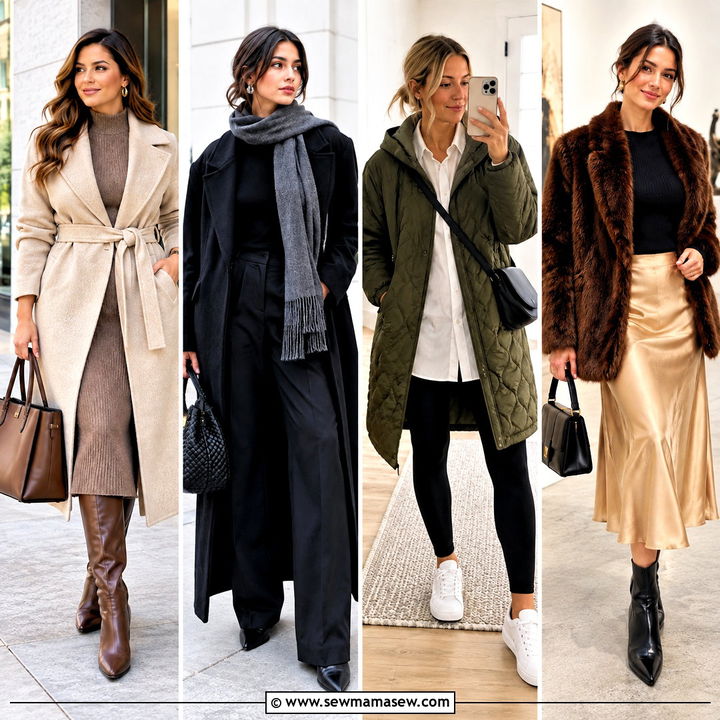
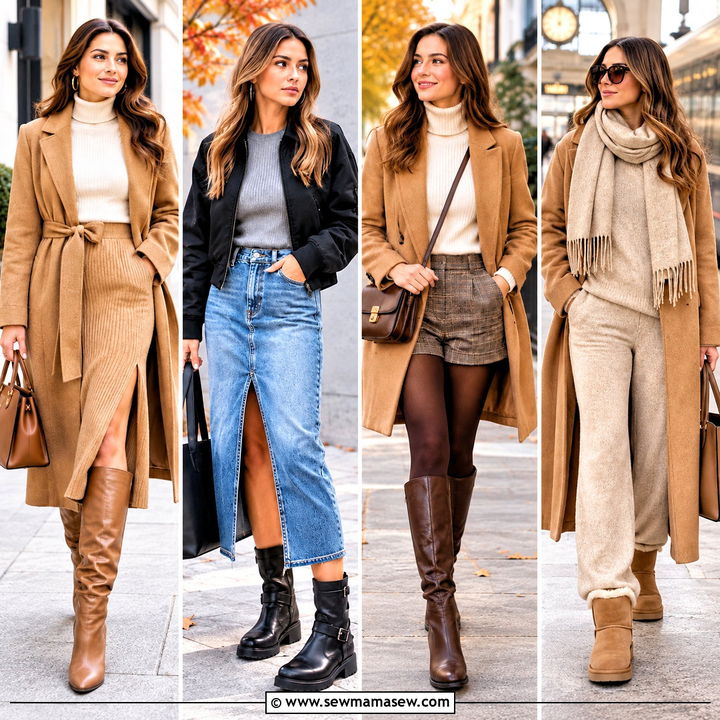
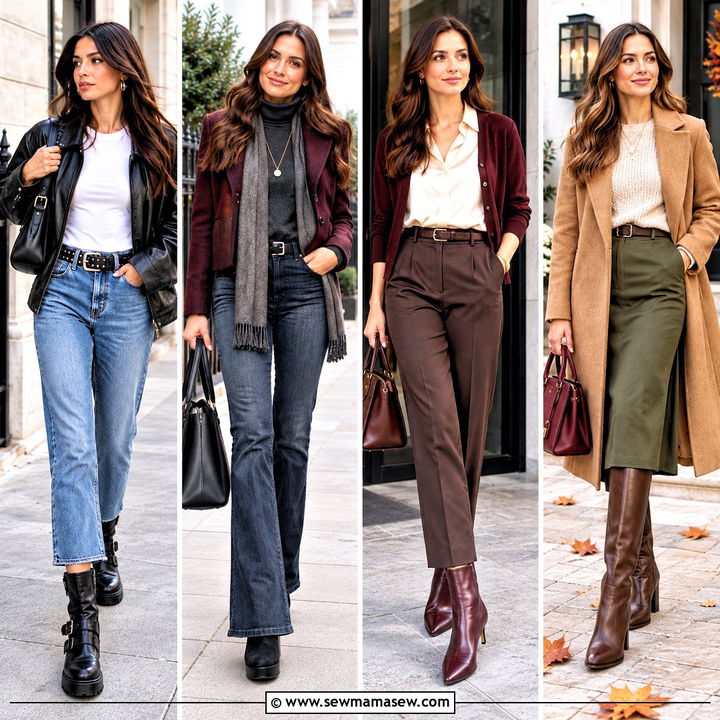
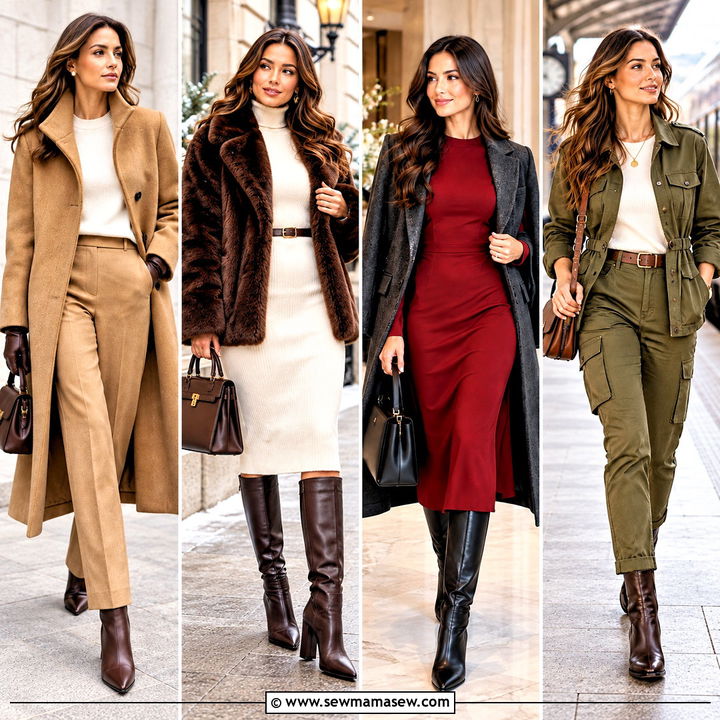
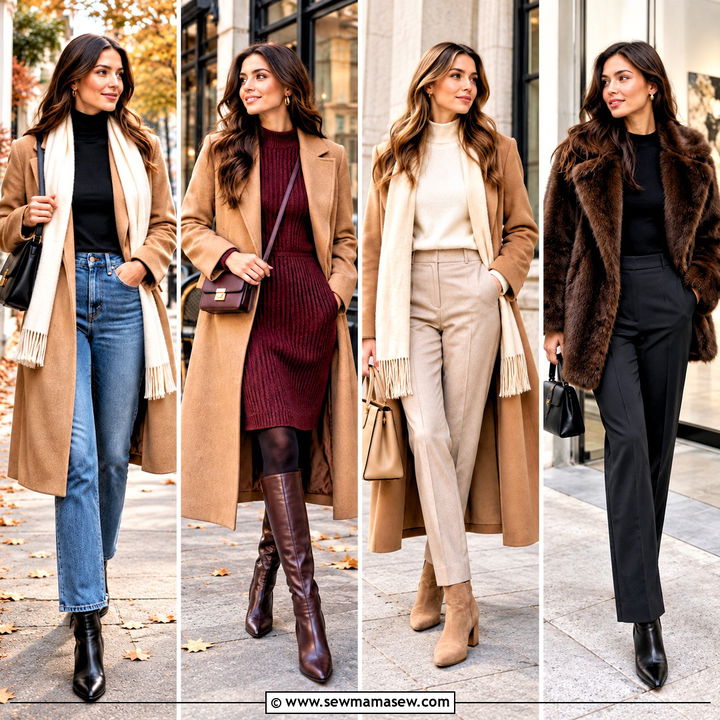
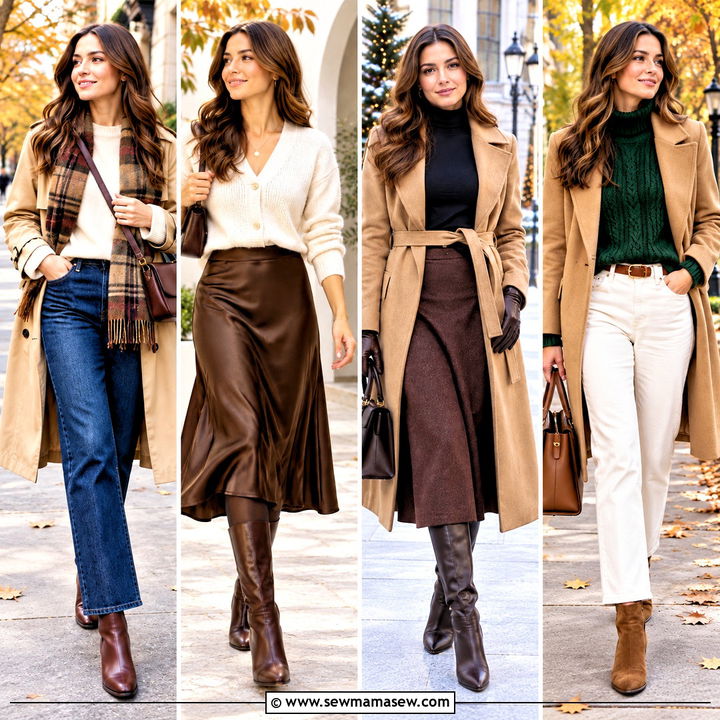
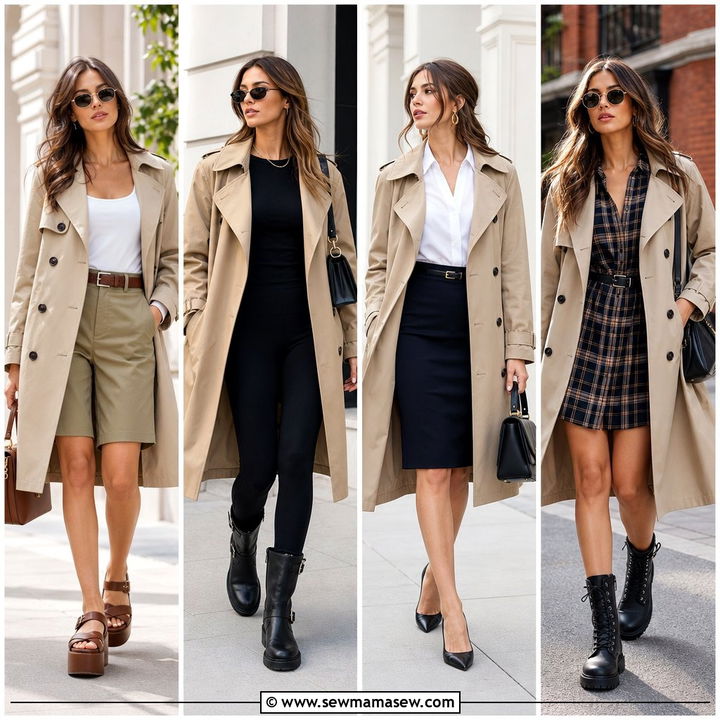
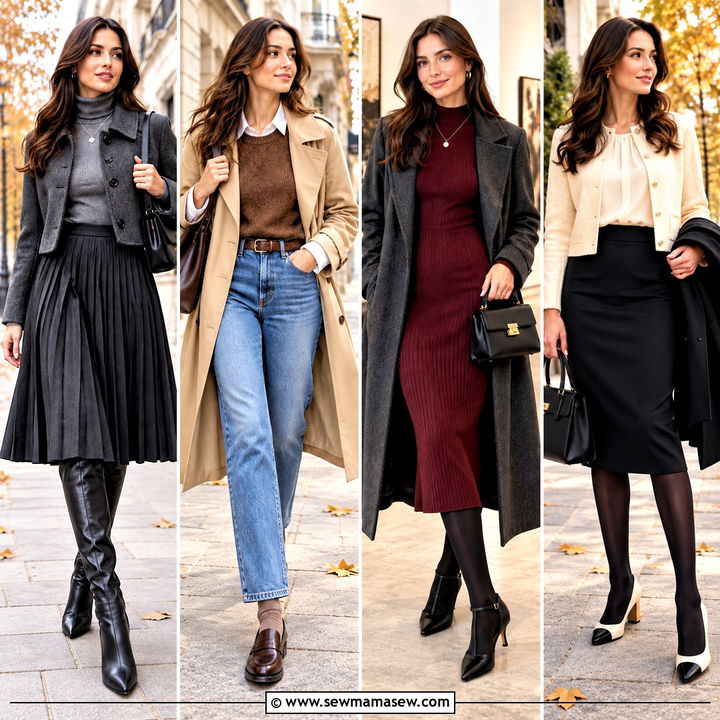
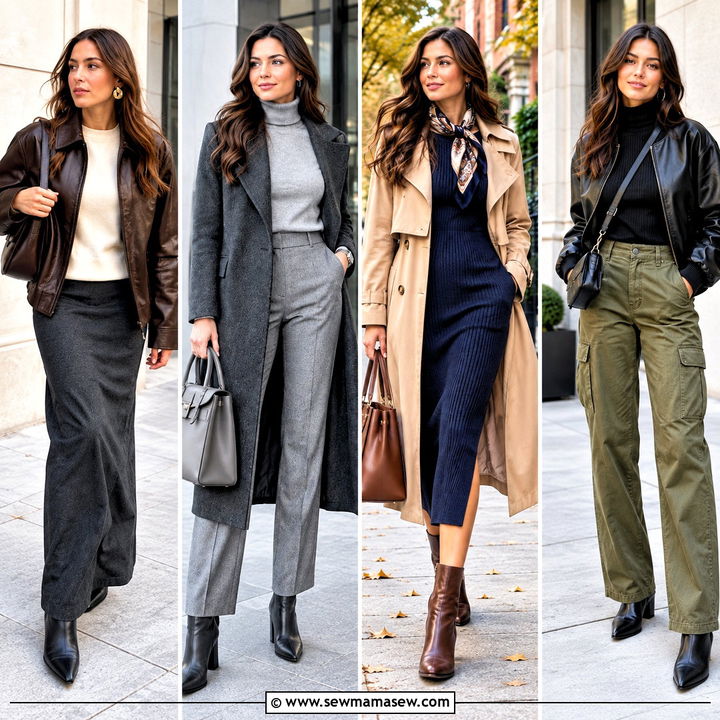
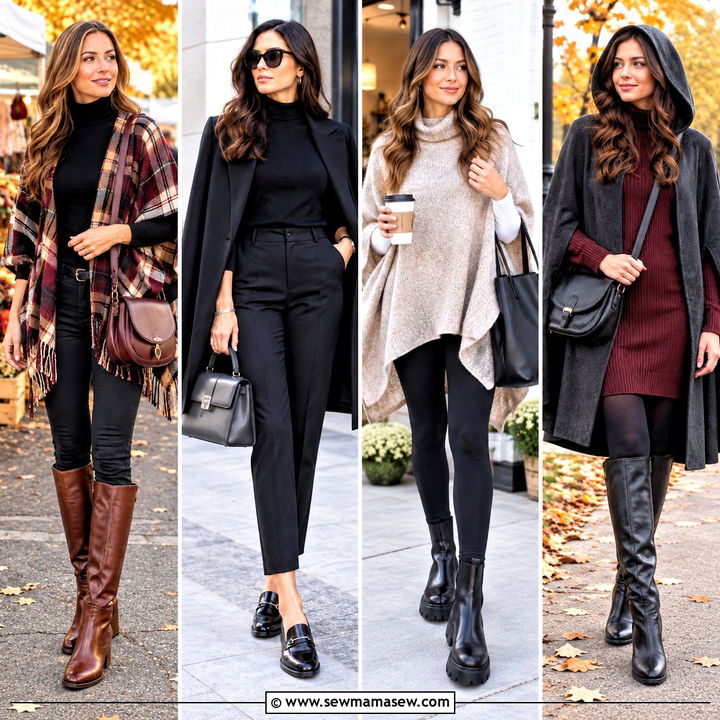
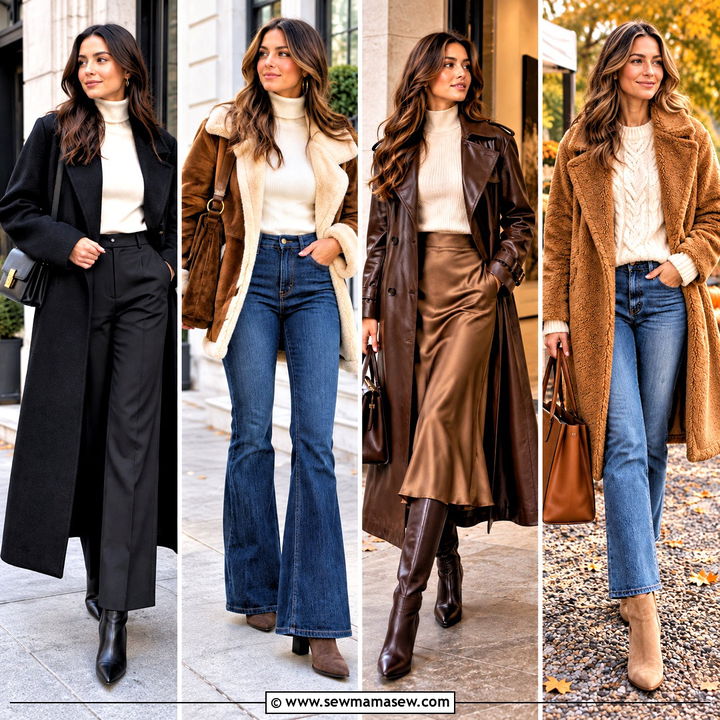
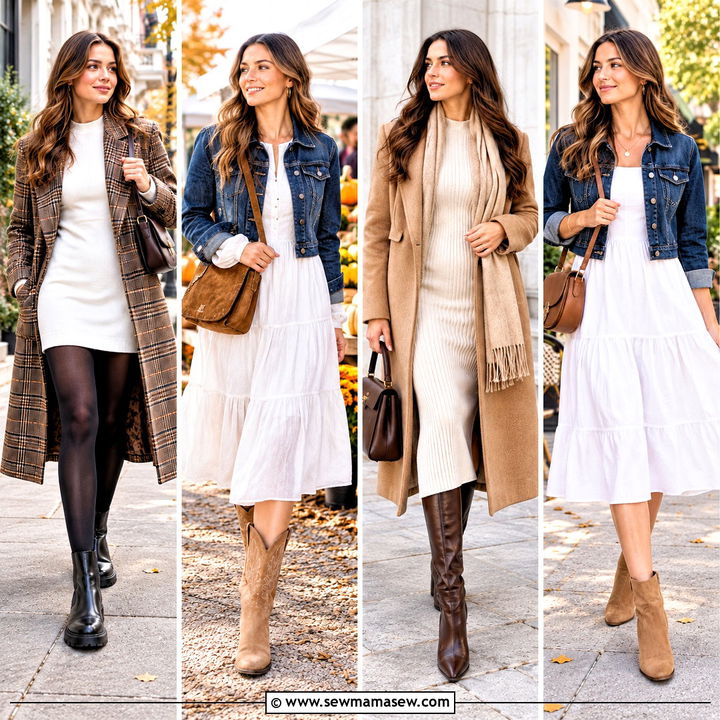
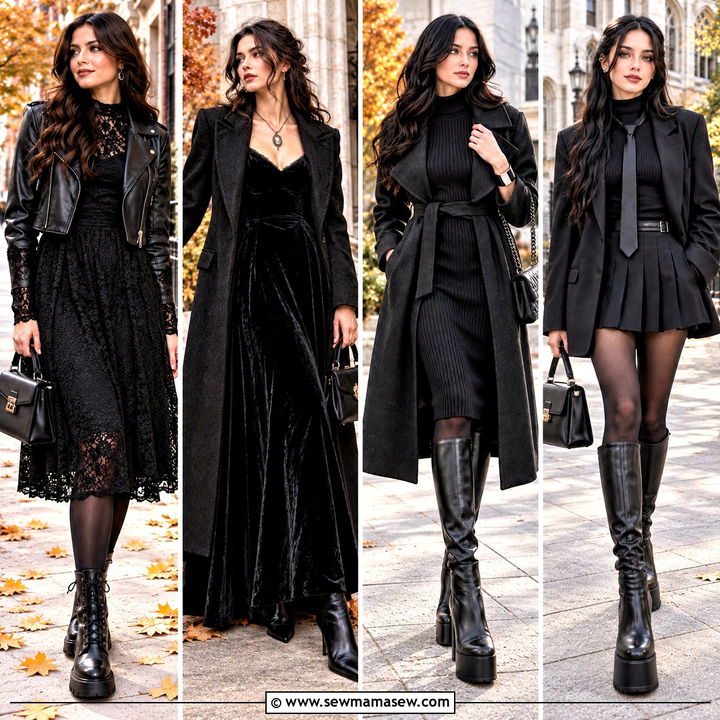
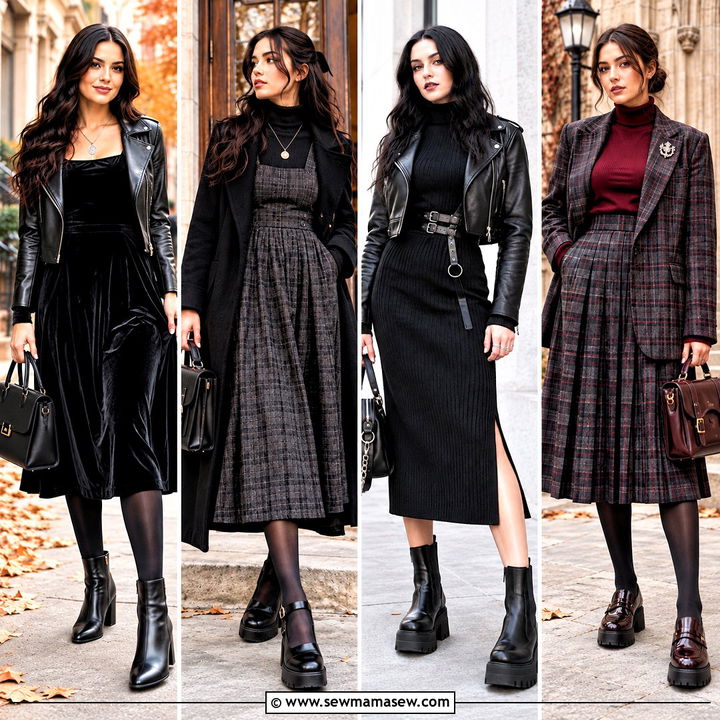
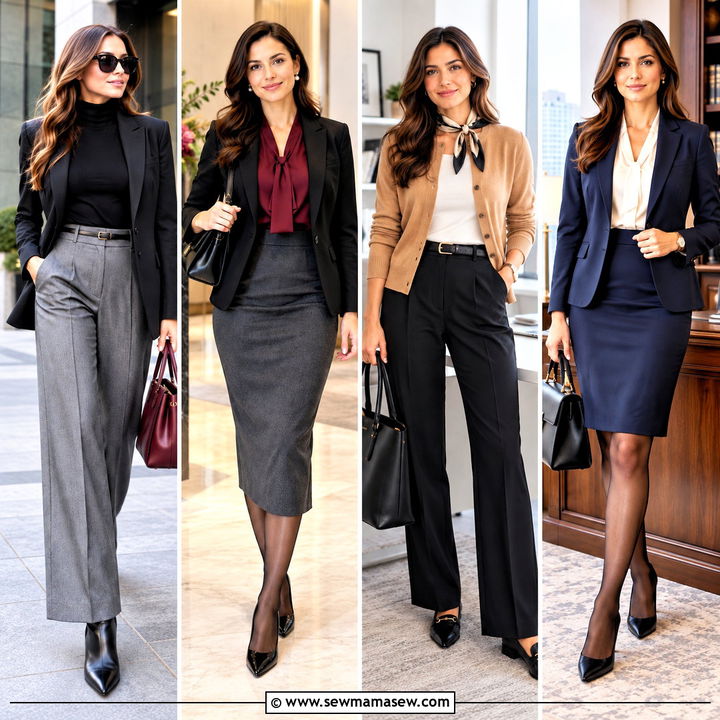
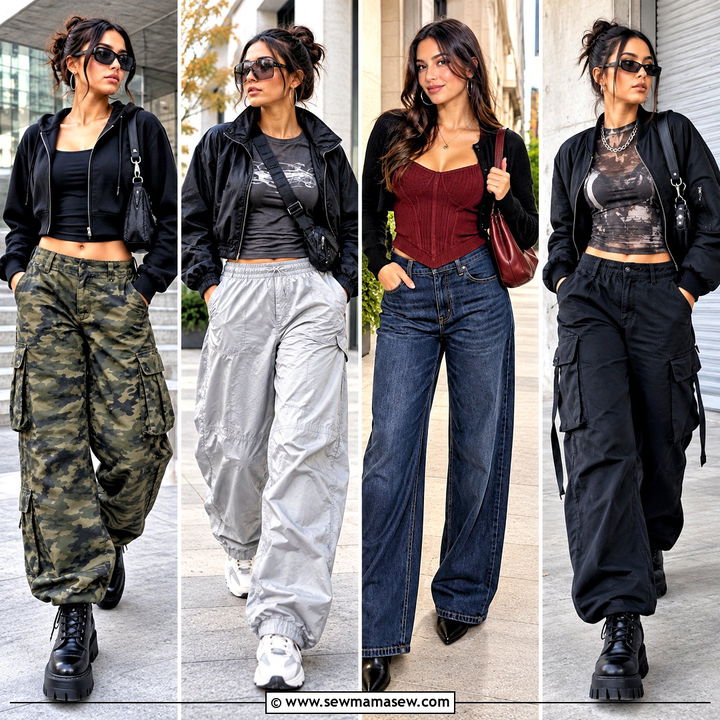
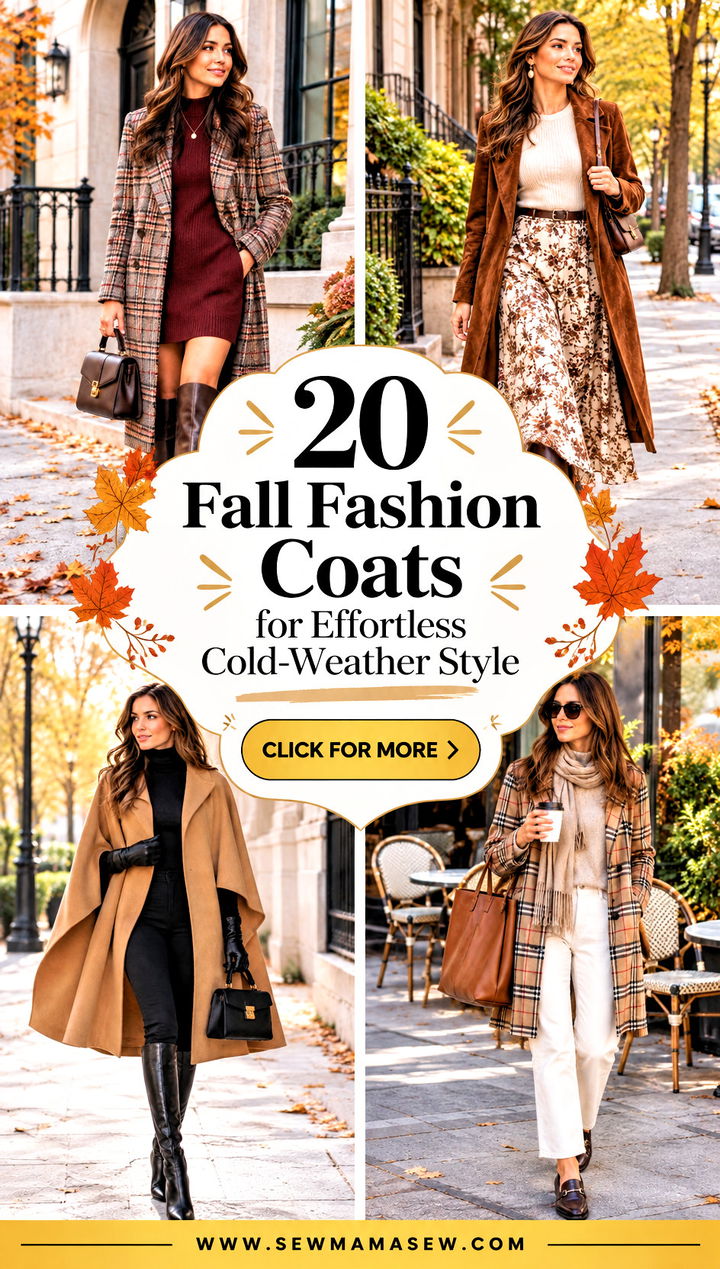
From October on, your coat is the first thing anyone sees, so it does more styling work than anything under it. I've put each of these twenty coats into a full outfit, shoes and bag included, so you can judge the whole picture rather than a coat on a hanger. The list covers the shapes showing up everywhere this fall: oversized trenches, barn coats, plain wool, suede, faux fur, heritage checks and a few in strong color. Some are workhorses you'll wear five days a week. A few are the coat you put on when you want to be noticed, and I've said along the way who each one suits and who should skip it.
How Much Coat Does a 45-Degree Morning Need?
Most coat mistakes I see aren't style mistakes. They're weight mistakes: heavy wool on a mild afternoon, or a thin trench in real cold. This is roughly how I match the coat to the forecast, though your own tolerance and the wind matter as much as the number.
- Around 55 to 65 degrees: a trench, cropped trench or barn coat. These block wind and light rain but have little insulation, so the warmth comes from the knit underneath.
- Around 45 to 55 degrees: a mid-weight wool coat, or a suede or leather coat over a real sweater.
- Below 45 degrees: dense wool, full shearling or a puffer. Length starts to matter here, because a coat that covers your hips keeps in far more heat than one that stops at the waist.
Wind changes everything. Loosely woven and boucle wools let air straight through, while a tightly woven, felted wool or a fully lined coat holds up on a gusty day. If you live somewhere damp and breezy, a lined mid-weight coat will serve you better than a thicker one without a lining.
1. Oversized Trench Coat With Straight-Leg Jeans
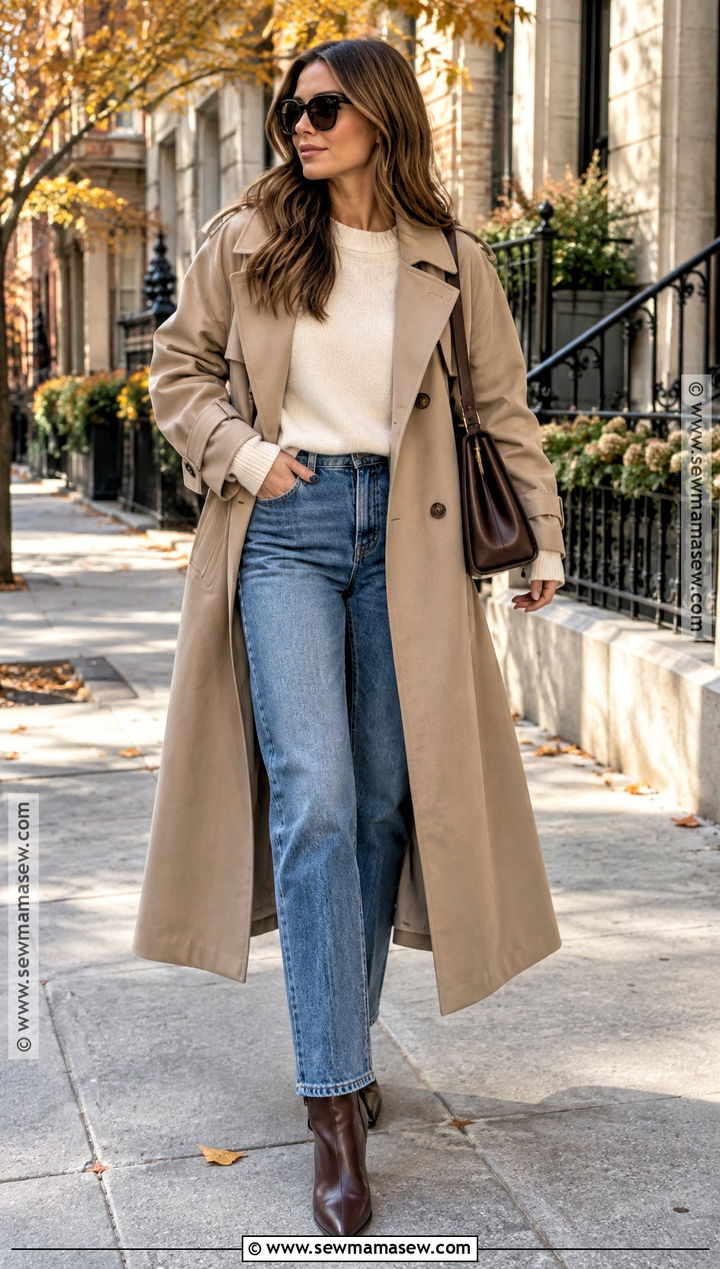
On a cool day that isn't cold yet, an oversized trench is what I'd grab. Stone or deep olive, cut with room for a sweater but not so much that the shoulders slide down your arm. Under it, a fitted crewneck and straight-leg blue jeans; that slim base is what stops the coat from swallowing you. Pointed ankle boots make it polished, white leather sneakers make it weekend. Leave it open in the afternoon and knot the belt loosely when the temperature drops, because buckling a trench belt tight on an oversized cut bunches the fabric at the back. On petite frames I'd keep the hem no lower than mid-calf.
2. Camel Wool Coat With Turtleneck And Trousers
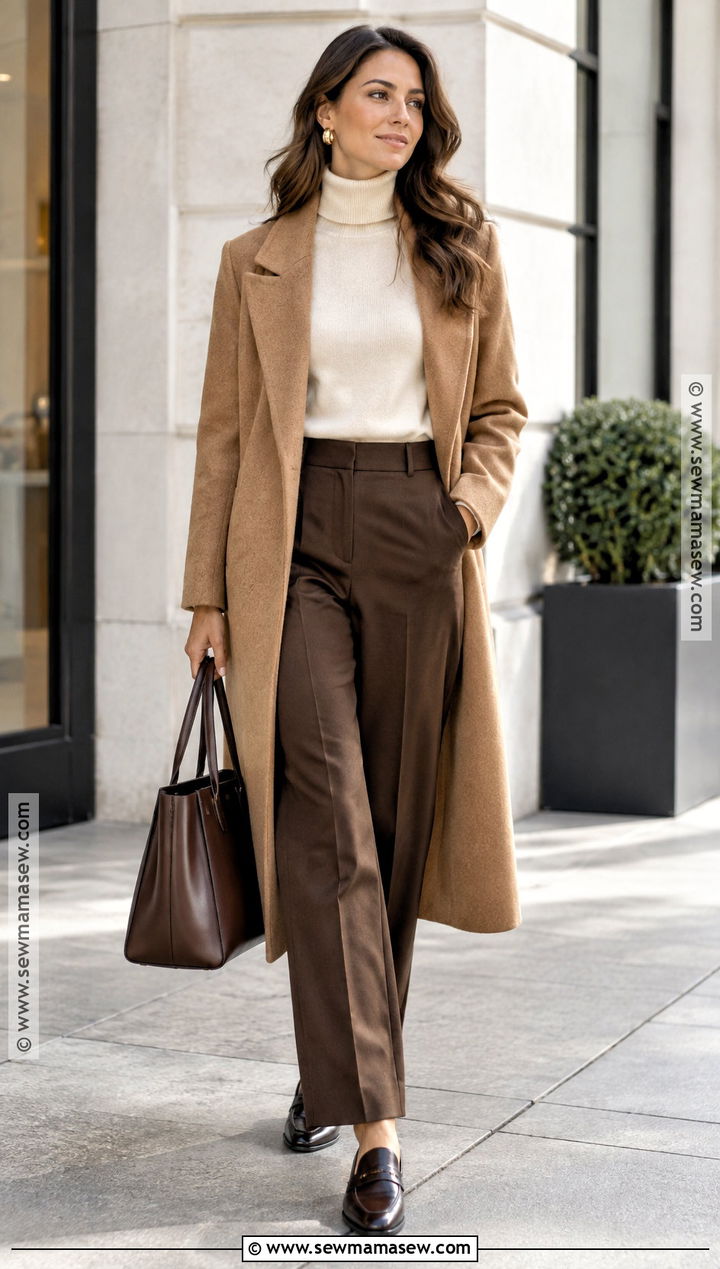
Camel wool is the coat I'd put most people in first. Knee-length or longer, clean lapels, straight cut. I pair it with a cream turtleneck and chocolate trousers so the outfit stays in one warm family without looking matched. Brown loafers for the office, low ankle boots when it's cold. Before buying, read the label: a coat with a high wool content holds warmth and its shape far better than one that's mostly polyester, which tends to pill where the bag strap rubs. If camel drains your face, go a shade deeper into caramel or tobacco.
3. Plaid Coat With Sweater Dress And Boots
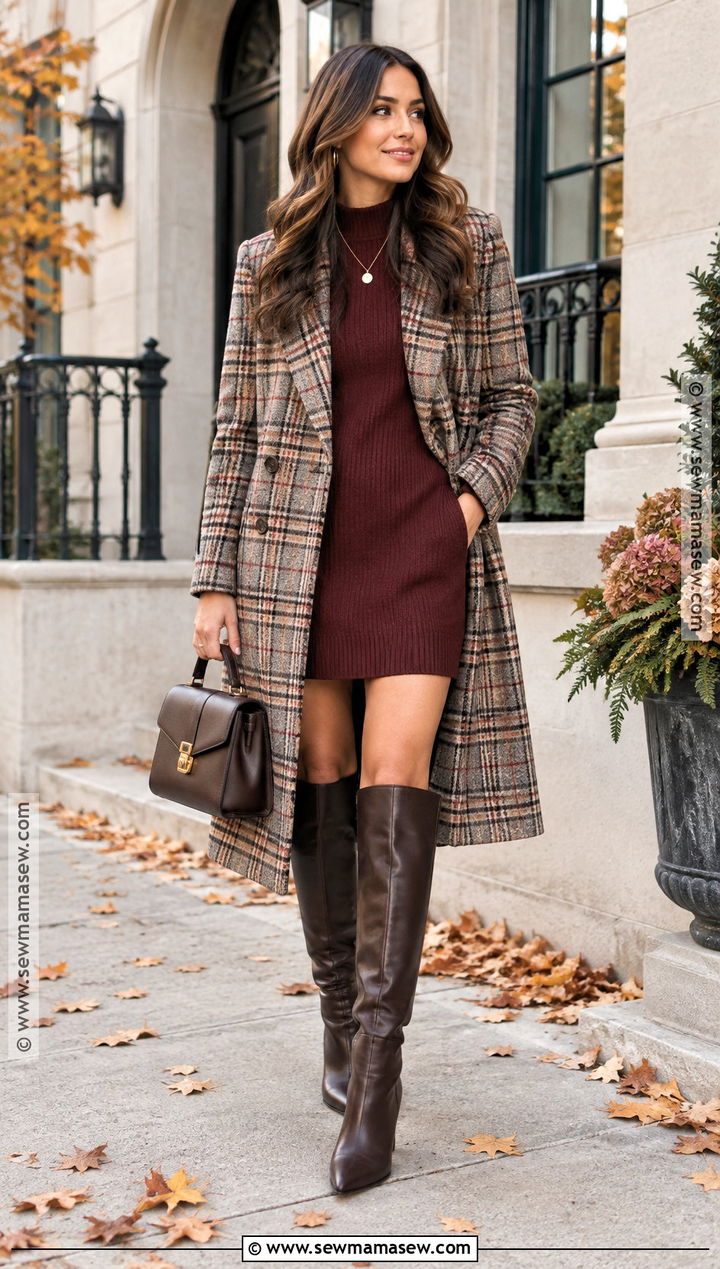
A plaid coat does all the talking, so the rest of the outfit should be quiet. Wear a sweater dress in black or burgundy that falls around the knee or mid-calf, then a long plaid coat that repeats one of the dress's colors somewhere in the check. Knee-high leather boots keep the lower half in one smooth line. If you want a waist, belt the dress underneath instead of cinching the coat; a tightly fastened plaid coat drags the pattern out of line across the front. A small check reads subtle, a wide heritage plaid reads bold. Either way, I'd keep jewelry small.
4. Barn Coat With Wide-Leg Jeans
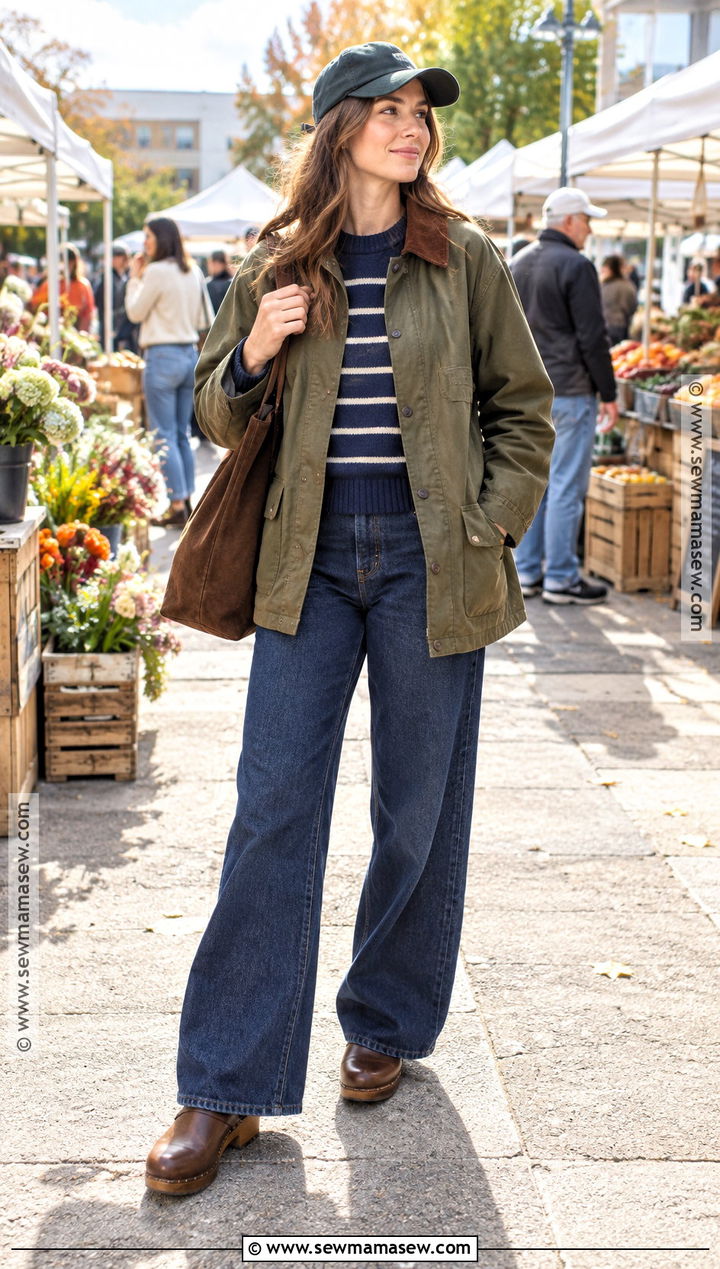
Barn coats are practical first, which is exactly why I like them. Olive or tan with a contrasting corduroy collar is the classic version. I put a striped knit or crisp button-down under it with dark wide-leg jeans, and the wide leg balances the boxy body so you don't end up a rectangle from shoulder to knee. Clogs or lace-up boots suit its working-clothes roots. Add a suede tote, and a cap on a lazy weekend. The barn coat is everywhere right now, but the shape has been around for generations and isn't going anywhere. A slightly cropped one shows more waist and makes the legs look longer.
5. Suede Coat With Midi Skirt
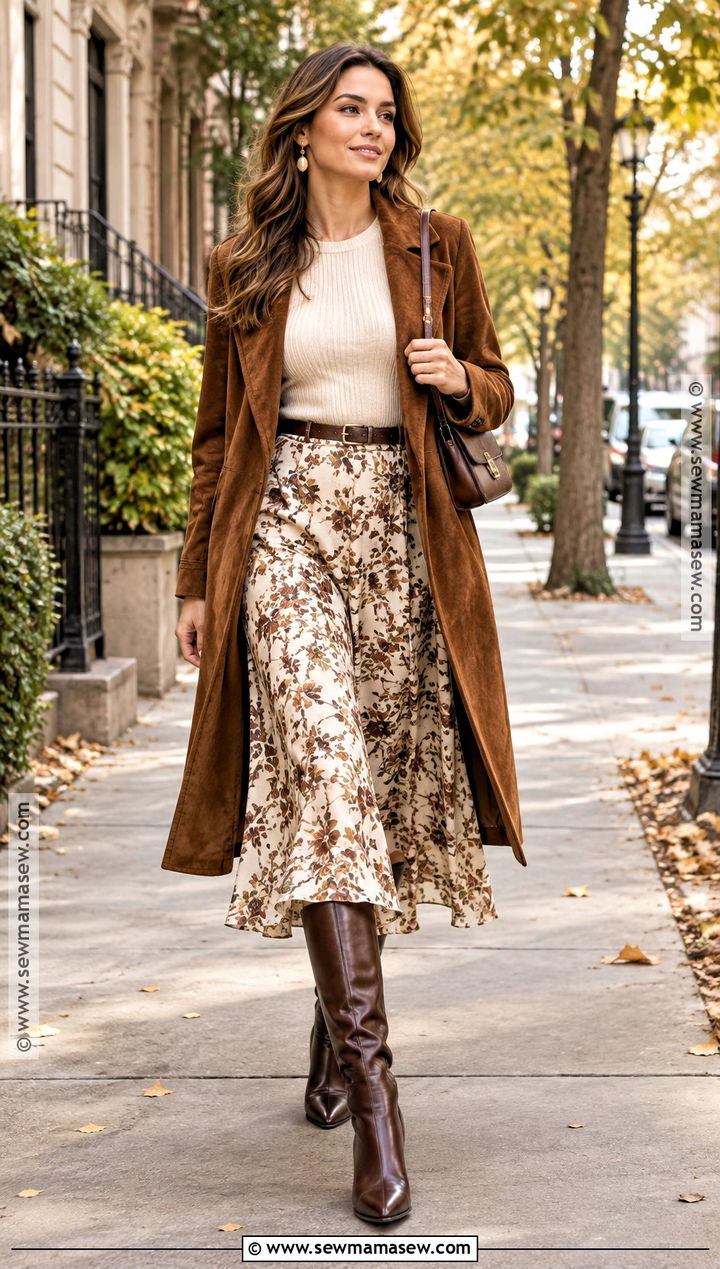
Suede adds a texture that wool can't. I'd choose a hip-length or mid-thigh coat in chestnut or dark olive, over a fine-knit top and a flowing cream midi skirt. Pointed knee-high boots keep it streamlined. Real suede is soft and moves well, but it marks in rain and needs a protector spray and a brush now and then; good faux suede shrugs off weather and is easier to live with. A small shoulder bag and a narrow belt are all the extras it wants. This is a coat for creative offices and family lunches, not for a downpour.
6. Faux Fur Coat With Black Trousers
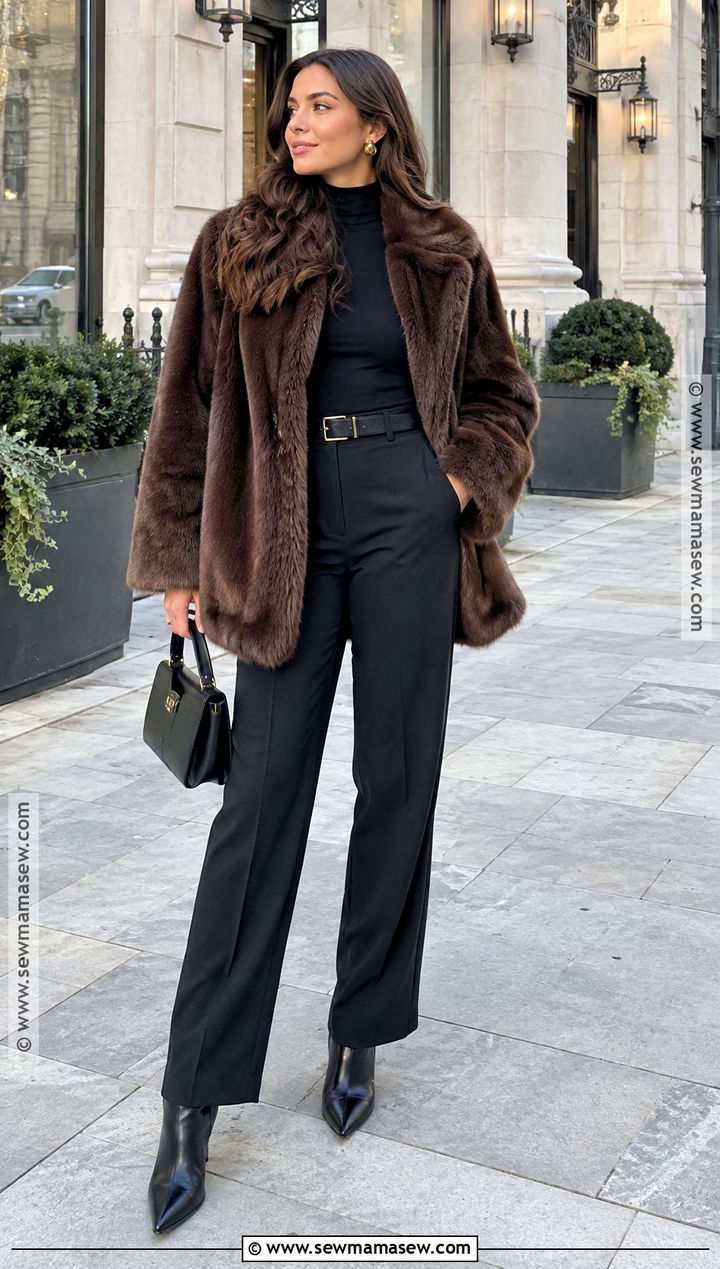
Faux fur looks dramatic, so I keep everything under it black and plain. A cropped or hip-length coat in chocolate or cream over a black mock-neck and high-waisted black trousers gives one long dark column with the texture sitting on top. Pointed black boots, a compact bag, sculptural earrings. Don't add a second big texture, since one fluffy thing is enough. Straight black jeans make it more relaxed. Pile length changes the look a lot: short, dense pile reads sleek, while long shaggy pile adds real width at the shoulders, which I'd avoid if you're already broad up top.
7. Leather Trench Coat With Knit Dress
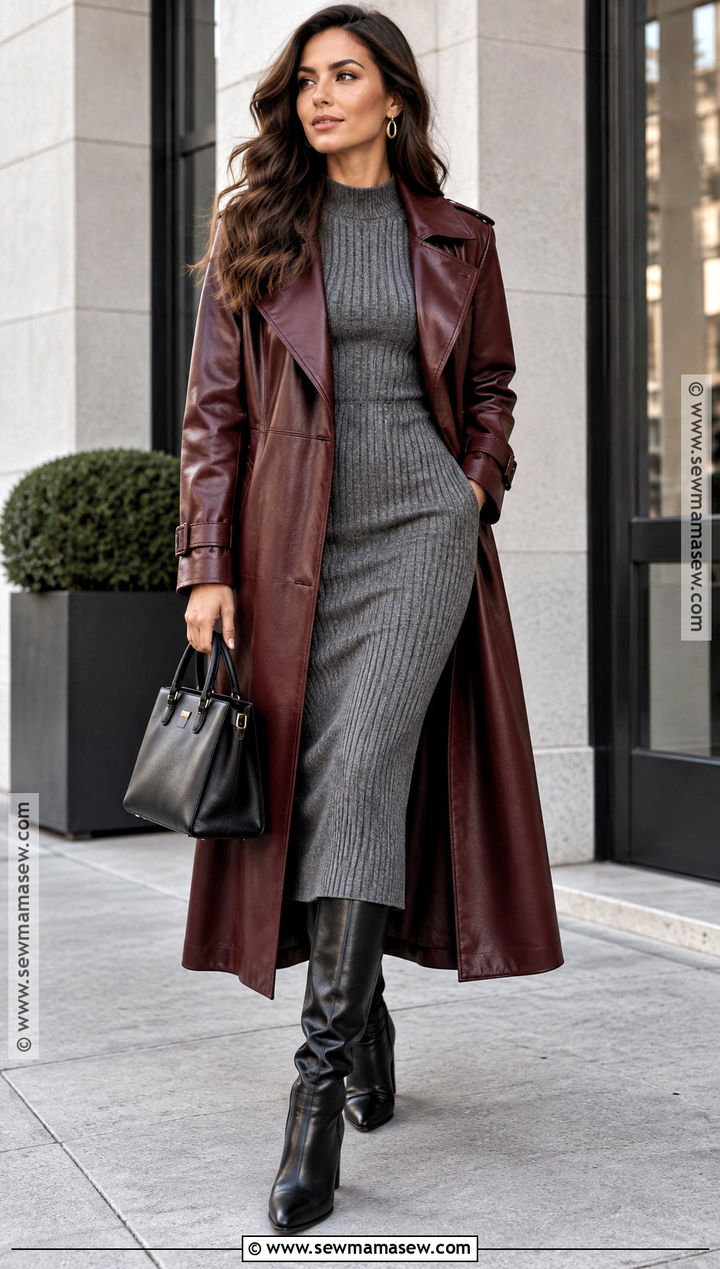
A leather trench sharpens a soft knit dress. Long black or oxblood, with a defined collar and a belt, over a fitted ribbed midi in gray or cream. Sleek knee-high boots link hem to shoe so the outfit doesn't feel bottom-heavy. Leather is heavier than it looks on a hanger and holds its own shape around the body, so try it on with the dress you'll actually wear under it. If a double-breasted version feels like armor, a single-breasted cut with little hardware reads lighter. I'd wear this to dinner or a gallery opening, anywhere dressy but not formal.
8. Scarf Coat With Leggings And Riding Boots
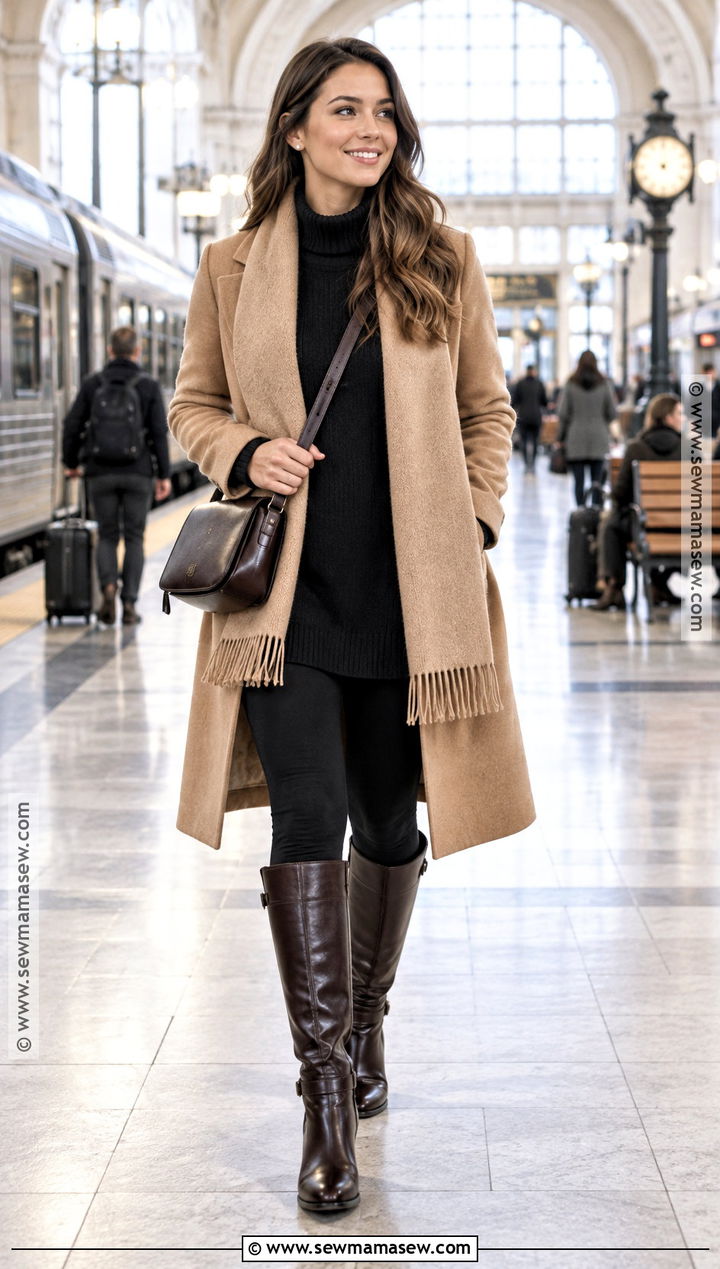
What could be easier than a coat that comes with its own scarf? The attached scarf keeps the neck warm and means one less thing to coordinate. In cream or navy, I pair it with a long knit tunic and properly thick leggings, ponte or fleece-lined. Thin athletic leggings show every line under a tunic and look underdressed next to wool. Knee-high riding boots ground the softness and keep wind off your shins. Wrap the scarf loosely in the morning and pull it close as the day cools. The top half carries a lot of volume, so keep the bottom slim.
9. Cocoon Coat With Monochrome Knitwear
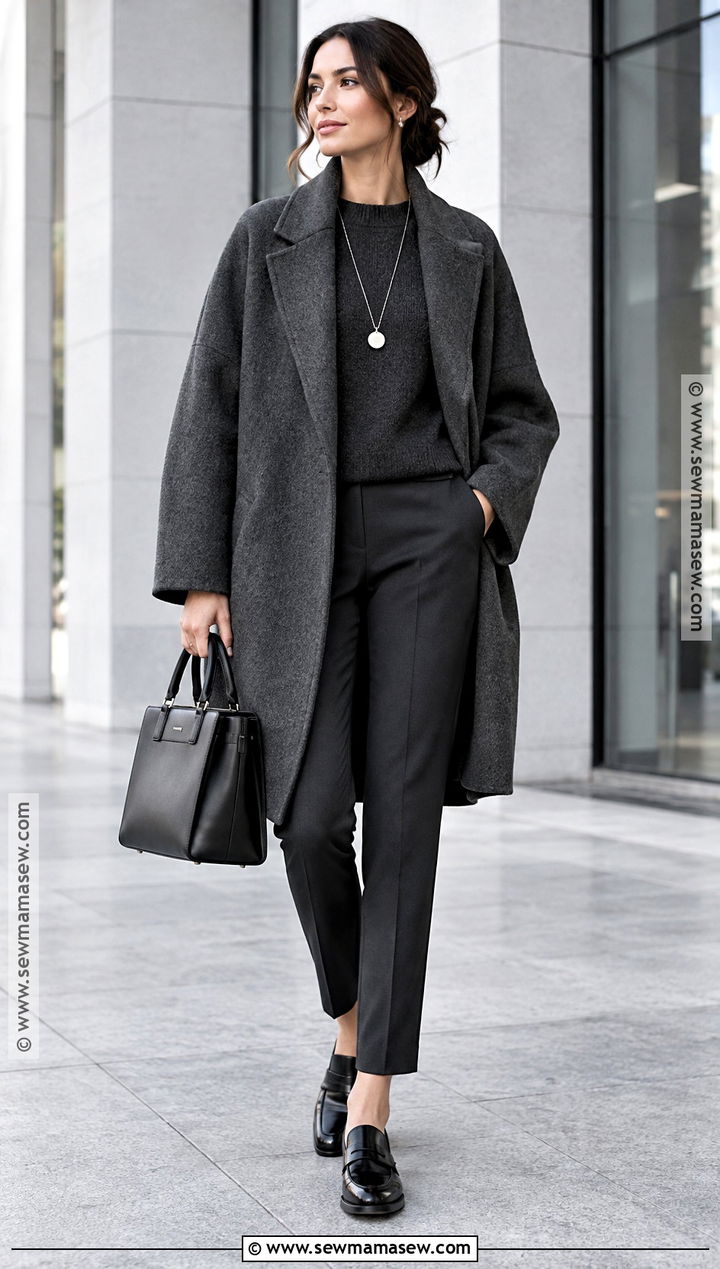
A cocoon coat curves out at the back and in at the hem, and that shape wants a simple outfit under it. In charcoal or oatmeal, I build a monochrome base: a fine-knit sweater and straight pants in the same shade, so you get one clean vertical line. Loafers in mild weather, ankle boots when it's colder. A rectangular bag gives some structure against all those curves. My fit check here is the sleeves. Room to layer, yes, but if they cover your knuckles, the coat is too big. Petite women look best when it ends near the knee; taller women can go longer.
10. Cape Coat With Knee-High Boots
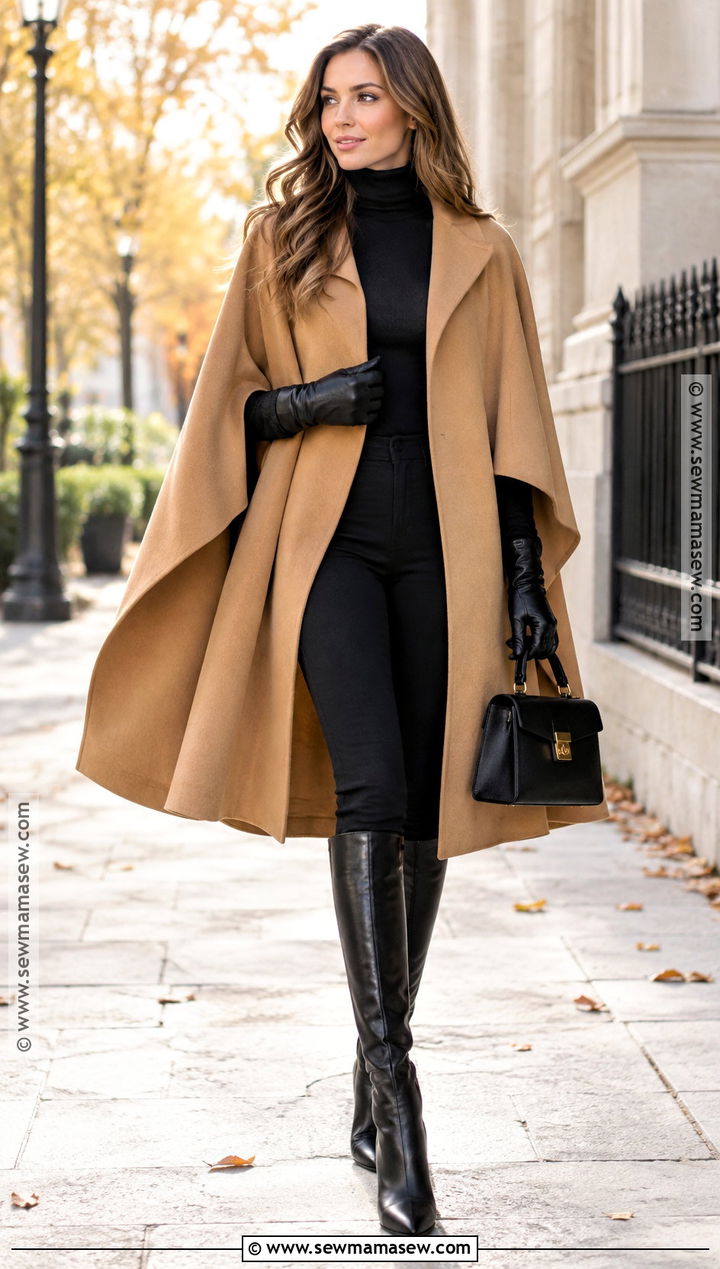
Cape coats move nicely, but they need a slim base or you look like a tent. A fitted turtleneck and slim straight-leg pants under a camel or black cape, with knee-high boots to stop the shape going top-heavy. Gloves matter more than with any other coat, because the arm openings let cold air in at the wrist. Carrying a bag is the awkward part: a crossbody worn under the cape or a small top-handle in your hand works, while a big shoulder tote crushes the drape. Shorter capes suit petite frames, and longer, softer ones suit tall women.
11. Peacoat With Striped Sweater And Jeans
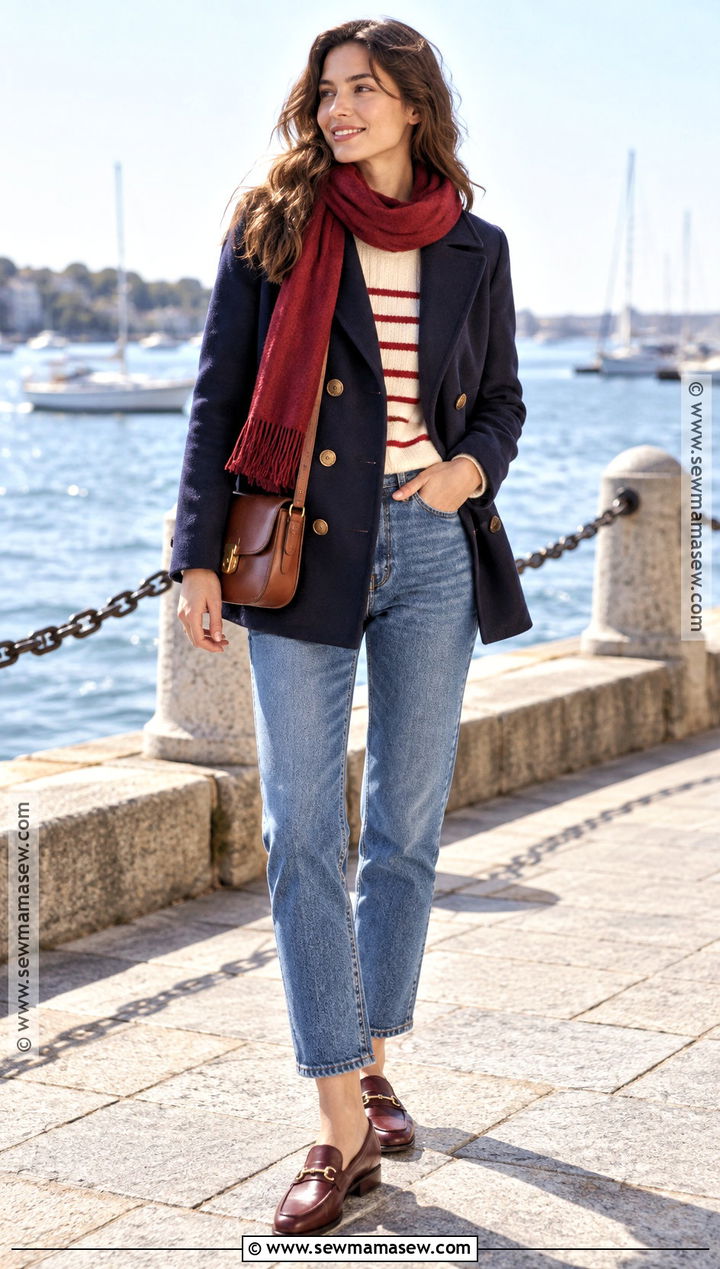
Few outfits are as reliable as a navy peacoat, a striped sweater and good jeans. Make sure the coat closes across the chest without the buttons pulling and ends around the upper thigh. Underneath, a cream sweater with navy or red stripes and straight ankle jeans. Burgundy loafers dress it up; white sneakers dress it down. Keep the sweater fine, because a chunky knit under a double-breasted coat makes the front strain and gape. If you have a fuller bust, a single-breasted coat in the same style gives a smoother line, since a double-breasted front puts an extra layer of wool right across the chest.
12. Belted Wrap Coat With Satin Skirt
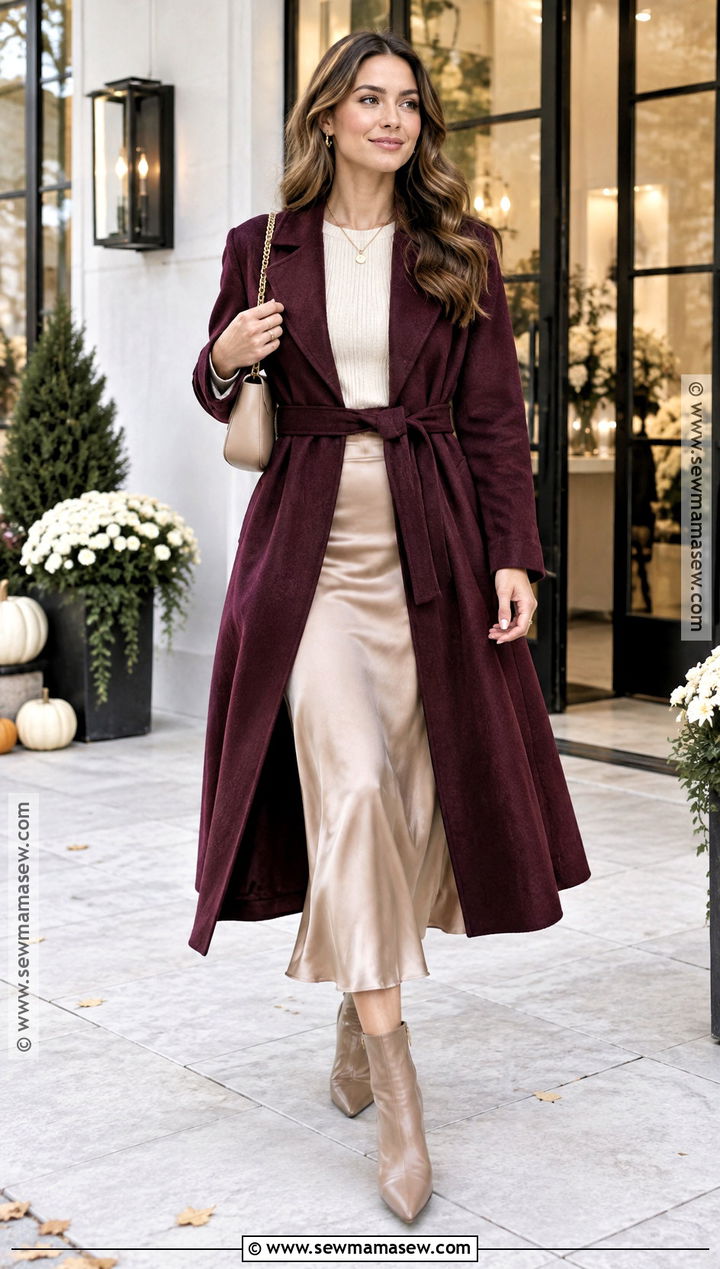
A wrap coat and a satin midi both move, which is why they work together. Start with a belted wool coat in camel or plum and a lightweight fitted sweater tucked into a satin skirt in a tonal shade. Pointed ankle boots give it structure, and slingback flats work on milder days. Tie the belt slightly off-center and loosely. Pulled tight, it gathers the wool into a lump at the front. Satin clings to tights and picks up static, so a smooth slip underneath helps. It's a good outfit for a presentation or a birthday dinner, the middle ground between casual and formal.
13. Long Duster Coat With Flare Jeans
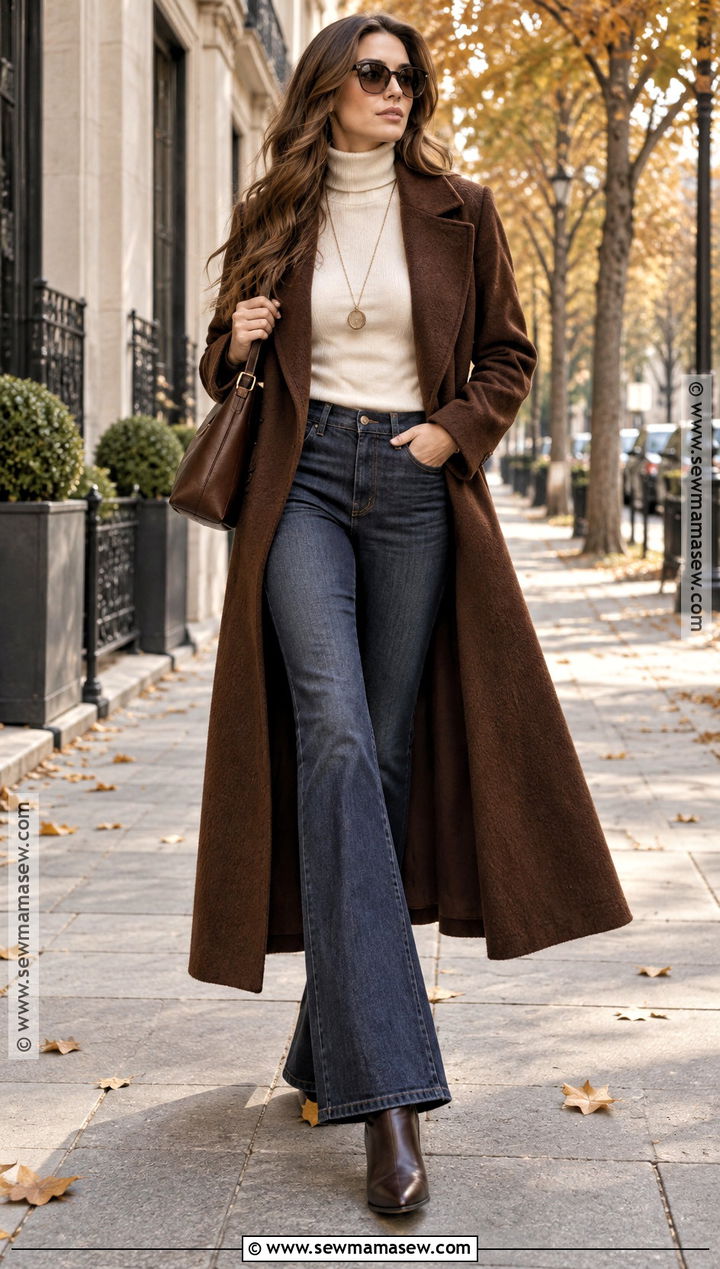
A duster and flares make one long line with a little seventies in it. Pick a wool-blend or brushed coat in chocolate or deep burgundy, with a fitted turtleneck tucked in so there's still a shape under all that length. Dark flare jeans should nearly skim the ground in heeled ankle boots, and I always pin the hem with the boots on, never barefoot. A medium shoulder bag and a long pendant repeat the vertical line. Neither the jeans nor the coat should drag on the pavement. Petite women can get the same effect with a calf-length duster and a gentler flare.
14. Cropped Trench Coat With Tailored Pants
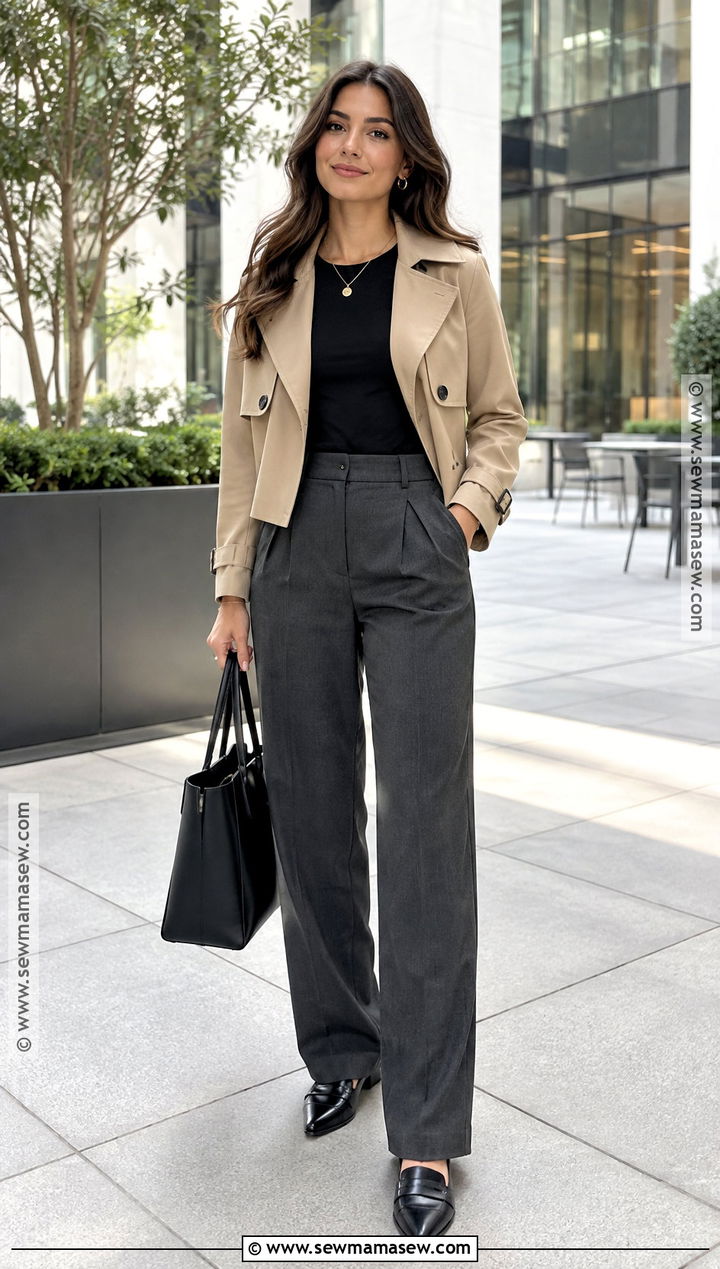
A cropped trench keeps the collar, belt and storm flap of the classic in a shorter body. Beige or navy over a fitted crewneck and high-waisted tailored pants: the short coat shows the waist, and full-length trousers keep the leg long. Pointed loafers or low kitten-heel boots, plus a structured work bag. Tuck the top in. Otherwise the coat, the top and the waistband all end at different points and the proportions blur. This is the trench I suggest to petite women who feel buried in long ones, and it suits a commute or a business-casual office.
15. Animal Print Coat With All-Black Outfit
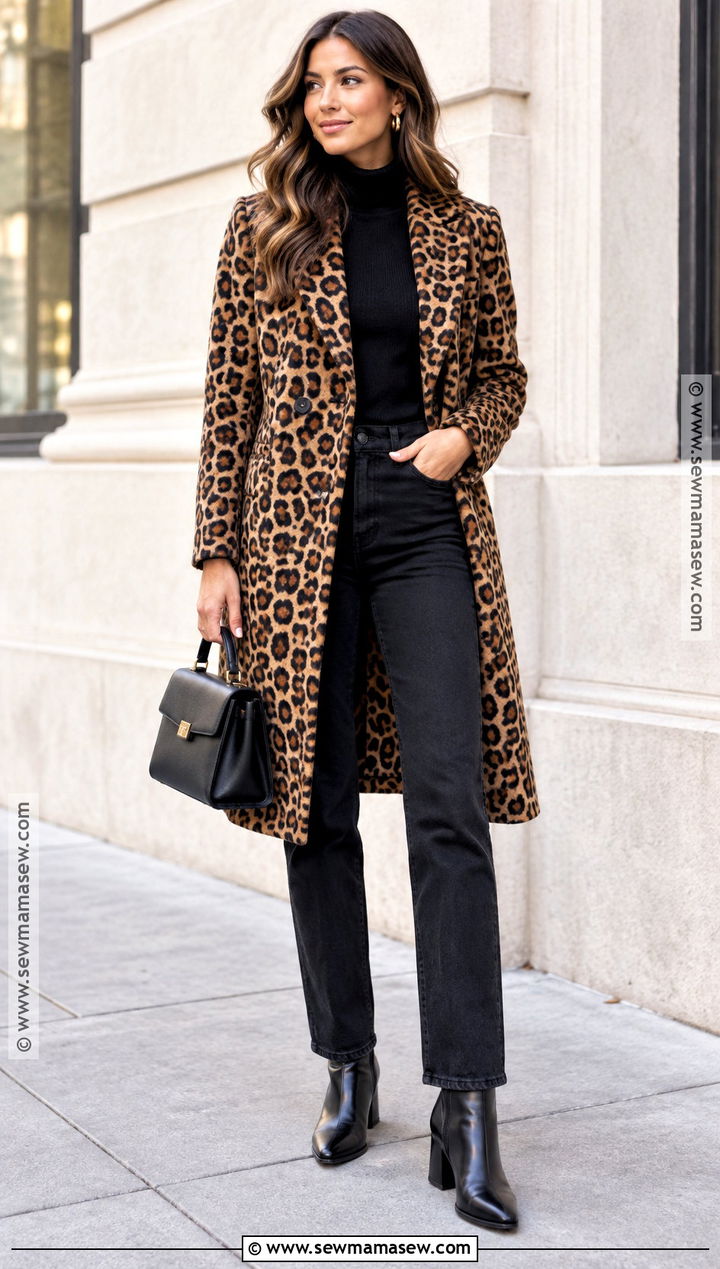
An animal print coat is easy once everything else is black. Put a leopard or abstract spotted coat over a black turtleneck and straight black jeans, with plain black ankle boots and a structured black bag. Small gold earrings pick up the warm tones in leopard. Pick a simple shape, a car coat or single-breasted wool, so the print isn't fighting extra seams and flaps. A shorter coat with softer markings is the gentler way in. I'd skip printed shoes and bags here. One print is a statement; two starts to look like a theme.
16. Brocade Coat With Simple Separates
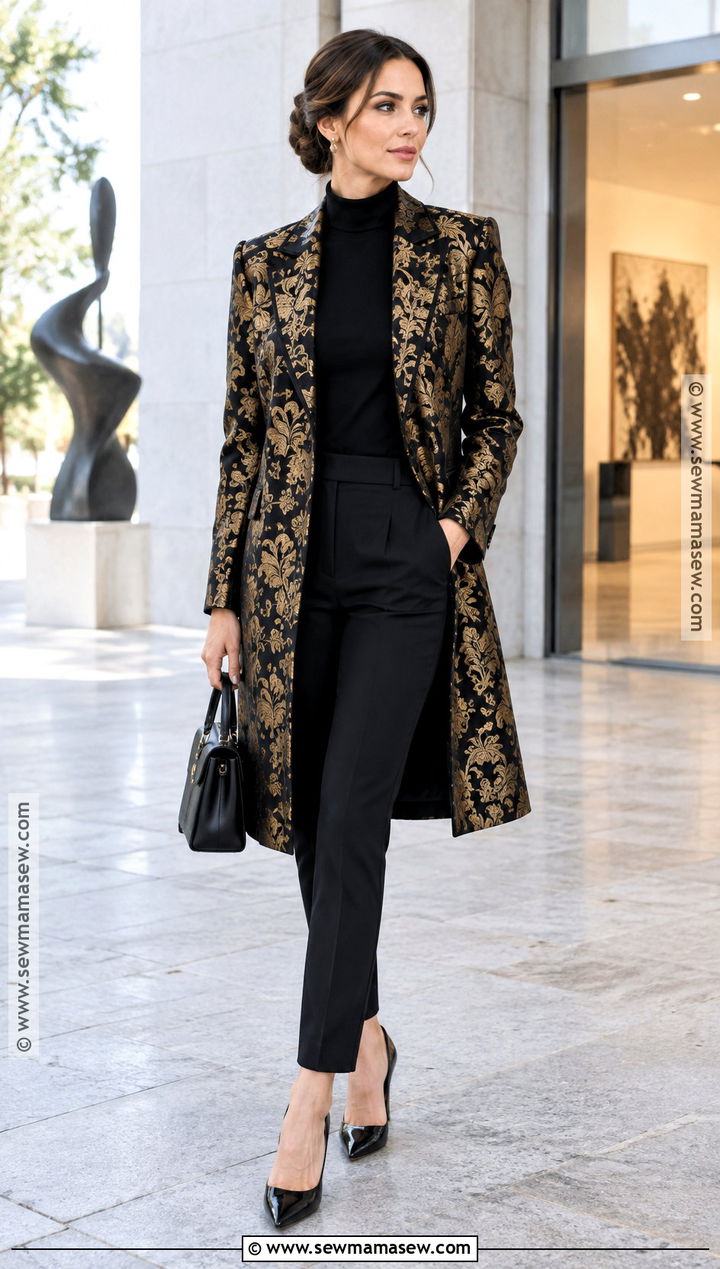
Brocade makes the coat the entire outfit. Look for a knee-length coat with a controlled metallic thread or a woven floral you can see from across a room. Decorative coats strong enough to be the main event are having a real moment, and the trick is keeping the rest plain: a black mock-neck and tailored cigarette pants. Pointed pumps or sleek ankle boots, a small solid bag, almost no jewelry. Brocade is stiff, so the shoulders must fit exactly. An oversized brocade coat stands away from the body like cardboard instead of draping. I'd wear it to the theater or a holiday dinner.
17. Puffer Coat With Matching Athleisure
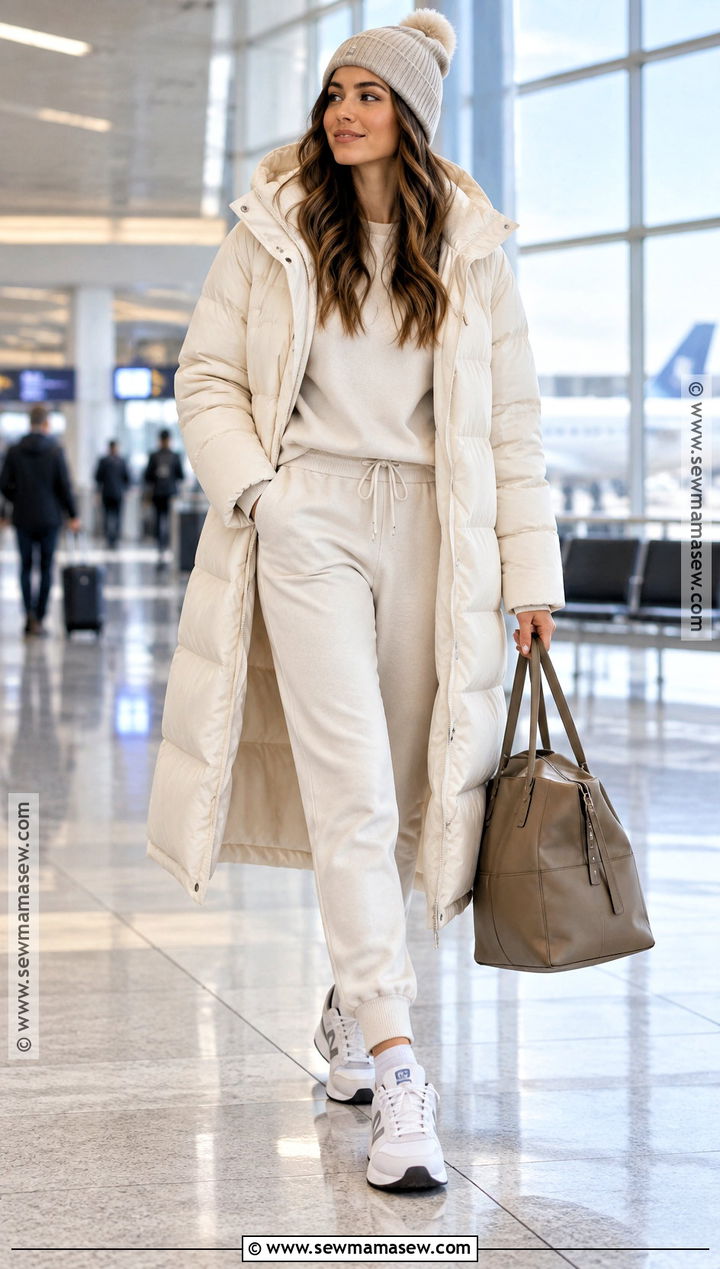
A sleek puffer over matching athleisure looks put together rather than rushed. Choose matte black or olive with clean quilting, knee-length or mid-thigh, over a matching sweatshirt and tapered joggers. Supportive sneakers, a knit beanie and a belt bag finish it. One color under the coat gives a longer line. Petite women look better in narrow quilting channels and a shorter hem, since wide baffles add bulk fast. Zip it over the sweatshirt and reach forward: if the back pulls or the sleeves ride up, size up. It's my default for airports and cold dog walks.
18. Shearling Coat With Corduroy Pants
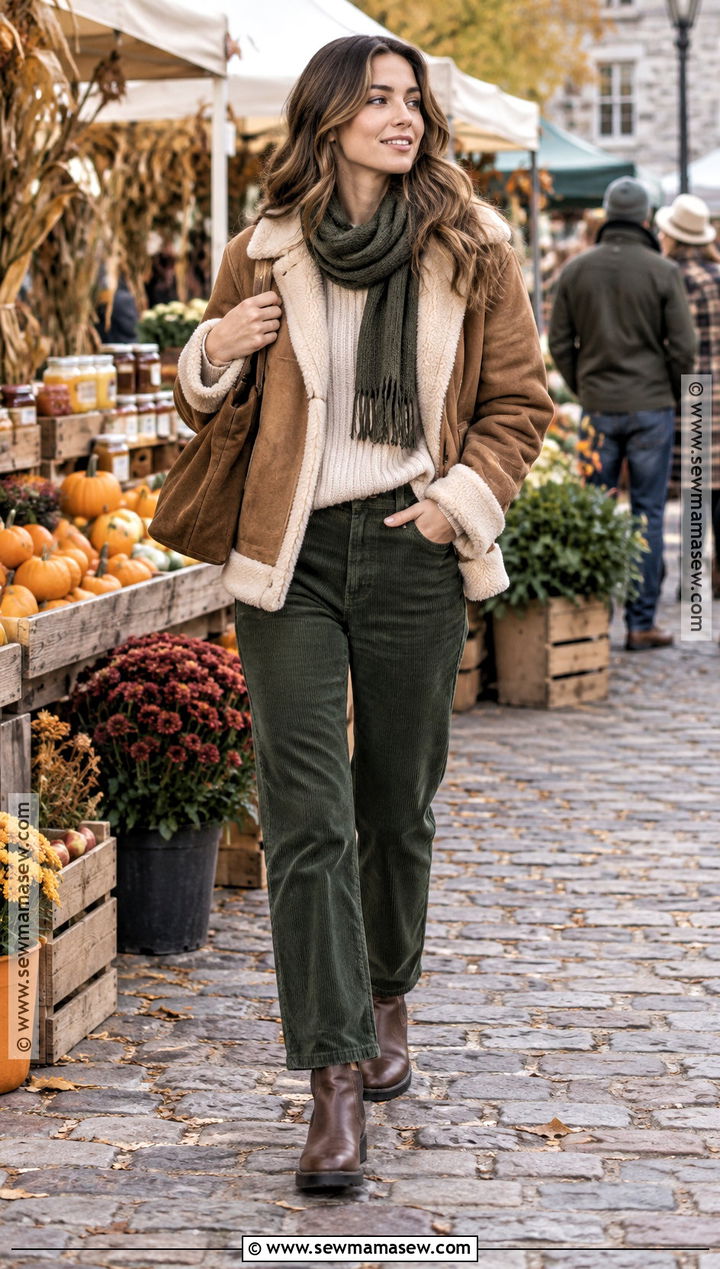
Shearling and corduroy share the same earthy, touchable feel, so they sit well together. A brown or cream shearling coat at the hip or upper thigh, over a fitted ribbed sweater in rust or forest green. Fine-wale corduroy keeps the pants from adding bulk; wide wale is warmer but much chunkier. Sturdy leather ankle boots, a suede bag and a knit scarf. Stay in earth tones so the textures look related. Full shearling is heavy and very warm, so if it feels like too much, a coat with shearling only at the collar and cuffs gives the look at a fraction of the weight.
19. Red Coat With Gray Basics
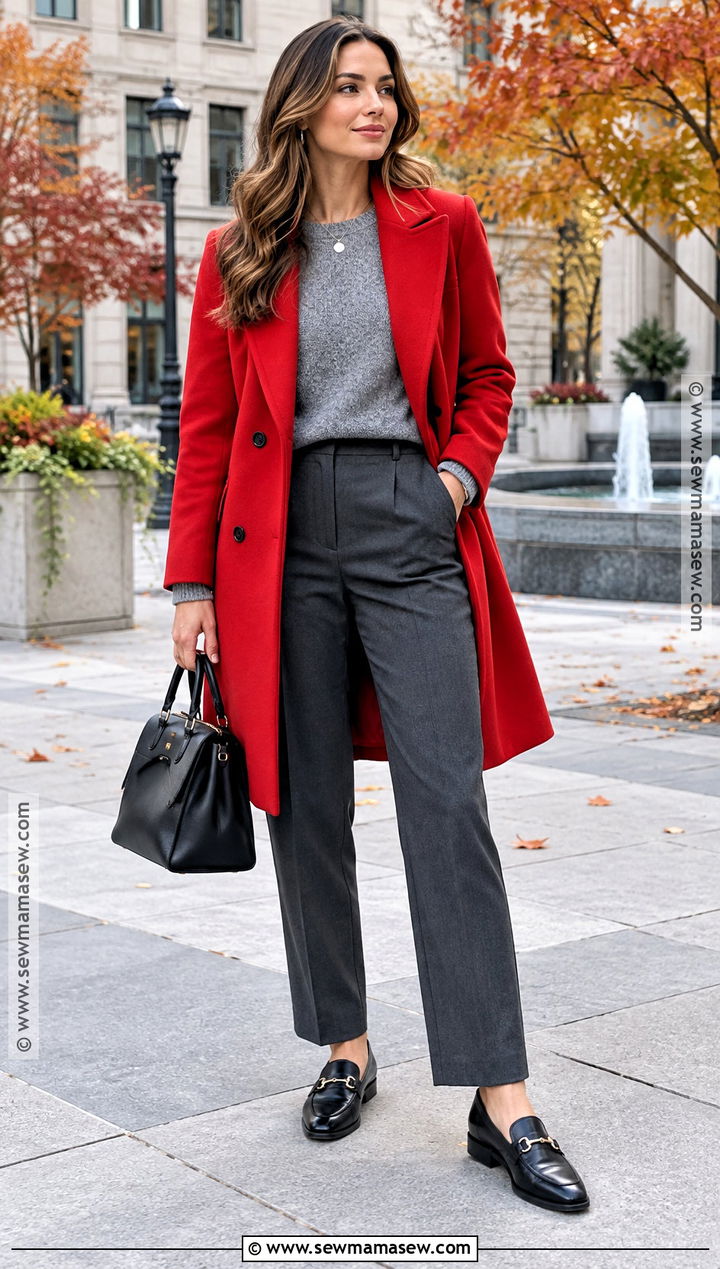
A red coat makes gray clothes look deliberate. Pick the red to suit your undertone: cool skin usually looks best in cherry or cranberry, warm skin in tomato or brick. Over a heather gray sweater and charcoal tailored pants, it's a sharp contrast without being loud. Black loafers and a black structured bag keep it grounded. Don't add a second bright color. On weekends, swap the trousers for gray straight jeans and clean leather sneakers. Red has become a genuine alternative to camel and black in outerwear, and it goes further than people assume as long as everything around it stays quiet.
20. Reversible Car Coat With White Jeans
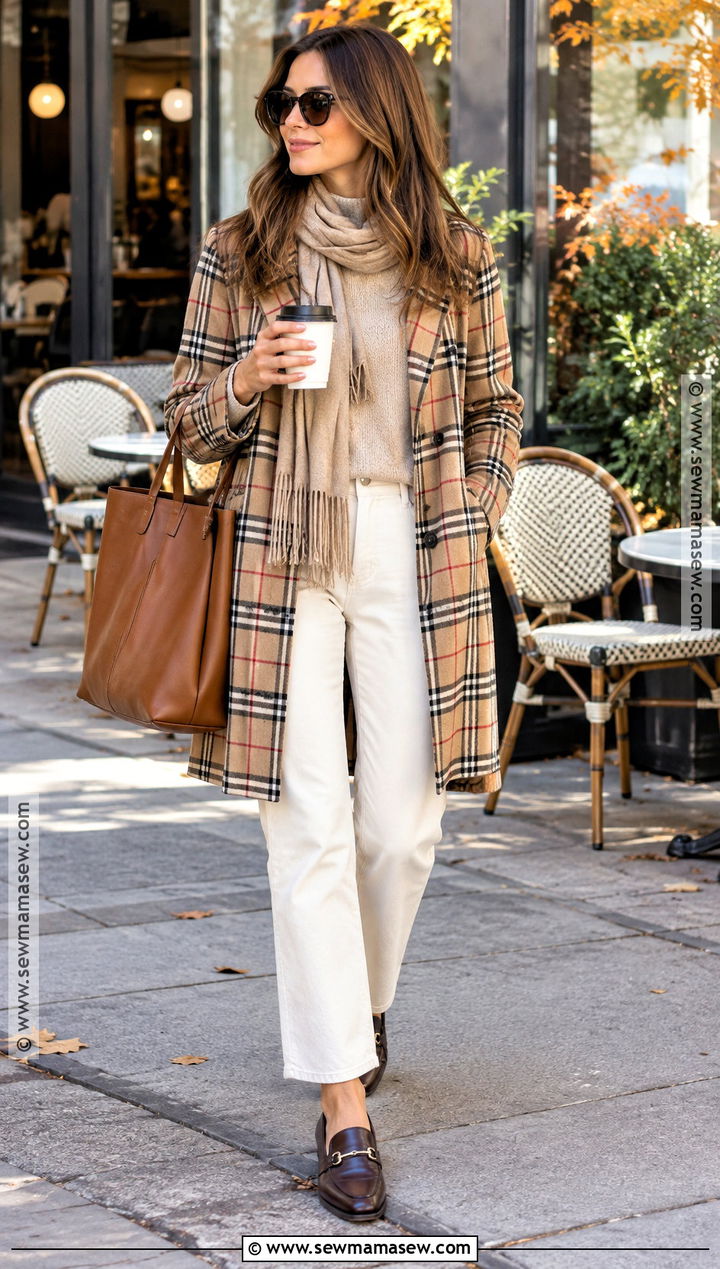
A reversible car coat is two coats in one, which helps in a small closet or a carry-on. Look for a mid-thigh shape with a solid neutral on one side and a check on the other. With an oatmeal sweater, ecru jeans and dark brown loafers, a cognac tote and a light scarf connect the pale base to fall's deeper shades. Ecru jeans work after summer when the denim is heavy enough that pockets don't show through. Wear the check out on casual days and the plain side for something quieter. Inspect the seams on both faces before buying, because on cheaper reversibles one side often looks clearly like the inside.
Fitting a Coat Over Your Thickest Sweater
I always wear or bring a chunky sweater when I try on coats. A coat that fits over a T-shirt in the shop is a coat you can't button in November.
Shoulders
On a tailored coat, the seam should sit at the edge of your shoulder bone. Dropped-shoulder and oversized cuts fall lower by design, but on a fitted style a seam hanging down the arm means the coat is simply too big. Shoulders are the hardest and most expensive alteration, so I don't buy a coat hoping to fix them.
Sleeves
With your arms relaxed, the sleeve should cover the wrist bone. Then bend your elbows and reach forward as if holding a steering wheel. If the sleeves ride up well past your wrist, the cold gets in all day. Shortening a sleeve is routine tailoring; lengthening one often isn't possible.
Buttons and the back
Button it fully and give yourself a hug. If the buttons pull into X-shaped creases or the back feels tight across the shoulder blades, go up a size. The lapels should lie flat on the chest rather than flipping open.
Buy the Plain Coat, Then the Interesting One
A good coat gives familiar basics a direction, and you'll see it in the mirror every day until spring. If you buy only one this season, make it a workhorse: a trench, a wool coat, a peacoat or a barn coat, depending on your climate and how you get around. Before paying, check that the shoulder seam sits on your shoulder and that the coat closes over your thickest sweater. Read the care label too, since some wool coats are dry-clean only. Once the everyday coat is sorted, the print, the faux fur or the red coat is where you get to have fun.
Related posts: