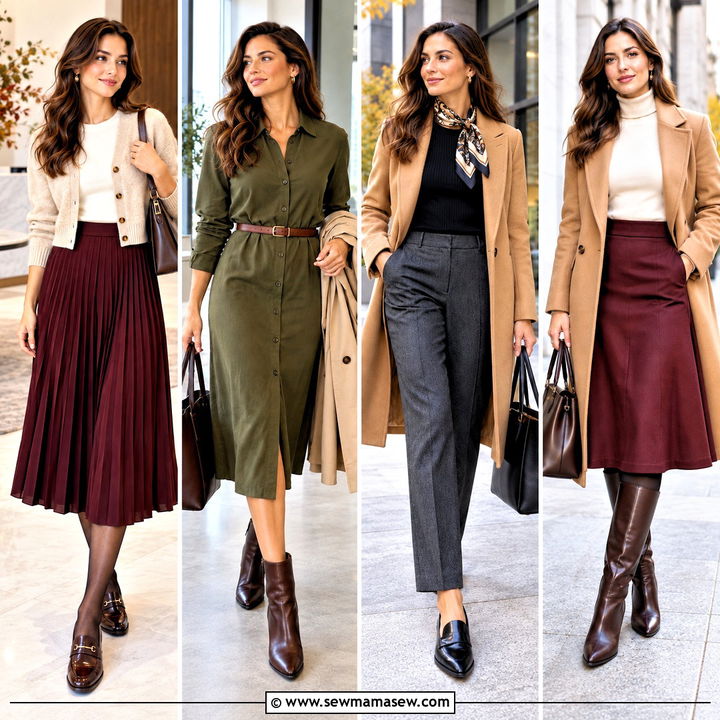
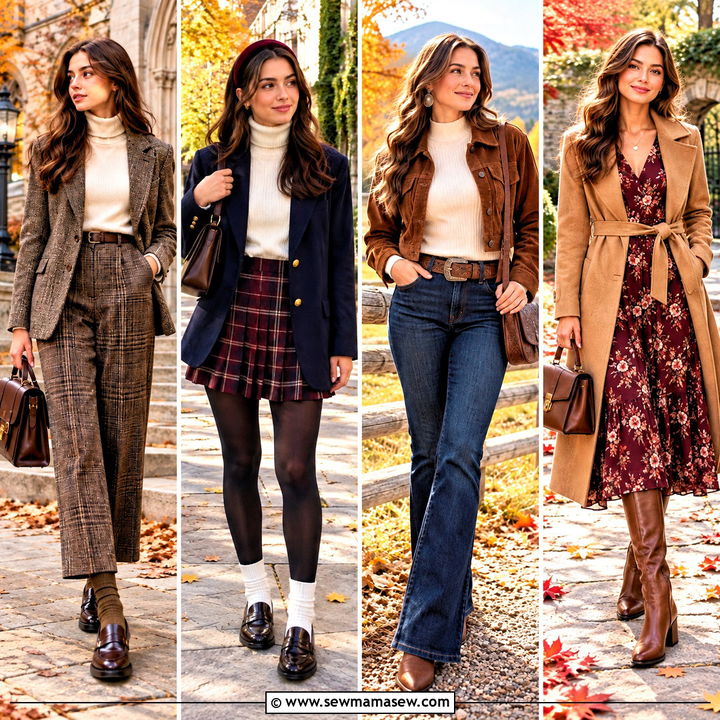
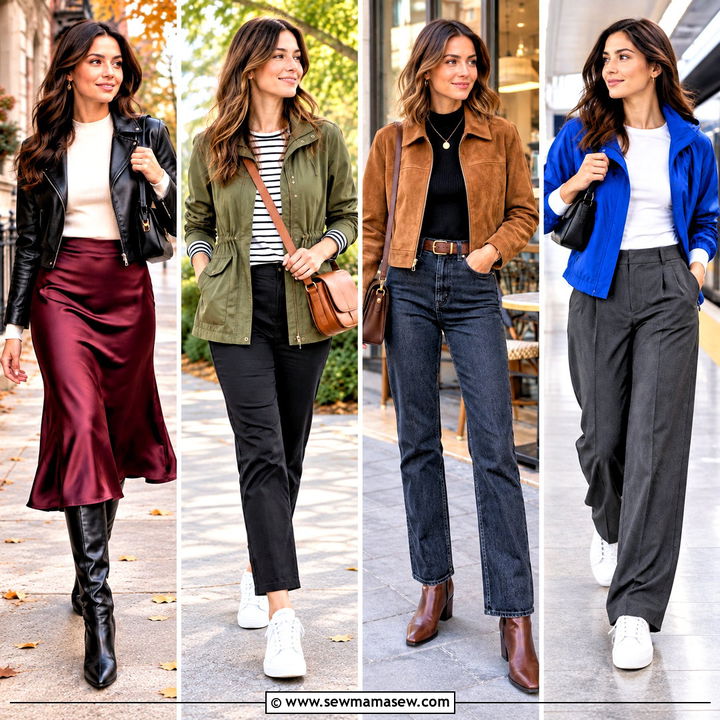
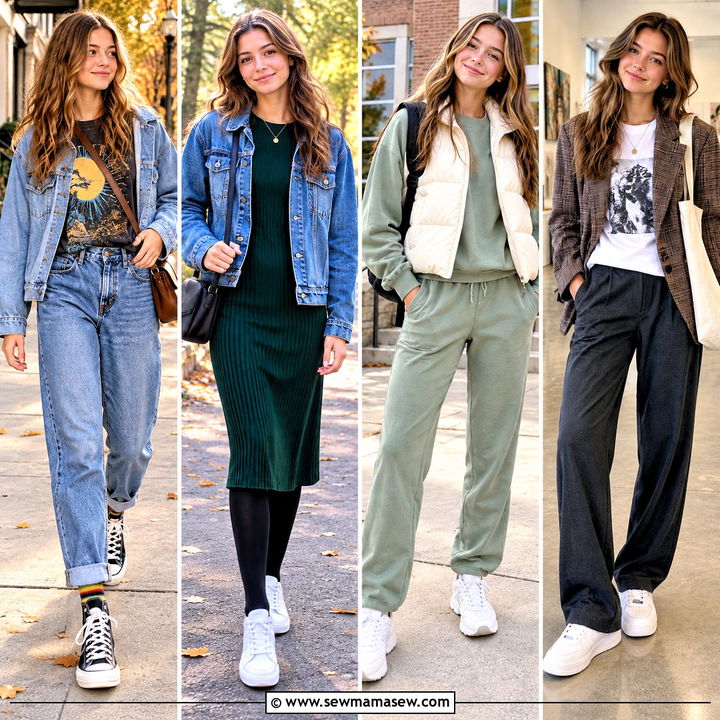
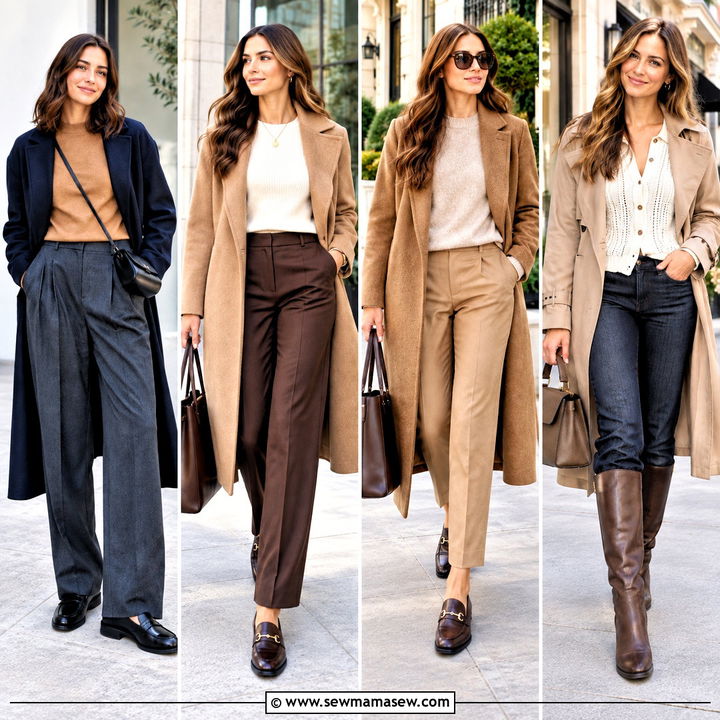
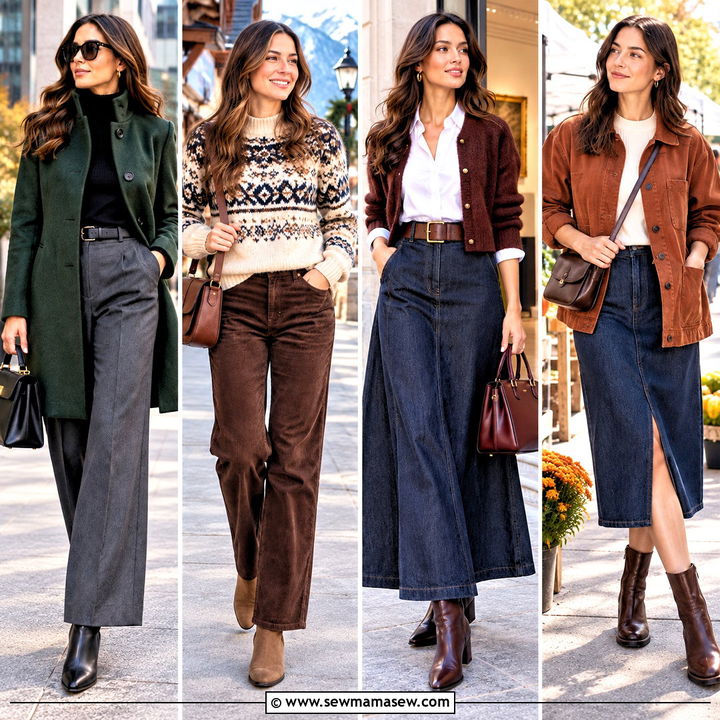
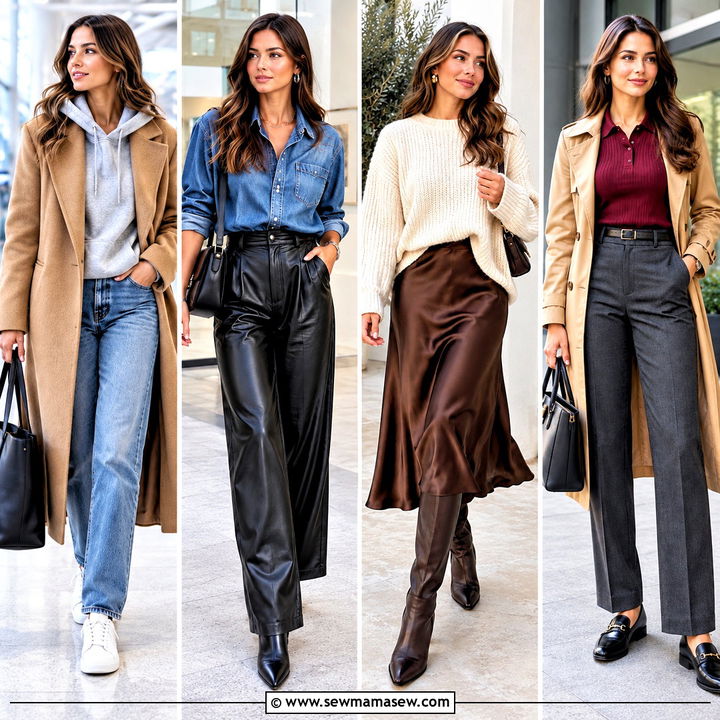
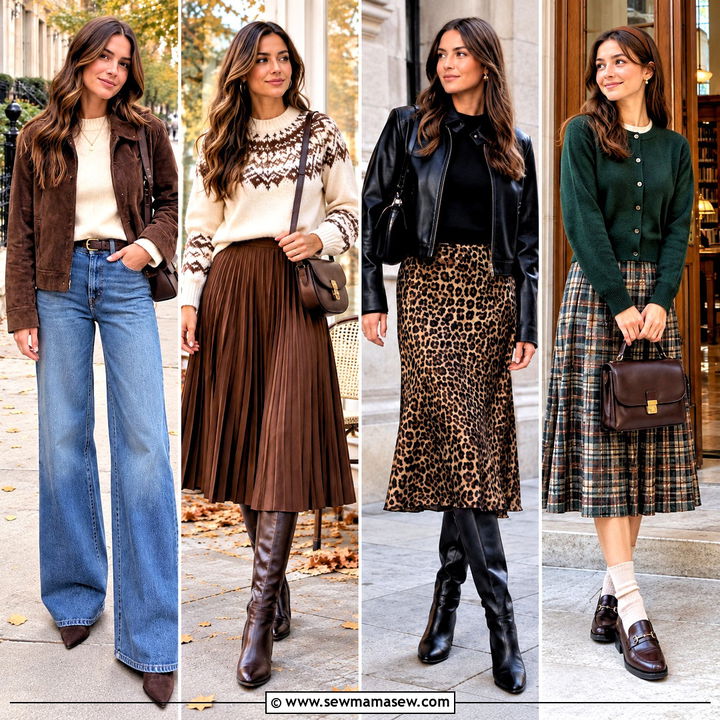
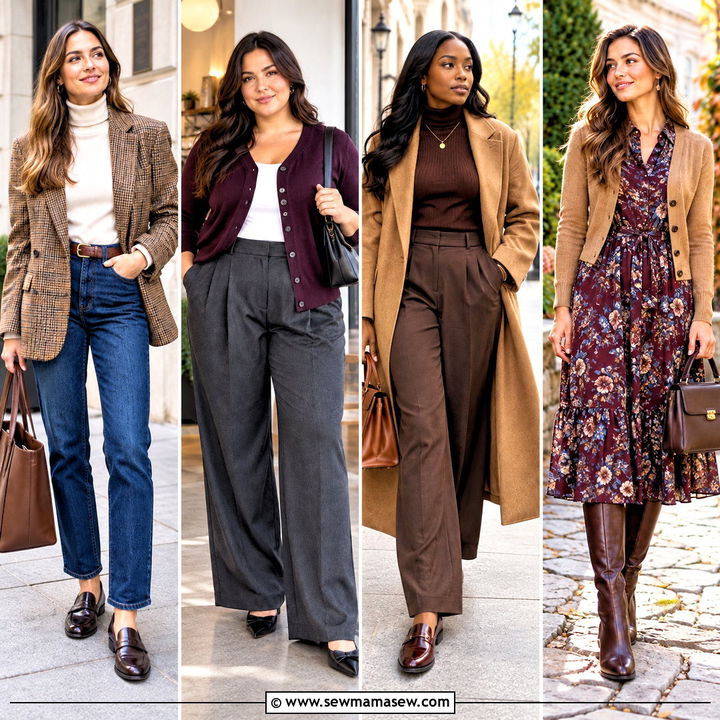
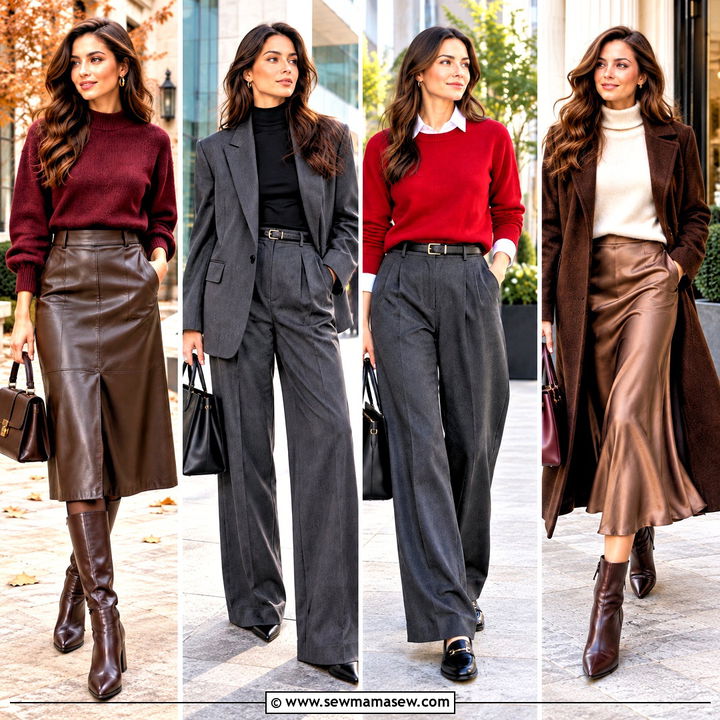
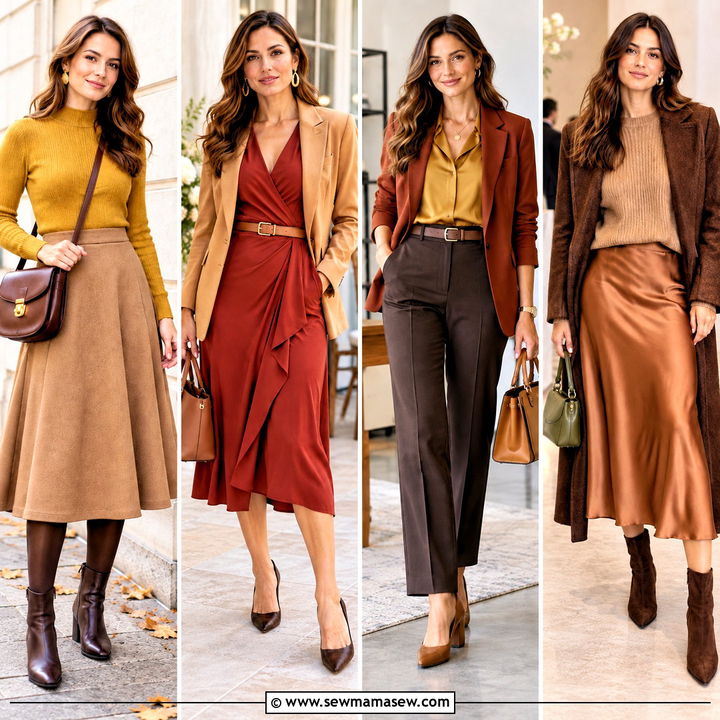
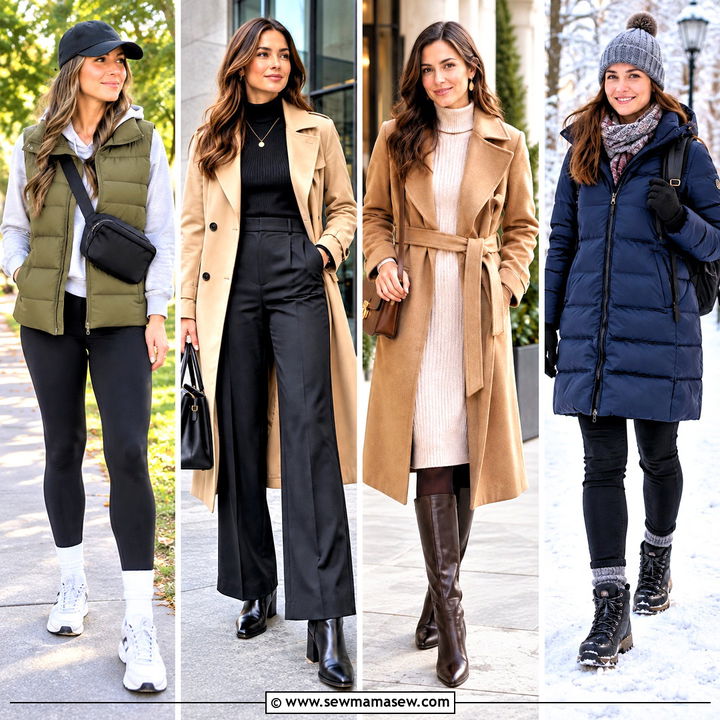
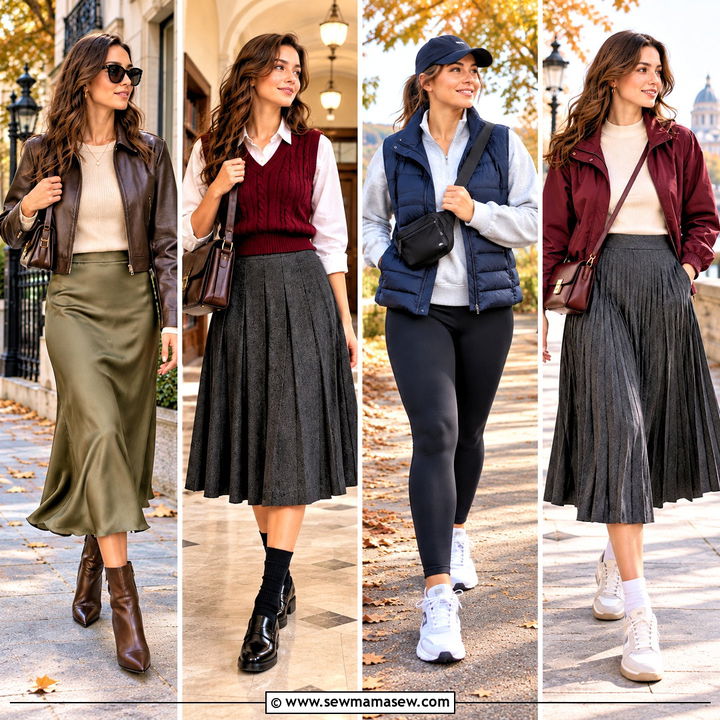
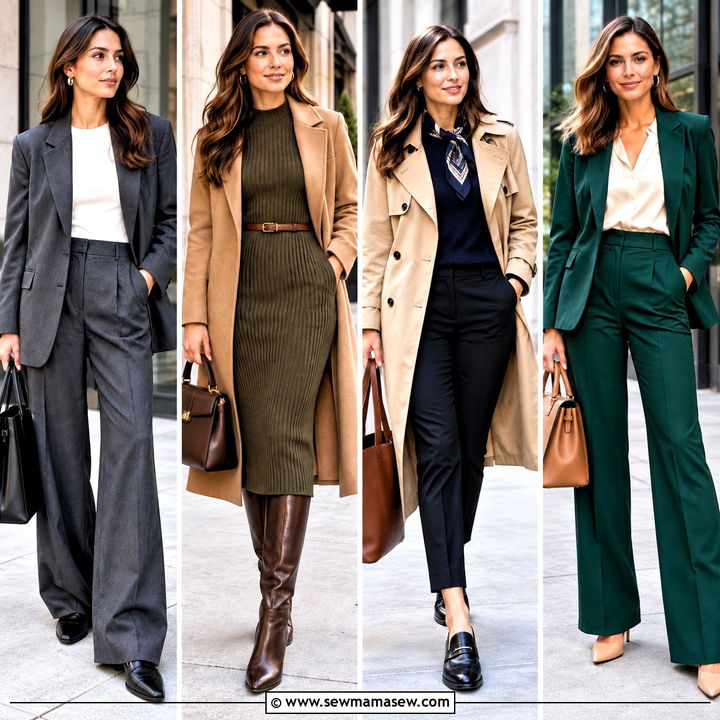
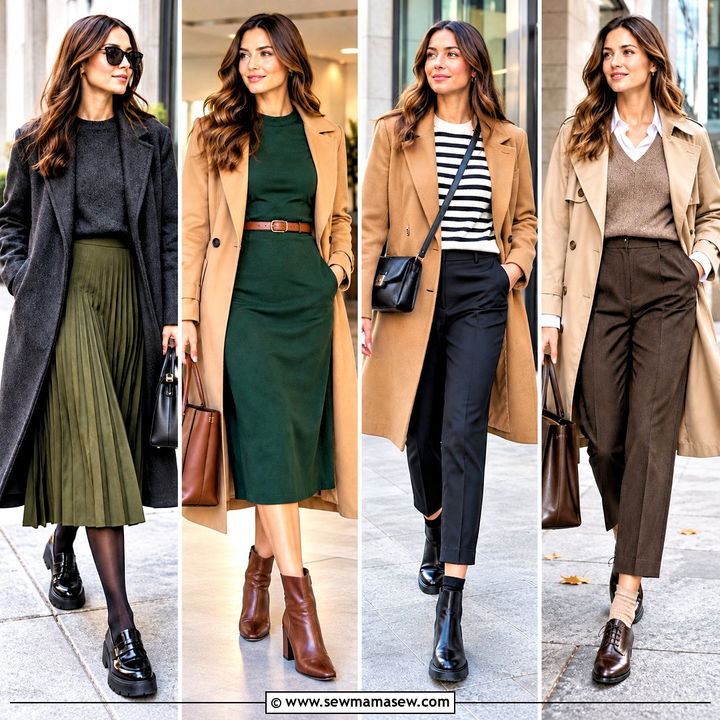
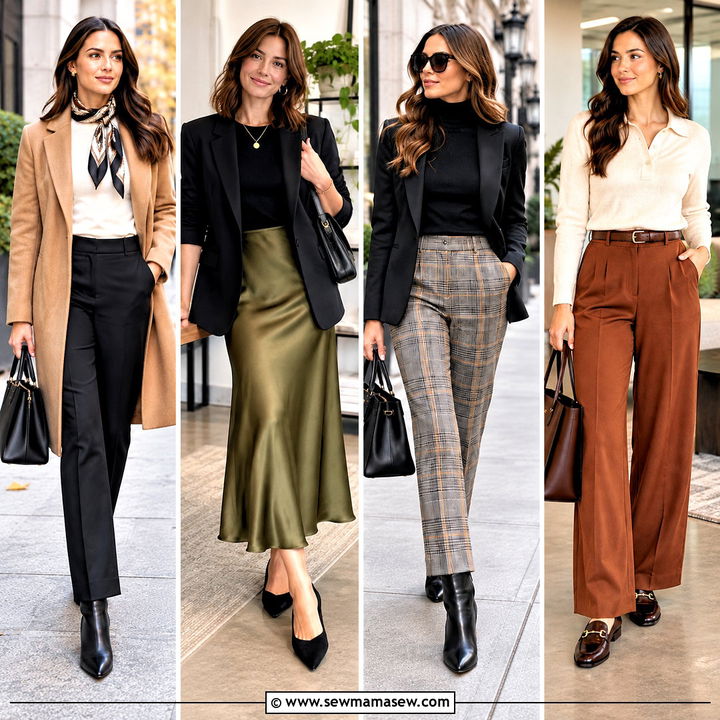
Autumn office dressing gets hard for one reason: the same day can hold a cold platform, an overheated meeting room and a desk you sit at for six hours. When I put together a work wardrobe for fall, I plan complete outfits rather than a pile of separates, because a blazer only earns its place if it works with three or four things you already own. The looks below lean on tailoring, fluid trousers, fine knits and the deep colors that suit this time of year, like olive, burgundy, camel and chocolate brown. Some are built for formal offices and some for a relaxed Friday, and I've noted where a piece needs adjusting for height, shape or a strict dress code.

How Formal Is Your Office, Really?
Every outfit below can be pushed up or down a notch, so it helps to know where your workplace sits before you shop. Dress codes usually fall into three loose bands, and the same blazer behaves differently in each.
- Business formal: suits or matching separates in dark colors, closed-toe shoes, sharp pleats and minimal jewelry. Knits act as layers under tailoring rather than as the main piece.
- Business casual: tailored trousers or midi skirts with knits, cardigans or blouses, and a blazer when there's a meeting. Most of this list lives here.
- Creative or relaxed offices: leather jackets, dark denim, knit polos and bolder color are fair game, as long as the fabrics look cared for.
When I'm not sure, I watch what people two levels above the role wear on an ordinary Tuesday, not on a big presentation day. That's the real code, and it is often quieter than the handbook suggests.
1. Blazer With Wide-Leg Trousers
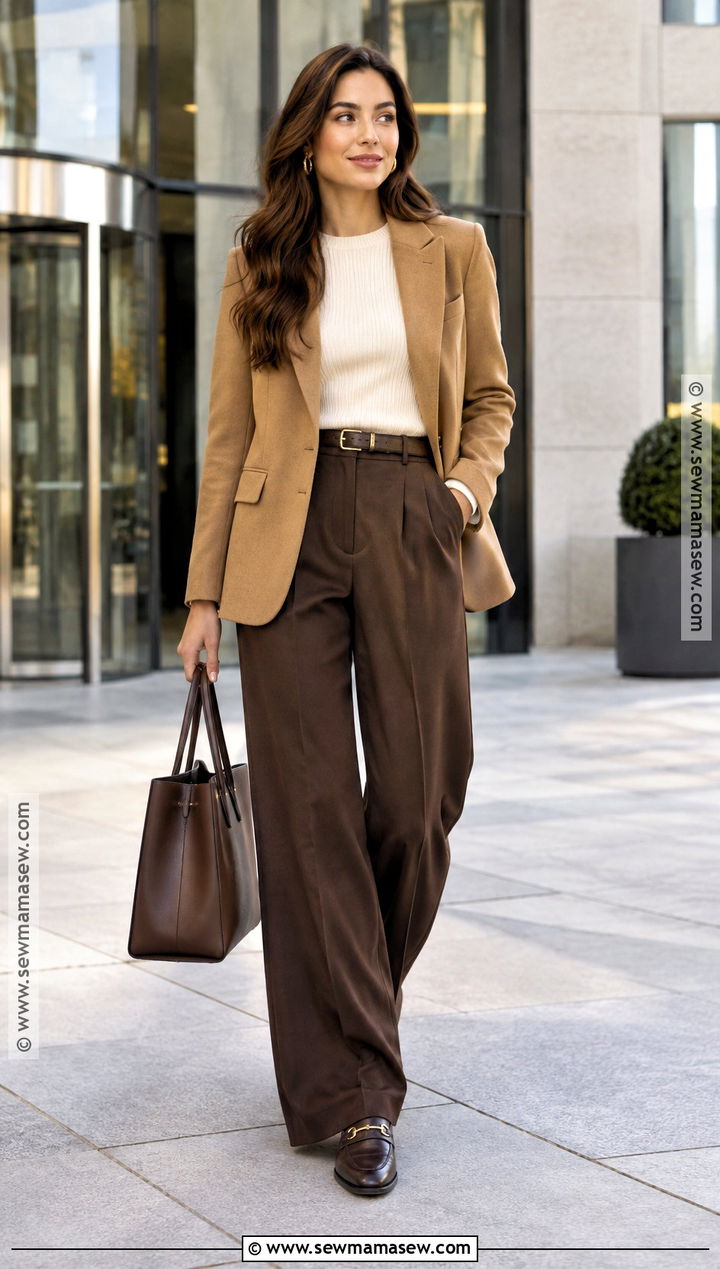
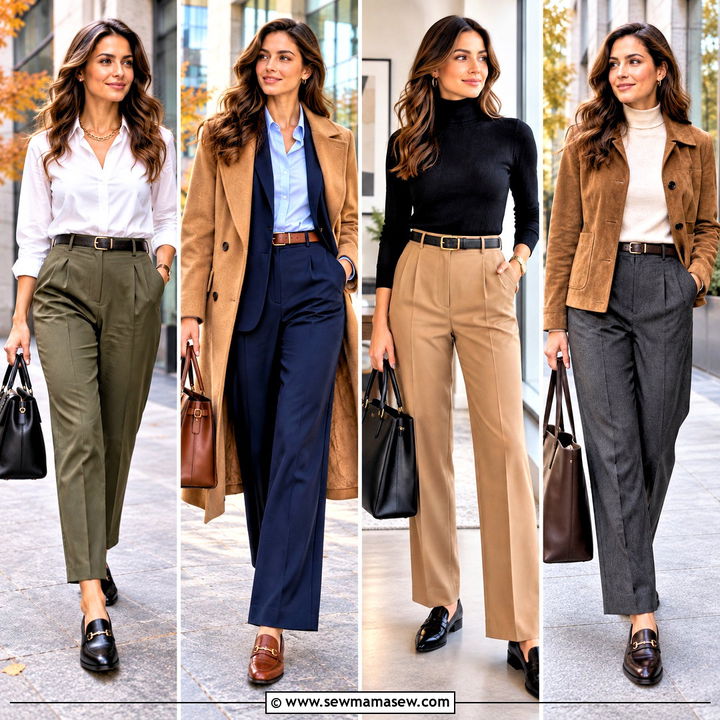
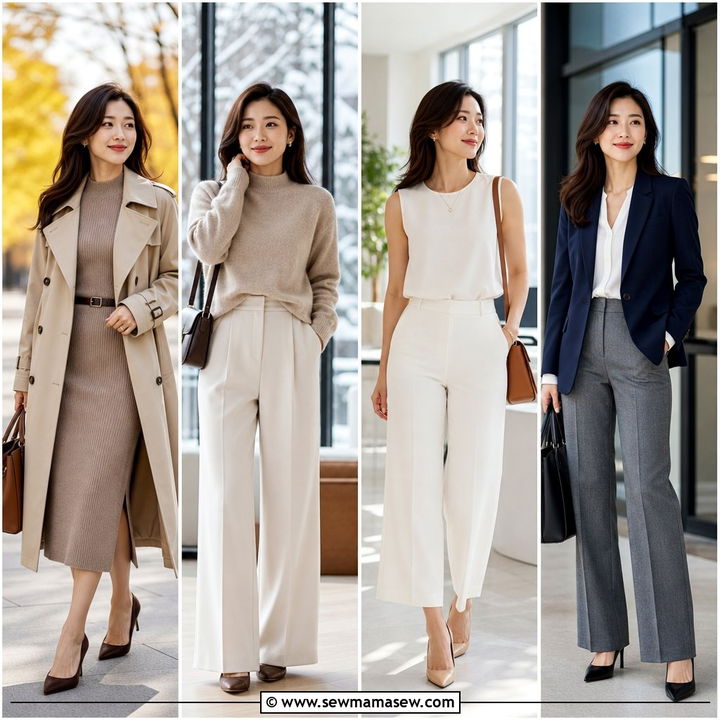
Wide-leg trousers are the reason this pairing looks current, but they only work if the blazer underneath them is doing its job. I keep the top layer close to the body, usually a fine crewneck or a plain fitted blouse, so all the volume sits below the waist. The trouser hem matters more than people think: with loafers it should almost graze the floor, and if you switch to pumps on meeting days you'll want a second pair hemmed a little longer. Petite wearers do better with a blazer that stops at the hip bone, while taller women can carry a longer jacket and a fuller leg without being swallowed.
2. Trench Coat With Knit Dress
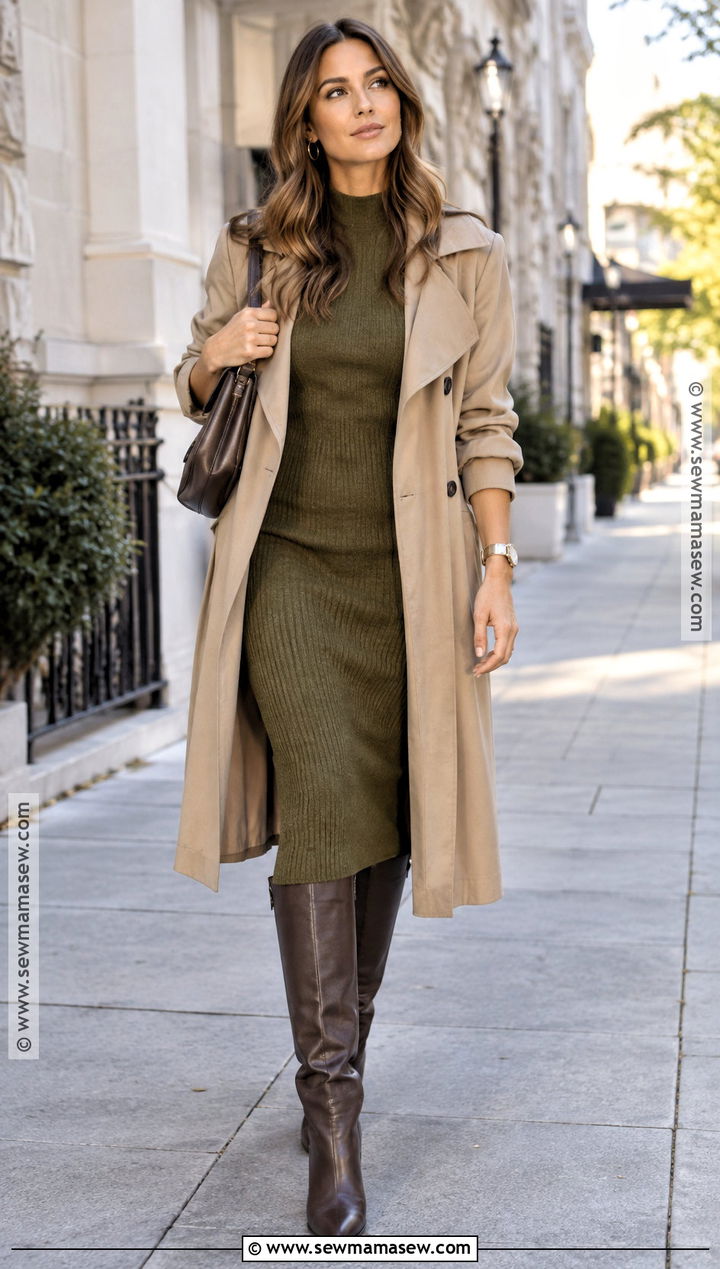
A knit midi dress under an open trench is one of the warmest office outfits that never looks bulky. The thing I check first is the knit itself. A thin, clingy jersey shows every seam underneath, so I look for a dense, smooth knit with a softly defined waist and a skirt that moves when you walk. The trench stays open indoors and comes off at your desk. Loafers carry it through September; once mornings turn properly cold, knee-high leather boots close the gap between hem and shoe. If the dress still sits too close, a light slip underneath fixes the line and stops it riding up when you sit.
3. Cardigan With Pleated Midi Skirt
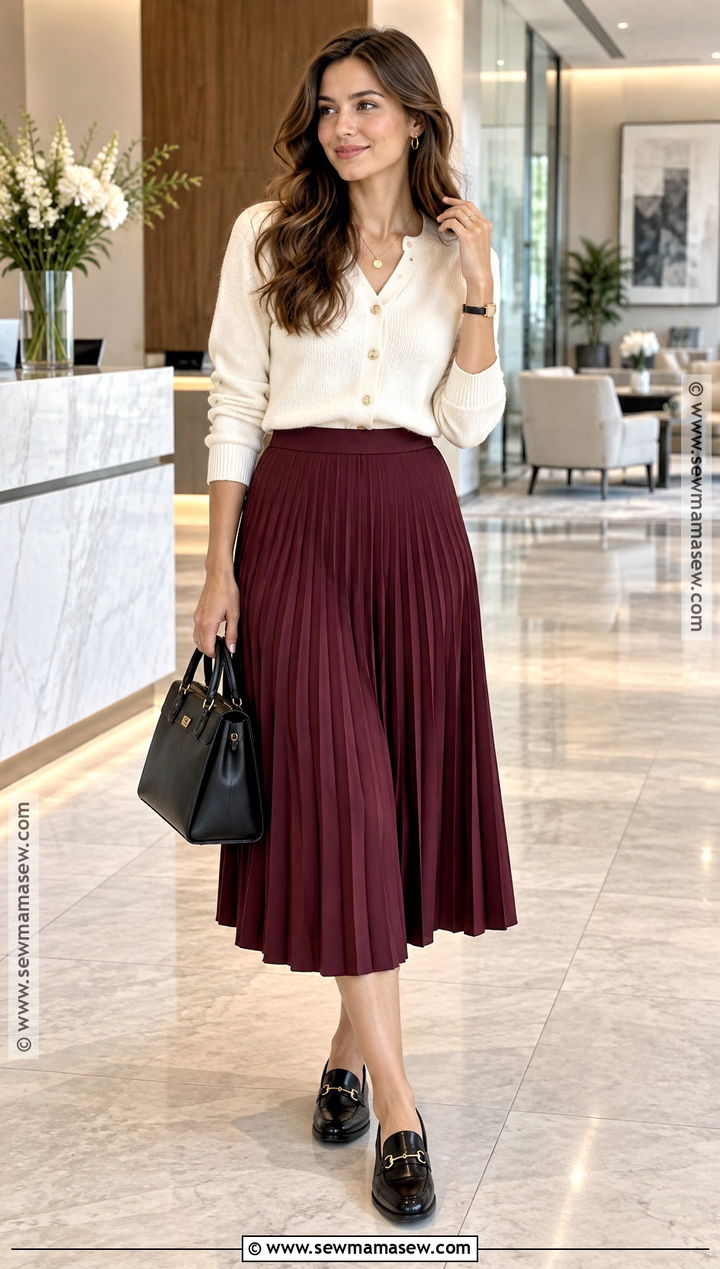
A pleated midi skirt with a fine cardigan reads softer than tailoring, which suits a lot of business-casual offices. I like a cream cardigan against a forest green or burgundy skirt, because the contrast keeps it from looking like a school uniform. You can button the cardigan and wear it as the top, or leave it open over a fitted shell if you want more coverage. The hem decides whether the waist shows: tuck it, or blouse it just slightly over the waistband. For a strict office I'd pick sharp knife pleats and a closer-fitting knit; soft, unpressed pleats push the look toward casual.
4. Turtleneck With Tailored Pants
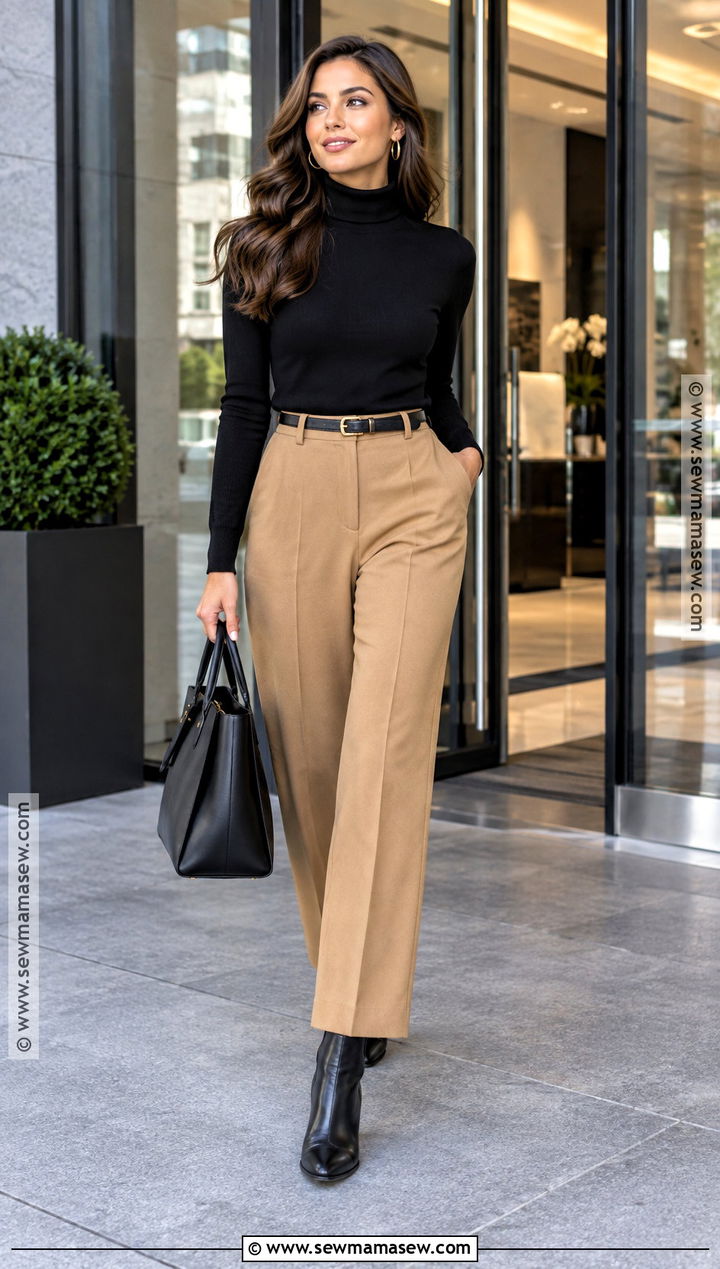
I treat a fine-gauge turtleneck as a foundation, not an outfit, and in October it does more work than almost anything else in a work closet. Tucked into high-waisted tailored trousers in charcoal or camel, it gives a clean line from chin to shoe. The gauge is the part to get right. A chunky turtleneck adds bulk under a blazer and overheats in a warm office, while a fine merino or blend layers flat and breathes. Straight-leg trousers keep it classic; a wide leg feels more current. Small hoops or a long pendant break up the high neckline without crowding it.
5. White Button-Down With Olive Trousers
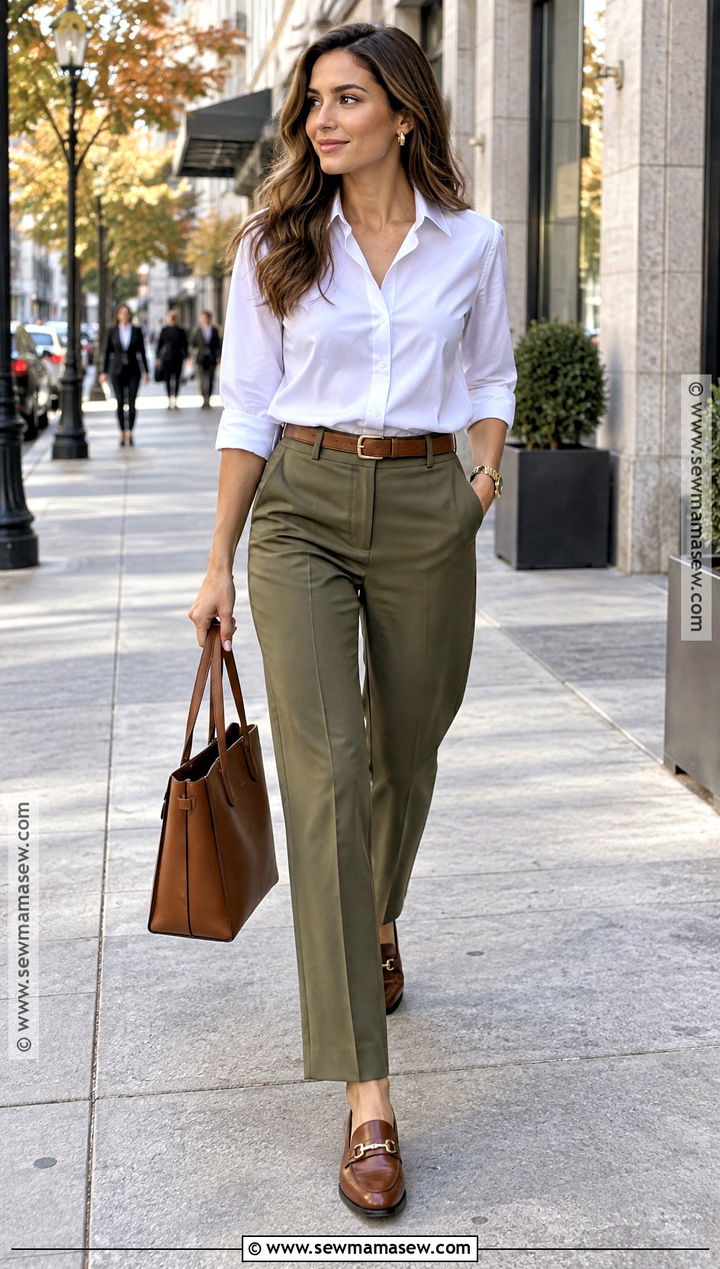
White shirting with olive trousers is my favorite way out of the black-and-white rut. The green borrows a little from workwear and the crisp shirt pulls it straight back into the office, so the two balance each other. I look for olive trousers with a flat, clean waistband, since a bulky waist fights with a tucked shirt. Full tuck for formal rooms, a neat front tuck where things are relaxed. Brown loafers and a cognac bag warm the whole palette up. One rolled cuff is fine if your office allows it, and on mild days this is the outfit I reach for first.
6. Belted Blazer With Pencil Skirt
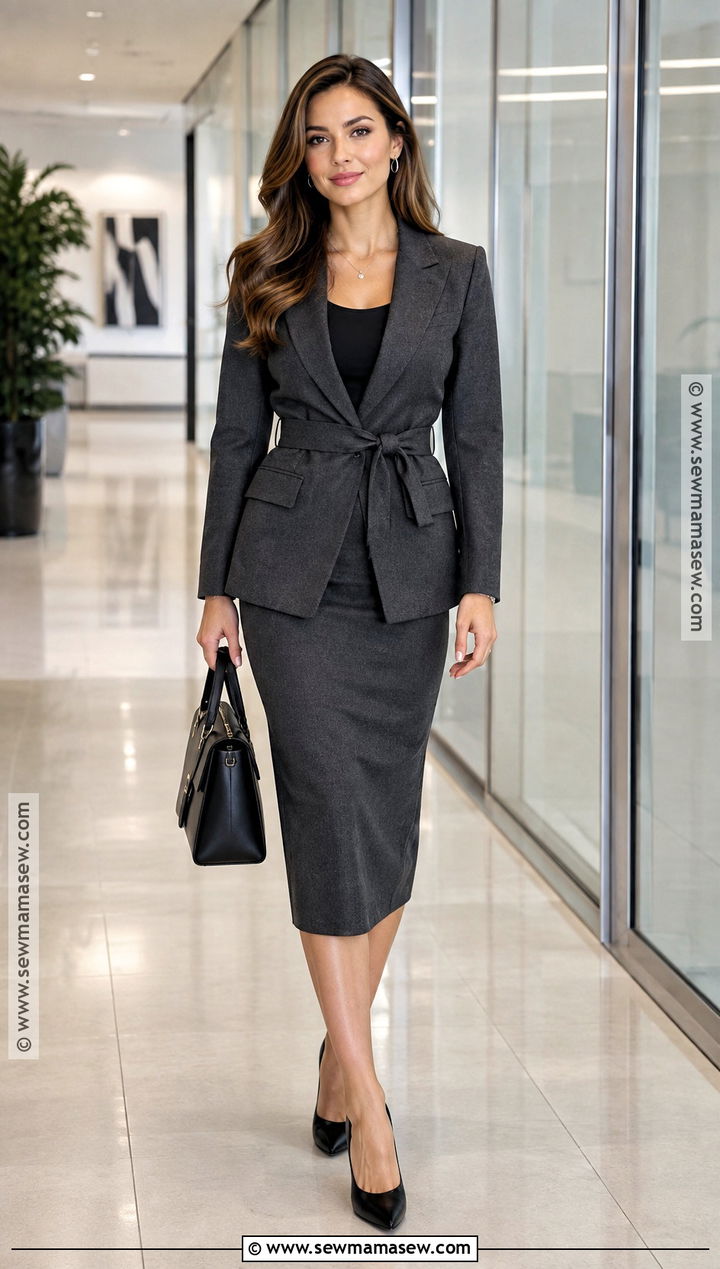
Belting a blazer over a pencil skirt pulls attention to the waist and turns a fairly traditional outfit into something with a clear shape. Use the jacket's own tie belt if it has one; otherwise a narrow leather belt works. Underneath, a smooth camisole or fitted crewneck keeps the waist area flat, because anything bulky will bunch under the belt. Before committing to the skirt, I always do a walk and sit test in the fitting room. A pencil skirt with no stretch and no back vent is miserable on a commute, and it pulls across the hips the moment you sit down.
7. Sweater Vest With Shirt And Trousers
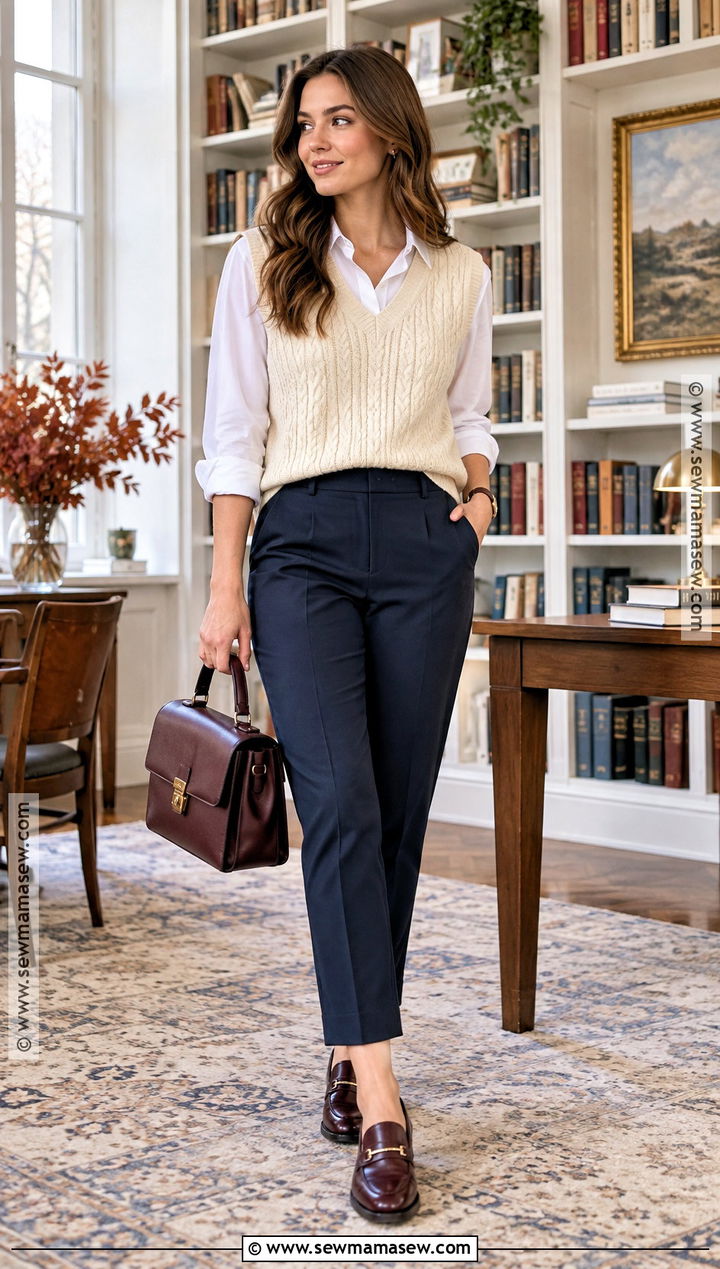
A sweater vest over a crisp cotton shirt gives you warmth across the torso while your arms stay cool, which is exactly right for offices that run hot. Leave the collar and cuffs showing; that contrast is the whole point. I keep the vest only slightly relaxed. Too oversized and the shirt disappears, and the layers start to look borrowed. Tuck the shirt hem into ankle-length trousers so it doesn't peek out below the vest, and add a slim belt if the top half feels shapeless. Oxfords or loafers suit the slightly academic feel.
8. Shirt Dress With Loafers
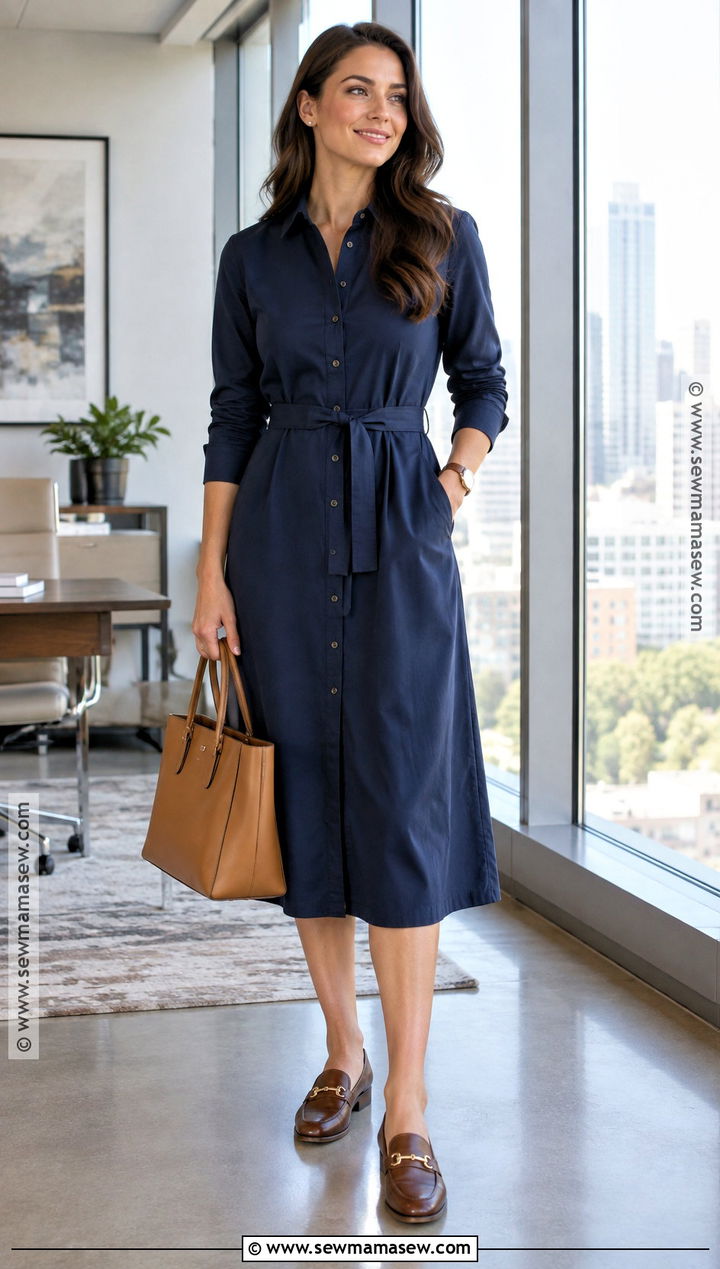
On mornings when you have nothing left to decide, a long-sleeve shirt dress solves it in one move. The collar and button front give it structure, and the belt lets you loosen the waist after lunch, which is a small mercy on long days. Lightweight shirt dresses can look thin under office lighting, so I check the fabric against the light and add a slip if it's at all sheer. Wear it with loafers while it's mild and swap to ankle boots when the weather turns. Petite women should aim for a hem just below the knee; taller women can go longer.
9. Brown Suit With Cream Knit Top
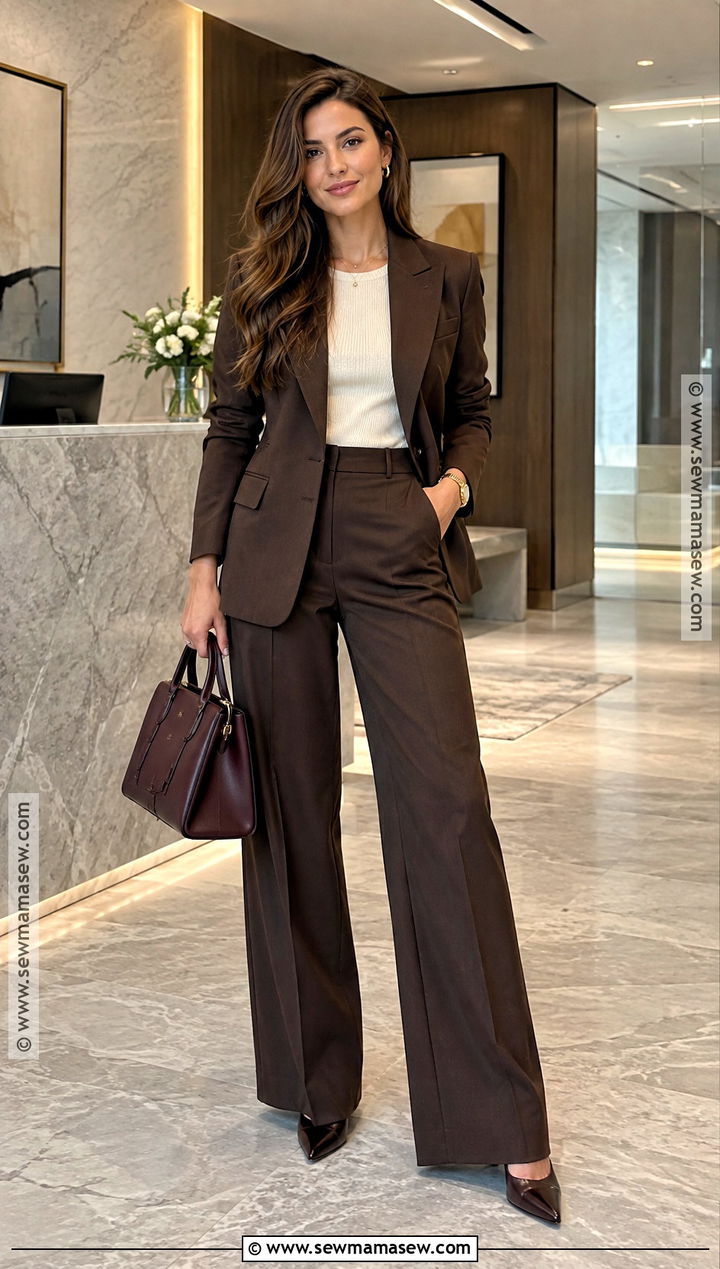
Chocolate brown tailoring has the authority of a dark suit but looks warmer and less severe than black under daylight. A cream knit shell underneath brightens the face for daytime meetings. If a full matching suit feels too formal for your office, mix two close shades of brown for a tonal version instead. I'd spend the money on alterations before accessories here. Shoulder seams should end at your shoulder bone, the sleeve should show a sliver of cuff or wrist, and the trouser hem should fall cleanly over the shoe without pooling. A suit that fits plainly will always beat one that's dressed up.
10. Plaid Blazer With Black Pants
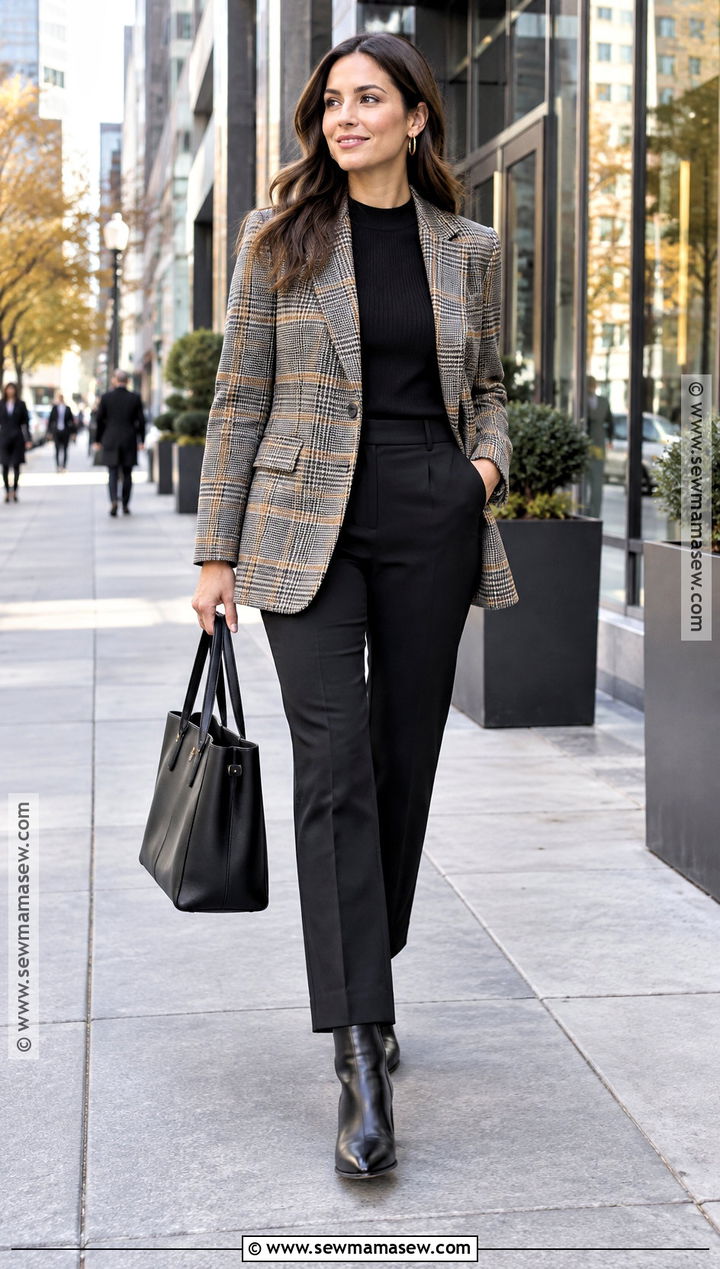
A plaid blazer brings autumn into an outfit with almost no effort, and black trousers keep the pattern from taking over. Scale matters: a small check reads quietly professional, while a large windowpane is a statement and needs everything else kept very plain. I'd pick a jacket where the plaid stays in gray, camel or rust rather than bright tones. If the blazer is cut oversized, keep the base layer fitted and the trousers narrow so the shape stays under control. Cropped trousers show off a good loafer; full-length ones look more formal.
11. Leather Jacket With Midi Dress
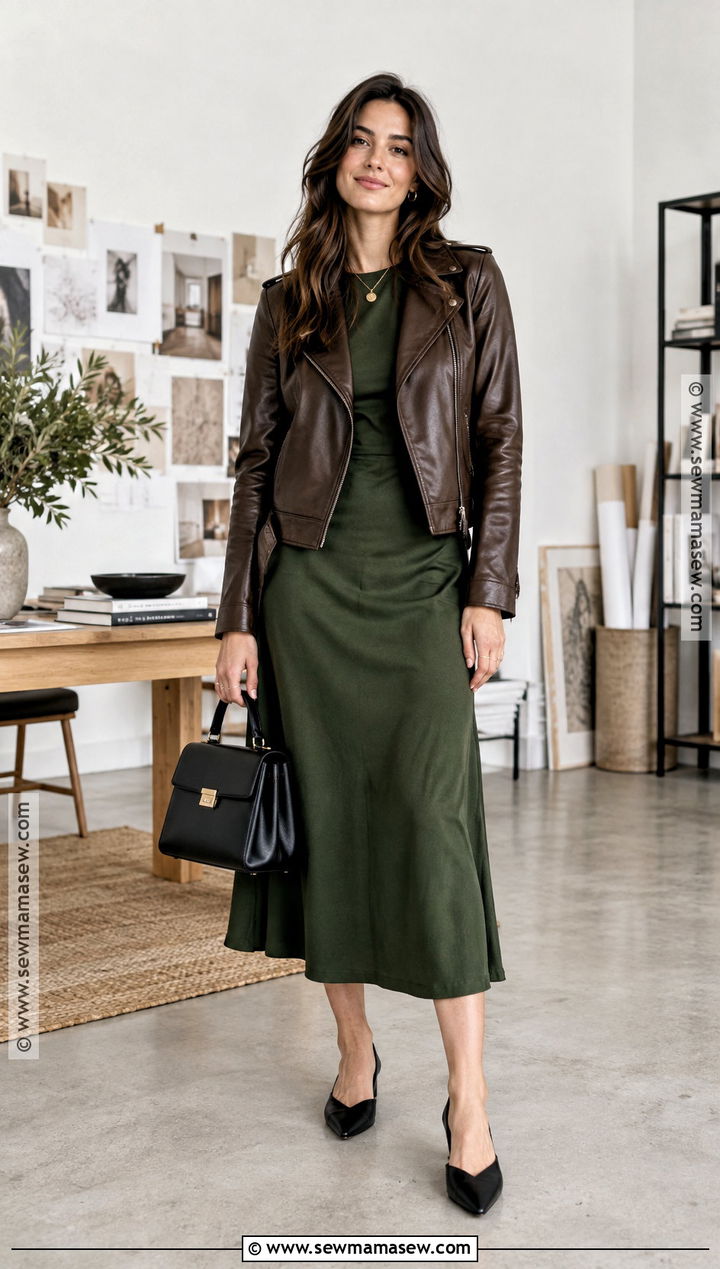
Can a leather jacket work at the office? In creative and business-casual workplaces it can, provided the jacket is minimal. I look for a collarless or softly structured cut with little hardware and no distressing, then put it over a solid midi dress with sleeves and a proper neckline. The dress carries the professional part of the outfit, so you can take the jacket off at your desk and still be dressed for work. Shoes need to stay refined: pointed flats or sleek ankle boots, not biker boots. A good faux leather works too, though cheaper ones crease at the elbow quickly.
12. Knit Polo With Pleated Trousers
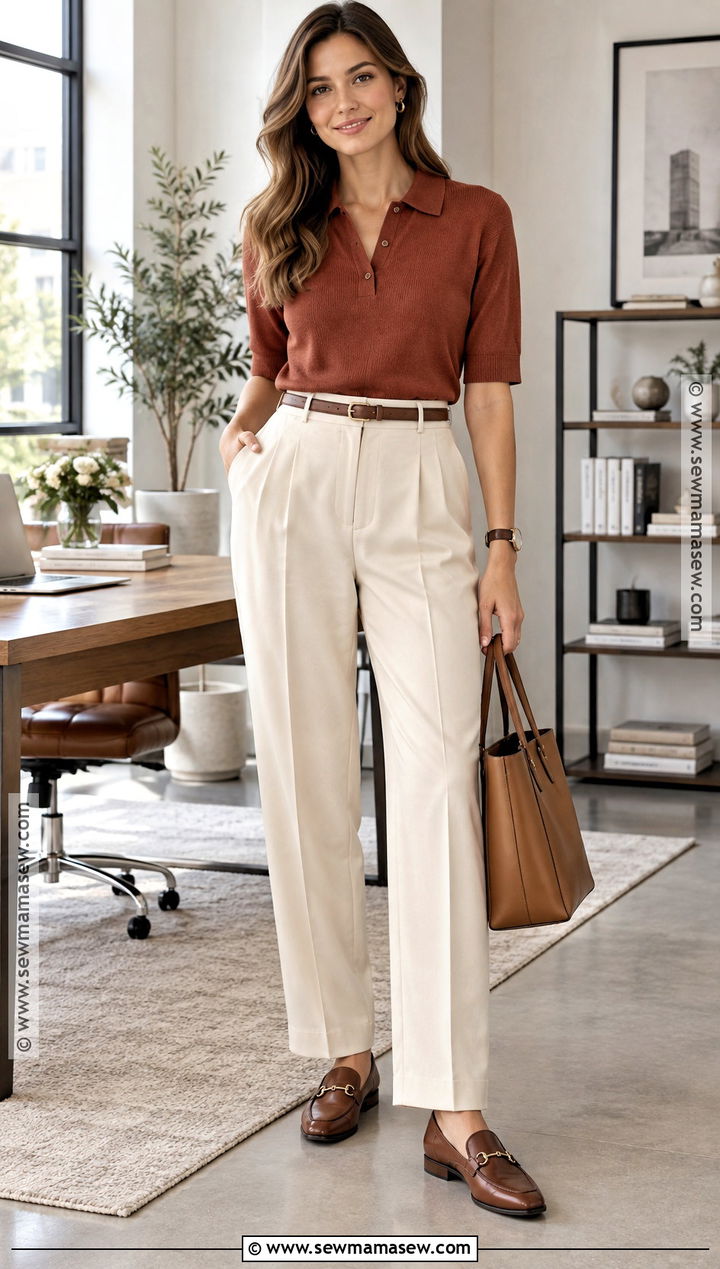
A knit polo sits between a sweater and a collared shirt, and that middle ground is why it works so well in business-casual offices. The collar frames the face on video calls, while the soft knit stays comfortable through long hours. Tuck it fully into high-waisted pleated trousers so the pleats and waistband show, then add a slim belt. What I steer people away from are sporty details: contrast tipping, logos or a thick piqué knit pull the look straight toward the golf course. A fine long-sleeve polo also slides neatly under a wool blazer later in the season.
13. Suede Skirt With Silk Blouse
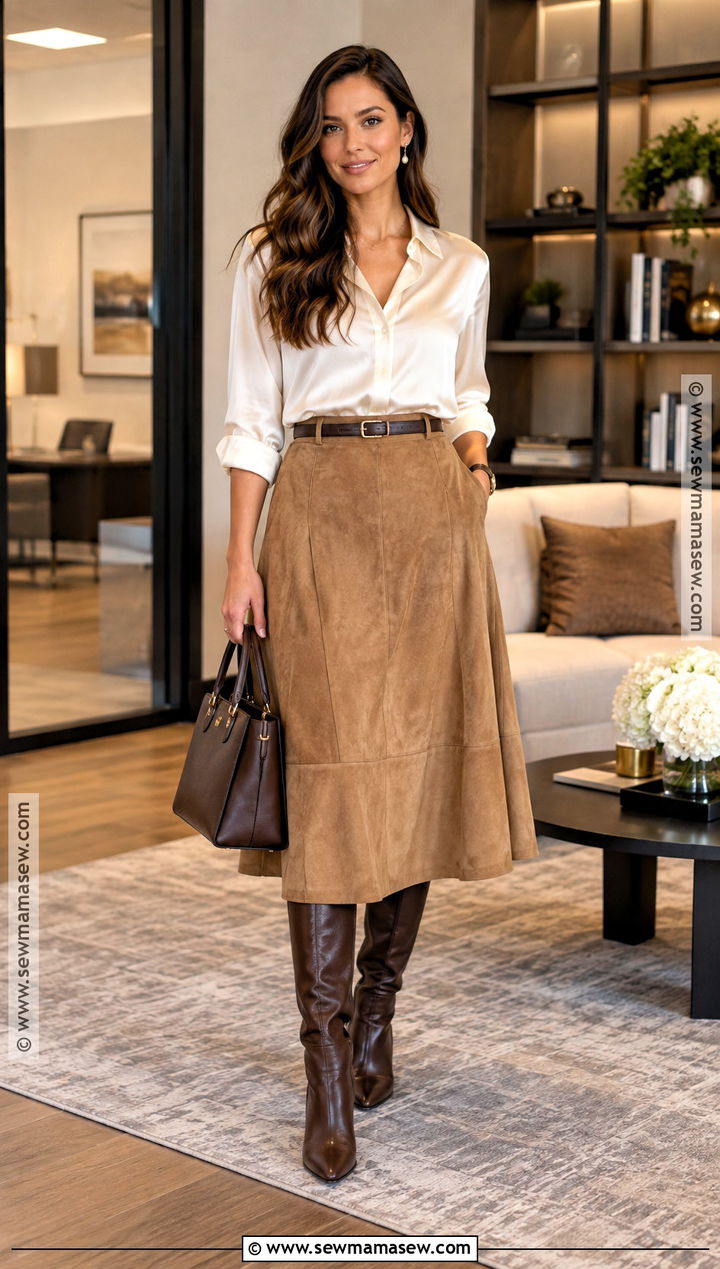
Suede adds richness to a neutral outfit, but a suede midi skirt can feel heavy if the top is just as dense. That's why I pair it with a fluid silk or satin-finish blouse that moves. Tuck it smoothly and add a narrow belt if the skirt has loops. Knee-high boots that slip under the hem make one continuous line, and pumps take it somewhere more formal. Be realistic about weather, though. Real suede darkens and stiffens in rain, so if your commute involves a walk in the wet, a good faux suede is easier to live with and can usually be sponged clean.
14. Cropped Jacket With High-Waisted Pants
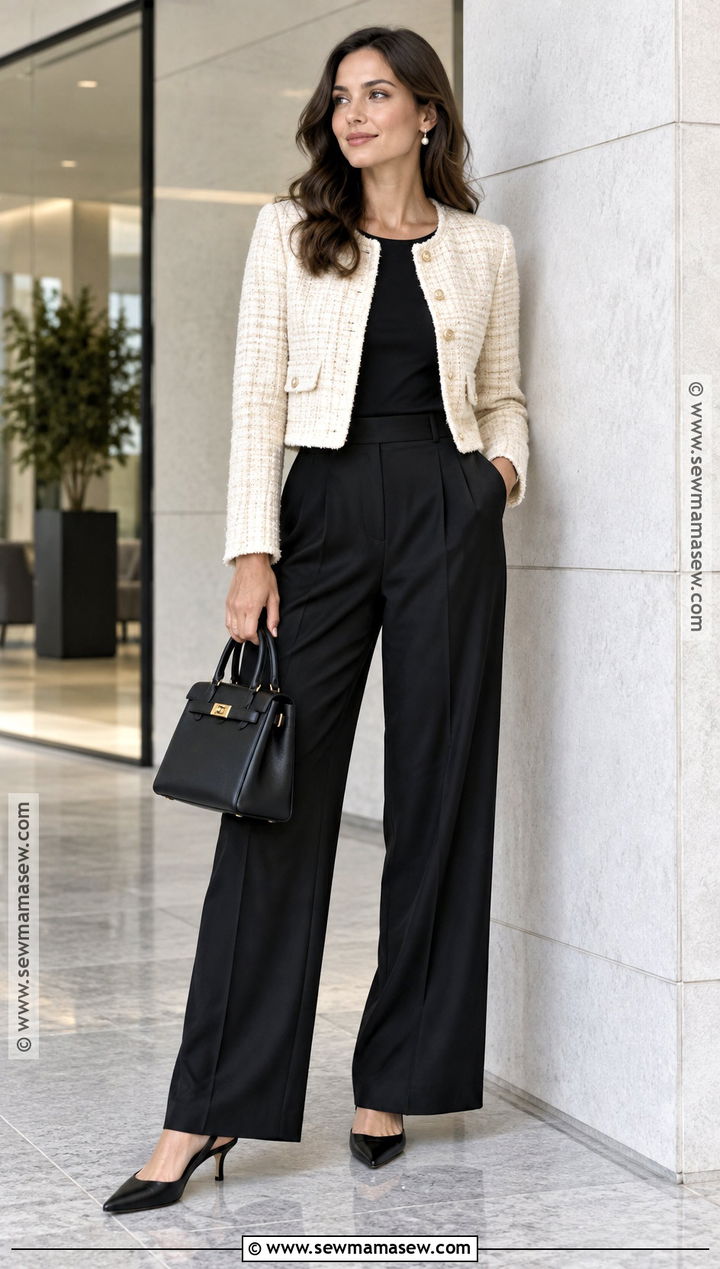
Cropped jackets give you a visible waist without needing a belt, and they pair naturally with high-waisted trousers. The proportion check I make every time is where the jacket hem meets the trousers: it should meet the waistband or overlap it slightly. If there's a gap of shirt showing between them, the look reads unfinished. A collarless tweed or a short wool blazer over a fitted shell is the most office-ready version. This shape is particularly kind to petite frames, since the short jacket lets the legs look longer. Keep trims and buttons restrained in a conservative office.
15. Camel Coat With Navy Suit
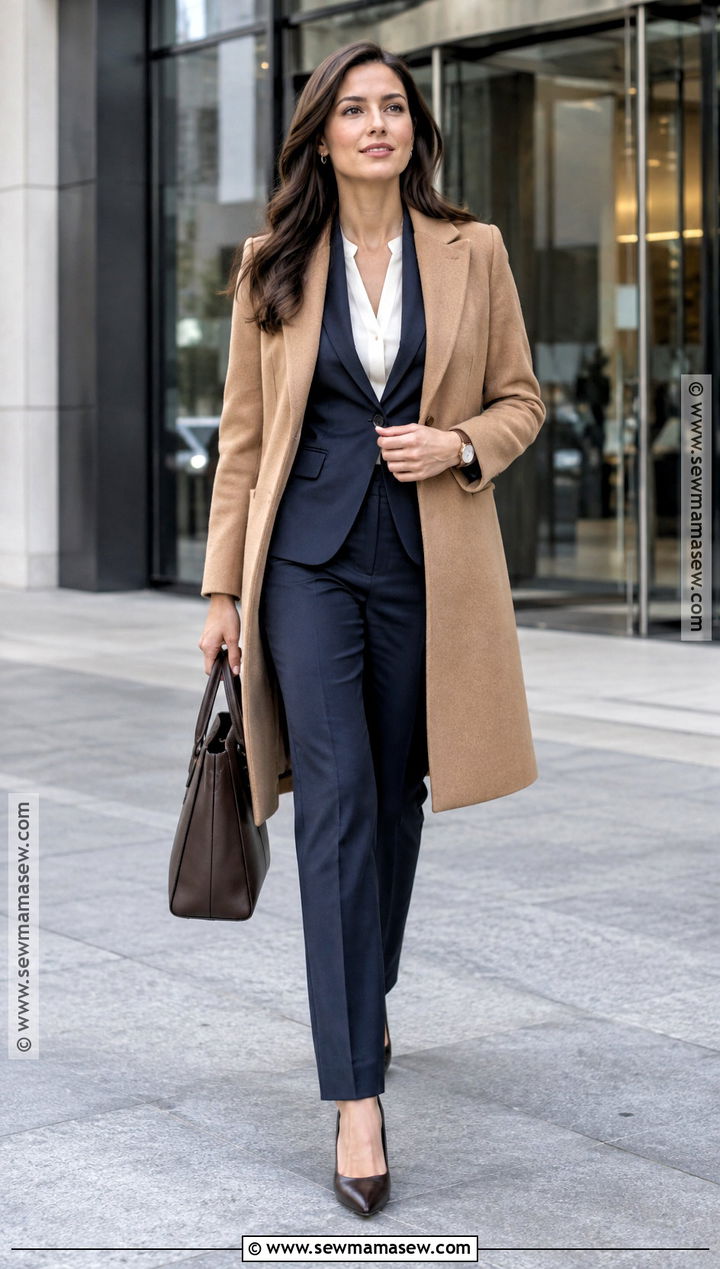
A camel coat over a navy suit is a classic for good reason: the two colors contrast without clashing, and the coat adds warmth for a cold commute without hiding the suit. Under the blazer, a pale blue shirt or a fine white knit keeps the neckline neat. The mistake I see most is buying the coat alone. Always try it on over the suit you'll actually wear, because a coat that fits over a sweater can bind across the shoulders and sleeves once there's a blazer underneath. Knee length is the most practical, and dark brown loafers or boots go with both colors.
16. Wrap Dress With Knee-High Boots
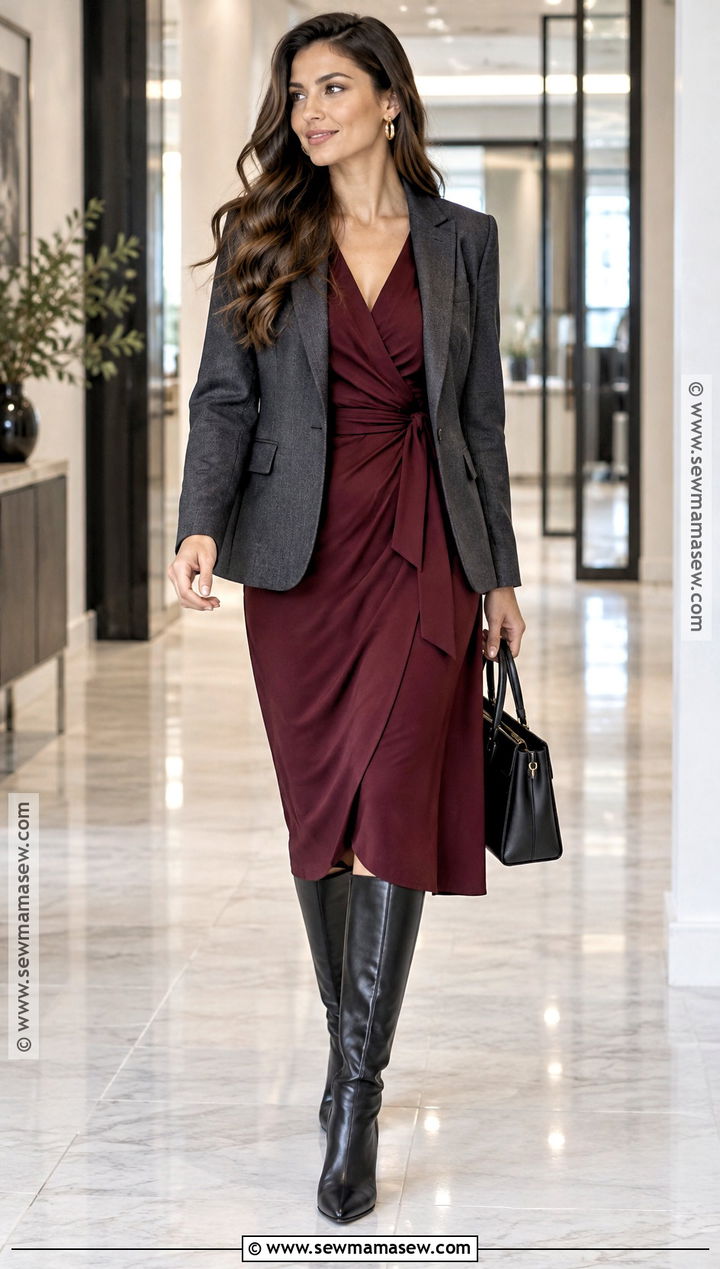
A wrap dress adjusts at the waist, which makes it one of the more forgiving work dresses across different body shapes. The weak point is the neckline. Wraps tend to loosen as you move, so I add a hidden snap or wear a light camisole under it before it goes anywhere near a meeting. Fabric is the second check: a substantial jersey or crepe skims the body, while a thin one clings and shows lines. Sleek knee-high boots that sit under the hem keep legs warm, and a tailored blazer over the top makes it presentation-ready.
17. Fine-Knit Sweater With Satin Midi Skirt
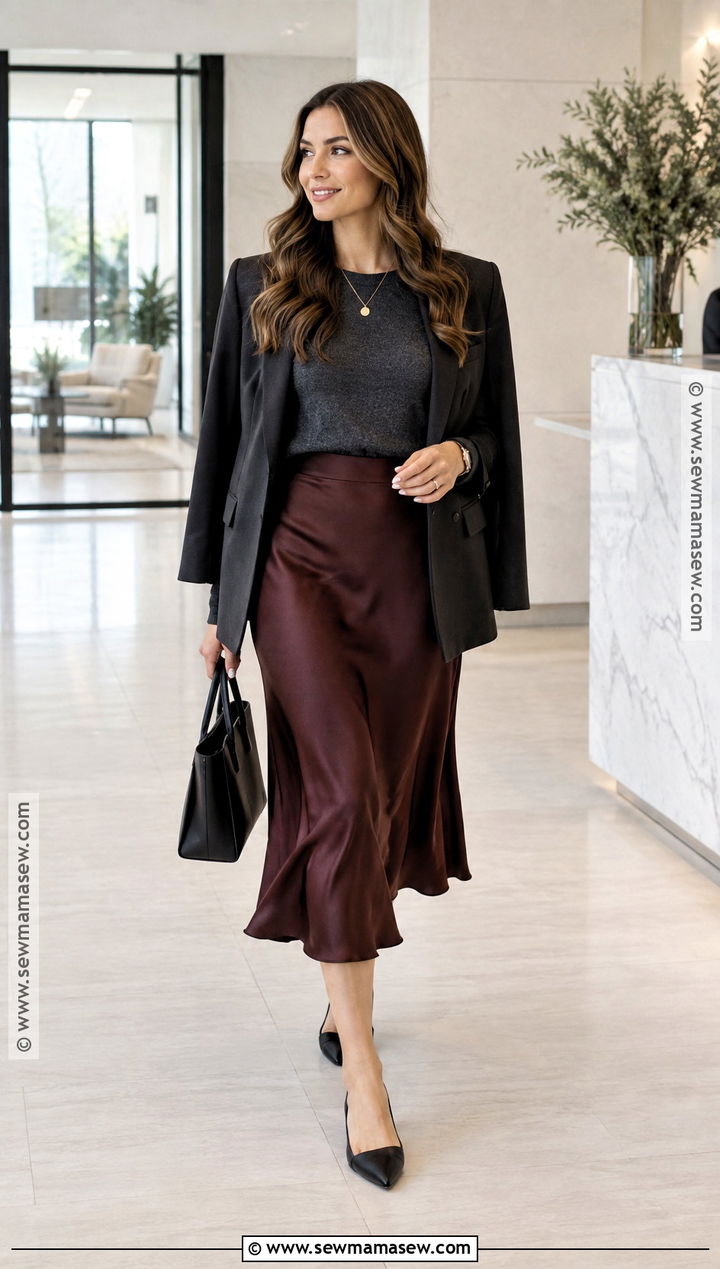
A soft crewneck sweater against a bias-cut satin skirt is a contrast of textures, and that contrast is what makes it look considered rather than casual. The risk is the waist vanishing under the knit. I fix that with a partial tuck, or a slim belt worn under the sweater's hem. For the office, choose a satin with a low sheen; a high gloss skirt looks like evening wear under fluorescent light, and it also shows every crease from sitting. Ankle boots with a narrow shaft keep the hemline clean, and a blazer on top sharpens it for formal days.
18. Dark Jeans With Blazer And Loafers
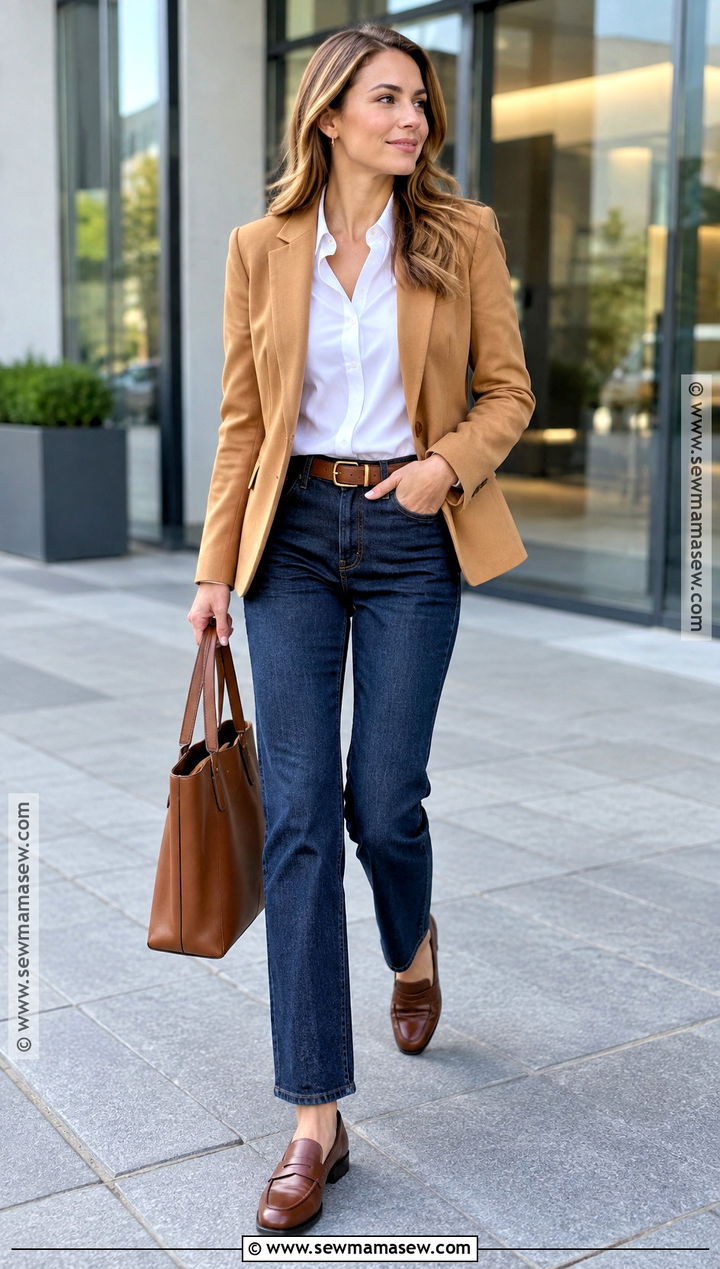
Dark jeans can pass in many offices on a Friday, but only when everything else is clearly polished. I stick to a clean, even wash in indigo or black, in a straight or trouser-style cut, with no fading, rips or frayed raw hems. A structured blazer over a fitted knit or tucked shirt carries the formality, and leather loafers do far more for the outfit than sneakers ever will. Check your company's denim policy first. Darker washes are the easiest to pair with tailored pieces, so if you only own one pair for work, make it the darkest.
19. Long Vest With Matching Trousers
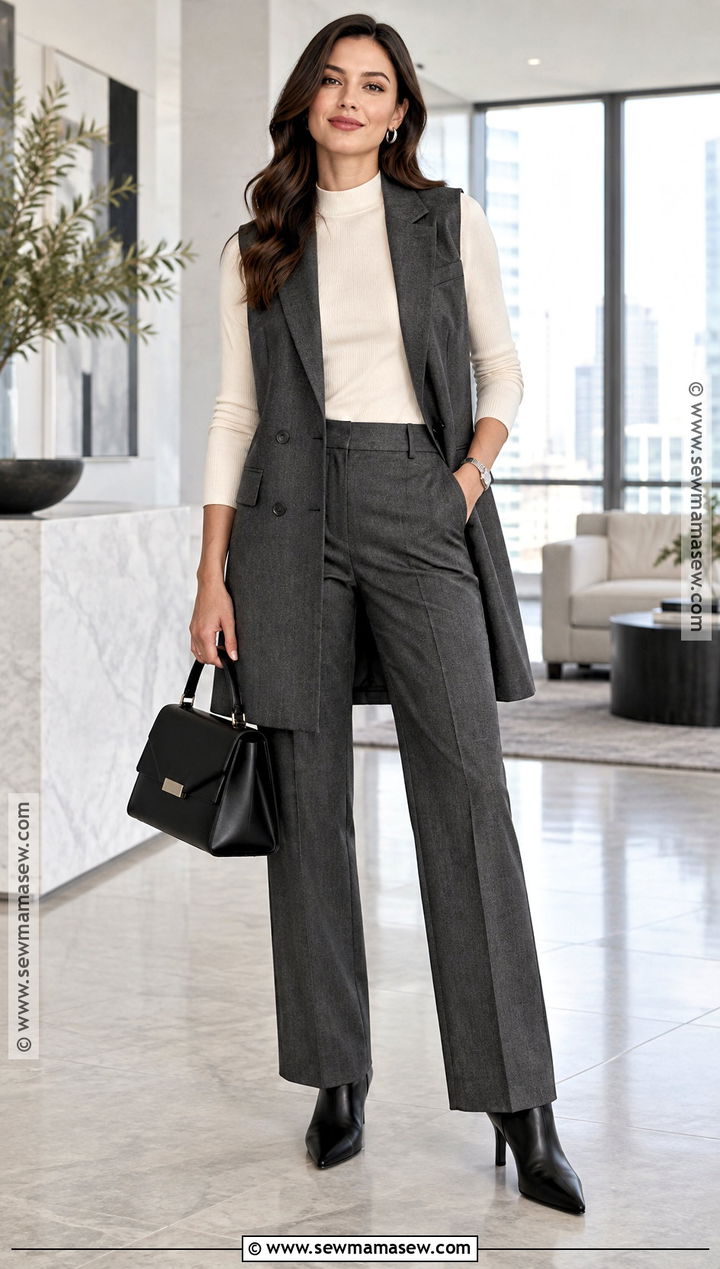
A long tailored vest gives you the structure of a suit with more freedom through the arms, and in early fall, when a full jacket is too warm by noon, that matters. Worn with matching trousers it reads as a coordinated set. Underneath, I like a fitted long-sleeve knit or a high-neck blouse in a contrasting neutral, since the vest's open sides show what's beneath. Wear it open for a long vertical line, or belt it if you want the waist defined. Later in the season it fits under a wool coat with no fuss.
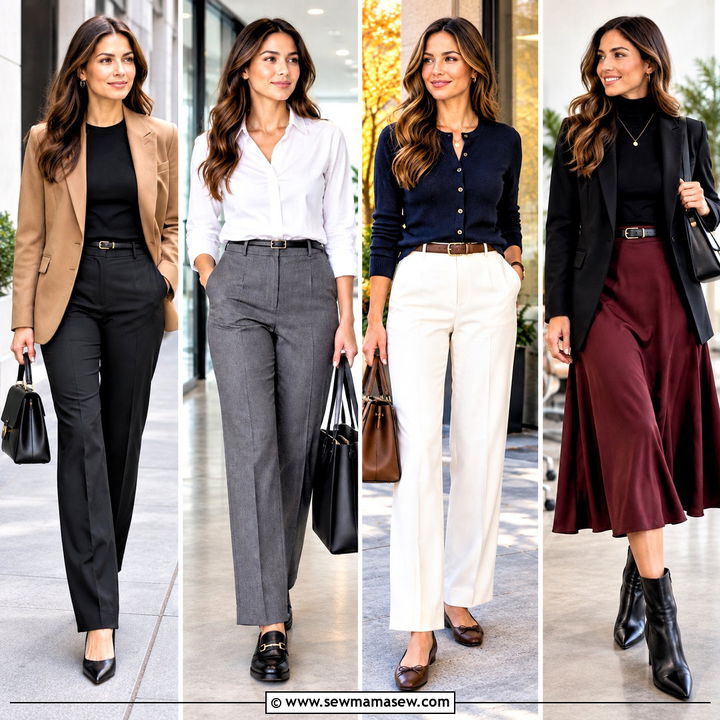
20. Burgundy Cardigan With Gray Trousers
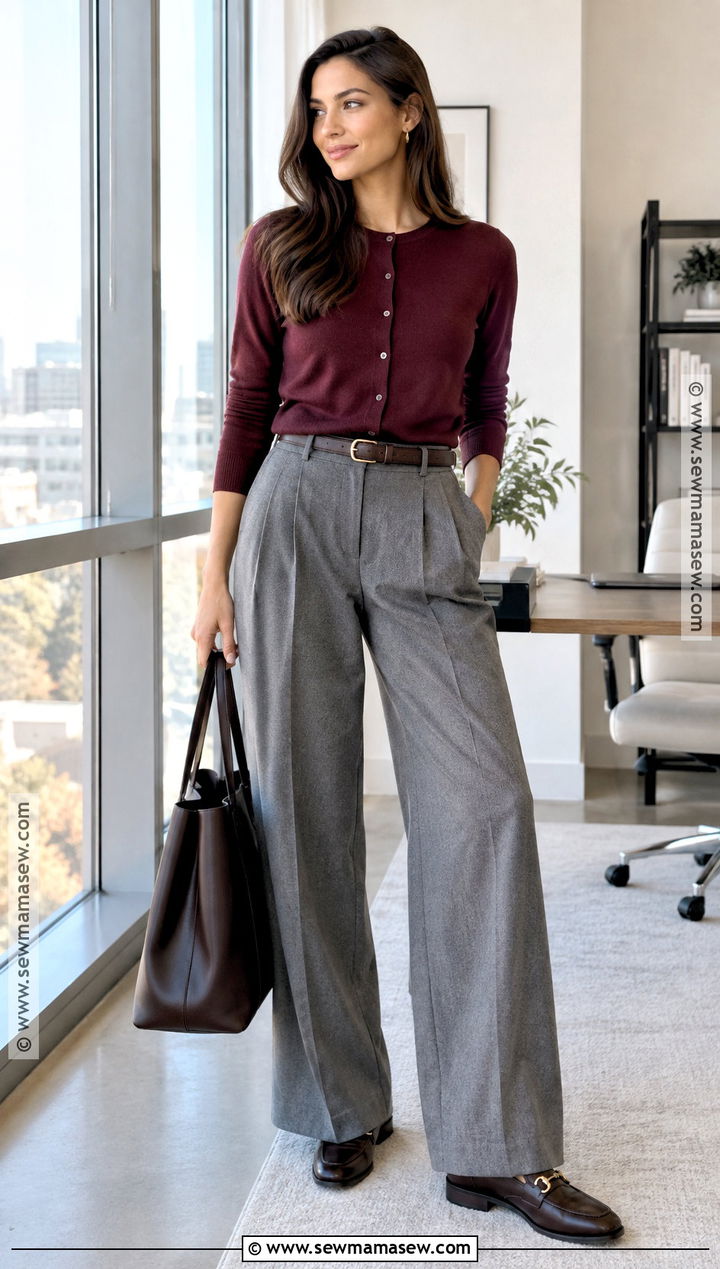
Burgundy and medium gray sit well together because the gray cools the burgundy down and stops it reading too festive. A fine-knit burgundy cardigan with plain buttons can be worn closed as a top over a camisole, or open over a white or pale blue shirt. Oxblood or dark brown loafers ground the outfit, and a belt in the same tone ties the colors together. I'd go with straight-leg gray trousers for a conservative office and a wider leg where the dress code is looser. Both colors also mix with navy, camel and cream, so the cardigan travels well across the rest of your closet.
Turning Twelve Pieces Into a Month of Outfits
Twenty outfits does not mean twenty new purchases. Most of these looks share the same core pieces, and when I edit a client's work closet I start by finding the overlap. A small set of hardworking items in a narrow color range will give you a different combination every day for a month.
- Two blazers: one solid in navy, camel or brown, one with texture or a quiet plaid.
- Three trousers: charcoal tailored, a wide leg in a warm neutral, and one olive or brown pair.
- Two skirts: a pleated or satin midi and a straighter pencil or suede style.
- Three tops: a fine turtleneck, a crisp white shirt and a knit shell.
- One knit dress and one shirt dress for the days you want a single decision.
- One coat that fits over your blazer, and two pairs of shoes: loafers and slim boots.
Keep the shoes and bag in one family, all brown or all black, and nearly everything on that list will mix. Then add one or two of the more distinct pieces, like the leather jacket or the long vest, once you know the base works.
Office Chairs Wear Out Your Clothes
Workwear takes a different beating from weekend clothes. Hours at a desk rub knits at the elbows and underarms, which is where pilling starts, and sitting puts steady pressure on the seat and back of the knees of trousers and skirts.
- Rest wool trousers and blazers for a day between wears and hang them on shaped hangers so creases from sitting fall out overnight.
- Steam rather than iron wool; a hot iron pressed straight onto the cloth leaves a shine on the seat and knees that's hard to remove.
- Remove pills from fine knits with a fabric comb before they mat, and wash knits inside out on a cool, gentle cycle or by hand.
- Brush suede with a soft brush when it's fully dry, never while damp, and treat it with a protector spray before the rainy months.
- Keep satin and silk away from rough bag straps; the friction snags them faster than anything else in your day.
Your Fall Workweek in Practice
What makes these outfits useful at work is that each one is complete, built from pieces that pull their weight across the week. Start with the layers that do the heavy lifting, a blazer that fits, a couple of fine knits, one dress and trousers you can sit in all day, and let burgundy, olive and chocolate brown bring in the season. Loafers, slim boots and a structured bag finish almost every look on this list. Adapt the formulas to your office, your commute and your proportions, and the mornings get noticeably easier.
Related posts: