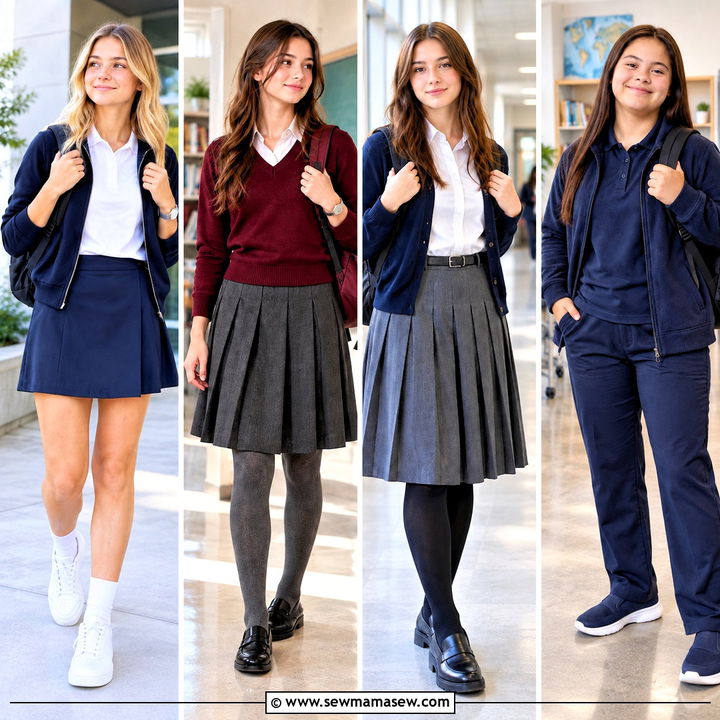
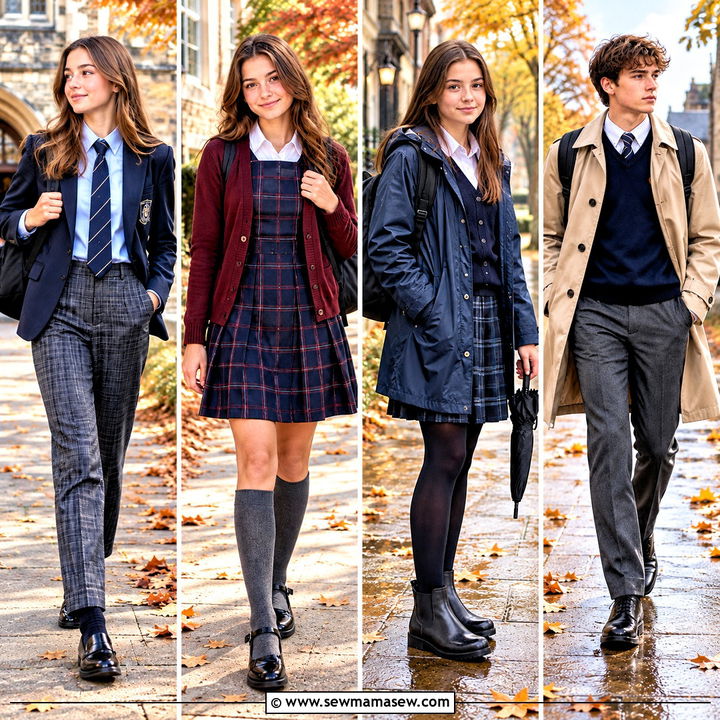
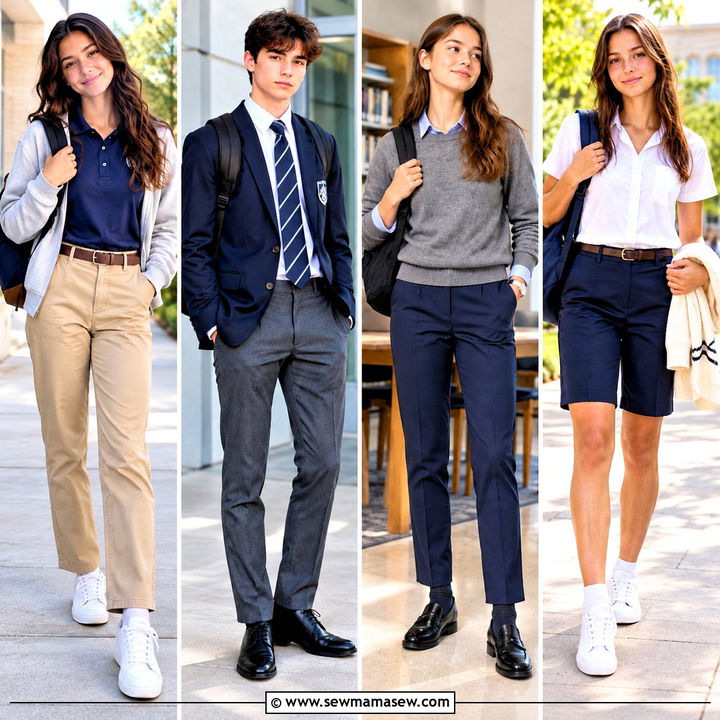
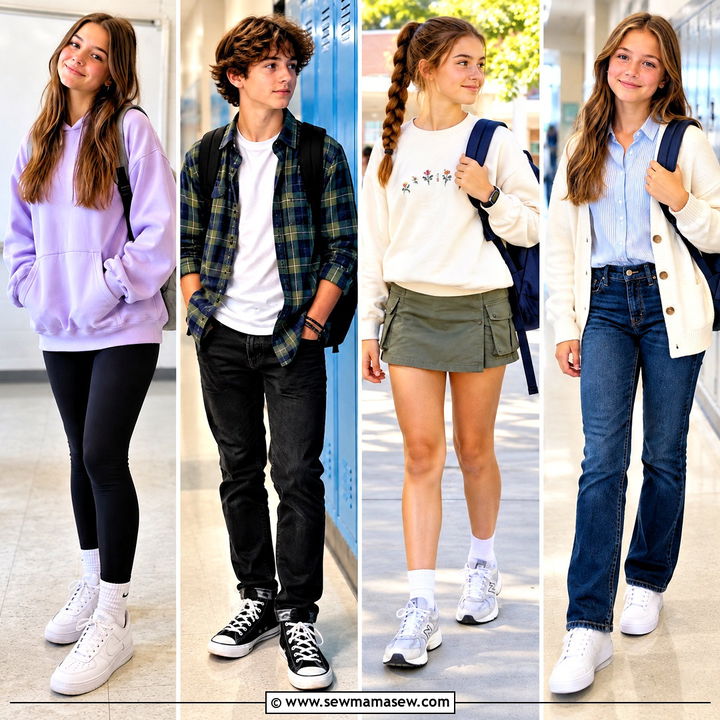
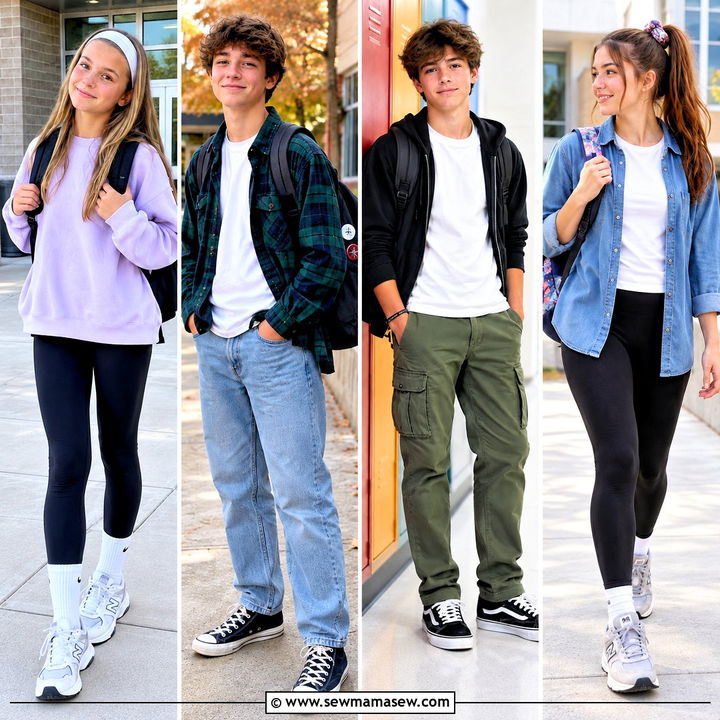
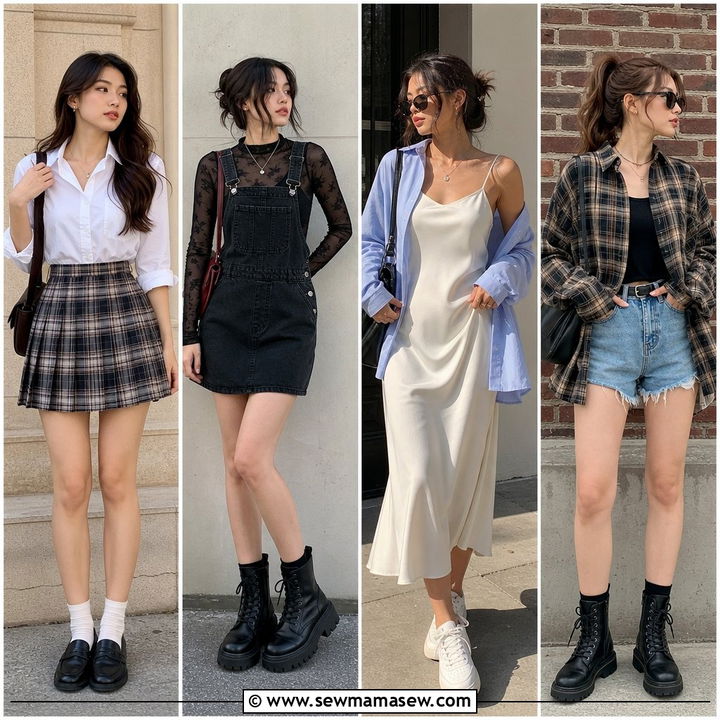
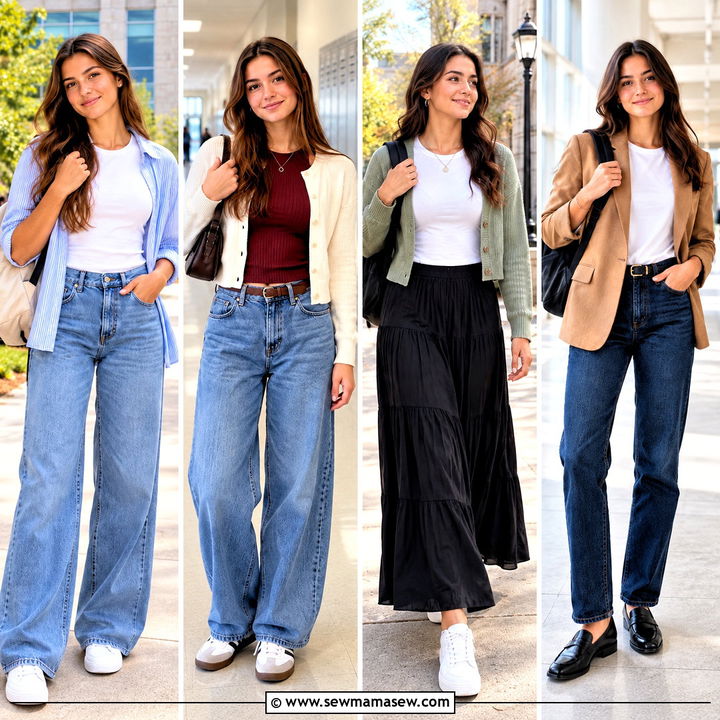
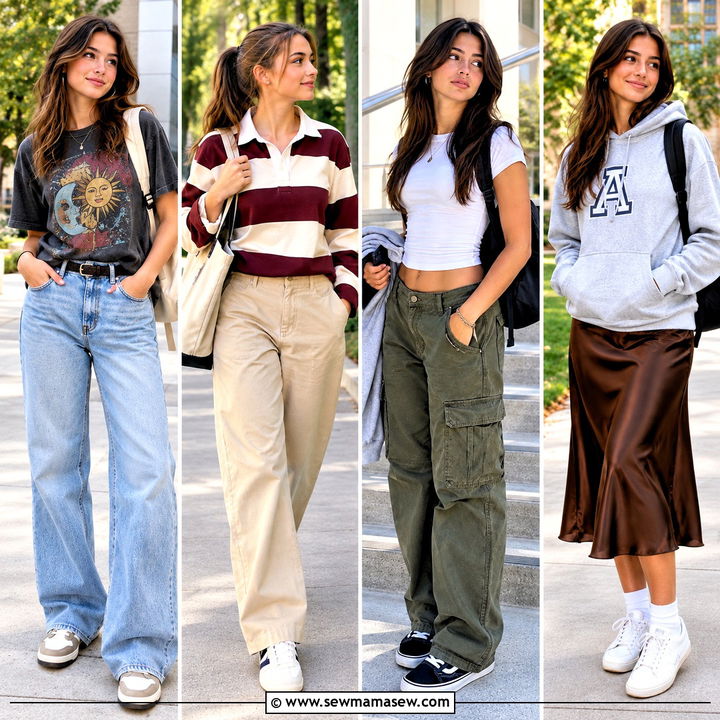
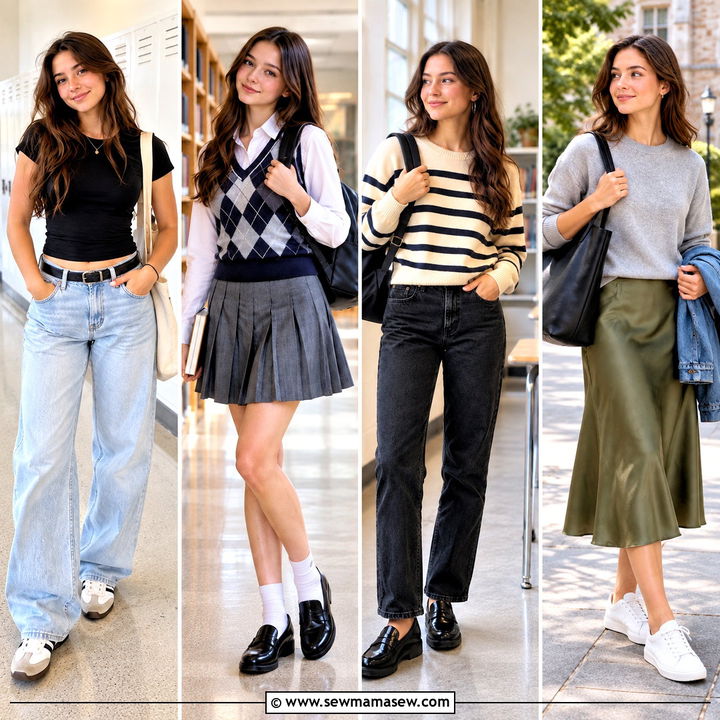
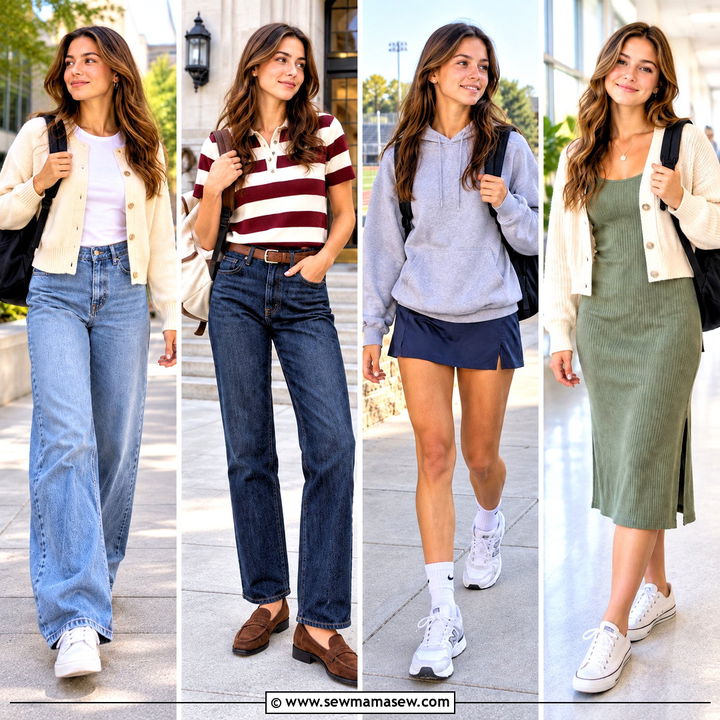
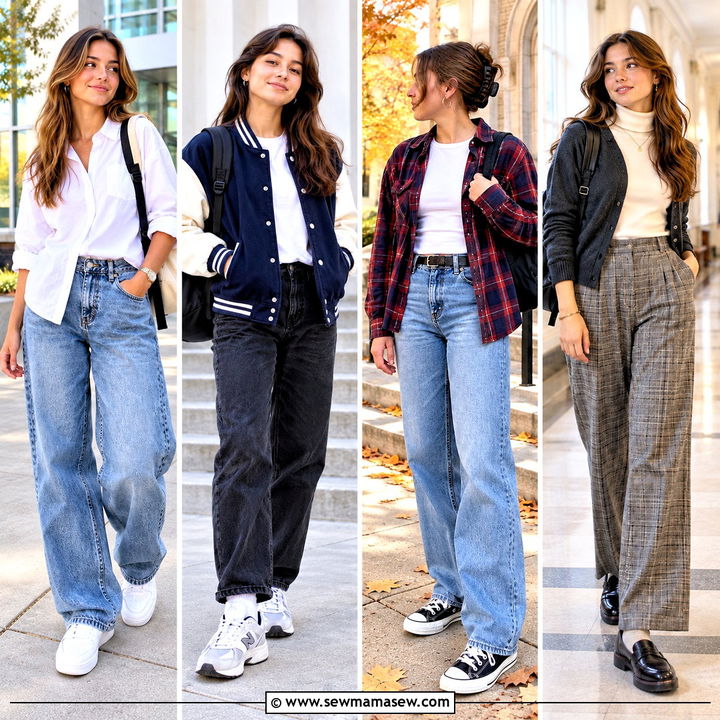
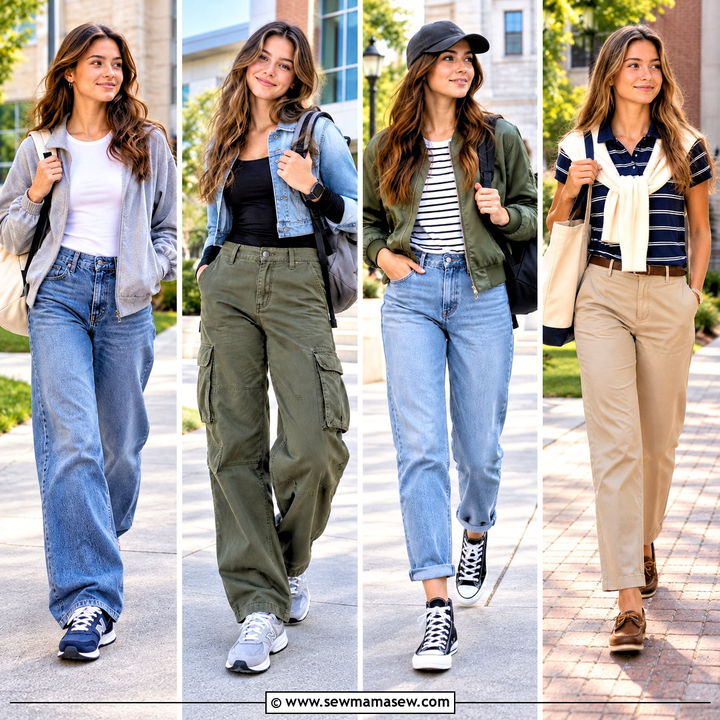
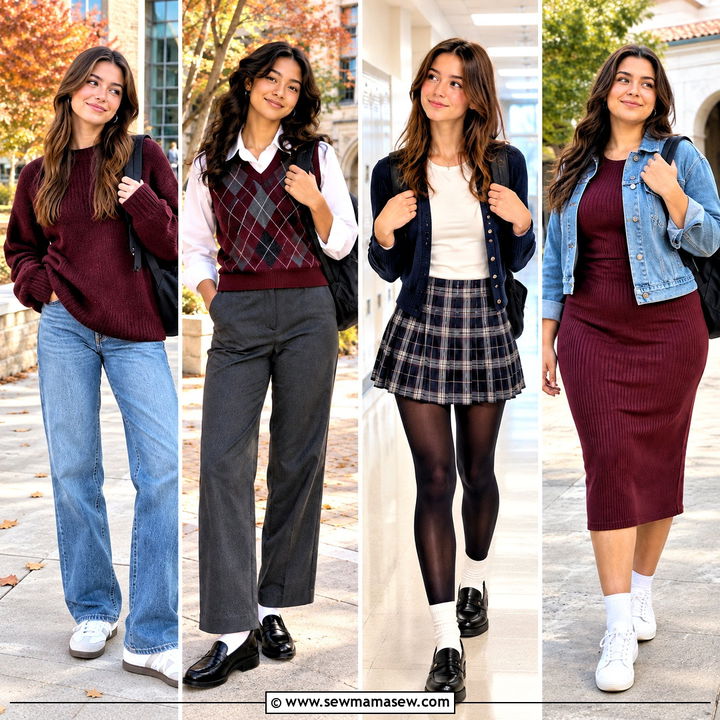
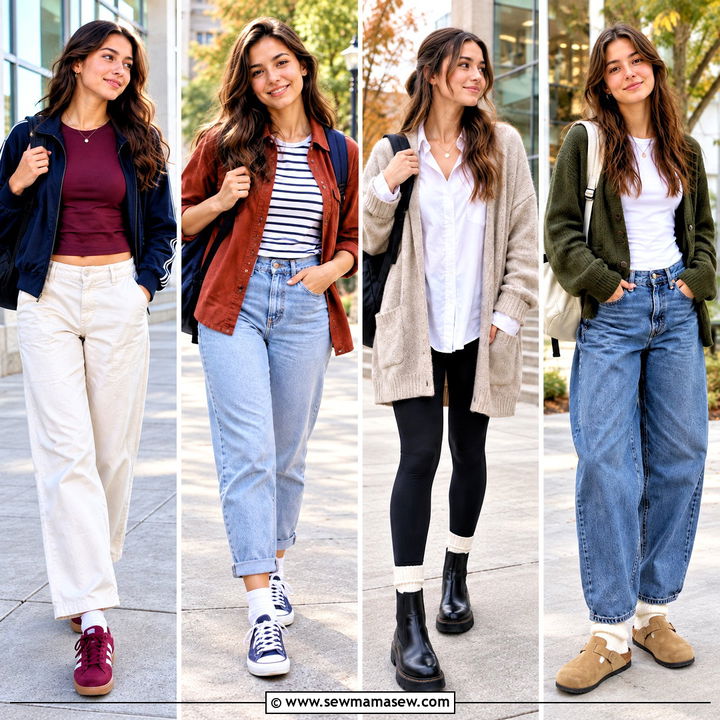
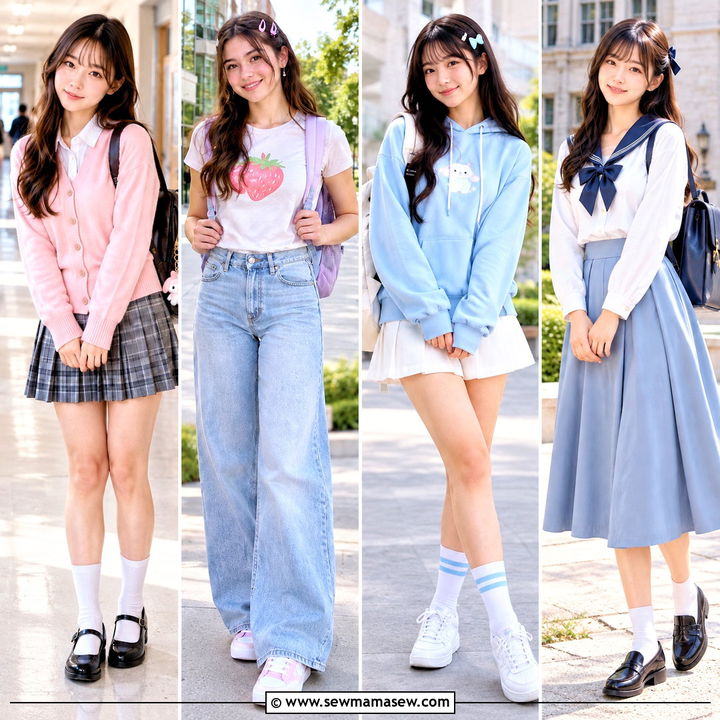
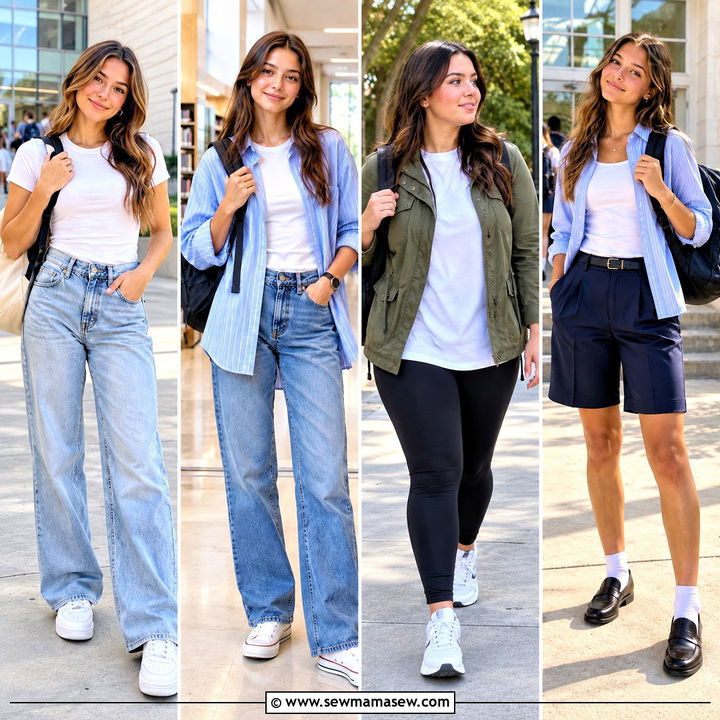
A uniform takes most of the guesswork out of school mornings, but only if the pieces fit, layer well and actually follow the handbook. Small swaps do a lot of work here: a cardigan instead of a sweater, trousers instead of a skirt, a hair ribbon in a school color. I always check fit before anything else. A shirt needs room to reach and write, a waistband has to stay comfortable sitting cross-legged, and shoes need enough support for crowded hallways. Read the handbook before buying extras, because rules on colors, hemlines, logos, socks and outerwear differ from school to school. The 25 combinations below cover warm weeks, cold classrooms, formal days and ordinary lessons, so you can build a weekly rotation that doesn't feel like the same outfit five times.

Buying Room to Grow Without Looking Sloppy
Every parent is tempted to size up a whole uniform so it lasts all year. I'd only do that for some pieces. Shirts and polos that are too big look untidy right away, with shoulder seams hanging down the arm and collars gaping. Buy those to fit now and replace them as needed. Trousers, skirts and cardigans are where growing room makes sense.
- Look for adjustable waistbands with buttonhole elastic inside, so you can buy one size up and cinch it
- Check for a deep hem on trousers and skirts that can be let down later in the year
- Choose cardigans with a slightly longer sleeve that can be turned back once at the cuff
- Skip sizing up shoes by more than a little, since loose school shoes cause tripping and blisters
When you try things on, have your child sit, reach up and bend down. A waistband that's fine standing can dig in hard at a desk, and that's what they'll complain about by October.
1. Classic Plaid Skirt Uniform
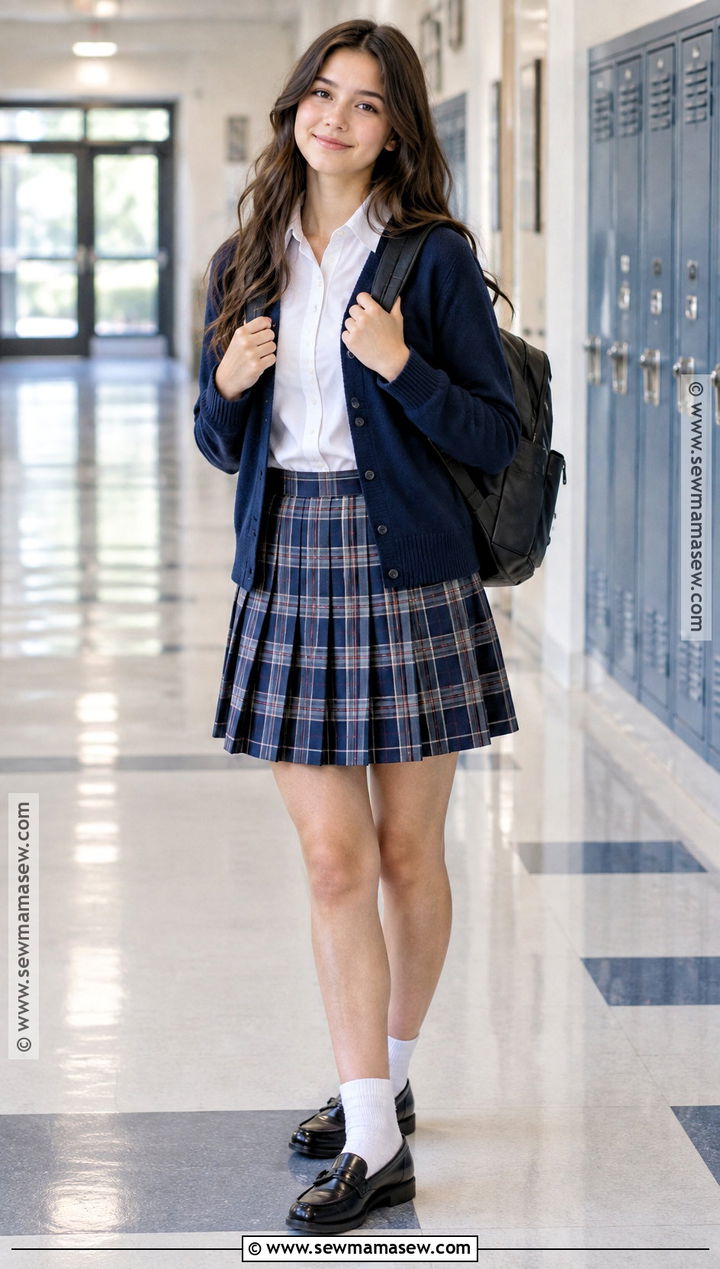
The plaid skirt and white button-down is the combination most people picture when they hear the word uniform. Choose a knee-length pleated skirt in the approved tartan and tuck in a breathable cotton or wrinkle-resistant shirt. A slim navy cardigan adds warmth without bulk. White ankle socks and black loafers or Mary Janes finish it, and a two-strap backpack spreads the weight of books better than a one-shoulder bag. A headband in one of the plaid colors is a nice touch. If the school allows it, I put fitted shorts under every uniform skirt, which makes stairs and recess a non-issue. Measure the required length before you hem, since pleated skirts are hard to lengthen once cut.
2. Navy Polo and Khaki Pants Uniform
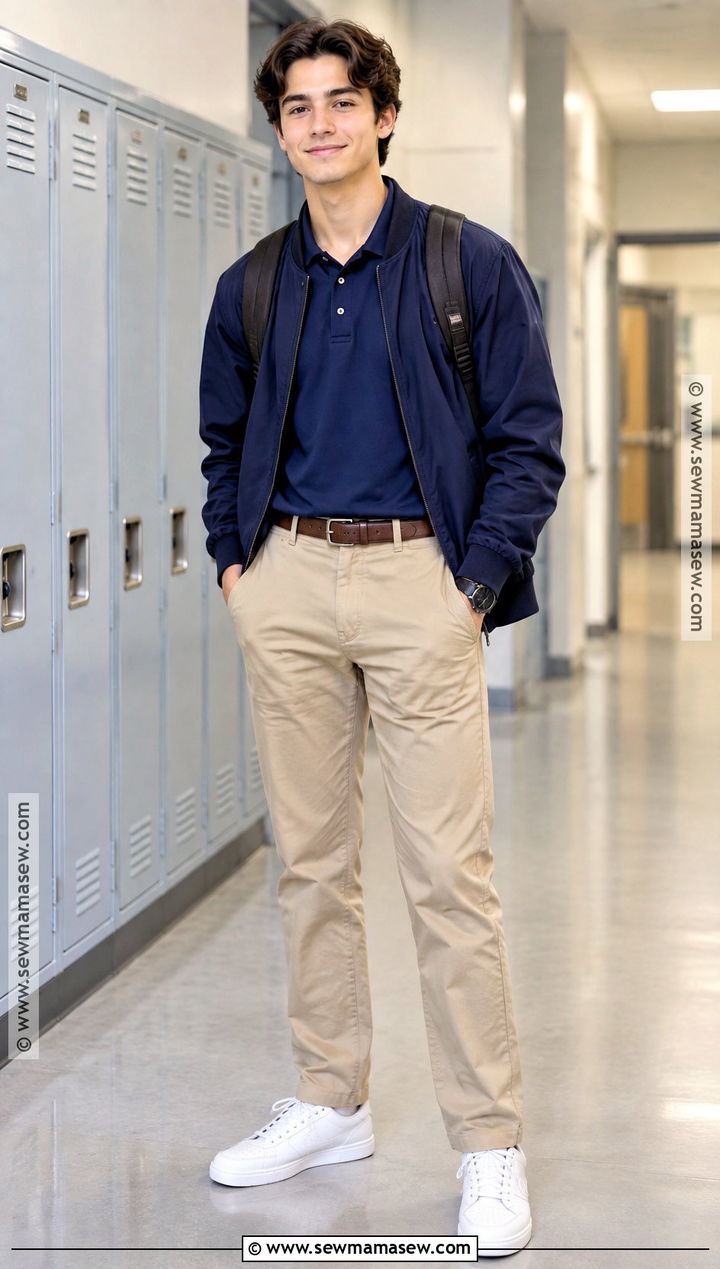
A navy polo with khaki pants is the hardest uniform to get wrong, which is exactly why it's on so many mornings. Choose straight-leg khakis and have your child sit down in them at the store; if the waistband digs in or the seat pulls, go up a size. A brown or black belt sharpens it where rules require one. White sneakers or brown loafers, depending on the dress code. Khaki twill shows every grass mark at the knee, so I'd buy a spare pair for active kids. A light navy zip jacket handles cold classrooms, and on cooler days a white long-sleeve undershirt can go under the polo if visible base layers are allowed.
3. White Oxford and Navy Skort Uniform
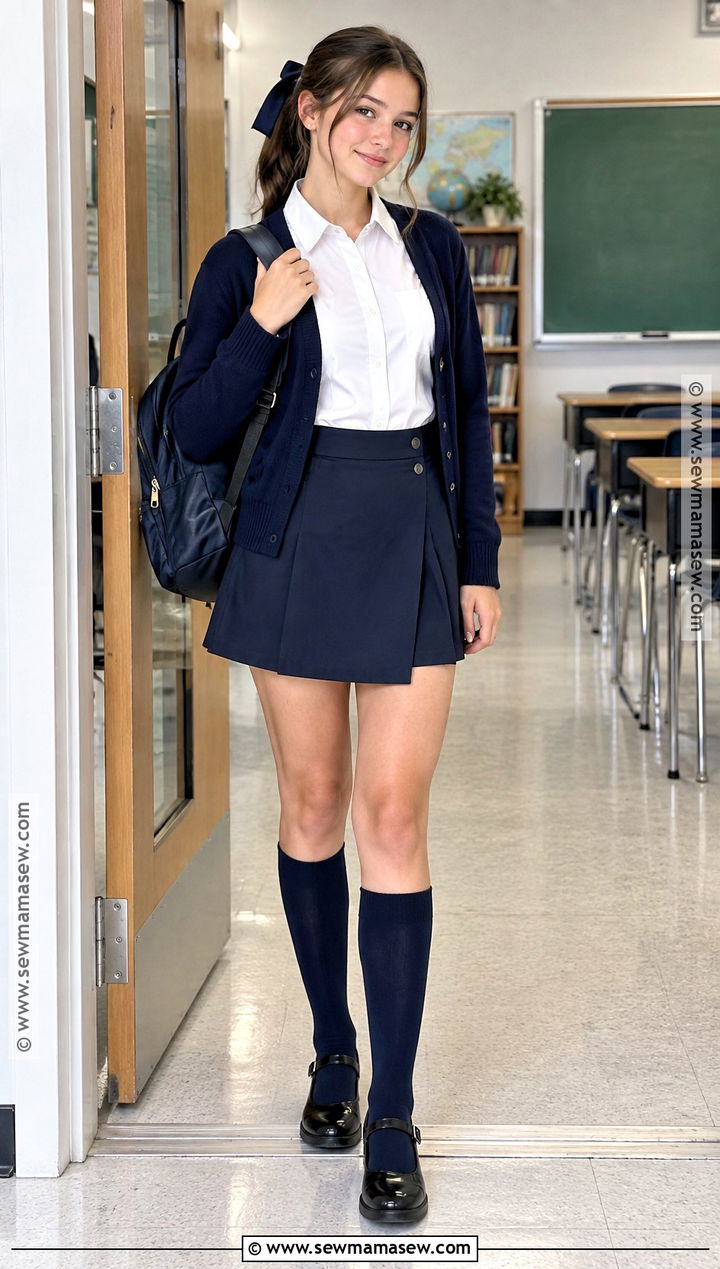
Skorts are the piece I recommend most often to families, because they look like a skirt from the front and act like shorts on the playground. Style a navy skort with a crisp white Oxford, leaving enough room through the shoulders for writing, carrying books and reaching into a locker. Tuck it neatly and add a narrow belt if required. Navy knee socks look traditional, while white ankle socks feel lighter in warm weeks. Black Mary Janes, loafers or plain sneakers all suit it. Add a navy cardigan for cool rooms. Check the inner shorts: a gripper band at the leg keeps them from riding up, and a child who climbs will notice the difference.
4. Sweater Vest and Pleated Skirt Uniform
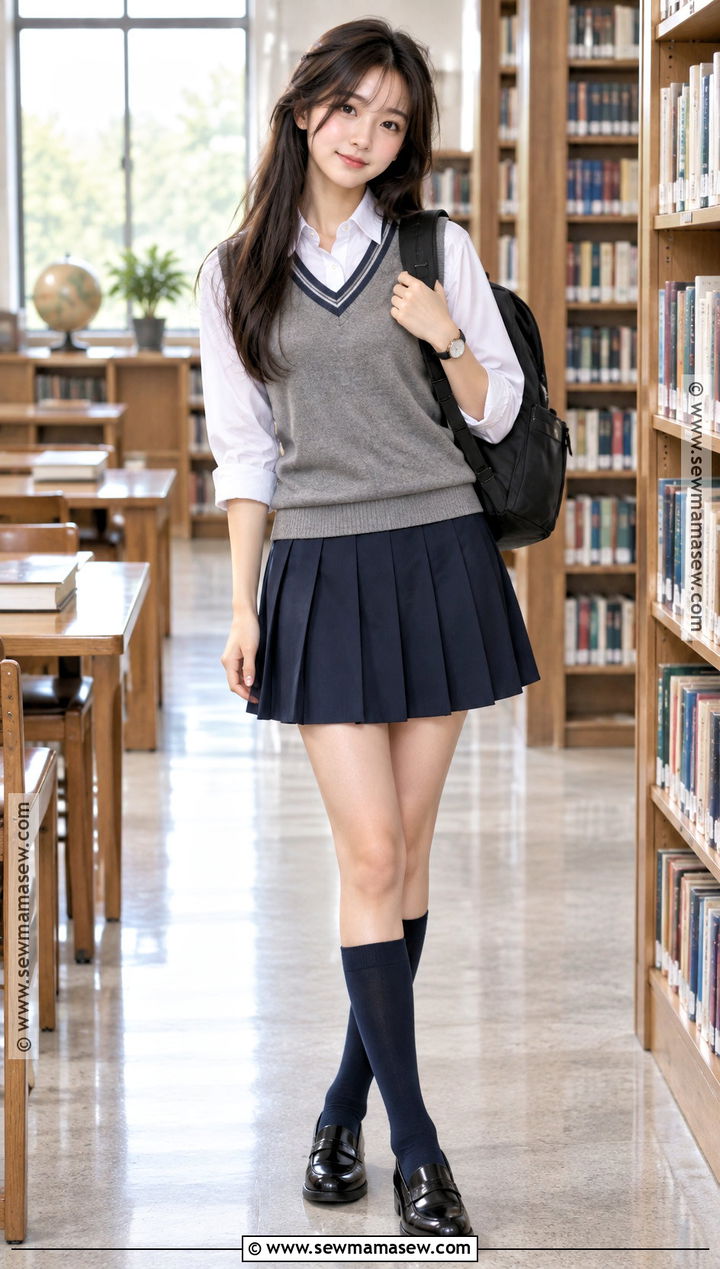
A sweater vest gives you a layer without the weight of a full sweater, which is useful in a building that's warm one hour and cold the next. Wear a navy, gray, burgundy or school-color vest over a white collared shirt with the approved pleated skirt. Get the collar sitting flat above the vest neckline and smooth the shirt hem before tucking, since a bunched shirt shows as lumps through fine knit. Knee socks and polished loafers keep it classic, sneakers relax it where permitted. A cotton-blend vest works better than heavy wool through early fall. Fitted, straight or slightly relaxed cuts all look tidy, so pick the one your child will actually keep on.
5. Cardigan and Straight Leg Trousers Uniform
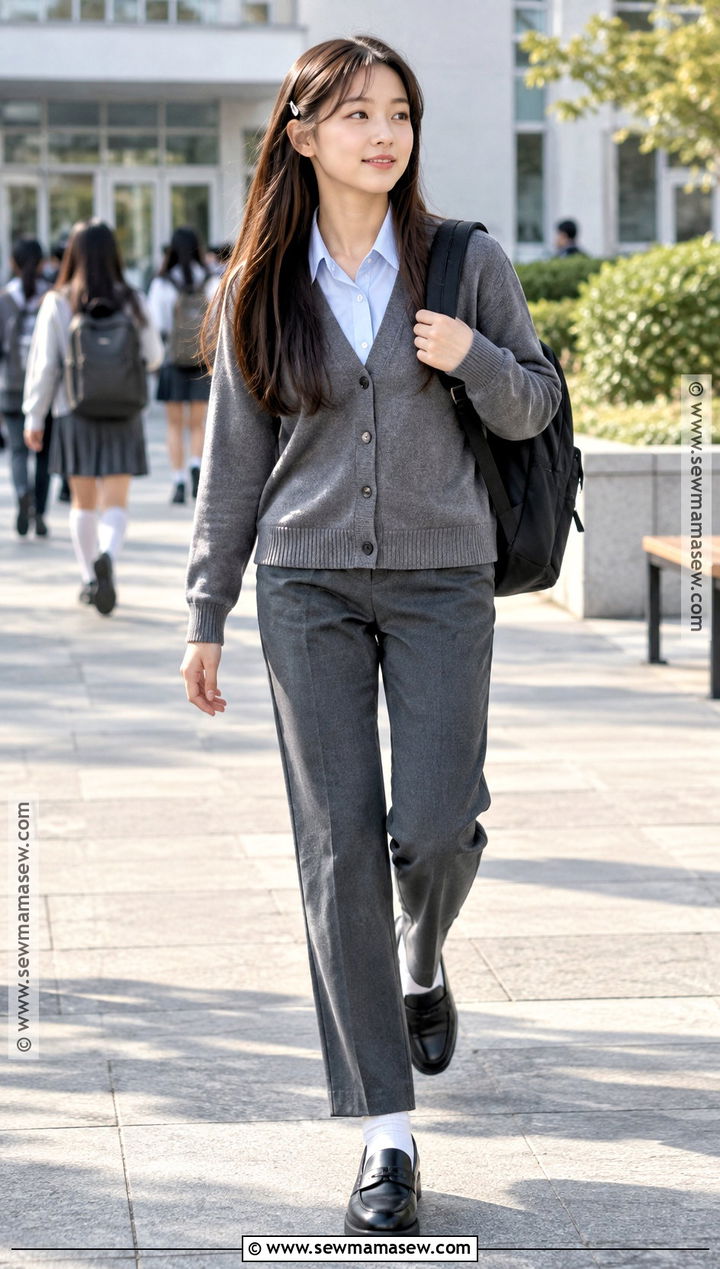
Soft layers make a structured uniform much more comfortable. Pair a light blue or white collared shirt with navy or charcoal straight-leg trousers, then add a button-front cardigan in an approved neutral, open for everyday or buttoned for formal days. I check the trouser hem against the shoe first. It should brush the top of loafers or leather sneakers without dragging, because dragging hems fray at the heel within weeks. A cardigan that ends around the hip suits most builds better than a long one. It's an easy outfit for changeable weather: the cardigan comes off when the afternoon warms up and the shirt and trousers still look complete.
6. Blazer and Plaid Skirt Uniform
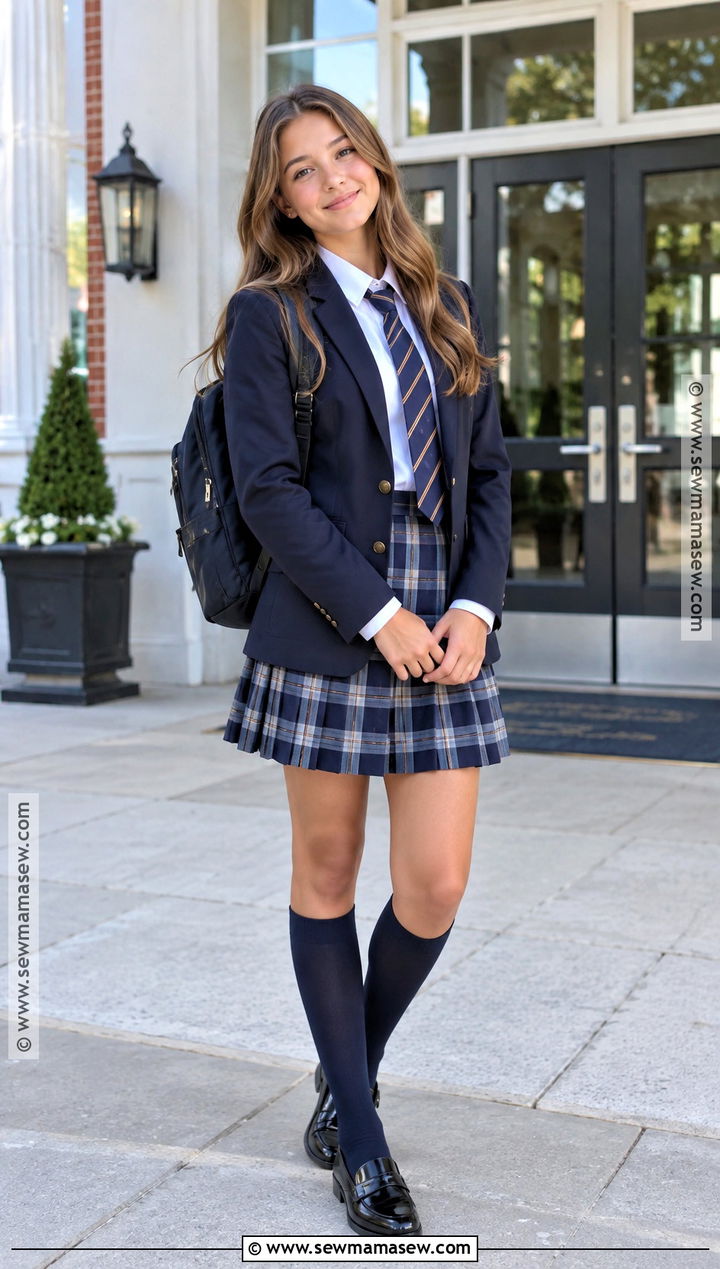
Blazer days are about fit across the back. Layer a fitted navy blazer over a white button-down, then add the required plaid skirt with a tie or cross tie. Even if the blazer is mostly worn open, it should close without pulling across the shoulders or chest; a blazer that's too tight in September won't make it to spring. Knee socks or opaque tights with polished black loafers suit the formality, and a navy or black backpack keeps it tailored. Keep jewelry minimal and hair simple. Remove the blazer outside in warm weather if policy allows. This is the version I'd save for assemblies, presentations and picture day.
7. Polo Dress School Uniform
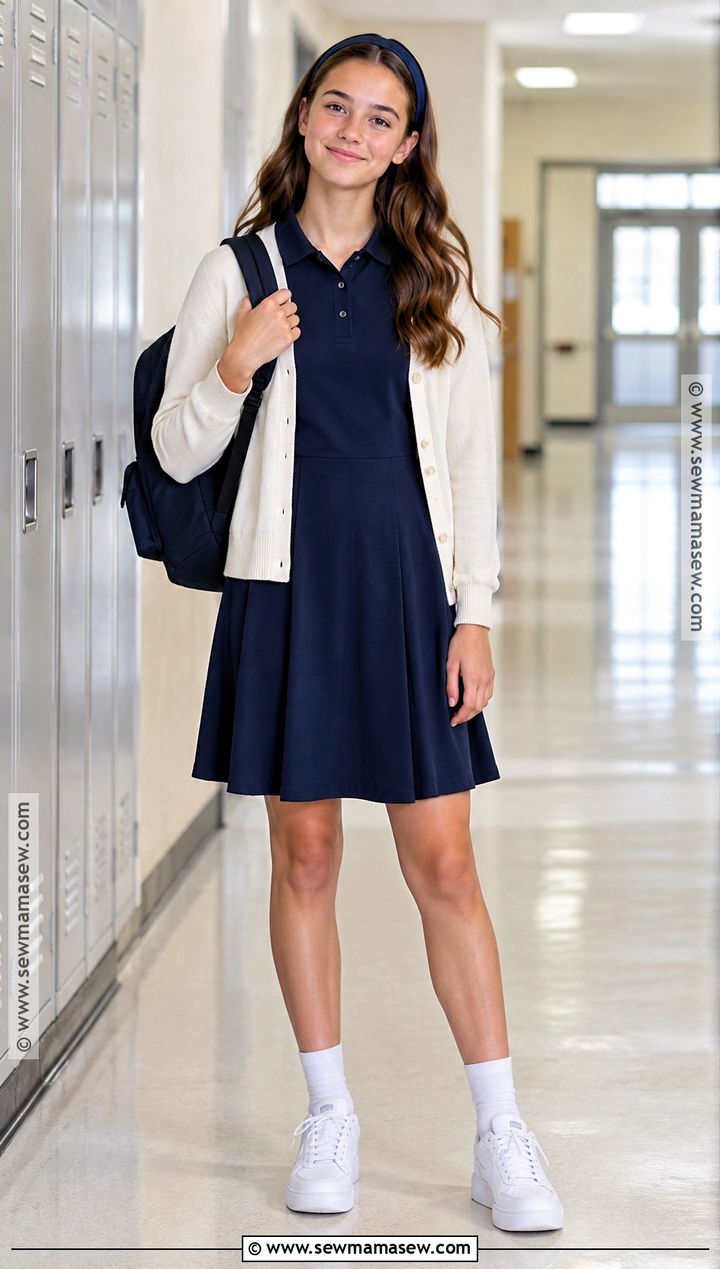
A polo dress is close to a whole uniform in one piece, which makes it a favorite for kids who hate fiddling with tucks. Choose an approved navy, burgundy, green or light blue dress with a soft collar and a knee-length hem. Fitted shorts underneath, where permitted, handle playground time. White ankle socks with sneakers keep it everyday; knee socks with Mary Janes make it traditional. Layer a zip school sweatshirt or cardigan over it in cold rooms. Pique cotton breathes but creases at the hips after sitting, so a cotton blend with some polyester holds its shape longer. A school-color headband adds personality without breaking any rule.
8. Jumper Dress and Peter Pan Blouse Uniform
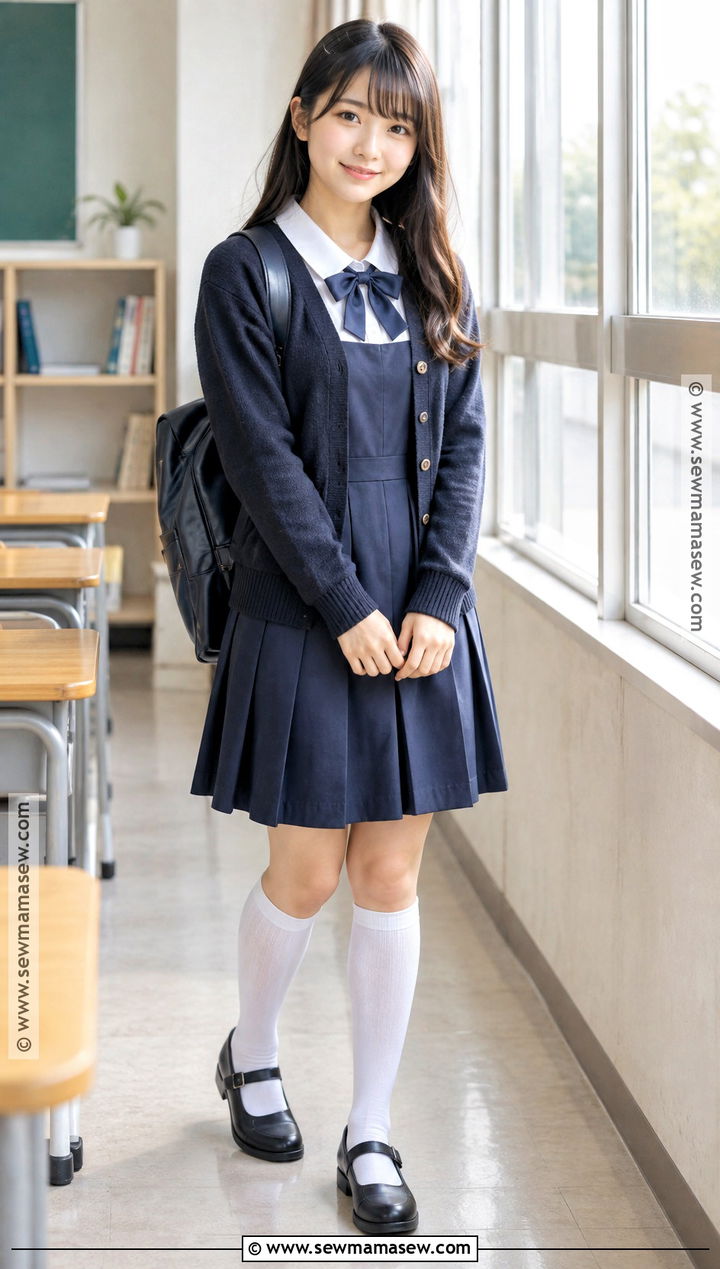
A jumper over a Peter Pan collar blouse has a softer, old-fashioned look that younger kids tend to love. Select a navy, gray or plaid jumper in the required length and wear it over a white short-sleeve blouse. The rounded collar should lie flat outside the jumper neckline; if it curls, a quick press with the collar facing down fixes it. Knee socks, black Mary Janes and a coordinating cardigan for cold mornings complete it. Make sure there's room through the torso to sit and bend. Side tabs or an adjustable waist are worth looking for, since they let the jumper grow with the child for an extra term.
9. Quarter Zip and Straight Leg Pants Uniform
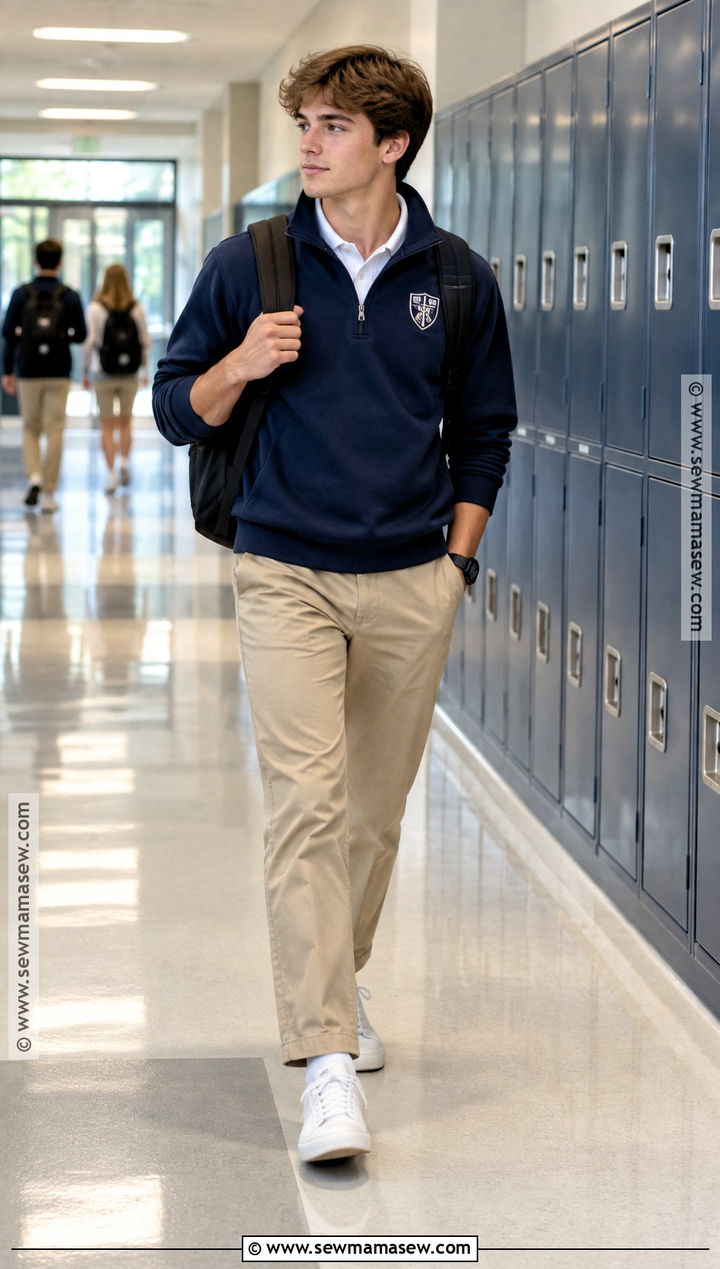
A school-logo quarter zip gives the pants uniform a sportier feel. Layer it over a white or light blue polo so the collar shows at the neck, then add navy or khaki straight-leg pants and low white or black sneakers. A plain backpack and a digital watch suit the practical mood. Choose a light quarter zip that fits under a coat without bunching at the arms. For kids who like a roomier shape, relaxed trousers are fine as long as they meet the dress code and don't drag on the ground. It's a good pick for campuses with outdoor walkways between buildings, and the zip can come off later in the day.
10. Crewneck Sweater and Collared Shirt Uniform
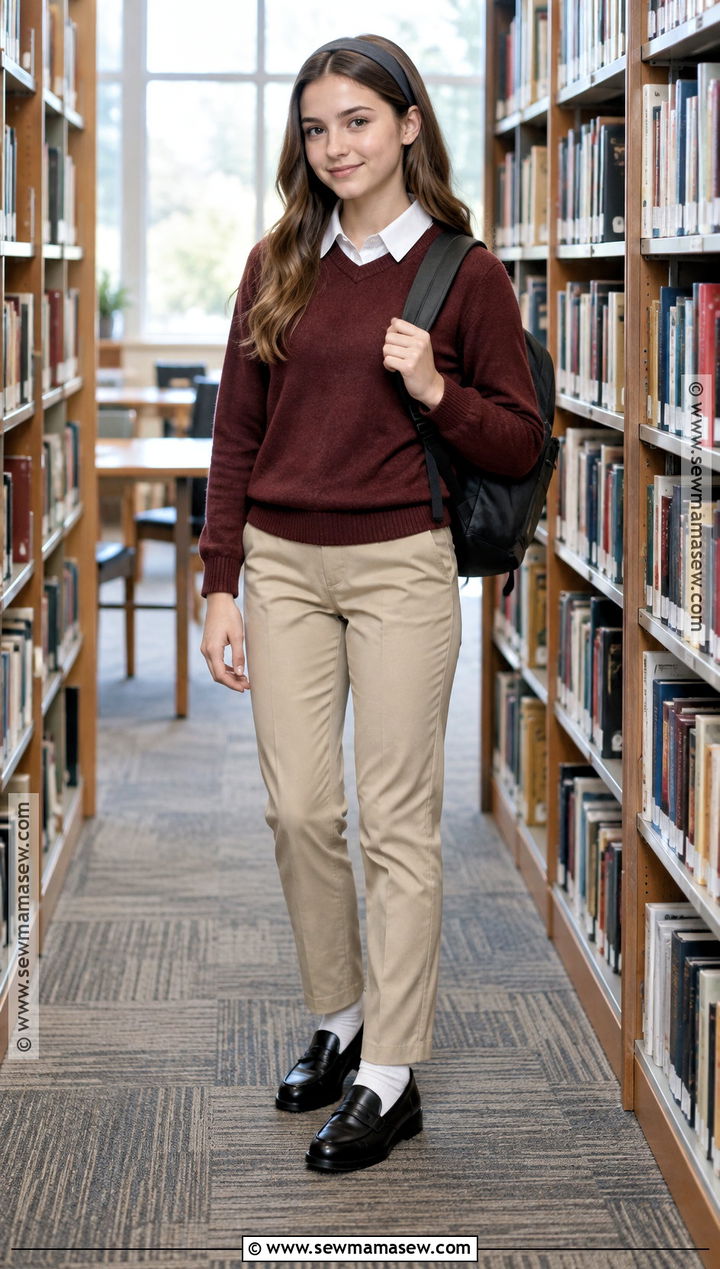
When it gets cold, the crewneck sweater over a collared shirt is the layer I lean on. Use navy, gray or burgundy over crisp white, with the collar and a little cuff showing. Add tailored khakis or the approved plaid skirt. Black loafers look academic; clean sneakers are kinder on long walks between classes. Fine-gauge knit layers far more neatly than a thick, oversized sweater, which pushes the shirt collar up and makes the shoulders look boxy. Check that the shirt isn't bunching underneath and the sweater hem lies flat at the waistband. Children run warm, so this is usually plenty indoors without a coat.
11. Short Sleeve Blouse and Bermuda Shorts Uniform
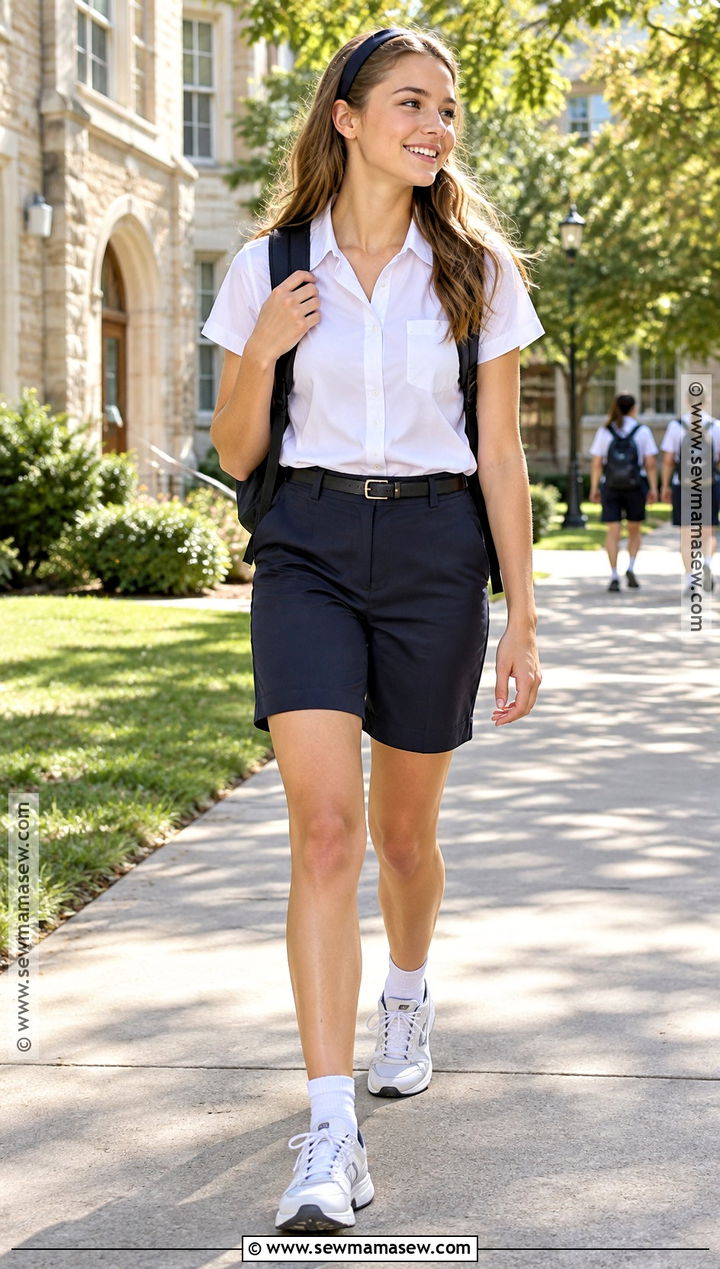
Hot weather calls for lightweight pieces that still look ready for class. Pair a white short-sleeve blouse with navy or khaki Bermuda shorts in the approved length. A slightly relaxed blouse lets air move, and a neat tuck keeps it tidy. Add a belt if required, then ankle socks and breathable sneakers or loafers. Pick shorts with a flexible waistband and room through the hips and thighs, because Bermuda length rides up when a fitted pair is sat in all day. A braid or ponytail keeps hair off the neck in the heat. You get more coverage than short shorts and far less heat than full-length trousers.
12. Long Sleeve Polo and A Line Skirt Uniform
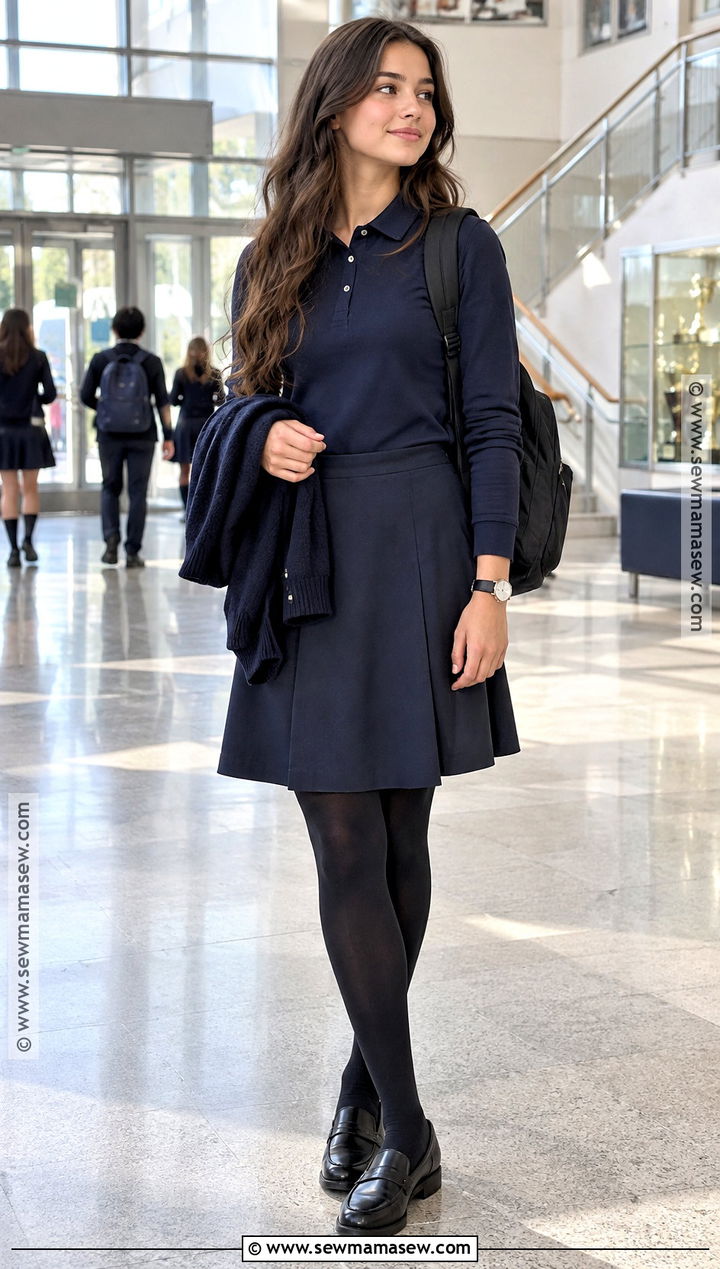
On cool transitional days, a long-sleeve polo tucked into an A-line skirt gives a smoother line than sharp pleats, and an A-line skirt is easier to move in. Choose white, navy or a school color and keep the skirt at the required length. Add opaque tights or knee socks as it gets colder, then black loafers or plain lace-ups. I'd pack a fitted school cardigan in the backpack for cold classrooms. Sleeve length is the thing to check: polo cuffs should reach the wrist bone without covering the hands, or they'll end up dragging through paint and lunch. Keep accessories simple, like a slim watch and small studs.
13. Monochrome Navy School Uniform
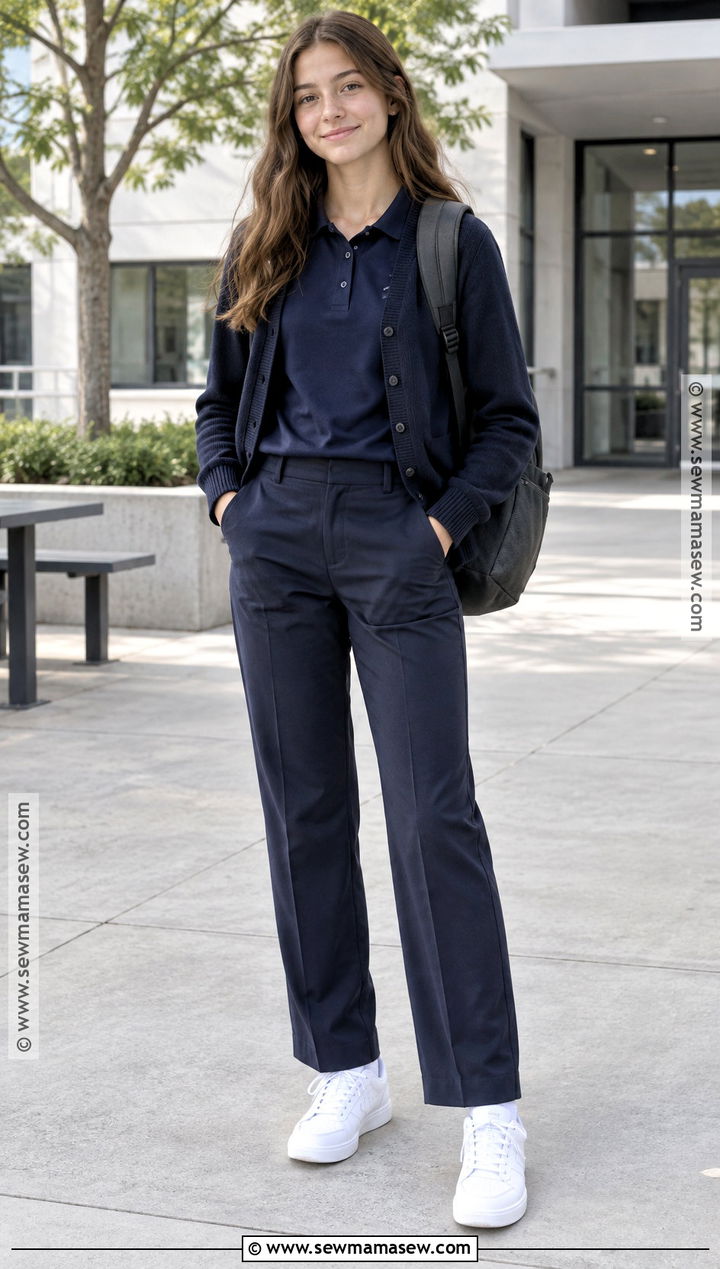
One color from top to bottom is the quickest uniform to coordinate on a rushed morning. Start with a navy polo or blouse, then navy trousers, a skort or a knee-length skirt. Break it up with white ankle socks and white sneakers, or keep it traditional in navy socks and black loafers. A navy cardigan or logo jacket adds warmth without breaking the palette. Mixing textures, like cotton piqué with woven twill and a fine-knit cardigan, gives it depth so it doesn't look flat. One catch I see often: navy from different makers rarely matches exactly, and some schools are strict about the specific shade, so buy the main pieces from the approved supplier.
14. Black and White School Uniform
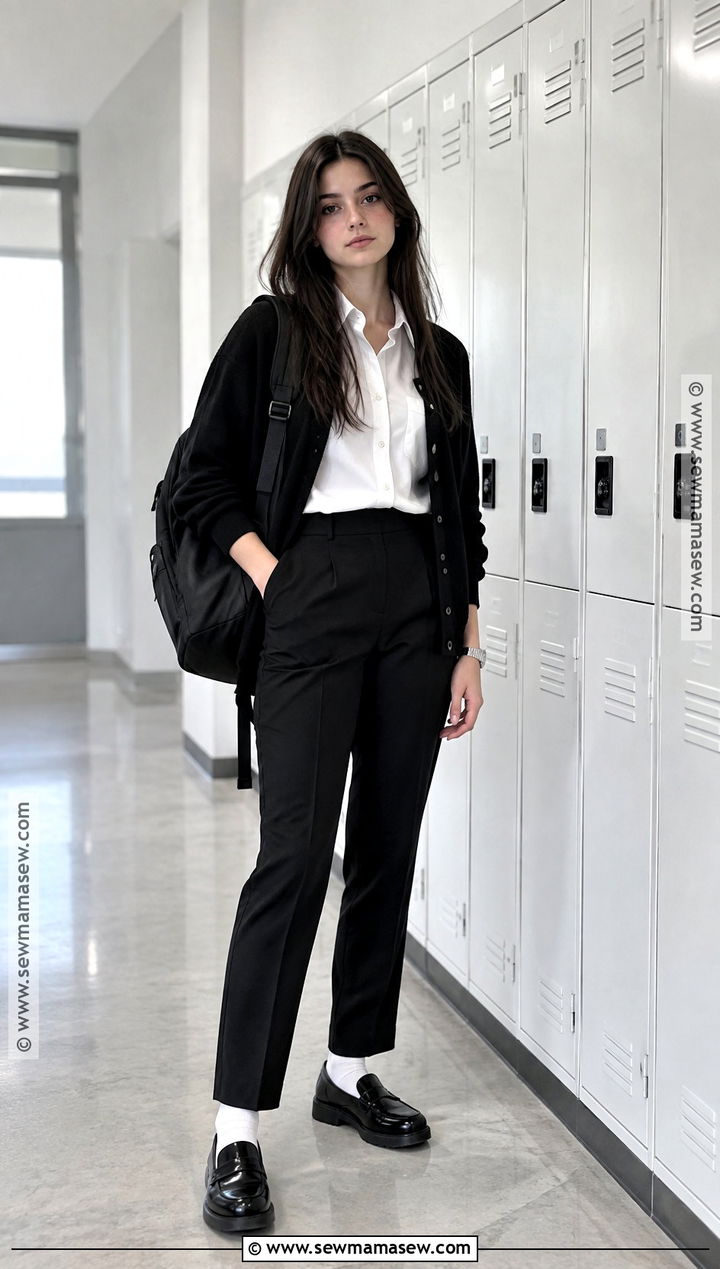
Black and white is crisp and very forgiving to coordinate. Wear a white button-down with black straight-leg trousers or an approved black pleated skirt, and add a black cardigan or blazer as needed. White ankle socks and black loafers repeat the two-color idea, and plain black sneakers are more comfortable on busy days. A soft cotton shirt or slightly relaxed trousers keep it from feeling stiff. Black twill shows lint and pet hair, so a lint roller by the door is worth having. Before buying, confirm black bottoms are actually on your school's approved list, because many uniform policies only allow navy, gray or khaki.
15. Gray Plaid School Uniform
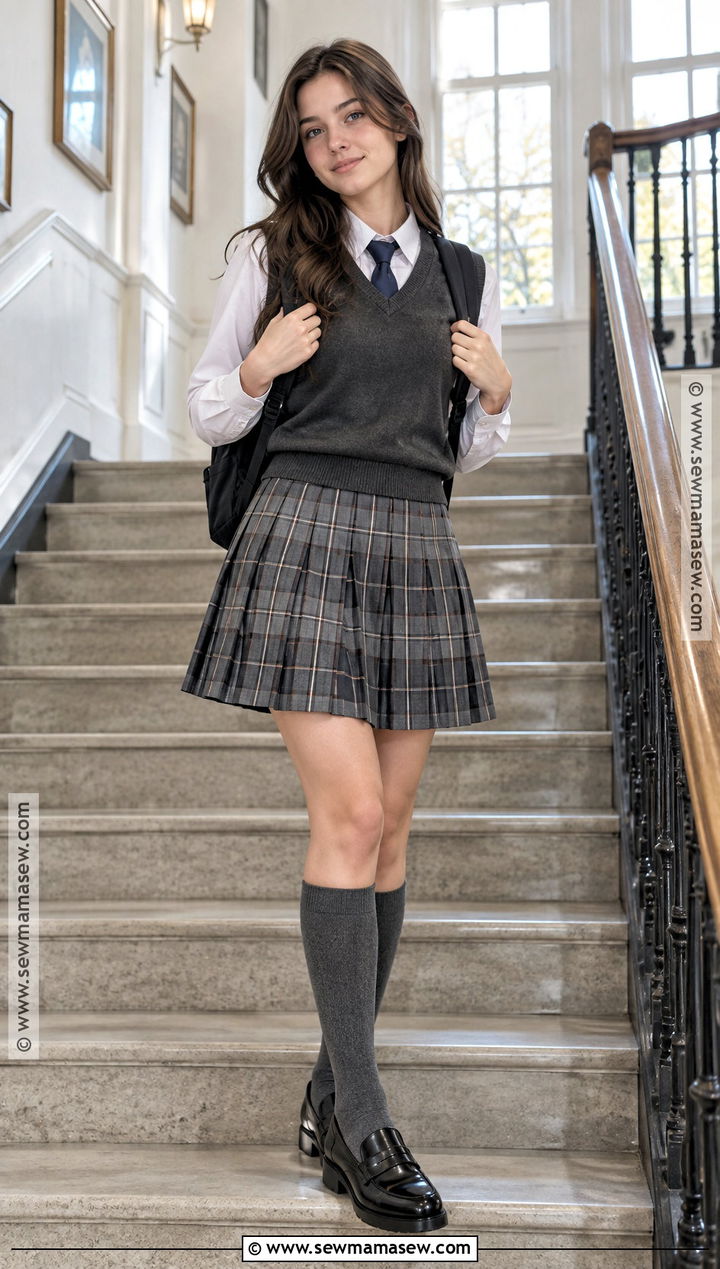
Gray plaid is quieter than bright tartan and easier to match. Build it around a gray plaid pleated skirt with a white Oxford and a charcoal sweater vest. Black or charcoal knee socks continue the neutrals, and polished loafers finish it. If ties are allowed, a narrow gray or navy one coordinates without fighting the pattern. On cold days add a fitted charcoal blazer or wool-blend coat for the walk in. The rule I follow with any plaid uniform is solid pieces everywhere else, so the pattern stays the one thing you notice. Gray also photographs well, which makes it a good choice for ceremonies and club photos.
16. Burgundy Cardigan School Uniform
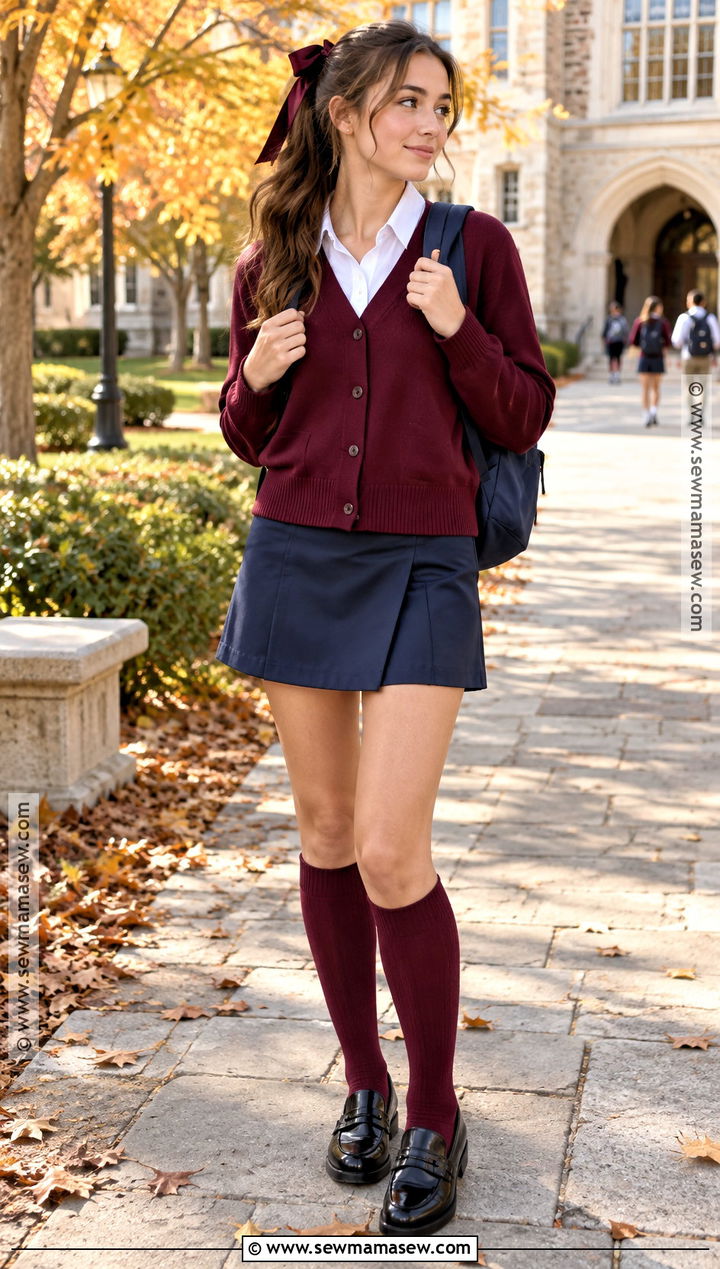
Burgundy is one of the richest colors most uniform palettes allow. Layer a burgundy cardigan over a white blouse or polo, then add navy trousers, a plaid skirt or a skort. Wear it open on ordinary days and buttoned for presentations. Burgundy knee socks can echo the cardigan where permitted, and black loafers ground it. Buy a washable knit with reinforced buttons, because cardigan buttons get pulled at constantly and tend to loosen. A hip-length cut works with both pants and skirts. It feels most at home in fall, though the cardigan earns its place all year in heavily air-conditioned rooms.
17. Green Sweater Vest School Uniform
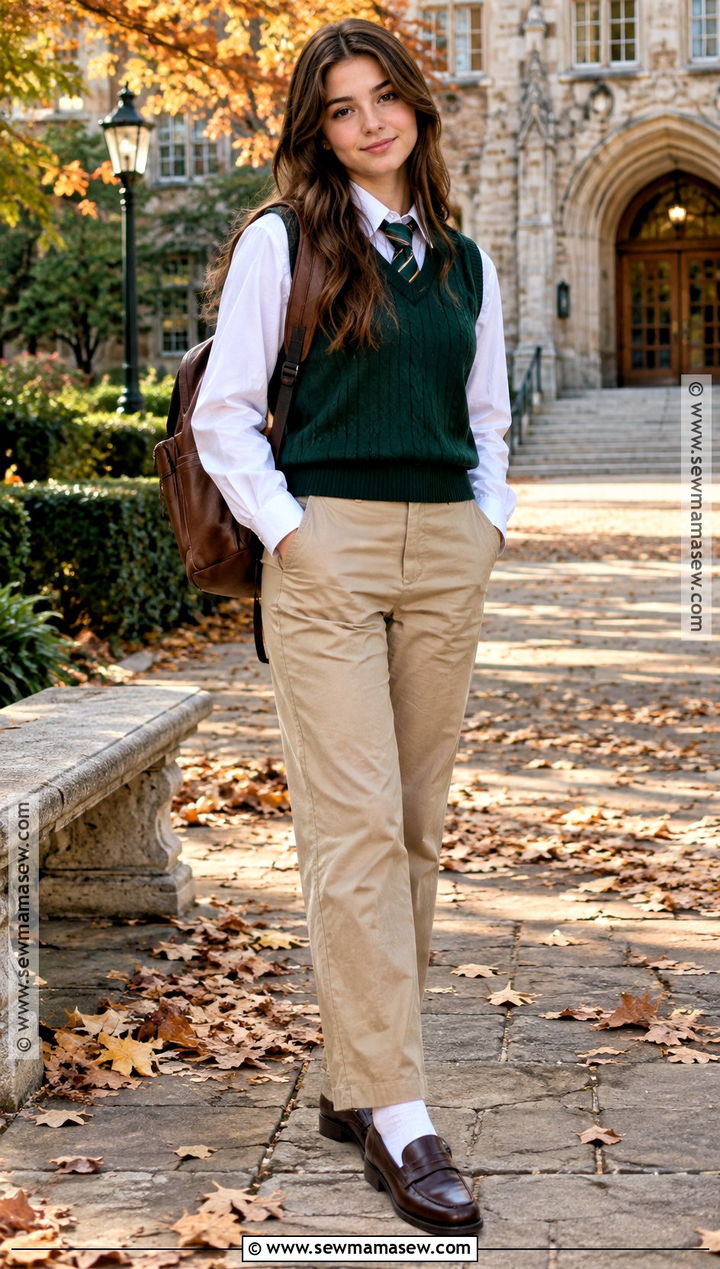
A forest green sweater vest freshens a classic uniform while still looking academic. Wear it over a white collared shirt with khaki trousers or a plaid skirt that carries some green. Brown loafers suit the earthy colors, though black school shoes work too. White ankle socks lighten it; knee socks make it traditional. If ties are required, choose a simple stripe that includes green rather than an unrelated color. I check vest armholes on every fitting: if they're cut tight, they rub under the arm while writing. Once the weather turns colder, the vest also fits under a blazer.
18. Light Blue Oxford School Uniform
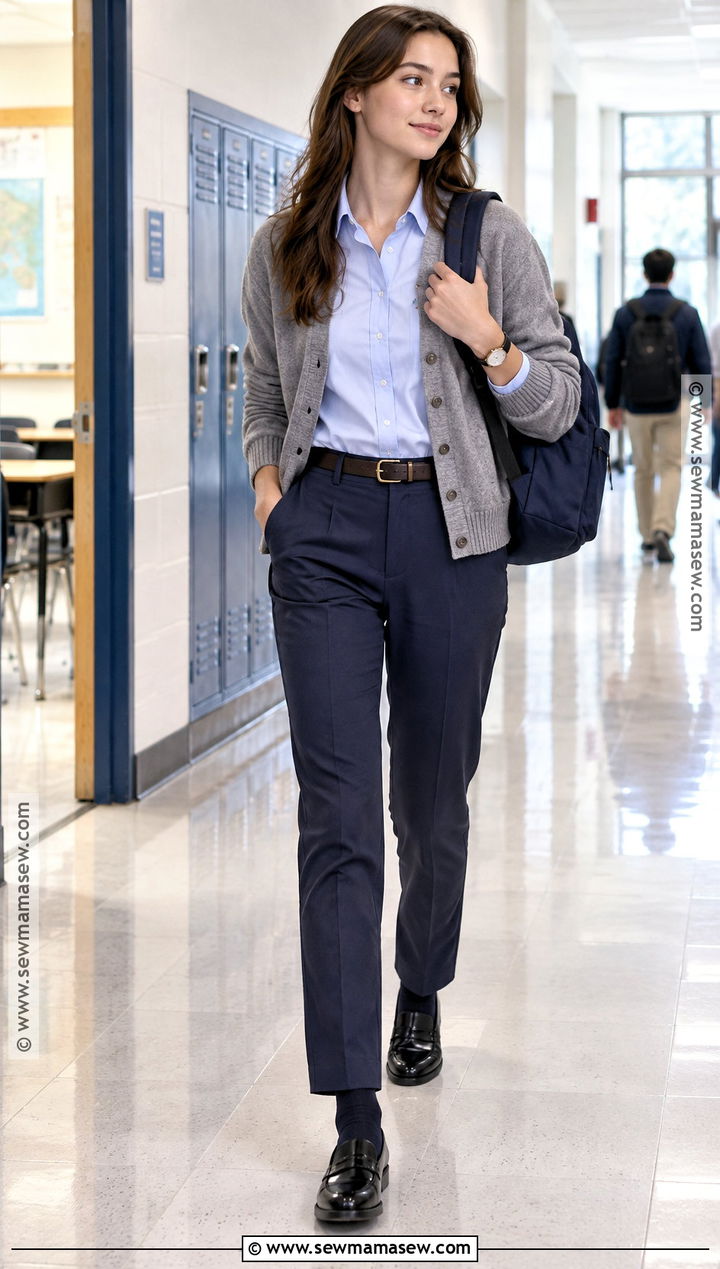
A light blue Oxford is the gentlest way to add color to navy uniform pieces. Tuck it into navy straight-leg pants, a pleated skirt or a skort, with a narrow belt if required. Oxford cloth has a slightly textured weave that hides creases better than smooth poplin, which matters by the afternoon. Navy socks and black or brown loafers finish it, with a gray cardigan as a soft layer. A wrinkle-resistant Oxford with a little room through the shoulders is the easiest to keep tidy. Small studs and a watch are enough. Blue with navy reads calm in class photos without looking formal.
19. Rainy Day School Uniform
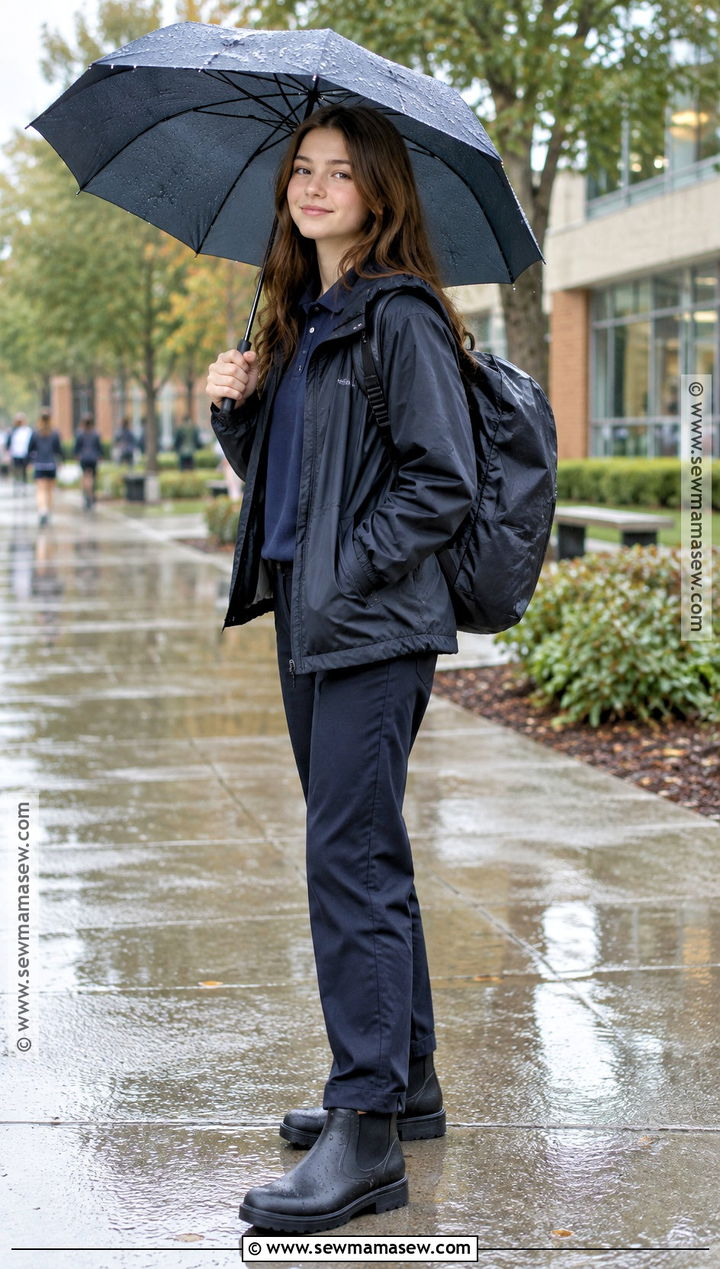
Rain is where a uniform plan falls apart, so I treat wet mornings as their own outfit. Choose an approved polo with straight-leg pants, which handle puddles far better than a long or full skirt. Add a light waterproof jacket in a permitted color. If the school allows it, wear water-resistant ankle boots for the walk in and carry regular school shoes in a waterproof bag to change indoors. Moisture-wicking socks help, because damp cotton socks stay cold all day. A coated backpack or a fitted rain cover protects books and devices. Keep trouser hems high enough that they don't soak up water from the pavement.
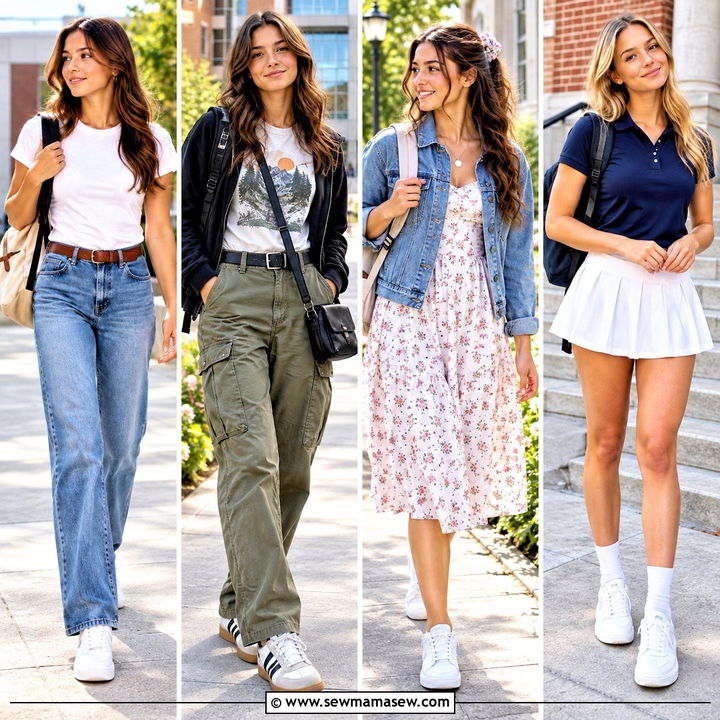
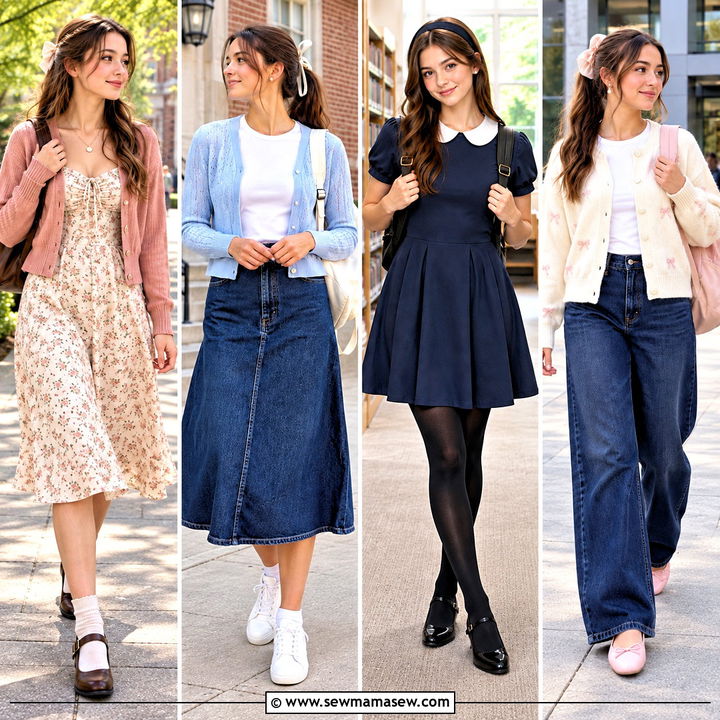
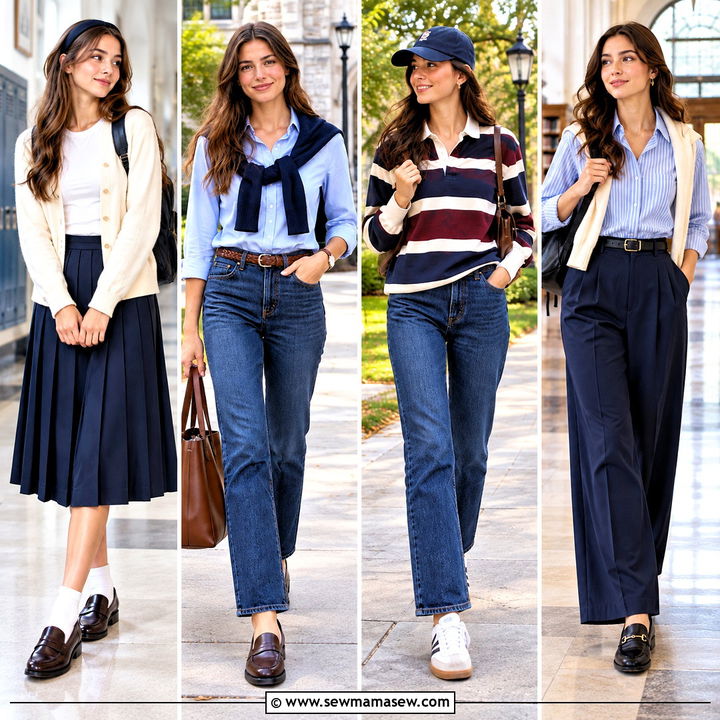
20. Cold Weather Layered School Uniform
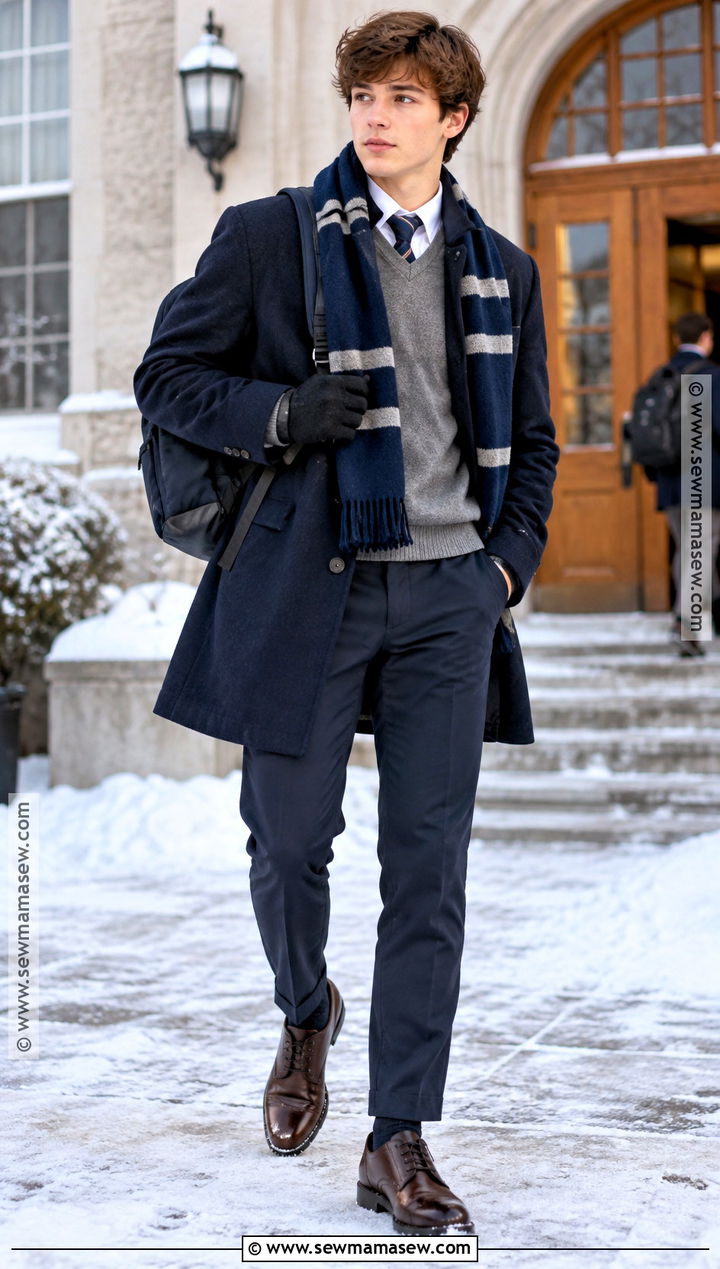
Freezing mornings are easier with several thin layers than one bulky one. Start with a fitted thermal undershirt under a white Oxford or long-sleeve polo, as long as the base layer doesn't show in a way the rules forbid. Add navy trousers, warm socks and leather shoes or weather-ready boots. A fine-knit sweater and a structured coat give warmth without stopping the child from moving. A school-color scarf and gloves finish the commute. For skirt wearers, opaque tights or approved leggings underneath help a lot. Make indoor layers easy to remove, since classrooms are often much warmer than the walk in, and breathable fibers stop kids from overheating in the hallway.
21. Warm Weather School Uniform
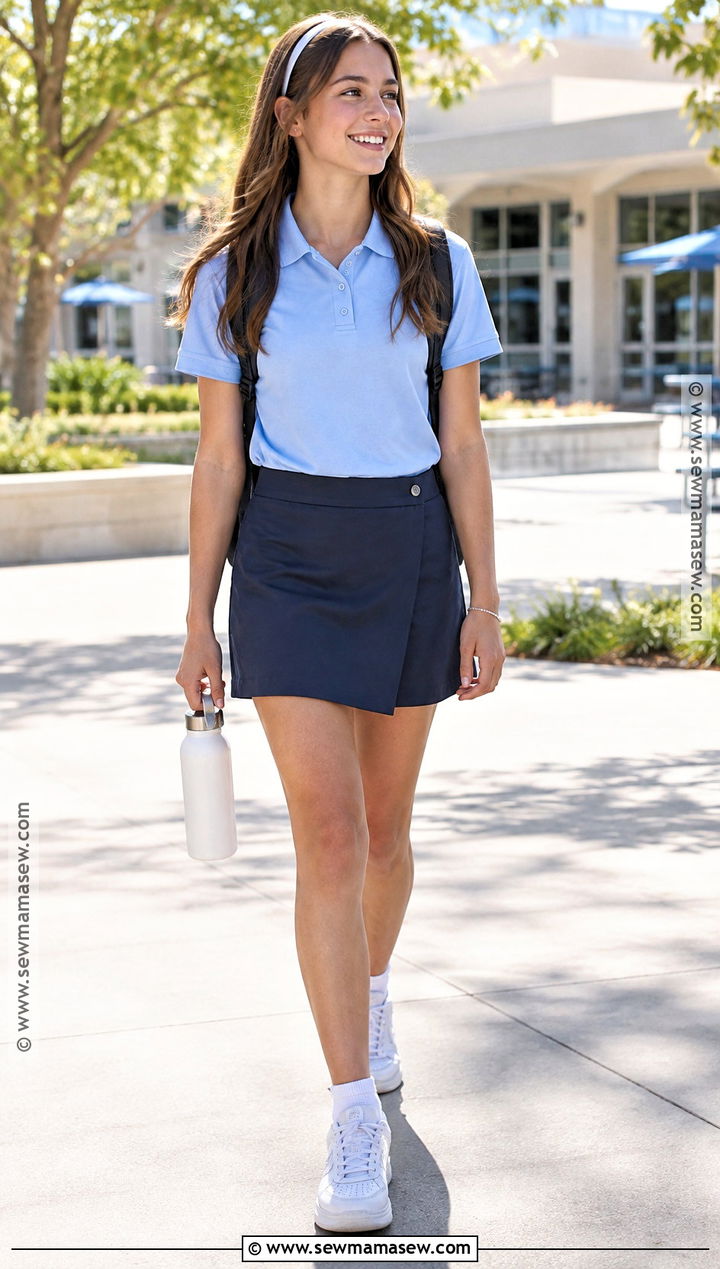
The first weeks back can still feel like summer, and that's when fabric matters most. Pair a breathable short-sleeve polo with a navy or khaki skort, Bermuda shorts or light trousers. Choose a knit that doesn't cling when damp. White ankle socks and ventilated sneakers stay comfortable through outdoor arrival and recess. Pack a lightweight backpack with an insulated water bottle, and a thin cardigan for heavily air-conditioned rooms. Pale polos do feel cooler in direct sun than dark ones, though the color still has to follow school rules. Tie hair back to keep the neck cool.
22. School PE Day Uniform
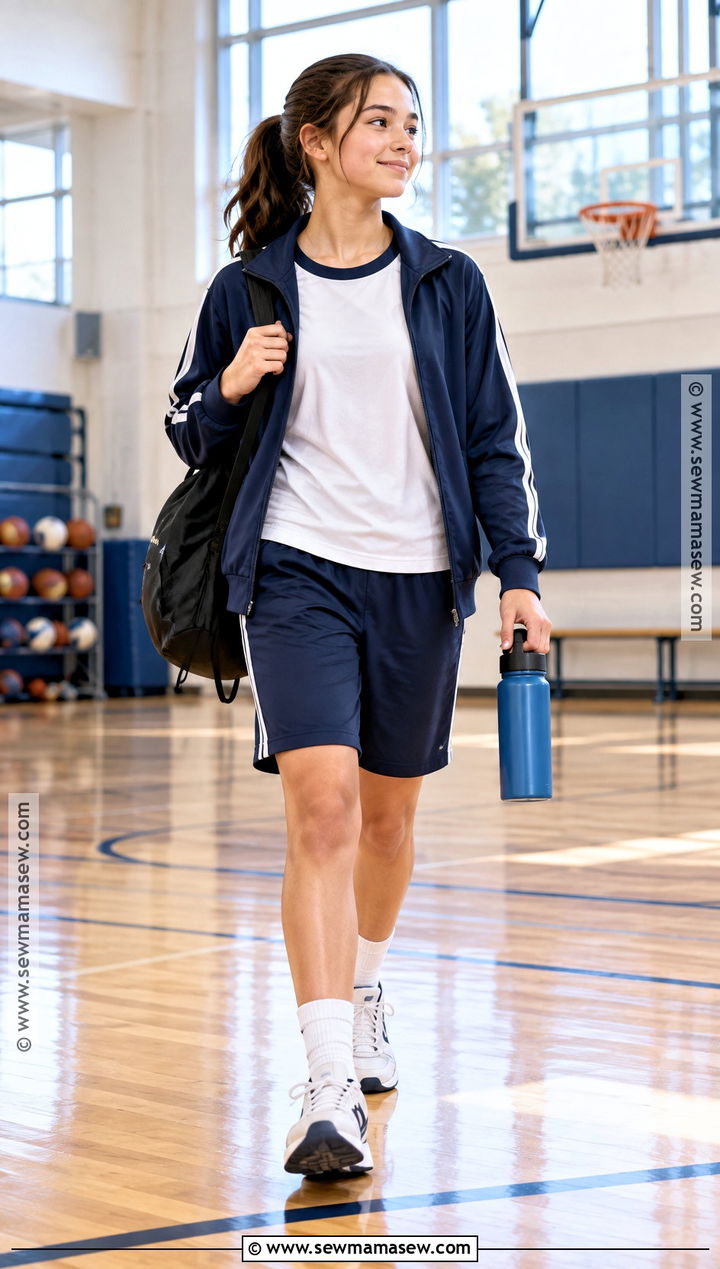
PE day is about movement first. Start with an approved crewneck T-shirt or performance polo and pair it with knee-length athletic shorts or straight-leg track pants. The shoes are where I'd spend: properly fitted sneakers with secure laces, plus thick athletic socks to prevent rubbing. A light zip track jacket keeps kids warm before class and comes off fast. Pack a drawstring gym bag inside the backpack with spare socks, a water bottle and any required kit. Secure hair with a soft elastic and leave jewelry at home, since it gets caught or lost. Quick-drying fabrics mean they aren't sitting in a damp shirt for the rest of the afternoon.
23. Casual Friday School Uniform
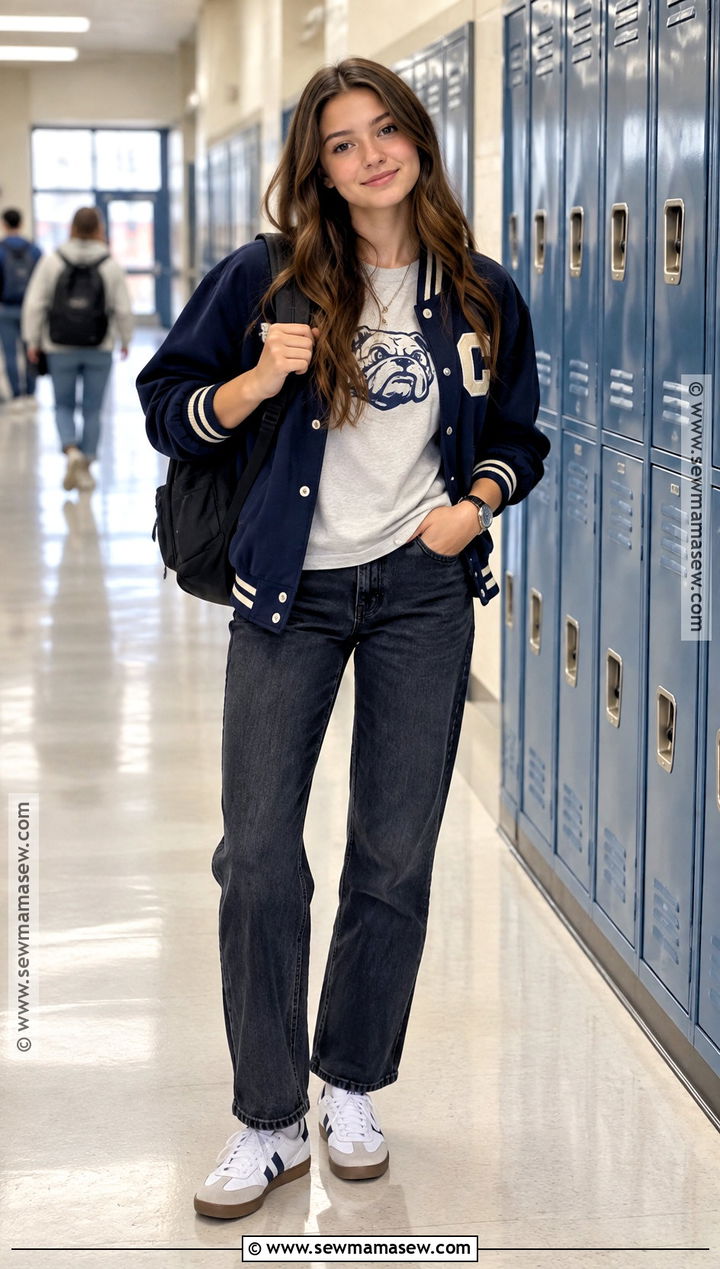
Casual Friday still needs a little structure, or it turns into whatever was on the floor. Pair a school-spirit T-shirt or logo polo with dark straight-leg jeans, khakis or another approved casual bottom. Add a navy cardigan, varsity-style jacket or clean zip sweatshirt for warmth. Low sneakers and ankle socks keep it comfortable without looking like gym clothes. Jeans should be free of rips and heavy fading unless the handbook clearly allows them; most schools draw the line there. A straight or relaxed fit is easy to sit in for a whole day. It's more relaxed than the weekday uniform but still clearly dressed for school.
24. Picture Day School Uniform
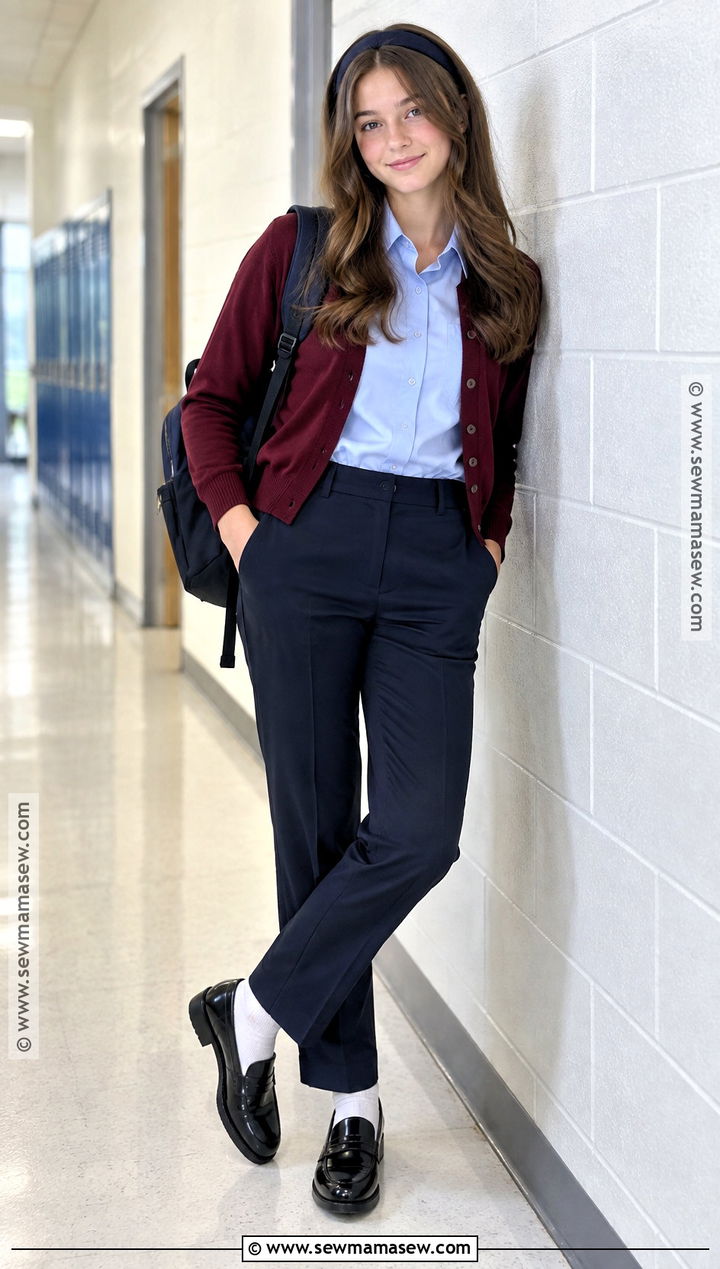
School portraits usually crop at the chest, so on picture day I focus on the collar and shoulders. Wear a freshly pressed white or light blue blouse with the plaid skirt or navy trousers, and add a sweater vest, cardigan or blazer in a color that contrasts gently with the shirt. Bright white next to the face can lose detail under strong flash, which is one reason light blue photographs well. Finish with polished loafers and clean socks for the rest of the day. Choose a hairstyle your child is used to, not something new. Have them sit down in the outfit the night before to make sure the collar stays flat and the top layer doesn't bunch at the shoulders.
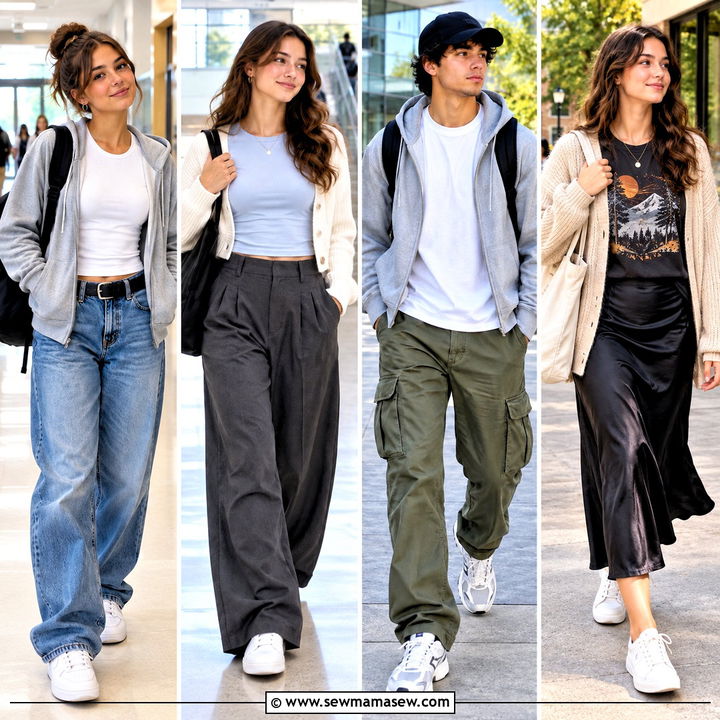
25. First Day School Uniform
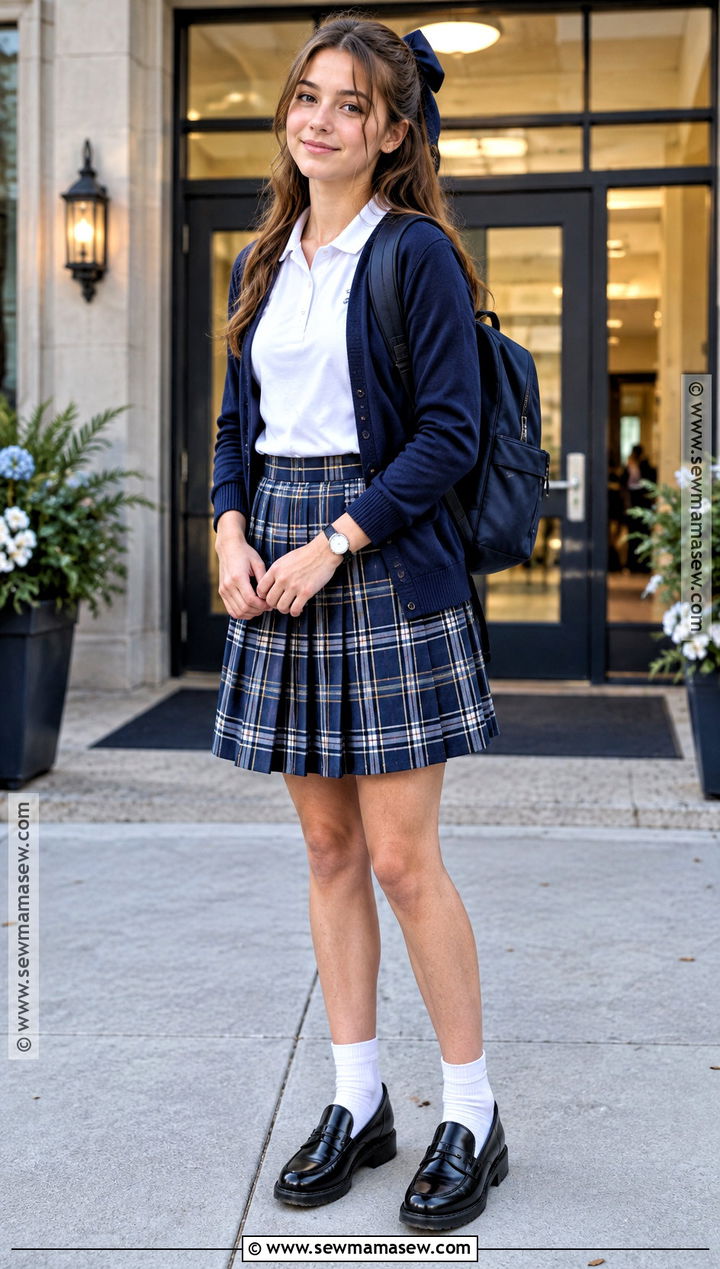
For the first day, familiar beats new. Pair a crisp white polo or button-down with the approved plaid skirt, navy skort or tailored trousers, and add a light cardigan in navy, burgundy, gray or the official school color. The most important step happens a week earlier: wear new loafers or sneakers around the house so they're broken in, because new shoes on a long first day mean blisters by lunch. Lay everything out the night before, pressed and labeled with your child's name. A well-packed backpack and a simple hair accessory are all you need. Comfortable, known pieces let kids focus on new teachers and friends rather than a scratchy collar.
How Many of Each Piece Gets You Through a Week
The right number depends less on the school than on how often you do laundry. For a family washing once a week, I suggest five shirts or polos, three bottoms, two layers such as a cardigan and a sweater vest, and one pair of school shoes plus PE sneakers. If you wash midweek, three shirts and two bottoms will cover it. Add one spare shirt for younger children, because paint, lunch and playground mud happen.
Grass, Ink and Iron Shine on Uniform Fabric
Most uniform pieces are cotton and polyester blends. They resist wrinkles, but they hold on to oily stains and can turn shiny if you iron them too hot.
Grass and mud on knees
Let mud dry and brush it off first. Treat grass with an enzyme stain remover and wash in cool water, because hot water can set it.
Ballpoint ink
Dab rubbing alcohol on the mark from the back with a cloth underneath, then wash as usual. Rubbing spreads it.
Shine on dark trousers and skirts
Press navy and black pieces inside out or through a damp pressing cloth on a medium setting. Hanging trousers straight from the dryer saves most of the ironing anyway. And label everything, since identical navy cardigans end up in the lost property box by the dozen.
A Small Uniform Wardrobe Goes a Long Way
A good uniform wardrobe doesn't need dozens of pieces. A few comfortable shirts, bottoms that mix with each other, sensible layers and supportive shoes give you plenty of combinations. Begin with the handbook, then think about your local weather, how warm the classrooms run and what each day involves. Skorts and trousers suit active days; blazers and sweater vests suit formal ones. Cardigans, quarter zips and light jackets carry you through the change of seasons. Fit matters more than any trend, especially over a long school day, so adjust any of these looks for your child's age, build and climate.
Related posts: