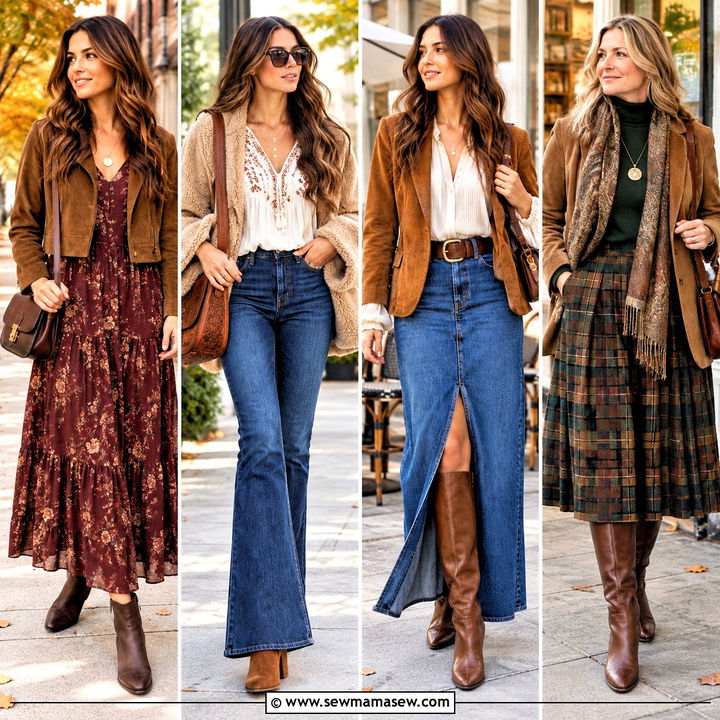
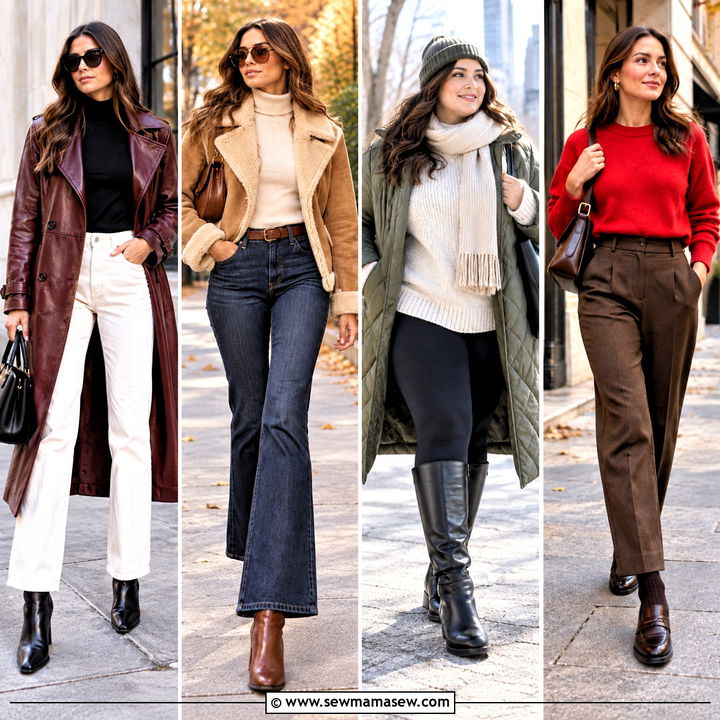
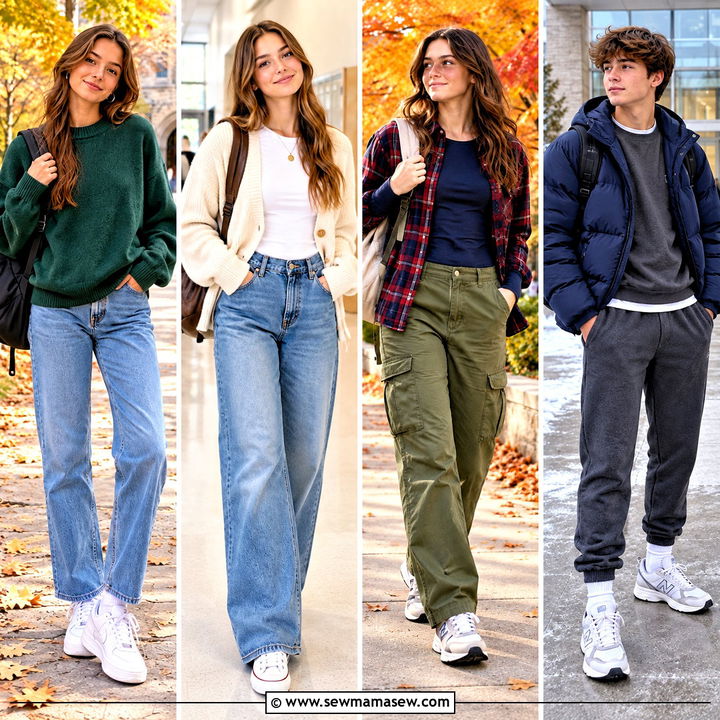
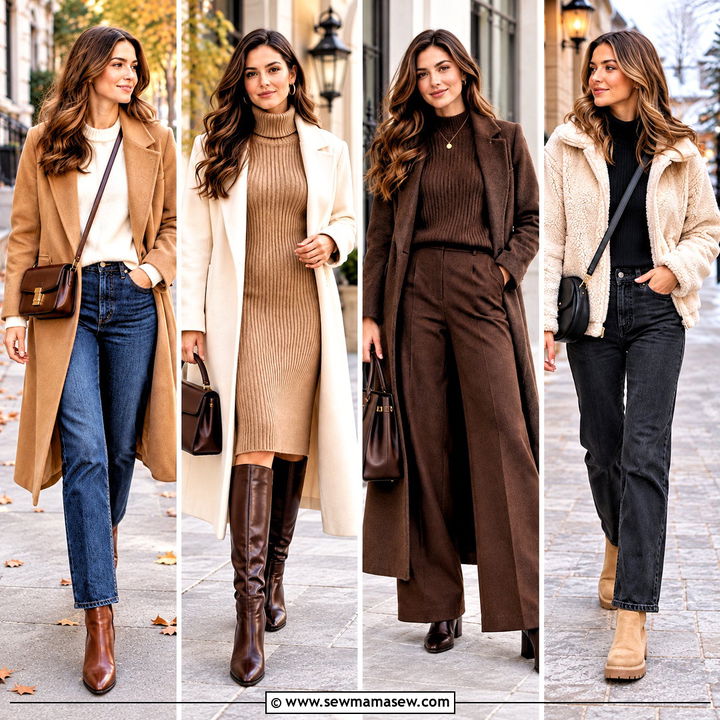
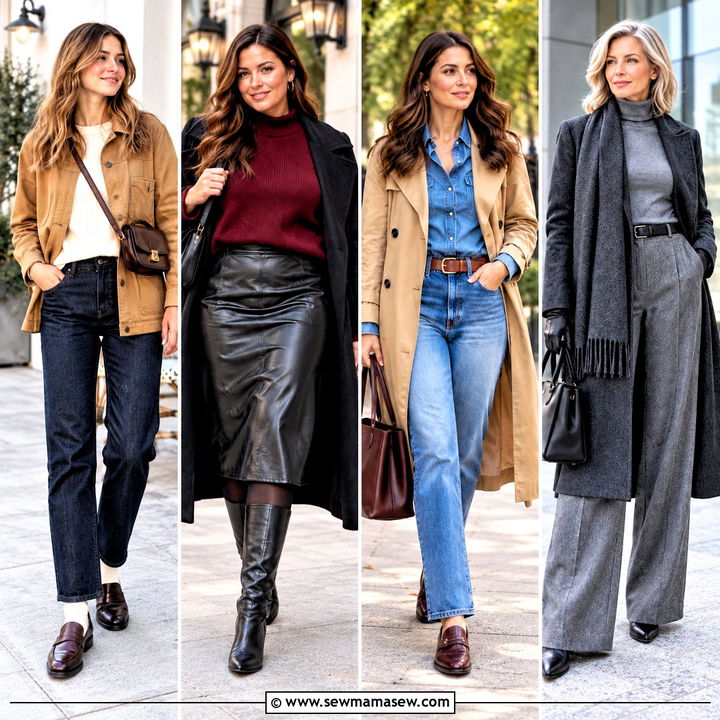
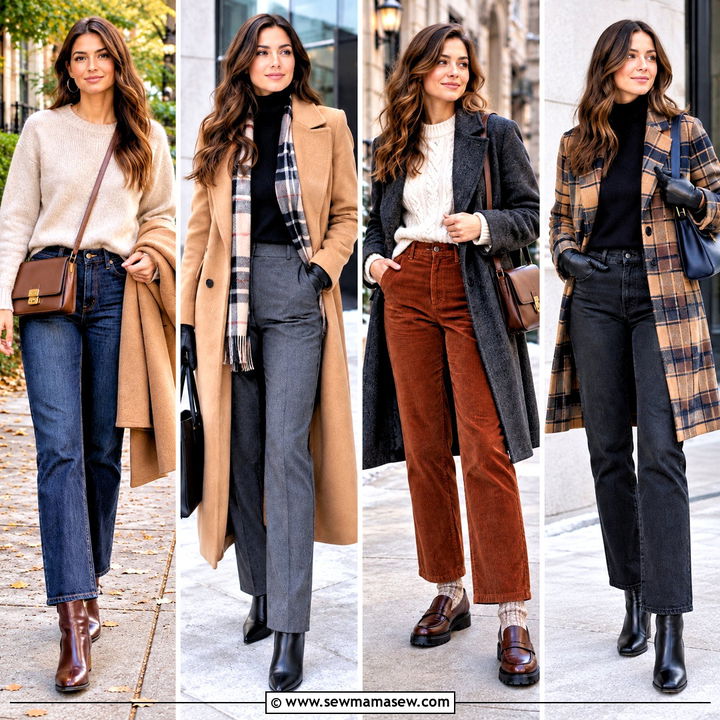
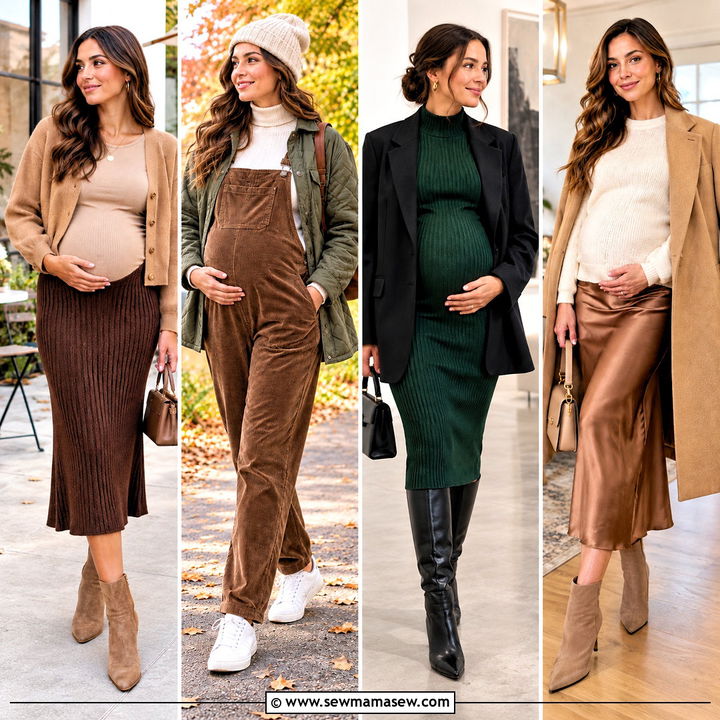
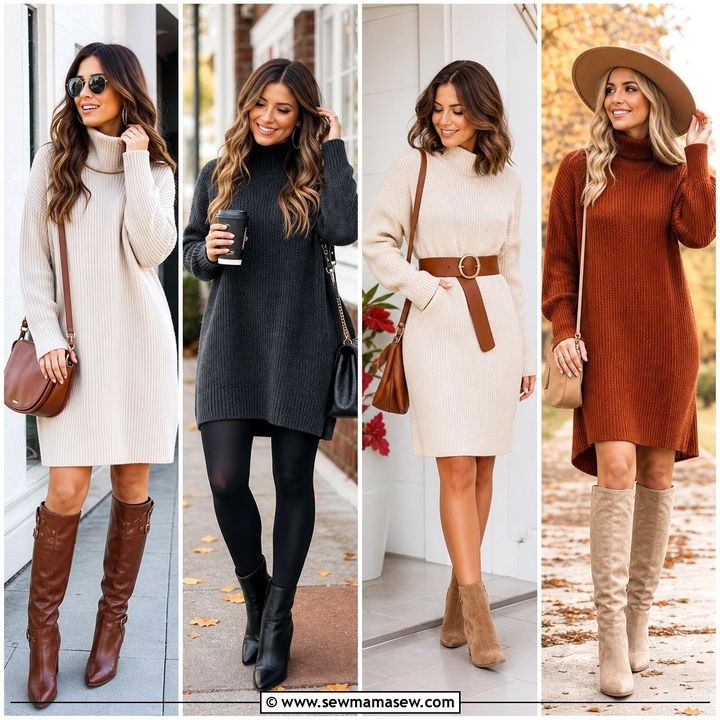
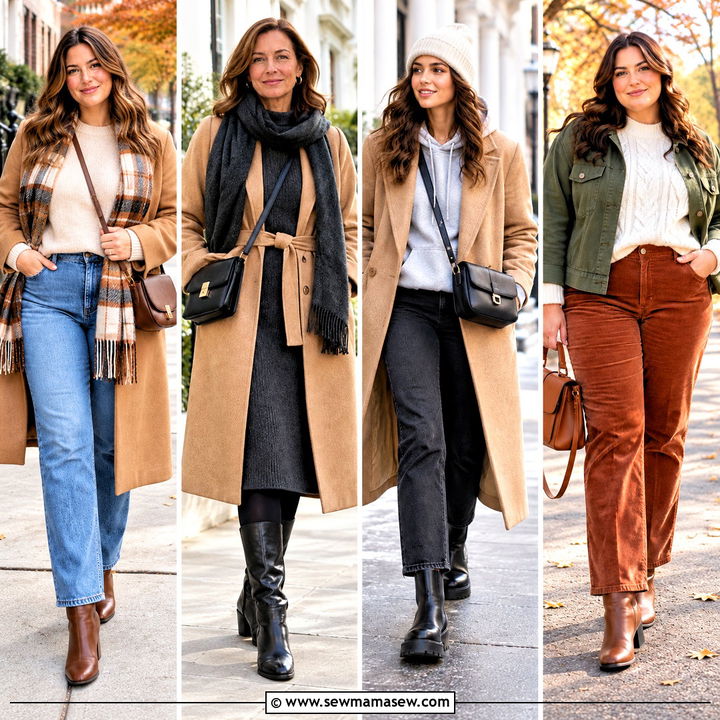
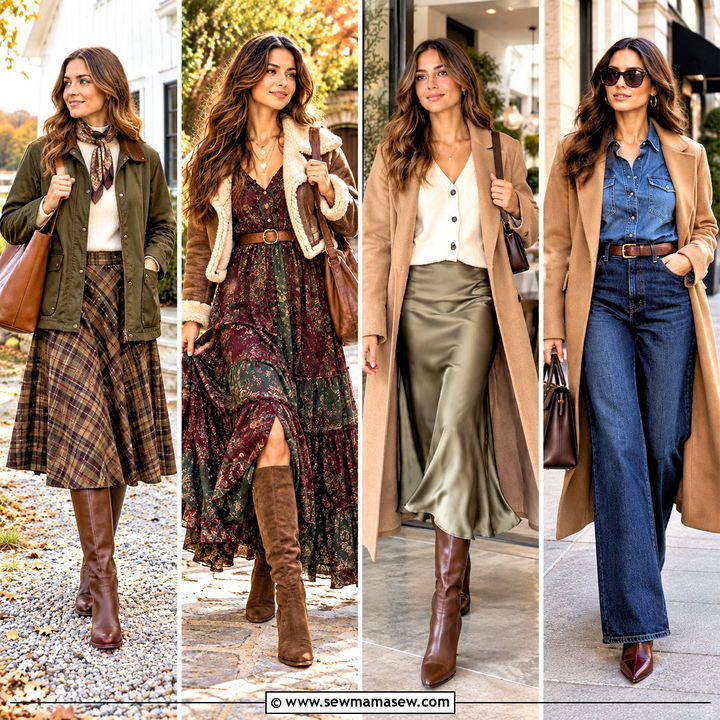
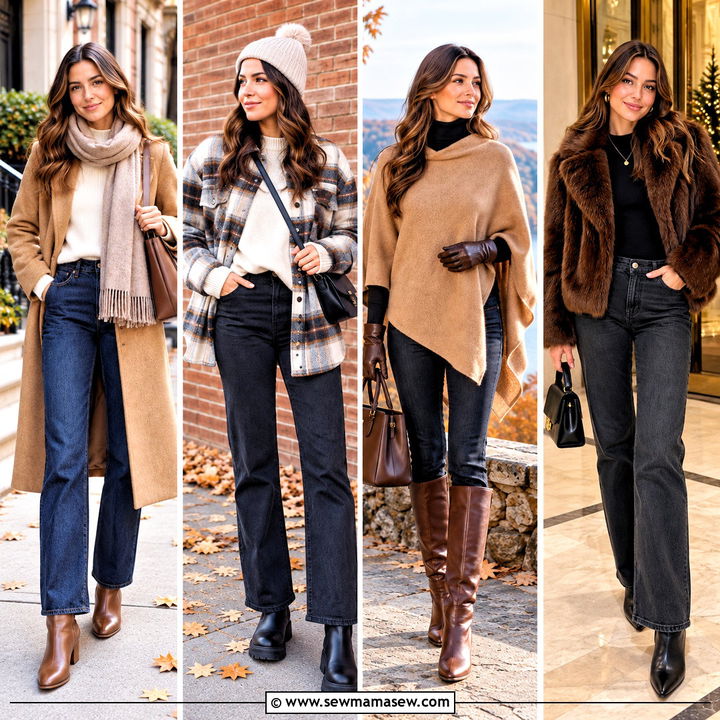
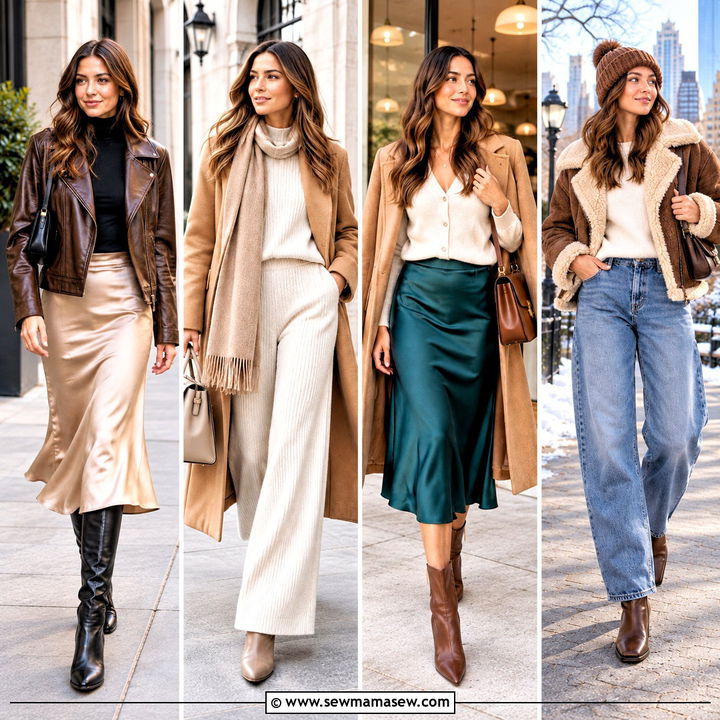
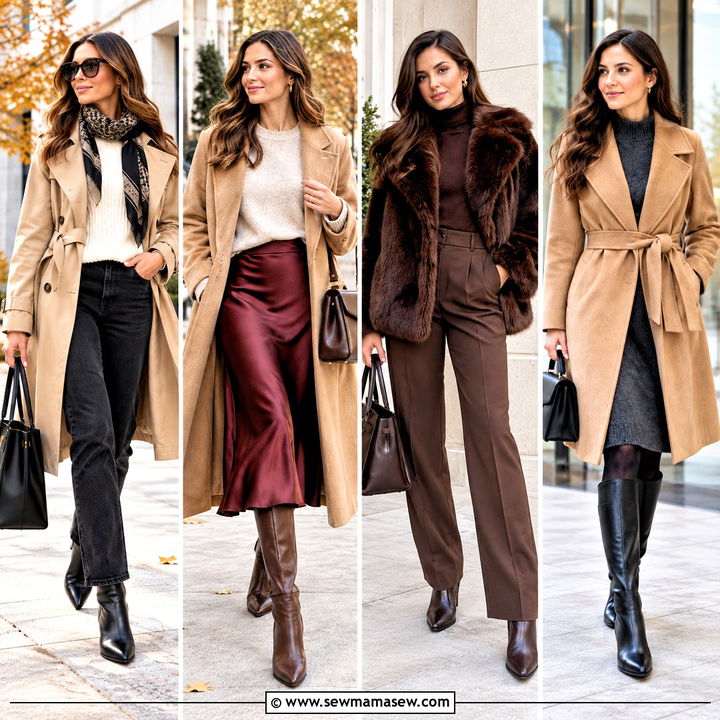
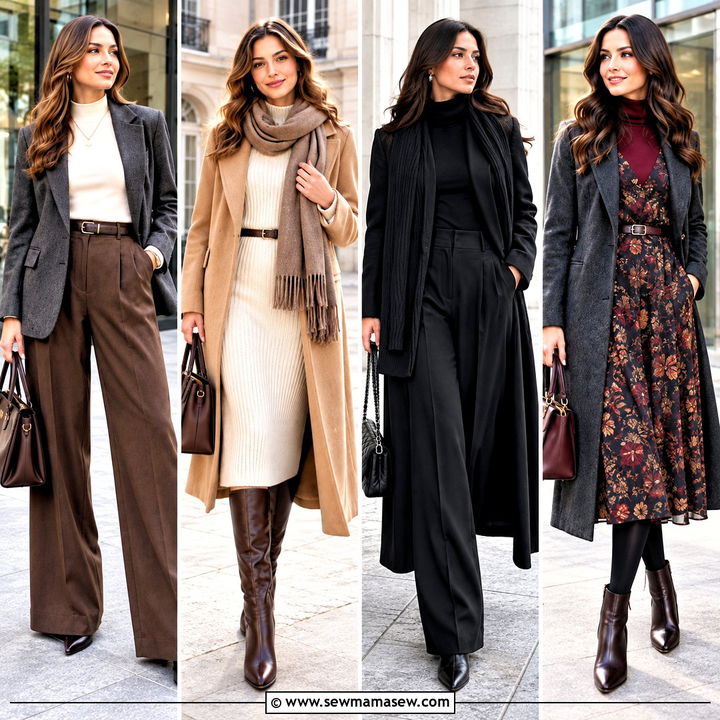
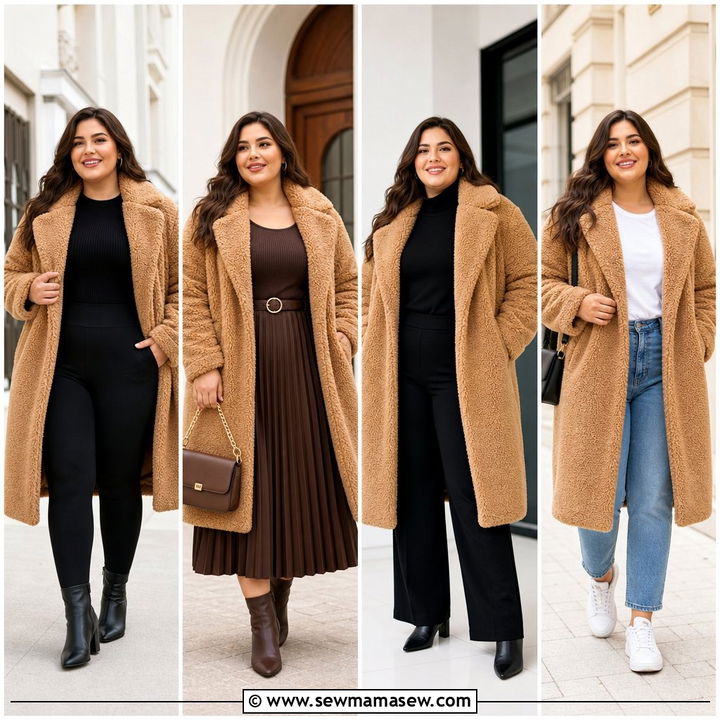
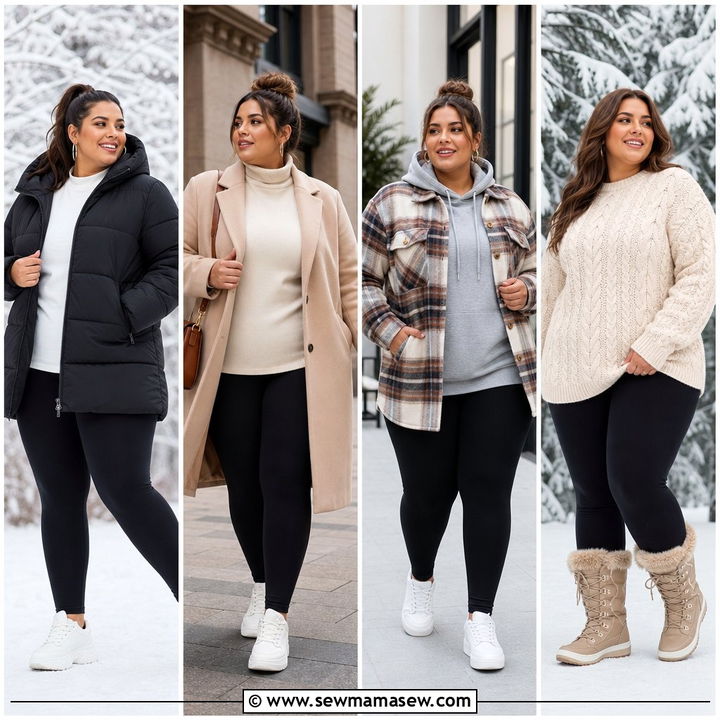
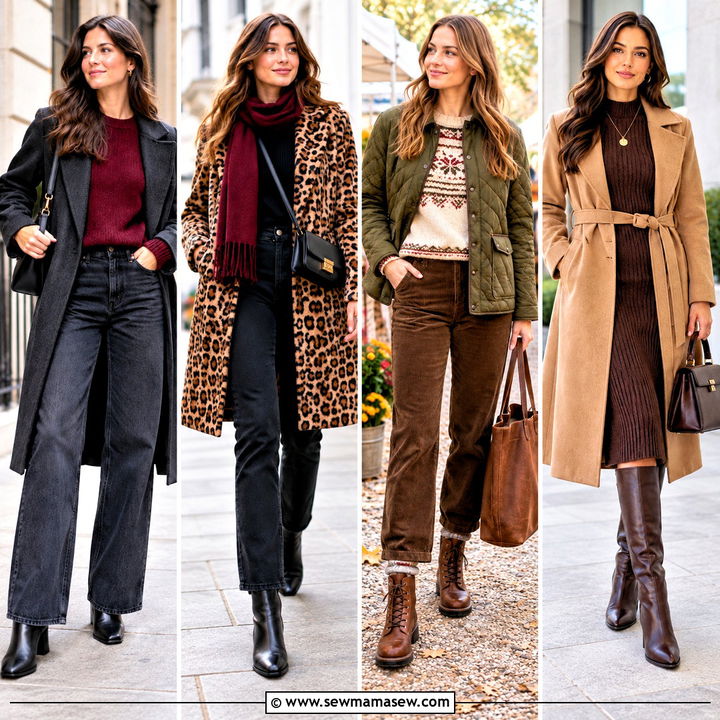
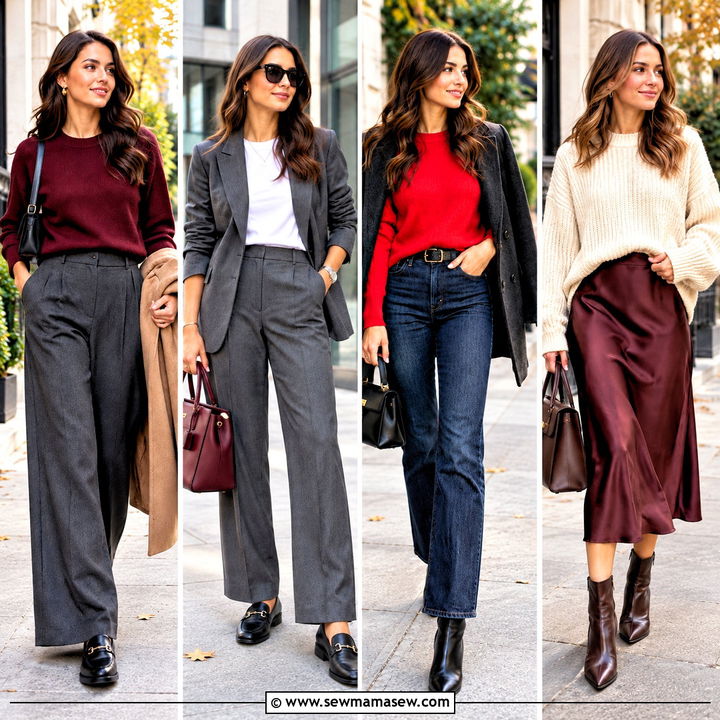
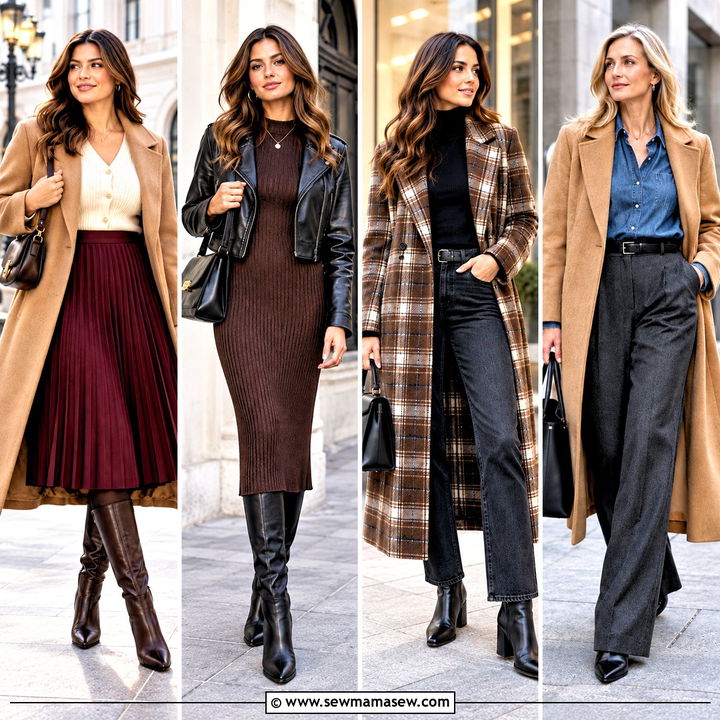
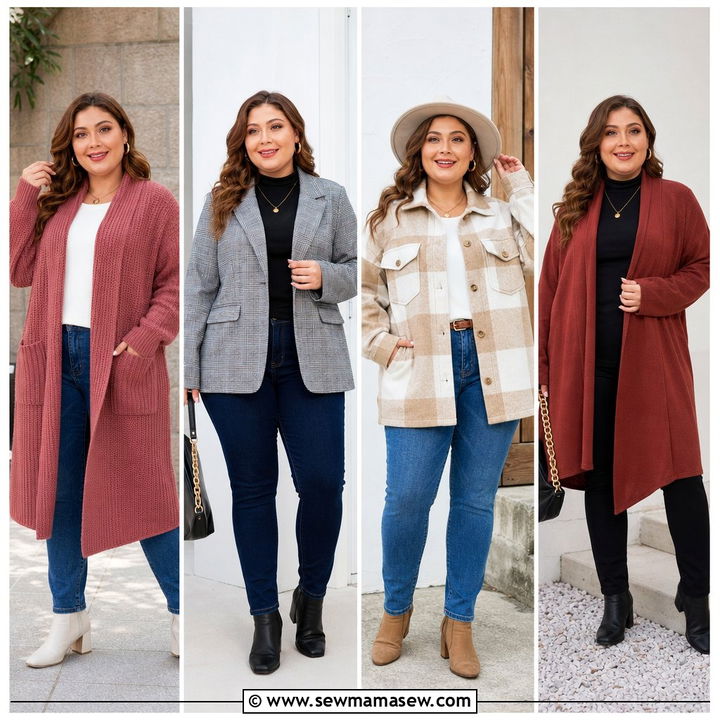
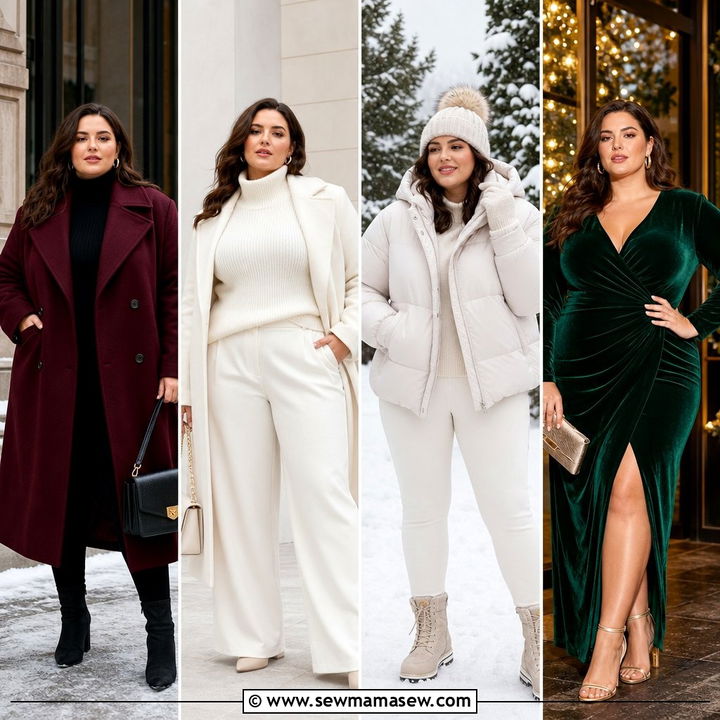
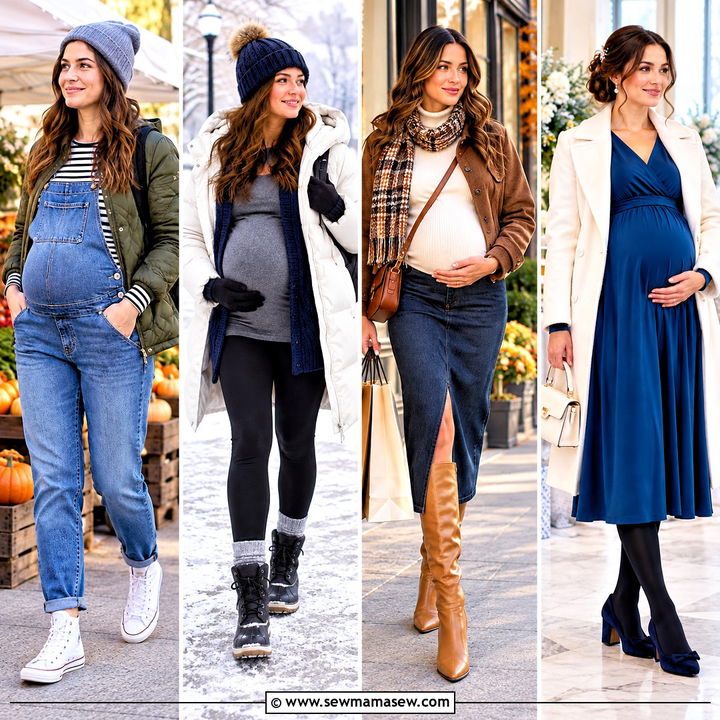
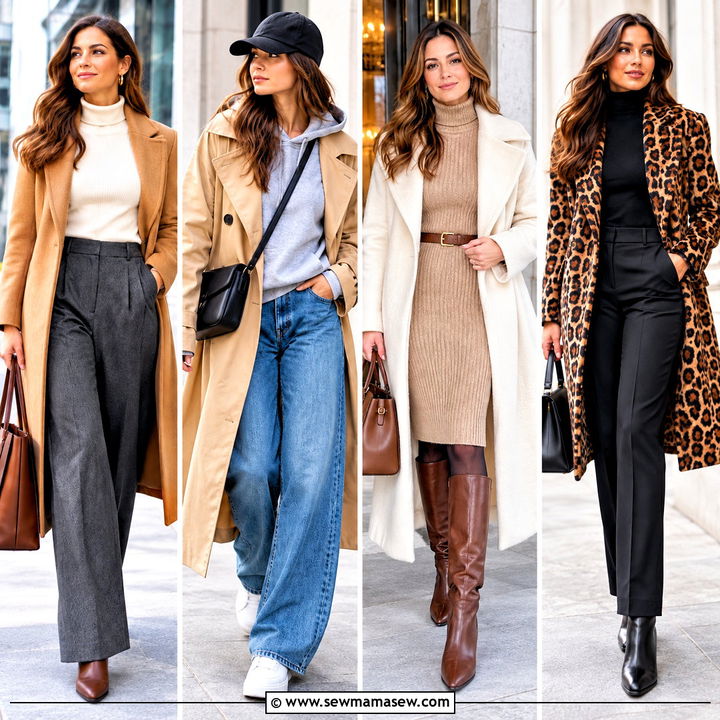
Most people don't run out of clothes in November. They run out of combinations that keep them warm and still look like them. That's why I plan cold-weather dressing as formulas: a coat, a middle layer, a bottom and a shoe that already agree with each other. The thirty below run from weekend denim to office tailoring to a few dressier looks, and this season's suede, funnel necks and sharper tailoring show up where they actually earn a place. Each one has a note on fit or fabric, plus a warning where it doesn't suit everyone. Start early fall with the lighter versions, then add thermals, tights and a heavier coat as the temperature drops.
Layer Order for a 35-Degree Morning and a 55-Degree Afternoon
The hardest fall days aren't the coldest ones. They're the days that start near freezing and end mild, because whatever kept you warm at eight is too much by two. I dress those days in thin layers from the skin out, each one removable on its own.
- Base: a fitted thermal or fine merino tee. Merino handles sweat on a crowded train far better than cotton, which stays damp and then chills you.
- Middle: the visible knit, shirt or cardigan. This is the piece that has to look finished on its own, because it's what people see indoors.
- Outer: the coat. Choose the coat for the coldest part of the day and the middle layer for the warmest part.
- Extras: scarf, gloves and a hat. They add the most warmth for the least bulk and fit in a bag once the sun comes out.
Two thin layers are warmer than one thick one because they trap air between them. They also leave you with something sensible to wear when you take one off. A chunky sweater under a fitted coat does neither; you can't take the coat off without being too hot, and you can't take the sweater off without being underdressed.
1. Trench Coat and Straight-Leg Jeans Outfit
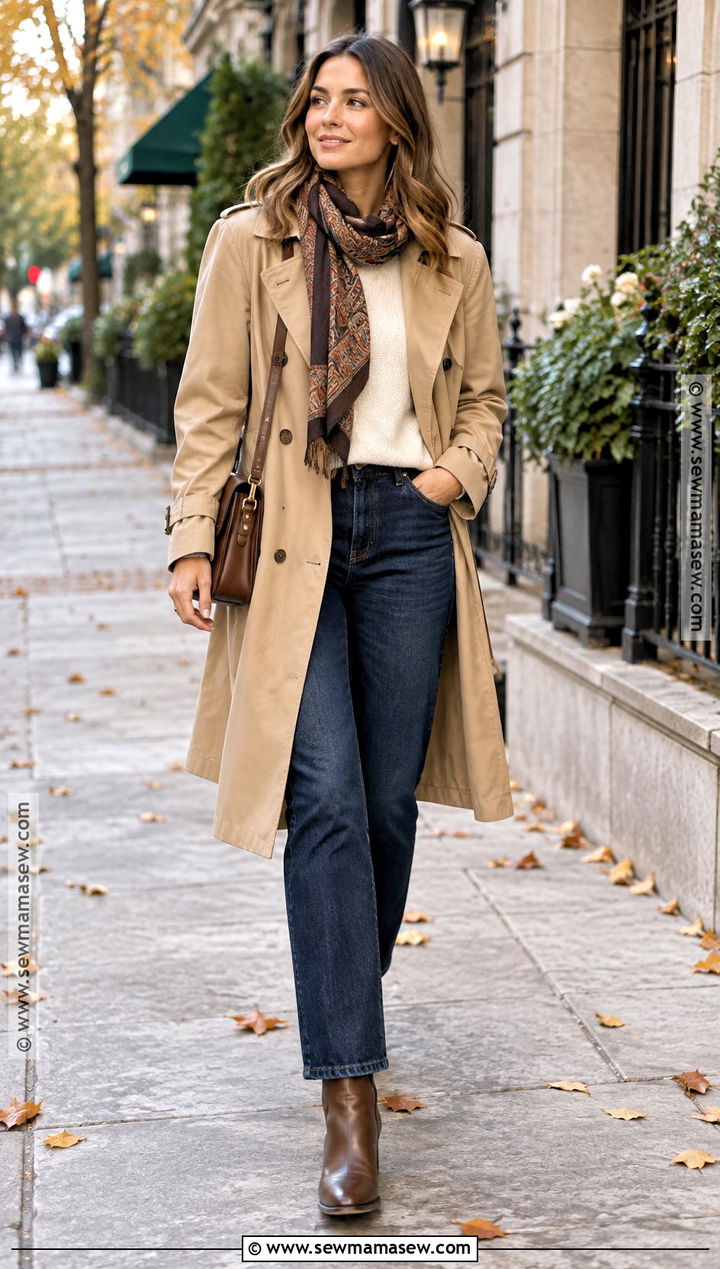
A trench is the coat I reach for first in October because it handles drizzle and a ten-degree swing in the same afternoon. Put a beige or olive one over a thin crewneck and straight jeans in a mid or dark wash. I like the jeans to stop right at the ankle so loafers or a slim boot show cleanly. A leather crossbody and a printed scarf finish it. Belt the trench if you want a waist, but tie the belt behind you when it's open or it swings and catches on everything. When the light sweater stops being enough, swap in a fitted wool knit rather than adding bulk under the trench, which was never cut for it.
2. Oversized Blazer and Wide-Leg Trousers Outfit
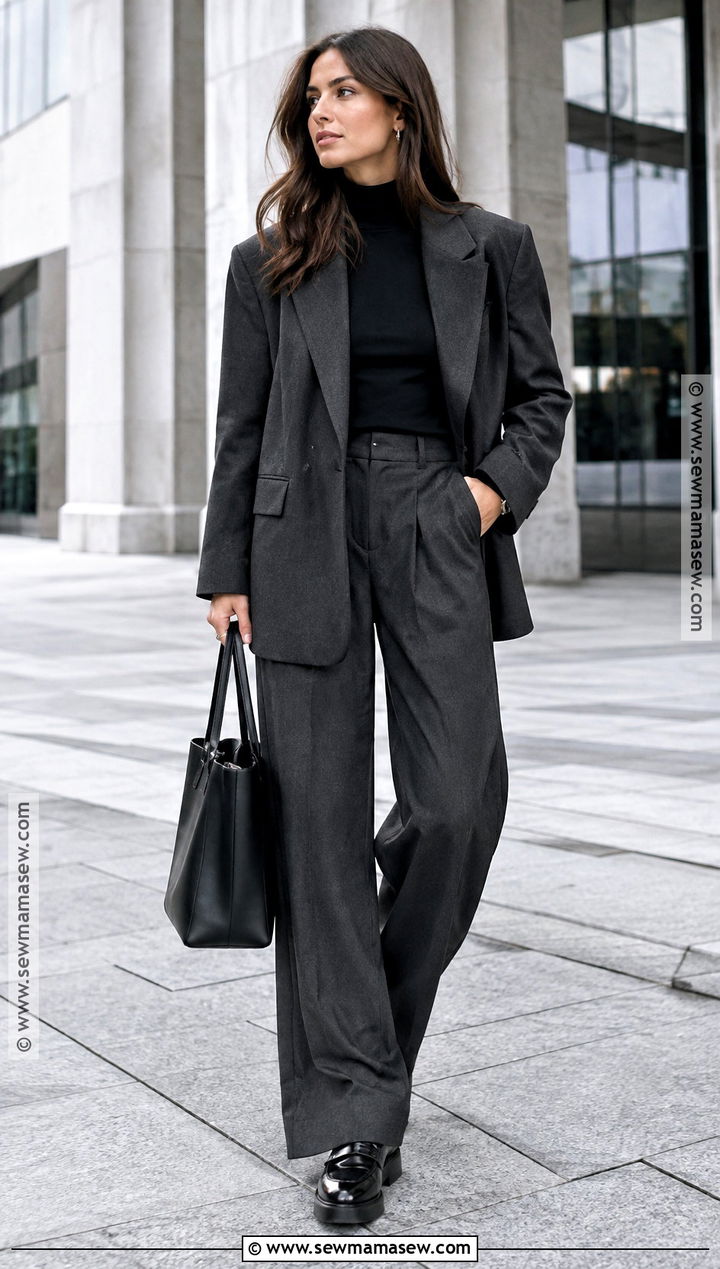
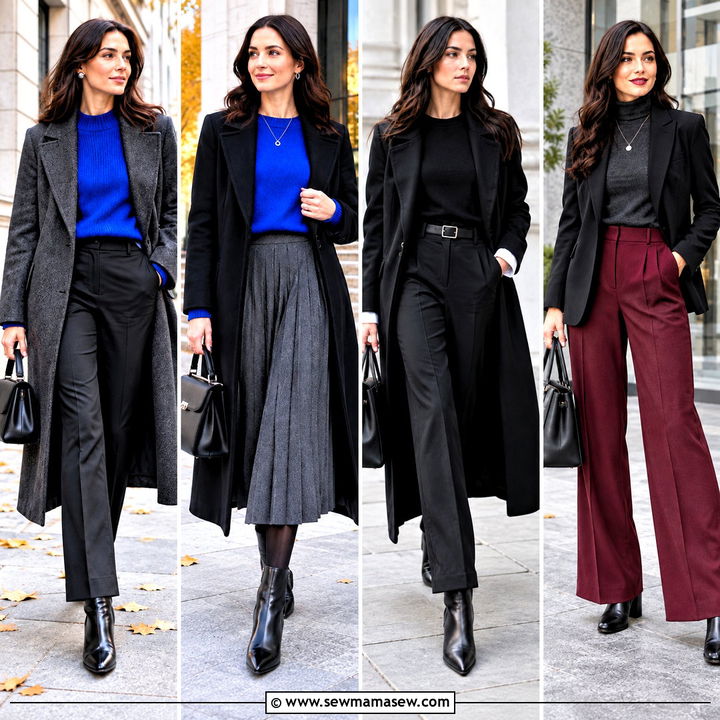
Oversized blazers and wide trousers can swallow a person, so the piece that matters here is the fitted mock-neck underneath. It gives the eye one close line between two loose shapes. Charcoal, navy and brown are the safe picks; burgundy or a deep green reads more seasonal. The shoulder seam of the blazer can drop a little, but no more than an inch past your own shoulder, or it starts to look borrowed. If you're petite, a high-waisted trouser and a slightly shorter blazer keep your legs from disappearing. Tall women can go longer on both. Once one tailored layer isn't enough, a wool coat cut with room in the sleeves goes over the top.
3. Chunky Sweater and Satin Midi Skirt Outfit
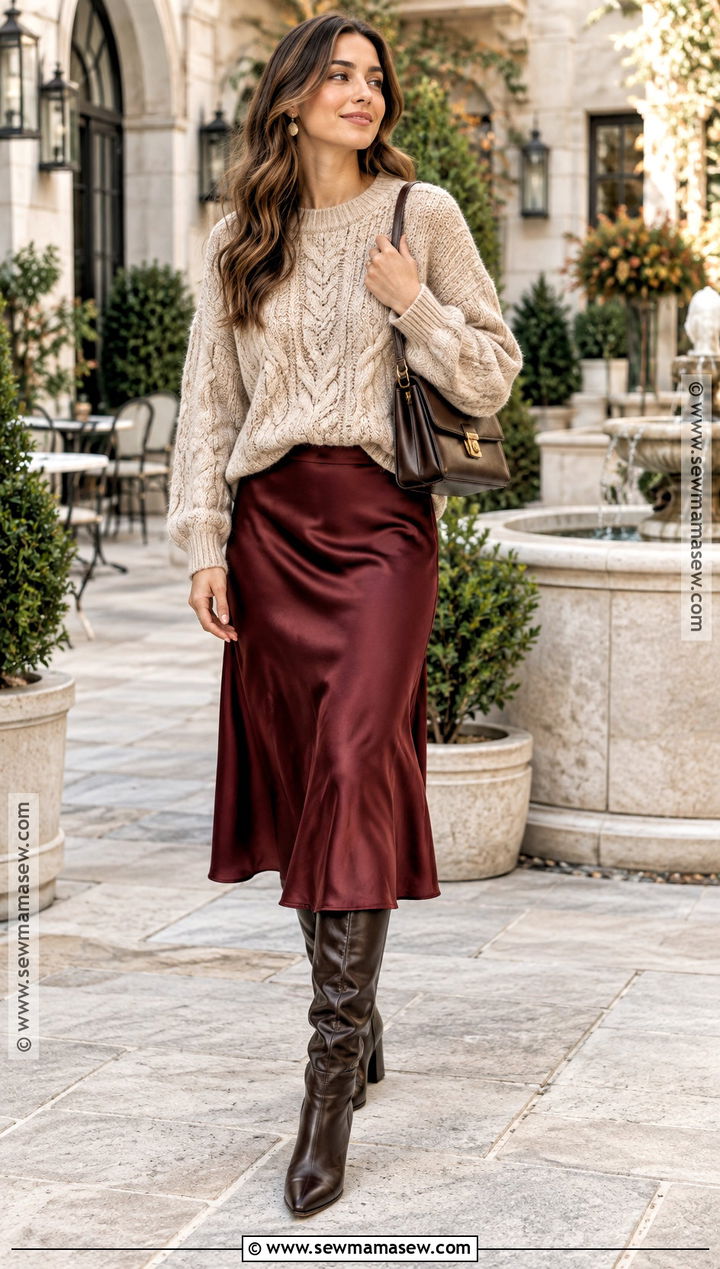
Chunky knit over a satin skirt is all about controlling volume at the waist. A bulky sweater left loose over a bias-cut skirt makes your middle look twice as wide as it is. I tuck just the front few inches, or wear a thin belt under the sweater hem so the knit blouses softly over it. Cream, camel and gray all work with a darker satin. Knee-high boots are the warm option and they stop the skirt from clinging to bare leg in wind. Satin does show water spots, so I'd keep this one for dry evenings. A long wool coat goes over it without flattening the skirt's movement.
4. Leather Jacket and Black Jeans Outfit
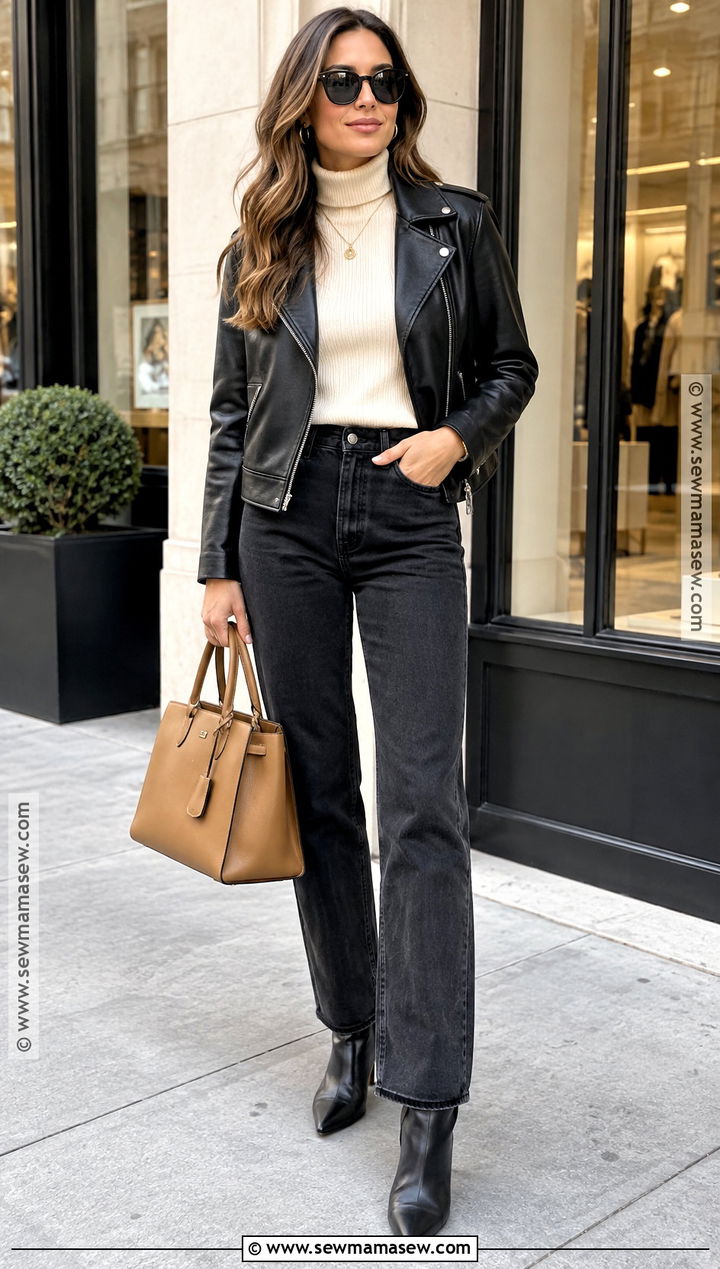
Leather jacket, black jeans, a plain top. It's the outfit I'd tell anyone to own first because it repeats without looking repeated. Black, chocolate or oxblood leather all work over a white tee or a fine turtleneck. Real leather is stiff for the first few weeks and softens at the elbows, so expect it to feel boxy at first. Chelsea boots keep it casual; a pointed ankle boot sharpens it for evening. A tan bag breaks up all that dark. If a fitted moto feels severe on you, a relaxed bomber in leather gives the same edge with softer shoulders. In real cold, a thin thermal goes under the top, not over it.
5. Long Wool Coat and Monochrome Knit Outfit
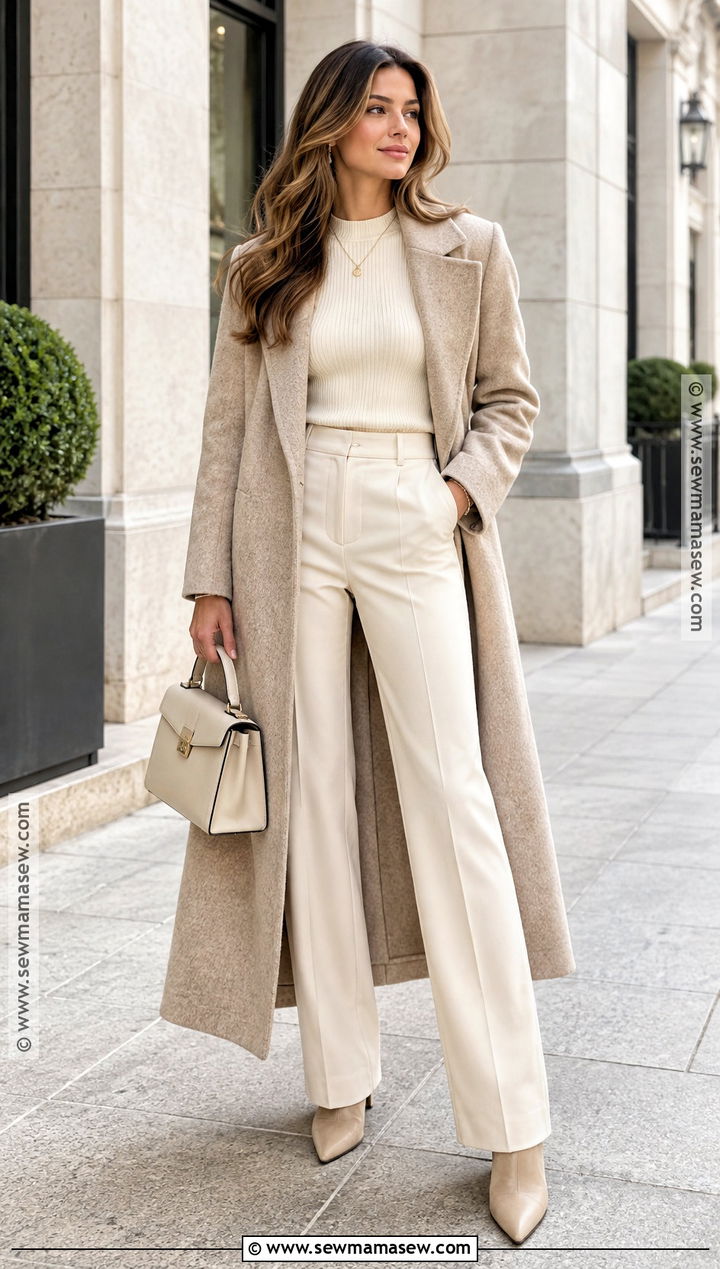
Tonal dressing looks expensive for one simple reason: nothing interrupts the line from shoulder to shoe. Pick a sweater and trousers in neighboring shades, cream with ivory or camel with tan, then match a long wool coat to the same family. The trap is flatness. One color in one texture looks like a uniform, so I mix a ribbed knit with brushed wool and smooth leather. A bag with a bit of metal hardware gives the eye somewhere to land. This is one of the few looks that genuinely works across body types, because you can change the trouser rise and coat length without breaking the color column.
6. Cardigan and Dark-Wash Jeans Outfit
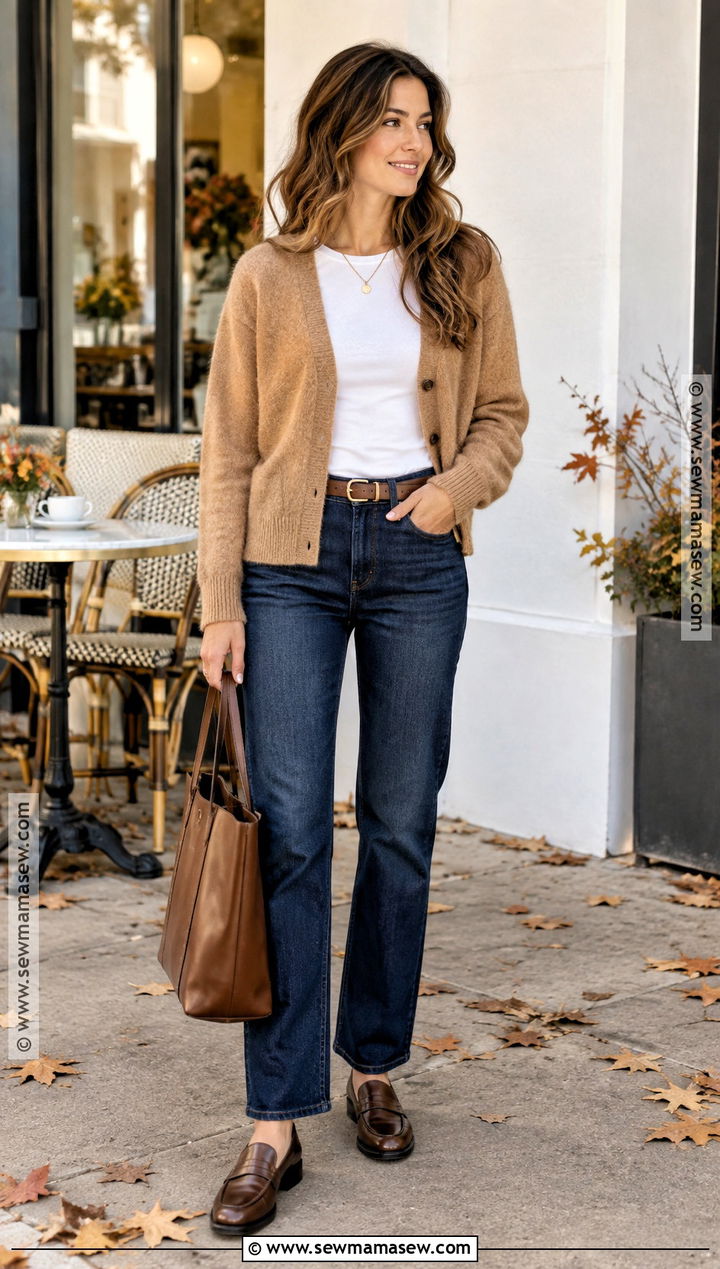
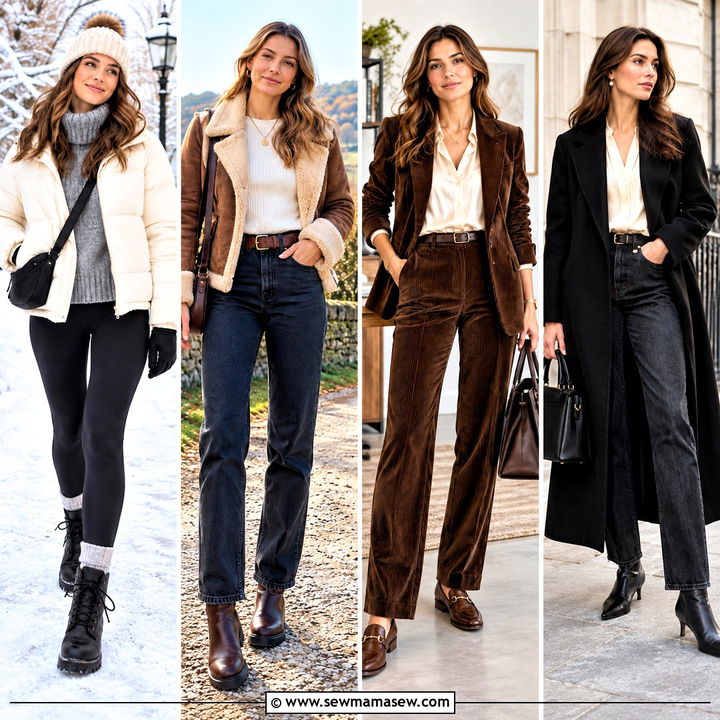
Cardigan and dark jeans is the most practical combination on this list, and it's practical because of what goes under it. A plain tee or a fitted tank means you can take the cardigan off in an overheated office without being left in something odd. Cropped cardigans want high-rise denim so no skin shows when you reach up. Longer ones sit better over slim or straight legs. Loafers with bare ankles in September, ankle boots and socks after that. Wool and cotton cardigans hold their shape; acrylic tends to grow longer and pill at the cuffs within a season, so check the label before you buy.
7. Puffer Jacket and Leggings Outfit
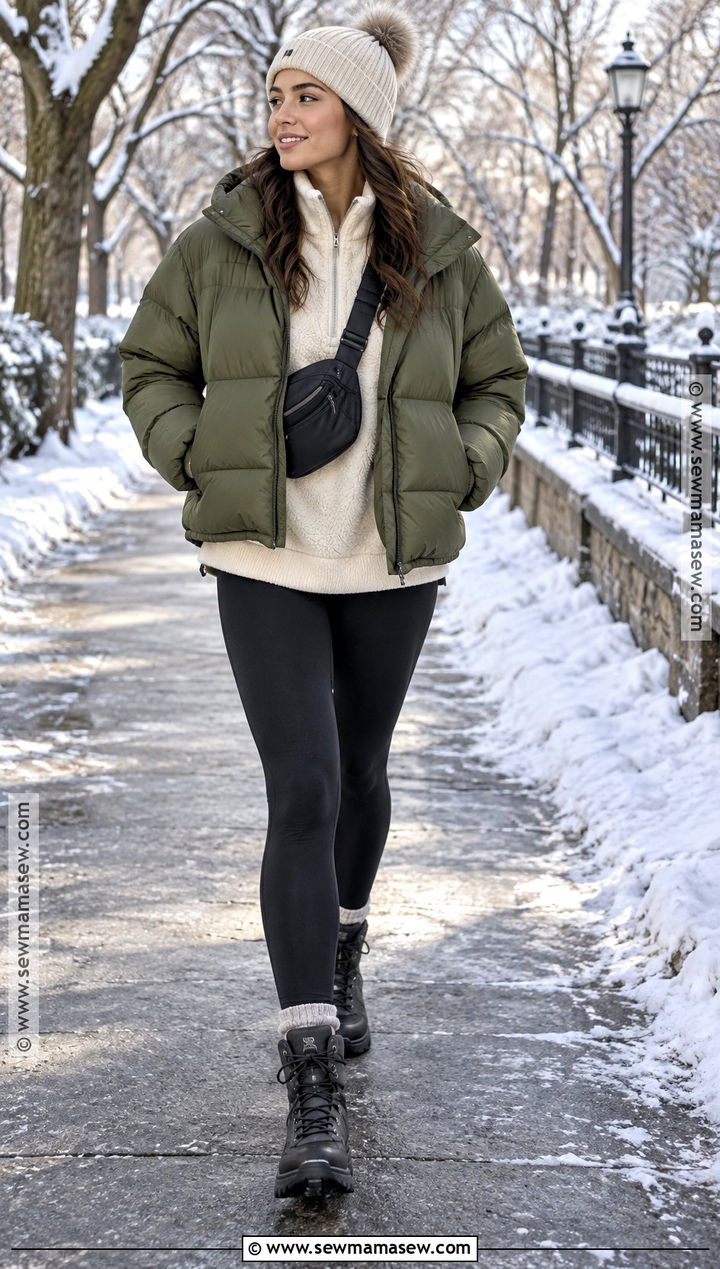
When I know a day will involve a lot of walking in the cold, I build from the jacket down. A hip-length puffer, thick opaque leggings and a sweatshirt or half-zip long enough to cover the seat. That length matters; a short top with leggings and a short puffer leaves a cold gap at the lower back. Chunky sneakers are fine on dry days. Once there's slush, a lace-up boot with a lug sole is safer. I usually steer people to matte puffers over shiny ones. They look less like ski gear in the city and they show wear less at the cuffs.
8. Sweater Dress and Knee-High Boots Outfit
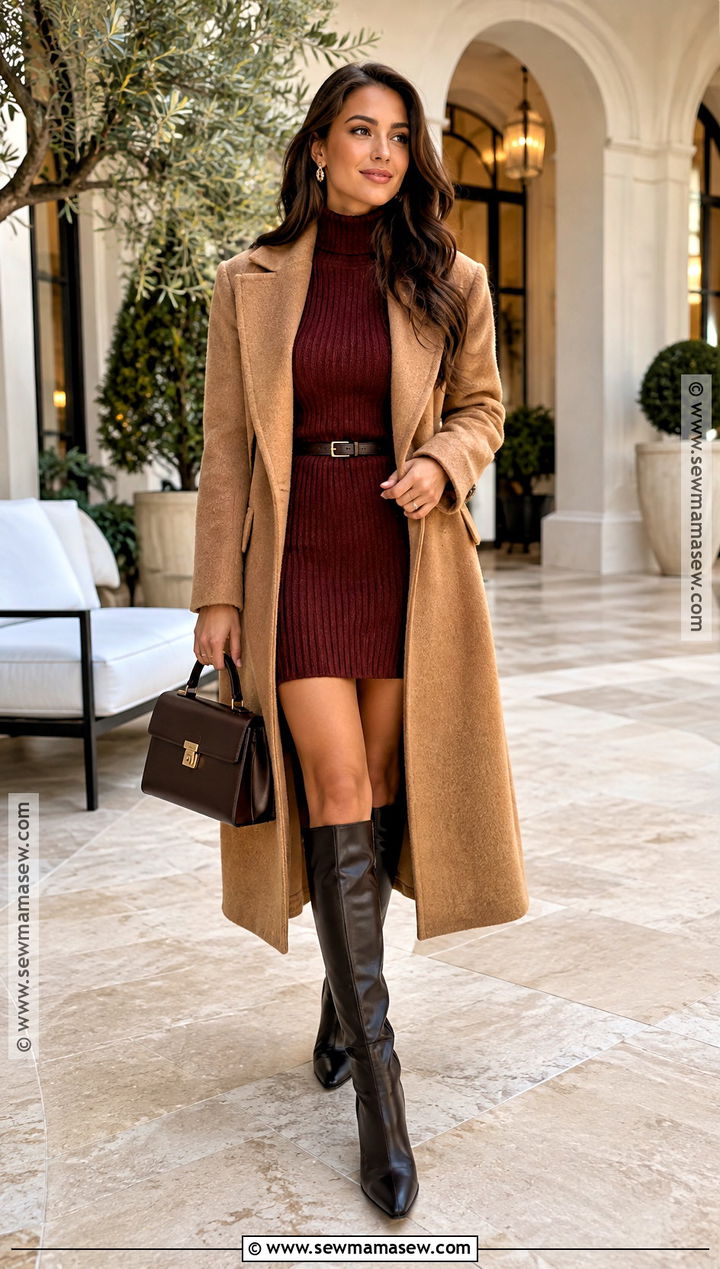
A sweater dress is one piece doing the work of two, but only if it skims rather than clings. Tight knit shows every line of what's underneath and rides up when you walk. Look for midi or knee length with a little ease through the hip. The boot shaft is the detail I check first. A gap of a few inches between hem and boot reads intentional; a dress that stops exactly at the top of the boot cuts the leg in an awkward place. Sheer tights in fall, fleece-lined ones in winter. If you're petite, keep the hem near the knee so the boot and dress don't swallow you.
9. Plaid Blazer and Loafers Outfit
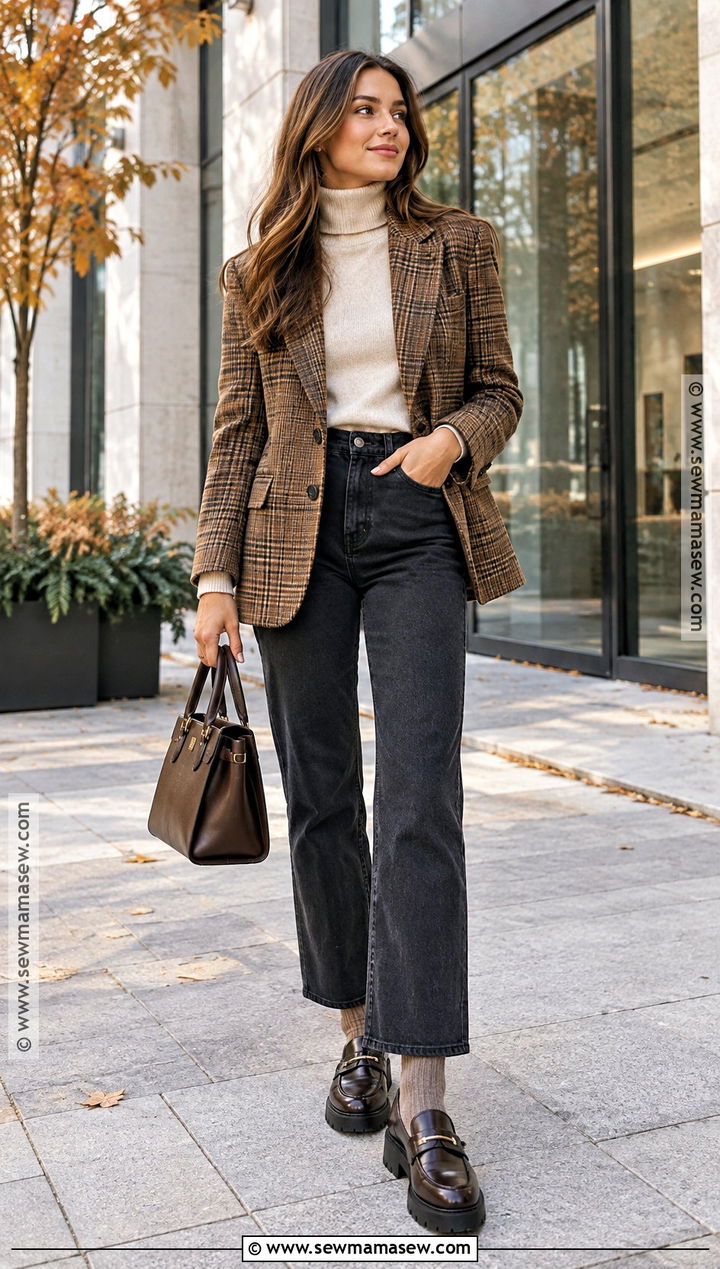
A plaid blazer gives the outfit its whole personality, so everything else should stay quiet. Brown, gray or navy check over a fitted turtleneck and straight jeans is my starting point. Choose a loafer with some weight in the sole; a thin ballet flat looks underpowered under a tweed-weight jacket. Before you buy, button it and cross your arms. If it pulls into an X across the back, it's a size too small no matter how it looks standing still. Ribbed socks showing a little above the loafer help once it turns cold. For the office, swap jeans for ankle trousers pulled from one of the plaid's colors.
10. Denim Jacket and Knit Midi Dress Outfit
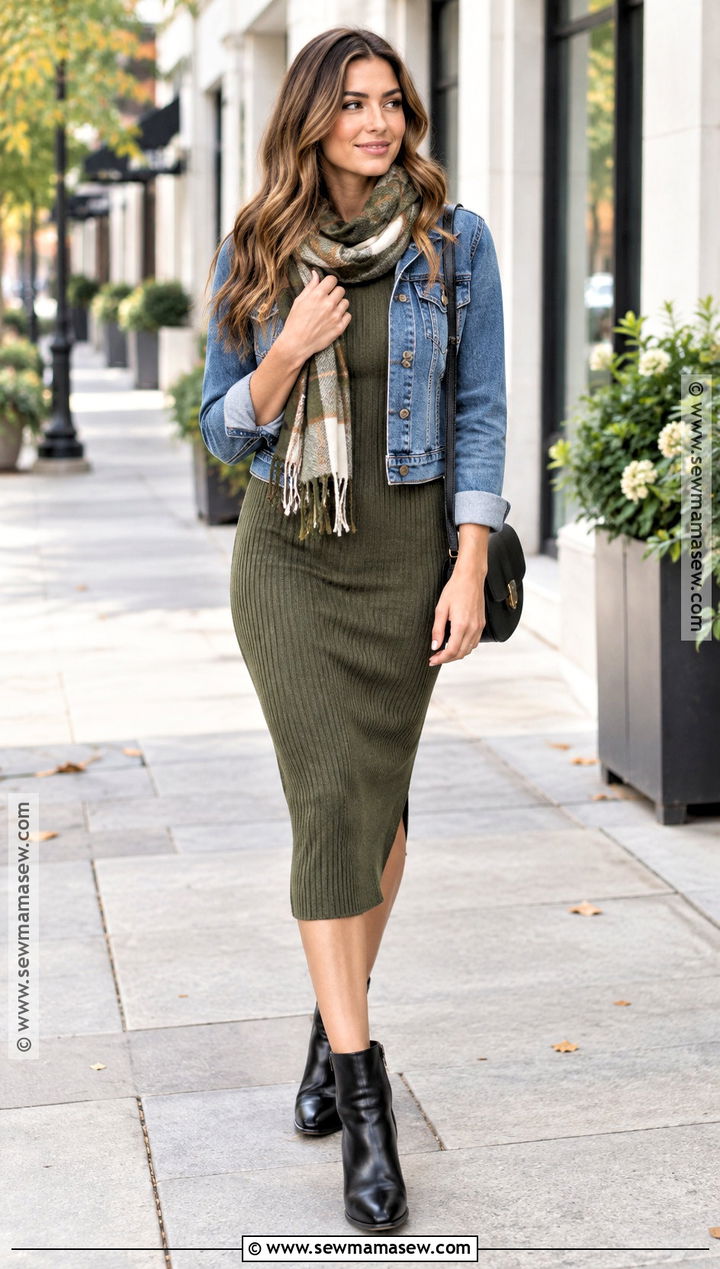
A denim jacket over a knit midi dress buys you an extra month before the heavy coat comes out. Ribbed dresses in black, olive, rust or chocolate all sit well under a mid or dark wash. A cropped jacket marks the waist; an oversized one makes the whole look looser and works better on straighter figures. Watch the dress fabric. Thin ribbed jersey catches on the jacket lining and twists, so a slightly heavier knit behaves better. Side slits help you walk in a fitted midi. When it gets colder, opaque tights and a scarf go on first, and a wool coat can go over the denim if the jacket isn't too bulky.
11. Shacket and Black Leggings Outfit
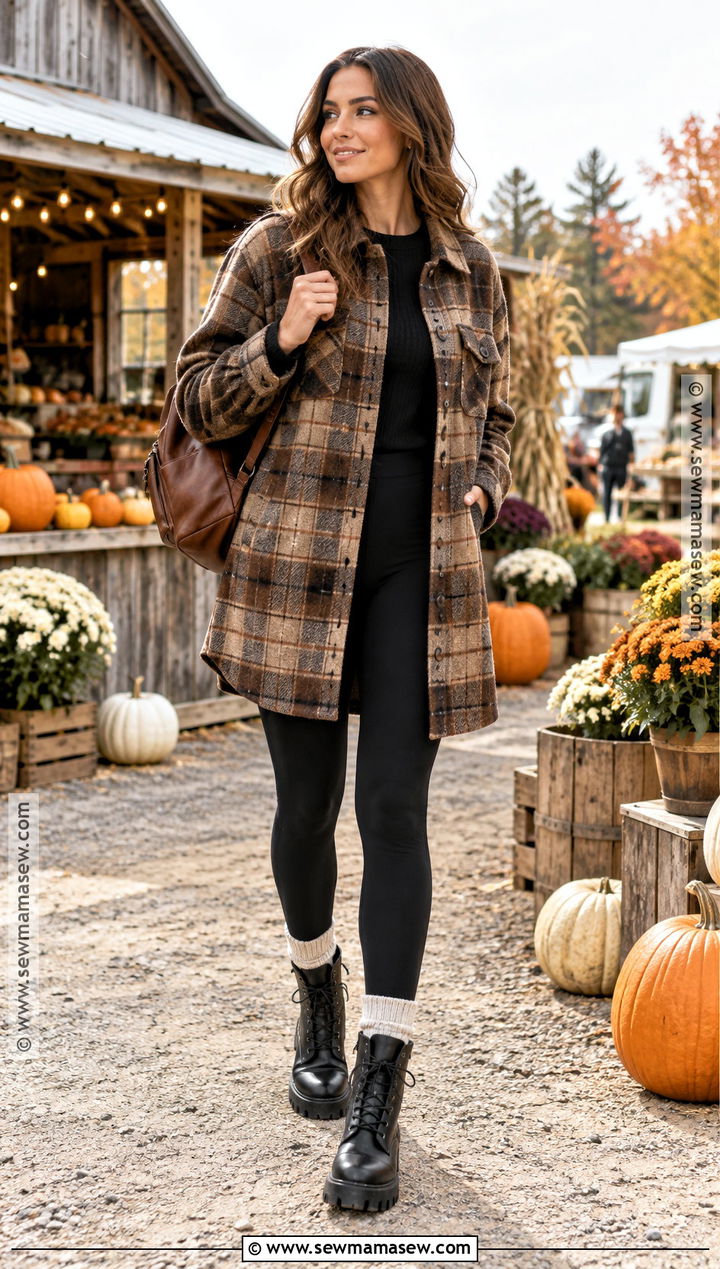
I think of the shacket as a shirt you're allowed to wear outside. Plaid, corduroy or a wool blend over a fitted thermal and a pair of opaque, supportive leggings is the easy version. The length to look for is upper thigh, which covers the seat and keeps the leggings from reading like gym wear. Lug-sole boots and warm socks finish it. Roll the sleeves on a mild day. In real winter, a shacket is a middle layer, not a coat; wind goes straight through most of them, so put a roomy parka or puffer over it.
12. Turtleneck and Pleated Midi Skirt Outfit
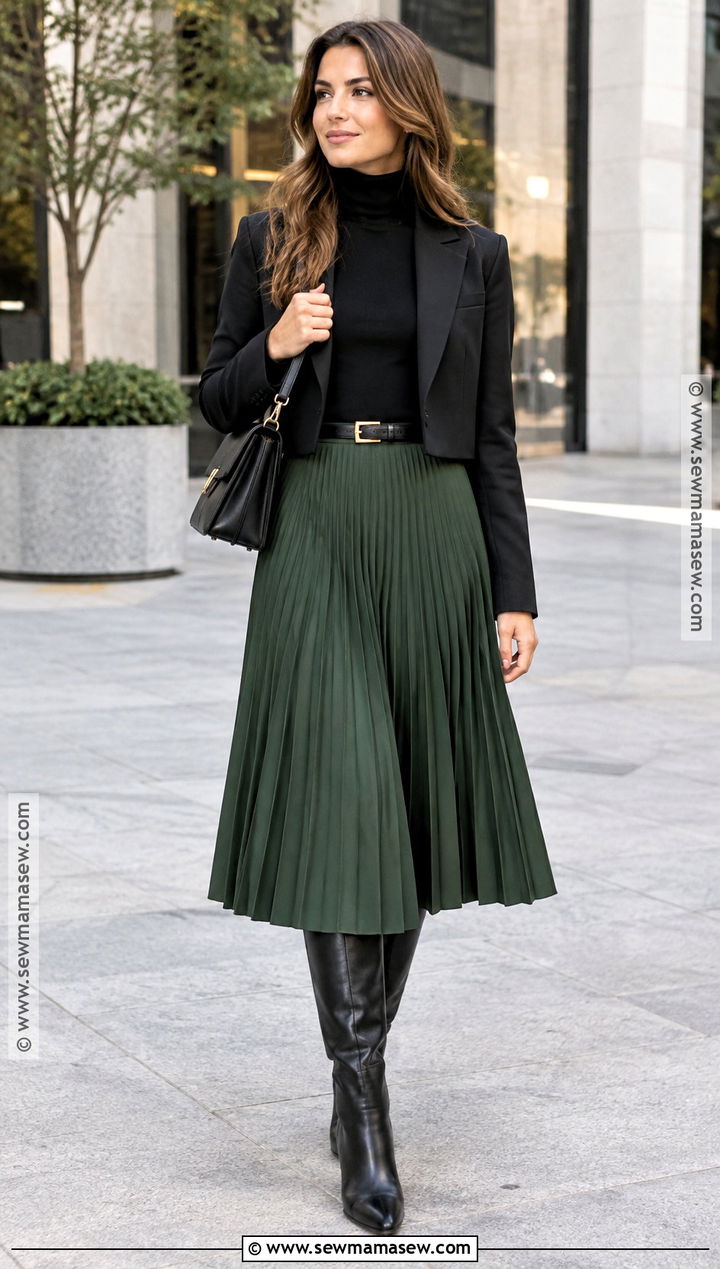
The turtleneck has to be thin for this to work. A fine-gauge knit tucks flat into a pleated skirt; a chunky one pushes the pleats out at the waist and you lose the whole line. Burgundy, forest green, navy and camel pleats all suit fall. Knee-high boots cover the leg, and a cropped jacket or a coat that ends around the knee keeps the proportions clean. Thermal tights underneath change nothing visible. If you're curvy through the hip, look for pleats that are stitched down for the first few inches. They lie flat at the waist and release lower, where you want the movement.
13. Quilted Jacket and Corduroy Pants Outfit
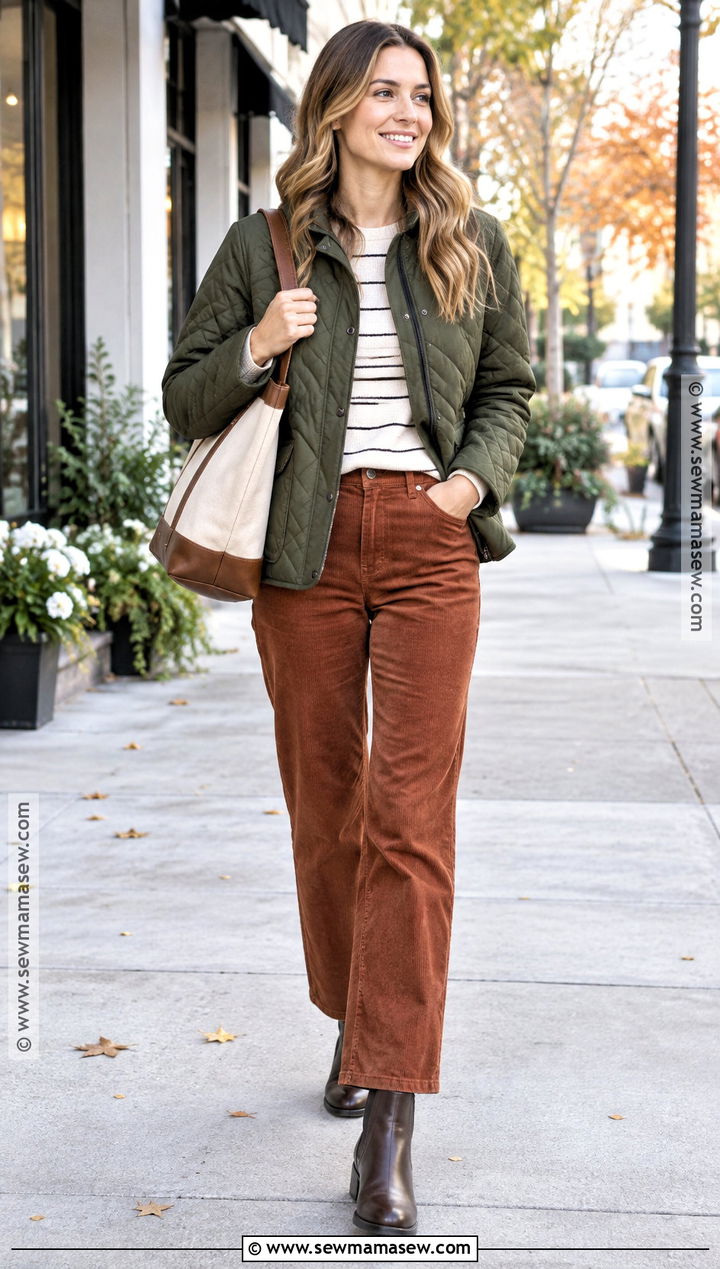
Quilted jacket and cords is the outfit for a cold, bright day that doesn't need a full coat. Straight or wide cords in olive, rust or deep navy go well under a striped long-sleeve or a thin merino. Wale size changes the mood more than people expect. Narrow wale looks smooth and closer to a trouser; wide wale is chunkier and more country. Cords also wear shiny at the knees and seat over time, so I'd buy a cotton with some weight to it. Clogs, loafers or Chelsea boots all fit. If the jacket is boxy, keep the top fitted or the layers stack into bulk.
14. Camel Coat and White Jeans Outfit
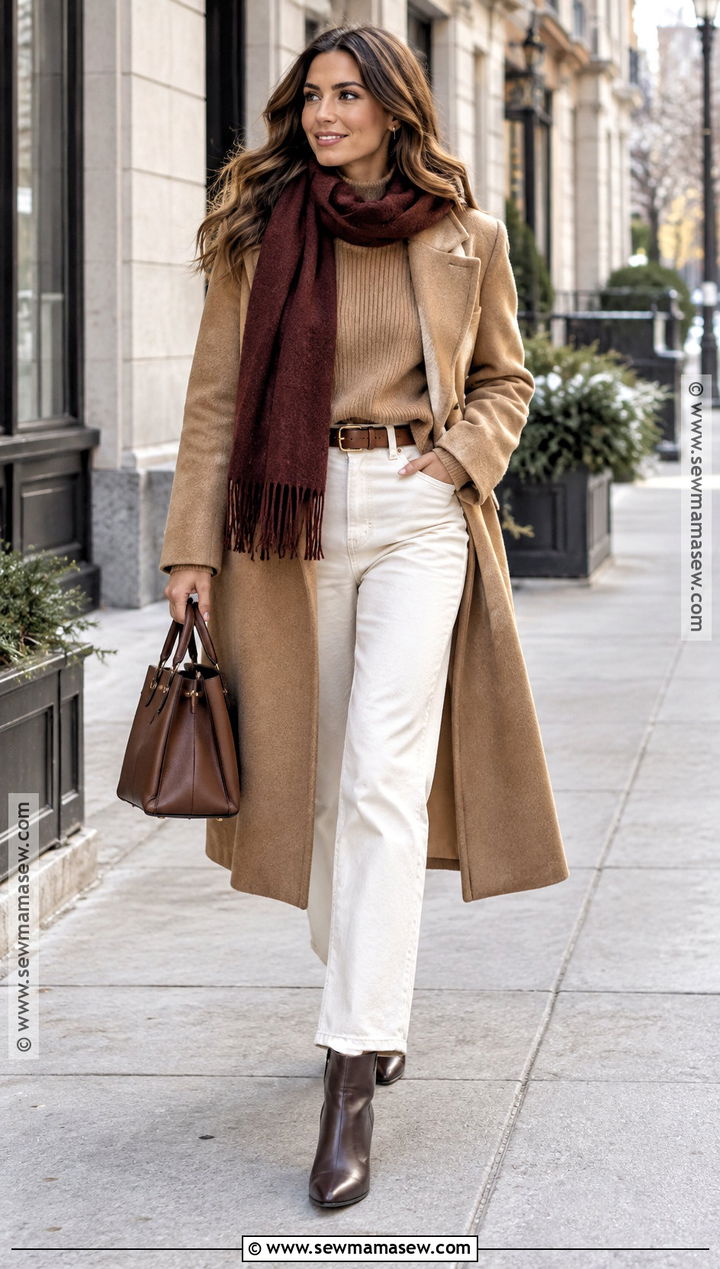
White jeans in winter work when everything around them is warm and heavy. Pair ecru or white straight legs with a camel sweater and a long camel coat, then put chocolate boots, belt and bag against it. The dark accessories keep pale denim from looking like it wandered in from July. The practical worry is slush. Pale hems pick up road salt fast, so I hem these a touch shorter for winter and keep a weatherproof boot on. If cream right at your face drains you, a burgundy or navy scarf fixes it.
15. Utility Jacket and Cargo Pants Outfit
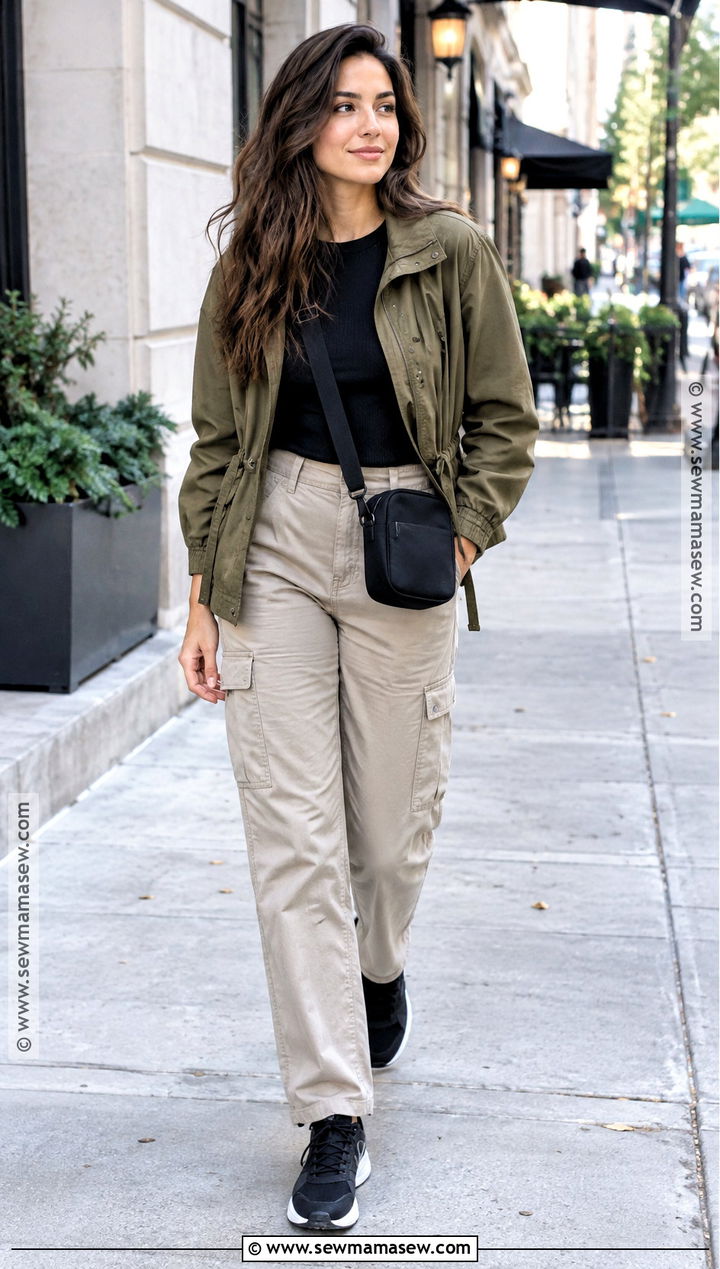
Utility pieces look sharp only when one of them is fitted. A field jacket with drawstring waist over a fitted ribbed top, plus straight cargo pants rather than the baggiest pair you can find. Two oversized utility pieces together start to look like a costume. Olive, stone, brown and black all mix freely here. Sneakers in dry weather, ankle boots in wet. Cinch the jacket a little if you want shape. The pockets are the point of this outfit, but don't load the cargo pockets on the thigh; anything heavy drags the pant leg and ruins the line.
16. Skirt Suit and Turtleneck Outfit
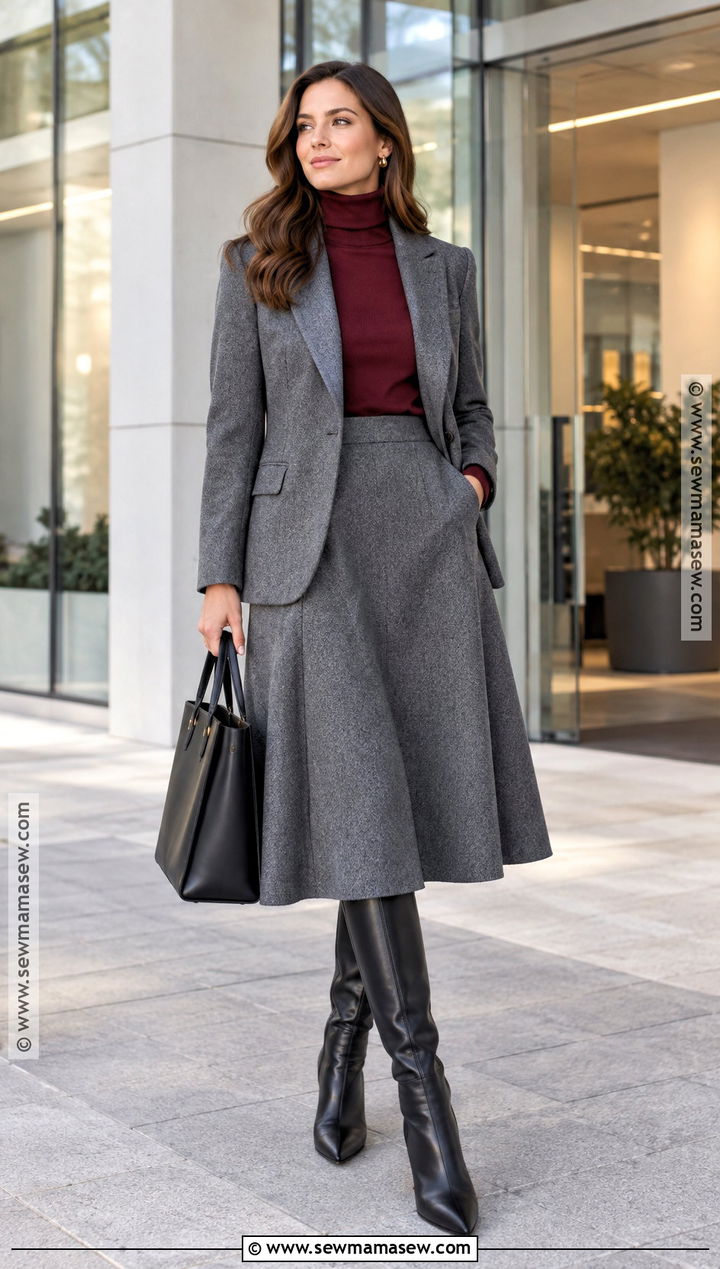
A skirt suit removes the matching problem completely, and that's why I like it on a busy morning. A softly structured blazer with a midi skirt in gray, navy or a quiet check, with a lightweight turtleneck underneath. The skirt doesn't need to be pencil-tight. An A-line or soft pleat is easier to sit and climb stairs in and suits far more figures. Pointed knee-high boots make it formal; loafers make it friendlier. One detail people miss is coat length. Your coat needs to cover the blazer completely, or the jacket hem peeks out underneath and looks untidy.
17. Faux Fur Coat and Wide-Leg Jeans Outfit
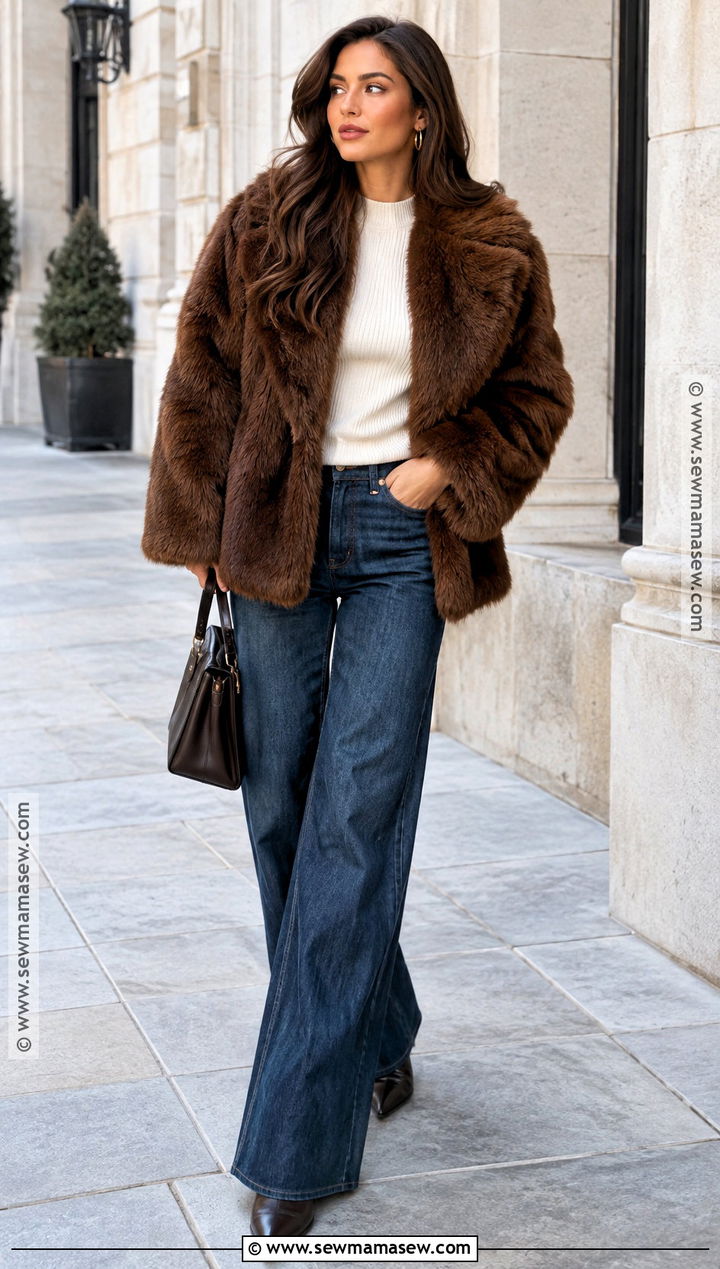
Faux fur is the loudest piece on this list, so I ground it with the plainest denim you own. A hip-length coat in brown, cream or gray over a fitted crewneck, then wide-leg jeans to balance the volume up top. Narrow jeans under a big coat give you a lollipop shape. A pointed ankle boot keeps the jean hem from dragging. Faux fur mats when it gets wet and rubs at the underarms and against a crossbody strap, so a shoulder bag is kinder to it. Petite women do better in a shorter coat and a moderate jean width.
18. Cable-Knit Sweater and Leather Pants Outfit
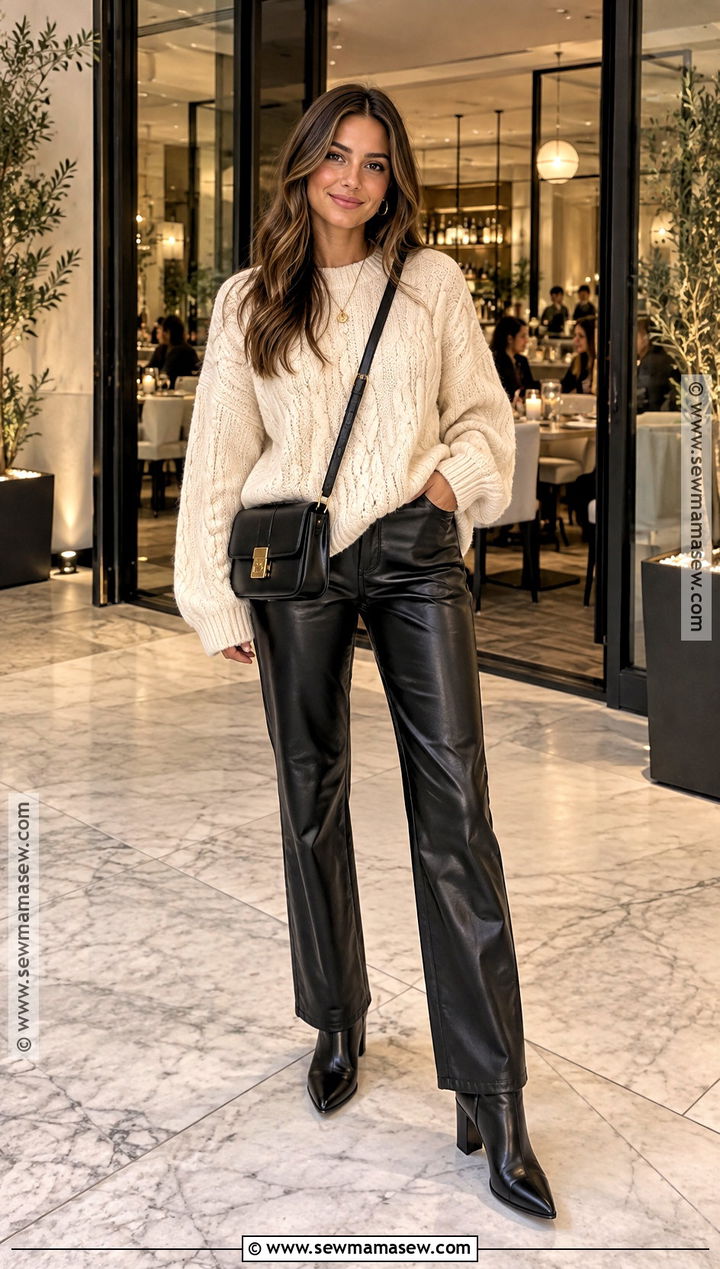
The appeal here is texture: a soft cable knit against smooth leather. Choose a relaxed cream or oatmeal sweater and straight faux leather pants that skim rather than grip. Faux leather doesn't breathe, so I'd skip it for a long day in a warm office, and it can crack at the knee after a couple of seasons. A partial tuck shows the waistband if the knit is long. Heeled ankle boots for dinner, clean sneakers for the weekend. Over it all, a tailored wool coat works better than a puffer, which tends to fight with the sweater's bulk.
19. Parka and Straight-Leg Pants Outfit
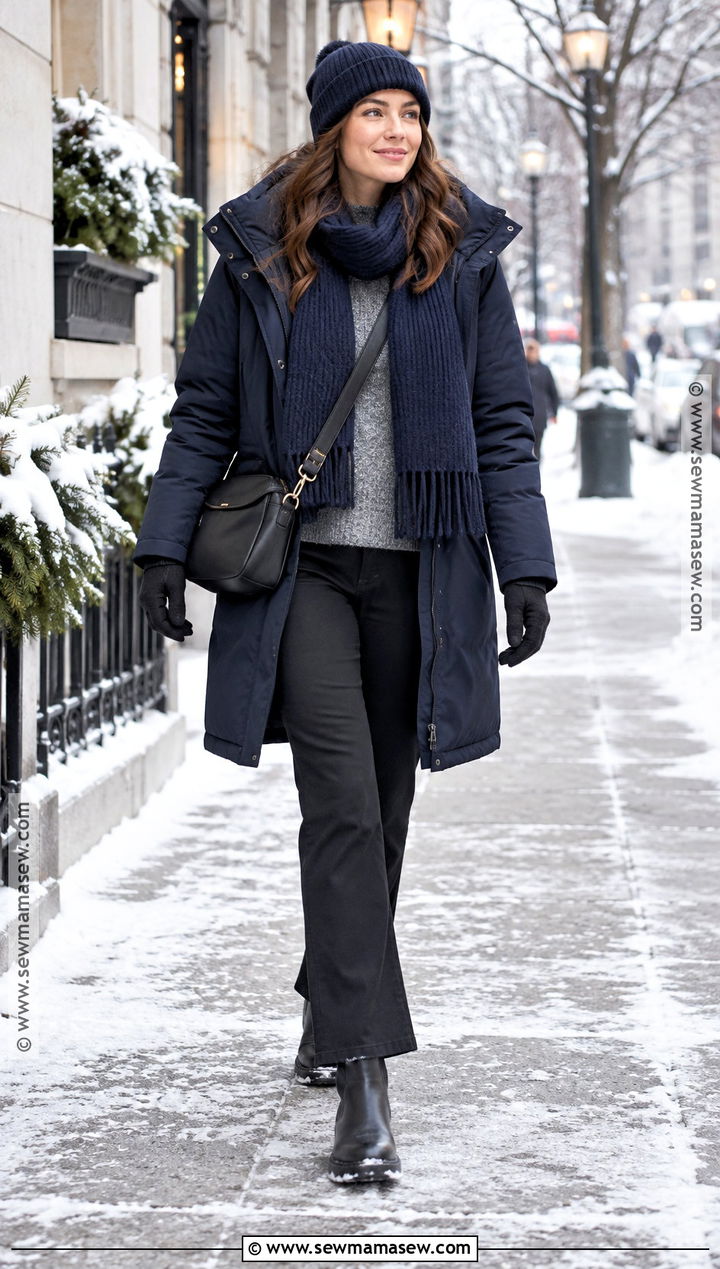
For weather that's actually bad, the parka is the whole plan and the rest just needs to keep up. Choose waterproof if you live somewhere wet, and look at the hood before anything else; a hood that blows off in the first gust is useless. Under it, a wool sweater and straight trousers in brushed cotton or ponte. Weatherproof Chelsea boots grip better than you'd expect and still look neat. Keep the trouser leg narrow enough that it doesn't wick water up from the pavement. A drawstring waist on the parka gives some shape without losing the long hem.
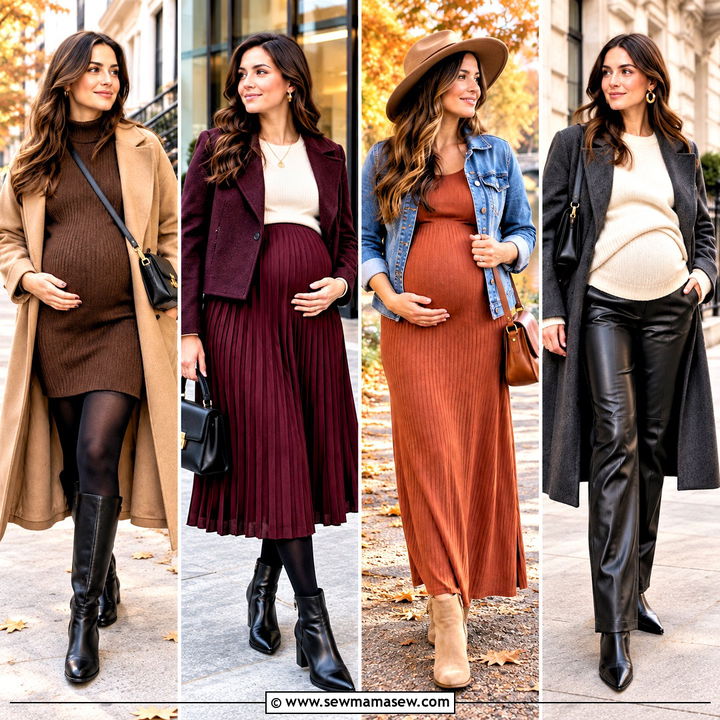
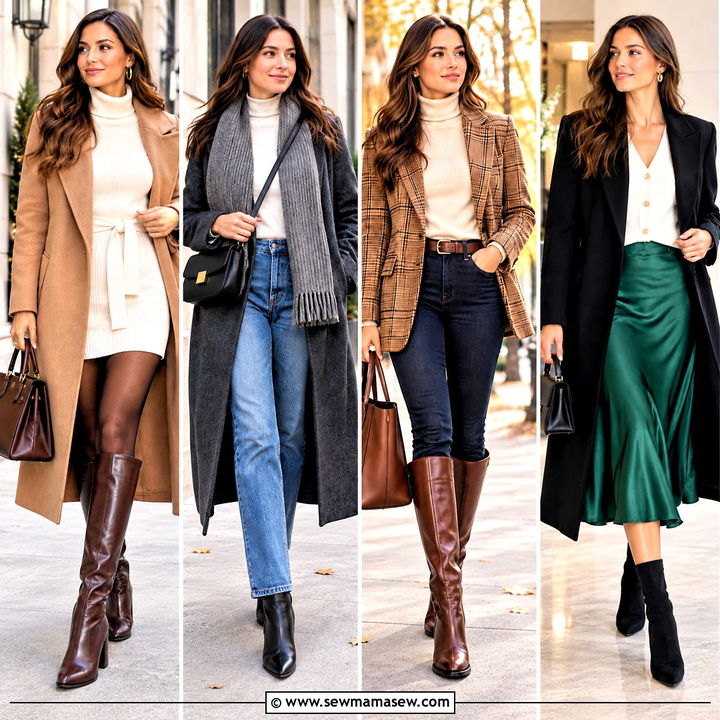
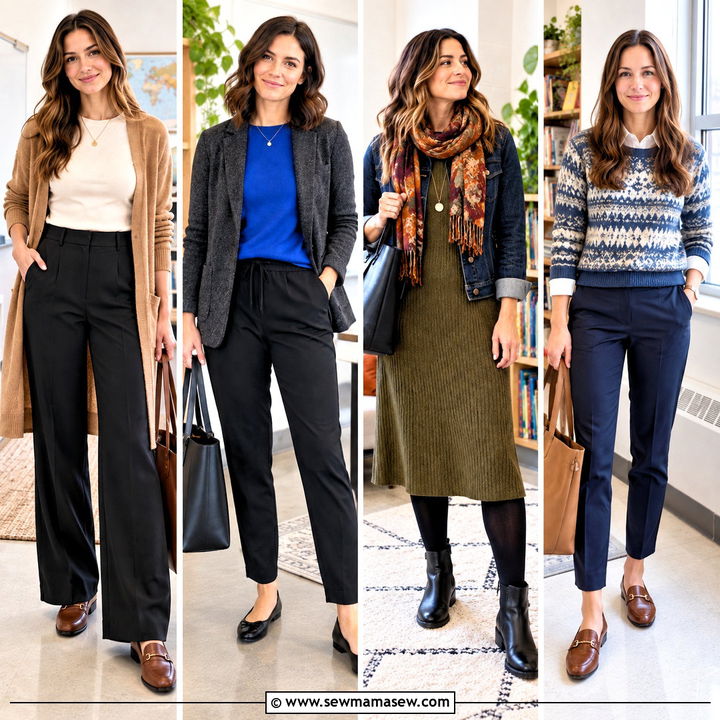
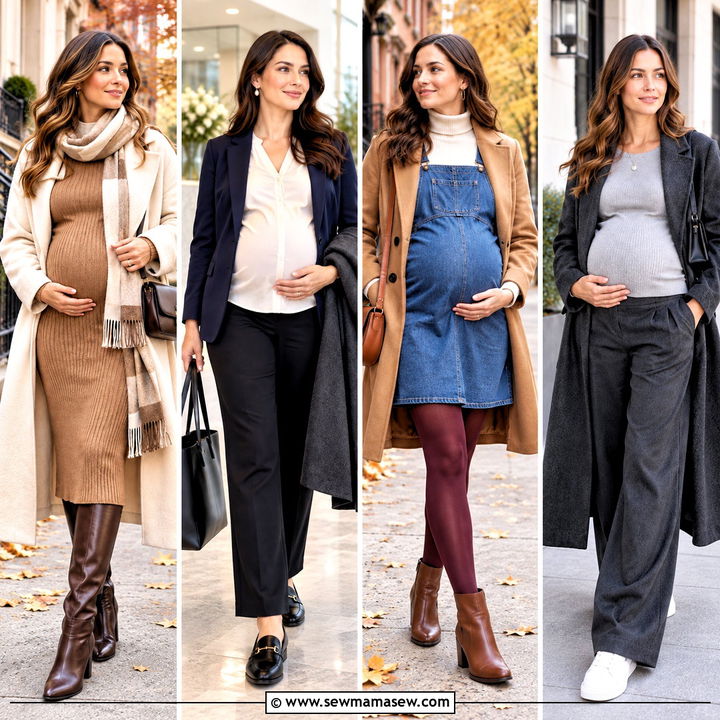
20. Striped Sweater and Relaxed Jeans Outfit
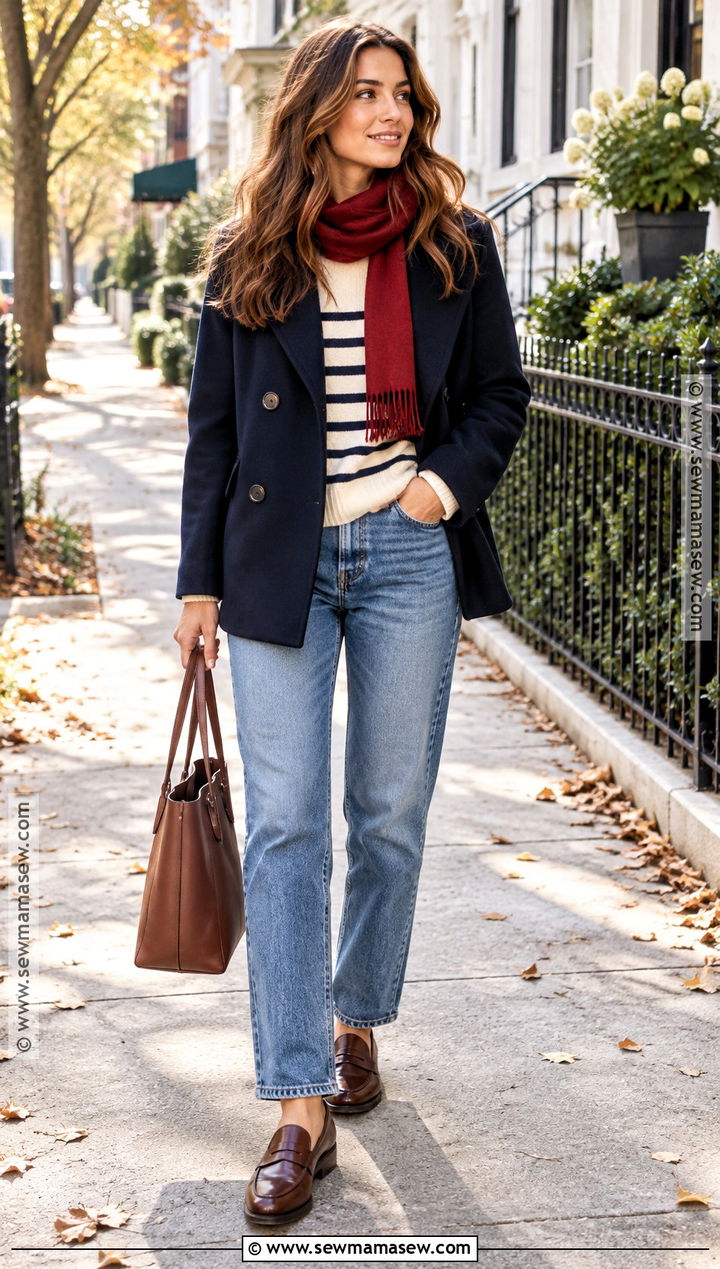
Stripes do the work in this outfit, so the jeans can be plain and relaxed. Cream with black, navy with white or brown with ivory all look right in fall. The tuck matters with a striped knit. A full tuck bunches the stripes at the waistband and they stop lining up, so I use a loose French tuck or pick a sweater that's already slightly cropped. Loafers early in the season, Chelsea boots later. A trench or pea coat over stripes is classic for a reason. A high-rise jean with clean side seams adds length to the leg.
21. Suede Jacket and Midi Skirt Outfit
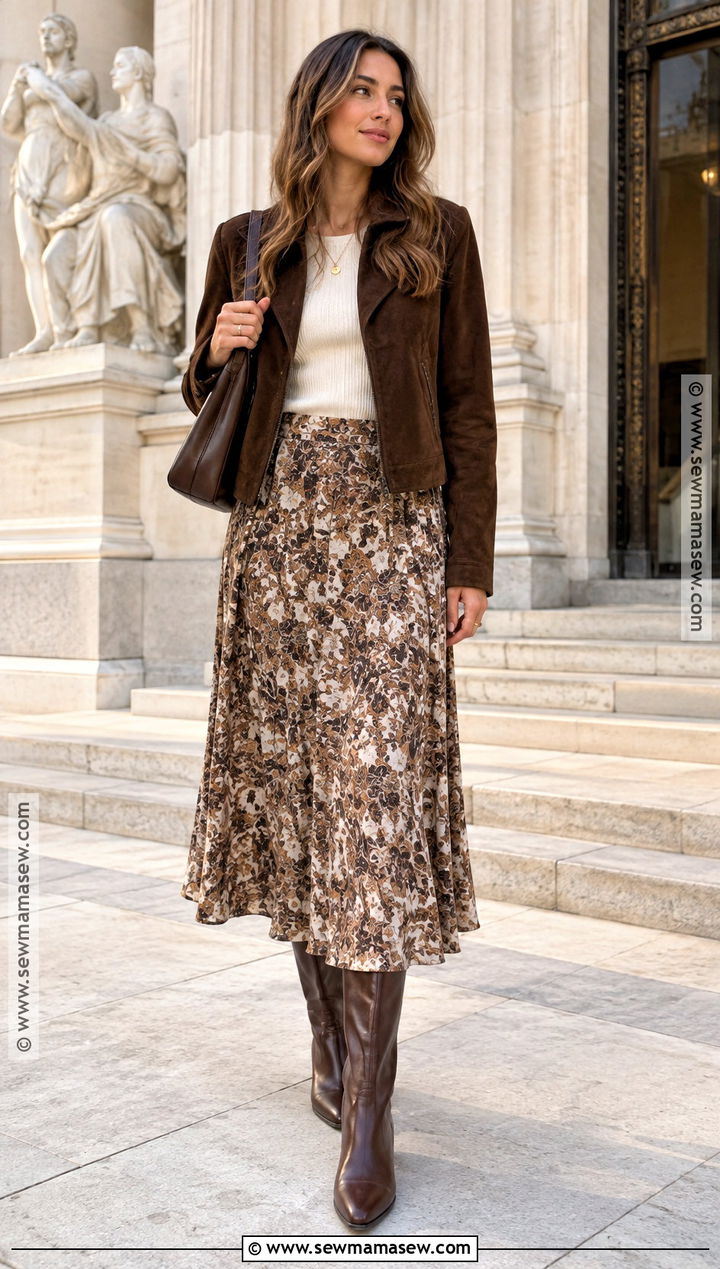
Suede gives you warmth and a lot of texture without the weight of a coat, but it hates rain. Water darkens it and can leave a tide mark, so this is a dry-day outfit and I spray a new suede jacket with protector before the first wear. Tan, chocolate or olive suede over a fitted knit and an A-line midi skirt is the version I like. Don't try to match your bag to the suede exactly; a neighboring brown looks more natural. Knee-high boots close the gap under the skirt. In deep cold, opaque tights and a long coat over the jacket.
22. Funnel-Neck Jacket and Tailored Trousers Outfit
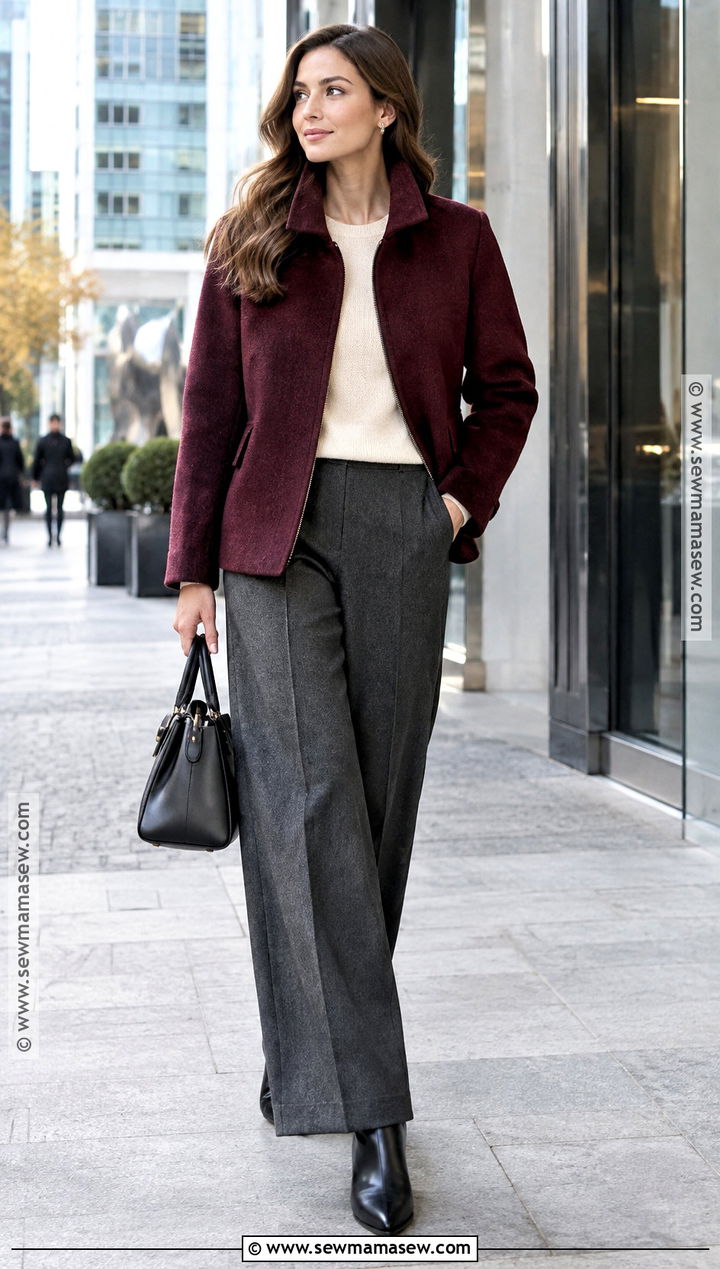
A funnel neck is basically a built-in scarf, which makes it one of the most useful jacket shapes for wind. Wool, leather and technical versions all go over a fine knit with tailored trousers. Proportion is the thing to get right. A cropped funnel-neck wants a high-waisted trouser so the jacket meets the waistband; a longer one balances better over a slimmer pant. Keep earrings small, since the collar already frames the face. Turn the collar up outside and fold it down indoors. Pointed boots for meetings, slim sneakers for the weekend.
23. Hoodie and Long Wool Coat Outfit
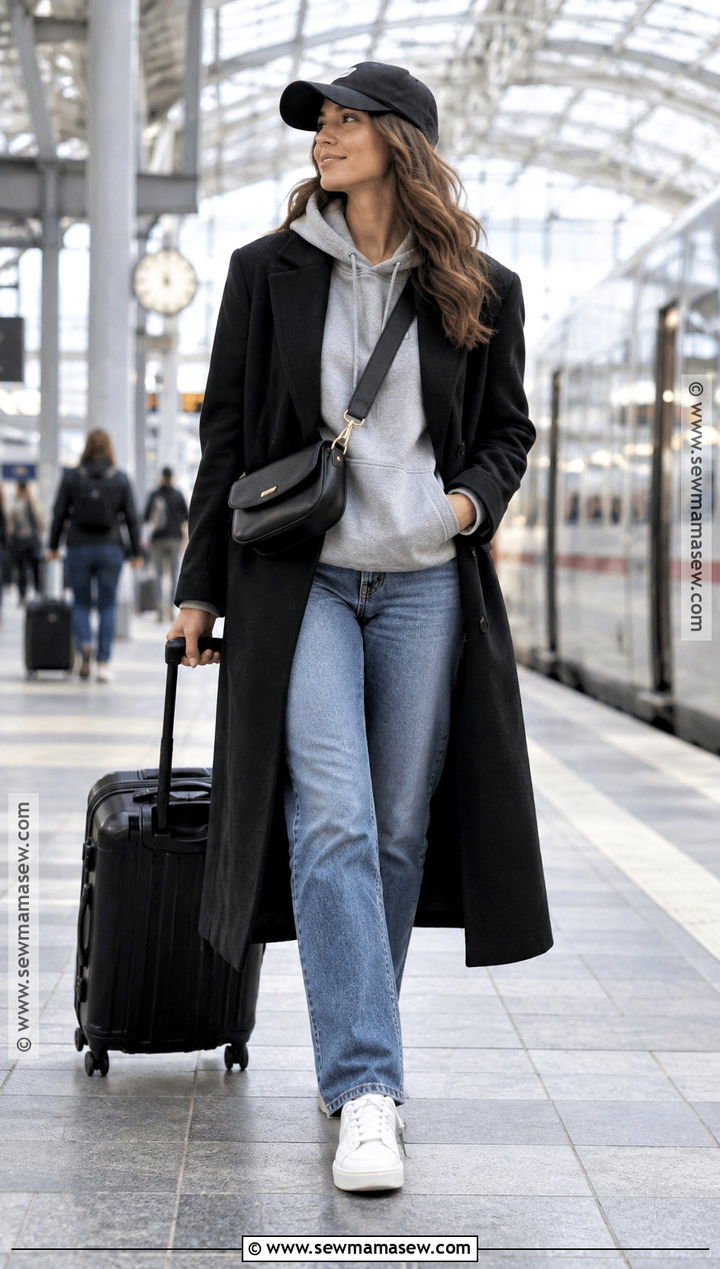
Hoodie under a wool coat is a combination I recommend more than people expect, but the coat has to have room. Try it on with the hoodie under it in the fitting room. If the hood bunches at the back of the neck or the sleeves pull, the coat is too tight for this. A plain medium-weight hoodie in gray, black or navy without big logos works best. Straight jeans or relaxed trousers bridge the sporty and tailored halves. Leather sneakers in dry weather, lug boots in wet. A cap on mild days, a ribbed beanie when it's cold.
24. Pinafore Dress and Turtleneck Outfit
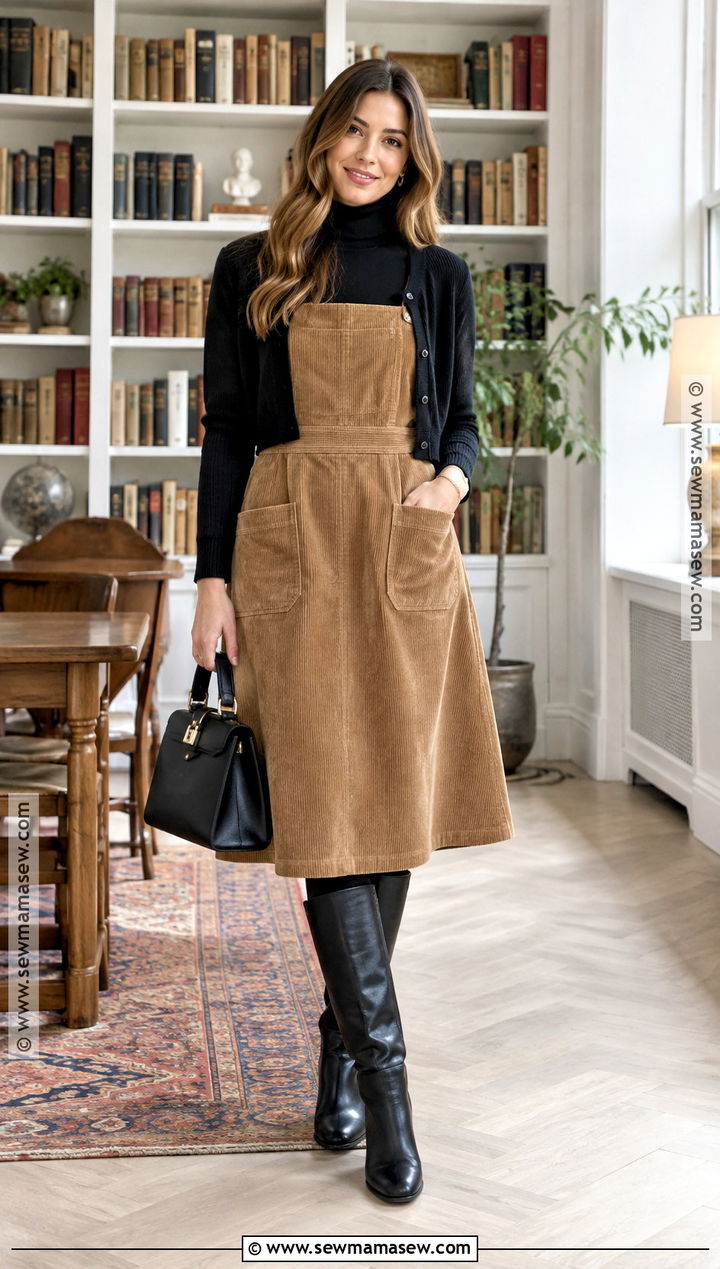
A pinafore over a turtleneck turns a sleeveless dress into something you can wear in January. Wool blend, corduroy or denim all hold their shape over a base layer. Check the armholes before you buy. A deep armhole shows a lot of the turtleneck at the side, which is fine, but a tight one bunches the sleeve. Black and cream turtlenecks match everything; burgundy brings in color. Opaque tights and knee boots keep the leg covered. An A-line pinafore is easiest to sit in. Keep jewelry minimal, since the layered neckline is already the detail.
25. Belted Coat and Knit Set Outfit
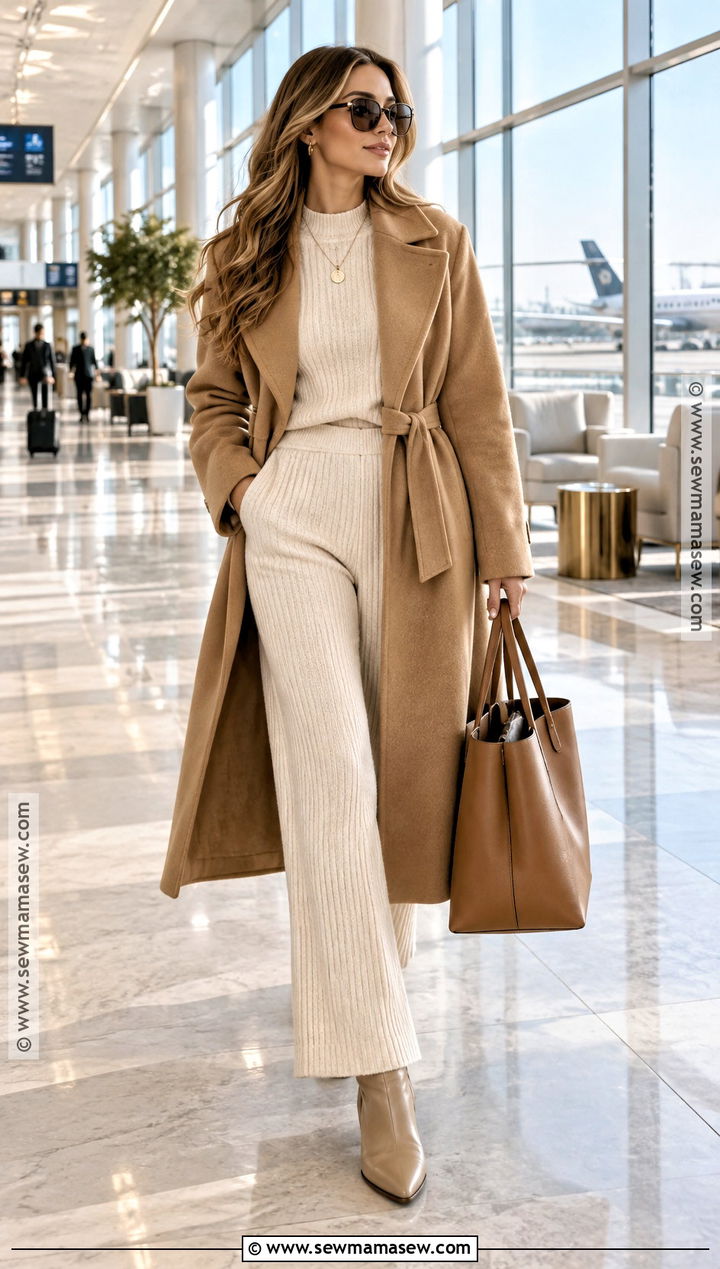
A knit set under a belted coat feels like loungewear and looks like you planned it. Ribbed sweater with matching pants or a knit midi skirt in cream, gray or camel. The thing I check is weight. Thin knit pants cling and show every seam underneath, while a heavier knit drapes and hides more. Tie the coat belt at the front for shape or knot it loosely behind when you wear it open. Pointed ankle boots make it ready for dinner; minimal sneakers make it a travel outfit. A large leather tote keeps it from looking like pajamas.
26. Velvet Dress and Ankle Boots Outfit
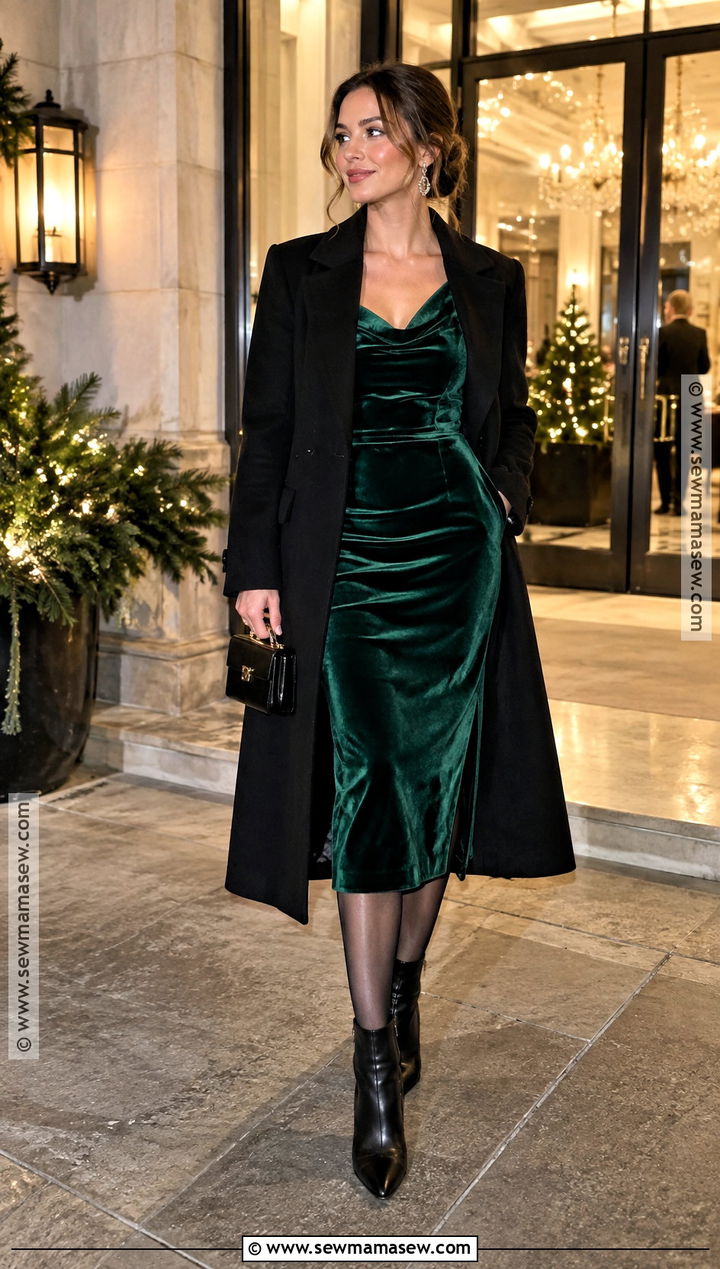
Velvet does most of the work in a winter dress outfit. Black, navy, burgundy or emerald in a midi length with a defined waist. Velvet crushes when you sit for long, especially rayon velvet, so I hang it in a steamy bathroom afterward to lift the pile. Pointed ankle boots modernize it and keep your feet warmer than pumps. Sheer tights for a mild evening, opaque for cold. A tailored wool coat over the top. If a full velvet dress feels too much, a velvet slip with a fine knit underneath tones it down for a work party.
27. Fair Isle Sweater and Corduroy Skirt Outfit
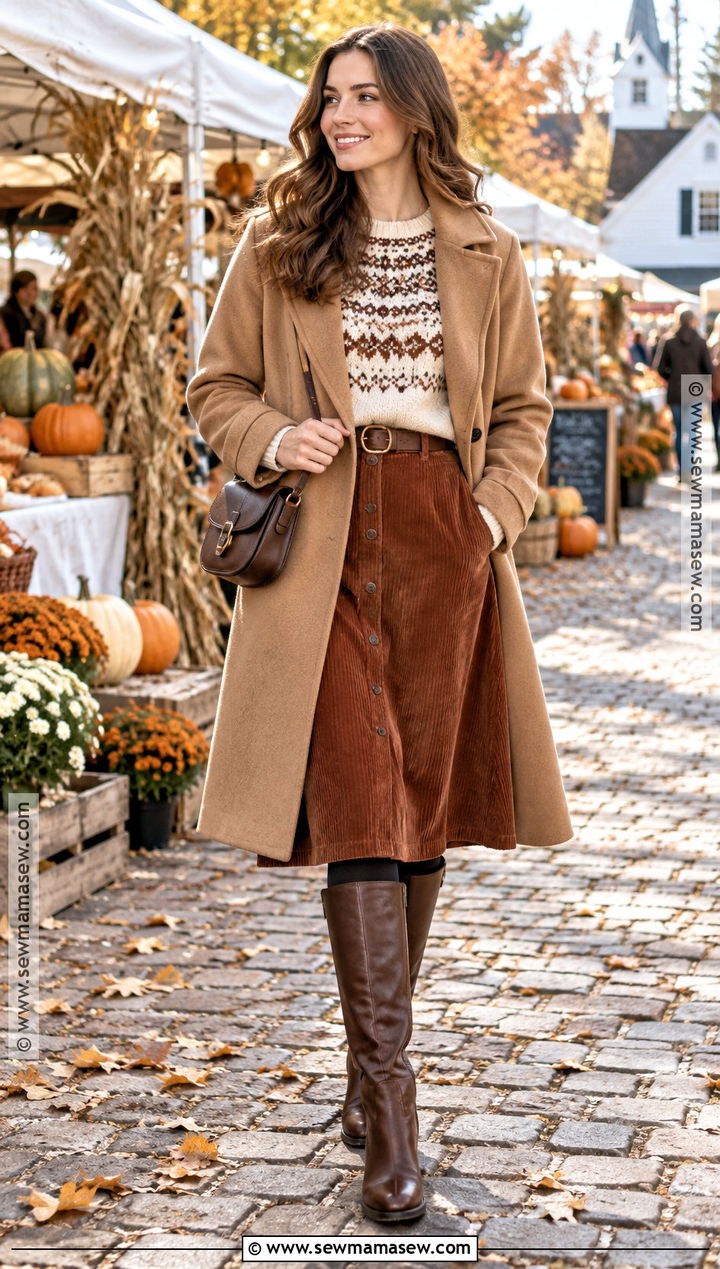
Fair Isle can tip into costume fast, so keep the colors to two or three and the rest of the outfit plain. A softly patterned knit with a brown, navy or rust corduroy midi skirt does that. I give the sweater a light front tuck so the waist shows. Opaque tights and knee-high leather boots keep it practical for a cold afternoon outside. Put a solid wool coat on top; a patterned coat over a patterned sweater is too much. An A-line skirt moves well and balances the knit's volume.
28. Pea Coat and Cropped Trousers Outfit
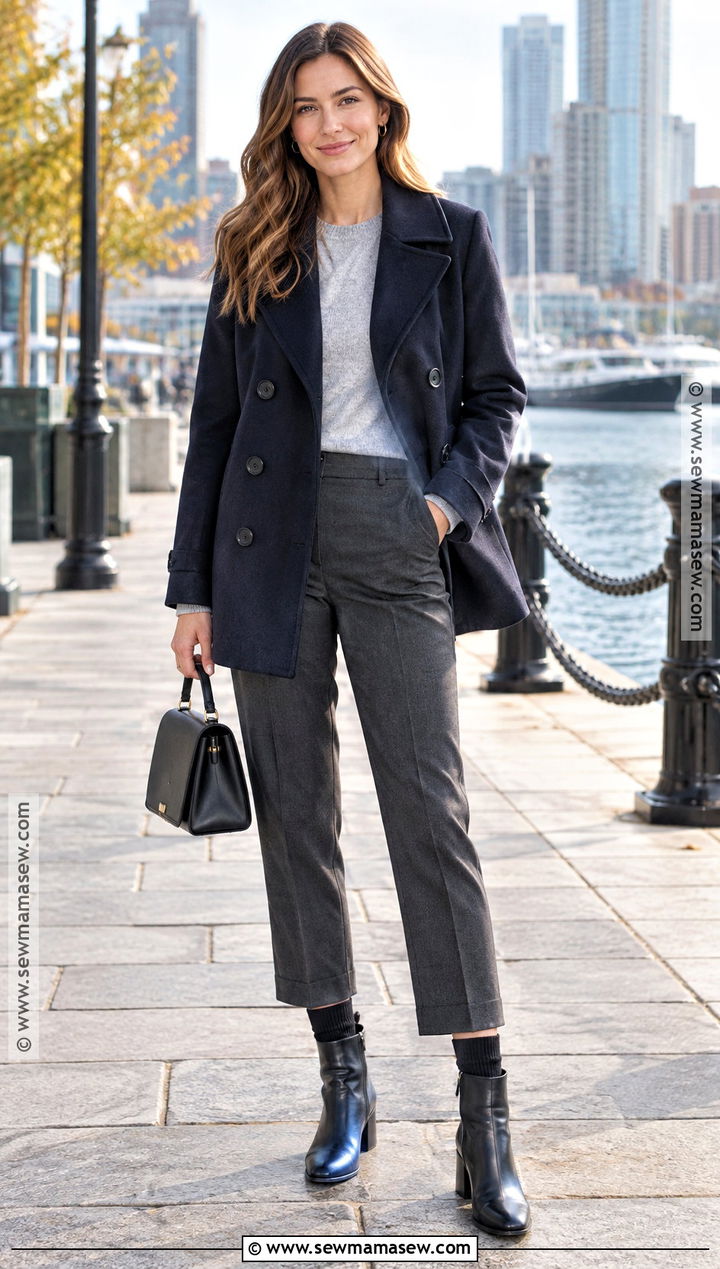
Cropped trousers and a pea coat look crisp, but they leave the ankle open, and that's the cold spot. I solve it with ribbed socks matched to either the trouser or the shoe, so the gap looks planned. Navy, black and camel pea coats all work over a fine knit. Loafers on dry days, fitted ankle boots when it's cold. If you're full-busted, a single-breasted coat lies flatter than a double-breasted one, which adds two rows of buttons across the chest. Keep the trouser hem clean rather than cuffed so the cropped length stays sharp.
29. Teddy Coat and Matching Sweat Set Outfit
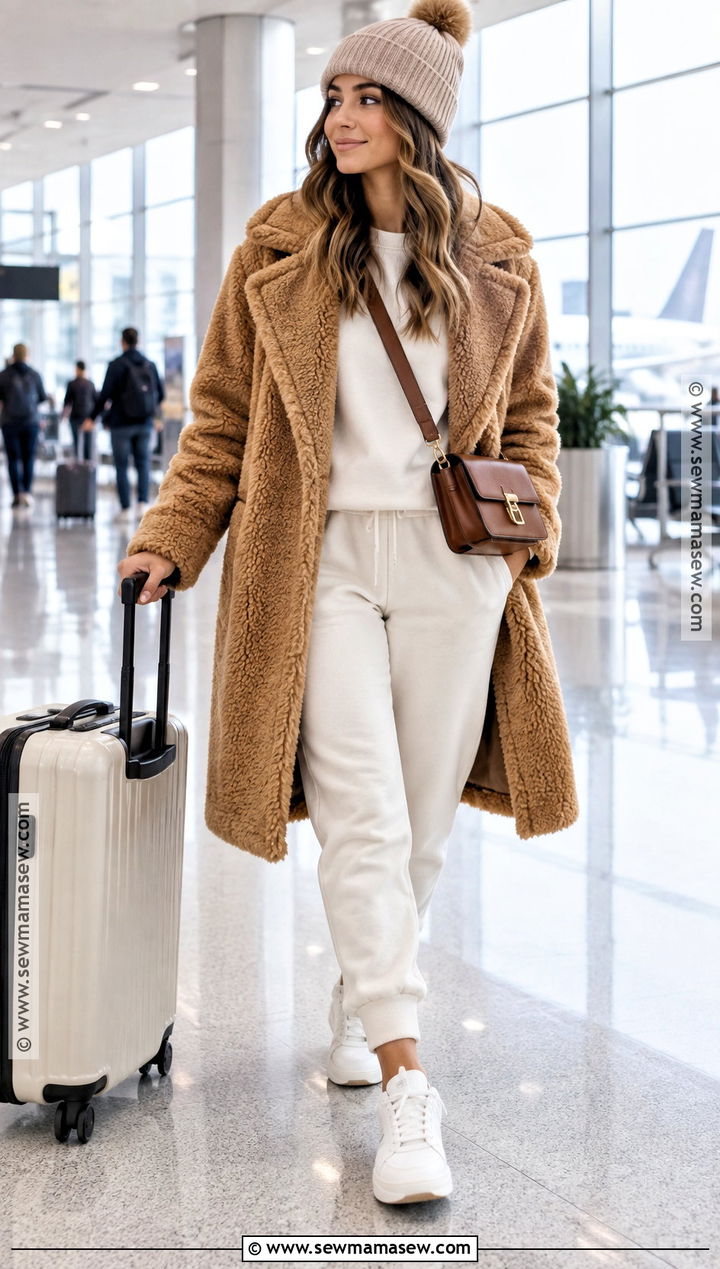
A sweat set only looks dressed under a teddy coat if the sweats themselves are clean. Plain cream, gray, taupe or chocolate, minimal logos, a fit that doesn't sag at the knee. The joggers should taper at the ankle, and the sweatshirt shouldn't be so long that it bunches under the coat. Teddy fabric sheds a little at first and mats under bag straps, so carry the bag on the shoulder rather than across the body. Sneakers for dry days, lined ankle boots for wet. Good for a long flight or a road trip when comfort matters more than anything.
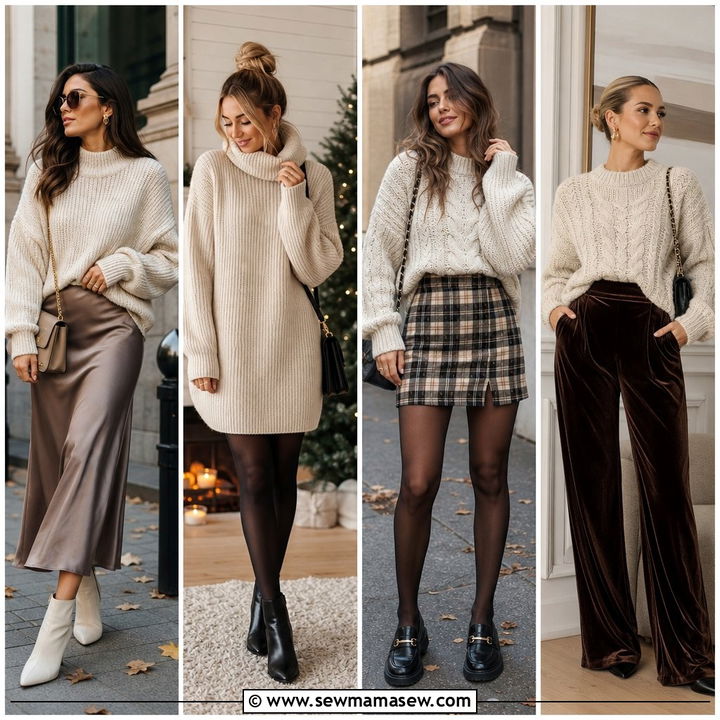
30. Wrap Coat and Wide-Leg Jumpsuit Outfit
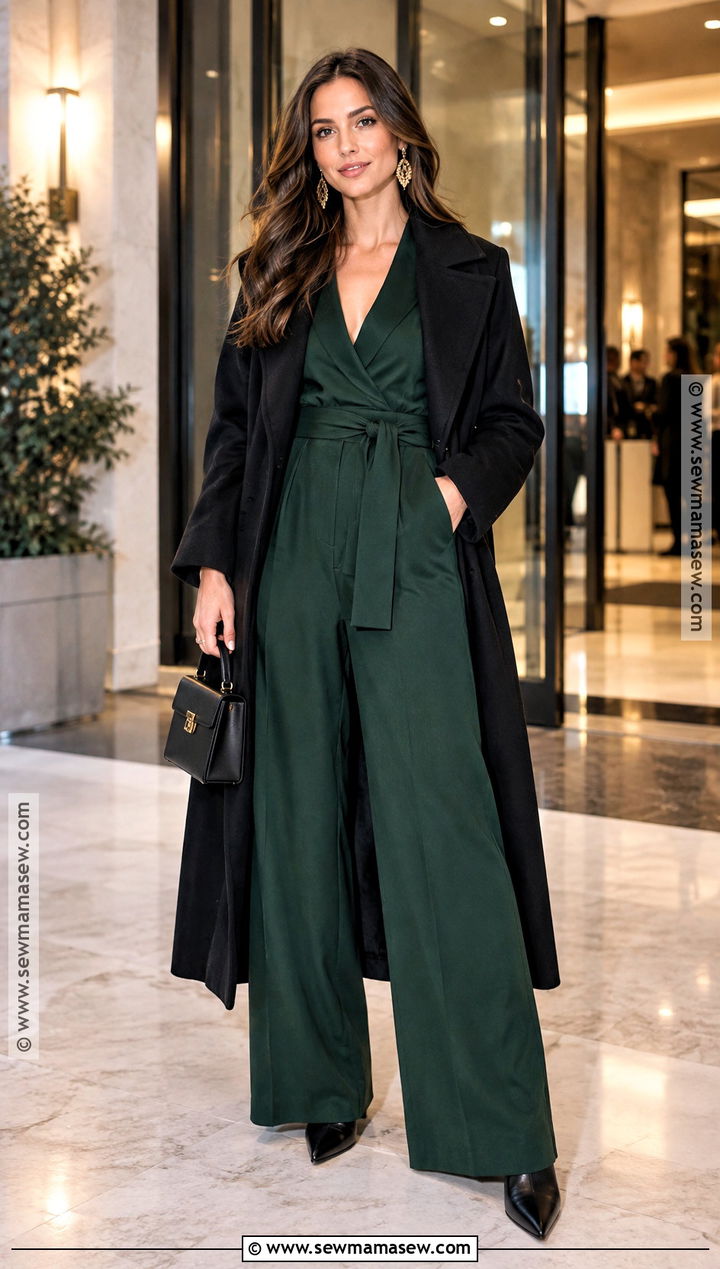
A wide-leg jumpsuit is the dressy option for anyone who'd rather not wear a dress. Black, navy, burgundy or green with a defined waist and enough room through the seat that you can sit without strain. Bathroom trips are the honest drawback, so keep that in mind for a long evening. A thin thermal underneath works if the neckline hides it. Pointed ankle boots give height under the wide hem. A long wrap coat covers most of the jumpsuit outside. Skip a bulky fabric belt knot under the coat; it pushes the wrap out. One statement earring or a cuff is plenty.
Wool, Down and Polyester Fill Behave Differently in Real Cold
Coats on this list look similar on a hanger and feel very different outside. Before you buy, it helps to know what each one is good at.
Wool coats
Wool stays warm even when it's slightly damp and doesn't rustle, which is why it suits an office and dinner better than a puffer. Check the label. A coat that's mostly wool holds its shape and blocks wind; a coat that's mostly polyester with a little wool looks the same for a month and then starts to pill under the arms. Wool doesn't stop rain, so in a downpour it gets heavy.
Down and synthetic puffers
Down gives the most warmth for its weight and packs small, but it clumps and goes flat once it's soaked. Synthetic fill is a little bulkier for the same warmth and keeps working when wet, which makes it the better choice somewhere rainy. Either way, the shell fabric decides how well it handles wind.
Thirty Outfits From Roughly Fifteen Pieces
You don't need thirty sets of clothes to wear this list. Look closely and the same pieces keep coming back: straight jeans, a fine turtleneck, a long wool coat, knee-high boots, a midi skirt, a trench, a chunky knit and loafers. If you own those eight, you can already build at least ten of the outfits above.
When I help someone shop for a new season, I start with the gaps that block the most outfits, not with the most exciting piece. Usually that's a coat that fits over a sweater or a boot that handles rain. Buy those first. The velvet dress and the faux fur can wait until the everyday formulas work.
Your First Four Formulas for the Cold Months
A cold-weather wardrobe gets easier the moment you think in complete outfits instead of single pieces. Go back through these and mark the three or four that fit the days you actually live: commute, school run, office, weekend. Those are your starting formulas. In early fall, they run on knits, trenches and loafers. By midwinter, the same formulas take tights, thermals, an insulated coat and boots that handle wet ground. Fit and comfortable layering come first. Color and accessories are where you get to have fun once the basics stop failing you.
Related posts: