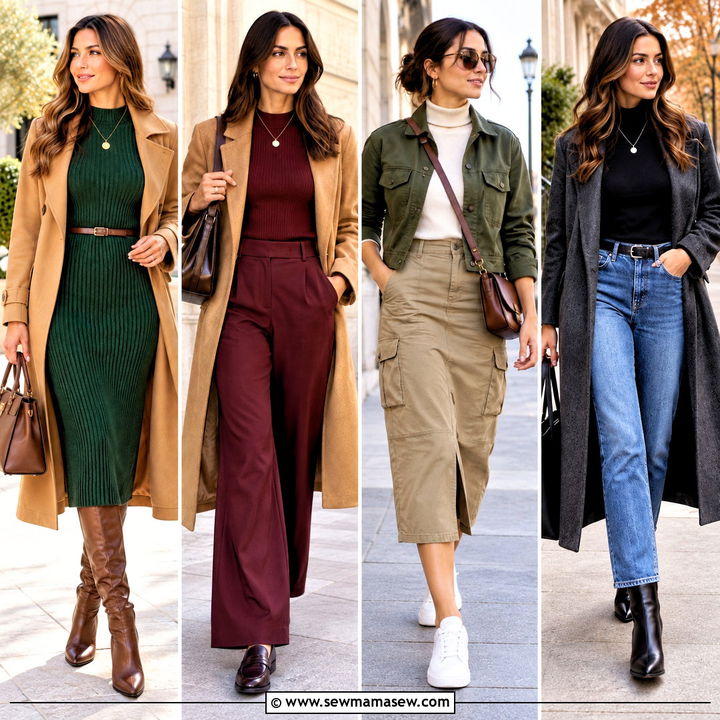
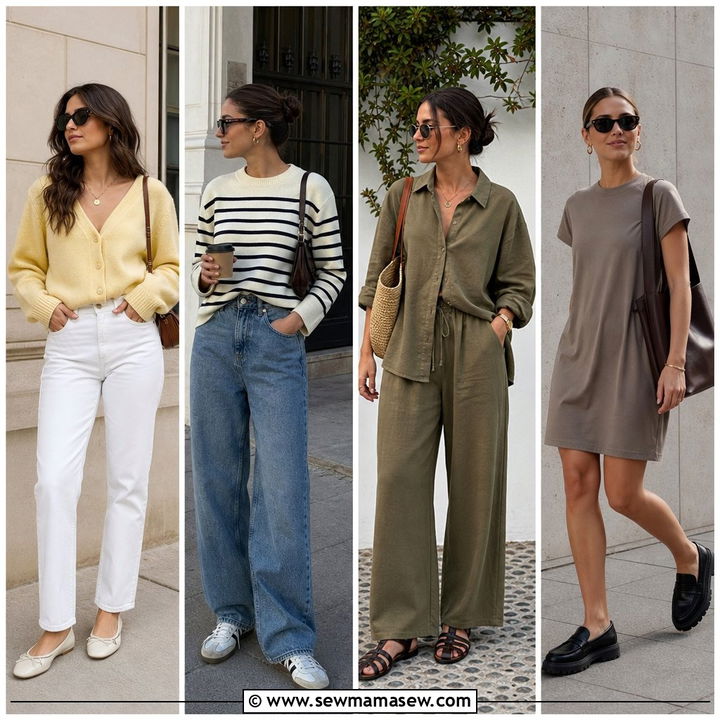
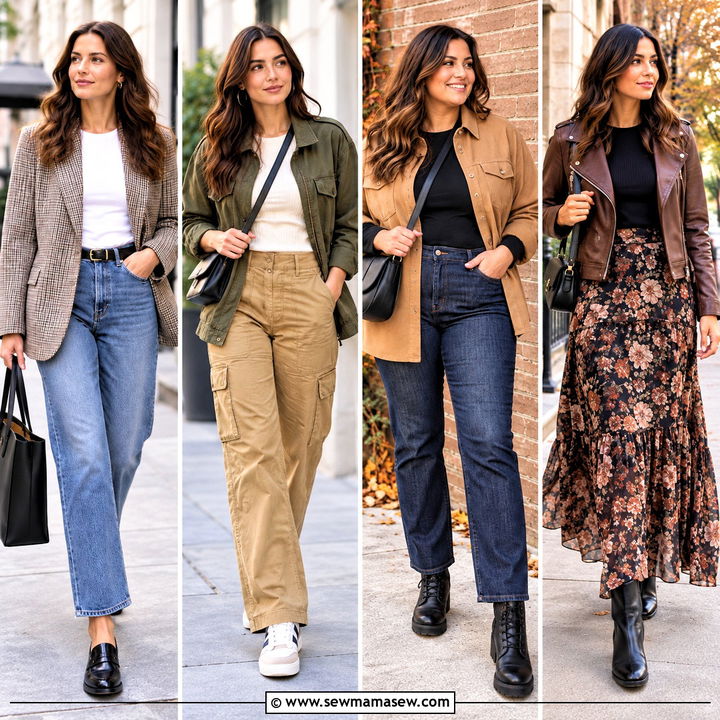
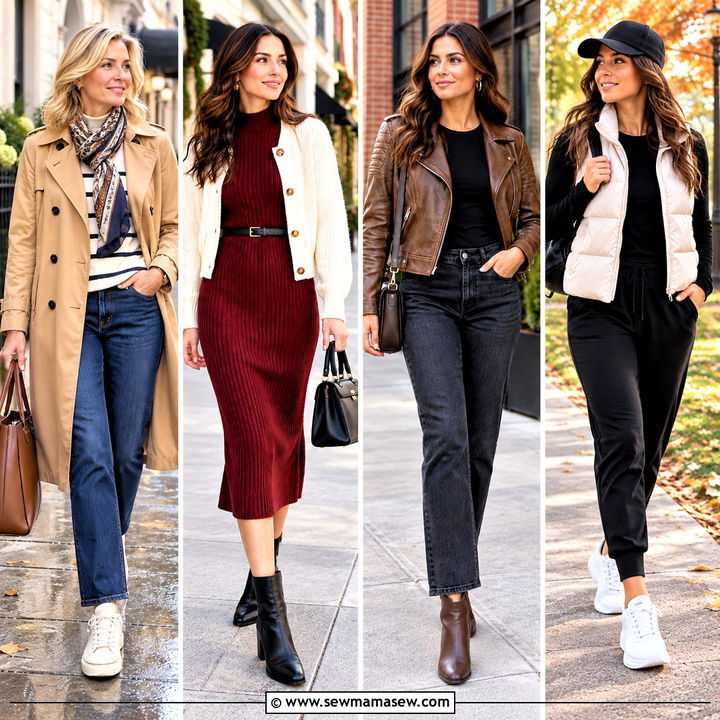
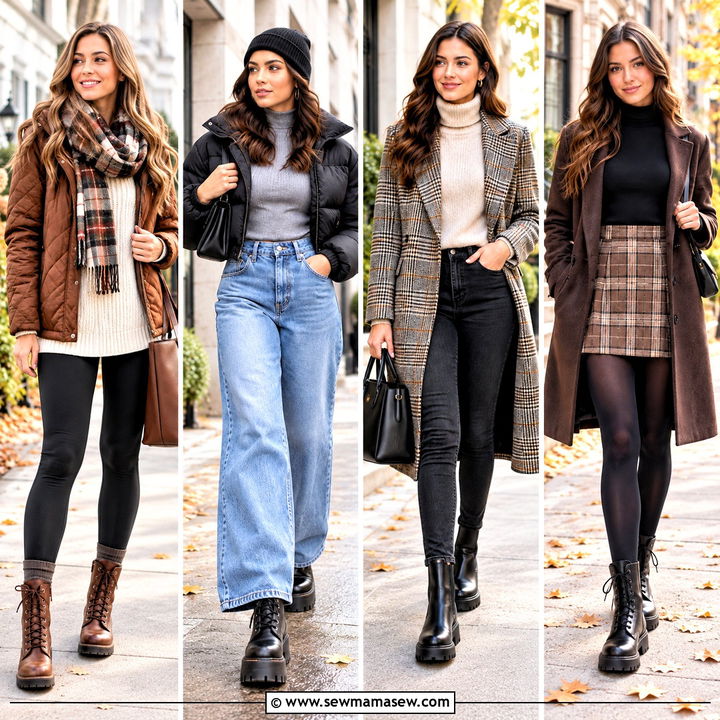
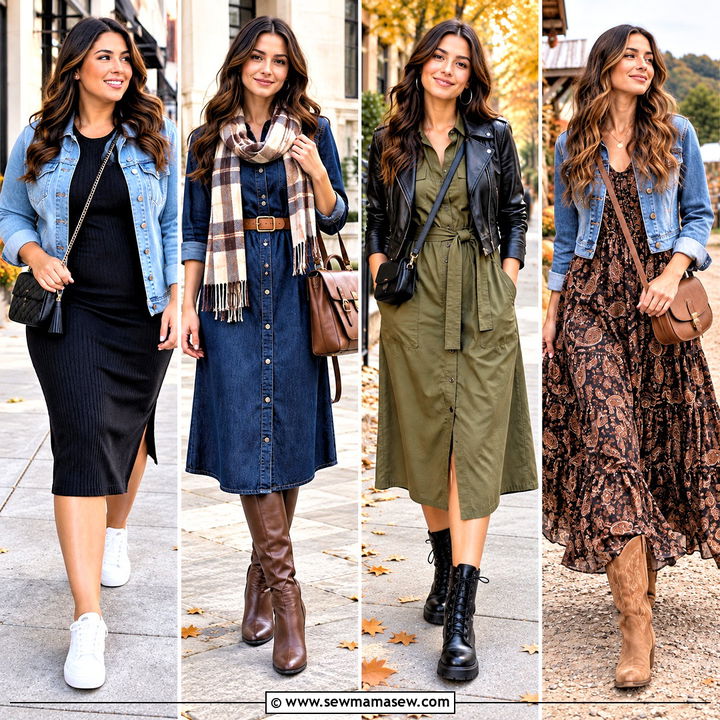
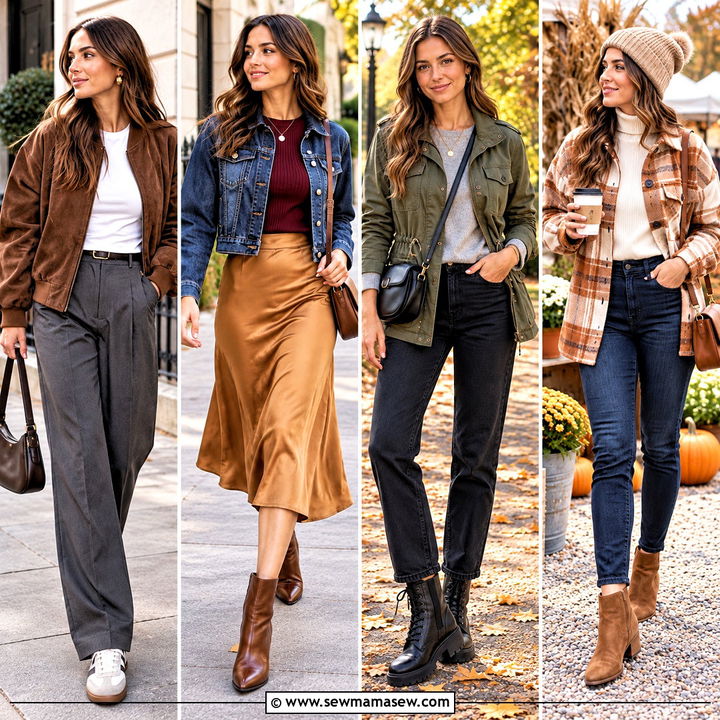
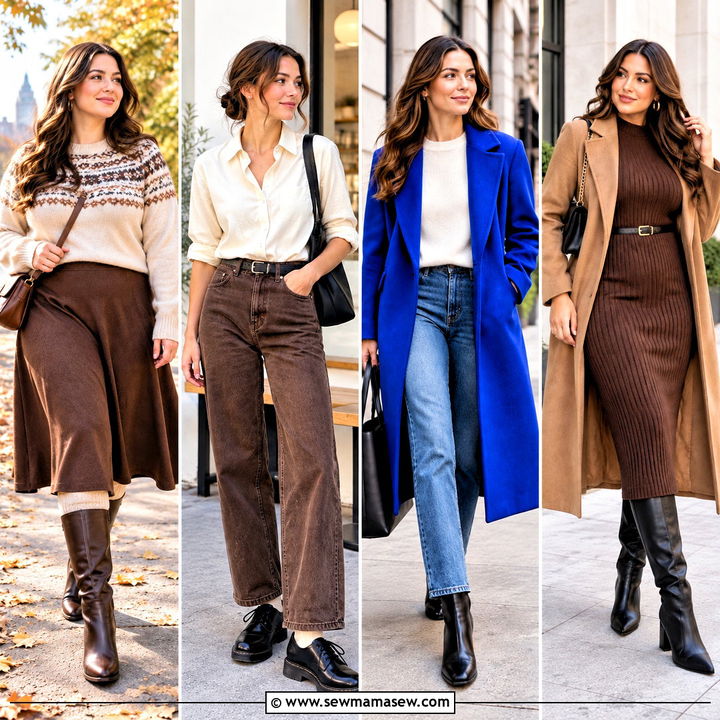
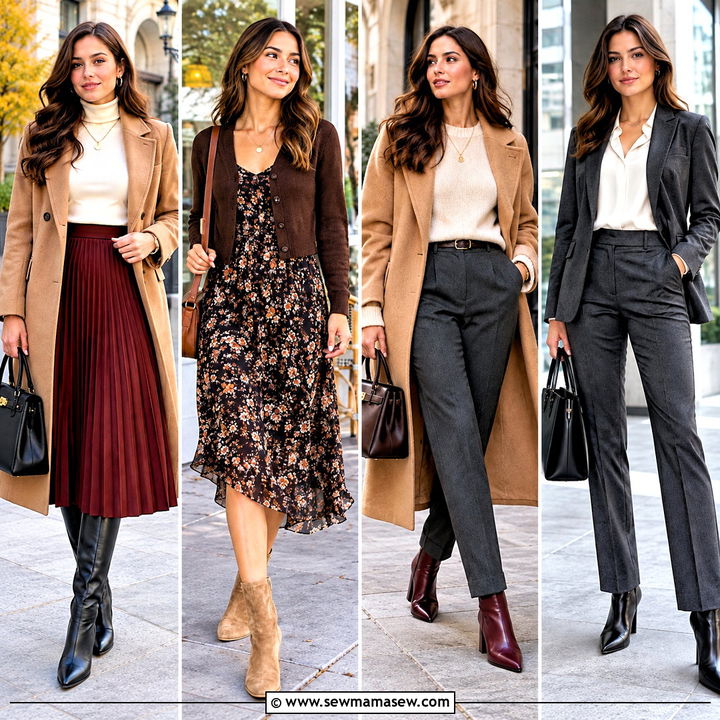
Boots are the one fall purchase I'd plan rather than grab, because a pair that pinches or wobbles ends up at the back of the closet no matter how little it cost. A cheap boot is only good value if it fits and goes with what you already wear. So for each of the fifteen styles below, I've put together a full outfit and noted what I'd check in the store: material, heel stability, tread, the zipper and the return policy. Black, brown, taupe and burgundy will get worn the most. Once you have one of those, a statement pair can come later.
A Thirty-Second Construction Check in the Store
Price tags don't tell you much about how long a boot will last, but a quick look and a few bends usually do. This is the routine I run through before I even try a pair on, and it works just as well when an online order arrives.
- Sole join: look where the upper meets the sole. A tidy, tight line is good; glue residue or a gap at the toe usually means the sole will lift early.
- Flex point: bend the boot at the ball of the foot. It should bend there and spring back, not fold in the arch.
- Heel: set the pair on a flat surface. Both should stand straight without leaning, and the heel cap should be firmly attached.
- Zipper: run it all the way up and down twice. It should move without snagging, and the teeth shouldn't catch the lining.
- Lining and insole: feel inside for ridges and loose stitching, and check whether the insole lifts out. A removable insole can be swapped for a better one later.
- Both boots: compare them side by side. Shaft height, stitching and color should match.
None of this takes long, and it filters out most of the pairs that would fall apart by midwinter. If a boot passes, then I try it on and walk on a hard floor.
1. Affordable Chelsea Boots Outfit
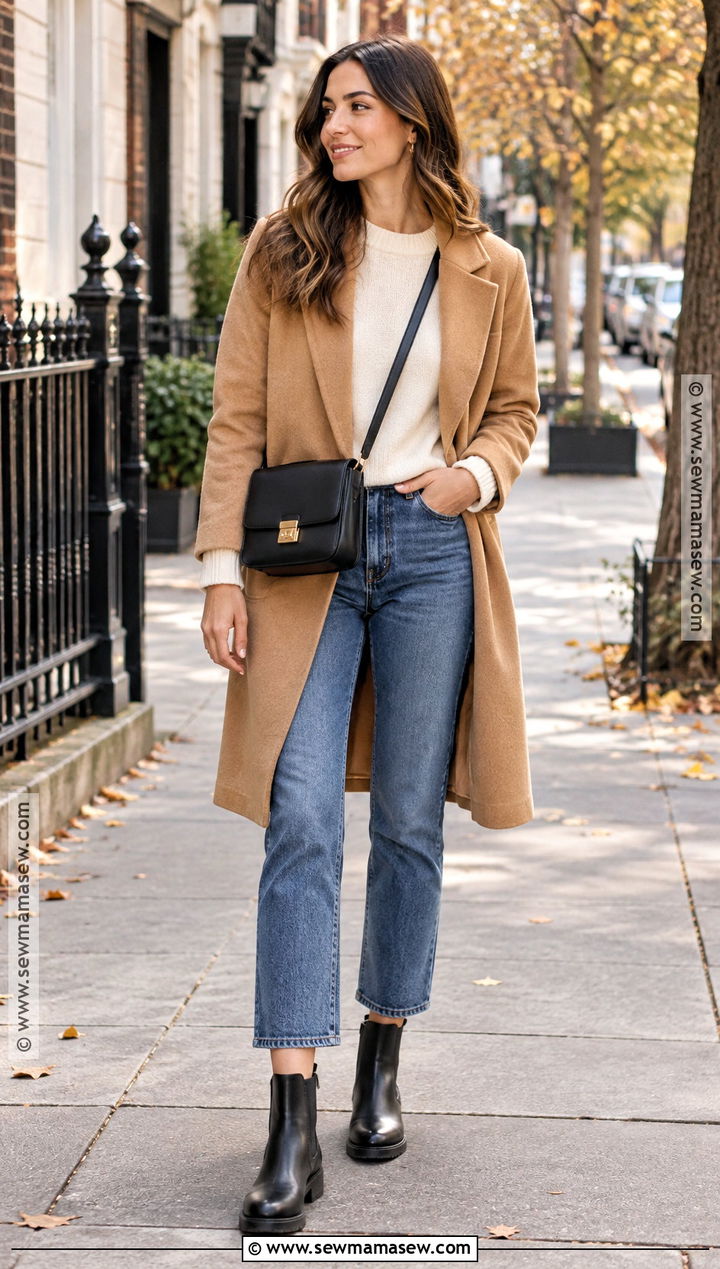
Chelsea boots are where I'd start a budget boot wardrobe, since the plain shape goes with jeans and with tailoring. Black or dark brown, with stretchy side panels, a roomy toe and a low block heel. I wear them with straight jeans cropped just above the shaft, a cream crewneck and a relaxed camel coat. On inexpensive pairs, look hard at the seam where the upper meets the sole; glue squeezing out or a gap there means the sole may lift. Bend the boot gently too. A stiff opening will rub your ankle every day, and simple designs without buckles stay useful longer.
2. Black Ankle Boots Outfit
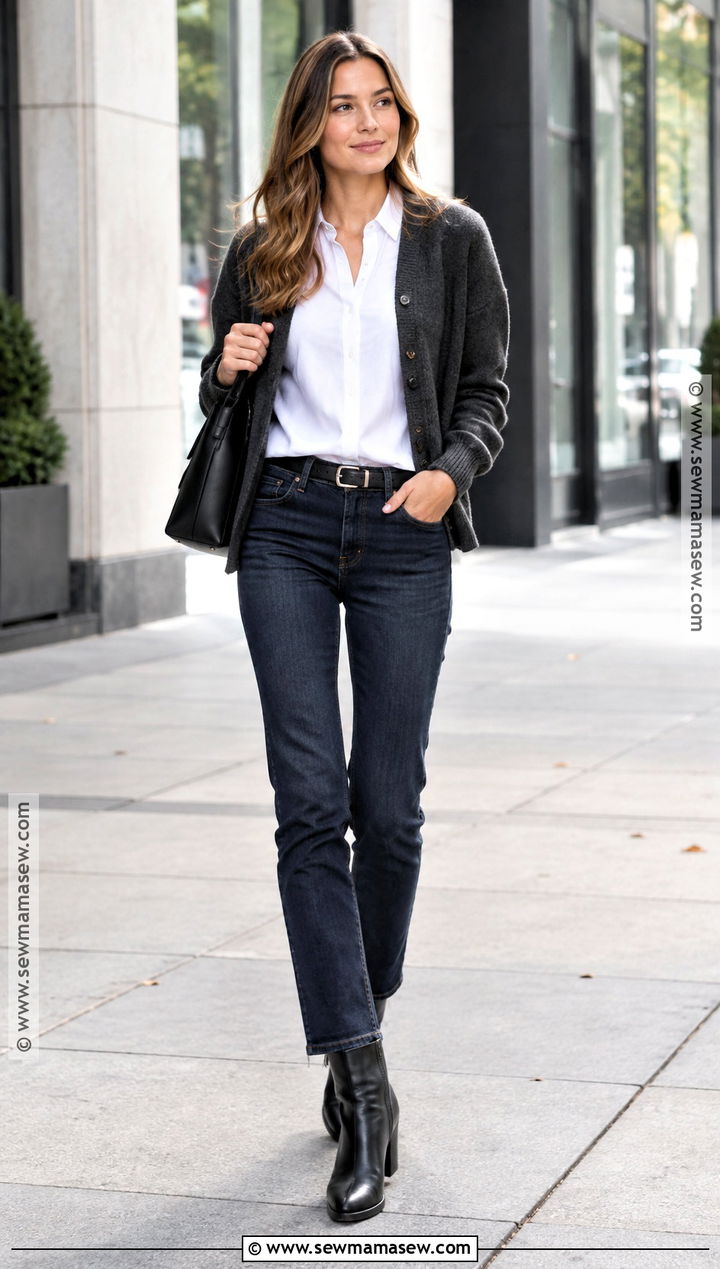
A black ankle boot will probably be your most-worn fall shoe, so fit it carefully. I'd look for an almond toe and a block heel around two inches, which is high enough to change your posture a little and low enough to walk in all day. Dark slim-straight jeans, a tucked white button-down, a charcoal cardigan and a slim belt. The shaft should sit under or next to your jean hem without bunching it up. An inside zipper makes it easy to get on and off. Matte hardware and fewer seams help a low-priced boot look more expensive than it is.
3. Brown Knee High Boots Outfit
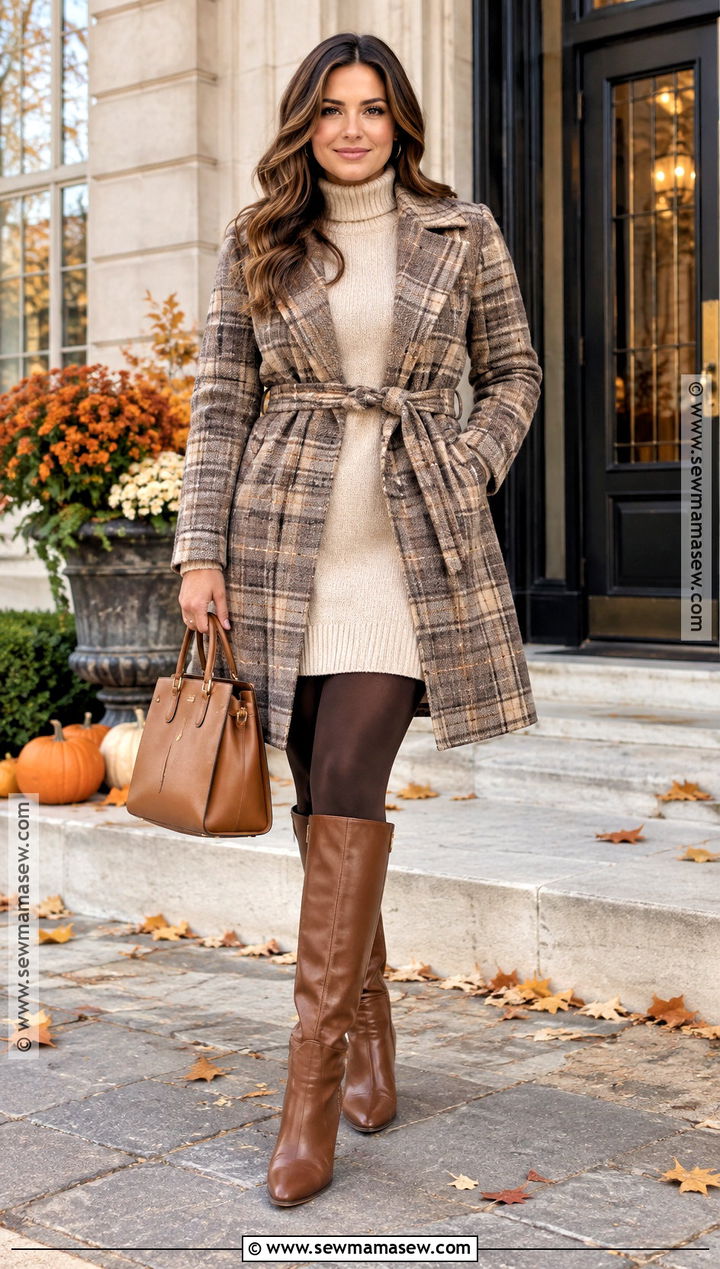
Brown knee-highs look warmer than black against cream, olive and camel. I'd wear a flat or low-heeled pair with an oatmeal sweater dress, a belted plaid coat and a cognac bag, adding opaque brown tights when it cools down. Tall boots are where online orders go wrong most often, so measure the widest part of your calf and compare it with the listed circumference before ordering. Check the shaft height too; a top that hits the crease behind your knee will dig in every time you sit. A stretch panel gives some leeway without changing the look.
4. Affordable Western Boots Outfit
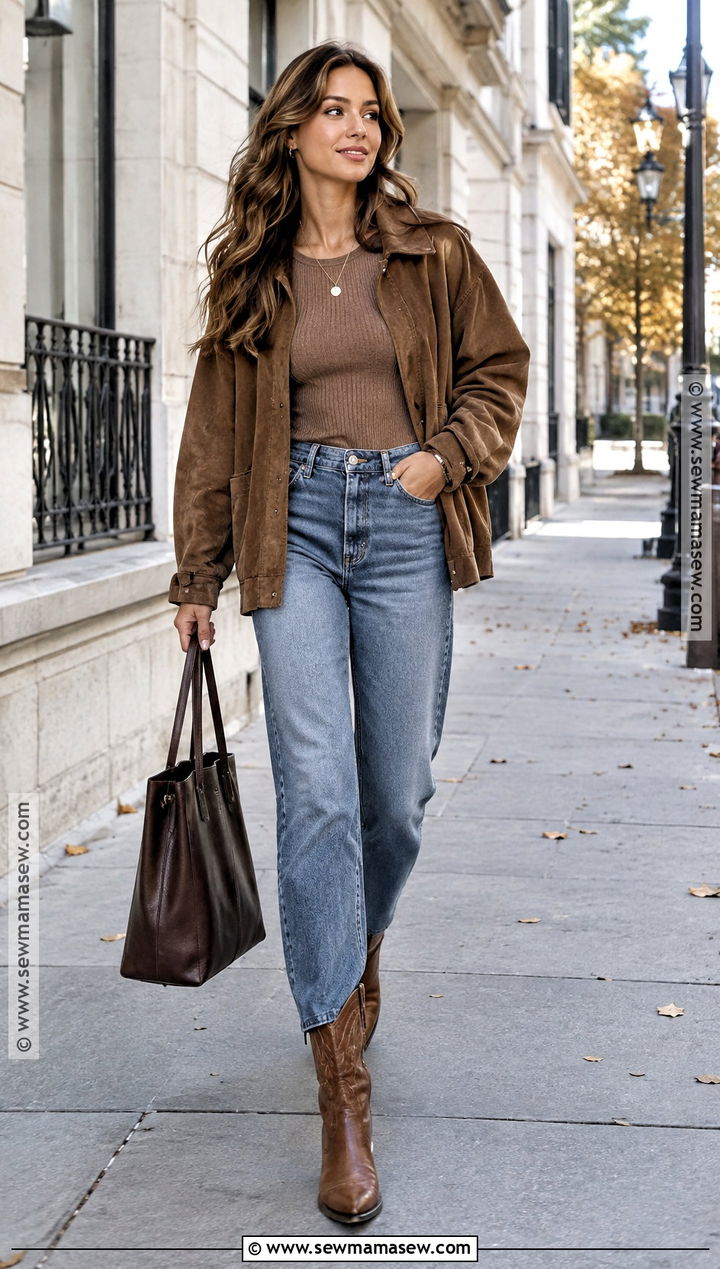
Western boots are an easy way to make basics feel new. A mid-calf pair in brown or taupe with quiet stitching and a moderate angled heel. Straight-leg jeans, a fitted ribbed top and an oversized suede-look jacket, with a simple tote and silver jewelry. They also work with a denim midi and a light knit. The instep is the fit point I'd check first: cowboy-style boots are often tight across the top of the foot, and that pressure doesn't ease much. A softly pointed or rounded toe is far easier to wear than a sharp, exaggerated one.
5. Black Moto Boots Outfit
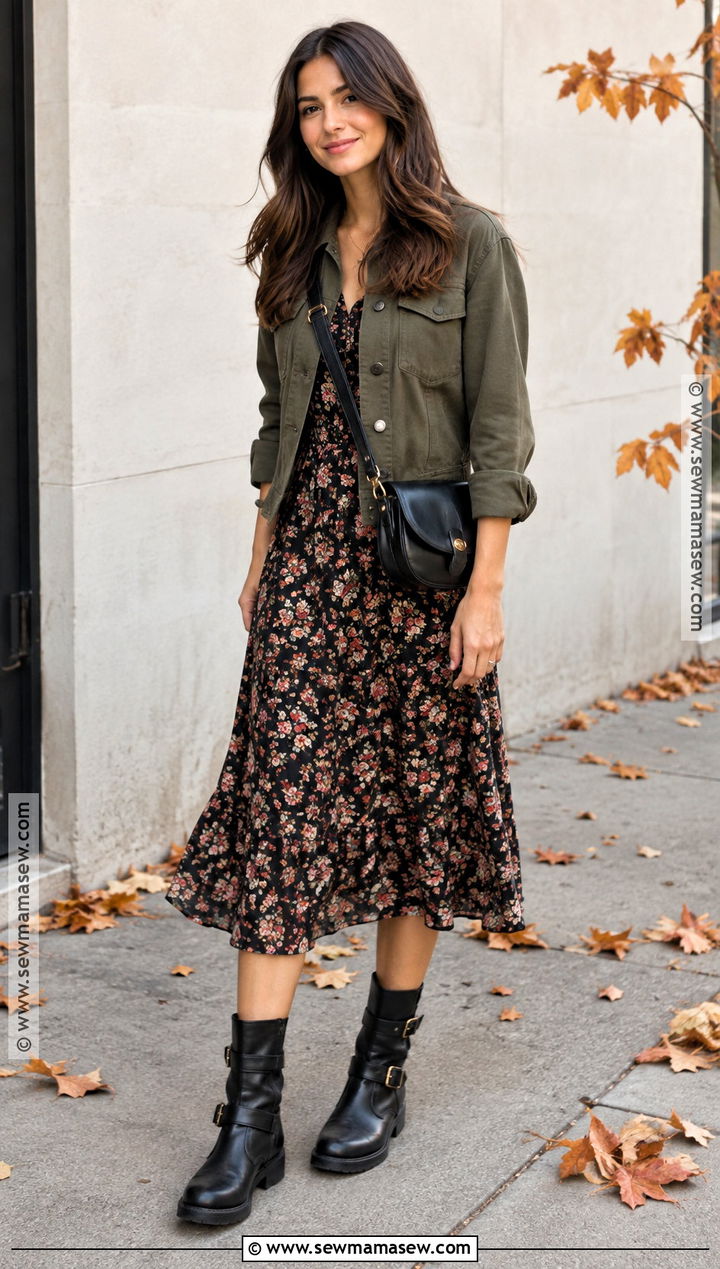
Moto boots add weight to an outfit, which is exactly why I like them under something soft. A floral midi dress and a cropped utility jacket, with a compact crossbody. The print keeps the boots from looking harsh. On a budget pair, fewer straps and buckles are better; cheap hardware is where inexpensive construction shows first, and it can scratch other shoes in your closet. A low heel and a nonslip sole are worth more than decoration. Mid-calf moto boots should leave room for socks without letting your heel slide. They're just as good with leggings and a big sweater.
6. Brown Riding Boots Outfit
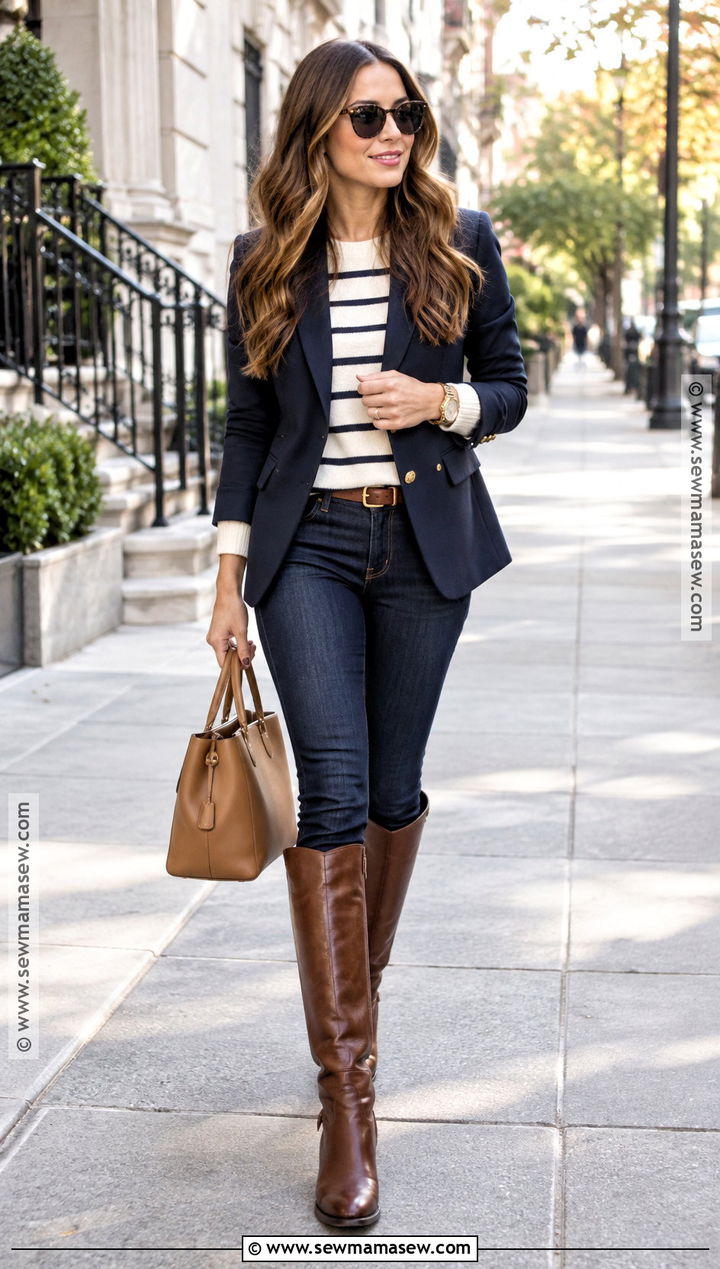
Riding boots are one of the most comfortable tall styles because they're usually flat or close to it. I'd wear brown ones over dark skinny jeans or ponte pants, with a striped sweater, a navy blazer and a tan top-handle bag. Look for a full-length inside zipper, a supportive sole and a stretch panel at the calf. Decorative straps should lie flat; ones that stick out catch on coat hems. For wider calves, go by the actual circumference rather than a label, because what one brand calls wide fit may be another brand's standard.
7. Suede Slouch Boots Outfit
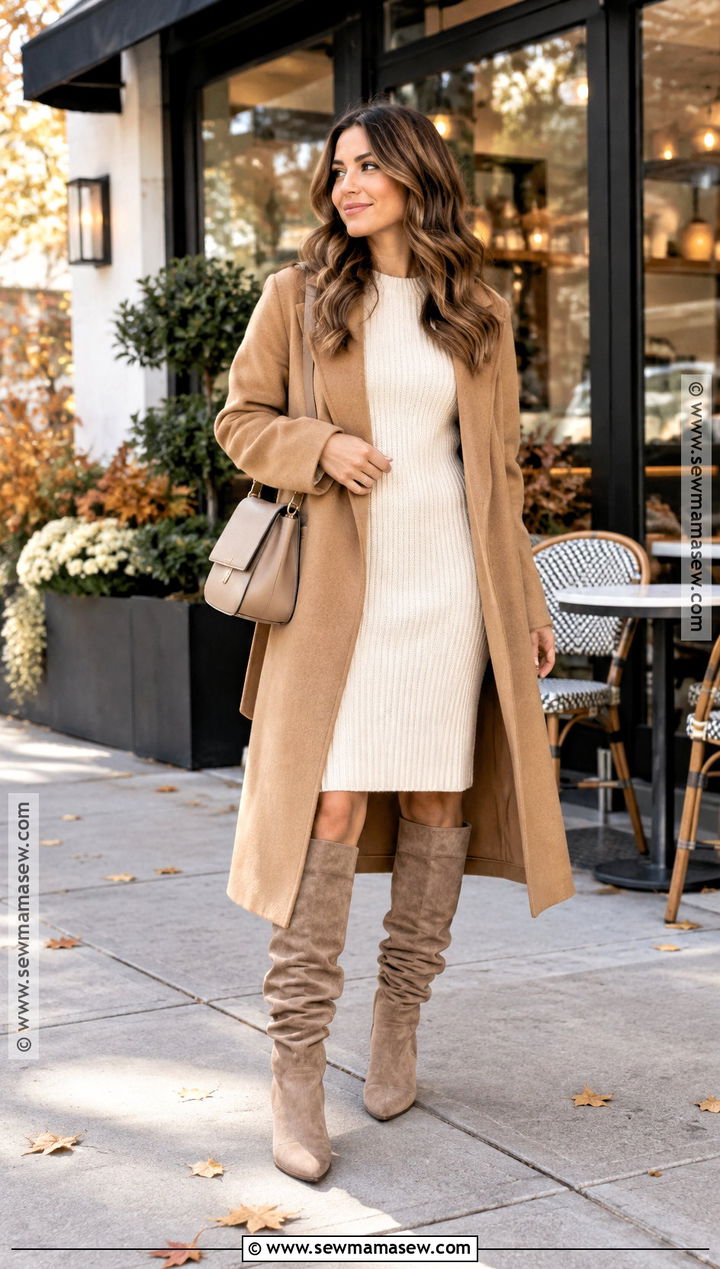
Slouch boots need a calm outfit around them, or the folds just look like extra bulk. A faux-suede pair in taupe or chocolate, a knee-length knit dress, a long wool-blend coat in a similar color and a soft shoulder bag. A low stacked heel gives a little lift. In the store, check two things: that the lining is smooth against bare skin, and that the shaft stays up on its own without gripping your leg. Faux suede needs a protective spray before the first wear. Between wears, stuff the shafts with rolled paper or boot shapers so deep creases don't set.
8. Lug Sole Boots Outfit
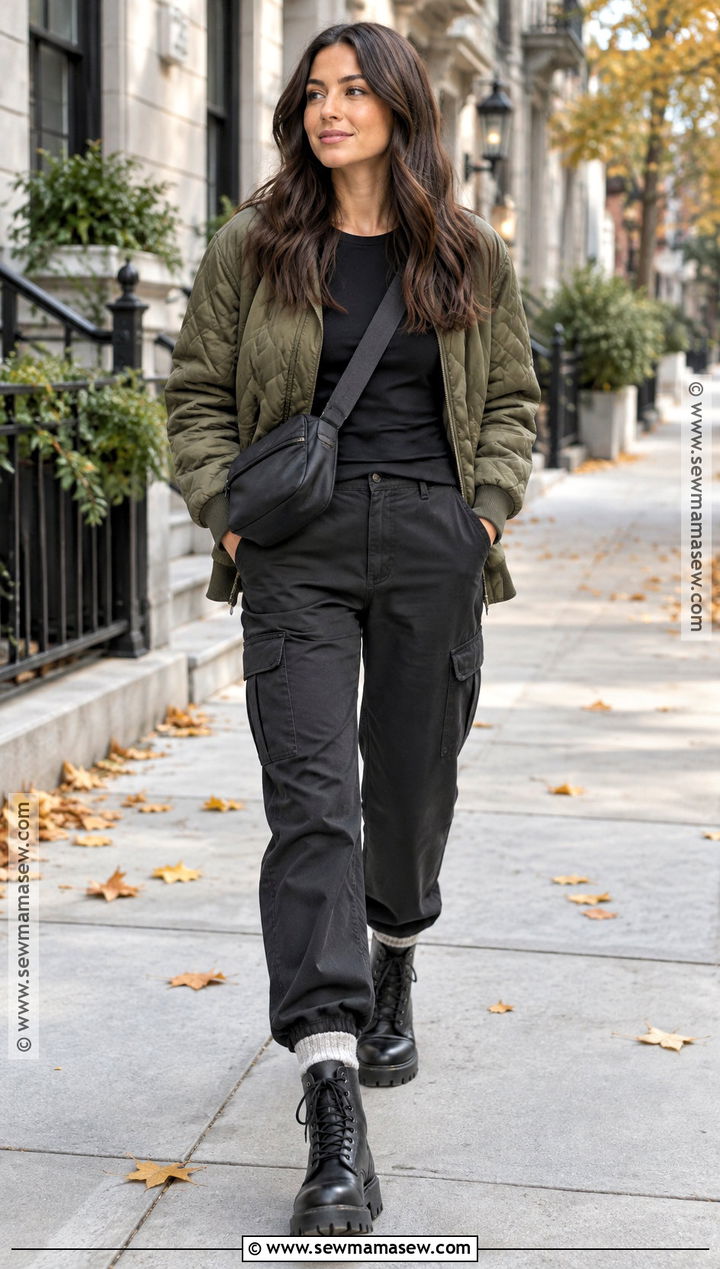
Lug soles are the practical choice for wet leaves and slick pavement. Black lace-ups with straight cargo pants, a fitted long-sleeve tee and a quilted olive jacket, plus thick crew socks. Choose relaxed trousers here; very tight pants make a chunky boot look even heavier. Budget lug boots can weigh a lot, so pick them up and compare before buying. Deep tread helps with grip, but the sole still needs to bend near the ball of the foot, or every step feels like walking on a plank. A padded collar keeps the ankle from rubbing.
9. Pointed Toe Boots Outfit
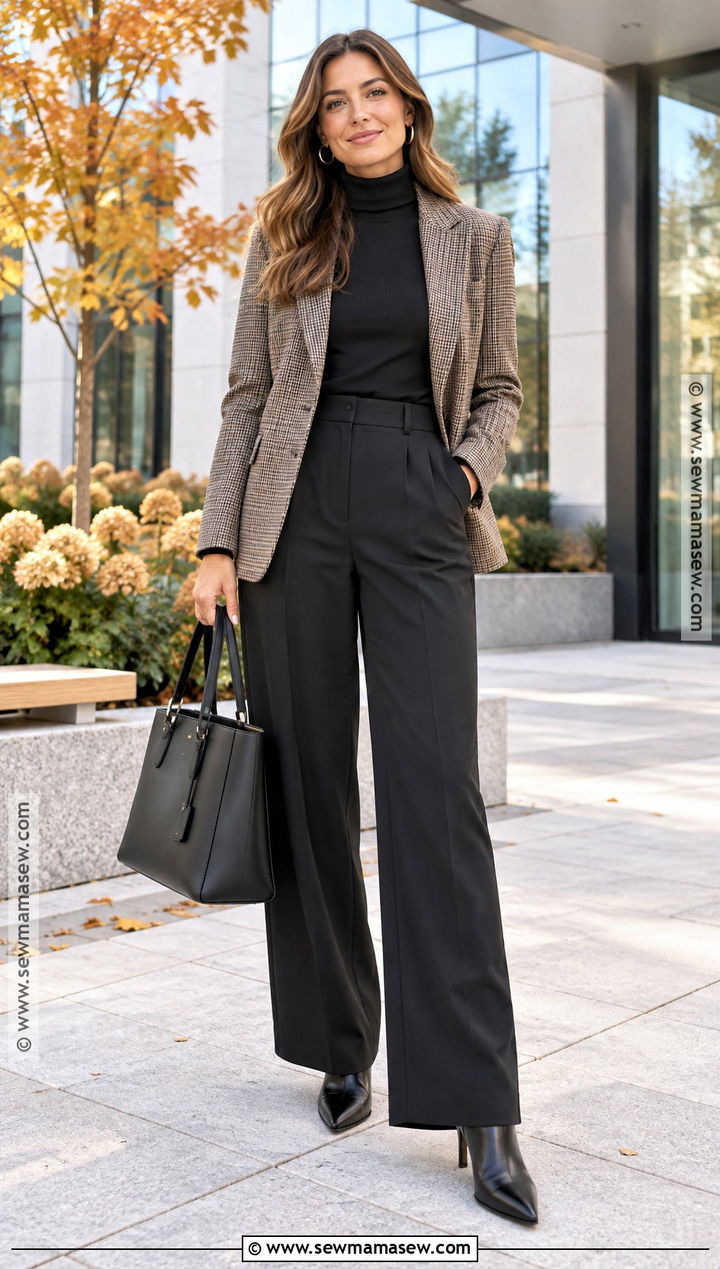
A pointed toe sharpens an outfit faster than anything else on this list. Black or burgundy ankle boots with a low block heel, full-length wide-leg trousers, a light turtleneck and a checked blazer. The trouser hem should just reach the top of the foot and let the point show. Pointed shapes squeeze the toes, so I'd read sizing notes carefully online and consider a softer taper if you have wide feet. Avoid thin, wobbly heels if you walk a lot. A wider heel base is the difference between wearing these once a month and wearing them every week.
10. Kitten Heel Boots Outfit
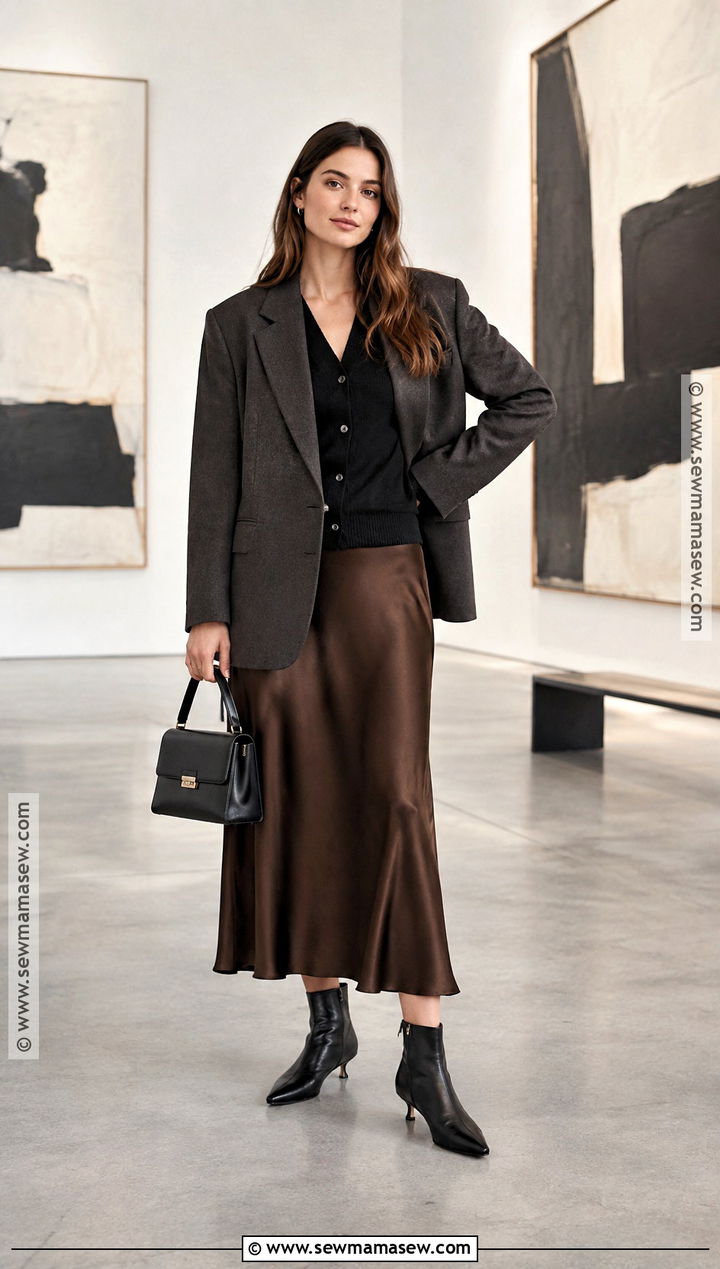
Kitten heels give a little height without the strain of a tall heel. I'd pair black or espresso ankle boots with a midi slip skirt, a fitted cardigan and an oversized blazer, with a small bag that picks up the boot color. A close-fitting shaft keeps a smooth line under the skirt. With cheap kitten heels, set the boot on a flat table and watch whether it wobbles or tilts; if it does, it'll do the same on your foot. Check the heel cap too, since a loose one clicks and wears through fast. A cushioned insole makes them wearable through a full day.
11. Wedge Boots Outfit
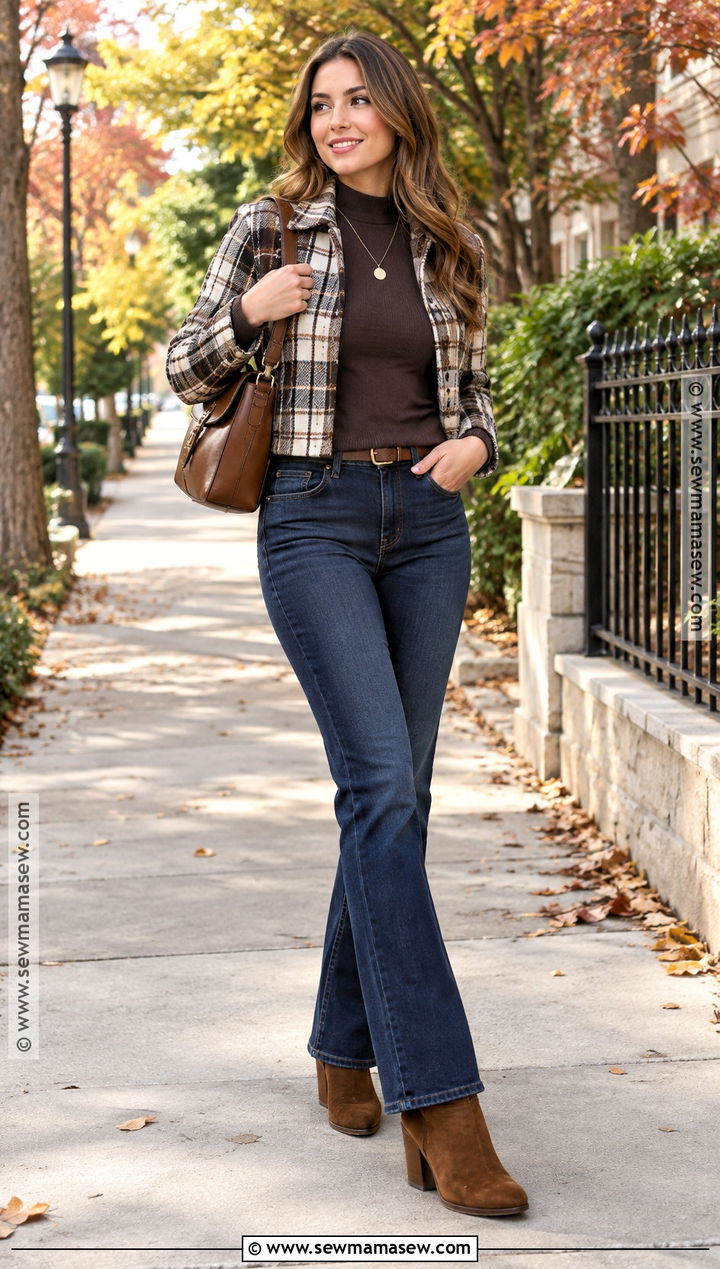
A wedge spreads your weight along the whole sole, which is why many people find them easier than a narrow heel of the same height. Sleek brown ankle wedges with bootcut jeans, a fitted mock-neck and a cropped plaid jacket. The jeans should skim the top of the boot without catching under the heel. Keep the wedge modest and look for a rubber outsole; a hard plastic bottom is slippery on wet floors. Run a finger along the edge where the upper wraps the wedge, as that's where cheap pairs start to separate. Dark soles hide scuffs longer.
12. Sock Boots Outfit
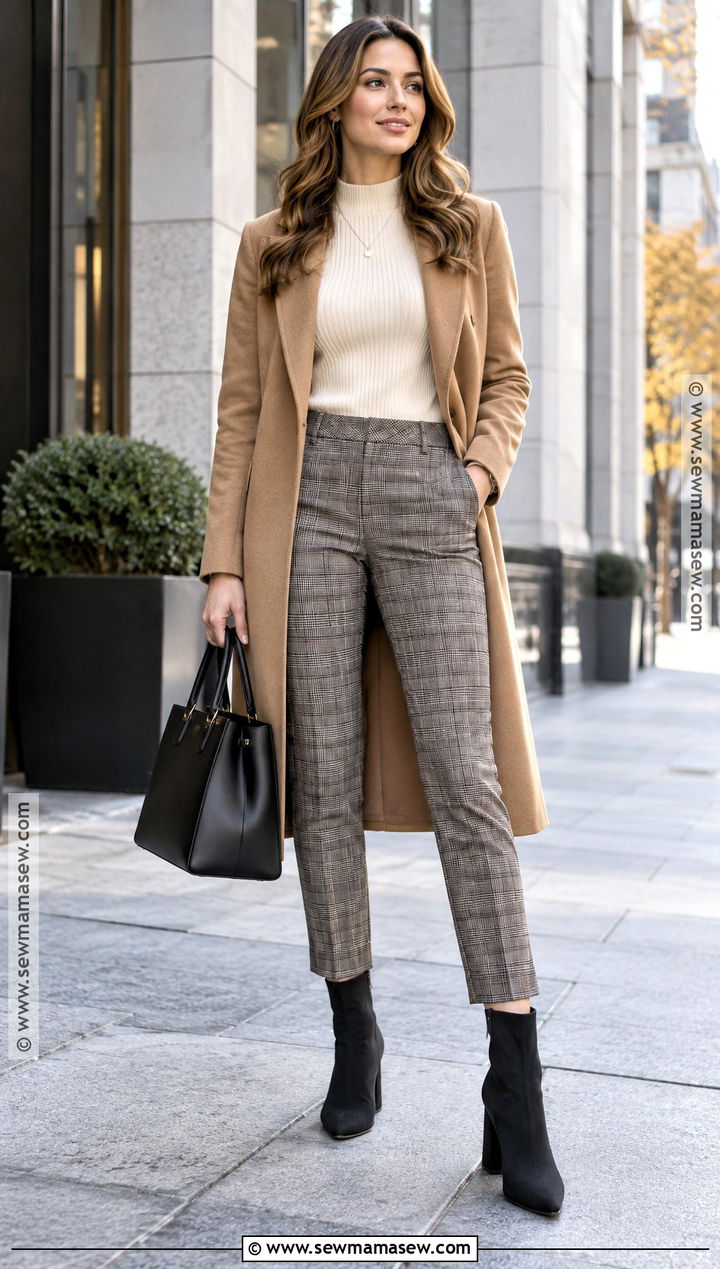
Sock boots are the answer when a chunky shaft keeps ruining the line of your trousers. Black stretch ankle boots with cropped plaid trousers, a fine cream knit and a long camel coat. Choose a block heel and a stretch upper that snaps back when you pull it; fabric that stays baggy after stretching will look tired within weeks. The top edge should lie flat against the ankle rather than cutting in. A slightly square or almond toe looks modern and leaves the toes some room. Minimal jewelry and a structured black tote keep the focus on the clean line.
13. Animal Print Boots Outfit
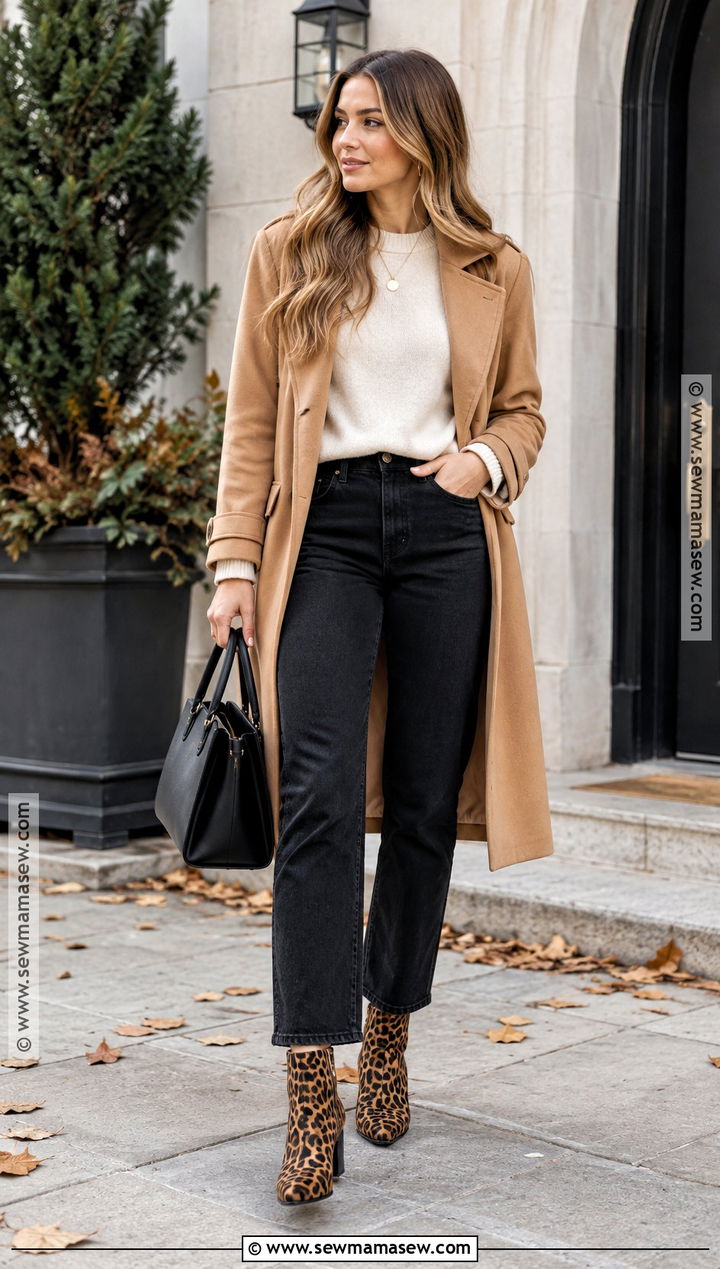
Animal print boots are easiest when everything else is plain. Leopard or snake-effect ankle boots with black straight-leg jeans, an ivory sweater and a camel trench, plus a solid black bag. A smaller print in natural colors goes with far more than a bright one. On cheaper pairs, check that the pattern lines up across the seams and both boots; mismatched print is the giveaway of low-cost manufacturing. Treat the print as a neutral and pick one of its shades for the coat or the knit. A low block heel keeps them practical for daytime.
14. Waterproof Rain Boots Outfit
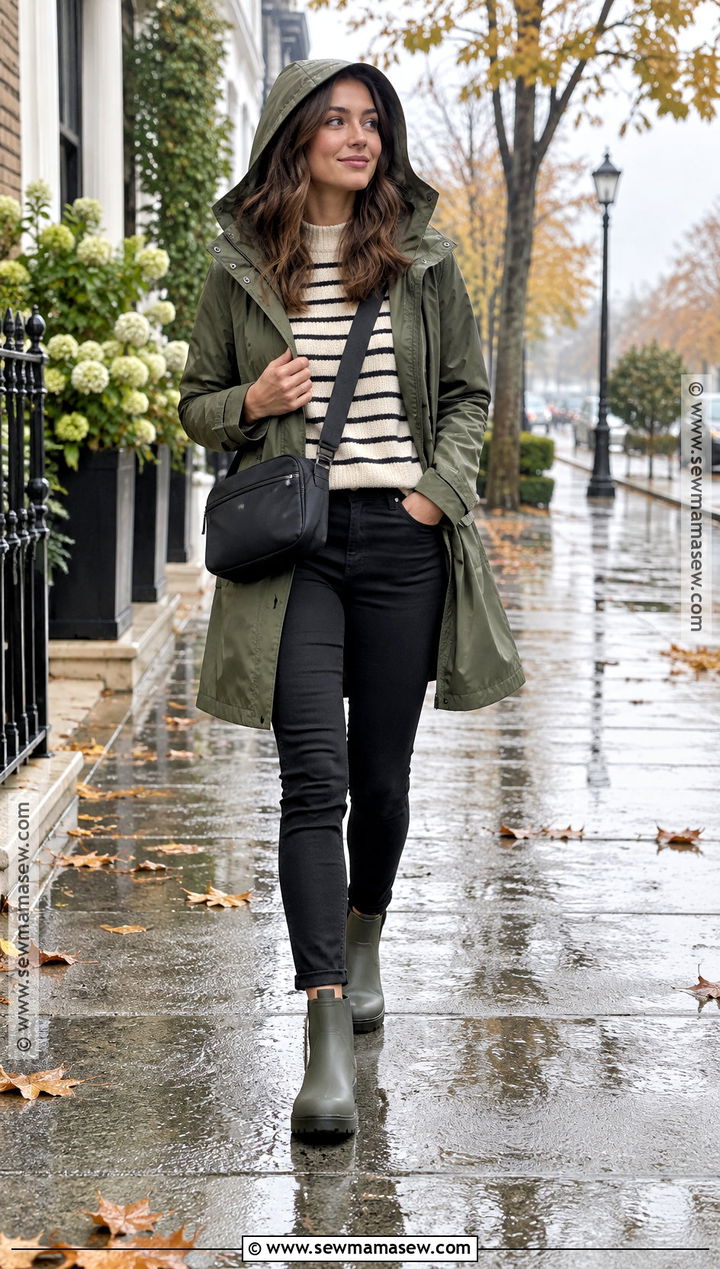
Rain boots don't have to look like you're heading to a farm. Short waterproof boots in matte black or navy, slim ankle pants, a striped knit and a light hooded trench, with a water-resistant crossbody. I'd look for sealed seams, a textured tread and a removable insole that can dry overnight on its own. Leave room for a medium-weight sock, but avoid a loose heel, because rubber boots rub where they slip. Ankle-height pairs usually cost less than tall ones and fit under trousers. Rubber doesn't breathe, so if you're inside all day, a second pair of shoes at work is worth it.
15. Affordable Shearling Boots Outfit
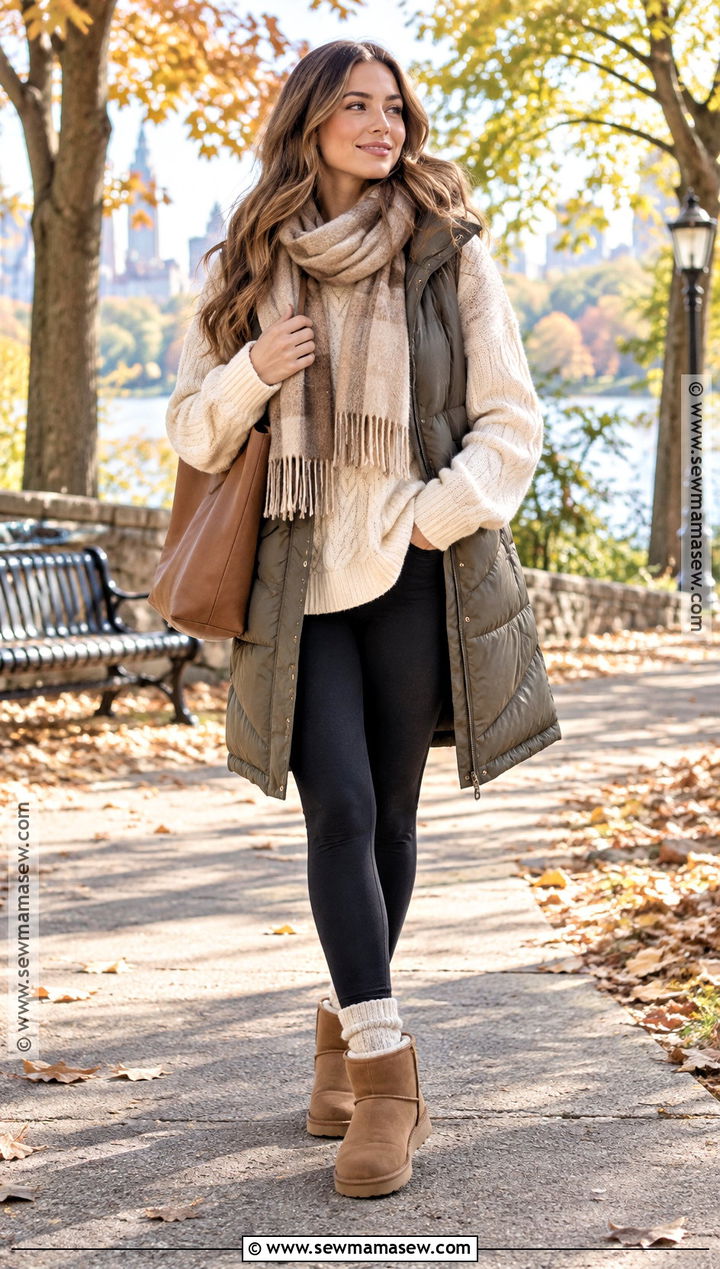
Shearling-look boots are for dry, cold weekends rather than wet commutes. A chestnut ankle pair with black leggings, an oversized cable-knit and a long quilted vest, plus a roomy tote and a scarf. The thing that keeps them from looking like slippers is the sole: choose a defined outdoor sole and a firm heel counter, not a flat, floppy bottom. Check that the synthetic lining is even and doesn't shed when you rub it. A water-repellent treatment helps with drizzle, but steady rain will still soak them through. Chestnut or dark brown goes with both denim and loungewear.
Measuring Calves and Shafts at Home Before Ordering Tall Boots
Knee-high, riding and slouch boots are the styles most often sent back, and nearly always for the same reason: the shaft doesn't fit the calf. Two measurements solve most of it.
Calf circumference
Sit with your foot flat and your knee bent at a right angle, then wrap a soft tape around the widest part of your calf. Do it in the afternoon, when legs are slightly fuller, and over the jeans or tights you plan to wear with the boots. Compare that number with the shaft circumference in the product details. Labels like regular, wide and extra wide vary between brands, so trust the number.
Shaft height
Shaft height is usually measured from the arch, where the heel joins the sole, up to the top of the boot. Measure the same distance on your own leg, standing in socks, and leave enough clearance below the back of the knee that the edge won't dig in when you sit. Petite frames often do better in a slightly shorter shaft than the standard one.
If you're between sizes, a boot with a stretch panel or a lace-up back gives you some room to adjust. A shaft with no give at all has to fit you exactly.
Buy the Boot You'll Wear Twice a Week First
The best fall boot buys are judged by how often you'll actually wear them. I'd start with something versatile, such as black ankle boots, brown knee-highs or a plain Chelsea pair. After that, a trend pair like moto, Western, slouch or animal print can follow if the budget allows. Measure your feet and calves, look closely at how each boot is made, and read the return policy before ordering. Most of all, shop with your coats, jeans, dresses and bags in mind, not the boot alone. Sensible colors and heel heights let even an inexpensive pair carry a whole season.
Related posts: