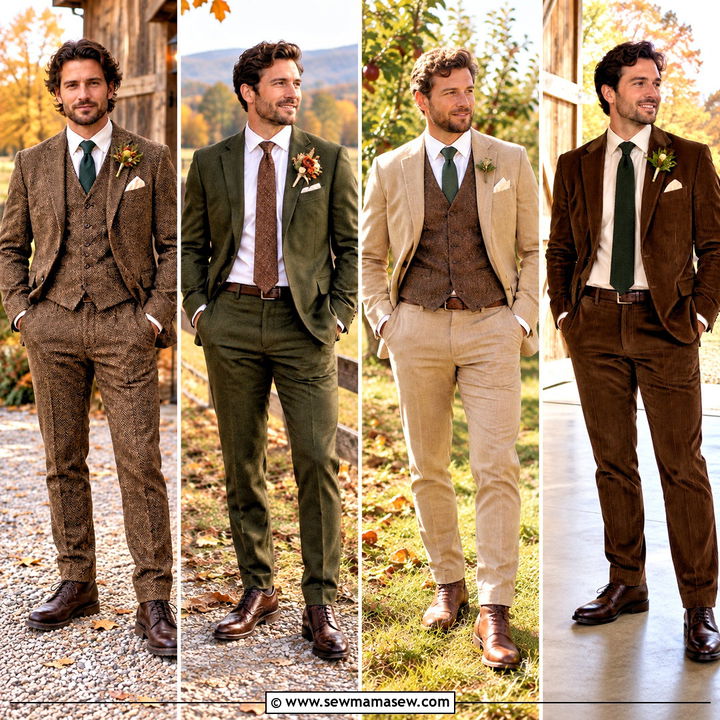
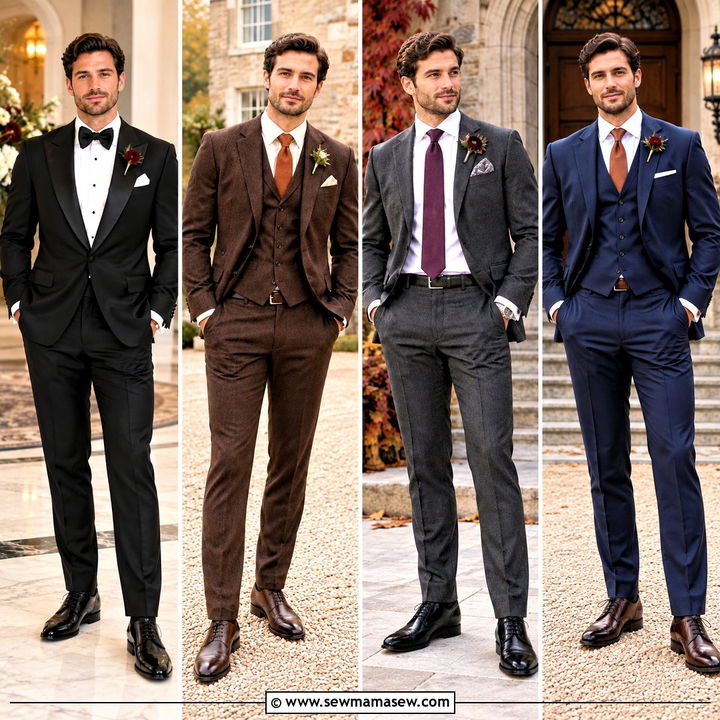
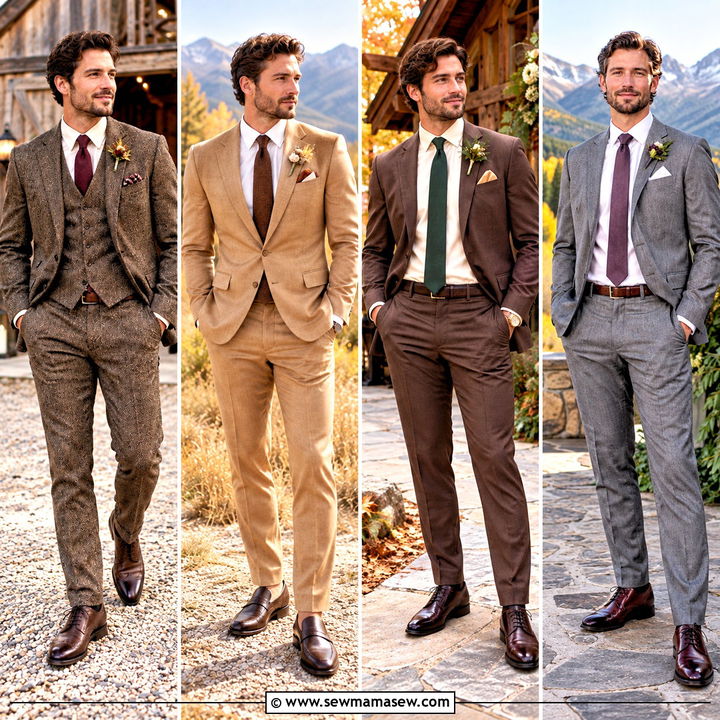
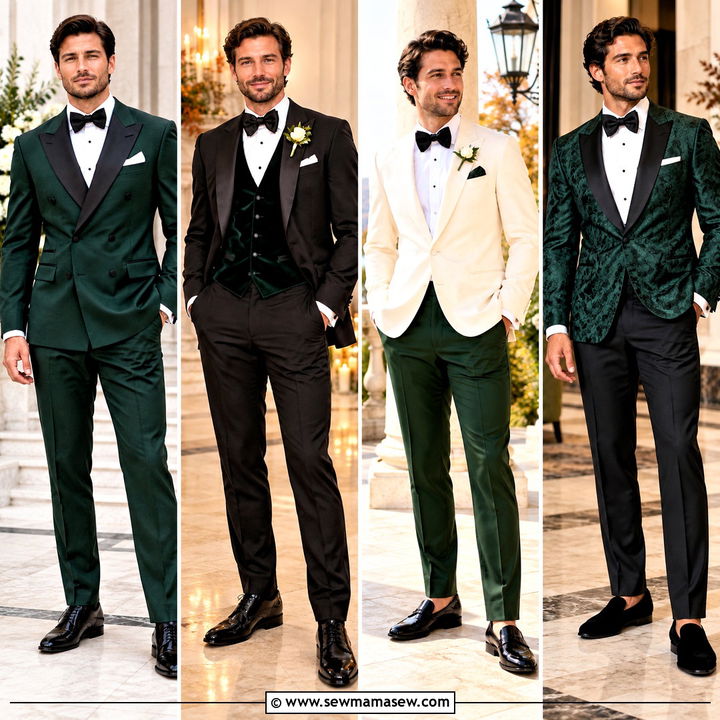
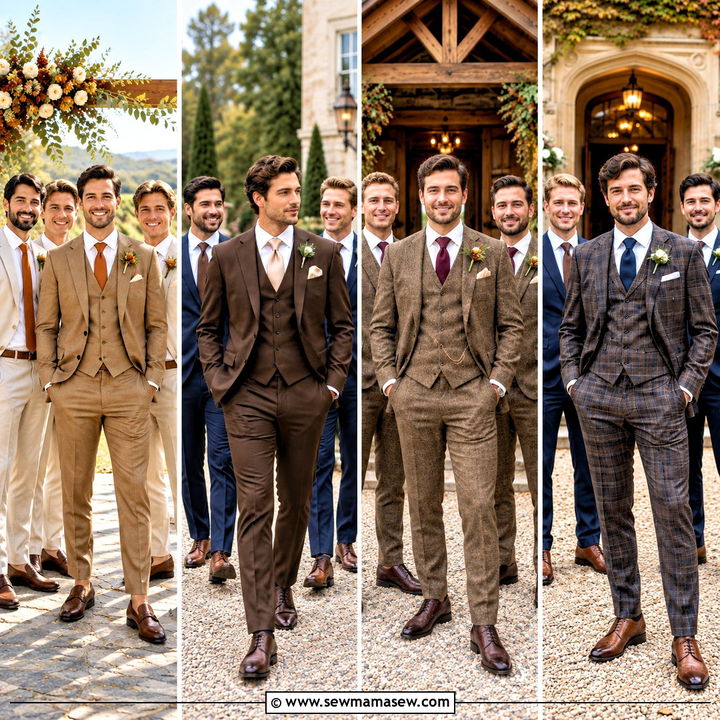
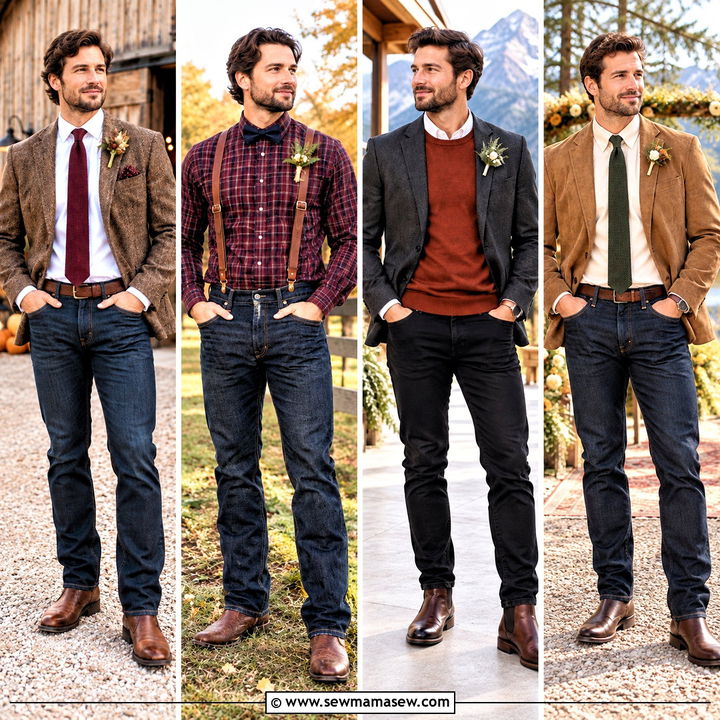
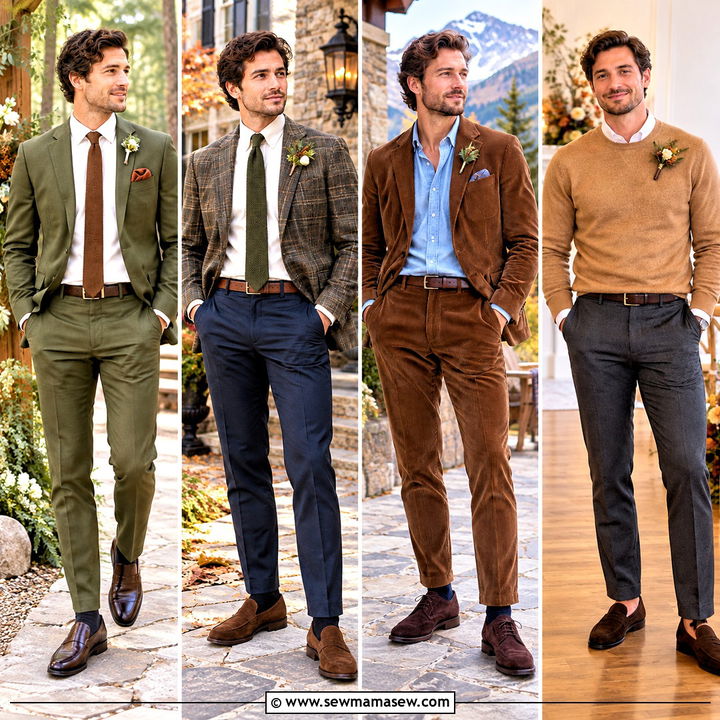
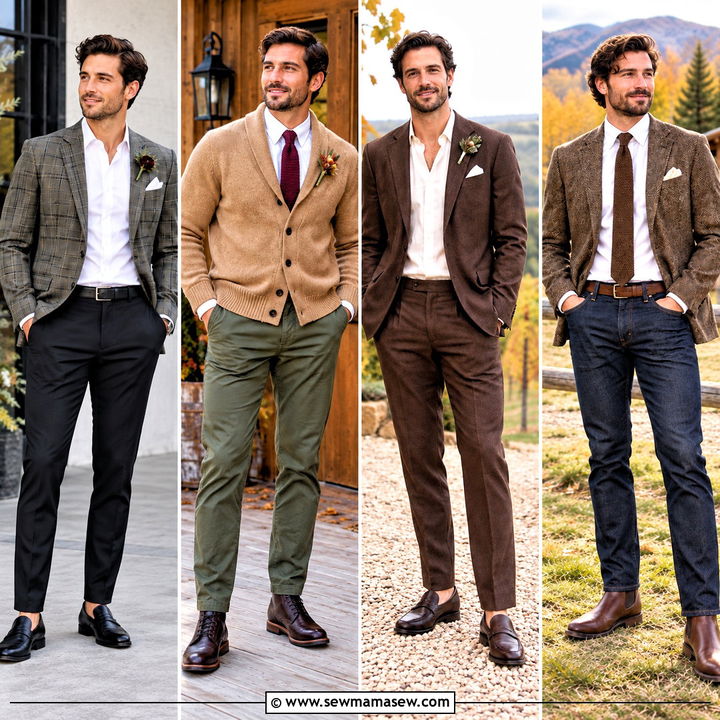
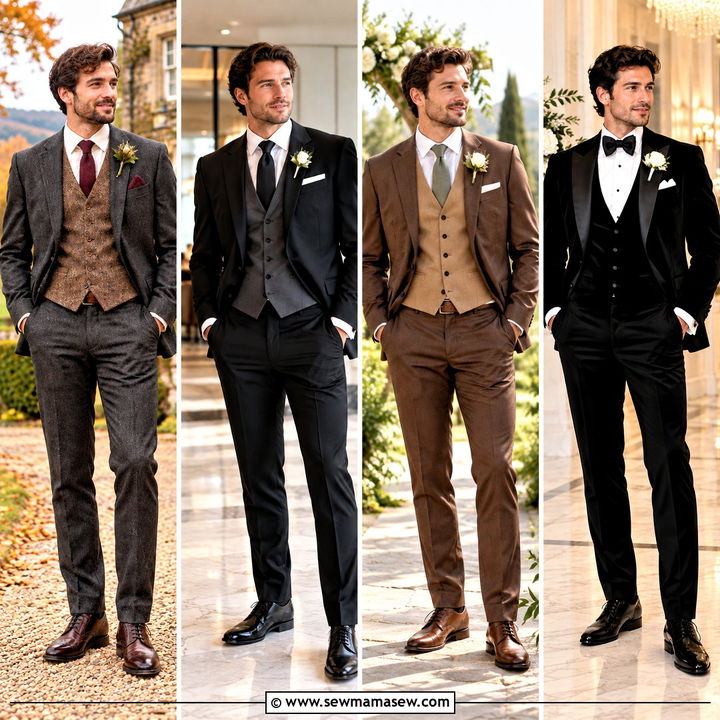
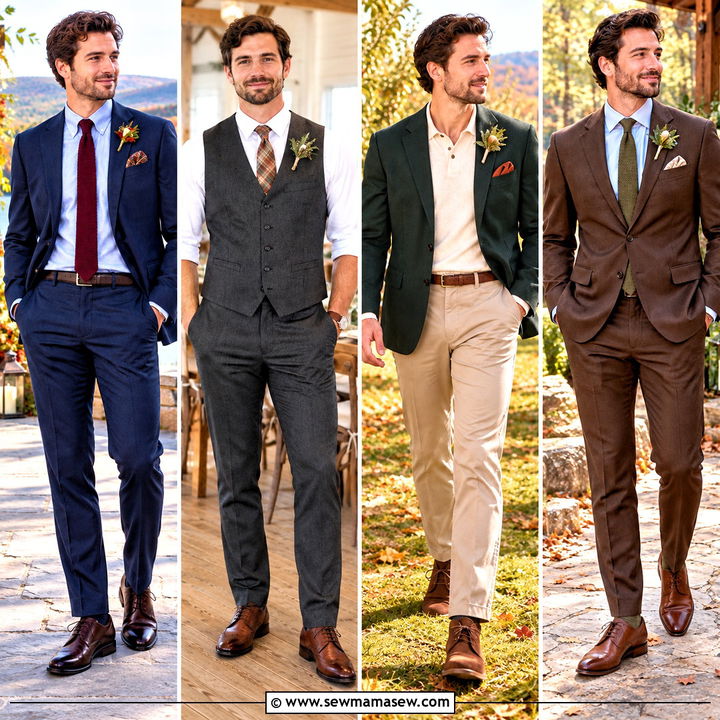
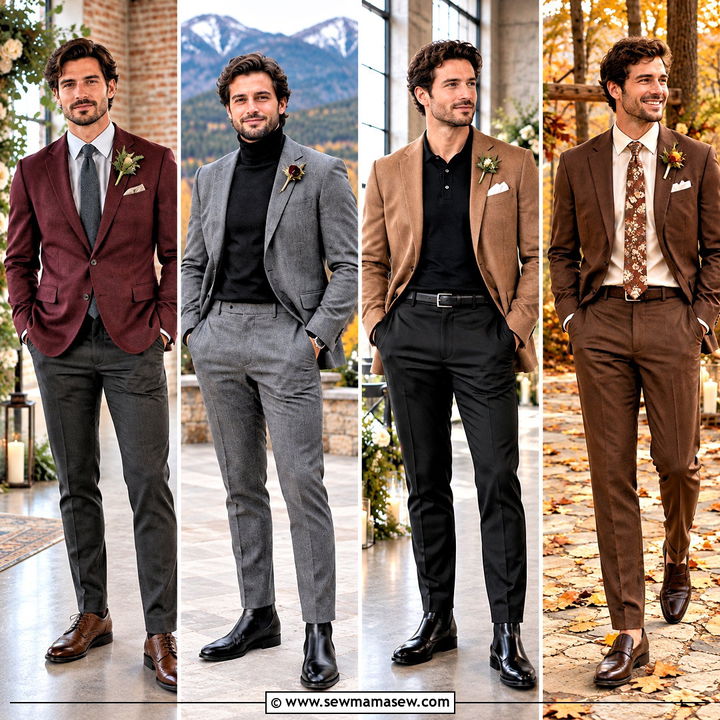
A casual fall wedding gives a groom room to dress like himself, as long as he still looks like the man getting married. Autumn makes that easier than any other season. Tweed, flannel and corduroy look rich on their own, and earthy colors read as dressed up without a tie. When I dress a groom for a relaxed fall wedding, I start with two questions: where is it, and how cold will it be at the reception? Tweed belongs at a rustic outdoor venue; soft wool or fine corduroy suits a restaurant, loft or garden. After that it's the small things that mark him out, like proper leather shoes, a pocket square and a modest boutonniere. Here are fifteen outfits I'd put in front of a groom, with what each one needs to work.
Tailoring Timeline From Purchase to Vows
The single biggest difference between a groom who looks sharp and one who looks borrowed is alterations, and alterations need time. Even a casual unstructured jacket off the rack almost always needs something done. I work backward from the date like this:
- Three to four months out: buy the suit or separates. This leaves room to exchange a size or reorder if a color sells out.
- Eight to ten weeks out: first fitting with the actual wedding shoes and the shirt or knit he'll wear underneath. Trouser hems depend on the shoe, so bring them.
- Two to three weeks out: final fitting. Sit, raise the arms, walk a few steps. Small tweaks happen here.
- The week of: collect, steam and hang everything together, including the belt and pocket square.
Know what a tailor can and can't fix. Sleeves, trouser hems, waist suppression and taking in the seat are routine. Shoulders are not. If the shoulder seam hangs past his shoulder bone or the jacket collar stands away from his neck, that's the wrong size, and no tailor can make it right at a reasonable cost. Fit the shoulders when buying and let the tailor handle the rest.
1. Olive Fall Wedding Groom Suit
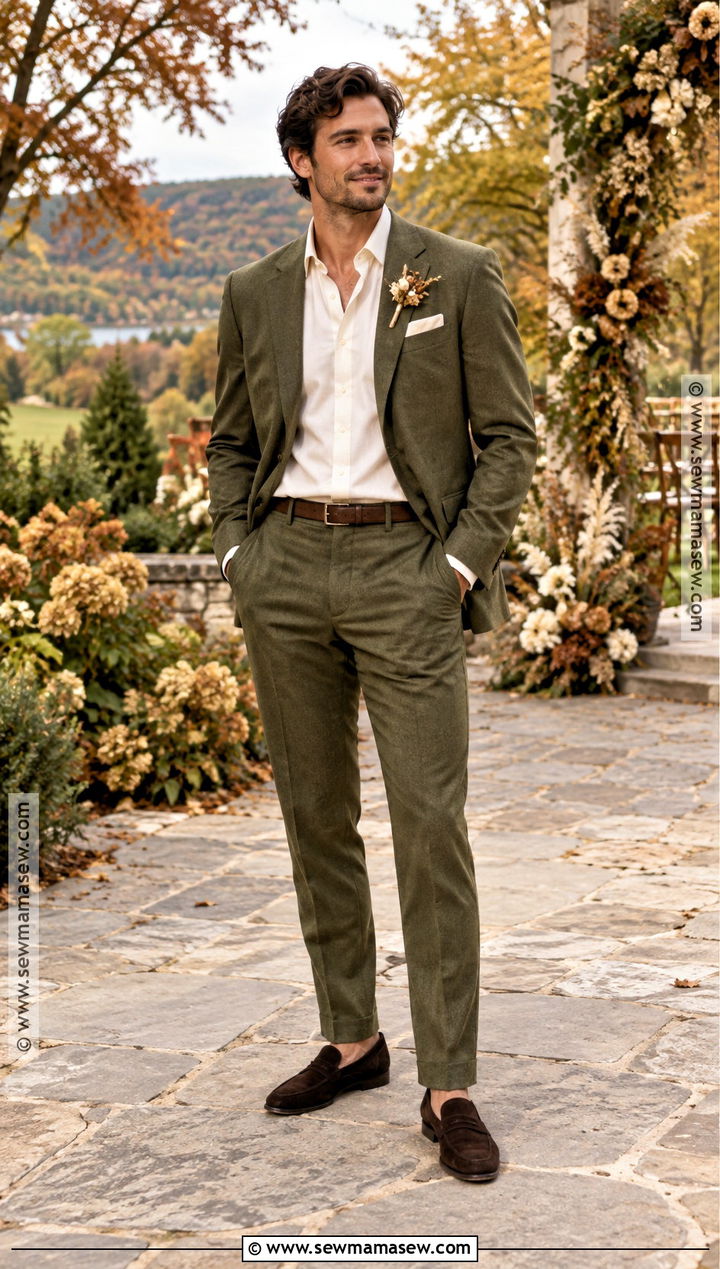
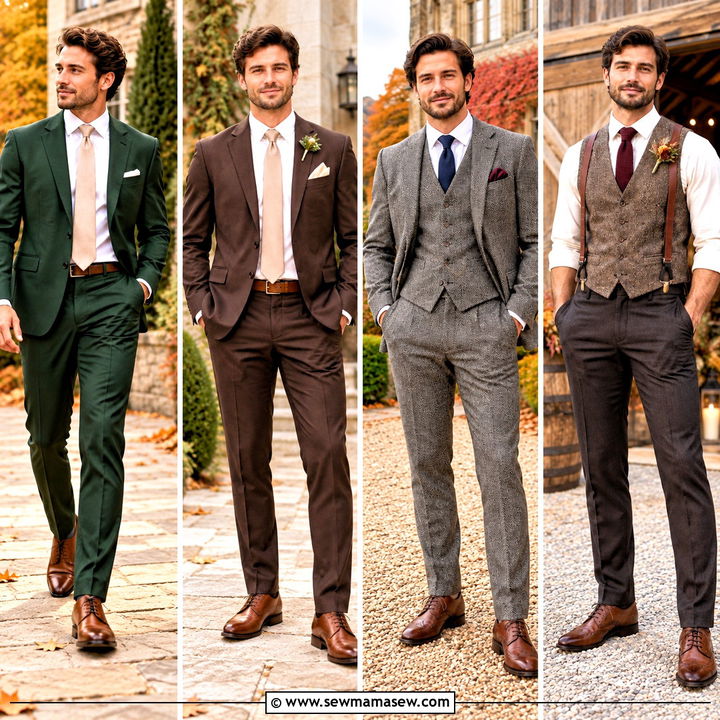
Olive is softer than navy or black, and it sits naturally in autumn photos. I'd look for an unstructured jacket with tapered trousers in lightweight wool or a wool blend, since a fully lined, padded olive suit starts to look military. An ivory shirt lifts the color without the hard contrast of bright white. Open collar for a laid-back ceremony; a textured brown tie if the family expects more. Dark brown suede loafers, a matching belt, a cream pocket square and a small dried-flower boutonniere finish it. One warning on suede: it darkens when it gets wet, so if the ceremony is on dewy grass, treat the shoes with a protector spray a few days before.
2. Brown Tweed Blazer With Navy Chinos
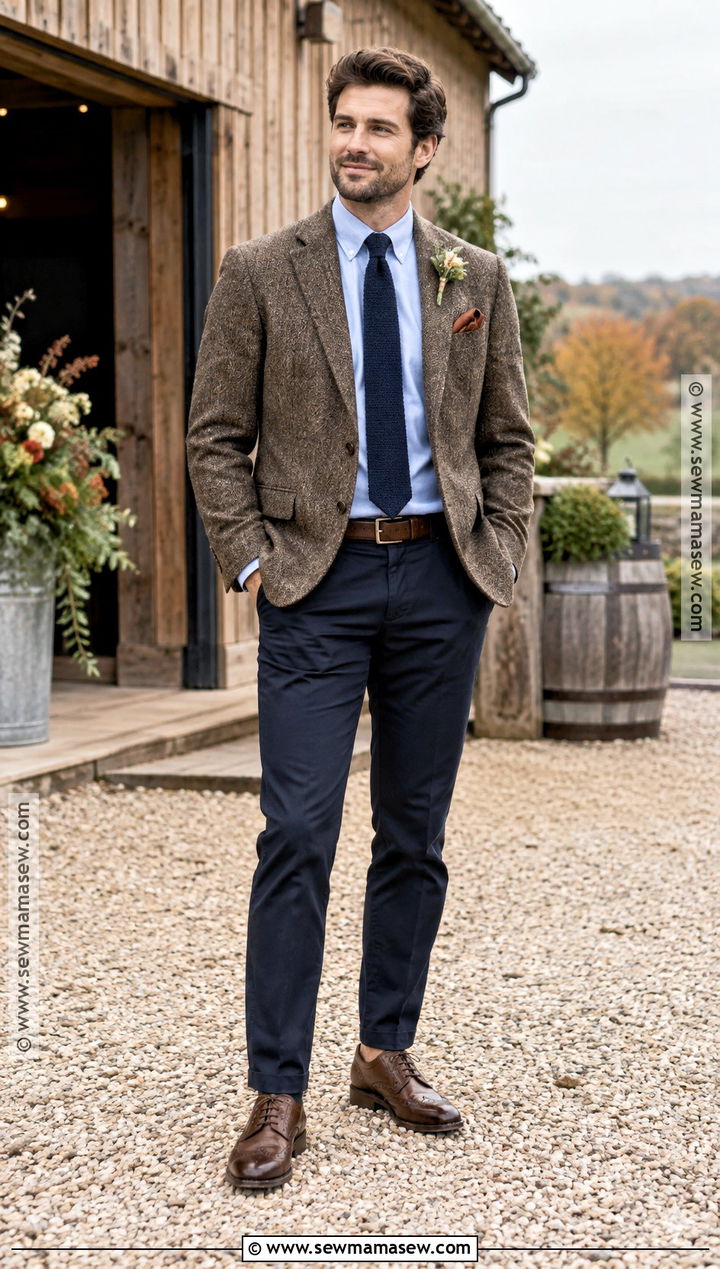
Brown tweed and navy chinos is my go-to for a rustic afternoon venue. Tweed is a dense, slightly hairy wool, so it handles cool air well and looks right next to wood and leaves. Slim or straight navy chinos stop it reading as an office blazer. A pale blue Oxford shirt bridges the two, and an open collar suits a relaxed ceremony, though a knitted navy tie is an easy add. Dark brown brogues have enough sole to deal with gravel or grass. Finish with a rust pocket square. The dark trouser grounds the outfit and the textured jacket pulls attention up to his face, which is exactly where you want it in photos.
3. Navy Suit With Cream Knit Polo
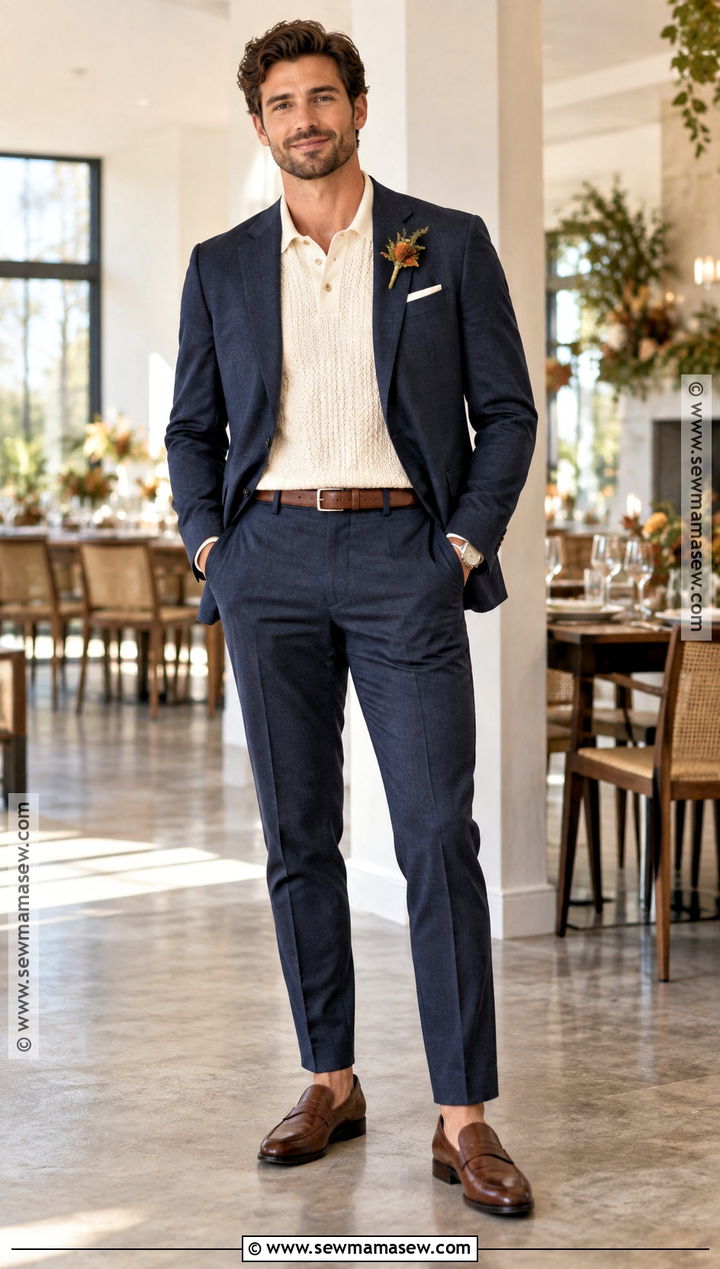
Some grooms want a suit but hate a shirt and tie. A cream knit polo under a softly tailored navy suit is the answer I give most often. The polo has to be right: a collar with enough structure to stand up inside the lapels, a fine knit, and a fit that's close but not clingy. Floppy collars collapse under a jacket by the second hour. Choose a navy suit with natural shoulders and little padding so the whole thing stays easy. Brown loafers or suede derbies look more seasonal than shiny black shoes. I'd skip the pocket square here, since the knit already gives the eye texture to look at.
4. Tan Corduroy Groom Suit
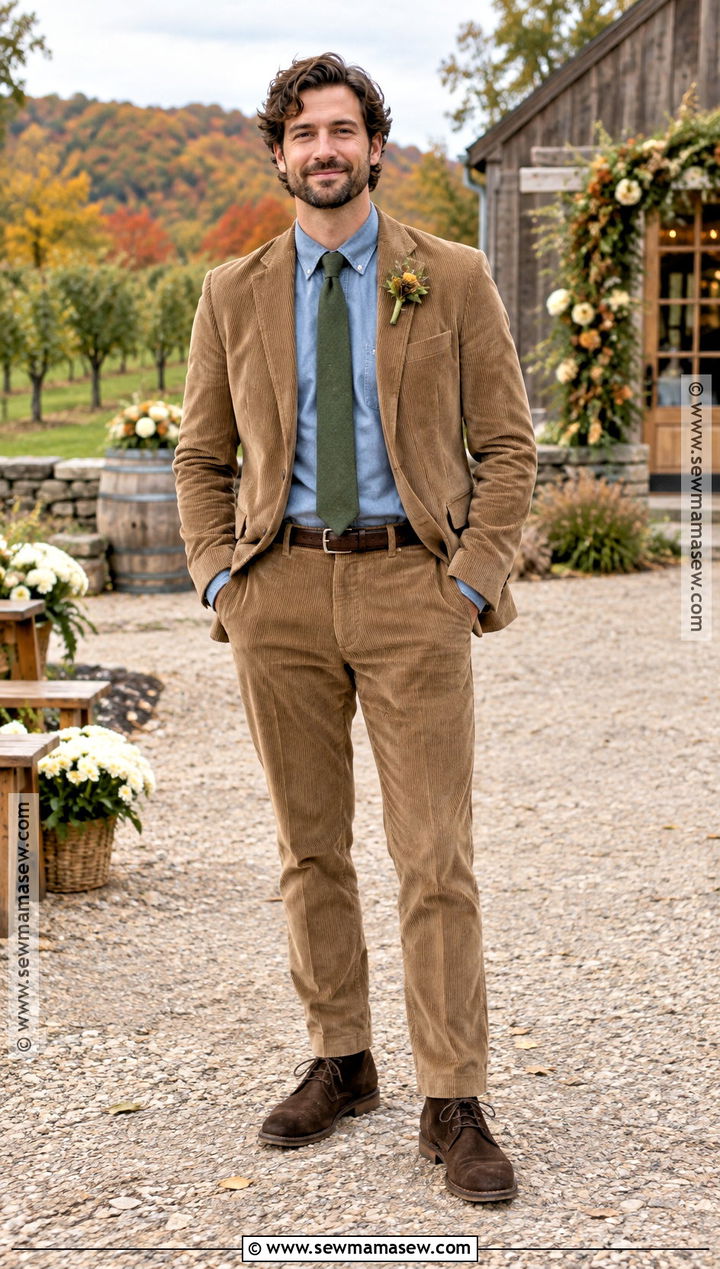
Corduroy brings warmth and texture without needing loud accessories. I'd go tan or tobacco, with a relaxed two-button jacket and a slightly tapered trouser. Pay attention to the wale, which is the width of the ribs. Fine-wale cord drapes and photographs smoothly, while wide wale is bulky and makes a suit look like workwear. Wear it with a white or chambray shirt, open at the neck or with a muted forest green tie for photos. Dark brown suede boots are sturdy enough for a barn floor or orchard grass. Cord also crushes at the seat and knees after a long day of sitting, so hang it the night before and steam it if needed.
5. Charcoal Suit With Black Turtleneck
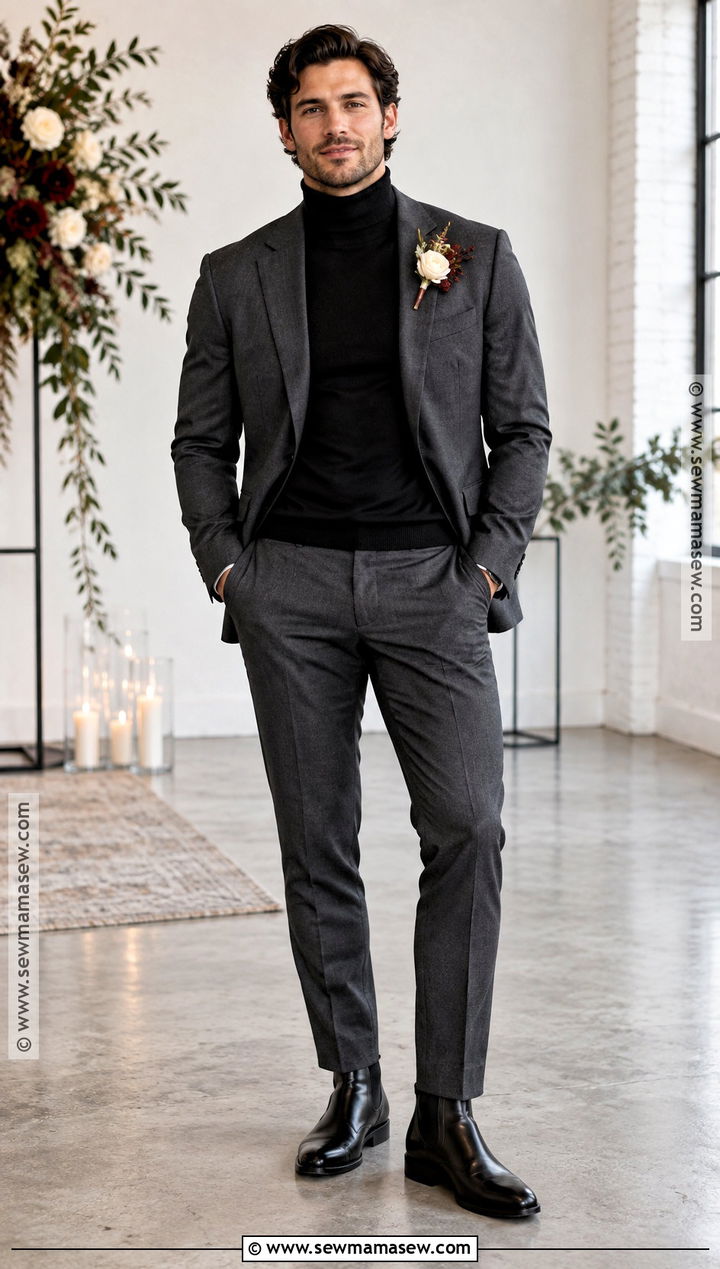
Charcoal with a black turtleneck is the cleanest choice for a modern venue on a cool evening. The turtleneck has to be fine-gauge merino or a cotton blend; anything thicker bunches at the jacket collar and makes the neck look short. A soft-constructed suit keeps the tonal look relaxed. Black loafers, monk straps or polished Chelsea boots stay in the same color family. I'd leave off the tie, the big buckle and any bright pocket square. A cream, burgundy or greenery boutonniere is enough to show who the groom is. It's a strong look for lofts, galleries and evening restaurant receptions.
6. Burgundy Groom Suit With Open-Collar Shirt
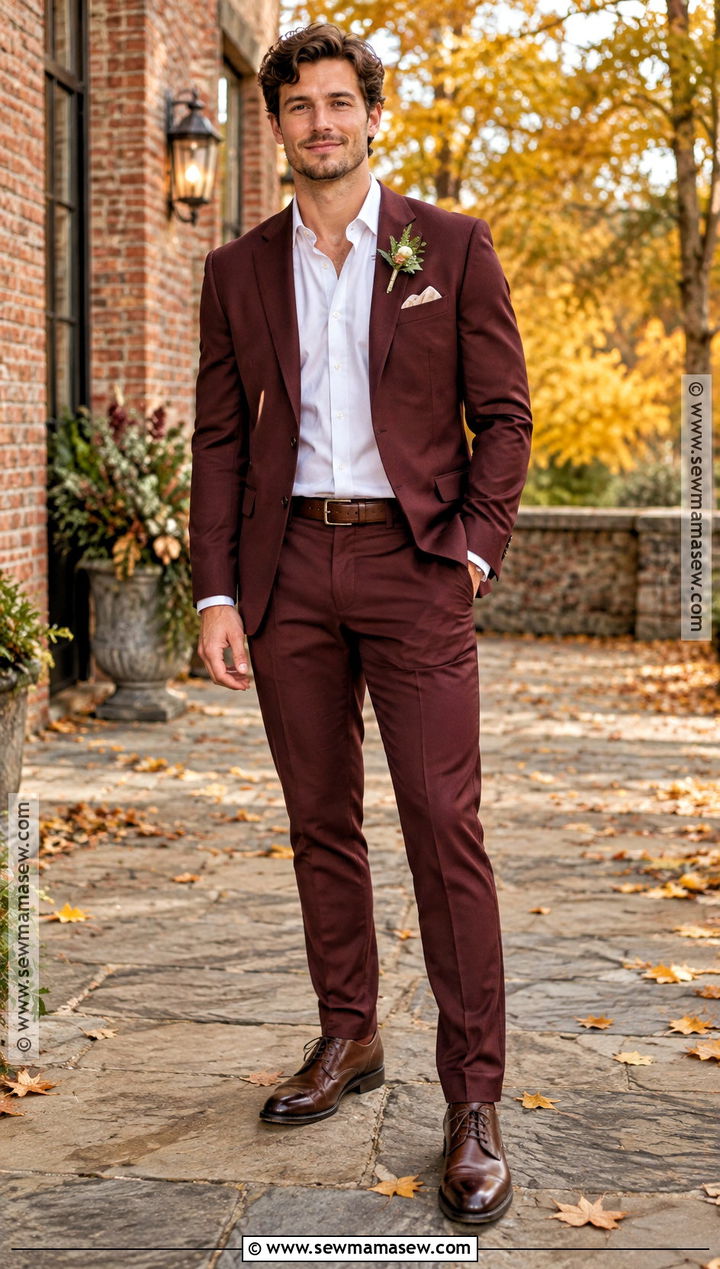
Burgundy makes the groom easy to spot in a crowd and still belongs to the fall palette. The fabric decides whether it looks casual or like a prom suit: a matte wool blend with an unstructured jacket reads relaxed, while anything with a sheen goes formal fast. A soft white or pale pink shirt keeps the color from overwhelming. Top button open, no tie. Dark brown derbies and a matching belt ground it, and the boutonniere should stay small so it doesn't fight the suit. Burgundy photographs well against greenery, brick, wood and gold leaves, so it suits indoor and outdoor venues alike.
7. Forest Green Blazer With Gray Trousers
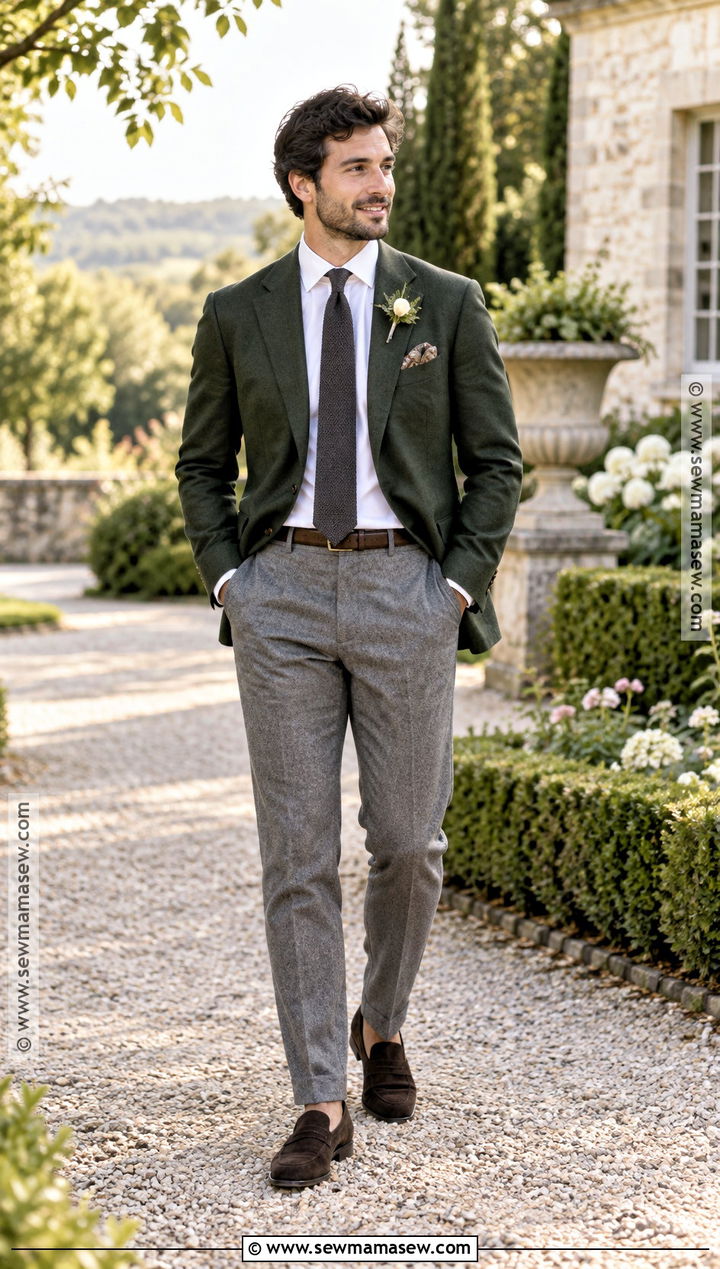
A forest green blazer gives a groom seasonal color without committing to a full colored suit. Medium-gray wool trousers keep it grounded. Over a white button-down, a charcoal knitted tie works for the ceremony and comes off easily once dancing starts. Dark brown loafers, a matching belt and a pocket square with small flecks of green tie it together. Before the wedding, I have every groom sit, squat and lift his arms in the trousers. If the seat pulls or the hem rides up past the sock, it needs adjusting, because he'll be doing all three for hours. The dark jacket gives a clean upper-body line on most builds.
8. Plaid Blazer With Brown Wool Trousers
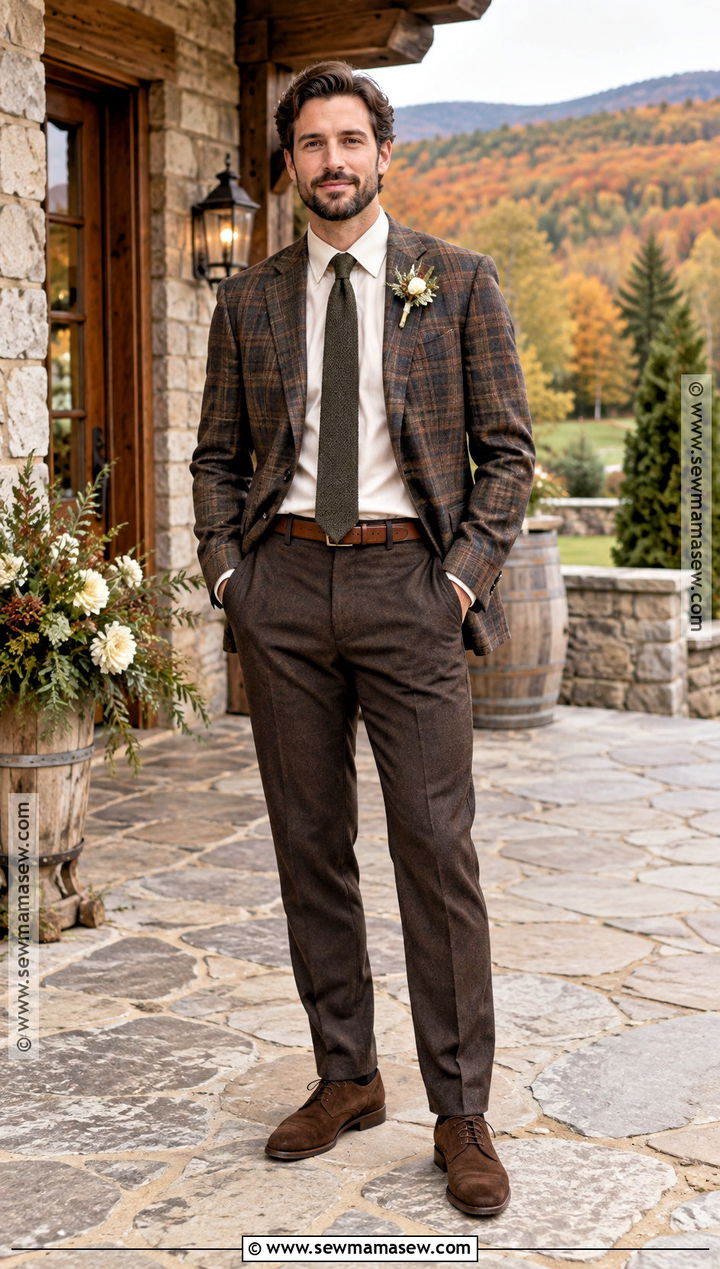
Plaid works for a groom if the pattern stays restrained. I look for a check built from brown, olive or rust at a small or medium scale; a large, high-contrast check is what makes a blazer look like a costume. Solid dark brown wool trousers let the jacket be the one pattern in the outfit. A cream shirt softens the palette, and a solid knitted tie adds structure if the ceremony calls for it. A good tailor will also make sure the plaid lines meet at the jacket's front closure and pockets. Dark brown suede derbies, a simple boutonniere and a plain pocket square suit cabins, vineyards and old stone venues.
9. Camel Blazer With Black Trousers
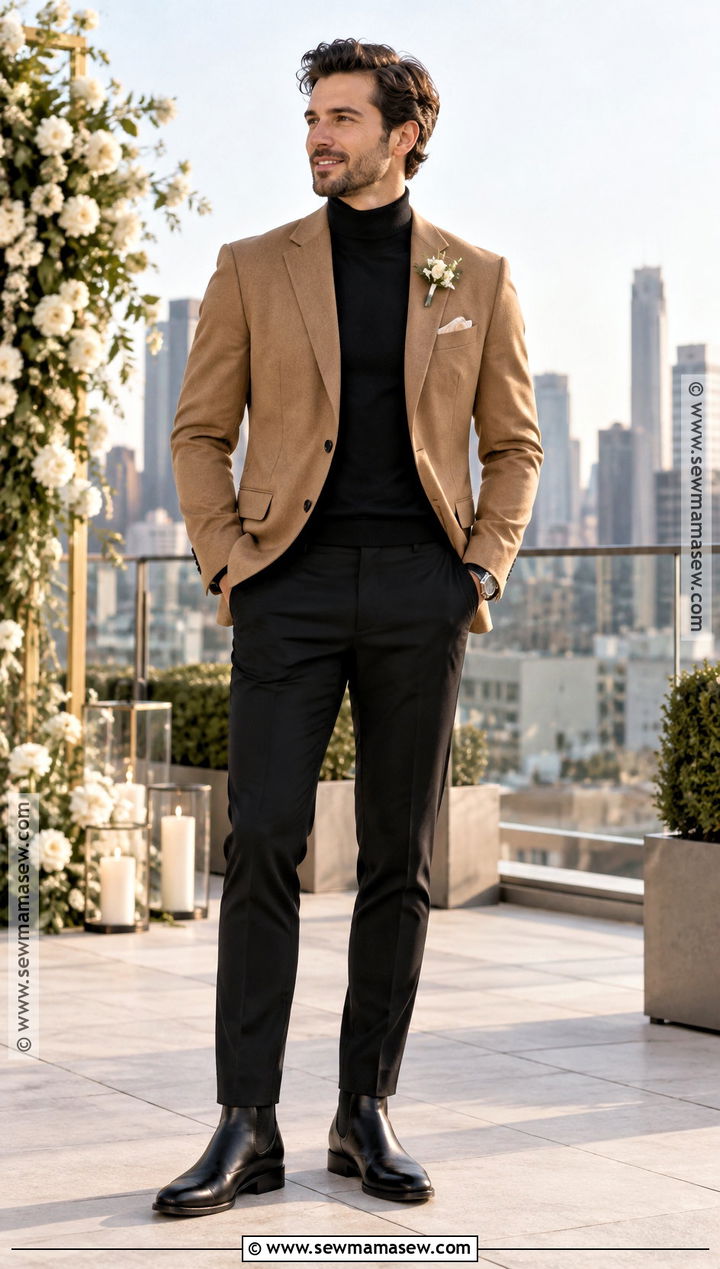
Camel over black is sharp and urban. I'd choose a blazer in brushed cotton, lightweight wool or soft flannel with very little shoulder padding, then a black fine-knit crewneck or mock neck underneath. The black trousers should end cleanly above black loafers or Chelsea boots, with no more than a slight break. Because the color blocking is already strong, accessories stay minimal: a watch, a neutral pocket square and a compact boutonniere. Camel shows marks easily, so I'd keep a lint roller and a clean cloth in the getting-ready room. It's a good fit for courthouse, rooftop and restaurant weddings where a full suit feels like too much.
10. Rust Blazer With Cream Chinos
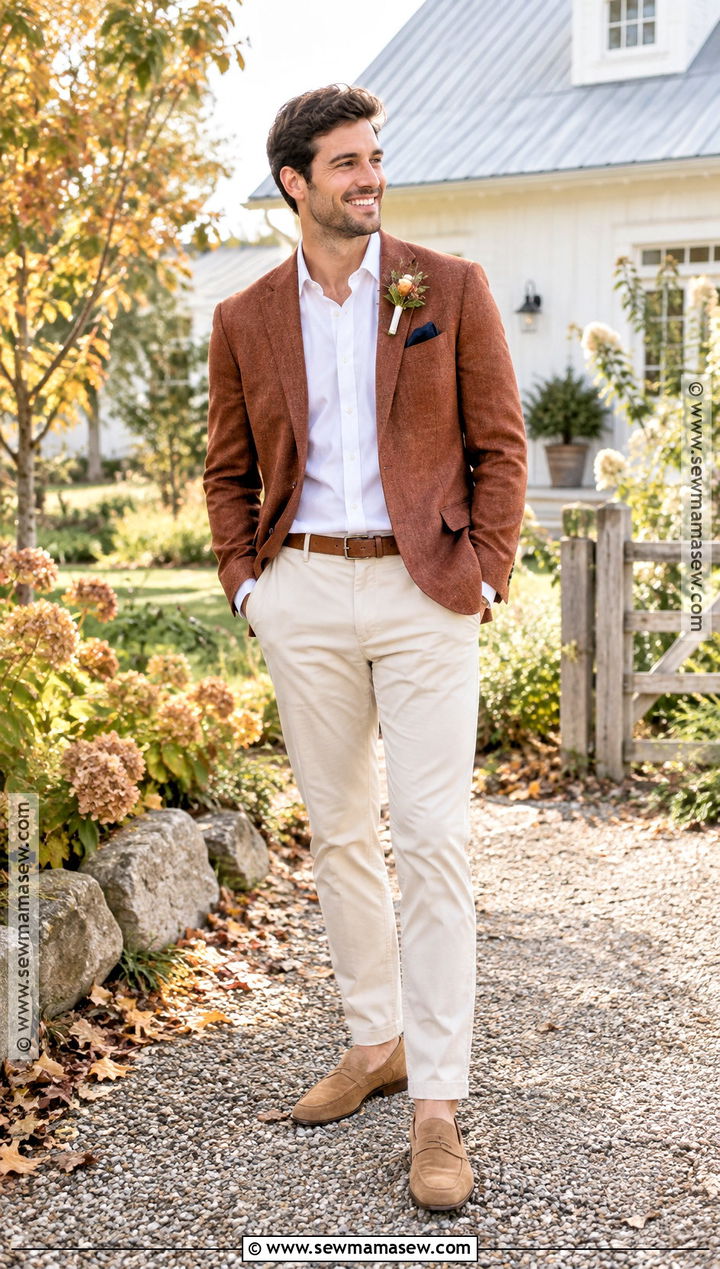
Rust reads as autumn immediately and glows in afternoon light. I pair an unstructured rust blazer with tailored cream chinos, plus a pale blue or white Oxford shirt to separate jacket from trousers. Tan suede loafers or medium-brown derbies keep the palette soft, with a matching belt and a navy pocket square for contrast. The chinos are where this outfit can slip. Thin cotton creases and looks like weekend wear, so I insist on a heavier twill, pressed, with a proper hem. Cream also shows grass and red wine, which is worth knowing before a garden ceremony. Save it for early fall, when afternoons are still warm.
11. Tweed Vest With White Shirt And Chinos
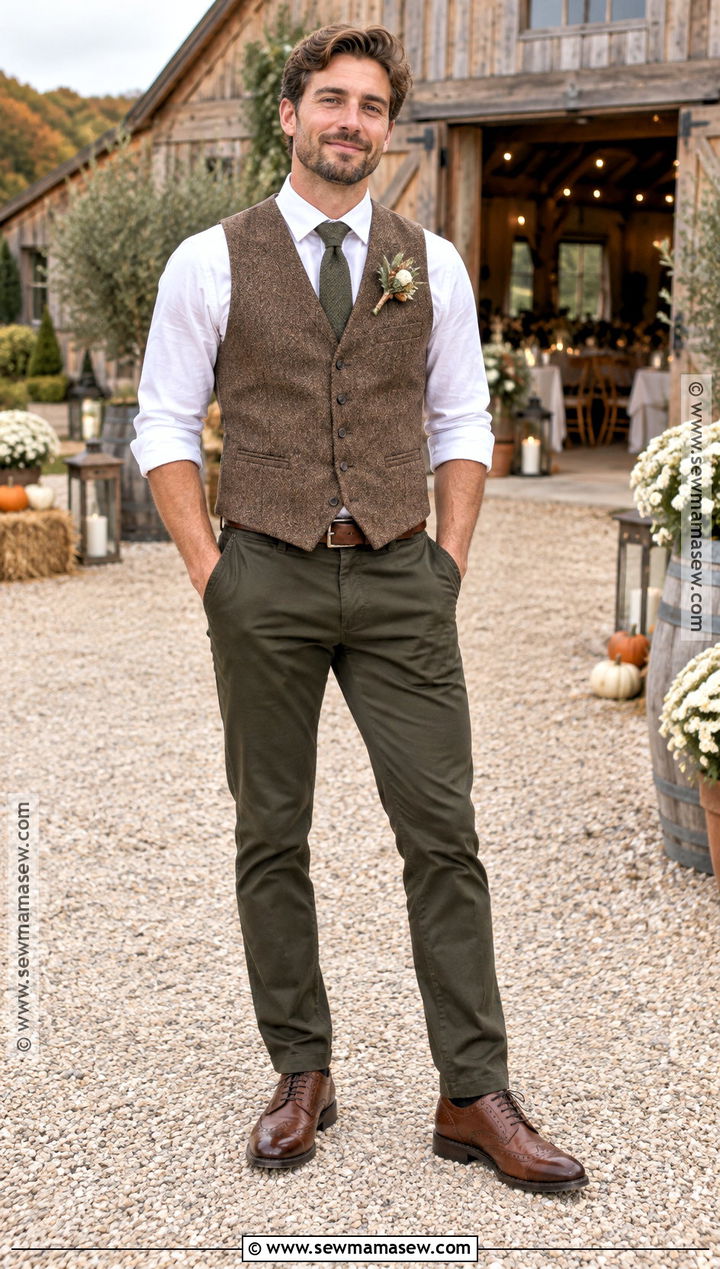
For a groom who wants to lose the jacket, a tailored tweed vest gives structure without restricting movement. Over a crisp white Oxford, sleeves down for the ceremony and rolled later. Olive, navy or tobacco chinos make the base, and they need to fit cleanly through waist and leg. Brown brogues, a matching belt and a simple patterned tie or bow tie finish it. I'd skip the pocket watch and flat cap; too many vintage pieces and it starts to look like a theme. The vest should sit close to the body with no pulling across the buttons, and its hem should cover the trouser waistband so no shirt shows between them.
12. Sweater Vest With Tailored Trousers
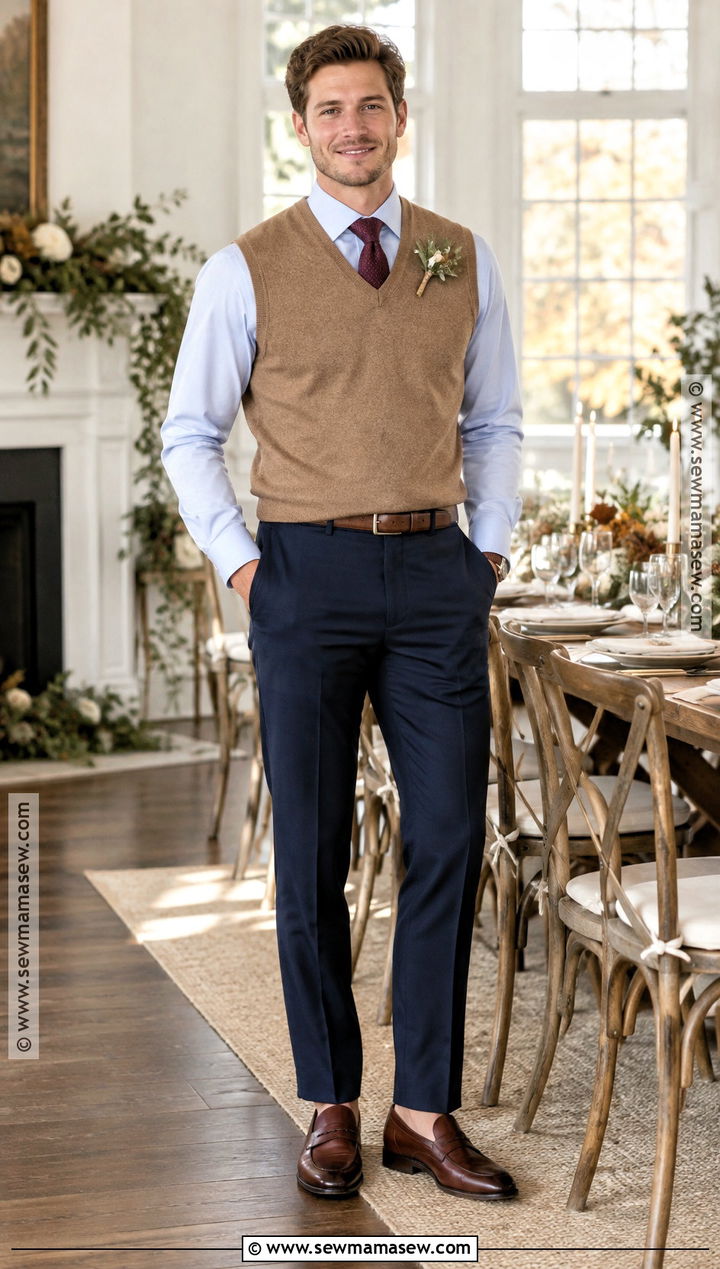
A fine-knit sweater vest can look groom-worthy, but only if everything around it is well fitted. I'd pick a solid camel, forest green or charcoal vest over a white or pale blue button-down. Wool trousers, pleated or flat-front, look more finished than chinos here. Add dark leather loafers and a textured tie that complements the vest rather than matching it. The vest should end at the trouser waistband; a long knit vest bags over the belt. Keep shirt sleeves crisp and pin the boutonniere neatly near the chest. It suits small daytime weddings and private dining rooms with a vintage feel.
13. Black Suit With Brown Knit Polo
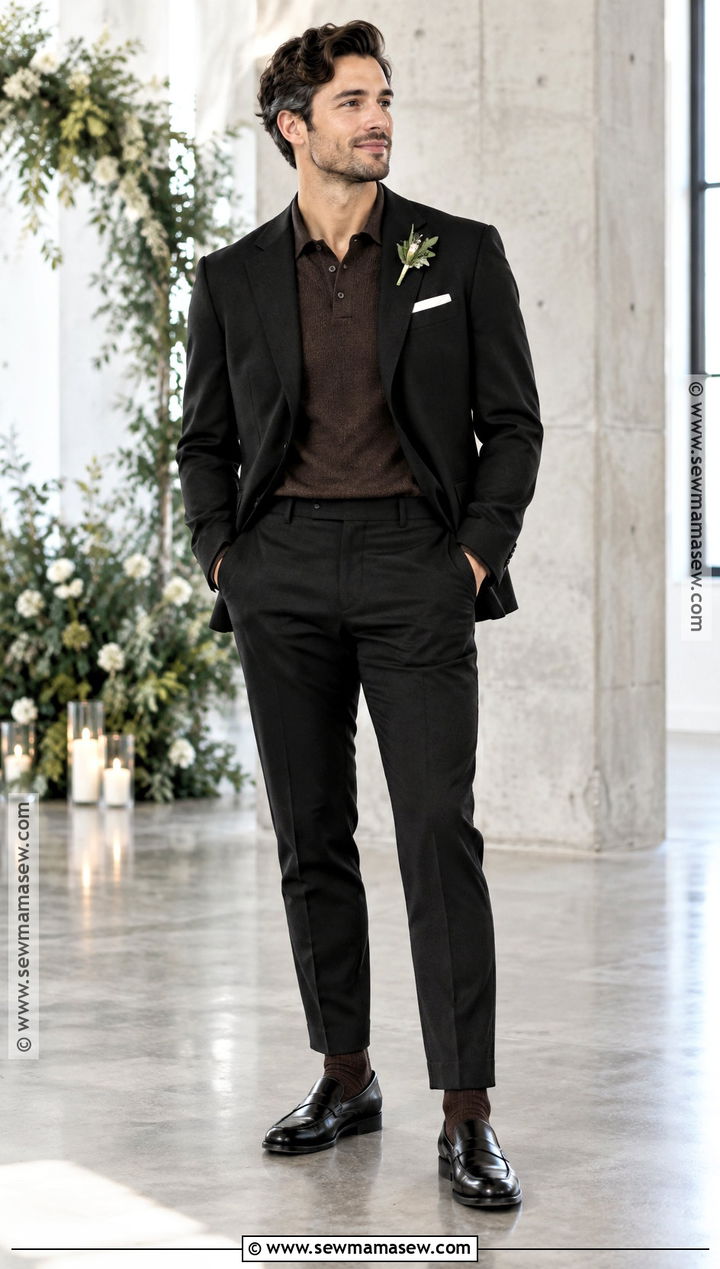
Black can be casual if the textures soften it. I'd go with an unstructured black suit in matte wool or brushed cotton and swap the dress shirt for a fitted chocolate-brown knit polo, which warms the whole outfit. Black loafers keep the base clean, and dark brown socks quietly echo the polo. No tie, nothing too shiny. A white pocket square and a small greenery boutonniere are all he needs to stand out. Matte black also hides creases and marks better than a light suit, which helps on a long day. It suits minimalist venues, industrial spaces and evening receptions.
14. Taupe Suit With Cream Mock Neck
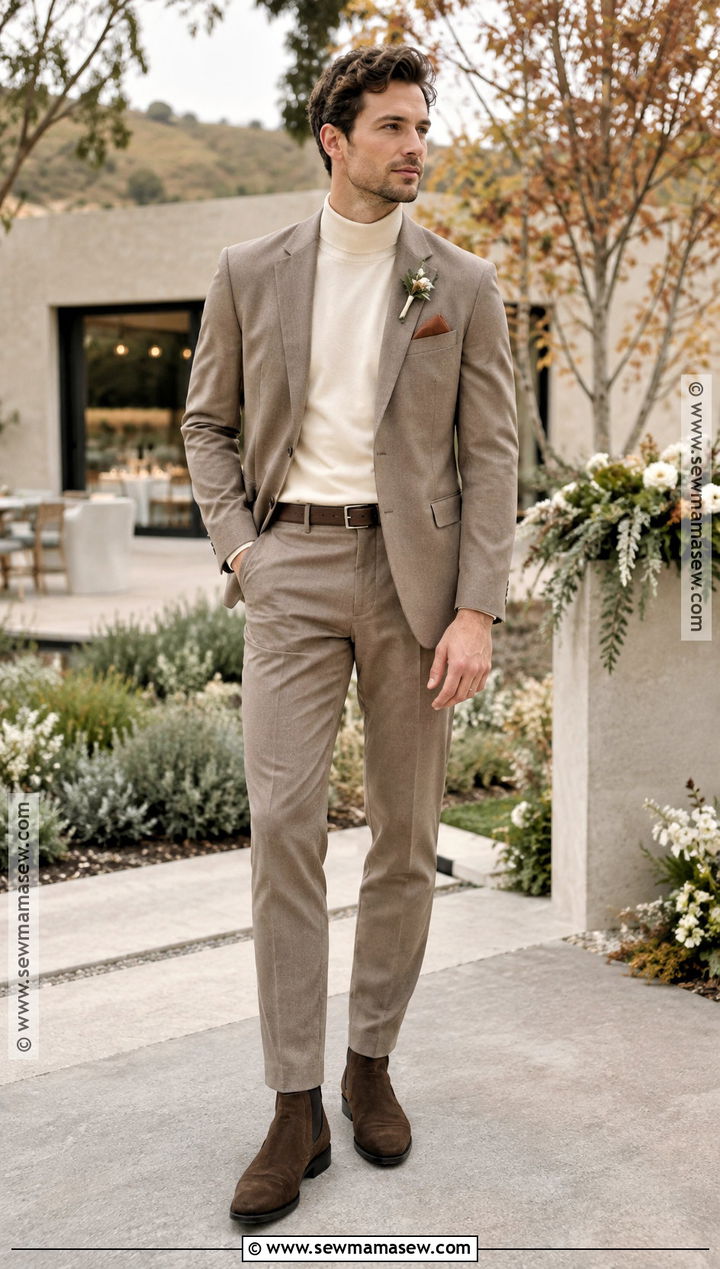
Taupe is the lighter alternative to the usual dark fall suit. A relaxed jacket with gently tapered trousers, over a cream fine-knit mock neck for warmth, gives a clean neckline without a tie. I always check the two colors side by side in daylight. If the taupe and cream are too close, they merge into one beige block in photos, so I want a visible step between them. Dark brown suede loafers or Chelsea boots anchor the pale palette. A rust or olive pocket square and a greenery boutonniere add just enough color. The knit keeps him warm when a sunny ceremony moves to a cool indoor reception.
15. Oxford Shirt With Suspenders And Wool Trousers
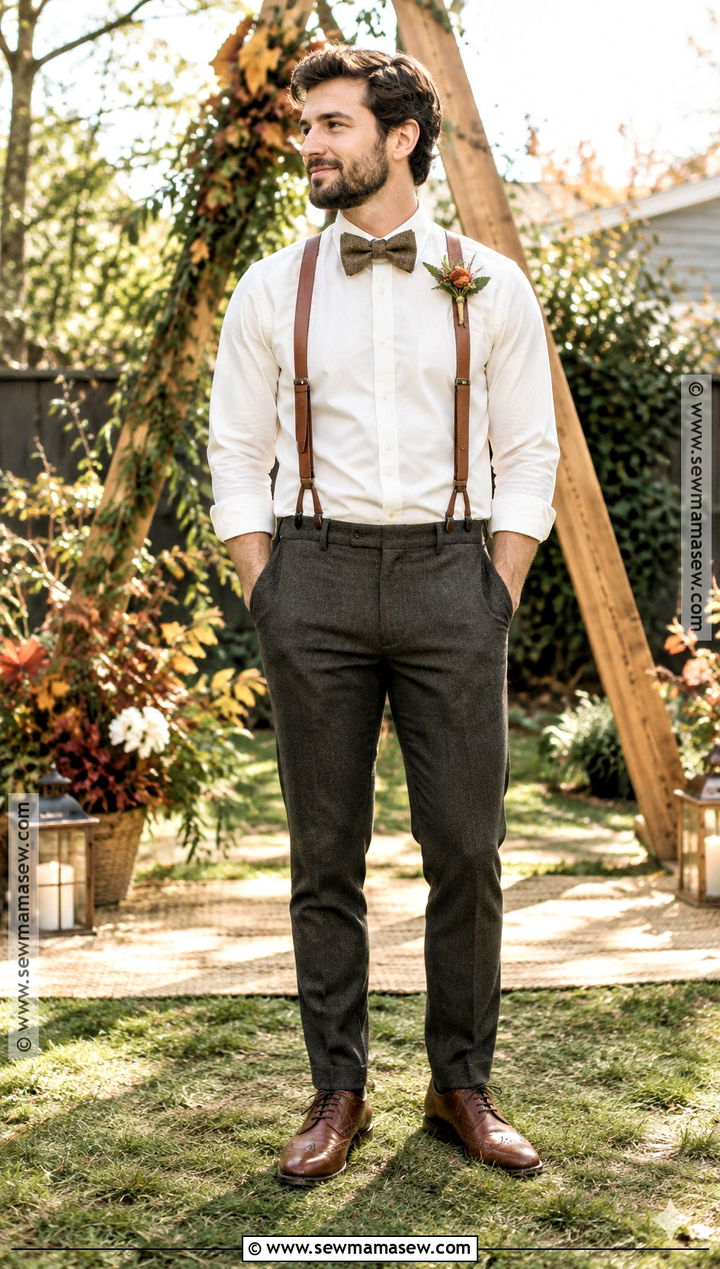
For the most relaxed celebrations, a groom can skip the jacket completely, but casual still has to look intentional. Start with a well-fitted white or ivory Oxford shirt and good wool trousers in charcoal, brown or olive. Medium-brown leather suspenders should button onto the trousers rather than clip; clips slip and leave marks, and buttons sit flat across the shoulders all day. A knitted tie or simple bow tie marks it as a wedding outfit. Brown brogues, matching dress socks and a small boutonniere finish it. The hem needs to be precise, and the shirt needs enough length to stay tucked through dancing. It suits backyard ceremonies, woodland elopements and barn weddings.
Setting the Groom Apart From His Groomsmen
At a casual wedding, everyone in the party might be wearing a similar blazer and open collar, which makes it easy for the groom to disappear in group photos. I don't think he needs a completely different outfit. One clear difference is enough.
- Put him in the full suit while the groomsmen wear separates, or put him in a jacket while they go jacketless.
- Give him a different shade in the same family, such as a tobacco jacket while the groomsmen wear olive.
- Let only the groom wear a tie or a knit polo, so the neckline marks him out.
- Make his boutonniere slightly larger or use a flower the others don't have.
Heavy Cloth on a Warm October Afternoon
Fall weather is unpredictable, and a tweed jacket that feels right at a chilly evening reception can be miserable at a sunny two o'clock ceremony. If the forecast is mild, I steer toward lighter cloth: a tropical or lightweight wool, a cotton blazer, or a half-lined jacket that breathes. Save heavy tweed and wide corduroy for venues that will actually be cold.
Underneath, a breathable cotton or merino layer helps more than people expect, because synthetic knits trap heat and show sweat. Pack a spare shirt or polo for the reception if there will be dancing. And break the shoes in before the day. Stiff new leather soles are slippery on polished floors, and a few wears around the house take the edge off.
A Groom Should Look Like Himself on the Day
Every outfit here relies on the same thing: seasonal fabric and good tailoring, worn comfortably. Earthy suits, textured blazers, knits and well-chosen separates let a groom look special without being overdressed for a relaxed venue. Fit comes first, whatever the color or his build. Choose shoes for the ground he'll actually stand on, and plan a layer he can take off when the dancing starts. He should coordinate with the wedding palette but not blend into the decor or match the groomsmen exactly. Olive wool, brown tweed, corduroy or simple suspenders all work when the whole outfit hangs together and he feels at ease in it.
Related posts: