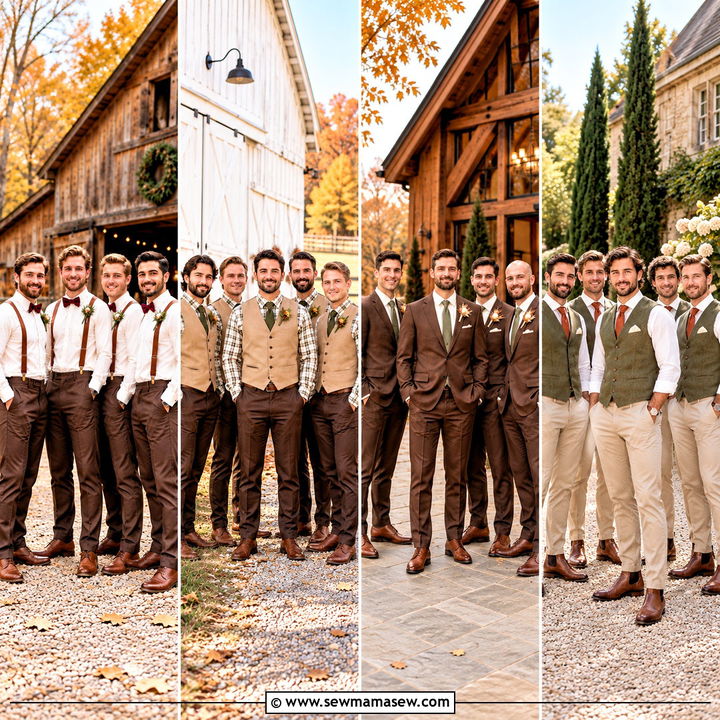
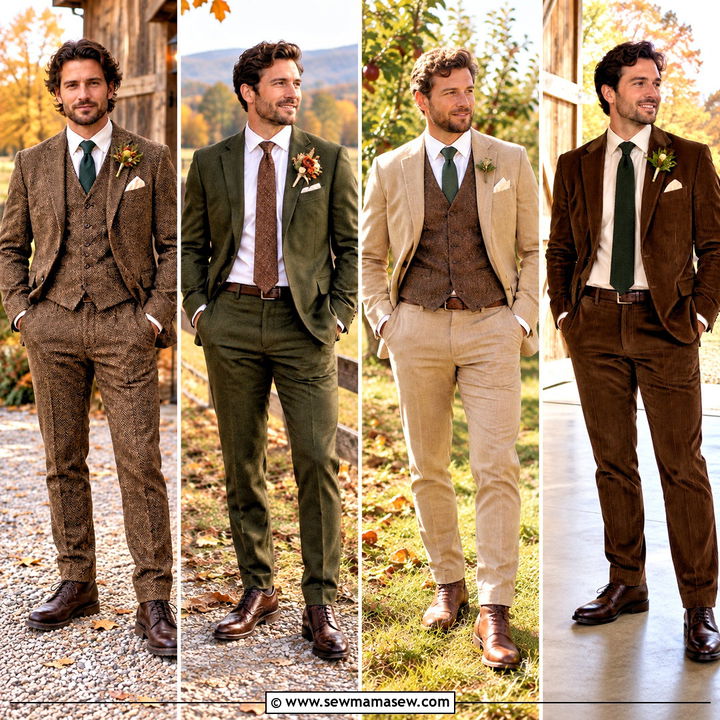
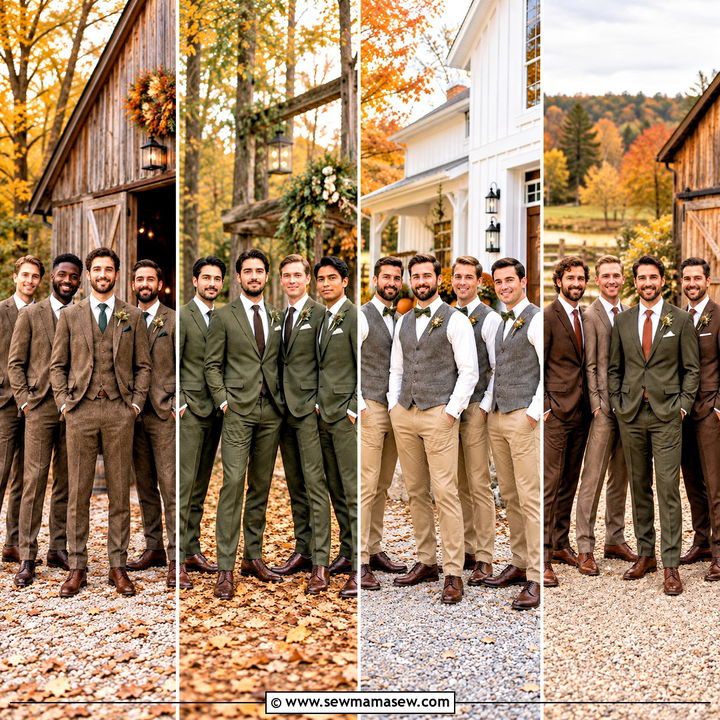
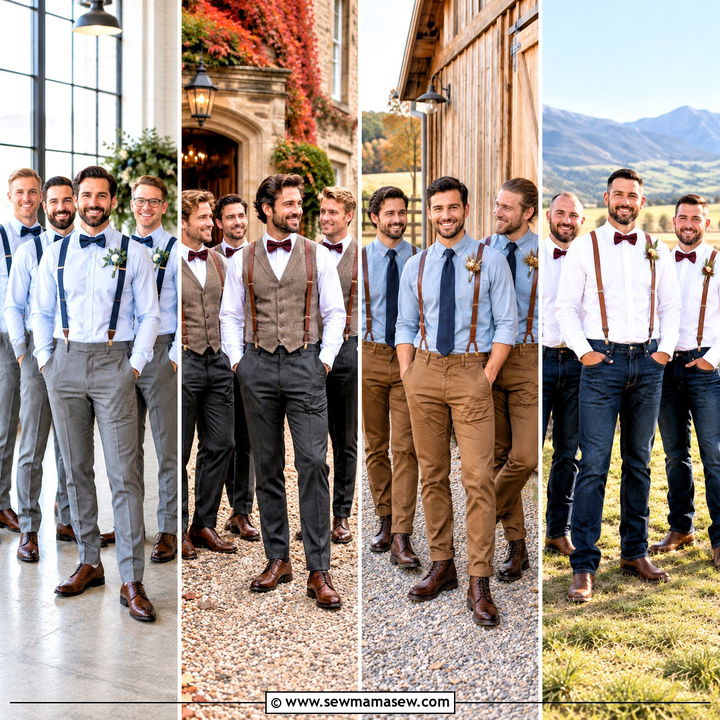
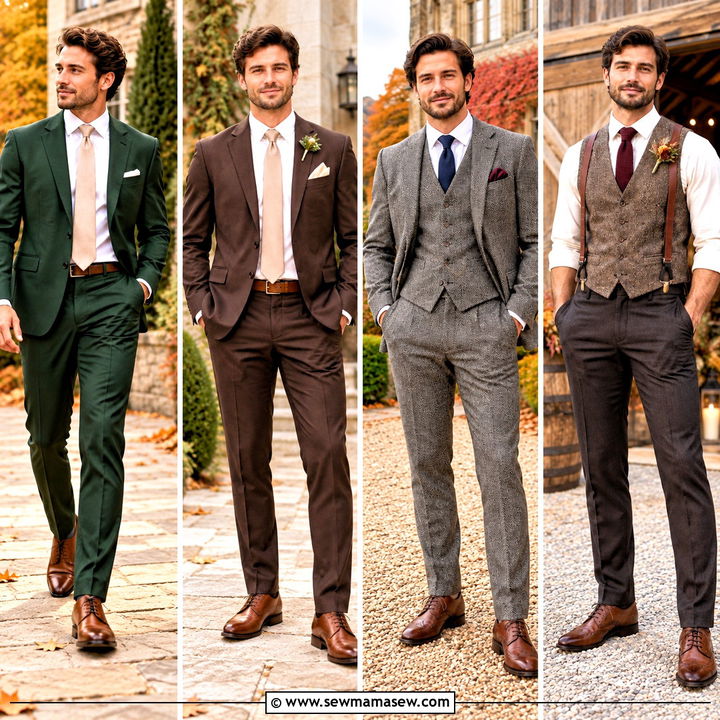
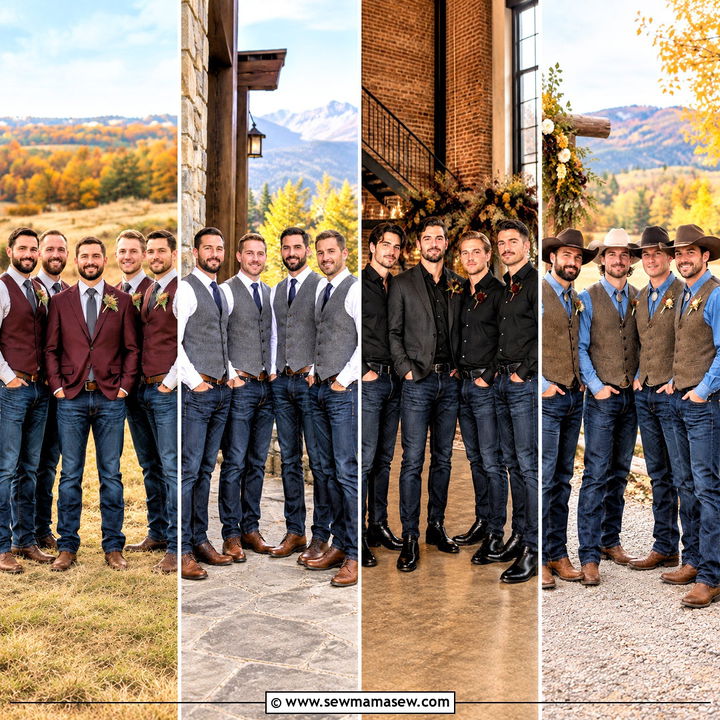
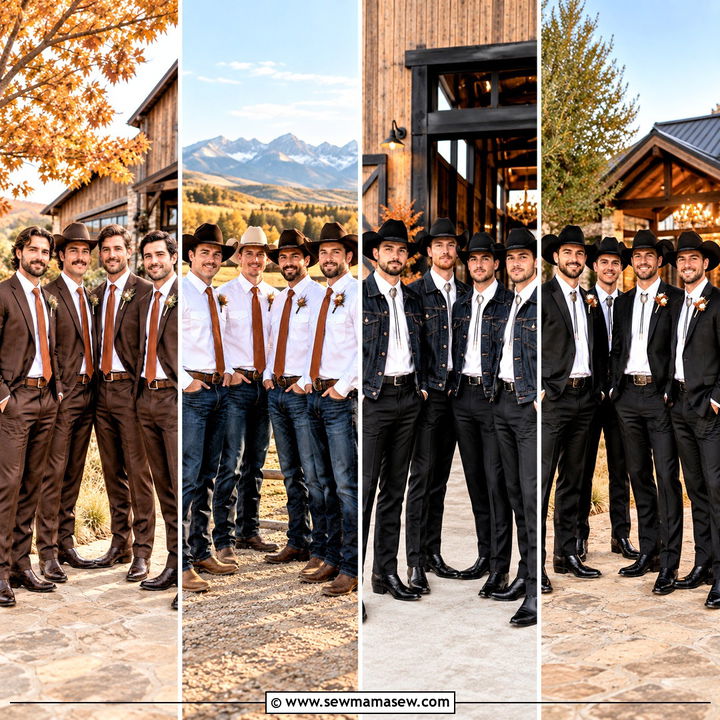
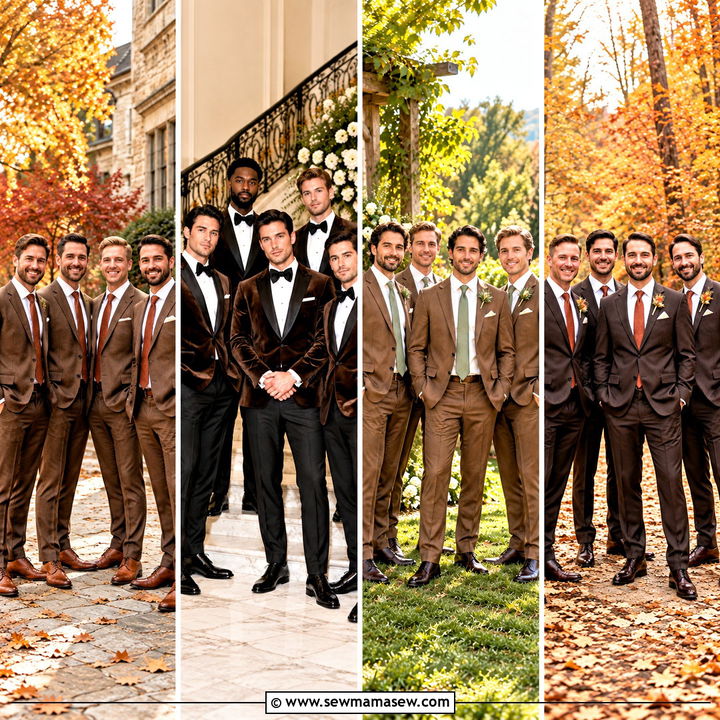
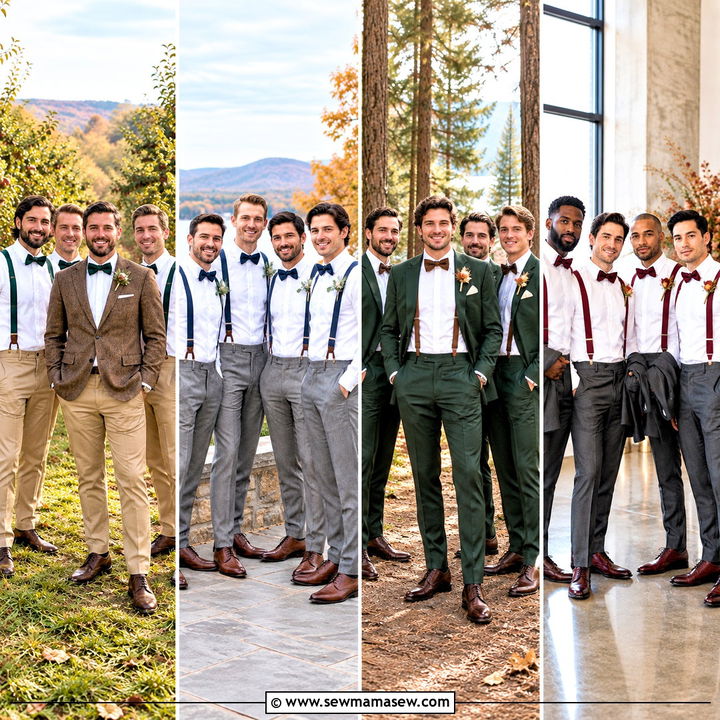
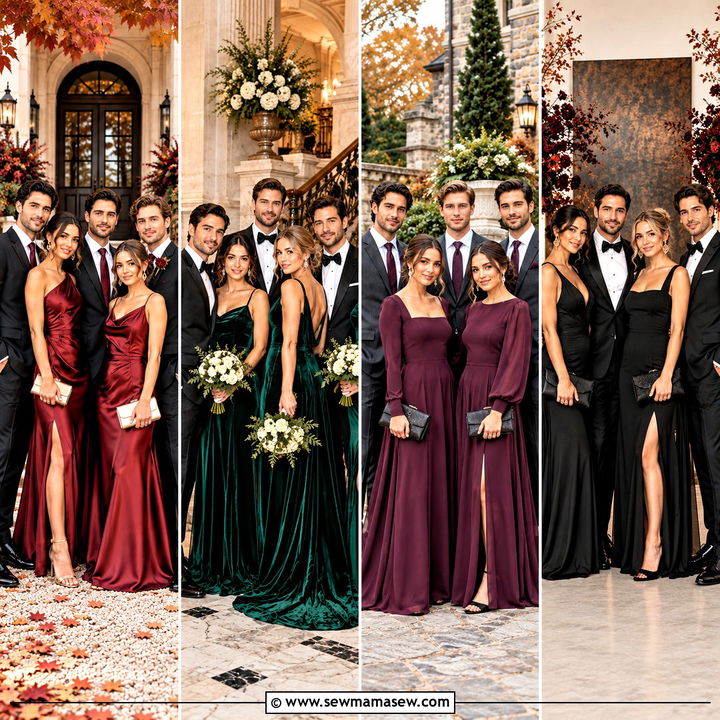
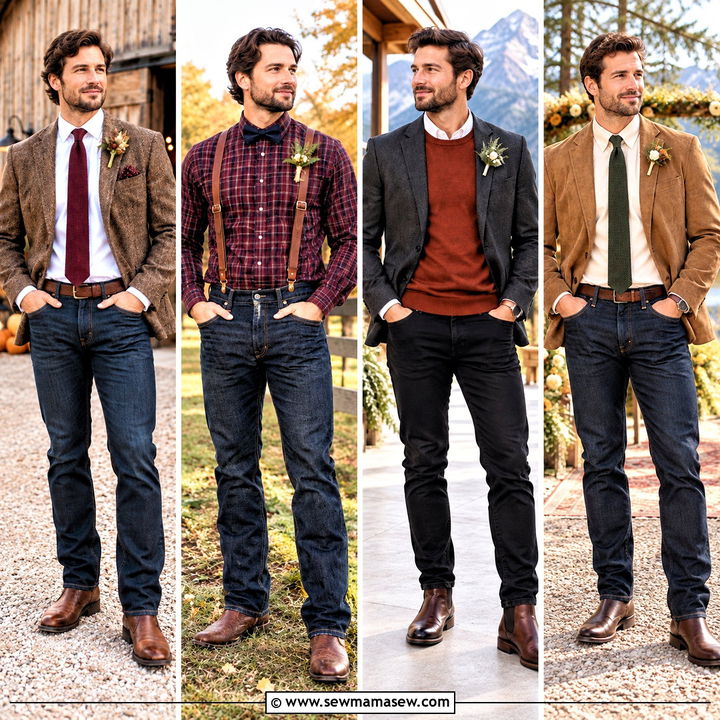
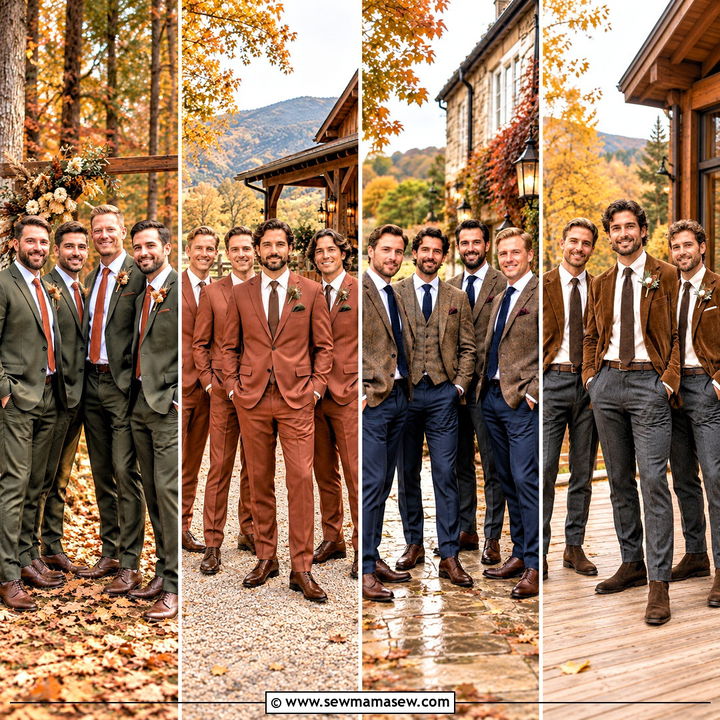
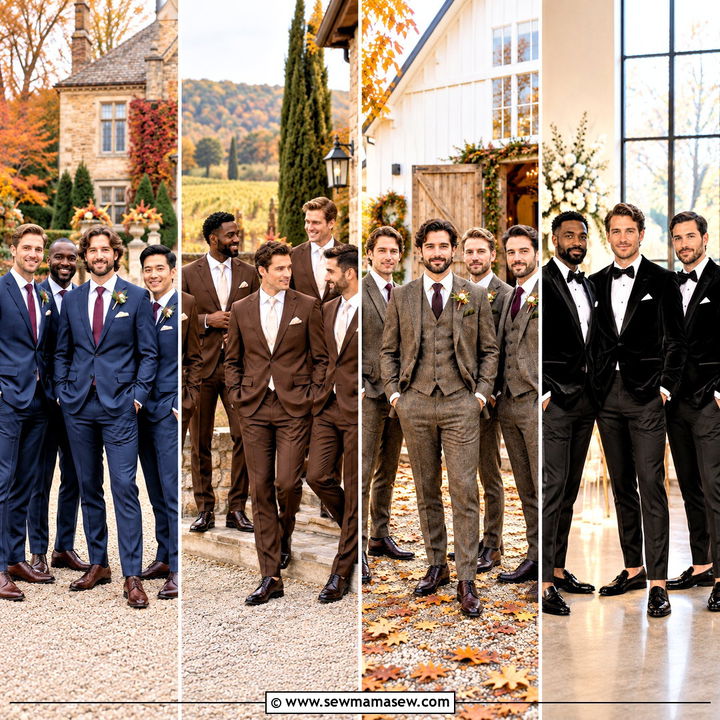
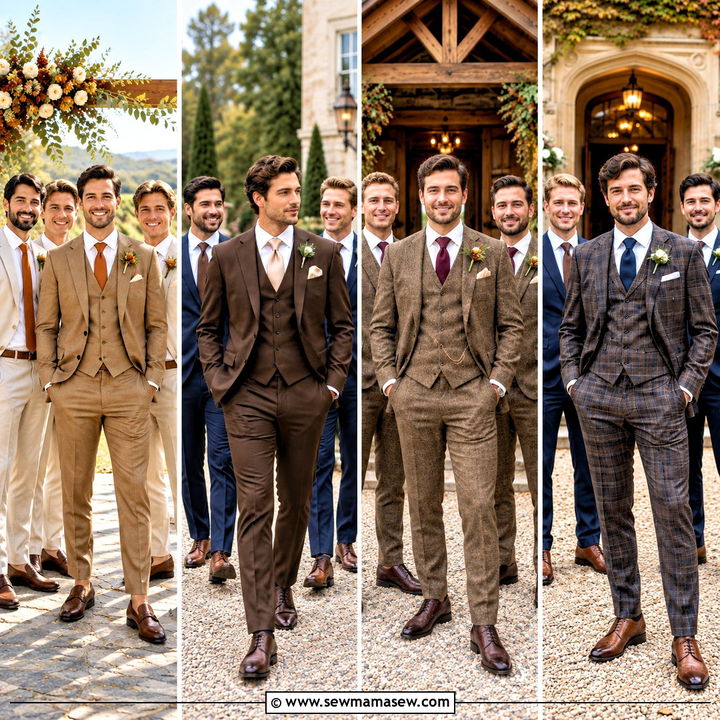
A country wedding in fall asks a lot of a groomsman's suit. He might stand in a field at two o'clock in full sun, then spend the evening in an unheated barn after dark. That's why I lean on cloth with some texture and weight, like tweed, flannel and brushed wool, in browns, greens, charcoal and navy that sit naturally next to timber and turning leaves. The Western touches (boots, a bolo, a felt hat) work best in small doses, so the group reads as dressed for the setting rather than dressed up as cowboys. Below are fifteen complete looks, each with the detail I'd check first and a simple way to set the groom apart.
Getting Six Different Builds Into One Suit
The color is the fun part. The fit is where groomsmen looks go wrong, because a wedding party rarely shares a body type. One man is broad through the chest, another is lanky, another has a belly that a slim cut fights. Same cloth, very different results.
When I dress a group, I settle the measurements before anyone falls in love with a fabric. Rentals usually ask for chest, waist, inseam, sleeve and neck, and most rental shops want them several weeks ahead, longer in peak fall season. If the men are buying, order early enough that each suit can go to a tailor afterward. Off-the-rack trousers almost always need hemming, and jacket sleeves often need shortening.
- Jacket shoulders should end where the man's shoulders end. Everything else can be altered fairly easily; shoulders mostly can't.
- A sleeve should show a little shirt cuff with the arms relaxed, the same amount on every man so the line looks even in photos.
- Trouser hems should be agreed as a group. If some men have a full break and others none, it looks like six different weddings.
- Bigger men usually look better in a slightly fuller cut than the slim style the rest might want. Choose the cut for the group, not the slimmest member.
Ask every man to sit, raise his arms and pretend to dance in the fitting. A jacket that pulls across the back while seated will be uncomfortable all evening, and that's when the photos are taken.
1. Brown Tweed Three-Piece Groomsmen Attire
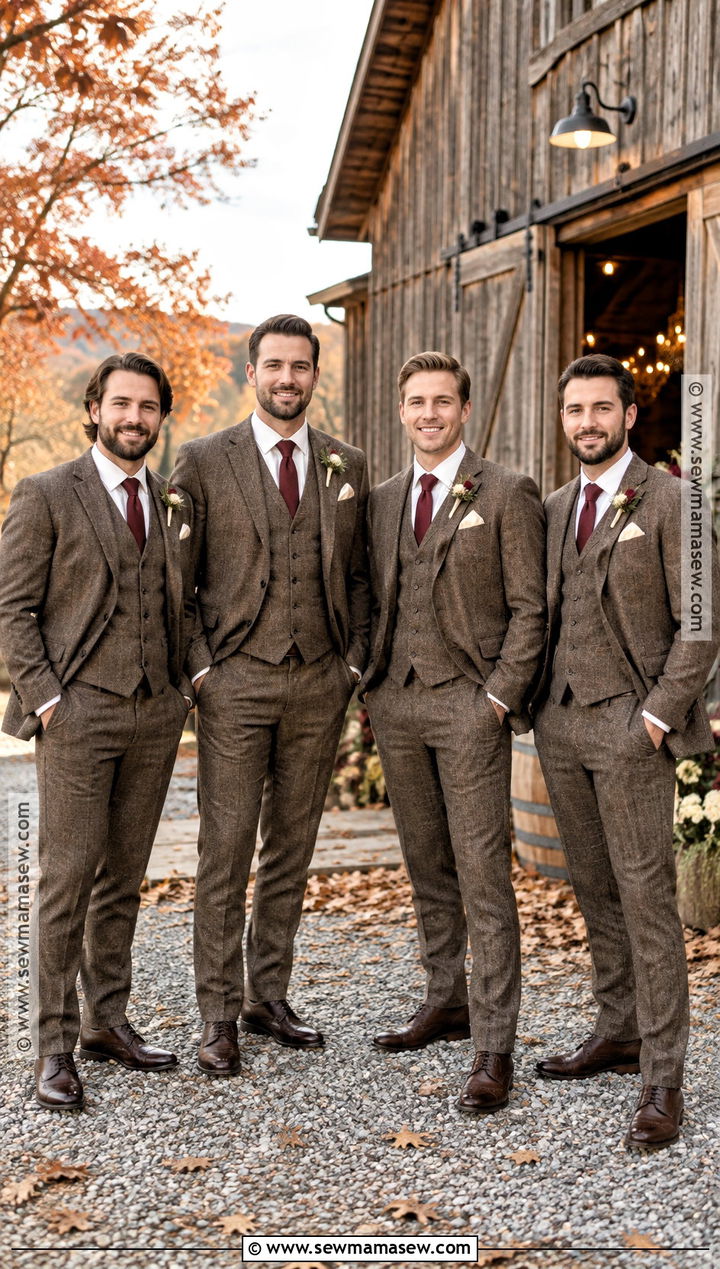
Brown tweed is the look most people picture for a barn wedding, and it earns that. I'd go for a mid-brown herringbone in a lighter tweed weight, because the heavy, hairy cloths look great on a hanger and feel like a blanket by the second hour of photos. An ivory shirt is gentler against brown than bright white, and a burgundy tie gives the autumn note. Dark brown brogues, a matching belt and a cream pocket square finish it. The waistcoat is the real reason to choose three pieces: once jackets come off at dinner, the men still look put together. Put the groom in a deeper chocolate version or a patterned tie.
2. Navy Suit With Burgundy Tie Groomsmen Attire
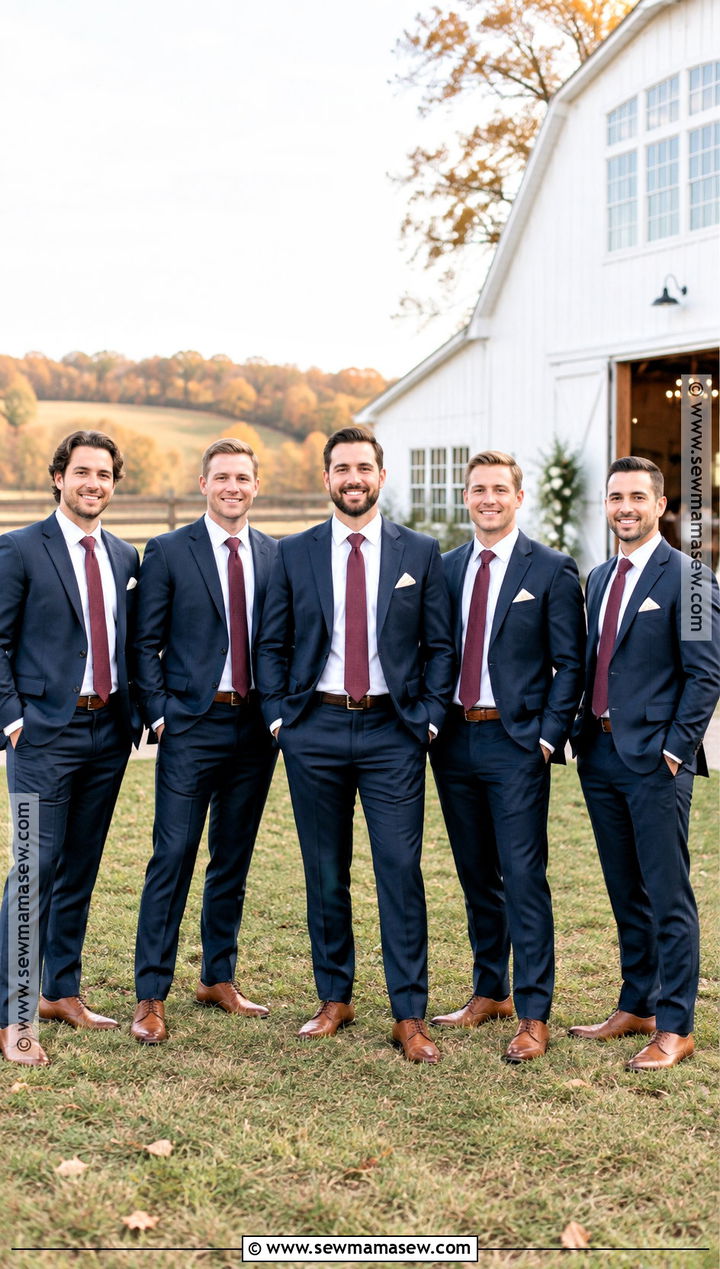
Navy is my safest recommendation when a couple wants a hint of country without hay bales in every photo. A softly structured wool suit with a white shirt, a textured burgundy tie and a cream pocket square does most of the work. Tan Oxfords lighten the dark cloth and pull it toward the rural setting; just make sure everyone's tan is close to the same shade, because mixed browns are obvious when six pairs of shoes line up. Ask the tailor for a slight break or none at all, so the hem sits cleanly on the shoe. The men also walk away with a suit they'll actually wear again. The groom can switch to a brown waistcoat or a darker navy three-piece.
3. Tan Suit With Cowboy Boots Groomsmen Attire
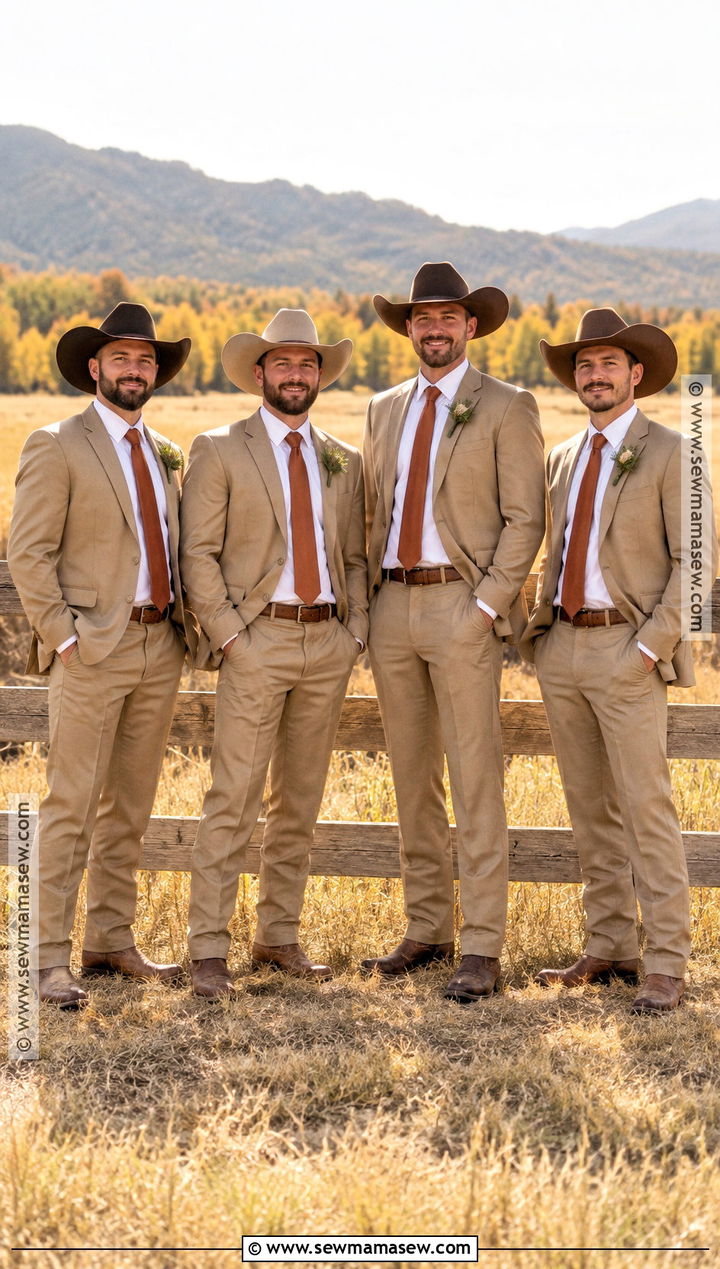
Tan with cowboy boots is about as country as I'd take a wedding party without it tipping into costume. Pick a warm camel or taupe, not the pale stone of a summer linen, which looks washed out against fall color. An ivory shirt, a dark brown belt and plain brown boots with a simple shaft keep the line tidy; heavily stitched or exotic boots pull the eye straight to the floor. Trousers need to be cut a touch longer and slightly wider at the hem so they fall over the boot shaft instead of bunching on top of it. Rust or forest green ties add depth, and dried-flower boutonnieres suit the color. If hats are in the plan, choose one felt color for everyone and take them off for an indoor ceremony. I'd keep this one for ranches and barns with a semi-formal dress code.
4. Olive Green Suit With Brown Shoes Groomsmen Attire
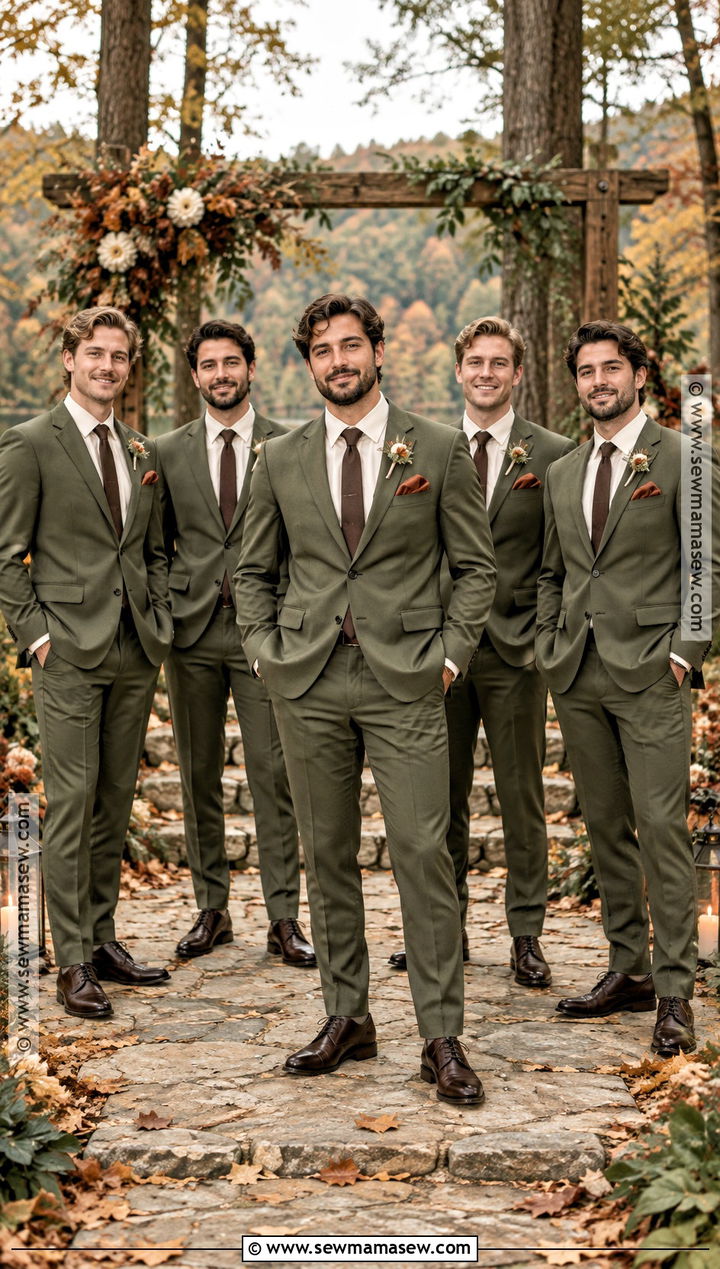
Olive stands out in a good way when the ceremony is outdoors among trees. I'd stay with a muted moss or olive in a medium-weight wool, since bright greens can turn yellowish in late afternoon light. A white or soft cream shirt, a chocolate tie and a rust pocket square keep the palette earthy, and dark brown Derbies with a matching belt ground it. Hold back on extra green. The suit is already the color statement, and a green tie on top makes it flat. Gold or wooden cufflinks are a nice quiet detail. For the groom, a brown or charcoal three-piece with an olive tie ties him to the group without blending in. Woodland sites, mountain lodges and vineyards suit it best.
5. Charcoal Suit With Rust Tie Groomsmen Attire
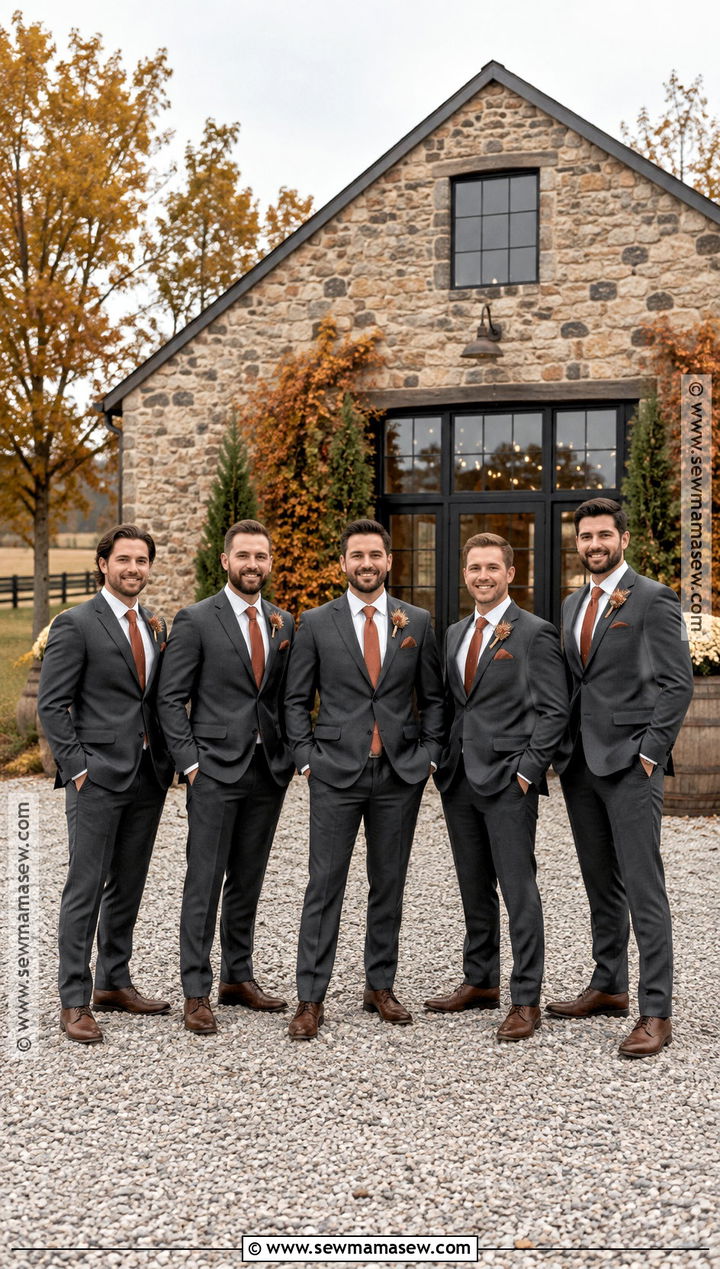
Charcoal on its own can feel cold at a harvest-season wedding. Rust fixes that quickly. I start with a two-piece charcoal suit in a lightly textured cloth, add an ivory shirt and a rust tie, then repeat the warmth in a brown or burgundy pocket square and rust socks that flash when the men sit. Dark brown Oxfords suit gray better than black does here, because black shoes push the look back toward a city office. Charcoal handles a move from an outdoor ceremony to a dressier reception well, and it sits comfortably beside terracotta, sage, burgundy or dusty rose bridesmaid dresses. Set the groom apart with a waistcoat or a patterned tie, not a different suit color.
6. Tweed Vest With Navy Trousers Groomsmen Attire
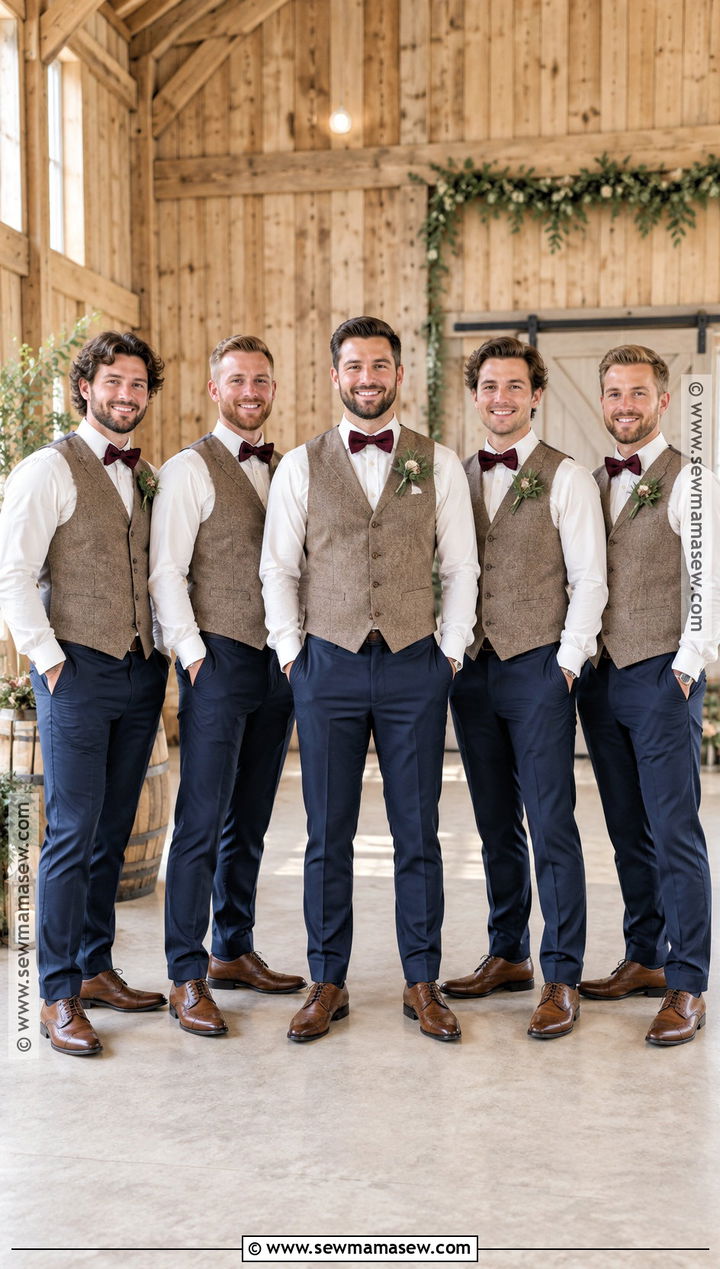
Skipping jackets entirely only works if the trousers are perfect. Navy tailored trousers, a brown or oatmeal tweed vest and a cream button-down make a relaxed, good-looking combination, and a burgundy bow tie keeps it fun. Brown brogues, a matching belt and navy socks finish it. Everyone's trousers must be the same cut and shade, and that's easiest if they're ordered together; the shirts can be bought separately as long as the color is agreed. Long sleeves should stay down, not rolled. Without a jacket, a vest that's too short shows a strip of shirt at the waist, so I check that it covers the waistband with arms raised. This suits early fall and mild days. The groom can add a matching tweed jacket.
7. Gray Tweed Suit With Forest Green Tie Groomsmen Attire
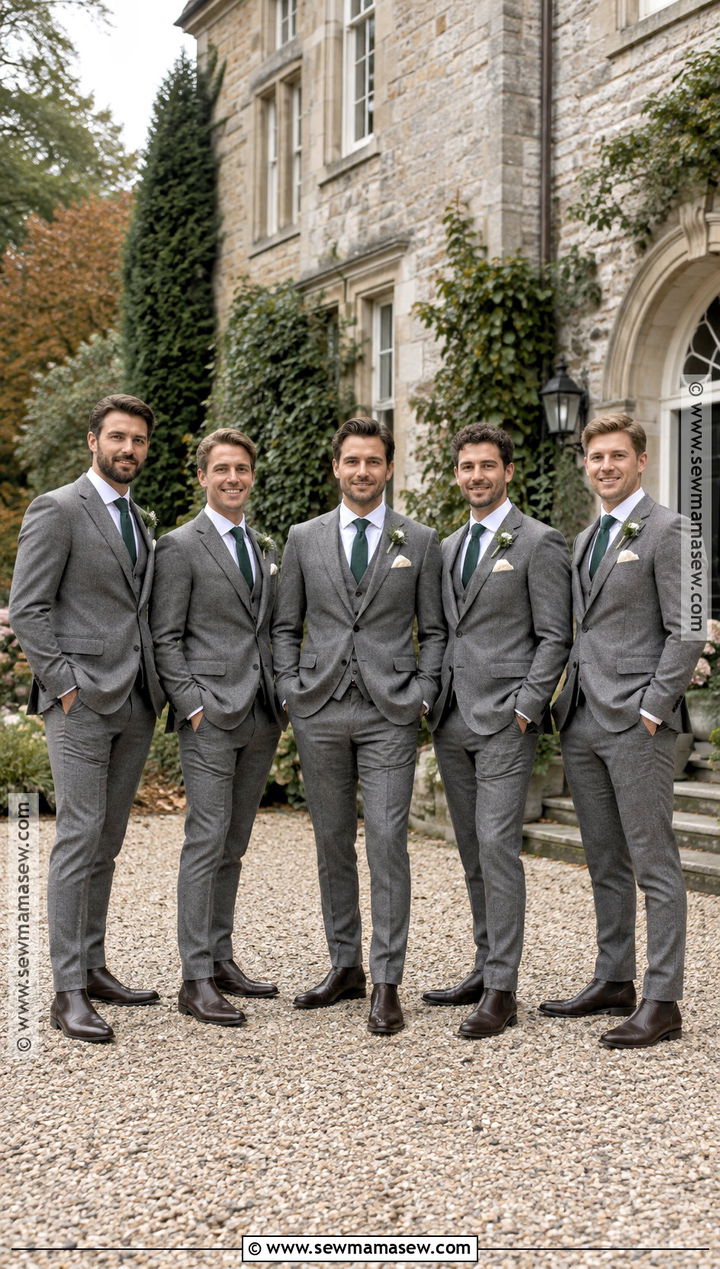
Gray tweed brings texture without committing the whole party to brown. Medium gray is better than pale silver, which reads more spring than fall. A crisp white shirt, a forest green tie and a cream pocket square are all it needs. Dark brown Chelsea boots give a slightly modern feel and are easier on uneven ground than slim-soled shoes, though brogues suit a more traditional day. Because tweed already has a visible weave, the tie should be solid or quietly textured; a busy pattern on top of herringbone shimmers on camera. A boutonniere of greenery and one small white flower keeps it calm. The groom can wear the same suit with a green waistcoat. Stone barns and country houses are a natural fit.
8. Dark Denim With Tweed Vest Groomsmen Attire
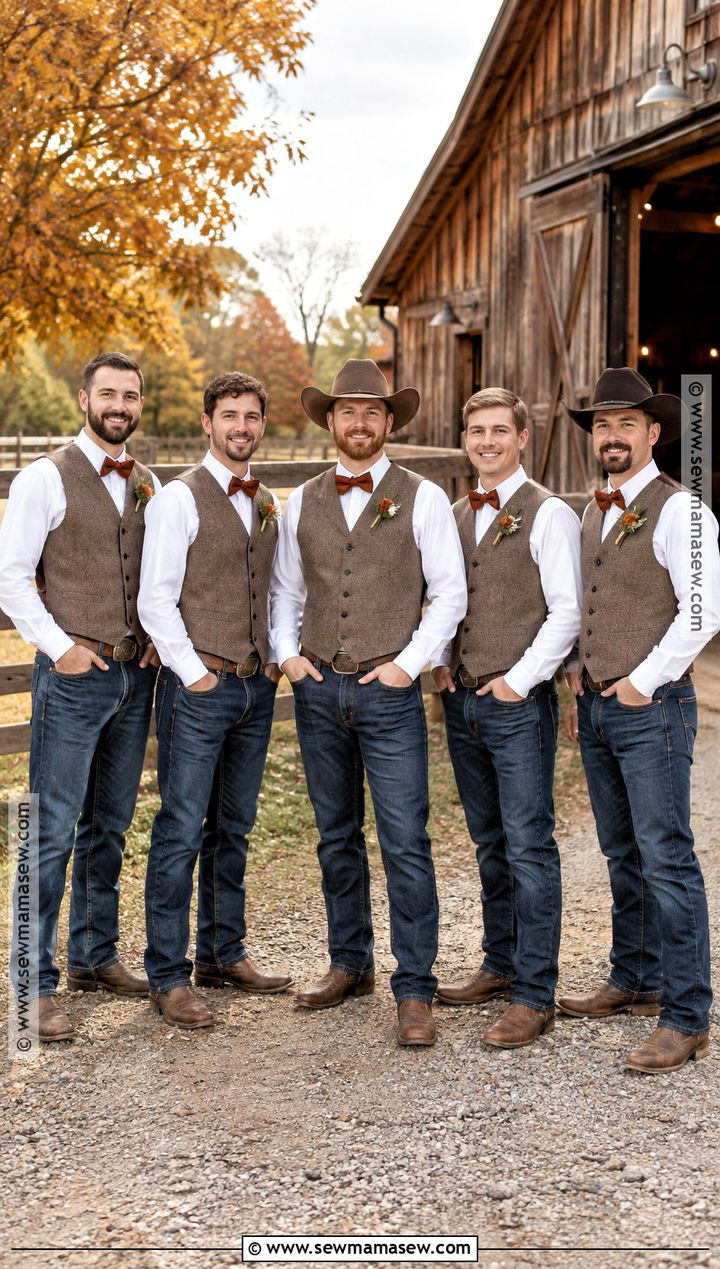
Denim at a wedding is a narrow path. I only suggest it for genuinely casual ranch or farm celebrations, and only when every pair of jeans is clean, dark indigo, straight or tailored, with no fading or decorative stitching. Mismatched washes look like the men just came from work. A white dress shirt, a brown tweed vest and a rust tie or bow tie dress it up enough, and a solid leather belt with polished cowboy boots finishes it. I'd supply the ties, vests and boutonnieres so nothing drifts. Brown tweed jackets can be added if it gets cold. At a formal estate or an evening reception, this will look underdressed.
9. Chocolate Brown Suit With Cream Shirt Groomsmen Attire
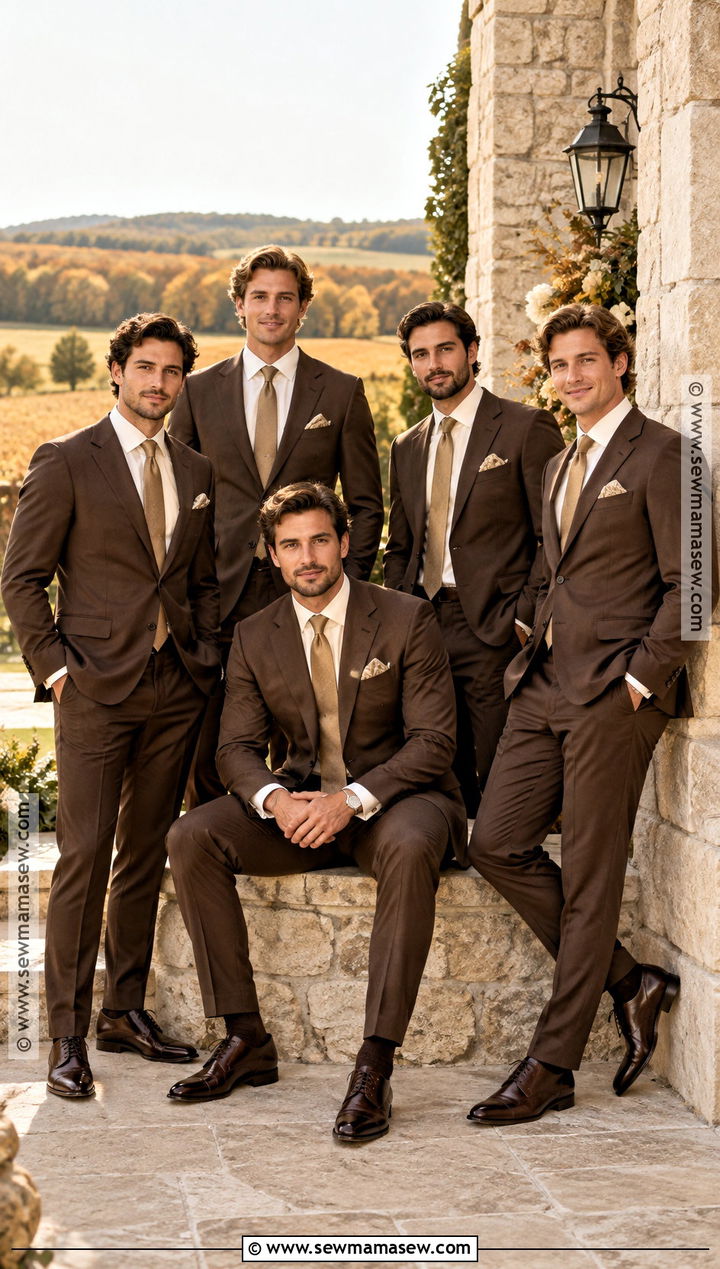
Chocolate brown is the dark suit I suggest when a couple is tired of seeing navy and charcoal at every wedding. A well-fitted two-piece in wool with a cream shirt keeps everything warm in tone. The tie can be muted gold, rust or dark green, depending on the wedding palette. If someone wants a patterned pocket square, keep its colors low so it doesn't fight the suit. Dark brown cap-toes, a matching belt and tonal socks finish it. Brown wool shows lint and dog hair less than black but more than people expect, so a lint roller in the getting-ready room is worth packing. Against pale stone, golden fields or light barn walls, the dark suit gives clean contrast. The groom can wear the three-piece version.
10. Burgundy Suit With Navy Tie Groomsmen Attire
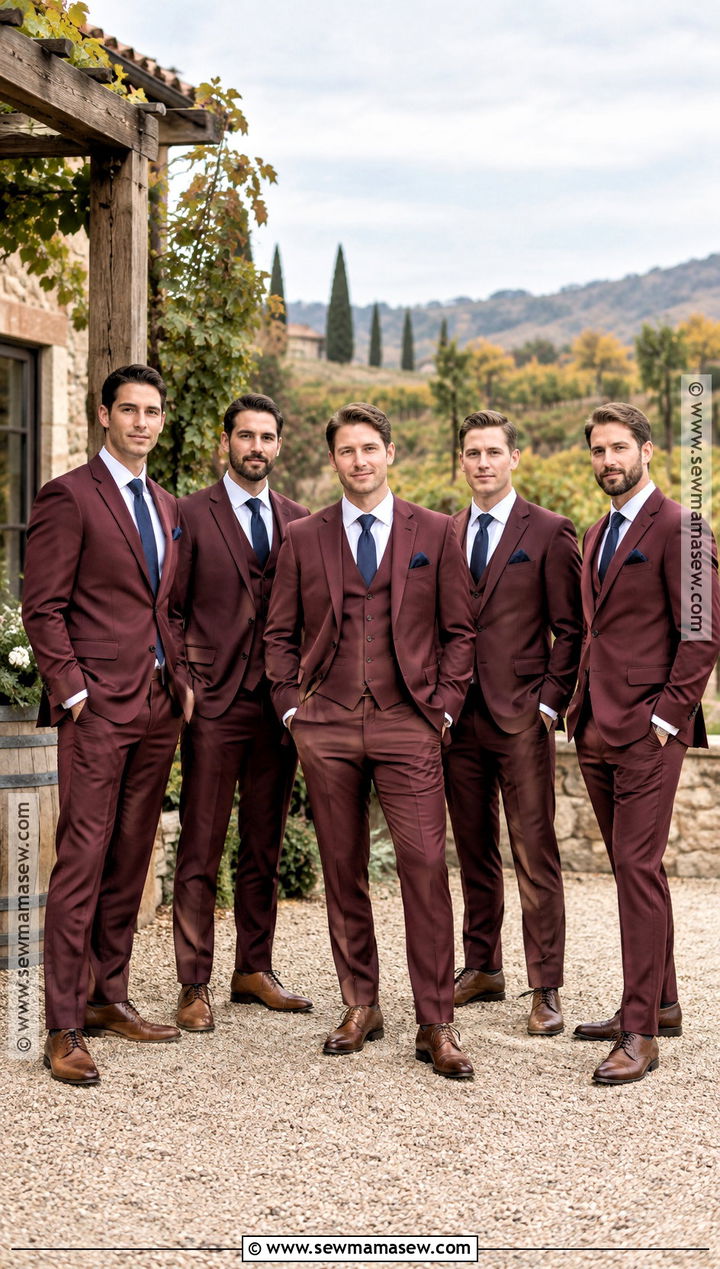
Burgundy is the boldest suit on this list, and it needs a quiet setting around it. Choose deep wine or oxblood, not a bright red, which looks theatrical in daylight. A crisp white shirt and a navy tie give it structure, while brown Derbies, a matching belt and a navy pocket square keep the palette short. Boutonnieres should be small and neutral, such as greenery, cream flowers or dried textures. I'd keep the cloth plain and the lapels classic, since a peak lapel or a sheen on top of this color is a lot. It works when the decor is restrained, with wood, ivory, navy and greenery. If the bridesmaids are also in red tones, compare swatches side by side before anyone orders.
11. Taupe Suit With Cowboy Hat Groomsmen Attire
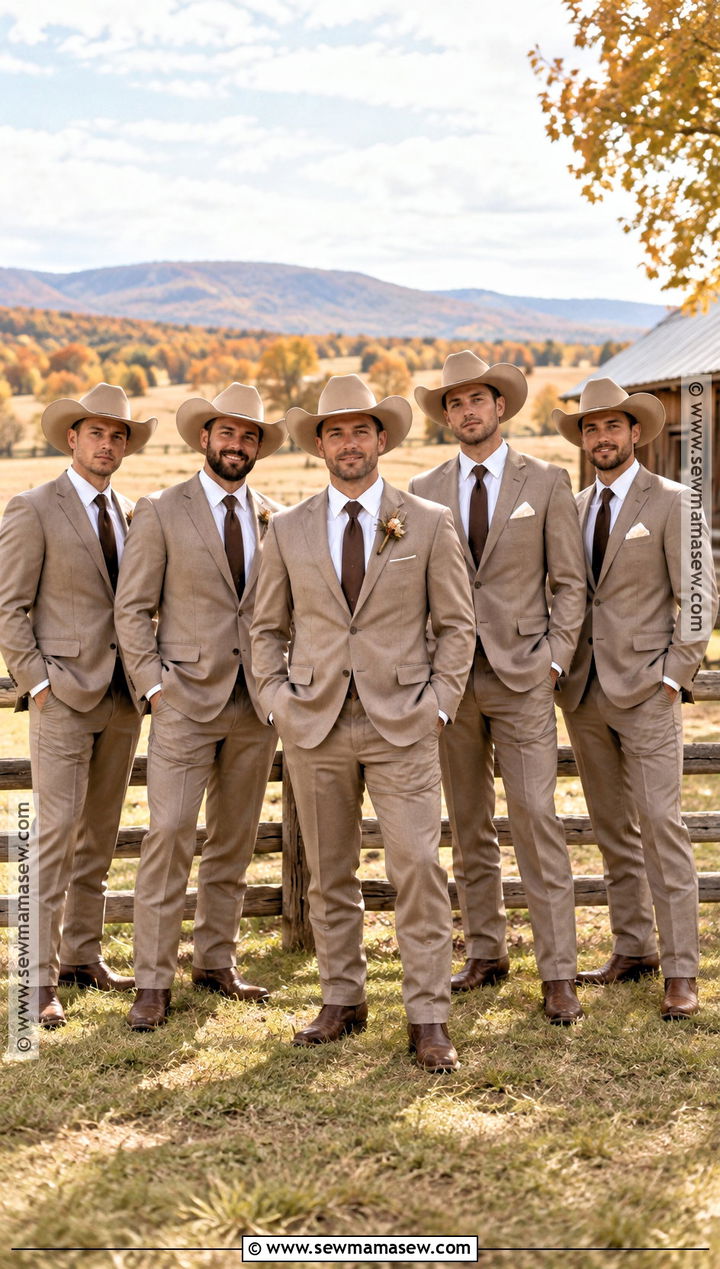
Taupe is softer than tan and takes Western details well. I pair it with a white shirt, a chocolate tie and dark brown cowboy boots, plus a belt with a plain buckle; an oversized decorative buckle becomes the focus in every photo. Brown or sand felt hats can come out for portraits and the processional, then come off indoors. A cream pocket square and a greenery boutonniere keep it clean. Fit matters more in light colors than dark ones: loose taupe trousers crease at the knee and look slept in by evening, so get the seat and thighs taken in if needed. Ranches, horse farms and open-air barns are where this one belongs. The groom can wear a darker hat or a contrasting waistcoat.
12. Navy Tweed Suit With Rust Tie Groomsmen Attire
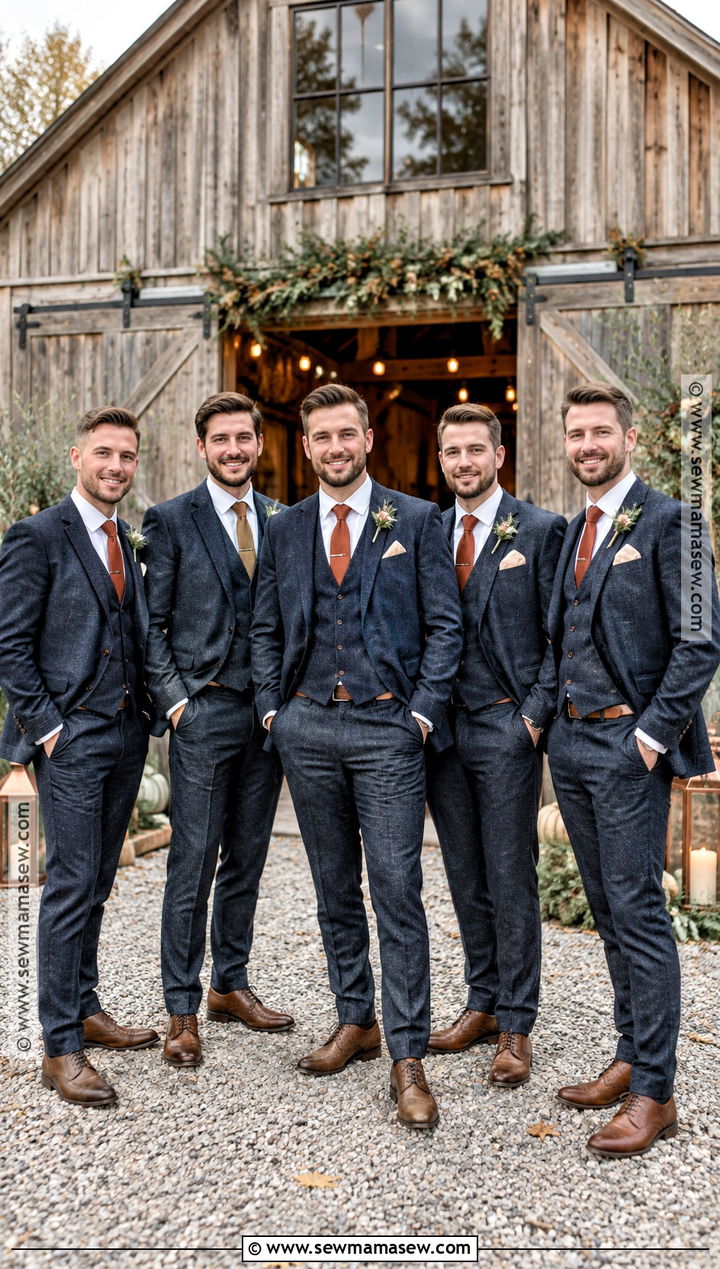
Navy tweed is the pick I give couples who like the navy suit but want more texture for a barn. A subtle herringbone or lightly flecked cloth looks rich up close and still reads as plain navy from the back row. Add an ivory shirt and a rust tie, then a cream linen pocket square to soften the jump between dark jacket and warm accessories. Chestnut brogues, a matching belt and navy socks finish it. It's dressy enough for a rural estate yet still looks at home in a timber barn, and it pairs easily with rust, copper, sage or burgundy bridesmaid dresses. Avoid bright, electric blue, which loses the seasonal feel. For the groom, a brown tweed waistcoat or a richer patterned tie is enough.
13. Khaki Trousers With Suspenders Groomsmen Attire
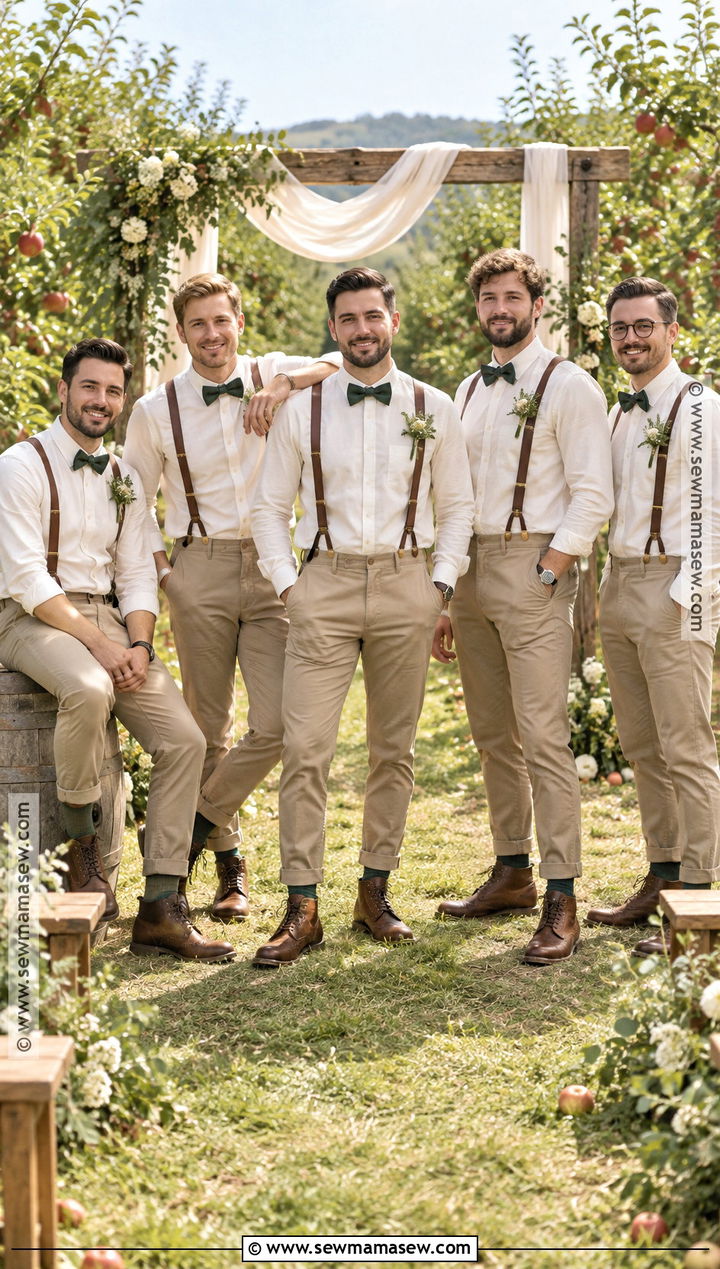
Khakis and suspenders suit an early-fall wedding that's casual and warm. Start with tailored tan trousers and a white or cream long-sleeve shirt, then add dark brown leather suspenders and a forest green, rust or burgundy bow tie. Brown brogue boots and matching socks finish the outfit. One practical detail: suspenders need trousers with buttons or a clean waistband, and clip-ons tend to pop loose during dancing, so I always recommend the button-on kind. Have everyone buy the same khaki from the same place, because tan varies hugely between makers and the mix shows in group photos. Keep a tweed jacket nearby for after sunset. The groom can wear a matching vest and jacket in the same palette.
14. Black Suit With Bolo Tie Groomsmen Attire
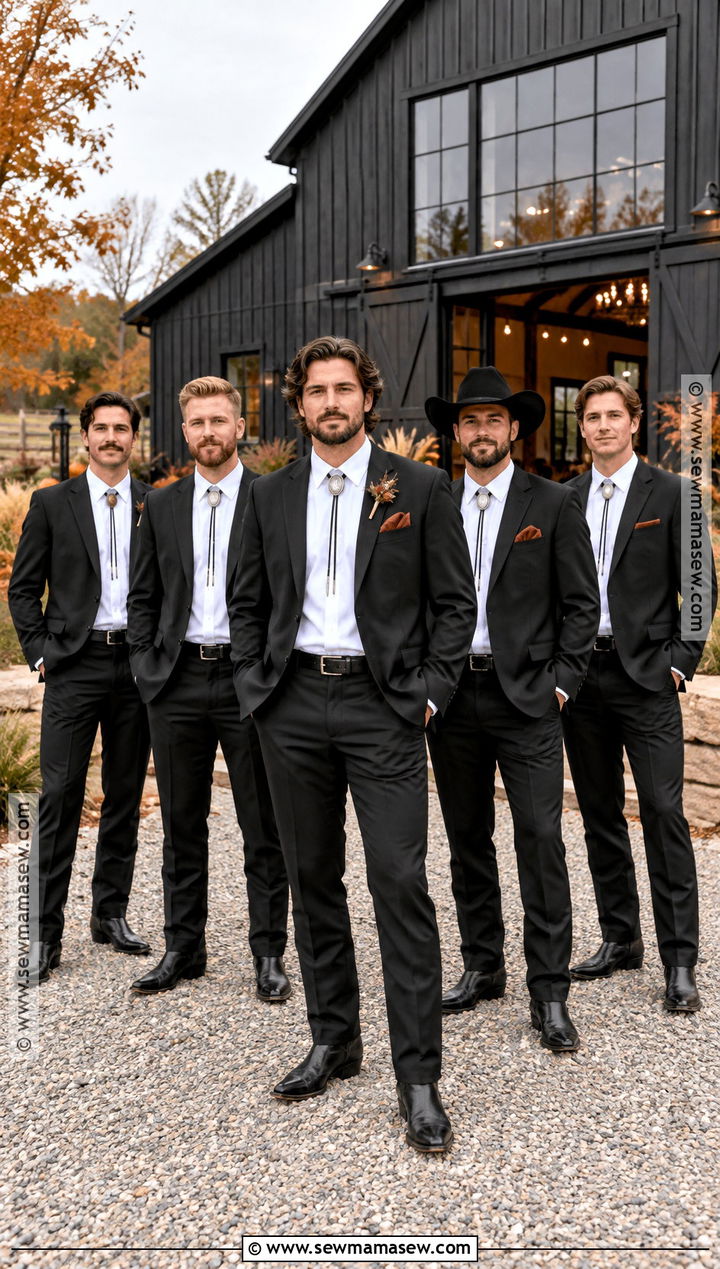
Black suits are not my first thought for a country wedding, but they can work at an evening reception or a modern ranch venue. A matte black suit, a white dress shirt and a slim black or dark brown leather bolo with a small silver clasp make a clean starting point. Polished black cowboy boots and a simple black belt with a restrained buckle keep it sleek. Shiny fabric is the mistake I see most; under daylight it looks cheap next to wood and grass, so check the cloth outdoors before ordering. A rust, burgundy or forest green pocket square adds the season. The groom can wear a more decorative clasp, a black waistcoat or a dark brown jacket.
15. Mixed Earth-Tone Suit Groomsmen Attire
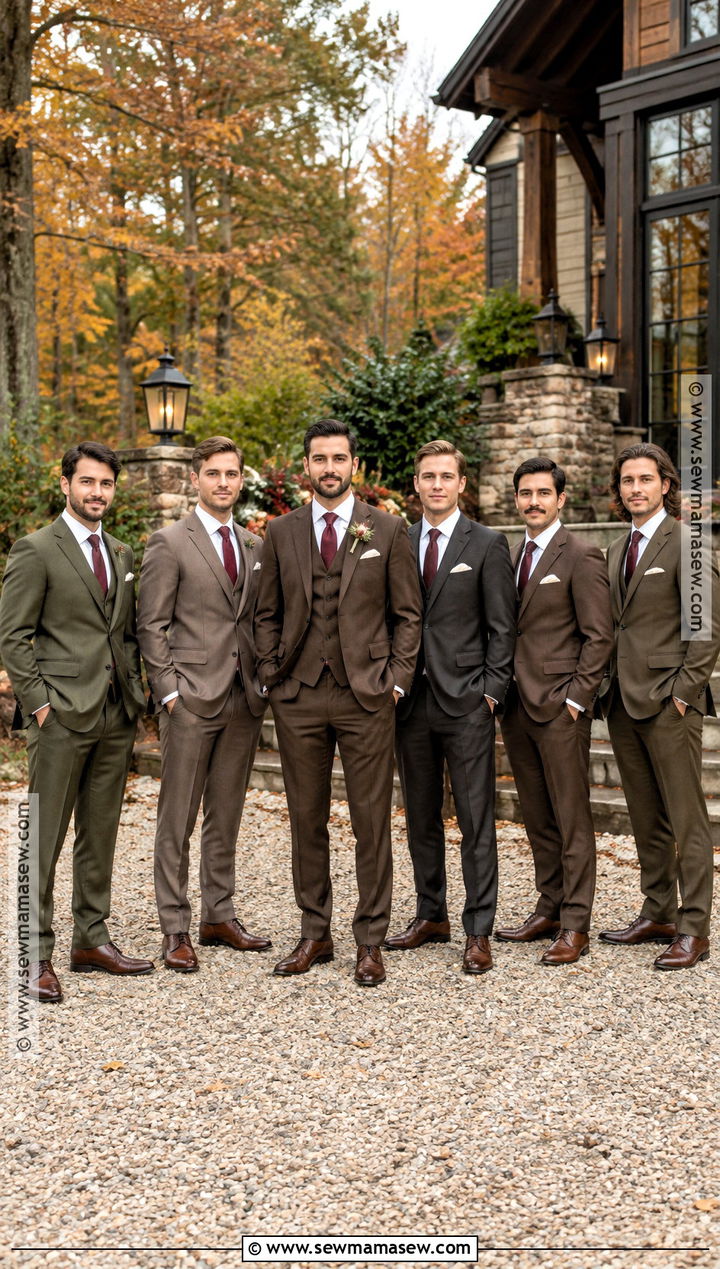
Mixed earth tones look relaxed and natural, but they take the most planning of anything here. Put the men in olive, taupe, medium brown and charcoal, then hold everything else constant: the same ivory shirt, the same dark brown shoes, the same tie color. Rust or burgundy ties pull different suits together, and matching pocket squares or boutonnieres add a second shared thread. Every suit should be the same formality and a similar fabric, all matte wool or all subtle tweed, never one shiny suit among flannels. When the photographer lines up the group, alternate light and dark so no two similar shades stand side by side. The groom can wear the darkest color or a three-piece in one of the group's shades.
Wet Grass, Gravel and Barn Floors
Country venues are hard on dress shoes. Morning dew soaks thin leather soles, gravel paths scuff toe caps, and old barn floors have gaps that catch a heel. I'd rather see a sturdier shoe that suits the outfit than a pair of slim, smooth-soled Oxfords that slide on the grass during the processional.
- Brogues, Derbies and Chelsea boots with a slightly thicker sole cope with uneven ground far better than sleek city shoes.
- New leather soles are slippery. Scuffing the bottoms on concrete or adding thin rubber sole guards helps a lot.
- Cowboy boots need breaking in. Have every man wear his around the house for a week or two, or blisters will show up by the first dance.
- Suede marks and darkens when wet. If rain or heavy dew is likely, smooth leather is the safer choice, treated with a protective spray beforehand.
Tweed at Noon, Flannel at Midnight
Fall weather in the country swings more than most people plan for. A sunny ceremony can feel warm in wool, and the same field can be cold an hour after sunset. Heavy tweed is perfect for a late October evening and a trial for an early September afternoon, so match the cloth to the month and region rather than to the look alone.
For early fall, I'd go with lighter tweed, wool flannel or a wool blend, and lean on the vest so jackets can come off without anyone looking undone. For late fall, a heavier tweed earns its place, and a matching overcoat or a simple wool topcoat in camel or charcoal looks far better in photos than mixed puffer jackets. A plain cotton undershirt soaks up sweat and protects the dress shirt, which helps on any long, warm afternoon.
The Venue and the Weather Decide Most of It
Every outfit above comes back to the same few calls. Start with the venue and the dress code, then think about how cold the evening will get, what the bridesmaids are wearing and what the men can comfortably stand in for eight hours. Shirts, shoes, ties or boutonnieres can hold a group together even when the suits differ. Fit and clear communication matter more than any color choice, so send the men one written list of exactly what to buy or rent, with shade names and photos. Do that, and a brown three-piece, a relaxed vest outfit or a mixed earth-tone line all come out looking intentional.
Related posts: