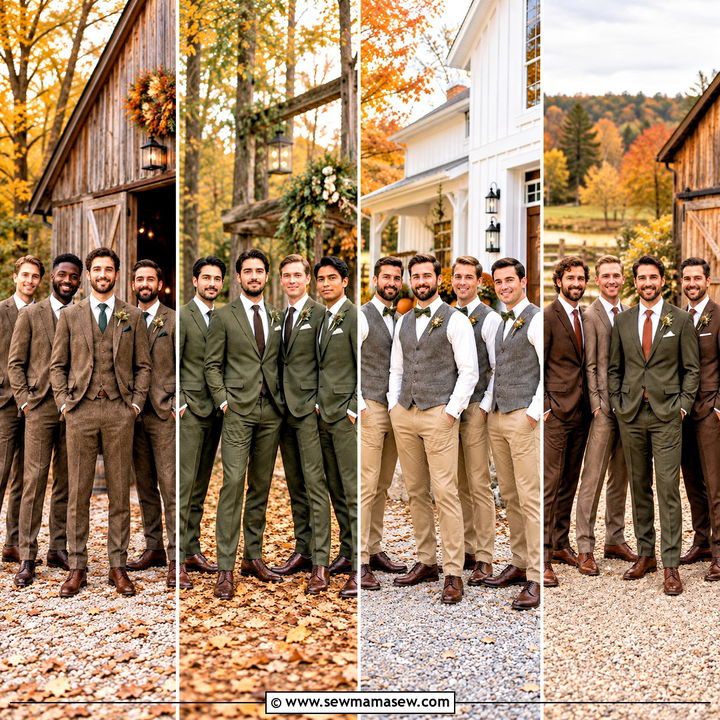
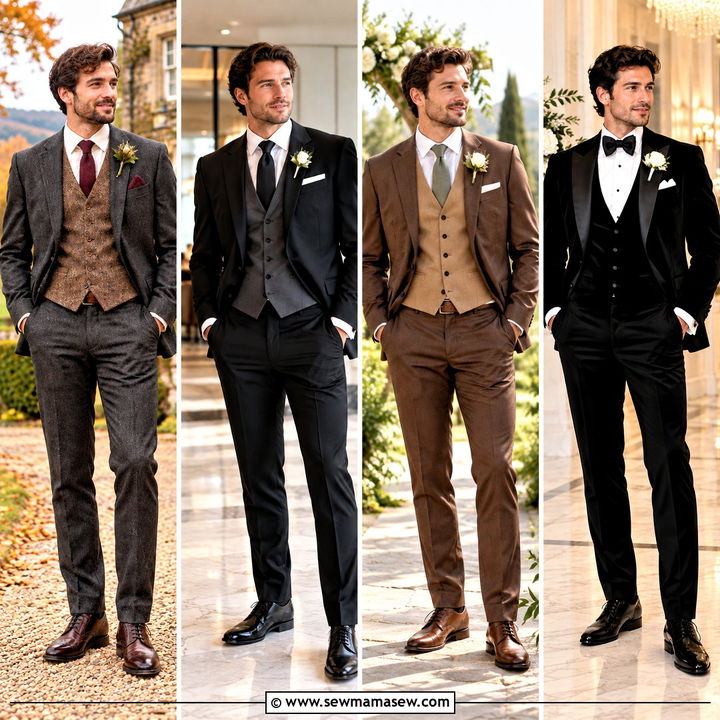
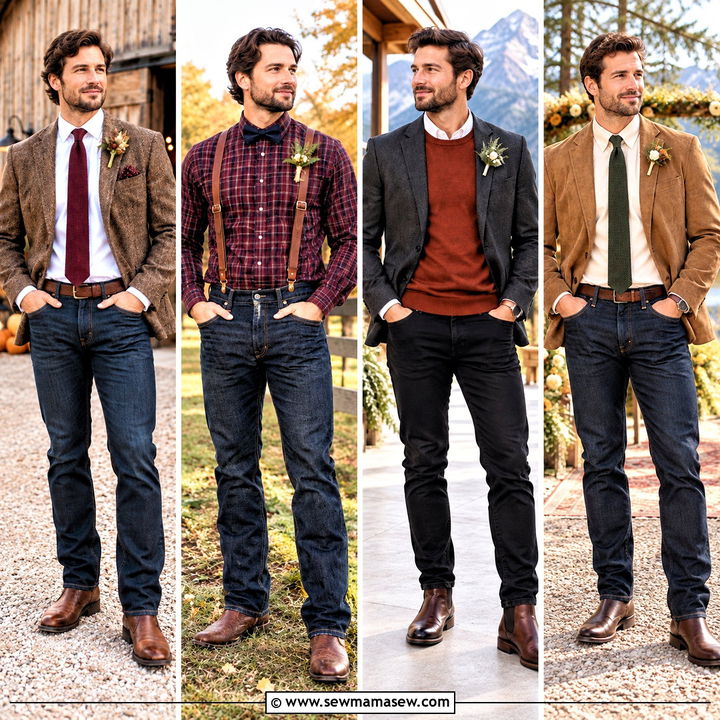
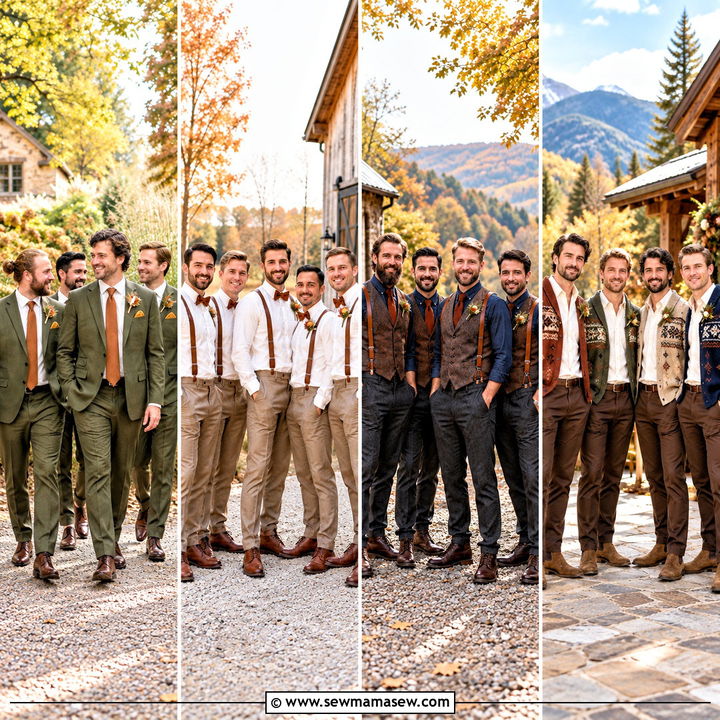
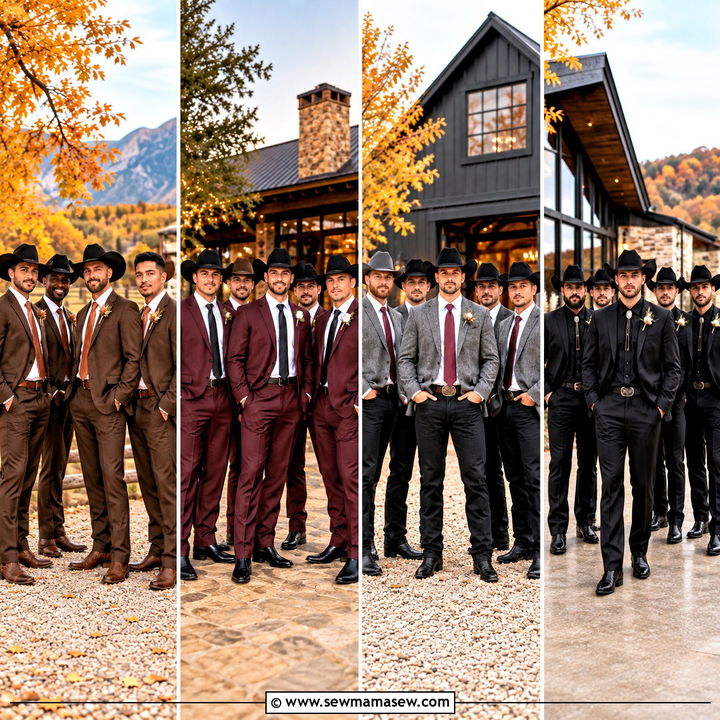
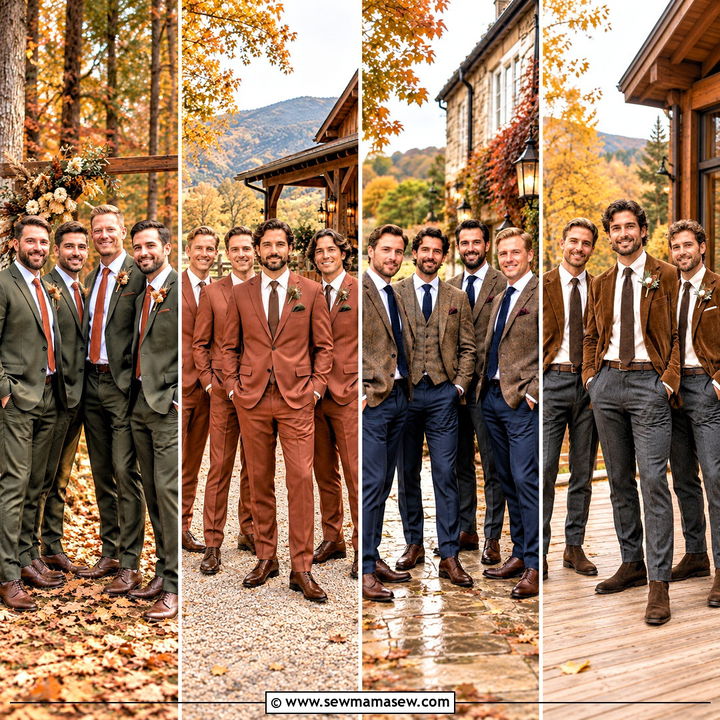
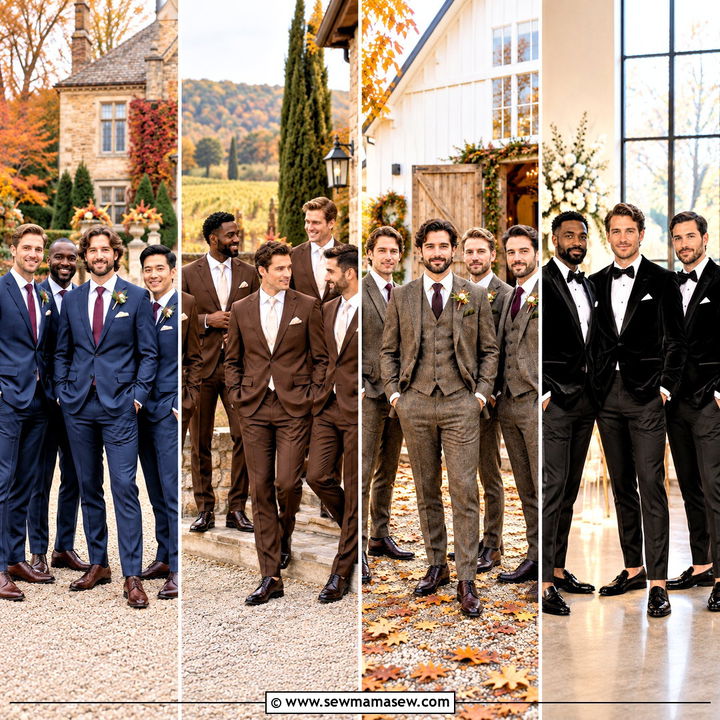
Brown is the suit color I reach for most when a groom tells me the wedding is in October and half of it happens outdoors. It sits comfortably next to turning leaves and old timber, and it reads warmer than charcoal in late-afternoon light. Below are fifteen brown looks for groomsmen, from ballroom formal to barn relaxed, each built from the collar down to the shoes. Couples are leaning toward warm earth tones and textured cloth right now, which suits brown well, as long as the group looks coordinated rather than stamped out of one mold. Chocolate, espresso, camel, tobacco and tweed all have a place. The dress code and the venue decide which one is right, and after that, fit matters far more than the exact shade.
Matching Brown Across Rentals, Purchases and Suits the Men Already Own
Brown is harder to match than navy or gray. Two suits both sold as chocolate can sit side by side and look nothing alike, one leaning red, the other leaning gray or yellow. Screens make it worse, because a product photo is lit and edited. Before anything is ordered, I get physical swatches and look at them outside in daylight, and again under warm indoor light if the reception is inside.
When the groomsmen are sourcing suits separately, a few rules keep the group from drifting:
- Send everyone the same reference swatch and ask them to compare in person, not against a photo.
- Match cloth weight as well as color. A summer-weight brown and a heavy flannel catch light differently even in the same shade.
- Agree on lapel width and button stance, since a slim notch beside a wide peak looks mismatched from across a room.
- If one man already owns a brown suit he loves, build the others around his shade rather than forcing him to buy new.
Rental is often the simpler route for a large party, since every suit comes from one dye lot. The trade-off is fit, so ask whether the rental includes basic sleeve and hem adjustments.
1. Chocolate Brown Groomsmen Suit With Ivory Shirt
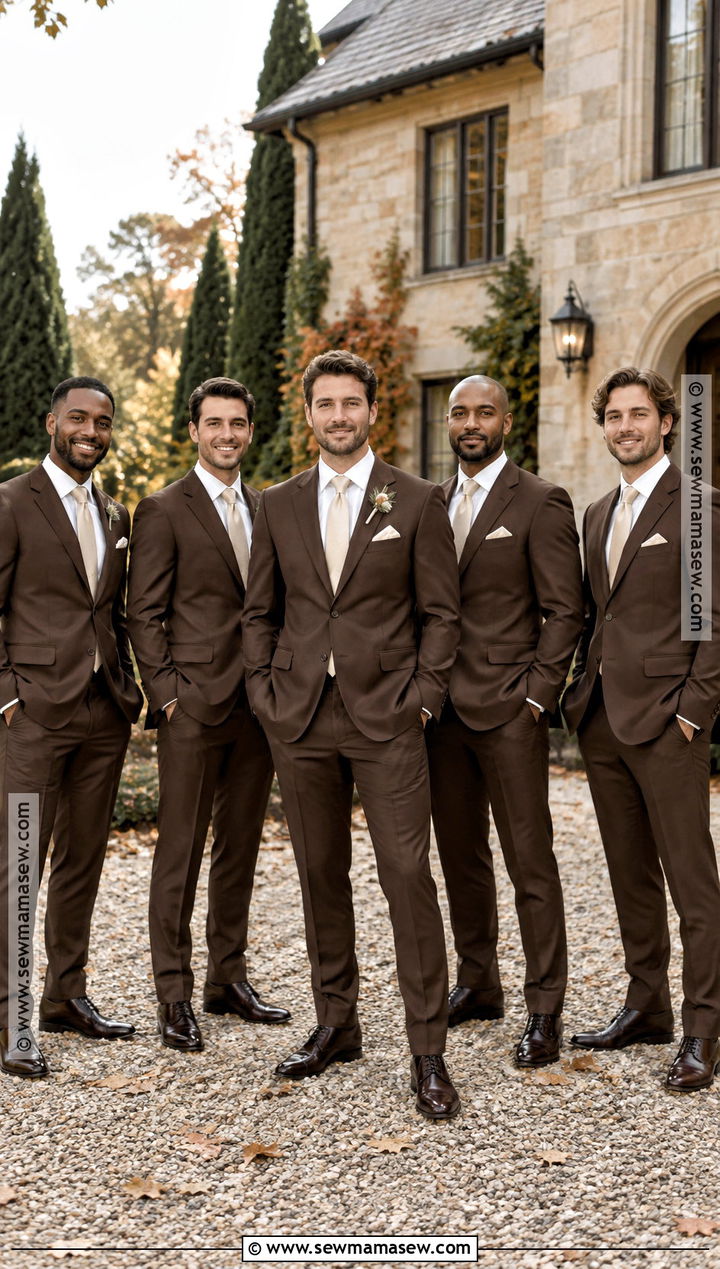
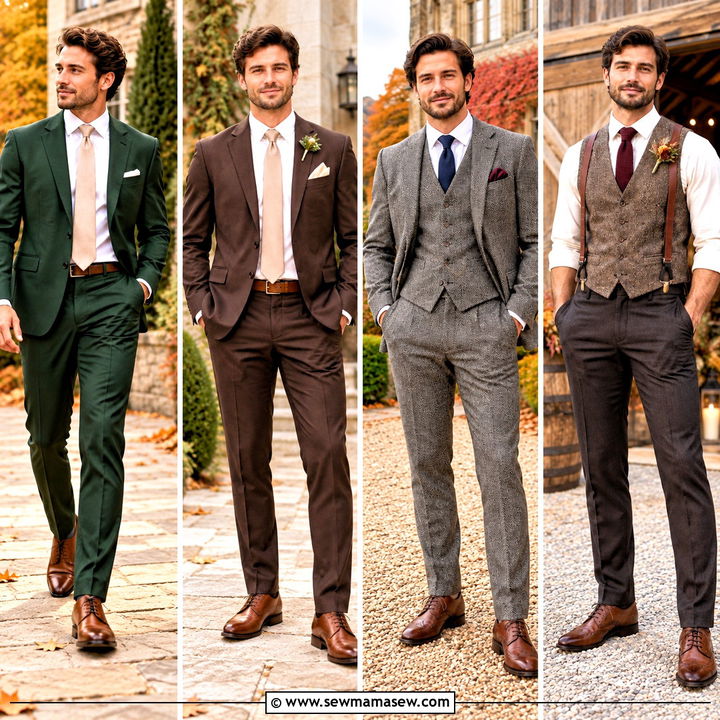
Chocolate is the safest dark brown for a formal fall wedding, and I build it as a single-breasted two-piece with trousers that taper cleanly to the shoe. I pair it with ivory rather than bright white. White next to deep brown can look stark in outdoor photos, while ivory softens the edge around the face. A muted champagne tie, an ivory pocket square and a small seasonal boutonniere finish the top half, and dark brown Oxfords with a matching belt keep it refined. The one thing I insist on is the same shoe finish across the group, because a matte pair beside a high-shine pair shows up in every lineup shot. Put the groom in the three-piece version with a larger boutonniere or a patterned tie, and the set holds up at an estate, a hotel or a formal indoor reception.
2. Espresso Brown Three-Piece Groomsmen Suit
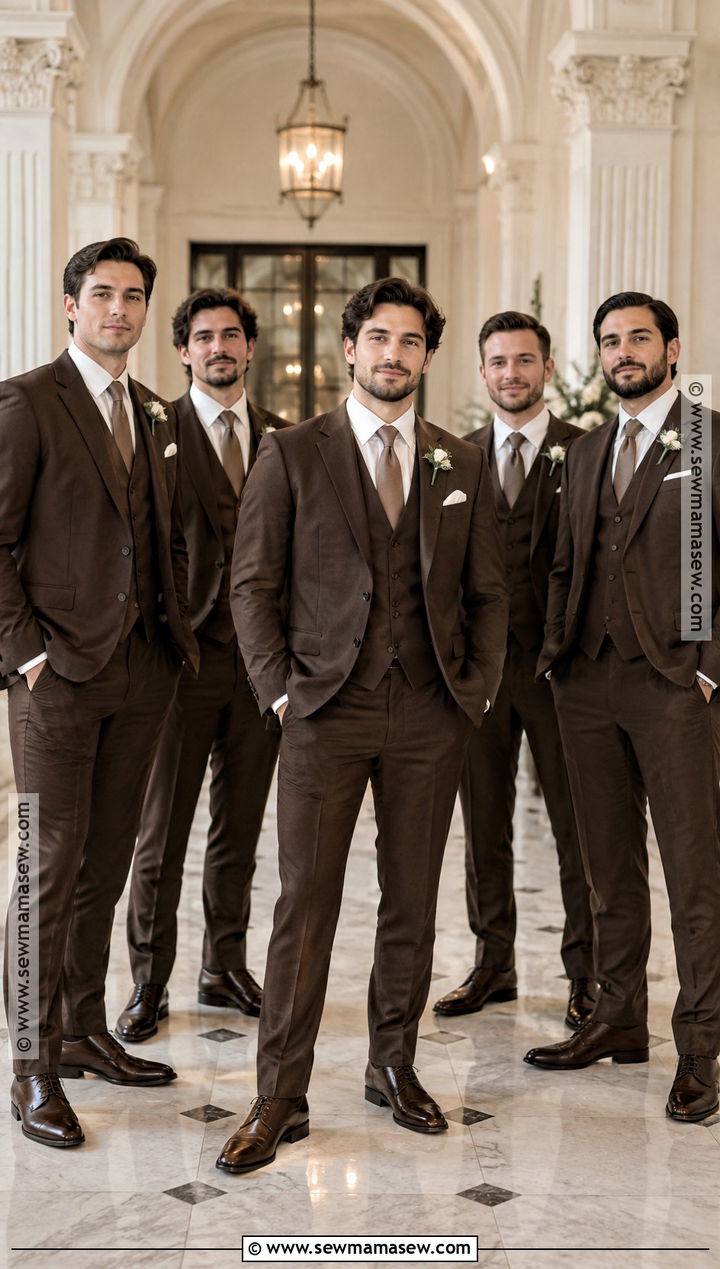
A three-piece earns its keep once the weather cools, and espresso gives you the depth of black without the severity. Jacket, matching trousers and a fitted waistcoat go over a crisp white shirt for a clean contrast at the collar. I keep the tie a textured taupe and the pocket square a plain white fold, then add dark brown cap-toes, socks matched to the trousers and a simple leather belt. Here's why I like the waistcoat for groomsmen: when the jackets come off at the reception, the party still looks dressed. Have each man raise his arms at the fitting. A waistcoat that rides up and flashes shirt above the waistband is too short. For the groom, a double-breasted waistcoat or a satin tie sets him apart at an evening wedding in a grand indoor venue.
3. Brown Tweed Groomsmen Suit With Burgundy Tie
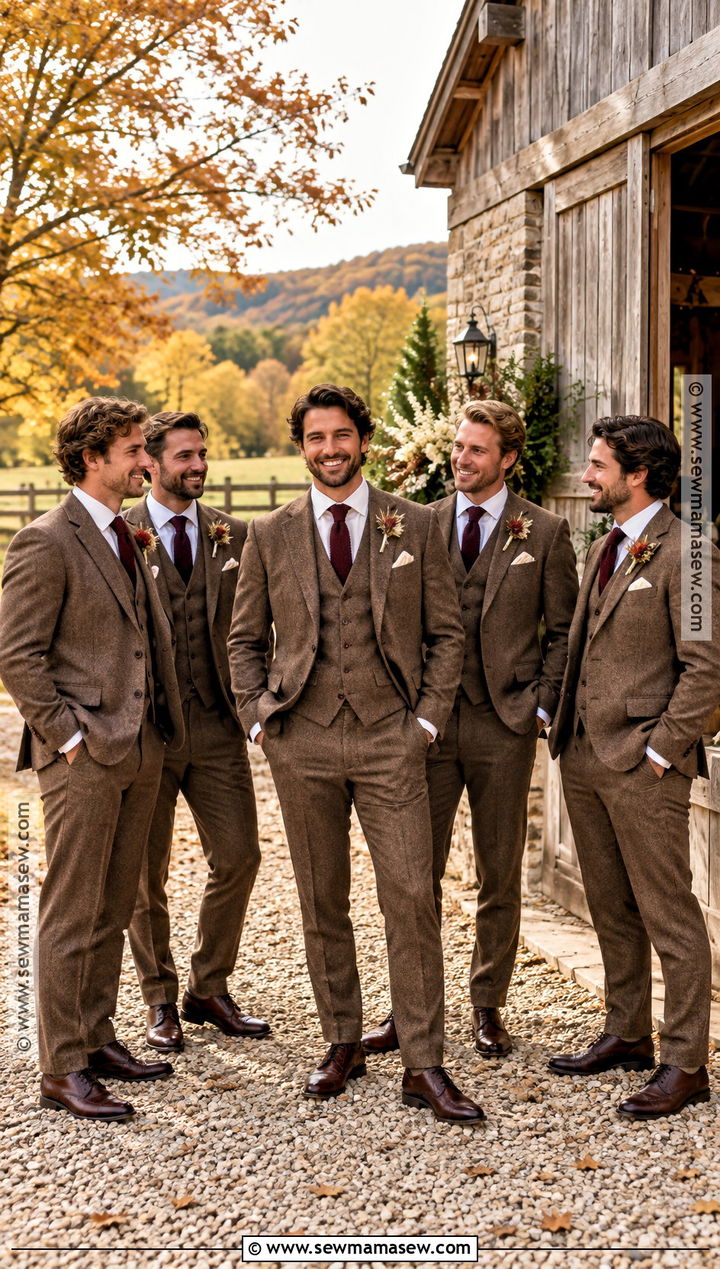
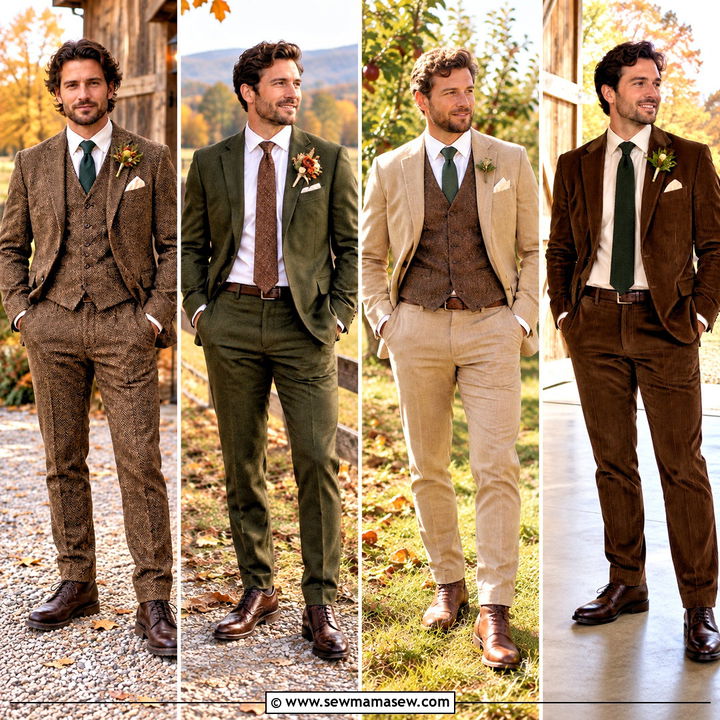
Tweed is the cloth I'd pick for a barn, a mountain lodge or a countryside ceremony, since it looks right against weathered wood and golden leaves. Go for a fitted jacket and matching trousers in a subtle herringbone. A cream shirt keeps it soft, and a burgundy wool or knitted tie brings in seasonal color without shouting. Add a cream pocket square, dark brown brogues and socks close to the trouser shade. Don't stack more pattern on top; the herringbone already gives the eye plenty. Tweed is heavier and stiffer than a smooth worsted, so a slim but not tight cut keeps the jacket from turning boxy. One warning I always pass on: tweed gets hot quickly on a crowded dance floor. The groom can step into a burgundy waistcoat or a slightly darker tweed.
4. Camel Brown Groomsmen Suit With Forest Green Tie
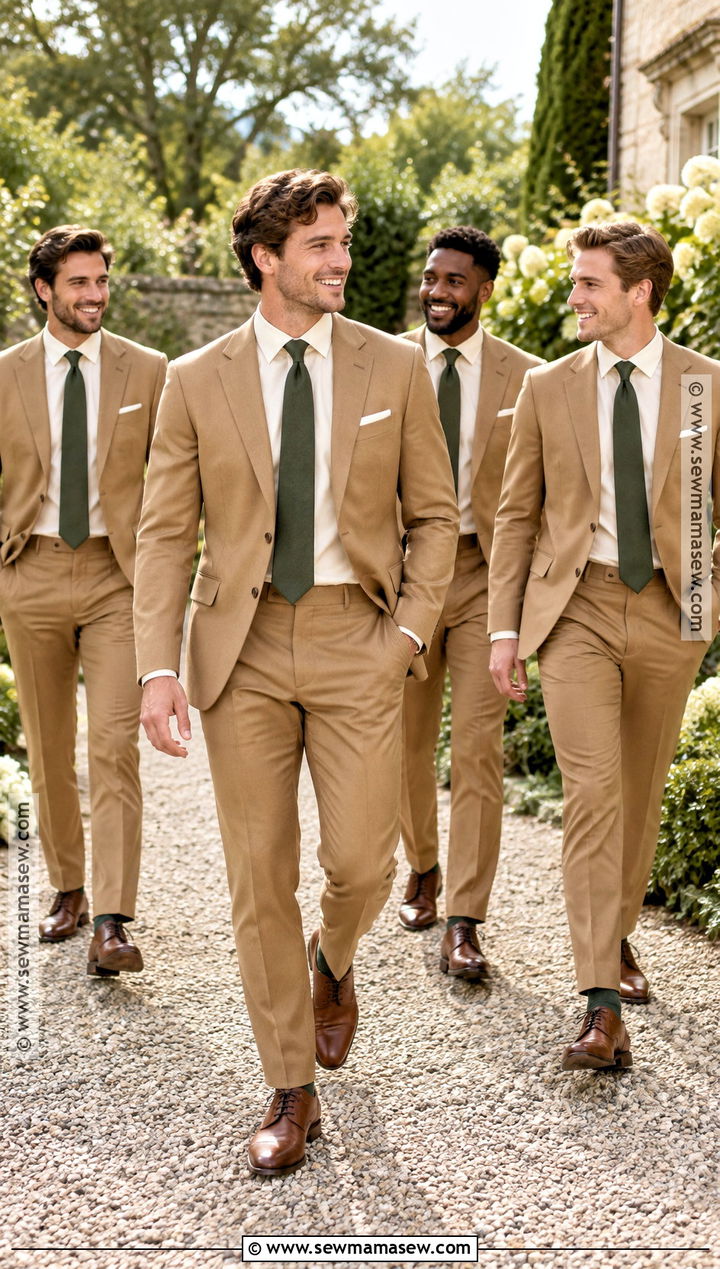
Camel is the brown I suggest for early fall and afternoon ceremonies, when chocolate would feel heavy in strong sun. With a white or pale cream shirt it reads bright, and a matte forest green tie pulls it back to the season. A white pocket square in a straight fold, medium brown derbies, a matching belt and dark olive socks complete it. Camel has a habit of looking casual when the fit is loose, so I ask for structured shoulders and trousers hemmed with very little break. Get every camel suit in the same color from the same source if you can. Tan cloths drift in undertone far more than dark browns do, and the mismatch jumps out in group photographs. The groom can switch to a forest green waistcoat or a patterned tie for a garden, an open field or a bright indoor room.
5. Tobacco Brown Groomsmen Suit With Rust Tie
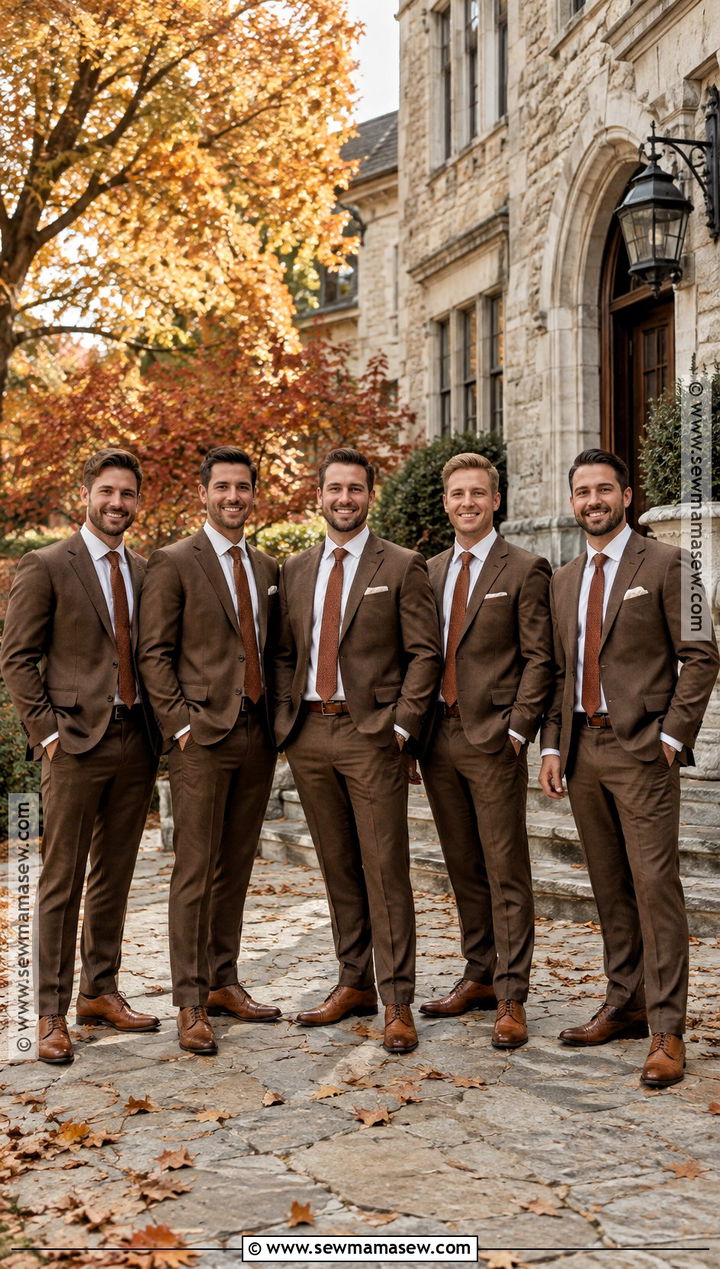
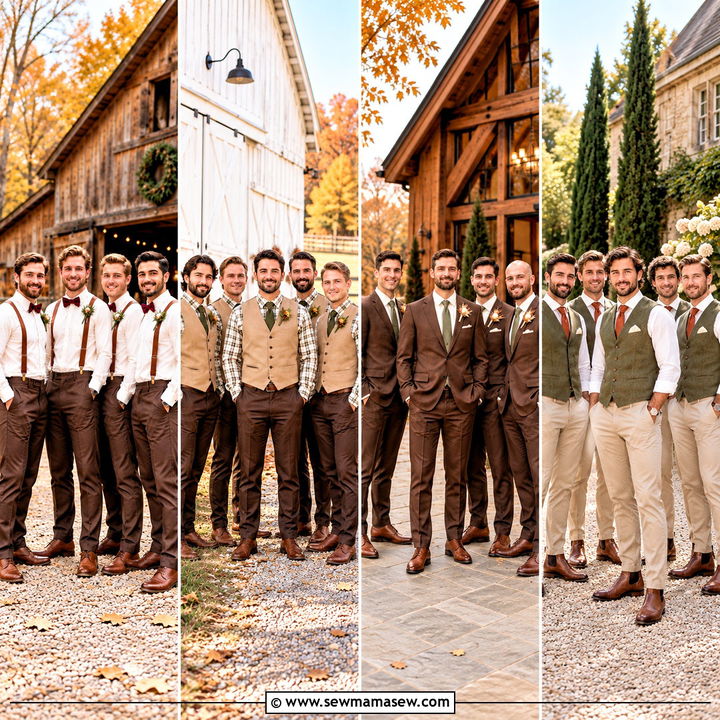
Tobacco has a slightly vintage warmth that matches mid-fall foliage almost exactly. I build it as a two-piece with a softly structured jacket and straight or gently tapered trousers, then add an ivory shirt and a rust tie in a matte cloth such as wool, cotton or textured silk. A shiny rust silk tends to turn orange under a camera flash, which is why I steer away from it. A cream pocket square lifts the jacket without competing, and cognac brogues with a matching belt carry the warmth down to the floor. Small neutral boutonnieres keep attention on the brown and rust. If the groomsmen have very different complexions, let some wear soft white and some ivory, but hold the tie color constant. Rustic estates, historic buildings and ceremonies under the trees are its natural home.
6. Brown Plaid Groomsmen Suit With Cream Shirt
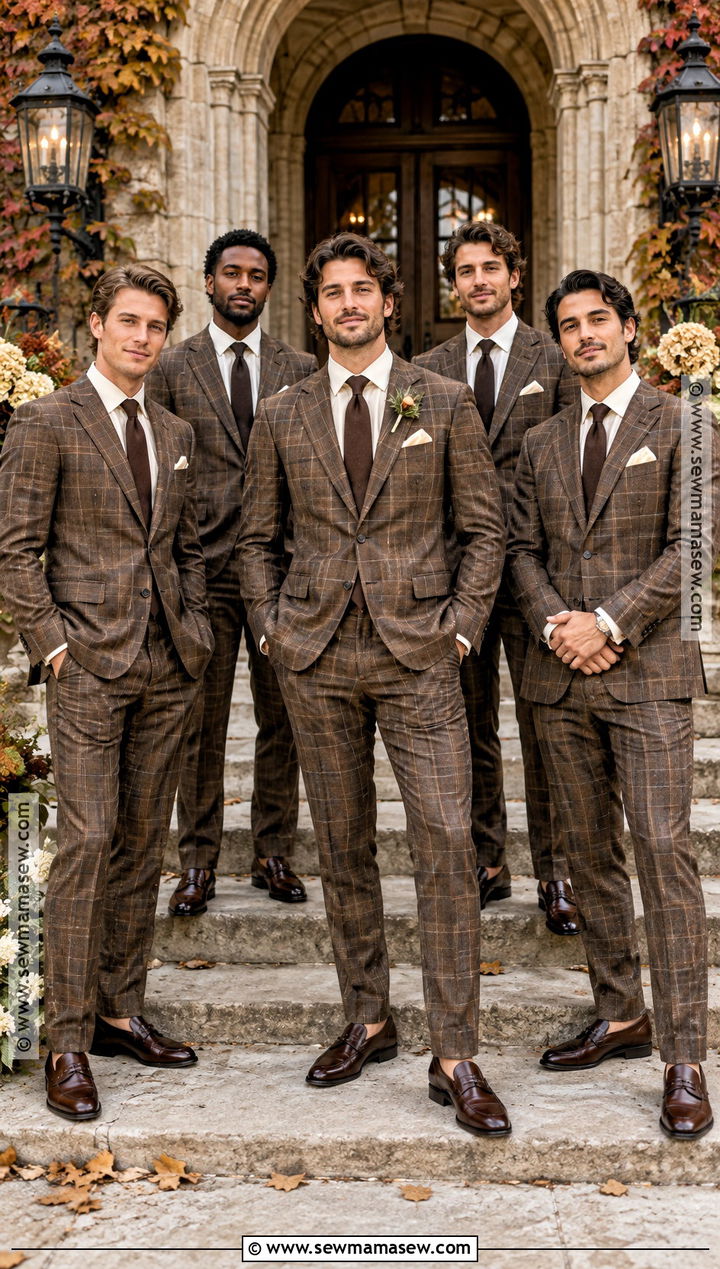
Plaid gives a wedding party personality, and it only tips into costume when the check is too large or too contrasting. I look for a brown base with quiet tan, rust or gray lines. A solid cream shirt balances the pattern, followed by a dark brown tie, a plain cream pocket square and polished chocolate loafers or derbies. Keep accessories minimal, since the cloth is already doing the talking. When the suits go to the tailor, ask for the checks to line up across the pockets and at the back seam; a broken pattern looks cheap up close. You can put the groom in solid dark brown with the groomsmen in plaid, or flip it. Vintage-inspired weddings, historic venues and smart country celebrations suit this one.
7. Brown Velvet Groomsmen Tuxedo With Black Bow Tie
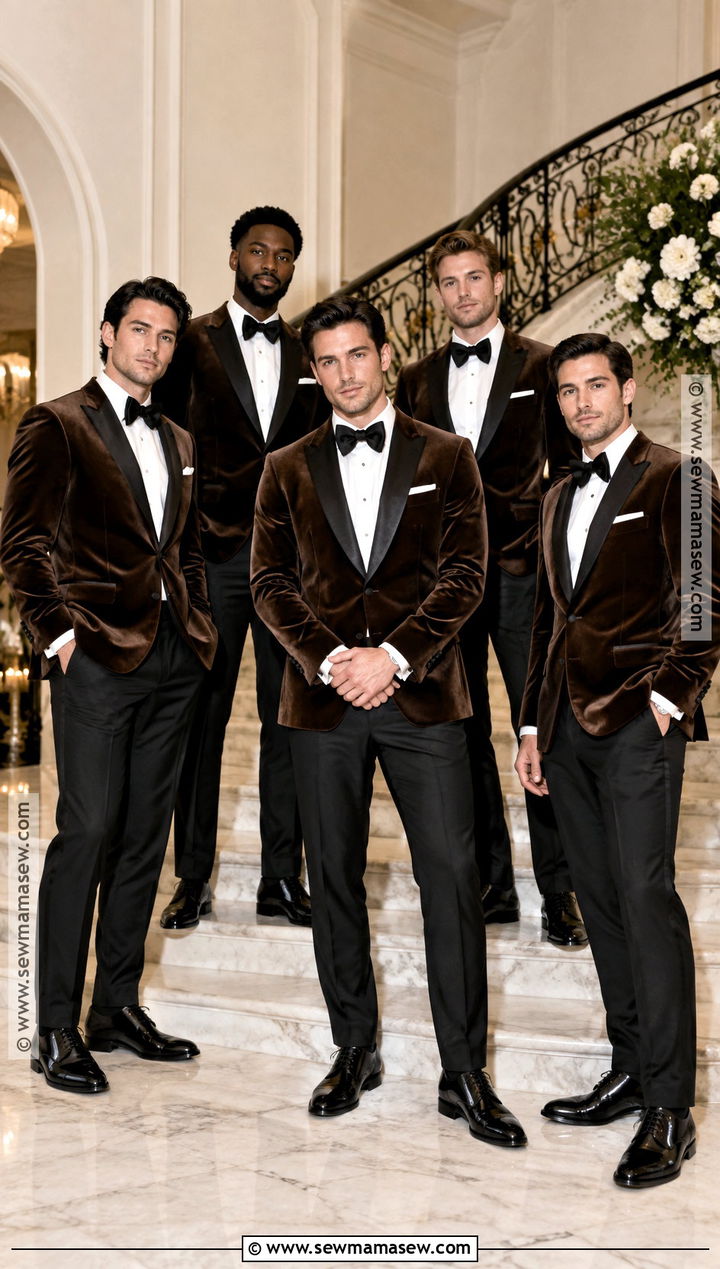
Brown can carry an evening black-tie mood, and a dark brown velvet tuxedo jacket is how I prove it. Pair it with matching brown tuxedo trousers, or sharply tailored black ones if you want more contrast. Then a white tuxedo shirt, a black bow tie, a white pocket square, highly polished black Oxfords and black dress socks. I keep velvet to the jacket only, because velvet trousers as well start to look like loungewear. Velvet also crushes wherever it is folded, so hang the jackets the night before instead of leaving them packed in a garment bag. Every groomsman should match on lapel finish and trouser color. The groom can add a matching velvet waistcoat or change to a cream dinner jacket for an upscale indoor reception or a dramatic architectural room.
8. Brown Groomsmen Suit With Sage Green Tie
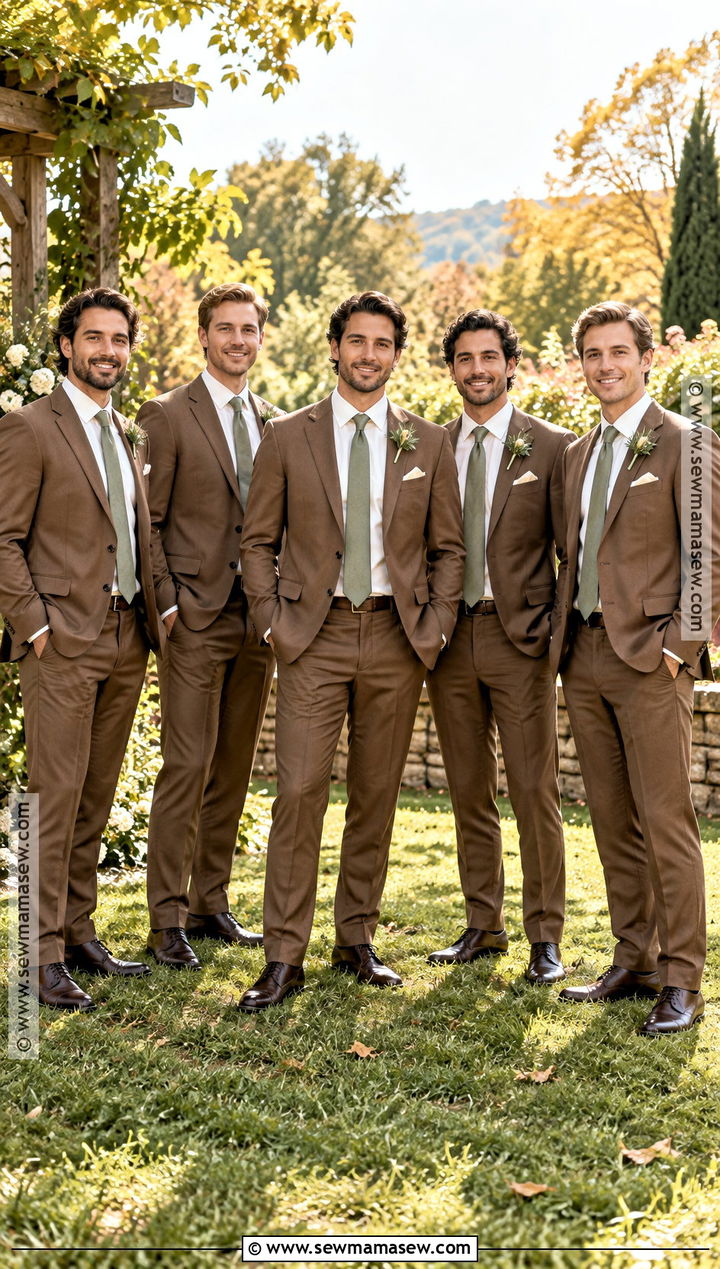
Sage lightens a brown suit without leaving the earthy palette behind, which makes it my pick for weddings sitting right between late summer and early fall. Begin with a medium brown two-piece in a clean modern cut, a white or light ivory shirt and a solid sage tie with a matte finish. Add a cream pocket square, a simple greenery boutonniere and chocolate leather derbies. The shade is everything. A true sage has gray in it, while pale mint reads as spring and feels cut off from autumn, so hold a tie swatch against the suit outdoors before ordering. Matching ties with slightly varied boutonnieres of the same size look natural rather than themed. The groom might take a deeper green tie or a brown waistcoat, and garden venues and rustic halls both suit it.
9. Brown Groomsmen Suit With Burnt Orange Tie
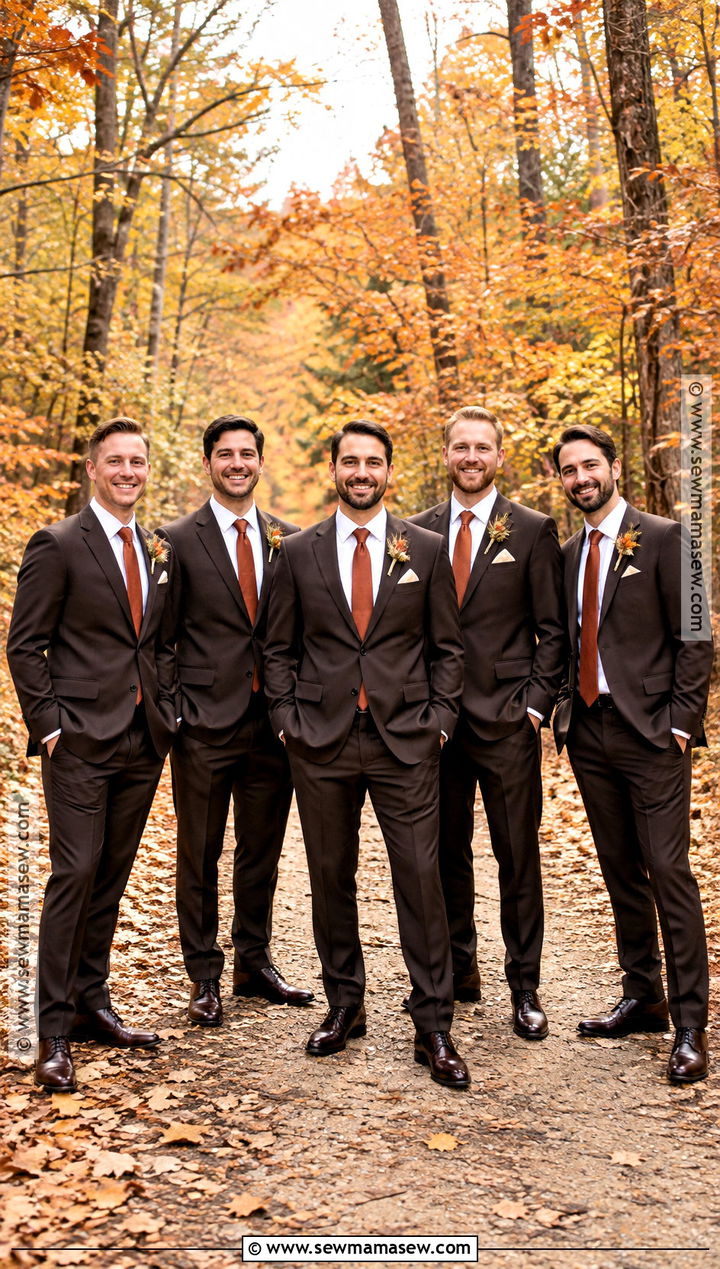
Burnt orange is the boldest accent on this list, so I treat it as the only loud thing in the outfit. Choose a dark or medium chocolate suit, an ivory shirt and a textured burnt orange tie. Then ground it with a plain cream pocket square, dark brown shoes, a chocolate belt, brown socks and a restrained boutonniere. The mistake I see most is matching the tie, square, socks and flowers in the same orange. One accent is enough. Order every tie from one batch if possible, because orange dyes vary in undertone and the difference shows when the groomsmen stand shoulder to shoulder. The groom can wear an orange-and-brown patterned tie or a coordinating waistcoat. Woodland settings and peak-foliage weekends are where this looks most at home.
10. Brown Groomsmen Suit With Champagne Tie
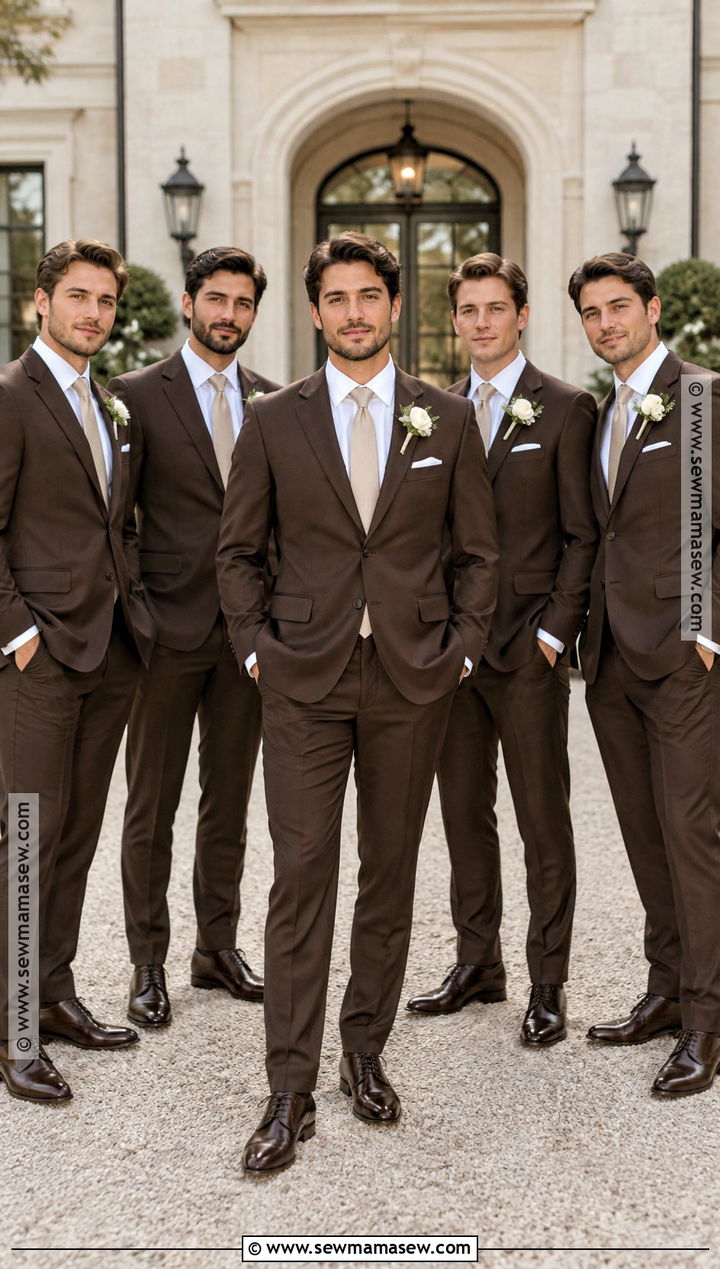
Champagne softens a dark brown suit and pushes it toward formal. I'd use a deep espresso or chocolate suit with a crisp white shirt for definition, then a low-sheen champagne tie. The low sheen matters: champagne fabrics vary a lot in shine, and a glossy one can look cheap under flash, so buy identical ties for everyone. An ivory pocket square and a small cream boutonniere finish the top. Dark brown Oxfords, a matching belt and tonal socks keep the eye on the tailoring. The pairing sits easily inside cream, taupe, gold and neutral wedding palettes. For the groom, a champagne waistcoat or a subtly patterned pocket square does the job at a formal afternoon ceremony or an evening reception indoors.
11. Brown Groomsmen Suit With Navy Tie
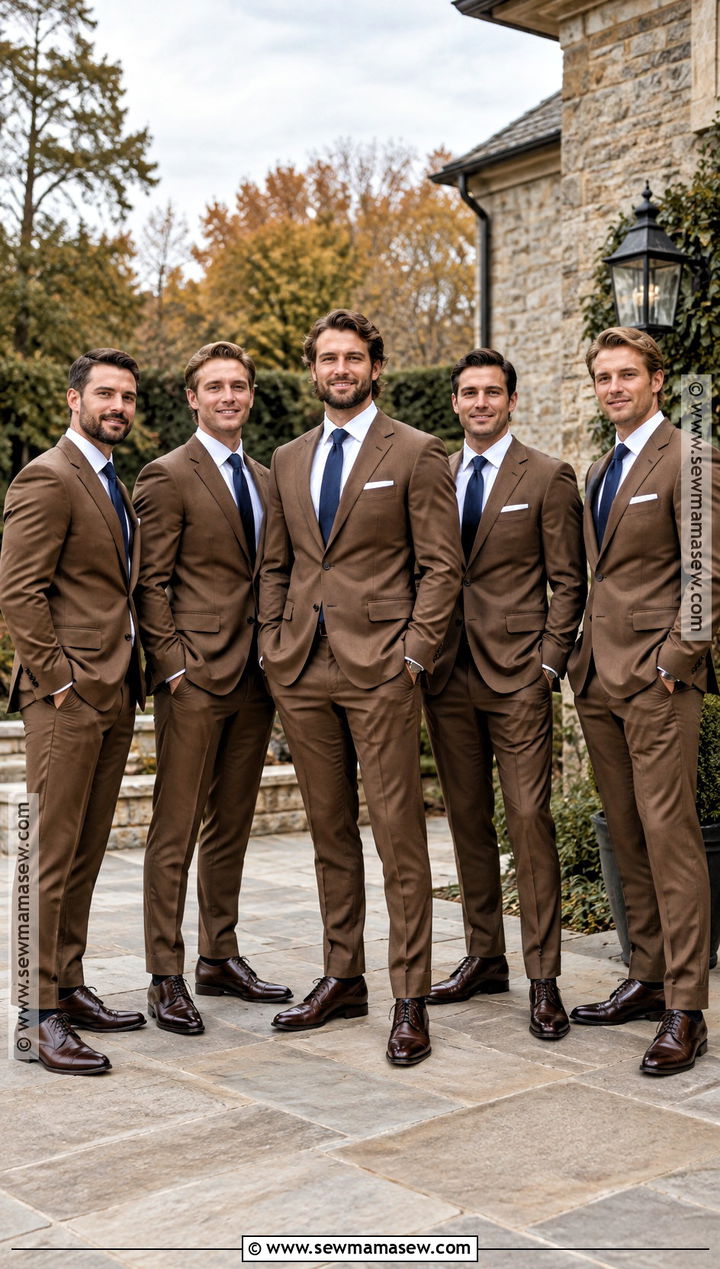
Brown and navy is an old menswear pairing that feels classic without any black at all. Take a medium or dark brown suit, a white shirt, a solid navy tie, a white pocket square and a boutonniere with quiet blue or neutral details. Dark chocolate shoes work better here than light tan, which pulls the look toward casual. If you want navy socks to echo the tie, go deep and solid, so no novelty pattern peeks out when the groomsmen sit down. I suggest this combination most when navy already appears in the bridesmaid dresses or the florals. The groom can wear a brown patterned tie or a navy waistcoat to stay linked yet distinct at a traditional venue or a formal outdoor ceremony.
12. Brown Groomsmen Vest With Khaki Trousers
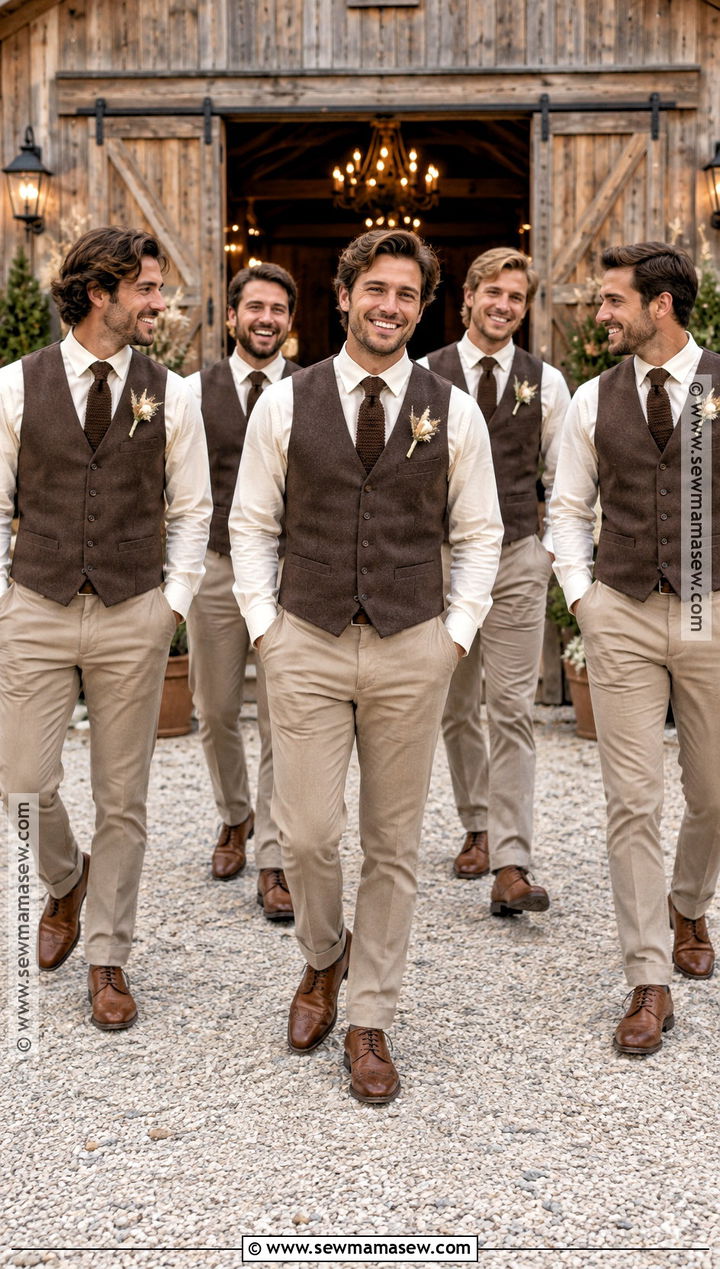
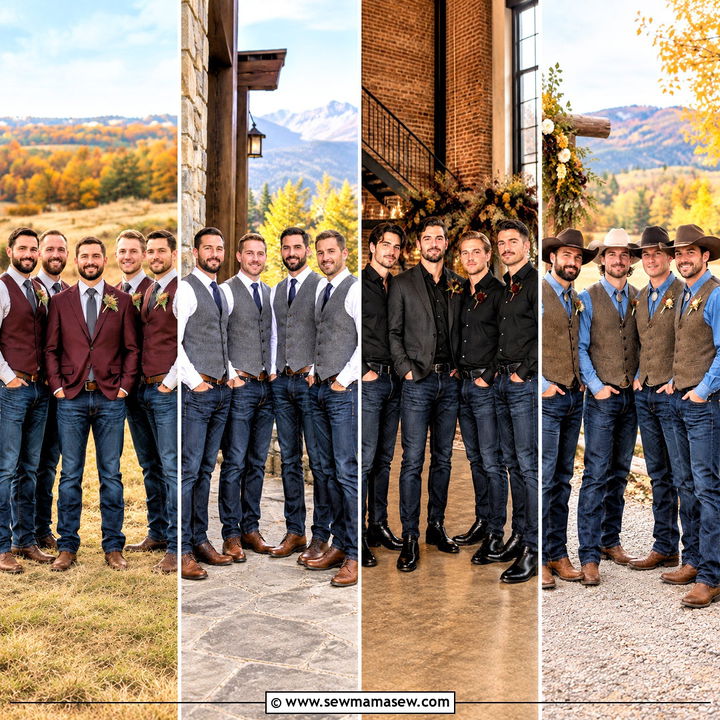
Going jacketless only looks intentional when every piece fits, so I'm stricter about tailoring here than anywhere else on this list. Chocolate brown waistcoats, khaki trousers and long-sleeved ivory shirts form the base. Add dark brown knitted ties, leather suspenders worn beneath the waistcoats and cognac brogues. Every pair of trousers should be the same khaki and hemmed with little or no break, because a light cotton trouser pools at the ankle far more visibly than dark wool. Keep sleeves buttoned for the ceremony and photos, then let the men roll them at the reception. A small neutral boutonniere finishes it. The groom can wear the full brown suit, or the same waistcoat with a jacket on top. I'd use it at a casual barn, a ranch or an outdoor gathering where a full suit would feel overdone.
13. Brown Groomsmen Blazer With Charcoal Trousers
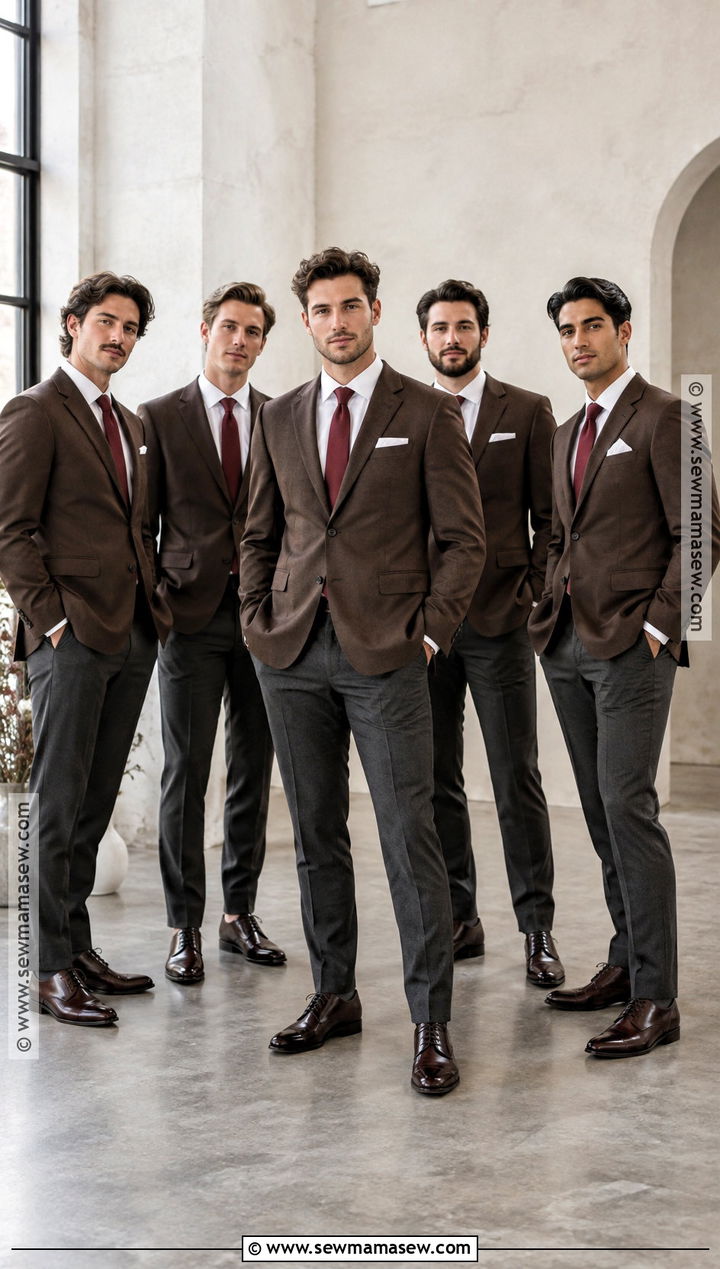
Separates make brown practical, since a groomsman can wear the blazer again long after the wedding. I pair a dark brown wool or textured blazer with tailored charcoal trousers and a white shirt, which gives a sharp break between the two darker pieces. A burgundy tie, a white pocket square, black or deep brown Oxfords and socks matched to the trousers finish it. The trousers have to stay dark; light gray or tan under a brown jacket makes the two pieces look like they wandered in separately. If the men buy blazers from different shops, line them up for shade, lapel shape and fabric weight weeks before the wedding, not on the morning. A full brown suit on the groom sets him apart at a semiformal wedding, an industrial venue or a modern event space.
14. Brown Groomsmen Suit With Cream Turtleneck
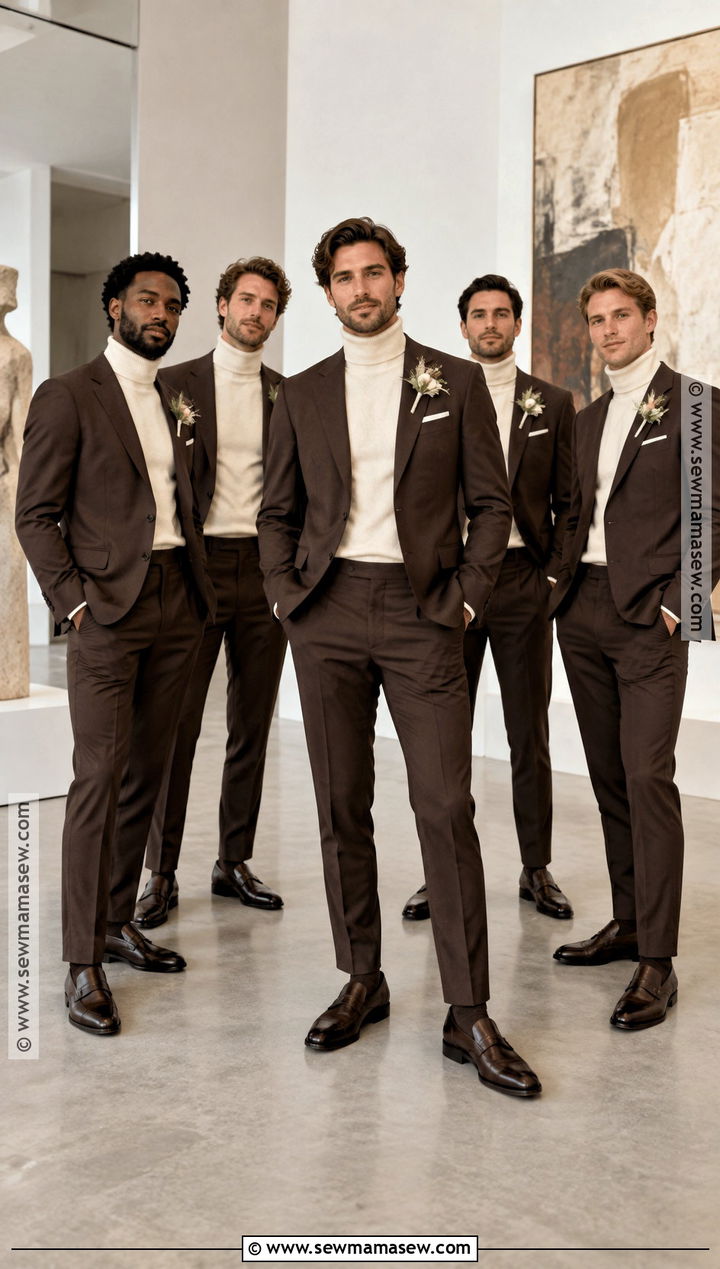
For a modern late-fall wedding I'll swap the shirt and tie for a fine-gauge cream turtleneck under a dark brown suit with clean lapels and tapered trousers. Gauge is the thing I check first. A chunky knit bunches under the jacket and pushes the lapels out of shape, while a fine merino lies flat and fits close at the neck. Dark brown loafers or minimalist derbies with socks that disappear into the trouser keep it sleek. Skip the belt if the trousers have side adjusters; if not, use a slim matching one. A cream pocket square adds definition, and nothing else is needed. I wouldn't use this in a warm venue, because a turtleneck under wool gets hot fast. The groom can reverse it with a chocolate turtleneck under a camel suit, which suits gallery-like spaces and nontraditional dress codes.
15. Mixed Brown Groomsmen Suits With Matching Accessories
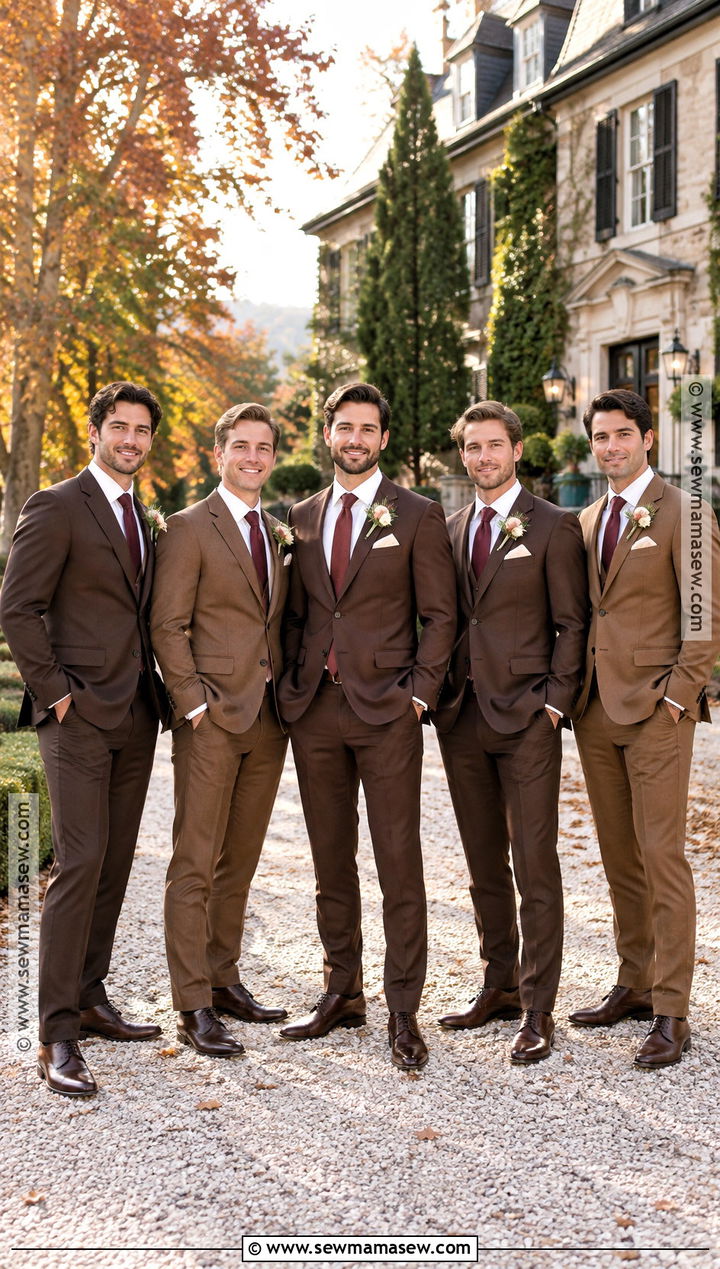
A tonal wedding party can hang together without every man in an identical suit, which helps when groomsmen already own brown suits or need very different fits. Mix espresso, chocolate, tobacco and medium brown, but hold the formality and silhouette steady. Then repeat the accessories: ivory shirts, matching burgundy ties, cream pocket squares and dark brown shoes. That repetition is the thread the eye follows across the photo. Don't mix a tuxedo with a linen suit, or a sharp slim cut with an oversized one. Check undertones as well. A red-leaning brown beside a gray-leaning brown looks like an accident rather than a choice. I place the darkest suits toward the center of the lineup for balance and put the groom in a distinct three-piece in the deepest shade.
Black Shoes or Brown? Footwear and Belts With a Brown Suit
My default with a brown suit is a brown shoe one or two shades darker than the cloth. A dark shoe anchors the outfit; a shoe lighter than the suit makes the legs look disconnected from the feet. Black belongs with the velvet tuxedo and works next to charcoal trousers, but under a mid-brown suit it tends to look heavy and borrowed.
The belt should match the shoe in color and finish. Suede brogues look right at a barn, but suede darkens and spots in wet grass, so treat them with a protector spray beforehand or switch to smooth leather if rain is likely. New leather soles are slick on wooden floors and stiff across the toes, which is why I tell groomsmen to wear their shoes around the house for a few evenings before the wedding. A light scuff on the sole helps grip on polished boards.
Alterations Schedule for a Fall Wedding Party
Fit is what separates a sharp wedding party from a group of borrowed suits, and alterations take longer than most people expect in the busy fall season. I like suits in hand two to three months before the date, with a first fitting soon after and a final one about two weeks out.
- Check the shoulders first. A tailor can shorten sleeves and take in a waist, but a jacket that is too wide or too narrow at the shoulder seam usually can't be saved.
- Set the sleeve so a little shirt cuff shows below the jacket when the arms hang straight.
- Hem the trousers wearing the actual wedding shoes, aiming for a slight break or none at all.
- Groomsmen who live out of town should be measured locally and send the numbers early, then try everything on the day before the rehearsal so small fixes are still possible.
Brown Suits That Read as One Group in Photos
What makes a brown wedding party look good is less the shade and more consistent tailoring, sensible shoes and accessories pitched at the right formality. Chocolate and espresso carry an evening; camel, tobacco, plaid and tweed belong to daytime and rustic settings. Ties in burgundy, forest green, sage, rust, navy or champagne bring in color without pulling focus from the group. Before anyone orders, compare fabric swatches outdoors in daylight and book alterations for every member of the party. A well-fitted mid-priced suit will always look better than an expensive one that hangs badly. Identical suits or a tonal mix, any of these fifteen gives you a sound place to begin.
Related posts: